Category: New York Times

  • ‘It offends me’: Giuliani says Mamdani should skip 9/11 memorial

    ‘It offends me’: Giuliani says Mamdani should skip 9/11 memorial

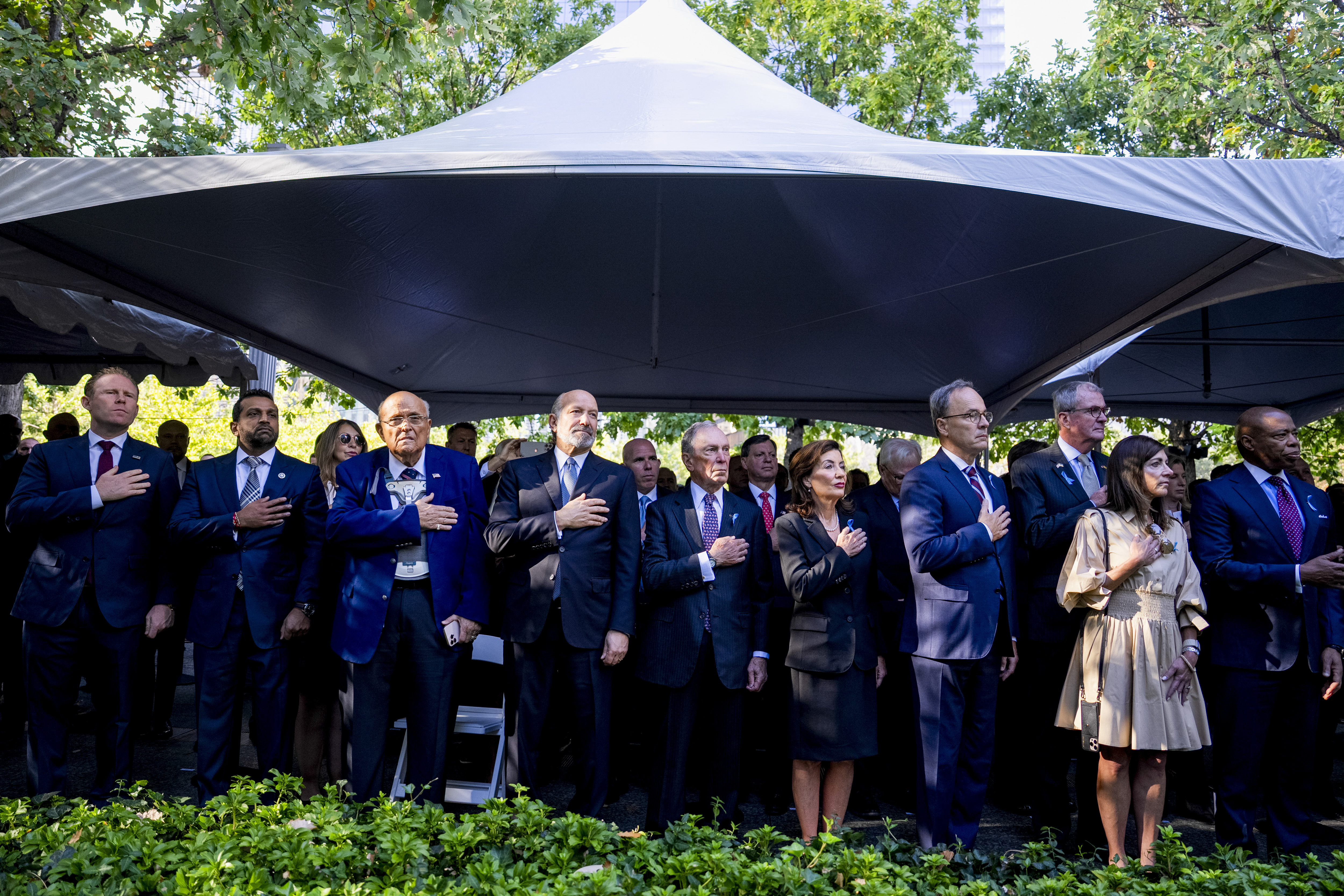
    NEW YORK — Rudy Giuliani, the former mayor who shepherded New York City through the Sept. 11 attacks, said on Sunday that he did not think Mayor Zohran Mamdani should attend upcoming memorial ceremonies to mark the 25th anniversary of the attacks.

    “It offends me,” Giuliani said in an anti-Muslim diatribe on the far-right news outlet Newsmax, regarding Mamdani plans to attend the New York memorial. Giuliani also compared Mamdani to the Sept. 11 hijackers, who he said had hostility to America and “they weren’t hiding it like Mamdani is trying to hide it.”

    Giuliani’s tirade also included baseless claims, including that Mamdani is a supporter of a Muslim plot that aimed at “taking over certain parts of America and certain parts of Europe,” a right-wing conspiracy theory he has endorsed in the past.

    His comments on Sunday made him the most prominent person to endorse a call from some conservatives for Mamdani to skip the upcoming memorial ceremonies.

    That demand has also been the subject of an online petition, which by Sunday had drawn almost 100,000 signatures.

    Mamdani’s office declined on Sunday to directly address Giuliani’s comments, but directed reporters to his response to that online petition.

    “I will proudly honor the families, the survivors, the first responders forever impacted by that horrific terror attack by standing alongside them at this year’s 9/11 commemoration, reaffirming that we will never forget the solemn day felt by all of us who call this city home and, frankly, by all of us who call this country home,” the mayor’s statement said.

    The mayor’s office also pointed to two executive orders he signed this past week to establish Sept. 11 as an annual “Citywide Day of Remembrance and Service” and to take steps to modernize the city’s emergency preparedness procedures.

    According to his schedule, Mamdani has already attended or plans to attend roughly a dozen Sept. 11 memorial events, primarily at firehouses across the city that had been the home stations for firefighters who died in the attack or developed illnesses in its aftermath.

    Giuliani is expected to attend the ceremonies. Earlier this year, he was hospitalized with a serious case of pneumonia and said he believed his health problems stemmed in part from exposure to airborne toxins that blanketed parts of the city after the collapse of the World Trade Center.

    Giuliani was two blocks away from the first tower when it collapsed, and his head and shoulders were dusted with ash from the disaster as he joined the throngs of people fleeing north through lower Manhattan.

    Mamdani was 9 years old and in class at his Upper West Side elementary school when the attacks took place. He has spoken about the attacks as a formative experience for him as a child.

    In an interview with the New York Times last year, he spoke of how important it is “to honor the memories of those that were killed” and described “learning their stories over the many years that I’ve been a New Yorker, the deep sorrow, that continues to this day, of futures that were stolen from so many and families that continue to live with that.”

    He also talked about how Islamophobic backlash to the attacks had made anti-Muslim prejudice “a fact of life” for Muslim Americans.

    “It was this horrific day that was also for many New Yorkers the moment at which they were marked an ‘other,’” he said.

    Giuliani was widely praised and seen as a unifying figure after Sept. 11 for his stoic response to the attacks, which killed more than 2,700 people in New York City and left parts of Manhattan devastated for years.

    But in the years since, Giuliani has politically drifted far to the right, serving as a high-profile surrogate and personal attorney for President Donald Trump. Last year, Trump pardoned Giuliani and several others who had been accused of trying to overturn the results of the 2020 presidential election.

    This article originally appeared in the New York Times.

  • Latimore, R&B singer ‘so hip that he only needed one name,’ dies at 86

    Benny Lattimore, the soul singer, songwriter, and pianist known as Latimore whose sultry baritone, coifed hair, and funky songs about romance — notably “Let’s Straighten It Out” — made him an R&B fixture of the 1970s and ’80s, died on Aug. 22 at his home in Riverview, Fla., near Tampa. He was 86.

    His death was confirmed by his wife, Yvonne Lattimore.

    In the 1960s, under the slightly shorn last name Benny Latimore, he worked with Miami-based producer Henry Stone on his Blade and Dade labels to release “Rain From the Sky” and “Let’s Move and Groove Together.”

    He subsequently ditched his first name and released his first album with Stone’s Glades label, the self-titled Latimore, in 1973. His swingy cut “(They Call It) Stormy Monday” received so much radio time in Chicago that it was later released as a single.

    Writing in Blues Blast Magazine in 2017, music journalist Bill Dahl said that recording was his revelatory introduction to Mr. Latimore. “Not only did it swing with a vengeance,” Dahl wrote, “it was by a soulful singer sporting a set of richly burnished baritone pipes who was so hip that he only needed one name.”

    “Stormy Monday” jolted Mr. Latimore’s career forward, and he went on to write many of his own hits. The most successful was “Let’s Straighten It Out,” which appeared on his album More, More, More and topped the R&B charts in 1974. The song went, in part:

    Sit yourself down girl, and talk to me

    And tell me what’s on your mind

    Don’t you keep on tellin’ me everything’s okay

    Cause if it was then you wouldn’t be cryin’

    A masterful blend of soul and contemporary blues, it was the last song he played at shows for decades. The song was later covered by R&B singers Monica and Usher and by entertainers including Etta James, B.B. King, and Millie Jackson.

    Mr. Latimore remained for several more years a part of Stone’s orbit. Of all his studio musicians, journalist Steve Ditlea wrote in the New York Times in 1976, “keyboard player B. Latimore seems to be the one with the most wit and variety. On the Latimore III album, tunes like the nasty ‘Keep the Home Fires Burnin,’ the seductive ‘Ladies Man,’ and the playful ‘There’s a Red‐Neck in the Soul Band’ serve to demonstrate his vocal fluency with blues motifs in updated settings.”

    After working separately for years, Mr. Latimore and Stone reunited to produce some of his later albums under their joint LatStone record label, including the 2013 release Latimore Remembers Ray Charles. Four years later, Latimore was inducted into the Blues Hall of Fame.

    Benny William Lattimore was born on Sept. 7, 1939, in Charleston, Tenn., to Eddie and Edna Lattimore. He grew up in a musical home: His mother played guitar, and his father played banjo.

    Living Blues magazine described his parents as “serious-minded, hard-working country people.” “My father said he never wanted me to have to work as hard as he did,” Mr. Latimore was quoted as saying in the magazine. “They didn’t have the chance to get an education.”

    He first performed at his Baptist church, singing in the junior choir while his mother sang in the senior choir.

    He gravitated to the blues naturally. “It found me,” he told WREG News Channel 3, a Memphis, Tenn.-based station, in 2017. “Country and blues and gospel,” he added, “they all have a kinship.”

    After graduating from high school, he enrolled in Tennessee Agricultural & Industrial State College, the historically Black college now called Tennessee State University, in 1957, and joined a singing group. “I got less interested in my studies than I was in singing — that’s what I wanted to do,” he said in a 2012 video interview.

    He dropped out of college to sing with a Nashville R&B combo led by saxophonist Louis Brooks, who taught him to play piano. In the early 1960s, his quickly developing skills caught the attention of the smoky-voiced singer Joe Henderson. After Henderson had a major R&B hit with “Snap Your Fingers,” Mr. Latimore went on the road with him. He settled in Florida after a gig in Miami.

    In 1971, Mr. Latimore married Yvonne Fernandez. Besides his wife, no further information on survivors was immediately available.

    Mr. Latimore continued to perform into his late 70s and early 80s, his soulful voice intact even as his hair turned white.

    He performed with the Roots on Jimmy Fallon’s late-night talk show in 2014 and drew crowds at festivals.

    He often remembered something Brooks had taught him: “Always leave the people with a good taste in their mouth.”

    “I love for the people to enjoy themselves,” Mr. Latimore told the News & Observer in 2009. “If they can leave there with a good taste in their mouth and a good sound in their ears, then that’s great.”

    This article originally appeared in the New York Times.

  • Robin Morgan, voice of radical feminism, dies at 85

    Robin Morgan, voice of radical feminism, dies at 85

    Robin Morgan, a prolific feminist writer and radical activist who edited the landmark 1970 anthology Sisterhood Is Powerful, served as editor-in-chief of Ms. magazine for five years, and helped organize one of the first protests of the Miss America pageant, died Saturday in New York City. She was 85.

    Her death, in a hospital, was confirmed by her son, musician Blake Morgan, who is her sole survivor.

    From the front lines of a much-splintered feminist movement, Ms. Morgan gave voice to women as a poet, journalist, novelist, memoirist, agitator, and iconoclast. She came of age in the Civil Rights and anti-Vietnam War movements, but along with other young women of the new left, she found those movements dominated by men, and, in particular, men who wanted to keep women as second-class citizens.

    “We were tired of making coffee and not policy,” she told the Guardian in 2006.

    Ms. Morgan caused shock waves in 1970 when she published an essay in Rat, an underground newspaper. The article, titled “Goodbye to All That,” named specific men as sexists. “Goodbye to Hip Culture and the so-called Sexual Revolution,” she wrote, stating that the murderous Charles Manson was “only the logical extreme of the normal American male’s fantasy.” The piece became an instant classic of second-wave feminism; it also brought her death threats from counterculture activists. “They called it ‘the shot heard round the Left,’” she told the New Yorker in 2008.

    She returned to that theme in 2008 with “Goodbye to All That (#2),” an essay calling out the toxic misogyny aimed at Hillary Clinton, then a senator who was running for the Democratic presidential nomination. The article went viral (and was mass-forwarded by Chelsea Clinton, her daughter).

    Ms. Morgan’s early activism in the late 1960s included cofounding the radical feminist groups Women’s International Terrorist Conspiracy from Hell and New York Radical Women, which in 1968 organized one of the first protests against the Miss America pageant for its objectification of women.

    At the protest, on Atlantic City’s boardwalk in New Jersey, several hundred women staged guerrilla theater actions: Some threw bras, girdles, hair curlers, mops, and other symbols of women’s “enslavement” into a trash bin (but, contrary to popular belief, Ms. Morgan insisted that there was no bra burning). The climax of the day’s events was the unfurling of a banner inside the city’s convention hall that said, “Women’s Liberation.” The protest earned Ms. Morgan prominent mention in the New York Times Magazine under the headline, “Meet the Women of the Revolution, 1969.”

    She coined the term “herstory” — history written from women’s point of view — and claimed partial credit for the slogan “the personal is political.” Her phrase “pornography is the theory; rape is the practice” became a rallying cry for the anti-porn movement.

    As the keynote speaker at the 1973 West Coast Lesbian Conference, Ms. Morgan protested the presence of transgender folk singer Beth Elliott, whose performance became a symbolic dividing line between feminist groups at the event. “No, I will not call a man ‘she,’” Ms. Morgan said in her speech. “Thirty-two years of suffering in this androcentric society, and surviving, have earned me the title of ‘woman.’”

    Decades later, this speech earned her the label “trans-exclusionary radical feminist” as 21st century gender politics brought about a rethinking of sex, gender, and transgender rights. When asked about that speech in a 2024 interview for this obituary, she said, “I believe that trans rights are human rights.” Then she paused and sighed before adding, “It’s complicated.”

    Ms. Morgan created the iconic image on the cover of Sisterhood Is Powerful, taking the symbol for female — a circle above a cross — and filling it with a raised red fist. The book, a comprehensive collection of the writings of second-wave feminists such as Kate Millett, Eleanor Holmes Norton, and Florynce Kennedy as well as documents from feminist organizations, became a bestseller; it was included in the New York Public Library’s “Books of the Century” exhibition and was named by the American Library Association as one of the 100 most influential books of the 20th century. Ms. Morgan used the royalties to create the Sisterhood Is Powerful Fund, a feminist grant-giving organization.

    Her second anthology, Sisterhood Is Global (1984), focused on interviews with women from around the world, which led her to establish the Sisterhood Is Global Institute with French activist Simone de Beauvoir. She worked on the book from her office at Ms. magazine, where she was a contributing editor. In 1989, she was asked by its cofounder Gloria Steinem to become editor-in-chief and reestablished the publication as an ad-free, international bimonthly magazine. Circulation soared, and the magazine won numerous journalism awards. She resigned as editor-in-chief in 1994 but remained on as consulting global editor.

    She completed her final Sisterhood anthology, Sisterhood Is Forever, with essays by more than 50 feminists, in 2003. She then joined forces with Steinem and Jane Fonda in 2005 to create the Women’s Media Center, a nonprofit organization supporting women working in the media. She hosted a podcast on politics for the center for many years. (Steinem died on Wednesday.)

    By her 80s, Ms. Morgan had published two dozen books, including poetry, novels, nonfiction works, and numerous essays in both the mainstream and alternative media. Her books included the bestseller, The Demon Lover: The Roots of Terrorism (1989), a feminist analysis of violence, and her acclaimed memoir Saturday’s Child in 2001.

    Robin Evonne Morgan was born on Jan. 29, 1941, in Lake Worth, Fla., to Faith Malkah Teitlebaum Berkley, a sales clerk at Lerner Stores, a women’s clothing chain. Faith was not married and had traveled to Florida from New York to hide her pregnancy; for years, she told Robin that she was born in 1942.

    Robin did not meet her father, Mordechai Morgenstern, a gynecologist, until she was 20. He handed her a birth certificate that revealed she had been born a year earlier.

    Robin’s aunt pushed her into child modeling, and Faith became an aggressive stage mother. By age 5, Robin had her own half-hour weekly call-in radio program, The Little Robin Morgan Show, on WOR in New York. At around age 8, she began appearing on TV and starred in the popular show Mama, about a working-class Norwegian immigrant family in turn-of-the-century San Francisco. When she was a teenager, she quit acting to become a writer against her mother’s wishes. She enrolled in nonmatriculated literature classes at Columbia University at 16.

    Instead of earning a degree, she landed a secretarial job with the Curtis Brown literary agency by her early 20s, which gave her access to influential writers such as W.H. Auden. She joined a writing workshop, where she met poet Kenneth Pitchford, a founder of the Gay Liberation Front. They married in 1962, shortly after his boyfriend broke up with him — and served as best man at their wedding.

    As an adult, she loathed any mention of her having been a child star. She famously walked off The Tonight Show Starring Johnny Carson, which was airing live, in 1969, when it showed footage of her as a child actor while she was talking to Carson about rape. “Imagine talking about such a subject and having it trivialized like that,” she told the Guardian.

    Her marriage ended in divorce in 1990. Pitchford died in 2020.

    She always remained prolific — and fiery.

    “I’m now 77,” she said in 2018, “which once would have sounded positively antique to me. But I just came out with my 23rd book.” She added: “I am still intensely an activist. When younger women come to me for advice, I smile. ‘Get your own torch,’ I tell them, ‘I’m not done with mine yet.’”

    This article originally appeared in the New York Times.

  • The ex-salesman bringing the far right to the cusp of power in Germany

    The ex-salesman bringing the far right to the cusp of power in Germany

    TANGERMÜNDE, Germany — During the coronavirus pandemic, a little-known German state lawmaker with an upbeat patter and a telegenic smile started railing on TikTok against pandemic regulations. Complaining about masks, vaccinations, and other government requirements that he deemed “crazy,” the lawmaker attracted millions of viewers with his videos by using an affable tone to deliver an antiestablishment message.

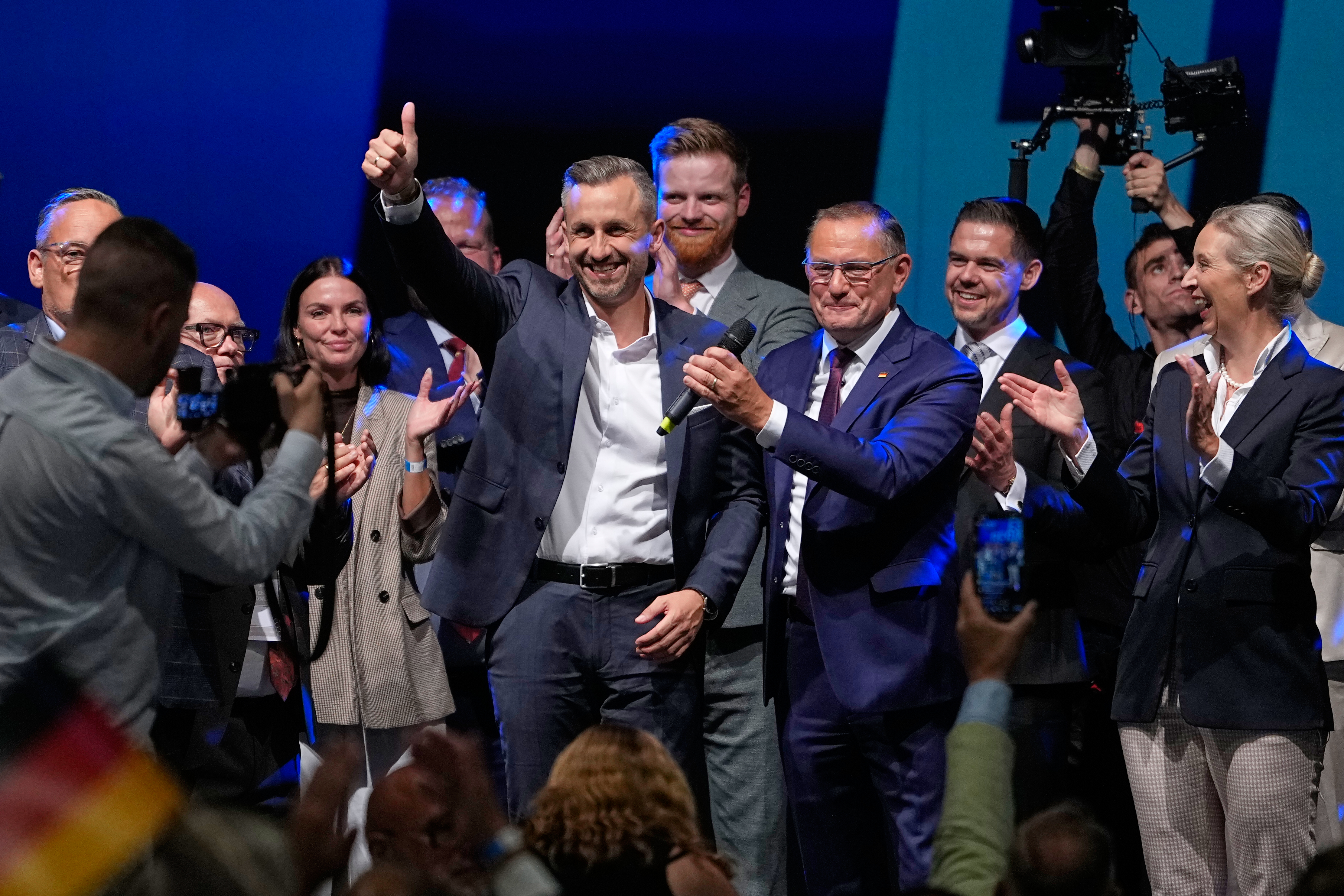
    Now, that lawmaker, Ulrich Siegmund, has harnessed his online popularity to come closer to power than any other far-right politician in Germany since the Nazi era ended in 1945.

    Siegmund, 35, a former air freshener salesperson, is the lead candidate for the Alternative for Germany party in Saxony-Anhalt, a state in eastern Germany where the party was projected to finish first in a statewide election on Sunday.

    If the party, known by its German initials, AfD, wins an outright majority, Siegmund will become the first far-right politician to govern a German state since the reestablishment of the country’s democracy nearly eight decades ago. That would be a convulsive moment for Germany’s postwar political system, which was designed in the aftermath of World War II to prevent politicians deemed extremist from ever taking office.

    To the political establishment in Berlin, Siegmund’s party is an outcast. The domestic intelligence agency has labeled it as “suspected extremist,” an accusation it rejects as politically motivated. The party has said that Islam is incompatible with the German Constitution and has vowed mass deportations of immigrants. Several of its leaders are close to Russia, and some have made dog whistle comments about the Nazi era, such as minimizing the Holocaust and repeating Nazi slogans.

    Siegmund himself has said, in a podcast interview with Politico, that he could not “presume to judge” if the Holocaust was humanity’s worst-ever crime, “because I can’t possibly come to terms with the entirety of human history.” He also declined to condemn supporters who chanted his surname, Siegmund, in the style of the Nazi salute, “Sieg Heil.”

    Still, Siegmund has won over voters in Saxony-Anhalt, experts say, through his ability to present the party’s hard-line policies in a more approachable and optimistic tone than many of his AfD colleagues, without distancing himself from extremists. In addition to deporting immigrants, the party has proposed cutting funding for public broadcasters, banning gay pride flags in schools, and teaching more Russian, as well as providing tax breaks for large families and free childcare.

    “I can provide motivation, create a sense of optimism, and get things moving forward again,” Siegmund said in an interview with the New York Times this year. (He declined more recent interview requests.)

    That affability has made him more acceptable to voters beyond his hard-right base, said Steffen Mau, a prominent sociologist at Humboldt University of Berlin.

    “He’s a canvas onto which people can project some kind of promise for the future,” Mau said.

    Many mainstream politicians, who have said Siegmund and the AfD are dangerous, also call his proposals unrealistic. “Whenever the topic turns to substance, when people actually ask how you intend to move our country forward economically, you’re nowhere to be found,” Sven Schulze, the incumbent governor of Saxony-Anhalt, said to Siegmund during a televised debate last month.

    An August cover story in Germany’s premier newsmagazine, Der Spiegel, called him “the most dangerous man in Germany,” partly because his sunny disposition makes his party’s hard-line goals more palatable to some voters. Siegmund’s followers took it as a badge of honor and, during campaign stops, asked him to sign copies of the edition.

    Siegmund is “so approachable and charming,” said Wolfram Adler, 67, a retired train driver who attended one of those rallies.

    From air fresheners to politics

    Born in 1990, weeks after the reunification of East and West Germany, Siegmund was raised in the picturesque medieval town of Tangermünde, in eastern Germany.

    Growing up in the east, he came of age amid increasing resentment about how reunification played out for his home region. The east’s economy, employment rates, and population ebbed after 1990, leading many East Germans to feel excluded in the new Germany. It was a sense of grievance on which the AfD would later capitalize, particularly in Saxony-Anhalt where the unemployment rate of roughly 8% is well above the national average.

    In his 20s, Siegmund worked as an account manager at a healthcare provider before starting his own business in Berlin selling room deodorizers.

    He joined the Christian Democratic Union, a mainstream conservative party that currently leads the national coalition government.

    But he soon grew tired of the party’s rigid leadership structures, he has said in past interviews with the news media, and joined the AfD in 2014. He was drawn to the AfD, he said, because the party stood against what he perceived as the high-handed policies of the national government in Berlin.

    The AfD was founded in opposition to Germany’s adoption of the euro. After it shifted to an anti-immigrant message, Siegmund ran on the party’s slate for the statehouse in 2016. He won a seat as the party netted 24% of the state vote, profiting from growing concerns about Germany’s decision to welcome roughly 1 million refugees during the European migrant crisis. He also served on his local council alongside his father and brother.

    He rose to national fame in 2021 with his personable videos about pandemic restrictions, helping to project both the party and himself as the voice of voters who felt disenfranchised by mainstream parties.

    Now, Siegmund has more than 850,000 followers on TikTok, an astronomical number for any German politician, giving him a platform that helped to amplify his stump speeches on the campaign trail this summer.

    When speaking to sizable crowds, he has often filmed the scene on his phone, turning the camera toward the crowds to show viewers how big they were.

    “When you see all of Siegmund’s campaign appearances, it becomes perfectly clear: They’re not primarily intended for the live audience, they’re primarily for the internet,” said Paula Diehl, a professor who studies populist leaders at Kiel University.

    His preppy shirts and his trademark tuft of graying hair have made him instantly recognizable in Tangermünde, his hometown of 10,000 residents. During the Times interview this year, passersby repeatedly greeted him, wished him luck or smiled.

    Throughout the conversation, he combined a measured, even tolerant tone with a hard-line, exclusionary message.

    He said that he did not blame immigrants for coming to Germany — before, seconds later, vowing to make their lives in his state “very uncomfortable.”

    Combining nostalgia with optimism

    The backgrounds of his campaign team also highlight his contradictions. The production company behind Siegmund’s genial campaign videos is led by a far-right activist with the Identitarians, a movement that German intelligence has accused of extremism. Siegmund’s spokesperson was once part of a banned extremist group inspired by the Hitler Youth.

    Siegmund did not reply to requests for comment about these links. In interviews with other outlets, he dismissed their relevance.

    Siegmund, said Diehl, “pretends to engage in an inclusive discourse and then immediately shatters it.”

    Part of his strategy has been to tap into nostalgia for East Germany among some residents, even though he was born after it collapsed. Though many remember Communism as a dictatorship, some recall it as a time of full employment and stability.

    One campaign event featured a comedian who sang the East German national anthem — an act so contentious, because it appeared to validate an authoritarian regime, that even some AfD politicians distanced themselves from it.

    At some events, Siegmund rode through the countryside on a Simson, an anemic two-stroke East German motorcycle that has long been associated with life during Communism. His machine was painted baby blue to match the AfD’s colors.

    At other times, he has sought to look forward instead of back. Tapping into widespread disenchantment with high unemployment and living costs, he has painted a picture of a better, if ill-defined, future under AfD leadership.

    “Things are going downhill everywhere, and that’s a bad and demotivating place to start,” he said in the Times interview. “I want things to start moving uphill,” he said.

    Critics say he is simply selling false hope, pointing to his past life as a salesperson.

    “I discovered my strength in sales early on,” Siegmund told a business magazine in 2014. “I love to sell.”

    This article originally appeared in the New York Times.
  • As midterms approach, Republicans find there is no escape from Trump

    As midterms approach, Republicans find there is no escape from Trump

    WASHINGTON — In the White House Rose Garden, President Donald Trump recently gathered some of the most politically endangered House Republicans for a dinner where he promised to make himself the face of the party’s uphill battle to keep control of Congress.

    He was with them “100% — all the way until November,” Trump told the roughly two dozen lawmakers as they dined on prime aged beef burgers at tables adorned with bouquets of yellow roses. The president said he would travel to 35 key districts “to see if we can get everyone elected.”

    The scene encapsulated the box that GOP lawmakers have found themselves in as they stare down a bleak political environment.

    They cannot afford to snub Trump, needing help from his enormous financial reserves and strong turnout from his base to win their campaigns. But they also do not want the election to be a referendum on the president, whose popularity is at a record low. And so far, he has shown little appetite for focusing on anyone’s political needs besides his own.

    Two months before the midterm elections, Trump and the Republicans who have long tied their political fortunes to him appear to be at cross-purposes as the party struggles to keep the House and Senate in GOP hands.

    As Republicans work to distance themselves from the president’s unpopular decisions, Trump is headlining a splashy convention in Dallas this week and has said that voters should “pretend, please, that I’m on the ballot.” As the candidates work to show they are focused on the concerns of everyday Americans, the president is spending much of his time in Washington focused on the construction of a White House ballroom, a 250-foot arch, and a golf course on a public park alongside the Potomac River. And as they brace for the final costly weeks of their campaigns, he has yet to dole out hardly any of the nearly $1 billion he says his political action committee has raised.

    “This is my money that I control,” Trump said Friday, suggesting he would spend between $400 million and $500 million on “Republicans that I think are good.” His political operation reported Saturday that it had made its first expenditure, to defend a Senate seat in Texas. But beyond that, Republicans have received little information about when or where the money may come.

    For now, Trump appears to be focused primarily on promoting himself and boosting his popularity.

    The first 30-second television spot released by his political team, the launch of a post-Labor Day ad blitz, was a case in point. It touted the president as “the toughest, most resilient person” and made no mention of Democrats, the midterm elections, or any Republican candidates.

    And as Trump gathers Republicans in Dallas on Wednesday for the unprecedented two-day midterm party convention, the festivities will be as much about boosting his own approval ratings and public self-esteem as it is the candidates who are actually on the ballot, a person involved with the planning said.

    “The president called me two nights before Thanksgiving last fall, and he said, ‘Mike, we got to do a midterm convention,’” House Speaker Mike Johnson said. “And I said, ‘That’s not a thing.’ And he said, ‘Make it a thing.’ OK. So we’re going to do a midterm convention.”

    ‘A ball and chain’

    Many vulnerable Republicans are steering clear of this week’s convention, choosing instead to spend time campaigning in their states and districts. And while some see a benefit in the confab as a way to raise money for the party — tickets cost $25,000, including for lawmakers — they also worry that it will do exactly what candidates most want to avoid: turn the election into a national conversation about Trump.

    After 10 years of tying themselves to Trump, Republicans have little room to maneuver around him. Candidates up and down the ballot have embraced his lies about American elections, while few have publicly broken with him on signature issues such as spending cuts, tariffs, or the war with Iran.

    A White House spokesperson disputed that there was any fissure between the president and his party.

    “President Trump is the unequivocal leader of the Republican Party, who is committed to maintaining Republicans’ majority in Congress,” Olivia Wales, the spokesperson, said.

    But some Republicans fear the party has little to campaign on after two years that have yielded few legislative achievements and a spare congressional schedule that involved weeks on end at home. Some of Trump’s moves, they argue, have made things worse.

    “I’m fearful that the president’s numbers are a ball and chain that will be hard to overcome,” said Rep. Don Bacon of Nebraska, a moderate Republican who is not running for reelection in his battleground district. “I’m worried that we’ve lost a lot of our swing voters. In the Midwest, tariffs aren’t popular. Ukraine polls at 70% — why aren’t we doing more for them? Nebraskans don’t like chaos and all the name-calling and treating our allies bad.”

    Republicans are banking instead on portraying Democrats as socialist extremists and themselves as the sane and sober alternative. (A handful of democratic socialists have won primaries this year, though their numbers in Congress are likely to remain in the single digits.)

    Johnson, who has raised $135 million this cycle, has been leaning heavily on that contrast.

    “Imagine a nightmare scenario with these insurgent, Marxist Democrats taking over the Congress,” Johnson said this past week while campaigning in Texas. “They would impeach the president on the first day.”

    Placing bets, but when?

    The biggest question for Republicans has been when — and if — Trump will begin spending down his political operation’s prodigious resources.

    Trump’s super PAC, MAGA Inc., has so far stayed almost entirely on the sidelines and has not communicated its plans, even privately.

    Two of Trump’s political advisers, James Blair, a former top White House aide, and Tony Fabrizio, a longtime pollster, briefed Republican senators last month and left a strong impression that money was coming imminently, according to two people who attended the private meeting and spoke on the condition of anonymity. But little has been spent as some Republicans are growing anxious that races in North Carolina and Georgia may be falling further out of reach.

    Apart from the new investment in Texas, so far Trump’s super PAC has only spent this year to boost Sen. Darline Graham in last month’s Republican primary in South Carolina. The president had put his reputation on the line in that contest by endorsing Graham, but its outcome in a solidly Republican state was unlikely to affect his party’s chances of holding the Senate.

    Trump’s advisers, people familiar with their thinking said, are reluctant to spend his money when House and Senate leaders have yet to drain their own campaign coffers.

    Blair has been in regular contact with counterparts in the Republican leaders’ political operations to strategize about how to most effectively use the president’s funds in the midterms.

    But there have been some major splits. Trump’s decision to back Ken Paxton, the scandal-tarnished Texas attorney general who defeated Sen. John Cornyn in a primary this year, angered Sen. John Thune of South Dakota, the majority leader, and other Republicans who saw it as making that state far more costly for the party to defend.

    Thune has all but begged Trump to put some of his own resources into the race. On Saturday, MAGA Inc. reported it had begun doing so, spending $10 million on television and digital advertising in Texas.

    Separation is hard

    A handful of vulnerable Republicans have sought to carefully create some distance between themselves and Trump. Unlike previous presidents who have made themselves scarce when politics demanded it, Trump has not made it easy.

    Rep. Mike Lawler of New York recently aired a digital advertisement that features the president calling him a “pain in the a—” for advocating the repeal of the cap on the state and local tax deduction. But Lawler is also planning to speak at the convention.

    Rep. Tom Barrett of Michigan bought ads on Facebook touting his votes to limit Trump’s war powers in Iran. But in July, Trump held a rally in his district and called the congressman to the stage alongside him. “I’m proud to stand with you today,” Barrett said.

    A handful of other Republicans, including the party’s nominees for governor of Georgia and Maine and several running for Congress, have quietly scrubbed photos of Trump from their campaign websites or removed mentions of his endorsement — which they were happy to promote during primary contests.

    But there are not many examples of Trump-era Republicans successfully distancing themselves from the president in the eyes of voters. In 2018, the last midterm election with Trump in office, he celebrated the defeat of House Republicans like then-Rep. Mia Love of Utah, who had been critical of him.

    “The idea that you can run away from him is silly,” said Corry Bliss, who ran the House Republican super PAC in 2018. “Republicans need to have a thoughtful conversation with their voters about what they’ve accomplished. Some of them won’t have a single thing to say, and they’re the ones who will lose.”

    This article originally appeared in the New York Times.

  • Trump envoys make first visit to Kyiv

    Trump envoys make first visit to Kyiv

    KYIV, Ukraine — President Donald Trump’s envoys, Steve Witkoff and Jared Kushner, met with officials in Ukraine on Sunday, their first trip to the country and the second stop on a diplomatic tour aimed at reviving efforts to end the war between Ukraine and Russia.

    Witkoff and Kushner came straight from Moscow, where they spoke Saturday with Russian President Vladimir Putin for several hours. They arrived in Kyiv, the capital, by train, alighting on a platform bearing a sign that read, “PEACE EXPRESS,” and then were taken by motorcade to meet Ukrainian President Volodymyr Zelensky.

    Witkoff and Kushner, who have traveled to Moscow several times, had never before visited Kyiv, despite multiple official invitations.

    “We have been waiting for Steve and Jared, Witkoff and Kushner, for a long time,” Zelensky told reporters before greeting the two with hugs.

    The men met for about three hours in the gilded halls of Mariinsky Palace, the official residence of Zelensky. They briefly addressed journalists afterward, with Witkoff saying it had been a meaningful, substantive, and encouraging conversation.

    “We look forward to continuing this day as long as it takes,” he said, seated across a large table from the Ukrainian delegation. A second round of talks got underway soon after, with national security advisers from Britain, France, and Germany joining the discussion.

    Witkoff thanked the Ukrainian delegation, saying they had a “delightful trip” and were having a “great time” in Kyiv, calling the hospitality “unsurpassed.”

    The meetings come at a dangerous moment in the nearly five-year conflict. Russia and Ukraine have both been escalating, waging an intensifying air war at least in part to try to gain the upper hand in settlement talks.

    That was reflected in the delicate, weekslong discussions around the U.S. envoys’ travel. The United States insisted that Ukraine temporarily cease attacks on Moscow and that Russia temporarily halt attacks on Kyiv while the men were in those cities, according to officials familiar with the diplomatic effort.

    Zelensky publicly committed to doing so Friday evening, hours before Witkoff, the president’s special envoy, and Kushner, his son-in-law and frequent negotiator, landed in Moscow. While they were there, the Kremlin announced that Russia would pause strikes on Kyiv for three days.

    Few expect a breakthrough from the U.S. envoys’ trip, which has been billed as the first step toward reviving talks mediated by the Trump administration. Those are expected to resume late this month — days after Russia’s parliamentary election and weeks before U.S. midterm elections, Ukraine’s chief negotiator, who greeted the envoys at the train station Sunday, recently told the New York Times.

    Trump returned to office last year pledging to end the war in Ukraine swiftly. He enlisted Witkoff and later Kushner to assist with negotiations, which have unfolded in fits and starts.

    By February, Witkoff and Russian and Ukrainian negotiators had whittled a 20-point peace plan to two key unresolved points: management of a Russian-occupied nuclear power plant and control of territory that Ukraine still holds in the eastern Donbas region. Then the United States and Israel attacked Iran, shifting the White House’s attention away from resolving the war in Ukraine.

    Trump told reporters Friday that Witkoff and Kushner were traveling with a proposal to end the war, but he did not provide further details.

    It was unclear whether it was a new proposal or if the men would be pushing to close the gap on the remaining issues.

    Few in Ukraine expect a speedy resolution. The Kremlin has given no indication that it is ready to stop the fighting, and Ukrainian officials say they expect Russian forces to try to inflict as much pain on Ukraine as possible during the winter in hopes of pummeling Kyiv into submission at the negotiating table.

    The Russian military’s gains on the battlefield have slowed in recent months. Yet the Kremlin’s foreign policy aide, Yuri Ushakov, told reporters that Putin, in his meeting with the Americans, emphasized that Russia’s forces were advancing and would achieve their goals.

    This article originally appeared in the New York Times.
  • Trump officials draft plan to pay at-home parents, using funds for working ones

    Trump officials draft plan to pay at-home parents, using funds for working ones

    WASHINGTON — The Trump administration is moving to allow married couples with a stay-at-home spouse to collect childcare subsidies, a policy championed by Vice President JD Vance, using funds from a federal program intended to assist working parents, according to people familiar with the discussions.

    The change would create the only federal subsidy to pay parents to stay home and raise their children, one of the most significant efforts to date by the Trump administration to harness federal funds to promote a traditional view of families.

    To do so, officials are seeking to use a Health and Human Services Department fund that was created in the 1990s to help low-income and working-class parents afford childcare so they could work or go to school.

    Under the draft new rule, parents who stay home with their children could benefit from the program, which typically provides about $9,000 per child each year, potentially reshaping which families get federal childcare money.

    The move could end up redirecting money away from working parents and their childcare providers, causing some to raise their rates or even close, critics said, potentially worsening what many experts say is a childcare crisis in the country.

    About 80% of the 870,000 families who currently get the childcare subsidies have single working parents, most of them mothers, according to Health Department data.

    The policy change would effectively create a government incentive for parents to stay home with their children, an idea embraced as part of a broader conservative effort to advance policies that promote more mothers staying at home.

    The new rule being drafted would allow married couples with one stay-at-home parent in certain income brackets to collect a subsidy, according to the people, who spoke on the condition of anonymity to describe the plan before it is finalized. The change could be made without approval from Congress.

    More than 80% of stay-at-home parents are mothers, according to the Pew Research Center.

    The plan is being pushed by the White House and is seen as a top priority of Vance, according to several people familiar with the discussions. The draft rule also incorporates policies in legislation written by Secretary of State Marco Rubio when he was a senator from Florida.

    Representatives for the White House, Vance, and the Department of Health and Human Services did not respond to requests for comment.

    Vance, whose wife Usha, a former corporate lawyer, gave birth to their fourth child in July, has long advocated for more mothers to stay at home with young children and called for efforts to open up childcare subsidy programs to those providing “kinship care.”

    In 2021, Vance co-wrote an opinion essay in the Wall Street Journal contending that daycare can harm children and declaring, “Young children are clearly happier and healthier when they spend the day at home with a parent.”

    He also wrote then on Twitter that “normal Americans” want a “family policy that doesn’t shunt their kids into crap daycare so they can enjoy more ‘freedom’ in the paid labor force.”

    Some family policy experts said the changes to the program would hurt parents who have to work and have difficulty affording childcare.

    “I am a big proponent of more support for stay-at-home parents. But this is not how I would choose to do it,” said Joshua McCabe, director of social policy at the Niskanen Center, a centrist think tank.

    “Expanding the eligibility without increasing funding would mean more parents competing for the same dollars, and leaving more parents — particularly single working parents — worse off,” he said.

    The $12 billion Child Care and Development Fund, which is run by the Health Department’s Administration for Children and Families, was created during the Clinton administration to support the employment of low- to moderate-income parents. It subsidizes the care of children up to age 13 and currently offsets the costs for caring for about 1.3 million children.

    Under the current rules, most of the money is distributed to states, which in turn distribute it to parents, usually in the form of vouchers or direct deposits to childcare providers.

    To qualify, parents must prove that their income is lower than 85% of their state’s median income and that they are working, in school, or receiving job training. Some states set a lower threshold of 60% of the state’s median income.

    Under the proposed rule changes, the same pot of money would also be used to pay married parents who meet the income requirements when one parent works and the other cares for the child. The money would be intended to help offset the lost income of the stay-at-home parent.

    The proposal “creates the option for a new category of care, parent-based childcare, that will allow one married parent to receive CCDF assistance to care for their own child, while a spouse works at least 35 hours per week,” according to a draft document viewed by the New York Times.

    Unmarried couples in which one parent stays at home would not qualify under the draft. Single parents who do not work are currently not eligible for the subsidy, nor would they be under the new proposal for married couples.

    The rule, which could still be changed before publication, would need to be approved by the White House and then would be posted online for public comment. If it is finalized, it could go into effect as soon as next year.

    Some department lawyers working on the plan have questioned the legality of requiring recipients to be married, according to the people familiar with the matter. Some have also raised concerns about whether the change could increase the risk of fraud, since the money would be going to individuals rather than businesses. The administration has sought to crack down on fraud in social services programs, particularly childcare.

    The idea of paying parents to stay home was outlined in Project 2025, the conservative blueprint published by the Heritage Foundation ahead of President Donald Trump’s return to office, much of which overlaps with the administration’s policy agenda.

    “Instead of providing universal daycare, funding should go to parents either to offset the cost of staying home with a child or to pay for familial, in-home childcare,” it says, although it does not specify how or which fund to use.

    “You don’t need statutes to do it, and with existing programs we can end discrimination against stay-at-home parents,” said Roger Severino, a vice president at the Heritage Foundation who wrote the Project 2025 section on childcare policy.

    “It would be a welcome change to see equal treatment between commercial daycare and the contribution stay-at-home parents provide in caring for and raising the next generation,” he said in an interview. “It doesn’t get more pro-family than that.”

    Severino said he believed that the provision privileging married parents would most likely withstand a legal challenge. He said that under the Supreme Court decision Obergefell v. Hodges, married same-sex parents would most likely also qualify for the subsidies.

    In a letter to governors on Mother’s Day, Alex Adams, head of the Administration for Children and Families, previewed that policy changes were coming and urged states to “use every available” flexibility to distribute federal money in ways that “support married two-parent families,” and particularly “families who choose to have a parent remain at home with young children.”

    Childcare policy experts said they anticipate that in some states, the rule change could lead to much of the money going to stay-at-home parents. States have some flexibility in determining how their subsidies from the Child Care and Development Fund are allocated, and lawmakers in some red states, including Idaho, Wyoming, and Utah, have pushed for new policies for the states to support stay-at-home parents.

    That outcome could in turn shutter some of the roughly 225,000 childcare providers that rely on the subsidies for tuition payments.

    Krystal Gastineau, owner of Cribs 2 Crayons, a childcare center in Aurora, Colo., said that about half the children she cares for receive the subsidies, which are paid directly to Gastineau’s business via direct deposit. “If they could, I think parents would choose to take the money and stay home,” she said. “That would take away a major source of income.”

    “I think that’s a misuse of the system,” she said.

    Lezlie Cranston, in Auburn, Wash., uses the subsidy program to pay for care for her 4-year-old son, Ricky, and her 2-year-old daughter, Samantha, while she pursues a certification at Skagit Valley College. The subsidies have “helped tremendously with allowing me to do my coursework,” said Cranston, a single parent.

    “But changing it to let the money go to stay-at-home parents is going to create conflict between parents,” she said. “That’s a bad situation. We’re already trying to figure out how more working parents can get the subsidies. This could lead to single parents not being able to afford childcare again.”

    This article originally appeared in the New York Times.

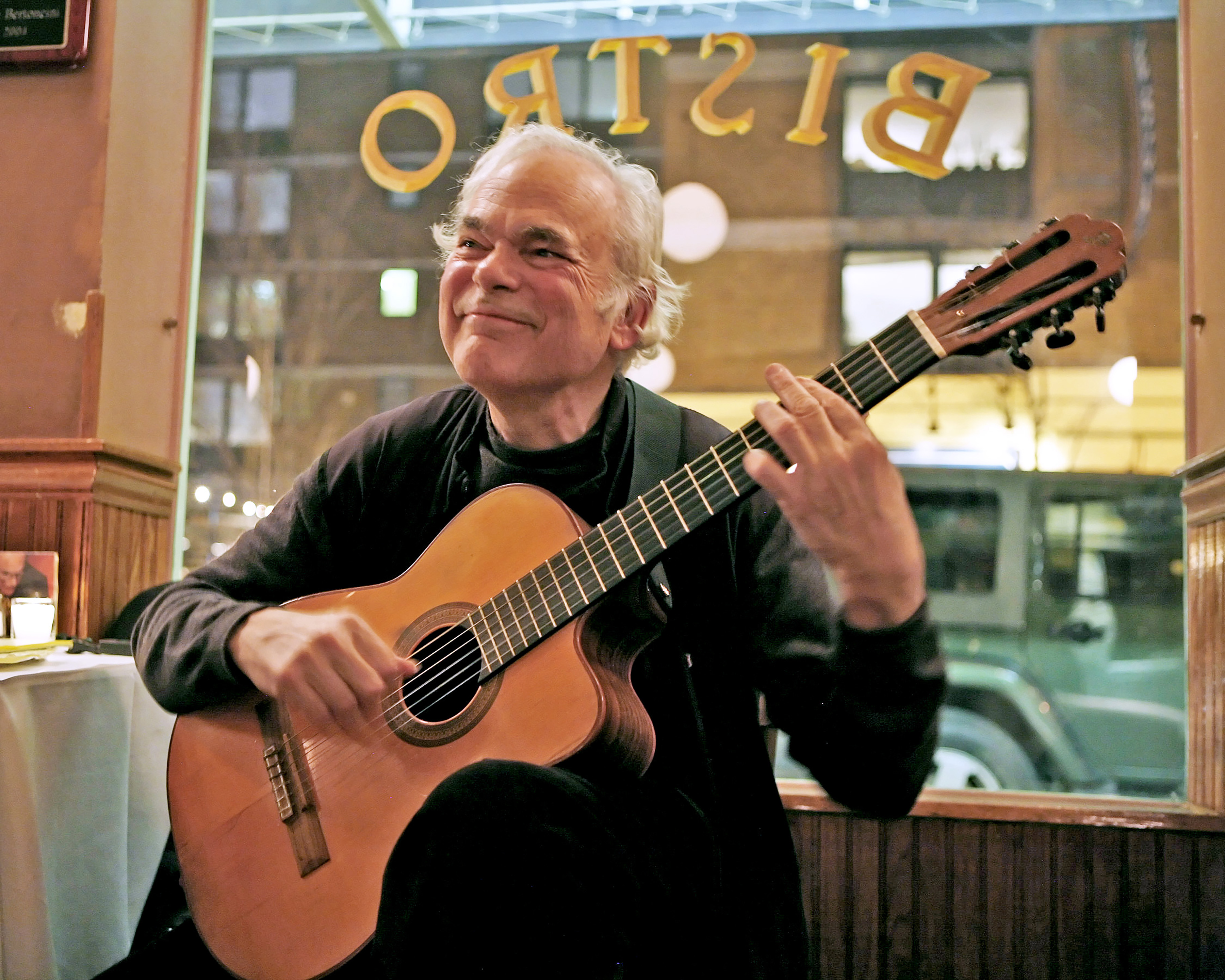
  • Gene Bertoncini, 89, jazz guitarist who dazzled with subtlety

    Gene Bertoncini, 89, jazz guitarist who dazzled with subtlety

    Gene Bertoncini, a prolific jazz guitarist celebrated for his bountiful lyricism and driving swing, for accompanying celebrated singers including Tony Bennett and Lena Horne, and for performances and arrangements that blurred the line between jazz and classical music, died on Saturday at the Actors Fund Home in Englewood, N.J. He was 89.

    His niece Nina Collins confirmed the death.

    Throughout a career that began in a duo with his older brother, Renny, an accordionist, playing in restaurants and catering halls near their childhood home in the Bronx, Mr. Bertoncini was heralded as a sensitive accompanist and innovative leader.

    In a sideman role, he worked with many of the greatest jazz singers of the 20th century, including Bennett, Horne, and Nancy Wilson, and with instrumentalists as varied as Benny Goodman, Wayne Shorter, and Michel Legrand.

    Mr. Bertoncini was equally at home with the Great American Songbook, the European classical repertoire, and, in advance of his fellow jazz guitarists, Brazilian works in the bossa nova style composed by such colleagues as Antonio Carlos Jobim and his close friend Joao Gilberto.

    Mr. Bertoncini was in his early 20s when he played his first major date with a nationally known headliner, Buddy Rich, and passed muster with the notoriously temperamental drummer and bandleader.

    “Buddy really liked the way I played rhythm with him,” Mr. Bertoncini said in an interview last year. “He liked that he didn’t have to tell me anything. I was able to lock into the beat with him, which was amazing, because he was such a dominant force.”

    In the early 1960s, Mr. Bertoncini found plentiful work in New York studios, not least because his facility with nylon-string classical guitar technique lent itself to bossa nova at a time when few established guitarists could play it.

    During those years, he played on Ahmad Jamal’s 1963 album Macanudo; formed a trio with pianist Monty Alexander and bassist Bob Cranshaw; performed on two albums by the trumpeter Clark Terry; and became a regular in the Tonight Show band until that late-night program moved to Los Angeles from New York in 1972.

    Over the next several decades, Mr. Bertoncini played thousands of studio dates. Some teamed him with bassist Ron Carter, and Mr. Bertoncini gave his last major performance in New York, at Mezzrow, with Carter in December.

    Gene Joseph Bertoncini, the younger of two sons, was born in the Bronx on April 6, 1937, to Italian immigrants Mario and Anita (Ori) Bertoncini.

    Mario Bertoncini, a waiter who later owned and operated a diner called Joe’s on Third Avenue in Manhattan, also taught his sons to play the music of the old country.

    At 17, Mr. Bertoncini accepted a scholarship to study architecture at Notre Dame, which seemed like a safer career bet than the itinerant life of a musician. During the five-year program, he also played in student ensembles and directed the school’s swing band.

    Upon returning to New York after graduating in 1959, Mr. Bertoncini took an entry-level position in the architecture firm of David Henken, a prominent disciple of Frank Lloyd Wright, and moonlighted in big bands. In the middle of one show with a dance band led by Richard Maltby, Mr. Bertoncini later said, he had an epiphany after he hit a wrong note, which was a shock to his system at the time.

    “Probably nobody noticed but me, but I couldn’t live with that,” he said. “I attributed it to the fact that I hadn’t been practicing enough.” He decided to quit his day job and commit full-time to the guitar.

    Discographer Glenn Broadhead compiled a listing of 188 known albums featuring Bertoncini — 32 as leader and 156 as sideman — but even that was far from an exhaustive list, considering the guitarist’s work on thousands of sessions for pop albums and singles, and film and TV soundtracks.

    In the jazz world especially, it’s largely acknowledged that Mr. Bertoncini — who never married and left no immediate survivors — influenced legions of guitarists through his music.

  • U.N. approves African proposal for a new world map

    U.N. approves African proposal for a new world map

    The United Nations General Assembly on Friday endorsed a world map that depicts the size of Africa more accurately than the map most commonly used now.

    The assembly approved a resolution favoring the Equal Earth projection, a map that supporters say shows the true size of countries, over the familiar Mercator projection, which shrinks regions near the equator. It passed with 164 votes in favor and 6 abstentions, according to the United Nations.

    The only nation that voted against the resolution was the United States, which said the map promoted an “ideological agenda” and was a distraction from the “genuine problems of international peace, prosperity, or good relations.”

    The new map has supporters in Africa, who say the Mercator projection has contributed to a historical bias that has minimized tropical and equatorial regions and exaggerated the size of countries near the poles.

    The U.N. resolution does not outlaw the Mercator projection or require the use of the Equal Earth map. But it is part of a campaign to raise awareness of the effects of visual representations of the Earth on how people view the world.

    Here’s what to know about the debate.

    What is the Mercator projection?

    The projection, one of many ways to represent the spherical Earth on a flat plane, was designed by Flemish cartographer Gerardus Mercator in 1569 to help sailors navigate.

    It was created by projecting the Earth’s features onto a cylinder, then flattening that into a rectangle.

    The map was invaluable for seafaring: Any straight line drawn on the map represents a compass direction that sailors can use to determine which way to go. The projection has since become widely used in books, classrooms, and online services like Google Maps.

    Why do critics want to move away from it?

    Every map projection makes sacrifices, like shape, size, or distance: You can’t flatten a round object without somehow stretching, shrinking, or tearing it. The Mercator projection reflects true directions but distorts the size of landmasses.

    If you had a Mercator projection on your classroom wall, you might have grown up believing that Greenland, for example, is as big as Africa, even though it is 1/14th its size. You might also think that Alaska is bigger than Mexico, when it is 25% smaller.

    Critics have argued that the Mercator map creates a subtle bias whereby northern nations, including some of the world’s wealthiest, appear large and equatorial regions, home mostly to developing countries, are depicted as small. Some cartographers say it reinforces a Eurocentric and colonial worldview.

    The Equal Earth projection — created in 2018 by cartographers Bojan Savric, Bernhard Jenny, and Tom Patterson — sacrifices straight-line directions in order to render landmasses in their correct proportions. It has rounded edges to account for the Earth’s spherical shape instead of a rectangle.

    Advocacy groups in Africa have campaigned to replace the Mercator map since April 2025. The African Union endorsed the campaign in August that year, urging its 55 member states to adopt the Equal Earth map in schools and public communications. The West African nation of Togo sponsored the U.N. resolution, backed by other countries in the African Union.

    “A map is never neutral,” Robert Dussey, the foreign minister of Togo, said Thursday, promoting the U.N. resolution. “It shapes perceptions, influences how the place of peoples and continents in the world is understood, and may, sometimes from the earliest years of schooling, perpetuate representations that do not correspond to geographic reality.”

    What does the U.N. resolution do?

    The resolution calls on the more than 190 U.N. member states to update their educational materials and educate students about the accurate sizes of countries and the limitations of different map projections.

    It also urges major digital map providers to discuss the issue with governments and adopt more accurate cartographic representations.

    The resolution is not binding. But the push to replace the Mercator map has made progress in other ways.

    Google, which used a Mercator-based map for more than a decade, shifted in 2018 to showing the Earth as a globe when zoomed out on the desktop platform. “Greenland’s projection is no longer the size of Africa,” the company said on social media.

    Some schools have begun replacing Mercator maps. Boston Public Schools in 2017 began purchasing maps with the Peters projection, which shows countries in their correct proportional sizes to one another at the cost of stretching and squashing their outlines.

    The shift was part of the district’s effort to “decolonize the curriculum,” Colin Rose, then a district administrator, told the Boston Globe.

    This article originally appeared in the New York Times.

  • Judge orders Trump officials to divulge names of those who set up $1.8 billion fund

    Judge orders Trump officials to divulge names of those who set up $1.8 billion fund

    A federal magistrate judge ordered the Trump administration on Friday to reveal the identities of the people who devised a contentious plan to create a $1.8 billion fund to compensate those who believed they were wronged by political prosecutions.

    The order by the magistrate judge, Ivan D. Davis, could shed further light on how the fund was put together. The plan to create the fund, which could have funneled taxpayer money to the president’s allies, drew repeated scrutiny. It prompted a rare rebuke from Senate Republicans, and imperiled the confirmation of Todd Blanche as attorney general.

    Blanche has repeatedly said the fund is dead, but President Donald Trump has been more circumspect, indicating his support for compensating people including the rioters who were prosecuted for attacking the Capitol on Jan. 6, 2021.

    Davis’ order, issued in U.S. District Court in Alexandria, Va., came as part of a lawsuit challenging the legality of the fund and another measure by the Justice Department that benefited Trump. That provision granted the president, his family, and his businesses expansive protections against all past tax investigations.

    Both the fund and the tax immunity deal emerged from backroom negotiations between Trump’s personal lawyers and senior Justice Department officials. The measures were made public after Trump agreed to dismiss a lawsuit he had filed against the IRS, seeking damages for claims that the agency had failed to stop the release of some of his tax returns to news organizations.

    A federal judge in Florida later excoriated both the suit and the way in which it was dismissed. She said the suit was an improper exercise in self-dealing because the president had brought claims against a federal agency that he himself controlled. She also asserted that the dismissal had been worked out with the intent to evade judicial oversight.

    The suit seeking to kill the fund and the tax immunity deal was brought in Virginia by a group of plaintiffs that includes a former federal prosecutor who was fired by the Trump administration after working on Jan. 6-related cases. The group has claimed that the program was unfairly designed to help only supporters of the president.

    The union representing IRS workers later joined the suit, claiming that the tax provisions were illegal and could put its employees in the untenable position of carrying out unlawful orders.

    Lawyers for the plaintiffs hailed the decision.

    “Today’s order granting discovery is a significant step in getting to the bottom of the slush fund,” said Aman George, a lawyer for Democracy Forward, which filed the suit.

    The Justice Department did not immediately comment on the ruling.

    This article originally appeared in the New York Times.