Category: New York Times

  • Navy failed to protect pilots from brain injury, House report says

    Navy failed to protect pilots from brain injury, House report says

    As concerns mounted that the extreme physical strain of flying fighter jets was causing brain injuries in pilots, and may have led to the death of a number of career aviators, the Navy did almost nothing.

    It didn’t even study its pilots to understand if it had a problem.

    That is one of the numerous findings in a harshly critical report released Tuesday by the powerful House Oversight Committee. The report said that because the Navy had repeatedly failed to act, Congress should pass legislation requiring the military to create a specific program to study and care for the brain health of all aviators.

    “Despite credible warnings, external reporting and internal awareness, the Navy has yet to determine whether the very conditions that define naval aviation may also be causing long-term harm to the pilots who endure them,” the report said. “Instead, it has relied on a system designed to respond to visible injuries, while leaving potential cumulative damage largely unexamined.”

    Naval aviators are repeatedly exposed to body-crushing forces as they catapult off aircraft carriers and pull high G-force turns in training. The Navy has never studied how those forces over time affect the human brain, which contains 100 billion neurons in a network with a consistency similar to Jell-O.

    A number of career pilots have raised concerns that those repeated exposures may cause brain injuries that slowly accrue over years of service and lead to debilitating mental health problems.

    “Landing on a carrier is like a car crash. In my career I’ve been in hundreds of car crashes,” said Matthew Buckley, a former TOPGUN pilot who after 15 years of flying struggled with headaches, mood swings, and suicidal thoughts. He later started an organization to help the many other pilots he encountered who were experiencing similar problems.

    “I’m almost shaking, I’m so furious,” he said after learning about the findings of the House committee. “People have died. We know we have a problem. And you’re telling me someone needs to call for legislation to have the admirals do their jobs? It’s insane.”

    In 2024, the New York Times published an investigation showing that three pilots who all had symptoms consistent with brain injuries died by suicide in an 18-month span, and that a dozen current and former pilots were struggling with similar issues.

    In the following months, Rep. James Comer (R., Ky.), who heads the House Oversight Committee, formally demanded to know how the Navy was responding to the problem.

    The report released this week said the Navy had barely responded at all: It had not done a formal investigation to see if fighter jets were causing injuries. It had not put monitoring in place that might detect injuries. And it had no plans to offer expanded brain health services to its aviators.

    While the Navy has done extensive research on the immediate health effects of flying fighter jets, it has never looked at the long-term impacts. Because the Navy had no evidence of a brain-injury problem, its medical officials maintained that no problem existed. It continued to do so even as Navy doctors started sending pilots who were experiencing issues to a civilian neurologist.

    When that neurologist raised concerns to the Navy in 2020 that he was seeing a pattern of brain injury, he said it stopped sending him patients.

    Internal documents reviewed by the House committee showed that a few years later, when three career pilots who flew the Navy’s F/A-18 Super Hornet died by suicide, several Naval officers grew deeply concerned.

    In 2024 a Navy doctor and former pilot conducted an informal survey of pilots and found widespread mental health issues that were often going untreated. His report rippled through the pilot community, and a Navy captain soon sent the report to several admirals.

    “Feedback from the bro-network is that this is a hot topic … and it is affecting retention of our senior aviators,” the captain wrote. “The suicides may, or may not, be linked by common causes. But we will not know until we choose to study this problem.”

    The committee said no study took place.

    Instead, Naval leaders blamed the crisis on stubborn barriers to seeking mental health, including pilots not coming forward out of fear that they might be grounded. The Navy tended to blamed individuals for not seeking help. The House report found no evidence that leaders considered that the problem could be caused by its jets.

    The Navy’s elite TOPGUN fighter jet school saw things differently.

    In 2024 it surreptitiously set up a brain health program, known as Project Odin’s Eye, to monitor its top flyers, modeled on a program created by the Navy SEALs. TOPGUN did not alert the larger Navy to the suspected problem, or inform other fighter wings, the report said.

    Navy leadership knew nothing about Project Odin’s Eye until the Times wrote about its existence in December 2024.

    After the Times published its investigation, top Navy leaders pushed Navy medical experts on whether flying was causing brain injuries, according to the report. In a bit of circular reasoning that seemed pulled straight from the novel Catch-22, the experts said the Navy had never studied the problem, so there was no hard evidence that it existed. And since there was no hard evidence that existed, there was no reason to study it.

    “The medical team argued that because there was no evidence, there would be no need to investigate further,” the report noted.

    The House committee was particularly critical of that decision because, it said, the Navy was “well equipped” to study the issue, and already had an extensive aviation physiology research and monitoring program that could easily add a brain health study.

    The Navy, by its own estimate, could conduct a long-term study of brain health for 1,000 pilots for $3.9 million — about the cost of training one pilot to fly.

    Instead, the Navy chose to do nothing, the report said.

    “In sum, the Navy’s response to the committee reveals a paradox: A well-funded and expansive research enterprise that has nonetheless failed to address a consequential question in aviator health,” the report said. “Given the Navy’s substantial investment in human capital, failing to allocate comparable resources to understanding risks and protecting that investment, particularly in terms of long-term health, is unfortunate.”

    The committee recommended that Congress step in and require a comprehensive program that would create a frontline brain healthcare program for all pilots, modeled on Project Odin’s Eye.

    The committee also called for requiring the Defense Department to track catapult takeoffs and high G-force maneuvers in aviators’ medical records, and conduct a comprehensive study of the cumulative effects over time, including after pilots leave the military.

    This article originally appeared in the New York Times.
  • Smithsonian’s secretary to resign as Trump tries to rule the institution

    Smithsonian’s secretary to resign as Trump tries to rule the institution

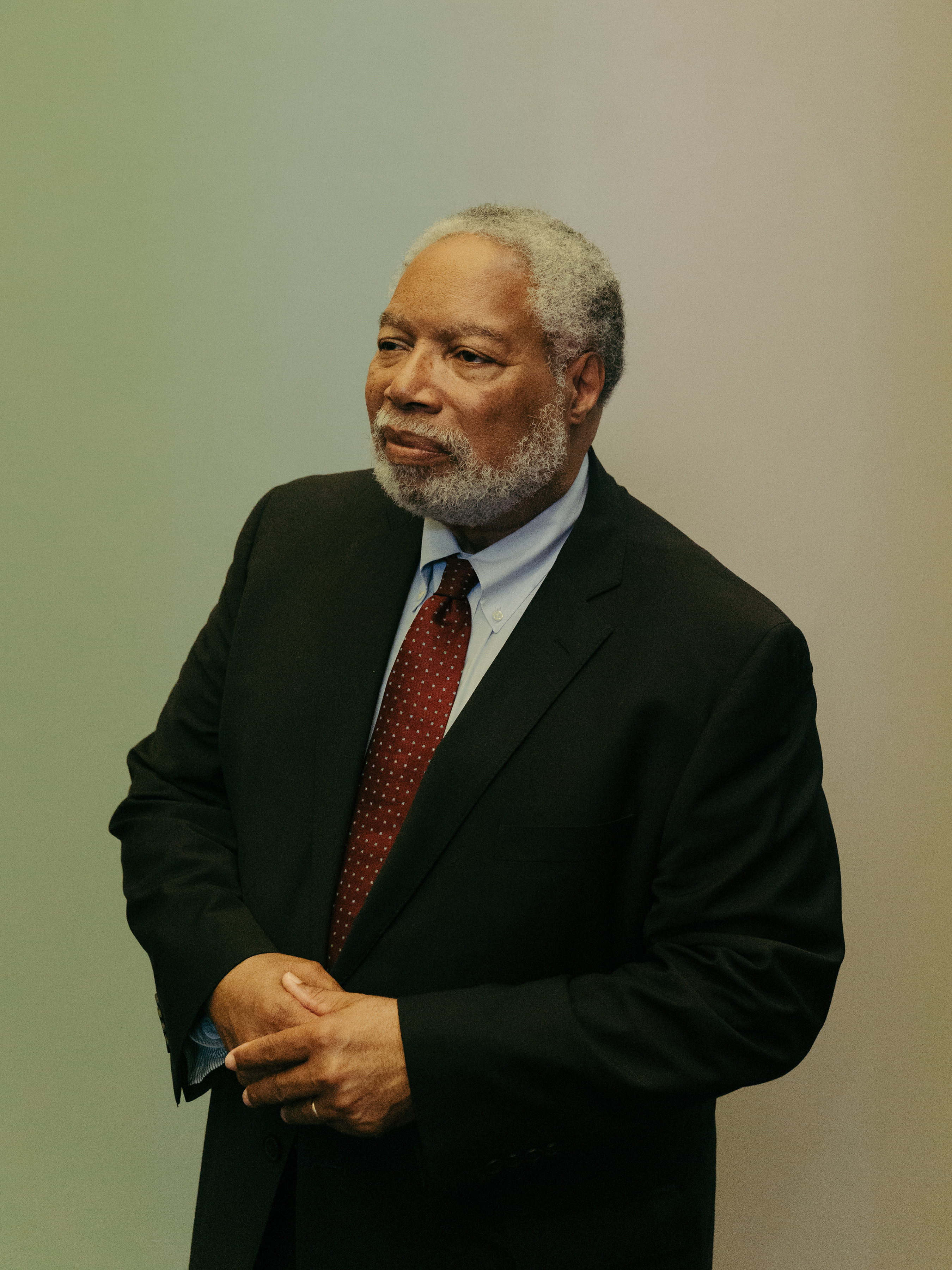
    After a seven-year run marked most recently by attacks from the Trump administration, Lonnie Bunch III announced Tuesday that he was stepping down as secretary of the Smithsonian.

    The White House has escalated its criticism of how the Smithsonian presents American history and values, prompting concern from some about what they see as an assault on the institution’s autonomy and commendation from others for reining in an organization they view as overtaken by liberal bias.

    In an interview, Bunch, 73, said it was not the pressure that had led to his departure.

    “It was really just saying, now’s the time,” he said.

    “I’m a fighter,” he added.

    At the same time, he acknowledged the strain of the role.

    “I have to be honest, it has been stressful,” he said. “And at a certain point, I’d like to wake up in the morning and not look at my cell phone.”

    In a statement, Chief Justice John Roberts, who serves as the Smithsonian’s chancellor, said that Bunch had “pursued excellence in the telling of our nation’s story” and that the Smithsonian had “benefited greatly from his wisdom, vision and leadership.” The Smithsonian said Bunch was expected to depart at the end of the year.

    For more than a year, Bunch has tried to balance diplomacy and openness to criticism with a determination to resist a White House push to present what President Donald Trump calls “patriotic” history. Some admire how Bunch has managed to quietly hold the line against the White House. Others believe the Smithsonian has shown too much deference to Trump and even engaged in self-censorship.

    Last year, painter Amy Sherald withdrew her blockbuster show at the National Portrait Gallery over a disagreement about how the museum would display her portrait of a transgender Statue of Liberty.

    But Bunch said he had no regrets. “My goal has been to win, not to make me feel good,” he said. “To win — to protect the Smithsonian — there were times I would fight, make clear what the red lines were. And there were other times I let things go.”

    Bunch, a widely respected historian who previously oversaw the creation of the National Museum of African American History and Culture, said his next chapter would most likely include teaching or a fellowship.

    Created by Congress as a trust in 1846, the Smithsonian has long been viewed as independent of the executive branch. Its governing Board of Regents must now appoint a new leader in the face of withering attacks from the administration.

    The 17-person panel, led by Roberts, includes six members of Congress, split along party lines; nine private citizens; and Vice President JD Vance. The terms of three citizen members have recently expired, and the names of replacement nominees have not made it to Congress, an unusual holding pattern that appears to be evidence of the shadow war over control of the Smithsonian.

    In the short term, Bunch seemed to have sufficient board support to stay on. But he has indicated that he is weary of the fray and ready for some form of retirement.

    “When you’re Black in America, you’ve got to figure out how to get through, right?” he told the New York Times in May. “You’ve got to figure out how to build allies, when to stand firm, when to bang the table. So in some ways, all of that prepared me for this moment.”

    “But do I wish I was in it?” he continued, referring to scrutiny by the Trump administration. “Of course not. Good Lord, I wish that I was doing my goodbye tour.”

    Over nearly 40 years in various roles at the Smithsonian, Bunch developed a reputation as a soft-spoken diplomat adept at raising money and dealing with public officials. As the institution’s first Black secretary, he has at times been a forceful voice on issues of race, particularly after the 2017 white nationalist rally in Charlottesville, Va., and in the wake of George Floyd’s murder in Minneapolis in 2020.

    Trump did not pay much attention to Washington’s cultural organizations in his first term but has made them a focus of his second, including through his efforts to govern, close, and renovate the John F. Kennedy Center for the Performing Arts. The Smithsonian has been forced to respond to White House demands or risk potential cuts to its $1 billion budget, which is largely funded by the federal government.

    Last month, in a letter to the board, Doug Burgum, the interior secretary, and Vince Haley, a senior White House adviser, made the stakes clear.

    “The Smithsonian enjoys support from executive departments and agencies,” the letter said. “Those executive departments and agencies cannot in good conscience continue to support the Smithsonian under current leadership.”

    The president’s attempt to overhaul the Smithsonian began last year with an executive order that accused the institution of promoting “narratives that portray American and Western values as inherently harmful and oppressive” and called for an end to spending on exhibitions or programs that “degrade shared American values, divide Americans based on race or promote programs or ideologies inconsistent with federal law.”

    After the White House demanded that the Smithsonian turn over information about the content of its exhibitions, Bunch reasserted the institution’s independence while saying that materials had been submitted in an effort to be “transparent.”

    The board adopted a resolution that called for its 21 museums to review their content for partisanship or bias. But the administration began its own review of exhibitions, wall text, and social media to assess “tone, historical framing and alignment with American ideals.”

    Trump has been unrelenting in his criticism, posting on social media that “the Smithsonian is OUT OF CONTROL, where everything discussed is how horrible our Country is, how bad Slavery was, and how unaccomplished the downtrodden have been — Nothing about Success, nothing about Brightness, nothing about the Future. We are not going to allow this to happen.”

    The president also announced online that he was dismissing the director of the National Portrait Gallery, Kim Sajet, calling her “a highly partisan person, and a strong supporter of DEI.” (The Smithsonian insisted it controlled personnel matters, but Sajet resigned, citing the institution’s best interests.)

    The White House pressure reached a new pitch this year with a July 4 report about the National Museum of American History that accused its director of “radical activist ideology” and the museum of undermining “faith in American institutions.”

    Many historians expressed serious concern about the report, but some conservatives applauded it, joining Trump in arguing that exhibits had become overly focused on race, identity, and injustice.

    “Hardworking Americans don’t want their taxpayer dollars dedicated to Marxist indoctrination,” Sen. Mike Lee (R., Utah) wrote on social media.

    After the report, Anthea Hartig, the museum’s director, came under fire at two congressional hearings. Then Trump ordered warning signs and exhibits installed to convey his view that the museum did not accurately reflect American history. The signs have yet to materialize.

    Bunch said it had been difficult to have his colleagues attacked by the administration. “I have always tried to protect people,” he said. “So I’ve always said, ‘Let the most of the weight fall on me. They don’t deserve it.’ We’re in a time when people are being hurt.”

    His priority has been “How do I always make sure that we put the Smithsonian in the strongest position?” Bunch said. “That we articulate what we believe in, the importance of nonpartisanship and scholarship?”

    When Bunch became the leader of the African American museum in 2005, that institution remained a distant dream.

    He worked with Congress to fund it and attracted big-name donors including Oprah Winfrey. He appointed Republicans such as Laura Bush and Colin Powell to the board and won support by arguing that the museum should recognize the horrors of slavery and the struggle for civil rights while celebrating historical Black achievements. Bunch said the museum needed to tell “the quintessential American story” of progress.

    It opened to great fanfare in 2016 and was the Smithsonian’s fourth-most-popular destination last year, with 1.6 million visitors. Bunch ascended to the Smithsonian’s top job in 2019.

    In the spring, Bunch said he was proud of what the Smithsonian had achieved under his leadership despite the barrage of Trump attacks. “Nothing can take that away,” he said. “So I’m trying to make sure I don’t let this moment steal my joy.”

    This week, he spoke of how important it was for the Smithsonian to continue to explore the country’s past in all its complexity. “Americans are an amazingly brave people, who have accomplished so much,” he said. “They’ve got to be brave enough to face their own history.”

    “To me, that is essential,” he continued. “And I will stand against wind and tide to prevent history from being erased, softened, and made palatable. That’s wrong.”

    This article originally appeared in the New York Times.
  • Charles views the Bayeux Tapestry, this time as king

    Charles views the Bayeux Tapestry, this time as king

    LONDON — The last time King Charles III of Britain saw the Bayeux Tapestry, in September 1987, he had to travel to its home in northern France. Accompanied by Diana, Princess of Wales, the then prince marveled at the over 900-year-old embroidery depicting William the Conqueror’s invasion of England in 1066, and he impressed local residents with a brief speech in French about its impact.

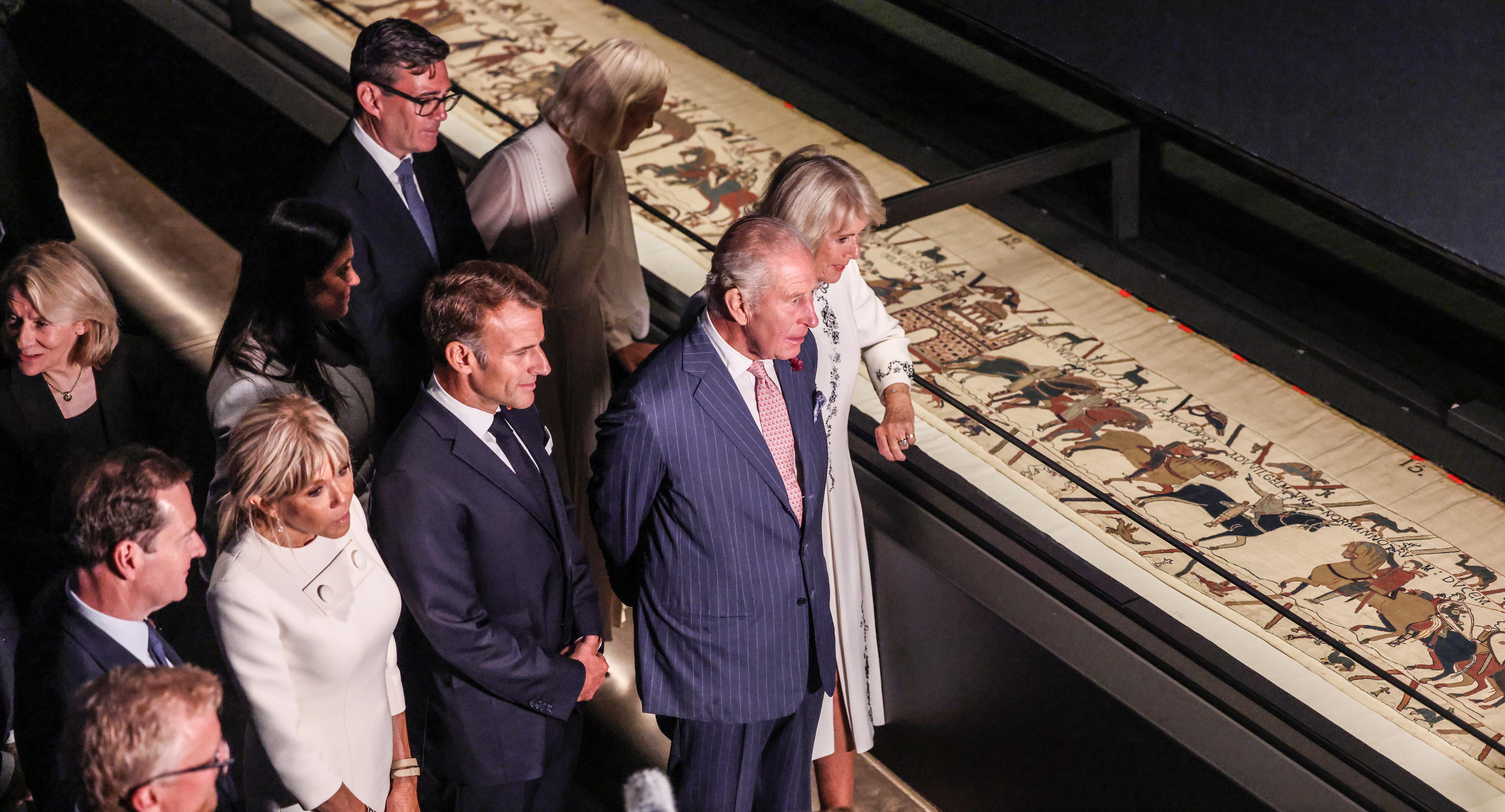
    On Sept. 2, almost 40 years later, Charles got to view the tapestry in notably different circumstances — now as king, just like the tapestry’s main characters, and this time without having to leave his home soil. Instead, he went to the British Museum in London, accompanied by Queen Camilla, to witness the tapestry’s return to Britain for the first time since it was made.

    The tapestry is not just a historic artifact, but a personal reminder of “what I like to think of as the French side of my family’s history,” Charles joked during an eight-minute speech at the museum. He also spoke of his joy at seeing the 220-foot-long embroidery in London, where it is the focus of a blockbuster exhibition that opened on Thursday.

    “The tapestry’s story is one of ambition and uncertainty, of oaths and journeys, of ships, councils, kings, comets, and consequences,” Charles said, calling it “70 meters of memory and artistry.”

    The British Museum hopes that attendance for the show, which runs through July 11, will rival the 1.6 million visitors who flocked to its “Treasures of Tutankhamen” exhibition in 1972.

    Before the speeches, British Museum curators had walked Charles along the tapestry and pointed out key scenes, including one showing the coronation of Harold Godwinson, England’s last Anglo-Saxon monarch, and another depicting Godwinson’s death at the Battle of Hastings. In that scene, the dying monarch clasps an arrow that has thwacked his eye.

    Although the tapestry shows a time of conflict between France and England, the recent event was a sedate affair, bringing together President Emmanuel Macron of France and Prime Minister Andy Burnham of Britain and their wives, alongside Charles and Camilla.

    The tapestry recounts a conflict, Charles said during his speech, “yet here it is today, nearly 1,000 years later, as a precious symbol of trust at a time when trust seems sadly to be in short supply between nations.”

    Macron also spoke at the museum, saying how the Norman invasion depicted in the tapestry “was just the start” of events that have entwined Britain and France, including “marriages, alliances, inheritances, and successions” as well as shared cultural artifacts.

    The tapestry’s reappearance in Britain was a long time coming. Embroidered in the 11th century, most likely in Canterbury, England, it was later moved to Bayeux, France, where it eventually was listed in a 1476 inventory of the town’s cathedral.

    Over the past 70 years, British officials have repeatedly tried to borrow the artwork — including for the coronation of Elizabeth II, Charles’ mother — but French art experts insisted that it was too fragile to travel.

    That situation changed in 2018, when Macron announced that France had agreed to lend the tapestry to Britain as a gesture of friendship between the two nations. The loan has been able to go ahead thanks to techniques developed by conservation experts to ensure that the tapestry could travel to London.

    Last year, Macron said in a speech at the British Museum that Charles had been a key figure behind the scenes encouraging the project.

    Charles has long been a supporter of arts and culture, and as a prince, he often discussed his love of traditional art and architecture in interviews. In 2004, he co-founded an academy for traditional arts, whose short courses include training in weaving and embroidery. And his foundation, in collaboration with Chanel, runs specialist embroidery courses aimed at students who want to work in high-end ateliers.

    The royal has also added stitches to several artworks inspired by the tapestry. In 2000, he sewed the final stitch for the New World Tapestry, an attempt to depict British colonialism in the Americas that has since been accused of perpetuating racist stereotypes.

    In 2012, on a visit to Alderney, one of the Channel Islands, Charles contributed a few stitches to a work of embroidery that aims to continue the Bayeux Tapestry’s story beyond its current end point depicting William the Conqueror’s successful invasion of England.

    Kate Russell, a founder of that tapestry project, said in an interview that during his visit Charles urged people to go and see the original tapestry in Bayeux. She also said it was obvious why he would love the tapestry given the story it relays: “You can’t be a member of the English royal family and not have a sense of the ties to those events.”

    Toward the end of Charles’ speech, the king switched to French and pointed out that the tapestry’s final scenes were missing. (They were likely worn away over time.)

    “It falls to each generation to add its own stitch to the fabric of our shared history,” Charles said, “from this evening and into many generations to come.”

    This article originally appeared in the New York Times.

  • Trump shuns EVs and wind power, but he’s pouring billions into batteries

    Trump shuns EVs and wind power, but he’s pouring billions into batteries

    WASHINGTON — President Donald Trump has been scornful of electric cars for years. But his administration is now pouring billions of dollars into the battery technology that powers them.

    Large lithium-ion batteries have become one of the rare energy technologies that both parties in Washington strongly support — though for very different reasons.

    The Biden administration saw batteries as a green energy tool crucial for addressing global warming and sought to encourage manufacturing them, for use in electric vehicles and to backstop wind and solar power on electric grids. The Trump administration has rolled back efforts to expand clean energy, but officials have nonetheless come to see batteries as essential for many of Trump’s priorities, including powering data centers for artificial intelligence and manufacturing drones for the military.

    The Trump administration has been particularly alarmed by China’s dominance of global supply chains for lithium-ion batteries, and in recent months has made a major push to bolster domestic production of many battery components and associated critical minerals.

    “There has been a growing appreciation for just how important batteries are for so many things,” said Tom Moerenhout, who leads the critical minerals initiative at Columbia University’s Center on Global Energy Policy. “It’s not just EVs, it’s automation, robotics, data centers, drones for defense. And there’s a real move to making sure China doesn’t have a choke point here.”

    In August, the Energy Department awarded $500 million to seven companies that make battery components or process critical minerals like cobalt in the United States. Also last month, the Pentagon announced a $1.4 billion loan to an advanced battery start-up building a factory in Washington state. Federal agencies are funding various domestic efforts to produce graphite and lithium, two raw materials for batteries.

    “For too long, America has depended on foreign actors for critical materials essential to modern life that underpin our economy, energy security, and national security,” Energy Secretary Chris Wright said in announcing the battery awards.

    Still, loosening China’s grip on the global battery industry could be difficult without boosting the domestic market for electric cars, which are by far the largest source of demand for lithium-ion batteries, experts said. Last year, Republicans in Congress repealed a $7,500 tax credit for consumers to buy electric cars with U.S.-made components, which provided a significant incentive for domestic battery manufacturing.

    “If you really want to onshore supply chains, you need electric vehicles, it’s as simple as that,” said Moerenhout. “The defense sector alone is just too small to underwrite a full supply chain for batteries.”

    For years, the Chinese government has made a concerted effort to lead the world in electric vehicles and heavily subsidize its battery industry. The country now sells roughly as many EVs each year as the rest of the world combined, and it has become the preeminent producer of lithium iron phosphate batteries, or LFP, which have become widespread in electric vehicles and stationary storage. The country also dominates the refining of raw materials like lithium and graphite and the production of key components like cathodes and anodes.

    Many officials in Washington have been eager to reduce dependence on China for national security reasons. The U.S. military uses batteries in lasers, hand-held radios, night vision goggles, satellites, and drones, and Chinese components are still needed to make many of these items. AI data centers are increasingly using lithium-ion batteries for backup power.

    China recognizes the leverage it has. Last fall, amid a period of trade tensions, the country threatened to limit exports of a range of battery materials, including graphite, which businesses said would have devastated the nascent U.S. battery industry.

    When Trump returned to office, his administration initially froze billions of dollars in Biden-era grants for battery manufacturing, grouping batteries in with electric vehicles, solar farms, wind turbines, and other clean energy technologies that officials wanted to downplay.

    But that stance quickly shifted.

    While the administration has throttled funding for other clean-energy technologies, the Energy Department has allowed many Biden-era grants for battery makers to proceed. The government has also invested in firms that develop battery components or critical minerals, including Eos, a next-generation battery company.

    The Trump administration has also been more active than the Biden administration in encouraging U.S. mining, and the government has begun taking direct financial stakes in mining companies. That has prompted pushback from Democrats in Congress, who have called for investigations into some mining deals and raised questions about conflicts of interest.

    Last month, Trump held an event at the White House with mining executives and announced more than $2 billion in funding to help revitalize the domestic mining industry, including for battery materials.

    That included a $1.4 billion loan from the Pentagon’s Office of Strategic Capital to Sila Nanotechnologies, a company that has developed a type of lithium-ion battery that uses silicon materials instead of Chinese graphite.

    The company has spent nearly 15 years developing its technology, and its factory in Moses Lake, Washington, can now make enough material for tens of thousands of batteries each year. But that’s still only enough to supply less than 0.1% of the global market, and Sila is hoping to expand production drastically while competing against ferocious Chinese competition.

    “It takes an immense amount of time and effort to expand and do this right,” said Gene Berdichevsky, CEO of Sila. “And for investors to bet on that, they need confidence that we have the right policies to support this kind of industry and not just let it go offshore.”

    This article originally appeared in the New York Times.

    Gene Berdichevsky, the chief executive of Sila Nanotechnologies, at the company’s facility in Moses Lake, Wash., Nov. 3. 2025. Sila Nanotechnologies received a conditional $1.4 billion loan commitment from the Trump administration.GRANT HINDSLEY
  • Why Amy Klobuchar wants to run a state beleaguered by Trump

    Why Amy Klobuchar wants to run a state beleaguered by Trump

    ST. PAUL, Minn. — On a sweltering summer morning, Sen. Amy Klobuchar (D.,Minn.) was making small talk with merchants at the St. Paul farmers market when a cheesemaker expressed a sentiment that has kept coming up as Klobuchar campaigns for Minnesota governor.

    “We’re going to miss you in Washington,” the cheesemaker, Brenda Carlson, told Klobuchar while bagging a piece of Tilsit.

    Klobuchar acknowledged having mixed feelings about leaving her seat as the chamber’s third highest-ranking Democrat. “But we need to get this sorted out,” she said, frowning slightly.

    By “this,” Klobuchar meant the current condition of Minnesota, which has become a punching bag in the Trump administration’s quest to portray Democratic-run states and cities as hopelessly dysfunctional.

    As she gears up for what could be the capstone of a decades-long political career, Klobuchar is pitching herself as uniquely qualified to clean up the messes at home and reset the state’s poisonous relationship with the White House.

    Her reputation makes the case, supporters say: She is known as both a hard-charging workaholic who scrutinizes program details to a fault and a centrist with allies on both sides of the aisle in Washington, including in President Donald Trump’s administration.

    But both qualities could also cause friction. Minnesota agencies are bracing for turbulence as Klobuchar vows to audit every state program. And many residents remain shell shocked from the Trump administration’s immigration crackdown early this year, which paralyzed the Twin Cities for weeks and left two U.S. citizens dead.

    When it comes to relations with the president, some residents say they want a fighter in the governor’s office, not a conciliator.

    Nekima Levy Armstrong, a civil rights lawyer who is facing trial over her role organizing a protest against Immigration and Customs Enforcement at a church, said Klobuchar did not speak out stridently enough about the wintertime deportation campaign.

    “Many of us felt abandoned by our elected officials during Operation Metro Surge,” Levy Armstrong said. “We felt abandoned by Amy Klobuchar in particular.”

    In an interview, Klobuchar said she was “as angry about some of the things Trump has done as anyone.”

    “But I have decided that I’m going to get us to a higher place and not act like him,” she said. Her first goal, she added, “is to earn back the trust of the people of Minnesota in state government.”

    For now, Minnesota Democrats have expressed almost uniform relief that Klobuchar is their nominee rather than current Gov. Tim Walz.

    They began 2026 in panic mode as a scandal over widespread fraud in state-run safety net programs dogged Walz’s bid for a third term. State lawmakers openly fretted that his name at the top of the ballot in this year’s midterm elections would give Republicans a strong shot at winning the governor’s mansion for the first time in two decades and controlling the tightly divided Legislature.

    “I would definitely be lying if I said that the worry meter wasn’t ticking up, up, up by the week,” said state Rep. Mike Howard, a Democrat from the Twin Cities.

    They exhaled when Walz dropped his reelection bid in early January, as the Trump administration was sending thousands of immigration agents to the state in what the president called a campaign of “RECKONING & RETRIBUTION.”

    Klobuchar announced her run for governor later that month as Minnesotans were reeling from the killings of Renee Good and Alex Pretti, two American citizens shot by immigration agents in Minneapolis. “These times call for grit and resilience,” Klobuchar proclaimed.

    The announcement amounted to a reversal of fortunes for Democrats, making Klobuchar the clear favorite in the general election race against Lisa Demuth, the Republican speaker of the Minnesota House. Even far-left lawmakers in the state Capitol — where the party has a one-seat majority in the Senate and is tied in the House — have emerged as enthusiastic surrogates for Klobuchar.

    “People in the Democratic Party here in Minnesota understand she’s our best path to winning a majority and defending ourselves from Donald Trump,” said state Sen. Zaynab Mohamed, a member of the democratic socialist wing of the party.

    Klobuchar kicked off her run by calling all 101 Democrats in the Legislature, keeping several on the phone for more than an hour. There was talk of campaign strategy, lawmakers said, but Klobuchar was most interested in their policy goals.

    When she ran for president in 2020, Klobuchar was the subject of several critical articles depicting her as a perfectionist and difficult boss whose office had among the highest turnover in the Senate.

    Klobuchar has a tendency to personally tackle tasks most elected officials delegate and to fire off all-caps emails to aides, which often land in inboxes between midnight and dawn.

    Some supporters now call that feverish approach an asset.

    State Rep. Zack Stephenson, the Democratic leader in the Minnesota House, recalled being startled by a 3 a.m. email from Klobuchar in 2006 when he served as a lowly aide in her first Senate campaign.

    “The lesson I took away from that race is that to be successful in politics, the secret is to work really hard,” he said.

    The sense of relief extends to Democratic voters like Carlson, the cheesemaker, who says she has soured on Walz, a former schoolteacher and coach who oversaw the adoption of a raft of progressive policies and made a splash on the national stage by running for vice president in 2024.

    In recent years, Carlson said, small-business owners like herself have grown frustrated by tax increases and red tape that seem to grow each year. Then came revelations about rampant fraud in state programs meant to feed low-income children, treat minors with autism, and help people at risk of homelessness.

    “I just think things got away from him when he did the whole run,” said Carlson, 54, who lives in Center City, a conservative town 40 miles north of the Twin Cities. “He couldn’t keep a watchful eye, and whoever was wasn’t doing their job.”

    She said she hoped Klobuchar would be different.

    That is the senator’s pitch.

    Having enthusiastically backed Walz’s vice-presidential bid two years ago, Klobuchar has now distanced herself from him.

    She kicked off her campaign in May by announcing a detailed plan to combat fraud. Evoking the years she served as the elected county prosecutor in Minneapolis, she stood alongside the former U.S. attorney in Minnesota against a backdrop of law books.

    “You are right to be angry about the fraud,” Klobuchar said at the time.

    Klobuchar has also questioned how Walz and allied lawmakers spent a $17 billion surplus in 2023. After Walz granted a pardon in June to a man convicted of child sexual abuse who was facing deportation to Laos, Klobuchar said she would have let the conviction stand.

    A spokesperson for Walz did not respond to a request for comment.

    Demuth, the Republican candidate for governor, has sought to portray Klobuchar’s bid as a de facto third term for Walz, questioning why she wasn’t outspoken about the fraud problem before jumping into the race.

    “She will not be able to enact the changes that are desperately needed,” Demuth said in an interview.

    Klobuchar has called Demuth a “rubber stamp for Donald Trump.”

    But how Klobuchar will approach the Trump administration — and whether that will satisfy Democrats in a state with a strong leftist streak — remains unclear.

    Activists have pressed her to adopt a statewide sanctuary policy for immigrants without legal status, which would ban local jurisdictions from signing cooperation agreements with ICE. One activist recently confronted Klobuchar about the issue as she marched in a small town parade.

    So far she has refused. In the interview, Klobuchar, who has long championed a broad overhaul of the immigration system, said she intended to make a case that immigrants are vital to Minnesota’s economic growth.

    “I cannot tell you the number of small businesses that we have run by immigrants in our state,” she said.

    Klobuchar trounced a handful of little-known candidates in the Aug. 11 primary, winning nearly 90% of the vote. That dominance meant she avoided being meaningfully drawn into fraught policy debates playing out in other national races, said Kobey Layne, 26, a democratic socialist who placed a distant second.

    Layne said she worried that as governor, Klobuchar would prioritize bipartisan cooperation and incremental change over bold overhauls, such as the creation of a state-run, single-payer healthcare system.

    Asked about the growing clout of democratic socialists, Klobuchar said she welcomed intraparty policy debates and expected pushback from all sides if elected. She also acknowledged rumors that she was considering appointing Republicans to her cabinet.

    “Spoiler alert,” she said. “You’re not going to like everything I do.”

    This article originally appeared in the New York Times.

  • Ousted Kennedy Center chairperson buys dismantled ‘Blue’ sculpture

    Ousted Kennedy Center chairperson buys dismantled ‘Blue’ sculpture

    Billionaire philanthropist David Rubenstein has purchased the abstract sculpture called Blue that was removed from the grounds of the John F. Kennedy Center for the Performing Arts last week, according to two people familiar with the sale.

    It will eventually be displayed in the Sculpture Garden of the National Gallery of Art, the people said.

    Rubenstein, a major arts donor, was chairperson of the Kennedy Center’s board until he was ousted in early 2025 during President Donald Trump’s takeover. He is the chairperson of the board of trustees at the National Gallery.

    He purchased the sculpture from a foundation dedicated to its artist, Joel Shapiro, which received the artwork after its removal. One of the people familiar with the sale said the price was more than $2 million.

    Since 2019, the 24-foot-tall, stick-figure-like sculpture stood on the grounds of the Reach, an addition to the Kennedy Center that was partly funded by Rubenstein, who co-founded private equity giant the Carlyle Group. The sculpture was deinstalled with no prior notice or explanation from the institution, drawing a flurry of questions and objections from local patrons who considered it a landmark overlooking the Potomac River.

    Representatives for the National Gallery did not immediately respond to requests for comment, and it was not clear when Blue would go on display.

    The Kennedy Center board has voted to close for a two-year, $250 million renovation project championed by Trump. But officials have proposed that the Reach remain open, partly to serve as an active memorial to President John F. Kennedy, which is required by law.

    Shapiro, who died in 2025, had given the sculpture to the Kennedy Center as a gift for the opening of the Reach. After it was deinstalled, it was transferred to the artist’s foundation, which is run by his daughter Ivy Shapiro.

    Ivy Shapiro did not immediately respond to requests for comment on the purchase. She said last week that her father would have been “alarmed” by the sculpture’s removal from the Kennedy Center, where it had been originally intended as a permanent fixture.

    The aluminum sculpture, painted a vivid blue, was designed to look like a person mid-kick while dancing on the grass.

    “In Joel’s mind, it was one of his greatest site-specific commissions, which celebrated joy, freedom, and creativity,” Shapiro said last week.

    Trump, who replaced Rubenstein as chairperson of the Kennedy Center board after stacking it with loyalists, has been pushing for months to close the building for renovations that he and his allies say are desperately needed.

    The closure was temporarily blocked by a federal judge, who also rejected the board’s decision to add Trump’s name to the center’s official title. The center’s officials are now seeking to persuade the judge to allow for the closure and for the president’s name to be inscribed on the building’s marble facade, in recognition of his role in securing money from Congress for the renovations.

    This weekend, officials at the center intensified their push for a closure, alerting the public to a hole in the ceiling of the building’s Grand Foyer that they said was caused by recent storms.

    This article originally appeared in the New York Times.

  • For Trump’s former fixer, a tortured path from ‘rat’ to reconciliation

    For Trump’s former fixer, a tortured path from ‘rat’ to reconciliation

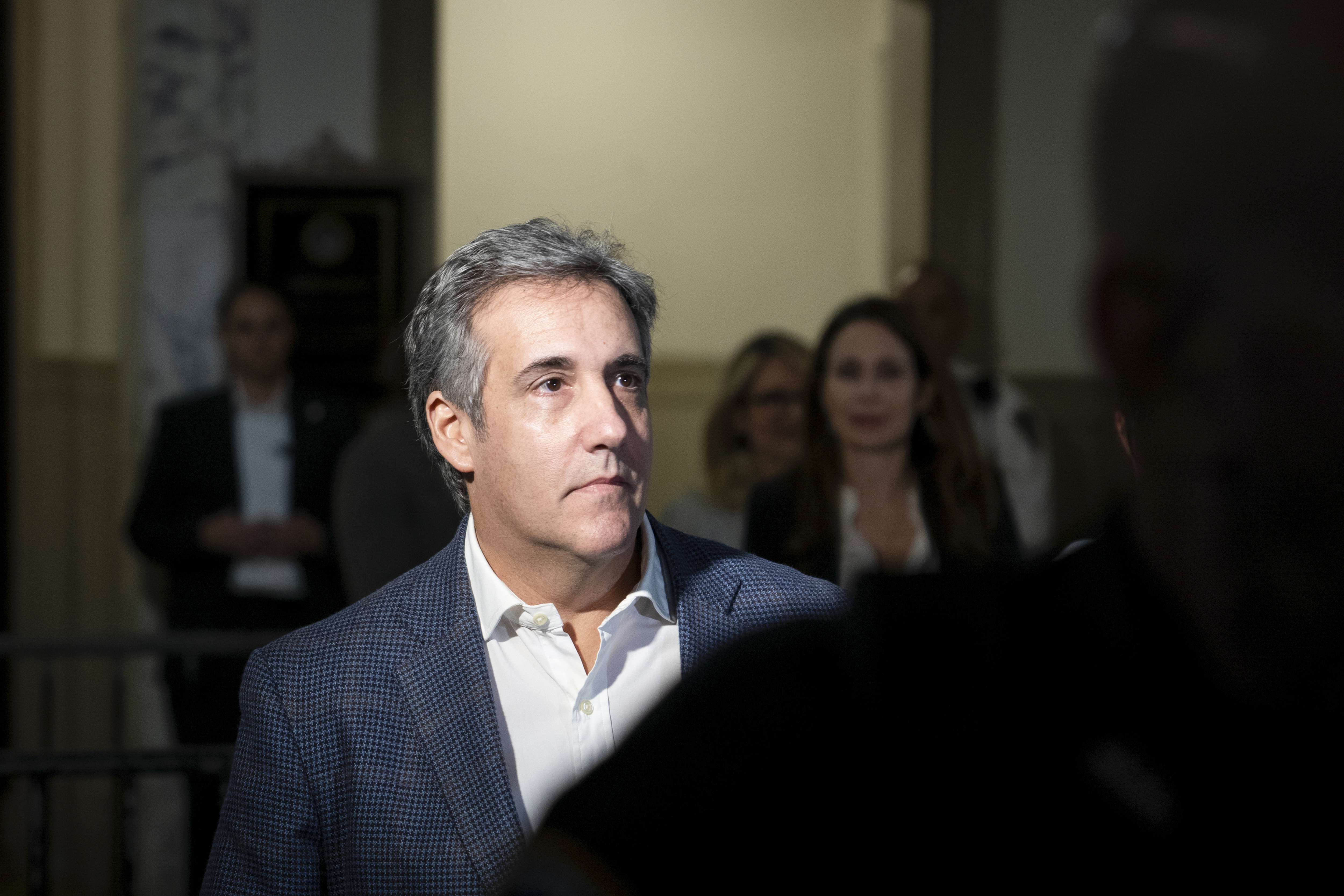
    WASHINGTON — On a radio show last month, President Donald Trump welcomed Michael Cohen, the former fixer he once denounced as a “rat” for testifying against him, back into the fold. “I respect the fact that you recanted everything you said,” Trump said. He went on to use the word “recant” three more times.

    In case anyone missed it, the president posted a message on social media Friday claiming that Cohen, a key witness against Trump in criminal and civil trials, “has just fully RECANTED his testimony.” Trump demanded “that any remnant of those Politically Weaponized Cases against me be immediately terminated and dismissed.”

    Except that Cohen has not, in fact, recanted his testimony. He has not taken any of it back.

    In his eagerness to return to the president’s good graces, Cohen now says he “felt pressured and coerced” by prosecutors to testify. But he has not actually disavowed anything that he swore to under oath about Trump’s hush money scheme to cover up an affair with an adult film actor or about his former boss’s efforts to defraud his lenders.

    And so this unlikeliest of rapprochements between two men who helped get each other convicted of crimes is built not on an emotional outpouring of forgiveness but on what looks like a pretty straightforward bargain, spoken or unspoken, according to people close to both. Trump is trying to use his former lawyer’s desire for absolution to rewrite history as he presses his effort to overturn his conviction. Cohen gets to position himself as an insider once again and possibly obtain a presidential pardon to wipe out his own felony record.

    “Everything is transactional,” said Brian Karem, a journalist who helped Cohen write the second of his books assailing Trump. “It’s the weirdest example yet of the transactional nature of the president of the United States and those around him. Who knows him better than Michael? I’m just surprised that it took him this long. The first thing I said was, ‘Wow, it took you long enough.’”

    The unlikeliest of reunions

    Even in the long history of strange-bedfellow political alliances, this may be one of the strangest. To call the reconciliation between Trump and Cohen Shakespearean would not fully capture just how mind-boggling it really is. The Bard would have been hard-pressed to come up with a scenario quite so far-fetched.

    Trump, to be sure, has a well-known history of falling back in with people he has fallen out with. (Think Elon Musk, Steve Bannon, Michael Flynn, or, for that matter, his current vice president who once compared him to Adolf Hitler, or his secretary of state who once questioned the size of his private parts.)

    But as one baffled Trump ally put it, Cohen is not someone who just trash-talked the president; he actually testified in court against him. Cohen went to prison because, he said, he committed crimes at the instructions of the man he now again calls “Boss.” And in a trial in which his onetime fixer provided evidence for the prosecution, Trump was convicted of 34 felonies that, had it not been for the intervening 2024 election, might have put him behind bars as well.

    “You can’t write it,” said Donny Deutsch, a longtime New York advertising executive and television commentator who has been close with Cohen for years, reflecting the astonishment in both New York and Washington. “These two guys who were archenemies found mutual shared interest to get back in bed together.”

    Deutsch said he did not blame Cohen, who in his view was collateral damage for Trump. “Michael was left by the side of the road as roadkill,” he said. “Beyond going to prison, he couldn’t practice law, he couldn’t get a job, he couldn’t get insurance. He’s doing what he needs to do to survive.”

    As for Trump, accepting Cohen back into his orbit, even an outer orbit somewhere past Pluto, allows him to claim vindication.

    “If you go grovel to him and suck up to him, he loves that because it’s validation of his power,” said George Conway, the former conservative lawyer who became one of Trump’s most vocal foes. “He has brought someone to heel. And part of what he does is try to intimidate people into doing that. He has a reptilian ability to sense who he can intimidate.”

    Cohen did not respond to emails seeking comment. Trump posted his social media message Friday about Cohen’s supposedly recanting three hours after a request for comment was sent to the White House, which then passed along the link but otherwise did not respond to questions.

    ‘On the wrong side’ of the Boss

    The relationship between these two men has arguably been one of the most consequential in modern presidential history. Cohen worked for Trump for years as his lawyer and fixer, a self-described “pit bull” who handled business and personal problems, and sought to intimidate people who got in the way. He styled himself as a consigliere so loyal that he famously said he would “do anything to protect Mr. Trump” including “take a bullet.”

    Cohen secretly sought on Trump’s behalf to seal a deal with the Russians to build a Trump tower in Moscow even while his boss was running for president in 2016. He was the middleman who paid $130,000 to porn star Stormy Daniels to buy her silence about her alleged tryst with Trump before the election. (Trump denies the affair.)

    That eventually led to criminal charges, a guilty plea. and prison. When Cohen was released, the Trump administration revoked his home confinement and locked him up again because he planned to publish a book, a move that a judge overruled because it was “retaliatory.”

    Cohen later turned witness for Manhattan District Attorney Alvin Bragg in the case that convicted Trump for falsifying business records to cover up the payments to Daniels. He also testified for New York Attorney General Letitia James in her civil case that found Trump liable for business fraud. His was not the only evidence against the president, and some lawyers argue that there was enough to convict Trump even without Cohen’s testimony.

    But when Cohen broke from Trump, he broke big time. In addition to testifying in court, he also went after the president publicly with both barrels, writing books titled Disloyal and Revenge and characterizing his former employer as “a racist,” “con man,” and “cheat” during a congressional committee hearing.

    Outside the halls of Congress, Cohen went even further, calling Trump “a mob boss,” “the slime of humanity,” a “scumbag,” a “petty tyrant,” a “deranged president,” a “narcissistic sociopath,” a “Cheeto-dusted cartoon villain,” “Dictator D-Bag,” “this Frankenstein’s monster,” and “the poster boy for fascism” who was trying “to screw over the country.” And those were the lines printable in a family newspaper.

    By the time Trump won a second term, though, Cohen’s tone began to change. He had not gotten the pardon he had requested from President Joe Biden, nor had he been welcomed with open arms by much of the anti-Trump resistance. With Trump returning to office, any hope for acceptance, much less clemency, now lay with his former boss, and he has resubmitted his pardon application, replacing the word “Biden” with “Trump.”

    “I think he really wants a pardon,” said Stephanie Grisham, a former White House press secretary for Trump who broke with the president. “I also think he has realized just how hard it is to be on the wrong side of the administration. It’s damn scary out here on the anti-Trump island. And I never got the vibe from him that he wants to work hard at anything, and doing the right thing is never easy.”

    In January 2025, just as Trump was assuming power again, Karem interviewed Cohen for a documentary that will be shown next month at New York’s Chelsea Film Festival and asked if he would go back to Trump if invited.

    “You know what, it’s such a difficult question to answer simply because, one, I know it’s never going to happen,” Cohen said in the film. “Donald refuses to accept any type of responsibility for anything. We’ve all seen that. Do I think I’m owed an explanation? Absolutely.”

    Karem saw that as an implicit yes. “Anybody who spent any time talking with him back then, it was obvious that was open to him,” Karem said. “It was an avenue he was willing to explore because he felt wronged by the justice system. He wasn’t considered the hero he thought he would be. He told me he wanted a pardon.”

    ‘His identity was Donald Trump’

    In the summer of 2025, Cohen had a brief conversation with Trump at his golf club in Bedminster, N.J., joined by the president’s top personal legal adviser, Boris Epshteyn, as the New York Times previously reported. By January 2026, Cohen was writing on Substack that “I felt pressured and coerced to only provide information and testimony that would satisfy the government’s desire” to convict Trump.

    Two months later, he reached out to Lara Trump, the president’s daughter-in-law, who then invited him onto her podcast, where he defended Trump against those questioning his relationship with disgraced financier and sex offender Jeffrey Epstein. Soon, Cohen was given a radio slot on WABC by John Catsimatidis, the station’s owner and a longtime Trump supporter.

    Even so, Cohen for a while kept a foot in both camps. Conway, who ran unsuccessfully for the Democratic nomination for a House seat in New York earlier this year, said Cohen volunteered to help his campaign.

    “At the same time I’m reading these clips about him trying to get back in, he was calling me up saying, ‘I want to help you with your campaign. I want to help you with your campaign. Let’s go be seen together on the Upper East Side. People love me. It’ll help your campaign,’” Conway recalled. “I’m like, what? He’s trying to suck up to Trump, and literally my entire campaign was about sending this guy to jail.”

    Cohen’s turnaround shocked people he had gotten to know on the left. Joanne Carducci, a liberal podcaster who had become friends with Cohen, said she was so upset that she cried, feeling that she had been fooled. “I trusted him, and I believed him when he said, ‘I’m done with that guy. I’ll never recover from what he did to me. I went to prison because of him,’” she recalled. “What is the pathology there that he could be so convincing?”

    After Cohen’s Substack essay, Carducci texted to ask why he was now publicly helping Trump undermine the cases against him. “I have attacked him and the administration 998 out of 1000 times,” Cohen replied in a text that she shared with the Times. “James and Bragg, and the entire system is broken and abusive. That’s the point I was making. I’m not going to be a puppet as I lived the abuse.”

    By all accounts, including his own, Cohen was crushed and embittered by the events of the past several years. His life, as he put it on his radio show, was “shredded to pieces,” and he lost his sense of purpose.

    “I know what it feels like to take hit after soul-crushing hit, to be bloodied and knocked to the dirt while a crowd of millions cheers for your destruction and then, then, to have to pick up the shattered pieces of your life, alone in the dark while the circus packs up and moves on to its next victim,” he said on his show. “I know the sheer suffocating terror of being turned into a public target sitting in silence while your family weeps, wondering if you’re ever going to survive the night.”

    And yet after all that, Cohen turned back to Trump. “People have their sect, their team,” said Greg Ehrlich, a onetime friend who recalls first introducing Cohen to Trump. “It’s your identity. His identity was Trump. Then he got lucky and had a second life, which was against Trump.” But now, Ehrlich said, “he needs his identity, and his identity was Donald Trump.”

    Indeed, when they finally had their bury-the-hatchet talk on the radio last month, Cohen sounded needy, anxious to reminisce about the old times with the Boss, but the Boss wasn’t having any of it. Distant and hardly warm, Trump focused on promoting the fiction that Cohen had recanted his testimony, making clear that their reconciliation was dependent entirely on that. “You took it back,” Trump said falsely. “I wouldn’t even be talking to you right now if you didn’t, to be honest.”

    Cohen did not correct Trump during the show. But in other appearances, he has stood by his accounts. Asked by Dan Abrams on SiriusXM radio if his criticism of prosecutors meant that his past testimony was not truthful, Cohen said: “No, to the exact contrary. As I stated, I felt pressured and coerced. That’s my personal feeling, which I am certainly entitled to have. In no way, shape, or form should it connote that the information that I provided was anything but truthful and accurate.”

    Stating otherwise, of course, could expose Cohen to criminal perjury charges, and it did not go unnoticed that he emphasized that he “felt” pressured, as opposed to saying that he actually was. When Jake Tapper said on CNN that Cohen had claimed that he was “pressured and coerced” into testifying against Trump, Cohen offered a word-parsing correction.

    “The comment that I had written was in regard to Alvin Bragg and Tish James is that I felt pressured and coerced,” Cohen said. “And I think the distinction is extremely important.”

    But that is a distinction without a difference for Trump. In the reality that the president is now selling, Cohen’s pivot is proof that Trump was innocent after all. Even if that is not what Cohen is actually saying.

    This article originally appeared in the New York Times.
  • They went to Ukraine on the ‘peace express.’ Detours are likely ahead

    They went to Ukraine on the ‘peace express.’ Detours are likely ahead

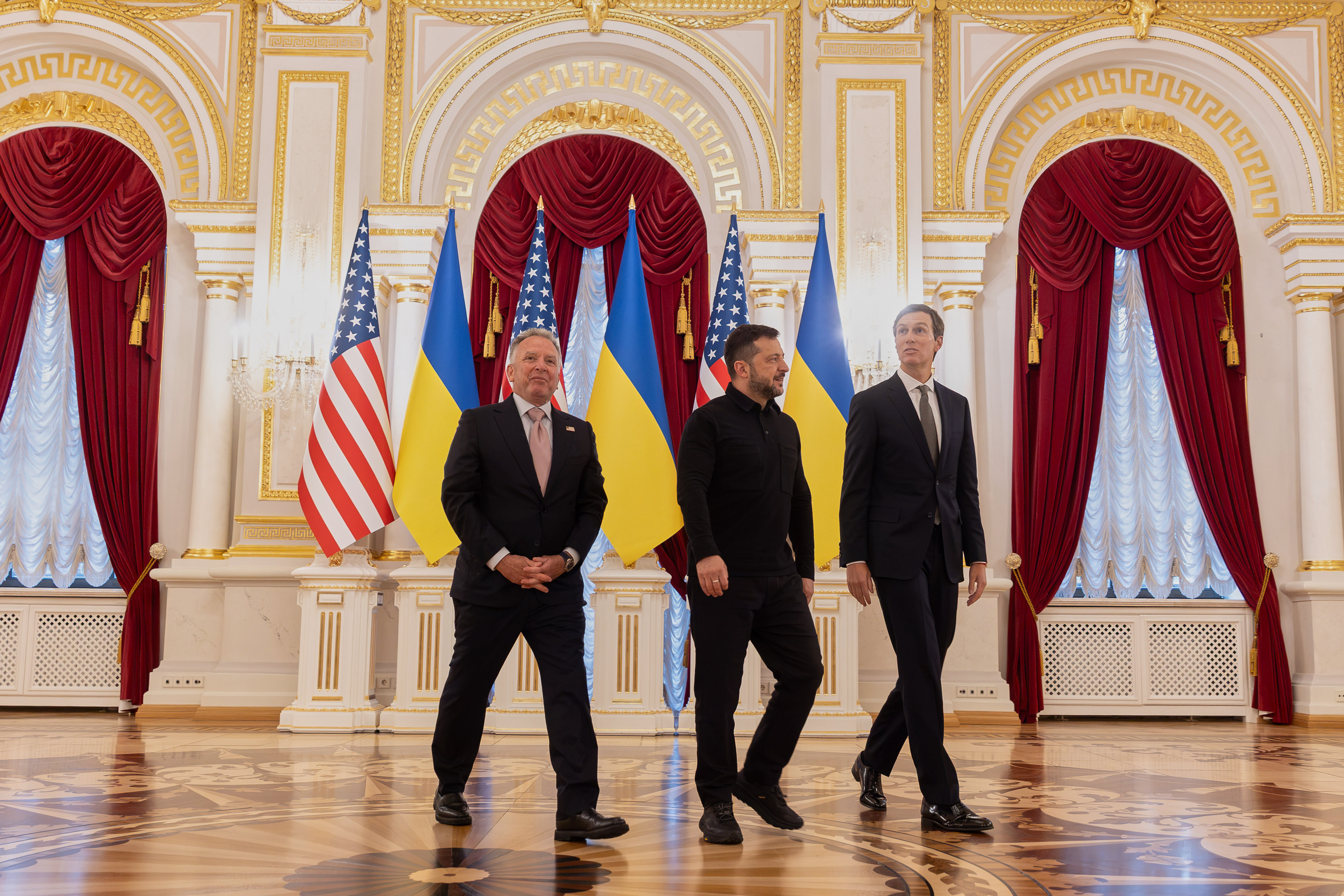
    KYIV, Ukraine — The Americans arrived on a train that the Ukrainians called the “peace express.” Yet nothing about the process of ending the war with Russia has been fast or direct, and there is no sign that will change anytime soon.

    U.S. envoys Steve Witkoff and Jared Kushner went to Ukraine on Sunday fresh off a trip to Moscow bearing what President Donald Trump said was a proposal to end nearly five years of war.

    But the Trump administration itself, consumed by its war with Iran, had allowed the peace process to enter such a deep freeze that the trip was just a preliminary step — talks about how to resume talks. And President Volodymyr Zelensky of Ukraine said it appeared that the war would continue at least into what analysts say could be a devastating winter for the country.

    “It’s a very, very hard problem, but we’re going to try,” Kushner said of negotiations to end the war. “And I think if we can achieve that, it’d be an incredible thing. That doesn’t mean we will achieve it, but it’s very important to try.”

    Kushner said “new ideas” were presented to Zelensky in a series of discussions Sunday. He gave no details and also declined to give a timeline for reaching any potential settlement.

    The Ukrainian leader offered little more detail about the talks with the Americans. “All the possibilities” for resuming negotiations were discussed, he said at a news conference after the meetings, as were “several genuinely new ideas.”

    When pressed on when further talks would be held, the responses from Witkoff, Kushner, and Zelensky seemed to follow a pattern: “Soon” or “hopefully soon.”

    Ukrainian officials had been saying before the Americans arrived that they expected negotiations to resume in earnest later this month, after Russian parliamentary elections but before the U.S. midterms.

    Those talks, if they happen, would be held alongside an escalation in the air war between Moscow and Kyiv, and a Russian push to accelerate its slow territorial gains in the Donbas region of eastern Ukraine. The war, analysts say, is likely to get only uglier in the months to come, as Russia seeks a knockout wintertime blow against Ukraine and the two sides try to gain the upper hand in eventual settlement negotiations.

    While it remains to be seen if peace negotiations can be revived after a six-month lull, the visit by Witkoff and Kushner was meaningful for Ukraine because it finally brought the two Americans out of a Moscow bubble.

    The envoys’ visit to Kyiv, which ended late Sunday, was their first after several trips to Russia. It gave the Ukrainians the chance to show, and not just tell, as they try to make their case and ensure that the Trump administration does not revert to clearly favoring Russia in talks, as it did earlier in the process.

    The Ukrainians started serving up symbolism before the envoys even reached Kyiv. A refined meal was laid out on the train ride for Witkoff, a known gourmand, and Kushner. It included a selection of Crimean Tatar dishes, highlighting Ukraine’s ties to the peninsula that Russia illegally annexed more than a decade ago.

    Upon arrival, Zelensky greeted the envoys on the landmark Sophia Square, whose display of tributes to fallen soldiers is impossible to ignore, then brought them into the historic cathedral, a symbol of Ukrainian national identity.

    Zelensky’s negotiator later wore a joke T-shirt emblazoned with the words “Kyiv Regime” — poking fun at the sneering term used by President Vladimir Putin of Russia to refer to Ukraine’s government.

    Zelensky offered jokes, too, in telling Witkoff and Kushner to “come more often,” since the Kremlin agreed to temporarily halt during their trip what have been especially intense all-day strikes on Kyiv.

    For many Ukrainians, that was the best and only anticipated result, at least in the near term.

    “Thank you dear Steve and thank you dear Jared for giving us this afternoon without air-raid alerts,” a Kyiv tour guide, Dmytro Soloviov, said with a touch of sarcasm while leading a walking tour of the city’s architecture.

    Yana Vilimetova, a procurement manager, said Ukrainians would use the brief respite to recharge a little. It felt like Groundhog Day to many — another flurry initiated by the Americans, with little expectation of any change in Putin’s determination to continue fighting.

    “We’ll just sleep for three days without strikes, reset our mental health during these days, and that’s it,” Vilimetova said.

    While no one expects a lasting ceasefire anytime soon, a placard on the dining car table in the U.S. envoys’ train offered a hopeful thought.

    “Peace,” it read, “arrives on time.”

    This article originally appeared in the New York Times.
  • Trump floats renaming New Mexico as ‘New America,’ prompting pushback

    Trump floats renaming New Mexico as ‘New America,’ prompting pushback

    President Donald Trump appeared to suggest on Sunday that New Mexico should be renamed “New America,” prompting swift backlash from the state’s Democratic leaders over his latest effort to put an American stamp on geographic names.

    On social media, Trump shared an image of a map of New Mexico with the word “Mexico” crossed out with a red X and replaced with “America.” The White House reshared the image shortly after on its official X account.

    The president posted again several hours later, with what appeared to be an artificial intelligence video of him placing a label with the word “America” over “Mexico” on a “Welcome to New Mexico” road sign.

    Trump has no legal authority to rename any state, which in New Mexico’s case is written into its Constitution. Any proposed change would have to originate within the state, a prospect that New Mexico’s Democratic leaders rejected forcefully Sunday.

    “New Mexico’s name isn’t up for debate — it’s been ours since before the United States existed,” Gov. Michelle Lujan Grisham wrote on social media.

    Rep. Melanie Stansbury was more blunt: “Oh hell no!” she wrote on X, adding, “Our state’s name carries generations of history, culture, and family — and it belongs to us.”

    The origins of New Mexico’s name predate the founding of the United States. In the 16th century, Mexicans called the territory north and west of the Rio Grande “New Mexico,” according to the Bureau of Indian Affairs.

    The state’s name is also written into Article 1 of its Constitution: “The name of this state is New Mexico, and its boundaries are as follows,” the first page reads.

    New Mexico’s two Democratic senators also pushed back on Trump’s post. “Three things I will always call by their actual names …,” Sen. Martin Heinrich wrote on X, before listing the Gulf of Mexico, Lake Ontario, and New Mexico.

    On the day Trump returned to office last year, he signed an executive order directing the federal government to rename the Gulf of Mexico as the Gulf of America. The name “has a beautiful ring,” the president said that month.

    Last month, amid an escalating trade fight with Canada, Trump signed another executive order to change the name of Lake Ontario to Lake America. Days before signing the order, the president had posted an image of a map with Lake Ontario crossed out with a red X, as well as an AI video of himself replacing a Lake Ontario sign with “Lake America.”

    Those executive orders, however, dealt with geographic features, not the legal name of a state. The changes were carried out through the federal Geographic Names Information System and apply only to federal usage, including on maps and documents, but they do not bind state and local governments or private mapmakers.

    Rhode Island offers a recent example of how different the process for changing the legal name of a state can be. In June 2020, amid nationwide protests over systemic racism after the killing of George Floyd, the state moved to drop “and Providence Plantations” from its formal name. Gov. Gina Raimondo, a Democrat, ordered the phrase be removed from executive-branch documents and websites while acknowledging that changing the state’s official name required voters to amend the Rhode Island Constitution. Voters approved the change that fall.

    This article originally appeared in the New York Times.
  • Canada’s retaliatory tariffs set to take effect as Trump threatens to escalate

    Canada’s retaliatory tariffs set to take effect as Trump threatens to escalate

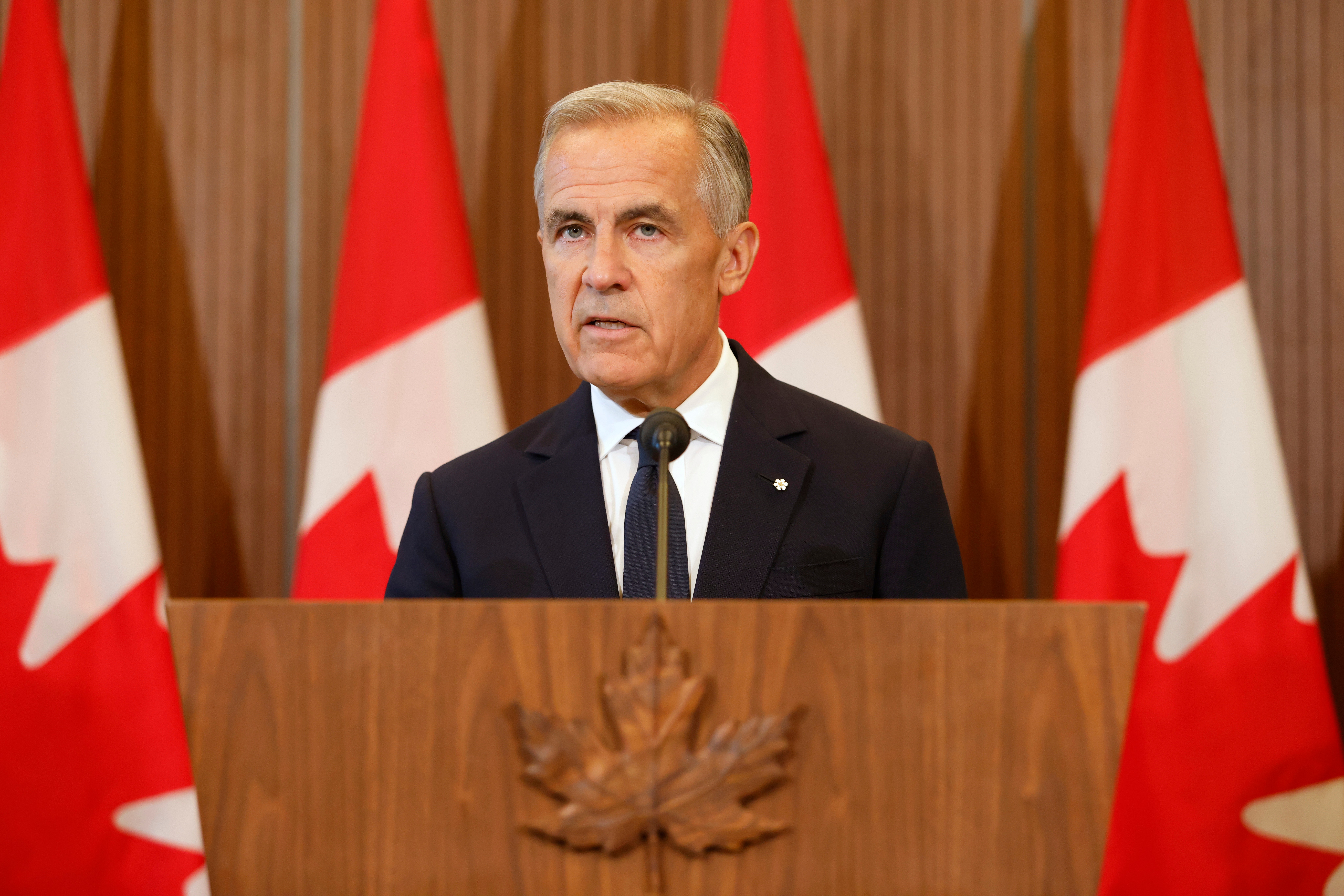
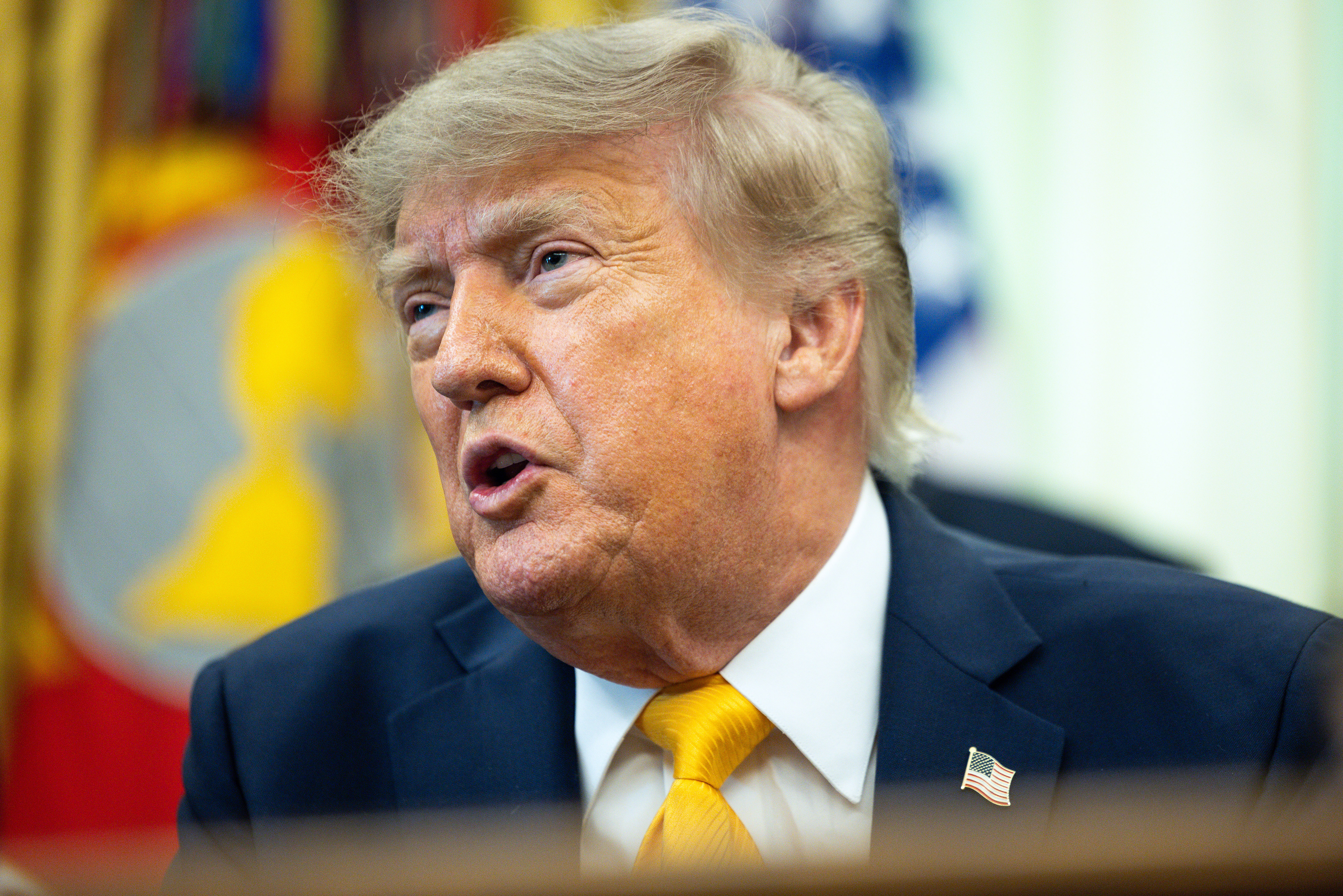
    OTTAWA, Ontario — After more than two weeks of finger-pointing, threats, and patronizing insults between longtime trading partners, Canada’s latest retaliatory tariffs against the United States are set to take effect just after midnight Eastern time Tuesday.

    Polls show that Canadians strongly back Prime Minister Mark Carney’s decision to end trade talks with Washington last month and to hit back with tariffs on about $20 billion in U.S. products entering Canada. But there is also concern over what might happen next. President Donald Trump has repeatedly threatened another round of U.S. tariffs if Canada follows through on its plan.

    Some in Canadian industry say they are inclined to take Trump at his word, at least on this threat.

    People in the Trump administration “are willing to hurt themselves, their own sectors and industries, in pursuit of their goal, however misguided I think it is,” said Flavio Volpe, president of the Automotive Parts Manufacturers’​ Association of Canada. “So they may escalate. I hope that we don’t end up in a tit-for-tat situation. We’re going to run out of runway.”

    Carney announced Canada’s new tariffs after he pulled Canadian negotiators out of talks in Washington last month — an ultimately unsuccessful attempt to stave off 50% U.S. tariffs on $20 billion in Canadian exports and to reduce or eliminate tariffs of up to 50% on Canadian steel, aluminum, and automobiles.

    The Trump administration said the tariffs it imposed last month were in part a response to retaliatory tariffs Canada placed last year on some U.S. imports, particularly autos. U.S. officials have repeatedly noted that only China and Canada retaliated against the United States since Trump began upending global trade.

    At a news conference after a sternly worded speech announcing the tariffs, Carney declared that Canada had been attacked by the United States and that the two countries are now “at war.”

    Last week, U.S. Treasury Secretary Scott Bessent rejected that framing, arguing that Canada is too small an economic power to battle the United States. “I don’t think you can be in a tit-for-tat with someone who’s 13 times larger than you are,” Bessent said on CNBC.

    On Friday, Trump escalated his trade rhetoric even further. He said that he might “end all trade with Canada” and other countries that have trade surpluses with the United States.

    Separately, U.S. Commerce Secretary Howard Lutnick said Carney had shut down the talks to gain “political leverage” at home, not because of what the U.S. side had offered.

    As last week went on, Carney made it clear that he was in no hurry to return to negotiations and was focused instead on diversifying Canada’s trade and expanding its domestic economy.

    “At the appropriate time, the conversation will happen,” he said. “But the most important thing we can do is not to spend all our time waiting by the phone, waiting for a call, refreshing on social media to see what’s coming across.”

    Many of the U.S. items that will soon face Canadian tariffs of 15%, 25%, or 50% mirror the Canadian exports that are now met with 50% U.S. tariffs, particularly clothing and wood products. Canada revised the list to remove dozens of fish products after the Canadian fishing industry said that tight cross-border integration meant that its members would also be harmed.

    Canadian officials have suggested that many targeted items come from states where voters supported Trump, though some political analysts question how much pressure that will actually bring on the White House. The list also includes items with little bearing on the Canadian economy, including the metal bands that attach erasers to pencils, migratory bird identification bands, and fish egg incubators.

    Trump has not imposed tariffs on some of Canada’s largest exports, including oil and gas and many minerals, and has exempted many products with enough North American content to move duty-free under the United States-Mexico-Canada Agreement. Auto parts, for example, are subject to a 25% tariff but generally cross the border without incurring it.

    As a result, Canada’s overall average tariff rate remains low compared with what most other countries face, and the majority of its trade, by dollar value, is still duty-free.

    After the talks collapsed, Trump threatened to impose 50% tariffs on autos and auto parts in January, apparently without the USMCA exemption — a move most analysts believe would be devastating for Canada’s auto industry. Trump has not taken formal steps toward carrying out the threat, though some in Canada speculate that rather than target new products or raise existing tariff rates, the Trump administration may instead strip away the USMCA exemption for many goods.

    Volpe said that auto parts makers were not intimidated. He said that last year when the Trump administration proposed collecting tariffs on Canadian auto parts “they understood that it would shut down the auto industry in a week.”

    He added: “Ultimately, I think they will back off that. But if they don’t, they can have at it.”

    This article originally appeared in the New York Times.