Category: Politics

  • Trump allies wanted to ‘delete’ this consumer watchdog. Now it’s a political weapon.

    Trump allies wanted to ‘delete’ this consumer watchdog. Now it’s a political weapon.

    The Trump administration came to Washington last year seeking to shutter the Consumer Financial Protection Bureau, the watchdog agency that had survived industry anger, Republican opposition, and years of legal challenges.

    A year in, a much smaller bureau is still standing and has been remade to advance the president’s political goals.

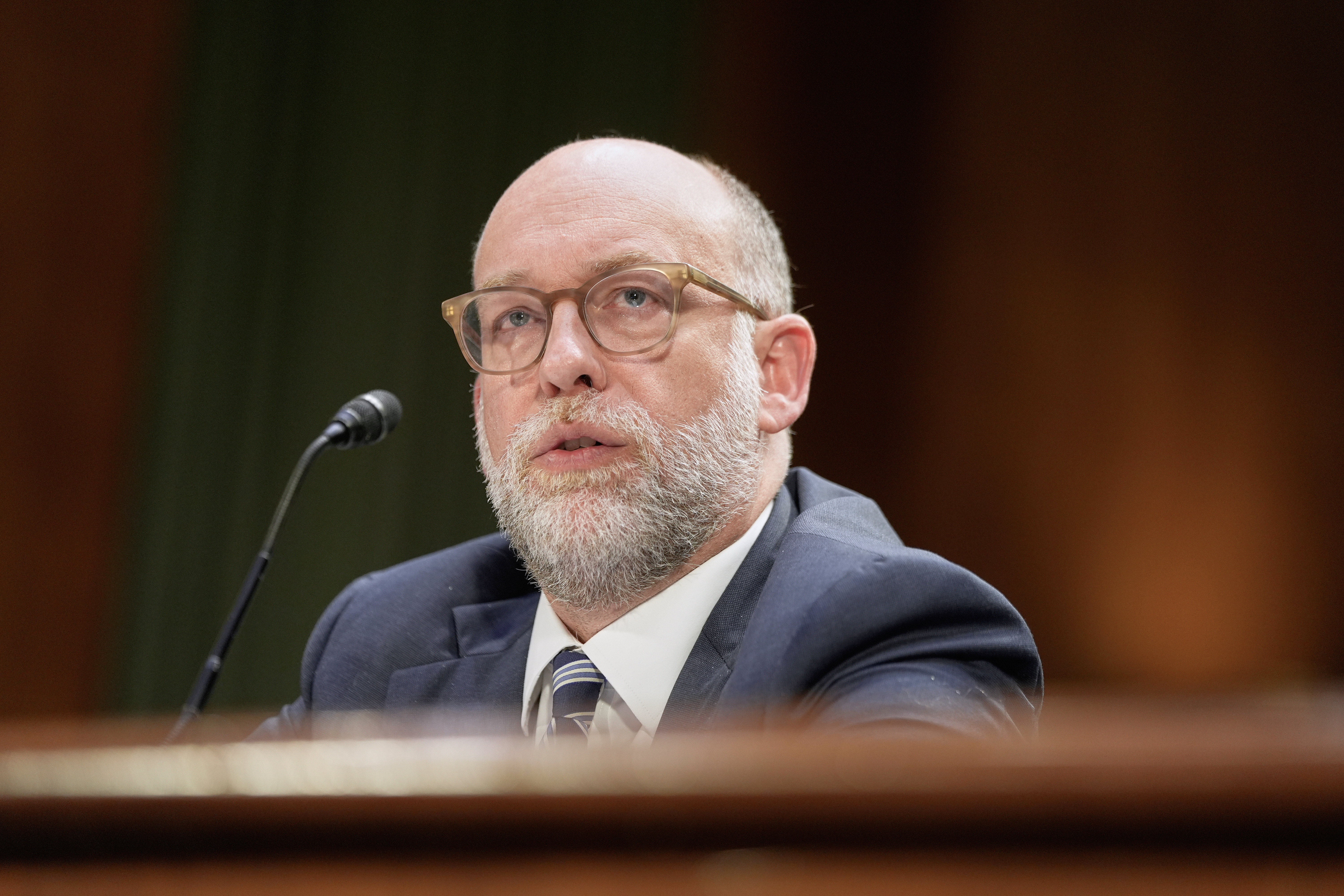
    The bureau has begun to probe a class of smaller, mostly nonprofit lenders that Russell Vought, the acting director of the bureau, has characterized as unduly “woke.”

    On Friday, the bureau issued guidance that could make it harder for immigrants in the country illegally to obtain mortgages and credit cards. Meanwhile, the bureau’s public website invites consumers to complain if they have been refused service — or “de-banked” — for political or religious reasons, reflecting a priority of the administration and its allies in the conservative movement and the crypto industry.

    The moves represent a reorientation of an agency that had previously focused on aggressively policing larger financial institutions on behalf of ordinary consumers. Republicans and much of the financial services industry had long accused the bureau of its own brand of politicization under Democratic leadership, charging that it targeted industries and practices liberals hated.

    The Trump administration says it is correcting overreach during the Biden administration. They say the CFPB, under former director Rohit Chopra, bullied businesses and individuals it viewed as political enemies, pursued questionable legal theories, and imposed costs that ultimately fell on ordinary Americans.

    “We are fixing that, bringing the agency back to operating within statute and away from breaking the law, and making cases right to help small businesses and Americans who were victims of this thuggery,” a spokesperson for Vought said in a statement.

    Critics say the result is a bureau that has gone easy on the powerful while training its firepower on smaller targets.

    “Their first attempt was to kill the agency,” said Aaron Klein, a senior fellow at the Brookings Institution, a centrist think tank. But courts blocked the administration’s attempts to lay off almost all of its staff. Now, Klein and other critics say, Vought has found a different use for the agency.

    “Rather than hold themselves to a higher standard, they seem to be committing the same political persecutions they allege happened to them,” said Klein, who served in the Obama Treasury Department.

    The pivot is visible in the bureau’s recent scrutiny of community lenders — smaller banks and firms that operate in low-income rural and urban communities that are typically underserved by large Wall Street banks. In late April, the bureau’s chief legal officer, Mark Paoletta, sent questionnaires to at least four such lenders, according to people familiar with the probe. One of the questionnaires, reviewed by the Washington Post, demanded a broad swath of financial records, compliance documents, and business details.

    The bureau has legal authority to send such requests for market-monitoring purposes, but the lenders are typically far too small to be subject to CFPB supervision, falling beneath a $10 billion asset threshold.

    Among those targeted was Self-Help Ventures Fund, an arm of a Durham, N.C., lender with roughly $5 billion in assets. Self-Help, which traces its origins to a $77 bake sale in the early 1980s, is affiliated with the Center for Responsible Lending, a consumer advocacy group that has been a vocal opponent of the administration’s efforts to dismantle the CFPB.

    Self-Help and CRL declined to comment for this article. The bureau’s interest in Self-Help has not been previously reported.

    Vought — who simultaneously runs the CFPB and the White House budget office — has made no secret that he holds negative views of the community lenders in question. At a House Budget Committee hearing in April, he said they “continue to be pushing an ideology that is very harmful.”

    The Trump administration has repeatedly sought to eliminate or drastically cut a federal program that funds and certifies community lenders. Bipartisan congressional majorities have rejected those efforts, but Vought has nevertheless withheld hundreds of millions of dollars Congress directed toward the program.

    When asked about the community lenders probe, administration officials sought to minimize the review, saying it represents only a tiny fraction of the bureau’s overall work, and declined to discuss any of the individual targets. A spokesperson for Vought attacked the lenders, saying they had directed money to LGBTQ health clinics, a transgender-themed fashion show, and a group that, she said, had threatened violence against federal immigration officials.

    The scrutiny of smaller community lenders contrasts with what the bureau has done, or stopped doing, elsewhere. Since taking office, the administration has dropped litigation and unwound settlements against some of the largest financial institutions in the country. In some cases, it halted checks that were set to go out to consumers. In other cases, it permanently gave up the right to reopen the claims against some companies in the future.

    In one such case, the watchdog dropped a lawsuit, filed in the waning days of the Biden administration, against the operator of the Zelle payment-transfer network and three of its owner banks — Wells Fargo, Bank of America, and JPMorgan Chase — over allegations that customers lost nearly $1 billion to fraud on the platform.

    The banks called the suit politically motivated, arguing the CFPB was stretching existing law to hold them responsible for payments customers had authorized themselves.

    The Consumer Bankers Association, which represents large retail banks, said it is encouraged by the bureau’s new direction, praising its focus on “identifiable victims, measurable harm, and clear legal standards” over what it called novel legal theories.

    Even if the community lenders currently under investigation had engaged in misconduct, the scale of the wrongdoing would look like a rounding error in comparison with potential misconduct by the largest financial institutions that are currently getting a pass, said Mike Pierce, who worked at the CFPB from 2011 to 2018 and is now the executive director of Protect Borrowers, a nonprofit advocacy group.

    “Some of the biggest corporate bad actors in America have gotten a pass from this agency,” Pierce said. “And now it’s focused on little guys that are doing things the Trump administration finds politically unpalatable.”

    Sen. Elizabeth Warren of Massachusetts, who conceived of the bureau, called the bureau’s pivot a betrayal of Trump’s own promises. “Donald Trump promised to lower costs ‘on day one,’” she said in a statement. “Instead, he’s co-opting the financial cop on the beat to rip away billions in relief for Americans scammed by giant banks and corporations and execute his extreme agenda.”

    Solveig Singleton, a policy analyst at the Cato Institute, a libertarian think tank, said the administration appeared to have discovered that the bureau could be “retargeted against its political opponents,” with broad discretion that makes it easy to frame such targeting as legitimate “policy spin.”

    She also warned that cutting staff could backfire because career employees facing performance pressure might well gravitate toward investigating smaller, easier targets that lack the resources to fight back.

    The longer-term solution, she said, requires Congress to curb the bureau’s unchecked discretion and ensure greater accountability over federal programs.
  • DA Larry Krasner publicly criticized Mayor Cherelle Parker as he flirts with running for her office

    DA Larry Krasner publicly criticized Mayor Cherelle Parker as he flirts with running for her office

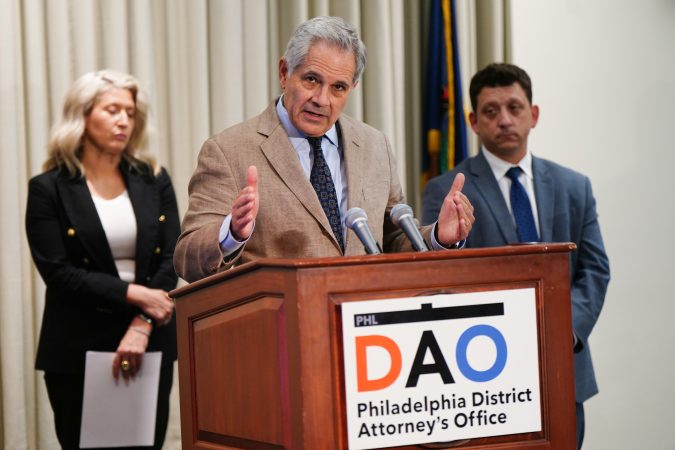
    District Attorney Larry Krasner said Monday that, in the more than two years since Mayor Cherelle L. Parker was sworn in, he has only met with her three times.

    And despite his visit to her City Hall office on Monday in what Krasner described as “the spirit of hopeful collaboration,” that number did not grow to four.

    The district attorney, along with a phalanx of staff and television cameras, walked across the street from his downtown office to the mayor’s suite on the second floor of City Hall, armed with a letter lamenting his budget as inadequate. In it, Krasner wrote that he needs an additional $5.6 million from the city to bolster shootings investigations, domestic violence prosecutions, and victim services.

    Asked why he was delivering a letter to Parker in person, Krasner said: “There is nothing new and nothing inappropriate about civil rights leaders, activists, and politicians getting the word out.”

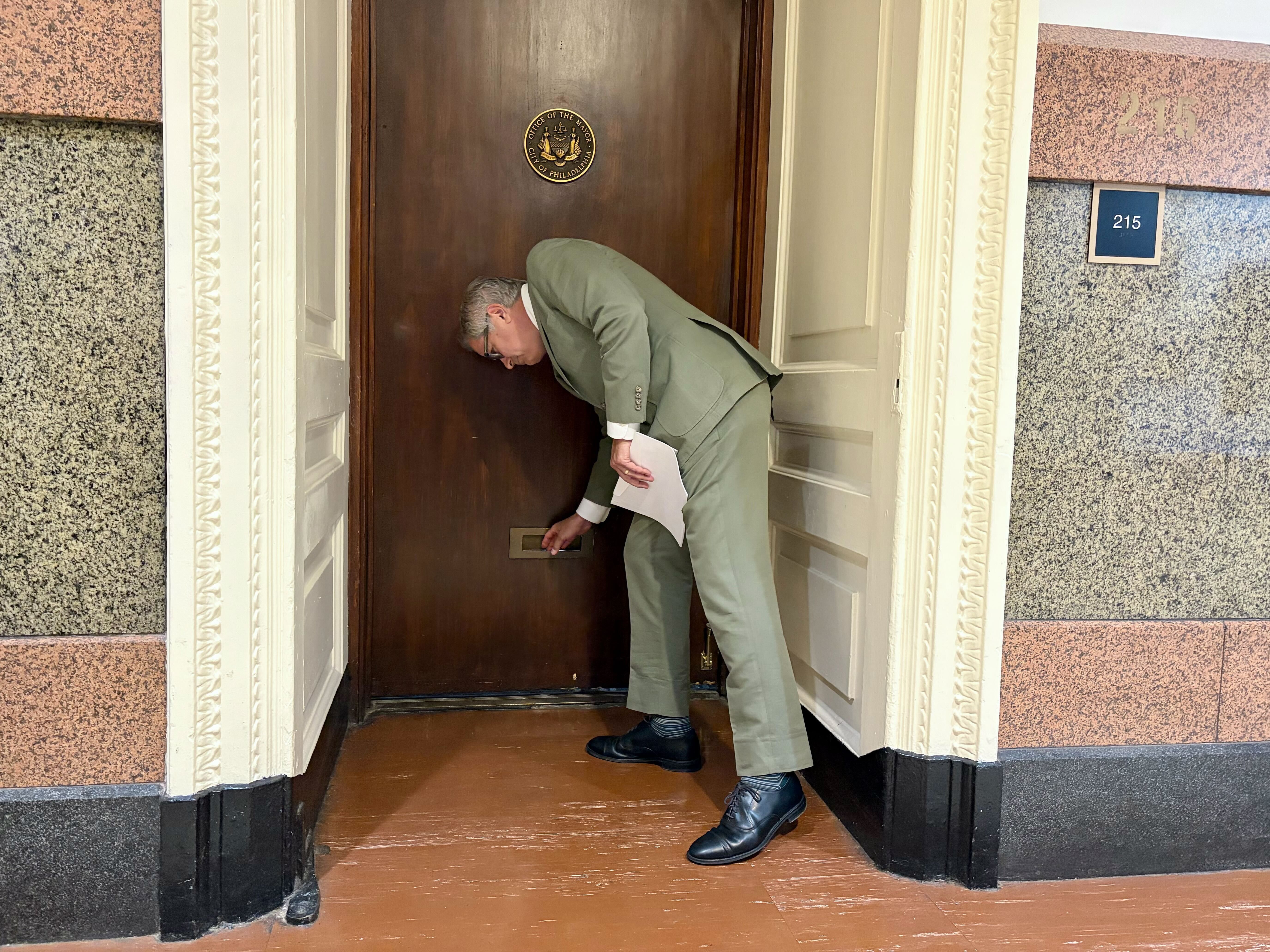
    The mayor did not open her door. Krasner pushed his letter through a mail slot.

    District Attorney Larry Krasner delivers a letter to Mayor Cherelle L. Parker’s office after hosting a news conference to ask the mayor to consider allocating millions more dollars to his office this year.Anna Orso

    The public plea came just days after City Council gave the green light to a city budget for the fiscal year that begins on July 1, including a record-high $62.4 million allocation to the District Attorney’s Office, which is about $3 million more than it received last year.

    Krasner, who called a news conference at the district attorney’s office before his trip to City Hall, said his office needs additional funding to “prevent potential layoffs,” but he did not specify the number of jobs on the line. The city budget will be up for a final vote in Council on Thursday, and it is unlikely to substantially change before then.

    In response to a request for comment, a spokesperson for the mayor shared data showing that the District Attorney’s Office budget has increased by 55% over the last five years.

    Krasner’s televised appeal to Parker on Monday came as rumors swirl that the third-term progressive may run for mayor next year when Parker, a centrist Democrat, is up for reelection. He has also been floated by political observers as a potential candidate for U.S. Senate to run for the seat currently held by Sen. John Fetterman, a Democrat who has angered many in the party and will be up for reelection in 2028.

    Krasner, who is the city’s most prominent progressive and who won reelection to be the city’s top prosecutor last year, said he is not plotting another run for office.

    But he has done little to suppress the speculation. He recently got into a spat with labor leader Ryan N. Boyer, one of Parker’s closest political allies, and he publicly called on former U.S. Rep. Bob Brady, the longtime chair of the city’s Democratic Party, to step aside.

    And on Monday, Krasner, who was reelected to a third term in November, wouldn’t commit to serving out his entire four-year term. (Philadelphia’s Home Rule Charter requires that city officeholders resign to run for higher office.)

    “Am I running for these offices today? No. Do I have a plan to run for these offices today? No,” Krasner said. “But if you’re asking me to say that I would never, under any circumstance, no matter what was going on locally or nationally, consider some other office, it would be foolish for me to completely rule out those possibilities.”

    He is one of several people who progressive leaders in the city may look to next year to challenge Parker, who is backed by much of the city’s Democratic establishment and organized labor. She has been criticized by some on the left for her law enforcement-driven initiatives to address the Kensington drug market and her cautious approach to President Donald Trump.

    The mayor’s race became even more attractive to Philadelphia’s left-wing faction of the Democratic Party last month after State Rep. Chris Rabb, a democratic socialist, won the party’s nomination for an open seat in Congress.

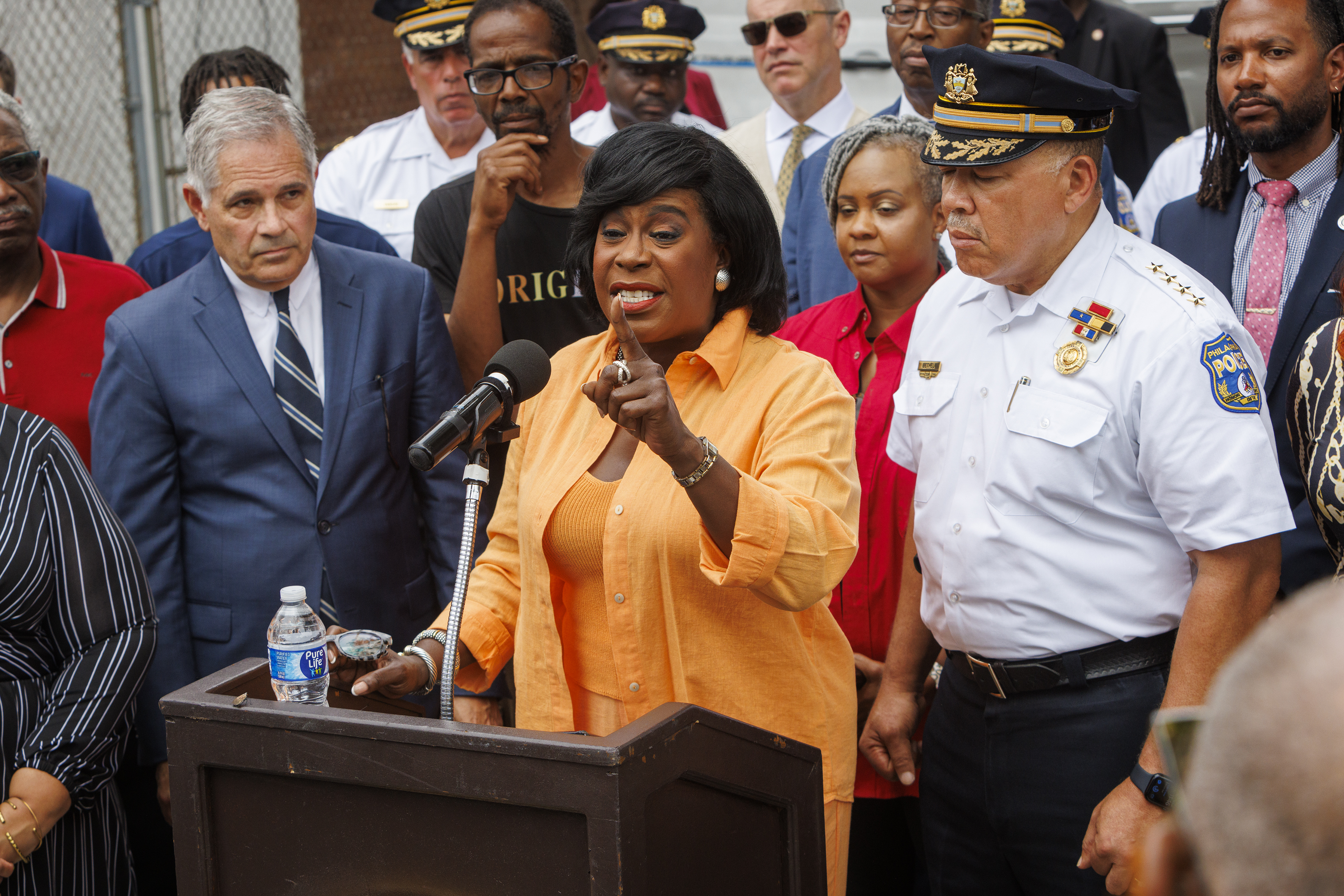
    Mayor Cherelle L. Parker is flanked by Police Commissioner Kevin Bethel and District Attorney Larry Krasner (left) on July 22, 2024.Alejandro A. Alvarez / Staff Photographer

    Krasner’s public criticism of Parker this week is also notable because he and the mayor have, despite not meeting regularly, attempted to maintain a veneer of civility.

    While Parker ran for office on a tough-on-crime message that could be seen as in tension with the district attorney’s progressive platform, she has not directly criticized Krasner. She also campaigned on a promise of close collaboration with other governmental entities after conflict between Krasner and former Mayor Jim Kenney spilled into public view on several occasions.

    Krasner on Monday insisted that his trip across the street to Parker’s office was not intended to inflame hostilities. He cited his letter, which began with thanking the mayor for her “leadership, vision, and goals.”

    The letter ended with Krasner saying that the city’s leaders should “truly model the peace and unity we hope to see within our communities.”

    He added: “We can achieve more together!”

    Staff writer Ellie Rushing contributed to this article.

  • Republican senators warn surveillance program may lapse after Trump intel pick backlash

    WASHINGTON — Republicans are warning the White House that a critical surveillance authority is likely to lapse this week amid bipartisan backlash over President Donald Trump’s pick to lead the nation’s intelligence community.

    Sen. Tom Cotton, the chairperson of the Senate Intelligence Committee, and Sen. Chuck Grassley, chairperson of the Senate Judiciary Committee, sounded the alarm over the weekend after a failed procedural vote to extend the program.

    The senators in a letter urged Secretary of State Marco Rubio to prepare “for a potential significant gap in foreign intelligence collection” if the authority expires. Section 702 of the Foreign Intelligence Surveillance Act, set to lapse June 12, allows agencies including the CIA, National Security Agency, and FBI to collect communications from foreign targets overseas without a warrant.

    “We have a deadline ahead of us. We need Democrat votes,” Senate Majority Leader John Thune said Monday.

    Efforts to secure a long-term extension of the program already faced hurdles because of bipartisan concerns that the program can incidentally collect Americans’ communications. Privacy advocates and some lawmakers have been pushing to create a new warrant requirement before those communications can be searched.

    Senate leaders from both parties appeared to be nearing agreement on a long-term extension. But the effort collapsed after Trump selected federal housing finance regulator Bill Pulte to serve as acting director of national intelligence.

    “Why the president would throw this live hand grenade of Bill Pulte in 10 days before this is due to expire, I’m not sure,” Sen. Mark Warner, the top Democrat on the Senate Intelligence Committee, said on ABC’s This Week.

    Pulte pick upends bipartisan deal

    Early Friday morning, after senators spent the night debating separate immigration legislation, seven Republicans joined nearly all Democrats in blocking a long-term extension of the surveillance authority.

    Democrats and several Republicans registered their opposition to Trump’s selection of Pulte, arguing the federal housing finance regulator lacks the experience needed to oversee the nation’s 18 intelligence agencies.

    “The naming of Pulte to that position, although the timing arguably wasn’t the best, I still don’t think it ought to derail something that’s this important,” Thune said Friday.

    Thune has expressed concern over Pulte’s pick, saying the nation’s top intelligence post should not be “weaponized” and that the job should be filled by “professionals.” Cotton, who rarely strays from supporting Trump and is a leading advocate for the surveillance authority, declined to endorse Pulte, saying only that he had “no observations on the matter.”

    “He’s not qualified for the long-term position,” Republican Sen. James Lankford, another member of the Intelligence Committee, told Fox News Sunday. “That’s been clear on this. He has no national security background.”

    Both Republican and Democratic senators skeptical of Pulte pointed to his record at the Federal Housing Finance Agency. In the role, he’s been linked with criminal referrals over allegations of mortgage fraud by public officials Trump sought to punish, including New York Attorney General Letitia James, a Democrat; Sen. Adam Schiff (D., Calif.); and Lisa Cook, a board member of the Federal Reserve.

    Republicans will need to garner some Democratic support to pass any extension of the surveillance authority in the Senate, and likely the House as well. But a breakthrough appears difficult so long as Pulte remains in the position, which Trump said last week would only be temporary.

    “Clearly to get to good-faith negotiations the effort to elevate Bill Pulte as the acting director of national intelligence should be reversed. Immediately,” House Democratic Leader Hakeem Jeffries said.

    A key surveillance tool

    The current reauthorization debate is hardly the first time that lawmakers have grappled with the fate of the surveillance program, particularly after a flurry of revelations about government misuse of the vast trove of intelligence it collects.

    The topic in recent years has scrambled predictable partisan alliances, with Democratic critics of the Trump administration uniting with skeptics of government power on the right in voicing concerns about Section 702’s renewal.

    In 2024, for instance, those divisions nearly caused the program to lapse. The Senate barely missed its midnight deadline that year before approving by a 60-34 margin legislation to reauthorize Section 702 that was subsequently signed by then-President Joe Biden.

    A spokesperson at the Justice Department did not immediately return messages seeking comment Monday about the national security concerns that would be created if the program lapses. The Office of the Director of National Intelligence referred inquiries to the White House, which did not immediately respond to a request for comment.

    “America faces real threats from foreign adversaries, terrorists, cyber actors, and hostile intelligence services,” Defense Secretary Pete Hegseth said on social media Sunday. “Section 702 remains one of our nation’s most effective tools for identifying and disrupting those threats before they reach our shores.”

    Cotton and Grassley said they believed Democratic leaders would not support another short-term extension of the surveillance authority and urged Rubio to prepare contingency plans. They said Trump should consider an executive order to prevent a disruption in intelligence collection.

    Cotton and Warner had said they were close on a bipartisan deal on a long-term extension and could still move quickly should a change occur before Friday. Still, the bill would likely need to go through the House — and the two chambers so far have disagreed on a separate issue regarding central banking digital currency.

    Republicans leaders are already warning of the consequences if Congress fails to act.

    “If it goes dark, then it would be a calamitous situation for the country,” House Speaker Mike Johnson said.

  • Longtime Philly State Sen. Anthony Williams is running for the last time — and won’t commit to fulfilling his full term

    Longtime Philly State Sen. Anthony Williams is running for the last time — and won’t commit to fulfilling his full term

    State Sen. Anthony H. Williams, a veteran state senator from Philadelphia known for his advocacy on school choice and who has led one of the city’s most muscular political factions for decades, says November will be his last time running for reelection.

    But first, he has more work to do for the advancement of Black Philadelphians and the Democratic Party before he retires, he added in an interview this week.

    Williams, 69, did not commit to completing another four-year term, opening up the possibility that he could handpick his successor if he decides to retire early.

    “I’m thinking about getting reelected and serving, that’s all I’m thinking about,” he said. “I’m here, I’m gonna run to November, and we’ll see what happens after that.”

    Williams ran unopposed in 1998 for the seat after his father, the late Hardy Williams, decided within hours of the filing deadline he would not run for reelection. At the time, the move was was widely seen as an intentional play by the late Williams to hold the seat for his son. Now, Anthony H. Williams says that recollection excluded a key piece of information as to why his father retired so suddenly: He had been diagnosed with dementia just before he decided not to run.

    “We didn’t have a plan for me to take over,” the younger Williams said, noting that former State Rep. James Roebuck Jr. had filed to run, too, but ultimately withdrew from the race due issues with his petitions. “It wasn’t like I got a free pass.”

    When a state legislator resigns before the end of his or her term, a special election is called to fill the vacancy. The ward leaders in that district then get to choose who should take over the seat, dodging a competitive primary and largely deciding the outcome in closed-door meetings.

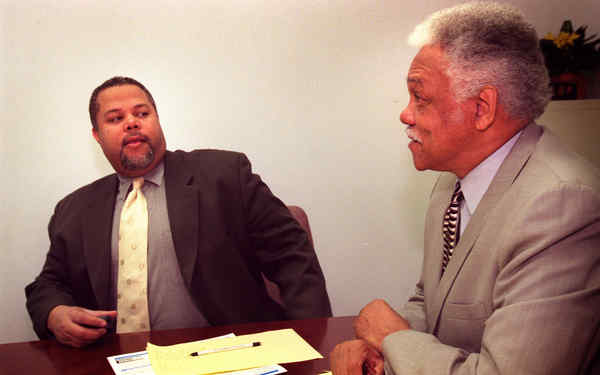
    Anthony Hardy Williams (left), seen here in 1998, when he was a state representative and his father (right) was a state senator.File photo

    Williams —who has been in state government, both as a representative and senator, for nearly four decades — is seeking his sixth term to represent parts of Southwest Philadelphia and Delaware County in Harrisburg. He recently won his primary election over Democratic challenger David Goldsmith Jr. and will not face a Republican challenge in November.

    Williams has had a far-reaching — and at times, turbulent — legacy in Harrisburg and the city, running twice unsuccessfully for Philadelphia mayor in 2015 and 2019 and once unsuccessfully for governor in 2010.

    Over 37 years in Harrisburg, Williams has mentored numerous young Philadelphians who started as aides in his Senate office, who have gone on to become top legislative leaders. That list includes: House Speaker Joanna McClinton, Philadelphia City Council President Kenyatta Johnson, House Appropriations Chair Jordan Harris, Superior Court Judge Timika Lane and more.

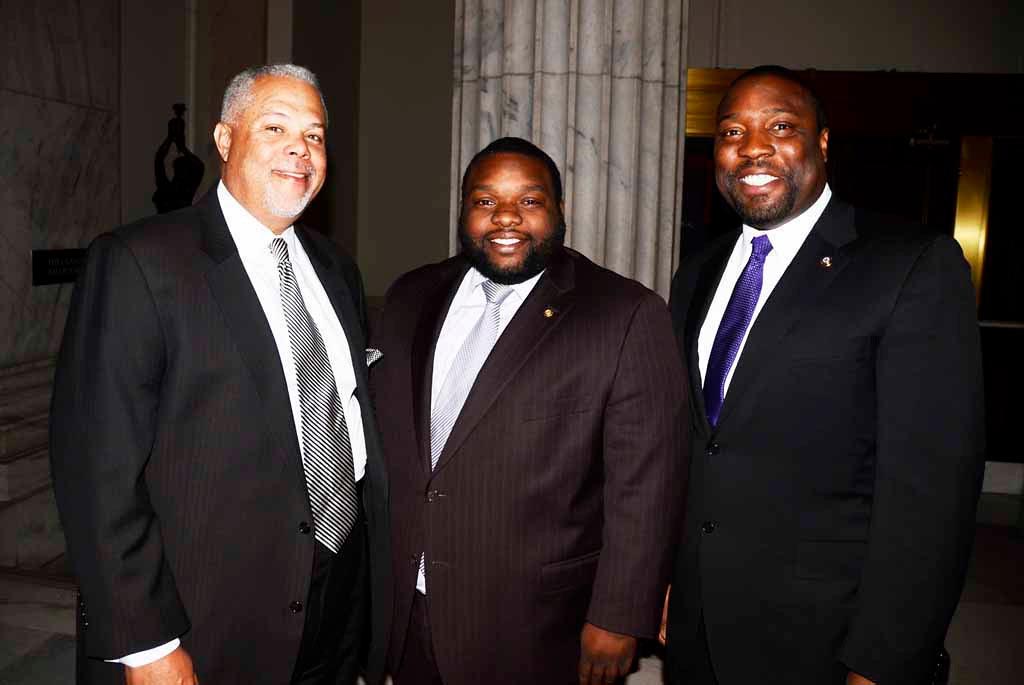
    State Sen. Anthony H. Williams, State Rep. Jordan Harris and Councilman Kenyatta Johnson at the Inaugural Dorys Erving Fit Youth Foundation Celebration at the Ritz-Carlton on Friday, November 15, 2013. (HughE Dillon/Philly.com)

    “It’s a testament to his dedication and his commitment to seeing Black independent politics grow and mentoring young people to get into office — not to just be there, but to do something,” Harris said Friday.

    Looking at Williams’ list of mentees who now outrank him in office shows his legacy and humility, Harris added. And Williams is willing to have spirited disagreements with his mentees, Harris said.

    “He’s mentored people who vehemently disagree with him on certain issues, but the endgame of upward mobility for underrepresented people is all the same,” Harris said.

    Johnson, in a statement, credited Williams for playing a formative role in his political climb, and for always being willing to “share his wisdom, offer candid advice, and invest in the next generation of leaders.”

    “Philadelphia is a better city because of [Williams’] service, and I am proud to call him both a colleague and a friend,” Johnson added.

    In an interview, Williams said that he’s seen Harrisburg change tremendously since he first was elected to as a state representative in 1989. Today, Democrats control the state House after flipping the chamber in 2022 for the first time in 12 years, a Black woman from Philadelphia leads the House, and a democratic socialist leads Philadelphia’s delegation to Harrisburg in the Senate. Democratic lawmakers successfully fought to change how Pennsylvania’s public education system is funded, and they’ve advanced gun reforms.

    And, he said, it’s no longer a place for career politicians like him.

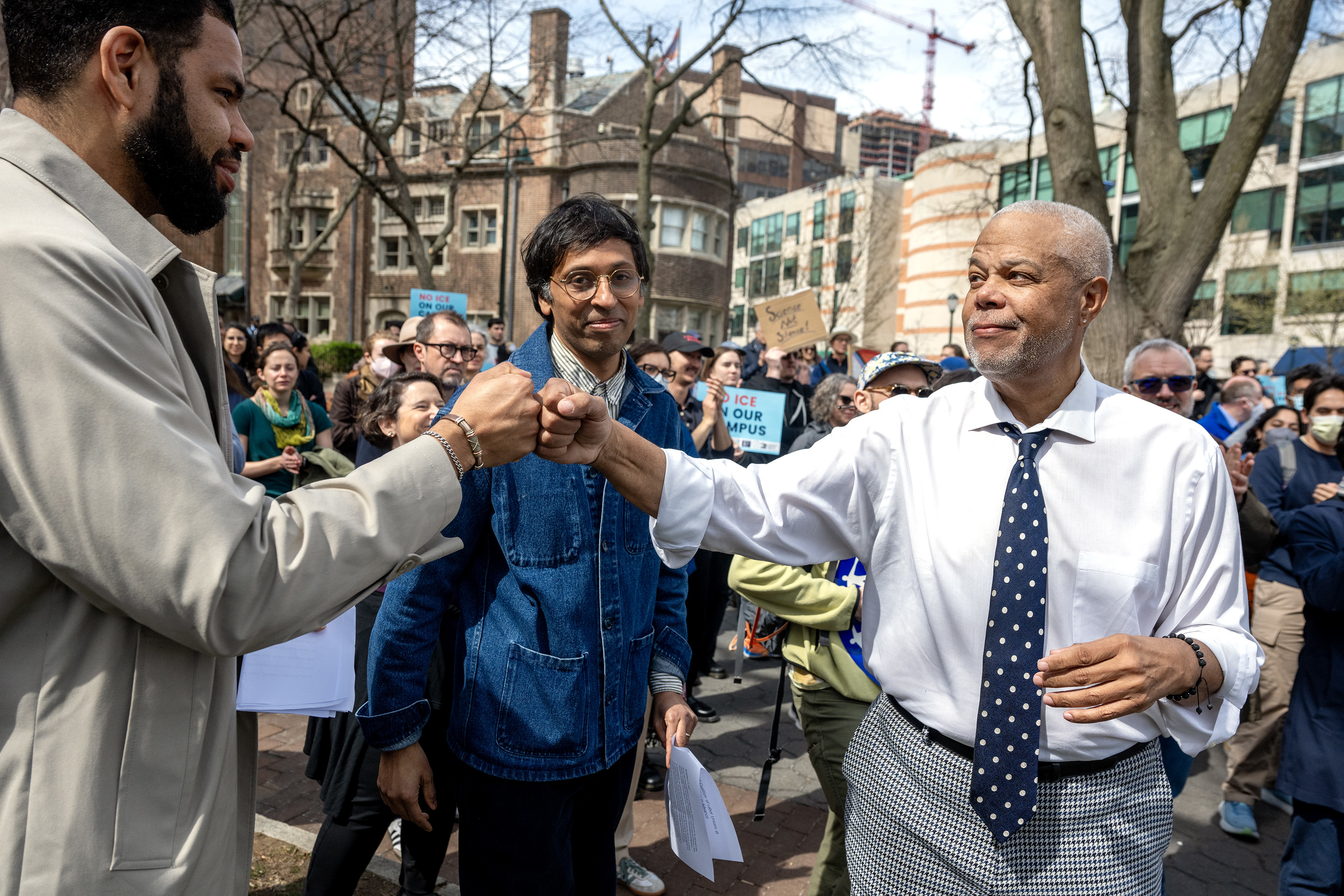
    Philadelphia elected officials State Rep. Rick Krajewski (from left), State Sen. Nikil Saval, and State Sen. Anthony Williams attend a rally at the University of Pennsylvania Mar. 20, 2025.Tom Gralish / Staff Photographer

    But Williams said there are still critical issues of policy and politics that he wants to address with his time left in office.

    First, he wants to be a bridge between generations of Democratic leaders — though he dislikes how Democrats currently label themselves as “progressive” or “moderate” to differentiate their views. He said he’s been speaking frequently with progressive leaders since State Rep. Chris Rabb, a democratic socialist, won the party’s nomination to represent Pennsylvania’s 3rd Congressional District in Congress.

    “The Democratic Party as it’s currently constituted is something that’s not current, and not visionary about moving forward,” Williams said.

    “I want to spend time working with those folks who are in that progressive community who will identify with the fact we have common ground on a lot of these areas. We have a different rhythm, or as they say, a different vibe,” he added.

    Throughout his time in office, he said he’s had his ideas stolen and boasted by white leaders, including a successful illegal gun task force. He’s cut deals with top Republicans for impactful programs that still exist today, such as an apprenticeship program that helped increase diversity in the building trades. He’s been an outcast at times as one of few Democrats to advocate for school choice options, a label that he knows follows him.

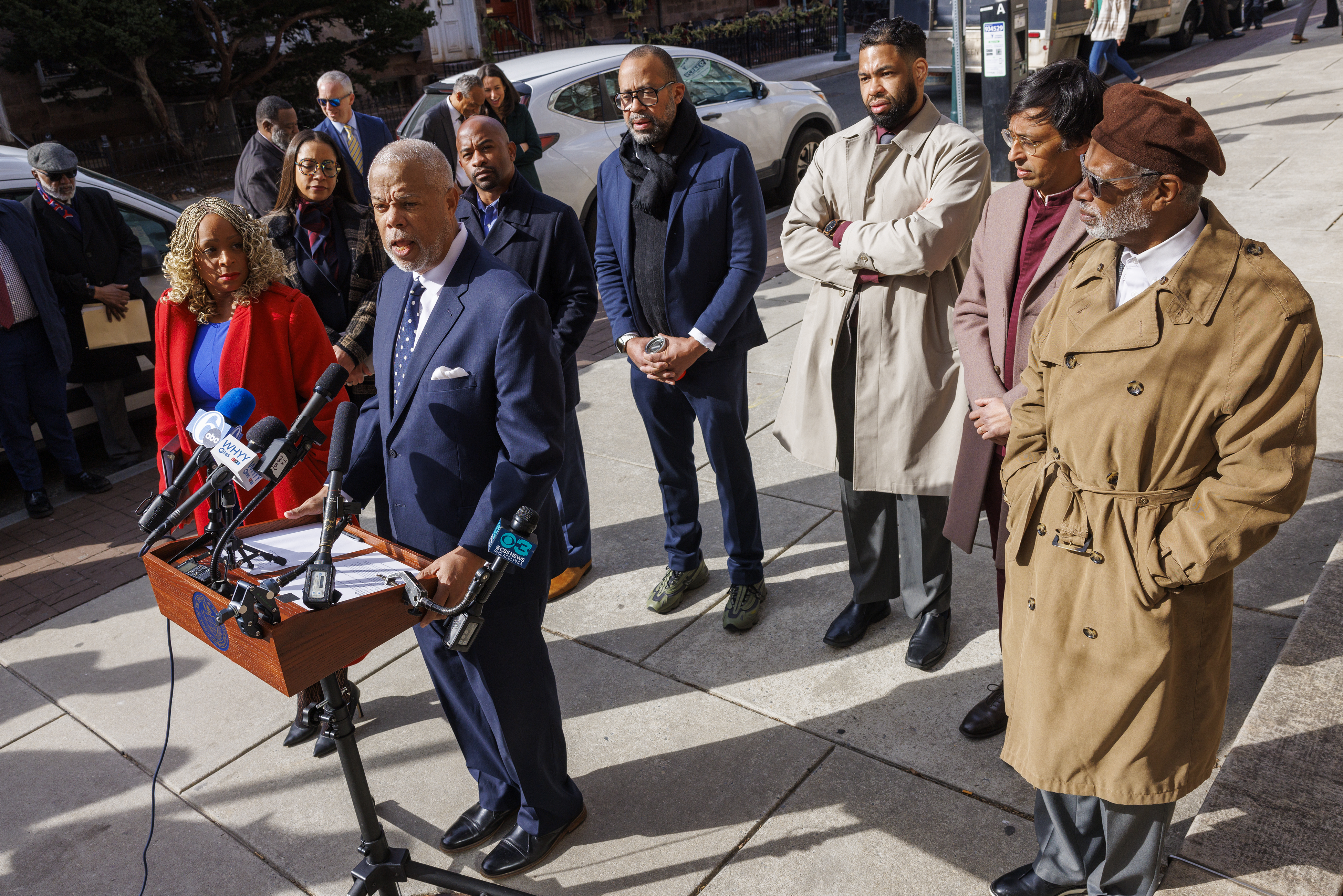
    News conference hosted by Pennsylvania State Senator Anthony H. Williams (podium) outside the Penn Carey Law School, Tuesday, Feb. 25, 2025. At rear from left are Councilmember Jamie Gauthier, law professor Stacy Hawkins, State Rep. Napoleon Nelson, Rev. Marshall Mitchell, Penn Trustee Board, State Rep. Rick Krajewski, State Sens. Nikil Saval and Art Haywood.Alejandro A. Alvarez / Staff Photographer

    Now, he wants the buy-in of state legislators and the private sector to address economic inequities among Black Philadelphians. Black residents make up the largest racial or ethnic groups in Philadelphia, but have one of the highest poverty rates in the city with 22.3% of Black residents living in poverty in 2024, according to a Pew Charitable Trusts survey released this year. Instead, Black residents should be driving the economy, Williams said.

    “Fundamentally, we have to take hold of the economy in the city,” he said. “We collectively have the power to do something about it. Not individually, collectively.”

    He sees more school choice options — and reimagining the whole public school system if necessary — as part of this solution. He’s faced criticism throughout his career for his support of school choice efforts, citing his big-dollar support from Pennsylvania’s richest man Jeffrey Yass, who solely supports candidates willing to send state money to private schools.

    Yass, who usually supports Republican candidates, was among the sole funders of Williams’ failed bids for governor and mayor. Williams has been criticized for taking money from a top GOP supporter who wants to divert money away from Pennsylvania’s public school system.

    “People think I’m a one-hit wonder,” Williams said of his support for using public dollars to send some students to private schools. “We have to be honest about what we’re doing and not doing and have honest, hard conversations about how we’re gonna change how we do this.”

  • What Chris Rabb’s win in Philly could mean for the 2028 Democratic battle to replace John Fetterman

    What Chris Rabb’s win in Philly could mean for the 2028 Democratic battle to replace John Fetterman

    The euphoria at Chris Rabb’s election night party last month hadn’t even started to wane before the democratic socialist and his supporters — dancing and hugging after capturing a rarely open Philadelphia seat in Congress — spoke of setting their sights even higher.

    Taking on the city’s Democratic establishment to defeat a pair of more centrist candidates in the heated 3rd Congressional District race was a momentous win on its own. But the reckoning, they promised, wouldn’t be confined to Philadelphia’s borders.

    “It’s going to change not just our city, but our entire commonwealth,” Rabb said in an interview amid the celebration at a Germantown banquet hall.

    It was a sentiment echoed that night by key figures in Rabb’s coalition — from the head of the Working Families Party to Pittsburgh’s U.S. Rep. Summer Lee, the only other democratic socialist representing a part of Pennsylvania.

    With the 2026 Pennsylvania Democratic primary in the rearview mirror, that conversation has broadly and quickly turned to the next biggest prize in the state: the U.S. Senate seat held by Democrat John Fetterman.

    The senator has not said whether he will run for a second six-year term in 2028. But in an unusual situation for an high-profile elected official, a robust intraparty competition to replace him is expected to start either way in the next year as Fetterman increasingly sides with Republicans and as polls show that his support among Democratic voters has nose-dived.

    State Rep. Chris Rabb is hugged by his son, Issa Rabb, during his primary election night event at Victorian Banquet Hall on May 19.Elizabeth Robertson / Staff Photographer

    Some Democrats who watched Rabb emerge from a competitive race, notching one of the left’s biggest wins yet in Pennsylvania, see an opportunity — one that extends the energy and momentum to boost a well-organized, progressive, anti-establishment candidate in the Senate primary.

    Other strategists and activists say that’s a tall task, particularly in a swing state that rarely strays from electing more centrist politicians statewide.

    “Anytime you have success, it breeds enthusiasm, which translates into more volunteers, into more money — everything you need to run a campaign,” said Mike Mikus, a Pittsburgh-based Democratic strategist. “But every election cycle is different. Every campaign’s different. The quality of candidates are different. And anybody who says that any one race signifies a permanent change within a party is mistaken.”

    ‘A huge impact on the political landscape of Pennsylvania’

    In his campaign to succeed U.S. Rep. Dwight Evans, Rabb, a five-term state lawmaker, won 44% of the vote. He was up against State Sen. Sharif Street, who had the backing of the city Democratic apparatus, and physician Ala Stanford, a political newcomer endorsed by Evans.

    Rabb and others have said his success, in part, was the culmination of a decade of progressive organizing that began in the city after U.S. Sen. Bernie Sanders’ 2016 presidential campaign.

    That progressive infrastructure — the coming together of different groups to knock doors, make calls to voters, and unleash a significant independent advertising campaign in a way that rivaled the official Democratic Party organization — is likely the most important way that the left can use the experience of Rabb’s campaign to replicate its success elsewhere, strategists said.

    It’s a template that could have “a huge impact on the political landscape of Pennsylvania,” said Rotimi Adeoye, a Philadelphia-based Democratic strategist who worked in the office of former U.S. Sen. Bob Casey.

    In a district packed with Democratic voters, Rabb’s ability to turn out progressive voters should draw the attention of anyone looking to win the state’s Democratic Senate primary in 2028, Adeoye said.

    “If a Democrat running statewide can learn from some of these organizational groups to build a strong, relational and community-based organizing campaign in Philadelphia and the surrounding suburbs in Montgomery County, Bucks County — they’re going to have a really big chance of winning,” Adeoye said.

    In a sign that those efforts could coalesce around a Senate candidate, one of the groups that helped usher Rabb to victory remains the only major Democratic entity in the state to have publicly started laying the groundwork for a challenge to Fetterman.

    The Working Families Party, which backed Fetterman in the 2022 general election after originally endorsing State Rep. Malcolm Kenyatta in the primary, said in November it would organize an effort to oust him. A “Primary Fetterman” website launched in January is equipped with a “Fetterman sell-out tracker” — highlighting his votes for Trump’s cabinet nominees and opposition to war powers resolutions that would rein in his military strikes, for example — and instructions for donors on how to request a refund from his campaign.

    The website remains the extent of the group’s efforts so far to rally public support and back a new candidate, though its work is expected to pick up after this year’s midterm elections. For now, the party is looking forward to bringing new members who worked to elect Rabb into its fold.

    “Our goal is always to keep building on the work we do each cycle and the success we have each cycle,” said Nick Gavio, the Working Families Party’s Mid-Atlantic communications director.

    One PA, another statewide group in that progressive coalition, has not yet had internal discussions about the Senate race but it supports the Working Families Party’s position as a member of its steering committee, executive director Steve Paul said. He said more than 150 members of One PA mobilized for Rabb by talking to thousands of voters.

    Winning a high-profile congressional race only helps add to that organizational infrastructure, making them “sharper for the next thing,” Paul said.

    “I think it shifts what’s possible, politically — what people can envision,” he said.

    Potential progressive roadblocks

    Mikus said progressives have increasingly surpassed “more establishment Democrats” in their ability to run strong campaigns, including in his area of Western Pennsylvania where candidates like Lee have emerged in the last decade.

    Democratic primary voters are also more progressive than they were 10 years ago, he said. But campaigning on a far-left — or a far-right — platform doesn’t often equate to success on a statewide level in Pennsylvania, a swing state where successful candidates tend to walk a “fine line” that appeals to both swing voters and a message that excites their partisan base, Mikus said.

    “You’ve seen this time after time in presidential elections here in Pennsylvania,” Mikus said. “Hillary Clinton versus Bernie Sanders. Joe Biden versus Bernie Sanders. The vast majority of voters in Pennsylvania will go with the more mainstream Democrat.”

    J.J. Balaban, a Philadelphia-based Democratic strategist and ad maker, said the party runs the risk of “drawing too big of a conclusion” based on a single election — particularly one like Rabb’s where candidates only needed to appeal to Democrats.

    “Democrats really need to think hard about what it will take to win statewide in a purple state, which Pennsylvania clearly is,” Balaban said. “What it will take to win a general election in Pennsylvania is very, very different than what it will take to win in literally the most Democratic congressional district in the country.”

    After recent years of tough losses — including the ousting of Casey by now-U.S. Sen. Dave McCormick, a Republican — Democratic voters will likely have a “tremendous thirst for candidates who have a credible case to make that they can win the general election,” Balaban said.

    Fetterman, whose office did not comment for this story, has insisted that Pennsylvania’s purple state status means he should appeal to both sides of the aisle and not demonize the other side.

    He’s also lamented the direction he sees his party going with candidates like Rabb, particularly around a growing sentiment that Israel has gone too far in its war against Hamas. Fetterman acknowledged last year that his unwavering support of Israel could cost him his Senate seat.

    “Look at the people that are winning the primaries in our party right now, and look at their views on Israel,” Fetterman said at an American Jewish Committee conference in Washington this week.

    On stage with McCormick and the head of the Jewish advocacy organization, Fetterman painted Graham Platner, the expected Democratic nominee for a U.S. Senate seat in Maine, as a “Nazi sympathizer” and connected him to Rabb.

    “People also in our state, too. Rabb, he won, and he ran on being a very, very anti-Israel guy,” Fetterman said. “It’s actually a virtue [in the modern Democratic Party] … It’s heartbreaking for me. And if it isolates me, then so be it.”

    Who might run?

    Of the Democrats widely considered to be eyeing a campaign to replace Fetterman, the public jockeying has so far been limited to criticisms of the incumbent.

    U.S. Rep. Brendan Boyle, a moderate who represents the other half of Philadelphia next to Rabb’s soon-to-be seat, has repeatedly called Fetterman “Trump’s favorite Democrat.”

    Former U.S. Rep. Conor Lamb, a moderate who represented a suburban Pittsburgh district before Fetterman beat him in the 2022 Senate primary, has frequently lambasted him.

    Conor Lamb speaks to the crowd at a town hall-style event organized by progressive groups at Central Penn College on June 22, 2025, in Enola, Pa. Marc Levy

    And U.S. Rep. Chris Deluzio, who succeeded Lamb and leaned into progressive economic populism, has taken a less direct tack while noting the differences between himself and Fetterman over issues like Trump’s military interventions abroad. Deluzio has occasionally reposted others’ criticisms on social media — including one from Gavio, the Working Families Party spokesperson, last week that called Fetterman’s reversal on eliminating the filibuster “a new low” and “an indescribably massive backtrack from everything he ran on.”

    None of the three have ruled out running.

    Boyle is expected to weigh a Senate campaign vs. staying in the House to take a rare opportunity to lead the powerful budget committee if Democrats win the majority in November. Lamb, who’s remained highly active in Pennsylvania politics, said in an interview that he’s hoping to serve again and would run for office if he feels he “can be of service to the state.” Deluzio, who is also heavily involved in helping Democratic candidates across the state, said he’s focused on his reelection this year and that “we’ll see what 2028 holds.”

    “I am not at all interested in seeing us lose this Senate election, and I certainly have gotten a lot of encouragement to look at 2028,” Deluzio said.

    Progressives have also mentioned Lee, the Rabb ally who’s been a vocal member of the leftist wing on Capitol Hill while taking leadership roles in areas like securing the release of the Jeffrey Epstein files.

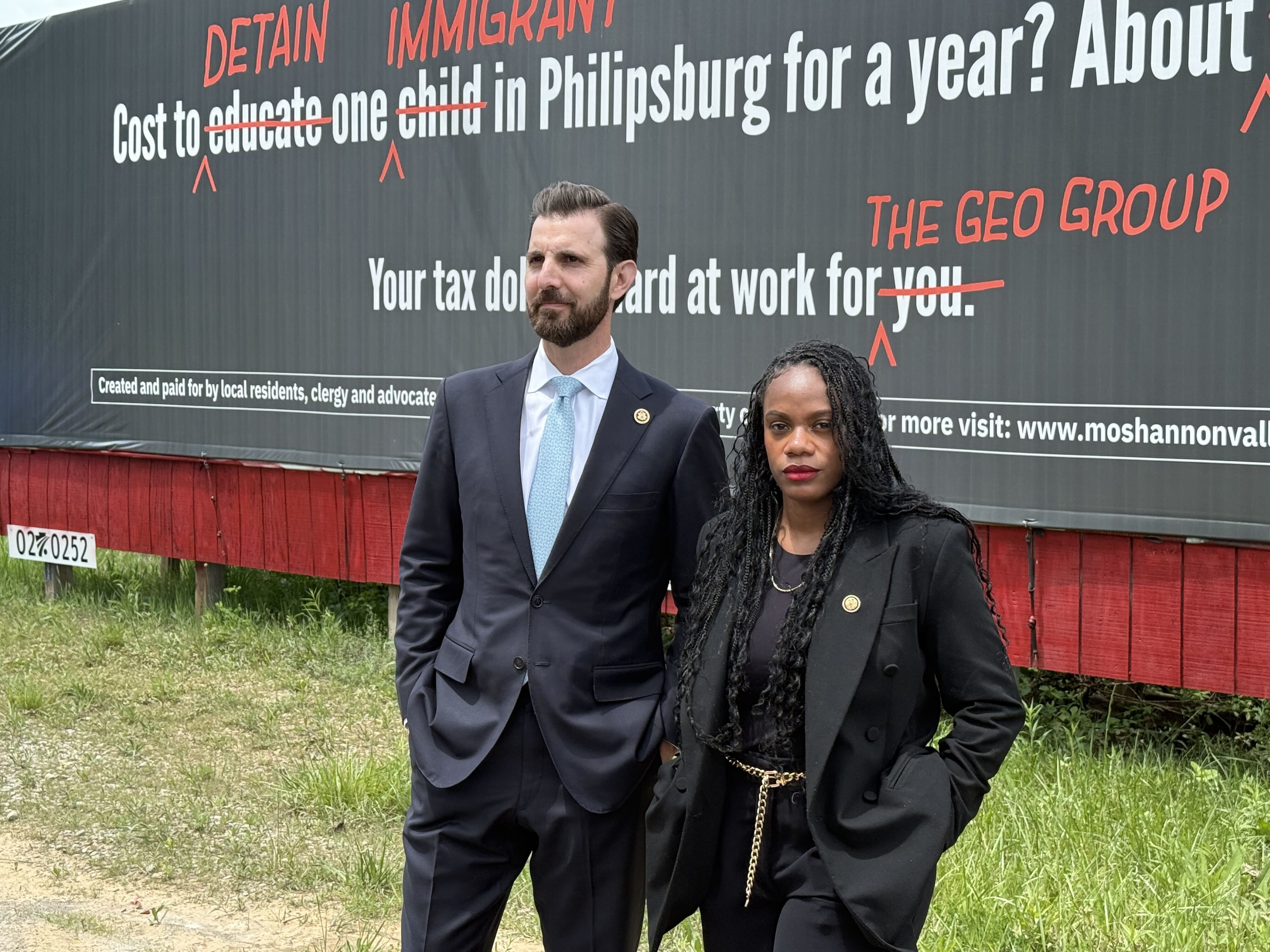
    U.S. Reps. Summer Lee and Chris Deluzio, both Pittsburgh-area Democrats, speak outside the Moshannon Valley Processing Center in Clearfield County on May 28 after getting a tour of the facility, the largest detention center for undocumented immigrants in the Northeast.Sam Janesch / Staff

    With potential candidates still several months away from making their decisions, it’s unclear who might try to take up the progressive mantle if Lee does not run, strategists say.

    The field could also grow considerably. Other potential candidates could jump in, including the three other current Pennsylvania Democrats in Congress or former lawmakers like Susan Wild, who lost a swing congressional district in the Lehigh Valley in 2024. Wild said she’s “not ruling out” a run but she’s more interested in thinking about good female candidates in general since no woman has ever won a Pennsylvania U.S. Senate seat.

    On the prospects of a battle between different factions of the party, Lamb said he believed Democrats had broadly learned a lesson — from Fetterman’s election in 2022, where he ran on being a reliable Democratic vote in the Senate — that was beyond ideological policy tests.

    “Fetterman taught Democrats in Pennsylvania that you have to have a character test. Anybody can run around the state promising you these further left solutions, and that they’re going to be a thumb in the eye of the establishment, and they’re going to channel all your anger and dissatisfaction. And then that person can turn on you on a dime,” Lamb said. “The fact is that we have to evaluate our candidates based on whether they have integrity and they’re going to keep their word and, honestly, whether they have the work ethic to be a senator day in, day out.”

  • Birthright citizenship is constitutional. But some Americans have always had to prove themselves worthy.

    Birthright citizenship is constitutional. But some Americans have always had to prove themselves worthy.

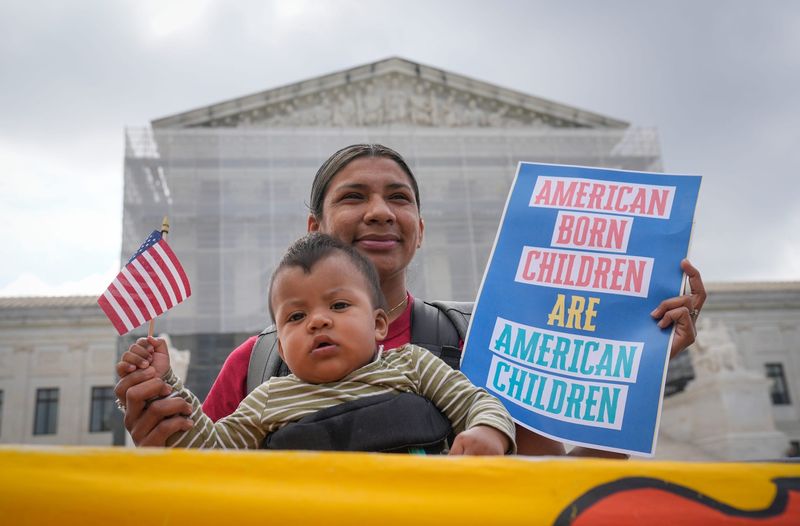
    As the Supreme Court considers President Donald Trump’s effort to narrow birthright citizenship, the administration has cast the issue as a defense of the value of U.S. citizenship rather than simply a change in immigration policy. In court, Solicitor General D. John Sauer argued that automatic citizenship “demeans the priceless and profound gift of American citizenship,” and Trump later called the current system “STUPID” on Truth Social.

    But the current fight is about much more than constitutional wording. It is the latest chapter in a long history of deciding that some people born in the United States still must prove they deserve to belong.

    That is not a new problem in American history. Birthright citizenship has long been one of the clearest places where the United States has worked out the boundaries of national belonging. On paper, the 14th Amendment seemed to settle the question after the Civil War. Anyone born in the United States and subject to its jurisdiction was a citizen. But almost immediately, that promise ran into a familiar problem: many Americans were willing to defend universal principles only until those principles extended to people they considered outsiders.

    That tension came into full view in United States v. Wong Kim Ark in 1898. Wong was born in San Francisco to Chinese immigrant parents. When he returned to the United States after a trip abroad, officials detained him and argued that his birth on American soil did not make him a citizen after all. The logic was plain enough. His parents were Chinese, Chinese immigrants were racially excluded from naturalization, and anti-Chinese officials insisted that the children of such immigrants could not truly belong either. The Supreme Court rejected that argument. It affirmed that birth in the United States, not the race or legal status of one’s parents, established citizenship. But the case mattered precisely because it revealed how badly exclusionists wanted a different outcome. They wanted citizenship to depend on lineage, not principle.

    Wong Kim Ark clarified the constitutional rule, but it did not end the effort to define the nation more narrowly. That effort moved simply moved elsewhere. Lawmakers could not easily strip citizenship from people born here, but they could still shape the nation by trying to restrict who could enter in the first place.

    The Johnson-Reed Act of 1924 did exactly that. It used national-origins quotas to privilege immigrants from northern and western Europe while sharply restricting others and effectively excluding most Asians on explicitly racial grounds. The law did not abolish birthright citizenship but rather worked around it. It sought to preserve a preferred vision of the nation by controlling the people who might one day reproduce it. Immigration control became a way to manage the future population of the nation.

    That narrowing of belonging did not stop at the border. During the Great Depression, Mexican repatriation campaigns pushed hundreds of thousands of people of Mexican descent out of the United States, including many U.S. citizens. As historian Adam Goodman argues, the long history of expulsion in the United States has always been about power: the power to determine who may remain, who can be removed, and who gets cast as outside the nation in the first place.

    That history is worth dwelling on because it makes something painfully clear. Even formal citizenship has not always guaranteed a person’s recognition as fully American. In moments of panic and xenophobia—such as when the U.S. forcibly removed and incarcerated Japanese-American citizens during World War II—race and presumed foreignness could override legal status.

    The United States also developed a more selective politics of inclusion. During the Cold War, the country welcomed many refugees, but it did so unevenly and strategically. As historians like Carl Bon Tempo have shown, this process was shaped by foreign policy goals, domestic political pressures, public attitudes toward newcomers, and changing ideas of American identity. For example, refugees fleeing communist regimes like Hungary and Cuba were often easier to recognize as worthy because their stories served a larger ideological purpose for the United States. Their flight to the U.S. helped tell a flattering story about the United States as a refuge of freedom standing against communism. On the other hand, asylum claims of those fleeing right-wing regimes such as El Salvador and Haiti, were denied en masse. The United States distinguished between the refugees it wanted and the refugees it preferred not to see.

    That is the longer history behind the present fight. American policy has repeatedly distinguished between the people imagined as rightful members of the nation and those treated as suspect, alien, or disposable. Sometimes exclusion worked through immigration restriction. Sometimes it worked through expulsion. Sometimes it worked through selective refuge. But the basic logic remained recognizable across time. Belonging was never simply given. It was sorted, ranked, and politically constructed.

    And that is still the case. In my current work as a fellow at the Public Religion Research Institute (PRRI), I study how immigration debates continue to function as debates over nationhood and belonging.

    On one level, Americans still describe the nation in civic terms. In PRRI’s 2025 American Values Survey, 93% said that believing in individual freedoms is important to being truly American, 91% said believing in the Constitution, and 89% said accepting people of diverse racial and religious backgrounds. Those are the kinds of answers Americans like to give about themselves. They describe a nation rooted in principle, rights, and pluralism.

    But the same survey points to another vision of the country, one that is narrower and more exclusionary. Seventy-five percent of Americans polled said speaking English is important to being truly American. Fifty-four percent said being born in America. And 57% said believing in God, with 43% explicitly saying being a Christian. Those numbers matter because they show that civic ideas of membership still coexist with older assumptions about inherited religious and cultural belonging. The nation may be described in universal terms, but many Americans still imagine it in more bounded ways.

    OLD IMAGE — DO NOT USE — Made By History sponsors. FOR USE ON MADE BY HISTORY STORIES ONLY.Inquirer Staff

    That same tension appears in immigration attitudes more broadly. PRRI found strong support for a pathway to citizenship for undocumented immigrants who meet certain requirements. But it also found that 37% of Americans support detaining undocumented immigrants in internment camps until they can be deported, and 32% favor deporting undocumented immigrants to foreign prisons without allowing them to challenge their deportation in court. Those are not just policy preferences. They reveal how easily legal exclusion and coercive state power remain available when migrants are cast as outside the circle of national concern.

    That is why the present debate over birthright citizenship matters so much. The Supreme Court case may seem technical or narrowly constitutional. The irony is that the legal principle itself is not especially ambiguous. Wong Kim Ark settled the matter more than a century ago.

    What remains unsettled is the political desire to narrow the boundaries of belonging. Again and again, Americans have used citizenship and immigration law to distinguish between those whose presence affirms the nation and those whose presence is treated as a problem. The country remains divided over a deeper question. Is the United States really a civic nation, or will it reserve full belonging for those who fit more narrow criteria of who Americans are supposed to be.

    E. Kyle Romero is an assistant professor of history at the University of North Florida where he writes and teaches on the history of U.S. foreign policy, immigration, and humanitarianism; he has previously served as a postdoctoral fellow at the Dickey Center for International Understanding at Dartmouth College, and is currently a fellow at the Public Religion Research Institute in Washington, D.C.

    Made by History takes readers beyond the headlines with articles written and edited by professional historians. Opinions expressed do not necessarily reflect the views of Inquirer editors.

  • A Philly grandmother says $600 of EBT benefits were stolen in a skimming scheme. A solution for Pa. might be on the horizon.

    A Philly grandmother says $600 of EBT benefits were stolen in a skimming scheme. A solution for Pa. might be on the horizon.

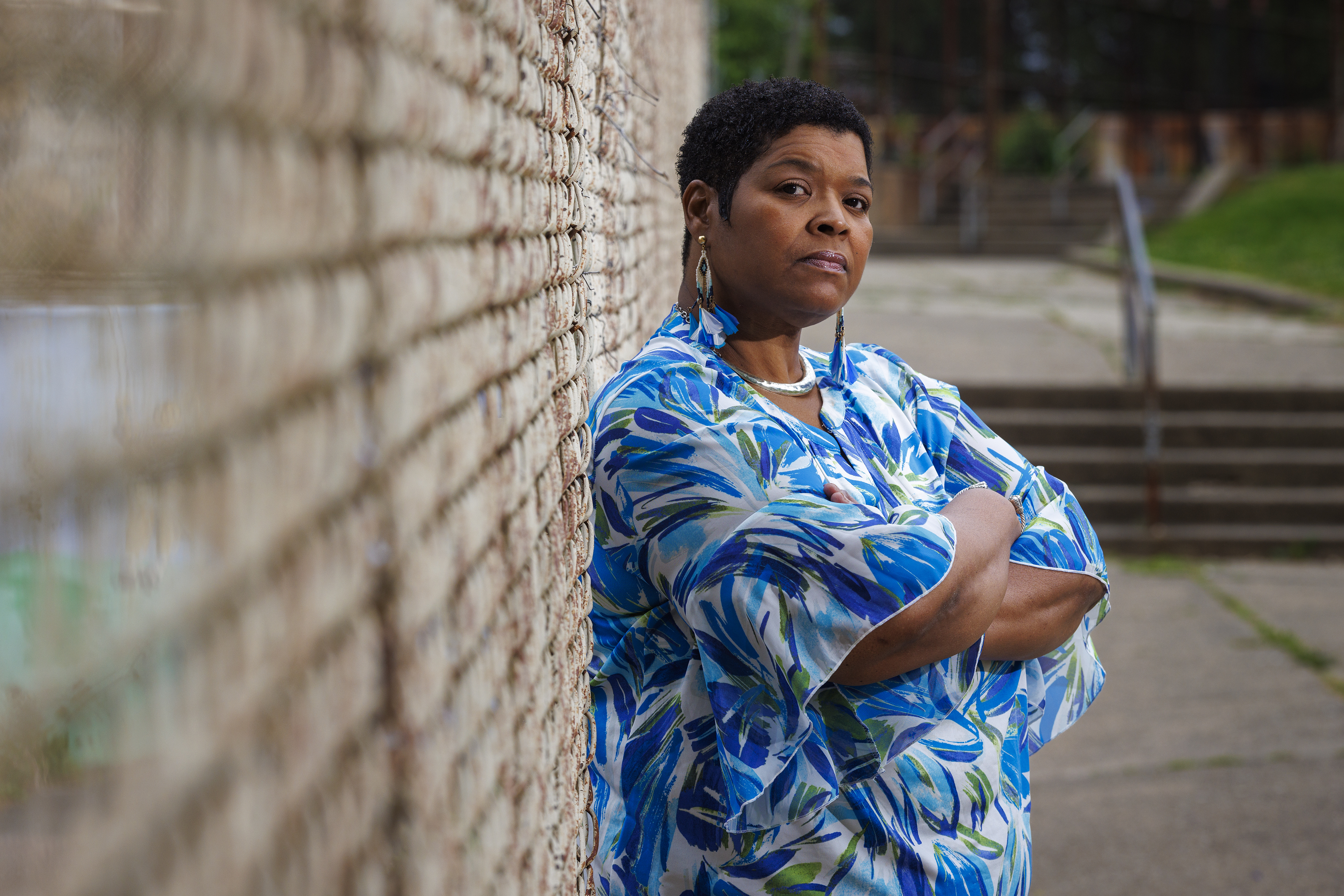
    Keenya Banks lives in Philadelphia with her husband and the two grandchildren they care for. She has never been to Fishkill in New York’s Hudson Valley.

    Yet, that’s where someone spent more than $650 in food assistance benefits for her family at a Sam’s Club in April in an alleged case of EBT skimming, just one of the more than 5,100 cases reported in Pennsylvania between the start of the year and May. This year’s skimming incidents account for approximately $2.5 million in stolen benefits, according to the Pennsylvania Office of State Inspector General, which investigates the reports and seizes the skimming devices.

    It’s likely Banks used her EBT card in a point-of-sale machine rigged with a device designed to copy her card information and pin number. Someone then applied her EBT information to a different physical card and drained her monthly benefits the next day.

    “I was too numb to cry because I just couldn’t believe it,” said Banks, 56, who was alerted to the fraud as she tried to purchase food days after she had gotten her month’s benefits. “They said, ‘Ma’am, this is declined.’ I said, ‘No, no, I have at least 600-something dollars.’”

    Even more devastating to Banks: For a brief stretch of time, benefits were being reimbursed through a federal program, but that ended December 2024 because Congress did not extend funding. The most that the Pennsylvania Department of Human Services can do is direct victims to food banks and other food assistance programs. The end of the federal reimbursement program also means the skimming incident data Pennsylvania has on hand are likely an undercount: Victim advocates say people may simply skip reporting if they believe nothing can be done.

    Pennsylvania is looking at a possible solution, but without one immediately available, Banks spent a month scrambling to put food on the table with the help of food pantries and what she had on hand.

    “We had been storing up, like a lot of canned goods and water, and we had a deep freezer, and thank God we were able to really kind of make ends meet.”

    Victim advocates argue EBT skimming has risen to a nationwide crisis because the federal government has failed to invest in more secure card technology. Between October 2022 and the end of the reimbursement program in 2024, states reported $320 million in stolen Supplemental Nutrition Assistance Program benefits, according to the Government Accountability Office.

    EBT cards: From cutting-edge technology to scammers’ favorite

    The idea that someone’s food benefits could be loaded digitally onto something that worked like a debit card was once revolutionary.

    Before federal supplemental food assistance could be loaded onto a card, it used to come by way of coupon books or mailed checks, depending on the program. These methods not only came with high administrative costs but in the case of the coupons, also known as “food stamps,” there was an element of stigma and a risk of forgery.

    The federal government launched its first “electronic benefit transfer” pilot in Reading in 1984, yet it was not until 2002 that all states were required to make the switch.

    By then, scammers had already learned how to exploit the magnetic stripe technology used in debit, credit, and EBT cards. While banks have made cards more secure by adopting chip technology, the federal government has stuck with the magnetic stripes for EBT cards.

    In the absence of chip adoption, states have resorted to other added security measures. Last May, Pennsylvania launched ConnectEBT, an app that allows people to lock their cards until they are at the checkout line, ready to use them.

    Mackenzie Libbey, staff attorney in the health and independence unit at Community Legal Services, noted the current system places the onus on families, which are required to lock and unlock their cards, monitor their spending, and change their PIN regularly to stay ahead of fraudsters.

    “It’s just not something that anyone would expect of a middle-class consumer using a credit or debit card,” Libbey said. “It’s a lot of extra effort to protect benefits that they have shown they’re entitled and eligible to receive.”

    CLS has advocated for the federal government to reimburse victims of skimming again and for Pennsylvania to adopt chip cards.

    Pennsylvania eyes chip EBT cards

    The federal government did not approve the use of chip and tap-enabled EBT cards until 2024, largely due to concerns over the costs of upgrading the aging technological infrastructure in use.

    Some states were eager to become early adopters and tackle the skimming issue.

    In February 2025, California became the first state to begin replacing the magnetic stripe cards, with a handful of states following suit because of their own issues with skimming. Oklahoma launched a two-month pilot this March, and in April, Massachusetts announced its plan for a pilot later this year. New Jersey also has plans for a chip card rollout.

    But the U.S. Department of Agriculture has approved only two vendors for the new cards, and users in early adopter states have complained about issues with the chips and difficulties getting the cards to process.

    Those issues gave Pennsylvania Secretary of Human Services Val Arkoosh pause. She has previously said the technology was not quite ready.

    In a May hearing with the House Democratic Policy Committee, however, Arkoosh said Pennsylvania’s vendor had promising data. After Alabama adopted chip cards, the state saw an 83% reduction in theft in 60 days among the people using the chip, she said.

    “I do think I can now sit here and say to you, I believe that the technical issues have largely been solved,” she said at the hearing. “I didn’t want us to embark on this before we were confident that it would work, but I think we’re there now.”

    And there appears to be interest in Harrisburg to go after EBT skimming.

    A bipartisan bill that would require Pennsylvania to transition to chip-enabled EBT cards by 2028 moved out of committee Wednesday to the full House.

    A recent cost estimate puts the overhaul at about $14 million, according to the Pennsylvania Department of Human Services. It would take six to eight months to roll out chip cards after approval, barring any significant challenges, according to a December report by the department.

    Should legislators in Harrisburg choose to fund the transition, they would have an incentive to move fast. While the federal government used to split SNAP administrative costs evenly with states, come Oct. 1, states will be on the hook for 75% of these expenses because of the One Big Beautiful Bill Act.

    For now, the Pennsylvania Office of State Inspector General’s skimming response teams continue to search for these devices and prosecute fraudsters. Between April 2025 and March of this year, the agency said, it had prevented $8.3 million in potential losses.

    The USDA, meanwhile, said it is not stopping at card locking and chip adoption. It is combating skimming and other SNAP fraud with mobile payment pilots and encouraging states to block out-of-state and online SNAP transactions by default.

    These efforts, while welcome, cannot undo what Banks and her family went through the month after the theft they experienced. She hopes her story can alert other families to scammers targeting EBT users.

    Until chip cards come, even Banks’ 10-year-old grandson is on the lookout, monitoring their card benefits and inspecting point-of-sale machines at the grocery stores.

    “He’s so tech savvy and he’s very, very wary,” she said. “So he’s like, ‘Grandma, did you check and see if there’s a skimmer on there?’”

  • St. Hedwig’s in Chester is no longer a church. Some of its buildings may be redeveloped into multifamily housing.

    St. Hedwig’s in Chester is no longer a church. Some of its buildings may be redeveloped into multifamily housing.

    St. Hedwig’s, which served Chester’s Polish Catholic community for generations, is officially no longer a church. And some of the former parish’s buildings may soon become multifamily housing.

    Philadelphia Archbishop Nelson J. Pérez last week issued a decree approving the “relegation” of the building to “profane but not sordid use effective January 1, 2026.”

    In other words, the building will “no longer be designated as a Roman Catholic church,” according to a Sunday announcement from the archdiocese.

    Pérez’s decree merely capped off a process that had been in the works for years.

    In the early 1990s, amid decreasing attendance, the archdiocese merged several Delaware County parishes. St. Hedwig’s became a part of Clifton Heights’ Sacred Heart Parish, which also serves the Polish community, and its building became a place of worship under the care of Sacred Heart.

    That marked the official end of the parish, which was established in 1902 and was named after Hedwig of Silesia, a 13th-century duchess of Greater Poland.

    But financial pressures — including an estimated $60,000 repair for a failed boiler — and pastoral challenges continued to mount, and church officials moved to unload the historic property.

    “While those worshipping at Saint Hedwig’s had been contributing generously for the upkeep of their church, their donations proved insufficient for the church’s ongoing maintenance needs,” the archdiocese said Sunday. “Multiple repairs have been financed by Sacred Heart Parish, which itself faced an operating deficit in 2024.”

    The final Mass was held in 2023.

    “For 121 years, St. Hedwig’s has been there to serve the Polish people,” the church announced in a Facebook post at the time. “We have celebrated baptisms, communions, confirmations, marriages, and ultimately funerals. We have been forever faithful.”

    A parishioner at the time lamented the demise of a church that had served the area’s Polish community for more than a century.

    “We sing in Polish and pray in Polish and we still have a very tight-knit community that maintains this church,” Judy Kuchinski of Chester told 6abc.

    The archdiocese in January sold a property across the street from the church that included a former school, rectory, and convent to a group of real estate investors, according to Delaware County records.

    “While the sale of property adjacent to Saint Hedwig Church in January 2025 provided additional capital to Sacred Heart, this money will be needed to help offset the regular deficits that accrue in financing parish operations,” the archdiocese said Sunday.

    Mario Rivello, a multifamily housing developer who has done other work in Chester, is leading the project.

    “We’re very active in that city, and this may be a property that we further develop based on approval process,” Rivello said in an interview Sunday.

    Rivello said the investors’ goal is to convert the buildings into multifamily housing, which he said is “our expertise.” They have no plans to demolish the buildings, he said.

    “We’d rather not,” Rivello said. “The archdiocese — the bones of the buildings that they sell — usually these properties are in good condition or they’re well-built.”

    The archdiocese did not immediately respond to a request for comment.

  • Philly sends a third of its trash to a Chester incinerator. Council members took a ‘Toxic Tour’ to get a closer look.

    Philly sends a third of its trash to a Chester incinerator. Council members took a ‘Toxic Tour’ to get a closer look.

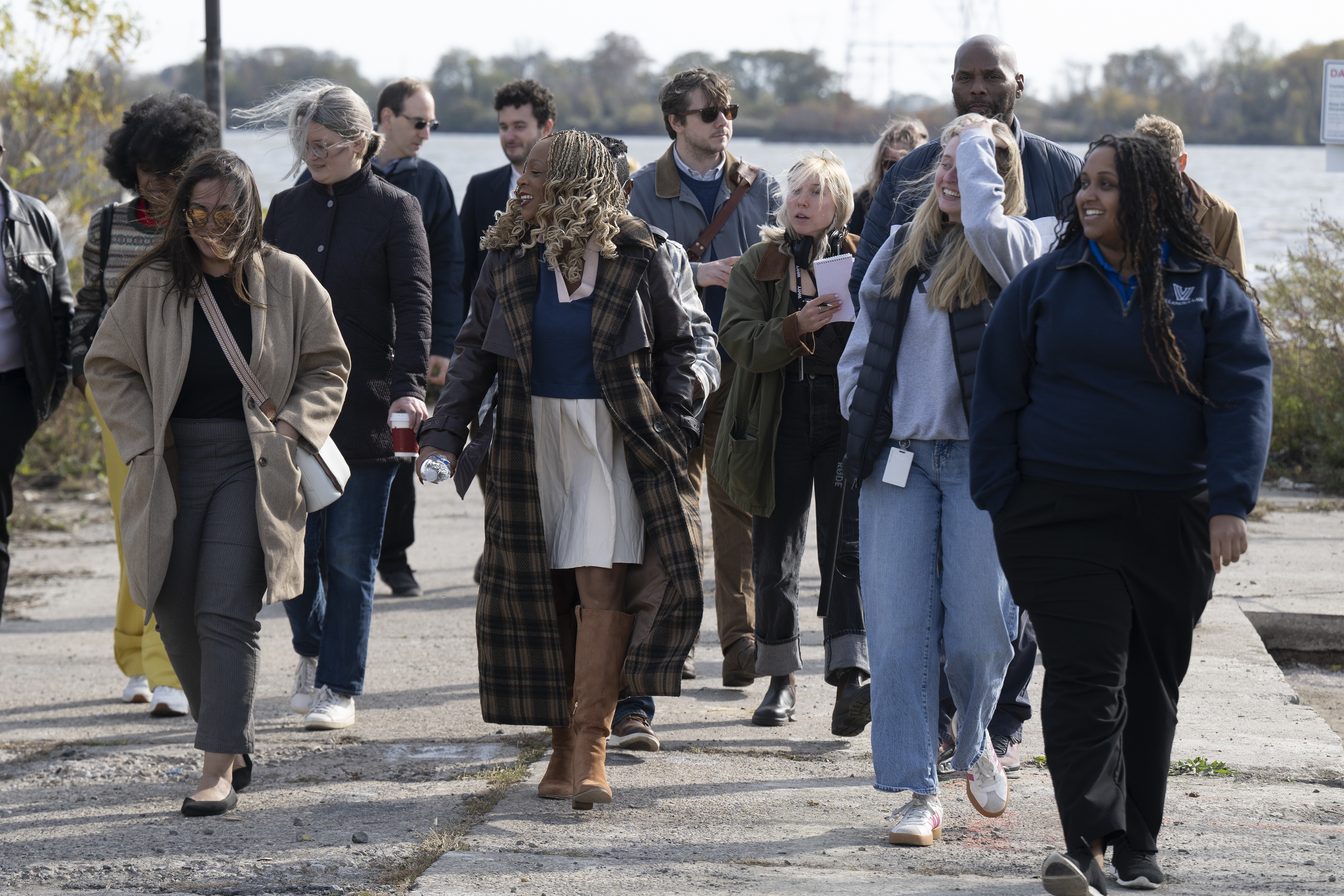
    CHESTER — Like a Ben Franklin impersonator waving at Independence Hall and the Liberty Bell, tour guide B. Preston Lyles directed the tour group’s attention to various landmarks as they passed by.

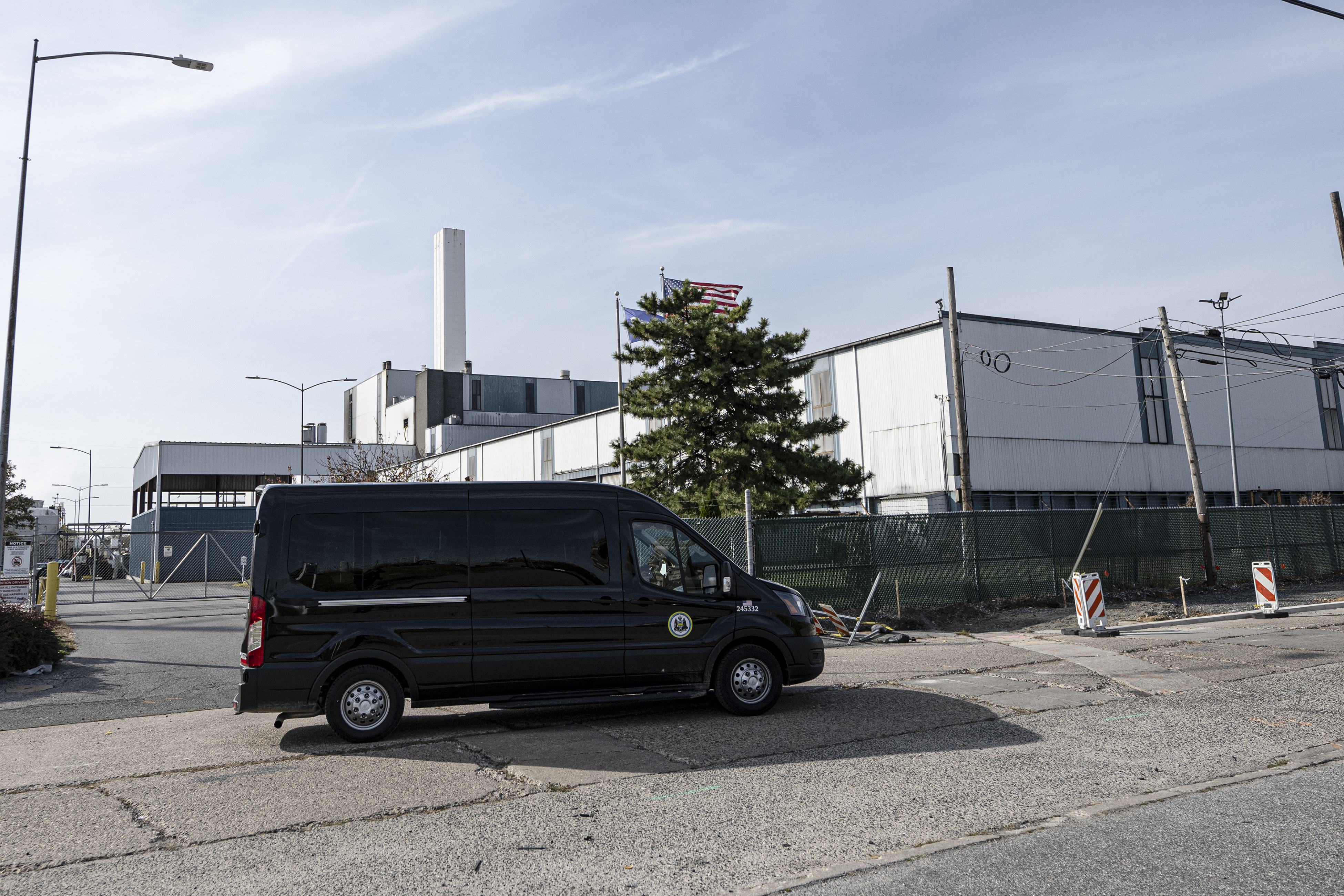
    But instead of highlighting monuments that made locals swell with pride, Lyles was pointing to sites he said made the people of Chester get sick and die younger: power plants, an oil refinery, a sewage sludge-burning facility, and — most relevantly for Friday’s group — the Reworld trash incinerator, the destination for about a third of the rubbish collected by Philadelphia’s city government.

    “Chester City is known as one of the nation’s worst cases of environmental racism,” Lyles, an organizer for Delco Environmental Justice, told the group, referring to the concentration of polluting industries in Black and brown communities. “It is not just because the city holds the nation’s largest waste incinerator, but due to an extreme concentration of toxic industries in and adjacent to such a small city.”

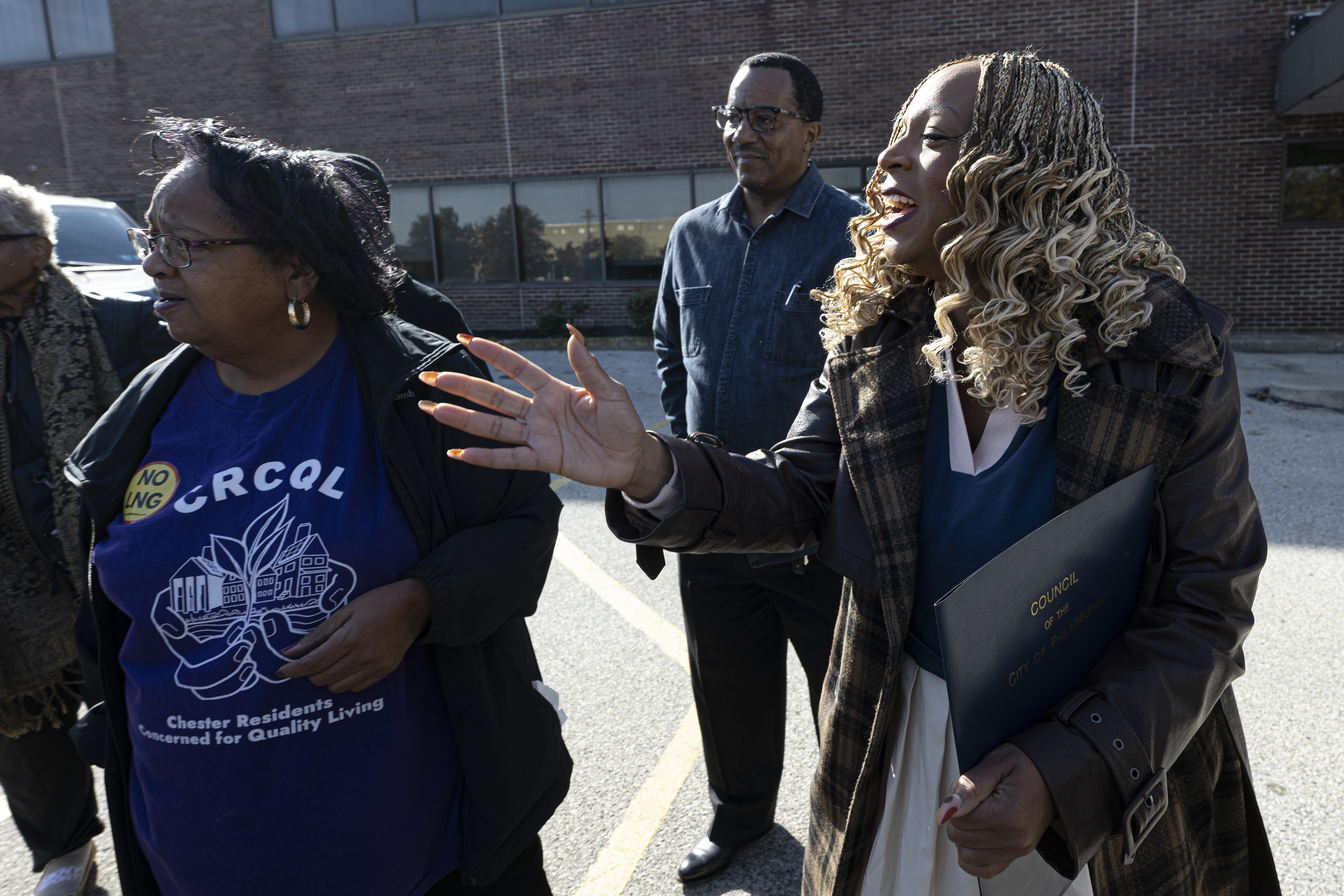
    Philadelphia City Councilmember Jamie Gauthier, who is hoping to end the city’s relationship with the Reworld incinerator, on Friday attended the Energy Justice Network’s “Toxic Tour” in and around Chester to highlight the facility’s impact on Philly’s southern neighbors.

    Philadelphia Councilmember Jamie Gauthier tours Chester to discuss her “Stop Trashing Our Air Act,” which would ban the city from incinerating waste, during a visit with lawmakers and staff in Chester, Pa., on Friday, Nov. 7, 2025.Jose F. Moreno / Staff Photographer

    “From a justice and fairness perspective, it just seems so wrong to me and so obvious,” said Gauthier, who was joined on the tour by Councilmember Kendra Brooks and staffers for other lawmakers. “Seeing the incinerator on the waterfront and all of these other dirty uses and the abandoned homes, that made me want to do this more, because it’s wrong. It’s wrong that people should be loaded down with all these toxic uses.”

    Reworld in 2024 burned more than 355,000 tons of trash collected by the city. Its contract with Philadelphia ends in June 2026.

    Gauthier has introduced a bill, the Stop Trashing Our Air Act, that would prohibit the city from incinerating trash, and Council’s Committee on the Environment, which she chairs, will likely hold a hearing on it this fall.

    Reworld spokesperson Linda Ribakusky said the company is a “leading sustainable waste solutions provider.” The Chester facility, she said, offers “a more sustainable alternative to landfilling by converting waste into renewable energy and recovering valuable metals that would otherwise be lost.”

    “The Reworld Delaware Valley facility helps reduce greenhouse gases by avoiding landfill methane and generates enough clean electricity to power more than 50,000 local homes each year,” Ribakusky said in a statement. “We are proud to be an active part of the Chester community. Working alongside local schools, nonprofits, neighbors, and community organizations, we support initiatives that create real impact.”

    ‘Now is the time’

    The Philadelphia Sanitation Department collects and disposes of about half of the city’s waste, said Michael Ewall, founder of the Philly-based Energy Justice Network. The other half is handled by private haulers hired by businesses and owners of larger residential properties.

    Under its contract, Reworld takes one-third of the municipally collected trash to the Chester incinerator, which the company says produces about 87 megawatts of electricity, enough to power 52,000 homes, while burning the waste. WM, which operates a major landfill in Bucks County’s Falls Township, takes the other two-thirds.

    When the most recent contracts were signed in 2019, the city agreed to pay roughly $65 per ton of trash to both Reworld, which was then known as Covanta, and WM, formerly Waste Management.

    Gauthier said she has had constructive conversations with Mayor Cherelle L. Parker’s administration about eliminating incineration from the city’s waste management operations, and is hopeful the city will include environmental justice concerns in its request for proposals for the new contracts.

    Parker’s office did not respond to a request for comment.

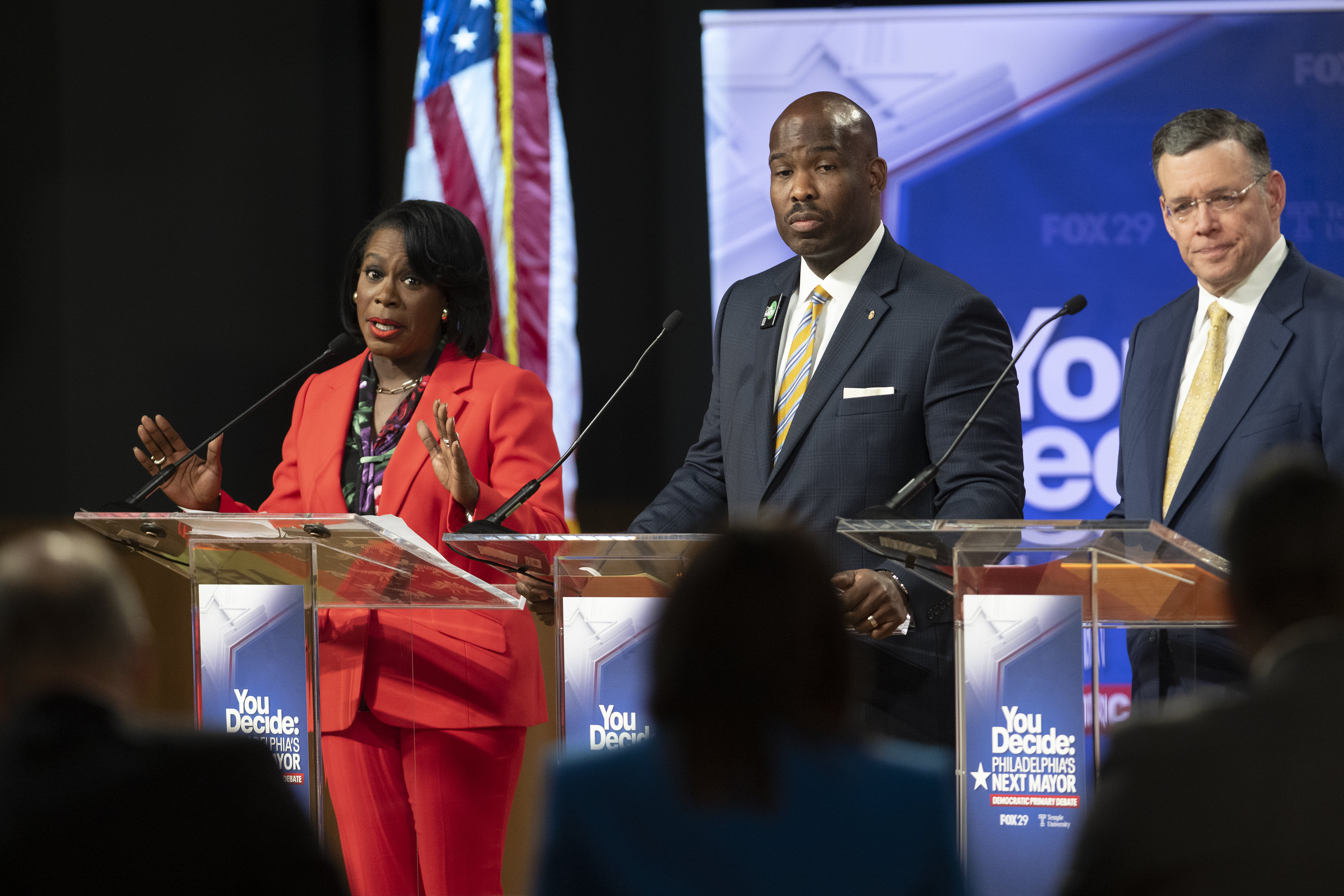
    The Chester incinerator provided a flashpoint in the 2023 mayoral election, which Parker won. During a debate, a moderator asked candidate Jeff Brown about the incinerator, prompting Brown to say, in part, “The trash has to go somewhere.”

    In a debate performance that was key to her rise and Brown’s downfall in the race, Parker was among the candidates who pounced on the soon-to-be-infamous comment.

    “That response is the same way you treat the Black and brown community,” said Parker, who ran on a campaign to turn Philly into America’s “safest, cleanest, greenest” big city.

    Top candidates for the Philadelphia mayor seat former City Council Member Cherelle Parker, left, Former City Council Member Derek Green, and businessman Jeff Brown, during a televised debate at the Temple performing arts center in Philadelphia, Pa. Tuesday, April 11, 2023.Jose F. Moreno / Staff Photographer

    During the debate, however, Parker was not asked directly if she would commit to ending the city’s contract with Reworld.

    “I was enthused to hear our mayor speak about this on the campaign trail,” Gauthier said. “I hope we all want to do the right thing. Now is the time to show that.”

    Environmental advocates contend that neither landfills nor incinerators are good for the environment and urge municipalities to focus on reducing waste in the first place. For instance, Ewall, who developed a policy platform called the Zero Waste Hierarchy, pointed out that thousands of communities now charge residents for each bag of trash just as utilities charge for each gallon of water or kilowatt of electricity.

    But for the “residuals” that do need to be collected, advocates have generally coalesced around the conclusion that incineration is more harmful than landfilling, Ewall said.

    Delaware County, which adopted a Zero Waste Plan in September, commissioned a 2021 study that found incineration was the costliest of its waste-disposal options, from both a health perspective and a financial one.

    The county determined that each ton of trash burned at the incinerator produced $234 to $337 in health and environmental costs. The impact from landfilling, meanwhile, was $144 per ton.

    ‘Reverse the environmental tragedy’

    Founded by William Penn, Chester is the oldest city in Pennsylvania. But over the last century, it has become a hub for some of the region’s least-wanted uses, including polluting manufacturers, fossil fuel facilities, a state prison, and, since the early 1990s, the incinerator. About 69% of Chester’s 33,000 residents are Black, and 31% live below the federal poverty line.

    “We hope that Philadelphia is listening in a strong way … as we attempt to reverse the environmental tragedy that has occurred here in the last 3½ decades due to the incineration of trash,” Chester Mayor Stefan Roots said Friday. “It’s an old technology, and it’s time for it to go. Especially in a community like Chester that’s looking to develop, it’s one of our biggest impediments.”

    Chester resident Zulene Mayfield, left, Philadelphia Councilmember Jamie Gauthier, right, and Chester Mayor Stefan Roots meet to discuss Gauthier’s “Stop Trashing Our Air Act,” which would ban the city from incinerating waste, during a visit with lawmakers and staff in Chester, Pa., on Friday, Nov. 7, 2025.Jose F. Moreno / Staff Photographer

    About 31% of the trash the incinerator burned in 2024 comes from Philly, with Delaware County accounting for 28% and New York City 26%.

    During the tour, Lyles explained how environmental racism can occur even if decision-makers are not consciously prejudiced against certain communities, because wealthier areas often organize to prevent polluting industries in their backyards.

    “In the late 1990s, there were about 60 proposals for new gas-fired power plants in PA. Only 16 of them were built,” he said. “Most of them faced a stiff opposition from community groups in suburban and rural areas, but those on either side of Chester went in with no organized opposition.”

    The final stop on the tour was a row of boarded-up and dilapidated homes along a railroad used for industrial purposes near the edge of the incinerator property. The homes started emptying out in the early 2000s, Ewall said, and the last was abandoned a few years ago.

    He recalled meeting one of the last residents to leave.

    “She had six grandchildren. She lived with her granddaughter, around 14, and one of the times I met her, had an oxygen tank that she would carry around with her just to be able to breathe,” Ewall said. “They just kind of disappeared one day, and I saw a boarded house.”