Category: Politics

  • Why Pennsylvania quietly repealed its 1929 midwifery law — and is now getting sued for it

    Why Pennsylvania quietly repealed its 1929 midwifery law — and is now getting sued for it

    HARRISBURG — Hidden deep in more than 600 pages of state budget documents, Pennsylvania lawmakers last month quietly repealed an unenforced 1929 law that allowed traditional midwives, the main group of midwives delivering home births, to practice.

    Now, traditional midwives — who differ from midwives usually found in hospitals, are not medically trained, and often serve religious minorities like the Amish — are worried they have no legal standing to work in Pennsylvania and are challenging the repeal and a new law in state court.

    The 1929 law had been on the books for nearly a century, asking traditional midwives to submit a paper application and a $10 fee to get a state certificate. But it had not been enforced for decades, and Pennsylvania, which has one of the highest rates of home births in the nation, was counted as one of 13 states that did not regulate the practice at all.

    Meanwhile, other forms of midwifery — such as nurse midwives and certified midwives, who are medically trained and are formally affiliated with a doctor or health system — are highly regulated by the state and its medical board. But these affiliations often prevent nurse midwives and certified midwives from offering home births, as the health systems see them as possible risks for medical malpractice lawsuits.

    The practice of traditional midwifery dates back to the Old Testament and has lived on through centuries of community knowledge and traditions. It can include Amish and Mennonite midwives, who are limited in the amount of education they are allowed to receive, as well as other unlicensed midwives who say they take only low-risk pregnancies.

    Some Pennsylvania traditional midwives say their practice is more necessary than ever, citing the United States’ maternal mortality and morbidity rate and cesarean section rates that outpace most of the rest of the Western world. They see their work as more holistic and personal than the American medical system, offering more personalized care to the new parent and baby for weeks after birth, as well as an answer to maternity care deserts as more hospitals and birth centers close.

    Medically trained midwives and physicians, who receive licenses from the state, argue the practice of traditional midwifery is potentially unsafe for mothers and babies, and requires little to no oversight in comparison to their medical training and licensure.

    A new law, and legal uncertainty

    There is no state law regulating home births — which are chosen by a variety of families for different reasons, from Amish who have religious beliefs about delivering at home to Black and brown women who have felt underserved or discriminated against by the modern healthcare system. But if traditional midwives — the primary group delivering babies in home births — cannot practice, some argue, home births will become inaccessible.

    The legal fight over midwifery began earlier this year, when the General Assembly approved changes to a separate law to include another class of midwife: certified midwives, who have all the same education training as nurse midwives except the nursing degree. To receive a certification from the Pennsylvania Board of Medicine, nurse midwives and certified midwives must provide proof of education and a collaborative agreement with a physician or medical institution.

    The law, the Midwife Modernization Act, was written to protect traditional midwives’ ability to practice, its author, Sen. Rosemary Brown (R., Monroe), said in a statement.

    Kate McHugh, a nurse midwife who has worked for a decade with lawmakers on updates to midwife regulations, said stakeholders approached traditional midwives during earlier iterations of the bill to see how they would like to be regulated. The different groups of traditional midwives could not agree, so the nurse midwives and certified midwives moved forward on their own.

    But the changes to Pennsylvania’s laws created a legal gray area, some midwives argued in a lawsuit filed last month.

    An anonymous group of two traditional midwives, a nurse midwife, and an Amish man whose family utilizes traditional midwifery filed a lawsuit in a state appellate court, challenging Brown’s law as unclear about their ability to practice, and asking the state to enforce the 1929 law already on the books.

    After the lawsuit was filed, legislators repealed the 1929 law as part of an overall state budget deal, creating more uncertainty for traditional midwives, according to their amended filing. Some lawmakers said they did not know they had voted to repeal the law, as the state budget is drafted in closed-door meetings among top leaders and fast-tracked through the legislative process with little time for rank-and-file members to review what they are voting on.

    The law was repealed as part of a request by Democratic Gov. Josh Shapiro’s administration, according to a source briefed on budget conversations. The administration works closely on legal matters with Republican Attorney General Dave Sunday’s office, which is defending the state in the case. Shapiro’s office declined to comment.

    “It’s not fair the way [the budget] is done,” said Rep. Dave Zimmerman (R., Lancaster), who said he unknowingly voted in support of the bill that repealed the 1929 law in an omnibus bill. “It concerns me a little bit that we repeal something in the fiscal code rather than right up front where it’s transparent.”

    “You have people in the Amish and Mennonite community that this is what they do. We have midwives that have been doing this for 30 and 40 years, They’re probably as good as anyone else doing it, certified or not,” Zimmerman added.

    The lawsuit

    The group of traditional midwives filed the lawsuit anonymously out of fear of retribution from the state for continuing to practice, said the group’s attorney, Jonathan Goldman, of the Goldman Law Team, based in Fort Washington. The midwives spoke with The Inquirer on the condition of anonymity for the same reason.

    One of the midwives, who serves south-central Pennsylvania with a largely Amish and Mennonite clientele, said she has delivered 1,600 home births over 38 years. She had practiced traditional midwifery in other states, before similar certifications were required there. At one point, she said, she was arrested and charged with a misdemeanor for continuing to practice home births in New York.

    Unlike medically trained nurse midwives and certified midwives, traditional midwives are prohibited from practicing medicine, which could mean dispensing medication or conducting medical procedures as simple as stitches. They have historically been investigated by state boards of medicine if this is called into question, making the group even more distrustful of state oversight.

    One of the anonymous traditional midwives, who has delivered an estimated 600 births around eastern parts of Pennsylvania, said her clients are often religious and want traditional models of care, such as no lab work and one ultrasound — a very hands-off approach compared to the highly surveilled pregnancies in modern medicine.

    The midwife, who delivered four of her 10 children in the hospital before finding an interest in home births, said her faith as a born-again Christian drew her to the “completely different model of care” that does not rely on pharmaceuticals, with a comfortable home setting and few restrictions like in a hospital.

    “In the hospital, it’s a fractured system. There are several midwives and physicians, you never know who you’re going to get, who is going to be on call,” said the midwife, who works with Amish and Mennonite populations in south-central Pennsylvania. “We are the community midwives. We know the secrets, we know the stories, we know what kind of care works. We know the family intimately. And it improves outcomes because knowing them intimately and emotionally allows us to provide that kind of specialized care.”

    Sunday’s office, defending the state in the suit, said in a July 24 filing that the midwives’ claims are a “misreading and misunderstanding of the current law,” and that traditional midwives “can continue to practice as lay midwives without certificates.” Sunday’s office did not respond to a request for comment.

    The case is scheduled for a preliminary injunction hearing to block the law from going into effect on Wednesday, where Brown and other lawmakers may be called to testify and a judge is expected to rule whether current laws prevent traditional midwives from practicing.

    Outside the medical system’s framework

    Obstetricians in hospitals and birth centers routinely work with certified midwives, who have an advanced degree in midwifery, and nurse midwives, who have a nursing degree in addition to specialized midwifery training.

    “As an OB-GYN physician, I absolutely respect somebody’s right to make a medically informed decision about how they take care of themselves in their pregnancy, and who they request assistance from in birth, and where they give birth to their babies,” said Holly Cummings, an OB-GYN in Philadelphia and chair of the Pennsylvania section of the American College of Obstetrics and Gynecology, a leading physician organization. “But I do also believe a hospital or an accredited birth center is the safest place to give birth. I don’t think in the U.S. in 2026 we can currently safely, uniformly support home birth.”

    ACOG does not support traditional midwives, who can also be known as lay midwives.

    But traditional midwives maintain they should be able to continue their work outside the medical system’s framework, citing it as a religious tradition and safe practice, and hope the judge rules in their favor.

    “Pennsylvania has a rich history of midwifery,” said the midwife listed in the lawsuit who serves parts of eastern Pennsylvania. “We have some of the highest home-birth numbers in the country. … It would be sad to see Pennsylvania not acknowledge the heritage in midwifery that we have here.”

    Staff writer Sarah Gantz contributed to this article.

  • The death of an immigrant held at Delaney Hall brings fresh focus to the ICE facility in Newark

    A 41-year-old man from El Salvador who was detained at the Delaney Hall ICE facility has died, the U.S. Immigrations and Customs Enforcement confirmed Monday evening hours after his family and a member of Congress spoke out about the incident.

    Delaney Hall, a privately operated detention center under contract with ICE, has been the site of turmoil during President Donald Trump’s immigration crackdown. It’s been the target of complaints almost since it reopened in 2025. Elected officials have clashed with the federal government over accessing the facility, and altercations between law enforcement and protesters outside the facility went viral earlier this summer.

    On Monday, immigrant rights group Cosecha New Jersey shared a video identifying the person who died as Edwin Jeovanny López Cornejo.

    María Cornejo, who identified herself as his mother, said in Spanish in the video that the hospital called her to inform her of her son’s death, and that his heart was not beating when he arrived.

    “There is this pain that has struck me now — it’s not just me who’s been struck by it, yet there are many people in this country who are growing tired of this pain,” his mother said in Spanish.

    “If they don’t ensure that justice is served, well, they’re going to keep doing this forever, and we don’t know how many more people we’ll have to lose in this country,” she added. “Hardworking people. People who aren’t involved in other things, but who devote themselves to their work.”

    Shortly after that video streamed on Facebook, U.S. Rep. Rob Menendez, a North Jersey Democrat, said in a video on X that he was showing up for an unannounced oversight visit to Delaney Hall. A few hours later, he said ICE confirmed López Cornejo’s death.

    “We asked certain medical questions which ICE couldn’t give us answers to,” he said. “We have to request it or his family has to request it, which we will.”

    Later on Monday, ICE said in a statement that López Cornejo experienced a medical emergency while in custody and was pronounced dead at University Hospital in Newark after medical staff “responded immediately” and called emergency services.

    The agency said the cause of his death is pending further medical review on Monday evening, but Sen. Andy Kim attributed it to a heart attack and cardiac arrest in a video he posted on X later that night.

    Kim, whose office said it was notified of the death Monday morning, noted that López Cornejo already had a habeus corpus case open arguing for his release due to his medical issues.

    “I’m not going to jump to conclusions, but we have to get answers to what happened to Edwin to understand all of what transpired,” the South Jersey Democrat said.

    Cornejo said her son took medicine for blood pressure, diabetes, and seizures. She said that while she does not know for sure whether he had access to his medicine, she believes ICE neglected to provide it to him, leading to his death.

    She said she last spoke on the phone with her son on Friday — the day before his death — when he said that he felt ill and part of his face and hand had fallen asleep. He told her he was taken to the doctor that day and they were going to run some labs, but he didn’t say when.

    ICE said López Cornejo “received proper medical care and was seen by medical professionals.”

    Menendez said he learned that López Cornejo “complained of difficulties that he was having” on Saturday and collapsed at Delaney Hall, where CPR was performed before he was taken to the hospital.

    Cornejo said her son had been in the U.S. for 20 years and was a hard worker. She said he had a 12-year-old daughter who had not been able to see him since he entered the facility six weeks ago. He previously told her on the phone that his hands turned purple from the handcuffs he was arrested in.

    Danilo López, who identified himself as López Cornejo’s brother, said in the video he doesn’t know why his sibling was detained because he had a valid work permit.

    “I wouldn’t wish the pain we’re going through right now on anyone, and I don’t want this to keep happening,” he said. “Because it hurts so much — it leaves a void, it leaves a daughter orphaned, and above all, it leaves an irreparable void in the family. And that’s why I’m asking for justice for my brother.”

    According to ICE, López Cornejo was arrested by U.S. Border Patrol “for illegally entering the United States without inspection” in August 2006 and he was sent back to El Salvador that October.

    He later returned to the United States at an “unknown date” before he was arrested in Plainfield in Union County in June, according to ICE.

    Sebastiana Cornejo, who identified herself as López Cornejo’s aunt, said in the video that he was arrested on his way to work.

    She blamed her nephew’s death on ICE detaining him and called for the Trump administration to stop its mass deportations, and “that they stop separating families, leaving children orphaned with no one to care for them.”

    “Why are they detaining so many working people?” she said. “We immigrants don’t harm anyone; we come to work, not to harm anyone.”

    Democratic Gov. Mikie Sherrill said her administration is working with the state’s congressional delegation “to gather all the facts surrounding his death,” but noted that the state health department continues to struggle to access the whole facility for an inspection, which is at the heart of one of New Jersey’s court battles with Trump.

    “Every effort to block oversight raises serious questions about what is happening inside Delaney Hall and what those operating the facility are trying to hide,” she said. “This tragedy is another painful reminder of why Delaney Hall should be closed.”

    Sen. Andy Kim (D., N.J.) stands between federal agents and demonstrators in an attempt to prevent a clash outside the Delaney Hall migrant detention center in Newark, N.J., on May 25.DAKOTA SANTIAGO

    Turmoil at Delaney Hall

    Detentions have surged across the nation, from about 38,000 when Trump took office to more than 70,000 in January and standing at about 66,000 as of July. Delaney Hall, a gray, two-story building in an industrial area of Newark, has been a key part of that infrastructure.

    It has also been the site of protests, complaints, and political fights between the Trump administration and New Jersey Democrats since its doors opened in May 2025.

    Last year, Newark Mayor Ras Baraka was arrested outside the facility before his charges were dropped. U.S. Rep. LaMonica McIver, a North Jersey Democrat, still faces federal charges over an altercation outside the facility on the same day.

    And over Memorial Day weekend, reports of a detainee hunger strike exploded into violence between demonstrators and ICE officers and later between protesters and New Jersey State Police.

    Kim was pepper-sprayed outside the facility as he tried to quell tensions between ICE and demonstrators, and Sherrill faced pushback from her own supporters for unleashing state police.

    Federal officials insisted there was no hunger strike and said detainees there and elsewhere in the system were being held in safe and humane conditions.

    Delaney Hall is important to ICE officials who move detainees across the country and the world, because it offers easy access to major highways and to airports in the New York metro area. It also offers the Trump administration a stage for highly publicized battles against “sanctuary politicians” it believes should thank ICE for removing murderers, rapists, pedophiles, and drug traffickers off the streets.

    Research by Syracuse University professor Austin Kocher showed that 88.3% of detainees at Delaney have no criminal convictions. On a typical day the facility holds about 850 detainees, though the New Jersey Vindicator reported that about 120 were suddenly bused away during the July 4 weekend.

    Deaths in ICE custody

    At least 22 people have died in ICE custody so far this year, according to DHS data, provoking outrage from immigrant allies who blame poor medical care, unhealthy conditions, and lack of agency training.

    Human Rights Watch, a nonprofit watchdog group, calculated that more than 50 people died in ICE custody in the first 500 days of Trump’s term — the highest rate in more than a decade. It’s more than two and a half times as high as during the first Trump administration, and stands nearly four times that of the Biden administration, Human Rights Watch said.

    ICE says the health of detainees ranks among its highest priorities, and national detention standards require it to provide comprehensive medical, dental, and mental health care from the moment someone arrives at a facility.

    The federal agency says some people who are detained may not have received prior, reliable care for existing conditions. And some people may never before have had comprehensive medical care at all.

    In December, a 41-year-old Haitian national named Jean Wilson Brutus died one day after entering Delaney Hall, succumbing to what ICE said was suspected natural causes following a medical emergency. ICE said agents tried to revive him and EMS performed life-saving measures but he died in the hospital.

    Menendez said on Monday that another individual who had been in custody at Delaney Hall died just weeks ago at University Hospital after a possible seizure.

    Amol Sinha, executive director at the ACLU of New Jersey, said in a statement Monday that López Cornejo’s death is “another devastating result of the rampant inhumane conditions” at detention centers across the country.

    “The Trump administration’s detention and deportation machine continues to terrorize and traumatize communities at an unprecedented level, yet numbers cannot encapsulate the grief and devastation that these abuses cause,” he said.

  • Senate Republicans join in rebuking White House over science funding

    Senate Republicans join in rebuking White House over science funding

    Senate Republican leaders unveiled a spending bill Sunday that would temporarily block President Donald Trump from implementing a rule change that would give political appointees sweeping power over hundreds of billions of dollars in federal grants.

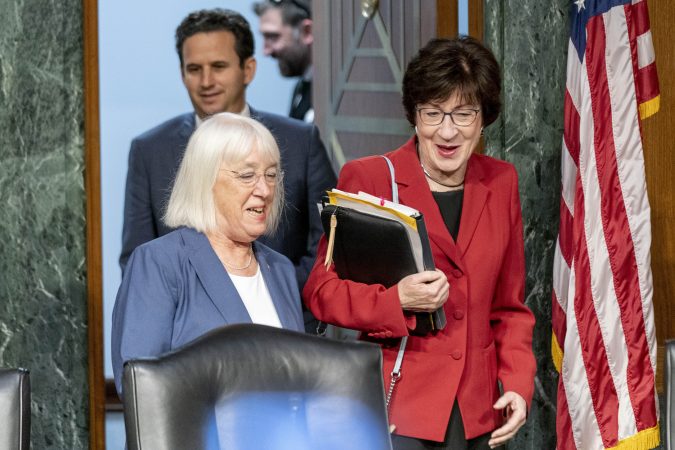
    The provision was tucked into a bipartisan measure to fund the government through Dec. 11 that was negotiated by Senate Appropriations Committee Chair Susan Collins (R., Maine) and Vice Chair Patty Murray (D., Wash.) and reviewed by Senate GOP leaders. It marks another notable rebuke of the president by senators from his own party.

    In a statement, Collins said she is “pleased” the provision was included in the spending agreement. She also said the White House rule change has the “potential to politicize grants and harm small, rural communities, families, and biomedical research.”

    The rule change, released in May by the White House Office of Management and Budget, would give political appointees more power over discretionary grant funding, diminishing a system created after World War II that calls on independent peer reviewers — experts in the field — to determine whether scientific proposals are worthy of federal funding.

    It would require political appointees to review grants before they’re awarded to ensure they advance the president’s priorities and do not support projects the administration opposes, including those that “fund, promote, encourage, subsidize, or facilitate” diversity, equity, and inclusion principles or “deny the biological reality of … the sex binary.”

    It also would give agencies the power to end grants at any time, to further restrict collaboration with researchers in China, Russia and certain other foreign countries, and to add new requirements for foreign researchers working in the United States. The rule would not apply to disaster recovery grants or some grants awarded by Congress through law, including block grants.

    Trump administration officials say the rule would add needed oversight to federal grant-making, ensuring federal funds aren’t wasted or misused. OMB officials did not immediately respond to a request for comment late Sunday, but have said that the Biden administration used federal grants to promote a “far-left” agenda.

    OMB said it planned to finalize the rule by Oct. 1. If the Senate’s funding extension were approved by both chambers, it would block OMB from implementing the rule, at least until the measure expires on Dec. 11.

    Collins urged OMB to withdraw portions of the rule in early July. Dozens of Democratic lawmakers — along with GOP Sen. Lisa Murkowski (Alaska) — have raised similar concerns. Murray and Rep. Rosa DeLauro (D., Conn.), the top Democrats on the Senate and House Appropriations Committees respectively, celebrated the provision in statements Sunday.

    The new OMB rule would “only give Trump the greenlight to take even more federal funding hostage,” said Murray, who worked with Collins to craft the Senate spending measure. Murray said she pushed for a provision that would have permanently killed the OMB rule but was rebuffed by her Republican colleagues.

    When OMB announced it this spring, the proposed rule change drew widespread outrage from scientific researchers, who say it could end U.S. scientific dominance by subjecting research institutions to political meddling, introducing new instability to federal funding, limiting foreign collaboration, and pushing away talented researchers.

    Trump administration officials have said they wouldn’t use the rule to blindly slash scientific funding. OMB Director Russell Vought said during a congressional hearing last month that the administration doesn’t intend to cancel grants “in a heartbeat.”

    But “when we find something that’s problematic that our policy officials would not have caught, we need to be able to turn it off,” Vought added, citing as an example an NIH subgrant given from a U.S.-based nonprofit to the Wuhan Institute of Virology, the Chinese laboratory at the center of suspicions about the origins of COVID-19.

    Last year, the Trump administration canceled hundreds and froze thousands of federal grants to projects they argued did not align with administration priorities. It unleashed chaos within research institutions, scientists said, prompting layoffs and upending projects.

    Senate Majority Leader John Thune (R., S.D.) has said he aims to pass the spending bill before the Senate leaves town Friday for a monthlong recess. The government would shut down at the end of September if the measure — or one like it — is not approved.

    It was unclear Sunday whether the GOP-controlled House would support the measure as written. The House returns from its own monthlong recess on Aug. 31. Spokespeople for Speaker Mike Johnson (R., La.) and Republican House appropriators did not immediately respond to requests for comment.

  • Senate GOP rushes to pass budget bill, avoid shutdown ahead of midterms

    Senate GOP rushes to pass budget bill, avoid shutdown ahead of midterms

    Senate Republicans are racing to complete a lengthy to-do list before leaving town Friday, including approving a stopgap spending bill aimed at averting a government shutdown before the Nov. 3 elections.

    In addition to the stopgap budget bill, Senate Majority Leader John Thune (S.D.) is working to confirm 74 of President Donald Trump’s nominees and faces pressure to advance a $95 billion package that would provide fresh cash for the Iran war and inflation-battered farmers.

    Whatever senators don’t accomplish this week is likely to be pushed to September, when Congress is scheduled to be in Washington only briefly before hitting the campaign trail.

    The stopgap budget bill is up first, with a procedural vote that was expected late Monday. Appropriations Committee Chair Susan Collins (R., Maine) and Sen. Patty Murray (Wash.), the lead Democratic appropriator, worked jointly on the bill, which would extend government funding through Dec. 11.

    The measure differs in important ways from a version of the bill passed by the House: It incorporates White House requests to maintain funding for housing and nutrition programs through the fall, and it would extend an expiring authorization for veterans’ healthcare.

    Additionally, it would temporarily block the White House Office of Management and Budget from adopting a rule that would give political appointees sweeping powers to cancel hundreds of billions of dollars in federal grants.

    Rep. Rosa DeLauro (Conn.), the lead Democrat on the House Appropriations Committee, said in a statement Sunday that the Senate bill marks “a clear improvement” over the House bill, which she and most House Democrats opposed.

    If the Senate approves it, the House could take the measure up when lawmakers return at the end of August. Unless Congress acts, the government is set to run out of funds on Oct. 1.

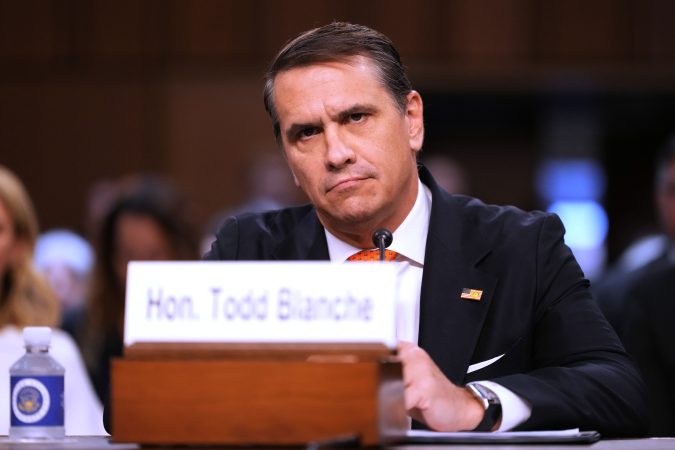
    Senate Republicans are also facing a long list of presidential nominees at an array of agencies, including the Departments of State, Energy, Treasury, and Justice. The Senate could also confirm Todd Blanche as attorney general if the two Republican senators who have blocked his confirmation vote to advance it Tuesday.

    Late Sunday, Blanche issued a written order formally rescinding the Trump administration’s proposal for a $1.8 billion fund for people who claim they were victims of political prosecutions — a step toward breaking the impasse.

    Blanche said the revision came as part of an agreement with Senate Judiciary members including Sens. John Cornyn (Texas) and Thom Tillis (N.C.), who had threatened to vote against his nomination over concerns about the fund. The order came one day after Trump threatened in a Truth Social post to revive his push for the payout fund if Blanche is not confirmed.

    The Judiciary Committee has scheduled a critical vote Tuesday on Blanche’s nomination.

    Elsewhere, the Senate is expected to easily approve legislation to impose new sanctions on Russia, which would allow the Trump administration to levy up to 100% tariffs on the top five purchasers of Russian oil and natural gas. The measure, which was championed by Sen. Lindsey Graham (R., S.C.) before his sudden death last month, advanced last week on a strong bipartisan vote.

    And Thune has said the chamber would vote on an industry-backed cryptocurrency bill that would establish federal authority over digital assets. But the measure faces opposition on a variety of fronts, including from Democrats, who are demanding tougher ethics provisions to limit Trump’s ability to profit from his family’s crypto businesses.

    Possibly the tallest order for Republicans this week is finalizing a framework for a budget package to speed cash to farmers and the Pentagon. Using a complex process known as reconciliation, GOP lawmakers could sidestep a Democratic filibuster and pass the package with Republican votes.

    For the strategy to work, Senate Republicans would need near-unanimous support in their caucus. But several GOP senators have expressed opposition.

    “We’re taking a hard look at it,” Thune told reporters last week. “And at the moment, as I’ve said before, we’re probably not there.”

    Last month, the House passed a $95 billion budget framework that includes $73 billion for defense, $12 billion in aid for farmers and $10 billion for election-related measures, which House Republicans hope to use to impose elements of the Save America Act — a top Trump priority. That bill would require voters to prove their citizenship when registering to vote and to show a photo ID at the polls.

    Trump has demanded that the Senate stay in session until the election provisions pass, but Thune has said repeatedly that the bill cannot pass the Senate, even under reconciliation. Tillis, for one, has said he would not support it.

    Meanwhile, multiple GOP senators have expressed other concerns with the House framework for reconciliation, including Sens. Lisa Murkowski (Alaska), Bill Cassidy (La.), and Collins.

    Senate Armed Services Committee Chairperson Roger Wicker (R., Miss.), who has argued for closer to $300 billion for defense, told the Washington Post on Thursday that he is pushing for the higher amount. But a bigger package risks the support of fiscally conservative Republicans, who are already balking at adding $95 billion to the nation’s $39.8 trillion debt.

    Senate Budget Committee Chair Ron Johnson (R., Wis.) said the White House would need to directly request the additional funds for defense. Still, Johnson said he was “pretty optimistic” that the Senate would advance a budget framework before leaving town.

  • In letter to cousin RFK Jr., health advocate warns of threats to disability care

    In letter to cousin RFK Jr., health advocate warns of threats to disability care

    In a letter to Health Secretary Robert F. Kennedy Jr. and acting attorney general Todd Blanche, the chairperson of the Special Olympics — who is also Kennedy’s cousin — called on the administration to reverse course on a Justice Department memorandum that could narrow federal protections for disability care.

    The letter by Tim Shriver joins a recent outcry from lawmakers and disability advocates who have warned that the June memo, which called for reinterpreting a key Supreme Court ruling on disability rights, could shrink access to home- and community-based care services that hundreds of thousands of Americans with disabilities rely on to receive care without being placed in institutions — a cause that members of the Kennedy family have supported throughout their political careers.

    “This is something that is in some ways the central passion of our family,” Shriver told the Washington Post. “And I hope and believe that Secretary Kennedy understands that.”

    The Health and Human Services Department and Justice Department did not provide a comment by the time of this article’s publication.

    The memo comes as patients and caregivers brace for Medicaid cuts from President Donald Trump’s tax bill, which are also expected to hamper disability services.

    “Many people with intellectual and developmental disabilities are already worried about whether the Medicaid-funded supports and services they rely on will be there in the future,” Shriver wrote in the letter sent to Kennedy and Blanche last week and shared with the Post.

    Shriver, a longtime disability rights activist, said he sent the letter in his personal capacity. He has led the Special Olympics, which organizes sporting competitions for children and adults with intellectual disabilities, since 1996.

    The Justice Department memo, issued in mid-June by its Office of Legal Counsel, argued for a looser reading of the Supreme Court’s 1999 decision in Olmstead v. L.C., viewed as a landmark case for disability rights. The Supreme Court ruled that it was discriminatory to institutionalize people with disabilities when they can and want to receive community-based services instead.

    “Olmstead is what created the tools to require states to provide community-based services,” said Alison Barkoff, a professor of health law and policy at George Washington University and a former HHS administrator during the Biden Administration.

    Advocates argue that those services can be more cost-effective than institutional care and better enable people with disabilities to work and remain connected with their families and communities. Around 4.5 million Medicaid enrollees receive home- and community-based care, and hundreds of thousands more are on waitlists for the services each year, health policy research organization KFF estimated in 2024.

    “These programs are the difference between a full life and … tragic mental illness, loneliness, depression, isolation, humiliation,” Shriver told the Post.

    The Kennedy family has been closely involved in efforts to promote disability rights. President John F. Kennedy signed a major mental health bill in 1963 while in office and alongside Sen. Robert F. Kennedy — the health secretary’s father — pushed to shift disability care away from institutionalization and toward community-based services. Eunice Kennedy Shriver, a sister of President Kennedy and Tim Shriver’s mother, founded the Special Olympics.

    The Trump administration has scrutinized home- and community-based services for fraud and argued that some states poorly oversee their home-based care programs. Advocates are also concerned that states newly strained by cuts to Medicaid could slash support for home- and community-based services.

    The Justice Department memo would make it easier for states to do that, opponents have said. It argued that Olmstead does not require states to provide home- and community-based care for people with disabilities and that the federal government is not authorized to enforce such a mandate. It conceded that such an opinion is “out of step with the common understanding of that decision within the federal courts.”

    Groups including the American Civil Liberties Union, American Association of People with Disabilities, and Center for Public Representation denounced the Justice Department’s position. Democrats in Congress urged the department to rescind the memo.

    While the Justice Department’s opinion doesn’t change the law, it could indicate that the department will step back from enforcing Olmstead, advocates said.

    “It provides a signal that the Department of Justice and the U.S. Department of Health and Human Services are stepping back from that commitment to community integration,” said Lydia Dawson, the vice president of government relations for ANCOR, a national association of private community providers.

    Shriver said the Trump administration’s stance threatened decades of hard-fought progress for disability care.

    “I am hopeful that you will help ensure that our country continues moving forward rather than backward on the promise of inclusion,” he wrote to Kennedy and Blanche.

  • Senate leaders reach funding deal to avoid shutdown during campaign season

    Senate leaders reach funding deal to avoid shutdown during campaign season

    WASHINGTON — Key senators unveiled a short-term spending bill on Sunday that would keep federal agencies funded past the midterm elections and into early December as they look to avoid a government shutdown during the middle of campaign season.

    The Senate is likely to vote on the measure before leaving Washington at week’s end for its traditional August recess, a period that many lawmakers want to spend shoring up their reelection prospects rather than working in the nation’s capital.

    The bill generally funds the federal government at current levels though Dec. 11. The House has passed a similar measure, but it did not include various exceptions sought by the White House. Senators have been spending recent days negotiating which of those exceptions to include.

    One exception that did not make it into the bill, Democrats noted, was the administration’s request to include $1 billion to build “Trump-class” battleships.

    In another major difference with the House bill, Democrats say they also were able to include language that will ensure the administration cannot transfer funds from other programs to the Border Patrol.

    The late-summer action on a funding fix is unusual. Normally, Congress waits until the final days or hours of a funding deadline to pass short-term funding extensions, but this time senators are acting two months before the end of the fiscal year on Sept. 30.

    Senate Majority Leader John Thune said passing the measure was his top priority going into the August recess. He noted that the American people have already experienced two record-breaking government shutdowns in the past 10 months.

    “We need to ensure that they do not face a third,” Thune said.

    Both parties want to avoid another shutdown

    A short-term funding extension is needed because Congress has struggled to get the dozen annual appropriations bills negotiated and approved before the Sept. 30 deadline. By extending government funding now, lawmakers can use the ensuing months to work out their differences on full-year funding.

    It won’t be an easy lift as Republicans seek a dramatic increase in defense spending while cutting non-defense spending. Trump proposed a 10% cut in non-defense programs overall. Meanwhile, he called for boosting defense spending by some 44%.

    A potential shutdown before voters go to the polls is a scenario that both parties are looking to avoid, as polling indicated that neither party evaded blame for last fall’s record 43-day shutdown. Democrats sought to extend an expiring health insurance tax credit and refused to go along with a short-term spending bill that did not include that priority. But Republicans said that was a separate policy fight to be held at another time.

    A second spending battle over funding for the Department of Homeland Security took 76 days to resolve when Democrats refused to fund U.S. Immigration and Customs Enforcement and the Border Patrol without changes to those operations.

    The bill delays a controversial policy on grants

    Sen. Susan Collins, the Republican chair of the Senate Appropriations Committee, along with Democratic senators, are seeking to block a proposed rule from President Donald Trump’s administration related to grants. The rule would require a senior political appointee at each agency to review grant proposals through criteria that include “ensuring that discretionary awards advance the President’s policy priorities.”

    Collins and Sen Patty Murray, the top Democrat on the Appropriations Committee, said the rule would not take effect during the course of the stopgap spending bill. Collins said she advocated for significant changes to the rule, “citing its potential to politicize grants and harm small, rural communities, families, and biomedical research.”

    Democrats want to kill the administration’s effort altogether. Senate Democratic leader Chuck Schumer said it was a “disgraceful” effort that would “further politicize all federal grants.”

    “While Republicans rejected killing the proposed rule outright, I’m going to keep fighting to put a stop to it once and for all, and I will keep pressing my Republican colleagues to do exactly that,” Murray said.

    Democrats fear Trump would turn federal grants into a cudgel to punish perceived political foes and reward allies, while also undermining Congress’s constitutional power of the purse. The White House Office of Management and Budget says its effort is about improving accountability to ensure taxpayer dollars aren’t wasted or misused.

  • GOP holdouts agree to support Blanche’s nomination after he rescinds settlement fund

    GOP holdouts agree to support Blanche’s nomination after he rescinds settlement fund

    WASHINGTON — Two Republican senators who threatened to block acting Attorney General Todd Blanche’s confirmation to lead the Justice Department said Monday that they will support his nomination, ending an impasse over plans to create a fund to compensate allies of President Donald Trump.

    The endorsement from GOP Sens. John Cornyn and Thom Tillis paves the way for the Senate Judiciary Committee to advance Blanche’s nomination on Tuesday after the Justice Department and lawmakers reached a deal to formally rescind the $1.8 billion “Anti-Weaponization Fund” proposed to settle Trump’s lawsuit against the Internal Revenue Service.

    Cornyn and Tillis had refused to back Blanche’s bid for the permanent post without official confirmation killing the fund meant to compensate people who believe they were unfairly prosecuted by the Justice Department. Blanche’s written order, issued late Sunday, came after days of negotiations between the Justice Department and the Republican senators, who are leaving Capitol Hill when their terms end in January.

    “We want to express our gratitude to Mr. Blanche and his staff for working with us on this, and we look forward to voting to advance his nomination out of the Senate Judiciary Committee soon,” Cornyn, of Texas, and Tillis, of North Carolina, said in a statement.

    DOJ order says ‘beyond any doubt’ that fund is dead

    Blanche has repeatedly said that the Justice Department was scrapping plans for the fund, which sparked bipartisan outcry over the possibility that violent rioters who attacked police at the U.S. Capitol on Jan. 6, 2021, could be considered for payments. But skeptical lawmakers said they were concerned that could be revived without a commitment in writing, especially because Trump has continued to defend the idea.

    In his order posted on social media late Sunday, Blanche wrote that the department was confirming “beyond any doubt, that there is no Fund.”

    Since the settlement of the president’s lawsuit against the IRS was announced, “No Members were appointed; no funds were transferred; no process for receiving claims was established; no claims were paid,” the order said. “This order establishes, beyond any doubt, that there is no Fund.”

    Cornyn and Tillis had also pressed the Justice Department to limit the scope of a separate piece of the settlement that provided broad immunity for Trump and members of his family from tax audits.

    Under the deal, the Justice Department clarified in writing that the tax audit immunity agreement “applies by its terms only retroactively” to claims open at the time of the settlement and does not protect the president from examination of future tax filings. It also makes clear that only the parties that brought the lawsuit — Trump, two of his sons, and the Trump Organization — are covered by the tax agreement.

    Cornyn and Tillis said in their statement that they were “pleased” with the concessions made by Blanche.

    “From the outset, we were clear that we needed a written document addressing our concerns on the IRS audit agreement and the anti-weaponization fund that included constraining the scope of audit protection by limiting it to the parties of the Settlement Agreement and legally ending the anti-weaponization fund,” they wrote.

    Democrats, however, noted that the order rescinding the fund doesn’t stop the Trump administration from compensating Jan. 6 rioters through a previously established process that allows people to file claims for damages if they believed they were wronged by the government.

    “This supposed ‘deal’ doesn’t prevent payouts to violent insurrectionists in the future,” Democratic Sen. Adam Schiff said in a social media post. Schiff added that it also “leaves in place a tax-immunity deal that could help Trump skip taxes on the $2.3 billion he made last year, and still leaves it vague who and what is covered.”

    Cornyn, Tillis echo GOP colleagues’ concerns

    Blanche’s nomination was thrown into doubt last week after the Judiciary Committee postponed a vote that had been scheduled for Thursday morning as Tillis and Cornyn said they needed more from the administration before they could provide the necessary votes.

    After the Thursday vote was delayed, Trump said in a social media post that he might pull Blanche’s nomination and resubmit it after Cornyn and Tillis leave office next year. And on Saturday the president threatened to push forward with the fund if the two Republicans blocked Blanche’s nomination.

    On Sunday evening, Trump said that people who had faced charges from the Jan. 6, attack on the Capitol and could have benefited from the fund had “their lives destroyed.”

    “This would be a reimbursement for the pain that they suffered,” Trump said. “A lot of people like it.”

    Blanche, who served as Trump’s defense lawyer in his criminal cases, entered the Justice Department last year as deputy attorney general. He was elevated to the top post after Pam Bondi was fired in April by Trump, who was frustrated by her failure to successfully prosecute his political enemies.

    Though Blanche insisted he wasn’t auditioning for the permanent job, he has moved quickly since taking the reins of the department to promote the Trump administration’s agenda and accelerate investigations into the president’s perceived foes.

  • ‘People are sacrificing necessities.’ Ahead of Pa. governor’s race, the economy weighs heavily for Latino voters

    ‘People are sacrificing necessities.’ Ahead of Pa. governor’s race, the economy weighs heavily for Latino voters

    Jorge Luis Burgos of North Philadelphia, a registered Democrat, was one of many Latino voters who shifted to the right and voted for President Donald Trump in the 2024 presidential election.

    Now he’s planning to shift back and vote for Democratic Gov. Josh Shapiro as he runs for reelection in the key swing state.

    “Shapiro 100%. I love the way he manages everything,” Burgos said while attending Arte en las Calles, an event last weekend celebrating Latino culture held by the Esperanza Art Center in North Philadelphia.

    Burgos, 57, who moved to Philadelphia from Puerto Rico in 1980, said he voted for Trump in 2024 because he was worried about inflation and felt betrayed by the last-minute switch that swapped then-President Joe Biden for Vice President Kamala Harris as the Democratic nominee. But he said Trump has failed to fulfill his promises, and he has found himself turning back to the Democratic Party.

    “I was disappointed, and that’s why I switched. But you ask me now, I’m disappointed, too. Big time,” Burgos said. “Trump didn’t accomplish his promise: ‘On Day One,’ inflation is gonna go down. It didn’t happen.”

    In the past decade, support of Republican candidates, specifically Trump, has grown in the majority Latino precincts of Philadelphia — with Trump’s share of the vote increasing from 6.1% in 2016 to 21.8% in 2024.

    While Harris still won these wards — and a slight majority of Latino voters nationally, according to exit polls — Trump’s improved performance with this voter group helped him win both Pennsylvania and the presidency.

    Burgos, like many other supporters who shifted to the right, said Trump’s promises to bring the cost of living down to its pre-COVID rate ultimately won over their vote.

    Ninety-three percent of Trump’s Latino supporters cited the economy as the main issue driving their vote in the 2024 election, according to a September 2024 Pew Research Center poll.

    Jorge Luis Burgos with his grandchildren Luis Burgos Jr. and Athena Burgos, in Philadelphia. His wife Carmen is standing in the doorway in this photo.Jessica Griffin / Staff Photographer

    But now many Latino voters have not seen the outcomes they were hoping for, with a May poll from Pew finding that Trump’s support has fallen more sharply with Latino voters than other voters. Only 66% of Hispanic Trump voters approved of his job performance in the poll, falling 27 percentage points from the start of his presidency.

    According to a May poll from UnidosUS, a national Latino civil rights organization, 66% of Latino voters say Trump and congressional Republicans are not focused on fixing the economy.

    Pennsylvania Democrats and Republicans will be seeking to sway these voters in November when Shapiro faces off against Republican nominee Stacy Garrity, the state’s treasurer, in the race for governor.

    What are the issues on the minds of Latino voters?

    Latino voters, who make up more than 600,000 of eligible voters in Pennsylvania and are the fastest-growing demographic group in Philadelphia, said in interviews that the economy, immigration, and support for small businesses are the issues that will determine who they vote for.

    “They’re focused on cutting costs,” Shapiro said of the region’s Latino voters at a rally with congressional candidate Bob Brooks and House Minority Leader Hakeem Jeffries in the 7th Congressional District, one of four GOP-held seats in the state Democrats are hoping to flip after the area accounted for some of Trump’s biggest Pennsylvania gains in 2024.

    “They’re focused on their small businesses getting help,” Shapiro said. “They’re focused on more cops on the street for safer communities and schools that are stronger.”

    Gov. Josh Shapiro addresses the audience during a rally for congressional candidate Bob Brooks at the United Steelworkers Union Hall in Bethlehem, Pa. on Sunday, July 26, 2026.David Maialetti / Staff Photographer

    Jaime Negrone, 67, from North Philadelphia, has lived in Pennsylvania his whole life but has roots in Puerto Rico. He said the cost of living is the major issue he is hoping to see tackled.

    “Everything has become so expensive,” Negrone said. “People are sacrificing necessities on one end to cover for the other end: food, gas, housing.”

    Negrone said he will vote for Shapiro over Garrity because the governor seems to be more connected to the people of Pennsylvania.

    “Shapiro has a pulse on the issues in Pennsylvania,” Negrone said. “He’s been in the office, he knows the politics, and he seems to be a politician for the people.”

    Seth Ortiz, 30, a second-generation Puerto Rican from Northeast Philadelphia, said he’s going to vote for Democratic candidates in November because he feels that’s the only way to protect people’s rights amid increased immigration enforcement.

    “I don’t like the fact that ICE is pretty much doing what they want in U.S. cities. At some point, even killing American citizens and getting away with it, it’s horrible,” Ortiz said. “So anyone who is going to stand up for immigrant rights is probably the most important thing for me. And it’s probably always going to be the Democrat.”

    Gladis Avila, 55, a Venezuelan business owner from South Philadelphia, said she is not sure who she is going to cast her vote for yet. She wants a candidate who is going to stand up for her community and small businesses but has not heard much outreach from either campaign.

    “The Latino community needs people who work more for our community,” Avila said. “…When we vote, we want to feel like we are voting for someone who is going to help our community. Because that’s our voice, and our voice has an impact.”

    Gladis Avila stands in a park near her house in South Philadelphia.Andrea Padilla

    Echoing this, Jennifer Rodriguez, president of the Greater Philadelphia Hispanic Chamber of Commerce, a nonprofit focused on the economic growth of the Hispanic community, said she’s heard worries from businesses about being able to keep up with their expenses.

    “Small businesses are very, very concerned about the viability of their businesses,” she said. “And in the really escalating cost environments. Particularly, the labor force has become very costly.”

    How are campaigns reaching the Latino community?

    Matt Beynon, a representative for the Garrity campaign, said that helping small businesses is the main concern the campaign has heard from Latino voters.

    “And a lot of concerns she’s hearing are about the overregulation and red tape that is preventing them from either starting a business, growing their business, expanding their business,” he said.

    Outreach to the Latino community has so far included attending community events in Philadelphia and other communities with large Latino populations, like Allentown, Beynon said.

    State Treasurer and Republican candidate for governor Stacy Garrity holds a rally in Bucks County Sept. 25, 2025 at the Newtown Sports & Events Center.Tom Gralish / Staff Photographer

    Shapiro has also spent time in majority Latino areas. In May, he attended and co-hosted “Fiesta on Hamilton,” in Allentown, a street festival that celebrates Latino culture in the Lehigh Valley.

    “During Fiesta on Hamilton, Gov. Shapiro met with local small business owners, entrepreneurs, creators, cultural leaders, and local officials as part of Shapiro for Pennsylvania’s ongoing commitment to engaging, uplifting, and investing in Latino communities across the Commonwealth,” the Shapiro campaign wrote in a statement.

    Samantha Reposa, a representative for the Shapiro campaign, said the campaign is also running Spanish-language radio ads to further engage voters.

    ‘I feel left behind’

    Despite this, many Latino voters in Philly said they haven’t felt reached by either campaign.

    Rodriguez expects messaging to ramp up closer to the election. Because of the Latino community’s lower voter turnout in relation to other groups, Rodriguez said they are often the last to be reached, a strategy she is hoping to see change

    “One thing that typically happens is that the Latino community oftentimes is the last community to be approached by politicians and their systems,” Rodriguez said. “The Latin community’s voter engagement is relatively low. And a lot needs to be improved, but a lot of it has to do with candidates really seeking the relationship with our community much earlier on.”

    Carolina Hansell, 61, immigrated from Venezuela 33 years ago and is planning to vote for Shapiro, but said she has seen and felt the conservative shift in her community and that it’s in part due to a lack of outreach.

    “They need to work and talk to real people and the neighbors over here,” Hansell said. “It’s the only way to convince people and have a good plan. There’s not a plan right now, not in that Democratic Party.”

    Anjoli Santiago, 41, said it’s not just the Democrats that are lacking but feels like both political parties have lost touch with the Latino community and sees that trend continuing.

    “I think it will continue if we don’t have more conversations about how diverse our people are and the different needs that our people have,” Santiago said. “I feel left behind by both parties definitely. It feels like we are voting and those who we vote for no longer represent us.”

    Staff writer Michelle Baruchman contributed to this article.

  • Former state lawmaker, now leading Delco transit agency, charged with DUI and child endangerment

    Former state lawmaker, now leading Delco transit agency, charged with DUI and child endangerment

    Former State Rep. Nick Miccarelli, who left Harrisburg in 2018 during the #MeToo reckoning and then landed a higher-paying job running a publicly funded transit agency, is facing felony charges of child endangerment after a DUI arrest on the Pennsylvania Turnpike.

    Miccarelli, 44, executive director of DELGO Community Transit, which provides subsidized transportation to Delaware County seniors and people with disabilities, was pulled over last Thanksgiving after his ex-wife called 911 as she was headed to meet him for a custody exchange of their two children.

    “As she was driving near the King of Prussia exit, she noticed a vehicle ahead almost strike the center barrier,” according to a police report filed in Lancaster County in January. “She came closer to the vehicle and recognized it as Nicholas’ vehicle and it was ‘all over the place.’”

    State Trooper John Huffstutler stopped Miccarelli — who was driving his two children, ages 4 and 5 — after watching him tailgate another vehicle on the highway and repeatedly swerve left and right out of the driving lane. The arrest has not been previously reported.

    Miccarelli said he had not been drinking or using drugs and explained an odor of mouthwash by saying, “I drink mouthwash from time to time,” according to the complaint.

    A blood sample later put his blood alcohol content at 0.198% — more than twice the legal threshold for intoxication — and also showed the presence of Lorazepam, a prescription benzodiazepine that is not supposed to be mixed with alcohol.

    Huffstutler also noted in his report that Miccarelli’s children were not in a booster seat, as required by law.

    Miccarelli was charged in January with DUI at the highest level (above 0.16%), DUI in combination with a controlled substance, two felony counts of endangering the welfare of children, reckless endangerment, and related offenses.

    The case was transferred to Lancaster County Common Pleas Court after Miccarelli waived his preliminary hearing in February. He is free on bail.

    Miccarelli declined to comment last week. The arrest report did not indicate whether he was driving his personal vehicle or a vehicle that Community Transit provided to him and insured.

    Roger Joseph, chairman of the transit agency’s board of directors, said on Friday that Miccarelli’s arrest was a “personal incident.”

    “The board is fully aware of it,” he said.

    Joseph said the agency’s “insurance carrier is aware of everything that happened” but declined to say whether Miccarelli was driving a Community Transit vehicle.

    Delaware County Council, which allocates state money to Community Transit and appoints some of its board members, “has not been formally notified about this,” county spokesperson Michael Connolly said on Friday.

    “It’s certainly something we’re going to dig into and monitor,” Connolly said.

    #MeToo troubles

    Miccarelli, an Iraq War veteran from Ridley Park, was once seen as a rising star within the Delaware County GOP. He won an election to represent the state’s 162nd House district in 2008.

    Ten years later, then-State Rep. Tarah Toohil and an unnamed political consultant filed a confidential complaint with House lawyers accusing him of a range of abuse when they had dated him.

    The complaint, which included allegations of physical and sexual assault, was first reported in February 2018 by The Inquirer and the Caucus, a news organization that covered state politics. It came as the #MeToo movement was roiling state legislatures across the country.

    Toohil, a Republican from Luzerne County, said Miccarelli assaulted and abused her in 2012, including one instance in which he brandished a gun while driving more than 100 mph and threatened to kill them both.

    The consultant, who had asked that her name not be disclosed, said that Miccarelli was mentally and physically abusive when they dated and that he forced her to have sex with him when she tried to end their relationship in late 2014.

    Miccarelli has steadfastly denied the allegations. Lawyers for the state House found the women credible and said their statements were corroborated by sources who were “contemporaneously aware” of their claims of abuse.

    Toohil was assigned a bodyguard when in the Capitol and obtained a protection-from-abuse order against Miccarelli. She now serves as a Common Pleas Court judge in Luzerne County.

    Tarah Toohil, then a state representative from Luzerne County, obtained a protection-from abuse-order against Miccarelli, a fellow Republican in the state House. Toohil went on to become a Common Pleas Court judge in Luzerne County, while Miccarelli took over a paratransit agency in Delaware County.Fred Adams / For The Inquirer

    Miccarelli rejected calls for his resignation from House Republican leaders and then-Gov. Tom Wolf, a Democrat, but declined to run for a sixth term and left office at the end of the legislative session in November 2018.

    That allowed him to retire with free lifetime health benefits offered to lawmakers who serve for 10 or more years. He also received a state pension.

    In December 2018, Dauphin County prosecutors said they would not pursue sexual assault charges against Miccarelli, at the request of the consultant. She stood by her allegations but said in a statement at the time that “the prospect of a long and drawn-out criminal proceeding promises even more trauma for me in the future. I simply must move on.”

    A new job

    Four months later, Miccarelli was appointed as executive director of Community Transit, a nonprofit organization incorporated in 1983 as the Delaware County Transportation Consortium. It employs more than 100 people and provides about 2,167 trips every weekday for county residents.

    Democrats at the time questioned whether he got the job due to his political connections. Republicans still had a majority on the county council.

    But Community Transit’s director of business development, Wendy Petkus-Mazeika, said in a news release at the time that Miccarelli was the best person for the job: “Nick brings not only a fresh perspective, but a wealth of knowledge of human services issues in the commonwealth.”

    DELGO Community Transit receives millions of dollars a year in public funds. Its medical assistance program, for example, is funded by the Pennsylvania Department of Public Welfare, while its program for people with disabilities gets financial support from the Pennsylvania Department of Transportation.

    In 2024, the agency received $8.9 million in government funding, tax filings show. Some of that was allocated through Delaware County Council.

    Over the last seven years, Miccarelli has kept a relatively low profile. He sits on the board of the Pennsylvania Veterans Museum and posts frequently on Facebook.

    He mostly stayed out of the news until June, when a flurry of new content starting to appear online praising Miccarelli’s work in the paratransit field.

    Miccarelli recently put out a news release calling for more accessible transportation for seniors and veterans, and has created two websites — nickmiccarellitransit.com and nick-miccarelli.com — where he writes about “strengthening community impact and building effective, mission-driven systems.”

    As a result of the PR blitz, Googling his name and agency leads to positive headlines in publications as varied as the Aspen Daily News in Colorado, WBOC news in Maryland, and a magazine called Business Matters in Sutton (England, not Massachusetts).

    “For Nick Miccarelli, the most important ideas have never been about headlines or attention. They have been about creating systems that work, helping communities function better, and finding practical solutions to real problems,” reads a glowing profile, sans byline, that appeared June 28 in Brainz Magazine.

    The headline: “Nick Miccarelli and the Power of Turning Service Into Action.”

    Brainz says in a FAQ that it offers “guaranteed, consistent, search-engine-optimized publicity … at a very low fee.” The magazine did not respond to a question about whether the profile was paid content.

    Meanwhile, Miccarelli’s salary has increased significantly in recent years.

    When hired at Community Transit in 2019 Miccarelli declined to reveal how much he was being paid, telling the Delaware County Daily Times it was “probably not as much as anybody thinks.” He told the Pennsylvania Capital-Star that “people are saying it’s a six figure job and it’s not.”

    Tax filings show that Miccarelli’s compensation at Community Transit in 2019 was $105,360.

    As a state representative, he earned $87,180 in 2018.

    By last year, records show, Miccarelli’s compensation at the transit agency had grown to $159,840.

  • A democratic socialist in the White House? Activists are thinking big.

    A democratic socialist in the White House? Activists are thinking big.

    CHICAGO — Officially, the summit for democratic socialists across the country here over the weekend was taking place in a hotel conference facility.

    But on Friday night, the real action was at a corner bar two miles away, where dozens of members of the Democratic Socialists of America crammed into a patio in the middle of a summer storm.

    As the rain poured down, two DSA leaders put it bluntly: If they wanted Rep. Alexandria Ocasio-Cortez (D) to run for president — and if they wanted the DSA to endorse her — it was time to start now.

    “We’re in the moment of the presidential question,” Katie Sims, an electoral organizer in Ithaca, N.Y., said at the “DSA for AOC” gathering. “Doesn’t it just make sense now?”

    That was, for many, the question looming over the Democratic Socialists of America’s summit, right in the middle of the group’s most consequential summer ever.

    A self-dubbed big-tent group that was essentially dormant a decade ago, the DSA has ballooned into one of the largest and most disciplined operations on the U.S. left.

    The Chicago summit hosted about 600 dues-paying members who flew in from across the country to attend workshops and swap organizing strategies as their group faces greater momentum — and greater scrutiny — than ever before.

    After its members helped elect Zohran Mamdani mayor of New York, DSA-backed candidates won a string of Democratic primaries this summer in deep-blue cities. The victories intensified a broader fight with centrist Democrats, some of whom signed on to a pledge declaring themselves “capitalist, not socialist.”

    If upcoming primaries in Michigan and Missouri go their way, some speculated, the democratic socialists might be able to start their own small caucus on Capitol Hill.

    “Before, we were putting our shoes on, or lacing our shoelaces,” said John Lewis, an engineer in New Orleans who serves as a member of the DSA’s National Political Committee, the group’s top decision-making body. “Now we’re getting ready to run.”

    What’s not totally clear is for what — or, with whom at the helm.

    The DSA’s 120,000 members are supposed to make decisions democratically, and there is still broad disagreement about whether and how the group might make an endorsement for the White House.

    Divisions often arise over key questions: Should the DSA work within the Democratic Party or break from it? Should they back only the most committed socialists or also support those who might stray from their platform sometimes?

    In the case of Ocasio-Cortez and the 2028 Democratic primary, a potential endorsement is a test of how flexible it might be to take its message on a national stage.

    Ocasio-Cortez, who was not at the Chicago summit, became one of the DSA’s first two members elected to federal office when she won her initial race for Congress in 2018. But her failure to adhere to the group’s red lines on the war in Gaza prompted the national DSA to withdraw its endorsement two years ago.

    She has also publicly declined to support abolishing the Senate, a moon-shot goal for the DSA, in favor of more targeted moves like ending the filibuster.

    Lewis, a member of the Marxist-Leninist “Red Star” caucus within the DSA that has repudiated Ocasio-Cortez, said he expected her to run. She is active in the DSA’s New York chapter and has since shifted again on some Israeli-Palestinian issues, he pointed out.

    But his former chapter was split apart by a similar endorsement question in 2020, and he cautioned against a “paper endorsement” that might fall flat with the DSA’s base.

    “It has to be something that people can deeply believe in,” he said, “and someone that people deeply trust to do this.”

    Palestinian poetry and engineered conflict

    In the halls of the hotel conference center in Chicago, an independent bookstore sold titles on mass incarceration, Palestinian poetry and theories of engineered conflict. Chapters set up tables offering T-shirts to “Melt ICE” and stickers to “stop arming Israel.”

    Similar messages appeared on DSA members themselves. Some wore green “Groundwork” hats, for the environmentally minded group within the DSA that advocates for working within the Democratic Party. Others had coffee mug tattoos to rep their allegiance to the Marxist Unity Group — MUG for short.

    At one workshop on Friday morning, the standing-room-only crowd was instructed to break out into small groups with a prompt: what they didn’t think was possible beforehand that feels attainable now.

    In the back corner, a group of three from New York, California, and Kentucky went around introducing themselves — the name tag for each “comrade,” as some call themselves, lists only first names and last initials.

    The woman from New York answered the prompt by mentioning Ocasio-Cortez. (DSA members, aside from those in elected office or on the NPC, were instructed not to talk to reporters at the conference, and that member declined to share their last name for privacy reasons.)

    “We’ve all known Alex. We’ve all organized with her over the years,” she said. “This is the first time in 10 years I feel like she has a real shot at the presidency.”

    Like many other DSA members at this summit, Ocasio-Cortez worked on Bernie Sanders’s 2016 presidential campaign. The future New York congresswoman was, of course, still years away from making it to Congress and nearly a decade away from the minimum age to run for the White House.

    If the DSA had previously functioned as a home for some politically frustrated millennials, it grew into much more than that. A series of galvanizing events over the last few years — Trump’s reelection, the war in Gaza, Mamdani’s victory — have ballooned the DSA in size, with more than 140 chapters around the country.

    Some have been wrapped into each chapter’s social events. Others were drawn in by local causes or campaigns.

    The ability to put all those people to work — out knocking doors and phone-banking voters — is what has made the DSA an electoral force in some cities.

    Sims, who leads the DSA’s national electoral strategy, said chapters carefully decide if they have the capacity to boost a candidate before endorsing them — or sometimes recruiting them. Only those candidates endorsed by local chapters go to national leaders for a possible endorsement later on.

    To beat campaigns with more money, Sims said, “we really got to put our feet where our mouth is.”

    Still, debates over how exactly to put that electoral strategy into practice have roiled the DSA in recent years.

    Some of the more staunchly Marxist factions hold a harder line against candidates who don’t always talk about being a socialist or adhere to all parts of the group’s platform. Other caucuses, like Groundwork and Socialist Majority Caucuses, which dominate the New York chapter, may be more open to putting resources behind such DSA members.

    There’s an added challenge with congressional candidates like Will Lawrence and Abdul El-Sayed in Michigan, who have not formally adopted the DSA label or received the group’s backing — perhaps intentionally — but back platforms that resemble those of democratic socialists.

    A presidential endorsement would amplify that debate — and do so across every DSA chapter.

    The DSA’s 2020 endorsement of Sanders followed intense internal discussion, though participating members ultimately approved it.

    “Everybody is well aware that everything we’re doing right now as DSA is either setting us up or not setting us up to be serious political players in the 2028 election,” said Frances Gill, a Los Angeles psychiatrist and NPC member.

    Summit participants were slated to hold a closed-door discussion on whether and how to endorse later in the weekend.

    Alex Pellitteri, a union organizer in New York City who is leading the DSA’s “presidential exploratory group,” compared the upsides to Mamdani’s citywide race in his hometown.

    Before the campaign, the DSA’s New York chapter — by far its largest, making up about 1 in 8 of the group’s members — had largely only supported campaigns in its strongest bases of support in Brooklyn and Queens.

    Part of the argument for endorsing Mamdani’s mayoral campaign was to get its muscular canvassing operation into parts of the city where they had never knocked a door. Backing a presidential candidate, he said, could enable the group to do the same across the country.

    But there are still questions over what that might look like — and risks.

    Some people who want to sketch out a “model of co-governance” for SIOs — socialists-in-office — at the presidential level before endorsing. Others want to reconcile an endorsement with the group’s platform, formally dubbed the “national program,” which advocates for replacing the presidency with a parliamentary system.

    And then there’s the reality that Ocasio-Cortez could very well choose not to seek out the White House.

    At the “DSA for AOC” event at an off-site bar on Friday night, a fellow comrade came up to Sims to ask the second question on everyone’s mind: Is there anyone else they’d want to encourage?

    Sims paused and thought for a second.

    “Well,” they said, “no one.”