Category: Politics

  • A Wawa bag of Tastykakes, Villanova swag, and a historical artifact: National Constitution Center team meets with Pope Leo at the Vatican

    A Wawa bag of Tastykakes, Villanova swag, and a historical artifact: National Constitution Center team meets with Pope Leo at the Vatican

    What tokens of Philadelphia appreciation would you bring across the globe to the first pope from the United States?

    A bundle of Villanova swag? A replica of George Washington’s Acts of Congress? A Wawa tote bag filled with Tastykakes?

    That’s what a delegation of Philadelphians on behalf of the National Constitution Center brought to Pope Leo XIV in the Vatican ahead of his speech to be broadcast on Independence Mall next month amid the city’s celebrations of the country’s 250th birthday.

    The pontiff, who has ties to the Philadelphia region as an alumnus of Villanova University, gave a “big belly laugh” at the sight of the Tastykakes, a gift from Philadelphia Archbishop Nelson J. Pérez.

    “Where else would this happen that you meet up with the archbishop toting Tastykakes in a Wawa bag?” said Vince Stango, interim president and CEO of the Constitution Center, in an interview Tuesday. “So there was a real humanity to it, a real Philadelphia vibe that was unmistakable.”

    But the group’s visit to the Apostolic Palace, the pope’s official residence, was not just about Philly’s delectable sweets or relentless Big 5 basketball pride. It served as a precursor to Leo’s speech that will be shown live on Independence Mall and YouTube on July 3 as he delivers an acceptance speech for the Constitution Center’s annual Liberty Medal award.

    The delegation from the Constitution Center, which included Stango, Pérez, and four center board members, presented Leo with the medal, which honors the pontiff’s efforts toward promoting religious liberty.

    “I would just like to recall the words signed by the Founding Fathers of the nation 250 years ago in Philadelphia in the Declaration of Independence when they said that we hold these truths to be self-evident … that all men have received fundamental rights from our creator,“ the pope said upon receiving the Liberty Medal.

    ”And they include life, liberty, and the pursuit of happiness. May those values continue to inspire us in the United States and throughout the would, and together hopefully,” he continued.

    The July 3 ceremony, beginning at 11 a.m., will also feature remarks from Stango, Pérez, civic leaders, and various faith leaders, including:

    • Imam Quaiser D. Abdullah: director, Mayor’s Office of Muslim Engagement; board member of Interfaith Philadelphia.
    • The Rev. Carolyn C. Cavaness: pastor of Mother Bethel A.M.E. Church; board member of Interfaith Philadelphia.
    • The Rev. Luis A. Cortés Jr.: founder, president, and CEO of Esperanza; founding member of Hispanic Clergy of Philadelphia; member of the Religious Leaders Council of Greater Philadelphia.
    • Rabbi Jill L. Maderer: senior rabbi of Congregation Rodeph Shalom; board member of Interfaith Philadelphia.

    The Cathedral Basilica Choir and the Archdiocesan Choir of Philadelphia will also perform.

    Stango said the pope took his receipt of the Liberty Medal award very seriously, and the pontiff had taken it upon himself to confirm the details of the delegation’s visit to the Vatican on April 30, in an email on the morning of Good Friday.

    “His character as an individual and his humbleness really came through,” Stango said.

    The Philadelphia delegation was greeted at the Vatican by the Swiss Guard, an armed patrol that has watched over the pope since 1506, said Stango, who described the “grandeur” of driving through the property toward the Apostolic Palace, where every room was “like you’re in the Sistine Chapel.”

    They met Leo in the gathering room and presented him with two medals — one for him to keep and another to bless, as it will be displayed at the Constitution Center — along with his Philly-centric gifts.

    Stango said he was able to walk the pope through the copy of Acts of Congress, which is a replica of Washington’s personal volume, and comb through the first president’s notes in the margins. The delegation then spoke with Leo about the work being done at the Constitution Center and the principles that the United States was founded on.

    “It had the intimacy of the Philadelphia connection, but it also had the magnitude of the global impact of the award, and what it represents, and what Pope Leo represents as a recipient,” Stango said.

    Leo’s participation in next month’s ceremony is notable given that the next day — on the Fourth of July — the pontiff will be in Lampedusa, a small Italian island between Sicily and North Africa, along what is considered one of the deadliest migration routes in the world.

    The Vatican has said that the pope, who was elected in May 2025, will not be traveling to the United States in 2026. Vice President JD Vance, who converted to Catholicism in 2019, personally delivered Leo an invitation to visit the White House earlier this year.

    That invitation came before tensions spiked between the pope and the White House after the pontiff criticized the United States’ war on Iran. President Donald Trump, in turn, said on his social media platform Truth Social in April that the pope is “WEAK on Crime, and terrible for Foreign Policy.”

    Leo said at the time that he had “no fear of the Trump administration.”

    “We are not politicians, we don’t deal with foreign policy with the same perspective he might understand it, but I do believe in the message of the Gospel, as a peacemaker,” Leo said.
  • House passes $70B bill to fund Trump’s immigration actions for the rest of his term

    WASHINGTON — A bill to provide nearly $70 billion for immigration enforcement narrowly passed the House on Tuesday and now goes to President Donald Trump for his signature, fueling the administration’s deportation agenda for the remainder of his time in the White House.

    Republicans used their majority to get the bill over the finish line, funding a pair of Homeland Security agencies through the next three years. The bill passed by a vote of 214-212, over the objections of Democrats.

    The White House says the bill will provide $38 billion for Immigration and Customs Enforcement, $26 billion for the Border Patrol, and another $5 billion to cover unforeseen costs. It frontloads routine annual funding, ensuring a virtually uninterrupted flow of money as the Trump administration seeks to deport some 1 million people per year.

    Speaker Mike Johnson needed near-perfect attendance and unity on his side to complete weeks of action. The legislation got sidetracked over $1 billion for White House security, including for Trump’s new ballroom, and a $1.8 billion fund to compensate his allies who claim they have been unjustly investigated and prosecuted. Those proposals proved politically toxic and were scrapped.

    Now, the bill is focused entirely on immigration enforcement, a topic that Republicans have treated as a defining issue between the two major political parties and one they hope will carry them to victory in this year’s midterm elections.

    “It’s long overdue,” said Johnson (R., La.) of the bill. “We have to fund border security and immigration enforcement, and it’s sad that Republicans have to do it on our own.”

    But Democratic Rep. Lloyd Doggett of Texas called it a “slush fund for ICE.”

    Funding accelerates Trump’s deportation agenda

    The funding comes on top of the nearly $140 billion that the Republican-controlled Congress gave ICE and Customs and Border Protection last year as part of Trump’s tax and spending cuts bill.

    Democrats objected to giving the agencies more money without significant changes in the way they operate after the deaths of Alex Pretti and Renee Good in Minneapolis. For example, Democrats insisted that agents remove masks and be required to display their ID badges during enforcement operations and that they get a judicial warrant before entering private property. Instead, the funding will come with virtually no strings attached.

    Democratic leader Hakeem Jeffries of New York said Republicans weren’t focused on the top priorities of the American people and have cut access to Medicaid and nutrition assistance through Trump’s earlier tax and spending cut bill.

    “Republicans have now come back for more, to give ICE and Donald Trump’s violent mass deportation machine another $70 billion blank check, with no oversight, no accountability and no guardrails,” Jeffries said.

    House Majority Leader Steve Scalise countered that Democrats were not adequately supportive of law enforcement.

    “Make no mistake, if you’re voting yes, you’re not only voting to secure America’s border, you’re voting to fund law enforcement,” Scalise said. “And if you vote no, you are voting to defund the police.”

    Homeland Security faced longest shutdown in history

    The package is the result of a monthslong standoff in Congress after Democrats refused to fund the Department of Homeland Security in the wake of the immigration enforcement actions in Minneapolis and other American cities, leading to the longest shutdown in agency history.

    Negotiations had been underway with the White House to alter ICE operations as Democrats were demanding. When those negotiations failed, Republicans turned to a complicated procedural maneuver to get around the filibuster and pass the immigration funding with no Democratic votes.

    Rep. Jodey Arrington (R., Texas), the chairperson of the Budget Committee, said the money would provide “regular, normal funding” that ICE and the Border Patrol would get through the annual budgeting process.

    “And we’re going to do it, not for one year, but for three years, so we don’t end up here again.”

    The Senate completed its work on the legislation last week during an overnight session. The final 52-47 vote on the bill was nearly party line, with Sen. Lisa Murkowski of Alaska the only Republican to oppose it.

    Money comes at pivotal time for Trump’s immigration agenda

    The money will come at a pivotal time for the Department of Homeland Security, which is under new leadership after Trump replaced Kristi Noem with new Secretary Markwayne Mullin in March.

    While Mullin has vowed to keep the department out of the headlines, the administration is under pressure from anti-immigration advocates to deliver on Trump’s campaign promise of the largest deportation operation in American history.

    So far, the administration has not hit its goal of 1 million deportations a year, but Trump’s border czar, Tom Homan, has promised more to come, including hinting at immigration enforcement actions in New York, the nation’s biggest city, which is heavily Democratic.

    At the same time, the administration is making it more difficult for legal immigrants to remain in the U.S. by working to end Temporary Protective Status, changing the processes for obtaining green cards, and leaving some Dreamers — the young people who were brought illegally to the U.S. as children — reporting delays in renewing their status, which allows them to stay and work.

    Lawmakers clash over DHS priorities

    On the House side, Johnson had little margin for error. GOP leadership opted to avoid any hiccups and sent lawmakers home last week rather than take up the bill early Friday once the Senate had completed its all-nighter.

    Leading up to the vote, Democrats portrayed DHS as an agency that has used its new resources to buy private jets for its leadership, warehouse immigrants in deplorable conditions, and attack U.S. citizens.

    “Republican leadership likes to talk a lot about common sense, but where is the common sense in giving this federal agency essentially unlimited funds without a single reform in place?” asked California Rep. Pete Aguilar, chairperson of the House Democratic Caucus.

    Republicans countered that they were fulfilling their duty to safeguard the nation and support the men and women charged with enforcing the law.

    “Democrats can say whatever they want, but what it’s about is public safety. What’s it about is keeping Americans safe,” said Rep. Michelle Fischbach (R., Minn.).

  • The Justice Department is investigating whether Philly police are improperly revoking gun permits

    The Justice Department has opened an investigation into whether the Philadelphia Police Department has been improperly revoking people’s gun permits, officials announced Tuesday — a remarkable development that puts one of the nation’s largest police forces under the scrutiny of federal law enforcement.

    In a letter addressed to Mayor Cherelle L. Parker — which the Justice Department published online — Assistant Attorney General Harmeet K. Dhillon said the investigation “will evaluate the PPD’s policies and practices regarding issuance and revocation of licenses to carry firearms.”

    If prosecutors determine those policies violate the Constitution, Dhillon said, the Justice Department could take the city to court.

    Dhillon emphasized that federal officials “have not reached any conclusions” in their inquiry. And she said prosecutors would seek to speak with city and police officials throughout the course of their probe.

    City spokespeople did not reply to requests for comment Tuesday.

    The announcement came weeks after news reports detailed that police had revoked the gun permits of five members of a Philadelphia-based Black armed citizens group.

    Members of the group, the Panthers, received letters from the city police department’s permitting unit in February, alerting them that their gun permits had been terminated and offering little explanation beyond saying the decision was based on “good cause” as well as “character and reputation.”

    The notifications came shortly after some members got into a verbal altercation with police officers in North Philadelphia. Panthers members were patrolling the neighborhood carrying high-powered firearms at the time, and police said the confrontation “created an unreasonable danger to public safety.”

    Panthers members, including the group’s leader, Paul Birdsong, have appealed the department’s decision and are awaiting hearings on the possibility of restoring their permits later this year.

    Two members have had their permits restored since challenging the decision, according to Birdsong’s attorney, Lyandra Retacco.

    Philadelphia has unique laws surrounding gun permits. In the city, unlike the rest of the state, gun owners are required to have a license to carry a firearm openly, and the police department has broad authority to revoke licenses.

    The Justice Department said it planned to investigate whether the Philadelphia Police Department had become overly reliant on “a vague ‘good cause’ standard” in deciding whether to cancel permits.

    “It is a violation of the Second Amendment for government officials to use vague, personal discretion when determining whether to issue or revoke permits to carry firearms,” the department said.

    Jonathan Goldstein, a nationally recognized Second Amendment lawyer and University of Pennsylvania lecturer, said he considered the DOJ’s aims justified, given what he viewed as the Philadelphia Police Department’s “subjective” and “arbitrary” authority to revoke gun permits and infringe on firearms owners’ rights.

    The government’s enforcement, Goldstein said, was “long since overdue.”

    “It is refreshing to see that the DOJ has finally taken a focus on the Second Amendment seriously,” he said.

    Goldstein, who also serves on the board of the National Rifle Association, said he was not aware of any specific instance in Philadelphia that may have resulted in the DOJ’s scrutiny of the police department. He said there had been numerous cases over the years in which he believed the city’s policies around permitting had violated gun owners’ rights.

    Although the Justice Department’s inquiry is new, the city has faced other challenges in seeking to tighten regulations around firearms.

    Mayors and City Council members for decades have sought to ban assault-style weapons, limit handgun purchases, or prohibit guns at recreation centers, but courts have consistently found such restrictions were unlawful.

    The Pennsylvania Supreme Court in 2024 also ruled unanimously against the city’s attempt to overturn a state provision that prevents the city from enacting its own gun laws.

    That has not stopped city officials from pursuing litigation. Earlier this spring, Parker’s administration sued the firearms manufacturer Glock Inc., accusing the company of using deceptive marketing practices to target young people.

  • Councilmember Cindy Bass declared herself the winner of a Philly Democratic ward election — and may have violated party rules

    Councilmember Cindy Bass declared herself the winner of a Philly Democratic ward election — and may have violated party rules

    The meeting lasted only a few minutes.

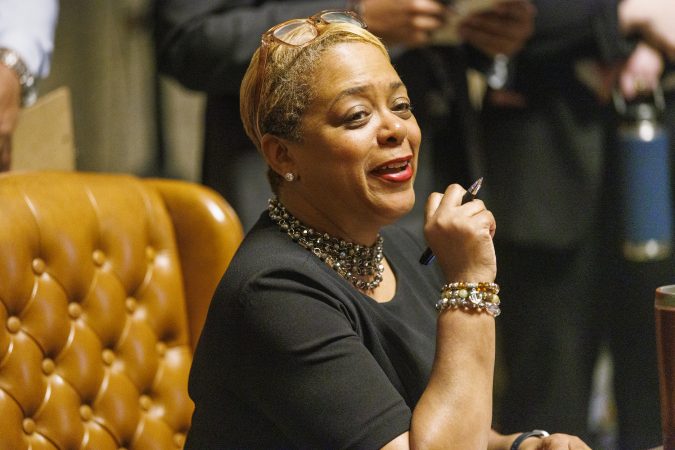
    City Councilmember Cindy Bass on Monday night was facing a challenge in her bid to be reelected as the Democratic leader of Mount Airy’s 22nd Ward. Her opponent, Octavius Price, had the backing of a well-organized group of progressive activists, many of whom were newly elected as committeepeople in last month’s Democratic primary election.

    As the incumbent, Bass chaired the meeting to determine her own fate as ward leader, and she held a voice vote to determine whether she or Price had more support among the committeepeople assembled at the Germantown Seventh-day Adventist Church.

    A video of the meeting obtained by The Inquirer appears to show a narrowly divided room, with many people saying, “Aye,” in support of both Bass and Price. Attendees cried out for a roll call, in which the committeepeople’s votes would be counted one by one, clarifying which candidate had more support.

    But Bass immediately announced herself the winner, rejected all motions from committeepeople objecting to the vote, and quickly adjourned the meeting, the video shows.

    Bass, a centrist Democrat, narrowly won reelection to her fourth term on Council in 2023 and has clashed with left-leaning activists in her Northwest Philadelphia-based 8th District. A progressive takeover of Bass’ own ward could hinder her reelection chances in next year’s Council election.

    She is now facing accusations that she skirted the party’s procedures for ward reorganization meetings by declaring herself the victor while denying requests for a roll-call vote.

    Democratic City Committee Chair Bob Brady said Monday night that wards can use voice votes for leadership elections, especially when the results are “overwhelming,” such as when an incumbent is running unopposed. But if a committeeperson calls for a roll-call vote to ensure greater accuracy, he said, the request must be honored.

    “You can do a voice vote,“ Brady said in an interview. ”If they do a voice vote and somebody calls for a roll call, you gotta do a roll call.”

    On Monday night, Bass, who has been ward leader since 2018, maintained she had the votes to win another four-year term. But she did not respond to a request for comment on why she ignored requests for a roll call.

    “We had the votes,” she said in an interview. “No matter what I did, some of these people are not going to be happy.”

    She added: “It’s OK. That’s democracy.”

    Ward leaders and committeepeople are the frontline workers of the local party, charged with getting out the vote for Democratic candidates running for everything from Municipal Court to president.

    Fights over control of the city’s 69 Democratic ward leader positions have for years provided flash points in the long-running battles pitting the party establishment against anti-corruption reformers and, more recently, the local progressive movement.

    State Rep. Chris Rabb, a Northwest Philly Democrat whose victory in last month’s primary election for the 3rd Congressional District marked a landmark victory for progressives, on Tuesday linked Bass’ reelection bid to his broader criticisms of the Democratic City Committee.

    “If she ‘wins’ this battle, the Philly Dem Party will lose the war,” Rabb posted on X. “Either it refashions itself around equity, accountability & transparency OR it just withers away election cycle by election cycle while Dem voters statewide suffer because … as Philly goes, so goes PA.”

    Brady, who is expected to be reelected to an 11th term as party chair next week, declined to comment on the result of the 22nd Ward election, but said he expects it will be challenged. Challenges are heard by the party’s contest committee, which is made up of other ward leaders. If Price formally objects, the committee would likely hear the challenge Saturday, Brady said.

    “[Price] would have to notify us that he’s contesting the election, and then we’ll hear from both sides,” Brady said.

    The committee, he said, could declare a winner if members determine the results are clear, or call for a rerun of the election.

    Price, a fiber optic engineer, called Bass’ handling of the election “unjust” and said he plans to file a challenge.

    “I initially ran to be a committeeperson because I believe in democracy and I believe in transparency and fairness,” Price said in a statement following the vote. “This was an example of moral decay and emboldened cruelty and corruption that has made so many people disillusioned with participating in politics.”

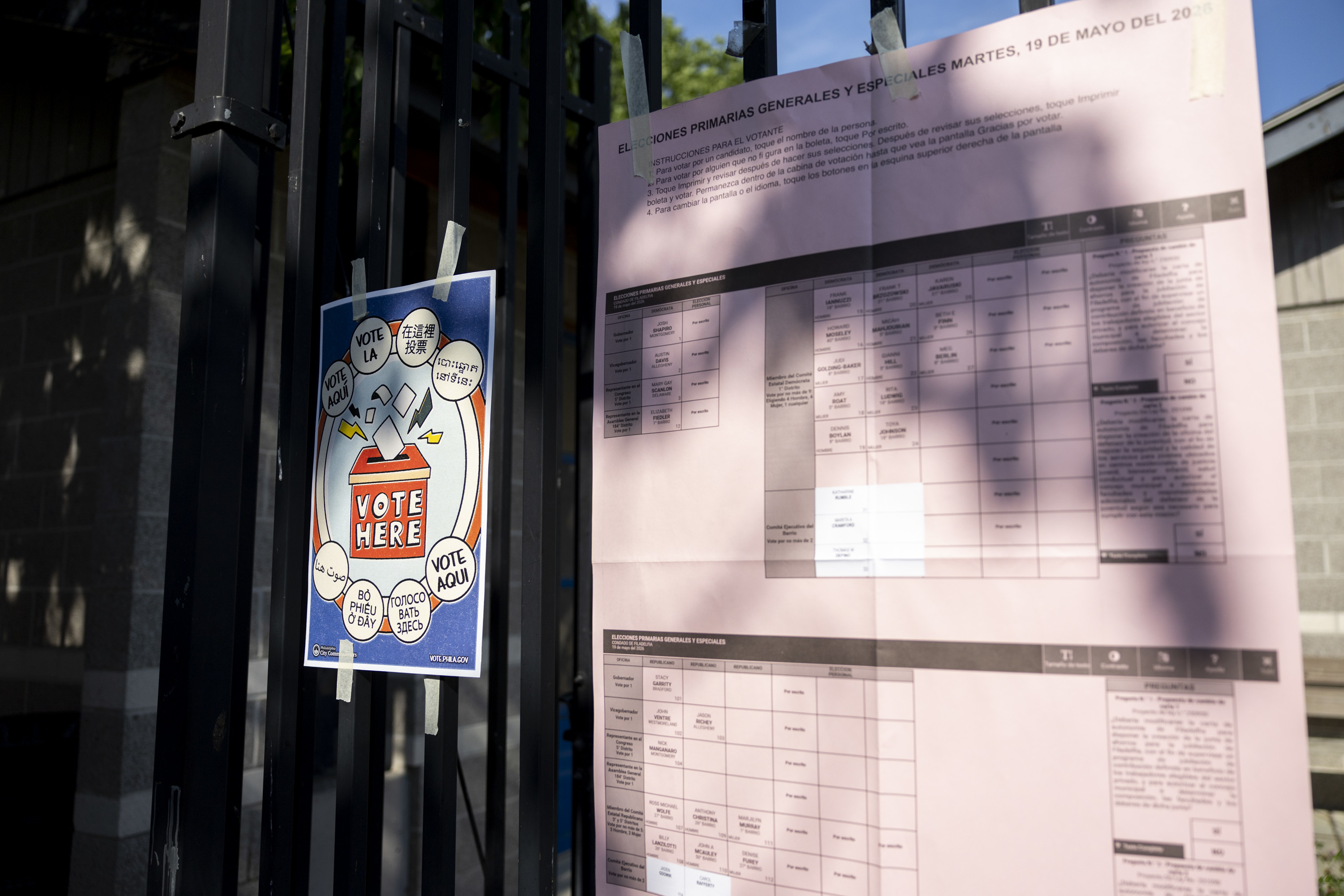
    A “vote here” sign outside the polls at Marconi Plaza in South Philadelphia, Pa., on Tuesday., May 19, 2026.Tyger Williams / Staff Photographer

    Another point of contention on Monday was the number of people in the room, which could become a key factor in a contest committee review of the election results because it changes the number of votes needed for a majority.

    Price, whose supporters whipped votes ahead of the meeting, said that by his count at least 26 committeepeople were planning to vote against Bass and for a candidate who, like him, supports “open wards,” which allow committeepeople to vote on political endorsements rather than letting the ward leader decide unilaterally for the entire jurisdiction.

    Price said his supporters counted 48 committeepeople present on Monday evening, meaning he should have had the votes sufficient for a victory.

    But a sign-in sheet at the meeting told a different story.

    The sheet, a photo of which was obtained by The Inquirer, listed 55 committeepeople and appeared to include a tally of their allegiances before the election was even held. Price said ward organizers who appeared to be working with Bass circulated the sheet at the beginning of the meeting. The paper showed 29 for Bass and 26 for “other.”

    “Her sheet has a total of 55 people who voted, but we know for a fact that’s not the case,” he said.

    Former Councilmember Derek S. Green, a 22nd Ward committeeperson who ran against Bass for ward leader in 2018, flirted with running for the post again this year. But he did not end up throwing his hat in the ring, resulting in a one-on-one showdown between Bass and Price.

    Green, who was present Monday night, declined to comment on the election results.

    After Price was nominated during the meeting, Bass launched into the voice vote.

    “All in favor of Octavius Price, signify by saying, ‘Aye,” Bass said. “All in favor of Cindy Bass, signify by saying, ‘Aye.’”

    In the video recording of the meeting, many people can be heard supporting each of the candidates. Even before Bass announced the winner, a participant can be heard saying, “roll call.”

    Bass then said, “In the call of the chair, the ayes have it for Cindy Bass.” The room immediately erupted with objections.

    “No, no, no — you’ve got to have a roll call,” one person said. Others shouted: “Roll call!”

    “There will be no motions accepted on the floor,” Bass said over the commotion. “We’re going to have to adjourn the meeting. There is no point of order. So the motion has been made — that concludes — there is no additional business for the ward tonight. Thank you for coming.”

    The tensions did not end there.

    After the election, participants in the meeting clashed outside the church as a man and a woman holding the sign-in sheet refused to let other committeepeople record their attendance on the form, a separate video reviewed by The Inquirer shows.

    “Y’all got to get back. Better get back,” the man told a crowd pleading to sign the forms. “Shut up!”

    As the man walked away, one person can be heard turning to Green, who was caught in the middle of the fracas.

    “Derek, we just wanted to get our sign-in [on] the sheet. He took it from us,” the man said.

    “I know. That’s why I came,” Green responded. “It’s not right. It’s not right.”

  • Trump previews fall strategy with baseless claims of California vote fraud

    Trump previews fall strategy with baseless claims of California vote fraud

    WASHINGTON — For President Donald Trump, any Democratic election victory is suspicious on its face. Even, apparently, in one of the most liberal cities in America.

    “Not possible for Spencer Pratt to have lost the L.A. runoffs after the big lead he had,” Trump wrote on social media on Monday. “3rd World Nation.”

    On election night last Tuesday, Pratt — the reality-television personality and Trump-endorsed Republican — led progressive City Council member Nithya Raman for second place to advance to November’s mayoral runoff, behind the incumbent, Mayor Karen Bass, who is also a Democrat.

    But as election officials spent the following week counting late-arriving mail ballots, which were disproportionately from Democrats, Raman edged ahead of Pratt. On Monday evening, the Associated Press said she had indeed prevailed.

    Such fleeting Republican leads are common enough to have a name — the “red mirage” — yet Trump, as he did in his own 2020 loss, cast the slow count as proof of theft. By baselessly framing Raman’s rise as a Democratic scam, Trump extended his long-running project to erode public faith in elections — and gave an unusually clear preview of how he could greet any disappointing results for his party in November, when control of Congress is at stake.

    He has been anything but subtle about his desire to limit the ability of Democrats to vote by mail, implying, with no evidence, that simply choosing that widely used means of casting a ballot is inherently suspect. Addressing a gathering of Republican lawmakers in March, he said the way to hold their majority was to pass a strict voter identification law cracking down on mail ballots.

    “It’ll guarantee the midterms,” he told them, warning that failure would bring “big trouble.”

    Privately, according to one senior adviser, he has pressed aides to find ways to “stop them stealing it from us.”

    What is striking so far is how little of this has survived contact with reality. Voting legislation he has championed, the SAVE Act, cleared the House but stalled in the Senate, where Republicans lack the votes to break a Democratic filibuster. Among other things, the bill would require proof of U.S. citizenship to register to vote and would compel states to share voter rolls with the federal government.

    An executive order he signed in March directing the Department of Homeland Security to assemble a federal list of eligible voters and barring the Postal Service from delivering mail ballots to anyone left off it was condemned by election experts as illegal and drew multiple lawsuits.

    Still, even if Trump fails to change election laws or processes, he can sow substantial chaos simply by trying to convince voters that the results were fraudulent.

    More than five years after his supporters, fueled by lies about a stolen election, stormed the Capitol to stop the transfer of power, Trump has tried to recast Jan. 6, 2021, as a day of “peace,” claiming his supporters were led astray by FBI officers in a false-flag operation. He has produced no credible evidence, yet he has pardoned rioters who breached the Capitol and has entertained paying restitution to some of them, over the objections of even some in his own party.

    His fraud claims about California could matter especially in November. The House majority rests on a thin margin, with Republicans holding 218 seats to Democrats’ 213. After California voters approved Proposition 50 in November — a constitutional amendment pushed by Gov. Gavin Newsom to permit a redrawing of the state’s congressional map — Democrats have a chance to flip as many as five Republican-held seats, potentially enough to take the chamber.

    Many of those seats lie in the same Central Valley and Orange County districts whose ballots take days or weeks to tally. In other words, the races that may decide control of Congress could be counted in precisely the slow way Trump reflexively calls fraud. Elon Musk has amplified the message, arguing that the combination of no voter ID and mail-in ballots amounts to legalized fraud.

    Trump has leveled the same accusation at California’s governor’s race, in which Republican Steve Hilton is fighting for the second spot that would set up a November runoff against Democrat Xavier Becerra.

    After complaining about “rigged elections” in his Monday social media post, the president added: “Now they’ll be working on great guy Steve Hilton. Won’t have results for, possibly, TWO WEEKS, according to officials.”

    This year, California had an unusually competitive primary election for governor, driving up turnout and raising the stakes of the statewide count. To add to the issue, many Democrats waited to return their mail ballots as the field shifted and as some were concerned that Democrats could get locked out of the top two spots.

    Asked whether Trump had any evidence to support his claims that the California elections were being rigged, Abigail Jackson, a White House spokesperson, said he was “committed to ensuring that Americans have full confidence in the administration of our elections.” That pledge, she added, is “why millions of Americans sent him back to the White House,” adding that Trump would implement measures to “secure our elections for generations to come.”

    During his losing 2020 campaign, Trump repeatedly made baseless claims that mail-in voting was rife with fraud. In that election, Democrats, many of whom were strictly adhering to pandemic protocols, were much more likely to vote by mail than Republicans, who tended to prefer to vote in person on Election Day — a partisan divide that persists today. Yet Trump’s crusade against mail-in votes that year alarmed Republican legislative leaders, who privately tried explaining to him that many of the party’s own voters were older and cast ballots that way.

    Several states took days to finish counting mail-in ballots in 2020. In Pennsylvania, Joe Biden’s share of the vote grew each day, eventually allowing him to overtake Trump in the state and win the election.

    Since 2020, many states have made significant investments to speed up their abilities to count mail-in votes quickly. In California, however, it is still common for it to take days or even weeks before enough votes have been counted for news organizations to declare a winner.

    This year’s election in California was primed to create even more of a red mirage effect than normal. Facing late upheaval in the governor’s contest after the departure from the race of Eric Swalwell, a member of Congress at the time, many Democrats waited until the last minute to return their ballots. That meant that the first ballots to be counted and reported were more Republican than normal, and the ballots reported after Election Day have been even more Democratic than is typical.

    Paul Mitchell, vice president of Political Data Inc. in Sacramento and an expert in California voter turnout, said his firm’s data showed that the share of Democratic voters’ ballots being processed has far outpaced the share of Republican ballots in recent days, and that the distance had widened.

    California sends every regular voter a mail ballot that can be returned at their convenience. It gives a weeklong grace period for ballots to arrive as long as they are postmarked by Election Day. The state allows voters registered at old addresses or those not registered at all to fill out provisional ballots that become valid if election officials verify their information and deem them eligible. And it allows voters with mismatched signatures on file to resolve discrepancies once they are detected.

    All of those provisions make voting easier for residents in California than in many other states, but they add various checkpoints in the system to ensure security, each of which costs time.

    “In California and Los Angeles, we have our election laws written in a way that maximizes participation,” said Mike Sanchez, a spokesperson for the Los Angeles County registrar of voters.

    Mitchell, who is a Democratic consultant, said that, paradoxically, the most effective way to speed up California’s count would be to eliminate security protocols, like cutting ballot signature verification or checks on voter registration for provisional voters.

    “I don’t think Republicans would want that,” he said.

    Other election experts said California suffered from logistical problems. Each of California’s 58 counties is responsible for running its own election, and many lack sufficient resources to verify mail ballots and count votes quickly. They may not have enough workers, space, or machines to process ballots in quick order.

    State lawmakers passed at least three bills last year designed to speed up the count, but the changes seemed to have marginal effect, given where things stood on Monday, with only about three-quarters of the ballots counted six days after the election.

    The bills shortened the deadline to finish counting most ballots, to 13 days from 30 days. They also allowed election officials to begin processing ballots earlier than before and required slightly more frequent updates of results.

    But elections are largely county-funded, and most of California’s counties lack the resources to keep staff on constant rotation, said Kim Alexander, who runs the nonpartisan California Voter Foundation.

    “We expect our counties to provide all these services to facilitate elections, and the state and federal governments aren’t paying their fair share of the cost,” she said.

    This article originally appeared in the New York Times.

  • Jackie Love, former Deptford Township deputy mayor and longtime champion of disability services, has died at 83

    Jackie Love, former Deptford Township deputy mayor and longtime champion of disability services, has died at 83

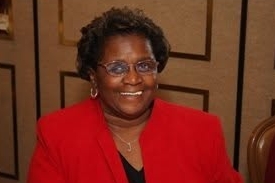
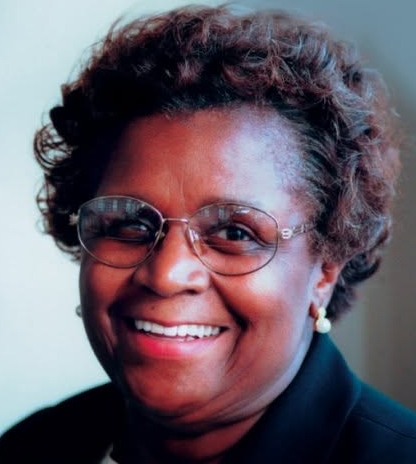
    Jackie Love, 83, of Deptford Township, longtime social justice activist, Black political pioneer, former council member and the second Black female deputy mayor of Deptford Township, former director of what is now the New Jersey Division of Disability Services, New Jersey Elected Officials Hall of Famer, mentor, and volunteer, died Friday, May 29, of age-associated decline at Shady Lane Nursing Home in Clarksboro, Gloucester County.

    Born in Philadelphia, Mrs. Love moved to Deptford Township when she was 13. She was reared by her grandmother, earned an associate’s degree in business administration at Camden County College in 1972, and served in government leadership roles for Deptford Township, Gloucester County, and New Jersey for four decades until her retirement in 2009.

    “Her caring spirit and willingness to help her community is a true example of a servant leader,” a former colleague said on Facebook.

    Mrs. Love was hired by Gloucester County officials in the 1970s to coordinate employment training programs and later to prevent and eliminate disability discrimination. She was the first director of the old Gloucester County Office for the Disabled in the 1980s and later was director of the Gloucester County Disabled Persons Advisory Commission.

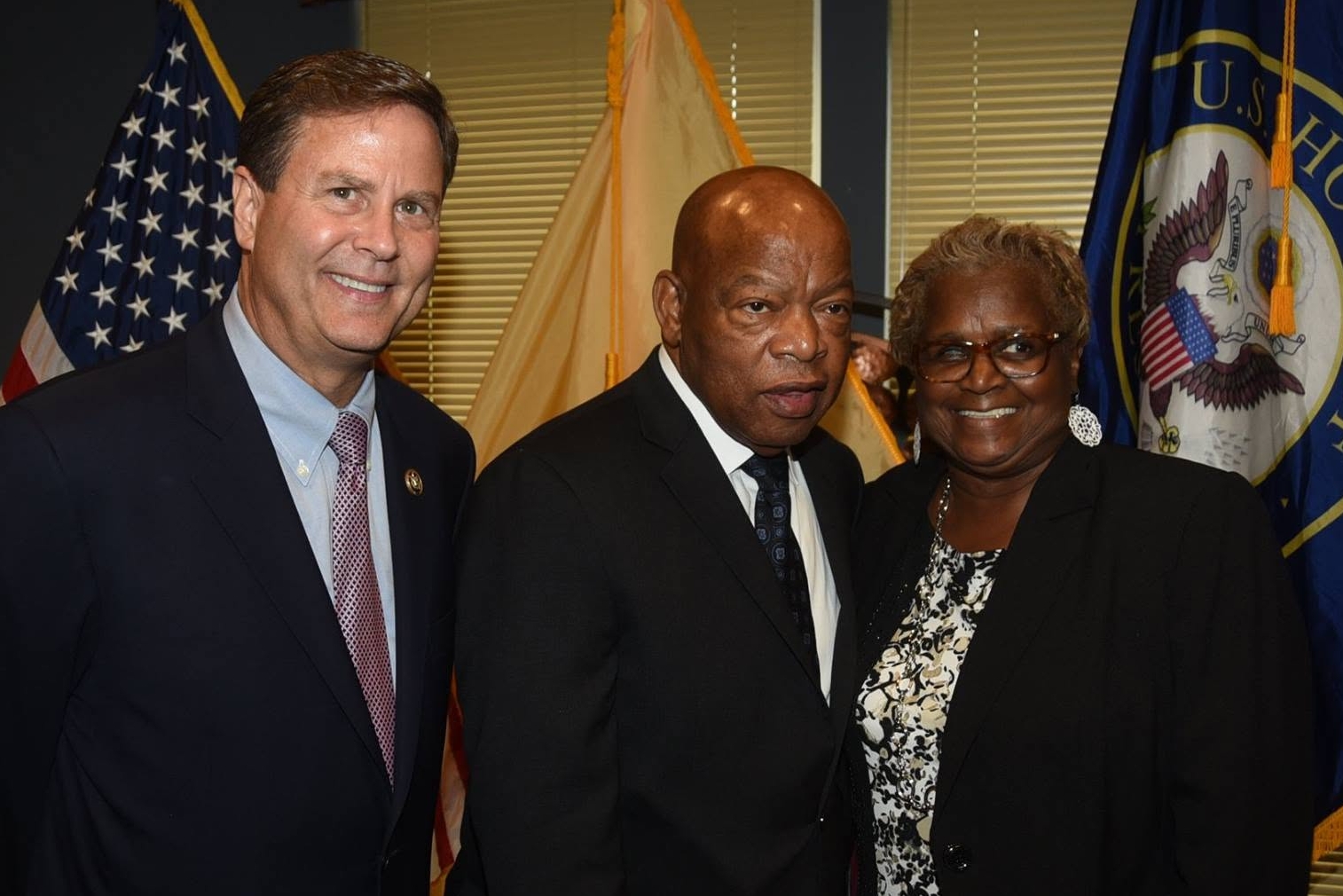
    Mrs. Love stands with U.S. Reps. Donald Norcross (left) and John Lewis.Courtesy of the family

    She became director at the old New Jersey State Office for Disability, now the New Jersey Division of Disability Services, in the 1990s and championed the installation of sidewalk ramps, curb cuts, and other improvements throughout the state. “We wanted to start making sure that we were accessible,” she told Front Runner New Jersey in 2025. “That’s a highlight of my life.”

    Mrs. Love first ran for Deptford Township Council as a Democrat in 1989. She received more votes than any of the other nine candidates, routinely collaborated with members of both parties, colleagues said, and became deputy mayor in 1996.

    “When Jackie was on council and she walked into a room, everybody knew who Jackie Love was,” Deptford Township Mayor Paul Medany told The Inquirer in 2015. “She’s known all over the state.”

    As Deptford council member and deputy mayor, Mrs. Love focused on reducing juvenile crime and lobbied for sound barriers along the New Jersey Turnpike, lower speed limits on busy township roads, responsible school budgets, improvements to animal waste disposal procedures, and upgraded vendor code guidelines. In 2015, Deptford Township officials renamed Church Street Park as the Jackie Love Community Park.

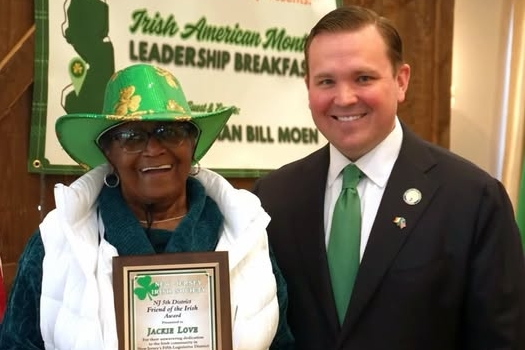
    Mrs. Love stands with state Assemblyman Bill Moen in 2025.New Jersey Irish Society

    “To see the future politicians and others out there playing and getting involved is another highlight of my life,” she told Front Runner New Jersey about the park.

    In 2005, the editorial board for the Courier-Post called Mrs. Love “loyal, hardworking, and a team player.” In a Facebook tribute, U.S. Rep. Donald Norcross (D., N.J.) said: “Jacquelyn Love was a force for good in Deptford for generations. She paved the way for others as a Black female deputy mayor … and long remained a champion for civil rights, faith, the disabled, and many more throughout her life.”

    Mrs. Love also served as a commissioner for the Delaware River Port Authority. She was active with the Gloucester County Minority Coalition, the Gloucester County College advisory committee on diversity and civility, and other groups.

    She recruited volunteer poll workers and was a delegate for Bill Clinton at the 1992 Democratic National Convention in New York. In the 1970s, she traveled the country with civil rights leader Leon Sullivan and helped organize his Opportunities Industrialization Centers of America.

    Mrs. Love (left) enjoyed time with her family.Courtesy of the family

    She was named the 1987 Woman of the Year by the Gloucester County chapter of the NAACP, honored in 2005 by the Gloucester County Human Relations Commission, and inducted into the New Jersey Elected Officials Hall of Fame in 2010. In March, her achievements were recognized by the New Jersey Irish Society.

    Mrs. Love mentored dozens of colleagues and friends, conferred frequently with Philadelphia Mayor Cherelle L. Parker, and volunteered at Mount Zion Wesley United Methodist Church and for the United Way. On Facebook, former colleagues called her “a once-in-a-lifetime type of leader” and “one of the most dedicated public officials I have ever had the honor of working with.”

    Jacquelyn Williams was born Sept. 10, 1942. She dropped out of Woodbury High School at 17, earned her General Educational Development certificate later, and worked at first as a counselor at Ancora Psychiatric Hospital in Hammonton.

    She married Arnold Love in 1972, and together they reared her daughter, Wanda, and their son, Wayne. Her husband died in 1985.

    Mrs. Love participated in this 2020 drive-by salute to a friend’s 60th wedding anniversary. Jose F. Moreno / Staff Photographer

    Friendly and classy, friends said, Mrs. Love wore memorable hats and enjoyed shopping at local Amish markets. She visited Amish friends in Lancaster when she was young, took classes at what are now Rowan and Rutgers Universities, and lived in Jericho for decades.

    Friends called her a “cornerstone of this neighborhood” and a “wonderful down-to-earth lady.” One friend said: “Jackie set the standard for leadership and dedication to her family, faith, friends, and public service.”

    Her son said: “She showed love to so many people.”

    In addition to her children, Mrs. Love is survived by four grandchildren, four great-grandchildren, a sister, and other relatives.

    Visitation with the family is to be from 8 to 10 a.m. Friday, June 12, at Gloucester County Community Church, 359 Chapel Heights Rd., Sewell, N.J. 08080. A service is to follow.

    Friends called Mrs. Love a “cornerstone of this neighborhood.”Courtesy of the family
  • Three Philly hospitals among 500 warned by Trump administration to provide more price information or face fines

    WASHINGTON — The Trump administration has warned more than 500 hospitals that they are failing to provide the public with basic pricing information — arguing that the lack of disclosure is keeping healthcare costs higher than they should be.

    The Associated Press obtained exclusively the list of hospitals that since April have either received letters of warning or requests to submit plans to provide transparent pricing. Failing to comply with the warnings comes with penalties as high as $2 million annually for each recipient that doesn’t create a plan to post clear pricing data.

    The letters are meant to fix a fundamental problem that patients, employers and insurers might not know ahead of time the cost of blood work, an imaging test or another form of treatment, and as a result pay more than they should have. AP has posted the list of hospitals that have received letters.

    The list includes three hospitals in Philadelphia: Fox Chase Cancer Center, Friends Hospital, and St. Christopher’s Hospital for Children. Other hospitals in the region that received letters were Phoenixville Hospital, Pottstown Hospital, and Reading Hospital, all owned by Tower Health, which also is a joint owner of St. Christopher’s children’s hospital.

    Christiana Hospital in former President Joe Biden’s home state of Delaware received a warning letter. Rockford Center in Newark, Del., was also on the list.

    A senior administration official who requested anonymity to provide the list said that President Donald Trump plans to tighten enforcement of price transparency standards made possible by a 2019 executive order signed by Trump. More hospitals are likely to receive letters regarding the absence of pricing data, the official said.

    The warnings are the latest example of Trump leaning into the message that his administration is fixing the problem of healthcare expenses that can drain a family budget. It’s a calculated pitch ahead of the November midterms at a time when affordability is a top concern for voters. But Trump is also vulnerable on this particular issue, as his administration allowed subsidies to lapse for people buying insurance through the 2010 Affordable Care Act, widely known as Obamacare.

    Just 29% of U.S. adults approved of Trump’s healthcare policies according to the most recent survey on the issue by The Associated Press-NORC Center for Public Affairs Research. The president fared slightly worse on that issue in the December survey than on the economy, immigration or his management of the federal government.

    The push for price transparency could have a particular impact on Republican strongholds like Texas, Florida, Indiana, Alabama and Louisiana, which are among the states with the highest count of hospitals that have not provided adequate information on the costs of medical services.

    Texas had 42 hospitals that received warnings, more than any other state. Baptist Medical Center in San Antonio, Texas, among the state’s largest hospitals with 1,585 beds, received a letter, as did the University of Texas MD Anderson Cancer Center in Houston.

    Missouri-based Ascension, one of the country’s largest hospital systems, had 13 hospitals in multiple states that received letters. The Republican state of Indiana had 34 hospitals that received letters, nearly as many as the 38 in Democratic-led California, even though California has five times more people than Indiana.

    The letters reflect two competing philosophies between Republicans and Democrats over how to handle the ballooning expense of healthcare, which is also a growing risk for the federal government’s own balance sheet.

    Biden’s team put more emphasis on record enrollment in Obamacare programs that increased the percentage of people with health insurance. Biden also signed a bill that allowed the government to begin negotiating prices for some Medicare drugs directly with pharmaceutical companies. That program, which has continued into Trump’s second administration, has helped knock down the list prices of some of Medicare’s costliest drugs.

    The Trump administration, by contrast, has focused more on trying to find ways to provide details on pricing — such as promoting the TrumpRx site for prescription drugs — betting that doing so will lead to better and more efficient spending on healthcare as the data gets crunched.

    Critics have said Trump’s negotiated prices on prescription drugs might not produce genuine savings for many Americans with insurance, while the administration has estimated savings in excess of $500 billion over 10 years.

    With the various lists of hospital prices, the administration wants providers to make it easier to access the files and to ensure the information in them is legitimate, instead of being based on estimates or omitting numbers for key procedures.

    The House Committee on Energy and Commerce has a hearing planned for Wednesday on price transparency.

    “Transparency is the foundation of a healthcare system that rewards competition based on cost and quality,” Shawn Gremminger, CEO of the National Alliance of Healthcare Purchaser Coalitions, plans to say in his prepared remarks.

  • In Trump’s second term, fewer seats for women at the table

    In Trump’s second term, fewer seats for women at the table

    Nearly 10 years after their first bilateral meeting inside Beijing’s Great Hall of the People, President Donald Trump and Chinese President Xi Jinping again gathered last month for discussions about U.S.-China relations.

    Much had changed over the preceding decade. Wars had broken out in Europe and the Middle East, shifting global alliances; the coronavirus pandemic had killed millions around the world and transformed the global economy; and at the table in Beijing, the makeup of aides and advisers sitting alongside each leader for the high-level talks was visibly different.

    Images from Trump’s meeting with Xi in 2017 show Trump sitting alongside a large group of senior U.S. officials, including three women. Xi’s staff at the table also included a woman.

    During their most recent meeting inside the same room in May, every U.S. and Chinese official at the table was a man.

    The all-male delegation exemplifies a broader trend within the Trump administration’s hiring practices for senior executive branch roles that require Senate approval. Data reviewed by the Washington Post shows that Trump has selected fewer women to serve in these senior roles than during the same period of his first term. There also has been a historic amount of turnover among women in Trump’s cabinet.

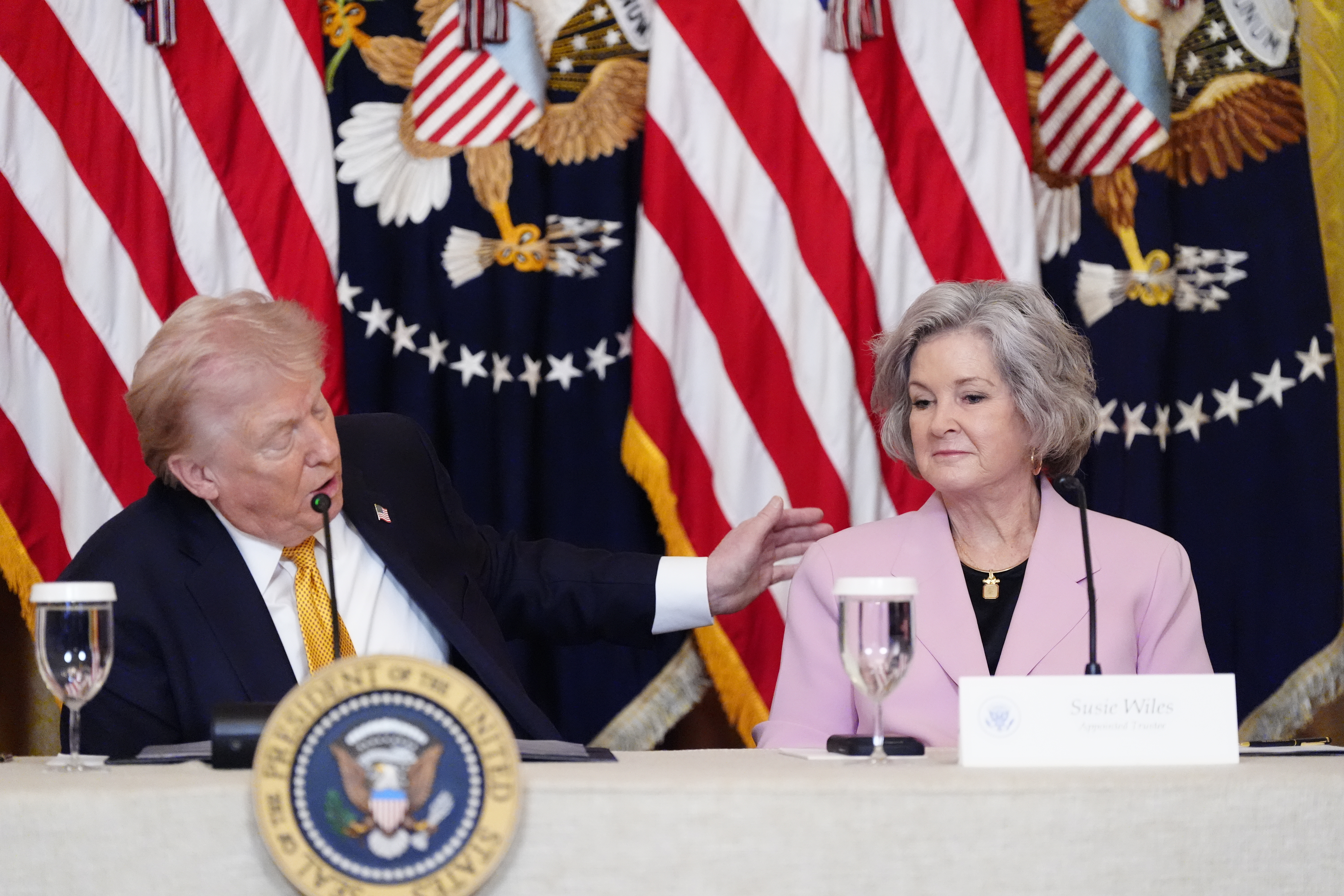
    The Trump White House has expressed pride in the fact that some key senior staff have been the first women to hold certain titles, including Susie Wiles as chief of staff, and defended the president’s hiring choices in a statement to the Post.

    “President Trump has assembled the greatest Administration in history, selecting each member of his incredible team based on one criterion: their ability to deliver for the American people,” Taylor Rogers, a White House spokesperson, said in a statement. “Unlike the identity-politics-obsessed Democrats, the President judges individuals on merit and qualifications, not immutable characteristics.”

    Lower rate of female political appointees

    According to the Partnership for Public Service, a nonprofit that says it aims to build a better government and a stronger democracy, Trump’s Senate-confirmed appointees are made up of the smallest percentage of women of any administration since George W. Bush.

    A PPS political appointee tracker, launched with the Post in 2016, monitors appointments to roughly 800 executive branch positions, a portion of more than 1,300 positions that require Senate confirmation. It includes all full-time, civilian positions in the executive branch that require Senate confirmation except for judges, marshals, and U.S. attorneys. (Military appointments and part-time positions requiring Senate confirmation are not included.)

    When excluding ambassadors and holdovers from previous administrations, PPS data show that so far in this administration, about a year and four months in, 14.53% of all nominees or Senate-confirmed political appointees — 51 out of 351 total roles — are women.

    At this point in President Joe Biden’s term, women had been nominated for 199 out of 379 roles, comprising 52.5% of appointees. And at this point in Trump’s first term, women had been nominated or announced for 41 of 173 of those roles, comprising 23.7% of appointees.

    Heather Higgins, CEO of the conservative nonprofit Independent Women’s Voice, told the Post that “the confirmation gantlet falls hardest on conservative women who can expect their families, faith, and reputations to be put through the wood chipper.”

    “Plenty of enormously talented women make the entirely rational choice to serve the country some other way,” she added. “That’s not a deficit of ambition but a market signal that women don’t necessarily see politics as the only or best lane for influence. And looking at the life of those in those roles, which is no picnic, I’d say that that’s a testament to the groundedness and judgment of women on the right.”

    But Max Stier, the president and CEO of the Partnership for Public Service, expressed concerns about the trend.

    “The evidence is clear that drawing on people with different backgrounds creates a higher-performing organization,” Stier said in a statement. “At the end of the day, our government needs leadership that reflects the diversity of the American people in order to understand and best serve them.”

    Turnover in Trump’s cabinet

    The first female cabinet member was Frances Perkins, who served as secretary of labor from 1933 through 1945. But it wasn’t until the 1970s under President Jimmy Carter that more than one woman was part of the president’s cabinet at the same time.

    Trump selected nine women to serve in his cabinet or in cabinet-level positions at the start of his second term. One of those cabinet-rank members, White House chief of staff Susie Wiles, does not require Senate confirmation. Another pick, Elise Stefanik, withdrew her nomination as U.S. ambassador to the United Nations.

    Among Trump’s presidential predecessors, only Biden successfully nominated more women to serve in his cabinet toward the start of his presidency.

    But nearly a year and a half into Trump’s second term, every departure from his cabinet has been a woman. And more female cabinet and cabinet-level officials have left their positions during this term than at this point in any previous presidential administration, according to an internal count by the Post based on a list of female cabinet members through U.S. history collected by the Rutgers University Center for American Women and Politics.

    Most recently, Tulsi Gabbard announced last month that she would step down as the director of National Intelligence effective June 30. Along with Gabbard, Attorney General Pam Bondi, Labor Secretary Lori Chavez-DeRemer, and Homeland Security Secretary Kristi L. Noem all have left the cabinet. A man was chosen to replace each of them.

    Fewer Republican women running for federal office

    The start of Trump’s second presidency also marked the first Congress since 2011 in which the number of women serving in the House and Senate declined, due to a decline in Republican women. While Democrats set a record by sending 110 female lawmakers to the House and Senate at the start of 2025, Republicans elected 40, according to data from CAWP. The number of Republican women in the House and Senate hit record or near-record levels after the 2022 midterm elections.

    There’s also been a decline in Republican women running for federal office, according to data from the Center for American Women and Politics at Rutgers. Republican women as a percentage of Senate and House candidates reached their peak in 2022.

    A record-setting 38 women filed as Republican Senate candidates in 2022. The number of candidates dropped to 21 in 2024 and has risen slightly to 27 candidates filing to run in 2026.

    Similarly, the number of Republican women registering to run for House seats hit a peak in 2022 with 261. That number dropped to 166 in 2024. So far in 2026, the number of female Republican candidates filing to run for House seats has declined further to 155 candidates.

    “Republican women are underrepresented across the board, across states, even when we look at them as a percentage of their own caucus in highly Republican states,” said Kelly Dittmar, director of research and CAWP scholar at Rutgers. “This change in a Republican administration is consistent with what we have seen before: When Republicans are in office, when they hold a state legislature, the majority party — we know that almost always there are going to be fewer women.”

    Public polling suggests that waning female representation in Washington may not be seen as much of a problem for many Republicans.

    A 2023 Pew Research study found that 5% of Republicans and Republican leaners say it is extremely or very important to them that the U.S. elects a woman as president in their lifetime. Among Democrats, 31% said it was extremely or very important. Republican women were also about twice as likely as Republican men to say there are too few women in high political offices in the country.

    “It’s odd to assume that women are succeeding only if they’re found in government rosters. That’s a surprisingly narrow definition of success,” Higgins, the Independent Women’s Voice CEO, said. “One of the lessons of the last several decades is that women don’t all want the same things, don’t make the same choices, and shouldn’t be expected to. Equality means respecting those choices, not treating every statistical difference as evidence that something has gone wrong.”

  • Gov. Mikie Sherrill says ICE detention center visit was strictly limited

    Gov. Mikie Sherrill says ICE detention center visit was strictly limited

    Gov. Mikie Sherrill of New Jersey on Monday was allowed to visit Delaney Hall, a detention center in Newark that has drawn protests for two weeks after immigrants inside complained about inhumane living conditions.

    Sherrill described the visit as closely controlled and limited, and she said she was not permitted to meet with or speak directly with detainees.

    “That is unacceptable,” Sherrill said in a prepared statement.

    Sherrill, a Democrat, said she would continue to ask for a more thorough inspection of the center, including a visit by the state’s Department of Health. New Jersey’s attorney general has sued the center’s operator, Geo Group, which is one of the largest private prison operators in the United States. The attorney general is asking that state health inspectors be given full access to the facility.

    Fights between demonstrators and detention center employees have erupted since last month at the front gates of Delaney Hall, with violent clashes common in the early morning hours. Demonstrators had blocked vehicles trying to leave the center, and in late May, heavily armed federal agents with U.S. Immigration and Customs Enforcement had responded with pepper spray and pepper balls.

    In a statement, Homeland Security Secretary Markwayne Mullin said his department had granted Sherrill access to the federally run facility despite the fact she is not a federally elected official. Mullin said prisons operated by New Jersey were run more poorly than Delaney Hall.

    “Gov. Sherrill won’t tell you: New Jersey state prisons face systemic health code violations,” Mullin said. “I’d encourage Gov. Sherrill to focus on her own backyard, and put the safety of her own constituents above illegal aliens.”

    During an appearance on “Fox & Friends” on Monday, Tom Homan, President Donald Trump’s top border adviser, criticized the demonstrators and argued that detainees inside Delaney Hall were treated and fed well, contrary to claims that many have made about rotten food and dirty bathrooms.

    Homan also said federal officials would send more federal agents to New York, vowing to push back against new restrictions approved by Gov. Kathy Hochul against federal immigration operations in the state. The recently passed legislation bars agents from wearing masks during immigration operations, allows agents to be sued for constitutional violations, and prohibits agents from searching “sensitive locations” such as hospitals and schools without a warrant signed by a judge.

    Homan suggested that local officials were endangering the public by refusing to help facilitate the arrests of migrants.

    “I made her a promise — you are going to see more ICE agents than you have ever seen in New York City,” Homan said on “Fox & Friends.” “It’s coming.”

    Hochul said Homan’s threat directly contradicted what Trump had said to her in a room full of fellow governors. Trump, Hochul said, had told her that the federal government would not deploy a crackdown where it was not welcome.

    “If they come here and go throughout New York state with a surge in ICE, there won’t be a Republican standing in this state,” Hochul said to a group of reporters. “Americans have had enough with the overreach of ICE.”

    Asked about Hochul’s account of her interaction with Trump, the White House said, “Any criminal illegal alien living any place in the United States is subject to removal.”

    In a social media post on Monday, New York City Mayor Zohran Mamdani criticized Homan’s threat.

    “We will not allow ICE or anyone else to sow fear in our communities,” Mamdani said. “We will stand proudly with our immigrant neighbors and reject these attacks for what they are: an attempt to divide us.”

    This article originally appeared in The New York Times.

  • Progressive challenger overtakes Spencer Pratt in race for LA mayor

    Progressive challenger overtakes Spencer Pratt in race for LA mayor

    Nithya Raman, a progressive member of the Los Angeles City Council, pulled ahead of reality TV star Spencer Pratt in the Los Angeles mayoral primary Sunday, as a surge in the vote count signaled a potential shift in the race for second place.

    Five days after the election deadline, it remained officially undetermined who will face Mayor Karen Bass, the incumbent, in the November contest to decide who will lead the nation’s second most populous city. The primary race has yet to be called by the Associated Press, which estimates that about 80% of the vote has been counted.

    But late returns have trended heavily in favor of the liberals who make up an overwhelming majority of the city’s electorate.

    Bass, 72, a former Democratic member of Congress who has already advanced to the November runoff, remained in the lead with 34.68% of the vote, according to the updated tally released by the Los Angeles County Registrar-Recorder/County Clerk’s office.

    Raman, 44, who has steadily gained ground as the count has progressed, had 27.12%, enough to overtake Pratt by a little more than 3,000 votes. He had been running in second place since election night.

    A resident of Pacific Palisades who lost his home in the fire and channeled the fury of his neighbors, Pratt, 42, a Republican, dropped to third place with 26.69% of the vote.

    A Los Angeles mayoral candidate can win outright by receiving a majority of votes in the primary. Otherwise, the top two finishers regardless of party advance to the general election. But Los Angeles residents vote by mail in large numbers, and ballot counting is a slow process, with leads often shifting as the tally drags on for days or even weeks. Mail-in ballots with an Election Day postmark are accepted by county election officials through Tuesday.

    On Sunday, Raman said in a statement that “we are encouraged by the latest vote count and remain grateful to the thousands of Angelenos who have powered this campaign.”

    Pratt did not immediately respond to a request for comment.

    Alex Stack, a campaign spokesperson for Bass, signaled the likely points of contention between the two if Raman ultimately takes the second slot on the ballot. Though her support has been eroded by the wildfires and general voter angst in the city, Bass has largely maintained the support of the center-left establishment in the city while Raman has been backed by a younger and more progressive base.

    “We look forward to winning a contest against an opponent who allows encampments near schools and fights against hiring more cops,” Stack said in a statement, “yet is MIA on saving Hollywood jobs and fighting back when ICE invades LA.”

    This article originally appeared in the New York Times.