Category: Politics

  • ‘She’s one of us’: Mary Peltola’s bumpy rise to political power

    ‘She’s one of us’: Mary Peltola’s bumpy rise to political power

    KWETHLUK, Alaska — Hard by the murky brown water of the Kuskokwim River, in a region reachable only by plane or boat, past weather-stunted willows and crude seasonal fish camps, dogs roamed muddy, rutted roads under low, dreary skies.

    Here in the small village of Kwethluk in the vast tundra of southwestern Alaska, in the window of a house with unpainted sides and rotting wood steps, was a campaign placard for Mary Peltola.

    “We are related,” said the man inside.

    James Nicori, 77, sat in his chair and unspooled his Alaska Native connection to Peltola, the Democrat running for the Senate.

    “Mary’s great-grandma and my grandpa were half sister, half brother,” Nicori said. Her mother was a girl here, Nicori said. She was a girl here.

    “She understands how we struggle,” he said. “She is one of us.”

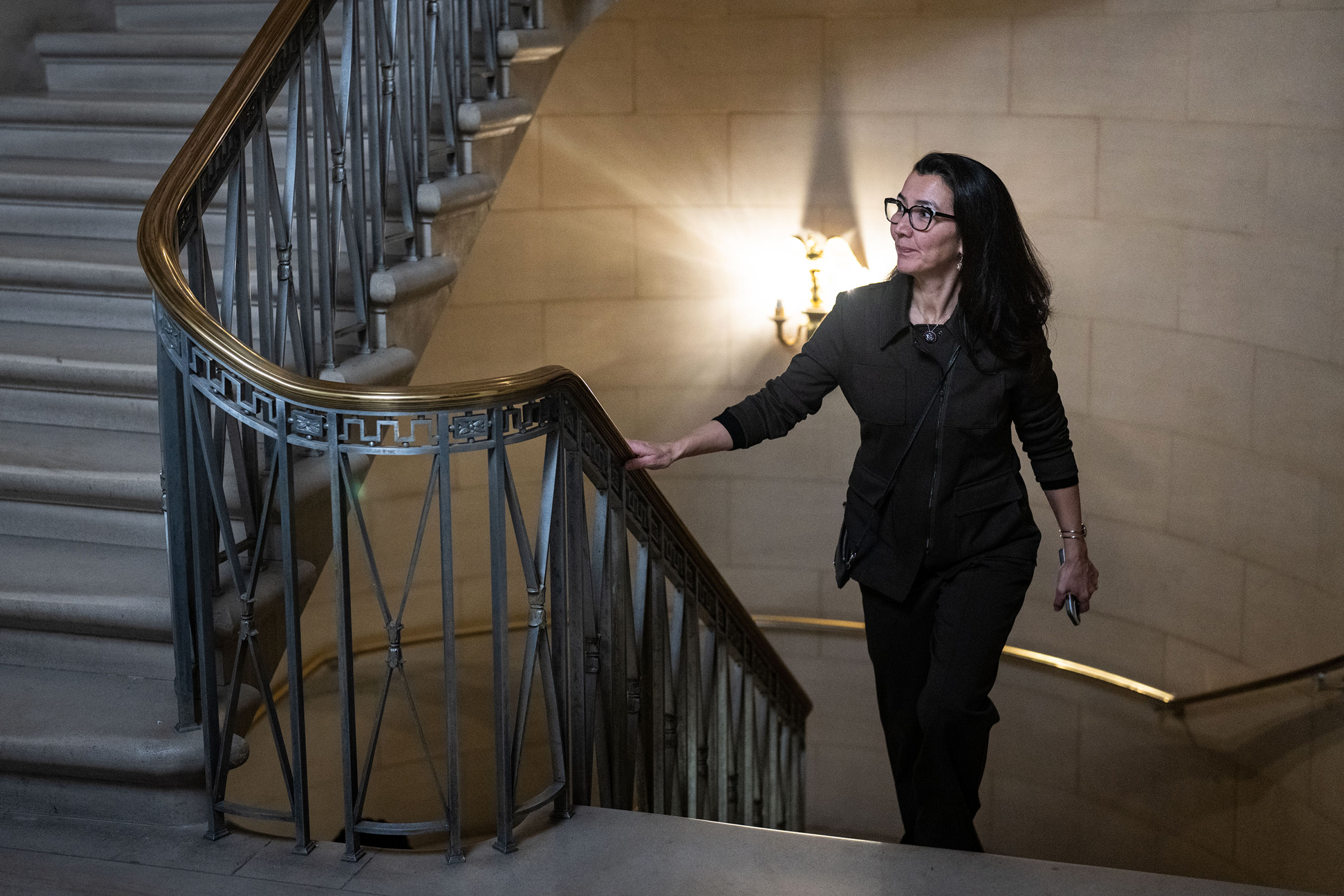
    Peltola, a former member of Congress, is an uncommonly capable candidate. In Alaska, where Republicans far outnumber Democrats and independents far outnumber both, she is the rare member of her party who has proved she can win statewide. This year, she has campaigned on four-wheelers and floatplanes, in Xtratuf boots and traditional kuspuk shirts worn by the Indigenous Yup’ik people of Alaska. She has made stops in locales as isolated as an island 30-some miles from Russia, curating social media snippets while playing hard-to-get with most of the mainstream press four time zones away.

    The approach has been largely effective. Peltola beat the Republican incumbent, Dan Sullivan, in the nonpartisan primary in August, and polling and fundraising suggest she could do it again in November.

    But in ways that have not been aired until now, Peltola, 53, is also an uncommonly complicated candidate. Genial and unassuming in public, she can be crass and apoplectic in private. Her campaign has been marred by accounts of her outbursts that left some aides unnerved. When she served in the House, she had one of the highest staff turnover rates on Capitol Hill.

    The daughter of a Yup’ik woman from Alaska and a white man from Nebraska, Peltola grew up in three villages and the port city of Bethel, population 6,000, some 70 miles upcountry from the Bering Sea. She went to three different high schools and four different colleges. She has had three husbands — two children from her first, two more from her second, three stepchildren from her third — and moved from Bethel to Juneau to Anchorage and back.

    Her politics are complicated, too, reflecting the idiosyncrasies of her state: She is pro-gun, pro-oil, and pro-gas — but also pro-environment and especially pro-fish.

    And she is, at root, a person whose people’s way of life is dying after decades of disruption to salmon fishing, the cascading consequences of climate change, corporate excess, and government restrictions. There are fewer fish and more limits on fishing. People smile, but grievance stews.

    ‘To know who you are’

    On her first political campaign, she was in the womb.

    In early 1973, in the special election that kick-started the congressional career of Don Young, Alaska’s longtime Republican representative, two of his most ardent aides were the expectant parents of Peltola.

    Ward Sattler, a teacher and small-plane pilot from the Great Plains, was Young’s district chair. Liz Ann Andrew, “an Eskimo interpreter,” in the phrasing of a local newspaper, was an indefatigable canvasser, snowmobiling from village to village in subzero conditions.

    Peltola was born 5½ months after Young won.

    She grew up in Bethel, Kwethluk (with a population of roughly 500 at the time), Tuntutuliak (300), Platinum (50), and Bethel again, as her parents split up. She ate moose and seal and spent her summers on the Kuskokwim, captaining tender boats and cleaning, drying, and smoking salmon.

    “She was doing the things that I would traditionally put in the male category,” one of her best friends, Ana Hoffman, said this month in Bethel. “She didn’t wait for a guy to come back up the boat. She would back up the boat.”

    Peltola spent her sophomore year in high school at a boarding school in Bethlehem, Pa.; her junior year at Bethel Regional; and her senior year in Fort Collins, Colo., where her grandmother lived.

    She went to the University of Northern Colorado, the University of Alaska Fairbanks, the University of Alaska Southeast, and the University of Alaska Anchorage — but never graduated.

    As a college student, she was the runner-up for the Miss World Eskimo-Indian Olympics in 1993 and then crowned Miss National Congress of American Indians in 1995, performing two Yup’ik dances and wearing a wolf-hair headdress when she won.

    In an article about her achievement, she said she wanted to get into politics. “I just have this fire inside me,” she told the Juneau Empire, “when I start reading these cases about Indian rights.”

    She was an intern in the state Legislature in 1996. That year, at the age of 23, she ran to be a representative herself and barely lost. In 1998, the year she married for the first time, she ran again.

    Then known as Mary Sattler, she campaigned for the state House as a Democrat, prioritizing would-be voters in villages. “Villagers say Sattler is a kass’amirteq, meaning someone who acts like a white person,” a reporter from the Anchorage Daily News wrote that August. Her campaign manager, who spoke better Yup’ik than she did, doubled as her interpreter.

    She gave birth to a son in October, posing with him and her husband in an ad in the local newspaper, the Tundra Drums. “I will work hard to make sure our rural way of life is protected,” she wrote. “Our people need protection from outside interests determining how we hunt and live.”

    She was elected that November.

    “I’d explain that my mom is from Kwethluk, my dad was a schoolteacher in these villages,” Peltola said this month in Fairbanks in an interview with the New York Times.

    “I think it’s important for people to know who you are,” she said, “so they understand your back story.”

    ‘I am made of fish’

    In the 10 years she spent at the Capitol in Juneau, Peltola was chairperson of the “bush caucus,” the bipartisan group representing Alaska’s most remote regions. She worked to reduce teen alcohol abuse, stressed the importance of teaching the Yup’ik language, and appealed for more state aid for rural areas. “We’re sitting,” she told a local reporter, “on a powder keg of poverty and resentment.”

    She started meetings in her office, where she served her colleagues salmon. She befriended Lisa Murkowski, then a fellow state representative, now Alaska’s other Republican senator.

    “She was very sure of herself,” said Ethan Berkowitz, a former state representative and the minority leader at the time. “She’s incredibly proud of her Yup’ik heritage, but she was able to walk in both worlds.”

    Along the way, too, she had another son, divorced, remarried, and had a third son and a daughter. Managing an increasingly topsy-turvy personal life, she also missed votes nearly 20% of the time, according to records — in part a result of having and caring for her kids.

    She did not run for reelection in 2008. She separated from her second husband in 2009 — the same year she got together with her third.

    In 2010, she helped Murkowski with her Senate campaign, and she was on the Bethel City Council from 2011 to 2013. She helped the community get a public indoor pool but missed more than a third of the votes.

    Away from public office, she worked for a gold-mining project and as a lobbyist.

    And the fish crisis mostly kept getting worse. The Yup’iks of the Kuskokwim couldn’t fish the way their people had fished for thousands of years. In an attempt at conservation, state and federal restrictions now determined when, how, and how much they could fish, a scenario utterly counter to their culture of subsistence, severing the rhythms of generations and upending their relationship with the river and the salmon.

    In 2017, in an interview with the Associated Press, Peltola likened the state of affairs to “a family member being sick.”

    That year, she became the executive director of the Kuskokwim River Inter-Tribal Fish Commission, an intermediary between Alaska Natives and the outside agencies establishing and enforcing the rules and regulations.

    “Like nearly everyone raised on the Kuskokwim, I am made of fish,” she wrote in 2020 in the commission’s annual report. “Not only do I crave eating fish year-round, but by May and June, I physically feel the need to catch and process fish.”

    But things were different now.

    “I have had to adjust my mindset,” she wrote, “because there are fewer fish.”

    And then, in 2022, the death of Rep. Don Young led to a wide-open scramble of a special election.

    The day of Young’s memorial service on Capitol Hill, Murkowski got a text from Peltola, according to the book Murkowski published last year. She wanted advice. She was thinking about getting into the race, calling it “the most crowded clown car ever.”

    Peltola jumped in.

    “One thing led to another,” she told the Times, “and of all the unlikely circumstances …”

    She won.

    ‘Really different values’

    Murkowski worried for her.

    Peltola, she thought, according to her book, was “a warm, positive, smart, and authentic Yup’ik woman.” Now she was in Washington. “I thought of her mostly as a friend and mom suddenly in the middle of the complex, high-pressure world of the House with no time to prepare,” wrote Murkowski, who declined a request to comment for this story. “I offered her my son’s room to stay in and tried to make sure she got fed.”

    Peltola wore Native mukluk boots to her swearing-in, alongside her third husband, Eugene Peltola Jr., her children and his. “I am humbled and deeply honored to be the first Alaska Native elected to this body, the first woman to hold Alaska’s House seat,” she said in her first floor speech.

    She won again in the regular election in November, earning a full two-year term. She joined the moderate Blue Dog caucus as well as the Western caucus — “106 Republicans,” as she said, “and me.” She was one of the most bipartisan Democrats, bucking her party on guns, border security, and oil and gas extraction.

    She also missed more than 17% of the votes — significantly more than most of her peers. And her uneven temperament was an all but open secret.

    “Everybody who knows anything about her, she has two things: a terrible work ethic and a terrible temper,” Art Hackney, a longtime Alaska-based Republican strategist who supports Sullivan, said in an interview this month in Anchorage.

    In May of her first full year in Congress, her mother died. Four months later, she lost her husband. Eugene Peltola, 57, piloting a small plane, was hauling the antlers and meat of a moose that a group of hunters had killed. He labored to take off from their tundra site, according to the National Transportation Safety Board report, and crashed on the side of a hill in low-lying bushes and shrubs. The closest hospital was 400 miles away. One of the hunters unbuckled his lap belt and covered him in blankets. Eugene Peltola died in less than two hours.

    Amid her grief, Mary Peltola lost her 2024 reelection bid, to Nick Begich, a Republican — albeit by less than 3 points in a year when President Donald Trump won Alaska by 14. She moved to Anchorage and was hired by a lobbying firm, making more than $340,000, according to a financial disclosure. Last fall, she was, briefly, a fellow at the Institute of Politics at the University of Chicago, teaching a seminar she titled “Blood Lines: What Does Being Native Even Mean?”

    All the while, Sen. Chuck Schumer, the minority leader, worked to persuade her to run for the Senate. He considered her one of his top recruits.

    “She is special,” said Lauren French, a Senate Majority PAC spokesperson. “She has everything that it takes to be really successful there.”

    Peltola thought so, too.

    “I know that there’s a tendency to say people are half something, half another,” Peltola told the Times. “But I always thought of it as double. I really had, you know, double the language, double the perspectives, really different perspectives, really different values, really different worldviews — but double. And I thought that was a huge advantage.”

    Behind the scenes

    All summer long, she was all over — in Alakanuk and Savoonga and Nome, in Gambell and Galena and Unalakleet, in Dutch Harbor and Fort Yukon and Tok — listening to voters in school gyms, union halls and community theaters, hugging, waving, and smiling on Facebook, Instagram, and X.

    In August, though, her campaign was on its way to a primary win and simultaneously in disarray. She fired a top adviser. She fired a deputy campaign manager. She changed her campaign manager. She made headlines for distancing herself from former Vice President Kamala Harris, who had issued a fundraising appeal on her behalf.

    Behind the scenes, as the Times reported last week, she could be a mercurial boss, with some former aides describing her as sometimes angry and profane. A spokesperson for the campaign denied any pattern of abusive behavior. “Like any person who has gone through multiple personal tragedies in the span of a few months, Mary sometimes struggled to deal with her grief,” a campaign spokesperson said.

    Through it all, Peltola was dealing with the legal fallout from her husband’s death. She was worried about her children.

    Her staff made her scarce to the mainstream press, providing scant details about where she would be campaigning. She was running what she called an “Alaska first” campaign, her staff insisted, focused on talking to Alaskans, not reporters from Washington or New York.

    But on the ground, the arm’s-length strategy made more sense. During recent events in Fairbanks, Peltola didn’t sound simply off script. At times, she sounded as if she had no script.

    “I’ll admit to you, every single place I go, I don’t go to the grocery store, I don’t go to the gas station, I don’t go to community events unless I have my passport,” she told a crowd that had packed a community center. She wore a blue flannel shirt and glasses with white rims. “Because early in this administration there was talk about ICE deporting Natives back to wherever it is they came from,” she said. “My mom’s family walked across the land bridge from Mongolia. …”

    People laughed.

    “We laugh,” she said, “at the things we’re most scared of.”

    The next afternoon, at a different community center in Fairbanks, she said she had forgotten to help her 18-year-old daughter register to vote in the primary in August — but promised she would be registered for November.

    She said that when she grew up in Alaska, it was “a state of abundance,” and that now “we are being starved out and nobody even cares.”

    She said she wasn’t even feeling “aspirational” anymore — and just wanted to “get back to where we were in 1999.”

    A few days later, at Alaska’s Senate Fisheries Debate in Kodiak, on the third anniversary of the death of her third husband, she wore salmon-shaped earrings made from the tusk of a walrus and asked moderators to repeat questions.

    “Can you restate it please?”

    “Say it again?”

    To succeed statewide here, said John-Henry Heckendorn, an Anchorage-based Democratic strategist, a Democrat must assemble a convoluted coalition almost at odds with itself — Natives and not, rural and not, commercial fishermen and subsistence fishermen, on and on.

    “Mary’s political talent,” he said, “has been her ability to inhabit those tensions.”

    She inhabits those tensions because she is born of those tensions. Peltola is Alaska and Nebraska, the Yukon-Kuskokwim Delta and the Lower 48, Yup’ik collectivism and American individualism. Being “double” can be an advantage, she says, and she is not wrong. It also, though, can be a source of some untenable tug.

    She is leading by a bit in polling and by a lot in fundraising, but voters in Alaska are characteristically contrarian and unpredictable. This race, say independent analysts, could go either way.

    On a recent rainy, windy evening in Anchorage, at a canvassing kickoff at an Alaska Democratic Party field office, Peltola was introduced by the former president of the Alaska AFL-CIO. Peltola was wearing black Adidas and a kuspuk. She touched her face and smiled, looked out at her supporters and began her speech.

    “Where do you even start?” she said.

    This article originally appeared in the New York Times.
  • Josh Shapiro campaigned in Bucks County for Democrats in key races: ‘You’ve got a lot of power’

    Josh Shapiro campaigned in Bucks County for Democrats in key races: ‘You’ve got a lot of power’

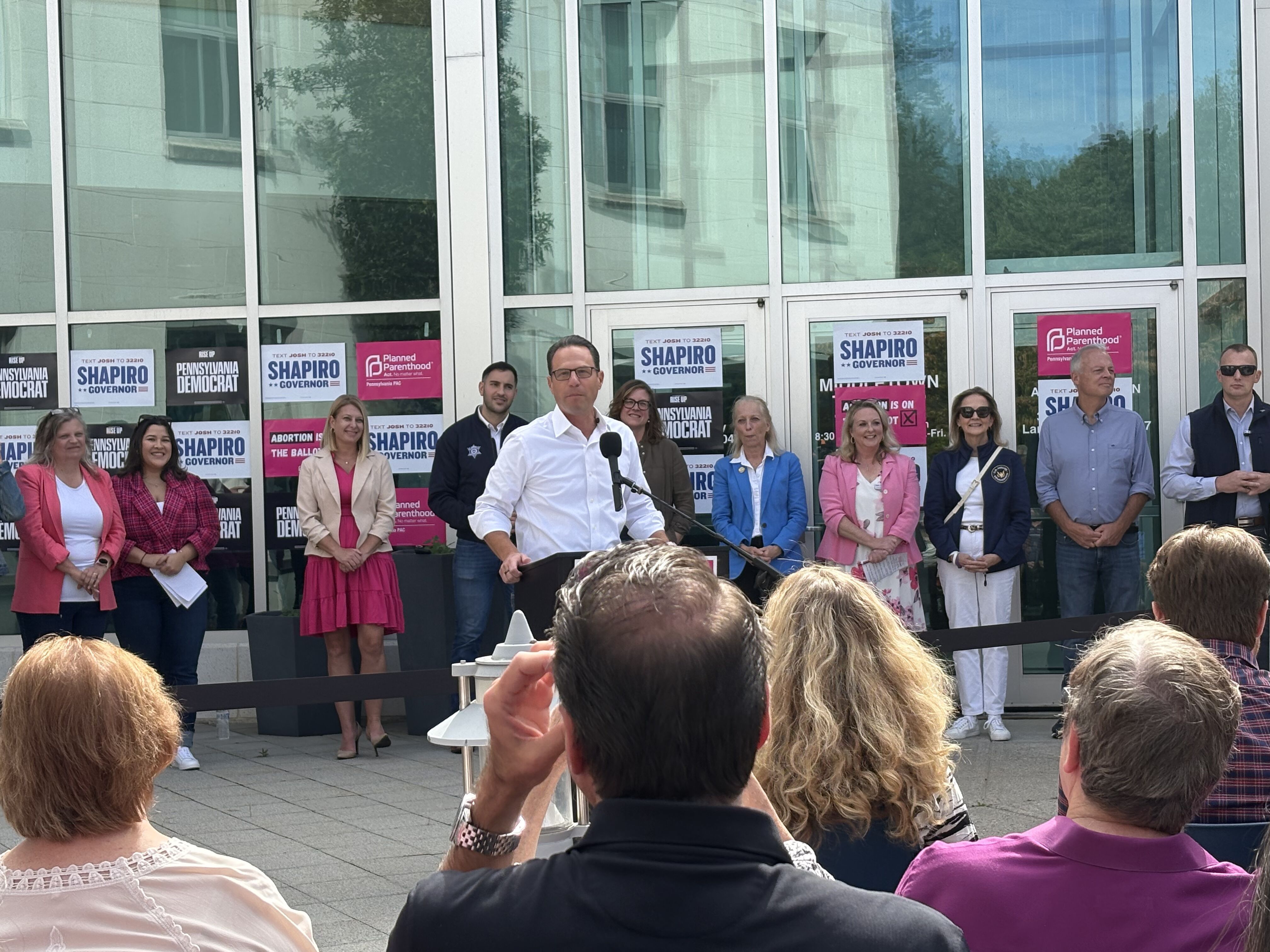
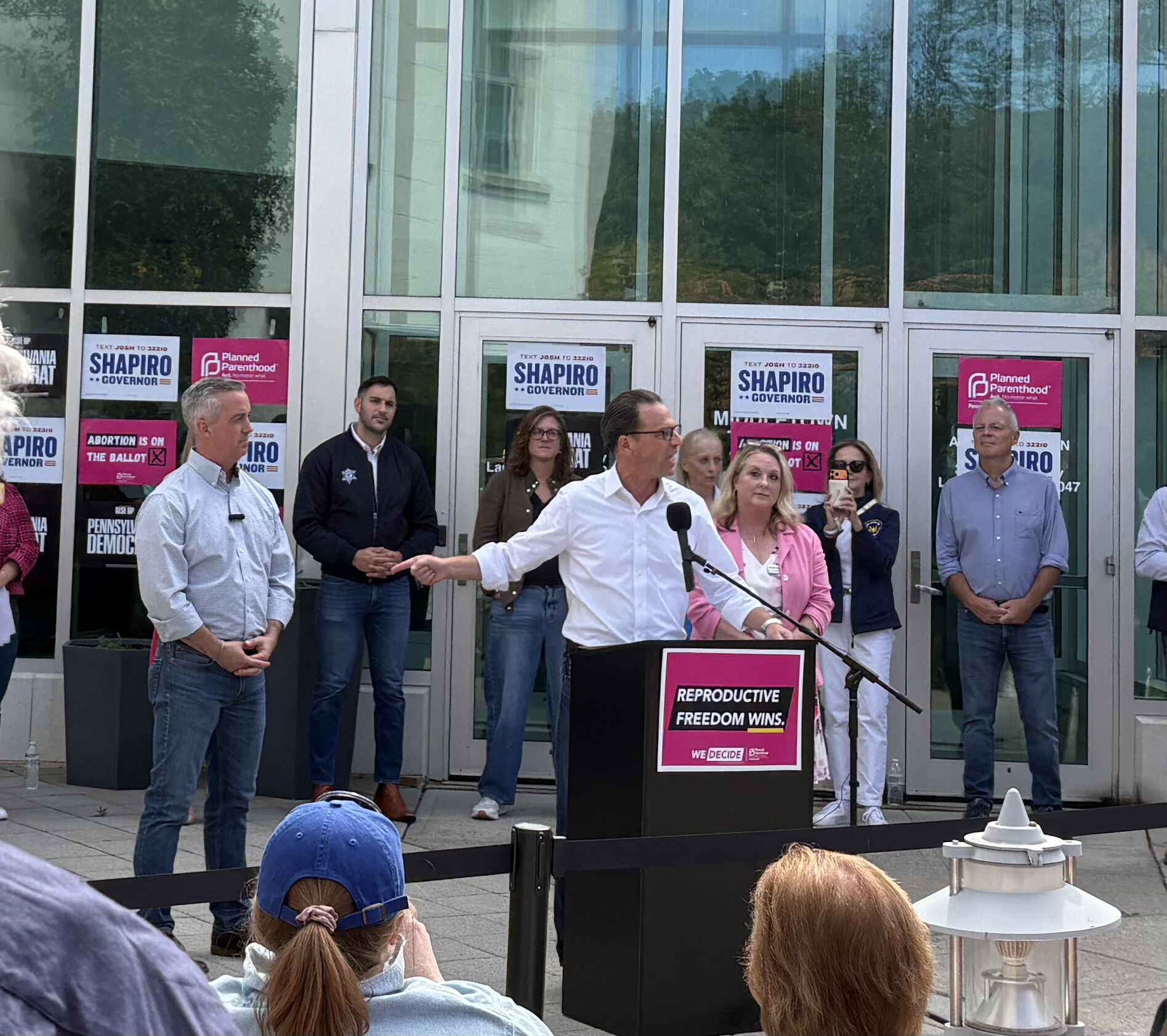
    Exactly one month to the day ahead of the highly consequential midterm elections, Gov. Josh Shapiro stood in front of the Middletown Township Municipal Center and said something pretty much everyone in Bucks County is well aware of:

    “Bucks County, you’ve got a lot of power,” he told the large crowd that gathered on the lawn and under trees with fall-tinged leaves.

    Shapiro kicked off a day of action for Democrats organized by Planned Parenthood’s state-level political action committee Saturday afternoon in Bucks County. The purple county will be the center of crucial races for state Senate and U.S. Congress, and could determine the balance of power.

    Gov. Josh Shapiro speaks to the crowd gathered at the Middletown Township Municipal Center in Bucks County on Saturday.Fallon Roth

    Shapiro, who is also running for reelection, promoted the Democrats at the forefront of those races Saturday, including 1st U.S. Congressional District candidate Bob Harvie and Eileen Hartnett Albillar, who is running in the 6th state Senate district. He framed their election as a chance to put a check on President Donald Trump in Washington, D.C., and an opportunity to flip the state Senate and obtain the first Democratic trifecta in Harrisburg in decades.

    Bryan Allen, Kristin Egan, and Monica Weninger are also running in Bucks County to expand Democrats’ majority in the state House.

    Shapiro called the 1st Congressional District race — between Harvie and U.S. Rep. Brian Fitzpatrick (R., Bucks) — “the most competitive in the entire commonwealth.”

    Three other U.S. House seats in Pennsylvania are also being targeted by both parties: the 7th, 8th, and 10th Districts. Shapiro has also described the 9th as competitive.

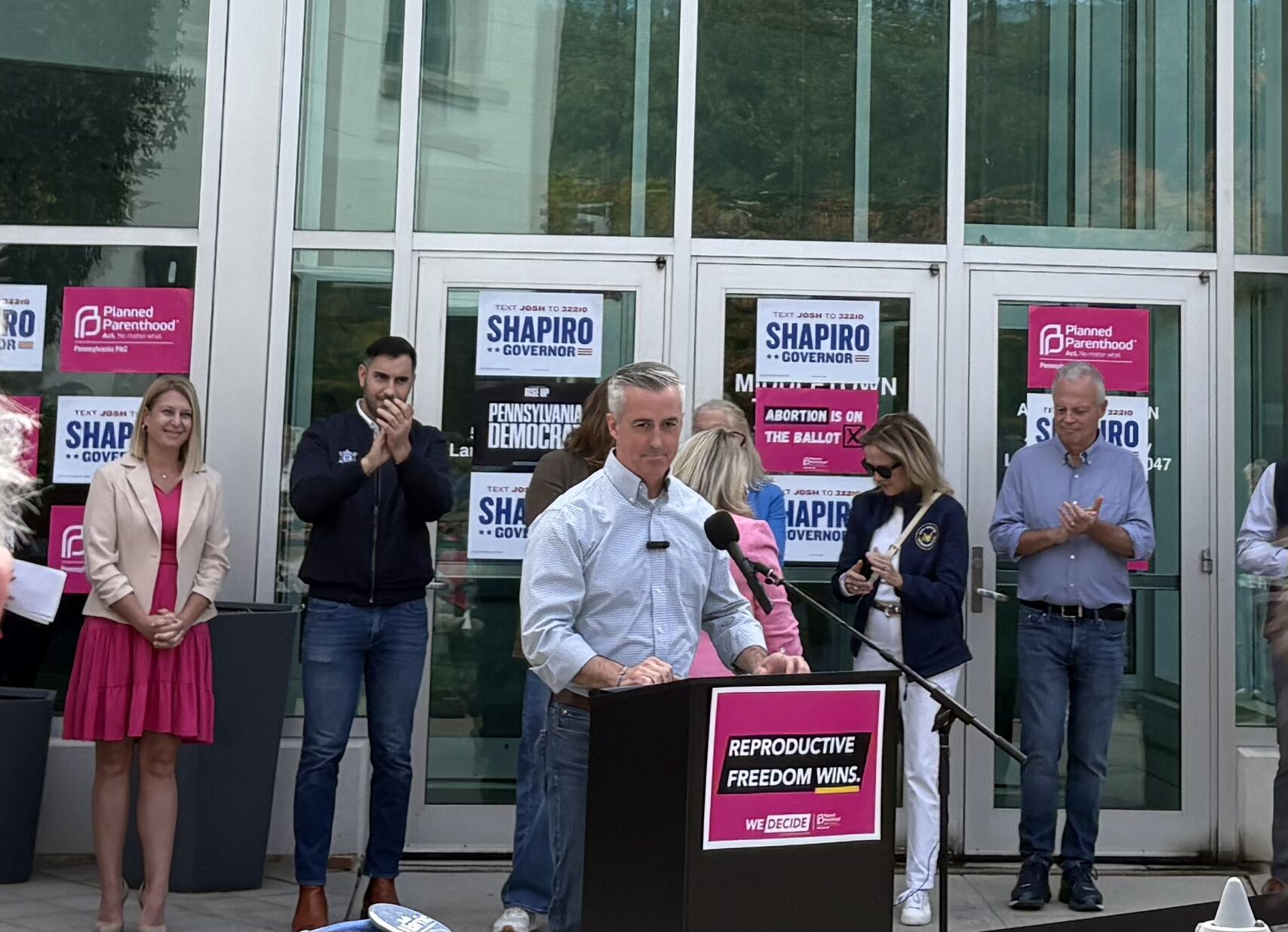
    Harvie, in his speech, highlighted the affordability crisis and an “economy that is broken.” He also argued that the U.S. has “lost our stature around the world.”

    Democrat Bob Harvie (center), challenging GOP U.S. Rep. Brian Fitzpatrick in the 1st Congressional District, speaks to the crowd at the Middletown Township Municipal Center in Bucks County on Saturday.Fallon Roth

    “We’re going to put this country back in the path it was meant to be on. A country we can be proud of. A country we can be proud to hand our children and grandchildren, and a country that is strong around the world, strong at home, and we’re going to do that here in this county,” Harvie said.

    With Planned Parenthood PA PAC organizing Saturday’s day of campaigning, the slew of Democratic officials and candidates in attendance also highlighted reproductive rights in their rallying calls.

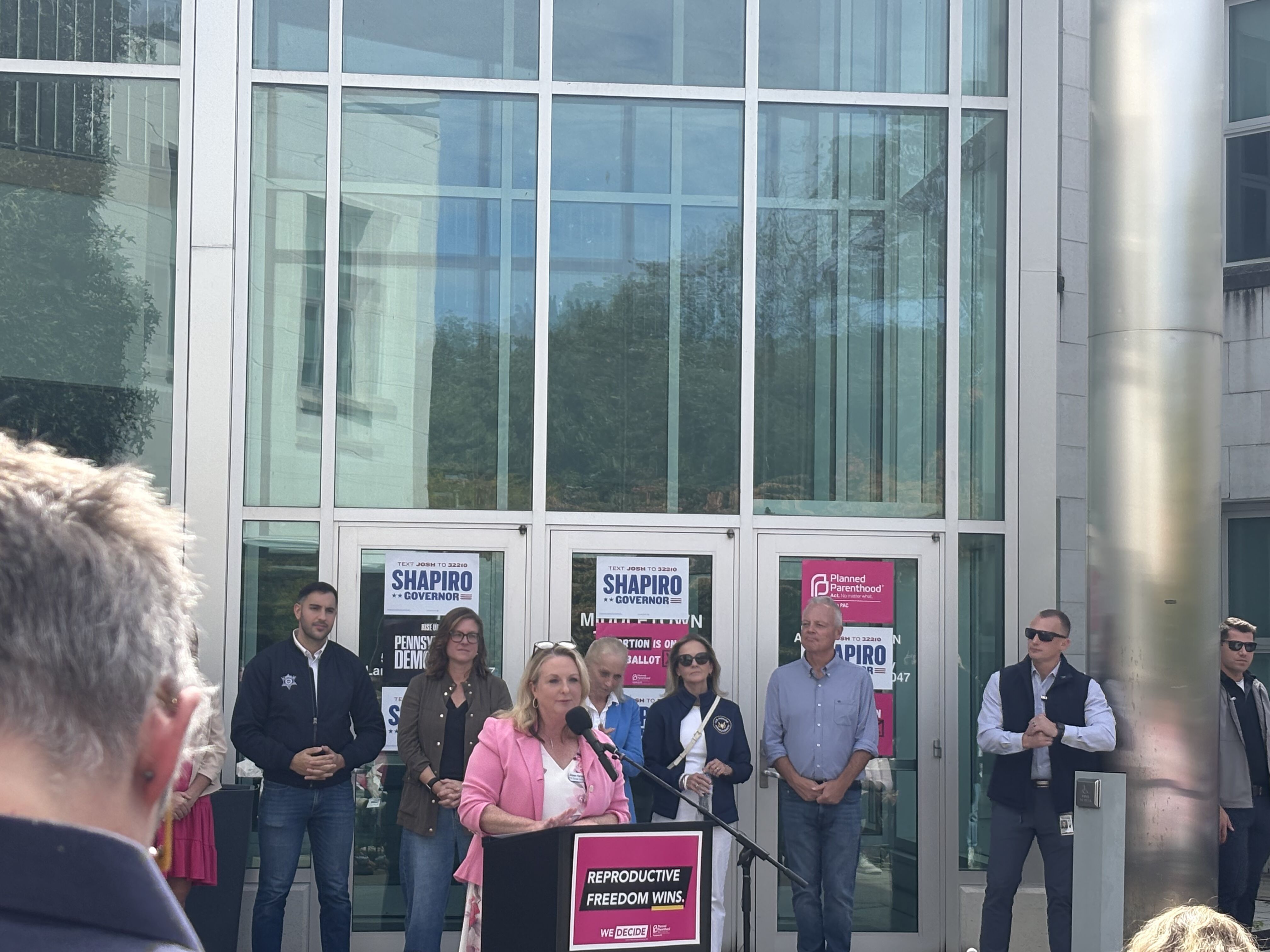
    Hartnett Albillar said in her speech that such rights go in tandem with cost-of-living issues, like making a livable wage and accessing childcare and paid family leave.

    Democrats in Bucks County, including Harvie and Hartnett Albillar, have been branding their messaging on abortion and reproductive rights as affordability issues.

    “People are scared about the unsustainable economic path that we are on, and reproductive healthcare is part of that affordability conversation,” she said. “Reproductive healthcare is something we need to ensure we have in order for economic futures for families.”

    She pledged that with a Democratic state Senate, abortion rights would be codified.

    “The folks that live here are going to determine whether or not we are going to be able to get that trifecta,” she said.

    Democrat Eileen Hartnett Albillar (center) speaks to a crowd gathered at the Middletown Township Municipal Center on Saturday.Fallon Roth

    Shapiro’s appearance in Bucks County on Saturday afternoon came after his morning campaign stop in Philadelphia’s Ninth Ward and reflects how the popular governor has spent most of his reelection campaign trying to boost other Democrats across the state.

    For instance, in July, he launched “Rise Up Pennsylvania” — an effort that is aimed at pooling donations to fund campaign resources for key state Senate and U.S. congressional races.

    Before the door knocking and canvassing around town ensued, Shapiro framed November as an inflection point for Bucks County residents and pondered future conversations between crowd members and their kids or grandkids.

    “You’re going to be able to look at them and tell them, ‘in the swingiest town, in the swingiest state, in the entire country, you dedicated yourself to meeting your neighbors … telling them what’s at stake.’”

  • Trump posts cell phone number of Arkansas Sen. Tom Cotton in fight over daylight saving time

    Trump posts cell phone number of Arkansas Sen. Tom Cotton in fight over daylight saving time

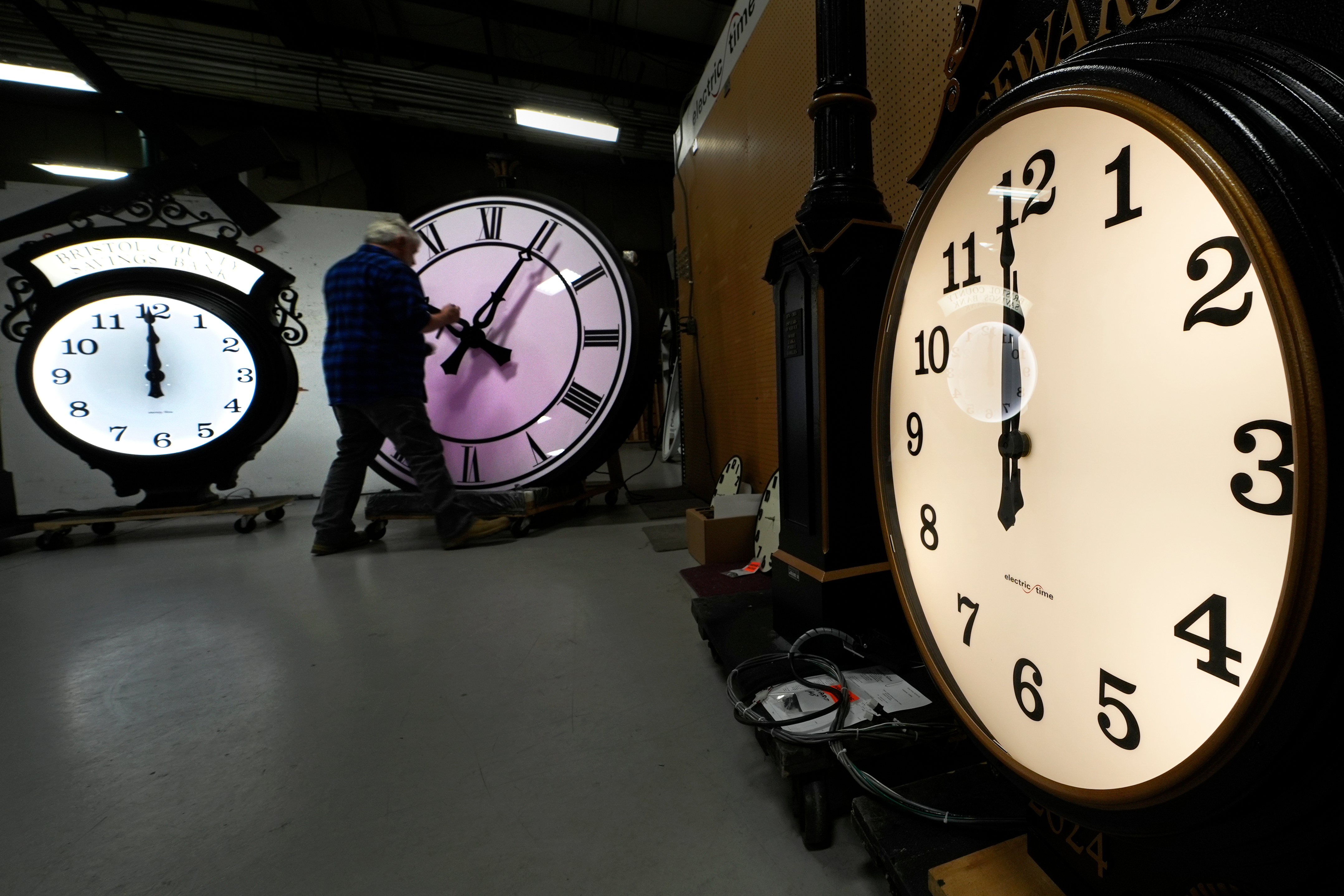
    President Donald Trump on Saturday pressured Republican Sen. Tom Cotton of Arkansas to support a bill to make daylight saving time permanent, posting the personal cell phone number of the chairman of Senate Intelligence Committee and urging Americans to call it.

    The Sunshine Protection Act passed the House in July, but it faces roadblocks in the Senate where some Republicans are strongly opposed. Proponents, including the White House, argue that the change would provide more daylight during the times that Americans are most active. Detractors said permanent daylight saving time would lead to darker and potentially more hazardous winter mornings when children will be waiting for school buses and parents will be driving to work in darkness.

    It was a remarkable escalation on Trump’s part of a longstanding fixation shared by both men — with Trump supporting making daylight saving time permanent, and Cotton vociferously opposed — at a time just weeks before the midterms, when Republicans would prefer that the president focus on talking about affordability issues and the party’s achievements. Cotton is also up for reelection this November, although that race is not expected to be competitive.

    Trump calls daylight saving time ‘depressing’

    Daylight saving time is that period between spring and fall when clocks in most parts of the United States are set one hour ahead of standard time. Not all states observe it — and under the bill, states can opt out of the change if their respective legislatures act to do so before the bill’s enactment.

    “For some reason, Tom is stopping the Bill and, in the Senate, it’s very easy to do, it only takes one!” Trump wrote on social media, noting that passing the bill would give professional golfers more time on the greens. “So, everyone in Arkansas, a State I love, and won 3 times, the last by 34 points, tell Tom to, GET IT DONE! It will be appreciated by all,” Trump said.

    Trump included a phone number with an Arkansas area code. The Associated Press called the number, but no one answered and the voicemail box was full.

    Cotton, a member of Republican leadership, reiterated his opposition to permanent daylight saving time in a social media post of his own Saturday afternoon. He is not the only GOP senator who opposes the policy, though he has been among the most vocal opponents.

    “No one likes changing the clock, me included, but Congress has enacted permanent Daylight Savings Time multiple times before and repealed it each time once Americans experienced absurdly late sunrises in the winter,” Cotton wrote. “Arkansans don’t want their kids going to school in the pitch dark, and I’ll always put Arkansas first.”

    Trump, who is spending the day at his northern Virginia golf club before traveling to Ohio later Saturday, promptly fired back.

    “If Tom Cotton were putting Arkansas first, he would give them an extra hour of daylight and, more importantly, they wouldn’t have to run all over their houses, farms, work places, and everywhere else, twice a year, having to change their Clocks, and often forgetting to do so,” Trump said, adding that “that is really putting Arkansas FIRST.”

    As his motorcade was rolling back to the White House, Trump added that “a table full of very distinguished people just told me that they HATE, immediately after a mandatory time change, going home at night — and it’s DARK.”

    “It’s depressing!” Trump continued. ”One of the gentleman stated that, ‘I just hate going home in darkness.’ It’s also, in Crime Ridden Blue States, a lot more dangerous to be walking home in the dark!”

    A 2025 poll from the Associated Press-NORC Center for Public Affairs Research shows that if forced to choose, most Americans would prefer to keep that extra hour of daylight in the evening. Only 12% of U.S. adults favor the current system of daylight saving time, which requires people in most states to change their clocks twice a year, while 47% oppose it and 40% are neutral.

    Members of Congress have long been interested in the potential benefits and costs of daylight saving time since it was first adopted as a wartime measure in 1942. The Senate passed a bill four years ago to make daylight saving time permanent, but it stalled in the House.

    This is not the first time Trump has released personal information about a senator

    While competing for the 2016 Republican presidential nomination, the late Sen. Lindsey Graham of South Carolina described Trump as “unfit for office” after Trump denigrated the military service of Sen. John McCain of Arizona. Trump then released Graham’s personal cell phone number. That prompted a viral video in which the senator dramatically destroyed a series of flip phones.

    Graham later became a close ally of Trump. In contrast, although they share many of the same policy positions, Trump and Cotton are not known to be close.

    Cotton, one of the Republican Party’s most prominent national security voices, has advocated for a more hawkish approach on Iran, particularly as Trump entertains pauses in military strikes amid the seven-month war. In Trump’s first term, Cotton was a critic of the president’s attempts at overhauling the nation’s sentencing laws, calling the proposal a “jailbreak.”

    Earlier this year, Cotton had temporarily defied Trump’s attempts at stalling the confirmation process for his own nominee for director of national intelligence, Jay Clayton. The president had wanted to ensure his interim pick for the intelligence job, Bill Pulte, would be able to serve in that role at least briefly when the former director, Tulsi Gabbard, left the job.

    But the appointment of Pulte, who had no known national security credentials, drew bipartisan condemnation from Capitol Hill and Cotton had tried to expedite Clayton’s confirmation process, which could have prevented Pulte from being installed as acting director.

    But Trump ultimately ordered Clayton to not appear before Cotton’s committee for his confirmation hearing, and Pulte served in the job for several weeks this summer. Clayton was eventually confirmed by the Senate in late July.

  • Trump announces plan to send $90 payments to millions of seniors

    Trump announces plan to send $90 payments to millions of seniors

    The White House announced plans Friday night to send $90 payments to more than 20 million older Americans, with President Donald Trump tying the initiative to his broader push to lower healthcare costs.

    The money would be drawn from about $2 billion set aside to improve Medicare’s hospital and medical insurance programs, which has not been used for that purpose since the initiative’s inception in 2008, administration officials said Saturday. Both parties have used the money, held in the Medicare Improvement Fund, in congressional budget maneuvers.

    “We are finally using this Fund, along with my Most Favored Nations Deals, to substantially LOWER costs for our Seniors,” Trump wrote on Truth Social on Friday night, also mentioning his initiative to lower U.S. drug prices.

    The payments will be sent to most Medicare Part B enrollees, with many of them receiving a $90 direct deposit this month, the White House said. Others will receive a check sent to the address on file with Medicare.

    Trump’s announcement follows his other pledges to send money to Americans ahead of November’s midterm elections, including his plan to send $500 Affordable Care Act refund checks to nearly 1 million people in 30 states. (Delaware is on the list of 30 states, but Pennsylvania and New Jersey aren’t included.) The administration began sending those checks this week, alongside a letter touting his record.

    Democrats have called the moves a stunt and questioned the legality of dipping into government accounts to send payments to Americans.

    The White House and the Department of Health and Human Services, which oversees the Medicare Improvement Fund, did not immediately respond to questions about the administration’s legal authority to issue the payments.

    Trump’s announcement caught congressional offices in both parties by surprise, according to three people who spoke on the condition of anonymity because they were not authorized to comment.

    “This is another desperate attempt by a failed president to escape Americans’ revulsion with his failed agenda, amounting to one tank of Trump-inflated gas,” said Sen. Ron Wyden of Oregon, the top Democrat on the Senate Finance Committee, which helps oversee the Medicare program.

    Trump has floated multiple proposals to send dividends to Americans during his second term, but some of them have not materialized. In February 2025, he said his administration was considering a proposal to give 20% of savings from the controversial DOGE government cost-cutting effort to Americans. That proposal would have delivered roughly $5,000 to each of the roughly 79 million households in which residents pay federal income tax.

    The president said Friday night that the $90 payments were proof that he would follow through with his pledge to send a $5,000 dividend to every American adult if Republicans retain control of Congress in November’s midterm elections — a pledge that has raised broad questions about its legality and funding.

    “Because I delivered on this very important issue for the American People, they can also rest assured the highly popular $5,000 Trump Dividend will be distributed to every U.S. Citizen if, and when, the Republicans win the Midterm Elections!” Trump wrote on Truth Social.

  • Epstein abuse survivor tours Bucks County and other Pa. swing districts as Democrats highlight Trump’s ties

    Epstein abuse survivor tours Bucks County and other Pa. swing districts as Democrats highlight Trump’s ties

    Democrat Bob Harvie thumbed through hundreds of pages bound together in a book labeled “The Partially Redacted Epstein Files” and said he was disgusted with what he read — or at least what he was able to read.

    Entire blocks of text regarding the investigation into Jeffrey Epstein, the financier and convicted sex offender who died in prison in 2019, were marked black.

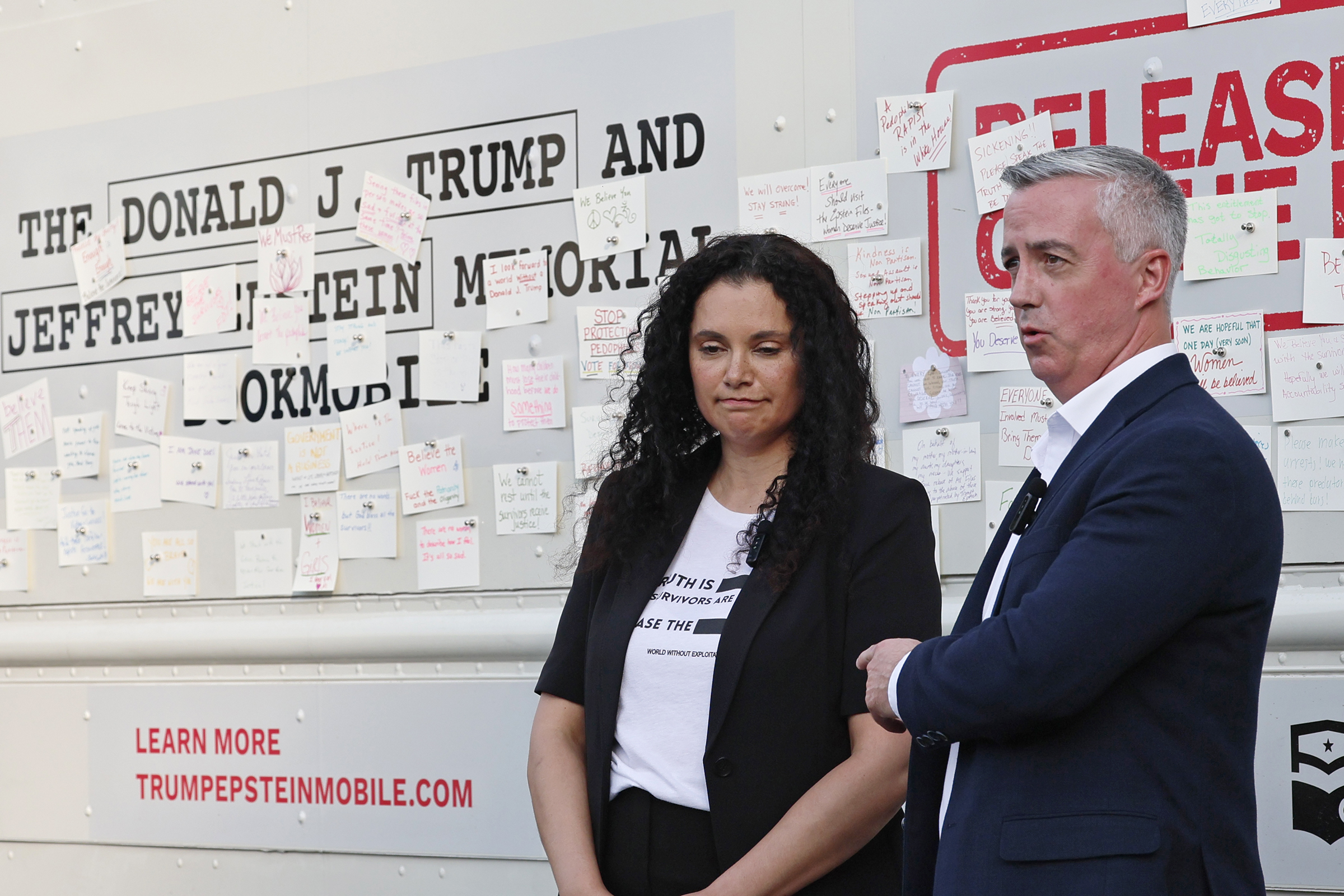
    But survivors of Epstein’s predatory behavior, including Sharlene Rochard, who appeared with Harvie Friday in Bristol, are heroes for illuminating what has been blocked from the public, the congressional candidate said.

    Harvie pledged to push “very, very hard” to release the full, unredacted files related to Epstein’s crimes if elected.

    The Bucks County commissioner is running against Republican U.S. Rep. Brian Fitzpatrick to represent the 1st Congressional District, one of two swing districts in the state that Rochard visited Friday to campaign for Democrats. She’ll be hitting another the following day.

    “These are files, but I’m in these files, and that is my life in these files,” Rochard told Harvie. “And I need justice. We need accountability, and we need some transparency, and we need people like you.”

    Rows of files were contained inside a traveling bookmobile parked in front of the Bristol waterfront. Plastered on the outside of the truck was a decades-old image of President Donald Trump with his arm around Epstein.

    Reminding voters of Trump’s history with Epstein has been a campaign tactic used by Democrats in competitive contests across the country, but Harvie said the issue of justice for survivors should go beyond partisan politics.

    “I don’t care what party they’re from,” Harvie said. “I don’t care what office they hold or held. I don’t care how much money they have. I don’t care. We need to do everything we can to protect the victims and honor them and shine a light on this part of our society.”

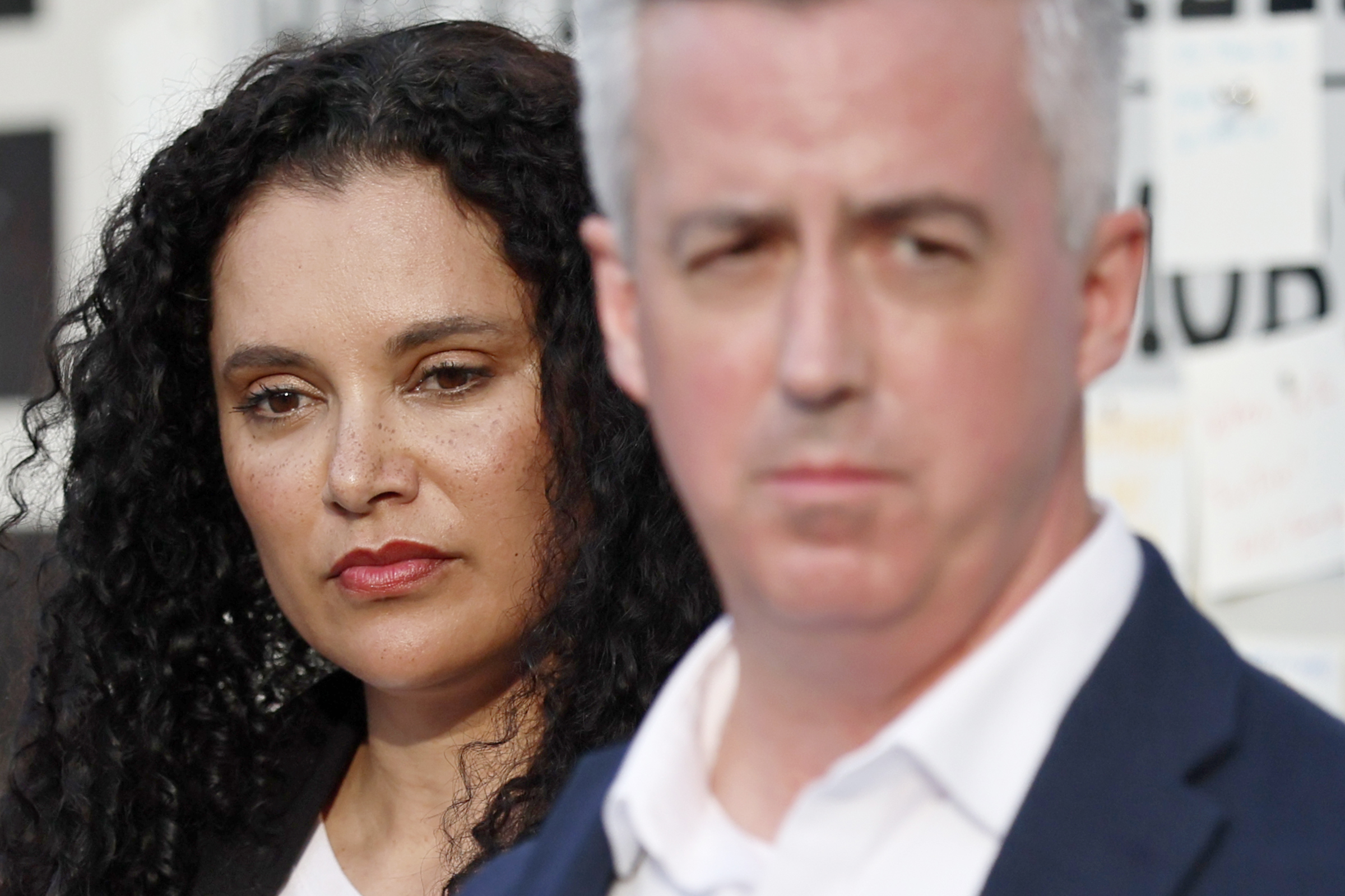
    Sharlene Rochard, a survivor of Jeffrey Epstein’s sexual trafficking and abuse, and Bob Harvie during a news conference at the Donald J. Trump and Jeffrey Epstein Memorial Bookmobile in Bristol.Elizabeth Robertson / Staff Photographer

    Earlier in the day, Rochard visited Harrisburg, where she was welcomed by Democrat Janelle Stelson, a former news anchor who promised to “take on the culture of corruption across the government” if elected over incumbent Republican U.S. Rep. Scott Perry in the 10th District.

    Rochard was slated to appear Saturday in Bethlehem with Democrat Bob Brooks, who is running against U.S. Rep. Ryan Mackenzie in the 7th District, one of the most competitive contests in the nation.

    The truck arrived in Pennsylvania one month before Election Day as Trump continues to plummet in popularity among likely voters in the state. It’s an officially nonpartisan project of Institute for Primary Facts, a nonprofit that builds public art installations, and DEFIANCE.org, a group dedicated to ending sexual exploitation of children and adults.

    Rochard, who was born in Canada, began traveling to the U.S. as a teen to model when she met Epstein and was with him in New York, Florida, and on his private island in the U.S. Virgin Islands, she said. Though she’s unable to go into details about her trafficking experience because she is involved in ongoing legal action, she now works alongside fellow survivors to advocate for the files to be exposed.

    Every Pennsylvania lawmaker voted to release the Epstein files last year, including Fitzpatrick and the other vulnerable Republican incumbents whose districts Rochard was touring this week.

    In a statement last year, Fitzpatrick said he is “unequivocally behind the victims and their family members who suffered immensely” from Epstein’s crimes.

    “He 100% stands with the victims, and will support disclosure and transparency every single time,” Heather Roberts, a spokesperson for Fitzpatrick’s campaign, said Friday.

    A couple dozen people trickled through the bookmobile during its Bristol stop, though multiple people interviewed entered with familiarity about the files and were already convinced of a strong connection between Trump and Epstein.

    “I’m dumbfounded that there are people who don’t believe the victims,” said Deb Crasnick, 69, of Langhorne.

    Sharlene Rochard, a survivor of Jeffrey Epstein’s sexual trafficking and abuse, and Bob Harvie at the Donald J. Trump and Jeffrey Epstein Memorial Bookmobile in Bristol on Friday. Elizabeth Robertson / Staff Photographer

    Crasnick found out about the event from her friend Diane Grant, 71, of Bensalem, who has been following the tour on social media. But Grant, who called the revelations disturbing, worried the tour’s effectiveness may have limits.

    “People have their mindset. Nothing said or shown in there will change it,” she said.

    And most guests — all of whom said they plan to vote for Harvie, who is polling just behind Fitzpatrick — said cost-of-living concerns rather than Epstein are their top priorities to address in this year’s election.

    “The economy keeps me up at night,” said Tracey Marshall, 57, who lives in Falls Township. “We need a change.”

    Rochard said the purpose of the tour goes beyond Election Day.

    Trump has called the Epstein case “a hoax” and said that the files that have been publicly shared are “enough,” a notion the survivor is hoping to dispel with the tour.

    “This is something that has happened to me,” Rochard said. “I’m not a Democratic hoax. I am a real person, and we need some justice.”

  • Federal court temporarily blocks Trump administration border wall in Texas’ Big Bend region

    Federal court temporarily blocks Trump administration border wall in Texas’ Big Bend region

    WASHINGTON — A federal court in Texas on Friday temporarily blocked the Trump administration from building a border wall and other infrastructure across the state’s Big Bend region, in a victory for opponents who have pushed back against a key campaign promise by President Donald Trump.

    Landowners, businesses, and environmentalists in the region have united to oppose the planned projects, which are part of a $46 billion effort by the Trump administration to line the southern border with a mix of 30-foot-tall steel walls, vehicle barriers, roads, and surveillance technology.

    Judge Kathleen Cardone said in her ruling that the plaintiffs were “likely to succeed on the merits of at least one of the claims in suit, that there is a likelihood that they will suffer serious, irreparable harm without an injunction, and that the balance of the equities and the public interest weigh in their favor.”

    U.S. Customs and Border Protection defended the project in a statement Friday.

    “We stand by our assessment and remain confident in our legal authorities to secure the border while preserving the unique landscape of the Big Bend region,” the agency said. “We are working with the Department of Justice on next steps.”

    The Department of Homeland Security did not immediately respond to a request for comment.

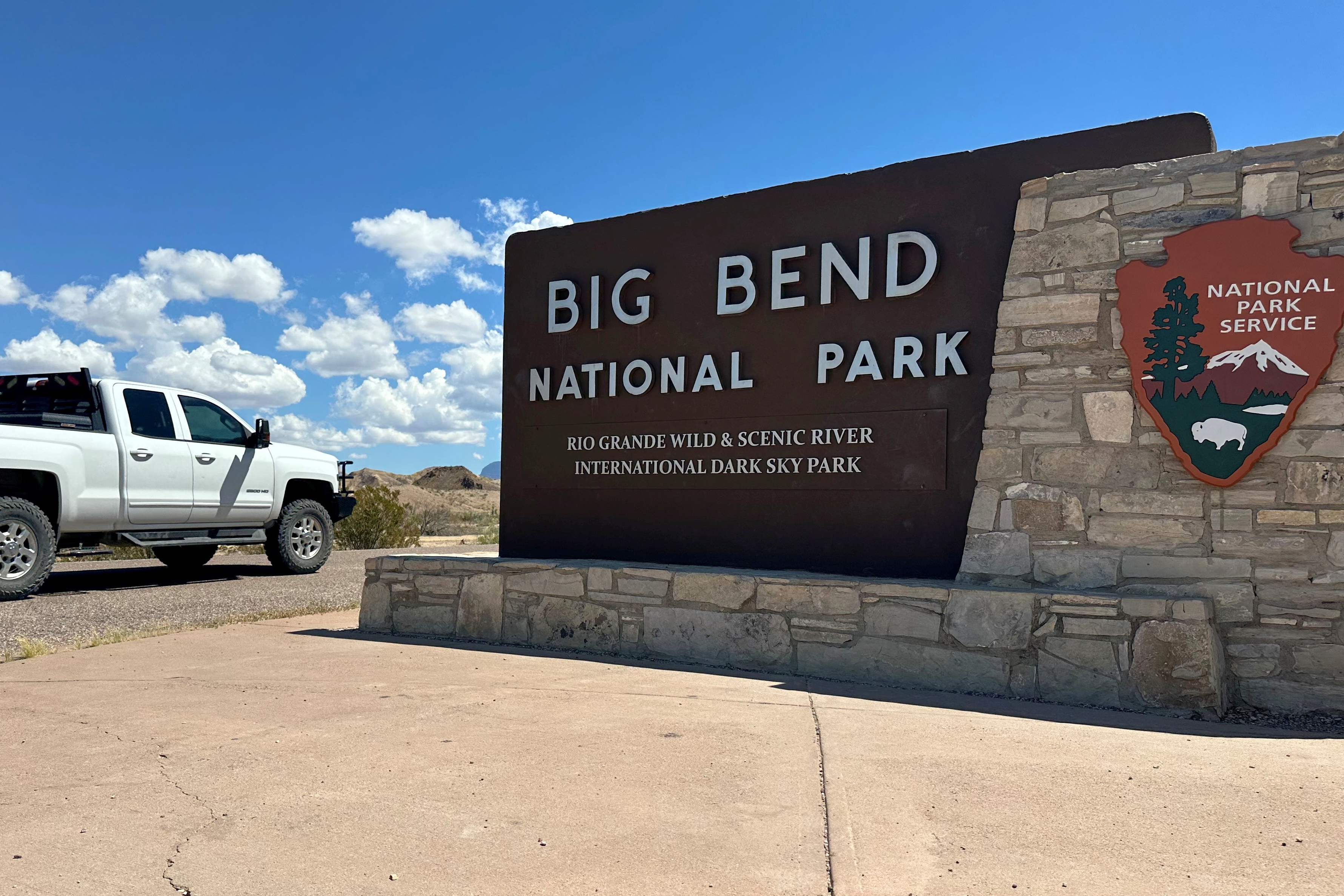
    The judge’s ruling includes Big Bend National Park, where opposition to the wall prompted the administration to briefly pause construction.

    Opponents of the border wall project have argued that the Big Bend region of Texas is so remote and the landscape so rugged that it serves as its own deterrent to illegal immigration and that the administration violated the law when it issued a swath of waivers allowing it to bypass numerous regulations in order to speed up border wall infrastructure projects.

    The lawsuit brought by an environmental organization, advocates for a historic church in Ruidosa and a river guide argued that the Department of Homeland Security was wrong to bypass regulations meant to protect the environment, culture, and archeology of regions like the Big Bend area.

    Laiken Jordahl, with the Center of Biological Diversity that brought the suit, called Cardone’s ruling a “total victory.”

    “The bulldozers are going to be sent packing until she rules on the merits,” Jordahl said. “This is such a historic day for Big Bend and for Texas and the Constitution.”

    The court’s decision comes just weeks after the administration erected the first border wall panels in the Big Bend sector in mid-September.

    The border wall project through the Big Bend sector has sparked bipartisan opposition.

    Much of the opposition has been geared around Customs and Border Protection’s plans for inside the Big Bend National Park, which is prized for its beautiful landscapes, limestone cliffs, and crystal clear night sky views.

    When bulldozers were spotted clearing land in the park in August, it sparked widespread opposition with both Republicans and Democrats calling for the administration to stop. Customs and Border Protection paused all activity there, but that pause expired on Sept. 30. The administration has said it’s reevaluating plans for the National Park but has not yet said what it will do there.

    Advocates for the park on Friday said they were happy with the judge’s ruling but called on the administration to fix the damage already done to Big Bend National Park, come to the table to meet with local residents and develop alternative plans.

    “Big Bend is no place for border barriers. It’s time for the administration to come to the table with the border communities that know Big Bend best, repair the damage from this ill-conceived project, and find new solutions,” said Tiernan Sittenfeld, National Parks Conservation Association President and CEO in a statement.

    The judge’s ruling extends to areas up and downriver from the National Park, where Customs and Border Protection has planned a range of border infrastructure projects that would largely require building across privately owned land.

    In those areas, the government has been working to obtain permission from local landowners to survey and build on their land, but in a recent court filing, it said it was prepared to refer some cases to the Justice Department where it hadn’t been able to secure permission from landowners.

  • Democrats add Zack Mullock’s challenge of Jeff Van Drew in South Jersey to their ‘districts in play’ list

    Democrats add Zack Mullock’s challenge of Jeff Van Drew in South Jersey to their ‘districts in play’ list

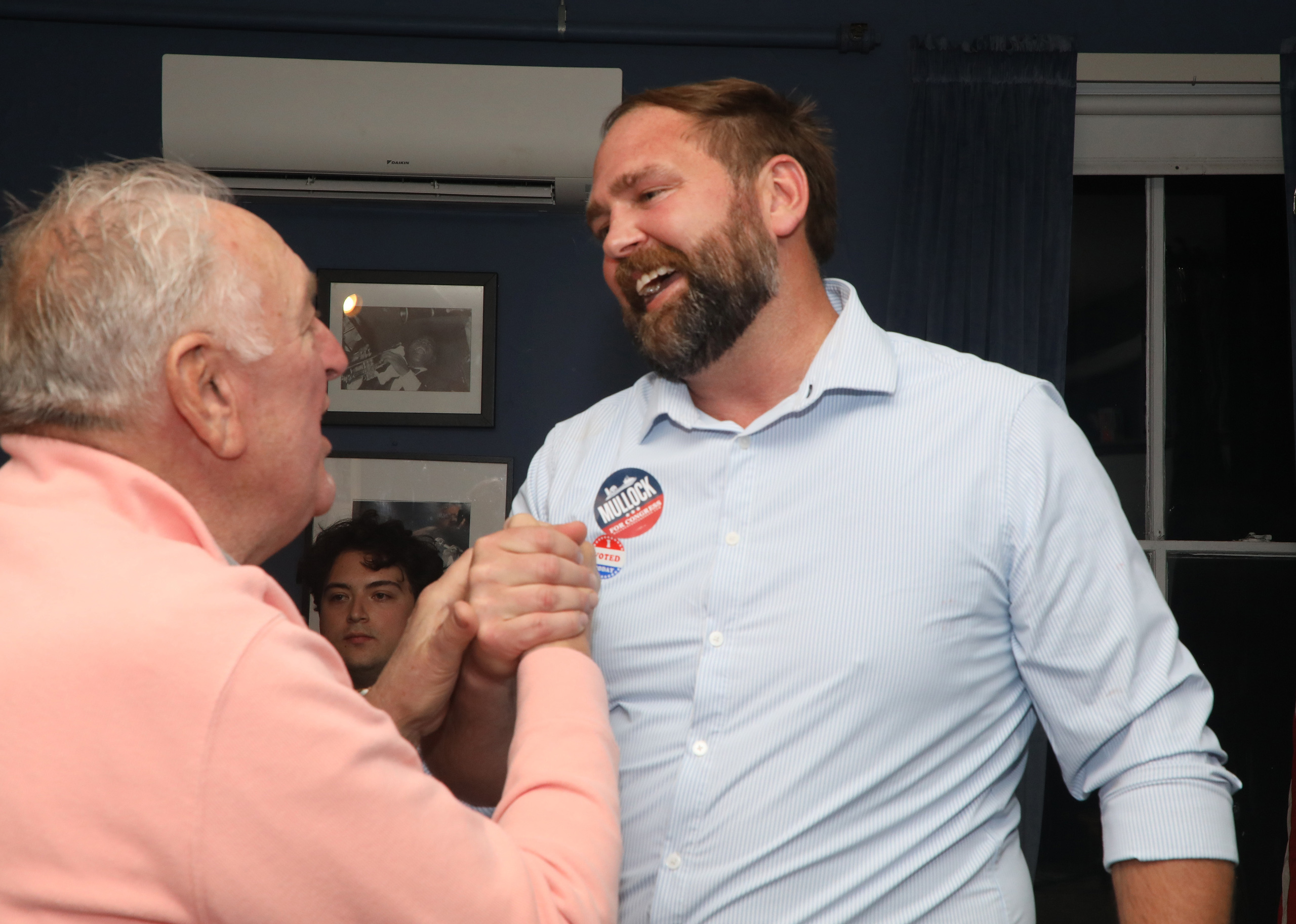
    National Democrats added U.S. Rep. Jeff Van Drew’s South Jersey district on Friday to a list of their target races to flip, signaling they’re taking Cape May Mayor Zack Mullock’s candidacy more seriously than before.

    Mullock decisively won a crowded primary in June to face Van Drew, a Cape May County Republican.

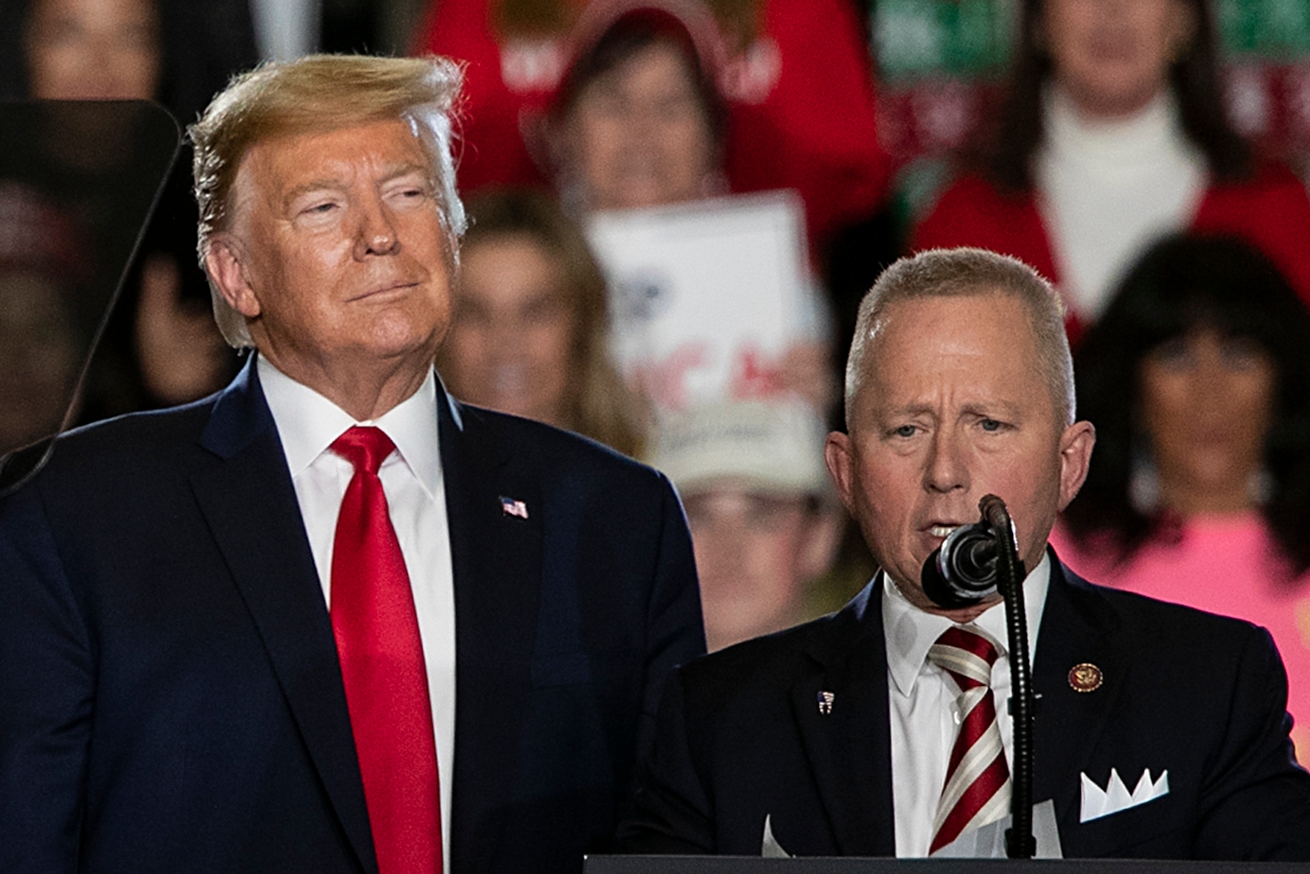
    Van Drew has comfortably warded off challengers in recent years. He was first elected as a Democrat in 2018, but then declared his loyalty to President Donald Trump and switched parties a year later.

    The designation was a long time coming for Mullock, as mail ballots have already begun to come in 32 days before the Nov. 3 election.

    Still, it came as a surprise to him. He learned on Friday he made the cut at the same time everyone else did, through social media, he said.

    “We may be purplish-red, but you know, we are not a just ‘go with whatever the president says’ kind of district,” Mullock said in a phone call. “We voted for Obama twice. We voted for Jeff Van Drew as a Democrat.”

    Local Democrats have been optimistic that Mullock is their best shot yet at ousting Van Drew, but the race had flown under the national radar. The Democratic Congressional Campaign Committee (DCCC), the party’s main campaign arm in House races, had excluded the district from its “2026 Districts in Play” map until Friday morning.

    The announcement likely indicates that the national committee will send resources to Mullock’s campaign, such as staff support, but it does not come with the funding that the most competitive “Red to Blue” seats get.

    Still, it serves as a nudge to donors to take the race seriously.

    U.S. Rep. Jeff Van Drew speaks next to President Donald Trump at a Keep America Great campaign rally in Wildwood, NJ on Tuesday, Jan. 28, 2020.HEATHER KHALIFA / Staff Photographer

    Van Drew’s district was one of eight districts across the country added to the battleground list, showing that Democrats see a blue wave as increasingly likely as Trump’s popularity suffers amid the Iran war and inflation.

    National Democrats are now targeting a total of 66 House races, which they say is nearly double as many as in 2024 when Republicans maintained control of the chamber.

    Van Drew’s campaign spokesperson Ron Filan, in a statement, said Democrats make the race seem competitive every cycle as a “fundraising ploy,” and that Van Drew “proves them wrong” each time.

    “We predicted back in June they would follow this same playbook and appreciate them proving us right,” Filan said. “The DCCC has about a third of House Republicans on one of their silly wish lists or another.”

    Van Drew has been thrusting out attack ads as Mullock campaigns across the district, showing that he sees the local mayor as a threat. Filan noted that Van Drew “doesn’t take anything for granted and will continue to campaign as hard as he always has.”

    Previously, the only seat in the Garden State on the DCCC’s battleground list was U.S. Rep. Tom Kean’s 7th District in Central Jersey, which is still the only one on the “Red to Blue” list. Kean, who was absent from Congress for months without explanation until he revealed it was for depression, is viewed as highly vulnerable as Democrat Rebecca Bennett tries to oust him.

    The nonpartisan Cook Political Report has rated the 7th District as leaning toward Democrats, but Van Drew’s “solidly Republican” seat will be a more difficult challenge to flip.

    The Cape May lawmaker’s closest challenge was in 2020 from Amy Kennedy, who still fell nearly 6 points behind him. He was reelected in 2022 by 19 points and in 2024 by 17 points.

    National Republicans cite a double-digit win for Trump in the district in 2024, but Democrats note Gov. Mikie Sherrill came within single digits of her Republican opponent Jack Ciattarelli in the district last year as she reversed red shifts in the state while consistently attacking Trump.

    Mullock said he thinks constituents are becoming disillusioned about Van Drew’s support of Trump.

    “I think people are realizing what I realized … I thought Jeff was a moderate Democrat that became a moderate Republican, and that is just not what he has become,” the Democrat said.

    The 2nd Congressional District spans several South Jersey counties, extending from the Jersey Shore to rural farmland and the Philadelphia suburbs.

    DCCC chair Suzan DelBene said in a statement that voters will send Van Drew “packing” because he “prioritizes tax breaks for the wealthiest few while gutting healthcare and raising costs for his constituents.”

    The National Republican Campaign Committee (NRCC), meanwhile, is focused on defending Kean’s district, the only Jersey seat on its “Patriots” list.

    NRCC spokesperson Maureen O’Toole said in a statement that “Democrats are living in a fantasy.”

    “New Jersey families know Jeff Van Drew delivers results, they trust him, and they’ll proudly reelect him in November,” she said.

  • Trump expected to name intelligence chief Jay Clayton as new AI czar

    Trump expected to name intelligence chief Jay Clayton as new AI czar

    President Donald Trump is expected to name spy chief Jay Clayton as his new top adviser on artificial intelligence, according to three people familiar with the decision, a move that cements the administration’s handling of the new technology as a matter of national security.

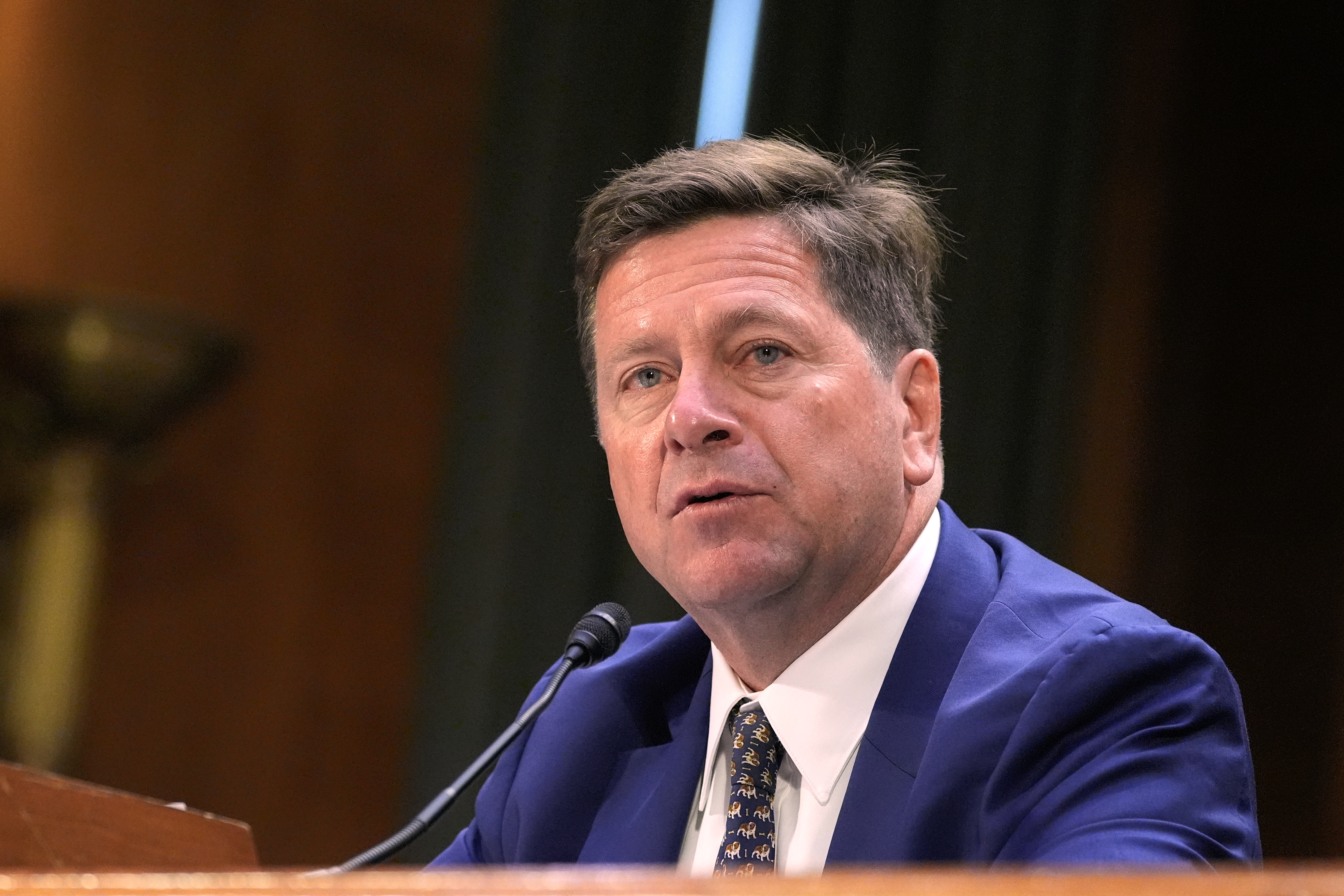
    Clayton, a former U.S. attorney and Securities and Exchange Commission chairman, was confirmed as the leader the Office of the Director of National Intelligence in July. He is expected to continue to hold that role, one of the people said. All three individuals spoke on the condition of anonymity to describe a personnel move that has yet to be publicly announced.

    CBS News first reported that Trump was expected to choose Clayton for the position.

    The appointment comes as the Trump administration recalibrates its approach to AI. The previous czar, the investor David Sacks, promoted a policy aimed at allowing the technology to develop as fast as possible. But in the months since Sacks left his post in March, officials have increasingly been grappling with cybersecurity threats posed by the latest generation of models and the danger posed by AI agents going rogue online. Sacks has continued to influence thinking within the administration as an informal adviser outside of the government and as co-chair of the President’s Council of Advisors on Science and Technology. Sacks and Clayton have a close relationship, according to one of the people briefed on the upcoming announcement.

    A White House official said any personnel moves would be announced by the president. “Any reporting until then is baseless speculation,” the official said.

    The administration has resisted calls in recent weeks by some in the industry and on Capitol Hill to slow down the pace of development and adopt new regulations. But on Tuesday it convened tech executives for a White House lunch that culminated in the leading AI companies signing a promise to develop new systems safely and bring in outside oversight firms. The following day, a Federal Trade Commission official said the panel had opened an investigation into AI companies Anthropic and OpenAI. (The Washington Post has a content partnership with OpenAI.)

    Joel Thayer, a senior adviser for technology at the America First Policy Institute, a Trump-aligned think tank, said the developments showed how the administration’s handling of AI companies was “maturing.”

    “These guys are under watch,” Thayer said. “The government has a spotlight on them.”

    The industry executives’ pledge is voluntary and amounts to what Trump called “self-policing.” But it won the backing of figures who have bitterly clashed over how serious of a risk AI poses. Sacks, who attended the lunch, endorsed it. So did Jacob Coxon, a former Anthropic researcher who resigned last month, saying the technology could wipe out humanity and triggering a wave of panic in Washington.

    The agreement means Clayton will step into his new role at a time of relative calm.

    “Super intelligence is a national security issue,” Clayton said in a CNBC interview the day after the lunch, using Trump’s preferred name for AI. “That was something that was recognized yesterday by not just the industry leaders, but everybody in the room. The commitment there to the American people, and the safety and security of the American people was palpable throughout the meeting.”

    Trump nominated Clayton, a loyal ally and regular golf partner of the president’s, to lead the intelligence office in June. Many Senate Democrats initially said they supported the choice. But he refused in his confirmation hearing to say definitively that Joe Biden had won the 2020 election, and the final vote fell along party lines.

    The AI role will not require Senate confirmation.

    The shifting thinking that led to Clayton’s appointment began months ago, when Anthropic said it had developed a new model called Mythos that it deemed too dangerous to publicly release. The company said it had new abilities to find vulnerabilities in computer code and help hackers exploit them.

    Officials scrambled to understand the risks to government systems and critical sectors of the economy. Driven by alarm among banking industry leaders, Treasury Secretary Scott Bessent played a key role in shaping the administration’s response. Last week, Trump batted down reports that Bessent was in line to be the new AI czar.

    In May, the White House settled on issuing an executive order calling on leading AI companies to voluntarily share their latest systems with the government ahead of their release, giving federal experts a chance to weigh security risks. Despite no longer holding an official government position, Sacks continued to wield influence and made a last-minute call to Trump that caused the order to be delayed and revised.

    But even after the order was signed in June, new dangers continued to emerge. The following month, ChatGPT maker OpenAI disclosed that a swarm of agents created by its systems had broken free and breached another AI company. Other firms said they had suffered similar breakouts.

    Then came Coxon’s resignation in September, which reignited a long-simmering debate in AI circles about whether a sufficiently powerful version of the technology would bring about humanity’s downfall.

    Trump dismissed the fears a “hoax” in fiery social media posts. But he later said he would name a new czar and create an “AI Force.” The White House has not detailed what the force will do, but in an interview with Time magazine published this week, Trump described it as “a group of very smart people that understand it, who will be advising me.”

  • Kennedy Center Honors will move to Capital One Arena as closure drags on

    Kennedy Center Honors will move to Capital One Arena as closure drags on

    The Kennedy Center Honors will take place Dec. 7 at the Capital One Arena, the center announced Friday, breaking tradition by holding the tribute ceremony off-campus as a battle rages over its closure.

    Most other details about the honors — namely, who will receive the awards and who will broadcast the show — remain a mystery, months after they would ordinarily be public.

    A Kennedy Center spokesperson said these will be announced at a later date.

    The annual black-tie gala and television broadcast is the center’s flagship program and usually its largest fundraising event. It generally takes place on a weekend in December, during which five honorees are recognized by the American government for their contributions to the arts. They traditionally received medallions, met the president at the White House and gave speeches during a dinner at the State Department before attending a star-studded Sunday ceremony in the Kennedy Center’s Opera House.

    The honorees — which have included Leonard Bernstein, Queen Latifah, George Clooney, Led Zeppelin, Gladys Knight, Billy Crystal, and the Grateful Dead, to name a few of the almost 270 honorees since its inception in 1978 — are usually announced in midsummer.

    Last year, amid turmoil from President Donald Trump’s takeover of the center and remake of its board, the announcement came late, in mid-August. The year before, it arrived in July along with both the broadcast and ceremony date.

    It is October, and there’s no other word on the details.

    We don’t know who is in the 49th class of honorees or what kind of crowd will greet them: The program’s venue, Capital One Arena, which can hold roughly 20,000 people at max capacity, dwarfs the 2,347 seats of the center’s Opera House.

    We don’t know who will broadcast it. During a board meeting last year, Trump floated the idea of having networks bid to air the show, which has been broadcast on CBS since its debut. (Last year’s remained on CBS.)

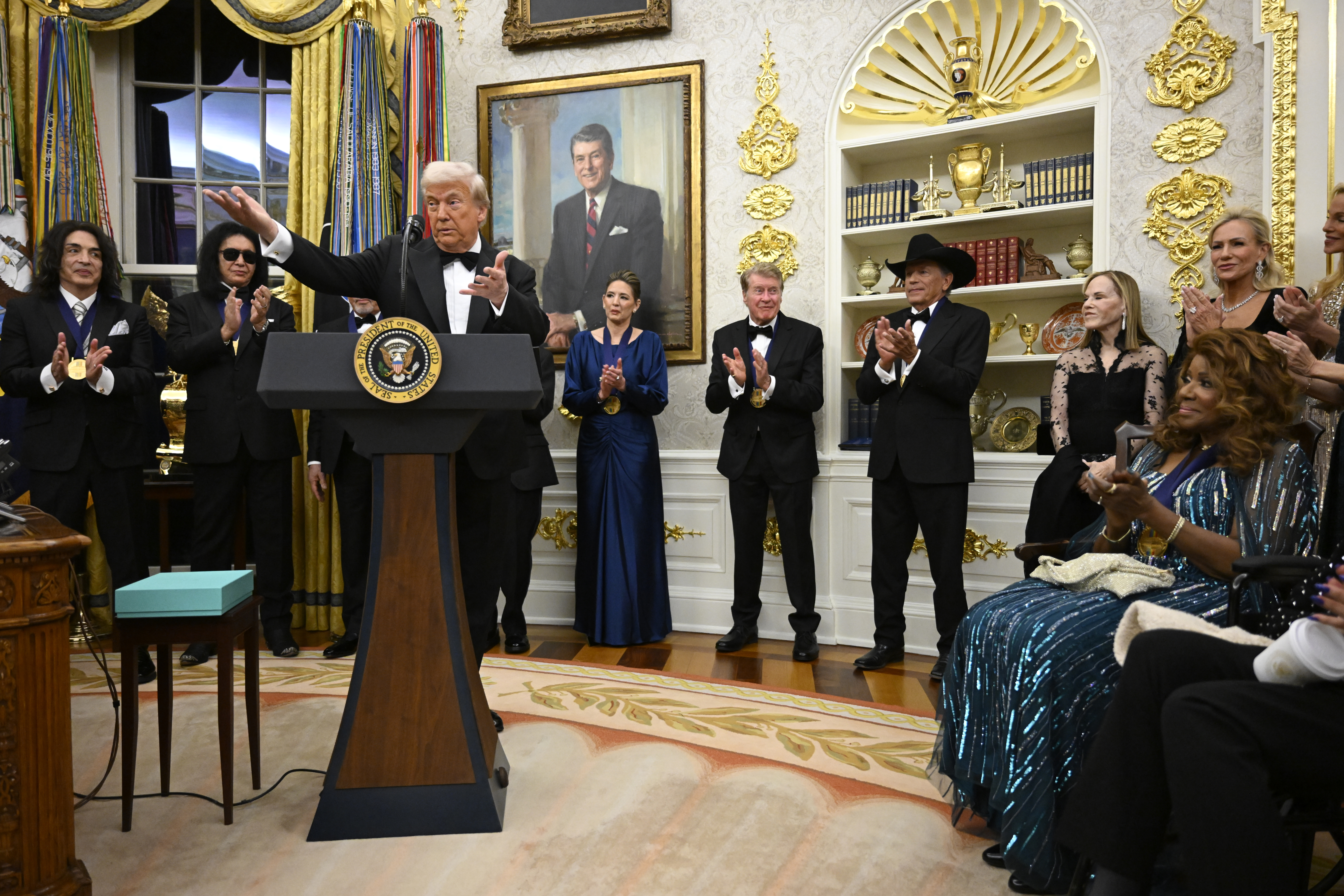
    Finally, we don’t know who would host it. Trump, who avoided the honors in his first term, famously played the role himself at last year’s ceremony, something a president had never before done. He also said he was “about 98 percent involved” in picking the honorees — Michael Crawford, Gloria Gaynor, Kiss, Sylvester Stallone, and George Strait — which are generally chosen by committee.

    Asked for details this week, the White House referred us to the Kennedy Center, which provided the announcement.

    The center had maintained that the honors, along with the Mark Twain Prize, would continue somewhere off-site during the building’s two-year closure for repairs.

    “It will definitely go forward,” Richard Grenell told WTOP in February, before he departed as president of the Kennedy Center. At the time, he predicted “it will probably just be in a smaller venue, which just means ticket demand will be even higher.”

    That full closure hasn’t started yet, according to the center. Instead, the main building is closed temporarily, leaders say, while they check on the building’s safety. Those checks could take another week or two, according to a Wednesday staff email reviewed by the Washington Post.

    But “this is an assessment timeline,” the email read, “not a reopening date.”

  • Philly’s Malcolm Kenyatta calls for Republican Aaron Bernstine to resign over alleged homophobic slur

    Philly’s Malcolm Kenyatta calls for Republican Aaron Bernstine to resign over alleged homophobic slur

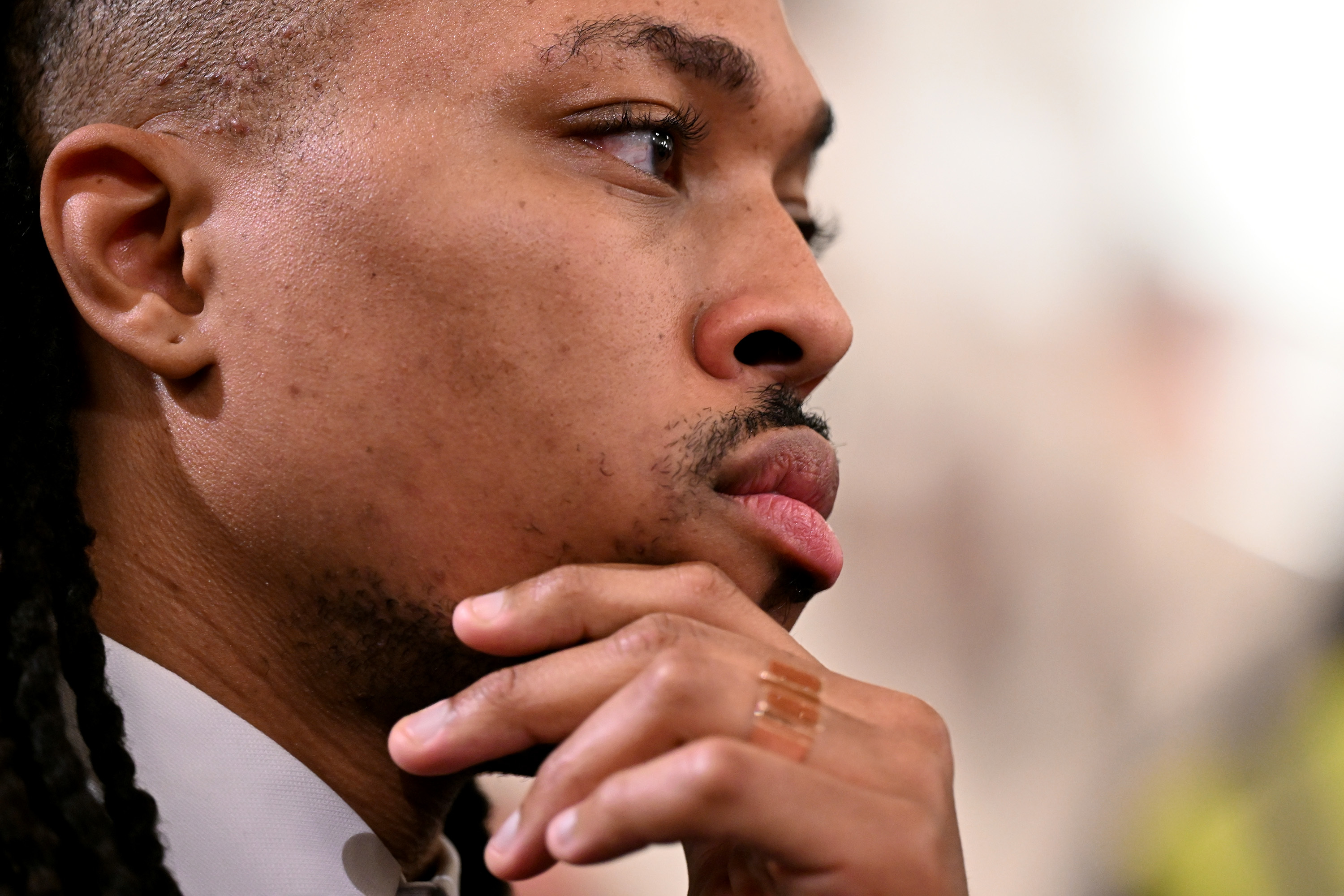
    Democratic State Rep. Malcolm Kenyatta on Friday called for Republican Rep. Aaron Bernstine to resign from the Pennsylvania House after he reportedly used a homophobic slur against Kenyatta, who is gay, earlier this week.

    “Pennsylvania is better and bigger than this,” Kenyatta, who represents Philadelphia, said in a video message posted to X Friday.

    He added that he’s calling for Bernstine, who represents portions of Butler and Lawrence Counties in Western Pennsylvania, to step down “not because I’m angry at him or because he hurt my feelings. It’s because his behavior falls so far beneath what it must mean to be a member of the House of Representatives.”

    “And when you use language that demonizes people, that belittles people, it’s never about one person. It’s indicative of what you will do to anybody, and what he’d say about any Pennsylvanian,” Kenyatta said.

    Along with the alleged slur, Bernstine also allegedly said in a Harrisburg bar earlier in the week that Kenyatta had lost weight, which Bernstine reportedly attributed to AIDS, according to PennLive.

    Kenyatta was not present when the alleged remarks were made.

    In his post, Kenyatta said he was “deeply grateful” to leaders of the Pennsylvania Building and Construction Trades Council “who stood up in real time.”

    Michael Ford, the organization’s secretary/treasurer, overheard Bernstine’s alleged remarks and told PennLive, according to the news organization. Ford didn’t respond to requests for comment.

    Addressing the incident in a statement Thursday, Bernstine said, “The allegations attributed to me are false. This is a political attack.”

    After news broke, various legislative groups spoke out against Bernstine, including the Democratic National Committee, for which Kenyatta serves as vice chair.

    “Hateful, homophobic, and racist attacks like this have absolutely no place in our politics, our communities, or our country,” DNC chair Ken Martin said in a statement.

    Several Democratic lawmakers called for Berstine’s resignation. House Democratic leadership said it was “exploring potential next steps” and called on GOP leadership to hold Berstine accountable.

    The Pennsylvania House Republican Caucus called the reported conduct by Bernstine, one of its members, “troubling,” and said it “does not comport with the values and professionalism Pennsylvanians expect of their state lawmakers.”

    Bernstine has been the subject of controversy in the past.

    In 2020, House Republican leaders called for Bernstine’s resignation after videos of him encouraging his young son to smoke and curse surfaced. Soon after, Bernstine was reelected, and the demands quieted.

    Three years earlier, in the midst of Black Lives Matter demonstrations in which motorists were blocked, Bernstine posted on X, “If anyone EVER tries to stop my car on a highway with negative intentions… I will not stop under any conditions.”

    On Friday, in concluding his remarks on X, Kenyatta suggested it’s time to move on.

    “Let’s all in united voice demand better, demand more, and then let’s get back to work on the serious stuff,” he said.