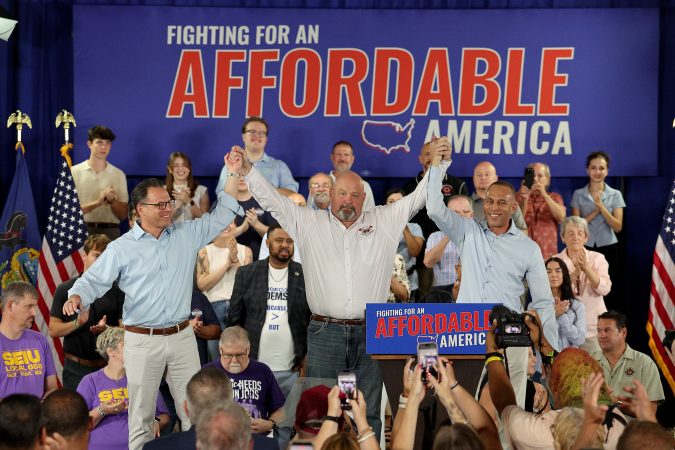
With 100 days until Election Day in Pennsylvania and across the country, top Democratic leaders rallied in the Lehigh Valley Sunday to support a Democrat they hope will defeat the Republican incumbent and help take control of Congress during the midterm elections this November.
Pennsylvania Gov. Josh Shapiro and U.S. House Minority Leader Hakeem Jeffries stood on a union hall stage with Democrat Bob Brooks, a firefighter and union leader who is running for a House seat in a key Pennsylvania swing district, in front of a crowd of about 150 people.
“We have just 100 days until the midterm election, 100 days to change direction in this country. This is no longer a marathon; it’s a sprint,” Jeffries said. “And there’s no better place to begin that sprint than right here in the steelworkers union hall in Bethlehem.”
Jeffries is poised to become the speaker of the House — and the first Black speaker — if his party wins control in the midterms. Democrats see winning Pennsylvania’s 7th Congressional District as a critical step in making Jeffries’ ascension happen, and taking action on a range of issues, from lowering gas prices to banning stock trading among members of Congress.
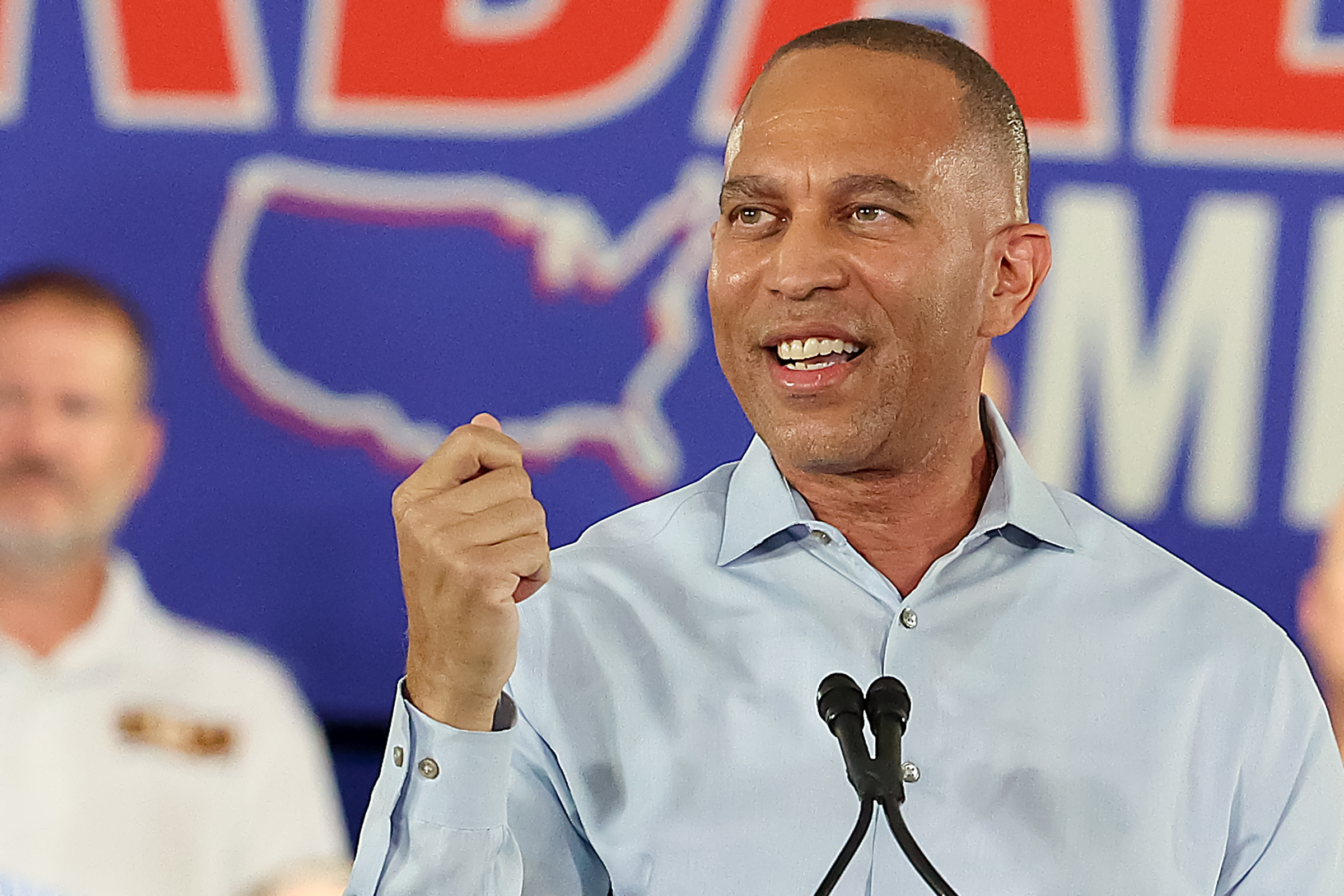
House Minority Leader Hakeem Jeffries addresses the audience during a rally for congressional candidate Bob Brooks at the United Steelworkers Union Hall in Bethlehem, Pa., on Sunday, July 26, 2026.David Maialetti / Staff Photographer
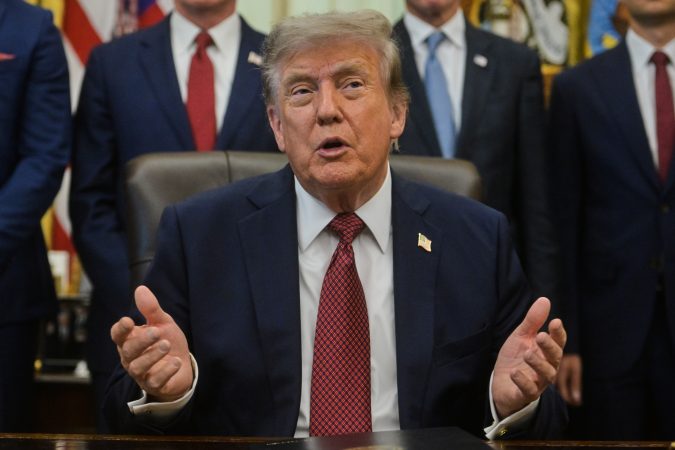
The visit comes as Republicans seek to bolster GOP Rep. Ryan Mackenzie, the district’s vulnerable freshman, who won his seat by just 1 percentage point in 2024, when President Donald Trump defeated Democrat Kamala Harris statewide. Trump visited the district in June, giving a speech about manufacturing, and a rambling range of other subjects, at the Macungie-based Mack Trucks facility — though he took nearly an hour to even mention Mackenzie by name.
Mackenzie has a financial edge over Brooks. He has raised a total of nearly $4.5 million, compared to Brooks’ $2.3 million. But Brooks outdid Mackenzie handily between April 30 and June 30, after Brooks’ first-place finish in the robust and competitive Democratic primary. He added roughly $1.2 million to his stockpile during that time period, while Mackenzie only took in about $631,000.
During the primary, Brooks was able to attract support from many ideological corners, including Shapiro, former Transportation Secretary Pete Buttigieg, and U.S. Sens. Bernie Sanders (Ind., Vt.) and Elizabeth Warren (D., Mass.), who saw him as an unpolished outsider committed to the party’s values.
Brooks, who dropped out of college after a baseball injury, worked as a bartender and beer truck driver in the Lehigh Valley before later becoming a firefighter in Bethlehem. He also mowed lawns and plowed snow on the side.
After his retirement from the fire department after more than 20 years of service, Brooks continues to serve as the president of the Pennsylvania Professional Fire Fighters Association, where he’s represented about 8,000 firefighters across the state since 2021.
“I’ve lived in public housing. I’ve relied on food stamps when times were hard. I’ve had to choose between paying the medical bills and paying the mortgage. I’ve worked hard, and I made it out of a fire. I’m proud to be standing here today,” Brooks said.
“Now I want to take that experience with me to the halls of Congress, so we can actually pass laws that work for working people,” he said.
His first foray into politics began with a lobbying effort to lower the standards for first responders to have post-traumatic stress injuries covered by workers’ compensation, legislation that Shapiro signed in 2024.
Shapiro, the first-term Democrat, has also been using his broad popularity to support Democratic candidates downballot in competitive elections across Pennsylvania while he campaigns for his own gubernatorial reelection bid.
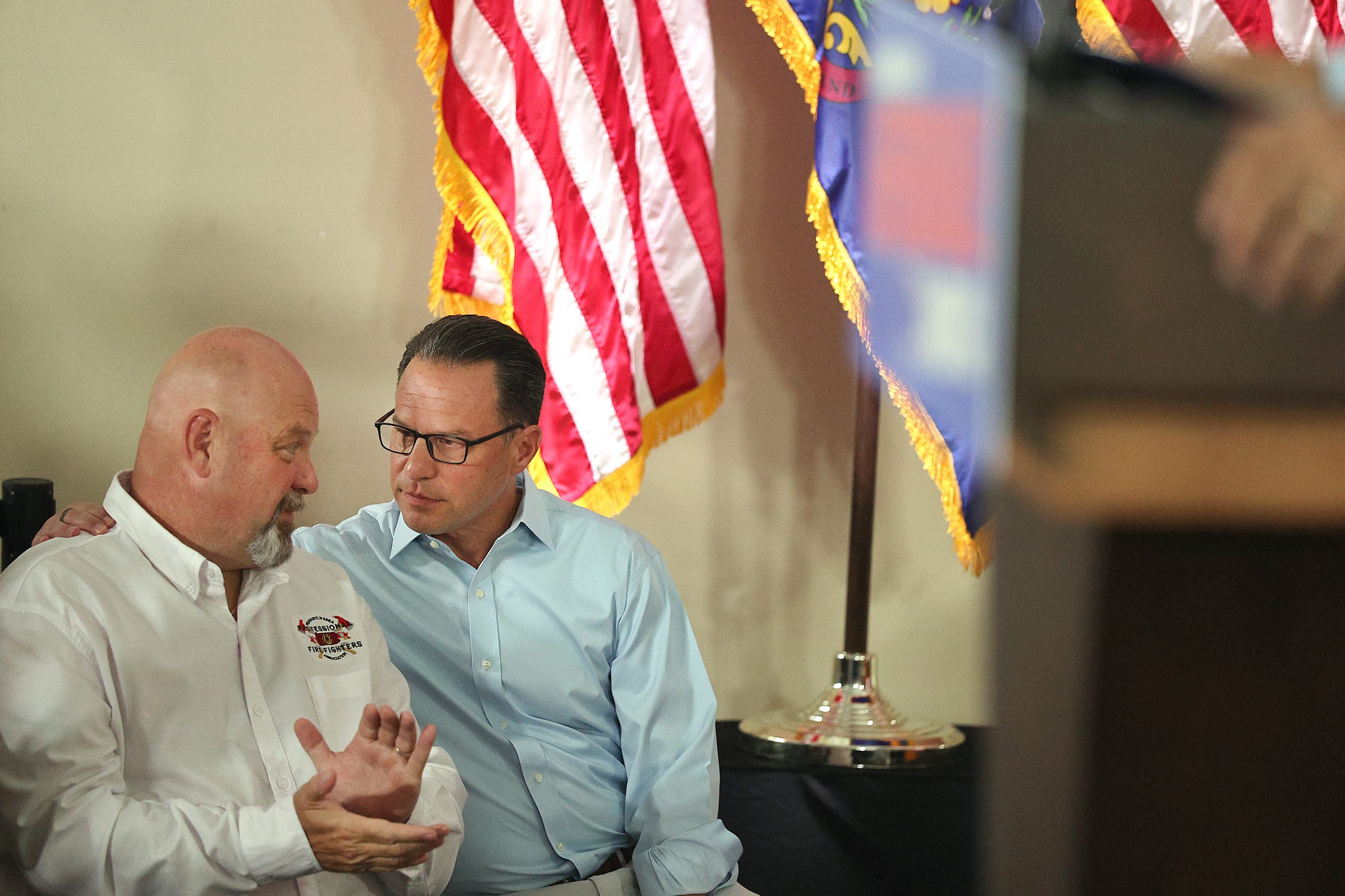
Congressional candidate Bob Brooks (left) and Gov. Josh Shapiro talk during a rally at the United Steelworkers Union Hall in Bethlehem Sunday.David Maialetti / Staff Photographer
Last weekend near Harrisburg, Shapiro joined Pennsylvania Democrats to launch a campaign for candidates in key state Senate seats and congressional districts, both of which he hopes to flip to Democrats as a show of his political influence ahead of a widely expected run for the presidency in 2028. He also boosted former local TV anchor Janelle Stelson, who is challenging Republican U.S. Rep. Scott Perry for the second time in the Harrisburg-based 10th District.
“One reason why we need Bob Brooks in the Congress of the United States is he’s a firefighter, and firefighters are always there for you,” Shapiro said, who referenced his gratitude to firefighters after an arsonist attacked his residence last year.
“When you spend a lifetime being there for people when they’re young, being there for people when they are hurting, being there for people when they need help …. You have compassion in your heart. You’ve got a servant’s heart, and that’s the kind of people we need in the Congress of the United States,” he said.
Shapiro’s campaign said it has given more than $3.3 million to the state party and its election effort since the fall of 2025, as part of his signature effort to “put a check on Donald Trump’s chaos, cruelty, and corruption.”
Brooks’ and Stelson’s races are two of the four most competitive congressional contests in Pennsylvania this year. Republican U.S. Rep. Bob Bresnahan is facing a challenge from Scranton Mayor Paige Cognetti in the 8th District, and Republican U.S. Rep. Brian Fitzpatrick is running against Bucks County Commissioner Bob Harvie in the 1st District.
Republicans are fighting to keep the competitive seats in GOP control. Mackenzie’s campaign manager blasted Brooks’ “dumpster fire candidacy” ahead of Sunday’s event.
“At every step of his career, Bob Brooks has put himself first, his politician buddies next, and his own workers last,” Andres Weller said, in a statement.
Among other news, Weller mentioned a leaked audio recording of Brooks that alleged Shapiro pushed his union to support the GOP candidate for Pennsylvania treasurer in the 2024 election.
Shapiro has denounced claims that he dissuaded the state firefighter’s union from backing the then-Democratic nominee Erin McClelland because of a personal grudge, and Brooks later said he misspoke in the recording.
All three men blasted Mackenzie for supporting cuts to Medicaid, as part of Trump’s 2025 One Big Beautiful Bill Act.
Jeffries, who had last appeared in Pennsylvania on July 2 to commemorate the 250th anniversary of the vote for the Declaration of Independence, said if Democrats take the majority, they will also tackle “rampant corruption” and make life more affordable.
“As House Democrats, we will build an economy that works for everyday Americans and drive down the high cost of living in every possible area because life is too expensive,” he said. “That means the grocery store, the gas pump, and your housing costs. It also means that you should be able to go see a doctor and get the care that you need.”
Republican pollsters and political groups are raising the alarm that their party faces a listless and demotivated base ahead of November’s midterm elections.
A raft of discouraging data from polling, door knocking, and focus groups is unsettling Republicans as their party heads into a midterm election season that would be challenging no matter what, given President Donald Trump’s low standing in polls and the fact that the party in control in Washington almost always loses seats.
The lack of enthusiasm is reaching deep into Republicans’ loyal base, spreading to the party’s most consistent voters — who have shown up to vote in all of the past four primaries and general elections, according to an analysis done by Americans for Prosperity Action, a conservative super PAC that was founded by billionaire Charles Koch. This new issue with the base adds to the party’s more enduring problem of turning out less-frequent voters who support Trump but often skip midterm elections.
About 1 in 5 reliable Republican base voters are at risk this November, according to Nathan Nascimento, executive director at AFP Action. Those voters in Iowa, Ohio, North Carolina, Montana, New Hampshire, and Michigan are either saying they may stay home or are weighing voting for Democrats, according to their data, which is based on polling and extensive efforts to engage targeted Republican voters by knocking on their doors. The voters are primarily worried about inflation and the economy.
“This is a big chunk,” Nascimento said. “This is a scary number.”
The group has found that reaching these voters at the door usually moves them toward Republican candidates — or at least away from Democratic ones and toward undecided, he said.
The 20% of Republican base voters the group sees this issue with does not take into account low-propensity conservative voters who tend to turn out in general election years to support Trump but skip other elections. Motivating those Trump voters is a separate issue Republicans face in November.
“We have a high-propensity base problem,” Nascimento said.
Washington Post and Ipsos polling shows that Democrats have a 10-percentage-point advantage over Republicans among voters who say they are absolutely certain to vote in November. If that number doesn’t narrow, it could lead to a decisive advantage for Democrats, even though overall they lead by just three percentage points over Republicans on a generic ballot.
Mitchell Brown, a Republican pollster at the firm Cygnal, said Democrats are as enthusiastic about voting as they were at the same time ahead of the 2018 midterm elections, when they swept back into power in the House. But Republicans are far less excited to vote at this point than they were then, posing an issue for the party.
“It’s not that the Democrats are outperforming a topline number that we’d expect, it’s that Republicans are underperforming,” Brown said.
He pinpointed men under 40 as the group that is most at risk among Republican voters, saying they have concerns about the economy and prices. This group proved pivotal to Trump’s 2024 electoral victory, which included a sweep of some of the same battleground states holding critical elections this year.
The decline in support among those voters may change closer to the elections, once more people tune in, Republican strategists stressed. And Trump’s unprecedented redistricting efforts have also sought to give the party a structural advantage that could mitigate GOP losses.
“Republicans are united, on offense, and armed with our largest war chest in party history because voters are energized and understand what’s at stake in November’s election,” said Natalie Baldassarre, a spokesperson for the Republican National Committee, in a statement.
This dynamic is playing out in the red state of Iowa, where Republicans face open races for governor and a Senate seat that polling shows are surprisingly competitive. A recent door-knocking session in the Des Moines suburb of Urbandale with AFP Action turned up voters critical of the war in Iran and high inflation, with a handful saying they planned to support Democrats in the fall.
In western Iowa, three-time Trump voter Lance Sulentic, a resident of Iowa’s rural Harrison County, described the past three presidential elections as “the worst three mistakes I’ve ever made in my life,” saying that the president has failed to fulfill his campaign promises. Higher gas prices have been costing him an extra $300 to $500 every month to ride his motorcycle, he said.
“We voted for Trump, and he did the opposite of what he said he was going to do,” said Sulentic, a 56-year-old retired insurance agent. “Gas prices were going to be two dollars, food was going to be cheaper, energy prices was going to be in half, we were going to get two rebate checks to the American people, and we weren’t going to have any new wars, and we were going to build a wall and deport 30 million illegal aliens, and he did none of it.”
He said he would either sit out this year’s election or vote for Democrats.
Republican lawmakers are worried about such comments as their party remains mired in internal disagreements in Washington that have hampered them from passing signature agenda items that could motivate core supporters.
“We need to do something to re-energize our base,” said Sen. Ron Johnson (R., Wis.). Johnson, who does not face reelection until 2028, has triumphed in tough races in his closely divided state.
Johnson said GOP base voters may think the lawmakers “haven’t been … trying hard enough.” The party has been unable to pass a law to require ID to vote and proof of citizenship to register to vote called the Save America Act, which Trump has lambasted them for. They also have done little to tackle cost-of-living issues since the bill extending tax cuts in 2025.
A spokesperson for Trump, Abigail Jackson, called the voting legislation a top priority but added that the administration “continues to deliver on the President’s affordability agenda by lowering drug prices, reshoring American jobs, lowering gas prices, and more.”
Other senators have pressed Trump to use his large platform and $400 million MAGA Inc. war chest to activate lower-propensity voters. Trump has had far more success motivating supporters when he is on the ballot.
Sen. Kevin Cramer (R., N.D.) said he told the president in the Oval Office last week that Trump is the key to turning out his voters.
“Well, they will [turn out] if you pass the Save America Act,” Trump retorted, according to Cramer.
The White House is hopeful the Republican Party’s planned midterm convention in September in Texas will help juice enthusiasm among the base as well.
Sen. Thom Tillis (R., N.C.), who declined to run for reelection in his purple state, said he believes the traditional Republican base will ultimately turn out in November. But he fears the party’s brand has been damaged among moderates by the economy and inflation, and that the Iran war is becoming an additional political drag. Low-propensity Trump voters need to turn out to close that gap, he said.
“The question is whether the coalition he has that’s unique to the president, if he can mobilize them to come out and vote for others,” Tillis said.
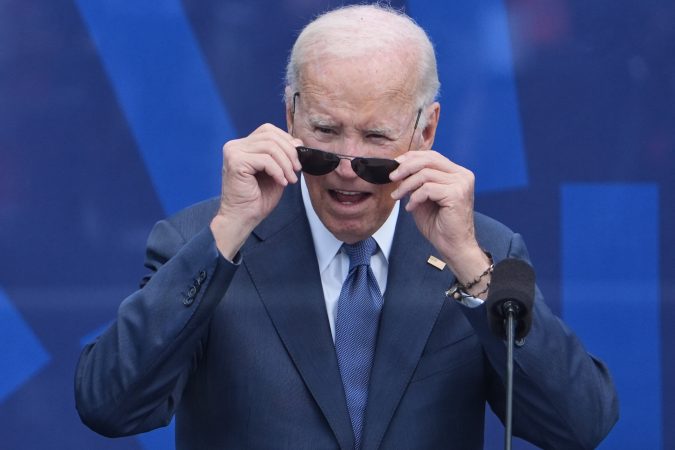
Eighteen months after leaving the White House, the 83-year-old former president moves within a narrowed circle of relatives, old friends, and longtime aides as he undergoes treatment for metastatic cancer.
The treatment appears to be working, according to five former aides and others close to Biden, many of whom spoke on the condition of anonymity to candidly discuss his health and private life. But the disease — and the toll of treating it — has left him visibly frail.
Those around Biden describe a post-presidency constrained by illness with his days increasingly organized around treatment, family, and efforts to shape his legacy.
Unlike some recent predecessors, Biden has maintained a limited public schedule, has yet to build a sprawling philanthropic or policy operation, and has struggled to raise money for a presidential library, leaving him with fewer avenues to influence how his presidency is remembered.
That frailty is likely to become harder to keep private this fall, when Biden begins promoting a memoir scheduled for publication on Nov. 17, two weeks after the midterm elections. The timing has unsettled some friends and former advisers, who worry not only about Biden’s well-being, but also about how much his visible health struggle could revive the bitter arguments of 2024 just as Democrats are trying to make the election a referendum on President Donald Trump.
Trump has repeatedly mocked Biden’s age and acuity and replaced his portrait along a White House colonnade with an image of an autopen, a visual taunt built on the unsupported allegation that aides used the device to exercise presidential authority for a debilitated commander in chief.
Those close to Biden bristle at the way his illness and physical decline have become part of his critics’ case against him and his party.
Hunter Biden gave voice to the family’s frustration last month after a critic attacked his father’s cancer diagnosis on social media.
“Listen man — I understand if you don’t like my Dad’s politics and you hate me because you believe everything Fox News has told you,” he wrote. “I’m fine with that, but my Dad has cancer. How is that an issue you want to attack. What sickness is in you that makes that fair game?”
The Biden health debate may soon be reignited. On Tuesday, a federal appeals court cleared the way for the Heritage Foundation, a conservative think tank, to obtain redacted transcripts and audio recordings that were among the evidence a special prosecutor used to portray Biden as an “elderly man with a poor memory.”
Questions about Biden’s age, stamina, and mental acuity shadowed much of his presidency and eventually overwhelmed his campaign for a second term.
The health concerns became an acute political crisis after Biden’s June 27, 2024, debate against Donald Trump. Speaking in a weak, hoarse voice, Biden repeatedly lost his train of thought, struggled to complete answers and at times appeared unable to press a forceful case against his opponent.
Biden’s performance intensified doubts among Democratic lawmakers, donors, and voters about both his ability to campaign and his capacity to serve through January 2029. Biden initially rejected calls to withdraw, attributing the performance to a cold, exhaustion, and a bad night. But after more than three weeks of mounting pressure, he ended his reelection bid on July 21.
Biden’s planned return to the spotlight presents an awkward political challenge for Democrats. Many remain personally fond of Biden, grateful for the accomplishments of his presidency, and sympathetic to a man battling a serious illness. But they are also trying to distance themselves from a 2024 campaign in which questions about his age, health, and decision to seek reelection damaged public trust and divided the party.
“President Biden has every right to tell his story. But Democratic candidates are already working their tails off to overcome the political damage he left behind,” said Sawyer Hackett, a Democratic strategist who worked on presidential campaigns for Barack Obama and Hillary Clinton. “The best thing Biden could do to help that effort is to get as far away from the spotlight as possible.”
In May 2025, four months after leaving the White House, Biden was diagnosed with an aggressive form of prostate cancer that had spread to his bones. He is undergoing treatment for the disease, which can be managed but is not considered curable.
In media interviews, former first lady Jill Biden has described her husband’s diagnosis as deeply unexpected, saying the family was shocked to learn that the cancer had already reached Stage 4 and metastasized to his bones. Since then she has offered a cautiously optimistic assessment of her husband’s health, saying his treatment is working and that he is maintaining a regimented schedule.
Since leaving office, Biden has addressed the issue intermittently, generally offering upbeat but limited public accounts of his condition. He has made a handful of appearances, at Democratic Party events in South Carolina and South Dakota, and at the dedication of Obama’s presidential library, where he beamed alongside several other former occupants of 1600 Pennsylvania Ave.
“Given all the health diagnoses, he was energetic, in good spirits,” former Democratic National Committee chair Jaime Harrison said of Biden at the South Carolina Democratic Party convention in May. Like many Democrats, Harrison knew the seriousness of Biden’s prognosis and wondered whether he would seem like his old self. Instead, the former president — also the convention’s keynote speaker — moved through a full slate of events, many of them organized to honor him.
“He was fired up,” Harrison said. “You sure as hell couldn’t tell he was an 83-year-old man battling cancer.”
Biden’s post-presidential office declined to answer questions about his day-to-day activities, medical treatment, or ongoing prognosis. Through a spokesperson, the former president declined an interview. His office disclosed in fall 2025 that he was receiving radiation and hormone therapy and that he had undergone Mohs surgery to remove cancerous skin cells. When he announced his forthcoming memoir earlier this month, Biden offered another brief update, saying that he was undergoing treatment and that it was going “really well.”
The fallout from Biden’s 2024 campaign also sharpened scrutiny of how his aides — and even his successor, Vice President Kamala Harris — had managed his public exposure. Subsequent reporting described a presidency increasingly structured around shorter meetings, tightly controlled appearances, and greater reliance on senior advisers to serve as intermediaries.
The public, jarring image of his shaky debate presentation made some voters feel that they had been misled — not only by the White House, but by a broader Democratic establishment that had defended his reelection bid and discouraged a competitive primary.
Republicans have seized on those lingering questions, portraying Biden’s decline as evidence not only of the former president’s failings but of a coordinated effort by Democratic leaders they accuse of concealing his condition.
In speeches, posts, anecdotes, and asides, Trump has repeatedly mentioned Biden’s health — often using the nickname “Sleepy Joe,” according to a Washington Post analysis.
Last month, he referenced it nearly every other day, compared with about 1 in 5 days during the previous June, according to the Post’s review of Trump’s speeches, interviews, social media posts, and other public remarks.
Biden’s aides and other Democrats reject the idea that a book tour by a former president who has not shaped policy in more than a year — and is now undergoing cancer treatment from his Delaware home — will meaningfully influence the midterm elections.
“No one is going to be thinking about Joe Biden in November,” said one former aide, who requested anonymity to speak candidly about a former boss. “They’re going to be thinking about filling up their tank and putting food on their table, and Joe Biden has nothing to do with that.”
Harrison, the former DNC chair, argued that voters have more immediate questions about the health of the man now occupying the Oval Office, who turned 80 in June.
“It was amplified, it was even caricaturized when Biden was president, but Trump falls asleep during meetings. He is literally sleeping,” Harrison said. “But yet it’s like a blip. The man has more blemishes and marks on his skin — that says something is going on.”
The White House has consistently pushed back on such criticism, insisting Trump remains in strong health and dismissing questions about his physical condition.
Trump has made three trips to Walter Reed National Military Medical Center since April 2025 as persistent bruising on his hands and swelling in his lower legs have drawn scrutiny. His most recent examination involved 22 medical specialists — an unusually large team — though his physician pronounced him in “excellent health,” attributing the swelling to chronic venous insufficiency and the bruising to frequent handshaking combined with aspirin use.
Health inevitably shapes what presidents can do after leaving office.
Before age and illness restricted his public life, Jimmy Carter devoted decades to election monitoring, diplomacy, public health, and Habitat for Humanity — work that transformed his reputation and earned him the Nobel Peace Prize.
Bill Clinton, who will turn 80 next month, remained highly visible, building a global foundation, writing books, delivering paid speeches, and campaigning for Democrats, including his wife. George W. Bush largely stepped away from partisan politics, focusing on veterans, the Bush Institute, and painting. Obama has been more selective, emerging for major political moments while devoting much of his time to books, media projects, his foundation, and, most recently, the Obama Presidential Center.
Biden’s allies are raising money for a presidential library in Delaware, imagined as a center for public service and civic life. But his library effort has so far attracted only a fraction of the money raised for the legacy projects of recent presidents: His foundation expected to collect about $11 million by the end of 2027, compared with the hundreds of millions raised by Bush and Obama in the first years after they left office.
In the opening pages of the book he published between losing and then winning a Pennsylvania seat in the U.S. Senate, Dave McCormick painted the picture of an uncomfortable scene at Mar-a-Lago.
It was early 2022. McCormick, a former hedge fund CEO running in a tough Republican primary against celebrity doctor Mehmet Oz, had made the pilgrimage to meet with then-former President Donald Trump and ask him not to endorse Oz. Trump had maintained a firm grip on the party after leaving office and avoiding conviction for “incitement of insurrection” at his second impeachment trial.
According to McCormick’s retelling, Trump pulled up a television interview McCormick gave after the Jan. 6, 2021, attack on the U.S. Capitol in which he said the president was partially responsible for political divisiveness.
“Then the former president looked me in the eyes and warned, ‘You know you can’t win unless you say the election was stolen,’” McCormick wrote. “I made it clear to him that I couldn’t do that. Three days later, Trump endorsed Mehmet Oz.”
McCormick lost the race but ran again and won with Trump’s support two years later — when they shared a ballot. Now, three years after McCormick penned the book, he has become a prominent cheerleader in the Senate for an election reform proposal — the SAVE America Act — that Trump has advocated for while continuing to falsely say the 2020 election was rigged against him.
The Pennsylvania Republican has still not echoed the president’s debunkedclaims of widespread fraud in 2020. He also has not disputed them as he lobbies for the bill, which he and other Trump allies argue will build confidence in elections and which critics say will do the opposite while potentially disenfranchising millions of voters.
Other Pennsylvania Republicans in Congress — some of whom tried to block the state’s electoral votes hours after the Capitol attack— have similarly stayed quiet as Trump has both resurfaced old allegations and introduced new ones.
In a prime-time speech earlier this month, Trump claimed that China had secretly obtained U.S. voter information and that a “large-scale voter registration operation” led to fraud in Michigan six years ago. His administration also released a document alleging Pennsylvania was among four states where the Department of Homeland Security had identified more than 250,000 noncitizens registered to vote.
Pennsylvania Secretary of State Al Schmidt, a Republican appointed by Democratic Gov. Josh Shapiro, has forcefully rejected those claims.
But adding more fuel to the rhetoric about election integrity, New Jersey officials said last week that about 6,600 people who were not citizens were registered to vote before the 2024 election, and fewer than 400 cast a ballot.
Still, many of the claims Trump made in his speech have been refuted by election experts and, in many cases, were not new.Meanwhile, none of the 11 Republicans representing Pennsylvania in Congress have commented directly on them, including some who responded to certain questions for this story but did not answer others specifically about the new claims.
President Donald Trump, left, and Sen. Dave McCormick, R-Pa., attend the finals at the NCAA wrestling championship, Saturday, March 22, 2025, in Philadelphia. (AP Photo/Matt Rourke)Matt Rourke
McCormick’s spokesperson said only that the senator’s position on 2020 “remains unchanged.”
A spokesperson for U.S. Rep. Brian Fitzpatrick, a moderate Bucks County Republican who voted to certify President Joe Biden’s 2020 win, said the lawmaker “completely disagrees with the president’s allegations of interference in the 2020 election.” She did not answer a question about the new and specific claims, such as the 250,000 noncitizens registered, but said Fitzpatrick “has full faith and confidence [in] our election officials.”
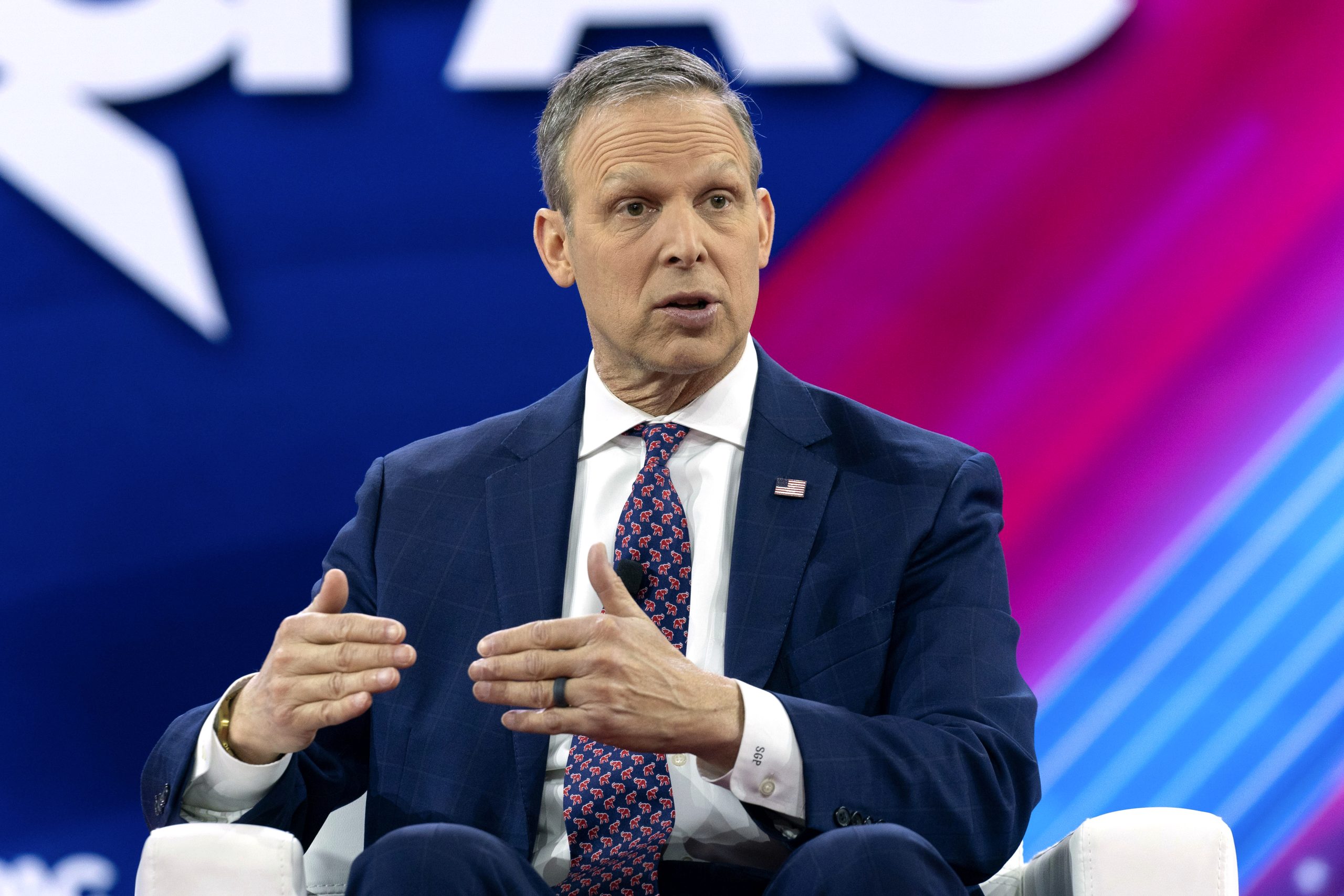
Rep. Scott Perry, R-Pa., speaks during the Conservative Political Action Conference, CPAC 2024, in Oxon Hill, Md., Feb. 22, 2024. (AP Photo/Jose Luis Magana, File)Jose Luis Magana
U.S. Rep. Scott Perry, a York County Republican who tried to overturn election results and became a subject of investigations into Jan. 6, reposted comments online that raised alarm about the White House’s claims of noncitizen voters.
Perry’s office did not respond to a request for comment. He is one of four Republicans in the state facing a competitive reelection this fall — putting Pennsylvania in the national spotlight as Democrats push to gain control of the narrowly divided U.S. House, and potentially at the center of concerns about Trump’s attempts to control the election process.
Republicans point to N.J. as they call for new voting law
Every Pennsylvania Republican in Congress, meanwhile, has supported the SAVE America Act. The bill would require voters to provide proof of citizenship when registering to vote and to show photo ID at the polls. It would also scale back mail voting, which has become increasingly popular since the COVID-19 pandemic but has remained a focus of Trump’s false claims of fraud.
Supporters of the legislation say that voter ID is widely popular and that eliminating even a few noncitizens from the voter rolls is worth ensuring elections are legal and secure. Opponents say that the issues the bill is trying to solve are either nonexistent or statistically irrelevant, and that it would effectively make registering more difficult for about 21 million people who do not have easy access to the paperwork that would be required, like a passport or birth certificate.
“It would upend voter registration and our democracy and, on its own terms, is an extraordinarily harmful policy that would hurt millions of American citizens,” said Eliza Sweren-Becker, a voting rights expert at the Brennan Center for Justice. “It is being advanced on the backs of lies about our election system that are themselves harmful to our democracy and trust in election administration.”
Though he has not addressed Trump’s latest claims, McCormick renewed his public push for the SAVE America Act after Trump’s prime-time address — writing, “Let’s act now,” on social media following the speech.
Last week, he and others also grasped on to both a nearly decade-old voter registration issue in Pennsylvania and the fresh problem in New Jersey to underscore the need for the law.
“This isn’t a harmless ‘software error,’” McCormick wrote on social media after Gov. Mikie Sherrill said a technical mistake led to noncitizens registering to vote. “This is why we must confirm citizenship before anyone registers. Only U.S. citizens should vote in our elections.”
McCormick also elevated a statement from the Department of Homeland Security that referred to an issue that Schmidt, then a Philadelphia city commissioner, discovered in 2017. Schmidt found 168 noncitizens were registered in Philadelphia, and likely hundreds more were registered statewide, due to an error by the Pennsylvania Department of Transportation. State Auditor General Tim DeFoor, a Republican, has said fixes to the system were largely successful.
U.S. Rep. Ryan Mackenzie, a Lehigh County Republican who is running in one of the most competitive districts in the country, also pointed to the Pennsylvania example and the New Jersey developments while justifying his support for the SAVE America Act during a telephone town hall with constituents Wednesday.
But while trying to remember the details on the call, Mackenzie potentially overstated the problem.
“I believe it was about 8,000 people here in Pennsylvania made their way onto the voter rolls, who were not supposed to be there and weren’t asked those proper questions. So these things do happen,” Mackenzie said before stressing the need for the SAVE America Act.
Asked about that number, a spokesperson for Mackenzie pointed to the Pennsylvania Department of State’s additional review in 2018 that found 8,698 voters whose eligibility needed to be determined. Those voters, however, were not necessarily noncitizens or otherwise ineligible to vote, and the state never released a more detailed analysis.
The spokesperson did not answer questions about whether Mackenzie agrees with Trump’s old or new claims about election fraud in 2020, or whether Pennsylvanians should have confidence in the state’s current system.
“This case from Pa., and from N.J. more recently, highlight the lack of appropriate checks taking place when people initially register to vote. We should have appropriate checks to verify the citizenship status when someone initially registers, which is what the SAVE Act provides. The absence of these safeguards, as well as the egregious errors that have been seen in states like New Jersey, are key reasons for the bipartisan frustration with our elections.”
Sweren-Becker said overstated claims of noncitizen voters have contributed to spreading distrust. The Pennsylvania situation, she said, was also not an example of a scheme to defraud the system, and “not the basis for a policy that would block millions of Americans from being able to cast their ballots.” Both that case and the one in New Jersey are instead examples of administrative errors that occasionally happen in a complex election system and represent “an extraordinarily small fraction” of voters, she said.
The Cato Institute, a libertarian Washington-based think tank, has also thrown cold water on the idea that the SAVE America Act would have prevented the New Jersey error. Legal fellow and former Arizona Republican official Stephen Richer, in a post that referred to McCormick’s advocacy, wrote that the current structure of the bill “likely wouldn’t have prevented” the software error.
“Be wary of politicians who say, ‘All of these problems will be fixed with my simple legislation,’” Richer wrote. “That’s often not the case.”
‘Deeply unhelpful’
McCormick, in response to questions for this story, did not directly say if the law would have prevented the issue in New Jersey. But he stressed that the paperwork requirement “helps stop noncitizens from getting registered.” It would also require states to set up a program to “continuously check voter rolls to find noncitizens” using different datasets — which he noted some states already have.
In a telephone town hall with constituents on Wednesday, the senator also acknowledged concerns about the bill when asked about it by voters on both sides of the issue.
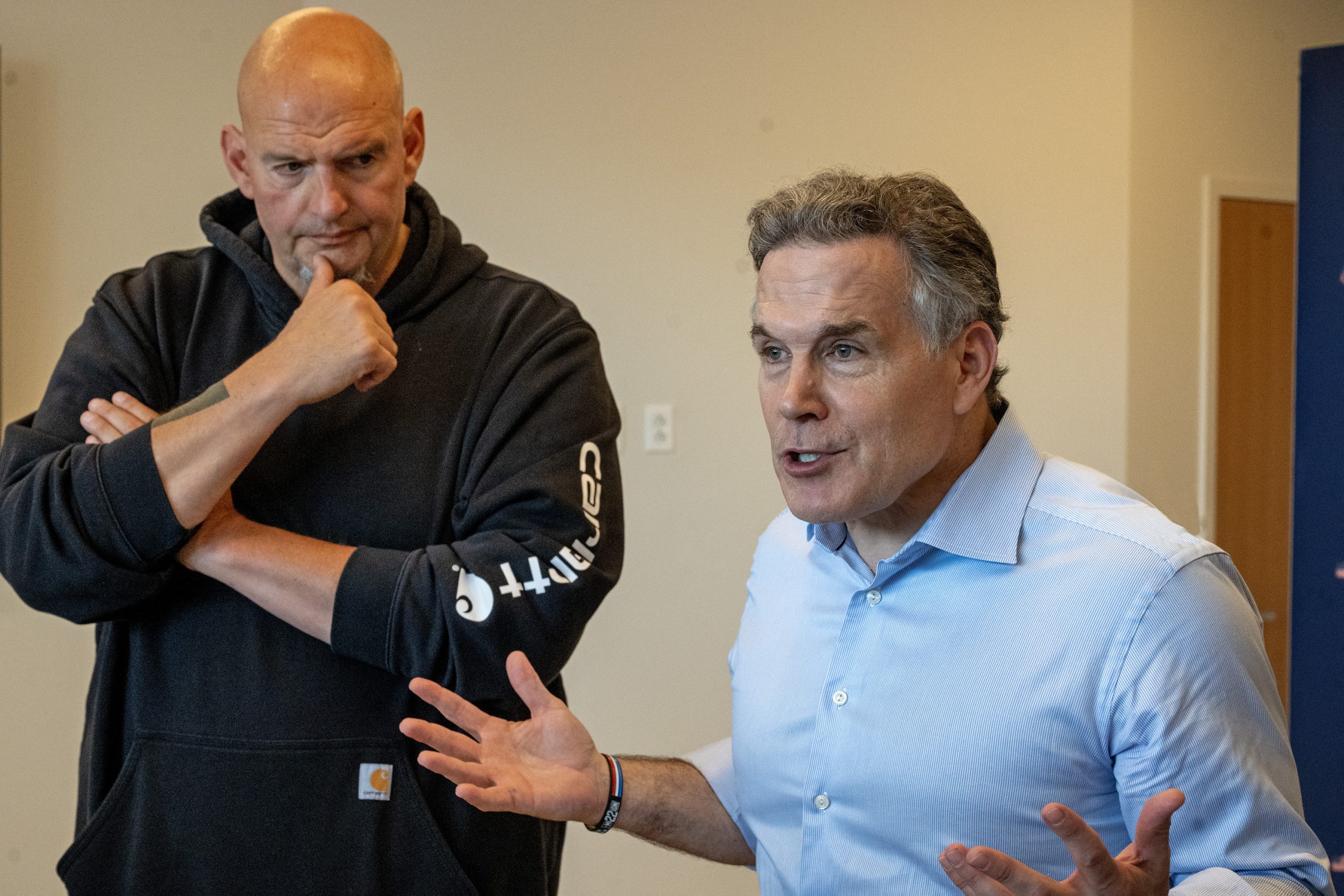
Pennsylvania’s U.S. Senators John Fetterman (left) and Dave McCormick appear together Monday, June 29, 2026 to promote the savings accounts for kids that were a signature piece of President Trump’s Big Beautiful Bill.Tom Gralish / Staff Photographer
He said he believed the law would “make it as easy as possible” for people to obtain valid forms of ID if they do not have them. And as someone who lost his first race against Oz by 950 votes and won his second race against Democratic U.S. Sen. Bob Casey by about 15,000 votes, he said even rare cases of noncitizen voting could make a difference in close elections. Eligibility for mail ballots also needs “to tighten up dramatically,” he said, though he did not fully explain his thoughts on the issue or if he believes there has been fraud associated with them.
As Democrats block the bill in the Senate, he called on them to “defend the indefensible” and said “there should be a political cost in objecting to something that most Americans agree with.”
One of the Democrats opposing the bill is McCormick’s close friend and ally — U.S. Sen. John Fetterman.
Though he has frequently broken with his party — and now supports voter ID after previously calling it “insidious and unnecessary” — Fetterman has said the bill’s changes to mail voting are “a nonstarter” for him.” In a CNN interview last week, he also said that the 2020 election in Pennsylvania was fair, that there is “no evidence” of 250,000 noncitizens registered, and that Trump was unnecessarily fixated on the 2020 election.
“In Pennsylvania, out of 67 counties, the vast, vast, vast majority of them are deep red counties, and they’ve never encountered any kinds of fraud,” Fetterman said. “I don’t know why the president is dragging up all of this stuff. You’re the president. Do something positive. And you are talking about 2020. That’s been settled over six years ago. It’s deeply unhelpful.”
Other Pennsylvania Democrats have lambasted Trump for dredging up the old claims, and they have blamed GOP “enablers” for supporting him and pushing the bill.
“The only thing it would ‘save’ is Trump and his Republican enablers from voters holding them accountable,” U.S. Rep. Dwight Evans (D., Philadelphia) said.
U.S. Rep. Chris Deluzio, an Allegheny County Democrat who worked on election security issues before running for Congress in 2022, said the bill “will do nothing to improve election security” and would instead harm married women — whose birth certificates might not have their current name — and people without passports. He said those who lie about the 2020 election are “cowards” who should not have a place in elected office.
“The fact that some Republican politicians are so scared of Donald Trump that they lie for him just to keep their jobs is spineless and pathetic,” Deluzio said.
McCormick, for his part, said during the telephone town hall that the bill is unlikely to pass as Democrats continue to block it from getting the required 60 votes in the Senate, and as Republicans decline to eliminate the filibuster rule to let it move forward with just 50 votes.
“Where does that leave us? That leaves us in a position where I think we should be constantly talking about this, and I try to do this every single week, multiple times, [saying] why the SAVE America Act is important,” said McCormick, whose staff said he was unavailable for an interview.
Philadelphia last week took a step toward renewing its contract with a controversial Chester trash incinerator after a high-profile bill to ban the city from doing so failed to garner enough support in City Council.
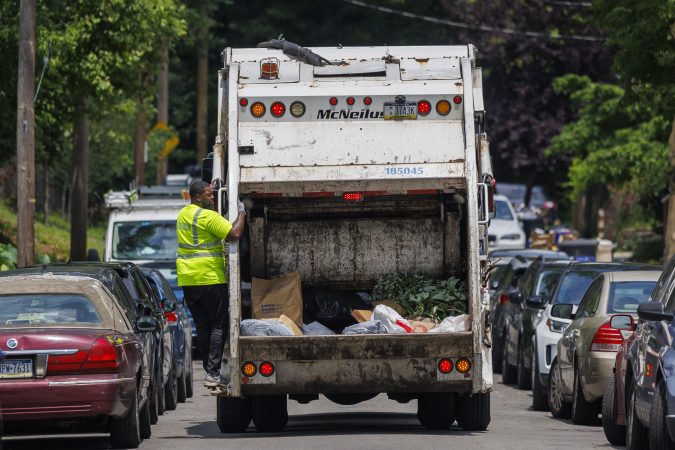
Mayor Cherelle L. Parker’s administrationissued a notice on Friday that it intends to enter into a new four-year contract for waste processing and disposal with Reworld, which operates a waste-to-energy facility in Chester. The city sends about a third of its garbage to the incinerator, the Delaware Valley Resource Recovery Facility.
Carlton Williams, who leads Parker’s Office of Clean and Green Initiatives, said in a statement that the city’s contracting process resulted in a deal that is “financially sound, environmentally safe, and includes the best option for the city to explore alternative methods for disposal.”
But advocates, local officials in Chester, and some City Council members have accused the company of severe pollution and environmental racism, saying it releases toxic chemicals into the air that cause adverse health effects in the majority-Black city that’s about 15 miles south of Philadelphia.
The amount of money the city intends to pay Reworld was not immediately clear on Monday. Parker administration officials issued a notice that they intend to renew the city’s existing contract with the company, but did not publish the contract itself.
Reworld was one of three companies selected to process and dispose of the city’s waste. The other two, Republic Services and Waste Management, operate landfills.
Council will need to approve legislation to greenlight the new contract with Reworld. The next scheduled meeting is in September.
It’s unclear what fate the bill might meet in Council. Last year, Councilmember Jamie Gauthier, a Democrat who represents parts of West Philadelphia, introduced the Stop Trashing Our Air act, which would have banned the city from entering into contracts with companies that burn trash or recyclables.
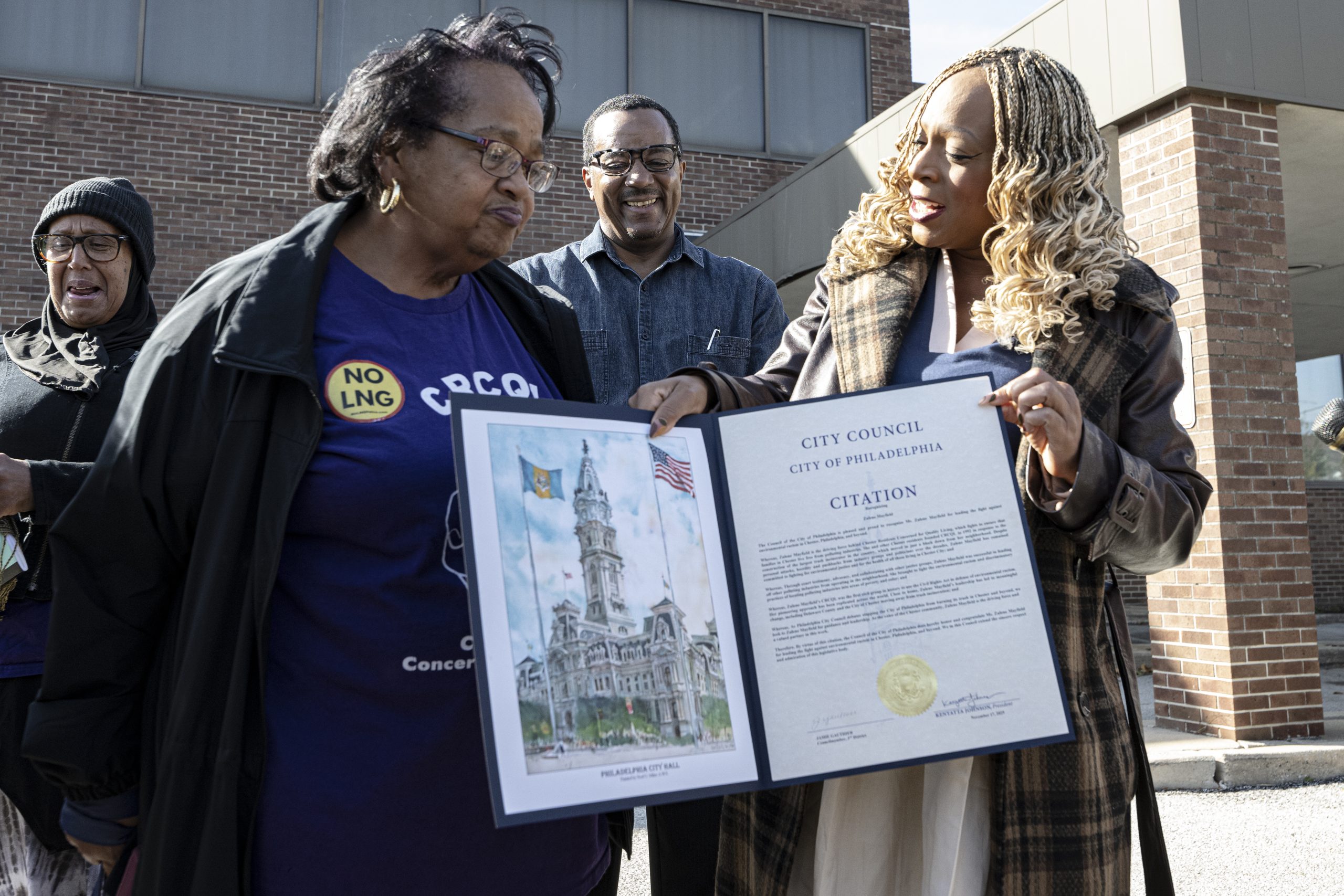
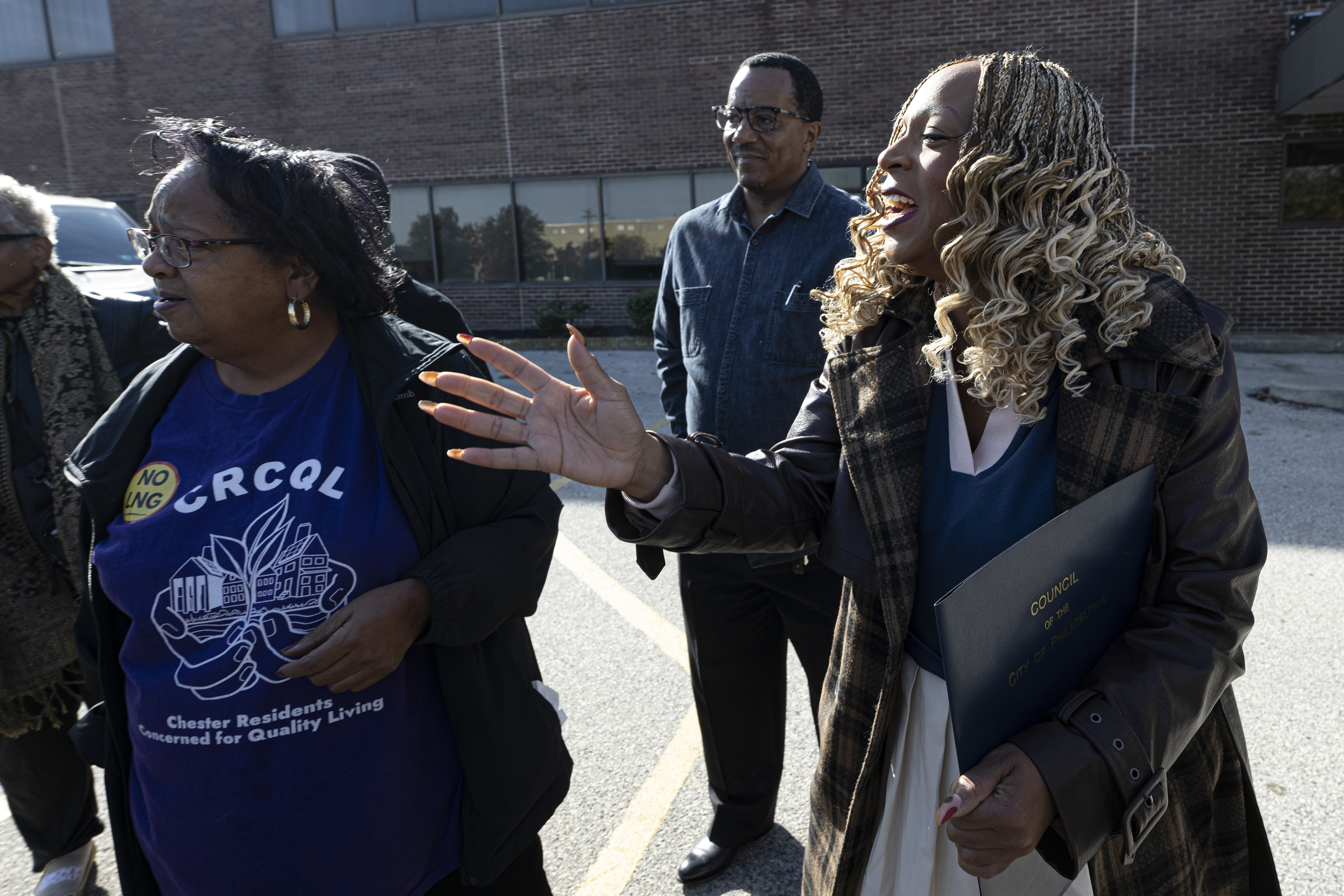
Chester resident Zulene Mayfield (left), Philadelphia Councilmember Jamie Gauthier (right), and Chester Mayor Stefan Roots meet to discuss Gauthier’s “Stop Trashing Our Air Act,” which would ban the city from incinerating waste, during a visit with lawmakers and staff in Chester on Nov. 7, 2025.Jose F. Moreno / Staff Photographer
But she never called the bill up for a vote, and ultimately put it on hold after it failed to garner support from a majority of the 17-member body.
Gauthier said in a statement Monday that dirty air causes asthma and cancer, and that Parker’s administration is “condemning Philly and Chester to at least four more years of toxic air and ash.”
“This is a choice. A choice that breaks Mayor Parker’s own campaign promise,” Gauthier said. “A choice that disproportionately harms Black and brown communities. A choice that makes every Philadelphian and Chester resident sicker.”
Parker, who ran on a platform of making the city “safer, cleaner, and greener” seized on it and told Brown: “That response is the same way you treat the Black and brown community.”
But Parker’s administration opposed Gauthier’s legislation, saying it would hamstring the city from being able to choose the best value waste disposal contractor through its typical competitive bidding process.
That process, city officials said in a news release Friday, included considerations of cost, as well as impacts on transportation in the region and the environment. The administration hired two independent firms to conduct environmental impact analyses.
The city previously held a seven-year contract with Reworld, which expired in June. Parker’s administration extended it for six months, ahead of selecting the company for a four-year renewal with the potential for three additional one-year extensions.
St. Hedwig’s, which served Chester’s Polish Catholic community for generations, is officially no longer a church. And some of the former parish’s buildings may soon become multifamily housing.
Philadelphia Archbishop Nelson J. Pérez last week issued a decree approving the “relegation” of the building to “profane but not sordid use effective January 1, 2026.”
In other words, the building will “no longer be designated as a Roman Catholic church,” according to a Sunday announcement from the archdiocese.
Pérez’s decree merely capped off a process that had been in the works for years.
In the early 1990s, amid decreasing attendance, the archdiocese merged several Delaware County parishes. St. Hedwig’s became a part of Clifton Heights’ Sacred Heart Parish, which also serves the Polish community, and its building became a place of worship under the care of Sacred Heart.
That marked the official end of the parish, which was established in 1902 and was named after Hedwig of Silesia, a 13th-century duchess of Greater Poland.
But financial pressures — including an estimated $60,000 repair for a failed boiler — and pastoral challenges continued to mount, and church officials moved to unload the historic property.
“While those worshipping at Saint Hedwig’s had been contributing generously for the upkeep of their church, their donations proved insufficient for the church’s ongoing maintenance needs,” the archdiocese said Sunday. “Multiple repairs have been financed by Sacred Heart Parish, which itself faced an operating deficit in 2024.”
The final Mass was held in 2023.
“For 121 years, St. Hedwig’s has been there to serve the Polish people,” the church announced in a Facebook post at the time. “We have celebrated baptisms, communions, confirmations, marriages, and ultimately funerals. We have been forever faithful.”
A parishioner at the time lamented the demise of a church that had served the area’s Polish community for more than a century.
“We sing in Polish and pray in Polish and we still have a very tight-knit community that maintains this church,” Judy Kuchinski of Chester told 6abc.
The archdiocese in January sold a property across the street from the church that included a former school, rectory, and convent to a group of real estate investors, according to Delaware County records.
“While the sale of property adjacent to Saint Hedwig Church in January 2025 provided additional capital to Sacred Heart, this money will be needed to help offset the regular deficits that accrue in financing parish operations,” the archdiocese said Sunday.
Mario Rivello, a multifamily housing developer who has done other work in Chester, is leading the project.
“We’re very active in that city, and this may be a property that we further develop based on approval process,” Rivello said in an interview Sunday.
Rivello said the investors’ goal is to convert the buildings into multifamily housing, which he said is “our expertise.” They have no plans to demolish the buildings, he said.
“We’d rather not,” Rivello said. “The archdiocese — the bones of the buildings that they sell — usually these properties are in good condition or they’re well-built.”
The archdiocese did not immediately respond to a request for comment.
CHESTER — Like a Ben Franklin impersonator waving at Independence Hall and the Liberty Bell, tour guide B. Preston Lyles directed the tour group’s attention to various landmarks as they passed by.
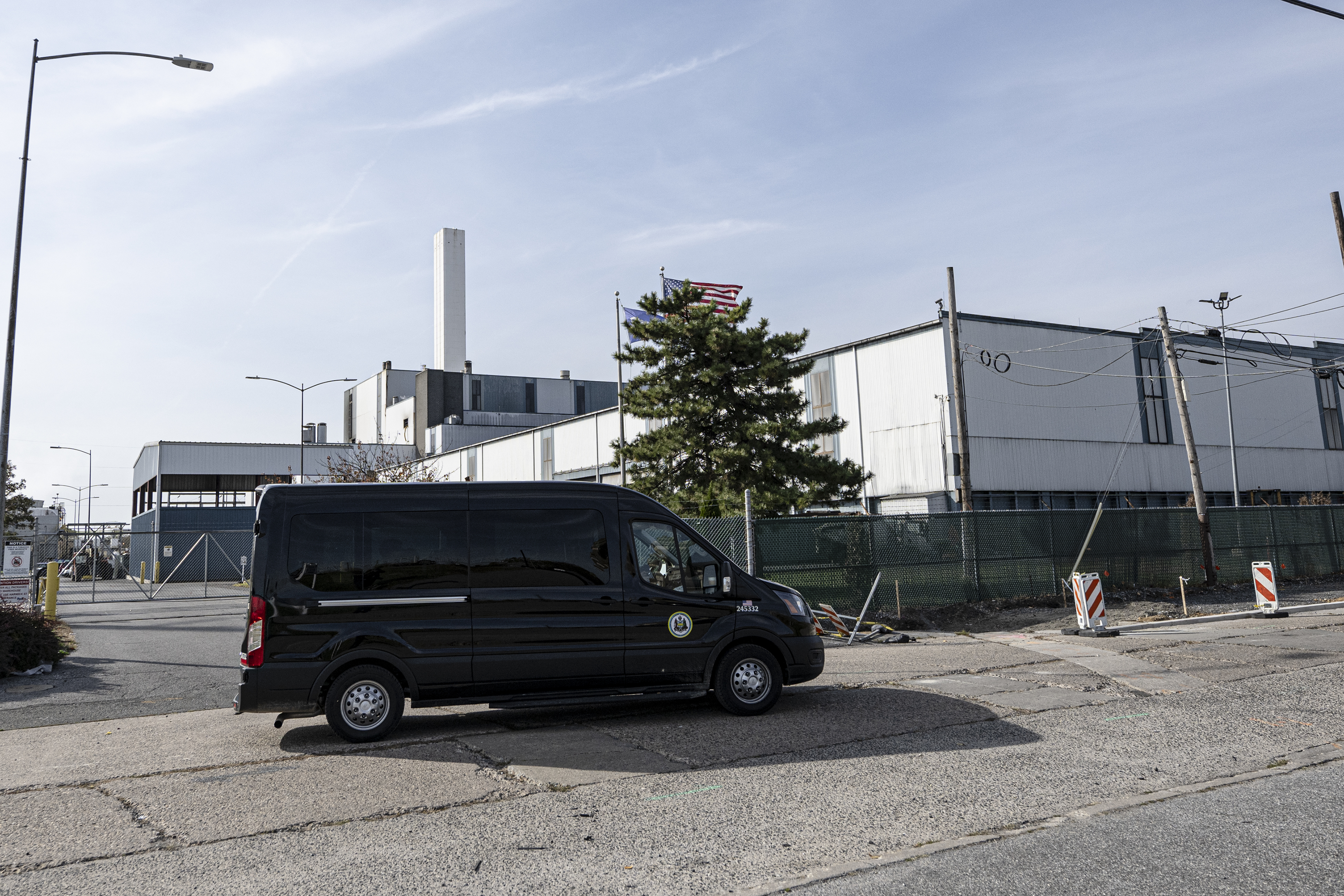
But instead of highlighting monuments that made locals swell with pride, Lyles was pointing to sites he said made thepeople of Chester get sick and die younger: power plants, an oil refinery, a sewage sludge-burning facility, and — most relevantly for Friday’s group — the Reworld trash incinerator, the destination for about a third of the rubbish collected by Philadelphia’s city government.
“Chester City is known as one of the nation’s worst cases of environmental racism,” Lyles, an organizer for Delco Environmental Justice, told the group, referring to the concentration of polluting industries in Black and brown communities. “It is not just because the city holds the nation’s largest waste incinerator, but due to an extreme concentration of toxic industries in and adjacent to such a small city.”
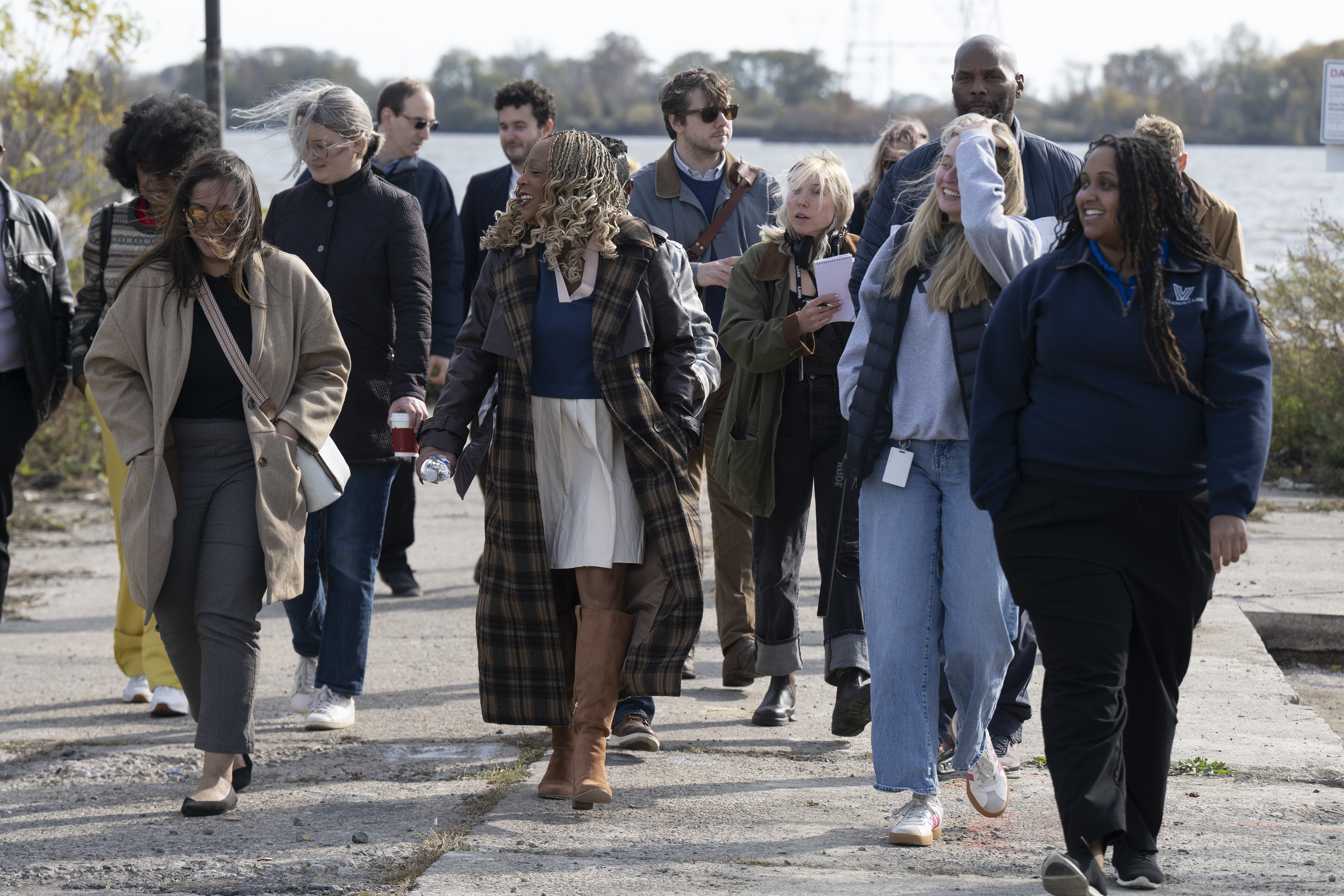
Philadelphia Councilmember Jamie Gauthier tours Chester to discuss her “Stop Trashing Our Air Act,” which would ban the city from incinerating waste, during a visit with lawmakers and staff in Chester, Pa., on Friday, Nov. 7, 2025.Jose F. Moreno / Staff Photographer
“From a justice and fairness perspective, it just seems so wrong to me and so obvious,” said Gauthier, who was joined on the tour by Councilmember Kendra Brooks and staffers for other lawmakers. “Seeing the incinerator on the waterfront and all of these other dirty uses and the abandoned homes, that made me want to do this more, because it’s wrong. It’s wrong that people should be loaded down with all these toxic uses.”
Reworld in 2024 burned more than 355,000 tons of trash collected by the city. Its contract with Philadelphia ends in June 2026.
Gauthier has introduced a bill, the Stop Trashing Our Air Act, that would prohibit the city from incinerating trash, and Council’s Committee on the Environment, which she chairs, will likely hold a hearing on it this fall.
Reworld spokesperson Linda Ribakusky said the company is a “leading sustainable waste solutions provider.” The Chester facility, she said, offers “a more sustainable alternative to landfilling by converting waste into renewable energy and recovering valuable metals that would otherwise be lost.”
“The Reworld Delaware Valley facility helps reduce greenhouse gases by avoiding landfill methane and generates enough clean electricity to power more than 50,000 local homes each year,” Ribakusky said in a statement. “We are proud to be an active part of the Chester community. Working alongside local schools, nonprofits, neighbors, and community organizations, we support initiatives that create real impact.”
‘Now is the time’
The Philadelphia Sanitation Department collects and disposes of about half of the city’s waste, said Michael Ewall, founder of the Philly-based Energy Justice Network. The other half is handled by private haulers hired by businesses and owners of larger residential properties.
Under its contract, Reworld takes one-third of the municipally collected trash to the Chester incinerator, which the company says produces about 87 megawatts of electricity, enough to power 52,000 homes, while burning the waste. WM, which operates a major landfill in Bucks County’s Falls Township, takes the other two-thirds.
When the most recent contracts were signed in 2019, the city agreed to pay roughly $65 per ton of trash to both Reworld, which was then known as Covanta, and WM, formerly Waste Management.
Gauthier said she has had constructive conversations with Mayor Cherelle L. Parker’s administration about eliminating incineration from the city’s waste management operations, and is hopeful the city will include environmental justice concerns in its request for proposals for the new contracts.
Parker’s office did not respond to a request for comment.
The Chester incinerator provided a flashpoint in the 2023 mayoral election, which Parker won. During a debate, a moderator asked candidate Jeff Brown about the incinerator, prompting Brown to say, in part, “The trash has to go somewhere.”
In a debate performance that was key to her rise and Brown’s downfall in the race, Parker was among the candidates who pounced on the soon-to-be-infamous comment.
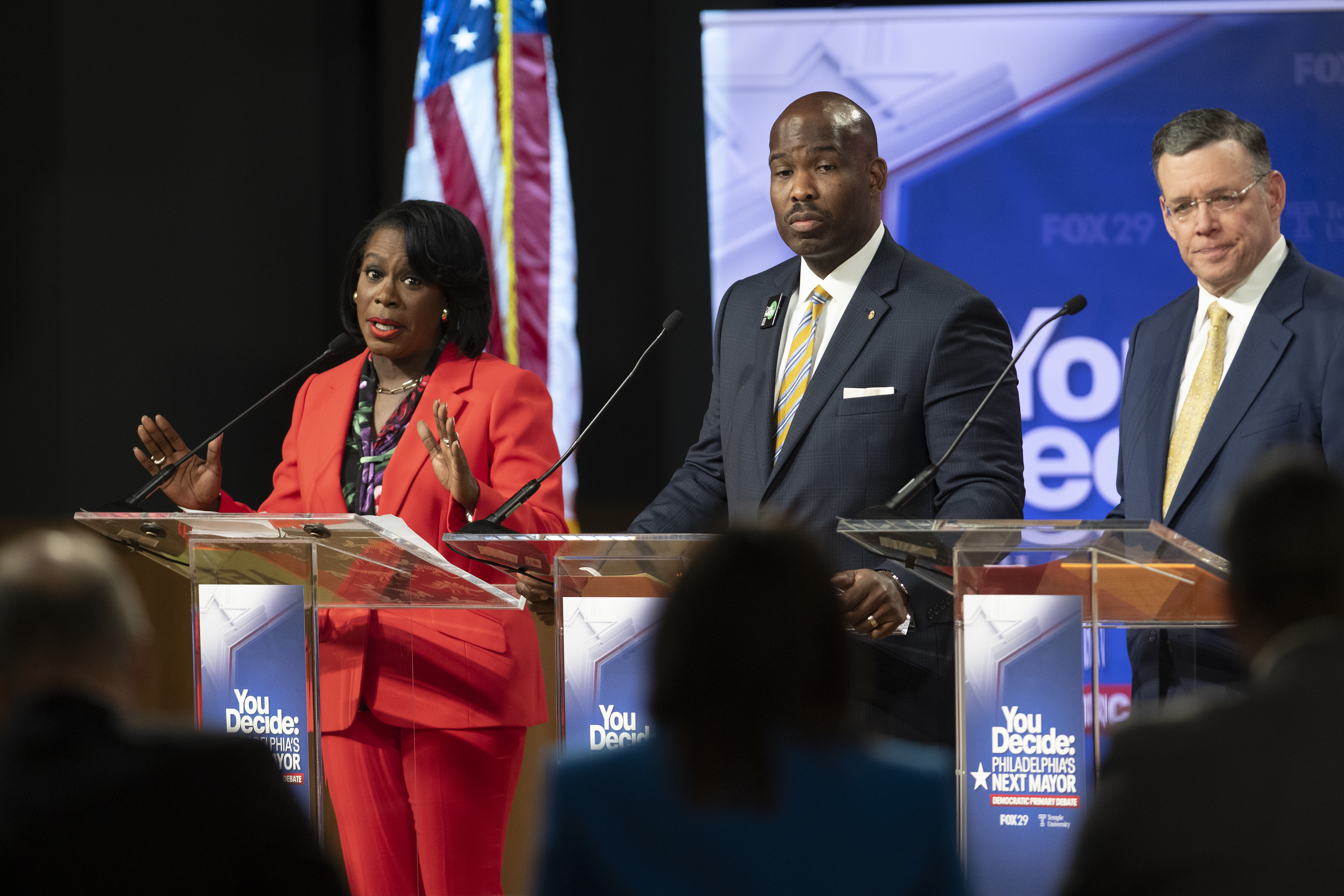
Top candidates for the Philadelphia mayor seat former City Council Member Cherelle Parker, left, Former City Council Member Derek Green, and businessman Jeff Brown, during a televised debate at the Temple performing arts center in Philadelphia, Pa. Tuesday, April 11, 2023.Jose F. Moreno / Staff Photographer
During the debate, however, Parker was not asked directly if she would commit to ending the city’s contract with Reworld.
“I was enthused to hear our mayor speak about this on the campaign trail,” Gauthier said. “I hope we all want to do the right thing. Now is the time to show that.”
Environmental advocates contend that neither landfills nor incinerators are good for the environment and urge municipalities to focus on reducing waste in the first place. For instance, Ewall, who developed a policy platform called the Zero Waste Hierarchy, pointed out that thousands of communities now charge residents for each bag of trash just as utilities charge for each gallon of water or kilowatt of electricity.
But for the “residuals” that do need to be collected, advocates have generally coalesced around the conclusion that incineration is more harmful than landfilling, Ewall said.
Delaware County, which adopted a Zero Waste Plan in September, commissioned a 2021 study that found incineration was the costliest of its waste-disposal options, from both a health perspective and a financial one.
The county determined that each ton of trash burned at the incinerator produced $234 to $337 in health and environmental costs. The impact from landfilling, meanwhile, was $144 per ton.
‘Reverse the environmental tragedy’
Founded by William Penn, Chester is the oldest city in Pennsylvania. But over the last century, it has become a hub for some of the region’s least-wanted uses, including polluting manufacturers, fossil fuel facilities, a state prison, and, since the early 1990s, the incinerator. About 69% of Chester’s 33,000 residents are Black, and 31% live below the federal poverty line.
“We hope that Philadelphia is listening in a strong way … as we attempt to reverse the environmental tragedy that has occurred here in the last 3½ decades due to the incineration of trash,” Chester Mayor Stefan Roots said Friday. “It’s an old technology, and it’s time for it to go. Especially in a community like Chester that’s looking to develop, it’s one of our biggest impediments.”
Chester resident Zulene Mayfield, left, Philadelphia Councilmember Jamie Gauthier, right, and Chester Mayor Stefan Roots meet to discuss Gauthier’s “Stop Trashing Our Air Act,” which would ban the city from incinerating waste, during a visit with lawmakers and staff in Chester, Pa., on Friday, Nov. 7, 2025.Jose F. Moreno / Staff Photographer
About 31% of the trash the incinerator burned in 2024 comes from Philly, with Delaware County accounting for 28% and New York City 26%.
During the tour, Lyles explained how environmental racism can occur even if decision-makers are not consciously prejudiced against certain communities, because wealthier areas often organize to prevent polluting industries in their backyards.
“In the late 1990s, there were about 60 proposals for new gas-fired power plants in PA. Only 16 of them were built,” he said. “Most of them faced a stiff opposition from community groups in suburban and rural areas, but those on either side of Chester went in with no organized opposition.”
The final stop on the tour was a row of boarded-up and dilapidated homes along a railroad used for industrial purposes near the edge of the incinerator property. The homes started emptying out in the early 2000s, Ewall said, and the last was abandoned a few years ago.
He recalled meeting one of the last residents to leave.
“She had six grandchildren. She lived with her granddaughter, around 14, and one of the times I met her, had an oxygen tank that she would carry around with her just to be able to breathe,” Ewall said. “They just kind of disappeared one day, and I saw a boarded house.”