Category: Politics

  • Trump’s immigration crackdown has detained more than 50 military spouses and parents

    Trump’s immigration crackdown has detained more than 50 military spouses and parents

    President Donald Trump’s administration has detained dozens of parents and spouses of active-duty U.S. troops as it rolls back immigration protections for military families to pursue its mass deportation agenda, an Associated Press investigation found.

    More than 50 parents and spouses of active-duty service members have been detained since Trump took office for a second term, and at least six have been deported, the AP found in the first accounting of such detentions, which the government does not track. At least eight immediate family members of U.S. service members remain in federal immigration custody.

    Parents and spouses of people in the military have generally been shielded from deportation under bipartisan consensus for decades. But the AP found they’re now routinely being detained for months as they try to adjust their legal status through the policies available to service members’ close relatives and even as the military continues to recruit by advertising immigration benefits for enlistees’ families. Experts warn that the reversal could undermine military preparedness even as the U.S. is at war in Iran. It’s left military members without emotional support and caretakers for their children, delayed deployments, and forced some to take leave.

    “How can I even focus on my military career because I have to worry about how my wife is doing?” said Army Sgt. Hedar Leonel Turcios Juarez, who was stationed in Fort Bliss, Texas, when his wife was detained outside a Walmart in front of their 6-year-old daughter in July.

    A handful of detentions of service members’ spouses have prompted public backlash and led to intervention by Homeland Security Secretary Markwayne Mullin to secure their release.

    The Department of Homeland Security has said it does not compile data on these cases. The AP obtained information by analyzing thousands of federal court records compiled by Habeas Dockets, a project run by the Immigration Justice Transparency Initiative; by reviewing existing media coverage; and by verifying information with family members and attorneys. The actual number is likely much higher than the 51 cases AP found.

    The AP asked for comment from DHS on each case, including the individuals’ immigration and criminal history. The agency did not provide specific information about the majority of cases but noted that at least seven people had been removed from the U.S. before, at least eight had removal orders, and at least two had drunken driving or drug-related convictions.

    “DHS and ICE value the contributions of all those who have served in the U.S. military,” DHS said in a statement. “U.S. military service alone does not automatically grant lawful immigration status, or exempt aliens from the consequences of violating U.S. immigration laws.”

    The Pentagon declined to comment on the AP’s findings.

    Service members are losing their safety net

    Air Force Tech. Sgt. Wendy Gbeve, 30, said she hasn’t had a good night’s sleep since her father, Luis Alberto Ramirez Zavala, was detained by immigration officials last month. Gbeve was there when he was arrested at a routine interview with U.S. Citizenship and Immigration Services in Missouri about his pending application for legal status.

    She spent hours refreshing the USCIS page to track where the government was taking her father: from a county jail in Missouri to an Immigration and Customs Enforcement detention facility in Texas. Finally, roughly two weeks after he was detained, she found out he had been deported to his native Mexico.

    “It’s the most frustrating, helpless feeling,” Gbeve said.

    Gbeve said ICE still hasn’t informed her family why her father was removed so quickly. Ramirez Zavala spent most of his life in the U.S. working as a ranch hand in rural Illinois.

    Ramirez Zavala’s wife of 30 years, a legal permanent resident, is considering returning to Mexico to be with her husband. For Gbeve, whose husband is also in the Air Force, that would leave no one to watch their children, ages 2 and 4, if both were deployed.

    “That would be our entire safety net,” she said.

    Military members have had to take leave or delay a deployment

    Some service members have been left caring for children alone.

    Army Staff Sgt. Alexis Jaramillo, an aviation operations specialist who has served for more than a decade, said he would normally be involved in training soldiers at Fort Polk, La. Instead, he is on administrative leave, caring for his 5-year-old stepson, Noah, after his Brazilian wife, Maisa Lopes Eliaser, was detained in early July.

    It happened during what the family thought was a routine appointment at a USCIS office in Alabama. Eliaser arrived in the U.S. on a tourist visa in 2019, and the couple was trying to change her status.

    Immigration officials asked Jaramillo and his stepson to leave the room. Minutes later, they were told that Eliaser had been detained. The next time they saw her was inside a detention facility.

    “It is really overwhelming because I need to take care of my kid by myself. No one is here to help me out,” Jaramillo said.

    At least one active-duty soldier halted her imminent deployment after her husband was detained by immigration officers, leaving no one to care for their then-5-year-old son, court records show. A judge eventually ordered the husband released.

    Trump’s policy is a reversal even from his first administration

    A new policy, implemented in April 2025, states that “military service alone does not exempt aliens from the consequences of violating U.S. immigration laws.”

    Experts in military immigration law said this marks a stark shift from previous administrations across the political spectrum, including Trump’s first administration.

    Dan Gividen, who served as ICE’s deputy chief counsel from 2016 to 2019 under Trump, represents a soldier’s father who has been in ICE custody for more than eight months. He said that during his time as an ICE prosecutor, immigration authorities rarely detained service members’ immediate family members unless they had committed violent crimes.

    “We would not place them into removal proceedings, period. That’s insane,” Gividen said. “The fact that they’re doing it now is just outrageous.”

    ICE previously generally canceled past removal orders and allowed parents or spouses of troops to adjust their legal status, said Margaret Stock, an immigration attorney and retired lieutenant colonel in the Army Reserve. She said that’s because the government wanted to ensure troops focused on their duties.

    “It’s the same thing that happens if you don’t provide healthcare to the troops, or you don’t provide housing to the troops,” she said. If soldiers are preoccupied with detained or deported family, “they’re not concentrating on their job anymore.”

    Even some congressional Republicans who are otherwise largely supportive of Trump’s aggressive immigration crackdown have pushed for the release of service members’ relatives.

    “The immigration system is failing the honorable and good Americans,” Florida Republican Rep. Maria Elvira Salazar said at a news conference in July advocating for the release of the wife of retired Staff Sgt. Wilmer Trujillo, who served in Iraq and Afghanistan. DHS said she illegally reentered the U.S. after being deported in 2005.

    Although DHS said it does not have data on active-duty troops, it has released figures for former service members, who also qualify for immigration benefits along with their immediate families. From Jan. 20, 2025, through Jan. 26, 2026, immigration authorities detained 125 military veterans — placing 34 into removal proceedings — and arrested more than 150 immediate family members, DHS said in a letter to several Democratic senators.

    Anh Dung Cong Tran, known as “Tony,” had both a father and son who served in the military. Tran came to the U.S. in 1990 through a program for children of American military personnel born in Vietnam. Tran, 56, was deported in July, having lived in the U.S. for decades with regular check-ins with immigration authorities after an assault conviction soon after his arrival.

    His son Antonio Tran said his father persuaded him to enlist in the military in 2022. “He has a totally different view on America now,” said Tran, who was discharged as an Army specialist in March after a serious injury.

    Benefits for service members include what’s known as parole-in-place

    Military recruiters tout immigration benefits for troops’ families as a selling point to enlist.

    One of the military’s most highly advertised immigration benefits is “military parole-in-place,” which allows the spouses, children, and parents of active-duty service members and veterans to obtain legal immigration status from within the country. Not everyone qualifies: Those who overstayed visas or who already applied for legal status at the border, for example.

    The policy was implemented under Republican President George W. Bush during the U.S. war with Iraq in 2007 and codified under Democratic President Barack Obama. DHS agencies can grant it on a case-by-case basis.

    Under Trump, the average time it takes to receive military parole-in-place has more than doubled to 12 months, according to USCIS data. That leaves military families more vulnerable to being placed in ICE custody.

    Recruiters are still promoting immigration benefits

    The AP found that troops’ immediate family members have repeatedly been detained by ICE while applying for parole-in-place or seeking to adjust their status, including during immigration appointments.

    Marine Cpl. Jose Manuel Vilchis-Valle’s mother, Ursula Borja Valle, was detained at an appointment in August 2025 and deported to Mexico within a week. She had lived in the U.S. since the 1990s without a known criminal record. Her son was attempting to help her clear up a decades-old removal order through the immigration benefits that military recruiters had used to help convince him to enlist.

    “They basically told me that if you serve, and if you served honorably, you can help your parents,” said Vilchis-Valle, 23, who was honorably discharged shortly after his mother was deported. “In a perfect world, I wished, because of my service, they could have pardoned her.”

    In other cases, ICE has detained people who had already been granted protection, with the agency later arguing in court filings that their parole status had been revoked.

    In June 2025, the Marine Corps officially stopped advertising enlistment as a way to protect immigrant family members, in response to inquiries from the AP. But recruiters for the Army and the National Guard still promote it.

    “For some service members, enlisting isn’t just about serving their country,” read an Instagram post published in late July by an official Army recruiter based in California. “It’s also about doing everything they can to help protect their parents who sacrificed everything for them.”

    Recruiters are expected to highlight the benefits of service to attract applicants and military parole-in-place remains in effect, Army spokesperson Christopher Surridge said.

    The National Guard said it does not track detentions of its troops’ relatives or which recruiters advertise immigration benefits and referred additional comment to DHS.

    Soldier who helped patrol the border grapples with his father’s detention

    For U.S. Army Specialist Romero Ralios, his father’s detention has left him remorseful about his deployment last year to the Joint Task Force Southern Border, where he spent nine months supporting U.S. Customs and Border Patrol.

    His father, Sebastian Ralios Tino, a Guatemalan landscaper with no known criminal record, was detained this summer. He lived in the U.S. for nearly two decades without legal status.

    Ralios’ commanding officer, Capt. Mohamed Elmaola, told the AP he wanted to speak up because Ralios is a “phenomenal soldier” whose father should receive due process.

    “It’s very hard to communicate and to have credibility as a leader when your own subordinates are unable to get support,” Elmaola said. “Considering he enlisted his time and his life into supporting and defending the United States Constitution, it is the right thing to do to support soldiers and their families.”

    Romero Ralios now struggles to sleep at night due to the stress and wishes he had not been involved in immigration enforcement, even though he was just following orders.

    “It was karma. I should’ve known,” Ralios told the AP. “All those families I broke. I have regrets.”
  • Fauci’s decision to invoke the Fifth Amendment tees up a legal debate and a contempt vote

    Fauci’s decision to invoke the Fifth Amendment tees up a legal debate and a contempt vote

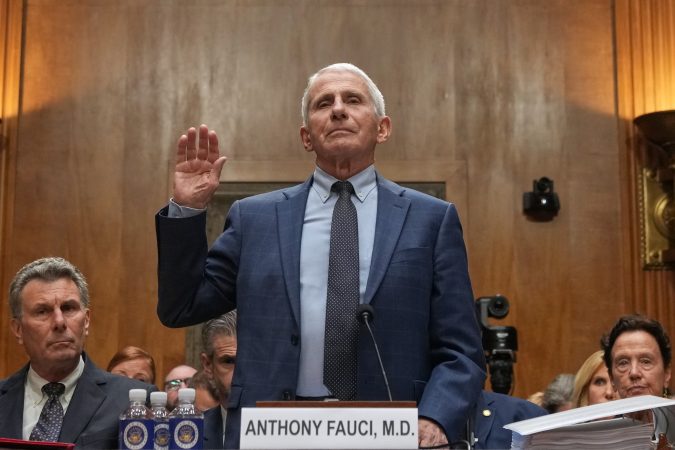
    WASHINGTON — Anthony Fauci’s decision to invoke the Fifth Amendment before Congress will be put to the test this week as a Republican-led committee prepares to vote to hold him in contempt and refer the matter to the Justice Department.

    A contempt finding could open the door to an investigation into whether Fauci had a valid constitutional right against self-incrimination when he refused to answer dozens of questions from lawmakers at a committee hearing last week focused on his handling of the COVID-19 pandemic.

    Republican senators including Rand Paul of Kentucky, who subpoenaed Fauci and has called a contempt vote for Thursday, insist that a pardon the doctor received early last year from Democratic President Joe Biden left him ineligible for Fifth Amendment protections. A Senate resolution released Tuesday asserts that Paul found Fauci’s privilege claims “unsupported.”

    But some legal experts say Fauci had reasons to invoke the Fifth Amendment, given the threat of potential state prosecutions and questions from President Donald Trump’s administration about the validity of Biden’s pardons. Any testimony from Fauci could have also prompted false-statement investigations like the ones the current Justice Department has repeatedly initiated against the Republican president’s perceived adversaries.

    No matter what happens, the episode raises fresh and complicated questions about Congress’ ability to compel testimony from previously pardoned witnesses — and the outcome could resonate beyond Fauci.

    “This is an important case because I think a lot of people anticipate that President Trump is going to issue similar pardons to many people in his administration who will end up being called before Congress, and the precedent here is important,” said Mark Osler, a St. Thomas University law professor and pardon power expert.

    Paul’s committee is moving to transmit the contempt referral from his Republican-led committee directly to the Justice Department. Whether the Justice Department would act on the referral is unclear.

    Fauci’s pardon protects him for past, not future, acts

    Fauci, a longtime National Institutes of Health scientist and the nation’s top infectious-disease expert, left the federal government in 2022 after more than five decades. He was among a group of perceived adversaries of Trump to be pardoned by Biden in one of the Democrat’s final acts in office. The clemency covered acts from 2014 to the date in January 2025 when the pardon was issued.

    Republicans on the Senate Homeland Security and Governmental Affairs Committee say the pardon lifted the specter of criminal prosecution and left Fauci without a valid basis to invoke the Fifth Amendment — a bedrock constitutional protection found in the Bill of Rights but one typically available only to those who have a reasonable basis to believe they risk being charged over their testimony.

    While a blanket pardon theoretically removes a threat of prosecution, Fauci made clear he thought he had a good-faith basis to fear criminal charges. He invoked his Fifth Amendment rights more than 100 times.

    Before the hearing. Fauci said that Paul, the committee chairperson, had an “obvious obsession with calling for my prosecution.” The purpose of his forced appearance “is to get me to say something, anything, that could vindicate his repeated public pledges that I end up, in his words, quote, behind bars, unquote,” Fauci said.

    In the run-up to the hearing, Paul made dozens of Fauci-related posts on X, including ones teasing that he was going to confront the doctor for having earlier given false testimony — something Fauci has denied.

    “I think his invoking the Fifth makes sense because he was invited into a situation where everyone in the country understood that Rand Paul was trying to set him up for a criminal prosecution,” said Michael Gerhardt, a University of North Carolina law professor. “In that circumstance, one of the smartest things to do would be to make yourself a very small target and say as little as possible, and that’s obviously what he did.”

    In announcing the contempt vote, Paul noted on X that “Fauci refused to answer a single question, even though he knew he couldn’t be charged for crimes” during the decade covered by his pardon. Fauci’s deflections encompassed even seemingly harmless questions, such as the color of the tie he was wearing — a reflection of an apparent belief that it was safer to refuse any testimony.

    There are factors that could tilt in favor of Fauci’s strategy, including the fact that his pardon would not protect him from potential state prosecutions or from a federal prosecution related to any testimony that investigators deemed false. That may not be an idle concern given the number of false-statement investigations prosecutors have opened against Trump’s political opponents.

    Trump’s administration also has repeatedly called into question the validity of the Biden pardons, given Biden’s frequent use of an autopen for official business. Legal experts say the pardons are valid.

    “The question is do you have a reasonable fear of prosecution, and Fauci’s argument would be — yes, I received a pardon, yes, I believe that pardon covers and prevents prosecution but there have been statements from lots of people including Trump and other administration officials … raising questions about the validity of that pardon,” said Ross Garber, a lawyer and expert in political investigations who has represented multiple clients who have invoked the Fifth Amendment.

    “That,” he added, “is potentially a very viable argument.”

    Paul has discussed trying to fast-track a contempt referral

    Paul said in an interview with Fox News Channel last week that he did not think “there’s any rule” requiring that a contempt referral from a committee go through the entire Senate. His committee is instead working to send the referral straight to the Justice Department.

    The contempt resolution states that the president of the Senate, Vice President JD Vance, “shall certify” the committee’s referral and the accompanying report to the U.S. attorney for the District of Columbia.

    That fast-tracking of the process avoids the need for a vote in the full 100-member Senate, where Republicans likely lack the 60 votes required to move a contempt referral to passage.

  • Takeaways from a big primary night in Michigan, Kansas, Missouri and more

    Takeaways from a big primary night in Michigan, Kansas, Missouri and more

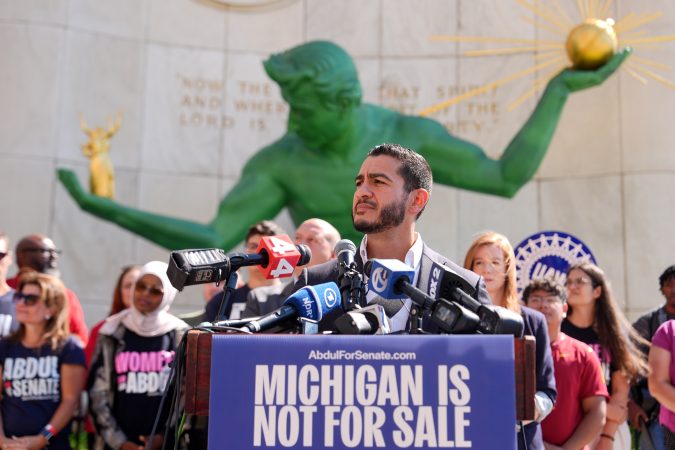
    Democrats in Michigan signaled their eagerness for a new political direction as voters advanced progressive Abdul El-Sayed over Rep. Haley Stevens for a key Senate seat and two left-wing candidates in key House primaries.

    The Senate race in Michigan exposed deep rifts among Democrats in how they approach Israel and money in politics, and how they deem candidates electable.

    Across the country, similar ideological battles were waged with mixed results. And in two red states, voters rejected GOP-led ballot measures that would have given state legislators more power to reshape the law on key issues, including abortion.

    Here’s a rundown from Tuesday’s primaries.

    Michigan’s marquee race ends in win for progressives

    In November, El-Sayed will face former Republican Rep. Mike Rogers, who narrowly lost his first Senate bid in 2024 and received an endorsement from President Donald Trump. Democrats will have a tougher time retaking the chamber if they lose the Michigan seat.

    The primary divided the Democratic Party between progressives, who saw El-Sayed’s left-wing politics as a way to energize voters, and establishment leaders, who viewed Stevens as a stronger candidate to win over independents and Republicans.

    The two candidates also personified Democrats’ struggle with Israel. Like others on the party’s left, El-Sayed called the war in Gaza a genocide and said he wanted the U.S. to end its military aid to Israel. Stevens, an Israel supporter, benefited from more than $30 million spent by the super PAC of the American Israel Public Affairs Committee. The group’s support, sometimes even rumors of it, fuels tensions as Democrats wrestle with articulating their stance on Israel without alienating voters.

    Left-wing candidates win key House primaries in Michigan

    In Michigan’s 7th Congressional District, voters chose a progressive over two centrist candidates in the Democratic primary. The district is among the 18 House races classified by the Cook Political Report, a nonpartisan election analysis site, as a toss-up this year.

    Sunrise Movement co-founder William Lawrence defeated Bridget Brink, former U.S. ambassador to Ukraine, and Matt Maasdam, a retired Navy SEAL, and notched another big win for the surging left flank of the Democratic Party.

    “Tonight the people of Michigan’s 7th district sent a clear message: they are tired of Silicon Valley billionaires and DC insiders determining the future of our towns and our country,” Lawrence said in a statement. “They want an unbought representative who isn’t afraid to stand up to leaders of both parties and fight for working people.”

    Lawrence will run against incumbent Rep. Tom Barrett (R).

    In Michigan’s 13th District, Rep. Shri Thanedar lost the Democratic primary contest to Donavan McKinney, a member of the Democratic Socialists of America.

    Virginia Democrats choose contenders for key races

    Virginia’s 2nd Congressional District is headed for a rematch between incumbent Rep. Jen Kiggans (R) and former Rep. Elaine Luria, who won a crowded Democratic primary. The district, anchored in Virginia Beach, is considered the most competitive in the state.

    Luria held the seat for two terms before she lost to Kiggans in 2022. Of incumbent Republicans in Virginia, Kiggans is most in jeopardy this year as Democrats look to flip red districts narrowly won by Trump.

    Incumbent Rep. Rob Wittman (R) is defending GOP territory with better odds in Virginia’s 1st Congressional District. In November, he will face Shannon Taylor, a prosecutor who won another crowded Democratic primary Tuesday.

    Tom Perriello, who won the Democratic nomination in the 5th Congressional District he once represented, faces much tougher odds. Perriello will face the incumbent Rep. John McGuire (R) in a district Trump won by 12 percentage points in 2024.

    A rematch sees a familiar end in Missouri

    Rep. Wesley Bell again defeated former Rep. Cori Bush in the Democratic primary in Missouri’s 1st Congressional District. Bell’s win against Bush, a member of the Democratic Socialists of America, is a setback for the party’s left wing that has succeeded in defeating other incumbents.

    The Missouri race assessed the power of AIPAC as it did when the duo competed in 2024. AIPAC’s spending that year made the race one of the most expensive primaries in U.S. history and helped Bell unseat Bush. The former congresswoman, an ex-member of “the Squad” of several progressive lawmakers, harshly criticized Israel over the war in Gaza before some Democrats even began to question their stance. On the night of her 2024 loss, Bush hinted at a comeback bid: “AIPAC, I’m coming to tear your kingdom down.”

    The group spent about $3 million this year on lifting Bell to a second victory. He is favored to win in the solidly blue district.

    Washington sets up battleground contest

    On the West Coast, Washington’s most competitive district held a nine-way primary race that also featured a progressive-versus-moderate showdown among the Democrats. Washington uses an open primary system, meaning the top two vote-getters advance to the general election regardless of party.

    Republican John Braun, a former state senator who had Trump’s endorsement, and the incumbent Democratic Rep. Marie Gluesenkamp Perez will compete in November. Gluesenkamp Perez, a centrist who is seeking a third term, overcame a challenge from the left by Democrat Brent Hennrich.

    The district, which went for Trump in 2024, is considered a toss-up.

    Voters deny GOP-led ballot measures

    Kansans rejected an effort to start electing state Supreme Court justices, delivering a blow to Republican state lawmakers who have long been frustrated by their rulings.

    For 68 years, Kansas governors have been required to appoint justices through a merit-based system. GOP legislators asked voters to scrap that system through a ballot measure that would have allowed the state to elect its justices directly. Critics viewed it as a gambit to remake the Kansas Supreme Court and enable its justices to revisit high-profile rulings that angered conservatives — including a decision that guaranteed a right to abortion.

    In Missouri, voters turned down another measure pitched by GOP lawmakers that would have made it harder to pass citizen-led constitutional amendments. Voters in recent years have used such amendments to pass liberal policies, including preserving abortion access and legalizing marijuana.

    The failure of both measures from Republican lawmakers in red states shows the limits in trying to persuade voters to change election rules or cede political power, even at the behest of lawmakers they may support.

  • A routine voter roll update in Pa. prompted misinformation from conservative activists

    A routine voter roll update in Pa. prompted misinformation from conservative activists

    It is routine for election officials throughout the country to inspect their voter rolls to ensure people who have moved, died, or not cast a ballot in a while do not linger for years in the data.

    But that has not stopped right-wing activists, Republican U.S. senators, and the richest man in the world from suggesting Pennsylvania’s latest update to its voter rolls Monday was a mass expulsion of potentially fraudulent voters as the high-stakes midterm elections approach.

    “The Pennsylvania Department of State just conducted one of its biggest purges ever,” MAGA influencer and grassroots Republican voter registration activist Scott Presler wrote on X, and “Democrats lost TENS of thousands of voters.”

    Presler, who six years ago led a two-day demonstration in Harrisburg over the 2020 election results, claimed the numbers showed his effort to “clean the voter rolls is actually working.”

    Elon Musk, the billionaire who was the biggest donor in the 2024 presidential election, elevated Presler’s post, adding on Musk’s own X platform, “Nice work.”

    And U.S. Sen. Dave McCormick, Pennsylvania’s highest-ranking Republican, praised Presler for “leading the charge.”

    The reality of Monday’s update is that both parties saw voters moved from active to inactive status (meaning they have not voted in a while).

    Among Democrats, 55,241 were moved to inactive status on Monday, while 23,832 Republicans also became inactive.

    Those voters have not actually been removed from the rolls and can still vote in November, despite Presler’s claims of a purge. Being inactive is not the same as being ineligible.

    “Updating these voter records is not a ‘purge’ of voters and does not mean that they were on the rolls improperly,” said Geoff Morrow, a spokesperson for the Pennsylvania Department of State.

    Morrow called the update a reflection of county election offices’ diligence in their duty to regularly perform maintenance to their lists.

    “There are many reasons people come off the voter list, most likely they moved, and this is all part of the normal process,” said Montgomery County Commissioner Neil Makhija, a Democrat who serves on the county’s election board. “There’s nothing particularly special or unusual about this.”

    What is happening?

    Counties across Pennsylvania have been updating their voter lists, as required under the National Voter Registration Act of 1993. This update must occur no later than 90 days before a federal election. The midterm elections, which will feature the Pennsylvania governor’s race and several competitive congressional contests, are Nov. 3.

    As part of the maintenance process, voters who have not participated in five years are moved from active to inactive status. Inactive voters are still registered and can still vote, just like an active voter.

    A voter who cast a ballot in 2020 but sat out the following elections, for example, would be considered inactive.

    This practice is standard, said Philadelphia City Commissioner Seth Bluestein, the Republican member of the three-person board that oversees the city’s elections.

    “Philadelphia conducts regular list maintenance activities in compliance with federal and state laws to determine whether a voter should be marked as ‘inactive’ or removed from the registration rolls,” he said on X.

    Voters may also be categorized as inactive if they have submitted a USPS mail-forwarding request or registered to vote in another state, or when a mailing to their registered address is returned as undeliverable.

    Montgomery County Commissioner Neil Makhija speaks during a March board meeting. Alejandro A. Alvarez / Staff Photographer

    Becoming an inactive voter is the first step on the path to being removed, which is done if the inactive voter does not participate in the next two federal elections.

    “What we’re seeing here is an example of our current process for voter roll maintenance playing out, and it works,” Makhija said. “It’s designed to actually protect people’s registration because it gives them a chance to respond if we mark them as inactive, and it also keeps them on the rolls if they do respond.”

    In addition to tracking whether voters are active, Morrow said, election officials in the state regularly review death records, U.S. Postal Service address changes, and other reliable sources “to identify records that may require updating” when a voter dies or moves.

    Can inactive voters cast a ballot in November?

    Yes. Voters who are inactive can change their status simply by voting. Those who have been removed can reregister, too. Registration must be done 15 days prior to an election, which is Oct. 19 this year.

    “Voters with an ‘inactive’ status are still eligible to vote and can be moved back to ‘active’ status if they take an action to update their record or vote before the passage of two federal general elections,” Bluestein said.

    To vote in Pennsylvania, you must be a U.S. citizen, a resident of the state for 30 days, and 18 years old by Election Day. It is possible that someone who is eligible to vote has become inactive after years of sitting out elections.

    Does this have anything to do with noncitizen voters, like those found in New Jersey?

    Presler, who said he “won’t stop until all 67 counties comply,” posted a cartoon image of himself pressing a light switch as cockroaches — labeled with phrases like “illegal voter” and “dead voter” — scurry away.

    Presler did not respond to requests from The Inquirer to answer questions about his posts, which appear to conflate inactive voters with ineligible voters.

    The posts come after President Donald Trump’s administration claimed Pennsylvania was one of four Democratic-led states with thousands of noncitizens on its voter rolls, a claim state officials say the federal government has not provided evidence for.

    MAGA influencer Scott Presler energizes people attending a Republican event at the Newtown Athletic Club ahead of the 2024 election. Elizabeth Robertson / Staff Photographer

    But a change in a voter’s status from active to inactive is not related to citizenship or other issues of eligibility.

    Noncitizens would actually be removed from rolls under Pennsylvania law and face potential prosecution and deportation if they had cast a ballot — as the Pennsylvania Department of State noted in a Friday report from WHP on an apparent case of a noncitizen voting in Lancaster County.

    Pennsylvania Secretary of State Al Schmidt, a Republican appointed by Democratic Gov. Josh Shapiro, has said noncitizen voting “is extremely rare across the country, including in Pennsylvania.”

    New Jersey last month revealed 6,600 people — a number later reduced to roughly 4,600 — who were not citizens were improperly registered to vote over a yearlong span ahead of the 2024 election because of a software error in New Jersey’s motor vehicle system.

    Schmidt had identified a similar glitch in Pennsylvania in 2017 as Philadelphia’s Republican city commissioner, identifying 168 noncitizens on the city’s voter rolls at the time. They were removed from the rolls and the glitch was fixed.

    Why are Elon Musk and senators from other states posting about routine maintenance?

    Prominent Republicans who elevated Presler’s post tied it to their efforts to pass the SAVE America Act, a sweeping national voting overhaul that has been championed by Trump ahead of the midterms.

    “In light of what Scott Presler has uncovered, who could still think we don’t need the SAVE America Act?” Sen. Mike Lee, a Utah Republican and Trump ally, posted Monday.

    The act would require proof of citizenship to register to vote and mandate all voters show photo identification at the polls, something some conservatives say would prevent noncitizens from voting.

    But the legislation has faced significant pushback, including from some elected Republicans, over concerns that it would make it tougher for many Americans, especially married people whose last names may no longer match their birth certificate, to vote.

    How do party registrations compare?

    According to state data as of Monday, Democrats have more than 3.4 million active voters and Republicans are not far behind, trailing by only 25,811 active voters.

    But each party also has hundreds of thousands of inactive voters — 437,330 in the case of Democrats and 256,711 for Republicans — who could potentially vote in November.

    Can we say anything about party odds in the midterms?

    The Pennsylvania Republican Party celebrated the news of the narrowing gap in active voters as a milestone its “ultimate mission of turning Pennsylvania into a permanent red state.”

    Both parties want to win the registration war, but party registrations alone will not predict victory in November.

    Just because someone is registered as a Democrat or Republican does not mean he or she will necessarily vote for every candidate in that party on the ballot.

    And there are also nearly 1.5 million unaffiliated voters — including inactive registrants — who could sway the state’s elections.

    Staff writer Joe Yerardi contributed to this article.

  • After a high-profile snub in Pa., President Donald Trump meets with Stacy Garrity at the White House

    After a high-profile snub in Pa., President Donald Trump meets with Stacy Garrity at the White House

    Clad in a royal blue, two-piece suit, Pennsylvania Treasurer Stacy Garrity stood next to a seated President Donald Trump in the Oval Office on Tuesday, in a video message posted to his social media platform, Truth Social.

    “Pennsylvania is very lucky because you have somebody running for governor who’s going to do a fantastic job,” Trump said to the camera, while shaking Garrity’s hand. “She really is a spectacular person. And I just want to wish you luck. I think you’re going to win.”

    The White House appearance signaled a closer public alliance between Trump and Garrity, and the latest chapter in her campaign challenging Gov. Josh Shapiro as she seeks to draw Trump’s loyal fan base to the polls in November.

    Trump, who endorsed Garrity in January, followed the video message by posting a photo with Garrity, writing: “Stacy is running to be the next Governor of the GREAT Commonwealth of Pennsylvania. She has my Complete and Total Endorsement. She will do a fantastic job!”

    Garrity’s campaign said in a statement that she was visiting the White House alongside the Penn State wrestling team, which was being honored for its 2026 national championship.

    The Oval Office meeting represented a repair of sorts between Garrity and Trump after he has displayed little enthusiasm toward her campaign in recent months.

    Garrity entered the race against Shapiro, the Democratic incumbent, last summer as Republicans — disappointed with their 2022 performance — sought to consolidate support early around one strong candidate. When Trump endorsed Garrity, he called a “true America First Patriot” who “WILL NOT LET YOU DOWN!”

    In March, Garrity hosted a fundraising dinner at Trump’s Mar-a-Lago Club in Florida, where, beneath a wrought-iron doorway at his private golf club, the president said “she should win.”

    But when Trump visited Pennsylvania in June and Garrity introduced him onstage, he seemed to forget her altogether.

    During a speech meant to focus on manufacturing in Macungie, Trump spent over an hour talking about weight-loss drugs, immigration, firearms, the role of transgender athletes in women’s sports, and the UFC fight recently held on the White House lawn. But Garrity never received a mention, and Trump instead celebrated U.S. Rep. Dan Meuser, a Pennsylvania Republican who considered a run for governor before ultimately opting against it. Trump even name-checked Shapiro.

    Three months out from Election Day, Garrity has struggled to gain traction among voters. A Quinnipiac University survey of 895 registered Pennsylvania voters in July found 53% would vote for Shapiro, while 40% said they would vote for Garrity.

    At right is Pennsylvania Governor Josh Shapiro listening to Stacy Garrity, 78th State Treasurer, Forum Auditorium in Harrisburg, Pa., Tuesday, Jan. 21, 2025.Alejandro A. Alvarez / Staff Photographer

    Garrity has stuck with Trump, supporting his political decisions like efforts to nationalize elections and his signature tax cut law, under which 300,000 Pennsylvanians are expected to lose Medicaid, according to state estimates.

    Trump’s latest show of support for Garrity comes as Shapiro — who is rumored to be eyeing a run for the White House in 2028 — has set his sights beyond the governor’s office, lending his time and spending his money to support Democrats up and down the ballot, in an attempt to flip the Pennsylvania state Senate and four swing districts in Congress.

    Last month, in another stop in Pennsylvania, Trump attempted to lend more support to Garrity during Republican U.S. Sen. Dave McCormick’s Defense and Innovation Summit.

    “I hear things about Stacy, and I’m hearing some poll numbers that are very good,” he said.

    Regarding her opponent, however, Trump had stronger words.

    “This guy Shapiro is totally overrated. … He doesn’t have what it takes,” Trump said.

    President Donald Trump visits Mack Trucks in Macungie in the Lehigh Valley Tuesday, June 23, 2026.Tom Gralish / Staff Photographer

    In Pennsylvania, Trump remains deeply underwater in popularity. The Quinnipiac survey found only 39% of Pennsylvania voters would give him a positive job approval. Elsewhere in the country, Trump has remained Republicans’ most effective energizer to the polls — though some are concerned about GOP success without his name on the ballot in November.

    Pennsylvania Democrats on Tuesday seized on Garrity’s appearance with the president.

    “Stacy Garrity always sprints to any chance she gets to pledge her 100% loyalty to Donald Trump and his disastrous agenda,” Ava Pitruzzello, a spokesperson for the Pennsylvania Democratic Party, said in a statement.

    Last week, Shapiro’s campaign launched a new ad calling Garrity “100% MAGA.” Garrity’s campaign, in a statement, called the ad “a dishonest, lying attack.”

  • Family of the man who died in ICE custody in N.J. calls for release of medical records and closure of Delaney Hall

    Family of the man who died in ICE custody in N.J. calls for release of medical records and closure of Delaney Hall

    The family of an immigrant from El Salvador who died in ICE custody in New Jersey on Tuesday outlined a list of demands for state and federal officials that they said would bring justice after his death.

    Edwin Jeovanny López Cornejo, 41, whose family said he had been living in the U.S. for two decades, died in ICE custody on Saturday after having a medical episode at Delaney Hall in Newark. The privately run ICE facility has been the subject of complaints of poor conditions, ongoing protests, and the site of clashes between federal officials and elected Democrats.

    “On the same day, we were both dead, the only difference was his heart stopped beating,” his 12-year-old daughter Ashley López said at a news conference held outside the Reformed Church of Highland Park on Tuesday streamed by Cosecha New Jersey, an immigrant-rights group. “I am going to grow up without a father. They did not even let me see him one last time before he died.”

    “We had so many plans, we will never do them, because they are heartless monsters,” she added.

    López Cornejo’s family members have accused ICE of neglecting to provide proper medical care to him, an accusation the federal agency denies. His mother María Cornejo questioned whether ICE gave her son his medicine for high blood pressure, diabetes, and seizures. He was detained in Plainfield in North Jersey on June 18.

    ICE said Monday evening that López Cornejo’s cause of death was pending further medical review, but Sen. Andy Kim shared later that night that he died of a heart attack and cardiac arrest. Kim said López Cornejo already had a habeas corpus case calling for his release due to his medical issues.

    (function(){function e(){window.addEventListener(`message`,function(e){if(e.data[`datawrapper-height`]!==void 0){var t=document.querySelectorAll(`iframe`);for(var n in e.data[`datawrapper-height`])for(var r=0,i;i=t[r];r++)if(i.contentWindow===e.source){var a=e.data[`datawrapper-height`][n]+`px`;i.style.height=a}}})}e()})();

    While speaking at the news conference, Danilo López, the brother of López Cornejo, called for an independent investigation of the incident by New Jersey Attorney General Jennifer Davenport, a release of his brother’s medical records by the facility’s owner GEO Group and ICE, the closure of the detention center and the release of all those detained. He also asked Gov. Mikie Sherrill to open an investigation into health protocols at the center.

    “I know that there’s nothing that will bring my brother back but if we feel our pain now maybe we can avoid other deaths,” Danilo López said in Spanish.

    Davenport’s office said Tuesday it “can neither confirm or deny an investigation at this time.”

    Sherrill has called for the shuttering of Delaney Hall amid a broader battle over President Donald Trump’s immigration crackdown. Her administration is in various court fights with Trump’s administration, including one attempting to gain access to Delaney Hall for a full state health inspection.

    Activists have repeatedly called for Delaney Hall to shut its doors but the Trump administration has made clear it’s not closing the facility anytime soon as it holds a crucial role in the president’s mass deportation operation.

    U.S. Rep. Analilia Mejia, a progressive Democrat who represents a North Jersey district, said at the news conference that she’s spoken to people inside Delaney Hall during oversight visits who say they’re being denied their medication and proper medical care.

    “We must all use this moment to lift our voices and say not one more,” said Mejia, whose opposition to ICE was a key part of her platform to succeed Sherrill in Congress.

    A spokesperson for U.S. Rep. Bonnie Watson Coleman, a Central Jersey Democrat, said her office gets calls from families saying their loved ones aren’t receiving their medication and are getting moldy food inside the facility.

    Trump officials and allies have denied there are issues inside Delaney Hall, including U.S. Rep. Jeff Van Drew, a South Jersey Republican who, prior to this incident, visited the facility and called it clean and “well-run” with “medical care, recreation, and other basic services.”

    ICE said it provides “comprehensive medical care” to people in the facility, including 24 hour emergency care.

    “While in custody, Lopez-Cornejo received proper medical care and was seen by medical professionals,” the federal agency said in a statement.

    Danilo López said that his brother had told him over the phone that he had to fill out a form to just get Tylenol at Delaney Hall and it could be days before he received it.

    María Cornejo accused ICE of lying about giving her son proper medical attention.

    “I just want justice for my son and for my granddaughter who is going to grow without a father,” she said in Spanish.

    Danilo López said Tuesday he didn’t know why his brother was detained because he had a valid work permit, but ICE said López Cornejo was arrested by the U.S. Border Patrol “for illegally entering the United States without inspection” in August 2006 and was sent back to El Salvador that October before returning without permission.

    López Cornejo’s daughter, Ashley, said Tuesday that “no one is illegal on stolen land,” a common refrain from immigrant rights activists.

    Her mother, who was not named, called the incident the result of a systemic failure.

    “From the bottom of my heart I feel the system failed Edwin,” she said in Spanish. “Failed my daughter, failed me as a mom, and failed all those other kids who are suffering like my daughter is.”

  • Todd Blanche’s nomination for attorney general clears critical hurdle after deal with GOP holdouts

    Todd Blanche’s nomination for attorney general clears critical hurdle after deal with GOP holdouts

    WASHINGTON — Acting Attorney General Todd Blanche cleared a critical hurdle Tuesday in his bid to be confirmed to the post after swaying Republican holdouts on a Senate committee to advance his nomination for a floor vote.

    The Senate Judiciary Committee voted 12-10 along party lines in support of the nomination of President Donald Trump’s former personal attorney, who has aggressively pushed the Republican administration’s priorities since taking over from Pam Bondi in April.

    The vote followed a deal struck late Sunday between Blanche and two Republican senators — John Cornyn of Texas and Thom Tillis of North Carolina — who had been threatening to block his confirmation over the settlement of Trump’s lawsuit against the Internal Revenue Service regarding the president’s leaked tax returns.

    The full Senate could vote later this week on Blanche’s nomination. If all Democrats oppose him, Blanche can only afford to lose two Republican votes if Sen. Mitch McConnell of Kentucky, who was hospitalized after a fall, does not return before then.

    Cornyn and Tillis backed Blanche’s nomination after the Justice Department confirmed in writing that it wasn’t moving forward with a $1.8 billion fund to compensate Trump allies who believe they were prosecuted for political purposes, which the administration announced as part of the settlement.

    After days of negotiations, Blanche issued an order Sunday evening confirming “beyond any doubt, that there is no Fund.”

    Democrats complain about the fund

    Democrats say Blanche’s order doesn’t go far enough to prevent the Trump administration from reviving the fund after the acting attorney general’s confirmation and have called for legislation to permanently bar it.

    The order also doesn’t stop the administration from compensating Trump allies — including people who attacked the Capitol on Jan. 6, 2021 — through a previously established process that allows people to file claims for damages if they believed they were wronged by the government.

    The fund “can easily be revived with a new order from the Department of Justice 15 minutes after Mr. Blanche is confirmed as attorney general,” said Dick Durbin of Illinois, the top Democrat on the committee.

    Cornyn and Tillis had also pressed for clarification on a separate part of the settlement that would grant Trump and members of his family immunity from tax audits.

    Under the deal, the Justice Department clarified in writing that the tax audit immunity agreement applies only to claims open at the time of the settlement and does not protect Trump from examination of future tax filings. It also makes clear that only the parties that brought the lawsuit — Trump, two of his sons, and the Trump Organization — are covered by the tax agreement.

    Cornyn said his reasons for backing Blanche go beyond the deal struck Sunday, adding that he believes the Justice Department needs a “stabilizing force” at the helm.

    “The Department of Justice does not need a temporary, unconfirmed nominee as our nation’s top law enforcement official. Trump needs someone in this role, as well, with a strong legal mind,” Cornyn said.

    Blanche’s independence has been called into question

    Blanche has faced intense scrutiny regarding his ability to maintain independence from the White House, the Justice Department’s pursuit of the president’s political foes, and the agency’s handling of files related to disgraced financier Jeffrey Epstein’s sex trafficking investigation.

    But it was the settlement of Trump’s $10 billion lawsuit against the IRS that threatened to derail Blanche’s nomination, forcing a delay in the committee vote last week amid pressure from the two Republican senators, who are not returning to Capitol Hill after their terms end in January.

    Republican Sen. Chuck Grassley, who chairs the committee, said Tillis and Cornyn’s demands were “common sense.” Grassley said the senators’ concerns about the “Anti-Weaponization Fund” and the IRS settlement were shared by many other lawmakers, including himself.

    “I’m grateful that they as well as Mr. Blanche and the White House worked in good faith to solve them, formally rescinding the fund, clarifying the scope of the release of claims has put this issue to bed once and for all,” Grassley said.

    Trump’s lawsuit has been sharply criticized because of the highly unusual way it was handled, with the president challenging an agency overseen by the executive branch he leads. A judge last month slammed the case as an improper exercise in self-dealing and referred one of Trump’s attorneys who filed it for potential disciplinary action.

    Blanche was an important figure for Trump’s defense

    Blanche, a former federal prosecutor and key member of Trump’s defense team as the Republican battled four indictments, arrived at the Justice Department last year as deputy attorney general. He was elevated to acting attorney general following Bondi’s failure to meet Trump’s demands to successfully prosecute his perceived political opponents.

    While Blanche insisted he wasn’t auditioning for the permanent post, he moved swiftly to accelerate investigations into Trump foes and advance other White House priorities, drawing condemnation from critics who say he has not shed his title as Trump’s personal lawyer.

    Shortly after Blanche took the top post, the Justice Department moved to indict longtime Trump adversary James Comey, the former FBI director, on charges of threatening the 47th president by posting a social media photograph of seashells in the numerical arrangement of “86 47.”

    Comey’s lawyers have accused the Justice Department of misleading judges, submitting documents containing false statements, and withholding key facts to bring what the defense described as a politically motivated prosecution.

    Blanche separately appointed Joseph diGenova, a former Justice Department prosecutor from the Reagan administration, to oversee a Florida-based investigation into whether former law enforcement and intelligence officials conspired over the last decade to undermine Trump.

  • N.J. attorney general sues Amazon over delivery driver network she says is bad for workers

    N.J. attorney general sues Amazon over delivery driver network she says is bad for workers

    New Jersey Attorney General Jennifer Davenport filed the state’s fourth open lawsuit against Amazon on Tuesday, accusing the tech giant of creating worse work conditions for lower pay through its “anticompetitive” delivery driver network.

    “Today, my office is acting to stand up for thousands of New Jersey delivery drivers who are being exploited every day by one of the world’s biggest, richest corporations,” Davenport said at a news conference.

    The suit homes in on Amazon’s Delivery Service Partners (DSPs) program, which the company advertises as an opportunity for prospective entrepreneurs to open their own business while partnering with the tech giant by managing a local system of drivers. But these businesses are beholden to Amazon, Davenport argues, and the tech giant’s system prevents drivers from unionizing or getting better work conditions.

    “These are the workers who bring Amazon packages to our front doors,” she said. “They often show up in Amazon vans, wearing Amazon vests, carrying boxes with the Amazon logo on them. And in our view, they are working longer hours in worse conditions and for less money because of Amazon’s anticompetitive behavior.”

    These drivers earn “significantly less” than drivers for UPS, FedEx, and the U.S. Postal Service, according to the complaint.

    The complaint describes a work environment of employee surveillance, union busting, and drivers having no choice but to urinate in water bottles to meet Amazon’s metrics.

    “They must accept invasive surveillance that monitors their every moment and action while at work and face the possibility of immediate termination for the smallest infraction or failure to meet these unreasonable requirements,” the complaint states.

    Steve Kelly, a spokesperson for Amazon, pushed back strongly on the claims made in the suit and accused Davenport of choosing to hold a news conference rather than seeking a greater understanding of the program.

    “This complaint is not grounded in fact. The Attorney General’s characterization of the DSP Program and the claims about working conditions are just wrong. The truth is, DSPs are independent business owners who make their own decisions about hiring, fleet management, and capacity planning — and they choose whether to work with other companies besides Amazon,” Kelly said in a statement.

    “Had the Attorney General bothered to look at the facts, they would have also seen that the vast majority of routes are finished on-time or early — built on real-world data accounting for stop complexity, traffic, and geography. DSPs manage their drivers’ workday and route execution, and DSP employees are free to choose their employer and associate with who they want, full stop.”

    Kelly said the company was confident that it would prevail in court.

    On its website, Amazon advertises the DSP program as providing “the unique opportunity to create jobs in your neighborhood and lead a team that delivers gifts, textbooks, and pet food to your community.”

    But Davenport’s office argues that the DSPs “are anything but independent.”

    “Rather, Amazon keeps control of the levers that matter — setting demanding operational requirements, monitoring driver performance, controlling route allocations, and restricting DSPs from hiring one another’s drivers — with exploitative consequences for the drivers themselves,“ her office said in a release.

    Davenport also alleges that Amazon monitors DSP workers with artificial intelligence and cameras inside the vehicles they drive, and that the company has intimidated and retaliated against drivers who were suspected of union organizing.

    The complaint cites an incident in Queens, N.Y., in which Amazon allegedly sent drones to blacklist striking workers. It also cites an instance in Edison where workers were allegedly told that labor organizing could endanger DSP’s partnership with Amazon, putting their jobs in jeopardy.

    The suit claims also accuses Amazon of blacklisting workers who support unionization from a broad network of DSPs, and cites workers who were terminated after their bosses learned they supported labor organizing.

    Amazon is the dominant purchaser of this delivery driver labor, and since it is about buying rather than selling, their alleged anticompetitive practice is called a monopsony, rather than a monopoly. Davenport’s office said this is the first time a state has filed a monopsony complaint.

    It adds to a list of court battles with the company.

    In September 2023, former Attorney General Matthew Platkin joined the Federal Trade Commission and other states in suing the tech giant for allegedly maintaining a monopoly. Last October, Platkin filed one complaint over the company’s treatment of pregnant people and workers with disabilities, and another over how Amazon classifies certain workers as independent contractors and therefore denies them rights and benefits.

    Davenport’s lawsuit Tuesday is the first lawsuit against Amazon filed under Democratic Gov. Mikie Sherrill’s administration, but the state’s top lawyer said the three other cases are ongoing.

    The complaint, filed in the U.S. District Court for the District of New Jersey, alleges violation of the federal Sherman Antitrust Act and New Jersey’s Antitrust Act and seeks damages for DSP drivers and for Amazon to stop the alleged behavior.

  • Democrats accuse Green Party candidate in Lehigh Valley district of Republican meddling

    Democrats accuse Green Party candidate in Lehigh Valley district of Republican meddling

    WASHINGTON — In a Pennsylvania election where a few thousand votes could make all the difference, the last-minute entrance of a Green Party candidate with a background in Republican politics has sparked the second allegation of election meddling in three months and complicated one of the nation’s most competitive U.S. House races this fall.

    The Lehigh Valley-based 7th Congressional District matchup features U.S. Rep. Ryan Mackenzie, a Republican who won the seat by 1 percentage point in 2024, and Bob Brooks, a Democratic union leader and retired firefighter.

    Both parties are prioritizing the race as control of the U.S. House could come down to a few seats nationwide.

    But the emergence of a third-party candidate has alarmed both Democrats — who have long claimed that Green Party candidates pull votes from their nominees — and the Green Party of Pennsylvania, which said it does not know the person now representing its platform in one of the state’s highest-profile races.

    “It sounds a lot like somebody’s just fooling around and trying to use the Green Party name, which is a well-known thing that happens in many states,” said Tim Runkle, cochair of the state party.

    Andrew Tupone, 37, of Northampton County, filed his nomination papers with the state last week ahead of a Monday deadline for third-party candidates. He was the only candidate to file to represent the Green Party in a Pennsylvania race for Congress.

    Unlike the Green Party’s endorsed candidate for governor — Tony Dastra of Lancaster County — Tupone does not have a long association with the party or its left-leaning policies. In 2021, he was the Republican nominee for a Northampton County magisterial court seat. Voter registration records show he changed his party affiliation from Republican to Democrat in February, and then from Democrat to Green in April.

    In an interview, Tupone rejected accusations that he remained affiliated with the Republican Party or that he was asked to run in a way that would draw votes away from the Democratic nominee. He described a leftward shift in his political views after voting for President Donald Trump in 2020, though he said he could not recall whom he voted for in the 2024 presidential race between Trump and Democratic Vice President Kamala Harris.

    “A lot of people are disillusioned with both parties,” Tupone said. “They’re sick of all the stuff that’s going on.”

    Tupone also said he did not pay anyone to help gather signatures for his nominating papers, which he turned in with upward of 9,000 signatures — more than twice as many as required. Runkle said Green Party members encountered paid canvassers for Tupone who declined to say who was funding the effort.

    According to a copy of the nominating papers obtained by The Inquirer, only one of the 22 individuals who gathered signatures is from Pennsylvania. The rest are from all over the country. Multiple have worked for Republican campaigns, according to public records.

    Colin McEvers, who gathered signatures for Tupone in Lehigh County, is a Republican candidate for the Maryland General Assembly who is also listed as the contact for the Maryland White Republican Council. Others — including individuals from Illinois and Michigan — have been paid to canvas for GOP campaigns, according to Federal Election Commission records.

    Tupone said he had no knowledge of anyone paying his canvassers.

    “I went around and I gave a lot of my nominating papers to friends to give to other people, and I sent it to them as well,” Tupone said. “And as I went around, I recruited people and asked them.”

    While the signatures appear to be based in the district — which stretches from the cities of Allentown, Bethlehem, and Easton into the more Republican-leaning Poconos — the other candidates have until Aug. 10 to challenge their legitimacy.

    Such challenges are common, and the Brooks campaign is reviewing its options to decide whether to bring a challenge, according to a source familiar with the campaign’s thinking.

    ‘No one’s paying me to run’

    Jenna Kauffman, Brooks’ campaign manager, in a statement described the situation as a GOP-initiated and “desperate scheme to meddle in this race.”

    She connected it to a last-minute $1.7 million advertising campaign against Brooks in the May primary that appeared to be run by Democrats but was actually funded by a Republican political organization.

    The spending, by a political action committee called Lead Left, was aimed at boosting another Democrat who observers considered to have a worse shot at beating Mackenzie in the November election. But the effort was anonymous, and records that became public only after Brooks won show that it was funded by the Conservative Americans PAC.

    The effort to prevent Brooks from emerging from the Democratic primary came as he coalesced support from across the ideological spectrum with high-profile endorsements ranging from moderate Democratic Gov. Josh Shapiro to U.S. Sen. Bernie Sanders (Ind., Vt.), a democratic socialist.

    “Voters deserve to know who is paying for this effort and whether Ryan Mackenzie and his Republican backers are involved,” Kauffman said, painting Tupone’s candidacy as a continuation of the move in the primary.

    Mackenzie’s campaign did not address that comment when asked about it Monday.

    Tupone said that the inference was “just false,” and that he instead likes the values of the Green Party, which he said included supporting the environment, social justice, and “stopping the corruption and also the genocide in Gaza.”

    “No one’s paying me to run. No one’s asked me to run for this office. I’m running on my own, hopefully with a lot of hope from everyone who wants to volunteer,” Tupone said. “I’m not associated with the Republican Party anymore. I’m not a candidate for them.”

    For years, Democrats have voiced concerns about the Green Party and other third-party candidates “spoiling” elections, from Jill Stein in the 2016 presidential race that first put Trump in power to the 2024 U.S. Senate race in Pennsylvania, when Democratic U.S. Sen. Bob Casey lost to Republican Dave McCormick by about 15,000 votes. In that 2024 election, a Green Party candidate won about 66,000 votes, a Libertarian candidate won almost 90,000, and a Constitution Party candidate won more than 23,000.

    In the 7th District in 2024, Mackenzie defeated incumbent Democrat Susan Wild by 4,062 votes out of more than 403,000 cast. That was the narrowest margin out of any of the state’s 17 districts, making it a key tossup district this year.

    That margin is also significantly different from the one Shapiro potentially faces during his reelection campaign this year as he maintains a sizable lead over Republican Stacy Garrity, and as a Green candidate officially filed to run on Monday. Shapiro defeated Republican Doug Mastriano in 2022 by almost 793,000 votes; the Green Party candidate won just over 24,000 votes.

    Runkle said that nobody solicited the Green Party’s endorsement in a Pennsylvania congressional race this year, and that a conversation he had with Tupone left “a lot of questions.”

    He said the party is concerned about its reputation and about being targeted in ways that do not lift up its platform, which focuses on environmental protections and liberal positions on healthcare. But he also pushed back on concerns that the party should be considered a spoiler.

    “I do solidly believe that the Green Party policies and the values we represent has a solid bloc of voters,” Runkle said. “If people think that’s spoiling the race, then they should try harder to speak to the issues that we speak to.”

  • Pa. lawmakers have proposed dozens of ways to fix the state’s low housing stock. They’re making a database instead.

    Pa. lawmakers have proposed dozens of ways to fix the state’s low housing stock. They’re making a database instead.

    HARRISBURG — More than one million Pennsylvania households spend over 30% of their income on housing. And over the next decade, the state’s housing crunch is slated to intensify, with estimates that Pennsylvania will have nearly 185,000 fewer new homes than it needs to keep up with projected demand.

    State legislators have pushed to address the need, introducing bills that would increase the housing supply through accelerated approval processes and lifting restrictions on new developments — and urged leaders to include those initiatives in this year’s budget negotiations.

    Gov. Josh Shapiro also put housing at the forefront of his budget address in February, asking the General Assembly to ease restrictions for rental applications and to cap costs on manufactured home increases.

    But none of the proposed policies were included in the final budget deal, passed last month. Instead, the budget included the creation of a housing database — a move some lawmakers and advocates say falls short of addressing Pennsylvania’s burgeoning housing crisis.

    “I think the budget generally left a lot of questions unaddressed. And housing, one of the top three issues in terms of the cost-of-living crisis, was one of them,” said Sen. Nikil Saval (D., Philadelphia).

    Saval was one of six senators who voted against the budget. He has since said that was because it left many key policy issues, including housing, unaddressed. Sen. Katie Muth (D., Montgomery), the only other Democratic senator to vote against the budget, has also said she believes the budget left issues like housing, rising energy costs, and affordability unanswered.

    Shapiro’s office did not respond to a request for comment.

    (function() {
    var l2 = function() {
    new pym.Parent(‘pa_housing’,
    ‘https://media.inquirer.com/storage/inquirer/projects/innovation/arcgis_iframe/pa_housing.html’);
    };
    if (typeof(pym) === ‘undefined’) {
    var h = document.getElementsByTagName(‘head’)[0],
    s = document.createElement(‘script’);
    s.type = ‘text/javascript’;
    s.src = ‘https://pym.nprapps.org/pym.v1.min.js’;
    s.onload = l2;
    h.appendChild(s);
    } else {
    l2();
    }
    })();

    The new housing database — incorporated through a bill sponsored by Saval and authored by fellow Philadelphia Democratic Sen. Vincent Hughes — will be overseen by the Pennsylvania Housing Finance Agency. Saval said it will ensure more robust data collection to provide transparency on how much affordable housing is available across the state.

    Under the new legislation, the agency will be required to create an online searchable database of all publicly financed housing that is subjected to public assistance programs. It will include anticipated termination dates on properties’ affordability restrictions and will note if the property has been granted an extension on those restrictions.

    Saval said the publicly available database will ensure lawmakers have a better idea of the state’s affordable housing stock. Much of the affordable housing in the state was created with the help of low-income tax credits that are subject to expiration dates. As termination dates on these housing units loom, with many set to expire within the next five years, Saval said, the database will keep lawmakers aware of when housing is no longer affordable and allow them to see if restrictions can be extended.

    The database will be updated annually by the PHFA, with local housing agencies submitting data every year.

    Chris Anderson, communications officer for the PHFA, wrote in an email that the database is still in the early stages of being built, but that it will not pose any significant costs to the agency and existing resources will be used to create it.

    There are no penalties if the PHFA does not update the database, and the new law does not make it mandatory for local agencies to report information to the agency. The intended audience is primarily housing advocates and organizations, as well as policymakers, Anderson said.

    Saval said the database will help lawmakers know how much affordable housing there actually is in the state.

    But he said the state budget — where legislators often pass policies in addition to the yearly spending plan — was still a missed opportunity to address Pennsylvania’s housing concerns.

    “Anytime there’s a set of budget negotiations where there’s the potential to allocate funding, or create policy that would increase the supply of housing, or address the concerns faced by renters, and anytime that opportunity is missed as it was in this budget, I think it’s a step back,” he said.

    ‘Missed opportunity’

    Carrie Rathmann, vice president of strategic partnerships for Habitat for Humanity Philadelphia, said one initiative notably absent from the final budget deal was the PA Home Preservation Program, a grant administered by the Pennsylvania Department of Community and Economic Development to provide funding for construction cost gaps and keep homeowners in their houses through repairing outdated buildings. The initiative was last funded when it was signed into the budget in 2022, but has not received funding since.

    Previously known as the Whole-Home Repairs Program, the state allocated $125 million toward the program using American Rescue Plan dollars, repairing more than 2,600 affordable homes across the state.

    Douglas Paige (from left), Carrie Rathmann with Habitat for Humanity, Tyron Cheeseboro, and Danielle Paige on the steps of Pennsylvania Capitol during a 2023 rally for the Whole-Home Repairs Program.

    Housing advocates have pushed for the state to renew the funding, with the Housing Alliance of Pennsylvania calling it one of the organization’s biggest priorities.

    In an email, spokespeople from the housing alliance noted that the state funding in 2022 was not enough to support the number of people that applied for it, meaning there are still people waiting to have their homes repaired.

    “The program received far more applications from qualified homeowners than available funding could support, highlighting both the scale of unmet need and the importance of preserving existing housing,” the spokespeople wrote.

    The program has not returned in a line item in the state budget since 2022. Companion bills in both chambers supporting the program have received bipartisan support — the House bill passed 122-80 — but are sitting in the Senate Urban Affairs and Housing Committee.

    “That felt like it represented a huge missed opportunity to help thousands of Pennsylvanians stay housed and to keep homeowners safe and healthy in the homes that they already own, because without that dedicated investment, this crisis will only grow,” Rathmann said.

    Habitat for Humanity is a nonprofit that does not rely on state dollars, but Rathmann said state money goes to counties and housing providers like the Philadelphia Housing Development Corp. The money helps an “ecosystem” of housing organizations in the Philadelphia area, and Habitat uses it for a portion of the organization’s work. That included the Built to Last program, an initiative spearheaded by the Philadelphia Energy Authority that inspired the statewide initiative of Whole-Home Repairs in 2022.

    Rathmann said state initiatives that increase efficiency on building houses are key to developing homes faster and cheaper, which in turn increases the housing supply and can keep people in high-quality houses. This includes incentives like building lower density “by right,” meaning property owners can build low-density housing without special approval.

    “We see every day at Habitat that that impact is real, it’s tangible, it crosses different sectors like kids can get to school and do better,” Rathmann said. “Seniors are healthier. People are healthier. People feel less stressed. They have more money in their pocket for medication and food.”

    ‘Risk aversion on all sides’

    Lawmakers on both sides of the aisle in Pennsylvania’s divided state legislature have pushed for their own housing initiatives. Bills have passed through the Democratic-controlled House or Republican Senate, but have yet to move forward in the opposing chamber.

    Democratic-backed House bills sitting in Senate committees include proposals to remove barriers to building accessory dwelling units, lift restrictions on how many unrelated people can live in one home, and seal eviction records to help tenants.

    And the Senate GOP also has a number of bills sitting in the House’s committee, like creating an accelerated approval process for new housing, or establishing a Housing Regulatory Compliance Officer.

    Beth Rementer, spokesperson for House Democrats, wrote in an email that the House has sent 22 bills to the Senate Housing Committee, while the Senate sent two in June.

    The state’s lack of housing action marks a difference from the Republican-controlled federal government. In early July, Congress sent the ROAD to Housing Act to President Donald Trump’s desk — a bill that reduces barriers to home construction and modernizes housing programs alongside other initiatives, including a pilot of Whole-Home Repairs.

    Saval attributed the Pennsylvania legislature’s inaction to a desire to pass the state budget quickly without debate on hot-button policy issues ahead of the November election, when half the Senate and all members of the House are on the ballot.

    “Essentially, there was risk aversion on all sides,” Saval said. “And, understandably, an unwillingness to get into a budget discussion that would prolong the budget negotiation process.”

    Kate Flessner, spokesperson for the Senate Republicans, said in an email that the Senate supports a number of housing initiatives, but that underlying issues lie in how the state will pay for them in light of the roughly $5 billion structural deficit.

    “As we continue working to address the state budget’s serious structural deficit, we will be primarily focused on ways we can improve housing access that do not require vast sums of taxpayer money — and there are many of them,” Flessner said.

    Natalie Javitt is an intern with the Pennsylvania Legislative Correspondents’ Association. She can be reached at natalie.javitt@gmail.com.