Category: Politics

  • Mayor Parker and City Council now have one year to figure out a way to bring in $216 million after reversing Philly school cuts, officials say

    Mayor Parker and City Council now have one year to figure out a way to bring in $216 million after reversing Philly school cuts, officials say

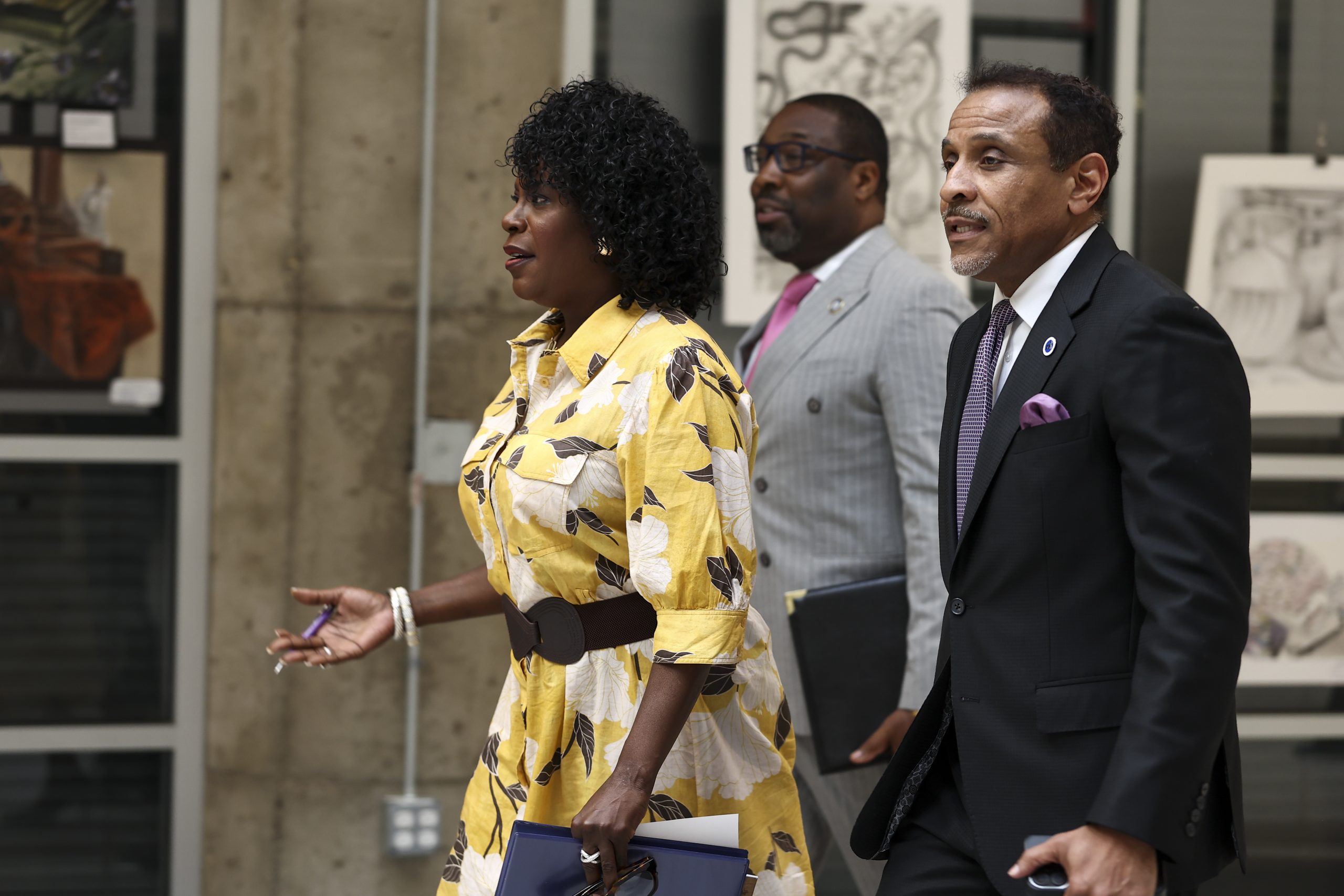
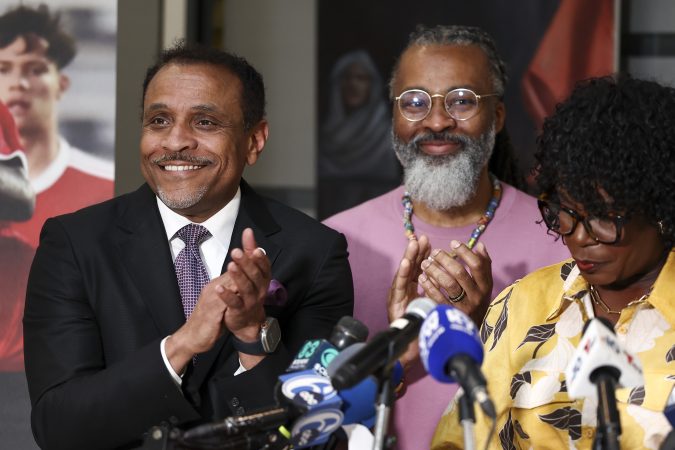
    Philadelphia School District officials and public education advocates were relieved Wednesday when Mayor Cherelle L. Parker announced she had reached a deal with City Council that will prevent 340 classroom positions from being eliminated amid the district’s funding woes.

    But as limited details about the agreement began to emerge Thursday, it became clear that the deal was less of a schools-funding program than a plan to figure one out over the next year — with the prospect of $216 million in city budget cuts taking effect if Parker and Council cannot eventually agree to adopt a new revenue stream.

    “Council President Kenyatta Johnson and I publicly committed to working together to find local, recurring, predictable, and dependable revenue sources for the School District of Philadelphia over the next year to ensure that we keep these critical positions,” Parker said Thursday during a city budget bill-signing ceremony. “That is our shared goal and our commitment.”

    But if Parker and Johnson do not make good on that commitment by July 1, 2027, the city will be on the hook for additional funding it has promised the school district between 2028 and 2031, including roughly $50 million in the first year of that time frame.
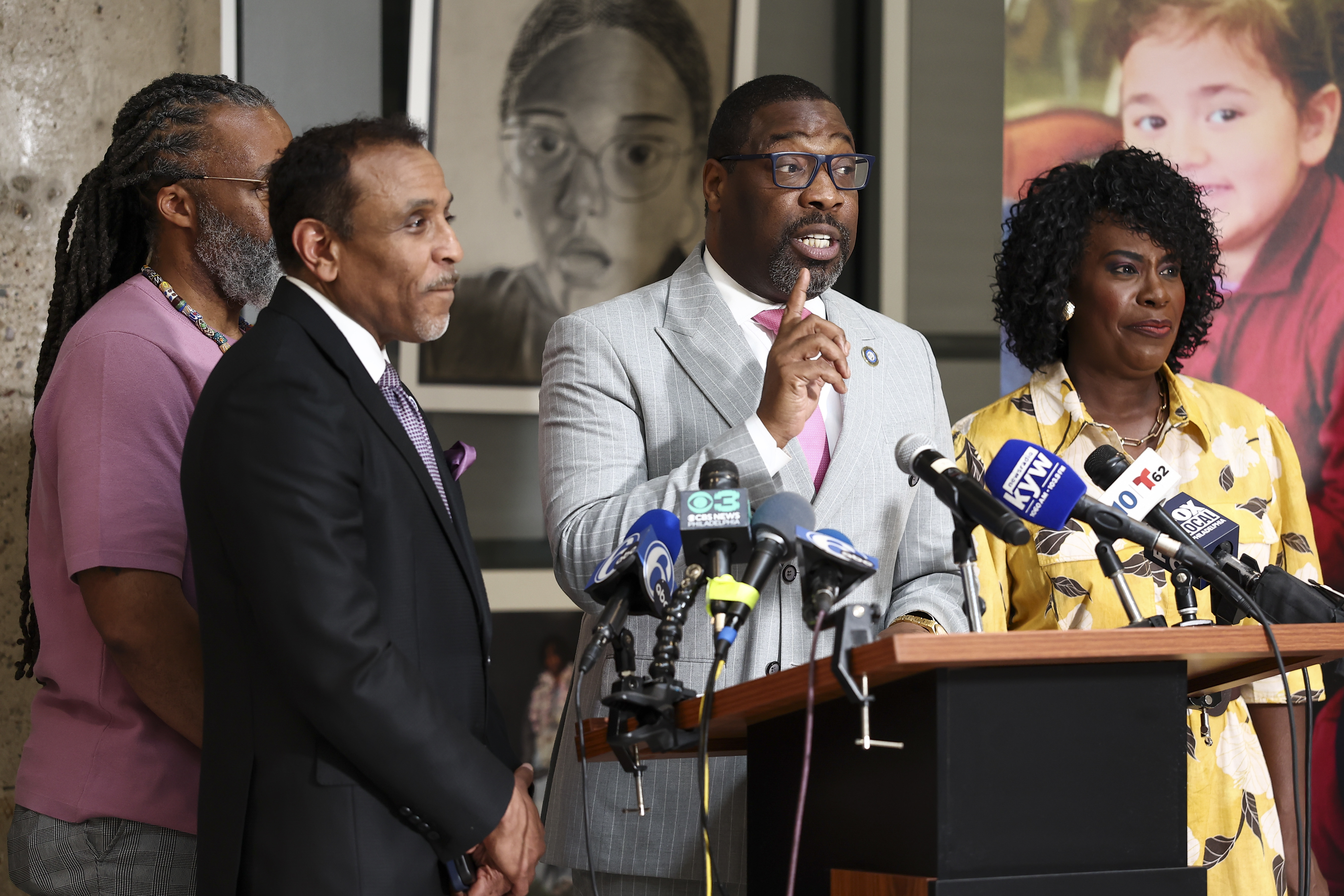
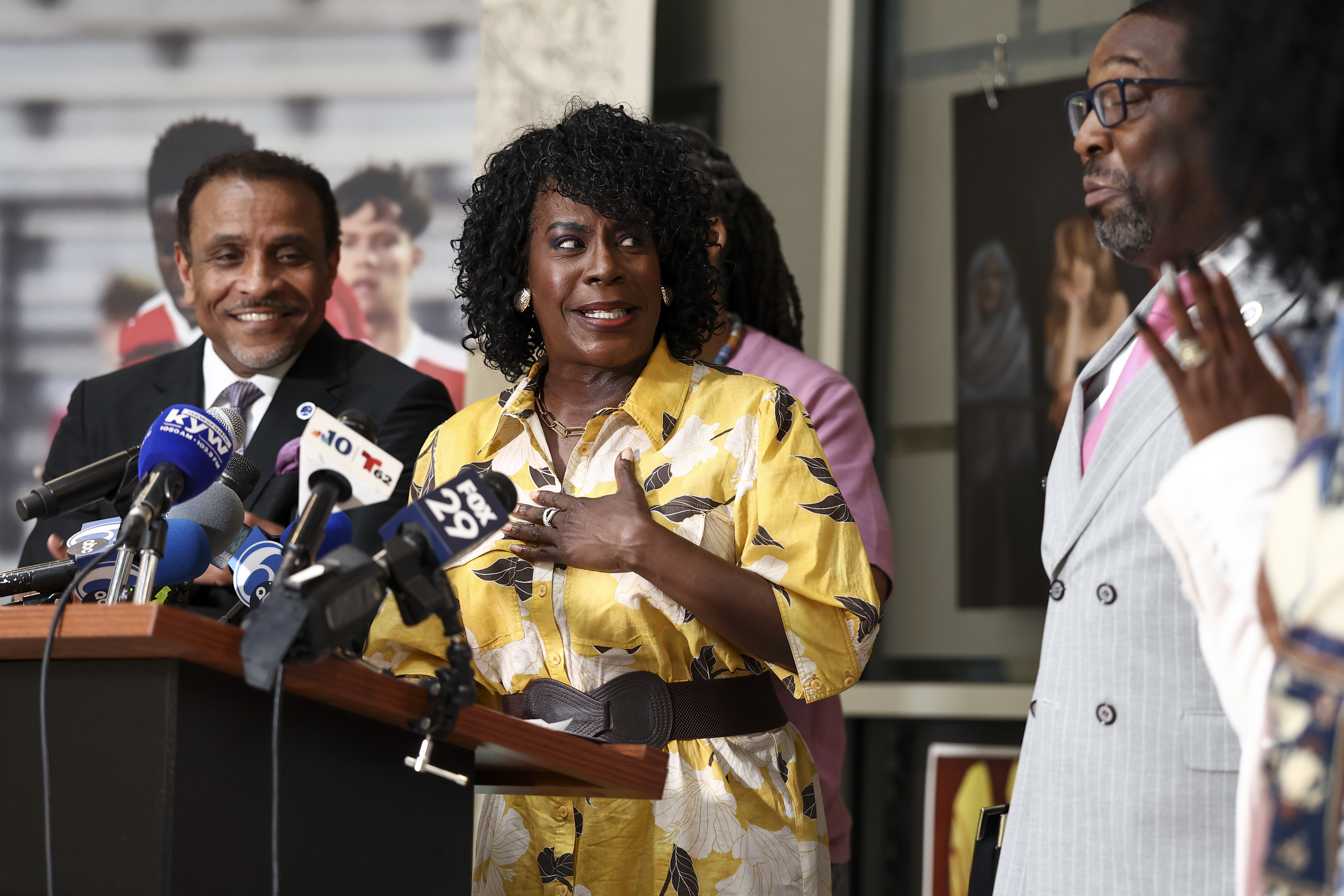
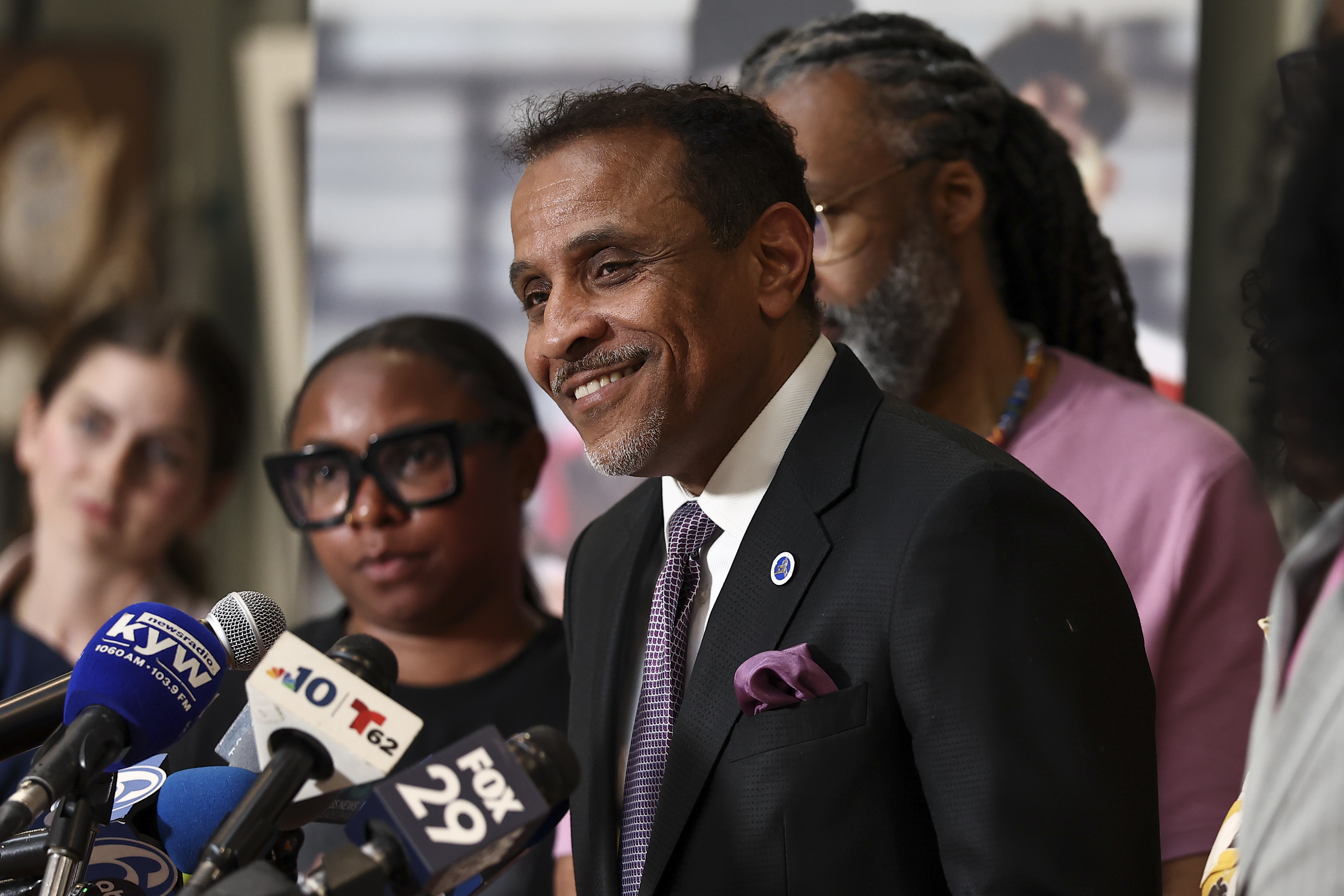
    Council President Kenyatta Johnson speaks during an announcement at the School District of Philadelphia Headquarters on Wednesday, June 10, 2026 in Philadelphia. Philadelphia School District officials will move to restore 340 classroom-based jobs that were slated to be cut, despite top district leaders saying last week that they did not have the recurring funding needed to keep the positions.Monica Herndon / Staff Photographer

    Parker, Johnson, Superintendent Tony B. Watlington Sr., and school board president Reginald Streater triumphantly unveiled the agreement to stave off the planned job cuts Wednesday. That announcement followed days of suspense after Council last week refused to pass the mayor’s proposed $1-per-trip rideshare tax, which would have funded schools, and instead advanced a city budget with about $50 million from one-time cuts that would be sent to the district as a Band-Aid for its $300 million budget gap.

    Council’s move prompted Watlington, with Parker’s backing, to say the positions would still be eliminated without an explicit promise that the money would be recurring, rather than a one-time allocation.

    Officials said they worked “around the clock” between Council’s rejection of the rideshare tax and Wednesday’s announcement, which Johnson jubilantly hailed as “Christmas in June.”

    On Thursday, education advocates and labor leaders heaped praise on the administration for the deal.

    Several district principals said Thursday they do not yet have details about exactly how much they will get back in their budgets, or how the dominoes will fall once positions are restored.

    Watlington had school leaders build their 2026-27 budgets as if the cuts were happening, and many of the affected teachers, counselors, and climate staff secured new positions, some in the district and some outside the system. The restoration will undoubtedly cause vacancies elsewhere, months after other districts filled jobs for the fall.

    “The win is making sure that those 340 jobs, with teachers, will not be laid off, and they will not have to second-guess if next year they’re going to come back to work,” Johnson told reporters Thursday. “And I think ultimately we can talk about sometime the ‘how’ we get to a particular end. But it’s always the ‘why.’ … At the end of the day, all of our young people still can have a chance to get a quality education.”

    ‘Budget sequestration’ comes to Philly?

    The agreement between Parker and Johnson in some ways hearkens back to Congress’ 2011 “budget sequestration” debacle, when President Barack Obama, a Democrat, and House Speaker John Boehner (R., Ohio) agreed to severe across-the-board spending reductions that would take effect automatically if lawmakers and the White House failed to reach a “grand bargain” to restructure the federal budget.

    They never reached an agreement — and the sequestration cuts, once thought of as too painful to countenance, eventually became reality.

    Parker and Johnson are optimistic their arrangement for the school district and the city budget will not suffer a similar fate.

    The future city budget cuts will be reflected in the city’s five-year plan, which must be approved by a state oversight board each year but is not binding legislation like annual taxing and spending measures. That gives City Hall more wiggle room to figure out how to find the money officials have now promised the district than Obama and Boehner had.
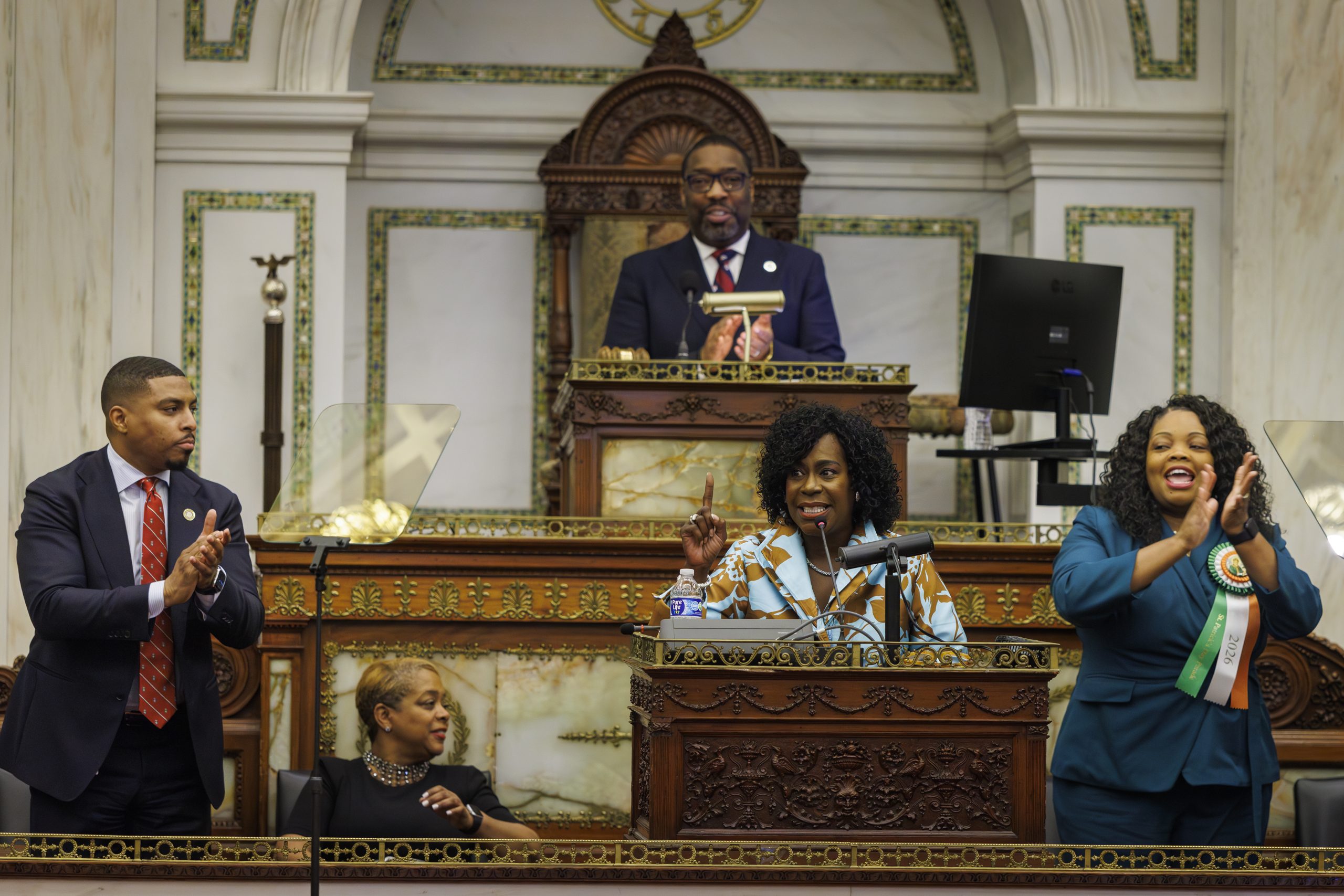
    Philadelphia Mayor Cherelle L. Parker is cheered by members of Philadelphia City Council at conclusion of the budget address, Thursday, March 12, 2026. From left are council members Nicholas O’Rourke, Cindy Bass and Katherine Gilmore Richardson. In background is council President Kenyatta Johnson. .Alejandro A. Alvarez / Staff Photographer

    Parker said her administration has already identified the cuts that will be reflected in the five-year plan when it is up for approval next month at the Pennsylvania Intergovernmental Cooperation Authority. But she has offered few specifics on what those potential cuts would entail.

    Parker said Thursday that the city could make up part of the difference by reducing future debt repayment obligations by reducing the size of planned city bond sales. She mentioned the city’s capital budget, which funds projects like repaving roads and renovating recreation centers, but did not say how much would be cut.

    And she said the city could halve its next borrowing related to her signature housing program, Housing Opportunities Made Easy. The city plans to take out a second tranche of $400 million in city bonds next year for H.O.M.E.; the potential cuts to free up money for schools could include taking only $200 million at that time, she said.

    “Where did we get the money from in future years?” Parker said Thursday. “In our five-year plan, we made cuts to very important programs associated with our capital budget and even our H.O.M.E. plan — but cuts that will never have to be realized once we all make good on that commitment to generate that approximately $50 million in new, predictable recurring revenue.”

    One complication in the negotiations to come is that Parker and all 17 Council members are up for reelection next year, and lawmakers are not eager to approve new taxes before voters head to the ballot box.

    The Democratic primary, which effectively decides almost all elections in Philadelphia due to the city’s deep-blue electorate, will be in May 2027. The next city budget, including all tax measures for the following fiscal year, must be enacted by the end of June 2027, leaving several weeks after the election for Council to potentially approve a new tax to provide money for the district next year.
    Philadelphia City Council members at City Hall in Philadelphia, Pa. on Thursday, June 11, 2026.Aidan T. Gallo / Staff Photographer

    Some possibilities do not involve new or increased taxes for residents. The city, for instance, could speed up its plans to increase the share of property tax revenue that is dedicated to the district. Currently, the district receives 56% of property tax revenue, while the city takes 44%.

    Additionally, Council last year approved a Parker proposal to enact 13 years of cuts to the business income and receipts tax and five years of reductions to wage tax. The city could generate more revenue by pausing those reductions.

    Parker said the agreement will allow Philadelphia to present a united front in Harrisburg as officials prepare to ask for more state funding for the city’s school district. State lawmakers in the past have pointed to disagreements among city leaders when rejecting requests for additional support.

    “This is the first time … in my lifetime that the city of Philadelphia, the administration, and the legislative branch, along with the superintendent of the School District of Philadelphia and the school board, will all travel [to Harrisburg] in unity, along with all of our union partners and all of our education advocates,” Parker said. “We can stand up when we arrive in Harrisburg and say … ‘Philadelphia’s homework is done.’”

    School advocates relieved

    Arthur Steinberg, president of the 14,000-member Philadelphia Federation of Teachers, said the news of Parker and Johnson’s agreement came just in time. Thursday was the last day of school for 114,000 district students; staff finish the school year Friday.

    “It was a very difficult year, and I’m glad that we’re able to tell them now that the positions that were cut due to this will be restored,” Steinberg said at a news conference Thursday morning outside Council chambers. “This means a lot to them. There’s stability over the summer. The communities will know who their teachers will be, and they’ll know where they’re going.”

    Arthur G. Steinberg (left), president of the Philadelphia Association of Teachers, and school superintendent Tony B. Watlington, Sr. (right) greet students as they arrive onstage for Mayor Parker’s announcement March 23, 2026, of $1 rideshare tax proposal to fund city schools.Tom Gralish / Staff Photographer

    Tiffany Johnson Williams said she was thrilled that cuts at her child’s school — Nebinger Elementary in South Philadelphia — and others would be rolled back.

    “I am equally grateful to Mayor Parker, Superintendent Watlington, and the school board for coming back to the table and working collaboratively to reach the solution that restored our critical positions,” Williams said at the news conference. “As a parent and educator and a youth advocate, I know that stability matters.”

    Councilmember Isaiah Thomas, who has had a testy relationship with the district and school board over the last several months, suggested it was time to move forward cohesively to push for more funding elsewhere.

    “I think where we are at this moment is recognizing that as we come together as Philadelphians, our job now is to use our advocacy initiatives and our leverage to try to get even more resources from Harrisburg,” Thomas said.

    Staff writers Anna Orso and Jake Blumgart contributed to this article.
  • Philly City Council will hold hearings to investigate police response during Pride celebration in the Gayborhood

    Philly City Council will hold hearings to investigate police response during Pride celebration in the Gayborhood

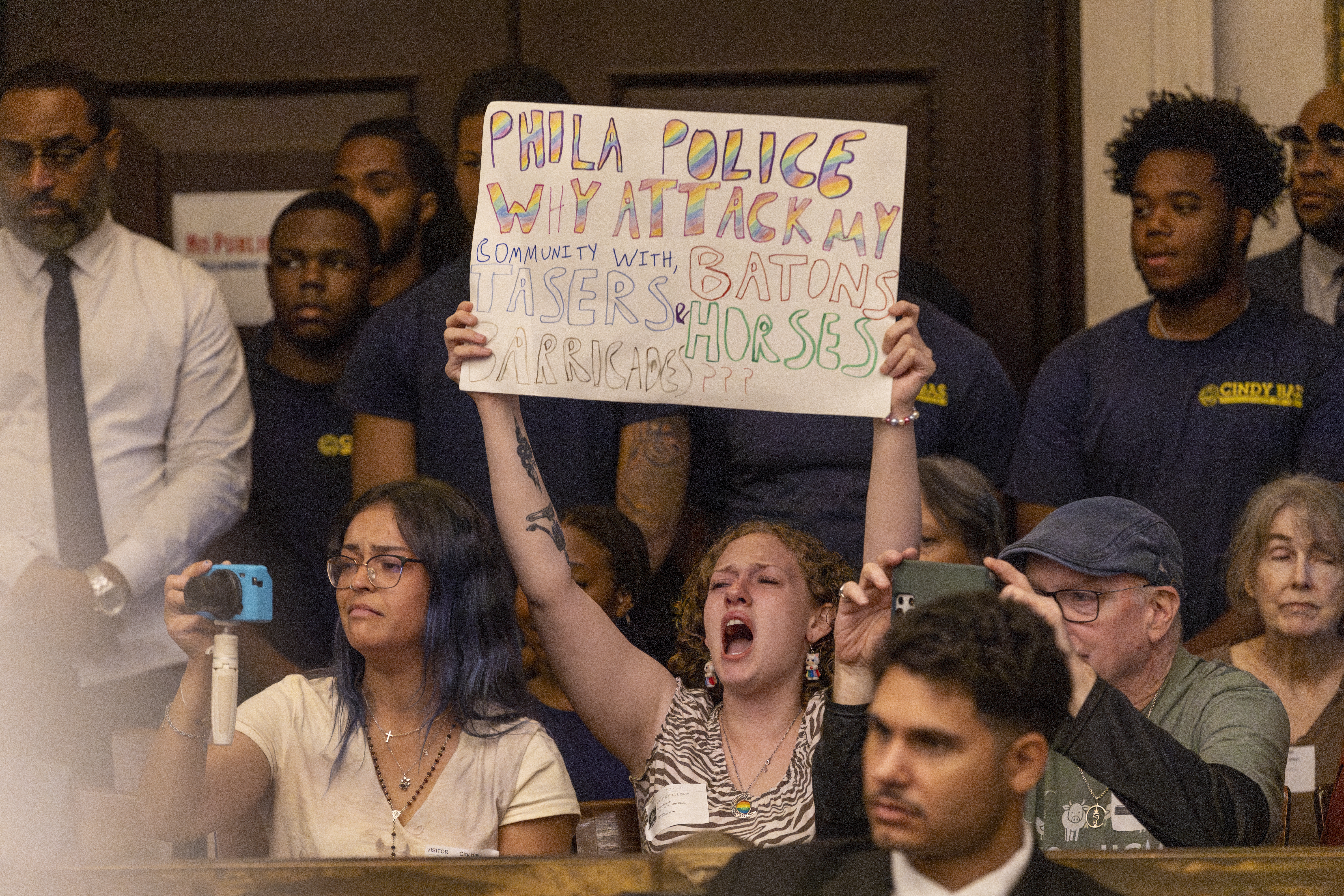
    Philadelphia City Council will hold public hearings to examine the police department’s crowd-control tactics used during Sunday’s Pride festivities in the city’s Gayborhood, a response that drew criticism from LGBTQ+ community leaders who have called the display of force unacceptable.

    Councilmember Rue Landau, a Democrat who represents the city at-large and is Council’s first openly LGBTQ+ member, introduced legislation Thursday to authorize Council to hold hearings on the response, citing video and eyewitness accounts of “aggressive police tactics,” such as physical confrontations between police and celebrators, as well as the use of mounted and motorcycle officers to disperse crowds.

    A large police presence at a Pride celebration in the Gayborhood on Sunday, June 8, 2026.Courtesy of Joshua Stokem

    Images and videos that circulated widely on social media this week showed officers pushing attendees, as well as police on horseback dispersing crowds from the sidewalk. Multiple officers were seen on video with their faces covered, and others barricaded Gayborhood streets. Police said 15 people were arrested.

    “It’s clear that this was a lack of communication, a lack of planning, and a lack of clear on-the-ground decision making of what to do in this situation,” Landau said Thursday.

    Holding hearings in Council “is not going to heal the pain and trauma that happened on Sunday,” Landau said, but it will “answer strategic and tactical questions.”

    ”We need to work towards a time when the Gayborhood is safe and open and welcoming to every member of the queer community, but especially to Black and brown queer people and trans people,” she added.

    Councilmember Rue Landau on Thursday, March 12, 2026.Alejandro A. Alvarez / Staff Photographer

    The city sponsored an official Pride march and festival on the Benjamin Franklin Parkway on Sunday, but many also gathered to celebrate in the Gayborhood, near some of the city’s best-known LGBTQ+ establishments.

    During an acknowledgment of Pride month in Council on Thursday, Mark Segal, the publisher of the Philadelphia Gay News and a fixture of the city’s LGBTQ+ community, said he was looking for accountability and wanted to know: “Who was in charge Sunday?”

    “No police should be wearing a mask in Philadelphia,” Segal said to applause. “No motorcycle should be up on the sidewalk. Police on horseback should not be hurting citizens. The police should not be running around with Tasers. People should not be punched. People should not be fenced off like animals.”

    Council unanimously approved a resolution to hold hearings. They are not likely to take place until fall, as Thursday was Council’s final meeting before adjourning for summer recess.

    The move to hold hearings is a notable step for a Council that has largely steered clear of public criticism of the city’s police department in recent years. While individual members have taken issue with discrete tactics or policies, most have been satisfied with the leadership of the force under Commissioner Kevin J. Bethel, who took the helm in 2024 when Mayor Cherelle L. Parker appointed him to the role.

    Bethel said the police department is investigating the agency’s response during the Pride festivities, and a police spokesperson said that five officers who wore facial coverings may face discipline for violating department policy.

    Parker said in a statement that senior members of the administration were examining the response. During an unrelated news conference Thursday, she said that “accountability will be reached.”

    “Rest assured we’re going to do the research. We’re going to find out what happened and where accountability is appropriate,” Parker said.

    People fill the street during the Philly Pride Festival on the Ben Franklin Parkway on Sunday, June 7, 2026 in Philadelphia.Monica Herndon / Staff Photographer

    More than a dozen LGBTQ+ residents and Pride attendees came to Council on Thursday to tell lawmakers about their experiences Sunday and call for an investigation.

    Philadelphia resident Jazmyn Henderson, a longtime activist in the city, was in the Gayborhood on Sunday and said she witnessed police using aggressive crowd-control tactics.

    She said she did not think Council’s resolution was enough to make her feel safe going forward.

    “I think City Council is delusional,” Henderson said. “I think the city is delusional, and they think that that resolution meant anything to any of the Black and brown people who were brutalized, assaulted, hurt, or mistreated by the cops on Sunday.”

    Sergio Cea, political director of the progressive political group Reclaim Philadelphia, testified during Council’s public comment section that he was tear-gassed by officers in West Philadelphia during a wave of civil unrest in 2020 and, following Sunday’s events in the Gayborhood, he does not feel safe in the city from what he described as “police violence.”

    “I really welcome the resolution that Rue Landau is presenting, but we need to go beyond that,” Cea said. “We are not safe.”

  • Ms. Rachel goes to Washington, carrying letters from children in ICE custody

    Ms. Rachel goes to Washington, carrying letters from children in ICE custody

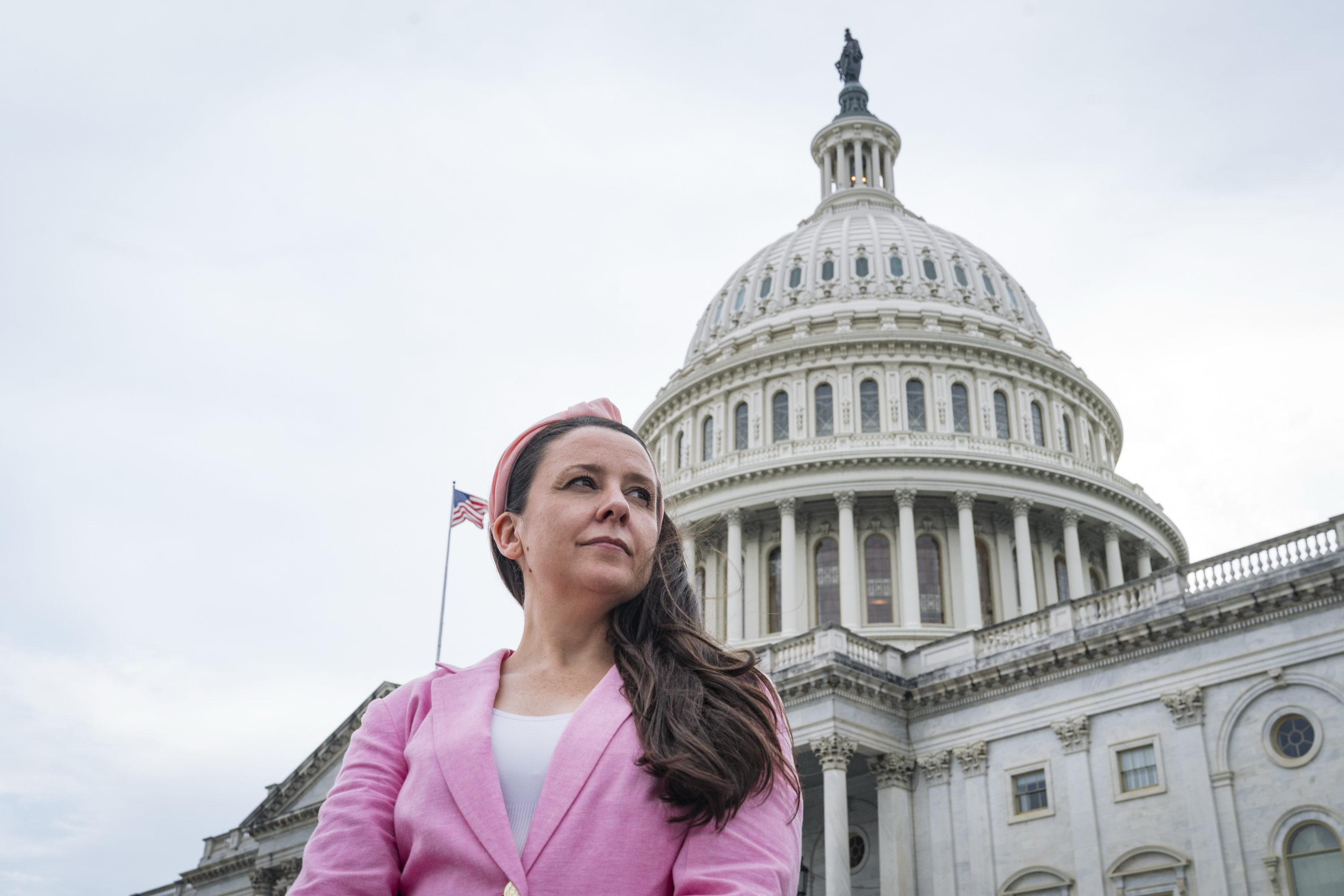
    WASHINGTON — Rachel Griffin Accurso — Ms. Rachel, to her millions of followers — made her first visit to Capitol Hill on Tuesday afternoon, wearing a bubblegum-pink linen suit and wheeling a black suitcase filled with stapled packets of handwritten letters and drawings. They were the words and artwork of children, all of whom have been — or remain — in the custody of U.S. Immigration and Customs Enforcement at the nation’s only family immigration detention center.

    “I cry a lot,” read one letter from a 7-year-old boy held at the Dilley Immigration Processing Center in South Texas. “I want to get out of here.” Among the illustrations were portraits of crying faces, families standing together behind bars and a red house that a 9-year-old child longed to return to. Accurso clutched one packet in her hand, ready to offer it to the first lawmaker she encountered.

    She had come with a plan: Over a brief two-day visit to Washington, she wanted to deliver the letters and drawings to members of Congress and tell them about the children she’d met. Her goal was to urge every official she spoke with — Democrats and Republicans alike — to end family detention and reunite the children and parents who had been separated by ICE enforcement.

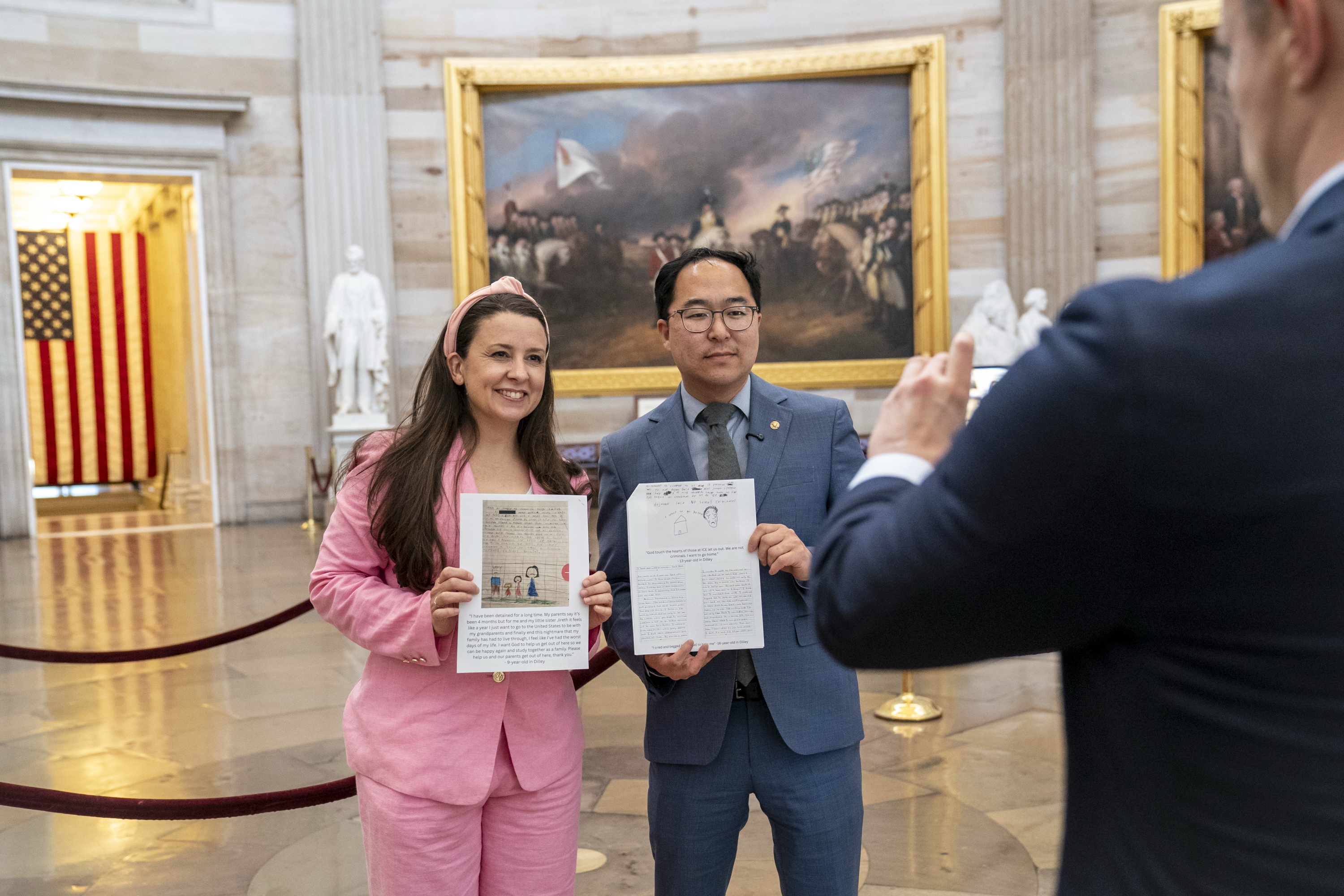
    Sen. Andy Kim (D., N.J.) holds the letter of a child detained at the Dilley Immigration Processing Center in southern Texas. Maxine Wallace

    It was a new foray into the political realm for the early-childhood educator, who became the reigning star of children’s media with her wildly popular educational videos on YouTube and Netflix. Through her adult-facing social media platforms, Accurso has also emerged as a powerful advocate for vulnerable young people around the world, making headlines — and sometimes drawing backlash — for speaking out on behalf of children in Gaza, Sudan, and other humanitarian crisis zones.

    Now her efforts include children closer to home. Over the past few months, Accurso has become an increasingly prominent voice in the debate over family immigration detention and the mounting concerns about conditions at the Dilley detention center. She has spoken directly to 10 families there via video calls, she said, and has publicly shared clips from several of those conversations with her 5 million Instagram followers. Accurso helped launch a petition to close the Dilley facility that has more than 324,000 signatures, including dozens of celebrities (Ben Stiller, Ayo Edebiri, Cynthia Nixon, and John Legend are among the many signatories). She also shared an open letter addressed to CoreCivic, the private prison contractor that has operated Dilley since its Obama-era construction in 2014: “What we have to agree on is not harming children,” she wrote.

    When Accurso arrived on Capitol Hill along with her husband, Aron Accurso, they were welcomed by Sen. Andy Kim (D., N.J.). He offered them a brief tour through the Capitol, noting that the Senate had voted just days before to approve $70 billion in funding for President Donald Trump’s immigration enforcement agencies. “When you’re talking about this,” he said, nodding to the packet in Accurso’s hand, “what’s funding this? That’s what’s happening in this building.” As they spoke, the House was preparing to vote on the same funding package.

    Accurso and Kim in the Capitol Rotunda on Tuesday.Maxine Wallace

    Accurso and Kim posed for photos and filmed a brief video together in the Capitol Rotunda, then parted ways before she headed to the Hart Senate Office Building.

    She was stopped repeatedly by enthusiastic interns and staff members who asked for selfies to show their own children, or their nieces and nephews. “What’s their name?” Accurso always asked, before deftly switching the phone setting to record a personalized video for each child: Hi, Ava! Hi, Maeve! Hi, Hugh!

    Then she would steer the conversation toward the names of other children — some she had spoken with personally, and others whose circumstances were recounted to her by lawyers, advocates and journalists working with families at the Dilley facility. There was Amalia, an 18-month-old who suffered a near-fatal health crisis while in ICE custody at Dilley; Deiver, a 9-year-old who missed his friends at school and wanted to participate in the state spelling bee; Guri, a 12-year-old who has been detained with his family since February and has experienced chronic blood in his stool for months.

    Accurso poses for a group photo with some staff from the office of Sen. Jeff Merkley (D., Ore.) on Tuesday. Maxine Wallace

    Accurso was greeted with joyful shouts of recognition in the office of Sen. Jeff Merkley (D., Ore.). She left a packet with the staff of Sen. John Cornyn (R., Texas) and noted that they seemed friendly. She walked into the office of Sen. Lisa Murkowski (R., Alaska) with a cheerful, lilting “Hi, friends!” and the staff member’s subsequent gasp — “Oh my gosh!” — was audible down the hall.

    “Well, I hope this works,” Accurso said, as the clock ticked to a quarter past 6 and it became clear that most of the offices were now closed. She had visited 10.

    So she headed for the exit and learned the news as she was leaving: Minutes before, the House had narrowly passed the $70 billion funding package — including $38 billion for ICE enforcement and $26 billion for the Border Patrol. The vote paved the way for the agencies to build a detention system and pursue what Trump had pledged would be the largest mass-deportation operation in the country’s history.

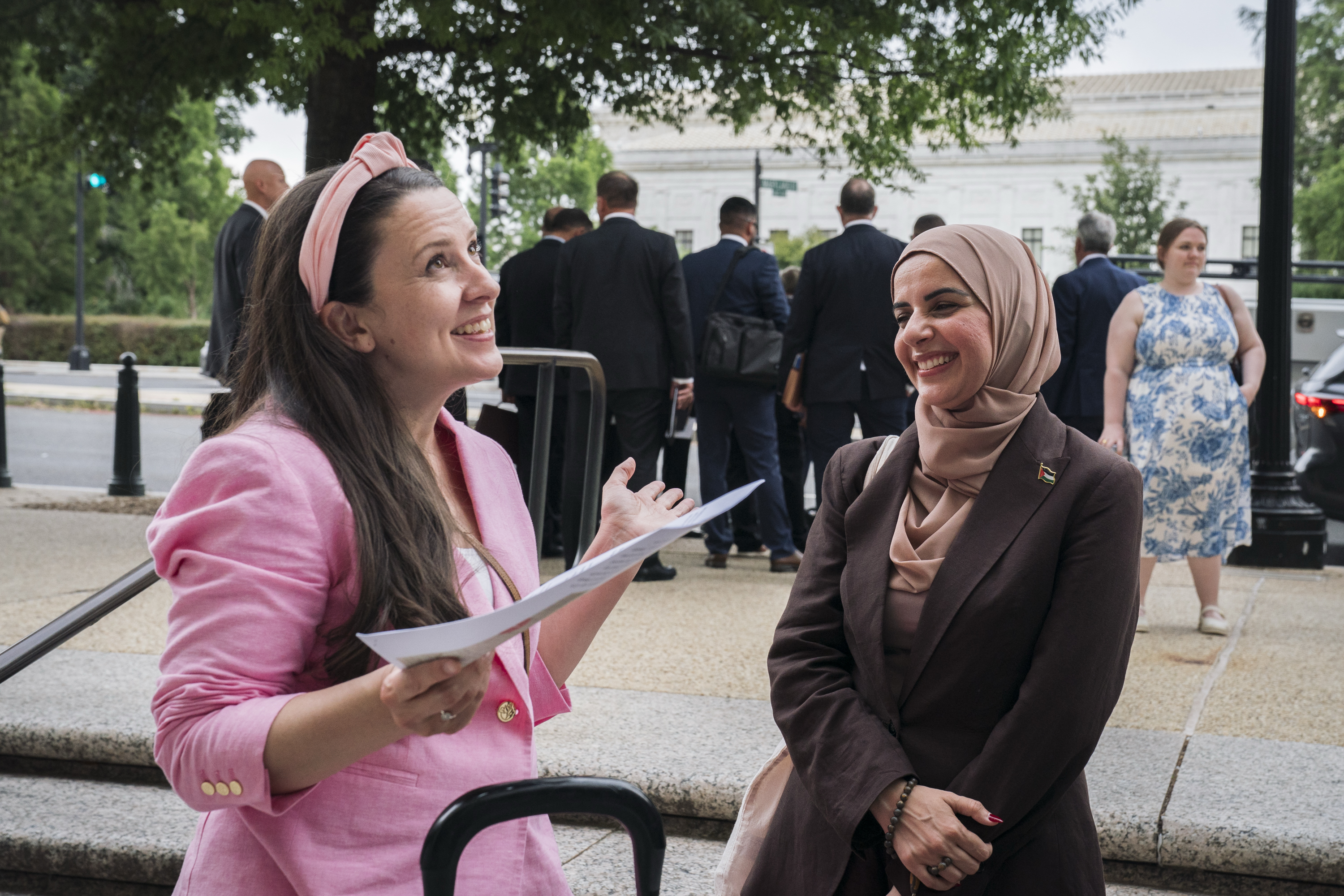
    Accurso on Tuesday outside the Hart Senate Office Building with Leqaa Kordia, a Palestinian woman detained for a year amid a Trump administration crackdown on protesters last spring.Maxine Wallace

    The day before she took the train to Washington from her home in New York, Accurso visited children and families at a hospitality tent set up by volunteers outside Delaney Hall, an immigration detention center in New Jersey where demonstrators and law enforcement have clashed in recent weeks.

    Accurso delivered toys and art supplies to the tent and, with the families there, sang a song written by the Peace Poets along with children detained at Dilley: “I’ll sing from here and you sing from there, together we’ll sing down the walls everywhere.”

    She spoke with a 13-year-old girl who described what it felt like to have only brief visits with her father, a truck driver who has lived in the United States for 20 years and supports his wife and three children, the youngest of whom has complex special needs.

    “We went to go and visit my dad, and it was really sad,” the teen told Accurso, who wiped away tears as she listened. “He looked like a prisoner. But I knew in my heart that he shouldn’t be in there.”

    Earlier this year, as she read more about the children being swept up in ICE enforcement operations, Accurso said, she began contacting legal experts, advocates, and journalists on the ground in Texas who detailed alarming conditions at the facility and helped connect her to families detained together there.

    Those parents described children who were deteriorating physically and mentally; several kids said the water in the facility made them feel ill. Autistic children were suffering in particular, Accurso said; one nonverbal 5-year-old named Gael had not had a bowel movement in nine days and had begun hitting himself in distress. Families told her that their children couldn’t sleep because the lights were on all night.

    She felt haunted by those conversations, Accurso said later, in an interview with the Washington Post: “I kept thinking, ‘How is this happening?’”

    Several children and teens who were included on Accurso’s social media platforms were subsequently released from detainment, including Gael; Deiver, the 9-year-old who begged to go to the state spelling bee; and Olivia Mabiala Andre, a 19-year-old asylum seeker and nursing student. Accurso posted about her gratitude and relief in those moments, but she said she is acutely aware of how many children remain behind, including those who don’t feel safe speaking publicly about what’s happening to their families.

    As of early June, about 320 people were at the Dilley center, including nearly 90 children, according to Faisal Al-Juburi, co-CEO of the Texas-based nonprofit Refugee and Immigrant Center for Education and Legal Services (RAICES). In the past year, he said, RAICES has documented roughly 1,500 medical concerns from families held at Dilley.

    Accurso has highlighted concerns voiced by medical experts: In April, responding to mounting reports of dangerous conditions for children at the Dilley center — including unsafe water, the spread of measles, delayed medical care and declining mental health — the American Academy of Pediatrics requested urgent access to the facility, reiterating that “no time in detention is appropriate for a child.”

    A spokesperson for CoreCivic said in an emailed statement that its facilities are safe, and noted that while some lighting is on during overnight hours, “lighting over sleeping areas is turned off during sleeping hours.”

    The spokesperson referred to a statement by Kristen Dauss, the company’s vice president and chief medical officer: “The children and their families at DIPC receive care that is clinically rigorous, federally overseen and delivered with dignity.” Dauss added that children receive clean water from the same regularly tested municipal source that supplies local drinking water, appropriate nutrition and hygiene supplies.

    Dauss echoed those points in a recent response to Accurso’s letter to CoreCivic. In a separate emailed statement, a spokesperson for the Department of Homeland Security echoed that families at Dilley are provided appropriate living conditions and medical care.

    When Accurso talks to people about the firsthand accounts she has heard, “they’re shocked,” she said. “Why don’t people know? But I also feel like I didn’t know the extent of what was happening, either. We have to get the information out.”

    This underscores the value of Accurso’s work and platform, said Elora Mukherjee, an attorney who represents numerous families detained at Dilley and serves as director of the Immigrants’ Rights Clinic at Columbia Law School. With her vast audience, Accurso represents a different way to inform people, beyond the reach of mainstream media: “Overwhelmingly, the American public still does not realize that, as a nation, we are imprisoning babies, toddlers and children who have done nothing wrong,” she said. “Sustained attention on cruelty against children is critically important.”

    Al-Juburi noted that although the country’s current immigration policy represents “generations-long, systemic issues that need to be addressed, fundamentally, by our legislative branch,” there is a meaningful impact when prominent people raise their voices.

    Culture often shifts before the law does, he said: “We will not see policy change until the public demands it. And that is what gives me hope when people like Ms. Rachel turn their spotlight onto a cause like this.”

    The sun was falling through mottled clouds as Accurso left the Hart Building and wheeled her suitcase down Constitution Avenue toward the Capitol. She wanted to record a video there for the children detained at Dilley and the ones waiting in the tent outside Delaney Hall. She would tell them that she’d brought their letters and their artwork to the place where decisions about their future were made. “I have your words right here,” she would say into her phone camera, holding the stapled packet close to her chest. “I’m always going to stand with you.”

    But when she arrived at the building, she first took a moment to sit quietly on the empty steps. The House’s vote, and its ramifications, were at the forefront of her mind. She felt a heavy sense of sorrow and defeat, she said.

    She adjusted her knotted pink headband and looked up toward the towering dome, bathed in the softening light of dusk. She thought about how young people often stop her — more than a dozen had done so just in the past few hours — to thank her and urge her to keep going. The next day, she would come back and meet with more elected officials in the House. She would make sure that all 535 packets of letters and drawings were delivered to every member of Congress. She would keep telling the stories of the children she’d met.

    “I’ll never stop trying, for them,” she said. “I can’t say, ‘I’m just one person, so I’m not going to make a difference.’ What if everyone said that?”

  • FIFA’s yearslong effort to woo Trump culminates with the World Cup

    FIFA’s yearslong effort to woo Trump culminates with the World Cup

    For the past year, FIFA, the governing body of international soccer, has leased an office on the 17th floor of New York’s Trump Tower that has sat all but empty. The rent goes to President Trump’s family business, but soccer officials say the space sits largely idle.

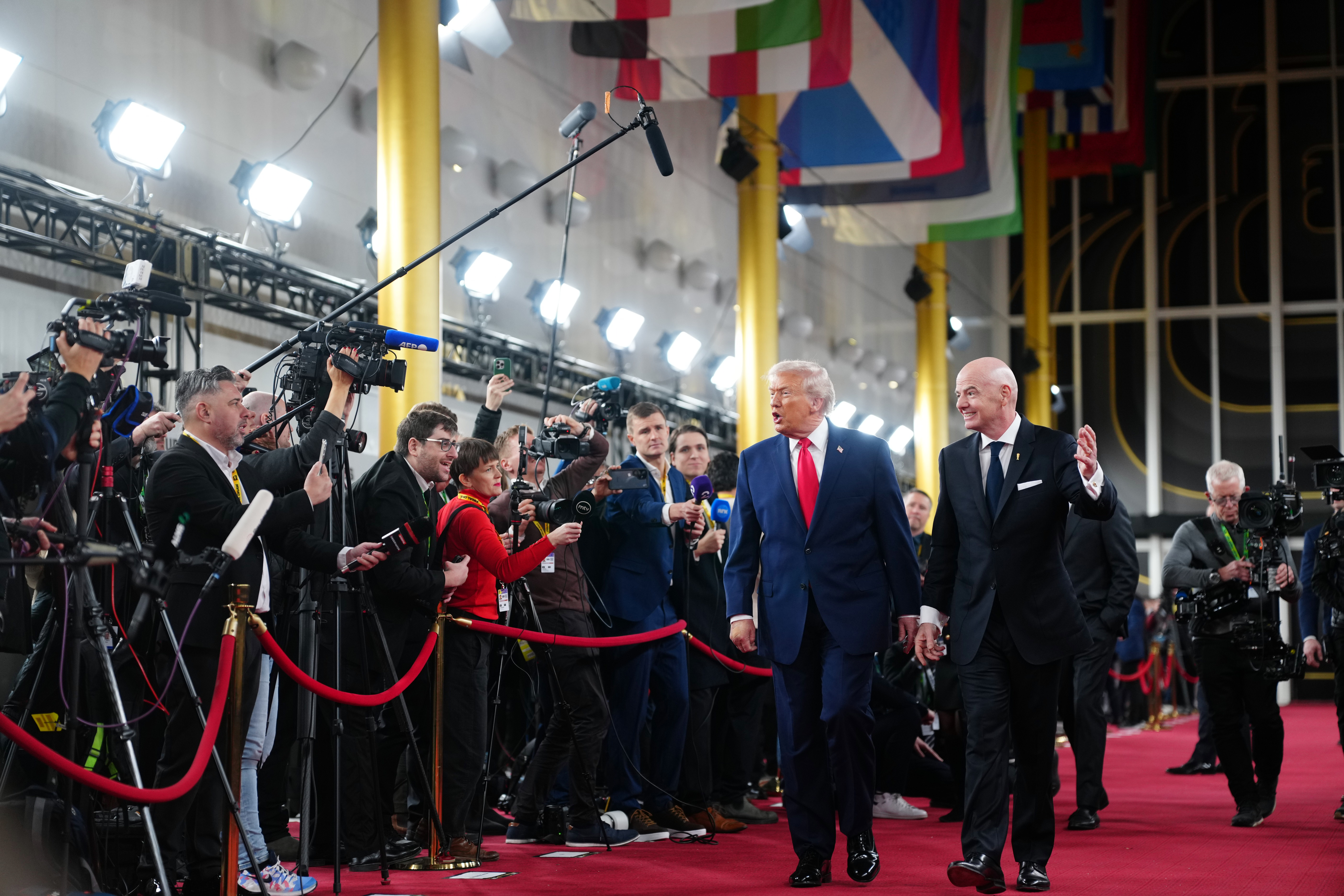
    Paying rent to the Trumps was the choice of Gianni Infantino, FIFA’s president, who has made being close to Trump a top priority. He has lavished the president with praise, trophies and a medal. He has made pilgrimages to Mar-a-Lago, the Trump National Doral golf club and even the “Melania” documentary premiere.

    Infantino has publicly boosted the president through impeachments and plummeting poll numbers.

    It was all in service, Infantino’s supporters say, of ensuring that the World Cup, which begins this week, goes off without a hitch. Trump could disrupt the games in any number of ways. Infantino, allies say, is handling a volatile president who responds to praise and gifts.

    “He’s straightforward in terms of what you need to do to manage the relationship,” said Majed Al Sahib, a soccer official from Saudi Arabia who said that Infantino was being pragmatic.

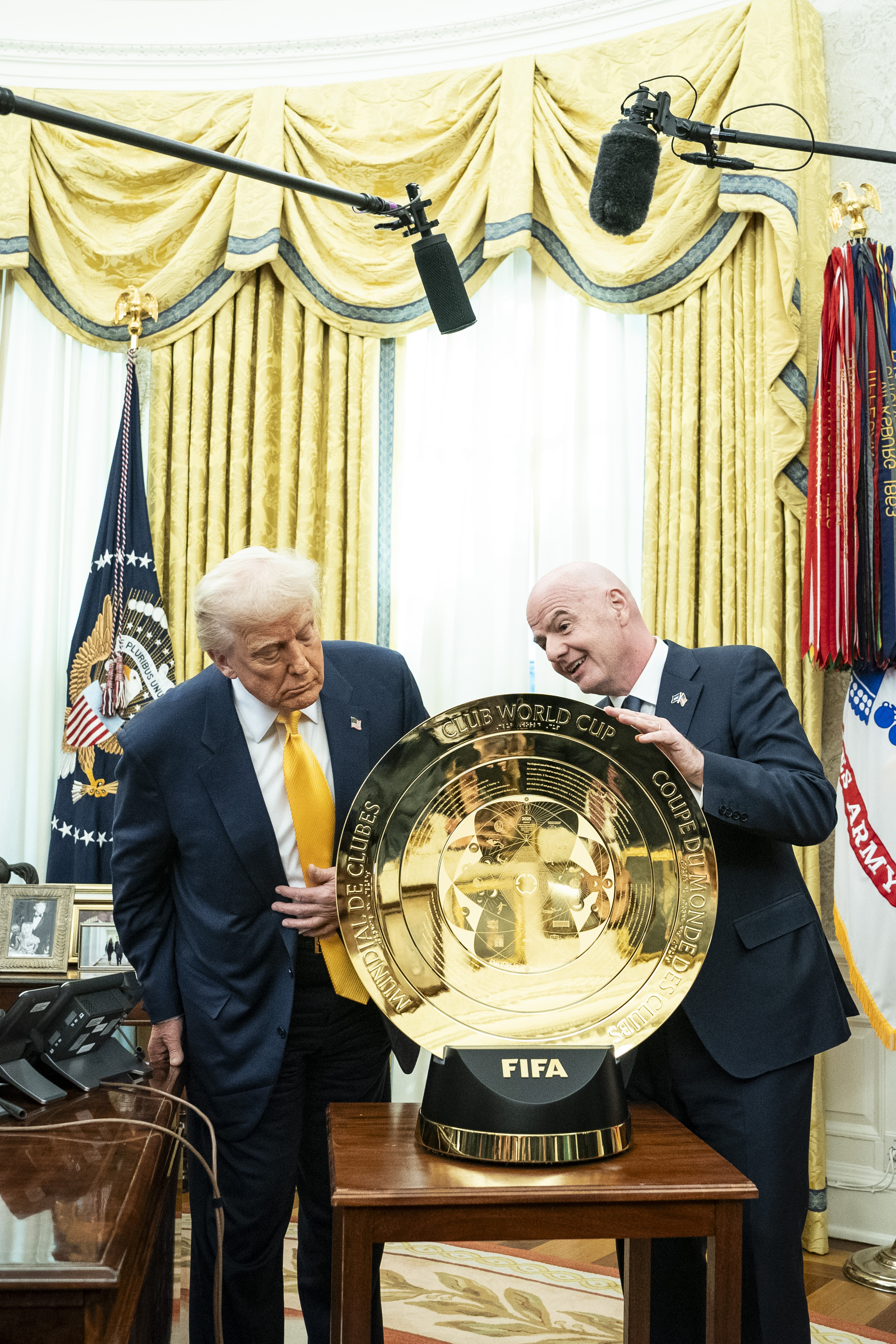
    President Trump and Gianni Infantino at the White House in 2025 with a trophy intended for the winner of the Club World Cup competition. Trump kept it, and FIFA commissioned another.Haiyun Jiang / The New York Times

    FIFA officials are clear about what they want from the World Cup. They want a higher profile in the United States and more growth in the world’s biggest consumer market. They also want to shed the reputation for corruption and cartoonish excess that led to Justice Department prosecutions.

    Infantino failed to woo the Biden administration, former government officials said. But he found a receptive ear in Trump, who calls him “the king of soccer.” A decade ago, soccer executives were terrified to travel to the United States, fearing they’d be arrested. Now, Infantino is an Oval Office regular.

    Infantino presided over the previous two World Cups, in Russia and Qatar, and drew criticism for cozying up to autocrats in both countries. His amity with Trump has him once again defending his way of operating in what is supposed to be a politically neutral position.

    “I think it is absolutely crucial for the success of a World Cup to have a close relationship with the president, with the government,” Infantino said last year. “I have a lot of friends.”

    This World Cup will be a test of whether that friendship pays off.

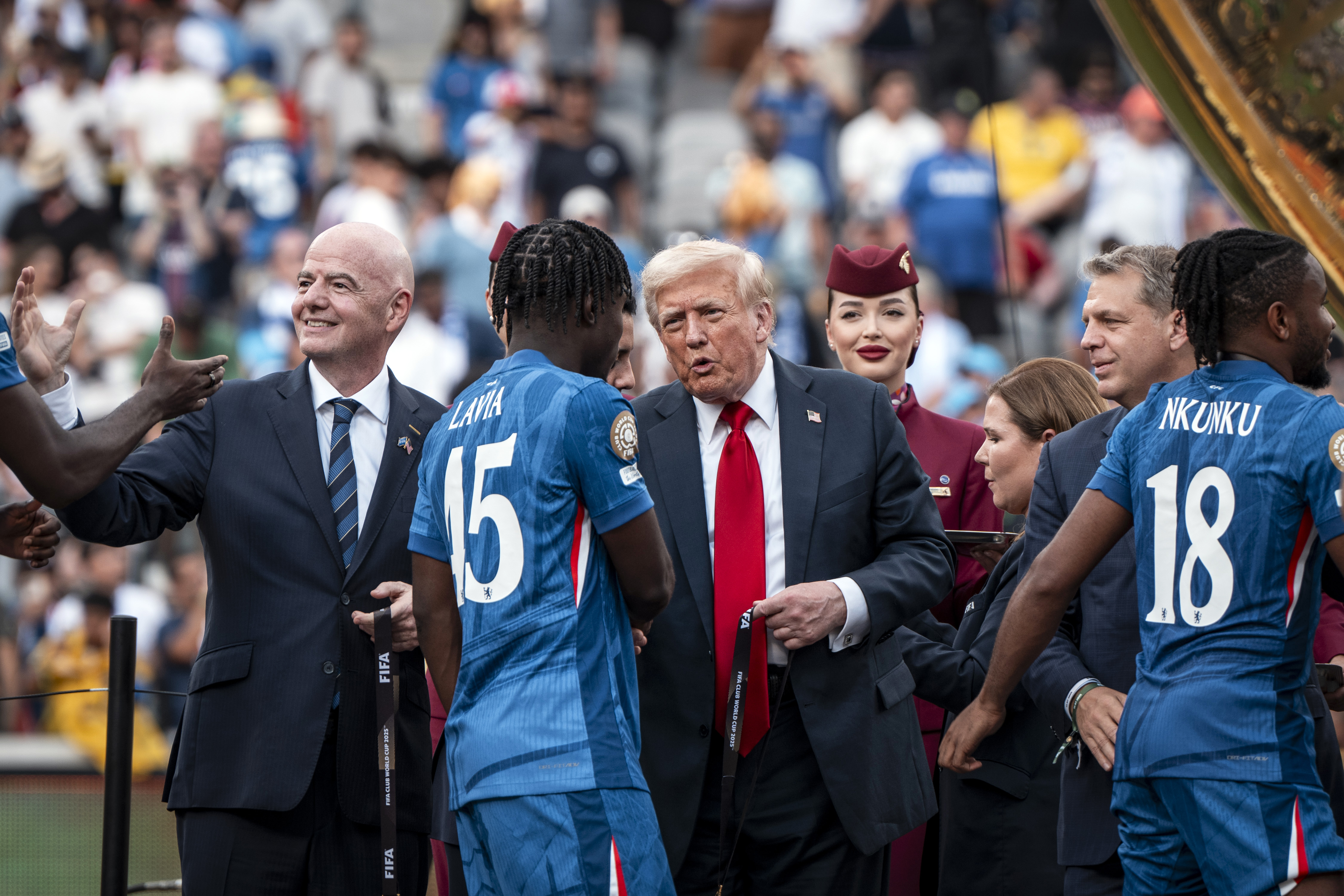
    Infantino and President Trump onstage during the Club World Cup final in New Jersey last year.Haiyun Jiang / The New York Times

    A top FIFA official says he believes there is an unofficial understanding that the authorities will not conduct immigration enforcement outside of stadiums. (A FIFA spokesman denied any deal and said enforcement was up to the government. The Department of Homeland Security did not address the question.)

    The Justice Department also recently dismissed long-running criminal charges as part of its FIFA investigation. Prosecutors said the case “doesn’t fit within the administration’s priorities.”

    And Trump seemed to defer to Infantino this spring on allowing Iranian players to come to the United States. “If Gianni said it,” the president said, “I’m OK.”

    Still, Trump undercut Infantino recently by criticizing the high cost of tickets. And whatever reassurances may have been made on immigration, support staff for Iran’s national team was denied visas, along with a Somali referee.

    Infantino’s coziness with the president also appears to be influencing FIFA in Trump-like ways that could outlast the tournament.

    FIFA is exploring hotel deals that would license its name just as the Trump family has long done, according to three people familiar with the discussions. He has also expressed interest in launching a FIFA cryptocurrency, just as the Trumps have done.

    A FIFA spokesman said the organization was paying “market rent” in Trump Tower and that the office would be used during the World Cup.

    Inside FIFA, many officials privately question whether this has all been in service of Infantino himself. He has accompanied Trump on state visits, sat center stage at the inauguration and has attended diplomatic events.

    What does any of that, his critics ask, have to do with soccer?

    Infantino declined to be interviewed. His yearslong campaign to curry favor with Trump, and the hand-wringing it has prompted, was described in dozens of interviews with FIFA insiders and others close to the two men. Some spoke on condition of anonymity to describe private conversations.

    “Infantino thinks he’s the leader in the relationship,” said Sepp Blatter, the former FIFA president whose ouster at the height of the corruption scandal paved the way for Infantino’s ascension. “But nobody can lead Trump.”

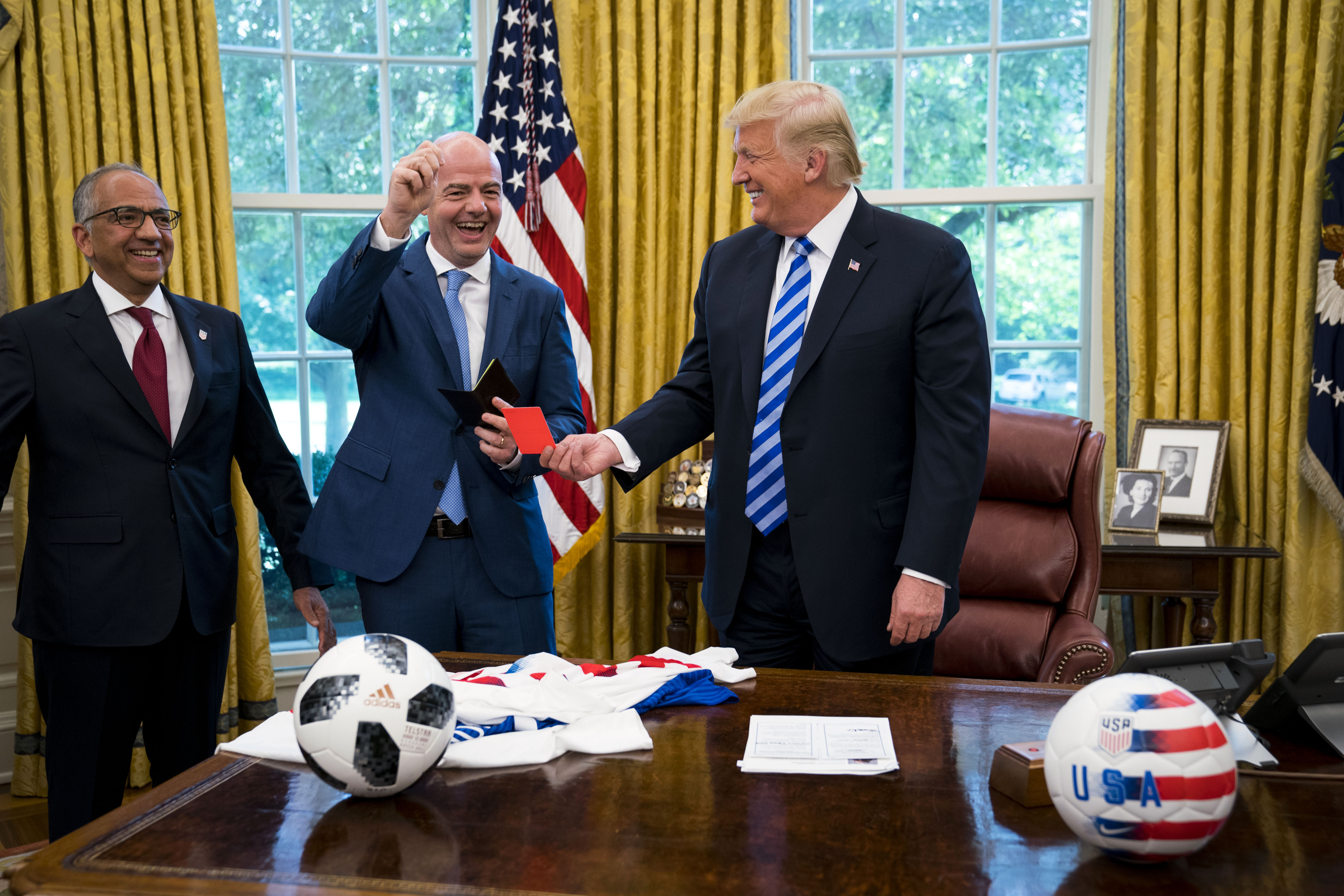
    Infantino meets with Trump for the first time in the Oval Office and jokes about penalty cards.Doug Mills / The New York Times

    The first meeting

    The men first met in the Oval Office in the summer of 2018. The United States had just won the right, along with Canada and Mexico, to host the World Cup, and the mood was celebratory.

    “You’re pretty famous, right?” Trump asked. “Pretty important and pretty famous.”

    “Yeah,” Infantino replied. “It looks like it.”

    Infantino, a lawyer and the son of an Italian immigrant who worked on Switzerland’s railways, had secured the FIFA presidency the same year that Trump was elected.

    In that first White House meeting, he presented the president with a Trump jersey and a set of penalty cards that the men joked could be used on the news media.

    “You are part of the FIFA team now,” Infantino said.

    It was a remarkable turnabout. Three years earlier, the Justice Department had unveiled an indictment detailing corruption in world soccer. Major brands did not renew their sponsorship deals, and the organization suffered financial losses.

    But if Infantino was eager to welcome the president onto FIFA’s team, he quickly found himself on the Trump Team — a pretty important, pretty famous endorser of a president in the middle of an impeachment inquiry.

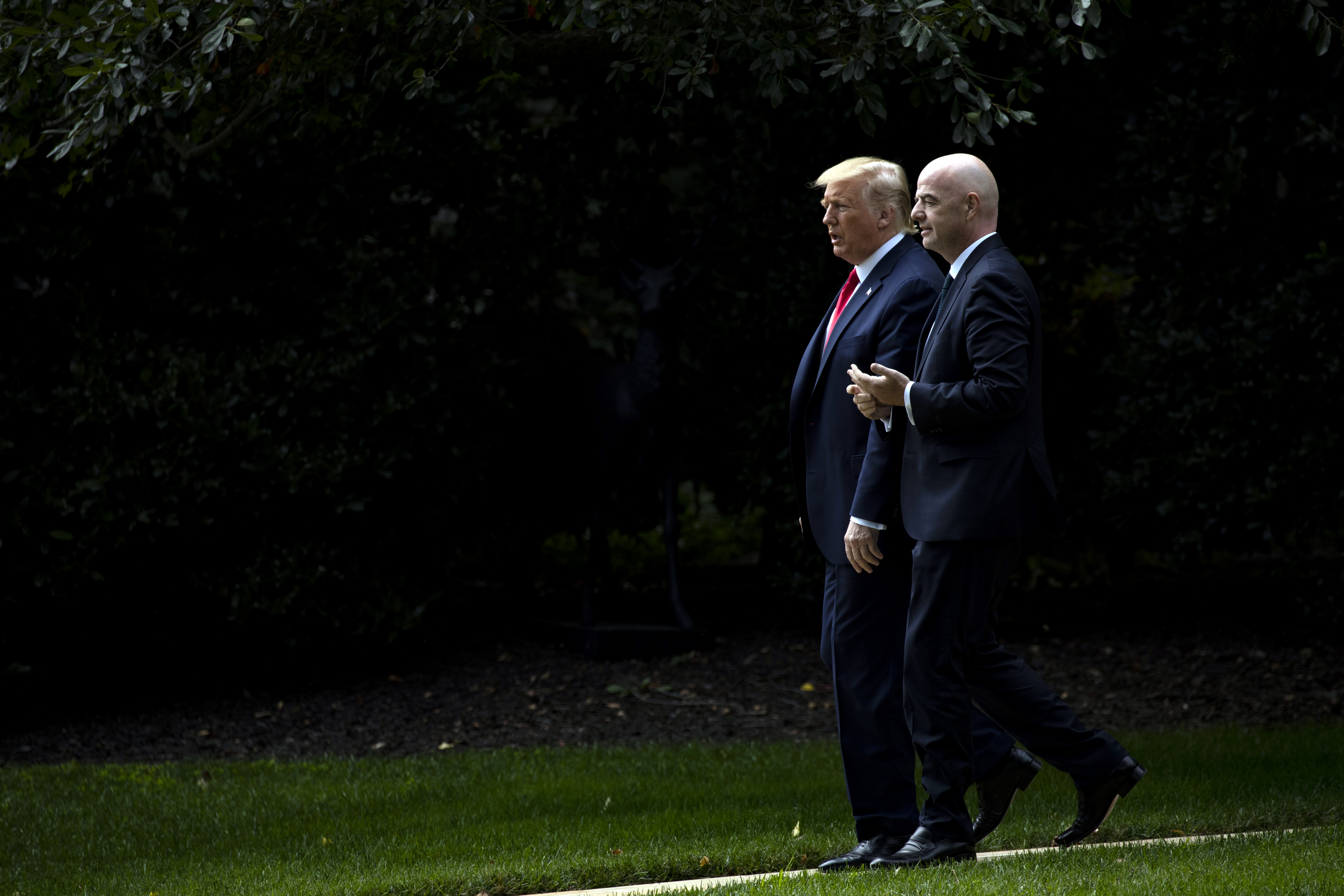
    “Gianni, we’re going to have to extend my second term,” Trump said on the South Lawn in September 2019, as Infantino smiled beside him.

    Months later, as lawmakers debated charges of obstruction and abuse of power against Trump, Infantino praised him before business leaders in Davos, Switzerland.

    “You might wonder why the president of FIFA is introducing the president of the United States of America,” Infantino said. He joked that it had been suggested that the two of them might be the most important people in attendance.

    Soon, Infantino was back at the White House, this time as an unusual guest for the signing of the Abraham Accords, which established diplomatic ties between Israel and some Arab nations. He also arranged a “courtesy visit” with the attorney general, who was overseeing the FIFA cases.

    “I am fully convinced,” Infantino said after that meeting, “that the credibility and reputation of FIFA is being restored at the highest level.”

    Then came the 2020 election, and Infantino’s fortunes changed.

    President Trump and Infantino attended the World Cup draw at the John F. Kennedy Center for the Performing Arts last December. FIFA had planned to have the event in Las Vegas but moved it to Washington.Tierney L. Cross / The New York Times

    A chilly reception, and then a thaw

    President Joseph R. Biden Jr. proved to be less welcoming to FIFA than his predecessor. There were no Oval Office greetings.

    Administration officials said they had been wary of getting too close to a scandal-tainted organization. They saw no benefit in putting the president alongside Infantino.

    “There was definitely a hands-off, keep-them-at-a-distance approach at the White House,” said Caitlin Durkovich, a former National Security Council official who helped oversee World Cup planning. She said FIFA repeatedly tried to arrange meetings with top officials.

    In interviews, FIFA officials said that Infantino had been trying to raise FIFA’s profile. More practically, they said, he wanted people, when they Googled “FIFA,” to find anything but stories about bribery and kickbacks.

    But even an attempt to meet formally with Secretary of State Antony J. Blinken at the 2022 World Cup in Qatar fell flat, according to three people familiar with FIFA’s efforts to arrange a meeting. Infantino’s few interactions with American officials were mostly perfunctory and private, like a half-hour meeting with the national security adviser to address security and visa wait times.

    So when Trump won re-election in 2024, there was an opportunity to build on Infantino’s foundation. And Trump seemed eager to pick up where they had left off.

    Days before Trump’s second inauguration, the men convened at Mar-a-Lago, the president’s private club in South Florida, and flashed thumbs-up signs for a photo that Infantino posted to Instagram.

    Trump thanked him by name at a victory rally. And Infantino had an elevated seat behind Trump at the inauguration.

    Infantino eagerly promoted all of it, sounding at times like Trump’s campaign partner. “Together we will make not only America great again, but also the entire world,” he said.

    Infantino, it seemed, had achieved everything he wanted: accolades, endorsements and a World Cup task force, proposed by Infantino himself, that gave FIFA a formal place among Trump’s inner circle.

    But soon it was clear that such closeness had drawbacks.

    ‘Private political interests’

    When the world’s top soccer officials gathered in Paraguay for their annual meeting in May 2025, Infantino was on the other side of the globe, tagging along on Trump’s state visit to Persian Gulf countries.

    The trip had little to do with soccer, and when he finally arrived at the FIFA meeting, he was several hours late. European soccer officials walked out, protesting his prioritization of “private political interests.”

    “I felt that I needed to be there to represent football and all of you,” Infantino told them.

    It was then that behind-the-scenes grumbles exploded into view. FIFA is an unusual amalgam of 211 countries and territories, each with its own politics. Infantino’s closeness to Trump had impressed some constituencies and alienated others.

    “It’s a matter of priorities, and at that moment Trump was the priority for Infantino,” said David Goldblatt, author of “The Ball Is Round: A Global History of Football.”

    But Infantino was undeterred.

    One of his signature innovations was a 32-team tournament for the world’s best professional teams: the Club World Cup. But when he plugged the event from the Oval Office, he suddenly credited Trump as a co-creator. (After Trump kept the original Tiffany & Company trophy, FIFA presented the winners with another.)

    Then, on the eve of the tournament, U.S. Customs and Border Protection announced that agents would be “suited and booted ready to provide security for the first round of games.”

    Tournament officials panicked, terrified that immigration agents would arrest fans, according to three people who participated in planning discussions. Such a spectacle could deter attendance at the 2026 World Cup and potentially lead to a global backlash against FIFA.

    By then, Infantino was living in Miami, in the president’s orbit. His advisers strategized about asking Trump for a moratorium on immigration actions, both during the club matches and the World Cup.

    While no one close to either man has indicated what, exactly, they discussed privately, FIFA officials said that Infantino pressed the immigration matter. Whether for that reason or not, the government’s social media post was removed and ICE raids never materialized.

    Soccer officials said they believed there was a similar understanding for the World Cup. But, as is often the case with Trump, nobody can say for sure.

    The Department of Homeland Security, which oversees Immigration and Customs Enforcement, did not acknowledge any such agreement.

    “U.S. Customs and Border Protection, in coordination with D.H.S. and other agencies, is dedicated to ensuring the safety and success of the FIFA World Cup,” a D.H.S. spokesperson said.

    By some measures, the club tournament represented a win for Infantino’s strategy. He got an Oval Office platform, Ivanka Trump participated in the draw, immigration agents stayed away, and Trump attended the final match.

    But it was also a reminder that when there is a limelight, Trump often seizes it for himself.

    Appearing onstage after the final whistle, Trump lingered longer than planned, upending meticulous choreography, confusing the winning team and standing squarely before the cameras during the trophy presentation. FIFA and Secret Service officials were alarmed, and fireworks were delayed because of the president’s presence.

    It went viral, with Trump basking in FIFA’s moment.

    The FIFA Peace Prize awarded to President Trump. The trophy, co-produced by a FIFA employee’s father, was spontaneously sourced from miscellany in FIFA’s possession.Tierney L. Cross / The New York Times

    The FIFA Peace Prize

    Oval Office visits are now routine for Infantino.

    “Always happy to be here, at home, if I can say that,” he said last year.

    “You are home,” Trump replied.

    When Trump assembled dignitaries and business titans for a state dinner for Crown Prince Mohammed bin Salman of Saudi Arabia, Infantino was there.

    “I think we should all support what he’s doing,” Infantino said at a business conference in Miami. “Because I think it’s looking pretty good.”

    Infantino has sought to capitalize on access to Trump allies. Under his watch, FIFA discussed with former Treasury Secretary Steven Mnuchin an investment in a streaming service, according to a senior FIFA official. Nothing materialized, only because the venture was put on hold, according to a person who was part of the talks.

    More recently, FIFA has explored hotel licensing deals with a prominent South Florida developer who is poised to develop the waterfront opposite Mar-a-Lago.

    Infantino also lobbied for Trump to be awarded the Nobel Peace Prize, which the president has craved. When the award went to the Venezuelan politician María Corina Machado, Infantino had an idea.

    Three weeks after the Nobel announcement, senior FIFA officials were told that Infantino wanted to announce a peace prize of his own. How long, they asked, did they have to work out the details — the criteria, for example, or the makeup of the nomination committee? Those questions went unanswered.

    Some of the most senior officials were told straightaway whom the first honoree would be, according to a person with direct knowledge of the plans, who learned about the prize and its recipient on the same day.

    FIFA did not have time to consider what its prize would look like. But luckily, the father of an employee was a sculptor, and FIFA had in its collection of miscellany a miniature version of one of his pieces, according to two soccer officials. The trophy was in hand.

    The FIFA Peace Prize was announced Nov. 5, with the award to be bestowed at the World Cup tournament draw a month later.

    FIFA had planned to have that event in Las Vegas. But Paolo Zampolli, a longtime Trump ally serving as a presidential envoy, encouraged Infantino to reconsider.

    “To move the president of the United States is a big process,” he recalled saying. Last-minute events might prevent a trip to Las Vegas, he said, but a local venue would better assure his attendance. “You know how important FIFA is for us,” Zampolli added. (FIFA said Zampolli had no influence over the choice.)

    Infantino moved the event to the John F. Kennedy Center for the Performing Arts in Washington, teasing that the site might be called the Trump-Kennedy Center. Trump attended and, to nobody’s surprise, was the first recipient of the FIFA Peace Prize. He received a certificate, a medal and the repurposed trophy.

    Trump called it “truly one of the great honors of my life.”

    The award angered many soccer officials, who said that it had embarrassed FIFA and cast the organization as partisan.

    Lise Klaveness, the president of Norway’s soccer federation and a human rights lawyer, said the prize breached FIFA’s rules on political neutrality. She announced that Norway would back an ethics complaint against Infantino.

    Ms. Klaveness said in an interview that she recognized that FIFA needed “friendly relations” with the governments hosting World Cup games. But she said there needed to be “checks and balances,” to keep FIFA from being used for political purposes.

    Infantino, though, has worn his friendship with the president on his sleeve. And his head. At one public meeting, world leaders and delegates were given red “USA” baseball caps. Infantino happily donned his, emblazoned with the numbers 45-47, signifying the Trump presidencies.

    This winter, as Infantino marked a decade in the job, he celebrated with a party at a Four Seasons hotel in Miami. Ivanka Trump and her husband, Jared Kushner, attended.

    The celebration carried into spring, when Infantino announced at a soccer meeting in Vancouver that he would run for a third term. He argued that the organization had repaired its reputation and played a slide show that included Trump.

    “We have definitely come a long way these last 10 years,” he told soccer officials. FIFA, he said, was now “sitting at the top tables, in every aspect.”

    This article originally appeared in The New York Times.

  • Trump sees 22 medical specialists, appearing to set new bar for presidents

    For George H.W. Bush’s first medical checkup as president in 1989, he was seen by five specialists, the White House said at the time. His son George W. Bush was seen by 12 in his first presidential checkup, White House officials said a dozen years later.

    President Donald Trump appears to have set a new bar: 22 medical specialists assessed him as part of his latest checkup, according to a medical report recently released by the White House.

    That figure is nearly double the number of specialists who assessed Trump for his past medical checkups as president, according to a review of publicly available statements by Trump’s doctors.

    The figure also represents the most medical specialists to assess a president for a single visit, based on a review of public statements and records, prompting questions from outside physicians who said they were already skeptical of the White House’s disclosures around the nearly 80-year-old Trump’s health.

    “It is an extraordinary number,” said Jonathan Reiner, a longtime cardiologist for former vice president Dick Cheney. “What specialties do they represent? Why so many?”

    White House officials said that the number was commensurate with the need to perform a “complete and preventive evaluation” of the president. Sean Barbabella, the president’s physician, said the assessment found that Trump was in “excellent health.”

    “The involvement of multiple specialists reflects a comprehensive, multidisciplinary evaluation consistent with best practices for executive-level medical care,” the White House said in a statement.

    A White House official said that physicians affiliated with Harvard University, Duke University and other prominent institutions helped perform the evaluation. The official also said that some generalist physicians were included in the administration’s count of 22 specialists.

    “We have nothing to hide,” the official said.

    The White House has often declined to answer specific questions about Trump’s medical assessments, such as what prompted the president to undergo a second physical exam at Walter Reed National Military Medical Center last year. Presidents usually make one annual trip unless they have an urgent condition. Nearly three months after the visit, and after initially telling reporters that he had undergone an MRI exam, Trump and the White House clarified that the president had received a CT scan as part of his assessment.

    Trump’s medical reports also no longer include a common hair-loss prevention drug that his physicians said he routinely used during his first term in office. White House officials have declined to comment on Trump’s past use of the drug, finasteride, and whether he had stopped taking it.

    The scrutiny of Trump’s health comes amid broader questions about the fitness of the current president and his predecessor, Joe Biden, to serve as commander in chief. Biden, who was 82 when he left office, and Trump, who turns 80 on June 14, are the two oldest men to serve as president.

    Karine Jean-Pierre, who served as Biden’s press secretary, said at a February 2024 press briefing that a team of “20 doctors” participated in Biden’s medical evaluation at Walter Reed that year.

    Past administrations have often elected not to disclose the specific number of specialists who consult on the president’s medical evaluations, which are traditionally performed at Walter Reed.

    Presidents are not required to disclose their health records, although lawmakers in both parties have called for more checks on chief executives, such as creating an independent commission that could assess the president’s health.

    But publicly available records and statements indicate that the number of specialists reviewing presidential health appears to have ballooned.

    The five specialists involved in President George H.W. Bush’s checkup in May 1989 included an ophthalmologist, a urologist, a dermatologist and two allergists — White House officials said at the time. The 65-year-old Bush then saw eight specialists the following year, including a radiologist, cardiologist, and rheumatologist, the White House said.

    His son, President George W. Bush, saw 12 specialists for his 2001 checkup, White House officials said then.

    As questions swirled about Trump’s fitness during his first year in office, Ronny Jackson, who served as Trump’s physician during his first term and is now a Republican member of Congress from Texas, arranged 13 specialists to see the president, he wrote in his memoir.

    “I didn’t do this physical by myself; I was assisted by an entire committee of top-of-the-line specialty doctors at Walter Reed, including ones who specialized in dermatology, orthopedics, gastroenterology, ophthalmology, urology, pulmonary medicine, otolaryngology, and cardiology,” Jackson wrote in his book, Holding the Line.

    “The cardiologist did his heart exam. The pulmonologist did his lung exam and pulmonary function testing, the dermatologist did his skin exam, and so on.”

    Trump saw 11 specialists for his 2019 checkup and 14 specialists for his checkup last year, according to past medical reports released by the White House.

  • Bill Gates testifies about his ties to Epstein, calls meetings a ‘grave error in judgment’

    WASHINGTON — Bill Gates said Wednesday that he made a “grave error in judgment” by meeting with Jeffrey Epstein but denied any wrongdoing as the Microsoft cofounder faced hours of questioning from lawmakers about his relationship with the disgraced financier.

    In an opening statement provided to the Associated Press, Gates said he “should never have met with Epstein in the first place,” but that he “never witnessed nor had any indication that Epstein was engaged in ongoing criminal conduct.”

    The tech billionaire became the latest powerful figure linked to Epstein to testify before the House Oversight Committee in a closed-door deposition. The committee chairman, Republican Rep. James Comer, formally requested that Gates testify after he appeared multiple times in a trove of documents released by the Justice Department as part of its Epstein probe.

    As Gates arrived at the Capitol, he noted that his appearance was voluntary and said he hoped his testimony would help lawmakers “find justice for the victims.” Gates did not take questions from reporters at the conclusion of the interview late Wednesday afternoon.

    Gates, who chairs the Gates Foundation, has not been accused in connection with Epstein’s crimes and has repeatedly denied any knowledge of Epstein’s abuse of girls. He has said the two met only to discuss philanthropy and previously described the relationship as “a huge mistake.”

    Most Democratic members who participated in Wednesday’s questioning described Gates as cooperative. They said some of the most useful information he provided involved other influential people in Epstein’s orbit. Lawmakers also said they pressed Gates on why he continued interacting with Epstein after he pleaded guilty in 2008 to soliciting prostitution from a minor.

    Gates was aware that Epstein had been convicted of “a horrific crime and continued to interact with him to seek money for his foundation,” said Rep. Robert Garcia, the top-ranking Democrat on the committee, who described Gates’ actions as “a horrific judgment call.”

    Before the interview began, Comer told reporters that the committee’s effort was “about trying to figure out how the government failed.”

    Lawmakers scrutinize Gates’ relationship with Epstein

    Gates said he was introduced to Epstein through people involved in his professional and philanthropic work and was drawn in by Epstein’s claims that he could help raise billions of dollars for global health initiatives.

    Their relationship began in 2011, three years after Epstein’s guilty plea in Florida, according to the Justice Department files. Gates said he cut ties in 2014 after concluding Epstein could not deliver on those promises.

    Included in the files are calendar entries for meetings between Gates and Epstein, email correspondence between the two about philanthropic projects and photos of Gates at events that Epstein also attended.

    Gates added that he never went to Epstein’s island or his other infamous properties.

    “I have never victimized anyone. While he may have sought to foster a personal relationship, I was never interested in that and never reciprocated,” Gates said.

    Lawmakers offered differing accounts of the interview as they exited the room throughout the day.

    GOP Rep. Tim Burchett described the questioning as “intense,” while Democratic Rep. Raja Krishnamoorthi said Gates was “combative” and “not terribly forthcoming or candid.” Garcia, by contrast, said that while Gates pushed back on some inquiries, “he’s answering the questions.”

    Democratic Rep. Melanie Stansbury said Gates acknowledged maintaining contact with Epstein because he believed the “narrow relationship” was “an acceptable means to access wealthy donors.”

    The Gates Foundation said in February that a small number of employees had met with Epstein based on his “claims that he could mobilize significant philanthropic resources” for global health. They never created a charitable fund together, and the foundation made no payments to Epstein.

    Both Gates and his ex-wife, Melinda French Gates, have said his association with Epstein created tension in their marriage.

    Broader Epstein investigation continues

    Epstein was federally indicted in July 2019 on charges of sex trafficking of minors and conspiracy to commit sex trafficking of minors. The Justice Department alleged that Epstein formed a vast network of girls, some as young as 14, for him to sexually abuse between 2002 and 2005. He died by suicide in a New York jail cell in 2019 while awaiting trial.

    The files released by the Justice Department read like a who’s who of powerful men across tech, finance, politics, and other industries. All have denied involvement in Epstein’s crimes, but some maintained or formed friendships with him even after his history of sexual abuse came to light.

    At another closed-door deposition in February, former President Bill Clinton faced more than six hours of questioning from lawmakers about his association with Epstein more than two decades ago. Epstein visited the White House several times during Clinton’s presidency, and Clinton flew occasionally on Epstein’s private jet.

    The former Democratic president said he saw no signs of Epstein’s sexual abuse and stopped associating with him long before Epstein’s 2008 guilty plea. Clinton has not been accused of any wrongdoing in connection with Epstein.

    Democrats on the House committee have pushed for testimony from President Donald Trump, a Republican who had his own relationship with Epstein. Republicans have said they have not come across any evidence that Trump did anything wrong during his well-documented friendship with Epstein.

    Comer said Wednesday that he’s planning to ask attorney Alan Dershowitz to appear and that he’s been in communication with the Justice Department about acting Attorney General Todd Blanche coming in for questioning as well.

  • Trump sticks with Pulte for intel job as risk grows of lapse in spy powers

    WASHINGTON — A lapse in a law that allows the U.S. to gather intelligence abroad grew more likely on Wednesday as President Donald Trump resisted calls from Republicans and Democrats on Capitol Hill to immediately name a permanent head of the nation’s intelligence agencies.

    Trump has doubled down on his temporary pick for director of national intelligence, federal housing finance regulator Bill Pulte, even though he has little experience for the job. Democrats say they won’t support the renewal of Section 702 of the Foreign Intelligence Surveillance Act, known as FISA, unless he withdraws Pulte’s appointment and nominates a permanent replacement.

    The impasse could soon result in limitations on what intelligence the U.S. government can collect abroad just as World Cup games begin in cities around the country and ahead of celebrations for the nation’s 250th anniversary. The law expires on Friday at midnight.

    Trump on Wednesday asked Congress for a short-term extension of the law to “provide time for the selection and confirmation” of a permanent director.” But he stuck with Pulte as the acting head and said he wants to begin downsizing intelligence agencies.

    “We can’t let them extort us,” Trump said of Democrats.

    Senate Republicans floated a two-week extension of the law after Trump’s request, but it was immediately rejected by Democrats who argued that it’s up to the president to replace Pulte.

    As the bill stalled in the Senate, Speaker Mike Johnson announced the House would hold a vote Thursday on a two-week stopgap even as the chances of passage appeared slim.

    “We’re going to ask every member here to do the right thing,” Johnson said. “We cannot allow that to go dark.”

    House Democratic leader Hakeem Jeffries said if Trump wants a shot at a short-term extension, he needs to pull the Pulte appointment. Pulte is a “disgraceful individual” and a “partisan political hack” who is deeply unqualified for the job, Jeffries said.

    GOP leaders lobby the White House, to no avail

    Congressional Republicans have lobbied Trump all week to quickly nominate a permanent replacement. But he said he needs more time to do so.

    Senate Majority Leader John Thune (R., S.D.) said Wednesday that Republican leaders have “made our views known” to the White House about the easiest way to get the bill passed, and “we’re just doing what we can here to ensure that the White House understands what will be necessary in order to make that happen.”

    Trump said on Friday that he is interviewing five candidates for his pick to lead the agency permanently and that all have a national security background.

    “It’s an important position and one that I think will be filled by a highly qualified person,” said Johnson, who met with Trump twice this week to talk about the FISA impasse.

    Trump made it very clear, Johnson said, that Pulte will serve a “very short term — a sort of renovation role” to help the Office of the Director of National Intelligence be “renovated and downsized.”

    To unlock votes for FISA, the pick would have to be soon — and Trump’s choice would have to satisfy both Republicans and Democrats.

    One of several possible replacements could be Pete Hoekstra, Trump’s ambassador to Canada and a former chairman of the House Intelligence Committee. The White House has reached out to Hoekstra about the job and conversations are ongoing, according to a person familiar with the outreach who requested anonymity to discuss the private conversations.

    FISA will lapse at midnight Friday

    Section 702 of FISA allows agencies such as the CIA, National Security Agency, and FBI to collect communications from foreign targets overseas without a warrant.

    While members of both parties who cite privacy issues have long wanted to limit the authority, there was broad bipartisan support to renew it, especially after Republicans and Democrats recently worked out a compromise bill.

    Virginia Sen. Mark Warner, the top Democrat on the Senate Intelligence Committee, has worked with Republicans on the compromise legislation to renew the authority. But he called Pulte’s appointment to replace outgoing DNI Tulsi Gabbard “a live hand grenade” as they were trying to pass it. Republican leaders tried to start the process last week, but seven Republicans joined nearly all Democrats in blocking a long-term extension after Pulte was appointed.

    Warner said Wednesday that the only way he’ll support a short-term extension of the surveillance law is if the principal deputy director of national intelligence, Aaron Lukas, is the acting leader during the duration of that extension.

    Sen. Tom Cotton, the chairman of the Senate Intelligence Committee, and Sen. Chuck Grassley, chairman of the Senate Judiciary Committee, have warned the administration that the spy tool is likely to lapse.

    The administration should prepare “for a potential significant gap in foreign intelligence collection,” they wrote in a letter.

    Trump doesn’t back down on Pulte

    After bipartisan pushback to Pulte’s temporary appointment, Trump said last week that he would not permanently nominate him to the position. But Democrats, and some Republicans, want his appointment pulled immediately and for Trump to nominate a replacement that can be confirmed by the Senate.

    On Tuesday, though, Trump announced that Pulte would not only take over as acting director — he’d also start earlier than expected, on June 19.

    And he stuck with Pulte on Wednesday, posting that he needed more time to find a permanent replacement and telling reporters that the agencies need to be downsized.

    Both Republican and Democratic senators skeptical of Pulte have pointed to his lack of intelligence experience and also his record at the Federal Housing Finance Agency. In the position, the Trump loyalist has been linked with criminal referrals over allegations of mortgage fraud by public officials Trump sought to punish, including New York Attorney General Letitia James, a Democrat; Sen. Adam Schiff (D., Calif.); and Lisa Cook, a board member of the Federal Reserve.

  • Philly School District will not make 340 classroom job cuts after all, mayor announces

    Philly School District will not make 340 classroom job cuts after all, mayor announces

    Philadelphia School District officials are restoring 340 classroom-based jobs that were slated to be cut, despite top district leaders saying last week that they did not have the recurring funding needed to keep the positions.

    In a surprise, dramatic announcement late Wednesday, Mayor Cherelle L. Parker — flanked by Superintendent Tony B. Watlington Sr., school board president Reginald Streater, and Council President Kenyatta Johnson — said the city had identified enough money in the existing budget to stave off the cuts.

    “We have delivered for the School District of Philadelphia today,” Parker said. The mayor added that the city “made some tough decisions” to save the positions of 149 teachers, 130 climate staff, and 23 counselors.

    Parker and Johnson pledged $216 million over five years to keep funding the school workers.

    Officials said the $48 million in new money the city is providing for the 2026-27 school year is the floor, and not a one-time fix.

    The administration will look to new, recurring revenue sources in the future, Parker and Johnson said, but if those are not found, the money will come from the city’s capital spending and other areas the mayor said she would release Thursday.

    “Everything is on the table” for those new funding streams, Parker said, though she did say that raising property taxes was a nonstarter.

    Superintendent Tony B. Watlington Sr. speaks during an announcement at the School District of Philadelphia Headquarters on Wednesday, June 10, 2026 in Philadelphia. Philadelphia School District officials will move to restore 340 classroom-based jobs that were slated to be cut, despite top district leaders saying last week that they did not have the recurring funding needed to keep the positions.Monica Herndon / Staff Photographer

    The mood at district headquarters, where leaders gathered for a hastily arranged news conference, was positively jubilant.

    “It’s Christmas in June,” Johnson said. Thursday is the last day of school for district students, and Johnson said he was thrilled that teachers and staff “will have an opportunity to remain in the schools that will continue next year, in the years beyond, to support our young people.”

    “I can’t stop smiling,” Streater said.

    An about-face

    The move was an about-face from last week, when Watlington wrote in a letter to Council that the system — which is facing a longstanding $300 million structural deficit — could not restore the 340 positions “without a commitment to recurring and predictable funding over multiple years.”

    After that grim moment, Parker said, members of her team, Johnson’s office, and district officials worked “around the clock” to find a way to cobble funds together to save the jobs, which were imperiled amid a $300 million district budget deficit. City Council last week rejected Parker’s proposed $1-per-ride tax on rideshare services like Uber and Lyft, which she said would generate about $48 million a year in revenue for the district to cover the classroom cuts.

    Instead, legislators and the mayor’s administration agreed last week to use money in the existing budget to increase the city’s annual contribution to the school district by $48 million this year.

    Council members gave initial approval to that plan last week and are expected to take a final vote on the budget on Thursday.

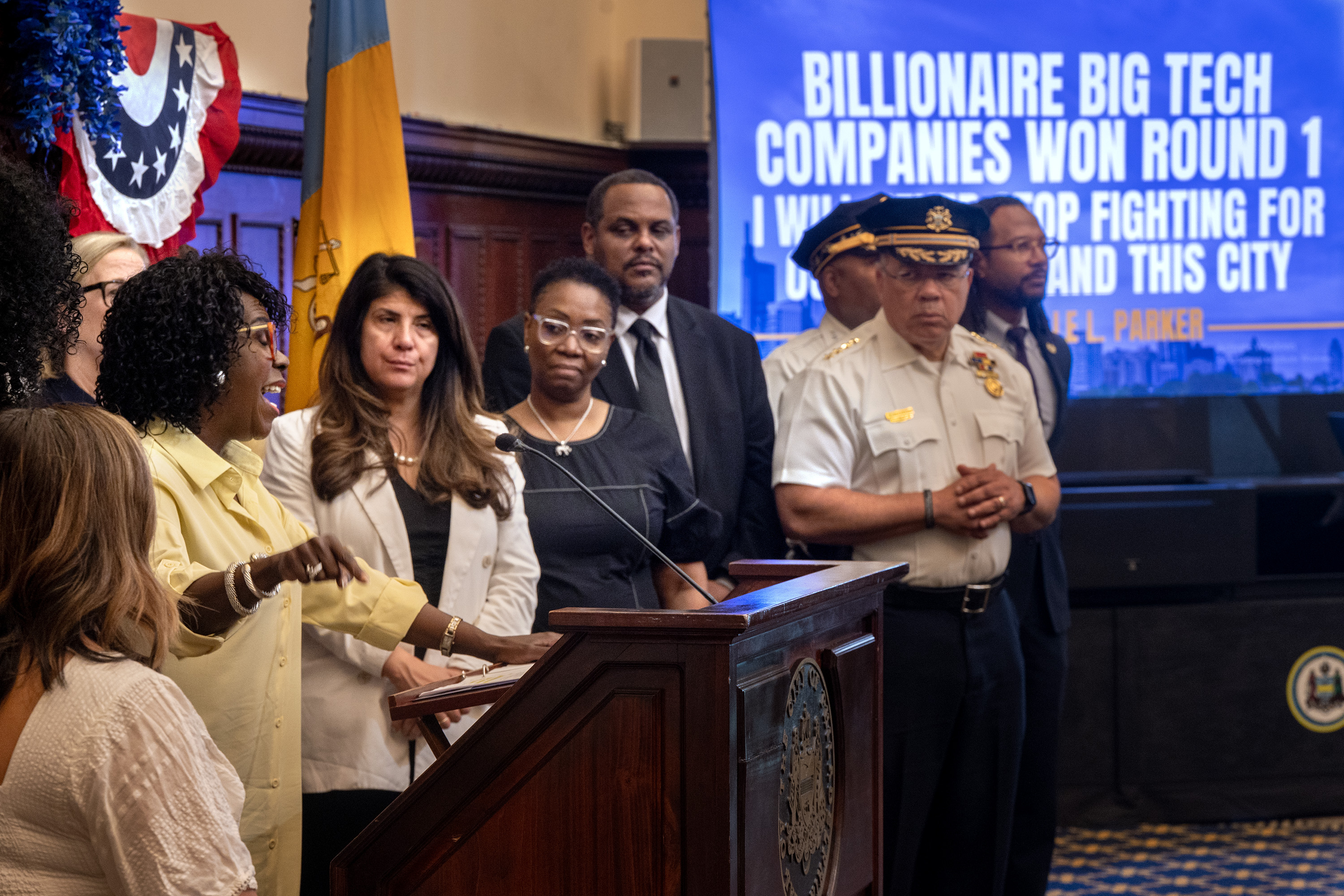
    After Parker’s tax plan collapsed, she held a fiery news conference, casting one-time money for the city’s public schools as a Band-Aid and saying that the lawmakers did not “offer an alternative plan for recurring revenue.”

    “Our children deserve better. They deserve more,” Parker said. “We didn’t meet the moment here in the city of Philadelphia.”

    “Billionaire big tech companies just won round one in this process,” says Mayor Cherelle L. Parker at City Hall Thursday, June 4, 2026 after City Council rejected most of her tax proposals for the city budget.Tom Gralish / Staff Photographer

    But Council members, already frustrated with the school board for voting in April to advance a plan to close 17 schools, were up in arms.

    Council leaders said that they had been under the impression that the school district would not make the job cuts if the city came through with an additional $48 million this year, regardless of whether the money came from a new tax or the city’s existing coffers.

    “We wouldn’t have gone to the lengths that we went to to come up to what we thought was an agreement with the administration for the district to then say that was not adequate,” Majority Leader Katherine Gilmore Richardson said in an interview Friday.

    The union that represents Philadelphia teachers and other schools advocates also implored Watlington to change course. Arthur Steinberg, president of the Philadelphia Federation of Teachers, said last week that it was “deplorable and really absurd” that the district was opting to move forward with staff cuts despite getting $48 million in new money from the city.

    No ‘tricky math’

    Parker on Wednesday said she did not regret waiting for a guarantee on paying for the positions going forward.

    “I don’t know how they do math in other cities, Mr. President, but I know here in the city of Philadelphia, we can’t have tricky math,” the mayor said, addressing Johnson. But, she said, “we were committed to ensuring that politics of any kind were not going to stand in the way of us doing what we’re supposed to do as elected representatives for the city, and that is delivering for our school district.”

    Mayor Cherelle L. Parker, Council President Kenyatta Johnson and Superintendent Tony B. Watlington Sr. arrive for an announcement at the School District of Philadelphia Headquarters on Wednesday, June 10, 2026 in Philadelphia. Philadelphia School District officials will move to restore 340 classroom-based jobs that were slated to be cut, despite top district leaders saying last week that they did not have the recurring funding needed to keep the positions.Monica Herndon / Staff Photographer

    The district must now shift immediately to figuring out how to restore the 340 positions. Schools built their budgets based on the cuts, and the teachers, counselors, and climate staff who believed their positions were ending either found new jobs or, in the cases of some, left the district altogether in what has been an especially chaotic school-hiring season.

    It was not immediately clear what would happen, logistically, with the positions, but Watlington said he would be delighted to figure it out with representatives of the Philadelphia Federation of Teachers and the principals union.

    “I can guarantee you’re going to work through all those issues,” Watlington said. “It’s not a problem.”

  • Trump’s judicial nominee from Philly got slammed by a Senate panel for hesitating ‘to tell the truth’

    Trump’s judicial nominee from Philly got slammed by a Senate panel for hesitating ‘to tell the truth’

    WASHINGTON — Antonio Pozos, a Philadelphia lawyer nominated by President Donald Trump to become a federal judge in the Eastern District of Pennsylvania, told a Senate panel on Wednesday that former President Joe Biden won the most Electoral College votes in 2020 — though he declined to say whether Biden won the popular vote or if the Capitol was “attacked” two months later.

    In a confirmation hearing alongside three other judicial nominees, Pozos said Biden was certified as the president in 2020 and that he’d seen videos from Jan. 6, 2021 in which it “appeared that there was violence and trespass.”

    “It’s profoundly troubling and I abhor violence,” said Pozos, a partner at Faegre Drinker Biddle & Reath and a lecturer at the University of Pennsylvania’s Carey Law School.

    But in the back-and-forth with U.S. Sen. Richard Blumenthal (D., Conn.), Pozos said he would “hesitate to characterize what occurred at the Capitol” when the senator asked directly if the building was “attacked” during the certification of votes.

    “You hesitate to tell the truth here,” Blumenthal responded before shifting to the next nominee.

    The line of questioning has become many Democrats’ main litmus test for those nominated by Trump for lifetime judicial appointments.

    For years, the president has insisted without evidence that widespread voter fraud led to his defeat in 2020, despite Biden winning the popular vote by more than 7 million votes that year on top of his Electoral College win.

    Trump’s history of spreading misinformation about elections has fueled fears that he’ll do it again during November’s midterm elections — as he did after the California primary just last week — and that his judicial appointees will undermine a system of checks and balances.

    When all of the nominees facing the Senate Judiciary Committee on Wednesday echoed each other in only saying Biden won the Electoral College, Blumenthal accused them of having “a new script, a new pre-negotiated effort to thread the needle [and] avoid the question.”

    “You are protecting the lie by failing to acknowledge the truth,” Blumenthal said. “If you’re unwilling to show us you’re independent of the president at this early stage of your service, you disqualify yourself as judicial nominees.”

    At least one Democrat who has signaled he doesn’t believe Pozos should be disqualified is U.S. Sen. John Fetterman.

    The Pennsylvania Democrat decided against blocking his nomination during a traditional process that gives senators the opportunity to approve or reject a federal judicial nominee in their state.

    It was the first time any Democrat declined to use that courtesy — in a process known as a “blue slip” — since Trump’s second term began in January 2025.

    Two other Democratic senators, Elissa Slotkin and Gary Peters, of Michigan, however, followed Fetterman in returning a blue slip for a separate nominee in their state before Wednesday’s hearing. They said their decision was in part because of the nominee’s assurances to them that Biden won in 2020, that there was an attack on the Capitol, and that Trump cannot run for a third term.

    Pozos also acknowledged during the hearing that Trump could not constitutionally win another term, which is something the president himself has declined to say.

    Fetterman, from the 2020 election through Trump’s second election in 2024, frequently and forcefully rejected Trump’s claims of election fraud in Pennsylvania. His office did not provide a comment in response to questions from The Inquirer about why he allowed Pozos’ nomination to advance. The senator has also not said whether he will vote to confirm Pozos when the Republican-controlled Senate decides on the appointment.

    But Fetterman’s move so far in the process was the latest in a series of high-profile moments in which he sided with Trump and the Republican Party while infuriating parts of his own base.

    Demand Justice, a Washington, D.C.-based organization that is critical of Trump’s nominees because of their statements on the 2020 election, joined in the criticism of Fetterman and promised to launch a six-figure ad campaign against him because of the blue slip.

    “John Fetterman just cleared the path for a Trump lifetime judicial nominee,” one of the digital ads states alongside an image of Trump and Fetterman with hearts around them.

    “Our message to Senate Democrats is clear: greenlight Trump’s puppet judges, and we will call you out. No exceptions,” it continued.

    That threat elicited bipartisan criticism at the beginning of the hearing Wednesday.

    U.S. Sen. Katie Britt, an Alabama Republican speaking on behalf of committee chair U.S. Sen. Chuck Grassley, called Demand Justice a “progressive dark money group” that “sought to undermine the blue slip practice and sew further division in our country.”

    U.S. Sen. Dick Durbin of Illinois, the top Democrat on the committee, also said the group was wrong to target senators who work toward agreement across party lines.

    “If we can get bipartisan cooperation for the appointment of lifetime judges, we should do it,” said Durbin, who has voted for Trump’s judicial nominees more than any other Democrat, according to Demand Justice.

    Each of the committee leaders commended Fetterman, Slotkin, and Peters for their decision — with Durbin praising them for “working in good faith with the White House.”

    U.S. Sen. Dave McCormick (R., Pa.) also thanked Fetterman and said Pozos was nominated because of a recommendation from a commission that the pair of Pennsylvania senators put together to vet judicial nominees.

    “Tony’s a successful attorney, a strong Pennsylvanian, a decorated public servant, and he’s eminently qualified for this role,” McCormick said during the hearing.

    Pozos, 44, is a graduate of Harvard College and the University of Michigan Law School who worked as federal prosecutor before becoming a partner at Faegre Drinker in 2018.

    As a trial attorney in the Criminal Fraud Section of the Department of Justice, he focused on corporate and individual healthcare fraud cases. McCormick said he had a “formidable track record of rooting out fraud, prosecuting those who abuse taxpayer dollars, and protecting Americans from predatory healthcare systems.”

    In a questionnaire published by the Senate Judiciary Committee, Pozos also listed active memberships in the Federalist Society — the legal organization that has sought to appoint conservative judges across the country — as well as the Union League of Philadelphia and the Merion Cricket Club.

    In addition to the election-focused inquiries, Pozos also faced questions about applying the False Claims Act — which penalizes individuals and companies from defrauding the government — and the controversial Section 230 of the Communications Decency Act that protects online platforms from liability for what their users post.

    U.S. Sen. John Kennedy (R. La.) grew frustrated when he believed Pozos was not fully answering his question about whether, under Section 230, Facebook should be protected and if it should have the ability to decide what users see. Pozos, like other judicial nominees who say they cannot weigh in specifically on the types of cases they may have to rule on, began answering when Kennedy said he had “no idea what you’re talking about.”

    “You’re better off just answering the question, you really are,” Kennedy said.

    Asked by the Democratic chair about the importance of diversity — which Trump has widely sought to diminish — Pozos said he has mentored young lawyers “from a wide range of backgrounds” and that it was important to “get all pockets of talent wherever they may be in our country and welcome them into the legal profession.”

    Pressed by Durbin if diversity is important in filling positions in the legal system, Pozos said, “If we are true to seeking out excellence wherever it may be, that question will be moot.”

    “I doubt it,” Durbin responded.

  • Trump officials lay out aggressive timeline to build triumphal arch

    Trump officials lay out aggressive timeline to build triumphal arch

    Federal officials are laying more groundwork to begin construction on President Donald Trump’s planned 250-foot-tall triumphal arch, sharing additional documents that detail the project’s scope and an aggressive timetable for potentially completing work before Trump’s term ends.

    According to National Park Service documents posted this month, the administration envisions 20 hours per day of construction on the arch, year-round, in hopes of completing the project within two to three years. Construction experts said that timeline — which would involve two 10-hour daily shifts — is unusually aggressive for a nonemergency project.

    The arch also would be built with concrete clad in granite, unlike the nearby Lincoln Memorial and other monuments that were constructed with natural stone like marble and limestone — another way to expedite its construction, experts said.

    “He’s obviously in a hurry to try to get this all done before he leaves office,” said Matthew Bell, a University of Maryland architecture professor, commenting on the timeline and materials. “Most of the major monuments in D.C. are stone.”

    The Park Service said the project would require large cranes, including one that may be 320 feet tall and another that could be as high as 300 feet. The planned site for the arch is on a flight path to nearby Reagan National Airport, where planes can sometimes fly at around 500 feet of altitude, raising concerns about safety.

    The Federal Aviation Administration has said it is reviewing whether the arch’s planned height would present risks to airplanes transiting the area, concluding in a preliminary report last week that the arch would need red blinking lights to alert planes at night. An FAA spokesperson said Tuesday that the agency was still conducting a full study on the project.

    FAA, Transportation, and Interior Department spokespeople did not respond to questions about whether the additional height of the cranes would pose further risk.

    The White House declined to comment on the Park Service documents. Officials said they planned to begin construction as soon as all approvals are received.

    “The Triumphal Arch in Memorial Circle is going to be one of the most iconic landmarks not only in Washington, D.C., but throughout the world,” Davis Ingle, a White House spokesman, said in a statement.

    Trump has insisted that the 250-foot-tall arch be built to mark America’s 250th anniversary, and two federal panels led by Trump allies have rushed the project through reviews. The arch would be erected at Memorial Circle, a traffic roundabout near Arlington National Cemetery that is tucked inside Washington’s boundaries, and it would represent the president’s most significant change to Washington’s skyline.

    The administration is not planning to seek authorization for the project from Congress, drawing rebukes from Democrats who say the president continues to flout long-established laws and norms. Trump has also demolished the White House East Wing to clear space for his planned ballroom, decided unilaterally to renovate the Lincoln Memorial’s Reflecting Pool, and undertaken other construction projects without going through the usual legally required reviews or seeking approval from Congress.

    “Running through all these incidents is an inexplicable disregard for legal process,” Sen. Richard Blumenthal (D., Conn.), the top Democrat on the Senate’s permanent subcommittee for investigations, wrote in a letter Tuesday to Park Service leaders.

    Blumenthal asked for the Park Service to explain and justify its use of urgent procedures, including no-bid contracts, to complete Trump’s projects; to share its internal records on the arch, the Reflecting Pool, and other work driven by the president; and to provide a full list of projects underway or under consideration on Park Service land in the D.C. area. The letter was shared with the Washington Post.

    Some construction and design firms have declined to work on the arch, worried that they could not meet the administration’s aggressive timeline and wary of the risks of participating in the controversial project, according to two people who spoke on the condition of anonymity to describe internal deliberations around the project.

    Fifty-two percent of Americans are against the planned arch, compared with 21% who favor it, according to a Washington Post-ABC-Ipsos poll conducted in April.

    The project is also the subject of a lawsuit brought by several military veterans who say the towering structure would alter their visiting experience to nearby Arlington National Cemetery. Lawyers for Public Citizen, a watchdog group that is representing the military veterans, have urged a federal judge to halt the project.

    “With every passing day, Defendants’ arch moves closer to construction,” Public Citizen lawyers argued in a filing to U.S. District Judge Tanya Sue Chutkan last week.

    Trump administration lawyers have argued that the project should not be halted because it has not officially begun. Administration officials have also said they will provide at least 14 days’ notice before beginning construction of the arch.

    The Park Service last week opened a 10-day comment period for the public to weigh in on the arch project. The comment period, which the agency and administration officials have not publicized on their communications channels, according to a Post review, is a legally required step before beginning construction.

    The Park Service has acknowledged the potentially adverse effects of the arch on Arlington National Cemetery and other nearby monuments — “all of which derive significance in part from their planned visual, commemorative, and spatial relationships across the Potomac River and through the monumental core,” one report concluded.

    The Interior Department last month awarded a contract to Otak Inc., a Portland, Oregon-based architectural firm, to perform compliance-related work related to the arch project. Otak declined to answer questions about the contract and its involvement in the project, referring comment to the Trump administration.

    The project has already received approval from the Commission of Fine Arts, which reviews designs for major federal projects. A second panel, the National Capital Planning Commission, is expected to approve the project as soon as next month.

    Will Scharf, the Trump-appointed chairman of the National Capital Planning Commission, also said last week he believed a federal law limiting the height of construction in Washington should not apply to the arch. The law restricts most construction in Washington to a maximum height of 130 feet.

    Meanwhile, Trump officials have declined to include a half-dozen historic preservation and advocacy groups, such as the National Trust for Historic Preservation and the Cultural Landscape Foundation, in a federally required process to consider the arch’s potential effects on historic properties. All of the excluded organizations, which have historically offered input on past federal projects, have sued the Trump administration over the president’s planned ballroom, his Reflecting Pool and other initiatives.

    “Each of these organizations brings subject area expertise that could be helpful,” Charles Birnbaum, the president of the Cultural Landscape Foundation, wrote in a letter Monday to the Park Service, asking to participate in the process. The letter was shared with the Post.