Category: Politics

  • Rep. Madeleine Dean says she was blocked from speaking to detainees during oversight visit to Pennsylvania’s largest ICE detention center

    Rep. Madeleine Dean says she was blocked from speaking to detainees during oversight visit to Pennsylvania’s largest ICE detention center

    Three weeks after members of Congress listened to and then publicly shared concerns from inside Pennsylvania’s largest immigrant detention center for the first time, U.S. Rep. Madeleine Dean said she was blocked from speaking with detainees while visiting the same facility on Wednesday.

    Dean (D., Montgomery) said she was given “a relatively complete tour” and gathered information at the Moshannon Valley Processing Center — a 1,900-bed facility in Clearfield County that is the largest of its kind across the entire Northeast.

    But while attempting to speak with detainees, as she has done during other oversight visits, Dean said, she was told that required advance permission from the detainees themselves.

    Dean questioned the credibility of that prohibition — especially, she said, after she had informed the facility of her plans ahead of time, and after two of her colleagues were recently permitted to speak with detainees during a similar, but unannounced, oversight trip.

    “Let’s put it this way, I got a scoop of the BS,” Dean said in an interview.

    The four-term lawmaker’s fact-finding trip came after several weeks of escalating tensions around the conditions facing undocumented immigrants in detention centers such as Moshannon Valley and Delaney Hall in Newark, N.J. Both facilities are privately run by the same company, GEO Group, and have faced allegations of providing inadequate medical care and nutrition while allowing little outside oversight.

    U.S. Reps. Summer Lee and Chris Deluzio, both Pittsburgh-area Democrats, said they heard “real concerns” after emerging from Moshannon Valley on May 28.

    Their roughly two-hour tour and discussion with detainees was the first time any member of Congress had successfully entered the facility since President Donald Trump took office. It also followed reports of both poor medical care and a hunger strike led by detainees to protest the food.

    Lee and Deluzio said women in particular approached them to say they had not received proper prenatal care. At least one told them she had been sexually assaulted at the center. And watching lunches of chicken, rice, and beans being served did not make them less concerned about the quality of the food, the lawmakers said.

    A spokesperson for the Department of Homeland Security, which oversees Immigration and Customs Enforcement, later said that ICE “welcomes congressional oversight” and that it provides all detainees with comprehensive medical care as well as proper meals and living conditions.

    Dean said Moshannon Valley appeared to be clean and spacious during her trip Wednesday. The medical unit was active — unlike a larger facility in Dilley, Texas, that, after she visited earlier this year, she called “inhumane” for its lacking treatment of both adults and children.

    But Dean said she questioned what the facility would have looked like if she had not announced her visit ahead of time, and she was not dissuaded from her position that the facility should be closed.

    “This administration has just so successfully, cancerously dehumanized certain populations that we warehouse them now,” Dean said. “And we allow others to profit from it using our taxpayer dollars.”

    GEO Group referred a request for comment to ICE, which did not immediately respond.

    Dean said she was particularly alarmed that the GEO Group’s contract with ICE, as well as Republican-sponsored federal budget language, appears to incentivize filling detention center beds rather than targeting those charged with violent crimes, as Trump pledged to do. She said a copy of the contract she obtained Wednesday explained GEO Group is paid $10 per individual every day they are detained, up to the first 800 detainees. The cost goes up to $40 per individual per day for every additional person detained, she said.

    “It is so perverse. It says nothing about need, nothing about detaining the worst of the worst,” Dean said. “It says pick up as many people as you can, regardless of what they have done or haven’t done, so that every bed is charging and collecting from U.S. taxpayers to keep these people in that population.”

    With Clearfield County commissioners expected to vote in September on whether to renew the contract with ICE and GEO, Dean said she hopes the commissioners choose not to extend the facility and instead shut it down.

    Lee, who has gone further than other Pennsylvania Democrats by calling for the elimination of ICE entirely, also said last month she hoped the Moshannon Valley facility would close. One of the three Clearfield County commissioners, meanwhile, said he was inappropriately denied entry to the facility and said he does not believe the county should be part of the contract, WJAC reported.

    Shutting down immigrant detention centers, however, is rare and difficult. More than 200 centers hold about 60,000 people, and Trump has been determined to increase capacity rather than reduce it.

    Dean said there were 1,666 individuals detained at Moshannon Valley on Wednesday, which is more than the 1,417 that Deluzio reported on May 28. According to Deluzio, about 1,100 of those were classified as “low security.”


  • Georgia Republican legislative leaders reject governor’s call for 2028 redistricting

    ATLANTA — Georgia’s Republican legislative leaders on Wednesday rejected Gov. Brian Kemp’s call to redraw congressional and legislative districts during a special session, citing concerns about moving too quickly after a U.S. Supreme Court decision weakened federal Voting Rights Act protections for minority voters.

    The aborted effort to reduce nonwhite voters’ representation contrasts other Southern states where Republican majorities moved quickly to redraw congressional boundaries ahead of the November midterms, partly in response to President Donald Trump’s pleas to shore up the GOP’s fragile House majority.

    Civil rights activists and Democrats, especially Black and other nonwhite lawmakers, celebrated the development and claimed victory after exerting weeks of pressure and gathering hundreds of citizens at the Georgia Capitol on Wednesday ahead of the session.

    “Today showed that ordinary people don’t need to wait until November to make their voices heard and protect our democracy,” said U.S. Sen. Raphael Warnock, the state’s first Black senator who returned to Atlanta from Washington to be at the Capitol. “We can stand up and speak right now.”

    Kemp had not asked his fellow Republicans to reopen Georgia districts ahead of November. Instead, he wanted them to redraw congressional boundaries for the 2028 election. But the governor, in the final months of his second term, also called on lawmakers to redraw their own districts — a move that would have made Georgia the first state to apply the Supreme Court’s Louisiana v. Callais decision to its legislature.

    State House Speaker Jon Burns sent Kemp a letter hours before Wednesday’s special session was set to begin, informing him that legislators would not consider redistricting at all during the session. He announced the decision publicly shortly after, as demonstrators filled the Capitol with chants of “Black voters matter!”

    Kemp did not respond to requests for comment from The Associated Press on Wednesday.

    Burns said lawmakers want to take their time after the Callais decision, which struck down Louisiana’s congressional map as an illegal racial gerrymander and laid the groundwork for legislatures to reduce the number of districts where Black and other nonwhite voters hold most sway.

    The speaker said it was more important for lawmakers to focus on economic matters rather than “partisan games.” He also cited pending litigation over existing Georgia districts and the need to understand the full ramifications for how race can or cannot be used in redistricting.

    Privately, Republicans had expressed concerns that a rushed process that diminished Black and other minority voters’ political power could cause a backlash. And they worried that redrawn districts could unintentionally create more competitive jurisdictions that Democrats could win, especially around Atlanta.

    Still, Georgia Republicans did not rule out revisiting redistricting later this year.

    Conservative justices gave the green light

    Before Callais, Section 2 of the Voting Rights Act was understood to require maps — for Congress, state legislatures and local legislative bodies — that gave historically marginalized minorities a reasonable chance to select candidates of their choice. Nationally, those so-called “opportunity districts” have disproportionately elected Black and other nonwhite representatives.

    About one-third of Georgia’s 180 state representatives are Black. Latino, Asian and other minorities bring the total nonwhite share to about 40% — roughly reflecting the state’s overall population. Georgia’s U.S. House delegation has five districts out of 14 total where the electorate is majority or plurality nonwhite. All elected Black Democrats in 2024.

    With the Callais ruling, a conservative majority of justices concluded that jurisdictions drawn with racial makeup in mind violate the U.S. Constitution’s equal protection clause. Justice Samuel Alito’s majority opinion declared that apportionment should be “race neutral.”

    Alito’s stated reasoning did not hinge on party interests, and federal courts have said partisan gerrymandering is constitutionally permissible. But in Southern states, party loyalty dovetails considerably with race and ethnicity. So the decision has allowed Republicans to redraw maps to boost GOP districts by redistributing nonwhite voters who tend to support Democrats.

    Many civil rights activists argue that makes it impossible for Southern legislatures to be genuinely “race neutral” when drawing boundaries.

    Democrats and activists opposed the special session

    Minority voting rights are especially salient in Georgia, where the Capitol complex includes a statue of the Rev. Martin Luther King Jr. and sits blocks from where the assassinated civil rights icon lived, preached and led the movement that yielded the Voting Rights Act in 1965.

    Warnock, who is also minister at the Atlanta church where King once preached, invoked the civil rights icon as he led demonstrators who criticized the Supreme Court’s reasoning in Callais that it was discriminatory to draw districts to allow minority voters a chance to elect their preferred representatives.

    The senator compared the possibility of scaling back nonwhite representation to the long Jim Crow history of poll taxes and literacy tests. White conservatives in the South once called those policies “race neutral,” too, Warnock noted.

    Speaking before Burns’ announcement, Warnock lamented that some white Republicans who might consider redrawing district lines — or already have in other states — also praise King on his federal holiday each year.

    “If you want to redraw maps and you have the power to do it, I guess you can do it,” he said. “But keep Dr. King’s name out of your mouth.”

    Trump started the fight before the Supreme Court decision

    Nationally, a partisan redistricting battle started last year when Trump urged Republican-controlled states to gerrymander their congressional maps. Texas answered the call first.

    California Gov. Gavin Newsom and Democrats in Sacramento answered with their own gerrymander that voters later approved. A succession of states followed. The outcome would have been close to even had the Virginia Supreme Court, controlled by conservatives, not struck down new Democratic-drawn maps approved voters. All told, Republicans think they could notch a net gain of 10 seats across the multiple states.

    That still may not be enough for the GOP to hold a congressional majority, given Trump’s lagging approval ratings. But it could mitigate Democratic gains and set Republicans up well for 2028 and beyond.

  • More people in Philly and region struggle with insufficient food after Trump cuts: ‘Hunger has never been higher’

    More people in Philly and region struggle with insufficient food after Trump cuts: ‘Hunger has never been higher’

    Shelly Gaither, 51, of Cheltenham, makes sure her three sons, ages 6, 9, and 18, get their meals while she manages with whatever is left over — if anything ever is.

    “Oh, my God, groceries are too expensive,” said Gaither, a former data analyst who suffers from a disability that makes working difficult. She visits a food pantry regularly to make sure her kids eat chicken when they can. Her monthly SNAP (Supplemental Nutrition Assistance Program) benefits were reduced from $400 to $200 earlier this year because of changes to the program under President Donald Trump’s One Big Beautiful Bill Act.

    “I don’t think there’s hope,” she said. “I feel guilty for bringing children into a world that doesn’t want them to exist because the government makes cuts that take away their food and their healthcare.”

    For people like Gaither throughout the United States, levels of food insecurity have seen a “remarkable” rise since the pandemic in 2020, according to a national survey taken earlier this year and released in late May by the Federal Reserve Bank of New York.

    Around 10% of 1,300 heads of households polled in February reported a lack of enough food and said their children were missing meals, according to the survey. Nearly 16% relied on food donations. Among families taking in less than $50,000 a year, almost 20% reported being forced to skip meals or go without.

    In 2020, when the federal government stepped in to help families at the height of the pandemic, just 4% of households reported missing meals, including less than 7% of families earning less than $50,000 a year, according to the survey.

    At that time, temporary supplemental unemployment benefits, expanded SNAP payments, and direct government relief payments helped stave off hunger among Americans. Food insecurity increased after COVID-19 relief expired, according to the Urban Institute.

    But the recent surge in hunger has also been attributed to the sweeping law Trump signed last year, which reduces SNAP benefits and other safety net programs to help pay for his tax cut.

    Findings in the bank’s report also reflect Gaither’s sense of despair, a pessimism about personal finances and the overall economy among people with low incomes. That same group exhibits diminished expectations for finding a job and declining levels of consumer confidence, the survey says.

    (function(){function e(){window.addEventListener(`message`,function(e){if(e.data[`datawrapper-height`]!==void 0){var t=document.querySelectorAll(`iframe`);for(var n in e.data[`datawrapper-height`])for(var r=0,i;i=t[r];r++)if(i.contentWindow===e.source){var a=e.data[`datawrapper-height`][n]+`px`;i.style.height=a}}})}e()})();

    According to the reserve bank’s report, non-white Americans have been especially hard hit. The number of such households that reported missing meals increased from 4% in 2020 to 19% in February. At the same time, the number of non-white people receiving SNAP benefits jumped from 14% to more than 26%.

    Overall, the survey found food insecurity was particularly acute among lower-educated and lower-income households, as well as households with young children. Many families are experiencing financial stress due to the high cost of living, persistent inflation, and high interest rates, even as the stock market has been steadily rising, according to the survey.

    Pantries struggle to keep up with demand

    More people are flocking to food pantries, but they are not equipped to take up the slack of reduced SNAP benefits.

    “Pantries across the state are in perpetual crisis mode,” said Stuart Haniff, CEO of Hunger-Free Pennsylvania in Pittsburgh. Add to that the advent of summer, when kids are no longer receiving free breakfast and lunch at school. “Families must now provide those 60 to 80 meals a month,” Haniff said.

    In Norristown, “immense need” has increased the number of people frequenting Martha’s Choice Marketplace, the largest food pantry in Montgomery County, by 100% since 2022, said Patrick Walsh, director of programs. “And I don’t expect things to get better.”

    Food prices are also up 3.2% this spring over last, according to U.S. Department of Agriculture figures, exacerbating the issue.

    In South Jersey, “we are seeing record numbers at our food distributions,” said Jane Asselta, president and CEO of the Food Bank of South Jersey, in a statement to The Inquirer. “Life is getting harder to afford for more and more people.”

    Matt McDevitt (left) and Michael Hickey load their vehicle at the Food Bank of South Jersey Thursday, June 11, 2026. The men are volunteers at the Temple Lutheran Church in Pennsauken and their food bank is open from 5-6 p.m. every Thursday.Tom Gralish / Staff Photographer

    Asselta said the Federal Reserve Bank’s report “mirrors” what her organization has observed through its network of 300 community partners.

    “Hunger has never been higher,” said Pastor Sonita Johnson, who runs the food pantry at St. John’s Pentecostal Outreach Church in Salem City, Salem County. “Food prices are high, and the lines you see you would not believe — a 50% increase in people just over the last two months.”

    Nationwide, between January 2025 and January 2026, SNAP rolls decreased by more than 4 million people — from 42 million to 38 million — according to USDA figures.

    Between last September and April of this year, nearly 90,000 Pennsylvanians lost SNAP benefits due to new eligibility requirements stipulated by the Trump administration, according to an analysis by the Pennsylvania Department of Human Services (DHS).

    And between December 2025 and last month, more than 32,000 Philadelphians lost benefits, DHS figures show.

    In New Jersey, SNAP participation has fallen by more than 50,000 individuals between March 2025 and March of this year, New Jersey Department of Human Services figures show.

    The Trump administration’s SNAP changes include an expansion of work requirements for people who receive SNAP benefits and increased documentation requirements “designed to make maintaining eligibility increasingly difficult,” according to the Food Research and Action Center (FRAC), the largest anti-hunger lobby in the United States.

    Deputy White House press secretary Anna Kelly said in a statement that Trump signed the changes to strengthen SNAP and to ensure that it is “sustainable for future generations.” She added that Trump was “elected to eliminate runaway spending across the federal government.”

    William Meo works on the loading dock at the Food Bank of South Jersey Thursday, June 11, 2026. Tom Gralish / Staff Photographer

    For people like Shelley Gaither, how her reduced SNAP benefits could be seen as part of “runaway spending” is tough for her to figure, given her needs. To survive this precarious moment, Gaither said, she will do whatever she can.

    “We eat more vegetarian meals and I don’t buy my kids cookies or snacks,” she said. “If I drink enough coffee, maybe I just need one meal a day. This is our existence now. This is how we live.”

  • Youth summit turns teens into Philly lawmakers: ‘You are the change, ultimately’

    Youth summit turns teens into Philly lawmakers: ‘You are the change, ultimately’

    The City Council chambers looked as they always do: a sea of slacks and blazers, votes and debates, bills and budgets. The only difference? Every Council member was a teenager.

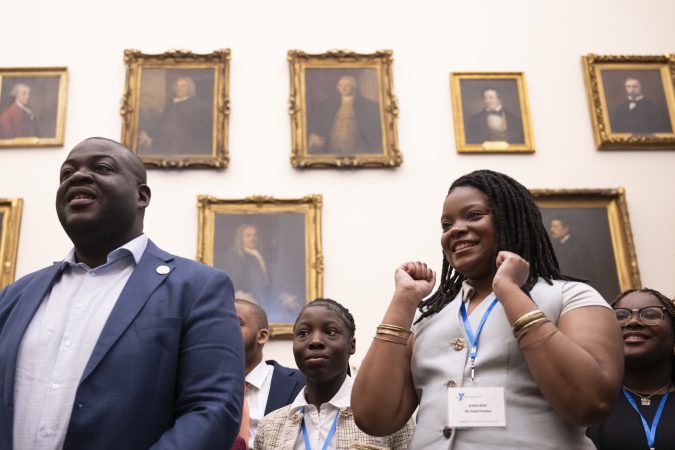
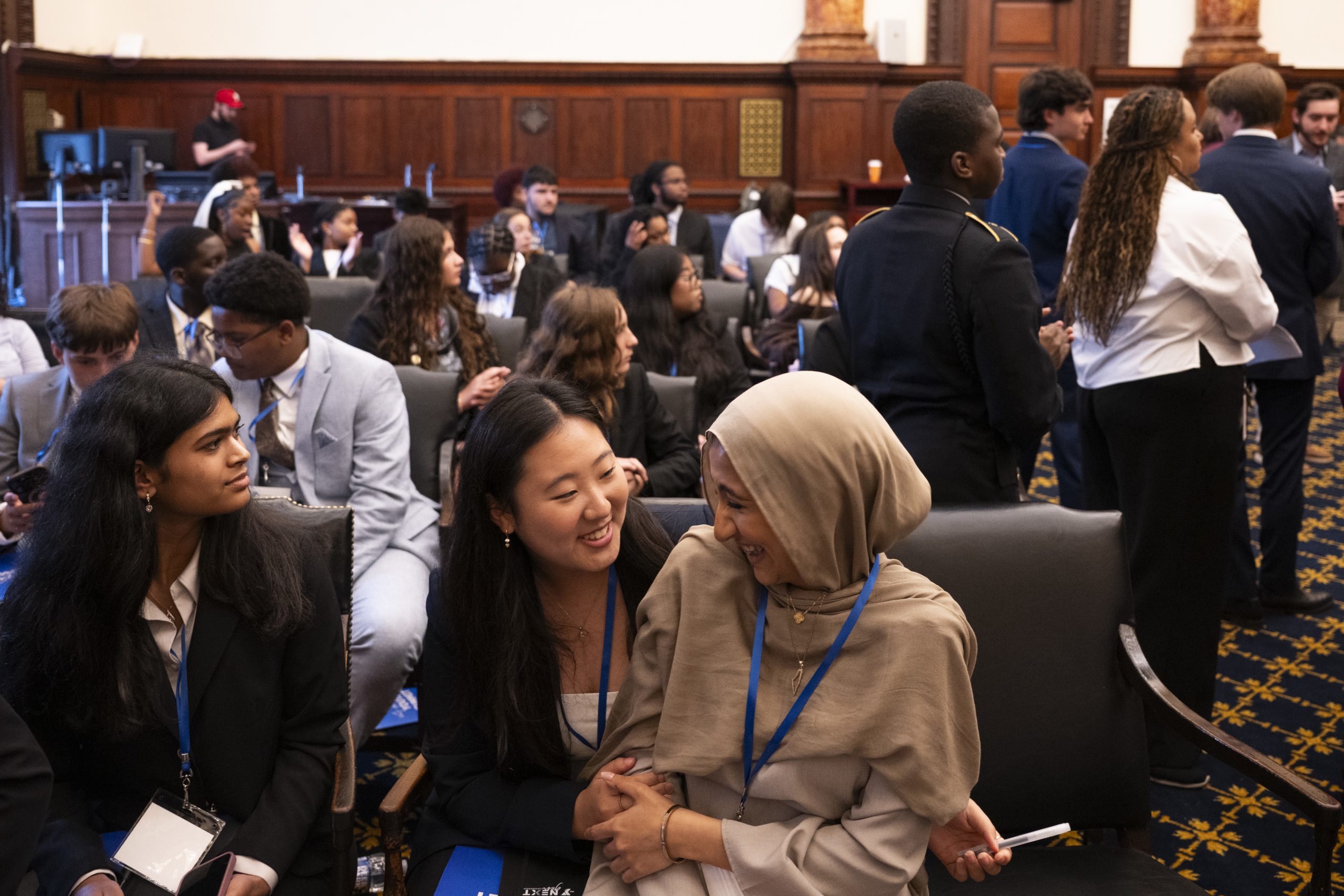
    Around 100 youths entered Philadelphia City Hall on Wednesday to take part in the Greater Philadelphia YMCA’s Government Youth Summit. The event, hosted by the YMCA for the first time, gave teens from Philadelphia and the surrounding area a hands-on way to learn about their city government.

    “This is our first shot at it. I think it’s been real successful,” said Shaun Elliott, president of the Greater Philadelphia YMCA. “And there’s two things we want to do: teach kids about civic government and how it works, but also help them develop the competencies of leadership.”

    At the beginning of the day, the participants were presented with a bill on spending and initiatives during the FIFA World Cup, which they then discussed, debated, and reshaped in line with their roles.

    Sitting alongside teens representing other districts, Justina Ndebhleh, 17, who was representing the Sixth District in Lower Northeast Philadelphia, led a discussion on SEPTA funding.

    “We’re talking about whether increasing SEPTA prices will be beneficial or not,” Ndebhleh said. “Because we know increasing the fare would be a regressive tax since lower-income communities do take SEPTA on a daily basis.”

    Students hold discussions after meeting with City Council President Kenyatta Johnson.Joe Lamberti / For The Inquirer

    Between debates and meetings, teens were given the chance to speak with Mayor Cherelle L. Parker and City Council President Kenyatta Johnson.

    Lindsay Doyle, director of youth civic engagement for the YMCA, said she hoped the participants left understanding that their opinions matter and that they can help make change.

    “It’s really incredible to see them in these spaces,” Doyle said, “and have them interact with City Council members, and have those elected officials reinforce the idea that their thoughts … and their beliefs really matter, and they can utilize those to change the entire city, state, and nation.”

    Kailey Reinboth, 18, from Boyertown Area Senior High School, said the experience gave her a better understanding of what it means to be an engaged citizen, especially at a young age.

    “I believe that it is really [giving] me insight into my roles and responsibilities as a citizen and being someone that needs to be civically engaged,” she said. “You are the change, ultimately. And being … the change that you want to see, not just in the future, because, you know, they talk about the youth being the future — the youth aren’t the future. They are the present, and we really need to enforce that in making sure that we’re not making change in the future. We are making change now.”

    Elliott said he hopes to see the program grow in future years, providing more teens with the experience to learn about local government.

    “We have 100 young people here. So how about 200 or 250 next year?” he said.

  • Trump delays his own national intelligence nominee, fueling tension with fellow Republicans

    WASHINGTON — President Donald Trump on Wednesday derailed the confirmation process of his own nominee to head the nation’s intelligence agencies, an extraordinary move that upended Senate efforts to renew a crucial surveillance program and fueled fresh tensions with fellow Republicans on Capitol Hill.

    In an overnight social media post from the Group of Seven summit in France, Trump declared he was delaying the nomination of federal prosecutor Jay Clayton as director of national intelligence just hours ahead of his scheduled hearing, despite bipartisan praise for the nominee and Republican efforts to speed him through the confirmation process.

    Senate Intelligence Committee Chairman Tom Cotton (R., Ark.) said Republicans would go ahead with the Clayton hearing anyway, “unless the president directs him not to appear or withdraws his nomination.” But later he postponed the hearing, saying it was “regrettable” that Trump had directed Clayton not to appear.

    “Mr. Clayton is a patriot and a highly qualified nominee, as the president has said repeatedly,” Cotton said. “While today’s hearing is now unfortunately postponed, I look forward to proceeding with his confirmation in the near future.”

    Trump’s attempt to delay Clayton makes it more likely that his temporary pick for the intelligence job, top housing official Bill Pulte, will take over when outgoing director Tulsi Gabbard leaves office on Friday. Republicans and Democrats in Congress have sharply criticized Pulte, a Trump loyalist who has no known national security experience and has used his current administration perch to target perceived adversaries of the president.

    Trump has defended Pulte, calling him “fair” and “talented” in his social media post. Speaking to reporters in France, Trump called the speedy process to get Clayton formally installed a “rush act by the Democrats.”

    “Why are they afraid of this guy? They’re so afraid of him,” Trump said, referring to Pulte. “They’ll do anything not to have Pulte go in there.”

    Caught in the middle is the renewal of Section 702 of the Foreign Intelligence Surveillance Act, or FISA, bipartisan legislation that aims to prevent terrorist attacks by monitoring the communications of targeted foreigners located outside the United States. Democrats had said they would not provide the necessary votes to pass the bill unless Pulte’s temporary appointment was withdrawn. The current surveillance authority expired last week.

    Further complicating matters, Trump said in his social media post that he would not sign the FISA renewal without his legislation to require proof of citizenship for all voters — which does not have enough votes to pass the Senate — and that he does not want to remove Clayton from his current position as U.S. attorney for the Southern District of New York until his replacement, James McDonald, is approved.

    Trump’s post sent Senate Republicans scrambling, and it was unclear if and when Clayton’s nomination would move forward.

    “We’ll just have to take it a day at a time until we get more clarity on what the White House position is on this,” Senate Majority Leader John Thune (R., S.D.) told reporters Wednesday morning. He said he didn’t know why Trump was holding up the effort.

    “Good question,” he said.

    Escalating tensions between White House and Capitol Hill

    Virginia Sen. Mark Warner, the top Democrat on the Senate Intelligence Committee, called Trump’s move an “extraordinary display of dysfunction from a president who seems determined to turn America’s national security into a political bargaining chip.”

    “The biggest obstacle to resolving these issues has not been Senate Democrats or Senate Republicans,” Warner said. “It has been the chaos and confusion coming from the White House itself.”

    It was just the latest in a series of standoffs between Trump and Senate Republicans this year.

    A funding bill for Trump’s immigration agencies was delayed several weeks when Republicans revolted over a $1.776 billion “anti-weaponization” fund and a $1 billion security request for the White House, including his new ballroom. The bill passed after acting Attorney General Todd Blanche said the settlement would not move forward, and GOP leaders decided to drop the security money from the bill.

    Trump then appointed Pulte as interim intelligence director just as the FISA renewal was moving toward passage, upsetting bipartisan talks. Republicans urged the White House to pull the appointment, to no avail.

    Republican Sen. Thom Tillis of North Carolina said that Trump’s recent moves are “undermining the results he wants.”

    “Jay Clayton was on the brink of having a very good hearing and probably getting some Democrat support, and now we’re in a posture to where it may be the reason that 702 doesn’t get reauthorized,” Tillis said. “That’s a mistake.”

    Tillis called Pulte a “sycophant” to Trump.

    “How could anybody think he was going to be a credible choice?” he asked.

    Democrats say Trump is distracting from other issues

    Democrats say that Trump is undermining Americans’ safety as he makes demands of the Senate and tries to put loyal allies in national security positions.

    Pulte’s appointment “should send a shiver down the spine of every American,” said Democratic Sen. Elissa Slotkin of Michigan, a former CIA analyst and national security official. “The only thing more dangerous than letting FISA lapse is putting Bill Pulte at the head of 17 intelligence agencies.”

    Sen. Angus King, an independent from Maine, said he may have supported Clayton, with whom he met on Tuesday. “It’s unfortunate because he nominated this guy,” King said of Trump.

    Sen. Patty Murray (D., Wash.) said she thinks Trump is also trying to divert attention from the war in Iran.

    Murray said Clayton was on track to be confirmed because “most Democrats felt that allowing Pulte to go in office was a really bad idea, and most Republicans agreed.”

    Consequences for FISA’s lapse

    National security officials across both major political parties have for years described Section 702 as vital for gathering intelligence that can disrupt terrorist attacks and espionage operations, though some lawmakers and civil liberties advocates have raised concerns over the government’s use of information about Americans that is incidentally collected through the program.

    A court order from March certified that the program could continue for an additional 12 months, though it is possible that communications companies could challenge the government’s authority to force them to cooperate and share data.

    Trump’s delay of Clayton “shows he has no interest in getting FISA done,” Senate Democratic leader Chuck Schumer (D., N.Y.) said.

  • Chester County hires new voter services director after a series of controversies at the department

    Chester County hires new voter services director after a series of controversies at the department

    Chester County has tapped a new director of voter services after the department’s previous leader resigned following election errors and a series of complaints from former employees.

    Michele DiCaprio, a consultant for a telecommunications company and a former foreign service officer with the U.S. Agency for International Development, will begin her tenure on July 20, the county announced Wednesday.

    “I am honored to join Chester County,” said DiCaprio, a West Chester resident, in a county news release. “I look forward to working with the Voter Services team to ensure secure, accurate, and efficient elections for every voter in Chester County. Elections are the foundation of our democracy, and I am committed to serving voters with integrity and transparency.”

    DiCaprio will be inheriting an office that has recently been enmeshed in controversy, including high staff turnover, allegations of a hostile work environment, and a series of election administration-related problems — most notably leaving approximately 75,000 independent and unaffiliated voters off the poll books during the November 2025 local election.

    Everyone who wanted to vote was able to do so, the county said, with 12,000 voters casting provisional ballots. But the episode bruised residents’ trust in the county’s voting security, exemplified at a public meeting in February.

    An independent law firm investigation ultimately found that human error and poor oversight led to the incident, but it did not call for the resignation of personnel, including Karen Barsoum, then the voter services director.

    Barsoum announced her resignation in March and her last day was June 12.

    Chester County Administrator Erik Walschburger and Deputy Administrator Megan Moser said in the news release that DiCaprio’s experience as a foreign service officer makes her a strong fit for the role.

    DiCaprio spent five years with USAID in Mozambique leading the Democracy, Human Rights, and Governance team working on elections, counterterrorism, and other issues, according to her LinkedIn page.

    “As a foreign service officer, Michele has spent her career leading complex international operations in fast-paced environments while ensuring federal compliance,” Walschburger said.

    “Through her years of work on election operations and counterterrorism program evaluation, she has established a strong track record of developing high-performing teams, strengthening organizational effectiveness, and managing critical public-facing services,” he said.

  • DOJ urges appeals court to let Trump build ballroom, citing failed UFC attack

    DOJ urges appeals court to let Trump build ballroom, citing failed UFC attack

    The Justice Department is asking a federal appeals court to let President Donald Trump continue building his planned White House ballroom, arguing that a thwarted attack on Trump’s recent Ultimate Fighting Championship event proves the need for the facility.

    Brett Shumate, an assistant attorney general, urged a panel at the U.S. Court of Appeals for D.C. to lift a lower court’s order blocking much of the construction on the 90,000-square-foot ballroom, contending that the project’s security features are needed to protect the president. As evidence, Shumate cited the foiled threat against the UFC event on the White House grounds over the weekend. Authorities have said they intercepted and stopped plans to fly explosives-laden drones over attendees and gun down people who fled.

    “This latest assassination plot against President Trump and dignitaries at the White House demonstrates the compelling need for the East Wing Project, with a Ballroom designed to defend against just such attacks,” Shumate wrote in a letter filed Tuesday and made public early Wednesday.

    Shumate argued that the ballroom’s planned “Drone Port and Sniper Nests” would have been able to “destroy any effort” to attack the UFC event, and that the ballroom’s “mass and height” would provide a shield for the White House.

    U.S. District Judge Richard Leon ordered a halt to aboveground construction on the project in April, saying that the administration failed to demonstrate that the ballroom needed to be completed immediately for national security reasons. The three-judge appeals panel previously stayed Leon’s order while it considers the administration’s appeal, allowing construction to continue in the interim. Administration officials have said they expect the project to take at least two more years.

    The Justice Department has previously argued that other threats to the president, such as a shooting at the White House correspondents’ dinner, prove why the space is needed.

    Those arguments did not sway Leon, an appointee of President George W. Bush, who has kept his order in place. Two of three judges hearing the administration’s appeal — Bradley Garcia, a Biden appointee, and Patricia Ann Millett, an Obama appointee — appeared skeptical of the Justice Department’s arguments about Trump’s authority to build the ballroom in a court hearing this month.

    The National Trust for Historic Preservation, which sued to halt the ballroom’s construction, has previously said it would continue its legal challenge despite the Justice Department’s past demands.

    The shooting at the correspondents dinner was an “awful event” but did not change the legal reality that the Constitution and federal law require Trump to get Congress’s approval for the project, the trust said in April. The nonprofit, which is authorized by Congress to protect federal buildings, has pushed back sharply against the Justice Department’s contention that the lawsuit endangers the president.

    The Washington Post reported Tuesday that contractors’ internal estimates for the cost of the ballroom had risen to $600 million, with half paid by taxpayers. The White House put the cost at $200 million last year and said it would be paid by private donors.

  • Rocky was the Bicentennial hero Americans needed in 1976

    Rocky was the Bicentennial hero Americans needed in 1976

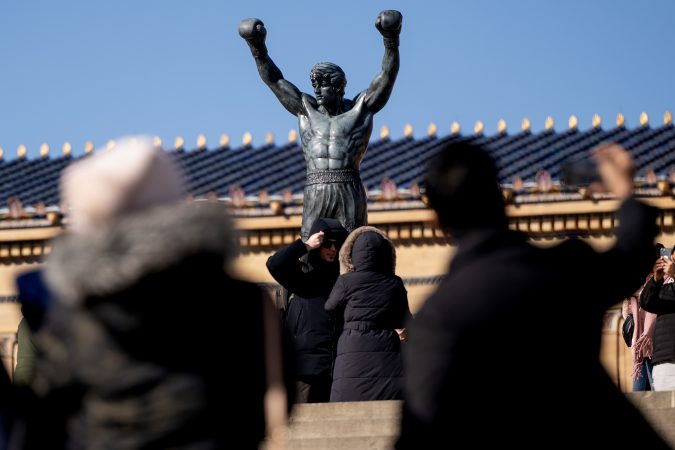
    Rocky is not only a Philadelphia film, but a Bicentennial film. Writer and actor Sylvester Stallone invokes Bicentennial themes through characters like Apollo Creed, a heavyweight champion eager to represent the American Dream in a showcase match. He chooses down-on-his luck Rocky Balboa, the “Italian Stallion,” as his opponent to highlight the United States as a nation of underdogs only in need of a chance. As reviewer Arthur Knight wrote at the time, “For the course of its two hours we learn that…America is still a place where a man can haul himself up by his own bootstraps provided he believes in himself and has the will to do so.”

    The underdog theme in Rocky resonated with American audiences in 1976 as they were thinking about the 200th anniversary of the United States, which had been born as a long shot fighting for independence from the mighty British Empire. The Revolutionary War was won by American underdogs setting the course for a new nation dedicated to liberty. But the fight for liberty became an ongoing struggle for many Americans over the centuries.

    Rocky was among the many messengers of that theme during the Bicentennial. Few if any characters in the film expect Rocky to win the exhibition fight, but he works hard and refuses to give up, going the distance against the best in the world, and losing on a technicality. He also inspires a nation. Rocky became a sleeper hit that helped awaken Americans from their self-doubts during the dark times of the 1970s.

    The Bicentennial celebration in 1976 was mired in debates over how to mark the milestone. Today, plans for celebrating the 250th anniversary of American independence in July 2026 are also fraught with controversy as two separate organizations, the official America250 group authorized by Congress and the President Trump-themed Freedom 250, compete for control of national events and the national narrative. But as the ordeal of the Bicentennial reveals, battles over how to commemorate America’s birthday are nothing new.

    Though the United States had 200 years of history to celebrate, the Bicentennial in 1976 was shrouded by the recent past. The Vietnam War, protests, political violence, scandals, and economic uncertainty compelled reassessments of the nation’s identity and its founding ideals. In the aftermath of the civil rights revolution, more Americans than ever in the 1970s sought to contribute to the story—making a simple, patriotic interpretation of US exceptionalism difficult to promote.

    At first, the official American Revolution Bicentennial Administration (ARBA), funded by the federal government, tried to present a triumphalist version of the nation’s past, focused upon democracy and liberty as mainstays of American identity. The Commission immediately met with resistance. Some critics questioned the need to spend money on the extravagance of U.S. pride.

    Others denounced the commercialism of a Bicentennial sold to consumers through commemorative trinkets as well as the inherent racism of a whitewashed US history that marginalized the experiences of Black Americans. Corporate power was a prime target of protests. The Boston Oil Party of 1973, for instance, dumped oil barrels, not tea, into the harbor and hung an effigy of President Richard Nixon.

    Instead of a centralized, unified series of events organized at the top, the Bicentennial became a grassroots effort by multiple groups and communities mining the American past to bolster their political viewpoints. The People’s Bicentennial Commission, a New Left rival to the official committee, emphasized the revolutionary tradition that had secured independence and established the republic. Jeremy Rifkin, director of the group, wrote “Red, White, and Blue Left,” an essay that encouraged activists to embrace American radicalism rather than follow Lenin, Mao, or Castro. “For the American left to develop a strategy that can win popular support for programs that answer present grievances,” he argued, “it must first gain a clear understanding of the role which the American heritage plays in the formation of American people’s political attitudes and behavior.”

    Though leftists faced an entrenched capitalist system, Rifkin enlisted the rebels of the 1770s as models for a “second American revolution” for economic equality in the 1970s, drawing upon their dark horse determination to overcome power. Like Rocky, Rifkin projected an underdog endurance that he believed defined American greatness.

    Race and class issues were prominent during the Bicentennial, as Black Americans spoke about the unfinished revolution of 1776 and the uncritical patriotism of 1976 that treated them as collateral damage. Comedian Richard Pryor’s caustic Bicentennial-themed act won best comedy album Grammy of the year and Gil Scott-Heron’s spoken-word poem “The Bicentennial Blues” framed America as “home of the blues.” The blues, the lyrics explained, had been “born on the slave man’s auction block” and “grew up a slave.” For over 200 years, Scott-Heron reminded, the blues expressed the pain of second-class citizens “ripped off” and “violated by commercial corporations.” The poem dismissed the Bicentennial as another “blues year” marked by “halfway justice, halfway liberty, halfway equality, it’s a half-ass year.”

    Protest parades for July 4, 1976, took place in Philadelphia and D.C. as a coalition of Black Americans, Native Americans, Puerto Ricans, and various dissenters made their voices heard.

    Made By History sponsors. FOR USE ON MADE BY HISTORY STORIES ONLY.Inquirer Staff

    Despite waves of disillusionment, the Bicentennial provided an ocean of opportunity for Americans to recover from the Vietnam War and reassess patriotism. Millions focused on the bright side of U.S. history, celebrating American virtues. Red, white, and blue floodlights illuminated the top of the Empire State Building, starting a tradition of using colored lighting patterns to mark special occasions. Little Liberty Bells and coins were popular items, while Queen Elizabeth II sent the city of Philadelphia the “Bicentennial Bell,” a full-size replica of the Liberty Bell from the same London foundry that created the original. Speechwriters for President Gerald Ford encouraged him to put the meaning of America in terms of an ongoing “experiment” that still represented the world’s best hope for freedom. “Rebirth” and “renewal” were stated themes of administrators trying to lift the gloom and shift the mood of the nation.

    Ford declared that Americans needed to uphold liberty and democracy, not only for U.S. citizens but all humanity. For a nation chastened by recent war, Ford’s words were balanced between humility and hope, the same notes that Rocky hit.

    In 2026, like in 1976, the American people continue to debate the meaning of America and whether the country’s founding values are still viable or ever were. Celebrating the anniversary of U.S. independence, therefore, is always as much about hope for the future and the mood of the present as it is about pride in our past. Like Rocky and his underdog spirit, Americans keep fighting the good fight for the liberties that have remained insecure since 1776.

    Vaneesa Cook is a PhD historian and the author of Empire & Liberty: The Tied Histories of Two American Landmarks (Beacon Press, 2026), from which this essay is adapted.

    Made by History takes readers beyond the headlines with articles written and edited by professional historians. Opinions expressed do not necessarily reflect the views of The Inquirer.

  • Under Trump, Democrats draw red lines on national security

    Under Trump, Democrats draw red lines on national security

    In early June, Sen. Mark Warner was preparing to argue that despite deep distrust of the Trump administration, his fellow Senate Democrats should take a risk and help renew a controversial surveillance law that was soon due to expire.

    Then, hours before a meeting with his colleagues, the senator from Virginia learned that President Donald Trump had tapped Bill Pulte, a mortgage agency official and staunch loyalist, as his acting intelligence czar.

    “I said: ‘Holy crap, I just didn’t think Donald Trump could still surprise me,’” said Warner, the top Democrat on the Senate Intelligence Committee, in an interview.

    Pulte’s appointment, which tanked the renewal of Section 702 of the Foreign Intelligence Surveillance Act, is a glimpse into the frustrating life for national security Democrats in the second Trump administration.

    Center-left lawmakers who built their political brands around support for the U.S. military and intelligence community are increasingly drawing red lines on Trump policies they see as dangerous or incoherent — including the war in Iran, lethal strikes against alleged drug traffickers around Latin America, and personnel moves like tapping Pulte, who has no national security experience, as the acting director of national intelligence.

    In some cases, Democrats are voting to curtail the funding and authorities for these agencies — a trend that could have lasting consequences for one of Washington’s last areas of relative bipartisan consensus.

    “It is a sign of the times,” said Sen. Elissa Slotkin (D., Mich.), in an interview. “People who love this country, who have put their life on the line for the country — in uniform, in the intelligence community — are now pushing back on this president abusing it.”

    Multiple Democratic lawmakers said that their constituents were urging them to take hard-line stances against the Trump administration, including on national security issues.

    “It’s a reflection of where America is,” said Rep. Jason Crow (D., Colorado.), an Army veteran and member of the House Armed Services and Intelligence committees. “The vast majority of Americans do not want this war in Iran. The vast majority of Americans don’t think that just continuing to throw money at the [Defense Department] is the way to solve our problems.”

    In response to a request for comment, the White House listed instances where Section 702 has helped protect U.S. citizens, including by thwarting a “mass casualty terror attack” at a Taylor Swift concert in Austria and stopping North Korean cyberattacks.

    More than 60% of the information included in the president’s daily intelligence briefing contained information gathered through the program, the White House said.

    “Democrats will oppose anything to attack President Trump,” said White House spokesperson Anna Kelly in a statement, noting the president “will continue to prioritize maintaining ‘peace through strength’ and safeguarding America’s national security as Commander-in-Chief — just as he was elected to do.”

    Slotkin, a career CIA officer, is one of the few Democrats in Congress who has professionally relied on the information gathered under Section 702, which allows national security agencies to surveil the texts, emails, and calls from foreigners living abroad and suspected of posing a threat.

    But when the Republican-led Senate sought to renew the program in June, she and other Democrats united against it, demanding that Trump first backtrack on appointing Pulte.

    Joining a group of GOP civil libertarians who argued the program risked abusing Americans’ privacy rights, Democrats allowed the program to expire over the outcry of other Republicans, who argued the lapse would endanger U.S. citizens during the FIFA World Cup and conflict in Iran.

    “The consequences, to be frank, could be fatal,” said Sen. Tom Cotton (R., Ark.), the chairperson of the intelligence committee, in a speech last week. “Americans should not have to face that risk because of partisan game-playing.”

    Democrats have instead argued that it is the Trump administration that is endangering Americans by launching military operations without the approval of Congress and appointing unqualified people to leading national security roles.

    “To me, one of the only things more risky than letting FISA lapse is putting in a man with no experience and who is being sent to weaponize the DNI’s office against the American public,” Slotkin said.

    Hours after a last-ditch effort to renew the program failed last Friday, Trump nominated Jay Clayton, a senior Justice Department attorney, as the director of national intelligence. Democrats have signaled they will support Clayton, whose confirmation hearing is Wednesday, potentially opening a path for Congress to reauthorize Section 702.

    But the normally broad bipartisan consensus on core national security legislation is increasingly under pressure.

    In the past two weeks, an extraordinary number of Democrats on the House and Senate armed services committees opposed their panel’s version of the National Defense Authorization Act, Congress’s must-pass defense policy bill.

    Last year, only one Democratic senator voted against the bill in the committee’s markup. This year, nine did.

    In the House, that number went from two to 12 in the same period. Half of the Democrats who opposed the bill are veterans.

    The opposition came after Republicans voted down Democrat-led amendments that would have constrained the war in Iran and slashed the $1.15 trillion authorized in defense spending, a massive jump from last year’s budget.

    “I’ve usually voted for the [National Defense Authorization Act] because I support the troops, but this is just totally out of control,” said Rep. Seth Moulton (D., Mass.), a Marine Corps veteran who led multiple failed amendments in the committee’s markup.

    Over the weekend, the administration announced a preliminary deal with Iran to halt the fighting and eventually reopen the Strait of Hormuz, a vital waterway for global energy supplies that has been almost entirely closed for months.

    Some Democrats offered cautious support for the deal, while criticizing the Trump administration’s decision to launch the war without the approval of Congress in late February. Many have already signaled they will oppose any bid for supplemental funding to cover the costs incurred by the war.

    The war, which according to Pentagon estimates has cost about $30 billion, has led to a spike in global energy prices.

    Rep. Chrissy Houlahan (D., Pa.), an Air Force veteran, voted for the NDAA despite reservations that the committee was doing too little to rein in Defense Secretary Pete Hegseth.

    Still, she argued, Democrats needed to find points of “leverage” to exert oversight of the administration. When the House voted last week on a last-minute bid to extend FISA, Houlahan, who also serves on the intelligence committee, opposed it.

    In an interview, Houlahan described her discomfort in blocking what she considers a vital intelligence tool. Ultimately, she decided that she needed to help send a signal to the administration that Pulte’s appointment was unacceptable.

    “There’s strong hope that this is going to not be the new norm,” said Sen. Andy Kim (D., N.J.), who worked in the Pentagon and State Department before being elected to Congress. “I’m somebody that’s still a deep believer that the last place that partisan politics belongs is in national security.”

  • Trump’s Iran deal greeted with skepticism and scrutiny on Capitol Hill

    WASHINGTON — Republicans on Capitol Hill said Monday they need more information about the agreement between the United States and Iran announced by President Donald Trump, and some are expressing skepticism as they ask the White House for details.

    The agreement announced Sunday to end the war in Iran, set for a ceremonial signing Friday in Geneva, is centered around reopening the Strait of Hormuz and lifting the United States’ naval blockade in the region, along with financial incentives for Iran if it meets certain benchmarks. But Senate Republicans and Democrats who returned to Washington on Monday said there were still many unanswered questions about the deal and they need thorough briefings before it is finalized.

    “I just don’t know enough about it,” Senate Majority Leader John Thune (R., S.D.) told reporters in the Capitol. “Even the people who follow this stuff closely up here don’t know that much about it.”

    Congressional leaders and intelligence committees generally receive higher-level intelligence briefings before rank-and-file members, and they are notified of major developments before they are announced. But Thune said he had not been personally briefed on the deal.

    “I think that my understanding of what it entails — and, again, not having seen anything — it would require, I think the issues are going to be compliance, and how are you going to enforce that,” Thune said.

    Thune’s concerns were echoed by several other GOP senators.

    “If it’s a secret deal then how can I take it seriously?” asked Republican Sen. Thom Tillis of North Carolina.

    Vice President JD Vance told ABC News on Monday that the White House would release the text this week, “and what everybody will see is that Iran doesn’t get a dime of money unless they perform their obligations.”

    Senators have questions about details

    Trump has not yet explained how his agreement will address Iran’s nuclear program, including who will be in charge of verifying that Iran is in compliance and who will destroy or remove highly enriched uranium believed to be buried under nuclear sites that were badly damaged by U.S. strikes last summer.

    A memorandum of understanding also includes the possibility of releasing Iran’s frozen funds, sanctions relief, and a $300 billion fund to help rebuild Iran if Tehran meets certain benchmarks, senior U.S. officials told reporters Monday. But the document has not been released.

    Thune said he wants to know more about the conditions on the financial incentives for Iran. He said the deal would be a “good one” if the incentives are conditioned upon Iran winding down its nuclear program and getting rid of the enriched uranium, “preventing them from having a nuclear capability in the future.”

    Sen. John Kennedy (R., La.) said he is hopeful but “until you see the final document, it’s hard to make an assessment.”

    “I go into it very skeptical of the government of Iran,” Kennedy said. “They learn to lie before they learn to talk. So any agreement we make with them has to have guardrails. It has to have a way to judge through independent inspection if they’re doing what they say they’re doing.”

    Senate could have a vote

    Under the Iran nuclear agreement review act passed by Congress during the Obama era, any deal the U.S. reaches concerning Iran’s nuclear material must be submitted within a certain amount of time to Congress for review. But it is up to Congress whether that happens — it is not required.

    President Barack Obama’s 2015 nuclear agreement with Iran, known as the JCPOA, was submitted for what’s called a vote of disapproval in the Senate. The outcome did not roll back the agreement, but put the senators on record with their support or opposition.

    Sen. Lindsey Graham, a close ally of Trump and a longtime hawk on Iran, has appeared skeptical over the emerging agreement. He said he is “pulling for a deal” but Congress will need to review and vote on it, and he wants to see the memorandum that the two countries have agreed on.

    “The way Iran describes it, it’s awful. The way we describe it, it makes sense to me,” Graham (R., S.C.) said. “Let’s look at it and see what it actually is.”

    Graham has said he wants Vance, whom he called “the architect of the deal,” to present it to lawmakers.

    Vance responded to Graham on Monday, saying in the interview with ABC that he would “caution Lindsey Graham and anybody else not to believe the hard-liner propaganda in Iran, but to believe what’s actually in the agreement.”

    Even though Iran’s new supreme leader, Mojtaba Khamenei, is the son of the last supreme leader, and Iran’s paramilitary Revolutionary Guard still has significant authority in Iran, Vance told CNN in a separate interview that “fundamentally, it is a much different group of people.” He insisted that the conflict had unlocked much more direct communication with high-level Iranian officials and that the relationship was “fundamentally transformed.”

    Next steps in Congress unclear

    Most Senate Republicans said they want to review the deal, but it was still unclear whether they would have a vote, or if Congress could pass it.

    Republican Sen. Eric Schmitt of Missouri said he doesn’t think an up-or-down vote is necessary.

    “You have the camp that wants us to lose and then you have a camp that wants a forever war,” Schmitt said. “President Trump’s not in either one of those camps, and neither am I.”

    Sen. Ted Cruz (R., Texas) said he expects the Senate will get the final say. But he praised Trump for making “the single most consequential decision of his presidency” by attacking Iran.

    “I think he made America safer,” Cruz said. “The president as commander in chief acted decisively to stop that ayatollah from getting nuclear weapons.”

    Sen. James Lankford, an Oklahoma Republican who serves on the Intelligence Committee, said he expects there are still many more steps to the process before any package would come to Congress for review.

    “Seems like early reports are showing that this is kind of the first step,” he said. “Once we have a final agreement, we need to take it up and pass it. … If you want a long-term agreement it’s got to be law.”

    Democrats ask what has changed

    Democrats questioned how the deal will improve upon the U.S. position before the war — and how it differs from Obama’s 2015 nuclear deal.

    “For all his critique of JCPOA, we had international observers, we actually had an alliance there that included the Europeans, and Russia and China were all signatories,” Virginia Sen. Mark Warner, the top Democrat on the Intelligence Committee, told CBS’ Face the Nation on Sunday.

    Sen. Elizabeth Warren (D., Mass.) said there are more questions than answers, including what happens to the Iranian nuclear program and sanctions on Iranian oil.

    Trump has spent “tens of billions of dollars” and service members and Iranians have died, “and he still cannot explain how one family in Massachusetts is better off,” Warren said.

    Democratic Sen. Tim Kaine of Virginia said an end to what has been a costly and unpopular war would be a good resolution, but he wants to hear more details.

    “An off ramp is good because it was a war that should have never been started,” he said.