Category: Politics

  • What’s so surprising about a Christian Democrat?

    What’s so surprising about a Christian Democrat?

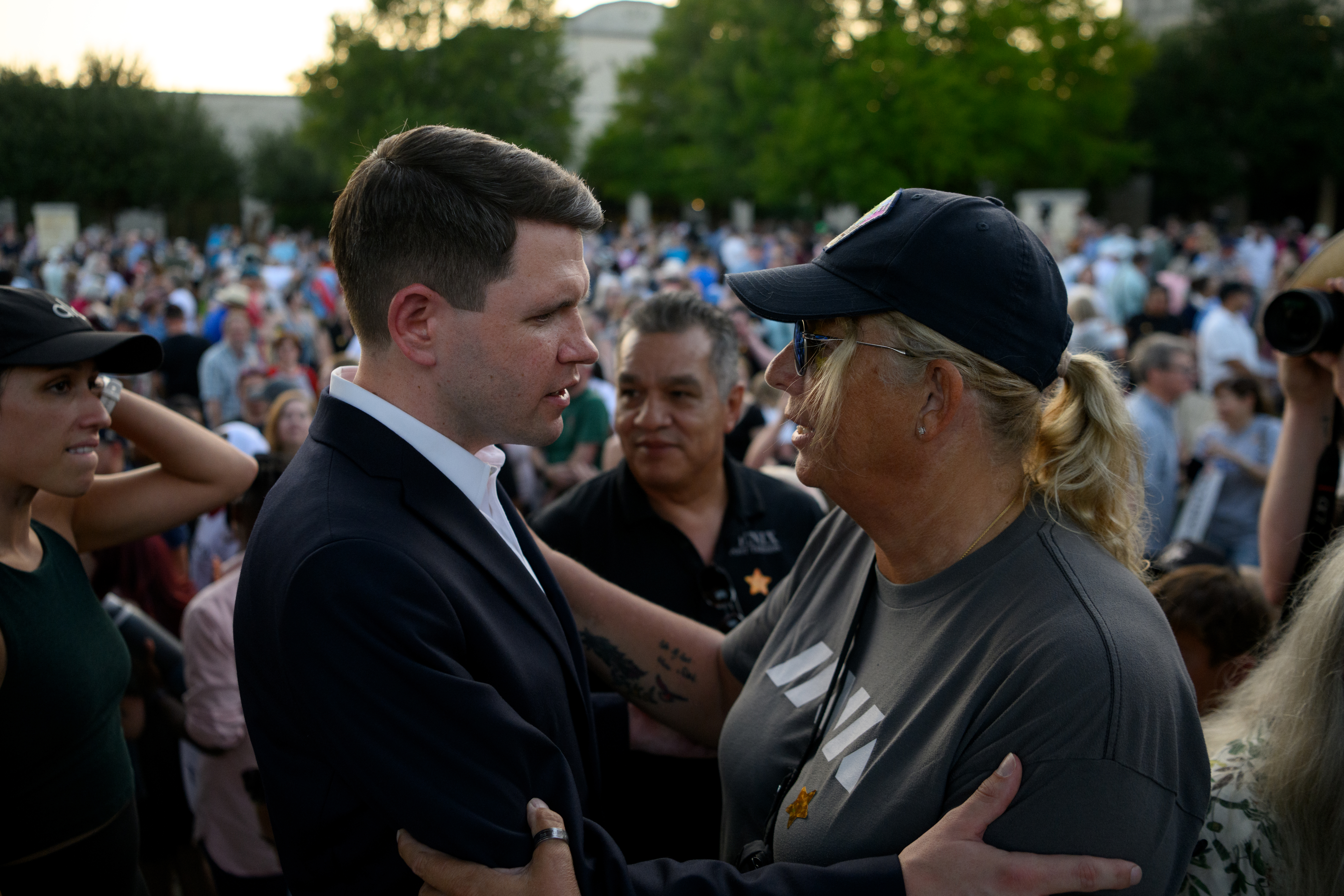
    In early July, before the 250th anniversary of the nation’s founding, Texas Democrat James Talarico preached on the proper place of religion in politics. In his sermon, he argued for the importance of the separation of church and state while emphasizing that religion could still inform a person’s approach to and involvement in politics. He stressed how Christianity should shape the tone of one’s politics. Drawing on Jesus’ Parable of the Good Samaritan, Talarico claimed that loving one’s neighbor includes respecting people of different faiths.

    This message raised the ire of Talarico’s opponent, Ken Paxton, and many evangelicals have questioned the legitimacy of his faith. But he’s also earned the applause of a few Christian conservatives such as David French, who approvingly contrasted Talarico with MAGA Christian politicians.

    Talarico is not alone. There are currently a dozen ordained Christian ministers running for various public offices as Democrats, including Lutheran Pastor Sarah Trone Garriott (Iowa’s Third Congressional District), and United Methodist Pastor Adam Hamilton (Kansas-U.S. Senate).

    Many of these politicians, including Talarico, Trone Garriott, and Hamilton, have emphasized their religious faith not only as a part of their overall message, but they have situated their Christianity at the core of their identity. While there’s nothing “new” about Democratic politicians whose religious identity is central to their politics — this was common a century ago with progressives such as William Jennings Bryan and Barbara Jordan during the Civil Rights era (and still is quite common among African American politicians) — today’s candidates do represent a departure from the trend of the past four decades of Democratic Party politics.

    It hasn’t always been this way. Prior to the 1980s, candidates conversant in religion were common and unremarkable. At the time, evangelical and “mainline” Protestants were not aligned with political parties in the way they are today. As social scientist Ryan Burge has pointed out, in the 1970s most white evangelicals were Democrats and evangelicals helped elect “born again” Jimmy Carter in 1976 — the so-called “Year of the Evangelical.”
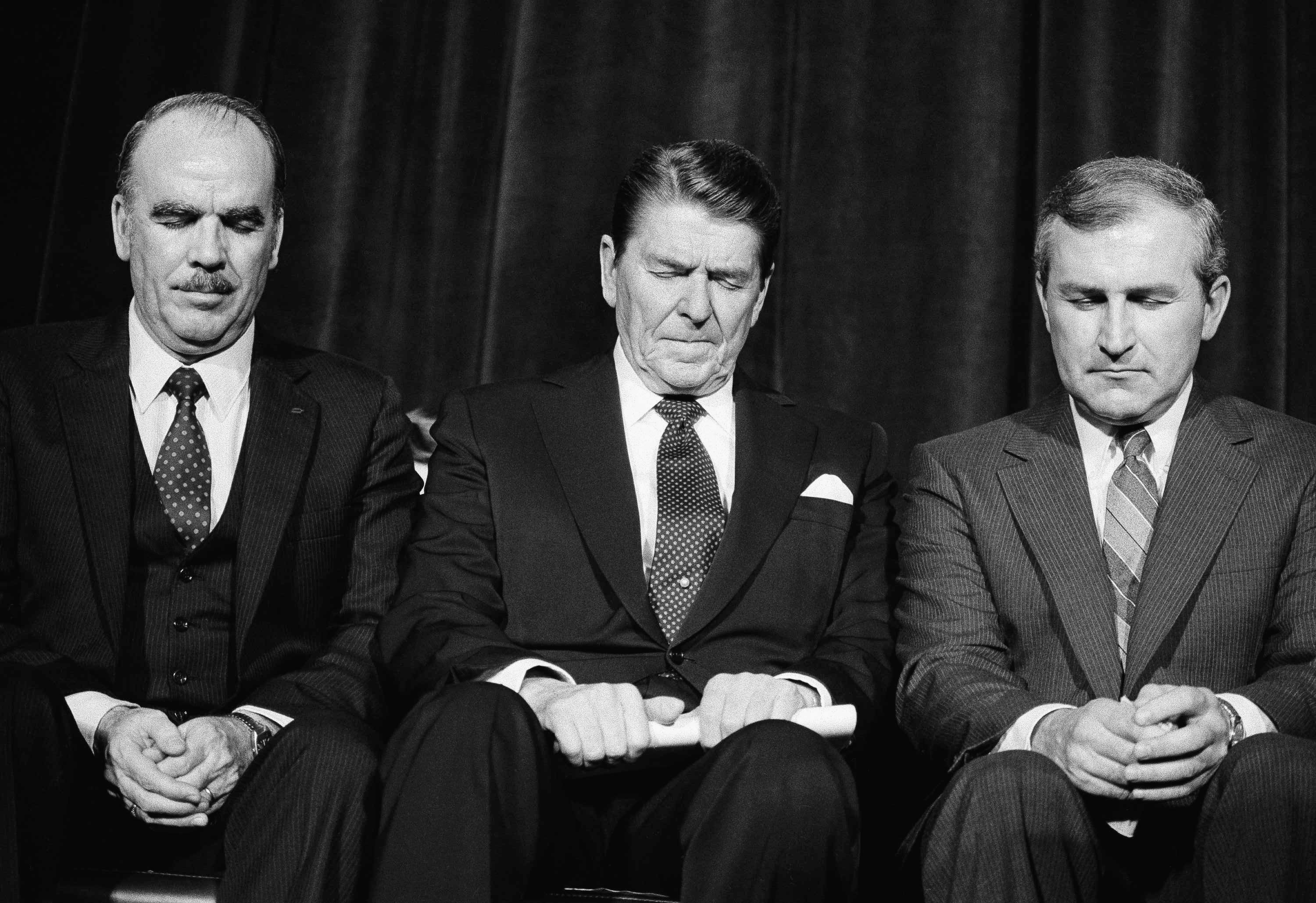
    President Ronald Reagan prays with National Association of Evangelicals President Arthur Gay, left, following his address to the organization’s convention asking for help in winning approval of a constitutional amendment permitting prayer in school in Columbus, Ohio, March 7, 1984.Barry Thumma

    But evangelicals’ rejection of Carter for reelection in 1980 signified an important shift for both parties. Explanations for white evangelicals’ turn away from Christian politicians like Carter and toward Ronald Reagan and the Republican Party — newly perceived as a reliably religious unit — usually point to several events in the 1970s.

    By 1972, the number of delegates at the Democratic National Convention identifying as agnostics, atheists, or people who almost never attended church had grown to 24% (compared to 5% of Americans who listed “no religion” on the General Social Survey.) These delegates helped to add progressive positions on women and gay rights into the party platform at a time when they were to the left of mainstream America’s sensibilities.

    Then in 1978, the IRS targeted mostly white private elementary and secondary schools, sometimes known as “segregation academies,” many of them religious, that had formed in response to desegregation, threatening their tax-exempt status unless they could demonstrate non-discrimination toward Black students. Additionally, by this time, the Supreme Court’s 1973 decision in Roe v. Wade began to galvanize evangelical activists in a space that had been historically dominated by Catholic priests and laypeople.

    Both of these issues came together in the 1980 election, the latter thanks in part to the attention Francis Schaeffer drew to the issue in his writings and speeches across America and the organizing of Jerry Falwell Sr.’s Moral Majority. Because of the growing number of Democrats who self-identified as atheist, agnostic, or non-church attending, white Democrats tended to cede the religious political ground to the new Religious Right, even though plenty of Democrats were religious. Over the next decade, this helped create a binary between a “religious traditionalist” Republican Party and a “secularist progressive” Democratic Party.
    The Rev. Jerry Falwell speaks at his Thomas Road Baptist Church in Lynchburg, Va., in a 1999 photo.

    Demographic trends over the next 40 years reinforced this shift. In 1975, 30% of Americans were part of the Protestant “mainline” (e.g. United Methodist, Evangelical Lutheran, Presbyterian USA, Episcopal Church, American Baptist, Disciples of Christ, and United Church of Christ). Today the mainline only accounts for between 9% and 13% of Americans. Theories for this decline abound, including loss of identity, aging congregations, poor retention of children as they grow into adulthood, controversies over sexuality, ordination of women and LGBTQ clergy, and same-sex marriage, which led to conservatives joining more evangelical churches.

    Over this same period, the number of Americans identifying as “unaffiliated” (the so-called “nones”) rose from 5% to nearly 30%.

    Factors driving this growth include people being more willing in a secularizing environment to admit they aren’t religious, young people who choose not to identify with any religion, and the general population becoming less religious over time. Democrats have enjoyed a decided advantage among the voting “nones” going all the way back to the 1984 election.

    For Black Americans, there has also been a more modest decline in affiliation with historically Black churches (e.g. National Baptist, Church of God in Christ, and AME Zion). Yet these churches have maintained a continued source of relevance for Black Protestants, playing a vital role in Black life as a source of social support, political organizing, community engagement, aid to the needy, and defense against racism and ethnic solidarity. Today, 53% of African Americans are still associated with historically Black Protestant churches, which probably accounts for the persistence over the past 40 years of progressive Black politicians with ministerial credentials.

    Meanwhile, evangelicals shifted from a slight majority favoring the Democratic Party before the 1980s toward a reliable core of the Republican Party, at a moment when their numbers were increasing. By the end of the 20th century, evangelicals grew to represent nearly 30% of all Americans, in part by having larger families, retaining their children in the church at higher rates, and maintaining cultural and theological distinctiveness.

    Collectively though, these trends meant the Democratic Party became less beholden to a religious demographic within its own constituency, and consequently, religiously-oriented politicians seemed less relevant to the Democratic Party.

    Made By History sponsors. FOR USE ON MADE BY HISTORY STORIES ONLY.Inquirer Staff

    The exception was the African American wing of the party, where Christianity remained central to most voters’ identities. Here, a political figure like U.S. Sen. Raphael Warnock (senior pastor of Ebenezer Baptist in Atlanta, a historically Black mainline church that Dr. Martin Luther King Sr. and Jr. pastored) is not exceptional. The Black church’s historic emphasis on social issues and inequality allowed for adherents’ continued support of Democratic candidates who were white and less religious, even as it did lead to some tension over progressive social goals, such as same-sex marriage.

    In fact, it was the emergence of a Black politician in 2004, then-Senate candidate Barack Obama, who helped call attention to the dearth of religiously-conversant Democratic politicians, arguing that his party needed to reengage religiously-affiliated voters. From 2004 to 2008, the Democratic Party emphasized outreach to religious voters in a concerted way. But after the 2008 election, and Obama’s win, this focus for the Democrats declined so much so that, by 2016, Michael Wear and others involved in rallying Democratic religious voters for Obama had become frustrated at the lack of dedicated outreach.

    So, does the emergence of Democratic politicians such as Talarico, Trone Garriott, and Hamilton signal a new shift on the order of what happened in the 1970s?

    It may be too early to tell.

    It may be, as Wheaton College Professor Esau McCaulley has argued, that the emergence of these politicians is linked to the backlash growing among Protestants tired of MAGA evangelicals defining what Christianity means in America today. Or, perhaps, these candidates are simply the culmination of a growing recognition within the Democratic Party of its need to reengage Christian voters.

    Regardless, it’s not an accident that the new crop of ordained Democratic candidates are located in regions of relative mainline Protestantism vibrancy in the Midwest and South.

    With the exception of Presbyterian Pastor Matt Schultz of Alaska, all 12 of the ordained candidates are running in Midwest or Southern states. Perhaps, politicians such as Talarico will succeed in reshaping how Christianity functions in the political space and reclaim a lost politics of religion within the Democratic Party. Time will tell if they are part of a new vanguard, or only a brief aberration.

    Joseph P. Slaughter is an associate professor of history and religion at Wesleyan University. His first book, “Faith in Markets: Christian Capitalism in the Early American Republic,” demonstrates how religious identities in the United States’ early decades influenced economic decision-making and the formation of the American capitalist system.

    Made by History takes readers beyond the headlines with articles written and edited by professional historians. Opinions expressed do not necessarily reflect the views of The Inquirer.
  • Thousands of Philly homeowners are facing property tax increases of 50% or more after this year’s reassessment

    Thousands of Philly homeowners are facing property tax increases of 50% or more after this year’s reassessment

    Most Philadelphia homeowners will see slightly higher property tax bills next year after the city conducted a mass reassessment process that resulted in a modest uptick in home values.

    But for thousands of residents, many of whom live in North Philadelphia, next year’s tax bills are expected to soar.

    Nearly 6,000 homeowners in Philadelphia saw their property assessments this year climb by more than 50% compared with two years ago, the last time the city conducted a mass revaluation, according to an Inquirer analysis of city property assessment data released in June.

    Of those homeowners, more than 2,200 saw their assessments more than double.

    That is likely to result in sticker shock come tax time next year, because property tax bills in the city are calculated based on home values. The revenue is split between the city and the Philadelphia School District.

    Homeowners across the city saw a median 3% increase in their property assessments this year compared with the 2025 tax year. Jumps were higher in neighborhoods that border gentrifying areas, such as in parts of Kensington and West Philadelphia.

    But this year, two other areas of the city had the densest concentrations of homes where property assessments increased by 50% or more, according to The Inquirer’s analysis.

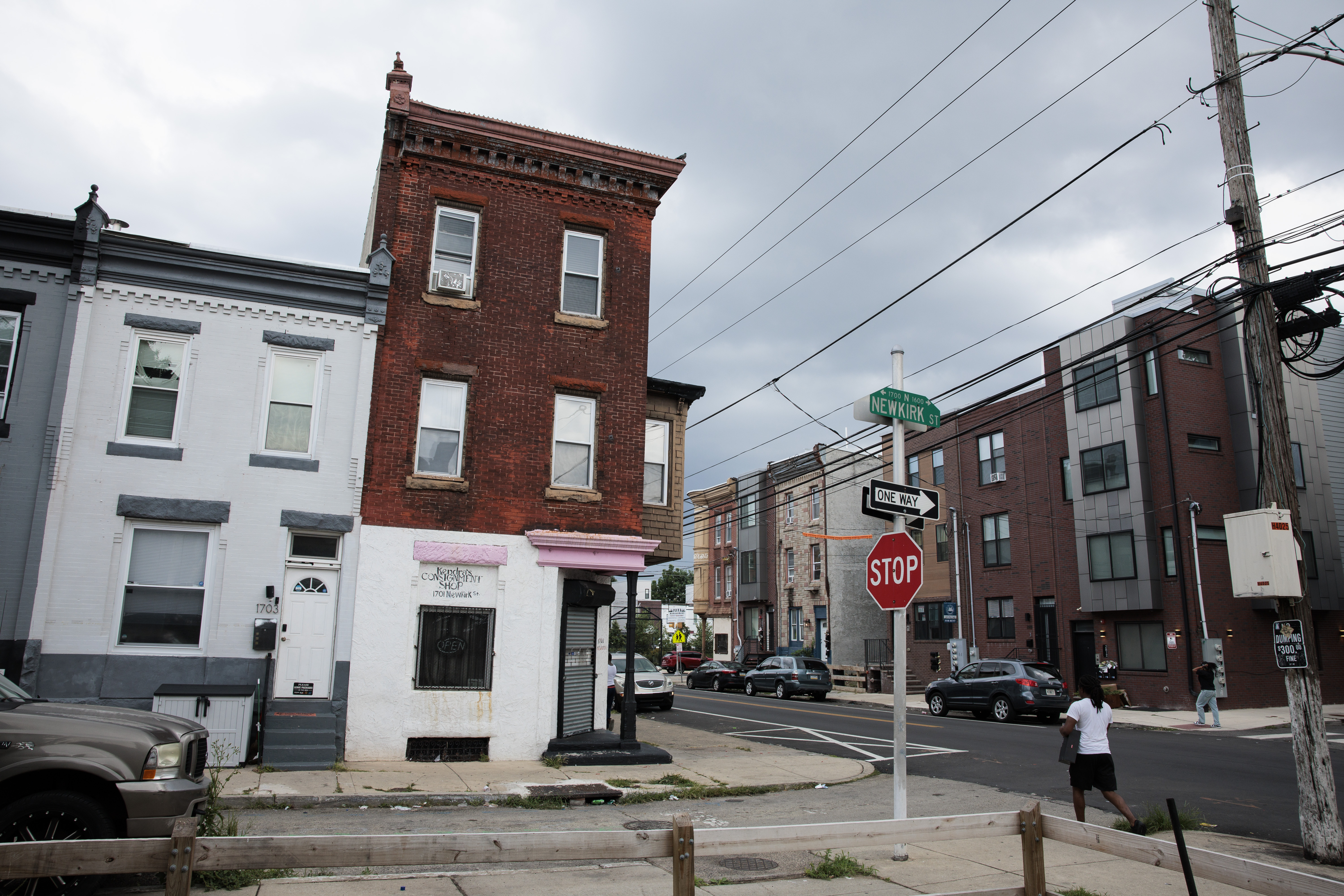
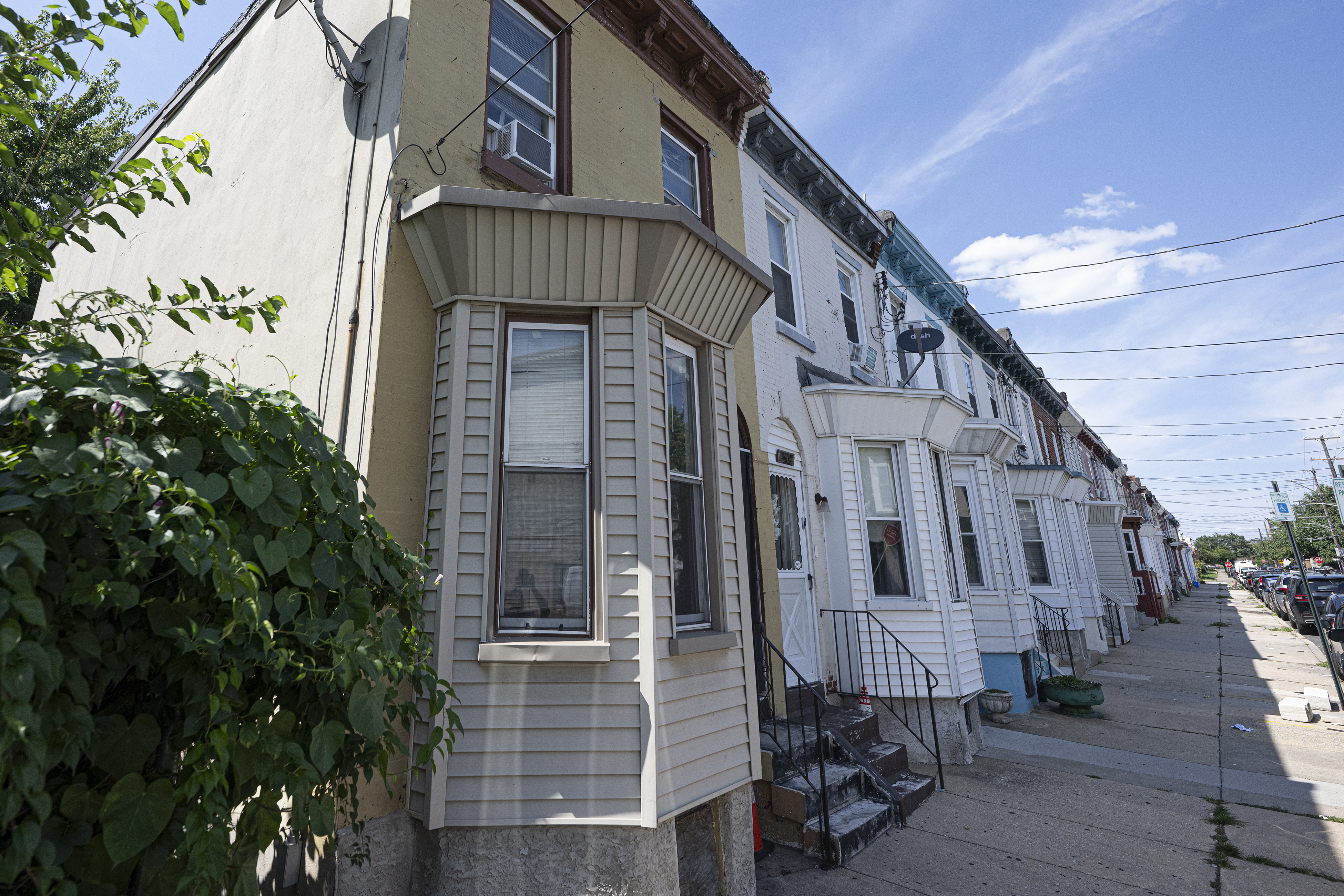
    The steep rises are clustered in the southern end of Strawberry Mansion, the historically Black neighborhood along the Schuylkill, and in the tiny Hartranft neighborhood north of Temple University and east of Broad Street, where residents are predominately Latino.

    (function() {
    var l2 = function() {
    new pym.Parent(‘html_sandwich_2026_property4’,
    ‘https://media.inquirer.com/storage/inquirer/projects/innovation/arcgis_iframe/html_sandwich_2026_property4.html’);
    };
    if (typeof(pym) === ‘undefined’) {
    var h = document.getElementsByTagName(‘head’)[0],
    s = document.createElement(‘script’);
    s.type = ‘text/javascript’;
    s.src = ‘https://pym.nprapps.org/pym.v1.min.js’;
    s.onload = l2;
    h.appendChild(s);
    } else {
    l2();
    }
    })();

    Housing experts and advocates for low-income homeowners have long criticized the city’s assessment system as systemically biased, leaving Black and brown homeowners to pay disproportionately high property taxes. Mayor Cherelle L. Parker convened a task force in 2024 to study the city’s revaluation system, and that group’s recommendations are expected to be released later this year.

    Monty Wilson, a senior attorney at Community Legal Services who sits on the task force, said the Philadelphia Office of Property Assessment is the best in the state and has “worked really hard to become more and more accurate.”

    But he said bias persists in part because of the unique challenges that assessors face in low-income neighborhoods that can cause volatility in home values, such as higher rates of vacant lots, foreclosures, and other factors.

    A 2024 CLS report found that errors were clustered in lower-value neighborhoods where a majority of residents are people of color.

    “That means when a property is overassessed,” Wilson said, ”it tends to occur in a Black and brown neighborhood.”

    (function(){function e(){window.addEventListener(`message`,function(e){if(e.data[`datawrapper-height`]!==void 0){var t=document.querySelectorAll(`iframe`);for(var n in e.data[`datawrapper-height`])for(var r=0,i;i=t[r];r++)if(i.contentWindow===e.source){var a=e.data[`datawrapper-height`][n]+`px`;i.style.height=a}}})}e()})();

    The Parker administration did not respond to requests for comment.

    In response to a previous article about this year’s property reassessments, city officials emphasized that some lower-income homeowners pay relatively low tax bills because of the popular homestead exemption tax break. The program, which any homeowners can apply for and obtain if they live in their house as their primary residence, exempts the first $100,000 from a home’s taxable value.

    That means that some homeowners in working-class neighborhoods previously paid little to no property taxes. A sudden increase in valuation, like the ones seen this year in pockets of North Philadelphia, could require they pay bills next year that are several hundred dollars more than in the past.

    Take the 2500 block of North Marshall Street. The residential North Philly street sits between West Kensington and Broad Street, and nearly every home saw its assessment increase by 60% or more, according to The Inquirer’s analysis.

    Most of the homes there had previously been valued at less than $100,000, meaning owners with the homestead exemption owed no property taxes. Now, many of the homes on the block are valued at about $140,000, an amount that would next year yield more than $500 in yearly tax bills for owners with the homestead exemption.

    More than 40% of the Hartranft neighborhood’s residents are below the federal poverty level, which is $33,000 a year for a family of four, according to U.S. Census data.

    At Left a property on 2500 N. Marshall St., Philadelphia, PA 19133 is shown Wednesday, Aug. 19, 2026, in Philadelphia.Jose F. Moreno / Staff Photographer

    City Councilmember Quetcy Lozada, whose district includes parts of Kensington and North Philadelphia, said the Hartranft area is not like sections of Kensington that have seen an influx of development in recent years and where increases in property assessments may be expected.

    It is possible, she said, that lower-income residents who have been displaced from parts of Kensington looked to move west of the neighborhood, increasing demand in the Fairhill and Hartranft areas.

    Lozada — who has held workshops in the neighborhood to connect residents with property tax relief programs — said she fears her constituents are being asked to pay disproportionately high taxes and not seeing better city services and stronger public schools.

    “How is it possible that someone in Fairhill is paying a higher tax for a property that has not had any investment, in a neighborhood that is not as safe, whose school system is not as great, as somebody that lives in Chestnut Hill, for instance?” she said, referring to the upscale Northwest Philadelphia neighborhood with a $109,000 median household income. “There has to be a better way of doing a more accurate evaluation in every neighborhood.”

    City Council is expected to hold a hearing this fall to probe the assessment process.

    In Strawberry Mansion, community leaders said that increased assessments are likely a result of market pressure from Brewerytown to its south, a comparatively whiter and higher-income neighborhood.

    “The city has to be super transparent about this assessment system so people can better understand it and not feel that sticker stock,” said Tonnetta Graham, president of the Strawberry Mansion Community Development Corp. “If we know how they came to their number, it’s easier to chew.”

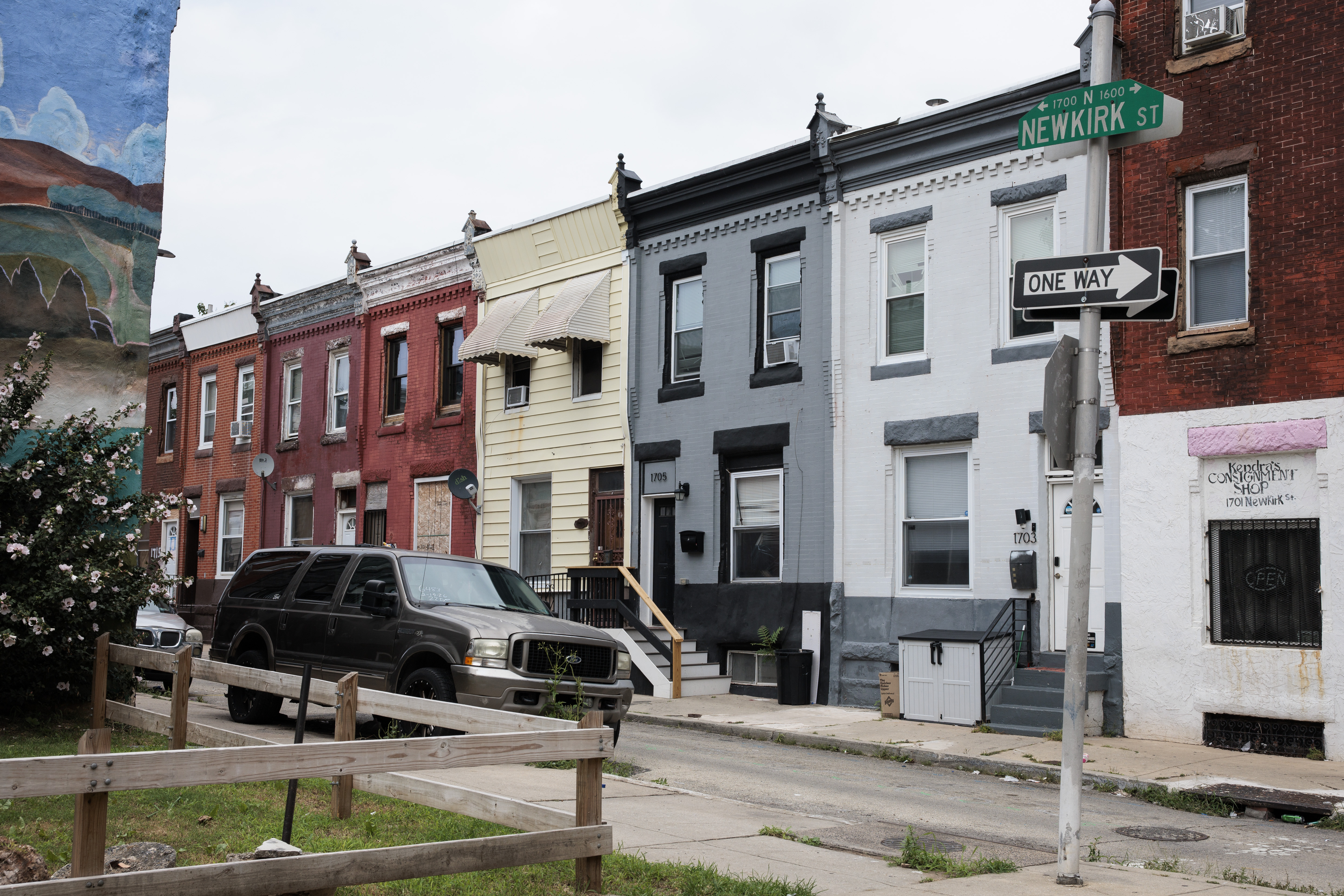
    The 1700 block of North Newkirk Street on Thursday, Aug. 20, 2026 in Philadelphia.Monica Herndon / Staff Photographer

    Councilmember Jeffery Young Jr., whose district includes both Strawberry Mansion and parts of Hartranft, did not respond to requests for comment.

    Jalon Alexander, a Strawberry Mansion native who this month launched a campaign to challenge Young for his Council seat next year, said he was recently at a block party in the neighborhood where he heard repeatedly from older homeowners who were concerned about their increased assessments.

    “They feel taken advantage of, and they feel like it’s coming out of nowhere,” Alexander said. “This is an area where there’s high levels of poverty, and there is not a lot of political or government attention in this area. I’ve spoken with many people whose rates have almost doubled. It’s the biggest issue in the neighborhood.”

    Staff writer Michaelle Bond contributed to this article.

  • ICE inked a $9 million contract with a Montco firearms manufacturer — and is spending $17 million at Philly area businesses

    ICE inked a $9 million contract with a Montco firearms manufacturer — and is spending $17 million at Philly area businesses

    U.S. Immigration and Customs Enforcement has awarded more than $17 million in contracts, mostly to businesses, in the Philadelphia area since the start of President Donald Trump’s second term, with more than half of that money going to a firearms manufacturer in Montgomery County.

    The local data, compiled by The Appeal, highlights the Trump administration’s spending related to raids and enforcement operations as the agency carries out the president’s mass deportation agenda, including its purchases of weaponry.

    Geissele Automatics, a firearms manufacturer based in North Wales, has the largest and perhaps most consequential contract with ICE in the Philadelphia area.

    The company — which specializes in selling high-grade, AR-15-style semiautomatic weapons and parts to consumers, law enforcement agencies, and the military — entered a contract with ICE for nearly $9.1 million in September 2025, according to federal data.

    The payment was for the delivery of “precision long guns and accessories” to support ICE agents as well as the agency’s tactical programs, the data show. It’s unclear where the equipment is being used.

    Neither the company’s founder, Bill Geissele, nor a representative from the company’s sales team returned a request for comment.

    Nationwide, ICE and U.S. Customs and Border Protection has dramatically increased spending on firearms in Trump’s second term, according to a report earlier this year from U.S. Sen. Adam Schiff (D., Calif.), leading to outcry from Democratic officials and voters who say the agency has become a militarized force with little oversight or accountability.

    That outrage continued this month when Democrats voiced their opposition to ICE’s plan to provide ICE officers with electric shock gloves. Schiff’s oversight report, released earlier this year, called ICE and CBP’s contracts for weaponry a “misuse of taxpayer dollars to maximally arm federal immigration agents.”

    A spokesperson for Department of Homeland Security said in a statement that $17 million in contracts in the Philadelphia region is “simply not accurate” and “conflates nationwide ICE contracts” with spending in the area.

    “ICE contracts with vendors across the country to support its law enforcement mission. The existence of a federal contract, a vendor located in a particular region, or a nationwide contract vehicle does not mean that the full value of that contract was spent in Philadelphia,” the spokesperson said

    “Reporting should accurately distinguish between nationwide contract values, vendor locations, places of performance, and actual federal expenditures before presenting a misleading figure as fact,” they added.

    The details on the contracts come as residents and advocates in the Philadelphia region and nationwide are continuing to remain vigilant of ICE’s presence in their communities. Earlier this year, ICE struck deals to retrofit warehouses in Pennsylvania and New Jersey into mass detention centers before later backtracking after residents and leaders in both states voiced opposition.

    Bill Geissele — who hosts the manufacturer’s podcast Shots Fired in Anger —has donated to Republican elected officials in Pennsylvania, including U.S. Sen. Dave McCormick and U.S. Rep. Dan Meuser. Geissele’s contract, while not the company’s first with the federal government, is by far the most significant contract between the gun manufacturer and the federal agency on record.

    (function() {
    var l2 = function() {
    new pym.Parent(‘ice_contracts2’,
    ‘https://media.inquirer.com/storage/inquirer/projects/innovation/arcgis_iframe/ice_contracts2.html’);
    };
    if (typeof(pym) === ‘undefined’) {
    var h = document.getElementsByTagName(‘head’)[0],
    s = document.createElement(‘script’);
    s.type = ‘text/javascript’;
    s.src = ‘https://pym.nprapps.org/pym.v1.min.js’;
    s.onload = l2;
    h.appendChild(s);
    } else {
    l2();
    }
    })();

    In August 2024 for example, under former President Joe Biden’s administration, Geissele Automatics entered a $12,224 contract with ICE for equipment to support a “sniper sustainment” course, according to data compiled by The Appeal.

    By 2025, when Trump returned to the White House and significantly ramped up ICE operations nationwide, those contracts ballooned.

    On top of the $9.1 million contract that year, Geissele was paid $27,936 to provide training rifles and magazines for the agency’s Office of Firearms and Tactical Programs, as well as $16,544 for rifles and accessories required for testing and evaluation.

    ICE also took its spending across the river to Burlington County in New Jersey, where it awarded George J. Petronis Enterprises Inc., a gun shop, slightly more than $505,000 since the start of Trump’s second term for training ammunition and ink cartridges for 9mm training ammo to support ICE’s Office of Firearms and Tactical Programs in Fort Benning, Ga.

    George J. Petronis Enterprises Inc. did not return an email requesting comment.

    The Appeal’s dashboard also shows a contract for rental of a firing range between ICE and the county’s fire academy, located in Conshohocken, that has existed since at least 2021. But Montgomery County officials said Friday that the contract is with the broader Department of Homeland Security — which ICE is a part of — and not with the federal immigration enforcement agency directly.

    County Commissioner Jamila Winder, a Democrat, said that the academy is used by local, state, and federal agencies for law enforcement training but “this facility is not available for training for those engaged in immigration enforcement activities.”

    Other contracts highlighted by The Appeal dashboard may also be directly tied to DHS, instead of ICE.

    Earlier this year, Montgomery County’s Board of Commissioners passed a resolution restricting federal immigration enforcement from using county property or resources for noncriminal investigations.

    Other local contracts with ICE include a roughly $50,000 contract with the Philadelphia Parking Authority for rental spaces for 16 vehicles and more than $78,000 to Ricoh USA Inc., an office technology company headquartered in Chester County that was also used under the Biden administration. Coast2Coast Shredding LLC, which is headquartered in Montgomery County but shreds documents in California, received more than $94,000 from ICE.

  • Pete Buttigieg returns to South Carolina as he weighs another White House run

    Pete Buttigieg returns to South Carolina as he weighs another White House run

    ORANGEBURG, S.C. — The last time Pete Buttigieg was giving a political speech in South Carolina, it was to mark a distant finish in the state’s primary that effectively ended his campaign for president.

    Returning this weekend as he mulls a second run for the White House, Buttigieg set out to reintroduce himself to the state and the Black voters he struggled to win in 2020. The results were encouraging.

    There was a standing ovation in a Black church in South Carolina when Buttigieg was credited for helping bring millions of federal dollars to the area for a project as President Joe Biden’s transportation secretary. A second ovation came as Buttigieg gave a speech warning of a country in “big trouble” while laying out his own vision for what should come next.

    “There is no such thing as again in real life. The only way out is through,” Buttigieg told the crowd of more than 200 people at an NAACP Freedom Fund Dinner. “If we recognize and embrace a future that is different from the past, we will do better.”

    The warm applause was a markedly different reception than six years ago, when a fourth-place showing in South Carolina helped derail Buttigieg’s presidential campaign while exposing his failure to connect with Black voters. The state is likely to have an even greater say in his political future as the first contest in the Democratic presidential primary in 2028.

    Starting the election calendar in South Carolina is intended in part to give Black voters a greater voice at the outset of the nominating process. For Buttigieg and other potential contenders, winning the support of this group that makes up a majority of South Carolina’s Democratic electorate is essential.

    “You need to demonstrate that you can win Black voters,” said Jaime Harrison, a former Democratic National Committee chairperson and South Carolina Democratic Party chairperson. “If you can’t win Black voters, you can’t be the nominee of our party.”

    2028 campaign is already coming to South Carolina

    Buttigieg insists he has made no final decision about whether to run for president again.

    “Right now, I’m totally focused on 2026,” he told reporters Saturday.

    But his South Carolina trip — a week after visiting another early-voting state, Nevada — had all the trappings of a potential presidential bid.

    He raised money Friday in Charleston with Nancy Lacore, a U.S. House candidate trying to flip a Republican-held seat. On Saturday morning, he spoke at a policy conference before traveling to Claflin University, a historically Black university in Orangeburg.

    Davina Perry, a third-year student at Claflin, said she came away from Buttigieg’s visit thinking he would be a “good candidate” if he ran.

    “Secretary Pete has definitely put himself on my radar for 2028 now, for sure,” Perry said. But, she added, “I do want to see more representation from people who look like me.”

    That evening, Buttigieg attended a dinner at a church in Orangeburg, a nearly three-quarters Black city with a deep history in the Civil Rights Movement. The crowd included local NAACP leaders, ministers, and elected officials. Buttigieg worked the room, giving hugs and taking photos.

    “He is responsible for the Railroad Corner,” said Orangeburg Mayor Michael Butler, referencing a project aimed at revitalizing the city’s downtown that received a $22.7 million federal grant. “Do I need to say any more? We need to stand and welcome the former secretary.”

    Buttigieg used the speech that followed to make a broader case about the direction of the country, arguing that Democrats cannot separate Americans’ economic frustrations from a political system he described as increasingly broken.

    “I have come to believe that the kitchen table cannot be improved unless we are also reforming the institutional and political floor on which that kitchen table sits.”

    Black voters will have the first say for Democrats in 2028

    For Buttigieg, the weekend offered signs of how much has changed since he came to South Carolina in 2020 as a 38-year-old Indiana mayor asking voters to take a chance on him. He points to what he delivered during four years in Biden’s cabinet, including specific projects in the state.

    But Buttigieg said he also came to South Carolina “to propose something” about the country’s future. Butler, Orangeburg’s mayor, liked what he heard.

    “His speech was what you talk about at the kitchen table. How America is going to survive all of this?” Butler said. “He brought hope to us.”

    South Carolina Democratic leaders say the close, personal engagement with candidates is exactly what they hoped for. Those involved in the push to make South Carolina first envisioned the living-room conversations and retail politics long associated with Iowa and New Hampshire.

    “You got to go listen. You got to go all over the place,” Harrison said. “You have to make meaningful investments. That’s how you win South Carolina.”

    Buttigieg is hardly alone in his early trip to the state.

    Other potential 2028 contenders, including California Gov. Gavin Newsom, Kentucky Gov. Andy Beshear, U.S. Rep. Ro Khanna of California, and U.S. Sen. Cory Booker of New Jersey have made trips to the state as what is expected to be a large Democratic field begins to take shape. Former Vice President Kamala Harris already has deep ties in the state.

    The electorate they will encounter has changed from 2020, when Biden’s victory in the state resurrected his presidential campaign and put him on a path to ousting Republican President Donald Trump.

    Four years later, Trump defeated Harris and returned to the White House, which Black leaders say has significantly hurt their community. Earlier this year, a Supreme Court decision weakened a core provision of the Voting Rights Act, threatening Black political representation across the South.

    “We must start our process where democracy must still be fought for, in the full view of the nation,” former interim DNC chairperson Donna Brazile said in a speech this year advocating for South Carolina to go first.

    Buttigieg addressed that anxiety directly Saturday night, describing efforts to weaken the Voting Rights Act as the culmination of a “multidecade effort.” He warned of a broader push “to demolish African American political power.”

    Harrison said Buttigieg’s trip this weekend was a “good start,” but that Buttigieg and all the other potential 2028 candidates have a long road ahead to prove themselves to the state’s voters.

    “It has to be a good start and then you got to continue,” Harrison said. “It can’t just be, ‘Oh, pop in and then I’m going to pop back out.’”

  • Why polling chaos could create big problems for American politics

    Why polling chaos could create big problems for American politics

    WASHINGTON — When Mandela Barnes dropped out of the Wisconsin governor’s race two weeks before the Democratic primary, he declared, “It has become very clear who our nominee is going to be.”

    He meant Francesca Hong, who had a commanding lead in polls — not David Crowley, who ended up narrowly winning the nomination.

    Politicians like Barnes have relied on public and private surveys of voters’ views to guide their decisions for as long as pollsters have sought to measure public opinion. But in this year’s midterm contests, misleading polling has shaped campaign narratives, donor behavior, and news coverage like never before.

    Polls are traditionally used to measure public opinion, not mold it. But this year, several Democratic campaigns have seized on unreliable polls to push the perception that their candidates are surging to try to solidify support, attract donors, and scare off rivals.

    The rise of prediction markets has also created financial incentives for untrustworthy or even fake political polls at a moment when it has become even more expensive and difficult to conduct high-quality public opinion surveys.

    Some Republicans — particularly President Donald Trump — have for years pointed to dubious polling to advance their political goals, but the phenomenon has become far more acute in Democratic primaries this year. In recent weeks, questionable surveys have created confusion and warped perceptions of the results of key primaries for the party.

    In Michigan’s primary for Senate, polls fueled a widespread belief that Rep. Haley Stevens, a moderate Democrat, was a major underdog to Abdul El-Sayed, a progressive. After she voted on primary day, the first question she faced from reporters was about how El-Sayed built such a large polling lead. She ended up losing by just a percentage point.

    In Wisconsin’s primary for governor, polls that consistently showed Hong ahead by double digits created an air of inevitability around her nomination. When she lost, it was viewed as a stunning upset.

    “After seeing the polls, I think everybody would have called me the underdog,” Crowley said. “During this race, I had to be a little bit recklessly optimistic.”

    The polling world has also been rocked by recent revelations of made-up surveys and sketchy practices.

    Three purported polls of the Los Angeles mayor’s race, the Wisconsin primary for governor, and the Nevada governor’s race turned out to be entirely fake — a “short-term social experiment,” according to the website that released them. The fakery’s discovery, by the Los Angeles Times, came only after Mayor Karen Bass of Los Angeles posted approvingly about one of the polls, which showed her ahead.

    Another pollster acknowledged that in a survey of Florida’s primary for governor, it had shifted some respondents’ support from the candidate they had said they backed to another candidate because the initial results “did not align with our read of the race.” (None of the polls above were included in the New York Times’ poll trackers or coverage because they did not meet its basic transparency and professionalism standards.)

    All of this is happening at the dawn of the 2028 presidential primary season, when dozens of candidates are likely to be defined in part by polls that cement impressions and set narratives that may not be tethered to political reality.

    “Every candidate in 2028 will have their own cooked poll factory,” said Lis Smith, a Democratic strategist who was a senior aide on Pete Buttigieg’s 2020 campaign for president. “Polls now are not just a way of measuring the horse race. It’s a way for candidates and their allies to influence the horse race.”

    ‘Double digit down — it cannot be!’

    In Michigan, the last eight public polls of Democratic voters found El-Sayed leading Stevens by double digits.

    In an interview this past week, Stevens said she never believed the race was the blowout that the polls predicted. She won key late endorsements from figures including Gov. Gretchen Whitmer of Michigan, a popular Democrat.

    But the polling unquestionably shaped how the contest was perceived. El-Sayed, whose advisers privately predicted a big victory, was so confident that the weekend before the primary, he was pictured hanging out with social media influencers poolside at a party.

    Stevens sent the Times a memo about her experience dealing with polling that did not reflect the reality of the race.

    “At first the double digit down polls leading up to the election spooked me and potentially had the ability to paralyze,” she wrote. “But then after chewing on them,” she added, “I came to realize, NO WAY! Double digit down — it cannot be!”

    In the interview, she attributed the polling miss to an industry that has largely moved away from expensive “live caller” phone interviews with voters. Instead, most contemporary polling is done online or through texting, mediums likely to include more young people even though the voting electorate skews older. (Live-caller polls can be seriously flawed, too, and it is generally considered best to analyze surveys from a range of pollsters using a mix of methods.)

    “Sometimes we miss the plot with all the tweets and all the polls and all the prediction market stuff,” Stevens said. “In this American democracy, it is still about the people voting, and that remains the purest and most incredible thing, and it likely captures the least amount of our attention.”

    The odds of confusion: 100%

    The biggest new phenomenon influencing how campaigns are viewed is the spread of prediction market data.

    The day before Michigan’s primary, Kalshi gave El-Sayed a 97% chance of winning. The morning of Wisconsin’s primary, Polymarket gave Crowley a 3.6% chance of victory.

    While betting-market odds are often based on the wisdom of crowds and opaque measurements, they are amplified by powerful companies and reported on by legitimate news organizations that in some cases have financial partnerships with the prediction firms. CNN has such an arrangement with Kalshi and regularly shows the prediction market’s betting odds on television. The Wall Street Journal’s parent company has a partnership with Polymarket to display its odds within Journal content.

    Voters and donors now see those numbers, which can be manipulated by all manner of polling and news events, and use them as a proxy for how a candidate is faring.

    Sean Clegg, a senior adviser to Gov. Gavin Newsom of California, who is likely to run for president in 2028, said prediction markets had a growing influence on Democratic strategists, donors, and primary voters.

    “Momentum is everything and poll numbers move prediction markets, which influences strategic voting,” Clegg said. “The progressive subset of the political class is hyper online, and they are pushing these polling narratives like never before.”

    What can anyone do?

    The modern polling industrial complex is a Wild West in which numbers often circulate online with little regard to whether they come from reliable sources.

    “There is no polling cop,” John Anzalone, a prominent Democratic pollster who worked for former President Joe Biden, said of the proliferation of low-quality surveys that flood the market. The news media, he said, is “going to report on every poll that has a university or college on it,” regardless of its methods. “Bad in,” he said, “bad out.”

    Both good and bad polls have real-world consequences, driving decisions about messaging, spending, and even whether to stay in a race. This spring, Gov. Janet Mills of Maine suspended her Senate campaign weeks before the Democratic primary, after low polling numbers starved her of money. The decision left Graham Platner to win the nomination without significant opposition. He later dropped out after a rape allegation that he denied.

    The first 2028 Democratic presidential primary contest is set to be in South Carolina, where the electorate is dominated by older Black voters — the exact demographic that was most difficult to poll in both Michigan and Wisconsin.

    Scott Huffmon, the director of the state’s long-running Winthrop Poll, said that like many other pollsters, he had abandoned live-caller surveys. “We just can’t afford it,” he said.

    Polling problems may be less pronounced in the 2028 race, since presidential contests are easier to poll and produce more high-quality surveys. But the looming questions about how to accurately analyze the field in 2028 have left donors struggling with how to decide which candidates are worth the investment.

    Few methods besides polling will be able to gauge who has popular support before the primaries begin in January 2028. But usually by the time voting begins, the field has been winnowed as candidates run out of money or perceive themselves to be lacking voter support.

    “Given what’s happened over the last two weeks, the inaccurate polling really calls into question whether there’s any empirical value that donors can use to guide their giving,” said Shannon Hunt-Scott, a Democratic megadonor from California. “There’s going to be so many candidates and so many polls of variable quality. People will want to tout them and run around with them. The question is, will they have any real validity? You can’t know.”

    This article originally appeared in the New York Times.

  • The data center backlash bursts into the midterms

    The data center backlash bursts into the midterms

    The fight over data centers is suddenly at the epicenter of the midterm elections.

    One new ad in Texas begins with someone typing into a chatbot, “Why is my electric bill going up?” Another in Ohio blames one of the state’s Republican senators for a proliferation of data centers, calling them “a total scam.” And in top House battlegrounds in Michigan, Wisconsin, and Pennsylvania, the Democratic challengers are all running ads against the server warehouses powering the artificial intelligence boom.

    Data centers have become unlikely fault lines in the broader fight over an AI revolution that is remaking the global economy and threatening to disrupt the job market. Now politicians are racing to tap into the backlash — or inoculate themselves — as political strategists in both parties described the issue as an unusually fast-moving force that is already reshaping races for the House, the Senate, and governor’s mansions.

    “It’s very much a bottom up, organic movement,” said Anna Greenberg, a veteran Democratic pollster, who said that while people’s views on data centers were largely tied to how close they live to them, the facilities were also becoming symbols of the excesses of Silicon Valley.

    “Data centers are a physical manifestation,” she said. “Billionaires are building them, and it feeds into all of the Big Tech skepticism that is there. It’s very symbolic of everybody’s issues with AI.”

    There are signs that the emerging data center debate is scrambling the usual partisan divisions.

    So far, Democrats have chiefly been the ones racing to harness voter anger about data centers over rising electricity prices, water use, and mistrust of the tech sector. They aim to punish Republicans for cozying up to industry by approving many of these projects.

    But in recent weeks, a growing number of Republican candidates have scrambled to shield themselves from any fallout. They have voiced skepticism about data centers, despite President Donald Trump’s full-throated cheerleading for the AI industry and fears among party leaders in Washington that blocking construction of the centers could slow the economy and make the United States less competitive against China.

    Some Republicans are now using “data center” as an epithet, and casting themselves as the real opponents of corporate tax breaks and unfettered construction. Last week, Mike Rogers, the Republican nominee for Senate in the key swing state of Michigan, said that he supports a one-year moratorium on data center construction.

    Polls show a revolt brewing against data centers. A Gallup poll conducted in March showed 71% opposed local construction of the centers, and a summer survey from the Annenberg Public Policy Center of the University of Pennsylvania showed that the number of people opposing new data centers in their areas had risen by 12 percentage points since February and March.

    The fallout has been so swift that in some races, including the governor’s contests in Pennsylvania, Wisconsin, and Florida, both Democrats and Republicans are airing television ads about data centers.

    On Wednesday, a remarkable memo from the National Republican Senatorial Committee warned that data center politics was endangering Sen. Jon Husted (R., Ohio). His challenger, Sherrod Brown, the state’s former Democratic senator, has aired millions of dollars worth of ads, calling Husted “the face of data centers in Ohio.”

    “More than any other thing in this race, data centers are the anchor hanging around Husted’s neck,” the memo said.

    The one-page document, which was earlier reported by Axios, amounted to a desperate plea for the well-heeled industry to finance an advertising campaign — lest a Husted loss serve as “a cautionary lesson” for politicians elsewhere.

    Zac McCrary, a Democratic pollster, said that opposing data centers offered Democrats a rare chance to make inroads in rural areas and small towns that are resisting the developments.

    “It absolutely shakes up the snow globe on the partisan coalitions in a part of the world where Republicans have been dominant,” he said. “It’s one of the few issues today that does not immediately code as red or blue, left or right.”

    In Florida, Rep. Byron Donalds, the Republican nominee for governor, spent more than $2 million on one ad in his primary, vowing to “protect” the state from data centers that “jack up utility rates.” In the ad, he tried to cast that position as standing with Trump, whose administration sought to blunt some of the opposition earlier this year by proposing a “ratepayer protection pledge,” in which data centers promise not to drive up electricity costs.

    His Democratic opponent in the fall, David Jolly, said, “We don’t want crime or data centers in our neighborhoods” in one of his first ads of the general election.

    In a sign of how top-of-mind data centers have become, Donalds brought up the topic unprompted at an event this month in Naples, Fla. “Listen, I know people have concerns,” he said. “I’ve seen the polling. But leadership isn’t just looking at polling.”

    He then tried to thread the needle between selling the importance of artificial intelligence for the United States’ competitive future and addressing boiling anger at local data centers. “I don’t want it near your home, just like I don’t want it near my home,” Donalds said.

    Jolly’s position is less complicated. In an interview Thursday, he said Florida should impose a moratorium on data center construction until the full impacts could be studied.

    The fierceness of the mounting opposition has startled some in the tech sector.

    “This is a powder keg,” warned Chamath Palihapitiya, a public-facing venture-capital investor, in a post on the social platform X last week, responding to the dire warning in the NRSC memo. He wrote that the AI industry had “failed miserably in doing the basics” of selling itself.

    Political strategists and pollsters in both parties said that voters have linked the facilities to concerns over higher electricity prices, water use, the fate of farmlands, and general fears about the advent of artificial intelligence and Big Tech.

    “They didn’t do a good enough job explaining anything,” Ryan James Girdusky, a Republican political strategist and podcaster, said of the industry.

    In Texas, the Democratic candidate for Senate, James Talarico, and for governor, Gina Hinojosa, have held recent events about data centers, accusing their Republican rivals of pocketing data center donations while backing expansions.

    “Texans are mad,” Hinojosa said in an interview. “It is hard to convey what feels like an invasion by data centers with no rules, no laws to protect Texas. They’re popping up everywhere.”

    It was her advertisement that featured a chatbot being asked about the cause of rising electricity prices. The answer it provides? Blaming Republican Gov. Greg Abbott and data centers.

    Even before that ad, Abbott had been shifting his stance on data centers. Less than a year ago, Abbott bragged that Google’s $40 billion investment made Texas “the epicenter of AI development,” bringing both construction jobs and tax revenues.

    But this summer he announced new standards for data centers on water use and electricity and called to end some tax incentives. This month he directed the state’s utility commission to audit all data centers seeking permits before they could move forward.

    “Data center growth cannot come at the expense of Texans’ livelihoods,” said Catherine Frazier, a spokesperson for Abbott.

    Abbott is hardly the only politician pivoting.

    Gov. Josh Shapiro of Pennsylvania, a potential Democratic candidate for president in 2028, had been a booster of AI investments. In June 2025, Shapiro said he was “proud” of Amazon’s $20 billion data center investment, bragging it would be the largest private sector investment in the state’s history.

    On Tuesday, Shapiro signed an executive order imposing what he called the “strictest guardrails in the nation” to stop “predatory developers.”

    “I’ve heard loud and clear from the people of Pennsylvania,” said Shapiro, who is up for reelection this year.

    Now Shapiro has started airing a television ad attacking his Republican challenger, Stacy Garrity, as the “number one fan of data centers.” Garrity has her own ad hitting Shapiro for “data centers in our backyards,” but her campaign can afford only a small fraction of the airtime.

    Another Republican candidate for governor running on data center politics is Rep. Tom Tiffany of Wisconsin, who has attacked his Democratic rival as “Data Center David Crowley.” Crowley narrowly won the nomination over a democratic socialist, Francesca Hong, who had demanded a data center moratorium.

    Neither Crowley nor Tiffany has called for a moratorium.

    Crowley has preferred to let local communities decide, with a number of guardrails and restrictions. Tiffany, who called data centers “exciting new technology” just a few months ago, is now calling for a repeal of tax incentives.

    In Michigan, William Lawrence, a progressive activist, rode an anti-data center message to win the Democratic nomination for a key Michigan House seat this month and then immediately made a general election ad targeting Rep. Tom Barrett, the Republican incumbent, on the issue.

    Barrett campaigned Tuesday with House Speaker Mike Johnson in Michigan, who warned that, while “community concerns” needed to be accounted for, “a broad moratorium against data centers is kind of a dangerous prospect right now.”

    The next day Barrett began airing a new data center ad of his own, in which he claimed that “I stood up to my own party and voted against giving your tax dollars to data centers.”

    In an interview, Lawrence, who supports a moratorium, called the ad “outrageous” and said voters would not be satisfied with half measures. Data center opposition, he said, was “number one in terms of intensity” in the district.

    “It’s bringing together three-time Trump voters, anti-vaxxers, environmentalists, independents, nonvoters, people who are in our cities, people who are in the rural areas,” Lawrence said. “And it’s bringing together all these people because none of us trust Big Tech to do right by our communities.”

    This article originally appeared in the New York Times.

  • Jeffries and Kushner meet privately as midterm attacks fly

    Jeffries and Kushner meet privately as midterm attacks fly

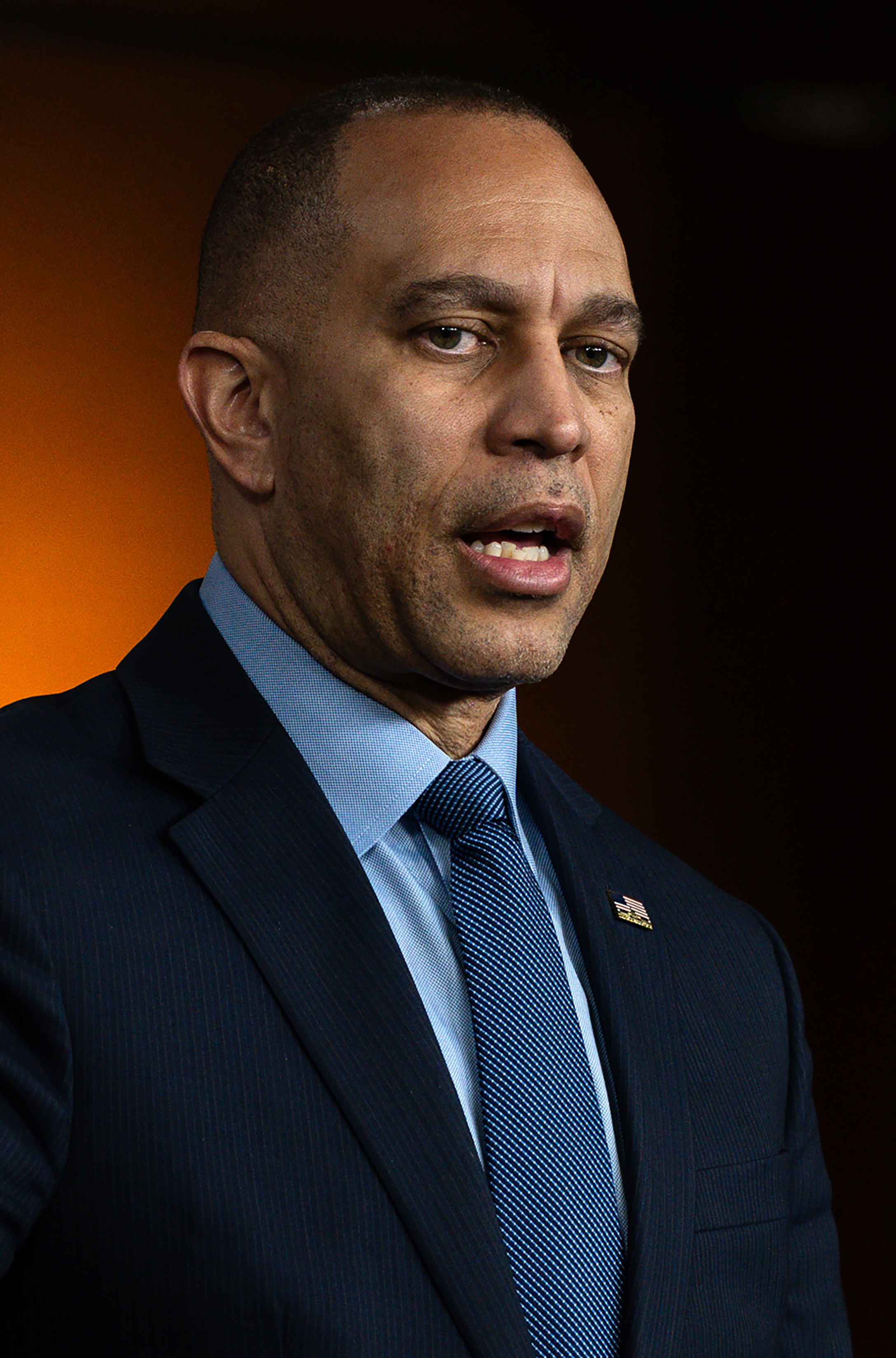
    Rep. Hakeem Jeffries (D., N.Y.), the House minority leader, met privately in recent weeks with Jared Kushner, President Donald Trump’s son-in-law and top outside adviser, and discussed potential areas of common ground, according to five people with knowledge of the meeting.

    The rare engagement was held in a private space in New York City, offered up by a mutual friend of the two men, according to two people with knowledge of the meeting and a third who was briefed on it. They and others were granted anonymity to discuss a meeting about which they were not authorized to speak publicly.

    Through aides, neither man would comment on the session, which was described by one person with knowledge of it as a broad conversation on a range of topics. Still, its timing underscored that those around Trump were well aware of the likelihood of a Democratic-led House, and trying to foster as much of a working relationship as possible before any change. Jeffries is in line to be the speaker, were Democrats to win the majority.

    Democrats and the president have been savaging each other on the campaign trail with increasing fury as the midterm elections approach, and as Republicans are fighting to retain their thin House and Senate majorities.

    Trump has called Jeffries a “thug,” and at a May campaign event referred to him as a “low IQ” person who had inspired him to deride Democrats as the “Dumocrats.” Jeffries routinely suggests that Trump is not only extreme but corrupt, vowing that Democrats would “hold the crooks accountable” if they won control.

    The private get-together was described by one of the people as a catch-up for Kushner and Jeffries. The two men have stayed in touch since they worked together on a criminal justice bill midway through Trump’s first term.

    During the recent meeting, the pair discussed housing, immigration, and the high cost of living as potential areas of common ground. Kushner suggested that Jeffries should meet with the White House chief of staff, Susie Wiles, two people with knowledge of the meeting said.

    The likelihood of any compromises between the White House and Democrats on those issues seems remote.

    Trump this year refused to sign a bipartisan housing bill in part because he said it was “Warren centric,” referring to Sen. Elizabeth Warren of Massachusetts, its top Democratic champion. And he has repeatedly expressed openness to a deal with Democrats on immigration, only to back away from any such agreement. He successfully lobbied Republicans to abandon a bipartisan border-security bill in 2024.

    White House officials and an aide to Kushner did not respond to messages seeking comment.

    In a statement, Jeffries did not acknowledge the meeting, but suggested that the only way Democrats would cut deals with the administration would be if Republicans were willing to come their way on cost-of-living issues, his party’s top priority.

    “Throughout this Congress, Republicans have adopted a my-way-or-the-highway approach to governing that has failed the American people,” he said.

    He added: “In every conversation that we have with the Trump administration, we will continue to make it explicitly clear that the affordability crisis is not a hoax, and nothing short of transformational policy change is acceptable. We are fighting for an affordable America. The question is whether Republicans will join us.”

    Kushner, who worked as a senior West Wing adviser in the president’s first term, is no longer formally part of Trump’s government. He has been deeply involved in the president’s efforts to resolve the war with Iran that Trump began, to enforce a ceasefire in the Gaza Strip, and to bring an end to the Russian invasion of Ukraine. He and Jeffries also met last year, according to two people with knowledge of that conversation.

    The meeting came as nearly all polls revealed Republicans to be at a disadvantage in the midterms, and showed how members of Trump’s inner circle were digesting what a Democratic majority next year could look like.

    Should that happen, Jeffries would be under intense pressure from progressives to use his power as a check on Trump, including through aggressive oversight.

    Kushner is frequently consulted by a number of Trump’s advisers, and he has told people that if anything bipartisan is to get done with Congress, Jeffries is the most serious person among Democratic leaders. Wiles, he has said, is the most serious inside the West Wing.

    But with Republicans in control of both chambers, Trump has mostly steered around Congress in his second term, trampling its powers and prerogatives. He has faced little pushback from Republican leaders.

    Should Democrats win the House, Jeffries would have to balance the need to keep the government funded with Democratic calls to defy Trump at every turn, and possible pleas to impeach him for a third time.

    Jeffries and Trump have danced around questions about what their relationship could look like next year should Democrats take control.

    “I think he’s a nice guy,” Trump told Punchbowl News in a recent interview, when asked about Jeffries. “I’d probably get along with him very well.”

    Trump pointed to a meeting with Jeffries in the Oval Office last fall — the only one they have had in his second term — and described it as a positive one.

    In fact, during that meeting, which was billed as a bid to avert a government shutdown, the president positioned hats with a “Trump 2028” logo directly in front of Jeffries and Senate Minority Leader Chuck Schumer of New York, trolling the Democrats with the suggestion that he would run for a third term in violation of the Constitution.

    Afterward, Trump posted an AI-generated meme of a mustachioed Jeffries wearing a sombrero, drawing an angry response from the House minority leader, who called the image racist and dared Trump to insult him next time “to my face.”

    Soon after the meeting, the government shutdown began.

    This year, Jeffries has remained noncommittal about any plans to pursue a third impeachment of the president, and has not discussed publicly what oversight could look like if his party were to win the majority.

    “We’ve not ruled anything in and not ruled anything out in terms of accountability,” he told the New York Times in an interview last month, noting that his focus would be on forcing out major Trump officials.

    “We’ve got to make sure we continue to get rid of toxic Trump Cabinet secretaries,” he said. “Pete Hegseth, in my view, should be next on the list.”

    This article originally appeared in the New York Times.

  • Postal Service publishes finalized plan to restrict mail ballots

    Postal Service publishes finalized plan to restrict mail ballots

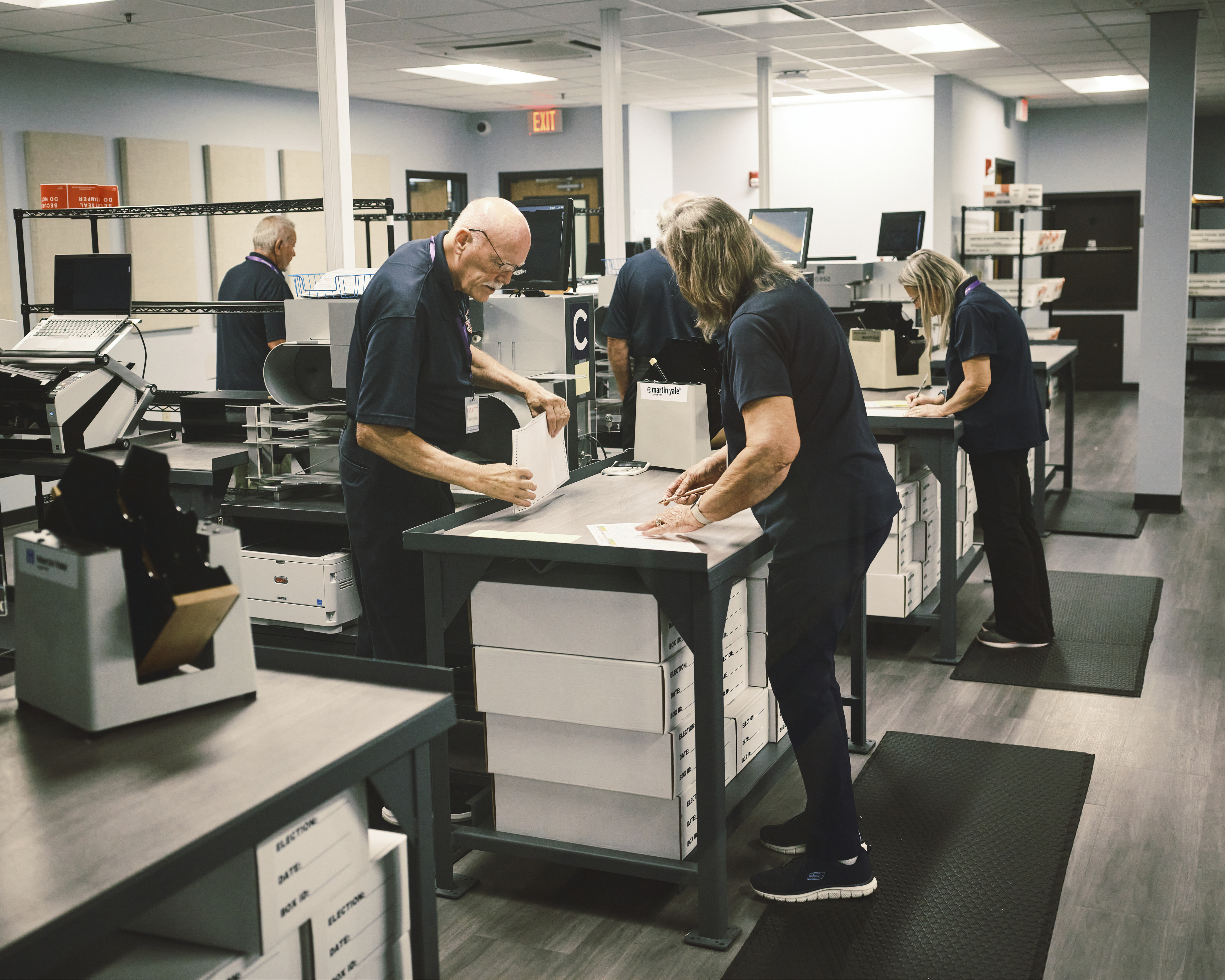
    WASHINGTON — The Postal Service on Friday published regulations that would restrict mail voting, its latest effort to comply with President Donald Trump’s call to restrict the popular practice just months before the midterm elections.

    In a 95-page final rule, the Postal Service clarified how it would carry out an executive order Trump signed in March, which sought to restrict mail ballots and create state-by-state lists of citizens to help determine voting eligibility.

    In the rule, the Postal Service said that it would deliver mail ballots only in states that shared voter data with the federal agency.

    Before the Postal Service accepts ballots into its system, the agency would review every envelope for compliance with the new standards, including by checking that the recipient was enrolled with the Postal Service to receive a mail ballot.

    If the regulations are enacted, the Postal Service would not deliver mail ballots to states that do not comply.

    Trump’s executive order was largely blocked by federal courts this summer, and the Postal Service said in its rule published Friday that it would “not take actions to implement the rule specifically for the 2026 election unless and until the government obtains relief from those injunctions.” In a filing to the Supreme Court, the Justice Department said that the government would not enforce the final rule unless the court ruled in its favor.

    The Supreme Court is reviewing the issue and could rule at any time.

    A Postal Service spokesperson on Friday declined to comment, citing pending litigation.

    Trump has repeatedly made unfounded claims that mail voting is “cheating,” even as he has voted by mail in multiple elections, including earlier this week.

    The president has acknowledged that combating fraud is not the only reason to target the practice. In March, he told Republican lawmakers that passing a strict voter identification law cracking down on mail ballots, which Democrats now use more than Republicans, would “guarantee the midterms” for his party.

    This article originally appeared in the New York Times.

  • New Jersey Gov. Sherrill signs a law to protect reproductive and gender-affirming healthcare. Here’s what to know.

    New Jersey Gov. Sherrill signs a law to protect reproductive and gender-affirming healthcare. Here’s what to know.

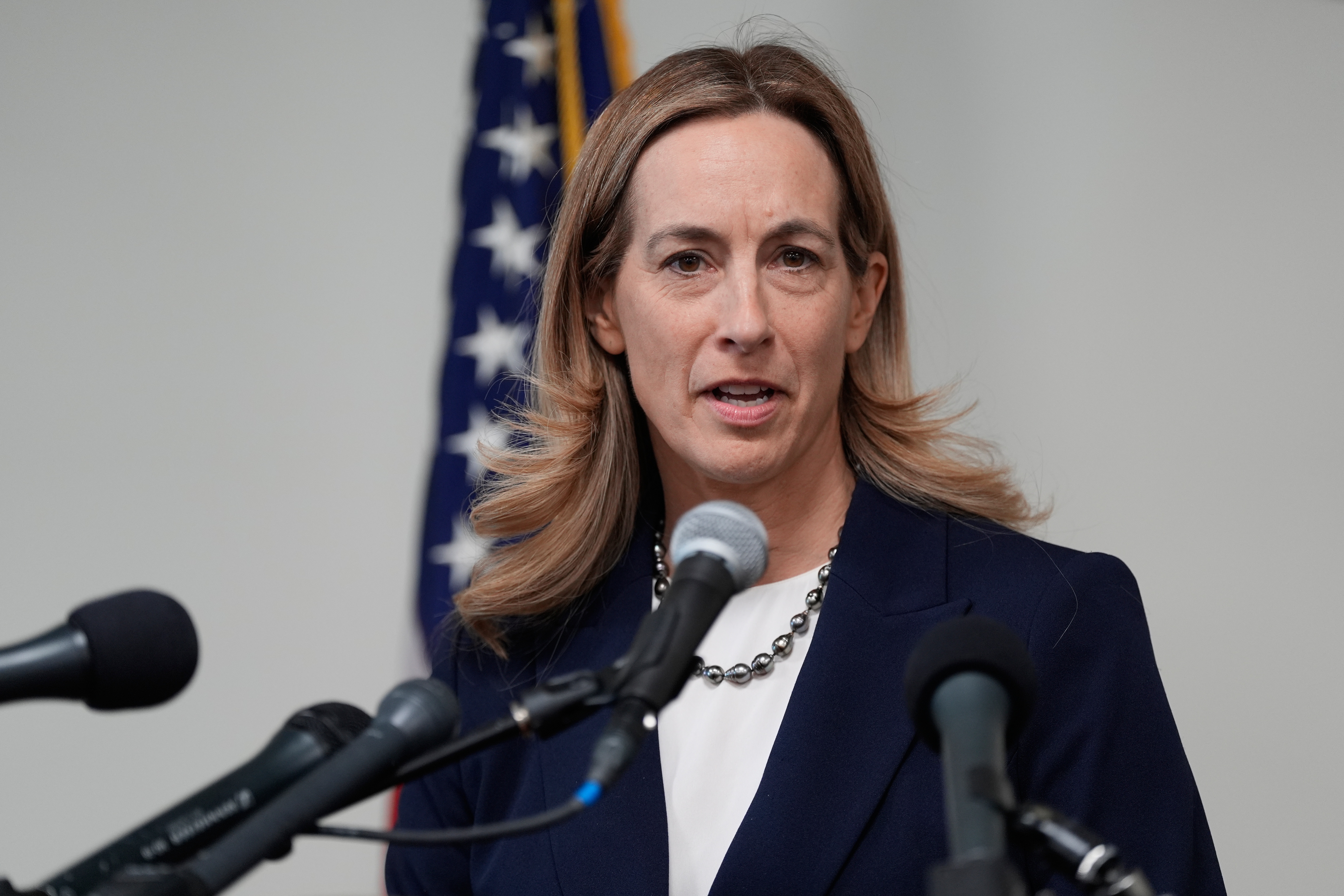
    New Jersey Gov. Mikie Sherrill signed a bill Thursday that offers greater protections for reproductive and gender-affirming healthcare — both for patients and for providers in the state — by making it a crime to intervene against such care.

    The new law strengthens existing reproductive healthcare protections and also broadens them to now include gender-affirming care. It is meant to cover residents as well as people traveling to the state.

    “This is a very big deal. It’s amazing,” said Martha Madrigal, a transgender woman who leads the Collingswood chapter of PFLAG, a national advocacy group for the families of LGBTQ+ people.

    She added that the law is a “solid declaration” that interfering with transgender rights “does not stand in New Jersey. We’re letting out an enormous sigh of relief today.”

    The legislation expands New Jersey’s shield laws by expressly including gender-affirming care in the definition of “protected reproductive healthcare services.”

    Essentially, the law creates a new crime for interfering with someone trying to access reproductive healthcare, such as an abortion, or gender-affirming care.

    It is now a fourth-degree crime (a low-level felony like shoplifting, punishable by up to 18 months in prison) to injure, threaten, intimidate, or physically block patients or providers, or to damage property in an effort to interfere with such care.

    The law would also protect providers from extradition to other states that have banned abortion or gender-affirming care for minors.

    Sherrill said New Jersey is “standing firm in defense of reproductive freedoms — including the right to choose and the right to receive gender-affirming care.”

    In comments after the signing, Sherrill referenced “attacks” and efforts to impose restrictions on access to abortion and gender-affirming healthcare by the Trump administration and Republican-led states.

    She said the transgender community has been “relentlessly attacked” by the Trump administration.

    “They’ve pulled tactics straight out of the ‘Red Scare’ playbook to restrict transgender people’s healthcare,” Sherrill contended.

    Since returning to office last year, President Donald Trump has issued orders to block federal funding for gender-affirming care for people under 19, oust transgender military personnel, and prevent transgender people from using the gender they self-identify as on passports.

    “We are not going to pay for our innocent children to undergo these barbaric surgeries and practices, which result in unthinkable and irreversible harm to their young bodies,” Trump said on Truth Social earlier this month after Medicaid ended reimbursement for hormone treatment and surgeries for minors.

    Surgeries for minors are extremely rare. And fewer than 1 in 1,000 U.S. adolescents receive medication for gender-affirming care, according to a Harvard University study released last year.

    State Sen. Teresa Ruiz (D., Essex), a chief sponsor of the bill and the Senate’s majority leader, said the bill makes New Jersey “a beacon of hope” in the nation.

    “You can’t tell us what we can read on a library shelf but want to be up in our uterus in an exam room,” she said.

    The law empowers patients and providers to take legal action against individuals who interfere with their access to or delivery of protected care.

    And it protects healthcare providers from professional penalties or adverse actions involving their medical malpractice insurance for providing care that is legal in New Jersey.

    Speaking for healthcare providers in New Jersey, Kristyn Brandi and Catherine Obando, doctors from Union who are preparing to open a clinic providing abortions and gender-affirming care, praised the law as an assurance that providers could deliver care without “risking their freedom or professional license” in the state.

    “We are grateful to know that our patients and staff will be protected from criminalization and harassment,” Brandi and Obando said in a statement as founders of the Luminosas Wellness Collective.

  • Philly kids in Head Start would have fewer teachers and English-only instruction under Trump administration plan

    Philly kids in Head Start would have fewer teachers and English-only instruction under Trump administration plan

    Like scattered billiard balls, 16 Early Head Start children scampered across a rubber-matted playground in Southwest Philadelphia last week.

    Vigilant for tumbles or conflicts, four teachers calmly monitored the 1- and 2-year-olds in their high-energy frolic at an early learning center run by KenCrest, a nonprofit that operates Head Start and other programs in seven neighborhoods throughout Philadelphia.

    Head Start’s low ratio of one teacher for every four toddlers is a hallmark of standards for the 61-year-old federal program that provides free education, health, nutrition, family support, and daycare services for low-income children from birth to age 5.

    But now, advocates say, Head Start risks being eviscerated by changes proposed by the Trump administration.

    The vaunted teacher-child ratio, along with other foundational principles that make Head Start unique, is being threatened by plans to “deregulate” the program — overhauling the way it operates by eliminating more than 1,400 regulatory mandates that dictate how the program is administered.

    “We could be going to two staff members for 25 toddlers and two for 30 older kids,” said Melanie Brennan, executive director of early learning programs at KenCrest.

    “What’ll bathroom time look like?”

    The Trump administration defends its proposed changes as the building blocks for a better Head Start, which serves 700,000 low-income children nationwide, including an estimated 7,500 in Philadelphia.

    “We are removing unnecessary bureaucracy, strengthening nutrition and physical health, trusting parents and local communities,” said Health and Human Services Secretary Robert F. Kennedy Jr., whose department administers Head Start at the federal level.

    That does not ring true to Head Start professionals in Philadelphia.

    “It’s laughable to say all they’re trying to do is take away some bureaucracy,” Brennan said. “By ending rules that guide Head Start’s high, uniform standards, the administration’s real goal is to leave the education business.”

    In Philadelphia, more than $70 million in federal funding for Head Start goes through the Philadelphia School District, the program’s largest provider in the city, said Diane Castelbuono, the district’s deputy chief for early learning.

    KenCrest Director Josie Jones with staff and Early Head Start students.Jessica Griffin / Staff Photographer

    The district uses that money to directly operate Head Start programming in more than 60 school buildings, mostly elementary schools, throughout the city, she said. It also works with approved contractors who run Head Start classrooms at approximately 75 childcare sites in Philadelphia, Castelbuono added.

    Asked for comment on the proposed changes, the school district said in a statement that the Head Start program has “positively impacted” students and that district officials “remain committed to preserving the robust standards that have proven essential to our program’s success.”

    ‘Stunned and sad’

    While only Congress can repeal the statutory authorization for Head Start, which has an annual budget of about $12 billion, opponents of the Trump administration’s proposal warn the new rules would weaken the program to the point it became unrecognizable — or stopped existing altogether.

    The plan, called “Reducing Federal Burden for Head Start Programs,” was released Aug. 7.

    Public comment will be accepted until October, when the administration hopes to finalize the rules.

    Kush Desai, a spokesperson for the White House, said the changes would enable the government to provide a stronger program that ensures services “are delivered effectively to children and families in need” by reducing “unnecessary administrative burden.”

    Advocates who have spent their late-summer vacations reading the complex, nearly 200-page document say they are in the process of marshaling opposition, which they hope will delay or alter the administration’s plans.

    “There’s so much to unpack,” said Kara McFalls, executive director of the Pennsylvania Head Start Association in Harrisburg. “We’re checking with experts to see if Head Start becomes gravely harmed.”

    Advocates say initial readings of the new rule justify their concerns.

    Beyond altering teacher-child ratios, the administration would lower the cap on Head Start administrative program costs from 15% to 5%, which means local programs could spend only up to 5% of their total budget on operational overhead like management, human resources, IT, and administrative salaries.

    That would be “devastating,” McFalls said, making it harder for programs to pay staff working in these departments.

    An Early Head Start student plays with a doll at KenCrest in Southwest Philadelphia.Jessica Griffin / Staff Photographer

    Additionally, the administration would require instruction to be conducted in English only — which could hit several Head Start programs across the city that offer bilingual education.

    “That policy would be ridiculous and biased,” said Rachel Sanders, executive director of Your Child’s World Learning Center, which includes Head Start programs in Southwest and Northeast Philadelphia, as well as in West Oak Lane. “Our children speak multiple languages.”

    While all primary instruction is in English, Sanders said, children who speak Spanish, Mandarin, Arabic, or another language are taught the lessons either by teachers fluent in those languages or by translators brought in to help. She added that 50% of the students in the Northeast location do not speak English on the first day of instruction, but that the additional support helps them eventually learn the language.

    “No way would we ever discontinue translating,” she said.

    Under the Trump administration plan, requirements for math and literacy curricula would be removed. Also gone would be stipulations that programs check on whether families have provided their children with immunizations, dental visits, wellness checks, and mental health consultations.

    And hygiene training — including the Head Start tradition that children brush their teeth in class — would end.

    The proposed changes “left me stunned and sad,” said Chandell Craig-Cromwell, 39, of West Philadelphia, a mother of two Head Start graduates who works in human resources in a city agency.

    “This isn’t just education, or babysitting. It’s developmental support,” she said. “I’m upset for all the moms who’ll get this new version of Head Start.”

    If the administration alters Head Start so profoundly, said Sharon Wolf, an early education expert at the University of Pennsylvania, she questioned whether the program should still keep its name.

    “I fear we could be moving to weakened, ordinary childcare,” she said. “Then, is it Head Start anymore?”

    Madison Marino Doan, a policy analyst in the Center for Education Policy at the conservative Heritage Foundation, disputed the notion that the administration’s proposal represented an effort to eliminate Head Start.

    “The current proposal under consideration is an effort to deregulate the program and give states greater flexibility to design programs that reflect the needs of their communities while maintaining current funding,” she said.

    Doan added that Congress should simply end the program — a recommendation made in the foundation’s Project 2025, a conservative blueprint for a second Trump administration.

    Some advocates warn the administration’s push to change the program has more to do with ideology than concerns about efficiency.

    Tyrone Scott, a director at First Up, a Philadelphia-based early education nonprofit, said he often runs into people who self-identify as conservatives at public forums who say that part of Head Start’s true mission is to “indoctrinate kids with a political ideology that includes ideas like racial justice.”

    But, he said, the mission of Head Start is a lot simpler than that.

    “It teaches kindness,” he said. “That isn’t a political philosophy.”