Category: Politics

  • Philly City Council grilled Police Commissioner Kevin Bethel over officers’ Pride response as LGBTQ+ advocates demanded accountability

    Philly City Council grilled Police Commissioner Kevin Bethel over officers’ Pride response as LGBTQ+ advocates demanded accountability

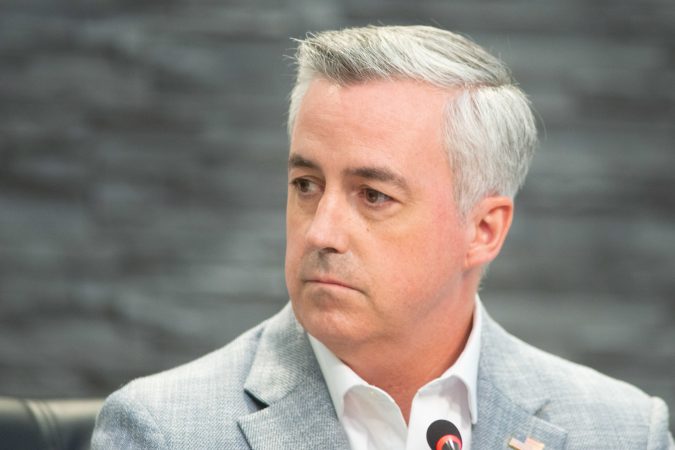
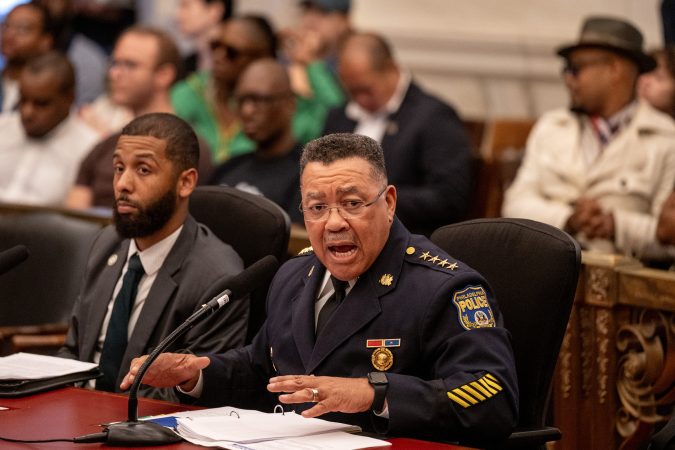
    Several members of Philadelphia City Council and a bevy of LGBTQ+ community leaders on Wednesday sharply criticized Police Commissioner Kevin Bethel, who testified about the department’s response to Pride festivities in the city’s Gayborhood in June and largely defended the force’s crowd-control tactics that had drawn outrage.

    Bethel acknowledged that June 7 was “not a perfect day” and vowed that the police department would implement more robust planning procedures ahead of next year’s celebrations.

    But he stopped short of apologizing for the police department’s response, saying chaotic scenes from the Pride events were part of officers’ attempts to disperse crowds from the Gayborhood, where thousands of people congregated instead of the city’s official festival on the Benjamin Franklin Parkway.

    Among them, Bethel said, were hundreds of teenagers, some of whom were seen on video fighting.

    “There’s a large group of young people who [had] descended into the neighborhood for what they think is something there,” Bethel said. “There is nothing for them there, other than to take over the street.”

    That comment did not sit well with Council members and dozens of LGBTQ+ community members who attended the hearing at City Hall.

    “Your testimony today and what I’m hearing is both painful and perplexing,” said Councilmember Rue Landau, a Democrat who called for the hearing and is the first out LGBTQ+ person to serve on Council. “It is mind-boggling to think that you and your team would not know that people were going back to the Gayborhood.”

    Councilmember Isaiah Thomas, a Democrat, said he was “confused” why groups of teenagers fighting would have prompted an outsized police response throughout the Gayborhood that included crowds running amid police on horseback and motorcycles.

    “It doesn’t really feel like we’re having a conversation that can put us in a position of earning the trust of a lot of the people who feel like the trust has been lost,” he said.

    And C. Michael Robinson, a community advocate, added: “Only adult bullies scapegoat children, and that was a weak display of leadership.”
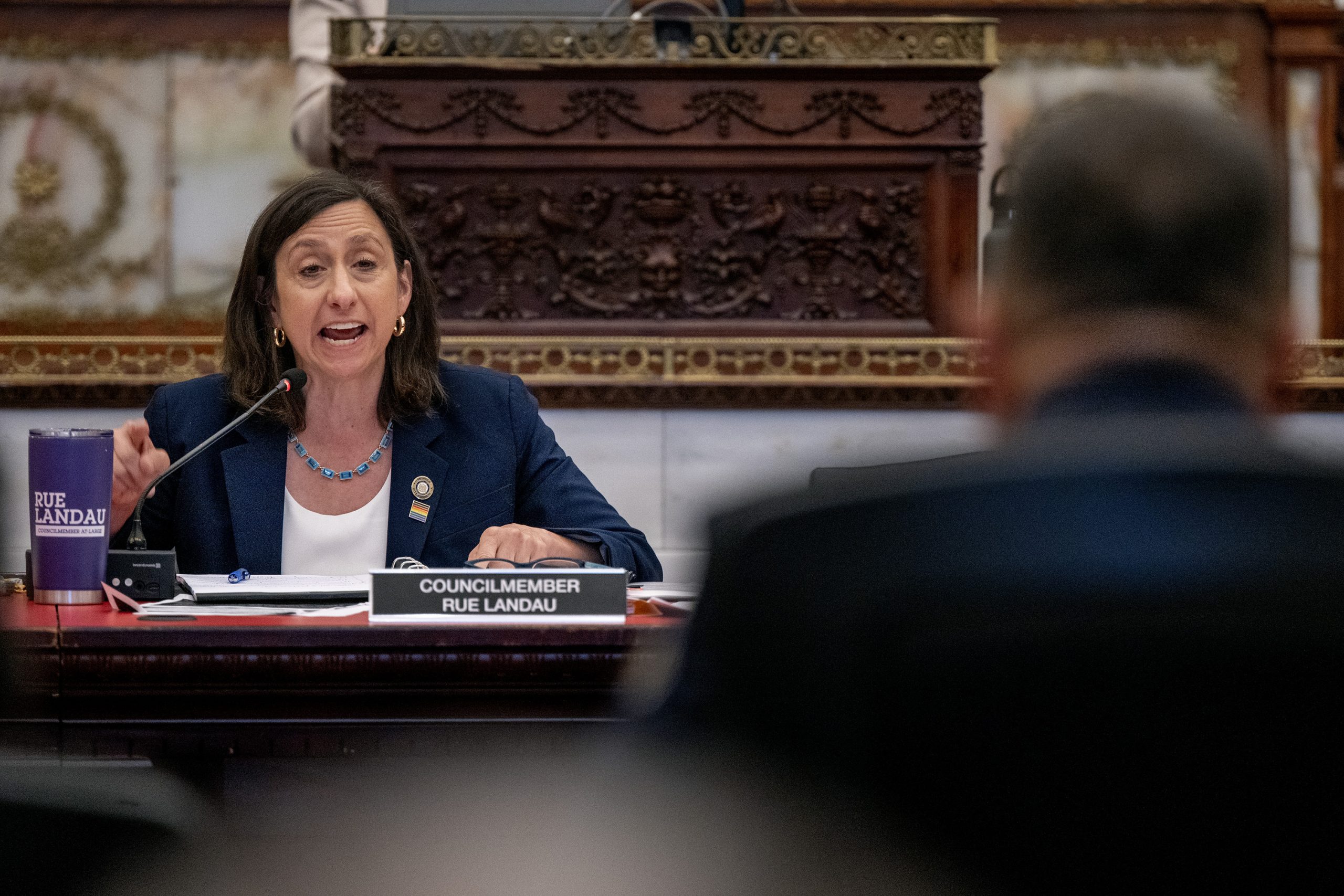
    Councilmember Rue Landau questions Police Commissioner Kevin Bethel (foreground) as Council’s Committee on Legislative Oversight holds a hearing Wednesday, Aug. 5, 2026 into the Philadelphia Police tactics used during Pride celebrations in June.Tom Gralish / Staff Photographer

    The hearing Wednesday before Council’s Committee on Legislative Oversight was the most tense questioning that Bethel, a veteran of the city’s police force, has faced since he was sworn in as commissioner in January 2024 at the beginning of Parker’s term. He has enjoyed a largely warm relationship with Council members, who have been supportive of his leadership amid a significant drop in violent crime.

    However, the police department faced intense scrutiny following June 7, the day of the Pride parade and celebration during which 15 people were arrested and videos of police corralling crowds in the Gayborhood drew widespread criticism. Videos posted to social media showed officers physically struggling with Pride attendees, as well as police on horseback and motorcycles dispersing people, and at times displaying batons and Tasers.

    Following the backlash, Landau called for Council’s Committee on Legislative Oversight to hear testimony from the department’s top brass, as well as members of Mayor Cherelle L. Parker’s administration and LGBTQ+ advocates.

    Pride attendees who testified Wednesday said police forcefully directed them through a maze of barricades in the Gayborhood. Several described being pushed and yelled at, and said that the most aggressive tactics were used on crowds of mostly Black people. One person said they heard an officer use a slur.

    Parker said in a statement Wednesday that the events described during the hearing “show us we can and must do better.”

    “We can and will learn from what occurred,” she said.
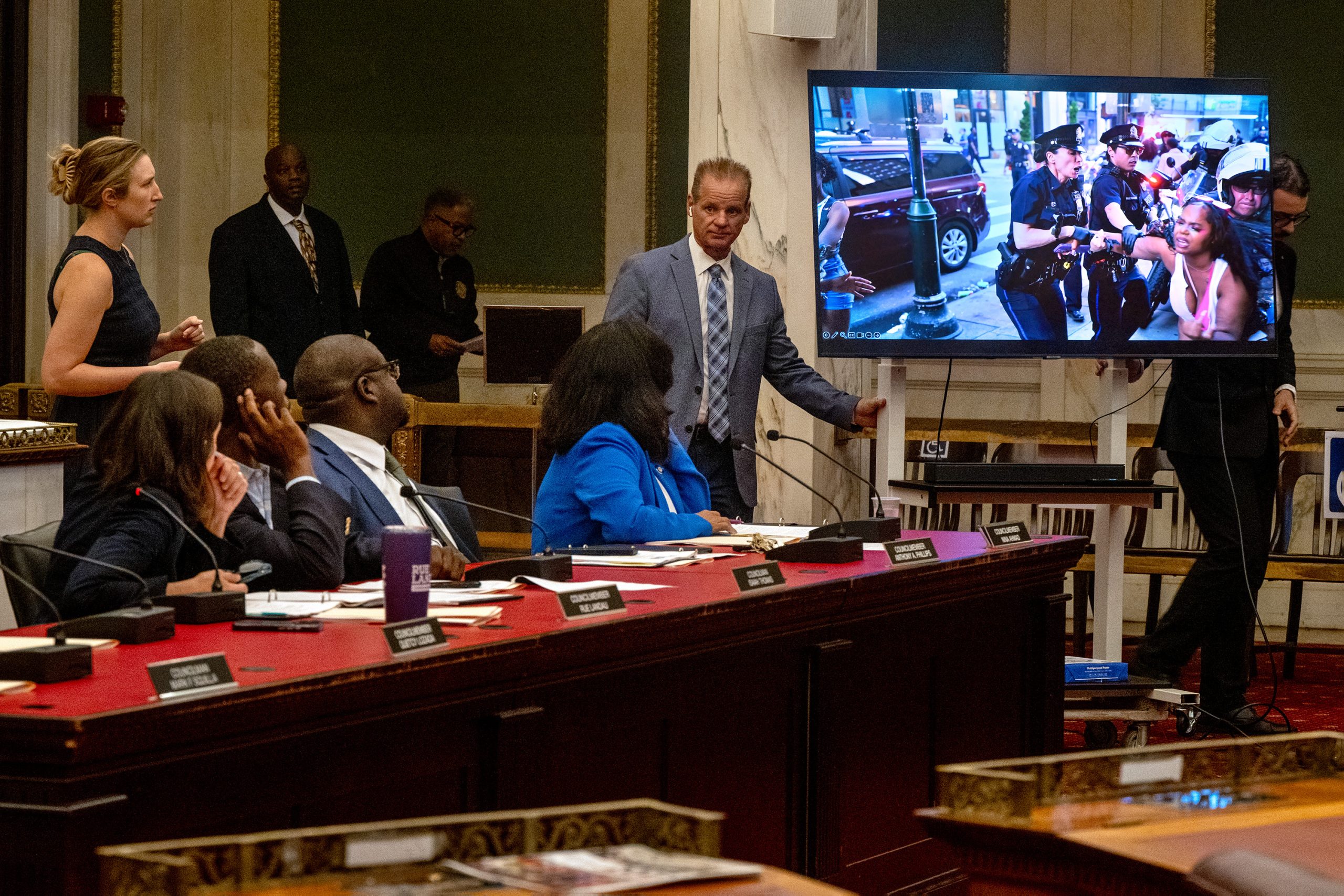
    Councilmember Rue Landau (seated, left) shows a collection of social media videos as City Council’s Committee on Legislative Oversight holds a hearing Wednesday, Aug. 5, 2026 into the Philadelphia Police tactics used during Pride celebrations in June.Tom Gralish / Staff Photographer

    This year marked the first time the city’s Pride festival was held on the Benjamin Franklin Parkway, where Bethel said police had been well-prepared to manage crowds. Thousands of people still congregated in the Gayborhood, where celebrations were held in previous years, creating dueling events that he said overwhelmed the department.

    Officers attempted to manage crowds in the Gayborhood for hours, Bethel said, and began working to disperse people by late afternoon. To do so, he said, officers used barricades, as well as officers mounted on horseback and motorcycles to motivate people to leave on their own.
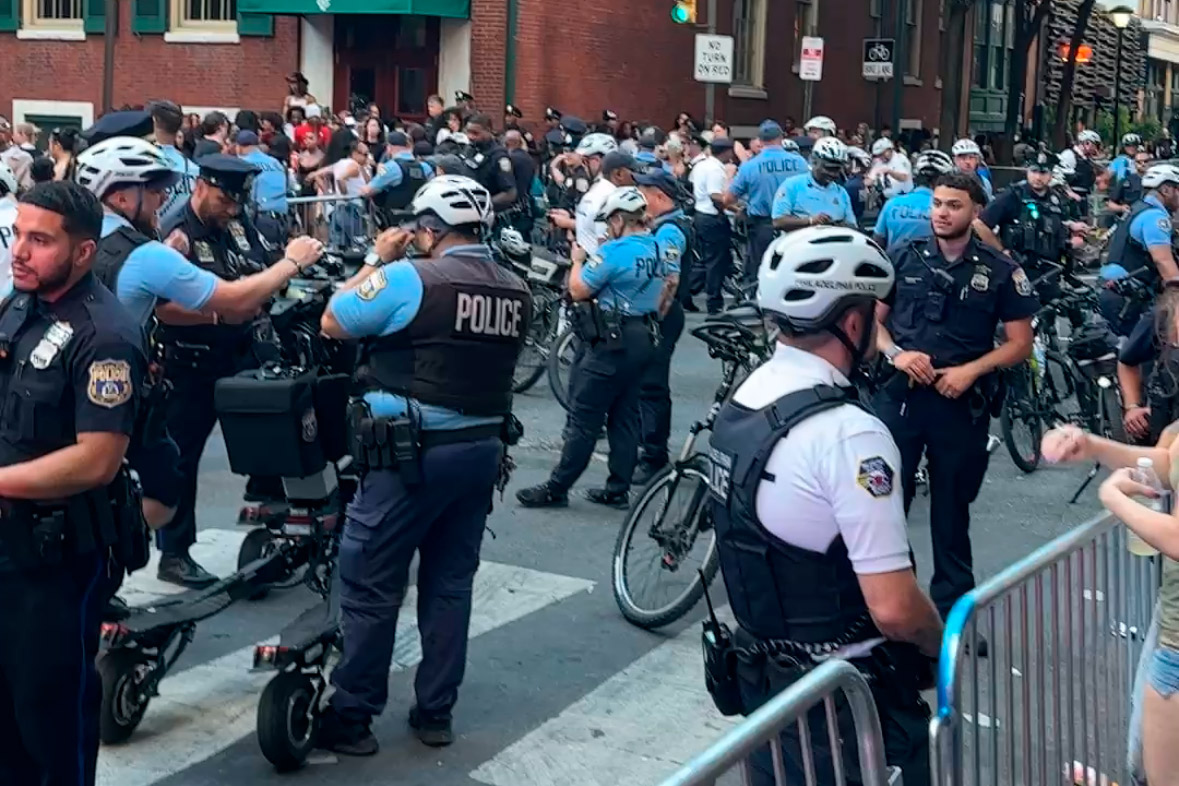
    A large police presence at a Pride celebration in the Gayborhood on Sunday, June 8, 2026.Courtesy of Joshua Stokem

    Landau said she was horrified by the crowd-control tactics and asked Bethel if he supported the decision to have officers on motorcycles on the sidewalk, calling it “terrifying” and “dangerous.”

    He said the goal of moving the crowd was “appropriate at the time.”

    In what became a tense back-and-forth, Landau said that people attending Pride “did not believe that you were there to protect them.”

    “They were terrified, they were harassed, they were traumatized,” she said. “This was not about protection. You had 150 officers there, by your own testimony. That is a significant amount of officers.”

    Bethel responded: “Do you want police there at all?”

    Landau appeared taken aback.

    “My comment that there was 150 officers there should not turn into the end-sum game of ‘Do you not want anybody there?’” she said.

    The police commissioner did not specify how many officers in total are facing potential discipline stemming from Pride events on June 7, but he said “eight or nine″ are under investigation by the internal affairs division for wearing facial coverings, a violation of department policy.

    Bethel, who was formerly the department’s liaison to the LGBTQ+ community, vowed a more collaborative planning process next year.

    “Next year it will not be like that. It will be prepared,” Bethel said. “It is not my job to police that event. It is to keep it safe.”

    Several LGBTQ+ advocates and community members testified in favor of additional accountability measures.

    Jacen Bowman, the president of Philly Black Pride, called for an independent after-action review, a permanent LGBTQ+ public safety advisory council that is consulted during the planning of large events, and more consistent cultural competency training for officers.

    “Versions of these structures already exist,” Bowman said. “The question is whether or not the structure has the authority, independence, or enforcement power necessary to produce accountability. Oversight without authority is observation.”

  • Jon Stewart presses John Fetterman on Israel and playing into ‘Republican caricatures’ when he attacks Democrats

    Jon Stewart presses John Fetterman on Israel and playing into ‘Republican caricatures’ when he attacks Democrats

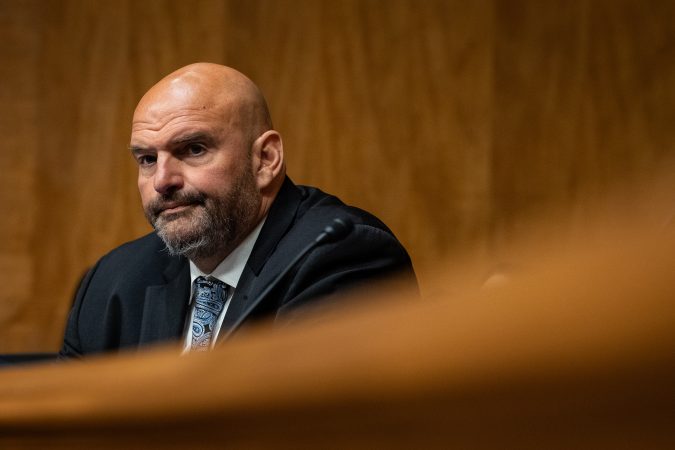
    U.S. Sen. John Fetterman, in perhaps the most in-depth and toughest interview he has faced in recent memory, defended his unwavering support for Israel and his harsh criticisms of fellow Democrats when pressed by Jon Stewart in a podcast episode released Wednesday.

    The liberal comedian and political commentator repeatedly accused Fetterman (D., Pa.) of “caricaturing” the left wing of his party and the debate around Israel’s handling of the war in Gaza.

    “Jewish community and Israel are not the same thing, brother man. They’re not — that is not the same thing,” Stewart, who is Jewish, said at one point as Fetterman described his full-throated support for the war as being because of “the Jewish community.”

    Asked repeatedly about the United States’ moral obligations about backing the Israeli strikes that have led to the deaths of tens of thousands of Palestinian civilians, Fetterman stood firm.

    He said — as he often has since the Oct. 7, 2023, attack by Hamas that sparked the conflict — that it was necessary to go after Hamas leaders. The killing of civilians was “terrible” and “collateral” damage but not a genocide, Fetterman said.

    Stewart continued to press — questioning why Fetterman was standing so firmly behind a foreign ally that was “dehumanizing” and slowly killing another population.

    “I don’t understand how you have no criticisms over their actions, over their increasingly messianic, ultra-right-wing government that seems to think relentless war is, like, that you can bomb people out of resistance,” Stewart said.

    The roughly 75-minute interview, on The Weekly Show with Jon Stewart, came a week after Fetterman once again met with Israeli Prime Minister Benjamin Netanyahu in Washington.

    Many other elected Democrats have distanced themselves from the Israeli government and criticized its tactics. Fetterman has acknowledged his position has hurt him politically. In the interview with Stewart, he echoed previous comments — which have also become evident in public polls — that he has lost the support of his former Democratic base as his and his party’s stances diverged.

    “I’m aware that if I happen to disagree with the party line, there’s a price to pay,” Fetterman said. “There’s a lot of stories of how I’ve become increasingly more unpopular with Democrats in my state. And I’m aware of it. But these were all very specific choices. … I would rather have people know what I happen to believe.”

    Stewart asked Fetterman several times about how he has voiced those disagreements.

    He said the senator has focused far more on arguing with his own party in a way that has further hurt its brand. And he has broken from the party’s ranks as Democrats try to use even an inkling of leverage that could impact Republicans’ agenda as the GOP controls both Congress and the White House, Stewart said. He pointed to issues like immigration enforcement reforms, which Democrats tried to enact by holding out support for a spending bill earlier this year. Fetterman said he supported the reforms but would not go along with letting part of the government shut down as a strategic move.

    Mark Twain Prize recipient Jon Stewart is introduced at the start of the 23rd annual Mark Twain Prize for American Humor at the Kennedy Center for the Performing Arts, in Washington, April 24, 2022. (AP Photo/Kevin Wolf, File)Kevin Wolf

    Stewart also pressed Fetterman on how his approach to President Donald Trump has softened as he has ramped up his criticism of his own party.

    “You called President Donald Trump a jagoff in 2016,” Stewart said, prompting Fetterman to say that he put the phrase on shirts and sold them.

    “You put it on a shirt. And now you’ve been very complimentary to him. And if your concern with Graham Platner is you didn’t think he was very nice to women, you’re ignoring an awful lot of evidence for the current president about his relationship with women,” Stewart said, referencing Fetterman’s attacks on the Maine Democrat who dropped out after facing allegations of sexual assault. “So my point is, there seems like there’s a way to go about this that embraces, as you said, the 90% of things that you agree with, and try and utilize that energy to reform a party that has a worse public image than herpes in terms of getting things done. This feels like it’s playing into the hands of Republican caricatures.”

    Fetterman pushed back, saying he was trying to stop “extreme” elements of his party in a way that would lead to better success in battleground elections — like in Pennsylvania — after Democratic losses in 2024.

    “We keep losing, and now we keep returning back to some of the extreme things,” Fetterman said. “That’s not a caricature. That is a fair assessment of where we are with these kind of things.”

    Stewart, noting that Vice President Kamala Harris was not the most progressive Democratic option in 2024, rejected the idea that the party lost because of far-left views. In an extended conversation about capitalism and socialism, he also encouraged Fetterman to embrace new ideas presented by democratic socialist candidates who Fetterman, like many Republicans, refers to as communists.

    Fetterman, who frequently appears on Fox News but has not appeared on more liberal programs like Stewart’s Daily Show, described himself as a longtime fan of Stewart and said he believed the interview was “very fair.”

    At the end of the podcast, after Fetterman left, Stewart said he “wasn’t sure what to think” and was “weirdly thrown off right now.”

    “I feel like we all just got out of one of those movies. Do you know those movies where it’s like … there was a weirdly traumatizing scene in the movie,” Stewart said. “And now we’re all just, like, ‘Do you guys, um, do you want to go get something? I guess I’m just going to go get a slice and maybe go home.’”

  • Bob Harvie files defamation suit against GOP super PAC over ‘beyond the bounds’ claims of FBI investigation, inappropriate relationship

    Bob Harvie files defamation suit against GOP super PAC over ‘beyond the bounds’ claims of FBI investigation, inappropriate relationship

    Attorneys for Bucks County Democrat Bob Harvie filed a lawsuit Wednesday against a political action committee and a consultant supporting his opponent, Republican U.S. Rep. Brian Fitzpatrick, in a high-stakes congressional contest.

    The lawsuit comes after what Harvie’s campaign says are repeated and false claims about his involvement in an FBI investigation. Harvie’s legal team is also disputing a new attack from the PAC alleging that the county commissioner had an inappropriate relationship with a county employee.

    The lawsuit, filed Wednesday in the U.S. District Court for the Eastern District of Pennsylvania, claims that Defending America PAC Inc. and its president, Chris Pack, have sustained a “campaign to defame Harvie by repeatedly and recklessly publishing false and defamatory statements imputing criminal conduct that go beyond the bounds even of a highly contested political campaign.”

    Harvie’s testimony to a grand jury in an FBI probe in 2022 has sparked a firestorm in the race for the Bucks County-based 1st Congressional District, a seat that could help determine control of the U.S. House this fall. Harvie’s attorneys last month sent a cease-and-desist letter over such statements to Defending America PAC, which subsequently challenged Harvie to file a lawsuit.

    Last month, Fitzpatrick and his campaign also received a cease-and-desist letter from Harvie’s lawyers, but neither the Bucks County Republican nor his campaign is named in Wednesday’s suit.

    Website and social media posts and other materials from Defending America PAC and Pack this election cycle have stated Harvie is an “FBI corruption subject” or “under FBI investigation” related to his time as a Falls Township supervisor, according to the suit, but Harvie’s lawyers assert that the allegations are false and that he has never been under criminal investigation.

    “Contrary to the meaning that out-of-state political operatives have endeavored to convey — to convince Harvie’s community that Harvie is somehow connected to a crime — Harvie is not now and never has been the target of any criminal investigation nor has he ever been charged with a crime,” wrote Harvie’s attorneys, Timothy J. Ford and Marion Barker Taylor of Dilworth Paxson, in the legal filing.

    Harvie and his campaign are seeking an unspecified amount of damages greater than $150,000, as well as legal fees, for defamation and false light invasion of privacy.

    In a statement to The Inquirer on Wednesday, Pack once again referred to Harvie as an “FBI Corruption Subject” and said the Democrat “has predictably chosen to engage in lawfare by filing a meritless lawsuit in an attempt to stifle our political speech” instead of releasing “complete” records “related to his corruption investigation.”

    “Rest assured we will vigorously defend ourselves and seek every remedy available under Pennsylvania law, including Pennsylvania’s anti-SLAPP protections signed into law by Gov. Josh Shapiro,” Pack said, referring to a bill signed in 2024 by the Democratic governor that essentially offers extra layers of protections for defendants in defamation suits.

    The organization appears to have been ready for this next step to happen. In an email blast and website post last week, the group said “we’re willing to pay for Harvie to sue us” so that the PAC could obtain any relevant records during the suit’s discovery phase.

    In response, Harvie said in a statement Wednesday: “Put your money where your mouth is. Just tell us where to send the bills. See you in court.”

    In that same post last week, the PAC made an additional claim — rebuked by Harvie’s lawyers Wednesday — that the Democrat had a “recent divorce” that “may have had something to do with Harvie getting a little too cozy with a county employee.” It links to a screenshot of a random Facebook account that alleges Harvie cheated on his wife with an employee from Bucks County’s children and youth services department and, in turn, helped her become a supervisor.

    Harvie’s lawyers rejected the allegation, calling it “outrageous.”

    “Harvie never cheated on his wife and never had sex with a Bucks County employee. Harvie never used his position to influence a decision to promote a Bucks County employee inappropriately,” they said.

    Harvie and his wife divorced in 2023, public records show.

    ‘Not politics as usual,’ Harvie’s lawyers argue

    The string of events that culminated in Wednesday’s suit dates back to 2022, when Harvie and other officials testified as witnesses before a grand jury in connection with an investigation into political donations and union contracts related to the Pennsbury School District. In 2020, the FBI interviewed several people connected to Falls Township and Pennsbury.

    Harvie’s attorneys said in the filing Wednesday that he has not been asked to provide additional information or testimony and has not had any contact with the FBI since his 2022 testimony.

    Similar allegations were made during Harvie’s 2023 reelection campaign for county commissioner and were also disputed by the Democrat at the time.

    Three years later, they have again bubbled up to the surface as Harvie seeks federal office in one of four Pennsylvania seats being targeted by both parties.

    Harvie’s attorneys said Wednesday that since the Democrat announced his candidacy for the U.S. House in April 2025, Defending America PAC has maintained a website entitled “Fire Bob Harvie,” where the group refers to him as “the subject of an FBI corruption investigation” or an “FBI corruption subject.” The lawyers estimate that the PAC has used similar language in at least 30 social media posts and that Pack has personally done so at least 27 times.

    The commissioner’s lawyers contend that Defending America PAC’s and Pack’s actions have harmed Harvie’s reputation and qualify as “actual malice.” Since Harvie is a public official, lawyers would have to clear a high legal bar to prove that the organization and Pack either knew the information they are pushing is false or otherwise exhibited a “reckless disregard” for its accuracy.

    “Defendants’ conduct is not politics as usual. As shown by doubling down on their escalating rhetoric, Defendants’ conduct is willful, wanton, malicious, and undertaken with actual malice and reckless indifference to Harvie’s rights, thereby entitling Harvie to recover punitive damages,” Harvie’s lawyers wrote.

    What is Defending America PAC?

    Defending America PAC, a super PAC that is designed to work independently from a candidate, launched as Fitzpatrick was seeking reelection in 2024 and has scaled up its operation this year as the candidate faces his most high-profile challenge yet, according to filings with the Federal Election Commission.

    The goal, according to the PAC’s website, is to defend Fitzpatrick “from extremist challengers on the far left and far right.” In 2024, Fitzpatrick defeated a far-right challenger in the Republican primary.

    Without the same donor limits as candidates, it raised $425,000 in 2024 and spent its money to oppose Fitzpatrick’s challenger in the Republican primary. In the current two-year cycle, it has raised more than twice that amount and started spending to oppose Harvie. The PAC currently has about $712,500 in its account.

    About half the money it has pulled in this election cycle came from labor-affiliated groups that are backing Fitzpatrick, including $250,000 from LIUNA Building America, the political action committee for the Laborers’ International Union of North America. An additional $100,000 came from the PAC for the Transport Workers Union of America, and $50,000 came from the Air Line Pilots Association. In recent weeks, Fitzpatrick has continued to receive sweeping support from labor unions.

    Defending America also appears to have received funds from some of the largest Republican donors in the country.

    Billionaire Harlan Crow, a GOP mega-donor and real estate developer known for his association with Supreme Court Justice Clarence Thomas, donated $25,000. Craig Duchossois, the former chair of a Chicago-based investment firm, donated $50,000.

    A $100,000 donation from Keystone Next — a super PAC that launched in 2025 with funds from an organization aligned with U.S. Sen. Dave McCormick (R., Pa.) — arrived in April. The donation was marked just two days after Keystone Next received a $250,000 contribution from Jeffrey Yass, Pennsylvania’s richest man and largest Republican political benefactor.

    It also coincided with two other $100,000 donations that Keystone Next made to super PACs aimed at boosting Pennsylvania Republicans, including the more conservative U.S. Rep. Scott Perry in a competitive Harrisburg-based district.

    Staff writers Michelle Baruchman and Abraham Gutman contributed to this article.

  • Abdul El-Sayed wins Michigan Senate primary in major victory for Democrats’ progressive wing

    Abdul El-Sayed wins Michigan Senate primary in major victory for Democrats’ progressive wing

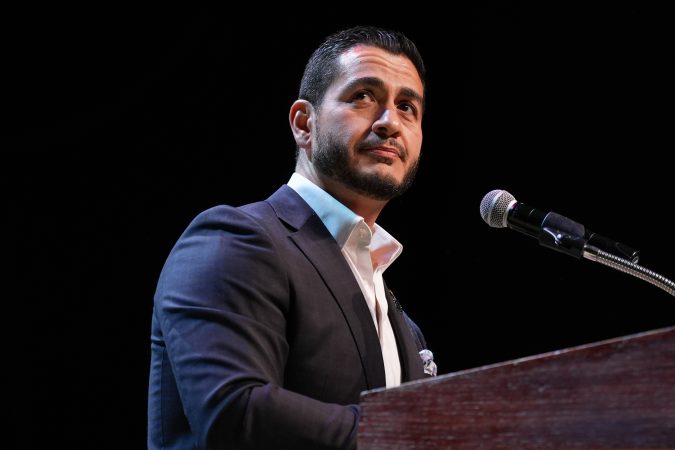
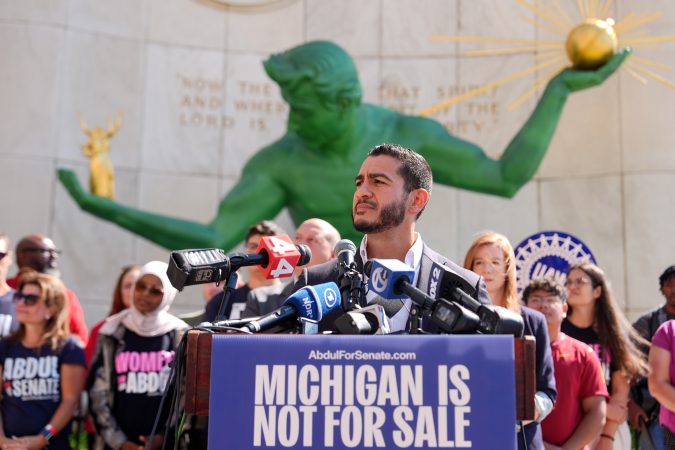
    DETROIT — Abdul El-Sayed has won Michigan’s Democratic nomination for U.S. Senate, defeating U.S. Rep. Haley Stevens in a massive victory for the party’s progressive wing in a battleground state.

    The real test of El-Sayed’s and progressives’ strength will now come in a November matchup against Republican Mike Rogers, a former congressman who ran unopposed for the GOP nomination. The seat is pivotal to Democrats’ chances of flipping the Senate and El-Sayed will face the challenge of uniting a divided Democratic base after a bruising primary.

    The race remained tight throughout Tuesday night, with a winner not declared until early Wednesday. In his final remarks at a primary night party before the race was called, El-Sayed said “tomorrow we begin to mend fences.”

    El-Sayed’s campaign said Stevens called to concede Wednesday.

    El-Sayed’s win represents a significant shift for the Democratic Party; in 2018 he lost the gubernatorial primary to now-Gov. Gretchen Whitmer by 21 percentage points.

    El-Sayed, a former health official, campaigned on “Medicare for All,” halting military aid to Israel and campaign finance reform. He had support from progressive leaders including Sen. Bernie Sanders and U.S. Rep. Alexandria Ocasio-Cortez, who framed the race as a grassroots-focused movement and a broader fight against the establishment and big-money spending.

    Stevens, a more moderate candidate, was backed by Senate Minority Leader Chuck Schumer and tens of millions in outside spending, including the American Israel Public Affairs Committee’s largest outlay ever in a single race.

    Now comes the more difficult challenge for Democrats: uniting the party to defeat Rogers, for whom Republicans have already reserved large sums of money ahead of the general election. Democrats consider the seat a must-win if they are to flip control of the Senate this year.

    El-Sayed called for unity to defeat Rogers

    Early Tuesday evening, El-Sayed’s supporters in Detroit’s Majestic Theatre cheered at the first batches of votes, before mellowing. Hours later Stevens’ previously subdued partygoers roared as she narrowed the margin.

    “Whatever happens tonight,” El-Sayed told a thinned but still energetic crowd, “we have a responsibility to ensure that we unite, unite to make sure that Mike Rogers never sees the inside of the U.S. Senate.”

    El-Sayed, a former Wayne County health director, campaigned on “Medicare for All,” campaign finance reform and ending military aid to Israel.

    Stevens, a four-term congresswoman, focused on manufacturing and the economy. She stressed her past victories in tough races, saying she would be best positioned to beat Rogers.

    Stevens benefited from tens of millions of dollars in outside spending, including the largest investment in a race ever from the American Israel Public Affairs Committee, which supports pro-Israel candidates.

    Michigan is a must-win Senate race for Democrats

    The race will help decide which party controls the chamber in the last two years of President Donald Trump’s term. Those stakes have added heat to the rivalry, with moderates arguing that El-Sayed would have a harder time than Stevens against a Republican in the general election.

    Stevens won election to Congress in 2018 after serving as chief of staff to President Barack Obama’s auto task force, which helped oversee the federal rescue of General Motors and Chrysler. Her campaign and allied groups have repeatedly highlighted that experience.

    El-Sayed cast himself as the anti-establishment candidate and argued that Democrats need to reject corporate influence and embrace a more progressive agenda.

    While the candidate has said he is not a democratic socialist, he found support from some of the group’s members. That included Melat Kiros, who recently beat a longtime incumbent in a Democratic primary for a Denver-based House seat and was at El-Sayed’s watch party. Also there was Hasan Piker, a progressive and controversial influencer online.

    The candidates’ differences were clear to some voters.

    Kenneth Woodside, 87, of West Bloomfield, said he voted for El-Sayed over Stevens because “the nation is ready for someone who wants to take some more action rather than on the road we are now, which is on the road to an oligarchy and authoritarianism.”

    Nessa Fuller, 51, of Birmingham, said she voted for Stevens because she will “fight to get the right things done, and she’ll work with other people, which is really important to me.”

    Outside influences spent millions on the Senate race

    National groups poured unprecedented sums into the race, making it one of the country’s biggest tests of outside spending.

    Groups backing Stevens spent more than $50 million, led by more than $30 million from AIPAC and its affiliates.

    The spending thrust Israel policy into the center of the race even though the ads never mentioned it. While El-Sayed called for ending military aid to Israel, Stevens maintained strong support for the relationship.

    Israel became a contentious issue within the Democratic Party amid a war in Gaza that killed more than 73,000 Palestinians in its retaliatory offensive after about 1,200 people were killed and 251 hostages were taken in attacks by the militant group Hamas.

    McKinney wins Detroit US House primary

    In a heavily Democratic district representing Detroit, the 13th, state Rep. Donavan McKinney defeated Rep. Shri Thanedar. McKinney argued that the city should once again have a Black representative in Congress.

    After Thanedar won election in 2022, Detroit had no Black representation in Congress for the first time since the early 1950s.

  • Judge dismisses Jan. 6 seditious conspiracy charges against Oath Keepers

    Judge dismisses Jan. 6 seditious conspiracy charges against Oath Keepers

    A federal judge on Tuesday agreed to dismiss the seditious-conspiracy case against the leader of the Oath Keepers, Stewart Rhodes, and seven other members of the extremist group who planned to storm the U.S. Capitol on Jan. 6, 2021.

    The ruling by U.S. District Judge Amit P. Mehta is the last step in the legal process to wipe out penalties from the Jan. 6 riot, cementing President Donald Trump’s bid to unravel the largest federal investigation in U.S. history.

    Mehta had sentenced Rhodes to 18 years in prison and imposed lesser prison terms on other top Oath Keepers who were convicted at jury trials. Trump commuted those prison sentences on his first day in office last year, and he pardoned more than 1,500 rioters.

    In a written ruling Tuesday, Mehta said he was dismissing the Oath Keepers’ charges reluctantly at the request of the Justice Department. He criticized prosecutors for claiming in a court filing that wiping out the most serious convictions from the Jan. 6 riot was in the public interest.

    “The government does not say that the charges were legally deficient or that the evidence presented is insufficient to sustain Defendants’ convictions,” Mehta wrote. “It confesses to no prosecutorial misconduct, nor does it assert any denial or compromise of a defendant’s rights.”

    The Justice Department, Mehta said, was simply bestowing the ringleaders behind the riot “unearned grace by wiping their records clean” after juries found them guilty of committing “crimes against the United States itself.”

    The riot, during a joint session of Congress that was being held to certify Joe Biden’s victory over Trump in the 2020 presidential election, left more than 140 police officers injured and caused an estimated $3 million in damage.

    Rioters marched on the Capitol after a rally in which Trump repeated his false claims that he had won the election. Lawmakers were forced to evacuate, delaying Biden’s certification as the winner.

    In his ruling, Mehta recounted how the Oath Keepers stocked firearms at a hotel outside D.C. and exchanged encrypted messages about using violence to thwart the congressional proceedings. The Oath Keeper with the guns, Edward Vallejo, was not called into action, Mehta added.

    When the rioters breached the Capitol, about 10 members of the Oath Keepers wearing military gear entered the building. One half of that group ended up in then-House Speaker Nancy Pelosi’s office. The other half headed to the Senate chamber, where they tried with other rioters to “storm past a line of police officers,” wrote Mehta, who was nominated to the bench by President Barack Obama.

    A second contingent of Oath Keepers later entered the Capitol and clashed with police trying to clear the building, according to the trial evidence Mehta cited in his ruling.

    In addition to Rhodes and Vallejo, the other Oath Keepers whose charges were dismissed are Kelly Meggs, Kenneth Harrelson, Jessica Watkins, Roberto Minuta, Joseph Hackett, and David Moerschel. Harrelson and Watkins were acquitted of seditious conspiracy but convicted of other riot-related offenses.

    An attorney for Rhodes, James Lee Bright, said in a post on X that Mehta’s ruling to dismiss the Oath Keepers’ case “personalizes his reasoning.”

    Rhodes, he said, was convicted of a “thought crime” that “should never have been charged.”

    “This chapter is now over,” the attorney wrote. “Congrats to the remaining defendants.”

    In a court filing Tuesday, attorneys for Vallejo maintained that he was not guilty of a crime. “The Court correctly granted the motion to dismiss with prejudice based on the government’s exercise of discretion but incorrectly injected advisory opinions that are contrary to the presumption of innocence and unfair to an innocent man,” the attorneys wrote.

    Trump pardoned nearly all the rioters — more than 1,500 — who were charged by the Justice Department in the wake of Jan. 6. But that blanket pardon, issued on the president’s first day in office last year, did not extend to about a dozen leaders and prominent members of two extremist groups behind the violence, the Proud Boys and the Oath Keepers.

    Those defendants were convicted of carrying out a seditious conspiracy against the United States or related offenses. Trump initially commuted their prison terms, stopping short of a full pardon. But this year, while those cases were being appealed, Justice Department officials filed legal papers to vacate the convictions altogether.

    The D.C. Circuit federal appeals court granted that request in May. U.S. Attorney Jeanine Pirro, a Trump ally who serves as the top federal prosecutor in D.C., then filed motions to dismiss the underlying charges in U.S. district court.

    Judge Timothy J. Kelly similarly ruled last month to dismiss seditious conspiracy charges against the Proud Boys. Like Mehta, Kelly said judges are constrained to dismiss charges once prosecutors ask to drop them.

    Under Supreme Court precedent, prosecutors have “exclusive authority and absolute discretion to decide whether to prosecute a case,” and they may drop charges “in the interests of justice” even after defendants have been convicted.

    Trump’s efforts to reframe the riot have continued. Even in recent days, he has asserted that those charged in the case “were treated so badly.”

    “This is the last of the prosecutions seeking to hold accountable those responsible for the events of January 6,” Mehta wrote in his 15-page order dismissing the charges Tuesday.

    “That book is now closed. Today’s epilogue diminishes the gravity of that day, denigrates the work of the prosecutors and law enforcement officers who secured these convictions, and excuses criminal acts that caused a centuries-long pillar of our democracy — the peaceful transfer of presidential power — to buckle.”

    He added, “The court cannot write a different ending.”

  • Trump’s immigration crackdown has detained more than 50 military spouses and parents

    Trump’s immigration crackdown has detained more than 50 military spouses and parents

    President Donald Trump’s administration has detained dozens of parents and spouses of active-duty U.S. troops as it rolls back immigration protections for military families to pursue its mass deportation agenda, an Associated Press investigation found.

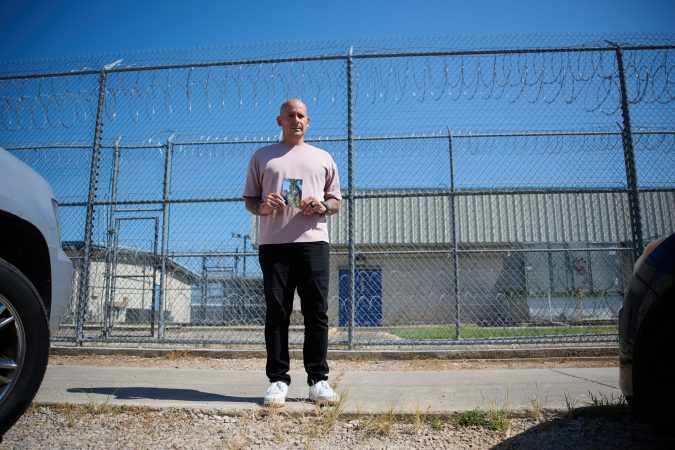
    More than 50 parents and spouses of active-duty service members have been detained since Trump took office for a second term, and at least six have been deported, the AP found in the first accounting of such detentions, which the government does not track. At least eight immediate family members of U.S. service members remain in federal immigration custody.

    Parents and spouses of people in the military have generally been shielded from deportation under bipartisan consensus for decades. But the AP found they’re now routinely being detained for months as they try to adjust their legal status through the policies available to service members’ close relatives and even as the military continues to recruit by advertising immigration benefits for enlistees’ families. Experts warn that the reversal could undermine military preparedness even as the U.S. is at war in Iran. It’s left military members without emotional support and caretakers for their children, delayed deployments, and forced some to take leave.

    “How can I even focus on my military career because I have to worry about how my wife is doing?” said Army Sgt. Hedar Leonel Turcios Juarez, who was stationed in Fort Bliss, Texas, when his wife was detained outside a Walmart in front of their 6-year-old daughter in July.

    A handful of detentions of service members’ spouses have prompted public backlash and led to intervention by Homeland Security Secretary Markwayne Mullin to secure their release.

    The Department of Homeland Security has said it does not compile data on these cases. The AP obtained information by analyzing thousands of federal court records compiled by Habeas Dockets, a project run by the Immigration Justice Transparency Initiative; by reviewing existing media coverage; and by verifying information with family members and attorneys. The actual number is likely much higher than the 51 cases AP found.

    The AP asked for comment from DHS on each case, including the individuals’ immigration and criminal history. The agency did not provide specific information about the majority of cases but noted that at least seven people had been removed from the U.S. before, at least eight had removal orders, and at least two had drunken driving or drug-related convictions.

    “DHS and ICE value the contributions of all those who have served in the U.S. military,” DHS said in a statement. “U.S. military service alone does not automatically grant lawful immigration status, or exempt aliens from the consequences of violating U.S. immigration laws.”

    The Pentagon declined to comment on the AP’s findings.

    Service members are losing their safety net

    Air Force Tech. Sgt. Wendy Gbeve, 30, said she hasn’t had a good night’s sleep since her father, Luis Alberto Ramirez Zavala, was detained by immigration officials last month. Gbeve was there when he was arrested at a routine interview with U.S. Citizenship and Immigration Services in Missouri about his pending application for legal status.

    She spent hours refreshing the USCIS page to track where the government was taking her father: from a county jail in Missouri to an Immigration and Customs Enforcement detention facility in Texas. Finally, roughly two weeks after he was detained, she found out he had been deported to his native Mexico.

    “It’s the most frustrating, helpless feeling,” Gbeve said.

    Gbeve said ICE still hasn’t informed her family why her father was removed so quickly. Ramirez Zavala spent most of his life in the U.S. working as a ranch hand in rural Illinois.

    Ramirez Zavala’s wife of 30 years, a legal permanent resident, is considering returning to Mexico to be with her husband. For Gbeve, whose husband is also in the Air Force, that would leave no one to watch their children, ages 2 and 4, if both were deployed.

    “That would be our entire safety net,” she said.

    Military members have had to take leave or delay a deployment

    Some service members have been left caring for children alone.

    Army Staff Sgt. Alexis Jaramillo, an aviation operations specialist who has served for more than a decade, said he would normally be involved in training soldiers at Fort Polk, La. Instead, he is on administrative leave, caring for his 5-year-old stepson, Noah, after his Brazilian wife, Maisa Lopes Eliaser, was detained in early July.

    It happened during what the family thought was a routine appointment at a USCIS office in Alabama. Eliaser arrived in the U.S. on a tourist visa in 2019, and the couple was trying to change her status.

    Immigration officials asked Jaramillo and his stepson to leave the room. Minutes later, they were told that Eliaser had been detained. The next time they saw her was inside a detention facility.

    “It is really overwhelming because I need to take care of my kid by myself. No one is here to help me out,” Jaramillo said.

    At least one active-duty soldier halted her imminent deployment after her husband was detained by immigration officers, leaving no one to care for their then-5-year-old son, court records show. A judge eventually ordered the husband released.

    Trump’s policy is a reversal even from his first administration

    A new policy, implemented in April 2025, states that “military service alone does not exempt aliens from the consequences of violating U.S. immigration laws.”

    Experts in military immigration law said this marks a stark shift from previous administrations across the political spectrum, including Trump’s first administration.

    Dan Gividen, who served as ICE’s deputy chief counsel from 2016 to 2019 under Trump, represents a soldier’s father who has been in ICE custody for more than eight months. He said that during his time as an ICE prosecutor, immigration authorities rarely detained service members’ immediate family members unless they had committed violent crimes.

    “We would not place them into removal proceedings, period. That’s insane,” Gividen said. “The fact that they’re doing it now is just outrageous.”

    ICE previously generally canceled past removal orders and allowed parents or spouses of troops to adjust their legal status, said Margaret Stock, an immigration attorney and retired lieutenant colonel in the Army Reserve. She said that’s because the government wanted to ensure troops focused on their duties.

    “It’s the same thing that happens if you don’t provide healthcare to the troops, or you don’t provide housing to the troops,” she said. If soldiers are preoccupied with detained or deported family, “they’re not concentrating on their job anymore.”

    Even some congressional Republicans who are otherwise largely supportive of Trump’s aggressive immigration crackdown have pushed for the release of service members’ relatives.

    “The immigration system is failing the honorable and good Americans,” Florida Republican Rep. Maria Elvira Salazar said at a news conference in July advocating for the release of the wife of retired Staff Sgt. Wilmer Trujillo, who served in Iraq and Afghanistan. DHS said she illegally reentered the U.S. after being deported in 2005.

    Although DHS said it does not have data on active-duty troops, it has released figures for former service members, who also qualify for immigration benefits along with their immediate families. From Jan. 20, 2025, through Jan. 26, 2026, immigration authorities detained 125 military veterans — placing 34 into removal proceedings — and arrested more than 150 immediate family members, DHS said in a letter to several Democratic senators.

    Anh Dung Cong Tran, known as “Tony,” had both a father and son who served in the military. Tran came to the U.S. in 1990 through a program for children of American military personnel born in Vietnam. Tran, 56, was deported in July, having lived in the U.S. for decades with regular check-ins with immigration authorities after an assault conviction soon after his arrival.

    His son Antonio Tran said his father persuaded him to enlist in the military in 2022. “He has a totally different view on America now,” said Tran, who was discharged as an Army specialist in March after a serious injury.

    Benefits for service members include what’s known as parole-in-place

    Military recruiters tout immigration benefits for troops’ families as a selling point to enlist.

    One of the military’s most highly advertised immigration benefits is “military parole-in-place,” which allows the spouses, children, and parents of active-duty service members and veterans to obtain legal immigration status from within the country. Not everyone qualifies: Those who overstayed visas or who already applied for legal status at the border, for example.

    The policy was implemented under Republican President George W. Bush during the U.S. war with Iraq in 2007 and codified under Democratic President Barack Obama. DHS agencies can grant it on a case-by-case basis.

    Under Trump, the average time it takes to receive military parole-in-place has more than doubled to 12 months, according to USCIS data. That leaves military families more vulnerable to being placed in ICE custody.

    Recruiters are still promoting immigration benefits

    The AP found that troops’ immediate family members have repeatedly been detained by ICE while applying for parole-in-place or seeking to adjust their status, including during immigration appointments.

    Marine Cpl. Jose Manuel Vilchis-Valle’s mother, Ursula Borja Valle, was detained at an appointment in August 2025 and deported to Mexico within a week. She had lived in the U.S. since the 1990s without a known criminal record. Her son was attempting to help her clear up a decades-old removal order through the immigration benefits that military recruiters had used to help convince him to enlist.

    “They basically told me that if you serve, and if you served honorably, you can help your parents,” said Vilchis-Valle, 23, who was honorably discharged shortly after his mother was deported. “In a perfect world, I wished, because of my service, they could have pardoned her.”

    In other cases, ICE has detained people who had already been granted protection, with the agency later arguing in court filings that their parole status had been revoked.

    In June 2025, the Marine Corps officially stopped advertising enlistment as a way to protect immigrant family members, in response to inquiries from the AP. But recruiters for the Army and the National Guard still promote it.

    “For some service members, enlisting isn’t just about serving their country,” read an Instagram post published in late July by an official Army recruiter based in California. “It’s also about doing everything they can to help protect their parents who sacrificed everything for them.”

    Recruiters are expected to highlight the benefits of service to attract applicants and military parole-in-place remains in effect, Army spokesperson Christopher Surridge said.

    The National Guard said it does not track detentions of its troops’ relatives or which recruiters advertise immigration benefits and referred additional comment to DHS.

    Soldier who helped patrol the border grapples with his father’s detention

    For U.S. Army Specialist Romero Ralios, his father’s detention has left him remorseful about his deployment last year to the Joint Task Force Southern Border, where he spent nine months supporting U.S. Customs and Border Patrol.

    His father, Sebastian Ralios Tino, a Guatemalan landscaper with no known criminal record, was detained this summer. He lived in the U.S. for nearly two decades without legal status.

    Ralios’ commanding officer, Capt. Mohamed Elmaola, told the AP he wanted to speak up because Ralios is a “phenomenal soldier” whose father should receive due process.

    “It’s very hard to communicate and to have credibility as a leader when your own subordinates are unable to get support,” Elmaola said. “Considering he enlisted his time and his life into supporting and defending the United States Constitution, it is the right thing to do to support soldiers and their families.”

    Romero Ralios now struggles to sleep at night due to the stress and wishes he had not been involved in immigration enforcement, even though he was just following orders.

    “It was karma. I should’ve known,” Ralios told the AP. “All those families I broke. I have regrets.”

  • Fauci’s decision to invoke the Fifth Amendment tees up a legal debate and a contempt vote

    Fauci’s decision to invoke the Fifth Amendment tees up a legal debate and a contempt vote

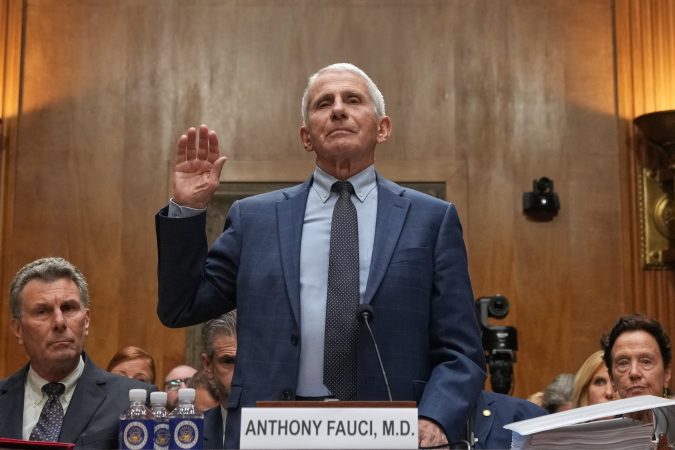
    WASHINGTON — Anthony Fauci’s decision to invoke the Fifth Amendment before Congress will be put to the test this week as a Republican-led committee prepares to vote to hold him in contempt and refer the matter to the Justice Department.

    A contempt finding could open the door to an investigation into whether Fauci had a valid constitutional right against self-incrimination when he refused to answer dozens of questions from lawmakers at a committee hearing last week focused on his handling of the COVID-19 pandemic.

    Republican senators including Rand Paul of Kentucky, who subpoenaed Fauci and has called a contempt vote for Thursday, insist that a pardon the doctor received early last year from Democratic President Joe Biden left him ineligible for Fifth Amendment protections. A Senate resolution released Tuesday asserts that Paul found Fauci’s privilege claims “unsupported.”

    But some legal experts say Fauci had reasons to invoke the Fifth Amendment, given the threat of potential state prosecutions and questions from President Donald Trump’s administration about the validity of Biden’s pardons. Any testimony from Fauci could have also prompted false-statement investigations like the ones the current Justice Department has repeatedly initiated against the Republican president’s perceived adversaries.

    No matter what happens, the episode raises fresh and complicated questions about Congress’ ability to compel testimony from previously pardoned witnesses — and the outcome could resonate beyond Fauci.

    “This is an important case because I think a lot of people anticipate that President Trump is going to issue similar pardons to many people in his administration who will end up being called before Congress, and the precedent here is important,” said Mark Osler, a St. Thomas University law professor and pardon power expert.

    Paul’s committee is moving to transmit the contempt referral from his Republican-led committee directly to the Justice Department. Whether the Justice Department would act on the referral is unclear.

    Fauci’s pardon protects him for past, not future, acts

    Fauci, a longtime National Institutes of Health scientist and the nation’s top infectious-disease expert, left the federal government in 2022 after more than five decades. He was among a group of perceived adversaries of Trump to be pardoned by Biden in one of the Democrat’s final acts in office. The clemency covered acts from 2014 to the date in January 2025 when the pardon was issued.

    Republicans on the Senate Homeland Security and Governmental Affairs Committee say the pardon lifted the specter of criminal prosecution and left Fauci without a valid basis to invoke the Fifth Amendment — a bedrock constitutional protection found in the Bill of Rights but one typically available only to those who have a reasonable basis to believe they risk being charged over their testimony.

    While a blanket pardon theoretically removes a threat of prosecution, Fauci made clear he thought he had a good-faith basis to fear criminal charges. He invoked his Fifth Amendment rights more than 100 times.

    Before the hearing. Fauci said that Paul, the committee chairperson, had an “obvious obsession with calling for my prosecution.” The purpose of his forced appearance “is to get me to say something, anything, that could vindicate his repeated public pledges that I end up, in his words, quote, behind bars, unquote,” Fauci said.

    In the run-up to the hearing, Paul made dozens of Fauci-related posts on X, including ones teasing that he was going to confront the doctor for having earlier given false testimony — something Fauci has denied.

    “I think his invoking the Fifth makes sense because he was invited into a situation where everyone in the country understood that Rand Paul was trying to set him up for a criminal prosecution,” said Michael Gerhardt, a University of North Carolina law professor. “In that circumstance, one of the smartest things to do would be to make yourself a very small target and say as little as possible, and that’s obviously what he did.”

    In announcing the contempt vote, Paul noted on X that “Fauci refused to answer a single question, even though he knew he couldn’t be charged for crimes” during the decade covered by his pardon. Fauci’s deflections encompassed even seemingly harmless questions, such as the color of the tie he was wearing — a reflection of an apparent belief that it was safer to refuse any testimony.

    There are factors that could tilt in favor of Fauci’s strategy, including the fact that his pardon would not protect him from potential state prosecutions or from a federal prosecution related to any testimony that investigators deemed false. That may not be an idle concern given the number of false-statement investigations prosecutors have opened against Trump’s political opponents.

    Trump’s administration also has repeatedly called into question the validity of the Biden pardons, given Biden’s frequent use of an autopen for official business. Legal experts say the pardons are valid.

    “The question is do you have a reasonable fear of prosecution, and Fauci’s argument would be — yes, I received a pardon, yes, I believe that pardon covers and prevents prosecution but there have been statements from lots of people including Trump and other administration officials … raising questions about the validity of that pardon,” said Ross Garber, a lawyer and expert in political investigations who has represented multiple clients who have invoked the Fifth Amendment.

    “That,” he added, “is potentially a very viable argument.”

    Paul has discussed trying to fast-track a contempt referral

    Paul said in an interview with Fox News Channel last week that he did not think “there’s any rule” requiring that a contempt referral from a committee go through the entire Senate. His committee is instead working to send the referral straight to the Justice Department.

    The contempt resolution states that the president of the Senate, Vice President JD Vance, “shall certify” the committee’s referral and the accompanying report to the U.S. attorney for the District of Columbia.

    That fast-tracking of the process avoids the need for a vote in the full 100-member Senate, where Republicans likely lack the 60 votes required to move a contempt referral to passage.

  • Takeaways from a big primary night in Michigan, Kansas, Missouri and more

    Takeaways from a big primary night in Michigan, Kansas, Missouri and more

    Democrats in Michigan signaled their eagerness for a new political direction as voters advanced progressive Abdul El-Sayed over Rep. Haley Stevens for a key Senate seat and two left-wing candidates in key House primaries.

    The Senate race in Michigan exposed deep rifts among Democrats in how they approach Israel and money in politics, and how they deem candidates electable.

    Across the country, similar ideological battles were waged with mixed results. And in two red states, voters rejected GOP-led ballot measures that would have given state legislators more power to reshape the law on key issues, including abortion.

    Here’s a rundown from Tuesday’s primaries.

    Michigan’s marquee race ends in win for progressives

    In November, El-Sayed will face former Republican Rep. Mike Rogers, who narrowly lost his first Senate bid in 2024 and received an endorsement from President Donald Trump. Democrats will have a tougher time retaking the chamber if they lose the Michigan seat.

    The primary divided the Democratic Party between progressives, who saw El-Sayed’s left-wing politics as a way to energize voters, and establishment leaders, who viewed Stevens as a stronger candidate to win over independents and Republicans.

    The two candidates also personified Democrats’ struggle with Israel. Like others on the party’s left, El-Sayed called the war in Gaza a genocide and said he wanted the U.S. to end its military aid to Israel. Stevens, an Israel supporter, benefited from more than $30 million spent by the super PAC of the American Israel Public Affairs Committee. The group’s support, sometimes even rumors of it, fuels tensions as Democrats wrestle with articulating their stance on Israel without alienating voters.

    Left-wing candidates win key House primaries in Michigan

    In Michigan’s 7th Congressional District, voters chose a progressive over two centrist candidates in the Democratic primary. The district is among the 18 House races classified by the Cook Political Report, a nonpartisan election analysis site, as a toss-up this year.

    Sunrise Movement co-founder William Lawrence defeated Bridget Brink, former U.S. ambassador to Ukraine, and Matt Maasdam, a retired Navy SEAL, and notched another big win for the surging left flank of the Democratic Party.

    “Tonight the people of Michigan’s 7th district sent a clear message: they are tired of Silicon Valley billionaires and DC insiders determining the future of our towns and our country,” Lawrence said in a statement. “They want an unbought representative who isn’t afraid to stand up to leaders of both parties and fight for working people.”

    Lawrence will run against incumbent Rep. Tom Barrett (R).

    In Michigan’s 13th District, Rep. Shri Thanedar lost the Democratic primary contest to Donavan McKinney, a member of the Democratic Socialists of America.

    Virginia Democrats choose contenders for key races

    Virginia’s 2nd Congressional District is headed for a rematch between incumbent Rep. Jen Kiggans (R) and former Rep. Elaine Luria, who won a crowded Democratic primary. The district, anchored in Virginia Beach, is considered the most competitive in the state.

    Luria held the seat for two terms before she lost to Kiggans in 2022. Of incumbent Republicans in Virginia, Kiggans is most in jeopardy this year as Democrats look to flip red districts narrowly won by Trump.

    Incumbent Rep. Rob Wittman (R) is defending GOP territory with better odds in Virginia’s 1st Congressional District. In November, he will face Shannon Taylor, a prosecutor who won another crowded Democratic primary Tuesday.

    Tom Perriello, who won the Democratic nomination in the 5th Congressional District he once represented, faces much tougher odds. Perriello will face the incumbent Rep. John McGuire (R) in a district Trump won by 12 percentage points in 2024.

    A rematch sees a familiar end in Missouri

    Rep. Wesley Bell again defeated former Rep. Cori Bush in the Democratic primary in Missouri’s 1st Congressional District. Bell’s win against Bush, a member of the Democratic Socialists of America, is a setback for the party’s left wing that has succeeded in defeating other incumbents.

    The Missouri race assessed the power of AIPAC as it did when the duo competed in 2024. AIPAC’s spending that year made the race one of the most expensive primaries in U.S. history and helped Bell unseat Bush. The former congresswoman, an ex-member of “the Squad” of several progressive lawmakers, harshly criticized Israel over the war in Gaza before some Democrats even began to question their stance. On the night of her 2024 loss, Bush hinted at a comeback bid: “AIPAC, I’m coming to tear your kingdom down.”

    The group spent about $3 million this year on lifting Bell to a second victory. He is favored to win in the solidly blue district.

    Washington sets up battleground contest

    On the West Coast, Washington’s most competitive district held a nine-way primary race that also featured a progressive-versus-moderate showdown among the Democrats. Washington uses an open primary system, meaning the top two vote-getters advance to the general election regardless of party.

    Republican John Braun, a former state senator who had Trump’s endorsement, and the incumbent Democratic Rep. Marie Gluesenkamp Perez will compete in November. Gluesenkamp Perez, a centrist who is seeking a third term, overcame a challenge from the left by Democrat Brent Hennrich.

    The district, which went for Trump in 2024, is considered a toss-up.

    Voters deny GOP-led ballot measures

    Kansans rejected an effort to start electing state Supreme Court justices, delivering a blow to Republican state lawmakers who have long been frustrated by their rulings.

    For 68 years, Kansas governors have been required to appoint justices through a merit-based system. GOP legislators asked voters to scrap that system through a ballot measure that would have allowed the state to elect its justices directly. Critics viewed it as a gambit to remake the Kansas Supreme Court and enable its justices to revisit high-profile rulings that angered conservatives — including a decision that guaranteed a right to abortion.

    In Missouri, voters turned down another measure pitched by GOP lawmakers that would have made it harder to pass citizen-led constitutional amendments. Voters in recent years have used such amendments to pass liberal policies, including preserving abortion access and legalizing marijuana.

    The failure of both measures from Republican lawmakers in red states shows the limits in trying to persuade voters to change election rules or cede political power, even at the behest of lawmakers they may support.

  • A routine voter roll update in Pa. prompted misinformation from conservative activists

    A routine voter roll update in Pa. prompted misinformation from conservative activists

    It is routine for election officials throughout the country to inspect their voter rolls to ensure people who have moved, died, or not cast a ballot in a while do not linger for years in the data.

    But that has not stopped right-wing activists, Republican U.S. senators, and the richest man in the world from suggesting Pennsylvania’s latest update to its voter rolls Monday was a mass expulsion of potentially fraudulent voters as the high-stakes midterm elections approach.

    “The Pennsylvania Department of State just conducted one of its biggest purges ever,” MAGA influencer and grassroots Republican voter registration activist Scott Presler wrote on X, and “Democrats lost TENS of thousands of voters.”

    Presler, who six years ago led a two-day demonstration in Harrisburg over the 2020 election results, claimed the numbers showed his effort to “clean the voter rolls is actually working.”

    Elon Musk, the billionaire who was the biggest donor in the 2024 presidential election, elevated Presler’s post, adding on Musk’s own X platform, “Nice work.”

    And U.S. Sen. Dave McCormick, Pennsylvania’s highest-ranking Republican, praised Presler for “leading the charge.”

    The reality of Monday’s update is that both parties saw voters moved from active to inactive status (meaning they have not voted in a while).

    Among Democrats, 55,241 were moved to inactive status on Monday, while 23,832 Republicans also became inactive.

    Those voters have not actually been removed from the rolls and can still vote in November, despite Presler’s claims of a purge. Being inactive is not the same as being ineligible.

    “Updating these voter records is not a ‘purge’ of voters and does not mean that they were on the rolls improperly,” said Geoff Morrow, a spokesperson for the Pennsylvania Department of State.

    Morrow called the update a reflection of county election offices’ diligence in their duty to regularly perform maintenance to their lists.

    “There are many reasons people come off the voter list, most likely they moved, and this is all part of the normal process,” said Montgomery County Commissioner Neil Makhija, a Democrat who serves on the county’s election board. “There’s nothing particularly special or unusual about this.”

    What is happening?

    Counties across Pennsylvania have been updating their voter lists, as required under the National Voter Registration Act of 1993. This update must occur no later than 90 days before a federal election. The midterm elections, which will feature the Pennsylvania governor’s race and several competitive congressional contests, are Nov. 3.

    As part of the maintenance process, voters who have not participated in five years are moved from active to inactive status. Inactive voters are still registered and can still vote, just like an active voter.

    A voter who cast a ballot in 2020 but sat out the following elections, for example, would be considered inactive.

    This practice is standard, said Philadelphia City Commissioner Seth Bluestein, the Republican member of the three-person board that oversees the city’s elections.

    “Philadelphia conducts regular list maintenance activities in compliance with federal and state laws to determine whether a voter should be marked as ‘inactive’ or removed from the registration rolls,” he said on X.

    Voters may also be categorized as inactive if they have submitted a USPS mail-forwarding request or registered to vote in another state, or when a mailing to their registered address is returned as undeliverable.

    Montgomery County Commissioner Neil Makhija speaks during a March board meeting. Alejandro A. Alvarez / Staff Photographer

    Becoming an inactive voter is the first step on the path to being removed, which is done if the inactive voter does not participate in the next two federal elections.

    “What we’re seeing here is an example of our current process for voter roll maintenance playing out, and it works,” Makhija said. “It’s designed to actually protect people’s registration because it gives them a chance to respond if we mark them as inactive, and it also keeps them on the rolls if they do respond.”

    In addition to tracking whether voters are active, Morrow said, election officials in the state regularly review death records, U.S. Postal Service address changes, and other reliable sources “to identify records that may require updating” when a voter dies or moves.

    Can inactive voters cast a ballot in November?

    Yes. Voters who are inactive can change their status simply by voting. Those who have been removed can reregister, too. Registration must be done 15 days prior to an election, which is Oct. 19 this year.

    “Voters with an ‘inactive’ status are still eligible to vote and can be moved back to ‘active’ status if they take an action to update their record or vote before the passage of two federal general elections,” Bluestein said.

    To vote in Pennsylvania, you must be a U.S. citizen, a resident of the state for 30 days, and 18 years old by Election Day. It is possible that someone who is eligible to vote has become inactive after years of sitting out elections.

    Does this have anything to do with noncitizen voters, like those found in New Jersey?

    Presler, who said he “won’t stop until all 67 counties comply,” posted a cartoon image of himself pressing a light switch as cockroaches — labeled with phrases like “illegal voter” and “dead voter” — scurry away.

    Presler did not respond to requests from The Inquirer to answer questions about his posts, which appear to conflate inactive voters with ineligible voters.

    The posts come after President Donald Trump’s administration claimed Pennsylvania was one of four Democratic-led states with thousands of noncitizens on its voter rolls, a claim state officials say the federal government has not provided evidence for.

    MAGA influencer Scott Presler energizes people attending a Republican event at the Newtown Athletic Club ahead of the 2024 election. Elizabeth Robertson / Staff Photographer

    But a change in a voter’s status from active to inactive is not related to citizenship or other issues of eligibility.

    Noncitizens would actually be removed from rolls under Pennsylvania law and face potential prosecution and deportation if they had cast a ballot — as the Pennsylvania Department of State noted in a Friday report from WHP on an apparent case of a noncitizen voting in Lancaster County.

    Pennsylvania Secretary of State Al Schmidt, a Republican appointed by Democratic Gov. Josh Shapiro, has said noncitizen voting “is extremely rare across the country, including in Pennsylvania.”

    New Jersey last month revealed 6,600 people — a number later reduced to roughly 4,600 — who were not citizens were improperly registered to vote over a yearlong span ahead of the 2024 election because of a software error in New Jersey’s motor vehicle system.

    Schmidt had identified a similar glitch in Pennsylvania in 2017 as Philadelphia’s Republican city commissioner, identifying 168 noncitizens on the city’s voter rolls at the time. They were removed from the rolls and the glitch was fixed.

    Why are Elon Musk and senators from other states posting about routine maintenance?

    Prominent Republicans who elevated Presler’s post tied it to their efforts to pass the SAVE America Act, a sweeping national voting overhaul that has been championed by Trump ahead of the midterms.

    “In light of what Scott Presler has uncovered, who could still think we don’t need the SAVE America Act?” Sen. Mike Lee, a Utah Republican and Trump ally, posted Monday.

    The act would require proof of citizenship to register to vote and mandate all voters show photo identification at the polls, something some conservatives say would prevent noncitizens from voting.

    But the legislation has faced significant pushback, including from some elected Republicans, over concerns that it would make it tougher for many Americans, especially married people whose last names may no longer match their birth certificate, to vote.

    How do party registrations compare?

    According to state data as of Monday, Democrats have more than 3.4 million active voters and Republicans are not far behind, trailing by only 25,811 active voters.

    But each party also has hundreds of thousands of inactive voters — 437,330 in the case of Democrats and 256,711 for Republicans — who could potentially vote in November.

    Can we say anything about party odds in the midterms?

    The Pennsylvania Republican Party celebrated the news of the narrowing gap in active voters as a milestone its “ultimate mission of turning Pennsylvania into a permanent red state.”

    Both parties want to win the registration war, but party registrations alone will not predict victory in November.

    Just because someone is registered as a Democrat or Republican does not mean he or she will necessarily vote for every candidate in that party on the ballot.

    And there are also nearly 1.5 million unaffiliated voters — including inactive registrants — who could sway the state’s elections.

    Staff writer Joe Yerardi contributed to this article.

  • After a high-profile snub in Pa., President Donald Trump meets with Stacy Garrity at the White House

    After a high-profile snub in Pa., President Donald Trump meets with Stacy Garrity at the White House

    Clad in a royal blue, two-piece suit, Pennsylvania Treasurer Stacy Garrity stood next to a seated President Donald Trump in the Oval Office on Tuesday, in a video message posted to his social media platform, Truth Social.

    “Pennsylvania is very lucky because you have somebody running for governor who’s going to do a fantastic job,” Trump said to the camera, while shaking Garrity’s hand. “She really is a spectacular person. And I just want to wish you luck. I think you’re going to win.”

    The White House appearance signaled a closer public alliance between Trump and Garrity, and the latest chapter in her campaign challenging Gov. Josh Shapiro as she seeks to draw Trump’s loyal fan base to the polls in November.

    Trump, who endorsed Garrity in January, followed the video message by posting a photo with Garrity, writing: “Stacy is running to be the next Governor of the GREAT Commonwealth of Pennsylvania. She has my Complete and Total Endorsement. She will do a fantastic job!”

    Garrity’s campaign said in a statement that she was visiting the White House alongside the Penn State wrestling team, which was being honored for its 2026 national championship.

    The Oval Office meeting represented a repair of sorts between Garrity and Trump after he has displayed little enthusiasm toward her campaign in recent months.

    Garrity entered the race against Shapiro, the Democratic incumbent, last summer as Republicans — disappointed with their 2022 performance — sought to consolidate support early around one strong candidate. When Trump endorsed Garrity, he called a “true America First Patriot” who “WILL NOT LET YOU DOWN!”

    In March, Garrity hosted a fundraising dinner at Trump’s Mar-a-Lago Club in Florida, where, beneath a wrought-iron doorway at his private golf club, the president said “she should win.”

    But when Trump visited Pennsylvania in June and Garrity introduced him onstage, he seemed to forget her altogether.

    During a speech meant to focus on manufacturing in Macungie, Trump spent over an hour talking about weight-loss drugs, immigration, firearms, the role of transgender athletes in women’s sports, and the UFC fight recently held on the White House lawn. But Garrity never received a mention, and Trump instead celebrated U.S. Rep. Dan Meuser, a Pennsylvania Republican who considered a run for governor before ultimately opting against it. Trump even name-checked Shapiro.

    Three months out from Election Day, Garrity has struggled to gain traction among voters. A Quinnipiac University survey of 895 registered Pennsylvania voters in July found 53% would vote for Shapiro, while 40% said they would vote for Garrity.

    At right is Pennsylvania Governor Josh Shapiro listening to Stacy Garrity, 78th State Treasurer, Forum Auditorium in Harrisburg, Pa., Tuesday, Jan. 21, 2025.Alejandro A. Alvarez / Staff Photographer

    Garrity has stuck with Trump, supporting his political decisions like efforts to nationalize elections and his signature tax cut law, under which 300,000 Pennsylvanians are expected to lose Medicaid, according to state estimates.

    Trump’s latest show of support for Garrity comes as Shapiro — who is rumored to be eyeing a run for the White House in 2028 — has set his sights beyond the governor’s office, lending his time and spending his money to support Democrats up and down the ballot, in an attempt to flip the Pennsylvania state Senate and four swing districts in Congress.

    Last month, in another stop in Pennsylvania, Trump attempted to lend more support to Garrity during Republican U.S. Sen. Dave McCormick’s Defense and Innovation Summit.

    “I hear things about Stacy, and I’m hearing some poll numbers that are very good,” he said.

    Regarding her opponent, however, Trump had stronger words.

    “This guy Shapiro is totally overrated. … He doesn’t have what it takes,” Trump said.

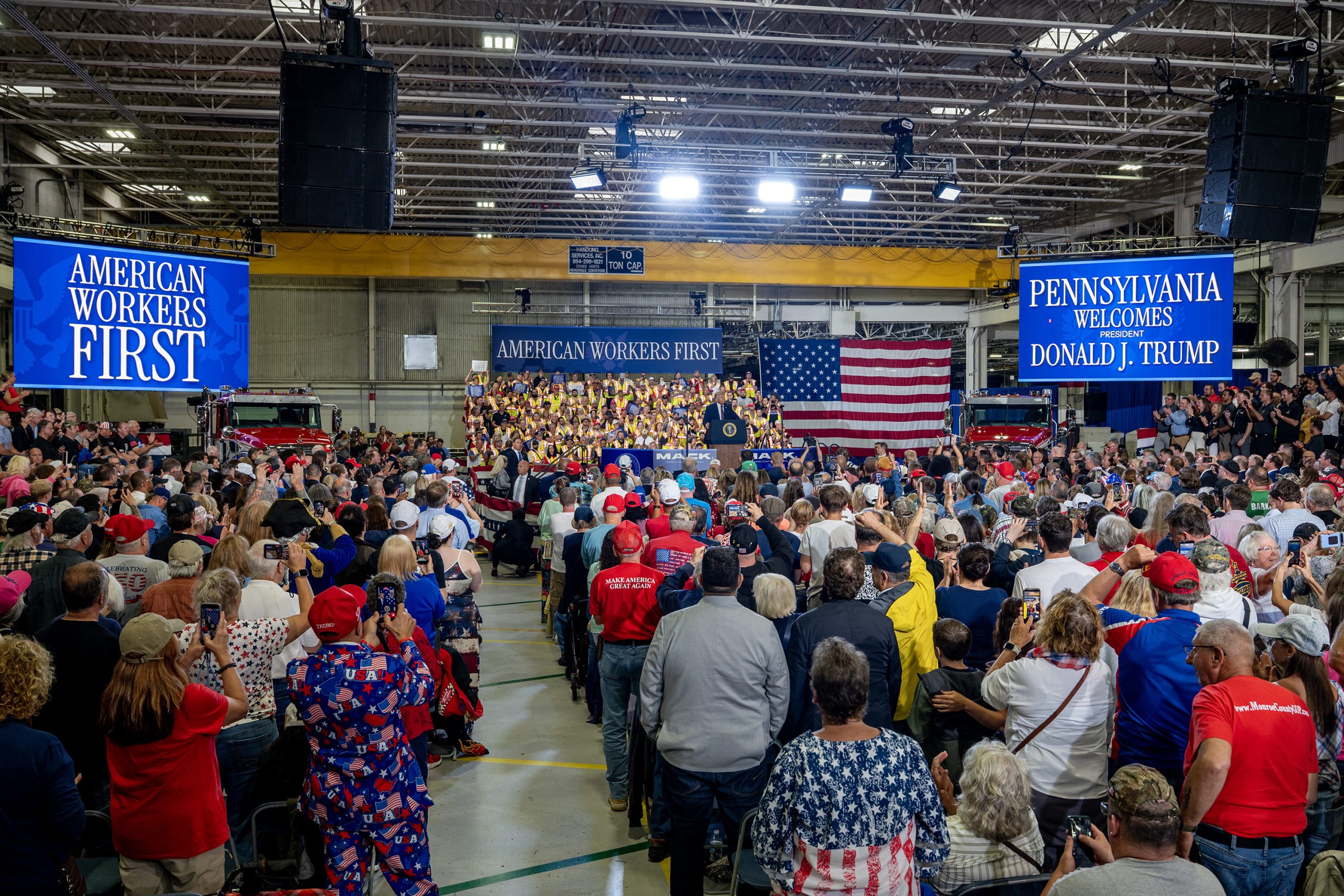
    President Donald Trump visits Mack Trucks in Macungie in the Lehigh Valley Tuesday, June 23, 2026.Tom Gralish / Staff Photographer

    In Pennsylvania, Trump remains deeply underwater in popularity. The Quinnipiac survey found only 39% of Pennsylvania voters would give him a positive job approval. Elsewhere in the country, Trump has remained Republicans’ most effective energizer to the polls — though some are concerned about GOP success without his name on the ballot in November.

    Pennsylvania Democrats on Tuesday seized on Garrity’s appearance with the president.

    “Stacy Garrity always sprints to any chance she gets to pledge her 100% loyalty to Donald Trump and his disastrous agenda,” Ava Pitruzzello, a spokesperson for the Pennsylvania Democratic Party, said in a statement.

    Last week, Shapiro’s campaign launched a new ad calling Garrity “100% MAGA.” Garrity’s campaign, in a statement, called the ad “a dishonest, lying attack.”