WASHINGTON — Key senators unveiled a short-term spending bill on Sunday that would keep federal agencies funded past the midterm elections and into early December as they look to avoid a government shutdown during the middle of campaign season.
The Senate is likely to vote on the measure before leaving Washington at week’s end for its traditional August recess, a period that many lawmakers want to spend shoring up their reelection prospects rather than working in the nation’s capital.
The bill generally funds the federal government at current levels though Dec. 11. The House has passed a similar measure, but it did not include various exceptions sought by the White House. Senators have been spending recent days negotiating which of those exceptions to include.
One exception that did not make it into the bill, Democrats noted, was the administration’s request to include $1 billion to build “Trump-class” battleships.
In another major difference with the House bill, Democrats say they also were able to include language that will ensure the administration cannot transfer funds from other programs to the Border Patrol.
The late-summer action on a funding fix is unusual. Normally, Congress waits until the final days or hours of a funding deadline to pass short-term funding extensions, but this time senators are acting two months before the end of the fiscal year on Sept. 30.
Senate Majority Leader John Thune said passing the measure was his top priority going into the August recess. He noted that the American people have already experienced two record-breaking government shutdowns in the past 10 months.
“We need to ensure that they do not face a third,” Thune said.
Both parties want to avoid another shutdown
A short-term funding extension is needed because Congress has struggled to get the dozen annual appropriations bills negotiated and approved before the Sept. 30 deadline. By extending government funding now, lawmakers can use the ensuing months to work out their differences on full-year funding.
It won’t be an easy lift as Republicans seek a dramatic increase in defense spending while cutting non-defense spending. Trump proposed a 10% cut in non-defense programs overall. Meanwhile, he called for boosting defense spending by some 44%.
A potential shutdown before voters go to the polls is a scenario that both parties are looking to avoid, as polling indicated that neither party evaded blame for last fall’s record 43-day shutdown. Democrats sought to extend an expiring health insurance tax credit and refused to go along with a short-term spending bill that did not include that priority. But Republicans said that was a separate policy fight to be held at another time.
A second spending battle over funding for the Department of Homeland Security took 76 days to resolve when Democrats refused to fund U.S. Immigration and Customs Enforcement and the Border Patrol without changes to those operations.
The bill delays a controversial policy on grants
Sen. Susan Collins, the Republican chair of the Senate Appropriations Committee, along with Democratic senators, are seeking to block a proposed rule from President Donald Trump’s administration related to grants. The rule would require a senior political appointee at each agency to review grant proposals through criteria that include “ensuring that discretionary awards advance the President’s policy priorities.”
Collins and Sen Patty Murray, the top Democrat on the Appropriations Committee, said the rule would not take effect during the course of the stopgap spending bill. Collins said she advocated for significant changes to the rule, “citing its potential to politicize grants and harm small, rural communities, families, and biomedical research.”
Democrats want to kill the administration’s effort altogether. Senate Democratic leader Chuck Schumer said it was a “disgraceful” effort that would “further politicize all federal grants.”
“While Republicans rejected killing the proposed rule outright, I’m going to keep fighting to put a stop to it once and for all, and I will keep pressing my Republican colleagues to do exactly that,” Murray said.
Democrats fear Trump would turn federal grants into a cudgel to punish perceived political foes and reward allies, while also undermining Congress’s constitutional power of the purse. The White House Office of Management and Budget says its effort is about improving accountability to ensure taxpayer dollars aren’t wasted or misused.
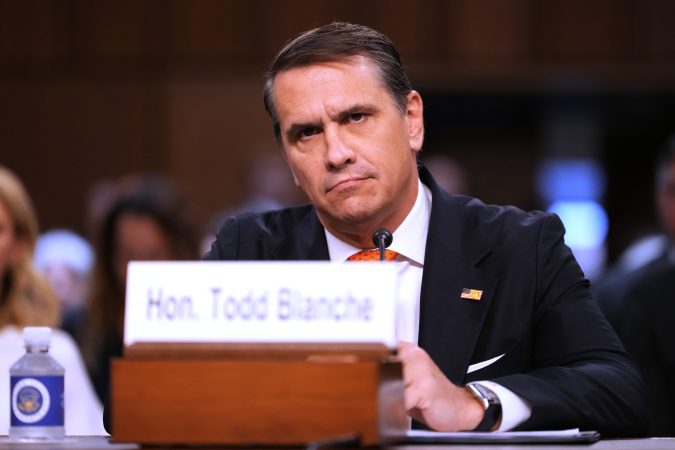
WASHINGTON — Two Republican senators who threatened to block acting Attorney General Todd Blanche’s confirmation to lead the Justice Department said Monday that they will support his nomination, ending an impasse over plans to create a fund to compensate allies of President Donald Trump.
The endorsement from GOP Sens. John Cornyn and Thom Tillis paves the way for the Senate Judiciary Committee to advance Blanche’s nomination on Tuesday after the Justice Department and lawmakers reached a deal to formally rescind the $1.8 billion “Anti-Weaponization Fund” proposed to settle Trump’s lawsuit against the Internal Revenue Service.
Cornyn and Tillis had refused to back Blanche’s bid for the permanent post without official confirmation killing the fund meant to compensate people who believe they were unfairly prosecuted by the Justice Department. Blanche’s written order, issued late Sunday, came after days of negotiations between the Justice Department and the Republican senators, who are leaving Capitol Hill when their terms end in January.
“We want to express our gratitude to Mr. Blanche and his staff for working with us on this, and we look forward to voting to advance his nomination out of the Senate Judiciary Committee soon,” Cornyn, of Texas, and Tillis, of North Carolina, said in a statement.
DOJ order says ‘beyond any doubt’ that fund is dead
Blanche has repeatedly said that the Justice Department was scrapping plans for the fund, which sparked bipartisan outcry over the possibility that violent rioters who attacked police at the U.S. Capitol on Jan. 6, 2021, could be considered for payments. But skeptical lawmakers said they were concerned that could be revived without a commitment in writing, especially because Trump has continued to defend the idea.
In his order posted on social media late Sunday, Blanche wrote that the department was confirming “beyond any doubt, that there is no Fund.”
Since the settlement of the president’s lawsuit against the IRS was announced, “No Members were appointed; no funds were transferred; no process for receiving claims was established; no claims were paid,” the order said. “This order establishes, beyond any doubt, that there is no Fund.”
Cornyn and Tillis had also pressed the Justice Department to limit the scope of a separate piece of the settlement that provided broad immunity for Trump and members of his family from tax audits.
Under the deal, the Justice Department clarified in writing that the tax audit immunity agreement “applies by its terms only retroactively” to claims open at the time of the settlement and does not protect the president from examination of future tax filings. It also makes clear that only the parties that brought the lawsuit — Trump, two of his sons, and the Trump Organization — are covered by the tax agreement.
Cornyn and Tillis said in their statement that they were “pleased” with the concessions made by Blanche.
“From the outset, we were clear that we needed a written document addressing our concerns on the IRS audit agreement and the anti-weaponization fund that included constraining the scope of audit protection by limiting it to the parties of the Settlement Agreement and legally ending the anti-weaponization fund,” they wrote.
Democrats, however, noted that the order rescinding the fund doesn’t stop the Trump administration from compensating Jan. 6 rioters through a previously established process that allows people to file claims for damages if they believed they were wronged by the government.
“This supposed ‘deal’ doesn’t prevent payouts to violent insurrectionists in the future,” Democratic Sen. Adam Schiff said in a social media post. Schiff added that it also “leaves in place a tax-immunity deal that could help Trump skip taxes on the $2.3 billion he made last year, and still leaves it vague who and what is covered.”
Cornyn, Tillis echo GOP colleagues’ concerns
Blanche’s nomination was thrown into doubt last week after the Judiciary Committee postponed a vote that had been scheduled for Thursday morning as Tillis and Cornyn said they needed more from the administration before they could provide the necessary votes.
After the Thursday vote was delayed, Trump said in a social media post that he might pull Blanche’s nomination and resubmit it after Cornyn and Tillis leave office next year. And on Saturday the president threatened to push forward with the fund if the two Republicans blocked Blanche’s nomination.
On Sunday evening, Trump said that people who had faced charges from the Jan. 6, attack on the Capitol and could have benefited from the fund had “their lives destroyed.”
“This would be a reimbursement for the pain that they suffered,” Trump said. “A lot of people like it.”
Blanche, who served as Trump’s defense lawyer in his criminal cases, entered the Justice Department last year as deputy attorney general. He was elevated to the top post after Pam Bondi was fired in April by Trump, who was frustrated by her failure to successfully prosecute his political enemies.
Though Blanche insisted he wasn’t auditioning for the permanent job, he has moved quickly since taking the reins of the department to promote the Trump administration’s agenda and accelerate investigations into the president’s perceived foes.
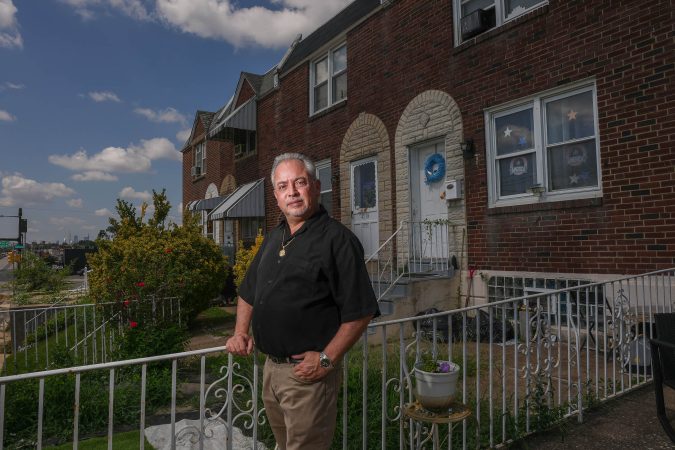
Jorge Luis Burgos of North Philadelphia, a registered Democrat, was one of many Latino voters who shifted to the right and voted for President Donald Trump in the 2024 presidential election.
Now he’s planning to shift back and vote for Democratic Gov. Josh Shapiro as he runs for reelection in the key swing state.
“Shapiro 100%. I love the way he manages everything,” Burgos said while attending Arte en las Calles, an event last weekend celebrating Latino culture held by the Esperanza Art Center in North Philadelphia.
Burgos, 57, who moved to Philadelphia from Puerto Rico in 1980, said he voted for Trump in 2024 because he was worried about inflation and felt betrayed by the last-minute switch that swapped then-President Joe Biden for Vice President Kamala Harris as the Democratic nominee. But he said Trump has failed to fulfill his promises, and he has found himself turning back to the Democratic Party.
“I was disappointed, and that’s why I switched. But you ask me now, I’m disappointed, too. Big time,” Burgos said. “Trump didn’t accomplish his promise: ‘On Day One,’ inflation is gonna go down. It didn’t happen.”
In the past decade, support of Republican candidates, specifically Trump, has grown in the majority Latino precincts of Philadelphia — with Trump’s share of the vote increasing from 6.1% in 2016 to 21.8% in 2024.
While Harris still won these wards — and a slight majority of Latino voters nationally, according to exit polls — Trump’s improved performance with this voter group helped him win both Pennsylvania and the presidency.
Burgos, like many other supporters who shifted to the right, said Trump’s promises to bring the cost of living down to its pre-COVID rate ultimately won over their vote.
Ninety-three percent of Trump’s Latino supporters cited the economy as the main issue driving their vote in the 2024 election, according to a September 2024 Pew Research Center poll.
Jorge Luis Burgos with his grandchildren Luis Burgos Jr. and Athena Burgos, in Philadelphia. His wife Carmen is standing in the doorway in this photo.Jessica Griffin / Staff Photographer
But now many Latino voters have not seen the outcomes they were hoping for, with a May poll fromPew finding that Trump’s support has fallen more sharply with Latino voters than othervoters. Only 66% of Hispanic Trump voters approved of his job performance in the poll, falling 27 percentage points from the start of his presidency.
According to a May poll from UnidosUS, a national Latino civil rights organization, 66% of Latino voters say Trump and congressional Republicans are not focused on fixing the economy.
Pennsylvania Democrats and Republicans will be seeking to sway these voters in November when Shapiro faces off against Republican nominee Stacy Garrity, the state’s treasurer, in the race for governor.
What are the issues on the minds of Latino voters?
Latino voters, who make up more than 600,000 of eligible voters in Pennsylvania and are the fastest-growing demographic group in Philadelphia, said in interviews that the economy, immigration, and support for small businesses are the issues that will determine who they vote for.
“They’re focused on cutting costs,” Shapiro said of the region’s Latino voters at a rally with congressional candidate Bob Brooks and House Minority Leader Hakeem Jeffries in the 7th Congressional District, one of four GOP-held seats in the state Democrats are hoping to flipafter the area accounted for some of Trump’s biggest Pennsylvaniagains in 2024.
“They’re focused on their small businesses getting help,” Shapiro said. “They’re focused on more cops on the street for safer communities and schools that are stronger.”
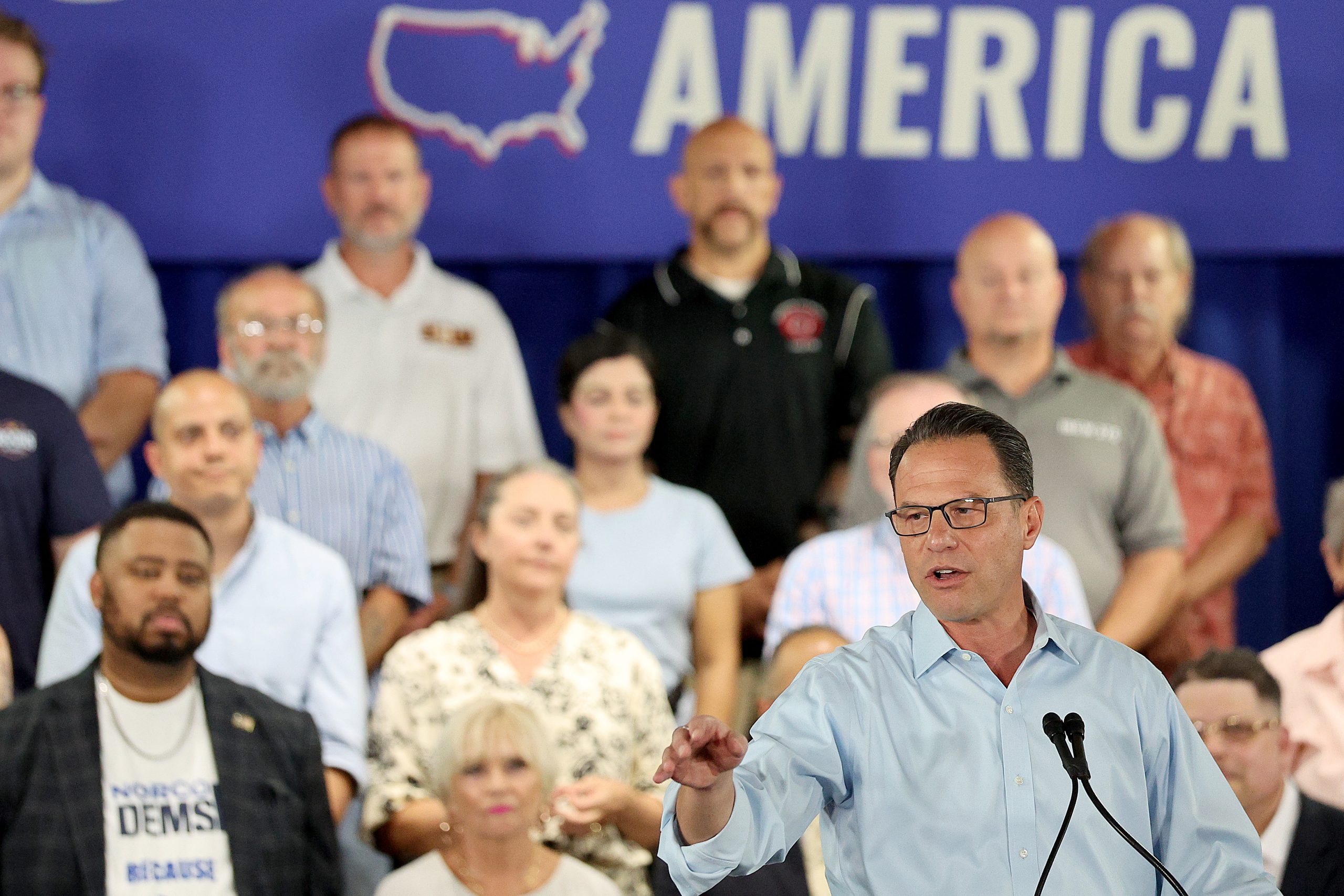
Gov. Josh Shapiro addresses the audience during a rally for congressional candidate Bob Brooks at the United Steelworkers Union Hall in Bethlehem, Pa. on Sunday, July 26, 2026.David Maialetti / Staff Photographer
Jaime Negrone, 67, from North Philadelphia, has lived in Pennsylvania his whole life but has roots in Puerto Rico. He said the cost of living is the major issue he is hoping to see tackled.
“Everything has become so expensive,” Negrone said. “People are sacrificing necessities on one end to cover for the other end: food, gas, housing.”
Negrone said he will vote for Shapiro over Garrity because the governor seems to be more connected to the people of Pennsylvania.
“Shapiro has a pulse on the issues in Pennsylvania,” Negrone said. “He’s been in the office, he knows the politics, and he seems to be a politician for the people.”
Seth Ortiz, 30, a second-generation Puerto Rican from Northeast Philadelphia, said he’s goingto vote for Democratic candidates in November because he feels that’s the only wayto protect people’s rights amid increased immigration enforcement.
“I don’t like the fact that ICE is pretty much doing what they want in U.S. cities. At some point, even killing American citizens and getting away with it, it’s horrible,” Ortiz said. “So anyone who is going to stand up for immigrant rights is probably the most important thing for me. And it’s probably always going to be the Democrat.”
Gladis Avila, 55, a Venezuelan business owner from South Philadelphia, said she is not sure who she is going to cast her vote for yet. She wants a candidate who is going to stand up for her community and small businesses but has not heard much outreach from either campaign.
“The Latino community needs people who work more for our community,” Avila said.“…When we vote, we want to feel like we are voting for someone who is going to help our community. Because that’s our voice, and our voice has an impact.”
Gladis Avila stands in a park near her house in South Philadelphia.Andrea Padilla
Echoing this, Jennifer Rodriguez, president of the Greater Philadelphia Hispanic Chamber of Commerce, a nonprofit focused on the economic growth of the Hispanic community, said she’s heard worries from businesses about being able to keep up with their expenses.
“Small businesses are very, very concerned about the viability of their businesses,” she said. “And in the really escalating cost environments. Particularly, the labor force has become very costly.”
How are campaigns reaching the Latino community?
Matt Beynon, a representative for the Garrity campaign, said that helping small businesses is the main concern the campaign has heard from Latino voters.
“And a lot of concerns she’s hearing are about the overregulation and red tape that is preventing them from either starting a business, growing their business, expanding their business,” he said.
Outreach to the Latino community has so far included attending community events in Philadelphia and other communities with large Latino populations, like Allentown, Beynon said.
State Treasurer and Republican candidate for governor Stacy Garrity holds a rally in Bucks County Sept. 25, 2025 at the Newtown Sports & Events Center.Tom Gralish / Staff Photographer
Shapiro has also spent time in majority Latino areas. In May, he attended and co-hosted “Fiesta on Hamilton,” in Allentown, a street festival that celebrates Latino culture in the Lehigh Valley.
“During Fiesta on Hamilton, Gov. Shapiro met with local small business owners, entrepreneurs, creators, cultural leaders, and local officials as part of Shapiro for Pennsylvania’s ongoing commitment to engaging, uplifting, and investing in Latino communities across the Commonwealth,” the Shapiro campaign wrote in a statement.
Samantha Reposa, a representative for the Shapiro campaign, said the campaign is also running Spanish-language radio ads to further engage voters.
‘I feel left behind’
Despite this, many Latino voters in Philly said they haven’t felt reached by either campaign.
Rodriguez expects messaging to ramp up closer to the election. Because of the Latino community’s lower voter turnout in relation to other groups, Rodriguez said they are often the last to be reached, a strategy she is hoping to see change
“One thing that typically happens is that the Latino community oftentimes is the last community to be approached by politicians and their systems,” Rodriguez said. “The Latin community’s voter engagement is relatively low. And a lot needs to be improved, but a lot of it has to do with candidates really seeking the relationship with our community much earlier on.”
Carolina Hansell, 61, immigrated from Venezuela 33 years ago and is planning to vote for Shapiro, but said she has seen and felt the conservative shift in her community and that it’s in part due to a lack of outreach.
“They need to work and talk to real people and the neighbors over here,” Hansell said. “It’s the only way to convince people and have a good plan. There’s not a plan right now, not in that Democratic Party.”
Anjoli Santiago, 41, said it’s not just the Democrats that are lacking but feels like both political parties have lost touch with the Latino community and sees that trend continuing.
“I think it will continue if we don’t have more conversations about how diverse our people are and the different needs that our people have,” Santiago said. “I feel left behind by both parties definitely. It feels like we are voting and those who we vote for no longer represent us.”
Staff writer Michelle Baruchman contributed to this article.
Former State Rep. Nick Miccarelli, who left Harrisburg in 2018 during the #MeToo reckoning and then landed a higher-paying job running a publicly funded transit agency, is facing felony charges of child endangerment after a DUI arrest on the Pennsylvania Turnpike.
Miccarelli, 44, executive director of DELGO Community Transit, which provides subsidized transportation to Delaware County seniors and people with disabilities, was pulled over last Thanksgiving after his ex-wife called 911 as she was headed to meet him for a custody exchange of their two children.
“As she was driving near the King of Prussia exit, she noticed a vehicle ahead almost strike the center barrier,” according to a police report filed in Lancaster County in January. “She came closer to the vehicle and recognized it as Nicholas’ vehicle and it was ‘all over the place.’”
State Trooper John Huffstutler stopped Miccarelli — who was driving his two children, ages 4 and 5 — after watching him tailgate another vehicle on the highway and repeatedly swerve left and right out of the driving lane. The arrest has not been previously reported.
Miccarelli said he had not been drinking or using drugs and explained an odor of mouthwash by saying, “I drink mouthwash from time to time,” according to the complaint.
A blood sample later put his blood alcohol content at 0.198% — more than twice the legal threshold for intoxication — and also showed the presence of Lorazepam, a prescription benzodiazepine that is not supposed to be mixed with alcohol.
Huffstutler also noted in his report that Miccarelli’s children were not in a booster seat, as required by law.
Miccarelli was charged in January with DUI at the highest level (above 0.16%), DUI in combination with a controlled substance, two felony counts of endangering the welfare of children, reckless endangerment, and related offenses.
The case was transferred to Lancaster County Common Pleas Court after Miccarelli waived his preliminary hearing in February. He is free on bail.
Miccarelli declined to comment last week. The arrest report did not indicate whether he was driving his personal vehicle or a vehicle that Community Transit provided to him and insured.
Roger Joseph, chairman of the transit agency’s board of directors, said on Friday that Miccarelli’s arrest was a “personal incident.”
“The board is fully aware of it,” he said.
Joseph said the agency’s “insurance carrier is aware of everything that happened” but declined to say whether Miccarelli was driving a Community Transit vehicle.
Delaware County Council, which allocates state money to Community Transit and appoints some of its board members, “has not been formally notified about this,” county spokesperson Michael Connolly said on Friday.
“It’s certainly something we’re going to dig into and monitor,” Connolly said.
#MeToo troubles
Miccarelli, an Iraq War veteran from Ridley Park, was once seen as a rising star within the Delaware County GOP. He won an election to represent the state’s 162nd House district in 2008.
Ten years later, then-State Rep. Tarah Toohil and an unnamed political consultant filed a confidential complaint with House lawyers accusing him of a range of abuse when they had dated him.
Toohil, a Republican from Luzerne County, said Miccarelli assaulted and abused her in 2012, including one instance in which he brandished a gun while driving more than 100 mph and threatened to kill them both.
The consultant, who had asked that her name not be disclosed, said that Miccarelli was mentally and physically abusive when they dated and that he forced her to have sex with him when she tried to end their relationship in late 2014.
Miccarelli has steadfastly denied the allegations. Lawyers for the state House found the women credible and said their statements were corroborated by sources who were “contemporaneously aware” of their claims of abuse.
Tarah Toohil, then a state representative from Luzerne County, obtained a protection-from abuse-order against Miccarelli, a fellow Republican in the state House. Toohil went on to become a Common Pleas Court judge in Luzerne County, while Miccarelli took over a paratransit agency in Delaware County.Fred Adams / For The Inquirer
Miccarelli rejected calls for his resignation from House Republican leaders and then-Gov. Tom Wolf, a Democrat, but declined to run for a sixth term and left office at the end of the legislative session in November 2018.
That allowed him to retire with free lifetime health benefits offered to lawmakers who serve for 10 or more years. He also received a state pension.
In December 2018, Dauphin County prosecutors said they would not pursue sexual assault charges against Miccarelli, at the request of the consultant. She stood by her allegations but said in a statement at the time that “the prospect of a long and drawn-out criminal proceeding promises even more trauma for me in the future. I simply must move on.”
A new job
Four months later, Miccarelli was appointed as executive director of Community Transit, a nonprofit organization incorporated in 1983 as the Delaware County Transportation Consortium. It employs more than 100 people and provides about 2,167 trips every weekday for county residents.
Democrats at the time questioned whether he got the job due to his political connections. Republicans still had a majority on the county council.
But Community Transit’s director of business development, Wendy Petkus-Mazeika, said in a news release at the time that Miccarelli was the best person for the job: “Nick brings not only a fresh perspective, but a wealth of knowledge of human services issues in the commonwealth.”
In 2024, the agency received $8.9 million in government funding, tax filings show. Some of that was allocated through Delaware County Council.
Over the last seven years, Miccarelli has kept a relatively low profile. He sits on the board of the Pennsylvania Veterans Museum and posts frequently on Facebook.
He mostly stayed out of the news until June, when a flurry of new content starting to appear online praising Miccarelli’s work in the paratransit field.
Miccarelli recently put out a news release calling for more accessible transportation for seniors and veterans, and has created two websites — nickmiccarellitransit.com and nick-miccarelli.com — where he writes about “strengthening community impact and building effective, mission-driven systems.”
As a result of the PR blitz, Googling his name and agency leads to positive headlines in publications as varied as the Aspen Daily News in Colorado, WBOC news in Maryland, and a magazine called Business Matters in Sutton (England, not Massachusetts).
“For Nick Miccarelli, the most important ideas have never been about headlines or attention. They have been about creating systems that work, helping communities function better, and finding practical solutions to real problems,” reads a glowing profile, sans byline, that appeared June 28 in Brainz Magazine.
The headline: “Nick Miccarelli and the Power of Turning Service Into Action.”
Brainz says in a FAQ that it offers “guaranteed, consistent, search-engine-optimized publicity … at a very low fee.” The magazine did not respond to a question about whether the profile was paid content.
Meanwhile, Miccarelli’s salary has increased significantly in recent years.
CHICAGO — Officially, the summit for democratic socialists across the country here over the weekend was taking place in a hotel conference facility.
But on Friday night, the real action was at a corner bar two miles away, where dozens of members of the Democratic Socialists of America crammed into a patio in the middle of a summer storm.
As the rain poured down, two DSA leaders put it bluntly: If they wanted Rep. Alexandria Ocasio-Cortez (D) to run for president — and if they wanted the DSA to endorse her — it was time to start now.
“We’re in the moment of the presidential question,” Katie Sims, an electoral organizer in Ithaca, N.Y., said at the “DSA for AOC” gathering. “Doesn’t it just make sense now?”
That was, for many, the question looming over the Democratic Socialists of America’s summit, right in the middle of the group’s most consequential summer ever.
A self-dubbed big-tent group that was essentially dormant a decade ago, the DSA has ballooned into one of the largest and most disciplined operations on the U.S. left.
The Chicago summit hosted about 600 dues-paying members who flew in from across the country to attend workshops and swap organizing strategies as their group faces greater momentum — and greater scrutiny — than ever before.
After its members helped elect Zohran Mamdani mayor of New York, DSA-backed candidates won a string of Democratic primaries this summer in deep-blue cities. The victories intensified a broader fight with centrist Democrats, some of whom signed on to a pledge declaring themselves “capitalist, not socialist.”
If upcoming primaries in Michigan and Missouri go their way, some speculated, the democratic socialists might be able to start their own small caucus on Capitol Hill.
“Before, we were putting our shoes on, or lacing our shoelaces,” said John Lewis, an engineer in New Orleans who serves as a member of the DSA’s National Political Committee, the group’s top decision-making body. “Now we’re getting ready to run.”
What’s not totally clear is for what — or, with whom at the helm.
The DSA’s 120,000 members are supposed to make decisions democratically, and there is still broad disagreement about whether and how the group might make an endorsement for the White House.
Divisions often arise over key questions: Should the DSA work within the Democratic Party or break from it? Should they back only the most committed socialists or also support those who might stray from their platform sometimes?
In the case of Ocasio-Cortez and the 2028 Democratic primary, a potential endorsement is a test of how flexible it might be to take its message on a national stage.
Ocasio-Cortez, who was not at the Chicago summit, became one of the DSA’s first two members elected to federal office when she won her initial race for Congress in 2018. But her failure to adhere to the group’s red lines on the war in Gaza prompted the national DSA to withdraw its endorsement two years ago.
She has also publicly declined to support abolishing the Senate, a moon-shot goal for the DSA, in favor of more targeted moves like ending the filibuster.
Lewis, a member of the Marxist-Leninist “Red Star” caucus within the DSA that has repudiated Ocasio-Cortez, said he expected her to run. She is active in the DSA’s New York chapter and has since shifted again on some Israeli-Palestinian issues, he pointed out.
But his former chapter was split apart by a similar endorsement question in 2020, and he cautioned against a “paper endorsement” that might fall flat with the DSA’s base.
“It has to be something that people can deeply believe in,” he said, “and someone that people deeply trust to do this.”
Palestinian poetry and engineered conflict
In the halls of the hotel conference center in Chicago, an independent bookstore sold titles on mass incarceration, Palestinian poetry and theories of engineered conflict. Chapters set up tables offering T-shirts to “Melt ICE” and stickers to “stop arming Israel.”
Similar messages appeared on DSA members themselves. Some wore green “Groundwork” hats, for the environmentally minded group within the DSA that advocates for working within the Democratic Party. Others had coffee mug tattoos to rep their allegiance to the Marxist Unity Group — MUG for short.
At one workshop on Friday morning, the standing-room-only crowd was instructed to break out into small groups with a prompt: what they didn’t think was possible beforehand that feels attainable now.
In the back corner, a group of three from New York, California, and Kentucky went around introducing themselves — the name tag for each “comrade,” as some call themselves, lists only first names and last initials.
The woman from New York answered the prompt by mentioning Ocasio-Cortez. (DSA members, aside from those in elected office or on the NPC, were instructed not to talk to reporters at the conference, and that member declined to share their last name for privacy reasons.)
“We’ve all known Alex. We’ve all organized with her over the years,” she said. “This is the first time in 10 years I feel like she has a real shot at the presidency.”
Like many other DSA members at this summit, Ocasio-Cortez worked on Bernie Sanders’s 2016 presidential campaign. The future New York congresswoman was, of course, still years away from making it to Congress and nearly a decade away from the minimum age to run for the White House.
If the DSA had previously functioned as a home for some politically frustrated millennials, it grew into much more than that. A series of galvanizing events over the last few years — Trump’s reelection, the war in Gaza, Mamdani’s victory — have ballooned the DSA in size, with more than 140 chapters around the country.
Some have been wrapped into each chapter’s social events. Others were drawn in by local causes or campaigns.
The ability to put all those people to work — out knocking doors and phone-banking voters — is what has made the DSA an electoral force in some cities.
Sims, who leads the DSA’s national electoral strategy, said chapters carefully decide if they have the capacity to boost a candidate before endorsing them — or sometimes recruiting them. Only those candidates endorsed by local chapters go to national leaders for a possible endorsement later on.
To beat campaigns with more money, Sims said, “we really got to put our feet where our mouth is.”
Still, debates over how exactly to put that electoral strategy into practice have roiled the DSA in recent years.
Some of the more staunchly Marxist factions hold a harder line against candidates who don’t always talk about being a socialist or adhere to all parts of the group’s platform. Other caucuses, like Groundwork and Socialist Majority Caucuses, which dominate the New York chapter, may be more open to putting resources behind such DSA members.
There’s an added challenge with congressional candidates like Will Lawrence and Abdul El-Sayed in Michigan, who have not formally adopted the DSA label or received the group’s backing — perhaps intentionally — but back platforms that resemble those of democratic socialists.
A presidential endorsement would amplify that debate — and do so across every DSA chapter.
The DSA’s 2020 endorsement of Sanders followed intense internal discussion, though participating members ultimately approved it.
“Everybody is well aware that everything we’re doing right now as DSA is either setting us up or not setting us up to be serious political players in the 2028 election,” said Frances Gill, a Los Angeles psychiatrist and NPC member.
Summit participants were slated to hold a closed-door discussion on whether and how to endorse later in the weekend.
Alex Pellitteri, a union organizer in New York City who is leading the DSA’s “presidential exploratory group,” compared the upsides to Mamdani’s citywide race in his hometown.
Before the campaign, the DSA’s New York chapter — by far its largest, making up about 1 in 8 of the group’s members — had largely only supported campaigns in its strongest bases of support in Brooklyn and Queens.
Part of the argument for endorsing Mamdani’s mayoral campaign was to get its muscular canvassing operation into parts of the city where they had never knocked a door. Backing a presidential candidate, he said, could enable the group to do the same across the country.
But there are still questions over what that might look like — and risks.
Some people who want to sketch out a “model of co-governance” for SIOs — socialists-in-office — at the presidential level before endorsing. Others want to reconcile an endorsement with the group’s platform, formally dubbed the “national program,” which advocates for replacing the presidency with a parliamentary system.
And then there’s the reality that Ocasio-Cortez could very well choose not to seek out the White House.
At the “DSA for AOC” event at an off-site bar on Friday night, a fellow comrade came up to Sims to ask the second question on everyone’s mind: Is there anyone else they’d want to encourage?
WASHINGTON — U.S. Sen. Bernie Moreno said his former son-in-law, U.S. Rep. Max Miller, should not be serving in the House and should “seek professional help” as Miller defended himself against allegations of domestic abuse in a live video on X on Sunday.
Moreno, who has been publicly restrained in recent months as the bitter custody dispute has played out between Miller and his daughter Emily, said in a lengthy post: “If there are any basic standards of character required to hold elected office, Max Miller fails them. He should not serve in the House of Representatives.”
Moreno wrote that Miller “needs serious psychological help. He is a danger to my daughter, and I hold my breath every minute he has custody of my granddaughter.”
Miller, who has been endorsed by President Donald Trump, said Sunday that he will remain in his race for reelection before a Wednesday deadline to replace him. Democrats have seen a new opportunity in the northeast Ohio congressional seat as the Republican incumbent has faced mounting pressure over the domestic abuse allegations in a bitter and drawn-out custody battle with his ex-wife.
“I’m not dropping out of this race and I’ll win in November,” said Miller, who denied abusing his former wife and his daughter.
Asked on Sunday evening if Miller should resign, Trump said that “so far it’s accusations.”
“I’ll be looking at it,” Trump said.
Scrutiny of Miller has escalated in recent weeks
Accusations against Miller, who was a White House adviser during Trump’s first term, have been public for years but have recently drawn increased scrutiny as back and forth in the case has escalated.
Emily Moreno has said that Miller scalded, hit, and threatened her while they were married. Miller denied those allegations in the video, as he has in the past.
“It’s incredibly upsetting,” Miller said, as he went through a list of the allegations.
Miller also said he had nothing to do with a broken collarbone on their 2-year-old daughter that led Emily Moreno to contact authorities. The pair, who were married in 2022 and finalized their divorce last year, have presented different theories about how the injury occurred, according to court filings and police reports detailed in an article in July in the magazine Mother Jones that first revealed the child’s injury.
Miller accompanied his announcement with the release of a voluminous cache of investigative and court documents, as well as audio and video clips, related to the custody dispute.
Spokesperson for Miller’s ex-wife says video was ‘shameful’
A spokesperson for Emily Moreno, Stefan Mychajliw, said Sunday that the video was “shameful.”
“No loving parent would have ever used their daughter as a PR pawn to save their own political career,” Mychajliw said. “Miller can lie and spin on X, but he cannot do so under oath in a court of law. We are confident that justice will prevail in court.”
Sen. Bernie Moreno’s statement on Sunday came after he had declined to comment on the specific allegations for months. Last week, a spokesperson issued a statement saying the senator “will not litigate these matters in the media or respond to baseless public attacks.”
“Senator Moreno’s top priority is the safety and well-being of his daughter and granddaughter,” said the spokesperson, Reagan McCarthy.
Potential GOP candidates eye Miller’s seat
The senator’s statement was prompting some hand-wringing behind the scenes in his home state, where Trump-endorsed candidates like Miller typically win with ease.
Miller’s Democratic opponent, Brian Poindexter, said no one facing such accusations “belongs in the halls of power.”
State Rep. Mike Dovilla, a U.S. Navy veteran and former presidential appointee to the Office of Personnel Management, and Kevin Coughlin, a former state senator and representative who ran for the U.S. House in 2024 and 2026, were among Republicans whose names were being floated should Miller drop his fall House bid, according to a high-ranking Republican who discussed the sensitive subject on condition of anonymity.
Democrats have recently called on Miller to resign, requested a congressional ethics investigation, and suggested more help could be directed in the fall toward Poindexter.
Miller won reelection two years ago with just over 51% of the vote.
WASHINGTON — President Donald Trump on Saturday threatened to push forward with a fund to compensate his allies if two Republican holdouts will not support his nominee for attorney general, injecting fresh uncertainty into a Senate confirmation vote planned for next week and underscoring once more his interest in securing payouts for supporters who feel unjustly persecuted.
Trump asserted in his Truth Social post that he would keep acting Attorney General Todd Blanche in his current role and press ahead on the “Anti-Weaponization Fund” if Sens. John Cornyn of Texas and Thom Tillis of North Carolina refuse to back the former federal prosecutor who was a key member of Trump’s defense team when the Republican battled four indictments.
The administration needs their votes but both lawmakers have protested Blanche’s selection because of a lawsuit settlement that created a $1.8 billion fund to compensate people who feel mistreated by the criminal justice system and provided Trump and his family members with immunity from tax audits.
In a sign of apparent progress Friday, Trump pronounced the fund “dead.” As negotiations continued into the night, the chairperson of the Senate Judiciary Committee, Sen. Chuck Grassley, rescheduled a committee vote for Blanche that had been postponed earlier in the week.
A spokesperson for the committee said Grassley (R., Iowa) would like to see Blanche confirmed before the August recess and that putting the Tuesday vote on the calendar “gives more time for the White House to secure the votes for the President’s nominee.”
But by Saturday morning, those plans were in jeopardy with a new announcement from Trump that appeared to put the fund back on the table — and dinged the two senators who are leaving Capitol Hill when their terms end in January.
“If Senators Cornyn and Tillis, both upset because I wouldn’t Endorse them (they lost, and quit, respectively!), aren’t going to approve Todd Blanche, one of the most respected professionals, according to everybody, in the Country, to be the United States Attorney General, then I will keep Todd as Acting A.G., and push hard” to restore the fund. The president insisted, as he previously has, that the fund “takes care of those who have been so badly treated” during the administrations of Democratic Presidents Barack Obama and Joe Biden.
Tillis, who is retiring, took note of the president’s turnabout by saying in a post on X that despite Trump’s comments Friday, he “clearly intends to resurrect the payout pot for punks either by inappropriately establishing another bogus fund or pushing Congress to vote for a bill that the majority of Republicans in the Senate would be against.”
He added: “It’s unfortunate that Todd Blanche, who I consider qualified for the job, will not be confirmed because of this reversal. Hopefully, we can resolve this by Tuesday.”
Blanche had said at a hearing two months ago that the anti-weaponization fund would not move forward after Republican senators revolted and held up an immigration funding bill.
But Tillis and Cornyn, who lost reelection this year after Trump endorsed his primary opponent, said they want to ensure that the White House does not reverse course, especially as Trump continues to argue that a fund is needed.
The Department of Justice has provided the senators with language that says Blanche’s May 18 order establishing the “Anti-Weaponization Fund” is “rescinded and shall have no force or effect,” according to a document reviewed by the Associated Press.
Cornyn and Tillis have said they also want some clarifications on a separate piece of the settlement that would grant Trump and members of his family immunity from tax audits. Cornyn said this week that it was his understanding that the audits could extend to more than 100 different Trump organization subsidiaries into the future.
“Todd Blanche said it was limited to the parties to the litigation — and it was retrospective, not prospective,” Cornyn said. “And all we’re doing is asking them to put that in writing.”
President Donald Trump’s administration may be creating a difficult choice for low-income immigrants who could be denied green cards by seeking public assistance to feed and access healthcare for their U.S.-born children.
Under the “public charge” rule — which the administrationplans to put in place on Sept. 18— a person could be denied permanent residency in the United States if immigration officers believe the individual would become a drain on the country by accessing government benefits, which could include SNAP, Medicaid, and housing vouchers.
In Philadelphia and throughout the region, the rule, though not yet official, is nevertheless having a chilling effect, frightening parents who are legal immigrants into avoiding public benefits for their children, say advocates who work with immigrants and low-income communities.
“It could prevent families from going to food cupboards, or keep women from accessing domestic violence shelters. The effect will be broad,” said Maripat Pileggi, an attorney with Community Legal Services in Center City.
Advocates say the administration’s public charge rule could have a major impact on so-called mixed-status families made up of immigrant adults awaiting green cards and their children who are U.S. citizens.
Immigrant parents have customarily been permitted to apply for the Supplemental Nutrition Assistance Program as well as Medicaid and housing assistance on behalf of their children, as long as they were not seeking help for themselves.
A spokesperson for the U.S. Department of Homeland Security said people in the United States legally “have nothing to fear” and reiterated that U.S. policy has been that immigrants “should not depend on U.S. taxpayer resources to meet their needs.”
As the Trump administration pursues its highly public crackdown on undocumented immigrants, the rule highlights ways in which its policies have also targeted all immigrants, including ones on track for lawful permanent residency.
“They throw another hurdle people have to worry about into their path, making America seem less desirable,” said Jeff DeCristofaro, executive director of the Camden Center for Law and Justice.
“What happens next is people gathering around their kitchen table and deciding it’s too difficult to be in this country. So they give up and self-deport.”
DeCristofaro said his organization, which provides free and low-cost legal services to individuals with low incomes, is “already getting calls from people who have to make agonizing choices.”
What is the public charge rule?
The public charge rule dates back to the Immigration Act of 1891, when entry to the United States was denied to people who could not take care of themselves, primarily “paupers.”
In 1999, the Clinton administration clarified the public charge to deny entry to a person who would be primarily dependent on the government for cash subsistence, such as TANF (previously known as welfare), Supplemental Security Income (SSI), or long-term Medicaid. However, the guidance explicitly said that noncash benefits such as SNAP, non-long-term Medicaid, or housing help would not be considered public charge determinations.
But near the end of Trump’s first term, the public charge definition was expanded to penalize green card applicants for using legal public benefits such as Medicaid of any kind, SNAP, and housing assistance. President Joe Biden later rescinded Trump’s version of the public charge, reestablishingthe earlier iteration of the rule.
Currently, the Trump administration’s second version of the public charge rule does not explicitly state which benefits will be penalized. Advocates, however, expect a return to 2019 standards.
The Department of Homeland Security has calculated that more than 950,000 individuals will either disenroll from public benefits or forgo enrollment into them because of the policy, according to the Federal Register.
Ann Sanders, the director of public benefits policyat Just Harvest, an anti-hunger nonprofit in Allegheny County, worries the disenrollments will exacerbate the already growing demands on food pantries in the state.
“You’re going to have kids going hungry because parents will be trying to keep families together by not going for SNAP benefits,” she said. “It’s insidious. It’s awful.”
The fear among advocates is that by not delineating the public benefits that can trip up a legal immigrant, U.S. immigration officers will be free to use the public charge rule in any way they see fit, which could severely limit the number of people accepted into the country.
That is not the best way to assess thepolicy, according to Hans von Spakovsky, a senior legal fellow at Advancing American Freedom, a conservative think tank created by former Vice President Mike Pence.
“It allows immigration officers to take a holistic view of the alien being considered for a green card. The old rules about obtaining cash and noncash benefits were rigid,” said von Spakovsky, who was a contributor to Project 2025, a more than 900-page document intended to serve as a conservative blueprint for Trump’s second presidency.
He called the public charge rule an important tool for determiningwho should obtain a green card, a major step toward U.S. citizenship. “We want immigrants to be productive members helping the economy without relying on benefits,” von Spakovsky said. “It’s a matter of being more selective.”
The public charge rule is expected to be challenged in court before the end of the summer.
Jonathan Grode, an immigration attorney in Center City and adjunct law professor at Temple University, argued the policy stems from one of the goals of Project 2025, which is to reduce all immigration, not just illegal entry into the country.
“What’s in the rule is secondary to the rule’s primary purpose: changing people’s idea to come to this country in the first place,” Grode said.
SACRAMENTO, Calif. — California Gov. Gavin Newsom and his wife made between $1.7 million and $2 million annually from 2022 through 2024, and they paid about half a million a year in federal and state taxes, according to tax returns released by his office.
The Democrat’s office released more than 700 pages of tax filings spanning four years for reporters to review, offering a window into Newsom’s finances as he prepares to leave office and considers a 2028 presidential bid. Newsom’s office did not release returns for 2025, because the couple filed for an extension and will complete those returns in October.
The returns show the Newsoms’ income has remained relatively consistent since when he took office in 2019, when the couple reported $1.7 million in annual income. The exception was in 2021, when the family sold a house for nearly $6 million in Marin County, making roughly $800,000 from the sale. That year, they made $4.2 million and paid more than $1 million in federal and state taxes. They earned roughly $2 million in 2022.
The release of the couple’s tax filings comes as their finances have been under scrutiny after the U.S. Justice Department launched investigations into the Newsoms, the governor announced last month. Newsom has blasted the probes as politically motivated.
It was the first time Newsom released returns since 2022.
Newsom made nearly $200,000 annually from serving as governor, but most of his income comes from winery and restaurant businesses that he put in a blind trust when he took office. The returns don’t name each individual business, making it impossible to know which ones gained and lost money.
The PlumpJack Group, a company he owns that includes a suite of wineries and restaurants, is now run by his sister and cousin.
His wife, Jennifer Siebel Newsom, a film director, lost money most years from Girls Club Entertainment, a production company she founded. The business produced Miss Representation, a 2011 documentary about disparaging portrayals of women and girls in media, and two other films.
The Newsoms paid between roughly $14,000 and $44,000 a year for childcare for three of their four children, according to the tax filings.
They gave between $40,000 and $65,000 in gifts to charity each year, mostly through monetary donations. They also donated thousands of dollars worth of clothing, toys, and other items to thrift stores and nonprofits, including in 2022, when they gave away Armani business wear they originally bought for $45,000 to a racial justice organization in Oakland.
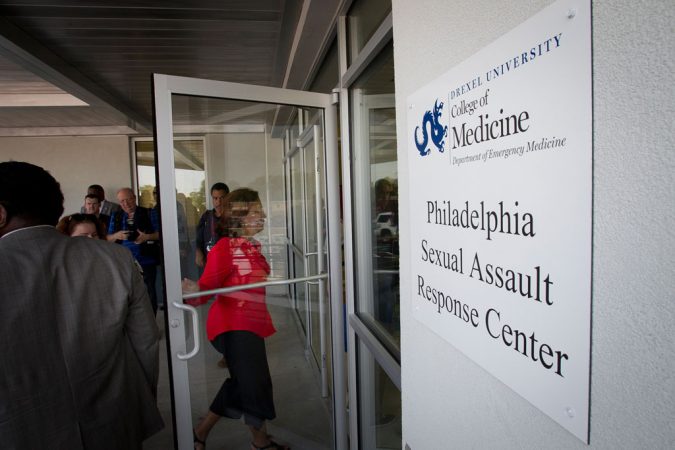
Philadelphia’s only free sexual assault exam center was so strapped for funding last spring that Drexel University, its former operator, started drafting a closure announcement.
The school was facing financial strain of its own, and state funding to rape crisis nonprofits was tied up amid a prolonged budget impasse in Harrisburg. Emergency funding from the city was tangled in City Hall’s lengthy contracting process.
At the time, there was no plan for who would run the Philadelphia Sexual Assault Response Center (PSARC), where roughly 300 rape survivors a year go for the sexual assault exams used to collect forensic evidence that are commonly known as “rape kits,” which often play a key role in prosecuting assaults.
Fast-forward to this month, when Mayor Cherelle L. Parker’s administration announced the city’s public health department will assume all control of PSARC. Officials presented the news as the culmination of a careful, collaborative handoff, and one city staffer framed the transition in a news release as “seamless.”
But hundreds of emails obtained by The Inquirer through a right-to-know request and a review of public records tell a far messier story. The emails show that for more than a year the fate of PSARC lurched from one near-miss to the next and that a failed bid process forced the city to take over the center’s operations when no one else would.
Taken together, the records offer a granular view of how a critical piece of the city’s safety net for sexual assault survivors nearly broke. And they portray a chaotic process in which the city for months sought to transfer control of the center from Drexel to the nonprofit WOAR Philadelphia Center Against Sexual Violence, even as WOAR faced its own budgetary implosion.
Over the course of the last year, the exam center never shut its doors to patients. But it came close on several occasions, a collapse that would have had ripple effects in hospital emergency rooms across the region that typically route sexual assault patients to the center.
If PSARC suspended operations, hospitals would have to find specially trained staff — of which there are few — to perform the exams.
“Philadelphia emergency rooms were not ready for that,” said Lila Slovak, director of the Philadelphia office of the Women’s Law Project, who spent months warning city officials that PSARC was in danger. “They did not know that [the center] was at risk of closing. It was not on anybody’s radar.”
Crystal Yates-Gale, the city’s deputy managing director for health and human services, said in a statement that the final outcome — the city running the center — is ultimately what is best for sexual assault survivors.
“We are proud to have secured the continuity of vital services for victims of crime in a dignified, victim-centered, culturally-competent atmosphere in Philadelphia,” she said.
The exam room at the Philadelphia Sexual Assault Response Center, in Philadelphia, Pa., on Friday Dec. 6, 2024.Tyger Williams / Staff Photographer
She said WOAR was transparent with the city about its financial position.
“Like most Commonwealth-funded providers, we planned on the assumption that funding would resume,” Anthony said. “The impasse instead ran 135 days. By the time it ended, we had drawn down our reserves.”
A lifeline center on a shoestring budget
PSARC, located at 300 E. Hunting Park Ave. in North Philadelphia, has two full-time staff members and a network of about 15 contracted nurses trained to perform sexual assault forensic exams, provided free under Pennsylvania law. The procedures are intended to gather physical evidence, such as DNA left behind by an assailant, and to document injuries that may aid investigators in a future criminal investigation.
Many hospitals lack the specialized staff required to perform sexual assault forensic exams, so they refer patients to PSARC or work with PSARC to have a trained nurse dispatched to the hospital.
The center is located next to the Philadelphia Police Special Victims Unit, but patients are not required to report the assault to law enforcement in order to have the free exam performed.
The Police SVU where the Philadelphia Sexual Assault Response Center, in Philadelphia, Pa., on Friday Dec. 6, 2024.Tyger Williams / Staff Photographer
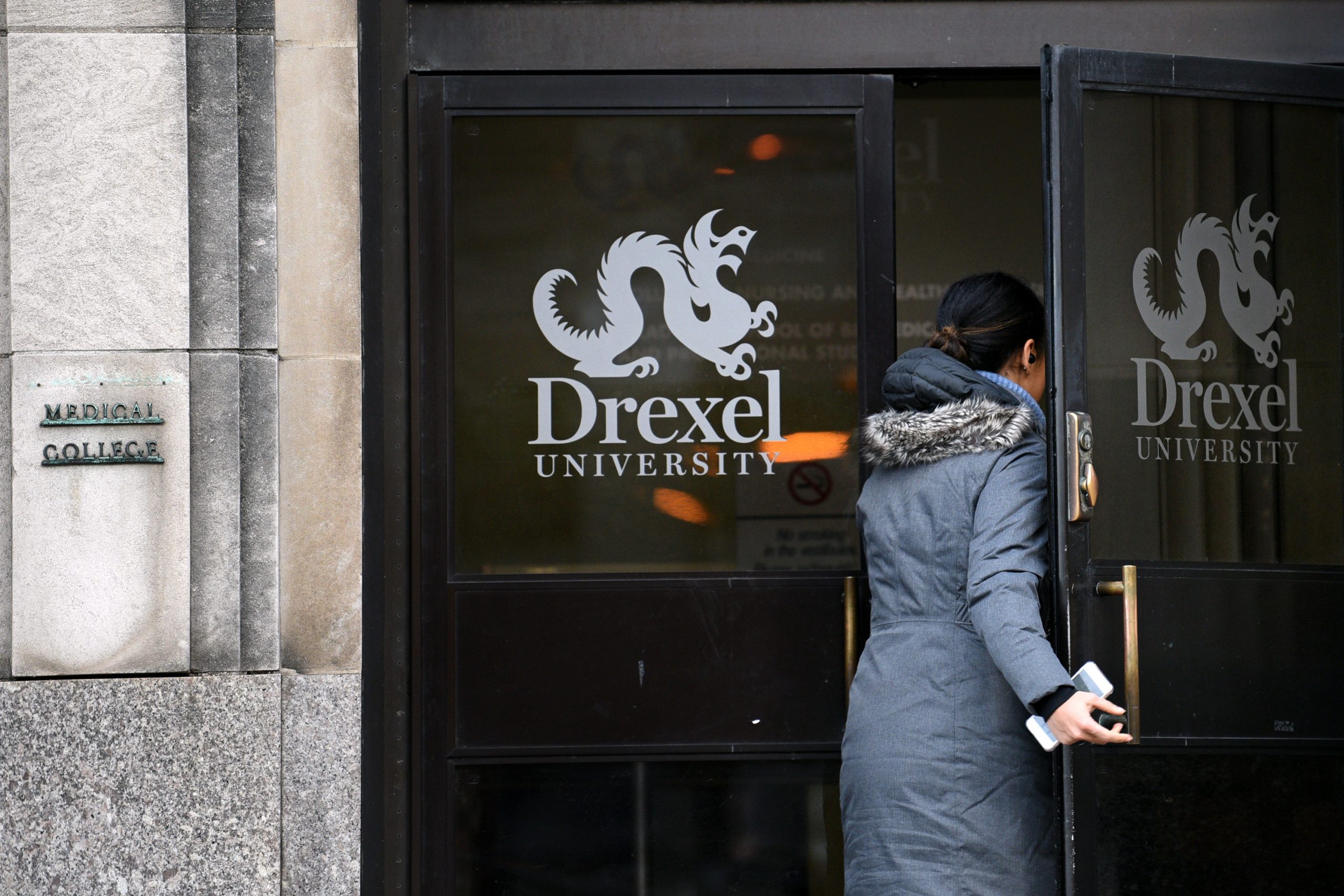
Founded in 2011 and initially operated by the now-shuttered Hahnemann University Hospital, PSARC has been run since 2019 by Drexel University’s College of Nursing and Health Professions. For most of that time, the operation ran on a shoestring budget.
Until last year, PSARC received no dedicated city funding. The state reimbursed Drexel about $1,000 for each patient treated, with Drexel absorbing substantial losses, according to records. The exam reimbursements can take months to flow from the state.
Brian Keech, then Drexel’s senior vice president for government relations, shared a financial analysis with city officials last year that laid out an annual shortfall averaging more than $175,000.
As Drexel cut staff and benefits across the university last year amid declining enrollment and a $63 million annual operating loss, its leaders told the Parker administration that the school could no longer manage PSARC on its own.
In a series of emails last spring, Keech pressed the city for a funding commitment for the center and warned that, without one, the university would have to tell hospitals to stop referring patients for sexual assault exams.
“We’ve begun to prepare the closure announcement,” Keech wrote in a May 20, 2025, email to Adam Geer, the city’s chief public safety director. “Obviously we’re hopeful we can avoid this scenario, but we do have to adequately prepare area hospitals that they will have to begin providing sexual assault services come July 1 if PSARC closes.”
By early June, the city had found the money.
The scramble to save PSARC
Yates-Gale, the city’s deputy managing director, said in a June 2025 email to Drexel officials that the administration had identified $250,000 in emergency funding to keep the center running.
The plan was for WOAR — the nonprofit formerly known as Women Organized Against Rape — to operate PSARC. The city would support its efforts by routing those funds to WOAR through an existing health department contract.
Meanwhile, WOAR was itself under severe financial strain amid the state budget impasse that left community organizations across Pennsylvania unfunded. WOAR’s leaders told city officials that they could not make payroll without the check from the city.
PSARC was left in limbo. The handoff deadline from Drexel to WOAR was moved from Aug. 1 to Sept. 1, with Drexel agreeing to cover an extra month of payroll to bridge the gap. Then, on Aug. 28 — three days before the already delayed transfer — WOAR’s board chair, Joanne Strauss, wrote in an email to city officials that the organization “will not be acquiring” PSARC.
She provided no reason other than saying the organization was “further evaluating the proposed transaction.”
City officials were alarmed. Within an hour, the city’s victim advocate, Adara Combs, emailed Drexel officials to say she was “deeply troubled” by the sudden shift.
Two weeks later, WOAR appeared ready to operate the center again. The group’s board of directors voted unanimously to approve the acquisition, and money from the city began flowing to WOAR to operate the rape exam center — more than $80,000 in total.
Anthony, of WOAR, said in a statement the board’s approval of the acquisition of the sexual assault center came as the nonprofit thought the state budget impasse would come to an end and was “contingent on conditions related to funding and our ability to responsibly take control of PSARC.”
“It became clear that those conditions were not resolved,” she said.
Drexel continued to pay to operate the rape crisis center, and WOAR wired the university the city funding it had received. Drexel operated PSARC, with an additional $167,000 in help from the city, until June 30.
The 15th Street entrance to Drexel University College of Nursing and Health Professions Feb. 19, 2020. The college has the largest bachelor program in the three-state region.TOM GRALISH / Staff Photographer
The back-and-forth saga highlighted a central question: Why did the city seek to transfer a critical service to WOAR despite the nonprofit’s existing financial problems?
Slovak, of the Women’s Law Project, said it made sense that WOAR stepped up to take over the center’s operations, given its mission to treat and prevent sexual violence. It is common in other cities for rape crisis centers to manage forensic exam facilities.
But overseeing hundreds of sexual assault exams each year, she said, would have been a major expansion of WOAR’s scope because it “is about more than just providing emotional support or accompaniment for survivors.”
Yates-Gale said WOAR was a natural choice to assume operations of the center. The group had an existing contract with the city and its mission aligned with that of PSARC.
“Drexel agreed to continue operations until another suitable alternative organization could be identified,” she said, “and the entirety of the funds for the program were transferred back to them.”
Britt Faulstick, a Drexel University spokesperson, said the school “worked closely with city leadership to ensure a smooth transition.”
Another failed effort to find an operator
The city’s $250,000 in emergency funding bought PSARC time. But the same question remained: Who would run it long-term, and where would they find the money?
This spring, Parker’s budget proposal, which was approved by City Council in June, included $300,000 for the center. The city put the operation out for bid, seeking an outside organization like another hospital or nonprofit to run it.
City officials met on April 13 with potential operators, including representatives from area hospitals that depend on the center, such as Temple University, the University of Pennsylvania, and Jefferson Einstein Philadelphia. Several expressed concerns about PSARC’s finances.
According to a public recording of the meeting, multiple attendees suggested that $300,000 a year in city funding would not be enough to cover PSARC’s operations and salaries for medical staff who must be available 24-7.
The exam room and desk space when patients are in at the Philadelphia Sexual Assault Response Center, in Philadelphia, Pa., on Friday Dec. 6, 2024.Tyger Williams / Staff Photographer
“This has never been something that’s been profitable, so it’s always needed another source of funds to keep it stable,” one hospital representative said. “It’s the money, right, to keep it open and to be able to run this as a service for the city and keep it maintained so you’re not back in this ‘we don’t have it’ in six months.”
Combs, the city’s victim advocate, told potential bidders that they were welcome to “reimagine” how PSARC operates and propose new funding streams.
But hospital representatives remained skeptical and pressed the city to find a different solution, citing a moral urgency.
“It would be a tremendous tragedy if we lost the resources of PSARC in the city,” said a representative from Jefferson Einstein Philadelphia Hospital.
“I think we all agree,” said Azucena Ugarte, director of the Philadelphia Office of Domestic Violence Strategies. “That’s why we’re doing this.”
But following the meeting, no one bid.
The city takes over
With no outside bid to operate Philadelphia’s only free rape exam center, the options in front of city officials were either to let it close or to take control themselves.
The city chose the latter. Parker administration officials framed it as a lasting solution.
Faulstick, of Drexel, said the school will continue to train nurses in sexual assault examination to help ensure the care is available. He said PSARC is “positioned for continued growth and long-term sustainability.”
Others have questions about the stabilization plan.
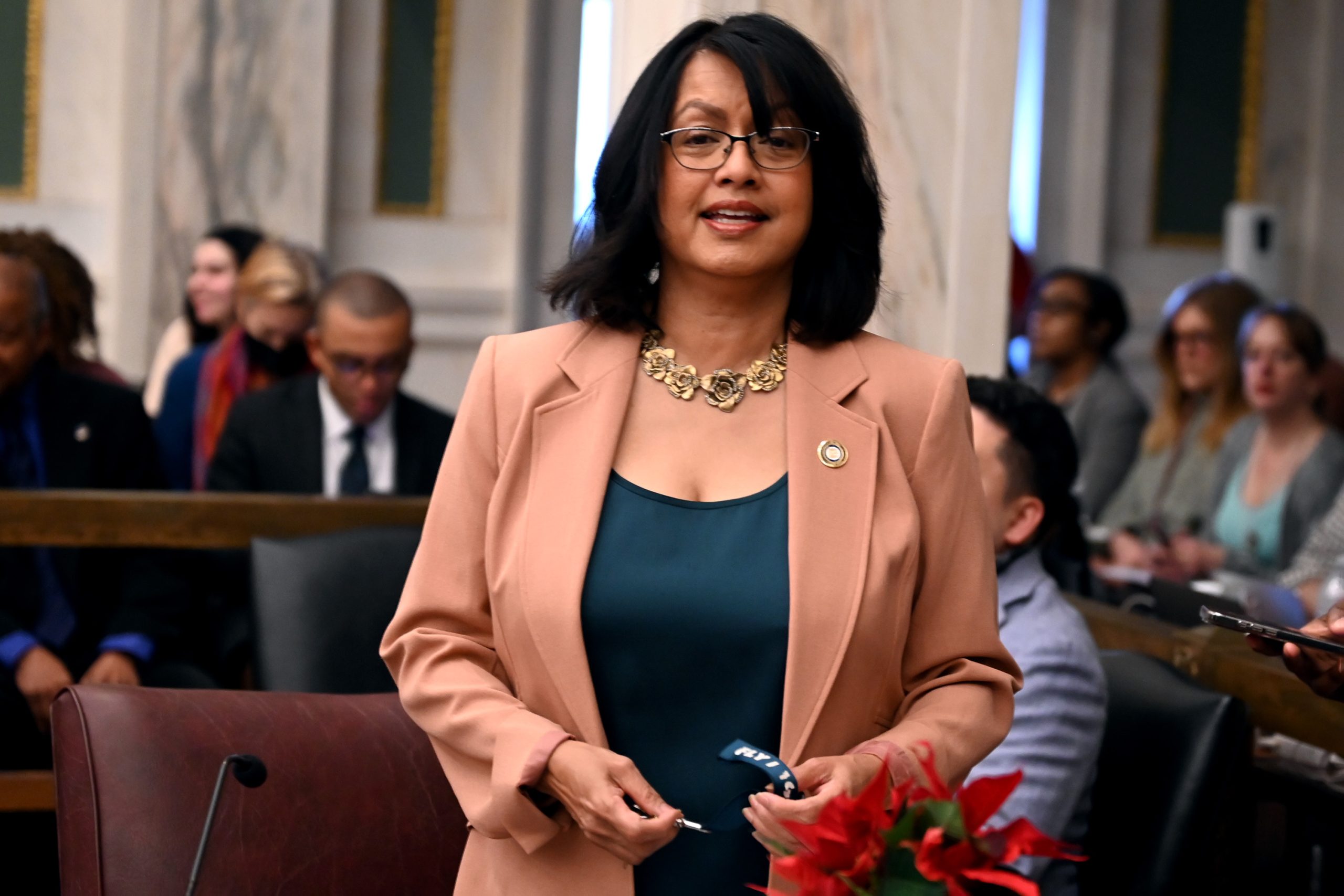
City Councilmember Nina Ahmad, who represents the city at-large and held a hearing earlier this year about PSARC funding, said that the $300,000 annual allocation to the center is likely inadequate and that she will push for more dollars in future city budgets.
Councilmember Nina Ahmad in chambers as City Council meets Dec. 11, 2025.Tom Gralish / Staff Photographer
Ahmad also said she expected more buy-in from hospitals, noting they would have been saddled with the responsibility of providing sexual assault exams if PSARC had shuttered.
“I am not surprised,” she said in an interview, “but I’m still disgusted that we have not come together on this. … This is evidence being collected, [and] this is how we prevent future rapes.”
Slovak said ensuring PSARC’s financial survival will take more than a change in management. It will require cooperation, including from hospitals, the city, and the state, to work together “so that survivors aren’t sacrificed in the budget gamesmanship.”
Still, she said, the city “can really be this positive, central, coordinating force.”
“And I do feel confident at this point,” Slovak added, that the center “is going to move in a good direction from here.”