Category: Politics

  • Family of the man who died in ICE custody in N.J. calls for release of medical records and closure of Delaney Hall

    Family of the man who died in ICE custody in N.J. calls for release of medical records and closure of Delaney Hall

    The family of an immigrant from El Salvador who died in ICE custody in New Jersey on Tuesday outlined a list of demands for state and federal officials that they said would bring justice after his death.

    Edwin Jeovanny López Cornejo, 41, whose family said he had been living in the U.S. for two decades, died in ICE custody on Saturday after having a medical episode at Delaney Hall in Newark. The privately run ICE facility has been the subject of complaints of poor conditions, ongoing protests, and the site of clashes between federal officials and elected Democrats.

    “On the same day, we were both dead, the only difference was his heart stopped beating,” his 12-year-old daughter Ashley López said at a news conference held outside the Reformed Church of Highland Park on Tuesday streamed by Cosecha New Jersey, an immigrant-rights group. “I am going to grow up without a father. They did not even let me see him one last time before he died.”

    “We had so many plans, we will never do them, because they are heartless monsters,” she added.

    López Cornejo’s family members have accused ICE of neglecting to provide proper medical care to him, an accusation the federal agency denies. His mother María Cornejo questioned whether ICE gave her son his medicine for high blood pressure, diabetes, and seizures. He was detained in Plainfield in North Jersey on June 18.

    ICE said Monday evening that López Cornejo’s cause of death was pending further medical review, but Sen. Andy Kim shared later that night that he died of a heart attack and cardiac arrest. Kim said López Cornejo already had a habeas corpus case calling for his release due to his medical issues.

    (function(){function e(){window.addEventListener(`message`,function(e){if(e.data[`datawrapper-height`]!==void 0){var t=document.querySelectorAll(`iframe`);for(var n in e.data[`datawrapper-height`])for(var r=0,i;i=t[r];r++)if(i.contentWindow===e.source){var a=e.data[`datawrapper-height`][n]+`px`;i.style.height=a}}})}e()})();

    While speaking at the news conference, Danilo López, the brother of López Cornejo, called for an independent investigation of the incident by New Jersey Attorney General Jennifer Davenport, a release of his brother’s medical records by the facility’s owner GEO Group and ICE, the closure of the detention center and the release of all those detained. He also asked Gov. Mikie Sherrill to open an investigation into health protocols at the center.

    “I know that there’s nothing that will bring my brother back but if we feel our pain now maybe we can avoid other deaths,” Danilo López said in Spanish.

    Davenport’s office said Tuesday it “can neither confirm or deny an investigation at this time.”

    Sherrill has called for the shuttering of Delaney Hall amid a broader battle over President Donald Trump’s immigration crackdown. Her administration is in various court fights with Trump’s administration, including one attempting to gain access to Delaney Hall for a full state health inspection.

    Activists have repeatedly called for Delaney Hall to shut its doors but the Trump administration has made clear it’s not closing the facility anytime soon as it holds a crucial role in the president’s mass deportation operation.

    U.S. Rep. Analilia Mejia, a progressive Democrat who represents a North Jersey district, said at the news conference that she’s spoken to people inside Delaney Hall during oversight visits who say they’re being denied their medication and proper medical care.

    “We must all use this moment to lift our voices and say not one more,” said Mejia, whose opposition to ICE was a key part of her platform to succeed Sherrill in Congress.

    A spokesperson for U.S. Rep. Bonnie Watson Coleman, a Central Jersey Democrat, said her office gets calls from families saying their loved ones aren’t receiving their medication and are getting moldy food inside the facility.

    Trump officials and allies have denied there are issues inside Delaney Hall, including U.S. Rep. Jeff Van Drew, a South Jersey Republican who, prior to this incident, visited the facility and called it clean and “well-run” with “medical care, recreation, and other basic services.”

    ICE said it provides “comprehensive medical care” to people in the facility, including 24 hour emergency care.

    “While in custody, Lopez-Cornejo received proper medical care and was seen by medical professionals,” the federal agency said in a statement.

    Danilo López said that his brother had told him over the phone that he had to fill out a form to just get Tylenol at Delaney Hall and it could be days before he received it.

    María Cornejo accused ICE of lying about giving her son proper medical attention.

    “I just want justice for my son and for my granddaughter who is going to grow without a father,” she said in Spanish.

    Danilo López said Tuesday he didn’t know why his brother was detained because he had a valid work permit, but ICE said López Cornejo was arrested by the U.S. Border Patrol “for illegally entering the United States without inspection” in August 2006 and was sent back to El Salvador that October before returning without permission.

    López Cornejo’s daughter, Ashley, said Tuesday that “no one is illegal on stolen land,” a common refrain from immigrant rights activists.

    Her mother, who was not named, called the incident the result of a systemic failure.

    “From the bottom of my heart I feel the system failed Edwin,” she said in Spanish. “Failed my daughter, failed me as a mom, and failed all those other kids who are suffering like my daughter is.”

  • Todd Blanche’s nomination for attorney general clears critical hurdle after deal with GOP holdouts

    Todd Blanche’s nomination for attorney general clears critical hurdle after deal with GOP holdouts

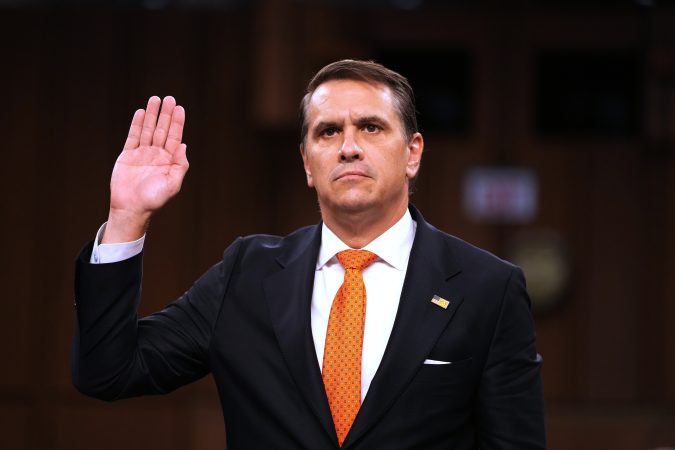
    WASHINGTON — Acting Attorney General Todd Blanche cleared a critical hurdle Tuesday in his bid to be confirmed to the post after swaying Republican holdouts on a Senate committee to advance his nomination for a floor vote.

    The Senate Judiciary Committee voted 12-10 along party lines in support of the nomination of President Donald Trump’s former personal attorney, who has aggressively pushed the Republican administration’s priorities since taking over from Pam Bondi in April.

    The vote followed a deal struck late Sunday between Blanche and two Republican senators — John Cornyn of Texas and Thom Tillis of North Carolina — who had been threatening to block his confirmation over the settlement of Trump’s lawsuit against the Internal Revenue Service regarding the president’s leaked tax returns.

    The full Senate could vote later this week on Blanche’s nomination. If all Democrats oppose him, Blanche can only afford to lose two Republican votes if Sen. Mitch McConnell of Kentucky, who was hospitalized after a fall, does not return before then.

    Cornyn and Tillis backed Blanche’s nomination after the Justice Department confirmed in writing that it wasn’t moving forward with a $1.8 billion fund to compensate Trump allies who believe they were prosecuted for political purposes, which the administration announced as part of the settlement.

    After days of negotiations, Blanche issued an order Sunday evening confirming “beyond any doubt, that there is no Fund.”

    Democrats complain about the fund

    Democrats say Blanche’s order doesn’t go far enough to prevent the Trump administration from reviving the fund after the acting attorney general’s confirmation and have called for legislation to permanently bar it.

    The order also doesn’t stop the administration from compensating Trump allies — including people who attacked the Capitol on Jan. 6, 2021 — through a previously established process that allows people to file claims for damages if they believed they were wronged by the government.

    The fund “can easily be revived with a new order from the Department of Justice 15 minutes after Mr. Blanche is confirmed as attorney general,” said Dick Durbin of Illinois, the top Democrat on the committee.

    Cornyn and Tillis had also pressed for clarification on a separate part of the settlement that would grant Trump and members of his family immunity from tax audits.

    Under the deal, the Justice Department clarified in writing that the tax audit immunity agreement applies only to claims open at the time of the settlement and does not protect Trump from examination of future tax filings. It also makes clear that only the parties that brought the lawsuit — Trump, two of his sons, and the Trump Organization — are covered by the tax agreement.

    Cornyn said his reasons for backing Blanche go beyond the deal struck Sunday, adding that he believes the Justice Department needs a “stabilizing force” at the helm.

    “The Department of Justice does not need a temporary, unconfirmed nominee as our nation’s top law enforcement official. Trump needs someone in this role, as well, with a strong legal mind,” Cornyn said.

    Blanche’s independence has been called into question

    Blanche has faced intense scrutiny regarding his ability to maintain independence from the White House, the Justice Department’s pursuit of the president’s political foes, and the agency’s handling of files related to disgraced financier Jeffrey Epstein’s sex trafficking investigation.

    But it was the settlement of Trump’s $10 billion lawsuit against the IRS that threatened to derail Blanche’s nomination, forcing a delay in the committee vote last week amid pressure from the two Republican senators, who are not returning to Capitol Hill after their terms end in January.

    Republican Sen. Chuck Grassley, who chairs the committee, said Tillis and Cornyn’s demands were “common sense.” Grassley said the senators’ concerns about the “Anti-Weaponization Fund” and the IRS settlement were shared by many other lawmakers, including himself.

    “I’m grateful that they as well as Mr. Blanche and the White House worked in good faith to solve them, formally rescinding the fund, clarifying the scope of the release of claims has put this issue to bed once and for all,” Grassley said.

    Trump’s lawsuit has been sharply criticized because of the highly unusual way it was handled, with the president challenging an agency overseen by the executive branch he leads. A judge last month slammed the case as an improper exercise in self-dealing and referred one of Trump’s attorneys who filed it for potential disciplinary action.

    Blanche was an important figure for Trump’s defense

    Blanche, a former federal prosecutor and key member of Trump’s defense team as the Republican battled four indictments, arrived at the Justice Department last year as deputy attorney general. He was elevated to acting attorney general following Bondi’s failure to meet Trump’s demands to successfully prosecute his perceived political opponents.

    While Blanche insisted he wasn’t auditioning for the permanent post, he moved swiftly to accelerate investigations into Trump foes and advance other White House priorities, drawing condemnation from critics who say he has not shed his title as Trump’s personal lawyer.

    Shortly after Blanche took the top post, the Justice Department moved to indict longtime Trump adversary James Comey, the former FBI director, on charges of threatening the 47th president by posting a social media photograph of seashells in the numerical arrangement of “86 47.”

    Comey’s lawyers have accused the Justice Department of misleading judges, submitting documents containing false statements, and withholding key facts to bring what the defense described as a politically motivated prosecution.

    Blanche separately appointed Joseph diGenova, a former Justice Department prosecutor from the Reagan administration, to oversee a Florida-based investigation into whether former law enforcement and intelligence officials conspired over the last decade to undermine Trump.

  • N.J. attorney general sues Amazon over delivery driver network she says is bad for workers

    N.J. attorney general sues Amazon over delivery driver network she says is bad for workers

    New Jersey Attorney General Jennifer Davenport filed the state’s fourth open lawsuit against Amazon on Tuesday, accusing the tech giant of creating worse work conditions for lower pay through its “anticompetitive” delivery driver network.

    “Today, my office is acting to stand up for thousands of New Jersey delivery drivers who are being exploited every day by one of the world’s biggest, richest corporations,” Davenport said at a news conference.

    The suit homes in on Amazon’s Delivery Service Partners (DSPs) program, which the company advertises as an opportunity for prospective entrepreneurs to open their own business while partnering with the tech giant by managing a local system of drivers. But these businesses are beholden to Amazon, Davenport argues, and the tech giant’s system prevents drivers from unionizing or getting better work conditions.

    “These are the workers who bring Amazon packages to our front doors,” she said. “They often show up in Amazon vans, wearing Amazon vests, carrying boxes with the Amazon logo on them. And in our view, they are working longer hours in worse conditions and for less money because of Amazon’s anticompetitive behavior.”

    These drivers earn “significantly less” than drivers for UPS, FedEx, and the U.S. Postal Service, according to the complaint.

    The complaint describes a work environment of employee surveillance, union busting, and drivers having no choice but to urinate in water bottles to meet Amazon’s metrics.

    “They must accept invasive surveillance that monitors their every moment and action while at work and face the possibility of immediate termination for the smallest infraction or failure to meet these unreasonable requirements,” the complaint states.

    Steve Kelly, a spokesperson for Amazon, pushed back strongly on the claims made in the suit and accused Davenport of choosing to hold a news conference rather than seeking a greater understanding of the program.

    “This complaint is not grounded in fact. The Attorney General’s characterization of the DSP Program and the claims about working conditions are just wrong. The truth is, DSPs are independent business owners who make their own decisions about hiring, fleet management, and capacity planning — and they choose whether to work with other companies besides Amazon,” Kelly said in a statement.

    “Had the Attorney General bothered to look at the facts, they would have also seen that the vast majority of routes are finished on-time or early — built on real-world data accounting for stop complexity, traffic, and geography. DSPs manage their drivers’ workday and route execution, and DSP employees are free to choose their employer and associate with who they want, full stop.”

    Kelly said the company was confident that it would prevail in court.

    On its website, Amazon advertises the DSP program as providing “the unique opportunity to create jobs in your neighborhood and lead a team that delivers gifts, textbooks, and pet food to your community.”

    But Davenport’s office argues that the DSPs “are anything but independent.”

    “Rather, Amazon keeps control of the levers that matter — setting demanding operational requirements, monitoring driver performance, controlling route allocations, and restricting DSPs from hiring one another’s drivers — with exploitative consequences for the drivers themselves,“ her office said in a release.

    Davenport also alleges that Amazon monitors DSP workers with artificial intelligence and cameras inside the vehicles they drive, and that the company has intimidated and retaliated against drivers who were suspected of union organizing.

    The complaint cites an incident in Queens, N.Y., in which Amazon allegedly sent drones to blacklist striking workers. It also cites an instance in Edison where workers were allegedly told that labor organizing could endanger DSP’s partnership with Amazon, putting their jobs in jeopardy.

    The suit claims also accuses Amazon of blacklisting workers who support unionization from a broad network of DSPs, and cites workers who were terminated after their bosses learned they supported labor organizing.

    Amazon is the dominant purchaser of this delivery driver labor, and since it is about buying rather than selling, their alleged anticompetitive practice is called a monopsony, rather than a monopoly. Davenport’s office said this is the first time a state has filed a monopsony complaint.

    It adds to a list of court battles with the company.

    In September 2023, former Attorney General Matthew Platkin joined the Federal Trade Commission and other states in suing the tech giant for allegedly maintaining a monopoly. Last October, Platkin filed one complaint over the company’s treatment of pregnant people and workers with disabilities, and another over how Amazon classifies certain workers as independent contractors and therefore denies them rights and benefits.

    Davenport’s lawsuit Tuesday is the first lawsuit against Amazon filed under Democratic Gov. Mikie Sherrill’s administration, but the state’s top lawyer said the three other cases are ongoing.

    The complaint, filed in the U.S. District Court for the District of New Jersey, alleges violation of the federal Sherman Antitrust Act and New Jersey’s Antitrust Act and seeks damages for DSP drivers and for Amazon to stop the alleged behavior.

  • Democrats accuse Green Party candidate in Lehigh Valley district of Republican meddling

    Democrats accuse Green Party candidate in Lehigh Valley district of Republican meddling

    WASHINGTON — In a Pennsylvania election where a few thousand votes could make all the difference, the last-minute entrance of a Green Party candidate with a background in Republican politics has sparked the second allegation of election meddling in three months and complicated one of the nation’s most competitive U.S. House races this fall.

    The Lehigh Valley-based 7th Congressional District matchup features U.S. Rep. Ryan Mackenzie, a Republican who won the seat by 1 percentage point in 2024, and Bob Brooks, a Democratic union leader and retired firefighter.

    Both parties are prioritizing the race as control of the U.S. House could come down to a few seats nationwide.

    But the emergence of a third-party candidate has alarmed both Democrats — who have long claimed that Green Party candidates pull votes from their nominees — and the Green Party of Pennsylvania, which said it does not know the person now representing its platform in one of the state’s highest-profile races.

    “It sounds a lot like somebody’s just fooling around and trying to use the Green Party name, which is a well-known thing that happens in many states,” said Tim Runkle, cochair of the state party.

    Andrew Tupone, 37, of Northampton County, filed his nomination papers with the state last week ahead of a Monday deadline for third-party candidates. He was the only candidate to file to represent the Green Party in a Pennsylvania race for Congress.

    Unlike the Green Party’s endorsed candidate for governor — Tony Dastra of Lancaster County — Tupone does not have a long association with the party or its left-leaning policies. In 2021, he was the Republican nominee for a Northampton County magisterial court seat. Voter registration records show he changed his party affiliation from Republican to Democrat in February, and then from Democrat to Green in April.

    In an interview, Tupone rejected accusations that he remained affiliated with the Republican Party or that he was asked to run in a way that would draw votes away from the Democratic nominee. He described a leftward shift in his political views after voting for President Donald Trump in 2020, though he said he could not recall whom he voted for in the 2024 presidential race between Trump and Democratic Vice President Kamala Harris.

    “A lot of people are disillusioned with both parties,” Tupone said. “They’re sick of all the stuff that’s going on.”

    Tupone also said he did not pay anyone to help gather signatures for his nominating papers, which he turned in with upward of 9,000 signatures — more than twice as many as required. Runkle said Green Party members encountered paid canvassers for Tupone who declined to say who was funding the effort.

    According to a copy of the nominating papers obtained by The Inquirer, only one of the 22 individuals who gathered signatures is from Pennsylvania. The rest are from all over the country. Multiple have worked for Republican campaigns, according to public records.

    Colin McEvers, who gathered signatures for Tupone in Lehigh County, is a Republican candidate for the Maryland General Assembly who is also listed as the contact for the Maryland White Republican Council. Others — including individuals from Illinois and Michigan — have been paid to canvas for GOP campaigns, according to Federal Election Commission records.

    Tupone said he had no knowledge of anyone paying his canvassers.

    “I went around and I gave a lot of my nominating papers to friends to give to other people, and I sent it to them as well,” Tupone said. “And as I went around, I recruited people and asked them.”

    While the signatures appear to be based in the district — which stretches from the cities of Allentown, Bethlehem, and Easton into the more Republican-leaning Poconos — the other candidates have until Aug. 10 to challenge their legitimacy.

    Such challenges are common, and the Brooks campaign is reviewing its options to decide whether to bring a challenge, according to a source familiar with the campaign’s thinking.

    ‘No one’s paying me to run’

    Jenna Kauffman, Brooks’ campaign manager, in a statement described the situation as a GOP-initiated and “desperate scheme to meddle in this race.”

    She connected it to a last-minute $1.7 million advertising campaign against Brooks in the May primary that appeared to be run by Democrats but was actually funded by a Republican political organization.

    The spending, by a political action committee called Lead Left, was aimed at boosting another Democrat who observers considered to have a worse shot at beating Mackenzie in the November election. But the effort was anonymous, and records that became public only after Brooks won show that it was funded by the Conservative Americans PAC.

    The effort to prevent Brooks from emerging from the Democratic primary came as he coalesced support from across the ideological spectrum with high-profile endorsements ranging from moderate Democratic Gov. Josh Shapiro to U.S. Sen. Bernie Sanders (Ind., Vt.), a democratic socialist.

    “Voters deserve to know who is paying for this effort and whether Ryan Mackenzie and his Republican backers are involved,” Kauffman said, painting Tupone’s candidacy as a continuation of the move in the primary.

    Mackenzie’s campaign did not address that comment when asked about it Monday.

    Tupone said that the inference was “just false,” and that he instead likes the values of the Green Party, which he said included supporting the environment, social justice, and “stopping the corruption and also the genocide in Gaza.”

    “No one’s paying me to run. No one’s asked me to run for this office. I’m running on my own, hopefully with a lot of hope from everyone who wants to volunteer,” Tupone said. “I’m not associated with the Republican Party anymore. I’m not a candidate for them.”

    For years, Democrats have voiced concerns about the Green Party and other third-party candidates “spoiling” elections, from Jill Stein in the 2016 presidential race that first put Trump in power to the 2024 U.S. Senate race in Pennsylvania, when Democratic U.S. Sen. Bob Casey lost to Republican Dave McCormick by about 15,000 votes. In that 2024 election, a Green Party candidate won about 66,000 votes, a Libertarian candidate won almost 90,000, and a Constitution Party candidate won more than 23,000.

    In the 7th District in 2024, Mackenzie defeated incumbent Democrat Susan Wild by 4,062 votes out of more than 403,000 cast. That was the narrowest margin out of any of the state’s 17 districts, making it a key tossup district this year.

    That margin is also significantly different from the one Shapiro potentially faces during his reelection campaign this year as he maintains a sizable lead over Republican Stacy Garrity, and as a Green candidate officially filed to run on Monday. Shapiro defeated Republican Doug Mastriano in 2022 by almost 793,000 votes; the Green Party candidate won just over 24,000 votes.

    Runkle said that nobody solicited the Green Party’s endorsement in a Pennsylvania congressional race this year, and that a conversation he had with Tupone left “a lot of questions.”

    He said the party is concerned about its reputation and about being targeted in ways that do not lift up its platform, which focuses on environmental protections and liberal positions on healthcare. But he also pushed back on concerns that the party should be considered a spoiler.

    “I do solidly believe that the Green Party policies and the values we represent has a solid bloc of voters,” Runkle said. “If people think that’s spoiling the race, then they should try harder to speak to the issues that we speak to.”

  • Pa. lawmakers have proposed dozens of ways to fix the state’s low housing stock. They’re making a database instead.

    Pa. lawmakers have proposed dozens of ways to fix the state’s low housing stock. They’re making a database instead.

    HARRISBURG — More than one million Pennsylvania households spend over 30% of their income on housing. And over the next decade, the state’s housing crunch is slated to intensify, with estimates that Pennsylvania will have nearly 185,000 fewer new homes than it needs to keep up with projected demand.

    State legislators have pushed to address the need, introducing bills that would increase the housing supply through accelerated approval processes and lifting restrictions on new developments — and urged leaders to include those initiatives in this year’s budget negotiations.

    Gov. Josh Shapiro also put housing at the forefront of his budget address in February, asking the General Assembly to ease restrictions for rental applications and to cap costs on manufactured home increases.

    But none of the proposed policies were included in the final budget deal, passed last month. Instead, the budget included the creation of a housing database — a move some lawmakers and advocates say falls short of addressing Pennsylvania’s burgeoning housing crisis.

    “I think the budget generally left a lot of questions unaddressed. And housing, one of the top three issues in terms of the cost-of-living crisis, was one of them,” said Sen. Nikil Saval (D., Philadelphia).

    Saval was one of six senators who voted against the budget. He has since said that was because it left many key policy issues, including housing, unaddressed. Sen. Katie Muth (D., Montgomery), the only other Democratic senator to vote against the budget, has also said she believes the budget left issues like housing, rising energy costs, and affordability unanswered.

    Shapiro’s office did not respond to a request for comment.

    (function() {
    var l2 = function() {
    new pym.Parent(‘pa_housing’,
    ‘https://media.inquirer.com/storage/inquirer/projects/innovation/arcgis_iframe/pa_housing.html’);
    };
    if (typeof(pym) === ‘undefined’) {
    var h = document.getElementsByTagName(‘head’)[0],
    s = document.createElement(‘script’);
    s.type = ‘text/javascript’;
    s.src = ‘https://pym.nprapps.org/pym.v1.min.js’;
    s.onload = l2;
    h.appendChild(s);
    } else {
    l2();
    }
    })();

    The new housing database — incorporated through a bill sponsored by Saval and authored by fellow Philadelphia Democratic Sen. Vincent Hughes — will be overseen by the Pennsylvania Housing Finance Agency. Saval said it will ensure more robust data collection to provide transparency on how much affordable housing is available across the state.

    Under the new legislation, the agency will be required to create an online searchable database of all publicly financed housing that is subjected to public assistance programs. It will include anticipated termination dates on properties’ affordability restrictions and will note if the property has been granted an extension on those restrictions.

    Saval said the publicly available database will ensure lawmakers have a better idea of the state’s affordable housing stock. Much of the affordable housing in the state was created with the help of low-income tax credits that are subject to expiration dates. As termination dates on these housing units loom, with many set to expire within the next five years, Saval said, the database will keep lawmakers aware of when housing is no longer affordable and allow them to see if restrictions can be extended.

    The database will be updated annually by the PHFA, with local housing agencies submitting data every year.

    Chris Anderson, communications officer for the PHFA, wrote in an email that the database is still in the early stages of being built, but that it will not pose any significant costs to the agency and existing resources will be used to create it.

    There are no penalties if the PHFA does not update the database, and the new law does not make it mandatory for local agencies to report information to the agency. The intended audience is primarily housing advocates and organizations, as well as policymakers, Anderson said.

    Saval said the database will help lawmakers know how much affordable housing there actually is in the state.

    But he said the state budget — where legislators often pass policies in addition to the yearly spending plan — was still a missed opportunity to address Pennsylvania’s housing concerns.

    “Anytime there’s a set of budget negotiations where there’s the potential to allocate funding, or create policy that would increase the supply of housing, or address the concerns faced by renters, and anytime that opportunity is missed as it was in this budget, I think it’s a step back,” he said.

    ‘Missed opportunity’

    Carrie Rathmann, vice president of strategic partnerships for Habitat for Humanity Philadelphia, said one initiative notably absent from the final budget deal was the PA Home Preservation Program, a grant administered by the Pennsylvania Department of Community and Economic Development to provide funding for construction cost gaps and keep homeowners in their houses through repairing outdated buildings. The initiative was last funded when it was signed into the budget in 2022, but has not received funding since.

    Previously known as the Whole-Home Repairs Program, the state allocated $125 million toward the program using American Rescue Plan dollars, repairing more than 2,600 affordable homes across the state.

    Douglas Paige (from left), Carrie Rathmann with Habitat for Humanity, Tyron Cheeseboro, and Danielle Paige on the steps of Pennsylvania Capitol during a 2023 rally for the Whole-Home Repairs Program.Alejandro A. Alvarez / Staff Photographer

    Housing advocates have pushed for the state to renew the funding, with the Housing Alliance of Pennsylvania calling it one of the organization’s biggest priorities.

    In an email, spokespeople from the housing alliance noted that the state funding in 2022 was not enough to support the number of people that applied for it, meaning there are still people waiting to have their homes repaired.

    “The program received far more applications from qualified homeowners than available funding could support, highlighting both the scale of unmet need and the importance of preserving existing housing,” the spokespeople wrote.

    The program has not returned in a line item in the state budget since 2022. Companion bills in both chambers supporting the program have received bipartisan support — the House bill passed 122-80 — but are sitting in the Senate Urban Affairs and Housing Committee.

    “That felt like it represented a huge missed opportunity to help thousands of Pennsylvanians stay housed and to keep homeowners safe and healthy in the homes that they already own, because without that dedicated investment, this crisis will only grow,” Rathmann said.

    Habitat for Humanity is a nonprofit that does not rely on state dollars, but Rathmann said state money goes to counties and housing providers like the Philadelphia Housing Development Corp. The money helps an “ecosystem” of housing organizations in the Philadelphia area, and Habitat uses it for a portion of the organization’s work. That included the Built to Last program, an initiative spearheaded by the Philadelphia Energy Authority that inspired the statewide initiative of Whole-Home Repairs in 2022.

    Rathmann said state initiatives that increase efficiency on building houses are key to developing homes faster and cheaper, which in turn increases the housing supply and can keep people in high-quality houses. This includes incentives like building lower density “by right,” meaning property owners can build low-density housing without special approval.

    “We see every day at Habitat that that impact is real, it’s tangible, it crosses different sectors like kids can get to school and do better,” Rathmann said. “Seniors are healthier. People are healthier. People feel less stressed. They have more money in their pocket for medication and food.”

    ‘Risk aversion on all sides’

    Lawmakers on both sides of the aisle in Pennsylvania’s divided state legislature have pushed for their own housing initiatives. Bills have passed through the Democratic-controlled House or Republican Senate, but have yet to move forward in the opposing chamber.

    Democratic-backed House bills sitting in Senate committees include proposals to remove barriers to building accessory dwelling units, lift restrictions on how many unrelated people can live in one home, and seal eviction records to help tenants.

    And the Senate GOP also has a number of bills sitting in the House’s committee, like creating an accelerated approval process for new housing, or establishing a Housing Regulatory Compliance Officer.

    Beth Rementer, spokesperson for House Democrats, wrote in an email that the House has sent 22 bills to the Senate Housing Committee, while the Senate sent two in June.

    The state’s lack of housing action marks a difference from the Republican-controlled federal government. In early July, Congress sent the ROAD to Housing Act to President Donald Trump’s desk — a bill that reduces barriers to home construction and modernizes housing programs alongside other initiatives, including a pilot of Whole-Home Repairs.

    Saval attributed the Pennsylvania legislature’s inaction to a desire to pass the state budget quickly without debate on hot-button policy issues ahead of the November election, when half the Senate and all members of the House are on the ballot.

    “Essentially, there was risk aversion on all sides,” Saval said. “And, understandably, an unwillingness to get into a budget discussion that would prolong the budget negotiation process.”

    Kate Flessner, spokesperson for the Senate Republicans, said in an email that the Senate supports a number of housing initiatives, but that underlying issues lie in how the state will pay for them in light of the roughly $5 billion structural deficit.

    “As we continue working to address the state budget’s serious structural deficit, we will be primarily focused on ways we can improve housing access that do not require vast sums of taxpayer money — and there are many of them,” Flessner said.

    Natalie Javitt is an intern with the Pennsylvania Legislative Correspondents’ Association. She can be reached at natalie.javitt@gmail.com.

  • Why Pennsylvania quietly repealed its 1929 midwifery law — and is now getting sued for it

    Why Pennsylvania quietly repealed its 1929 midwifery law — and is now getting sued for it

    HARRISBURG — Hidden deep in more than 600 pages of state budget documents, Pennsylvania lawmakers last month quietly repealed an unenforced 1929 law that allowed traditional midwives, the main group of midwives delivering home births, to practice.

    Now, traditional midwives — who differ from midwives usually found in hospitals, are not medically trained, and often serve religious minorities like the Amish — are worried they have no legal standing to work in Pennsylvania and are challenging the repeal and a new law in state court.

    The 1929 law had been on the books for nearly a century, asking traditional midwives to submit a paper application and a $10 fee to get a state certificate. But it had not been enforced for decades, and Pennsylvania, which has one of the highest rates of home births in the nation, was counted as one of 13 states that did not regulate the practice at all.

    Meanwhile, other forms of midwifery — such as nurse midwives and certified midwives, who are medically trained and are formally affiliated with a doctor or health system — are highly regulated by the state and its medical board. But these affiliations often prevent nurse midwives and certified midwives from offering home births, as the health systems see them as possible risks for medical malpractice lawsuits.

    The practice of traditional midwifery dates back to the Old Testament and has lived on through centuries of community knowledge and traditions. It can include Amish and Mennonite midwives, who are limited in the amount of education they are allowed to receive, as well as other unlicensed midwives who say they take only low-risk pregnancies.

    Some Pennsylvania traditional midwives say their practice is more necessary than ever, citing the United States’ maternal mortality and morbidity rate and cesarean section rates that outpace most of the rest of the Western world. They see their work as more holistic and personal than the American medical system, offering more personalized care to the new parent and baby for weeks after birth, as well as an answer to maternity care deserts as more hospitals and birth centers close.

    Medically trained midwives and physicians, who receive licenses from the state, argue the practice of traditional midwifery is potentially unsafe for mothers and babies, and requires little to no oversight in comparison to their medical training and licensure.

    A new law, and legal uncertainty

    There is no state law regulating home births — which are chosen by a variety of families for different reasons, from Amish who have religious beliefs about delivering at home to Black and brown women who have felt underserved or discriminated against by the modern healthcare system. But if traditional midwives — the primary group delivering babies in home births — cannot practice, some argue, home births will become inaccessible.

    The legal fight over midwifery began earlier this year, when the General Assembly approved changes to a separate law to include another class of midwife: certified midwives, who have all the same education training as nurse midwives except the nursing degree. To receive a certification from the Pennsylvania Board of Medicine, nurse midwives and certified midwives must provide proof of education and a collaborative agreement with a physician or medical institution.

    The law, the Midwife Modernization Act, was written to protect traditional midwives’ ability to practice, its author, Sen. Rosemary Brown (R., Monroe), said in a statement.

    Kate McHugh, a nurse midwife who has worked for a decade with lawmakers on updates to midwife regulations, said stakeholders approached traditional midwives during earlier iterations of the bill to see how they would like to be regulated. The different groups of traditional midwives could not agree, so the nurse midwives and certified midwives moved forward on their own.

    But the changes to Pennsylvania’s laws created a legal gray area, some midwives argued in a lawsuit filed last month.

    An anonymous group of two traditional midwives, a nurse midwife, and an Amish man whose family utilizes traditional midwifery filed a lawsuit in a state appellate court, challenging Brown’s law as unclear about their ability to practice, and asking the state to enforce the 1929 law already on the books.

    After the lawsuit was filed, legislators repealed the 1929 law as part of an overall state budget deal, creating more uncertainty for traditional midwives, according to their amended filing. Some lawmakers said they did not know they had voted to repeal the law, as the state budget is drafted in closed-door meetings among top leaders and fast-tracked through the legislative process with little time for rank-and-file members to review what they are voting on.

    The law was repealed as part of a request by Democratic Gov. Josh Shapiro’s administration, according to a source briefed on budget conversations. The administration works closely on legal matters with Republican Attorney General Dave Sunday’s office, which is defending the state in the case. Shapiro’s office declined to comment.

    “It’s not fair the way [the budget] is done,” said Rep. Dave Zimmerman (R., Lancaster), who said he unknowingly voted in support of the bill that repealed the 1929 law in an omnibus bill. “It concerns me a little bit that we repeal something in the fiscal code rather than right up front where it’s transparent.”

    “You have people in the Amish and Mennonite community that this is what they do. We have midwives that have been doing this for 30 and 40 years, They’re probably as good as anyone else doing it, certified or not,” Zimmerman added.

    The lawsuit

    The group of traditional midwives filed the lawsuit anonymously out of fear of retribution from the state for continuing to practice, said the group’s attorney, Jonathan Goldman, of the Goldman Law Team, based in Fort Washington. The midwives spoke with The Inquirer on the condition of anonymity for the same reason.

    One of the midwives, who serves south-central Pennsylvania with a largely Amish and Mennonite clientele, said she has delivered 1,600 home births over 38 years. She had practiced traditional midwifery in other states, before similar certifications were required there. At one point, she said, she was arrested and charged with a misdemeanor for continuing to practice home births in New York.

    Unlike medically trained nurse midwives and certified midwives, traditional midwives are prohibited from practicing medicine, which could mean dispensing medication or conducting medical procedures as simple as stitches. They have historically been investigated by state boards of medicine if this is called into question, making the group even more distrustful of state oversight.

    One of the anonymous traditional midwives, who has delivered an estimated 600 births around eastern parts of Pennsylvania, said her clients are often religious and want traditional models of care, such as no lab work and one ultrasound — a very hands-off approach compared to the highly surveilled pregnancies in modern medicine.

    The midwife, who delivered four of her 10 children in the hospital before finding an interest in home births, said her faith as a born-again Christian drew her to the “completely different model of care” that does not rely on pharmaceuticals, with a comfortable home setting and few restrictions like in a hospital.

    “In the hospital, it’s a fractured system. There are several midwives and physicians, you never know who you’re going to get, who is going to be on call,” said the midwife, who works with Amish and Mennonite populations in south-central Pennsylvania. “We are the community midwives. We know the secrets, we know the stories, we know what kind of care works. We know the family intimately. And it improves outcomes because knowing them intimately and emotionally allows us to provide that kind of specialized care.”

    Sunday’s office, defending the state in the suit, said in a July 24 filing that the midwives’ claims are a “misreading and misunderstanding of the current law,” and that traditional midwives “can continue to practice as lay midwives without certificates.” Sunday’s office did not respond to a request for comment.

    The case is scheduled for a preliminary injunction hearing to block the law from going into effect on Wednesday, where Brown and other lawmakers may be called to testify and a judge is expected to rule whether current laws prevent traditional midwives from practicing.

    Outside the medical system’s framework

    Obstetricians in hospitals and birth centers routinely work with certified midwives, who have an advanced degree in midwifery, and nurse midwives, who have a nursing degree in addition to specialized midwifery training.

    “As an OB-GYN physician, I absolutely respect somebody’s right to make a medically informed decision about how they take care of themselves in their pregnancy, and who they request assistance from in birth, and where they give birth to their babies,” said Holly Cummings, an OB-GYN in Philadelphia and chair of the Pennsylvania section of the American College of Obstetrics and Gynecology, a leading physician organization. “But I do also believe a hospital or an accredited birth center is the safest place to give birth. I don’t think in the U.S. in 2026 we can currently safely, uniformly support home birth.”

    ACOG does not support traditional midwives, who can also be known as lay midwives.

    But traditional midwives maintain they should be able to continue their work outside the medical system’s framework, citing it as a religious tradition and safe practice, and hope the judge rules in their favor.

    “Pennsylvania has a rich history of midwifery,” said the midwife listed in the lawsuit who serves parts of eastern Pennsylvania. “We have some of the highest home-birth numbers in the country. … It would be sad to see Pennsylvania not acknowledge the heritage in midwifery that we have here.”

    Staff writer Sarah Gantz contributed to this article.

  • The death of an immigrant held at Delaney Hall brings fresh focus to the ICE facility in Newark

    The death of an immigrant held at Delaney Hall brings fresh focus to the ICE facility in Newark

    A 41-year-old man from El Salvador who was detained at the Delaney Hall ICE facility has died, the U.S. Immigrations and Customs Enforcement confirmed Monday evening hours after his family and a member of Congress spoke out about the incident.

    Delaney Hall, a privately operated detention center under contract with ICE, has been the site of turmoil during President Donald Trump’s immigration crackdown. It’s been the target of complaints almost since it reopened in 2025. Elected officials have clashed with the federal government over accessing the facility, and altercations between law enforcement and protesters outside the facility went viral earlier this summer.

    On Monday, immigrant rights group Cosecha New Jersey shared a video identifying the person who died as Edwin Jeovanny López Cornejo.

    María Cornejo, who identified herself as his mother, said in Spanish in the video that the hospital called her to inform her of her son’s death, and that his heart was not beating when he arrived.

    “There is this pain that has struck me now — it’s not just me who’s been struck by it, yet there are many people in this country who are growing tired of this pain,” his mother said in Spanish.

    “If they don’t ensure that justice is served, well, they’re going to keep doing this forever, and we don’t know how many more people we’ll have to lose in this country,” she added. “Hardworking people. People who aren’t involved in other things, but who devote themselves to their work.”

    Shortly after that video streamed on Facebook, U.S. Rep. Rob Menendez, a North Jersey Democrat, said in a video on X that he was showing up for an unannounced oversight visit to Delaney Hall. A few hours later, he said ICE confirmed López Cornejo’s death.

    “We asked certain medical questions which ICE couldn’t give us answers to,” he said. “We have to request it or his family has to request it, which we will.”

    Later on Monday, ICE said in a statement that López Cornejo experienced a medical emergency while in custody and was pronounced dead at University Hospital in Newark after medical staff “responded immediately” and called emergency services.

    The agency said the cause of his death is pending further medical review on Monday evening, but Sen. Andy Kim attributed it to a heart attack and cardiac arrest in a video he posted on X later that night.

    Kim, whose office said it was notified of the death Monday morning, noted that López Cornejo already had a habeus corpus case open arguing for his release due to his medical issues.

    “I’m not going to jump to conclusions, but we have to get answers to what happened to Edwin to understand all of what transpired,” the South Jersey Democrat said.

    Cornejo said her son took medicine for blood pressure, diabetes, and seizures. She said that while she does not know for sure whether he had access to his medicine, she believes ICE neglected to provide it to him, leading to his death.

    She said she last spoke on the phone with her son on Friday — the day before his death — when he said that he felt ill and part of his face and hand had fallen asleep. He told her he was taken to the doctor that day and they were going to run some labs, but he didn’t say when.

    ICE said López Cornejo “received proper medical care and was seen by medical professionals.”

    Menendez said he learned that López Cornejo “complained of difficulties that he was having” on Saturday and collapsed at Delaney Hall, where CPR was performed before he was taken to the hospital.

    Cornejo said her son had been in the U.S. for 20 years and was a hard worker. She said he had a 12-year-old daughter who had not been able to see him since he entered the facility six weeks ago. He previously told her on the phone that his hands turned purple from the handcuffs he was arrested in.

    Danilo López, who identified himself as López Cornejo’s brother, said in the video he doesn’t know why his sibling was detained because he had a valid work permit.

    “I wouldn’t wish the pain we’re going through right now on anyone, and I don’t want this to keep happening,” he said. “Because it hurts so much — it leaves a void, it leaves a daughter orphaned, and above all, it leaves an irreparable void in the family. And that’s why I’m asking for justice for my brother.”

    According to ICE, López Cornejo was arrested by U.S. Border Patrol “for illegally entering the United States without inspection” in August 2006 and he was sent back to El Salvador that October.

    He later returned to the United States at an “unknown date” before he was arrested in Plainfield in Union County in June, according to ICE.

    Sebastiana Cornejo, who identified herself as López Cornejo’s aunt, said in the video that he was arrested on his way to work.

    She blamed her nephew’s death on ICE detaining him and called for the Trump administration to stop its mass deportations, and “that they stop separating families, leaving children orphaned with no one to care for them.”

    “Why are they detaining so many working people?” she said. “We immigrants don’t harm anyone; we come to work, not to harm anyone.”

    Democratic Gov. Mikie Sherrill said her administration is working with the state’s congressional delegation “to gather all the facts surrounding his death,” but noted that the state health department continues to struggle to access the whole facility for an inspection, which is at the heart of one of New Jersey’s court battles with Trump.

    “Every effort to block oversight raises serious questions about what is happening inside Delaney Hall and what those operating the facility are trying to hide,” she said. “This tragedy is another painful reminder of why Delaney Hall should be closed.”

    Sen. Andy Kim (D., N.J.) stands between federal agents and demonstrators in an attempt to prevent a clash outside the Delaney Hall migrant detention center in Newark, N.J., on May 25.DAKOTA SANTIAGO

    Turmoil at Delaney Hall

    Detentions have surged across the nation, from about 38,000 when Trump took office to more than 70,000 in January and standing at about 66,000 as of July. Delaney Hall, a gray, two-story building in an industrial area of Newark, has been a key part of that infrastructure.

    It has also been the site of protests, complaints, and political fights between the Trump administration and New Jersey Democrats since its doors opened in May 2025.

    Last year, Newark Mayor Ras Baraka was arrested outside the facility before his charges were dropped. U.S. Rep. LaMonica McIver, a North Jersey Democrat, still faces federal charges over an altercation outside the facility on the same day.

    And over Memorial Day weekend, reports of a detainee hunger strike exploded into violence between demonstrators and ICE officers and later between protesters and New Jersey State Police.

    Kim was pepper-sprayed outside the facility as he tried to quell tensions between ICE and demonstrators, and Sherrill faced pushback from her own supporters for unleashing state police.

    Federal officials insisted there was no hunger strike and said detainees there and elsewhere in the system were being held in safe and humane conditions.

    Delaney Hall is important to ICE officials who move detainees across the country and the world, because it offers easy access to major highways and to airports in the New York metro area. It also offers the Trump administration a stage for highly publicized battles against “sanctuary politicians” it believes should thank ICE for removing murderers, rapists, pedophiles, and drug traffickers off the streets.

    Research by Syracuse University professor Austin Kocher showed that 88.3% of detainees at Delaney have no criminal convictions. On a typical day the facility holds about 850 detainees, though the New Jersey Vindicator reported that about 120 were suddenly bused away during the July 4 weekend.

    Deaths in ICE custody

    At least 22 people have died in ICE custody so far this year, according to DHS data, provoking outrage from immigrant allies who blame poor medical care, unhealthy conditions, and lack of agency training.

    Human Rights Watch, a nonprofit watchdog group, calculated that more than 50 people died in ICE custody in the first 500 days of Trump’s term — the highest rate in more than a decade. It’s more than two and a half times as high as during the first Trump administration, and stands nearly four times that of the Biden administration, Human Rights Watch said.

    ICE says the health of detainees ranks among its highest priorities, and national detention standards require it to provide comprehensive medical, dental, and mental health care from the moment someone arrives at a facility.

    The federal agency says some people who are detained may not have received prior, reliable care for existing conditions. And some people may never before have had comprehensive medical care at all.

    In December, a 41-year-old Haitian national named Jean Wilson Brutus died one day after entering Delaney Hall, succumbing to what ICE said was suspected natural causes following a medical emergency. ICE said agents tried to revive him and EMS performed life-saving measures but he died in the hospital.

    Menendez said on Monday that another individual who had been in custody at Delaney Hall died just weeks ago at University Hospital after a possible seizure.

    Amol Sinha, executive director at the ACLU of New Jersey, said in a statement Monday that López Cornejo’s death is “another devastating result of the rampant inhumane conditions” at detention centers across the country.

    “The Trump administration’s detention and deportation machine continues to terrorize and traumatize communities at an unprecedented level, yet numbers cannot encapsulate the grief and devastation that these abuses cause,” he said.

  • Senate Republicans join in rebuking White House over science funding

    Senate Republicans join in rebuking White House over science funding

    Senate Republican leaders unveiled a spending bill Sunday that would temporarily block President Donald Trump from implementing a rule change that would give political appointees sweeping power over hundreds of billions of dollars in federal grants.

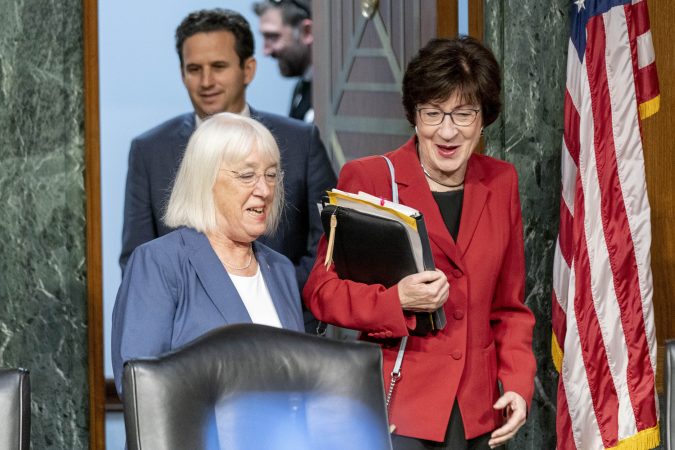
    The provision was tucked into a bipartisan measure to fund the government through Dec. 11 that was negotiated by Senate Appropriations Committee Chair Susan Collins (R., Maine) and Vice Chair Patty Murray (D., Wash.) and reviewed by Senate GOP leaders. It marks another notable rebuke of the president by senators from his own party.

    In a statement, Collins said she is “pleased” the provision was included in the spending agreement. She also said the White House rule change has the “potential to politicize grants and harm small, rural communities, families, and biomedical research.”

    The rule change, released in May by the White House Office of Management and Budget, would give political appointees more power over discretionary grant funding, diminishing a system created after World War II that calls on independent peer reviewers — experts in the field — to determine whether scientific proposals are worthy of federal funding.

    It would require political appointees to review grants before they’re awarded to ensure they advance the president’s priorities and do not support projects the administration opposes, including those that “fund, promote, encourage, subsidize, or facilitate” diversity, equity, and inclusion principles or “deny the biological reality of … the sex binary.”

    It also would give agencies the power to end grants at any time, to further restrict collaboration with researchers in China, Russia and certain other foreign countries, and to add new requirements for foreign researchers working in the United States. The rule would not apply to disaster recovery grants or some grants awarded by Congress through law, including block grants.

    Trump administration officials say the rule would add needed oversight to federal grant-making, ensuring federal funds aren’t wasted or misused. OMB officials did not immediately respond to a request for comment late Sunday, but have said that the Biden administration used federal grants to promote a “far-left” agenda.

    OMB said it planned to finalize the rule by Oct. 1. If the Senate’s funding extension were approved by both chambers, it would block OMB from implementing the rule, at least until the measure expires on Dec. 11.

    Collins urged OMB to withdraw portions of the rule in early July. Dozens of Democratic lawmakers — along with GOP Sen. Lisa Murkowski (Alaska) — have raised similar concerns. Murray and Rep. Rosa DeLauro (D., Conn.), the top Democrats on the Senate and House Appropriations Committees respectively, celebrated the provision in statements Sunday.

    The new OMB rule would “only give Trump the greenlight to take even more federal funding hostage,” said Murray, who worked with Collins to craft the Senate spending measure. Murray said she pushed for a provision that would have permanently killed the OMB rule but was rebuffed by her Republican colleagues.

    When OMB announced it this spring, the proposed rule change drew widespread outrage from scientific researchers, who say it could end U.S. scientific dominance by subjecting research institutions to political meddling, introducing new instability to federal funding, limiting foreign collaboration, and pushing away talented researchers.

    Trump administration officials have said they wouldn’t use the rule to blindly slash scientific funding. OMB Director Russell Vought said during a congressional hearing last month that the administration doesn’t intend to cancel grants “in a heartbeat.”

    But “when we find something that’s problematic that our policy officials would not have caught, we need to be able to turn it off,” Vought added, citing as an example an NIH subgrant given from a U.S.-based nonprofit to the Wuhan Institute of Virology, the Chinese laboratory at the center of suspicions about the origins of COVID-19.

    Last year, the Trump administration canceled hundreds and froze thousands of federal grants to projects they argued did not align with administration priorities. It unleashed chaos within research institutions, scientists said, prompting layoffs and upending projects.

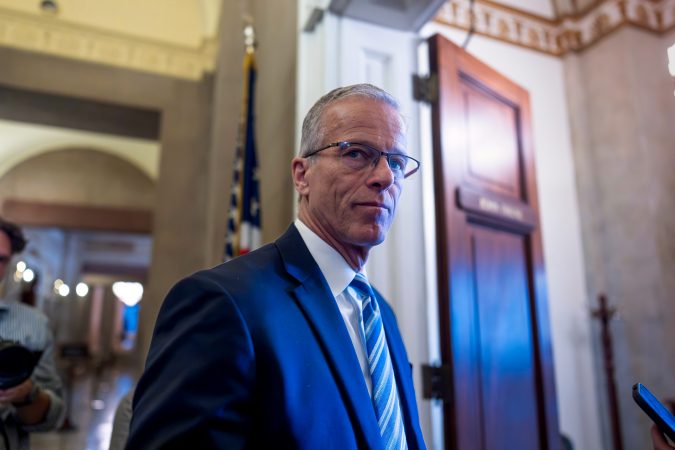
    Senate Majority Leader John Thune (R., S.D.) has said he aims to pass the spending bill before the Senate leaves town Friday for a monthlong recess. The government would shut down at the end of September if the measure — or one like it — is not approved.

    It was unclear Sunday whether the GOP-controlled House would support the measure as written. The House returns from its own monthlong recess on Aug. 31. Spokespeople for Speaker Mike Johnson (R., La.) and Republican House appropriators did not immediately respond to requests for comment.

  • Senate GOP rushes to pass budget bill, avoid shutdown ahead of midterms

    Senate GOP rushes to pass budget bill, avoid shutdown ahead of midterms

    Senate Republicans are racing to complete a lengthy to-do list before leaving town Friday, including approving a stopgap spending bill aimed at averting a government shutdown before the Nov. 3 elections.

    In addition to the stopgap budget bill, Senate Majority Leader John Thune (S.D.) is working to confirm 74 of President Donald Trump’s nominees and faces pressure to advance a $95 billion package that would provide fresh cash for the Iran war and inflation-battered farmers.

    Whatever senators don’t accomplish this week is likely to be pushed to September, when Congress is scheduled to be in Washington only briefly before hitting the campaign trail.

    The stopgap budget bill is up first, with a procedural vote that was expected late Monday. Appropriations Committee Chair Susan Collins (R., Maine) and Sen. Patty Murray (Wash.), the lead Democratic appropriator, worked jointly on the bill, which would extend government funding through Dec. 11.

    The measure differs in important ways from a version of the bill passed by the House: It incorporates White House requests to maintain funding for housing and nutrition programs through the fall, and it would extend an expiring authorization for veterans’ healthcare.

    Additionally, it would temporarily block the White House Office of Management and Budget from adopting a rule that would give political appointees sweeping powers to cancel hundreds of billions of dollars in federal grants.

    Rep. Rosa DeLauro (Conn.), the lead Democrat on the House Appropriations Committee, said in a statement Sunday that the Senate bill marks “a clear improvement” over the House bill, which she and most House Democrats opposed.

    If the Senate approves it, the House could take the measure up when lawmakers return at the end of August. Unless Congress acts, the government is set to run out of funds on Oct. 1.

    Senate Republicans are also facing a long list of presidential nominees at an array of agencies, including the Departments of State, Energy, Treasury, and Justice. The Senate could also confirm Todd Blanche as attorney general if the two Republican senators who have blocked his confirmation vote to advance it Tuesday.

    Late Sunday, Blanche issued a written order formally rescinding the Trump administration’s proposal for a $1.8 billion fund for people who claim they were victims of political prosecutions — a step toward breaking the impasse.

    Blanche said the revision came as part of an agreement with Senate Judiciary members including Sens. John Cornyn (Texas) and Thom Tillis (N.C.), who had threatened to vote against his nomination over concerns about the fund. The order came one day after Trump threatened in a Truth Social post to revive his push for the payout fund if Blanche is not confirmed.

    The Judiciary Committee has scheduled a critical vote Tuesday on Blanche’s nomination.

    Elsewhere, the Senate is expected to easily approve legislation to impose new sanctions on Russia, which would allow the Trump administration to levy up to 100% tariffs on the top five purchasers of Russian oil and natural gas. The measure, which was championed by Sen. Lindsey Graham (R., S.C.) before his sudden death last month, advanced last week on a strong bipartisan vote.

    And Thune has said the chamber would vote on an industry-backed cryptocurrency bill that would establish federal authority over digital assets. But the measure faces opposition on a variety of fronts, including from Democrats, who are demanding tougher ethics provisions to limit Trump’s ability to profit from his family’s crypto businesses.

    Possibly the tallest order for Republicans this week is finalizing a framework for a budget package to speed cash to farmers and the Pentagon. Using a complex process known as reconciliation, GOP lawmakers could sidestep a Democratic filibuster and pass the package with Republican votes.

    For the strategy to work, Senate Republicans would need near-unanimous support in their caucus. But several GOP senators have expressed opposition.

    “We’re taking a hard look at it,” Thune told reporters last week. “And at the moment, as I’ve said before, we’re probably not there.”

    Last month, the House passed a $95 billion budget framework that includes $73 billion for defense, $12 billion in aid for farmers and $10 billion for election-related measures, which House Republicans hope to use to impose elements of the Save America Act — a top Trump priority. That bill would require voters to prove their citizenship when registering to vote and to show a photo ID at the polls.

    Trump has demanded that the Senate stay in session until the election provisions pass, but Thune has said repeatedly that the bill cannot pass the Senate, even under reconciliation. Tillis, for one, has said he would not support it.

    Meanwhile, multiple GOP senators have expressed other concerns with the House framework for reconciliation, including Sens. Lisa Murkowski (Alaska), Bill Cassidy (La.), and Collins.

    Senate Armed Services Committee Chairperson Roger Wicker (R., Miss.), who has argued for closer to $300 billion for defense, told the Washington Post on Thursday that he is pushing for the higher amount. But a bigger package risks the support of fiscally conservative Republicans, who are already balking at adding $95 billion to the nation’s $39.8 trillion debt.

    Senate Budget Committee Chair Ron Johnson (R., Wis.) said the White House would need to directly request the additional funds for defense. Still, Johnson said he was “pretty optimistic” that the Senate would advance a budget framework before leaving town.

  • In letter to cousin RFK Jr., health advocate warns of threats to disability care

    In letter to cousin RFK Jr., health advocate warns of threats to disability care

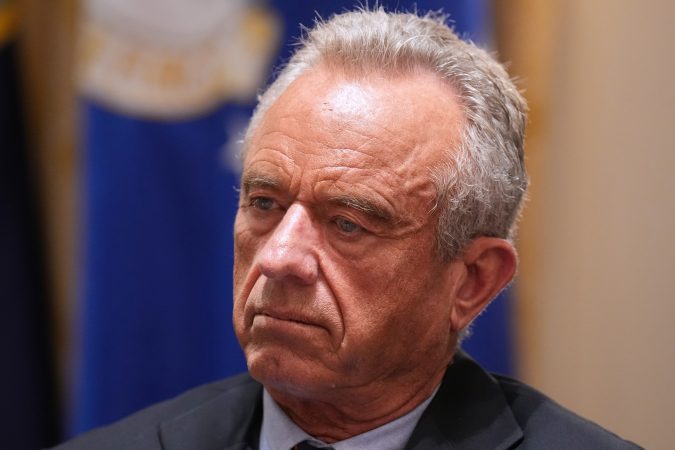
    In a letter to Health Secretary Robert F. Kennedy Jr. and acting attorney general Todd Blanche, the chairperson of the Special Olympics — who is also Kennedy’s cousin — called on the administration to reverse course on a Justice Department memorandum that could narrow federal protections for disability care.

    The letter by Tim Shriver joins a recent outcry from lawmakers and disability advocates who have warned that the June memo, which called for reinterpreting a key Supreme Court ruling on disability rights, could shrink access to home- and community-based care services that hundreds of thousands of Americans with disabilities rely on to receive care without being placed in institutions — a cause that members of the Kennedy family have supported throughout their political careers.

    “This is something that is in some ways the central passion of our family,” Shriver told the Washington Post. “And I hope and believe that Secretary Kennedy understands that.”

    The Health and Human Services Department and Justice Department did not provide a comment by the time of this article’s publication.

    The memo comes as patients and caregivers brace for Medicaid cuts from President Donald Trump’s tax bill, which are also expected to hamper disability services.

    “Many people with intellectual and developmental disabilities are already worried about whether the Medicaid-funded supports and services they rely on will be there in the future,” Shriver wrote in the letter sent to Kennedy and Blanche last week and shared with the Post.

    Shriver, a longtime disability rights activist, said he sent the letter in his personal capacity. He has led the Special Olympics, which organizes sporting competitions for children and adults with intellectual disabilities, since 1996.

    The Justice Department memo, issued in mid-June by its Office of Legal Counsel, argued for a looser reading of the Supreme Court’s 1999 decision in Olmstead v. L.C., viewed as a landmark case for disability rights. The Supreme Court ruled that it was discriminatory to institutionalize people with disabilities when they can and want to receive community-based services instead.

    “Olmstead is what created the tools to require states to provide community-based services,” said Alison Barkoff, a professor of health law and policy at George Washington University and a former HHS administrator during the Biden Administration.

    Advocates argue that those services can be more cost-effective than institutional care and better enable people with disabilities to work and remain connected with their families and communities. Around 4.5 million Medicaid enrollees receive home- and community-based care, and hundreds of thousands more are on waitlists for the services each year, health policy research organization KFF estimated in 2024.

    “These programs are the difference between a full life and … tragic mental illness, loneliness, depression, isolation, humiliation,” Shriver told the Post.

    The Kennedy family has been closely involved in efforts to promote disability rights. President John F. Kennedy signed a major mental health bill in 1963 while in office and alongside Sen. Robert F. Kennedy — the health secretary’s father — pushed to shift disability care away from institutionalization and toward community-based services. Eunice Kennedy Shriver, a sister of President Kennedy and Tim Shriver’s mother, founded the Special Olympics.

    The Trump administration has scrutinized home- and community-based services for fraud and argued that some states poorly oversee their home-based care programs. Advocates are also concerned that states newly strained by cuts to Medicaid could slash support for home- and community-based services.

    The Justice Department memo would make it easier for states to do that, opponents have said. It argued that Olmstead does not require states to provide home- and community-based care for people with disabilities and that the federal government is not authorized to enforce such a mandate. It conceded that such an opinion is “out of step with the common understanding of that decision within the federal courts.”

    Groups including the American Civil Liberties Union, American Association of People with Disabilities, and Center for Public Representation denounced the Justice Department’s position. Democrats in Congress urged the department to rescind the memo.

    While the Justice Department’s opinion doesn’t change the law, it could indicate that the department will step back from enforcing Olmstead, advocates said.

    “It provides a signal that the Department of Justice and the U.S. Department of Health and Human Services are stepping back from that commitment to community integration,” said Lydia Dawson, the vice president of government relations for ANCOR, a national association of private community providers.

    Shriver said the Trump administration’s stance threatened decades of hard-fought progress for disability care.

    “I am hopeful that you will help ensure that our country continues moving forward rather than backward on the promise of inclusion,” he wrote to Kennedy and Blanche.