Category: Politics

  • The Trump administration has refunded $100 billion in tariffs. Will you get any of the money?

    The Trump administration has refunded $100 billion in tariffs. Will you get any of the money?

    The Trump administration has refunded about $100 billion in tariffs in response to the Supreme Court ruling that declared the tariffs illegal, according to a new court filing this week.

    Major corporations are getting huge refunds: $2.2 billion for Apple, $1.3 billion for Ford, $600 million for Amazon. (Amazon executive chairman Jeff Bezos owns the Washington Post.)

    While some companies have said they will use the refunds to reduce their prices, experts say not to expect many price cuts. Kimberly Clausing, a UCLA professor who served as a tax policy official under the Biden administration, said some companies don’t feel confident enough to change their prices based on the revoked tariffs, since President Donald Trump has replaced those levies with others that are also likely to be partially or completely thrown out by courts.

    “If you’re a firm, you’re wondering what the tariff policy is,” Clausing said. “Some of that pass-through to consumer prices has been slower than you might think if it were really permanent policies. That’s good news in the short term for consumers, but it also means you won’t necessarily see as big a swing in the other direction.” She noted that some companies were simply “gambling” all along that the import taxes would be thrown out in court, rather than raising prices much in the first place.

    Even if they paid higher costs because of the now-invalidated tariffs, most American households won’t see any of the refund money directly.

    The Tax Foundation estimates that the average U.S. household spent an extra $1,000 as a result of the tariffs in 2025, most of it relating to the specific tariffs that have been overturned.

    Because Trump has since replaced most of those tariffs with new ones authorized in a different way, the organization estimates the average household will pay about $900 extra in 2026.

    So why aren’t many individual consumers getting compensated alongside big companies?

    In response to the Supreme Court ruling, U.S. Customs and Border Protection set up a process for requesting refunds. To use the system, the payers have to be registered with the government as an “Importer of Record” or an authorized Customs broker — in other words, not just someone who ordered an item on the internet that was made in a foreign country and ended up paying more for it.

    If you paid a tariff on something you had shipped to you by UPS or FedEx, you can look up your tracking number for the shipment on the companies’ websites. If the companies got money back for your shipment, they are supposed to send you the refund.

    Amazon said in a quarterly earnings call that it plans to send refunds to individual customers in limited cases for which it can identify customers who paid more due to tariffs. The company said it would “proactively contact” those customers but did not provide more information about how it would find them.

    Some other companies that raised prices to accommodate the tariffs are taking heat for not passing on the refunds. Customers are suing Ford and Costco, among others.

    Alan Sykes, a trade law expert at Stanford Law School, said he doesn’t think the customers have much to go on.

    “They willingly paid the higher price. Ford could have raised the price of the car for any arbitrary reason. … You don’t have a claim,” Sykes said. “Certain companies are saying they’re going to lower their prices going forward … not because of a legal imperative, but a public relations logic.”

    Matilde Bombardini, an economist at the University of California at Berkeley, said she understands the logic of a customer who wants money back.

    She said research suggests that importers who paid 10% more because of the tariffs typically charged their customers about 3% more and absorbed the rest. “Costco’s getting back the whole 10%,” she said. “Conceptually, we could all agree that the 3% should go back to the consumers.”

    She noted that the refunds are likely unprecedented in scope. The tariffs that were invalidated applied to almost all categories of goods from every country in the world, though there were some exemptions.

    In the court filing this week, a Customs and Border Protection official said companies have filed more than 178,000 valid claims to refund tariffs on more than 25 million imports since the claim system opened in April, leading to more than $100 billion in refunds and interest so far.

  • Climate change created conditions for Canada fires, scientists say, as Trump blames mismanagement

    Climate change created conditions for Canada fires, scientists say, as Trump blames mismanagement

    Human-caused climate change doubled the likelihood of the tinderbox weather conditions that sparked Canada’s massive summer wildfires and in turn angered U.S. President Donald Trump, according to a study released Thursday.

    And fire and climate scientists said Trump, who has talked about punishing Canada for poor fire management and sending days of choking smoke across the border, should look more in the mirror than up north when it comes to blame. They point to the United States’ huge historical emissions of heat-trapping gases from the burning of coal, oil and gas.

    The fire weather conditions in the Northwest Territories and northwestern Ontario, while unusual but not that rare, were still made twice as likely by global warming, said Thursday’s study by World Weather Attribution, a group of international scientists who examine extreme weather conditions to see if there are climate change fingerprints. It’s about the same as the team found for summer fires in France, but not nearly as clear a climate fingerprint as they calculated in Spanish fires, which the scientists said were 20 times more likely because of climate change.

    The study, which was done so quickly it has not been peer reviewed yet, looked at the weather conditions that are connected to large wildfires and the Canadian index for those conditions, which are heat, lack of rain, humidity and wind. The researchers found the doubling of frequency when — using scientifically accepted techniques to search for climate fingerprints — they compared current conditions to a world without the 2.5 degrees of warming that’s occurred since the industrial age and burning of fossil fuels started. The weeklong weather conditions that led to the fires in Ontario are now the type that can happen every six years or so, the report said.

    “In a pre-industrial climate this would have been much less likely to occur, maybe once in a lifespan. So climate change has made those events more likely,” said study co-author Jonathan Boucher, a fire scientist at Canada’s Forest Service.

    Hotter, drier conditions connected to burning

    Outside climate and fire scientists said the flash study made sense and reflects a world where hotter and drier conditions are making fires burn more often and more intensely.

    “Mother Nature’s been burning. Now she’s on amphetamines and she burns more and more,” said Thompson Rivers University fire scientist Mike Flannigan, a Canadian expert who wasn’t part of the study.

    Hazardous smoke spread across both the United States and Canada, choking large cities such as New York.

    By burning more and more fossil fuels, “we’re putting nails in our coffins,” Flannigan said.

    In the larger and remote Northwest Territories fires, where more than 5,000 square miles burned, it’s clear the spark was from lightning but it was the climate conditions that took that initial ignition and made the fire burn intensely and spread too fast to control, said Boucher and report lead author Theodore Keeping, a climate scientist at Imperial College in London.

    While people start about half of Canada’s wildfires — accidentally or on purpose — fires sparked by lightning are responsible for more than 90% of the land area burned in Canada, Flannigan said.

    “What we’re facing here is more of a climate related problem than a forest management problem,” Boucher said.

    That’s not how Trump sees it.

    Trump blames mismanagement, but scientists point to carbon

    “A lot of damage has been done. They’re not managing their forests properly,” Trump said July 21. “And the wind has a tendency to blow right over New York City, right over, you saw Detroit, they had to close the whole place. Michigan was really affected. They had to close businesses for four days. It’s very serious what they’re doing, and they don’t seem to be able to do anything about it. If they managed their forests, they wouldn’t have the fires.”

    When asked Sunday about punishing Canada, Trump on Air Force One told reporters he has decided on a punishment, adding “you’ll find out about it soon.”

    Canadian climate and fire scientists said Trump doesn’t understand the root causes.

    “Smoke does not carry a passport, but carbon pollution does have a history. That history shows that the United States contributed more than any other country,” said University of Victoria climate scientist Andrew Weaver. “President Trump is pointing at the smoke while ignoring America’s fingerprints on the climate conditions behind it.”

    Study co-author Friederike Otto, an Imperial College London climate scientist, said, “if you care about anyone but the super rich, you have to stop burning fossil fuels because the impacts are here and they’re now and have huge consequences.”

    Canada has warmed 65% more than the United States in recent decades. In the past 30 years, the amount of land annually burned by Canadian wildfires has gone up by about 50% while the amount in the United States has more than doubled.

    A big problem that Trump doesn’t appear to understand is that much of Canada’s forests are remote, northerly and full of spruce and pine that burns hard and fast, all making it difficult to get a handle on, Boucher and Flannigan said.

    “In Canada, when things are extreme, you have about a 30-minute window to put that fire out,” Flannigan said. “If you don’t get there in 30 minutes, you’re out of luck. And many of the fires that start in Canada are northern remote areas that are more than 30 minutes away from an airport. So even with perfect detection systems, we would get there too late and these fires are going to burn.’’

    ___

    The Associated Press’ climate and environmental coverage receives financial support from multiple private foundations. AP is solely responsible for all content. Find AP’s standards for working with philanthropies, a list of supporters and funded coverage areas at AP.org.

  • Philly watchdog says city’s property tax crackdown may have missed thousands of fraudsters — and $30 million more in revenue

    Philly watchdog says city’s property tax crackdown may have missed thousands of fraudsters — and $30 million more in revenue

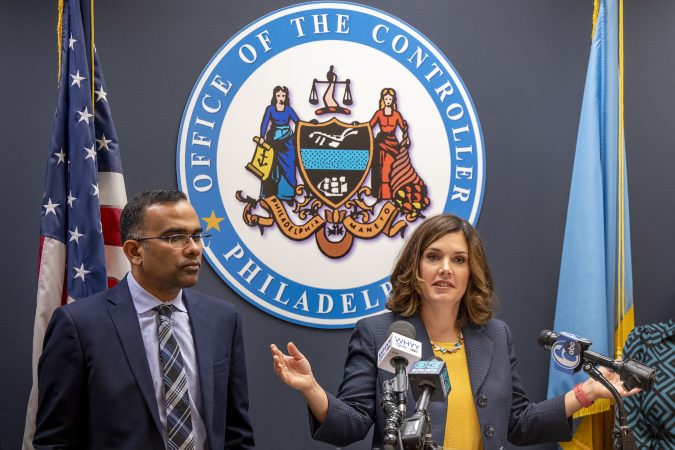
    Philadelphia’s fiscal watchdog said this week that a recent city review identifying thousands of property owners cashing in on tax relief programs they are ineligible for may have only scratched the surface of the problem.

    In a report released Wednesday, City Controller Christy Brady said investigators in her office had identified about 58,000 properties that are receiving the city’s popular homestead exemption tax break and may not be eligible.

    That is far more than the 22,000 properties that Mayor Cherelle L. Parker’s administration reviewed in a two-year probe that officials said last week led to more than 13,000 property owners being kicked off tax relief programs in which they were fraudulently enrolled. The Philadelphia Department of Revenue said those owners will be charged back taxes totaling about $30 million in additional property tax revenue for the city and the cash-strapped Philadelphia School District.

    But Brady’s report suggests the city could recover millions more in owed tax revenue. Her report says the city should review an additional 36,000 properties, an investigation that could double the money the city is owed annually to $60 million.

    “Over a five-year budget, that’s a remarkable $300 million for our schools and vital city services,” Brady said in a news release.

    Christian Crespo, a spokesperson for the revenue department, said in a statement that the agency’s tax benefit review unit conducts continuous compliance reviews to identify potentially ineligible properties.

    Crespo cautioned that the controller identified thousands of properties with “potential risk factors,” which do not alone establish that a homeowner does not qualify for a tax exemption.

    He said more than 8,000 exemptions in the administration’s initial review were deemed legitimate, meaning “a homeowner can have an indicator of potential fraud and still be eligible.”

    “Revenue appreciates the Controller’s continued focus on program integrity and welcomes the opportunity to review the findings presented in the report,” he said.

    The city’s homestead exemption is by far the most popular tax break offered. The free program allows for property owners who live in their homes to deduct the first $100,000 from their property’s assessed value, saving homeowners up to $1,400 a year.

    About 250,000 property owners receive the exemption, for which residents must enroll to take part. Investigators in the city controller’s office found that more than one in five participants may not be eligible, including some with mailing addresses differing from the address of the property receiving the tax break.

    The review identified properties with other red flags, including more than 8,000 property owners receiving the exemption whose mailing addresses are listed as outside Philadelphia.

    Some were even more brazen: For example, 67 properties legally deemed vacant were receiving the exemption, totaling nearly $100,000 in annual lost revenue, Brady’s office said. In another case, one business owner received an exemption on 15 different residential properties.

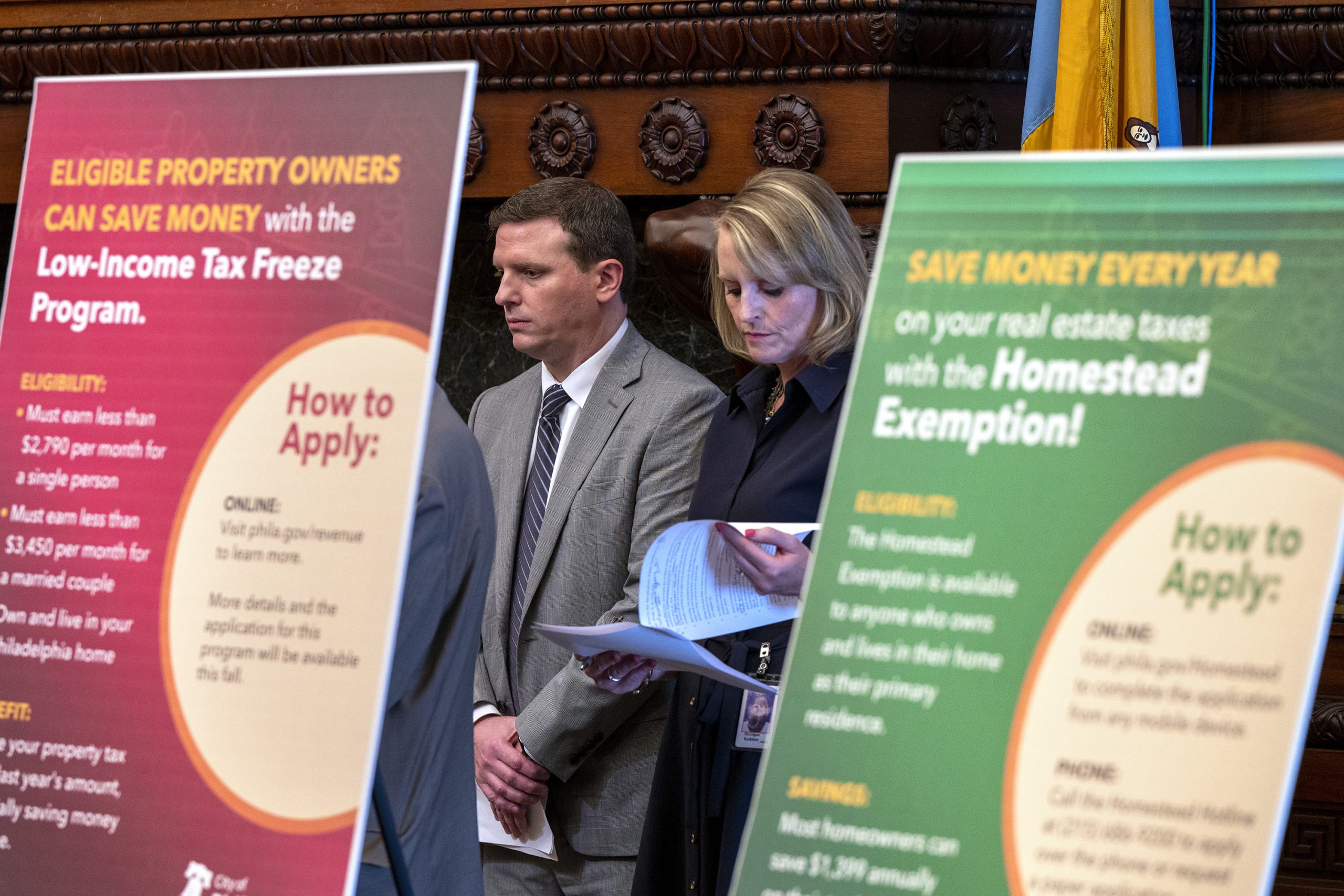
    James Aros, Jr. (left), Chief Assessment Officer at the Office of Property Assessment, and Revenue Commissioner Kathleen McColgan (right) attend a Mayor Cherelle L. Parker press conference at City Hall on Monday Aug. 5, 2024, as her office prepares to release the first citywide real estate reassessment in two years.Tom Gralish / Staff Photographer

    Parker administration officials have said that recovering lost revenue is a priority, especially given the school district’s financial position. The public school system is facing a $300 million structural deficit and the school board recently voted to close 17 schools.

    The district is the only one in Pennsylvania that cannot legally increase taxes to generate revenue. Property tax revenue in the city is split, with 56% going to the school district and the remainder into the city’s accounts.

    The current property tax rate is 1.3998% of assessed value.

    Homeowners who were removed from the homestead exemption program as part of the city’s review were mailed two notices and provided an opportunity to produce evidence of their eligibility. They may still appeal the decision.

  • Fauci contempt vote reflects the enduring politics of COVID

    Fauci contempt vote reflects the enduring politics of COVID

    NEW YORK — Dr. Anthony Fauci is sitting before Congress, Robert F. Kennedy Jr. is on TV debating COVID lockdowns, and Americans can’t agree on what science to trust.

    You might think it’s 2020 again.

    Six years after COVID-19 thrust the world into the fear and uncertainty of a global pandemic, Republicans in power aren’t leaving it in the past. Instead, they’ve returned its familiar political arguments to center stage for new scrutiny, demanding accountability for the scientists and media figures whom they feel deceived and mistreated Americans years ago.

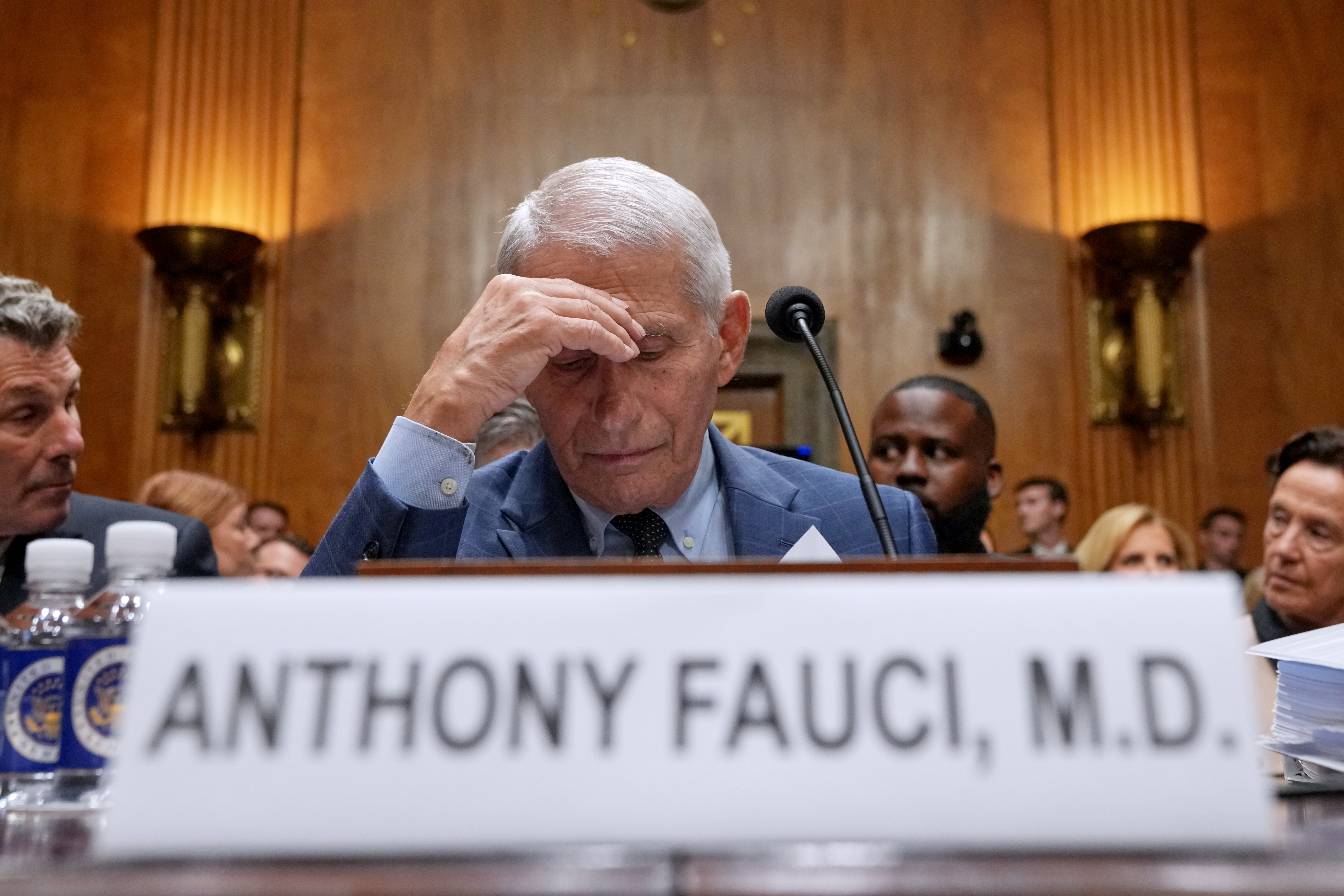
    The efforts ramped up last week, when a Republican-led Senate committee chaired by Kentucky Sen. Rand Paul subpoenaed the now-retired, 85-year-old Fauci to testify about his handling of the COVID-19 pandemic.

    The former National Institutes of Health immunologist repeatedly invoked the Fifth Amendment, after accusing the lawmakers of trying to coerce him to perjure himself to justify criminal charges. In response to his choice, on Thursday, the committee passed a vote to hold Fauci in contempt, a stunning move that could motivate the Justice Department to initiate an investigation.

    Separately, Kennedy, a politically independent former anti-vaccine activist who now serves as the Republican President Donald Trump’s health secretary, spent part of his weekend in a combative live debate with CNN host Dana Bash about the pandemic’s management and the media’s role.

    Political scientists and historians say the focus on COVID grievances half a decade after the virus’ peak demonstrates how some wounds it opened have never been closed. Democrats, meanwhile, have slammed the federal government’s blaming of Fauci as a performative distraction that’s not based in facts.

    While both Paul and Kennedy have spent years airing their frustrations about COVID, the Republican takeover of Congress and the White House last year created a new platform for them to steer how America remembers the pandemic, and who is held responsible for it, according to Matt Dallek, a political scientist at George Washington University.

    It’s also allowed them to use the administration’s resources to surface new information.

    “The response to COVID has become a touchstone for Trump’s Republican Party,” Dallek said. “They’re using their power now to argue they were right all along.”

    Pandemic grievances have simmered for years

    When the coronavirus began spreading widely in 2020, under Trump’s first administration, groups of Americans revolted against requirements imposed by local authorities and businesses telling people to wear masks and stay at home to control the spread of the virus.

    Vaccines supercharged those sentiments. Figures like Kennedy, then a leader of the anti-vaccine movement, accused the federal government of trampling on personal liberties by supporting vaccine mandates and social media takedowns of dissenting ideas.

    While Trump has long expressed pride in his first-term Operation Warp Speed effort to disseminate COVID-19 vaccines quickly, saving millions of lives, his second administration has taken a different tone.

    Under Kennedy’s leadership, U.S. regulators have limited the availability of COVID-19 vaccines for Americans. Kennedy on CNN on Sunday questioned whether the COVID-19 vaccines protected children, even as the Centers for Disease Control and Prevention says on its website that they “help keep children from getting really sick from COVID-19.”

    Frances Lee, a Princeton University political scientist, said debates over COVID-19 have erupted on the fringes for years. Now that some of the leaders of those debates are in power, they’re hashing it out on the national stage — something she said needed to happen eventually.

    “There are aggrieved parties, people who have a sense that they were done wrong during the pandemic and that there’s never been an accounting for that,” Lee said. “Most people don’t want to think about this topic, but nevertheless there are constituencies – so Congress is speaking to those constituencies.”

    Lee said Kennedy’s decision to surface numerous diary entries that Fauci had made on a government computer – and Paul’s decision to publicize them last week – created an opening for “the first real showdown” in years around the pandemic’s handling.

    While some of the entries – including Fauci’s uncertainty in the pandemic’s earliest days about how best to curb the virus — already were reflected in a 2024 memoir and in interviews at the time, they have nonetheless drawn attention from people who blame Fauci for policies they believe infringed on their rights as hundreds of thousands of people were dying.

    Also discussed at Fauci’s hearing last week was whether NIH-funded research in China played a role in how the pandemic started. The day of the hearing, Trump’s White House also directed social media followers to a federal website that used to feature information on COVID vaccines, testing and treatment that now promotes the theory that the pandemic originated with a lab leak.

    Many scientists believe the virus most likely emerged in nature and jumped from animals to people, coming to light when it spread at a wildlife market in the Chinese city of Wuhan. There’s no new scientific evidence supporting the theory that the virus might instead have leaked from a laboratory, a theory Paul champions. A GOP-led subcommittee that studied the question in 2024 found no evidence linking Fauci to wrongdoing.

    Fauci has long said publicly that he was open to both theories but that there’s more evidence supporting COVID-19’s natural origins.

    Republican lawmakers aren’t stopping at the contempt vote. Sen. Ron Johnson said Thursday that Kennedy’s department had given a subcommittee he chairs a copy of Fauci’s cellphone from his time in government. Johnson indicated he intended to investigate it.

    “Hopefully, this device will address many of the questions he refused to answer at last week’s hearing,” he wrote on social media.

    Many doubt that Republicans’ COVID fact-finding is genuine

    As Republicans hold up scrutiny of Fauci as important accountability, Democrats have called it disingenuous. Paul said Thursday he’d invited Fauci to appear for a private, transcribed interview, but Democrats accused him of not allowing the full, bipartisan committee to be present for it.

    Paul also referred the committee’s contempt vote directly to the Justice Department, instead of to the full Senate. He said he did not “want to waste time” with that route, while Democrats insisted all senators should get a chance to vote.

    Last week’s hearing, at which Fauci pleaded the Fifth, came after the immunologist had repeatedly appeared before Congress over the years and talked about his thinking in the beginning of the pandemic and how it changed over time. Critics have raised concerns that the ordeal surrounding him will deter scientists from taking government jobs for fear of being similarly targeted.

    Paul has long argued that Fauci should be criminally investigated, based on his belief that the scientist has been dishonest to Congress about National Institutes of Health-funded research and COVID’s origins. Fauci’s attorney last week called Paul’s accusations about the scientist “false and disgraceful.” More than 150 infectious-disease experts also came to Fauci’s defense, writing that “no credible evidence has been produced to support these absurd charges.”

    Norm Ornstein of the American Enterprise Institute said the hearing didn’t represent legitimate truth seeking.

    “They were looking for a platform in which they could attack him, and he would not respond, and he would say ‘plead the Fifth’ over and over again,” Ornstein said.

    He said while some Republicans are likely true believers that Fauci committed crimes, bringing him to the forefront serves a dual purpose in a midterm election year — distracting voters from less favorable headlines, including on the economy and foreign conflicts.

    Michael Osterholm, an epidemiologist at the University of Minnesota, said there are real lessons to learn from the pandemic, including more deeply examining which efforts to contain the virus worked and didn’t work. But he said Republicans in Congress aren’t chasing those.

    “A review of revisionist history will accomplish nothing,” he said. “We won’t be any better prepared for the next pandemic.”

  • Brian Fitzpatrick leads letter urging Trump’s DHS secretary to extend protected status for Ukrainians

    Brian Fitzpatrick leads letter urging Trump’s DHS secretary to extend protected status for Ukrainians

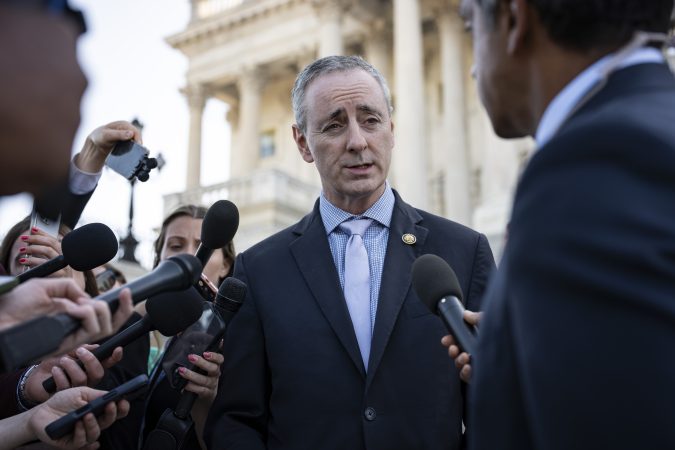
    U.S. Rep. Brian Fitzpatrick (R., Bucks) led a bipartisan group of lawmakers in a letter asking Homeland Security Secretary Markwayne Mullin to extend and expand temporary protected status (TPS) for Ukraine ahead of its expiration this fall.

    The government status allows immigrants to live and work in the United States if conditions are unsafe in their home countries. For Ukraine, which has been in a war waged by Russia for nearly five years, TPS is set to expire on Oct. 19.

    “More than 250,000 Ukrainians have sought safety in the United States after fleeing Russia’s brutal full-scale invasion,” lawmakers wrote in the letter, dated Aug. 4. “These individuals have become valued members of our communities, contributing to our economy, workforce, and tax base while complying with U.S. laws and rebuilding their lives in temporary safety.”

    U.S. Rep. Brendan Boyle (D., Philadelphia) was also among the 27 lawmakers to sign onto the letter, but only three other Republicans joined Fitzpatrick’s effort.

    President Donald Trump’s administration let TPS expire for Haiti and Syria late last month and has promised to deport individuals who lose their legal status, and Ukrainians who fled the war and live and work in the United States under TPS could face a similar fate this fall if the designation expires.

    Ukraine has become a defining issue for Fitzpatrick, who represents all of Bucks County, which is home to more than 12,000 people from Ukraine or of Ukrainian heritage. And it has become one of the areas where the moderate, who is running for reelection in the crucial Pennsylvania swing district against Democratic challenger Bob Harvie, has frequently strayed from Trump.

    In a statement to The Inquirer on Thursday, Casey-Lee Waldron, a spokesperson for Fitzpatrick — who is a cochair of the Congressional Ukraine Caucus and was stationed in the country as an FBI agent in 2015 — said the lawmaker “urges the Secretary to act without delay.”

    “Putin’s brutal unprovoked war continues to destroy communities, endanger innocent lives, and make any safe return impossible for Ukrainian families,” Waldron said.

    On Haiti, Syria, and next month’s expiration for El Salvador, Fitzpatrick’s position appears to be more nuanced.

    Waldron said that Fitzpatrick believes “upholding the rule of law and acting with compassion are not competing obligations,” and that temporary protected status for the three countries should be independently evaluated.

    “And where the standard established by Congress continues to be met and a safe return remains impossible, those protections should remain in place,” Waldron said.

    Last year, the Bucks County Republican, without naming the president, slammed Trump’s criticism of Ukrainian President Volodymyr Zelensky. Fitzpatrick also visited the country and met with Zelensky and soldiers on the front lines, and signed a missile to Russian President Vladimir Putin.

    His support for Ukraine continued this week with the letter to Mullin, which argues that Ukraine continues to meet the statutory benchmarks for qualifying for a TPS designation. In addition to extending the Oct. 19 deadline, lawmakers are also calling on the DHS secretary to redesignate temporary protected status for Ukraine, meaning it would reset the country’s eligibility cutoff date, allowing more immigrants to apply for the protection.

    “Without both an extension and redesignation, many Ukrainians lawfully residing in the United States could be forced to return to a country where their lives and safety remain at serious risk,” lawmakers wrote.

    Iryna Mazur, an immigration attorney and honorary consul of Ukraine in Philadelphia, said it would be economically beneficial to the U.S. to extend and expand TPS for Ukrainians and emphasized the importance of the humanitarian efforts at the core of the law.

    She said that maintaining a united front among political parties on support for Ukraine is key.

    “I don’t think there would be anybody in their good mind with a good sense of justice in their heads who would say it’s a wrong thing to do right now under the circumstances,” Mazur said.

    “This is a very active phase of war, and it just would be inhumane not to extend this particular temporary measure.”

    Staff writer Jeff Gammage contributed to this article.

  • Senate committee votes to hold Fauci in contempt for refusing to answer COVID questions

    Senate committee votes to hold Fauci in contempt for refusing to answer COVID questions

    WASHINGTON — A Senate committee on Thursday voted to hold Dr. Anthony Fauci in contempt of Congress and refer him to the Justice Department for potential prosecution over his refusal to answer questions at a hearing last week focused on his handling of the COVID-19 pandemic.

    The party-line vote approving the contempt resolution came a week after Fauci invoked his Fifth Amendment right against self-incrimination more than 100 times when he appeared before the Senate Committee on Homeland Security and Governmental Affairs.

    Republican Sen. Rand Paul of Kentucky, the committee chairman, said that constitutional protection did not apply since Fauci last year received a pardon from Democratic President Joe Biden and thus did not have to worry about the threat of prosecution. Fauci and Democrats who opposed the contempt resolution said he had a well-founded fear of self-incrimination given a public desire by Republicans to seek his prosecution.

    “Dr. Fauci faced no risk of federal prosecution,” Paul said at the outset of a hearing. ”All he had to do was tell the truth.”

    Paul noted that the vote had nothing to do with Fauci’s policies, opinions or anything he has said in previous congressional appearances.

    Instead, the senator said, “We are voting on whether a witness who has received the benefit of a sweeping pardon can be ordered by this committee to answer questions and then defy that order without consequence.”

    Fauci, in a statement explaining his decision to invoke his Fifth Amendment rights, said he had good reason to fear the possibility of criminal charges given what he said was Paul’s determination “to get me to say something, anything, that could vindicate his repeated public pledges that I end up, in his words, quote, behind bars, unquote.”

    The pardon from Biden covered acts from 2014 through the January 2025 day it was issued. It does not shield Fauci from state-level prosecutions or from investigations into any testimony that he did give that lawmakers thought was false.

    The referral goes to the U.S. attorney’s office in Washington, which will decide whether or not to investigate or potentially attempt to prosecute the doctor for contempt.

    Paul, who has previously sent referrals on Fauci on his own, acknowledged on Wednesday that contempt resolutions have often gone through the full Senate but said he did not “want to waste time” with that route. The resolution there would be unlikely to muster the required 60 votes needed to advance.

    No matter the outcome, the episode raises fresh and complicated questions about lawmakers’ ability to compel testimony from previously pardoned witnesses — and the outcome could resonate beyond Fauci given the possibility that Trump may also grant clemency to his own aides before leaving the White House.

  • Michigan Senate primary shows Democratic establishment has lost its grip

    Michigan Senate primary shows Democratic establishment has lost its grip

    Michigan’s bitter Senate primary was the clearest signal yet: The Democratic establishment is gasping.

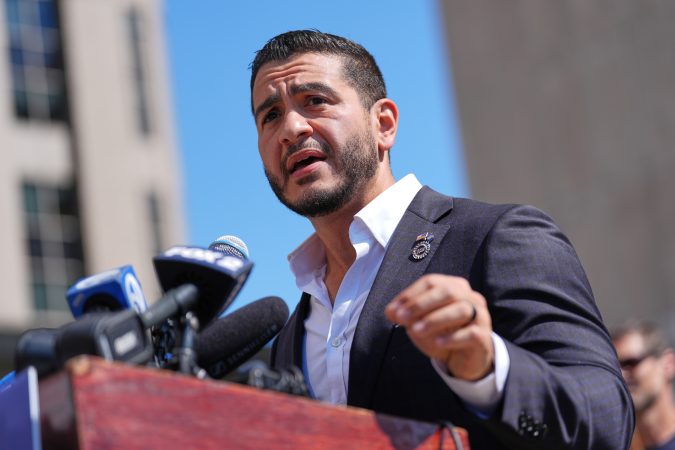
    The narrow victory of former health official Abdul El-Sayed over four-term Rep. Haley Stevens, who had the near-unanimous backing of senior establishment figures in Washington and Michigan as well as a more than 8-to-1 television spending advantage, marked yet another stumble by the traditional power brokers.

    It also amplified how out of touch they have grown with the angry left that has become the party’s ascendant force.

    This time, the victory by a progressive insurgent happened not in a deep-blue enclave, such as New York City, where Democrats are pretty certain to win no matter what candidate they put up. It was in a statewide contest in Middle America. Donald Trump won Michigan twice, in 2016 and 2024.

    In 2026, the stakes could hardly be higher. Democrats currently hold the Michigan seat being vacated by the retirement of Sen. Gary Peters. Should El-Sayed lose in November against Republican nominee Mike Rogers — a former congressman who came within a third of a percentage point from winning Michigan’s other Senate seat in 2024 — the party’s uphill effort to win back control of the Senate will become even steeper.

    Much criticism has focused on how Senate Minority Leader Chuck Schumer and the campaign arm that he effectively steers, the Democratic Senatorial Campaign Committee, have attempted to orchestrate the primary process. They have boosted favored contenders in three primaries this year. Michigan marked the second one — the first having been Maine — in which Schumer’s anointed contenders were rejected by Democratic voters.

    “What voters have been screaming from the rooftops is they’re sick of the status quo. They’re sick of the establishment. They want something different,” said Lis Smith, a Democratic consultant who worked for Mallory McMorrow, a state senator who dropped out of the race after failing to gain traction in a middle lane.

    Nor were Democrats in a critical swing state persuaded by the argument that Stevens was more “electable.”

    “If you listen to focus groups or interviews with Michigan voters, they are very interested in winning,” former Obama White House official Dan Pfeiffer wrote Monday in his Substack. “They want to pick a winner; they just don’t trust Democratic politicians to tell them who can really win. This is a very understandable impulse after 2024 and every Democratic leader backing Biden when he clearly shouldn’t have run.”

    The stresses and divisions within the Democratic Party, including over support for Israel and the role of money in politics, were on full display in Michigan. El-Sayed rarely missed an opportunity to mention that Stevens had benefited from $62 million in advertising spending by outside groups, led by the American Israel Public Affairs Committee, the influential pro-Israel lobby.

    The entire race, El-Sayed argued in the candidates’ final debate, “really comes down to how you are funded.” Rarely has a candidate been so effective at that kind of political jujitsu, using the weight of campaign money against its intended beneficiary.

    Late polls that had El-Sayed comfortably ahead of Stevens were wrong. The race turned out to be a photo finish.

    The results also complicated any clean story about a party moving left. El-Sayed ran up his margins in the counties with the youngest and most highly educated voters. Stevens carried the poorest counties and the areas with the most Black residents — the parts of the Democratic coalition that have historically decided general elections in Michigan. An insurgent left that wins on campuses and in college towns but loses in Detroit’s suburbs and the state’s poorest counties has proved it can win a primary. It has not yet proved it can win a state.

    Stevens quickly endorsed El-Sayed after the race was called. “I spoke with Abdul a few moments ago to offer him my full support as we work to defeat Mike Rogers this November,” she posted on X. But given the acrimony of their battle, it is unclear whether Democrats can bind their wounds and regroup behind their new nominee.

    Progressives in Michigan notched other victories Tuesday: William Lawrence, co-founder of the climate action group Sunrise Movement, defeated two more moderate Democrats to win the Democratic nomination in a swing district that includes Lansing. And incumbent Rep. Shri Thanedar lost to Michigan state Rep. Donavan McKinney, a democratic socialist.

    The implications could well extend beyond November. The Democratic National Committee has tentatively approved Michigan to vote fifth in the 2028 presidential primaries — making it the biggest prize on the early calendar.

    Should the progressives who were chosen Tuesday win this November, that may strengthen the hand of 2028 prospects who hew to the left. But if they lose, the party may be seeking a more centrist standard bearer.

    With the 2026 primary season coming to an end, more optimistic Democrats are hoping that raging battles over their party’s identity will move to the back burner as they refocus their energies on Trump and the Republicans.

    “We’re gonna have a great November. We’re gonna win the House, and I’m still bullish on the Senate,” former Virginia governor Terry McAuliffe, who also chaired the Democratic National Committee, said in an interview. “This is going to be about the party in power, plain and simple.”

    Clara Ence Morse contributed to this report.

  • Why Republicans could still keep control of the House

    Why Republicans could still keep control of the House

    Democrats are favored to flip the House, but Republicans could still save their majority under the right conditions.

    Historically, midterm elections are a referendum on the party that holds the White House, which voters are prone to punish. This year, the Democratic Party is well positioned to win a House majority, buoyed by voters’ dissatisfaction with President Donald Trump and the war in Iran that he started.

    But Trump’s party could defy conventional wisdom and still eke out a win, election analysts say. Here’s how.

    Voters aren’t angry enough to vote blue

    Registered voters support Democrats over Republicans in Congress by five percentage points, according to a Washington Post average of July “generic ballot” polls that ask preferences for parties rather than individuals.

    Analysts estimate that Democrats need to win the national House vote by three to four points to win the majority. Democrats have a bigger advantage among highly motivated voters, who are more likely to turn out in November.

    But polls also show that the Democratic brand is bruised.

    The Democratic Party is less popular than before the 2018 midterm elections, when a blue wave delivered 41 new seats, according to a CNN poll released in late July.

    Just before that 2018 election, 46 percent of adults rated Democrats favorably while 45 percent rated them unfavorably. Now, 30 percent rate Democrats favorably while 51 percent rate them unfavorably, almost identical to ratings for the Republican Party.

    Much of that discontent comes from Democrats who are unhappy with their own party but unwilling to vote for Republicans.

    Democrats are counting on people who don’t like them but are fed up with a GOP-controlled Washington to vote blue. That might be a harder sell by November if voters aren’t as outraged.

    “Republicans have to hope that gas prices come down and that the war fades from the news a bit,” said David Wasserman, a senior elections analyst with Cook Political Report, a nonpartisan race handicapper.

    A redrawn map protects GOP majority

    A party needs 218 seats to control the House, and Republicans hold a razor-thin majority with several vacancies.

    Aggressive redistricting to favor parties in congressional elections has resulted in a smaller battleground for control of Congress.

    As of mid-July, Cook Political Report deemed 37 districts competitive. Eighteen were toss-ups, while 10 leaned Democrat and 9 leaned Republican.

    Republicans made it unusually hard for Democrats to win the majority by launching a national battle to redraw electoral maps mid-decade. While Democrats tried to gain their own seats, the redistricting gambit proved advantageous for the GOP.

    Because the two parties are competing on the new map, November’s results could be close even in a difficult year for Republicans, Wasserman said.

    If Democrats win all of the most competitive districts classified by the Cook Political Report, they would win 235 seats under the 2024 map. But under the current map, they would only win 223 seats.

    Big money saves vulnerable Republicans

    In June, a Supreme Court ruling granted Republicans financial leverage to spend big to boost their candidates.

    The high court lifted limits on how much political parties can spend in coordination with candidates, allowing the political parties’ national committees and their House and Senate campaign committees to funnel as much money as they want in coordination with candidates.

    This will allow political parties to boost their candidates with more ads, probably at lower costs because candidates get cheaper rates than parties and super PACs from the Federal Communications Commission, which regulates the airwaves. Republican committees have more money to spend than Democrats on those efforts.

    Conservatives could also benefit from Trump’s super PAC, MAGA Inc., which ended June with $400 million in the bank. It’s unclear whether that money will go toward midterm races.

    The Republican campaign committees have also not yet detailed how they will spend their money in the coming months but said after the Supreme Court ruling that they were “ready to fully support our candidates and put them in the strongest position possible.”

    The Democratic Congressional Campaign Committee, the House Democrats’ campaign operation, disputed that the GOP’s financial resources would sway the midterms out of Democrats’ reach. They pointed to special elections in which Democrats won despite being outspent by Republican opponents.

    “Donald Trump’s money won’t save the vulnerable Republicans who have spent the last two years making life worse for the American people,” DCCC spokesperson Viet Shelton said.

    Weak candidates lose winnable races

    In past elections, Republicans lost competitive congressional races after more hard-line conservatives emerged from primaries. Now Democrats have a similar problem.

    Primary victories by several progressive candidates have made some in the party establishment worry about losing winnable seats.

    Most of these candidates have been in blue districts, but Matthew Dunlap in Maine and Randy Villegas in California beat more moderate, DCCC-endorsed candidates in primaries. Amish Shah, who lost a 2024 race in an Arizona battleground district, defeated a former Republican endorsed by the DCCC to run again.

    On Tuesday in Michigan, Sunrise Movement co-founder William Lawrence, a progressive, bested two moderate Democrats in the battleground 7th Congressional District. The DCCC did not endorse any candidate before the primary.

    Manny Rutinel defeated a more moderate opponent in a beef-producing Colorado district where some Democrats fear his history of animal rights activism and liberal voting record in the state House could render him unelectable.

    Those districts could still go for Democrats, according to national analyses, and progressives argue that their preferred candidates are better at turning out voters even if they turn off some moderates.

    Doug Heye, a Republican strategist, said that while Republicans have a “very narrow” path to the majority, they could defy expectations if the party successfully casts its opponents as extreme and out of touch. They include candidates affiliated with the Democratic Socialists of America, a growing political movement with far-left views.

    “With every candidate on the DSA side that succeeds, that makes that argument that much easier,” Heye said.

    In an analysis this week, the University of Virginia’s Center of Politics said “Democratic candidates flopping is integral to GOP chances” in several states.

    Scott Clement contributed to this report.

  • A new $10 million fund is a ‘first step’ toward recovery for Pa. farmers after a disastrous April freeze

    A new $10 million fund is a ‘first step’ toward recovery for Pa. farmers after a disastrous April freeze

    For the second time in five years, a freeze wiped out all of Morgantown farmer Ed Weaver’s peaches this spring.

    What was an unassuming late April frost for most Pennsylvanians this year created devastation for farmers across the state. High temperatures at the beginning of the month accelerated orchards’ blooming process. But an ensuing sudden drop below freezing quickly killed what had grown. The freeze hit 13 states on the East Coast, costing Pennsylvania fruit farmers almost $200 million.

    Along with the peaches, the cold decimated nectarines and cherries at Weaver’s Orchard in Berks County. Now, just 15% of the apples and pears there remain, and about half of the berries are gone. Weaver estimates the freeze caused him to lose between 70% and 80% of his orchard’s revenue this year.

    Weaver is not alone. A surge in extreme weather has taken a toll on fruit farmers’ crops across the state, in an industry growing increasingly sparse from rising costs.

    Weaver — who has overseen his family’s nearly-100-year-old business for four decades — said many farmers are starting to question whether losses from extreme weather are a new standard and are determining the best next steps to maintain stability.

    “How do we move forward? How are we going to mitigate these risks? And is this a new type of normal for us?” he said.

    Attempting to reclaim some of the lost money from the frozen crops, Weaver plans to apply for a Freeze Disaster Assistance Recovery Grant — a $10 million initiative approved last month in the Pennsylvania state budget to assist farmers who have lost 30% or more of their crops.

    Pennsylvania Agriculture Secretary Russell Redding said the department is still determining how the funding will be distributed to eligible farmers, but is hopeful the money can be given by fall, when farmers typically see profits from their spring fruit crops.

    “We wouldn’t forget about the harm that was done through this frost, and the lingering effects of it. So we’re here to deliver on that promise,” Redding said last month.

    The funding comes after Democratic Gov. Josh Shapiro’s administration called for federal assistance to further offset the impact of the freeze. Last month, the United States Department of Agriculture expanded low-interest loan options for some Pennsylvania apple growers with federal crop insurance. Additionally, 17 counties have been designated by the USDA as disaster areas, making farmers there eligible for low-credit loans.

    Berks County, home to Weaver’s Orchard, lost 85% of its crops in the freeze. But the county still hasn’t received the federal disaster designation, Weaver said. State officials have said they’re pushing for more assistance.

    Weaver said the state’s grant program is a great first step, but that it’ll take years for his orchard to recover.

    He said much of the financial strain is born from costs like pruning and fertilizer for the decimated crops.

    Weaver said his orchard is fortunate to have other sources of income, like its market and storefront, rather than relying entirely on its fruit crops. But the freeze impacted Weaver’s “pick-your-own” service, where customers can harvest their own fruit, since there are so few fruit crops available.

    Typically, Weaver said that when farmers’ crops are damaged, they can buy fruit from other growers to sell, but that has been challenging this year, because the freeze was so widespread.

    A flower bud with a brown center, which indicates the apple tree couldn’t produce apples due to the frost, at Highland Orchard in West Chester, on Friday, May 8, 2026.Tyger Williams / Staff Photographer

    For Norm Schultz, farmer at Linvilla Orchards in Media, the freeze took out nearly all of his peaches and apples.

    Schultz said much of his orchard’s rebuilding will rely on the fall season, and how Linvilla’s pumpkin sales fare.

    But the harvest lost in the April freeze will have lingering impacts come fall, he said. Apple crops were affected, meaning that candy apple and cider sales could take a hit.

    The freeze was the latest blow to Pennsylvania’s fruit farmers.

    Both Weaver and Schultz said it’s becoming harder for farmers to pass down their land to their families, partly because of financial unpredictability but also because land is worth more if sold instead.

    The number of farms in Pennsylvania has fallen by 18% over 10 years from 2012 to 2022, according to the most recent agriculture census data.

    Schultz said he hopes the state’s newest grant for affected farmers “can keep the people who only grow fruit in the game, because so many farms and fruit growers go out of business in this area.”

    Similarly, Weaver said there are costs burdens in needing to continually upgrade equipment and make capital investments to maintain facilities, which could reduce profitability and efficiency for future generations.

    “If we’re going to have a good food supply of these kinds of crops in Pennsylvania, it needs to be something that the next generation wants to do,” he said. “And if it burns them financially, they’re going to make a decision of whether they want to [farm] or not.”

    In the meantime, Weaver said it’s important for people to purchase storefront goods from local farms or make use of other services.

    “Especially right now, it’s so important for people to get out and support the local farms and buy local.”

    Natalie Javitt is an intern with the Pennsylvania Legislative Correspondents’ Association. She can be reached at natalie.javitt@gmail.com.

  • N.J. Gov. Mikie Sherrill doubles down: ‘The best cheesesteaks actually aren’t in Philly.’

    N.J. Gov. Mikie Sherrill doubles down: ‘The best cheesesteaks actually aren’t in Philly.’

    New Jersey Gov. Mikie Sherrill dissed Philadelphia cheesesteaks earlier this summer, and she just doubled down.

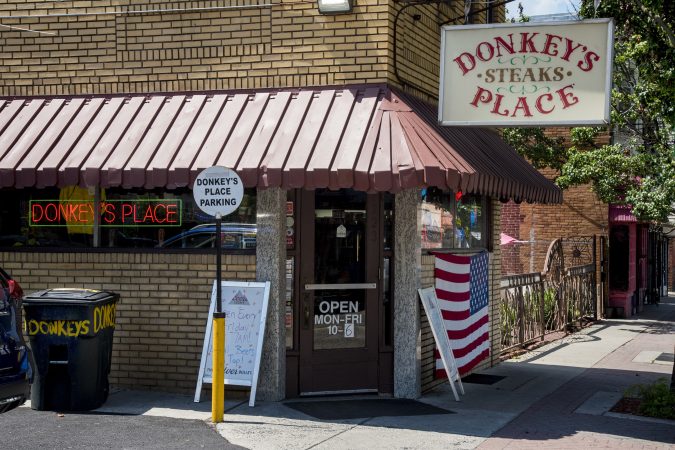
    “The best cheesesteaks actually aren’t in Philly,” she declares in a video posted to her social media Wednesday afternoon centered on a recent visit to Donkey’s Place in Camden. “They’re right here in Jersey, and we’re about to go have one.”

    In the video, Sherrill leans against the bar next to a customer drinking a beer and sporting a Phillies cap. The first-term Democrat notes with a grin that a “real-life” Philadelphian is “here in Jersey, getting a cheesesteak!”

    She noted in the post that a friend of hers from California had mentioned the cheesesteak place to her — showing that the acclaimed Haddon Avenue spot, founded in 1943, is known across the country. She said she “never doubted that New Jersey has the best cheesesteaks,” but had to visit Donkey’s to “confirm” for herself.

    Anthony Bourdain felt similarly.

    In 2015, Bourdain, who grew up in North Jersey, opined on an episode of his Parts Unknown show that finding the best cheesesteak in “the center of the cheesesteak universe” may require crossing the Benjamin Franklin Bridge. The restaurant proudly displays his quote on its website: “The best cheesesteak in the area might well come from New Jersey.”

    During her visit to Donkey’s, Sherrill got in on the cheesesteak action with owner Rob Lucas Jr., whose father, Bob Lucas, previously owned the restaurant. The younger Lucas’ grandfather, Olympic boxer Leon “Donkey” Lucas, was the founder.

    Equipped with plastic gloves and a griddle spatula for each hand, the governor assists Lucas by shaking loads of seasoning on a pile of onions.

    “Take three pieces of cheese, put it right on top of that,” he directs her in the video.

    Sherrill noted she loves onions, in contrast to the three orders of “no onions” ahead of her.

    Donkey’s steaks are endowed with white American cheese and come with fried onions on a poppy-seed kaiser roll.

    “Guys, the verdict’s in, and you probably know I’ve been going to Army-Navy in Philly for years,” Sherrill, a former Navy helicopter pilot, proudly says, sitting with her creation. “I’ve had a million cheesesteaks. There is no better cheesesteak than here at Donkey’s.”

    The historic Army-Navy football game was first played in Philadelphia in 1899 and it has been hosted in the City of Brotherly Love more times than any other city. The last time it was in Philly was in 2022, and it will be hosted by New Jersey, in East Rutherford, this year before returning to Pennsylvania’s largest city in 2027.

    Sherrill visited Donkey’s in late June the same day she visited Camden’s World Cup fan fest at Wiggins Waterfront Park just days before the deadline for her first New Jersey budget. During that appearance, local officials praised the governor for showing up for South Jersey.

    During a speech on the fan fest stage, Sherrill boasted that as visitors flood to the region for the World Cup, “the best cheesesteaks are not across the river, they’re right here at Donkey’s.”