Category: Politics

  • How more than 3,000 Pennsylvania state government employees are using AI at work

    How more than 3,000 Pennsylvania state government employees are using AI at work

    HARRISBURG — When Pennsylvania announced plans in 2024 for a first-of-its-kind generative artificial intelligence pilot program with the tech giant OpenAI, Steve Catanese believed he was seeing a familiar pattern: the introduction of a new technology that could jeopardize the jobs of his union members.

    As president of the labor union SEIU Local 668, which represents 10,000 state workers, Catanese approached Pennsylvania officials about entering into an agreement to provide its members with job protections as the state continued to introduce AI tools.

    The state agreed to talk. And, to the pleasant surprise of Catanese, a series of back-and-forth discussions throughout that winter led to a deal. Gov. Josh Shapiro published a public letter outlining commitments to state employees amid the rising popularity of AI use, and the union reached a separate agreement with the state, establishing protections for its members.

    Across Pennsylvania’s government, more than 3,000 state employees are now using AI tools, up from the 175 who first piloted the technology. And 6,000 more are currently enrolled in training programs as a prerequisite for accessing the software. In June, Code for America — a civic tech nonprofit — recognized Pennsylvania as one of the top states for AI readiness.

    The state, which has established a Generative AI Governing Board and a series of policies regulating its AI use, has stressed that using AI tools has improved government efficiency without eliminating jobs.

    Bry Pardoe, the state’s chief information officer, said in a statement that the Shapiro administration is “focused on the safe and responsible adoption of generative AI and other AI technologies.”
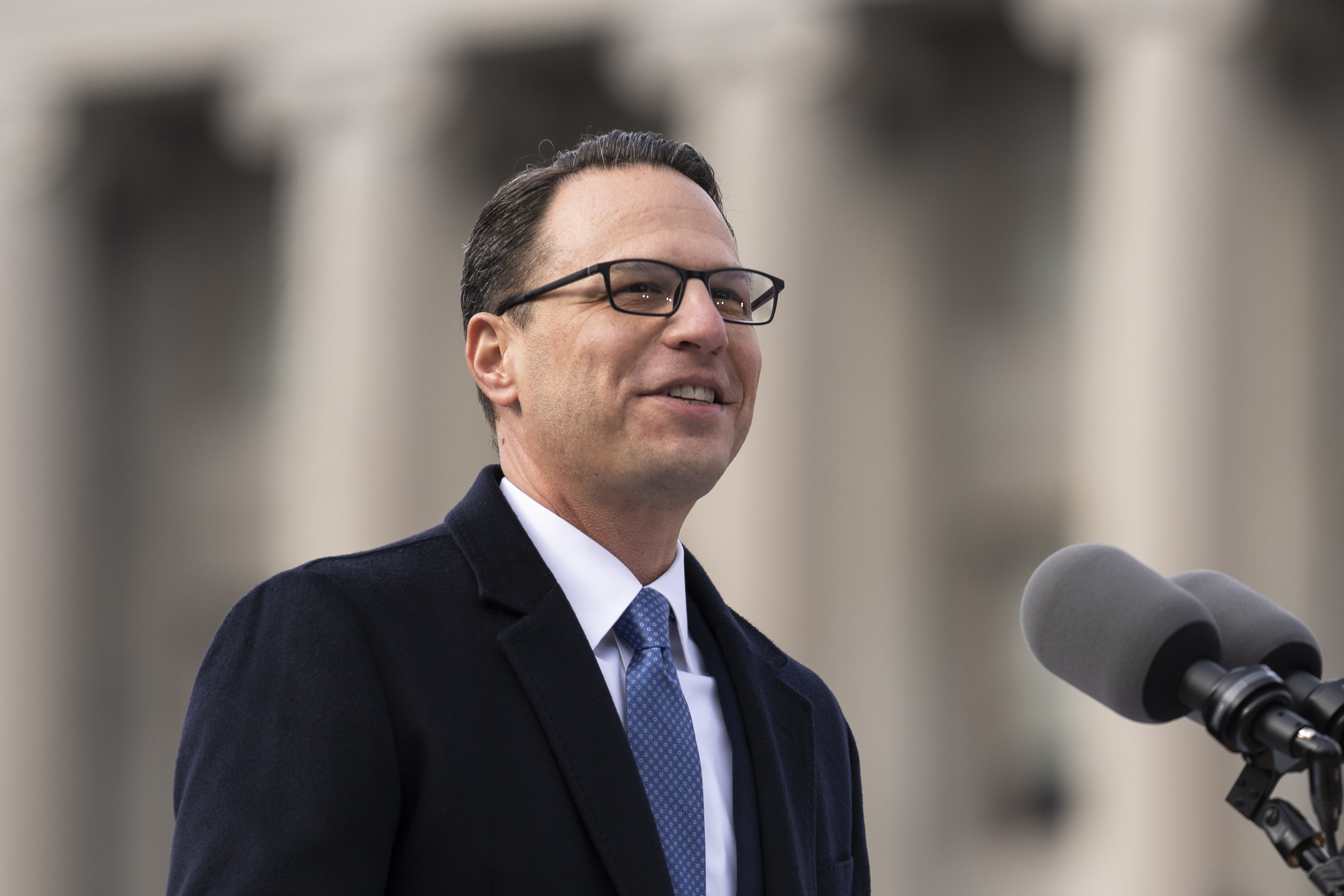
    Gov. Josh Shapiro speaks at the state Capitol in Harrisburg, Pa., Jan. 17, 2023. Pennsylvania state government would prepare to use artificial intelligence in its operations, Shapiro said Wednesday, Sept. 20, 2023, as states were increasingly trying to gauge the impact of AI and how to regulate it. Matt Rourke

    Today, Pennsylvania state employees use AI for a range of functions but focus on relatively basic tasks: deciphering handwritten clemency applications, scanning documents, and triaging customer service requests.

    Most employees access generative AI tools through no additional cost according to the Office of Administration. For the 721 employees who have access to ChatGPT Enterprise, the cost is $25 dollars per month for each user, bringing the annual cost — based on current usage — to $216,000 a year.

    Mark Fagan, a lecturer at Harvard University’s Kennedy School of Government and author of a book on how governments can use these tools, said that generative AI can serve as an important resource to deliver public services to constituents.

    “There are endless opportunities for using AI to improve the way we either provide higher quality, more efficiency, or more equity in our public services,” he said.

    But to do this best, he said, governments should first find friction points and inefficiencies in their operations and then determine if the technology can help.

    “AI is often a solution to pain, but that’s not enough,” Fagan said. “If you’re going to use AI, it should be the best solution to the problem.”

    A first-of-its-kind pilot

    In January 2024, the Shapiro administration launched a pilot program in partnership with OpenAI, the company behind the generative AI chatbot ChatGPT, to test the rollout of tools among a select group of executive agency employees.

    The program made Pennsylvania the first state in the nation to enter into an agreement with OpenAI, and also marked the first time employees within the state were permitted to use generative AI tools.

    “The pilot was designed to explore using AI tools from the perspective of Commonwealth employees; to understand when, where, and how tools could be of useful to them, where using these tools may introduce opportunities for risk, and areas where employees might need additional training or resources to be successful,” Dan Egan, a spokesperson for the Office of Administration, which has overseen the state’s AI rollout said.

    Sam Altman, OpenAI’s chief executive officer, said at the time of the rollout that the pilot “showcases Pennsylvania’s commitment to innovation” and would “provide valuable insights into how AI tools can responsibly enhance state services.”

    Open AI Chief Executive Officer Sam Altman, center, speaks at the Advancing Sustainable Development through Safe, Secure, and Trustworthy AI Event on Sept. 23, 2024, in New York. (Bryan R. Smith/Pool Photo via AP, File)Bryan R. Smith

    (OpenAI has since introduced a new model tailored specifically for government use and entered into partnerships with other states across the country. In February, Massachusetts officials announced they would make ChatGPT available to their entire 40,000 person executive branch.)

    In Pennsylvania, the pilot involved 175 employees from 14 state agencies.

    Participants, including Office of Administration employees, lawyers, and construction project managers, were equipped with access to ChatGPT Enterprise, OpenAI’s model for businesses which contains additional privacy features. Information submitted to the chatbot isn’t used to train additional models.

    Employees most commonly used ChatGPT during the pilot to assist with drafting emails or other writing.

    With access to ChatGPT, participants reported saving an average 95 minutes per day and 85% of employees said their experience was “somewhat” or “very positive.”

    During a news conference last March, Shapiro said state employees from lawyers to construction managers used the tools and found them beneficial. The pilot, the first-term Democratic governor added, allowed his administration to reduce the time needed to onboard a new employee by 30 days and to help to consolidate the number of state technology policies by 60%.

    “There are too many public officials who think they can stick their head in the sand and ignore this,” Shapiro said. “I believe we need to embrace them and we need to use it for the betterment of society and the betterment of the people we serve.”

    Protections for employees

    Shapiro, in his letter to state employees, wrote that his administration would implement AI tools with a goal of boosting productivity “not with the agenda of substituting Commonwealth employees with AI.”

    In its agreement with SEIU, the state made a commitment that AI tools will follow a “human in the loop” process in which “human workers oversee, review, and guide generative AI tool outputs to ensure accuracy, fairness, and compliance with workplace standards.”

    The agreement also affirmed the definition of a public employee as a person, something Catanese said was particularly important to his union.

    “I think right now, whether you work for the government or big business, or whatever type of entity, you want to work for an employer that actually sees in the long term there is a role for humans,” Catanese added.

    But, he is cognizant that the technology is advancing rapidly, and the union will need to remain vigilant in ensuring those human-in-the-loop protections remain in place to protect workers.

    Chinmayi Sharma, a professor of law at Fordham Law School whose research focuses on artificial intelligence, said a dissonance can exist between the draw of using AI tools and the diligence required to check their work.

    Organizations may turn to AI tools to make jobs more efficient or more accurate. But ensuring there is a human involved to check the work of those tools requires an additional level of vigilance and care, she said.

    “Are these humans in the loop being trained about AI to the point where they can identify subtle or nonobvious errors?” Sharma, whose research is generally cautionary about the use of AI, said.

    As far as he knows, Pennsylvania is the only state government at this point that has given a union collectively bargained protections around the use of AI, Catanese said.

    Within the union’s membership, perspectives on the rapidly changing technology are varied.

    “Most of our members do have some serious concerns about what it means for their future in the long term,” Catanese added.

    Other members, Catanese said, believe the tools could help lessen their workload. He said current use cases and restrictions on the types of data that can be entered into the tools means that some of those benefits aren’t yet clear.

    “Is it fully guaranteed forever? No,” Catanese said of the protections agreed to by the state. “Is it some level of protection that almost every public servant in the country doesn’t have other than our members at the state? Yes.”

    ‘A solution’

    The state’s use of AI is governed by a set of policies that are reviewed annually.

    Human involvement is required in work produced by generative AI and any use of AI tools must be disclosed if a customer is directly interfacing with them. Personally identifying, confidential and nonpublic information also can’t be submitted into AI interfaces.

    Throughout the AI rollout, the state has consulted researchers through ongoing partnerships with Carnegie Mellon University and the University of Pennsylvania. Subject matter experts from both institutions have answered questions for the state on an as-needed basis as the administration decides to implement new tools and policies.

    As the state considers future use cases, Pardoe said she wants “people to have confidence in the services they get from state government.”

    That means, she said, “being thoughtful and deliberate about where and how we choose to implement AI as a solution.”

    As AI becomes more complex, Sharma predicted that the same logic that makes AI tools attractive now will continue to apply as the technology becomes more advanced. If a government is under-resourced, temptations could exist to redirect resources away from paying human employees and toward something else.

    And, she noted that officials may be motivated to continue to adopt more tools.

    “I don’t know of a politician that’s going to enjoy coming out and saying, ‘We just put a lot of time and effort into this AI pilot, turns out we were wrong, it’s not a great thing for us to do and we are rolling it back,’” she added. “That’s a tough sell.”

    Fagan, the Harvard lecturer, believes that states with successful pilot programs, like Pennsylvania, will likely adopt the technology at a faster rate in the future.

    The important question, he said, won’t be whether more places are using these tools, or whether existing states expand the number of employees using them.

    “The question is whether it creates value or not,” he said of government AI usage. “The real value is in finding problems, finding where there is pain, and solving it.”

    Ethan Young is an intern with the Pennsylvania Legislative Correspondents’ Association. He can be reached at ethanmyoung@gmail.com.
  • El-Sayed spoke with Obama as Michigan Democrats look to unite after a bitter Senate primary

    El-Sayed spoke with Obama as Michigan Democrats look to unite after a bitter Senate primary

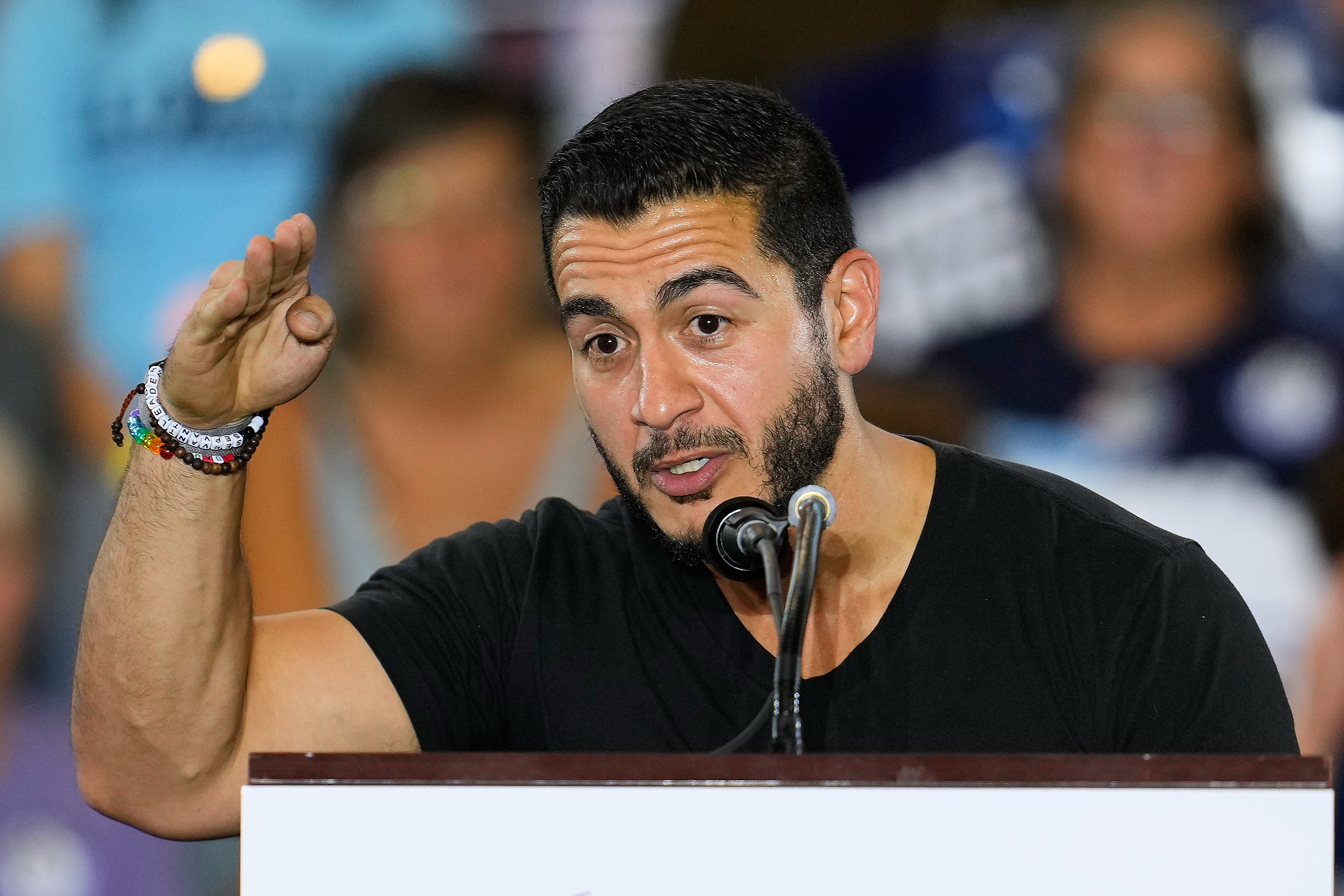
    BRIDGEWATER, N.J. — Abdul El-Sayed, the Democratic nominee for U.S. Senate in Michigan, said Sunday he has spoken with Barack Obama and hopes the former president campaigns with him as the party tries to unite after a bitter primary that exposed deep rifts between its progressive and moderate wings.

    El-Sayed said his Friday conversation with Obama was “really warm and inspiring.” The candidate did not provide details.

    “I was grateful for his advice. It was very warm, very inviting, and I know that he knows the critical role that Michigan is going to play,” El-Sayed told NBC’s Meet the Press.

    Asked if he would like to see Obama come to Michigan to drum up support for Democrats before the midterm elections in November, El-Sayed said he “really” hoped so and that Obama “knows a lot about winning Michigan” after carrying the state in the 2008 and 2012 presidential races.

    An Obama spokesperson confirmed the call.

    The discussion came the same day that a group of Michigan nominees and other notable national Democrats tried to present a united front at a rally in Detroit. The crowd cheered loudest for El-Sayed, a former public health official who last week narrowly beat establishment-backed U.S. Rep. Haley Stevens in a contentious and closely watched primary. A Democratic victory in the fall is crucial to the party’s chances of regaining a Senate majority.

    Democratic Sen. Gary Peters is not seeking reelection in the perennial swing state, which Republican Donald Trump won in 2016 and 2024, while Democrat Joe Biden carried it in 2020.

    El-Sayed faces Republican Mike Rogers, a former congressman who narrowly lost a Senate race to Democrat Elissa Slotkin in 2024 and has tried to capitalize on lingering tensions within the Democratic Party.

    Rogers has released a video message attempting to appeal to Democrats who feel their party may be moving too far to the left with El-Sayed. “You have a home with us,” Rogers says in the video.

    During an interview Sunday with CNN’s State of the Union, El-Sayed acknowledged that “we aired our differences” in the heated primary. But he said the internal divisions are “so much smaller than the similarities that we share.”

    “You’re seeing folks come together,” El-Sayed said, before adding of moderate Democrats, “We might see the world differently. But we also recognize the responsibility to come together.”

  • Window closes for Ohio GOP to replace Rep. Max Miller on the ballot

    Window closes for Ohio GOP to replace Rep. Max Miller on the ballot

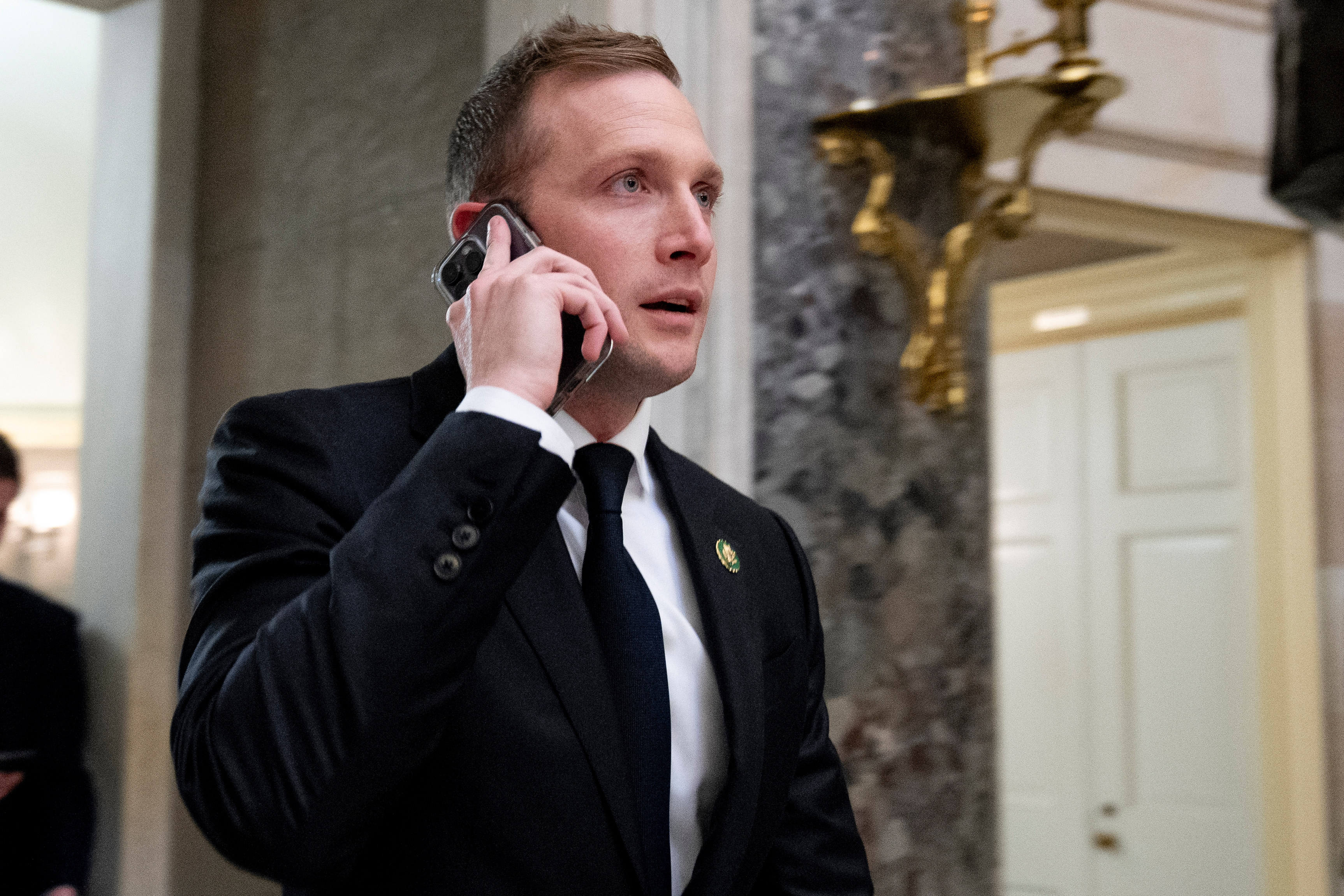
    Rep. Max Miller, the embattled Ohio Republican who faces accusations of domestic violence from his ex-wife, appears almost certain to remain on the ballot in November after a key deadline in the process to replace him passed Saturday.

    Miller, who denies any wrongdoing, has resisted growing calls to drop his bid for a third term and resign from Congress.

    Under Ohio law, the deadline to fill a vacancy for the November general election is Monday at 4 p.m. But there are earlier steps in the process that seemingly would have necessitated Miller withdrawing already.

    Most notably, the leaders of the local Republican parties in all four counties that are part of the district must meet to choose the replacement nominee. The statute requires that the chairperson from the most populous county provide at least two days’ notice to participants to convene the meeting.

    That means Miller would have had to withdraw his candidacy by Saturday to leave enough time for the selection process before Monday’s deadline. He did not.

    A spokesperson for Ohio Secretary of State Frank LaRose (R), who oversees elections in the state, said the office could not confirm that interpretation of the law because of the potential for litigation.

    If Miller were to end his campaign after Monday, his name could still be removed from the ballot until 70 days before the November election — that deadline is Aug. 25 — but there would be no Republican nominee for the office.

    Some Republican officials, fearful of putting a conservative-leaning seat at risk as the GOP fights to hold its narrow House majority, have maneuvered to pressure Miller to drop out of the race. Withdrawing after he won the Republican nomination for Ohio’s 7th Congressional District would have allowed local GOP officials to select a replacement.

    Following their divorce last year, Miller’s ex-wife, Emily Moreno, accused him in court filings of throwing hot water on her from a pan of eggs he had just cooked, once holding a gun to her head, and hurting their daughter, who suffered a fractured collarbone in February. Miller claims his ex-wife fabricated those allegations because she is mentally ill, which she denies.

    Public scrutiny of the abuse accusations increased in recent weeks after Moreno filed for a new restraining order, leading Miller to post a lengthy video statement online in which he blamed a custody battle for souring their relationship and vowed to press ahead with his reelection.

    Last Sunday, Sen. Bernie Moreno (R., Ohio), Emily Moreno’s father, broke months of silence about the situation, calling Miller “a danger” who is unfit to serve in Congress and urging him to step aside.

    That set off a scramble over Miller’s fate. Some Senate colleagues, including Sen. Jon Husted (R., Ohio), and conservative organizations in Ohio joined Moreno to push Miller to end his campaign and resign from Congress.

    But prominent Republicans, including President Donald Trump and House Speaker Mike Johnson (R., La.), have stood by Miller. Most of his GOP colleagues in the House refuse to discuss the allegations against him.

    Privately, Republican campaign officials express little concern about losing Miller’s seat because of the conservative tilt of this area stretching south from the Cleveland suburbs.

    The Washington Post interviewed dozens of voters in the district this week and found that the scandal was barely registering.

    Many were unfamiliar with the accusations against Miller, and even those Republicans who had heard were largely wary of wading into what they considered a family matter and reluctant to abandon the congressman. Only a handful of conservative voters told the Post that they were even open to considering his Democratic opponent, Brian Poindexter.

  • Blanche’s confirmation fight was tough. Being Trump’s AG may be tougher.

    Blanche’s confirmation fight was tough. Being Trump’s AG may be tougher.

    With his bruising confirmation battle behind him, Todd Blanche will soon be sworn in as the Senate-backed head of the Justice Department.

    But the hardest part may be what comes next.

    Blanche, President Donald Trump’s former criminal defense lawyer, will officially assume the title of attorney general and take command of an agency he has led on an acting basis since April.

    But he will do so under competing pressures from a president intent on seeing his enemies put on trial, a federal judiciary increasingly skeptical of those efforts, and a Republican-led Congress harboring growing doubts about Blanche’s ability to say “no” to his boss.

    The Justice Department’s career staff has been ravaged by firings, departures, and low morale over the past year and a half, as its traditional independence from the White House has evaporated. And its to-do list has only grown longer, including stepped-up efforts to prosecute fraud, illegal immigration, and violent crime while pursuing the sweeping, politically charged investigations of foes that the president has demanded.

    Blanche acknowledged those challenges and the difficulty of meeting Trump’s expectations as he spoke to reporters ahead of his confirmation last week.

    “It’s not as if I remain blissfully unaware of what will happen if I am confirmed,” he said. “When President Trump talks about what he expects this department to do to make this country safe, I don’t think the American people should look at that as some sort of threat to me or warning to me. He wants this country to be safe.”

    But as Blanche assumes his new role, now with the imprimatur of Senate backing, walking a tightrope between satisfying Trump and fulfilling an attorney general’s obligations to the rule of law is likely to only grow more perilous.

    Over the next several months, the Justice Department is expected to make a number of charging decisions in sensitive cases of keen interest to the president.

    Prosecutors in Florida have been at work for months on what Trump allies have referred to as a “grand conspiracy” investigation of former Obama- and Biden-era officials, including former CIA director John Brennan, who they say engaged in a long-running scheme to violate the president’s civil rights through efforts to undermine his presidency — allegations Brennan denies.

    Meanwhile, department investigators continue to seek evidence to back Trump’s unproven assertions that the 2020 election was stolen, that there exist broad left-wing conspiracies to oppose his second-term agenda, and that his critics, including former FBI director James B. Comey, deserve to be put in prison.

    Despite concerns raised by lawmakers about Trump’s role in those probes, Blanche has repeatedly defended the president’s “right” to intervene in Justice Department business — a significant departure from long-standing norms.

    “If we have discussions where we have to talk about a case and whether we’re going to charge a case or whether we have charged a case, that’s OK,” Blanche told reporters last week. “I’m not concerned about that.”

    The Senate’s 50-49 vote to confirm Blanche early Saturday came in spite of reservations expressed by some Republicans over the growing politicization of the department under Trump.

    In casting the pivotal votes, Sens. John Cornyn (R., Texas), Thom Tillis (R., N.C.) and Bill Cassidy (R., La.) each said they worried about Blanche’s ability to put the interests of the American people above those of his former client.

    But each said Blanche had provided them with personal assurances that had assuaged their doubts about his ability to effectively counsel Trump when the president’s instincts run contrary to the rule of law.

    “I am realistic that President Trump can be unrelenting,” Cassidy said Friday, but added: “This will be true no matter who the attorney general is. And this is the rationale for having a Senate-confirmed attorney general with more leverage to push back.”

    Yet, even as Blanche was making those promises to the senators last week, Trump continued to pick at some of the very issues that had stoked lawmakers’ concerns.

    He threatened to revive the controversial proposal for a nearly $1.8 billion fund to compensate those who claim they were victims of political prosecutions, casting doubt on Blanche’s pledge to Congress that the fund was officially dead.

    He insisted the U.S. attorney in D.C., Jeanine Pirro, should refile cases that she withdrew against four people previously accused of damaging the Lincoln Memorial Reflecting Pool, even after she determined that there was no evidence to support the charges and that a government contractor was to blame for the damage.

    And, in a letter this week, the White House revived its efforts to oust Lisa Cook from the Federal Reserve Board over unproven allegations of mortgage fraud, despite a Supreme Court ruling in June blocking that move and the fact that the Justice Department has not filed any charges despite months of investigation. Cook has denied any wrongdoing.

    Publicly, Blanche has pointed to the unique relationship he built with Trump while defending him against the four criminal cases he faced in his years out of office, saying it gives him a base of trust from which to advise the president on issues tied to the Justice Department.

    But Blanche has also acknowledged that he can only do so much.

    “President Trump trusts me to give him counsel,” he said during his confirmation hearing in July. “Counsel does not mean a ‘yes man,’ and that’s true in my case like it should be in any attorney general’s.”

    He added, though, that “the Department of Justice, like every single department in the executive, is part of the executive” branch.

    Current and former members of the department’s career workforce have said they, too, once hoped that Blanche could serve as a moderating check on Trump’s most aggressive impulses, only to see those expectations dashed.

    When he was confirmed last year as the Justice Department’s No. 2 official, under then-Attorney General Pam Bondi, Blanche brought to the job experience as a federal prosecutor in Manhattan and, later, as a partner at a prestigious law firm.

    Career officials said they expected that background had instilled in Blanche a recognition of the department’s tradition of independence and respect for the rule of law.

    Their optimism quickly faded, they said, as Blanche publicly embraced Trump’s calls for disruptive change in the department and pursued legally questionable cases against the president’s rivals.

    Behind the scenes, Blanche has at times demonstrated a willingness to gently push back against the president, though not always with success.

    The Washington Post reported last year that he joined Bondi in advocating to save the job of Erik S. Siebert, the former U.S. attorney for the Eastern District of Virginia, who concluded in September that there was insufficient evidence to charge two top Trump targets — former FBI director James B. Comey and New York Attorney General Letitia James — with crimes.

    Trump ousted Siebert anyway, replacing him with Lindsey Halligan, who secured the indictments Trump wanted against both. Those cases were later thrown out by a federal judge who ruled Halligan had been appointed illegally.

    And on Wednesday, as Trump suggested Pirro’s job could be in jeopardy over her decision to withdraw the Reflecting Pool cases, Blanche offered her his full endorsement.

    “Judge Pirro is doing a great job, and our city, Washington, D.C., is a lot safer in no small part to her effort and the prosecutors’ efforts that she works with,” he said.

    Still, Blanche added: “Hypothetically, if the president chose to fire a U.S. attorney, he’s allowed to do that because he’s the president of the United States.”

    The same applies to attorneys general — and Trump’s relationships with those who have previously occupied the role under him have been famously fraught.

    He fired Jeff Sessions two years into his first presidential term, following months of acrimony over Sessions’s decision to recuse himself from the Justice Department’s investigation of Russian interference in the 2016 presidential campaign — a move that cleared the way for the appointment of special counsel Robert S. Mueller III.

    William P. Barr, Trump’s second Senate-confirmed attorney general, resigned after publicly contradicting Trump’s claims about the 2020 election being stolen.

    Trump fired Bondi in April over frustrations with her slow pace and limited success in bringing cases against his adversaries.

    Blanche, speaking to reporters soon after the president chose him to replace her, contemplated that he, too, could one day find himself on the wrong end of Trump’s expectations.

    If that day comes, Blanche said at the time, he would thank the president for the opportunity to serve, adding: “I will say, ‘Thank you very much. I love you, sir.’”

  • A new federal ‘Data Center Bill of Rights’ took lessons from Philly suburbs and Western Pa. fracking country

    A new federal ‘Data Center Bill of Rights’ took lessons from Philly suburbs and Western Pa. fracking country

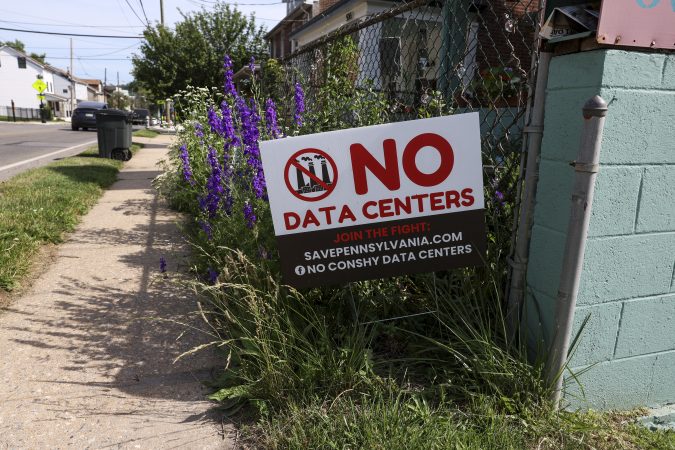
    WASHINGTON — A new federal proposal to enact protections for communities opposed to the proliferation of data centers has drawn inspiration from both the Philadelphia suburbs and Western Pennsylvania fracking country.

    The Data Center Bill of Rights is one of several national efforts to address a growing dissatisfaction with data centers, which have so far faced few restrictions at either the federal or state level in Pennsylvania.

    U.S. Rep. Ro Khanna, a California Democrat and Bucks County native considering running for president in 2028, said his home state should be doing more.

    He introduced the federal legislation after a recent tour across Pennsylvania that he said was designed to hear from communities that have lost manufacturing jobs and other economic opportunities.

    Data center concerns came up more than any other issue, he said — leading him to incorporate new ideas into the bill he already had in the works, and to call for a pause on data center development in Pennsylvania until further protections and local controls are enacted.

    A statewide pause would be more than what Gov. Josh Shapiro — another potential 2028 Democratic contender — has proposed as he seeks to enact data center guidelines. It would also be less than other Democrats, both in Pennsylvania and nationally, who have called for more robust moratoriums. Shapiro’s Republican challenger this year, Treasurer Stacy Garrity, has also called for a pause but not for an extended moratorium.

    “I was surprised by the anger about it in Pennsylvania,” Khanna said in an interview after his 15-county tour. “In other states, people are sometimes opposed in local communities, local pockets. But not this widespread anger.”

    Khanna, a Council Rock High School graduate who has represented Silicon Valley in Congress since 2017, spoke about the Data Center Bill of Rights during his tour but said afterward that it was “partly inspired” by the concerns he heard in the communities similar to the ones where he grew up.

    He said he was alarmed by the complaints he heard outside Philadelphia, where five data centers have been proposed in close proximity to each other in King of Prussia and another 2-million-square-foot data center is proposed in Conshohocken.

    “As a kid, I used to go to Conshohocken and the King of Prussia Mall. I’m familiar with that area,” Khanna said. “You can’t ride roughshod over what Delaware County wants or when Montgomery County wants.”

    The legislation would declare that communities have the right to reject data centers through a “transparent community process” or allow them with specific protections. That includes demanding that data centers don’t lead to higher electricity rates, that they use renewable energy sources and disclose their water consumption, and “pay their fair share of state and local taxes.”

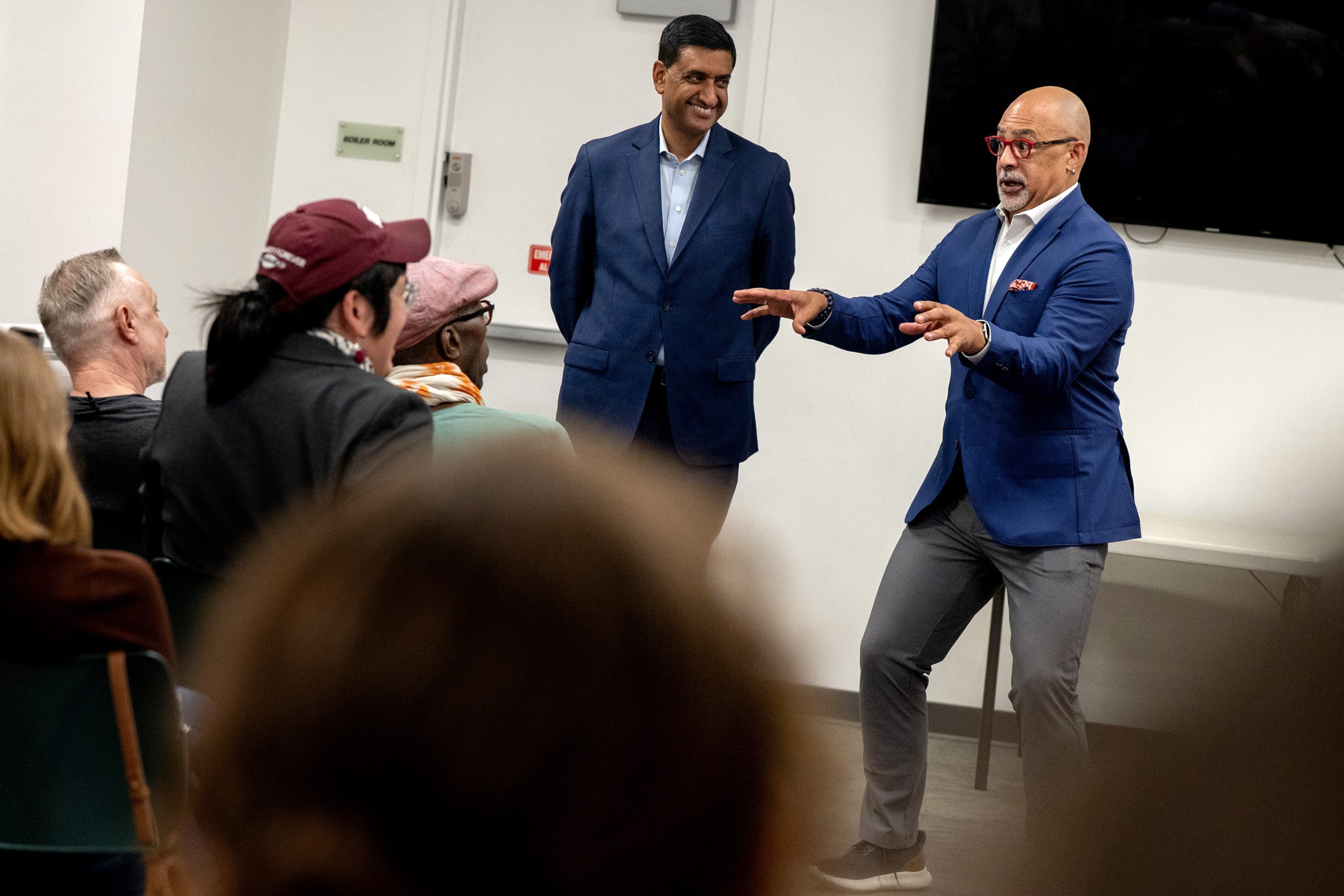
    State Rep. Chris Rabb (right) joins U.S. Rep. Ro Khanna (left) Tuesday, July 28, 2026, as he stops on his “Made in PA: New Economic Patriotism Tour” at the City Institute Library on Rittenhouse Square.Tom Gralish / Staff Photographer

    One specific provision, Khanna said, was informed by his visit in Washington County with individuals who are paid to host natural gas wells on their properties. It was there that he said he learned of community demands for oil and gas well sites to be at least 2,500 feet from residences. That buffer was a recommendation from a 2020 grand jury report released by Shapiro when he was serving as attorney general and that outlined health and safety issues caused by fracking in the Marcellus Shale region.

    The recommendation was not followed, and advocates are continuing to push for extending the buffer from the current distance of 500 feet, according to Inside Climate News.

    Khanna’s bill of rights would call for data centers to be built no closer than 2,500 feet from residences, schools, childcare facilities, hospitals or nursing homes. He said the environmental and health hazards for data centers aren’t the same as fracking but they should be kept at a distance from communities that don’t want to live directly next to them.

    “At least they were offering royalty checks in the cases of fracking,” Khanna said. “[Data center developers are] not even giving the communities checks. It’s just kind of like, ‘OK, we’re going to build.’ What does the community get out of it? I literally don’t understand it.”

    Data center advocates have argued their development is critical in winning an artificial intelligence war with China, and that they will bring construction and some skilled jobs to communities that need them.

    Even the staunchest advocates, though, have acknowledged the public blowback.

    “I do think that data centers in Pennsylvania have raised legitimate concerns,” U.S. Sen. Dave McCormick (R., Pa.) said during a recent telephone town hall as he continued to promote them in the competition with China and their creation of “thousands of jobs.”

    When developers are making their pitch, McCormick said they should come with commitments to protect energy costs and overuse of water, use local labor, invest in the community and pay taxes.

    “That should be part of the deal up front,” McCormick said during the telephone town hall in late July. “With all those facts, then the local community can decide whether they want the data center or not. And if they choose not to, that’s their choice.”

    Khanna said he’s hoping for bipartisan support as he introduces the bill of rights idea. He’ll also be competing with other proposals — like one from fellow progressives U.S. Rep. Alexandria Ocasio-Cortez (D., N.Y.) and U.S. Sen. Bernie Sanders (I., Vt.) called the AI Data Center Moratorium Act. The bill would enact an immediate federal moratorium on data center construction until other safeguards are passed into law, including some of the ideas Khanna and McCormick have proposed, like around utility costs.

    Several Pennsylvania state-level laws have been proposed, though the legislature did not address them during its busy budget season earlier this spring and summer. Lawmakers also left Harrisburg without ending tax breaks aimed at incentivizing data center construction even though the idea had garnered widespread support.

    “They shouldn’t be getting these tax breaks to build,” Khanna said. “That’s absurd when you’ve got hyperscalers that are making trillions of dollars.”

    The fact that many of those ultra-wealthy corporations are based in his district made the issue a politically dicey situation for him, but also one that the possible presidential hopeful said he was willing to take on.

    “We’ve got to pause it in states like Pennsylvania,” Khanna said. “Some of my own constituents aren’t going to like that.”

  • Pirro, Trump’s longtime champion, is on the outs over Reflecting Pool move

    Pirro, Trump’s longtime champion, is on the outs over Reflecting Pool move

    Jeanine Pirro swept into Washington last year as a camera-ready prosecutor and staunch ally of President Donald Trump. Suddenly she was everywhere: crime scenes and community forums, court hearings and TV interviews, TikTok-style videos and black-tie dinners.

    But after more than a year in office as U.S. attorney in the nation’s capital, Pirro now finds herself at odds with Trump — with her job at risk — over scraps of blue liner that peeled off the Lincoln Memorial Reflecting Pool.

    Pirro, who left her job as a Fox News host to become the top federal prosecutor in D.C., immediately began seeking the toughest charges possible for violent crimes. She launched criminal probes of more than a half-dozen public officials who had drawn Trump’s ire — then punted the blame to judges and juries when those efforts collapsed.

    But her moves to drop several cases of alleged vandalism at the newly renovated pool contradicted Trump and blamed the administration’s handpicked contractor for botching a project the president had championed. And in the end, they exposed a crack in Pirro’s ability to balance Trump’s demands with her legal responsibilities.

    “She thought she had covered all of her bases — that’s what she thought — and then, of course, things went south,” a person who has known Pirro for decades said of her current predicament with the president.

    People who have followed Pirro’s trajectory as a judge, district attorney, conservative author, and TV personality say she is a prosecutor at heart who has long been passionate about fighting crime and protecting victims, and who found a renewed sense of purpose when Trump tapped her to run one of the busiest U.S. attorney’s offices in the country.

    Her detractors say few in the Justice Department have been as willing as Pirro to gin up prosecutions or test the boundaries of the system in pursuit of Trump’s fixations and antagonists.

    This account of Pirro’s tumultuous time as U.S. attorney, and how she has handled being the prosecutor in Trump’s backyard, is based on court records and interviews with 11 people familiar with key events. Almost all spoke on the condition of anonymity to offer candid assessments of Pirro while her job is seemingly on the line. Pirro, through a spokesperson, declined an interview request.

    Her troubles began after the Trump administration installed a coat of blue sealant at the Lincoln Memorial Reflecting Pool in anticipation of this year’s July Fourth festivities. Pieces of paint quickly started coming apart and floating to the surface, and some visitors who reached out to grab them were arrested, court records show.

    Trump claimed vandals had torn up the pool’s “beautiful facade,” and Pirro initially filed criminal charges against four people, including a former Olympic canoeist who was indicted on a felony count of destruction of property. In her booming New York brogue, Pirro castigated that defendant at a news conference and said her office was “committed to protecting our national resources, our monuments, and our parks from vandals.”

    But Pirro abruptly dropped all four cases weeks later, blamed the Interior Department for misleading prosecutors into filing unsupported criminal charges, and was soon inside the Oval Office to explain herself.

    A former judge and district attorney who served for decades in Westchester County, N.Y., Pirro arrived at the White House on Monday with boxes of evidence showing that the Interior Department had awarded a no-bid contract to a company that misapplied the liner, according to people familiar with the matter. That evidence is detailed in an explosive, 20-page court filing that the U.S. attorney’s office submitted last week, which stated that “the damage was the result of a botched installation and not vandalism.”

    Pirro had personally reviewed and signed off on the filing, and it conveyed her frustration that the documents from Interior were not quickly turned over to prosecutors, as well as her view that they “demolished” any chance of building a winning case against the alleged vandals, according to people with knowledge of her thinking. Interior Secretary Doug Burgum pushed back, writing on X that the “evidence is clear” that vandalism was what damaged the pool.

    One person familiar with Pirro’s thinking described her approach to the White House meeting as: “Stand her ground, be focused, make her case, and do the right thing.”

    The rift between Trump and Pirro, over peeling bits of paint at a national monument, came after she had launched criminal probes into six Democratic lawmakers who criticized the administration’s military actions, as well as the Federal Reserve chair at the time, Jerome H. Powell, who refused Trump’s demands to resign or institute lower interest rates.

    A federal judge rejected Pirro’s attempts to issue subpoenas in the Fed investigation, and she later closed that probe without seeking criminal charges, but Trump praised her doggedness in taking the case as far as she could. A grand jury declined to indict the Democratic lawmakers, and Trump soon moved on to other issues.

    This time, Pirro’s office said in the Reflecting Pool court filing, prosecutors were voluntarily dismissing the charges. Trump said Pirro “folded like an umbrella.”

    “I just think she was totally wrong,” Trump told reporters Wednesday, noting that National Park Service employees had told authorities they saw vandals in action. He described problems with the contractor as “a couple of little things” and said he hadn’t made a determination on whether to keep Pirro on the job.

    Trump continued his criticism Friday, saying on social media that “U.S. Attorney Jeanine Pirro should revisit her hastily made decision.”

    Pirro had befriended Trump decades ago in New York’s social circles, but they had never worked together, and one dynamic underlying their rare public break is that both are more comfortable calling the shots than deferring to others, said the longtime friend, who has seen them together.

    “She has a lot of respect for the president,” this person said, adding, “They have a relationship that for the first time has now transformed into a professional subordinate situation.”

    Pirro, 75, leads the only U.S. attorney’s office in the country with the dual mandate to prosecute local crimes and complex federal cases. Trump named her interim U.S. attorney in May 2025. She was later confirmed by the Senate, earning support from Republicans that Trump’s first pick for the job, Ed Martin, couldn’t muster.

    She came into a deep-blue city where only 6.5% of D.C. voters cast ballots for Trump in the 2024 election. Protests flared when immigration raids and street arrests swept up hundreds of people after Trump declared a crime emergency in D.C. last year, bringing in teams of federal officers and National Guard troops to patrol city streets. Pirro has often been the one absorbing the blowback from heated community meetings and in court, where juries have voted down felony charges for some defendants and acquitted others of assaulting federal officers.

    “The truth is that with the federal surge — whether you like it or you don’t like it — crime is down,” Pirro told the dozens of community members in the D.C. police’s Fifth District office in Northeast Washington after a tense weekend last October in which 12 people were shot.

    Homicides last year declined by roughly one-third, totaling 127, according to D.C. police statistics. They have dropped another 32% this year, and stood at 66 as of Thursday. Robberies and property crimes also have declined, but assaults with dangerous weapons have risen 42% this year, to 758 instances, according to the police data.

    “President Trump said, ‘I’m going to make D.C. safe and beautiful,’” Pirro added at the October meeting. “And you know what? He’s going to do it. … Every day we’re pushing. Pushing against juries, pushing against judges.”

    On social media, she frequently repeats a similar message, crediting the president with making the city safer.

    Those who have worked with Pirro describe her as a decisive boss, quick to grasp legal nuances and less abrasive than her brash TV persona. She has taken a particular interest in a new task force to disrupt international cryptocurrency scams, and she has called on the D.C. Council to toughen sentencing laws for juvenile crimes and partnered with Mayor Muriel E. Bowser (D) on efforts to strengthen domestic violence legislation. Pirro, according to those who know her, is meticulous about her fashion choices, known for her sweet tooth, and on friendly terms with some of her staff, attending trivia night at a brewery/pizzeria this year.

    Pirro has attempted to rebuild the U.S. attorney office’s ranks, which were decimated by staff departures and Martin’s purge of prosecutors who had investigated the Jan. 6, 2021, attack on the U.S. Capitol. The Justice Department is now offering $25,000 bonuses to lawyers who sign a commitment to stay at the office for two years, according to two people familiar with the matter, who spoke on the condition of anonymity because they were not authorized to discuss it.

    “I think that U.S. Attorney Pirro, over the past year and a half that she’s been there, has led an unprecedented effort to literally turn this city on its head to be a safe place for all of us to live and eat,” acting attorney general Todd Blanche said at a news conference Wednesday, a notable show of support that buoyed Pirro’s allies. Blanche added that Trump was allowed to dismiss any U.S. attorney.

    Although Pirro’s office has had a mixed record with jury trials in U.S. district court over the past year, there have been no major setbacks in the office’s biggest cases. Those include the prosecutions in the killing of a 21-year-old congressional intern; the fatal shooting of a young couple outside the Capital Jewish Museum last year; the ambush-style attack in which one National Guard member was killed and another wounded; and the case of Cole Tomas Allen, who has been charged with attempting to assassinate Trump at the White House correspondents’ dinner this year. The trial of an alleged terrorist behind the infamous bombing of Pan Am Flight 103 over Lockerbie, Scotland, is scheduled for this year in D.C., with Pirro’s office running the prosecution.

    But critics say Pirro has curtailed prosecutors’ autonomy and jacked up their workloads by ordering them to seek the maximum possible charges in every case. Judges and public defenders have criticized Pirro’s office for bringing cases during Trump’s federal law enforcement surge that were based on incomplete or shoddy investigations, leading to multiple instances in which the U.S. attorney’s office dismissed charges after the defendants spent time in jail.

    “I think many Americans have a sense that in Trump 2.0, prosecutions are being brought for reasons other than public safety,” Paul Butler, a Georgetown University law professor, said in an email assessing Pirro’s record as U.S. attorney. “We are now seeing many jurors more carefully scrutinizing cases, and that’s a good thing in terms of how the system is supposed to work.”

    Longtime defense attorney Joe Flood, who practices in the D.C. area, recalled that he first encountered Pirro in the 1990s when she was the Westchester County district attorney, and he was defending people facing the death penalty in New York. She made death-penalty cases central to her political ambitions, he said, as she geared up for a potential run for state attorney general or governor, but she never got a defendant sentenced to death and eventually left elected office for her television career.

    In Trump’s second term, Flood said, some U.S. attorneys in key offices have discovered that being a responsible prosecutor is sometimes a fireable offense. He noted that Erik S. Siebert, whom Trump had appointed as the interim U.S. attorney for the Eastern District of Virginia, was forced out last year after declining to seek criminal charges against former FBI director James B. Comey and New York Attorney General Letitia James. Career prosecutors in both cases had said the evidence was too flimsy to take to court.

    “The reality is if you’re an ethical U.S. attorney, and you won’t be bent to Trump’s will, you’re gone,” Flood said. Of Pirro’s decision to drop the Reflecting Pool cases, he added: “She gets some credit for standing up to Trump.”

    Judges have also criticized Pirro’s office for wiping out the most serious convictions from the Jan. 6 riot — the seditious conspiracy cases against the far-right Proud Boys and Oath Keepers.

    Members of the extremist groups stockpiled firearms and led the charge into the Capitol, according to the evidence presented at their trials. Pirro this year signed on to key court filings to clear those charges as a matter of loyalty to Trump, according to people familiar with the matter. But she declines to take questions about those moves, even as federal judges bemoan the historical consequences of undoing convictions for crimes against the country.

  • Voter turnout surges in Tennessee after Black-majority district is erased

    Voter turnout surges in Tennessee after Black-majority district is erased

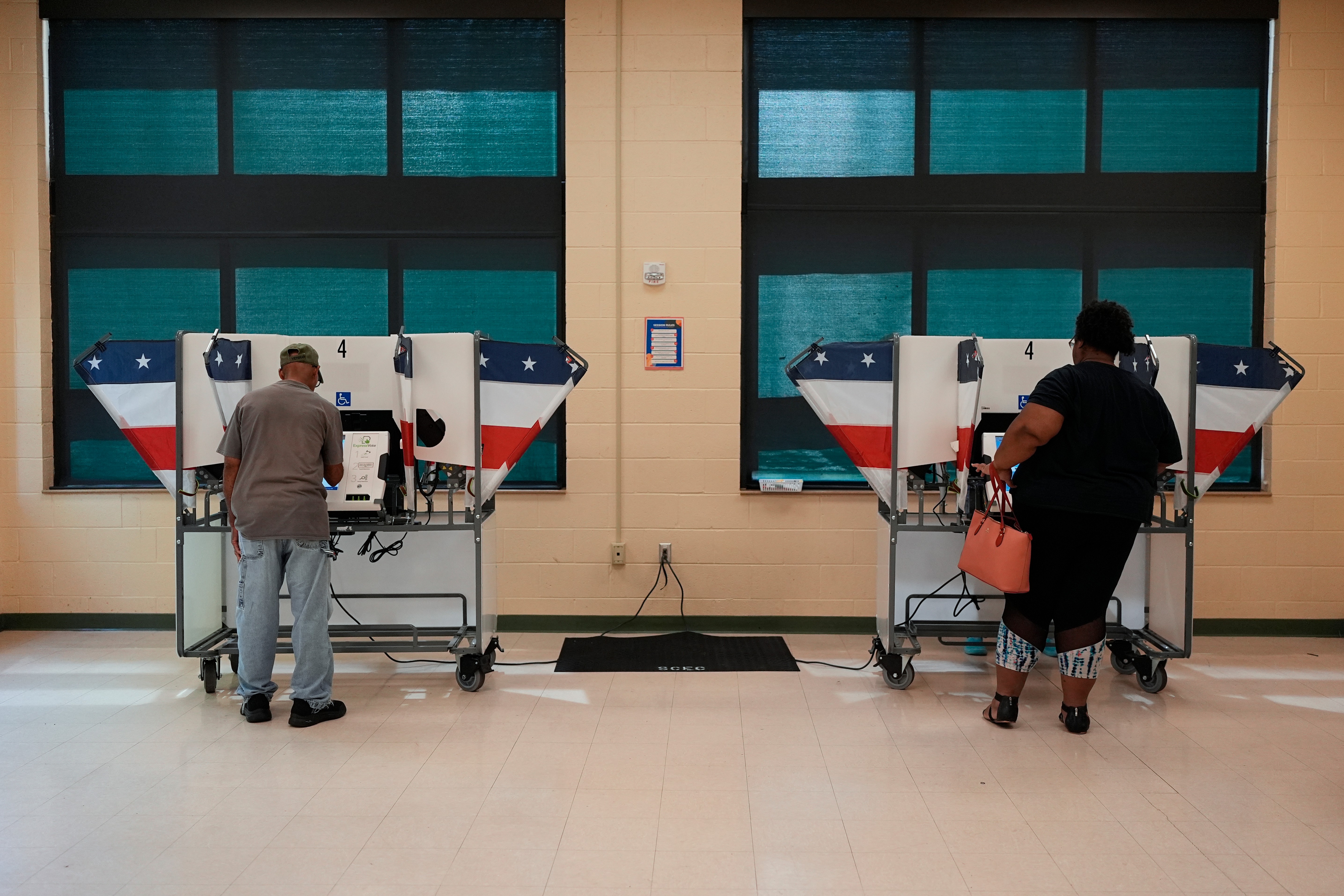
    Democratic turnout for House primaries in a majority-Black Tennessee county surged to the highest level in a decade Thursday, the latest sign that redistricting may be energizing Black voters across the South.

    A fifth of active registered voters cast a ballot in three Democratic U.S. House primaries held Thursday in Shelby County, which includes Memphis. That’s more than double the turnout percentage for similar contests in 2024.

    Organizers said the outpouring was motivated by anger over the Republican-led legislature’s action to break up the state’s only majority-Black congressional district after the U.S. Supreme Court eliminated minority voter protections in the Voting Rights Act this year. Lawmakers dispersed the Black voters of Shelby County into three separate districts that stretch into rural white communities.

    “People are pissed off,” said Kristal Knight, chairperson of the voting rights group Organize Tennessee. Memphis is “the densest part of the African American vote in the state, and people really took it personally — you are trying to come into our county, break up our county, and split our vote? And what better way to push back than to say we’re going to turn out.”

    President Donald Trump has pushed red states to draw new congressional districts to help the GOP maintain control of the House in elections this fall. The Supreme Court’s gutting of protections in the Voting Rights Act made that easier. Louisiana, Alabama, and Tennessee quickly drew new maps that dilute Black voting power, raising fears that the civil rights gains of the past 60 years are being destroyed.

    But the actions have galvanized Black voters, who have mobilized protests in many states and turned out in historic numbers in primaries in South Carolina. That turnout helped prompt the South Carolina legislature to abandon plans to dissolve a majority-Black district. The Georgia legislature also opted not to act after an outpouring of opposition.

    “People are really amped up about … what is happening across the South,” Knight said. “People need to show the rest of America, this is not the way you treat voters.”

    Democrats and voting rights organizers had worked overtime in Tennessee over the past few weeks to ensure a big presence in primary elections there for governor, a U.S. Senate seat, and the state’s nine House districts, even though Republicans are heavily favored to win those races in November.

    “A night like last night lets you know it’s not all in vain,” said the Rev. Earle Fisher, pastor at Abyssinian Missionary Baptist Church in Memphis, who was among an outspoken, ardent group of faith leaders in the city who ramped up turnout efforts after redistricting.

    Memphis resident Harmony Lucas, 26, was one of the young voters who helped to boost turnout — urging friends, family, and even co-workers to join her at the polls. Lucas said she has voted in the past, but the GOP effort to break up the state’s only majority-Black district “made me realize I had to get more serious that my voice is heard. It matters.”

    Ian Randolph, who founded the Shelby County Voter Alliance to boost voter participation, attributed the jump in turnout in part to such efforts, including by unions and other civic organizations. In recent months, they have had poll parties, done texting and phone banking, and gone door to door to canvass voters.

    “Everything that touches a voter, we are involved in,” Randolph said. “Working those things got us a better turnout.”

    Rep. Steve Cohen, Tennessee’s lone Democratic congressman, decided not to seek reelection after the 9th District, which he represents, was overhauled. Justin Pearson — a charismatic Black preacher who received national attention in 2023 for his expulsion from the state legislature after protesting at the Capitol in Nashville — won the Democratic nomination to wage the uphill battle to replace Cohen.

    In his victory speech Thursday night, Pearson depicted his candidacy as an act of defiance against redistricting and the undermining of the Voting Rights Act, calling those steps “a blatant attempt to keep people like us out of power and an attempt to make us quit.”

    GOP strategist Ward Baker, who is working in the 9th District with Republican nominee Brent Taylor, disputed the idea that Black voters are turning out in bigger numbers out of anger over redistricting.

    “It’s the first time there’s a contested primary in a long time, and several people are running,” Baker said. He pointed out that Republican voters overall still outnumber Democrats by a wide margin.

    Beyond redistricting, Randolph said voters in the majority-Black county have been energized by other issues including an attempted state takeover of Memphis-Shelby County Schools and the presence of federal immigration agents and the National Guard in the city.

    Democrats’ task gets harder heading into general elections this fall. Tennessee’s 9th District, which had been the state’s only blue seat, is now rated Solid Republican by the Cook Political Report and went for Trump by 21 points in 2024.

    “Everyone that came out last night — that needs to double for November,” Knight said.

    Fisher said he and other pastors have been planning another “Souls to the Polls” rally like the one that drew more than 1,000 people this spring. Thursday’s show of force gives him cautious optimism for November.

    “At least some of what we did worked,” Fisher said. “It’s one of those instances where you can log it as a win and build on it, but it’s not like a victory lap.”

  • A pillar of environmental enforcement is targeted by Trump and Musk’s AI company

    A pillar of environmental enforcement is targeted by Trump and Musk’s AI company

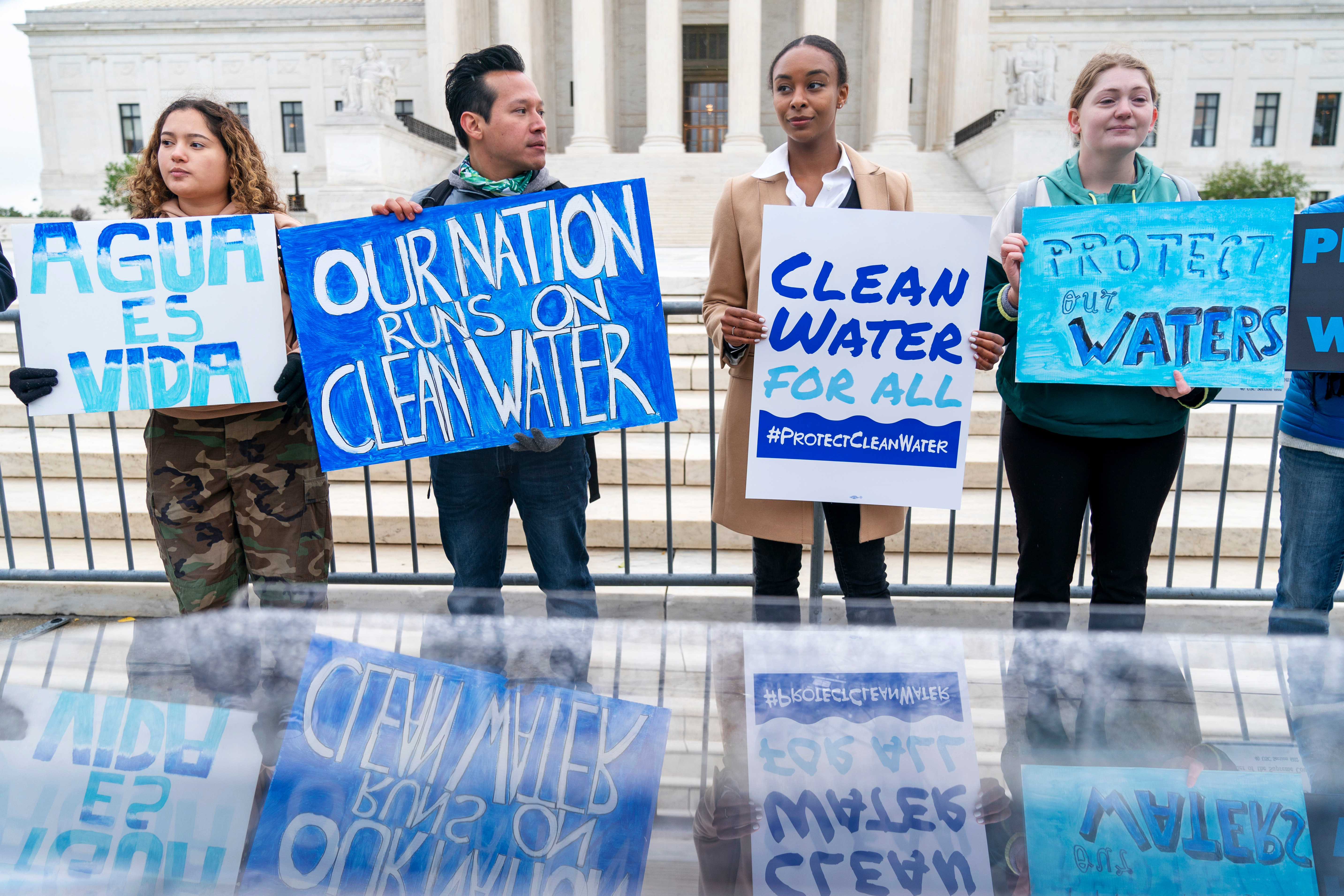
    WASHINGTON — Right-leaning legal activists along with Elon Musk ‘s artificial intelligence company have brought sweeping challenges against a cornerstone of legal enforcement in the United States: the right of private groups, people, and local governments to sue over violations of many major laws.

    Their argument, supported by the Trump administration, is that the Constitution reserves tremendous power for the president and federal agencies to decide how — or whether at all — to enforce federal law. They contend Congress should never have handed that power to others through so-called citizen suits that are part of environmental, campaign finance, and certain other laws.

    Environmentalists say it would be devastating to lose this essential, decades-old tool that is used to impose fines and halt lawbreaking by bad actors. Citizen suits, for example, have extracted millions from heavily polluting oil and gas operations, and ensured that lead pipes in Flint, Mich., would be removed after its water crisis.

    Legal experts say four pending federal cases — one of them filed last week — are moving forward at a time when the conservative majority on the Supreme Court gives opponents of citizen suits a greater chance than ever of success. The hard part for those opponents now is winning early federal cases and creating disagreement between the country’s appeals courts, which may help convince the Supreme Court the issue is important enough for a nationwide ruling.

    Back in 2000, a Supreme Court opinion opened the door for that possibility.

    “Many of us who worked in this area have been waiting basically 26 years for this shoe to drop,” said Richard Lazarus, a Harvard professor with decades of experience in environmental law.

    A more inviting Supreme Court could take up the issue

    Lazarus was referring to former moderate Justice Anthony Kennedy’s comments in a Clean Water Act case that citizen suits raised “difficult and fundamental” questions about whether they improperly dilute executive power. The late conservative Justice Antonin Scalia wrote in a dissenting opinion in the same case that citizen suits turn “over to private citizens the function of enforcing the law.” He avoided explicitly saying they were constitutional.

    “The court is more like Scalia’s court since he died than it ever was when he was there,” said Lazarus.

    He observed that those who lost cases where Scalia dissented are rushing back to today’s court hoping for a more favorable result.

    The critical issue for citizen suits is who — the government or private citizens — collects fines and has control. A person filing a citizen suit must tell the government ahead of time. The government can stop the suit if it sufficiently pursues the case itself, but its options are limited and the person suing can stay involved. Citizen suits can force compliance with the law and result in fines, which go to the U.S. Treasury.

    Prominent law firms, companies push against citizen suits

    Efforts to increase presidential power and limit who can sue have grown in recent years. They gained vital federal support this summer.

    That’s when the Pacific Legal Foundation, a right-leaning organization with recent Supreme Court success, chose a routine citizen suit in Tennessee federal court for a broader constitutional challenge.

    They signed on as attorneys for Springfield, a town of roughly 19,000 north of Nashville, that was in the early stages of fighting allegations brought by Tennessee Riverkeeper that it had let too much sewage flow from its treatment plant into a nearby creek, violating the Clean Water Act.

    It was the thirty-first citizen suit Tennessee Riverkeeper had filed under the Clean Water Act since 2010. Pacific Legal argued this was part of the problem — a private group of unelected activists had repeatedly forced others to expend resources defending themselves.

    It’s better when “the government is the one wielding the power because the government remains accountable to the people,” said Sean Radomski, a Pacific Legal Foundation attorney on the case.

    Radomski isn’t targeting every lawsuit a person can bring under federal law — he takes exception to those where fines go to the Treasury and where he says people are improperly taking on the government’s powers. Civil rights lawsuits, for example, where damages are paid directly to those wronged, wouldn’t be touched. Nor would many procedural challenges.

    Musk’s AI company also getting into the fight

    Elon Musk-led xAI argued many similar points in its ongoing bid to rid itself of the NAACP’s lawsuit accusing it of operating dozens of gas turbines near Memphis to power a data center without first getting permits. The civil rights group told a Mississippi federal court that the turbines are a pollution threat to those who lived nearby, many of whom are Black. One of their demands was to halt the gas turbines until the company complied with the law.

    The Trump administration intervened in support of Musk’s company, arguing that turning off the power to artificial intelligence that supports the Department of Defense would harm national security. Because the Trump administration wants the suit dismissed, the NAACP shouldn’t be allowed to proceed with it — prudent enforcement requires balancing interests, including national security, the DOJ said.

    Laura Thoms, director of enforcement at Earthjustice, which is representing the NAACP, said the government traditionally gets involved in cases to enforce the law, not to argue that it doesn’t matter if the law is broken.

    “This administration has determined that the company should be allowed to continue to pollute and that therefore, they should have the unilateral and unreviewable authority to veto our citizen suit,” she said.

    Changing the law would have profound consequences

    Citizen suits were written into foundational environmental laws because Congress understood that the federal government had limited resources to go after polluters and that the politics of some cases could be dicey — the government sometimes is the polluter. That’s why outside groups are necessary to fulfill the law’s purpose, according to Lazarus.

    Some argue that dynamic is especially important now. The Trump administration has slashed air and water protections and promoted fossil fuels. They’ve also constrained enforcement that could slow energy projects to only the most extreme cases, such as an “imminent and substantial threat to human health,” according to a federal guidance memo. Environmentalists say citizen suits are vital for filling the enforcement gap this administration created.

    Leaner budgets in many states make the problem worse.

    Thoms said the potential for corruption could increase, too — the president could unilaterally waive laws to benefit friends.

    She said that those who live in states with strong protections may be fine if citizen suits end, but other areas will be “sacrifice zones” where citizens have few options to fight pollution in their backyard. And the unprotected are more often poor and majority-minority communities.

    Many experts are skeptical of the challengers’ claims of a powerful president that gets to unilaterally shape enforcement even outside of criminal law. They argue the country’s history is rife with examples of that task falling to private individuals, too — a contention the challengers reject.

    David Adelman, a law professor at the University of Texas at Austin School of Law, said before the current conservative majority on the Supreme Court, he would have thought there was a close to zero percent chance the challenges would succeed.

    “But this court has been so protective of the executive branch’s complete control of implementation of federal law,” he said, “that it’s not implausible that something like this could prevail.”

  • Senators head for the exits without meeting Trump’s demands for voting bill

    Senators head for the exits without meeting Trump’s demands for voting bill

    WASHINGTON — Senators headed for the exits in the predawn hours Saturday, ending for now a crushing standoff over President Donald Trump’s demands that they stay in session to pass a strict proof-of-citizenship voting bill before the summer recess.

    While they wrapped up many key priorities in the overnight votes, advancing Trump’s SAVE America Act was not among them.

    Instead, Republican senators who had brought the chamber to a standstill spoke to Trump late in the evening about an alternative plan: They would try again to approve elements of the voting bill as part of a broader GOP budget package to fund the Iran war and replenish the Pentagon when they return to work in September.

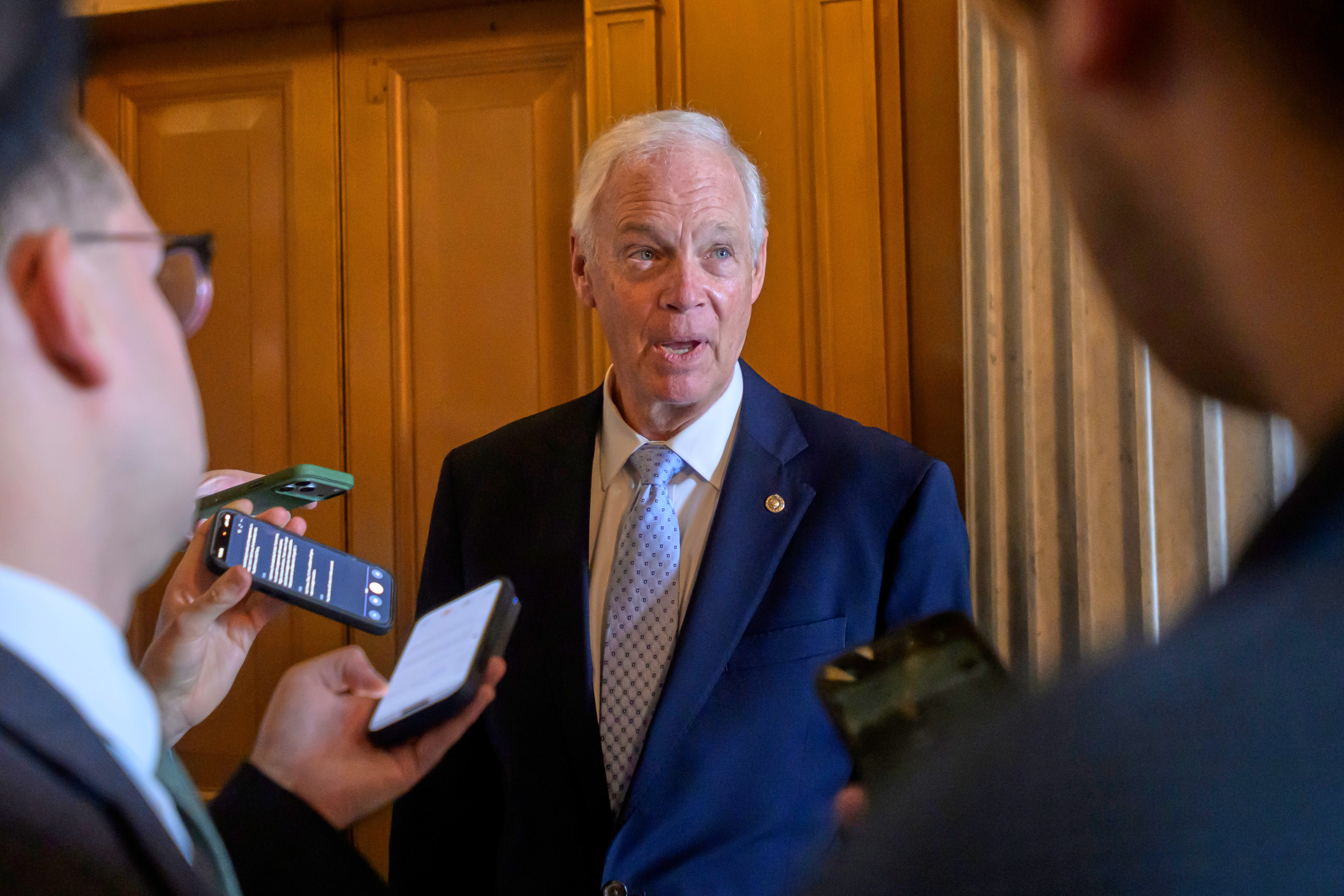
    “Obviously, with the president at his direction, this is what he wants to do,” said Sen. Ron Johnson of Wisconsin, the GOP budget committee chairperson, flanked by Sens. Mike Lee (R., Utah) and Rick Scott (R., Fla.) after their phone call with the president.

    The sudden wind-down after weeks of Trump ramping up his demands shows just how deeply the president is able to reach into the halls of Congress to set the agenda or disrupt it, the executive directing the affairs of the legislative branch. While Trump is often seen as a de facto speaker of the House, he is trying his hand at mastering the Senate.

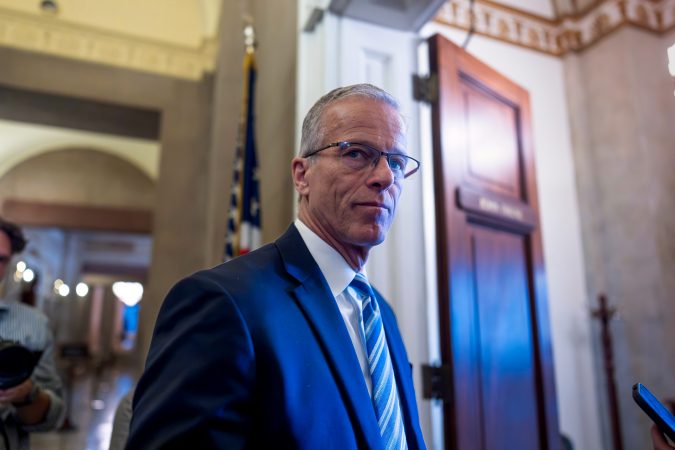
    Trump had poked and prodded Senate Majority Leader John Thune for weeks to pass the SAVE America Act, a bill that does not have enough support from the Republicans who hold majority power, let alone the Democrats whose votes would be needed to advance it in the Senate.

    The president has gone so far as to insist the Senate abandon its filibuster rules to jam the SAVE America Act past the 60-vote threshold that is typically needed to advance legislation in the chamber — something Thune and most senators have no interest in doing.

    “John’s trying. He’s trying hard. I really believe that. But if he doesn’t get there, it would be unfortunate,” Trump said in an interview with Punchbowl News that posted Friday.

    Trump’s pressure couldn’t overcome Thune’s reality

    Thune himself has worked to carefully balance the often unusual demands of the president with the political reality of his slim GOP majority. Republicans are down one vote with the prolonged absence of Sen. Mitch McConnell of Kentucky, the former leader, who said this week he was released from a rehabilitation center and is recovering at home.

    “I think everybody’s, for the most part, on the same page,” Thune (R., S.D.) said about the trio’s call with Trump, adding that eventually the Senate would have to tackle another budget bill.

    During a daylong session that dragged for nearly 20 hours, Thune successfully powered through a lengthy list of other Trump priorities. Senators confirmed the president’s pick of Todd Blanche as the attorney general, passed a sweeping Russian sanctions package to aid Ukraine, and approved a bipartisan package to fund the government into December in an early step toward avoiding a government shutdown.

    The Republicans also tried to push forward a slimmer voting bill that would require people to show IDs before casting ballots for federal elections. It failed to advance, largely on a party-line vote with Democrats opposed.

    But the failure to make progress on the SAVE America Act had erupted as an online crusade for Trump’s allies in Congress, amplified by activists urging them on.

    Led by Lee, a growing group of senators was refusing to adjourn for the summer break without passing Trump’s priority voting bill.

    At dinnertime, Thune gathered all the Republican senators for a meeting as the standoff deepened at the Capitol. There was no immediate way forward for the SAVE America Act or the broader budget bill. Thune encouraged the trio of senators to talk to the president, which they did, before regrouping back at Thune’s office.

    “We had about a two-hour conference meeting trying to figure out, you know, what we need to do to, to come to an agreement, to accomplish what the president wanted,” Johnson said. “Then we had discussion with the president, he agrees.”

    Lee acknowledged he was disappointed by the outcome, but said he understood the political reality of the situation.

    “We are not in a position right now where we have the wherewithal to pass it,” Lee told reporters at the Capitol, after the three senators emerged from Thune’s office following their call with Trump.

    Near daybreak, when the Senate did call for the vote to adjourn, Lee and others objected with hearty nos.

    On the simple voice vote, the ayes had it, and the motion to adjourn was adopted.

  • Senate passes bill to avert government shutdown before midterm elections

    Senate passes bill to avert government shutdown before midterm elections

    The Senate overwhelmingly approved a measure early Saturday to fund the government through Dec. 11 and temporarily block the White House from giving political appointees more control over federal grants.

    The 90-6 vote came after Republican leaders worked for hours through the night to reach an agreement that would allow them to vote on multiple priorities before leaving town for the five-week August recess.

    Just 6 senators — Bill Cassidy (R., La.), Tim Kaine (D., Va.), Ed Markey (D., Mass.), Rand Paul (R., Ky.), Bernie Sanders (I., Vt.) and Elizabeth Warren (D., Mass.) — opposed the funding measure, which would avoid a politically perilous shutdown ahead of the Nov. 3 midterm elections. But it still must be approved by the Republican-controlled House, where the appetite for rebuking the White House on grant funding was unclear.

    The bill, like a similar House measure passed last month, would fund the government past a Sept. 30 deadline. The Senate bill also would finance a number of requests from the White House, including funds for housing and nutrition programs. And it would extend expiring authorization for veterans’ healthcare programs.

    But the big difference between the House and Senate bills is the Senate’s decision to include a provision regarding federal grants. That provision would temporarily block the White House budget office from adopting a rule change to give political appointees more power over discretionary grant funding, diminishing the power of independent peer reviewers.

    Proposed in May, the rule change would require political appointees to review grants before they are awarded to ensure they advance the president’s priorities and do not support projects the administration opposes, including those that “fund, promote, encourage, subsidize, or facilitate” diversity, equity, and inclusion principles or “deny the biological reality of … the sex binary.” It also would give agencies the power to end grants at any time.

    Trump administration officials say the rule would add needed oversight to federal grant-making, ensuring federal funds aren’t wasted or misused. But Senate Appropriations Committee Chairperson Susan Collins (R., Maine) said it has the “potential to politicize grants and harm small, rural communities, families, and biomedical research.”

    Collins and Sen. Patty Murray (Wash.), the lead Democratic appropriator, worked together to craft the bipartisan Senate measure. House lawmakers could take it up after they return from recess at the end of August.

    If the provisions added by the Senate draw backlash, however, lawmakers could quickly find themselves in a rush to negotiate a compromise before the government runs out of funding on Sept. 30.

    Senate Republicans also initially hoped to hold a vote on a separate $150 billion budget framework to help fund the Iran war and impose new restrictions on voting ahead of the midterm elections, but Republicans scrapped that plan late Friday night.

    Republicans grappled during a two-hour closed-door meeting Friday night with whether to take up the budget framework, with which several Republicans had expressed concerns.

    A small group of Republicans spoke with Trump after the meeting and agreed to push off the vote until September, according to Sen. Ron Johnson (R., Wis.), the chairperson of the Senate Budget Committee.

    “We’re in total agreement,” Johnson told reporters. “There was no argument about it.”

    The Senate also agreed early Saturday morning to vote in September on legislation to regulate college sports led by Sens. Ted Cruz (R., Texas) and Maria Cantwell (D., Wash.). The back-and-forth over whether to vote on the bill before leaving for recess was one of several interlocking issues that kept the Senate in session late into the night.

    Senate Democrats blocked a bill during the early Saturday vote series that would require voters to show photo identification. Senate Republicans held a procedural vote on the measure in lieu of voting on the Save America Act, a more expansive bill that would impose stricter election rules which President Donald Trump had demanded the Senate pass before leaving Washington. Senate Majority Leader John Thune (R., S.D.) has said repeatedly that the Save America Act does not have enough support to pass.

    The decision to postpone the vote on the budget resolution came hours after Republicans unveiled the $150 billion spending framework, which was significantly larger than a $95 billion plan approved last month by the House. Johnson said Senate leaders intend to spend only about $105 billion.

    The smaller number tracks closely with the House package. Both would allot $60 billion to the Pentagon, which faces an urgent budget shortfall caused largely by the war with Iran, and $13 billion for intelligence needs related to the war. They also would provide $12 billion for farmers struggling to keep pace with inflation.

    Senate Republicans will seek to use up to $20 billion for election-related measures, Johnson told the Washington Post. That’s twice the amount provided in the House package. Republicans hope to use that money to pass some parts of the Save America Act, although it’s unclear how much of it would be allowed under reconciliation, the special process Republicans would use to pass the bill without Democratic votes.

    The delay in considering the measure will give Republicans time to revise their plan and win over skeptical senators.

    Sen. Thom Tillis (R., N.C.) has said he will not support a package that included elements of the Save America Act. Sens. Susan Collins (R., Maine) and Lisa Murkowski (R., Alaska) also signaled opposition to the budget resolution, while Sen. Bill Cassidy (R., La.) complained about the lack of budget cuts to cover the cost of the new spending and avoid adding to the nation’s $39.9 trillion debt.

    Sen. Roger Wicker (R., Miss.), the chairpersons of the Senate Armed Services Committee, and other Republicans, meanwhile, have called for increasing the amount of funding for the Pentagon.

    The budget framework is the first step in the reconciliation process, which would allow Republicans to evade a Democratic filibuster and move the bill with a simple majority instead of 60 votes. But both chambers must approve identical budget frameworks to set funding levels before beginning work on the actual legislation — and time is running out before the midterms.

    The Senate is set to recess until Sept. 14 and is scheduled to be in session for only three weeks before recessing again. Congress already faces a towering agenda during those weeks.