Category: Politics

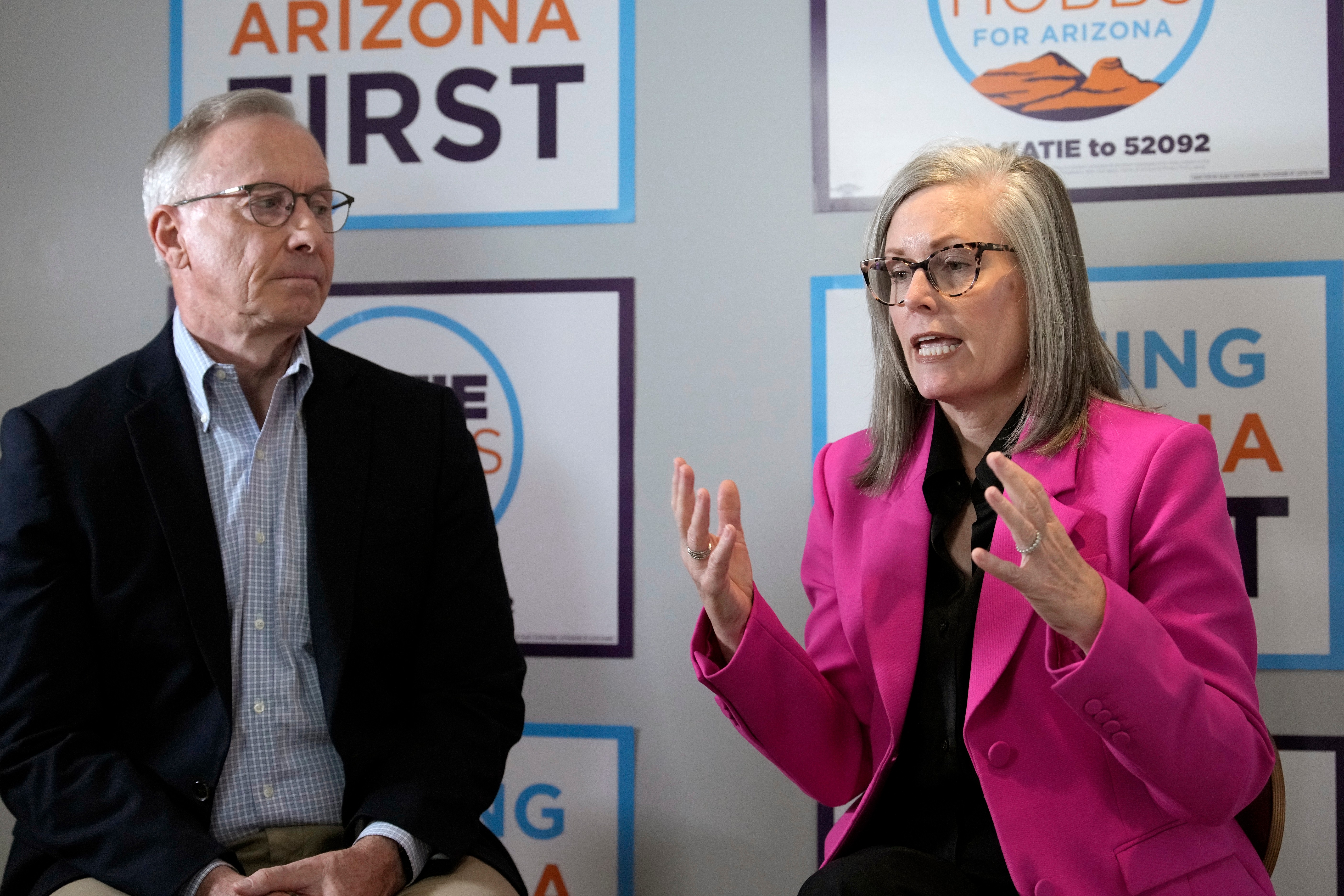
  • Democratic Arizona Gov. Katie Hobbs chooses former Republican Mayor John Giles as her running mate

    Democratic Arizona Gov. Katie Hobbs chooses former Republican Mayor John Giles as her running mate

    PHOENIX — Democratic Arizona Gov. Katie Hobbs has picked a Republican-turned-independent to be her running mate in a tough reelection campaign, setting up a bipartisan ticket as voters elect the state’s first lieutenant governor.

    Hobbs’ selection Tuesday of John Giles, a former mayor of Mesa, a Phoenix suburb that is Arizona’s third-largest city, is an overture to the Republicans and conservative independents she must win in a state that was once a GOP stronghold. Republicans have expanded their voter registration advantage over Democrats since Hobbs eked out a narrow win over Kari Lake, a fierce ally of President Donald Trump, in 2022.

    Hobbs is considered the most vulnerable Democratic governor in the country. Giles, a registered Republican for decades, changed his party affiliation to independent on May 17 and voted in the Democratic primary last month, according to county voting records.

    The Republican nominee is U.S. Rep. Andy Biggs, who last week picked Sine Kerr, a farmer and Republican former state lawmaker, to be his running mate. Kerr’s rural roots balance Biggs’ base in parts of metro Phoenix.

    In an interview with the Associated Press before Hobbs publicly announced that she had picked Giles, he said he still considers himself to be a conservative and said he stuck around the Republican Party probably longer than he should have in a crusade to save it. “A few months ago, I realized that it was time to give up that crusade,” Giles said.

    Giles led a conservative city for a decade

    Giles, who was Mesa’s mayor from 2014 to 2025, has been a vocal Trump critic and has endorsed Democrats, including Trump’s 2024 rival, then-Vice President Kamala Harris. Giles spoke in favor of Harris at the Democratic National Convention, saying Trump’s policies would hurt Mesa.

    Giles also backed Democrats running against Trump allies, including Hobbs in her 2022 race against Lake and the state’s current U.S. senators, Mark Kelly and Ruben Gallego.

    As mayor, Giles signed a proclamation promoting equal treatment for lesbian, gay, bisexual, and transgender residents in housing and accommodations, a controversial move in the conservative city.

    The Biggs campaign, in anticipation of Hobbs’ announcement, launched a website highlighting Giles’ support for Harris in 2024 and his participation in the Democratic convention. Drew Sexton, a senior adviser in the Biggs campaign, issued a statement early Tuesday saying Hobbs’ selection of Giles “is of no surprise to Arizonans who have been paying attention. As Kamala Harris’ favorite Arizona mayor, Giles is aligned with Hobbs on all the issues that have hurt Arizonans the most over the past four years.”

    Sexton also said Giles “has been an aspiring Democrat since he first voted for Joe Biden in 2020.”

    As a member of the Church of Jesus Christ of Latter-day Saints, Giles can be an ambassador for Hobbs. Church members make up about 6% of the Arizona population. Latter-day Saints, widely known as Mormons, have been a reliably Republican voting bloc for decades, but many have been ambivalent about Trump since his first run for the White House.

    Democrats have been working to woo Latter-day Saints turned off by Trump’s penchant for foul language and demeaning rhetoric toward women and people of color, which clashes with the church’s values of humility, morality, and compassion.

    Biggs is also a member of the church.

    Picking a former Republican as a running mate hones the bipartisan image Hobbs has tried to create, contrasting with Biggs’ background as a far-right congressman and, before that, the state Senate president. But it also risks inflaming tensions on the left.

    In the AP interview, Hobbs said she takes a nonpartisan approach to her work in government. When she was asked whether some supporters might be frustrated because she picked a former Republican as her running mate, she said, “It shouldn’t be a surprise.”

    Both Hobbs and Giles portray Biggs as an extreme partisan. Giles said it’s disingenuous for Biggs to present himself as more of a moderate when he was “unapologetic about being the most conservative person in the roo in any room.”

    Arizona is electing a lieutenant governor for the first time

    Arizona is one of just five states without a lieutenant governor position, along with Maine, New Hampshire, Oregon, and Wyoming.

    That will change in January.

    Voters added the post in 2022 to more clearly define the line of succession. Until then, the secretary of state will continue to serve as the next in line to be governor.

    Gubernatorial succession is especially relevant in Arizona, where five governors since 1975 have entered the office through succession rather than election.

    In fact, of Arizona’s 12 governors over the past 50 years, only one, Republican Doug Ducey, entered and left the office through the typical pathways of being elected and serving out a full term. Among the others, one died, one was impeached and removed, one resigned after being convicted of fraud, and two quit to accept presidential appointments.

  • GOP lawmakers release Fauci texts discussing COVID vaccine and pregnancy

    GOP lawmakers release Fauci texts discussing COVID vaccine and pregnancy

    Two Republican senators on Monday released the first in a trove of text messages from Anthony S. Fauci’s former government cell phone, including a discussion with health officials about whether the COVID vaccine posed a risk for pregnant women.

    The messages were released by Sens. Ron Johnson (R., Wis.) and Rand Paul (R., Ky.), who lead panels investigating Fauci, the longtime infectious-disease scientist who left government at the end of 2022 after becoming a highly visible official helping lead the pandemic response.

    The texts appear to show an exchange between Fauci and top health officials in January 2021 related to the safety of the COVID-19 vaccine for pregnant women.

    In one message, according to screenshots the senators released, Fauci wrote: “Since many people have significant cytokines storm and fever after the 2nd dose. this theoretically could be associated with miscarriage in the 1st trimester.”

    “Definitely a good point, esp after dose two,” then-Centers for Disease Control and Prevention Director Rochelle Walensky responded.

    In a news release, the senators pointed to several subsequent public statements from Fauci and other administration officials in which they said the benefits of pregnant women getting vaccinated appeared to outweigh the risks.

    In February 2021, for instance, Fauci said the Food and Drug Administration has “found, thus far — and we’ve got to be careful — but thus far, no red flags about that, about pregnant women.”

    Some of the statements cited by Johnson and Paul occurred after the CDC officially recommended pregnant women get the vaccine in August 2021, citing an agency analysis that found no increase in miscarriage in pregnant women.

    In a statement, Johnson said the release of the texts “could have an immediate impact on public health.” He added that “you don’t wait a day, months, or years, to inform the public of potential dangers.”

    The CDC states that with more than a million pregnant women vaccinated globally, studies have not shown increased risk for complications like miscarriage, preterm delivery, and more. Health officials have said such past exchanges reflect the evolving nature of the science and debate at the time.

    Fauci declined to comment on the released messages. Walensky and Vivek H. Murthy, at the time a member of President Joe Biden’s COVID advisory board who was also included in the texts, did not immediately respond to a request for comment.

    Pregnant women are historically excluded from clinical trials, including those for the coronavirus vaccine. But it became clear that contracting the virus during pregnancy could be associated with increased risk of preterm birth and other adverse outcomes, and so health officials concluded that the benefits of vaccination appeared to outweigh the risks, according to a former public health official who spoke on the condition of anonymity to speak candidly.

    The senators said the texts are among more than 34,000 recovered from a copy of Fauci’s former iPhone. It also contains 522 voicemails, they said. The phone was obtained from the Department of Health and Human Services, now led by fellow Fauci critics, including Health Secretary Robert F. Kennedy Jr.

    “Now that we have the documents and Fauci’s government-issued phone, my investigation has only just begun,” Johnson, the chairperson of the Senate’s permanent subcommittee on investigations, wrote Monday on social media.

    As part of Paul’s investigation of Fauci, HHS also turned over years of Fauci’s personal diary entries that were collected from government servers.

    Last week, a Senate committee that Paul chairs voted along party lines to hold Fauci in contempt of Congress after he declined to answer its questions and accused Paul of trying to wrongly entrap him. The Justice Department, which is not obligated to prosecute Fauci, said it received Paul’s letter referring the matter but did not confirm whether it planned to pursue any criminal charges.

    In April 2021, a New England Journal of Medicine article written by CDC officials stated that preliminary findings “did not show obvious safety signals” among pregnant women who received the vaccines — meaning there wasn’t an unusual number of adverse events — but added that more follow-up was needed.

    “Our societies [American College of Obstetricians and Gynecologists and Society for Maternal-Fetal Medicine] were strongly recommending and advocating for pregnant women to have access to COVID vaccines in the earliest stages of the pandemic because those of us who were dealing withCOVID in pregnancy were seeing exceptionally high rates of complications,” said Neil S. Silverman, a member of the Society for Maternal-Fetal Medicine’s Infectious Disease and Emerging Threats Committee and maternal-fetal medicine faculty at the David Geffen School of Medicine at UCLA.

    Fauci has faced numerous legal threats from Republicans, including Paul and Johnson, who accuse him of covering up his agency’s funding of risky coronavirus research in Wuhan, China, before the virus was first detected there. Fauci has dismissed those claims as “preposterous.”

    Kennedy, his allies, and some Republicans in Congress have expressed concerns about vaccine safety.

    Kennedy, the founder of a prominent anti-vaccine group, has been an outspoken critic of mRNA-based shots, and once called the coronavirus shots “the deadliest vaccine ever made.” Medical experts say COVID-19 vaccines are effective at protecting people from getting seriously ill, being hospitalized, and dying.

    Last year, Kennedy sought to no longer recommend the coronavirus vaccine for healthy pregnant women. The American College of Obstetricians and Gynecologists said it was “concerned” and “extremely disappointed” by the move, and the medical society has continued to recommend the shot for pregnant women.

    On Monday, President Donald Trump signed an executive order that called for cutting the number of recommended childhood vaccines, spacing out those shots and making other changes that would upend decades of federal guidance on vaccines for children.

    Speaking in the Oval Office, the president reiterated his long-held claim that childhood vaccines have led to a rise in U.S. autism cases, an idea that outside researchers have largely debunked.

  • Trump refuses to back down as Supreme Court blocks major policies

    Trump refuses to back down as Supreme Court blocks major policies

    Over the past few weeks, President Donald Trump has made it clear that he will not take Supreme Court decisions as the final word on some of his most cherished priorities.

    The president has introduced new tariffs, renewed efforts to fire Federal Reserve governor Lisa Cook, and issued new executive orders to limit birthright citizenship. While experts said the moves do not signal outright defiance of the high court, they nonetheless push the limits of the rulings that Trump lost earlier this summer.

    “Without question, President Trump is challenging the bounds of the court’s opinions,” particularly regarding Cook’s firing and birthright citizenship, said Richard Lazarus, a law professor at Harvard University.

    The high court’s opinion affirming that nearly everyone born in the United States is a citizen does not allow Trump to create exceptions like some set out in his recent executive orders, Lazarus said. Those orders say children are ineligible for birthright citizenship if born to “alien enemies,” foreign terrorists, foreign lobbyists, or people who fraudulently request tourist visas in order to give birth in the U.S.

    In signing the orders, Trump referred to the Supreme Court decision on birthright citizenship, saying, “We’re ending it a different way.”

    The Trump administration has always followed court orders, said White House spokesperson Lauren Bis. “All actions taken by the president since the recent Supreme Court rulings are consistent with the holdings and analysis set forth by the court,” she said.

    As for Cook, the justices ruled that she deserved notice and a chance to respond before being fired, and Trump’s latest move seeks to provide that. The White House sent a letter to Cook last week renewing the threat to fire her, giving her 21 days to respond, and directing her to submit any response to the White House by Aug. 26.

    “The Supreme Court’s ruling on the Cook case required notice and an opportunity for a hearing in considering whether the president should take certain adverse employment actions,” Bis added. “The president’s notice sent to Fed. Governor Cook offers exactly that within the precise structure enunciated by the Court.”

    Still, Trump’s underlying rationale for dismissing Cook — that she engaged in mortgage fraud — remains unproved, and she has not been charged. While the renewed push to fire her does not “repudiate” the Supreme Court’s opinion, Lazarus said, it “certainly confronts it by challenging its limits.”

    Trump is not the first president to look for ways around adverse Supreme Court rulings. Most recently, when President Joe Biden’s plan to forgive student loan debt was struck down by the Supreme Court, Biden within hours announced a separate plan to forgive the debt.

    Two decades earlier, President George W. Bush wrestled with the court over procedures for detainees seeking freedom from the military prison at Guantánamo Bay, Cuba.

    But such instances appear to be historical exceptions rather than the rule, said David Super, a professor at Georgetown Law.

    “Most presidents treated Supreme Court rulings as dispositive of the issues involved rather than as technical documents to be evaded,” Super said.

    That includes an earlier version of Trump. During his first term, the president was more willing to accept losses at the Supreme Court and move on, Super said. He cited rulings against Trump’s efforts to end the Deferred Action for Childhood Arrivals (DACA) program and to add a question on citizenship status to the 2020 Census.

    “The second-term President Trump appears to have much less regard for the other branches of the federal government than the first-term one did,” Super said.

    Similarly, the Trump administration last month imposed new tariffs on U.S. imports from 60 economies under an authority different from the one the Supreme Court rejected in February. The new duties, imposed under Section 301 of the Trade Act of 1974, purport to penalize countries that fail to curb imports produced by forced labor.

    That does not directly go against the Supreme Court’s decision. But critics call the forced-labor rationale a pretext for reimposing the sweeping tariffs struck down by the court, and small businesses have sued to block them for that reason.

    Some experts say Trump, far from challenging the Supreme Court, is working within the bounds of the justices’ rulings.

    “The court ruled against Trump in these three big cases, and all of them sort of left openings to do something else — and in all three cases he did something else,” said Josh Blackman, a law professor at South Texas College of Law at Houston.

    “Trump is more aggressive because he views rulings as political,” Blackman added. “He’s willing to push back, especially with conservative judges, three of whom he appointed.”

    Still, Trump has added to the sense that he is challenging the court by using heated rhetoric against it.

    After the court overturned his tariff regime in February, the president called the conservative justices who ruled against him “fools and lapdogs.” Last week, when Trump introduced his new birthright measure, he called the court’s decision “a bad decision, very unfair decision,” saying the “country suffers because of it.”

    President Barack Obama criticized the court in his 2010 State of the Union address, though he did so in a more genteel manner. “With all due deference to the separation of powers,” Obama said in criticizing the Citizens United decision (which lifted limits on independent political expenditures by corporations and unions), the court has “reversed a century of law that I believe will open the floodgates for special interests.”

    The Trump administration has also had a tense relationship with the federal judiciary more broadly.

    A Washington Post analysis last year found that Trump and his appointees were accused of flouting the courts in more than a third of the 160-plus lawsuits against the administration in which a judge had issued a substantive ruling. The administration has also sparred with the judiciary over Trump’s picks to lead federal prosecutor’s offices.

    But Mike Fragoso, a former chief counsel to Sen. Mitch McConnell (R., Ky.), said Trump’s responses to the Supreme Court’s most recent decisions do not appear out of the norm.

    Instead, particularly with regard to the new birthright order, Trump appears to be adopting the longtime conservative view that a Supreme Court decision binds the president only to the specific case at issue, not necessarily to its broader reasoning, he said.

    Fragoso, now an attorney at Torridon Law, pointed to President Abraham Lincoln’s rejection of the Supreme Court’s logic in its infamous 1857 decision Dred Scott v. Sandford, which held that African Americans were not citizens.

    “On birthright, it’s a question testing the limits of what the Supreme Court said” while not being inconsistent with the opinion, Fragoso said, adding that Trump’s actions could be described as “Lincolnian.”

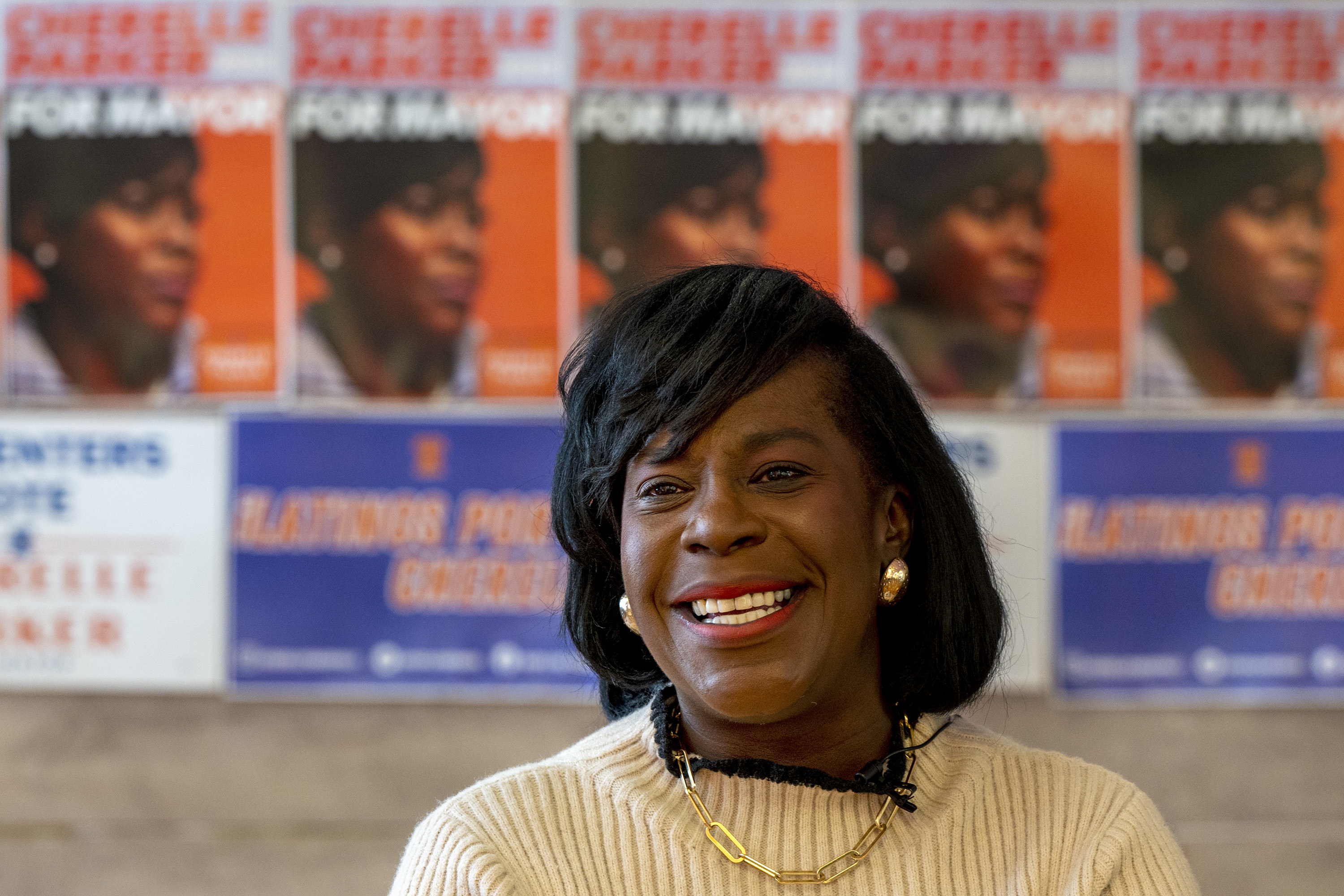
  • Mayor Parker’s campaign is spending far more on lawyers than it did when she was running for office

    Mayor Parker’s campaign is spending far more on lawyers than it did when she was running for office

    Mayor Cherelle L. Parker’s campaign has spent about $108,000 on legal fees since the start of 2025, far more than it shelled out in any recent year, campaign finance records show.

    For instance, in 2023, when Parker’s legal bills would have been expected to spike amid her winning campaign for mayor, the campaign paid about $14,900 in fees to its law firm, Dilworth Paxson, according to campaign finance reports. In 2024, Parker’s first year in office, the campaign sent Dilworth about $19,300.

    But in 2025, payments to Dilworth more than quadrupled.

    Aren Platt, executive director of the Democratic mayor’s campaign, People for Parker, did not respond to a request for comment on what was driving the increased legal bills.

    “Our lawyers at Dilworth are an essential part of our team and it’s important that we are able to talk to them on a variety of strategic initiatives,” Platt said in a statement.

    The campaign paid Dilworth about $88,700 in 2025, and an additional $19,700 between Jan. 1 and May 4 of this year, according to the most recent report.

    “It’s an unusual number to see right now,” said Matthew Haverstick, a Philadelphia-based elections attorney who has primarily worked with Republican candidates. “There could be lots of prosaic or benign explanations for it, but it’s not normal.”

    Election law gives campaigns wide latitude over how they spend money from donors. In addition to election-related expenses like advertisements or legal work on campaign finance compliance, campaigns can spend money on everything from constituents’ funeral expenses to airfare for candidates to attend political events. They can also support the candidates’ work in government.

    Public records do not provide detailed information about campaign expenditures. After multiple requests from The Inquirer for the campaign’s legal expenses, Dilworth attorney Timothy J. Ford, who handles most of the campaign’s legal work, on Monday provided copies of invoices from 2023 through 2025.

    The campaign told the Philadelphia Office of City Commissioners, which oversees elections and processed the request, that the delay was due to a mix-up involving an email address that is “not checked regularly.”

    The invoices, which the commissioners said were “redacted for attorney-client privilege and client confidential information,” show Dilworth billed the campaign during that three-year period for four separate matters.

    For “Matter 01,″ which included all the invoices during the election year of 2023, the firm billed the campaign for about $12,400, and almost all of the work appears to have been done by Ford. (The campaign spending reports and Dilworth’s invoices do not exactly align, due to the timing of payments and potentially other factors such as reimbursements.)

    “Matter 02″ listed in the invoices lasted from February 2024 to March 2024, with Dilworth billing $2,300. Ford appeared to complete all the work.

    The billings escalated with “Matter 03,” which began in March 2024, three months into Parker’s tenure, and lasted at least through October 2025, the period covered by the most recent invoice provided to The Inquirer. The firm billed about $62,100 for its work on that matter, and the invoices show that at least four people from Dilworth billed hours.

    “Matter 04″ began in August 2025, and has resulted in $45,300 in billing with as of October 2025. Although most of the details are redacted, the invoices show extensive billing around an “interview” on Sept. 12, 2025. From Sept. 10 to 13, Dilworth billed nearly $7,800.

    Additionally, the Parker Mayoral Transition and Inaugural Committee, which aided her transition into office and has since closed, paid Dilworth about $9,700 between December 2023 and March 2024, when it was active.

    Parker’s campaign has been more active with fundraising during nonelection years than the campaigns of her recent predecessors. In 2025, she raised $1.7 million, more than any another second-year mayor since at least the early 2000s, according to her campaign.

    People for Parker had about $1.4 million in cash on hand as of May 4 after raising about $241,000 and spending about $390,000 in the first four months of this year. Parker is up for reelection next year, and rumors have swirled about the potential of her facing a challenger backed by the progressive movement.

    Earlier this year, Parker’s campaign donated $23,000 to the Pennsylvania Democratic Party and $25,000 to Pick Pennsylvania, a committee led in part by Parker to lure the Democratic National Convention back to Philadelphia.

    Allies of Parker also set up a 501(c)4 nonprofit called One Philly that raised and spent vast sums in 2024 before appearing to fade away in 2025.

    Political consultant Jeff Sheridan, who helped lead a super PAC that was critical to Parker’s 2023 victory, was a public point person for the One Philly nonprofit. In March 2024, he said the group was formed to advance Parker’s governing agenda, not to get involved in politics.

    One Philly, which is not required to disclose its donors, raised $658,500 in 2024, Parker’s first year in office, according to an annual return the nonprofit filed with the IRS. It spent $484,900 that year to “promote policies and actions championed by City leaders.”

    The group also reported paying nearly $19,000 in legal bills that year, and listed its representative as the Ballard Spahr law firm.

    In 2025, the group reported raising only $15,000 and spent all of its remaining money, according to its most recent disclosure, filed in May.

    Sheridan did not respond to a request for comment.

    Staff writer Anna Orso contributed to this article.

  • Ocean City community groups have filed a lawsuit challenging the Wonderland rehabilitation designation

    Ocean City community groups have filed a lawsuit challenging the Wonderland rehabilitation designation

    Four community groups in Ocean City filed a lawsuit Monday seeking to void City Council’s June 25 decision to designate the old Gillian’s Wonderland Pier as “in need of rehabilitation.”

    That vote started a negotiation with developer Eustace Mita, the owner of the property who has been seeking approval to build a seven-story, 242-room hotel on the site.

    Mita said earlier this month he is submitting a revised proposal for a hotel on the 2.42-acre property. His initial proposal called for a luxury hotel that preserved the Ferris wheel, carousel, and some kiddie rides.

    Hotels are not a permitted use under current zoning, requiring either variances or a negotiation under a rehabilitation designation. Mita sought the rehabilitation route.

    He said earlier this month that it was no longer viable to restore or replace the Ferris wheel.

    The lawsuit notes that Wonderland Pier served for generations as “a civic anchor for the northern end of the Boardwalk,” and that the pier “has been a focal point of the City’s identity as a low-rise family-friendly resort community.”

    The groups filing suit in Cape May County Superior Court were two neighborhood groups, Plaza Place Civic Association and Beach Watch Motel Condominium Association, the government watchdog group Fairness in Taxes, and Ocean City 2050, a group that has been advocating for an alternative to Mita’s luxury hotel proposal.

    Jack Gutenkunst (left), Marie Crawford, and her husband, Richard, with Shiloh, a 9-year-old soft-coated wheaten terrier, walk along Plaza Place, in Ocean City on Feb. 3, 2026. They live in the historic neighborhood right behind the site of the old Wonderland Pier and are fighting against the proposed development of a hotel on the boardwalk property.Tim Hawk / For The Inquirer

    Defendants are the City of Ocean City and the City Council.

    “This lawsuit was a difficult but necessary decision to make,” said Jack Gutenkunst of Plaza Place Civic Association, in a statement announcing the lawsuit. “Council’s Wonderland rehabilitation designation is deeply flawed and seeks to improperly strip away important planning protections that residents have long relied upon.”

    The lawsuit alleges that Mayor Jay Gillian’s failure to recuse himself from Council’s Wonderland discussions constituted “substantial financial and ethical conflicts of interest.”

    Gillian, whose family operated Wonderland for 65 years, sold the property to Mita in 2021 but continued to operate the amusement park under a lease arrangement. He made the decision to close Wonderland in 2024. The lawsuit notes financial entanglements that remain between the mayor and Mita.

    Reached by text message, Gillian declined to comment on the lawsuit.

    “The city cannot comment on pending litigation,” Doug Bergen, public information officer for Ocean City, said by email.

    The lawsuit also alleges that the designation failed to satisfy the state’s legal requirements under New Jersey’s Local Redevelopment and Housing law.

    “This lawsuit is not about stopping progress,” said Howie Atkinson of the Beach Watch group, in a statement announcing the lawsuit. “But no project is important enough to justify abandoning transparency, ignoring conflicts of interest, or shutting the public out of the progress.”

    The groups said the lawsuit should not stop the city from continuing to examine recommendations by its Boardwalk subcommittee. City Council tabled action related to the subcommittee at its last meeting due to the pending lawsuit.

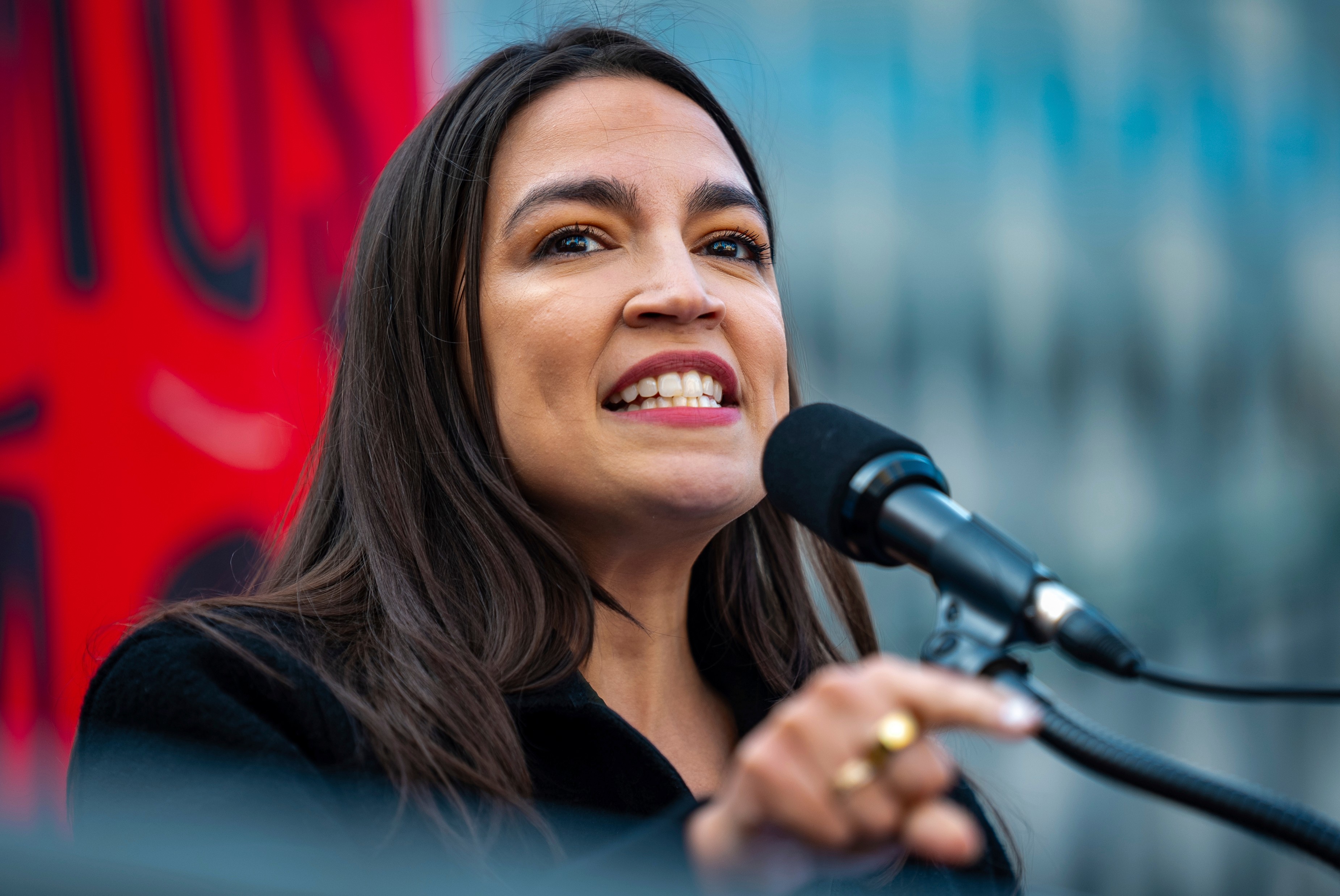
  • Alexandria Ocasio-Cortez says she’s freezing her eggs

    Alexandria Ocasio-Cortez says she’s freezing her eggs

    Rep. Alexandria Ocasio-Cortez (D., N.Y.) made a public video announcement over the weekend about a private matter: The congresswoman is freezing her eggs.

    Ocasio-Cortez, 36, posted a series of videos on social media in which she said this is a decision she made to “feel more in control of my life.” She said she had been weighing the decision and saving up for the pricey fertility procedure, which often isn’t covered by insurance, for a long time.

    The congresswoman said she was going public with her decision against the backdrop of steps by the Trump administration to curtail abortion access and some forms of reproductive care across the country. It also comes amid speculation that she could seek higher office. She said that she was making the egg-freezing decision in a “privileged position” and said that, unlike men, women applying for jobs or running for office face intense scrutiny about when, or if, they will have children.

    “I think it’s important for us as leaders to have these conversations and share these processes, especially for working women across the country, and normalize them,” Ocasio-Cortez said on ABC’s This Week With George Stephanopoulos on Sunday morning.

    Egg freezing is an increasingly popular procedure in which a woman’s eggs are extracted from her body, frozen, and then stored. Those eggs can later be fertilized. The fertilized eggs then grow, and when the embryos are ready, they are transferred into the uterus in the hope that the woman becomes pregnant, according to UCLA Health.

    Women opt to have the procedure for many reasons, including to preserve their eggs and reproductive ability if they are undergoing chemotherapy or other medical treatments that could affect their fertility.

    But many healthy women who are not ready to have children during their biologically prime reproductive years also use the process.

    A 2025 UCLA study found that between 2014 and 2021, there was a sharp increase in the number of planned elective egg-freezing cycles. In that period, women began freezing their eggs at younger ages, with the average age dropping from 36 years in 2014 to 34.9 in 2021.

    The study also landed on the surprising finding that only a small number of women — 5.7% who froze their eggs between 2014 and 2016 — returned to use their eggs in the next five to seven years.

    In her videos, Ocasio-Cortez showed viewers the array of medications she is required to self-administer for the process.

    The medication process typically lasts 10 to 12 days, with women injecting themselves with two or three hormone medications every day, according to Johns Hopkins Medicine. During that time, women will have frequent bloodwork and four to six pelvic ultrasounds.

    Once the eggs have matured, a medical professional will retrieve them in a 20-to-30-minute ultrasound-guided surgical procedure during which the patient is under anesthesia.

    Ocasio-Cortez filmed herself injecting hormones into her abdomen, jokingly telling her viewers: “Don’t be weird about this. Even though I know all of you will be.”

    When it was done, she said it “wasn’t so bad.”

  • Trump nominates loyalist to office that would oversee Reflecting Pool review

    Trump nominates loyalist to office that would oversee Reflecting Pool review

    President Donald Trump nominated Project 2025 author and former political appointee Dennis Kirk to lead the Interior Department’s inspector general office, raising concerns about the independence of the watchdog that has been asked to review the troubled Reflecting Pool renovation.

    Kirk, who was nominated Friday, previously had been working within the office of the inspector general of the intelligence community while serving as an adviser to then-Director of National Intelligence Tulsi Gabbard as of last year. At the time, lawmakers and watchdog advocates raised concerns that his dual roles blurred the lines between Gabbard and the office investigating the use of the Signal messaging app to discuss a pending U.S. military strike.

    The Interior Department’s inspector general’s office recently has been receiving inquiries from Democrats to investigate the troubled Reflecting Pool renovation. Democrats also have sought investigations into senior administration officials’ potential conflicts of interest. One of those officials, Interior Associate Deputy Secretary Karen Budd-Falen, acknowledged in a video that she was involved in changes to grazing policies that benefited ranching businesses such as her family’s, The Washington Post previously reported.

    Rep. Jared Huffman (Calif.), the top Democrat on the House Natural Resources Committee, called Kirk a “fake and fraudulent watchdog” and a “political puppet” who shouldn’t be in the office overseeing ethics and corruption investigations that involve senior administration officials. “It’s no surprise the White House suddenly wants its own man inside the one place that Trump’s cronies still have reason to fear,” Huffman said in a statement.

    A spokesperson for the inspector general’s office declined to comment on Kirk’s role. White House spokesperson Taylor Rogers said in a statement that “Kirk has consistently demonstrated loyalty to the rule of law during his long career within government.” The Interior Department and Kirk did not immediately respond to requests for comment.

    Kirk co-wrote a key section about the federal workforce for Project 2025, the blueprint for Trump’s second term. In the first Trump term, Kirk held senior roles at the Office of Personnel Management and was nominated to serve as chairperson of the Merit Systems Protection Board, though he faced steep opposition from unions that said he lacked experience, and his nomination was withdrawn by President Joe Biden.

    Mark Lee Greenblatt, a former Interior Department inspector general who was fired amid Trump’s purge of inspectors general early last year, called on the Senate to reject Kirk’s nomination. Greenblatt, who was nominated by Trump in his first term, said Kirk’s involvement would damage the credibility of the office’s investigations amid controversy related to recordkeeping and chill whistleblowers’ openness to speaking out.

    “This is a particularly fraught moment with respect to the Interior Department in light of the very public allegations that are flying around regarding the Reflecting Pool and the arch,” Greenblatt said in an interview, referring to the monument Trump wants to build near Arlington National Cemetery. “I would think that the White House and President Trump would want an independent review, an independent actor in that position, because otherwise those reports won’t have credibility.”

    The Center for Western Priorities, a conservation advocacy organization, also condemned Kirk’s role and called on Congress to use its subpoena power to compel records after Politico reported that Interior Department staffers had routinely shredded documents and used disappearing Signal messages.

    “Interior’s watchdog was fired, left vacant for 18 months, and is now hosting one of the architects of Project 2025,” said the center’s executive director, Aaron Weiss. “At least five investigation requests from members of Congress are sitting in that office right now, and its integrity has been compromised.”

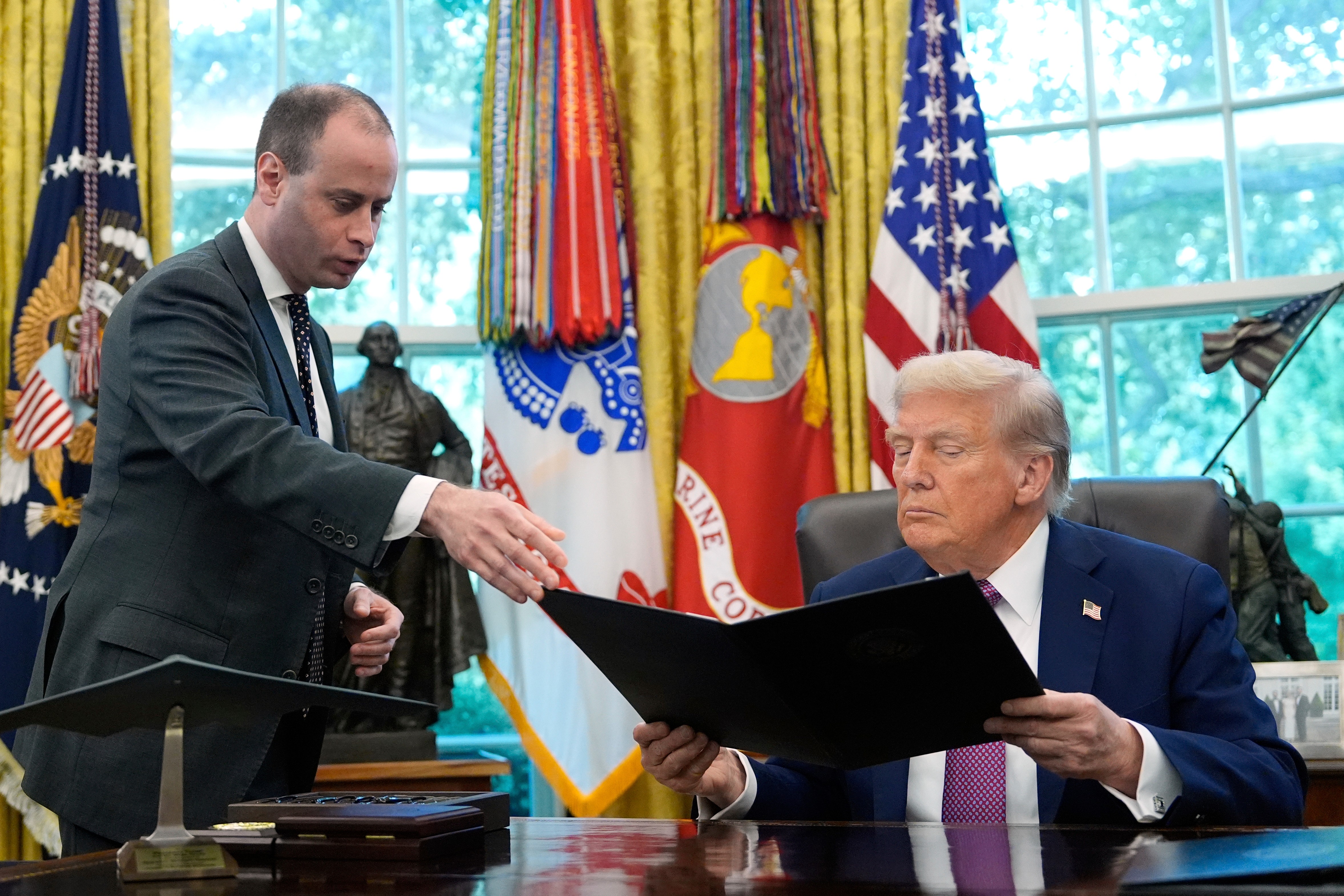
  • Trump picks longtime aide Will Scharf as new top White House lawyer

    Trump picks longtime aide Will Scharf as new top White House lawyer

    President Donald Trump has named Will Scharf as the next top White House lawyer, replacing David Warrington, who is “going on to the Private Sector,” Trump wrote in a social media post Sunday.

    The change in the office of White House counsel will take place Sept. 1.

    Scharf, currently the White House staff secretary, is perhaps best known as the lawyer frequently standing over Trump’s shoulder in the Oval Office when he signs executive orders and explaining their details.

    Before that, Scharf, 40, was an unsuccessful candidate for Missouri attorney general in 2024, who also worked as one of Trump’s personal lawyers.

    “I know Will well! He previously represented me in numerous cases, including at the Supreme Court, during the Biden Administration’s corrupt and illegal campaign of Weaponization,” Trump wrote on his Truth Social website.

    Trump added that Warrington did “a truly outstanding job” as counsel. The change is the latest example of Trump White House staff — many of whom have had longer tenures than aides in Trump’s first term — increasingly leaving the administration in recent months.

    Before being brought on at the White House, Warrington served as Trump’s campaign general counsel during the 2024 election, after joining Dhillon Law Group, the firm owned by current Assistant Attorney General Harmeet K. Dhillon. There, he represented controversial Trump allies like Michael Flynn and Sebastian Gorka.

    Scharf has also served since last year as the chairperson of the National Capital Planning Commission, a low-profile federal agency charged by Congress with overseeing federal construction projects in the Greater Washington region. In that role, Scharf has expedited several of Trump’s handpicked projects, including the president’s planned White House ballroom, which the commission approved in April.

    Scharf has also sped up the commission’s reviews of Trump’s planned triumphal arch, which is expected to be approved by the commission at its next public meeting in September.

    Trump, who is seeking to complete the projects before he leaves office in January 2029, has cheered the commission’s swift approvals. The commission historically has taken much longer to review significant changes to the White House and new monuments around Washington.

    In his role as the commission’s chairperson, Scharf has also argued that the planned 250-foot-arch and other federal projects should not be subject to a federal law that restricts most construction in Washington to a maximum height of 130 feet, a position echoed by the Trump administration but opposed by historic preservationists.

  • The race to unseat Philly Councilmember Jeffery Young Jr. is taking shape

    The race to unseat Philly Councilmember Jeffery Young Jr. is taking shape

    The ultracompetitive race to replace Philadelphia City Councilmember Jeffery Young Jr. is officially underway.

    With nine months until next year’s primary election, two candidates are already taking steps to challenge the first-term incumbent Council member from North Philly — and more may be to come.

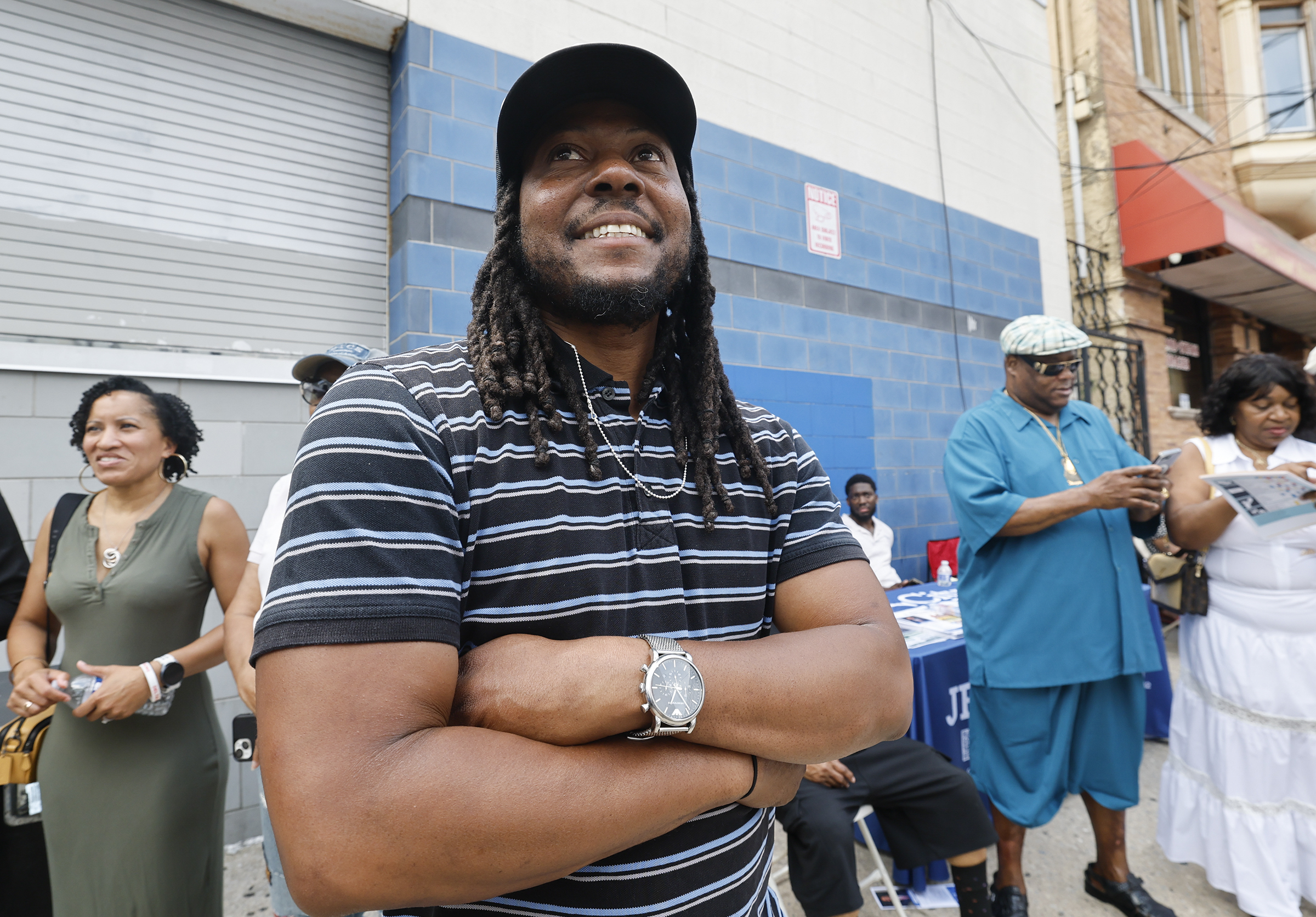
    On Saturday, cybersecurity attorney Jalon Alexander launched his campaign for the seat during a party in Fairmount, where he told attendees that Council needs an infusion of fresh blood and new ideas to spur growth in the city.

    “We’ve spent the last two years meeting with different community organizations, speaking with different ward leaders, and community groups, and just everyday people,” Alexander said in an interview. “This is going to be a people-powered campaign that really is grassroots.”

    And on Friday, Curtis Wilkerson, who was the chief of staff to former City Council President Darrell L. Clarke, announced that he’s forming an “advisory committee” to evaluate a prospective run for the seat. The group will host community roundtables and neighborhood listening sessions to collect policy ideas and feedback from residents.

    Wilkerson, who campaigned for the seat four years ago but did not make it onto the ballot, said he’ll likely decide whether to launch an official campaign by September.

    A third potential candidate, Democratic political operative Kellan White, has been having conversations with party officials and labor leaders about running. White is a former deputy city controller who has managed and advised campaigns, including physician Ala Stanford’s recent unsuccessful run for Congress.

    At least two others have said they are considering launching campaigns for Young’s seat: Dustin Dove, the president of the Fairmount Civic Association, and Max Tuttleman, a philanthropist who in 2023 unsuccessfully ran for seat on Council representing the city at-large.

    The recent moves by several prospective candidates are the latest sign that the 5th District is likely to be the most crowded Council race this spring, when all 17 members of Council will be up for reelection and are expected to seek another term. The 5th District, which includes parts of Center City, North Philadelphia, and Fishtown, is overwhelmingly Democratic, meaning whoever prevails in the May primary is all but certain to win the seat in the general election.

    Fifth District Councilmember Jeffery Young Jr., during the Barber’s Hall community legacy celebration, a daylong celebration of music, history, and community in North Philadelphia on Aug. 1.Yong Kim / Staff Photographer

    Young’s campaign did not respond to a request for comment. In an interview last month, he said he intends to run for reelection and sees facing challengers as a normal part of the process.

    “People have a right to do what they want in a democracy,” he said. “But I’m focused on myself and what we can do as a leader of the 5th Council District and get the constituents to understand that every decision that we make is to improve their life.”

    The freshman lawmaker is seen as Council’s most vulnerable member in the upcoming election, in large part because of how he got into office.

    In 2023, several other candidates — including Wilkerson, who was Clarke’s preferred successor — were kicked off the ballot amid a series of legal challenges questioning the validity of their nominating petitions. Young ended up being the only Democrat on the ballot.

    Since January 2024 when he was sworn in, Young’s tenure has been tumultuous. He has championed legislation that at times has sought to slow or halt housing construction in parts of the district, drawing the ire of developers. Constituent groups have loudly opposed Young, specifically over his controversial plans for a popular library branch in North Philly.

    And he has publicly clashed with Mayor Cherelle L. Parker’s administration, including in 2024, when he took the rare step of introducing legislation to authorize Council to subpoena the mayor.

    Jalon Alexander greets supporters and community members as he kicks-off his bid in the 5th Council District seat, at a campaign event in Fairmount on Saturday.Bastiaan Slabbers / For The Inquirer

    Young, 40, an attorney by trade, has something of an independent streak. He has at times aligned with different political factions, and he does not fit neatly onto the Democratic ideological spectrum.

    Neither do some of his opponents. Alexander, 33, said he has progressive views on workers’ rights and keeping homes affordable, and he has built relationships with some leaders of the city’s progressive political organizations.

    But the tenor of Alexander’s campaign is pro-growth. He said he wants to cut the city’s business taxes with the goal of eventually eliminating the business, income, and receipts tax. And he said he’s committed to facilitating more development in the district, including through the city’s Turn the Key program that provides mortgage support to some first-time homeowners.

    Alexander has been particularly critical of Young’s use of councilmanic prerogative, the unwritten rule that gives district Council members an extraordinary level of control over land-use decisions and construction projects in their district.

    Young has used prerogative to attempt to obstruct projects he opposes, such as the redevelopment of the former Hahnemann University Hospital. He introduced legislation to ban residential housing development in the area, a move he said was to preserve the area’s job-generating capacity, but he did not advance the bill amid opposition from interest groups and Parker’s administration.

    Alexander — who was born and raised in Strawberry Mansion and still lives in the neighborhood — said his campaign is targeting Democrats “all over the tent.”

    “There’s room for progressives. There’s room for people who are loyal Democrats but feel let down by the establishment,” he said. “We’ve got one goal: We’re fully committed to removing and replacing Jeffery Young.”

  • Surprise nominees, candidate scandals scramble the battle for Congress

    Surprise nominees, candidate scandals scramble the battle for Congress

    The final stretch of primary season has scrambled the battle for Congress, as scandals, insurgent victories, and voters’ rejection of party leaders’ preferred candidates reshape a small but critical set of races.

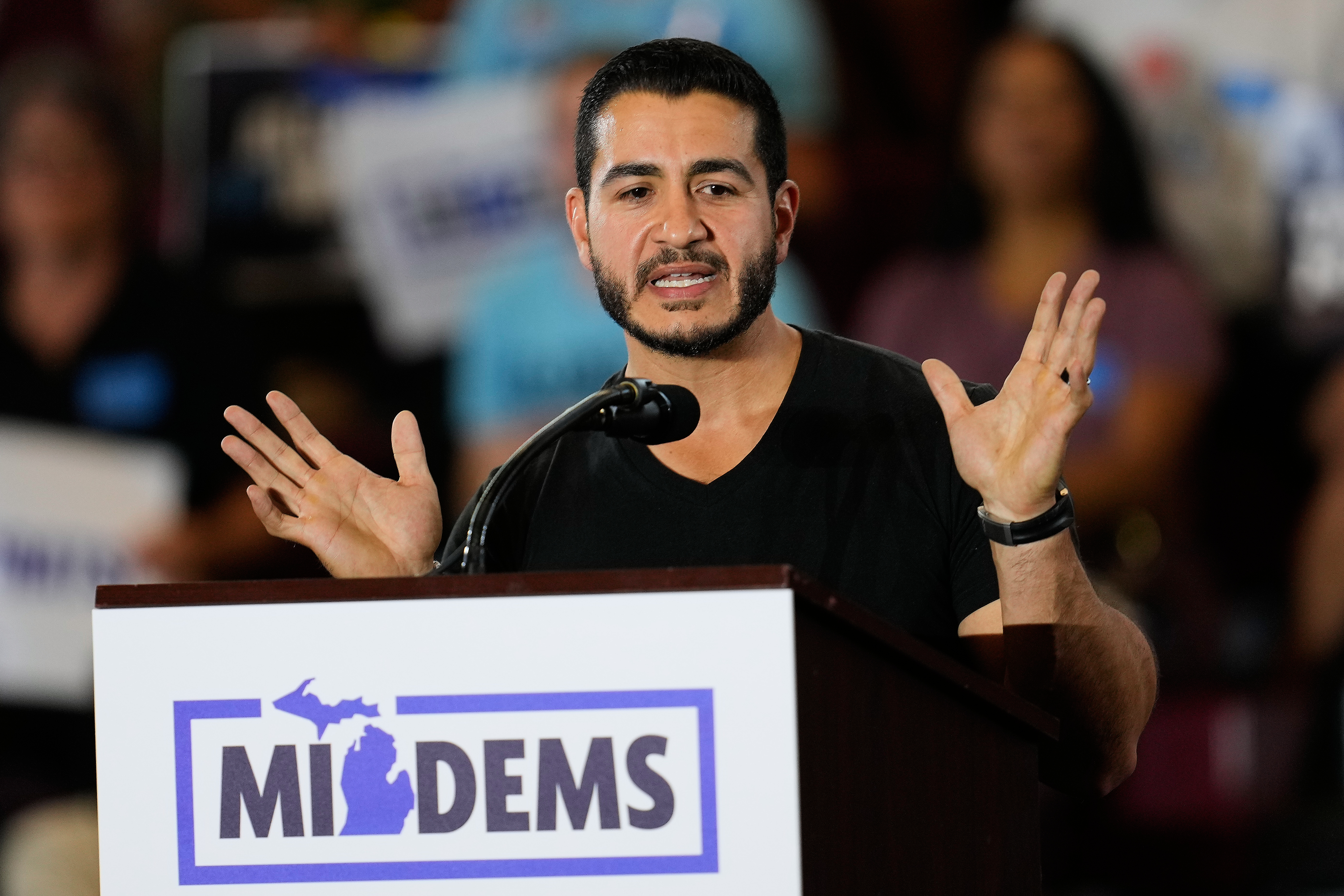
    Democrats’ path to a Senate majority narrowed with the triumph of progressive insurgent Abdul El-Sayed in Michigan, whom polls show faring worse against former Rep. Mike Rogers (R) than his primary rival. Republicans suffered their own setbacks as a Trump-endorsed congressional candidate in Michigan lost to a rival who had suspended his campaign, while misconduct allegations drove a vulnerable North Carolina incumbent from the race.

    Republicans are eager to face several Democrats they believe are too far left for their districts, while Democrats see new openings where GOP candidates have suffered from controversies. With control of Congress potentially turning on a handful of seats, both parties are betting individual candidates will matter as much as the political terrain — though operatives’ judgments about electability often prove wrong.

    “It’s really hard to tell you what the board’s going to be like,” said Democratic strategist Andrew Acosta, noting that antiestablishment fervor among grassroots organizers has made prognosticating harder for consultants and pollsters, and scandals are adding more volatility.

    For Trump, the stakes include the fate of his policy agenda for the rest of his term, as well as burdensome oversight and possibly a third impeachment. But he has taken a hands-off approach to the midterms, frustrating some Republicans who want him to help mobilize his supporters and dip into his super PAC’s $400 million war chest.

    “I said to somebody, ‘Wait a minute, you don’t understand — I won, I’m not campaigning,’” Trump said in an interview with Punchbowl News released Friday. “If I don’t run, will those people go out and vote? … Because a lot of them are very angry at Republicans.”

    Senate candidates scramble the usual map

    To win the Senate, Democrats need to defend their seats in Michigan and Georgia, pick up North Carolina and Maine, plus win in two more states that Trump won by more than 10 points in 2024 — a tall order even in a year expected to favor them.

    The latest polls show how individual candidates can defy a state’s typical partisan makeup. Democrats are currently leading in red states like Ohio, Iowa, and Texas by more than in left-leaning Michigan or Maine.

    Without Michigan, Democrats would have to win in a third state that Trump won by at least 10 points in 2024. Polls showed Rep. Haley Stevens (D., Mich.), who was endorsed by Senate Minority Leader Chuck Schumer (D., N.Y.), faring at least slightly better against Rogers than El-Sayed. But he edged her out in Tuesday’s primary by about one percentage point.

    “There’s a serious distinction, a big difference between somebody like Haley Stevens, who has far-left positions — and we would hammer her every day and litigate those positions — and somebody like Abdul,” said Alex Latcham, who runs Senate Leadership Fund, the flagship Republican super PAC in Senate races.

    Schumer, who spoke to El-Sayed on Wednesday, said in an interview that he was confident Democrats would hold Michigan. No Republican has won a Senate race there in more than three decades, and Trump is not popular there.

    El-Sayed just needs to “keep talking about jobs, talking about lower costs, talking about corruption — the same things that our candidates talk about across the country,” Schumer said.

    Texas Attorney General Ken Paxton beat incumbent Sen. John Cornyn over the objection of GOP leaders and now trails Democratic state Rep. James Talarico in most polls.

    In Maine, establishment favorite Gov. Janet Mills stalled out against Graham Platner, who later withdrew amid sexual assault allegations. The Democrats’ new nominee, Troy Jackson, is in a tight race against five-term incumbent Sen. Susan Collins (R).

    Republicans had already largely written off Georgia after no formidable challenger to Sen. Jon Ossoff (D) emerged. Their nominee, Rep. Mike Collins, trailed by 13 points in a Fox News poll conducted in late June and came under further pressure after CNN reported that his live-in son-in-law shared white supremacist and neo-Nazi content online.

    Collins disavowed those views but did not distance himself from his son-in-law. The campaign argued the race remains competitive by pointing to $60 million commitments from outside groups to help Collins.

    “Political ‘experts’ and the news media were laughingly wrong — just this week — about the competitiveness of the Senate primary in Michigan,” Collins spokesperson Corbin Keown said. “Mike Collins will beat Jon Ossoff in November, and the media will once again be left wondering how they got it so wrong.”

    The primary calendar could still reshape another Senate race. Alaska generally votes Republican, but Sen. Dan Sullivan faces a competitive race against former Rep. Mary Peltola (D), so Republicans are hoping a second candidate named Dan Sullivan does not make the top four and advance to the November ballot, where he could confuse voters and siphon off votes from the incumbent.

    House primaries create openings for both parties

    While midterms are historically tough on the sitting president’s party, Republicans moved the House map in their favor by gerrymandering additional states to eliminate blue seats and narrow the competitive field to only a couple of dozen districts. Democrats are hoping Trump’s unpopularity can push them deeper into red territory.

    The Senate result in Michigan immediately spilled into House races. Trump and other Republicans immediately moved to cast El-Sayed as a new party standard-bearer, seeking to make his progressive positions a drag on the entire Democratic ticket.

    “Michigan Democrats proved that their party has been completely taken over by the radical socialist left,” Rep. Bill Huizenga (R., Mich.) said in response to Tuesday’s results, linking El-Sayed with his own Democratic challenger, Sean McCann.

    The controversy around El-Sayed may have also hurt the Trump-endorsed candidate in Michigan’s 8th Congressional District, Amir Hassan. Republican operatives said voters may have confused him with controversial podcaster Hasan Piker, who campaigned with El-Sayed.

    Hassan lost Tuesday’s primary to another Republican named Tom Smith who raised almost no money and suspended his campaign last month. In lieu of a campaign finance report, he sent the Federal Election Commission a handwritten letter.

    Smith acknowledged his race got far less attention than the Senate contest and said his win surprised him too. In a statement Friday, he echoed national GOP attacks on left-leaning candidates, saying he and Trump-aligned Michigan Republicans would be a foil to the “failed socialist policies” of progressives like El-Sayed.

    Incumbent Rep. Kristen McDonald Rivet’s (D) campaign manager, Bobby Bennett, said the campaign didn’t see either Republican as harder to run against. The Cook Political Report rates the race as leaning Democratic.

    Voters also rejected Trump’s endorsement in Tennessee by ousting incumbent Rep. Andy Ogles. Still, national Republicans did not rue his roughly six-point loss to Charlie Hatcher on Thursday, since Ogles had faced ethics investigations and raised less money than Democrat Chaz Molder. Ogles lost much of his incumbency advantage when Republican-led redistricting replaced about 80% of the district’s voters as part of an effort to eliminate a Democratic-held Black-majority seat.

    Trump endorsed Hatcher on Friday, saying he had stuck with Ogles “even though he had virtually no chance of winning.”

    Elsewhere, both parties seized on primary results they argued had strengthened their prospects in competitive House races. Republicans cheered when national Democrats lost their preferred candidates in California’s 22nd District, where Bernie Sanders-endorsed Randy Villegas will take on incumbent Rep. David G. Valadao, and Arizona’s 1st District, where failed 2024 nominee Amish Shah beat ex-Republican Marlene Galán-Woods to take on Trump-endorsed Jay Feely.

    Democrats also acknowledged a tougher road against Rep. Tom Barrett (R., Mich.) with their nomination of William Lawrence, a progressive activist who co-founded the Sunrise Movement. “Even Democrats admit that Socialist William Lawrence is too extreme for Mid-Michigan and that he will be rejected this fall,” National Republican Congressional Committee spokesperson Zach Bannon said Thursday.

    A few consequential House primaries remain. In Florida’s primary on Aug. 18, some House Republicans are backing a challenger to Rep. Cory Mills (R), whom they view as unusually vulnerable amid a House Ethics investigation and assault allegation.

    Democrats see several Republican-held seats becoming more competitive because of scandals or candidate vulnerabilities. Rep. Max Miller (R., Ohio) faces pressure to resign over domestic abuse allegations, and Rep. Chuck Edwards (R., N.C.) dropped his reelection bid after the Ethics Committee found inappropriate conduct toward female staff. Rep. Tom Kean Jr. (R., N.J.), also drew criticism for missing almost four months of votes while struggling with depression. Cook rates Kean’s race a toss-up.

    Rep. Rob Bresnahan (R., Pa.), running in another toss-up district, is facing scrutiny over extensive stock trading after campaigning on banning the practice among lawmakers. Democrats are also bullish about flipping Texas’s 23rd District after Tony Gonzales admitted to an affair and resigned. The replacement Republican nominee, Brandon Herrera, known on YouTube as “The AK Guy,” faces San Antonio attorney Katy Padilla Stout.

    The odds of Rep. Marcy Kaptur (D., Ohio) hanging onto her seat, after Republicans redrew her district to favor them, improved in Democrats’ eyes when the GOP nomination went to former state Rep. Derek Merrin, whom she beat in 2024.

    Staffers of candidates who defeated national Democrats’ preferred contenders dismissed electability concerns and pointed to the quick postelection support of the party’s House campaign arm, a typical practice. In Maine’s 2nd Congressional District, state Auditor Matthew Dunlap defeated state Sen. Joe Baldacci, whom the Democratic Congressional Campaign Committee had included in its “Red to Blue” program. Since the primary, Dunlap’s campaign has built working relationships with the national group, spokesperson Matt Herdman said.

    “It’s going to be a difficult race, everyone knows that, but we feel like we’re on a good path,” Herdman said.