Category: Politics

  • ‘You know what happens if you don’t vote’: 7 takeaways from the GOP convention

    ‘You know what happens if you don’t vote’: 7 takeaways from the GOP convention

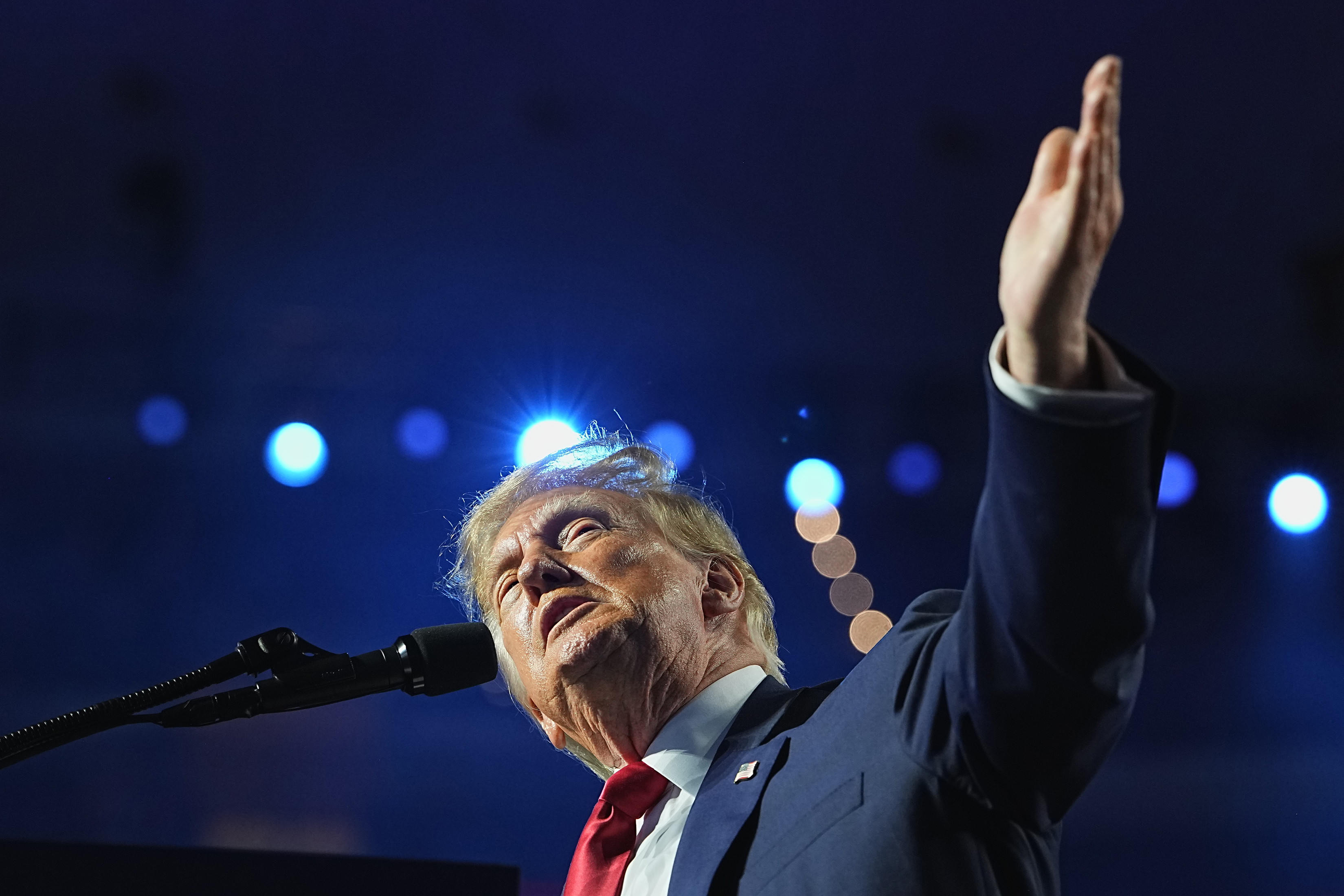
    Vice President JD Vance was billed as the headliner of the second night of the Republican convention, but President Donald Trump stole the show.

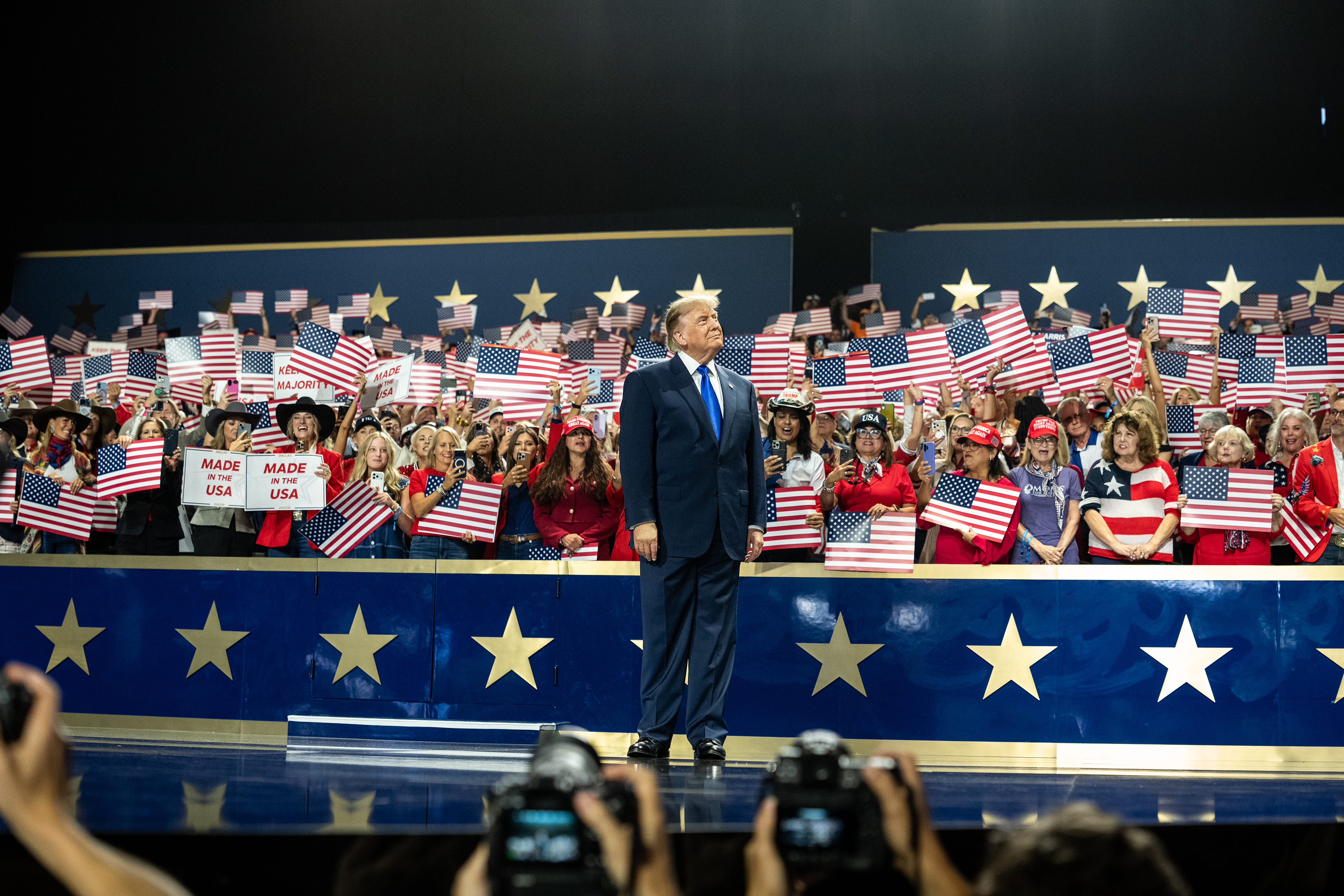
    With a hug and a handshake, Vance exited stage right after his speech as Trump returned to the place he likes most — center stage — to make his final pitch of the convention to keep Republicans in power.

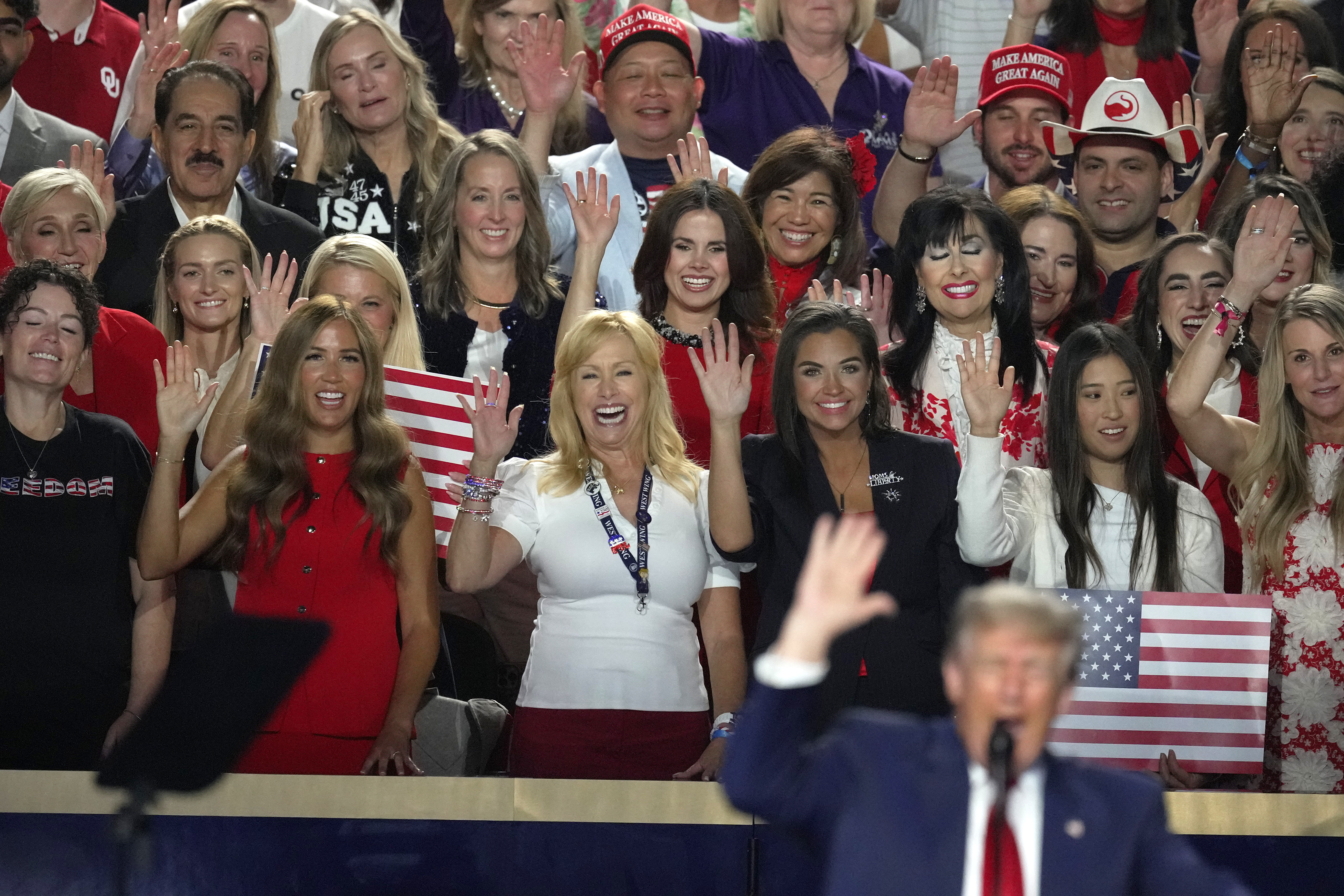
    At one point Trump asked attendees to raise their right hands and pledge to him that he would vote with their family and friends. Dutifully, they did.

    “You know what happens if you don’t vote?” Trump said. “You go to hell.”

    The two-day rally in Dallas came as Trump’s approval has sagged below 40% and Republicans fear losing control of both the House and Senate. Republicans hoped the gathering would help energize a base beleaguered by high prices and the Iran war to turn out in droves. But the two days of red meat tossed from the stage seemed unlikely to satiate independent voters whose support has flagged.

    Here are seven takeaways from the convention:

    Vance makes his 2026 (and 2028) pitch

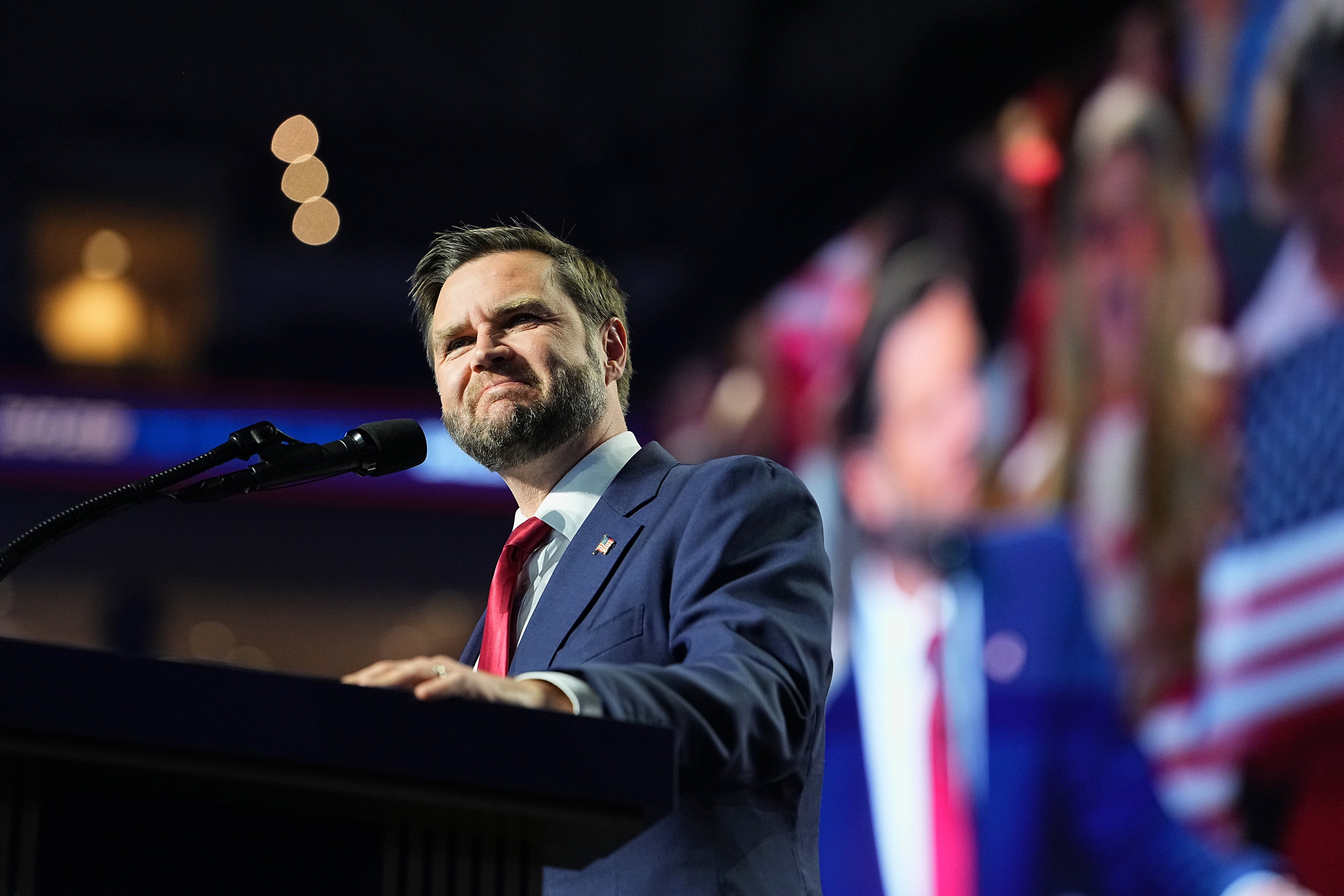
    Vance arrived in Dallas widely considered the front-runner in the 2028 Republican presidential primary. His speech offered some early clues about how he might approach a campaign.

    Vance focused on restoring the primacy of the traditional nuclear American family, a theme he has championed in the administration. He did not mention the war in Iran, an operation he has defended publicly but raised concerns about privately. But he issued a plea for conservatives not to abandon the White House over policy.

    “Do not throw the baby out with the bathwater,” he urged.

    Vance speaks in a far more scripted political style than Trump. He caught fire with the crowd when he snapped back at a protester who interrupted his remarks by waving Palestinian and Mexican flags. “My friend, if you love Mexico so much, get your a— over there,” he said.

    But he failed to sustain the kind of enthusiasm that Trump commanded either night. Nor did he win anything beyond perfunctory praise from the president, who quickly ushered him off the stage.

    As the balloons fell, it was the president alone, along with a tenor singing. Trump is not giving up his crown quite yet.

    Trump throws an affordability Hail Mary

    Trump has called affordability — a top buzzword for Democrats this year — a “hoax.” In his speech Wednesday night, the president claimed that prices are on their way down. At the same time, he rolled out an audacious plan to address people’s concerns about costs: a massive cash giveaway.

    He branded his dubious and detail-free plan to send $5,000 to every American adult a “Trump Dividend.”

    But Trump was virtually the only one talking about it.

    A day later, the splashy $1 trillion-plus plan barely made a ripple on the convention stage.

    The president’s own son, Donald Trump Jr., didn’t so much as mention it.

    Neither did the speaker of the House.

    Neither did the vice president.

    Only Trump did.

    If the president wants the dangled cash to be a major factor in the midterms, the rest of the Republican Party didn’t use the rest of the convention to sell it.

    Republicans have a new rogues’ gallery of liberal villains

    Forget about Nancy Pelosi.

    In Dallas, Republicans made clear that the former House speaker has been dethroned from her decades-long position as the party’s favorite political villain.

    Speaker after speaker assailed Hasan Piker, a leftist online streamer, and Abdul El-Sayed, the Democratic Senate nominee in Michigan, for pushing what they described as an extreme and anti-American agenda. Their images, including Piker’s naked torso, were broadcast on the jumbotron over the stadium. Even Rep. Alexandria Ocasio-Cortez of New York, who is a frequent target of the right, got less airtime.

    At one point, Speaker Mike Johnson outlined the new rogues’ gallery of liberals — “Hasan Piker and Bernie Sanders and AOC and Abdul El-Sayed and Zohran Mamdani” — while casting the rest of the Democratic Party as squishes who would succumb to them.

    In their attacks on Piker and El-Sayed, several convention speakers embraced anti-Muslim rhetoric, including a promise popular among conservative activists to “ban Shariah law.”

    “We must stand and defeat the Islamists,” Sen. Ted Cruz of Texas said in his speech.

    GOP frames the election as common sense versus crazy

    Republicans know that Trump is unpopular. They are banking on making Democrats unpopular, too — or at least unappealing and unelectable.

    Over and over, speakers cast Democrats as out of the mainstream, frequently calling them socialists, communists, and even worse. At times they stretched the truth. Democratic socialists might have won a number of Democratic primary victories since 2024, but no serious figure in the party is promoting communism.

    “You guys are going to trigger the commies,” Donald Trump Jr., the president’s son, said at one point as the crowd chanted “USA! USA! USA!”

    Vance, in the closing of his speech, summed up the message so many had delivered before him over two days: “It’s about the party of common sense beating the party of the crazies.”

    Texas is a 2026 battleground

    Six months ago, when it first emerged that Republicans were likely to pick Dallas for this convention, it was unclear whether Texas would wind up as a top midterm battleground.

    It’s clear now.

    A parade of speakers — from the president on down — used their precious time onstage to talk about Texas’ razor-close Senate race. They sought to boost Ken Paxton, the Texas attorney general (even as Trump mocked his sartorial choices on back-to-back nights), and tear down James Talarico, the Democratic nominee. On the eve of the convention, Trump’s super political action committee had reserved $10 million in ads to help Paxton.

    “Tala-freako maybe tops the list,” Vance said of Trump’s nickname for Talarico.

    But it wasn’t just the Senate race. Republicans gerrymandered the state in 2025 to create as many as five new safely Republican House seats. But Republicans running in several of those seats appeared at the convention, seeking a boost in regions that Trump won handily.

    Was it must-see TV? Early signs suggest no

    Trump has long been known as a master of the television audience. Not this time. An average of 2.5 million people tuned in to watch his Wednesday night speech on Fox News, one of the few major TV networks that aired the remarks in full, according to preliminary figures from Nielsen. That was an average primetime audience for the network, based on the most recent quarterly statistics, and below the usual viewership for programs at that time.

    In other words, no Trump bump.

    To be fair, the president’s programming faced some steep competition. The first game of the National Football League season was on at the same time as his speech. The season’s second game was on Thursday during Vance’s and Trump’s speeches.

    Republicans make their bid to buck history

    Parties in power traditionally attempt to expand their appeal in midterm elections through targeted outreach to independent voters. That was not the strategy charted by Trump and his allies in Dallas.

    Only a handful of speakers offered any kind of outreach to moderate voters. (One of those exceptions was Rep. Mike Lawler of New York.) Far more focused their remarks on stoking fears of Shariah, transgender athletes, and Democratic candidates who were repeatedly described as communists. Again and again, Trump begged his supporters to “pretend” that he would be on the ballot — an attempt to get enough of them out to prevent the usual losses for the party in power.

    Trump and his allies are staking their chances on their ability to drive their own voters to the polls. At the top of the list are Trump loyalists who typically skip midterm elections.

    This article originally appeared in the New York Times.
  • Trump’s grand midterm convention finale: ‘I’m a little bit tired of politics’

    Trump’s grand midterm convention finale: ‘I’m a little bit tired of politics’

    DALLAS — In 2024, President Donald Trump accepted the Republican presidential nomination by promising to “lead America back to the summit of human achievement and greatness.”

    In 2026, he closed out an unusual midterm convention organized in his honor by saying he was a little bored of politics. He seemed more interested in telling supporters to swear on something holy — which seemed to be himself — that they would go out and vote for Republican candidates in November.

    “Please raise your right hand,” Trump instructed a rowdy crowd of thousands inside a Dallas arena on Thursday evening. Many of them complied. “I pledge to the greatest president in the history of the United States that loves us so much he can’t even breathe that I will go out with my family, my friends, I will do it any way — I don’t care if I’m registered or not, I’m going to try and cheat like hell, like they do.” (Trump usually frowns on election fraud.)

    He added: “I am going to go out, and I’m going to get my friends, my family, and we are going to vote on November 3.”

    Speaking for a grand total of nearly 2 1/2 hours over two days in Texas, Trump made it very clear, onstage and in interviews, that he would be relying on the strength of his political brand to see his party through what appear to be daunting midterm elections. He would not be straying much from his comfort zone to help vulnerable Republicans. In fact, the president said Thursday evening, he was kind of over this.

    “We’re going to have a good time listening to music,” Trump said, name-checking Christopher Macchio, an opera singer who closed out the evening. “I’m getting a little bit tired of politics now.”

    Before taking the stage for the second night in Dallas, Trump was asked by Laura Ingraham of Fox News whether he intended to campaign harder than he ever had before.

    “No,” he replied bluntly. Asked by Ingraham whether or not he thought his legacy was on the line ahead of the midterm elections — “Isn’t this just as important, Mr. President?” — Trump seemed almost blasé about the possibility of Republicans losing one or both chambers of Congress. “I’ll block all their bad stuff for two years. It won’t be the same, but I’ll be a blocker, what can I tell you?”

    The whole spectacle was a window into the mindset of Trump and his advisers, who point to recent history as proof that he is capable of beating long odds through brashness, sheer will and an intense connection with his supporters. That relationship is unmatched in modern politics. During his own speech, Vice President JD Vance, the perceived front-runner for the 2028 Republican nomination, asked the crowd to chant his name because it felt “pretty cool.”

    Trump does not have to make such requests. But instead of focusing his energy on Republicans in difficult races — some of whom skipped the event completely — he directed the focus back to himself while he was in Texas. He pleaded with voters to engage in make-believe, and to “please pretend” that he was the one on the November ballot. That exercise might work against him in competitive races where the war with Iran is unpopular and where voters feel that their worries about the prices of gas and groceries are being ignored.

    He put a new twist on an old tactic by offering free money — $5,000 to every American adult — if Republicans keep control of Congress. On his first night in Dallas, he asked voters for patience: The war with Iran, he assured supporters, “will be over very shortly after the election.” All of these promises and pleas amounted to a maximalist, midterm-era version of the “in two weeks” rhetorical tool he relies on when he is under pressure, to vow that something good will happen a few news cycles down the road.

    “Food prices and almost every other item are rapidly going down,” Trump told the crowd Wednesday. “And by the way, oil will be going down as soon as we win the war with Iran, which is taking place right now. We’ll win it. We’re winning it. We control the Hormuz Strait. I think we should call the Hormuz Strait, we should call it the Trump Strait.”

    At moments, Trump almost seemed to be in conversation with himself about his endorsement style, which, in one crucial race at least, has featured a mix of insults and shrugging. On both nights, he defended the disparaging way he has talked about the appearance and character of Ken Paxton, the Texas attorney general running for a Senate seat after Trump directed primary voters to oust Sen. John Cornyn. Those voters complied and put an otherwise reliable seat into play.

    “I said, ‘I don’t really like the way he looks. I don’t like it,’” Trump said of Paxton on Wednesday. “But you know what I do like? He was the greatest attorney general in the history of Texas.”

    By Thursday, he was basically saying to hell with it: “You better do me a big, the biggest favor you’ve ever done me,” Trump told supporters as Paxton watched from the sidelines and smiled through what was at least his third humiliation ritual of the Texas event. “You’ve got to do this for me. You’ve got to pretend I’m on the ticket.”

    Again and again, Trump turned to other priorities, the most pressing of which seemed to be the crowd size in Dallas. There is a reason that political conventions are not held during the midterms. This expensive, two-day event, designed as a tribute to Trump, functioned more like a temperature check, and there were moments when interest seemed lukewarm. Rows of seats in the American Airlines Center stayed empty throughout the affair. Endangered Republicans, sensing a brush fire rather than a lit torch brightening the way forward, steered clear.

    “No empty seats! Fake news,” Trump exclaimed Thursday, spending about three minutes affirming that the busy arena was packed when it wasn’t.

    And so it went on in that vein in Texas, with little new except for a promise of free money, a pledge of allegiance gimmick, and a few glimpses of an 80-year-old president pondering a future in which he is not firmly in control.

    “I want you to remember me in four or five years when this country’s rocketing,” Trump said Wednesday, somewhere near the beginning of a meandering and nearly two-hour speech. “Remember, I’m the one that got it started.”

    By the time he was ready to depart Dallas, he didn’t seem too interested in the particulars of the future, the strength of Republican candidates or the validity of his promises. He suggested to his devoted supporters that he might be “standing with you one of these days.” But for now, he just wanted to chill out and listen to music. He sped through the last lines of a speech finale he knows by heart after a decade at the center of national politics.

    “I just want to say, we will make America great again,” Trump said dutifully. “We will make it greater than ever before.”

    Then the tenor took the stage. Red, blue, white and gold balloons began to fall from the ceiling. The president swayed to the music, lost in the moment.

    This article originally appeared in The New York Times.

  • Trump loyalist steps down from ‘grand conspiracy’ case

    Trump loyalist steps down from ‘grand conspiracy’ case

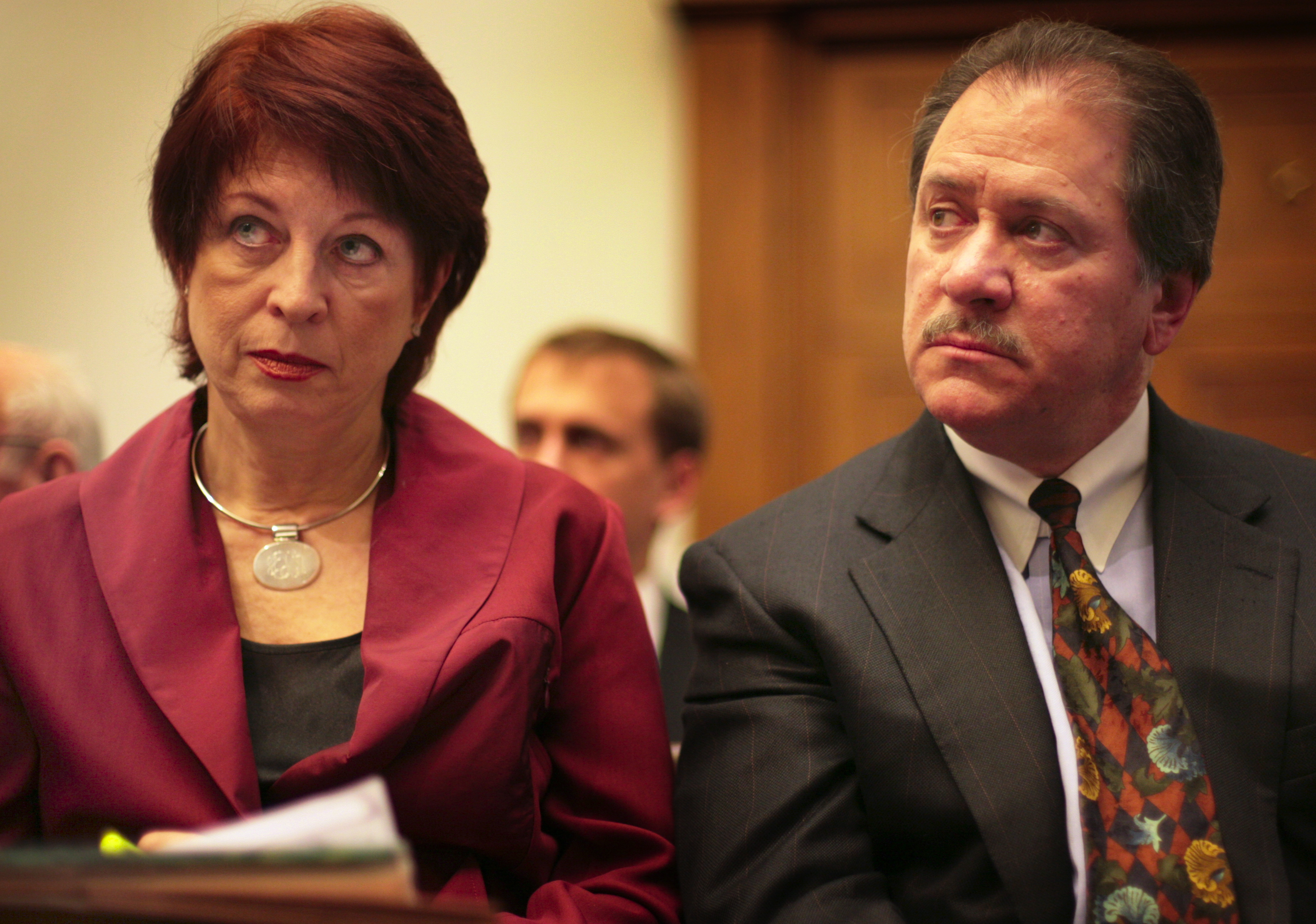
    A loyalist prosecutor handpicked by the Justice Department to lead a contentious conspiracy investigation into several of President Donald Trump’s political opponents abruptly quit his job on Thursday, according to two people familiar with the matter.

    The prosecutor, Joseph diGenova, had been in charge of what Trump’s allies have often referred to as the “grand conspiracy,” a sprawling inquiry based in the U.S. attorney’s office in South Florida that has sought to implicate federal officials who have investigated Trump in a single plot to deprive him of his rights.

    DiGenova’s resignation was the latest setback in the case that began last year and has dragged on for months. Even though members of his team have issued numerous grand jury subpoenas to federal law enforcement and intelligence officials who have sought over the past decade to hold Trump accountable in a series of criminal inquiries, diGenova had yet to obtain an indictment.

    “It was an honor and privilege to serve the president and the department,” DiGenova told CNN and CBS during phone interviews on Thursday.

    A spokesperson for the U.S. attorney’s office did not respond to a message seeking comment.

    Trump has repeatedly put pressure on prosecutors to bring criminal charges against his opponents, calling them out in private meetings and in social media posts. He has also expressed displeasure about the slow pace of the retributive investigations he has helped to set in motion.

    But time and again, Trump’s desire for vengeance and his willingness to break through the walls of independence that have traditionally separated the White House and the Justice Department have resulted in failure. Judges and grand juries have repeatedly stymied his attempts to strong arm prosecutors into bringing charges.

    Sometimes, as in the case of diGenova, prosecutors themselves have effectively reminded him that it is no simple matter to file indictments against people without real evidence or viable legal reasoning. The resignation was likely to cause consternation among far-right influencers who have long heralded the grand conspiracy case as the Trump administration’s most aggressive effort to go after the president’s critics.

    From the beginning, the influencers pushed for charges to be brought against the widest array of Democrats possible, asserting that a cabal of “deep state” operatives — led by former President Barack Obama — had worked for years to destroy Trump and deserved to be punished.

    With his move, diGenova became the second prosecutor who has either resigned or been removed from the case. The prosecutor in charge of an early phase of the investigation was forced to leave in the spring after telling her superiors that there was not sufficient evidence to bring charges against one of its first targets, John Brennan, a former CIA director who provoked Trump’s ire by helping to assemble an intelligence assessment that determined that Russia had sought to interfere in the 2016 presidential campaign.

    The grand conspiracy inquiry has long been the most fevered of the many revenge investigations that Trump has demanded the Justice Department undertake. It has involved prosecutors seeking to link disparate criminal inquiries into the president — including the Russia investigation and a separate investigation into Trump’s mishandling of classified documents — as an overarching, multiyear scheme to damage his political prospects.

    From the outset, diGenova faced an uphill battle in seeking to prove the basic theory of his case: that the various inquiries into Trump — conducted by different prosecutors and spanning nearly a decade — could be reasonably tied together in a single conspiracy. Those hurdles have led several current and former prosecutors in the office in southern Florida to wonder whether the investigation was largely a show put on to placate Trump.

    DiGenova, a former U.S. attorney from the Ronald Reagan era who had not worked as a prosecutor in nearly 40 years, took control of the case in April after his predecessor, Maria Medetis Long, was kicked off the investigation. At 81, he was an unusual choice to oversee an inquiry involving multiple targets that quickly grew to include at least a dozen prosecutors, including his wife, Victoria Toensing.

    Moreover, diGenova was a longtime ally of Trump’s who had publicly claimed that the Russia investigation was a plot by law enforcement to frame him and keep him out of the White House. DiGenova had also worked as a lawyer for Trump’s 2020 campaign, supporting his false assertions that the election that year had been rigged against him.

    While Brennan was the initial focus of the inquiry, it has also involved an effort to implicate former FBI Director James Comey, who has been charged in a separate case in North Carolina. Late last month, diGenova’s office issued a subpoena demanding testimony from one of Comey’s close confidants.

    More recently, subpoenas had been issued to federal agents who took part in the August 2022 search of Mar-a-Lago, Trump’s private club and residence in Florida, in the classified documents investigation.

    This article originally appeared in The New York Times.

  • ‘You know what happens if you don’t vote’: 7 takeaways from the GOP convention

    ‘You know what happens if you don’t vote’: 7 takeaways from the GOP convention

    Vice President JD Vance was billed as the headliner of the second night of the Republican convention, but President Donald Trump stole the show.

    With a hug and a handshake, Vance exited stage right after his speech as Trump returned to the place he likes most — center stage — to make his final pitch of the convention to keep Republicans in power.

    At one point Trump asked attendees to raise their right hands and pledge to him that he would vote with their family and friends. Dutifully, they did.

    “You know what happens if you don’t vote?” Trump said. “You go to hell.”

    The two-day rally in Dallas came as Trump’s approval has sagged below 40% and Republicans fear losing control of both the House and Senate. Republicans hoped the gathering would help energize a base beleaguered by high prices and the Iran war to turn out in droves. But the two days of red meat tossed from the stage seemed unlikely to satiate independent voters whose support has flagged.

    Here are seven takeaways from the convention:

    Vance makes his 2026 (and 2028) pitch

    Vance arrived in Dallas widely considered the front-runner in the 2028 Republican presidential primary. His speech offered some early clues about how he might approach a campaign.

    Vance focused on restoring the primacy of the traditional nuclear American family, a theme he has championed in the administration. He did not mention the war in Iran, an operation he has defended publicly but raised concerns about privately. But he issued a plea for conservatives not to abandon the White House over policy.

    “Do not throw the baby out with the bathwater,” he urged.

    Vance speaks in a far more scripted political style than Trump. He caught fire with the crowd when he snapped back at a protester who interrupted his remarks by waving Palestinian and Mexican flags. “My friend, if you love Mexico so much, get your ass over there,” he said.

    But he failed to sustain the kind of enthusiasm that Trump commanded either night. Nor did he win anything beyond perfunctory praise from the president, who quickly ushered him off the stage.

    As the balloons fell, it was the president alone, along with a tenor singing. Trump is not giving up his crown quite yet.

    Trump throws an affordability Hail Mary

    Trump has called affordability — a top buzzword for Democrats this year — a “hoax.” In his speech Wednesday night, the president claimed that prices are on their way down. At the same time, he rolled out an audacious plan to address people’s concerns about costs: a massive cash giveaway.

    He branded his dubious and detail-free plan to send $5,000 to every American adult a “Trump Dividend.”

    But Trump was virtually the only one talking about it.

    A day later, the splashy $1 trillion-plus plan barely made a ripple on the convention stage.

    The president’s own son, Donald Trump Jr., didn’t so much as mention it.

    Neither did the speaker of the House.

    Neither did the vice president.

    Only Trump did.

    If the president wants the dangled cash to be a major factor in the midterms, the rest of the Republican Party didn’t use the rest of the convention to sell it.

    Republicans have a new rogues’ gallery of liberal villains

    Forget about Nancy Pelosi.

    In Dallas, Republicans made clear that the former House speaker has been dethroned from her decades-long position as the party’s favorite political villain.

    Speaker after speaker assailed Hasan Piker, a leftist online streamer, and Abdul El-Sayed, the Democratic Senate nominee in Michigan, for pushing what they described as an extreme and anti-American agenda. Their images, including Piker’s naked torso, were broadcast on the jumbotron over the stadium. Even Rep. Alexandria Ocasio-Cortez of New York, who is a frequent target of the right, got less airtime.

    At one point, Speaker Mike Johnson outlined the new rogues’ gallery of liberals — “Hasan Piker and Bernie Sanders and AOC and Abdul El-Sayed and Zohran Mamdani” — while casting the rest of the Democratic Party as squishes who would succumb to them.

    In their attacks on Piker and El-Sayed, several convention speakers embraced anti-Muslim rhetoric, including a promise popular among conservative activists to “ban Shariah law.”

    “We must stand and defeat the Islamists,” Sen. Ted Cruz of Texas said in his speech.

    GOP frames the election as common sense versus crazy

    Republicans know that Trump is unpopular. They are banking on making Democrats unpopular, too — or at least unappealing and unelectable.

    Over and over, speakers cast Democrats as out of the mainstream, frequently calling them socialists, communists and even worse. At times they stretched the truth. Democratic socialists might have won a number of Democratic primary victories since 2024, but no serious figure in the party is promoting communism.

    “You guys are going to trigger the commies,” Donald Trump Jr., the president’s son, said at one point as the crowd chanted “USA! USA! USA!”

    Vance, in the closing of his speech, summed up the message so many had delivered before him over two days: “It’s about the party of common sense beating the party of the crazies.”

    Texas is a 2026 battleground

    Six months ago, when it first emerged that Republicans were likely to pick Dallas for this convention, it was unclear whether Texas would wind up as a top midterm battleground.

    It’s clear now.

    A parade of speakers — from the president on down — used their precious time onstage to talk about Texas’ razor-close Senate race. They sought to boost Ken Paxton, the Texas attorney general (even as Trump mocked his sartorial choices on back-to-back nights), and tear down James Talarico, the Democratic nominee. On the eve of the convention, Trump’s super political action committee had reserved $10 million in ads to help Paxton.

    “Tala-freako maybe tops the list,” Vance said of Trump’s nickname for Talarico.

    But it wasn’t just the Senate race. Republicans gerrymandered the state in 2025 to create as many as five new safely Republican House seats. But Republicans running in several of those seats appeared at the convention, seeking a boost in regions that Trump won handily.

    Was it must-see TV? Early signs suggest no

    Trump has long been known as a master of the television audience. Not this time. An average of 2.5 million people tuned in to watch his Wednesday night speech on Fox News, one of the few major TV networks that aired the remarks in full, according to preliminary figures from Nielsen. That was an average primetime audience for the network, based on the most recent quarterly statistics, and below the usual viewership for programs at that time.

    In other words, no Trump bump.

    To be fair, the president’s programming faced some steep competition. The first game of the National Football League season was on at the same time as his speech. The season’s second game was on Thursday during Vance’s and Trump’s speeches.

    Republicans make their bid to buck history

    Parties in power traditionally attempt to expand their appeal in midterm elections through targeted outreach to independent voters. That was not the strategy charted by Trump and his allies in Dallas.

    Only a handful of speakers offered any kind of outreach to moderate voters (one of those exceptions was Rep. Mike Lawler of New York). Far more focused their remarks on stoking fears of Shariah, transgender athletes and Democratic candidates who were repeatedly described as communists. Again and again, Trump begged his supporters to “pretend” that he would be on the ballot — an attempt to get enough of them out to prevent the usual losses for the party in power.

    Trump and his allies are staking their chances on their ability to drive their own voters to the polls. At the top of the list are Trump loyalists who typically skip midterm elections.

    This article originally appeared in The New York Times.

  • For more than 20 years, Josh Shapiro has worn the same pin to remember the lives lost on 9/11

    For more than 20 years, Josh Shapiro has worn the same pin to remember the lives lost on 9/11

    HARRISBURG — For more than two decades, Gov. Josh Shapiro has worn it almost every day.

    The small, thin accessory affixed to his lapel — a compressed version of the 50 stars and 13 stripes — may require one to squint to see. But it carries significant meaning to the Democratic governor, with an origin story that began on Sept. 11, 2001, when Shapiro was a young staffer on Capitol Hill.

    Shapiro was working in Washington when he experienced the pain and confusion of the deadliest terrorist attack in the nation’s history, he said in a June interview.

    He was just steps away from the U.S. Capitol building in then-U.S. Rep. Joe Hoeffel’s office, where he served as chief of staff, when he watched as the Today show anchors announced a plane had hit the World Trade Center. And then another.

    He realized, like thousands of Americans, that the nation was under attack — with Washington as a potential target. Less than an hour later, Shapiro said, he saw the smoke coming from the Pentagon. Staff were given mixed signals on whether to evacuate before ultimately being told to hunker down in legislative buildings until the situation was clear, he said.

    When Shapiro arrived on Capitol Hill the next day, a woman who worked in the Capitol gift shop was giving out American flag pins to anyone who passed by — the “typical gift shop” pin depicting a waving flag that President George W. Bush and other politicians began to wear in the aftermath of the 9/11 attacks, he said.

    The pin became a part of Shapiro’s daily business uniform. He wore it every day, even after he left D.C. and began working at a law firm in Montgomery County while preparing to run for state representative — his first foray into elected office and the start of a decades-long career.

    When Shapiro was knocking on doors for his 2004 run for the state House, a veteran in Glenside told him his gift shop pin wasn’t cutting it. The veteran gave Shapiro a nicer one: an image of the American flag in a thin, metal bar.

    “And I’ve worn it basically every day since,” Shapiro said in June ahead of his appearance at a special session of the U.S. House at Independence Hall to commemorate America’s founding 250 years ago. Widely rumored to be a future presidential contender, Shapiro often talks about his pride in America and its ideals, and his fears that the country is becoming too divided and straying from the founders’ aspirations.

    “I am a proud, patriotic American,” he said, referencing his pin. “I don’t think patriotism belongs to one party. I don’t think it should ever be partisan.”

    Over the years, Shapiro has made slight changes to the flag accessory; he shaved down the pin stem and made it into a magnet.

    “It was destroying my suits,” he added.

    He said he once lost the pin when it fell off a jacket that he had hung up on a plane.

    “I freaked out. I literally freaked out,” he said.

    He said he and the flight attendant were on their hands and knees trying to find it in the plane’s closet. They found the pin, but never found the backing, which was replaced much more easily.

    “I found the most important thing, and I just got another magnet,” he said.

    Shapiro will appear at the Flight 93 Memorial near Shanksville, Pa., alongside members of President Donald Trump’s administration, including U.S. Interior Secretary Doug Burgum, for a service on Friday to commemorate the 25th anniversary of the attacks, in which more than 2,900 people were killed.

    United Airlines Flight 93, a San Francisco-bound passenger plane flying out of Newark, was hijacked on Sept. 11, 2001. It was believed to be headed to the White House or U.S. Capitol, near where Shapiro was working at the time — before its 40 passengers attempted to retake control and crashed the aircraft in a field near Shanksville.

  • Republican Ryan Mackenzie had the narrowest win in Pa. two years ago. He’s betting Trump will help him again.

    Republican Ryan Mackenzie had the narrowest win in Pa. two years ago. He’s betting Trump will help him again.

    DALLAS, Texas — As Republicans look to keep their narrow control of Congress by defending the seats they flipped in 2024, there aren’t many places where they can afford to lose fewer votes than in U.S. Rep. Ryan Mackenzie’s district covering the Lehigh Valley and Poconos.

    Mackenzie’s takedown of a three-term Democrat by a mere 4,000 votes two years ago was the narrowest congressional race in Pennsylvania — his 1% margin of victory was the seventh smallest out of 435 House districts across the country.

    Standing Thursday on the Republican Party’s biggest stage of the year — and likely staring down another razor-thin result this fall — Mackenzie didn’t hold back when laying out the potential stakes.

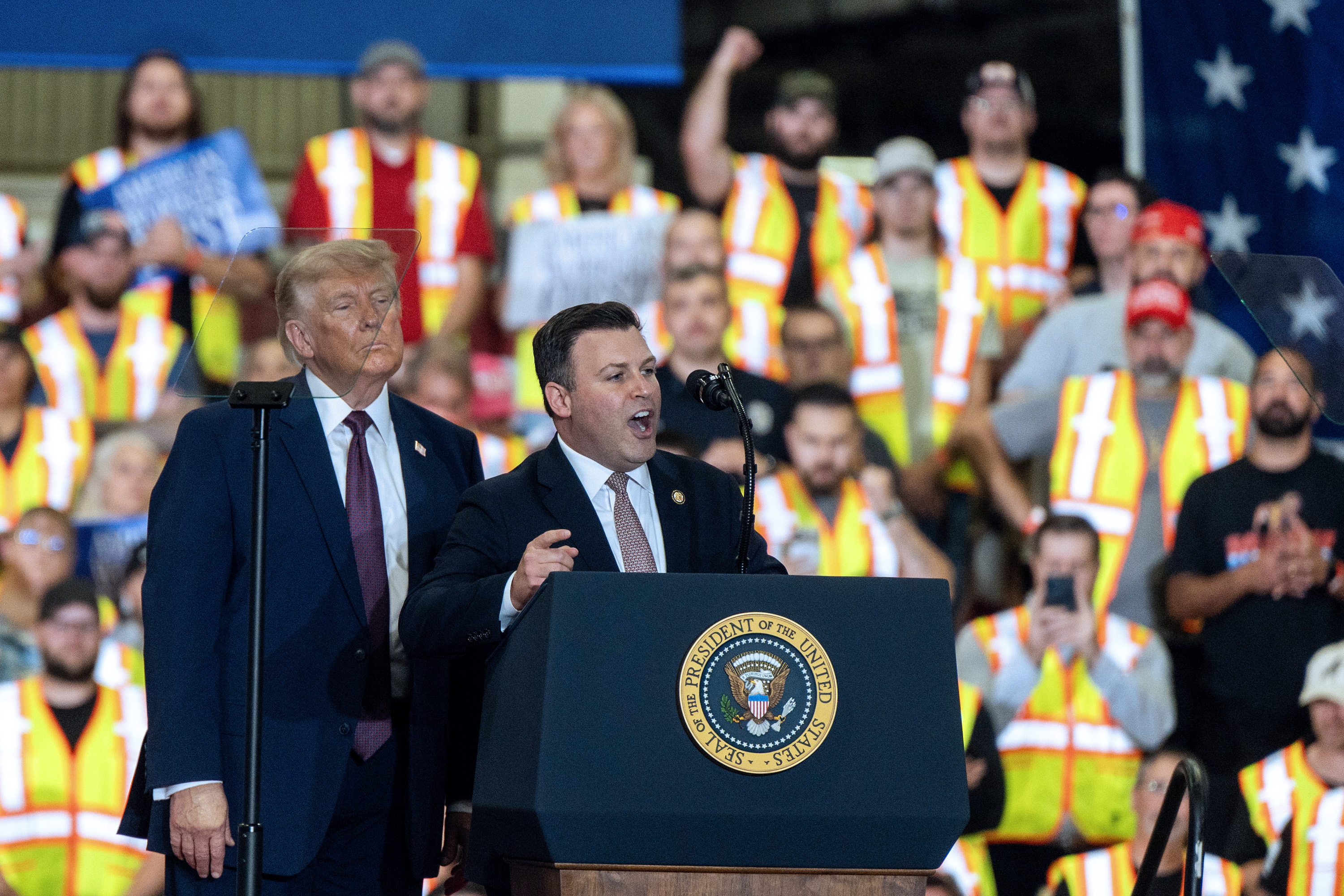
    “I’m running in one of the top races again, and it will determine the future direction for our nation,” Mackenzie said on the second day of the first-ever Republican midterm convention. “Now we must get to work, we must go out and win in November, and we must save America.”

    Like one of Pennsylvania’s other vulnerable Republican incumbents who spoke a day earlier, Mackenzie embraced the convention known as “Trump-a-palooza” even as the president’s low poll numbers threaten to hurt their party in the elections.

    In an interview after a brief speech that focused on the president’s signature tax cuts, Mackenzie said Democrats’ threats to repeal those cuts and other Trump policies meant the president is, in a sense, on the ballot — so it makes sense to campaign in that way.

    “We know the history of American politics is the party who has the White House, their voters end up being less energized in midterm elections, and so I think it was a smart idea to try something like this, a midterm convention, to energize our voters,” Mackenzie said.

    Generating enthusiasm for the Republican ticket could be a tough task for Mackenzie and other incumbents, with polling in Pennsylvania showing widespread frustration with Trump’s handling of key issues, including the cost of living.

    “Everybody is getting gouged,” said Ron Jones, 79, an Allentown Democratic voter and Navy veteran who said he feels stretched relying on his Social Security and pension checks. “You just can’t afford to live. Period.”

    Jones said he hasn’t been following the congressional race closely, but said he plans to help “get rid of all incumbents.”

    President Donald Trump onstage during the Republican Party’s unusual midterm convention in Dallas on Wednesday, Sept. 9, 2026. (Haiyun Jiang/The New York Times)HAIYUN JIANG

    Going after Brooks on a national stage

    Mackenzie told The Inquirer his phone started blowing up with text messages immediately after his speech. The lawmaker said he welcomed the opportunity to have a national audience to talk about his work, and his opponent.

    Mackenzie didn’t just applaud Trump’s policies during his speech, he also imitated the president’s ferocious style of politics by blasting his Democratic challenger Bob Brooks as a scandal-ridden, “far-left nutjob.”

    Brooks, he contended, was “handpicked by the Democratic establishment,” and has spoken critically about nonunion firefighters. He also accused Brooks of stealing money from his own family, a claim based on a lawsuit brought by Brooks’ former mother-in-law and involving a decades-old debt she says that he owes.

    “That’s what crazy looks like,” Mackenzie said.

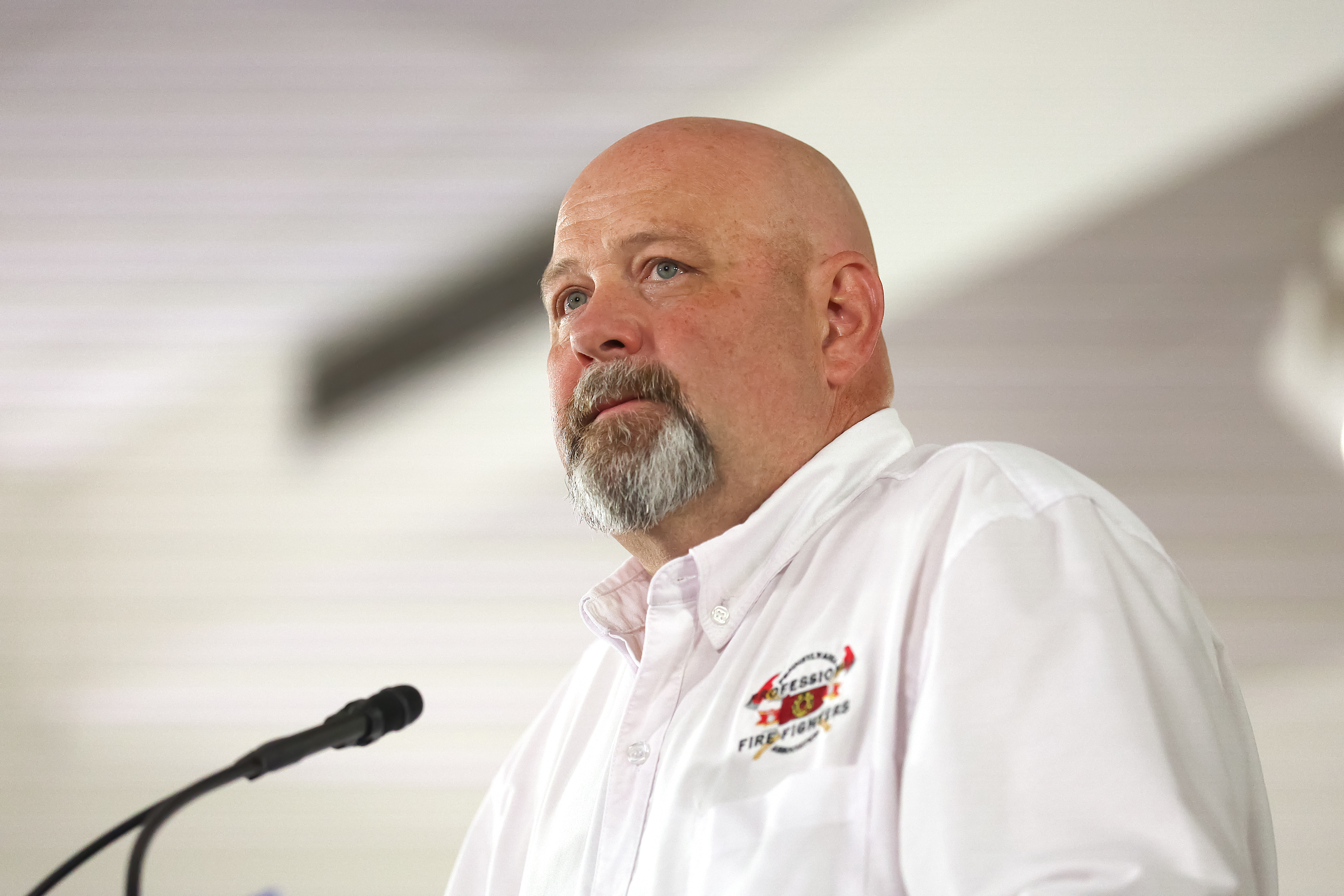
    Brooks, a retired firefighter in Bethlehem and the Pennsylvania Professional Fire Fighters Association president, was recruited last year by prominent Democrats, including Gov. Josh Shapiro and U.S. Rep. Chris Deluzio. He quickly got a groundswell of support from moderates and progressives alike, including U.S. Sen. Bernie Sanders and former Transportation Secretary Pete Buttigieg.

    Those high-profile supporters, and Brooks himself, leaned into his working-class image — highlighting his history of working multiple jobs and his insistence, even as he ran for Congress, on continuing to drive a snowplow and coach high school baseball.

    Mackenzie and national Republicans who’ve invested resources into his campaign have repeatedly targeted Brooks for the lawsuit involving his family and for old social media comments.

    In one post, Brooks lambasted volunteer firefighters working in areas where other union firefighters operate as “scabs” and other pejoratives.

    Brooks has dismissed those and other attacks on his old posts, saying he never thought he would be a candidate for office when he made them.

    The Democrat did not directly address those issues in a comment after Mackenzie broadcast them to a national audience.

    “Ryan Mackenzie got his wish today: a big boy speaking slot on stage at Trump’s party in Dallas,” Brooks said in a statement that blamed Mackenzie for rising costs and voting against restricting Trump’s attacks in Iran, the two areas that polls show Trump performing the worst among both Republicans and Democrats.

    “Mackenzie’s trip to Dallas is a reminder of who he is: a lap dog for Donald Trump, for his party bosses, and for anyone with power and money,” Brooks said.

    Bob Brooks, who is running for Pennsylvania’s 7th Congressional District, addresses the audience during a rally at the United Steelworkers Union Hall in Bethlehem, Pa., on Sunday, July 26, 2026.David Maialetti / Staff Photographer

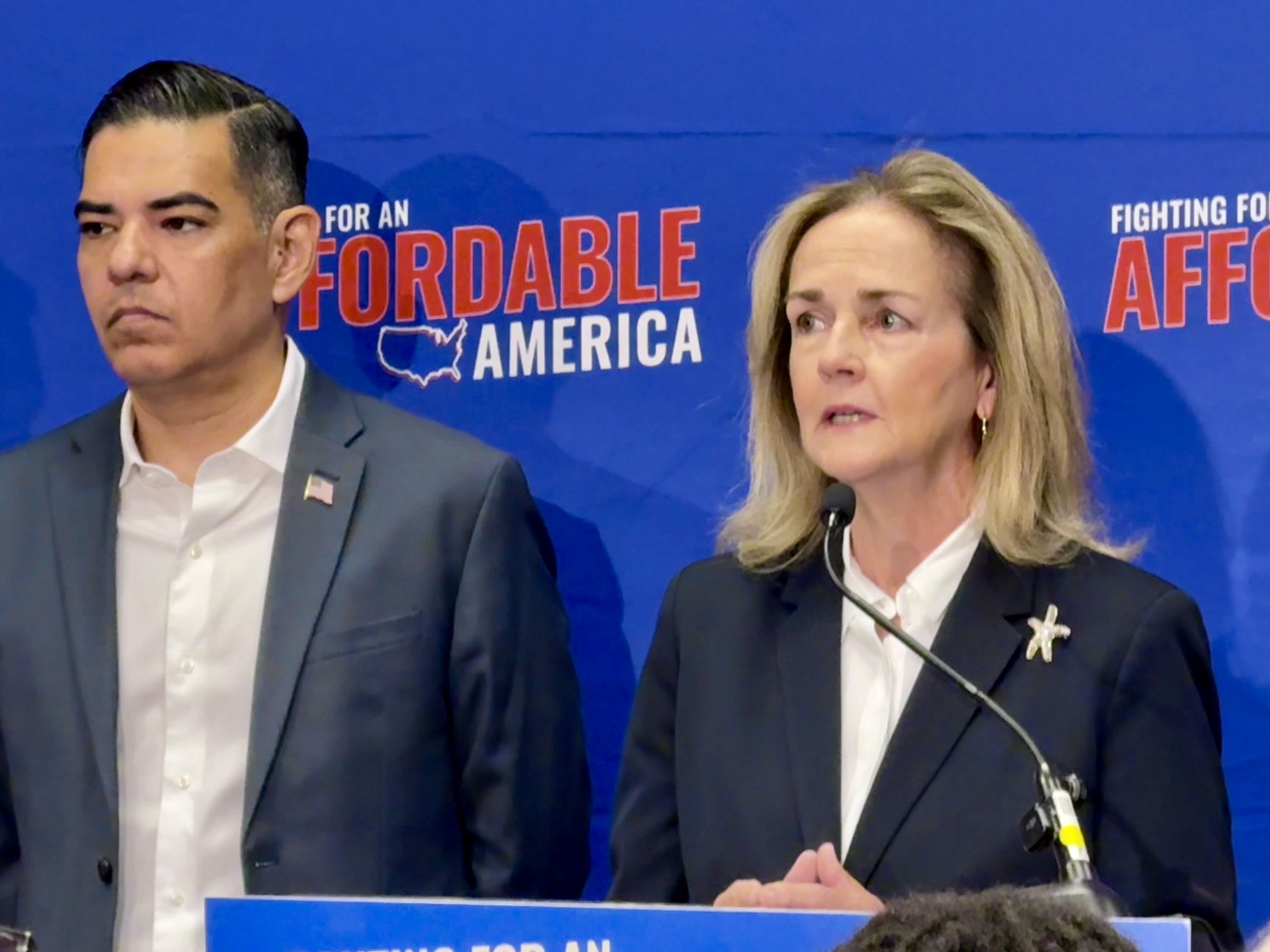
    Just steps from the convention location earlier in the day, a small group of House Democrats that included U.S. Rep. Madeleine Dean (D., Montgomery) protested by, mainly, hitting Republicans on affordability.

    “If you listen to what’s being said across the street, you might feel like you’re living in some separate reality. Here’s the reality check,” Dean said as she rattled off the higher cost of groceries, electricity and gasoline since Trump took office.

    Dean targeted Mackenzie as well as U.S. Rep. Rob Bresnahan (R., Luzerne) and U.S. Sen. Dave McCormick (R., Pa.) — who each spoke at the convention on Wednesday — specifically, saying they were among the Republicans “happy to coddle a president who is unfit and unwell.”

    “Here at the heel of Donald Trump, I don’t know what they think they’re doing,” Dean said behind a podium with a sign reading, “Fighting for an affordable America.”

    Both Bresnahan, who is running in a competitive race against Democratic Scranton Mayor Paige Cognetti, and Mackenzie focused on an economic message during their speeches.

    They did not directly address concerns about inflation, or the Iran war’s effects on the rising cost of gas.

    U.S. Rep. Jason Smith, a Missouri Republican who joined Mackenzie onstage, contended the GOP majority had focused its agenda on the working class. He pointed to the tax exemptions for tips and overtime pay.

    “If you don’t believe me, just ask yourself, how many billionaires do you know that are tipped employees?” said Smith, the House Ways and Means Commitee chair.

    But neither he nor Mackenzie addressed the cuts to Medicaid and food assistance that were included in the same legislation to help pay for the tax cuts they repeatedly touted.

    “We delivered tax relief for every American by locking in lower rates and expanding the standard deduction,” Mackenzie said.

    Staff writer Alfred Lubrano contributed reporting.

  • Members of Congress tour EMR in Camden, push for oversight of fire-causing lithium-ion batteries

    Members of Congress tour EMR in Camden, push for oversight of fire-causing lithium-ion batteries

    Two New Jersey Congress members appeared alongside EMR’s CEO on Thursday to call for more oversight on lithium-ion batteries, which the company blames for causing fires at its Camden scrap metal site.

    U.S. Rep. Donald Norcross, a Camden Democrat, introduced the Battery Fire Prevention Act nearly a year ago, inspired by fires at the Camden facility. But it hasn’t made progress in the Republican-dominated Congress. He toured the EMR site Thursday with U.S. Rep. Frank Pallone Jr., of Monmouth County, the top Democrat on the House Energy and Commerce Committee.

    “Today it’s Camden. Yesterday was North Carolina and Minnesota. It’s literally all 50 states and quite frankly, a global problem,” Norcross said of lithium-ion battery fires.

    “The United States Congress has failed in this,” he added. “When we understand that China is more progressive in finding batteries in their waste streams, you know we have a big problem.”

    Standing in front of gigantic piles of old household appliances, damaged cars, and other kinds of scrap metal with a view of the Philadelphia skyline, Norcross said his bill will advance once Pallone becomes committee chair in the coming months — if Democrats win back the House in this year’s midterm elections.

    The bill would create a 30% tax credit for waste and recycling companies to purchase technology to help identify lithium-ion batteries and a 5% tax on the sale of lithium-ion batteries. It would also direct the Department of Energy and the Environmental Protection Agency to develop a battery buyback program. Using money from the battery tax, the program would award grants to facilities — like schools, local governments, or recycling plants — to collect batteries from consumers, who would get paid for returning their batteries. Those batteries would then be properly disposed of or recycled.

    EMR’s machinery separates and shreds large pieces of metal and spits them out into new piles of knuckle-sized scrap. Lithium-ion batteries, which are found in everyday technology like phones, watches, and e-bikes, aren’t supposed to land at the site but end up in the waste streams anyway.

    A crane at the EMR scrap metal shredding site in Camden on Thursday.Aliya Schneider / Staff

    Joe Balzano, the CEO of EMR Metal Recycling USA, said that the company has mechanisms to detect batteries that are about to burst, but the technology that identifies the batteries in the first place that he could apply at his site hasn’t been invented yet. Instead, employees sort through objects and set aside items that could have the batteries, which are prone to catching on fire if they become damaged or overheated. Those fires can spew out of control when hidden in a giant pile of metal.

    Norcross said research to solve this problem is currently underway.

    “Necessity is the mother of invention, so I’m hoping that invention comes quick,” Balzano said in an interview.

    While suppliers and workers have gotten better at detecting items with the batteries, “things that didn’t have a battery yesterday have a battery today,” he said.

    Part of the issue is there isn’t an obvious way for consumers to easily dispose of these batteries, so they end up in the trash or on the curbs, he said.

    “They get picked up by peddler scrappers, or they enter into the municipality waste streams, and then they make themselves through the recycling process, and they come here,” Balzano said.

    Frustrated residents who have suffered the impacts of repeated fires at the site have called for the closing of EMR in Camden. The facility temporarily shuttered earlier this summer and the company entered a legal battle with the city before a judge allowed the site to reopen.

    Norcross, who appeared alongside Balzano on Thursday, said shutting down EMR in Camden won’t solve the core problem.

    “If this disappears tomorrow, it goes to the next community, and then they’ll be fighting the same thing,” Norcross said in an interview. “So we want to fix the problem before it turns into a fire.”

    Pallone said another bill in his committee that would create federal waste rules for recycling lithium-ion batteries has bipartisan support. He said seeing the site firsthand helped him understand the issue.

    “The batteries come here, they’re essentially coming in secret,” he said.

    Norcross pointed a finger at the corporations that manufacture the batteries for not taking a proactive role in preventing improper disposal.

    “The manufacturers of batteries can’t walk away from the problem of just selling their product, and it ends up wherever it does, causing fires,” the lawmaker said.

  • In a shift, Bob Harvie calls for data center moratorium in new TV ad in race against Brian Fitzpatrick

    In a shift, Bob Harvie calls for data center moratorium in new TV ad in race against Brian Fitzpatrick

    Democrat Bob Harvie released his first general election TV ad Thursday morning, calling for a moratorium on artificial intelligence data center development and attacking U.S. Rep. Brian Fitzpatrick (R., Bucks) for his stance on the issue.

    “I don’t want any more data centers. I want a moratorium. Big tech owns enough; they shouldn’t own our congressman, too,” Harvie says in the 30-second ad.

    The ad marks the first time the congressional candidate and Bucks County commissioner has called for a moratorium and signifies a shift in his position.

    Previously, in an interview with The Inquirer last week and on his website, Harvie had called only for strict regulations on development. To focus his first major television ad on the topic shows how the projects are becoming a top issue for voters in Bucks County’s swingy 1st Congressional District amid a national backlash against data centers.

    As residents across the state protest proposed data centers in their communities, political candidates and elected officials have been taking — and sometimes changing — their positions. In August, Gov. Josh Shapiro shifted from his original stance and signed a sweeping executive order to increase restrictions on data center development.

    In Bucks County, both Harvie and Fitzpatrick have to grapple with the development of an Amazon data center in Falls Township, which is nearing completion.

    Harvie, who lives just miles from the project, voted in December 2020 to approve a county tax break for NorthPoint Development, the property owner of the Falls Township site.

    Last year, Harvie celebrated Amazon’s investment in the data center and Fitzpatrick called it “one of the most transformative investments Bucks County has seen in decades.” More recently, they both supported Shapiro’s executive order.

    In Harvie’s television ad, images of Elon Musk and Mark Zuckerberg flash on the screen. “Big tech is taking over our lives,” the candidate says in the ad. “And they want more. Grabbing our land, water, electricity, and sticking us with the bill.”

    Harvie also targeted Fitzpatrick’s initial vote for the One Big Beautiful Bill Act in the House last year, which included a provision that would ban state or local governments from enacting limiting or regulating AI systems and models. (Fitzpatrick voted against the final version of President Donald Trump’s bill, citing changes in the U.S. Senate that increased cuts to Medicaid. The final version did not include the controversial AI provision.)

    Heather Roberts, a spokesperson for Fitzpatrick’s campaign, said in a statement that the Bucks County Republican has always been supportive of “uniform federal regulations” and “100% control by local residents who could be impacted.”

    She also pointed to his cosponsorship of two bills aimed at regulating the effects of data centers: the Ratepayer Protection Act and the Data Center Transparency Act.

    “Bob Harvie literally created this problem in our community — and he is now well aware of the massive albatross that this is around his neck. Hence, his latest lie in this ad,” Roberts said.

    Fitzpatrick has also released a digital ad targeting Harvie on data centers.

    In an interview about data centers last week, Harvie did not call for a moratorium on the projects, but rather for strict regulations — as is also reflected on his campaign website. He also touted tasking the county planning commission with developing guidelines for municipalities facing potential data center proposals.

    When asked last week why he had not called for a moratorium, Harvie said: “I think there’s probably areas in the country where data centers can make sense, where the energy grid can handle it, where there’s limits to it on the impact it could have on other people who might live in the area.”

    “But I do think certainly we need to have a lot of cause for concern about how rapidly this is happening and making sure we can put some kind of handle on it,” he added.

    He also echoed residents’ environmental concerns related to data centers and said that the developments need the increased oversight outlined in Shapiro’s executive order and that projects should not continue if the local community opposes.

    Nine days later, Harvie said Thursday in another interview with The Inquirer that the decision for a moratorium did not come “out of left field for me” but was the product of many conversations amid what he says is a “complete failure of leadership” by Trump and Republicans, including Fitzpatrick, on the issue.

    Of his 2020 vote to give NorthPoint a tax break, he said there was not an indication that the property was going to be used for data centers, but rather for e-commerce distribution.

    He said that he is not set on one particular time frame for the moratorium but that “setting up guardrails” is most important, and he hopes a Democratic-controlled Congress would further hold hearings on imposing a moratorium.

    “As we’ve seen more and more of what’s going on around the country with data centers just trying to gobble up space and build, build, build without any regulation, I’ve come to the point now where we have to do something to slow down this genie getting out of the bottle,” Harvie said.

  • Constituents are ‘livid’ with Fetterman after Trump convention video and other behavior, says Rep. Madeleine Dean

    Constituents are ‘livid’ with Fetterman after Trump convention video and other behavior, says Rep. Madeleine Dean

    DALLAS, Texas — Just steps away from a Republican midterm convention that she slammed as a “farce,” U.S. Rep. Madeleine Dean (D., Montgomery) said Thursday she was “gravely disappointed” with Democratic U.S. Sen. John Fetterman’s participation in the event — as well as a range of other issues that she said indicate his abandonment of democratic values.

    “What I wish he was doing was — back home in Pennsylvania — making sure, like I am, that Pennsylvania will see more Democratic members of the House to uphold the values that he originally ran on,” Dean said after Fetterman appeared in a video at the convention Wednesday night that praised President Donald Trump.

    Fetterman’s appearance was a remarkable and rare turn for a Democratic lawmaker, even one who has frequently crossed the aisle to support the opposing party like he’s done since Trump returned to office.

    In a video that served as an introduction to a speech by U.S. Sen. Dave McCormick (R., Pa.), Fetterman said he and McCormick are able to “work with President Trump to fight and defend the steel way of life” in Pennsylvania.

    As he’s done repeatedly, he also denounced socialism and what he considers the “anti-American way of life” that the leftist wing of his party represents. That message fit nicely into some of Republicans’ most prominent attacks on Wednesday as they tried to motivate their base to turn out for GOP candidates in the midterm elections — including in several Pennsylvania key races.

    On Thursday, a web page soliciting donations to Fetterman’s campaign committee included a link to the video and said Fetterman would “keep standing his ground, speaking his mind, and putting Pennsylvania first.”

    Fetterman said in a statement later that he made the video to support McCormick, who has become a staunch ally and one of his biggest defenders. He also said, as he has for months, that would not switch parties.

    “That’s entirely on John,” Dean said Thursday when asked by a reporter if Fetterman should remain in the Democratic Party. “I will tell you, from the ground, from suburban Philadelphia, my constituents are livid. Those who went out and knocked doors for him, they are absolutely livid.”

    Dean was in town on the second and final day of the convention alongside four other House Democrats who blasted what they were hearing from the gathering, which has largely been a celebration of Trump.

    But Dean was quickly asked by reporters about the convention’s most surprising turn so far — the appearance of Pennsylvania’s controversial Democratic senator.

    Dean has, historically, had a closer relationship with Fetterman compared to some of the other Democratic members of Pennsylvania’s U.S. House delegation. The pair briefly ran against each other in the 2018 lieutenant governor primary, which Fetterman won. Dean said it was then that she grew to “really like him and his family, and his values.”

    Those values, she said, have taken a turn in more ways than one. She criticized his convention video as a “stunt” while saying she was mostly disappointed by his work ethic, his decisions to back Trump policies, and his “blind support” of Israeli Prime Minister Benjamin Netanyahu’s attacks in Gaza.

    “All I want is for his good health, his well being. And that has been my worry,” Dean said in an interview after the press conference, referring to Fetterman’s well-documented health struggles.

    “But I think you have to look at his record, and his record of not working, of not participating, and not caucusing with Democrats, of not being active in his committees — alongside what he is active on, [which] is voting alongside Mr. Trump, and enabling this corruption of chaos,” she said.

    Dean is one of several Pennsylvania Democrats who have ramped up their public concerns about Fetterman, with some essentially promising to oust him if he runs for reelection in 2028.

    “He’s not going to be a senator after 2028 — mark my words,” U.S. Rep. Chris Deluzio, an Allegheny County Democrat who is a potential candidate for the seat, after the video.

    Dean did not comment on the next election other than saying “voters will have to decide whether that is appropriate” for Fetterman to conduct himself the way he has, including associating closely with Israeli leadership.

    Democratic Gov. Josh Shapiro, who has clashed with Fetterman but hasn’t heavily criticized his job performance as a senator, said Thursday he did not see the video. The governor said at an event in Chester he was “not going to get distracted” from his duties as governor and his reelection campaign.

  • Sending armed ICE agents to polling places would be a federal crime, lawsuit says

    Two major Latino civil rights groups, a voting rights organization, and the city of Denver sued the Trump administration on Thursday to keep armed immigration enforcement agents away from polling places, invoking a Civil War-era criminal law that generally prohibits federal officials from bringing “troops or armed men” to places where elections are held.

    The lawsuit, filed in federal court in Washington, D.C., comes eight days before in-person early voting begins in some states, such as Minnesota and South Dakota. It asks a judge to declare it unlawful for the administration to send armed agents to polling sites.

    Homeland Security Secretary Markwayne Mullin said at a Sept. 1 news conference in New York that ICE agents would not patrol polling places, but that they would go to one if there were a threat there or if they were serving a warrant on someone they had been tracking. “If we’re serving a warrant, we will be where we need to be,” he said.

    DHS has said in statements to media following Mullin’s comments that it “is not planning operations targeting polling locations,” but added that people could be arrested at a polling place if an active public safety threat arose there.

    Democratic lawmakers and election officials have grown increasingly worried in recent months that armed federal officers or troops could be sent to polling sites. Local officials in states such as Arizona and Minnesota have gone as far as preparing emergency court filings and training personnel on how to respond.

    Those fears have been fueled by calls among some allies of President Donald Trump — including at least three Republican gubernatorial candidates in different states — for sending armed federal agents and the National Guard to voting sites.

    The lawsuit cites a year of public comments by Trump administration officials and allies. In February, former Trump adviser Stephen K. Bannon said, “We’re going to have ICE surround the polls come November.” Days later, White House press secretary Karoline Leavitt told reporters she “can’t guarantee that an ICE agent won’t be around a polling location.” And in March, then-Deputy Attorney General Todd Blanche, who is now attorney general, asked at a conservative gathering, “Why is there objection to sending ICE officers to polling places?”

    The plaintiffs argue that pattern, capped by Mullin’s recent remarks, amount to a policy and plan by the administration.

    The lawsuit Thursday was filed on behalf of the League of United Latin American Citizens, UnidosUS, Common Cause, and the city and county of Denver.

    It relies on an 1865 law that makes it a felony for any federal official to order “troops or armed men” to places where an election is held, unless the force is needed to “repel armed enemies of the United States.” Violators face up to five years in prison and disqualification from holding federal office. In 1909, Congress removed the law’s other exception — allowing armed men to “keep the peace at the polls.”

    The plaintiffs argue that armed federal agents at polling places would intimidate voters — particularly Latinos and naturalized U.S. citizens — and could turn voting sites into places of confrontation.

    “The right to vote is foundational to our democracy and yet this administration continues in its endless attempts to weaken the very institutions it is entrusted to protect,” said Juan Proaño, CEO of LULAC. “The outcomes of elections define the future for all of us, and in America, voters should be able to cast their ballots without fear of intimidation by armed ICE officers at polling places.”

    DHS did not immediately respond to a request for comment.

    The military has drawn a clearer line. Gen. Dan Caine, chairman of the Joint Chiefs of Staff, told Sen. Elissa Slotkin (D, Mich.) in an Aug. 28 letter that the Joint Force “has no plans” to send federal troops or federalized National Guard members to polling places, or to use them to seize ballots or voting machines.

    “I have neither received nor anticipate receiving any unlawful order concerning the role of the Joint Force in the upcoming November 2026 midterm elections,” Caine wrote.

    Trump has made sweeping claims of election fraud without evidence, alleging that large numbers of unauthorized immigrants will vote in November absent federal intervention. In March he signed an executive order directing the U.S. Postal Service to restrict how mail ballots are handled and instructing DHS to build lists of U.S. citizens and share them with states. The Supreme Court allowed parts of the order to move forward last month, and the administration returned to the Supreme Court this week for a third time after a federal judge in Boston blocked the Postal Service rule.

    The lawsuit invoked an 1865 law advanced by then-Democratic lawmakers angered by the Lincoln administration’s deployment of Union troops interfering in presidential elections in Kentucky, Maryland, and Delaware, according to legal historians.

    That statute has never been tested, said University of Houston law school professor Chris Mirasola. No court has interpreted what counts as a place where an election is held, according to a Brennan Center for Justice analysis published in July, leaving unanswered whether the law reaches ballot drop boxes, election offices, and counting facilities as well as polling sites.

    “The statute is incredibly old, and there is no case law about it, so all of this is going to be before the courts for the first time,” he said. “That always leaves questions about how it’s going to be interpreted.”

    The plaintiffs, represented by attorneys with Democracy Forward, argue Congress explicitly banned armed federal officers from election sites to “provide and preserve free and fair elections, the rule of law, the right to vote, and Americans’ confidence in the sanctity of the ballot box.”

    DHS’s “disregard for that statutory framework threatens our upcoming election,” the complaint said.

    Mirasola said the law was a reaction to multiple instances of Union soldiers detaining Confederate-aligned candidates and blocking voters with ballots favoring those candidates during the wartime election in border states. Though the bill authors at the time were in the throes of a specific armed conflict, the rhetoric of the congressional debates were just as contemporary then as they are now, Marisola said. Lawmakers were hyper-focused on preserving the integrity of the electoral system.

    “This lawsuit is alleging that what we are seeing in the lead-up to the midterms is the same kind of election interference because the administration has been dangling the possibility that there might be a deployment of armed federal agents,” Mirasola said.

    The only exception for armed officers that has withstood time is in order to “repel armed enemies” of the United States. Lawmakers in the 1860s imagined those being Confederate soldiers. But the Trump administration could try to make a narrow argument identifying a different enemy, Mirasola said.

    Plaintiffs will face another obstacle, according to Mirasola. The U.S. Supreme Court has significantly narrowed the avenues for the federal courts to issue prospective nationwide injunctions.

    The complaint cited Justice Department actions to remove a manual explicitly stating the long-standing position of the government that armed federal agents are prohibited from election sites. They also pointed to the gutting of the department’s public integrity section, which wrote the document and advised law enforcement on legal matters during elections.

    The complaint also points to three encounters involving immigration officers at voting sites during this year’s primaries: ICE officers converging on a traffic stop outside a San Antonio early voting site, where the county sheriff told them to leave; ICE vehicles outside a vote center in Simi Valley, California; and two federal agents entering a Syracuse, New York, library to warn a poll worker about an Instagram post naming the ICE agent who fatally shot Renée Good in Minneapolis.

    LULAC, the nation’s oldest Latino civil rights organization, has registered and mobilized Hispanic communities to the polls for nearly a century. Its hundreds of thousands of members have communicated worries that any federal presence could dampen turnout and fuel fears of racial profiling.

    LULAC pointed to reporting by ProPublica, which found that immigration agents had detained more than 170 U.S. citizens, including more than 50 — nearly all of them Latino — who were held after agents questioned their citizenship.

    Election workers across the country have been preparing for months. Some are being trained on de-escalation techniques in case of run-ins with federal agents and what hotlines to call to report potential disturbances.

    In Denver, the clerk and recorder is already preparing to retrain the election judges who check in voters and empty the city’s 48 ballot drop boxes. The training covers how to de-escalate an encounter with federal agents, how to document what they do, and how to identify agents who are in plainclothes, according to the complaint. Election officials are also drawing up contingency plans to move voters to alternative polling sites.

    The election judges are temporary workers, and Denver says it struggles to recruit enough of them for every election. Some, the city told the court, may now decline the job altogether.

    “Stationing ICE agents near polling places is only meant to scare people and suppress votes,” Denver Mayor Mike Johnston said in a statement. “We’ll fight tooth and nail to prevent it.”