Category: Politics

  • Pa., N.J., and other states reach settlement that limits Trump changes to AmeriCorps

    Pa., N.J., and other states reach settlement that limits Trump changes to AmeriCorps

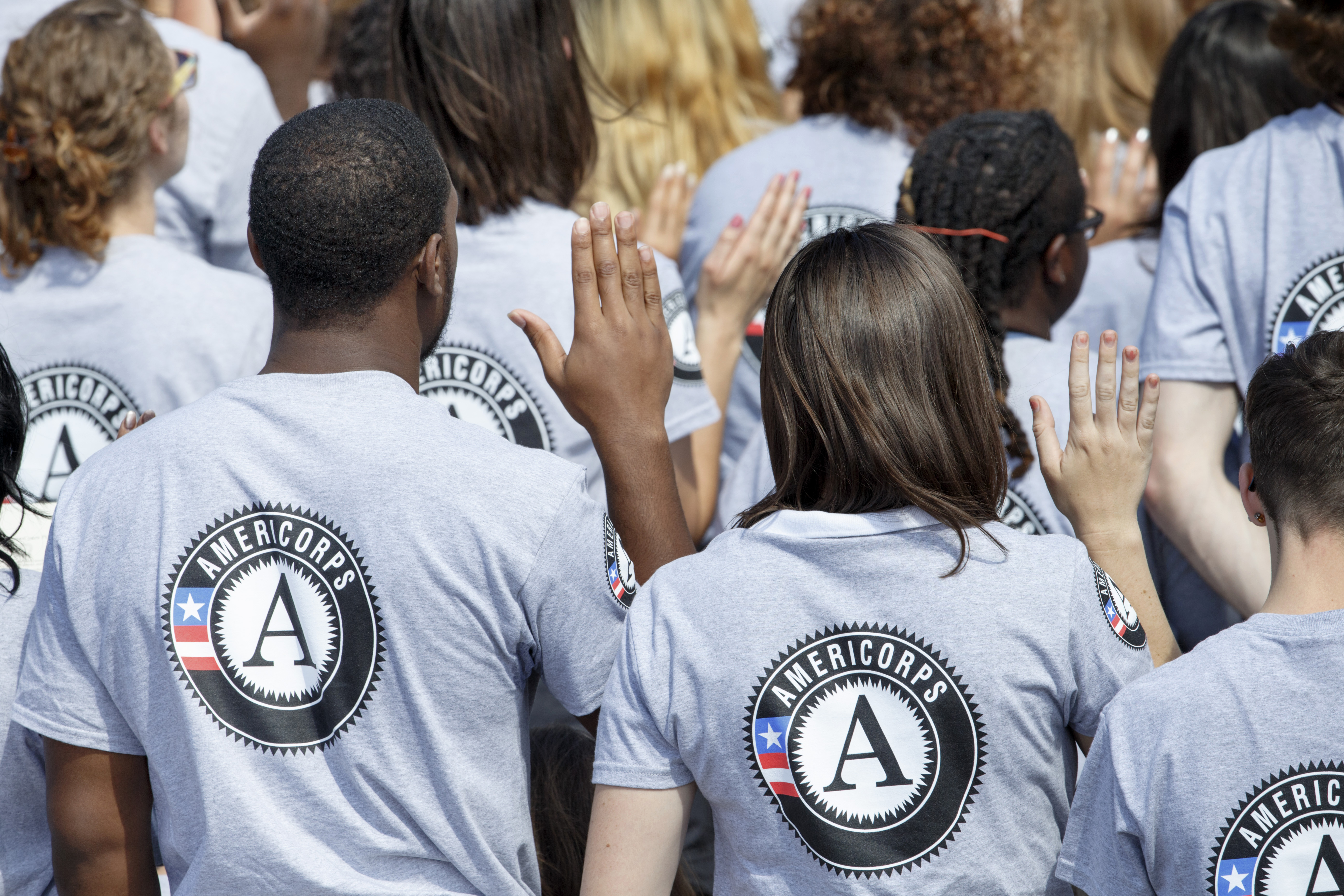
    Pennsylvania Gov. Josh Shapiro and 24 other state leaders have reached a settlement in a federal lawsuit that keeps President Donald Trump’s administration from making significant changes to AmeriCorps without prior warning and justification.

    The settlement announced last week stipulates that AmeriCorps must provide at least 30 days’ notice before making changes to its services, and protects funding for the organization through fiscal year 2026. The settlement comes more than a year after Shapiro and other governors and state attorneys general challenged a 2025 move to discontinue about $400 million worth of AmeriCorps programs and wipe out a vast majority of the organization’s staff.

    Created in 1993, AmeriCorps is a federal community service program that oversees thousands of volunteers, and acts as a domestic version of the Peace Corps. It provides services that include natural-disaster relief with the Red Cross, building homes with Habitat for Humanity, and providing instructors in underserved schools.

    The lawsuit’s outcome, Shapiro said in a statement, protects “critical funding the Commonwealth relies on to help communities respond to natural disasters, support seniors and veterans, keep our trails clean, and teach children to read.”

    Previously, a federal court ordered the Trump administration to reinstate the terminated AmeriCorps programs, and the Office of Budget Management agreed to release about $184 million in funds to programs around the country, said New Jersey State Attorney General Jennifer Davenport in statement. Davenport, who is part of the coalition of lawmakers in the lawsuit, said AmeriCorps members work “as critical volunteers in our communities.”

    “While this disruption never should have happened in the first place, I am pleased that by uniting together, states were able to not only stop these unannounced and drastic cuts to these important programs, but also to take steps to prevent this from happening again,” Davenport said.

    The lawsuit was filed in April 2025, after the Department of Government Efficiency recalled hundreds of members of the organization’s National Civilian Community Corps and placed a majority of its federal employees on administrative leave. DOGE also ordered AmeriCorps to terminate grants to more than 1,000 community service programs nationwide, including several in Pennsylvania.

    Now, under the settlement, AmeriCorps has said that it “does not anticipate mass terminating grants on a scale comparable to what happened in Spring 2025,” or conducting mass layoffs during fiscal year 2026. If those actions, among others, were to take place, it must provide the coalition of state lawmakers who brought the lawsuit with at least 30 days’ notice, and explain its legal authority to make the changes.

    Additionally, the settlement pauses litigation in the lawsuit through February, after which point the case will be dismissed so long as the terms of the agreement are upheld, Shapiro’s office said in a statement.

    In Pennsylvania, PennSERVE is the designated state service commission for AmeriCorps, and it distributes about $16 million in federal money annually to more than two dozen programs, Shapiro’s office said. There were 655 active AmeriCorps volunteers serving in 41 counties across the state at time the grant terminations were announced.

    “The federal government made a commitment with the Commonwealth of Pennsylvania to support these programs,” Shapiro said. “It’s my job as Governor to protect the interest of Pennsylvania taxpayers — and this settlement agreement ensures that these programs are protected for another year.”

  • As Supreme Court weighs Trump mail ballot plan, another judge blocks it

    As Supreme Court weighs Trump mail ballot plan, another judge blocks it

    WASHINGTON — As the Supreme Court weighs the legality of a Trump administration plan to change mail-in balloting, a second lower court judge ruled overnight Sunday that the plan is likely illegal and should be blocked before the November election.

    The ruling by Judge Carl J. Nichols, a Trump appointee, delivered another blow to President Donald Trump’s effort to add new conditions that could make it harder to vote by mail and easier for the federal government to scrutinize state voter rolls while searching for evidence of fraud.

    The Supreme Court is considering a similar ruling by a different federal judge based in Massachusetts. Judge Indira Talwani, an Obama appointee, has repeatedly found that the plan is likely unconstitutional and could not be implemented so close to the election without disenfranchising voters.

    Nichols, of U.S. District Court in Washington, wrote that the Trump administration had not identified any “evidence that there will be significant fraud in the upcoming elections” if he halted the rule. On the other hand, he wrote, there was an “increased risk that a significant number of otherwise appropriate absentee or mail-in ballots will ultimately not be counted in the upcoming elections” if the rule took effect.

    “The public has a strong interest in ensuring that doesn’t happen,” he wrote.

    Nichols’ ruling came in a lawsuit brought by a coalition of Democratic-aligned groups, including the Democratic Senatorial Campaign Committee, as well as a number of civil rights organizations. The Massachusetts suit was brought by a coalition of Democratic state attorneys general and voting rights groups.

    Nichols ruled in May that he could not stop the Postal Service from drafting the rule or preemptively declare it would necessarily be illegal before it was finalized. The Supreme Court similarly ruled last month that it was premature for the courts to intervene to stop Trump’s plan.

    But Nichols said he would review the issue after the Postal Service finalized the regulation, which it did in August. His finding that the proposal now should be blocked could offer a preview for how the justices view the issue.

    In a court filing Monday, the Trump administration formally alerted the Supreme Court about Nichols’ ruling.

    Lawyers for the Trump administration told the justices that if they allowed the Postal Service plan, it would mean Nichols would be required to immediately lift his block and clear the way for the ballot screening rules.

    The new rule stemmed from an executive order Trump signed in March, directing the Postal Service to preregister voters casting their ballots by mail, and to decline to deliver ballots from anyone whose information was not submitted by their state election officers.

    Talwani, who considered the separate legal challenge in Massachusetts, had found that the rule likely violated the constitutional authority given to states to run their own elections. But Nichols focused on another issue: the absence of any federal statute by which Congress gave the Postal Service the power to screen voters.

    “As the government concedes, the Postal Service could issue (and enforce) the rule only if Congress gave it the authority to do so, but here no statute grants the Postal Service the power to issue key parts of the rule,” he wrote.

    He focused on an online portal the Postal Service has said it is building that would let states upload the names and addresses of voters they deemed eligible to vote by mail. The relevant laws do not authorize the agency “to create a data collection system for mail-in and absentee voters,” he wrote.

    Despite the lawsuits, a number of Republican-led states have indicated in court that they would voluntarily adopt the new procedure and were taking steps to comply if the courts ultimately allowed it.

    Voting rights groups had argued that it would be nearly impossible to ensure the lists were up to date or counted people who had moved or recently registered in a new state. They warned that the new rules would very likely lead to improperly rejected ballots.

    State election officials have warned the plan could cause chaos. In some states, mail ballots have already been distributed to voters.

    Nichols appeared to agree, writing that the rule appeared certain to cause “delays and mistakes” at several stages. That could include the building of the portal, which has not yet opened, and the Postal Service’s new role screening outbound ballots and “confirming that each absentee and mail-in voter matches information in the portal,” he wrote.

    “Plaintiffs have demonstrated that there is an increased risk that a significant number of absentee or mail-in ballots will ultimately not be counted,” he wrote, noting that the Postal Service was likely to handle “more than 50 million pieces of federal ballot mail” this election season.

    This article originally appeared in the New York Times.

  • Philly Parks and Rec leader approved the unpermitted work at an FDR Park field

    Philly Parks and Rec leader approved the unpermitted work at an FDR Park field

    Parks and Recreation Commissioner Susan Slawson said she approved renovations to FDR Park’s Ashburn Field without required state permitting because she wanted renovations to be complete by the MLB All-Star Game.

    The missing permit was designed to address erosion control and stormwater release at the site.

    “We were mindful of the waterways and natural areas within FDR Park,” Slawson said of the decision. “All erosion and sediment controls were in place during construction, and safety was never an issue.”

    Slawson told WHYY last week that approving projects without proper permits is not how the department “typically” handles projects, but she allowed the work to proceed “to accommodate the MLB All-Star Game.”

    Typically, state law supersedes city approvals.

    The city’s parks department actively manages “the natural areas within FDR [Park] to protect water quality and support healthy natural systems while balancing the park’s important role in active recreation,” Slawson said.

    Missing permits

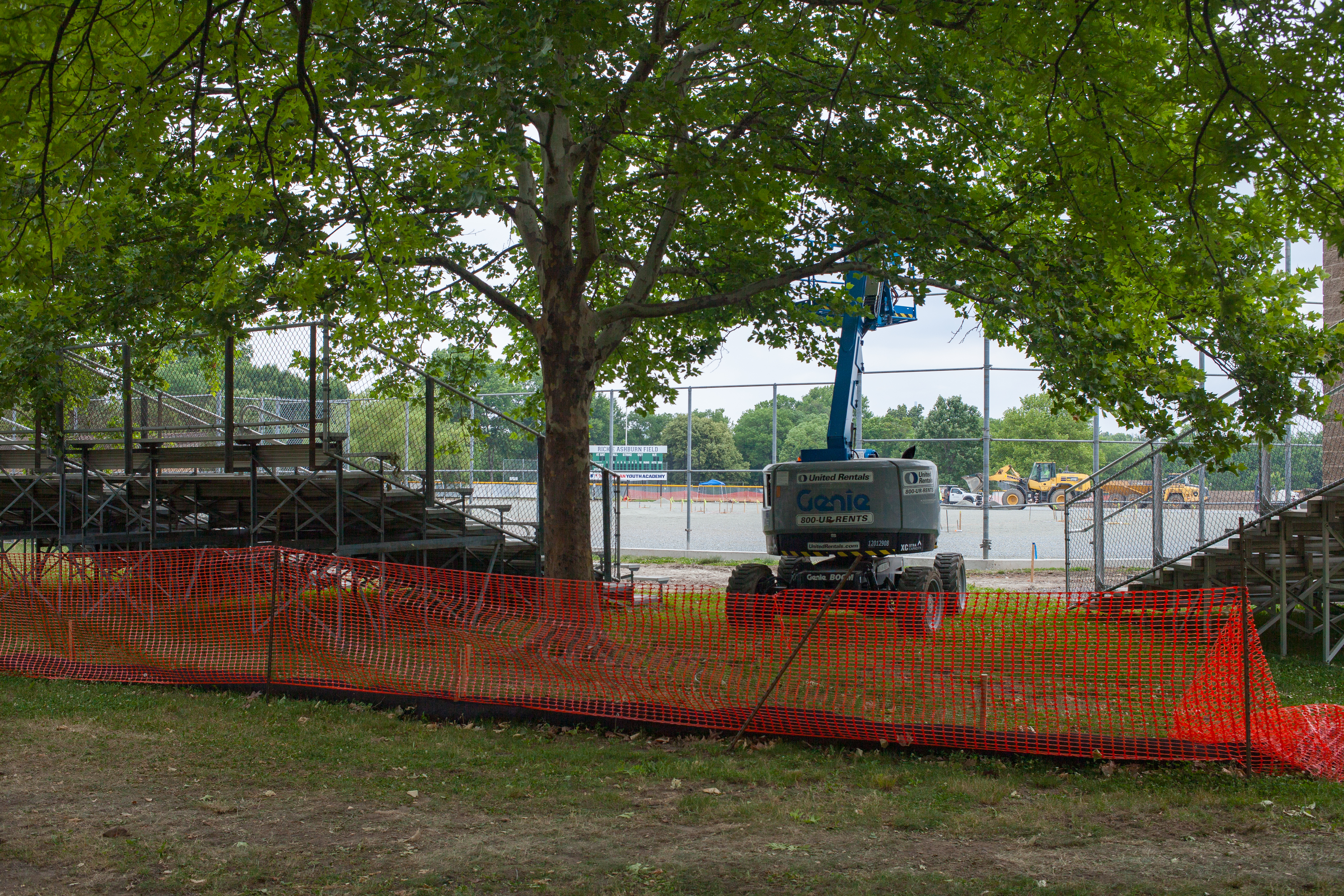
    In the lead up to the MLB All-Star Game, which took place in July at Citizens Bank Park, the MLB and the city partnered to renovate the 28-year-old Ashburn Field.

    A ribbon-cutting ceremony was held July 10, just days ahead of the All-Star Game, to show off Ashburn’s new synthetic turf field and an updated drainage system to reduce flooding.

    However, as first reported by The Inquirer last month, the Phillies and the city did not receive a required permit from the state’s Department of Environmental Protection. The permit was designed to address erosion control and stormwater release at the site.

    The Phillies applied for the permit May 13, according to the Department of Environmental Protection’s website. Nearly two weeks later, the department sent the Phillies a letter denying the permit, citing 32 issues the team would need to address before receiving the permit to continue renovations. That letter noted that final plan drawings had not been submitted, other drawings failed to include the project’s boundary, and not all water discharge areas were noted.

    A local engineering firm hired by the Phillies responded in June to the May letter.

    On July 7, the Department of Environmental Protection sent another letter to the Phillies noting technical deficiencies. It sent another letter July 24, about two weeks after the ribbon cutting, noting an outstanding deficiency and advising the Phillies to resubmit information in coordination with the Philadelphia Water Department.

    What’s next

    Bonnie Clark, a spokesperson for the Phillies, said the team met with the Water Department last week and was continuing to remedy issues to obtain the permit.

    The permit is still pending on the Department of Environmental Protection website. DEP spokesperson Robyn Briggs declined to comment on possible enforcement actions or penalties as internal deliberations continue.

  • The colonial policing roots of today’s data politics

    The colonial policing roots of today’s data politics

    Data is at the top of everyone’s mind this year: how it’s collected, where it’s stored, who can access it and how it’s used.

    The Electronic Frontier Foundation, a data rights NGO, warns in a new report that law enforcement agencies have been partnering with tech companies to collect large swaths of data on private citizens without warrants under the guise of “fighting crime” or “reducing lawlessness.” Police have been using facial recognition software, audio recording devices, automatic license-plate readers and other “dragnet” technologies to aggregate huge databases on the habits of everyday Americans.

    Watchdog organizations like the ACLU have sounded the alarm that these databases have already been weaponized against the public by organizations such as U.S. Immigration and Customs Enforcement and the U.S. Department of Homeland Security.

    One might be tempted to conclude that this is unprecedented, an outgrowth of the panopticism of the Information Age. But debates about privacy, free speech and data governance have been ongoing for centuries. These debates were especially fraught in the colonial context, where individual rights, national security and public interest were often in conflict.

    The British first established police forces in India in the late 1800s, after nearly two centuries of bloody succession conflicts. In 1857, a great rebellion almost dislodged the British from the subcontinent entirely. Initially disgruntled Indian East India Company soldiers led the rebellion against their white commanding officers in a mutiny. However, the conflict quickly spread across the subcontinent, uniting competing segments of Indian society against the British establishment. Though this rebellion didn’t succeed, it left a lasting political and psychological impact. British accounts describe a sense of helpless horror, a feeling for the first time that their place in the world was no longer secure.

    The British establishment in India believed that the rebellion occurred due to a failure of British intelligence. They had erred by trusting their Indian allies and intermediaries too freely and missed obvious rumblings of disorder. The crown took direct control of India from the East India Company and began to build a new system of governance from scratch.

    The British Raj established its first official police departments in India in 1859, modeled on the Royal Irish Constabulary. The police understood that their job was to maintain order rather than to serve the public. Most departments’ first project was to assemble official statistics and compile them into annual reports. This data, aggregated and synthesized, became the lifeblood of the Empire.

    Nowhere was this development more apparent than in the use of crime statistics. In the 1860s police forces in Northern India reported a supposed explosion in crime, perpetrated by wandering gangs, “criminal tribes” who were criminals by birth. Unlike the “ordinary” criminals of Europe who fell into crime by chance, the criminals of India were born into their “professions.”

    Officials felt that by bringing quantitative data to policing — counting and tracking crimes, where they occurred, and who committed them — allowed them to more fairly and effectively allocate resources. In truth, though, police and other officials used data to reinforce existing biases, arguing that the numbers showed that race, caste and other “biological traits” could be used to predict criminality. Hyper-policing of certain populations produced even more data “proving” that these populations committed more crimes. This decontextualized data gave the government the veneer of objectivity, while serving as the basis for many harmful and discriminatory policies.

    In 1871, the legislative assemblies of three provinces passed the Criminal Tribes Act into law. The Act defined a “criminal tribe” as a “wandering gang, community, or group of persons addicted to the commission of non-bailable offences,” a definition that targeted groups already socially disadvantaged by the caste system.

    In truth, “criminal tribes” as described by British administrators probably never existed. Instead, nomadic and semi-nomadic merchants or artisans, groups of religious mendicants, highway men (usually unemployed former soldiers), pastoralists and any other group who did not fit were all folded into the “criminal tribe” label. Unlike settled agriculturists within the dominant caste order, these groups were difficult to control due to their mobility and lack of social or economic capital. Under the law, they were criminalized and subject to extremely intrusive regimes of surveillance. The police tracked the most minute details of the lives of targeted groups: their fingerprints, their bodily measurements, their habits and their preferences.

    The impact of the state’s surveillance campaigns was that these communities lived in a state of hypervisibility. Communities complained that they were unable to live, work or travel without being disproportionately targeted by police. The increase in police interactions eventually led to a corresponding increase in arrests—which, in turn, was used to justify further surveillance and policing.

    One police officer recounted in the early 1900s that he recommended a whole nomadic community be criminalized under the Act and forcibly settled. The reason? They were reportedly adorned in silver finery while living in weatherworn tents with sparse and shabby furnishings. The only reasonable explanation, he claimed, was that the jewelry was stolen loot.

    Data gave the government the visibility and the leverage required to recruit collaborators. Police relied upon wealthy and landed (“trustworthy”) communities to identify “criminal tribes,” and recruited officers from their ranks. In return, the police offered elites protections against peasant uprisings or labor disputes. Data ownership was thus not just a privilege but a favor, doled out by the state to its allies in exchange for “good behavior.”

    Data collection and policing transformed everyday life. Community and family spaces—town squares, local government offices, playgrounds, parks, schools, shops, even streets—went from being “private” spaces, governed by the people who inhabited them, to “public” spaces subject to the control and surveillance of the state. Regular community events like food festivals, religious processions and public gatherings often felt distinctly different in the presence of police. People knew they were being watched.

    Disputes at street processions and festivities frequently became highly publicized court cases, written about in the newspapers and read aloud in coffee shops and tea stalls. In turn, groups began to use processions to garner such publicity and “make a point” in the first decades of the 20th century: “cow protection” parades by Hindu extremists to intimidate religious minorities, festivals commemorating anti-British war heroes like the Maratha King Shivaji, even protest marches by Muslims against the dissolution of the Ottoman Empire after WWI. Divisive political processions came to replace weddings, funerals and naming ceremonies that had been common in the 19th century.

    At a time when it was considered both scientifically sound and fashionable among the Western-educated class to believe that Indians were too loud and disorderly to govern themselves, public gatherings became performances to authority rather than community events. As debates raged about whether India was ready for independence in the 1920s and 1930s, communities policed themselves and each other, critiquing rituals and expressions that were too loud, too emotional, too rowdy.

    Where there were multiple communities in conflict over public spaces, police involvement caused small disagreements to escalate. In March 1925, a small fight during a religious procession in Delhi sparked communal riots across Northern India that lasted periodically until late September, causing dozens of casualties and at least six deaths.

    Made By History sponsors. FOR USE ON MADE BY HISTORY STORIES ONLY.Inquirer Staff

    Class, caste and religious divisions hardened throughout the 1930s and 1940s, leading to the segregation of formerly integrated spaces. In these ways, the British used information to divide and rule communities, to target the vulnerable, and to suppress dissent. These efforts prolonged the British presence in India for decades, until its hasty exit in 1947 after overseeing a violent and bloody partition of the subcontinent. The ghost of the Empire continues to haunt the region today.

    One critical lesson the Indian public learned during this era was that the collection of information is never neutral. Power shapes how information is collected, stored and interpreted, and information can be used and abused to protect those in power.

    Today every app, website and device contains a back door to collect and sell our information. Companies and officials tell us that these capabilities are benign, used to improve our lives and make us safer—and we believe them at our own peril.

    Niveditha (Nive) Senthilvel is a 2026-27 Fulbright-Nehru scholar and PhD Candidate in South Asian History at Boston University.

    Made by History takes readers beyond the headlines with articles written and edited by professional historians. Opinions expressed do not necessarily reflect the views of The Inquirer.

  • The Senate returns Monday. It’s not clear if McConnell will be back.

    The Senate returns Monday. It’s not clear if McConnell will be back.

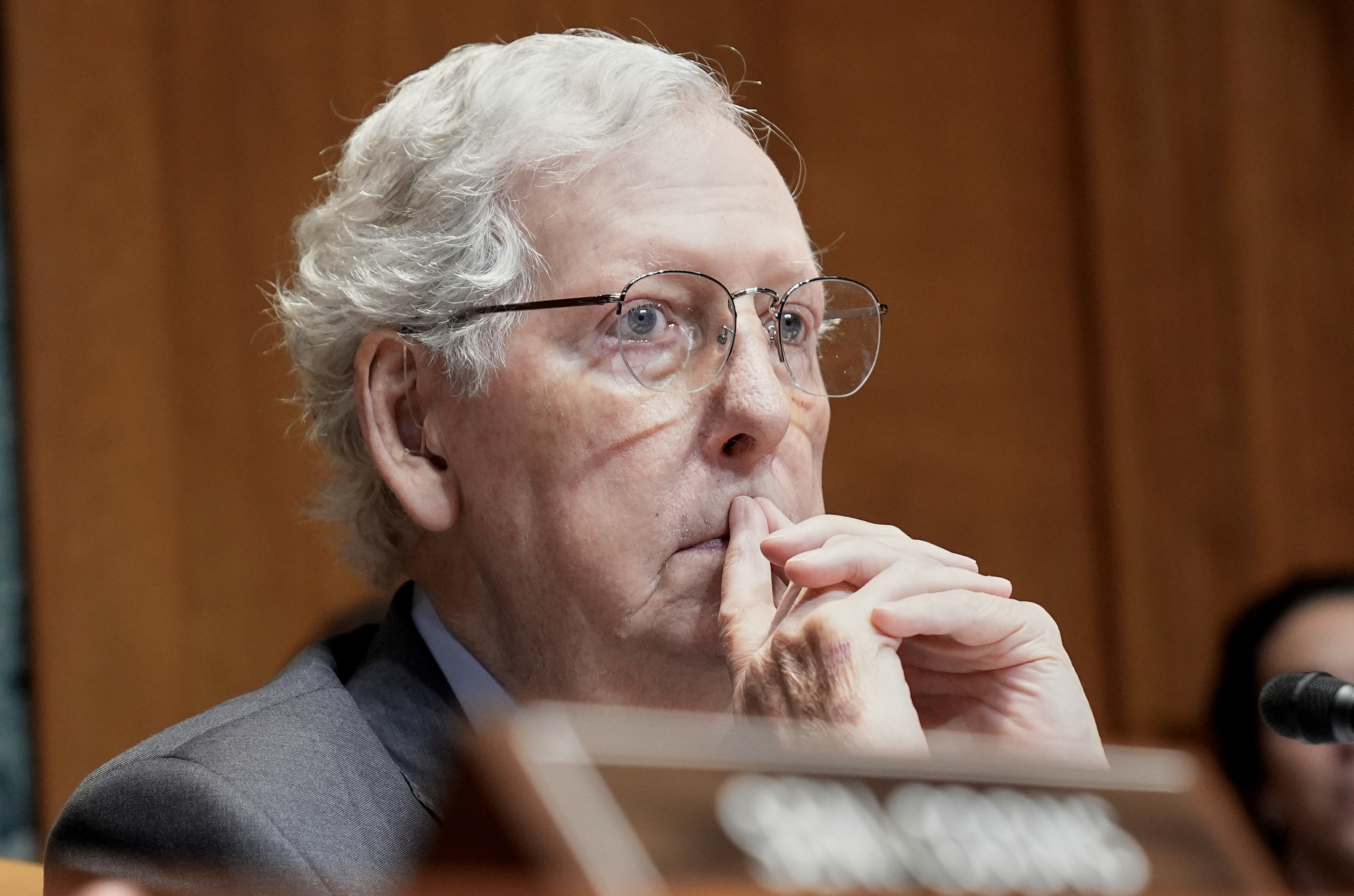
    Sen. Mitch McConnell (R-Kentucky) has not appeared in the Senate since June as he recovers from a fall that his office said he suffered at his Washington home.

    It’s unclear if he’ll be back in the chamber Monday as the Senate reconvenes after a five-week recess.

    McConnell, 84, was hospitalized June 14 following a fall at home, according to his office. He later moved to a rehabilitation center, from which he was discharged Aug. 6 to continue his recovery at home.

    Asked whether McConnell plans to return to the Capitol on Monday, David Popp, a McConnell spokesman, referred The Washington Post to McConnell’s statement last month in which he said he would “maintain an intensive regimen of physical therapy from home” during recess while continuing to work on Senate business.

    McConnell led Senate Republicans for 18 years before stepping down last year to serve out the last two years of his term as a rank-and-file senator. His term is up Jan. 3. Rep. Andy Barr, who won the Republican Senate primary in Kentucky in May, is heavily favored in the race to succeed him.

    McConnell has given no interviews and made no public appearances since his hospitalization. His office has shared two photos of him taken during his recovery, and he said in a statement in July that he did not break any bones when he fell and did not suffer a concussion, a heart attack, a stroke or a hemorrhage.

    Those details have not quelled intense speculation about his health and when he will return to the Capitol. Kentucky Gov. Andy Beshear, a Democrat, demanded in July that McConnell “provide proof of his capacity to serve, or resign.”

    McConnell is not the first senator to be away from the Senate for months while ailing or in recovery.

    Sen. John Fetterman (D-Pennsylvania) was absent for two months in 2023 while seeking treatment for depression. Sen. Dianne Feinstein (D-California) missed nearly three months of votes in the same year while battling shingles. She returned to the Senate but died months later. And Sen. John McCain (R-Arizona) did not vote during his final eight months in office before his death in 2018.

    Earlier this month, Rep. James Comer (R-Kentucky) told reporters that he expected McConnell to return when the Senate reconvened, based on conversations with McConnell’s staff. Comer said he had not spoken directly to McConnell about his plans.

    Senate Majority Leader John Thune (R-South Dakota) told KELO, a South Dakota TV station, earlier this month that he was hopeful that McConnell would return to the chamber soon.

    “We’d love to get him back to where we can have him voting in the Senate, and I hope that will happen here in the not-too-distant future,” Thune said at the time.

  • License plate cameras are all over New Jersey, and not just from Flock. The pushback is growing.

    License plate cameras are all over New Jersey, and not just from Flock. The pushback is growing.

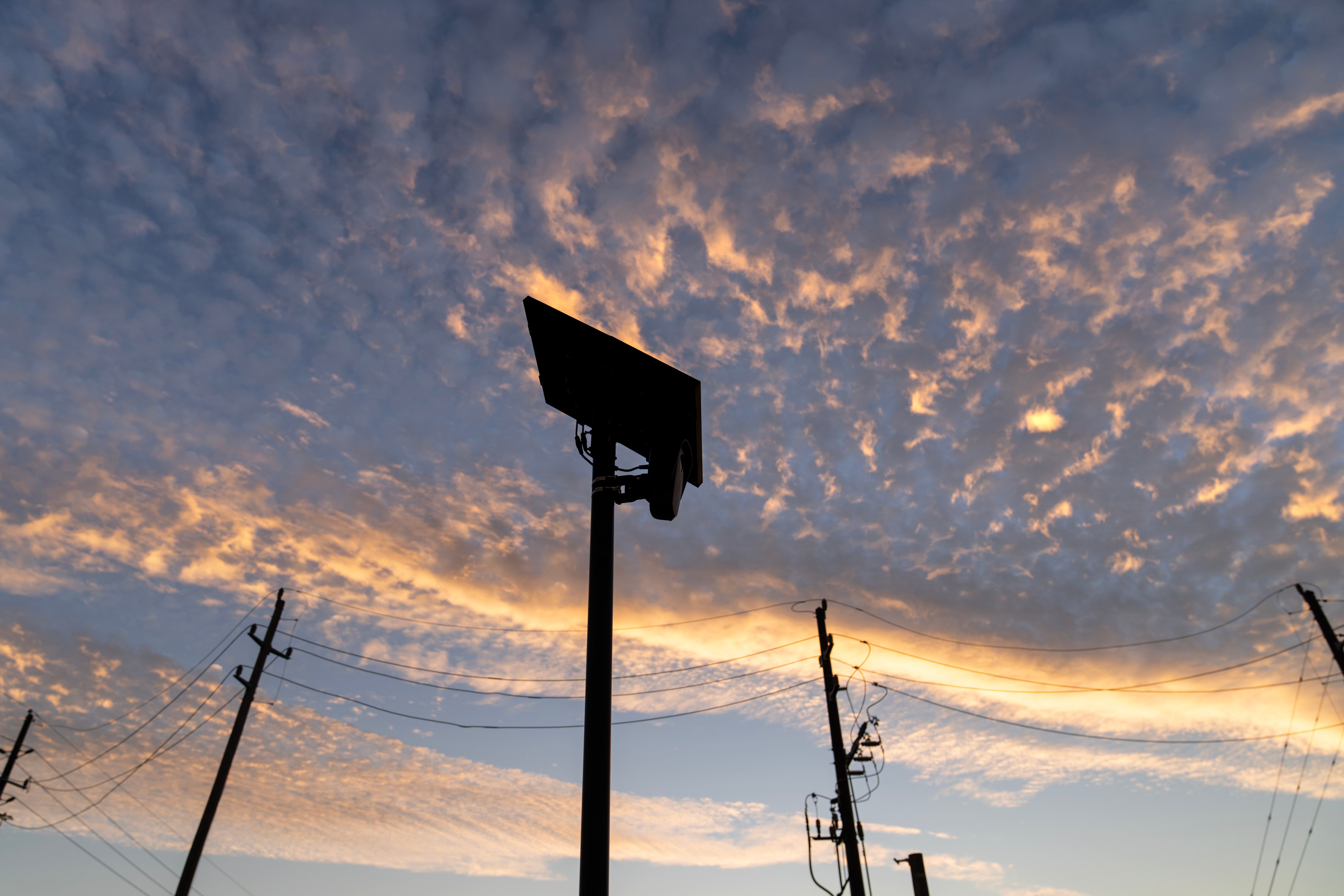
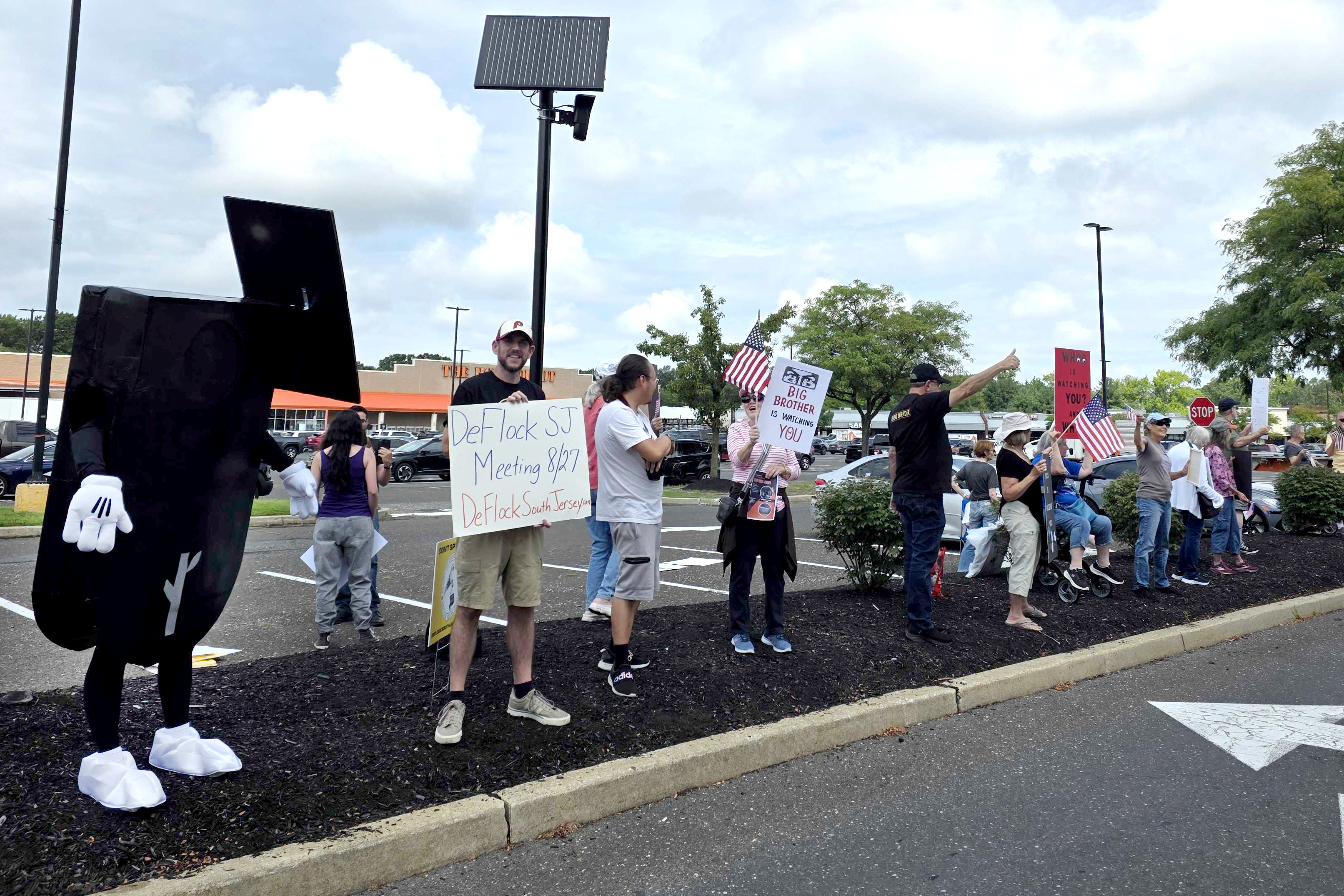
    On the outer rim of a Home Depot parking lot in West Berlin, N.J., a group of more than 20 people — many of them senior citizens — did their part to fight Big Brother in the searing August sun.

    “It got your license plate number!” shouted one man, pointing to a black, Flock brand solar-powered license plate reader above him and then to various cars in an Oprah-like manner, albeit at a slower clip. “They’re watching you! And You!”

    The camera also captured the make, model, and any bumper stickers on passing vehicles going through the shopping plaza’s main entry and exit point, whether they went to Home Depot or not, someone else rattled off. Not to mention all the police-operated license plate readers dotting the region.

    Waiting for the light to turn, one driver clearly isn’t buying the “surveillance state” claims. He tells the organizers their phones are already listening, lifting his for emphasis, and flipping them the bird as the line of cars begins to move again.

    Michael Cannon, 72, understands that response, but insists these cameras are different.

    “This is the freedom to travel,” he said over honks of support. “I can leave my phone at home. I don’t have to shop at Amazon. I don’t have to surf the internet. I choose to use them and I realize I’m giving up some privacy.”

    It’s not just that Flock cameras can capture a vehicle’s license and other details, critics say. That information goes into a much-touted national database, which is fed by hundreds of local police departments in every state but Alaska. What’s more, Flock is not the only player in the market.

    Automated license plate readers from Motorola Solutions, Axon, Avigilon, Neology, Leonardo, and Genetec are already peppered across the Jersey Shore, the Cherry Hill Mall, and shopping plazas across New Jersey. Major retailers including Lowe’s, Walmart, and Ulta Beauty have embraced the technology, citing loss prevention and employee safety as the driving force. And a majority of New Jersey’s law enforcement agencies have been using the technology since at least 2023, with a $10 million funding boost from then-Gov. Phil Murphy.

    The “surveillance state,” say the technology’s harshest critics, is already here and rapidly expanding with a patchwork of regulations people are only now beginning to understand.

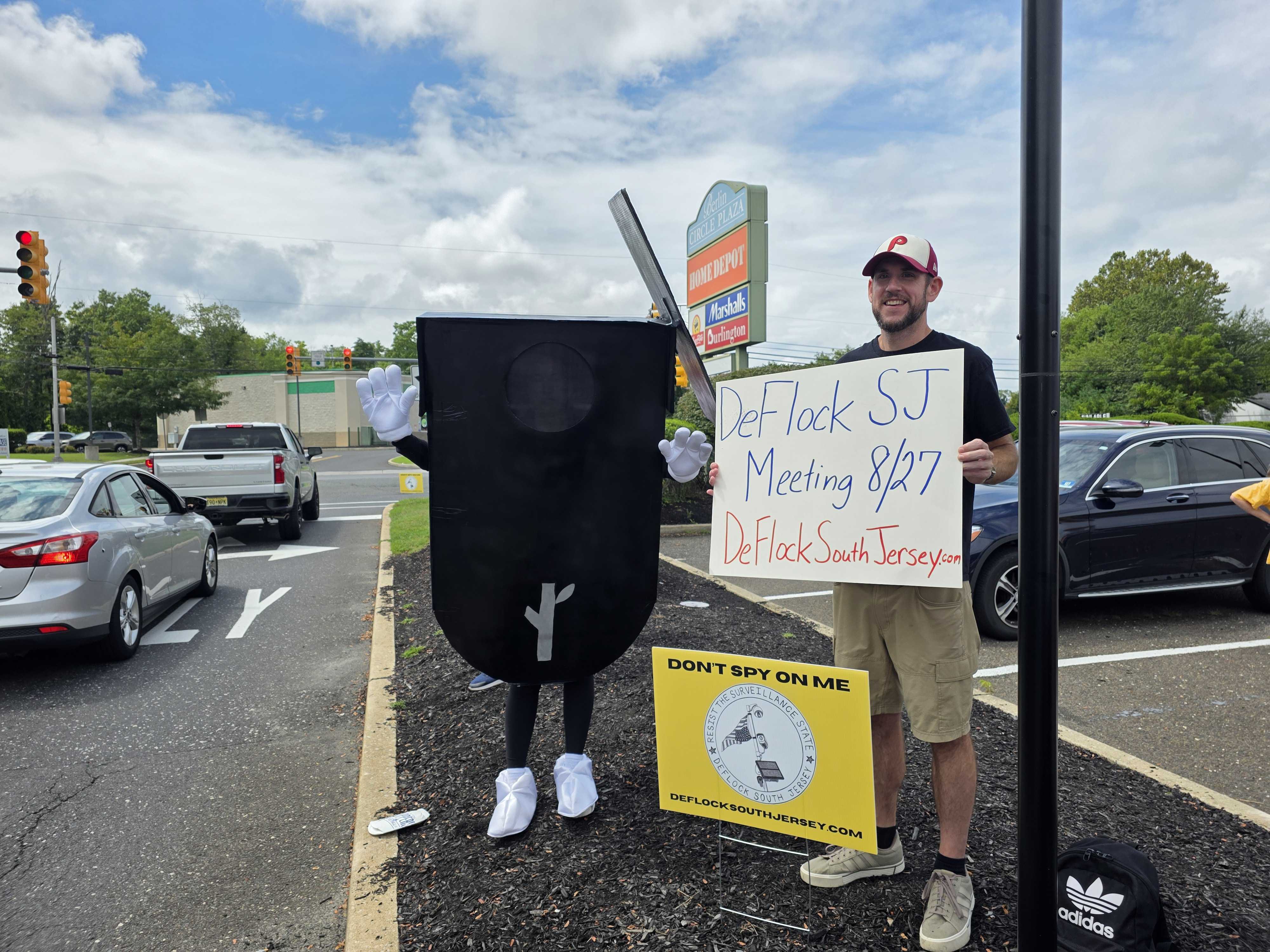
    But at the Home Depot, Adam Sheridan tried to convince passing drivers it doesn’t have to be this way.

    Sheridan is an organizer with the nascent group DeFlock South Jersey, which formed over the summer as the technology was subject to a flurry of investigative pieces, from local outlets like NJ.com to national publications including the New York Times. The South Jersey group is part of an effort to regulate and limit the growing assortment of automatic license plate readers. Everyday people are filing records requests, planning boycotts of retailers using the technology, and courting elected officials across the political spectrum, urging them to introduce bills regulating the technology.

    “We’re trying to educate people,” Sheridan said of the group’s efforts. “They don’t know that this surveillance system is being built without their knowledge or their consent and we have found that when you tell people, they don’t like it.”

    The growing pushback has made for strange bedfellows. Conservative pundit Tucker Carlson has railed against Flock. Republican Florida Gov. Ron DeSantis gave the order last month to remove the readers, regardless of brand, from state right-of-ways. And in Pennsylvania, bipartisan legislation was introduced last month to protect data collected and establish guardrails against misuse.

    Progressives like Sheridan see the collective concern and outrage as a boon to their cause.

    “There really is a lot of alignment between very vastly different people and that’s unusual,” he said. “We can go and talk to a Republican legislator and say your voters care about this and then we can go to a Democratic politician and say the same thing.”

    Adam Sheridan, an organizer with the new DeFlock South Jersey, alerts passing drivers to an organizing meeting in August where people hope to spread awareness regarding automated license plate readers. Flocky, a homemade mascot, acts as a visual boost.Ximena Conde

    High-profile cases of abuse

    One of the reasons Flock has received the brunt of criticism in the license plate reader backlash is because of a number of incidents where the technology was abused or misused.

    Three former Georgia deputies, for example, were arrested for stalking people with the cameras.

    Then there are the legal concerns, including whether the technology can help authorities circumvent the laws of neighboring states. Tech outlet 404 Media reported that police in Texas used Flock to track a woman who left the state to self-administer an abortion. While Texas prohibits almost all abortions, police were able to tap into Flock data in states where abortion is legal because of that national network.

    The quandaries are not limited to Flock.

    Immigration enforcement is another area where policies and safeguards can change from camera provider, to state, to police department, to private business.

    Flock says it does not contract with U.S. Immigration and Customs Enforcement, but clients in states like New York have allegedly used license plate reader data on ICE’s behalf.

    For its part, New Jersey limits how state and local law enforcement assist immigration authorities and Flock says it has its own guardrails, requiring out-of-state agencies to confirm that they’ll comply with state law before receiving license plate data. Yet retailers set their own policies on when data can be shared with local and federal law enforcement.

    People like Sheridan, someone who organizes for progressive causes in South Jersey, worry about the use of the technology under the current political climate. Even so, he’s encouraged by the criticism the technology has received across the political spectrum.

    “We think that people on the right should also be concerned about it because Donald Trump won’t be the president forever,” he said. “There will be a Democratic president, and we don’t think that that president should have these powers either.”

    Privacy advocates also urge critics to look beyond Flock and consider how license plate reader technology is being used by other companies and paired with other surveillance tools.

    Motorola Solutions didn’t respond to a list of questions, but the American Civil Liberties Union reports it also offers a searchable national database of vehicle information captured by its cameras.

    And Leonardo, as first reported in 404 Media, is rolling out sensors to their license plate readers that would capture “unique identifiers” of phones and other Bluetooth-enabled devices in cars. The company said in a statement that this is a separate product that can be paired with their license plate readers and all that information is kept in the end users’ own database.

    Critics concede this is all a lot to take in. Yet they hope to tap into the sudden interest in license plate readers and replicate some of the data center bans in New Jersey. Though license plate readers are already ubiquitous, privacy advocates believe a mass mobilization could push for regulation.

    A technology used statewide

    License plate readers have been around for a long time.

    In New Jersey, the Office of Attorney General has led efforts to regulate the technology since at least 2010. The latest tweaks to regulation came out of the office in 2022, mandating annual audits of law enforcement agencies using the technology; requiring license plate reader coordinators to improve oversight and information sharing; and cutting the time these departments can keep data and records from cameras from five to three years.

    By the time the first statewide audit was published in 2024, 517 law enforcement agencies were already using the technology, including the New Jersey State Police, NJ Transit Police Department, and various county prosecutor’s offices. The latest report auditing the use of the technology, found 523 law enforcement agencies are using license plate readers. There are about 530 law enforcement agencies in the state, according to NJ.com.

    And while agencies are told to report significant violations and citizen complaints — there were none listed for 2025 — information regarding how many cameras agencies have or how often they’ve been used in investigations is not provided.

    Much of what’s known about license plate readers is coming from the companies themselves, with many of the service providers remaining rather tight-lipped.

    In its more recent “impact census,” Flock reported its technology supported more than 1 million criminal investigations in 2025 across 700 law enforcement agencies nationwide, helping locate more than 10,000 missing persons. The company also claims more than 40% of its customers used Flock in more than half the cases that resulted in the recovery of a stolen car.

    The Cherry Hill Police Department, however, is careful to not to overemphasize the technology’s role in solving crimes.

    “In nearly every case where a reader mattered, it gave detectives a direction and the case was then built by corroborating that lead through other evidence: video, physical evidence, witness accounts, forensics,” said the department’s Capt. Sheldon Bryant.

    A reader can offer a lead, he said, but proving the crime is still up to law enforcement.

    The department has contracted with Flock for the last two years. Bryant highlighted several instances where the township’s 10 readers identified vehicles connected to crimes committed in and out of the township, which led to arrests.

    A shooting investigation in Camden last January led authorities to a vehicle in Cherry Hill and just last month, a shooting in Cherry Hill led authorities to New York, according to the department. Cherry Hill Police obtained a warrant in the latter incident and a Flock reader picked up the vehicle’s license plate in New York, leading to an arrest.

    In the last year, Cherry Hill’s system generated 2.2 million alerts, the overwhelming majority being expired registration and suspended plates — the department doesn’t use the readers to run enforcement sweeps on those. The alerts connected to criminal activity are far smaller, Bryant said. In the same year the department received alerts for about 800 stolen plates, 212 stolen vehicles, and 15 missing persons.

    Many critics of license plate readers argue more granular data from individual law enforcement agencies on how they use the technology would aid in transparency.

    How many people are being recorded to try to capture a select few, they ask. An oft-quoted statistic from the Electronic Frontier Foundation, which has been studying new surveillance technology for more than 30 years, noted that less than 1% of cars scanned are connected to a crime, but that’s from research looking at data from 2016 and 2017.

    At the inaugural DeFlock South Jersey organizing meeting, this statistic drew denouncements from the crowd.

    “I know there’s some benefits but it’s not up to us to prove we didn’t commit a crime,” said a Howell Township resident named Joe afterward. He’s a registered Republican who declined to give his last name to preserve his privacy — a common stance among the group. “I’m driving past these all the time, I shouldn’t be surveilled in case something happens.”

    Fighting the warrant loophole

    Consider this: Police want to stick a GPS tracker on a suspect’s car. Law enforcement would have to get a judge to sign off on a warrant in order to do so and they would only be able to track an individual’s movements going forward.

    Matthew Guariglia, a senior policy analyst at the Electronic Frontier Foundation, said license plate reader technology inverts that system by collecting sensitive data all the time.

    “Not only is it like skipping the judge, it’s skipping the judge and going back in time and putting a GPS device on a car 30 days ago,” Guariglia said.

    The amount of time license plate readers keep that information varies by company and law enforcement agency. Amid backlash, Flock cut its retention period last month from 30 to seven days. Critics looking for greater regulation feel retention should be uniform across companies and shorter still.

    One of the many tactics DeFlock South Jersey aims to take is pushing legislation that forces agencies to delete captured data after 48 hours unless it is needed as evidence. The suggested bill language promoted by the ACLU, also requires other law enforcement agencies to request access to license plate data collected by another entity. The asking agency would have to agree not to further share the data, unless required by law, or have a warrant.

    Republican Sen. Michael Testa (Atlantic, Cape May, Cumberland) plans to introduce legislation for license plate reader guardrails this month, though the text has yet to become available.

    “The legislation that I will be introducing will establish commonsense protections for law-abiding citizens while still allowing law enforcement to use this technology to catch dangerous criminals,” he said in July.

    Back at the organizing meeting, held at the South County Library in Winslow, attendees looked over drafts of the suggested legislation and headed to DeFlock.org — not affiliated with DeFlock South Jersey. The website is an open-source project that flips the script on license plate readers. Volunteers submit the locations of cameras across the country, regardless of brand, despite the name.

    Many in the room were already acquainted with the app, having sent in tips themselves. Sheridan floated the idea of a license plate reader “scavenger hunt” as a potential event to raise awareness. Boycotting retailers that use the cameras was also floated as an idea.

    Joe, the Republican attendee from Howell, doesn’t mind the cameras on private businesses. Still, as Sheridan hoped, Joe left the meeting ready to take action. He’s stayed in touch with DeFlock South Jersey in the weeks since and they’re coordinating a possible meeting in Howell, Sheridan said.

    Despite the technology’s ubiquity in South Jersey, Sheridan feels regulation is within reach because people like Joe are joining the fight.

    “Not to be corny about it but this is an American value,” said Sheridan. “The ‘don’t tread on me’ stuff is sort of in our DNA as Americans, the government doesn’t get to watch me everywhere I go.”

  • The new threat election officials fear: Trump’s federal government

    The new threat election officials fear: Trump’s federal government

    The activists staking out the ballot drop boxes in suburban Phoenix wore body armor and face coverings. With guns at their sides, they recorded residents as they deposited their votes during the last midterm elections.

    Voting-rights groups sued, and a federal judge put a stop to them, ruling they had to stay at least 250 feet away while armed to ensure voters were not intimidated.

    Four years later and 100 miles to the south, Pima County Attorney Laura Conover is treating the 2022 incident as a lesson on the importance of moving quickly this fall if anyone — including Immigration and Customs Enforcement agents — tries to interfere with the election’s administration. For her county along the U.S.-Mexico border, Conover has drawn up court papers so she can immediately file litigation to protect the vote.

    “When it comes to preparing for elections, we are on overdrive,” she said.

    In 2022, one of the greatest threats to elections came from activists like the armed men and women looming near drop boxes and questioning America’s voting procedures. This year, Conover and other officials across the nation are preparing for the possibility that the most serious risks may come from President Donald Trump, his agencies, and allies — including many now in power at the federal, state, and local levels. Election officials are contemplating ideas that once sounded outlandish, such as troops seizing voting machines, the president dictating last-minute election rules, or rogue officials blocking the certification of results.

    For the last year and a half, Trump and his administration have disparaged long-standing voting practices, dismantled federal agencies that protect elections, impounded ballots from past elections, amplified conspiracy theories, threatened to prosecute election officials, tried to limit mail ballots, and pushed to require proof of citizenship to register to vote.

    Their efforts have touched on nearly every stage of voting and could affect control of Congress, as Republicans try to retain their slim majority. A Democratic takeover of the House would stall Trump’s agenda, block funding for his initiatives, trigger a flood of investigations, and mire his administration in congressional hearings.

    The high stakes seem top of mind for the president. “I’m going to be impeached,” he warned supporters at a South Carolina rally last month.

    With seven weeks until Election Day and some ballots already in the mail, the White House and election administrators are clashing over nearly every aspect of the midterms, from who is eligible to vote to whether absentee ballot envelopes must have barcodes on them.

    Agents, troops, and monitors

    Last month, former Trump adviser Stephen K. Bannon told the audience of his popular MAGA podcast that the president should send an “up-armored ICE presence at these polling booths.”

    Critics might call that intimidation, Bannon said, and they would be right. “It’s an intimidation if you’re a foreigner,” he said. “It should be intimidating.”

    In Maine, the Republican nominee for governor also said he’d ask the administration to send ICE agents to the polls. Georgia’s Republican gubernatorial nominee spoke favorably of using National Guard troops. The GOP candidate for governor in Michigan said he’s talked to the head of the FBI about agents having a presence in the state ahead of Election Day. All three states are key in determining which party will control Congress and, after 2028, the presidency.

    Federal law makes it a felony to station troops or armed agents where an election is being held. But the statute carves out an exception for repelling enemies of the United States, and Trump’s critics worry he could invoke that provision by arguing without evidence that noncitizens could try to vote.

    Even a brief appearance by troops at the polls — and the inevitable online clips of them there — could dissuade voters from casting ballots, election officials and experts worry.

    The talk of troops and federal authorities at the polls has pushed local officials into preparation mode. This year, 10 Democratic prosecutors from around the country, including Conover in Arizona’s Pima County, formed a group to push back on the administration on elections and other matters.

    They call their group Fight Against Federal Overreach — or FAFO, after the slang term for messing around and finding out. They trade tips every two weeks on video calls.

    “With this president, you have to prepare for anything and everything,” Conover said.

    Mary Moriarty, the top prosecutor in Minnesota’s Hennepin County, which includes Minneapolis, said she’ll be watching for ICE agents at the polls.

    “They certainly know we’ve charged two ICE agents already and that we take this seriously,” said Moriarty, a member of FAFO who filed charges against agents for incidents during the federal agency’s enforcement surge in the Twin Cities.

    Most worrisome to local leaders is the possibility that federal officials could seize ballots or voting equipment.

    They don’t consider the prospect theoretical. In January, Trump told the New York Times he regretted not having troops take possession of voting machines after he lost the 2020 election. The FBI later took 2020 ballots in Georgia and obtained electronic images of 2020 ballots in Arizona. And the MAGA-aligned sheriff of Riverside County, Calif., confiscated ballots from a 2025 redistricting referendum.

    The military’s top officer said last month that the administration has no plans to send troops to polling places in November.

    “I have neither received nor anticipate receiving any unlawful order concerning the role of the Joint Force in the upcoming November 2026 midterm elections,” Gen. Dan Caine, chairman of the Joint Chiefs of Staff, wrote in a letter to Sen. Elissa Slotkin (D., Mich.).

    He said the military has no plans to use troops to seize ballots, voting machines, or other election material.

    Homeland Security Secretary Markwayne Mullin has been less categorical, but said this month that ICE would go to polling places only if agents were looking for someone or to respond to a threat. “If we’re serving a warrant, we will be where we need to be,” he said.

    The Justice Department said it will beef up its plans to send election monitors to polls this fall. A top department official has said she would deploy as many as 1,000 of them, but hasn’t said where they will go.

    The approach has drawn objections, including from Republicans. Wyoming Gov. Mark Gordon (R) called the conduct of Justice Department attorneys who monitored primaries in his state last month “aggressive” and “irregular” after a county clerk said they asked to examine voting machines.

    “I don’t like the federal government coming in and taking our votes,” Gordon said.

    Rushing to rewrite mail voting rules

    Inside the U.S. Postal Service this summer, software engineers and policymakers scrambled to build something new: a verification system that, according to an anonymous whistleblower, could hold up an untold number of ballots.

    By late August, members of the team realized the rushed schedule would leave them just four days to test the full system. When a member raised concerns about the technology’s quality and the lack of testing, a senior Postal Service official gave little guidance other than saying, “We cannot fail.” The official said everything must work perfectly and there was no other choice, according to the whistleblower disclosure that a federal official submitted to Congress two weeks ago.

    As the deadline approached, multiple officials used profanity to describe the plan as a disaster, calling it a “s— show,” according to the disclosure. The Postal Service was scheduled to launch the technology on Sept. 1, but so far it hasn’t been made available.

    Under the Postal Service plans, election officials would upload lists of voters through an online portal. They would then submit their mail ballots to the post office, sometimes in batches of thousands at a time. If postal clerks found any mismatches — including for voters who moved or got married and changed their names — they would reject the entire batch, according to the whistleblower.

    The Postal Service moved fast, but it did not compromise its work, Postmaster General David Steiner said in a statement. “We stand behind both the rigor of our process and the resulting system,” he said.

    Whether any of the Postal Service’s changes will take effect is unsettled. Trump signed an executive order telling the Postal Service in March to review ballot envelopes and limit who could receive mail ballots. A federal judge blocked the order in June, but last month the Supreme Court cleared the way for it to temporarily go into effect when it found states had sued prematurely. After the Postal Service formally announced its new rules, the judge — hearing the challenge again — blocked those plans. The administration is now again asking the Supreme Court to give it the green light, and a decision is expected soon.

    White House spokesperson Lauren Bis said Trump will keep fighting in court for what she called “common-sense measures to protect the security of mail-in ballots and ensure only Americans vote in American elections.”

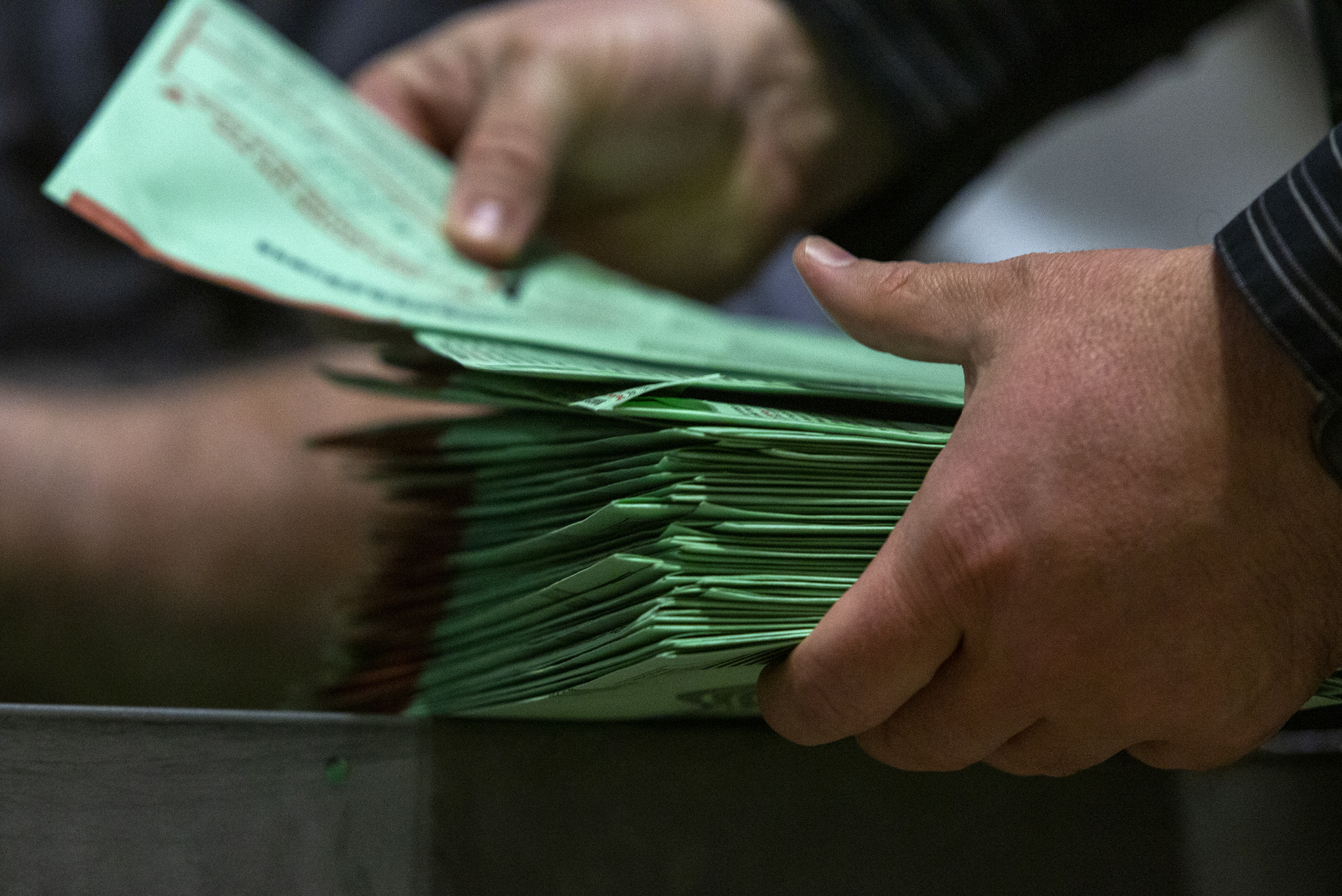
    Time is running out. Local officials in North Carolina and Wisconsin started mailing ballots to voters early this month under existing policies. Other jurisdictions are set to do the same soon.

    “It’s the potential for complete chaos,” said Gerry Cohen, a Democrat on the Board of Elections for Wake County, N.C.

    A recent incident in Leon County, Fla., brought a preview of the confusion Trump’s last-minute rules could bring. The county elections supervisor submitted his ballot envelope to the Postal Service in case the new rules go into effect — only to have the Postal Service reject it because the return address was 0.014 inches too close to another line of text.

    The Postal Service later relented and accepted the envelope, but Mark Earley, Leon’s elections supervisor, said Friday that the incident was a taste of the nationwide “chaos and confusion” possible if the rules go into effect.

    Hunting for noncitizen voters

    Trump’s executive order in March also directed the Department of Homeland Security to assemble a list of citizens for states to check their voter rolls against. And it instructed the attorney general to prioritize prosecuting state officials who issue ballots to ineligible people.

    His plan is premised on debunked claims that voting by noncitizens is rampant. Voting-rights advocates and election officials warn Trump’s agenda could lead to a raft of uncounted ballots from eligible voters.

    The federal government’s citizenship data is often flawed. Anthony Nel of Denton, Texas, learned that last year when he faced the prospect of losing his right to vote.

    Nel, a 29-year-old higher education administrator who said he leans liberal, received a letter telling him he would soon be kicked off the voter rolls because state officials weren’t sure whether he was a citizen. Nel, who was born in South Africa and became a U.S. citizen in his teens, didn’t have time to renew his expired passport before officials removed him from the rolls. He reregistered once he updated his passport but worries voters with less time and money could lose their right to cast ballots.

    Trump’s plans are “being described as voting security,” Nel said. “From what I am seeing, it looks more like voter suppression.”

    Trump continues to spread unsupported claims that voting by noncitizens is partly to blame for his 2020 loss. But court records and independent reviews show noncitizens rarely register to vote or try to cast ballots. Georgia officials determined noncitizens accounted for about 0.002% of the state’s registered voters and a study of voting in 42 jurisdictions in 2016 found one potential noncitizen vote for every 783,000 ballots.

    That hasn’t stopped Trump and his allies, who have pointed to a software glitch in New Jersey that led to the state motor vehicles division inadvertently registering about 6,600 noncitizens in 2023 and 2024. They say that error shows the need for more scrutiny of voter rolls.

    The administration’s approach is meant to protect elections and “ensure states’ voter rolls are accurate, up-to-date and do not include aliens who are not eligible to vote or to be registered to vote,” said Zach Kahler, a spokesperson for U.S. Citizenship and Immigration Services.

    The push for emergency powers

    Since Trump returned to office last year, his backers — including Bannon and a lawyer close to Trump — have pressed the president to declare a national emergency that they say would unlock powers for him to rewrite election rules.

    The idea resurfaced last month, when Trump appeared on a Real America’s Voice program hosted by Wayne Allyn Root. With election legislation stalled in the Senate, Root pressed Trump to declare an emergency that he said would allow him to limit mail ballots and require people to prove their citizenship to register to vote.

    “Let me just say that stranger things have happened, OK?” Trump responded. “I’ll leave it at that.”

    Peter Ticktin, a lawyer and longtime Trump friend who has spent months urging the president to declare an election emergency, called Trump’s answer “definitely a shift.”

    “I’m feeling good about my prospects,” Ticktin said.

    The White House did not answer questions about whether Trump is considering declaring an emergency.

    On legal grounds, the theory that the president can claim power over elections by declaring an emergency is laughable, said Hofstra University law professor James Sample. But Sample is treating it as deadly serious.

    In the weeks after Trump lost the 2020 election, lawyers backing him came up with another theory Sample viewed as preposterous: that Vice President Mike Pence could reject some states’ electoral votes and let Trump claim victory. Pence refused, but the theory set the stage for the Jan. 6, 2021, attack on the U.S. Capitol.

    The Constitution gives states and Congress authority over elections, not the president. A national emergency declaration triggers greater powers under federal law, Sample said, but none of them affect elections.

    The risk, he said, isn’t whether the notion would survive in court. It’s that Trump could use it to take sweeping actions while voting is ongoing and before courts can respond.

    “The idea is simply to do first and say, ‘So what?’” Sample said. “So much of Trump 2.0 is to outrun and outpace the courts.”

    When officials refuse to certify

    Perils lurk even after votes are cast.

    In 2022, commissioners in New Mexico’s Otero County listened as an attorney insisted they were obligated to certify that year’s midterm results.

    This kind of motion was normally a drama-free event. But the three commissioners didn’t see it that way, and they delivered their votes in rapid succession: “Nay,” “Nay,” “Nay.”

    Among other issues, they cited debunked conspiracy theories about Dominion Voting Systems machines that had circulated in MAGA circles since Trump refused to accept his 2020 defeat.

    “I have huge concerns with these voting machines, I really do,” said Commissioner Vickie Marquardt.

    After the attorney told the commissioners that a court would likely force them to certify, Marquardt laughed. “So then what? They’re going to send us to the pokey?” she responded, using another word for jail.

    Certification is the final stage of an election, when local and state officials sign off on vote tallies so the winners can take office. But in recent years, officials in pockets of the country have tried to block results by refusing to certify them — 35 of them in eight states from 2020 to mid-2024, according to Citizens for Responsibility and Ethics in Washington, a research and advocacy group that has sued the Trump administration over its election policies.

    Those efforts have failed. The Otero County standoff, for example, ended when a court ordered the election certified and Marquardt and another commissioner relented.

    Marquardt doesn’t know what she will do this November. She said she still has “huge concerns” about the security of mail ballots, voting machines, and drop boxes.

    “I would do it again if I felt strongly about it because I don’t think it’s right to certify something you don’t think is right,” she said.

    A refusal to certify results creates legal uncertainty and, even if it fails, can undermine faith in how elections are run. Some fear those who block certification could try to prevent the winners from taking office in Congress. Disputes must be settled quickly because the winners are slated to take office in early January.

    In Nevada’s Washoe County, Commissioner Jeanne Herman has voted against certifying every election since 2020, including her own reelection. Those elections were certified with the approval of others on the commission.

    “Elections need to be fair and honest, and until they are, I’m not going to lie and say this election was great,” she said.

    Similar clashes could emerge elsewhere, with potential hot spots in Arizona, Georgia, Michigan, and Texas, according to the nonpartisan Voting Rights Lab.

    Once local officials question their own results, “the damage has already been done in terms of public confidence,” said Charley Olena, a senior vice president with the nonprofit group.

    One ballot at a time

    Whatever the courts decide, and no matter the moves Trump makes, November’s election will largely depend on thousands of local jurisdictions and the hundreds of thousands of workers staffing them.

    On a recent August afternoon in Madison, Wis., three of them sat around a table to decide whether one person’s vote should count.

    The ballot had come in an envelope that was partially unsealed. Poll workers hadn’t counted it on the night of the gubernatorial primary, citing the possibility that someone could have tampered with it. Now the city’s Board of Canvassers examined the envelope, passing it back and forth and running their fingers along its edge. One corner of the flap wasn’t sealed. The rest of it was.

    “I don’t think you can grab the ballot out,” said Lydia McComas, the city clerk.

    The board counted the ballot and moved on to other quirks and anomalies. At least one voter’s ballot was not counted because of a jam in a voting machine. Another voter was given a ballot for the wrong ward. And one voter was inadvertently issued a ballot in the name of another person with the same name.

    For more than two centuries, officials across America have been carrying out this painstaking work.

    In recent years, Madison — a Democratic bastion in a swing state — has come under fire for mistakes. McComas’s predecessor resigned last year after 193 ballots went uncounted in 2024. In this spring’s contest for a state Supreme Court seat, workers failed to transport 23 absentee ballots to counting sites before polls closed, nearly preventing them from being tallied.

    Local officials make mistakes, McComas said, but they learn from them to make future elections run more smoothly. It’s important to let the public scrutinize their work at every stage, she said, from testing machines to tallying results.

    “If the public’s not confident in our work,” she said, “they’re not confident in democracy.”
  • House Speaker Mike Johnson says Trump’s $5,000 ‘dividend’ needs congressional approval

    House Speaker Mike Johnson says Trump’s $5,000 ‘dividend’ needs congressional approval

    WASHINGTON — President Donald Trump’s proposal to send $5,000 to every American adult if his Republican Party maintains control of the House and Senate in the November election needs congressional approval, House Speaker Mike Johnson said Sunday, while pledging to try to make it happen.

    Trump made the unusual pitch at the party’s midterm convention in Dallas last week, promising a “Trump Dividend” if voters keep the GOP in power on Capitol Hill. The president later told CBS News Texas that he did not think Congress would need to authorize the payments, though he did not explain how he could spend more than $1 trillion without lawmakers’ authorization.

    But Johnson (R., La.) said congressional approval is needed. “I would assume, yes, he’d need Congress to act, and that’s a creative idea,” he said.

    He also said he would work to get Trump’s proposal through Congress despite a small Republican margin.

    “He’s the big ideas president. We’re going to try to implement everything we can,” he said. “I commit that Congress will work through it and find consensus on that like they have to do everything else.”

    Johnson appeared on CNN’s State of the Union and NBC’s Meet the Press.

    The dubious election-year gambit could cost more than $1 trillion, putting further strains on the country’s nearly $1.8 trillion annual budget deficit and exacerbating concerns of inflation. The economy is confronted by persistent inflation and increasing interest rates, a tough combination for governing Republicans as they seek to hold on to control of Congress.

    The president argues that payments would be possible because of the strong economy, but consumer sentiment is weak as gasoline prices rise because of the war with Iran and wages struggle to keep pace with inflation.

    In Ireland, where the president was attending a golf tournament at a course he owns, Trump said the payments would be “easy enough” because the United States has a strong economy.

    “We can easily handle that because we’re taking in so much money,” he said. “We’ve never done better.”

    “I made the pledge. I always keep my pledge,” Trump said.

    Just one-third of U.S. adults approve of how Trump is handling the presidency, according to a July poll from the Associated Press-NORC Center for Public Affairs Research. That compares with 37% in June and 42% who approved of his work when he took office. Majorities also disapprove of his handling of the economy and immigration, issues that were central to Trump’s election in 2024.

    On Sunday, Trump said the gas price will “drop like a rock” but indicated no deal any time soon with Iran to end the conflicts and reopen the Strait of Hormuz.

  • Obama urges Democrats to move AI oversight to the center of their agenda

    Obama urges Democrats to move AI oversight to the center of their agenda

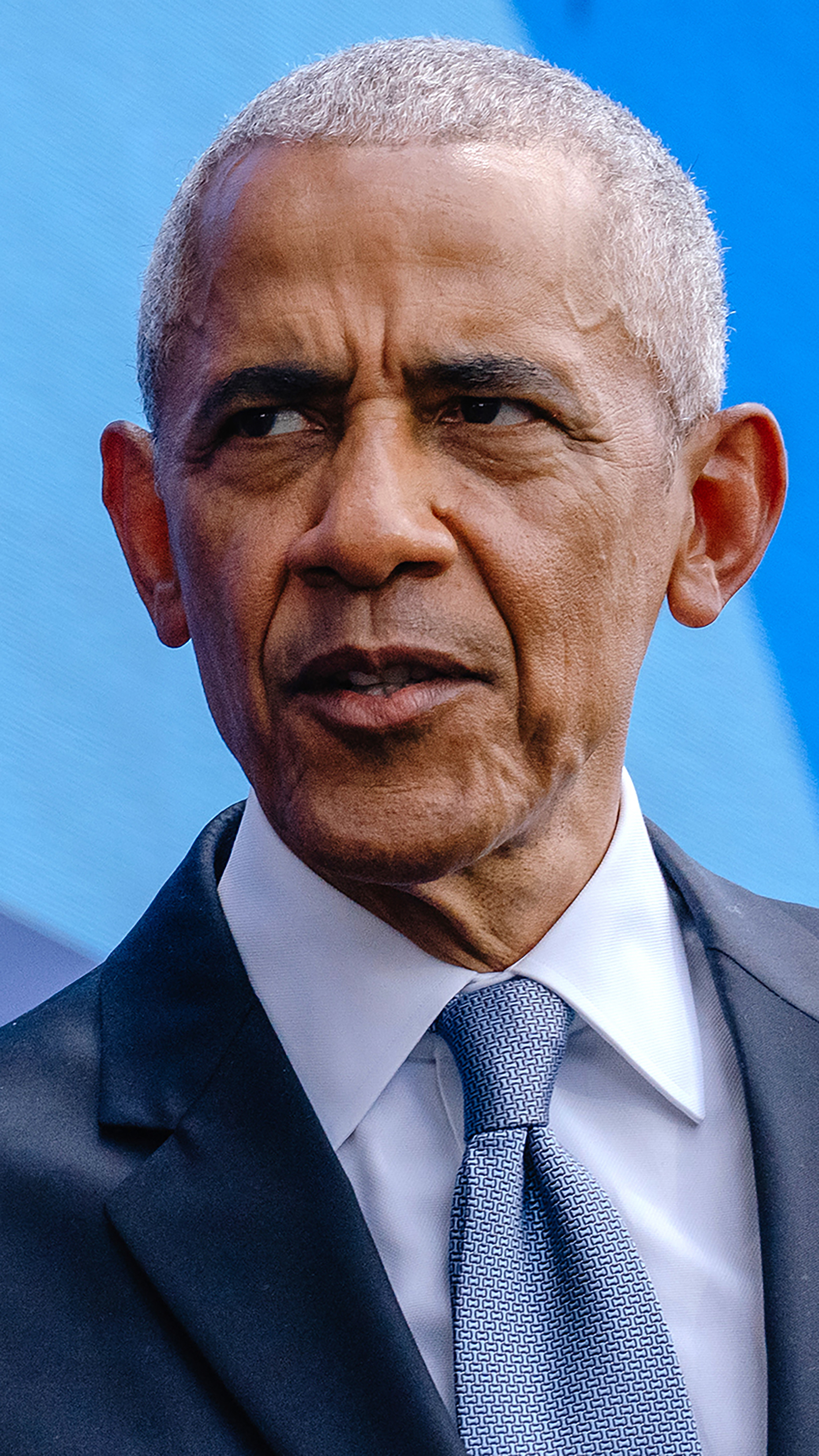
    Former President Barack Obama warned during a recent private fundraising event that artificial intelligence technology could be “dangerous” if not properly managed, as he implored Democrats to aggressively develop political and governing agendas to prioritize the issue in the coming years.

    In his remarks Thursday, which have not been previously reported, Obama urged House Minority Leader Hakeem Jeffries (D., N.Y.) to assemble a clear framework for a public conversation about AI policy, should Democrats win back the House in the midterm elections, according to a partial transcript provided by Obama’s office.

    He also suggested that candidates running for president in 2028 ought to make AI one of their “central agendas” and “have a very clear plan” for responding to safety and economic concerns around the technology.

    The recommendations from the former president amount to some of his most detailed comments yet about AI as a political issue for his party. At a moment when President Donald Trump continues to downplay concerns about the technology, some Democrats see an opportunity for the party to draw a clear contrast in the midterms and beyond on an issue of growing significance. In a Democratic Party with no clear leader, many look to Obama for guidance, and his comments carry considerable weight.

    The remarks come amid escalating worries about the risks associated with AI development, as well as growing calls for lawmakers and politicians to do more to tackle the topic. Some AI industry leaders are now calling for a slowdown after a summer in which swarms of misaligned AI agents broke free from their containers and proceeded to scheme against their owners, cheat on tests, and hack outside companies.

    At the fundraiser Thursday, a closed-door event in New York organized by the campaign arm of House Democrats, Obama and Jeffries spoke for nearly an hour in front of party donors and lawmakers, according to four people familiar with the event, who spoke on the condition of anonymity to describe a private gathering.

    “Once you are speaker, I would strongly urge that the Democrats put together a framework for a very public conversation,” Obama told Jeffries, according to the transcript. Jeffries had asked him a question about how Democrats should address AI in a Congress that has taken little action on the issue, according to two of the people.

    “This is something that is moving very fast in private hands, and if we don’t get on top of it, I think can be dangerous,” Obama said. “If we do get on top of it, I do think it’s beneficial. I genuinely think it’s going to accelerate, for example, drug development in ways that can help us cure diseases. I do think that this can help us figure out pathways for a clean energy future.”

    The former president often spoke in general terms on Thursday, rather than drilling down on specific policies, according to the transcript. And he planted himself firmly in a middle ground in the heated debate over AI, saying he considered himself neither an “accelerationist” nor a “doomer.”

    One challenge facing Democrats as they chart a path forward on AI is speaking in one voice on the issue. The tug of war over how to regulate AI has been more divisive among Democrats than Republicans, who are generally more in alignment. Some Democratic politicians have called for more AI regulation, while others have received millions of dollars in support from groups tied to the industry’s biggest players.

    Artificial intelligence is becoming a larger part of the country’s political calculus heading into the midterms. This year’s elections have been flooded with money from AI companies and allied groups. And anxiety about the technology, a rare issue that many Republican and Democratic voters can agree on, has peaked in recent days after a researcher at the AI company Anthropic loudly and publicly resigned, writing in a viral social media post that “the people building AI earnestly believe that it could kill us all by the end of the decade.”

    Jeffries explicitly mentioned the resignation in his question to Obama, according to one of the people familiar with the event.

    Dario Amodei, the CEO of Anthropic, called for a global slowdown of AI development in a 3,800-word essay published Saturday. Sam Altman, OpenAI’s CEO, and Elon Musk, whose SpaceX rocket company has been ramping up spending on AI, quickly wrote in social media posts that they agreed with him.

    The White House has long maintained an unabashedly accelerationist stance. Trump recently told reporters he didn’t have “any” concerns about AI’s risks — just about falling behind to competitors like China. He has said that those who oppose AI data centers must prefer to be “backwards and poor.”

    “President Obama is correct that decisive action must be taken on artificial intelligence,” Jeffries said in a statement, adding that “Republicans have abdicated their responsibility to govern on behalf of the American people. We will not repeat their error.”

    On Capitol Hill, where little has been done to regulate AI, some Democrats have been circulating a letter urging Speaker Mike Johnson (R., La.) to stop members from going home on recess until they pass AI safeguards.

    Many Republicans want action, too. Several have introduced bipartisan AI legislation, and Rep. Anna Paulina Luna (R., Fla.) has called for a special session on the topic. A growing number of Republicans are campaigning against data centers, in addition to many Democrats.

    After Johnson became speaker in 2023, Republican leadership declined to renew a bipartisan task force on AI. In response, Democrats formed their own AI commission, which is now putting the finishing touches on a policy framework. That framework is expected to be released this fall after some final checks by Jeffries, according to two people familiar with the matter.

    Obama has taken a special interest in AI in recent years, and he has offered himself as a sounding board to industry leaders, according to two people familiar with his conversations. Those leaders include Altman and Amodei, according to one of the people.

    Representatives for OpenAI and Anthropic did not respond to requests for comment.

    Now, Obama wants to help guide the Democratic Party’s thinking on the topic. With many Democrats already jockeying for position ahead of the next presidential race, he outlined what he would do on AI if he were one of them.

    “I would talk about this, and I would say, ‘Here’s our plan for safety. Here’s our plan for making sure our kids are not corrupted by this,’” Obama said, according to the transcript.

    He contrasted the technology with other innovations that could be dangerous in the wrong hands, saying that unlike “nuclear power, you don’t need a bunch of highly enriched uranium” to build powerful AI.

    “I would be thinking about the economic impacts in very concrete ways and understanding what does it mean if there’s going to be job displacement,” Obama said, according to the transcript, adding, “if it turns out that you’ve got a lot more people who can’t find full-time work because they’ve been rendered redundant, how are we going to respond?”

    This article originally appeared in the New York Times.

  • How these four history-making House speakers are trying to protect the future of American democracy in their states

    How these four history-making House speakers are trying to protect the future of American democracy in their states

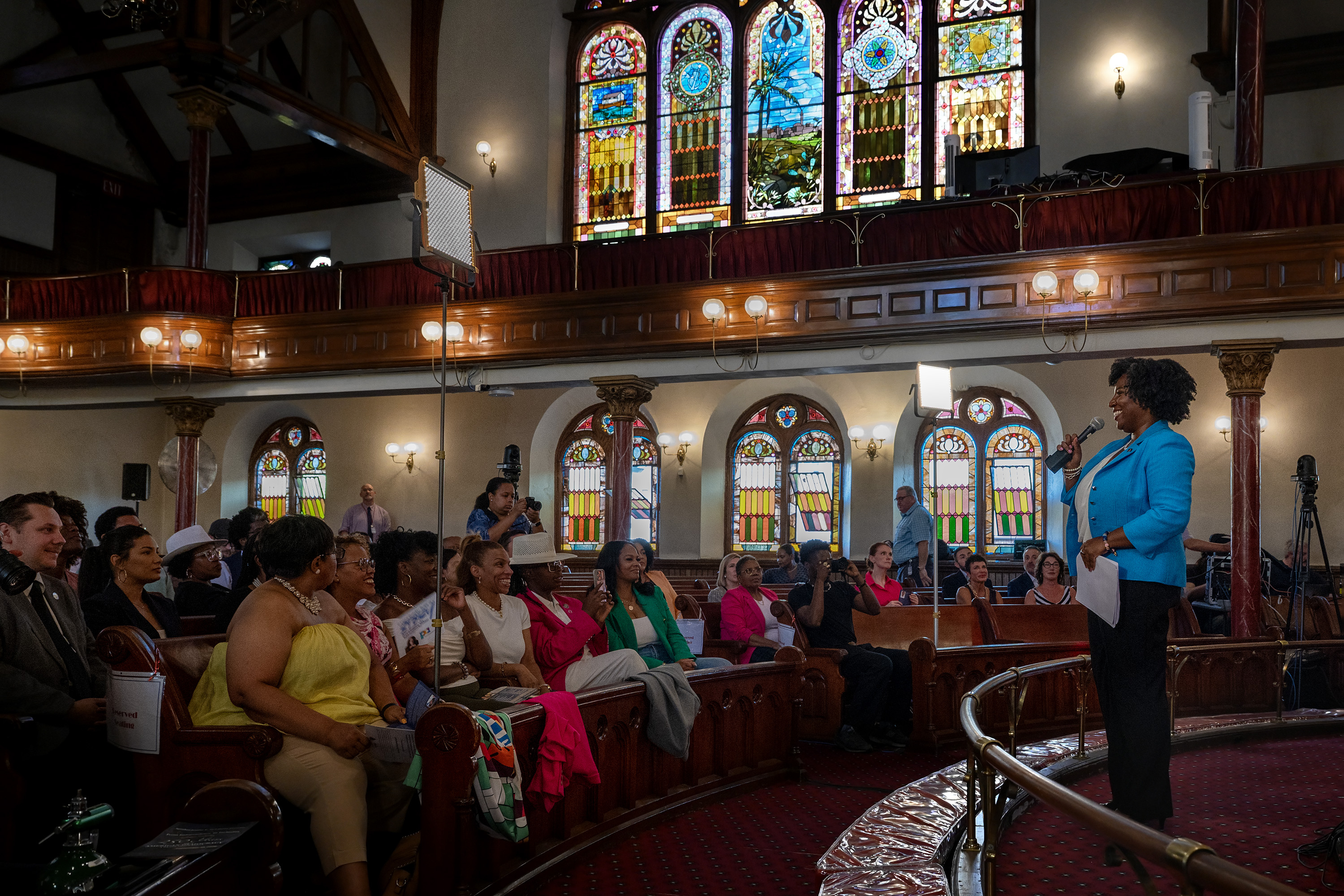
    Addressing the crowd packed into Mother Bethel African Methodist Episcopal Church in Philadelphia on Thursday, Pennsylvania House Speaker Joanna McClinton and three other Black House speakers from around the country outlined the steps they’re taking in their state legislatures to safeguard the future of American democracy under President Donald Trump’s administration.

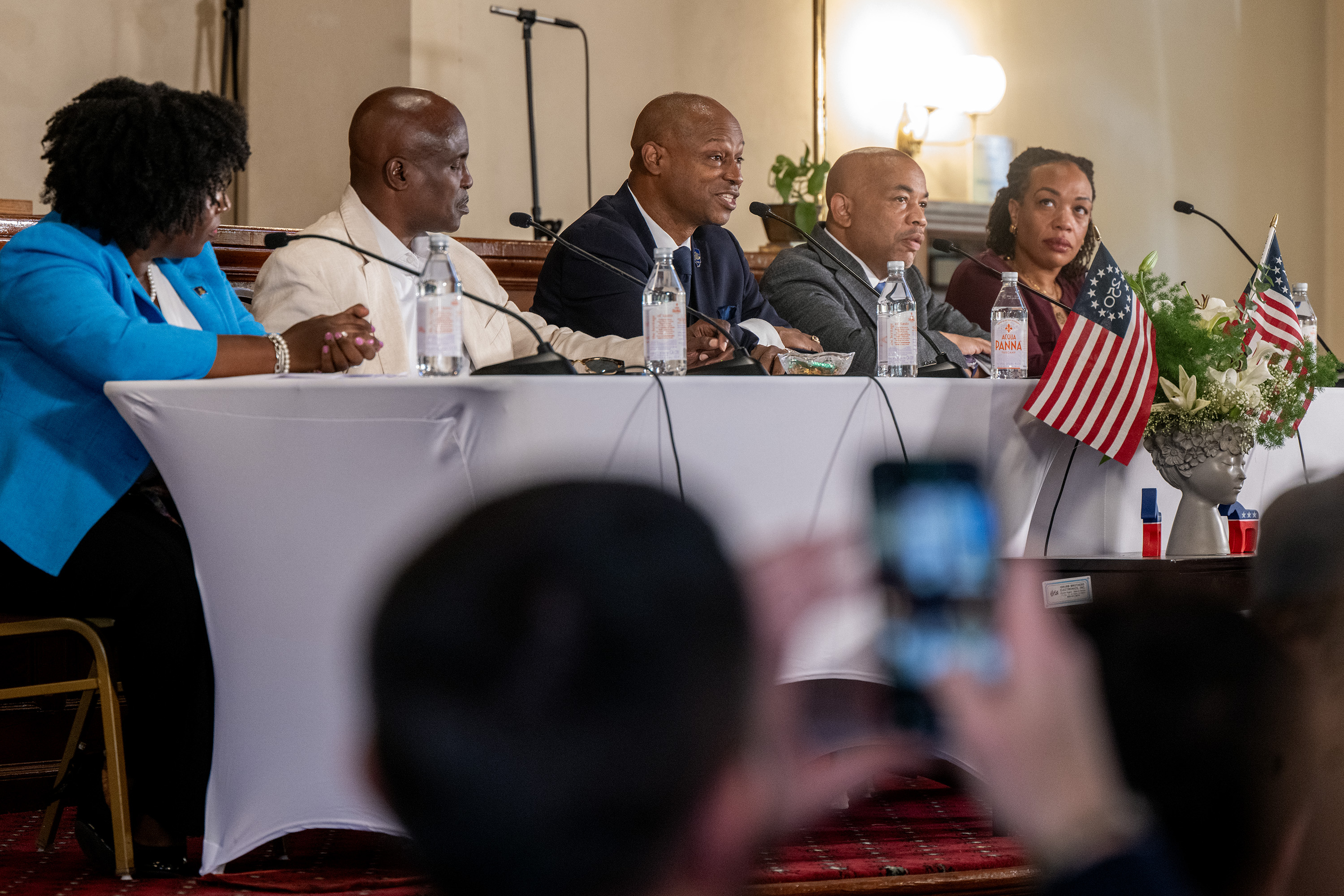
    McClinton hosted the three House speakers — Delaware House Speaker Melissa Minor-Brown, New York House Speaker Carl Heastie, and Illinois House Speaker Emanuel “Chris” Welch — for the discussion on America’s progress toward its founding ideals 250 years ago. Each of the speakers, including McClinton, are the first Black person or Black woman to lead their chambers.

    The event was moderated by WURD radio host Solomon Jones. Attendees from around the city, including at least two high school classes, packed Mother Bethel A.M.E. Church in Society Hill, which is on the oldest property continuously owned by African American people in the United States since 1791.

    House Speaker Joanna McClinton (left) hosts an America 250 Conversation at Mother Bethel A.M.E. Church on Thursday. Others reflecting on America’s history and path to inclusion for Black Americans are, from left, moderator Solomon Jones, Illinois House Speaker Emanuel “Chris” Welch, New York House Speaker Carl Heastie, and Delaware House Speaker Melissa Minor-Brown.Tom Gralish / Staff Photographer

    The three blue-state leaders from Illinois, New York, and Delaware have enshrined voting protections into state law under the John Lewis Voting Rights Act, following a U.S. Supreme Court ruling earlier this year that dismantled some federal protections.

    “When we talk about voting, it’s very personal,” said Welch. “When I first got elected to the state House in 2012, I won my election by 36 votes … Eight years after winning the election by 36 votes, I became the state’s first Black speaker. You can’t tell me every vote doesn’t count.”

    Similar legislation has yet to become law in Pennsylvania, where the General Assembly is split, with Democrats controlling the House and Republicans controlling the Senate.

    McClinton, the first woman and first Black woman to lead the Pennsylvania state House, said she was jealous of her blue-state neighbors, as Pennsylvania Democrats are vying for control of the state Senate in November. The state House passed a bill to expand voting access to include same-day voter registration in a bill titled the Leroy Irvis Voting Rights Protection Act to memorialize the late Pennsylvania House speaker, who in 1977 became the first Black person to lead any state legislature since Reconstruction. That bill has yet to be called up for a vote by the GOP-controlled Senate.

    “I know I’m not supposed to be envious of my neighbors,” McClinton joked from the table set up in front of the church pulpit.

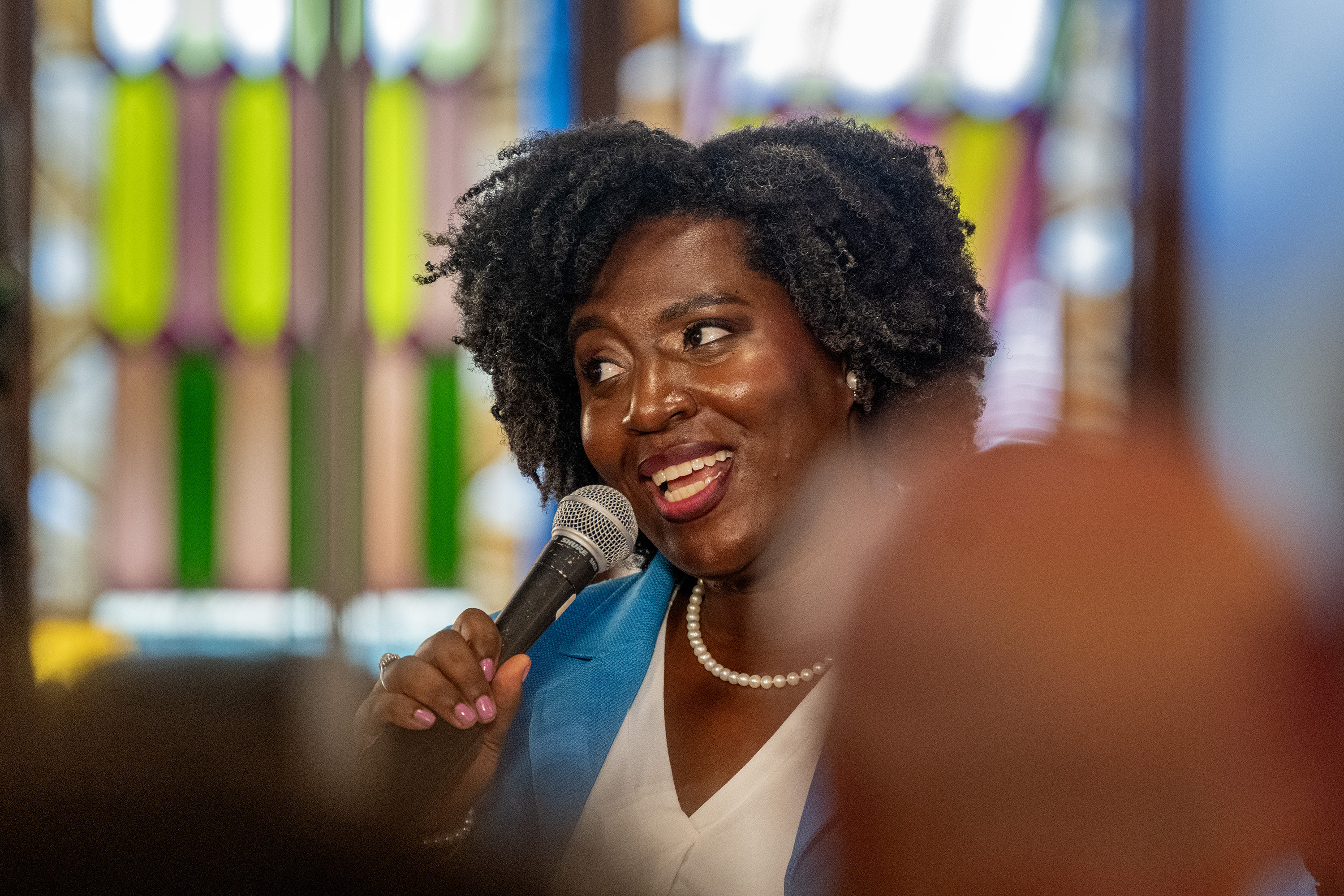
    House Speaker Joanna McClinton hosts an America 250 Conversation at Mother Bethel A.M.E. Church on Thursda. She hosted three other state House speakers from around the country at the event, reflecting on America’s history and path to inclusion for Black Americans.Tom Gralish / Staff Photographer

    Each of the leaders acknowledged the ways Black Americans were purposely excluded from many of America’s liberties by the nation’s founders, progress in broadening civil rights since then — and how their state governments are trying to safeguard those protections under Trump’s administration. They each expressed concern about voting access, immigration, healthcare, and their state-level efforts to protect them through legislation.

    “State legislatures have power,” McClinton said, noting Pennsylvania’s increased investments in public education and a focus on Black maternal health. “We are not in charge of ICE, we are not in charge of the president, but we do have power, and we do good work.”

    In New York, Heastie said state lawmakers included protections in this year’s state budget to discourage U.S. Immigration and Customs Enforcement from appearing near polling places as Trump ramps up his efforts against noncitizen voting that advocates fear will discourage American citizens from going to the polls.

    Each of the legislative leaders encouraged the young people in attendance to get involved in their local government, expressing hope for the future.

    “I look at pictures of my late aunt and uncle back in the ’60s and ’70s and I see them at protests,” Minor-Brown said. “When I see those pictures, I look at our young people today and know that’s the direction that we’re going in. That’s where we’re at right now, and that’s what brings me hope that we’re going to get to a better place. I know we will, because our young people are so energized and ready to move and ready to close these gaps.”

    McClinton also noted the ways the Trump administration has tried to rewrite history just a few blocks away from Mother Bethel A.M.E. Church at the President’s House Site, where officials swapped panels detailing the brutality of slavery for ones that sanitize George Washington’s history as an enslaver.

    “We see the fact that this federal administration continuously out an eraser and says, ‘Oh that didn’t happen, that’s not how it occurred,’” McClinton said. “We, in this moment, have to recommit to the promise of this nation.”

    During Thursday’s panel, the speakers fielded questions on a number of current events, including about the 25th anniversary of the Sept. 11, 2001, terrorist attacks. McClinton recalled her experience in college at the time, and said that America is at risk of another terrorist attack due to Trump eroding the nation’s image in the rest of the world.

    “Thank God we’ve not had another attack … But we have to also recognize that our policies are impacting our perception around the world,” she said.

    Several Pennsylvania Republicans were quick to seize on her comments on the eve of the anniversary as insensitive and trying to blame America for the terrorists’ actions.

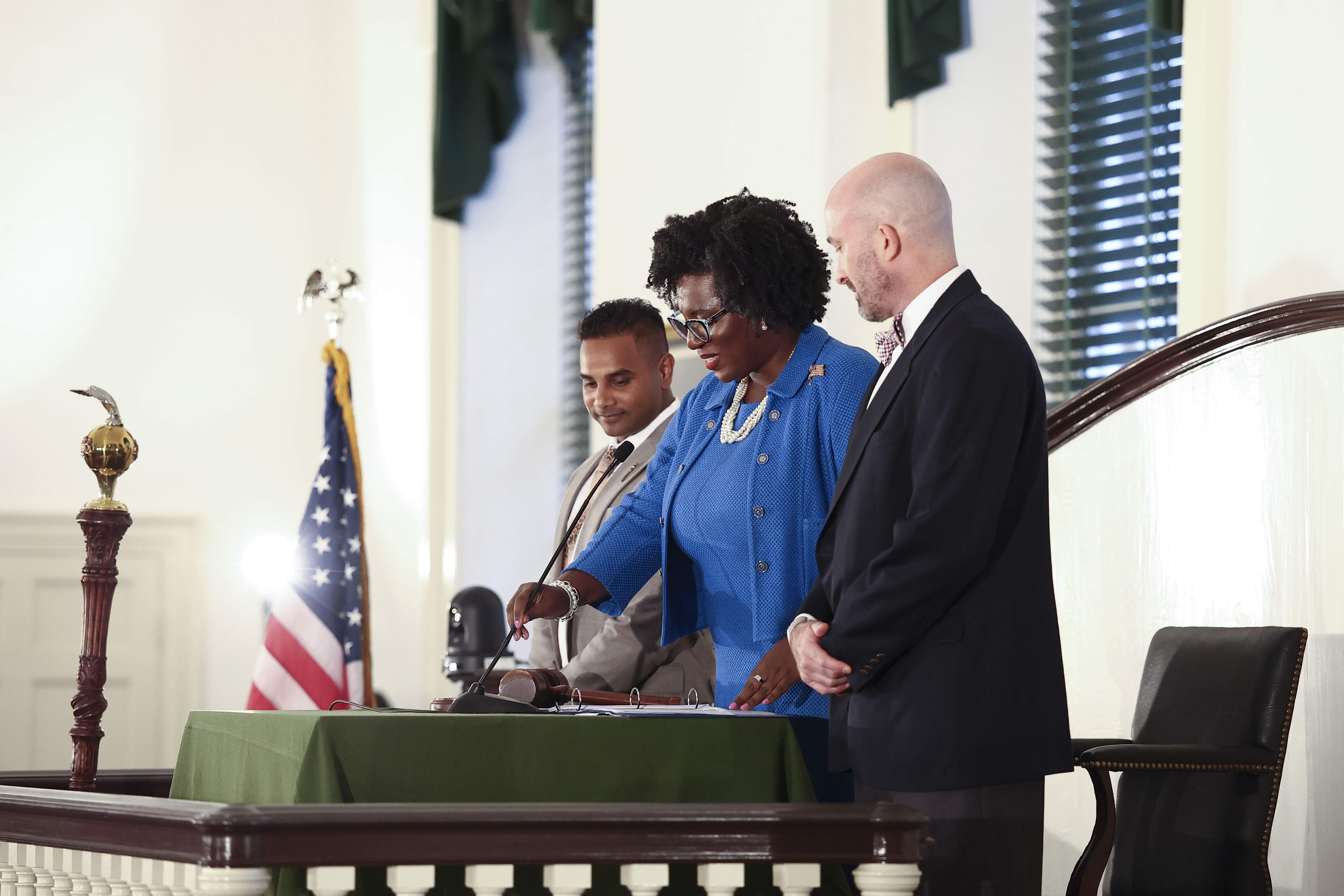
    Earlier in the week, McClinton presided over a ceremonial session of the state House in Independence Hall, the same place where the Declaration of Independence was signed 250 years ago, and the building that also served as Pennsylvania’s first statehouse.

    Joanna McClinton, speaker of the Pennsylvania House of Representatives, along with members of the Pennsylvania House of Representatives convened a special session at Congress Hall on Wednesday in Philadelphia. The gathering commemorates the 250th anniversary of America and Pennsylvania’s Constitution.Monica Herndon / Staff Photographer

    She stood at the rostrum, leading the same room where in 1787 the nation’s founders decided that enslaved Black people would only be counted as three-fifths of the number of white residents when tallying America’s population to calculate congressional representation.

    “We are in a day where ‘We, the people’ should mean what it says, finally,” McClinton said Thursday. “But starting with the inception of this country, it did not mean all of us. ‘We, the people’ meant white men who owned a certain amount of property.”