The House on Tuesday passed a largely symbolic measure intended to halt the war in Iran — the latest bipartisan attempt to limit President Donald Trump’s war powers.
The vote, which advanced by a margin of 220 to 204, came after similar efforts this summer. Seven Republicans joined Democrats in supporting it, the largest number of GOP lawmakers so far to publicly oppose the war.
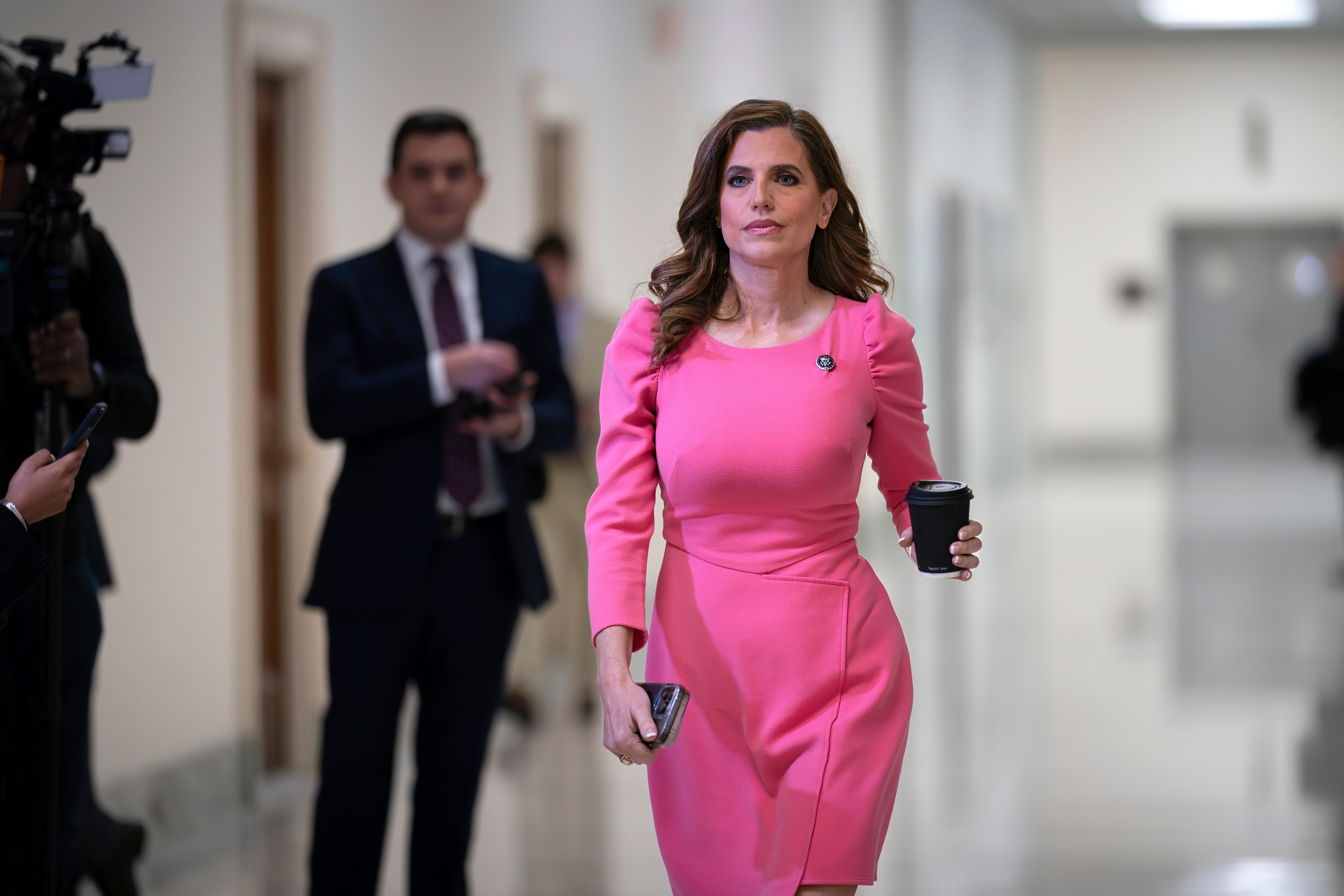
Rep. Zach Nunn and Rep. Mariannette Miller-Meeks of Iowa and Rep. Nancy Mace of South Carolina joined four Republican lawmakers who had voted for previous measures: Reps. Tom Barrett of Michigan, Warren Davidson of Ohio, Brian Fitzpatrick of Pennsylvania and Thomas Massie of Kentucky.
The measure, led by Rep. Seth Moulton (D-Massachusetts), directs the administration to “remove United States Armed Forces from hostilities against the Islamic Republic of Iran” except for personnel needed to defend American or allied bases in the Middle East.
The vote relects Democrats’ months-long strategy to force votes on war powers resolutions in order to highlight Republican support for the unpopular conflict, which after seven months has roiled global energy markets and depleted the Pentagon’s stocks of precision weaponry.
The nonpartisan Congressional Budget Office released a report Tuesday estimating that the war had cost about $38 billion through July, and an additional $2 billion to $3 billion per month depending on the intensity of the fighting.
The Pentagon did not respond to the CBO’s requests for information and has previously estimated the war would cost $37.5 billion through the end of September — though that total does not account for the substantial damage to U.S. bases targeted by Iran throughout the region.
In June, the House and Senate passed a similar measure calling on Trump to end the war in Iran, though the White House has asserted that the measure is not legally binding and Democrats and Republicans disagree on whether it has the force of law. The House again voted to limit Trump in July, but a similar measure failed in the Senate.
U.S. Central Command, which oversees America’s military operations in the region, has maintained a footprint of around 50,000 troops in the Middle East and has periodically struck Iran following the collapse of a ceasefire the Trump administration reached with Tehran in June.
The Trump administration has cut or frozen up to $177 billion in federal grants since the president took office for his second term, according to a tracking tool released Wednesday by a pro-democracy nonprofit and a group of researchers and scientists.
The cuts affected all 50 states and the District of Columbia, with health, nutrition, the environment, and disaster relief making up the largest share of cuts, the States United Democracy Center and Grant Witness organization found.
Among the grants that were eliminated, frozen, or delayed were ones related to maternal health in Michigan, education research in Mississippi, and assistance to minority farmers in Iowa, the researchers found. California, Texas, New York, Illinois, and North Carolina saw the highest amounts of interrupted grant money. The tracking tool is called Lost Funds.
“By bringing thousands of funding disruptions from the Trump administration together in a publicly accessible, verified database, Lost Funds puts the magnitude of their impact on full display,” Scott Delaney, co-founder of Grant Witness, said in a statement.
The $177 billion finding represents nearly 10% of federal discretionary spending, the groups said.
The tracker’s organizers said the disrupted grants were beyond the kind of cuts that typically happen when administrations change.
“Lost Funds shows the extraordinary scale and real human impact of these disruptions, and how states are once again on the front lines protecting their residents,” said Kelly Rader, States United Democracy Center’s research director.
In some cases, courts have ruled against the administration’s grant funding cuts.
The new tool, which is being made available for public use, relies on data from USASpending.gov, an open data source of federal spending information, according to the groups’ methodology. They said the tracker would be updated regularly as the administration takes new action and lawsuits move through the courts.
States United bills itself as a nonpartisan group dedicated to the rule of law and free, fair, secure elections. It was cofounded by Norm Eisen, an attorney who has been involved in prominent lawsuits against the Trump administration, including over the Kennedy Center. Eisen left the States United center in 2024.
Grant Witness is a group of scientists, researchers, and attorneys who document how funding is changing under President Donald Trump’s administration.
A message seeking comment on the analysis was sent to the White House.
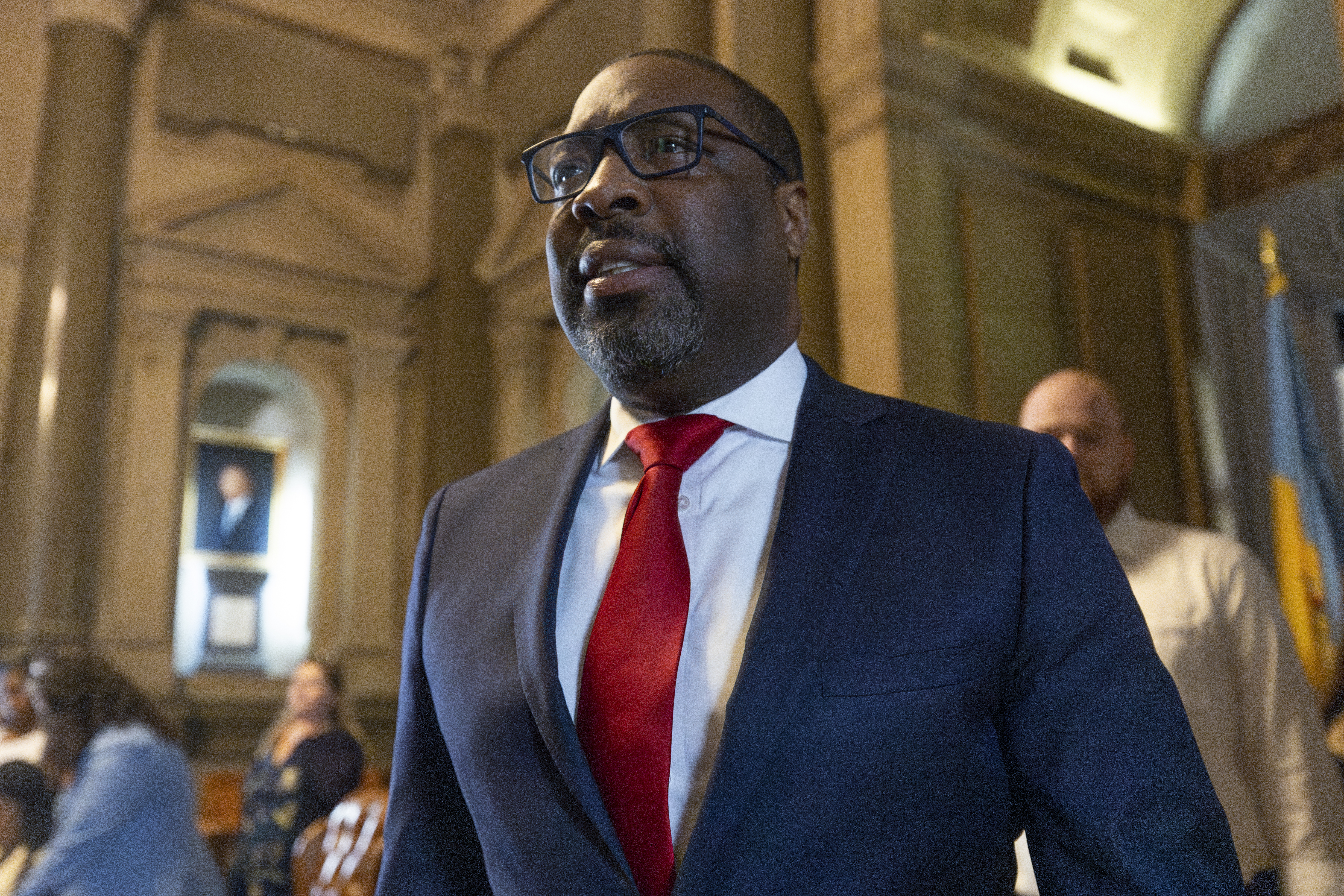
One evening last week, City Council President Kenyatta Johnson stood on South Broad Street and greeted his fellow lawmakers as they arrived at Steak 48.
Johnson had invited them to the swanky Center City steakhouse to “reconnect, share conversation, and enjoy each other’s company outside of City Hall,” according to an invitation for the Sept. 9 “members only” event obtained by The Inquirer.
Council resumes for its fall session Thursday — and after the way things ended in the spring, the city’s legislators may have needed the opportunity to break bread together.
When lawmakers last met in June, they approved a $7.1 billion city budget that left all sides feeling dejected. Council turned away a series of tax proposals from Mayor Cherelle L. Parker, including a $1-per-ride levy on rideshare companies like Uber and Lyft, and ended up passing a budget that omitted a number of members’ own priorities and left unanswered how the city will help the Philadelphia School District navigate its funding crisis in the long run.
In addition to representing a new low in Parker’s relationship with the legislative body of which she was once a member, some Council members also questioned their own negotiating team’s handling of the ordeal.
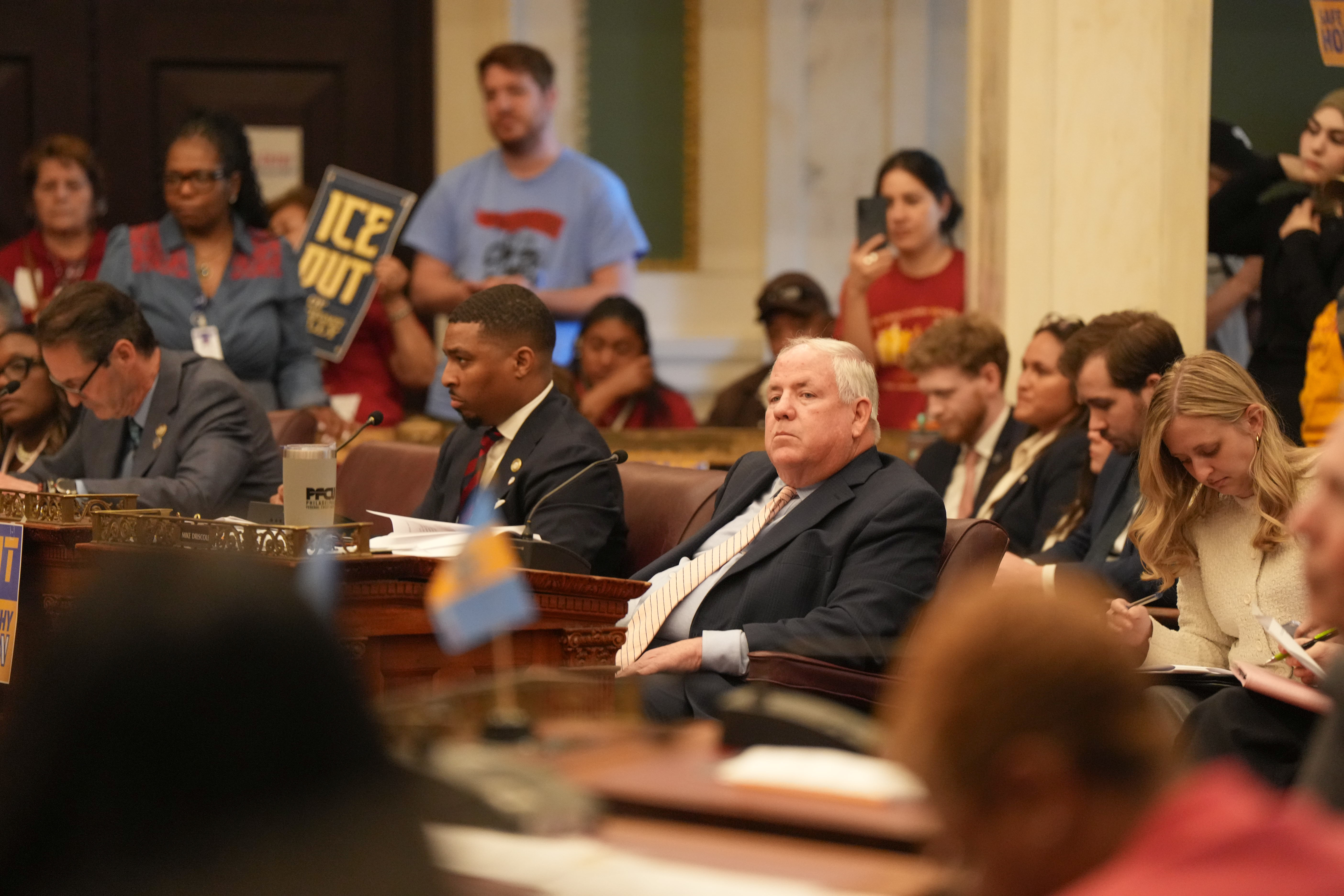
Councilmember Mike Driscoll noted last week that while he was not “pointing fingers,” Council could have added more money in the budget for line items requested by lawmakers, such as funding for community groups.
“I’m disappointed and pissed off at the way it played out,” Driscoll, who represents parts of Northeast Philadelphia, said in an interview. “Our priorities weren’t analyzed in a more thoughtful [way]. … We do the amendments. [Parker] doesn’t. We could have put money in.”
Councilmember Michael Driscoll in Philadelphia on April 23, 2026.Jessica Griffin / Staff Photographer
An Inquirer reporter saw at least 11 of Council’s 17 members at the Steak 48 event, meaning a majority, or quorum, of Council was present. The Pennsylvania Open Meetings Act, or Sunshine Act, requires legislative bodies to notify the public if a quorum is present for a meeting at which official business is discussed.
But Johnson said at the beginning of the dinner that would not be happening.
“Tonight we do no official business,” Johnson said in an interview. “Just social. Welcome back to City Council. Eat and drink and be merry. No policy on the table. No legislation on the table. Just having a good time.”
Johnson’s invite directed members to RSVP to a Council staffer’s city email address. Johnson said his campaign picked up the tab.
“Everyone facing reelection next spring knows they have to be able to point to real accomplishments on the important issues voters care about,” City Hall lobbyist John C. Hawkins said. “And this fall is their last opportunity for them to address the most pressing issues that were not fully resolved in the spring budget process.”
Budget fight hangover
When Council and the mayor in the spring failed to reach a deal over new tax revenue to plug a $48 million hole in the school district’s budget, Johnson said Council had helped identify one-time savings in the city budget to fill the gap for a year while vowing to explore new recurring revenue streams for the district.
Johnson has not yet scheduled a hearing on schools funding, and Council’s dissatisfaction with the district appears to have been mounting.
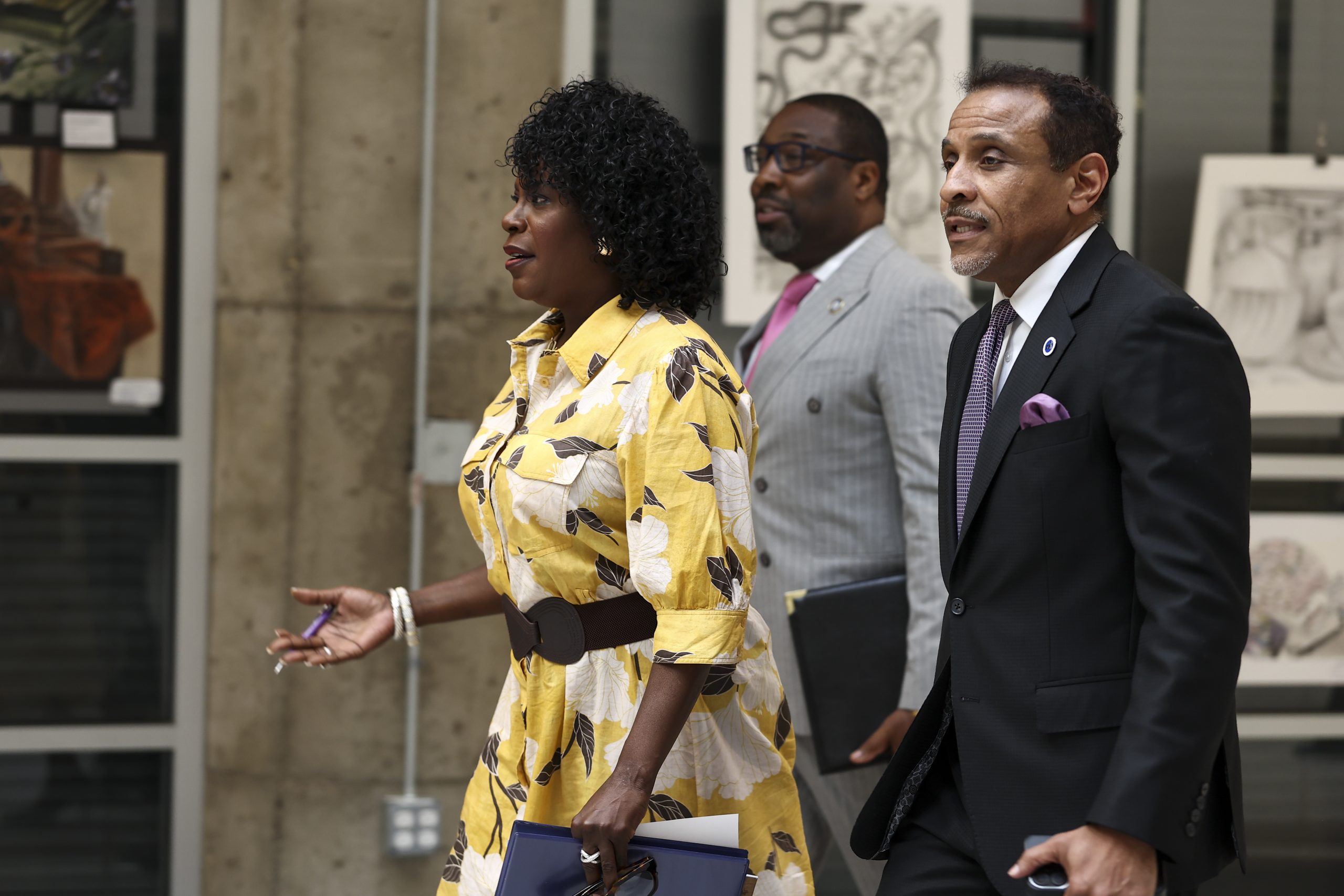
Mayor Cherelle L. Parker, Council President Kenyatta Johnson, and Superintendent Tony B. Watlington Sr. arrive for an announcement at the School District of Philadelphia Headquarters on Wednesday, June 10, 2026 in Philadelphia. Monica Herndon / Staff Photographer
He said in a statement this week that Council will honor its commitment, but also alluded to finding that money in the district’s own budget, despite school officials saying they are navigating a $300 million structural deficit.
Johnson said Council is awaiting the results of a performance audit of the school district that is being conducted by City Controller Christy Brady. He said that report “will help Council identify any available funds to support recurring funding.”
New arena, who dis?
In the fall of 2024, Council wasconsumed by the debate over the 76ers’ proposal to build an arena in Center City.
Lawmakers spent much of the session debating the economic benefit of the project, while opponents cried out that it would displace businesses and residents in nearby Chinatown.
Despite Council approving it, that project was scuttled by the Sixers, who instead teamed up with Comcast, which owns the Flyers, to plot a different project: a joint venture that would bring a new arena to the South Philly sports complex. Earlier this month, they released the first renderings of what the Spectrum-inspired arena could look like.
There will likely be spirited discussions about it all in Council — at some point. But don’t expect a redux this fall of the all-out brawl that was 2024.
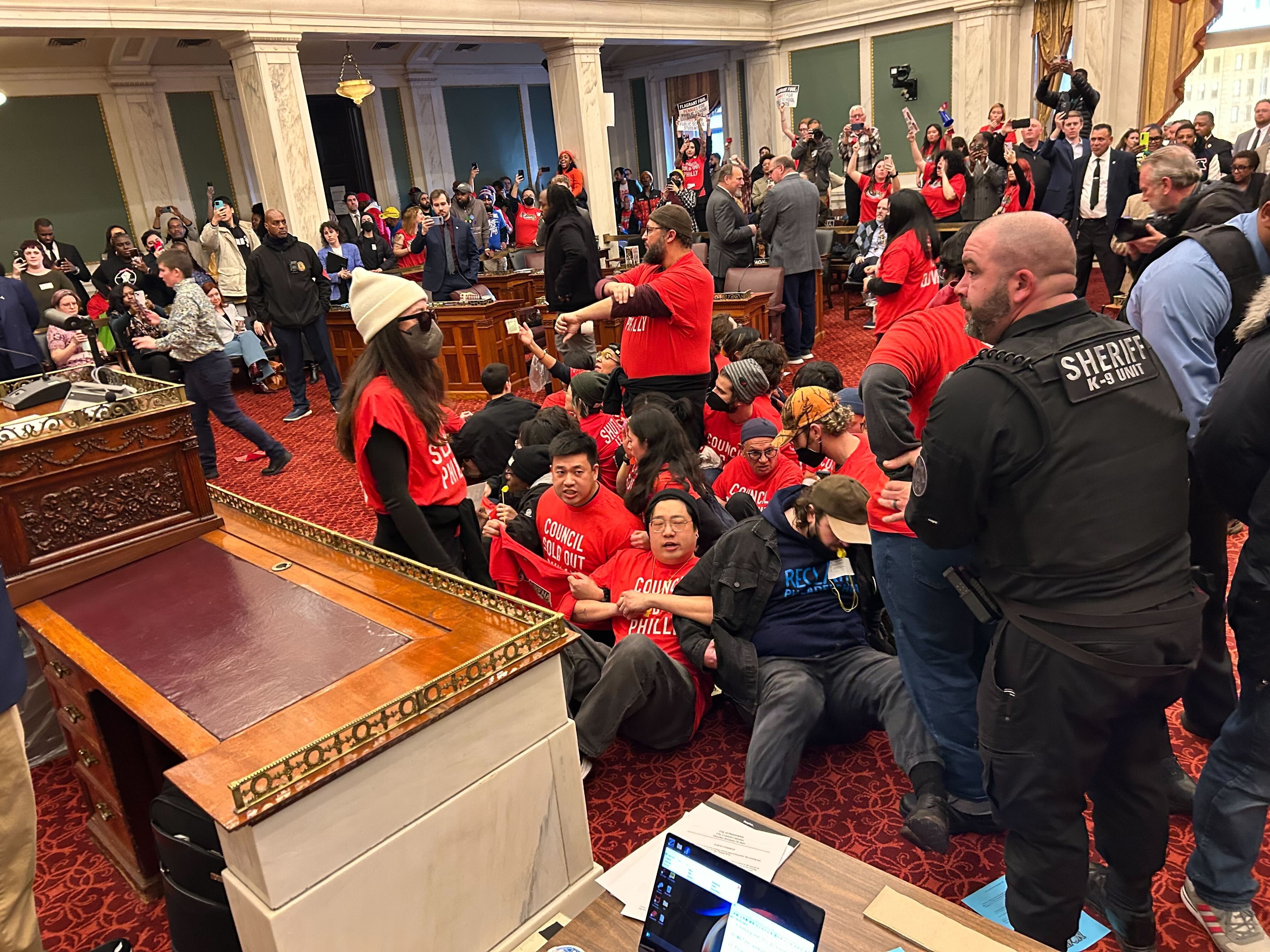
Protesters link arms as sheriff’s deputies attempt to remove them from Philadelphia City Council chambers as the council is scheduled to vote on final approval for the Sixers’ proposed Center City arena on Thursday, Dec. 19, 2024.Sean Collins Walsh / Staff
The stadium district falls in Johnson’s 2nd District, meaning it will be on him to introduce legislation that would green-light the project. And he has not been in a hurry to accommodate the Sixers’ timeline, which would be to approve the project as soon as possible so the venue can open by 2030.
Johnson said in a statement that “no zoning legislation is scheduled for introduction,” and that he is working to find consensus with the Parker administration and other Council members before introducing any legislation.
“I am focused on ensuring that any future legislation concerning the new arena addresses the interests and concerns of the community around the Stadium District and in Philadelphia,” he said.
When that legislation is brought forth, it is unlikely to be anywhere near as controversial as the 76ers’ Center City proposal, which drew opposition due to its proximity to Chinatown, so long as the teams uphold their promise to not seek public subsidies.
The Asian Pacific Islander Political Alliance, which led opposition to the Center City arena, released a statement earlier this month that signaled openness to the South Philly project.
“The people of South Philly should have a meaningful voice in whether and how this project moves forward,” said Will Gross, an API PA member who is rumored to be considering a run for Council. “And if it does, it should mean good union jobs, a strong community benefits agreement, and real benefits for the people who live and work in the neighborhood.”
Trash issue continues to burn
Councilmember Jamie Gauthier has spent the better part of the last year trying to whip up support for a bill that would ban the city from shipping off its trash to be burned at an incinerator in Chester, a longtime practice she and others say is poisoning residents of the city to Philadelphia’s south.
The Parker administration opposed the measure, saying it would limit the government’s ability to carry out its normal competitive bidding process and select the best-value contractor. Gauthier failed to get a majority of Council on her side, and she never called up the Stop Trashing Our Air Act for a vote.
This fall, she will try a new tactic.
Gauthier and her allies are attempting to kill the Parker administration’s effort to approve a new contract with Reworld, which operates the Chester waste-to-energy facility where the city sends about a third of its garbage. (The remainder is hauled off to landfills.)
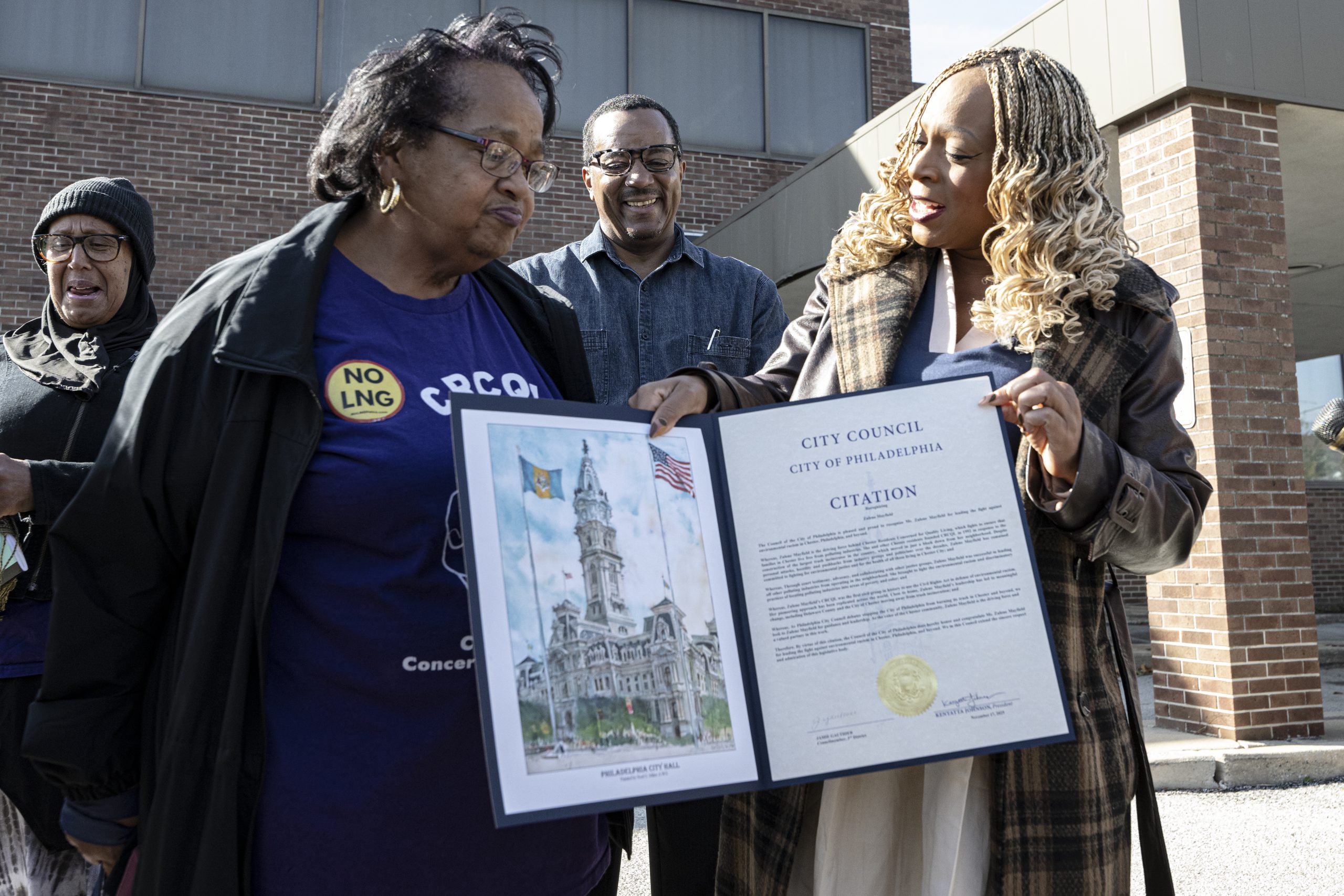
Chester resident Zulene Mayfield, left, Philadelphia Councilmember Jamie Gauthier, right, and Chester Mayor Stefan Roots meet to discuss Gauthier’s “Stop Trashing Our Air Act,” which would ban the city from incinerating waste, during a visit with lawmakers and staff in Chester, Pa., on Friday, Nov. 7, 2025.Jose F. Moreno / Staff Photographer
In July, the Parker administration announced that it intends to enter into a new four-year contract for waste processing and disposal with Reworld, as well as two landfill operators, Republic Services and Waste Management. The terms of those contracts have not yet been made public.
Council must approve multiyear contracts, and Gauthier, who represents parts of West and Southwest Philadelphia, said she is planning a full-court press to get her colleagues to “block Mayor Parker’s dirty deal with trash incinerators.”
The question is whether she can get eight other members on her side to reach a majority of Council. She is likely to find support from three fellow progressives, and she is expected to be joined by Councilmember Isaiah Thomas, the Democratic majority whip, at a Thursday news conference calling on the city to end its contract.
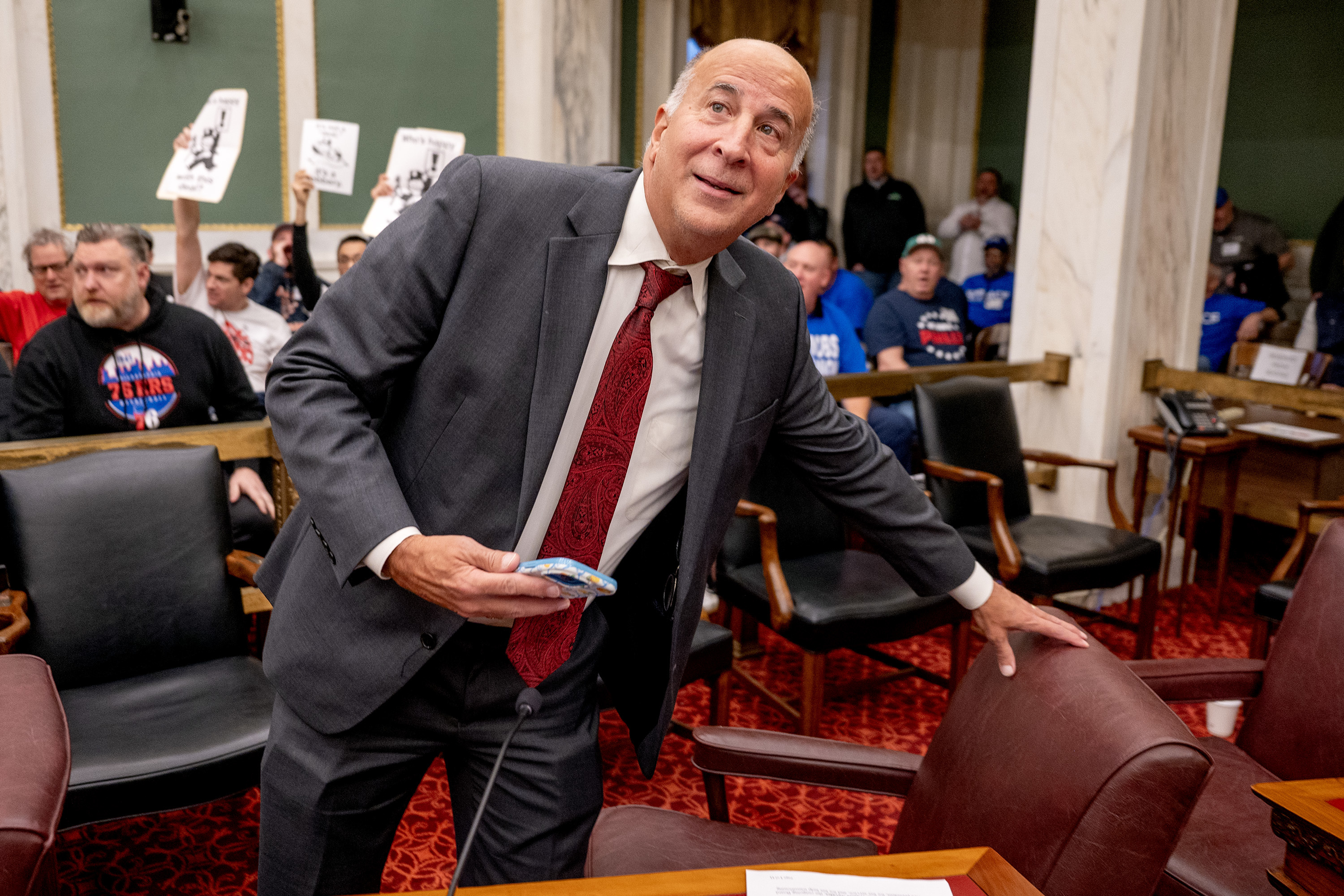
Councilmember Mark Squilla takes his seat in chambers Wednesday, Dec. 11, 2024, before a scheduled committee vote on Sixers arena related legislation was postponed,Tom Gralish / Staff Photographer
Meanwhile, Councilmember Mark Squilla said he has been working with the administration on a plan to build out a “circular waste” system that would replace incineration and landfilling over time with composting and waste “digestion.”
“The incinerator bill …. doesn’t solve a problem we have: to reduce our waste,” Squilla, whose district includes parts of Center City, South Philadelphia, and the river wards, said in an interview. “If we can reduce our waste by going to composting and digestion and other forms, we then eliminate all of our trash. Therefore end up with the result of what the goal should be, [which] is to get as close as possible to zero waste.”
Squilla’s proposal, which would involve “a long-term contract to attract providers to be able to build out a possible digester to decrease the amount of food waste,” could make it easier for Council members sympathetic to Gauthier’s goals but skeptical of her incinerator bill to approve the administration’s contract with Reworld while committing to a long-term solution.
The business tax, revisited
Separate from the school district revenue, some Council members are hoping to advance measures that would provide tax relief to businesses.
Council two years ago approved a 13-year schedule of rate cuts that would dramatically reduce the business income and receipts tax. But at the same time, Parker moved to eliminate a tax break that primarily helped small businesses after its legality under the Pennsylvania Constitution was challenged in court.
The elimination of the tax break — which excluded from taxation companies’ first $100,000 in revenue — has forced thousands of small firms and sole proprietors that make less than that threshold to begin paying a tax from which they had been effectively exempted.
Driscoll worked with tax experts to find a workaround that could pass legal muster — exempting certain types of businesses, such as sole proprietors, from the tax entirely — and he is planning to call up for a vote his bill this fall.
Thomas, meanwhile, said he will introduce a resolution Thursday to hold hearings this fall on the feasibility of reducing the net income portion of the business tax “much sooner” and more “aggressively,” meaning an acceleration of the tax cuts already scheduled.
The measures are likely to spark opposition from more progressive members of Council and could be tricky to navigate for Parker, who wants to make Philly more business-friendly but may not want to forgo additional revenue.
Members eye priorities as election looms
With next year’s election looming — and all 17 members indicating they intend to seek new four-year terms — the fall session is also likely to see movement on a myriad of issues championed by individual legislators.
Majority Leader Katherine Gilmore Richardson said she will propose bills to “protect communities from harmful nuisance businesses and improve processes around code violations,” continuing her efforts to crack down on businesses that neighbors say attract crime.
Councilmember Rue Landau, who represents the city at-large, said she is “tackling the impact of emerging technologies, making Philadelphia more affordable for working people, and ensuring equity remains at the center of how we serve our LGBTQ+ communities.”
Landau said she also plans to introduce a resolution calling on the state to ban automated license plate readers like Flock cameras.
The Philadelphia Council members inside the caucus inside City Hall in Philadelphia, Pa on Thursday, June 11, 2026.Aidan T. Gallo / Staff Photographer
And Councilmember Kendra Brooks will propose new protections for temporary workers and tenants facing eviction, according to her spokesperson, Kathleen Melville.
Brooks, a progressive who represents the city at-large, will also fight for additional funding for reproductive healthcare providers, a priority of hers that was left out of the budget following Council’s impasse with Parker, Melville said.
“That was her biggest focus going into the budget,” Melville said. “She had the same experience as every other Council member in that none of her budget priorities made it into the budget.”
Several members have also said that they want to bolster the city’s property tax relief offerings after the administration this summer released its citywide assessments that will mean higher taxes for thousands of homeowners.
The most likely move would be for Council to amend the city’s tax code to increase the popular homestead exemption, which currently exempts the first $100,000 from a home’s taxable value if the owner lives in the dwelling as their primary residence.
Johnson said Council “will review all tax-relief options” this fall.
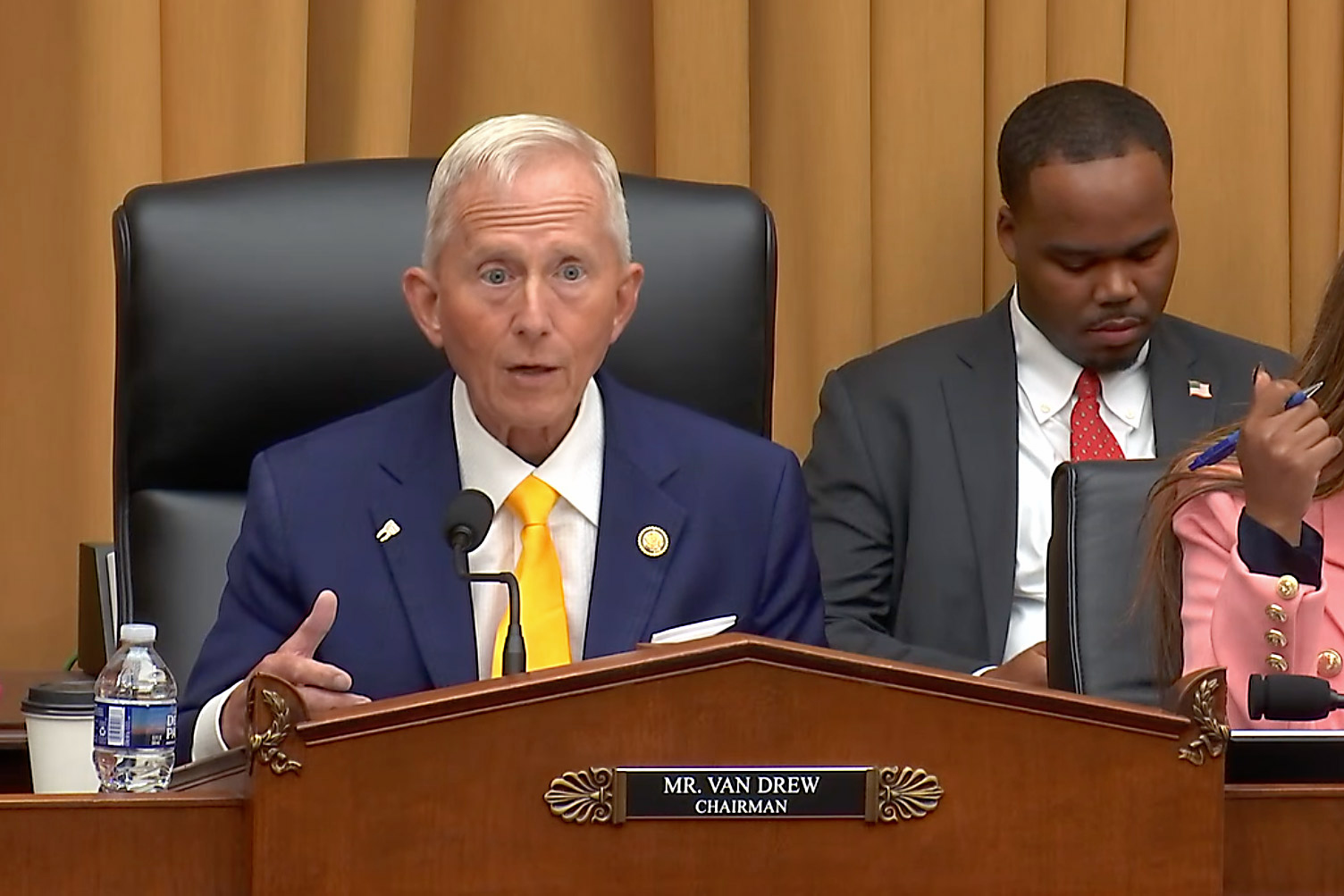
South Jersey Republican Rep. Jeff Van Drew tried to ramp up pressure on Democratic Gov. Mikie Sherrill over the state’s noncitizen voter registrations at a Tuesday hearing in Washington, which did not feature testimony from anyone in Sherrill’s administration.
“Whose side is New Jersey government on?” Van Drew said early in the congressional hearing as he airedgrievances about Sherrill and the state’s immigration policies. “That’s the question hanging over this entire hearing.”
None of the witnesses at the hearing were employees of New Jersey or IDEMIA, the software vendor which Sherrill has blamed for the issue, a point disputed by the company. Van Drew defended IDEMIA at the hearing and said the company is cooperating with his probe.
As he chaired the hearing, Van Drew repeatedly accused the state of New Jersey of knowing about the noncitizen registration issue since 2024.
“In political terms, that’s called a cover-up,” he said.
Van Drew, the chair of the House Judiciary Subcommittee on Oversight, has been a thorn in Sherrill’s side since she announced in July that about 6,600 noncitizens had been registered to vote due to an issue with the software used for the New Jersey Motor Vehicle Commission’s (MVC) voter registration program under former Democratic Gov. Phil Murphy.
Tuesday’s hearing came the day after the Supreme Court rejected President DonaldTrump’s mail ballot restrictions, allowing states to continue sending ballots under the same processes they have been using for years. Van Drew has been a vocal supporter of Trump’s efforts to overhaul national elections, including passing legislation to require proof of citizenship, like a birth certificate or passport, to register to vote.
Three witnesses, including the former chief counsel of the Republican National Committee, advocated for stricter rules around voting. A fourth witness,a former election official fromArizona, said the issue of noncitizen voter registration is incredibly rare.
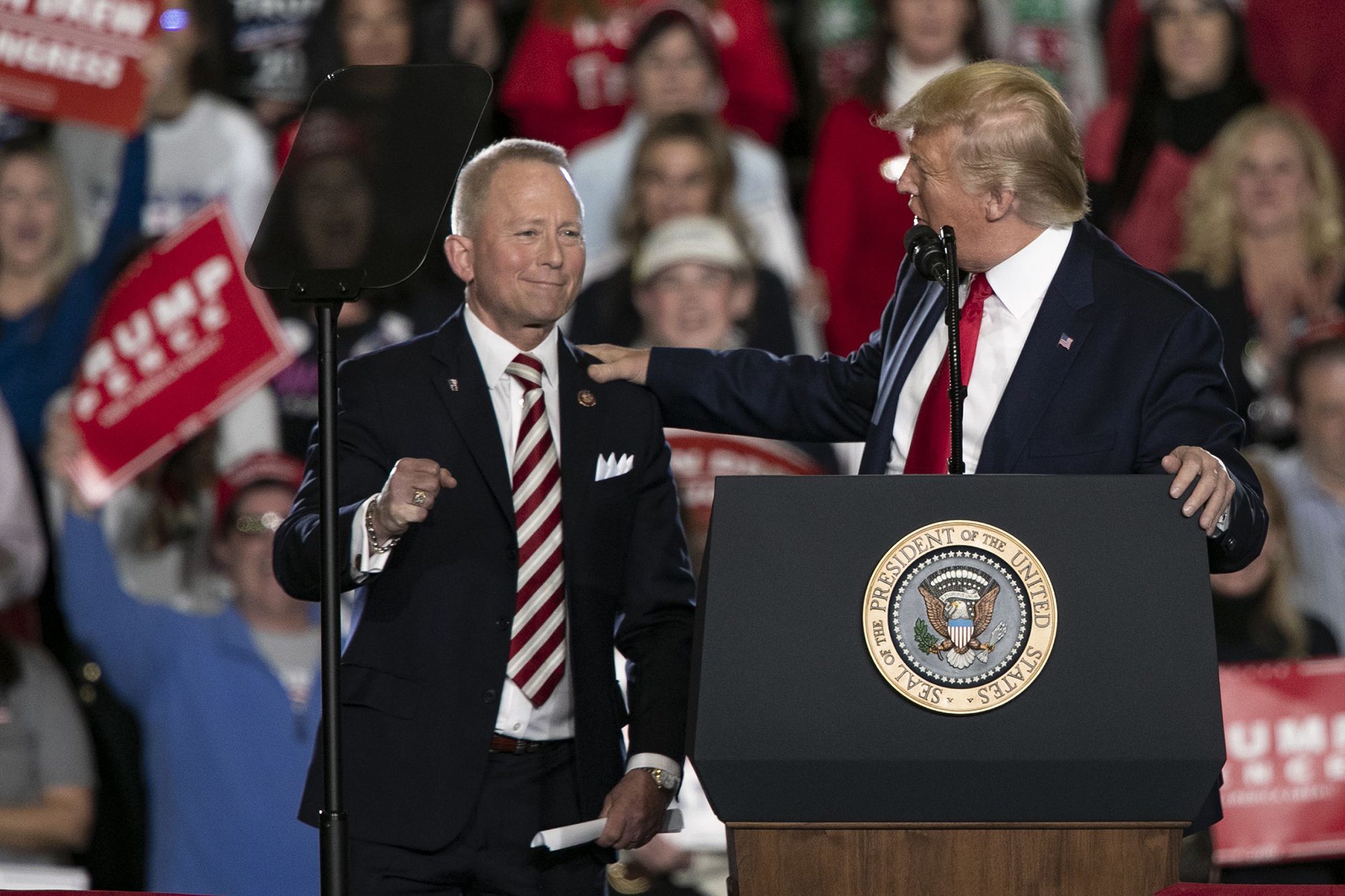
Rep. Jeff Van Drew and President Donald Trump at a campaign rally in Wildwood, New Jersey, shortly after Van Drew switched parties.Heather Khalifa / MCT
Van Drew claims state knew of problem sooner
IDEMIA confirmed after the hearing that the company had met with staff from Van Drew’s office and “will continue to cooperate with congressional and state investigations to help ensure a complete and accurate understanding of the facts.”
Van Drew contended that internal documents show the state government had “tested and approved” the software that led to the improperregistrations.
“We also know that in 2024, IDEMIA received a request from New Jersey after the state finally realized that noncitizens were being registered to vote,” the Cape May County lawmaker said.
Van Drew spokesperson Paxton Antonucci told The Inquirer on Tuesday evening that the documents showed that New Jersey reached out to IDEMIA in June 2024 after noticing individuals who were registered to vote had missing information on their age and party affiliation. She said that information was missing because the software failed to flag thatthe group of individuals had selected they were not citizens, but were still allowed to registered to vote.
“The committee is working with IDEMIA to obtain additional information on how this was allowed to happen, and we are seeking documents from New Jersey as to why this error was never disclosed to the public prior to 2026,” she said.
Sherrill spokesperson Darwin Pham said the governor’s office “can’t speak” for the prior administration. Mahen Gunaratna, Murphy’s spokesperson, pointed to a previous statement on Tuesday that said Murphy “had no knowledge” of the issue and applauded Sherrill for investigating it.
Pham said in a statement Tuesday that congressionalRepublicans are weaponizing the issue “to advance Trump’s voter suppression agenda” while the governor “is focused on continuing to solve the problem she inherited from the previous administration.” He called the hearing “political theater.” Sherrill hired an independent firm to conduct an investigation that is ongoing. She said she will present the findings to the public.
Sherrill’s administration said earlier this summer that the state had removed roughly 4,000 voters from the rolls and left the rest to county election officials to verify whether they were citizens or not. Locally, Burlington and Camden Counties confirmed removing noncitizens from the rolls but did not specify a number.
Sherrill’s administration said fewer than400 of the noncitizens voted but did not affect the results of an election. Van Drew pushed back against this assertion on Tuesday, saying he still does not know the details of which elections these noncitizens voted in.
“Anybody knows if you follow local elections, they can be a handful of votes very often. It can even happen in Congress,” said Van Drew, who was elected as a Democrat in 2018 before declaring his loyalty to President Donald Trump and switching parties a year later. This November, he will face Democrat Zack Mullock, the Cape May mayor, at the ballot box.
Van Drew said that Lt. Gov. Dale Caldwell, the secretary of state, has been “somewhat cooperative” but that the state has broadly “done everything it can to not cooperate and stonewall the investigation.”
A Sherrill official said Tuesday her administration had provided the committee with public documents.Thegovernor haspledged to protect New Jerseyans’ data, and her administration has been in a legal battle with the Trump administration over providing the personal information of noncitizens.
At the hearing,Van Drew referred to Caldwell being under investigation without going into details.Sherrill has touted her transparency in disclosing the noncitizen voter registrations, but she has been criticized by some in her party for staying tight-lipped about a reported investigation into Caldwell and his alleged behavior with women.
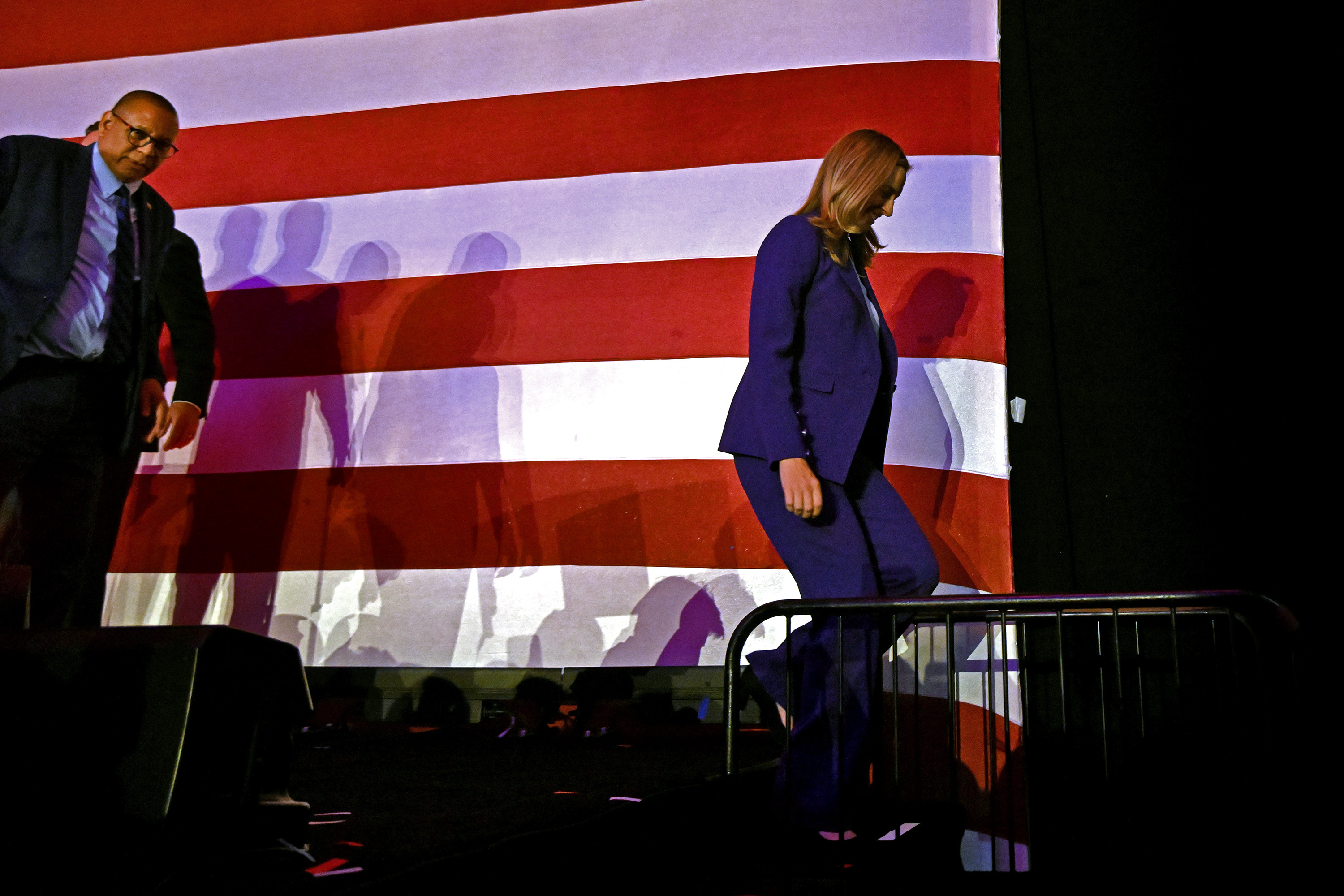
Lt. Gov. Dale Caldwell (left) follows Gov. Mikie Sherrill off the stage following the celebration of their victory at an election night party in East Brunswick Tuesday, Nov. 4, 2025.Tom Gralish / Staff Photographer
Noncitizens removed from voter rolls in Burlington and Camden Counties
David Levinsky, a spokesperson for Burlington County, confirmed some ineligible voters were removed from the rolls in the South Jersey county but deferred to the state on specific numbers.
“The [Burlington County] Superintendent of Elections Office continues to follow all relevant state laws and guidance to ensure that all residents who register to vote are eligible,” he said.
Camden County spokesperson Dan Keashen also confirmed that the county received a list of voters to investigate. The rolls are up to date after noncitizens were removed, he said.
Stephanie Salvatore, the Gloucester County superintendent of elections, said Tuesday that the county had not been notified of any questionable voters due to the MVC issues from the state.
Salvatore, who has been in the election office for more thanthree decades, said the issue had come up “a handful of times” before.
“I have police powers over elections, and an investigator assigned full-time. We work closely with many agencies, including the FBI, the state police, the county prosecutor, among other agencies,” she said. “If I cannot verify the voter eligibility in question within my office, I send it to the professionals and/or the courts to decide.”
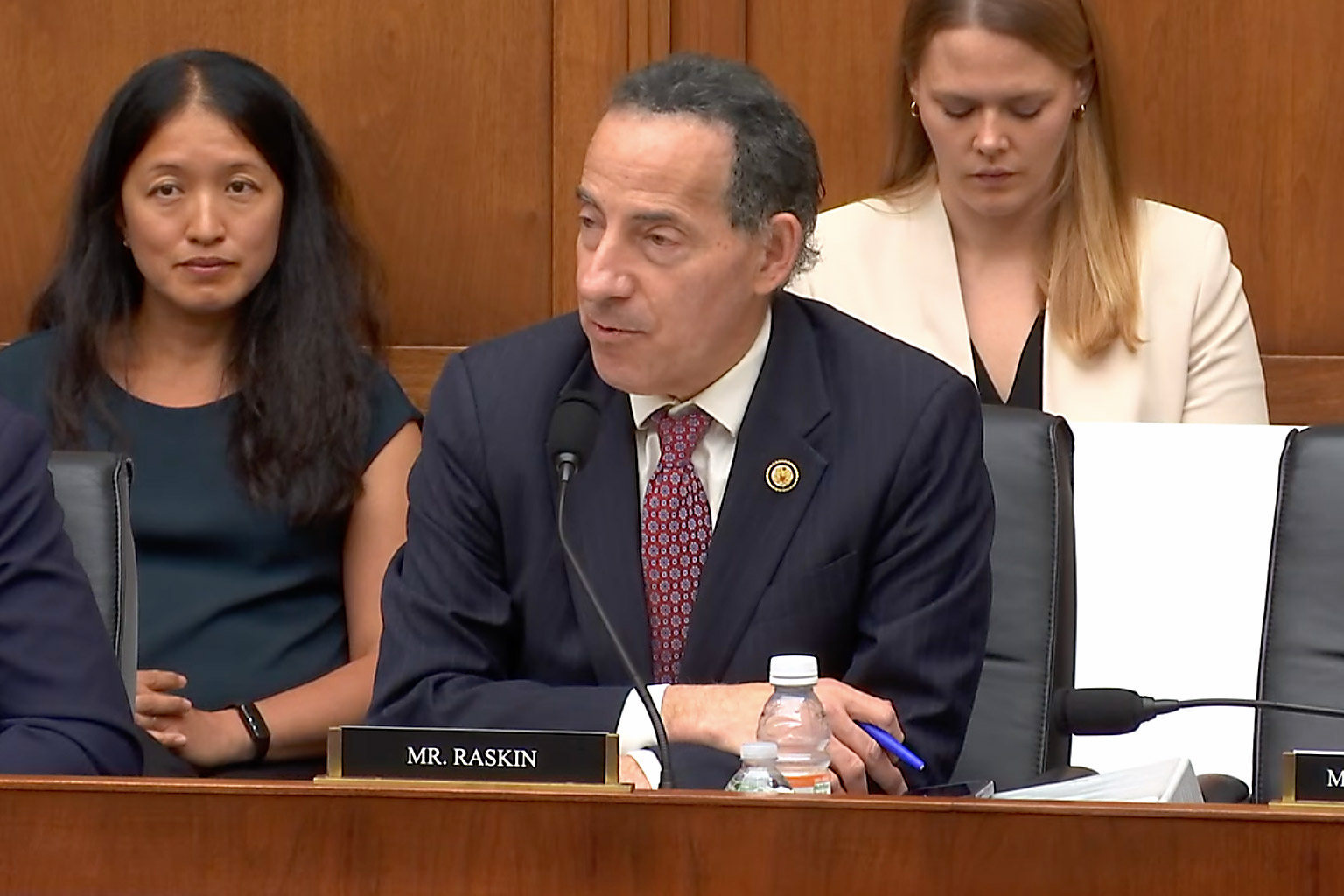
U.S. Rep. Jamie Raskin, a Maryland Democrat, speaks during a hearing on New Jersey noncitizen voter registrations. House Judiciary Subcommittee video
‘Worst-case scenario’
Stephen Richer, a legal fellow withthe libertarian Cato Institute’s Robert A. Levy Center for Constitutional Studies,was the one witness who strayed from Van Drew’s position on noncitizen voting. Richer, who previously served as a Republican responsible for voter registration in Maricopa County, Ariz., cited as an example an audit in Utah, which found that 0.001% of voters were noncitizens. He said New Jersey’s case is the worst he has seen.
“Even in this scenario, this worst-case scenario, noncitizens made up a fraction of a percent of voters,” he said.
Josh Findlay, a senior fellow for election integrity policy at the Trump-aligned America First Policy Institute, argued that every noncitizen vote cancels out a citizen’s vote.
“The default should be that voters must verify their eligibility before being added to lists, not that people are added to lists and then we hope that the state catches them,” he said. “Even small numbers matter.”
U.S. Rep. Jasmine Crockett, a Texas Democrat and ranking member of the subcommittee, called Trump “the biggest threat to democracy,” pushing back on the GOP messaging.
Van Drew contended that pressure from the federal government led to the noncitizen voterrevelation, but U.S. Rep. Jamie Raskin, a Maryland Democrat, emphasized that the error was discovered and disclosed by New Jersey itself.
“No matter how much our colleagues seek to inflate it, a clerical error is not structural corruption, much less is it a criminal conspiracy,” said Raskin, the top Democrat on the Judiciary Committee. “It does not rise to the level of, say, a violent insurrection deliberately incited and organized to overthrow a completed presidential election.”
With fewer than 50 days until the midterms, Democrats have developed a clear advantage over Republicans as the president has lost the public’s trust on the economy, according to a new national poll from the New York Times and Siena University.
President Donald Trump’s lingering unpopularity and intense frustration over his management of cost-of-living issues, in particular, have deepened Republican vulnerabilities as Democrats push to win control of both the House and Senate.
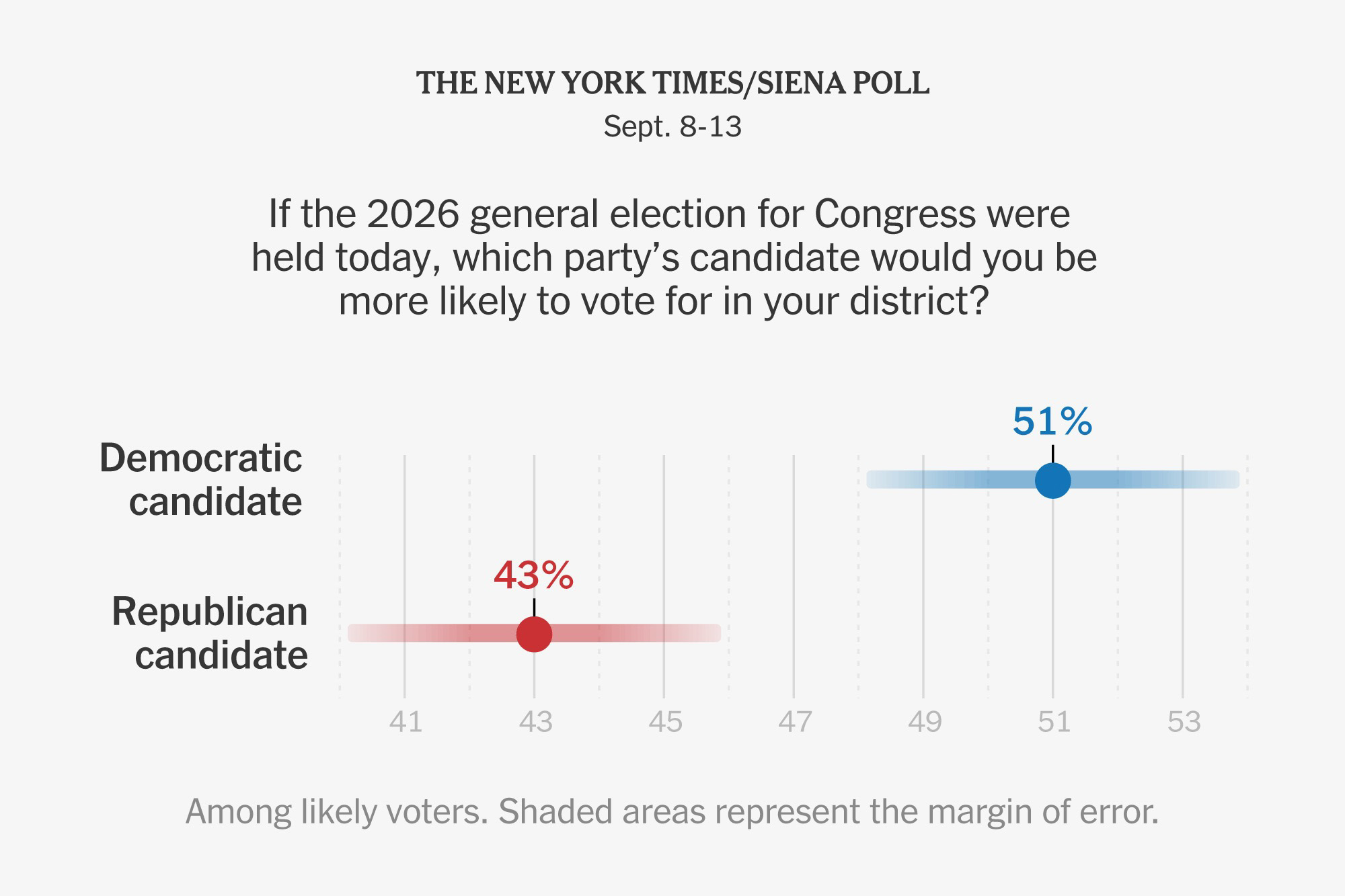
Likely voters favored Democratic candidates over Republicans by close to 9 percentage points in their congressional district — a metric that is closely watched by both parties as a leading indicator of political momentum.
Trump’s approval rating continued to languish at 38% among likely voters, essentially unchanged from the lows it sank to after he went to war with Iran. A majority of voters disapproved of Trump’s handling of every major issue included in the poll: the economy, immigration, tariffs, the war, and, especially, the cost of living.
And voters said they trusted Democrats more than Republicans on not just healthcare and foreign wars but also on the two issues that powered Trump’s 2024 victory: immigration and the economy.
The political conditions found by the poll suggest the makings of a potential Democratic wave in November. But that outcome is far from assured. Thanks in part to gerrymandering, relatively few House seats are truly competitive, and in the run-up to the midterms, Republicans drew new House maps in several states favorable to their candidates. And even a nearly 9-point advantage would not guarantee flipping some of the Senate seats Democrats are counting on in 2026 — Texas, Ohio, Alaska, Iowa — which Trump won by double digits in 2024.
Still, independent voters have especially soured on Trump. Just 10% of them said the economy was better today than a year ago and only 27% approve of Trump’s job performance overall. And in the fight for Congress, 57% of independent voters said they planned to vote for a Democrat compared with only 34% for a Republican.
The cost of living is dragging down Republicans more than any other issue, as even some Republican voters lose faith in Trump’s economy. Only 28% of voters said they approved of how Trump has managed matters related to affordability.
Even Trump’s most loyal and durable demographic base — white voters without college degrees — disapproved of the president’s handling of the cost of living by a wide 21-percentage point margin.
And opposition to Trump is intensifying. The survey was the first Times/Siena poll in his second term to find a majority of voters, 52%, saying that they “strongly” disapproved of him.
The war in Iran, which has driven gas prices above $4 a gallon, is also weighing down the president. More than three-quarters of independent voters said they disapproved of his handling of the conflict, and so did nearly a quarter of Trump’s own 2024 voters.
Yet the survey found that the GOP’s vulnerabilities extend beyond Trump.
Voters see Republicans broadly as more extreme, more elitist, and more corrupt than Democrats, according to the poll. And while voters continue to have doubts about both parties, they aligned more with the Democratic Party on both cultural and economic matters than the Republican Party in the survey.
One glimmer of good news for Republicans is that the political situation has not deteriorated further since the spring. Yes, Trump is unpopular. But he is not more so than he was five months ago. The Democratic Party is viewed as too far left. And Republicans are generally outpolling Trump — including on how they would handle particular issues.
Still, by an 11-point margin, voters said they would prefer for Democrats to control Congress after the November election.
“All I know is right now, the Republicans are in power and I’m not really seeing the change I wanted to see,” said Elizabeth Gloden, 21, an independent college student in Arizona who voted for Trump in 2024 but is planning to vote Democratic this year. “I’m Gen Z. I am in the area where we want to move out of our parents’ houses, but we can’t because everything costs a million dollars,” she added. “I think it’d be a good idea to just see the other side what they can do.”
There were indications that the Democrats were winning back groups they had lost ground with in the 2024 presidential race. The current Democratic strength in the battle for Congress was being driven heavily in the poll by younger voters (those under 30 favored Democrats by 35 percentage points), Hispanic voters (43 points) and independent voters (23 points) — all groups the party had seen sagging support from two years ago.
Trump’s approval rating among voters under 30 stands at an abysmal 18%.
The economy ranked as the top issue for voters. Only 14% of voters said the economy was better than it was a year ago — down from 31% who said so in January.
The erosion among Republicans is especially stark. While 72% of Republicans said in January that the economy was better than it had been the prior year, only 29% of Republicans said so now.
Trump has tried to wave off those concerns. “This has been the most successful two years financially and every other way in the history of the presidency,” Trump claimed in his address last week at a convention in Dallas.
Voters are not buying it.
“I actually feel really gaslit because I’m constantly hearing from Republicans, from conservatives just in the media in general, that ‘don’t believe your lying eyes, everything’s great, wages have increased,’ all of these different things,” said Meghan Demetrios, 40, an independent voter in South Carolina.
“I feel like I’m super poor in America,” she continued. “I got a new career job about nine months ago, and I was so proud of myself and so excited. And I thought everything was going to get a little bit better. And I turn around, and I find that every single bill I have has gone up.”
She plans to vote Democratic this year.
All told, 71% of voters disapprove of how Trump is handling the cost of living while 28% approve — a net disapproval of 43 percentage points, which is 13 points worse than it was January.
Economic hardship appears to be especially hampering the GOP among lower-wage earners.
Those earning less than $50,000 were more than twice as likely to say they would vote for a Democratic congressional candidate this fall rather than a Republican, 63% to 31%.
That would represent a dramatic shift from 2024, when Trump narrowly carried that group, according to exit polling.
More than half of voters said they worry more about Republicans in Congress allowing Trump to go too far, while 39% said that they worry about Democrats trying to move the country too far to the left.
Adding to the party’s problems, Republicans face an enthusiasm gap: 61% of Democrats said they were almost certain to vote, compared with 56% of Republicans.
One of the Democratic Party’s potential vulnerabilities is being seen as outside the mainstream. The share of voters who see Democrats as too far left has grown to 50%, up from 47% earlier this year. (But likely voters were more likely to describe the Republican Party as “extreme” than the Democratic Party.)
And a 51% majority of voters had an unfavorable view of socialism — one reason Trump’s convention in Dallas repeatedly used that label.
“The Democrats have always done a horrible job of supporting their own cause because they can’t get out of their own way,” said Thomas Lappin, 48, a Democrat who lives in Austin, Texas, and who wished his party would move strategically to the center. “I feel like they’re just doing this again and every time they get their act together, they just somehow screw it up again.”
About a tenth of all voters, including Democrats, Republicans, and independents, say they disagree with both parties when it comes to economic issues. This year, Democrats seem to be winning them over, at least for now.
James Witherington, 41, left the Army after two decades last year and is now a real estate investor in Colorado Springs. He called his voter registration — he’s a Republican — a “loaded question” these days, considering his frustrations with Trump, whom he called “an egomaniac.”
“This is an unnecessary war,” he said. “Do I hate Iran? Yes. Should we destroy them? Yes. But now is not the time.”
But Witherington said he is still planning to vote for his local Republican congressman, Jeff Crank, whom he knew by name. “He emails me about veterans problems,” he said.
“The extreme left has gone too far,” he said. “The extreme right is like the high school jock bully. But most people are in the middle. Most people are just walking down the hall.”
WASHINGTON — The Supreme Court dealt President Donald Trump a major blow Monday when it blocked his executive order to restrict mail ballots. But Trump’s battle to assert control over the election process is far from finished.
The stymied attempt to have the U.S. Postal Service screen mail ballots was just one piece of a broader effort involving the full power of the federal government to take more control of state-run elections.
Just days before the Supreme Court blocked Trump’s mail ballot order, the Justice Department sent threatening letters to at least 30 top election officials across the country, escalating a fight to gain access to private voter data and election records.
Federal agents are scouring voter rolls managed by states for noncitizens, despite a lack of evidence of widespread fraud. Trump’s Homeland Security secretary recently pushed for an investigation into whether a commonly used voting machine can be trusted, casting doubt on digital voting systems.
“This is far from over,” said Benjamin Hovland, who was ousted from the independent, bipartisan Election Assistance Commission by the Trump administration this year.
Hovland acknowledged that the Supreme Court’s decision mitigated “real-world impact” on voters and election workers, particularly since voters in some states have already begun to mail in their ballots. But he said Trump’s actions were alarming.
“What you’re seeing is using the apparatus of government, using federal agencies, using taxpayer dollars, to push that narrative that only undermines confidence in our democracy and ultimately hurts voters and election officials,” Hovland said.
Trump argues that he is trying to secure the integrity of the vote, but his claims of widespread fraud in the election system have been investigated and debunked repeatedly, and critics say his actions needlessly sow doubt about the outcome of the vote.
The White House did not immediately respond to requests for comment.
There are stark differences between now and Trump’s first term, when his attempts to undermine the election results in 2020 ran into stiff pushback not only from the courts but also from his own government officials. In his second term, Trump has surrounded himself with loyalists willing to turn his obsession over the country’s election systems into a blitz of federal actions. He has also installed election deniers in key posts.
The Supreme Court’s decision Monday did, however, add to a string of mounting losses for Trump, who said this year that he wanted to “take over” and nationalize elections. Even before the Supreme Court decision, two lower court judges ruled that Trump’s changes to mail-in balloting were most likely illegal and should not be imposed so close to the November elections.
Trump administration lawyers had urged the Supreme Court to step in and clear the way for its plan to use the Postal Service to screen ballot envelopes after they are submitted by state elections officials. The new rules would require states to submit lists of voters approved to receive mail ballots. The Postal Service would then deliver mail ballots only to the voters on the lists.
In addition to the loss Monday, Trump’s other attempts to pressure states over the election process have faced legal setbacks.
The Justice Department has sued 30 states for unredacted voter lists, which include personal information such as driver’s license numbers and partial Social Security numbers.
They have lost 23 of those cases. Decisions are pending in the rest.
The federal actions, as well as the various court decisions, have caused alarm among local election officials and voters, according to election experts.
This month, the chief election officials in seven Republican-controlled states filed a brief to the Supreme Court, arguing that with less than two months until Election Day, it was too close to the midterms to make any major changes to the election process.
Some states including North Carolina, Delaware, and Alabama had already mailed out their ballots, even before the Supreme Court issued a final decision.
“Attempting to implement the rule now will almost certainly lead to mistakes, delays, and confusion for both voters and election officials,” the brief stated.
But it was not just the pending Postal Service rule that has caused confusion and upended coordination among local election officials and the federal government.
The administration has also asked the Supreme Court to intervene to allow it to move forward with an effort to build citizenship lists by merging data from various agencies, including the Department of Homeland Security and the Social Security Administration. A lower court has so far blocked the use of that tool, which administration officials argue is needed to verify citizenship for voting, among other purposes.
In July, Markwayne Mullin, the Homeland Security secretary, threatened election officials in a speech and said they could face prison time if they did not comply with the Trump administration’s efforts to change election policies. Officials in the Justice Department have also explored whether they could bring criminal charges against state or local election officials if the administration determined they had not sufficiently safeguarded their computer systems.
The Federal Emergency Management Agency, which sits under the Homeland Security Department, is demanding that states change the way they conduct elections or risk losing tens of millions in federal terrorism-prevention funds.
Kimball W. Brace, the president of Election Data Services, an organization that works with local governments on election preparedness, said he did not expect the Supreme Court decision to stop Trump’s broader effort to pursue his election grievances.
“I don’t anticipate people on the Republican side not wanting to continue and push their side of the story as much as possible,” Brace said.
Distrust of the election process among voters is growing as the November elections approach. A survey from the Associated Press and the NORC Center for Public Affairs Research and USAFacts showed that only 34% of U.S. adults trust government certifications of election results “a great deal” or “quite a bit,” down from 40% in 2024.
Trump has also gutted the government’s election security infrastructure. Experts warn that his cuts to agencies tasked with coordinating election security with state governments could reduce visibility into foreign influence campaigns and cyberattacks.
Brace said all the executive actions have fueled pressure on local election officials.
“They don’t want to deal with this crazy pressure that various interests and various individuals have pushed on the election administration,” he said.
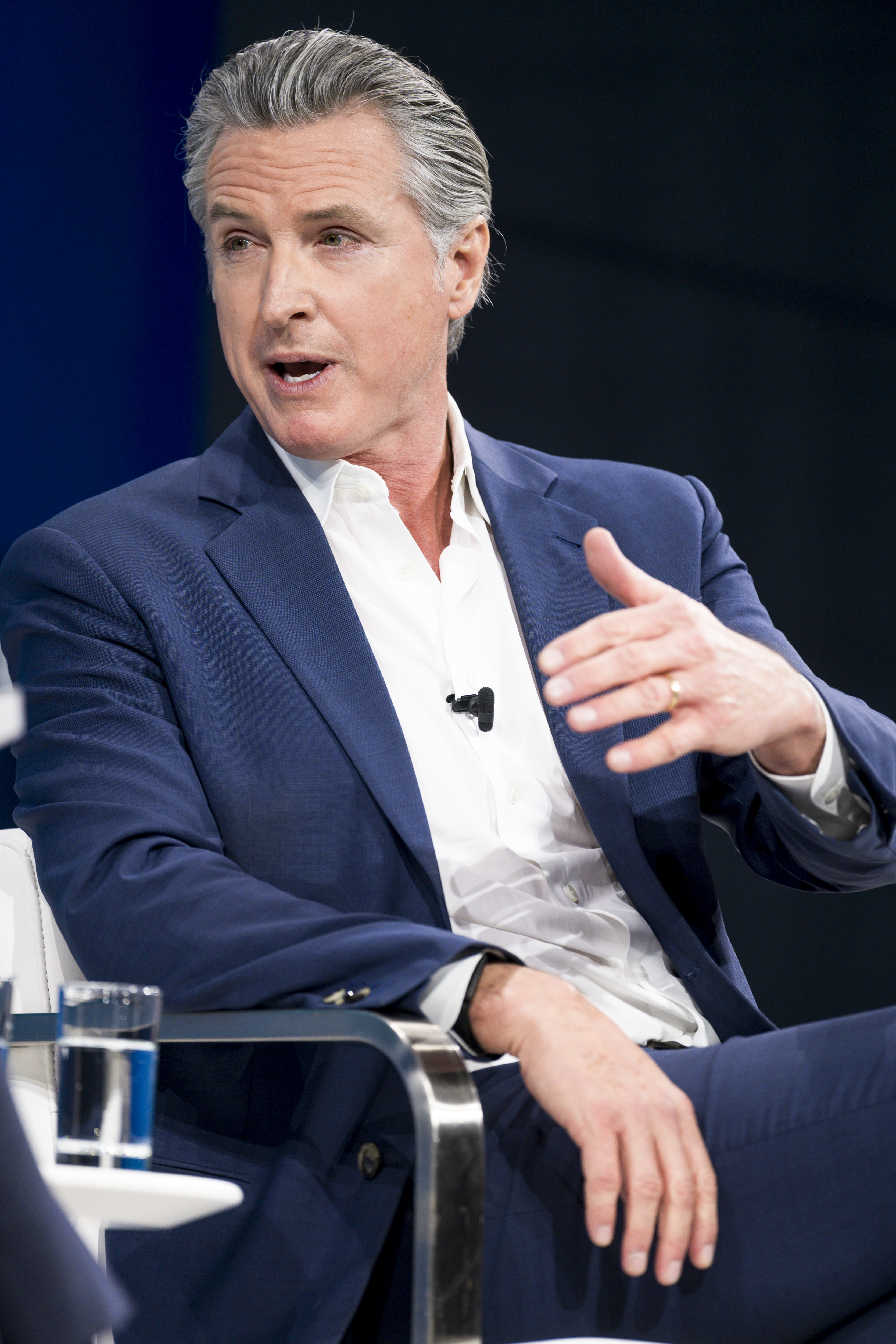
WASHINGTON — Gov. Gavin Newsom of California, who is widely expected to run for president in 2028, said in an interview published Monday by CNN that he would forgo a campaign if former Vice President Kamala Harris decided to run herself.
“I wouldn’t run if she ran,” Newsom said during an interview recorded during a fly-fishing outing in Montana with Jake Tapper, the CNN anchor, adding: “I wouldn’t waste everyone’s time. Who needs that?”
Newsom’s statement, volunteered as he and Tapper cast their lines at a scenic river, seemed to fly in the face of the presidential ambitions the governor has telegraphed since even before Harris lost the 2024 election.
The surprising pledge, if taken at face value, might appear to constrain Newsom’s ambitions if Harris does in fact run again. He would be forced to either keep his word and not pursue an office he has openly coveted, or go back on his word and run against a fellow California Democrat with whom he has a long and complicated relationship.
It is also possible that Newsom could announce a presidential campaign before Harris does, which could give him some wiggle room to argue that he had not broken any promises. Newsom might also believe that Harris will not run.
A spokesperson for Newsom said he could not immediately offer more clarity on what the governor had meant.
“They’ve been friends long enough that they wouldn’t play cat-and-mouse games on something this important,” said the spokesperson, Bob Salladay.
The 2028 presidential primary race is expected to officially start as soon as late this year, after the midterm elections, and potential contenders including Newsom and Harris have made moves to maintain their national political profiles.
This year, Newsom has made two trips to South Carolina, the first state on the Democratic Party’s presidential nominating calendar. Shortly after President Donald Trump took office for a second time, Newsom started a podcast in which he has interviewed guests from across the political spectrum, including Charlie Kirk before his assassination, Hunter Biden, and a series of Democratic governors.
When Tapper laid out the case for why Harris, who has also expressed her interest in running for president again, might not be the best option because she has already been nominated and lost, Newsom agreed.
“That would be the case you’d make, a pretty good one, actually, that’s objectively true,” he said. “But I know what that means. I know her base of supporters, I know her friends.” Referring to the overlap in their circles as “pure crossover,” he added, “I wouldn’t do that.”
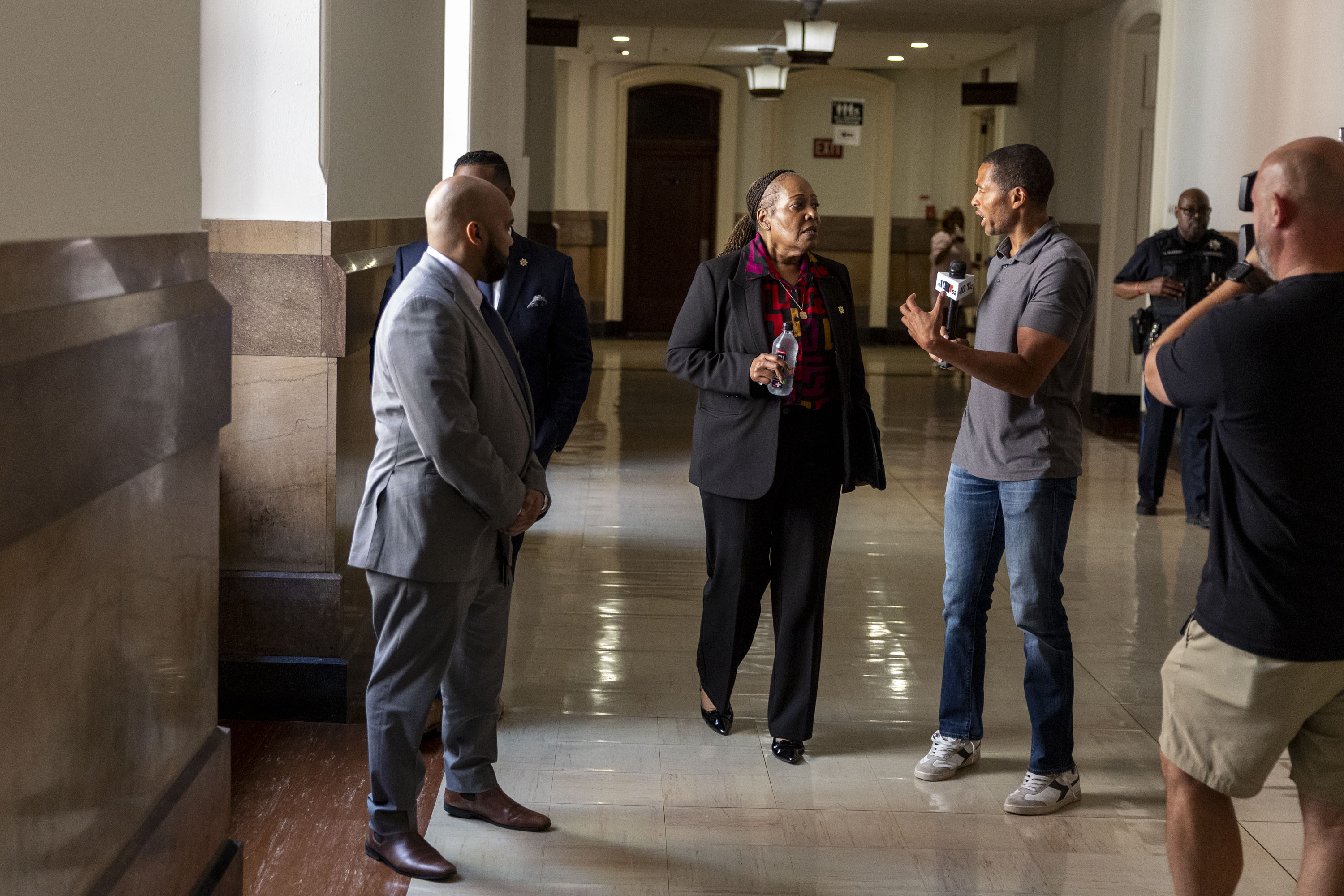
Philadelphia Sheriff Rochelle Bilal’s new second-in-command has left the job — three months after he arrived.
Undersheriff George Gossett Jr., whom Bilal hired in June as part of what she had described as a major “reorganization and modernization” initiative, confirmed Monday that he had resigned from the job effective last Friday.
Gossett said through a spokesperson that he is “excited to pursue opportunities in the private sector” but provided no other explanation for his short tenure.
Bilal’s office has been hit with three court orders since 2024 seeking to correct alleged mismanagement, most recently in May over delays in processing deeds of properties won at auction.
Gossett, a Roxborough-based lawyer and former assistant district attorney, was tapped in June at an annual salary of $185,000, weeks after a Common Pleas Court judge ordered Bilal to fix the sheriff sale process or face consequences.
According to a news release Bilal issued that month, Gossett was to “oversee daily operations, strategic planning initiatives, personnel management, and operational coordination across the agency.”
“This reorganization is about building a stronger organization for the future,” Bilal said at the time.
It is unclear where that plan now stands, with the new undersheriff having already departed.
Gossett is the fourth undersheriff to serve Bilal since she took office in 2020. Bilal and her spokesperson, Teresa Lundy, declined to provide any details about why her top deputy would leave so soon after taking the job.
Sources in the office said that the pair did not see eye-to-eye, and that Gossett was said to have made a remark about Bilal’s “anger management” issues, which may have escalated the situation.
Separately, Bilal last week fired Mark Wilson, the office’s codirector of real estate. Wilson declined to comment.
Gossett’s predecessors also had rocky terms in the sheriff’s office.
In August 2020, seven months into the job, Undersheriff Sommer Miller resigned after she said she faced retaliation for reporting alleged theft in the advertising department, unauthorized spending of public funds, and instances of extreme sexual harassment. She later claimed in a whistleblower lawsuit that Bilal had been “reading and monitoring her emails in real time.”
Miller’s replacement, Undersheriff Curtis Douglas, left in May 2021, about a week after reports that Bilal’s office had botched a contract meant to move sheriff sales to an online platform. A spokesperson at the time described Douglas’ departure as a planned retirement.
In May 2026, Undersheriff Tariq El-Shabazz, a criminal defense attorney who came to personally oversee the handling of deeds related to sheriff sales, also retired. He left one day after the most recent court order dropped.
Under Bilal, who was elected as a reformer in 2019, sales of foreclosed and tax-delinquent properties have been mired in post-auction delays, with winning bidders waiting a year or more to get their deeds.
Many auctions were halted altogether between 2021 and 2024. Court security and inmate transportation, two other key functions of the office, have also been recurring problems, with judges saying they have felt unsafe.
In addition to Gossett, Bilal recently hired William A. Brownlee Sr. as part of the office restructuring earlier this year.
Brownlee, a West Philadelphia pastor, a motivational speaker, a real estate investor, and an entrepreneur with a checkered financial history, has previously described himself on his website and social media as the office’s “Deputy Chief Financial Officer.” His website has since gone dark, and Bilal’s office said Brownlee currently serves as project manager. Payroll records show he is being paid $95,000 a year.
Another new hire, Steven A. Wakefield, is a former Philadelphia Law Department attorney serving as Bilal’s deputy undersheriff in charge of deed compliance. He is being paid $120,000 a year.
Wakefield took the stand last month and told Common Pleas Court Judge Paula Patrick, supervisor of the court’s commerce division, that the office had previously misplaced records and lost track of the distribution of some auction proceeds. Wakefield blamed the situation on a since-terminated employee who allegedly concealed the problem from Bilal.
Bilal did not testify at the hearing. Her city-appointed lawyer had filed a motion seeking to keep her off the stand, saying the sheriff had “limited personal knowledge” of how sheriff sales work.
Wakefield said he had enacted operational reforms, speeding the deed issuance process while largely clearing out a backlog of deeds from earlier sales.
Even so, Patrick took the rare step of imposing six months of outside supervision of sheriff sales.
WASHINGTON — The war in Iran is costing the United States up to $3 billion per month and has tallied more than $38 billion in direct costs to the government since it began more than six months ago and became a flash point in voters’ frustrations over rising prices, according to a new and nonpartisan analysis.
The estimate, released Tuesday by the Congressional Budget Office after a request from U.S. Rep. Brendan Boyle (D., Philadelphia), mostly represents munitions expenses as of Aug. 1. It does not include some other direct and indirect costs — such as the spike in gas prices felt by consumers — that likely make the total price tag for Americans far higher.
But with the war on the minds of voters during the midterm elections this fall, the latest tally is the one of the clearest signs yet of the conflict’s impact on taxpayers.
“It is now concrete evidence that when the administration was pretending like there wasn’t going to be a real cost to this war, they were wrong,” Boyle said in an interview Tuesday. “We have now paid $40 billion, and climbing, on the most reckless decision to go to war of at least my lifetime. So as the people go to the polls this November, they need to recognize that if they are voting for the president’s party, they’re voting for more of this.”
The top Democrat on the House Budget Committee, Boyle requested the analysis in the first days of the conflict — when President Donald Trump said the campaign would last four or five weeks. The president and his allies said the goals were to root out Iran’s regime and to dismantle its capacity to build a nuclear weapon.
Democrats and other critics warned of a reckless and potentially yearslong conflict.
Trying to win control of Congress for the final two years of Trump’s term, they have largely framed their opposition to the war around the economic consequences — marrying an affordability message around rising healthcare and grocery costs with one about gas prices, which they say are even more directly connected to Trump’s actions.
(function(){function e(){window.addEventListener(`message`,function(e){if(e.data[`datawrapper-height`]!==void 0){var t=document.querySelectorAll(`iframe`);for(var n in e.data[`datawrapper-height`])for(var r=0,i;i=t[r];r++)if(i.contentWindow===e.source){var a=e.data[`datawrapper-height`][n]+`px`;i.style.height=a}}})}e()})();
Polls and interviews show that message could have an impact in the midterm elections this fall. In Pennsylvania, voters in four key battleground districts will decide whether to keep their Republican members of Congress, each of whom has supported the war to varying degrees.
“This mess must stop,” Uber driver Miguel Vazquez, 60, of Allentown, said last week while filling up his 2021 Mitsubishi Outlander with $4.53-per-gallon fuel.
The price of gas has remained elevated and has increased in recent weeks as fighting continues in the oil-rich region. On Tuesday, the average cost of a gallon of gas was $4.50 in Pennsylvania and $4.33 nationally.
The war in Iran and tariffs have made daily living and working “a nightmare” that can be fixed only by “regime change,” Vazquez said. He said he plans to vote for Democrat Bob Brooks, a challenger to freshman Republican U.S. Rep. Ryan Mackenzie, who represents a swing district that covers the Lehigh Valley and the Poconos.
“The [Republican] Party listens to Trump, who put us in Iran and set tariffs — making gas, food, and everything else expensive,” said Vazquez, a Democrat. “They have to go.”
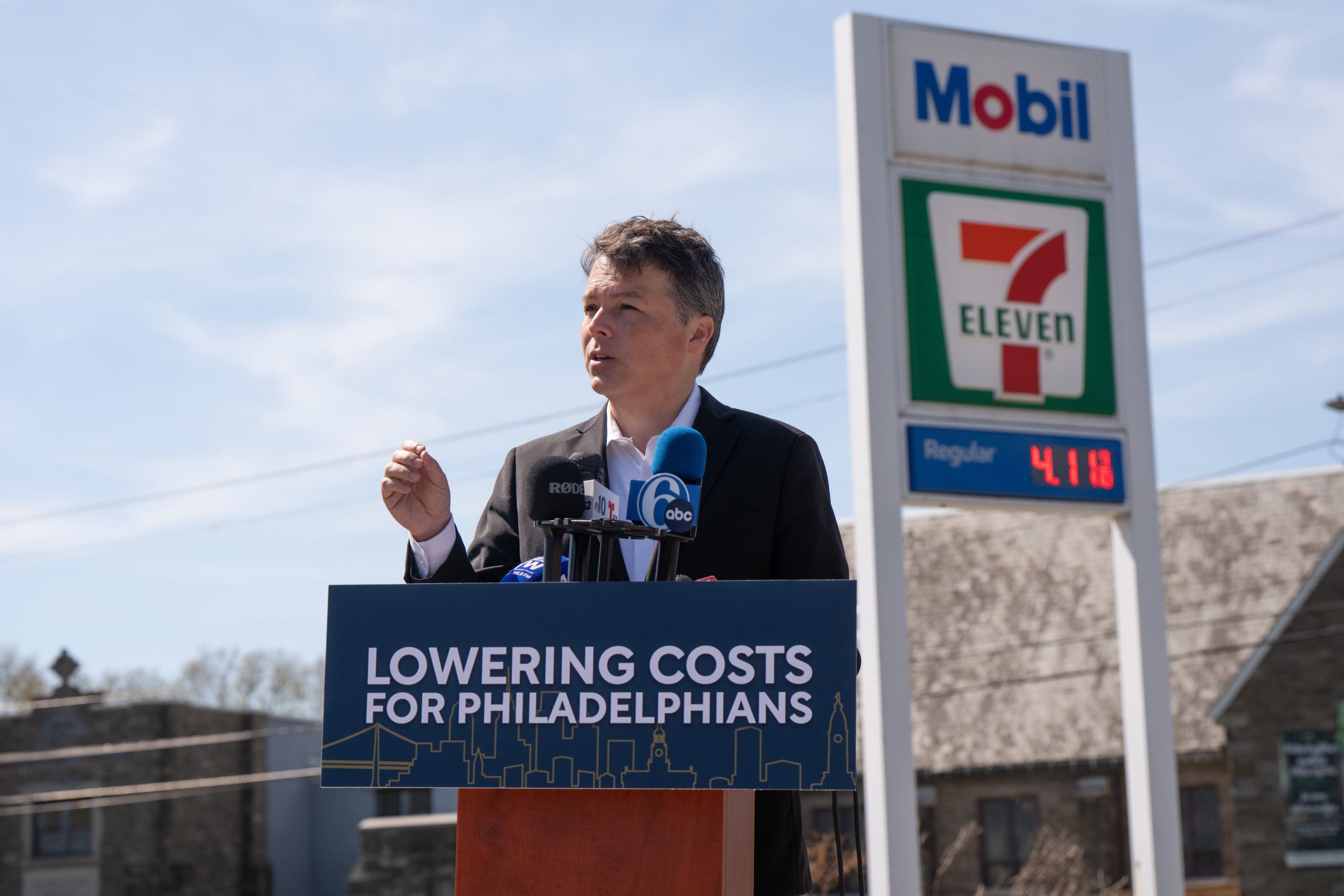
U.S. Rep. Brendan F. Boyle holds a news conference at a Philadelphia gas station to announce legislation to suspend the federal gas tax whenever the national average price of gasoline exceeds $4.00 per gallon, in Philadelphia, Tuesday, April 14, 2026.Jessica Griffin / Staff Photographer
The cost of war
The report from the Congressional Budget Office, where nonpartisan staffers analyze federal policy for lawmakers on both sides of the aisle, largely aligns with other estimates of the war’s costs so far.
The nearly $38.1 billion in direct costs as of Aug. 1 is slightly more than the $37.5 billion figure that Defense Secretary Pete Hegseth noted during congressional testimony in late July.
The CBO’s estimate includes $21.7 billion to replace expended munitions, $10.4 billion for additional flying hours — which refers to the cost of the military’s deployment of aircraft in the region — and $2.7 billion due to higher fuel prices. The agency was unable to determine other costs, like the damage to U.S. facilities in the region or expenses related to diplomatic operations and foreign aid.
(function(){function e(){window.addEventListener(`message`,function(e){if(e.data[`datawrapper-height`]!==void 0){var t=document.querySelectorAll(`iframe`);for(var n in e.data[`datawrapper-height`])for(var r=0,i;i=t[r];r++)if(i.contentWindow===e.source){var a=e.data[`datawrapper-height`][n]+`px`;i.style.height=a}}})}e()})();
The overall price tag also does not include indirect costs that affect the U.S., such as inflation and interest rates — though it notes that both are impacted by the war. For instance, year-over-year inflation is expected to be 0.5 percentage points higher in the first quarter of 2027 because of the war.
Independent analysts have noted those indirect costs are significant.
An “Iran war energy cost tracker” from Brown University’s Watson School of International and Public Affairs shows that consumers have felt the brunt of nearly $107 billion in additional gasoline and diesel costs since the start of the war.
Mark Zandi, the chief economist at Moody’s Analytics, who is based in Chester County, in June pegged the cost at $1,000 for a typical American household. The war has also fueled inflation and led to expectations that the Federal Reserve will raise interest rates this year instead of cutting them, he has said.
“The net effect of the Iranian conflict on U.S. economic output is unclear at this time,” the CBO report states. “Higher prices erode the purchasing power of U.S. households and businesses, dampening consumption and investment growth. Conversely, supply disruptions increase demand for U.S. energy exports, spurring additional domestic energy production.”
According to the analysis — for which the Pentagon did not provide information — it will “probably take at least five years” to replenish the significantly depleted weapons stockpile.
“The shortfall would become especially problematic if a conflict arose with an opponent whose arsenal included large numbers of ballistic and cruise missiles,” the report states, adding that China maintains an arsenal that “would probably play a major role in a military conflict involving Taiwan.”
The CBO report states that while the ongoing costs of the war are difficult to estimate, the U.S. military action is costing between $2 billion and $3 billion per month, depending on the level of hostilities.
Fighting in recent weeks has included U.S. Central Command destroying five Iranian crude oil carriers after the Islamic Revolutionary Guard Corps targeted a U.S. Navy ship with ballistic missiles, Central Command announced last week. Eighteen U.S. service members have died in the war and several hundred have been wounded.
Election messaging
Boyle, who represents a safe Democratic district, has taken a leading role in helping craft his party’s response to Trump’s economic policies, including the president’s signature tax-cut bill in 2025 and the expiration of healthcare subsidies at the beginning of this year.
When Trump unilaterally decided to join Israel in attacking Iran on Feb. 28, Boyle joined other Democrats in quickly denouncing the move and adding it to their list of economic grievances.
Candidates challenging Republican incumbents in Pennsylvania have taken a similar tack.
“Six months in, nobody in Washington is treating Iran like the emergency it is for families here,” Democrat Janelle Stelson, who is challenging Republican U.S. Rep. Scott Perry in a Harrisburg-based district, said in a video at a gas station on the six-month anniversary of the conflict.
Perry, a hard-line conservative from York County, has supported Trump in his war efforts, while Stelson blamed him for the “astronomical” increase in gas prices.
Perry has voted against Democratic-led war powers resolutions aimed at restricting Trump’s actions in Iran. Mackenzie and U.S. Rep. Rob Bresnahan (R., Luzerne), who are also running in competitive districts that could ultimately determine which party controls the House, have also voted against them.
Pennsylvania’s U.S. senators, Democrat John Fetterman and Republican Dave McCormick, have also both supported the war, rejecting war powers resolutions multiple times.
“[E]very family has paid money from their own wallets to fund Trump’s war,” Kim wrote on social media.
On the campaign trail, Republicans have largely refrained from commenting on the war as they seek to retain control of the House and Senate.
At the first-ever Republican midterm convention in Dallas last week, dozens of speakers — including Mackenzie, Bresnahan, and McCormick — did not address the largest-scale U.S. military engagement in the Middle East since the wars in Iraq and Afghanistan.
Vice President JD Vance’s speech appeared to briefly refer to the disagreements around the war. While talking about Charlie Kirk, the conservative activist killed last year, Vance urged voters not to reject Republicans just because they do not agree with them “on every single issue,” like wars.
“He just hated war. That was his view,” Vance said of Kirk. “Now, of course, there are people who love what we’ve done and people who don’t. I’m not here to litigate the disagreements between Charlie and some of the people that he disagreed with. But what I’m asking you to do is do what Charlie did. Do not throw the baby out with the bathwater. Don’t give the country over to a bunch of crazy people because you happen to disagree with us on a policy issue here or there.”
Polls have shown widespread disagreement with Trump over the war. An Inquirer/New York Times/Siena University poll of likely Pennsylvania voters in August found that 30% of Trump’s 2024 voters and 66% of all voters disapproved of his handling of Iran — the most of any issue asked about in the survey. A national poll from the New York Times and Siena University published Tuesday similarly found two-thirds of likely U.S. voters, and three-quarters of independent voters, disapproved of the war.
“I don’t see a reason to be there and pushing up gas prices,” said three-time Trump voter Greg Kerrick, 58, of Scranton.
Kerrick said that the president was “mostly doing all right” and that he was supporting Bresnahan, the Republican incumbent, for reelection in the swing district. But he disagreed with the war.
“I don’t drive but I feel for all the people paying $4.30 or whatever a gallon,” Kerrick said.
Charles Grasty, 66, of Dickson City in Lackawanna County, said his objection to the war was on moral grounds. The Republican voter said the conflict feels like a grab for oil from Iran’s massive reserves.
“We are literally trying to take stuff that belongs to other people,” said Grasty, who works for a fabric-manufacturing company near Scranton. “I’m a Christian and I’ve been taught you can’t bully people like that. We have to stay off their soil.”
Boyle said the conflict is historically unpopular, based on consistent and strong opposition in polls since it began. The CBO report, he said, shows that part of the reason is the growing costs.
“Americans are essentially paying for this twice,” Boyle said. “They’re paying for it directly through tens of billions of dollars of taxpayer money that is going to fund the war. But then they’re paying for it a second time in terms of increased costs at the pump, increased costs at grocery stores, and increased costs for consumer goods.”
“Donald Trump’s illegal attempt to undermine our Constitution and prevent eligible voters from making their voices heard in this election by voting by mail has failed,” Shapiro said in a statement posted to X on Monday night in the wake of the ruling.
In March, the president issued an executive order that directed the U.S. Postal Service to help decide which voters should receive mail ballots. Shapiro, a first-term Democrat running for reelection this fall, had used his power as governor to join Pennsylvania as a plaintiff in a multistate lawsuit against the Trump administration, arguing the limits would unfairly prevent thousands of voters from being able to cast a ballot and would unconstitutionally violate states’ rights to administer elections.
Since 2019, under a state measure known as Act 77, any voter in Pennsylvania may request to vote by mail ballot. The ruling Monday means nothing will change for those who were planning to vote by mail, whether by submitting their ballot through the mail or over the counter at their county’s election office. Eligible residents may also vote in person at their polling place on Election Day.
“Counties will continue to administer free, fair, safe, and secure elections. And I’ll stand ready to continue protecting your right to vote — no matter what the Trump Administration tries next,” Shapiro, a likely contender in the 2028 presidential race, wrote on X.
The deadline to register to vote in Pennsylvania’s contests, which include the governor’s race and four competitive congressional seats that could help determine control of the U.S. House, is Oct. 19. The last day to apply to vote by mail is Oct. 27. Ballots must be received by Nov. 3 at 8 p.m. to be counted.
Trump’s directive stemmed from his long-running grievance against mail voting, despite repeatedly utilizing the method himself. He had instructed states to develop an approved list of voters, to prevent noncitizens from voting, and ordered the Postal Service to withhold mail ballots from individuals not on the approved list.
On Tuesday, he called America’s mail voting system a “disaster” and said the justices who voted to block his order, some of whom he had appointed, “are merely a shell of their original selves” in a post on Truth Social, his social media platform.
At the Republican Party’s midterm convention in Dallas last week, Trump asked attendees to pledge that they would vote whether they are “registered or not” and to “try to cheat like hell like they do,” despite no evidence of systematic voter fraud by either party.
Pennsylvania Democrats and election officials in the state had doubted the viability of Trump’s order throughout the court proceedings — but said the renewed debate could still instill concern among voters that their ballots might not be tabulated.
Secretary of State Al Schmidt, a Republican appointed by Shapiro, called the effort an “unprecedented federal overreach” into Pennsylvania elections during a news conference Tuesday, and cheered the announcement.
“This ruling is a major victory for Pennsylvania voters and, importantly, provides much needed finality for voters and counties ahead of this year’s election,” he said.
In New Jersey, Democratic Gov. Mikie Sherrill also applauded the Supreme Court’s decision.
“This is another win for New Jersey voters and another loss for Donald Trump’s attempt to rig elections.”