Category: Politics

  • Philly City Council returns with dueling plans for the city’s trash | Council roundup

    Philly City Council returns with dueling plans for the city’s trash | Council roundup

    Philadelphia City Council members are considering dueling proposals over how the city eliminates its garbage, with one lawmaker leading an effort to immediately block the city from shipping its garbage to a trash incinerator and another taking a longer-term approach.

    Councilmember Mark Squilla on Thursday introduced legislation authorizing Mayor Cherelle L. Parker’s administration to, within three years, develop a plan to dramatically reduce the city’s reliance on both trash incineration and landfills over the next 20 years.

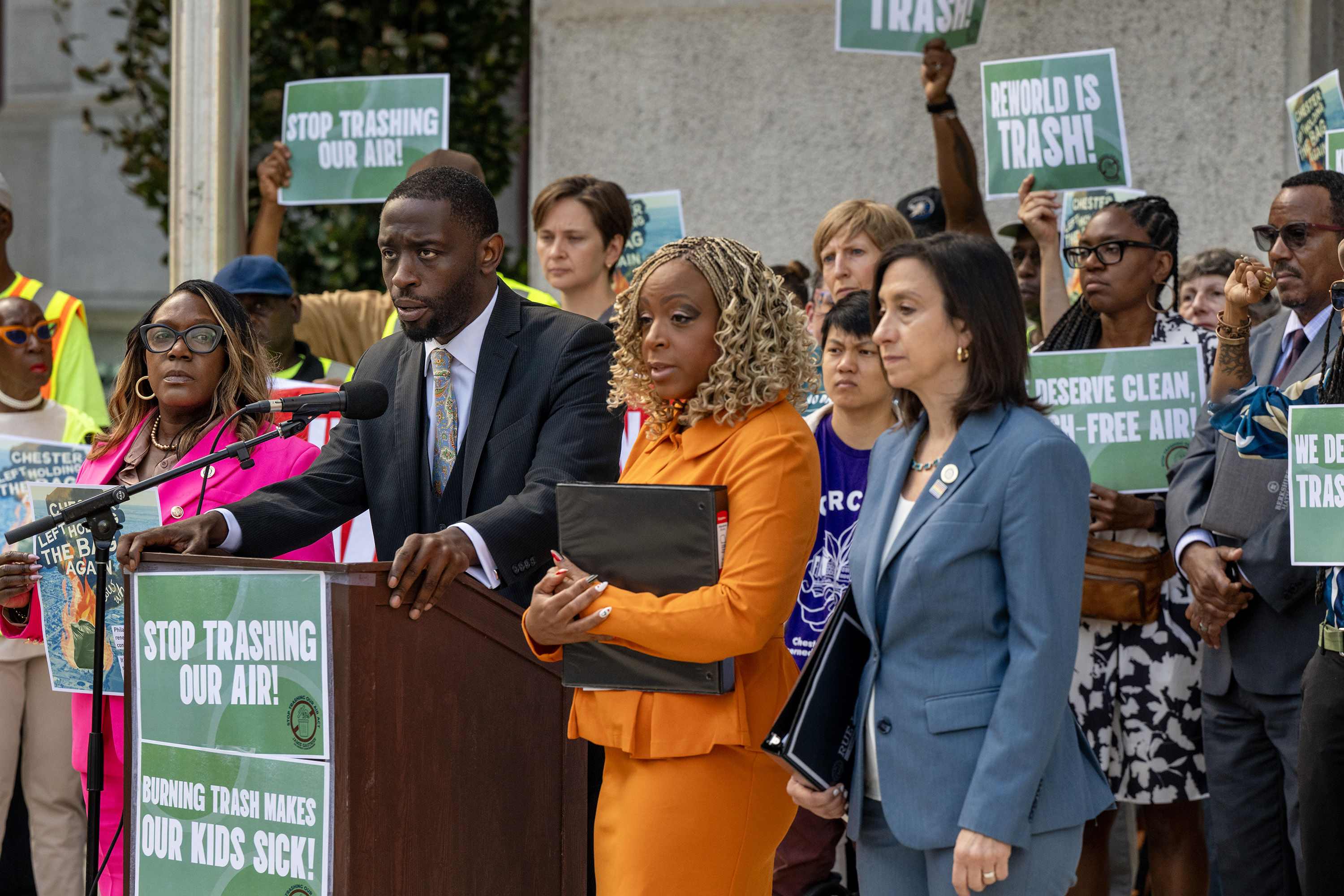
    Squilla’s proposal, which he drafted with input from Parker’s administration, is something of an alternative for lawmakers to consider as Councilmember Jamie Gauthier has for months pushed for a more aggressive approach to stop the city from incinerating trash this year.

    Both lawmakers hosted news conferences this week alongside their allies to rally support for their cause, part of a long list of events Council members hosted as the legislative body returned Thursday for its first meeting of the fall session.
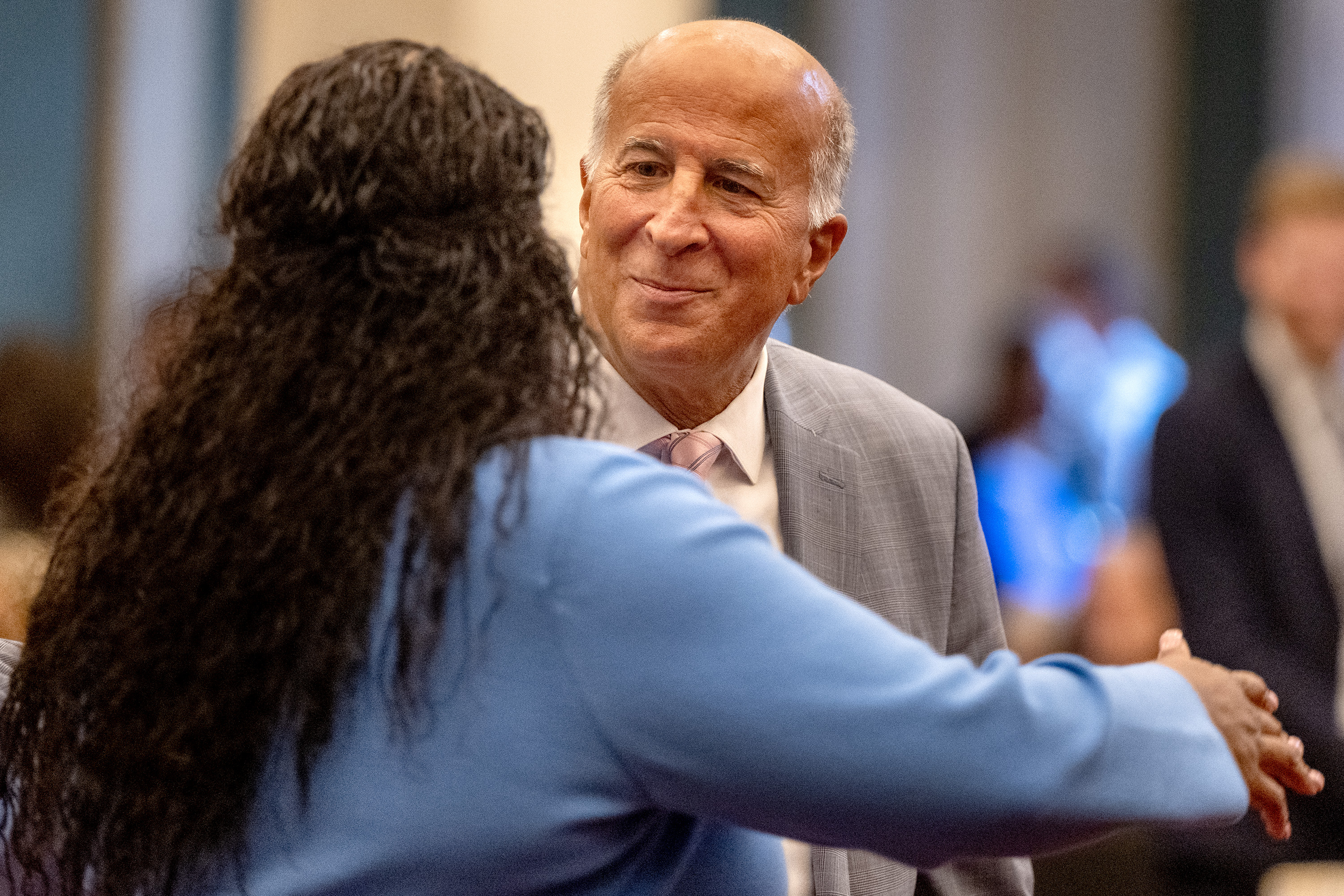
    Councilmembers Mark Squilla and Katherine Gilmore Richardson (back to camera) greet each other as City Council convenes for its fall session Thursday, Sept. 17, 2026.Tom Gralish / Staff Photographer

    The first meeting after the summer break typically has a jovial, first-day-of-school feel. But the mood briefly shifted Thursday when City Hall was evacuated and Council abruptly adjourned after a suspicious package was found on the floor where Council was meeting.

    Police cleared the package, and Council resumed its business Thursday afternoon.

    Here’s what else happened this week:

    What was this week’s highlight?

    Incinerator issue heats up: Gauthier has for months sought to pass legislation that would ban the city from continuing its long-term practice of sending about a third of its garbage to a trash incinerator in Chester, about 15 miles south of the city. She argues that incineration is bad for the environment and harms Chester residents’ health.

    Parker’s administration opposed the legislation, called the Stop Trashing Our Air Act, and Gauthier in the spring failed to gain enough support for it in Council.

    Now, Gauthier is trying to block the Parker administration from renewing its contract with Reworld, the incineration facility. The administration needs Council approval to enter into a new four-year contract with the firm.

    Gauthier has several members on her side, including three fellow progressive lawmakers, as well as Councilmember Isaiah Thomas, who is the Democratic majority whip.
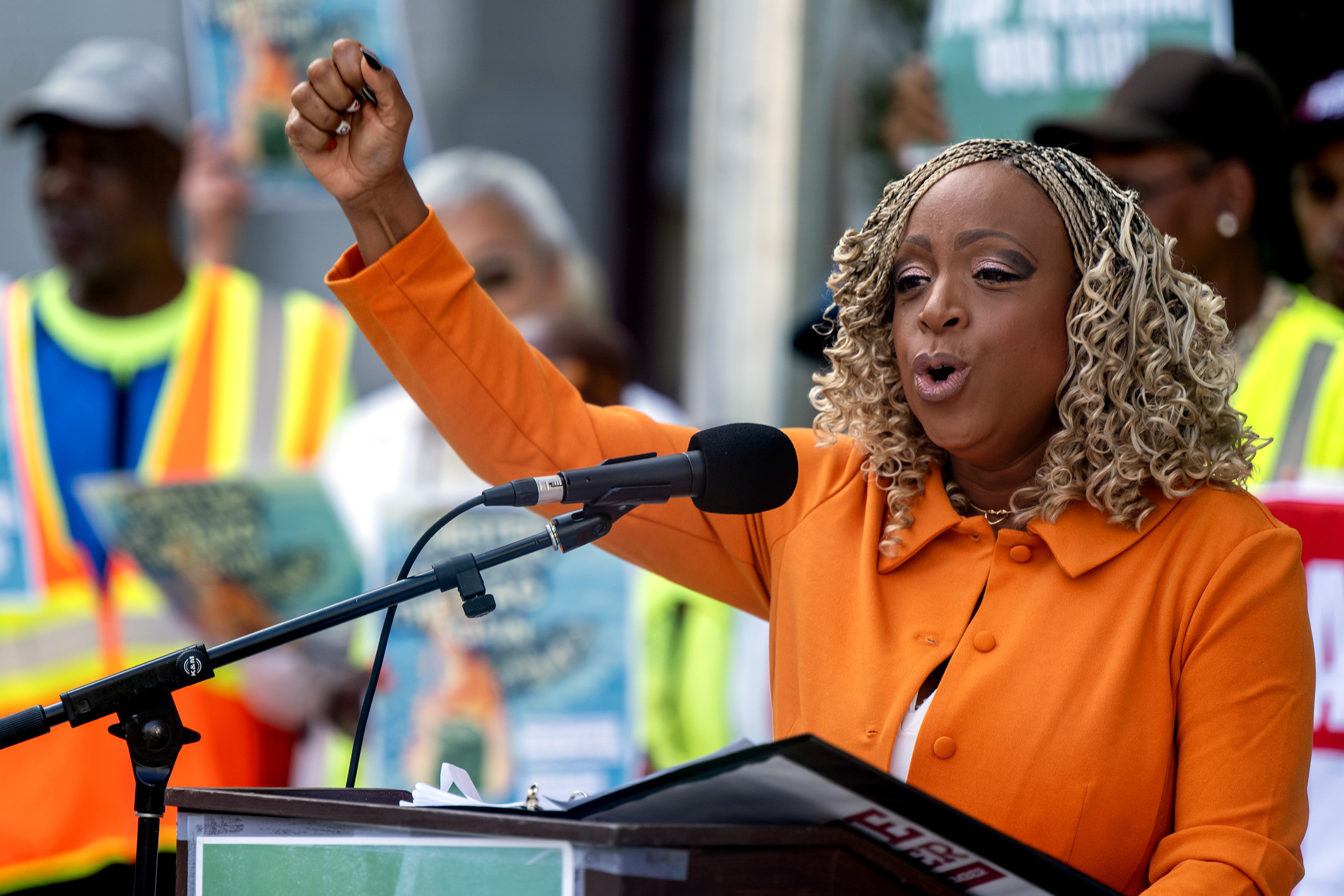
    City Councilmember Jamie Gauthier speaks at a rally outside City Hall early Thursday morning Sept. 17, 2026 where protesters called on Council to reject Mayor Cherelle L. Parker’s waste disposal contracts. A coalition of elected officials, health and climate experts, and advocates from Philadelphia and Chester gathered to oppose the city’s sending its trash to an incinerator in Chester.Tom Gralish / Staff Photographer

    Squilla’s proposal in some ways offers members an off-ramp. His bill calls for a “circular waste” system that includes new techniques for waste disposal, such as composting and “anaerobic digestion,” a process that breaks down organic waste.

    Managing Director Carlton Williams said Wednesday during a news conference with Squilla that the city is looking to build out an anaerobic digestion system within four years.

    Squilla said that while the administration is already working toward a more modern waste disposal system, passing a law would “codify what we had as plans and resolutions before.”

    Gauthier said that she supports Squilla’s goal of moving toward a more sustainable system, but that his legislation “is a plan to create a longer-range plan.”

    “It in no way changes the decision in front of Council,” she said. “We can move away from this practice right now.”

    What else happened this week?

    Severing the law department: The city law department serves as legal counsel for both the mayor’s administration and Council, a dynamic that can sometimes cause friction when the city’s elected officials disagree.

    Council on Thursday approved a resolution by Thomas to hold a hearing “to consider the separation of the [law] department’s functions between the administration and City Council.”

    The department is led by City Solicitor Monique Galloway, whom Parker appointed to the role in July.

    Thomas has clashed with Parker’s administration, and he said he became interested in looking at the department’s structure due to concerns that Council was not receiving independent legal advice on some issues.
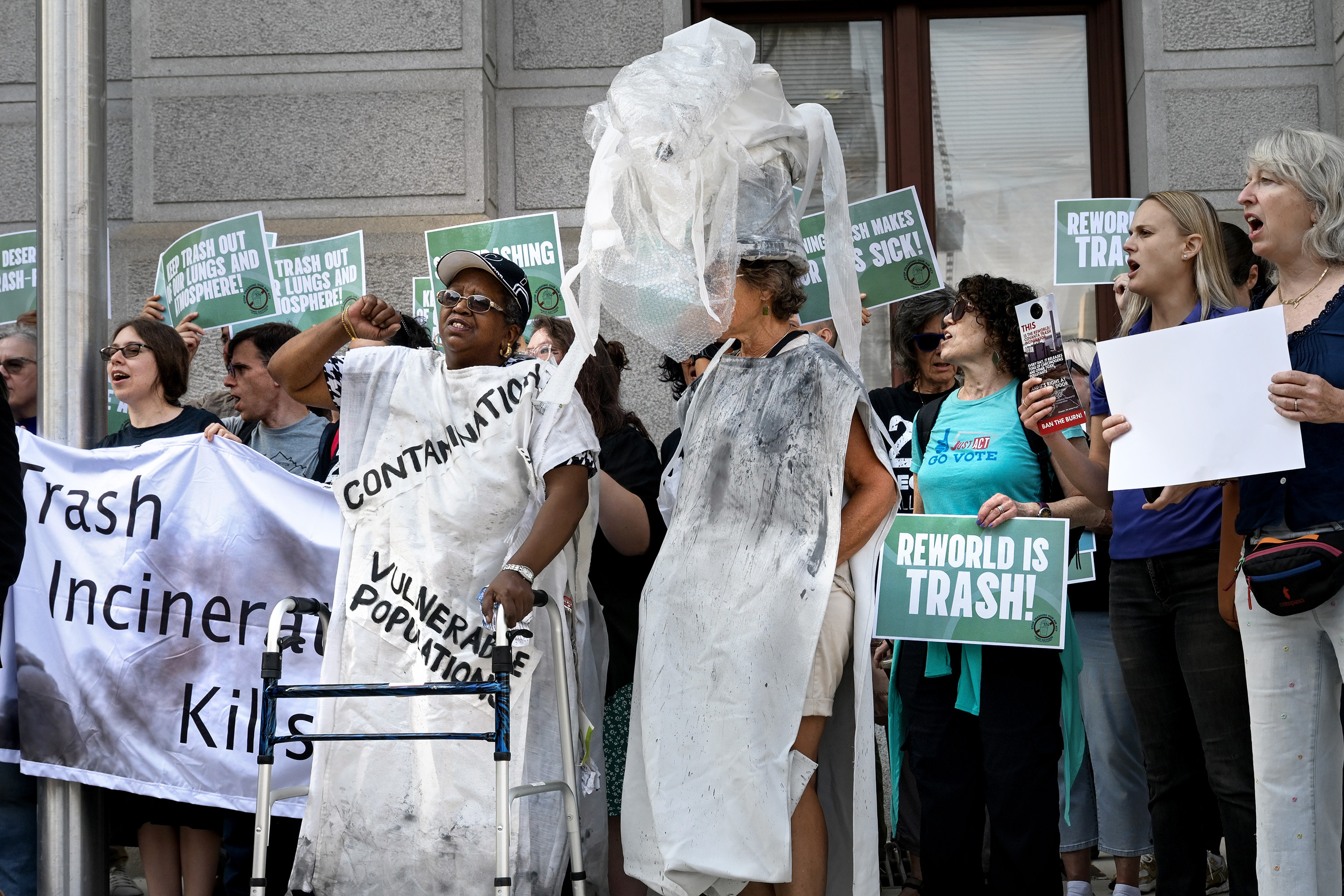
    Lois Williams (left), dressed as a “sick person,” and Shari Hersh (right) in costume as a “smokestack,” join a rally outside City Hall early Thursday to call on City Council to reject Mayor Cherelle L. Parker’s waste disposal contracts.Tom Gralish / Staff Photographer

    He pointed to the Philadelphia School District’s controversial facilities plan, which involves the closure of 17 school buildings and was adopted by the school board in April over the objections of many Council members.

    And he said recent legal proceedings around the city’s business income and receipts tax were “part of the motivation” to hold a hearing on the law department.

    In 2025, after a Massachusetts company sued the city seeking to overturn a popular tax break program that primarily helped small businesses, the law department said it had determined the lawsuit was likely to succeed. The Parker administration eventually settled the case and persuaded Council to eliminate the tax break. Some Council members at the time complained that the city did not defend the tax break more vigorously.

    The department already silos off some of the work it does on behalf of Council from the rest of the administration, such as when it drafts bills proposed by lawmakers. Council also may hire outside legal counsel, but must pay for those services out of its own budget.

    A law department spokesperson did not immediately respond to a request for comment.

    Storage wars: Councilmember Mike Driscoll introduced legislation on Thursday that would ban new self-storage facilities from his district in lower Northeast Philadelphia.

    The storage industry boomed during the COVID-19 pandemic, as consumer spending shifted from services to goods, many families struggled to afford larger homes, and low interest rates juiced development.

    Northeast Philadelphia saw a particularly large boom in self-storage buildings because of its rich supply of properties zoned for industrial development. Driscoll said that advocates in the Tacony neighborhood felt their community had become oversaturated.

    “They want more affordable housing and [self-storage units] are taking valuable sites for that,” Driscoll said.

    ExtraSpace self-storage at Washington Avenue and S. 23rd Street, Philadelphia, Monday, November 4, 2024.Alejandro A. Alvarez / Staff Photographer

    Self-storage facilities are gold mines for developers. They suffer little wear and tear, they have few utility costs, and labor costs are low after construction.

    According to online industry search portal StorageCafe, Philadelphia has 89 self-storage sites containing more than seven million square feet of space. About a third of that has been built since 2019.

    Other municipalities have moved to limit the spread of self-storage facilities in recent years. New York City banned them from industrial areas to preserve jobs, and Denver blocked them from properties close to light rail lines. Providence, R.I., in 2023 banned new facilities from the city altogether.

    Driscoll said that he may further limit his legislation to the Tacony neighborhood.

    “I don’t want to hurt another part of my district that maybe wants these things,” he said.

    Embracing affordability: Multiple members of City Council said this week that tackling affordability is their primary objective this fall, including Councilmember Nicolas O’Rourke, whose office published a lengthy report outlining dozens of proposals aimed at reducing costs.

    Some may be more realistic short-term goals than others.

    The report, which was drafted by a Cost of Living Task Force made up of community advocates and industry leaders, recommended the city explore everything from opening municipal grocery stores to creating a local Medicaid supplement program.
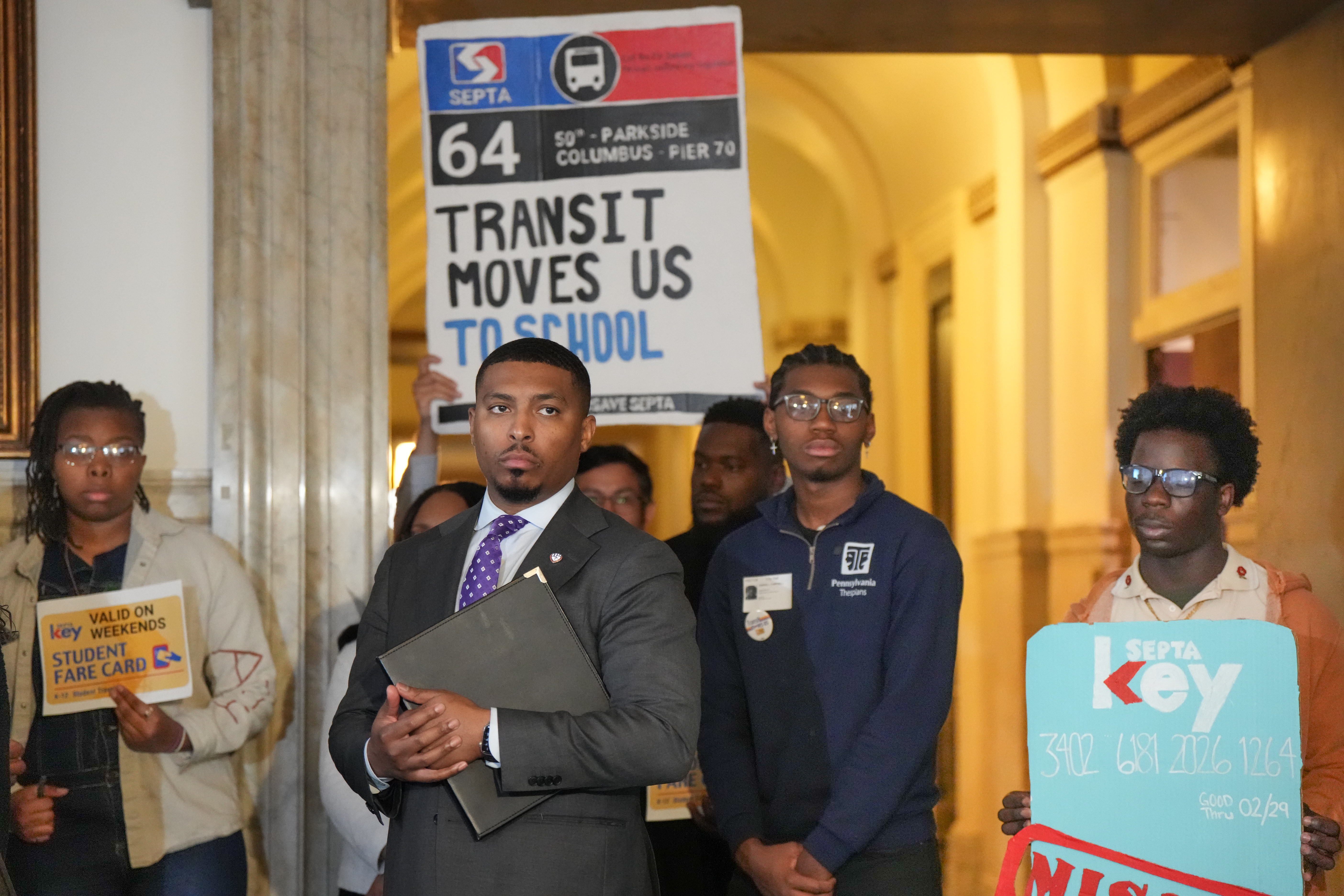
    Councilmember Nicholas O’Rourke with students and activists during a press conference about SEPTA in April.Jessica Griffin / Staff Photographer

    It also recommends restructuring existing housing programs to more aggressively target the poorest residents, and establishing a Transit Access Fund that would fund free or reduced-fare transit passes for low-income households.

    O’Rourke, a member of the progressive Working Families Party, plans to hold a committee hearing on the task force report this fall.

    Council President Kenyatta Johnson will also introduce an affordability measure this fall. He plans to bring forward legislation that would establish a permanent Food and Nutrition Security Coordination Office, he said in a statement.

    Quote of the week
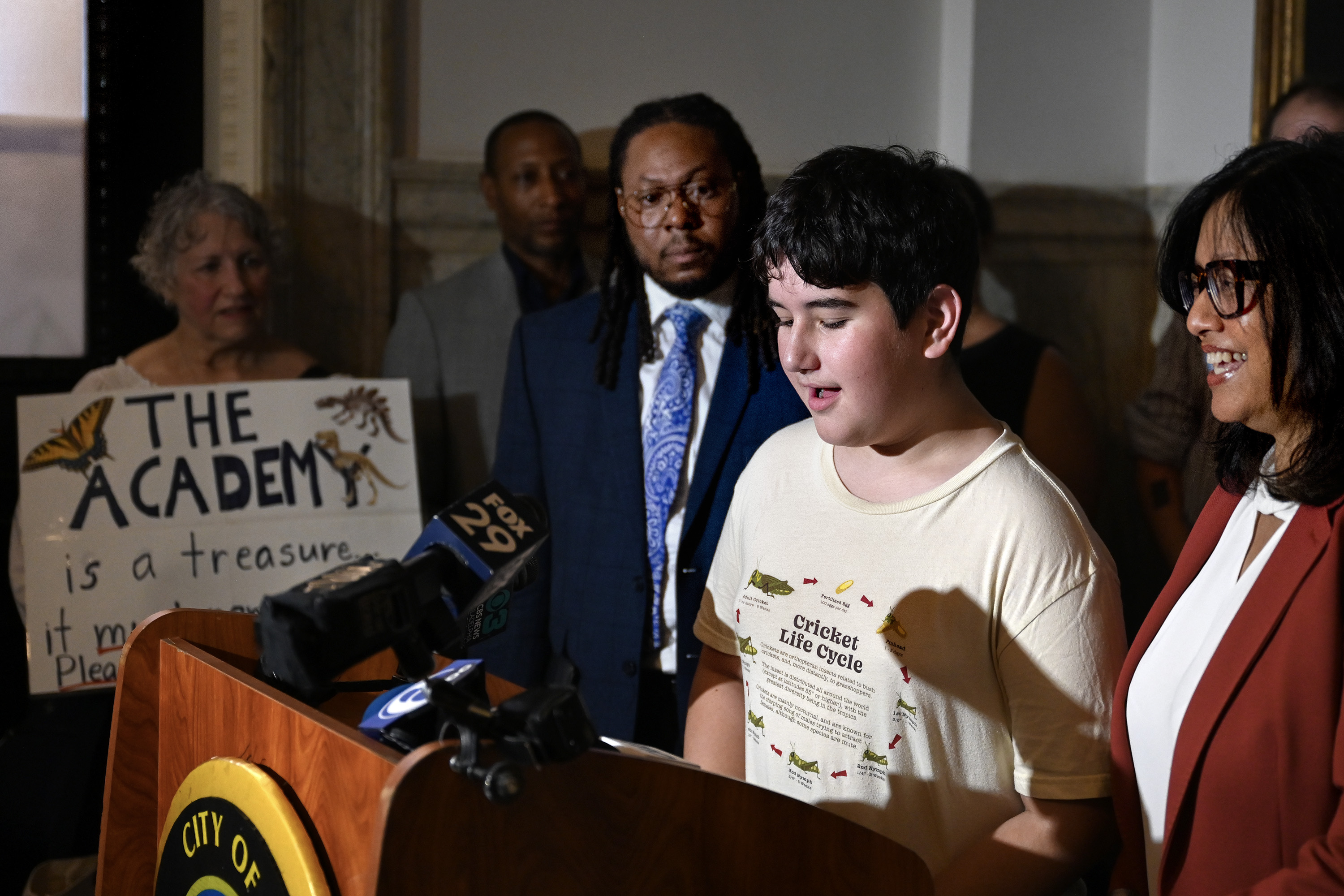
    Jeffery Young, Jr. (left) with twelve year-old Jack Erfer of Wynnewood and councilmembers and Nina Ahmad (right) in supporting the Academy of Natural Sciences of Drexel University before City Council resumes for its fall session Thursday.Tom Gralish / Staff Photographer

    No bones about it: That was Councilmember Jeffery Young Jr., who called for hearings on the planned closure of the Academy of Natural Sciences.
  • Mayor Parker has ordered a task force to study data centers in Philly and report back by June

    Mayor Parker has ordered a task force to study data centers in Philly and report back by June

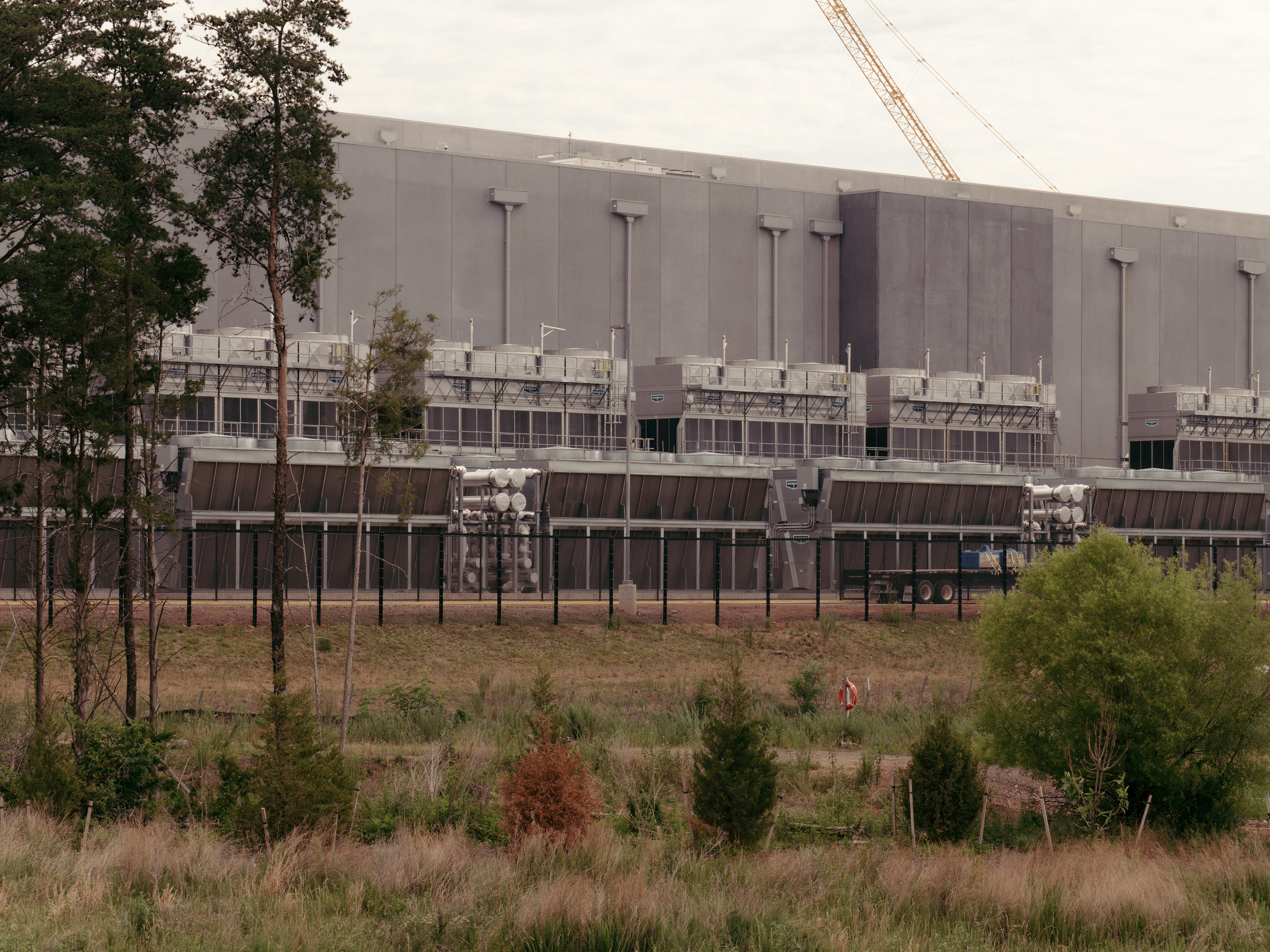
    Philadelphia Mayor Cherelle L. Parker on Wednesday ordered a task force largely composed of members of her administration to explore whether the city should place new regulations on the construction of data centers — and to present her with its findings in about nine months.

    The mayor, a Democrat who has not staked a position on whether Philadelphia should host the controversial “hyperscale” data centers that power artificial intelligence, signed an executive order establishing the task force on Wednesday.

    In a video message posted to social media, the mayor said the issue is of “grave importance.” She said she has heard from residents who are concerned that a large data center in the city could hike utility bills and drive pollution.

    “This does not mean that a hyperscale data center is being built now; however, if a firm was to apply to the City of Philadelphia to build one of these hyperscale data centers, we want to make sure that we are fully prepared to know what the impact on Philadelphians would be,” Parker said. “We want the appropriate guardrails in place so that we do everything possible to protect our city.”

    The task force will be made up of members of Parker’s administration, as well as a representative from City Council President Kenyatta Johnson’s office. The group is charged with gathering information from neighborhood groups, unions that represent construction workers, environmental advocates, public health experts, and others.

    According to the executive order, the task force must present a final report to the mayor by June 30.

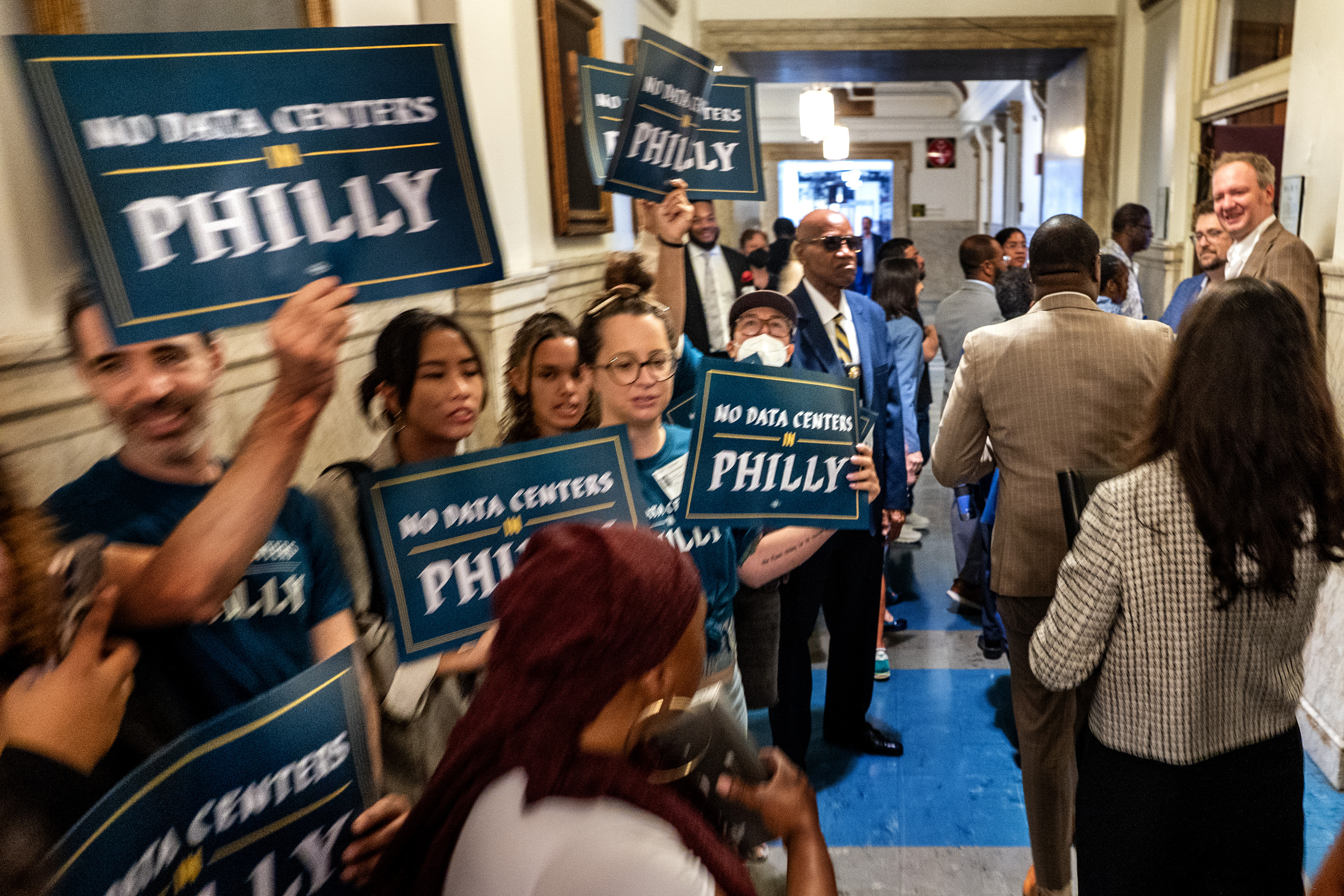
    The mayor’s move came just two days after dozens of activists held a rally outside City Hall calling on Parker and members of Council to pass a multiyear moratorium on the construction of data centers in Philadelphia. They vowed to make data centers an electoral issue ahead of the May primary election, when the mayor and every Council member will be on the ballot.

    The group, called No Data Centers in Philly, said in a statement Wednesday that Parker giving the task force until June to make its recommendations is too little, too late, and that “a task force does nothing to protect us now and takes time that we don’t have.”

    “Across the country, data centers have relied on dirty deals to get built, with NDAs, backroom negotiations, and massive tax handouts,” the statement read. “We can’t let that happen here. The communities who will see their health, homes, and wallets hurt by a data center need to be at the table.”

    President Kenyatta Johnson (right) is greeted by data center protesters in the hall while he heads toward City Council chambers Thursday, Sept. 17, 2026, as the body returns for start of its fall session.Tom Gralish / Staff Photographer

    Parker’s order also comes as talks of regulating artificial intelligence have gripped Washington after a handful of tech executives called for a global slowdown on the advancing technology. There has been bipartisan backlash across the country to the data centers that power AI; however, President Donald Trump has said the industry does not need new regulations.

    Last month, Gov. Josh Shapiro signed an executive order that effectively placed limits on data center construction in the state and required that the projects receive local backing before obtaining a state permit. It would also ban state agencies from using nondisclosure agreements.

    In Philadelphia, no member of City Council has said publicly that they would introduce legislation to place a moratorium on data center construction. Lawmakers are not currently considering any specific proposal to construct a data center.

    This summer, the city’s planning commission issued a report indicating that there are just two plots of land in Philadelphia that could accommodate a hyperscale data center: the former South Philly refinery site known as the Bellwether District and 2600 Grant Ave., a city-owned plot adjacent to Northeast Philadelphia Airport.

    However, building a data center in either of those locations would face hurdles.

    District Council members wield enormous power over land-use decisions in their districts, and the Council members who represent the two potential locations said they oppose a hyperscale data center in their jurisdictions.

    City Councilmember Mike Driscoll, a Democrat who represents the district where the Grant Avenue site is located, said in an interview Thursday that he “is a no, until we really figure this whole thing out.” He said he is concerned that a data center could drive higher utility bills for his constituents.

    “I think we have to participate to be competitive in the global economy,” he said. “But it’s ripe for some problems, and I think we have to sort that out at the federal level.”

    And Council President Kenyatta Johnson, who represents the area where the Bellwether district is located, said Thursday: “We don’t support any type of hyperscale data centers.” He cited concerns about environmental impacts and noise.

    “I haven’t gotten to the point that it should be a moratorium,” Johnson said. “But we are looking at regulations.”

    Bellwether district leaders have said no data center is currently in the works there.

    Mia Fioravanti, senior vice president of corporate affairs for the HRP Group/The Bellwether District, said earlier this week at the Economy League of Greater Philadelphia PAGE Real Estate and Construction Summit that there are no “data center users in our current project pipeline.”

  • Philly City Hall was evacuated for a bomb squad investigation, but no explosive device was found

    Philly City Hall was evacuated for a bomb squad investigation, but no explosive device was found

    Philadelphia City Hall was evacuated and City Council was abruptly adjourned on Thursday after sheriff’s deputies alerted officials to a suspicious package in Council, Council President Kenyatta Johnson said.

    Johnson told The Inquirer about 11:45 a.m. that sheriff’s deputies were investigating a package found on the floor where Council members were holding their first meeting of the fall session. A bomb squad was called, and dogs signaled an alert on the package, he said.

    Police said the package was examined and determined not to contain a device, and the scene was cleared. No injuries were reported.

    All 17 Council members, their staffers, journalists, and members of the public were evacuated from the building. Managing Director Carlton Williams said that Mayor Cherelle L. Parker was safe and that she was not in the building when the package was discovered.

    People who evacuated were permitted to reenter City Hall shortly before 1 p.m. Council reconvened shortly after, according to Vincent Thompson, a spokesperson for Johnson.

    Deputy Police Commissioner Frank Vanore told reporters at the scene that no one was charged in connection with the incident.

    Vanore said two police dogs alerted officers to something suspicious in the bag, but he said it is possible nothing nefarious occurred. The bag, he said, could have had residue from a firearm or fireworks that had been in it within the last several days.

    As chambers were being evacuated, officers detained and removed a government employee. The employee spoke to a reporter while in handcuffs.

    He said he believed it was his package that was at the center of the ordeal.

    “I think it’s my bag that I left on the chair,” he said.

    He said it was not a bomb.

    Outside City Hall, members of Council and government employees milled about, many calmly speculating on the origin of the threat or lack thereof.

    Councilmember Jim Harrity, a Democrat known as one of the chamber’s more colorful members, said plainly: “Hopefully it turns out to be not a bomb, but something else.”

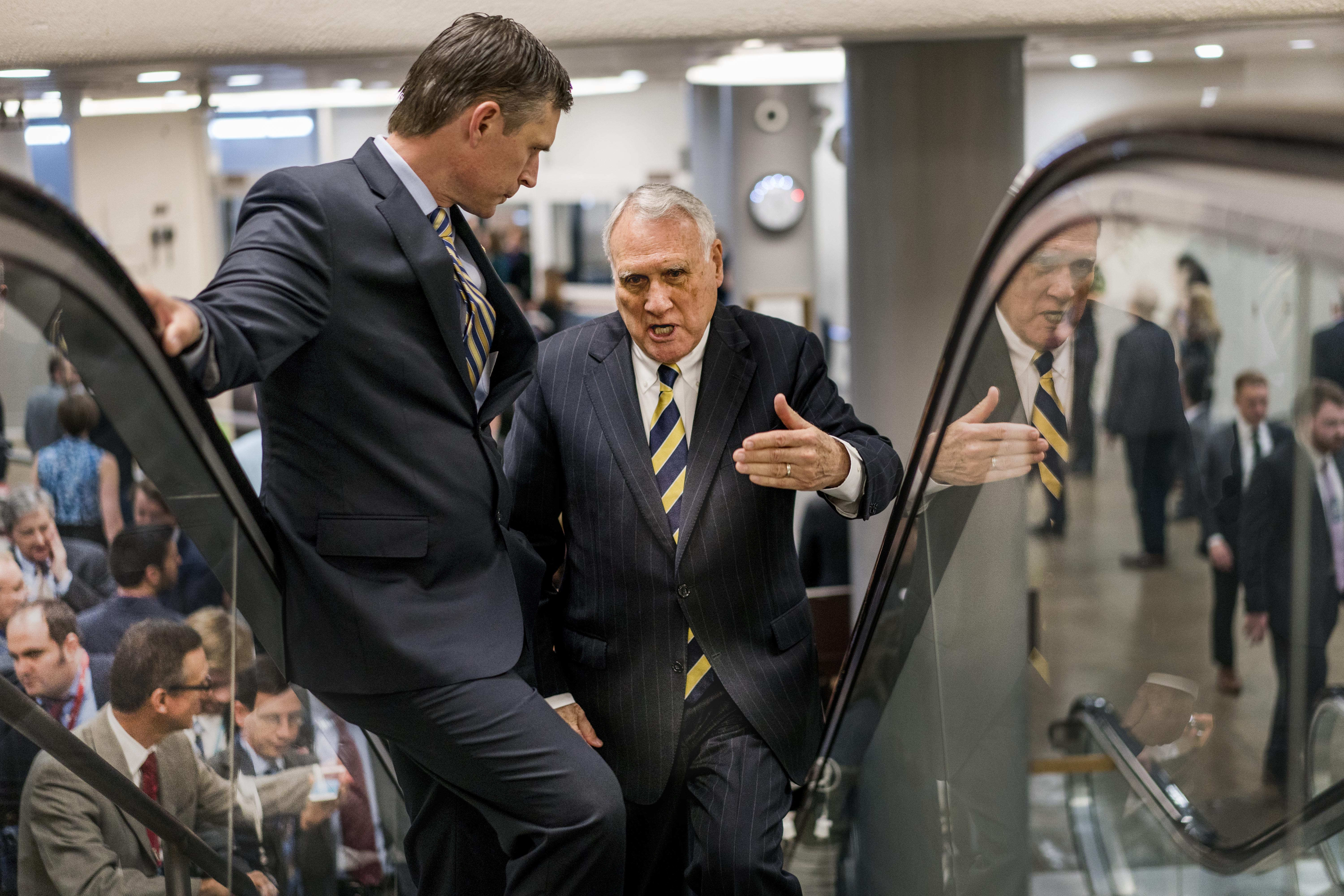
  • Jon Kyl, a former top Republican in the Senate, dies at 84

    Jon Kyl, a former top Republican in the Senate, dies at 84

    Former senator Jon Kyl, who served in Congress for nearly 30 years and rose through the ranks of GOP leadership to become the Senate’s No. 2 Republican, has died at the age of 84, his family said Thursday.

    Mr. Kyl’s passing comes nearly nine months after he announced he had been diagnosed with dementia and would be withdrawing from public life. In a statement to local news outlets, his family said Mr. Kyl had passed due to “complications from a neurological disease.”

    “We know that Jon belonged to all of Arizona, a state he loved and explored with vigor, curiosity, and wonder,” his family said. “Serving his state and nation in Congress was a privilege and responsibility he honored and respected.”

    Mr. Kyl served in the House from 1987 to 1995 and in the Senate from 1995 to 2013. He served as the Senate minority whip before he left public office in 2013 and became a lobbyist.

    After the death of former Arizona senator John McCain in 2018, then-governor Doug Ducey appointed Mr. Kyl to serve out the rest of McCain’s term. Mr. Kyl returned somewhat reluctantly, out of a sense of duty, and was instrumental in guiding Supreme Court nominee Brett M. Kavanaugh through the confirmation process.

    This is a developing story and will be updated.

  • House passes bill taking aim at data center electricity costs

    House passes bill taking aim at data center electricity costs

    WASHINGTON — The House on Wednesday overwhelmingly passed a bipartisan bill that encourages state utility regulators to insulate consumers from rising energy costs tied to data centers, as members of Congress rush to address a voter outcry over the rapid advance of artificial intelligence.

    It was unclear whether the legislation, introduced by Reps. Gabe Evans, R-Colo., and Kathy Castor, D-Fla., would have its intended effect. The bill would direct state utility regulators to consider adopting federal rules requiring data centers to cover any higher costs associated with their large-scale power use. But under current law, Congress cannot force state regulators to follow federal standards when they are setting electricity rates.

    Still, as the boom in data center construction has become a potent issue in November’s midterm elections, lawmakers in both parties have been eager to have a legislative achievement that they could cite on the campaign trail. It would still have to pass the Senate and be signed by President Donald Trump before it could become law.

    Across the country, Americans in both parties are concerned about rising electricity prices and water use. Data centers, the large complexes of servers that are crucial to powering AI development, have become the most visible avatar of voters’ fears over the growth of AI and the power of big tech companies.

    That issue took on new political urgency this week, after concerns over the safety of AI emerged into wider view and key tech leaders began calling for a slowdown in the pace of development.

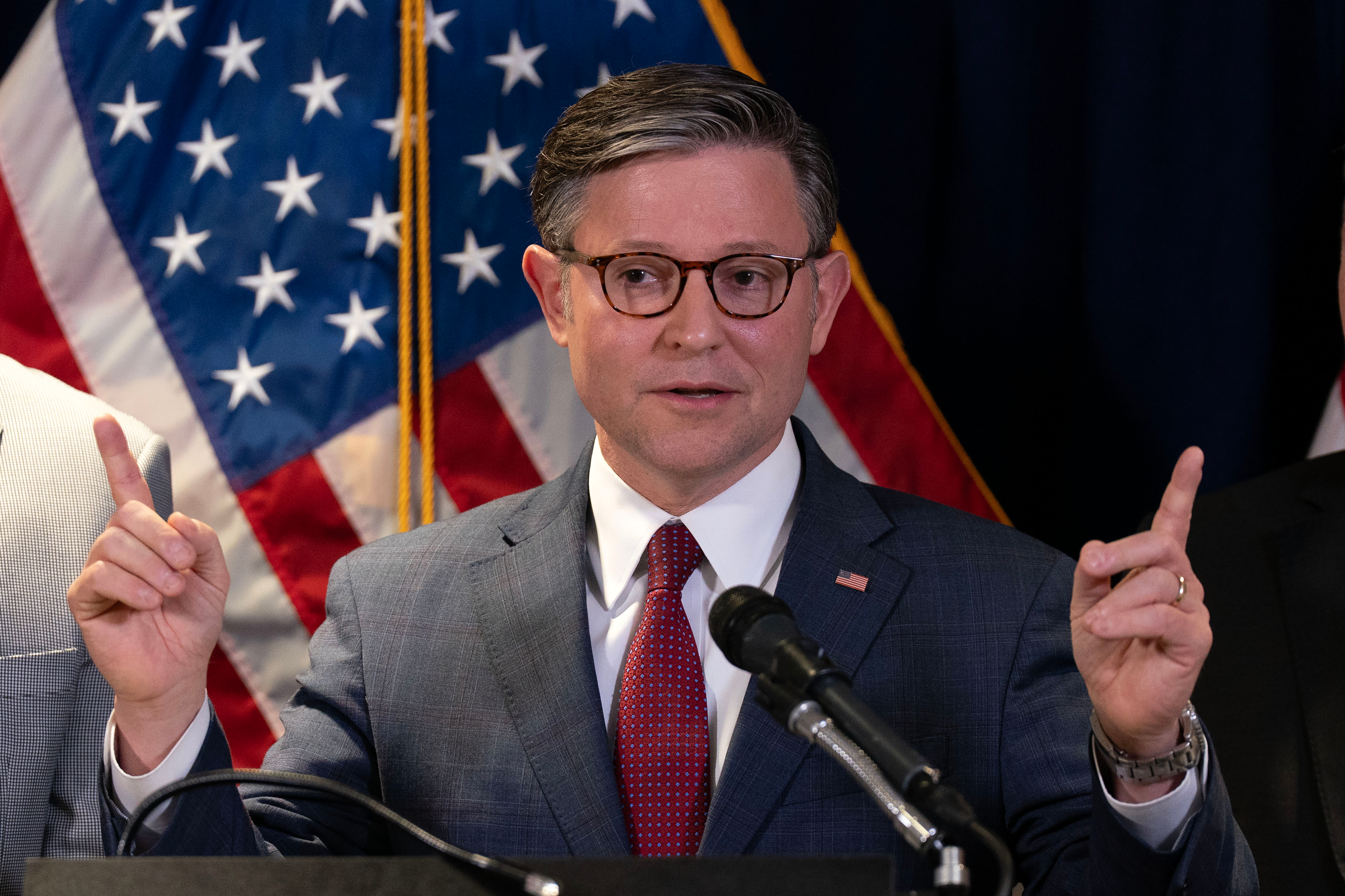
    Lawmakers in both parties have called on Congress to impose guardrails on AI, though there is no clear bipartisan consensus on how to do so, and Trump has rejected calls for regulation. Speaker Mike Johnson said Tuesday that he and the president would convene a meeting with AI executives at the White House next week.

    When asked about their plans to address the issue, some House Republicans pointed to the utility legislation, which does not address AI safety concerns. The measure mirrors a voluntary pledge that tech executives made at the White House this year, when they promised to shoulder a larger share of the energy costs associated with data centers.

    “It makes sure that the ratepayers are protected as you’re building out AI infrastructure,” said Rep. Steve Scalise of Louisiana, the No. 2 Republican. “That it’s got to be supported by the local community, and that it’s not going to adversely impact ratepayers.”

    Wednesday’s vote, 417-3, reflected the increasingly bipartisan nature of the data center backlash and a growing concern among Republicans that they are particularly vulnerable on the issue after their signature domestic policy bill included tax breaks that benefited developers of data centers. It also marked a turnabout from just a year ago, when almost all House Republicans backed a version of that measure that put a moratorium on any state regulation of AI, though the provision was later stripped by the Senate.

    With the House leaving town Wednesday until after Election Day, this week was lawmakers’ last chance to pass a bill showing they were responsive to voters’ concerns about data centers.

    Evans, who introduced the utility bill, is among the most politically vulnerable Republicans in the House. It is unclear whether the Senate will take up the legislation before October, when it is scheduled to recess until after November’s elections. Its version of the bill was put forward by Sen. Jon Husted, R-Ohio, who is in a competitive race in which Democrats have sought to make data centers a central issue.

    A poll conducted this month by The New York Times and Siena University found that 61% of voters said they opposed the construction of data centers and were about split on which party was better positioned to address it, with a considerable bloc saying they did not know which side to trust.

    When Republicans last year passed their sweeping tax and spending cut bill, they expanded significant tax advantages for businesses for research costs and new investments. They also adjusted a tax break program meant to encourage development in poorer areas so that it would incentivize more development in rural areas.

    Democrats have argued that those provisions have helped technology companies looking to build new data centers, and they have accused Republicans of being indifferent to voters’ worries that such construction is raising their electricity costs and changing their neighborhoods.

    “Unfortunately, these very real concerns are repeatedly swept to the sidelines, minimized or ridiculed by President Trump and Republican congressional leaders,” said Rep. Frank Pallone Jr., D-N.J.

    Some Republicans have argued that regulations on AI would hinder America’s ability to stay ahead of China in developing the technology. On the House floor, Evans presented his bill as a way to allow for data center development while ensuring that states had a mechanism to address implications for communities.

    The bill, he said, “keeps costs low for Americans and helps us build the energy backbone required to compete and win in the AI race.”

    This article originally appeared in The New York Times.

  • Philly’s political parties can now spend unlimited amounts in coordination with their candidates

    Philly’s political parties can now spend unlimited amounts in coordination with their candidates

    Political parties in Philadelphia can now spend unlimited amounts of money in coordination with their chosen candidates, according to a new board of ethics policy approved Wednesday.

    The policy, which was prompted by a recent U.S. Supreme Court decision, has the potential to dramatically increase the power of parties in Philly politics.

    For instance, in next year’s city elections — when Mayor Cherelle L. Parker and all 17 City Council members will be up for reelection — the candidates endorsed by the Democratic City Committee could be able to access major financial advantages over their Democratic primary rivals, if the party chooses to coordinate with them.

    Candidates are still bound by the city’s strict campaign finance rules limiting the size of donations to their campaigns — no more than $3,700 per year for individual donors, and $14,800 for organizations — and prohibiting them from coordinating with independent expenditure committees, or outside groups that spend money on candidates’ behalf.

    But endorsed candidates will now be the only primary contenders allowed to coordinate with a group that has no restrictions on how much money it can collect: the party. The candidates, for instance, will be able to work with the party on messaging strategy, the timing of TV ads, and where to deploy door-knocking canvassers.

    While the policy does not allow donors to require that parties spend their money on particular candidates, endorsed politicians with deep-pocketed backers can encourage donors to contribute to the party, with the understanding that the party will ultimately decide how the money is spent.

    The Philadelphia Council members inside the caucus inside City Hall in Philadelphia, Pa on Thursday, June 11, 2026.Aidan T. Gallo / Staff Photographer

    The impact of the new policy will depend on how aggressively candidates, parties, and donors seek to take advantage of it. But it has the potential to steer power in some elections back toward the city’s Democratic establishment after a period in which labor unions, special interest groups, and progressive super PACs have become increasingly influential.

    “This Supreme Court ruling is going to have the effect of shifting power back to political parties and away from independent expenditures in a lot of ways,” said Philadelphia elections lawyer Adam Bonin.

    In National Republican Senatorial Committee v. Federal Election Commission, the Supreme Court in June overturned limits on how much money parties could spend in coordination with candidates, citing parties’ free speech rights. The 6-3 decision, with the conservative justices in the majority, was widely seen as the latest in a series of cases that have demolished longstanding rules around money in politics.

    But the NRSC case centered on a law related to general elections for federal office, and it was not initially clear whether the Philadelphia Board of Ethics would determine the ruling applied to local elections and to primaries.

    The board, in a 4-0 vote with member Nelson Diaz absent, approved a policy that answered both of those questions affirmatively, meaning local political parties are now able to coordinate with their chosen candidates in primaries.

    In deep-blue Philadelphia, where Democrats hold a 7-1 voter registration advantage over Republicans, the party’s primary contests usually determine the outcomes of elections.

    In next year’s elections, progressives are hoping to make gains in Council, and Parker is aiming to secure a second four-year term. So far, Parker has attracted one announced Democratic primary challenger, former city official Shania Bennett. No Philadelphia mayor has lost reelection since the Home Rule Charter was adopted in 1951.

    The new policy holds that the party can only coordinate with its nominees in general and special elections. In primaries, the ethics board will allow the parties to set their own rules for determining their preferred candidates that they can coordinate with. The Democratic City Committee determines its endorsements by holding a vote among its ward leaders.

    The policy, meant to clarify the city’s rules in advance of next year’s municipal elections, is temporary. The full details of the new rules will be fleshed out in regulations the board will tackle in the coming months.

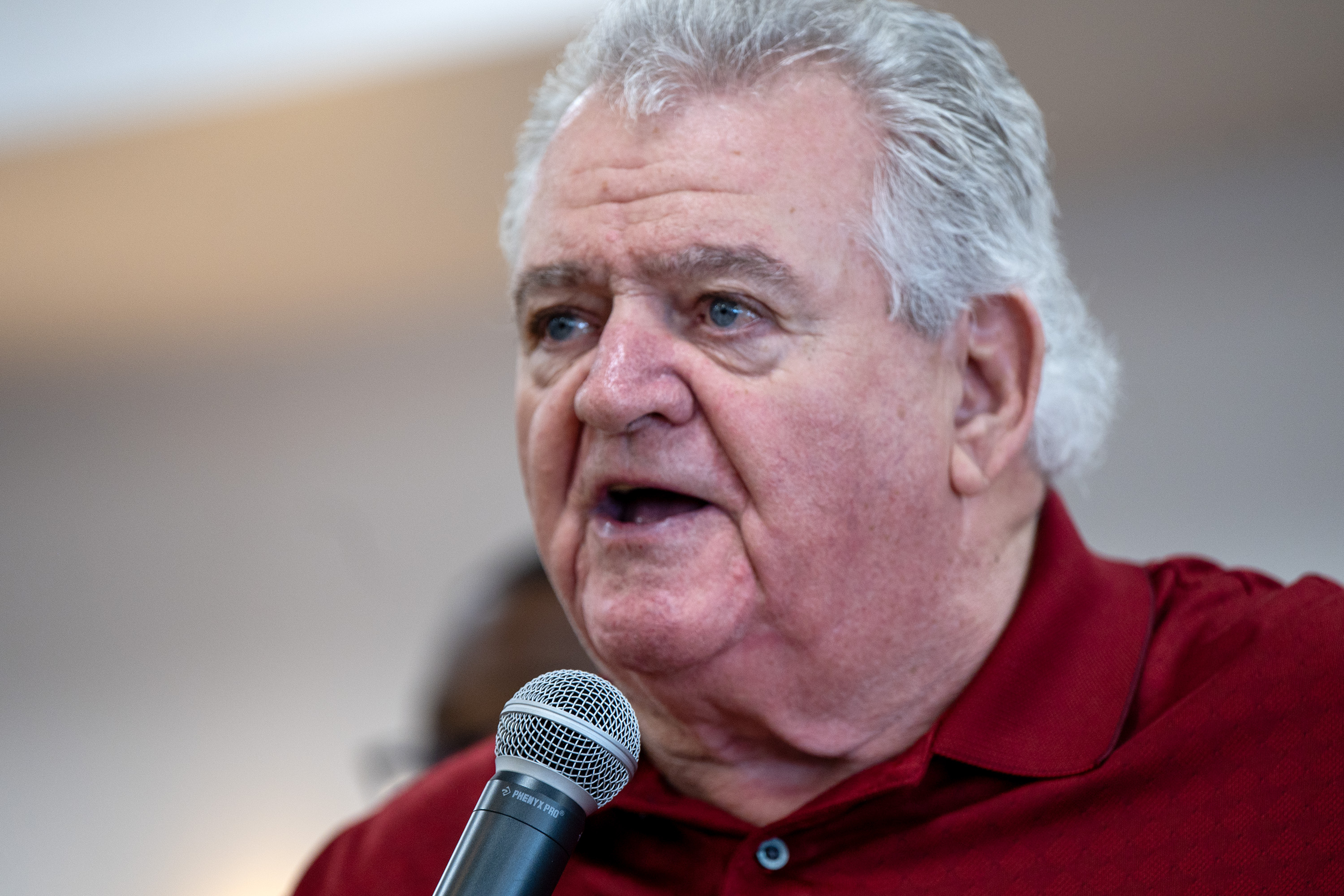
    Philadelphia Democratic Party Chairman Bob Brady on May 18, 2026.Tom Gralish / Staff Photographer

    Democratic City Committee Chairman Bob Brady said the party was “still reviewing the new guidelines.”

    “Protecting constitutional rights remains a priority of the Democratic Party, especially the right to participate in our democratic process,” Brady said in a statement. “We will continue the work to ensure that the final implementation of these policies and laws will right the wrongs that have too long infringed on First Amendment rights.”

    To be sure, there are significant roadblocks for candidates hoping to benefit from the new policy. In crowded primaries, for instance, the Democratic City Committee often declines to endorse when a majority of ward leaders fail to coalesce around one candidate. And the candidates and parties would have to find donors willing to give large sums knowing that they cannot control how the money will be spent.

    Additionally, Bonin said, the new policy may still be more restrictive than what the Supreme Court decision appears to have envisioned because the board is seeking to maintain many of the city’s existing campaign finance rules.

    “They are doing it in a way in which, initially, it seems they’re trying to change their rules as little as possible, while still recognizing they need to act,” he said.

    The policy could also have an impact on elections for the two seats on Council that are set aside for minority-party or independent candidates. Republicans held those seats for about 70 years before Councilmembers Kendra Brooks and Nicolas O’Rourke of the progressive Working Families Party won them in the last two election cycles.

    City Council candidates Kendra Brooks and Nicolas O’Rourke celebrate after the Working Families Party declared victory at their election night gathering at Roar Nightclub in Philadelphia, Pa. on Tuesday, Nov. 7, 2023.Monica Herndon / Staff Photographer

    Before Wednesday, it appeared possible the ruling could create an uneven playing field, with the Republican City Committee being allowed to coordinate with its nominees while the Working Families Party was unable to do so because it is not a major political party under state law.

    The language of the board’s approved policy, however, effectively gives the Working Families Party the same rights as the Democratic and Republican Parties because it fielded candidates in the most recent municipal election.

    Republican City Committee chairman Vince Fenerty celebrated the ethics board’s decision.

    “I’m very happy,” Fenerty said. “It will make our candidates be able to interact with other groups easily, and hopefully it will be a good day for the Republican Party of Philadelphia when we can have good funding to be victorious in some municipal elections.”

    A Working Families Party spokesperson said this summer that the party opposed the Supreme Court’s attacks on campaign finance law, but did not rule out the possibility of the progressive group taking advantage of any new policy.

  • Speaker Johnson recesses the House early as Rep. Thomas Massie pushes Hegseth impeachment

    Speaker Johnson recesses the House early as Rep. Thomas Massie pushes Hegseth impeachment

    WASHINGTON — Speaker Mike Johnson closed up the House early, sending lawmakers home Wednesday to campaign for the midterm elections after what he claims is the most productive Congress in decades.

    But not without a scathing rebuke from GOP Rep. Thomas Massie for all the unfinished business.

    Massie’s resolution to impeach Defense Secretary Pete Hegseth over the war in Iran and his bipartisan effort to force the release of more files in the Jeffrey Epstein investigation are all being left behind, blocked from votes.

    “We’re calling off Congress? And we’re in the majority?” Massie railed from the House floor.

    “I’m trying to get justice for the Epstein survivors,” he said. “I’m trying to stop a war.”

    Massie, the renegade Republican from Kentucky, seized control of the chamber for a blistering hourlong speech criticizing Johnson, the Republican majority, and the work he said the speaker is refusing to conduct to lower prices for Americans and hold the Trump administration accountable.

    “Why would we be canceling days when the country is burning?” Massie said. “We should stay here for every day that’s on the calendar and we should debate.”

    A fitting end to a tumultuous House session

    The afternoon showdown provided a colorful capstone to what has been a tumultuous two-year session of House Republicans in control by a bare majority, with Johnson routinely struggling to keep the place running.

    Despite the enormous tools of the gavel — the speaker holds one of the most powerful positions in Washington, second in the line of succession to the president — Johnson has often been thwarted by his own conference.

    The speaker has repeatedly and abruptly canceled House voting days to send lawmakers home rather than manage the disruptions from his own rebellious flank — particularly those legislative efforts that threatened to rebuke President Donald Trump.

    By one tally, the House has cut 28 days this year, while adding four others, for a net loss of 24 days — about one-fourth of the total scheduled.

    Still, Johnson has hauled major legislation to the finish line, most notably the “Big Beautiful Bill,” a package of tax breaks and social service cuts that Trump signed into law last summer. And on Wednesday the House powered through a full agenda, passing bills large and small, including one to name the American mastodon the national fossil mammal and the Tyrannosaurus Rex the national fossil dinosaur.

    Johnson called Massie’s effort to impeach Hegseth “a stunt.”

    “Secretary Hegseth has done an extraordinary job at the Department of War,” Johnson said.

    “This has literally been the most productive and successful and aggressive Congress” in decades, he said earlier this month, calling it the top five of all time. “We’re confident American voters are going to remember that when they head to vote this fall.”

    Voters will be assessing the situation in November as they decide whether to keep Trump’s party in power, while Democrats work to dislodge Republicans from majority control of both the House and the Senate.

    House Democratic Leader Hakeem Jeffries assailed the “do-nothing” Republican majority and promised Democrats will perform better.

    “Donald Trump and MAGA Republicans promised to bring down grocery prices on Day One. They promised to stop endless wars in the Middle East,” Jeffries said from the steps of the Capitol, flanked by Democratic lawmakers.

    “But Republicans have done nothing to make life more affordable for the American people,” he said.

    He said Democrats’ message is a simple one: “We hear you. We see you … And we are committed to making life better for you.”

    Massie’s last stand

    The confrontation also provided a platform for Massie, the libertarian-leaning go-his-own-way congressman who orchestrated the initial release of the Epstein files and helped lead efforts to halt the conflict in Iran through a war powers resolution.

    Massie lost his own primary bid for reelection after Trump mounted a costly campaign to kick him out of Congress.

    But the congressman has only appeared emboldened in his final days in office.

    Massie spent much of his floor speech assailing Johnson’s leadership and decrying what he calls the “uniparty,” which he characterizes as moving in lockstep with big-money special interests at home and abroad.

    He also devoted substantial time to criticizing Hegseth and the “stupid war” he said the U.S. should not be involved with in Iran. Deriding Hegseth’s leadership, he mocked the secretary for trying to rename the Defense Department as the Department of War without consulting Congress.

    “Hell, you can’t even rename a post office without us,” he said.

    Hegseth’s role in sending the U.S. into the Iran war without approval of Congress and directing the U.S. military strikes of alleged drug trafficking boats in the Caribbean are among the actions Massie characterized as high crimes and misdemeanors in the articles of impeachment against the Defense secretary.

    Massie said he knew when he landed in Washington that he would stand apart.

    “I’m not playing this game,” he said. “I am going to tell people what is going on up here.”

  • Senate blocks cryptocurrency regulation as Democrats push back on Trump investments

    Senate blocks cryptocurrency regulation as Democrats push back on Trump investments

    WASHINGTON — Senate Democrats on Tuesday blocked legislation to create a new regulatory framework for cryptocurrency, stalling an industry-backed effort to place new guardrails around digital assets after demanding more limits on President Donald Trump’s investments.

    The 49-50 vote on whether to move forward with the legislation was a pivotal election-year test for the $2.3 trillion cryptocurrency market as the industry has pushed aggressively for a uniform set of rules. The Senate debate came as cryptocurrency companies have become a major political force, and as Trump has amassed significant wealth in crypto while in office.

    While some Democrats are friendly toward the industry and support the idea of regulation, they have been adamant that the bill include strong ethics safeguards to prevent the president and his family from enriching themselves while he’s in office. The opposition appears to have only solidified two months before the midterm elections, despite significant donations that crypto groups have given to some Democrats in recent years. In the end, no Democrats supported it.

    “Let’s make sure that we do not pass a crypto bill that will let Donald Trump continue to rake in billions of dollars in crypto profits while working families across this country struggle to deal with higher prices and an economy that gets worse by the day,” said Massachusetts Sen. Elizabeth Warren, the top Democrat on the Senate Banking Committee.

    Several Democrats who have been supportive of the bill aside from the ethics concerns said they were still open to negotiating.

    Virginia Sen. Mark Warner said he still wants regulation of the crypto industry, but “we cannot pass landmark legislation governing this industry while allowing the president of the United States to personally profit from it.”

    The White House indicated Tuesday that it would now turn to agencies to implement parts of their crypto agenda and warned that the failed vote would continue to stifle financial innovation domestically while it flourishes abroad.

    “The full cost of today’s result may not be known for years to come, but this much is clear: It increases the risk that the standards that global financial markets adhere to in the future will be those of Brussels or Beijing, rather than Washington and New York,” Patrick Witt, the White House’s crypto adviser, said.

    Trump agrees to some changes as Democrats push back

    As Democrats made clear they would block the bill, Trump agreed to some concessions on ethics, including new restrictions on federal elected officials from issuing digital assets like the presidential meme coins he and his wife Melania launched before he took office for his second term. He agreed to new concessions Sunday, such as additional powers for state attorneys general that Democrats had sought to enforce the crypto measures.

    Those concessions were not enough for Democrats, who sent a counteroffer late Monday to expand the ethics provision but were not able to strike a final deal. Among other issues, they said the bill still needed stricter enforcement and a requirement for Trump or any future president to divest if holdings reach a certain value.

    “Instead of spending their time twisting themselves into knots to appease President Trump, Republicans should have worked more closely with Senate Democrats to craft a bill that could pass with strong ethics provisions,” said Arizona Sen. Ruben Gallego, who was involved in last-minute talks with GOP senators on the bill.

    Republicans needed Democratic support to win the 60 votes necessary to move forward on the bill in the 53-47 Senate.

    North Carolina Sen. Thom Tillis, a Republican who worked with Gallego to strengthen the ethics provision, said before the vote that he was pleased with Trump’s latest concessions.

    “We’re so close,” Tillis said. “It’s just a shame to not take this opportunity.”

    Trump has amassed big crypto profits

    Trump’s family has raked in big profits in the crypto sector since he was reelected, including the meme coin, announced the day before Trump took office. Top investors were invited to a private reception with the president.

    Trump’s family also has a controlling stake in World Liberty Financial, a crypto firm co-founded with the president’s special envoy Steve Witkoff. Trump reported more than $500 million in revenue from World Liberty Financial sales of crypto products, including “governance tokens,” in his annual disclosure report filed with the Office of Government Ethics. That is a significant share of the more than $1.4 billion that the president reported from crypto businesses last year.

    A measure enacted into law last year regulating stablecoins, a type of cryptocurrency, barred members of Congress and their families from profiting off them, but it did not extend to Trump or his family.

    Legislation aims to give crypto firms legal certainty

    Republicans who have been working on the legislation for more than a year say it could now stall indefinitely. The House and Senate will be out of session during October and before the elections, and the dynamics could significantly shift if Democrats win back the majorities of the House or Senate, or both, in November.

    Republican Sen. Cynthia Lummis of Wyoming, a lead sponsor of the bill, said beforehand that a no vote means ”opposing real ethics reforms on politicians’ personal investments, handing American leadership in digital assets to our foreign competitors, and leaving Americans with zero protections in the digital asset markets.”

    Supporters say the legislation aims to give the industry more legal certainty and protect consumers by creating a broad set of guardrails and regulatory requirements, including better enforcement to prevent bad actors and protections to prevent a market collapse.

    As talks continued Tuesday morning, Lummis posted on X that it was “now or never for the Clarity Act,” referring to the bill’s name.

    “The time for negotiating is over,” she wrote.

    Crypto cash has flooded campaigns

    Opponents, mostly Democrats, say the bill is a giveaway to the industry as crypto companies have become generous donors to candidates in both parties around the country.

    “It’s no secret that they are seeking to ram a bill through Congress based upon not the merits of the bill, but the threat that they will spend even more money in elections against people who vote against it,” said Democratic Sen. Chris Murphy of Connecticut.

    In 2024, the crypto industry spent more than $130 million in congressional races, including $40 million in Ohio and $10 million each in Arizona and Michigan.

    “DC received a clear message that being anti-crypto is a good way to end your career, as it doesn’t represent the will of the voters,” Brian Armstrong, the CEO of Coinbase, the nation’s largest crypto exchange, wrote in a social media post the day after the 2024 election.

  • President Donald Trump admires Theodore Roosevelt — but he isn’t following the former president’s lead

    President Donald Trump admires Theodore Roosevelt — but he isn’t following the former president’s lead

    In July, President Donald Trump dedicated a new museum in North Dakota honoring Theodore Roosevelt. Addressing an enthusiastic crowd of supporters, Trump praised his predecessor for his military courage and physical strength, as well as for successfully shepherding construction of the Panama Canal. Trump then drew an interesting parallel between himself and Roosevelt saying they both like “big things — big prairies, big forests and mountains, big wheat fields, big, tremendous railroads, [and] big factories and steamboats.”

    Trump wasn’t the only one who saw similarities between the two presidents. In his tribute to Roosevelt, Interior Secretary Doug Burgum noted, “The parallels between Theodore Roosevelt and President Trump just keep adding up.”

    Up close, however, the differences between these two native New Yorkers are far more substantial. Roosevelt broke the monopolies and brought the Gilded Age to a close. He established 230 million acres of public land and created the United States Forest Service.

    Today, by contrast, Trump is creating a 21st century Gilded Age by empowering business titans through reduced regulation, approval of mergers and handing them plum government positions. Moreover, he is undoing environmental laws and opening previously protected land, policies Ted Roosevelt IV says his great-grandfather would find “appalling.” Aaron Weiss, executive director of the Center for Western Priorities, maintains that the Trump administration’s record “reads like a checklist assault on everything that Teddy Roosevelt has built.”

    The differences between Trump and Roosevelt are starkest when it comes to character — and the role it plays in executing public policy.

    When Roosevelt ran for a seat in the New York State legislature in 1881, he was endorsed by the powerful men in his district for his “high character, honesty, and integrity.” These traits were essential to Roosevelt’s vision of leadership. Yet, few would apply these adjectives to Trump.

    Roosevelt’s vision of character and integrity guided his policy and actions on everything from treatment of racial minorities to his handling of the business interests who dominated American society when he entered the White House.

    He maintained that “the best test of true love of liberty in any country is the way in which minorities are treated.” In 1901, therefore, he set aside his racial prejudices and invited Booker T. Washington to dine with him at the White House, the first president to issue such an invitation to a Black American.

    The reaction was immediate. One southern newspaper called it “a blunder worse than a crime.” Another called it a “damnable outrage.” But Washington praised Roosevelt’s courage and wrote that the controversy was “providential,” noting that “good is going to come out of it.”

    Roosevelt’s willingness to risk blowback to do what he thought was right was also evident in his handling of big business. In his annual address to Congress, the new president acknowledged the public revulsion to the monopolies controlled by the ultra-wealthy. He maintained that the federal government must intervene whenever such companies “are found to exercise a license working to the public injury.” To that end, he took on John D. Rockefeller’s Standard Oil and J.P. Morgan’s railroad conglomerate in the name of reinstituting fair competition in the marketplace.

    Assessing his presidency, Roosevelt wrote in his autobiography, “The one bond of interest among all of us was the desire to make the Government the most effective instrument in advancing the interests of the people as a whole.” The then British ambassador to the U.S. agreed, telling Roosevelt that he had never seen “a more eager, high-minded, and efficient set of public servants, men more useful and credible to their country than the men doing the work of the American Government.”

    While historians praise Roosevelt for his role in taking on the wealthy and the powerful, these testaments speak to how integral his character — and his ability to surround himself with high character individuals — was to these efforts.

    In 1910, Roosevelt delivered one of his most famous speeches — what became known as the “Man in the Arena” address — at the Sorbonne in Paris. It summarized his thinking on the importance of virtue in a republic.

    The former president argued that the success of a republic was contingent upon the character of its citizenry and its leaders. Speaking of the broader public, Roosevelt likened the character of a country’s average citizen to a stream, noting that “the stream will not rise higher than the main source.” National greatness, therefore, could only be achieved if the average citizen adhered to a high moral standard.

    Made By History sponsors. FOR USE ON MADE BY HISTORY STORIES ONLY.Inquirer Staff

    But if the average citizen must be of sound character, it was up to the nation’s leaders to maintain an even higher standard.

    According to Roosevelt, danger lurked when voters chose “men of inherited wealth and position” for elected office. Such men, Roosevelt declared, could yield to a “cheap temptation” to set aside one’s morality and become a cynic to whom “good and evil are as one.” And when those amoral leaders exploited the less fortunate, Roosevelt maintained they were “at heart the same as the greedy and violent demagogue who excites those who have not property to plunder those who have.” In such cases, those wealthy officials were no longer of “useful service.”

    Roosevelt’s warning represented his view toward the wealthy more broadly. He neither admired nor accorded them high status merely based on wealth alone. To him, those whose sole purpose was to accumulate money without returning any “corresponding benefit to the nation as a whole” were “unworthy citizens.”

    Roosevelt’s audience surely would have caught his allusions to the titans of the Gilded Age like Rockefeller and Morgan, who he had taken on during his presidency.

    Trump brings to the presidency a very different understanding of the role of wealth and diversity in society. Running for a second term, he declared that minority groups are “poisoning the blood of our country,” and are “genetically disposed” to commit crimes. Rather than risking backlash to model inclusivity, Trump stoked prejudices to advance his electoral fortunes.

    When it comes to wealth, the president often spends weekends at Mar-A-Lago and Trump Bedminster, private clubs with hefty buy ins and dues, surrounded by elites. He has also elevated wealthy and powerful businesspeople to important government positions, including selecting the wealthiest man in the world, Elon Musk, to head what became known as the Department of Government Efficiency. As if to advertise his admiration for the wealthy, Trump assembled the richest Cabinet in U.S. history with a combined net worth of $7.5 billion.

    Trump’s glorification of the wealthy has extended to his own behavior during his second term in office. In May 2025, the president hosted an exclusive dinner for top sellers of the $TRUMP$ meme coins, which brought $148 million into his family’s coffers. This was just one example of how Trump has profited from the presidency. One investigation estimated that he and his family made more than $2 billion in profit during the first year of his second term. Ironically, to get to North Dakota to fete Roosevelt, Trump rode on a $400 million airplane gifted by the Qatari government.

    Trump has long aspired to add his face to those of George Washington, Thomas Jefferson, Abraham Lincoln and Roosevelt on Mount Rushmore. But Trump fundamentally misunderstands what made Roosevelt such a great president, worthy of having his face carved into granite on one of the nation’s most famous monuments: character and the willingness to focus on the needs of the less fortunate, not the rich and powerful. In his 1910 speech, Roosevelt asserted that presidents must surround themselves with people “who possess the gifts of sympathy with plain people and devotion to great ideals.”

    Every American, including Trump, should read Roosevelt’s address. He challenges all of us to maintain high standards in our personal and public conduct. And in times of crisis, Roosevelt argued that both ordinary citizens and national leaders must exhibit “heroic virtues.”

    Praising Roosevelt, Trump declared that he was a “man who I have long admired. He’s one of the few — I don’t admire too many people.” But Trump would do well not just to admire Roosevelt, but also to understand the former president and the lessons he hoped would shape America.

    John Kenneth White is a professor emeritus at The Catholic University of America who writes on Substack. His latest book, co-authored with Matthew R. Kerbel, is titled “Democracy on the Edge: The Trump Elections and the Future of American Politics.”

    Made by History takes readers beyond the headlines with articles written and edited by professional historians. Opinions expressed do not necessarily reflect the views of The Inquirer.

  • Trump plans blitz of $138 million and counting to save midterm Republicans

    Trump plans blitz of $138 million and counting to save midterm Republicans

    President Donald Trump’s political operation has unleashed its vast financial resources to try to save the Republican Party’s control of Congress, reserving nearly $138 million over the past 10 days to help the party’s midterm candidates.

    The planned spending linked to Trump’s $400 million super political action committee has grown by the day and is set to fuel a massive ad campaign supporting battleground Republican candidates beginning this month. Some Republicans for months have criticized Trump’s super PAC, MAGA Inc., for not seriously engaging in the midterms despite its huge war chest.

    But now a blitz of spending tied to the group has arrived.

    A new super PAC that The New York Times previously reported was linked to MAGA Inc., No Going Back PAC Inc., has booked more than $95 million worth of ads, according to data from AdImpact, a media tracking firm.

    Another $27 million worth of ads is slated to come from another new super PAC called Safety and Affordability PAC Inc. The group is financially backed by MAGA Inc., according to two people with knowledge of the matter, who spoke on the condition of anonymity to disclose a confidential arrangement. The group has not yet begun advertising.

    The paperwork for No Going Back and Safety and Affordability was filed with the Federal Election Commission six minutes apart by the same treasurer.

    So far, Safety and Affordability PAC has appeared to focus on helping House Republicans. It has booked ads in 15 races for the lower chamber. No Going Back PAC, by contrast, has booked two-thirds of its ad reservations on Senate races. And MAGA Inc. itself has booked another $9 million in ads — so far, only in the Texas Senate race.

    The three super PACs seem to have essentially carved up the midterm map; so far, their only overlapping advertising spending is in just two House races: New York’s 17th District and Michigan’s 4th District.

    In addition to the ad reservations, the super PACs have also spent about $6.5 million on direct-mail efforts and about $80,000 on text messages, according to FEC records. Together, the three groups are slated to spend about $138 million on ads, mail and texts to help Republican candidates in about 50 general-election races, spending the most on Senate contests in Michigan, Ohio and Alaska.

    The House races with the most planned spending by the Trump operation are in New York’s 17th District, Florida’s 25th District and Michigan’s 4th District.

    Details on the precise financial arrangement between MAGA Inc. and the two newer super PACs remain unknown and could be revealed in future filings with the FEC.

    The two newer super PACs appear to be so-called pop-up groups, appearing late in an election cycle and spending heavily before they are legally required to disclose their donors.

    The two groups were formed in quick succession on Sept. 1 by Charles Gantt, a Republican political operative who specializes in campaign finance, according to FEC disclosures. Both of the super PACs’ websites are nearly identical in design, down to the same boilerplate text that each group “makes independent expenditures in U.S. federal elections in support of candidates who share the values of the founders and funders” of each group.

    Gantt did not immediately respond to a request for comment.

    The spending should quiet Republicans who harbored suspicion that Trump’s political group would hold close to its resources for his own political projects. The trio of Trump groups are, together, slated to be the biggest ad spenders in the November elections outside the super PACs tied to congressional leadership, according to AdImpact data.

    This article originally appeared in The New York Times.