Category: Politics

  • White House plan to subsidize stay-at-home parents divides conservatives

    White House plan to subsidize stay-at-home parents divides conservatives

    WASHINGTON — Republicans are sharply divided over a new plan being drafted by the Trump administration that would allow stay-at-home spouses to collect childcare subsidy payments from a federal program intended to assist working parents.

    Some commentators and lawmakers called the policy, which could help realize a vision of stay-at-home motherhood championed by Vice President JD Vance, a “grand slam,” “no-brainer,” and “President Trump’s greatest legacy.”

    Others eviscerated it as “socialism,” “rank politics,” and “stupid.”

    The split reaction reflects one of the emerging fractures in Donald Trump’s MAGA coalition. Traditional Republicans, religious conservatives, and America First populists have jostled for influence with the pronatalist movement, which aims for women to have more children and stay home to raise them, and supporters of Health Secretary Robert F. Kennedy Jr.’s Make America Healthy Again movement.

    And the role of the federal government in shaping family policy has proved to be a key flashpoint.

    When news of the plan broke over Labor Day weekend, Rachel Campos-Duffy, the co-host of Fox & Friends, declared on air, “I think this might be my favorite policy, like, ever, that Trump has brought.”

    Campos-Duffy, the wife of Transportation Secretary Sean Duffy and a mother of nine, is a prominent voice in the pronatalist movement. She and others in the movement said the proposed subsidy would be the administration’s largest step toward achieving pronatalists’ goals.

    Conservative podcasts, broadcasts, and social media buzzed with excitement. A coterie of conservative lawmakers, some of whom have tried but failed to push through legislation to pay stay-at-home parents, including Sen. Eric Schmitt of Missouri and Rep. Anna Paulina Luna of Florida, cheered their support.

    But many on the right, even those who embrace Vance’s promotion of traditional families, said that handing out government money to parents so they could stay at home would go against core conservative tenets. They also maintained that the proposal contradicted the administration’s efforts to require Americans to work to get other forms of federal support.

    “Add work requirements here, but take them away there, just to use the power of the state to promote the family?” said Douglas Holtz-Eakin, an economist who served under President George W. Bush and now runs the American Action Forum, a conservative think tank. “A traditional conservative would say this is none of the government’s business.”

    And Erick Erickson, the conservative pundit and radio host, wrote on social media, “Didn’t realize how many conservatives want to be or want their wives to be welfare queens, dependent on a government handout.”

    If carried out, the transformation of the childcare subsidy program would be the federal government’s most concrete policy for advancing the family structure championed by Vance, who since his days as an Ohio senator has called to reform childcare subsidies and to promote stay-at-home parents.

    Under the draft proposal being considered by the Trump administration, parents who stay home with their children could get a payment from an existing Health and Human Services Department fund set up to help low-income and working-class parents afford childcare so they could work or go to school, the New York Times previously reported. The current program typically provides annual subsidies of about $9,000 per child.

    The proposed change to open the program to stay-at-home parents, which originated in the White House, has not yet been finalized or released.

    News of the proposal was immediately met with some sharp criticism on the right, revealing a willingness among some conservatives to challenge Vance, who is seen as a likely presidential contender in 2028.

    Critics of the proposal said that the administration’s proposal was at stark odds with its push for work requirements for federal benefits.

    Trump’s signature domestic policy law, passed last year, included strict new work requirements for certain recipients of Medicaid and expanded work requirements for recipients of federal food assistance benefits. Those changes have already contributed to a loss of about 5 million recipients of food assistance and are projected to cause more than 5 million people to lose health insurance.

    “When JD steps out and has a government expansion program, a government handout, we should be calling it out,” said Marc Short, who served as chief of staff to Vice President Mike Pence. “I don’t question his commitment to nuclear family. I just question a policy that stinks.”

    An administration official, who discussed the draft proposal on the condition of anonymity, wrote in a text message that the discussion of the proposal was based on speculation. The official said that the draft rule would apply work requirements to households but “not every individual in the household,” and that it would strengthen anti-fraud measures.

    In a fiery keynote speech on Sept. 10 at the Republican midterm convention in Dallas, Vance celebrated “the nuclear family.” He did not specifically mention the childcare proposal, but claimed that Democrats were “radicals who wish to abolish my family and the thousands and millions of other families all across our country.”

    Some defenders of the subsidy for stay-at-home parents acknowledged that was an imperfect policy, but said that it would serve to redirect current federal funding toward a conservative goal.

    Kevin Roberts, president of the Heritage Foundation, the influential conservative think tank, wrote on social media: “The welfare state already exists. The subsidies already exist. And conservatives do not have the votes to dismantle either. Until that changes, taxpayer dollars should reward family formation, not subsidize its decline. That is the conservative option.”

    Beccah Williams, a married, stay-at-home mother in Edon, Ohio, said the reworked program could help her family.

    “The $9,000 a year would definitely help a lot with groceries and being able to stay home,” she said. “I feel like it’s important to have one parent that stays home. It goes by so fast.”

    Williams, who said she voted for Trump, said she had looked into applying for the childcare subsidies when her son, Isaiah, was born six years ago and she was employed in a package factory. But she learned that her joint household income, which included that of her husband, a dockworker, was too high to qualify.

    Williams instead arranged free childcare with her sister-in-law for two years, until her daughter, Madelyn, was born.

    When her sister-in-law went back to work, the family could not afford childcare. So Williams quit her job, reducing the family’s income so much that the children are now on Medicaid and Madelyn is on a government voucher program for women, infants, and children, known as WIC.

    “I’m kind of stuck in a way that I can’t get a full-time job because childcare costs too much, but when I’m not working we don’t have that income,” said Williams, adding that a federal subsidy “wouldn’t make up for the lost paycheck, but it’s better than what it is now, which is zero.”

    Since the 1990s, the $12 billion Child Care and Development Fund has subsidized the care of children up to age 13, offsetting the costs for caring for about 1.3 million children. There are also about 400,000 children on waitlists for the subsidies.

    Under the current rules, most of the money is distributed to states, which in turn disburse it to parents, usually in the form of vouchers or direct payments to childcare providers.

    To qualify, parents must prove that their income is lower than 85% of their state’s median income and that they are working, in school, or receiving job training. Some states set a lower threshold of 60% of the state’s median income.

    Under the proposed rule changes, the same pot of money would also be used to pay married parents who meet the income requirements when one parent works and the other cares for the child. The money would be intended to help offset the lost income of the stay-at-home parent.

    Opening up the subsidy program to stay-at-home parents could tilt the resources away from working parents, particularly one-parent households, critics have said. About 80% of families that receive the subsidy have single working parents, most of them mothers.

    This article originally appeared in The New York Times.
  • Kamala Harris launches into the 2026 midterms as her 2028 decision looms

    Kamala Harris launches into the 2026 midterms as her 2028 decision looms

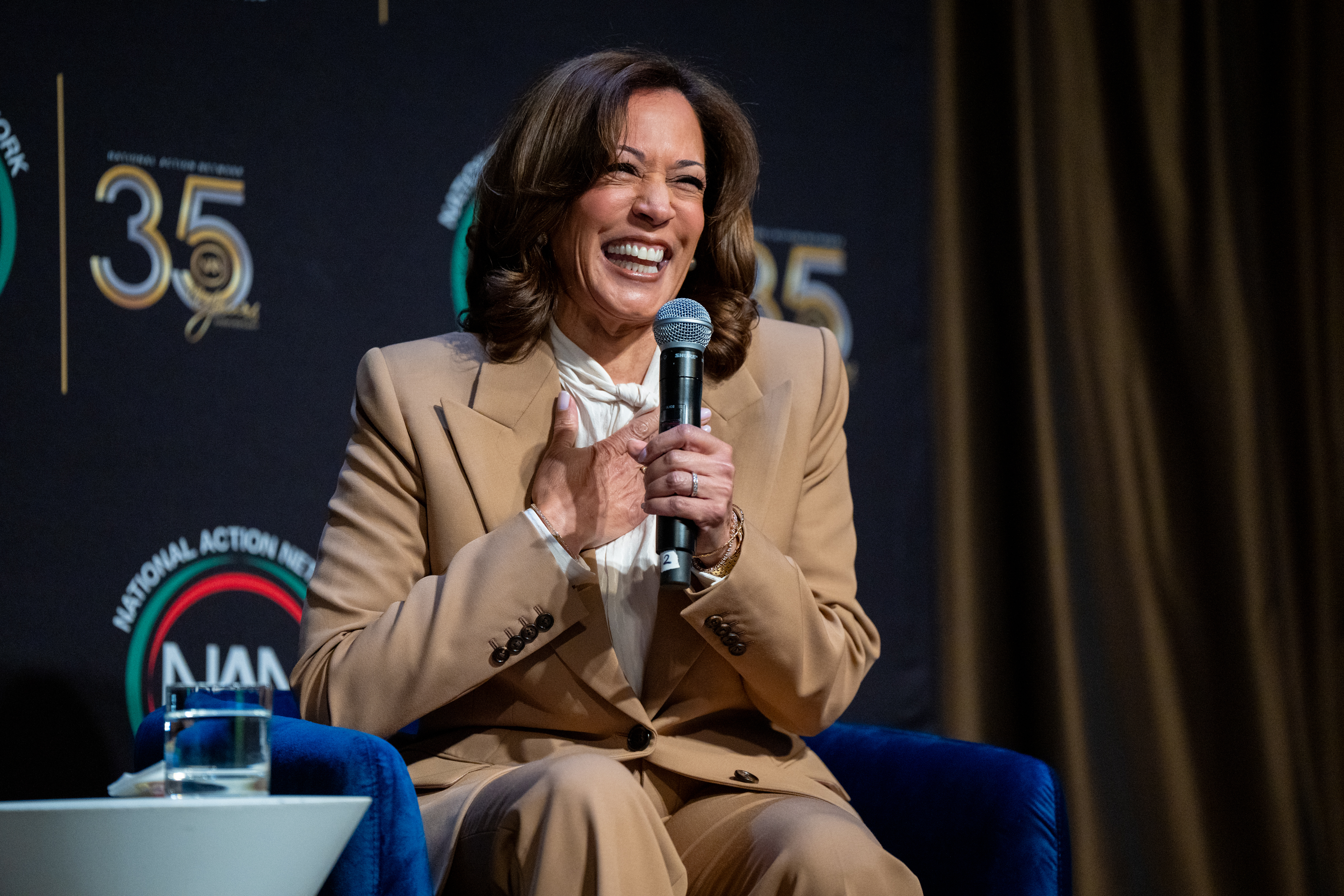
    As Kamala Harris mulls whether to run for president again, she’s throwing herself into the midterms by campaigning with fellow Democrats, starting with a Tuesday trip to Michigan on behalf of Senate nominee Abdul El-Sayed.

    It’s an especially notable destination for the former vice president. Michigan was one of seven battlegrounds she lost to Donald Trump two years ago, and it’s now one of six states that will start Democrats’ next presidential nominating process. Harris has additional rallies scheduled in Nevada and Georgia, two other key places on the political map.

    Her campaigning could serve to solidify or undermine her status as a potential Democratic front-runner. Although she’s one of the nation’s best-known politicians and a barrier-breaking figure, there are others eager to turn the page after she failed to defeat Trump when she replaced President Joe Biden on the top of the ticket.

    “I think she’s run her course,” said Barry Goodman, a Democratic National Committee member from Michigan who raised money for Biden and then Harris. “I just don’t think her running again would be the right thing for America moving forward.”

    Some Democratic candidates, especially in places Trump won handily, have curtly dismissed any possibility of campaigning with Harris. “No thanks,” Iowa gubernatorial nominee Rob Sand told Politico. “Let’s move on. We need some new leadership.”

    But plenty of Democrats, including some influential Black women who helped convince Biden to select Harris as his running mate in 2020, said she has more than earned the space to consider her options without being rushed or pilloried. Underscoring her unique position, California Gov. Gavin Newsom recently told CNN that he would not seek the nomination if Harris does.

    “Kamala isn’t under any deadline to run for anything,” said Donna Brazile, a former Democratic National Committee chair who managed Al Gore’s presidential campaign in 2000. She called it a “waste of time” to relitigate Harris’s truncated 2024 campaign and said any White House hopefuls “should follow Kamala’s lead and get out there” by trying to help midterm candidates.

    Harris has not announced any upcoming trips to South Carolina, where Democrats will hold their first primary. Antjuan Seawright, a political consultant in the state, said she could make a strong case for herself but another campaign would need to look and sound different.

    “She’s going to have to admit that she was wrong about some things,” he said.

    Michigan presents risk and opportunity

    Harris has painful political history in Michigan. During the 2024 campaign, the state’s prominent Arab American communities were outraged over Biden’s support for Israel’s military operations in Gaza, and they were disappointed when Harris did not break with him after she became the party’s nominee.

    El-Sayed, on the other hand, is an outspoken critic of Israel who has described the war as a genocide against Palestinians, an accusation rejected by Israel. He’s been viewed warily by some Jewish voters, which he’s tried to address by apologizing for some past controversial comments.

    El-Sayed told MS NOW that “there were some hurt feelings” in Michigan over the 2024 election, with some Black voters feeling like Arab Americans didn’t do enough to help Harris.

    With the former vice president coming to visit, he said it’s a chance “to bring communities together that have often been torn apart by recent events.”

    Their joint appearance will be closely scrutinized for other reasons too. Harris has a strained relationship with the party’s progressive wing, which includes El-Sayed, and El-Sayed is eager to solidify establishment support during his campaign against Republican nominee Mike Rogers, a former congressman.

    “We can build together on the areas of agreement, and we can come to understand each other far better on the areas where we might have seen eye to eye, and I think her coming into town will help us to do that,” El-Sayed said.

    Harris’ political travel has been light compared to potential presidential candidates like Pete Buttigieg, who ran in 2020 before serving as Biden’s transportation secretary. He recently visited South Carolina and he’s been stumping for other Democrats in the midterms.

    Harris went to South Carolina in the spring, but for smaller, local party events. She recently spoke on an organizing call aimed at registering and turning out 1 million more Black voters.

    “There’s value in doing a lot of stuff behind the scenes instead of being front and center, especially for her,” said Bre Maxwell, a Democratic National Committee member from South Carolina. She said there’s little benefit for Harris to insert herself into news cycles knowing “she’s still a target of Donald Trump right now.”

    Jaime Harrison, a South Carolinian who served as national party chair when Biden and Harris were in the White House, said the former vice president’s stature affords her the advantage of time that other potential candidates will not have.

    “Many of these folks who do get in quickly would love to have that type of name ID, would love to have that type of network, to have that type of email list,” Harrison said.

    Harris herself has said multiple times, including in an Associated Press interview last year, that she feels no rush to decide her next move. “Right now – midterms, midterms, midterms,” she told Megan Rapinoe on a recent podcast. Harris spokesperson Eduardo Negrón declined to comment when asked about her timeline.

    Harris’ other campaign events this fall include stops for Nevada’s Democratic candidate for governor, Aaron Ford, and Georgia Sen. Jon Ossoff, who has generated 2028 chatter of his own as he seeks reelection.

    “She is certainly being strategic,” said Seawright, the South Carolina political consultant.

    He noted that Harris’ tour for her campaign memoir, 107 Days, hit virtually every major Southern city in states where Black voters hold strong sway in presidential primaries that come early in the nominating process.

    Meanwhile, Goodman said he’s heard no evidence that Harris is working the party’s top donor network. Harrison said he hasn’t heard from her since last December.

    Past campaigns offer Harris lessons

    Harris first ran for president in the 2020 cycle, when she was a U.S. senator from California. But she dropped out late in 2019, before any primary votes were cast.

    Some progressives saw the former prosecutor as part of a criminal justice establishment that disproportionately imprisons Black men. Some moderates saw her as another San Francisco liberal.

    Biden chose Harris as his running mate, and she became the first woman and Black person to serve as vice president.

    When Biden dropped his reelection bid after a disastrous debate performance, Harris generated visible enthusiasm, drawing crowds that rivaled or exceeded Trump’s. She delivered a convention address and debate performance that most analysts lauded.

    But she could not distance herself from Biden on inflation or immigration. Harris infamously told friendly interviewers on The View that she couldn’t think of anything she’d have done differently than Biden. Trump hammered her with advertisements exploiting her support for transgender rights, saying “Kamala is for they/them. President Trump is for you.”

    If she runs again, Seawright said, Harris would need to emphasize moderate positions and “be willing to say, you know, ‘I’ve rethought some things.’” Voters, he said, “reward that kind of authenticity and humility.”

    Harrison argued it would be easier for Harris to articulate her own agenda than when “she was a sitting vice president, somebody else’s No. 2.” But, he warned, she would also have to shed the pomp and circumstance of the vice presidency, not just its political burdens.

    “You can’t act like a sitting vice president, standing up on that stage,” he said. “I’d tell her she has to run hard, just as hard as everybody else, working every rope line, taking every selfie.”

    Unlike Biden’s handoff to her in 2024, Harrison said, “This is going to be the wild, wild west.”

  • Congressional leaders warn White House against adding controls over NIH grants

    Congressional leaders warn White House against adding controls over NIH grants

    Leaders of the House and Senate appropriations committees on Monday warned the White House not to impose new controls on how the National Institutes of Health awards billions of dollars in research grants.

    Sens. Susan Collins (R., Maine) and Patty Murray (D., Wash.), the Senate panel’s chair and vice chair, and Rep. Rosa DeLauro (Conn.), the top Democrat on the House panel, said White House officials were threatening to further politicize the federal grant-making process.

    The Washington Post first reported Friday that administration officials had discussed an executive order to create a commission that would review NIH grants. Some White House officials were frustrated that the $47 billion health agency had funded projects that they said clashed with President Donald Trump’s agenda.

    The White House budget office “should not be involved in agency decisions on the awards of grants,” Collins said in a statement, adding that any attempt “to politicize grant-making at the National Institutes of Health” goes against the intent of Congress.

    “NIH funding doesn’t belong to Donald Trump — it belongs to the patients and families waiting on the next medical breakthrough,” Murray added in a statement.

    The appropriations leaders and other top lawmakers have previously clashed with the White House over its efforts to place new constraints on NIH funding. Earlier this year, Collins publicly opposed a 15% cap on indirect research costs. Last year, Collins and Sen. Katie Boyd Britt (R., Ala.) led a letter signed by a dozen other Senate Republicans urging the White House’s Office of Management and Budget to quickly disburse NIH funds that they said had been delayed.

    Russell Vought, the White House’s budget chief, and other officials met with Trump on Friday to discuss the potential executive order, the Post reported. Vought has criticized the NIH for awarding grants that he and other administration officials say fund “woke” initiatives and go against Trump’s executive order barring “equity-related” grants and contracts.

    Jay Bhattacharya, the Trump appointee who leads the NIH, which is the nation’s largest single funder of biomedical research, defended the agency’s grant-making process to the president Friday, the Post reported. The NIH quickly moved last year to terminate some grants after Trump took office.

    Spokespeople for OMB and the NIH did not immediately return requests for comment Monday on the lawmakers’ statements. Rep. Tom Cole (R., Okla.), chair of the House Appropriations Committee, also did not immediately respond to a request for comment.

    Healthcare advocacy groups, university leaders, and other organizations have urged the administration not to pursue the plan.

    “Americans want investments in cures and treatments,” said Erika Sward, executive director of United for Cures, a network of patient advocacy groups. “Politically hijacking those kind of advancements is not American, and it’s going to mean that those cures and treatments won’t be there for people across the country.”

    OMB has recently moved to assert more control over federal grant-making through a proposed rule that would require political appointees to review grants before they’re awarded to ensure projects advance the president’s priorities.

    In their recent government funding measure, congressional appropriators blocked implementation of the rule through December.

    Collins defended the NIH’s grant-making process.

    “Imposing a political review on awards that have already been selected through a rigorous scientific and merit-based process undermines the long-standing principle that the government funds awards based on scientific need and merit, rather than political ideology,” she said in her statement.

  • Philly laws conflate drag shows with strip clubs. City Council wants to change that.

    Philly laws conflate drag shows with strip clubs. City Council wants to change that.

    A line in Philadelphia’s zoning code conflates drag performances with strip clubs, topless bars, and other adult cabaret venues. It’s a definition that City Council hopes to change.

    Councilmember Rue Landau introduced legislation on Thursday to remove references to “male or female impersonators” in a section of the zoning code that regulates “Adult Oriented Services.”

    As currently written, Philadelphia defines an adult cabaret as a place that “features topless dancers, go-go dancers, exotic dancers, strippers, male or female impersonators or similar entertainers … dancing, performing or acting in a lewd, sexually erotic, exciting or stimulating manner.”

    The distinction is similar to one found in a Tennessee law that prohibits so-called “adult cabarets” featuring “male or female impersonators” from being staged anywhere minors might see it. It also mirrors language used in similar drag bans struck down this year by judges in Texas and Montana, and one currently up for consideration by the Idaho Senate.

    If passed, Landau’s proposal would strike the provision regarding male and female impersonators.

    The bill will first be considered by City Council’s Rules Committee. The legislation has the support of Mayor Cherelle L. Parker’s administration, Landau said, and has also been shared with her colleagues in City Council, who Landau described as “supportive.”

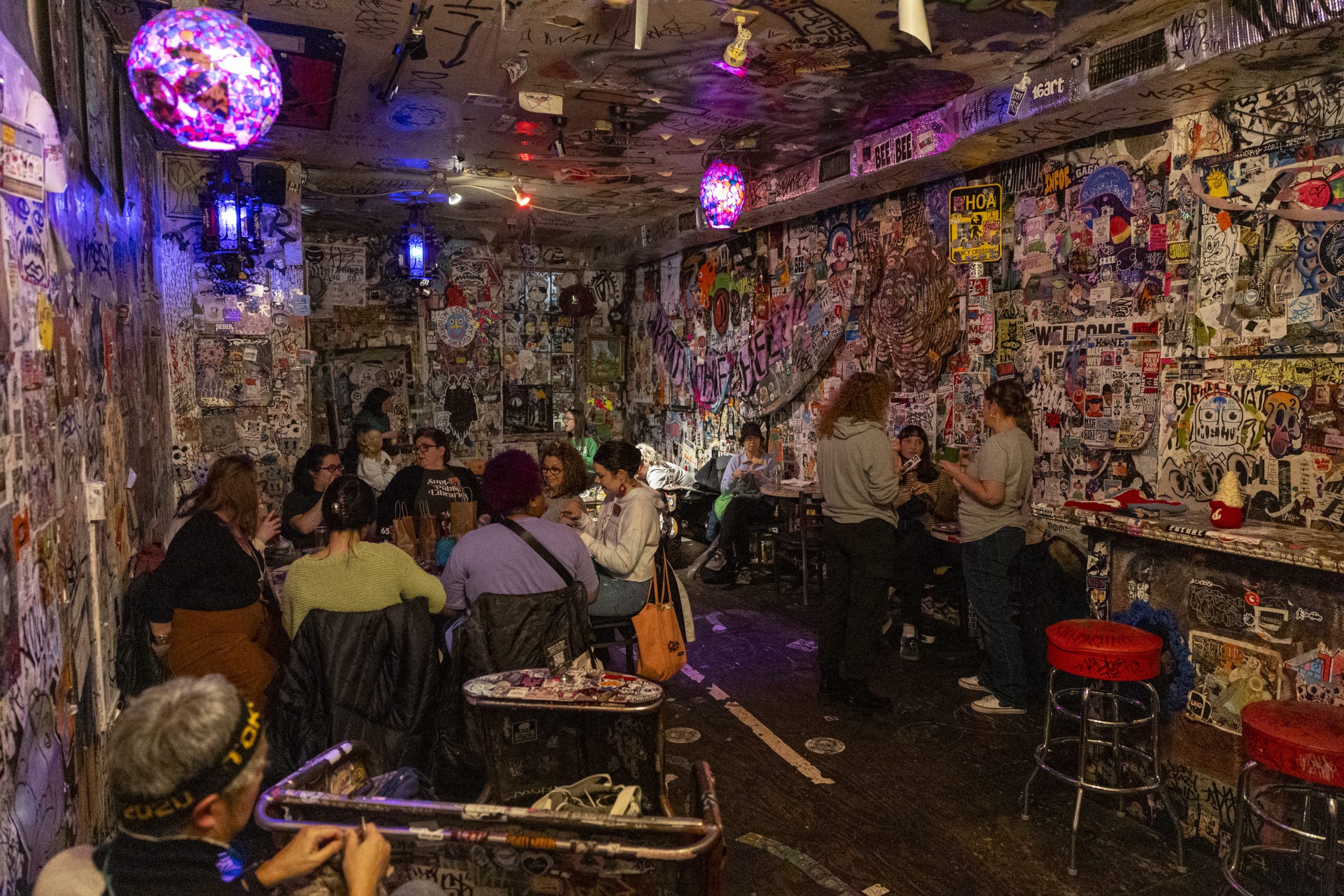
    Landau’s bill is inspired by recent events at South Street bar Tattooed Mom, which has long been a go-to venue for Philly’s LGBTQ+ artists, and particularly drag performers, in part because it doesn’t charge acts.

    A crowd fills Tattooed Mom. The popular South Street bar is unable to host events with music for the foreseeable future.Tyger Williams / Staff Photographer

    In March, the Department of Licenses and Inspections ordered Tattooed Mom to cease all events with music — including drag shows and karaoke nights — after a February inspection found that Tattooed Mom lacked the requisite special assembly license. The revelation forced the bar to cancel more than 30 drag, karaoke, and music events.

    Tattooed Mom owner Robert Perry told The Inquirer Friday that he brought what he called the “offensive and troubling language” to the attention of Landau’s staff, but was not involved in drafting the legislation.

    The incident “opened my eyes to actually reading the code and having conversations … I think the [language] is so antiquated that people don’t even realize it’s there,” Perry said. “We might have initially spurred the conversation, but Landau did all the heavy lifting.”

    Perry was initially instructed to seek an adult cabaret permit in addition to a special assembly license for Tattooed Mom, he told the Philadelphia Gay News in July. That same month, an L&I spokesperson told Philly Voice that the permit — which traditionally governs businesses such as strip clubs and adult theaters — is required to host drag and burlesque events.

    Perry now believes that his bar doesn’t need one upon further research, he said Friday.

    Regardless, Landau said Tattooed Mom’s predicament was the spark for her proposal. “They were cited in violation of this provision simply because they had a drag performance happening,” she said. “We don’t want that happening in Philly … A lot of folks rely on drag performances for their livelihood, and we just want to keep supporting them.”

    Landau is unaware of L&I citing other Philly venues for hosting drag or burlesque shows without a permit. “This is thankfully nothing that L&I is usually citing establishments” over, she said.

    A crowd looks at art inside the South Street bar Tattooed Mom.

    If passed, Landau’s legislation won’t green-light events with music at Tattooed Mom. All Philly establishments with an occupancy of 50 or more people that host music performances, dancing, or DJs are required to have a special assembly occupancy license, which costs $253 and must be renewed annually. To procure one, Tattooed Mom must first apply for a zoning exception.

    The process involves holding a public meeting for community feedback followed by a separate hearing in front of the Zoning Board of Adjustment. As of March 2026, the wait time for a hearing is 180 days — or roughly six months — according to a manual from the City of Philadelphia.

    Perry said he has yet to begin Tattooed Mom’s application.

  • TV networks halt pool coverage of White House as CNN, MS NOW, Politico prepare to sue Trump

    TV networks halt pool coverage of White House as CNN, MS NOW, Politico prepare to sue Trump

    Major television networks will halt TV coverage of presidential events, according to a memo obtained by the Washington Post, over the White House’s ban of CNN — which was barred alongside MS NOW and Politico in recent days — while the three news organizations have said they’re suing the government, alleging violations of their constitutional rights.

    “This is to advise that, effective today, the TV pool will not be covering events designated as pool coverage of the President,” Bryan Boughton, the Fox News Washington bureau chief and chairperson of the TV pool, wrote in a memo to the White House press corps that was obtained by the Post.

    “This follows the White House’s position preventing CNN from fulfilling its assigned pool duties. There will be no replacement pool put in place. All other pool coverage will continue as normal, including Congress, VIPs, and selected events in Washington and around the country.”

    In a joint statement Monday, the five members of the rotating TV pool wrote: “The public has a vital interest in receiving accurate, independent information about its government. No administration should restrict a news organization because it objects to its reporting.”

    The banned outlets released a statement Monday saying they would be filing suit: “This morning, we notified the government that we are filing a lawsuit today to protect our First Amendment rights and defend the principle that the government does not decide what the press reports or publishes. Without notice or process, the White House revoked our journalists’ credentials because it objected to our reporting. Left unchallenged, this threatens press freedom and the public’s right to independent journalism free from government interference.”

    The complaint, which was filed in federal district court in Washington, alleges violations of the news outlets’ First Amendment free press rights and Fifth Amendment due process rights. They are asking for an expedited hearing from a judge.

    Trump said Friday he would ban MS NOW, CNN, and Politico from the White House, saying he disliked how they covered him. “They’re fake news,” he said. The following day, the organizations said that their journalists had been denied access to the White House grounds and that their press passes were confiscated.

    Trump addressed the bans Monday in a post on Truth Social.

    “The White House is not instituting an assault on the Free Press, something which I cherish,” he wrote. “It is instituting an assault on the FAKE NEWS, something that has grown like Cancer in our beloved United States of America. It is corrupt, purposeful, pervasive, fully coordinated, and totally out of control. It is a threat to our National Security, and must be stopped, NOW!” When asked for comment, the White House referred the Post to this post on Truth Social.

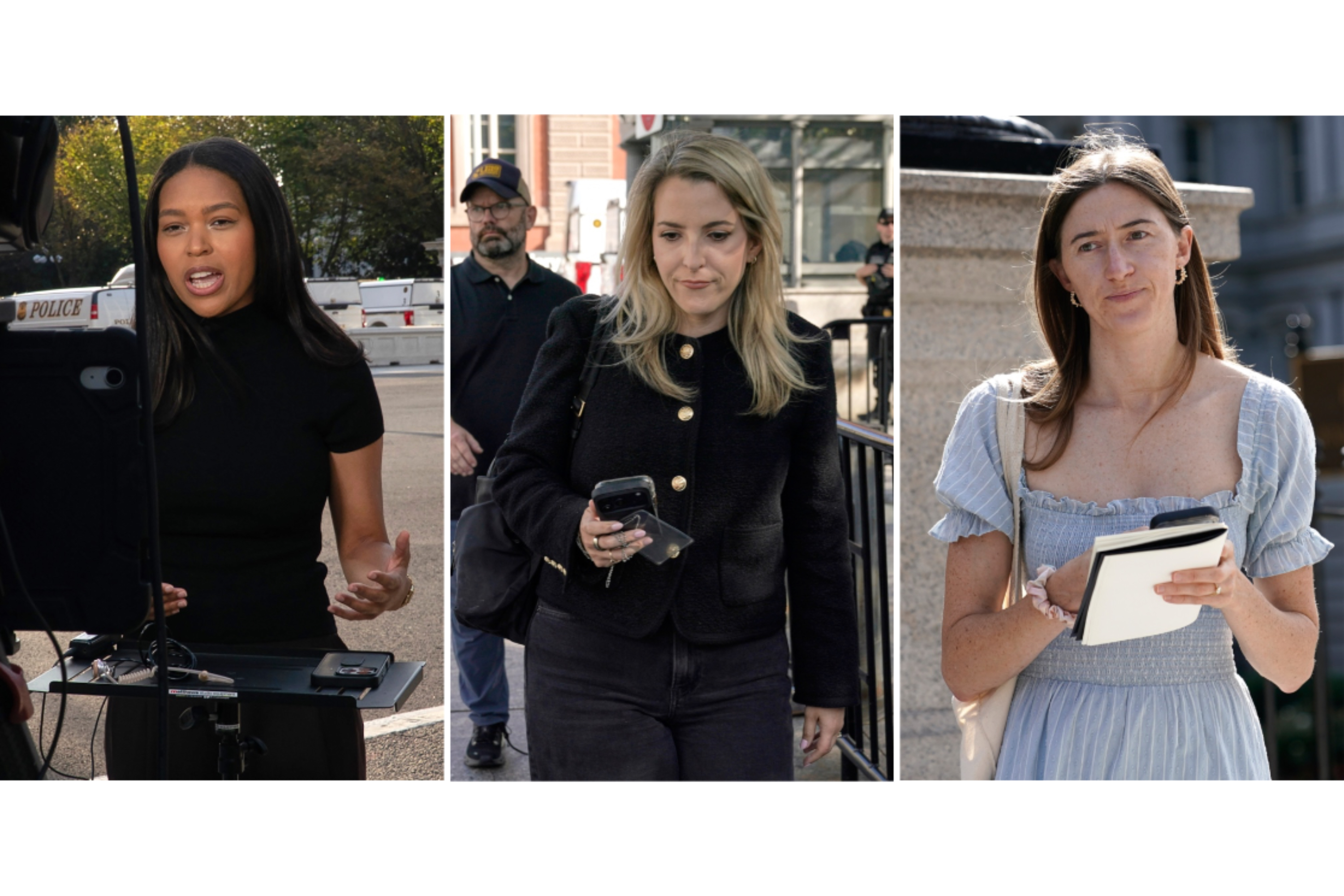
    White House reporters for each of the outlets — MS NOW’s Akayla Gardner, CNN’s Betsy Klein, and Politico’s Cheyenne Haslett — are also plaintiffs in the suit. Trump, White House Chief of Staff Susie Wiles, White House communications director Steven Cheung, and Secret Service Director Sean M. Curran are named as defendants in their government capacities.

    The plaintiffs, represented by First Amendment lawyer Theodore J. Boutrous Jr., are asking a federal judge to strike down the ban as unconstitutional and restore the outlets’ access.

    In a statement, Boutrous called the ban “a direct assault on the First Amendment and a blatant violation of due process” and said the law is on the plaintiffs’ side.

    CNN, MS NOW, and Politico have received nearly unanimous support from fellow news organizations as well as press advocacy organizations in recent days. White House Correspondents’ Association President Jacqui Heinrich, a Fox News reporter, wrote in a statement Saturday that the bans violate the First Amendment and called upon the White House to restore the reporters’ access.

    “The American people, through a free and independent press, must be able to scrutinize those elected to power, regardless of whether government officials view it favorably,” she said.

    The Knight First Amendment Institute at Columbia University said it plans to support the news outlets in court. Jameel Jaffer, the group’s executive director, said the bans constitute “an attack both on press freedom and the public’s right to independent information about the government.”

    During his first administration, Trump banned CNN reporter Jim Acosta and later Playboy reporter Brian Karem from the White House, though both were allowed back after they sued the government. Those cases, along with a 1977 case involving Robert Sherrill of the Nation, were highlighted in the new complaint.

    CNN’s ban in particular has created logistical hurdles for the news media. The network is one of five poolers — along with ABC, CBS, NBC, and Fox News — that rotate primary responsibility of covering the president with television cameras. The White House removed the network from its schedule Monday, presumably leaving the president without designated TV cameras filming him during his trip to the United Nations in New York.

    The pool is a way for the networks to split the hefty costs of following the president around with TV cameras. The assigned network records and distributes a live feed that other news outlets can use. Without a TV pooler, there will be scant video coverage of Trump unless news outlets take their own video or use feeds provided by the White House.

    The Associated Press reported that Trump showed off his new White House helicopter landing pad on Monday, attempting to brush aside the First Amendment firestorm even as major television networks kept their cameras away in protest of CNN being banned from the grounds.

    A light drizzle fell on the South Lawn as Trump used oversized gold scissors to cut a red, white and blue ribbon. He then exchanged handshakes with officials and with some members of a construction crew wearing green smocks and hardhats — seeking to portray business as usual.

    If he had words to mark the occasion, however, it was impossible to hear them over the noise of his waiting helicopter. Normally, TV network crews work to capture clearer audio.

    Trump also didn’t answer reporters’ shouted questions before climbing aboard Marine One for an eventual flight to New York. Instead, he wrote on his social media site, “We are just leaving the White House Lawn on the maiden voyage from the newly built, and very beautiful, Heliport!”

    Trump has long crowed about how the new helipad — featuring extensive granite that he boasts will have a “million-year life,” as well as a large insignia reading the “Seal of the President of the United States” — would impress Chinese President Xi Jinping, who arrives Wednesday for a state visit.

    He’s been focused on wowing Xi even as he decried Democrats as communists in an attempt to help Republicans retain control of Congress in upcoming midterm elections. But his effort to curb access for media outlets to the White House has overshadowed Trump’s pet building projects and Xi’s visit.

    Igniting constitutional questions over media access also eclipsed the reason Trump was lifting off from the helipad — the annual trip to attend the United Nations General Assembly beginning today.

  • Rising gas prices frustrate voters. Trump says it’s an ‘inexpensive price to pay’ for the Iran war

    Rising gas prices frustrate voters. Trump says it’s an ‘inexpensive price to pay’ for the Iran war

    EDINBURG, Texas — Quinten Martinez, pumping gas under a hot South Texas sun, remembers a time when fueling up didn’t require difficult decisions.

    “Is it going to be groceries this week?” asked the 28-year-old Amazon delivery driver as he watched the numbers tick higher. ”Is it going to be getting gas in our tank to go to work?”

    He shook his head when asked about President Donald Trump’s assertion last week that higher gas prices are a small price to pay for the war with Iran.

    “I don’t feel like it’s a good trade-off,” Martinez said. “I don’t feel like this is good for anyone.”

    Voters across the country, and across the political spectrum, tend to agree.

    Interviews with voters in several states, along with a fresh round of national polling, reveal an overwhelming sense of frustration that skyrocketing gas prices — a direct result of Trump’s war — are creating serious and sustained financial hardships for America’s working class.

    The acute concerns are adding to a bad political environment that may be worsening for Trump and his Republican Party as early voting gets underway in the November midterm elections.

    Historically, the party holding the White House has suffered major losses in midterms. Today, seven weeks before Election Day, Republican candidates at all levels are struggling with the additional burden of Trump’s weak approval ratings, an unpopular foreign conflict and an affordability crisis that Trump and his congressional allies had promised to fix.

    But when Trump campaigned in North Carolina on Wednesday, he played down the impact of surging gas prices.

    “You have a little higher. It’s a very inexpensive price to pay for what we’ve done,” Trump said of the war, which he describes as critical to prevent Iran from obtaining a nuclear weapon. ”Remember that. It’s a little more. Frankly, even if it was a lot more.”

    ‘Gas prices matter,’ Republican strategist says

    Despite what Trump says, there are few things that may matter more this election year than the price of a gallon of gasoline, according to political operatives in both parties.

    Gas prices are moving sharply in the wrong direction at a time of year when drivers typically get some relief. The national average for a gallon of gas reached $4.48 on Friday, according to AAA, up roughly 17 cents over the last week, 40 cents in a month and $1.27 from a year ago.

    “Gas prices matter because they’re one of the few economic indicators voters experience and see in real time,” said veteran Republican strategist Chris Wilson. “The price is literally staring them in the face several times a week. So I wouldn’t minimize the frustration we’re seeing, particularly among working- and middle-class voters.”

    Interviews with voters this week found bipartisan frustration and disappointment.

    Democrats and independents were especially motivated to punish Republicans at the ballot box for their economic hardship, while some of Trump’s working-class supporters pledged to support Republicans this fall, even if they weren’t happy with the president’s leadership on the economy.

    Some Republicans say they’re disappointed

    Dan Lloyd, who voted for Trump, lamented the president’s leadership as the 63-year-old carpenter paid $4.39 a gallon to fill up his pickup truck in Mesa, Ariz.

    “He hurt himself stepping into this,” Lloyd said of Trump. “Where’s all this oil from Venezuela? I thought we were flush with gas and everything, but no. The American people eat it every time, whether it’s interest rates, food, gasoline.”

    Still, he expects to vote Republican in the midterms.

    “I think the Democratic Party has lost its way,” Lloyd said. “I just feel like the whole system’s on the verge of collapse.”

    In sweltering Edinburg, Texas, 52-year-old Kristin Jimenez shrugged off the rising price of gas after filling up her Mercedes.

    “We’ve paid the same price under Republican presidents, we’ve paid this price under Democrat presidents,” said Jimenez, a mother who runs a small business. She plans to vote for a Republican in November because they’re the “lesser of two evils.”

    She said gas prices aren’t part of her calculation.

    “We don’t mind paying $8 for a cup of coffee at Starbucks, but we have a problem paying four bucks at the pump?” she said. “Make it make sense.”

    More than 1,500 miles to the north in central Michigan, 35-year-old Garth Johnson is trying to make ends meet running a deep-cleaning business with several gas-powered vehicles and one machine fueled by diesel, which was $6.79 a gallon as he filled up his SUV.

    Johnson voted for Trump, but doesn’t know what he’s going to do in November. Johnson doesn’t feel qualified to second-guess the president’s evaluation of the war, but he’s feeling financial pressure in his own life.

    “I like a lot of the things he’s done,” Johnson said, but added, “I’m a little guy and I’ve got to live my life.”

    Other voters are not so forgiving

    Midterm voting was already underway on Friday in Virginia, where 60-year-old engineer Alan Johnson said Trump seems to have “no empathy” for Americans who are struggling financially.

    “With the gas prices being what they are and continuing to grow, we’ve got to do something. Hopefully the Democrats can get into office and turn the ship around,” said Johnson, who cast ballots in the morning for Democrats for the U.S. Senate and U.S. House.

    In Raleigh, N.C., teacher Brittney Bivins sees surging gas prices as evidence that Trump and his Republican Party aren’t dealing with the issues that matter most to people like her.

    “He really doesn’t care about everyday people,” the 45-year-old said. “He can afford the gas, but most of us can’t. So it feels like he’s not even connected to his own people.”

    Bivins, who described herself as an independent, said she’s eager to support Democrats this fall — especially the party’s emerging democratic socialist wing.

    At a gas station in Lansing, Michigan., Rina Risper spent $50 on 8 gallons of premium gas.

    “When I rolled up I was in shock, actually, and said, well, maybe I should drink water instead of having that $4.99 bottle of whatever it was I was going to get,” Risper said. She thinks Trump’s tariffs will make affordability even worse.

    “We’re not in Miami. We’re in Lansing, Mich.,” she said. “It’s really going to impact our people.”

    Most voters think administration has made economy worse, poll shows

    Nationwide, more than three times as many voters say they are falling behind financially as getting ahead, according to a Fox News survey released Wednesday. By a 15 percentage point margin, Democrats are considered the party that would better handle inflation and prices at a time when the cost of living and the economy are voters’ top concerns.

    The Fox poll found that 61% of voters say gas prices are a major problem for their household, compared with 48% two years ago, while 52% say the same for healthcare costs, compared with 44% in 2024. Majorities also view housing costs and grocery prices as major problems, although neither has increased.

    Overall, nearly two-thirds of voters (63%) say the administration has made the economy worse, compared with 52% in September 2025, including one-quarter of Republicans. Only 46% of Republicans say the administration has improved the economy, while about one-quarter don’t see an impact.

    Back in rural South Texas, an area where Trump’s GOP made gains in recent elections, Martinez, the Amazon delivery driver, could not contain his frustration.

    Trump “likes to tout that we are the best economy in the world,” said Martinez, but in more rural towns, “you don’t see any of the winning, you don’t see any of the ups that he’s talking about.”

    “You just see struggles for day to day life,” he said.

  • The Trump administration will force Pa. to pay more for SNAP. Shapiro’s office says it can’t.

    The Trump administration will force Pa. to pay more for SNAP. Shapiro’s office says it can’t.

    The Trump administration will be overhauling the SNAP program in two major steps, forcing Pennsylvania to pay more for the federal food program and jeopardizing those in need, according to Gov. Josh Shapiro’s office.

    The first phase begins Oct. 1, when states will have to pay for 75% of the expense of administering the Supplemental Nutrition Assistance Program, an end to the 50-50 cost-sharing relationship between the federal government and the states that existed for decades.

    The second and more dramatic change is scheduled to commence a year from now, when the Trump administration demands that states pay for a portion of SNAP benefits — an unprecedented arrangement that could put Pennsylvania on the hook for as much as $400 million of the approximately $4 billion the state receives in SNAP benefits annually.

    That’s a price the state is not ready to pay.

    “Pennsylvania’s state budget cannot make up for huge cuts to federal SNAP funding that will shift these costs onto states,” Shapiro spokesperson Rosie Lapowsky said in a statement. “And those cuts risk leaving hungry Pennsylvanians without food assistance.”

    The Trump administration plan, part of President Donald Trump’s One Big Beautiful Bill Act, is roiling Democrats and SNAP advocates who view it as an effort to weaken the food benefits program by saddling Pennsylvania and other states with the responsibility of paying for something they cannot afford.

    In anticipation of the first new rule going into effect in two weeks, Shapiro earmarked $87 million in the state budget to administer the SNAP program in the state, which includes paying for operating expenses.

    Burdening states with increased financial demands is “catastrophic,” said St. Joseph’s University sociologist Maria Kefalas.

    Kefalas said it will force states to make drastic moves to make up for lost dollars, including making eligibility rules harder and shrinking benefits.

    “The pressure on states to push people off SNAP will be tremendous,” she said. “The Trump act was written to shift blame for cuts to safety-net programs from the federal government to the states. Now, the states will be seen as the bad guys.”

    The original even split for administrative costs had the state and the federal government each paying $250 million in SNAP administrative costs, according to the Pennsylvania Independent Fiscal Office (IFO), a nonpartisan legislative agency that analyzes budgetary issues. But after Sept. 30, the state could be looking at as much as a $125 million increase in payments annually, IFO figures show.

    Shapiro’s $87 million budget infusion covers that increase for a portion of the state fiscal year, said Brandon Cwalina, press secretary for the Pennsylvania Department of Human Services, which oversees SNAP.

    The Trump administration says that by forcing states to put skin in the game, it is incentivizing them to cut waste, fraud, and abuse in the program.

    “President Trump is strengthening SNAP for the Americans who need it by ensuring these programs are sustainable for future generations,” White House spokesperson Anna Kelly said in a statement.

    She added that the One Big Beautiful Bill Act implements “reasonable” cost-sharing measures with states.

    Kelly also said that by signing the bill into law, Trump is “uplifting every American’s financial situation by passing the largest tax cut in history.”

    But concern is growing that by compensating for SNAP shortfalls, states will pull funds from other sources.

    “Does this mean money will be taken from police, courts, and other critical functions to pay for SNAP?” asked State Sen. Art Haywood, the top Democrat on the Health and Human Services Committee, who represents part of Philadelphia and Montgomery County.

    Error rates

    How much the state will have to pay in SNAP benefits in October 2027 depends on its payment error rate, a measure of overpayments and underpayments of benefits.

    Error rates are largely unintentional and are not fraud, according to the Food and Nutrition Administration of the U.S. Department of Agriculture, which runs the SNAP program.

    “It’s like doing your taxes and accidentally switching numbers,” said Ann Sanders, director of public benefits policy and programs for Just Harvest, a Pittsburgh-based anti-hunger nonprofit. “Not a crime, just a mistake.”

    In fiscal 2025, Pennsylvania’s error rate was 9.2%, mostly representing overpayments, said IFO director Matt Knittel.

    Even though it is below the national error rate of 10.6%, if the 9.2% level holds, Pennsylvania could be made to pay as much as $400 million a year when the new rule takes effect, IFO figures show.

    “These are costs Gov. Shapiro has made clear we cannot backfill,” Cwalina said. The Shapiro administration, which has had some success lowering error rates, has introduced new technology that helps flag potential errors before incorrect payments are made.

    The reorganization of SNAP’s functions and financing comes during an ongoing affordability crisis, said George Matysik, executive director of the Share Food Program, which supplies many food pantries in the Philadelphia area.

    “Instead of the federal government helping to solve it, it’s just passing the buck onto the consumer,” he said. “Prices are going up, while Washington punches down on the working class.”

    While the new changes have yet to kick in, Trump’s One Big Beautiful Bill Act has already altered SNAP to help pay for his tax cut.

    The administration has expanded work and documentation requirements for SNAP recipients, resulting in millions of people seeing their benefits lowered or eliminated.

    Nationwide, between July 2025 and May, SNAP rolls have decreased by more than 5 million people, or 12%, according to the Center on Budget and Policy Priorities, a left-leaning Washington-based think tank.

    As of July, the latest Pennsylvania DHS estimates show that 94,200 people have lost benefits since Trump’s law took effect.

    The changing contours of the SNAP program worry legislators accustomed to its normally steady rhythms.

    “There was a 60-year-long partnership between the federal government and the states on SNAP, without problems,” Haywood said.

    “SNAP worked well since it got its start in 1964. But now, unfortunately, the current administration is dramatically changing it.”

  • President Donald Trump praises Stacy Garrity for Pa. governor, says Josh Shapiro ‘does not have what it takes’

    President Donald Trump praises Stacy Garrity for Pa. governor, says Josh Shapiro ‘does not have what it takes’

    In a video shared to his social media platform on Friday, President Donald Trump reinforced his endorsement for Republican Stacy Garrity in her bid for Pennsylvania governor, while panning Democratic Gov. Josh Shapiro as an incumbent “who does not have what it takes.”

    “Stacy has been really special [and] has my complete and total endorsement,” Trump said in the video, posted Friday afternoon to Truth Social, praising her tenure as the state’s treasurer and applauding her military service and career in business. “She’s somebody that is going to do a fantastic job.”

    The video was posted in a string of more than a dozen similar endorsements on Friday afternoon for Republican congressional candidates in Alaska, Florida, Georgia, Michigan, North Carolina, and Texas.

    Garrity, who did not attend the president’s midterm convention in Dallas last week, appeared to be the only gubernatorial candidate, as well as the only candidate from Pennsylvania, to receive a video acknowledgment from Trump.

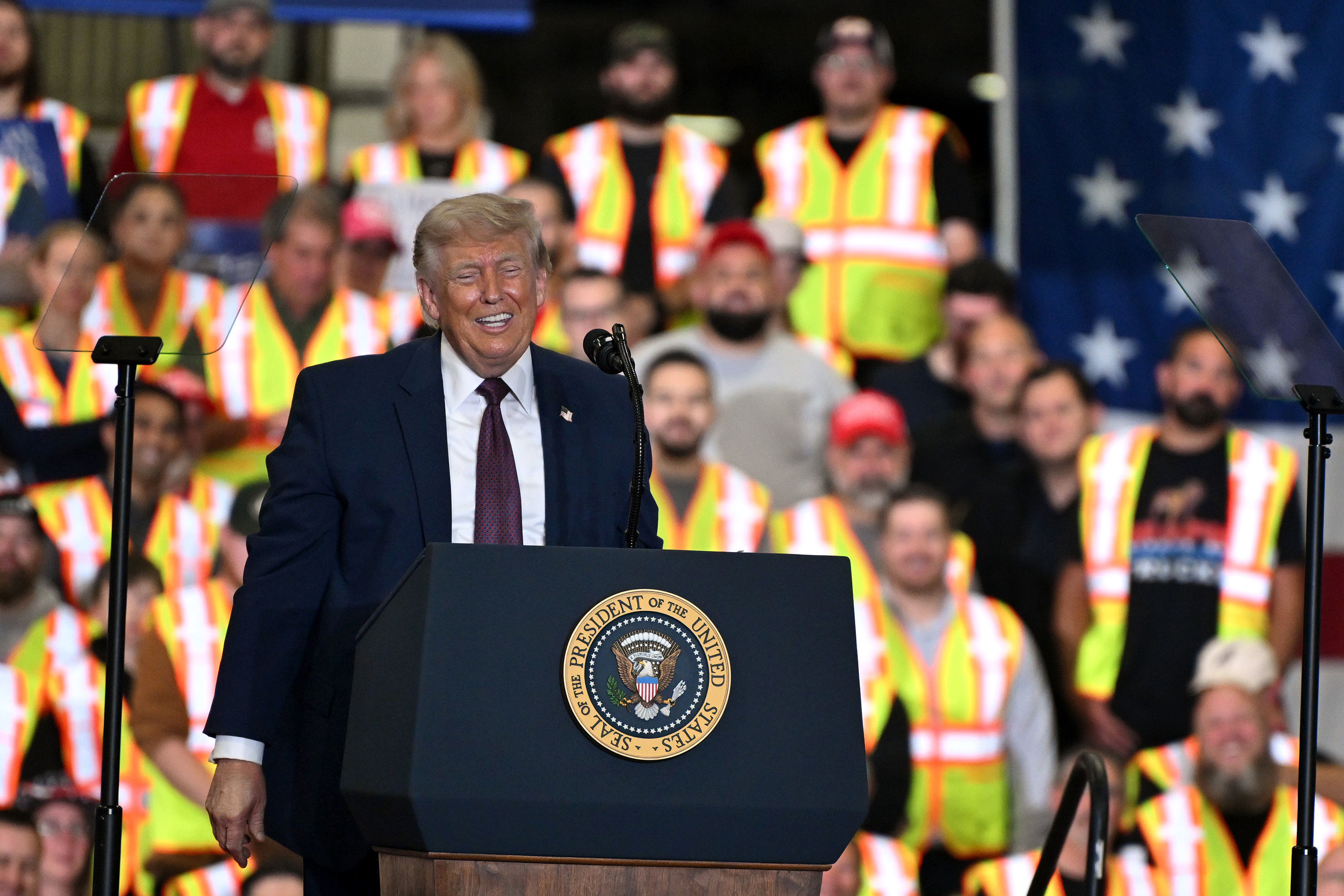
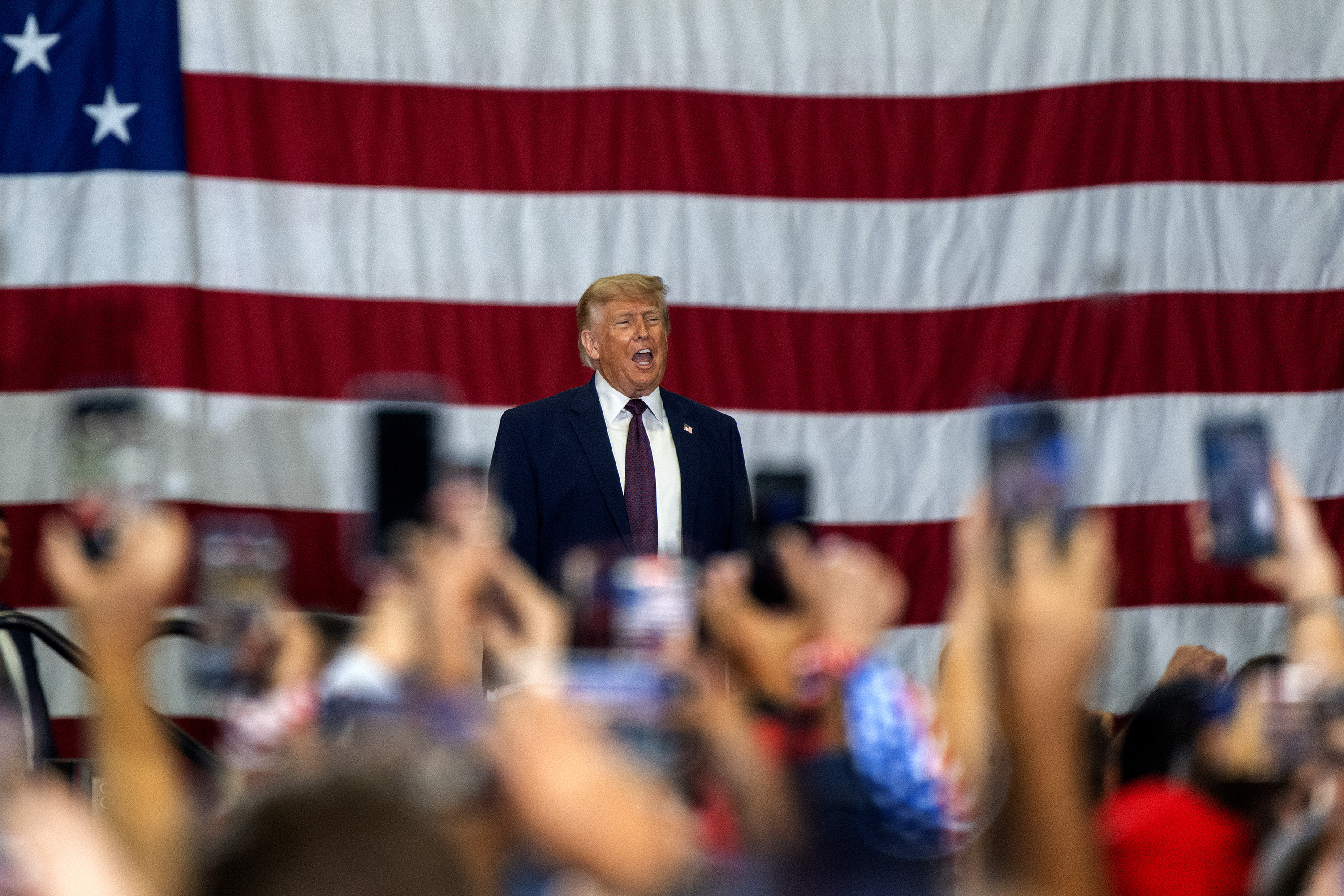
    President Donald Trump visits Mack Trucks in Macungie in the Lehigh Valley Tuesday, June 23, 2026.Tom Gralish / Staff Photographer

    Trump followed the endorsement videos on Truth Social with a post about his approval ratings, and another post featuring a video touting his own accomplishments in office. The endorsement blitz came less than seven weeks before the Nov. 3 midterm elections, in which Democrats are vying to retake control of Congress.

    In Pennsylvania, Shapiro — who has maintained a double-digit lead over Garrity in multiple public polls and has a commanding fundraising advantage — is seeking to use his advantage to secure Democratic wins in four nationally watched congressional seats, and to flip the state Senate to Democratic control for the first time in more than 30 years.

    Trump’s boost for Garrity comes as she has struggled to compete with Shapiro. She has not attracted outside ad-spending support from top GOP groups, such as the Republican Governors Association or the Commonwealth Leaders Fund, backed by Pennsylvania billionaire Jeffrey Yass. This week, Shapiro spent $2.4 million on advertising buys, while Garrity spent just $672, according to the media tracking firm AdImpact.

    Garrity and Shapiro have agreed to a live, televised debate on Oct. 7 in Harrisburg.

    In the video Friday, Trump swiped at Shapiro, who is viewed as a likely contender for the 2028 presidency and who has been critical of the president’s administration.

    “Your current governor does not have what it takes,” Trump said. “His reputation is far better than he is — that I can tell you and everyone knows it.”

    Shapiro’s campaign responded on X to Trump’s video by calling Garrity “100% MAGA.”

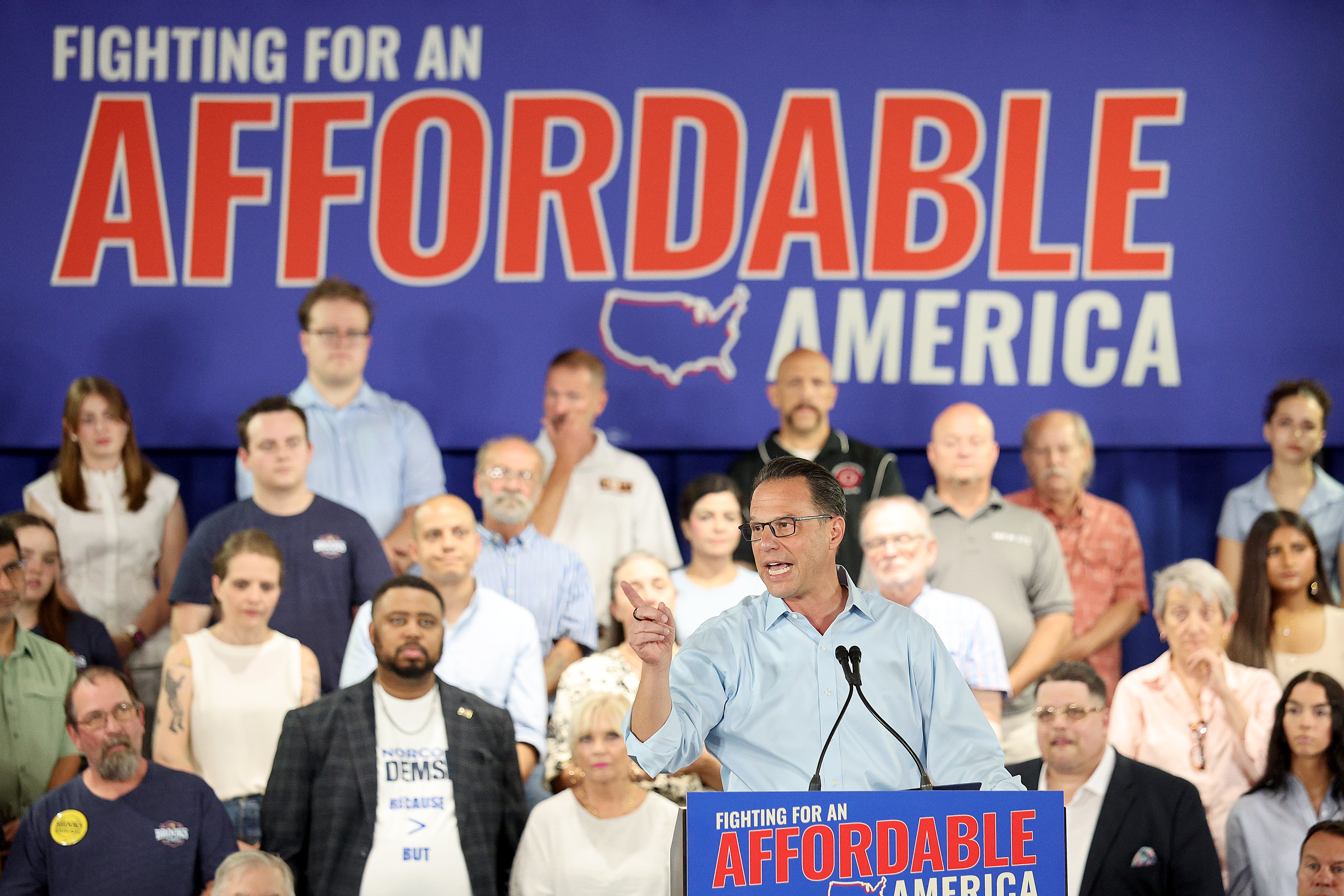
    Gov. Josh Shapiro addresses the audience during a rally for congressional candidate Bob Brooks at the United Steelworkers Union Hall in Bethlehem, Pa. on Sunday, July 26, 2026.David Maialetti / Staff Photographer

    It remains to be seen whether Garrity will receive additional national support or financial backing in the weeks before the election.

    Trump first endorsed Garrity, who ran unopposed in the Republican gubernatorial primary, in January. In March, he said “she should win” during a fundraising dinner at his Mar-a-Lago Club in Florida.

    In June, he seemed to forget her altogether during a speech in Macungie, Pa., where he celebrated Republican U.S. Rep. Dan Meuser and even name-checked Shapiro but did not mention Garrity.

    Last month, in a video posted to his Truth Social account, Trump called Garrity a “spectacular person” who he believes will win the race.

    On Friday, Trump said Garrity “will work tirelessly to grow Pennsylvania’s economy, cut your taxes, slash regulation and bring jobs, opportunity, and wealth to the Commonwealth of Pennsylvania.”

    A spokesperson for Garrity did not immediately respond to a request for comment about Trump’s video, but she reposted his endorsement video on her X account.

  • Johnny Doc reportedly switches to Republican Party after receiving prison commutation from Trump

    Johnny Doc reportedly switches to Republican Party after receiving prison commutation from Trump

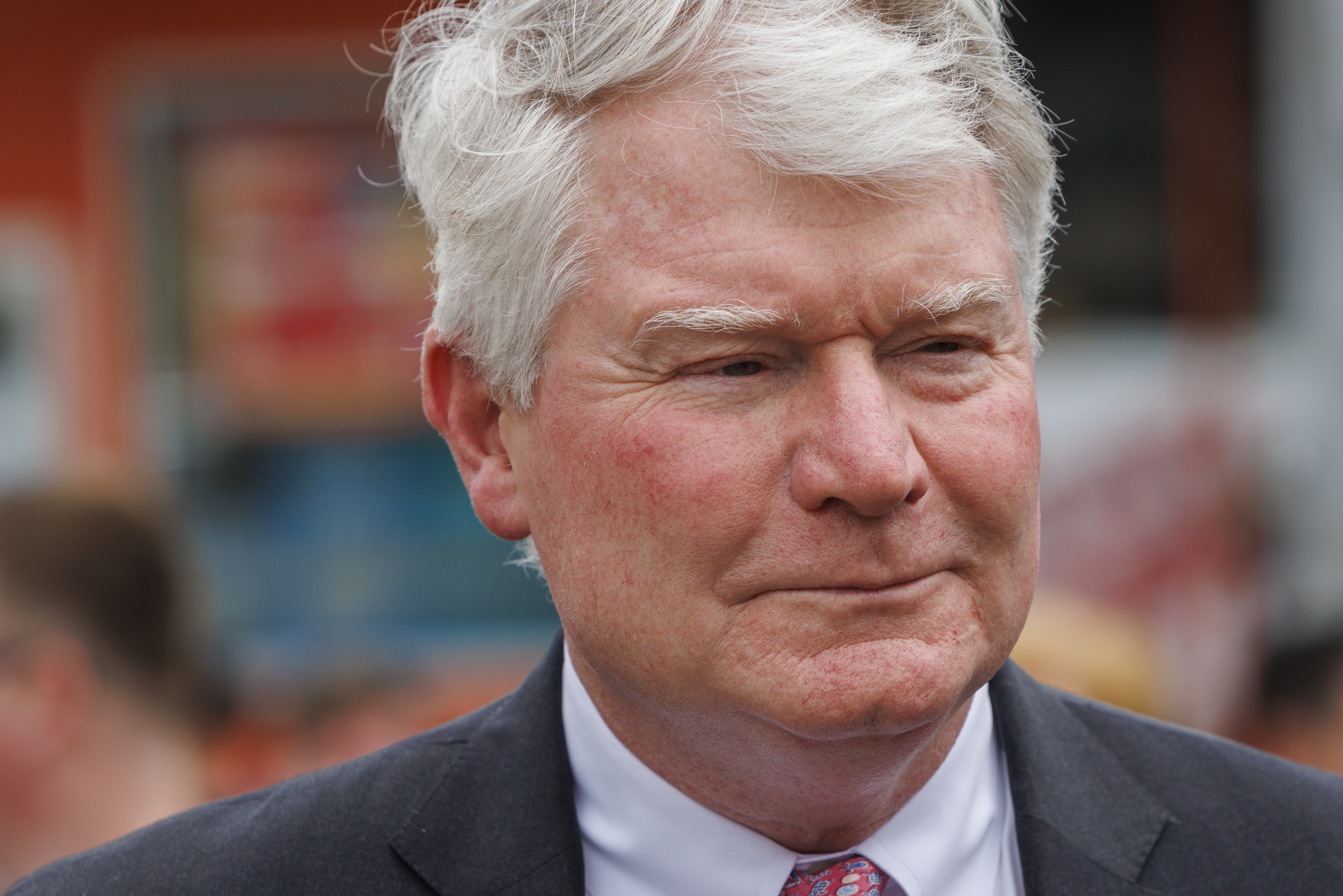
    John “Johnny Doc” Dougherty, the former Philadelphia labor leader and longtime Democratic power broker whose prison sentence for a corruption conviction was commuted by President Donald Trump earlier this month, has reportedly switched political parties.

    Claudia Vargas, a former journalist for NBC10 and The Inquirer, reported Friday that Dougherty changed his party registration on Sept. 11 to Republican, and that he has since moved from South Philadelphia, where he had served as a ward leader, to Center City.

    The website for the Office of the Pardon Attorney in the U.S. Department of Justice shows Trump signed Dougherty’s commutation Sept. 3.

    Dougherty, who served less than two years of his six-year sentence, had been seeking an early release so he could care for his gravely ill wife, Cecilia. He was released Sept. 4 from the federal penitentiary in Lewisburg, Pa., his lawyer, George Bochetto, confirmed that day.

    Neither Dougherty nor Bochetto could be reached for comment on Friday.

    Dougherty was found guilty of bribing former Philadelphia City Councilmember Bobby Henon in one trial, and was convicted in a second trial for his participation in an embezzlement scheme that cost his union nearly $600,000.

    He had petitioned U.S. District Judge Jeffrey L. Schmehl to release him on house arrest so he could care for his wife. Schmehl repeatedly denied those efforts.

    As a result of Trump’s commutation, Dougherty not only had his incarceration cut short, but also will no longer have to pay about $1.6 million in restitution to the union he was convicted of defrauding.

    A representative for Local 98 of the International Brotherhood of Electrical Workers could not be reached for comment about the loss of the restitution funds.

    Dougherty, whose conviction remains intact, also will not be subject to monitoring or house arrest.

    On the day Dougherty was released, Bochetto called Trump’s decision “a magnificent gesture of compassion.”

    Bochetto said he had been in regular communication with White House staffers about the health challenges faced by Dougherty’s wife.

    A White House official said those circumstances figured into Trump’s decision, particularly because Dougherty’s father-in-law, who had been serving as the primary caretaker, died last year.

    Bochetto said there was “absolutely no reason” to keep Dougherty locked up while his wife’s health was continuing to decline.

    Federal prosecutors had opposed Dougherty’s early release.

  • Civil rights groups sue to keep armed agents away from voting sites

    Civil rights groups sue to keep armed agents away from voting sites

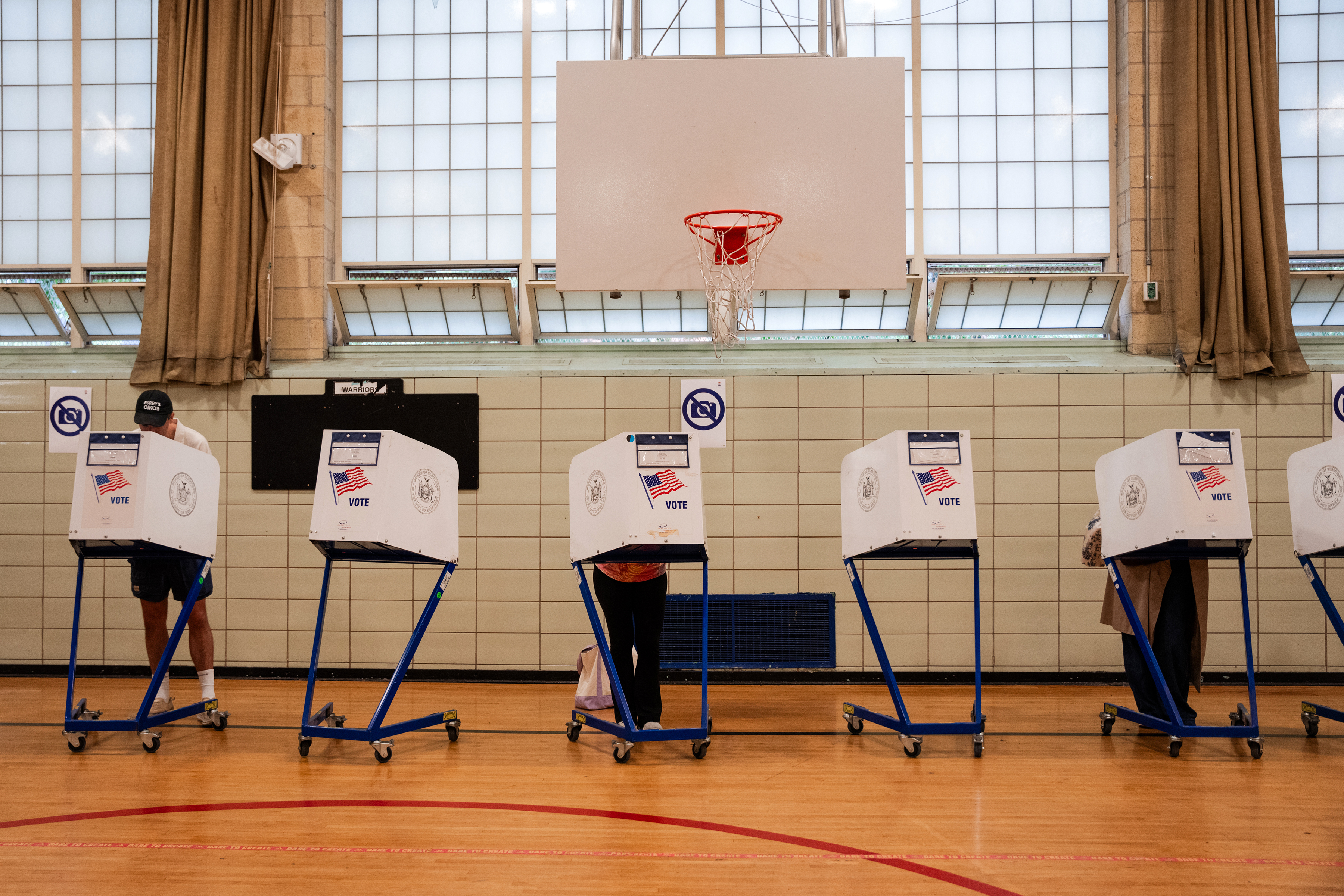
    WASHINGTON — Civil rights groups and labor unions sued the Trump administration Friday, asserting that its aggressive immigration enforcement and suggestions that it could send armed agents to polling sites amounted to voter intimidation and violated the Voting Rights Act.

    Brought by a coalition of Black, Asian, and Latino civil rights groups and unions, including the NAACP and the Service Employees International Union, the lawsuit seeks to block any effort by the Trump administration to deploy federal agents at voting locations, which the groups contend can deter citizens trying to legally vote.

    The lawsuit, filed in the U.S. District Court for the District of Columbia, argues that President Donald Trump, Secretary of Homeland Security Markwayne Mullin, and other members of the administration had created a climate in which “voters, especially voters of color, are intimidated and fearful of engaging in the democratic process.”

    They had done so, the suit says, by simultaneously pushing false narratives of rampant voting by noncitizens, conducting sweeping immigration enforcement in communities of color, and repeatedly suggesting that they could send armed agents to polls.

    The White House and the Department of Homeland Security did not immediately respond to requests for comment sent Friday morning. But in the past, Mullin has said that opponents were fearmongering and that U.S. Immigration and Customs Enforcement was not patrolling polling places. “The only reason why we would be at polling places is if there is a threat to that polling place,” he said, “or we’re serving a warrant.”

    The lawsuit points specifically to the Trump administration’s recently expanded efforts to identify noncitizens registered to vote, despite no evidence of rampant voter fraud by noncitizens.

    Taken together, the lawsuit argues, the actions and statements constituted a violation of Section 11(b) of the Voting Rights Act, which broadly prohibits actual or attempted intimidation, threats, and coercion directed at voters and anyone helping to facilitate voting. This section of the Voting Rights Act was not affected by a recent Supreme Court decision weakening the landmark civil rights legislation.

    The act, the lawsuit says, broadly protects against voter intimidation, and requires only that voters reasonably fear being subject to harassment or violence for casting a ballot. “The breadth of Congress’s words was by design,” the lawsuit says.

    This is at least the second lawsuit seeking to block the Trump administration from deploying armed federal agents near polling stations. Last week, the city of Denver, Latino civil rights organizations, and government watchdog groups argued in a lawsuit that allowing immigration agents at voting locations violates a separate federal law protecting free and fair elections.

    For months, Democrats have voiced concerns that Trump is seeking to assert greater control over the coming elections and sow doubt about the outcome. While Trump administration officials have said there is currently no plan to deploy armed agents to polling sites, they have also not ruled out the possibility of doing so.

    This article originally appeared in the New York Times.