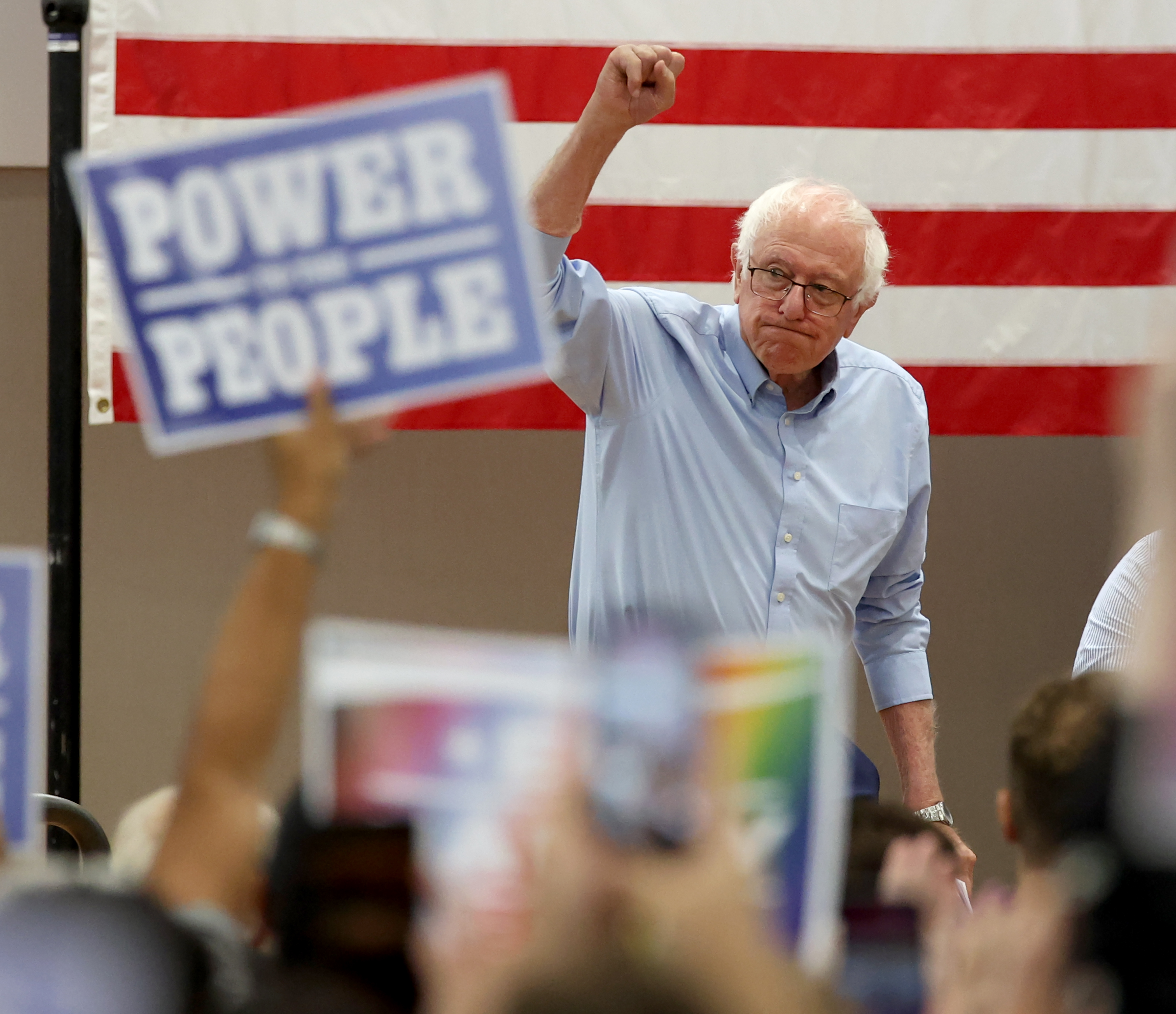
Washington — Two leading progressive lawmakers, Sen. Bernie Sanders and Rep. Greg Casar, are unveiling legislation Wednesday that would ban artificial superintelligence and create a federal agency to oversee advanced AI as some of the industry’s own leaders urge Congress to impose guardrails on the advancing technology.
The bill, provided first to The Associated Press, would also pause advanced AI development until guidelines are implemented while creating the Department of Artificial Intelligence. Multiple employees at leading AI companies are endorsing the bill.
“It doesn’t take a genius to say, ‘slow it down,’” Sanders, I-Vt., said in an interview with AP. “Do we really want to develop a super intelligence that when it becomes smarter than human beings could act independently of human control? I don’t think we do.”
Congress has so far done little to rein in the AI industry even as some of its most prominent leaders warn about potentially catastrophic risks. President Donald Trump has resisted recent calls for greater government oversight, putting him at odds with tech leaders including Anthropic’s Dario Amodei, OpenAI’s Sam Altman and xAI’s Elon Musk.
The bill aims to dramatically slow down AI development
The legislation would permanently prohibit artificial superintelligence, which it defines as a system that exceeds human cognitive ability or has sufficient capabilities to plan and execute the destruction or disempowerment of humanity.
It would temporarily pause development of the most advanced AI systems until new federal safety rules are established by a new Department of Artificial Intelligence. Advanced AI systems would then need federal approval before they could be deployed. Violations could carry significant penalties, including up to 20 years in prison in some cases.
A number of current employees at AI companies and experts signed on in support of the bill, according to a statement shared with AP.
Juan Felipe Cerón Uribe, a researcher in OpenAI’s Safety Systems, said in a statement supporting the bill that “superintelligence could either go extremely right or extremely wrong” and that “we shouldn’t be playing such games.”
Swante Scholz, a software engineer at Google DeepMind who said he was not speaking on behalf of his employer, said on the current path of development, the “most likely outcome is an existential catastrophe for humanity.”
“A ban on superintelligence development would be a positive change for the foreseeable future,” Scholz said in a statement.
The bill faces long odds but draws a line in a growing fight
The bill from Sanders and Casar faces long odds in the Republican-controlled Congress, where lawmakers have struggled to coalesce around even less sweeping AI regulations.
But it offers a window into how the progressive wing of the Democratic Party is approaching AI regulation ahead of November’s midterms and a 2028 presidential campaign in which the technology is expected to be an increasingly prominent issue. Casar, a Democrat from Texas, is the chair of the Congressional Progressive Caucus.
Potential 2028 presidential candidates have rushed in recent weeks to release proposals showing they’re taking the issue seriously. Maryland Democratic Gov. Wes Moore announced a plan to regulate AI on Tuesday, while California Democratic Gov. Gavin Newsom signed an executive order to accelerate implementation of a California law that calls for independent oversight of AI companies last week.
Sanders, a two-time presidential candidate who is now 85, has especially focused on the issue in recent months. In June, he introduced legislation to create a sovereign wealth fund financed through a one-time tax on the stock of the largest AI companies. Last week, he hosted colleagues for a briefing with experts and also attended a conference focused on the issue alongside Republicans, including former White House adviser Steve Bannon.
The debate over AI regulations has scrambled political alliances both in Washington and for voters across the country.
The survey data say about half, 53%, of Americans are “extremely” or “very” concerned about artificial intelligence’s environmental impacts. That is up from 41% last year. Democrats are driving much of the increase in environmental concern, but the poll also reveals broader worries about the local impact of data centers, which power AI and cloud computing.
Trump has shown little interest in curbing AI risks
While some industry leaders have called for new safeguards, Trump has pushed in the opposite direction. On Tuesday, Trump told the United Nations General Assembly that artificial intelligence will be renamed “super intelligence.”
“I think Trump has very little understanding of what this issue is about,” Sanders said. “I think he’s mainly concerned about the economic implications of a slowdown.”
AI safety is expected to be a central part of talks between Trump and China’s Xi Jinping at the White House this week as the countries compete for dominance in the sector. The prospect of slowing development in the United States while China continues on has also been one of the central arguments against sweeping restrictions.
Sanders argued that avoiding the most dangerous forms of AI would ultimately require cooperation between the two countries, comparing the challenge to nuclear arms control during the Cold War.
“Ronald Reagan, arch-conservative, was smart enough to understand that he had to sit down with Gorbachev, a communist, and work out a nuclear treaty that protected humanity,” Sanders said. “I think we can do that again now.”
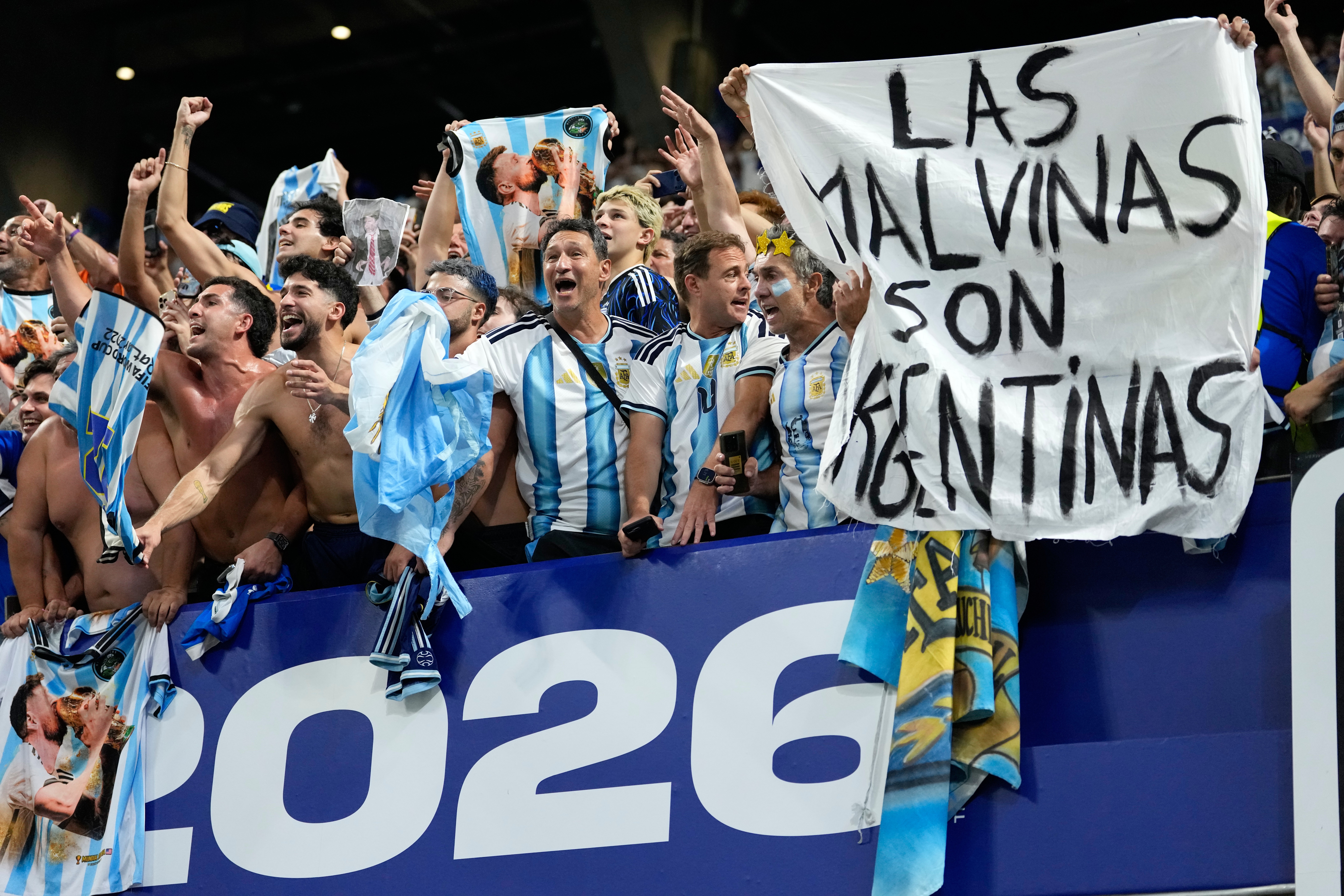
In July, Argentina defeated England 2-1 in the 2026 World Cup semifinal. Argentine players celebrated the victory on the field, unraveling a banner that read, “Las Malvinas son argentinas” [The Malvinas are Argentine].
The slogan invoked Argentina’s longstanding claim to the South Atlantic islands, over which the country had gone to war with the United Kingdom in 1982. The UK refers to this territory as the Falkland Islands, but Argentina disputes this name in favor of Malvinas.
The gesture drew criticism from the UK, and Argentina’s President Javier Milei demanded that his countrymen not mix football with politics. “We shouldn’t fall for cheap, populist, nationalist, and rancid slogans,” he announced on Radio Mitre.
Just months later, Milei made the slogan his own.
“The Malvinas are Argentine, by history and rights,” he declared in a televised address on Sept. 3. He announced plans to sanction foreign companies involved in oil exploration around the islands and proposed measures to strengthen Argentina’s ability to defend its national sovereignty.
The president’s reversal on the Malvinas is striking but falls into a broader political pattern. Facing political tension at home, nationalist leaders often turn to territorial disputes to project strength and rally patriotic support. Vladimir Putin’s invasion of Ukraine, Donald Trump’s aspirations to Greenland, and Xi Jinping’s claims over Taiwan all fit this playbook. In Argentina, presidents have long turned to the islands as a source of national unity, particularly when confronted with domestic problems.
The Malvinas took on new political urgency in the 1960s, when the United Nations recognized the sovereignty dispute within its broader decolonization framework.
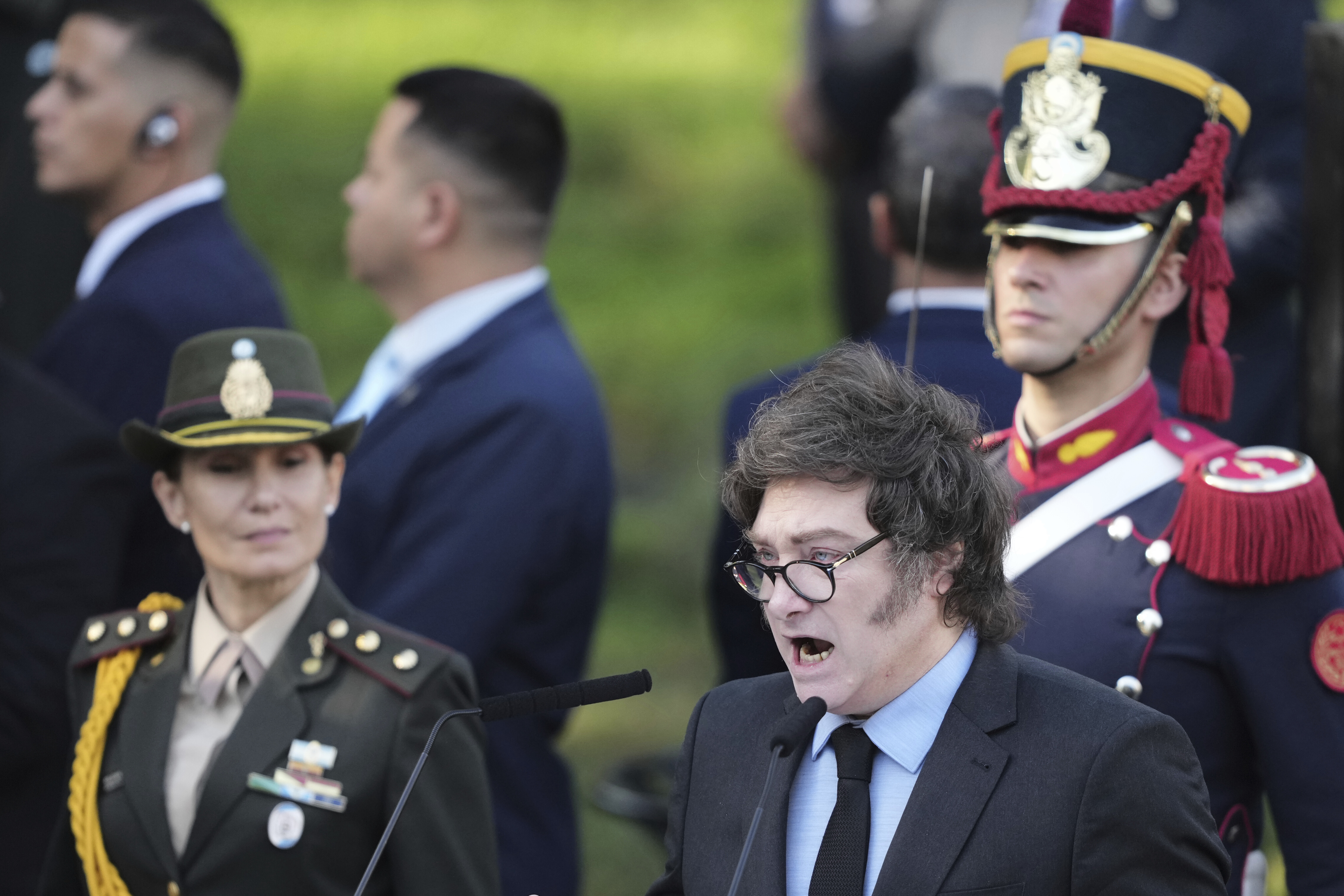
Argentine President Javier Milei speaks during a ceremony commemorating the 43rd anniversary of the conflict between Argentina and Great Britain over the Falkland Islands, known as the Malvinas Islands, at a war memorial in Buenos Aires, Argentina, April 2, 2025.Natacha Pisarenko
The UN’s call for peaceful negotiations between the UK and Argentina coincided with the military’s growing influence in Argentine politics. Throughout much of the 20th century, the armed forces repeatedly overthrew democratic governments. This cycle culminated in progressively longer and more violent dictatorships. After Juan Perón’s death in 1974, escalating violence between rival Peronist factions paved the way for a 1976 coup, amid a wave of U.S.-backed military regimes across Latin America.
The 1976 dictatorship promised to restore order and economic stability but failed to deliver. Over the next six years, the junta’s economic policies led to deindustrialization, rising unemployment, and deepening poverty. Inflation remained in the triple digits every year except 1980, and Argentina’s foreign debt surged from $8 billion to $45 billion. Alongside these austerity measures, the junta’s political repression resulted in thousands of deaths and disappearances.
By 1982, the military’s hold on power had weakened as the economy plunged into a deep recession. Strikes and protests became more frequent as Argentines denounced soaring inflation and massive human rights abuses. On March 30, the General Confederation of Labor called a general strike — the first since 1975 — and thousands gathered in Buenos Aires to demand “peace, bread, and work.” Federal police responded by arresting more than 2,000 protesters.
To bolster popular support for an increasingly fragile regime, military dictator Leopoldo Galtieri invoked the Malvinas. On April 2, the junta invaded the islands, which Britain had controlled since 1833. The regime framed the invasion as a “recovery” of Argentine territory and urged citizens to rally behind the national cause. The generals hoped to redirect public anger toward a longstanding territorial claim and to unite Argentines behind the dictatorship.
The Argentinian cruiser General Belgrano sinks amid orange life rafts holding survivors in the South Atlantic Ocean, May 1, 1982, after being torpedoed by the British Royal Navy.Uncredited
For a time, the strategy worked. Argentines gathered in Plaza de Mayo to celebrate the invasion, transforming the space where police had violently suppressed protesters only days earlier into a scene of patriotic celebration.
However, the junta had badly miscalculated, and Britain retook the islands in June. The swift defeat exposed the Argentine generals’ inability to coordinate planning and action and left more than 600 dead and over 1,600 wounded. The Malvinas War weakened the regime and ultimately accelerated its collapse. Within months, the military announced democratic elections for 1983.
The Malvinas defeat discredited the junta but did not diminish Argentines’ patriotic fervor for the islands. Instead, the return to democracy created space for Argentine governments to distinguish the legitimacy of the sovereignty claim from the illegitimate junta that had pursued the invasion.
In 2012, President Cristina Fernández de Kirchner turned to the Malvinas amid soaring inflation, rising capital flight and a growing energy deficit. After she won reelection with 54% of the vote in 2011, her second term marked a shift toward more explicitly nationalist politics. In April 2012, Fernández de Kirchner expropriated a controlling stake in the Spanish-owned oil company, YPF. She directly linked this move to the renewed claim to the Malvinas and posters declaring, “The Malvinas and YPF are Argentine” littered the streets.
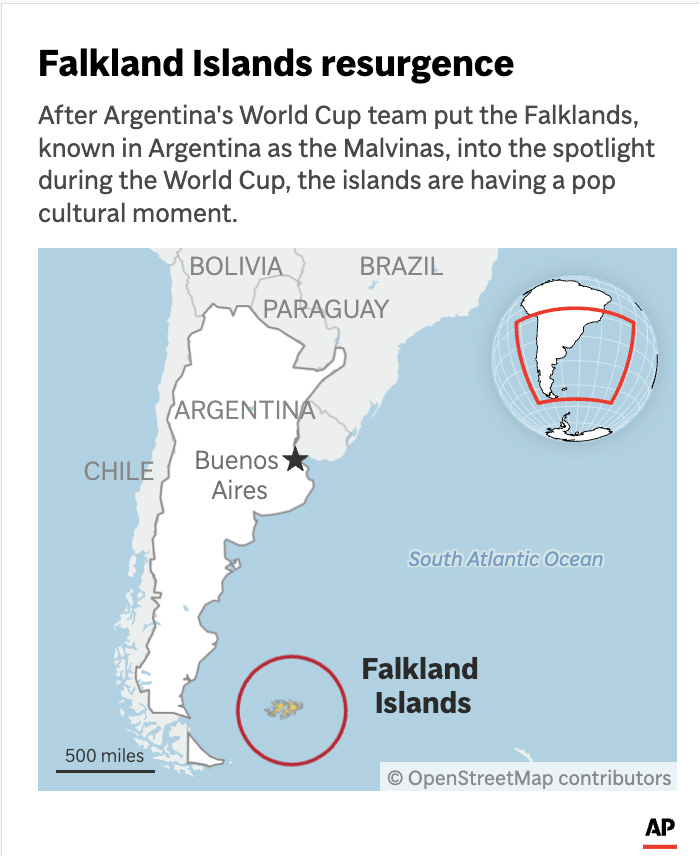
A map showing the locations of Argentina and the Falkland Islands, known in Argentina as the Malvinas.Peter Hamlin
Speaking on the 30th anniversary of the Malvinas War, Fernández de Kirchner explicitly rejected the junta’s 1982 actions while venerating the veterans’ sacrifices. The junta had been wrong to attempt “to perpetuate itself in power,” she argued. Yet she framed Argentina’s sovereignty claim over the islands as part of her own administration’s efforts in support of memory, truth, and justice for the dictatorship’s crimes. Those efforts included reopening trials against those responsible for torture, disappearances, and other human rights abuses committed during the dictatorship.
Adopting the language of the human rights movement, Fernández de Kirchner identified British control of the islands as an enduring colonial injustice. This discourse allowed her to claim the Malvinas as a national and patriotic cause while disavowing the dictatorship that had waged the war. The Malvinas thus offered a powerful symbol to connect territorial sovereignty, economic independence and a democratic reckoning with the past.
In September 2026, President Milei has drawn similar connections between sovereignty and resource extraction as Argentina clashes with Britain over the planned Sea Lion oil project.
The project, operated by British company Rockhopper and Israel’s Navitas Petroleum, could begin producing oil as early as 2028, turning the longstanding territorial dispute into a more immediate struggle over access to valuable natural resources. As Fernández de Kirchner did with YPF, Milei has framed control over natural resources as inseparable from national sovereignty.
Made By History sponsors. FOR USE ON MADE BY HISTORY STORIES ONLY.Inquirer Staff
Milei’s shifting approach to the Malvinas accompanies his bid for reelection in 2027. Since his election in 2023, inflation has fallen dramatically, but his administration’s economic record remains deeply contested. Unemployment has grown and real wages have weakened, driving discontent with the government’s austerity measures. The president’s approval ratings have fallen to 38% in recent months.
As domestic tensions rise, the Malvinas once again offers a patriotic cause capable of rallying support across political divides. Various governments have pursued radically different strategies to recover the Malvinas, yet each found in the territorial dispute a powerful language of national sovereignty and anti-colonialism.
When Argentina’s players held up a banner after defeating England, they were not pushing a foreign-policy agenda. They were drawing on a decades-old expression of national identity that has come to encompass Argentine sovereignty, resistance to colonialism, and perhaps most importantly the memory of los pibes de Malvinas, the young men sent to war in 1982.
The Malvinas remain politically useful not because Argentines have forgotten the war or its devastating consequences, but because those memories have become part of what the islands represent. The players’ banner resonated for the same reasons: the fight for the Malvinas has become part of what it means to be Argentine.
Gabrielle Esparza is a historian of Latin America, specializing in transitional justice and democratization in Argentina.
Made by History takes readers beyond the headlines with articles written and edited by professional historians. Opinions expressed do not necessarily reflect the views of The Inquirer.
After a federal judge said last week that Philadelphia District Attorney Larry Krasner may have committed federal crimes, questions quickly emerged about the prosecutor’s political future.
Krasner, an outspoken Democrat and one of the nation’s most well-known progressive prosecutors, has recently entertained entreaties to run for higher office, including a possible bid for Philadelphia mayor next year.
But in the week since U.S. District Judge Paul S. Diamond said he had referred Krasner and a top supervisor to the Department of Justice for investigation, Krasner has largely stayed quiet, and few elected Democrats have publicly come to his defense.
Behind the scenes, many insiders asked: Could this episode damage Krasner too much for him to mount a campaign for another office?
In a statement Tuesday, Krasner said he had already told another progressive considering a bid for mayor that he would defer to her.
“I’m a big believer in Councilmember Kendra Brooks,” Krasner said, referring to the City Council member who The Inquirer reported is considering a run for mayor. “Prior to these accusations, I told her that if she runs for mayor, I will not consider running.”
And he framed the legal conclusions by Diamond — a federal jurist appointed by former Republican President George W. Bush — as merely “accusations,” citing others who have been targeted for investigation by the Department of Justice under President Donald Trump.
He referenced the New York attorney general, a former FBI director, and a DOJ employee who was charged after throwing a sandwich at a federal agent and has since become a symbol of resistance to Trump’s administration.
“Ask Letitia James, James Comey, the ‘sandwich man’ or the guy who took peeling paint from the reflecting pool what they have to say about accusations,” Krasner said. “Or ask dozens of innocent people whose exonerations this DA’s office supported what they say about accusations.”
Krasner’s statement Tuesday was one of the first public comments he has made regarding the case since Diamond’s criminal referral, aside from a brief statement last week saying that he disagrees with Diamond’s conclusions and could not comment further because the matter is pending in court.
The uncertainty around Krasner alsohas some city Democrats contemplating a dramatic outcome: Could criminal charges or judicial discipline sweep Krasner from office before the end of his term in 2030?
And if that happened, who would replace him as the city’s chief law enforcement officer?
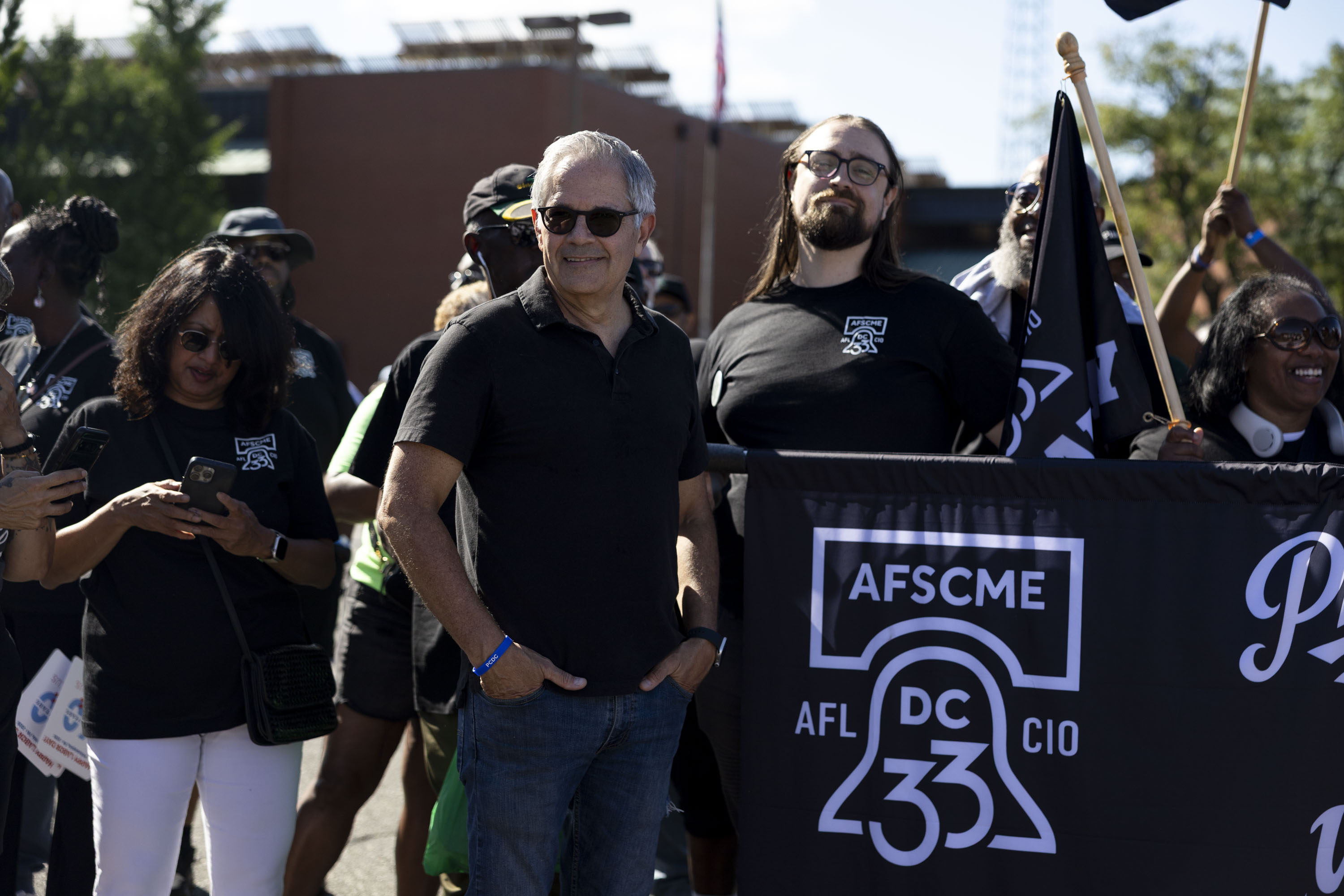
District Attorney Larry Krasner standing with District Council 33, for the 39th Annual Tri-State Labor Day Parade on Sept. 7.Tyger Williams / Staff Photographer
At least two elected Democrats have spoken to ward leaders about filling the district attorney’s role if Krasner were to be forced from office, according to sources familiar with the conversations who were not authorized to speak about them publicly.
But some of Krasner’s allies say this is all much ado about nothing. They maintain that Diamond’s legal conclusions and the referral of the matter to the Department of Justice were politically motivated and that Krasner will weather it, as he has past tribulations.
“They’re trying to do something that they’ve been trying to do for years, which is go after Krasner’s head,” said Sergio Cea, political director of the progressive group Reclaim Philadelphia, which has supported Krasner since his first run for office in 2017. “What they’re trying to do is roll back the gains that Philly voters pushed forward.”
Silence from elected officials
Krasner has always been something of a political outsider. He has never been endorsed by the city’s Democratic Party and has been critical of its leadership.
City Councilmember Nicolas O’Rourke, a member of the progressive Working Families Party and a longtime supporter of the district attorney, said in a statement Tuesday that he has confidence in Krasner’s ability to lead his office.
“There’s no question,” he said. “DA Krasner can and should be doing the work that Philadelphians have tasked him with through their votes.”
Aside from O’Rourke, most of the city’s top officials have declined requests for comment about Krasner’s recent legal jeopardy, including some of his ardent supporters.
Some say that Krasner has not asked them to weigh in, and that they are hesitant to take a position on a complex legal issue. Others say they do not want to distract from a midterm election that is just six weeks away.
Jack Inacker, a Democratic strategist based in Philadelphia, said he was not surprised that few elected Democrats have spoken on Krasner’s behalf.
“You’ve got these major dustups all the time, it seems now,” Inacker said. “Krasner being so antagonistic to everyone doesn’t get him allies.”
Inacker also said the courtroom allegations are “esoteric in nature,” making it challenging for elected officials to stake a position.
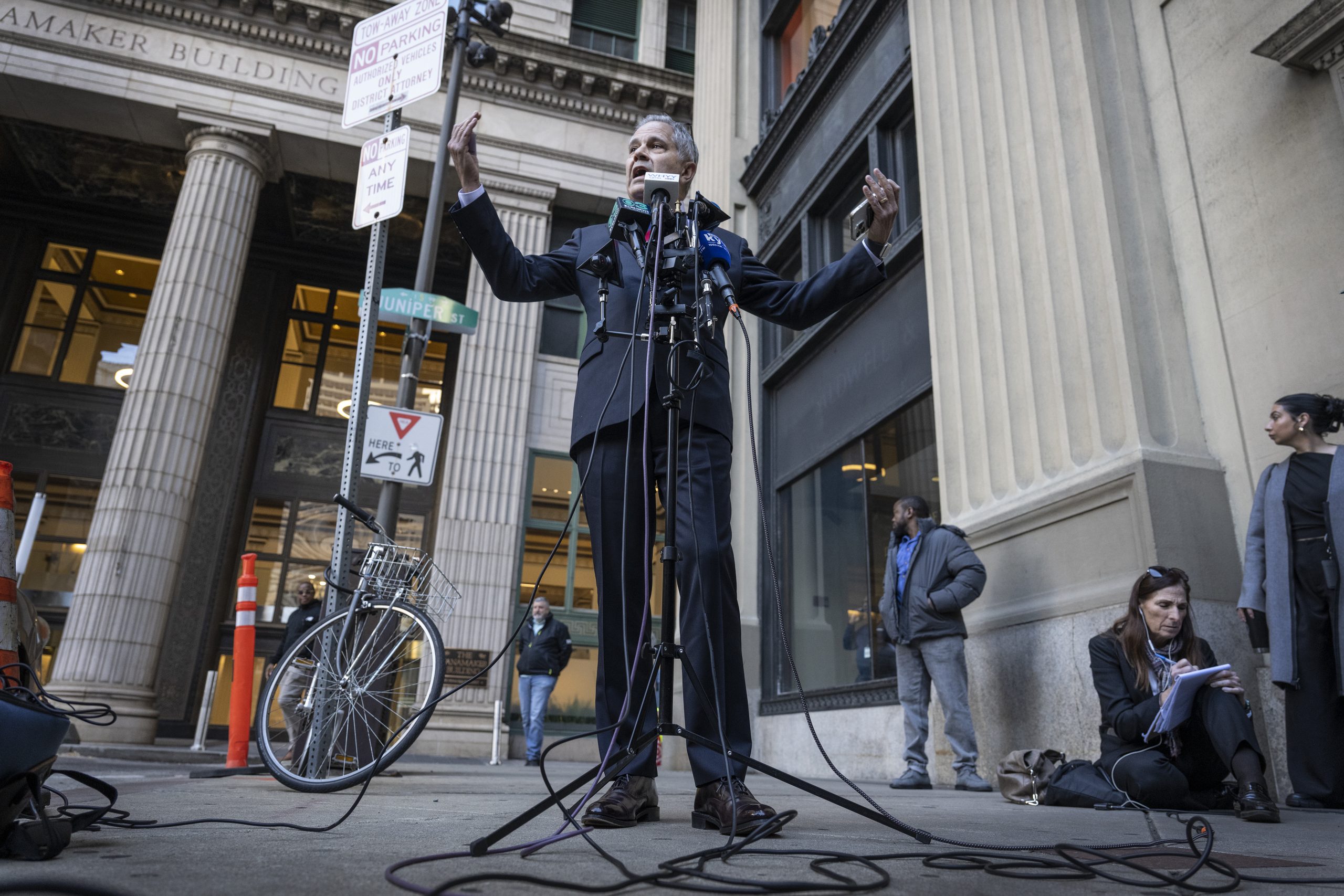
Newly reelected District Attorney Larry Krasner speaks to reporters during a news conference outside the District Attorney’s Office on Nov. 5, 2025.Jose F. Moreno / Staff Photographer
The case before the federal judge centers on Dennis Johnson, who has sought for more than a decade to have his 2009 murder conviction overturned. In 2022, a former assistant district attorney working for Krasner filed paperwork to support Johnson’s bid.
But four supervisors in Krasner’s office later testified that they found errors in that 2022 brief, and that Krasner was involved in conversations about attempting to mislead the court to cast the former prosecutor as rogue.
Krasner has denied wrongdoing.
Brian Hart, a Democrat who has been critical of Krasner and served as a media adviser to Dugan’s campaign, said this episode is more fraught for Krasner than his 2022 impeachment.
“The allegations aren’t coming from just Republicans,” said Hart, a public relations strategist. “They’re coming from testimony within his own office.”
The mayor’s race question
Some activists on the left wing of the city’s Democratic Party have said they feel emboldened to mount a serious challenge against Parker, who will be up for reelection next year. They cite recent wins by progressives both in the city and nationally.
And eight months out from the May primary election, several prospective candidates, including Brooks, are mulling whether to launch a campaign.
When asked then whether he might consider a future campaign for mayor — or even U.S. Senate — Krasner responded: “Do I have a plan to run for these offices today? No. But … it would be foolish for me to completely rule out those possibilities.”
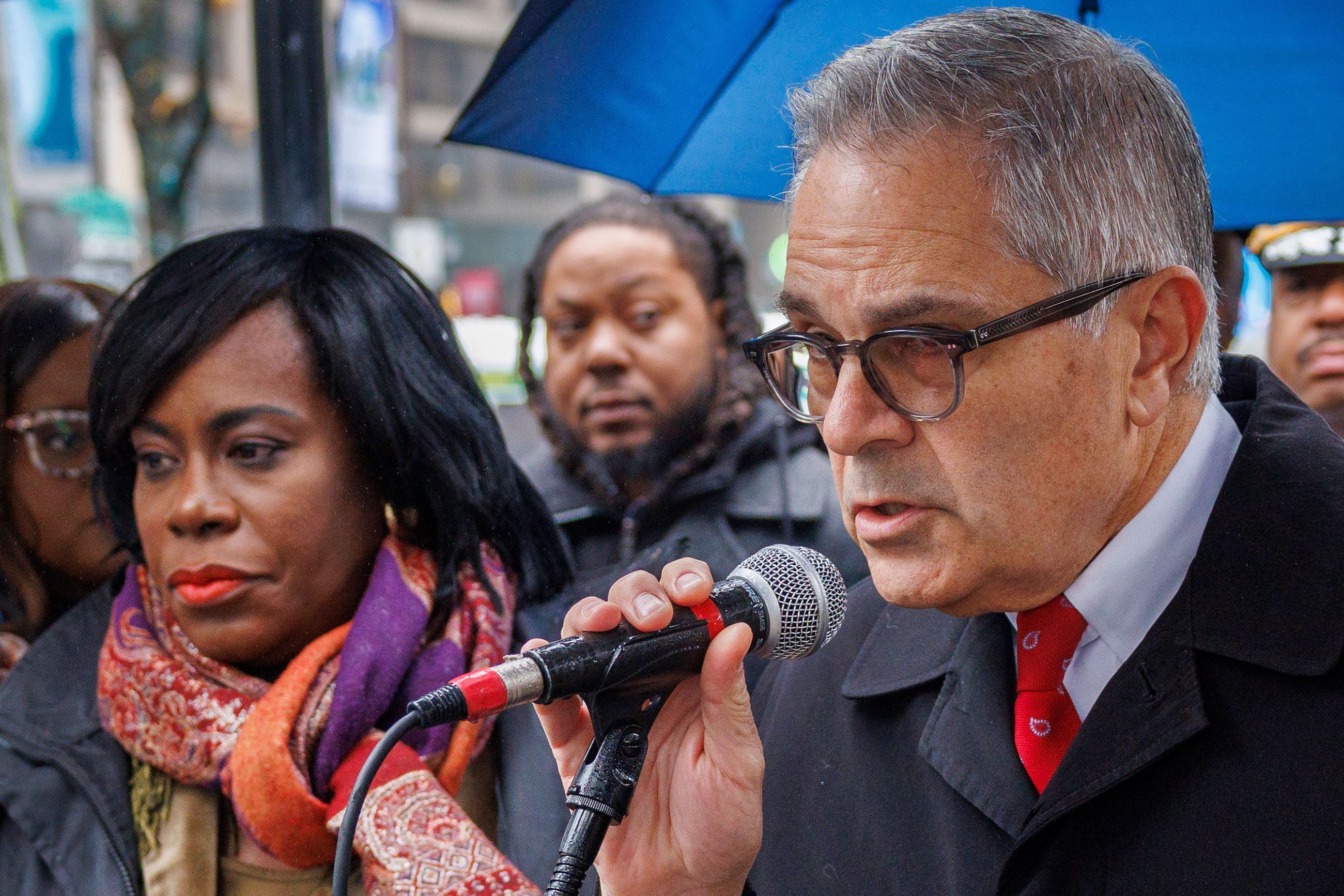
Philadelphia District Attorney Larry Krasner, seen here with Mayor Cherelle Parker at a news conference at Dilworth Park on Dec. 16, 2024.Alejandro A. Alvarez / Staff Photographer
Larry Ceisler, a public affairs executive based in Philadelphia, said a federal criminal investigation of Krasner could pose a logistical problem if it was conducted while he was running for mayor.
But politically speaking, Ceisler said, it might not be an impediment. An investigation by the Department of Justice under Trump — an entity many Democrats distrust — could rally progressive support.
“I think he would probably run with it as a badge of honor,” he said.
Ceisler pointed to former Mayor John F. Street, who in 2003 was locked in a tight race for reelection when police found an FBI bug in his office. Street blamed Republican President George W. Bush’s administration, and he went on to win the election a few weeks later.
“When these things happen, everybody puts on their respective jerseys, so the Krasner people are going to say, ‘It’s political,’” Ceisler said. “I think to the Krasner constituency, especially if he wants to run for mayor, or do something else, I don’t think this fazes them.”
Weighing a post-Krasner future
It is unclear where any potential criminal investigation or disciplinary probe of Krasner and his office might lead, and legal experts have said that a hypothetical investigation would likely take months.
But some Philadelphia Democrats are already contemplating what would happen if Krasner cannot finish the term that he began this year and that ends in 2030, with some quietly discussing contingency plans to fill the office.
Under state law, in the event of a vacancy, the city’s Common Pleas Court judges vote by secret ballot to appoint a new district attorney. The appointed interim district attorney would serve until the next general election. Those elections take place in even-numbered years.
During the three-week gap between when Williams resigned and Hodge was appointed, the district attorney’s office was led by Williams’ first assistant district attorney, Kathleen Martin.
Krasner does not have a first assistant district attorney. Robert Listenbee, who formerly held the role, retired in January, and the legally required position remains unfilled.
Staff writers Chris Palmer and Ellie Rushing contributed to this article.
Rep. Ro Khanna of California leaned forward in a patterned armchair as a rooster crowed outside, listening as a group of farmers in rural Sharpsville, Pa., told him that Democrats came across as inauthentic and insincere.
“Don’t promise the farm and not come up with it,” said Joe McCann, who grows hay and raises pigs. “And don’t lie to people. I can take anything, but if someone’s standing there physically lying to me and blowing smoke up my butt, that’s not going to cut it.”
Khanna agreed, fretting that his party had for too long “looked down” on blue-collar voters. Then he quipped: “How do you think I’m doing? Lying?” McCann, 78, said he didn’t think so.
Khanna (D., Calif.) has emerged as one of the most prolific surrogates of the 2026 cycle. He has endorsed more than 70 candidates for seats in the House, Senate, and state legislatures, positioning himself on the front lines of a burgeoning progressive movement as discontent with the status quo has propelled a series of left-wing candidates to primary victories.
But there was another reason for his vigorous political itinerary this campaign season: a possible presidential run in 2028. He wants to see the left’s power grow within the Democratic Party. He wants its policy prescriptions, such as universal healthcare and taxing the rich, to shape the conversation about who the party’s nominee for president should be.
And he knows that none of that is likely to happen if the left bombs in November.
A little 2026, and a little 2028
Despite their major wins in primaries this season, progressives’ ability to sway the general electorate in competitive races remains untested. A new poll released by the New York Times and Siena University on Sept. 15 found that a slight majority of voters disliked socialism.
In Khanna’s view, the only way the movement can change that perception is if it figures out how to talk to the working class.
Khanna, born outside Philadelphia to immigrants from India, has been preparing for his political future out in the open. In the past two months, he has taken many of the steps of an early presidential candidate.
He held a town hall with Latino voters in Nevada. He told the Democratic National Committee in a searing speech that the party needed to turn its back on corporate interests and military aid to Israel. He also ventured abroad, leading a congressional trip to the Vatican to discuss safeguards against artificial intelligence with Pope Leo XIV and visiting the West Bank, where he was detained by armed Israeli settlers.
Icons of the progressive movement, such as Sen. Bernie Sanders of Vermont and Rep. Alexandria Ocasio-Cortez of New York, have been choosier with their high-profile endorsements this year. Khanna is lesser known, and has work to do to change that. The eagerness can occasionally backfire; he has expressed regret for his endorsement of Graham Platner, the Maine Democrat who withdrew his Senate bid in July after a woman accused him of rape.
“He’s hustling,” said Bill Hyers, a progressive strategist who worked with two House candidates — Kat Abughazaleh in Illinois and Chris Rabb in Pennsylvania — whom Khanna endorsed in primaries this spring. Rabb won. Abughazaleh lost.
Added Hyers: “He’s just been out there really working hard and he’s the only person on the left I have seen where there’s no doubt he’s running.”
Over five days in Pennsylvania in July, Khanna, who grew up outside Philadelphia in suburban Bucks County, rallied for two House candidates whose primary victories in May stood out as early triumphs for the progressive movement. Their very different districts illustrated both the advantages and challenges facing the progressive left this fall.
In Philadelphia, Khanna talked about liberal priorities like “Medicare for All” with Rabb, a democratic socialist who is virtually assured of victory in November in his deep-blue district. In a battleground district in Allentown, Khanna discussed tariffs and job losses with union factory workers to help the candidacy of Bob Brooks, a firefighter and labor leader who faces a more difficult path to victory in November against Rep. Ryan Mackenzie, a Republican.
On behalf of both candidates, Khanna offered a similar pitch: The wealth and technological innovation of his high-income Silicon Valley district should be shared more widely. His agenda of “new economic patriotism,” he said, would spread technology jobs among Midwestern states and redistribute profits through a wealth tax.
“If we just are running on centrist mush that is put out by ChatGPT, bland and inoffensive, we’re not going to win,” Khanna told a reporter in the SUV he was riding in for the Pennsylvania swing. “It has to be a transformative vision.”
Khanna was generally well-received by an electorate in Pennsylvania that has soured on Republicans and seems increasingly willing to give Democrats another chance. But he also encountered the enduring skepticism of voters who see their leaders as having failed them.
“He comes across very progressive with his plans, but I don’t know that he’ll be able to carry them through,” said McCann, after Khanna’s conversation in Sharpsville. “This area that I live in right now is a depressed area — and anybody that gives anybody around here a vision of hope is the person they’re leaning toward. They just have that vision of hope that this might happen, and it never does.”
In an interview, Khanna said he planned to decide about 2028 between Thanksgiving and Christmas, after talking to his family and determining how viable he could be in battleground states.
His trip across Pennsylvania was intended in part to assess that. A progressive contender for president, Khanna said, would have to “do well in the Black South” and “do well in states like Pennsylvania.”
He said he was also forging bonds in southern states, including in South Carolina, where his partnership with Rep. Jim Clyburn and his daughter Jennifer Clyburn connects students at historically Black colleges and universities with scholarships from tech companies.
Khanna has recruited alumni of both progressive and establishment campaigns. He is being advised by Ron Klain, the chief of staff to former President Joe Biden, and has enlisted longtime advisers to Sanders such as Julian Mulvey and Jeff Weaver, according to a person familiar with the partnerships who requested anonymity to describe internal staffing issues.
The road ahead, plus AOC
A dismal progressive showing in November could instantly set back Khanna’s fortunes. So could something else: Ocasio-Cortez. If Ocasio-Cortez, the breakout star of the left, runs for president, she would appeal to the same liberal constituency as Khanna but with an enormous head start in popularity.
Khanna called Ocasio-Cortez an “extraordinary talent,” and dismissed the idea that she is a rival.
“I have a tremendous amount of respect and admiration for her,” he said, adding, “I have genuinely never discussed what she wants to do in the future.”
Khanna said he talked with Ocasio-Cortez occasionally in the halls of the Capitol. He communicates more frequently with Sanders, speaking with him on the phone about AI and answering the senator’s queries about the chances of California voters passing a tax on billionaires this fall.
Khanna readily acknowledged that he lacked the political “star power” of his left-wing compatriots. “I’m not delusional,” he said.
His speeches are also a little heavy on policy and light on the kind of soaring rhetoric that voters often look for in a president.
That was the case in Pennsylvania, but he also tested catchphrases such as “economic patriotism,” and retail politicking seemed to come easily enough for him. One particular line, when he argued that President Donald Trump had not followed through on a simple promise — to replenish sand that had washed away along Lake Erie — got a good response from voters.
“I’ve seen a lot of clips of him online — I thought he was much more charismatic in person,” said Gideon Tsoutsouris, a college student in Pittsburgh.
Khanna portrayed his low profile as an asset, noting that other successful candidates — including former Presidents Jimmy Carter and Bill Clinton — began their bids as long shots. It’s an advantage, he said, “to go meet people and interact without the entourage.”
Khanna, a multimillionaire, likewise dismissed potential criticism of his wealth, which largely stems from his wife’s father, the founder of an automotive company.
“I tell people my own story of growing up middle-class in Bucks County, taking out loans for law school in my 20s, having forbearance and massive credit card debt,” Khanna said. “I think people will see that I had a middle-class life and even economic challenges.”
Hyers, the progressive strategist, said Khanna would likely face criticism for his long-standing relationships with the tech industry.
“The perception in a lot of the circles that I run in is, ‘How much money has he taken from the bad guys?’” Hyers said. (Khanna has since broken ties with many wealthy tech executives and called for taxing them more heavily.)
When Khanna’s tour rolled into Pittsburgh, he hopped around town, chatting wi,th union leaders who are faculty members at a local university, nurses fighting for a labor contract and a group of college students.
Before addressing the students, he spoke with two groups protesting his visit on nearby street corners: the pro-Israel Beacon Coalition and the pro-business Americans for Prosperity, a creation of the conservative Koch family. One of the AFP protesters urged him to reject socialism.
The moment illustrated another challenge that Khanna would face in a presidential primary. He may be too progressive for moderates, and not progressive enough for some on the fractious left.
“I don’t believe the government should take over the means of production,” Khanna told the protesters. But, he added, many young people were turning to socialism “because they can’t afford rent, they don’t have a good job. They lost the American dream.”
Gov. Josh Shapiro has raised more than $60 million toward his reelection effort since he took office, his campaign said Tuesday.
According to the campaign, those preliminary figures mean that the first-term Democratic governor has added $13.3 million to his war chest since June, as he maintains a significant fundraising edge over his Republican opponent Stacy Garrity.
Filings on Tuesday showed Garrity had raised around $1.8 million this cycle, with her campaign coffers nearing $3 million. After spending $1.5 million, she will enter October with roughly $1.4 million cash on hand.
So with a massive cash advantage, where will Shapiro’s campaign money go? And could anyone else benefit from his spending?
Even as he pulls ahead in polls, Shapiro has spent heavily on advertising. His campaign has promised he’s keeping his foot on the gas through Election Day in efforts to secure his own victory andelect Pennsylvania Democrats up and down the ballot in hopes of flipping the state Senate and electing Democrats in four battleground congressional districts. He’s donated roughly $5.7 million in total to the state party to fuel theeffort, an additional $2.5 million since June, according to his campaign.
Beyond the November election, he’s widely expected to launch another campaign as a 2028 presidential prospect. Although the law prevents him from transferring his gubernatorial campaign money into a political action committee that funds a run for president, that doesn’t mean he’ll spend all his fundraised money before this year’s election, experts said.
In the governor’s race, the first checks he owes are paying for campaign staff salaries, spending money on advertising, and renting leases for field offices, among other costs, according to campaign experts. As a careful politician, he’d likely also want to reserve a fair amount of cash for surprise developments in the race, they said.
But after all of Shapiro’s receipts are accounted for, experts said, a potentially large stock could remain available, presenting him with options for how to spend it — if at all.
Daniel Weiner, the director of elections and government at the Brennan Center for Justice, said Shapiro has several options available.
“It is incredibly common for candidates who are not facing an especially competitive race to still try to raise money hand over fist and amass a war chest,” Weiner said. “It can be used to fund a future run for office of one sort or another. It can also be used, increasingly in this era of very deregulated money in politics to just build a general political machine.”
Keeping it in the party
Shapiro, who has maintained high favorability among both Democrats and Republicans, has established himself as a formidable fundraiser, bringing in dollars from across the commonwealth and the nation. Donors can give him as much as they’d like, since there is no limit on political contributions in Pennsylvania, said Matthew Foster, a professor of political science at American University.
“There’s a lot of ways for politicians to use political cash to help their allies and to help their team,” said Michael Beckel, an expert on money in politics at Issue One, a Washington, D.C.-based bipartisan nonprofit. “They can spread that money around to help people who need it. And there’s certainly a lot of people who might potentially want help from a big name like Governor Shapiro.”
Pennsylvania law allows Shapiro to transfer endless amounts of money from his campaign account to other state candidates. His campaign said he had not given any money directly to state candidates,but that he has supported them in other ways.
He is also not allowed to transfer money from his gubernatorial campaign to any congressional candidates.
Instead, he has poured money into the state party.
Pennsylvania Gov. Josh Shapiro accepts the endorsement for a second term as governor at the state Democratic Party’s winter meeting in Harrisburg on Feb. 7, 2026.Gillian McGoldrick
Since last fall, Shapiro has given $5.7 million to the state Democratic Party and its election effort. That money is used to benefit Shapiro as well as state Senate and congressional candidates by pooling funds for their field offices, signage and volunteers.
“A donation to the state party historically has helped get the vote out statewide,” said Philadelphia-based Democratic strategist Adam Erickson.
Plus, donating to the state party versus national groups helps to ensure the money is spent on Pennsylvania races, Weiner added.
Pennsylvania Republicans have held on to the state Senate for more than 30 years, even as the House chamber and governor’s mansion have swapped partisan control and are currently both occupied by Democrats.
This year, Democrats have “a strong opportunity to flip the state Senate,” Erickson said, but that the effort will take “an unprecedented amount of spending” from Shapiro and the state party.
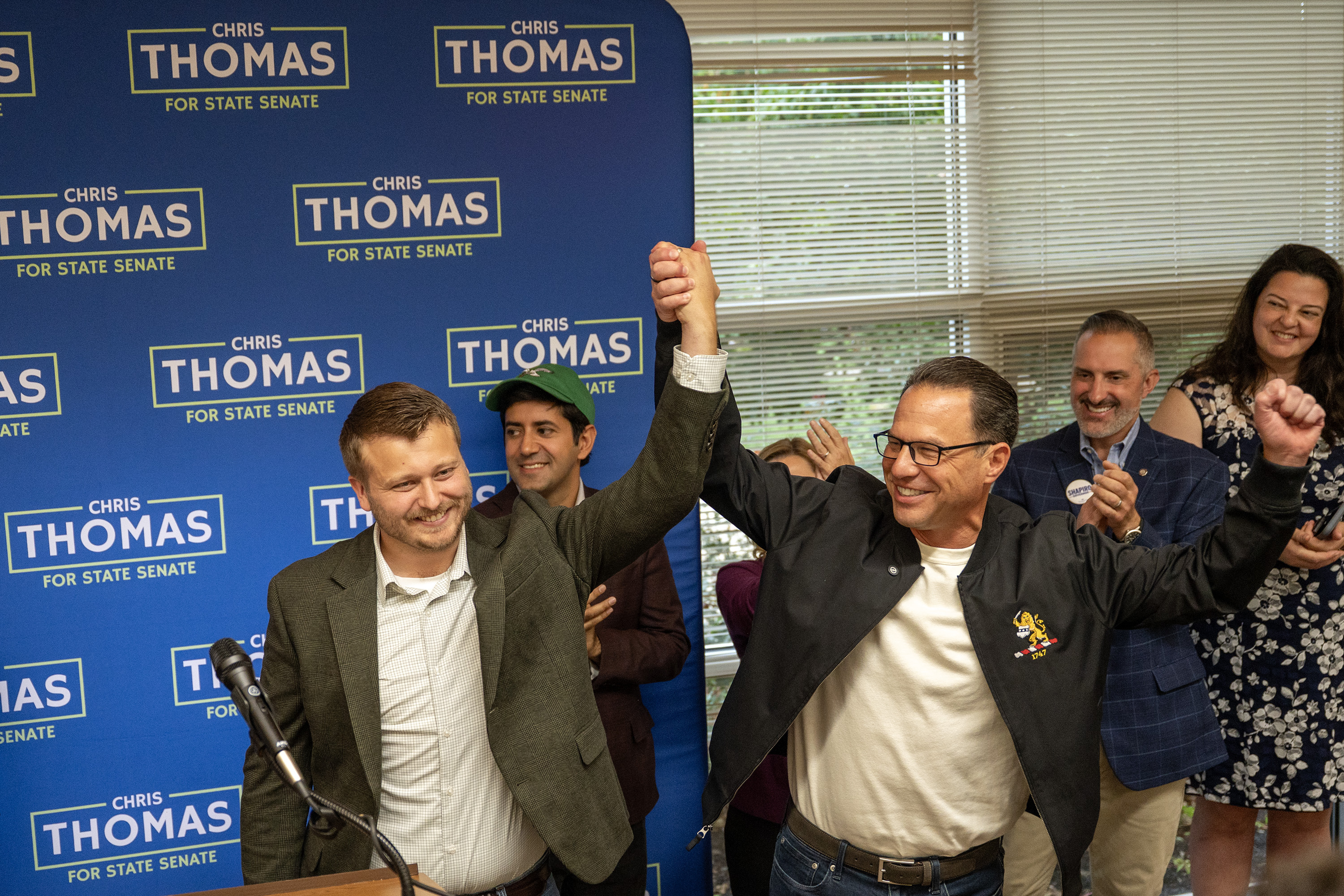
Often, Shapiro has appeared alongside candidates at campaign events, rather than donating to them. On Sunday, Shapiro joined Democrats in Chester and Montgomery Counties to kick off door-knocking and phone-banking efforts benefitting several legislative candidates, such as state House candidate Elizabeth Moro in Chadds Ford and state Senate candidate Chris Thomas in Harleysville.
“Under Governor Shapiro’s leadership, the Party is rallying support all across the Commonwealth and putting Democrats in a strong position to win everywhere this November,” said Manuel Bonder, a spokesperson for Shapiro’s campaign.
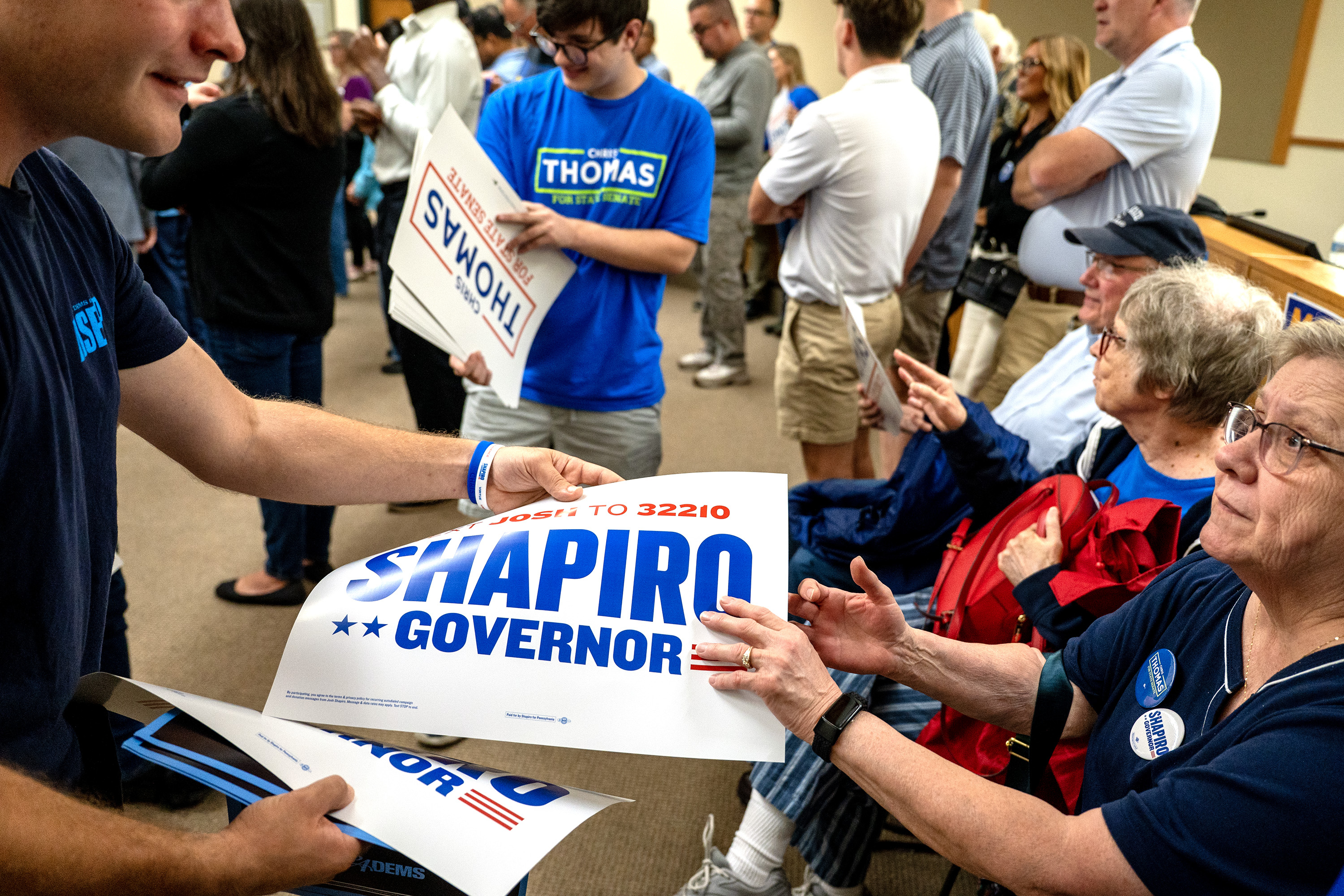
Campaign volunteers hand out sign to supporters of Gov. Josh Shapiro and Democratic Pa. Senate candidate Chris Thomas at a rally in Towamencin, Montgomery County before heading out to canvass Sunday, Sept. 29, 2026. Tom Gralish / Staff Photographer
Tim Ford, an attorney who handles legal concerns for Democratic campaigns in Pennsylvania, said Shapiro’s sizable bank account is “also a flex to show he’s capable of raising this kind of money,” and another clue that he may be eyeing a higher office.
If Shapiro does choose to run for president, he’s not allowed to legally transfer his state-level campaign fundraising to a federal political action committee associated with his campaign.
“One thing that I think people get wrong is they believe that he’s raising money for his next office,” Erickson said.
Governor Shapiro (left) and Democratic congressional candidate Bob Brooks (right) greet supporters during a campaign event at the United Steelworkers Union Hall in Bethlehem on July 26, 2026.David Maialetti / Staff Photographer
That would put him at a slight disadvantage compared to any sitting federal elected officials who can spend their campaign funds on a presidential run and who are also speculated 2028 presidential contenders, including U.S. Rep. Alexandria Ocasio-Cortez and U.S. Sens. Mark Kelly and Jon Ossoff, who has been the top fundraiser this midterm cycle.
Still, Shapiro’s cash stockpile “sends a message that he’s been a successful fundraiser,” Beckel said. “While past performance doesn’t guarantee future results, he certainly would try to [leverage] that to his advantage to say, ‘I’ve been a successful fundraiser in the past, I will be a successful fundraiser in the future’.”
Former staff or associates could create a federal super PAC, a type of political action committee that can take in and spend unlimited contributions but must do so independently of a candidate and without directly coordinating with the campaign. Shapiro could repurpose his state campaign account into that super PAC, Weiner said, but he would have no say on the messaging in ads or how money is spent.
While this practice of loose coordination skirts the spirit of the law, Weiner said it often goes unenforced.
“In theory, super PACs are supposed to be independent from candidates, but in practice, they work hand-in-glove with them,” he said.
Former staffers of Maryland Democratic Gov. Wes Moore, another potential 2028 contender, have established the Unity First PAC. Moore has headlined fundraisers for the group, but is not technically in control of the PAC.
California Democratic Gov. Gavin Newsom, who may also run for president, launched a super PAC called Campaign for Democracy. The PAC has poured $1.7 million into state party and legislative committee races, mostly in South Carolina, where Democrats will hold the first contest of the presidential primary race in 2028.
There are no official records that Shapiro, or those associated with him, have created a super PAC, according to FEC filings.
Super PACs have earned a negative reputation in some circles, particularly among Democrats who view them as a means to give wealthy donors outsized influence on elections. But in 2028, Shapiro and other Democrats will be under pressure to use all the tools available to them, Weiner said.
It’s a difficult bind, said Faith Williams, who works on anti-corruption and accountability efforts at Common Cause, a democracy-focused nonprofit.
“Our system is not good,” she said. “But at the moment everyone is playing in it, and that I think that makes it even harder to reform it because it’s hard to have the genuine desire to reform a system that currently benefits you.”
Shapiro could also develop a nonprofit organization with his campaign funds. The 501(c)(4) groups, which can spend on political ads but cannot make electoral activity their primary focus, are under no legal obligation to disclose their donors. In some cases, this opens the door to donations from so-called “dark money” groups, or those that obscure the role of their funders.
Experts pointed out that he could also use his leftover money for his second gubernatorial inauguration or donate it to charity. And, in an unlikely maneuver, Williams said Shapiro could refund his donors and ask everyone to donate again to a federal campaign.
But the best way to get from Pennsylvania to Pennsylvania Avenue, Erickson said, would be to ensure success in the statewide elections this year.
“Playing a large role in flipping the state Senate will put him in the best position going into 2027 and beyond for any larger aspirations,” he said.
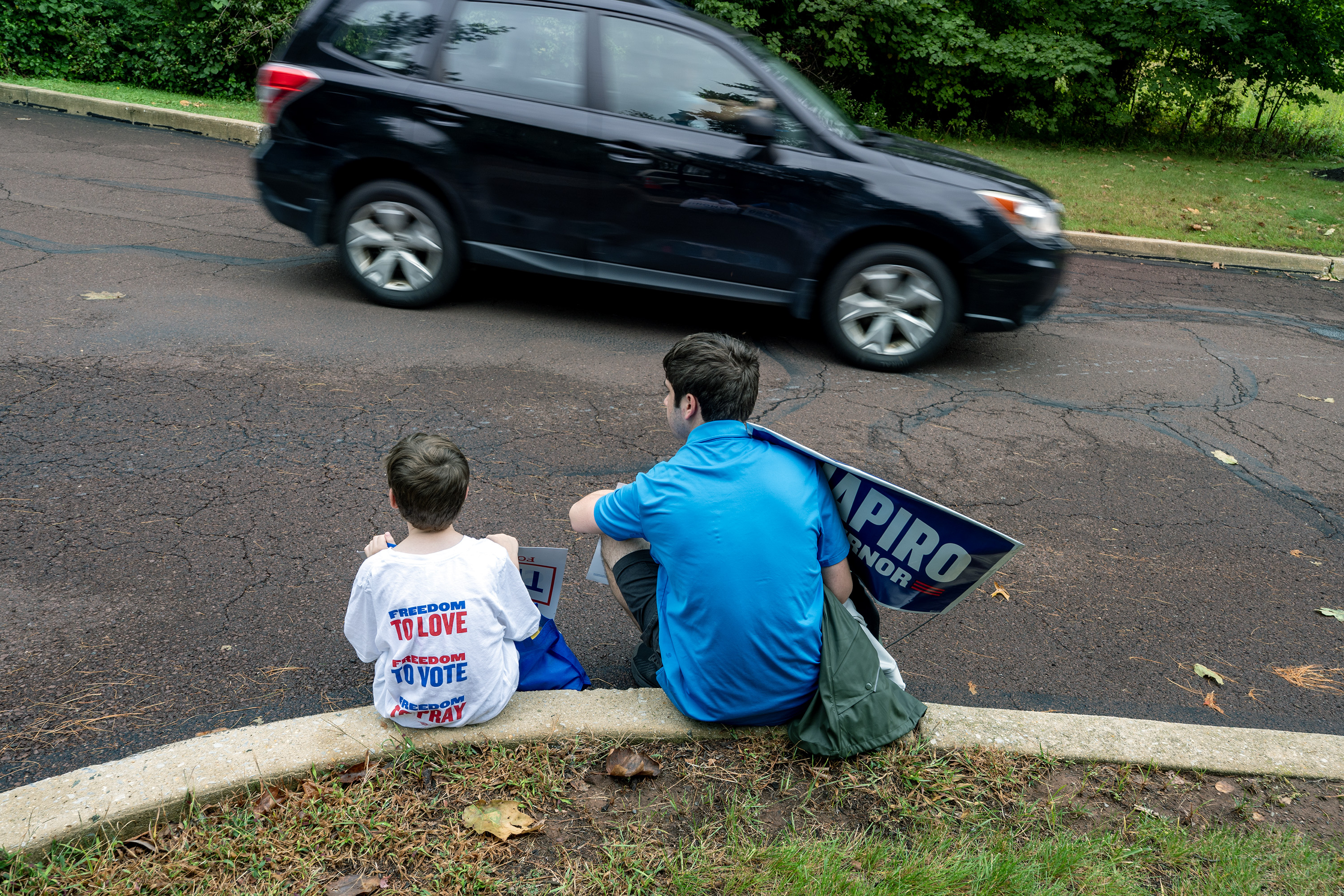
Brothers Desmond DeBaun, 5, and David Hayman, 16, after a rally with Gov. Shapiro and Democratic Pa. Senate candidate Chris Thomas in Montgomery County Sunday, Sept. 29, 2026. Tom Gralish / Staff Photographer
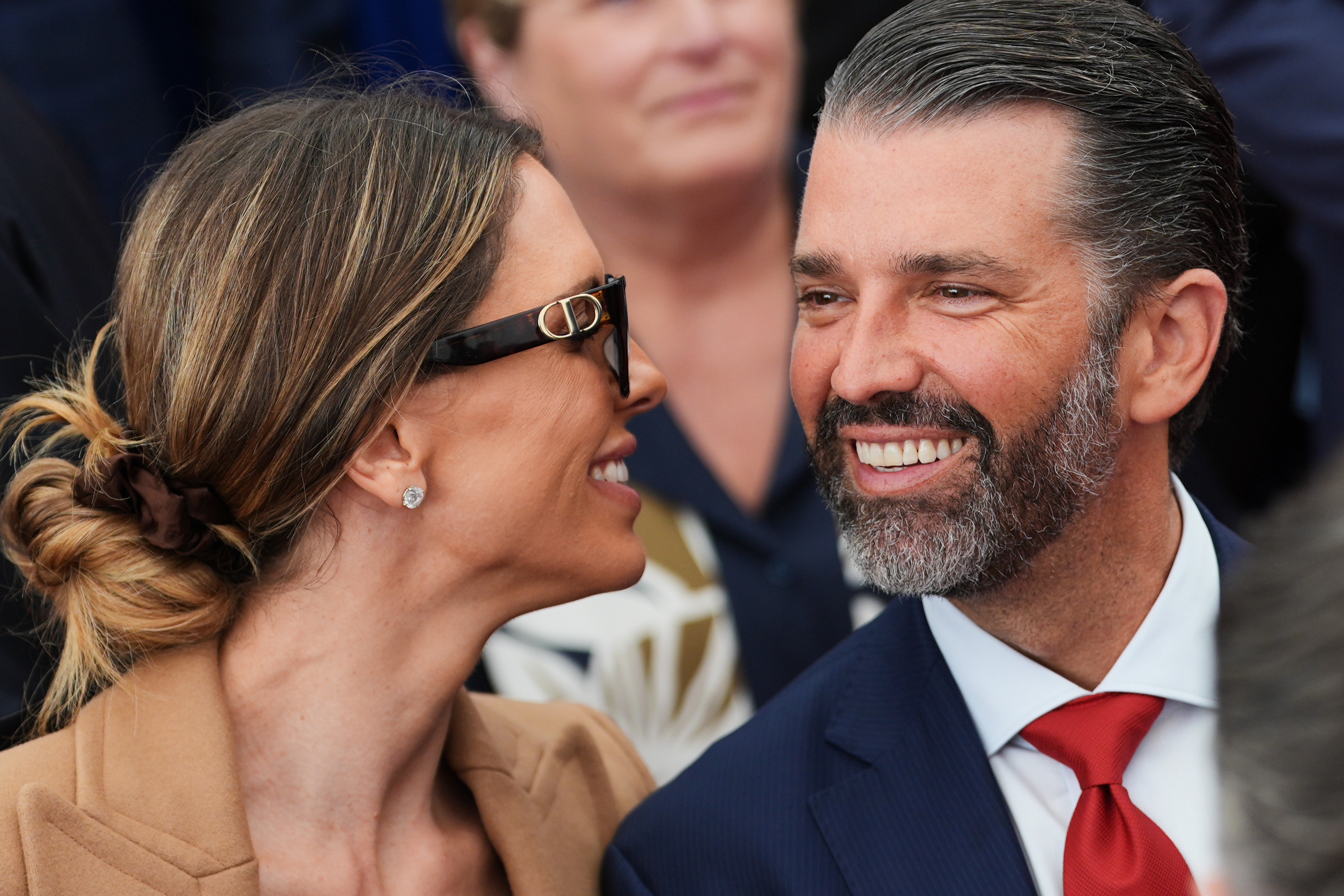
WASHINGTON — Republican Sen. John Curtis of Utah is calling on the Senate Judiciary Committee to investigate whether Donald Trump Jr. used his proximity to the presidency for financial benefit, after his recent wedding party was partially bankrolled by a Russian oligarch.
In a letter sent Tuesday, Curtis called on the committee to subpoena Trump Jr. over his business dealings, relationships with foreign individuals and entities, gifts, or other benefits he has received and any instances in which his relationship to President Donald Trump, a Republican, “was invoked or understood to provide value.” Curtis called for the same scrutiny of Hunter Biden, the son of former President Joe Biden, a Democrat.
“The country should not have to accept one standard for the family of a Republican president and another for the family of a Democratic president,” Curtis wrote in the letter addressed to GOP Sen. Chuck Grassley of Iowa, chairperson of the committee, and Sen. Dick Durbin of Illinois, the top Democrat on the committee.
The letter comes as a few Republicans have shown a growing willingness to criticize Trump after largely avoiding public breaks with the president during much of his second term. The unpopular war in Iran, high gas prices, and mounting concerns about the GOP’s prospects in November’s midterm elections have brought increased scrutiny of the president from within his own party.
The Trumps say it was a generous gift from a dear friend
ProPublica first reported last week that Umar Kremlev, who has close ties to Russian President Vladimir Putin, helped pay to rent a private island and for a fireworks show when Trump Jr. and socialite Bettina Anderson were married in the Bahamas in May.
In a subsequent post on her Instagram page signed by the couple, Bettina Trump wrote that Kremlev, head of the International Boxing Association, was a “dear friend” who “very generously hosted two incredible nights of celebrations for us AFTER our wedding.”
The president, who did not attend his son’s wedding, defended Kremlev’s involvement but said the money would be paid back.
Curtis calls the funding ‘corruption’
Curtis, first elected to the Senate in 2024, vowed upon taking office not to shy away from disagreeing with Trump. He has publicly broken with the president several times since, including rejecting Trump’s calls to eliminate the Senate filibuster. In a July Wall Street Journal op-ed, Curtis wrote that “under no circumstance” would he support efforts to end or alter the filibuster, which requires 60 votes to advance most legislation in the 100-member chamber.
Curtis’ criticism involving Trump’s son goes beyond those policy disagreements. Curtis last Friday called the gift “corruption” and vowed to say more in the coming days.
“A Russian oligarch paid for a lavish wedding after-party for Donald Trump Jr., which to me just stinks. It’s corruption. I don’t like it,” Curtis said in a video posted on social media.
On Tuesday, Curtis wrote on social media that Republicans “nearly wore out the subpoena machine investigating Hunter Biden’s foreign relationships” and that they “should not unplug it now.”
Any congressional committee can launch an investigation at any time. In 2017, Grassley led a Senate Judiciary Committee investigation of the Trump campaign’s ties to Russia, including a meeting that Trump Jr. held with Russians in 2016. The panel has also conducted multiple investigations of Hunter Biden.
Clare Slattery, a spokesperson for the Senate Judiciary Committee, confirmed that the committee had received Curtis’ letter but indicated that a hearing before the end of the year would be difficult, citing the limited Senate schedule and the amount of time it takes to prepare for an investigative hearing. She did not say whether the committee will investigate.
Durbin said in a statement that Curtis had made a “good faith request” and that while Hunter Biden has given a sworn deposition in the past, Trump Jr. has not.
“For the Committee to ignore this matter is to run the risk of being complicit in a coverup. I will join in supporting Senator Curtis’ request,” Durbin said.
Republicans investigated the Bidens
Grassley worked alongside House Republicans in 2023 and 2024 to investigate whether Hunter Biden used his father’s name and political position to benefit his business dealings with foreign interests. The Biden family dismissed the investigations as politically motivated and denied any wrongdoing.
The GOP effort culminated in a report accusing Joe Biden of participating in a conspiracy to use his public office to enrich his family. But the House never voted on articles of impeachment against him.
“‘Trust us’ was not enough then, and it is not enough now,” Curtis wrote.
Democrats have foreshadowed plans to investigate Trump and his family if they win control of Congress in November, with particular scrutiny on the family’s financial interests. Rep. Robert Garcia, the top Democrat on the House Oversight Committee, said in a statement that the revelations surrounding Trump Jr.’s wedding “may be the most serious allegation against you to date.”
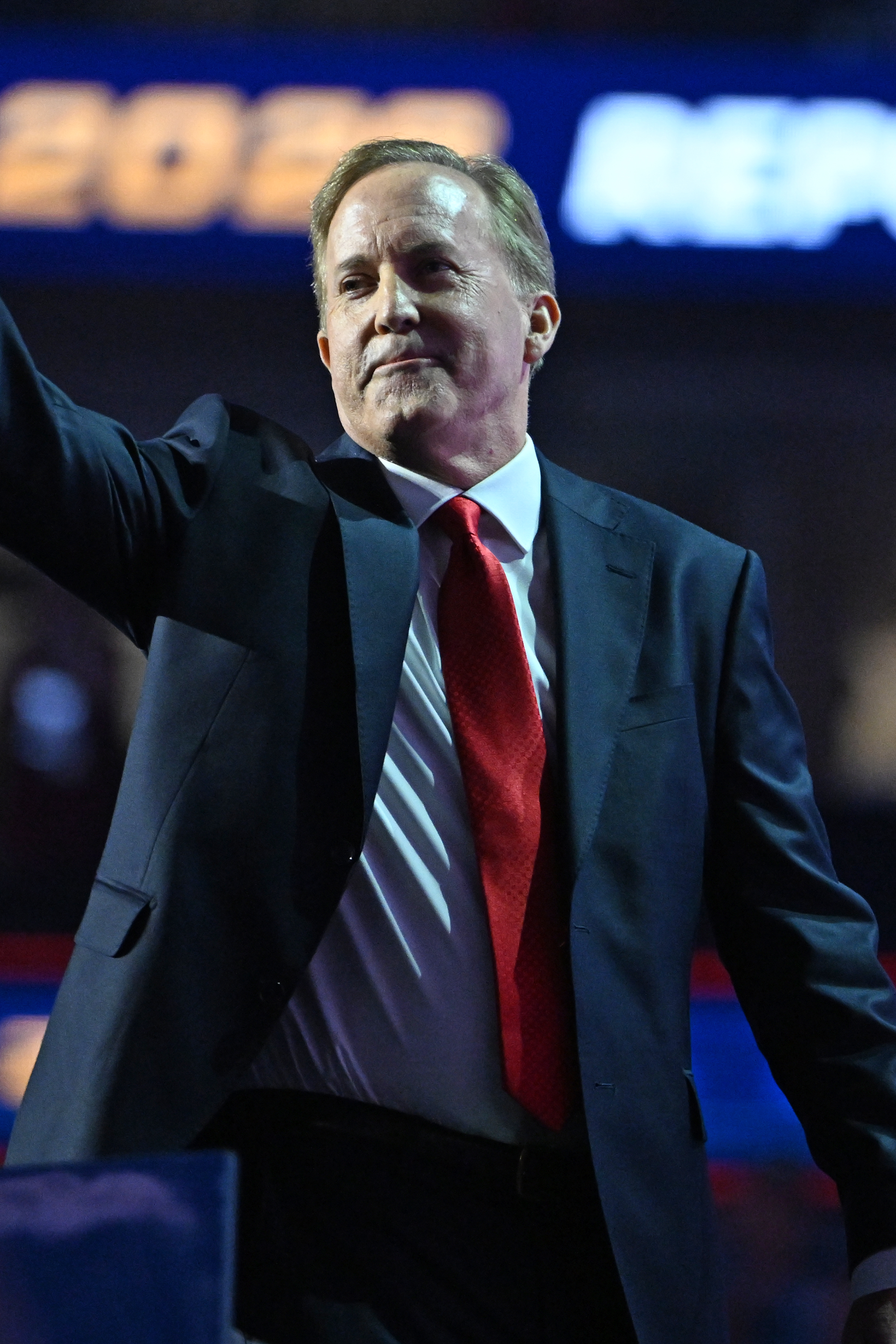
Former President George W. Bush and Sen. John Cornyn, two top Texas Republicans, are rallying conservative donors behind the party’s Senate candidates — except for the one running in their own state, Ken Paxton.
Cornyn hosted a fundraiser Monday evening in Dallas for six Republican nominees in battleground states, according to an invitation to the event that was obtained by the New York Times. Bush, listed on the invitation as a “special guest,” was attending the event, his spokesperson confirmed.
The event benefits Maintain the Majority, a new joint fundraising committee supporting the Senate candidates, who are defending Republican-held seats in Maine, Ohio, Alaska, and Iowa and looking to flip seats in Michigan and New Hampshire.
But Paxton, the Republican nominee in Texas, who defeated Cornyn in a costly and bitter primary, was not included. His campaign declined to comment on the fundraiser.
The fundraising omission of Paxton is another escalation in the standoff between old-guard Bush Republicans and the fiery insurgent wing represented by the party’s Senate nominee, Paxton, President Donald Trump, and their allies.
And it comes as the parties battle for cash and advertising time in the Texas Senate race, one of this year’s top contests. Paxton has badly trailed his Democratic opponent, James Talarico, in campaign fundraising, but super political action committees tied to Trump and Senate Republicans have come to Paxton’s aid, reserving more than $80 million in outside advertising in Texas.
Paxton, the state attorney general, has long been a polarizing figure among Texas Republicans. He was impeached by the Republican-dominated Texas House on corruption charges in 2023, though he was acquitted in the state Senate, and he pushed to oust Republican lawmakers and judges who disagreed with him in his party’s primaries in 2024.
This year, Cornyn and establishment Republican donors spent more than $130 million on advertising backing the senator and bashing Paxton in their contentious primary. (Bush chipped in $5,000 for Cornyn.) In the months since, Cornyn has continually criticized Paxton’s character and campaign.
“Paxton’s a poor campaigner,” Cornyn told the Texas Tribune in August. “He’s lazy and doesn’t raise money. And he basically is not offering a very compelling case for his election. He’s making this harder than it needs to be.” (Paxton countered the attacks, saying on Fox News’ The Sunday Briefing that “John Cornyn doesn’t know my schedule. He doesn’t know how many hours I’m putting in every day, 18 hours a day.” )
The fundraiser comes as long-simmering tensions between Bush- and Trump-era Texas factions burst to the surface.
Last week, Karl Rove, Bush’s former senior adviser, announced that he would not vote for Bo French, the Republican nominee for the Texas state agency that regulates oil and gas, because of a racist social media post by French. Paxton declined to condemn French’s post, and Trump posted on Truth Social that Rove was a “stone-cold loser.”
Paxton has attacked Rove in the past, including in an interview with conservative pundit Tucker Carlson in 2023.
Paxton has also gone head-to-head with a scion of the Bush dynasty, soundly defeating Bush’s nephew, George P. Bush, in the 2022 Republican primary for Texas attorney general. And Paxton has long criticized Cornyn for his willingness to work with Democrats on bipartisan legislation.
The host committee of the Monday fundraiser included paragons of the Bush-era Republican Party like Harriet Miers, Bush’s onetime nominee for the U.S. Supreme Court; former Sen. Kay Bailey Hutchison; and Republican megadonor Harlan Crow.
One of the candidates the event seeks to support is John E. Sununu, the Republican nominee for Senate in New Hampshire. His father, also named John Sununu, served as the White House chief of staff for Bush’s father, George H.W. Bush. Contributions ranging between $1,000 and $61,500 were required for entry, according to the invitation.
Some of the donors invited to the event on Monday have also contributed to Paxton’s campaign.
The gathering and the new fundraising committee will benefit Sens. Susan Collins of Maine, Jon Husted of Ohio, and Dan Sullivan of Alaska, who are defending their seats in competitive general-election races, as well as three other Senate candidates: Sununu, Rep. Ashley Hinson of Iowa, and former Rep. Mike Rogers of Michigan.
Two Republican Senate nominees in states that Trump won in 2024, Michael Whatley of North Carolina and Mike Collins of Georgia, are also not part of the fundraising effort. Democrats have shown strength in polls in those states.
Collins “appreciates the support of Sen. Cornyn and President Bush,” said Blake Kernen, a spokesperson for Collins’ campaign. Representatives for the other candidates did not immediately respond to requests for comment.
Rep. Ro Khanna of California leaned forward in a patterned armchair as a rooster crowed outside, listening as a group of farmers in rural Sharpsville, Pennsylvania, told him that Democrats came across as inauthentic and insincere.
“Don’t promise the farm and not come up with it,” said Joe McCann, who grows hay and raises pigs. “And don’t lie to people. I can take anything, but if someone’s standing there physically lying to me and blowing smoke up my butt, that’s not going to cut it.”
Khanna agreed, fretting that his party had for too long “looked down” on blue-collar voters. Then he quipped: “How do you think I’m doing? Lying?” McCann, 78, said he didn’t think so.
Khanna, D-Calif., has emerged as one of the most prolific surrogates of the 2026 cycle. He has endorsed more than 70 candidates for seats in the House, Senate and state legislatures, positioning himself on the front lines of a burgeoning progressive movement as discontent with the status quo has propelled a series of left-wing candidates to primary victories.
But there was another reason for his vigorous political itinerary this campaign season: a possible presidential run in 2028. He wants to see the left’s power grow within the Democratic Party. He wants its policy prescriptions, such as universal healthcare and taxing the rich, to shape the conversation about who the party’s nominee for president should be.
And he knows that none of that is likely to happen if the left bombs in November.
A little 2026, and a little 2028
Despite their major wins in primaries this season, progressives’ ability to sway the general electorate in competitive races remains untested. A new poll released by The New York Times and Siena University on Sept. 15 found that a slight majority of voters disliked socialism.
In Khanna’s view, the only way the movement can change that perception is if it figures out how to talk to the working class.
Khanna, born outside Philadelphia to immigrants from India, has been preparing for his political future out in the open. In the past two months, he has taken many of the steps of an early presidential candidate.
He held a town hall with Latino voters in Nevada. He told the Democratic National Committee in a searing speech that the party needed to turn its back on corporate interests and military aid to Israel. He also ventured abroad, leading a congressional trip to the Vatican to discuss safeguards against artificial intelligence with Pope Leo XIV and visiting the West Bank, where he was detained by armed Israeli settlers.
Icons of the progressive movement, such as Sen. Bernie Sanders of Vermont and Rep. Alexandria Ocasio-Cortez of New York, have been choosier with their high-profile endorsements this year. Khanna is lesser known, and has work to do to change that. The eagerness can occasionally backfire; he has expressed regret for his endorsement of Graham Platner, the Maine Democrat who withdrew his Senate bid in July after a woman accused him of rape.
“He’s hustling,” said Bill Hyers, a progressive strategist who worked with two House candidates — Kat Abughazaleh in Illinois and Chris Rabb in Pennsylvania — whom Khanna endorsed in primaries this spring. Rabb won. Abughazaleh lost.
Added Hyers: “He’s just been out there really working hard and he’s the only person on the left I have seen where there’s no doubt he’s running.”
Over five days in Pennsylvania in July, Khanna, who grew up outside Philadelphia in suburban Bucks County, rallied for two House candidates whose primary victories in May stood out as early triumphs for the progressive movement. Their very different districts illustrated both the advantages and challenges facing the progressive left this fall.
In Philadelphia, Khanna talked about liberal priorities like “Medicare for All” with Rabb, a democratic socialist who is virtually assured of victory in November in his deep-blue district. In a battleground district in Allentown, Khanna discussed tariffs and job losses with union factory workers to help the candidacy of Bob Brooks, a firefighter and labor leader who faces a more difficult path to victory in November against Rep. Ryan Mackenzie, a Republican.
On behalf of both candidates, Khanna offered a similar pitch: The wealth and technological innovation of his high-income Silicon Valley district should be shared more widely. His agenda of “new economic patriotism,” he said, would spread technology jobs among Midwestern states and redistribute profits through a wealth tax.
“If we just are running on centrist mush that is put out by ChatGPT, bland and inoffensive, we’re not going to win,” Khanna told a reporter in the SUV he was riding in for the Pennsylvania swing. “It has to be a transformative vision.”
Khanna was generally well-received by an electorate in Pennsylvania that has soured on Republicans and seems increasingly willing to give Democrats another chance. But he also encountered the enduring skepticism of voters who see their leaders as having failed them.
“He comes across very progressive with his plans, but I don’t know that he’ll be able to carry them through,” said McCann, after Khanna’s conversation in Sharpsville. “This area that I live in right now is a depressed area — and anybody that gives anybody around here a vision of hope is the person they’re leaning toward. They just have that vision of hope that this might happen, and it never does.”
In an interview, Khanna said he planned to decide about 2028 between Thanksgiving and Christmas, after talking to his family and determining how viable he could be in battleground states.
His trip across Pennsylvania was intended in part to assess that. A progressive contender for president, Khanna said, would have to “do well in the Black South” and “do well in states like Pennsylvania.”
He said he was also forging bonds in southern states, including in South Carolina, where his partnership with Rep. Jim Clyburn and his daughter Jennifer Clyburn connects students at historically Black colleges and universities with scholarships from tech companies.
Khanna has recruited alumni of both progressive and establishment campaigns. He is being advised by Ron Klain, the chief of staff to former President Joe Biden, and has enlisted longtime advisers to Sanders such as Julian Mulvey and Jeff Weaver, according to a person familiar with the partnerships who requested anonymity to describe internal staffing issues.
The road ahead, plus AOC
A dismal progressive showing in November could instantly set back Khanna’s fortunes. So could something else: Ocasio-Cortez. If Ocasio-Cortez, the breakout star of the left, runs for president, she would appeal to the same liberal constituency as Khanna but with an enormous head start in popularity.
Khanna called Ocasio-Cortez an “extraordinary talent,” and dismissed the idea that she is a rival.
“I have a tremendous amount of respect and admiration for her,” he said, adding, “I have genuinely never discussed what she wants to do in the future.”
Khanna said he talked with Ocasio-Cortez occasionally in the halls of the Capitol. He communicates more frequently with Sanders, speaking with him on the phone about AI and answering the senator’s queries about the chances of California voters passing a tax on billionaires this fall.
Khanna readily acknowledged that he lacked the political “star power” of his left-wing compatriots. “I’m not delusional,” he said.
His speeches are also a little heavy on policy and light on the kind of soaring rhetoric that voters often look for in a president.
That was the case in Pennsylvania, but he also tested catchphrases such as “economic patriotism,” and retail politicking seemed to come easily enough for him. One particular line, when he argued that President Donald Trump had not followed through on a simple promise — to replenish sand that had washed away along Lake Erie — got a good response from voters.
“I’ve seen a lot of clips of him online — I thought he was much more charismatic in person,” said Gideon Tsoutsouris, a college student in Pittsburgh.
Khanna portrayed his low profile as an asset, noting that other successful candidates — including former Presidents Jimmy Carter and Bill Clinton — began their bids as long shots. It’s an advantage, he said, “to go meet people and interact without the entourage.”
Khanna, a multimillionaire, likewise dismissed potential criticism of his wealth, which largely stems from his wife’s father, the founder of an automotive company.
“I tell people my own story of growing up middle-class in Bucks County, taking out loans for law school in my 20s, having forbearance and massive credit card debt,” Khanna said. “I think people will see that I had a middle-class life and even economic challenges.”
Hyers, the progressive strategist, said Khanna would likely face criticism for his long-standing relationships with the tech industry.
“The perception in a lot of the circles that I run in is, ‘How much money has he taken from the bad guys?’” Hyers said. (Khanna has since broken ties with many wealthy tech executives and called for taxing them more heavily.)
When Khanna’s tour rolled into Pittsburgh, he hopped around town, chatting with union leaders who are faculty members at a local university, nurses fighting for a labor contract and a group of college students.
Before addressing the students, he spoke with two groups protesting his visit on nearby street corners: the pro-Israel Beacon Coalition and the pro-business Americans for Prosperity, a creation of the conservative Koch family. One of the AFP protesters urged him to reject socialism.
The moment illustrated another challenge that Khanna would face in a presidential primary. He may be too progressive for moderates, and not progressive enough for some on the fractious left.
“I don’t believe the government should take over the means of production,” Khanna told the protesters. But, he added, many young people were turning to socialism “because they can’t afford rent, they don’t have a good job. They lost the American dream.”
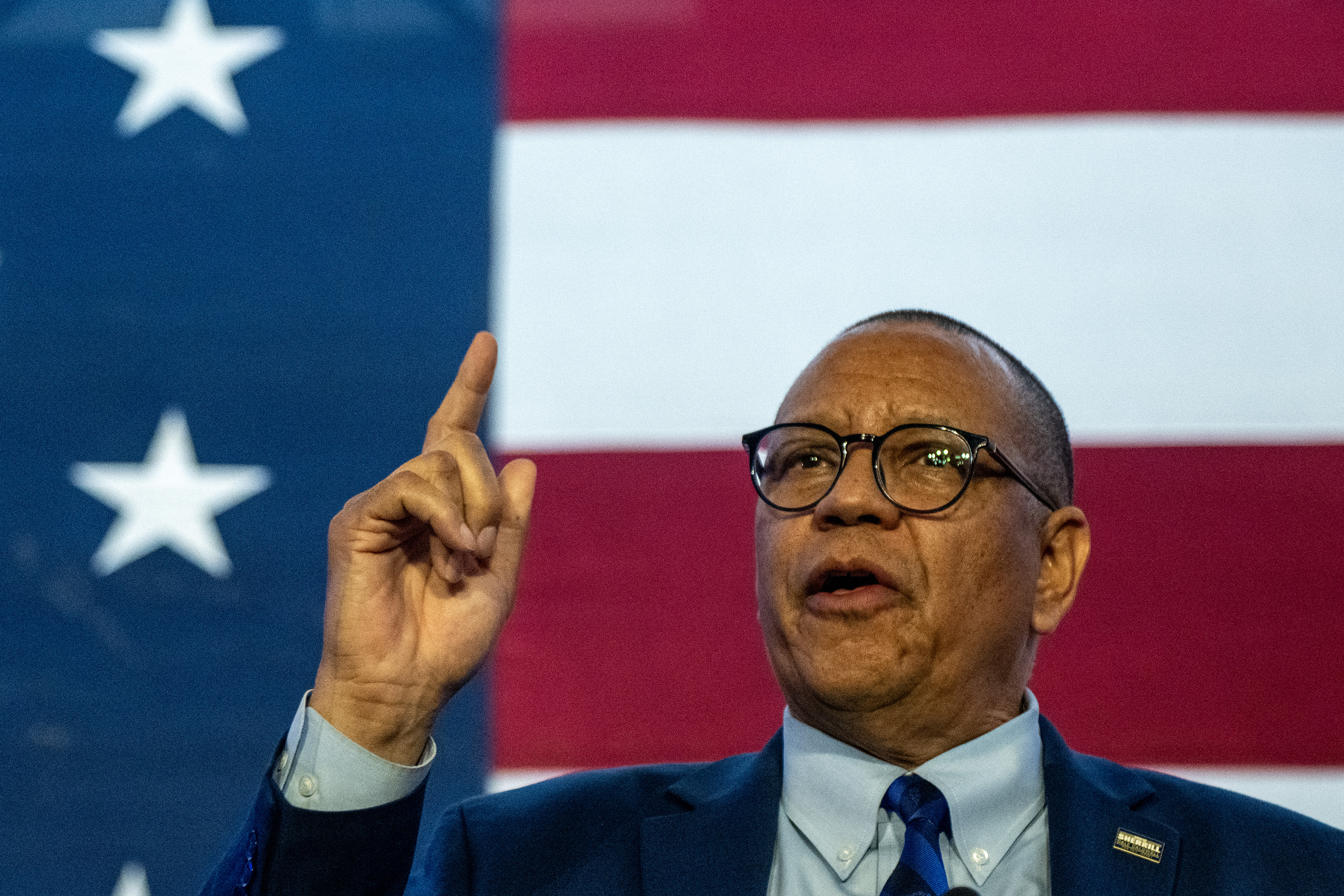
During the whirlwind spectacle of his daughter’s Sept. 1 wedding, business leader Duvi Honig noticed his guest, Lt. Gov. Dale Caldwell, was sharing his business card and private cell phone number with everyone he met.
Honig said he told Caldwell to stop — he was there as a friend and he wanted him to relax and have fun. Caldwell assured him that in his role as Gov. Mikie Sherrill’s liaison to the business community, he was happy to help anyone in need, Honig recalled.
So when Honig read the news days later that Caldwell, a minister, was the subject of a monthslong ethics investigation for allegedly giving business cards to women he wanted to date, among other claims, he said he had to defend the lieutenant governor. No one else seemed to be speaking up for him, he said.
“I thought, ‘What the heck is this?’ What I witnessed — him being overly nice to everyone — is being used against him?” said Honig, a Lakewood resident and founder of the national Orthodox Jewish Chamber of Commerce. “He is a special person. He is accessible to anyone and he has no agenda.”
Lt. Gov. Dale Caldwell plays with a soccer ball at the Collingswood World Cup fan fest on July 19.Courtesy Camden County
Now that Caldwell’s name and political future are tied to an investigation — which Sherrill will not confirm but is privately being carried out by a former state attorney general — some of his friends and colleagues are rushing to his defense to answer the question: Who is Dale Caldwell?
Before the investigation became public, Sherrill, a rising star in the Democratic Party, had been hitting the road for the party’s candidates in key congressional races, transferring the gubernatorial powers and responsibilities to Caldwell when she left the state.
But she has since curtailed her travel while the investigation drags on amid Republican criticism and concerns from members of her own party, according to three veteran Democrats who were involved in her campaign or have ties to her administration who were not authorized to comment publicly.
“She is failing at the most important time” by not being able to campaign, said one veteran adviser.
The governor recently made trips to New York City for a 9/11 memorial event and a live interview with the Atlantic, but she did not make Caldwell acting governor because of an exception that allows travel across the river.
“We’re not going to speculate about the Governor’s schedule, but her priorities are always guided by the best interests of New Jerseyans,” Sherrill spokesperson Sean Higgins said in a statement.
Gov. Mikie Sherrill (right) stands beside New York Mayor Zohran Mamdani at the National September 11 Memorial in lower Manhattan on Sept. 11, 2026. Hiroko Masuike
Democratic power players have privately expressed frustration that Sherrill has left them in the dark about the probe while Republicans call for Caldwell’s resignation. Sherrill said in a statement days after the news broke that “any credible report must be fully examined and addressed.”
The veteran campaign adviser, who is close to both Caldwell and Sherrill, said the two have not spoken directly with each other as the investigation proceeds.
A senior campaign adviser, impressed with Caldwell’s resuméand “unblemished public record,” recommended the pick. It dramatically raised his public profile to new heights in a role that would entrust him to lead the state in Sherrill’s absence.
The 66-year-old divorced minister with degrees from Princeton University and the University of Pennsylvania previously served as the first Black president of Centenary University. He worked as deputy commissioner of community affairs in former Democratic Gov. James McGreevey’s administration more than 20 years ago.
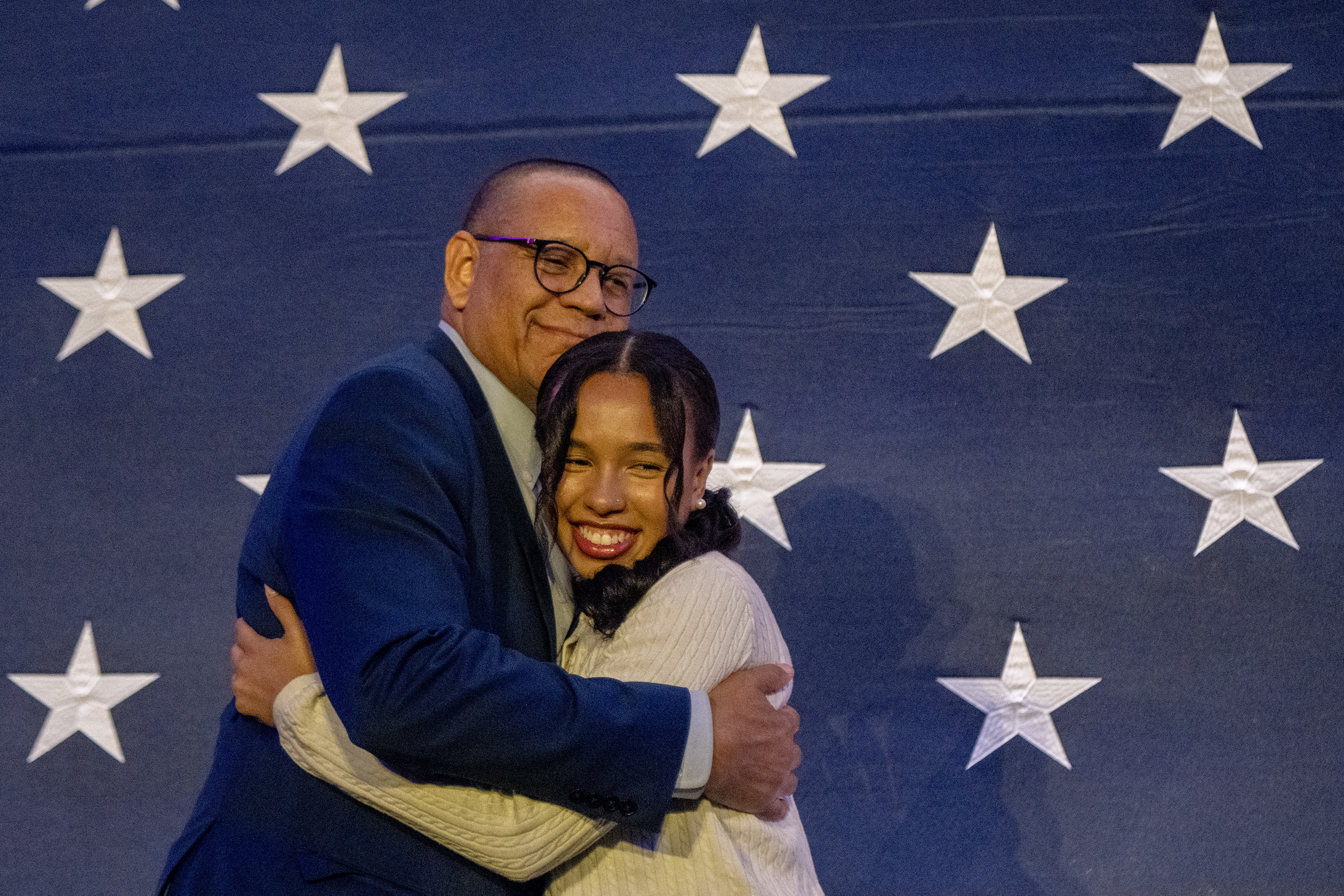
Lt. Gov. Dale Caldwell embraces his daughter Ashley Caldwell after she introduced him at Sherrill’s election night party in East Brunswick on Nov. 4, 2025.Tom Gralish / Staff Photographer
He also held a seat on the New Brunswick Board of Education for nearly three decades and founded charter schools in Asbury Park and Trenton.
Last year, the state comptroller’s office interviewed Caldwell, a founder and then-board president at the College Achieve Greater Asbury Park Charter School, as part of its ongoing investigation into whether the school had violated public contract laws and misused public funds.
Caldwell is the first man and third Black person to serve as lieutenant governor. He quickly embraced the opportunity to be Sherrill’s No. 2, a campaign adviser said.
“Their dynamic [between Sherrill and Caldwell] was terrific. Reports coming back on his appearances were all very positive and they got off on a strong start on inauguration day, as far as I knew,” the adviser said.
One person close to the campaign, however, said after the election Caldwell asked others how he should do the job.
“You are there as the governor’s person. You report to the governor and chief of staff,”the source said. “He laughed. I think he was trying to do his own thing.”
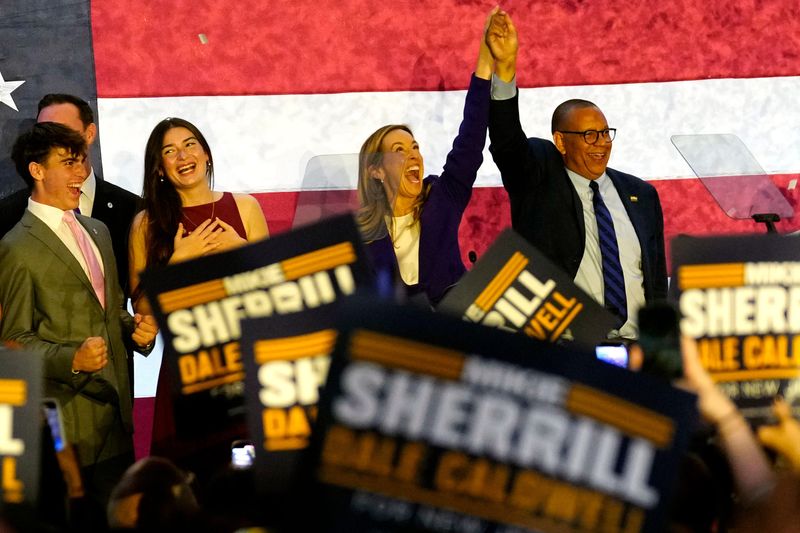
New Jersey Gov. Mikie Sherrill and Lt. Gov. Dale Caldwell celebrate their victory on Nov. 4, 2025, in East Brunswick.Kevin R. Wexler, Kevin R. Wexler
The investigation, sparked by at least one anonymous complaint, began more than four months ago, according to the campaign adviser.
The complaint accused Caldwell of bringing uninvited women to events andhanding his business card out to women he wanted to date. And a state employee accused him of making inappropriate comments, the New York Times reported.
Caldwell declined a request for an interview through a spokesperson. His attorney, Thomas Calgagni in Newark, did not respond to requests for comment.
Caldwell denied the allegations and suggested racism was a factor in a May 28 letter to the state’s chief ethics officer, noting that he is “the first single Black man to serve at this level in government,” and that “in this current political environment, false accusations, especially against people of color, seem to be commonplace,” which was first reported by BINJE.com.
“I have never asked anyone out on a date, ‘hit on,’ or pursued anyone romantically while conducting official business as Lieutenant Governor and Secretary of State,” his letter said. “Throughout my career in government, higher education, nonprofit leadership, ministry and public service, I have consistently conducted myself professionally and respectfully.”
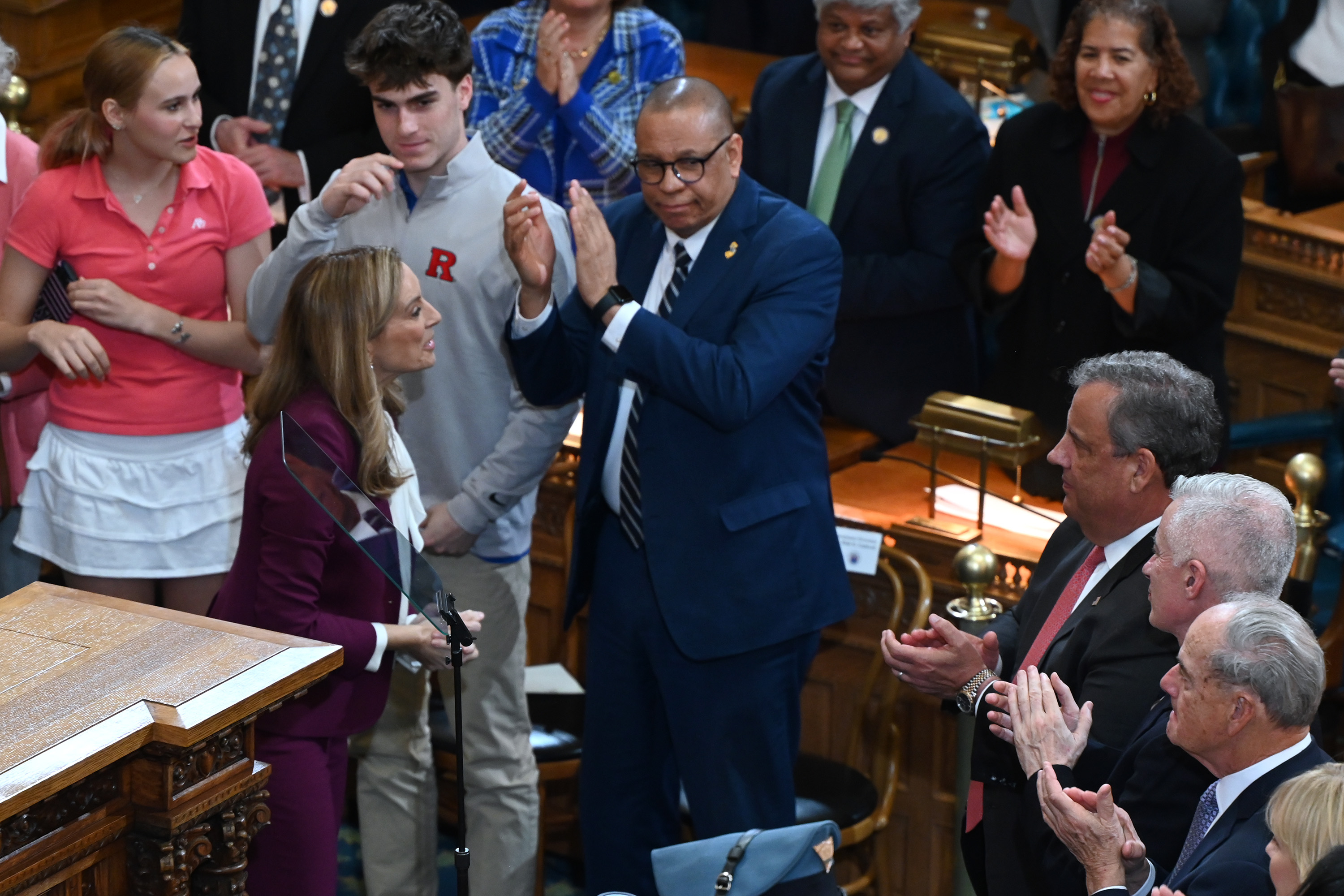
Lt. Gov. Dale Caldwell (center) applauds as Gov. Mikie Sherrill finishes her budget address March 10 in the Assembly Chamber at the New Jersey State House.Tom Gralish / Staff Photographer
Former congressional candidate Tim Alexander, an Atlantic County-based civil rights attorney, got to know Caldwell while working on the campaign trail for Sherrill in South Jersey last year. He sang Caldwell’s praises and said he believes he is “good for the state.”
Alexander, a former detective, said Caldwell supported his congressional bid but stepped away to avoid a conflict as the new secretary of state, which he called a “testament to his character.” The former candidate, who is Black, said he cannot believe race is a factor in the allegations without knowing more.
“Dale has impeccable credentials, and he also has Black skin. So there’s a lot that I could opine on, but when it comes to investigations, I got to leave it out. … If we have confirmation bias, it turns the investigation to trash,” he said.
Fighting back, with help
Last week, a small band of friends and colleagues spoke out to condemn the vague allegations, the snail’s pace of the investigation, and the permanent harm to Caldwell’s reputation no matter the outcome.
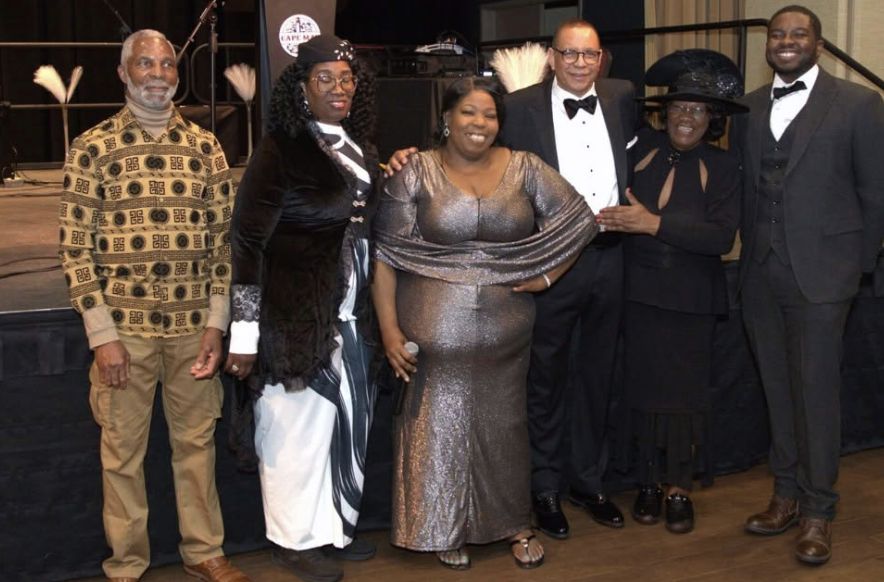
Felicia Simmons of Asbury Park was one of several friends to rush to Caldwell’s defense last week by questioning the legitimacy of the investigation. She helped organize one of the events in question — the Whitesboro Black History Gala, an event in April recognizing the preservation efforts of the state’s first planned Black community, located in Cape May County.
Simmons said she invited the lieutenant governor to hand out proclamations to honorees. She said she saw no questionable behavior on his part.
“It was very meaningful for him to be here,” she added.
Lt. Gov. Dale Caldwell walks with Collingswood Mayor Daniela Solano-Ward in Collingswood on July 19 before reports of the investigation.Courtesy Camden County
Caldwell’s staff alerted her prior to the event that he would be bringing guests, which is not unusual because many dignitaries seldom travel alone, Simmons said.
And after all these months, no one from former Attorney General Christopher Porrino’s law firm, which is leading the probe, has spoken to her yet — even after she issued a statement criticizing investigators for not contacting her.
“I feel highly offended,” she said.
Lt. Gov. Dale Caldwell (third from the right) attended the Whitesboro Black History Gala in April, at the invitation of Felicia Simmons (center). He is the target of an ethics investigation after an anonymous complaint said he acted inappropriately around women, including at this event. Simmons denies the allegation.Courtesy of Felicia Simmons
Caldwell “comes from a line of men with integrity,” noting his father marched with the Rev. Dr. Martin Luther King Jr., she said.
“I truly believe Gov. Mikie Sherrill made the right choice picking this man and we can’t just sit back,” Simmons said. “These awful allegations could follow him for the rest of his life.”
Albert Stark, from the Philadelphia- and Marlton-based law firm Stark & Stark, also came to Caldwell’s defense in an interview, calling him a reliable friend and public servant. Stark said Caldwell, a pioneer in bringing tennis to young Black youth, helped establish the National Junior Tennis and Learning network in Trenton.
When he first heard about the scandal, Stark said, he wondered: “Who was setting him up?”
They haven’t spoken since the investigation was publicized, he said, but he offered this advice: “‘Just be yourself. You’re a terrific guy.’ He has got nothing to be ashamed of.”
‘They are trying to destroy his integrity’
Before the investigation leaked, Caldwell spent his summer visiting with business leaders and elected officials throughout the state, including in South Jersey. Local leaders did not comment on the accusations but said they appreciated Caldwell spending time in the region.
Collingswood Mayor Daniela Solano-Ward said Caldwell visited her small borough for the second time for its World Cup fan fest. Caldwell kicked a soccer ball around with the mayor, thanked volunteers, and fist-bumped Deputy Mayor Amy Henderson Riley’s daughter. He posed with local vendors, smiled in front of a “giggle juice slushies” menu at Racoon Taproom, and chatted with kids at the All Fired Up! pottery studio.
Lt. Gov. Dale Caldwell poses at Racoon Taproom in Collingswood on July 19.Courtesy Camden County
“He was kind and respectful, and seemed like he was very engaged in the things we were saying,” she said, noting that their interactions were limited.
As acting governor he visited Campbell’s and the Philadelphia 76ers training facility in Camden for an economic development tour in August, and he returned later that month for a Chamber of Commerce Southern New Jersey resource fair alongside Camden Mayor Vic Carstarphen, a Democrat who declined to discuss Caldwell.
Thank you to @ChooseNJ and Camden Community Partnership for showing me some of the great work the City of Camden is doing to strengthen its economy and expand opportunity.
The Governor and I are committed to making sure Camden – and every community across the state – thrives. pic.twitter.com/95zIkO3KNy
— Lieutenant Governor Dale Caldwell (@LtGovCaldwellNJ) August 21, 2026
New Jersey Democrats have not been rushing to defend Caldwell, who has become a complicated topic for them with the extent of the allegations against him unclear.
Gerard Cleaves, a professor at Pillar College, a private evangelical Christian school in Newark, said he was angry at the Democrats who, he believes, are “out there fanning the smoke” by leaking tidbits of the investigation and not offering public support.
“They are trying to destroy his integrity,” he said.
“I am an old, white male Republican conservative who worked very hard to get [Sherrill’s GOP opponent] Jack Ciattarelli elected,” said Cleaves, who said he met the lieutenant governor at Fairleigh Dickinson University, where Caldwell taught from 2018 to 2023. When Caldwell joined Sherrill’s ticket, Cleaves said, he told his colleagues they “would be hard to beat” based on Caldwell’s resumé and character.
Caldwell has not missed their Wednesday morningBible study lessons since news of investigation broke earlier this month, Cleaves said.
“He doesn’t appear stressed. He knows in his heart who he is. He has told me he will not resign. He is not going to give up,” he said.
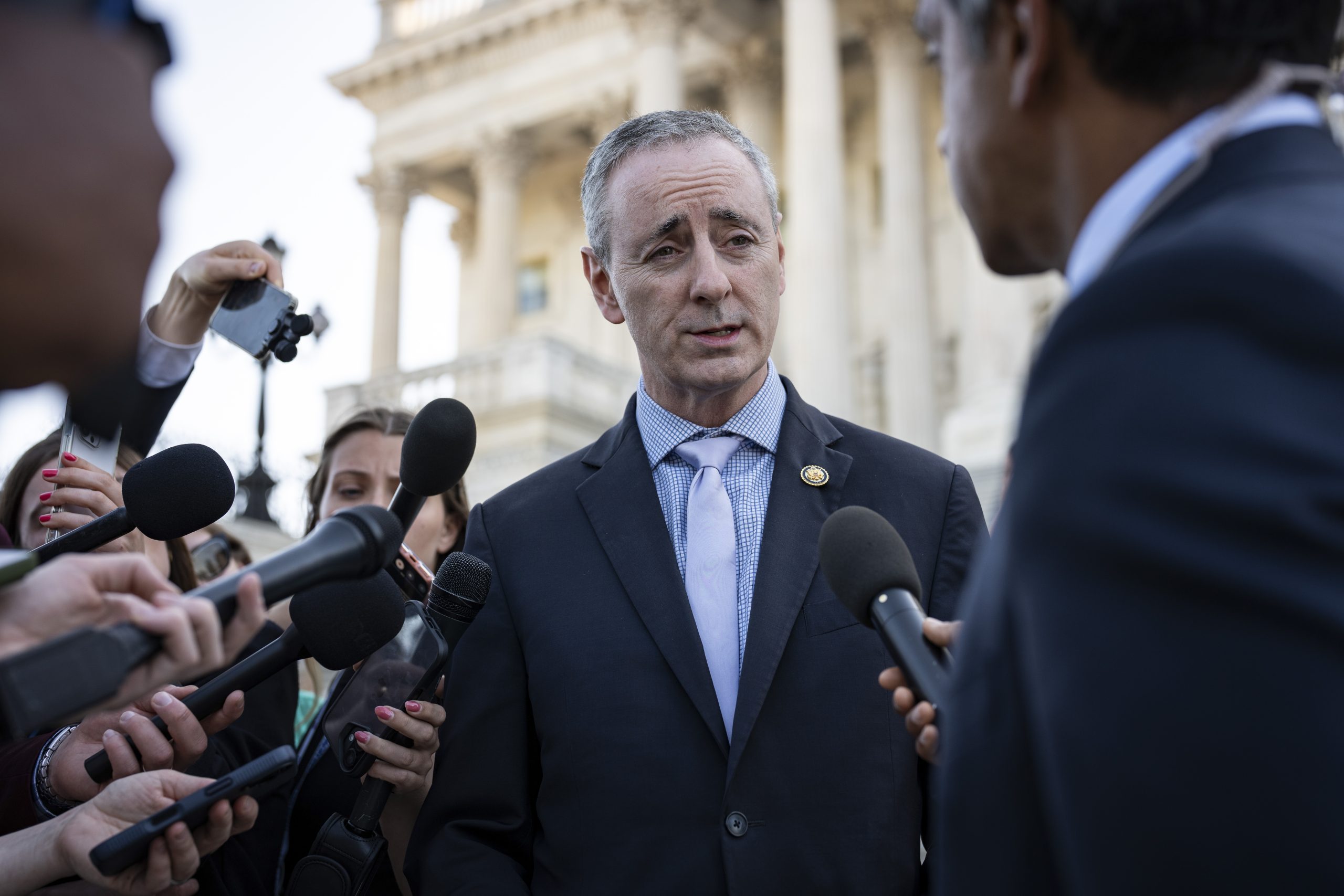
More than a year and a half into President Donald Trump’s second term, U.S. Rep. Brian Fitzpatrick has voted against the White House and the GOP more than any other House Republican.
Yet, he has still voted with the president and his party nearly 70%and 77%of the time, respectively, during this congressional term, according to a new Inquirer analysis.
Fitzpatrick’s nuanced voting record has become a focal point of Democrats’ campaign against the five-term GOP incumbent from purple Bucks County this fall.
HisDemocratic challenger, Bob Harvie, argues that Fitzpatrick has been a “rubber stamp” for Trump’s policies and the GOP establishment when it matters most. Meanwhile, Fitzpatrick continues to tout his moderate, bipartisan brand that has proved successful in elections past.
Both of those assertions will be tested in front of voters this November as Fitzpatrick defends his swing district seat in a heated race in the 1st Congressional District, which includes all of Bucks County and a sliver of Montgomery County. Trump narrowly lost the district in 2024, despite winning Bucks County.
Fitzpatrick is voting with the president and his party less frequently during the current Congress, which began last year, than he did during the two years of Trump’s first term, when the GOP also held the majority, The Inquirer found in a comprehensive analysis of the Bucks County lawmaker’s 5,064 roll-call votes since he joined Congress nearly a decade ago.
(function () {window.addEventListener(‘message’, function (e) { var message = e.data; var els = document.querySelectorAll(‘iframe[src*=”‘ + message.id + ‘”]’); els.forEach(function(el) { el.style.height = message.height + ‘px’; }); }, false); })();
The data underscore how Fitzpatrick, the last remaining GOP U.S. representative in the Philadelphia suburbs, is able to simultaneously straddle party lines and talk about his disdain for the two-party system while also serving as a key vote in the Republican conference— a cocktail of qualities that has made him difficult to unseat in years past.
This year, Democrats are hoping that a focus on affordability issues amid a national environment that has become increasingly unfavorable to Republicans will be what it takes to unseat Fitzpatrick.
U.S. Rep. Brian Fitzpatrick (R-Pa.) makes remarks in support the grand opening of the new headquarters and expanded financial stability center for United Way Thursday, Sept. 10, 2026 at United Way of Bucks County Headquarters in Levittown.William Thomas Cain / For The Inquirer
When Fitzpatrick does — and doesn’t — back Trump
Trump and the Bucks County Republican have had their fair share of tense moments, including the president threatening the lawmaker in May for voting against him.
Fitzpatrick has continued tovote against the president recently, including on a war powers resolution torestrict Trump’s military actions in Iran.
“[Fitzpatrick’s] bosses are his constituents back home,” Heather Roberts, a spokesperson for the Fitzpatrick campaign, said in a statement. “Political party retaliation has zero impact on his decision-making.”
Since January 2025, Fitzpatrick has voted with the Trump administration’s 133 stated positions on congressional votes 93 times, according to the analysis.
(function () {window.addEventListener(‘message’, function (e) { var message = e.data; var els = document.querySelectorAll(‘iframe[src*=”‘ + message.id + ‘”]’); els.forEach(function(el) { el.style.height = message.height + ‘px’; }); }, false); })();
Fitzpatrick voted with Trump on several high-profile GOP bills, including the SAVE Act, a controversial overhaul of voting laws, and the Laken Riley Act, legislation also supported by some Democrats that requires federal authorities to detain undocumented immigrants arrested for theft-related crimes, issues that Roberts maintained 1st District voters of both parties support.
Fitzpatrick’s votes have also aligned with the White House on other legislation related to immigration, law enforcement, energy, and renaming the Gulf of Mexico the “Gulf of America.”
At the same time, no other House Republican has been less loyal to the president in this time frame. That includes every GOP member from Pennsylvania, many of whom are staunch supporters of Trump. Republicans like U.S. Reps. Ryan Mackenzie, Rob Bresnahan, and Scott Perry, who are defending their seats in contentious swing-district races, vote with Trump more than 90% of the time.
Both Mackenzie and Bresnahan spoke at Trump’s Republican midterm convention in Dallas this month, but Fitzpatrick — the only GOP member of Congress from Pennsylvania not endorsed by Trump — did not attend.
(function(){function e(){window.addEventListener(`message`,function(e){if(e.data[`datawrapper-height`]!==void 0){var t=document.querySelectorAll(`iframe`);for(var n in e.data[`datawrapper-height`])for(var r=0,i;i=t[r];r++)if(i.contentWindow===e.source){var a=e.data[`datawrapper-height`][n]+`px`;i.style.height=a}}})}e()})();
The final bill had enough GOP support — 218 members voted yes — to pass without Fitzpatrick’s vote.
Harvie, Fitzpatrick’s Democratic challenger, contended that Fitzpatrick “has mastered the art of the meaningless gesture and breaks with Trump only when he gives him a hall pass.”
“[Voters] want somebody who’s going to go there and fight for them,” Harvie said. “And, you know, people’s lives aren’t better than they were 10 years ago. And Brian Fitzpatrick and Donald Trump are the big reasons why.”
Roberts said Harvie’s criticism is “absurd” and has been “debunked many times over and in every single election cycle.” She also criticized Harvie’s voting record and said he has not exercised similar levels of independence during his time as Bucks County commissioner and Falls Township supervisor.
Back in Trump’s first term in office, Fitzpatrick sided with the White House on 59% of votes — 81% of the time in 2017-18, but dropping to almost 42% in the following two years, after Democrats gained control of the U.S. House in the 2018 midterms.
Fitzpatrick voted with his party roughly 60% of the time during both the 117th and 118th Congresses, when Biden was in office and the GOP had the majority for the latter two years of his term.
The lawmaker played a key role in getting Biden’s signature bipartisan infrastructure law passed, drawing sharp attacks from fellow Republicans when he was one of 13 GOP members to support it in the House.
Rep. Brian Fitzpatrick (R-Pa.) speaks to reporters after the House passed an Iran war powers resolution on Capitol Hill in Washington, on Wednesday, June 3, 2026. Haiyun Jiang
What about the GOP?
Fitzpatrick’s alignment with the House Republican Conference has fluctuated depending on which party is in power.
During this Congress, when the GOP holds a narrowmajority in the U.S. House, Fitzpatrick has voted with his party 77% of the time, meaning he has split from Republicans 107 times on 472 party unity votes, defined by CQ Roll Call as instances when a majority of voting Republicans oppose a majority of voting Democrats.
That figure is the highest of his career, the analysis shows, though still far below the median of Republicans. It was a similar story during Fitzpatrick’s first term during the 115th Congress in 2017-18, when Trump was in office and Republicans had the House.
By contrast, Fitzpatrick was the least loyal to his party during the 116th Congress in 2019-20 — at 55% — when Trump was still in office, but the GOP did not have the gavel.
A congressional lawmaker’s votes are dependent on which bills make it to the floor. Currently, that is up to House Speaker Mike Johnson, a Louisiana Republican, whom Fitzpatrick has criticized for his reluctance to bring some bipartisan bills for a vote if Trump opposes them.
Fitzpatrick has introduced 249 bills as lead sponsor, and just under half — 123 — have a bipartisan group of cosponsors.
“The numbers and percentages will change from year to year based entirely on what votes are put on the House Floor,” Roberts said in her statement. “The best measure of independence is how often, and on which issues, does one vote against their own political party, regardless of who the President is and regardless of who the Speaker is.”
(function(){function e(){window.addEventListener(`message`,function(e){if(e.data[`datawrapper-height`]!==void 0){var t=document.querySelectorAll(`iframe`);for(var n in e.data[`datawrapper-height`])for(var r=0,i;i=t[r];r++)if(i.contentWindow===e.source){var a=e.data[`datawrapper-height`][n]+`px`;i.style.height=a}}})}e()})();
Jim Worthington, a major GOP donor in Bucks and owner of the Newtown Athletic Club, said Fitzpatrick’s record is representative of the purple county, home to a plethora of split-ticket voters, and shows that he is able to go against power structures in Washington.
“When you have someone who’s willing to stand up to the power of the majority and take a stand, that’s the type of guy you want,” Worthington said. “It’s pretty lonely when there’s 216 other people in your party voting for something, and you’re voting no. It takes guts, and that’s what he’s doing.”
Over the course of his time in Congress, Fitzpatrick has defected from his fellow House Republicans on votes related to economic and public finance issues, but has agreed with his caucus most on legislation connected to international affairs.
Of the 10 closest votes in which Fitzpatrick diverged from the GOP this year, three were decisive votes that blocked GOP amendments to bills.
Two others were votes in which he supported Democratic motions that fell just short of passing.
Fitzpatrick also joined Democrats in voting against fiveGOP amendments to bills thatpassed by one vote.
US Rep Brian Fitzpatrick speaks during the Garden of Reflection remembrance ceremonies Friday, Sept. 11, 2026 at Garden of Reflection in Yardley, Pennsylvania. The Garden of Reflection is Pennsylvania’s official state memorial honoring all 2,973 victims of the September 11 terrorist attacks, with a special tribute to 18 local residents from Bucks County, Pennsylvania.William Thomas Cain / For The Inquirer
What does this mean for the midterms?
At the U.S. Capitol on Wednesday, Fitzpatrick stood alongside members of the bipartisan Problem Solvers Caucus that he cochairs, condemning the redistricting wars both parties have engaged in and unveiling legislation to prevent a similar situation in the future.
He said in an interview that both Trump and Democrats were “wrong” to kick-start a gerrymandering spree.
“There are so many forces pulling us away from the center, when most Americans are in the center,” he said.
Fitzpatrick has been working to run on that centrist message back at home — even as he wages an aggressive ad campaign against Harvie.
But will his brand and well-fundraised campaign help him in a disadvantageous national political environment for Republicans this year?
Brittany Crampsie, a Democratic consultant in Pennsylvania, said 1st District voters should consider whether they, too, agree with Trump a majority of the time, noting that Fitzpatrick creates an “illusion” that he is independent from the president or his party.
“[Fitzpatrick] doesn’t have enough to celebrate, and voters don’t want to see him pat himself on the back for only supporting this administration 75% of the time,” Crampsie said.
She said that Fitzpatrick’s voting record will not help him survive a blue wave this time around because the issues facing the country, such as the cost of living, are too dire amid what she calls a “change election.” Crampsie said Harvie should continue to focus his campaign on both Fitzpatrick’s record and kitchen-table issues.
“Making a campaign all about opposition to Trump, we’ve seen, is not successful,” Crampsie said. “Voters want a new vision. They want a new platform. They want new ideas, and that’s what Bob Harvie is offering.”
Worthington, the GOP donor, predicted that Fitzpatrick will once again be victorious this year, noting the lawmaker’s massive coalition of labor support,which would typically go to a Democratic candidate, and voters’ desire for a moderate candidate.
“He’s a free, independent thinker. At the end of the day, he tries to do what’s right for everybody, for the majority of people,” Worthington said.
“That’s the problem — there’s too many extremes. You’re either one side or the other. It shouldn’t be like that.”
Staff writer Sam Janesch contributed to this article.