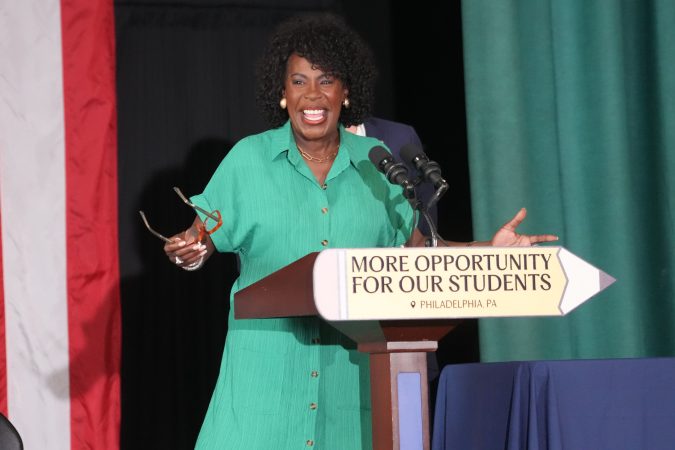
Mayor Cherelle L. Parker’s administration on Wednesday announced the first 10 residential blocks that will each receive $100,000 in beautification upgrades as part of the city’s Curbside Appeal program.
“Every Philadelphian deserves to live on a block they can be proud of,” Parker said in a statement, adding that the program “gives neighbors the resources to come together, improve their surroundings, and strengthen the sense of community that makes our city special.”
The first 10 blocks set to receive services under the program, including debris removal, tree trimming, lawn restoration, and sidewalk repairs, are:
1300 block of South Ruby Street
1700 block of St. Paul Street
1800 block of Hart Lane
2200 block of South Sixth Street
2500 block of North Marston Street
3000 block of Titan Street
3200 block of North Howard Street
5000 block of Newhall Street
First block of Hobart Street
First block of Wiota Street
In May and June, residents were encouraged to nominate blocks for the program through their Neighborhood Advisory Committees or Neighborhood Community Action Centers, the so-called mini-City Halls Parker has established throughout the city to make services more accessible.
The next round of nominations for the program will take place in the spring.
“By partnering directly with neighbors, we’re helping transform blocks in ways that reflect the priorities of the people who live there while building stronger, more connected communities,” Jessie Lawrence, the city’s director of planning and development, said in a statement.
Council approved the H.O.M.E. initiative, which is funded primarily through $800 million in city bonds, in June 2025. Lawmakers then clashed with the administration last fall over income thresholds for some of the housing programs it funds, with Council successfully pushing through changes that prioritize poorer residents.
The city issued the first $400 million in H.O.M.E. bonds earlier this year, and is scheduled to issue the next tranche in 2027.
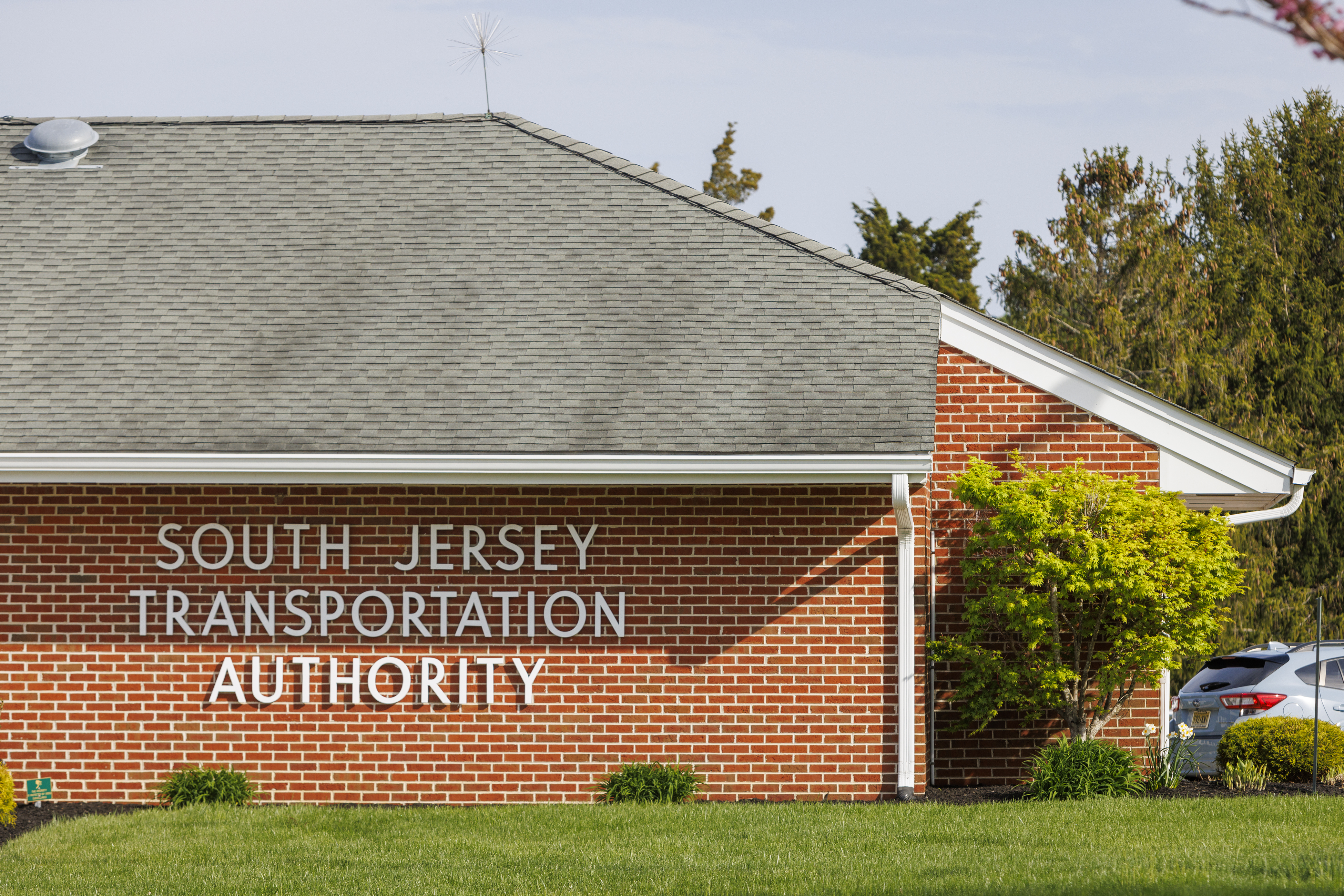
A former South Jersey Transportation Authority commissioner and Philadelphia union leader accused by a New Jersey grand jury of using public office to retaliate against a political foe enteredaguilty plea deal Wednesday that will likely keep him out of prison.
The grand jury last year indicted Bryan Bush and Christopher Milam, a current SJTA commissioner and former vice chair, on six counts of conspiracy, official misconduct, and perjury.
Prosecutors accused the two Gloucester County men of conspiring in 2023 to deny payment to a contractor that had allegedly fallen out of favor with George E. Norcross III, a Democratic South Jersey powerbroker, and with lying to a grand jury about their reasons for rejecting payments.
Bush, who was represented by Robert Agre of Agre & St. John in Haddonfield, pleaded guilty to one count of obstruction in the fourth degree — and agreed not to hold public employment. In exchange, prosecutors dropped the remaining charges and recommended probation. He agreed to comply with conditions in a Sept. 17 letter from the state, which prosecutors did not make available on Wednesday.
Milam, whose term as commissioner officially ended earlierthis year, rejected prosecutors’ offer. His attorney, Charles Fiore of Charles Fiore Law Offices in Williamstown, is seeking Pretrial Intervention (PTI), a program that can help first-time offenders get charges dropped by “gaining skills to straighten out personal problems in order to avoid future arrests,” according to the New Jersey Courts website. He appeared in court remotely on Zoom.
Obstructing the administration of law has a maximum sentence of 18 months in state prison, Judge Donna Taylor said in court. Taylor rejected a motion to dismiss the case in early July.
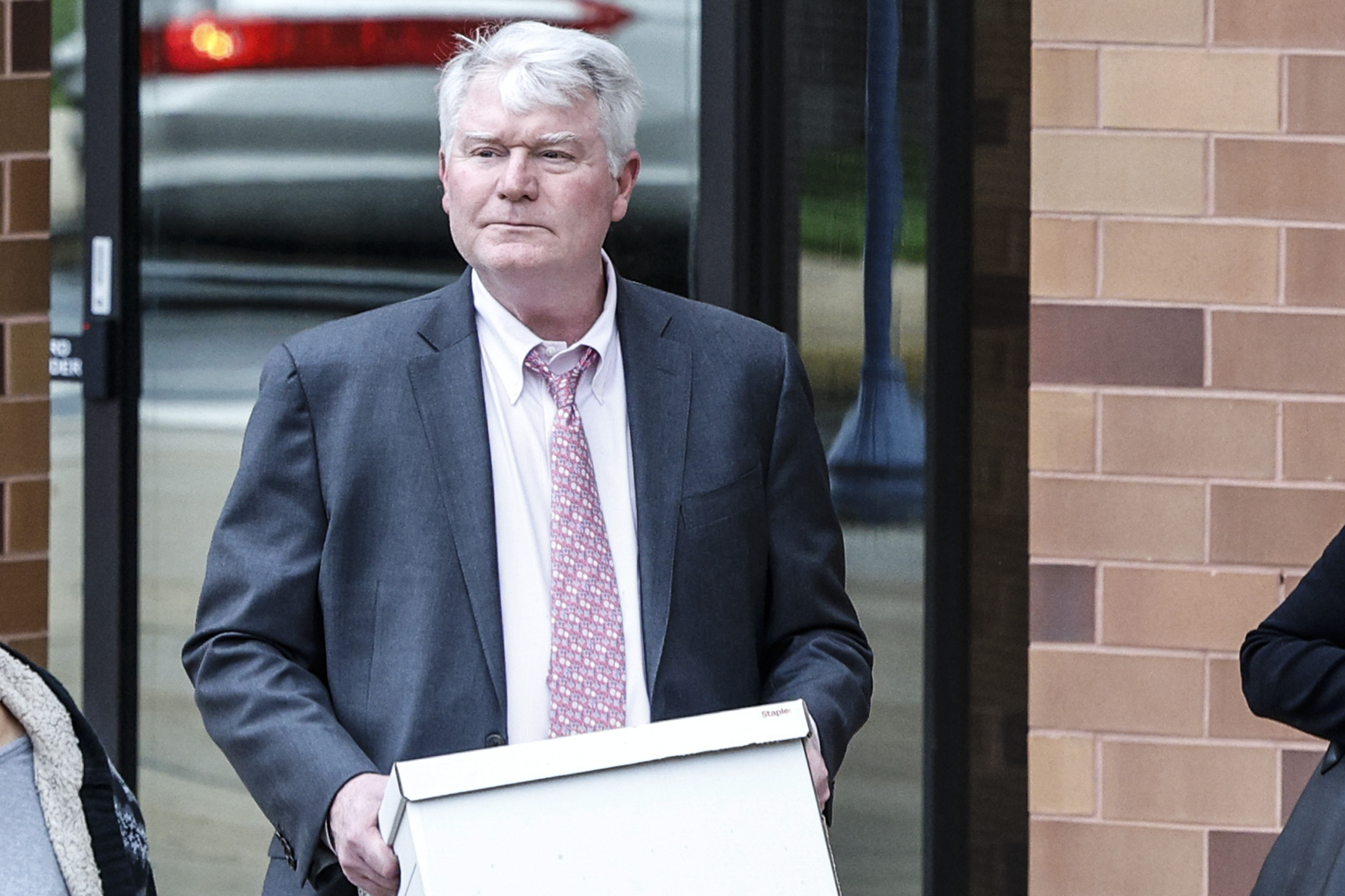
In court, Bush admitted withholding information from prosecutorsthat would havehelped the investigation intothe nonpayment of money to T&M Associates, a Middletown, N.J.-based engineering firm, for itscontract with the SJTA.
Bush told The Inquirer he will keep his job as the business manager of Sheet Metal Workers Local 19, an influential union in Philadelphia.
“I’m just trusting my attorney’s judgment on all of this,” Bush told The Inquirer on his way out of the courtroom at Atlantic County Criminal Court on Wednesday.
Dan Prochilo, a spokesperson for Attorney General Jennifer Davenport, who inherited the case from former Attorney General Matthew Platkin, said Wednesday that the office “is committed to investigating and fighting for accountability in any case where public officials abuse their positions of public trust.”
Davenport did not pursue Platkin’s case against Norcross, declining to appeal a court ruling that dismissed it.
‘Political suicide’
Milam’s lawyer argued that the case centers on Norcross — though he is not a defendant — and that prosecutors used it to strengthen their separate case against him,according to court documents. Henoted that the power broker was mentioned 50 times during the grand jury presentation.
When asked to comment on Bush’s plea, Dan Fee, a spokesperson for Norcross, criticized the former attorney general. Platkin, he said, “tried to pin something on George that just wasn’t true.”
According to court documents, John Cimino, head of T&M Associates, got on Norcross’ bad side after endorsing a different candidate than Norcross directed in a Democratic primary for Mercer County executive. Norcross subsequently said Cimino committed “political suicide” and was off his “Christmas card list,” according to the documents.
Norcross’ firm dropped T&M as a client and his longtime political consultant resigned from T&M, according to the documents. Milam and Bush entered the picture because, as SJTA commissioners, they voted against payments for work done by T&M for the agency at three separate meetings.
Detectives discovered texts from Milam to Bush saying he planned to vote against T&M because “they cut South Jersey in Mercer County,” and Bush said he would vote no, too. The commissioners eventually approved the invoices after they were directed to do so by SJTA Director Stephen Dougherty, according to the court record.
Milam’s term technically expired in May, but he remains a commissioner until Gov. Mikie Sherrill makes an appointment, SJTA spokesperson David Zappariello said. He declined to comment on the case.
The SJTA oversees the Atlantic City Expressway and Atlantic City International Airport. It also works on transit efforts across South Jersey, such as the new South Jersey Connectsbus system.
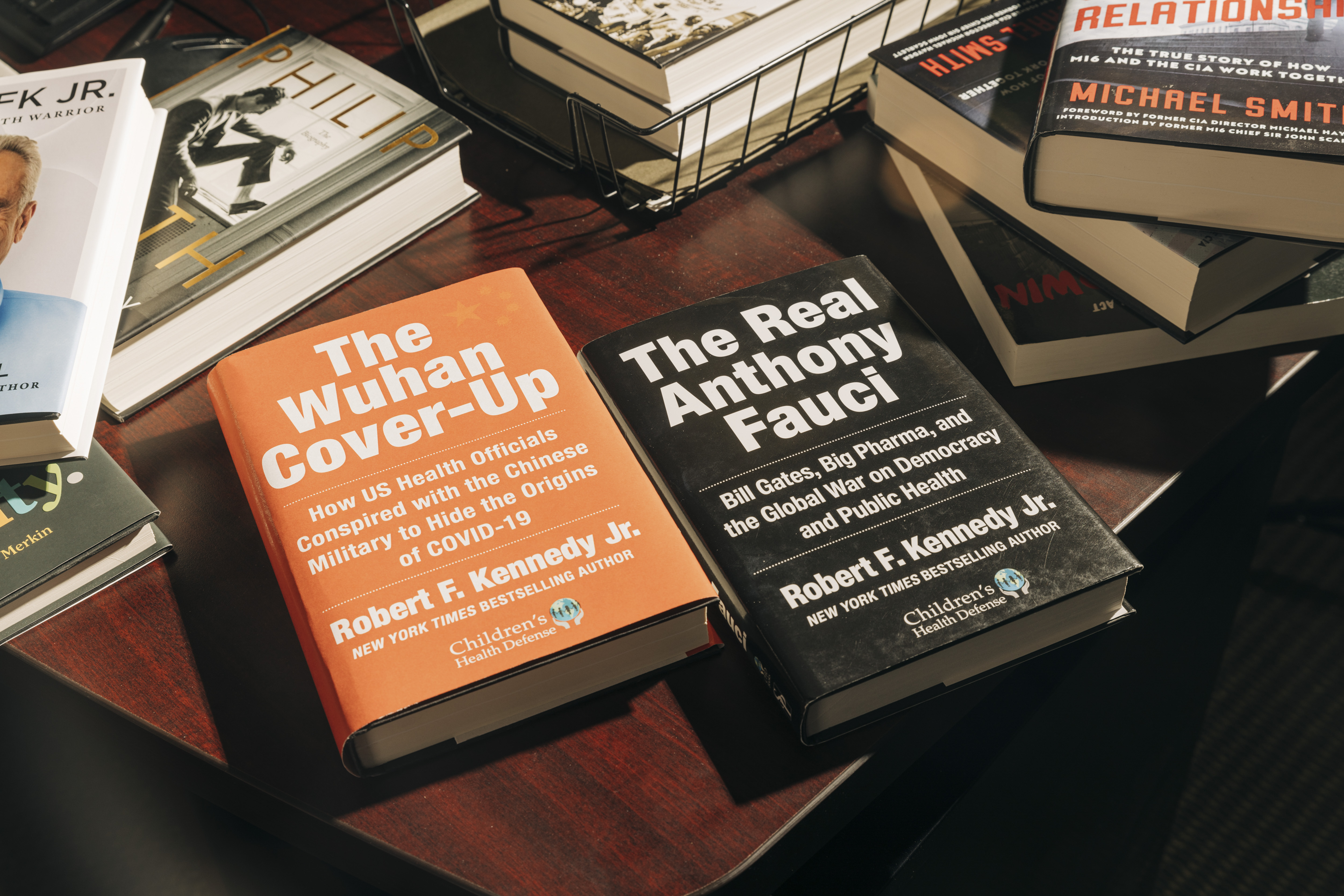
Health Secretary Robert F. Kennedy Jr. accepted $4 million in book advances and more than $270,000 in gifts over the past year from close allies who are working to advance his Make America Healthy Again agenda, according to his latest financial disclosure form.
Ethics experts said the financial relationships may violate federal rules barring officials from profiting from their government position, and call into question the secretary’s ability to remain independent and impartial.
The advances were for two books that will be published by a company owned by Tony Lyons, a longtime friend and business associate of Kennedy who also sits atop a constellation of MAHA-related entities, including some that accept political contributions and corporate sponsorships from health-related companies.
Cheryl Hines, Kennedy’s wife, accepted $210,000 in consulting fees from MAHA Action, a nonprofit advocacy group also led by Lyons. It rallies supporters of Kennedy’s priorities on weekly broadcasts and backs health-related legislation, including a federal bill to end liability protection for vaccine makers.
In an ethics filing before taking office, Kennedy pledged not to “engage in any writing, editing, or promotional activities” associated with the books, but did not promise to forgo advances.
Ethics experts said the payments related to one book called Unsettled Science raised questions since federal rules say that an official may not “receive compensation from any source other than the government” for writing a book related to his official duties while in office. (The other book is called A Defense of Israel.)
Additionally, the consulting fees to Hines from a group aligned with Kennedy’s priorities “reeks of conflict of interest,” and could appear to be a bribe, said Richard Painter, a White House ethics counsel under President George W. Bush.
“You have a situation like this,” he said, “it just looks horrible.”
Emily Hilliard, a spokesperson for the Department of Health and Human Services, said that Kennedy “complies with all applicable federal ethics laws, regulations, and financial disclosure requirements.”
She added: “The secretary works with HHS career ethics officials to ensure that his financial interests, gifts, outside activities, and other reportable matters are appropriately disclosed and handled consistent with those requirements.”
Lyons, who is also a lawyer and one of Kennedy’s staunchest defenders, did not respond to an email and text message seeking comment. Hines could not be reached for comment.
The annual financial disclosure finalized last week also showed that Kennedy accepted $126,000 worth of lodging in a Washington, D.C., home owned by Gavin de Becker, a longtime friend and who runs a security firm that specializes in protecting high-profile people.
Previously, de Becker contributed to Kennedy’s presidential campaign and earned money from it to provide a security detail for Kennedy.
De Becker said that he has no business with the federal government, including the Department of Health and Human Services, and that the arrangement reflected their friendship.
“Bobby is among my closest friends in the world for many years, and I’m grateful to be able to host him anytime,” de Becker said. “He has hosted my family at his homes, he’s stayed at my homes, we take family vacations together every year, and did so for years before he was in his current job.”
This past year, the records show that de Becker also paid for nearly $150,000 in airfares for Kennedy: $45,000 for a trip to Greece in July 2025 and nearly $97,000 for a trip to Fiji in November. The flights and book advances were reported earlier by The Wall Street Journal.
Kedric Payne, a vice president and senior ethics counsel at the Campaign Legal Center, said there were exceptions to federal rules for gifts from friends. But de Becker’s patronage appears to far exceed them, he said.
“Lavish gifts to an official from major political donors don’t get the same benefit of the doubt as dinner from a former classmate,” Payne said. “The public deserves full transparency about the nature of these gifts and any interests the donor has before the government.”
Like Lyons, who has a child with autism, de Becker shares Kennedy’s skepticism about the safety of vaccines and has a longstanding publishing relationship with Lyons.
De Becker has written several books on security but recently began writing about vaccines. His 2025 book, Forbidden Facts: Government Deceit & Suppression About Brain Damage From Childhood Vaccines, was published by Skyhorse, which is owned by Lyons. He has also written the foreword to two books about ketamine, a psychedelic drug that Kennedy has promoted as a therapy for depression.
Kathleen Clark, an expert in government ethics and a law professor at Washington University in St. Louis, said the gifts created a clear conflict for Kennedy, who oversees an agency reviewing at least one ketamine therapy for approval.
“By accepting such extravagant gifts from someone with a clearly articulated desire for a particular outcome from H.H.S. as a regulatory agency on these issues,” she wrote in an email, “R.F.K. Jr. has completely destroyed any possibility that the public could be confident that any action H.H.S. takes on these issues — childhood vaccines and ketamine — will be based on the public interest, rather than R.F.K. Jr.’s gratitude to and association with this gift giver.”
According to the latest financial filing, Lyons and Kennedy reached an agreement over the book advances in August 2024, the same month that Kennedy dropped his presidential bid and backed President Donald Trump.
Kennedy has written numerous books for Skyhorse Publishing, and worked as a consultant to the company before he became health secretary. In financial disclosures required for his Senate confirmation, Kennedy said he had earned $451,000 as a consultant. Hines also received a $600,000 advance from Skyhorse for her memoir, according to the disclosure.
The disclosure records said that Kennedy would also be paid $10,000 for a third book called America’s Path Back to Moral Leadership and that two of the three books were already written.
As Kennedy prepared to join the Trump administration, Lyons began to build an array of MAHA-allied entities, including the MAHA Center, which recently raised funds by selling corporate sponsorships for the MAHA Summit in Washington next week.
One top sponsor at the event, where senior federal health officials are expected to speak, is the company Grail, which is seeking Food and Drug Administration approval for its multi-cancer blood test. The test performed poorly in detecting cancers in two large studies. Kennedy spoke at last year’s summit.
Lyons also leads the MAHA Institute, which hosted monthly gatherings through much of last year where prospective donors mingled with Kennedy and other top health officials. Many had official business in front of Kennedy’s department.
MAHA Action supports legislation, including a bill introduced this year to end vaccine makers’ protection from traditional liability cases, which are handled in a specialized federal tribunal. Kennedy, who has worked as a plaintiff’s lawyer suing over alleged vaccine injuries, has long denounced the protection granted in a 1986 federal law.
Lyons wears yet another hat as the treasurer of the MAHA political action committee, also allied with Kennedy’s mission, which has raised more than $3 million since January 2025. About one-third of it came from Botanic Tonics, a company founded by Jerry W. Ross, a onetime energy executive who changed his name after pleading guilty to a financial crime.
The New York Times wrote about Ross’ attempts to influence Kennedy and the Trump administration as he successfully sought a prohibition against 7-OH, a gas station drug that competed with his company’s kratom-based drink called Feel Free. Both kratom and 7-OH have drawn widespread complaints over their potential for addiction and severe withdrawal symptoms.
At a Senate hearing last year, Kennedy brushed off criticism from Sen. Christopher S. Murphy (D, Conn.) who accused the secretary of being unduly influenced by MAHA PAC donors.
“Do you have a single instance where the MAHA PAC has taken a position that is not consistent with my values?” Kennedy said. “I don’t run the MAHA PAC. I have no idea who’s contributing to them.”
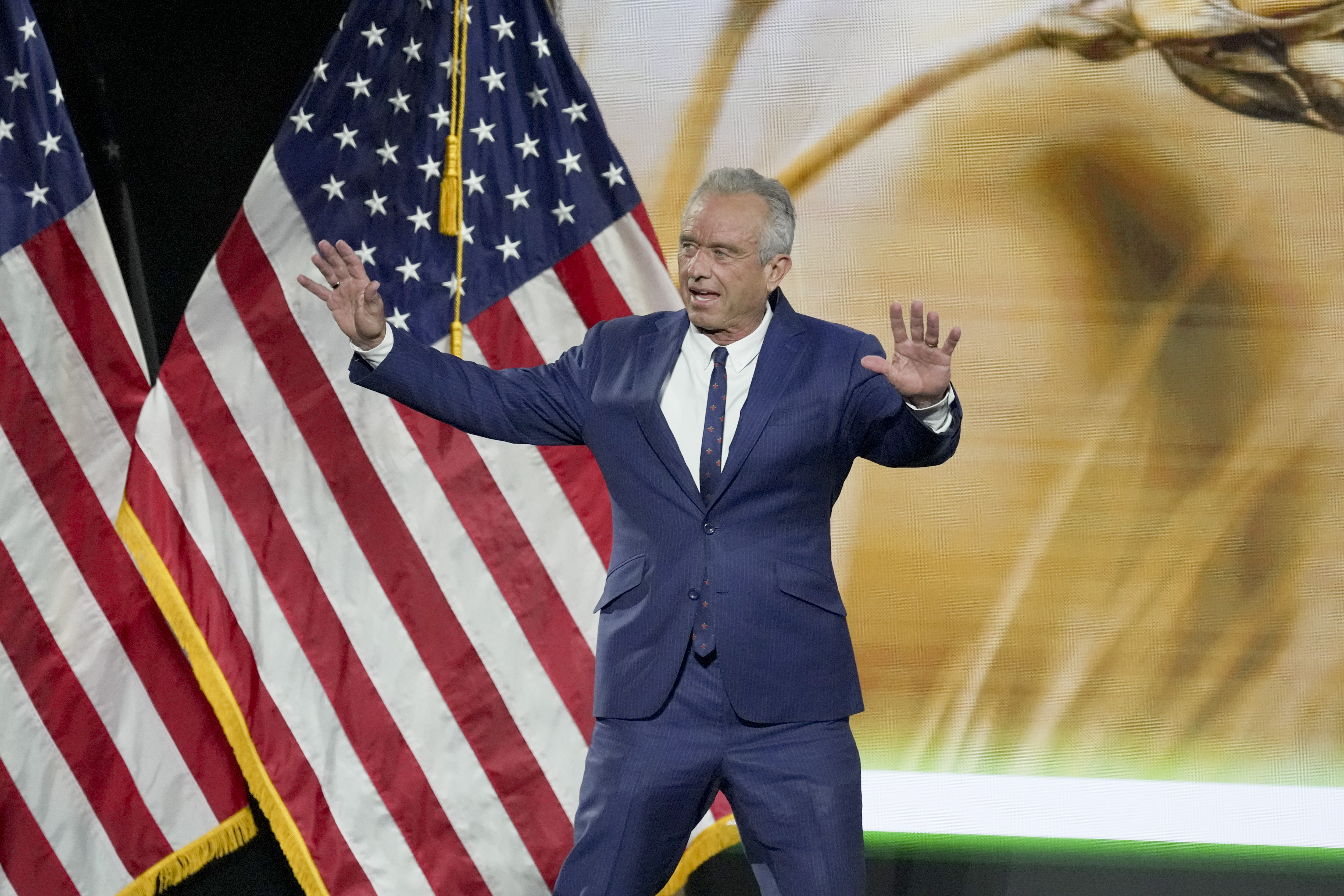
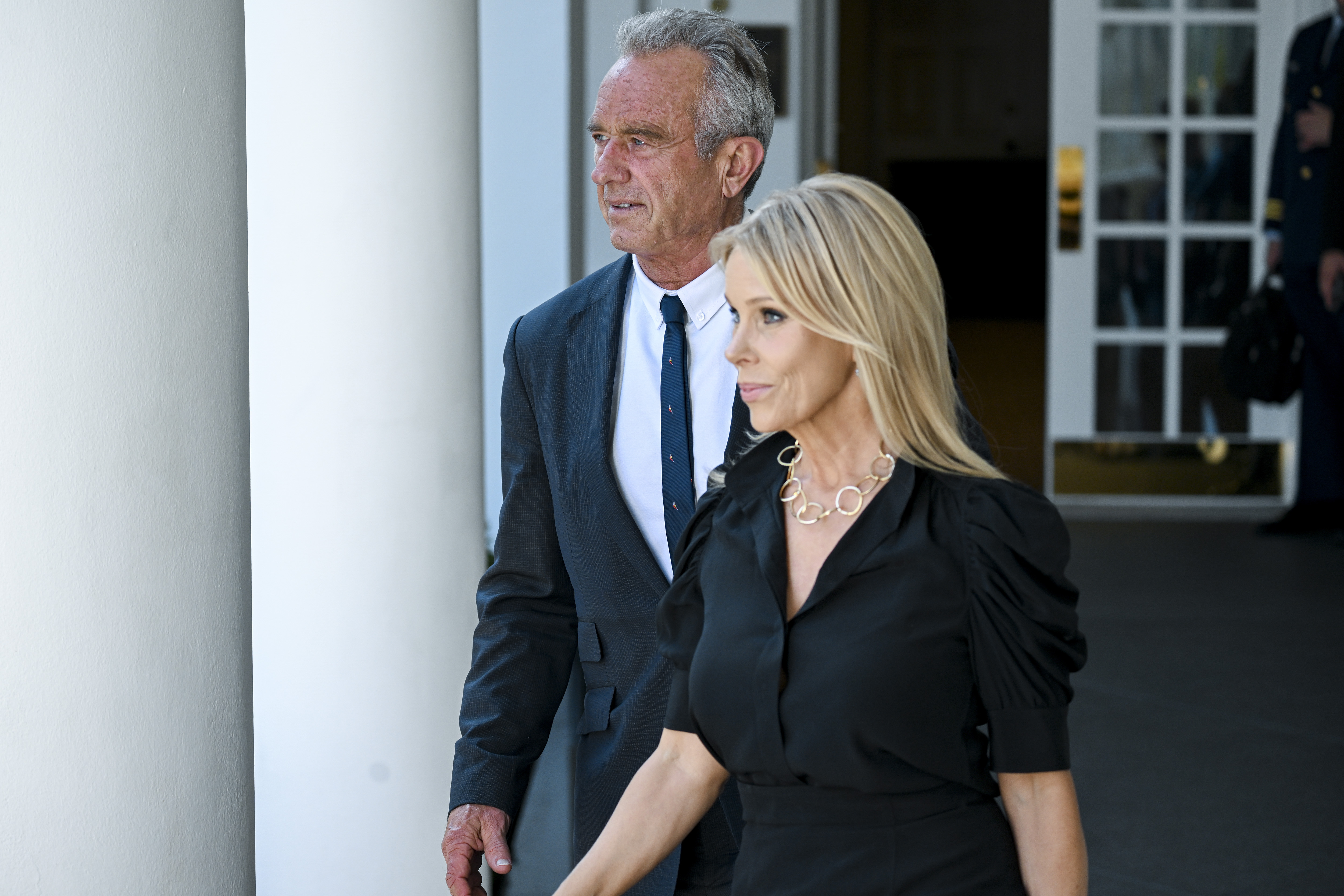
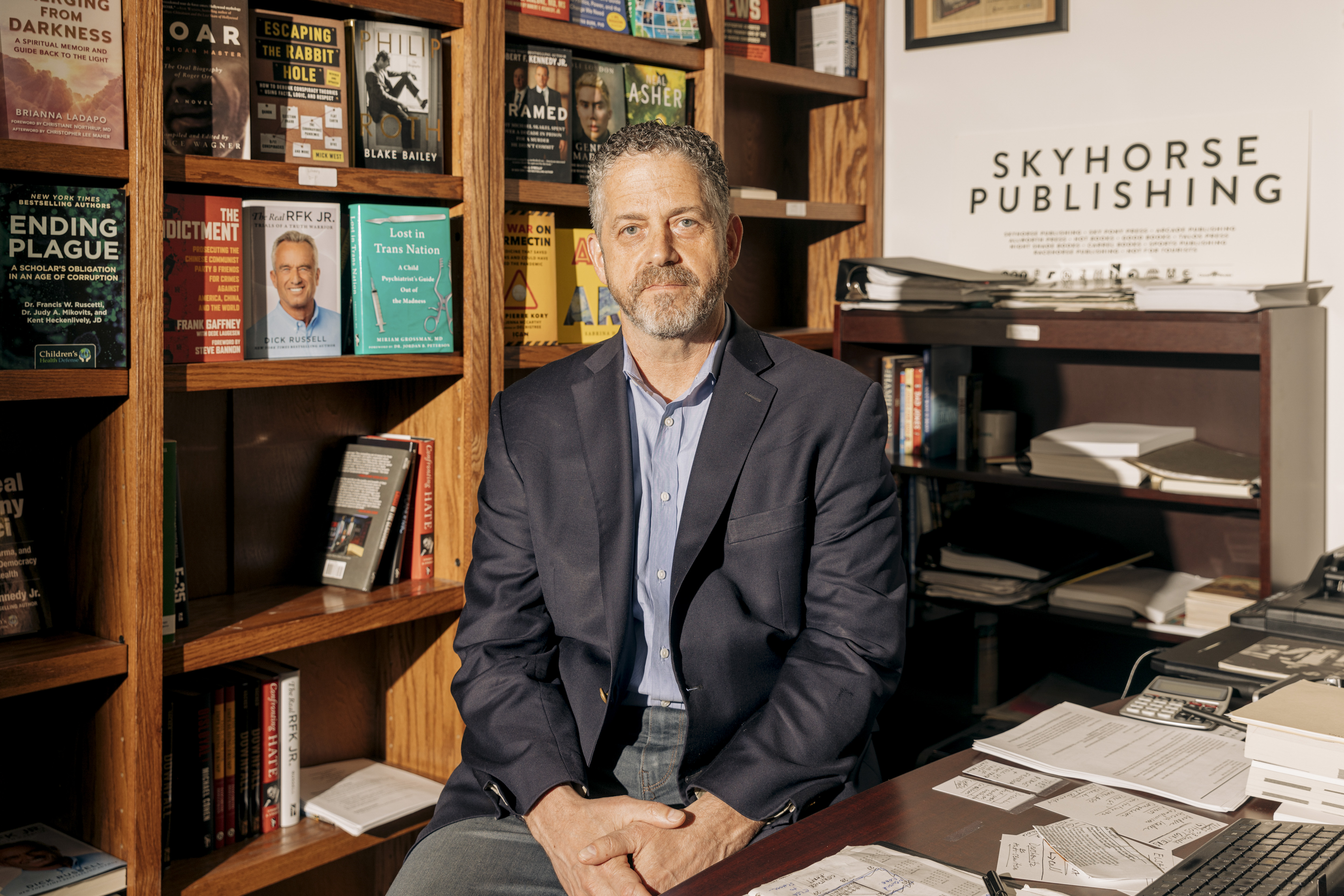
FILE — Health Secretary Robert F. Kennedy Jr. takes the stage on the second day of the Republican midterm convention at the American Airlines Center in Dallas, Sept. 10, 2026. Health Secretary Robert F. Kennedy Jr. accepted $4 million in book advances and more than $270,000 in gifts over the past year from close allies who are working to advance his Make America Healthy Again agenda, according to his latest financial disclosure form. (Ruth Fremson/The New York Times)RUTH FREMSONFILE — Health Secretary Robert F. Kennedy Jr. and his wife, Cheryl Hines, at the White House in Washington, July 23, 2026. A new disclosure shows $210,000 in consulting fees paid to Hines by one of several MAHA-affiliated groups capitalizing from his agenda. (Kenny Holston/The New York Times)KENNY HOLSTONFILE — Tony Lyons, owner of Skyhorse Publishing in Manhattan, at his office in Manhattan, Aug. 10, 2023. Lyons of Skyhorse Publishing sits atop a constellation of MAHA-related entities, including some that accept political contributions and corporate sponsorships from health-related companies. (Jeenah Moon/The New York Times)JEENAH MOON
Philadelphia State Rep. Chris Rabb’s former campaign treasurer, whom he accused of draining his campaign account and disappearing in the middle of his run for Congress, pleaded guilty Wednesday to a federal fraud charge.
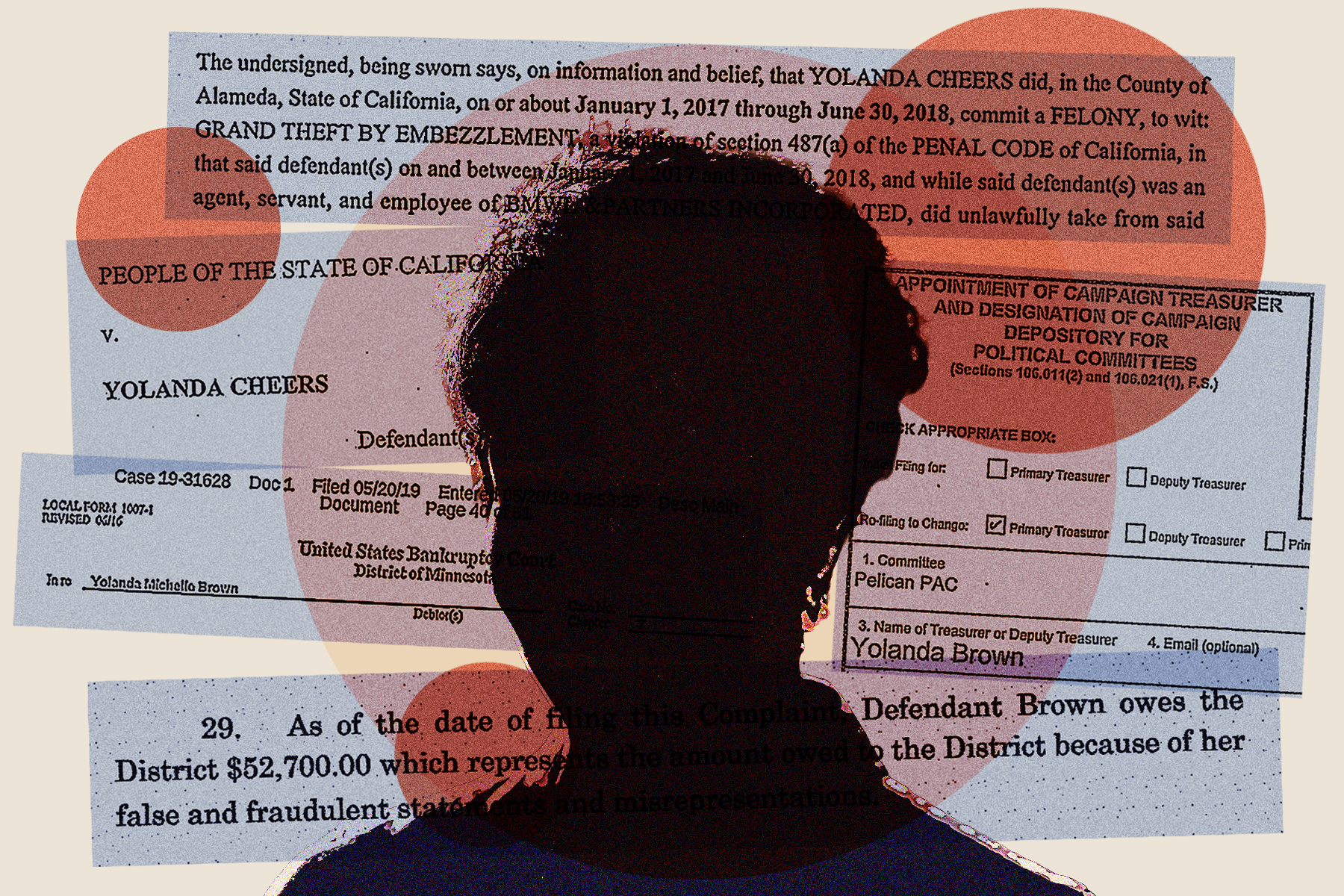
Yolanda Brown, a campaign operative formerly based in Florida who worked for Democratic political candidates and social justice causes across the country, appeared in U.S. District Court in Philadelphia on Wednesday and pleaded guilty to one count of wire fraud. She admitted to embezzling a total of about $1 million from 20 clients, including Rabb, between 2022 and 2026.
Brown, who now lives in Virginia, faces a maximum of 20 years in prison and will be required to pay restitution. A sentencing hearing is scheduled for Jan. 26.
Rabb, a progressive, went on to win the Democratic nomination in May. He is expected to prevail in the November general election to represent Pennsylvania’s 3rd Congressional District. There is no Republican candidate, though he faces a long-shot independent opponent.
Rabb did not immediately respond to a request for comment.
For years, fraud claims from several political campaigns piled up against Brown, who operated Brown Financial & Consulting Services Group and at times worked under her married name, Yolanda Rumph. She was accused of financial impropriety in several states, The Inquirer reported, including shaving money from accounts she controlled and embezzling from a nonprofit client.
But she continued working in politics and, in August 2025, signed on to work for Rabb, who was in the midst of a highly competitive Democratic primary run for an open seat in Congress representing about half of Philadelphia.
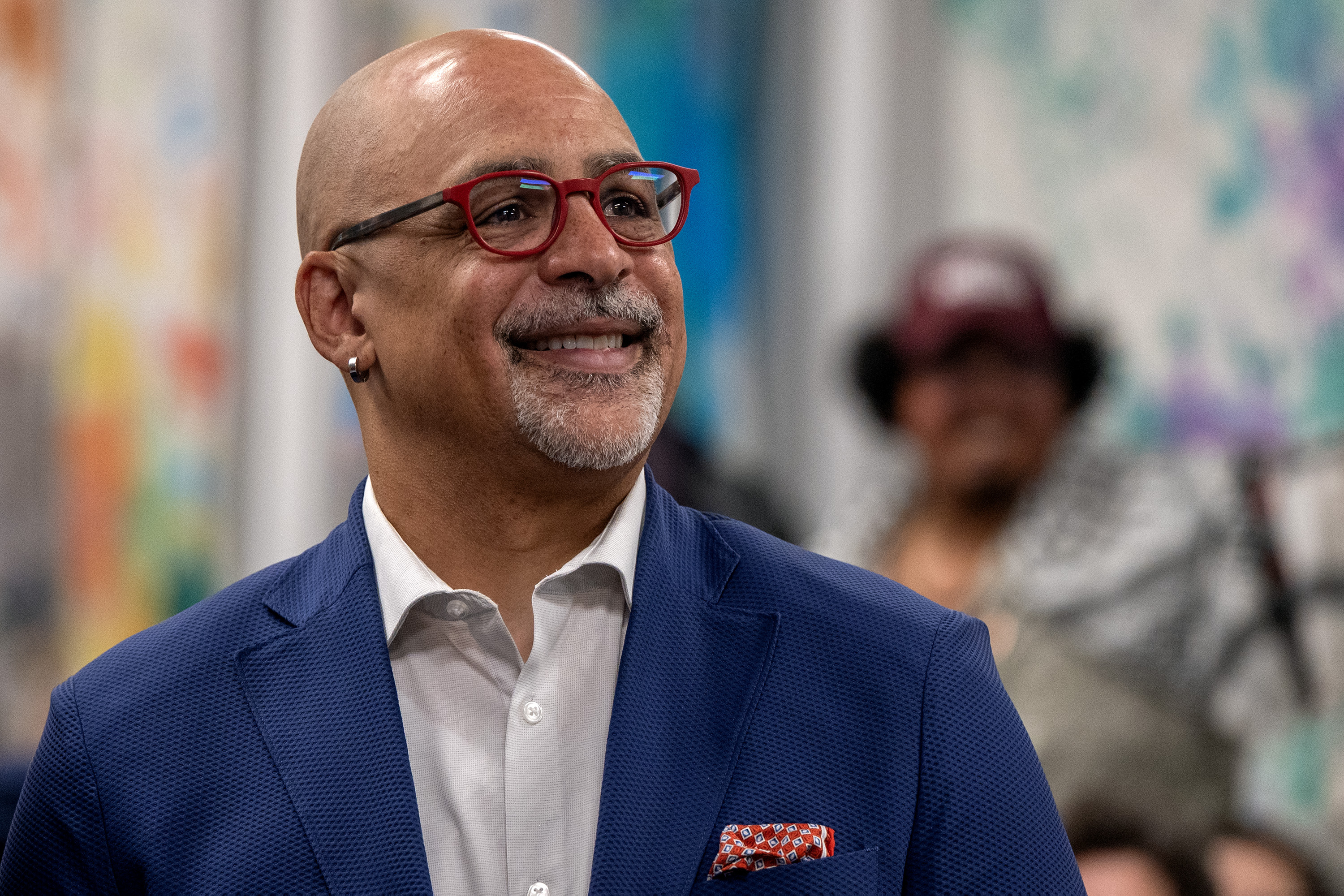
State Rep. Chris Rabb at an event with U.S. Rep. Ro Khanna July 28, 2026.Tom Gralish / Staff Photographer
The following month, Rabb said that Brown had made a series of unauthorized withdrawals from his campaign. The amount of money embezzled totaled more than $160,000, which constituted most of what was in his campaign’s account at the time, according to paperwork Rabb’s campaign filed with the Federal Election Commission.
Khambrel Davis, Brown’s attorney, said in an interview with The Inquirer in March that Brown was innocent and merely the victim of a rogue employee who had stolen from her clients.
But on Wednesday in court, Brown acknowledged that she executed a scheme to defraud her clients of hundreds of thousands of dollars.
Assistant U.S. Attorney Robert Livermore told U.S. District Judge Chad F. Kenney that Brown “embezzled client funds in her control to pay for her own personal expenses without authorization from her clients.”
He added that she “often used client funds to repay other clients from whom she had previously stolen funds.”
In charging documents, prosecutors wrote that in one instance, Brown steered about $19,000 from the account belonging to Rabb’s campaign — identified in court filings as “Political Campaign #1″ — into a separate account that she controlled. She then transferred $6,000 of that money into her personal bank account.
That transfer was one of multiple unauthorized transfers that Rabb’s campaign detected. Prosecutors often formally charge a limited scope of wrongdoing if a defendant has agreed to plead guilty.
Prosecutors described the fraud perpetrated against Rabb’s campaign as part of an “overall scheme” in which Brown defrauded about 20 clients of a total of more than $1.4 million. They wrote that she had repaid clients more than $400,000, for a net loss of about $1 million.
With oil and gasoline prices spiking amid President Donald Trump’s war with Iran, it was an awkward moment for optimism about the world’s energy situation.
But Energy Secretary Chris Wright brought a sunny message to Houston last week at a gathering of energy ministers from the Group of 20 nations. The Trump administration, he said, was ushering in an era of energy abundance by expanding oil and gas supplies in places like Alaska and Venezuela.
That pitch was often overshadowed by the effects of the conflict in the Middle East. Between lauding oil and gas deals, Wright fielded questions about a damaged Saudi oil pipeline and sparred on social media with Gov. Gavin Newsom of California, a Democrat, over surging gasoline costs.
Wright acknowledged some tension, though he insisted it was temporary.
“Everyone’s frustrated with higher energy prices,” he said of the mood at the meeting. “But I’ve not met one person who’s comfortable with a nuclear-armed Iran. So everyone gets what we’re doing and this is a critically important mission. It creates dislocations in the short term. But the only answer to short-term dislocations is the energy abundance agenda.”
The situation was familiar for Wright, 61, one of the most forceful defenders of Trump’s vision of “energy dominance.”
Over the past two years, the administration has dismantled efforts to tackle climate change and ended support for wind and solar power. Instead, officials have sought to expand the use of oil, gas, coal, and nuclear energy — sources they see as more reliable. The aim, they say, is to reduce consumer prices, increase U.S. fuel exports, and provide enough electricity to win the artificial intelligence race against China.
Wright, a former fracking executive, has been out front in articulating that shift.
Whereas Trump speaks bluntly about energy — chanting, “Drill, baby, drill”; calling wind turbines ugly; or claiming that global warming is a hoax — Wright gives his arguments an intellectual gloss.
He cites figures on how solar panels underperform during winter storms. Or he argues that global warming is not as big a problem as energy poverty, which he says can only be alleviated with more oil, gas, and coal, even if that means more planet-heating greenhouse gas emissions.
Administration allies say that has made Wright invaluable.
“He has been one of the most consequential picks for energy secretary I’ve seen,” said Thomas J. Pyle, president of the American Energy Alliance, a research group that promotes fossil fuels. “He’s very experienced, brings a lot of substance, and he articulates President Trump’s vision clearly.”
Critics say Wright’s approach ignores the real risks of climate change and dismisses two of the world’s fastest-growing power sources: wind and solar. They also point to rising energy costs — diesel prices have hit record highs, and electricity rates are still increasing faster than inflation — as evidence that the administration’s policies aren’t working.
During his Senate confirmation hearing last year, Wright appeared to reassure lawmakers that he supported all energy sources, including renewables. He cited his graduate work on solar power and called climate change a “global challenge that we need to solve.”
But since taking office, he has been more combative, deriding wind and solar power as a “parasite” on the grid, blasting Democratic-led states for environmental policies that have shut down coal and gas plants, and accusing Europe of being in thrall to a “climate cult” that is limiting economic growth.
The Energy Department infuriated Democrats in Congress last October by canceling nearly $8 billion in Biden-era clean energy grants located almost entirely in states that didn’t vote for Trump. Asked about the decision at a June congressional hearing, Wright said political considerations had nothing to do with the decisions.
But in court filings in July, administration officials conceded that the cancellations were targeted in states that were represented by Democrats and had voted for Kamala Harris, the party’s presidential nominee, in the 2024 election.
Energy Department officials have said that they recommended that grants be canceled in red and blue states alike but that the decisions on which terminations to announce were made by the White House.
Sen. Martin Heinrich of New Mexico was one of eight Democrats who voted to confirm Wright last year but has since become a vocal critic.
“Of all the Trump nominees, I am particularly disappointed in his conduct,” Heinrich said. “He obviously had an oil and gas history, but he also had a clean energy history. And he just threw all of that away to be a partisan mouthpiece.”
In response, Ben Dietderich, an Energy Department spokesperson, said in a statement, “Secretary Wright doesn’t have preferred energy sources. He just believes in being honest about math and energy security. Unfortunately, many in the climate lobby don’t like that. The Department is proud to have ended energy subtraction policies that lead to higher prices, less energy security and human impoverishment.”
Wright first gained prominence as the founder of Liberty Energy, a Denver-based oil-field services company that was heavily involved in the fracking boom.
Even among oil and gas executives, Wright stood out as an evangelist for fossil fuels. In 2021, as world leaders and even many oil companies were pledging to slash emissions, Wright published a 180-page report criticizing what he saw as a “myopic focus on climate change.”
He argued that people in developing countries still lacked enough energy to enjoy a decent standard of living and that renewables couldn’t replace oil, gas and coal to provide that power.
“At the height of this era when everyone was saying energy policy should just be about climate, Chris Wright was one of the few CEOs that ran oil and gas firms who clearly and vocally spoke out,” said Arjun Murti, a partner at the energy research firm Veriten.
Wright also had a flair for the dramatic. He once drank fracking fluid on video to show it was safe. In 2021, he rented billboards around Denver to heckle The North Face after the company declined to work with an oil firm.
He landed appearances on Fox News and won the job of energy secretary on the recommendation of Harold Hamm, a fellow fracking pioneer and major donor to Trump.
Wright quickly transformed the department. Out were programs to develop novel technologies to fight climate change, like green hydrogen or low-emissions steel. Instead, federal funds went to help utilities finance gas plants, nuclear reactors and transmission lines or upgrade older coal plants, which officials say are essential for meeting rising electricity demand.
Wright also lifted a Biden-era pause on expanding exports of liquefied natural gas, now the nation’s fastest-growing export, and has pressured Europe to ease rules on methane, a potent greenhouse gas, saying they could hurt U.S. exports.
“He brought a whole new attitude to the agency,” said Scott Segal, an energy lobbyist at Bracewell. “It’s all about how do we produce enough energy to support AI and economic growth.”
Some changes have attracted bipartisan support, such as Wright’s promotion of nuclear and geothermal energy, which don’t produce planet-warming emissions. His agency has dangled billions of dollars in loans to kick-start the largest expansion of nuclear power in a generation, while a program to help startups develop small reactors has moved faster than many expected.
Other moves have been more contentious.
To rescue the declining coal industry, an obsession of Trump’s, the Energy Department used emergency powers to keep plants running past their scheduled retirement dates, which could cost ratepayers billions. (This month, a federal judge struck down one such order, saying the agency had overstepped its authority.)
Last year, Wright picked five skeptics of mainstream climate science to write a report arguing that concerns about global warming were overblown. That report prompted furious pushback from hundreds of scientists, who denounced its findings as riddled with errors. A federal judge later ruled that Wright had acted unlawfully by secretly convening the authors.
Wright, who often criticizes wind and solar for not running at all hours, has cut renewable energy programs and renamed the National Renewable Energy Laboratory as the National Laboratory of the Rockies. While experts agree that the variability of wind and solar poses real challenges, many say it goes too far to call the sources “worthless.” Texas gets roughly one-third of its power from renewables and has kept costs low.
“It’s borderline petty how anti-renewable this Energy Department is,” said Samantha Gross, a director at the Brookings Institution. “Especially since we’re still building more renewables, particularly solar, than any other form of energy in the U.S. right now.”
Roughly 2,700 staff members have left the agency, which analysts and former employees said could make it difficult to carry out its mission.
Wright’s supporters say he has helped steer the country away from what they saw as the Biden administration’s unrealistic plans to rapidly phase out fossil fuels.
Some say the debate is shifting in his direction. Many states and businesses are backing off ambitious climate targets, and Democrats are less vocal nowadays about climate change. Tech companies are using more natural gas to meet exploding demand for data centers. The International Energy Agency, after some browbeating by Wright, is revising up its projections for how long fossil fuels will stick around.
“There’s been a real shift in how investors and others now talk about energy,” said Travis Fisher, a director of energy and environmental studies at the libertarian Cato Institute who worked with Wright to organize the agency’s climate report. “Climate has become a lot less salient.”
The administration’s strategy faces its biggest test yet with the Iran war. While The New York Times reported that Wright was excluded from the decision to launch the war, he has been busy managing the energy fallout. He often appears on television to discuss U.S. military escorts of oil tankers through the Strait of Hormuz. And he is quick to counter that Democratic-led states face high energy costs because of decisions to close refineries or oppose pipelines.
In the short term, the war and resulting energy shortages have benefited many U.S. suppliers, which are exporting more oil and gas than ever before. But in the long term, some experts and companies worry the chaos could hurt the market for fossil fuels as countries seek to reduce reliance on energy imports.
Wright, for his part, says fossil fuels are too useful to recede anytime soon.
“We will never, ever come remotely close to running out of hydrocarbons, which means you need better technology and innovations to eventually eat into their market share,” Wright said at a Cato event in May.
He said he was excited about recent breakthroughs in areas like fusion. But, he added, “the biggest innovations the rest of my lifetime in energy are almost certainly going to be in oil, gas and coal, because they are what matter.”
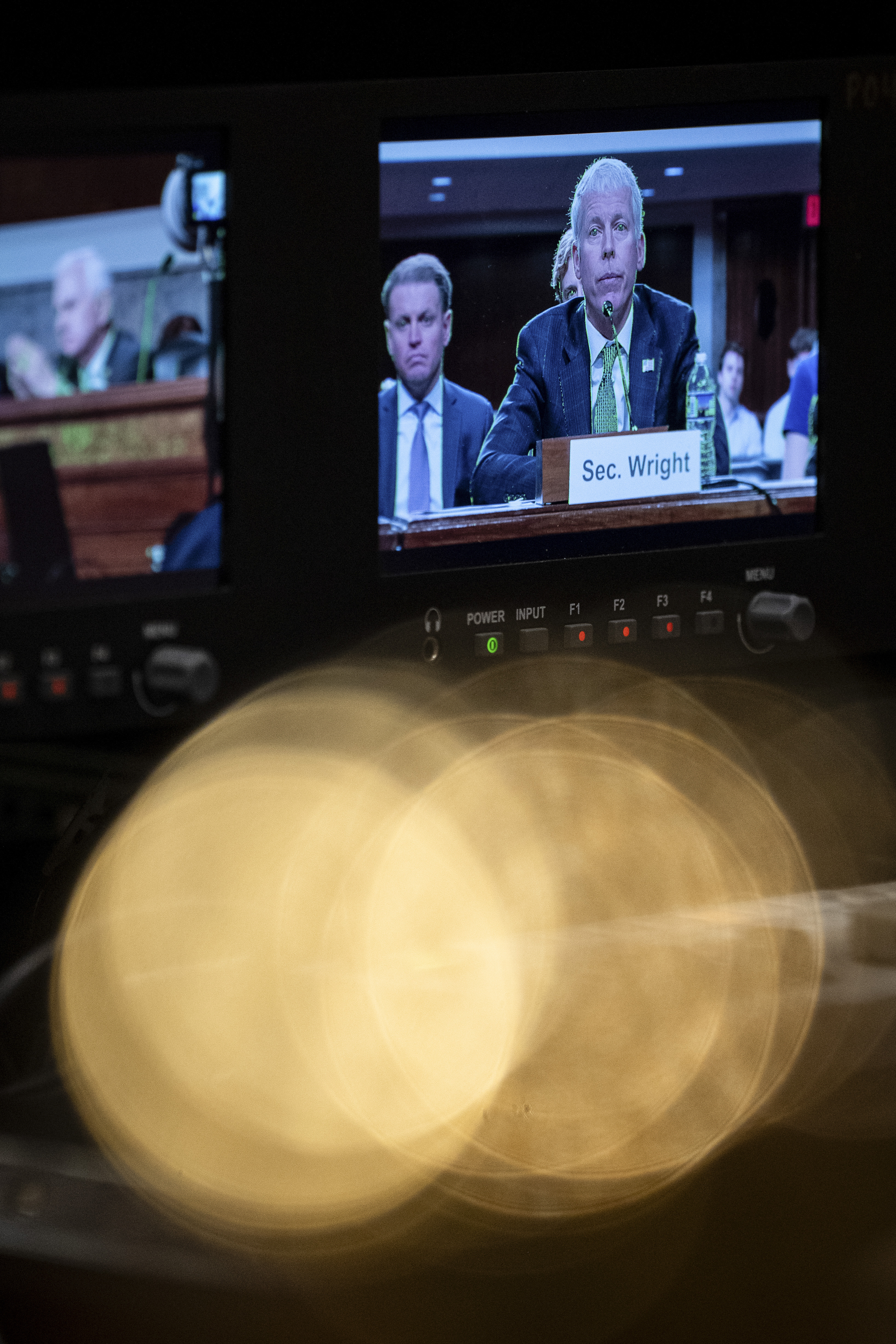
FILE — A monitor shows Chris Wright, the Trump administration’s Energy secretary, at a hearing on Capitol Hill on May 13, 2026. Wright, a former fracking executive, pitches a future of fossil fuel abundance. It hasn’t always been an easy sell as the war with Iran drags on and oil prices surge. (Haiyun Jiang/The New York Times)HAIYUN JIANG
John Dougherty was for years an unparalleled kingmaker in Philadelphia’s Democratic Party — a charismatic labor leader and fundraiser who helped anoint a generation of future mayors, City Council members, state and federal legislators, judges, and governors.
Some of Dougherty’s key supporters in his clemency push, The Inquirer has learned, included two former Republican congressmen; Dougherty’s lawyer, who once ran as a Republican for mayor and, later, for U.S. Senate; and a onetime candidate for Philadelphia City Council with ties to organized labor, who said he was one of Trump’s earliest local backers.
All had relationships with Dougherty, owing to his years of political activism as head of Local 98 of the International Brotherhood of Electrical Workers — even if his support mostly benefited fellow Democrats.
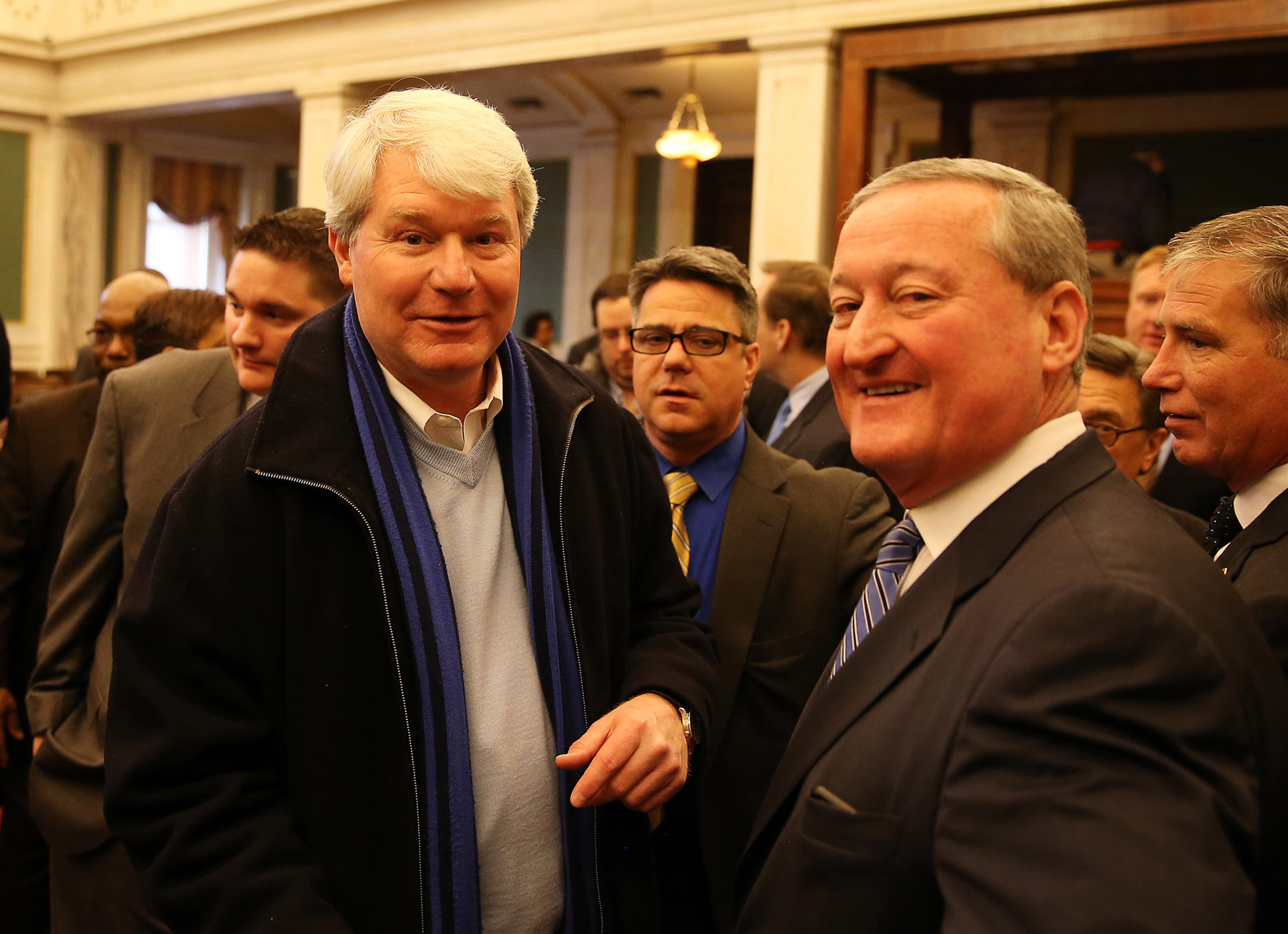
John Dougherty in 2015 with then-City Councilmember Jim Kenney. The two were childhood friends, and Dougherty helped support Kenney’s successful mayoral campaign.
The former Council candidate, Daniel Pellicciotti, said his efforts to help Dougherty included meeting with Trump at the White House and speaking with him over the phone. Pellicciotti said that he told Trump about the significant health challenges faced by Dougherty’s wife, Cecelia, and that Trump was sympathetic to Dougherty’s situation — and willing to send him home.
“He just said, ‘This is crazy.’ Exact words,” Pellicciotti said. “‘He needs to be home with his wife, taking care of her. Besides, it would be cheaper for the government.’”
Former U.S. Rep. Lou Barletta, meanwhile, said he signed a letter to Trump last year and contacted anyone he could “just to try to get this on the president’s radar.”
He said that he had been following Cecelia Dougherty’s health situation closely and that advocating for her husband “became a personal thing for me.” Earlier this year, he attended a court hearing in Reading at which Dougherty begged a judge to be released.
“I’m very thankful that the president had the compassion to put politics aside and do the right thing,” said Barletta, who met Dougherty in the early 2000s as mayor of Hazleton.
President Donald Trump with then-Rep. Lou Barletta in 2018.Keith Srakocic
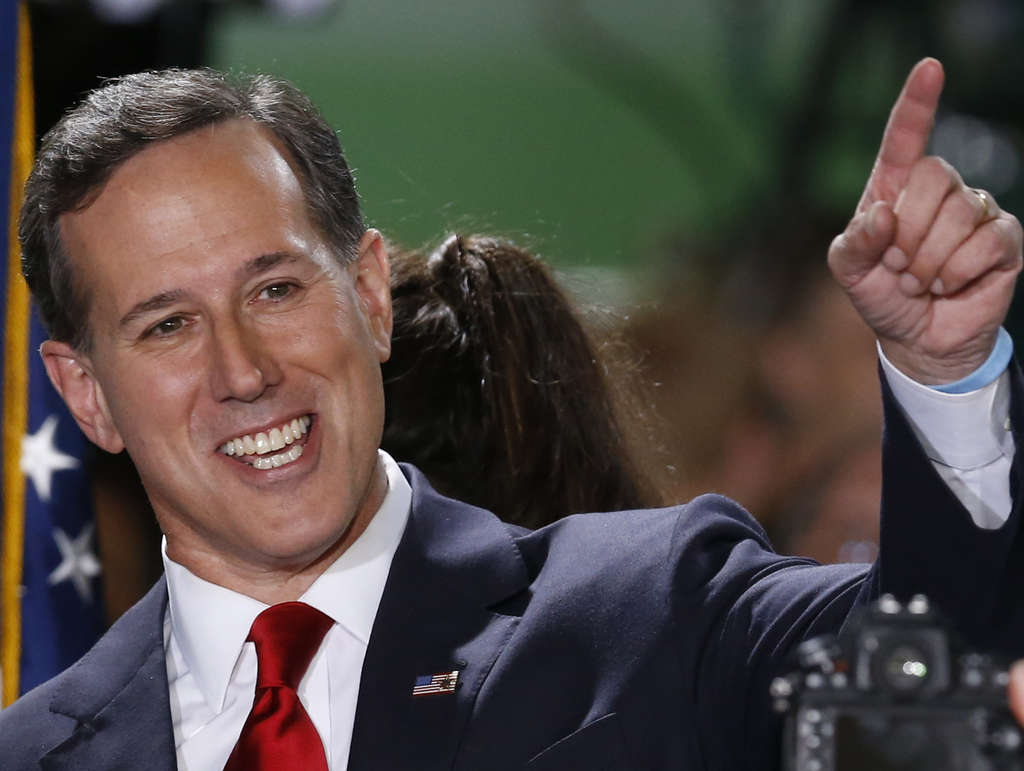
And Rick Santorum, a former U.S. senator who competed against Trump for the GOP’s presidential nomination in 2016, said he “did what he could to be helpful” in supporting Dougherty’s efforts.
“Those two years Dougherty spent in jail away from his wife were probably 20 years because I know how much he loves her and how much he was really hurting,” Santorum said. “So to me, this was the humanitarian thing to do, and I supported it.”
The backing from GOP pols may help explain how Trump — a famously partisan president — ended up granting clemency to a longtime Democrat in one of America’s bluest cities. Trump was soundly defeated in Philadelphia in each of his three elections, and some of Dougherty’s longtime Democratic allies were among his fiercest critics.
The Republican lobbying might also add context to Dougherty’s decision to change his voter registration and join the GOP. Dougherty — long known as Johnny Doc — switched parties not long after being released this month from a federal penitentiary in Lewisburg, Pa.
Dougherty has not spoken publicly since his release, and his lawyer, George Bochetto, said Dougherty was focused on caring for his wife.
Bochetto, who ran for Philadelphia mayor in 1999 and U.S. Senate in 2022 — both times as a Republican — generally declined to discuss details about the lobbying effort. He did say he had been in regular communication with White House aides about Cecelia Dougherty’s health challenges, and he called Trump’s decision “a magnificent gesture of compassion.”
The White House press office did not respond to questions about who was involved in advocating for Dougherty. A spokesperson said only that the commutation was granted to let him “care for [his] terminally ill wife.”
Multiple attempts at release
Dougherty and Bochetto had taken several paths to try to secure an early release from his six-year sentence, which began in 2024 after Dougherty was convicted in separate bribery and embezzlement trials.
A few months after Dougherty reported to prison, Bochetto filed emergency motions asking U.S. District Judge Jeffrey L. Schmehl to allow Dougherty to serve the remainder of his term on house arrest so he could be his wife’s primary caretaker.
Schmehl denied those requests twice — including after a hearing in May at which Dougherty testified about how he was the only person who could provide the type of round-the-clock assistance his wife needs. She has long been paralyzed and largely nonverbal after suffering a debilitating brain injury.
John Dougherty in 2024.Steven M. Falk / Staff Photographer
After failing to persuade the judge, Dougherty turned to others in his orbit as the request pivoted toward the White House — where Trump, as president, has wide latitude to commute sentences and grant pardons in federal cases.
But his allies, including Pellicciotti, persisted. A former business agent for the laborers union, he said he was friends with Cecelia Dougherty before he knew her husband, and he has known both for decades.
A former Democrat and nephew of the late Councilmember Francis Rafferty, Pellicciotti ran unsuccessfully for Council in 2003 with backing from Dougherty’s electricians union. He said he switched his registration to Republican when Trump ran for president and backed his 2016 campaign.
“Nobody in Philly was really backing him. I have a lot of respect for him. He don’t forget his friends,” Pellicciotti said.
In addition to their politics, Pellicciotti, 64, of Roxborough, shared something else with Trump: a felony conviction. Pellicciotti pleaded guilty in 2005 to bribing a Philadelphia public official with cash in exchange for obtaining a designation for his demolition company as a woman-owned business.
When Pellicciotti was sentenced to probation and a fine the following year, Dougherty and other union members were in the courtroom to pat him on the back.
That experience with the criminal justice system did not come up in Pellicciotti’s conversations with Trump, however. “I really think it had strictly to do with him doing the right thing for John and Celi,” he said.
Help among friends
Barletta and Santorum declined to provide many details about the depths of their advocacy but agreed that their central motivation was support for Dougherty and his wife.
In addition to Dougherty’s long friendship with Barletta, his ties to Santorum date to 2006, when his former union, Local 98, backed Santorum’s unsuccessful reelection campaign against Democratic challenger Bob Casey.
Santorum said Dougherty was always uncharacteristically gracious about acts that benefited his members — despite the senator’s political affiliation.
“Johnny cared enough that he said, ‘Well, look, this guy has done more for my workers and those families than anybody, and we’re going to support him,’” Santorum said.
Former U.S. Sen. Rick Santorum announcing his candidacy for the 2016 presidential race.KEITH SRAKOCIC / Associated Press
Other local figures with ties to Trump who were rumored to have helped Dougherty’s lobbying — such as Philadelphia lawyers Michael van der Veen and William J. Brennan, who represented Trump during his second impeachment trial — declined to say if they were involved.
In any case, Trump made Dougherty’s release official earlier this month. In addition to cutting his prison term short, the commutation erased Dougherty’s obligation to pay about $1.6 million in restitution.
Pellicciotti, for his part, was glad that Trump bestowed mercy on his longtime associate.
“All credit goes to God,” he said. “We did a lot of praying about it.”
Staff writers Gillian McGoldrick and Anna Orso contributed to this article.
Kendra Brooks, a progressive who made history as the first third-party candidate to win a seat on Philadelphia City Council in 100 years, is considering challenging Mayor Cherelle L. Parker in the spring Democratic primary election, according to two sources familiar with her thinking.
The sources, who were not authorized to speak about the matter publicly and did so on the condition of anonymity, said Brooks is mulling a campaign but has not yet made a decision. She declined to comment Friday.
To run in the Democratic mayoral primary, Brooks would have to resign from her seat on Council. Under state law, she could remain a member of the Working Families Party or switch her party registration to Democrat..
A bid for the mayor’s office would pit Brooks, the de facto leader of the city’s Working Families Party and democratic socialist faction, against Parker, a centrist who has long been aligned with the city’s Democratic Party establishment.
“People want to see leaders fighting for something,” Brooks said at the time, “and right now we don’t see our city fighting for anything.”
Aren Platt, the executive director of the mayor’s political campaign arm, declined to comment.
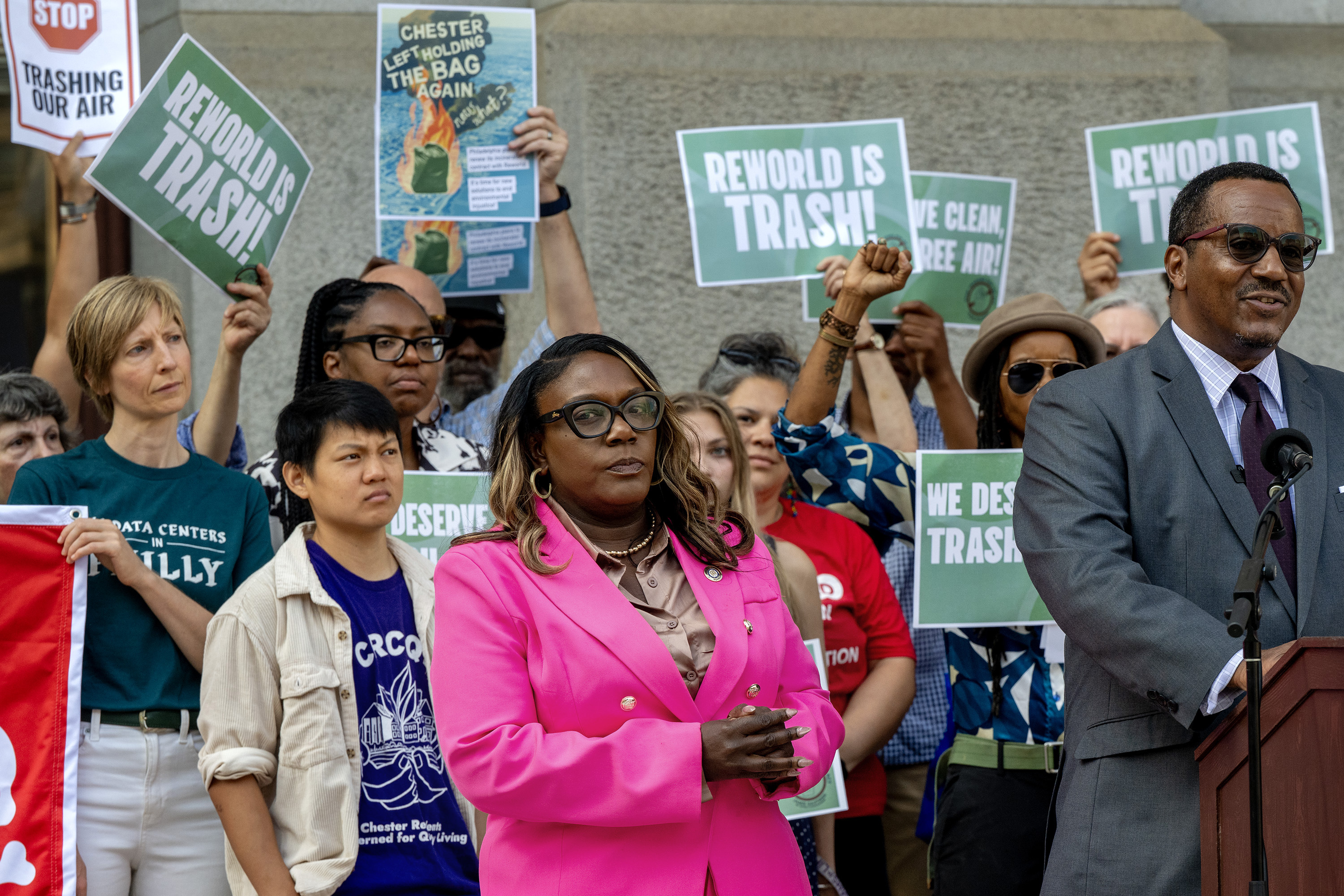
City Councilmember Kendra Brooks joins Chester Mayor Stefan Roots (right) and protesters at a rally outside City Hall Sept. 17, 2026.Tom Gralish / Staff Photographer
Brooks’ supporters see the mayor as potentially vulnerable as progressives have ascended nationally and notched wins over more traditional Democrats. That includes Mayor Zohran Mamdani’s victory last year in New York City and Abdul El-Sayed’s win in the Michigan Democratic primary for U.S. Senate.
Closer to home, the left is emboldened by State Rep. Chris Rabb, who was backed by Brooks’ coalition and in May won the Democratic primary for a seat in Congress representing about half of Philadelphia. He toppled two centrist Democrats who were each supported by party leaders, big donors, and politically powerful labor unions.
Despite the energy on the left, no progressive has officially launched a run for mayor ahead of the May primary election. Shania Bennett, the mayor’s former director of youth engagement, who has never run for office before, said this month that she will challenge Parker. Bennett said recently that she had not yet hired a campaign team or developed a policy platform.
Any challenger to Parker faces significant hurdles. No Philadelphia mayor has lost reelection in modern history, and Parker would be backed by the city’s Democratic Party, which can now spend unlimited amounts of money in coordination with its chosen candidates under a new board of ethics policy.
Parker will also be supported by the deep-pocketed building trades unions that boosted her in the crowded open mayoral primary in 2023.
“We’re going to put all the resources, both financial resources and people resources, to bear to make sure that Mayor Parker has a second term,” said Ryan Boyer, the head of the Philadelphia Building and Construction Trades Council. “I want to be clear and vociferous that the Philadelphia Building Trades … are fully and completely behind Cherelle Parker.”
In this March 2025 file photo, City Councilmember Kendra Brooks, left, listens to Mayor Cherelle L. Parker deliver her annual budget address.Alejandro A. Alvarez / Staff Photographer
Parker is likely to see support from a super PAC bankrolled by city developers, and she also has her own massive war chest. Her campaign had $1.4 million in the bank as of May, according to the most recent campaign finance paperwork available. Brooks had $17,000 on hand as of her last report in January.
But Brooks, who has won citywide election twice to represent the city as an at-large member of Council, could be a formidable opponent. She is one of the most prominent left-wing politicians in the city, and she is well-known in national progressive circles.
The Working Families Party’s chapter in Pennsylvania recently commissioned a poll that showed Brooks as broadly popular with the city’s Democratic primary electorate but with much lower name recognition than Parker, according to polling documents obtained by The Inquirer.
According to the survey of 900 respondents, 35% said they had a favorable view of Brooks, with just 4% saying they had an unfavorable view. Nearly 40% of respondents said they did not know who Brooks was.
Nearly all of the respondents knew of Parker. Forty-eight percent said they had a favorable view of the mayor, and 40% said they had an unfavorable view. Those findings are similar to a June Suffolk University/Philadelphia Inquirer poll.
Nick Gavio, a spokesperson for the Working Families Party, said in a statement that the organization often conducts polling on public opinion in the city and that the survey was “one test among a battery of others that we conducted in Philadelphia ahead of the 2027 elections.”
“We are pleased that the Working Families Party and Minority Leader Brooks are so popular,” he said, “which we believe reflects our focus on the issues that matter to the working people of this city.”
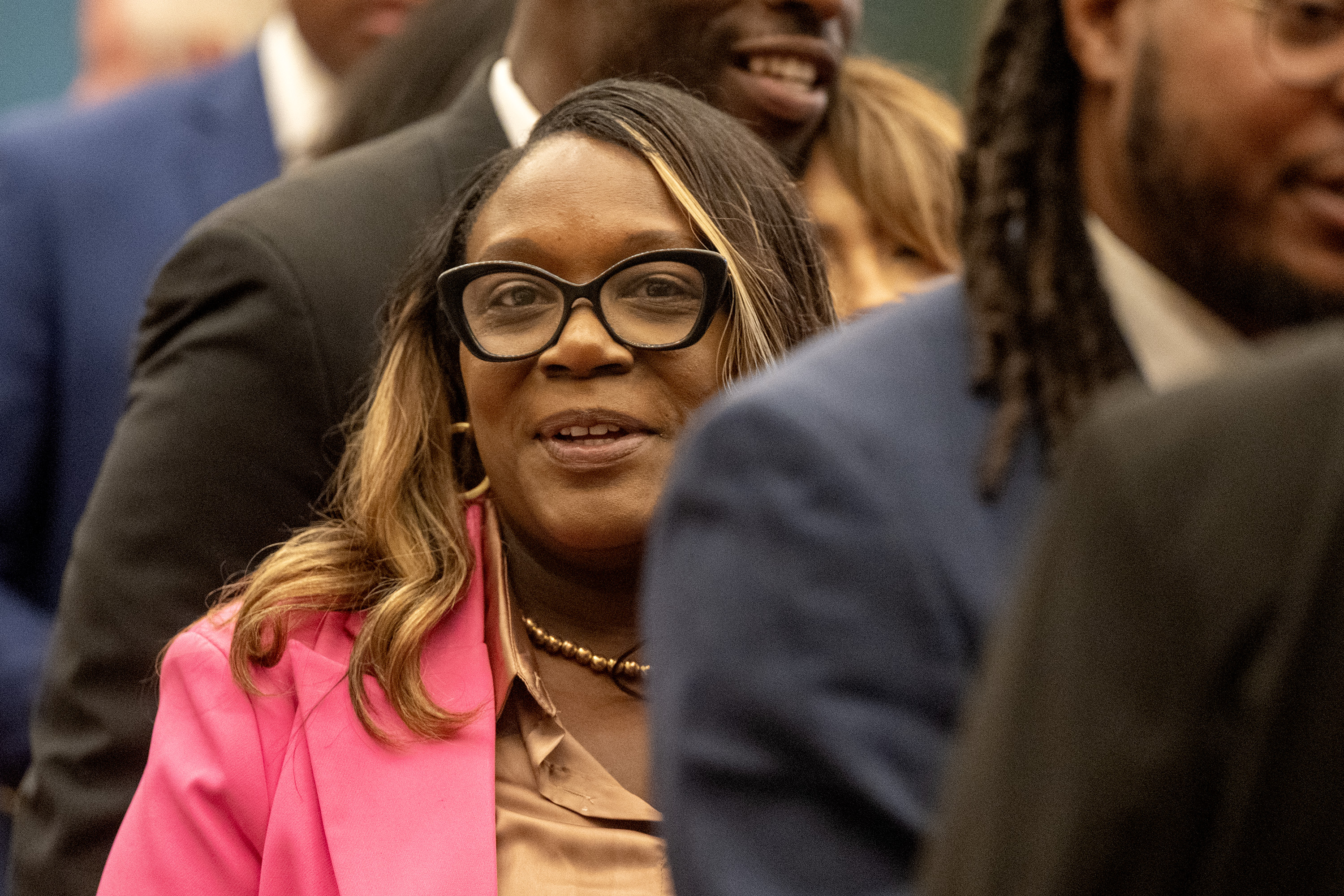
City Councilmember Kendra Brooks talks with Dominique Howell (right) in chambers as City Council returns for its fall session Thursday, Sept. 17, 2026. Howell is a long-time constituent and was there with the non-profit Liberty Resources, part of the Philadelphia Coalition for Affordable Communities.Tom Gralish / Staff Photographer
Several other leftist politicians in the city have been rumored to be considering running for mayor against Parker, but none have said publicly that they intend to launch a campaign.
One is District Attorney Larry Krasner, the third-term prosecutor who is one of the most prominent progressive district attorneys in the country. Krasner has been increasingly critical of Parker, and in June said that he would not rule out the possibility of running against her.
Correction: A previous version of this article incorrectly stated the steps Brooks would have to take to run in the Democratic mayoral primary. She could remain a registered member of the Working Families Party or switch her party registration.
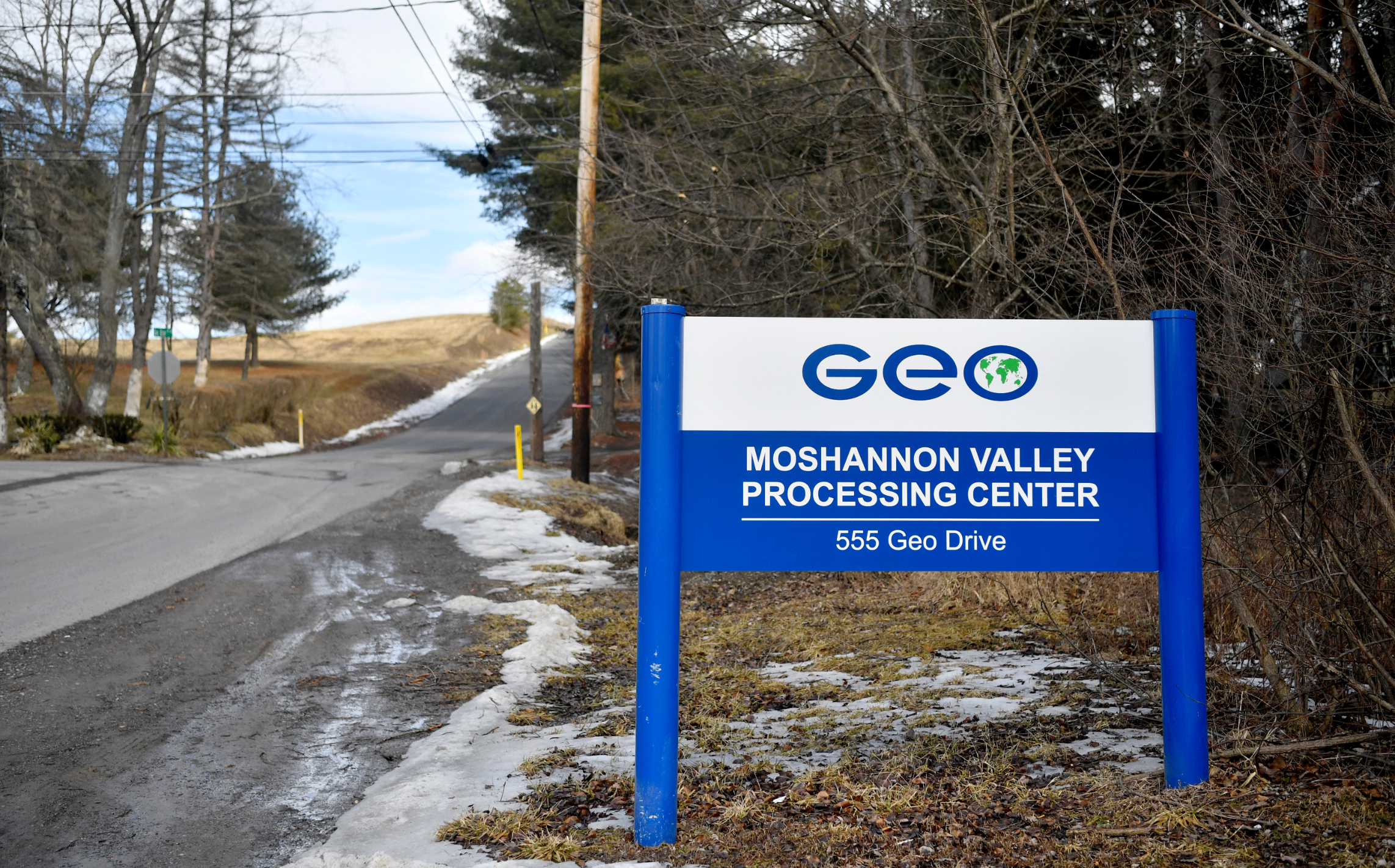
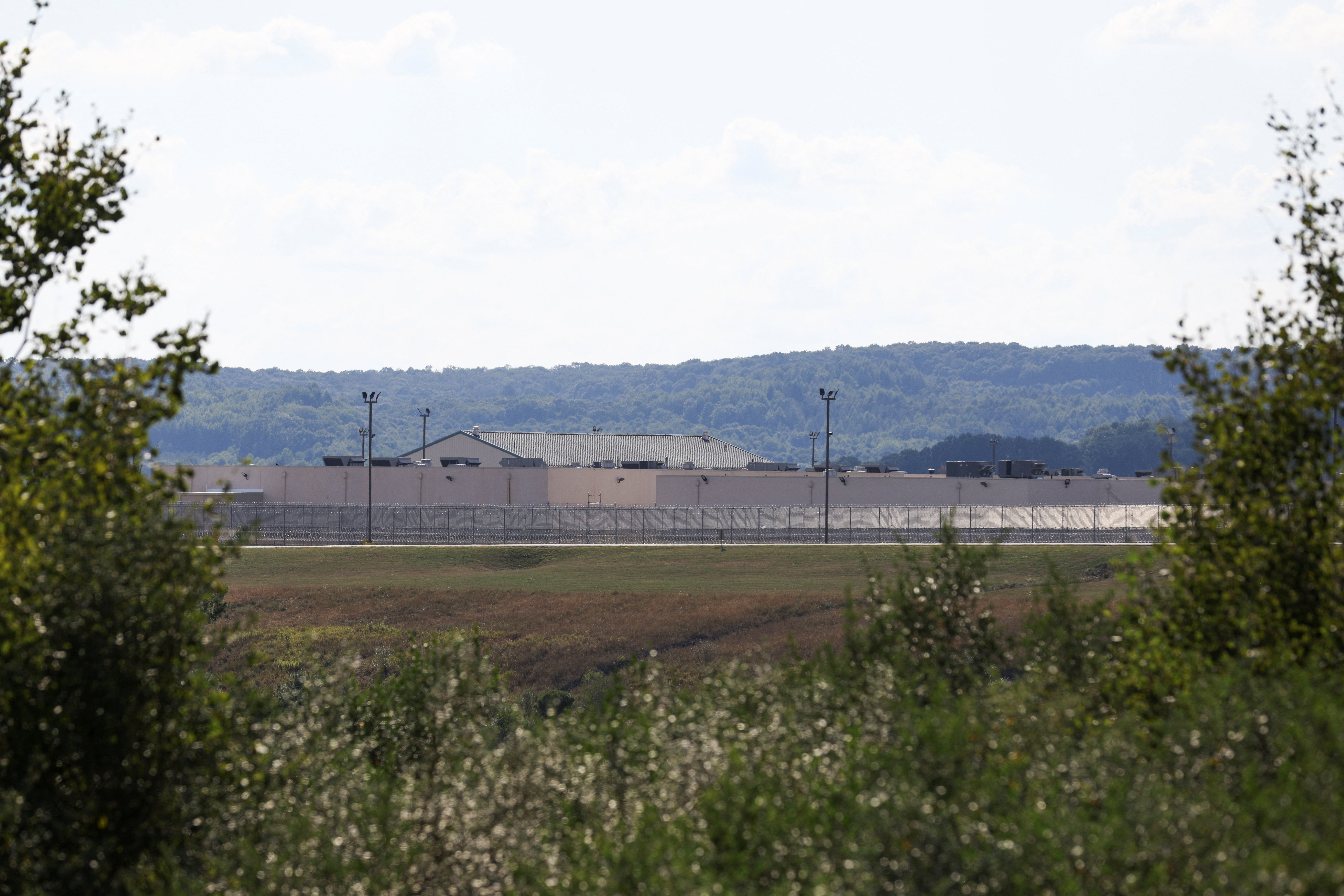
There are signs the Moshannon Valley Processing Center could end up being sold to the federal government, a move critics fear could insulate the center from some state regulation.
In the meantime, county officials approved a controversial extension of the current operating contract Tuesday, ensuring the largest detention center in the northeastern United States can run unimpeded for at least the next six months.
The contract between Clearfield County and Florida-based GEO Group, the for-profit owner of the 1,876-bed facility, was set to expire at the end of September. But Republican Commissioners Tim Winters and John Sobel voted 2-1 against Democratic Commissioner Dave Glass to extend GEO Group and ICE’s contract to operate the Moshannon center.
The vote came at a contentious meeting at which speakers from the audience mostly voiced opposition, questioning why the county had become entangled in federal immigration policy and doubting the true worth and use of the $100,000 payment.
“Blood money!” one person shouted after the vote.
Clearfield’s vote took place as President Donald Trump’s administration quietly mounts a takeover of private detention centers like Moshannon, as it is called, to expand bed capacity to support its mass-deportation goals.
Some local officials and immigration advocates think Moshannon may be next to be sold. In a statement, the Department of Homeland Security said ICE does not discuss potential facility acquisitions.
“The long-term solicitation process remains ongoing,” a spokesperson said.
Federal ownership could insulate the properties from compliance with certain local and state laws, important to the Trump administration when other expansion plans, like turning empty warehouses into detention centers, bogged down amid community and legal opposition.
Moshannon is a common destination of those arrested for immigration violations in Pennsylvania. An unannounced congressional oversight visit in May found that of the 1,417 adults detained there, roughly 78% lacked serious criminal charges or convictions of violent behavior — a contrast to Trump and his allies’ arguments for increased detention.
ICE agents outside the Delaney Hall migrant detention center in Newark, N.J., in June.LEXI PARRA
Trump’s push for mass detention and deportation
Congress voted in July 2025 to allocate $45 billion to the Department of Homeland Security for immigration detention, more than a decade’s worth of typical funding. At the time, Trump immigration officials touted the funding as a way to treat deportation “like a business,” with acting ICE director Todd Lyons saying he wants to see the deportation system run “like [Amazon] Prime, but with human beings.”
However, in June, ICE made plans to offload seven of those warehouses, totaling $700 million, by giving them to other agencies or selling them outright, according to the New York Times.
A warehouse purchased by DHS to house an ICE detention center in Surprise. Caitlin O'Hara
GEO Group’s founder and executive chairman, George Foley, said in a May earnings call that the private prison company was “engaged in an active process for the sale” of several facilities to ICE. Foley acknowledged Democratic-led states were considering more active oversight in detention centers, saying, “I think the logical solution to much of that is federal ownership of the facilities.”
GEO Group did not respond to a request for comment.
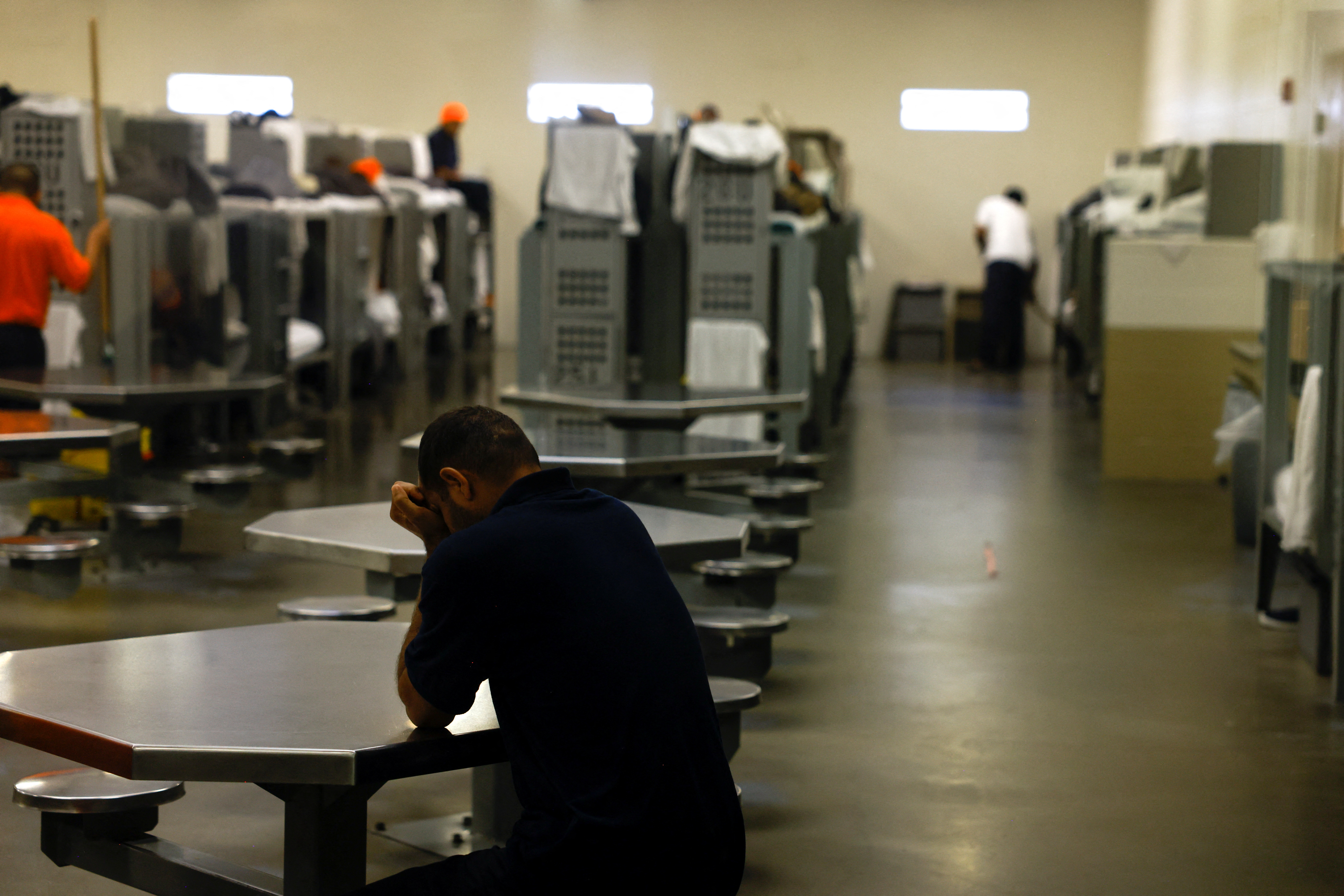
A detainee sits behind glass in a common area at the Moshannon Valley Processing Center in 2023.REUTERS / Quinn Glabicki
The potential sale of Moshannon to ICE
GEO Group has not officially stated its intention to sell Moshannon to ICE. But recent ICE contract bid requests and local dealings with the center’s warden are leading local officials and immigration advocates to suspect a sale.
Earlier this month, ICE requested 10-year contract bids for “turnkey” detention facilities across the country, including in the Philadelphia area. Moshannon is the only private facility in the region that fits that criteria, said Jasmine Rivera, executive director of the Pennsylvania Immigration Coalition, which had called on county commissioners to deny a contract extension.
Rivera said the proposal requests include provisions that could lead to the sale of private detention centers to ICE, similar to its dealings with CoreCivic. GEO Group and ICE’s contract extension “is a stopgap measure” so the parties have “the time to finish the land assessment in the sale of Moshannon,” Rivera said.
In a Sept. 8 Clearfield County commissioners meeting, Glass told the public he directly asked Moshannon warden Leonard Oddo earlier this year whether the Clearfield detention center could be sold to ICE. Oddo said no, according to Glass. In the first week of September, the commissioner e-mailed Oddo the same question, to which Oddo responded, “‘I’ll have to refer you to GEO corporate on that,’” Glass said.
“I took that as kind of a red flag that there may be some kind of a sale,” Glass said at the meeting.
Moshannon Valley Processing Center, an ICE detention facility operated by the Geo Group, where migrants are housed, in Philipsburg, Pennsylvania, U.S., August 24, 2025. REUTERS/Quinn GlabickiREUTERS
What it means for Pennsylvania residents
Having Moshannon fall under federal ownership would mean many of the tax benefits Clearfield County receives for serving as a middleman would cease, Glass said.
“Whatever you think about the facility, having that facility sold to the federal government and losing the tax base on that would be a huge blow,” he said.
Clearfield commissioners have no say in approving the sale if GEO Group and ICE agree to terms.
Due to a now-reversed order that banned federal agencies from contracting with private prisons, GEO Group is contracted through Clearfield County, meaning ICE funding — around $5 million monthly — flows through Clearfield to GEO Group for operating the detention center. Clearfield collects a $200,000 administration fee for its intermediary role.
Winters, who voted to extend the contract, said that current federal immigration policy was “not working,” but that losing a seat at the table with ICE and GEO would leave Clearfield County worse off.
Voting “no” on the contract extension would have eliminated “our communication and our ability to investigate claims,” he said. “Our oversight ability is very small, but we still have it.”
For Rivera, any sale is concerning because ICE could ignore Pennsylvania lawmakers’ attempts to protect public health, environmental and zoning standards, and the safety of those detained, she said.
The newly extended contract will allow ICE to continue paying GEO Group for operating Moshannon through Clearfield County until mid-March 2027. At that point, GEO Group and ICE could approach the county with a new contract, or, as advocates and some local officials fear, federal ownership could come into play.
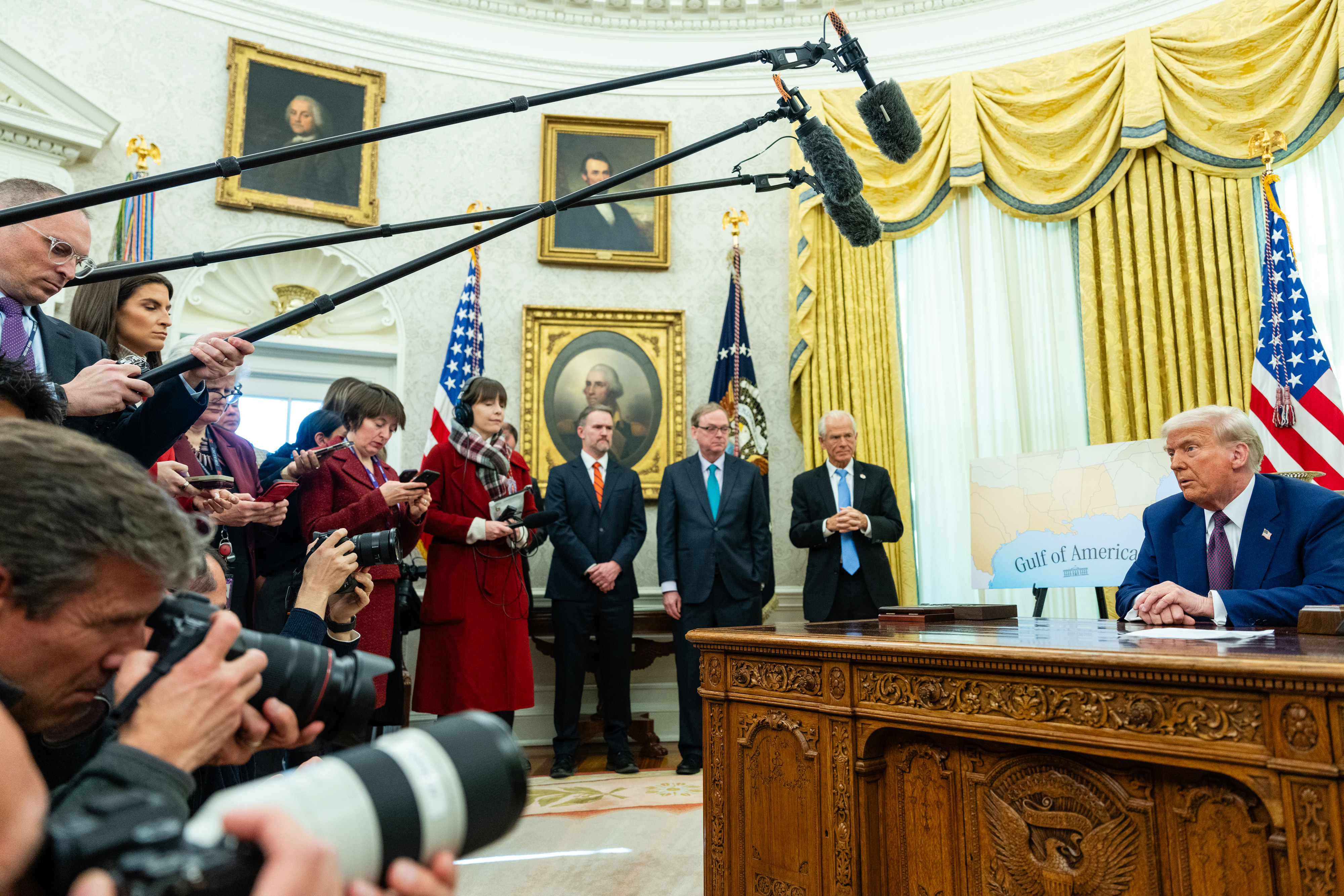
White House officials said in a court filing Tuesday that President Donald Trump had determined that CNN, MS NOW and Politico had breached standards of conduct, leading to their expulsion from the grounds of the White House.
The alleged violations, said the filing, include “trafficking in verifiable falsehoods about national security and other issues, and publishing sensitive or classified information.”
“Access to the White House is a privilege — not a right,” reads the filing, which argues that Trump’s action against the three news outlets does not violate the First Amendment and aligns with a long history of presidents favoring some journalists over others.
The filing, furthermore, claims that the White House’s denial of access is a preliminary matter and that the outlets have until Friday to contest the decision.
The clash began last Friday, when Trump announced on Truth Social, the platform that he owns, that he would ban the three outlets, saying they “shouldn’t be able to constantly write or report FICTION and LIES.” On Saturday morning, journalists from CNN, MS NOW and Politico were denied access to the White House grounds and had their press passes confiscated.
By Monday morning, the news organizations had sued, arguing that the president’s ban “brazenly discriminates based on editorial viewpoint,” and was an affront to their First Amendment rights. They said that the move had blindsided its targets, depriving the outlets of the warning that any such drastic action required. They “received zero advance notice that the president would ban a news organization from the White House if he dislikes its coverage,” according to the complaint.
U.S. District Judge Timothy J. Kelly, who was nominated in 2017 by Trump, will hold an emergency hearing Wednesday to consider the media outlets’ request for a temporary court order undoing the access ban.
The government filing Tuesday night included copies of letters sent earlier in the day to each banned news outlet. In addition to accusing the organizations of failing to meet standards of conduct, the letters identified specific stories that allegedly either spread falsehoods or threatened national security. The letter to CNN, for example, cited a January 2026 story that “disclosed ‘top-secret’ construction details related to the East Wing bunker,” the letter reads.
One of MS NOW’s alleged infractions, according to a White House letter, was a June 2026 story claiming “a source said that President Trump ‘underestimated the willingness of Iran to resume conflict.’” Politico is accused of publishing a “document detailing funding for the White House ballroom containing intricate descriptions of how the Secret Service would invest in security improvements,” according to a White House letter.
In 2018, Kelly ruled against Trump in another media access case. Trump had expelled CNN reporter Jim Acosta from the White House grounds. But Kelly ordered his credentials restored, saying Trump hadn’t given Acosta enough notice to challenge the action.
Other news organizations have responded to the ban with acts of support and solidarity. The consortium of five TV networks that covers the president as the so-called TV pool — ABC News, CBS News, NBC News, Fox News and CNN — suspended its immersive coverage of Trump, and some news outlets temporarily withheld publication of photos of Trump’s events.
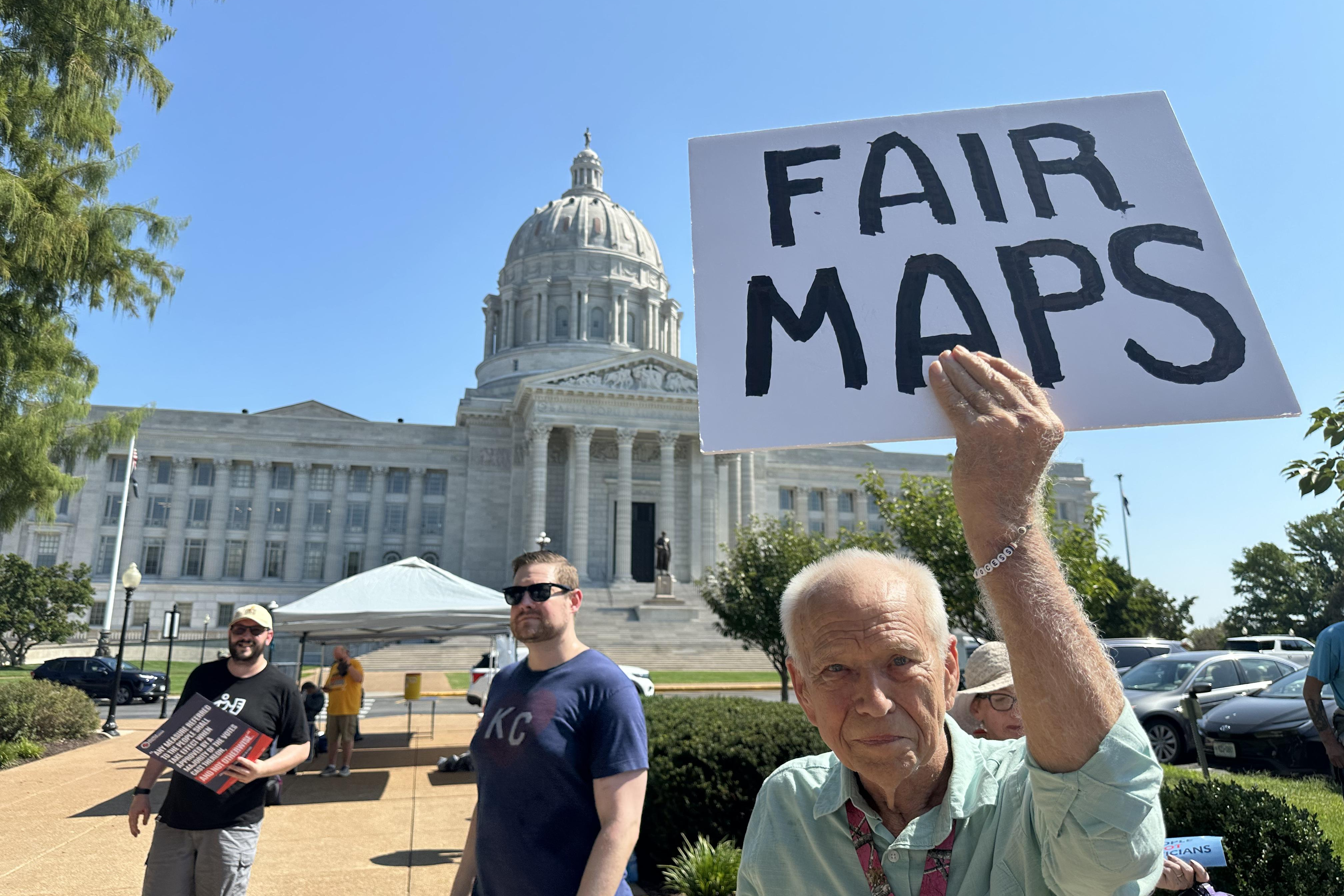
WASHINGTON — The fight over Missouri’s congressional map returned to the U.S. Supreme Court for a third time late Tuesday, after an appeals court ordered the revival of new districts backed by President Donald Trump.
The new map was drawn to help Republicans gain a U.S. House seat in the pivotal midterm elections, which will determine control of Congress. The Supreme Court has twice blocked efforts to use it in November.
The latest emergency appeal comes after an unusual federal appeals court ruling that ordered a last-minute return to a GOP-friendly map even after the Supreme Court halted such a move.
The justices had left in place a Missouri Supreme Court decision requiring the state to use its previous map. The state court ruled that the new districts could not take effect unless voters approved them in a statewide referendum.
The U.S. Supreme Court gave supporters of the new map until midday Wednesday to respond to the latest appeal.
The dispute has caused confusion for over a million potential voters who could be shuffled among districts. Absentee voting already is underway in Missouri using districts adopted in 2022, after the last census.
The new congressional map backed by Trump significantly reshapes a Kansas City-based district held by Democratic Rep. Emanuel Cleaver. Republicans hope the map could help them win seven of the state’s eight House seats — one more than they currently hold.
Missouri’s redistricting battle has been the longest and most complex among roughly a dozen states that sought to change their U.S. House districts over the past year. Districts are usually redrawn at the start of each decade, after a census. But Trump spurred a spate of mid-decade redistricting last year when he urged Republican-led states to redraw districts to gain an edge in the midterm.