Category: National Politics

  • Republicans fear Trump will keep super PAC money and not spend on the midterms

    Republicans fear Trump will keep super PAC money and not spend on the midterms

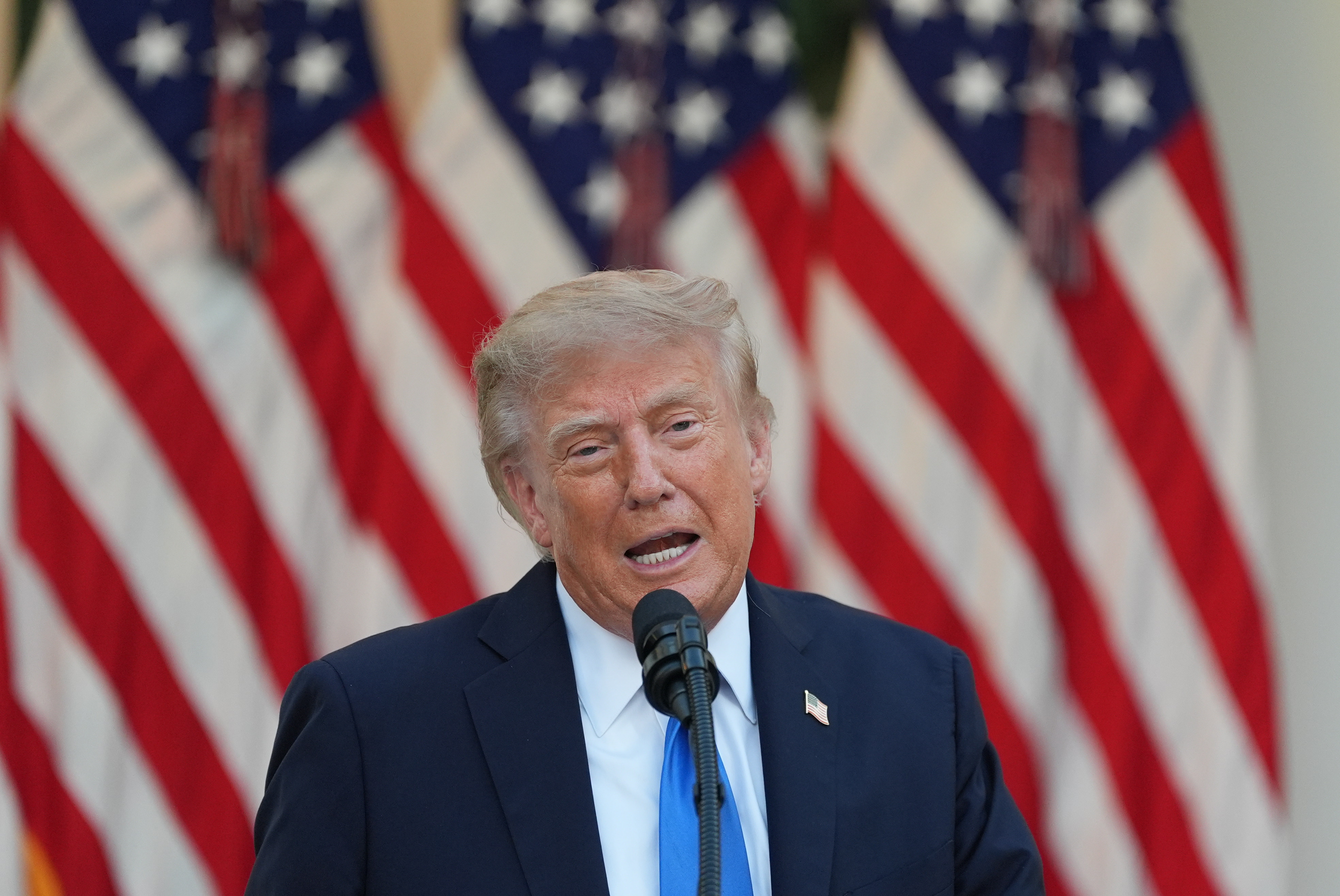
    With early voting about to begin in competitive midterm races, President Donald Trump has kept most of his super PAC money on the sidelines, causing Republican leaders to conclude that it’s too late to fully deploy the cash in the midterms and that he intends to hold on to much of it for his own purposes.

    Trump’s political advisers have been assuring anxious allies that MAGA Inc., the president’s super PAC that had more than $400 million on hand as of July 31, will come to the rescue during the peak campaign season after Labor Day. But Republicans are increasingly skeptical and suspicious that Trump — who must personally approve the spending — has other ideas.

    The president has not revealed his plans, and his political advisers consistently say they will not share them with reporters. Some people around Trump have concluded that he has little interest in spending the bulk of his super PAC funds on this year’s midterm races, according to a person with knowledge of internal conversations.

    Theories about what Trump wants to do with the money cover a broad range of possibilities, including protecting his political influence in the next presidential race by passing on the money to his chosen successor, and saving up for legal fees, postpresidential travel, events, and pet projects, such as his library. Trump’s Miami library is projected to cost at least $1 billion, the most expensive presidential library construction to date.

    The person with knowledge of internal discussions, who spoke on the condition of anonymity to talk about those conversations, said Trump and his team believe their ability to rake in massive donations will take a hit after the midterm elections, giving the president an incentive to keep hold of the money he has raised so far.

    Fundraising accounts associated with the president — such as his super PAC and funds for his inauguration, White House ballroom and Freedom 250 events — have been inundated with donations from companies looking to get in Trump’s good graces, a dynamic that is likely to change as he becomes a lame duck.

    Some donors have started holding back on giving more money to the super PAC while it sits on earlier contributions, according to people familiar with the matter who, like others interviewed for this article, spoke on the condition of anonymity because they were not authorized to speak to reporters.

    Trump’s reticence surrounding how he will use MAGA Inc. money has caused particular worry for Republicans in this fall’s elections.

    GOP candidates and officials still avoid criticizing the president on the record. Privately, however, some operatives have complained that MAGA Inc. has already missed valuable opportunities to lock in airtime at lower advance rates and define candidates before attitudes harden.

    Allies have also criticized Trump’s preference for promoting his own record, arguing that super PACs are most effective at attacking opponents, as MAGA Inc. did in 2022.

    The nonprofit arm of Trump’s political operation, Securing American Greatness, premiered its first midterm ads on Wednesday, spending just under $1 million, according to the tracking firm AdImpact. The ads, set to air nationwide, feature video clips of Trump talking about tax breaks in his domestic spending legislation and lower prices for eggs and prescription drugs. One spot uses Trump’s friend Dana White, the chief executive of the Ultimate Fighting Championship.

    “Like, they think he’s popular or something,” a Republican ad maker scoffed when shown the videos. “He’s not.”

    Multiple public and private polls show Trump’s approval rating mired in the mid-30s, at or near historic lows for a president facing a midterm election.

    The ads adhere to Trump’s instruction to advisers to promote his record, and the super PAC could take a different approach with future ad buys, people familiar with the discussions said.

    A large lead in available cash has been one of the few bright spots for Republicans in this election cycle, because many of the swing constituencies that helped Trump win back the White House have drifted away amid disappointment with persistent inflation and the Iran war. Leaving a large portion of MAGA Inc.’s money on the sidelines threatens to neutralize that advantage, as individual Democratic campaigns outraise their GOP counterparts.

    “I worry about that, for sure,” Senate Majority Leader John Thune (R, S.D.) told his home state’s CBS affiliate about the possibility of losing the Republican majority in the upper chamber. “I’m a realist, and I just think you — I don’t ever try and sugarcoat things. I think it’s a competitive environment right now.”

    While some Republicans have given up on waiting for the MAGA Inc. cavalry, Democrats continue to warn that they expect Trump’s super PAC and Elon Musk’s political outfit to outgun them.

    “All of that takes the advantage that Democrats have in terms of individual small-dollar donors, and it really will just swamp it,” said Rep. Chris Pappas (D, N.H.), who is running for an open Senate seat in a tight race against Republican former senator John E. Sununu.

    “We are going to get outspent in this race,” he said.

    Musk’s super PAC, which spent more than $260 million to back Trump and other Republicans in 2024, just reported $800,000 in midterm spending on GOP candidates, federal campaign filings show. The PAC also started advertising online in the battleground Senate races in Texas, Michigan, New Hampshire, and Maine, according to Meta’s disclosures of political ads on Facebook and Instagram. A spokesman declined to comment.

    With the availability of broadcast airtime dwindling, MAGA Inc. may spend more heavily on ads placed on digital streaming services, according to three people familiar with the plans. Those people said streaming services can be more cost-effective for targeting younger and less-frequent voters, like those who helped Trump in 2024, a constituency that Republicans will need to mobilize again this fall.

    The PAC is also likely to pay for events and get-out-the-vote operations, one of the people said.

    Skeptics of MAGA Inc.’s promises point to Trump’s history of viewing money that he raised as his own and resisting using it to help others. So far this year, the super PAC has spent less than $900,000 supporting Sen. Darline Graham (R, S.C.) in her primary and less than $20,000 sending text messages for Rep. Clay Fuller (R, Ga.), according to federal campaign finance disclosures.

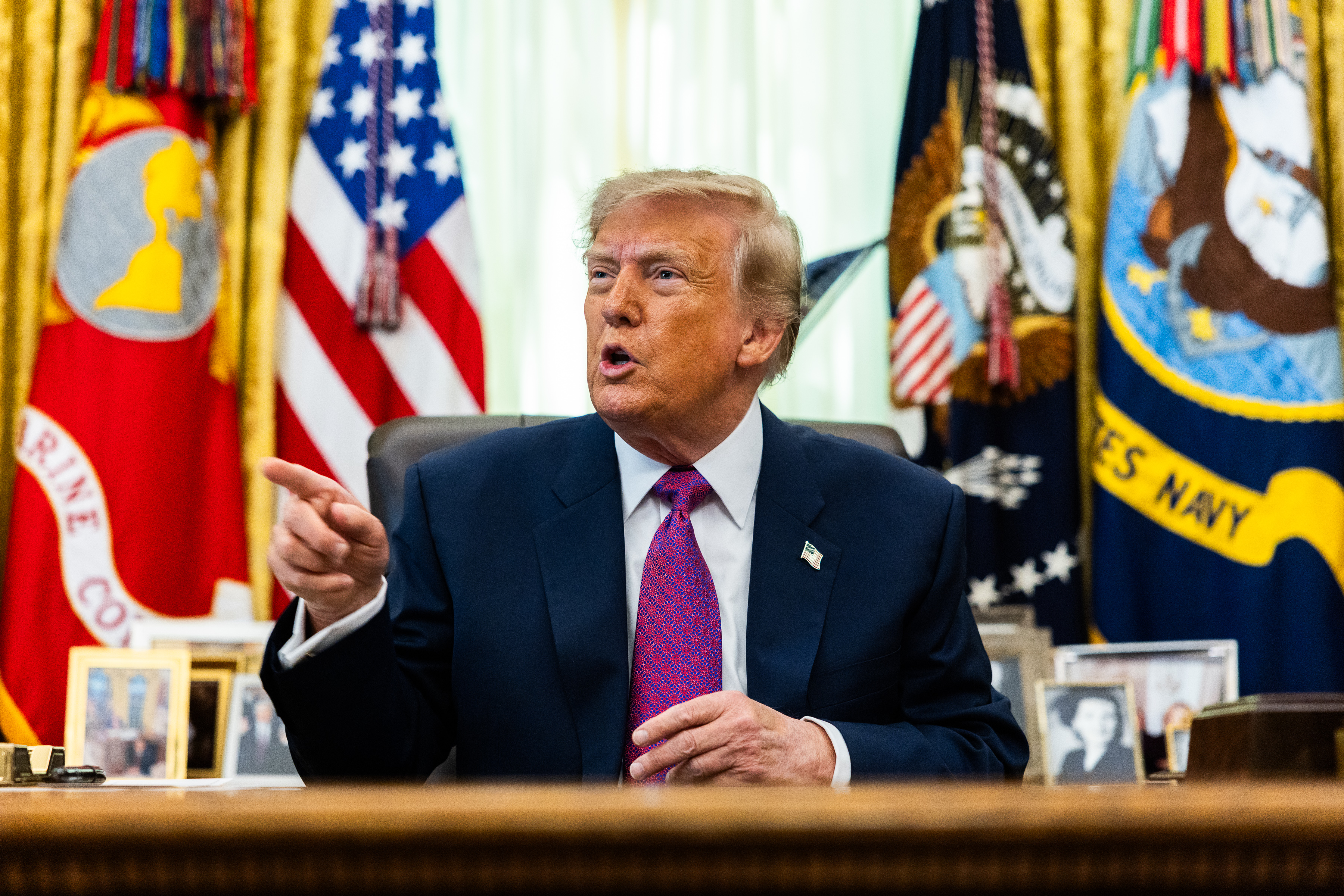
    “I’m not affected by the election,” Trump told reporters in the Oval Office on Wednesday while discussing the Iran war. “I’m not running. But my party is running, and I’m going to help my party.”

    At an event in the Rose Garden with congressional Republicans, Trump on Wednesday night previewed what he described as nonstop travel in the last 30 days before the elections, including a trip to Alaska to stump for Sen. Dan Sullivan (R), but he made no mention of super PAC spending.

    “We’re going to be helping you, and I’ll be going around and doing a lot of speeches,” he said. “We’re going to take that little, that final 30 days. You don’t want to go too much before then because people forget.”
  • ICE skipped basic checks in rush for recruits, whistleblower says

    ICE skipped basic checks in rush for recruits, whistleblower says

    In the wake of a hiring surge last summer, an official in charge of evaluating new recruits to U.S. Immigration and Customs Enforcement issued a dire warning.

    The Trump administration, he wrote in a memo, was cutting corners, violating the law, and fast-tracking unqualified, “improperly vetted” candidates into ICE’s ranks, part of a dangerous move that exposed the agency — and its law enforcement operations — to “grave national security risks.”

    Citing an “unprecedented lowering of standards,” the career ICE official said that “systemic breakdowns” had allowed applicants to receive job offers before they had passed basic fingerprint, identity, or credit checks in a preliminary vetting process. Political appointees had unjustly skirted background investigations and received national security eligibility.

    The official, a unit chief who directly oversaw more than 100 employees who evaluated thousands of ICE applicants, was so troubled by what he saw that he outlined these concerns not to his superiors, but in a formal whistleblower complaint to the Office of Inspector General in the Department of Homeland Security.

    In the complaint, he asked for an independent, outside investigation into the matter. He was later interviewed twice by officials with the inspector general’s office and his concerns have become part of an ongoing audit into vetting practices.

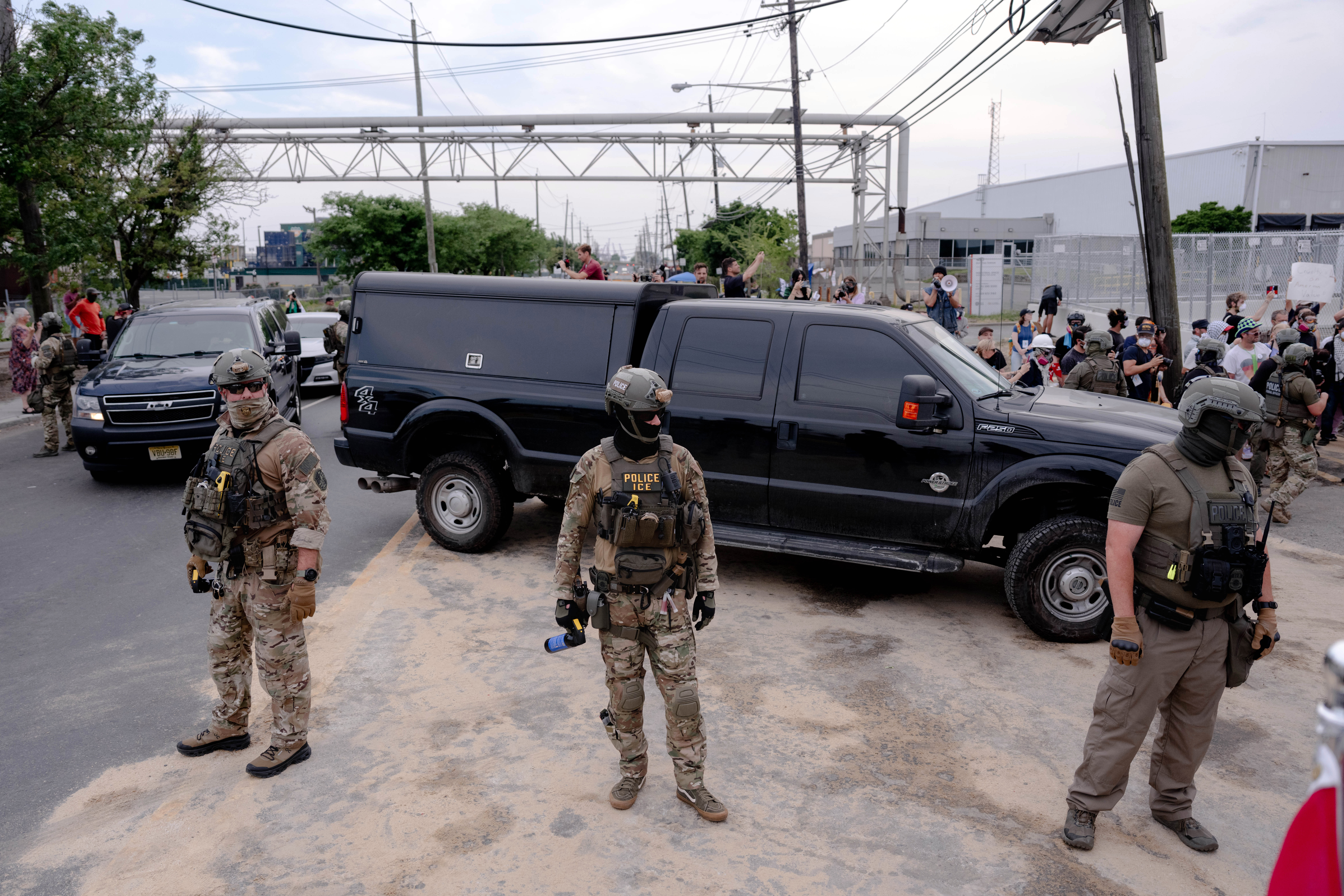
    The complaint, which has not been previously reported, underscores the rising worries about the suitability — as well as the tactics — of scores of agents who have been rapidly deployed across the country within the past year. It also outlines the extent to which ICE weakened its standards, and points to dissension among the upper reaches of the agency as it was pressed last year to carry out President Donald Trump’s immigration crackdown.

    The whistleblower, a 17-year ICE veteran who spoke to The New York Times on the condition of anonymity because of the sensitive nature of his claims, said the agency had cut corners in its rush to fill the ranks.

    “We chose as an agency to be more convenient rather than thorough,” he said, describing the agency’s decision to reduce scrutiny of recruits in order to expedite hires. “By doing so, there was a potential to put lives at risk and to jeopardize national security.”

    The whistleblower complaint was obtained via a public records request. The concerns within it broadly mirror those made by other current and former ICE employees who said that the agency had abandoned best practices as it rapidly scaled up. An ICE lawyer who worked at the agency’s training center resigned earlier this year and went public as a whistleblower, citing concerns about a “deficient, defective, and broken” training program.

    In response to questions, an ICE spokesperson said in a statement that the agency “diligently applies the proper personnel vetting regulations, including guidelines for national security, and evaluates all available information for every applicant based on these factors.”

    The agency declined to comment about the whistleblower, who retired from the agency in July, or his complaint.

    The scrutiny of ICE’s hiring practices has intensified in recent weeks, spurred in part by the fatal shooting of Johan Sebastián Durán Guerrero, a Colombian immigrant, in Biddeford, Maine, on July 13.

    The two ex-wives of ICE agent David Brouillette, one of whom identified him as the person who fired the fatal shots, have accused him in interviews and court records of being abusive. In a filing for a protection order in December 2019, one ex-wife wrote that he had broken her door down, destroyed her belongings, and dumped her clothes over a bridge.

    The women also have said Brouillette, a former military serviceman and Veterans Affairs police officer who was hired amid the recruiting surge last year, had post-traumatic stress disorder related to his deployment in Afghanistan. A local official in Maine told The Portland Press Herald that Brouillette sought jobs with the Hallowell Police Department in 2024 but was denied because there were “too many red flags.” Brouillette could not be reached for comment.

    After the shooting, Tom Homan, the White House border czar, said the DHS investigation into the episode will include whether the agent was properly vetted before being hired.

    A White House spokesperson referred questions to DHS.

    A rush to recruit

    The concerns in the August 2025 whistleblower complaint exposed shortcuts in the agency’s preliminary vetting process. No credit checks. Fingerprints unconfirmed. Final job offers absent preliminary vetting.

    Before the surge, a recruitment team made documents available to a unit within ICE’s Office of Professional Responsibility for each new hire, including fingerprints and a security form with extensive questions. The vetting team would then initiate a preliminary check, running each applicant’s name through law enforcement databases and searching for criminal violations or other major red flags. Some recruits would be sent for a polygraph test if concerns arose.

    These recruits then underwent a full background check, conducted by outside contractors, to determine whether the candidate was trustworthy enough to have access to sensitive computer systems, federal facilities, and classified information. It wasn’t unusual for this to occur while recruits were in training.

    The preliminary vetting process, which took seven to 10 days, was upended last summer. The vetters were told to make determinations on recruits without having the full security form, fingerprints or any polygraph testing, according to the former unit chief and a former federal official familiar with the process who was granted anonymity to speak freely about it.

    That meant new hires were heading to training without having their identities, criminal histories, and other basic information checked and verified, the unit chief said.

    The agency also sped up its training program, cutting it from roughly 10 weeks to six. This resulted in agents reporting to their full-time positions while their full background checks were pending.

    Meanwhile, recruits with prior law enforcement experience were able to take online courses rather than complete on-site training. They faced even less scrutiny in their background checks.

    In July, the agency said, it increased the length of its training program for academy classes, and it instructed past graduates to attend additional training.

    Ryan Schwank, the former ICE lawyer who worked at the agency’s training center, testified before Congress this year that new recruits appeared unfit for service.

    “We were concerned about ICE recruiting a loose cannon or somebody who was just mentally unfit for the role,” Schwank said in a recent interview. “We knew that kind of person would get through. But the thing that I think kept some of the other instructors up at night was the possibility of organized crime getting access to the agency or penetrating the agency.”

    Schwank, who taught recruits during the surge, said that’s exactly what happened. Last fall, several students were removed from the academy in Georgia in the middle of training because officials determined that they were all linked to a criminal gang. Schwank began work at the training academy last September and left the agency in February.

    In a statement, an ICE spokesperson said, “ICE has received NO credible evidence that any of its trainees were linked to a common criminal gang.”

    In the interview, Schwank said it was rare for students to fail out of the academy before the surge, but that about half of his students flunked out after the hiring push. This was after the academy made its tests open book and no longer failed students who made fatal errors during enforcement simulations.

    By this spring, hundreds of new recruits hired amid the surge had already been removed from the force, according to the former federal official who was granted anonymity.

    The hiring surge was set in motion in part by the passage of Trump’s domestic policy bill last summer. Congress allocated $30 billion in new money for ICE to hire 10,000 new ICE agents, more than doubling the number of deportation officers.

    Concerns about political appointees

    The unit chief who filed the whistleblower complaint said he chose to alert the DHS Office of Inspector General because ICE leadership had created these issues and he thought an outside, independent investigation was necessary.

    In addition to the vetting concerns, he also mentioned in the complaint that Trump administration political allies had received favorable treatment and obtained security clearances even though troubling information about them had surfaced in background checks. He cited Corey Lewandowski, a former top adviser to DHS.

    The concerns about Lewandowski had been outlined in a memo written last year by the DHS head of security and was viewed by the whistleblower, who told the Times that a higher-up had asked him to vet Lewandowski for an ICE credential. The red flags in the memo included allegations that Lewandowski had been paid years earlier for work by a Chinese government agency, according to the whistleblower and a report last year in the Daily Mail. That allegation has not been substantiated outside of that memo.

    In a statement, Lewandowski denied he was ever vetted by ICE. He said he had “never worked for the Chinese Communist Party – Full Stop.”

    In a follow-up statement, a spokesperson for Lewandowski said any suggestion that he “received favorable treatment in connection with his security clearance is categorically false.”

    Ten days after the unit chief filed his whistleblower complaint — and a few days after the Daily Mail article published — a lawyer from the department’s Office of General Counsel reached out to him. This lawyer, who was not from the inspector general’s office, asked to meet the whistleblower at an agency field office in Texas, separate from where he typically worked.

    The whistleblower believed he was being interviewed about his security worries, but a different focus of the inquiry became apparent: Had the unit chief talked to the news media about his concerns?

    The lawyer grilled him over four hours and seized his laptop, according to the former unit chief and his lawyer. The full contents of the meeting, they said, are protected under a nondisclosure agreement, a common practice for internal investigations.

    “My client was of the belief this investigation by the agency’s attorneys was in good faith to vet his disclosure,” said Kevin Owen, a lawyer for the whistleblower. “Instead they threatened him and put him on leave.”

    It remains unclear how DHS officials came to target the unit chief.

    The agency said it couldn’t comment on personnel matters with people no longer there.

    The former unit chief said the inspector general’s office first reached out to interview him in February, about six months after the complaint was filed. Investigators interviewed him again in April for an audit into vetting, he said.

    In a statement, the office said it had to delay some of its work due to government furloughs. The office in April opened an audit into the process for giving out security clearances to political appointees.

    The inspector general’s office said it couldn’t comment on its investigations, but the agency noted that it did not reveal the name of the whistleblower to anyone outside of its office.

    Meanwhile, the whistleblower remained on leave for 10 months for what DHS said were “allegations of serious misconduct,” the unit chief and Owen said.

    The alleged misconduct went unspecified, they said, and he was eventually reinstated with no punishment or finding of wrongdoing. He retired immediately after, in July.

    He said DHS officials had never told him specifics for why he was on leave for such a long time.

    In an effort to learn more, he submitted a records request to ICE for documents related to his case.

    The former unit chief said the stress of the investigation weighed heavily on his mental health. He checked himself into a treatment program that lasted several months.

    The man, a longtime Republican who voted for Trump in 2020 and 2024, said he grew disillusioned with the agency as it acted in haste to fulfill the president’s immigration enforcement mandate. He said he has always supported ICE’s mission, but was troubled by the way the agency was taking shortcuts in vetting recruits.

    “It’s a betrayal of the public trust and everybody’s trust,” he said.

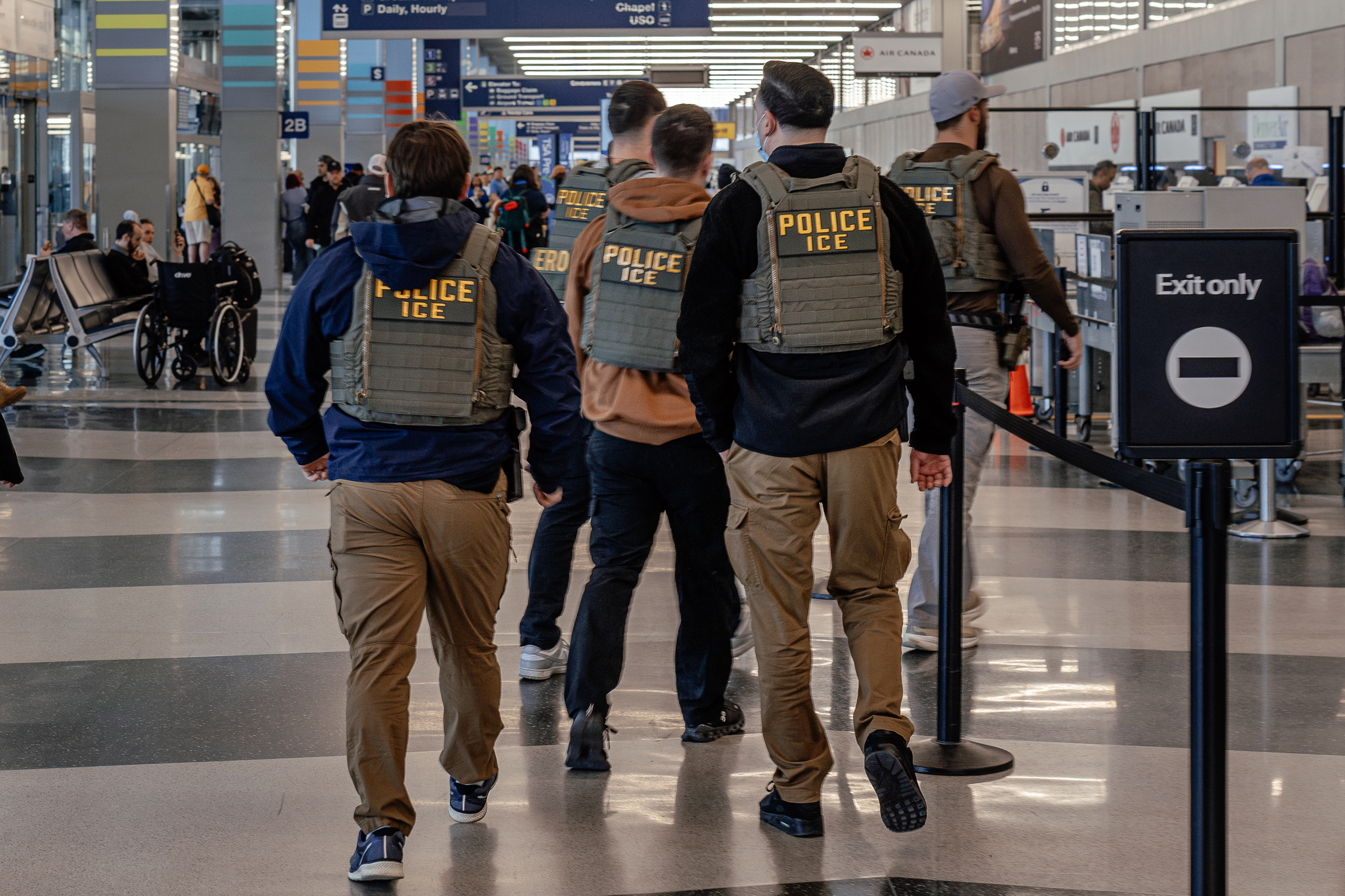
    FILE — Immigration and Customs Enforcement agents on patrol at O’Hare International Airport in Chicago on March 23, 2026. Amid pressure to hire people quickly, ICE leaders sped up the process, eliminating some of the more thorough checks in place. (Jamie Kelter Davis/The New York Times)JAMIE KELTER DAVIS
    FILE — Ryan Schwank, a former ICE lawyer who worked at the agency’s training center, in Washington on Feb. 23, 2026. In an interview, Schwank said about half of his students flunked out of the academy after the ICE hiring surge. (Kenny Holston/The New York Times)KENNY HOLSTON
    FILE — An impromptu memorial to Johan Sebastián Durán Guerrero, who was fatally shot by a federal immigration agent, in Biddeford, Maine, on July 14, 2026. The scrutiny of ICE’s hiring practices has intensified in recent weeks, spurred in part by the fatal shooting of Durán Guerrero. (Christopher Capozziello/The New York Times)CHRISTOPHER CAPOZZIELLO
  • Trump again appeals to Supreme Court on mail-voting restrictions with midterm elections looming

    Trump again appeals to Supreme Court on mail-voting restrictions with midterm elections looming

    BOSTON — The Trump administration on Thursday asked the Supreme Court to reject an order by a federal judge that halts it from implementing a new rule regulating mail ballots, hours after being unable to tell that judge whether the computer system that would govern the entire project was operational yet.

    The administration filed its appeal the afternoon before mail ballots were scheduled to be sent out by North Carolina, which on Friday kicks off a wave of states shipping ballots out for the rapidly approaching midterm election. Its appeal was part of a flurry of last-minute litigation as the federal government struggles to implement President Donald Trump’s restrictions on mail ballots before the midterm elections in November, and came even as legal wrangling over President Donald Trump’s executive order continued in lower courts.

    The high court’s conservative majority previously allowed the president’s plan to move ahead, but they have not decided whether it is legal.

    Under Trump’s executive order, the U.S. Postal Service could refuse to deliver ballots from states that do not follow a uniform envelope style and submit lists of eligible voters to an online portal that was apparently still inactive Thursday.

    During a hearing in Boston, U.S. District Court Judge Indira Talwani repeatedly questioned Department of Justice attorney Michael Velchik about whether the Postal Service could actually implement Trump’s plan from an executive order he issued last spring. The key piece is the online portal, which would track tens of millions of mail ballots. States would be required to upload their list of mail voters to the portal to have ballots delivered, and if the data there didn’t match what was on the envelopes, the ballots would not be sent.

    Unclear if key system has been set up

    “I don’t even have a declaration from the Postal Service: ‘This is how it will work.’ I don’t have it. I have nothing,” Talwani said, adding later that it felt like the government was running an “experiment” to see if the system would work in the upcoming election.

    “As you sit here today, you can’t tell me the government has a program ready to go?” Talwani asked.

    Velchik repeated that the Postal Service would “fully implement the rule” that it published last month, triggering the latest round of litigation. He argued the main issue is whether Talwani has the legal power to stop it.

    “The $64,000 question is, is this authorized by the statute?” Velchik said.

    Talwani is considering whether to extend her temporary order barring the Postal Service from requiring use of the system through Sept. 10. The first state to send out all its mail ballots, North Carolina, is scheduled to begin shipping them out Friday, with other states quickly following.

    Talwani has been here before. In June, she prohibited the administration from implementing Trump’s executive order for the November election, ruling the changes came too close to voting for the federal government to embark on such a project.

    But the Supreme Court late last month ruled that Talwani’s order was premature because the Postal Service had not yet published regulations governing how it would apply Trump’s order. The agency did so just before the high court ruling came down, prompting Democrats and voting rights groups to swiftly re-file their lawsuits.

    They counter that the president has no authority to set election rules, which is a power designated by the Constitution to the states and, in some cases, to Congress.

    Tangled legal fight goes up to election deadlines

    They won an initial victory with Talwani’s 14-day restraining order. In a sign of the pressures on the administration, its lawyers already appealed that order to the 1st Circuit Court of Appeals in Boston, but they added the Supreme Court appeal Thursday and urged the top justices to act quickly.

    Trump has long opposed mail voting and falsely blamed it for his 2020 election loss to Democrat Joe Biden, even though he often uses that method to cast his own ballot.

    Election officials say there’s simply no way they can comply with the Postal Service directives, which could require a complete overhaul of their operations. Before it delivers mail ballots for any state, the Postal Service would have to approve the design of the envelopes that contain them and have the state upload a list of voters receiving them to an online portal.

    Some ballots have already gone out. A few municipalities in Wisconsin opted to send mail ballots to voters earlier this week, but Friday marks the full kickoff of voting as North Carolina starts shipping its mail ballots to all voters who requested them.

    The administration has contended the changes are relatively minor and legal.

    “While the States have primary authority to regulate the manner of elections, they cannot choose to use the federal mails to carry out their elections but then insist that their election-related mail is somehow exempt from the Postal Service’s rulemaking authority, conferred by Congress, to regulate envelope design and addressee information,” Trump’s solicitor general, John Sauer, wrote in the appeal.

    No red states have said they’ll use system

    Still, the hearing before Talwani focused more on practicalities — especially that the portal was still not active, while most election offices have already printed their envelopes and ballots.

    Velchik told the judge that the federal government is offering states the choice to opt into the system, but the Postal Service has yet to identify a single state that has done so. None of the 12 states that intervened in the lawsuit to argue the Trump administration has the right to require the program have announced that they have voluntarily opted into it.

    Talwani scolded Missouri Solicitor General Lou Capozzi for arguing on behalf of the project.

    “You want the voters in your states to be disenfranchised,” Talwani said. “I don’t understand the interest.”

    Capozzi said that was misinformation: “There is no risk that people would be disenfranchised.”

    A whistleblower report made public this week warns that the postal system’s requirements could lead to millions of mail ballots never being sent. The new rule requires all ballots to be physically brought to post offices before being mailed to voters. But if a single one’s bar code registers an error, the whole batch gets thrown out, even if it contains tens of thousands of legitimate ballots.

  • Trump administration pushes to remove tax exemption for private colleges with DEI policies

    Trump administration pushes to remove tax exemption for private colleges with DEI policies

    WASHINGTON — The Trump administration is proposing a new rule that would strip private schools and colleges of their tax-exempt status if they provide targeted help to students based on their race, a significant escalation in the White House’s campaign to eradicate diversity programs directed at Black, Hispanic and other minority students.

    The Treasury Department proposed the change Thursday in a new regulation that, if made final, would kick in after May 2027. The rule is broadly aimed at ending any policies or programs that help students because of their race, and it specifically says such benefits in admissions, scholarships, and facilities “would be incompatible” with the rule.

    It’s the latest attempt by the Trump administration to pressure schools and colleges to weed out diversity, equity, and inclusion policies that had become common before President Donald Trump returned to the White House with a promise to end them. Trump officials have used Civil Rights-era laws to unwind the policies, saying they discriminate against white and Asian American students.

    Higher education leaders criticized the proposal.

    “The administration’s latest rules changes are its most blatant attack to keep working class Americans and people of color from accessing higher education and a better life,” Mike Gavin, Alliance for Higher Education president and CEO, said in a statement. “By claiming that efforts to increase fair opportunity for all students are discriminatory, the administration is trying to gaslight the American people into believing that up is down and black is white.”

    Thousands of colleges could be affected

    Scores of universities have shut down or rebranded their DEI offices and ended scholarships and clubs designed for minority students under pressure from the White House. In a statement announcing the proposal, Treasury Secretary Scott Bessent suggested that even policies that are no longer under the banner of DEI could be targeted.

    “Schools rebranding race-based preferences as equitable, inclusive, or diversity-enhancing does not change their discriminatory nature,” Bessent said.

    The Treasury Department and IRS estimate that up to 18,000 private schools, colleges, and other education institutions could be affected by the proposal.

    America’s private universities have been exempt from many taxes for more than a century because they provide a public good. The benefit saves many universities millions of dollars every year.

    Trump has seen the tax-exempt status as a lever to pull in his pressure campaign against colleges that he describes as hotbeds of “wokeness.” He threatened to cut the benefit for Harvard University last year during his battle with the nation’s oldest college. In a response, Harvard officials said there was no legal basis for doing so and argued it would force cuts to financial aid and crucial medical research.

    In the 1970s, a college lost tax-exempt status over a ban on interracial dating

    It’s incredibly rare for the federal government to go after a college’s tax-exempt status, but there’s one notable precedent. Bob Jones University, a small Christian school in South Carolina, lost the benefit in the 1970s over a ban on interracial dating and marriage on campus. The Supreme Court upheld the IRS’s decision to deny the school its exemption. The school has since ended the ban and regained tax-exempt status in 2017.

    Laws forbid the IRS from targeting individuals and organizations for ideological reasons, and federal officials are not allowed to direct IRS investigations.

    To maintain nonprofit status, which allows donations to be tax-deductible, organizations must follow IRS rules on lobbying, political campaign activity, and annual reporting requirements, as well as other obligations.

    The Trump administration describes the new proposal as a move toward restoring merit in the nation’s education systems.

    Marjorie Hass, president of the Council of Independent Colleges, said the change would most likely impact donations, which are often earmarked for scholarships.

    The uncertainty around the proposal also will create challenges for schools, said Tim Powers, a vice president of the National Association of Independent Colleges and Universities.

    “Our institutions are committed to complying with applicable civil rights laws and maintaining safe and supportive campuses free from discrimination,” Powers said. “However, the proposed rule may create new compliance burdens and legal uncertainties for institutions of higher education that are already operating in line with existing nondiscrimination rules.”

    The Justice Department has separately opened investigations into several medical schools that it accuses of favoring Black and Hispanic students in admissions. Trump officials say any such favoritism violates Title IV of the Civil Rights Act of 1964, a federal law that forbids discrimination in education and was created to fight segregation and its impact.

    A statement from IRS Chief Executive Officer Frank J. Bisignano said private schools that promote discriminatory practices will no longer be exempt from taxes.

    “Today’s proposed regulations put institutions on notice and schools that continue to engage in racial discrimination should expect to lose that status,” he said.

  • A federal judge has blocked Trump’s second try to restrict birthright citizenship

    A federal judge has blocked Trump’s second try to restrict birthright citizenship

    A federal judge in Maryland temporarily blocked much of President Donald Trump’s latest effort to withhold citizenship from babies born in the United States to noncitizen parents, ruling that the Supreme Court had already settled questions reopened by an executive order Trump signed in August.

    While the decision was limited to children born after Feb. 19, 2025, including those born in the future, Judge Deborah L. Boardman wrote that the order would likely affect babies the Supreme Court had already defined as citizens. The ruling delivered a sharp rejection of the president’s renewed efforts to restrict birthright citizenship, after the Supreme Court ruled 6-3 in July that a previous, more sweeping, executive order from 2025 was unconstitutional.

    “No presidential executive order can undo what the Supreme Court has done,” she wrote.

    Boardman’s order took a dim view of the Trump administration’s reasoning, which she characterized as a thinly veiled attempt to get around the Supreme Court’s decision. She wrote that the president and others named in the lawsuit “completely misread” the majority’s opinion and embraced a “distorted interpretation” of its conclusions.

    In a 35-page opinion, she described the latest order as only the most recent attempt to curtail birthright citizenship by any means that could survive legal scrutiny.

    “Since his second term in office began on January 20, 2025, the president has tried, through executive order, to upend our country’s longstanding tradition of birthright citizenship and eliminate, for large swaths of Americans, the right to citizenship by birth, a right enshrined in the Citizenship Clause of the Fourteenth Amendment,” she wrote.

    Boardman described a number of ways that children covered by the lawsuit could have their citizenship rescinded, including if the Trump administration moved to label their parents members of terrorist groups or “alien enemies” under arbitrary legal determinations. She cited a pattern in which the administration has accused Venezuelan nationals of being affiliated with the criminal organization Tren de Aragua, often without evidence, in deportation proceedings.

    While she stressed that it was too soon to find that the order itself was unconstitutional, she wrote that it already appeared clear that it was unconstitutional as applied to the class of babies defined when immigration groups initially sued last year to block Trump’s first order.

    The order this year had included other measures to create novel categories of babies that could be disqualified from citizenship, including those born to parents engaged in so-called “birth tourism,” through which mothers deliberately traveled to the United States to give birth.

    It was unclear how the Trump administration planned to tag those it suspected of traveling to the United States to have their children. But Boardman noted that the executive order was broad, describing anyone who engaged in a “commercial transaction” — such as purchasing a plane ticket — as traveling to access birthright citizenship.

    The Supreme Court’s decision upholding birthright citizenship “is the law of the land,” Boardman wrote. “The President must follow it.”

    This article originally appeared in The New York Times.

  • History offers hope for the future of an independent military newspaper

    History offers hope for the future of an independent military newspaper

    On Aug. 21, the Pentagon abruptly terminated Max Lederer, Erik Slavin and Lara Korte, the publisher, editor-in-chief and Middle East correspondent for the military newspaper, Stars and Stripes.

    The Department of Defense justified the firings on the vague grounds of “insubordination,” but in a recent interview, Korte pointed to remarks that the journalists made in a July 5 CBS News segment as the cause for their termination.

    In the interview, Korte had bluntly stated, “I’m working for Stars and Stripes. Not for the Pentagon, not for any administration, not for any policymaker, I am here to cover the military community.” Her notice of termination highlighted these comments. Similarly, Slavin’s notice of termination singled out that he had pledged that a demand from the military not to publish a “perfectly accurate story” would constitute a “red line.”

    Though abrupt, the firings are simply the latest development in an intensifying battle between the Department of Defense and Stars and Stripes’ journalists, who seek to maintain the paper’s editorial independence. In January 2026, the Pentagon announced that it would reform the outlet by removing “woke distractions” and Associated Press reprints. In April, the DOD fired Jacqueline Smith, the paper’s ombudsman.

    With Lederer and Slavin removed, the administration has installed Navy Captain William Urban — a “communication professional” with no formal journalism experience — as deputy publisher.

    Collectively, the Pentagon’s recent moves have constituted an aggressive attack on the editorial integrity of Stars and Stripes; Urban’s appointment does not bode well for the newspaper’s independence. Yet, history suggests that the fight isn’t over. In the past, Stars and Stripes reporters and American troops have checked the Pentagon’s interference by drawing the public’s attention to military overreach and heightened censorship.

    Guy T. Viskniskki, a U.S. Army Officer and member of the American Expeditionary Forces (AEF), established Stars and Stripes during World War I. General John J. Pershing, the commanding general of the (AEF), quickly endorsed the new publication. In 1918, he issued a directive ordering that military officials abstain from interfering with the paper. This order, however, proved difficult to enforce.

    Though Congress authorized funding for the publication, it has always been housed within the DOD, giving the Pentagon the ability to interfere and exert authority over Stars and Stripes. Consequently, throughout its long history, the newspaper has intermittently struggled against military interference. The unpopularity of the Vietnam War brought frictions between the paper and the military to a breaking point.

    In the late 1960s, military officials attempted to use the Military Assistance Command, Vietnam’s Office of Information (M.A.C.O.I.) to pressure Stars and Stripes reporters into softening stories or shelving them entirely. When the paper ignored these “suggestions,” the relationship between the military command and Stars and Stripes journalists grew tense. One military official infamously labeled the newspaper the “Hanoi Herald” — a reference to its frequently unfavorable combat reports.

    To cut down on the unflattering coverage, the military distanced itself from the journalists; reporters were excluded from news briefings and left in the dark about visits from prominent politicians (including President Richard Nixon, who made a surprise visit to South Vietnam in July 1969).

    Events took a turn for the worse when the paper’s editor — Colonel Peter Sweers — retired and was replaced by the pro-M.A.C.O.I. Colonel William Koch. Sweers had led a team of highly educated civilian and military reporters, many of whom had professional journalism experience and were committed to preserving journalistic integrity.

    Under Koch, however, Stars and Stripes’ policies changed significantly. The new editor forced reporters to wear military uniforms, a change that identified them as enlisted men to higher-ups, thus reinforcing military hierarchies. Additionally, Koch moved the paper’s news bureau out of Saigon to a remote location, effectively removing the journalists from the center of the action, and encouraged his reporters to focus on features, not news stories. Military directives, such as the “Let’s Say It Right” policy, forced reporters to replace straightforward language with euphemisms — “Viet Cong tax collectors became extortionists and search-and-destroy missions became search-and-clear missions.”

    Yet, as the military exerted more power over Stars and Stripes, American troops began pushing back. In October 1969, Private David Dugger, a 21-year-old rifleman from Georgia, told the New York Times, “They’re just not telling it like it is.” Dugger complained that “[l]ots of times we’ve been kicked around by Charlie [the Viet Cong]. But it always comes out sounding like nothing more than a skirmish after the editors are through with it.”

    Made By History sponsors. FOR USE ON MADE BY HISTORY STORIES ONLY.Inquirer Staff

    A few months later, in April 1970, Robert Hodierne — a recently returned Army veteran and a former reporter for Stars and Stripes — published a story in the New York Times chronicling the deterioration of the newspaper’s independence. While it had once been “the one place that GIs could sometimes read about the shooting, bleeding, bombing, gassing, dying, and killing [of the war],” Hodierne wrote, the paper was no longer a reliable source of news.

    The news report quoted Pat Luminello, Stars and Stripes’ civilian bureau chief, who lamented that the military clearly wanted “a pap sheet in which they could air their views and prevent even a hint that all was not wine and roses on the war front.” When news of Hodierne’s piece reached military officials, Koch promptly terminated Luminello, ushering in a period of heightened censorship for Stars and Stripes.

    The firing ignited another round of controversy. That month, the GI-produced, underground-style magazine Grunt Free Press weighed in. In an editorial titled “Should the Troops Get All the News?” the magazine invited GIs to debate the issue. Voicing the “Yes” side, one GI posed a salient question: “If students can tell college presidents the curriculum is lousy and irrelevant, if civil rights marchers can demand more integration, then why shouldn’t a young soldier be allowed enough information to evaluate his establishment, the military?”

    The 1970 censorship episode ended inconclusively. After his firing, Luminello reached out to the House’s freedom of information subcommittee with a five-page list chronicling the military’s various attempts to censor Stars and Stripes. While the subcommittee didn’t force any changes, that didn’t deter the champions of an independent Stars and Stripes.

    Two years later, Sweers, the retired editor, proposed instituting a civilian review board to monitor and check military oversteps. “The chief editor at PS&S,” Sweers explained, “would then know his performance would be regularly examined by a group of leading professionals whose opinions would carry weight with Congress.”

    Congress didn’t immediately adopt Sweers’ recommendation, but over time, the demands of Luminello, Sweers, the troops and subsequent Stars and Stripes reporters and service members paid off. In 1991, Congress created the position of ombudsman for the newspaper. The ombudsman was tasked with monitoring the paper’s editorial independence and reporting concerns to Congress. Since the April firing of Smith, however, the position has remained vacant.

    Today, the question posed by Grunt Free Press in 1970 remains unanswered. Stars and Stripes is a military newspaper intended to give the troops access to the very rights they fight to defend — including their right to a free and independent press. Yet, recurring episodes of heightened censorship, from the Vietnam era to the present day, prove that this freedom is fragile.

    The escalating efforts seem to suggest that Stars and Stripes’ future is bleak. Yet, hope can be found by looking at the response of employees and troops who didn’t back down during the Vietnam War and subsequent periods of military censorship.

    These individuals brought the story of Pentagon interference to the public’s attention and pushed for Congress to make tangible changes to safeguard the newspaper’s independence. Although it took years of pushing, eventually these efforts resulted in the creation of the ombudsman role. It was a reminder that, when troops and journalists resist censorship, Stars and Stripes can regain its independence, even if it’s a slow process.

    Addison M. Jensen is an assistant professor of history at Montana State University. She is currently at work on a monograph titled, “News from ‘The World’: Media, Counterculture, and the American Military in Vietnam,” which uses media and popular culture to examine the experiences of American service members alongside their awareness of the stateside countercultural movements of the era.

    Made by History takes readers beyond the headlines with articles written and edited by professional historians. Opinions expressed do not necessarily reflect the views of The Inquirer.

  • Trump’s ‘lightning speed’ outpaces the courts

    Trump’s ‘lightning speed’ outpaces the courts

    WASHINGTON — The courts cannot keep up with President Donald Trump.

    In cases on immigration, spending, mass firings, and restructuring agencies, the administration has barreled ahead in the face of slow-moving legal challenges. If Trump loses when those lawsuits are finally resolved, it may be too late as a practical matter to undo what he has achieved.

    The challenge to Trump’s enormous White House ballroom project is just the latest example of a mismatch between a judicial system characterized by unhurried deliberation and a presidency built for speed.

    “Trump is going to get his ballroom — even if courts conclude it’s illegal,” said Leah Litman, a law professor at the University of Michigan.

    Over the past few months, three judges and four justices concluded that Trump likely violated a federal law by razing the East Wing and replacing it with a luxury building.

    Five other justices did not dispute that conclusion, ruling instead that the challengers probably lacked a direct interest in the matter sufficient to give them standing to sue.

    The litigation continues — but so does the construction. Trump said Tuesday that the project will be done by next year.

    Dissenting from an order in a different case last week, on mail-in voting, Justice Ketanji Brown Jackson wrote that she detected a pattern: a “Catch-Me-If-You-Can approach to pursuing the president’s policy agenda.”

    Davis Ingle, a White House spokesperson, said velocity was a virtue.

    “President Trump is moving at lightning speed,” he said, “because we don’t have time to waste in our mission to make America greater than ever before.”

    When the ballroom case was argued before a three-judge panel of the U.S. Court of Appeals for the District of Columbia Circuit in June, Judge Patricia A. Millett asked a telling question.

    If the government were to move very quickly to bulldoze the Statue of Liberty, she asked, was it true that “nothing can be done” by the courts?

    Yaakov Roth, a Justice Department lawyer, did not try to duck the question. “I think that’s right, yes,” he said.

    The panel ruled for the historic preservationists who had challenged the project by a 2-1 vote, affirming a ruling from a lower court judge blocking the project about four months after it was issued. That is pretty fast by judicial standards.

    But the injunction had been paused while the case moved along, and the appeals court added another two weeks. Then Chief Justice John Roberts added another pause, one that would turn out to last 10 days.

    During all of this, construction continued at a furious pace.

    When the case reached the Supreme Court last month, the challengers warned the justices that Trump had “decided to try to outrun judicial review.”

    In response, Solicitor General D. John Sauer did not exactly deny the charge. He crowed that a 250-person crew had been working 20 hours a day, seven days a week, and that the project, which he said included key security upgrades for the White House, had passed the point of no return. Echoing the challengers, he wrote that “the executive has raced to ‘outrun’ the extraordinary security threats facing this president.”

    In a decision Monday that let the project proceed for now, no justice said the project was lawful. The five-member majority, in an unsigned opinion, instead tentatively determined that the challengers had not suffered the sort of direct injury that would allow them to sue.

    Indeed, the majority went out of its way to say that “we do not pass upon the legality of the government’s East Wing project.”

    A frustrated Roberts, joined by the court’s three liberal members, wrote in dissent that “construction of the ballroom has proceeded apace for the better part of a year” even though it was most likely in violation of a federal law that requires Congress’ express permission to erect a building on federal property in Washington.

    Should Democrats capture one or both chambers of Congress in the coming election, they may be able to challenge the project in court or through legislation. But it will almost surely be too late.

    Aziz Huq, a law professor at the University of Chicago, said there was a pattern.

    He pointed to cases in which he said the administration had “immediately shut off funding in violation of law when the recipient depends on the funding and is discouraged from suing by even the temporary loss of funding.”

    This, Huq said, “is a striking use of practical power to outrun law.”

    The Supreme Court’s deliberate pace helped Trump during his last campaign, too.

    Jack Smith, the special counsel prosecuting him on charges that he had tried to subvert the 2020 election, sought to put the case on a fast track, one that would yield a trial before the 2024 election. Trump argued that he was immune from prosecution because his actions had been part of his official duties as president.

    Sauer, who was then Trump’s personal lawyer, urged the justices to go slow. The question, Sauer’s brief said, should be “resolved in a cautious, deliberative manner — not at breakneck speed.” He urged the justices not to “rush to decide the issues with reckless abandon.”

    The Supreme Court turned away a first appeal in 2023 and did not agree to hear the case until late February 2024, scheduling arguments for that April.

    The court’s decision, that July, granted Trump broad but not unlimited immunity, and Smith might in theory have been able to proceed with some elements of his case.

    But it had taken the court long enough to decide the immunity issue that the prospect of a trial before the election evaporated. After Trump won, the Justice Department dismissed the charges against him.

    “It was entirely foreseeable that the Roberts court’s decisions allowed Trump to outrun both the prosecutors and the lower courts,” said Jed Shugerman, a law professor at Boston University.

    The general problem, said Litman, a frequent critic of Trump, is that the Supreme Court, intentionally or not, “keeps missing the forest for the trees,” focusing on technical issues in the face of brazen conduct.

    “The court has created a maze of obstacles — and invented obstacles — that have the effect of allowing the executive branch to get away with lawlessness,” she said, “at least for enough time to accomplish what they’re trying to.”

    But Samuel Bray, a law professor at the University of Chicago, said courts are so powerful they must observe certain restraints. They cannot decide disputes not brought to them, for instance, and they can decide only cases in which the plaintiffs have a real stake.

    “Courts have the special power of giving judgments that are obeyed, even in the bitterest disputes,” he said. “But the special powers and special constraints of courts go together. And in the long run, the legitimacy of a judicial system depends on the judges’ commitment to working in a judicial mode, come what may.”

    Many presidents have been aggressive in pursuing their policies, and few have been eager to be second-guessed by the courts. But Trump’s actions are different in kind, said Pamela Karlan, a law professor at Stanford University.

    “He really has decided that he can just go ahead and do what he wants,” she said, “daring courts to stop him across a huge range of subject matters.”

    FILE — President Donald Trump boards Air Force One at Joint Base Andrews in Maryland, Aug. 27, 2026. In his breakneck construction of a grand ballroom and in many other initiatives, critics say, the president has tried to outrun judicial review. (Haiyun Jiang/The New York Times)Haiyun Jiang
    President Donald Trump speaks to reporters in the Oval Office after ordering the name of Lake Ontario to Lake America, on Thursday, Aug. 27, 2026. On Tuesday night, after the latest exchange of fire over control of the Strait of Hormuz, Trump called on the Iranian people to rise up — something he did six months ago, before he backed off and acknowledged that his command was easier said than done. (Demetrius Freeman/The New York Times)DEMETRIUS FREEMAN
  • Advocacy groups, fearing federal intimidation, plan to deploy poll watchers

    Advocacy groups, fearing federal intimidation, plan to deploy poll watchers

    A coalition of civil rights and advocacy groups plans to deploy hundreds of poll watchers this fall at heavily minority precincts to counter what organizers say is a threat of voter intimidation from President Donald Trump’s administration.

    The National Action Network, the American Federation of Teachers, and the Save America Movement are launching the Vote Safe project, which they described as a nonpartisan initiative set to begin during early voting and culminate in the Nov. 3 midterm elections. They are focusing on Michigan, Ohio, Georgia, and North Carolina, all of which are competitive in the battle for control of the Senate.

    Trump has routinely raised alarms about the threat of voter fraud this fall, stoking fears among his followers and prompting calls for preemptive action. He has urged Republicans to nationalize elections, and some administration officials haven’t ruled out deploying agents to polls, even though federal law prohibits doing so.

    “There is really an unprecedented threat to our elections this year, and it’s coming from our own government,” Mary Corcoran, executive director of the Save America Movement, said in an interview. Corcoran co-founded the group along with Lincoln Project co-founder Steve Schmidt to counter what they see as the excesses of Trump’s MAGA movement.

    Those locations were chosen as politically significant areas with large populations of people of color that could be vulnerable to intimidation, she said. The idea is to have trained community members — such as faith leaders, teachers, veterans, and firefighters — at polling places, so voters “can go there with confidence,” Corcoran said. “We want to replace that fear with comfort and knowledge.”

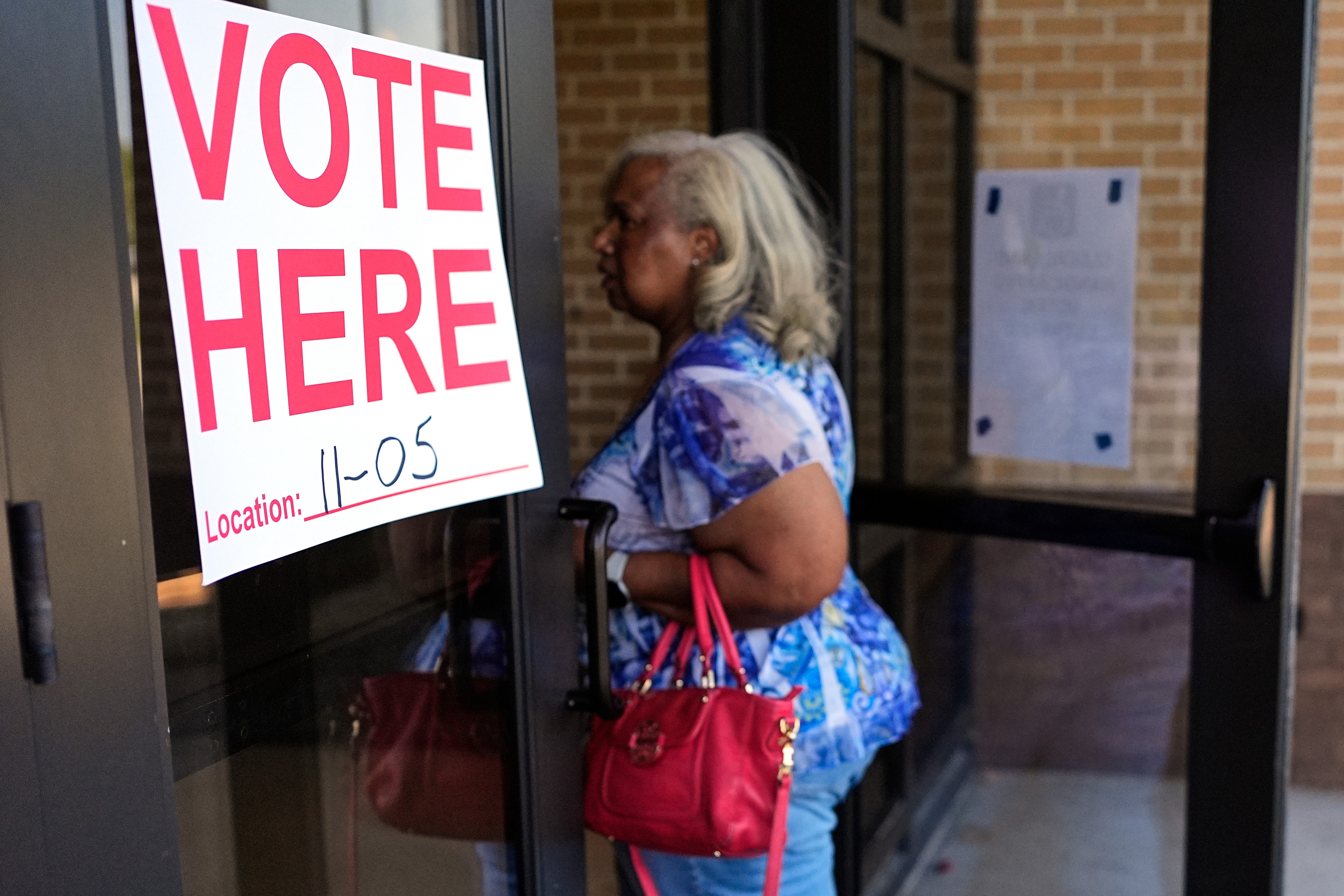
    Homeland Security Secretary Markwayne Mullin said at a news conference Tuesday that Immigration and Customs Enforcement agents aren’t meant to patrol polling places but may be present if they are serving a warrant or responding to a threat. Then-White House spokeswoman Karoline Leavitt said at a news conference this year that she “can’t guarantee that an ICE agent won’t be around a polling location in November” but added that she hadn’t heard Trump discuss plans to do so.

    Former Trump strategist and podcaster Stephen K. Bannon has suggested that ICE deployments at airports could serve as a “test run” for similar efforts at election sites.

    While both political parties have increasingly deployed poll watchers since 2020, recent years have seen clashes over charges of voter intimidation. During 2022’s midterm elections, a court order stopped armed, masked individuals from photographing people casting early ballots in Arizona. This year, the Justice Department has said it plans to send 1,000 monitors to the polls.

    Organizers said they modeled the Vote Safe initiative after a project the Save America Movement undertook last year to station observers and videographers in areas of the country with a heavy ICE presence in hopes of preventing violence.

    Corcoran said volunteers are being trained in local election laws and techniques to de-escalate tense situations. They will be clearly identified with Vote Safe insignia, she said, and none will be armed.

    Vote Safe plans to deploy poll watchers around Detroit, Atlanta, Cleveland, and Charlotte, in the 20 precincts in each area with the highest expected turnout of racial-minority voters.

    Citing the Supreme Court’s recent weakening of protections for minority voters in the Voting Rights Act, the organizers said they want to ensure that voters of every ethnicity feel welcome at polling places. They also want to protect voters from having their immigration status inappropriately challenged.

    “No voter should have to wonder whether exercising their constitutional right will put them at risk,” the Rev. Al Sharpton, founder of the National Action Network, said in a statement. “If anyone thinks the presence or threat of federal agents will frighten our communities away from the polls, they are badly mistaken.”

    Randi Weingarten, president of the American Federation of Teachers, said in a statement that the coalition’s goal is for voters to feel there is “someone standing beside them who knows their rights and knows the law,” so they can cast a ballot with confidence.

  • Poll shows nearly 90% of Americans believe government corruption is widespread

    A record number of Americans believe there is widespread corruption in the U.S. government, reaching the highest level of distrust in two decades, according to a Gallup poll released Wednesday.

    The survey of 1,000 people conducted in May and June reflects the surging bipartisan frustration with the country’s political institutions and the people who run them.

    Nearly 90% of U.S. adults said corruption was widespread in the government, a 10 percentage point jump from last year, according to Gallup’s poll. The United States also has the highest level of perceived government corruption compared with other countries with advanced economies as of 2025, the year of the latest available data.

    Since 2006, the percentage of Americans perceiving widespread corruption stayed mostly in the 70s, Gallup’s data shows. It began to sharply rise in 2024.

    In 2024, when Joe Biden was president, 57% of Democrats said government corruption was widespread. In 2025, after President Donald Trump returned to the White House, that percentage rose to 76 and climbed to 91 this year, according to Gallup’s data.

    As November has grown nearer, Democratic leaders have homed in on anti-corruption messages in their quest to retake Congress. Democrats repeatedly accused the president of breaking his promise to get rid of waste, fraud, and abuse in Washington, instead enriching himself, his family and his allies through the federal government.

    During an event to mark the final 100 days before the midterm elections, House Minority Leader Hakeem Jeffries,(D, N.Y.) debuted a new line in his stump speech: “We are going to hold the crooks accountable.”

    On the other side of the aisle, Republicans’ view of corruption has stayed relatively steady since 2024, suggesting that their perception of the issue does not hinge on the party in power as much as it does for Democrats. This year, 83% of Republicans and 90% of independents said corruption was widespread.

    That finding suggests that Americans are accessing political news and information — and that corruption is breaking through as an issue, said David Szakonyi, a political science professor at George Washington University.

    “There is a broad base consensus for the fact that something is broken in Washington,” Szakonyi said.

    The new poll does not shed light on where exactly Americans believe the corruption is. It posed a very broad question — “Is corruption widespread throughout the government in this country, or not?” — without identifying specific people, agencies or administrations.

    But over the last year, Democratic voters and lawmakers have criticized the Trump administration for what they have called “self-dealing” initiatives — including a $1.8 billion payout fund to compensate administration allies who felt they were unfairly investigated that was later abandoned and no-bid contracts given to Trump allies.

    During his presidency, Trump has made historic financial gains, charged by ventures including cryptocurrency that his administration is tasked with regulating. White House officials have said the president and his relatives have not nor would they engage in conflicts of interests.

    No formal federal public corruption charges have been brought against Trump administration officials since the president retook the office in 2025.

    Democrats have dealt with high-profile corruption investigations within their party in recent years. Among them was the case of former senator Bob Menendez of New Jersey, who was sentenced to 11 years in prison for a corruption case involving bribes that totaled nearly $1 million in cash and other items. More recently, Rep. Henry Cuellar (D, Texas) was facing bribery, money laundering and conspiracy charges before Trump pardoned him.

    In June, another poll had similar findings about government corruption views among American political groups. The Brennan Center for Justice survey, which polled 2,000 registered voters, found that majorities of Republicans, Democrats, and independents viewed corruption as “a very big problem” facing the federal government.

  • Six takeaways from the Massachusetts primaries

    Six takeaways from the Massachusetts primaries

    Massachusetts, as it turns out, is a good state in which to be a very old Democratic incumbent.

    Three Democrats who have been in office since long before the iPhone was in stores all won renomination Tuesday. Sen. Ed Markey, 80, and Reps. Richard Neal, 77, and Stephen F. Lynch, 71, are all likely to return for additional terms.

    Each faced challengers who had called for a new generation of leadership. Markey coasted past Rep. Seth Moulton, 47, who ran to the middle, while Neal and Lynch both fought off progressive challengers.

    Markey has been in office for 50 years. Neal has represented western Massachusetts since 1989. Lynch first won election from South Boston in 2001. The state’s Democrats do not seem inclined to reject their incumbents.

    Here are six takeaways from the Massachusetts primary results:

    Voters didn’t care about Markey’s age

    The party still scarred by former President Joe Biden’s public meltdown during the 2024 campaign was not convinced that an octogenarian senator should not serve another six years.

    Perhaps if Markey, 80, had faced a younger challenger with better political relationships than Moulton, he would have been in trouble in Tuesday’s Democratic primary. But Moulton has spent his career challenging his party’s orthodoxy and its leaders.

    That record left Markey the political space he needed to paint himself as the progressive in the race, campaigning on the ideas of the future — even though he has been in Congress for 50 years.

    In the waning days of the Massachusetts primary, several Democrats described Moulton as having the generational change message the party needed but being the wrong messenger to deliver it.

    Markey said throughout the campaign that he would resign his seat if his advanced age left him unable to properly fulfill his Senate duties. He is now favored to win in November, which would have him serve in the Senate until he is 86 years old.

    Moulton’s trans remarks weren’t forgotten

    If Massachusetts were a general election battleground state, perhaps Moulton’s skepticism about trans athletes’ participation in youth sports might have played better among primary voters.

    But from the moment Moulton entered the race last October, Markey used his remarks questioning transgender girls’ participation in girls’ sports as a battering ram against him. Not only did it galvanize the LGBTQ vote for Markey, it also helped frame him as the progressive candidate.

    It was the same formula that powered Markey’s last primary triumph in 2020 against another younger, more moderate Democrat, Joe Kennedy III.

    Moulton eventually offered a qualified apology for his remarks, which came the day after President Donald Trump won a second term in the 2024 election. But by then the state’s progressive voters had heard for months from Markey and his supporters that Moulton, during tough times, was willing to toss trans people aside.

    Dan Koh wins, thanks to Biden and Harris

    A lot of Democrats rolled their eyes when Dan Koh rolled out endorsement videos from Biden and former Vice President Kamala Harris.

    Koh, who was a White House aide for Biden, was running against Tram Nguyen, a progressive state legislator, for Moulton’s House seat north of Boston.

    Tying one’s political identity to a presidential administration a lot of Democrats would like to move past was a unique strategy. No other Democrat in a competitive primary this year had video testimonials from both Biden and Harris. (He also had a lot of help from a pro-AI super political action committee.)

    The strategy worked. Koh won a relatively easy victory over Nguyen and four other candidates. In a heavily Democratic district, he is all but certain to enter Congress in January as a legacy of the Biden administration.

    Stephen Lynch and Richie Neal hang on

    Markey was not the only old guy to hang on Tuesday. Neal and Lynch both fended off younger challengers for their House seats.

    Unlike Markey, Neal and Lynch both faced progressive upstarts. And while both won by margins closer than they have achieved in previous races, they are both likely to return to Congress for another two years.

    Massachusetts has not elected a Republican to any of its congressional seats since 1994. As long as that remains the case — and it is widely expected to — five of the nine members of the Massachusetts House delegation next year will be 63 or older. Both senators will be 77 or older. And efforts by young challengers to oust the state’s older incumbents have failed time after time.

    The pollsters got one right

    The polling industry has gotten a lot of grief lately after Democratic primary results were way off from the forecasts of the final surveys in Michigan and Wisconsin, followed by a big upset in the Florida Senate race.

    In Massachusetts, Big Polling got it right.

    Emerson College and the University of New Hampshire released polls in the final week before the primary showing Markey as getting more than 60% of the vote — blowout numbers.

    They turned out to be right on target.

    Getting the numbers right is something of a triumph for pollsters as they head into the final general election sprint in election battlegrounds.

    Ambitious Democrats are already looking toward 2030 and ’32

    The next two Massachusetts Senate contests could feature a pileup of ambitious Democrats from competing wings of the party.

    The state’s Senate races in 2030, when Sen. Elizabeth Warren, now 77, would face reelection, and 2032, when Markey’s next term would end, are likely to be open-seat contests.

    Markey said in July that the term he was running for now would be his last. Warren would be 81 in 2030.

    Massachusetts has no shortage of Democrats who have been eyeing upcoming Senate openings. Reps. Ayanna Pressley and Jake Auchincloss have barely disguised their interest in the seats. Mayor Michelle Wu of Boston is a popular progressive. Marty Walsh, the former Boston mayor who served as Biden’s labor secretary, could also mount a run.