Category: National Politics

  • Trump loyalist steps down from ‘grand conspiracy’ case

    Trump loyalist steps down from ‘grand conspiracy’ case

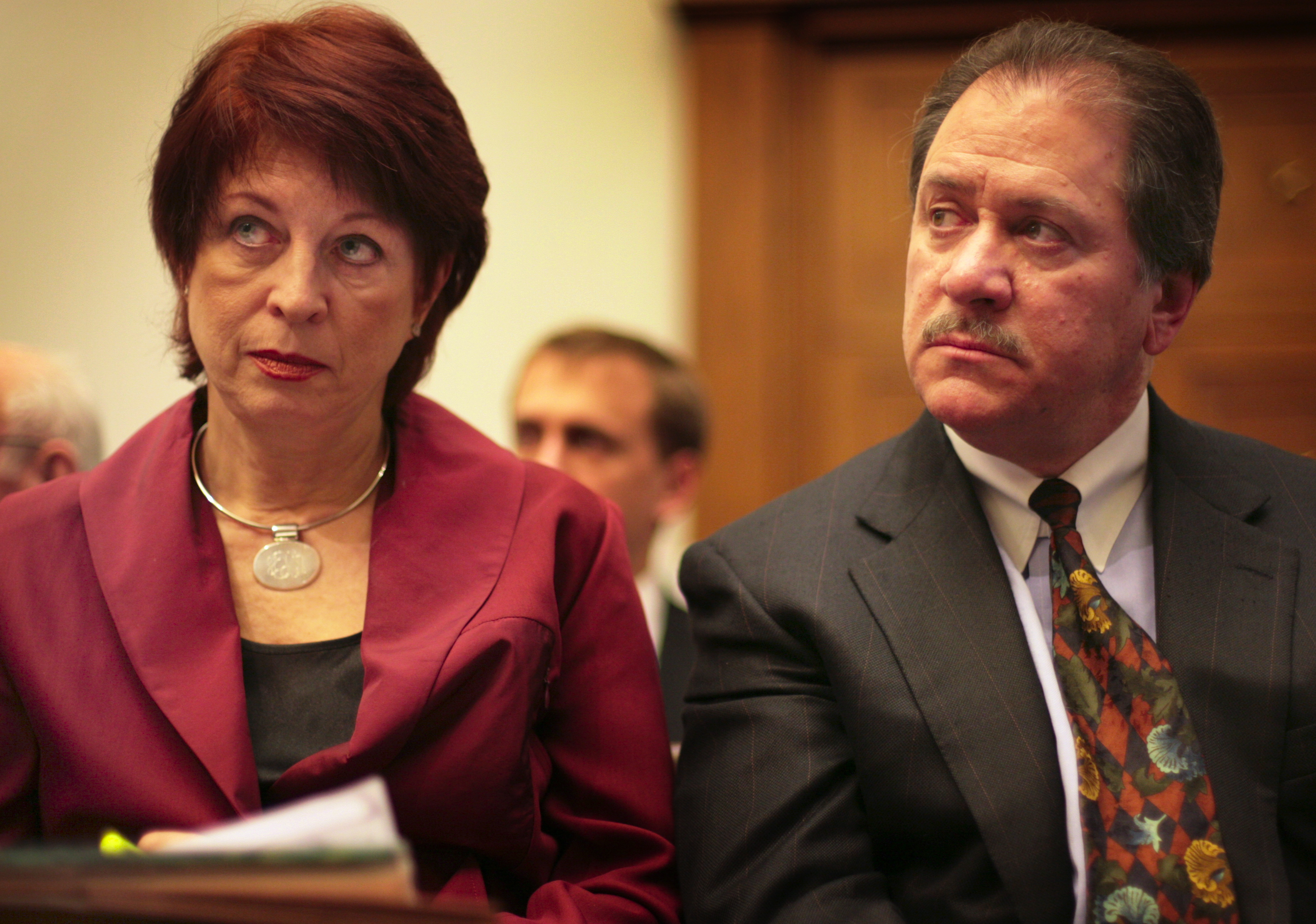
    A loyalist prosecutor handpicked by the Justice Department to lead a contentious conspiracy investigation into several of President Donald Trump’s political opponents abruptly quit his job on Thursday, according to two people familiar with the matter.

    The prosecutor, Joseph diGenova, had been in charge of what Trump’s allies have often referred to as the “grand conspiracy,” a sprawling inquiry based in the U.S. attorney’s office in South Florida that has sought to implicate federal officials who have investigated Trump in a single plot to deprive him of his rights.

    DiGenova’s resignation was the latest setback in the case that began last year and has dragged on for months. Even though members of his team have issued numerous grand jury subpoenas to federal law enforcement and intelligence officials who have sought over the past decade to hold Trump accountable in a series of criminal inquiries, diGenova had yet to obtain an indictment.

    “It was an honor and privilege to serve the president and the department,” DiGenova told CNN and CBS during phone interviews on Thursday.

    A spokesperson for the U.S. attorney’s office did not respond to a message seeking comment.

    Trump has repeatedly put pressure on prosecutors to bring criminal charges against his opponents, calling them out in private meetings and in social media posts. He has also expressed displeasure about the slow pace of the retributive investigations he has helped to set in motion.

    But time and again, Trump’s desire for vengeance and his willingness to break through the walls of independence that have traditionally separated the White House and the Justice Department have resulted in failure. Judges and grand juries have repeatedly stymied his attempts to strong arm prosecutors into bringing charges.

    Sometimes, as in the case of diGenova, prosecutors themselves have effectively reminded him that it is no simple matter to file indictments against people without real evidence or viable legal reasoning. The resignation was likely to cause consternation among far-right influencers who have long heralded the grand conspiracy case as the Trump administration’s most aggressive effort to go after the president’s critics.

    From the beginning, the influencers pushed for charges to be brought against the widest array of Democrats possible, asserting that a cabal of “deep state” operatives — led by former President Barack Obama — had worked for years to destroy Trump and deserved to be punished.

    With his move, diGenova became the second prosecutor who has either resigned or been removed from the case. The prosecutor in charge of an early phase of the investigation was forced to leave in the spring after telling her superiors that there was not sufficient evidence to bring charges against one of its first targets, John Brennan, a former CIA director who provoked Trump’s ire by helping to assemble an intelligence assessment that determined that Russia had sought to interfere in the 2016 presidential campaign.

    The grand conspiracy inquiry has long been the most fevered of the many revenge investigations that Trump has demanded the Justice Department undertake. It has involved prosecutors seeking to link disparate criminal inquiries into the president — including the Russia investigation and a separate investigation into Trump’s mishandling of classified documents — as an overarching, multiyear scheme to damage his political prospects.

    From the outset, diGenova faced an uphill battle in seeking to prove the basic theory of his case: that the various inquiries into Trump — conducted by different prosecutors and spanning nearly a decade — could be reasonably tied together in a single conspiracy. Those hurdles have led several current and former prosecutors in the office in southern Florida to wonder whether the investigation was largely a show put on to placate Trump.

    DiGenova, a former U.S. attorney from the Ronald Reagan era who had not worked as a prosecutor in nearly 40 years, took control of the case in April after his predecessor, Maria Medetis Long, was kicked off the investigation. At 81, he was an unusual choice to oversee an inquiry involving multiple targets that quickly grew to include at least a dozen prosecutors, including his wife, Victoria Toensing.

    Moreover, diGenova was a longtime ally of Trump’s who had publicly claimed that the Russia investigation was a plot by law enforcement to frame him and keep him out of the White House. DiGenova had also worked as a lawyer for Trump’s 2020 campaign, supporting his false assertions that the election that year had been rigged against him.

    While Brennan was the initial focus of the inquiry, it has also involved an effort to implicate former FBI Director James Comey, who has been charged in a separate case in North Carolina. Late last month, diGenova’s office issued a subpoena demanding testimony from one of Comey’s close confidants.

    More recently, subpoenas had been issued to federal agents who took part in the August 2022 search of Mar-a-Lago, Trump’s private club and residence in Florida, in the classified documents investigation.

    This article originally appeared in The New York Times.
  • ‘You know what happens if you don’t vote’: 7 takeaways from the GOP convention

    ‘You know what happens if you don’t vote’: 7 takeaways from the GOP convention

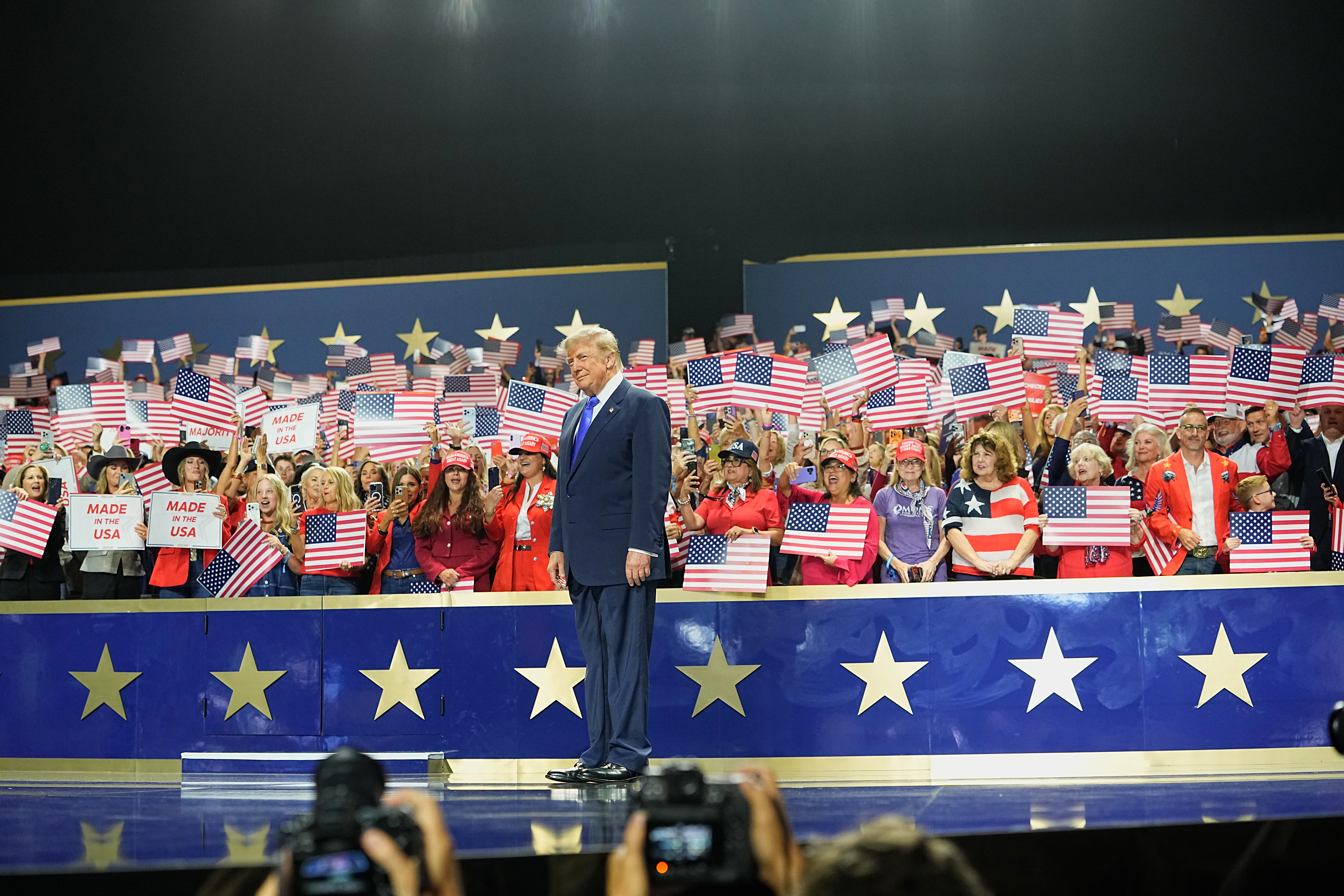
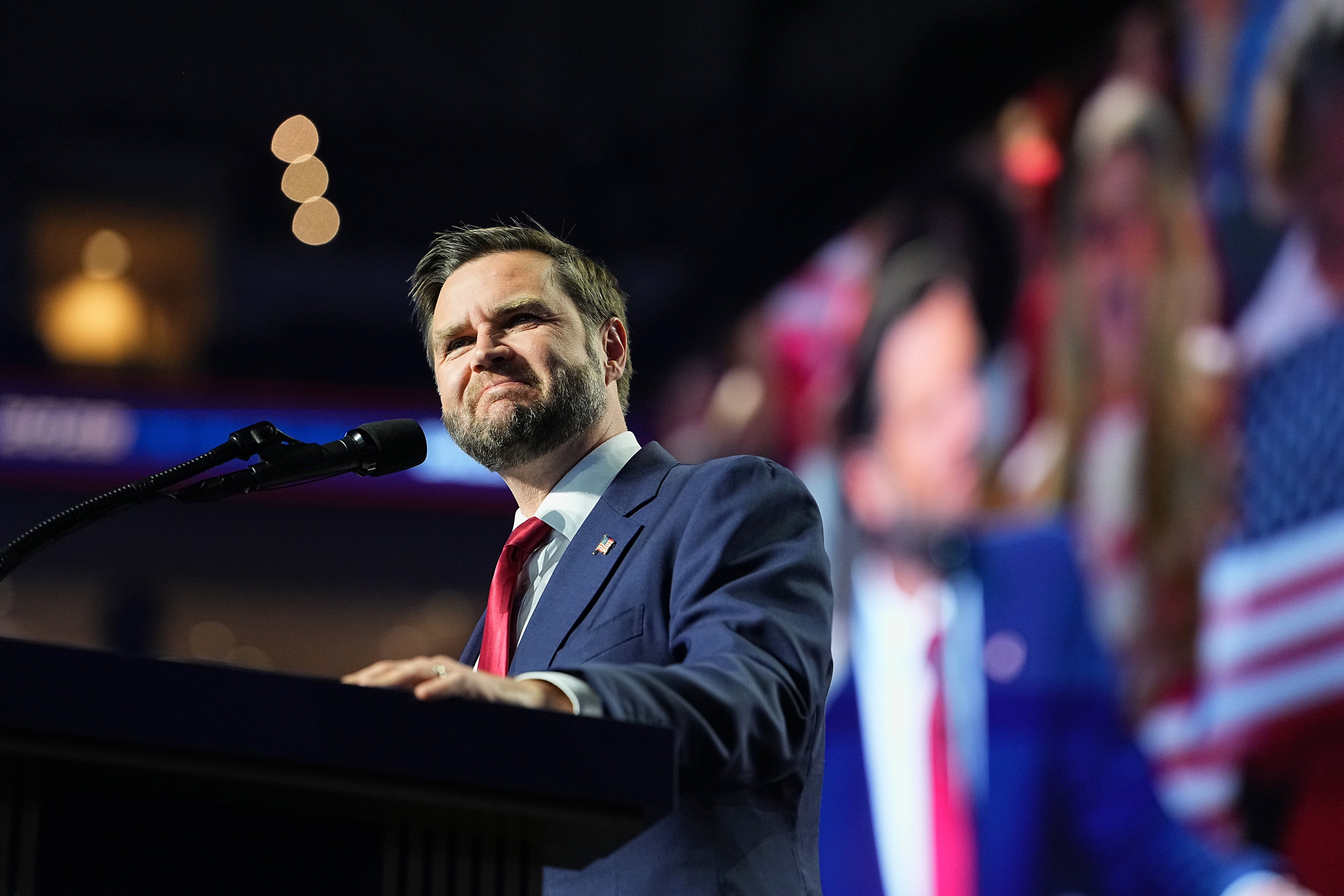
    Vice President JD Vance was billed as the headliner of the second night of the Republican convention, but President Donald Trump stole the show.

    With a hug and a handshake, Vance exited stage right after his speech as Trump returned to the place he likes most — center stage — to make his final pitch of the convention to keep Republicans in power.

    At one point Trump asked attendees to raise their right hands and pledge to him that he would vote with their family and friends. Dutifully, they did.

    “You know what happens if you don’t vote?” Trump said. “You go to hell.”

    The two-day rally in Dallas came as Trump’s approval has sagged below 40% and Republicans fear losing control of both the House and Senate. Republicans hoped the gathering would help energize a base beleaguered by high prices and the Iran war to turn out in droves. But the two days of red meat tossed from the stage seemed unlikely to satiate independent voters whose support has flagged.

    Here are seven takeaways from the convention:

    Vance makes his 2026 (and 2028) pitch

    Vance arrived in Dallas widely considered the front-runner in the 2028 Republican presidential primary. His speech offered some early clues about how he might approach a campaign.

    Vance focused on restoring the primacy of the traditional nuclear American family, a theme he has championed in the administration. He did not mention the war in Iran, an operation he has defended publicly but raised concerns about privately. But he issued a plea for conservatives not to abandon the White House over policy.

    “Do not throw the baby out with the bathwater,” he urged.

    Vance speaks in a far more scripted political style than Trump. He caught fire with the crowd when he snapped back at a protester who interrupted his remarks by waving Palestinian and Mexican flags. “My friend, if you love Mexico so much, get your ass over there,” he said.

    But he failed to sustain the kind of enthusiasm that Trump commanded either night. Nor did he win anything beyond perfunctory praise from the president, who quickly ushered him off the stage.

    As the balloons fell, it was the president alone, along with a tenor singing. Trump is not giving up his crown quite yet.

    Trump throws an affordability Hail Mary

    Trump has called affordability — a top buzzword for Democrats this year — a “hoax.” In his speech Wednesday night, the president claimed that prices are on their way down. At the same time, he rolled out an audacious plan to address people’s concerns about costs: a massive cash giveaway.

    He branded his dubious and detail-free plan to send $5,000 to every American adult a “Trump Dividend.”

    But Trump was virtually the only one talking about it.

    A day later, the splashy $1 trillion-plus plan barely made a ripple on the convention stage.

    The president’s own son, Donald Trump Jr., didn’t so much as mention it.

    Neither did the speaker of the House.

    Neither did the vice president.

    Only Trump did.

    If the president wants the dangled cash to be a major factor in the midterms, the rest of the Republican Party didn’t use the rest of the convention to sell it.

    Republicans have a new rogues’ gallery of liberal villains

    Forget about Nancy Pelosi.

    In Dallas, Republicans made clear that the former House speaker has been dethroned from her decades-long position as the party’s favorite political villain.

    Speaker after speaker assailed Hasan Piker, a leftist online streamer, and Abdul El-Sayed, the Democratic Senate nominee in Michigan, for pushing what they described as an extreme and anti-American agenda. Their images, including Piker’s naked torso, were broadcast on the jumbotron over the stadium. Even Rep. Alexandria Ocasio-Cortez of New York, who is a frequent target of the right, got less airtime.

    At one point, Speaker Mike Johnson outlined the new rogues’ gallery of liberals — “Hasan Piker and Bernie Sanders and AOC and Abdul El-Sayed and Zohran Mamdani” — while casting the rest of the Democratic Party as squishes who would succumb to them.

    In their attacks on Piker and El-Sayed, several convention speakers embraced anti-Muslim rhetoric, including a promise popular among conservative activists to “ban Shariah law.”

    “We must stand and defeat the Islamists,” Sen. Ted Cruz of Texas said in his speech.

    GOP frames the election as common sense versus crazy

    Republicans know that Trump is unpopular. They are banking on making Democrats unpopular, too — or at least unappealing and unelectable.

    Over and over, speakers cast Democrats as out of the mainstream, frequently calling them socialists, communists and even worse. At times they stretched the truth. Democratic socialists might have won a number of Democratic primary victories since 2024, but no serious figure in the party is promoting communism.

    “You guys are going to trigger the commies,” Donald Trump Jr., the president’s son, said at one point as the crowd chanted “USA! USA! USA!”

    Vance, in the closing of his speech, summed up the message so many had delivered before him over two days: “It’s about the party of common sense beating the party of the crazies.”

    Texas is a 2026 battleground

    Six months ago, when it first emerged that Republicans were likely to pick Dallas for this convention, it was unclear whether Texas would wind up as a top midterm battleground.

    It’s clear now.

    A parade of speakers — from the president on down — used their precious time onstage to talk about Texas’ razor-close Senate race. They sought to boost Ken Paxton, the Texas attorney general (even as Trump mocked his sartorial choices on back-to-back nights), and tear down James Talarico, the Democratic nominee. On the eve of the convention, Trump’s super political action committee had reserved $10 million in ads to help Paxton.

    “Tala-freako maybe tops the list,” Vance said of Trump’s nickname for Talarico.

    But it wasn’t just the Senate race. Republicans gerrymandered the state in 2025 to create as many as five new safely Republican House seats. But Republicans running in several of those seats appeared at the convention, seeking a boost in regions that Trump won handily.

    Was it must-see TV? Early signs suggest no

    Trump has long been known as a master of the television audience. Not this time. An average of 2.5 million people tuned in to watch his Wednesday night speech on Fox News, one of the few major TV networks that aired the remarks in full, according to preliminary figures from Nielsen. That was an average primetime audience for the network, based on the most recent quarterly statistics, and below the usual viewership for programs at that time.

    In other words, no Trump bump.

    To be fair, the president’s programming faced some steep competition. The first game of the National Football League season was on at the same time as his speech. The season’s second game was on Thursday during Vance’s and Trump’s speeches.

    Republicans make their bid to buck history

    Parties in power traditionally attempt to expand their appeal in midterm elections through targeted outreach to independent voters. That was not the strategy charted by Trump and his allies in Dallas.

    Only a handful of speakers offered any kind of outreach to moderate voters (one of those exceptions was Rep. Mike Lawler of New York). Far more focused their remarks on stoking fears of Shariah, transgender athletes and Democratic candidates who were repeatedly described as communists. Again and again, Trump begged his supporters to “pretend” that he would be on the ballot — an attempt to get enough of them out to prevent the usual losses for the party in power.

    Trump and his allies are staking their chances on their ability to drive their own voters to the polls. At the top of the list are Trump loyalists who typically skip midterm elections.

    This article originally appeared in The New York Times.
  • Constituents are ‘livid’ with Fetterman after Trump convention video and other behavior, says Rep. Madeleine Dean

    Constituents are ‘livid’ with Fetterman after Trump convention video and other behavior, says Rep. Madeleine Dean

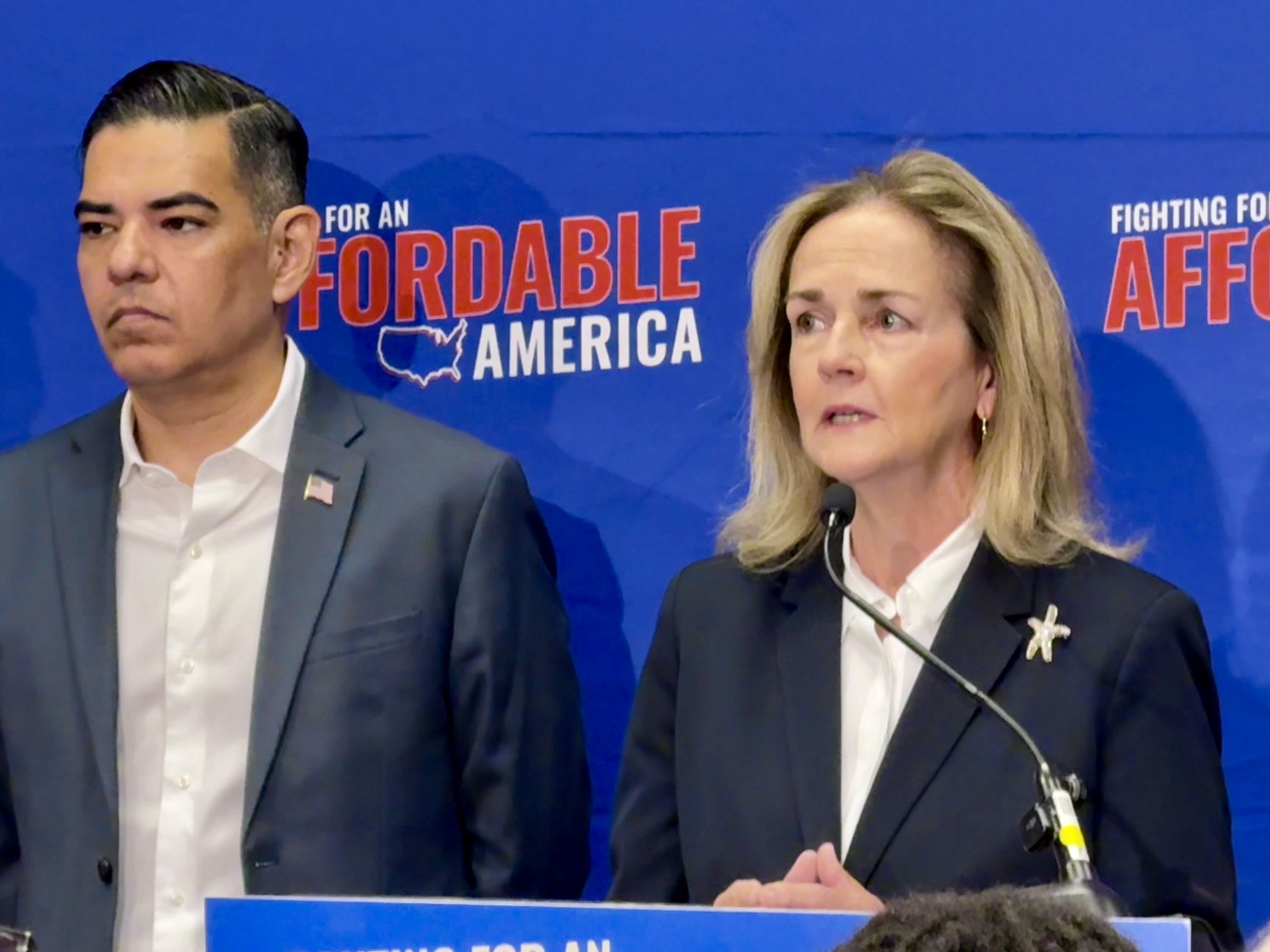
    DALLAS, Texas — Just steps away from a Republican midterm convention that she slammed as a “farce,” U.S. Rep. Madeleine Dean (D., Montgomery) said Thursday she was “gravely disappointed” with Democratic U.S. Sen. John Fetterman’s participation in the event — as well as a range of other issues that she said indicate his abandonment of democratic values.

    “What I wish he was doing was — back home in Pennsylvania — making sure, like I am, that Pennsylvania will see more Democratic members of the House to uphold the values that he originally ran on,” Dean said after Fetterman appeared in a video at the convention Wednesday night that praised President Donald Trump.

    Fetterman’s appearance was a remarkable and rare turn for a Democratic lawmaker, even one who has frequently crossed the aisle to support the opposing party like he’s done since Trump returned to office.

    In a video that served as an introduction to a speech by U.S. Sen. Dave McCormick (R., Pa.), Fetterman said he and McCormick are able to “work with President Trump to fight and defend the steel way of life” in Pennsylvania.

    As he’s done repeatedly, he also denounced socialism and what he considers the “anti-American way of life” that the leftist wing of his party represents. That message fit nicely into some of Republicans’ most prominent attacks on Wednesday as they tried to motivate their base to turn out for GOP candidates in the midterm elections — including in several Pennsylvania key races.

    On Thursday, a web page soliciting donations to Fetterman’s campaign committee included a link to the video and said Fetterman would “keep standing his ground, speaking his mind, and putting Pennsylvania first.”

    Fetterman said in a statement later that he made the video to support McCormick, who has become a staunch ally and one of his biggest defenders. He also said, as he has for months, that would not switch parties.

    “That’s entirely on John,” Dean said Thursday when asked by a reporter if Fetterman should remain in the Democratic Party. “I will tell you, from the ground, from suburban Philadelphia, my constituents are livid. Those who went out and knocked doors for him, they are absolutely livid.”

    Dean was in town on the second and final day of the convention alongside four other House Democrats who blasted what they were hearing from the gathering, which has largely been a celebration of Trump.

    But Dean was quickly asked by reporters about the convention’s most surprising turn so far — the appearance of Pennsylvania’s controversial Democratic senator.

    Dean has, historically, had a closer relationship with Fetterman compared to some of the other Democratic members of Pennsylvania’s U.S. House delegation. The pair briefly ran against each other in the 2018 lieutenant governor primary, which Fetterman won. Dean said it was then that she grew to “really like him and his family, and his values.”

    Those values, she said, have taken a turn in more ways than one. She criticized his convention video as a “stunt” while saying she was mostly disappointed by his work ethic, his decisions to back Trump policies, and his “blind support” of Israeli Prime Minister Benjamin Netanyahu’s attacks in Gaza.

    “All I want is for his good health, his well being. And that has been my worry,” Dean said in an interview after the press conference, referring to Fetterman’s well-documented health struggles.

    “But I think you have to look at his record, and his record of not working, of not participating, and not caucusing with Democrats, of not being active in his committees — alongside what he is active on, [which] is voting alongside Mr. Trump, and enabling this corruption of chaos,” she said.

    Dean is one of several Pennsylvania Democrats who have ramped up their public concerns about Fetterman, with some essentially promising to oust him if he runs for reelection in 2028.

    “He’s not going to be a senator after 2028 — mark my words,” U.S. Rep. Chris Deluzio, an Allegheny County Democrat who is a potential candidate for the seat, after the video.

    Dean did not comment on the next election other than saying “voters will have to decide whether that is appropriate” for Fetterman to conduct himself the way he has, including associating closely with Israeli leadership.

    Democratic Gov. Josh Shapiro, who has clashed with Fetterman but hasn’t heavily criticized his job performance as a senator, said Thursday he did not see the video. The governor said at an event in Chester he was “not going to get distracted” from his duties as governor and his reelection campaign.

  • Sending armed ICE agents to polling places would be a federal crime, lawsuit says

    Two major Latino civil rights groups, a voting rights organization, and the city of Denver sued the Trump administration on Thursday to keep armed immigration enforcement agents away from polling places, invoking a Civil War-era criminal law that generally prohibits federal officials from bringing “troops or armed men” to places where elections are held.

    The lawsuit, filed in federal court in Washington, D.C., comes eight days before in-person early voting begins in some states, such as Minnesota and South Dakota. It asks a judge to declare it unlawful for the administration to send armed agents to polling sites.

    Homeland Security Secretary Markwayne Mullin said at a Sept. 1 news conference in New York that ICE agents would not patrol polling places, but that they would go to one if there were a threat there or if they were serving a warrant on someone they had been tracking. “If we’re serving a warrant, we will be where we need to be,” he said.

    DHS has said in statements to media following Mullin’s comments that it “is not planning operations targeting polling locations,” but added that people could be arrested at a polling place if an active public safety threat arose there.

    Democratic lawmakers and election officials have grown increasingly worried in recent months that armed federal officers or troops could be sent to polling sites. Local officials in states such as Arizona and Minnesota have gone as far as preparing emergency court filings and training personnel on how to respond.

    Those fears have been fueled by calls among some allies of President Donald Trump — including at least three Republican gubernatorial candidates in different states — for sending armed federal agents and the National Guard to voting sites.

    The lawsuit cites a year of public comments by Trump administration officials and allies. In February, former Trump adviser Stephen K. Bannon said, “We’re going to have ICE surround the polls come November.” Days later, White House press secretary Karoline Leavitt told reporters she “can’t guarantee that an ICE agent won’t be around a polling location.” And in March, then-Deputy Attorney General Todd Blanche, who is now attorney general, asked at a conservative gathering, “Why is there objection to sending ICE officers to polling places?”

    The plaintiffs argue that pattern, capped by Mullin’s recent remarks, amount to a policy and plan by the administration.

    The lawsuit Thursday was filed on behalf of the League of United Latin American Citizens, UnidosUS, Common Cause, and the city and county of Denver.

    It relies on an 1865 law that makes it a felony for any federal official to order “troops or armed men” to places where an election is held, unless the force is needed to “repel armed enemies of the United States.” Violators face up to five years in prison and disqualification from holding federal office. In 1909, Congress removed the law’s other exception — allowing armed men to “keep the peace at the polls.”

    The plaintiffs argue that armed federal agents at polling places would intimidate voters — particularly Latinos and naturalized U.S. citizens — and could turn voting sites into places of confrontation.

    “The right to vote is foundational to our democracy and yet this administration continues in its endless attempts to weaken the very institutions it is entrusted to protect,” said Juan Proaño, CEO of LULAC. “The outcomes of elections define the future for all of us, and in America, voters should be able to cast their ballots without fear of intimidation by armed ICE officers at polling places.”

    DHS did not immediately respond to a request for comment.

    The military has drawn a clearer line. Gen. Dan Caine, chairman of the Joint Chiefs of Staff, told Sen. Elissa Slotkin (D, Mich.) in an Aug. 28 letter that the Joint Force “has no plans” to send federal troops or federalized National Guard members to polling places, or to use them to seize ballots or voting machines.

    “I have neither received nor anticipate receiving any unlawful order concerning the role of the Joint Force in the upcoming November 2026 midterm elections,” Caine wrote.

    Trump has made sweeping claims of election fraud without evidence, alleging that large numbers of unauthorized immigrants will vote in November absent federal intervention. In March he signed an executive order directing the U.S. Postal Service to restrict how mail ballots are handled and instructing DHS to build lists of U.S. citizens and share them with states. The Supreme Court allowed parts of the order to move forward last month, and the administration returned to the Supreme Court this week for a third time after a federal judge in Boston blocked the Postal Service rule.

    The lawsuit invoked an 1865 law advanced by then-Democratic lawmakers angered by the Lincoln administration’s deployment of Union troops interfering in presidential elections in Kentucky, Maryland, and Delaware, according to legal historians.

    That statute has never been tested, said University of Houston law school professor Chris Mirasola. No court has interpreted what counts as a place where an election is held, according to a Brennan Center for Justice analysis published in July, leaving unanswered whether the law reaches ballot drop boxes, election offices, and counting facilities as well as polling sites.

    “The statute is incredibly old, and there is no case law about it, so all of this is going to be before the courts for the first time,” he said. “That always leaves questions about how it’s going to be interpreted.”

    The plaintiffs, represented by attorneys with Democracy Forward, argue Congress explicitly banned armed federal officers from election sites to “provide and preserve free and fair elections, the rule of law, the right to vote, and Americans’ confidence in the sanctity of the ballot box.”

    DHS’s “disregard for that statutory framework threatens our upcoming election,” the complaint said.

    Mirasola said the law was a reaction to multiple instances of Union soldiers detaining Confederate-aligned candidates and blocking voters with ballots favoring those candidates during the wartime election in border states. Though the bill authors at the time were in the throes of a specific armed conflict, the rhetoric of the congressional debates were just as contemporary then as they are now, Marisola said. Lawmakers were hyper-focused on preserving the integrity of the electoral system.

    “This lawsuit is alleging that what we are seeing in the lead-up to the midterms is the same kind of election interference because the administration has been dangling the possibility that there might be a deployment of armed federal agents,” Mirasola said.

    The only exception for armed officers that has withstood time is in order to “repel armed enemies” of the United States. Lawmakers in the 1860s imagined those being Confederate soldiers. But the Trump administration could try to make a narrow argument identifying a different enemy, Mirasola said.

    Plaintiffs will face another obstacle, according to Mirasola. The U.S. Supreme Court has significantly narrowed the avenues for the federal courts to issue prospective nationwide injunctions.

    The complaint cited Justice Department actions to remove a manual explicitly stating the long-standing position of the government that armed federal agents are prohibited from election sites. They also pointed to the gutting of the department’s public integrity section, which wrote the document and advised law enforcement on legal matters during elections.

    The complaint also points to three encounters involving immigration officers at voting sites during this year’s primaries: ICE officers converging on a traffic stop outside a San Antonio early voting site, where the county sheriff told them to leave; ICE vehicles outside a vote center in Simi Valley, California; and two federal agents entering a Syracuse, New York, library to warn a poll worker about an Instagram post naming the ICE agent who fatally shot Renée Good in Minneapolis.

    LULAC, the nation’s oldest Latino civil rights organization, has registered and mobilized Hispanic communities to the polls for nearly a century. Its hundreds of thousands of members have communicated worries that any federal presence could dampen turnout and fuel fears of racial profiling.

    LULAC pointed to reporting by ProPublica, which found that immigration agents had detained more than 170 U.S. citizens, including more than 50 — nearly all of them Latino — who were held after agents questioned their citizenship.

    Election workers across the country have been preparing for months. Some are being trained on de-escalation techniques in case of run-ins with federal agents and what hotlines to call to report potential disturbances.

    In Denver, the clerk and recorder is already preparing to retrain the election judges who check in voters and empty the city’s 48 ballot drop boxes. The training covers how to de-escalate an encounter with federal agents, how to document what they do, and how to identify agents who are in plainclothes, according to the complaint. Election officials are also drawing up contingency plans to move voters to alternative polling sites.

    The election judges are temporary workers, and Denver says it struggles to recruit enough of them for every election. Some, the city told the court, may now decline the job altogether.

    “Stationing ICE agents near polling places is only meant to scare people and suppress votes,” Denver Mayor Mike Johnston said in a statement. “We’ll fight tooth and nail to prevent it.”

  • Appeals court hands Trump a loss on mail voting as Supreme Court considers his executive order

    Appeals court hands Trump a loss on mail voting as Supreme Court considers his executive order

    WASHINGTON — An appeals court on Thursday upheld a block on President Donald Trump’s executive order limiting mail voting, a decision that comes as the Supreme Court considers the same case and states have already started sending out ballots for the high-stakes midterm elections.

    The three-judge panel refused to lift a preliminary injunction against the order issued last week by U.S. District Court Judge Indira Talwani. It prohibits the U.S. Postal Service from implementing Trump’s directive. The Postal Service has said it would not deliver ballots from states that did not pre-clear their envelope design with the federal government and submit a list of voters to an online portal, which has yet to be activated.

    Election officials warn that it’s impossible to comply with those terms, especially with the first mail ballots already being sent out in Alabama, North Carolina, and Wisconsin.

    The panel of three judges nominated by former President Joe Biden agreed with the plaintiffs that the president does not have the power to regulate states’ election policy.

    “Appellants have not made a strong showing that the district court erred in determining that the Final Rule is likely unlawful,” they wrote, a reference to a rule published by the Postal Service to implement Trump’s order.

    The panel wrote that the Trump administration had done little to dispel arguments by many election officials that the changes would bring “chaos and widespread disenfranchisement.”

    “Indeed, appellants have not even seriously challenged this aspect of the district court’s ruling, much less demonstrated why it is clearly erroneous,” the order states.

    The government also hasn’t shown evidence of past fraud to justify the restrictions, the judges said.

    A request for comment from the White House was not immediately returned.

    The panel’s decision comes even as the Supreme Court is already considering the same case, which is part of a frenzied legal rush as states are beginning to send out mail ballots for this fall’s midterm elections. Democrats and civil rights groups in a separate lawsuit in Washington, D.C., also are trying to halt the executive order.

    The 1st Circuit also had upheld a previous hold Talwani placed on the executive order. But that ruling was lifted by the Supreme Court in a procedural decision that did not determine whether the plan was constitutional.

    The plaintiffs swiftly filed new lawsuits after the Postal Service finalized its rule governing mail ballots.

  • Jimmy Kimmel says he dropped Talarico interview from broadcast after FCC pressure

    Jimmy Kimmel says he dropped Talarico interview from broadcast after FCC pressure

    Late-night talk-show host Jimmy Kimmel said Wednesday that he would not broadcast an interview he conducted with Texas Democratic Senate candidate James Talarico because of pressure from the Trump administration.

    Kimmel did not specify what that pressure was but said the Federal Communications Commission had “threatened” him, Jimmy Kimmel Live!, the ABC network, and ABC’s affiliate and local stations “based on simple traditional editorial decisions, guest bookings it would seem they don’t like.”

    Kimmel also suggested the pressure was politically motivated. Polls show a close race between Talarico and his Republican opponent, Texas Attorney General Ken Paxton.

    “They’re very nervous about the midterms, and rightly so. … They’re in danger of losing a Senate seat in Texas, of all places,” Kimmel said on his show Wednesday.

    ABC has been in a monthslong feud with the FCC and its chair, Trump appointee Brendan Carr. Last year, the FCC successfully pressured ABC to briefly suspend Kimmel because of comments he made about the death of conservative activist Charlie Kirk.

    In April, President Donald Trump and first lady Melania Trump again called on ABC to punish Kimmel for a joke he made about the first lady. Shortly afterward, the FCC formally ordered an early review of the eight broadcast licenses owned by Disney — which include ABC stations in major cities such as New York and Philadelphia — because of concerns about diversity policies.

    Last month, ABC sued the FCC, alleging that the commission’s early review of its broadcast licenses is unconstitutional under the First Amendment.

    Kimmel on Wednesday noted that he had interviewed several candidates for public office on his show in the past — including Trump himself when he was a presidential candidate in 2015 in 2016.

    “And at that time, when he was the one sitting next to me, he seemed to have no problem with the idea of a talk-show host interviewing candidates. … But for some reason — and I can’t seem to figure out what that reason is — something has changed,” Kimmel quipped.

    Representatives for the FCC did not immediately respond to a request for comment Wednesday. Representatives with Disney, ABC’s parent company, declined to comment.

    FCC Commissioner Anna M. Gomez, the only Democrat on the commission, accused the Trump administration of waging a “campaign of censorship and control” and said the government agency does not have lawful authority to threaten broadcast licenses over guest bookings or editorial decisions.

    “I urge broadcasters everywhere to keep resisting this pressure, and I hope courts will soon make clear that the FCC has no place dictating editorial choices or what viewers are allowed to see,” Gomez said in a statement Thursday.

    Kimmel said he decided not to air his interview with Talarico during his broadcast in part so that ABC affiliates and local stations, especially those in Texas, would not “have to deal with this nonsense.” His interview with Talarico would instead be posted in its entirety on his YouTube channel on Thursday, he said.

    “And thank goodness we have that, because in the America we live in right now, that is the best that we can do until November,” he said.

  • Six advantages for Democrats in the midterms … and six advantages for Republicans

    Six advantages for Democrats in the midterms … and six advantages for Republicans

    President Donald Trump’s low approval ratings and widespread economic discontent, along with historical trends, point to a clear Democratic advantage come November and the midterm elections. But Republicans also see reasons for optimism, and it’s not just about gerrymandering.

    Six factors working in Democrats’ favor:

    Out-of-power parties typically pick up seats in the midterms

    The Democrats’ most basic advantage is the fundamental pattern of midterm elections: The party that controls the White House usually loses seats.

    In midterms from 1934 to 2018, the president’s party bled an average of 28 seats in the House and four in the Senate, according to the American Presidency Project at the University of California, Santa Barbara.

    If Democrats added 28 House and four Senate seats this cycle, they would win majorities in both chambers. The House, in particular, is seen as a promising target for Democrats this cycle, in part because Republicans are clinging to a razor-thin advantage in that chamber.

    Trump is deeply unpopular

    Parties have occasionally defied the historical trend and won seats in the midterms on the strength of popular presidents.

    But this year, Trump is widely expected to hurt Republicans’ chances. His approval rating, dampened by voter disenchantment with the war in Iran and stubbornly high inflation, has recently sunk to the lowest level of his second term. The New York Times polling average currently shows that 58% of Americans disapprove of the president’s job performance, while only 38% approve.

    Voters are dissatisfied with his handling of immigration and the war with Iran. Trump is also losing ground with white working-class voters on the economy. And he is deeply unpopular with voters of color without college degrees.

    House races in particular tend to follow the national mood closely, and analysts see Democrats as favorites to win the House.

    The Iran war has driven up prices, and voters are focused on inflation

    Polls consistently show that the economy and inflation are the top issues for voters. And voters say they are unhappy with the economy under Trump.

    His war with Iran, now in its seventh month, has driven up the price of oil, fertilizer, healthcare and other goods and services, as well as mortgage rates. Gas costs more than $4 a gallon, and the AAA motor club reported that drivers over Labor Day weekend were facing “the highest gas prices ever for this time of year.”

    By July, consumer prices were up 3.7% from a year earlier, according to the Federal Reserve’s preferred inflation gauge, far above the Fed’s target rate of 2%. The cost of diesel, which powers the farming economies of key midterm battlegrounds, hit a record high Friday.

    Senate Minority Leader Chuck Schumer, D-N.Y., said his party’s candidates were competing in challenging territory by keeping their campaigns focused squarely on costs.

    “Americans see what’s happened,” Schumer said in an interview. “They’re paying more, and getting less.”

    Democratic candidates are outraising their rivals

    In five of the six most closely watched Senate contests, Democrats had outraised Republicans through the first half of the year, according to campaign finance filings. In some races, such as those in Texas, Ohio and Alaska, the gap was vast.

    Democrats’ fundraising advantage in two other states, North Carolina and Georgia, has helped to transform races once seen as toss-ups. Analysts with the Cook Political Report, a nonpartisan election forecaster, now say both races lean toward Democrats.

    The large hauls suggest enthusiasm for individual Democratic candidates. But Republican groups still have a huge money advantage over Democratic ones.

    Several Democrats have shown strength in states Trump carried

    Two popular, moderate Democratic Senate candidates in the South, Sen. Jon Ossoff of Georgia and former Gov. Roy Cooper of North Carolina, appear to have maneuvered into particularly strong positions. Both have vast fundraising advantages and clear polling leads.

    Democrats are also bullish about the chances of former Rep. Mary Peltola, a Democrat, to flip a Senate seat in Alaska. She is running on “fish, family and freedom.” Her Republican opponent, Sen. Dan Sullivan, must contend with two other Republicans on the ballot, including one with the same name.

    Peltola, the lone Democrat on the ballot, led Sullivan by more than eight percentage points in a nonpartisan primary in August.

    Democratic primaries have set turnout records

    One clear reflection of Democratic energy going into the fall: the huge turnout the party has recorded in primary after primary. Some primaries, including ones in Michigan and Texas, set midterm records for the party.

    Strong turnout in primaries is not necessarily predictive of a strong performance in the general election. But Republicans acknowledge that there has been a significant enthusiasm gap between the two parties this primary season and describe it as one of their starkest challenges heading into the fall.

    Six factors working in Republicans’ favor:

    Republicans won the gerrymandering war

    In a burst of rare mid-decade redistricting, Republicans were able to give themselves a structural advantage in House races by redrawing maps to carve out more safe red seats.

    Congressional maps are typically drawn just once a decade to reflect population shifts after the census. But after Trump urged lawmakers in Texas to draw new maps favoring Republicans, Democrats and Republicans across the country engaged in an intense, cross-country redistricting tug of war to try to shift the House map in their favor.

    Aided by favorable rulings in state and federal courts, Republicans emerged with a national map that tilts in their favor and could help them counter a difficult political environment. Seven Republican-led states had redrawn their maps while only two Democratic-led states did so.

    The new maps could position the Republican Party to net roughly five to 10 additional House seats. Still, despite that edge, the House battle is still seen as tilting toward Democrats because of the political climate.

    The GOP is sitting on a mountain of cash

    The main Republican groups have a large overall financial advantage — totaling hundreds of millions of dollars — over the main Democratic ones, and the Democratic National Committee is in debt.

    Republican advertising spending has eclipsed Democrats’ ad spending in all the top six Senate races except for the contest in Texas, according to the ad-tracking firm AdImpact.

    Trump’s super political action committee, MAGA Inc., which has raised hundreds of millions of dollars and had long resisted tapping its war chest to help the party in the midterms, recently made its first general-election investment, a $10 million ad buy in Texas.

    Still, it is not yet clear how much the group will spend overall and which races it will target. Trump said Friday that he planned to spend “probably” $400 million to $500 million on the midterms, but that he also expected “to have money left over.”

    The Democratic brand is weak

    Trump may be deeply unpopular. Yet Democrats might eagerly trade their approval ratings for his.

    One Quinnipiac poll in July pegged Trump’s approval rating at 32%, worse than usual for him. But it measured congressional Democrats’ approval rating even lower — at 23%.

    Still, the same poll suggested that voters were eager for Democrats to win back Congress. It also indicated that Democratic voters were far more motivated than Republican voters to go to the polls. But Republicans have seized on a series of recent Democratic primary victories by left-wing candidates and democratic socialists to try to paint the party as out of step with many voters.

    The Senate map tilts to Republicans’ advantage

    Republicans hold 53 Senate seats. For Democrats to win back the chamber, they need to flip seats in four states while defending their own most vulnerable ones. Five of the six most competitive Senate races are in states Trump won in 2024. Four are in states he carried by double digits.

    And even among three other relatively competitive Senate battlegrounds where Democrats are seen as having an advantage — Georgia, New Hampshire and North Carolina — two are states that Trump captured two years ago.

    Democratic divisions could complicate their paths in two key states

    In Maine, where Sen. Susan Collins has been seen as one of the most vulnerable Republican incumbents, the Democrats’ initial nominee, Graham Platner, was accused of rape in early July. Platner denied the allegation but eventually dropped out of the race, requiring his party to scramble to find a new nominee outside the usual primary process.

    The candidate that the Maine Democratic Party settled on, Troy Jackson, had finished third this year in Maine’s primary for governor. Some Maine Democrats were dissatisfied by the rushed convention process and many are anxious about Jackson’s chances in a short campaign he had not planned for.

    In Michigan, where Democrats hope to keep a seat that is being vacated by a retiring senator, Democrats are still trying to heal the wounds after a tense, expensive primary race that centered on disagreements about Israel. Some Jewish Democrats in Michigan have declined to immediately support the candidate who won the nomination, Abdul El-Sayed, a progressive who has been a forceful critic of the Israeli government.

    The stock market is strong, and crime is down

    Wall Street has been on a remarkable, three-year run of gains. There have been some signs that inflation is cooling, too. And the Labor Department reported that hiring was unexpectedly strong in August, with the unemployment rate steady at 4.1%.

    Republicans can also point to positive trends on crime, an issue that has often swayed elections over the years. Today, violent crime rates are extremely low by historical standards.

    “Republicans have a real chance at defying history in November because of our candidates, massive war chest, and enthusiasm behind President Trump’s agenda,” Joe Gruters, chair of the Republican National Committee, said in a statement.

    Still, voters say that the economy is their No. 1 issue — and polls suggest that they don’t approve of how Trump is handling it.

    This article originally appeared in The New York Times.
  • Trump has repeatedly promised payments that have yet to materialize

    Trump has repeatedly promised payments that have yet to materialize

    First, at the start of his second term, President Donald Trump promised a DOGE dividend, a pledge to take the money that Elon Musk’s team would cut from the federal budget and send it to the American people.

    Then Trump moved on to a “tariff refund,” a plan to use the money the government was collecting in import taxes to fund payments for the public.

    Those ideas never panned out. Nevertheless, Trump is again talking up the possibility that the federal government will send Americans thousands of dollars in cash. At the Republican midterm convention in Dallas on Wednesday, the president pledged that every American adult would receive $5,000 if Republicans retain control of Congress in November.

    Trump did not offer many details about the proposal, but there’s reason to think that Republicans in Congress, like they did with his two previous promises of quick cash, could shrug off the president’s suggestion.

    That’s in no small part because the $5,000-per-American promise would be enormously expensive to fulfill, with a price tag over $1 trillion. Its actual cost, though, would depend on what, if any, eligibility requirements Congress would ultimately impose on the plan. Trump did not mention a proposal to finance the $5,000 payments, which beyond their fiscal cost could also prove inflationary.

    The conceit of Trump’s other pitches was that the money to pay for them was already available, from Musk’s so-called Department of Government Efficiency or tariff revenue. On both of those fronts, though, the envisioned funding sources proved illusory: Musk’s team did not save the government much money, and the Supreme Court struck down many of Trump’s initial tariffs.

    Republicans did succeed in providing Americans with substantial cash payments when they cut taxes last year. Under the design of the tax law, many Americans first experienced the policy change in the spring, when they received larger-than-usual tax refunds. Trump and Republicans have spent much of the year promoting those refunds, hoping that the larger lump-sum payments would be politically resonant before the midterms.

    But even after Trump delivered those tax refunds, his approval poll ratings are still sagging.

    Those tax cuts were also very expensive, though Republicans did cover some of the fiscal cost by reducing federal spending on healthcare and food assistance for poor Americans.

  • Meet the humanitarian aid worker and independent candidate running against Chris Rabb in November

    Meet the humanitarian aid worker and independent candidate running against Chris Rabb in November

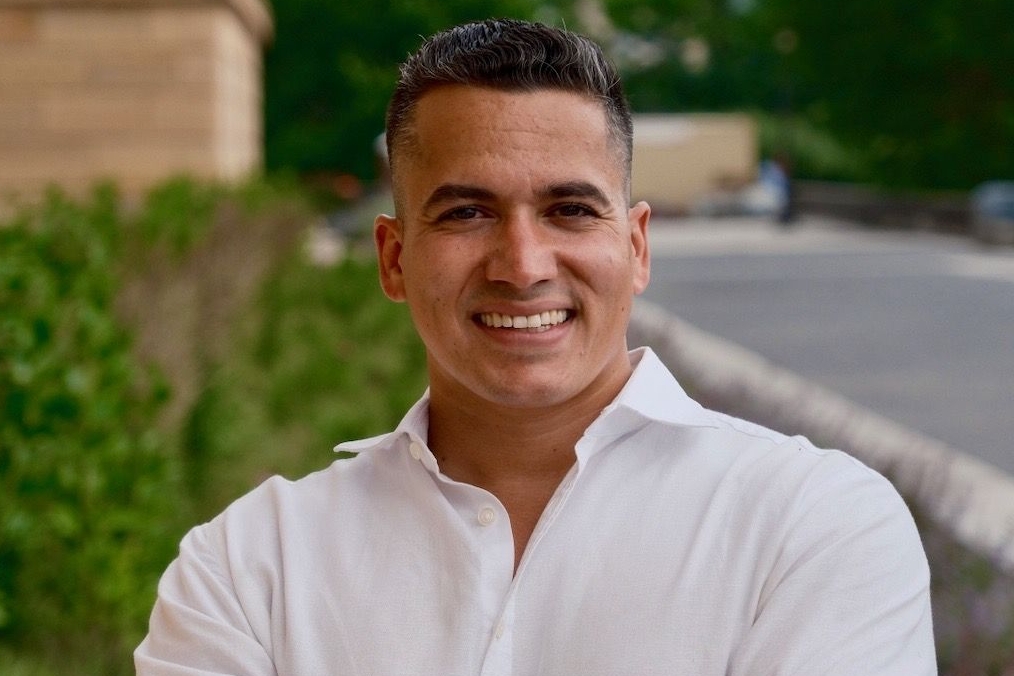
    Dennis Mahoney has spent a decade in disaster relief, dispatching humanitarian aid in the wake of devastating hurricanes in the United States and Puerto Rico and poverty crises in 18 countries in Asia, Africa, and Latin America.

    Now the 34-year-old independent candidate is using that same determination to engage in an uphill battle as he seeks to represent Philadelphia’s 3rd Congressional District this November.

    Mahoney, from South Philadelphia, is the lone opponent running against State Rep. Chris Rabb, a democratic socialist from Northwest Philly who won the crowded Democratic primary in May to succeed retiring U.S. Rep. Dwight Evans.

    “I think it’s going to be a hard fight and a hard run, but I feel so strongly that people in Philadelphia want something different,” Mahoney said of his independent campaign.

    Mahoney will have his work cut out for him to persuade voters to back his grassroots candidacy.

    The 3rd Congressional District is one of the most Democratic-leaning districts in the country, where Rabb won with almost 45% of the vote. Rabb saw national support from big-name progressives, including U.S. Rep. Alexandria Ocasio-Cortez (D., N.Y.), and used his victory to support other like-minded candidates throughout the United States.

    And the last time Pennsylvania elected an independent to Congress was in 1920, when Milton W. Shreve of Erie won as an Independent Republican.

    But Mahoney and his allies view his candidacy as an opportunity to present an alternative option after more than half of 3rd District voters in the May primary cast their ballots for Rabb’s opponents. Mahoney’s platform focuses on addressing poverty, expanding access to affordable housing, and investing in education.

    Rabb’s campaign did not comment on Mahoney’s candidacy Wednesday.

    The race comes amid shifting political dynamics in the United States in response to growing frustration with the two-party system.

    On one hand, progressive candidates — many of whom, like Rabb, are part of the Democratic Socialists of America — have been gaining momentum in elections nationwide.

    Earlier this year, meanwhile, a Gallup poll showed a record high of 45% of U.S. adults identified as independents in 2025.

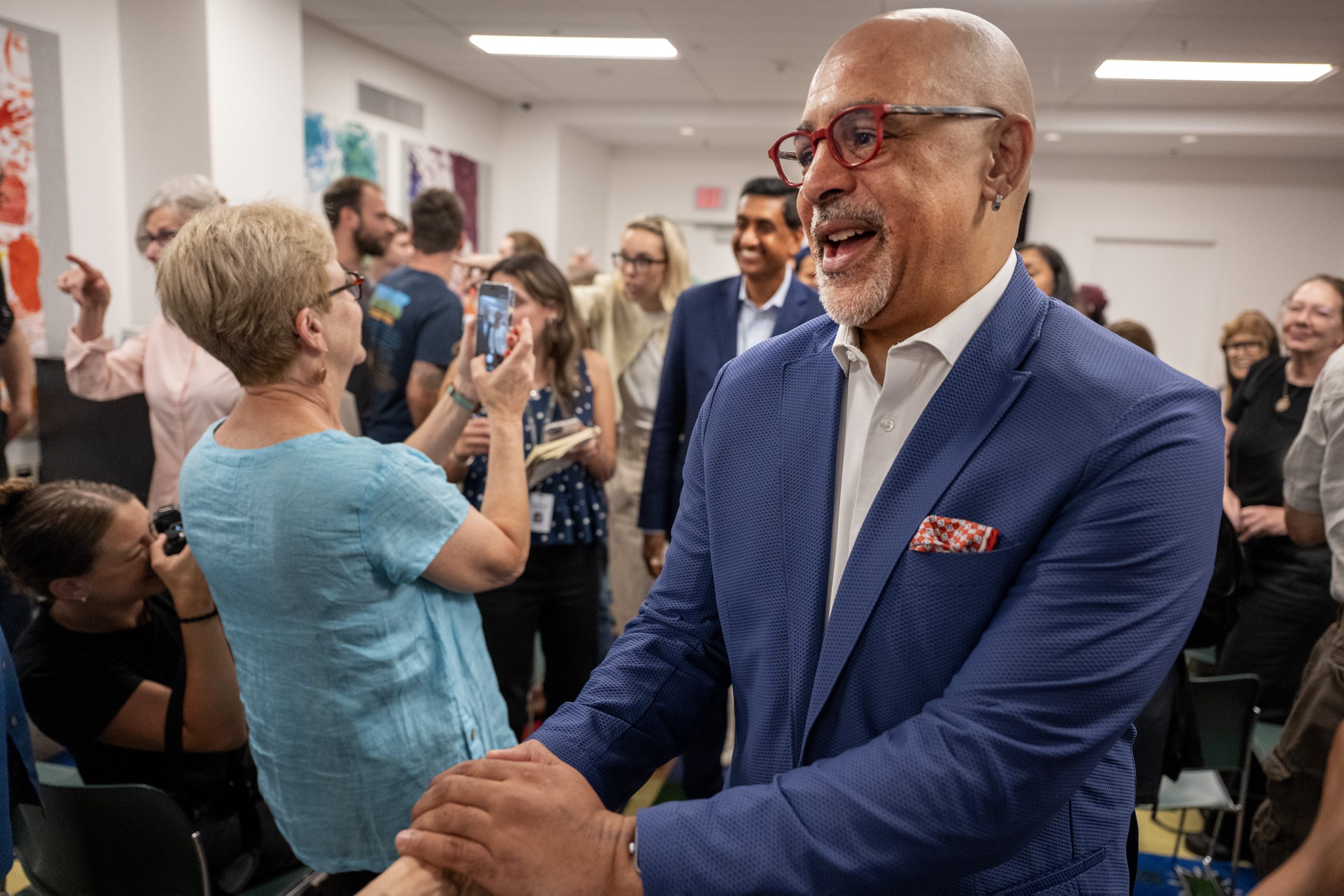
    State Rep. Chris Rabb greets supporters after appearing with U.S. Rep. Ro Khanna (rear) Tuesday, July 28, 2026, on his “Made in PA: New Economic Patriotism Tour” at the City Institute Library on Rittenhouse Square.Tom Gralish / Staff Photographer

    Mahoney said he has belonged to both political parties in the past, but did not find a home in either.

    The first-time political candidate worked in humanitarian aid through his former Washington, D.C., church, the Christian nonprofit Food for the Hungry, and now his own firm, AOI Solutions. He said the experience provides lessons for overcoming partisan division in Congress.

    “Let’s build bridges and partnerships and bring results. And that’s the same work that I did in the disaster relief field, where we would land in a spot where a disaster happened, and we’d work with anyone we could to really make the place come back to whole,” Mahoney said.

    ‘Anti-MAGA’ and ‘anti-DSA’

    It’s those middle-of-the-road qualities that made Mahoney an appealing candidate to Craig Snyder, a registered Republican who led an effort to support Vice President Kamala Harris’ presidential bid two years ago and is now leading the Philly-based Forward Party Victory Fund.

    The super PAC plans to support Mahoney and other independent candidates across the country — including a pair of independent Senate candidates running in GOP-leaning states, Todd Achilles of Idaho and Brian Bengs of South Dakota — this fall via spending on digital ads and text messages. The PAC is also supporting U.S. Rep. Kevin Kiley, who switched from the GOP to run for reelection in California as an independent, and Kevin Block, an independent running for Rhode Island governor.

    Snyder said the group is an independent offshoot of the Forward Party, founded in 2022 by former presidential candidate Andrew Yang and former New Jersey Gov. Christine Todd Whitman. He described the centrist candidates the PAC is backing as both “anti-MAGA” and “anti-DSA.”

    He said a win in one of the group’s targeted races would be “an earthquake in American politics.” But even if Mahoney is unsuccessful, Snyder said, it will be the start of elevating the independent movement in Philly politics.

    “I think people don’t want to be told that they have to vote for somebody just because of the party label,” Snyder said. “I think that they want there to be alternatives, and so it’s our job to make that case.”

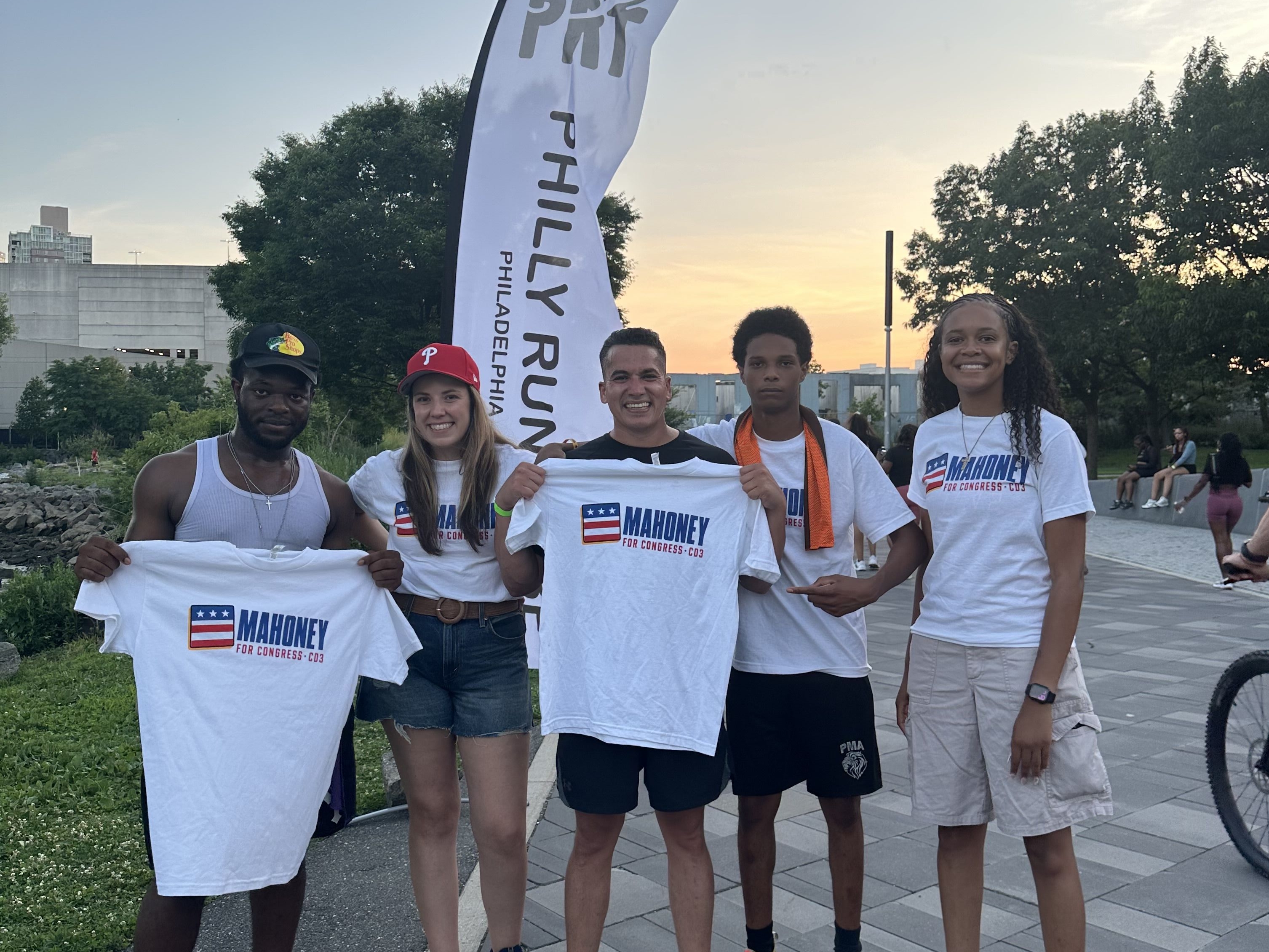
    Dennis Mahoney (center) on the campaign trail as he prepares to run against State Rep. Chris Rabb in the general election in the 3rd Congressional District this November.Dennis Mahoney

    Mahoney said, if elected, he would help form the first independent caucus in the U.S. House, contending he would become a coveted vote for both parties that would enable him to influence legislation and score committee assignments.

    But under current House rules — which Kiley has proposed changing — Mahoney would not be able to hold a committee seat if he does not caucus with either party. Kiley, for instance, has continued caucusing with the GOP even after becoming an independent.

    Mahoney pointed to the 19,000 signatures he received for his petition to join the ballot as a sign some voters are open to a choice in the deep-blue district.

    He said he would like to debate Rabb.

    “He talks a lot and engages a lot, and I think that that’s wonderful,” Mahoney said. “But I think at the end of the day, there’s people who are hurting in the district who need somebody who isn’t worried about being on, you know, MSNBC or TV, but who really is like, let’s just get into the community and drive results.”

    Mahoney said he has been connecting with religious leaders, educational organizations, community groups, and youth organizers to hear feedback on what they want public service to look like in the 3rd District.

    The independent will have scant resources to spread his name in just two months but said he is not concerned with raising big money for advertising. He had roughly $8,200 cash on hand in his most recent campaign finance report.

    Rabb had a little more $21,000, but that was after the Democrat raised and spent more than $1.3 million for the primary campaign in which he out-raised his opponents.

    Mahoney, meanwhile, has been trying to meet voters where they are — at running clubs and other fitness groups, for example.

    “I think people find it refreshing to have somebody who wants to represent them out there running alongside them,” he said.

  • Vulnerable Pa. Republican Rob Bresnahan delivers ‘Trump-a-palooza’ speech in Dallas amid tough race back home

    Vulnerable Pa. Republican Rob Bresnahan delivers ‘Trump-a-palooza’ speech in Dallas amid tough race back home

    DALLAS — In an arena littered with President Donald Trump’s image — from the photos that lined the concourse to the gift shops selling merch depicting the president as a cowboy — one of Pennsylvania’s most vulnerable Republican lawmakers this fall went all-in.

    U.S. Rep. Rob Bresnahan, running for reelection in a Scranton-based district that is one of the most competitive in the nation, addressed the Republican Party’s first-ever midterm convention during its opening night on Wednesday.

    His decision to attend “Trump-a-palooza” (as the RNC has described it) at all was notable. Some Republicans in tight races decided to stay away out of concerns of associating themselves with a president with low approval ratings. U.S. Rep. Brian Fitzpatrick (R., Bucks), for example, is not attending and has distanced himself from parts of Trump’s agenda.

    Bresnahan promoted Trump’s signature tax policy in a brief speech focused on supporting workers and their families.

    “Tax relief matters,” Bresnahan told hundreds of party loyalists at the American Airlines Arena in a speech that followed Ken Paxton, the controversial Trump-backed U.S. Senate candidate in Texas. “In Northeastern Pennsylvania, we work until the job is done. And those extra hours should mean more money in your pocket.”

    Democrats have used Bresnahan’s vote for the One Big Beautiful Bill Act, which included cuts to Medicaid and food assistance, as a wedge against Bresnahan and other vulnerable Republicans. But Bresnahan contended the income tax cuts and other policies in the legislation, like no tax on tips, are paying dividends for families.

    Two other Pennsylvania GOP lawmakers in similar situations, U.S. Reps. Ryan Mackenzie (R., Lehigh) and Scott Perry (R., York), are also attending the two-day convention, with Mackenzie slated to speak Thursday.

    Bresnahan spoke to a somewhat sparse crowd compared with Republican National Conventions during presidential election years, which served as a model for the novel midterm convention this year as the party looks to energize its base of voters while seeking to defend narrow majorities in the House and Senate.

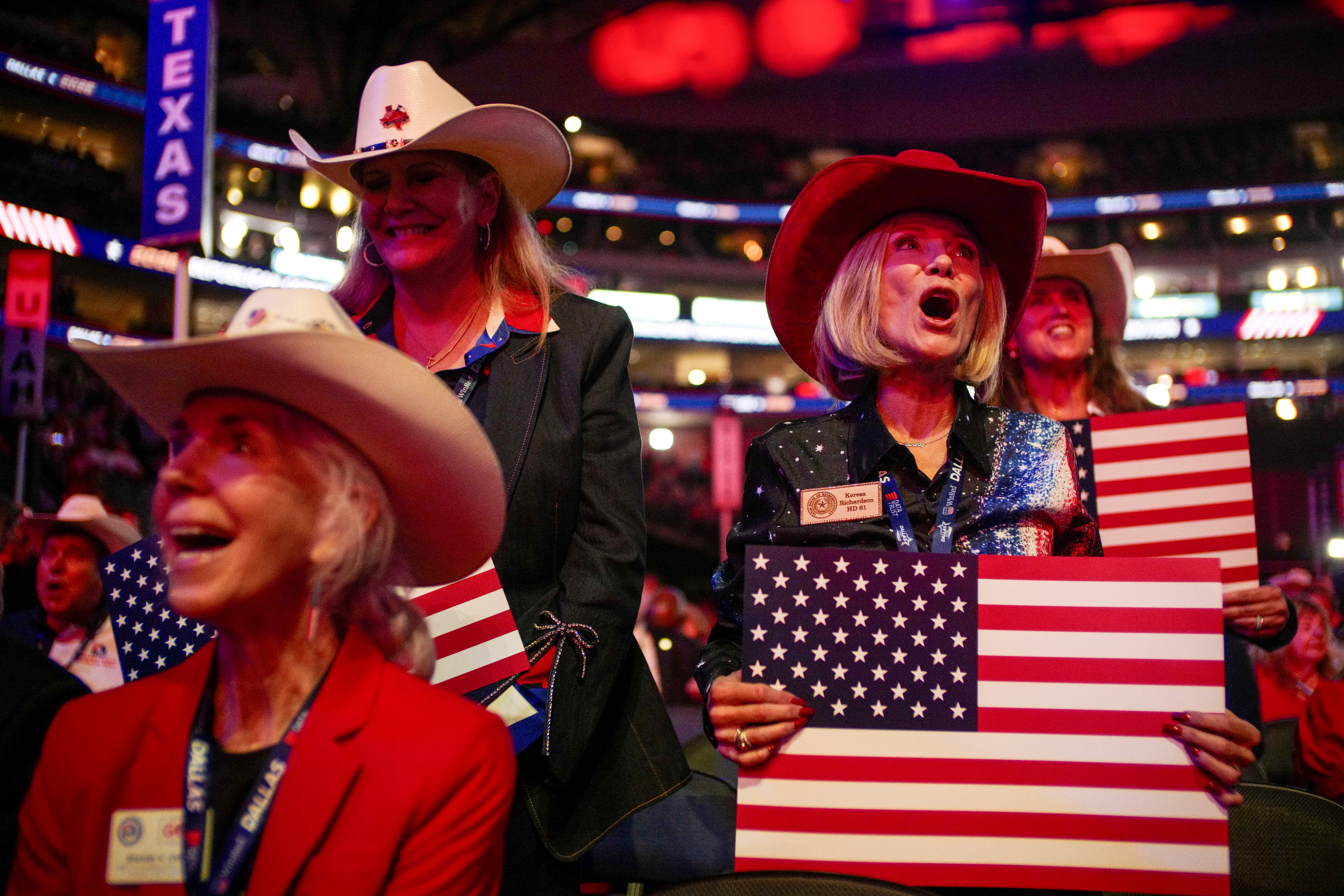
    Delegates, clustered by state on the convention floor, cheered and waved signs reading “Keep the majority” and “Republicans are fixing Democrats’ mess.” The stands in the roughly 19,000-person arena remained largely empty, at least for the first few hours before Trump’s speech.

    Merchandise shops were packed with Trump’s typical MAGA merchandise, copies of his son Eric Trump’s book, Under Siege, and new mugs and shirts showing Trump on a horse in cowboy gear. Red, white, blue, and — in an unmistakable nod toward the president — gold balloons waited in the rafters for the grand finale on Thursday.

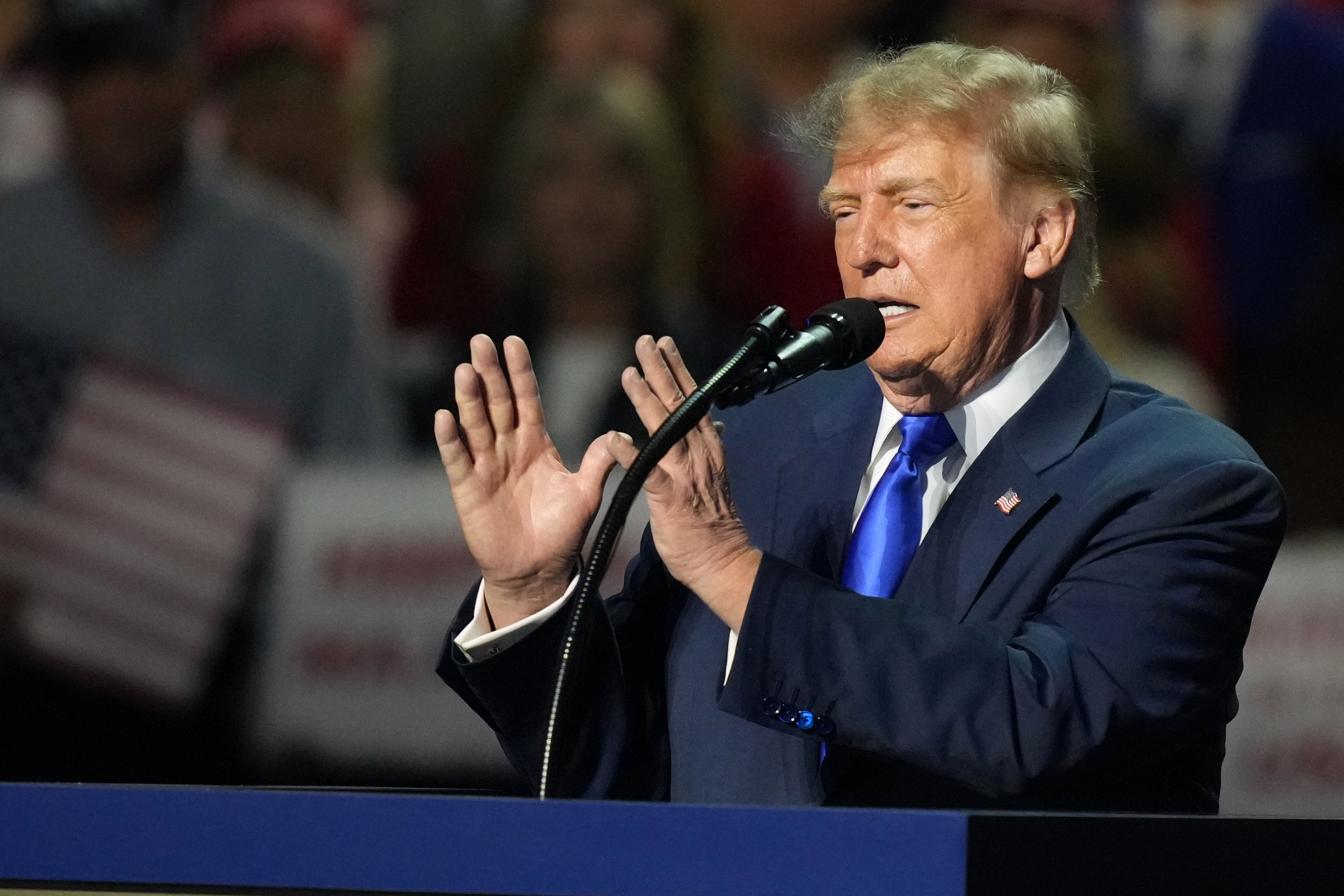
    “I’m asking you to pretend that I’m on the ballot. I’m on the ballot, just one more time,” Trump told the cheering crowd in prime time, noting there were about 35 “swing” races the party was prioritizing.

    President Donald Trump speaks at the Republican convention Wednesday, Sept. 9, 2026, in Dallas. (AP Photo/Alex Brandon)Alex Brandon

    About 1,500 miles away, in another town called Dallas, one of Bresnahan’s constituents hatched a plan to tune in.

    On the opening night of the annual Luzerne County Fair — in a booth yards from deep-fried Oreos, flying elephant kiddie rides, and life-size cardboard cutouts of Abraham Lincoln, Donald Trump, and Jesus — Dwayne McDavitt fiddled with his tablet to see if he could stream the convention.

    The symmetry of Dallas, Texas, and Dallas, Pa., was “too good to pass up,” said McDavitt, the head of a conservative group called Thunder and Liberty PAC and also the Pennsylvania chapter of Bikers For Trump.

    He said he supports Bresnahan, who lives in Luzerne County, over Scranton Mayor Paige Cognetti, the Democratic nominee.

    “He shares our values of faith, family, and freedom — meaning free and fair elections,” McDavitt said.

    Interviews with other voters in the district on Wednesday underscored the potentially risky nature of Bresnahan’s leaning into the Trump administration.

    Malcolm Mabry, 28, of Wilkes-Barre, said he had been victimized by a “Trump bait and switch” as a Republican who voted for the president two years ago. He picked Trump, believing that better policing of the Southern border was paramount.

    And while Trump has been using ICE to “grab up people,” as he said, Mabry said much of what else the president promised, like lowering prices and avoiding war, has not occurred.

    “Trump just said what he had to, to get into office,” said Mabry, who was unaware of the convention happening at the same time.

    A campaign about workers and affordability

    Bresnahan won his seat by less than 2 percentage points in 2024 to take down a six-term Democrat in the northeast corner of the state. Trump won the district by more than 8 percentage points.

    His Democratic challenger, Cognetti, has garnered high-profile supporters like Gov. Josh Shapiro, who is also up for election, and she has repeatedly targeted Bresnahan for trading stocks while in office despite his previous statements that he would not do so.

    Bresnahan, the former head of a family-run electrical contracting business, has made jobs and the workforce a top focus in his campaign and in his brief congressional career.

    On a few occasions, he has broken with House Republican leaders to support bills that would strengthen union protections for federal workers. He has said that he hopes his party changes tactics to support those kinds of bills.

    “We need the unions that have trained generations of some of the most skilled workers in American history,” Bresnahan said onstage Wednesday. “We have those workers in Northeastern Pennsylvania, and communities across this country are ready for the same opportunity.”

    Texas state Rep. Keresa Richardson (R), right, attends the GOP midterm convention. (Joel Angel Juárez/For The Washington Post)Joel Angel Juárez

    Bresnahan has racked up a series of union endorsements that are otherwise rare for Republicans. While major unions like the AFL-CIO and the Pennsylvania State Education Association have backed Cognetti, he has won support from organizations like the American Federation of Government Employees and the Teamsters — groups that, in a region with a long history of union issues, could make a difference in a close race.

    In his speech, Bresnahan talked generally about supporting workers and manufacturing in the U.S. He spoke about tax policies that put “more money in your pocket” and help “build communities where people can stay, raise a family, and build a life.”

    U.S. Sen. Dave McCormick (R., Pa.), in a speech that was introduced with an unusual video featuring U.S. Sen. John Fetterman (D., Pa.), also spoke about Trump’s push to improve economic indicators.

    They and other speakers did not address other affordability issues that Democrats have seized on and that polls show voters have top-of-mind heading into early voting.

    Trump has mocked the Democratic attacks on the issue as a hoax, including in a speech in Bresnahan’s district last year. But it is a message, and a reality, that has resonated with voters in Pennsylvania, according to polls and interviews.

    “I’m on a fixed income,” Bill Dudeck, 83, of Nanticoke in Luzerne County, said Wednesday. “But under Trump, gas, groceries, and utilities are skyrocketing.”

    Trump promised a lower cost of living, “but now all our money is out the window,” said Dudeck, a Democrat and former construction worker in Bresnahan’s district.

    Bresnahan, whose campaign said earlier this week that he was looking forward to bringing “NEPA to the national stage,” appeared onstage instead with a sheet metal worker and mother of seven from Baltimore.

    Cognetti’s campaign noted the pairing in a comment Wednesday that criticized Bresnahan, in part, for trading stocks in office.

    “That’s probably why he didn’t have a Pennsylvanian on stage with him tonight,” a Cognetti campaign spokesperson said in a statement. “His speech is just more empty words to try and distract from his broken promises.”

    Nora Pruitt, who joined Bresnahan, had previously been recognized by the White House as a beneficiary of Trump’s second term. Listed on the agenda as an “everyday American, factory worker, working mother and manufacturing success story,” Pruitt said “things have really improved for our family since President Trump returned to office.”

    “We are so grateful President Trump and Republicans in Congress like Congressman Bresnahan vote for families like ours,” she said.