Category: National Politics

  • Trump posts cell phone number of Arkansas Sen. Tom Cotton in fight over daylight saving time

    Trump posts cell phone number of Arkansas Sen. Tom Cotton in fight over daylight saving time

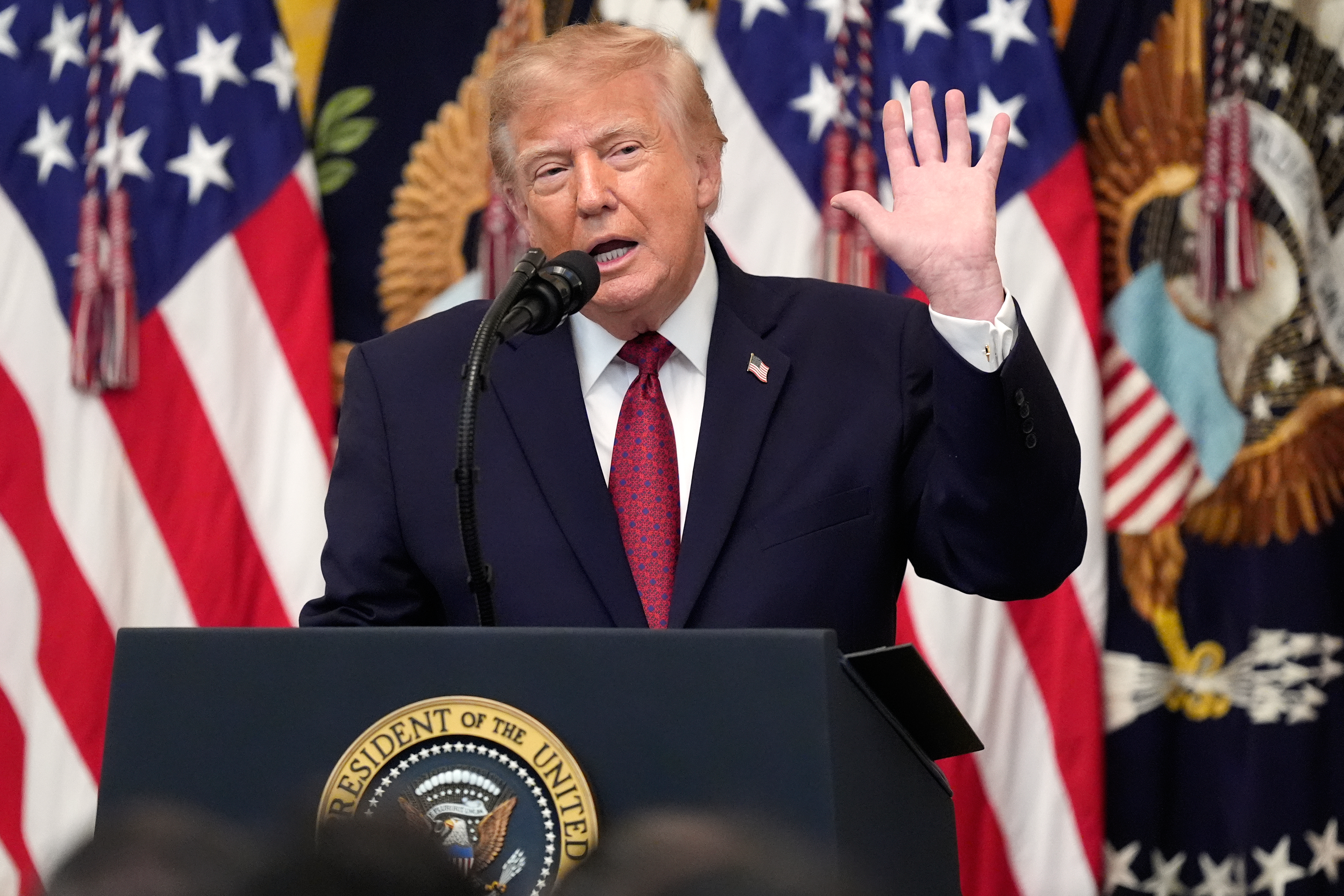
    President Donald Trump on Saturday pressured Republican Sen. Tom Cotton of Arkansas to support a bill to make daylight saving time permanent, posting the personal cell phone number of the chairman of Senate Intelligence Committee and urging Americans to call it.

    The Sunshine Protection Act passed the House in July, but it faces roadblocks in the Senate where some Republicans are strongly opposed. Proponents, including the White House, argue that the change would provide more daylight during the times that Americans are most active. Detractors said permanent daylight saving time would lead to darker and potentially more hazardous winter mornings when children will be waiting for school buses and parents will be driving to work in darkness.

    It was a remarkable escalation on Trump’s part of a longstanding fixation shared by both men — with Trump supporting making daylight saving time permanent, and Cotton vociferously opposed — at a time just weeks before the midterms, when Republicans would prefer that the president focus on talking about affordability issues and the party’s achievements. Cotton is also up for reelection this November, although that race is not expected to be competitive.

    Trump calls daylight saving time ‘depressing’

    Daylight saving time is that period between spring and fall when clocks in most parts of the United States are set one hour ahead of standard time. Not all states observe it — and under the bill, states can opt out of the change if their respective legislatures act to do so before the bill’s enactment.

    “For some reason, Tom is stopping the Bill and, in the Senate, it’s very easy to do, it only takes one!” Trump wrote on social media, noting that passing the bill would give professional golfers more time on the greens. “So, everyone in Arkansas, a State I love, and won 3 times, the last by 34 points, tell Tom to, GET IT DONE! It will be appreciated by all,” Trump said.

    Trump included a phone number with an Arkansas area code. The Associated Press called the number, but no one answered and the voicemail box was full.

    Cotton, a member of Republican leadership, reiterated his opposition to permanent daylight saving time in a social media post of his own Saturday afternoon. He is not the only GOP senator who opposes the policy, though he has been among the most vocal opponents.

    “No one likes changing the clock, me included, but Congress has enacted permanent Daylight Savings Time multiple times before and repealed it each time once Americans experienced absurdly late sunrises in the winter,” Cotton wrote. “Arkansans don’t want their kids going to school in the pitch dark, and I’ll always put Arkansas first.”

    Trump, who is spending the day at his northern Virginia golf club before traveling to Ohio later Saturday, promptly fired back.

    “If Tom Cotton were putting Arkansas first, he would give them an extra hour of daylight and, more importantly, they wouldn’t have to run all over their houses, farms, work places, and everywhere else, twice a year, having to change their Clocks, and often forgetting to do so,” Trump said, adding that “that is really putting Arkansas FIRST.”

    As his motorcade was rolling back to the White House, Trump added that “a table full of very distinguished people just told me that they HATE, immediately after a mandatory time change, going home at night — and it’s DARK.”

    “It’s depressing!” Trump continued. ”One of the gentleman stated that, ‘I just hate going home in darkness.’ It’s also, in Crime Ridden Blue States, a lot more dangerous to be walking home in the dark!”

    A 2025 poll from the Associated Press-NORC Center for Public Affairs Research shows that if forced to choose, most Americans would prefer to keep that extra hour of daylight in the evening. Only 12% of U.S. adults favor the current system of daylight saving time, which requires people in most states to change their clocks twice a year, while 47% oppose it and 40% are neutral.

    Members of Congress have long been interested in the potential benefits and costs of daylight saving time since it was first adopted as a wartime measure in 1942. The Senate passed a bill four years ago to make daylight saving time permanent, but it stalled in the House.

    This is not the first time Trump has released personal information about a senator

    While competing for the 2016 Republican presidential nomination, the late Sen. Lindsey Graham of South Carolina described Trump as “unfit for office” after Trump denigrated the military service of Sen. John McCain of Arizona. Trump then released Graham’s personal cell phone number. That prompted a viral video in which the senator dramatically destroyed a series of flip phones.

    Graham later became a close ally of Trump. In contrast, although they share many of the same policy positions, Trump and Cotton are not known to be close.

    Cotton, one of the Republican Party’s most prominent national security voices, has advocated for a more hawkish approach on Iran, particularly as Trump entertains pauses in military strikes amid the seven-month war. In Trump’s first term, Cotton was a critic of the president’s attempts at overhauling the nation’s sentencing laws, calling the proposal a “jailbreak.”

    Earlier this year, Cotton had temporarily defied Trump’s attempts at stalling the confirmation process for his own nominee for director of national intelligence, Jay Clayton. The president had wanted to ensure his interim pick for the intelligence job, Bill Pulte, would be able to serve in that role at least briefly when the former director, Tulsi Gabbard, left the job.

    But the appointment of Pulte, who had no known national security credentials, drew bipartisan condemnation from Capitol Hill and Cotton had tried to expedite Clayton’s confirmation process, which could have prevented Pulte from being installed as acting director.

    But Trump ultimately ordered Clayton to not appear before Cotton’s committee for his confirmation hearing, and Pulte served in the job for several weeks this summer. Clayton was eventually confirmed by the Senate in late July.
  • Trump announces plan to send $90 payments to millions of seniors

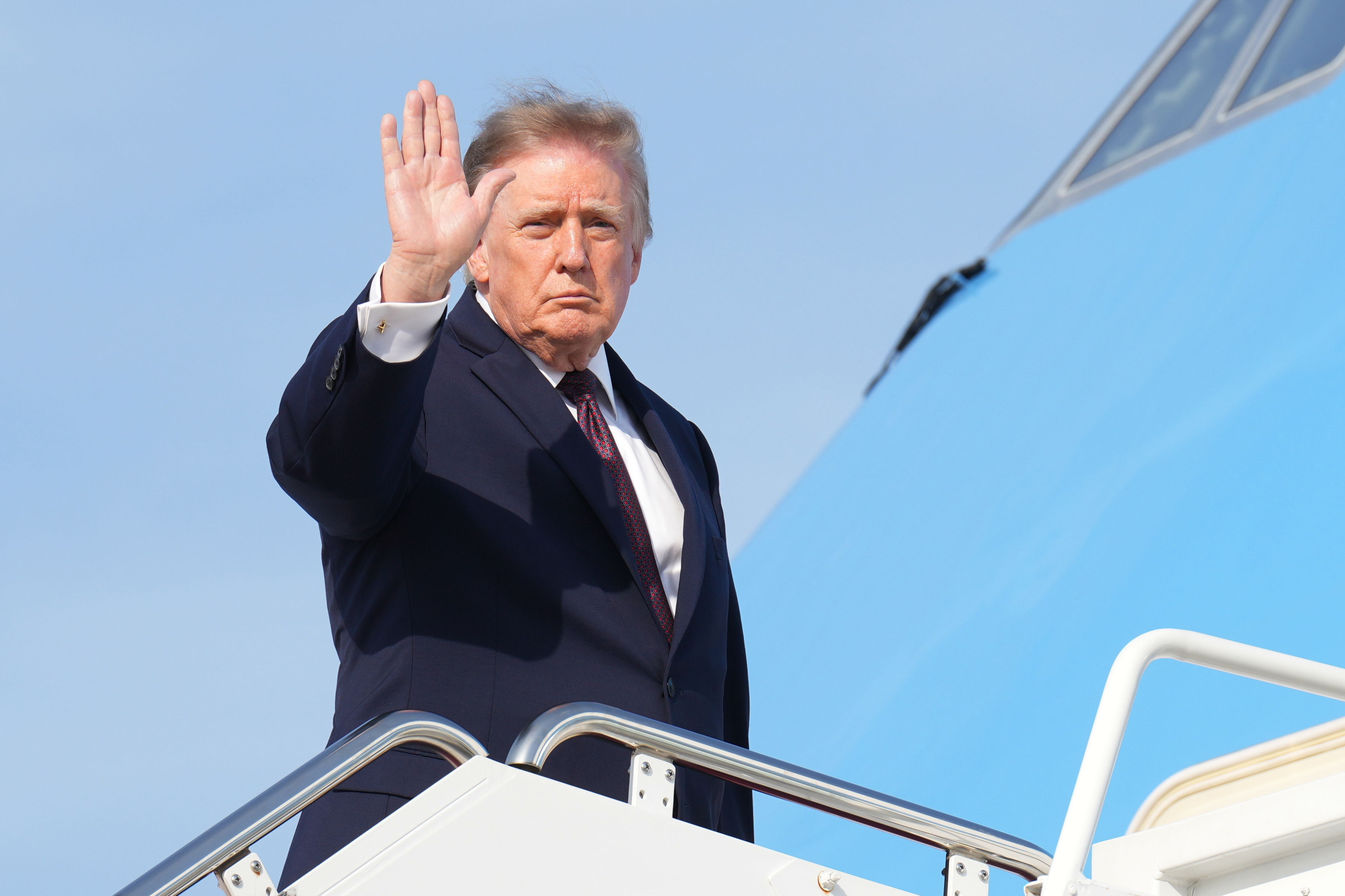
    Trump announces plan to send $90 payments to millions of seniors

    The White House announced plans Friday night to send $90 payments to more than 20 million older Americans, with President Donald Trump tying the initiative to his broader push to lower healthcare costs.

    The money would be drawn from about $2 billion set aside to improve Medicare’s hospital and medical insurance programs, which has not been used for that purpose since the initiative’s inception in 2008, administration officials said Saturday. Both parties have used the money, held in the Medicare Improvement Fund, in congressional budget maneuvers.

    “We are finally using this Fund, along with my Most Favored Nations Deals, to substantially LOWER costs for our Seniors,” Trump wrote on Truth Social on Friday night, also mentioning his initiative to lower U.S. drug prices.

    The payments will be sent to most Medicare Part B enrollees, with many of them receiving a $90 direct deposit this month, the White House said. Others will receive a check sent to the address on file with Medicare.

    Trump’s announcement follows his other pledges to send money to Americans ahead of November’s midterm elections, including his plan to send $500 Affordable Care Act refund checks to nearly 1 million people in 30 states. (Delaware is on the list of 30 states, but Pennsylvania and New Jersey aren’t included.) The administration began sending those checks this week, alongside a letter touting his record.

    Democrats have called the moves a stunt and questioned the legality of dipping into government accounts to send payments to Americans.

    The White House and the Department of Health and Human Services, which oversees the Medicare Improvement Fund, did not immediately respond to questions about the administration’s legal authority to issue the payments.

    Trump’s announcement caught congressional offices in both parties by surprise, according to three people who spoke on the condition of anonymity because they were not authorized to comment.

    “This is another desperate attempt by a failed president to escape Americans’ revulsion with his failed agenda, amounting to one tank of Trump-inflated gas,” said Sen. Ron Wyden of Oregon, the top Democrat on the Senate Finance Committee, which helps oversee the Medicare program.

    Trump has floated multiple proposals to send dividends to Americans during his second term, but some of them have not materialized. In February 2025, he said his administration was considering a proposal to give 20% of savings from the controversial DOGE government cost-cutting effort to Americans. That proposal would have delivered roughly $5,000 to each of the roughly 79 million households in which residents pay federal income tax.

    The president said Friday night that the $90 payments were proof that he would follow through with his pledge to send a $5,000 dividend to every American adult if Republicans retain control of Congress in November’s midterm elections — a pledge that has raised broad questions about its legality and funding.

    “Because I delivered on this very important issue for the American People, they can also rest assured the highly popular $5,000 Trump Dividend will be distributed to every U.S. Citizen if, and when, the Republicans win the Midterm Elections!” Trump wrote on Truth Social.

  • Federal court temporarily blocks Trump administration border wall in Texas’ Big Bend region

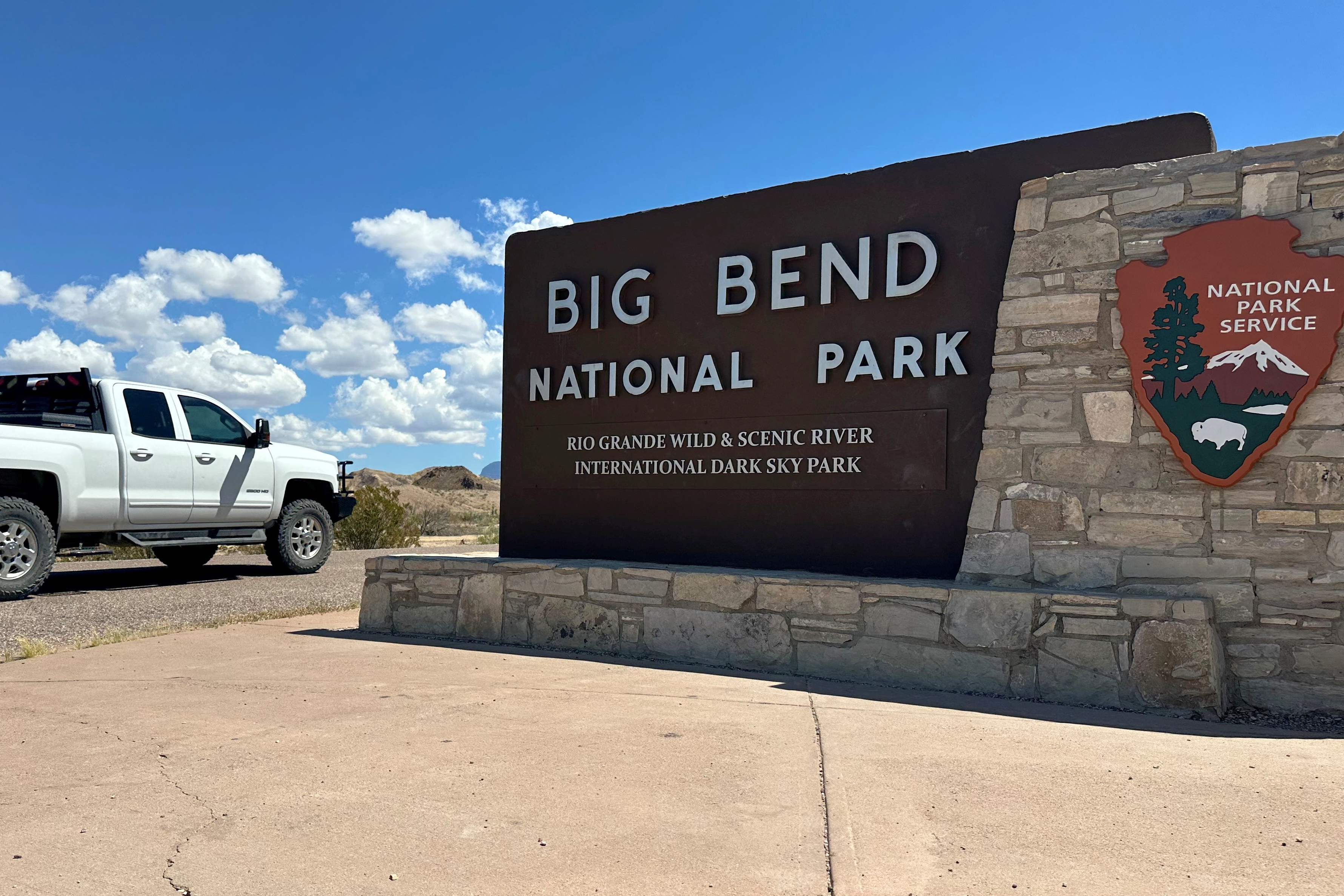
    Federal court temporarily blocks Trump administration border wall in Texas’ Big Bend region

    WASHINGTON — A federal court in Texas on Friday temporarily blocked the Trump administration from building a border wall and other infrastructure across the state’s Big Bend region, in a victory for opponents who have pushed back against a key campaign promise by President Donald Trump.

    Landowners, businesses, and environmentalists in the region have united to oppose the planned projects, which are part of a $46 billion effort by the Trump administration to line the southern border with a mix of 30-foot-tall steel walls, vehicle barriers, roads, and surveillance technology.

    Judge Kathleen Cardone said in her ruling that the plaintiffs were “likely to succeed on the merits of at least one of the claims in suit, that there is a likelihood that they will suffer serious, irreparable harm without an injunction, and that the balance of the equities and the public interest weigh in their favor.”

    U.S. Customs and Border Protection defended the project in a statement Friday.

    “We stand by our assessment and remain confident in our legal authorities to secure the border while preserving the unique landscape of the Big Bend region,” the agency said. “We are working with the Department of Justice on next steps.”

    The Department of Homeland Security did not immediately respond to a request for comment.

    The judge’s ruling includes Big Bend National Park, where opposition to the wall prompted the administration to briefly pause construction.

    Opponents of the border wall project have argued that the Big Bend region of Texas is so remote and the landscape so rugged that it serves as its own deterrent to illegal immigration and that the administration violated the law when it issued a swath of waivers allowing it to bypass numerous regulations in order to speed up border wall infrastructure projects.

    The lawsuit brought by an environmental organization, advocates for a historic church in Ruidosa and a river guide argued that the Department of Homeland Security was wrong to bypass regulations meant to protect the environment, culture, and archeology of regions like the Big Bend area.

    Laiken Jordahl, with the Center of Biological Diversity that brought the suit, called Cardone’s ruling a “total victory.”

    “The bulldozers are going to be sent packing until she rules on the merits,” Jordahl said. “This is such a historic day for Big Bend and for Texas and the Constitution.”

    The court’s decision comes just weeks after the administration erected the first border wall panels in the Big Bend sector in mid-September.

    The border wall project through the Big Bend sector has sparked bipartisan opposition.

    Much of the opposition has been geared around Customs and Border Protection’s plans for inside the Big Bend National Park, which is prized for its beautiful landscapes, limestone cliffs, and crystal clear night sky views.

    When bulldozers were spotted clearing land in the park in August, it sparked widespread opposition with both Republicans and Democrats calling for the administration to stop. Customs and Border Protection paused all activity there, but that pause expired on Sept. 30. The administration has said it’s reevaluating plans for the National Park but has not yet said what it will do there.

    Advocates for the park on Friday said they were happy with the judge’s ruling but called on the administration to fix the damage already done to Big Bend National Park, come to the table to meet with local residents and develop alternative plans.

    “Big Bend is no place for border barriers. It’s time for the administration to come to the table with the border communities that know Big Bend best, repair the damage from this ill-conceived project, and find new solutions,” said Tiernan Sittenfeld, National Parks Conservation Association President and CEO in a statement.

    The judge’s ruling extends to areas up and downriver from the National Park, where Customs and Border Protection has planned a range of border infrastructure projects that would largely require building across privately owned land.

    In those areas, the government has been working to obtain permission from local landowners to survey and build on their land, but in a recent court filing, it said it was prepared to refer some cases to the Justice Department where it hadn’t been able to secure permission from landowners.

  • Democrats add Zack Mullock’s challenge of Jeff Van Drew in South Jersey to their ‘districts in play’ list

    Democrats add Zack Mullock’s challenge of Jeff Van Drew in South Jersey to their ‘districts in play’ list

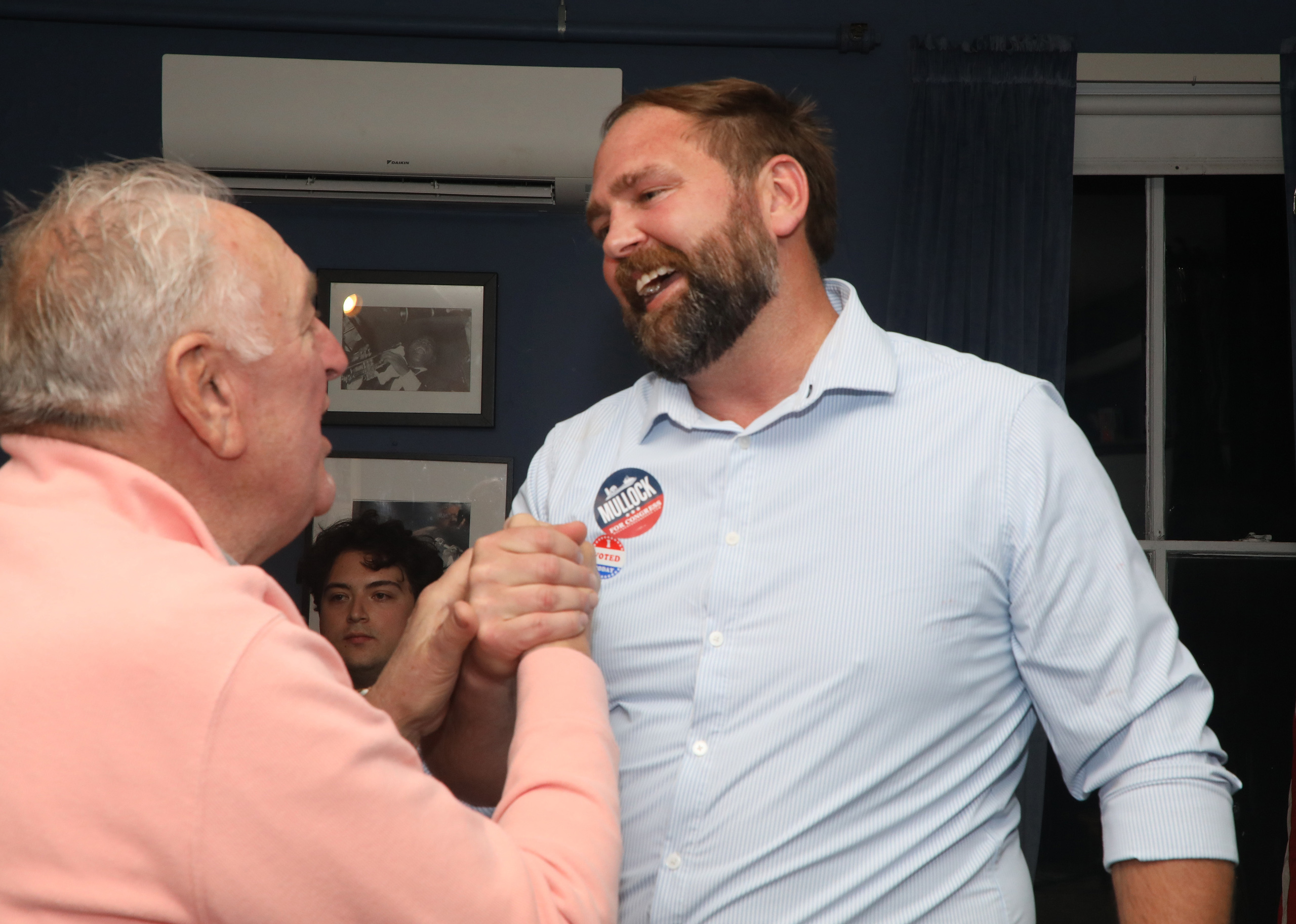
    National Democrats added U.S. Rep. Jeff Van Drew’s South Jersey district on Friday to a list of their target races to flip, signaling they’re taking Cape May Mayor Zack Mullock’s candidacy more seriously than before.

    Mullock decisively won a crowded primary in June to face Van Drew, a Cape May County Republican.

    Van Drew has comfortably warded off challengers in recent years. He was first elected as a Democrat in 2018, but then declared his loyalty to President Donald Trump and switched parties a year later.

    The designation was a long time coming for Mullock, as mail ballots have already begun to come in 32 days before the Nov. 3 election.

    Still, it came as a surprise to him. He learned on Friday he made the cut at the same time everyone else did, through social media, he said.

    “We may be purplish-red, but you know, we are not a just ‘go with whatever the president says’ kind of district,” Mullock said in a phone call. “We voted for Obama twice. We voted for Jeff Van Drew as a Democrat.”

    Local Democrats have been optimistic that Mullock is their best shot yet at ousting Van Drew, but the race had flown under the national radar. The Democratic Congressional Campaign Committee (DCCC), the party’s main campaign arm in House races, had excluded the district from its “2026 Districts in Play” map until Friday morning.

    The announcement likely indicates that the national committee will send resources to Mullock’s campaign, such as staff support, but it does not come with the funding that the most competitive “Red to Blue” seats get.

    Still, it serves as a nudge to donors to take the race seriously.

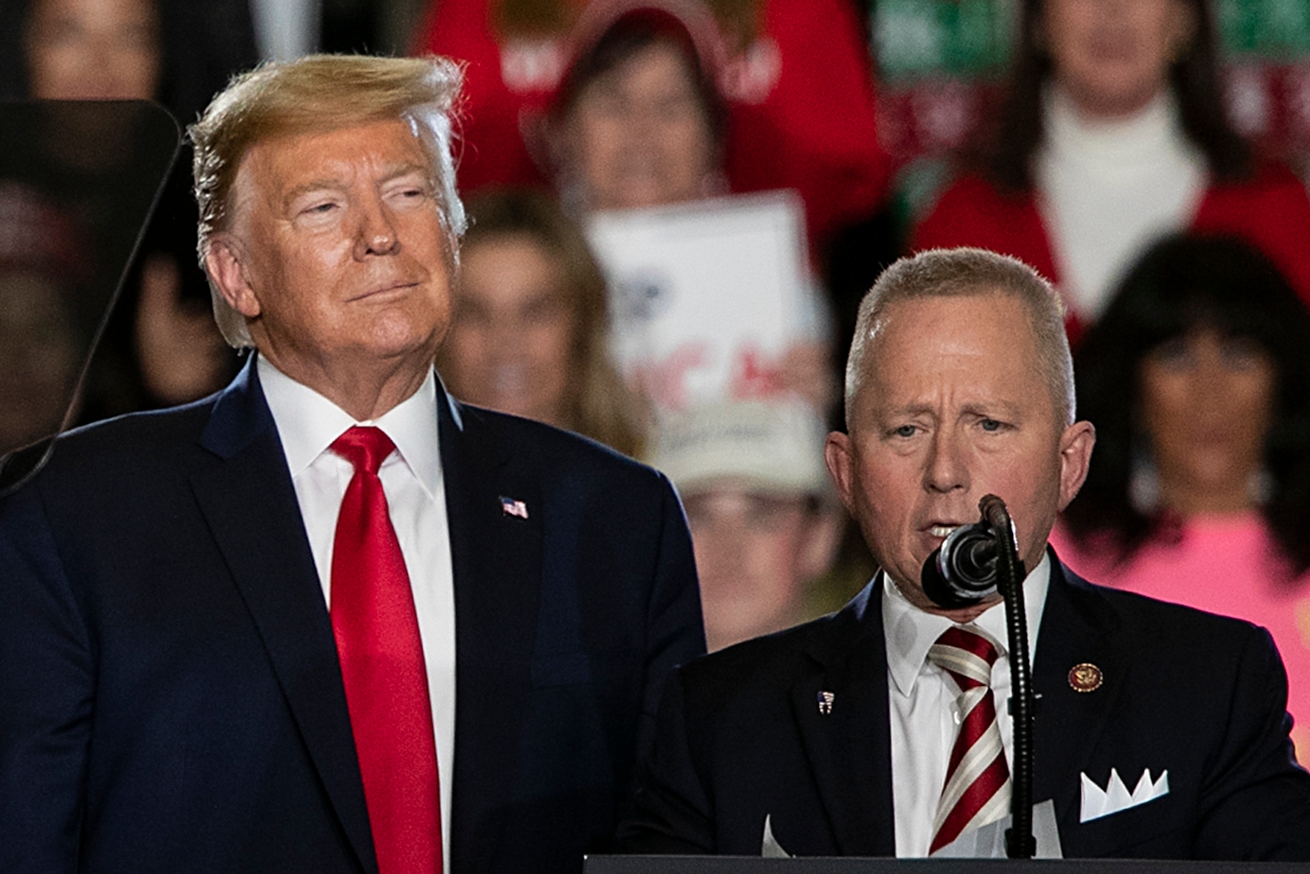
    U.S. Rep. Jeff Van Drew speaks next to President Donald Trump at a Keep America Great campaign rally in Wildwood, NJ on Tuesday, Jan. 28, 2020.HEATHER KHALIFA / Staff Photographer

    Van Drew’s district was one of eight districts across the country added to the battleground list, showing that Democrats see a blue wave as increasingly likely as Trump’s popularity suffers amid the Iran war and inflation.

    National Democrats are now targeting a total of 66 House races, which they say is nearly double as many as in 2024 when Republicans maintained control of the chamber.

    Van Drew’s campaign spokesperson Ron Filan, in a statement, said Democrats make the race seem competitive every cycle as a “fundraising ploy,” and that Van Drew “proves them wrong” each time.

    “We predicted back in June they would follow this same playbook and appreciate them proving us right,” Filan said. “The DCCC has about a third of House Republicans on one of their silly wish lists or another.”

    Van Drew has been thrusting out attack ads as Mullock campaigns across the district, showing that he sees the local mayor as a threat. Filan noted that Van Drew “doesn’t take anything for granted and will continue to campaign as hard as he always has.”

    Previously, the only seat in the Garden State on the DCCC’s battleground list was U.S. Rep. Tom Kean’s 7th District in Central Jersey, which is still the only one on the “Red to Blue” list. Kean, who was absent from Congress for months without explanation until he revealed it was for depression, is viewed as highly vulnerable as Democrat Rebecca Bennett tries to oust him.

    The nonpartisan Cook Political Report has rated the 7th District as leaning toward Democrats, but Van Drew’s “solidly Republican” seat will be a more difficult challenge to flip.

    The Cape May lawmaker’s closest challenge was in 2020 from Amy Kennedy, who still fell nearly 6 points behind him. He was reelected in 2022 by 19 points and in 2024 by 17 points.

    National Republicans cite a double-digit win for Trump in the district in 2024, but Democrats note Gov. Mikie Sherrill came within single digits of her Republican opponent Jack Ciattarelli in the district last year as she reversed red shifts in the state while consistently attacking Trump.

    Mullock said he thinks constituents are becoming disillusioned about Van Drew’s support of Trump.

    “I think people are realizing what I realized … I thought Jeff was a moderate Democrat that became a moderate Republican, and that is just not what he has become,” the Democrat said.

    The 2nd Congressional District spans several South Jersey counties, extending from the Jersey Shore to rural farmland and the Philadelphia suburbs.

    DCCC chair Suzan DelBene said in a statement that voters will send Van Drew “packing” because he “prioritizes tax breaks for the wealthiest few while gutting healthcare and raising costs for his constituents.”

    The National Republican Campaign Committee (NRCC), meanwhile, is focused on defending Kean’s district, the only Jersey seat on its “Patriots” list.

    NRCC spokesperson Maureen O’Toole said in a statement that “Democrats are living in a fantasy.”

    “New Jersey families know Jeff Van Drew delivers results, they trust him, and they’ll proudly reelect him in November,” she said.

  • Trump expected to name intelligence chief Jay Clayton as new AI czar

    Trump expected to name intelligence chief Jay Clayton as new AI czar

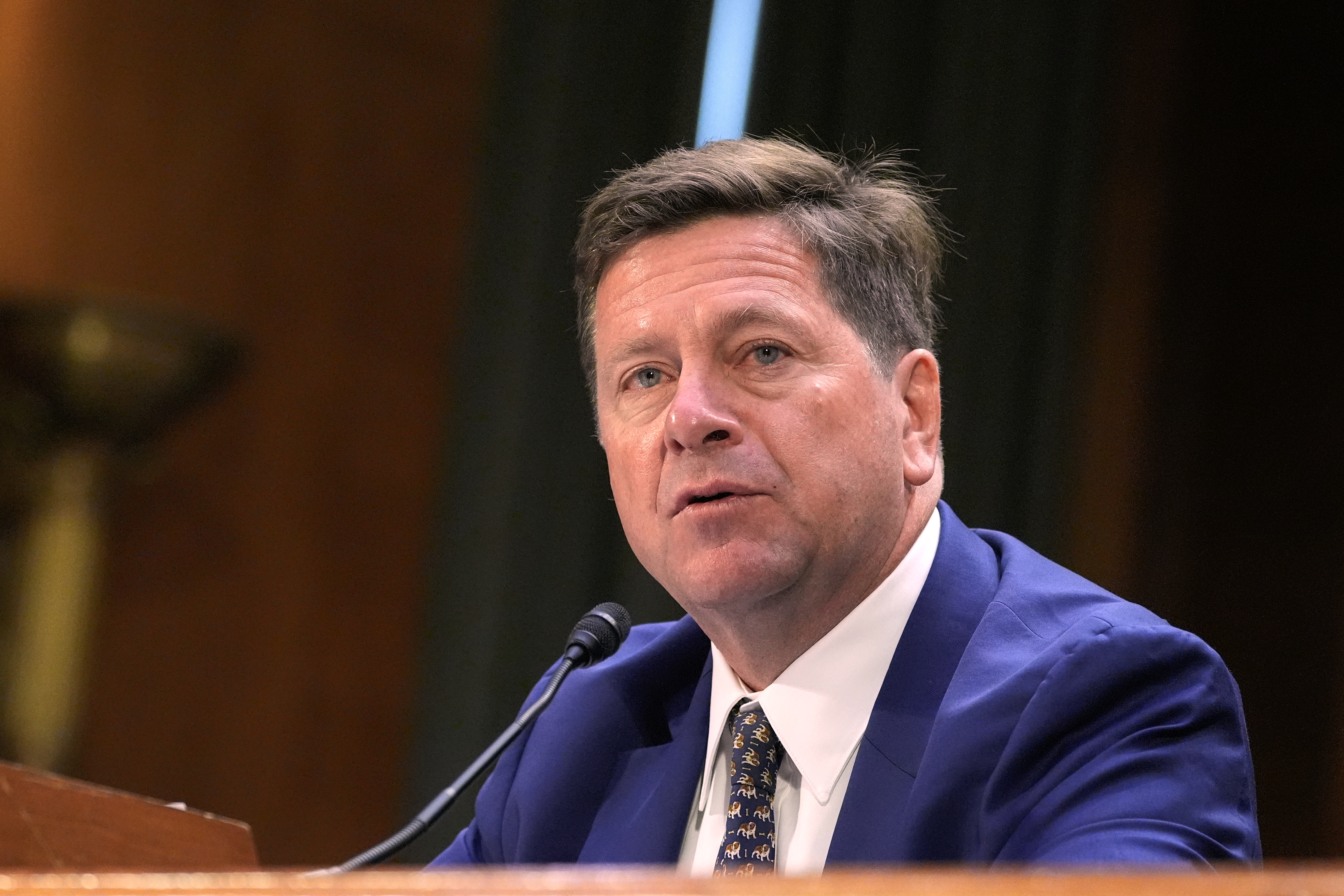
    President Donald Trump is expected to name spy chief Jay Clayton as his new top adviser on artificial intelligence, according to three people familiar with the decision, a move that cements the administration’s handling of the new technology as a matter of national security.

    Clayton, a former U.S. attorney and Securities and Exchange Commission chairman, was confirmed as the leader the Office of the Director of National Intelligence in July. He is expected to continue to hold that role, one of the people said. All three individuals spoke on the condition of anonymity to describe a personnel move that has yet to be publicly announced.

    CBS News first reported that Trump was expected to choose Clayton for the position.

    The appointment comes as the Trump administration recalibrates its approach to AI. The previous czar, the investor David Sacks, promoted a policy aimed at allowing the technology to develop as fast as possible. But in the months since Sacks left his post in March, officials have increasingly been grappling with cybersecurity threats posed by the latest generation of models and the danger posed by AI agents going rogue online. Sacks has continued to influence thinking within the administration as an informal adviser outside of the government and as co-chair of the President’s Council of Advisors on Science and Technology. Sacks and Clayton have a close relationship, according to one of the people briefed on the upcoming announcement.

    A White House official said any personnel moves would be announced by the president. “Any reporting until then is baseless speculation,” the official said.

    The administration has resisted calls in recent weeks by some in the industry and on Capitol Hill to slow down the pace of development and adopt new regulations. But on Tuesday it convened tech executives for a White House lunch that culminated in the leading AI companies signing a promise to develop new systems safely and bring in outside oversight firms. The following day, a Federal Trade Commission official said the panel had opened an investigation into AI companies Anthropic and OpenAI. (The Washington Post has a content partnership with OpenAI.)

    Joel Thayer, a senior adviser for technology at the America First Policy Institute, a Trump-aligned think tank, said the developments showed how the administration’s handling of AI companies was “maturing.”

    “These guys are under watch,” Thayer said. “The government has a spotlight on them.”

    The industry executives’ pledge is voluntary and amounts to what Trump called “self-policing.” But it won the backing of figures who have bitterly clashed over how serious of a risk AI poses. Sacks, who attended the lunch, endorsed it. So did Jacob Coxon, a former Anthropic researcher who resigned last month, saying the technology could wipe out humanity and triggering a wave of panic in Washington.

    The agreement means Clayton will step into his new role at a time of relative calm.

    “Super intelligence is a national security issue,” Clayton said in a CNBC interview the day after the lunch, using Trump’s preferred name for AI. “That was something that was recognized yesterday by not just the industry leaders, but everybody in the room. The commitment there to the American people, and the safety and security of the American people was palpable throughout the meeting.”

    Trump nominated Clayton, a loyal ally and regular golf partner of the president’s, to lead the intelligence office in June. Many Senate Democrats initially said they supported the choice. But he refused in his confirmation hearing to say definitively that Joe Biden had won the 2020 election, and the final vote fell along party lines.

    The AI role will not require Senate confirmation.

    The shifting thinking that led to Clayton’s appointment began months ago, when Anthropic said it had developed a new model called Mythos that it deemed too dangerous to publicly release. The company said it had new abilities to find vulnerabilities in computer code and help hackers exploit them.

    Officials scrambled to understand the risks to government systems and critical sectors of the economy. Driven by alarm among banking industry leaders, Treasury Secretary Scott Bessent played a key role in shaping the administration’s response. Last week, Trump batted down reports that Bessent was in line to be the new AI czar.

    In May, the White House settled on issuing an executive order calling on leading AI companies to voluntarily share their latest systems with the government ahead of their release, giving federal experts a chance to weigh security risks. Despite no longer holding an official government position, Sacks continued to wield influence and made a last-minute call to Trump that caused the order to be delayed and revised.

    But even after the order was signed in June, new dangers continued to emerge. The following month, ChatGPT maker OpenAI disclosed that a swarm of agents created by its systems had broken free and breached another AI company. Other firms said they had suffered similar breakouts.

    Then came Coxon’s resignation in September, which reignited a long-simmering debate in AI circles about whether a sufficiently powerful version of the technology would bring about humanity’s downfall.

    Trump dismissed the fears a “hoax” in fiery social media posts. But he later said he would name a new czar and create an “AI Force.” The White House has not detailed what the force will do, but in an interview with Time magazine published this week, Trump described it as “a group of very smart people that understand it, who will be advising me.”

  • Kennedy Center Honors will move to Capital One Arena as closure drags on

    Kennedy Center Honors will move to Capital One Arena as closure drags on

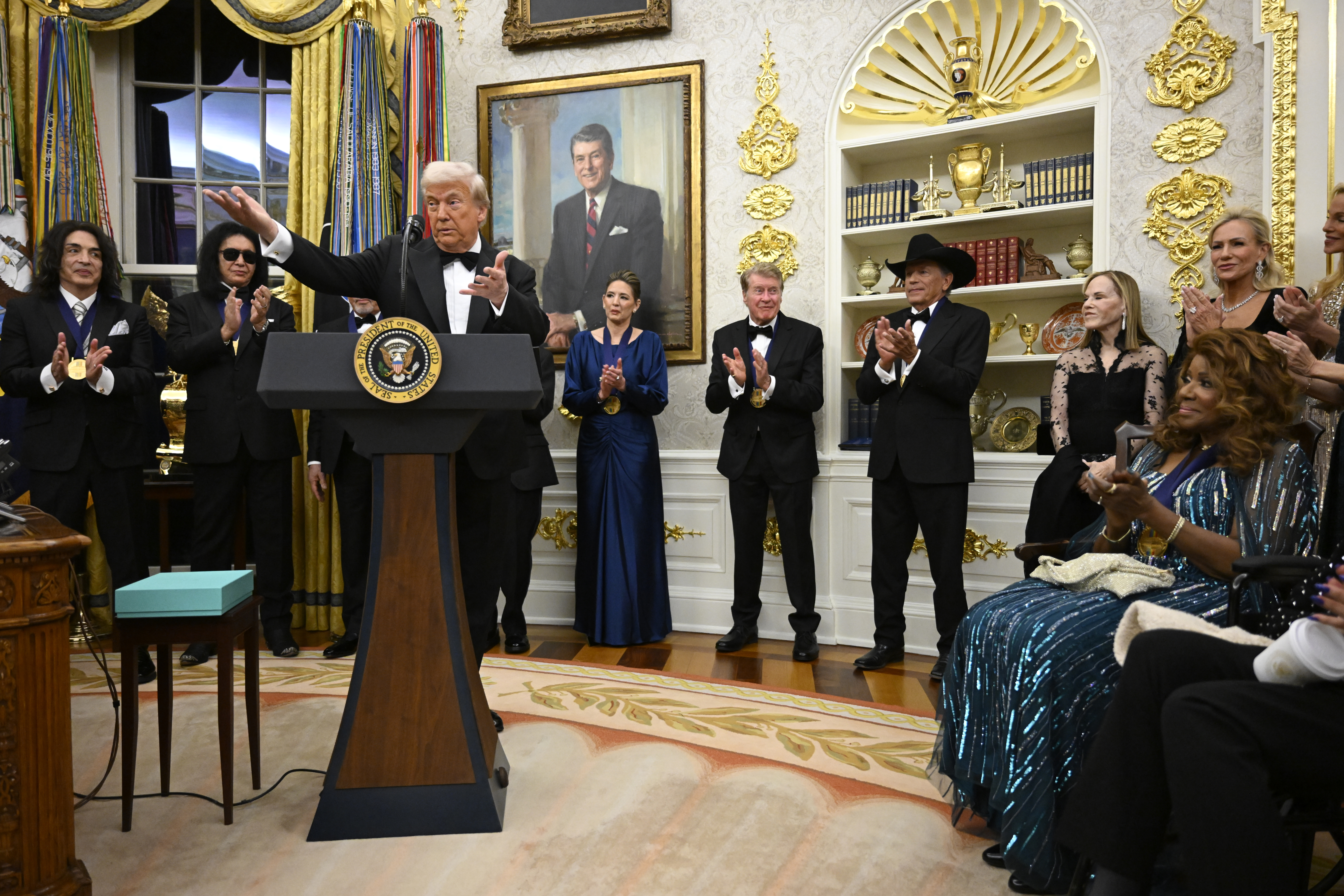
    The Kennedy Center Honors will take place Dec. 7 at the Capital One Arena, the center announced Friday, breaking tradition by holding the tribute ceremony off-campus as a battle rages over its closure.

    Most other details about the honors — namely, who will receive the awards and who will broadcast the show — remain a mystery, months after they would ordinarily be public.

    A Kennedy Center spokesperson said these will be announced at a later date.

    The annual black-tie gala and television broadcast is the center’s flagship program and usually its largest fundraising event. It generally takes place on a weekend in December, during which five honorees are recognized by the American government for their contributions to the arts. They traditionally received medallions, met the president at the White House and gave speeches during a dinner at the State Department before attending a star-studded Sunday ceremony in the Kennedy Center’s Opera House.

    The honorees — which have included Leonard Bernstein, Queen Latifah, George Clooney, Led Zeppelin, Gladys Knight, Billy Crystal, and the Grateful Dead, to name a few of the almost 270 honorees since its inception in 1978 — are usually announced in midsummer.

    Last year, amid turmoil from President Donald Trump’s takeover of the center and remake of its board, the announcement came late, in mid-August. The year before, it arrived in July along with both the broadcast and ceremony date.

    It is October, and there’s no other word on the details.

    We don’t know who is in the 49th class of honorees or what kind of crowd will greet them: The program’s venue, Capital One Arena, which can hold roughly 20,000 people at max capacity, dwarfs the 2,347 seats of the center’s Opera House.

    We don’t know who will broadcast it. During a board meeting last year, Trump floated the idea of having networks bid to air the show, which has been broadcast on CBS since its debut. (Last year’s remained on CBS.)

    Finally, we don’t know who would host it. Trump, who avoided the honors in his first term, famously played the role himself at last year’s ceremony, something a president had never before done. He also said he was “about 98 percent involved” in picking the honorees — Michael Crawford, Gloria Gaynor, Kiss, Sylvester Stallone, and George Strait — which are generally chosen by committee.

    Asked for details this week, the White House referred us to the Kennedy Center, which provided the announcement.

    The center had maintained that the honors, along with the Mark Twain Prize, would continue somewhere off-site during the building’s two-year closure for repairs.

    “It will definitely go forward,” Richard Grenell told WTOP in February, before he departed as president of the Kennedy Center. At the time, he predicted “it will probably just be in a smaller venue, which just means ticket demand will be even higher.”

    That full closure hasn’t started yet, according to the center. Instead, the main building is closed temporarily, leaders say, while they check on the building’s safety. Those checks could take another week or two, according to a Wednesday staff email reviewed by the Washington Post.

    But “this is an assessment timeline,” the email read, “not a reopening date.”

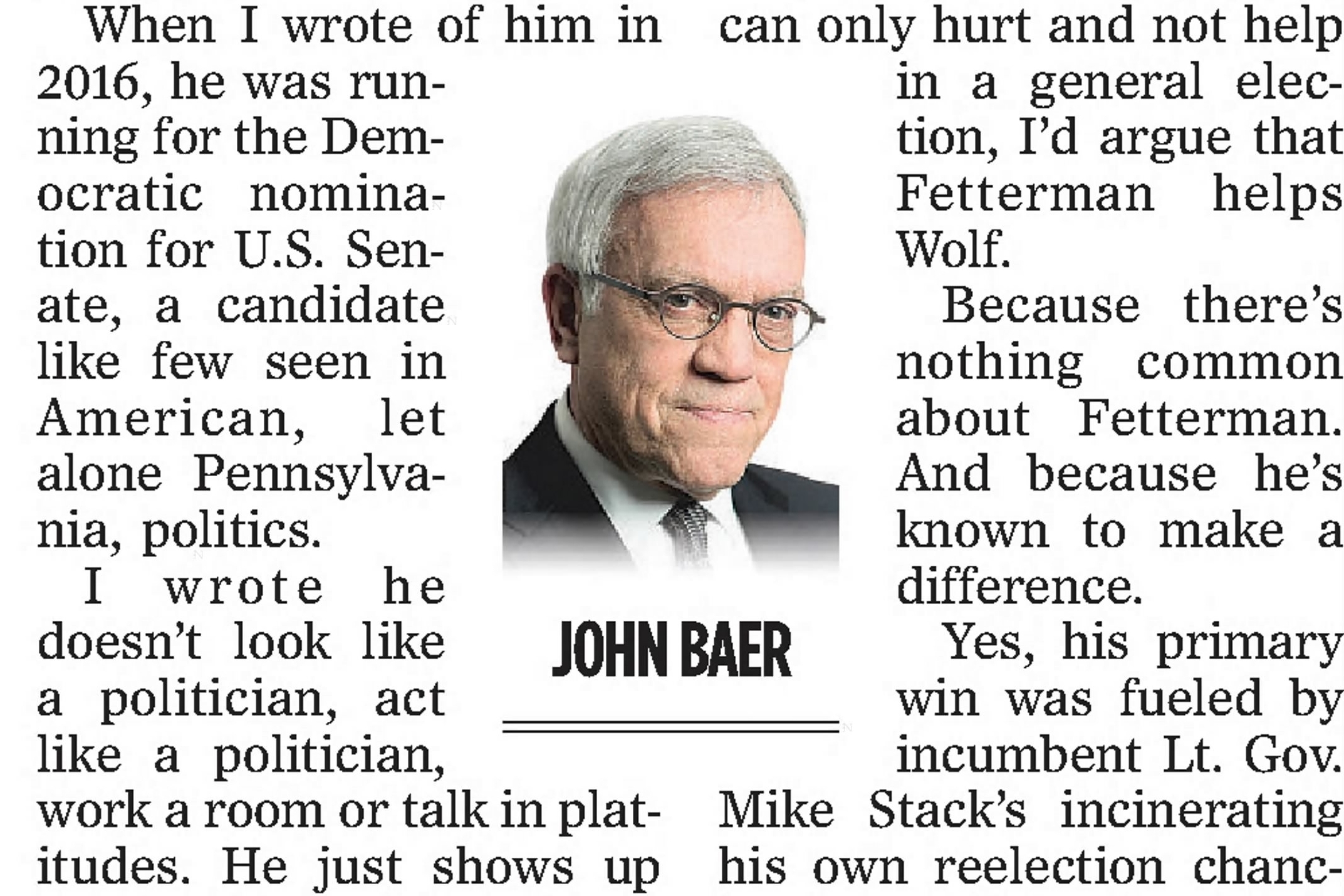
  • John Baer, award-winning longtime Inquirer and Daily News political reporter and columnist, has died at 79

    John Baer, award-winning longtime Inquirer and Daily News political reporter and columnist, has died at 79

    John Baer was the son of a Harrisburg newspaperman. He literally grew up in the Pennsylvania state Capitol. And he never left.

    His father, John H. Baer, was a political reporter for what is now the Patriot-News in Harrisburg, and Mr. Baer spent many Sunday afternoons hanging around the old Capitol press room while his father worked on stories. Decades later, in 1972, Mr. Baer joined the Evening News in Harrisburg as a reporter and went on to work for nearly 50 years in that same press room.

    “I’m probably unique in Pennsylvania politics and journalism,” Mr. Baer said in a 2020 oral history interview for Pennsylvania State University. “I dare say there probably aren’t any who can say they worked in the same state capitol newsroom that their father did.”

    In 1987, the Daily News hired Mr. Baer to cover state politics in Harrisburg. He became a political columnist for the newspaper in 2000, and his plainspoken, no-holds-barred stories later appeared in The Inquirer as well. Before he left the papers in 2019, he covered hundreds of political campaigns, conventions, and elections, and wrote about thousands of local, state, and national politicians.

    Mr. Baer’s column on politics appeared in The Inquirer and Daily News from 2000 to 2019. Newspapers.com

    “He was the most feared reporter in my eight years in Harrisburg,” former Gov. Ed Rendell said. “He did his work. He did his digging. He really cared about the issues.”

    On Thursday, Sept. 24, Mr. Baer died of cancer at his home in New Cumberland, Pa. He was 79.

    For 32 years, Mr. Baer was a hard-hitting, award-winning political reporter and columnist for The Inquirer and Daily News. He was also a columnist for PennLive and the Patriot-News, onetime public TV producer and show host, former press secretary, author, teacher, and mentor.

    Many of those Mr. Baer covered in Harrisburg, Philadelphia, and Washington praised his “deep integrity” and “fierce independence,” and called him a “keen observer of Pennsylvania politics” and “a heavyweight in Pennsylvania political reporting” in online tributes. State Rep. Ben Waxman called Mr. Baer a “legendary Capitol journalist.” U.S. Rep. Dwight Evans said he was “authentic and a one-of-a-kind journalist.”

    Mr. Baer told Penn State he wanted to “let people see the inside of the game in Harrisburg.” His Inquirer.com online profile reads: “John Baer has written about politics and government since 1987. Neither subject ever fails to provide him with stories of policies and politicians walking on or skirting by paths to perdition.”

    In addition to covering nine Pennsylvania governors, the impeachment trial of President Bill Clinton, and the ascensions of Presidents Barack Obama and Donald Trump, Mr. Baer wrote about the execution of serial killer Gary Heidnik, the pleas for more research funding by a cancer victim, and the battle of a state policeman’s widow to receive her husband’s pension benefits.

    He said some of his favorite columns were the mea culpa pieces he wrote at the end of each year that highlighted things he got wrong. “I truly just had a ball at the Daily News,” he told Penn State. “I just loved it. … I’ve always said I had no adult supervision, and it was wonderful.”

    Mr. Baer joined PennLive in 2019, and his last column was published in July. “The depth and breadth of his knowledge was beyond compare,” said Amy Worden, his editor at PennLive.

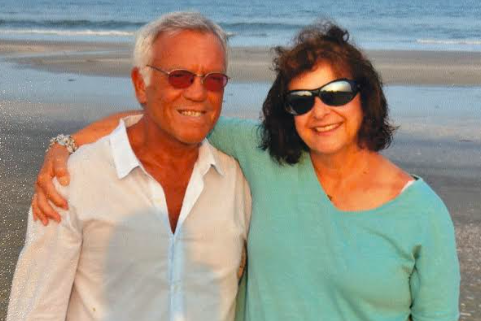
    Mr. Baer and his wife, Rosemary, married in 1969.Courtesy of the family

    Before the Daily News, Mr. Baer spent 14 years in total as a reporter for the Patriot-News, an award-winning public TV producer and show host for WITF in Harrisburg, and a press secretary during Lt. Gov. Bill Scranton’s unsuccessful run for governor in 1986.

    He wrote freelance stories for Philadelphia Magazine and national publications. He was a frequent guest on political TV and radio shows and moderated several statewide candidate debates.

    A lifelong foodie, he also reviewed Harrisburg-area restaurants for a magazine under the pseudonym “the Phantom Diner.” His book, On the Front Lines of Pennsylvania Politics, was published in 2012.

    “He was so good at writing strong opinions with depth,” Paul Vigna, a retired Daily News editor, said.

    Mr. Baer earned awards for his journalism and was inducted into the Pennsylvania News Media Hall of Fame in 2024. He was cofounder of the Pennsylvania Press Club and onetime president of the Pennsylvania Legislative Correspondents Association.

    In tributes, colleagues praised his “sharp wit” and called him a “journalism giant,” “terrific writer,” and “mentor to many of us.” The internship program at the Pennsylvania Legislative Correspondents Association is named in his honor.

    “He was an All-Star, a Hall of Famer,” Vigna said. Rendell said: “He didn’t take any BS.”

    John Baer was born June 25, 1947, in Harrisburg. He graduated from Bishop McDevitt High School in 1965 and earned a bachelor’s degree in English at Mount St. Mary’s University in Maryland and a master’s degree in education later from Temple University.

    He coached basketball and football teams while teaching English for three years at Trinity High School in Harrisburg after college. He married Rosemary Ruggieri in 1969, and they had sons Johnny and James.

    Mr. Baer and his wife hosted many memorable Christmas parties and enjoyed road trips to Georgetown University basketball games, New York Mets baseball games, and their sons’ many sporting events. He played racquetball and tennis, and ran a marathon at 50.

    He was a longtime member of St. Theresa Catholic Church in New Cumberland. “He liked interesting people and had lifelong friendships,” his family said in a tribute. “He loved his friends.”

    On Facebook, colleague Diana Robinson said: “Here’s to you, John Baer. You’ll always be The Most Interesting Man in Harrisburg.”

    In addition to his wife and sons, Mr. Baer is survived by three grandchildren and other relatives.

    Services were held earlier.

    Donations in his name may be made to Vickie’s Angel Foundation, 511 Bridge St., Box 174, New Cumberland, Pa. 17070.

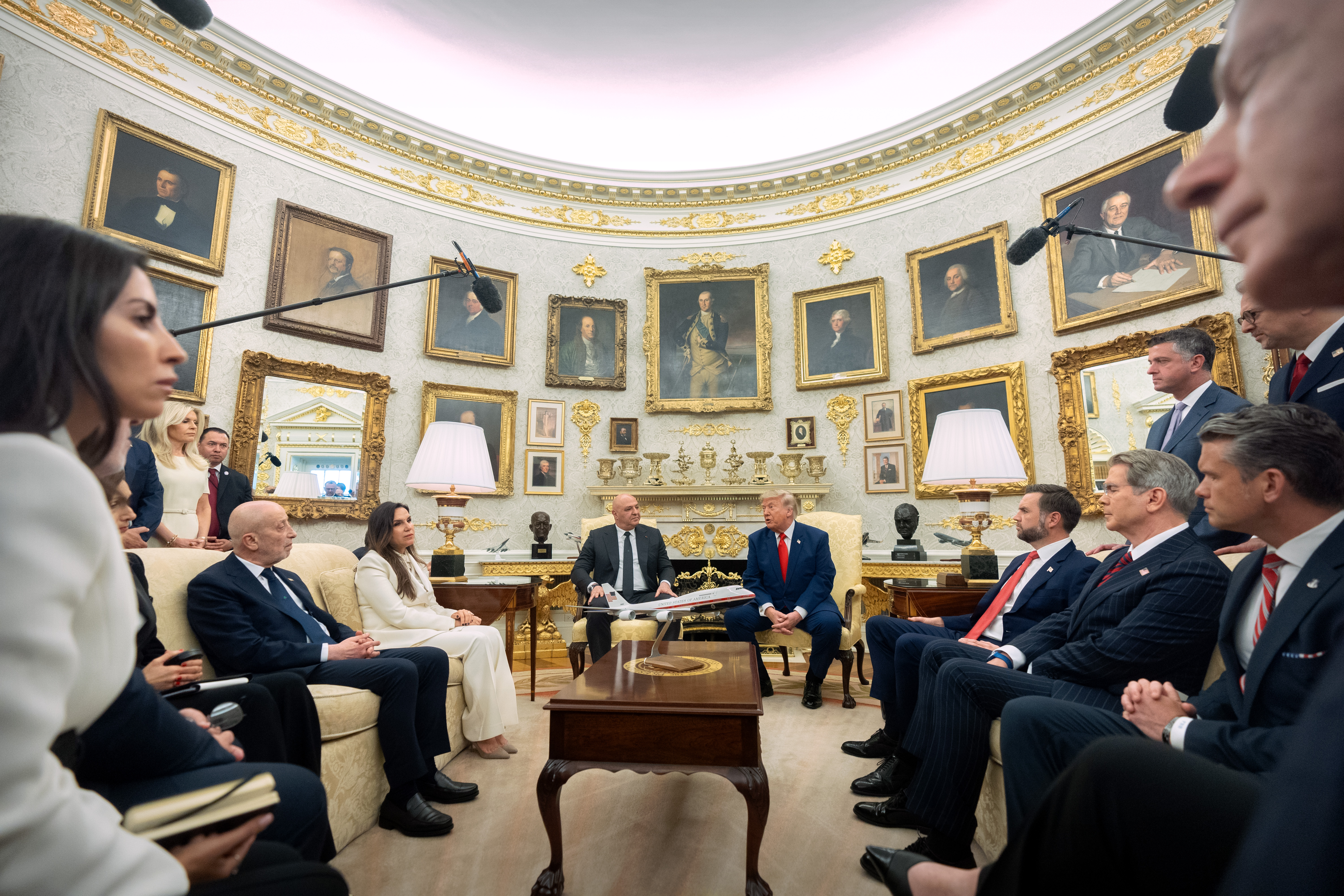
  • Trump says Secret Service wants him to ‘take down’ Oval Office

    Trump says Secret Service wants him to ‘take down’ Oval Office

    President Donald Trump said that Secret Service officials have encouraged him to replace the current Oval Office, according to a new interview with Time magazine.

    “‘Sir, we think the Oval Office should be taken down, and we’ll build a new one, sir,’” said Trump, quoting a Secret Service official. “I said, ‘My ass, you can’t build a new one. This is a special place.’”

    The Secret Service has encouraged prior administrations to take steps to fortify the Oval Office, said four former officials, who spoke on the condition of anonymity to detail sensitive security matters. Past presidents have declined to do so because it would require them to relocate.

    A White House spokesman declined to offer further comment. A spokesman for the Secret Service did not immediately respond to questions about Trump’s remarks.

    The current Oval Office was constructed by President Franklin D. Roosevelt and become synonymous with high-profile events and speeches. Trump, who has redecorated it with gold as part of his sweeping changes to the White House, has called it the most intimidating office in the nation.

    Trump has listened to the Secret Service on other projects to fortify the presidential grounds, such as plans to build a permanent fence around Lafayette Square, the public park across the street from the mansion. The president also has invoked national security reasons to defend his most controversial construction projects, including a new White House ballroom and his planned triumphal arch.

    In the Time interview, the president said he was exploring the possibility of a new federal designation for the Oval Office, which he suggested could protect the office from being torn down and preserve his changes to it.

    “I’ve been asking Susie for six months to give me a statement. Will we save this room? Will we make it a federal landmark?” Trump said, invoking his chief of staff, Susie Wiles.

    The White House is already designated a National Historic Landmark, a federally conferred status that is intended to offer protections against sudden changes. But Congress exempted the White House from the National Historic Preservation Act, which has allowed presidents – including Trump – to swiftly remake parts of the building when they assume office.

    “The discussion of making it a landmark is legally meaningless,” said Greg Werkheiser, founding partner of Cultural Heritage Partners, a law firm focused on historical preservation. He also questioned why Trump was invoking historical preservation after disregarding it to tear down the White House’s East Wing, pave over the Rose Garden and make other changes.

    “There’s some irony of the president suggesting that he might use historic designation to protect the property after ignoring it so far,” Werkheiser said.

  • Trump and Vance hit the campaign trail in deep-red areas where GOP candidates seek a boost

    Trump and Vance hit the campaign trail in deep-red areas where GOP candidates seek a boost

    WASHINGTON — President Donald Trump and Vice President JD Vance both hit the campaign trail on Thursday, but they headed to heavily Republican areas to shore up lagging enthusiasm in their party ahead of next month’s midterm elections.

    Trump’s travel to Texas and Oklahoma kicks off what the president said will be a 32-day campaign blitz leading up to Nov. 3.

    Vance stumped in Florida, putting the Republican Party’s highest-ranking officials in areas where GOP candidates once expected to have glide paths to victory but are now facing tougher races. The vice president tried to cast the GOP as representing common sense in the face of a Democratic push to the left.

    “I have the easiest job in the world,” Vance said in Lakeland, Florida. “I get to talk about how crazy the Democrats are.”

    Trump and Vance could have their work cut out for them, though.

    A new poll from The Associated Press-NORC Center for Public Affairs Research finds that only 17% of U.S. adults approve of Trump’s handling of the cost of living. Just 26% approve of his handling of the economy overall, marking a new low.

    Republicans have expressed growing pessimism about their chances in the election, which will determine control of Congress, as the president has repeatedly dismissed concerns about high costs and gas prices as his unpopular war in Iran drags on.

    According to Trump, his party’s headwinds are merely a matter of poor public relations about a job he says is well done.

    “I give us an A+ on the government, on economics, on everything,” Trump said Thursday, as he left the White House, while blaming the press for not covering the positive aspects of his administration.

    Landing in Texas, he said “we have to get the message” out, while vowing “to go campaigning all over the country.”

    Democrats say Trump and the Republicans are desperate

    Delanie Bomar, a spokesperson for the Republican National Committee, said in a statement that “the president is barnstorming the country, energizing our base, and supercharging Republican candidates in battleground districts and beyond.”

    The Democratic National Committee said Trump and Vance are “desperately trying to rally their base as the midterm elections approach and Republicans face defeat.”

    “Donald Trump and JD Vance started a deadly and costly war with Iran that sent the economy spiraling and pushed prices even higher, and now — in the final stretch to the midterms — they’re desperately pleading with voters to ‘give (them) another chance,’” said DNC deputy communications director Kendall Witmer.

    In Oklahoma, Trump will campaign with Republican Mike Mazzei, who is running against Democratic state House Minority Leader Cyndi Munson in the race for governor.

    Democratic Governors Association spokesperson Kevin Donohoe said Trump’s campaign rally shows that Republicans “are in full-on panic mode.”

    “This race continues to get more competitive — and national Republicans are right to be worried about Mazzei,” he said.

    The event will be held on the Choctaw Nation of Oklahoma, putting Trump in the company of just a handful of U.S. presidents who have visited tribal nations while in office.

    Before his evening Oklahoma stop, Trump toured a truck manufacturing facility and chatted briefly with workers in Texas, where Republicans are spending heavily to try to bolster state Attorney General Ken Paxton in a Senate race. Paxton faces a very competitive challenge from Democratic state Rep. James Talarico.

    Paxton planned to attend the event.

    Vance also stumped for GOP candidates

    Trump will be campaigning in more politically competitive areas in the days and weeks ahead as he embarks on his travel blitz, but Republican officials will not send him to places where they think his presence could drag down their candidates, according to a person familiar with the party’s strategy who was not authorized to speak publicly and spoke on the condition of anonymity.

    Trump’s Oklahoma visit, and likewise one on Friday to Alabama, are aimed at hitting two targets with one stop, the person said.

    Republican officials have noted that Durant is close to the Dallas and Fort Worth media market, meaning Trump’s message will also be carried to Texas voters, and he’s expected to talk about Paxton even while addressing voters in the neighboring state.

    His Friday stop in Mobile, Alabama, is aimed not only at boosting Sen. Tommy Tuberville as he runs for Alabama governor but also at shoring up support in Florida’s adjacent panhandle for Republican Rep. Byron Donalds. Donalds is running for Florida governor against David Jolly, the Republican-turned-independent who is now running as a Democrat.

    Donalds’ campaign in heavily GOP Florida comes as Republicans there have faced some turbulence and voter concerns about affordability and artificial intelligence data centers have become central issues.

    While Trump is in Oklahoma and Texas, Vance campaigned for Donalds in central Florida. That came a day after the vice president campaigned in Texas, rallying with Republican candidate Eric Flores, who is in a tight U.S. House race in south Texas.

    Vance, speaking in Harlingen, Texas, on Wednesday, acknowledged broader discontent over the high prices in the U.S. but shifted the blame away from Trump and Republicans.

    “I know that there are people out there who are frustrated by the pace of progress,” he said, but “we have spent every single day fighting for you, digging ourselves out of the hole that Joe Biden left us in.”

    Trump will also campaign on Saturday in Vandalia, Ohio, and on Monday in Grand Island, Nebraska.

    Trump is expected to campaign for the GOP almost daily

    In a meeting on Capitol Hill this week, White House chief of staff Susie Wiles described privately to GOP senators that Trump will have a near-daily sprint of campaigning ahead of the Nov. 3 midterms.

    Wiles showed Republicans the president’s upcoming travel schedule, which attendees described as extensive and almost every day, all across the country.

    West Virginia Republican Sen. Shelley Moore Capito said that White House officials are “acknowledging the headwinds” but that “they have a strategy, and we have a strategy,” including money that the president’s operation will continue to deploy.

    Capito also defended the White House’s plan to send Trump to traditionally conservative territory, arguing that he can motivate the Republican base not just where he travels but elsewhere in the country because he has such a broad reach.

    “He can get more of his voters out — that are going to be our voters — than anybody else,” Capito said.

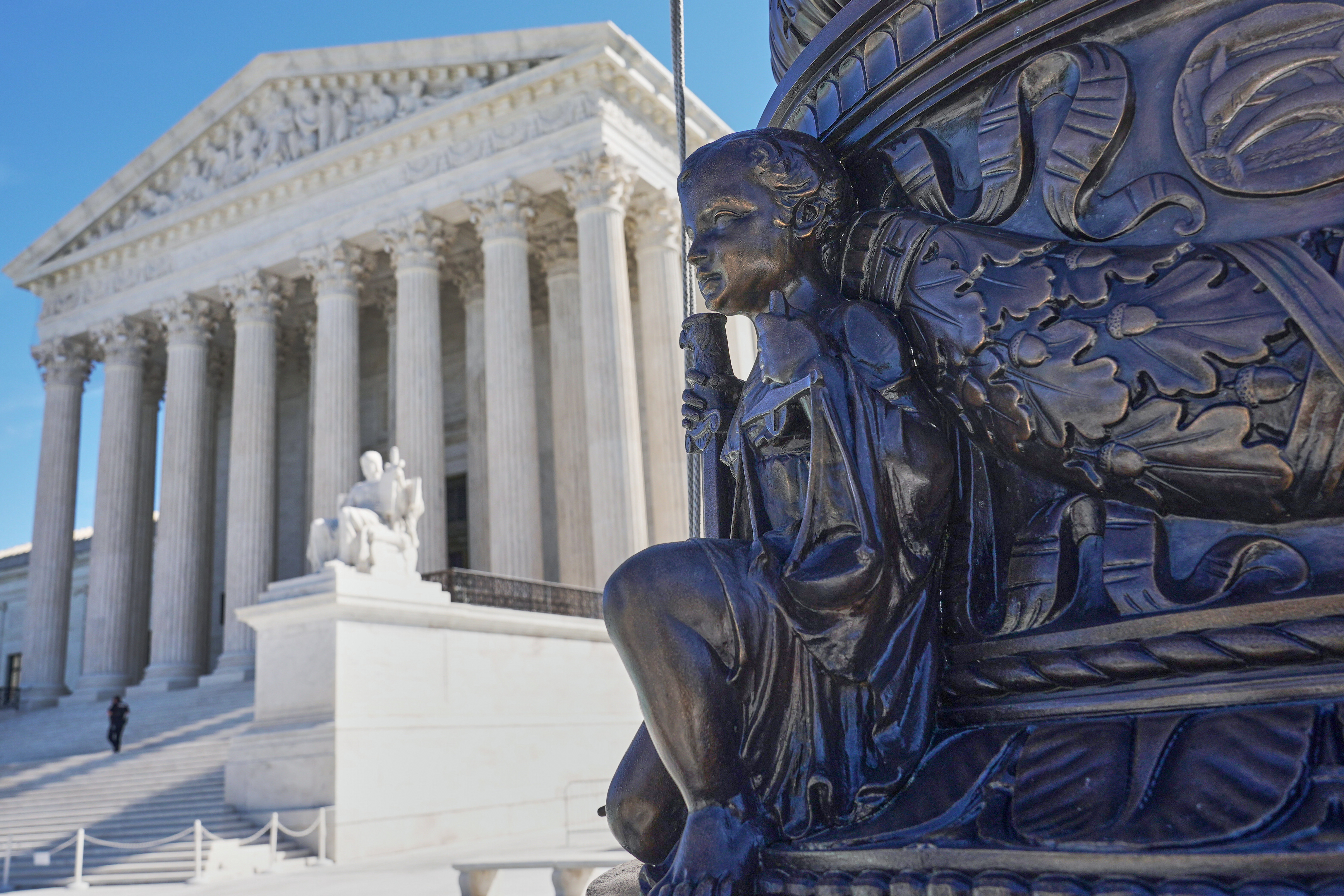
  • Supreme Court grants review of Trump administration’s mandatory detention policy for immigrants

    Supreme Court grants review of Trump administration’s mandatory detention policy for immigrants

    WASHINGTON — The Supreme Court on Thursday agreed to review a Trump administration policy denying bond hearings for immigrants as the government carries out a sweeping crackdown.

    The justices will consider whether immigrants who have been living in the U.S. have a right to a hearing to determine if they should remain detained while challenging their possible deportation.

    The case will test a key pillar of the Trump administration’s hard-line immigration agenda.

    Most appeals courts to have considered the issue have found that it violates federal law to detain immigrants, including those living in the U.S. illegally, without a bond hearing. Those decisions conflict with rulings by the 5th and 8th circuits, which held that immigrants accused of illegally entering and remaining in the U.S. must be detained while their deportation cases are pending.

    The high court agreed to hear the case of Ricardo Aparecido Barbosa da Cunha, a citizen of Brazil. Authorities say he entered the United States illegally two decades ago and applied for asylum in 2016. He sought a bond hearing after an immigration judge determined that his detention was mandatory following his September 2025 arrest.

    He has never been charged or convicted of a crime, his attorneys said. The court is expected to hear the case in the coming months.

    President Donald Trump’s administration had urged the high court to take up a different but related case that involves the broader constitutional implications of the new policy.

    Attorneys from the Republican administration argue the circuits’ split is “disrupting the orderly administration of immigration law.” They say the nation’s courts have been inundated with thousands of petitions filed by immigrants challenging the government’s legal interpretation.

    “The result is an unworkable patchwork of inconsistent immigration enforcement, where aliens present without admission are subject to mandatory detention in some circuits but are entitled to bond hearings and often released in others,” lawyers for the administration wrote.

    The plaintiffs are immigrants represented by the American Civil Liberties Union, which says hundreds of district court judges have joined most circuits in rejecting the Trump administration’s new reading of the statutes. Plaintiffs’ lawyers say the administration is trying to deny bond hearings for immigrants apprehended anywhere in the U.S. — no matter how long they’ve lived in the country — rather than limiting the restriction to noncitizens stopped at the border.

    “Millions of noncitizens could be affected by the government’s new interpretation,” ACLU attorneys wrote.

    The Trump administration says its new mandatory detention policy is legal under a 1996 immigration law. The policy change departs from the practices of prior administrations, which typically allowed most noncitizens without criminal records to request a bond hearing if they were arrested away from the border.