Category: National Politics

  • Democrats make a huge bet on Platner in Maine, which could decide the Senate

    Democrats make a huge bet on Platner in Maine, which could decide the Senate

    Graham Platner’s primary victory in Maine sends Democrats barreling into one of this year’s most important Senate contests with a rush of insurgent energy but gnawing uncertainty about the withering Republican scrutiny to come.

    His decisive victory offered a vivid display of the deep Democratic desire for a new generation of leaders, suggesting that many primary voters in Maine embraced his populist economic message and working-class appeal.

    Yet in nominating Platner, Democrats are making an enormous bet in their quest to regain control of the Senate, staking their chances in a crucial race on an untested and scandal-plagued oysterman.

    Maine is a linchpin of both parties’ midterm strategies. With Republicans holding 53 seats in the Senate, Democrats will have to defend all the seats they hold and flip four more to win control in November. For months, party leaders have believed their most likely path ran through North Carolina, Ohio, Alaska, and especially Maine — the only state of the four that voted against President Donald Trump in 2024.

    But Platner’s controversy-filled ascent to the Democratic nomination has complicated those plans, leaving some strategists worried that the party may need to win in deep-red Iowa or Texas to offset a loss in Maine.

    Supporters of Graham Platner celebrate in Blue Hill, Maine, after he won the Democratic nomination for the Senate on Tuesday night.Sophie Park

    Even with many Maine liberals excited about his candidacy, the road ahead for Platner remains difficult.

    He is facing Sen. Susan Collins, a powerful moderate Republican legislator with a three-decade record of winning over the female voters, who make up a majority of the Maine electorate.

    He must pivot from being a left-wing insurgent — Sen. Bernie Sanders (Ind., Vt.) has been one of his fiercest champions — to winning over general-election voters in Maine.

    And he must dispel the concerns of the nearly 30% of primary voters who, according to incomplete results Tuesday night, cast ballots for other Democratic candidates.

    Those efforts began with his victory speech Tuesday night.

    “If you believe as I do that we can change our politics and change our country, then you must also believe that people can change,” he told supporters in rural Blue Hill, where he was born. “Every day, I wake up and I try to be a little better and a little bit kinder than I was the day before.”

    Collins, who is widely seen as the most vulnerable Republican incumbent, faces her own considerable challenges. She must outrun the difficult national political environment for Republicans, with Trump’s approval ratings sagging amid an unpopular war with Iran that has driven up gas prices and inflation. And she must convince voters eager for generational change and new leadership that she remains fit for a sixth term at age 73.

    Platner sought to remind voters of those liabilities in his victory speech, lacing into Collins with scathing attacks intended to tie her to the Trump administration.
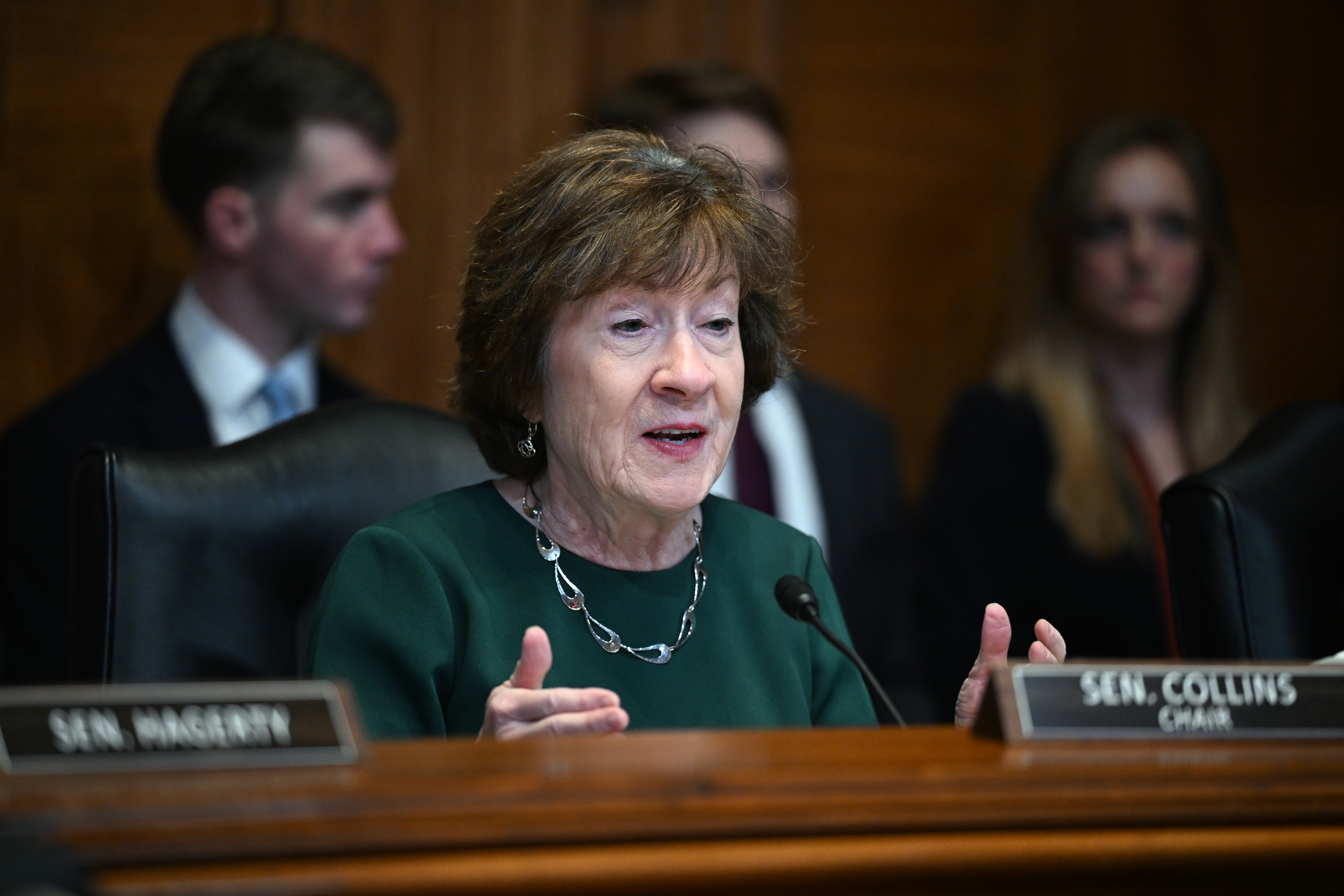
    Sen. Susan Collins (R., Maine) has a long history of winning tough elections, but she must persuade voters eager for generational change that she remains fit for a sixth term at age 73.Kenny Holston

    “The truth is, Susan Collins doesn’t serve us,” he said. “She serves Donald Trump.”

    For their part, Republicans have already signaled that they plan a flood of advertising focused on Platner’s character, with the party’s main super political action committee lashing him as “untrustworthy, unhinged and unfit for Maine.”

    On Tuesday evening, the Republican Senate campaign arm released a digital ad contrasting the two candidates, accompanied by a news release featuring eight bullet points highlighting Platner’s controversial past conduct and statements.

    “Susan Collins doesn’t have a Nazi tattoo,” a narrator states in the ad, a reference to a tattoo Platner had that was widely recognized as an SS symbol. (He later had it covered up.)

    Collins’ moderate image poses an additional obstacle for Platner, Republican strategists say, because she presents as an acceptable alternative for voters who dislike Trump but are unsure about Platner.

    “If Susan Collins were Ted Cruz, this would be a different conversation, but Susan Collins is the most moderate member of the Senate,” said Brad Todd, a veteran Republican strategist. “Susan Collins is the best cross-party-appeal candidate Republicans have fielded anywhere in the last 10 years.”

    But progressive leaders quickly heralded Platner’s victory as more evidence that voters across the ideological spectrum wanted the opposite of Collins: a populist fighter who will challenge the political establishment.

    “This shows that the candidate’s stance on the genocide in Gaza, on opposing foreign wars, and on taking on the billionaire and donor class matters far more than imperfections in their own personal life,” said Rep. Ro Khanna (D., Calif.), who has emerged as one of Platner’s most vocal supporters. “The country and Democratic Party are looking for candidates who are willing to challenge the broken status quo.”

    But while many Democrats like the idea of a combative working-class candidate, they’re worried that Platner’s baggage will be fodder for Republican ad makers for weeks and months to come.

    Platner has been dogged by controversies including the tattoo, his yearslong trail of inflammatory online posts and revelations of explicit text messages he sent to women while he was married.

    In recent days, some Democratic elected officials have voiced their worries about the latest allegations against Platner, which included reporting from the New York Times that several women he dated said that he had engaged in unsettling and, in at least one case, physically threatening behavior.

    From the campaign trail to private meetings with senators, Platner has repeatedly promised that there is no more damaging information to come out about him.

    Some moderate Democrats are voicing their skepticism.

    As voters cast their ballots Tuesday, Rep. Josh Gottheimer, a moderate Democrat from New Jersey, called on Platner to exit the race so Democrats could replace him with a stronger candidate before the fall.

    “Ultimately, it may be just clear that he can’t win,” Gottheimer said. “And if you believe we have to win, which most Democrats do, then I think the writing’s on the wall already.” He added, “What’s already come out, there’s plenty to disqualify him.”

    In a gauzy video released by his campaign Tuesday, Platner sat with his wife in waders, shucked oysters and encouraged his supporters to cast ballots in the primary.

    He added an assessment of the past few weeks that could also sum up the months to come.

    “This whole thing as you can probably tell: brutal,” he said.

    This article originally appeared in The New York Times.

  • Nancy Mace’s thrashing in South Carolina governor’s race caps a rough downfall

    Nancy Mace’s thrashing in South Carolina governor’s race caps a rough downfall

    Rep. Nancy Mace’s trouncing in Tuesday’s South Carolina gubernatorial primary dealt a blunt defeat to a once rising GOP star, a politician who had basked in national attention during her dramatic political transformation.

    Mace had real political talent and promise, but her downfall and isolation followed years of brazen political opportunism, a hunger for media attention at any cost, rejecting advisers’ counsel and turning on many allies, more than a dozen former aides, colleagues and supporters in both South Carolina and Washington said in interviews.

    She finished fifth in the contest, according to unofficial returns, solidly losing even her own home county and district.

    Mace arrived in Congress after flipping a Charleston-area district in 2020 and built a reputation as a moderate who appealed to swing voters. She voted to codify same-sex marriage rights, called herself “pro transgender rights” and urged her party to “meet in the middle” with Democrats on abortion. By last year, Mace had begun repeatedly mocking transgender people as “trannies” and disparaged gay relationships on social media. In recent days, Mace suggested a Republican opponent in the governor’s race came from “a slum in India.”

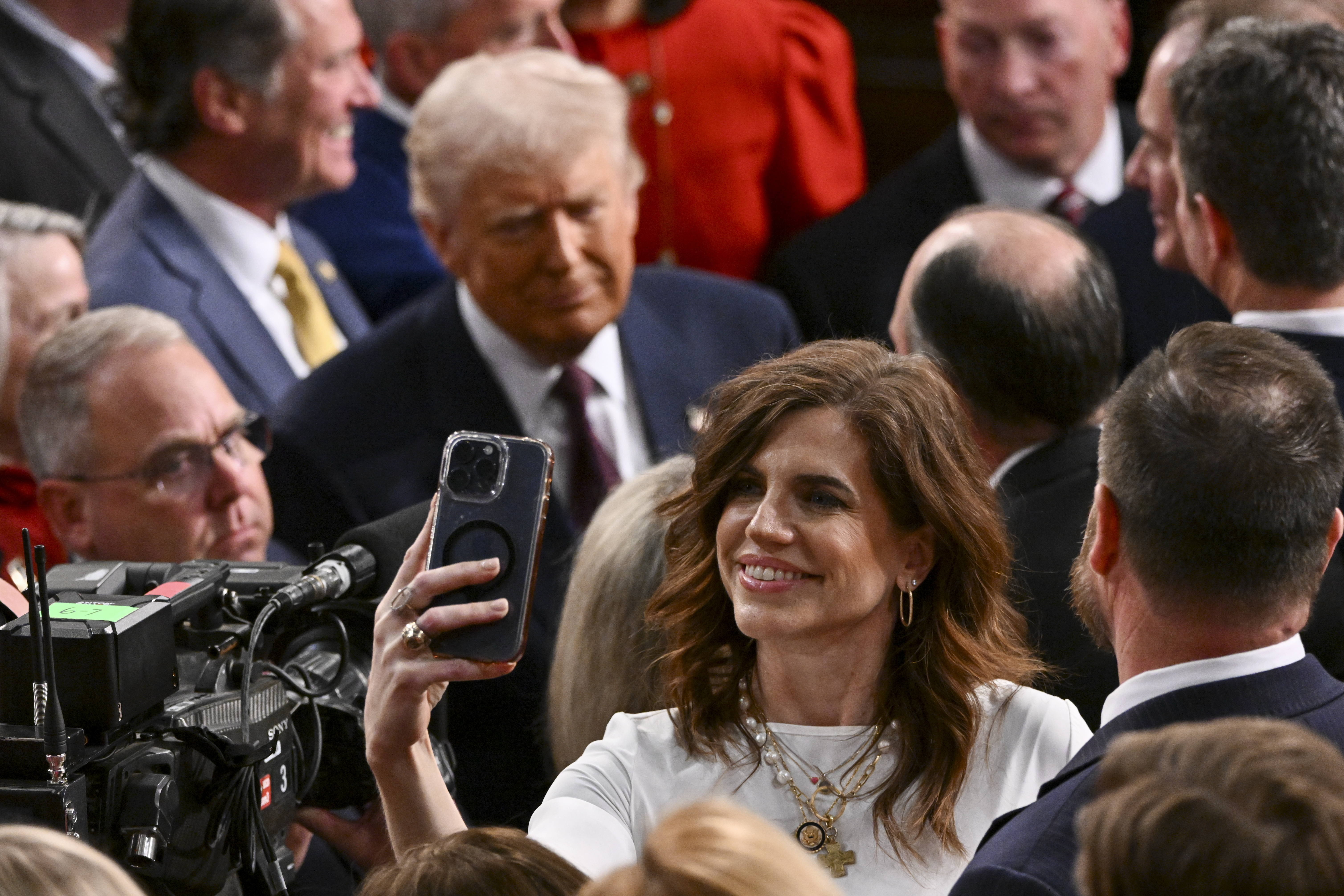
    Rep. Nancy Mace (R., S.C.) takes a selfie as President Donald Trump leaves the chamber after addressing a joint session of Congress on March 4, 2025. Ricky Carioti

    Her relationship with President Donald Trump was similarly mercurial. She distanced herself from him soon after taking office, survived his attempt to oust her in 2022, rebranded herself as a MAGA warrior, defied Trump on the Epstein files and sought his endorsement in the governor’s race, only to watch him back a rival. No high-profile Republican endorsed her campaign.

    The spectacle of Mace’s transformation often unfolded on the cameras she gravitated toward in television interviews, selfie videos posted on social media and dramatic exchanges in committee hearings. Her public appearances grew increasingly combative and bizarre.

    “The only thing I hope is she gets the help she needs,” former Republican House speaker Kevin McCarthy told the Washington Post, saying he watched as her “political and personal life unraveled” in recent years.

    Mace, whom McCarthy had helped to unseat Democrat Joe Cunningham in 2020, cast an unexpected vote for his ouster as speaker in 2023, joining right-wing hard-liners and Democrats as she abruptly turned on him. She later walked around the Capitol wearing a large scarlet “A” on her shirt, because she said she had been “demonized” for that vote.

    “I helped her win. But I just watched her change along the way,” said McCarthy, who supported an unsuccessful primary challenge to Mace in 2024. “Some people warned when she was an early candidate, ‘Watch out, she’s not all there.’ I didn’t.”

    Former staff said Mace embraced stories about her being a “caucus of one” on a “lonely political island.”

    Mace and her campaign did not return requests for comment. She previously accused her former staff of mismanaging money and spying on her, and has dismissed criticism that she is overly focused on getting attention.

    “I will always be grateful for the people of South Carolina who trusted me, fought with me, and refused to look the other way,” Mace posted on social media after her loss Tuesday evening. “This isn’t the end of the fight. It’s just the end of this chapter.”

    Public outbursts

    Mace raised eyebrows in Washington year after year for drawing attention to herself, such as wearing an arm sling after accusing a foster care activist of “trans violence” during a handshake — having him arrested on assault charges only for prosecutors to drop the case. Her behavior in the months preceding her gubernatorial run became even more confounding to those observing it.

    In the throes of her split from her ex-fiancé, Mace in February 2025 spoke on the House floor for nearly an hour, accusing him and three other men of rape and other sex crimes, which the men denied. During a congressional hearing on surveillance months later, she showed a “naked silhouette” photo of herself, saying it was taken without her consent.

    In April 2025, Mace posted a video she took at a makeup store where she repeatedly cursed out a constituent who asked when she planned to host her next town hall.

    A week and a half later, Mace confronted her nephew John Mace McGrath as he sat next to local elected officials during Vice President JD Vance‘s visit to a steel plant in Huger, S.C. She stood over him and pointed her finger in his face as she upbraided him for accepting an endorsement in a local party chairman race from state Attorney General Alan Wilson, whom she had also criticized during her lengthy House floor speech and would later run against her for governor.

    “You f— up taking Alan’s endorsement, and you’re going to pay for that someday,” Mace said to the 26-year-old, according to two people who witnessed the May 1, 2025, scene, which has not previously been reported. The people spoke on the condition of anonymity, saying they did not want to attract any additional wrath from Mace.

    After conceding Tuesday, Mace endorsed Wilson in the gubernatorial runoff, despite repeatedly accusing him in the last year of being a “pedophile protector.”

    The highest-profile eruption took place in October, when officials at Charleston airport reported that Mace had berated airport staff and police after a misunderstanding about her security escort preferences. A police report of the encounter described an expletive-laced tirade where she called airport police “f— incompetent.”

    Mace is seen speaking with an officer during the confrontation at the Charleston International Airport.

    Dozens of local elected officials in her district signed a letter condemning her behavior, and the state’s Republican senators, Tim Scott and Lindsey Graham, criticized her actions. Mace refused to apologize, threatening to sue the airport for defamation and claiming the incident report had been “fabricated.”

    “People can say she’s crazy, but they’re still talking about her,” said Austin McCubbin, Mace’s former political adviser who resigned in December after disagreements about campaign decisions and compensation. “It’s kind of one of those things where just so long as you spell my name correctly, that’s all that matters.”

    Shifting political persona

    Days after the former state lawmaker entered Congress, Mace criticized Trump in the aftermath of the Jan. 6, 2021, attack on the Capitol, saying she did not believe he had a future in the Republican Party.

    As the insurrection unfolded, Mace told aides she wanted to go out and get punched by rioters “so she could get on TV,” Natalie Johnson, her communications director at the time, told the Post. But Mace months later decided to pare back criticisms of Trump after a poll she commissioned showed they were unpopular in her district, Johnson said.

    “I don’t know of anybody who puts their finger in the wind and tries to see which way it’s blowing more than Nancy Mace,” said Justin Evans, a longtime GOP political operative in the state who supported her state House run and now works for Pam Evette, the Trump-endorsed candidate who placed first in Tuesday’s gubernatorial primary. “She was a good-looking, talented communicator, had the social media following, had all the ingredients that a successful candidate should have. It’s just her moral compass was completely missing.”

    Mace walks with a dog through Statuary Hall near the House chamber on July 5. Tom Brenner

    Soon after entering office, Mace had shown herself to be a powerful force in politics who told a compelling backstory. A rape survivor at 16 and high school dropout who once worked as a Waffle House waitress, she became the first woman to graduate from The Citadel.

    CJ Westfall, chairman of the Dorchester County Republican Party who worked on Mace’s 2022 general election campaign, described her as inspiring and hardworking. He credited her win that year to Republicans believing she was an “independent voice,” despite Trump’s opposition.

    Since then, Westfall said her penchant for drama became clear and described her as a “crybully” who liked to provoke controversy and then “play the victim” when someone pushed back.

    After her defeat, Mace said she challenged the powerful even if it cost her politically.

    “Every vote I cast, every hearing I called, every fight I picked — it was always for you,” she wrote in a social media post. “I’ve seen what happens when good people stay quiet. And I’ve seen what happens when they don’t. I would choose the latter every single time.”

    Strained alliances in Congress

    Soon after Mace’s vote to oust McCarthy in fall 2023, Rep. Don Bacon (R., Neb.) greeted several of Mace’s congressional staff eating lunch at the Rayburn cafeteria and asked who they worked for.

    “I used to really like her,” Bacon replied. “Not anymore. We can’t work with her.”

    He told the Post he got along with her during her early time in the House, but her vote to push the speaker out “was a tough pill for many of us to swallow.”

    At times, Mace allied with liberal Democrats including Reps. Ro Khanna of California and Jamie Raskin of Maryland.

    “She would interact with Democrats in a way very few Republicans do, because she has sided with victims of sexual violence and sexual harassment,” Raskin said. “A lot of the people on the GOP side want to quickly brush those subjects under the rug, and Nancy, in her more freethinking, uninhibited moments, is willing to side with Democrats.”

    Mace and Khanna, who had founded a joint caucus focusing on affordable child care, largely stopped their joint appearances after Mace fixated on transgender people. Mace introduced a resolution to ban transgender women from using women’s restrooms in the Capitol, in response to the 2024 election of Rep. Sarah McBride (D., Del.) as the first openly transgender member.

    Mace, however, signed on to a successful petition last year by Khanna and Rep. Thomas Massie (R., Ky.) to release federal investigation files related to convicted sex offender Jeffrey Epstein.

    She said she wanted justice for Epstein’s victims, even though Trump initially opposed the release of the files. But Mace’s decision surprised her own dwindling team of aides because she was bent on getting the president’s endorsement for her gubernatorial run.

    Wooing Trump

    A few days before Mace announced her run for governor in August 2025, she tried calling Trump to give him a heads-up. She left a voicemail for the president, who later texted her with well wishes, according to a person familiar with their communication who spoke on the condition of anonymity to discuss private conversations. But Mace panicked when Trump also passed along two polls that showed her struggling in a hypothetical race. Mace commissioned her own poll days later that showed her leading the field and with the highest name recognition.

    Mace sent the poll to the president, who then posted it to Truth Social that month without comment — which political operatives said lent credibility to her nascent campaign.

    In the final days of the race, Mace repeatedly said her support for releasing the Epstein files was the reason Trump did not endorse her. The president did not publicly criticize her for supporting the effort.

    Mace’s congressional office frequently shed staff, some of whom she forced out, while others resigned citing difficult work conditions. At one point, in a three-month span after her McCarthy vote, her entire nine-member staff had turned over.

    Mace during a staff meeting at her congressional office on April 25, 2023.Ricky Carioti

    Mace also struggled to maintain political allies. She spoke of her love for former governor Nikki Haley, who backed Mace in the difficult 2022 reelection primary. But Mace went silent the next year when Haley sought her endorsement in her 2024 presidential run, and proceeded to blast Haley while campaigning for Trump.

    “I don’t think Nancy Mace has ever seen a bridge in her life that she hasn’t burned down,” said Will Hampson, one of her former communications directors.

    Hampson said his former boss was self aware that she was on an island. But he’s not sure if she recognizes she put herself there.

    “She was her own best weapon,” he said, “and own worst enemy.”

  • Rep. Donald Norcross’ union contract bill passes in House, bucking Republican leaders

    Rep. Donald Norcross’ union contract bill passes in House, bucking Republican leaders

    WASHINGTON — The House on Tuesday approved a Democratic bill aiming to fast-track contract negotiations between employers and newly created unions, after 20 Republicans defied their leaders to force it to the floor and push it to passage.

    The measure, which passed on a 230-193 vote, faces a slim chance in the Senate and would be all but certain to be vetoed by President Donald Trump even if it were to reach his desk. Still, the vote was the latest reflection of Speaker Mike Johnson’s weak hold on his narrow majority, whose members have steered around him time and again and teamed with Democrats to win passage of legislation that he has toiled to block.

    On Tuesday, a sizable bloc of Republicans, including several from competitive districts who are slogging through tough reelection fights, joined with Democrats to push through a pro-union bill. It would impose an initial 90-day deadline on contract negotiations for new unions and their employers, along with paths to mediation and arbitration if the parties reach an impasse.

    Rep. Donald Norcross (D., N.J.), the sponsor of the bill, said he had written it to speed up workplace contract negotiations so that employers could not drag them out in the hopes of undercutting workers’ leverage.

    “Union busting is illegal, and it’s wrong and it has been for generations,” Norcross said. “But with the dirty tactics of indefinite delays, many employers are working relentlessly to kill their employees’ unions.”

    While several Republicans supported the legislation from the outset, party leaders declined to act on it. So Norcross turned to a procedural maneuver known as a discharge petition, which allows lawmakers to circumvent House leaders and force a bill to the floor if a majority of members sign on in support.

    Seven GOP lawmakers did so and even more joined Democrats on Tuesday, in voting in favor of the legislation. Among the Republicans who banded together with Democrats to force action on the measure, several are seeking reelection in competitive districts, including Reps. Mike Lawler of New York, and Brian Fitzpatrick and Rob Bresnahan Jr. of Pennsylvania. Another, Rep. Don Bacon, who represents a center-leaning district in Nebraska, is retiring.

    Some other swing-district Republicans joined them Tuesday night in backing the bill, including Reps. Derrick Van Orden of Wisconsin and Maria Elvira Salazar of Florida.

    Historically, discharge petitions have rarely been successful, but this Congress has been an exception, as Johnson has been unable to stop Republicans from straying from the party line on a wide variety of issues. Democrats successfully employed the tactic to win passage of legislation directing the Justice Department to release files related to convicted sex offender Jeffrey Epstein, which became law, as well as another labor-related bill aimed at overturning Trump’s executive order stripping federal workers’ union protections, which has stalled in the Senate. Last week, they used it to win approval of a bill with new aid for Ukraine that also would impose new sanctions against Russia, defying both Johnson and Trump.

    The trend reflects growing frustration among Republicans toward Johnson and party leaders as the midterm elections loom. Before the vote, Fitzpatrick wrote on social media that the tactic had succeeded so many times only because Republican leaders were shirking their responsibilities by blocking popular policies.

    “A successful discharge petition is clear and direct evidence of a poorly managed House Floor — because it demonstrates that the will of the majority of the People is being thwarted by the privileged few,” he wrote.

    The vast majority of House Republicans on Tuesday opposed the bill. Rep. Tim Walberg (R., Mich.) described the legislation as “a massive expansion of Washington’s power over American workers and job creators.”

    “It is the latest attempt to put workers under the thumb of federal bureaucrats,” Walberg said.

    This article originally appeared in The New York Times.
  • Game on in Maine: 3 takeaways from Tuesday’s primary election results

    Game on in Maine: 3 takeaways from Tuesday’s primary election results

    Graham Platner, a military veteran and first-time candidate whose populist message resonated with voters in Maine, prevailed over the state’s governor to win the Democratic primary for Senate on Tuesday. Now, he will face Sen. Susan Collins, a vulnerable Republican incumbent, in one of the most consequential races in the country this fall.

    Platner’s campaign has survived a series of scandals about his personal life, which Republicans began highlighting within minutes of his victory. And he used his speech Tuesday night to cast Collins as a tool of a political establishment that has let Maine down.

    In other primaries on Tuesday, Democrats in Nevada picked Aaron Ford, the state attorney general, to oppose Gov. Joe Lombardo, solidifying the matchup in a competitive governor’s race in a key swing state. And Republicans in South Carolina showed their loyalty to President Donald Trump, supporting his preferred candidates in races for Senate and governor.

    Here are three takeaways from the night of primaries.

    Amid a barrage of scandals, Platner sought to shift to the fall

    Platner, a Marine veteran who owns a small oyster farm, has been hampered for most of his campaign by scandal, including old, unearthed social media posts in which he made offensive comments about women and rape, and a tattoo resembling a Nazi symbol that he has since covered with new ink. The latest controversy came last week, when three women who had dated him told The New York Times that he had engaged in unsettling behavior toward them.

    On Tuesday, Platner attempted to shift the focus to his general-election matchup with Collins, a battle-tested incumbent, while also acknowledging his stumbles. In a fiery speech, he said that members of the political establishment “keep looking for that one story, that one headline, that one moment in my life that they can define the campaign by.”

    He added: “In trying so hard to understand me, they failed to understand that this is not about me at all. This is a movement about us, about the far too many, working far too hard and struggling far too much.”

    Still, nearly 30% of primary voters cast ballots for other Democratic candidates, according to incomplete results early Wednesday, despite that fact that his main opponent, Gov. Janet Mills, had suspended her campaign. That suggested that some Mainers remained skeptical of him, and left him with the challenge of persuading voters in the general election that Collins’ shortcomings were greater than his.

    In his effort to pivot, Platner blasted the moderate image Collins has cultivated, describing her as “only bipartisan when it doesn’t matter” and saying she had failed to protect abortion rights.

    “If you are an independent voice, why do you vote with Donald Trump 95% of the time?” he said, addressing his opponent directly. “If you’re so bipartisan, why are you the deciding vote to put Brett Kavanaugh on the Supreme Court?”

    Trump’s candidates advanced or were leading

    Trump’s backing is usually the gold standard in a Republican primary, all but guaranteeing victory. His record suffered a rare blemish last week when the candidate he backed in the Iowa governor’s race lost the Republican primary.

    On Tuesday, Trump returned to form, with candidates he supported winning their races, advancing to runoffs or leading challengers in races yet to be called. In South Carolina’s crowded Republican primary for governor, Lt. Gov. Pamela Evette, backed by Trump, led the field and advanced to a runoff with Alan Wilson, the state attorney general, who was close behind.

    In Nevada, two of three House candidates the president backed — Carrie Buck and Marty O’Donnell — won their primaries. The third was too close to call early Wednesday.

    Finally, in North Dakota, Rep. Julie Fedorchak easily fended off a primary challenge with help from Trump’s nod.

    Lindsey Graham avoided the embarrassment of a runoff

    Graham, an outspoken Republican who once clashed fiercely with Trump before becoming a staunch ally, has never been beloved by the MAGA base. He faced a serious Republican challenger, Mark Lynch, and a real chance that he could have been forced into a runoff by failing to earn more than 50% of the vote.

    But Graham, too, had Trump’s backing, and he managed to avoid that embarrassing outcome. After his campaign and allied groups raised and spent millions on his reelection bid, Graham posted a strong enough showing among South Carolina primary voters to earn a spot on the November ballot. In a deep-red state, Graham will be overwhelmingly favored to win another six years in the Senate.

    This article originally appeared in The New York Times.

  • A Wawa bag of Tastykakes, Villanova swag, and a historical artifact: National Constitution Center team meets with Pope Leo at the Vatican

    A Wawa bag of Tastykakes, Villanova swag, and a historical artifact: National Constitution Center team meets with Pope Leo at the Vatican

    What tokens of Philadelphia appreciation would you bring across the globe to the first pope from the United States?

    A bundle of Villanova swag? A replica of George Washington’s Acts of Congress? A Wawa tote bag filled with Tastykakes?

    That’s what a delegation of Philadelphians on behalf of the National Constitution Center brought to Pope Leo XIV in the Vatican ahead of his speech to be broadcast on Independence Mall next month amid the city’s celebrations of the country’s 250th birthday.

    The pontiff, who has ties to the Philadelphia region as an alumnus of Villanova University, gave a “big belly laugh” at the sight of the Tastykakes, a gift from Philadelphia Archbishop Nelson J. Pérez.

    “Where else would this happen that you meet up with the archbishop toting Tastykakes in a Wawa bag?” said Vince Stango, interim president and CEO of the Constitution Center, in an interview Tuesday. “So there was a real humanity to it, a real Philadelphia vibe that was unmistakable.”

    But the group’s visit to the Apostolic Palace, the pope’s official residence, was not just about Philly’s delectable sweets or relentless Big 5 basketball pride. It served as a precursor to Leo’s speech that will be shown live on Independence Mall and YouTube on July 3 as he delivers an acceptance speech for the Constitution Center’s annual Liberty Medal award.

    The delegation from the Constitution Center, which included Stango, Pérez, and four center board members, presented Leo with the medal, which honors the pontiff’s efforts toward promoting religious liberty.

    “I would just like to recall the words signed by the Founding Fathers of the nation 250 years ago in Philadelphia in the Declaration of Independence when they said that we hold these truths to be self-evident … that all men have received fundamental rights from our creator,“ the pope said upon receiving the Liberty Medal.

    ”And they include life, liberty, and the pursuit of happiness. May those values continue to inspire us in the United States and throughout the would, and together hopefully,” he continued.

    The July 3 ceremony, beginning at 11 a.m., will also feature remarks from Stango, Pérez, civic leaders, and various faith leaders, including:

    • Imam Quaiser D. Abdullah: director, Mayor’s Office of Muslim Engagement; board member of Interfaith Philadelphia.
    • The Rev. Carolyn C. Cavaness: pastor of Mother Bethel A.M.E. Church; board member of Interfaith Philadelphia.
    • The Rev. Luis A. Cortés Jr.: founder, president, and CEO of Esperanza; founding member of Hispanic Clergy of Philadelphia; member of the Religious Leaders Council of Greater Philadelphia.
    • Rabbi Jill L. Maderer: senior rabbi of Congregation Rodeph Shalom; board member of Interfaith Philadelphia.

    The Cathedral Basilica Choir and the Archdiocesan Choir of Philadelphia will also perform.

    Stango said the pope took his receipt of the Liberty Medal award very seriously, and the pontiff had taken it upon himself to confirm the details of the delegation’s visit to the Vatican on April 30, in an email on the morning of Good Friday.

    “His character as an individual and his humbleness really came through,” Stango said.

    The Philadelphia delegation was greeted at the Vatican by the Swiss Guard, an armed patrol that has watched over the pope since 1506, said Stango, who described the “grandeur” of driving through the property toward the Apostolic Palace, where every room was “like you’re in the Sistine Chapel.”

    They met Leo in the gathering room and presented him with two medals — one for him to keep and another to bless, as it will be displayed at the Constitution Center — along with his Philly-centric gifts.

    Stango said he was able to walk the pope through the copy of Acts of Congress, which is a replica of Washington’s personal volume, and comb through the first president’s notes in the margins. The delegation then spoke with Leo about the work being done at the Constitution Center and the principles that the United States was founded on.

    “It had the intimacy of the Philadelphia connection, but it also had the magnitude of the global impact of the award, and what it represents, and what Pope Leo represents as a recipient,” Stango said.

    Leo’s participation in next month’s ceremony is notable given that the next day — on the Fourth of July — the pontiff will be in Lampedusa, a small Italian island between Sicily and North Africa, along what is considered one of the deadliest migration routes in the world.

    The Vatican has said that the pope, who was elected in May 2025, will not be traveling to the United States in 2026. Vice President JD Vance, who converted to Catholicism in 2019, personally delivered Leo an invitation to visit the White House earlier this year.

    That invitation came before tensions spiked between the pope and the White House after the pontiff criticized the United States’ war on Iran. President Donald Trump, in turn, said on his social media platform Truth Social in April that the pope is “WEAK on Crime, and terrible for Foreign Policy.”

    Leo said at the time that he had “no fear of the Trump administration.”

    “We are not politicians, we don’t deal with foreign policy with the same perspective he might understand it, but I do believe in the message of the Gospel, as a peacemaker,” Leo said.

  • Three Philly hospitals among 500 warned by Trump administration to provide more price information or face fines

    WASHINGTON — The Trump administration has warned more than 500 hospitals that they are failing to provide the public with basic pricing information — arguing that the lack of disclosure is keeping healthcare costs higher than they should be.

    The Associated Press obtained exclusively the list of hospitals that since April have either received letters of warning or requests to submit plans to provide transparent pricing. Failing to comply with the warnings comes with penalties as high as $2 million annually for each recipient that doesn’t create a plan to post clear pricing data.

    The letters are meant to fix a fundamental problem that patients, employers and insurers might not know ahead of time the cost of blood work, an imaging test or another form of treatment, and as a result pay more than they should have. AP has posted the list of hospitals that have received letters.

    The list includes three hospitals in Philadelphia: Fox Chase Cancer Center, Friends Hospital, and St. Christopher’s Hospital for Children. Other hospitals in the region that received letters were Phoenixville Hospital, Pottstown Hospital, and Reading Hospital, all owned by Tower Health, which also is a joint owner of St. Christopher’s children’s hospital.

    Christiana Hospital in former President Joe Biden’s home state of Delaware received a warning letter. Rockford Center in Newark, Del., was also on the list.

    A senior administration official who requested anonymity to provide the list said that President Donald Trump plans to tighten enforcement of price transparency standards made possible by a 2019 executive order signed by Trump. More hospitals are likely to receive letters regarding the absence of pricing data, the official said.

    The warnings are the latest example of Trump leaning into the message that his administration is fixing the problem of healthcare expenses that can drain a family budget. It’s a calculated pitch ahead of the November midterms at a time when affordability is a top concern for voters. But Trump is also vulnerable on this particular issue, as his administration allowed subsidies to lapse for people buying insurance through the 2010 Affordable Care Act, widely known as Obamacare.

    Just 29% of U.S. adults approved of Trump’s healthcare policies according to the most recent survey on the issue by The Associated Press-NORC Center for Public Affairs Research. The president fared slightly worse on that issue in the December survey than on the economy, immigration or his management of the federal government.

    The push for price transparency could have a particular impact on Republican strongholds like Texas, Florida, Indiana, Alabama and Louisiana, which are among the states with the highest count of hospitals that have not provided adequate information on the costs of medical services.

    Texas had 42 hospitals that received warnings, more than any other state. Baptist Medical Center in San Antonio, Texas, among the state’s largest hospitals with 1,585 beds, received a letter, as did the University of Texas MD Anderson Cancer Center in Houston.

    Missouri-based Ascension, one of the country’s largest hospital systems, had 13 hospitals in multiple states that received letters. The Republican state of Indiana had 34 hospitals that received letters, nearly as many as the 38 in Democratic-led California, even though California has five times more people than Indiana.

    The letters reflect two competing philosophies between Republicans and Democrats over how to handle the ballooning expense of healthcare, which is also a growing risk for the federal government’s own balance sheet.

    Biden’s team put more emphasis on record enrollment in Obamacare programs that increased the percentage of people with health insurance. Biden also signed a bill that allowed the government to begin negotiating prices for some Medicare drugs directly with pharmaceutical companies. That program, which has continued into Trump’s second administration, has helped knock down the list prices of some of Medicare’s costliest drugs.

    The Trump administration, by contrast, has focused more on trying to find ways to provide details on pricing — such as promoting the TrumpRx site for prescription drugs — betting that doing so will lead to better and more efficient spending on healthcare as the data gets crunched.

    Critics have said Trump’s negotiated prices on prescription drugs might not produce genuine savings for many Americans with insurance, while the administration has estimated savings in excess of $500 billion over 10 years.

    With the various lists of hospital prices, the administration wants providers to make it easier to access the files and to ensure the information in them is legitimate, instead of being based on estimates or omitting numbers for key procedures.

    The House Committee on Energy and Commerce has a hearing planned for Wednesday on price transparency.

    “Transparency is the foundation of a healthcare system that rewards competition based on cost and quality,” Shawn Gremminger, CEO of the National Alliance of Healthcare Purchaser Coalitions, plans to say in his prepared remarks.

  • In Trump’s second term, fewer seats for women at the table

    In Trump’s second term, fewer seats for women at the table

    Nearly 10 years after their first bilateral meeting inside Beijing’s Great Hall of the People, President Donald Trump and Chinese President Xi Jinping again gathered last month for discussions about U.S.-China relations.

    Much had changed over the preceding decade. Wars had broken out in Europe and the Middle East, shifting global alliances; the coronavirus pandemic had killed millions around the world and transformed the global economy; and at the table in Beijing, the makeup of aides and advisers sitting alongside each leader for the high-level talks was visibly different.

    Images from Trump’s meeting with Xi in 2017 show Trump sitting alongside a large group of senior U.S. officials, including three women. Xi’s staff at the table also included a woman.

    During their most recent meeting inside the same room in May, every U.S. and Chinese official at the table was a man.

    The all-male delegation exemplifies a broader trend within the Trump administration’s hiring practices for senior executive branch roles that require Senate approval. Data reviewed by the Washington Post shows that Trump has selected fewer women to serve in these senior roles than during the same period of his first term. There also has been a historic amount of turnover among women in Trump’s cabinet.

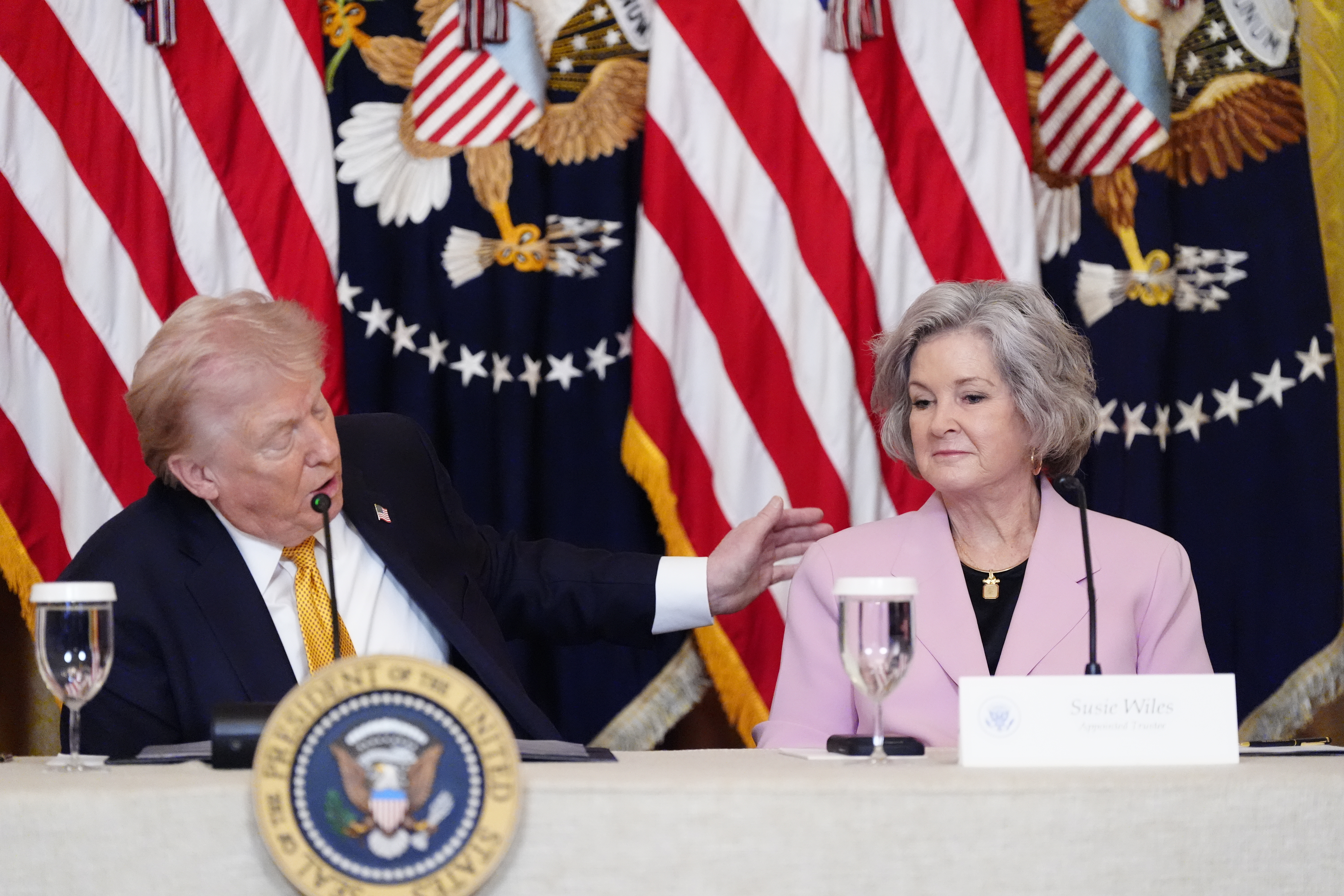
    The Trump White House has expressed pride in the fact that some key senior staff have been the first women to hold certain titles, including Susie Wiles as chief of staff, and defended the president’s hiring choices in a statement to the Post.

    “President Trump has assembled the greatest Administration in history, selecting each member of his incredible team based on one criterion: their ability to deliver for the American people,” Taylor Rogers, a White House spokesperson, said in a statement. “Unlike the identity-politics-obsessed Democrats, the President judges individuals on merit and qualifications, not immutable characteristics.”

    Lower rate of female political appointees

    According to the Partnership for Public Service, a nonprofit that says it aims to build a better government and a stronger democracy, Trump’s Senate-confirmed appointees are made up of the smallest percentage of women of any administration since George W. Bush.

    A PPS political appointee tracker, launched with the Post in 2016, monitors appointments to roughly 800 executive branch positions, a portion of more than 1,300 positions that require Senate confirmation. It includes all full-time, civilian positions in the executive branch that require Senate confirmation except for judges, marshals, and U.S. attorneys. (Military appointments and part-time positions requiring Senate confirmation are not included.)

    When excluding ambassadors and holdovers from previous administrations, PPS data show that so far in this administration, about a year and four months in, 14.53% of all nominees or Senate-confirmed political appointees — 51 out of 351 total roles — are women.

    At this point in President Joe Biden’s term, women had been nominated for 199 out of 379 roles, comprising 52.5% of appointees. And at this point in Trump’s first term, women had been nominated or announced for 41 of 173 of those roles, comprising 23.7% of appointees.

    Heather Higgins, CEO of the conservative nonprofit Independent Women’s Voice, told the Post that “the confirmation gantlet falls hardest on conservative women who can expect their families, faith, and reputations to be put through the wood chipper.”

    “Plenty of enormously talented women make the entirely rational choice to serve the country some other way,” she added. “That’s not a deficit of ambition but a market signal that women don’t necessarily see politics as the only or best lane for influence. And looking at the life of those in those roles, which is no picnic, I’d say that that’s a testament to the groundedness and judgment of women on the right.”

    But Max Stier, the president and CEO of the Partnership for Public Service, expressed concerns about the trend.

    “The evidence is clear that drawing on people with different backgrounds creates a higher-performing organization,” Stier said in a statement. “At the end of the day, our government needs leadership that reflects the diversity of the American people in order to understand and best serve them.”

    Turnover in Trump’s cabinet

    The first female cabinet member was Frances Perkins, who served as secretary of labor from 1933 through 1945. But it wasn’t until the 1970s under President Jimmy Carter that more than one woman was part of the president’s cabinet at the same time.

    Trump selected nine women to serve in his cabinet or in cabinet-level positions at the start of his second term. One of those cabinet-rank members, White House chief of staff Susie Wiles, does not require Senate confirmation. Another pick, Elise Stefanik, withdrew her nomination as U.S. ambassador to the United Nations.

    Among Trump’s presidential predecessors, only Biden successfully nominated more women to serve in his cabinet toward the start of his presidency.

    But nearly a year and a half into Trump’s second term, every departure from his cabinet has been a woman. And more female cabinet and cabinet-level officials have left their positions during this term than at this point in any previous presidential administration, according to an internal count by the Post based on a list of female cabinet members through U.S. history collected by the Rutgers University Center for American Women and Politics.

    Most recently, Tulsi Gabbard announced last month that she would step down as the director of National Intelligence effective June 30. Along with Gabbard, Attorney General Pam Bondi, Labor Secretary Lori Chavez-DeRemer, and Homeland Security Secretary Kristi L. Noem all have left the cabinet. A man was chosen to replace each of them.

    Fewer Republican women running for federal office

    The start of Trump’s second presidency also marked the first Congress since 2011 in which the number of women serving in the House and Senate declined, due to a decline in Republican women. While Democrats set a record by sending 110 female lawmakers to the House and Senate at the start of 2025, Republicans elected 40, according to data from CAWP. The number of Republican women in the House and Senate hit record or near-record levels after the 2022 midterm elections.

    There’s also been a decline in Republican women running for federal office, according to data from the Center for American Women and Politics at Rutgers. Republican women as a percentage of Senate and House candidates reached their peak in 2022.

    A record-setting 38 women filed as Republican Senate candidates in 2022. The number of candidates dropped to 21 in 2024 and has risen slightly to 27 candidates filing to run in 2026.

    Similarly, the number of Republican women registering to run for House seats hit a peak in 2022 with 261. That number dropped to 166 in 2024. So far in 2026, the number of female Republican candidates filing to run for House seats has declined further to 155 candidates.

    “Republican women are underrepresented across the board, across states, even when we look at them as a percentage of their own caucus in highly Republican states,” said Kelly Dittmar, director of research and CAWP scholar at Rutgers. “This change in a Republican administration is consistent with what we have seen before: When Republicans are in office, when they hold a state legislature, the majority party — we know that almost always there are going to be fewer women.”

    Public polling suggests that waning female representation in Washington may not be seen as much of a problem for many Republicans.

    A 2023 Pew Research study found that 5% of Republicans and Republican leaners say it is extremely or very important to them that the U.S. elects a woman as president in their lifetime. Among Democrats, 31% said it was extremely or very important. Republican women were also about twice as likely as Republican men to say there are too few women in high political offices in the country.

    “It’s odd to assume that women are succeeding only if they’re found in government rosters. That’s a surprisingly narrow definition of success,” Higgins, the Independent Women’s Voice CEO, said. “One of the lessons of the last several decades is that women don’t all want the same things, don’t make the same choices, and shouldn’t be expected to. Equality means respecting those choices, not treating every statistical difference as evidence that something has gone wrong.”

  • Gov. Mikie Sherrill says ICE detention center visit was strictly limited

    Gov. Mikie Sherrill says ICE detention center visit was strictly limited

    Gov. Mikie Sherrill of New Jersey on Monday was allowed to visit Delaney Hall, a detention center in Newark that has drawn protests for two weeks after immigrants inside complained about inhumane living conditions.

    Sherrill described the visit as closely controlled and limited, and she said she was not permitted to meet with or speak directly with detainees.

    “That is unacceptable,” Sherrill said in a prepared statement.

    Sherrill, a Democrat, said she would continue to ask for a more thorough inspection of the center, including a visit by the state’s Department of Health. New Jersey’s attorney general has sued the center’s operator, Geo Group, which is one of the largest private prison operators in the United States. The attorney general is asking that state health inspectors be given full access to the facility.

    Fights between demonstrators and detention center employees have erupted since last month at the front gates of Delaney Hall, with violent clashes common in the early morning hours. Demonstrators had blocked vehicles trying to leave the center, and in late May, heavily armed federal agents with U.S. Immigration and Customs Enforcement had responded with pepper spray and pepper balls.

    In a statement, Homeland Security Secretary Markwayne Mullin said his department had granted Sherrill access to the federally run facility despite the fact she is not a federally elected official. Mullin said prisons operated by New Jersey were run more poorly than Delaney Hall.

    “Gov. Sherrill won’t tell you: New Jersey state prisons face systemic health code violations,” Mullin said. “I’d encourage Gov. Sherrill to focus on her own backyard, and put the safety of her own constituents above illegal aliens.”

    During an appearance on “Fox & Friends” on Monday, Tom Homan, President Donald Trump’s top border adviser, criticized the demonstrators and argued that detainees inside Delaney Hall were treated and fed well, contrary to claims that many have made about rotten food and dirty bathrooms.

    Homan also said federal officials would send more federal agents to New York, vowing to push back against new restrictions approved by Gov. Kathy Hochul against federal immigration operations in the state. The recently passed legislation bars agents from wearing masks during immigration operations, allows agents to be sued for constitutional violations, and prohibits agents from searching “sensitive locations” such as hospitals and schools without a warrant signed by a judge.

    Homan suggested that local officials were endangering the public by refusing to help facilitate the arrests of migrants.

    “I made her a promise — you are going to see more ICE agents than you have ever seen in New York City,” Homan said on “Fox & Friends.” “It’s coming.”

    Hochul said Homan’s threat directly contradicted what Trump had said to her in a room full of fellow governors. Trump, Hochul said, had told her that the federal government would not deploy a crackdown where it was not welcome.

    “If they come here and go throughout New York state with a surge in ICE, there won’t be a Republican standing in this state,” Hochul said to a group of reporters. “Americans have had enough with the overreach of ICE.”

    Asked about Hochul’s account of her interaction with Trump, the White House said, “Any criminal illegal alien living any place in the United States is subject to removal.”

    In a social media post on Monday, New York City Mayor Zohran Mamdani criticized Homan’s threat.

    “We will not allow ICE or anyone else to sow fear in our communities,” Mamdani said. “We will stand proudly with our immigrant neighbors and reject these attacks for what they are: an attempt to divide us.”

    This article originally appeared in The New York Times.

  • What Chris Rabb’s win in Philly could mean for the 2028 Democratic battle to replace John Fetterman

    What Chris Rabb’s win in Philly could mean for the 2028 Democratic battle to replace John Fetterman

    The euphoria at Chris Rabb’s election night party last month hadn’t even started to wane before the democratic socialist and his supporters — dancing and hugging after capturing a rarely open Philadelphia seat in Congress — spoke of setting their sights even higher.

    Taking on the city’s Democratic establishment to defeat a pair of more centrist candidates in the heated 3rd Congressional District race was a momentous win on its own. But the reckoning, they promised, wouldn’t be confined to Philadelphia’s borders.

    “It’s going to change not just our city, but our entire commonwealth,” Rabb said in an interview amid the celebration at a Germantown banquet hall.

    It was a sentiment echoed that night by key figures in Rabb’s coalition — from the head of the Working Families Party to Pittsburgh’s U.S. Rep. Summer Lee, the only other democratic socialist representing a part of Pennsylvania.

    With the 2026 Pennsylvania Democratic primary in the rearview mirror, that conversation has broadly and quickly turned to the next biggest prize in the state: the U.S. Senate seat held by Democrat John Fetterman.

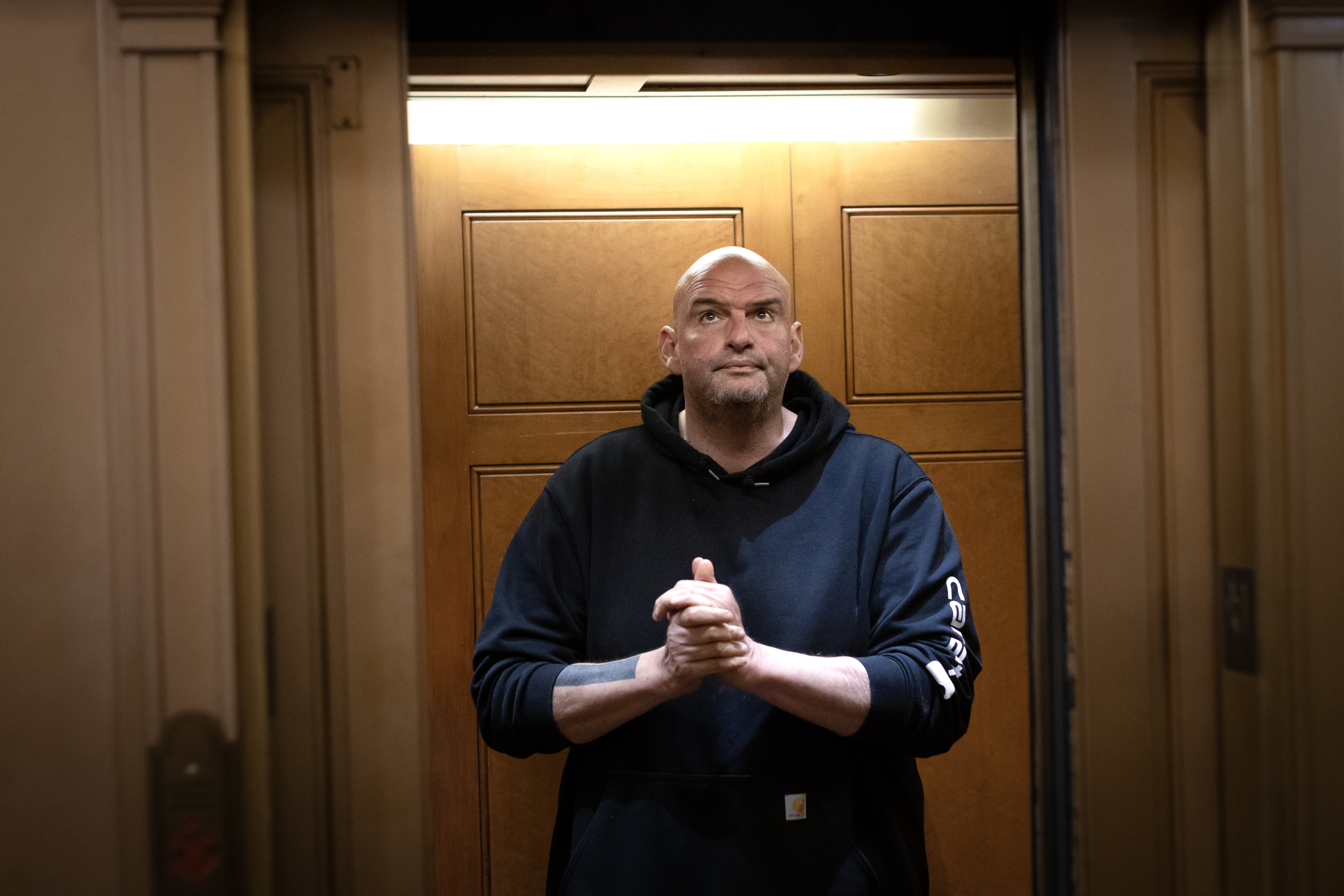
    The senator has not said whether he will run for a second six-year term in 2028. But in an unusual situation for an high-profile elected official, a robust intraparty competition to replace him is expected to start either way in the next year as Fetterman increasingly sides with Republicans and as polls show that his support among Democratic voters has nose-dived.

    State Rep. Chris Rabb is hugged by his son, Issa Rabb, during his primary election night event at Victorian Banquet Hall on May 19.Elizabeth Robertson / Staff Photographer

    Some Democrats who watched Rabb emerge from a competitive race, notching one of the left’s biggest wins yet in Pennsylvania, see an opportunity — one that extends the energy and momentum to boost a well-organized, progressive, anti-establishment candidate in the Senate primary.

    Other strategists and activists say that’s a tall task, particularly in a swing state that rarely strays from electing more centrist politicians statewide.

    “Anytime you have success, it breeds enthusiasm, which translates into more volunteers, into more money — everything you need to run a campaign,” said Mike Mikus, a Pittsburgh-based Democratic strategist. “But every election cycle is different. Every campaign’s different. The quality of candidates are different. And anybody who says that any one race signifies a permanent change within a party is mistaken.”

    ‘A huge impact on the political landscape of Pennsylvania’

    In his campaign to succeed U.S. Rep. Dwight Evans, Rabb, a five-term state lawmaker, won 44% of the vote. He was up against State Sen. Sharif Street, who had the backing of the city Democratic apparatus, and physician Ala Stanford, a political newcomer endorsed by Evans.

    Rabb and others have said his success, in part, was the culmination of a decade of progressive organizing that began in the city after U.S. Sen. Bernie Sanders’ 2016 presidential campaign.

    That progressive infrastructure — the coming together of different groups to knock doors, make calls to voters, and unleash a significant independent advertising campaign in a way that rivaled the official Democratic Party organization — is likely the most important way that the left can use the experience of Rabb’s campaign to replicate its success elsewhere, strategists said.

    It’s a template that could have “a huge impact on the political landscape of Pennsylvania,” said Rotimi Adeoye, a Philadelphia-based Democratic strategist who worked in the office of former U.S. Sen. Bob Casey.

    In a district packed with Democratic voters, Rabb’s ability to turn out progressive voters should draw the attention of anyone looking to win the state’s Democratic Senate primary in 2028, Adeoye said.

    “If a Democrat running statewide can learn from some of these organizational groups to build a strong, relational and community-based organizing campaign in Philadelphia and the surrounding suburbs in Montgomery County, Bucks County — they’re going to have a really big chance of winning,” Adeoye said.

    In a sign that those efforts could coalesce around a Senate candidate, one of the groups that helped usher Rabb to victory remains the only major Democratic entity in the state to have publicly started laying the groundwork for a challenge to Fetterman.

    The Working Families Party, which backed Fetterman in the 2022 general election after originally endorsing State Rep. Malcolm Kenyatta in the primary, said in November it would organize an effort to oust him. A “Primary Fetterman” website launched in January is equipped with a “Fetterman sell-out tracker” — highlighting his votes for Trump’s cabinet nominees and opposition to war powers resolutions that would rein in his military strikes, for example — and instructions for donors on how to request a refund from his campaign.

    The website remains the extent of the group’s efforts so far to rally public support and back a new candidate, though its work is expected to pick up after this year’s midterm elections. For now, the party is looking forward to bringing new members who worked to elect Rabb into its fold.

    “Our goal is always to keep building on the work we do each cycle and the success we have each cycle,” said Nick Gavio, the Working Families Party’s Mid-Atlantic communications director.

    One PA, another statewide group in that progressive coalition, has not yet had internal discussions about the Senate race but it supports the Working Families Party’s position as a member of its steering committee, executive director Steve Paul said. He said more than 150 members of One PA mobilized for Rabb by talking to thousands of voters.

    Winning a high-profile congressional race only helps add to that organizational infrastructure, making them “sharper for the next thing,” Paul said.

    “I think it shifts what’s possible, politically — what people can envision,” he said.

    Potential progressive roadblocks

    Mikus said progressives have increasingly surpassed “more establishment Democrats” in their ability to run strong campaigns, including in his area of Western Pennsylvania where candidates like Lee have emerged in the last decade.

    Democratic primary voters are also more progressive than they were 10 years ago, he said. But campaigning on a far-left — or a far-right — platform doesn’t often equate to success on a statewide level in Pennsylvania, a swing state where successful candidates tend to walk a “fine line” that appeals to both swing voters and a message that excites their partisan base, Mikus said.

    “You’ve seen this time after time in presidential elections here in Pennsylvania,” Mikus said. “Hillary Clinton versus Bernie Sanders. Joe Biden versus Bernie Sanders. The vast majority of voters in Pennsylvania will go with the more mainstream Democrat.”

    J.J. Balaban, a Philadelphia-based Democratic strategist and ad maker, said the party runs the risk of “drawing too big of a conclusion” based on a single election — particularly one like Rabb’s where candidates only needed to appeal to Democrats.

    “Democrats really need to think hard about what it will take to win statewide in a purple state, which Pennsylvania clearly is,” Balaban said. “What it will take to win a general election in Pennsylvania is very, very different than what it will take to win in literally the most Democratic congressional district in the country.”

    After recent years of tough losses — including the ousting of Casey by now-U.S. Sen. Dave McCormick, a Republican — Democratic voters will likely have a “tremendous thirst for candidates who have a credible case to make that they can win the general election,” Balaban said.

    Fetterman, whose office did not comment for this story, has insisted that Pennsylvania’s purple state status means he should appeal to both sides of the aisle and not demonize the other side.

    He’s also lamented the direction he sees his party going with candidates like Rabb, particularly around a growing sentiment that Israel has gone too far in its war against Hamas. Fetterman acknowledged last year that his unwavering support of Israel could cost him his Senate seat.

    “Look at the people that are winning the primaries in our party right now, and look at their views on Israel,” Fetterman said at an American Jewish Committee conference in Washington this week.

    On stage with McCormick and the head of the Jewish advocacy organization, Fetterman painted Graham Platner, the expected Democratic nominee for a U.S. Senate seat in Maine, as a “Nazi sympathizer” and connected him to Rabb.

    “People also in our state, too. Rabb, he won, and he ran on being a very, very anti-Israel guy,” Fetterman said. “It’s actually a virtue [in the modern Democratic Party] … It’s heartbreaking for me. And if it isolates me, then so be it.”

    Who might run?

    Of the Democrats widely considered to be eyeing a campaign to replace Fetterman, the public jockeying has so far been limited to criticisms of the incumbent.

    U.S. Rep. Brendan Boyle, a moderate who represents the other half of Philadelphia next to Rabb’s soon-to-be seat, has repeatedly called Fetterman “Trump’s favorite Democrat.”

    Former U.S. Rep. Conor Lamb, a moderate who represented a suburban Pittsburgh district before Fetterman beat him in the 2022 Senate primary, has frequently lambasted him.

    Conor Lamb speaks to the crowd at a town hall-style event organized by progressive groups at Central Penn College on June 22, 2025, in Enola, Pa. Marc Levy

    And U.S. Rep. Chris Deluzio, who succeeded Lamb and leaned into progressive economic populism, has taken a less direct tack while noting the differences between himself and Fetterman over issues like Trump’s military interventions abroad. Deluzio has occasionally reposted others’ criticisms on social media — including one from Gavio, the Working Families Party spokesperson, last week that called Fetterman’s reversal on eliminating the filibuster “a new low” and “an indescribably massive backtrack from everything he ran on.”

    None of the three have ruled out running.

    Boyle is expected to weigh a Senate campaign vs. staying in the House to take a rare opportunity to lead the powerful budget committee if Democrats win the majority in November. Lamb, who’s remained highly active in Pennsylvania politics, said in an interview that he’s hoping to serve again and would run for office if he feels he “can be of service to the state.” Deluzio, who is also heavily involved in helping Democratic candidates across the state, said he’s focused on his reelection this year and that “we’ll see what 2028 holds.”

    “I am not at all interested in seeing us lose this Senate election, and I certainly have gotten a lot of encouragement to look at 2028,” Deluzio said.

    Progressives have also mentioned Lee, the Rabb ally who’s been a vocal member of the leftist wing on Capitol Hill while taking leadership roles in areas like securing the release of the Jeffrey Epstein files.

    U.S. Reps. Summer Lee and Chris Deluzio, both Pittsburgh-area Democrats, speak outside the Moshannon Valley Processing Center in Clearfield County on May 28 after getting a tour of the facility, the largest detention center for undocumented immigrants in the Northeast.Sam Janesch / Staff

    With potential candidates still several months away from making their decisions, it’s unclear who might try to take up the progressive mantle if Lee does not run, strategists say.

    The field could also grow considerably. Other potential candidates could jump in, including the three other current Pennsylvania Democrats in Congress or former lawmakers like Susan Wild, who lost a swing congressional district in the Lehigh Valley in 2024. Wild said she’s “not ruling out” a run but she’s more interested in thinking about good female candidates in general since no woman has ever won a Pennsylvania U.S. Senate seat.

    On the prospects of a battle between different factions of the party, Lamb said he believed Democrats had broadly learned a lesson — from Fetterman’s election in 2022, where he ran on being a reliable Democratic vote in the Senate — that was beyond ideological policy tests.

    “Fetterman taught Democrats in Pennsylvania that you have to have a character test. Anybody can run around the state promising you these further left solutions, and that they’re going to be a thumb in the eye of the establishment, and they’re going to channel all your anger and dissatisfaction. And then that person can turn on you on a dime,” Lamb said. “The fact is that we have to evaluate our candidates based on whether they have integrity and they’re going to keep their word and, honestly, whether they have the work ethic to be a senator day in, day out.”

  • Birthright citizenship is constitutional. But some Americans have always had to prove themselves worthy.

    Birthright citizenship is constitutional. But some Americans have always had to prove themselves worthy.

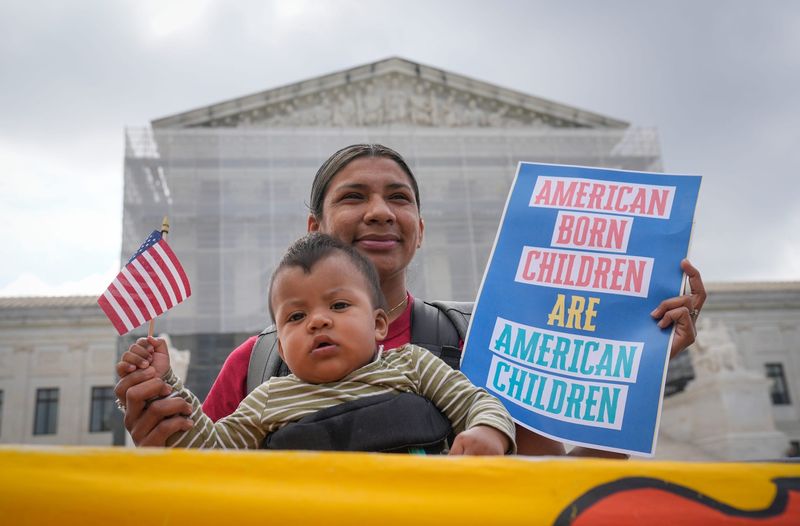
    As the Supreme Court considers President Donald Trump’s effort to narrow birthright citizenship, the administration has cast the issue as a defense of the value of U.S. citizenship rather than simply a change in immigration policy. In court, Solicitor General D. John Sauer argued that automatic citizenship “demeans the priceless and profound gift of American citizenship,” and Trump later called the current system “STUPID” on Truth Social.

    But the current fight is about much more than constitutional wording. It is the latest chapter in a long history of deciding that some people born in the United States still must prove they deserve to belong.

    That is not a new problem in American history. Birthright citizenship has long been one of the clearest places where the United States has worked out the boundaries of national belonging. On paper, the 14th Amendment seemed to settle the question after the Civil War. Anyone born in the United States and subject to its jurisdiction was a citizen. But almost immediately, that promise ran into a familiar problem: many Americans were willing to defend universal principles only until those principles extended to people they considered outsiders.

    That tension came into full view in United States v. Wong Kim Ark in 1898. Wong was born in San Francisco to Chinese immigrant parents. When he returned to the United States after a trip abroad, officials detained him and argued that his birth on American soil did not make him a citizen after all. The logic was plain enough. His parents were Chinese, Chinese immigrants were racially excluded from naturalization, and anti-Chinese officials insisted that the children of such immigrants could not truly belong either. The Supreme Court rejected that argument. It affirmed that birth in the United States, not the race or legal status of one’s parents, established citizenship. But the case mattered precisely because it revealed how badly exclusionists wanted a different outcome. They wanted citizenship to depend on lineage, not principle.

    Wong Kim Ark clarified the constitutional rule, but it did not end the effort to define the nation more narrowly. That effort moved simply moved elsewhere. Lawmakers could not easily strip citizenship from people born here, but they could still shape the nation by trying to restrict who could enter in the first place.

    The Johnson-Reed Act of 1924 did exactly that. It used national-origins quotas to privilege immigrants from northern and western Europe while sharply restricting others and effectively excluding most Asians on explicitly racial grounds. The law did not abolish birthright citizenship but rather worked around it. It sought to preserve a preferred vision of the nation by controlling the people who might one day reproduce it. Immigration control became a way to manage the future population of the nation.

    That narrowing of belonging did not stop at the border. During the Great Depression, Mexican repatriation campaigns pushed hundreds of thousands of people of Mexican descent out of the United States, including many U.S. citizens. As historian Adam Goodman argues, the long history of expulsion in the United States has always been about power: the power to determine who may remain, who can be removed, and who gets cast as outside the nation in the first place.

    That history is worth dwelling on because it makes something painfully clear. Even formal citizenship has not always guaranteed a person’s recognition as fully American. In moments of panic and xenophobia—such as when the U.S. forcibly removed and incarcerated Japanese-American citizens during World War II—race and presumed foreignness could override legal status.

    The United States also developed a more selective politics of inclusion. During the Cold War, the country welcomed many refugees, but it did so unevenly and strategically. As historians like Carl Bon Tempo have shown, this process was shaped by foreign policy goals, domestic political pressures, public attitudes toward newcomers, and changing ideas of American identity. For example, refugees fleeing communist regimes like Hungary and Cuba were often easier to recognize as worthy because their stories served a larger ideological purpose for the United States. Their flight to the U.S. helped tell a flattering story about the United States as a refuge of freedom standing against communism. On the other hand, asylum claims of those fleeing right-wing regimes such as El Salvador and Haiti, were denied en masse. The United States distinguished between the refugees it wanted and the refugees it preferred not to see.

    That is the longer history behind the present fight. American policy has repeatedly distinguished between the people imagined as rightful members of the nation and those treated as suspect, alien, or disposable. Sometimes exclusion worked through immigration restriction. Sometimes it worked through expulsion. Sometimes it worked through selective refuge. But the basic logic remained recognizable across time. Belonging was never simply given. It was sorted, ranked, and politically constructed.

    And that is still the case. In my current work as a fellow at the Public Religion Research Institute (PRRI), I study how immigration debates continue to function as debates over nationhood and belonging.

    On one level, Americans still describe the nation in civic terms. In PRRI’s 2025 American Values Survey, 93% said that believing in individual freedoms is important to being truly American, 91% said believing in the Constitution, and 89% said accepting people of diverse racial and religious backgrounds. Those are the kinds of answers Americans like to give about themselves. They describe a nation rooted in principle, rights, and pluralism.

    But the same survey points to another vision of the country, one that is narrower and more exclusionary. Seventy-five percent of Americans polled said speaking English is important to being truly American. Fifty-four percent said being born in America. And 57% said believing in God, with 43% explicitly saying being a Christian. Those numbers matter because they show that civic ideas of membership still coexist with older assumptions about inherited religious and cultural belonging. The nation may be described in universal terms, but many Americans still imagine it in more bounded ways.

    OLD IMAGE — DO NOT USE — Made By History sponsors. FOR USE ON MADE BY HISTORY STORIES ONLY.Inquirer Staff

    That same tension appears in immigration attitudes more broadly. PRRI found strong support for a pathway to citizenship for undocumented immigrants who meet certain requirements. But it also found that 37% of Americans support detaining undocumented immigrants in internment camps until they can be deported, and 32% favor deporting undocumented immigrants to foreign prisons without allowing them to challenge their deportation in court. Those are not just policy preferences. They reveal how easily legal exclusion and coercive state power remain available when migrants are cast as outside the circle of national concern.

    That is why the present debate over birthright citizenship matters so much. The Supreme Court case may seem technical or narrowly constitutional. The irony is that the legal principle itself is not especially ambiguous. Wong Kim Ark settled the matter more than a century ago.

    What remains unsettled is the political desire to narrow the boundaries of belonging. Again and again, Americans have used citizenship and immigration law to distinguish between those whose presence affirms the nation and those whose presence is treated as a problem. The country remains divided over a deeper question. Is the United States really a civic nation, or will it reserve full belonging for those who fit more narrow criteria of who Americans are supposed to be.

    E. Kyle Romero is an assistant professor of history at the University of North Florida where he writes and teaches on the history of U.S. foreign policy, immigration, and humanitarianism; he has previously served as a postdoctoral fellow at the Dickey Center for International Understanding at Dartmouth College, and is currently a fellow at the Public Religion Research Institute in Washington, D.C.

    Made by History takes readers beyond the headlines with articles written and edited by professional historians. Opinions expressed do not necessarily reflect the views of Inquirer editors.