Category: National Politics

  • A new commission risks embedding the gendered conceptions that have long subordinated military spouses

    A new commission risks embedding the gendered conceptions that have long subordinated military spouses

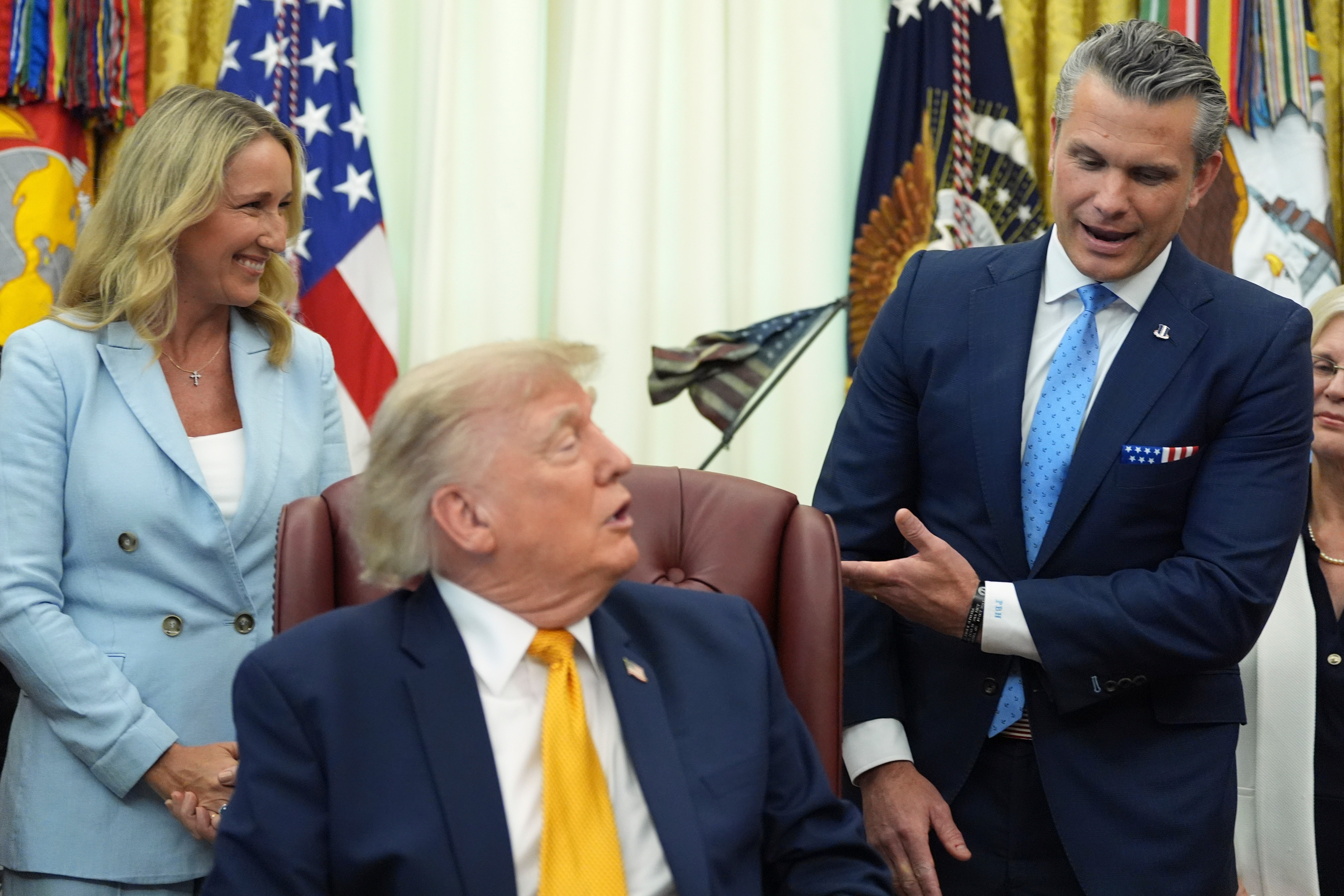
    On Aug. 3, President Donald Trump established the President’s Military Spouse Commission. Chaired by Jennifer Hegseth, the wife of Defense Secretary Pete Hegseth, the commission will be comprised of over 20 military spouses of high-ranking officials — currently all women. The group will recommend policies to the president that address quality-of-life issues for military spouses, such as employment, childcare and housing.

    Although these policies are aimed at benefiting military spouses in general, the commission’s composition follows in a longstanding tradition of gendering the work done by service members and their spouses — with the former more important and worthy of recognition than the latter.

    Dating back to the Revolutionary War, military leaders have envisioned service members as men, and their spouses as women. The men’s heroism was valorized and compensated, while the crucial domestic and emotional labor that wives performed to ensure the military’s success was often credited to the service members themselves. Military leaders believed that this framework made soldiers more willing to endure the horrors of combat as a necessary part of their masculine identity.

    In recent decades, as women have moved into all roles in the military and LGBTQ soldiers legally have been able to serve openly, this paradigm has been undermined. Yet, the all-female makeup of the commission, along with other recent initiatives by the War Department, suggests that the commission will mark a return to military policies that connect gender with labor to idealize the hypermasculine “warfighter.”

    During the American Revolution, military wives, along with other women in camp, performed essential services for the Continental Army, including cooking, washing clothes and caring for the wounded. Their work was integral to the war effort, yet these women were only grudgingly accepted by military leaders. Continental officers lamented the women’s ragtag appearance as an embarrassment — though they sometimes provided the wives with pay and rations for their services.

    Legally, married women were considered dependents of their husbands, who had the right to their labor. Military pensions reinforced these ideas by rewarding men’s work through the continued support of their supposed dependents. Sarah Osborn Benjamin, a young bride from New York, spent three years with her husband laboring for the army. Yet, when he died in 1837, Benjamin received a widow’s pension for her husband’s service, not for the labor she had performed.

    In the rare cases when women did receive pensions for their service, it simply reinforced the idea that military labor was masculine and worthy of compensation, while the support services typically provided by women was the work of dependents.

    During a battle in November 1776, Margaret Corbain took over the fighting duties of her dead husband. She was injured and captured by the British but later released. In appreciation of her service, her regiment’s officers petitioned for her to receive a pension, which she received. The crucial detail here was not that Corbain was a woman, but that she had labored like a man.

    These patterns only intensified during the 19th century. By the time of the Civil War, most spouses sustained the army through labor far from the battlefield, further dividing soldiers’ duties and the support work performed by their spouses. While men labored on fortifications, marched to battle and fought valiantly in combat, women tended to farms and households (including the management and oversight of enslaved people) and sent care packages that provided the resources soldiers needed to sustain themselves.

    A small group of women worked directly for the army in camp, primarily as nurses, laundresses and cooks. The exigencies of war had forced the military to make this concession. Still, the military classified women’s domestic labor as less valuable than nursing — even though the lines between jobs often blurred as women stepped in where needed.

    Susie King Taylor, a formerly enslaved woman, traveled extensively with her husband, an officer of the 33rd United States Colored Infantry. Taylor washed clothes, nursed wounded soldiers and taught formerly enslaved people to read and write — all without receiving any pay. After Congress passed the Army Nurses Pension Act, which granted pensions to women who had been nurses, Taylor applied for a pension. She was denied on the grounds that she had been listed as a laundress, not a nurse.

    This technicality hindered many women from earning a pension, as they had to provide credible witnesses to testify to their nursing work. This obstacle was especially prohibitive for formerly enslaved women whose work was more closely scrutinized. Nursing could be accepted as work commensurate with soldiering, but domestic labor was not.

    Made By History sponsors. FOR USE ON MADE BY HISTORY STORIES ONLY.Inquirer Staff

    In the 20th century, American wars moved overseas. The two World Wars required massive mobilization of men, who were largely sent to Europe or Asia to fight.

    With spouses on different continents, the military paid more attention to the morale of both spouses. Yet, these efforts were highly gendered, and made clear which spouse was more valued. Instructional material aimed to persuade military wives that their job was to “make do” and sacrifice, in the service of providing their husbands with a reason to fight.

    In the 1942 Army Woman’s Handbook, Clella Reeves Collins felt it was “unnecessary to state” that women, especially military wives, should give as much time and support to the war effort as possible. This guidance made it clear that the state expected wives to voluntarily perform domestic labor. The government, however, wouldn’t compensate them for these efforts — however essential they were to the war effort. Military policies and guidance left no doubt that women’s roles were subordinate to the work of the men fighting overseas.

    Emotional labor was an important part of this job. Collins wrote that “much of the burden [of being a soldier] is lightened by a cheerful attitude and encouragement at home.” She urged military wives to elevate the feelings of servicemen over their own. Collins taught wives to stifle any negative emotions when they interacted with their husbands — reinforcing the gendered expectation that women should bear the emotional burden of a military relationship.

    This labor continued even when a spouse was deployed. Magazines, handbooks and government posters all pushed women to keep up a positive and constant stream of communication. Columnist Mary Lee Smith, who edited a “Soldier’s Letter Box” column in a Black newspaper in Cleveland, counseled women to make the man “feel that he is still a mighty important person in this world — especially to a certain girl back home.”

    Most of all, the military expected wives and girlfriends to avoid sending infamous “Dear John” letters, in which they broke off a romantic relationship with a soldier overseas. Soldiers and military officers saw these letters as more lethal than enemy bullets, causing emotional injury that threatened the well-being of the serviceman and the efficacy of military operations. The hatred generated by women choosing to exit a relationship exposed how the presumption of female support underpinned martial manhood.

    During the Cold War, military spouses returned to serving in proximity to the army. Often tasked with the majority of childcare amid frequent moves, spouses struggled maintaining outside employment. Accordingly, many of them spent their time laboring for the military, whether they were making sure dinner was on the table or volunteering in the military community. Officer’s wives also were expected to entertain and socialize appropriately, or risk jeopardizing their husband’s career.

    Yet, despite these expectations, the military didn’t value women’s services as labor — as seen in the cases of divorced women who did not receive any benefits.

    Today, military spouses, now a more diverse group, still shoulder a large workload, one that traditionally has been expected given their status as a dependent of the service member. Straight civilian women are still the biggest category of spouses, corresponding with the large number of straight men in military. Many servicewomen marry servicemen, creating a dual-military household. The question of who performs the necessary domestic and emotional labor poses new complexities.

    The executive order creating the military spouse commission continues to see a connection between the labor of military spouses and warfare. It claims that military spouses are “intrinsically linked” to the effectiveness of the military. It’s the very same idea that underpinned the gender binaries of the past, which allowed the military to leverage romantic relationships as sources of labor.

    By treating the labor of spouses as different and, implicitly, less valuable than the work of service members, the military has long celebrated perceived masculine values like aggression and bravery while diminishing perceived feminine values of care and support. This has not only shaped the operation of the military, but it has rippled into civil society as well.

    To truly help military families, the commission can’t simultaneously expect the labor of military spouses, while treating it as subordinate to soldiering, as the government has throughout American history. Doing so risks alienating not only military spouses, which could affect recruitment and retention, but the American people as well.

    Margaret G. Matheson is a PhD student in history at the University of Virginia

    Made by History takes readers beyond the headlines with articles written and edited by professional historians. Opinions expressed do not necessarily reflect the views of The Inquirer.

  • Postal Service plans may keep voters from getting ballots, whistleblower says

    Postal Service plans may keep voters from getting ballots, whistleblower says

    An anonymous federal official warned in a disclosure to Congress that a rushed and insufficiently tested U.S. Postal Service system could prevent large numbers of Americans from receiving mail ballots this fall if courts approve President Donald Trump’s plans for the midterm elections.

    The disclosure, made public Tuesday morning by Sen. Richard Blumenthal (D-Connecticut), says the Postal Service has adopted an internal “zero-percent failure policy” under which an entire batch of ballots would be rejected if a single barcode sampled by a postal employee could not be scanned or matched with information submitted through a new online portal. A batch could contain tens of thousands of ballots, according to the disclosure.

    “The Postal Service has designed a system to disenfranchise millions of Americans,” Blumenthal said in a call with reporters.

    Postal officials and the White House did not immediately provide comment.

    In public statements, the Postal Service has previously said information submitted through the portal will be updated immediately. It has said postal employees will not determine voter eligibility or check names and addresses for accuracy. The rule does not disclose the sampling formula or zero-failure policy described in the whistleblower disclosure.

    The fight over the Postal Service’s plans is rooted in an executive order from Trump that seeks to overhaul mail voting. A judge has blocked those plans for now, but the administration is seeking to reinstate them ahead of this fall’s midterm elections.

    If the administration gets its way, state and local election officials would have to upload lists of voters to an online portal the Postal Service is designing. Postal employees would refuse to deliver to anyone who is not on those lists.

    The unnamed official alleged that the portal was assembled under constantly changing requirements and with as few as four working days available for customer testing before a planned launch.

    If the Postal Service’s plans go into effect, election officials will confront new challenges when they mail ballots in large batches. Postal workers plan to scan barcodes on a sample of envelopes to ensure the voters appear on the state’s list, according to the whistleblower. If they find even one mismatch, they will refuse to accept the entire batch, the whistleblower said. That means a single mismatch in a batch of 10,000 ballots would prevent the 9,999 other ballots from being mailed until discrepancies were resolved.

    “As designed, the process is entirely unforgiving,” the disclosure said. “It could delay ballots by the thousands in repeated verification cycles — and thus prevent states from mailing enormous numbers of ballots.”

    State and local officials often mail ballots in large batches to manage them as effectively as possible. Some states send ballots to all registered voters, and they must place millions of ballots in the mail in a short period.

    Many election officials have expressed alarm about the Postal Service’s overall plans under Trump’s executive order because they don’t believe they have been adequately thought through for a fast-approaching election.

    Among the issues they worry about are potential mismatches for mundane reasons. States constantly update their voter rolls, and the lists they send to the Postal Service could be out of date within minutes as new voters register and existing ones update their registrations because they’ve moved.

    The Postal Service has said states can update their voter lists, but election officials have expressed concerns that the new online portal won’t be able to handle a steady stream of updates.

    The whistleblower disclosure could add to those concerns and bolster legal challenges to the executive order and postal rules.

    The disclosure, dated Sunday, was submitted to Blumenthal by Whistleblower Aid on behalf of an anonymous federal official it represents.

    The organization described the unnamed whistleblower as a “federal official with direct knowledge of potentially catastrophic problems in the development” of the Postal Service’s plans and said the official feared reprisal by administration officials if identified.

    Blumenthal sent the disclosure late Monday to Postmaster General David Steiner and asked him to provide documents about the Postal Service’s plans.

    Blumenthal is the ranking Democrat on the Permanent Subcommittee on Investigations for the Senate Committee on Homeland Security and Governmental Affairs.

    States and voting rights groups sued over the executive order soon after Trump signed it in March. The Supreme Court last week allowed work on the executive order to proceed for the moment, but days later a lower court blocked it.

    The administration is seeking to get it reinstated but faces timing challenges. Officials in North Carolina are preparing to start mailing ballots on Friday under a state law requiring them to send them to those who ask for them starting 60 days before an election. Other states are set to start mailing their ballots in the following days and weeks.

    The whistleblower said the Postal Service stopped working on the portal around June 25 after a federal judge blocked implementation of Trump’s directive, then resumed work around July 29 while that order remained in effect.

    The disclosure said work continued after the judge issued a new order on Thursday barring the Postal Service for 14 days from taking further preparatory steps that would apply to all states for the November election. In a brief ruling Monday, the judge said the Postal Service could work on the portal for states that want to voluntarily use it.

    Postal officials planned to launch the portal on Tuesday, according to the whistleblower. One of the whistleblower’s attorneys, David Kligerman, said work on the portal had continued in recent days but didn’t know whether the Postal Service was sticking with its plan to make it available on Tuesday.

  • Donald Trump Jr.’s firm leads $1 billion funding round for Polymarket

    Donald Trump Jr.’s firm leads $1 billion funding round for Polymarket

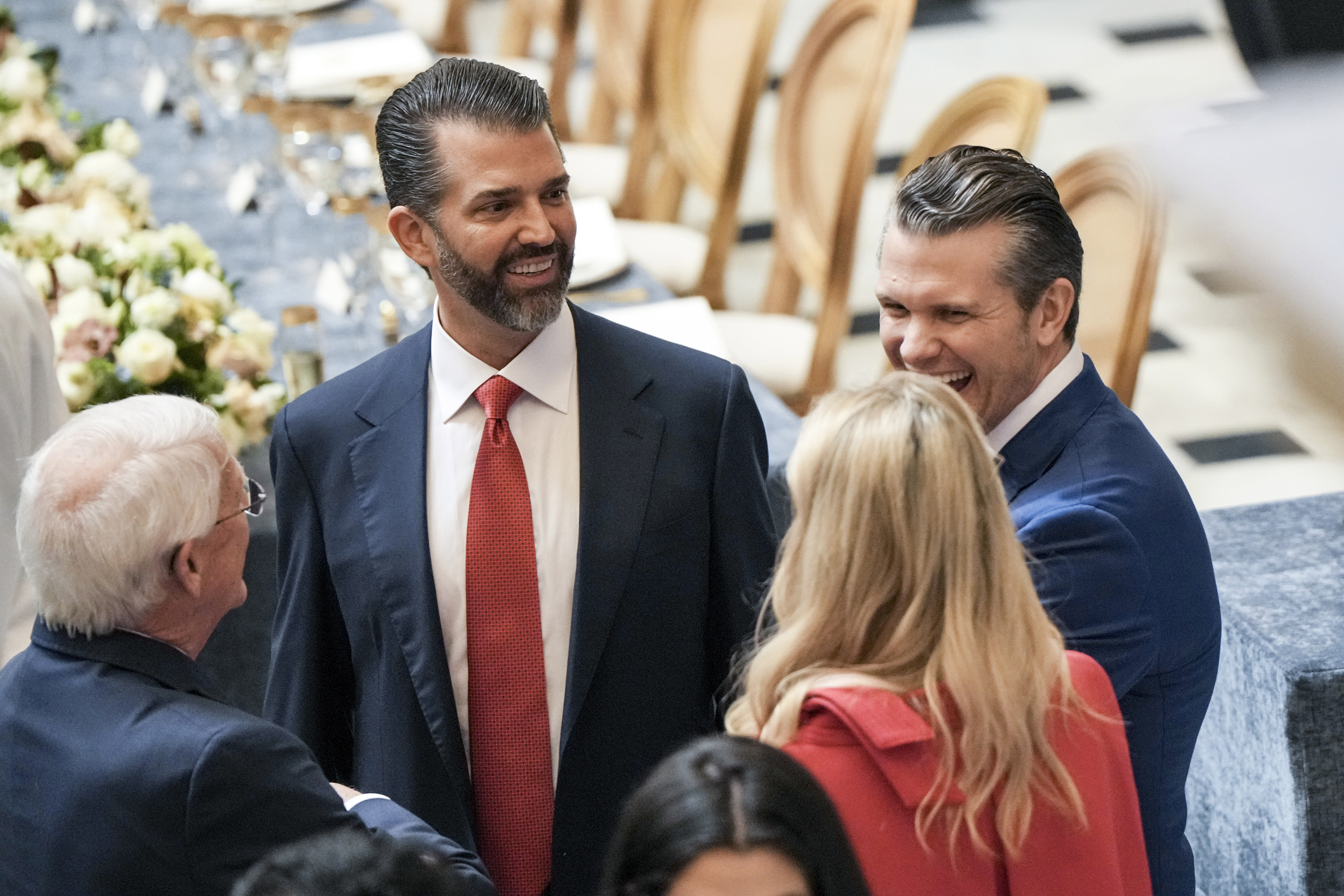
    Donald Trump Jr.’s venture capital firm, 1789 Capital, is leading a new funding round in Polymarket that values the prediction market at $21 billion, a spokesperson for 1789 Capital said Monday.

    Polymarket plans to raise $1 billion, including around $300 million from 1789 Capital, the spokesperson, Alexa Henning, said. The investment firm previously invested about $200 million in the prediction market, which is currently valued at about $15 billion.

    Prediction markets such as Polymarket and Kalshi have exploded in popularity over the past year. The platforms allow users to place wagers on the outcome of a wide variety of events, such as what the president will say in a speech or who will get married on “Love Is Blind.”

    The Trump family has built up a financial stake in the industry since last year. Donald Trump Jr. joined Kalshi as an adviser last year and received shares in the company worth more than $300,000. He also began advising Polymarket and invested in it via 1789 Capital.

    At the same time, his father, President Donald Trump, has taken steps to boost the industry. Michael S. Selig, whom the president appointed to lead the Commodity Futures Trading Commission, which oversees prediction markets, has spoken enthusiastically about the companies and sued states that tried to regulate them. The president declared on Truth Social that prediction markets would “thrive” under his leadership and said Selig was “respected by all.”

    Bloomberg earlier reported that 1789 Capital was leading Polymarket’s funding round.

    Many of the companies that 1789 Capital has invested in have large government contracts, while others, like Polymarket, have benefited directly from new Trump policies or rollbacks of existing laws, The New York Times has reported. The investment firm also bought shares in some of the most coveted private companies before many went public, including SpaceX, Anduril, Cerebras and Reflection AI.

    Two years ago, 1789 Capital managed a few hundred million dollars. It now oversees more than $3 billion.

    Donald Trump Jr. told the Times this year that he invested as a private citizen and held “no policy position and no role within the administration whatsoever.”

    This article originally appeared in The New York Times.

  • Progressive Christian Democrats aren’t likely to win over conservative white evangelicals

    Progressive Christian Democrats aren’t likely to win over conservative white evangelicals

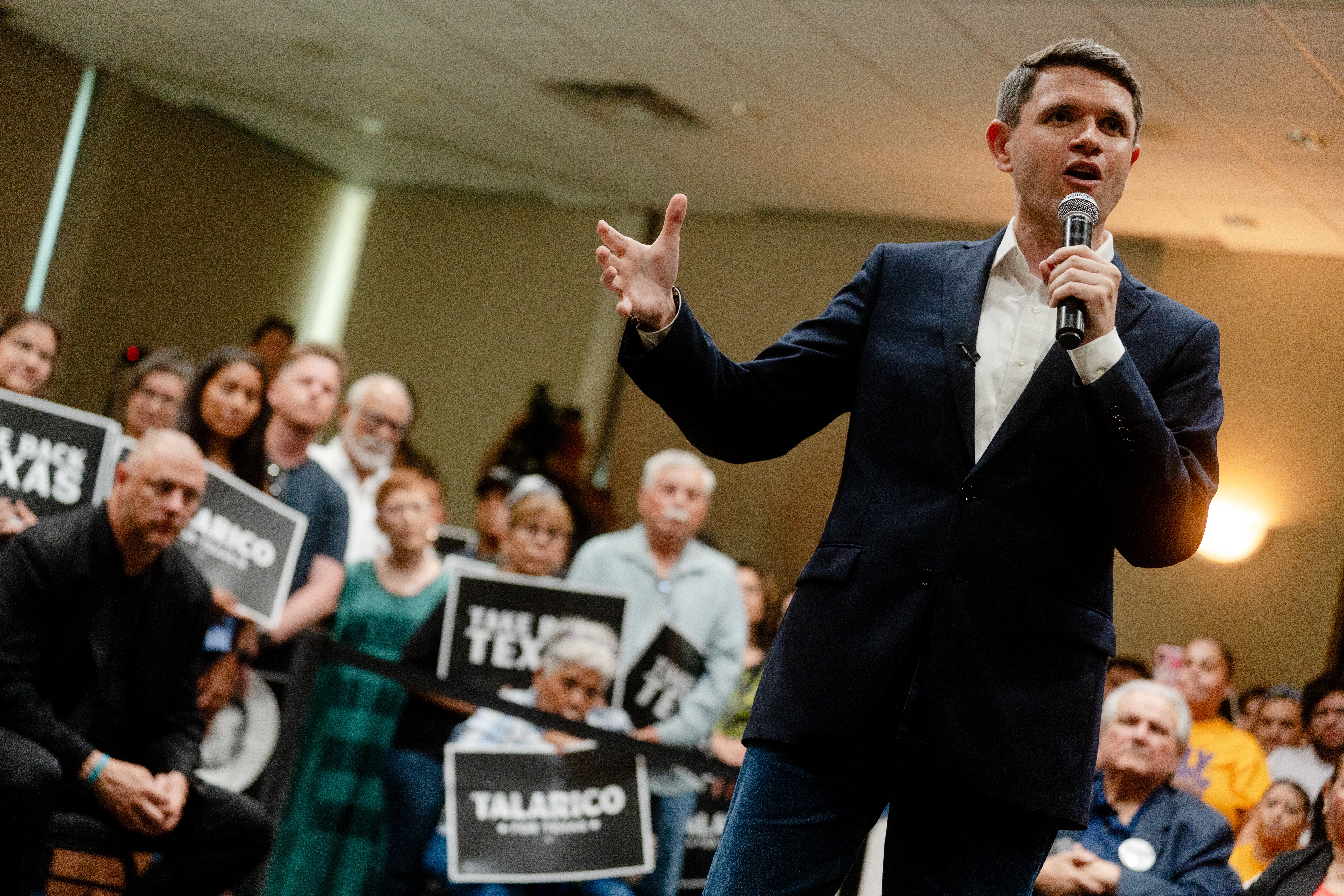
    A group of Democratic candidates has drawn attention this election cycle because of their deep religiosity. Two prominent candidates for the U.S. Senate, for example, James Talarico of Texas — a Presbyterian with a recent seminary degree — and Adam Hamilton of Kansas, senior pastor of a United Methodist megachurch, frequently discuss their faith and cite the Bible on the campaign trail.

    But those candidates are not winning the support of many white evangelicals.

    A recent Fox News poll showed that only 21% of white evangelical voters in Texas support Talarico, even in a race against a scandal-ridden opponent who had an extramarital affair.

    Policy differences over abortion and LBGTQ+ rights — two issues that have long been central concerns for white evangelical conservatives — at least partly account for this. Talarico and Hamilton both support abortion rights, and they’re running against Republicans who do not.

    But a more fundamental issue also makes it hard for Christian Democrats such as Talarico and Hamilton to make inroads with conservative white evangelical Christians. The Religious Left champions cultural pluralism, while a Christian national identity drives the Religious Right — and there’s an unbridgeable gap between the two. This divide has helped to shape American politics for more than a half century.

    It helps explain why more than 80% of white evangelical voters cast their ballots for President Donald Trump in each of his three presidential races. It’s also the reason why, in 1980, a majority of white evangelical voters supported Ronald Reagan, who had been divorced and was a less frequent churchgoer, over President Jimmy Carter, a Southern Baptist deacon and Sunday school teacher.

    In each case, white evangelicals considered a candidate’s faith and personal behavior to be far less important than their top priority: finding someone who championed their understanding of the place of Christianity and Christian-based sexual morals in the nation.

    This wasn’t always the case. In the mid-1970s, leading American evangelical magazines such as Christianity Today called for the election of morally exemplary, born-again Christian candidates on the grounds that only Christian politicians could rescue the nation from moral decline. When Carter ran for president in 1976, many evangelicals decided he fit the bill, and backed the Democrat.

    But some evangelicals quickly regretted this choice. Both Carter and more conservative evangelicals believed that the United States was morally adrift. Yet, their understanding of the sources of that national moral decline differed.

    For Carter, whose moral consciousness was shaped in part by his interactions with civil rights activists, racism and the destruction of the environment were moral evils. That meant that the solution to America’s moral problems would focus on greater equality, as well as a more responsible use of the environment. The United States faced a “moral and spiritual crisis,” he said — but that crisis could best be addressed by a reduction in “self-indulgence and consumption,” not through a public affirmation of America’s Christian identity.

    Moreover, as a moderately liberal Baptist — a tradition that had historically championed religious liberty — Carter was a religious pluralist who eschewed public endorsements of Christianity and embedding his personal religious beliefs in public law.

    He opposed the White House church services that President Richard Nixon had created. He publicly endorsed the Supreme Court rulings that curtailed classroom prayer in public schools, because he said that “as a Baptist,” he believed that “the Government ought to stay out of the prayer business.” And although he personally opposed abortion, he refused to support a constitutional amendment to overturn the Supreme Court’s Roe v. Wade decision — which conveyed a right to have an abortion — because he thought that in a pluralistic society, it was improper for the federal government to impose one religious group’s view of abortion on others.

    Conservative evangelicals, however, recoiled from these views. To them, the sexual revolution of the 1960s and 1970s was a much greater evil than racial injustice or environmental destruction. It threatened the fundamental building block of society: the family. And the source of the sexual revolution, they thought, was a national rejection of God, which was manifest not only in religious pluralism but also in the Supreme Court decisions on school prayer and abortion.

    Made By History sponsors. FOR USE ON MADE BY HISTORY STORIES ONLY.Inquirer Staff

    In the late 1970s, this concern prompted the formation of the Christian Right. At its heart, this movement was a campaign to restore an imagined lost world of the 1950s — an era that had combined more conservative sexual standards with national legislation to make “In God We Trust” the national motto. Conservative evangelicals thought those values had been lost amid the anti-war protests and cultural changes of the 1960s and 1970s.

    Some evangelical leaders argued that the answer was mobilizing and electing a president who shared their hunger to return to the world of the 1950s. “The hope of reversing the trends of decay in our republic now lies with the Christian public in America,” Moral Majority founder (and Baptist megachurch pastor and televangelist) Jerry Falwell declared in 1980. “Our Founding Fathers separated church and state in function, but never intended to establish a government void of God … We cannot be silent about the sins that are destroying this nation … We must turn America around or prepare for inevitable destruction.”

    White evangelical Christians had voted for Republican presidential candidates before — including in 1972, when they overwhelmingly supported Nixon’s reelection. But Falwell’s Moral Majority and other allied groups, such as Christian Voice and the Religious Roundtable, broke new ground in channeling evangelicals’ generally conservative instincts into a much more tightly focused campaign to restore Christian values through public law. That campaign put them at odds with religious pluralists like Carter.

    These new groups backed Reagan, and other candidates like him, who they believed would oppose further secularization of the nation’s laws and culture and prevent any further sexual liberalization. The Religious Right also opposed candidates who were strong cultural pluralists, since they thought that secularization and a pluralistic understanding of the nation’s religious identity had undermined the country’s moral foundation.

    Sometimes that meant backing less personally devout, morally compromised candidates, since the most vocal advocates of a public affirmation of Christianity’s place in public life were sometimes infrequent churchgoers whose sexual lives were far from monogamous. To these evangelical activists and voters, politicians’ policy choices mattered far more than their personal behavior. As Christian Voice executive director Richard Zone put it when endorsing Reagan, he “was not the best Christian who ever walked the face of the earth.” But to Zone, “we really didn’t have a choice.”

    When the group issued a “Moral Report Card” in 1980 that rated every member of Congress on the morality of their votes, pious churchgoers such as Sen. Paul Simon (D-Ill.) and Rep. Robert Drinan (D-Mass.), the only Catholic priest serving in Congress, received moral ratings of zero, while Rep. Richard Kelly (R-Fla.), who was sentenced to prison a few months later for accepting bribes in the Abscam scandal, received a rating of 100. Even the devout evangelical Baptist Sen. Mark Hatfield (R-Ore.), a liberal Republican who opposed abortion but warned against “mix[ing] piety with patriotism,” found himself at odds with the Christian Right.

    And little has changed in terms of this picture over the last 46 years. Once again, in 2026, in Kansas, Texas and elsewhere, evangelical voters have a choice similar to the one that evangelicals confronted in 1980: vote for the most religiously devout Christian candidate on the ballot or vote for a candidate who shares their vision of the nation.

    If history is any indication, most of them will choose the latter. Fundamentally, white evangelical voters understand that progressive Christian candidates are usually cultural pluralists whose faith is shaped by values of equality. They don’t see secularization and the sexual revolution as the threats that most white evangelicals do. Instead, progressive Christians are often more concerned about what they see as the threat to the rights of religious and sexual minorities posed by Christian nationalism.

    This history suggests that if progressive Christians like Talarico and Hamilton win their House and Senate races in November, it will be by overcoming white evangelical opposition, not because they hit upon a formula to win over the most conservative churchgoers.

    Daniel K. Williams is an associate professor of history at Ashland University and the author of God’s Own Party: The Making of the Christian Right.

    Made by History takes readers beyond the headlines with articles written and edited by professional historians. Opinions expressed do not necessarily reflect the views of The Inquirer.
  • John Fetterman backs Donald Trump on data centers, blames China for ‘misinformation’ on AI

    U.S. Sen. John Fetterman said Monday he agreed with President Donald Trump’s call to “Let Data Reign” after the president made a lengthy post criticizing the widespread backlash to data centers.

    “There’s nothing more damaging to a Democrat than agreeing with Trump AND data centers — but what’s right is right,” said Fetterman, who has repeatedly angered members of his own party by backing Trump’s agenda.

    “We must win the war for AI supremacy over China. They foment the ‘anti’ argument through misinformation,” Fetterman said on X.

    The issue has increasingly taken center stage ahead of the midterm election, including in Pennsylvania. Fetterman, who does not face reelection until 2028, blamed China for fueling the public outcry against data center development in the U.S. as the two nations compete in the AI industry.

    Fetterman has remained supportive of development even as voter sentiment has turned sharply against the industry. Six in 10 likely Pennsylvania voters said they opposed the construction of data centers to support artificial intelligence in a poll released last week by The Inquirer, New York Times, and Siena University.

    Trump made similar arguments on his Truth Social platform earlier in the day, saying that China “could not be happier” with the political movement against data centers.

    “The only reason that communities throughout the U.S.A. should not want Data Centers is if they want to end up being backwards and poor. If they want to be successful and rich, with far lower taxes and jobs all over the place, let Data Reign,” Trump said.

    That Fetterman backed the president on data centers may not have come as a surprise to voters who’ve been following the senator’s moves.

    Two-thirds of Pennsylvania Democrats who are likely to vote this year believe Fetterman supports Trump too frequently, according to last week’s poll.

    Overall, 69% of Democratic voters have an unfavorable opinion of him, which could be trouble if he seeks reelection as a Democrat in 2028.

    And Democrats were also the voters most likely to oppose data centers — with 77% opposing their construction in the Pennsylvania poll.

    Fetterman’s post in support of data centers comes as the state’s other top Democrat, Gov. Josh Shapiro, has been backing away from his previous support.

    Shapiro issued an executive order two weeks ago enacting a host of restrictions for new projects. And the governor has traded attack ads with his Republican opponent Stacy Garrity over who has been more supportive of the industry.

    Fetterman, on the other hand, said in a post last week that China would benefit from an overreaction by U.S. politicians.

    “I reject the political pandering and hyperbole over data centers or AI doomsdaying,” he said.

  • With shutdown looming, House leaders aim to quickly pass funding bill

    With shutdown looming, House leaders aim to quickly pass funding bill

    House lawmakers, fresh from their August break, are expected to vote this week on a Senate-passed measure that would fund federal agencies through Dec. 11, avoiding a government shutdown before the Nov. 3 midterm elections.

    Republican leaders aim to pass the stopgap funding bill Tuesday under a “suspension of the rules” — a fast-track process that requires support from a two-thirds majority of the chamber, according to two House GOP aides who spoke on the condition of anonymity to candidly discuss party strategy.

    Bills on the House suspension calendar get limited time for debate and are not subject to amendment or other procedural hurdles, allowing Republican leaders to move quickly to avert a shutdown. With control of Congress on the line, both parties are eager to return to the campaign trail.

    “That’ll be a priority over in the House because we get things done,” Majority Whip Tom Emmer (R-Minnesota) said Sunday in an interview on Fox News.

    The House passed its own stopgap funding measure in July, but it lacked support in the Senate. Senate appropriators Susan Collins (R-Maine) and Patty Murray (D-Washington) instead drafted their own stopgap bill, which passed the Senate on a bipartisan 90-6 vote.

    In addition to funding the government past the Sept. 30 deadline, the measure includes additional funding for housing and nutrition programs requested by the White House. It also would temporarily block the White House budget office from adopting a rule to give political appointees more power over discretionary grants.

    Despite that constraint on its authority, the White House has issued a statement of administration policy in support of the legislation.

    “President [Donald] Trump strongly opposes another futile Government shutdown,” the White House said in the statement. “Every Member of Congress should support passage of this [bill] to keep the Government open as discussions on fullyear appropriations continue.”

    If the House approves the measure, lawmakers will be free to head back out of town by the end of the week.

    Avoiding a shutdown is just the most urgent of several items on lawmakers’ to-do list before November elections. Republicans also hope to approve fresh funding for the war in Iran and implement new restrictions on voting — top Trump priorities. And they want to provide emergency assistance to American farmers battered by Trump administration policies, including tariffs and high fuel costs caused by the Iran war.

    GOP lawmakers are looking to use the reconciliation process to advance all three priorities, which would allow them to pass with a simple majority in both chambers, forgoing Democratic support. But last month, Senate Republicans delayed a vote on a budget framework — the first step in the reconciliation process — amid opposition from multiple members of the conference.

    Senate Budget Committee Chairman Ron Johnson (R-Wisconsin) told reporters that senators would bring forward a “better” budget framework in September.

    Work on the federal farm bill — which is due to expire Sept. 30 — is also stalled just as lawmakers are eager to find another way to demonstrate support for a critical constituency. The House passed its version in April, but the Senate has struggled to advance its own version amid opposition from Democrats who do not support reductions in federal funding for food stamps proposed by Republicans.

    With the Senate not due back in Washington until Sept. 14, House lawmakers are in a holding pattern on these measures. Emmer, speaking to Fox News on Sunday, expressed frustration with the Senate logjam.

    “We sent our priorities over to the Senate,” he said. “We sent the Clarity Act. … We sent the Save America Act several times, and it sits over there, languishing in the Senate. … It really is going to be on the Senate’s shoulders to start getting something done when we get back.”

    Besides voting on the stopgap budget bill this week, the House is expected to vote on a censure motion against Rep. Chuck Edwards (R-North Carolina) following a recommendation from the Ethics Committee.

    Earlier this month, the committee found that Edwards engaged in “persistent unprofessional and inappropriate conduct” toward two female staffers, behavior Edwards denies.

  • Judge once again bars Postal Service from restricting mail-in vote

    Judge once again bars Postal Service from restricting mail-in vote

    WASHINGTON — A federal judge Thursday once again temporarily prohibited the U.S. Postal Service from implementing a plan to restrict mail-in voting, put in place after a directive from President Donald Trump.

    U.S. District Judge Indira Talwani had cleared the way for the Postal Service to move forward just the day before, but Thursday, she issued a new order concluding that the agency’s plan, released late last week, appeared to overstep its legal mandate and could lead to chaos by changing rules fewer than 70 days before an election.

    She wrote that a group of Democratic-led states that had sued “face irreparable harm where they are required to comply with a likely unconstitutional regulation for which compliance is practically impossible as to the 2026 midterm elections, now little more than two months away.”

    “Most plaintiff states have already ordered their mail ballots, and some are required by state law to send them to eligible voters as early as next week,” she added.

    She wrote that while the Supreme Court had “admonished” her Monday that the Postal Service had not finalized any changes when the groups sued initially, making court action premature, the stakes had changed since then because of the step the agency took late last week to formalized its plan.

    Her ruling marked the third court decision on the issue in less than a week, a whipsaw of action that threatened to confuse voters. But each delay has reduced the administration’s chances of clearing the legal hurdles to execute its logistically complicated mail-in ballot plan before the November election. She blocked the rule from taking effect for 14 days, and she had previously scheduled a hearing to discuss the legality of the rule on Sept. 3.

    In her order, Talwani explained that the prospect of the new rule suddenly taking effect carried “significant risk of their members’ disenfranchisement” for voting rights organizations, which had also sued, along with the states.

    She ticked through a list of requirements that state election officials would be required to meet to ensure delivery of ballots, including receiving the agency’s approval for new envelope designs and submitting voters’ information into an online portal run by the Postal Service.

    “Where a state or local election official does not obtain envelope and return envelope design approval, or does not upload voter information, or does not include unique intelligent mail bar codes on ballot envelopes, the U.S.P.S. will not mail ballots to voters,” she concluded.

    In March, Trump issued an executive order that required the Department of Homeland Security to create and circulate state-by-state citizenship lists to state officials. It further urged states to provide the U.S. Postal Service with their own lists of voters eligible to cast ballots by mail.

    Multiple lawsuits were filed challenging the order, arguing that Congress and the states set rules for elections, not the executive branch. The challengers also argued that no federal law gives the Postal Service the power to make those kinds of election-related rules.

    On Monday, the Supreme Court ruled that one suit, brought by a group of Democratic-led states, was premature because the administration had not started implementing its plans.

    But late Friday, just before the court ruled, the Postal Service formally published a new plan to comply with the executive order. Under that plan, the service would not deliver mail ballots in states that do not share voter data with the agency and would only deliver ballots that meet certain criteria.

    Lawyers for the Trump administration and the groups challenging the rule continue to clash over a straightforward issue: Whether or not the Postal Service’s plan would mean the agency would be taking on a new role verifying voters and potentially rejecting ballots in the midterm election in November.

    In a filing Thursday, the Postal Service denied that its proposal left room for the service to second-guess states on which voters were eligible to cast a ballot.

    “U.S.P.S. will not scrutinize those decisions or alter that information in any way — instead leaving it entirely up to the states to accurately and lawfully identify its residents who are eligible to vote by mail,” the filing said. “The Postal Service will not determine voter eligibility, ballot content, mailing or receipt deadlines, or ballot-counting procedures.”

    Instead, it described the changes as minor logistical improvements and streamlining, such as requiring voters to submit their addresses ahead of time to improve processing. It said the changes were designed “as a matter of the Postal Service’s own judgment.” Lawyers for the service argued it is authorized to adopt mail rules under statutes adopted by Congress.

    The challengers argue that the Postal Service rule is an unconstitutional violation of the separation of powers, allowing the executive branch to intrude into elections. They say that no federal law permits such action by the agency, and they assert that the Trump administration’s actions are likely to sow confusion among voters and to lead to disenfranchisement.

    The agency has repeatedly said that it would not attempt to impose the new requirements, unless it was explicitly allowed to by the courts.

    A series of lawsuits in Massachusetts and the District of Columbia by different groups have challenged Trump’s effort to discredit and erect obstacles to mail-in voting. The lawsuits have challenged both Trump’s executive order and the Postal Service rule, focusing on their implementation this year and beyond.

    This article originally appeared in The New York Times.

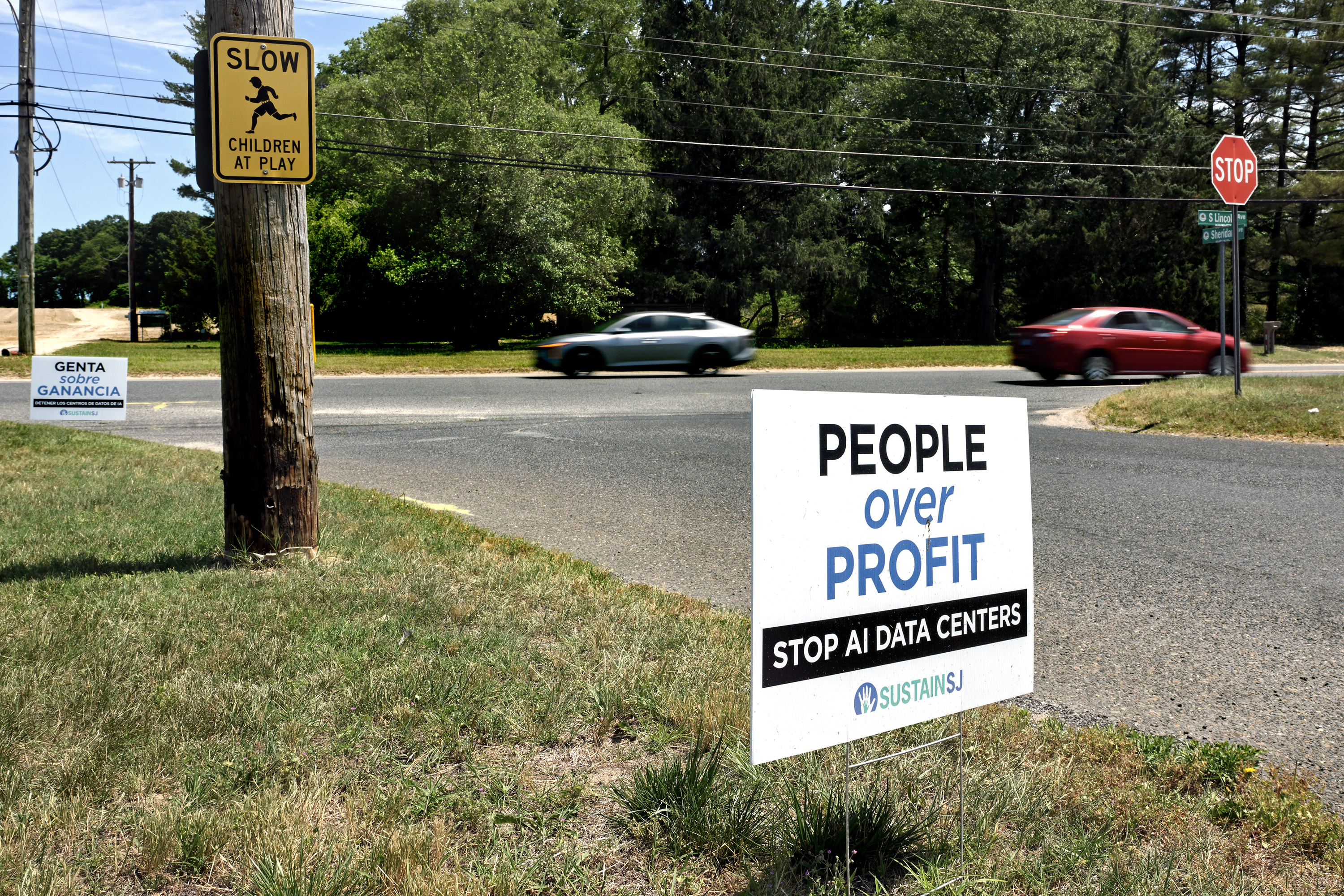
  • The 1960s blueprint for fighting against data centers

    The 1960s blueprint for fighting against data centers

    When hundreds of Upper Merion residents came to a township planning meeting in the spring of 2026 to oppose construction of five proposed data centers in King of Prussia, they discovered that, according to the developer, they had little recourse. The plans were code compliant, Brian J. O’Neill of MLP Ventures claimed. They required no rezoning, no variances — and no vote from township officials.

    Yet, the residents didn’t just roll over. Instead, they set about organizing. A petition against the proposal garnered roughly 18,000 signatures — a majority of the township’s population. After an intense three-month campaign against the plans, the township Board of Supervisors rejected them in August. O’Neill vowed to appeal, and accused the board of violating state and local planning codes (which they denied), so the fight may not be over.

    The board’s action reflected how fierce blowback across the country has politicians across the ideological spectrum rushing to limit data center construction. Both Texas Republican Gov. Greg Abbott and Pennsylvania Democratic Gov. Josh Shapiro recently placed limits on data center construction.

    As the campaign against data centers proceeds, opponents can learn from the experiences of towns caught up in the high-tech manufacturing boom of the mid-20th century. That history shows what happens when residents disagree with politicians on these initiatives. And, while not every locality will succeed in stopping a data center, what residents build in these campaigns can outlast the fight itself.

    In the 1950s and 1960s, city councils throughout the San Francisco Bay Area eagerly courted technology industries to build campuses in their cities. Officials in these places saw high-tech as the future of American industrialization. They hoped that these new facilities would become an economic boon for their cities and sought to capture new tax dollars from businesses and new residents. Some places, like San José, went so far as to give land to companies like IBM without following the usual avenues for development.

    Cities weren’t the only ones that saw high-tech industry as the economy of the future. Stanford University, under the guidance of administrators who had worked in scientific research during World War II, saw high-tech research and development as an engine for economic growth for the university. They developed new programs around electrical engineering and electronics research, created industry-university worker programs that allowed employees to enroll in Stanford classes and encouraged students to found their own companies.

    In 1954, Stanford used a piece of its vast landholdings to create the Stanford Industrial Park (later, Stanford Research Park), which attracted the likes of Fairchild Semiconductor and Kodak, alongside companies founded by one-time Stanford students such as Varian Associates and Hewlett-Packard. Business developers at the university were right: within a decade, the new office park was generating millions of dollars of new revenue for the university.

    In 1960, the university and City of Palo Alto announced that the Ampex Corporation planned to build an office campus in the research park outside Los Altos Hills. The city council had already approved rezoning the land for light industry, and the plan appeared poised to proceed.

    Neighboring residents, however, were not so keen on the university’s plans. Stanford neglected to consider the impact of the development on the local communities. Residents expressed concern about increased traffic and smog, as well as the potential environmental degradation of the pastoral foothills. They were also irritated by Stanford’s seemingly smug attitude toward community relations.

    Through community and alumni networks, residents formed the Citizens Committee on Regional Planning (CCRP) to organize resistance to the Ampex plans. Within a month, CCRP organized community meetings, editorials and letter writing campaigns so forceful that Stanford University President Wallace Sterling referred to the event as the “Battle of the Hills.” One resident expressed dismay to Sterling, noting that “we now have smog, congestion, and acres of asphalt where we once had fresh air and freedom of movement in a beautiful countryside — one of the finest climates on earth!”

    Hundreds of letters in opposition to the planned construction poured into the Sterling’s office: within four months of announcing the plan, nearly 400 such letters had reached the university president. Meanwhile, residents flooded the letters-to-the-editor section of the Palo Alto Times with opposition to the plan.

    Made By History sponsors. FOR USE ON MADE BY HISTORY STORIES ONLY.Inquirer Staff

    In response, the university’s business manager, Alf Brandin, took to the pages of the newspaper to cast the university as a reluctant developer, writing that Stanford was “doing everything we possibly can to produce income” to support the university’s mission. Stanford also pushed back against criticism by reminding residents of the role the university had played in preserving open spaces — in the form of its campus lands — and in encouraging economic development that benefited the community.

    When the letter and editorial campaigns failed to budge Stanford, residents turned to their next tool: the referendum. In June, five months after Stanford announced its plans, organizers began circulating petitions throughout Palo Alto calling on the city council to rescind its decision to rezone the land for industry and allow residents to vote on the issue. Four days before the rezoning ordinance became official, organizers filed a petition with the city clerk with 2,000 signatures, double the amount required to force a vote.

    Placed on the ballot that November, the Stanford lands were now in the hands of residents. A “yes” vote would keep the city council’s rezoning in place and allow Ampex to proceed with construction, while a no vote would kill the development.

    The debate continued to play out in the pages of the Palo Alto Times. The newspaper’s editorial board came out in favor of Stanford’s plans, arguing that residents’ concerns over the loss of a foothill overlooked the way in which Stanford’s landholdings “constituted a free park” for Palo Alto and its surrounding communities.

    This sort of argument proved persuasive. In November, the referendum to stop the construction lost in a close vote. Stanford’s grassroots campaigning had helped to convince voters to bless the construction plans.

    Yet, this win proved to be a pyrrhic victory. The yearlong political campaign had spooked Ampex, which decided to build its new facilities elsewhere.

    Ultimately, the neighbors won in another way as well: their campaign against the Ampex development had created a durable organizing network. Those involved in the fight continued organizing against high-tech development plans, forming new conservation and environmental groups and galvanizing networks that successfully shaped future decisions and plans.

    Within five years, new waves of conservation-minded city council candidates displaced their more developer-friendly predecessors. High-tech developers now had to contend with the concerns of communities.

    The successors and offshoots of the high-tech entrepreneurs and companies who propelled the rise of high-tech industry in California in the 1950s and 1960s are now building data centers. Residents in Pennsylvania, California, Texas, Virginia, Nevada, Nebraska, Ohio and elsewhere have come out in heavy opposition to their plans, concerned over their footprint, water use, electricity needs and taxes. They see these downsides as outweighing the economic benefits and new jobs that boosters promise the data centers will bring to communities — O’Neill released an economic impact study claiming that building the King of Prussia data centers would have created 10,000 construction jobs and more than $55 million per year in local tax revenue.

    States and counties across the United States have passed moratoriums on data center construction while congressional and gubernatorial candidates find themselves taking a stand on the issue as well. Congress is also getting involved. Among the most forceful proposed efforts is California Rep. Ro Khanna’s Data Center Bill of Rights, which seeks to establish zoning restrictions, require independent environmental and economic impact statements for any project, and protect residents from higher utility bills.

    The history of the fight over high-tech industry in the 1950s and 1960s suggests that those crusading against data centers may not win the short-term fight. Residents and local governments might find the economic arguments of data center backers persuasive just as pro-development arguments won over the voters in Palo Alto decades ago. Yet, even when they fail in the short term, these campaigns might spook companies and can seed organizing networks that will shape local development for years to come.

    Jason A. Heppler is the senior developer at the Roy Rosenzweig Center for History and New Media and Adjunct Professor in the Department of History and Art History at George Mason University. He is the author of Silicon Valley and the Environmental Inequalities of High-Tech Urbanism

    Made by History takes readers beyond the headlines with articles written and edited by professional historians. Opinions expressed do not necessarily reflect the views of The Inquirer.

  • State Department advances Trump crackdown on ‘far-left terrorism’

    State Department advances Trump crackdown on ‘far-left terrorism’

    WASHINGTON — The State Department on Wednesday designated three groups based in Europe, including two that advocate Palestinian rights, as transnational terrorist organizations.

    The move is part of the Trump administration’s fight against what it calls a “resurgence of far-left political terrorism” worldwide, a focus that many security experts say is disproportionate.

    In a statement, the department said that it would impose sanctions on Palestine Action, which is based in Britain and organizes acts of support for Palestinians and opposition to Israeli policies; Masar Badil, another pro-Palestinian group with branches in Western Europe and Canada; and Autistici/Inventati, known as A/I Collective, which is based in Italy and offers free digital tools to leftist activists around the world.

    Even as many Western leaders and analysts raise alarms about the growing strength of far right-wing movements with violent tendencies, the Trump administration has mainly targeted what it calls an even more dangerous alternative on the left. In July, Secretary of State Marco Rubio hosted an international summit on the subject, which the State Department billed as a response to “a deliberate, ideologically motivated strategy to destabilize free societies by violently targeting our political and economic systems” on the part of far-left groups.

    That threat has long been “a blind spot in the international community’s counterterrorism focus,” the department said in a statement at the time.

    Many conservatives have been galvanized by the issue by recent events such as pro-Palestinian demonstrations seen by critics as sympathetic to Hamas and hostile to Israel, anti-Trump protests in U.S. cities that have sometimes turned violent and the assassination of the pro-Trump activist Charlie Kirk in September 2025.

    But experts say that talk of a broad, coordinated left-wing menace exaggerates the threat to America.

    Liberal groups such as the American Civil Liberties Union also warn that it could have a chilling effect on legitimate speech and give a pretext for intimidating or even prosecuting critics of the Trump administration.

    The State Department accused the newly designated groups of having terrorist ties, though its announcement focused on A/I Collective, which it said tailors digital services to help left-wing radical groups organize, communicate and plan violent attacks. That help includes sharing “target information” and tactical guidance to “many of the most active and violent antifa groups in the United States,” according to the department.

    The A/I Collective’s website says that it offers a secure platform for activists to communicate anonymously, free from government surveillance. It defines its core principles as “anti-fascism, anti-racism, anti-sexism, anti-militarism.”

    Founded in 2020, Palestine Action opposes Britain’s support for what it calls Israel’s “genocidal policies” toward the Palestinians. The group organized several pro-Palestinian protests in London before the British government banned it last year when five of its members were charged with breaking into a Royal Air Force base and spraying red paint on two aircraft.

    The United Nations High Commissioner for Human Rights said the ban raised “serious concerns that counterterrorism laws are being applied to conduct that is not terrorist in nature and risks hindering the legitimate exercise of fundamental freedoms across the U.K.”

    Masar Badil is a pro-Palestinian group that has published statements that “glorify violence” against Israel and has hosted webinars featuring members of Hamas and the Houthis, according to the Anti-Defamation League. The State Department said its action was based on the group’s close ties to Samidoun, a pro-Palestinian group that has been banned in Germany and declared a terrorist group by Israel and Canada.

    The U.S. terrorist designations mean that any U.S. controlled assets of the groups, and two specifically named Masar Badil leaders, will be frozen and anyone transacting with them — including by providing money or services — can be subject to civil or criminal action.

    The State Department said in a fact sheet on political terrorism last month that “far-left terrorist plots and attacks have sharply increased in the United States and Europe” since 2016, and that such terrorism “now accounts for more attacks and plots in the United States than any other ideological category.”

    Last year, the Trump administration declared the amorphous left-wing group antifa as a terrorist organization, offering little evidence of its threat.

    A September 2025 analysis by the Center for Strategic and International Studies, a nonpartisan research center, found that left-wing terrorist attacks and plots have risen in recent years and that left-wing attacks were on track to outnumber ones from the far right for the first time in 30 years.

    But left-wing violence has “risen from very low levels and remains much lower than historical levels of violence carried out by right-wing and jihadist attackers,” the report found.

    It added that the global leftist movement is disorganized and that its attacks “are remarkably less lethal overall than jihadist or right-wing attacks.”

    This article originally appeared in The New York Times.

  • Democrats to force Senate vote on Israel’s human rights practices

    WASHINGTON — Sen. Chris Van Hollen, D-Md., on Thursday plans to introduce a resolution that would order the Trump administration to provide Congress with a detailed accounting of Israel’s human rights practices in the West Bank, laying the groundwork to force a vote on the matter in coming weeks.

    The measure, the latest bid by Democrats in Congress to challenge the policies and actions of Israel’s government, invokes a provision of the Foreign Assistance Act that allows lawmakers to request information from the State Department about the human rights record of any country receiving U.S. security assistance.

    Cosigned by 10 Senate Democrats, the resolution is privileged, meaning that Van Hollen could force a vote on it even if Republican leaders refuse, as expected, to bring it to the floor. That could lead to yet another vote in Congress showcasing Democrats’ divide over Israel as a growing contingent in the party turns against the Jewish state.

    “We’ve seen ongoing human rights violations on the West Bank, but we’re going from bad to abysmal,” Van Hollen said in an interview.

    The resolution focuses on at least nine U.S. citizens who have been killed in the West Bank since January 2022, including Shireen Abu Akleh, a Palestinian American journalist killed in 2022, and Aysenur Ezgi Eygi, who was fatally shot by an Israeli soldier in 2024. It argues that Israeli authorities have failed to punish those responsible and that U.S. agencies have failed to conduct their own independent investigations or provide substantive information about existing ones.

    “If the United States Senate shines a spotlight on this, we will save lives,” Van Hollen said. “We will save the lives of American citizens. We will also save the lives of Palestinian civilians.”

    Concern about violence in the West Bank has steadily grown among Democrats in Congress. Last year, Sen. Cory Booker, D-N.J., introduced the West Bank Violence Prevention Act, which Van Hollen cosponsored, to impose visa and financial sanctions on people who commit or facilitate violence against civilians there. The bill attracted broad Democratic support but did not advance out of the Republican-led Foreign Relations Committee and was never brought up for a vote.

    J Street, the liberal pro-Israel advocacy group that backed that legislation, has argued that sanctions are needed to disrupt networks supporting extremist settlers and Palestinian militant groups and preserve the possibility of a two-state solution. The group has cited estimates that settler violence rose 30% during the first months of 2025 compared with the same period a year earlier.

    The issue has also prompted unusually sharp criticism from Israeli officials. Yechiel Leiter, Israel’s ambassador to the United States and a longtime settler, said earlier this year that extremist settler violence was a “stain” on Israel and was costing the country support in Washington. He said the Israeli government was taking this seriously.

    The issue has gained renewed focus this month following a new spate of violence in the West Bank with extremist settlers trapping two Palestinian families in their homes in the Israeli-occupied territories. One of the homes is owned by Louai Abu Ridi, an American citizen, prompting condemnation from U.S. officials including Mike Huckabee, the U.S. ambassador to Israel, who called the actions of the settlers “thuggish” and said the Israeli military and local police had acted at his urging to “remove the Israeli terrorists doing this.”

    “Actions by those who carried out this horrific act of terror meant to intimidate and harass this family are disgusting,” Huckabee said in a social media post this month.

    Shortly after, Leiter echoed the remarks, saying in his own post that “you cannot settle the land through destabilizing and disruptive behavior, as my esteemed colleague Mike Huckabee brilliantly put it when he spoke of ‘unsettling behavior.’”

    Extremist settlers have carried out at least 1,380 attacks in 250 communities in 2026, according to U.N. data from late July. Those settlers have faced a near-total lack of consequences.

    Van Hollen’s resolution would draw in the legislative branch to confront the issue directly.

    It would give the secretary of state 30 days to provide congressional committees with an unclassified report detailing what U.S. officials know about the killings, the status of investigations and the identities of potential suspects and Israeli security units involved.

    The administration would also have to determine whether credible information implicates any Israeli security units in such violence.

    The resolution also demands information about Palestinian children held under Israeli military law, including allegations of torture and other mistreatment.

    Van Hollen said the American deaths raised a broader question about Washington’s willingness to enforce its human rights laws against a close ally.

    “If we can’t get accountability for them,” he said, “how are we actually implementing our human rights laws with respect to the government of Israel as it relates to the West Bank?”

    “This has been building for a long time,” he added. “Enough is enough.”