Category: National Politics

  • Sen. John Fetterman appears in GOP convention video praising Trump on supporting steelworkers

    Sen. John Fetterman appears in GOP convention video praising Trump on supporting steelworkers

    DALLAS — In a remarkable move for a Democratic lawmaker, U.S. Sen. John Fetterman on Wednesday appeared in a video at the Republican midterm convention — an event specifically designed to boost GOP candidates this fall — in a way that praised President Donald Trump for his support of Pennsylvania steelworkers.

    The video was a clear escalation of a monthslong shift in which Fetterman has drifted from the Democratic Party. Though he has repeatedly rejected speculation that he would switch parties — and did so again after the video Wednesday — he has consistently criticized Democrats and praised Trump since the president took office.

    In the video — which introduced U.S. Sen. Dave McCormick (R., Pa.) as he took the stage — Fetterman said he and McCormick “will work with President Trump to fight and defend the steel way of life right here in the Steel Valley.”

    “I’m always going to stand with America. I’m always going to reject the extremes and socialism, and the anti-American way of life,” he said, repeating a common refrain in which he criticizes the leftist wing of the Democratic Party that has secured several high-profile wins this year.

    Fetterman, who was not physically in attendance at the American Airlines Arena in Dallas, was cheered and applauded after McCormick took the stage and said, “How great is John Fetterman, right?”

    In addition to McCormick, several vulnerable House GOP incumbents from Pennsylvania were at the convention. Fetterman’s video appearance came shortly after a speech from U.S. Rep. Rob Bresnahan (R., Luzerne), who represents one of the districts Pennsylvania Democrats are hoping to flip this year.

    U.S. Rep. Madeleine Dean (D., Montgomery), who traveled to Texas to protest the GOP convention, said she was “gravely disappointed” that Fetterman chose to participate in the GOP event rather putting his energy to electing Democrats in key Pennsylvania races — the latest in a growing list of transgressions.

    “I will tell you, from the ground, from suburban Philadelphia, my constituents are livid. Those who went out and knocked doors for him, they are absolutely livid,” she said the following day.

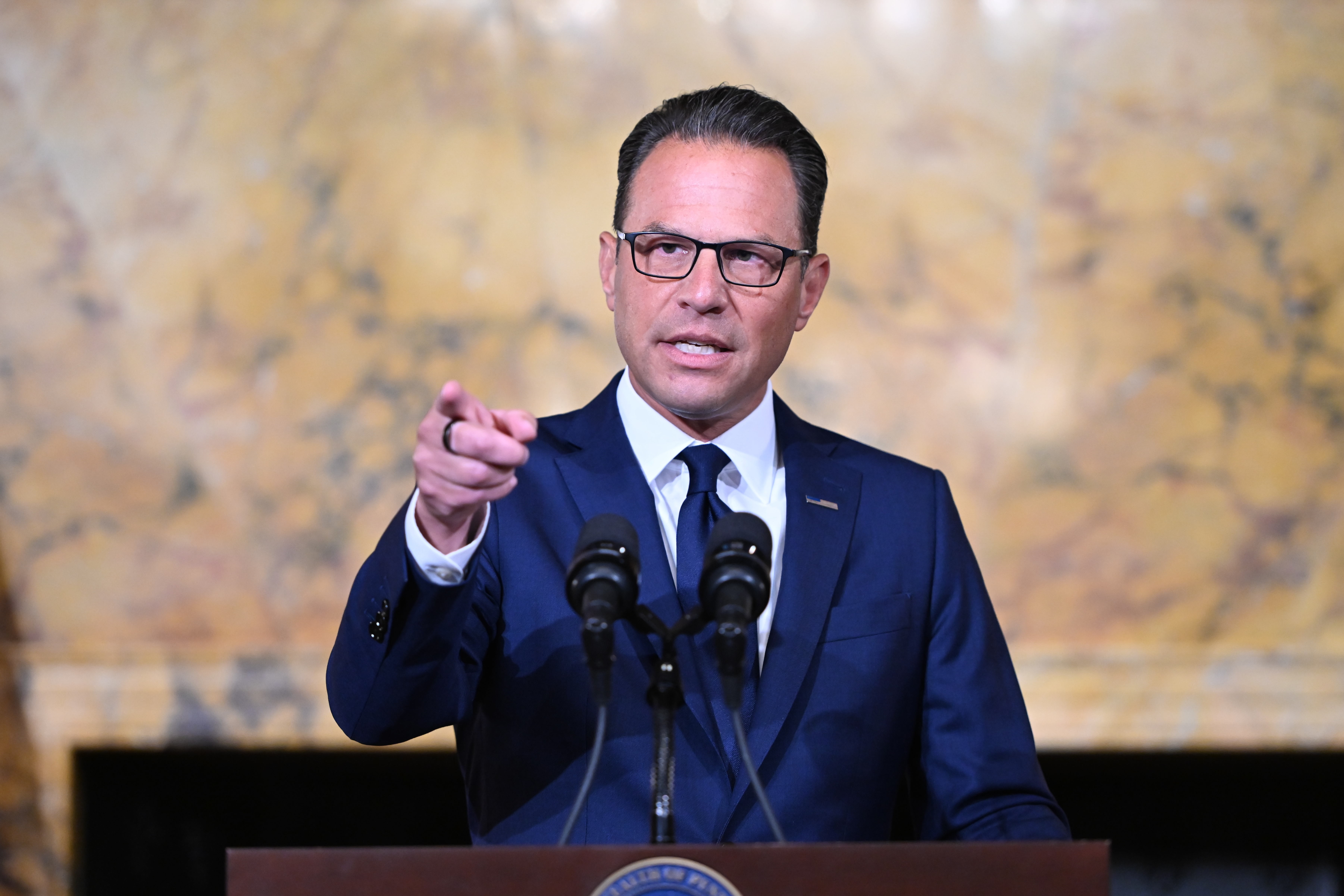
    Democratic Gov. Josh Shapiro, who has a frosty relationship with Fetterman, said Thursday at an event in Chester that he did not see the video before adding that he was “not going to get distracted” from his duties as governor and his reelection campaign.

    Democrats nationally are aiming to flip both the House and the Senate, which could put Fetterman in a powerful position as a swing vote if Democrats narrowly win control of his chamber.

    And while leaders in both parties have reportedly made appeals to him, Fetterman said in a statement after his video went out that he would not switch parties if the Senate changes hands.

    “I’m a lifelong Democrat who votes overwhelmingly with my party — and should the Senate flip in November, I will still be the 51st vote that I ran on,” he said, referencing his campaign promise in 2022 to be the Democratic vote that clinched the majority.

    On Thursday, a web page soliciting donations to Fetterman’s campaign committee included a link to the video and said Fetterman would “keep standing his ground, speaking his mind, and putting Pennsylvania first.”

    Fetterman has long been a supporter of the state’s steel industry as the former mayor of Braddock, the Pittsburgh suburb home to the Edgar Thomson Steel Works mill — which served as a backdrop to the video he shot for the convention.

    U.S. Steel has pledged to invest up to $2.5 billion into that mill and other Mon Valley Works plants around Pittsburgh since its sale to Japan-based Nippon Steel last year.

    The $15 billion sale had been held up for a year, opposed by both Republicans and Democrats concerned about a foreign takeover of the iconic company. Former President Joe Biden blocked the deal, and both Fetterman and McCormick criticized it before Trump took office.

    But in the early months of Trump’s term, McCormick was among those who privately lobbied the president to negotiate.

    Trump went on to secure a pledge that Nippon would have an American CEO, not lay off workers, and give the U.S. a so-called golden share in the company. Trump returned to Pennsylvania for his first rally in the state to celebrate the deal with steelworkers outside Pittsburgh.

    “Under Joe Biden, Democrats blocked critical investment in U.S. Steel, risking thousands of jobs,” McCormick said on stage Wednesday. “I promised Pittsburgh steelworkers I would fight for the steel way of life, and President Trump did, too. And with the president’s leadership, we delivered a deal protecting and creating over 100,000 American jobs.”

    Fetterman’s participation in the GOP conference — in the type of promotional video that is common at party conventions — is extremely rare.

    The Pennsylvania Democratic senator’s decision to record a video praising Trump ahead of the election may draw comparisons to Georgia Democratic Sen. Zell Miller’s fiery speech praising President George W. Bush — and denigrating Democratic nominee John Kerry — at the 2004 Republican National Convention.

    State Rep. Malcolm Kenyatta, a Philadelphia Democrat who ran against Fetterman in the 2022 Senate primary, drew a different historical comparison.

    “John is Benedict Arnold, but lazy. Could barely get off the couch in his million-dollar mansion to kiss Trump’s ring, he phoned it in like everything he does,” Kenyatta, a Democratic National Committee vice chair, said on X.

    U.S. Rep. Brendan Boyle, a Philadelphia Democrat, similarly blasted the senator’s video appearance at the rival party’s convention.

    “A year ago, I labeled John Fetterman ‘Trump’s favorite Democrat.’ Tonight, he yet again proves why,” Boyle said on X.

    And U.S. Rep. Chris Deluzio — a Western Pennsylvania Democrat who, like Boyle and Kenyatta, could be a candidate when Fetterman’s seat is up for election in 2028 — declared in a statement that Fetterman is “not going to be a Senator after 2028 — mark my words.”

    “If the failing Republican politicians want him, they can have him,” Deluzio said. “Like them, John Fetterman has failed the Pennsylvanians who elected him, who expected him to fight against White House corruption, health care cuts, and reckless war, not cheerlead it.”

    Fetterman has not yet said he will run for reelection and his dismal approval ratings among Democrats could make it difficult to win a primary — unless he switches parties. Among Republican voters, he was even more popular than McCormick in a poll last month from The Inquirer, the New York Times, and Siena University.

    Fetterman has developed a close association and friendship with McCormick since the Republican’s election in 2024. While Fetterman rarely makes public appearances in the state he represents, he has appeared at a few with McCormick.

    In a striking move, the bipartisan pair also set up a joint fundraising campaign committee this summer as Fetterman’s own fundraising lagged. This past week, McCormick came to Fetterman’s defense after the Wall Street Journal reported that the Democrat frequently avoided meeting with, and privately criticized, constituents and interest groups.

    “These stories are the latest example of outrageously disloyal staff and forces on the Left using anonymous leaks to cancel my friend John Fetterman,” McCormick wrote on social media. “They hate that he is an independent thinker who refuses to fall into line so they want to silence him.”

    In the convention video, Fetterman called McCormick a “great American, a great senator.”

    “Yes, he is in a different party, but I’m proud to count him as my great friend,” Fetterman said.

  • Supreme Court is asked to settle Missouri dispute causing electoral chaos

    Supreme Court is asked to settle Missouri dispute causing electoral chaos

    A group seeking to block Missouri from using a new congressional map that favors Republicans in November’s midterm elections has asked the Supreme Court to intervene.

    The appeal is the latest twist in an extraordinary legal fight that has plunged the state into electoral confusion just as it was supposed to finalize ballots and shortly before it begins distributing mail-in versions to voters.

    People Not Politicians, an anti-gerrymandering group, asked the Supreme Court to review the case late Wednesday afternoon, just minutes after its appeal was rejected by a federal appeals court.

    In a brief ruling, a three-judge panel of the U.S. Court of Appeals for the 8th Circuit said they did not have jurisdiction, or the plaintiffs had not met the legal bar, to obtain an injunction against Missouri’s use of the new map.

    The legal uncertainty has left voters and election administrators unsure about what Missouri map will be in play less than two months before voters head to the polls on Nov. 3.

    Roy Temple, a longtime Democratic strategist in Missouri and former head of the state Democratic Party, said voters “can’t possibly understand who they’re going to be voting for.”

    “There is a great deal of chaos,” Temple said. “The sad part is that it’s almost entirely inflicted by people whose responsibility was to ensure the orderly conduct of elections.”

    The appeals court ruling came after a furious night of legal developments Tuesday, as Supreme Court Justice Brett M. Kavanaugh and a federal judge in Missouri issued conflicting rulings less than a half-hour apart about whether the state could use the new map.

    Republicans currently hold six of Missouri’s eight congressional seats, and the new map, adopted by the GOP-controlled state legislature, is designed to give the party a good shot at picking up an additional seat.

    Kavanaugh denied an appeal by Missouri Secretary of State Denny Hoskins to overturn a Missouri Supreme Court ruling last week blocking the new map, without giving his reasoning. The state high court had ordered Missouri to use a 2022 map that gives Democrats a better chance of keeping two seats.

    But soon after Kavanaugh denied the appeal, a federal judge, Stephen Clark, a Trump appointee in the St. Louis area, ordered Hoskins in a separate case to use the new, more GOP-friendly electoral map.

    Hoskins and the state’s Republican leadership quickly announced that they would abide by that ruling. But the anti-gerrymandering group, People Not Politicians, appealed Clark’s temporary restraining order to the U.S. Court of Appeals for the 8th Circuit.

    “If the TRO remains in effect, elections officials will effectively be in contempt of either the Missouri Supreme Court or the federal district court if they implement either HB 1 or the 2022 map, leaving ballots and voters in flux,” attorneys for People not Politicians wrote in the group’s filing.

    HB1 refers to the law that created the new map. It was adopted by the legislature last year at the behest of President Donald Trump, who has urged GOP-controlled states to draw maps more favorable to Republicans to help the party retain control of Congress in a difficult election year.

    The result has been a nationwide redistricting war in which at least 20 states have redrawn — or are in the process of redrawing — legislative maps to favor one party or the other.

    The Missouri Supreme Court also threatened to hold Hoskins, the state’s top election official, in contempt late Tuesday. The state’s high court ordered Hoskins to explain why he approved the new congressional map favoring the GOP despite its order blocking it. It was set hold a hearing on the issue on Thursday.

    People Not Politicians collected more than 300,000 signatures to force a statewide referendum on the new Missouri map in November’s election.

    Hoskins rejected the petitions, saying the state constitution did not permit referendums on congressional redistricting. People Not Politicians sued.

    A federal judge upheld Hoskins’s move, and the state held its August primaries for November’s contests using the GOP-friendly map. Afterward, the state Supreme Court issued its ruling blocking the use of the new map.

    Missouri Attorney General Catherine Hanaway, a Republican, said in a statement that this would leave state officials in an impossible position: holding a general election using different maps than were used in the primaries.

    “We maintain that changing the congressional map in between the primary and general elections is simply not feasible and profoundly unjust to Missouri voters,” Hanaway said.

    State Sen. Rick Brattin, the GOP nominee in the district redrawn to favor Republicans, said in a social media post that he was disappointed in the U.S. Supreme Court ruling. He is taking on Democratic Rep. Emanuel Cleaver.

    Brattin praised the temporary restraining order from the lower court that preserves the maps used in the primaries, saying it would ensure that “voters will not be disenfranchised by being forced to vote in a different district for November.”

    “The stakes are high for our nation in the upcoming election,” Brattin posted on X, “and I look forward to continuing to campaign across the 5th District, where I know many voters feel like it’s time to send eleven-term incumbent Emanuel Cleaver home.”

    Former U.S. senator Claire McCaskill, a Democrat, called Hoskins “lawless” and said he had intentionally waited to act until “he thought it was too late for anybody to do anything about it.”

    It was extraordinary that the conservative state Supreme Court ruled against him, McCaskill said, noting that five of its seven members were appointed by Republicans.

    “So it was really a very strong signal that they had gone too far, but according to the new Republican Party, the law is a mere nuisance that can be avoided if there is political gain to be made,” McCaskill said.

    Boone County court clerk Brianna L. Lennon said that she has been left “in a holding pattern” while the various courts and officials decide the shape of this fall’s elections.

    “I am hoping that they move quickly,” Lennon said, adding that her county and its 125,000 voters are “heavily impacted by which map we’re going to use.”

    About 40% of Boone County voters are directly affected, she said, both because the congressional district numbers change depending on which map is in effect and because the boundary shifts across the entire county.

    Because the situation has been fluid for much of the year, Boone County has preset its election systems with both maps, Lennon said. That process involves manually linking each street address to a particular precinct based on each of the competing maps, she said, so that every voter has double precinct assignments until the situation is resolved.

    “So the question is not, ‘Oh my gosh, what do we do?’ It’s just, ‘Tell us which map to use,’” she said.

    But the clock is ticking. Missouri uses paper ballots, and court clerks have been in regular contact with printing vendors to ensure there’s time to get them prepared. Ballots have to go to military and overseas voters by Sept. 18, Lennon said, and early absentee voting begins Sept. 22.

    In Boone County, the practice is to test voting equipment three to four weeks before Election Day, which means officials will need paper ballots by then. Election Day — Nov. 3 — is now seven weeks away.

    “So it will be a crunch, I think, to get the ballots printed,” Lennon said. “But it’s still doable at this time.”

  • Trump administration proposes changes to census that could exclude millions

    Trump administration proposes changes to census that could exclude millions

    Millions of residents could be excluded from the U.S. census, congressional representation could be reshaped, and federal funds could be reallocated across states under changes proposed by the Trump administration.

    In the proposal posted to the federal register Wednesday, the Census Bureau suggested adding a citizenship question to the decennial questionnaire, which President Donald Trump has wanted since his first term.

    The proposal argues that the census count should exclude any undocumented immigrants and noncitizens without permanent residency because they are “not true inhabitants, members of the body politic, or persons with a ‘usual residence’ in the United States due to their lack of a sufficient tie and allegiance to the United States.”

    Under the newly proposed rules, refugees and asylum seekers would be excluded from the population count.

    Trump administration officials also want to prohibit the Census Bureau from asking certain demographic questions, including about race, ethnicity or sexual orientation, claiming the survey “should be colorblind and should not be distorted in any way by questions about immaterial personal characteristics.”

    The census has collected data on race and ethnicity since 1790.

    Trump has for years pushed to alter how the American population is tallied every decade, including unsuccessful efforts to add a citizenship question to the 2020 Census. The Supreme Court ultimately froze that plan, saying Trump officials had provided a “contrived” reason for wanting such information.

    Trump later said the citizenship question was needed to affect the redistricting process, an argument the Justice Department did not use in its legal defense. Census results every 10 years determine how the House’s 435 seats are allocated among states.

    “Number one, you need it for Congress — you need it for Congress for districting,” Trump said in 2019. “You need it for appropriations — where are the funds going? How many people are there? Are they citizens? Are they not citizens? You need it for many reasons.”

    Last August, Trump announced he was directing the Department of Commerce to again overhaul the census, amid a nationwide redistricting battle.

    “People who are in our Country illegally WILL NOT BE COUNTED IN THE CENSUS,” he wrote on Truth Social then.

    The Trump administration’s latest proposal will almost certainly face legal challenges. The 14th Amendment of the U.S. Constitution mandates that representatives in Congress be apportioned to states based on “the whole number of persons in each state,” without specifying citizenship or immigration status.

    Currently, the U.S. census counts native-born U.S. citizens, naturalized U.S. citizens, non-citizen U.S. nationals, lawful permanent residents and temporary migrants, such as foreign students, refugees, asylum seekers and undocumented immigrants.

    New York Attorney General Letitia James, who led a lawsuit against Trump’s efforts to change the 2020 Census, said Wednesday the state is again exploring legal options to fight back against the administration’s proposed changes to the 2030 Census.

    “The Constitution is clear. Every person living in the United States, regardless of immigration status, must be counted in the census,” she wrote on X.

    Civil rights and public health groups have also warned against the removal of questions about race and ethnicity from the census, saying doing so would hamper officials’ ability to address health disparities, starting with how to appropriately allocate federal funding.

    “If you change what the census counts, then you change where the money can help most,” Vi D. Le and Melanie Klein of the Federation of American Scientists wrote last week.

    “Removing race and ethnicity data does not make health disparities go away,” they wrote. “It merely makes them harder to find, harder to measure, and harder to fix.”

  • Trump gave $45,000 cash gifts to Natalie Harp, two other close aides

    Trump gave $45,000 cash gifts to Natalie Harp, two other close aides

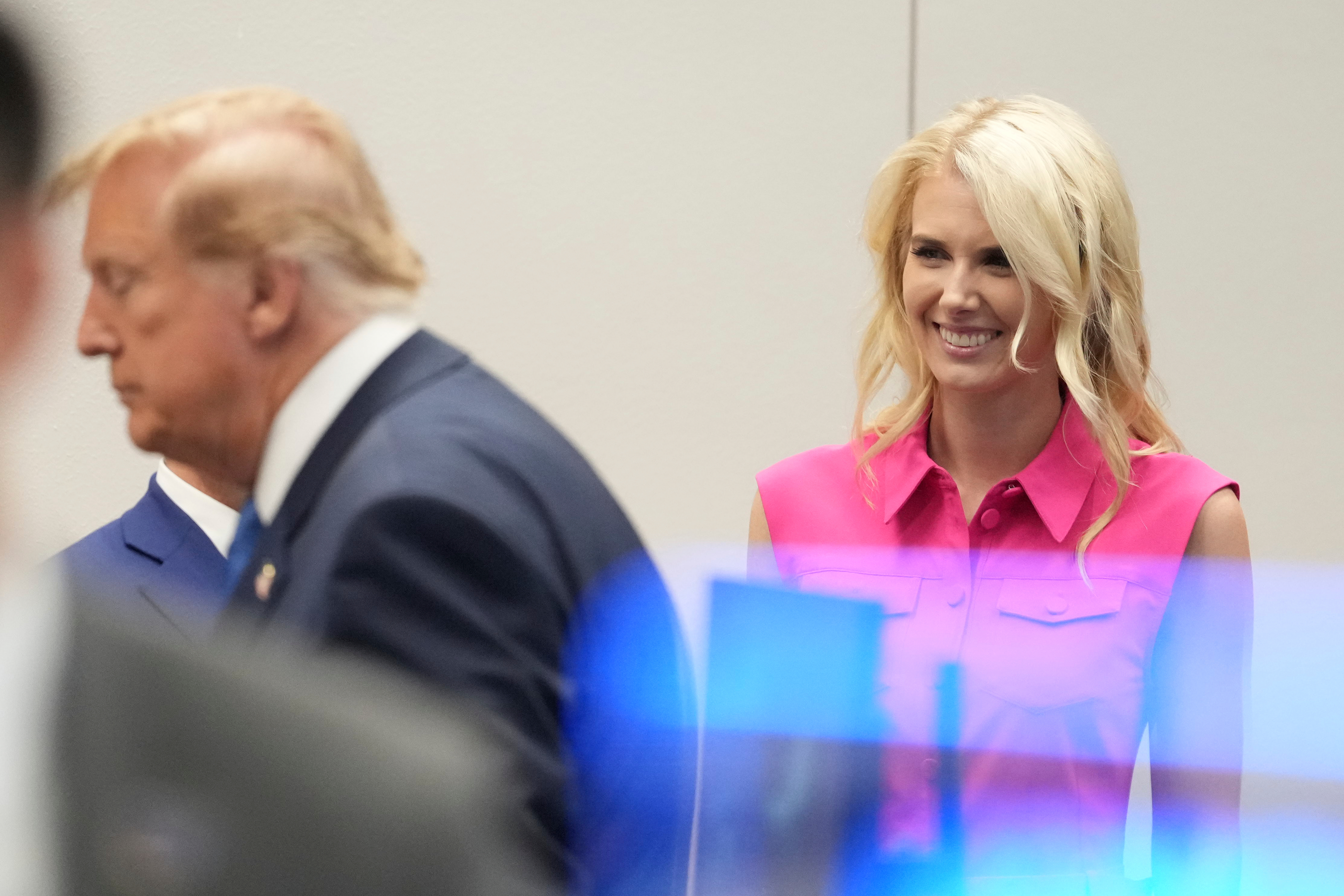
    President Donald Trump gave $45,000 cash gifts to his executive assistant Natalie Harp and two of his other young, loyal White House employees, according to financial disclosures released by the administration.

    On their disclosure forms, which were released publicly late last week, the three women described the payments as “Cash Gift for Holidays.” The gifts amount to about one-third of the $150,000 salaries they each earn from their White House positions, according to an annual report to Congress.

    Richard Painter, the former chief White House ethics lawyer for President George W. Bush and a critic of Trump, said the payments appear to violate a federal statute that prohibits the supplementation of federal employees’ salaries from outside sources.

    “He’s clearly trying to make it easier for them financially to work in government service at the White House,” Painter said. “You can’t do that.”

    A White House spokesperson denied that the payments violated any rules.

    “The President has a longstanding practice of giving Christmas gifts to people in his orbit, including at times employees and aides, both in government and in his time in the private sector,” White House spokesperson Davis Ingle said. “The gifts at issue here have nothing to do with any of these individuals’ official government duties, and therefore are entirely permissible under relevant legal and ethical standards.”

    The three recipients of Trump’s gifts did not immediately respond to requests for comment.

    Harp, a 35-year-old aide who rarely leaves Trump’s side, is known within the White House as the “human printer” because she carries a portable device to provide Trump with his preferred hard copies of news articles and social media posts.

    She has come under increased scrutiny since the Washington Post reported last month that she was one of a handful of close staffers who accompanied Trump on a catering truck that transported him under concealment as he secretly swapped planes to depart Turkey in response to a potential Iranian assassination threat.

    Days after the Post report, Sen. Jon Ossoff (D., Ga.) said at a campaign rally that Trump would rather “travel with Natalie on their apparently defenseless flying palace” — a reference to the airplane given to Trump by the Qatari royal family — as he accused the president of neglecting his duties. The remark sparked backlash from the White House and conservative media figures that intensified the spotlight on Harp.

    Trump also gave $45,000 to Margo Martin, a 31-year-old communications adviser who often gets closer to the president than his Secret Service detail to film his daily activities for social media, and Chamberlain Harris, a 26-year-old White House aide who serves as Trump’s executive assistant. Trump in February appointed Harris to the U.S. Commission of Fine Arts, which has oversight of his White House ballroom and other Washington-area construction projects.

    Trump aide Margo Martin listens as the former president speaks to staff and reporters during a 2023 flight.Jabin Botsford

    Walt Nauta, the director of Oval Office operations, reported a $20,000 gift from the president. Nauta, who earns $175,000, also accompanied Trump on the catering truck in Turkey. He served as a valet in the first Trump White House and was a key witness and co-defendant in the Justice Department’s probe of Trump’s handling of classified documents at Mar-a-Lago. A judge dismissed the charges in 2024, ruling that special counsel Jack Smith, who had brought the case, was improperly appointed.

    There are no other public instances of U.S. presidents giving staff employed by the White House large cash payments. Government ethics experts said they were not aware of any other payments of this scale from a superior to a subordinate government worker.

    Traditionally, government ethics officials worry about situations in which a company that previously employed a federal official tries to provide additional money to make it easier for them to serve in government, Painter said.

    When employers give a holiday gift to a person who works in their house, that is considered part of their income, he added.

    “It’s not like tipping the doorman on Fifth Avenue,” he said. “These are U.S. government employees. If you want a job where you get tips, you shouldn’t be working for the U.S. government.”

    Under the law, both the person who pays the supplemental income and the person who receives it are liable. The Trump Justice Department might decline to enforce the law, but the statute of limitations is five years. Trump’s term ends in a little over two years.

    Federal employees are also subject to restrictions on what gifts they can give or receive to ensure government decisions remain impartial.

    Don Fox, the former acting director of the Office of Government Ethics (OGE) in the Obama administration, said it was not clear from the available facts that the payments violate the prohibition on supplementation. He said that would be the case if Trump made the gifts after one of the employees said they were leaving for the private sector because they couldn’t live on what they were making, and he gave them a supplement to level the disparity in salaries.

    There are rules that restrict employees from giving gifts to their superiors over concerns they could be abused to curry favor. But a large payment to a subordinate is “not a circumstance that OGE ever really envisioned,” Fox said. “This just doesn’t happen.”

    He said the most expensive gift he remembered receiving as a federal employee from a superior was a fruit basket around the holidays.

    Even in the absence of any violation, however, Fox said he still found the payments “troublesome” because they could leave the aides indebted to Trump.

    “I would feel somewhere between really uncomfortable and then beholden to the person who gave me such a large gift,” he said.

    Harp, Martin, Harris, and Nauta all have ties to Trump dating from his first term, and they were all among a small inner circle of aides who worked for Trump in Florida in between his presidencies. Harp, Martin, and Harris have limited work experience that isn’t tied to Trump.

    Harp gained national attention in 2019 for a LinkedIn post in which she credited a law Trump signed in 2018 expanding access to experimental treatments with saving her life following a Stage 2 bone cancer diagnosis. Medical experts have cast doubt on those claims. Harp spoke about the experience at the 2020 Republican National Convention. As an anchor with One America News, she frequently promoted Trump’s false claims that he won the 2020 election. She began working for Trump in 2022 after leaving the network.

    Martin began working for the Trump White House as a press assistant in 2019 and continued to work as a press secretary for Trump after the inauguration of President Joe Biden. Harris began her career at the White House and was known as the “receptionist of the United States” during Trump’s first term.

    Nauta is a Guam native who enlisted in the Navy in 2001. By 2021, he was promoted to the rank of senior chief culinary specialist, according to military records. Nauta was working in the White House at that time, and Trump promoted him to be his valet, according to court records. Valets are often known as “body men,” following politicians closely so that they can provide them with everything from snacks to schedules.

    They each reported that they had no income or employment assets from a spouse in their disclosures.

  • With control of Congress on the line, Pa. Republicans head to Trump’s midterm convention in Dallas

    With control of Congress on the line, Pa. Republicans head to Trump’s midterm convention in Dallas

    Key figures in Pennsylvania Republican politics — including the state’s top elected federal GOP official and several lawmakers in the middle of heated reelection campaigns — will participate in their party’s first-of-its-kind midterm convention this week in Dallas.

    The gathering, spurred and heavily promoted by President Donald Trump, arrives as Republicans look to defend their control of Congress this fall amid difficult circumstances. Trump’s approval ratings, including on key issues such as the economy and the war in Iran, have sunk, including in Pennsylvania.

    And Democratic challengers, some of whom have outraised their Republican opponents, have waged aggressive campaigns.

    After Trump successfully won the White House and ushered in a wave of downballot Republican wins just two years ago, the convention — described as “Trump-a-palooza” by Republican National Committee chairman Joe Gruters — is aimed at energizing the base at a critical time.

    Pennsylvanians, representing a swing state that has been key to Trump’s success in the past, will play a role.

    U.S. Sen. Dave McCormick (R., Pa.) and a pair of House lawmakers in competitive districts — U.S. Reps. Ryan Mackenzie (R., Lehigh) and Rob Bresnahan (R., Luzerne) — are among the more than 100 scheduled speakers over two days, starting Wednesday.

    Their speaking slots were among the first to be announced. Underscoring the Keystone State’s role in keeping the House Republican majority, only the host state of Texas had more representatives on the initial list of elected officials scheduled to address the crowd.

    The Pennsylvania Republican Party, meanwhile, has orchestrated a “full slate” of 55 delegates and alternate delegates.

    “The Republican Party of Pennsylvania is excited and honored to be a part of the first ever RNC Midterm Convention in Dallas,” spokesperson James Markley said in a statement. “It will be a tremendous opportunity to hear from everyday Americans about how this administration has changed their lives for the better.”

    The state party had not provided the names of the delegates as of Tuesday, though the list is expected to include party activists and other elected officials. State party leaders had encouraged Pennsylvanians to attend the gathering.

    Democrats, who see the president’s lagging approval ratings as a key to their success in the midterms, were quick to blast Pennsylvania Republicans for attending. Their response includes plans to send a small group of House Democrats, including U.S. Rep. Madeleine Dean (D., Montgomery), to Dallas to push back against the GOP messaging.

    “While swing seat House Republicans try to hide from their record of raising costs on working families, gutting Medicaid to fund tax breaks for billionaire donors and supporting a reckless war of choice in Iran, House Democrats will be present to hold them accountable,” House Minority Leader Hakeem Jeffries, the New York Democrat in line to become House speaker if his party wins the majority, said in a statement.

    Fitzpatrick skips as other Pa. Republicans take center stage

    Four of Pennsylvania’s 10 Republican-held U.S. House seats are considered key battlegrounds as the GOP looks to maintain its four-seat advantage nationwide.

    Of those, only U.S. Rep. Brian Fitzpatrick (R., Bucks) has distanced himself from parts of Trump’s agenda and is not planning on attending the convention.

    Mackenzie and Bresnahan, on the other hand, will be among the featured speakers, and U.S. Rep. Scott Perry (R., York) will attend.

    Perry, a close Trump ally, has routinely won reelection in a Harrisburg-based district but is running this year against Democrat Janelle Stelson, a former local television anchor who nearly defeated him two years ago.

    Freshmen Mackenzie and Bresnahan were elected to Congress in 2024 after they each defeated incumbent Democrats by less than 2 percentage points. Local, state, and national Democrats have rallied behind their challengers — union leader and retired firefighter Bob Brooks in the Lehigh Valley, and Scranton Mayor Paige Cognetti in the district that covers the northeast corner of the state.

    Bresnahan campaign spokesperson Samantha Bullock said the lawmaker was “excited to bring NEPA to the national stage because these are the people driving his work in Washington.”

    Mackenzie, in a statement that referenced his work to bring federal funds to his district and support areas like local healthcare and tax relief, said he was “looking forward to talking to the people of the Lehigh Valley, the Poconos, and the entire nation about these accomplishments, and how we can build on them in the years ahead.”

    Brooks said Mackenzie was “flying to Dallas to kiss the ring of Donald Trump and his party bosses.”

    “This is exactly why people are fed up with a broken Washington that isn’t working for working people,” Brooks said in a statement.

    Mackenzie’s campaign has similarly criticized Brooks for campaigning with national Democrats — calling an event Brooks had with Jeffries in July a sign that “establishment backers” were trying to “bail him out.”

    The convention will feature six hours of programming each night.

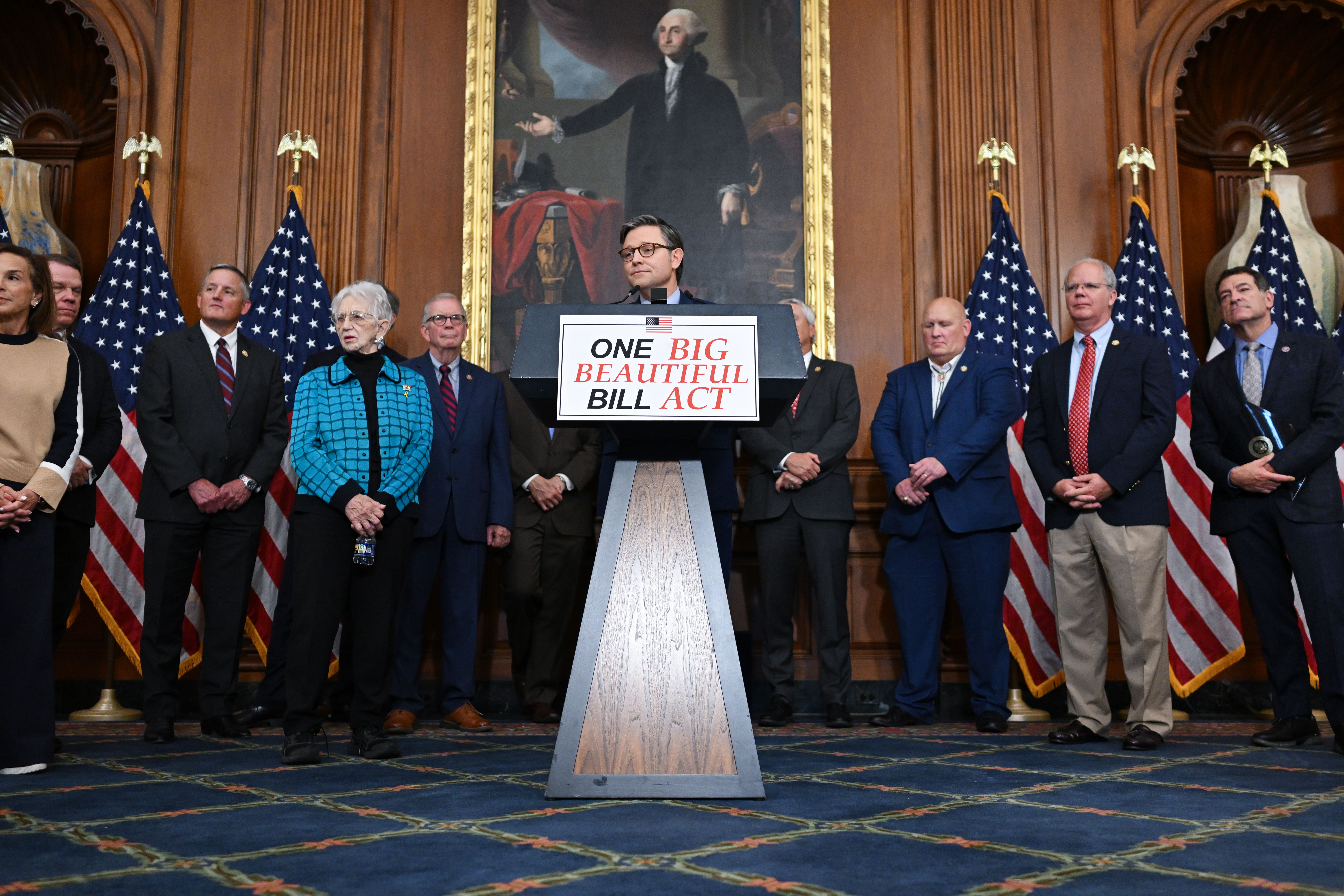
    Topics that speakers will highlight include the elements of Trump’s signature One Big Beautiful Bill Act, which Republicans have rebranded as the Working Families Tax Cuts Act.

    Supporters have applauded the law’s extension of Trump’s 2017 tax cuts and its litany of other features, such as investment accounts for children. Democrats and other critics have pointed to the law’s cuts to Supplemental Nutrition Assistance Program (SNAP) and Medicaid spending, among other measures.

    The convention speakers will also touch on the president’s enhanced border control measures and his push for election changes such as universal voter ID, according to an outline of the agenda.

    A “candidate showcase” that will highlight “key candidates in target districts” and contrast them with their “extreme” opponents is set for Wednesday night. And an “opposition contrast” to “[deliver] the night’s sharpest partisan case against the extreme liberal Democrats” is slated for Thursday night, according to the agenda.

    Besides Trump, the members of his administration scheduled to speak include Vice President JD Vance, U.S. Attorney General Todd Blanche, Centers for Medicare and Medicaid Services Administrator Mehmet Oz, and Health and Human Services Secretary Robert F. Kennedy Jr., who has engaged in a war of words with Pennsylvania Gov. Josh Shapiro over the state’s measles outbreak.

    National Republicans have described the convention as a way to energize voters in a tough election year.

    Two years after winning Pennsylvania for the second time in 2024, Trump had an approval rating of 39% and a disapproval rating of 58% among likely voters in the state last month, according to an Inquirer/New York Times/Siena University poll.

    The poll found that 51% of likely voters said they were more likely to vote for a Democrat for Congress and 53% said they would want to see the House flip to Democratic control, though the poll did not ask about specific congressional races.

  • The GOP was confident about keeping its Senate majority. Now the fight for control is wide open

    The GOP was confident about keeping its Senate majority. Now the fight for control is wide open

    WASHINGTON — Republicans appeared to have a firm grip on the Senate heading into the final two years of President Donald Trump’s term. But with less than two months until Election Day, control of the chamber is now up for grabs.

    Democrats have found themselves competing in states that once seemed beyond their reach as President Donald Trump’s slipping approval ratings and voters’ dissatisfaction with the economy create a difficult political environment for Republicans. But races Democrats once counted on winning have also become more complicated.

    It’s a battle that’s expected to exceed $3.4 billion in spending across all races during the midterm campaign. The implications are huge for Trump’s agenda and his ability to fill administration jobs and open court seats for the remainder of his term, as the Senate is empowered to confirm or block presidential nominees.

    Republicans say it’s unlikely for everything to break in Democrats’ favor, but they acknowledge they’re facing a difficult landscape. Senate Majority Leader John Thune told South Dakota’s KELOLAND News last week that he does “worry” about losing the chamber.

    “I’m a realist,” Thune said. ”I don’t ever try and sugarcoat things. I think it’s a competitive environment right now.”

    Democrats face a scrambled path to the majority

    Democrats need to net four seats to win the majority. The original path had been to hold Michigan, Georgia and New Hampshire while winning back Republican-held seats in Alaska, Maine, North Carolina and Ohio. But things have changed.

    “We now have multiple paths for the majority,” Senate Democratic Leader Chuck Schumer said last month. “We found new states — Iowa, Texas — which people a year ago weren’t even paying attention to.”

    Some of the states where Democrats were feeling most optimistic at the start of the election cycle, such as Michigan and Maine, have grown murkier.

    In Michigan, where there’s an open seat this fall, no GOP candidate has won a Senate race since 1994. But Democrats are struggling to unite behind nominee Abdul El-Sayed. The favorite of progressives narrowly defeated moderate U.S. Rep. Haley Stevens in the August primary, and feelings remain raw from a bruising contest that saw nearly $70 million spent against El-Sayed.

    Republicans believe Mike Rogers, who lost the 2024 Senate race by fewer than 20,000 votes, has an improved shot against El-Sayed. The Senate Leadership Fund — Senate Republicans’ spending PAC — added $6 million to its Michigan advertising investment after El-Sayed won, bringing their total spending to $51 million, the third-highest total.

    Democrats also saw a prime opportunity to finally defeat five-term Republican Sen. Susan Collins in Maine, where Democratic Vice President Kamala Harris won more votes than Trump in 2024.

    Progressive Graham Platner easily won the nomination in June, but he left the race the next month over a sexual assault allegation that he denies. Democratic delegates in late July chose Troy Jackson, a lesser-known former state legislative leader, to replace him.

    Jackson has been forced to play catch-up. Collins and aligned super PACs have spent almost $80 million so far, according to the ad-tracking firm AdImpact, while Jackson and Democratic-aligned groups have spent and reserved close to $45 million since he became the nominee.

    As one path narrowed for Democrats, others widened

    Democrats increasingly see a real possibility in Texas, a state that has been an elusive goal for decades, and other GOP-led states including Iowa, Alaska and Ohio.

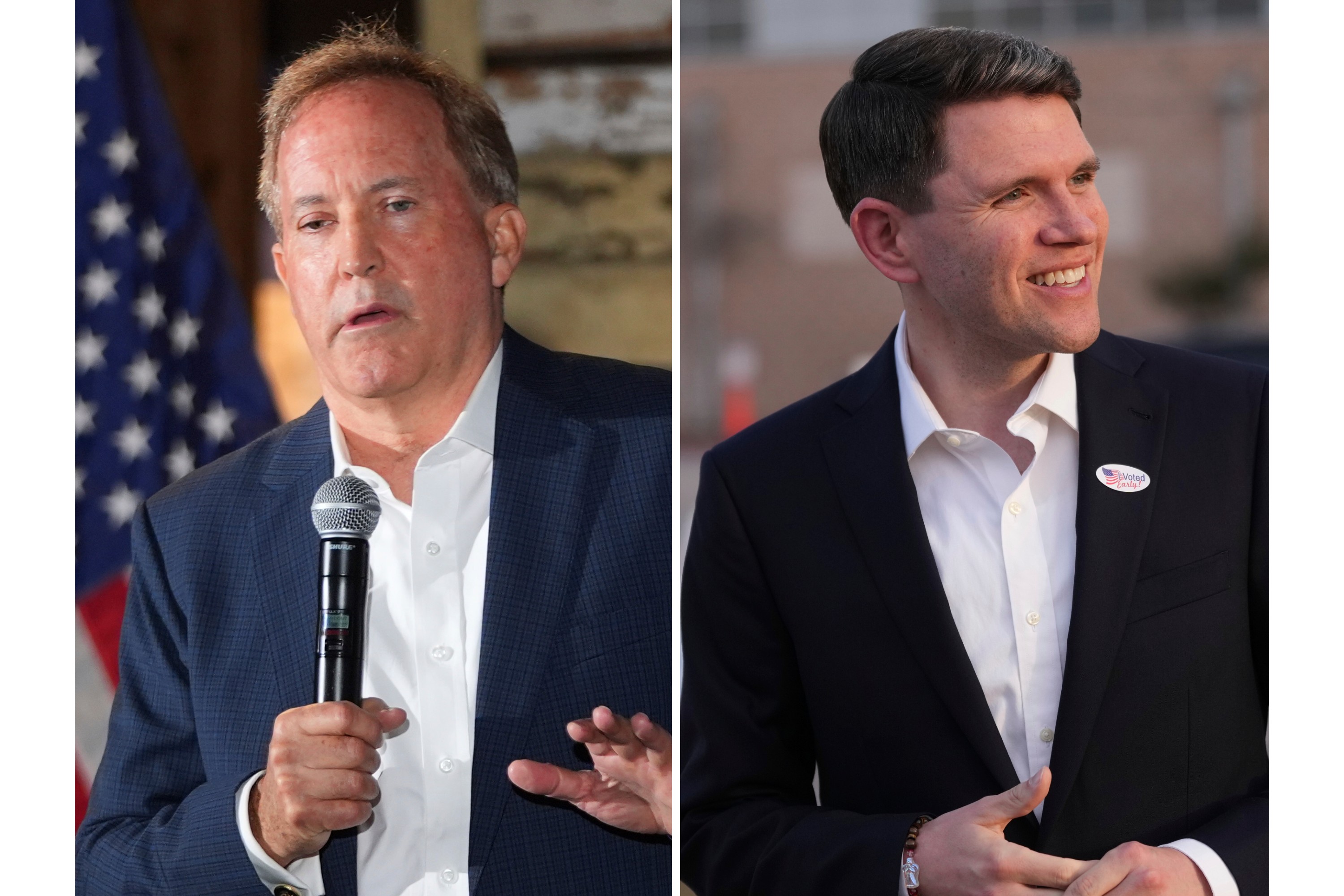
    In Texas, Democrat James Talarico faces state Attorney General Ken Paxton, who ousted four-term incumbent Republican Sen. John Cornyn to win the GOP nomination. Senate GOP leadership backed Cornyn, seeing him as the stronger general election candidate.

    Paxton has been shadowed for decades by legal and ethical questions, including indictments for securities fraud, though he was not convicted.

    Talarico and allied groups have spent nearly $30 million on advertising since the May runoff, compared to less than $3 million by pro-Paxton groups. The political fund associated with Trump last week spent $10 million on TV and digital ads to help Paxton — the first major general election investment by MAGA Inc. for the midterms. Senate GOP leaders had petitioned Trump’s political team to spend some of the more than $400 million it had last month to help Paxton.

    Democrats have also upped their spending in Alaska, Iowa, Ohio and North Carolina, all states currently held by Republicans. The GOP, meanwhile, is feeling more optimistic about New Hampshire as well as Michigan, while spending more to defend seats in Iowa and Alaska.

    The expanded map has upped the anticipated total spending this cycle. AdImpact in June projected $3.4 billion in advertising spending on Senate races, a significant increase from the $2.8 billion the ad spending firm projected in the fall of 2025.

    Why more states are in play than expected

    Democrats’ path has widened in part because of Trump’s slumping job approval, notably on handling the economy, which was at 32% according to an AP-NORC poll in July — down from 40% in March 2025, shortly after he took office.

    Trump’s trade policies and the war in Iran, with its corresponding inflated fuel costs, have added to the economic uncertainty for voters less than two months before Election Day.

    “Things still cost too much. And so we’ve got to work on that issue,” Republican Rep. Jim Jordan of Ohio told The Associated Press. “We understand that and we know that’s real.”

    Ohio Sen. Jon Husted heard the concern firsthand at a roundtable last month. Husted is looking to fend off a comeback from former Sen. Sherrod Brown in another key matchup for both parties.

    During the discussion on housing, one attendee told Husted that costs were “skyrocketing” in part because of uncertainty around tariffs.

    “Uncertainty is the killer to this economy,” said Dean Windham, a real estate developer who previously ran for office as a Republican.

    Some Republican Senate candidates have defended Trump’s policies while confronting concerns about their economic impact.

    In Michigan, where Trump’s tariffs on Canada have become a central issue, Rogers has backed the president’s approach while leaving room for disagreement.

    “President Trump is right to put America First — and tariffs are necessary, but are not a one-size-fits-all solution,” Rogers said in a recent statement.

    Republicans believe the math still favors them

    Even if Democrats hold every seat they currently control, they would need to flip at least two seats in states Trump carried by double digits in 2024 to win the majority.

    Republicans are betting that those underlying advantages will matter more as Election Day approaches — particularly as Trump and the party turn their attention toward mobilizing voters who helped return him to the White House.

    Trump told reporters last week that he will “be making a lot of stops” in the last 30 days before the election.

    This week, Republicans will hold a midterm convention in Texas, where Trump is set to speak and top Senate candidates including Rogers and Husted are expected to attend.

    But Republicans acknowledge they have work to do.

    “Politics is local,” Republican Sen. Mike Rounds of South Dakota said. He pointed to Trump’s decision to import beef, which he said made farmers and ranchers “feel just like the administration pulled the rug right off from underneath” them.

    “They’re hurt,” Rounds said. “They feel like they’ve been let down.”

  • Former Labor Secretary oversaw hostile work environment, misused funds, report says

    Former Labor Secretary oversaw hostile work environment, misused funds, report says

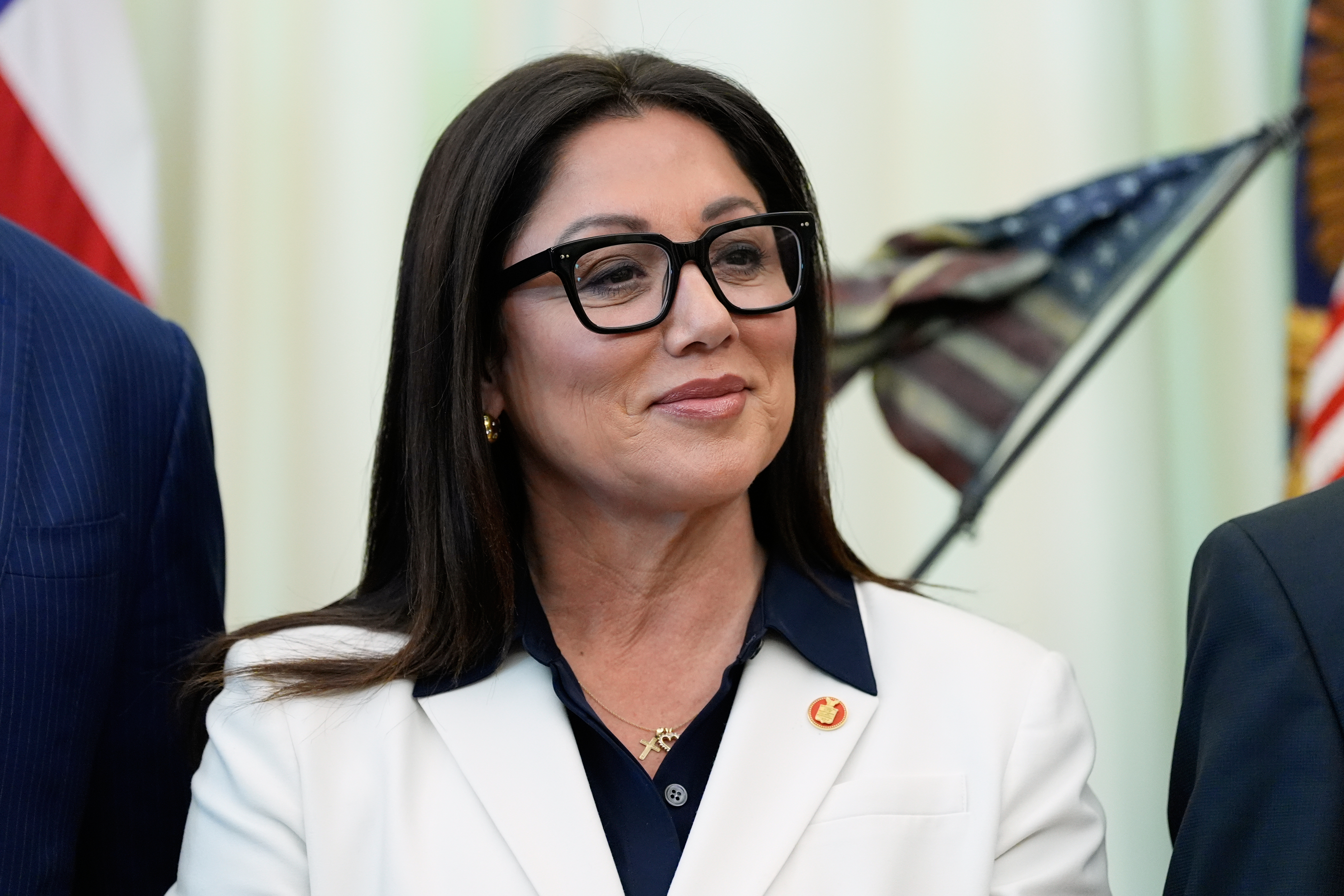
    NEW YORK — Former Labor Secretary Lori Chavez-DeRemer oversaw a “toxic, intimidating, and humiliating” work environment and engaged in numerous violations of department policy, according to a new report from the department’s Office of Inspector General.

    The report alleges that Chavez-DeRemer “engaged in an inappropriate relationship” with a member of her security detail and repeatedly directed staff to perform personal tasks on government time. It also accuses her of inappropriately combining personal and official travel, violating the department’s alcohol policies, and failing to report gifts through proper channels.

    Based on interviews with dozens of current and former labor department staffers and a review of more than 500 documents, images, and videos, the report includes several striking allegations.

    During a personal trip to Oregon, it reports, Chavez-DeRemer allegedly stopped at a strip club featuring partially nude dancers and directed her limousine driver to come inside and give money to a performer, despite his hesitation. She then “took additional money from her purse and asked the agent to drop the bills one by one onto the partially nude woman,” despite his protests.

    Chavez-DeRemer, who resigned earlier this year, could not immediately be reached for comment.

    She is also accused of repeatedly directing staff to perform personal tasks during work hours. That included, at one point, directing her personal aide and executive assistant to travel to her home and organize her bedroom closet. After completing the task, they were asked to provide a video documenting their work. The report includes a photo of neatly hung, colorful blazers, alongside purses and shoes.

    In other instances, it alleges, she sent staffers to her home to retrieve packages from the mail room, instructed them to make personal purchases that weren’t always reimbursed, and directed a Hispanic federal employee to communicate with Spanish-speaking workers, including a house cleaner and movers.

    The report alleges Chavez-DeRemer developed and maintained an inappropriate and unprofessional relationship with a senior agent on her security detail, documenting in extensive detail witness reports of her massaging the agent’s shoulder, the two golfing and gambling together, and leaving an event walking arm-in-arm.

    Investigators obtained electronic hotel door lock records that suggested the two were spending time overnight in each other’s rooms. And they obtained key fob records and video footage to document his visits to her home.

    The relationship, they said, “appeared to continue even after he was placed on administrative leave and was suspended from his official duties.”

    The office also concluded that the former secretary and senior staff consumed and stored alcohol on federal property without permission, and that she combined personal and official travel, including visits to family, personal residences, and Las Vegas. And it identified a handful of gifts that were not reported, including tickets to attend a rodeo, an alligator-hide wallet, and cowboy hats.

    The report also alleged that Chavez-DeRemer oversaw a hostile workplace, with senior staff “routinely engaged in threatening, demeaning, and abusive verbal and written communication” that she was seemingly aware of but did not take action to stop.

    Witnesses described the work environment as “toxic, intimidating, and humiliating,” with staff accused of berating employees in front of colleagues, openly discussing performance issues in the presence of other staff, and frequently making threats of termination.

    Senior staff were also accused of making staffing decisions based on physical appearance instead of qualifications, including relocating one employee’s desk because they did not want a “fat person” seen in the front office.

  • Will the real William Howard Taft please stand up?

    Will the real William Howard Taft please stand up?

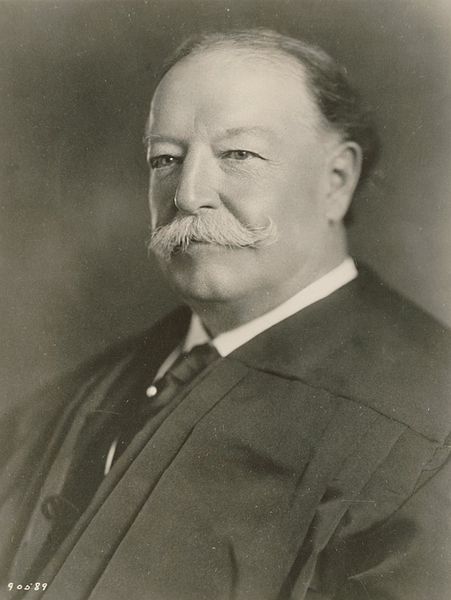
    Chief Justice John Roberts and his conservative majority like to cosplay as historians when they write court opinions that determine what rights we get to have and exercise. In August, though, Roberts tried the real thing. He took to the In Pursuit project’s Substack to write a brief history of a man he admires: former president and chief justice, William Howard Taft.

    Roberts’ version of Taft is a sober, steady president (1909-1913) to be hailed for his refusal to unduly use executive power. And for Roberts, Chief Justice Taft (1921-1930) is “one of [the nation’s] great Chief Justices” because he started modernizing the Supreme Court by growing the institution’s status and constitutional authority — a project Roberts continues to make his own.

    But Roberts’ history of Taft is irresponsibly shoddy; he cherry-picks facts, ignores narratives that don’t fit with his rosy portrait of Taft’s presidency, and he completely omits Taft’s damning record on race relations and civil rights.

    In truth, Taft was a white supremacist. He admitted as much on the campaign trail in 1906, when he told Republican voters in North Carolina that Black people were “a class of persons so ignorant” and likened them to the “mental stature” of children.

    Taft’s racism was partly opportunistic. In 1908 he was running as the Republican standard-bearer against Democrat William Jennings Bryan to succeed President Theodore Roosevelt. Since Reconstruction, the southern states had voted exclusively for Democrats. But Taft believed he could find a way to “break” the “Solid South” by luring away racist white voters to vote Republican. His preferred tactic was a racist dog-whistle.

    And so, while Taft once lamented the arsenal of racist laws that disenfranchised Black Americans throughout the country, he didn’t think Jim Crow discrimination was a very big deal. After all, it was merely “the ignorant colored voter,” he believed, who was being kept away from the polls — downplaying the violence that upheld disenfranchisement. Perhaps things might change, he added, if Black men got smarter and worked harder. For Taft, Black Americans needed to earn the vote and prove to white society that they could be entrusted with that privilege.

    Taft’s electoral strategy never panned out. Even though he handily won the 1908 election, the “Solid South” stuck with Democrats. Nonetheless, as president, Taft continued to side with white supremacy.

    In 1911, the Ninth Cavalry Regiment of Black troops — the famed “Buffalo Soldiers” — were stationed in San Antonio, where they encountered Jim Crow streetcar laws that mandated segregated seating. The troops refused to obey, destroying the segregation signs and standing up to streetcar conductors who demanded compliance. Democratic congressman and future Vice President John Nance Garner lobbied Taft to punish the U.S. soldiers, and the Taft eagerly complied, dispatching the Buffalo Soldiers to the desert to monitor the U.S.-Mexican border.

    President Taft also did nothing to confront the lynching epidemic that claimed roughly 250 Black lives during his presidency. In his first Annual Message to Congress — the forerunner to today’s State of the Union address — Taft explained that he sympathized with those who might choose to become part of the lynch mob. Yes, he conceded, lynchings involved “lawless violence and cruelty.” But Taft excused this, arguing that white people conjured the lynch mob because they were sick and tired of waiting for the ponderous court system to deal with Black people that supposedly broke the law. Faced with this “injustice,” the white lynch mob’s actions were justified, according to Taft.

    Taft’s forgiving attitude toward the lynch mob wasn’t just theoretical. On April 20, 1911, a white lynch mob in Livermore, Kentucky murdered a Black pool hall manager named Will Potter inside the local opera house. For the supposed crime of kicking white ruffians out of the pool hall, Potter “was dragged before the footlights and his body riddled with bullets from the guns of an audience of half a hundred determined avengers,” according to the New York Times. Rumor had it that witnesses were charged admission. Those who wanted to be part of the firing squad had to pay extra. When the shooting stopped, “the lights were then extinguished, the curtain lowered, and the mob then filed out.”

    The NAACP’s executive committee dispatched a plea to leading government officials, including Taft, demanding action. An NAACP committee even visited Taft to request that he condemn lynching. According to an NAACP internal document dated June 11, 1911, “The President assured the Committee that he could do nothing, that it was a matter to be left to the individual states.”

    Taft’s refusal to use executive authority to confront lynching is shocking. However, it is this type of inaction that Chief Justice Roberts believes made Taft a model chief executive. Roberts’ favorable interpretation of the Taft presidency highlights his restraint. “Steady competence, self-restraint, and respect for the other branches were the hallmarks of the Taft Administration,” writes Roberts.

    Taft’s contemporaries were less impressed with his presidency.

    Taft was one of the few incumbent presidents to lose reelection, somehow coming in third in what should have been a two-way race in the 1912 contest. He’d promised to lower tariffs but ended up raising them, and Taft’s unwavering support for an ultra-conservative Supreme Court all but doomed progressive reforms in areas like labor rights. So dire was Taft’s record that his former mentor, Teddy Roosevelt, came out of retirement to challenge him for the Republican nomination. In the general election, Democrat Woodrow Wilson trounced Roosevelt — running as the Progressive Party candidate — as well as Taft and Socialist Eugene Debs.

    Roberts reserves his greatest appreciation for Taft’s contributions as chief justice between 1921 and 1930, which grew the “prestige” and “authority” of the Supreme Court. Namely, Taft pushed passage of the Judiciary Act of 1925, “which gave the Supreme Court control over its own docket,” and oversaw construction of the court’s august building on Capitol Hill.

    But what about the Taft Court’s actual decisions? Here Roberts has little to say, but recent scholarship by law professors Nikolas Bowie and Daphna Renan shows that, at best, Taft and most of his colleagues had a studied disinterest in civil rights. At worst, Taft used his opinion in the 1926 case Myers v. United States to stamp the Supreme Court’s imprimatur on the white supremacist version of the history of Reconstruction.

    The case concerned a Reconstruction-era law that prevented President Andrew Johnson from firing federal officers committed to implementing the Reconstruction Acts after the Civil War. For Taft, Reconstruction wasn’t an attempt to use the law to right the wrongs of slavery and legislate equality, but an attempt “to reverse” the Constitution.

    Of all his contributions on the bench, this was the decision of which Chief Justice Taft was most proud. Taft’s prized decision was of a piece with an emerging white supremacist revisionist history of the Civil War and Reconstruction seen, for example, in D.W. Griffith’s film Birth of a Nation (1915) and in the explicitly pro-slavery, pro-Confederacy approach to writing American history pioneered by William Dunning and his students, whose work was used to bolster Jim Crow.

    Made By History sponsors. FOR USE ON MADE BY HISTORY STORIES ONLY.Inquirer Staff

    So the question, then, is: why did Roberts write this fluffy, mythological history of Taft? Is it because Roberts’ selective historical method ignored Taft’s abysmal record on civil rights and lynching? Or perhaps Roberts has never heard of Taft’s Myers decision.

    A less generous answer might be that while Roberts chose to airbrush Taft’s race relations and civil rights story out of his history, the current chief justice knows more than he’s letting on. After all, in cases like Callais v. Louisiana (2026), Brnovich v. Democratic National Committee (2021), and Shelby County v. Holder (2013), Roberts led the charge to destroy the single most significant civil rights legislation ever enacted: the Voting Rights Act.

    If Taft’s legacy was to retrench the freedoms won during the Civil War and Reconstruction, Roberts’ legacy may one day be recognized as an assault on the victories of the Civil Rights Movement.

    It doesn’t take much digging in the history of race relations and civil rights to see that Taft’s executive restraint and court stewardship that Roberts so admires served the agenda of perpetuating Jim Crow white supremacy. This is bad history. But perhaps Roberts’ methodological sins of omission tell us exactly why the sitting chief justice sees so much to admire in his predecessor.

    Gautham Rao is Associate Professor of History at American University, and author of “White Power: Policing American Slavery.”

    Made by History takes readers beyond the headlines with articles written and edited by professional historians. Opinions expressed do not necessarily reflect the views of The Inquirer.

  • College loans were late due to new federal rules. Students are paying the price.

    College loans were late due to new federal rules. Students are paying the price.

    Mikiah Roberson expected to receive her federal $6,700 student loan disbursement sometime between May 27 and June 3, just in time to make her rent and car payments. Instead, June 3 came and went. Days, weeks and finally over a month passed.

    Roberson, a graduate student in University of Maryland Global Campus’s digital forensics and cyber investigation program, said the stress only compounded as her eight-week summer semester continued without any of her expected financial aid. As a disabled veteran, Roberson’s tuition is covered, but she relies on federal student loans to pay for living expenses while in school.

    “It had a major impact on my mental and emotional health,” Roberson said, as she struggled to get clear answers on when or if she might receive the money. “Just constantly stressing out whether an eviction notice would be coming, if my lights would be turned off, if my car would be repossessed.”

    Federal student loan disbursements for many students, like Roberson, were delayed over the summer session after new federal rules kicked in on July 1 that required major updates to the systems colleges use to administer aid. While no one is tracking the full scale of the problem, experts are worried about whether delays will persist into the fall semester that is underway. That could have severe impacts for the nearly 60 percent of students who already experience some form of housing or food insecurity.

    When loan money gets held up, students have no recourse against either their school or the federal government. Instead they must find ways to temporarily cover personal budget gaps of thousands of dollars — at a time when the cost of housing and other basic needs are rising rapidly.

    Delayed student loan disbursements are “incredibly significant in terms of whether a student is able to remain enrolled and remain housed and cover their own basic needs,” said Aissa Canchola Bañez, policy director at Protect Borrowers, a nonprofit that advocates for student loan borrowers. “Everything is more expensive, and so that just makes financial aid and the loans that these students are eligible for and entitled to even more consequential.”

    Experts, advocates and financial aid administrators place the blame on atypical planning from Congress when it passed the One Big Beautiful Beautiful Bill Act. The legislation didn’t give the Education Department enough time to issue full guidance on new student loan regulations, leaving many colleges struggling to adapt. In some cases they are waiting on third-party software vendors to make needed changes or are calculating and administrating aid by hand.

    Ellen Keast, a spokesperson for the Education Department, said in an email that the department worked within the deadlines set by the One Big Beautiful Bill Act, which required the changes to take effect on July 1, 2026.

    “Congress gave the Department less than a year to implement these changes,” Keast said.

    She noted that the agency released the final rules in May, which she said provided “time for schools to prepare.”

    Rep. Tim Walberg (R-Michigan), chairman of the House Committee on Education and Workforce, said in an emailed statement that the legislation significantly overhauled a “broken system” and praised the work the Education Department had done.

    “Delaying needed reforms would have negative consequences for students and taxpayers,” he said.

    The One Big Beautiful Bill Act, signed by President Donald Trump on July 4, 2025, includes a number of provisions that reshape federal student loans, including a new lifetime borrowing limit and lowered limits on outstanding aggregate debt for graduate students. The bill also placed new limits on Parent PLUS loans and eliminated the Graduate PLUS loan program. Another provision, starting the 2026-27 school year, requires schools to prorate loan amounts based on how many credits a student is taking. Altogether, the changes are expected to impact a significant number of the roughly 13 million students annually who rely on federal financial aid.

    When students don’t receive their money on time, the delays set off an avalanche of financial problems.

    One student in National University’s graduate program in marriage and family therapy told The Hechinger Report she expected a $5,000 disbursement sometime around June 1. The student (whose name is being withheld out of concern of retaliation from her university) relies on these disbursements every three months to cover two months of rent, as she slowly saves up to pay the third month’s rent through her part-time job as a nanny.

    “I had to reach out to family members and get help, and that was also really stressful for them because I was hoping to be able to pay them back with my refund, and nobody knew when the refund was coming,” she said. “And so that just kind of created a cascade of tough situations.”

    She didn’t receive her funds until mid-July. By that point, she’d paid rent late in June and July, with a $100 late fee each time.

    National University did not respond to requests for comment.

    When it comes to disbursing financial aid, the relationship between the federal government and higher education institutions is complex. To help mitigate that, the Higher Education Act lays out a “master calendar,” which outlines formal dates and deadlines the Education Department must follow.

    Under the master calendar, the department has to start the rulemaking process a full year and a half before the academic school year starts. After negotiations, months of public comment and department review, a final rule needs to be issued in November of the preceding year. But because the One Big Beautiful Bill Act was signed in July 2025 with an effective date of July 1, the department couldn’t follow this timeline. And that gave colleges less time to adjust.

    Colleges normally spend the months between November and the start of the next academic year understanding any new regulations, getting clarifying questions answered by the Education Department, and making sure their software vendors have what they need to update their systems, according to Sarah Austin, a policy analyst at the National Association of Student Financial Aid Administrators.

    “Just having enough time to get the information, make sure the software vendors have the information, make sure they can then reprogram everything, getting the specs that they need — all of that takes time,” Austin said. “What we’ve seen here is a condensed version of that.” As of August, some of the major software vendors used by colleges still weren’t caught up, she noted.

    The National Association of Student Financial Aid Administrators and over 40 other higher education organizations had previously called on the Education Department to delay implementation until July 1, 2027, to allow the process to follow the normal timeline.

    “That is not a minor inconvenience. It is a fundamental breakdown in the infrastructure that supports federal student aid delivery,” wrote Kenneth Ferreira, then-president of the Eastern Association of Student Financial Aid Administrators, in an April op-ed.

    Institutions also say that the federal government has been slow to roll out guidance and clarifications about some of these changes, and some details are still up in the air, said Austin. The Department released formal guidance on prorating loans for students who aren’t enrolled full-time, for instance, in early August, just a couple of weeks before classes began at many institutions.

    Some of the guidance has also been conflicting, with differing information across some of the Education Department’s written materials and webinars, according to the National Association of Student Financial Aid Administrators. On Aug. 20, a group of 16 congressional Democrats sent a letter calling on the Education Department to issue additional guidance clarifying how schools should prorate loans.

    “We ended up seeing a lot of last-minute changes, and not enough guidance. And the reason why we have a master calendar provision is it is difficult for colleges to adapt to new regulations when there’s not enough time,” said Mark Kantrowitz, a student loan and financial aid expert.

    To Keast, though, the final rule should not have come as a surprise to any colleges. She noted that last November, the department reached consensus on the proposed rules, an early stage in the process.

    “If institutions waited until the final rule was issued to start preparing, that was their decision,” Keast said. She also pointed to available published guidance, Q&As, webinars and other resources from the department.

    This rift between the department and many of the major organizations representing colleges and financial aid administrators is trickling down to students like Roberson.

    “There was a whole lot of passing the buck,” Roberson said on her attempts to get answers on what happened to her financial aid. University of Maryland Global Campus directed her to the Education Department’s Federal Student Aid office. Employees there told her to contact her school.

    “Nobody had answers for when the funds would be released,” said Roberson, who said she often received conflicting information.

    In an emailed statement, Kaitlin O’Connor, vice president of University Communications at the University of Maryland Global Campus, said the university has been working on the federally required processing changes.

    “The university has continued processing and awarding aid, reviewing individual student cases and working closely with federal and higher education partners to ensure compliance with applicable requirements while supporting students throughout the process,” the statement said.

    Roberson negotiated partial payments with her landlord and entered payment arrangements for other bills. But the wait stretched into its second month. “You’re telling them, ‘Hey, the money’s coming,’ but weeks are passing and nothing changes,” she said. “I kept pushing out the dates and saying next month I’ll be good, and then here we are at month two, and it’s like now things are getting very detrimental.”

    Roberson continued, “You have to start to decide between do I pay a bill or do I get groceries? Do I get gas or do I get food?”

    Meanwhile, the stress took a toll on her studies. “I knew that I didn’t want to fail, but it was very, very hard,” she said. “Me and a lot of my classmates were expressing to each other how difficult it is to focus on schoolwork when you have bills piling up and all these things you need to pay.”

    Experts predict the crunch will continue into the fall semester as schools try to catch up with the new rules.

    Nick Prewett, executive director of financial aid and scholarship services at Stony Brook University and the president of the Eastern Association of Financial Aid Administrators, said so far the delayed disbursement has mostly impacted the school’s medical students, who start in the summer.

    But with fall semester underway at most schools, he said, “I think we’re going to see some delays in aid getting out to students. And I think you’re going to hear that kind of message across the country that students, particularly graduate students, are waiting,” Prewett said.

    Prewett added that for students enrolled part-time, Stony Brook plans on waiting until the end of the add/drop period (a couple of weeks after school starts) to adjust student loans based on the number of units students end up with. “And I think that’s going to cause a little bit of confusion and maybe a little bit of panic on behalf of the student,” he said.

    Roberson eventually received her summer disbursement in mid-July, about six weeks late into an eight-week summer program. She’s supposed to receive another $6,700 disbursement in early September, but she’s no longer counting on getting those funds on time. She’s taking on work as a delivery driver for Amazon — a challenge with her back pain from her disability.

    “I’m nervous because I don’t know if we’re going to hit this situation again,” Roberson said. “It’s very nerve-racking just trying to prepare ahead of time for if an issue arises, which is unfair when you’re trying to focus on class.”

    This story about student loan changes was produced by The Hechinger Report, a nonprofit, independent news organization focused on inequality and innovation in education.

  • Josh Shapiro’s measles response — and its backlash — reignites COVID-19 fury

    Josh Shapiro’s measles response — and its backlash — reignites COVID-19 fury

    A contagious airborne disease spreads. The tally of cases climbs higher as a vaccine debate rages among the public and their elected officials. Politicians point fingers at each other, arguing over the release of information and the steps that some consider “draconian.”

    The measles outbreak this year represents a far different public health crisis than the COVID-19 pandemic that wreaked havoc across the nation and the rest of the world six years ago.

    But with Pennsylvania at the center of a national conversation around a disease once considered eradicated in the U.S. because of widespread vaccination, the ensuing political rhetoric on measles has a familiar ring.

    Republican critics of Gov. Josh Shapiro’s announcement last week of two measles-associated deaths in Lancaster County — the first reported in the country this year — have repeatedly evoked the COVID pandemic in their critiques.

    Shapiro, as the Democratic nominee for governor four years ago, said during his last campaign that his party got parts of its COVID response wrong, such as vaccine mandates. But he defended the party line in court because of his role as the state’s attorney general.

    Now two months before voters decide on whether to reelect him, the governor’s detractors have condemned both his handling of the measles deaths and his administration’s simultaneous push for a string of new regulations aimed at fighting infectious diseases.

    “IT’S COVID ALL OVER AGAIN — BUT WORSE!!!” State Rep. Russ Diamond, a conservative Republican from Lebanon County, wrote Sunday in a lengthy social media post that led with three fire alarm emoji. The post followed other online comments in which Diamond speculated that Shapiro was broadcasting the measles deaths to “justify the draconian” regulatory proposal.

    Treasurer Stacy Garrity, the governor’s Republican challenger this fall, has echoed those recent comments from others in her party as she seeks to close a gap in the polls. She’s leaning into a message that appears strikingly similar to the one used by State Sen. Doug Mastriano, Shapiro’s 2022 Republican opponent who lost by double digits.

    In a video on social media, Garrity said Shapiro proposed “mandates that would make draconian COVID-era restrictions blush.” His “highly staged, partisan news conference” about measles, she added, “demonstrated just how dangerous his proposed mandates could be.”

    Shapiro’s Department of Health proposed the regulations earlier this year, before the state reported its first measles-associated deaths in three decades. The 502-page proposal, according to the state, would bolster officials’ ability to manage the outbreak of diseases, including isolation protocols and the reporting of identified cases. It’s been in the works for years and does not specifically refer to the 2026 measles outbreak, though it could play a role in managing such crises.

    “People want to raise some level of panic and anxiety here,” said Ericka Hayes, the senior medical director of infection prevention at the Children’s Hospital of Philadelphia, who has reviewed the proposal and is concerned about the “alarmist rhetoric” emerging around it. “But the spirit of this, and what is written in the document, as far as I’ve read, really is focused on appropriate measures for response to public health, infectious disease crises.”

    The governor’s office said the regulations were not yet final, and the governor will weigh in after public comment concludes later this month.

    “Disease outbreaks are serious, and Pennsylvania is confronting that reality right now,” Rosie Lapowsky, Shapiro’s spokesperson, said in a statement, which pointed to the reported 540 measles cases in the state.

    “The Governor’s philosophy that will guide the final regulations is that public health depends on trust, and building that trust means respecting individual rights, involving parents in decisions that affect their children, and ensuring government works closely with the people it serves,” she said.

    Shapiro also emphasized trust last week when he publicly clashed with U.S. Health and Human Services Secretary Robert F. Kennedy Jr., whom he blamed for spreading vaccine misinformation, saying Pennsylvania was seeing the negative consequences in the growing outbreak of a vaccine-preventable disease.

    Democrats like State Rep. Tarik Khan, a Philadelphia Democrat and nurse practitioner, have come to Shapiro’s defense. In a livestreamed conversation with other legislators who are also healthcare professionals, Khan said the governor “rightly spoke truth to power” by targeting Kennedy.

    Still, the way Shapiro took a leading role in announcing the measles-related deaths made what could have been two disconnected issues — the outbreak and the separate regulations proposal — “into a conflagration” that is giving “lots of people flashbacks to” COVID, particularly conservatives who believed there was government overreach, said Chris Nicholas, a Harrisburg-based GOP consultant.

    “We’re getting back into a situation where all the usual subjects are going to be relitigating the COVID pandemic restrictions or rules because this has given everyone an excuse to dredge it back up again,” Nicholas said. “I don’t know if the general public is ready for that. But the politicos are certainly ready for that.”

    COVID, measles, and mitigation

    The pandemic was unlike the measles outbreak in Pennsylvania in many ways.

    When the COVID-19 virus started widely spreading in early 2020, the effects and severity for different parts of the population were unknown. Public health officials scrambled to track and contain the virus. For a year, vaccines were not widely available.

    On the other hand, doctors have been writing about measles since at least the ninth century, according to the CDC. And healthcare providers have been required to report the disease to federal authorities since 1912.

    Vaccines, available since the 1960s, are required for children to start school, although Pennsylvania has some of the nation’s most lenient exemption rules. The measles, mumps, and rubella combination shot currently in use is one of the “most-studied vaccines” in part because of misinformation that has circulated about its safety over the last several decades. For example, studies have shown, over and over, that childhood vaccination is not linked to autism.

    Kennedy, a longtime anti-vaccine activist, has sought to upend federal vaccine policy at the helm of the country’s top health agency at a time when rising vaccine hesitancy increasingly divides Republicans and Democrats, and measles outbreaks are resurging.

    Across the country this year, 47 states have reported 2,887 confirmed cases of measles, according to the Centers for Disease Control and Prevention’s weekly update last Thursday.

    Pennsylvania’s Department of Health reported 540 cases as of Wednesday. The two “measles-associated deaths” — which state health officials consider as deaths where evidence of measles is present — that were identified by the state last week remained the only such deaths.

    Shapiro’s decision to withhold any identifying information about the cases his administration reported — such as the victims’ ages, or if they had other health conditions — quickly led to an information vacuum that allowed skeptics — including Kennedy — to question the deaths, independent public health experts said. Shapiro’s administration, however, maintains that state law bars the governor from sharing more information about the individual victims.

    Lancaster County Coroner Stephen Diamantoni, an elected Republican and a physician, drew wide attention for saying he did not believe measles contributed to a newborn’s death. Diamantoni said measles was noted as a significant condition “contributing to death but not resulting in the underlying cause” on the death certificate because the baby tested positive for measles.

    National Institutes of Health Director Jay Bhattacharaya, in a Fox News appearance on Saturday, said Shapiro was “politicizing the issue.”

    “What the governor is doing is he’s playing this out over the airwaves for political purposes just like what happened during COVID,” said Bhattacharaya, an appointee of President Donald Trump.

    The pandemic comparisons erupted as Pennsylvania Republicans began to connect the measles outbreak to the regulatory proposal, which is currently being reviewed by the state’s Independent Regulatory Review Commission. The proposal became public on Aug. 8 and is open for public comment until Sept. 21.

    The lengthy document details what the department described as “much needed amendments” to align the state with recommendations from experts like the CDC and the American Academy of Pediatrics.

    The proposed changes are numerous — including expanding the list of diseases that must be reported to the state and the protocols for pulling children out of school if they contract certain illnesses.

    Instead of the current 24-hour requirement for healthcare practitioners to disclose measles cases, the cases would need to be reported “immediately by telephone” to the state.

    State House Minority Leader Jesse Topper, a Bedford County Republican, compared the regulations to “oppressive COVID-era policies” and called on Shapiro to rescind them. In a statement, he said they would allow the state to interview students in school without notifying their legal guardian.

    Garrity said in her statement Saturday that the regulations would allow the administration to “conduct warrantless searches of private property, access patients’ confidential medical records and require schools to give those officials one-on-one, private access to students.”

    She did not elaborate on which specific regulations raised those concerns when responding to a request for comment from The Inquirer. The Department of Health pushed back on Garrity’s claims as inaccurate.

    Hayes, the CHOP expert, said the regulations are a step toward “further fleshing out” long-used practices like contact tracing, which involves identifying individuals exposed to an infectious case to keep them from infecting more people. Those methods are “really important” in the context of the ongoing measles outbreak, she said, given that measles is so contagious that nine in 10 unvaccinated people will be infected if exposed, and children are especially vulnerable.

    Critics who misrepresent the state’s proposal as a way to invade people’s privacy or take their property is deeply worrying, she said.

    “They’re trying to vilify a work process for controlling infectious outbreaks that has been in place for centuries, and it’s dangerous,” Hayes said.

    COVID flashback

    Under Shapiro’s predecessor, Pennsylvania took an aggressive approach to public safety surrounding the COVID-19 pandemic.

    Former Democratic Gov. Tom Wolf’s moves included a requirement that children wear masks in school — a rule later struck down by the Pennsylvania Supreme Court — and the temporary closure of “nonessential” businesses.

    As attorney general at the time, Shapiro defended the state’s actions in court as his legal duty. In a video that has reemerged and been widely shared since his measles news conference, Shapiro appears with his son to warn the public that “yes, you can” get in trouble for having a gathering at home or in public.

    By March of 2021, just 40% of Pennsylvanians approved of Wolf’s handling of the crisis, according to a Muhlenberg College poll. Shapiro’s eventual opponent, Mastriano, in some ways became the face of the public opposition.

    But as Shapiro campaigned for governor in 2022, he began to distance himself from Wolf’s actions, saying “too many Pennsylvanians could not get the help they needed during COVID,” and government needed to be more responsive — though Republicans continued to tie them together.

    By the summer of that year, Shapiro had fully broken with fellow Democrats on mask and vaccine mandates, saying he opposed them.

    “This is an area where I think folks got it wrong,” Shapiro said of school and business shutdowns, in an August 2022 interview with the Associated Press. “And to me, that’s the approach we need to take more broadly as a public, which is to educate, empower, and respect people’s personal decisions and respect their personal freedom to make those choices.”

    Campaign messaging

    Shapiro’s campaign did not respond to questions about Garrity and others tying his measles response and regulatory proposal to the pandemic — a new messaging strategy in a race where the Republican nominee has at times struggled to find her footing.

    “It feels like this is probably just what’s going to happen for the next 60 days,” said J.J. Abbott, a Democratic consultant and former spokesperson for Wolf.

    Abbott said he believed the criticisms are likely aimed at energizing a base of Republican voters who have not shown the same enthusiasm for Garrity and other GOP candidates as they did in 2024, when Trump won Pennsylvania and Republicans swept the other statewide races.

    Garrity’s statement alludes to some of that potential energy while also contending she showed restraint by waiting for “four days for additional information before issuing a statement about Josh Shapiro’s latest political stunt, despite calls from members of my own base to attack Josh Shapiro.”

    Whether or not voters will be swayed by attacks on Shapiro’s handling of the issue is an open question.

    Shapiro already beat a candidate who ran on nearly the same message on government overreach during a health crisis. That fact, combined with the vast differences between the novel coronavirus and measles, could mean those criticisms largely fall flat with voters, Abbott said.

    “Something that comes off as anti-vaccine for measles isn’t going to be very persuasive or appealing to the vast majority of voters, because most of them are vaccinated and almost all of them get their kids vaccinated,” Abbott said.

    Nicholas, the Republican consultant, said the latest developments had resonated with many conservatives who were still concerned about government overreach during COVID.

    He also pointed to the fact that both Shapiro, during his reelection as attorney general, and Garrity, in her first campaign for treasurer, won campaigns during the pandemic in 2020 and that he wasn’t surprised both sides were bringing up familiar themes six years later.

    “Politicians love things that are familiar,” Nicholas said.

    Staff writer Aubrey Whelan contributed to this article.

    This story was updated to reflect that the governor plans to weigh in on the Department of Health’s proposed regulations once public comment concludes on Sept. 21.