Category: National Politics

  • West Point climate professor says he was fired for refusing to ‘defy science’

    West Point climate professor says he was fired for refusing to ‘defy science’

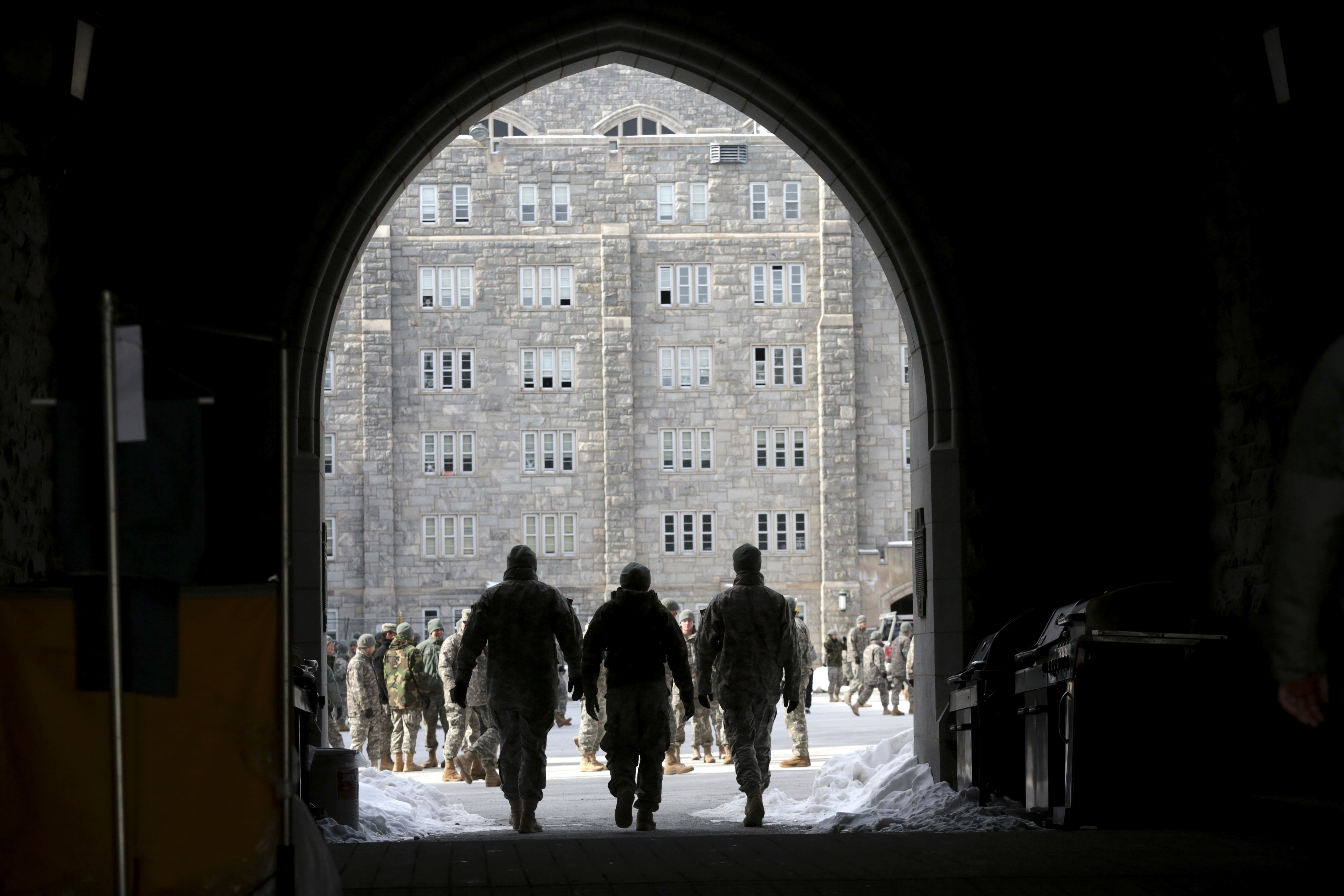
    After 17 years of teaching science at West Point, Adam Kalkstein says he was suddenly ordered last year to cut from his curriculum information about the human causes of climate change, according to a new lawsuit filed against the U.S. Military Academy.

    The change was immoral and potentially illegal, Kalkstein says he told Brig. Gen. Shane R. Reeves, who at the time was dean of West Point. Instead of upholding Army values, Kalkstein said he felt like a liar and a fraud.

    Reeves stormed out of the room when Kalkstein declined a suggestion that he resign, according to the lawsuit. Six months later, the tenured professor was told his contract would not be renewed.

    Filed in the Southern District of New York, the lawsuit accuses West Point of breaking the law by violating Kalkstein’s First Amendment rights by forbidding him from teaching about human-driven climate change, an order that required him “to omit a massive, fundamental, essential component of the course and to defy science,” according to the suit. Spokespeople for the Pentagon, West Point, and White House did not return requests for comment.

    Michael Sussman, the lawyer for Kalkstein, said his client is a conservative Republican who believes the military needs to be taught the true causes of climate change when it comes to national security. In a letter to Defense Secretary Pete Hegseth, Kalkstein said understanding the causes of global warming was important not for social justice reasons but for things like competing with the Russians in the Arctic and knowing why sea ice was melting.

    “He is loyal to the cadets and the academy,” Sussman said about the professor. “And to his perspective, edicts that he can’t say what’s true in a classroom is beyond his tolerance and totally counterproductive.”

    Kalkstein’s lawsuit is the latest example of the Trump administration’s attempt to force conservative cultural changes on the education system. President Donald Trump has made frequent public statements dismissing scientific consensus on global warming, and his administration has categorized federal and international climate change programs as “woke, weaponized and wasteful spending” along with diversity, equity and inclusion initiatives and transgender policies.

    The administration has repeatedly targeted the military for cultural change. Last year the administration banned hundreds of library books at the U.S. Naval Academy that did not align with Trump’s political agenda. Many of the books have since been returned, according to a Defense Department spokesperson.

    In May, Judge Cathy Seibel of U.S. District Court in White Plains, New York, ruled in favor of another West Point professor, Tim Bakken, the longest-serving law professor in the military academy’s history, who had sued over the school’s new restriction on expressing his opinions to students in the classroom on subjects he teaches.

    The latest lawsuit comes against the backdrop of a push by Hegseth to remake the service academies by dramatically scaling back the number of civilian professors and revising their curricula. A draft memo circulating inside the Pentagon this summer argued that the academies had been infected by “civilian academic norms” that were diluting the “focus on lethality.” The memo’s existence was first reported by CBS News.

    The memo argued that tenure had led the academies to elevate the “research priorities of the tenured academics” over the needs of the military. The memo also called for “a comprehensive review” that would examine the “operational relevance” of all course offerings at the academies.

    Hegseth in his 2024 book, The War on Warriors, bashed the academies as “Marxist-adjacent” institutions and blamed civilian professors for the shift.

    “Civilian professors were welcomed on campus for reasons of ‘diversity’ as well as expediency. And with them came the predictable, radical left-wing educational philosophies,” Hegseth wrote.

    Critics of Hegseth’s view have maintained that the civilian professors have improved and broadened the quality of instruction at the academies at a time when winning wars requires agile thinkers.

  • Democrats want to draw more safe House seats. It could cost Black lawmakers.

    Democrats want to draw more safe House seats. It could cost Black lawmakers.

    A clash over Black representation in a recent South Florida congressional primary brought national attention to an increasingly urgent debate within the Democratic Party, as it searches for ways to counter the off-cycle nationwide redistricting campaign that President Donald Trump launched last year.

    Republicans have added more than a dozen conservative-leaning House districts across the country, giving them an outside shot at holding on to their threadbare majority in November — and leaving Democrats, who have limited options to offset those gains, desperate to catch up.

    Searching for places to create new blue seats, Democrats are considering breaking up urban districts drawn to elect Black members in liberal states such as Illinois, New York and Maryland, then moving some of those voters to Whiter, more conservative suburban districts. Some within the party vehemently oppose this idea because they fear it could further reduce the number of Black Americans in Congress, which is already set to take a hit from Republican redistricting.

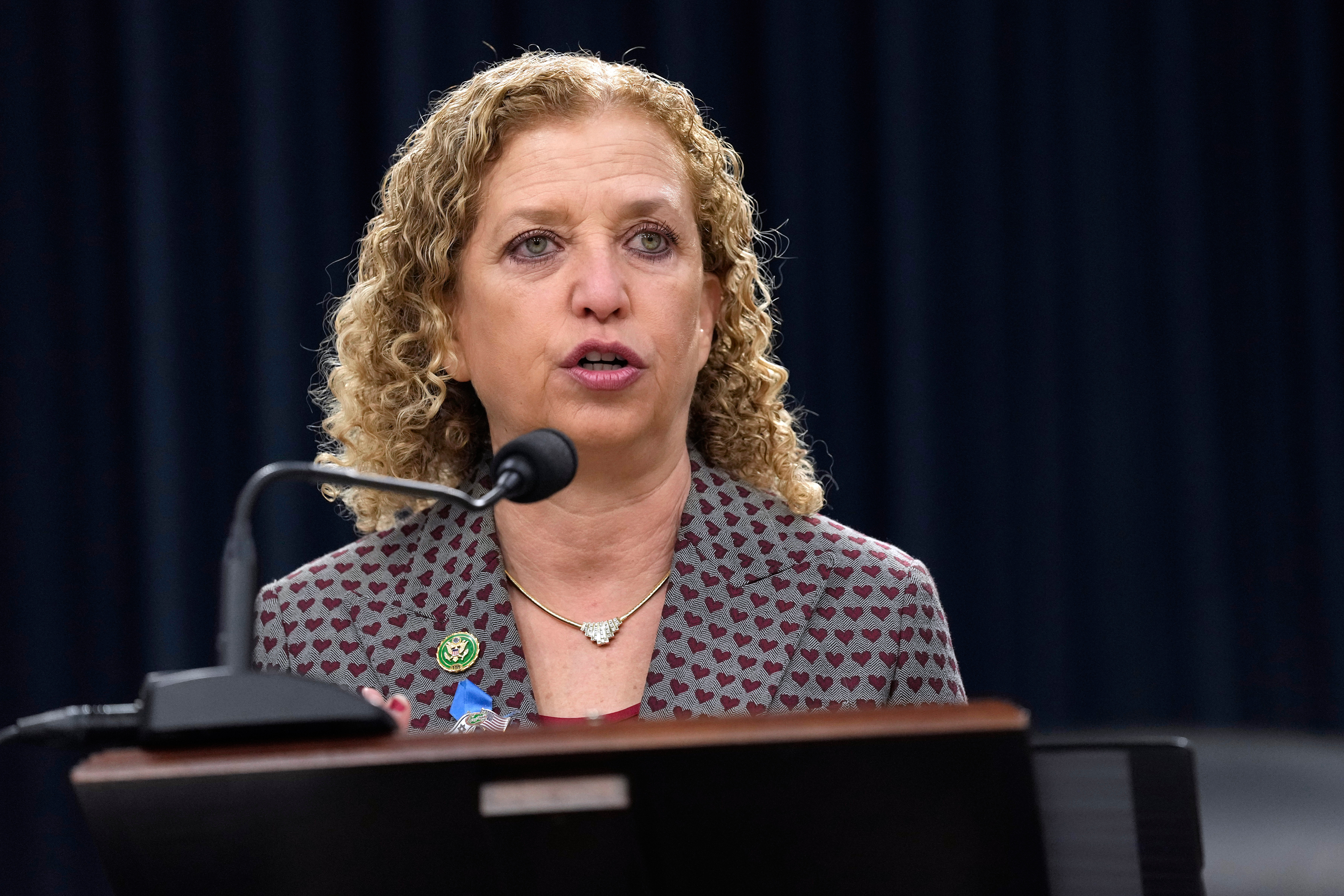
    In Florida, Black politicians criticized Democratic Rep. Debbie Wasserman Schultz, who is White, for decamping from a more competitive seat to a safely Democratic but heavily Black district nearby after state Republicans redrew congressional lines this year to benefit the GOP.

    Whether the seat — one of only about three dozen nationwide with a Black majority or plurality — should continue to have a Black representative, as it did for decades, became a major point of contention in the competitive primary, which Wasserman Schultz ultimately won.

    Democrats are now facing a conundrum as they chart a path forward: When control of the House is on the line, how much can they afford to prioritize diversity in their ranks?

    It’s a political headache for a party that prides itself on being powered by Black voters. About three-quarters of Black people lean Democratic, according to the Pew Research Center, nearly double the rate of White people. All but a handful of the five dozen Black members of Congress are Democrats.

    “If we’re going to be in this together, then let’s truly be in this together. Let’s not do the pick and choose,” said Florida Rep. Felicia Robinson (D), chair of the state’s Legislative Black Caucus, who once called Wasserman Schultz’s decision to move districts “a slap in the face” to the Black community.

    While she agreed that Democrats should prioritize maximizing House seats, Robinson said that, if the party silences Black voters in the process, “you make it kind of easy or more appealing for people” to become independents or Republicans instead.

    House Minority Leader Hakeem Jeffries (D-New York), who declined an interview request, and his allies argue that Democrats may need to sacrifice some predominantly Black districts in order preserve Black political power on the whole.

    They contend that winning back Congress is more important than protecting individual seats, because congressional control would allow Democrats to stop Republicans from further dismantling civil rights protections, including the extreme gerrymandering that has decimated Black representation across the South.

    Chris Taylor, a spokesperson for the Congressional Black Caucus, acknowledged that redistricting could shift some of their members’ seats. But the interests of the Black community, he said, are not served if Republicans subservient to Trump remain in control of Congress.

    “The shared goal of the caucus is to ensure that we’re able to fight for the American people,” Taylor said.

    The matter is especially sensitive in the wake of an April Supreme Court decision that cleared the way for Republican states such as Tennessee, Louisiana and Alabama to eliminate Black-majority districts once protected by law. Without those seats, membership of the Congressional Black Caucus, which reached a historic peak this session, is poised to decrease next year. Some Democrats worry their party’s redistricting efforts could accelerate that decline.

    “There could be backlash to the Democratic Party if they started trying to dilute Black voting power,” said Christian Grose, a professor of political science at the University of Southern California and director of its Democracy and Fair Elections Lab, who published a book on race and representation in Congress. “They are core members of the party.”

    A new intraparty debate is stirring

    One early effort to expand the number of safe Democratic seats already snagged over concerns about diversity.

    In Illinois, the push for another Democratic-leaning district — perhaps by shifting voters from a safe, historically Black seat on Chicago’s South Side to a Republican-leaning district in the outer suburbs — faded last fall partly because of opposition from Black state lawmakers, who objected to a new map that might diminish Black representation.

    “How much more juice can you get out of that squeeze? I mean, there’s nothing left here,” said Rep. Jonathan Jackson (D-Illinois), who has held the South Side seat for two terms and opposes redrawing it. “The people don’t have an interest in that. The answer is no.”

    Jackson said it’s important to preserve the distinct character and legacy of districts like his, which has had Black representation for nearly a century. Democrats should instead consider other strategies to flip Republican seats, he said, including reengaging with rural Americans and holding year-round voter registration drives to boost turnout.

    “Let’s go play the rest of the map,” Jackson said. “This represents urban America.”

    But Democrats are also under tremendous pressure from their increasingly restive liberal base to match Republican gains. While the GOP has already drawn itself more favorable lines in 16 districts since last year, Democrats have only picked up an advantage in six more.

    In May, after the Supreme Court ruling that kicked off renewed Republican redistricting, a Politico poll found 45 percent of Democratic voters favored maximizing new seats over preserving majority-minority districts, compared to 32 percent who said it was more important to protect the voting power of Blacks and other minorities.

    Jeffries and other Democratic leaders have waved off concerns about what redistricting will do to Black representation by noting that dozens of Black members, including Reps. Lauren Underwood of Illinois and Janelle Bynum of Oregon, were elected from districts with small Black populations, some of which are majority White. Unpacking predominantly Black seats, they say, does not necessarily mean wiping out Black members.

    Political scientists like Grose agree that Democrats could reduce the number of Black voters in some districts while maintaining their decisive role in elections, because the Democratic primary electorate is more Black than the general voting population.

    The proportion of Black voters needed to elect their preferred candidate to a House district in northern states is significantly lower than in the South, where voting trends are more racially polarized, said Andra Gillespie, a political science professor who directs the James Weldon Johnson Institute for the Study of Race and Difference at Emory University. That could allow Democrats to unpack heavily Black seats without losing their incumbents.

    “You can put a multiracial Democratic coalition together,” Gillespie said.

    Debate about Black districts isn’t going away

    Whatever the outcome of Democrats’ redistricting campaign, the consequences for Black voters could be significant.

    Grose, the USC professor, said that while race does not appear to be a significant factor in congressional voting records, it does make a difference for constituent services. His research found that Black Democrats tend to allocate more resources, including federal funding, to Black communities than White Democrats in similar districts. He attributed that to “electoral coalitions” — Black members are more dependent on Black voters to win and consequently prioritize them more.

    “What you end up doing as a member of Congress is you support your base,” he said.

    More serious conflicts over representation likely loom after the 2030 Census. Populous and diverse Democratic states, such as California and New York, are projected to lose seats through reapportionment, potentially forcing them to combine majority-White and majority-minority districts and pitting incumbents against each other.

    “What does that mean when you’ve got to figure out who loses a congressional seat?” Gillespie said. “That’s where I expect to see the fight happen.”

    But this trade-off may ultimately matter more to politicians, whose careers are on the line, than the voters they represent.

    Despite the furor in South Florida, Wasserman Schultz won her primary handily. Meanwhile, Black voters in Memphis returned Rep. Steve Cohen (D-Tennessee), who is White, to Congress for two decades.

    Cohen, who is retiring this year after Republican state legislators cracked apart his majority-Black district, called it a “splendid example of people voting based on your work ethic, what you produce and the content of your character” rather than race. He said he earned the trust of his Black constituents with a long track record of supporting issues that mattered to them.

    When Willie Herenton, the first Black mayor of Memphis, launched a primary challenge to Cohen in 2010, arguing that at least one member of Tennessee’s congressional delegation should be Black, Cohen still beat him by nearly 60 percentage points.

    “Maybe the Black politicians want it, because it’s going to give them more clout,” Cohen said. “The proof is in the voters and they elected me over and over again.”
  • Top Trump official blasts Larry Krasner over comments about blowing up White House ballroom

    Top Trump official blasts Larry Krasner over comments about blowing up White House ballroom

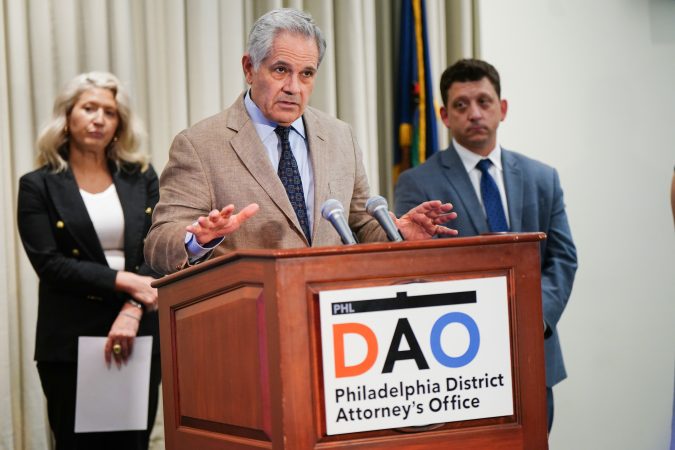
    Philadelphia District Attorney Larry Krasner drew a rebuke Wednesday from Attorney General Todd Blanche after he said President Donald Trump’s White House ballroom, which is currently under construction, should be blown up and pieces of debris sold as paperweights.

    Krasner, a progressive Democrat who has centered much of his political identity on opposing Trump, made the initial comments Tuesday during an event at the President’s House Site, George Washington’s Philadelphia home. The Trump administration this year removed educational panels about slavery from the site and replaced them with an exhibit that experts say sanitizes history.

    According to NBC Philadelphia, the district attorney said during his remarks at the annual Slavery Commiseration ceremony on Tuesday that “there is a beautiful time coming [when] the memorial will be here.”

    “Let me tell you what will not be here: There will not be a ballroom,” Krasner said, referring to the ballroom and military bunker that Trump wants to replace the demolished East Wing of the White House. “What is going to be happening is that, in about 10 or 15 years … I’m gonna have a paperweight sitting on my desk. You know what that paperweight’s going to be? It’s gonna be a piece of the ballroom after we all blow it up.”

    Krasner paused, then added: “In an official ceremony, just so we’re clear. In an official ceremony, we’re gonna blow it up, and we’re gonna give the taxpayers their money back by selling all the pieces as paperweights.”

    The remarks by the Philadelphia district attorney, a third-term prosecutor who has recently flirted with running for higher office, were the latest in a long line of provocative comments he has made about Trump and other GOP officials. Earlier this year, the White House press secretary and Republican members of Congress ripped Krasner after he called federal immigration enforcement agents “wannabe Nazis” and said Trump’s administration is orchestrating a “fascist takeover” of the country.

    And last month, Krasner rallied with protesters in Washington and slammed House Republicans after they subpoenaed documents from his office related to the city’s immigration policies.

    Video of Krasner speaking at the event in Independence National Historical Park rocketed around social media this week, drawing condemnation from prominent supporters of the president, some of whom said his comments were inciting violence.

    The White House’s “rapid response” account wrote Tuesday on X that Krasner’s comments were “sick” and that “Democrats are the party of violence.”

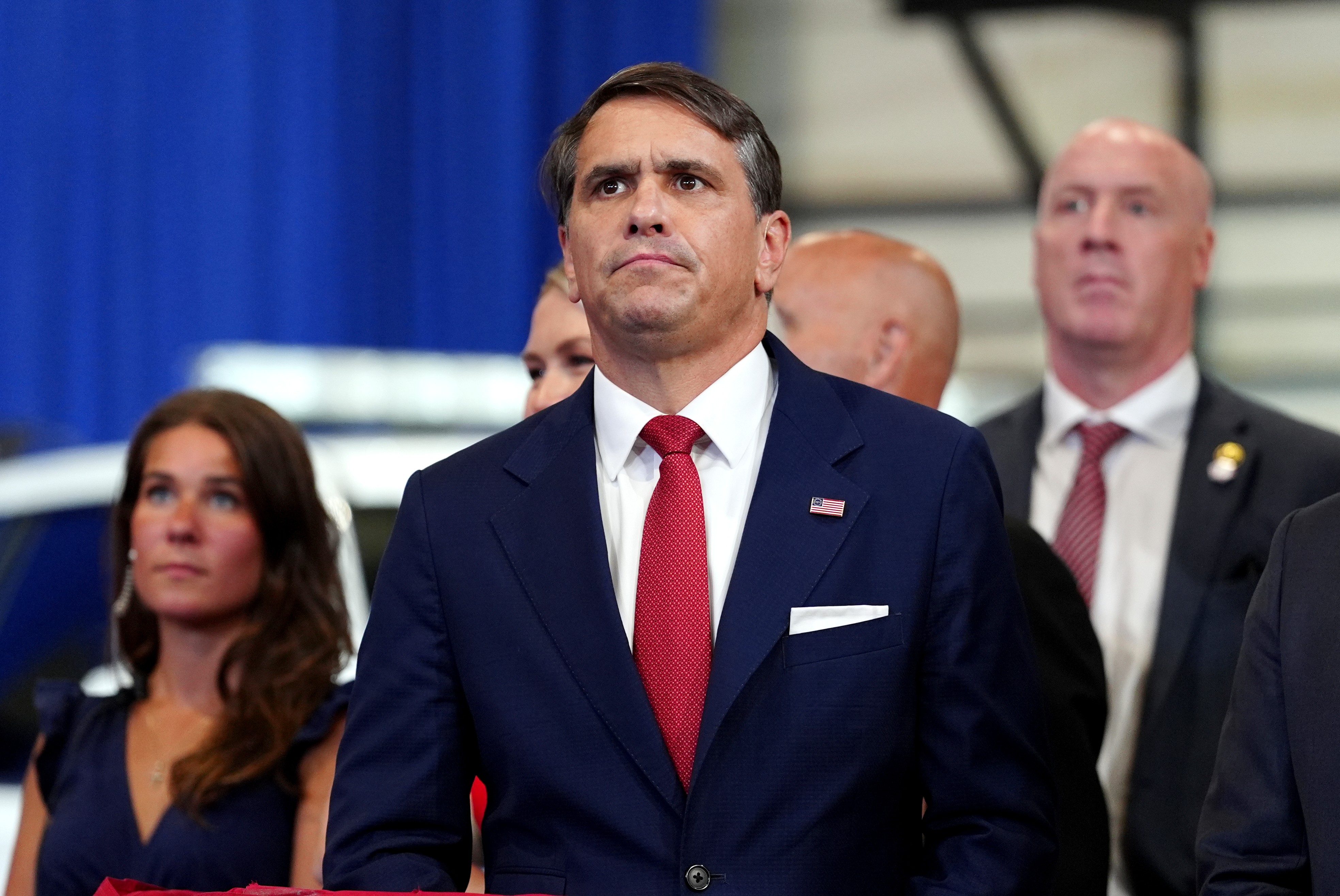
    Attorney General Todd Blanche listens as President Donald Trump speaks at the David Mack Center for Training and Intelligence, Friday, Aug. 14, 2026, in Garden City, N.Y. (AP Photo/Julia Demaree Nikhinson)Julia Demaree Nikhinson

    On Wednesday, Blanche, who was confirmed earlier this month, appeared on Fox News’ America’s Newsroom to discuss a range of issues. Host Dana Perino asked him about Krasner’s comments and the timeline for the controversial ballroom, which had been briefly on hold amid litigation contending the Trump administration needs congressional authorization for the project. The Supreme Court this week allowed construction to proceed while justices consider the case.

    “The ballroom is being built,” Blanche said. “And it’s disgusting that a district attorney in Philadelphia, who, by the way, has a city with its own problems, is so focused on what the president is doing in the White House.”

    In an interview Wednesday, Krasner said he stands by his initial comments about the ballroom “100%” because “when you demolish a building, you do it with explosives and/or wrecking balls.”

    Krasner added that he sees Blanche’s opposition to his rhetoric at the Slavery Commiseration event as part of the Trump administration’s broader project of stripping historical sites like the President’s House of references to slavery.

    “I support the permanent existence of this historically important memorial in Philadelphia. I know that may be disturbing to white supremacists, but too bad,” Krasner said. “Philly is going to stand up for its history, and Philly understands that being an elected official is not about making everybody your friend. It’s about having the right enemies.”

  • Trump mulls renaming Lake Ontario as ‘Lake America.’ Canadians balk at the idea

    Trump mulls renaming Lake Ontario as ‘Lake America.’ Canadians balk at the idea

    WINDSOR, Ontario — With his trade war with Canada intensifying, President Donald Trump floated the idea of renaming Lake Ontario to become “Lake America.” America’s northern neighbors quickly panned the idea.

    “He can blow out his hole as much as he wants to, but it’s never going to happen, because Canadians are strong,” said Patricia Wiseman, an Ontario resident, as she walked along the waterfront of the Detroit River.

    It may be more complicated than that. Trump has wide latitude over how the U.S. government recognizes geographic places and landmarks. But the Republican president cannot force Canada or individual citizens on either side of the border to follow his preferred naming conventions. And his latest branding idea — reminiscent of his move to rechristen the Gulf of Mexico as the “Gulf of America” — highlights how much his rhetoric and trade policy have sundered the previously warm relationship between Washington and Ottawa.

    “I believe the American people love us, and we love them,” Wiseman said. “They’re going through as much turmoil as we are. Hopefully, one day we can reunite.”

    Trump introduced the idea of renaming the easternmost area of the Great Lakes hours before Canadian Prime Minister Mark Carney’s scheduled announcement of reciprocal tariffs on U.S. imports into his country.

    “The United States is giving serious consideration to changing the name of Lake Ontario to Lake America in that we don’t expect to doing much business with Ontario any longer,” Trump posted Tuesday on Truth Social.

    The White House followed later in the day by posting on social media a toy Lego map of the U.S. labeling the Gulf of Mexico with Trump’s preferred name, Gulf of America.

    Ontario is leading trade partner for many U.S. states

    The U.S. and Canada, which share borders along multiple Great Lakes, including Lake Ontario, are locked in an extended trade dispute, with the Trump administration imposing 50% tariffs on $20 billion worth of Canadian goods over the weekend after talks between the countries broke down. That ratcheted up lower tariffs that Trump imposed in 2025, shortly after his second presidency began.

    Trump has also threatened new 50% tariffs on Canadian vehicles, auto parts and steel, while Carney said U.S. trade demands showed that Washington wanted to “destroy our major industries,” including autos, steel and aluminum.

    The official U.S.-Canada border stretches across the water between Lake Ontario’s northern and southern shores. The body of water forms much of New York State’s coastline and separates Buffalo from Toronto, the capital of the province of Ontario. Toronto is Canada’s most populous city and Ontario its most populous province.

    Ontario is also the single largest export destination for more than a dozen U.S. states.

    “It’s disappointing,” Ontario resident Paul Butler said of Trump’s policy and rhetoric. “The more you hear it, it just gets downright infuriating.”

    Ontario Premier Doug Ford, who traded personal insults with Trump on Monday, dismissed the Lake Ontario threat as “a lot of rhetoric” and urged the two countries to resume negotiations. Ford acknowledged in a CNN interview that the dispute had “got a little personal” and agreed it was time to lower the temperature, saying the trade fight was hurting both countries and that Canada and the United States should “get back to the table” to negotiate.

    Lake Ontario’s name predates either country

    The lake’s name comes from the Huron Indigenous people’s word “oniatarí:io,” which means “lake of shining waters,” and it predates European settlement in the region. The province, founded in 1867, took its name from the lake.

    The International Hydrographic Organization — of which both the United States and Canada are members — works to ensure that the world’s seas, oceans and navigable waters are surveyed and charted uniformly, and also names some of them. But there is no single international body that determines names of international bodies of water.

    “It’s been like that for so long, so, why do we need to change it?” said Nancy Minard, an Ontario resident. “It seems to work for Canada and I think probably works for the U.S., too.”

    Trump has at least some support for his idea on Ontario’s south shoreline.

    “I like it. Absolutely. Because I like America, and right now Canada’s not treating us very nicely,” said Jim Fetterhoff, a resident and fisherman in Port Ontario in upstate New York.

    He cited Canadian tariffs on dairy and other products. Nothing against Canadians themselves, Fetterhoff added, “just the Canadian government. I love Canadians.”

    Trump has been antagonizing U.S. neighbors

    Canada and Mexico are the largest U.S. trading partners but have drawn Trump’s ire throughout his second presidency on trade, immigration and crime. He has called for Canada to become the 51st state, alternating between joking tones and seemingly serious assertions that Carney and other Canadians have rejected and mocked.

    On the day of his second inauguration, Trump fulfilled one of his 2024 campaign promises with an executive order to rename the Gulf of Mexico to the Gulf of America. The body of water forms a shared border between Mexico and the U.S.

    Mexico does not recognize the change, nor do many other countries and international bodies.

    In 2015, President Barack Obama changed the name of Alaska’s Mount McKinley, named for the 25th U.S. president, to Denali, its historical name given by Alaska Natives as well as the preference of many Alaska residents. Trump, the same day he ordered the Gulf of Mexico to be renamed, returned McKinley’s name to the Alaska mountain to honor “a great president.”

    That back-and-forth in Alaska could be a preview for a certain ancient lake. Said Wiseman of Trump, “He’s not going to be in the presidency forever.”

    ___

    This story has corrected to reflect that Trump floated the idea in a social media post on Tuesday, not Monday.

    ___

    Barrow reported from Atlanta. Gillies reported from Toronto. Associated Press writer Cara Anna in Lowville, N.Y., contributed to this report.

  • In headache for Republicans, second Dan Sullivan advances in Alaska Senate race

    In headache for Republicans, second Dan Sullivan advances in Alaska Senate race

    Dan J. Sullivan, a retired teacher who is challenging Republican Sen. Dan S. Sullivan of Alaska, won a spot on the general election ballot Tuesday, according to The Associated Press.

    His emergence from the state’s nonpartisan primary poses a headache for the incumbent.

    Dan J. Sullivan is not expected to wage a competitive general-election campaign. But Republicans have worried for months that some voters may confuse the two Sullivans in November, potentially depriving Sen. Sullivan of votes and lifting his well-funded Democratic challenger, former Rep. Mary Peltola, to victory.

    Sen. Sullivan and Peltola easily earned spots on the general election ballot; soon after polls closed a week ago, The Associated Press said they both had advanced. But Dan J. Sullivan won just a few thousand votes, and it took a little more than a week for it to become clear that he had secured one of the four spots on the November ballot.

    Democrats and Republicans alike see Dan J. Sullivan as no mere campaign curiosity. If he wins even a sliver of general-election votes, it could be decisive in a narrow race. Alaska uses a ranked-choice general-election system, which means that voters confused about the Sullivans could simply rank them both before Peltola — but it is unclear how the dynamic may play out in voting booths.

    Sen. Sullivan trailed Peltola by more than 5 percentage points in the nonpartisan primary.

    The contest in Alaska is one of a handful of competitive races seen as the most likely to determine which party wins control of the Senate. With Republicans now holding 53 seats, Democrats would have to keep all their seats and flip four to win the chamber in the midterms. Democratic leaders consider Alaska to be one of their most promising targets.

    It was not always clear that Dan J. Sullivan, running as a Republican, would even be eligible.

    The Alaska Division of Elections, which is overseen by the state’s Republican lieutenant governor, removed Dan J. Sullivan in June from the primary ballot, finding that his candidacy was intended to confuse voters and was not a “good-faith” effort. An Alaska judge, in turn, restored his spot on the ballot, saying that the elections agency had exceeded its authority.

    Republicans have claimed that Peltola’s campaign planted Dan J. Sullivan in the race to trick voters. But the Peltola campaign has denied coordinating with him. He said in a recent interview that he had voted for Peltola in her bids for the House of Representatives in 2022 and 2024, but that he was running in good faith and was not a secret Democrat.

    Broadly, Democrats in Alaska have dismissed allegations of foul play, casting Dan J. Sullivan’s candidacy as an amusing but far from unheard-of quirk of the insular world of Alaska politics.

    When Sen. Sullivan was first elected to the Senate in 2014, another Republican named Dan Sullivan, then the mayor of Anchorage, was also on the primary ballot as a candidate for lieutenant governor.

    On the day of this year’s primary, the former mayor weighed in on the Senate race. “As the OG Dan Sullivan, I urge Alaskans to vote for Sen. Daniel S. Sullivan,” he said in a statement on social media. “He’s been great for Alaska.”

    When Dan J. Sullivan announced in May that he was entering the race, he said in a statement, “It’s time for Alaska to elect a Sullivan that’s on their side.”

  • Before Hegseth fired him, top general was advised to drop Kid Rock probe

    Before Hegseth fired him, top general was advised to drop Kid Rock probe

    Days before the Army’s top officer was abruptly fired earlier this year, he was advised by a fellow general now vying to replace him to stop the military’s investigation into an unauthorized helicopter flyby of musician Kid Rock’s Tennessee estate, three people familiar with the matter said.

    Gen. Randy George, whom Defense Secretary Pete Hegseth removed as the Army chief of staff without explanation, felt it was important to follow typical protocol and determine whether any safety regulations had been violated during the March 28 flyby, these people said. Like some others, they spoke on the condition of anonymity to discuss the episode.

    Gen. Chris LaNeve, the Army’s No. 2 officer, told George that Hegseth did not want the investigation to proceed, one person said. The two others said that George later confided in colleagues about the encounter with LaNeve and seemed troubled by it. George told them that LaNeve suggested it would be best if the review was scuttled, those people said.

    The revelation, which has not previously been reported, adds a new layer of understanding to Hegseth’s potential motivations for firing George on April 2. Kid Rock, whose legal name is Robert Ritchie, is a vocal supporter of President Donald Trump and avowed critic of many Democratic politicians and causes.

    Through a spokesman, George, who is now retired, declined to comment. Army officials did not respond to questions about LaNeve, whose candidacy for the chief of staff job faces resistance in Congress.

    Hegseth, in a statement provided to The Washington Post, did not directly address the discussion between the two generals and described LaNeve as “precisely the kind of leader the U.S. Army needs right now,” interested in strengthening the Army, and “not interested in playing politics in Washington.”

    “He is a back-to-basics, no politics, no-nonsense General — exactly what President Trump expects,” Hegseth’s statement said. “The critics coming after him are the same out-of-touch so-called insiders who’ve spent years undermining our military with woke policies and endless wars. They hold deep grudges against any commander willing to put America and our troops first, but their days of influence are over.”

    Sean Parnell, a spokesman for Hegseth, said that the new reporting about George’s departure amounted to a “regurgitating” of a “tired, old story simply to manufacture drama.”

    Hegseth and his advisers have for months declined to say what precipitated George’s ouster, even when asked directly by Republican and Democratic lawmakers who objected to the firing. He has long been at odds with the service’s senior leadership — including Army Secretary Dan Driscoll, a fellow Trump appointee who at one time was viewed as a potential replacement for Hegseth. Driscoll is now expected to leave the administration soon, perhaps within weeks, officials said.

    Others familiar with George’s firing have said that multiple factors were probably at play, including his close working relationship with Driscoll.

    Since taking charge of the Pentagon in January 2025, Hegseth, a former Fox News personality who spent years in the Army National Guard, has overseen the dismissal of more than two dozen top officers. The firings typically occur without cause, though he has complained broadly that the military’s upper ranks are insufficiently loyal to the president or caught in old ways of thinking. Many of those removed have been women and minorities.

    LaNeve’s actions in the Kid Rock investigation could further complicate his ascension to the Army’s top post. While he has filled the role on an acting basis since George’s ouster nearly five months ago, Trump administration officials have not yet formally nominated him to become the chief of staff amid concerns that he lacks support within the Republican-led Senate Armed Services Committee, said three separate people familiar with the views on Capitol Hill.

    Sen. Joni Ernst, an Iowa Republican and retired Army National Guard officer initially skeptical of Hegseth’s nomination to lead the Pentagon, opposes LaNeve, these people said. Both George and Gen. James Mingus, another top Army officer forced out by Hegseth, are from Iowa.

    Without votes from Democrats, nominees require unanimous Republican support on the committee to advance.

    Ernst’s office did not respond to a request for comment.

    The Wall Street Journal first reported her opposition to LaNeve.

    Parnell, Hegseth’s spokesman, downplayed the situation, saying in his statement that Pentagon officials are “actively coordinating with our Senate partners to lock in the optimal moment to formally submit his nomination, and we intend to do so.”

    On March 31, three days after two AH-64 Apache helicopters flying outside Nashville buzzed the home of Kid Rock, Army officials with the 101st Airborne Division at nearby Fort Campbell announced they were grounding the pilots and launching an administrative investigation.

    Video shared on social media by the musician showed the aircraft at low altitudes. In his post, he also criticized California Gov. Gavin Newsom, a Democrat who is a frequent critic of the Trump administration. “This is a level of respect,” Kid Rock wrote, that Newsom “will never know.”

    At the time, the Army said it also was reviewing the flight path of a helicopter that flew the same day over a “No Kings” protest against Trump in nearby Clarksville, Tennessee. Flight tracker data showed that the aircraft dipped to as low as 625 feet, at one point circling over where protesters were gathered.

    When the incidents attracted unflattering news coverage, Hegseth promptly intervened. He terminated the Army’s investigation and exonerated the aircrews involved — encouraging them to “Carry on, Patriots.”

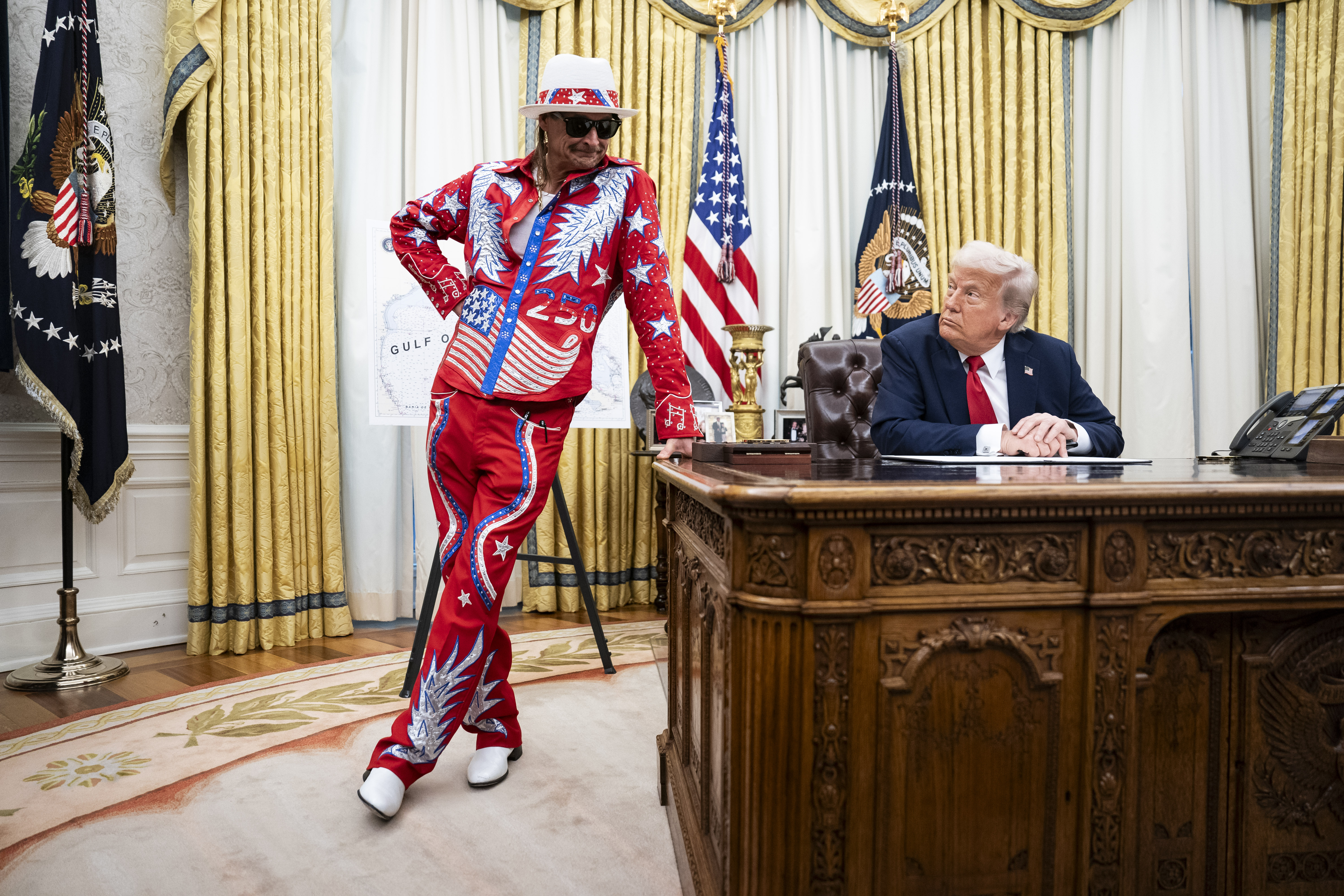
    A few weeks later, Hegseth and Kid Rock flew in Apache helicopters from Fort Belvoir in Virginia, located in suburban D.C. Parnell said then that it was part of a broader community relations event.

    LaNeve, 59, was not viewed by his Army peers as a likely future chief of staff before the Trump administration came into office, but he caught the president’s attention with a congratulatory call during the Commander-in-Chief Inaugural Ball, people familiar with the matter said. At the time, LaNeve was commanding U.S. soldiers in South Korea and called the president from there.

    LaNeve was moved into a more influential position as Hegseth’s senior military aide after the defense secretary’s team ousted Lt. Gen. Jennifer Short from the role the following month.

    This past fall, Hegseth elevated LaNeve again, nominating him to become the Army’s vice chief of staff while forcing Mingus into retirement early.

    In a May hearing before the House Armed Services Committee, LaNeve faced sharp questions from Republicans over the Pentagon’s decision to cancel the deployment of an Army brigade to Poland, a NATO ally that borders Ukraine.

    When Rep. Don Bacon (R-Nebraska) asked him about the Poland decision, LaNeve declined to say why the deployment was canceled, arguing he was not part of the military’s “policy side.”

    “But you’re the chief of staff of the Army,” Bacon responded, noting his acting role.

    George had been expected to serve as the Army’s chief of staff until fall 2027, completing a typical four-year assignment in the role. Hegseth asked him to retire early during a phone call, news of which was leaked minutes later to CBS News, officials have said previously. The move thwarted any effort by Driscoll, the Army secretary, to save the general’s career before the decision was publicized.

    Hegseth’s campaign of firings and forced retirements has removed a number of other candidates who may otherwise have been considered for elevation to Army chief of staff, officials said. They include Mingus, who retired early this year; Gen. David Hodne, who was fired without explanation in April; and Gen. Christopher Donahue, who is expected to retire soon after Hegseth stonewalled efforts within the Army and on Capitol Hill to extend his career.

    Amid the purge, Driscoll has begun to consider his own departure, officials familiar with the matter said. The Wall Street Journal reported Friday that he could leave the Trump administration by the end of the year. That appears likely, officials said, but no firm plan has emerged yet.

    As The Post and others reported in the immediate aftermath of George’s firing, aides to Hegseth have touted Parnell, the Pentagon spokesman, becoming Army secretary. Parnell has told colleagues privately that he is interested in the job should it become open.

  • Democratic states file new lawsuit seeking to block Trump’s order limiting mail voting in midterms

    Democratic states file new lawsuit seeking to block Trump’s order limiting mail voting in midterms

    Democratic-controlled states on Wednesday filed another lawsuit challenging President Donald Trump’s executive order seeking to limit mail voting in this year’s midterm elections.

    The action, filed by about two dozen states against the U.S. Postal Service, marked a new phase in the high-stakes litigation just two days after the Supreme Court ruled against them in a separate case, but did not say Trump’s order was legal.

    The high court majority found the Democratic lawsuit was premature, but that was before the Republican administration issued a rule governing Postal Service delivery of mail ballots. Election officials warn it will be impossible to implement in the days before the first wave of mail ballots are sent out next week.

    “Across the country, states are already deep into preparations for the 2026 elections. Now, at the last moment, the federal government is attempting to meddle in those preparations and potentially threaten countless Americans’ right to vote,” New York Attorney General Letitia James, one of 25 Democratic attorneys general filing the lawsuit, said in a statement. “USPS has no authority to decide who can and cannot vote by mail.”

    Trump’s executive order remains barred from taking effect under a separate injunction that the administration argues needs to be immediately rescinded in light of the high court’s ruling in the previous Democratic state lawsuit. It also had succeeded in a third case filed in May in the District of Columbia, convincing a judge that it was too early to prevent its implementation of the executive order.

    All previous challenges were filed before the administration published its mail ballot rule Friday night. The rule says that if states want their mail ballots delivered, they will need federal approval of the design of their envelopes and must give the Postal Service a list of voters eligible to receive them.

    White House spokesperson Lauren Bis on Wednesday said the Postal Service’s proposals were “commonsense measures that protect the security of mail-in ballots” and that the administration would continue to work to implement them to boost “the safety and security of our elections.”

    The Postal Service said it would not comment because of the pending lawsuit.

    National Democrats on Tuesday cited the rule in asking the federal judge in the Washington case to block Trump’s order after he declined to do so last spring, saying the administration at the time had not taken concrete action. In Boston, U.S. District Judge Indira Talwani also found that the administration moving forward with the mail ballot rule had violated a separate injunction she had placed on the Postal Service prohibiting it from enacting Trump’s order, although she did not take any action against the government.

    Talwani, who was nominated by Democratic President Barack Obama, had issued the injunction against Trump’s executive order in the prior Democratic state case, which is the one the Supreme Court overturned on Monday. She has yet to act on the administration’s urging her to revoke her second injunction. It was issued Aug. 11 in a case against the executive order and was filed by the League of Women Voters and other voting rights groups while the Supreme Court was considering the administration’s appeal of the judge’s first order.

    Trump has long targeted mail voting, which he falsely blames for his 2020 election loss and is disproportionately used by Democrats as a result of Trump’s condemnations. Since returning to power, Trump has tried to claim authority over election rules, saying he thinks Republicans should “take over” vote counting in Democratic areas.

    He issued his first election executive order just months after retaking office, attempting to require documentary proof of citizenship to vote, among other changes. He has also been pushing a sweeping election bill that has stalled in the Senate amid opposition from Democrats and even some within his own party.

  • Democratic states file new lawsuit seeking to block Trump’s order limiting mail voting in midterms

    Democratic states file new lawsuit seeking to block Trump’s order limiting mail voting in midterms

    Democratic-controlled states on Wednesday filed another lawsuit challenging President Donald Trump’s executive order seeking to limit mail voting in this year’s midterm elections.

    The action, filed by about two dozen states against the U.S. Postal Service, marked a new phase in the high-stakes litigation just two days after the Supreme Court ruled against them in a separate case, but did not say Trump’s order was legal.

    The high court majority found the Democratic lawsuit was premature, but that was before the Republican administration issued a rule governing Postal Service delivery of mail ballots. Election officials warn it will be impossible to implement in the days before the first wave of mail ballots are sent out next week.

    “Across the country, states are already deep into preparations for the 2026 elections. Now, at the last moment, the federal government is attempting to meddle in those preparations and potentially threaten countless Americans’ right to vote,” New York Attorney General Letitia James, one of 25 Democratic attorneys general filing the lawsuit, said in a statement. “USPS has no authority to decide who can and cannot vote by mail.”

    Trump’s executive order remains barred from taking effect under a separate injunction that the administration argues needs to be immediately rescinded in light of the high court’s ruling in the previous Democratic state lawsuit. It also had succeeded in a third case filed in May in the District of Columbia, convincing a judge that it was too early to prevent its implementation of the executive order.

    All previous challenges were filed before the administration published its mail ballot rule Friday night. The rule says that if states want their mail ballots delivered, they will need federal approval of the design of their envelopes and must give the Postal Service a list of voters eligible to receive them.

    White House spokesperson Lauren Bis on Wednesday said the Postal Service’s proposals were “commonsense measures that protect the security of mail-in ballots” and that the administration would continue to work to implement them to boost “the safety and security of our elections.”

    The Postal Service said it would not comment because of the pending lawsuit.

    Pennsylvania is one of the states suing the Trump administration.

    “Absolutely nothing has changed here in Pennsylvania. You can vote in person on Election Day or you can vote by mail before Nov. 3,” Democratic Gov. Josh Shapiro said Tuesday evening before the suit was filed.

    “Your vote will be counted. Your vote is safe and secure,” Shapiro said. “No matter how many times the president wants to try and undermine people’s right to vote in this commonwealth, he needs to know that he will be met with a swift rebuke from me.”

    National Democrats on Tuesday cited the rule in asking the federal judge in the Washington case to block Trump’s order after he declined to do so last spring, saying the administration at the time had not taken concrete action. In Boston, U.S. District Judge Indira Talwani also found that the administration moving forward with the mail ballot rule had violated a separate injunction she had placed on the Postal Service prohibiting it from enacting Trump’s order, although she did not take any action against the government.

    Talwani, who was nominated by Democratic President Barack Obama, had issued the injunction against Trump’s executive order in the prior Democratic state case, which is the one the Supreme Court overturned on Monday. She has yet to act on the administration’s urging her to revoke her second injunction. It was issued Aug. 11 in a case against the executive order and was filed by the League of Women Voters and other voting rights groups while the Supreme Court was considering the administration’s appeal of the judge’s first order.

    Trump has long targeted mail voting, which he falsely blames for his 2020 election loss and is disproportionately used by Democrats as a result of Trump’s condemnations. Since returning to power, Trump has tried to claim authority over election rules, saying he thinks Republicans should “take over” vote counting in Democratic areas.

    He issued his first election executive order just months after retaking office, attempting to require documentary proof of citizenship to vote, among other changes. He has also been pushing a sweeping election bill that has stalled in the Senate amid opposition from Democrats and even some within his own party.

    Staff writer Jeff Neiburg contributed reporting.

  • How to avoid a Social Security cut? Lawmakers are floating ideas for what to do

    How to avoid a Social Security cut? Lawmakers are floating ideas for what to do

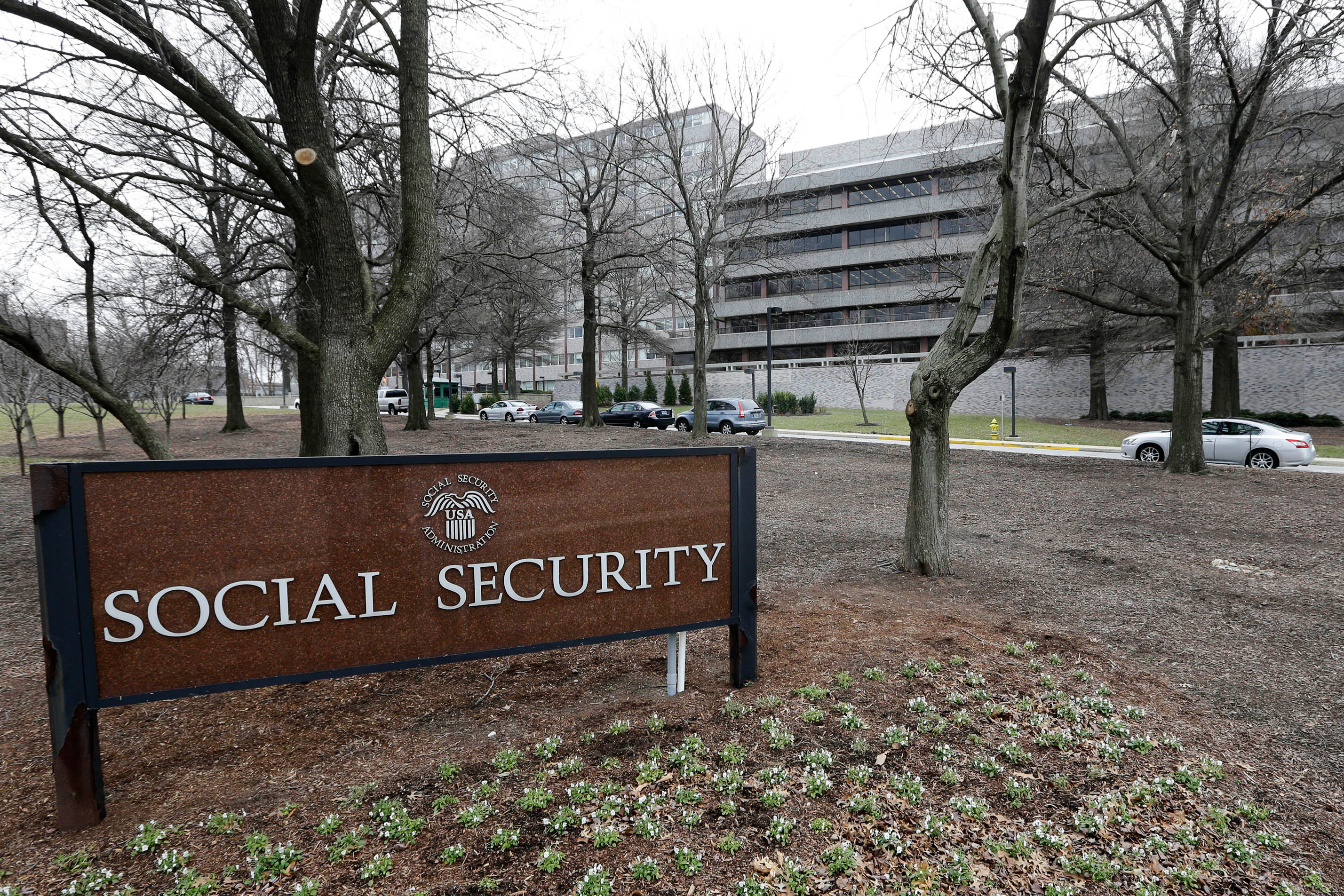
    WASHINGTON — With the few months they have left as senators, Democrat Dick Durbin and Republican Bill Cassidy have embarked on a mission to save tens of millions of Social Security beneficiaries from a projected 22% cut in their benefits, starting in just six years.

    It is one of the most perilous political efforts that a member of Congress can undertake, so it is telling that the push is being led by two lawmakers who have little to lose at this stage of their careers.

    “We’ve been at this six years, eight years. It’s incredible how long I’ve been at it,” Cassidy said. “But Durbin came up to me and he goes, ’Bill, I’m leaving the Senate soon. We need to take a ride at it.’”

    Their idea to extend Social Security’s solvency is one of a few that have been formally offered this Congress. None has gained much traction, but it is a start as more lawmakers weigh in on a problem that will likely confront the group of senators elected this fall as well as the next president. Pressure for action is sure to grow as 2032 draws closer.

    Senate bill seeks 50 years of Social Security solvency

    The measure that Durbin, D-Ill., and Cassidy, R-La., are pushing would not dictate an outcome, but instead set up a process for Congress to take action. It calls for the bipartisan Social Security Advisory Board to collect public input and submit draft legislation to Congress that would keep the program’s retirement trust fund solvent for at least 50 years.

    The resulting bill would then be introduced by the majority leaders of the Senate and House. If they do not want to go along, any member could sponsor the bill. It would then be referred to the two committees with jurisdiction over Social Security — the Senate Finance Committee and the House Ways and Means Committee.

    Both committees would have the chance to debate the bill and amend it if they wish. If not, the original bill drafted by the advisory board would be placed on the Senate and House calendars for consideration. Lawmakers could offer substitute proposals, with final votes after 100 hours of debate. Passage would require a three-fifths vote in the 100-member Senate and a simple majority in the 435-member House.

    Even though the bill does not prescribe a solution for replenishing Social Security, sponsors have struggled to win support. Cassidy voiced exasperation in a recent floor speech.

    “For some people, the time to do Social is never,” Cassidy said. “Don’t disturb Congress. They don’t want to take a tough vote. Even if that vote only sets up a process.”

    AARP has come out against the bill, saying that the effort amounts to “fast-tracking” Social Security changes through a process that limits what type of amendments are offered and sets arbitrary procedural deadlines.

    A different bill proposes an investment fund for older adults

    Separately, Cassidy has a proposal with Sen. Tim Kaine, D-Va., that calls for the creation of a $1.5 trillion fund that would be invested in stocks and other higher-risk assets over 75 years.

    The seed money would be financed by the Treasury Department through additional borrowing. At the end of the 75 years, the fund’s assets would be used to repay the Treasury for the seed money as well as the borrowing that would occur over those years to keep Social Security payments going out — now projected at about $26.6 trillion.

    Cassidy projects such an investment fund would earn enough to cover about two-thirds of that $26.6 trillion in borrowing, meaning other actions such as raising payroll taxes or cutting benefits would still be required to completely close the gap. But those tax increases or benefit cuts would be smaller than otherwise necessary without the investment fund.

    “The advantage of the ‘Save Our Seniors Fund’ is that it lessens your political battle,” Cassidy said.

    Debt watchdogs are worried.

    The Committee for a Responsible Federal Budget said “this is a dangerous, debt-funded gamble that would come with huge risks and costs.”

    Some propose lifting the payroll tax cap

    Sens. Elizabeth Warren, D-Mass., and Bernie Moreno, R-Ohio, do not agree on much, but they have joined forces in calling for lifting the cap on the Social Security payroll tax.

    Currently, the payroll tax that funds Social Security applies to a maximum of $184,500 in income. That means most people pay Social Security taxes on all of their income, but the wealthier do not.

    “Why should a middle-class nurse pay a larger share of her paycheck than a wealthy corporate lawyer?” the two senators wrote in The New York Times.

    But while the two promised forthcoming legislation on the matter, they have not filed it yet. Some conservative groups have forcefully pushed back on the idea, saying the tax increase would lead to lower wages and fewer jobs at businesses seeking to offset the additional tax burden.

    Eliminating the cap would generate more than $3.2 trillion for the trust fund over the course of a decade, according to the Peter G. Peterson Foundation, a nonpartisan debt watchdog.

    Others have called for lifting the cap, but only above a certain income threshold. For example, a bill from Sen. Sheldon Whitehouse, D-R.I., and Rep. Brendan Boyle, D-Pa., would apply the payroll tax to income above $400,000. The bill would require those making more than $400,000 to contribute more to Medicare.

    Others are calling for lifting the cap and increasing benefits

    Progressives in the House and Senate have sponsored a bill that would lift the payroll tax cap to cover all earnings above $250,000, including capital gains and dividends, and increase the tax that high earners must pay on investment gains.

    The bill would boost payments to Social Security beneficiaries by roughly $2,400 a year and increase the annual cost-of-living adjustment. The effort is being led by Sen. Bernie Sanders, a Vermont independent, and Rep. Val Hoyle, D-Ore. The House version has 39 cosponsors, all Democrats.

    In a recent letter to colleagues, Sanders said expanding benefits and requiring the wealthiest in the United States to pay the same percentage of their income into Social Security as tens of millions of working people is “how we extend Social Security’s solvency for generations to come. That is how the Democratic Party begins to regain the trust of the American people.”

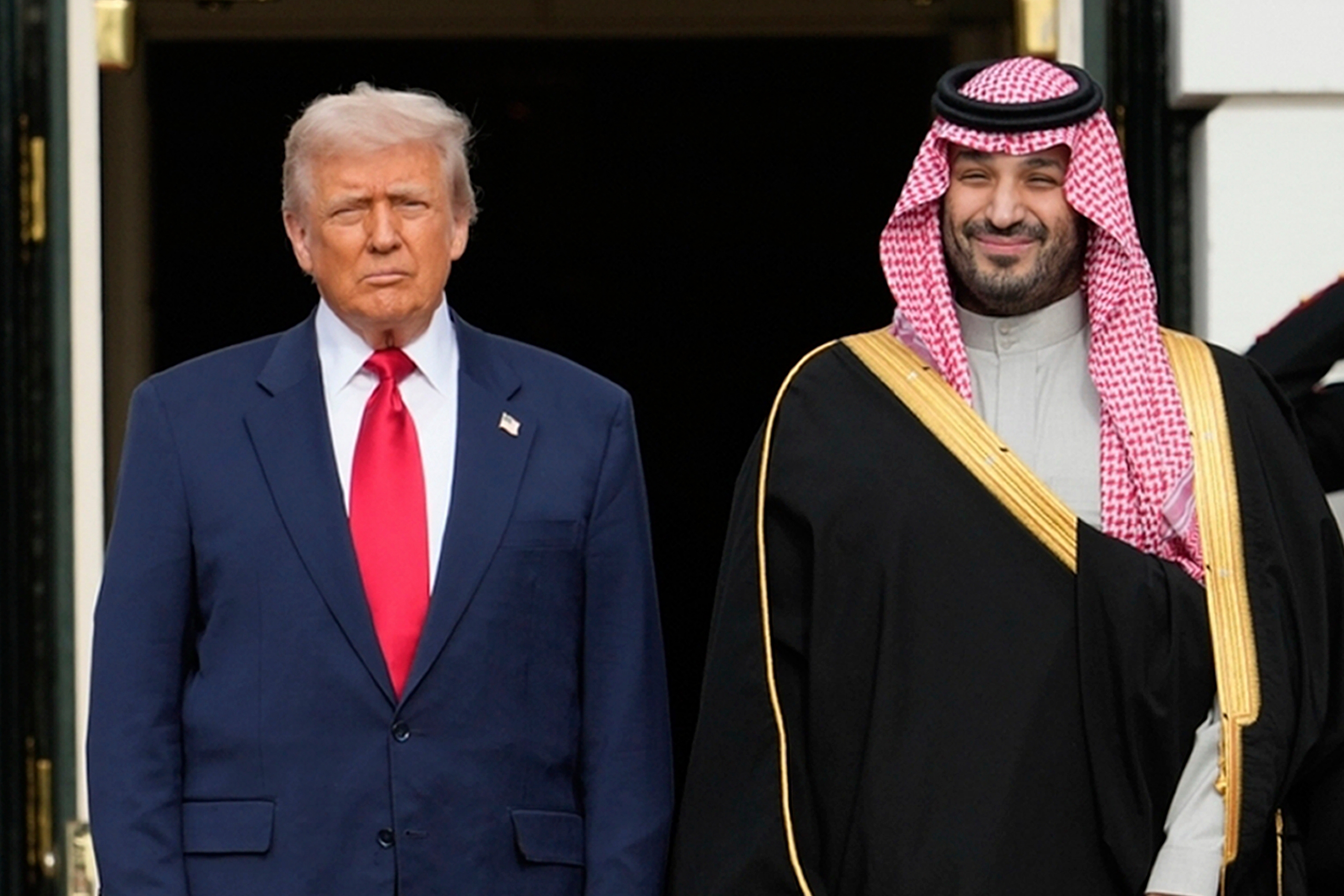
  • Trump administration sends Saudi nuclear deal to Congress for review

    Trump administration sends Saudi nuclear deal to Congress for review

    WASHINGTON — The Trump administration has submitted to Congress a nuclear cooperation agreement with Saudi Arabia that could allow the kingdom to enrich its own fuel for nuclear reactors, according to two officials with firsthand knowledge of the transmission of the agreement.

    The accord, announced by the White House last month, would deepen ties between the United States and Saudi Arabia at a moment when the war with Iran has strained the relationship between the two countries. The 30-year agreement would give U.S. companies a central role in developing Saudi Arabia’s civilian nuclear infrastructure while largely shutting out foreign competitors.

    The submission formally begins a congressional review process required under Section 123 of the Atomic Energy Act, which gives such nuclear cooperation accords their shorthand name, “123 agreements.” Unlike treaties, they do not require approval by two-thirds of the Senate. Instead, the Senate Foreign Relations Committee and House Foreign Affairs Committee review the agreement during a period totaling 90 days that Congress is in continuous session. Unless Congress passes a joint resolution rejecting the agreement during that period, the accord can take effect without an affirmative vote by either chamber.

    The transmission of the agreement to Congress was reported earlier by The Wall Street Journal.

    The prospect that Saudi Arabia could enrich uranium — the technology at the center of the conflict with Iran — has drawn sharp opposition from some Democratic lawmakers and revived long-standing concerns about nuclear proliferation in the region.

    “This deal is the starting gun for a Middle East nuclear arms race,” Sens. Edward J. Markey of Massachusetts and Jeff Merkley of Oregon, along with Reps. John Garamendi of California and Donald S. Beyer Jr. of Virginia, wrote in an essay last month. The four Democrats contended that the agreement should require Saudi Arabia to forgo the production of weapons-grade uranium and accept the International Atomic Energy Agency’s most stringent inspection standards.

    “Congress must reject it,” they wrote.

    The lawmakers also said that President Donald Trump’s launching a war with Iran over the country’s nuclear ambitions while negotiating a nuclear agreement with Saudi Arabia was a fundamental contradiction to U.S. nuclear policy in the region. “That contradiction doesn’t make America stronger,” they wrote. “It makes American policy impossible to take seriously.”

    Energy Secretary Chris Wright and Prince Abdulaziz bin Salman, the Saudi energy minister, signed the agreement last month as part of a broader package of cooperation on civilian nuclear power. The two officials also signed what the administration described as a bilateral agreement on nuclear safeguards.

    This article originally appeared in The New York Times.