Category: National Politics

  • The Iran war is costing taxpayers up to $3 billion per month as Democrats make it a top campaign issue in Pa. districts

    The Iran war is costing taxpayers up to $3 billion per month as Democrats make it a top campaign issue in Pa. districts

    WASHINGTON — The war in Iran is costing the United States up to $3 billion per month and has tallied more than $38 billion in direct costs to the government since it began more than six months ago and became a flash point in voters’ frustrations over rising prices, according to a new and nonpartisan analysis.

    The estimate, released Tuesday by the Congressional Budget Office after a request from U.S. Rep. Brendan Boyle (D., Philadelphia), mostly represents munitions expenses as of Aug. 1. It does not include some other direct and indirect costs — such as the spike in gas prices felt by consumers — that likely make the total price tag for Americans far higher.

    But with the war on the minds of voters during the midterm elections this fall, the latest tally is the one of the clearest signs yet of the conflict’s impact on taxpayers.

    “It is now concrete evidence that when the administration was pretending like there wasn’t going to be a real cost to this war, they were wrong,” Boyle said in an interview Tuesday. “We have now paid $40 billion, and climbing, on the most reckless decision to go to war of at least my lifetime. So as the people go to the polls this November, they need to recognize that if they are voting for the president’s party, they’re voting for more of this.”

    The top Democrat on the House Budget Committee, Boyle requested the analysis in the first days of the conflict — when President Donald Trump said the campaign would last four or five weeks. The president and his allies said the goals were to root out Iran’s regime and to dismantle its capacity to build a nuclear weapon.

    Democrats and other critics warned of a reckless and potentially yearslong conflict.

    Trying to win control of Congress for the final two years of Trump’s term, they have largely framed their opposition to the war around the economic consequences — marrying an affordability message around rising healthcare and grocery costs with one about gas prices, which they say are even more directly connected to Trump’s actions.

    (function(){function e(){window.addEventListener(`message`,function(e){if(e.data[`datawrapper-height`]!==void 0){var t=document.querySelectorAll(`iframe`);for(var n in e.data[`datawrapper-height`])for(var r=0,i;i=t[r];r++)if(i.contentWindow===e.source){var a=e.data[`datawrapper-height`][n]+`px`;i.style.height=a}}})}e()})();

    Polls and interviews show that message could have an impact in the midterm elections this fall. In Pennsylvania, voters in four key battleground districts will decide whether to keep their Republican members of Congress, each of whom has supported the war to varying degrees.

    “This mess must stop,” Uber driver Miguel Vazquez, 60, of Allentown, said last week while filling up his 2021 Mitsubishi Outlander with $4.53-per-gallon fuel.

    The price of gas has remained elevated and has increased in recent weeks as fighting continues in the oil-rich region. On Tuesday, the average cost of a gallon of gas was $4.50 in Pennsylvania and $4.33 nationally.

    The war in Iran and tariffs have made daily living and working “a nightmare” that can be fixed only by “regime change,” Vazquez said. He said he plans to vote for Democrat Bob Brooks, a challenger to freshman Republican U.S. Rep. Ryan Mackenzie, who represents a swing district that covers the Lehigh Valley and the Poconos.

    “The [Republican] Party listens to Trump, who put us in Iran and set tariffs — making gas, food, and everything else expensive,” said Vazquez, a Democrat. “They have to go.”
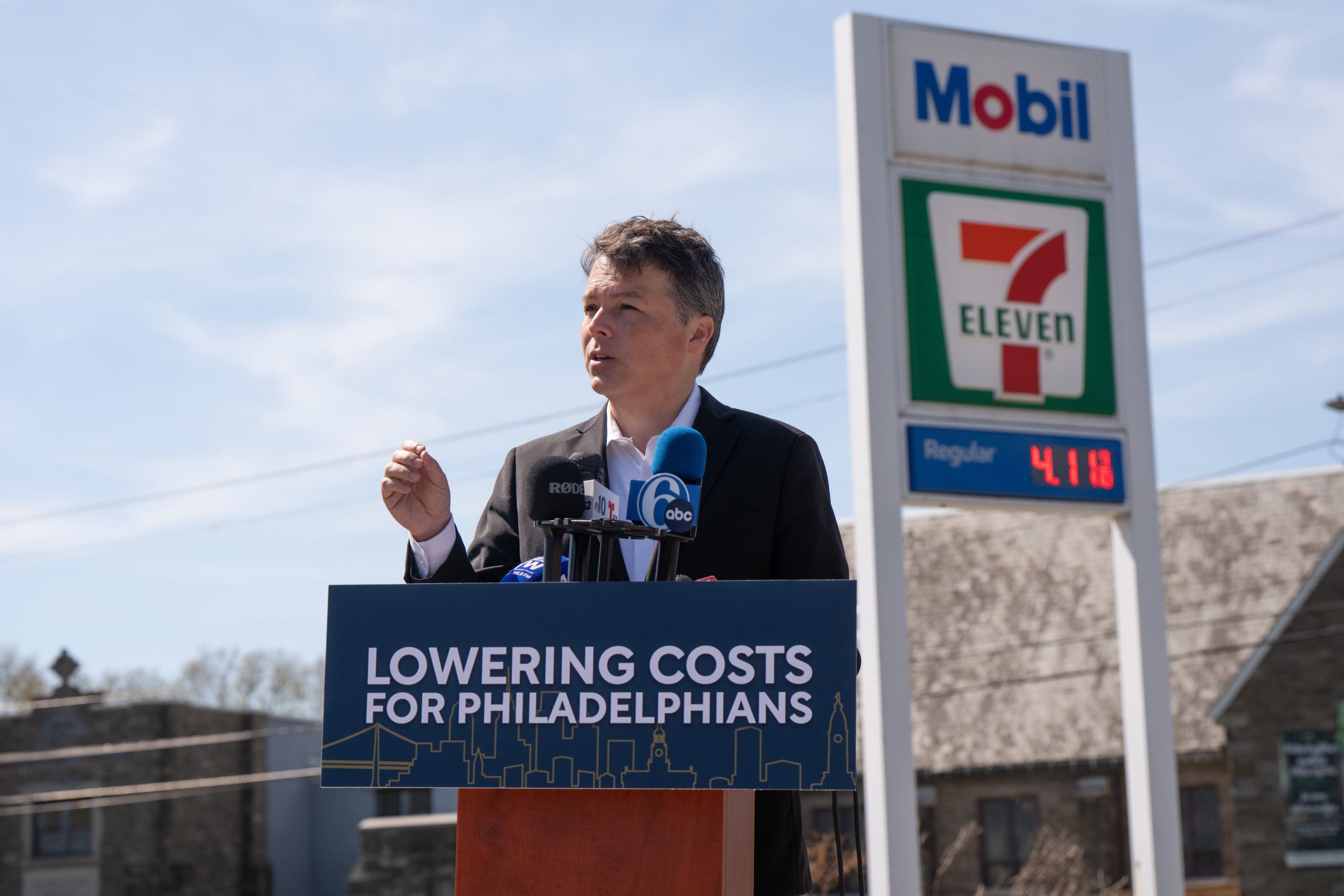
    U.S. Rep. Brendan F. Boyle holds a news conference at a Philadelphia gas station to announce legislation to suspend the federal gas tax whenever the national average price of gasoline exceeds $4.00 per gallon, in Philadelphia, Tuesday, April 14, 2026.Jessica Griffin / Staff Photographer

    The cost of war

    The report from the Congressional Budget Office, where nonpartisan staffers analyze federal policy for lawmakers on both sides of the aisle, largely aligns with other estimates of the war’s costs so far.

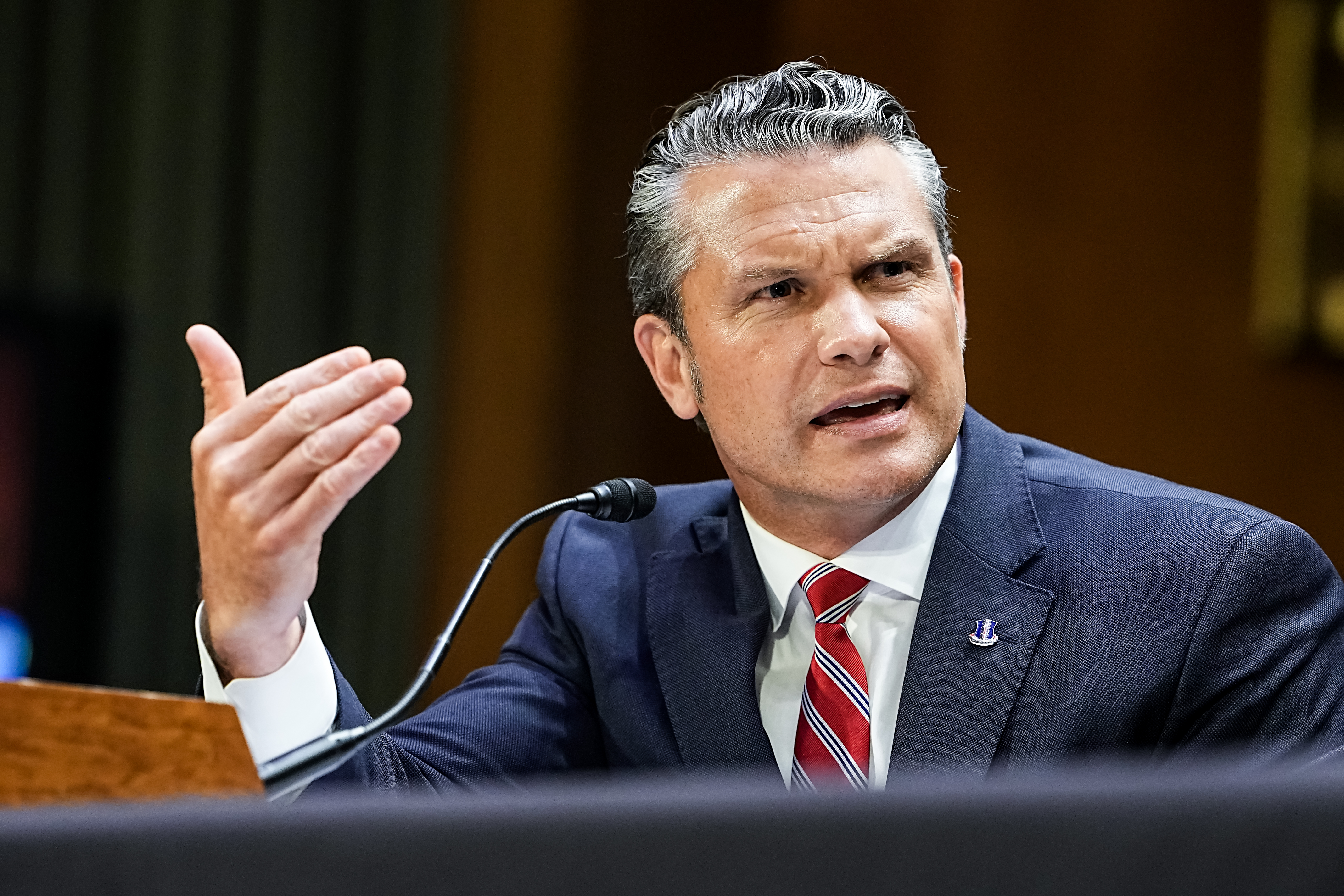
    The nearly $38.1 billion in direct costs as of Aug. 1 is slightly more than the $37.5 billion figure that Defense Secretary Pete Hegseth noted during congressional testimony in late July.

    The CBO’s estimate includes $21.7 billion to replace expended munitions, $10.4 billion for additional flying hours — which refers to the cost of the military’s deployment of aircraft in the region — and $2.7 billion due to higher fuel prices. The agency was unable to determine other costs, like the damage to U.S. facilities in the region or expenses related to diplomatic operations and foreign aid.

    (function(){function e(){window.addEventListener(`message`,function(e){if(e.data[`datawrapper-height`]!==void 0){var t=document.querySelectorAll(`iframe`);for(var n in e.data[`datawrapper-height`])for(var r=0,i;i=t[r];r++)if(i.contentWindow===e.source){var a=e.data[`datawrapper-height`][n]+`px`;i.style.height=a}}})}e()})();

    The overall price tag also does not include indirect costs that affect the U.S., such as inflation and interest rates — though it notes that both are impacted by the war. For instance, year-over-year inflation is expected to be 0.5 percentage points higher in the first quarter of 2027 because of the war.

    Independent analysts have noted those indirect costs are significant.

    An “Iran war energy cost tracker” from Brown University’s Watson School of International and Public Affairs shows that consumers have felt the brunt of nearly $107 billion in additional gasoline and diesel costs since the start of the war.

    Mark Zandi, the chief economist at Moody’s Analytics, who is based in Chester County, in June pegged the cost at $1,000 for a typical American household. The war has also fueled inflation and led to expectations that the Federal Reserve will raise interest rates this year instead of cutting them, he has said.

    “The net effect of the Iranian conflict on U.S. economic output is unclear at this time,” the CBO report states. “Higher prices erode the purchasing power of U.S. households and businesses, dampening consumption and investment growth. Conversely, supply disruptions increase demand for U.S. energy exports, spurring additional domestic energy production.”

    According to the analysis — for which the Pentagon did not provide information — it will “probably take at least five years” to replenish the significantly depleted weapons stockpile.

    “The shortfall would become especially problematic if a conflict arose with an opponent whose arsenal included large numbers of ballistic and cruise missiles,” the report states, adding that China maintains an arsenal that “would probably play a major role in a military conflict involving Taiwan.”

    The CBO report states that while the ongoing costs of the war are difficult to estimate, the U.S. military action is costing between $2 billion and $3 billion per month, depending on the level of hostilities.

    Fighting in recent weeks has included U.S. Central Command destroying five Iranian crude oil carriers after the Islamic Revolutionary Guard Corps targeted a U.S. Navy ship with ballistic missiles, Central Command announced last week. Eighteen U.S. service members have died in the war and several hundred have been wounded.

    Election messaging

    Boyle, who represents a safe Democratic district, has taken a leading role in helping craft his party’s response to Trump’s economic policies, including the president’s signature tax-cut bill in 2025 and the expiration of healthcare subsidies at the beginning of this year.

    When Trump unilaterally decided to join Israel in attacking Iran on Feb. 28, Boyle joined other Democrats in quickly denouncing the move and adding it to their list of economic grievances.

    Candidates challenging Republican incumbents in Pennsylvania have taken a similar tack.

    “Six months in, nobody in Washington is treating Iran like the emergency it is for families here,” Democrat Janelle Stelson, who is challenging Republican U.S. Rep. Scott Perry in a Harrisburg-based district, said in a video at a gas station on the six-month anniversary of the conflict.

    Perry, a hard-line conservative from York County, has supported Trump in his war efforts, while Stelson blamed him for the “astronomical” increase in gas prices.

    Perry has voted against Democratic-led war powers resolutions aimed at restricting Trump’s actions in Iran. Mackenzie and U.S. Rep. Rob Bresnahan (R., Luzerne), who are also running in competitive districts that could ultimately determine which party controls the House, have also voted against them.

    U.S. Rep. Brian Fitzpatrick (R., Bucks), another vulnerable incumbent in a battleground seat, initially supported the war but broke with his party to help Democrats pass a war powers resolution in June.

    Pennsylvania’s U.S. senators, Democrat John Fetterman and Republican Dave McCormick, have also both supported the war, rejecting war powers resolutions multiple times.

    U.S. Sen. Andy Kim (D., N.J.), who worked on national security issues in the Middle East before entering Congress in 2019, called the $38 billion cost “an unfathomable amount.”

    “[E]very family has paid money from their own wallets to fund Trump’s war,” Kim wrote on social media.

    On the campaign trail, Republicans have largely refrained from commenting on the war as they seek to retain control of the House and Senate.

    At the first-ever Republican midterm convention in Dallas last week, dozens of speakers — including Mackenzie, Bresnahan, and McCormick — did not address the largest-scale U.S. military engagement in the Middle East since the wars in Iraq and Afghanistan.

    Vice President JD Vance’s speech appeared to briefly refer to the disagreements around the war. While talking about Charlie Kirk, the conservative activist killed last year, Vance urged voters not to reject Republicans just because they do not agree with them “on every single issue,” like wars.

    “He just hated war. That was his view,” Vance said of Kirk. “Now, of course, there are people who love what we’ve done and people who don’t. I’m not here to litigate the disagreements between Charlie and some of the people that he disagreed with. But what I’m asking you to do is do what Charlie did. Do not throw the baby out with the bathwater. Don’t give the country over to a bunch of crazy people because you happen to disagree with us on a policy issue here or there.”

    Polls have shown widespread disagreement with Trump over the war. An Inquirer/New York Times/Siena University poll of likely Pennsylvania voters in August found that 30% of Trump’s 2024 voters and 66% of all voters disapproved of his handling of Iran — the most of any issue asked about in the survey. A national poll from the New York Times and Siena University published Tuesday similarly found two-thirds of likely U.S. voters, and three-quarters of independent voters, disapproved of the war.

    “I don’t see a reason to be there and pushing up gas prices,” said three-time Trump voter Greg Kerrick, 58, of Scranton.

    Kerrick said that the president was “mostly doing all right” and that he was supporting Bresnahan, the Republican incumbent, for reelection in the swing district. But he disagreed with the war.

    “I don’t drive but I feel for all the people paying $4.30 or whatever a gallon,” Kerrick said.

    Charles Grasty, 66, of Dickson City in Lackawanna County, said his objection to the war was on moral grounds. The Republican voter said the conflict feels like a grab for oil from Iran’s massive reserves.

    “We are literally trying to take stuff that belongs to other people,” said Grasty, who works for a fabric-manufacturing company near Scranton. “I’m a Christian and I’ve been taught you can’t bully people like that. We have to stay off their soil.”

    Boyle said the conflict is historically unpopular, based on consistent and strong opposition in polls since it began. The CBO report, he said, shows that part of the reason is the growing costs.

    “Americans are essentially paying for this twice,” Boyle said. “They’re paying for it directly through tens of billions of dollars of taxpayer money that is going to fund the war. But then they’re paying for it a second time in terms of increased costs at the pump, increased costs at grocery stores, and increased costs for consumer goods.”
  • Trump slams Supreme Court for rejecting his push to restrict mail ballots

    Trump slams Supreme Court for rejecting his push to restrict mail ballots

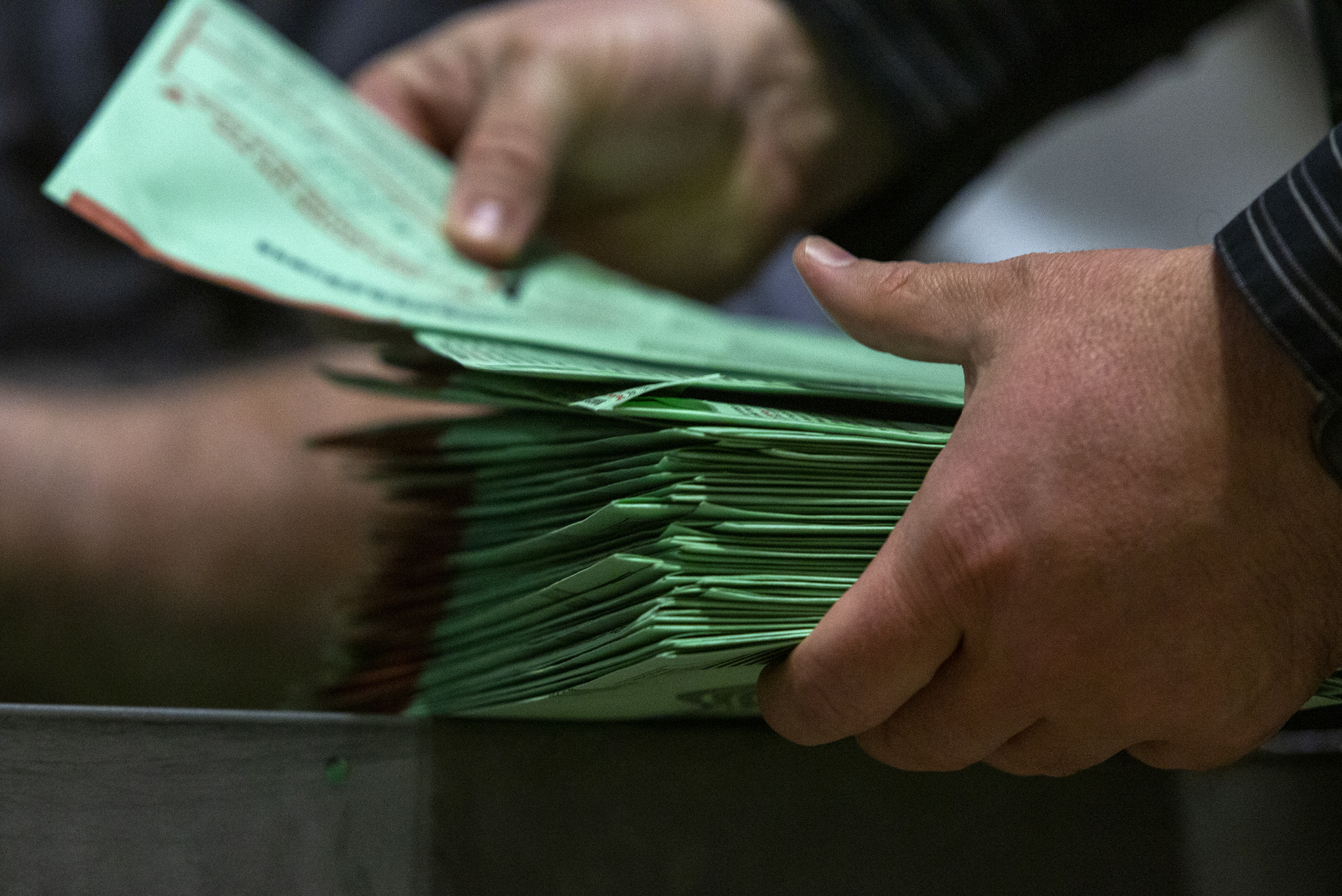
    WASHINGTON — President Donald Trump on Tuesday went after the Supreme Court after it rejected his push to restrict mail-in voting in this year’s midterms, saying justices who opposed him were “not the people I interviewed.”

    His social media missive was just the latest in a long history of Trump assailing justices, particularly those he had nominated, who ruled against him on his administration’s most prominent initiatives. The president has been publicly furious with the Supreme Court over its decisions against restricting birthright citizenship and his ability to issue tariffs unilaterally.

    On mail-in voting, the Trump administration had made a last-minute push to have the U.S. Postal Service play a central role in deciding who would be able to receive a ballot. But state election officials argued there was not enough time to make the changes for the Nov. 3 midterm elections — and said their systems were already secure and accurate.

    The court ruled late Monday in an emergency order that the restrictions would most likely lose in court, at least for this year’s election.

    “The Court’s inability and unwillingness to do the right thing for our Country will go down, in a very negative way, in the annals of History,” Trump wrote in a lengthy social media post Tuesday. “This Supreme Court is bullied and cajoled by the Radical Left into making decisions that have set America back at least a hundred years.”

    Justices Sam Alito and Clarence Thomas publicly dissented from the order, and Trump on Tuesday called them “legends both.” Trump has nominated three of the justices on the Supreme Court — Neil Gorsuch, Amy Coney Barrett and Brett Kavanaugh.

    “These are not the people I interviewed to serve on the United States Supreme Court, they are merely a shell of their original selves,” Trump said. He asserted that the court “is costing the United States Trillions of Dollars with shockingly bad rulings that are of such magnitude that it won’t be easily possible for our Country to recover or heal.”

    The president has a lengthy track record of attacking judges, often very personally, who issue decisions that go against his wishes, and Trump has long viewed his legal appointments as owing loyalty to the person who nominated them to the bench.

    So as Barrett, Kavanaugh and Gorsuch ruled against Trump at varying points over the years, the president has not hesitated to go after them publicly, while praising them if they sided with him in a case.

    Yet this court, led by Chief Justice John Roberts, has ruled in favor of Trump on several of his priorities, most notably the 2024 decision from the court’s conservative majority that said former presidents are presumptively entitled to immunity for all official acts. That paved the way for Trump to run for reelection without threat of a criminal trial that year.

    Trump has opposed mail voting and falsely blamed it for his 2020 election loss. A report by the Brookings Institution published in 2025 found that mail voting fraud occurred in only about four cases out of every 10 million mail ballots cast.

    Roughly a third of voters use mail ballots, and mail voting has already begun in some states. The decision allows states to continue sending out mail ballots under the same processes they’ve used for years.

    On Tuesday, Trump also complained that the decision took too long to issue.

    “It is not easy for me to write this criticism of the United States Supreme Court – it will likely cost me dearly for years to come – but I feel it my obligation and duty, as President, to do so for the America we love!” Trump said.

  • ‘Culture wars’ can matter deeply

    ‘Culture wars’ can matter deeply

    Trans rights, trad wives, and a testosterone-fueled military: these hot-button topics generate intense emotions in online spaces and cable-news panels, driving the culture wars that energize MAGA warriors. Culture wars focused on gender issues have been especially heated during the Trump era, but they are not new. Indeed, gender-based culture wars have long been a feature of democratic systems, particularly during times of political upheaval.

    Consider the example of France in the 1790s. The French Revolution of 1789 led to a change of government from one ruled by an absolutist monarch to one where (some) men could vote for their governing bodies. With the introduction of a new electoral system in 1791, suffrage and regular elections became part of the system and ambitious politicians needed constituents to vote for them.

    Rapid political and social change, including the debate over who qualified as citizens with the right to vote, generated both movements for change and a sense of impending disorder. Urban workers and peasants demanded the vote, as did some women. Dissatisfaction with the government’s response led to increasing violence, including riots and the overthrow of the monarchy in August 1792. The constitution that came into effect in June 1793 — after the creation of the French First Republic and the execution of King Louis XVI — granted universal male suffrage, including for workers and peasants. But it refused the same political rights to women.

    Still, representative government brought legal changes that benefited women. In the fall of 1792, the National Convention legalized and made divorce quite easy, a change vehemently opposed by church authorities. In the years that followed, more women than men sued for divorce under the new laws, reflecting their desire for greater autonomy. At the same time, adjustments to inheritance laws made it possible for women to demand a fair share of their family’s material goods, in many cases interfering with previous settlements that had disproportionately favored sons over daughters.

    While many French men and women approved of these transformations as promoting greater fairness, those disadvantaged by the changes expressed their outrage at the disruption to longtime religious and economic practices anchored in traditional ideas about gender. Conservatives were especially unhappy about restrictions on the ability of husbands to discipline a wayward wife or of fathers to direct the family’s resources toward an eldest son. His diminished patriarchal authority had profound implications for familial relations.

    Uneasiness about these cultural shifts intensified as war broke out in 1792, followed by civil war within France itself, triggered by resistance to what many saw as unacceptable attacks on their way of life. Opposition to the revolutionary government was particularly strong in western France, where religious sentiment and an attachment to the king and traditional hierarchies fueled resistance to government “meddling.”

    The Terror — an effort by the radical Jacobin government, with the support of the newly empowered lower classes, to clamp down on dissent by executing anyone perceived as a threat to the unity of the nation — was an attempt to impose order. But it instead created panic and paranoia along with a sense that giving power to the lower classes and women gave rise to chaos. The closure of women’s political groups along with the execution of several prominent women, including political activist Olympe de Gouges and the former queen Marie Antoinette, in the fall of 1793 was a response to those fears. The Terror’s end, with the execution of Maximilien Robespierre and his closest collaborators in July 1794, led to the creation of a new regime that promised to restore order: the Directory, a conservative republican government established by a new constitution in 1795.

    But the culture wars continued, fueled by fights over gender and family issues. While the new constitution significantly curtailed the power of lower-class men — the franchise was restricted to wealthy male property owners — many legislators were still committed to the egalitarian goals of the revolution and thus unwilling to overturn all previous social legislation. However, the visibility and perceived political and cultural influence of women became a flash point as critics continued to debate changes to divorce and inheritance laws that benefited women. Politicians and journalists blamed divorce as a root cause of social disorder; a woman who could threaten to leave her husband undercut his masculine authority and disrupted families.

    Writer and cultural critic Louis-Sébastien Mercier offered a harsh critique of the divorce law in 1797, asserting that “Friends of law and order, sensible people recognize that it opened the door wide to licentiousness and moral depravity, already so widespread.” Politicians demanded divorce law reform on behalf of their voters, decrying its “disastrous and scandalous effect.” French newspapers printed polemical essays and letters to the editor on the topic and reported on legislative debates.

    Purported sexual misbehavior also generated concern. Between 1794 and 1799, legislators and social critics complained about the shamelessness and political meddling of elite women who wore revealing clothing and pursued the pleasures of life beyond the home. The argument was that the changes in inheritance laws gave them access to resources that financed their independent and luxurious lifestyles, attending balls and hosting salons. One politician decried the consequences of female independence, which, he believed, led inexorably to adultery, warning, “Establish the independence of the mother, and you will render all paternity uncertain.”

    Made By History sponsors. FOR USE ON MADE BY HISTORY STORIES ONLY.Inquirer Staff

    Eventually, Napoleon Bonaparte took advantage of France’s disorder and cultural anxieties to establish male authoritarian rule. Defenders of Napoleon and his November 1799 coup d’état pointed to the political and social chaos of the Directory, exacerbated by the corrupting influence of ostensibly licentious women on weak men who had shown themselves incapable of exercising control over their families and the government. Napoleon believed this as well. It was high time that strong, “manly” men — preferably those with military credentials — took control of the government and their families. The Napoleonic Code of 1804 made getting a divorce more onerous, at least for women, whose ability to initiate divorce proceedings was severely limited (divorce would be outlawed entirely in 1816), and it tightened husbands’ control over their wives and family resources.

    The lesson? Deriding the power and potential liberty that sexual freedom and divorce offered women became a way to critique a society that empowered a more diverse citizenry. But in reality, perceptions of “chaos” and proposed solutions creating “order” through “traditional” values was — and still is — about restoring power to older regimens and hierarchies. It can also be cruel, limiting choices and freedoms. Perceived disorder is a powerful force for constraint; the desire for fairness is a powerful force for change.

    Christine Adams, a former American Council for Learned Societies and Andrew W. Mellon Foundation fellow at the Newberry Library, is professor of history at St. Mary’s College of Maryland and author of “The Creation of the French Royal Mistress” with Tracy Adams.

    Made by History takes readers beyond the headlines with articles written and edited by professional historians. Opinions expressed do not necessarily reflect the views of The Inquirer.

  • Federal Reserve is expected to raise its benchmark rate, defying Trump’s demands

    Federal Reserve is expected to raise its benchmark rate, defying Trump’s demands

    WASHINGTON — The Federal Reserve is widely expected to lift its short-term interest rate Wednesday for the first time in three years to fight stubbornly high inflation, a move that would put the central bank at odds with President Donald Trump’s support for a cut.

    A quarter-point increase in the Fed’s rate, currently about 3.6%, isn’t guaranteed because Fed Chair Kevin Warsh doesn’t provide the signals about next moves that his predecessors did. Still, most analysts and economists expect a hike after a speech two weeks ago at the Fed’s annual conference in Jackson Hole, Wyoming, in which Warsh argued that the Fed had not yet achieved its goal of putting inflation in check.

    A rate increase would throw another sharp shift into a volatile period for the economy and financial markets. As recently as March, the Fed had forecast it would cut its rate once this year. But with the Iran war flaring up again and causing sharp increases in oil and gas prices, inflation is likely to remain higher than the Fed’s 2% target for even longer.

    “I don’t see any end to the war in Iran right now,” Kristin Forbes, an economist at MIT’s Sloan School, said. “Given what everyone has been through in the last few years of high inflation, consumers are more sensitive, companies are more sensitive, they raise prices faster … The risks are much more on more persistent inflation than it falling quickly.”

    Surging investment in AI data centers has also been accelerating inflation and contributing to higher longer-term interest rates, though now leading companies are discussing slowing the technology’s development.

    All eyes are on interest rates before the midterms

    The Fed’s potential rate hike comes just seven weeks before the midterm elections in which high prices and affordability have taken key roles. Trump has demanded that the Fed cut rates, a move that isn’t on the table, and on Sunday the president said, “the United States is so strong we should be paying the lowest interest rate in the world.”

    Trump repeatedly attacked Warsh’s predecessor, Jerome Powell, in harshly personal terms, upending decades of tradition in which presidents treated the Fed as independent.

    Kevin Hassett, Trump’s top economic adviser, said Sunday on CNN that Trump “100% respects the independence of Kevin Warsh.”

    Yet at the same time, Hassett suggested in a Fox News interview that the Fed shouldn’t hike so close to the midterms.

    “I’d be wary of a rate hike … I think if you want an independent Fed, then one thing the Fed does is it stays out of the way of elections,” Hassett said.

    Financial markets expect that Warsh and the central bank will brush off such warnings. Traders now see a 90% chance the Fed will hike Wednesday, according to futures prices. That figure jumped after Friday’s inflation report showed that prices remain stubbornly high and core inflation, which excludes volatile food and energy, picked up in August from the previous month.

    After that report, and Warsh’s tough talk on inflation late last month, most economists argue that Warsh will have to hike rates or risk undermining his credibility with financial markets. Longer-term interest rates, such as those on the 10-year and 30-year Treasury bonds, could spike if he doesn’t hike, as they did after a Fed meeting in late July when Warsh failed to convince markets he was willing to lift rates if needed.

    “At the end of the day the Chair’s repeated stern warnings on inflation intolerance risk institutional credibility absent some action to back it up,” Michael Feroli, an economist at JPMorgan Chase, wrote in a preview of the Fed’s meeting.

    A rate increase could raise other questions

    Some members of the Fed’s interest-rate setting committee still expect inflation, outside of food and energy, to fade over time and may not feel a rate hike is necessary.

    But Warsh has not made that argument. Instead, in his Jackson Hole remarks, he said recent inflation reports “do not tell me that underlying trends have improved,” adding that if such improvement wasn’t seen soon, “we have work to do.”

    Ironically, by boosting Fed credibility, a rate hike could hold down longer-term interest rates that consumers pay for things like mortgages and auto loans. Some of the recent spike in mortgage rates has likely reflected concerns among investors that the Fed wasn’t committed to fighting inflation. Investors typically demand higher yields to own bonds when inflation is elevated.

    Still, if the Fed does increase its rate Wednesday, then Warsh will face a new set of questions: How many hikes will the Fed implement? How effective will they be in reducing inflation when much of it stems from higher oil prices, something the Fed can’t control? What will they do if an AI slowdown threatens to slow the economy, which would typically get the central bank to cut rates?

    Matthew Luzzetti, chief U.S. economist at Deutsche Bank, said it is rare for the Fed to lift its key rate just once, which is likely to have little impact on the economy, and so multiple hikes are likely.

    But how the Fed characterizes possible rate increases on Wednesday could give clues to its next steps, he said. For example, if Warsh suggests the Fed is unwinding the three cuts it made in late 2025 — when it feared that unemployment was rising — that would suggest two more hikes would be needed.

    Alternatively, Warsh could portray a hike as an act of “risk management,” Luzzetti said, with the Fed expecting inflation to cool but hiking rates to essentially ensure it falls. That could point to possibly just two increases.

    Warsh has resisted providing such guidance so far. But Wall Street traders expect three hikes — in September, December, and March — according to futures prices.

  • Trump’s effort to assert control over elections continues, despite court loss

    Trump’s effort to assert control over elections continues, despite court loss

    WASHINGTON — The Supreme Court dealt President Donald Trump a major blow Monday when it blocked his executive order to restrict mail ballots. But Trump’s battle to assert control over the election process is far from finished.

    The stymied attempt to have the U.S. Postal Service screen mail ballots was just one piece of a broader effort involving the full power of the federal government to take more control of state-run elections.

    Just days before the Supreme Court blocked Trump’s mail ballot order, the Justice Department sent threatening letters to at least 30 top election officials across the country, escalating a fight to gain access to private voter data and election records.

    Federal agents are scouring voter rolls managed by states for noncitizens, despite a lack of evidence of widespread fraud. Trump’s homeland security secretary recently pushed for an investigation into whether a commonly used voting machine can be trusted, casting doubt on digital voting systems.

    “This is far from over,” said Benjamin Hovland, who was ousted from the independent, bipartisan Election Assistance Commission by the Trump administration this year.

    Hovland acknowledged that the Supreme Court’s decision mitigated “real-world impact” on voters and election workers, particularly since voters in some states have already begun to mail in their ballots. But he said Trump’s actions were alarming.

    “What you’re seeing is using the apparatus of government, using federal agencies, using taxpayer dollars, to push that narrative that only undermines confidence in our democracy and ultimately hurts voters and election officials,” Hovland said.

    Trump argues that he is trying to secure the integrity of the vote, but his claims of widespread fraud in the election system have been investigated and debunked repeatedly, and critics say his actions needlessly sow doubt about the outcome of the vote.

    The White House did not immediately respond to requests for comment.

    There are stark differences between now and Trump’s first term, when his attempts to undermine the election results in 2020 ran into stiff pushback not only from the courts but also from his own government officials. In his second term, Trump has surrounded himself with loyalists willing to turn his obsession over the country’s election systems into a blitz of federal actions. He has also installed election deniers in key posts.

    The Supreme Court’s decision Monday did, however, add to a string of mounting losses for Trump, who said this year that he wanted to “take over” and nationalize elections. Even before the Supreme Court decision, two lower court judges ruled that Trump’s changes to mail-in balloting were most likely illegal and should not be imposed so close to the November elections.

    Trump administration lawyers had urged the Supreme Court to step in and clear the way for its plan to use the Postal Service to screen ballot envelopes after they are submitted by state elections officials. The new rules would require states to submit lists of voters approved to receive mail ballots. The Postal Service would then deliver mail ballots only to the voters on the lists.

    In addition to the loss Monday, Trump’s other attempts to pressure states over the election process have faced legal setbacks.

    The Justice Department has sued 30 states for unredacted voter lists, which include personal information such as driver’s license numbers and partial Social Security numbers.

    They have lost 23 of those cases. Decisions are pending in the rest.

    The federal actions, as well as the various court decisions, have caused alarm among local election officials and voters, according to election experts.

    This month, the chief election officials in seven Republican-controlled states filed a brief to the Supreme Court, arguing that with less than two months until Election Day, it was too close to the midterms to make any major changes to the election process.

    Some states including North Carolina, Delaware and Alabama had already mailed out their ballots, even before the Supreme Court issued a final decision.

    “Attempting to implement the rule now will almost certainly lead to mistakes, delays and confusion for both voters and election officials,” the brief stated.

    But it was not just the pending Postal Service rule that has caused confusion and upended coordination among local election officials and the federal government.

    The administration has also asked the Supreme Court to intervene to allow it to move forward with an effort to build citizenship lists by merging data from various agencies, including the Department of Homeland Security and the Social Security Administration. A lower court has so far blocked the use of that tool, which administration officials argue is needed to verify citizenship for voting, among other purposes.

    In July, Markwayne Mullin, the homeland security secretary, threatened election officials in a speech and said they could face prison time if they did not comply with the Trump administration’s efforts to change election policies. Officials in the Justice Department officials have also explored whether they could bring criminal charges against state or local election officials if the administration determined they had not sufficiently safeguarded their computer systems.

    The Federal Emergency Management Agency, which sits under the Homeland Security Department, is demanding that states change the way they conduct elections or risk losing tens of millions in federal terrorism-prevention funds.

    Kimball W. Brace, the president of Election Data Services, an organization that works with local governments on election preparedness, said he did not expect the Supreme Court decision to stop Trump’s broader effort to pursue his election grievances.

    “I don’t anticipate people on the Republican side not wanting to continue and push their side of the story as much as possible,” Brace said.

    Distrust of the election process among voters is growing as the November elections approach. A survey from The Associated Press and the NORC Center for Public Affairs Research and USAFacts showed that only 34% of U.S. adults trust government certifications of election results “a great deal” or “quite a bit,” down from 40% in 2024.

    Trump has also gutted the government’s election security infrastructure. Experts warn that his cuts to agencies tasked with coordinating election security with state governments could reduce visibility into foreign influence campaigns and cyberattacks.

    Brace said all the executive actions have fueled pressure on local election officials.

    “They don’t want to deal with this crazy pressure that various interests and various individuals have pushed on the election administration,” he said.

    This article originally appeared in The New York Times.

  • Supreme Court rejects Trump mail ballot restrictions for now ahead of midterms

    Supreme Court rejects Trump mail ballot restrictions for now ahead of midterms

    WASHINGTON — The Supreme Court on Monday rejected President Donald Trump ‘s mail ballot restrictions for now, capping a flurry of last-minute legal action with voting in the midterm elections already underway.

    The decision allows states to continue sending out mail ballots under the same processes they’ve used for years.

    Justices Samuel Alito and Clarence Thomas dissented from the brief order. Justice Brett Kavanaugh agreed that the restrictions should not go into effect for the midterms but indicated he might rule in favor of the Trump administration later.

    The Trump administration had asked the court, once again at the center of a roiling political controversy, to clear the way for restrictions before the pivotal November contests for control of Congress. The case has major implications because nearly one-third of the country votes by mail.

    Election officials have said there was simply no way to carry out a complete overhaul in the weeks before the midterms. Indeed, Alabama, North Carolina and Wisconsin began sending mail ballots to voters over the past week while the new system was still not active.

    The Trump administration plan would require states to adopt a uniform envelope style and submit lists of eligible voters to an online portal. The Postal Service could refuse to deliver ballots to states that didn’t comply.

    A whistleblower report, though, said the postal system’s requirements could lead to millions of mail ballots never being sent, because the portal wasn’t properly built and a single bar code error could result in an entire batch of ballots being tossed out.

    Democratic state officials and voting rights groups challenged the restrictions in court, arguing that the president has no constitutional authority to set election rules that would “virtually eliminate mail voting on the eve of a major election.”

    Lower courts agreed and blocked Trump’s plan, including a preliminary injunction issued by a judge nominated by the president.

    But the Trump administration appealed to the Supreme Court, arguing that federal control of the Postal Service allows them to set rules for mail ballot handling and that compliance was possible.

    The federal government won an early procedural decision at the Supreme Court, but the justices pointedly did not decide the legality of the plan.

    Trump has long opposed mail voting and falsely blamed it for his 2020 election loss to Democrat Joe Biden, even though he often uses that method to cast his own ballot, including as recently as this year.

  • As Supreme Court weighs Trump mail ballot plan, another judge blocks it

    As Supreme Court weighs Trump mail ballot plan, another judge blocks it

    WASHINGTON — As the Supreme Court weighs the legality of a Trump administration plan to change mail-in balloting, a second lower court judge ruled overnight Sunday that the plan is likely illegal and should be blocked before the November election.

    The ruling by Judge Carl J. Nichols, a Trump appointee, delivered another blow to President Donald Trump’s effort to add new conditions that could make it harder to vote by mail and easier for the federal government to scrutinize state voter rolls while searching for evidence of fraud.

    The Supreme Court is considering a similar ruling by a different federal judge based in Massachusetts. Judge Indira Talwani, an Obama appointee, has repeatedly found that the plan is likely unconstitutional and could not be implemented so close to the election without disenfranchising voters.

    Nichols, of U.S. District Court in Washington, wrote that the Trump administration had not identified any “evidence that there will be significant fraud in the upcoming elections” if he halted the rule. On the other hand, he wrote, there was an “increased risk that a significant number of otherwise appropriate absentee or mail-in ballots will ultimately not be counted in the upcoming elections” if the rule took effect.

    “The public has a strong interest in ensuring that doesn’t happen,” he wrote.

    Nichols’ ruling came in a lawsuit brought by a coalition of Democratic-aligned groups, including the Democratic Senatorial Campaign Committee, as well as a number of civil rights organizations. The Massachusetts suit was brought by a coalition of Democratic state attorneys general and voting rights groups.

    Nichols ruled in May that he could not stop the Postal Service from drafting the rule or preemptively declare it would necessarily be illegal before it was finalized. The Supreme Court similarly ruled last month that it was premature for the courts to intervene to stop Trump’s plan.

    But Nichols said he would review the issue after the Postal Service finalized the regulation, which it did in August. His finding that the proposal now should be blocked could offer a preview for how the justices view the issue.

    In a court filing Monday, the Trump administration formally alerted the Supreme Court about Nichols’ ruling.

    Lawyers for the Trump administration told the justices that if they allowed the Postal Service plan, it would mean Nichols would be required to immediately lift his block and clear the way for the ballot screening rules.

    The new rule stemmed from an executive order Trump signed in March, directing the Postal Service to preregister voters casting their ballots by mail, and to decline to deliver ballots from anyone whose information was not submitted by their state election officers.

    Talwani, who considered the separate legal challenge in Massachusetts, had found that the rule likely violated the constitutional authority given to states to run their own elections. But Nichols focused on another issue: the absence of any federal statute by which Congress gave the Postal Service the power to screen voters.

    “As the government concedes, the Postal Service could issue (and enforce) the rule only if Congress gave it the authority to do so, but here no statute grants the Postal Service the power to issue key parts of the rule,” he wrote.

    He focused on an online portal the Postal Service has said it is building that would let states upload the names and addresses of voters they deemed eligible to vote by mail. The relevant laws do not authorize the agency “to create a data collection system for mail-in and absentee voters,” he wrote.

    Despite the lawsuits, a number of Republican-led states have indicated in court that they would voluntarily adopt the new procedure and were taking steps to comply if the courts ultimately allowed it.

    Voting rights groups had argued that it would be nearly impossible to ensure the lists were up to date or counted people who had moved or recently registered in a new state. They warned that the new rules would very likely lead to improperly rejected ballots.

    State election officials have warned the plan could cause chaos. In some states, mail ballots have already been distributed to voters.

    Nichols appeared to agree, writing that the rule appeared certain to cause “delays and mistakes” at several stages. That could include the building of the portal, which has not yet opened, and the Postal Service’s new role screening outbound ballots and “confirming that each absentee and mail-in voter matches information in the portal,” he wrote.

    “Plaintiffs have demonstrated that there is an increased risk that a significant number of absentee or mail-in ballots will ultimately not be counted,” he wrote, noting that the Postal Service was likely to handle “more than 50 million pieces of federal ballot mail” this election season.

    This article originally appeared in the New York Times.

  • The colonial policing roots of today’s data politics

    The colonial policing roots of today’s data politics

    Data is at the top of everyone’s mind this year: how it’s collected, where it’s stored, who can access it and how it’s used.

    The Electronic Frontier Foundation, a data rights NGO, warns in a new report that law enforcement agencies have been partnering with tech companies to collect large swaths of data on private citizens without warrants under the guise of “fighting crime” or “reducing lawlessness.” Police have been using facial recognition software, audio recording devices, automatic license-plate readers and other “dragnet” technologies to aggregate huge databases on the habits of everyday Americans.

    Watchdog organizations like the ACLU have sounded the alarm that these databases have already been weaponized against the public by organizations such as U.S. Immigration and Customs Enforcement and the U.S. Department of Homeland Security.

    One might be tempted to conclude that this is unprecedented, an outgrowth of the panopticism of the Information Age. But debates about privacy, free speech and data governance have been ongoing for centuries. These debates were especially fraught in the colonial context, where individual rights, national security and public interest were often in conflict.

    The British first established police forces in India in the late 1800s, after nearly two centuries of bloody succession conflicts. In 1857, a great rebellion almost dislodged the British from the subcontinent entirely. Initially disgruntled Indian East India Company soldiers led the rebellion against their white commanding officers in a mutiny. However, the conflict quickly spread across the subcontinent, uniting competing segments of Indian society against the British establishment. Though this rebellion didn’t succeed, it left a lasting political and psychological impact. British accounts describe a sense of helpless horror, a feeling for the first time that their place in the world was no longer secure.

    The British establishment in India believed that the rebellion occurred due to a failure of British intelligence. They had erred by trusting their Indian allies and intermediaries too freely and missed obvious rumblings of disorder. The crown took direct control of India from the East India Company and began to build a new system of governance from scratch.

    The British Raj established its first official police departments in India in 1859, modeled on the Royal Irish Constabulary. The police understood that their job was to maintain order rather than to serve the public. Most departments’ first project was to assemble official statistics and compile them into annual reports. This data, aggregated and synthesized, became the lifeblood of the Empire.

    Nowhere was this development more apparent than in the use of crime statistics. In the 1860s police forces in Northern India reported a supposed explosion in crime, perpetrated by wandering gangs, “criminal tribes” who were criminals by birth. Unlike the “ordinary” criminals of Europe who fell into crime by chance, the criminals of India were born into their “professions.”

    Officials felt that by bringing quantitative data to policing — counting and tracking crimes, where they occurred, and who committed them — allowed them to more fairly and effectively allocate resources. In truth, though, police and other officials used data to reinforce existing biases, arguing that the numbers showed that race, caste and other “biological traits” could be used to predict criminality. Hyper-policing of certain populations produced even more data “proving” that these populations committed more crimes. This decontextualized data gave the government the veneer of objectivity, while serving as the basis for many harmful and discriminatory policies.

    In 1871, the legislative assemblies of three provinces passed the Criminal Tribes Act into law. The Act defined a “criminal tribe” as a “wandering gang, community, or group of persons addicted to the commission of non-bailable offences,” a definition that targeted groups already socially disadvantaged by the caste system.

    In truth, “criminal tribes” as described by British administrators probably never existed. Instead, nomadic and semi-nomadic merchants or artisans, groups of religious mendicants, highway men (usually unemployed former soldiers), pastoralists and any other group who did not fit were all folded into the “criminal tribe” label. Unlike settled agriculturists within the dominant caste order, these groups were difficult to control due to their mobility and lack of social or economic capital. Under the law, they were criminalized and subject to extremely intrusive regimes of surveillance. The police tracked the most minute details of the lives of targeted groups: their fingerprints, their bodily measurements, their habits and their preferences.

    The impact of the state’s surveillance campaigns was that these communities lived in a state of hypervisibility. Communities complained that they were unable to live, work or travel without being disproportionately targeted by police. The increase in police interactions eventually led to a corresponding increase in arrests—which, in turn, was used to justify further surveillance and policing.

    One police officer recounted in the early 1900s that he recommended a whole nomadic community be criminalized under the Act and forcibly settled. The reason? They were reportedly adorned in silver finery while living in weatherworn tents with sparse and shabby furnishings. The only reasonable explanation, he claimed, was that the jewelry was stolen loot.

    Data gave the government the visibility and the leverage required to recruit collaborators. Police relied upon wealthy and landed (“trustworthy”) communities to identify “criminal tribes,” and recruited officers from their ranks. In return, the police offered elites protections against peasant uprisings or labor disputes. Data ownership was thus not just a privilege but a favor, doled out by the state to its allies in exchange for “good behavior.”

    Data collection and policing transformed everyday life. Community and family spaces—town squares, local government offices, playgrounds, parks, schools, shops, even streets—went from being “private” spaces, governed by the people who inhabited them, to “public” spaces subject to the control and surveillance of the state. Regular community events like food festivals, religious processions and public gatherings often felt distinctly different in the presence of police. People knew they were being watched.

    Disputes at street processions and festivities frequently became highly publicized court cases, written about in the newspapers and read aloud in coffee shops and tea stalls. In turn, groups began to use processions to garner such publicity and “make a point” in the first decades of the 20th century: “cow protection” parades by Hindu extremists to intimidate religious minorities, festivals commemorating anti-British war heroes like the Maratha King Shivaji, even protest marches by Muslims against the dissolution of the Ottoman Empire after WWI. Divisive political processions came to replace weddings, funerals and naming ceremonies that had been common in the 19th century.

    At a time when it was considered both scientifically sound and fashionable among the Western-educated class to believe that Indians were too loud and disorderly to govern themselves, public gatherings became performances to authority rather than community events. As debates raged about whether India was ready for independence in the 1920s and 1930s, communities policed themselves and each other, critiquing rituals and expressions that were too loud, too emotional, too rowdy.

    Where there were multiple communities in conflict over public spaces, police involvement caused small disagreements to escalate. In March 1925, a small fight during a religious procession in Delhi sparked communal riots across Northern India that lasted periodically until late September, causing dozens of casualties and at least six deaths.

    Made By History sponsors. FOR USE ON MADE BY HISTORY STORIES ONLY.Inquirer Staff

    Class, caste and religious divisions hardened throughout the 1930s and 1940s, leading to the segregation of formerly integrated spaces. In these ways, the British used information to divide and rule communities, to target the vulnerable, and to suppress dissent. These efforts prolonged the British presence in India for decades, until its hasty exit in 1947 after overseeing a violent and bloody partition of the subcontinent. The ghost of the Empire continues to haunt the region today.

    One critical lesson the Indian public learned during this era was that the collection of information is never neutral. Power shapes how information is collected, stored and interpreted, and information can be used and abused to protect those in power.

    Today every app, website and device contains a back door to collect and sell our information. Companies and officials tell us that these capabilities are benign, used to improve our lives and make us safer—and we believe them at our own peril.

    Niveditha (Nive) Senthilvel is a 2026-27 Fulbright-Nehru scholar and PhD Candidate in South Asian History at Boston University.

    Made by History takes readers beyond the headlines with articles written and edited by professional historians. Opinions expressed do not necessarily reflect the views of The Inquirer.

  • The Senate returns Monday. It’s not clear if McConnell will be back.

    The Senate returns Monday. It’s not clear if McConnell will be back.

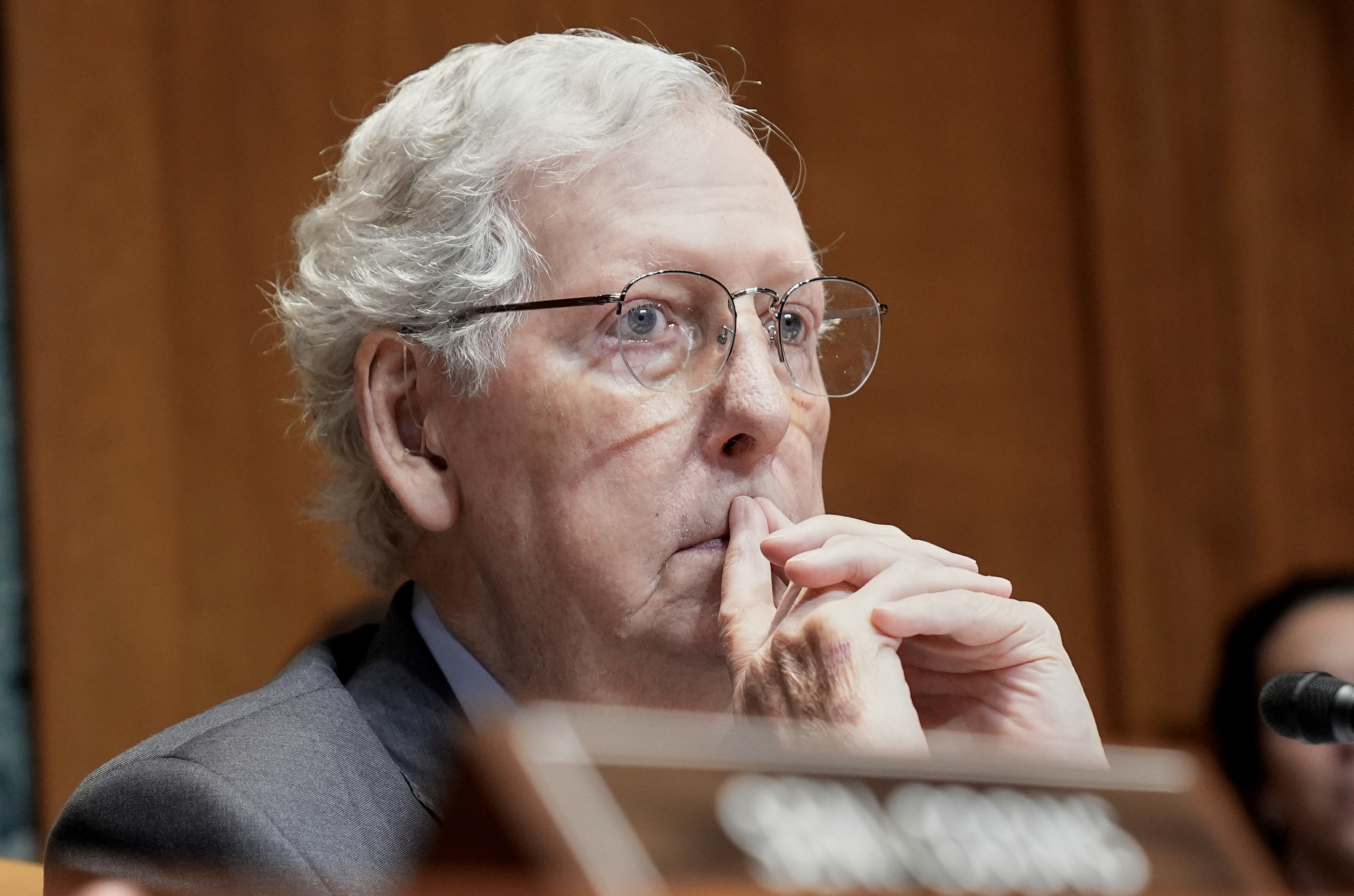
    Sen. Mitch McConnell (R-Kentucky) has not appeared in the Senate since June as he recovers from a fall that his office said he suffered at his Washington home.

    It’s unclear if he’ll be back in the chamber Monday as the Senate reconvenes after a five-week recess.

    McConnell, 84, was hospitalized June 14 following a fall at home, according to his office. He later moved to a rehabilitation center, from which he was discharged Aug. 6 to continue his recovery at home.

    Asked whether McConnell plans to return to the Capitol on Monday, David Popp, a McConnell spokesman, referred The Washington Post to McConnell’s statement last month in which he said he would “maintain an intensive regimen of physical therapy from home” during recess while continuing to work on Senate business.

    McConnell led Senate Republicans for 18 years before stepping down last year to serve out the last two years of his term as a rank-and-file senator. His term is up Jan. 3. Rep. Andy Barr, who won the Republican Senate primary in Kentucky in May, is heavily favored in the race to succeed him.

    McConnell has given no interviews and made no public appearances since his hospitalization. His office has shared two photos of him taken during his recovery, and he said in a statement in July that he did not break any bones when he fell and did not suffer a concussion, a heart attack, a stroke or a hemorrhage.

    Those details have not quelled intense speculation about his health and when he will return to the Capitol. Kentucky Gov. Andy Beshear, a Democrat, demanded in July that McConnell “provide proof of his capacity to serve, or resign.”

    McConnell is not the first senator to be away from the Senate for months while ailing or in recovery.

    Sen. John Fetterman (D-Pennsylvania) was absent for two months in 2023 while seeking treatment for depression. Sen. Dianne Feinstein (D-California) missed nearly three months of votes in the same year while battling shingles. She returned to the Senate but died months later. And Sen. John McCain (R-Arizona) did not vote during his final eight months in office before his death in 2018.

    Earlier this month, Rep. James Comer (R-Kentucky) told reporters that he expected McConnell to return when the Senate reconvened, based on conversations with McConnell’s staff. Comer said he had not spoken directly to McConnell about his plans.

    Senate Majority Leader John Thune (R-South Dakota) told KELO, a South Dakota TV station, earlier this month that he was hopeful that McConnell would return to the chamber soon.

    “We’d love to get him back to where we can have him voting in the Senate, and I hope that will happen here in the not-too-distant future,” Thune said at the time.

  • Trump’s grand midterm convention finale: ‘I’m a little bit tired of politics’

    Trump’s grand midterm convention finale: ‘I’m a little bit tired of politics’

    DALLAS — In 2024, President Donald Trump accepted the Republican presidential nomination by promising to “lead America back to the summit of human achievement and greatness.”

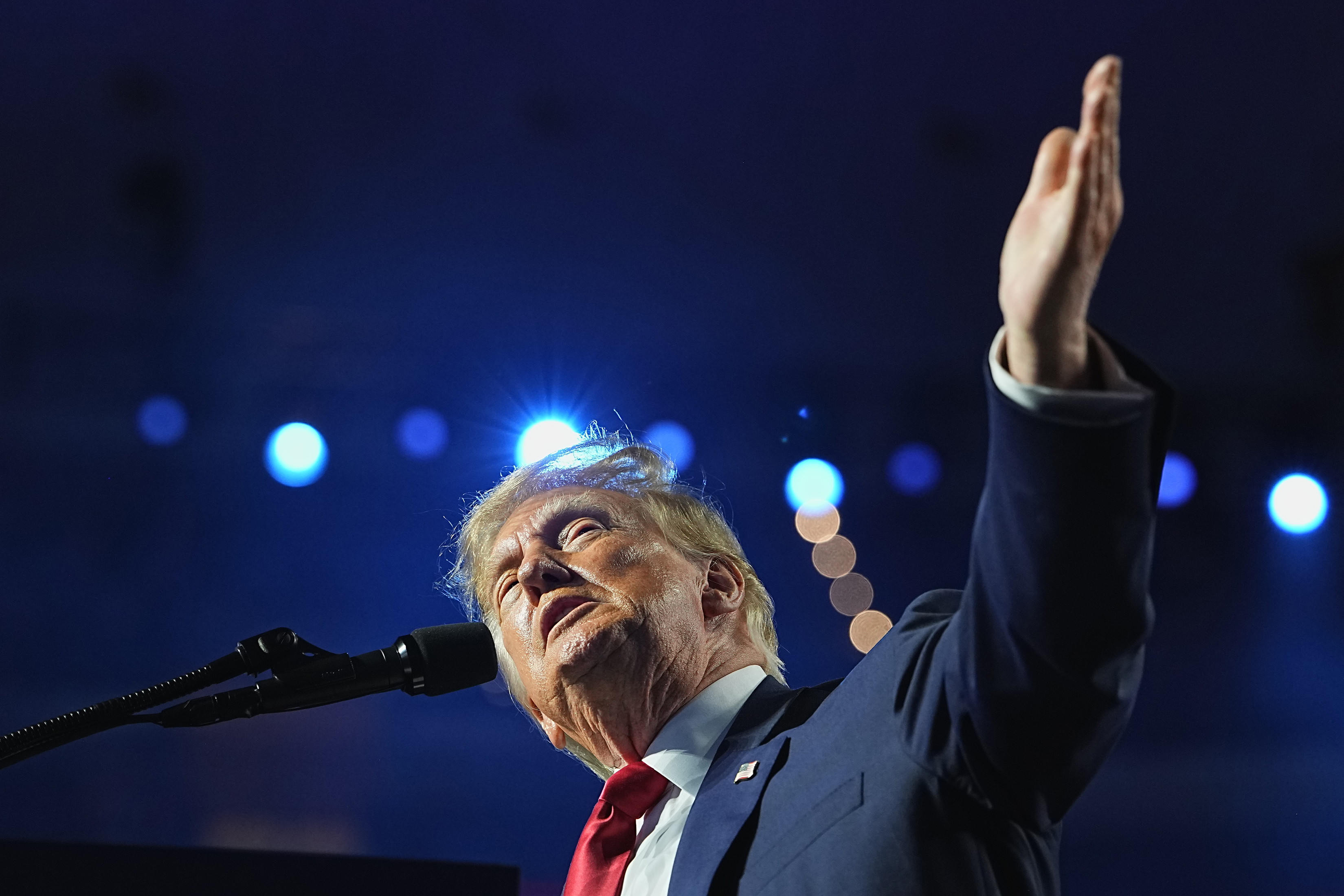
    In 2026, he closed out an unusual midterm convention organized in his honor by saying he was a little bored of politics. He seemed more interested in telling supporters to swear on something holy — which seemed to be himself — that they would go out and vote for Republican candidates in November.

    “Please raise your right hand,” Trump instructed a rowdy crowd of thousands inside a Dallas arena on Thursday evening. Many of them complied. “I pledge to the greatest president in the history of the United States that loves us so much he can’t even breathe that I will go out with my family, my friends, I will do it any way — I don’t care if I’m registered or not, I’m going to try and cheat like hell, like they do.” (Trump usually frowns on election fraud.)

    He added: “I am going to go out, and I’m going to get my friends, my family, and we are going to vote on November 3.”

    Speaking for a grand total of nearly 2 1/2 hours over two days in Texas, Trump made it very clear, onstage and in interviews, that he would be relying on the strength of his political brand to see his party through what appear to be daunting midterm elections. He would not be straying much from his comfort zone to help vulnerable Republicans. In fact, the president said Thursday evening, he was kind of over this.

    “We’re going to have a good time listening to music,” Trump said, name-checking Christopher Macchio, an opera singer who closed out the evening. “I’m getting a little bit tired of politics now.”

    Before taking the stage for the second night in Dallas, Trump was asked by Laura Ingraham of Fox News whether he intended to campaign harder than he ever had before.

    “No,” he replied bluntly. Asked by Ingraham whether or not he thought his legacy was on the line ahead of the midterm elections — “Isn’t this just as important, Mr. President?” — Trump seemed almost blasé about the possibility of Republicans losing one or both chambers of Congress. “I’ll block all their bad stuff for two years. It won’t be the same, but I’ll be a blocker, what can I tell you?”

    The whole spectacle was a window into the mindset of Trump and his advisers, who point to recent history as proof that he is capable of beating long odds through brashness, sheer will and an intense connection with his supporters. That relationship is unmatched in modern politics. During his own speech, Vice President JD Vance, the perceived front-runner for the 2028 Republican nomination, asked the crowd to chant his name because it felt “pretty cool.”

    Trump does not have to make such requests. But instead of focusing his energy on Republicans in difficult races — some of whom skipped the event completely — he directed the focus back to himself while he was in Texas. He pleaded with voters to engage in make-believe, and to “please pretend” that he was the one on the November ballot. That exercise might work against him in competitive races where the war with Iran is unpopular and where voters feel that their worries about the prices of gas and groceries are being ignored.

    He put a new twist on an old tactic by offering free money — $5,000 to every American adult — if Republicans keep control of Congress. On his first night in Dallas, he asked voters for patience: The war with Iran, he assured supporters, “will be over very shortly after the election.” All of these promises and pleas amounted to a maximalist, midterm-era version of the “in two weeks” rhetorical tool he relies on when he is under pressure, to vow that something good will happen a few news cycles down the road.

    “Food prices and almost every other item are rapidly going down,” Trump told the crowd Wednesday. “And by the way, oil will be going down as soon as we win the war with Iran, which is taking place right now. We’ll win it. We’re winning it. We control the Hormuz Strait. I think we should call the Hormuz Strait, we should call it the Trump Strait.”

    At moments, Trump almost seemed to be in conversation with himself about his endorsement style, which, in one crucial race at least, has featured a mix of insults and shrugging. On both nights, he defended the disparaging way he has talked about the appearance and character of Ken Paxton, the Texas attorney general running for a Senate seat after Trump directed primary voters to oust Sen. John Cornyn. Those voters complied and put an otherwise reliable seat into play.

    “I said, ‘I don’t really like the way he looks. I don’t like it,’” Trump said of Paxton on Wednesday. “But you know what I do like? He was the greatest attorney general in the history of Texas.”

    By Thursday, he was basically saying to hell with it: “You better do me a big, the biggest favor you’ve ever done me,” Trump told supporters as Paxton watched from the sidelines and smiled through what was at least his third humiliation ritual of the Texas event. “You’ve got to do this for me. You’ve got to pretend I’m on the ticket.”

    Again and again, Trump turned to other priorities, the most pressing of which seemed to be the crowd size in Dallas. There is a reason that political conventions are not held during the midterms. This expensive, two-day event, designed as a tribute to Trump, functioned more like a temperature check, and there were moments when interest seemed lukewarm. Rows of seats in the American Airlines Center stayed empty throughout the affair. Endangered Republicans, sensing a brush fire rather than a lit torch brightening the way forward, steered clear.

    “No empty seats! Fake news,” Trump exclaimed Thursday, spending about three minutes affirming that the busy arena was packed when it wasn’t.

    And so it went on in that vein in Texas, with little new except for a promise of free money, a pledge of allegiance gimmick, and a few glimpses of an 80-year-old president pondering a future in which he is not firmly in control.

    “I want you to remember me in four or five years when this country’s rocketing,” Trump said Wednesday, somewhere near the beginning of a meandering and nearly two-hour speech. “Remember, I’m the one that got it started.”

    By the time he was ready to depart Dallas, he didn’t seem too interested in the particulars of the future, the strength of Republican candidates or the validity of his promises. He suggested to his devoted supporters that he might be “standing with you one of these days.” But for now, he just wanted to chill out and listen to music. He sped through the last lines of a speech finale he knows by heart after a decade at the center of national politics.

    “I just want to say, we will make America great again,” Trump said dutifully. “We will make it greater than ever before.”

    Then the tenor took the stage. Red, blue, white and gold balloons began to fall from the ceiling. The president swayed to the music, lost in the moment.

    This article originally appeared in The New York Times.