Category: National Politics

  • Medicare was one of the most successful civil rights laws in history

    Medicare was one of the most successful civil rights laws in history

    When Americans think of the seminal Civil Rights legislation of the 1960s, they think of laws like the 1964 Civil Rights Act and the 1965 Voting Rights Act. Yet, there is one piece of historic 1960s legislation that unleashed a powerful civil rights tool that rarely gets remembered as “civil rights” legislation: Medicare.

    Hospitals desegregated — some almost overnight — worried that they would get cut off from Medicare funds. “White Only” signs came down, white-only facilities and segregated wards admitted patients without regard to race and Black clinicians received admitting privileges.

    And yet, a racial healthcare crisis persists. Over the past two decades, Americans have made no progress in narrowing racial disparities in medical care, although we know more about them today than ever.

    Black patients are less likely than white patients to receive pain medication, emergency cardiology care, lung cancer surgery, a kidney transplant, an appropriate mental health diagnosis and end-of-life home hospice care. Black people are disproportionately hospitalized for psychiatric services, excessively diagnosed with schizophrenia and more likely to have amputations. Surgery is more likely to kill Black patients, including children, than white patients, and Black mothers are three times as likely to die in childbirth as white mothers.

    These disparities remain after accounting for other characteristics that influence health.

    The history of Medicare, which turns 60 this year, offers a suggestion of how to rectify some of these problems. The desegregation of hospitals didn’t come when experts recognized that they were segregated, or even when courts declared such practices unlawful. Instead, the changes came when the government required hospitals to do better, verified compliance and withheld Medicare funding when they failed.

    This transformation forged by Medicare was as unexpected as it was abrupt.

    Hospitals, especially in the South, had been segregated before the Civil Rights Act. The federal government didn’t formally even document the practices and, in many cases, willfully ignored them.

    Title VI of the 1964 Civil Rights Act aimed to address this problem. It prohibited discrimination in federally funded institutions. Medical school-affiliated hospital facilities, which received much of their funding from federal government training and research grants, quietly began taking steps toward integration. Yet, at all other facilities, passage of the law changed little.

    Nationwide, but most dramatically in the South, Black patients continued to struggle to get care. Hospitals still hung “White” and “Colored” signs, separated patient records by race and shunted Black patients into basements or separate buildings, if they’d treat Black patients at all. Black women continued to give birth in dangerous conditions. Sometimes, while in labor, they had to solicit care from multiple white-only hospitals or facilities with limited beds for Black patients until one perhaps admitted them.

    Civil rights organizations filed hundreds of Title VI complaints. Yet, the federal government had no staff assigned to enforce compliance. As a result, the complaints accomplished very little.

    There were also several other impediments preventing progress. While healthcare facilities had long received federal funds through programs like the Hill-Burton Act, which paid for the construction of segregated hospitals, mostly in the South, Washington could not easily claw back federal dollars that had already been distributed to hospitals. Further, Title VI had no built-in enforcement mechanism. The Johnson administration, which in its first two years had been consumed with passing and implementing an array of ambitious legislation like the Civil Rights Act and the Voting Rights Act, was faced with going after individual hospitals on a case-by-case basis.

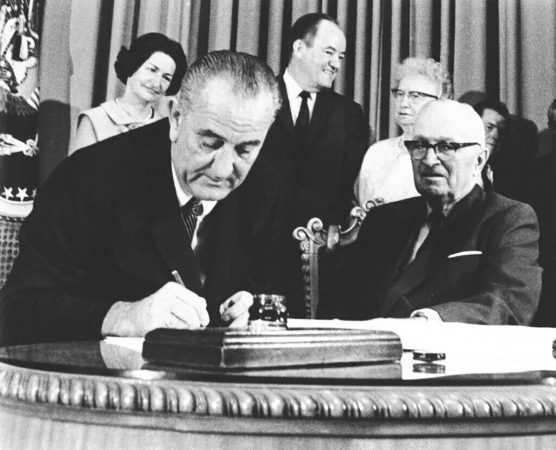
    Everything changed after Congress passed Medicare in 1965. Urged on by civil rights organizations, John Gardner, secretary of the Department of Health, Education, and Welfare (HEW), announced that to receive Medicare dollars, hospitals must comply with the Civil Rights Act. The new health insurance program covered 19 million seniors and promised to pay billions to healthcare facilities — but only if they complied. To Gardner, it was an unprecedented enforcement tool.

    HEW devised a process for determining compliance. Federal workers would inspect facilities. Were patients admitted and assigned the first bed available, regardless of race? Did hospitals extend admitting privileges to Black doctors? Were there disparities between their patient population’s racial composition and that of their service area?

    Made By History sponsors. FOR USE ON MADE BY HISTORY STORIES ONLY.Inquirer Staff

    Hospitals clearly in compliance would receive Medicare dollars. Others clearly out of compliance would not.

    Gardner did not have enough HEW staff to dispatch to inspect the nation’s 4,000 hospitals. So he put out a call for federal employees willing to volunteer in his department and conduct inspections. Over 1,000 came forward including tax accountants, veterinarians and scientists.

    In April 1966, civil rights movement activists trained them. Some violations would be obvious. That included “whites only” signs above entrances, bathrooms and in cafeterias, racially separate medical records and infants segregated by race.

    But trainers warned that hospital administrators might disguise a facility as integrated for the visit. Some did. One put a white administrator in a patient gown in a room with a Black patient. Another placed four comatose patients, each a different race, next to each other.

    Doing the “HEW shuffle” of fixing signs and shifting a few patients was insufficient, the inspectors explained. Facilities needed to be race-blind.

    The combination of a strict standard coupled with inspections worked.

    In three months, nearly all hospitals ended formal segregation and had been Title VI-certified as Medicare providers. After July 1, hospitals that had not been certified as Title VI compliant — those that lagged transforming their facility or refused on principle to do so — could not provide care for Medicare patients.

    The lives of Black people in the South radically changed. Before the intervention Black infants below the Mason-Dixon line died at twice the rate of whites. By 1971, however, Black infant mortality halved, largely because they more readily received care for treatable conditions and their mothers had access to hospitals for the first time.

    Yet, even as Medicare proved enormously successful in erasing formal segregation, racial stratification patterns remained apparent in hospitals throughout the U.S., exacerbated by residential segregation and referral networks systems.

    Ironically, we know this from Medicare itself. The program has long served as a tool for researchers to investigate disparities in healthcare: beneficiaries share a common insurance which makes it easier to isolate inequities.

    And racial separation persists among Medicare patients. Black Medicare patients are disproportionately treated at hospitals with fewer resources and worse outcomes. In some hospitals, certain teams treat only Black Medicare patients. Other teams treat only white ones.

    Starting in 2003, Medicare Advantage expanded the enrollment of Medicare recipients in commercial insurance alternatives. In Medicare Advantage, the federal government pays insurance companies fixed amounts for each enrollee and the companies then manage benefits. These programs, separate and unequal, also expose racial double standards.

    Even within the same Medicare Advantage plan, care is worse for Black and poor enrollees. Black enrollees tend to have worse follow-up care and chronic disease management than white enrollees. Additionally, they experience higher rates of preventable hospitalizations than white beneficiaries and are more likely to be readmitted.

    The 60th anniversary of Medicare should remind us that our greatest advance in health equity came from enforceable commitments to providing equal care, regardless of race. Racial disparities in healthcare can be eliminated if the federal government requires compliance — and then enforces it.

    For hospitals and physicians in 1966, equal treatment suddenly became a condition of financial survival. The immediate gains Black patients received suggest that if the federal government required healthcare systems and insurers to make real, measurable progress toward addressing racial health disparity, it would produce immediate and significant gains once more.

    The question is whether Americans — and their government — are willing to demand such accountability as they did 60 years ago?

    David Barton Smith is emeritus professor of health management and policy at Temple University. He was the recipient of a Robert Wood Johnson Health Policy Research Investigator Award and is author of three books and numerous articles related to this topic.

    Leila Morsy is an economic justice research fellow at the Legal Defense Fund Thurgood Marshall Institute and a senior lecturer at Flinders University. She is writing a book about the history of the exclusion of Black doctors and its contemporary consequences.

    Made by History takes readers beyond the headlines with articles written and edited by professional historians. Opinions expressed do not necessarily reflect the views of The Inquirer.
  • Dave McCormick, Pa. Republicans aren’t pushing back against Trump’s new election fraud claims as they lobby for the SAVE America Act

    Dave McCormick, Pa. Republicans aren’t pushing back against Trump’s new election fraud claims as they lobby for the SAVE America Act

    In the opening pages of the book he published between losing and then winning a Pennsylvania seat in the U.S. Senate, Dave McCormick painted the picture of an uncomfortable scene at Mar-a-Lago.

    It was early 2022. McCormick, a former hedge fund CEO running in a tough Republican primary against celebrity doctor Mehmet Oz, had made the pilgrimage to meet with then-former President Donald Trump and ask him not to endorse Oz. Trump had maintained a firm grip on the party after leaving office and avoiding conviction for “incitement of insurrection” at his second impeachment trial.

    According to McCormick’s retelling, Trump pulled up a television interview McCormick gave after the Jan. 6, 2021, attack on the U.S. Capitol in which he said the president was partially responsible for political divisiveness.

    “Then the former president looked me in the eyes and warned, ‘You know you can’t win unless you say the election was stolen,’” McCormick wrote. “I made it clear to him that I couldn’t do that. Three days later, Trump endorsed Mehmet Oz.”

    McCormick lost the race but ran again and won with Trump’s support two years later — when they shared a ballot. Now, three years after McCormick penned the book, he has become a prominent cheerleader in the Senate for an election reform proposal — the SAVE America Act — that Trump has advocated for while continuing to falsely say the 2020 election was rigged against him.

    The Pennsylvania Republican has still not echoed the president’s debunked claims of widespread fraud in 2020. He also has not disputed them as he lobbies for the bill, which he and other Trump allies argue will build confidence in elections and which critics say will do the opposite while potentially disenfranchising millions of voters.

    Other Pennsylvania Republicans in Congress — some of whom tried to block the state’s electoral votes hours after the Capitol attack — have similarly stayed quiet as Trump has both resurfaced old allegations and introduced new ones.

    In a prime-time speech earlier this month, Trump claimed that China had secretly obtained U.S. voter information and that a “large-scale voter registration operation” led to fraud in Michigan six years ago. His administration also released a document alleging Pennsylvania was among four states where the Department of Homeland Security had identified more than 250,000 noncitizens registered to vote.

    Pennsylvania Secretary of State Al Schmidt, a Republican appointed by Democratic Gov. Josh Shapiro, has forcefully rejected those claims.

    But adding more fuel to the rhetoric about election integrity, New Jersey officials said last week that about 6,600 people who were not citizens were registered to vote before the 2024 election, and fewer than 400 cast a ballot.

    Still, many of the claims Trump made in his speech have been refuted by election experts and, in many cases, were not new. Meanwhile, none of the 11 Republicans representing Pennsylvania in Congress have commented directly on them, including some who responded to certain questions for this story but did not answer others specifically about the new claims.

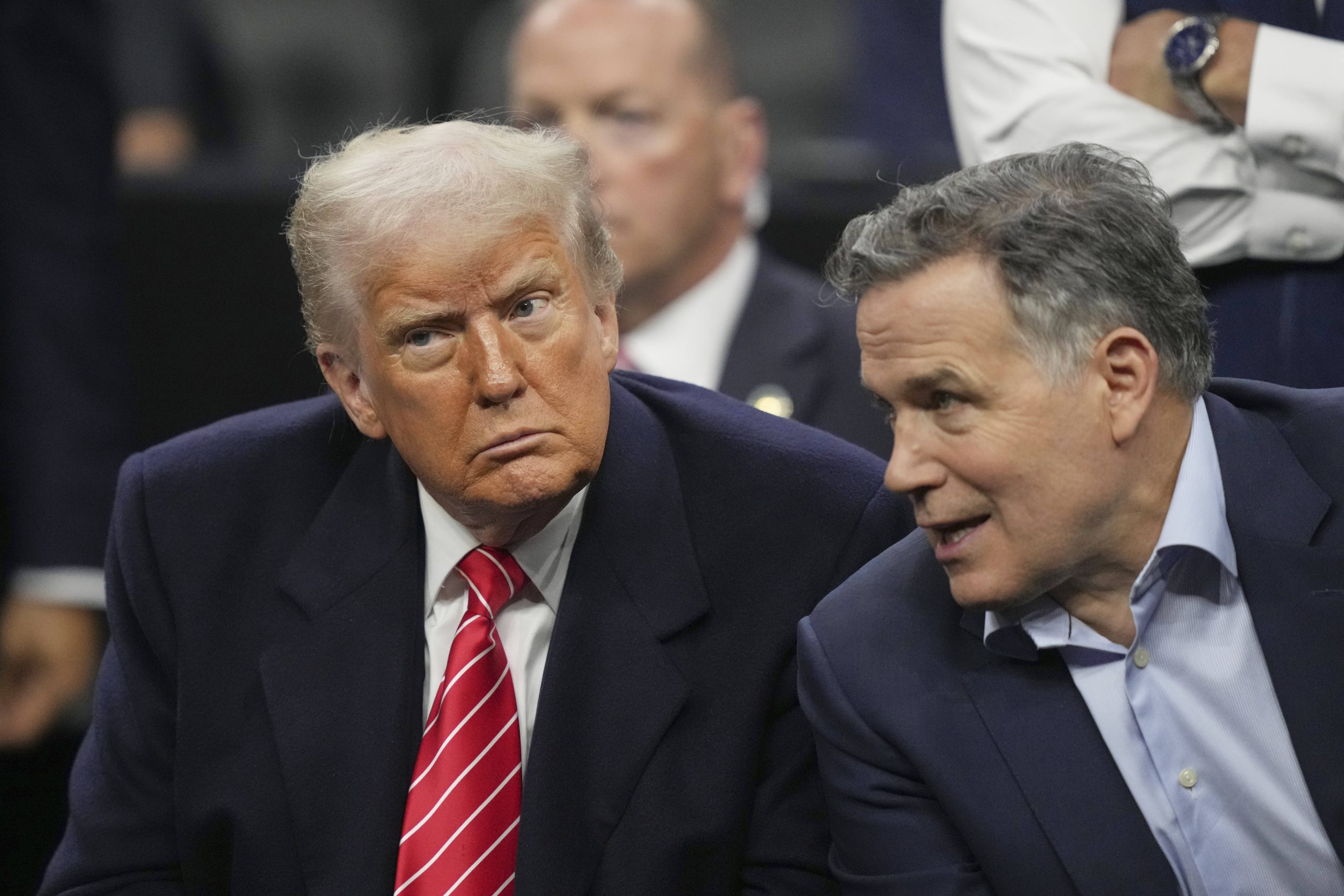
    President Donald Trump, left, and Sen. Dave McCormick, R-Pa., attend the finals at the NCAA wrestling championship, Saturday, March 22, 2025, in Philadelphia. (AP Photo/Matt Rourke)Matt Rourke

    McCormick’s spokesperson said only that the senator’s position on 2020 “remains unchanged.”

    A spokesperson for U.S. Rep. Brian Fitzpatrick, a moderate Bucks County Republican who voted to certify President Joe Biden’s 2020 win, said the lawmaker “completely disagrees with the president’s allegations of interference in the 2020 election.” She did not answer a question about the new and specific claims, such as the 250,000 noncitizens registered, but said Fitzpatrick “has full faith and confidence [in] our election officials.”

    Rep. Scott Perry, R-Pa., speaks during the Conservative Political Action Conference, CPAC 2024, in Oxon Hill, Md., Feb. 22, 2024. (AP Photo/Jose Luis Magana, File)Jose Luis Magana

    U.S. Rep. Scott Perry, a York County Republican who tried to overturn election results and became a subject of investigations into Jan. 6, reposted comments online that raised alarm about the White House’s claims of noncitizen voters.

    Perry’s office did not respond to a request for comment. He is one of four Republicans in the state facing a competitive reelection this fall — putting Pennsylvania in the national spotlight as Democrats push to gain control of the narrowly divided U.S. House, and potentially at the center of concerns about Trump’s attempts to control the election process.

    Republicans point to N.J. as they call for new voting law

    Every Pennsylvania Republican in Congress, meanwhile, has supported the SAVE America Act. The bill would require voters to provide proof of citizenship when registering to vote and to show photo ID at the polls. It would also scale back mail voting, which has become increasingly popular since the COVID-19 pandemic but has remained a focus of Trump’s false claims of fraud.

    Supporters of the legislation say that voter ID is widely popular and that eliminating even a few noncitizens from the voter rolls is worth ensuring elections are legal and secure. Opponents say that the issues the bill is trying to solve are either nonexistent or statistically irrelevant, and that it would effectively make registering more difficult for about 21 million people who do not have easy access to the paperwork that would be required, like a passport or birth certificate.

    “It would upend voter registration and our democracy and, on its own terms, is an extraordinarily harmful policy that would hurt millions of American citizens,” said Eliza Sweren-Becker, a voting rights expert at the Brennan Center for Justice. “It is being advanced on the backs of lies about our election system that are themselves harmful to our democracy and trust in election administration.”

    Though he has not addressed Trump’s latest claims, McCormick renewed his public push for the SAVE America Act after Trump’s prime-time address — writing, “Let’s act now,” on social media following the speech.

    Last week, he and others also grasped on to both a nearly decade-old voter registration issue in Pennsylvania and the fresh problem in New Jersey to underscore the need for the law.

    “This isn’t a harmless ‘software error,’” McCormick wrote on social media after Gov. Mikie Sherrill said a technical mistake led to noncitizens registering to vote. “This is why we must confirm citizenship before anyone registers. Only U.S. citizens should vote in our elections.”

    McCormick also elevated a statement from the Department of Homeland Security that referred to an issue that Schmidt, then a Philadelphia city commissioner, discovered in 2017. Schmidt found 168 noncitizens were registered in Philadelphia, and likely hundreds more were registered statewide, due to an error by the Pennsylvania Department of Transportation. State Auditor General Tim DeFoor, a Republican, has said fixes to the system were largely successful.

    U.S. Rep. Ryan Mackenzie, a Lehigh County Republican who is running in one of the most competitive districts in the country, also pointed to the Pennsylvania example and the New Jersey developments while justifying his support for the SAVE America Act during a telephone town hall with constituents Wednesday.

    But while trying to remember the details on the call, Mackenzie potentially overstated the problem.

    “I believe it was about 8,000 people here in Pennsylvania made their way onto the voter rolls, who were not supposed to be there and weren’t asked those proper questions. So these things do happen,” Mackenzie said before stressing the need for the SAVE America Act.

    Asked about that number, a spokesperson for Mackenzie pointed to the Pennsylvania Department of State’s additional review in 2018 that found 8,698 voters whose eligibility needed to be determined. Those voters, however, were not necessarily noncitizens or otherwise ineligible to vote, and the state never released a more detailed analysis.

    The spokesperson did not answer questions about whether Mackenzie agrees with Trump’s old or new claims about election fraud in 2020, or whether Pennsylvanians should have confidence in the state’s current system.

    “This case from Pa., and from N.J. more recently, highlight the lack of appropriate checks taking place when people initially register to vote. We should have appropriate checks to verify the citizenship status when someone initially registers, which is what the SAVE Act provides. The absence of these safeguards, as well as the egregious errors that have been seen in states like New Jersey, are key reasons for the bipartisan frustration with our elections.”

    Sweren-Becker said overstated claims of noncitizen voters have contributed to spreading distrust. The Pennsylvania situation, she said, was also not an example of a scheme to defraud the system, and “not the basis for a policy that would block millions of Americans from being able to cast their ballots.” Both that case and the one in New Jersey are instead examples of administrative errors that occasionally happen in a complex election system and represent “an extraordinarily small fraction” of voters, she said.

    The Cato Institute, a libertarian Washington-based think tank, has also thrown cold water on the idea that the SAVE America Act would have prevented the New Jersey error. Legal fellow and former Arizona Republican official Stephen Richer, in a post that referred to McCormick’s advocacy, wrote that the current structure of the bill “likely wouldn’t have prevented” the software error.

    “Be wary of politicians who say, ‘All of these problems will be fixed with my simple legislation,’” Richer wrote. “That’s often not the case.”

    ‘Deeply unhelpful’

    McCormick, in response to questions for this story, did not directly say if the law would have prevented the issue in New Jersey. But he stressed that the paperwork requirement “helps stop noncitizens from getting registered.” It would also require states to set up a program to “continuously check voter rolls to find noncitizens” using different datasets — which he noted some states already have.

    In a telephone town hall with constituents on Wednesday, the senator also acknowledged concerns about the bill when asked about it by voters on both sides of the issue.

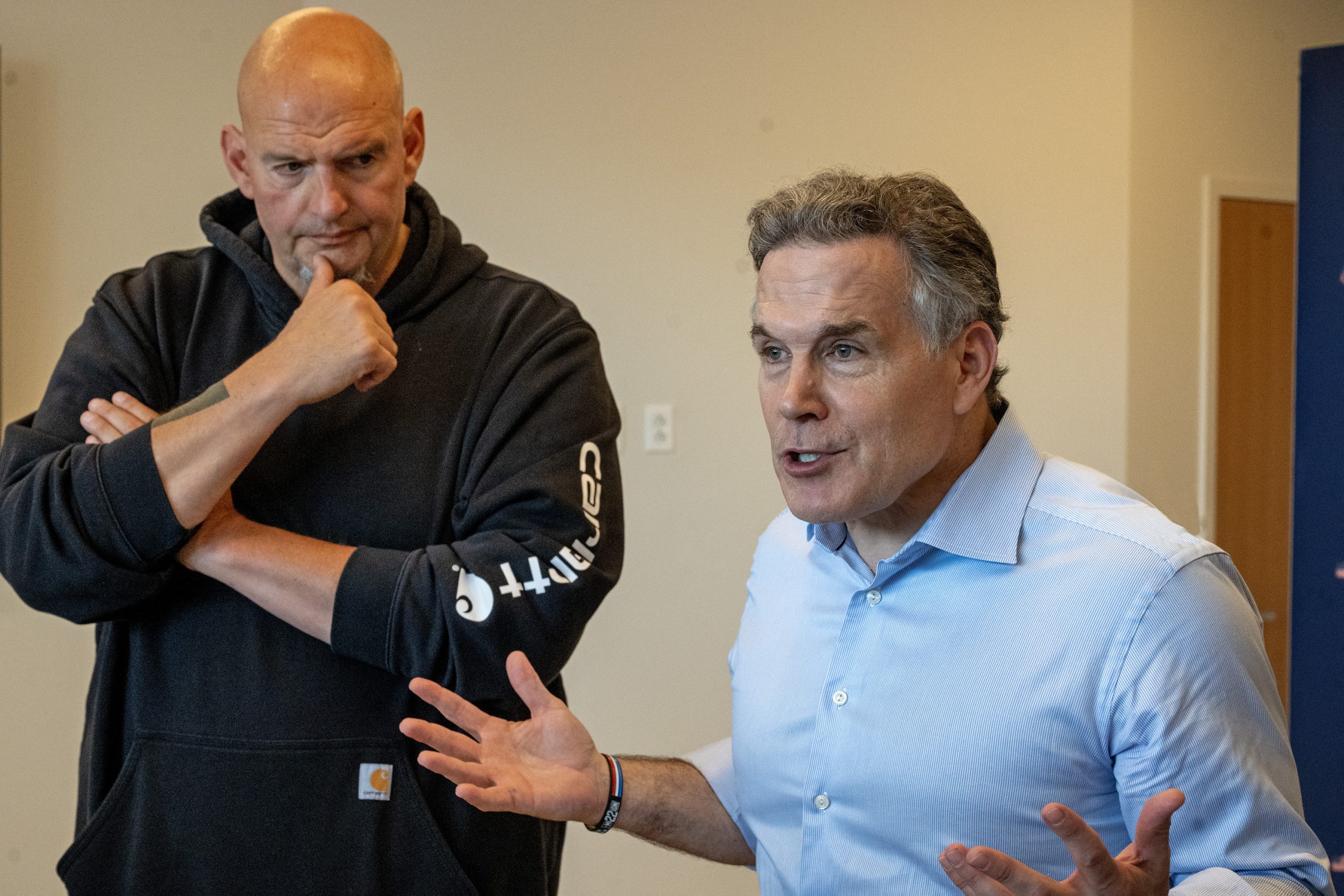
    Pennsylvania’s U.S. Senators John Fetterman (left) and Dave McCormick appear together Monday, June 29, 2026 to promote the savings accounts for kids that were a signature piece of President Trump’s Big Beautiful Bill.Tom Gralish / Staff Photographer

    He said he believed the law would “make it as easy as possible” for people to obtain valid forms of ID if they do not have them. And as someone who lost his first race against Oz by 950 votes and won his second race against Democratic U.S. Sen. Bob Casey by about 15,000 votes, he said even rare cases of noncitizen voting could make a difference in close elections. Eligibility for mail ballots also needs “to tighten up dramatically,” he said, though he did not fully explain his thoughts on the issue or if he believes there has been fraud associated with them.

    As Democrats block the bill in the Senate, he called on them to “defend the indefensible” and said “there should be a political cost in objecting to something that most Americans agree with.”

    One of the Democrats opposing the bill is McCormick’s close friend and ally — U.S. Sen. John Fetterman.

    Though he has frequently broken with his party — and now supports voter ID after previously calling it “insidious and unnecessary” — Fetterman has said the bill’s changes to mail voting are “a nonstarter” for him.” In a CNN interview last week, he also said that the 2020 election in Pennsylvania was fair, that there is “no evidence” of 250,000 noncitizens registered, and that Trump was unnecessarily fixated on the 2020 election.

    “In Pennsylvania, out of 67 counties, the vast, vast, vast majority of them are deep red counties, and they’ve never encountered any kinds of fraud,” Fetterman said. “I don’t know why the president is dragging up all of this stuff. You’re the president. Do something positive. And you are talking about 2020. That’s been settled over six years ago. It’s deeply unhelpful.”

    Other Pennsylvania Democrats have lambasted Trump for dredging up the old claims, and they have blamed GOP “enablers” for supporting him and pushing the bill.

    “The only thing it would ‘save’ is Trump and his Republican enablers from voters holding them accountable,” U.S. Rep. Dwight Evans (D., Philadelphia) said.

    U.S. Rep. Chris Deluzio, an Allegheny County Democrat who worked on election security issues before running for Congress in 2022, said the bill “will do nothing to improve election security” and would instead harm married women — whose birth certificates might not have their current name — and people without passports. He said those who lie about the 2020 election are “cowards” who should not have a place in elected office.

    “The fact that some Republican politicians are so scared of Donald Trump that they lie for him just to keep their jobs is spineless and pathetic,” Deluzio said.

    McCormick, for his part, said during the telephone town hall that the bill is unlikely to pass as Democrats continue to block it from getting the required 60 votes in the Senate, and as Republicans decline to eliminate the filibuster rule to let it move forward with just 50 votes.

    “Where does that leave us? That leaves us in a position where I think we should be constantly talking about this, and I try to do this every single week, multiple times, [saying] why the SAVE America Act is important,” said McCormick, whose staff said he was unavailable for an interview.