Category: National Politics

  • Why Democrats are starting to feel bullish about a midterm wave

    Why Democrats are starting to feel bullish about a midterm wave

    Democrats’ wary optimism about the midterms gave way to growing confidence this week.

    The party has seen strong post-Labor Day polls in key battlegrounds — and even in traditionally red areas. Recent escalations in the war in Iran, including an attack on a major pipeline in Saudi Arabia, mean the rising gas prices bedeviling Republicans will not be going down anytime soon. Republicans have not been able to bring prices under control more generally. And President Donald Trump’s unpopularity is at near-record levels.

    Considering all this, Democrats now think conditions are right for the party to retake control of the House and possibly the Senate later this year.

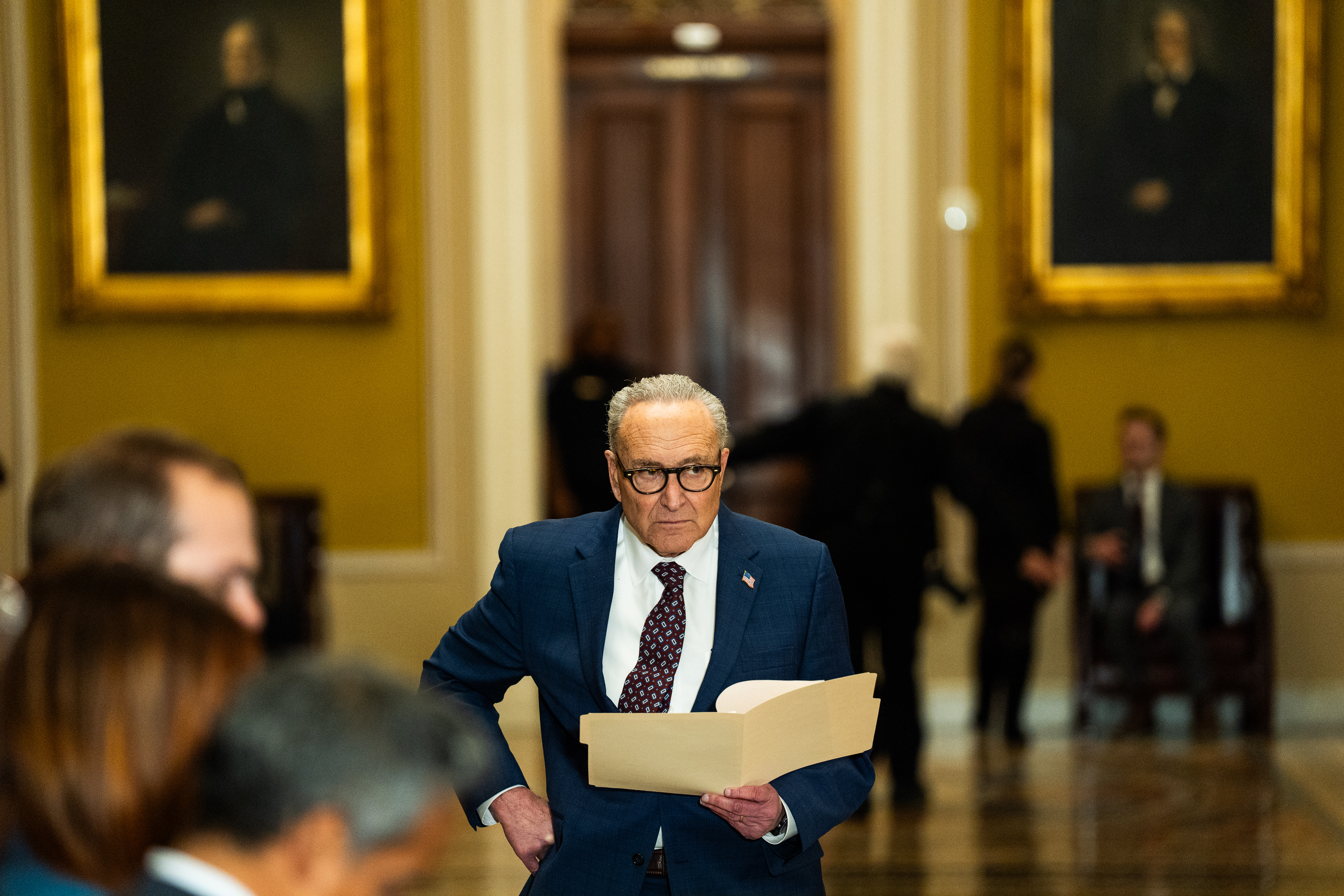
    “If the election were held today, we would win the majority,” Senate Minority Leader Chuck Schumer (New York) said in an interview with The Washington Post.

    Schumer said he felt “considerably more bullish” about Democrats’ chances of retaking the Senate than he did a few months ago. He described the environment as uncannily similar to 2006, when discontent with the war in Iraq helped Democrats recapture the Senate and the House.

    House Minority Whip Katherine Clark (D-Massachusetts) said Democrats’ recent momentum is driven by their focus on the economy, with voters believing that the party understands the financial pain they’ve felt in the years since Republicans swept into unified control.

    “That is what is driving these polls,” Clark told The Post on Thursday.

    Still, Democratic fears remain.

    Democrats need at least four more seats to take the Senate majority and would have to win at least two in states Trump carried by double-digit margins in 2024. Republicans are seeking to blunt any Democratic gains by flipping Democratic-held open seats in Michigan and New Hampshire, where polls show competitive races. The nonpartisan Cook Political Report shifted its rating of the Senate contest in New Hampshire from “Lean Democrat” to “Toss Up” this week.

    Republicans focused on keeping control of the House argue that they have a more favorable map, partly because a GOP redistricting effort has limited the number of battleground districts, and partly because they believe that Democratic primary voters nominated weak candidates in a handful of key races.

    Then there is the incoming flood of GOP money.

    Republicans are set to spend nearly $140 million more on ads than Democrats are in the nine most competitive races in the final weeks of the campaign, according to ad tracking firm AdImpact. The disparity is especially yawning in the Senate contest in Texas, where Republicans have reserved $39.6 million in ads and Democrats have reserved just $5.1 million.

    On the House side, the National Republican Congressional Committee plans to run coordinated ads in 39 districts, with more than $24 million in ads reserved.

    The Democratic Congressional Campaign Committee has plans for coordinated ads in 14 districts.

    “The Republican campaign engines are firing on all cylinders, and we are burying House Democrats in battleground districts across the country,” said Mike Marinella, spokesperson for House Republicans’ campaign arm. “Republicans have the historic fundraising advantage, a more favorable map, stronger candidates, and the firepower to defy history and grow our House majority.”

    Schumer acknowledged Republicans’ financial advantage but said it would not stop Democrats from retaking the Senate.

    “We don’t need as much money as them given the political climate, given the terrain,” he said. “All we need is enough to stay in the ballpark and be able to answer them.”

    Republicans have begun to openly acknowledge electoral concerns in recent weeks, particularly with polls showing that Democrats are far more eager to vote than Republicans are.

    Sen. John Kennedy (R-Louisiana) told reporters Thursday that he was going to Kansas, Nebraska and Iowa to raise money for GOP Senate candidates.

    “If you told me six months ago I was going to be having to spend my time in those three states, I wouldn’t have believed you. Those ought to be fat guy layups for us,” he said, though he predicted Republicans would hold those seats.

    “The far left, they’re angry,” Sen. Ted Cruz (R-Texas) said this week on the “Pod Force One” podcast, describing this as a “challenging environment” for his party. “They hate President Trump with a burning passion. And they’re going to crawl over broken glass to vote.”

    Senate Majority Leader John Thune (R-South Dakota) acknowledged Wednesday that Republicans are facing “headwinds” but said the Senate races that will decide control of the chamber remain competitive.

    “It’s not a great environment for us,” Thune said. “But we’ve got really quality candidates in all the competitive races, and the polling that we’re seeing in those races shows that these races are tight.”

    Republicans have been debating how to increase enthusiasm beyond spending more money. Some, largely those closely tied to the president and his political operation, argue that the path to victory is to re-create the electorate Trump built in 2024. Other Republicans — primarily those in battleground districts where private and public polls show that voters are deeply upset with the president — believe the way to win is to distance themselves from the administration and its policies, a difficult task following a decade of Trump remaking the party in his own image.

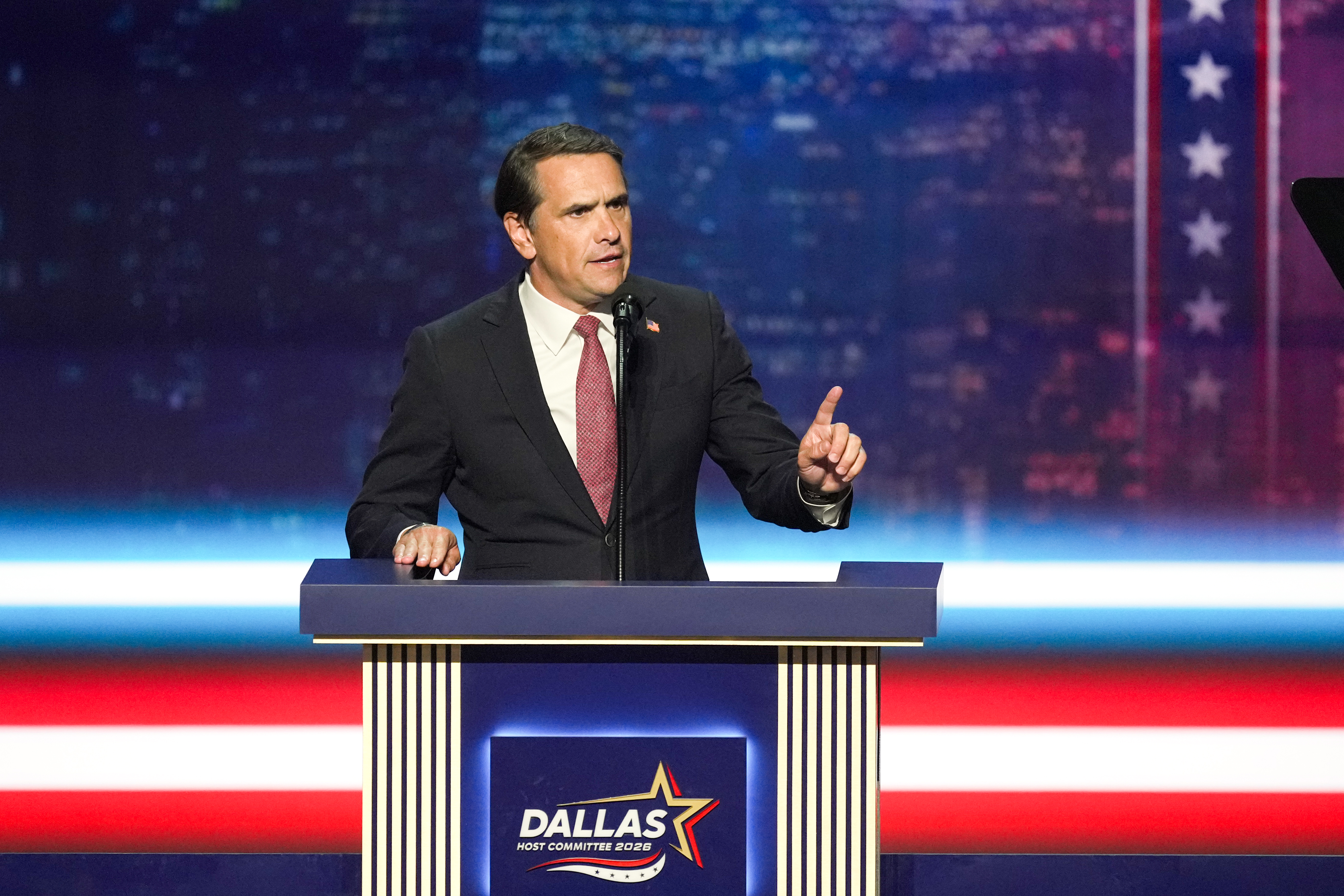
    “I’m asking you to pretend that I’m on the ballot,” Trump said during one of two speeches he gave at the Republicans’ midterm convention in Dallas recently. “Just one more time.”

    Trump has made it difficult for many candidates, especially those in tight races, to embrace this tactic. In large part, that’s because he has repeatedly dismissed the issue that voters say is their main stressor: prices. His trade war has raised prices on goods across the country. And gas prices, which have shot up because of the president’s war against Iran, are nearing $4.50 per gallon on average.

    However, speaking at a campaign rally Wednesday in North Carolina, a state he has won in three straight presidential elections, Trump said high fuel prices were “a very inexpensive price to pay for what we have done” in Iran.

    A Republican operative working on House races, speaking on the condition of anonymity to be candid, responded to Trump’s comments with an animated image of actor Bryan Cranston screaming, “F—!”

    The president has promised to get out the vote for Republican candidates, including those in trouble deep in Trump country. Some have taken him up on his offer, but not every candidate wants him around, and administration officials’ visits to red states have been seen as warning signs for Republicans.

    Vice President JD Vance traveled to Kansas this week to stump for Republican Sen. Roger Marshall, who is in a tighter-than-expected race against Democrat Adam Hamilton. Trump and Vance won Kansas by 16 percentage points in 2024.

    Vance is also set to campaign in Iowa on Friday. But the state’s Republican Senate nominee, Rep. Ashley Hinson, will not appear next to the vice president. A Hinson spokesperson cited previously scheduled events, but the absence comes as the candidate seeks to tout her bipartisan record in a state Trump won by 13 percentage points in 2024. Hinson is locked in a tight race against Democratic state Rep. Josh Turek.

    And in South Florida, an area Trump dominated in 2024, Republican Rep. María Elvira Salazar openly broke with the president Thursday.

    “Mr. President, some of your immigration enforcement efforts have gone too far,” Salazar says directly to the camera in a new campaign ad. “The same Hispanics who helped you get to the White House in 2024 feel betrayed today.”

    Democrats say they began to see a change during what was supposed to be Republicans’ hallmark 2026 event: the party’s unorthodox midterm convention. The gathering was billed as a way for the GOP to showcase its front-line candidates, but instead it featured Trump defending his record and pledging to give each American adult a $5,000 check if Republicans hold Congress this year, a proposal many Democrats saw as a sign of desperation.

    “We’re not measuring the drapes, but the ground has shifted,” said Xochitl Hinojosa, a longtime Democratic operative and top spokesperson at the Democratic National Committee after the 2016 election.

    Some Democratic operatives running campaigns said they had been waiting to see whether Republicans would coalesce around a clear affordability message during the Texas event. But when it became obvious that the event would be a Trump-centric celebration that offered no direct case for why Republicans deserved unified control for two more years, their confidence grew.

    “Turns out breaking all your campaign promises and doing everything possible to make life more expensive for everyone is bad politics,” said Viet Shelton, spokesperson for House Democrats’ campaign arm. “Shocker.”

    The last time Democrats experienced a wave election was in 2018, when the party swept into control of the House two years after Trump’s first presidential win.

    Meredith Kelly, a Democratic operative who was the top spokesperson at House Democrats’ campaign arm at the time, said that there are plenty of similarities between that year and this one — primarily around Trump’s unpopularity — but that the biggest difference is how Republicans’ worries are coming from voters who helped them win in 2024, such as rural voters and Black and Latino men.

    “Their coalition’s floor is falling out from underneath them,” said Kelly.

    The prospect of a wave election has Democratic candidates in districts once thought entirely unreachable for the party feeling like they may have a shot to do the unexpected in November.

    Eileen Laubacher, a retired Navy veteran running against GOP Rep. Lauren Boebert in a district that spans eastern Colorado, knows that her odds of winning have always been long. Trump won the district less than two years ago by 18 percentage points. But powered almost entirely by anger at Washington and voters’ fears about their personal finances, Laubacher thinks she has an opportunity to take down her outspoken Republican opponent.

    “People vote frequently about their pocketbooks and their wallets, but I think the situation is growing ever more fraught for people,” said Laubacher. “Every aspect of their life has become more expensive, and they do not feel that the government is doing anything about any of it.”

    Jarrell Dillard contributed to this report.
  • Postal Service chief says work stopped on computer system key to Trump effort to limit mail voting

    Postal Service chief says work stopped on computer system key to Trump effort to limit mail voting

    WASHINGTON — The top official at the U.S. Postal Service said Thursday that the agency has stopped work on developing a controversial computer system that was central to President Donald Trump’s effort to limit mail voting after the Supreme Court rejected his executive order this week.

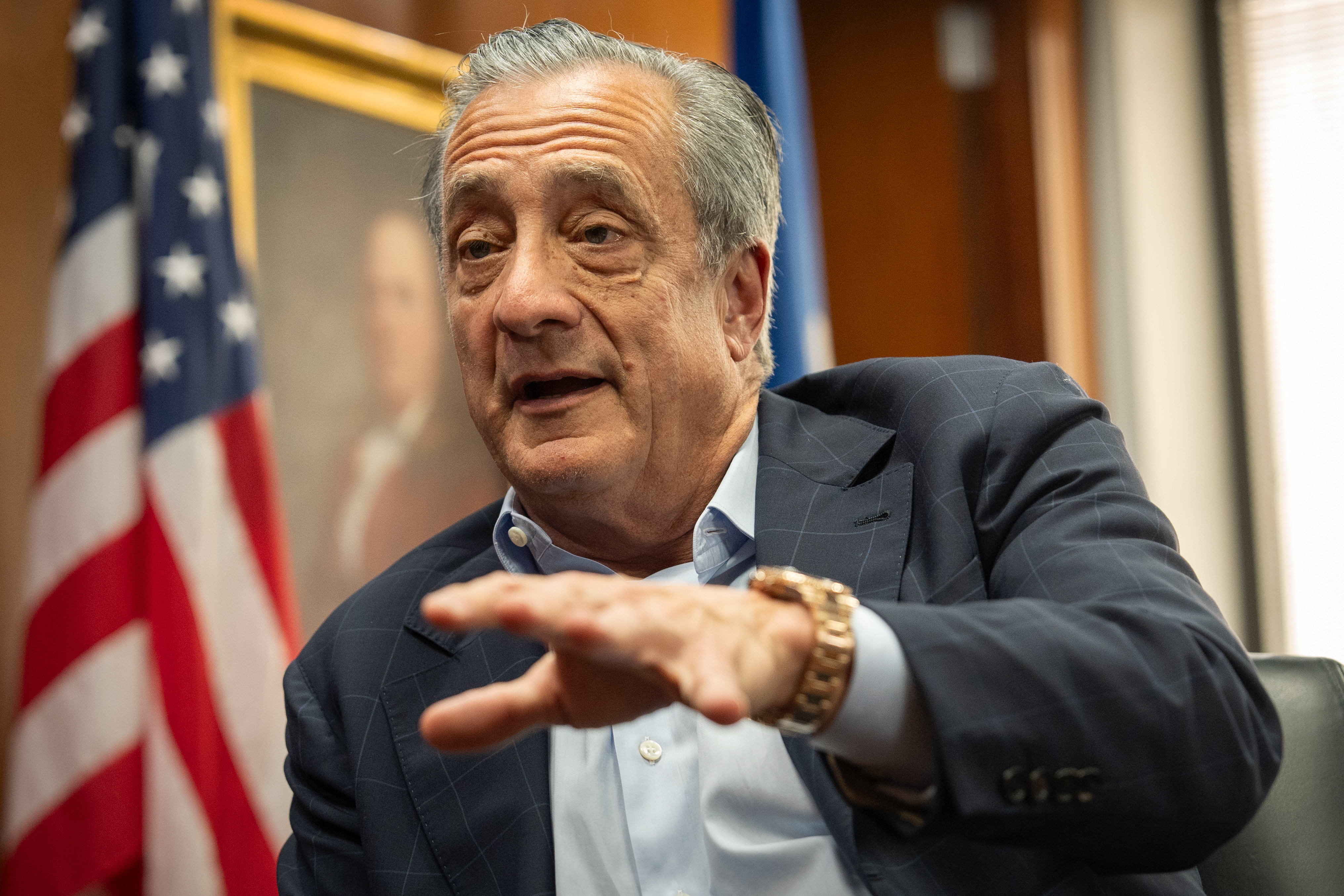
    “There’s an injunction so we’re not doing anything,” postmaster general David Steiner told The Associated Press in an interview.

    Steiner, a onetime chief executive of Waste Management, has spent most of the past year atop the postal service navigating political and financial challenges. He’s pressing Congress for changes that would help him resolve what he has called a “liquidity crisis.”

    And Trump’s efforts to largely eradicate mail voting turned the postal service into an unlikely arbiter of who is eligible to vote just months before this year’s critical midterm elections, a role Steiner seemingly had little interest in playing. Unlike Trump, who was sharply critical of the Supreme Court decision and ridiculed some of the justices, Steiner offered no assessment of the court’s action.

    Steiner also declined to take a position on Trump’s policy, presenting himself as the leader of an “independent agency of the executive branch” whose influence over the president’s order was limited to operational concerns.

    “I don’t get to decide what rules that are put on us that I decide to accept or not accept,” he said. “I looked at it more from the execution side.”

    The postal service has asserted its independence in the past, including during a 2019 standoff when the first Trump administration sought to pressure the agency as the president was in a dispute with Amazon. Steiner said he wouldn’t get into the “nuance” of that.

    But the pressure has grown so intense at points that it’s fueled talk of whether Steiner might resign, a notion he denied.

    “There’s no truth to that,” he said. “I think I know the motivation behind it. I think it’s somebody that would like to see me out of a job.”

    Inserting the Postal Service into elections

    The executive order Trump signed in March directed several federal agencies to develop state citizenship lists. Those lists would have been delivered to an online portal at the Postal Service, which would have been allowed to send mail ballots only to voters who were cleared through the process. Steiner said he knew about the order about a month before it was unveiled but said his focus was largely on implementation, not the policy’s merits.

    A whistleblower report released earlier this month by Sen. Richard Blumenthal, D-Conn., argued the system was hastily built and riddled with errors.

    Steiner said he read “portions” of the whistleblower report and acknowledged the obstacles associated with building such a massive platform quickly. Still, he said he had confidence in colleagues working on the project and had planned to unveil it around Sept. 15.

    “There’s absolutely no doubt that we worked fast,” he said. “My personal opinion is it was a monumental task and I’m very proud of our IT department for being able to do it that fast.”

    In addition to the voter list, Trump’s order would have required states to adopt a uniform envelope style that included barcodes, something states said would have been arduous so close to the election.

    Following the Supreme Court’s ruling, a memo sent to all postal service employees Wednesday and obtained by the AP said the agency will “not be enforcing any of these new rules in the 2026 federal election.”

    “First and foremost, for Election Mail it is business as usual,” according to the memo. “We continue to follow established protocols, and we remain entirely focused on our core mission: delivering the mail safely and securely for voters and election officials across the country.”

    Though the Supreme Court rejected Trump’s executive order for this year’s election, Justice Brett Kavanaugh indicated he might rule in favor of the administration if the issue comes back before the court at a later time.

    Steiner encourages voters to cast ballots early

    Steiner said the postal service would still encourage the use of envelopes and barcodes in future elections, which it has long recommended. He said such changes wouldn’t be required but those who don’t comply may have to pay more.

    “If you use the barcode in the envelope, we’ll charge you a lower price,” he said. “If you don’t, we’re going to charge you a higher price because it’s harder for us to process.”

    While the postal service isn’t moving forward on Trump’s order, there are still concerns about postmark delays that could have an impact on this year’s elections. The number of ballots rejected for late postmarks has soared in the vote-by-mail states of Washington and Oregon, according to recently released data highlighting concerns about recent changes in postal service operations.

    Steiner said there were no plans to alter those operations and encouraged voters who use mail to get their ballots in early.

    “We say seven days,” he said. “Everything is solved if people vote early.”

  • Blanche’s partisan activity before midterms dismantles another principle

    Blanche’s partisan activity before midterms dismantles another principle

    WASHINGTON — Attorney General Todd Blanche has repeatedly participated in campaign events and spoken in partisan terms about the coming midterm elections since his confirmation last month, despite criticism that he violated a long-standing Justice Department principle of steering clear of electoral politics.

    This week, he waded again into those waters — twice.

    Since August, Blanche has come under fire for making campaign-tinged public appearances and comments. Last month, at a rally-style event on Long Island, he praised Bruce Blakeman, the Republican candidate for governor of New York. Last week, Blanche delivered remarks at the Republican Party’s midterm convention.

    On Tuesday, he stood at the White House podium and disparaged Democratic lawmakers while invoking the coming election, dismissing their concerns about artificial intelligence as “nothing but an effort to influence the midterms.”

    And Wednesday, Blanche spoke at a campaign rally for Michael Whatley, the Republican Senate candidate in North Carolina. Echoing his convention speech, he portrayed crime rates, which continued a long-term downward trend to reach new lows in 2025, as “President Trump and Vice President Vance delivering on a promise.”

    Worries about the Justice Department abandoning its long-held commitment to appear apolitical in order to maintain institutional credibility may seem beside the point. Since January 2025, dozens of judges have viewed its representations with suspicion, eroding the traditional bonds of trust, known as the “presumption of regularity,” that the courts typically grant the department.

    The second Trump administration has also unabashedly destroyed the post-Watergate norm of Justice Department independence from the White House in investigative decisions. Early on, Blanche’s predecessor, Pam Bondi, declared, “We are so proud to work at the directive of Donald Trump.” Last September, after Trump publicly demanded that she charge several perceived adversaries, the department pushed through short-lived indictments of two of them.

    Still, Blanche is dismantling another post-Watergate principle: that Justice Department leaders stay away from partisan politicking.

    Joseph Tirrell, the Justice Department’s senior ethics official until the Trump administration dismissed him in July 2025, this week criticized Blanche’s participation in the Republican convention. He called the attorney general’s comments at the White House briefing “borderline” unethical, and his participation in the North Carolina rally “terrible.”

    “In my former role, I would have advised the attorney general not to go to the White House and not to make comments about members of Congress within 45 days of an election,” Tirrell said. Referring to a law restricting partisan political activity by government employees, he added, “I’d say, ‘That rally sounds like a Hatch Act violation to me, and I’d advise you not to do it.’ I would want to scare that person straight.”

    Stephen Gillers, a New York University law professor who specializes in legal ethics, said Blanche’s political statements and activities were protected by the First Amendment and did not violate professional conduct rule, even if they were ill-advised.

    “Any attempt to discipline him will fail,” Gillers said. “That’s unfortunate. He has the ability to do what he’s doing, and he’s chosen to do it.”

    The Justice Department did not respond to a request for comment.

    When the group Public Citizen filed a Hatch Act complaint about Blanche’s comments praising Blakeman, the Justice Department told Government Executive in a statement that it was “baseless” and “a politically motivated complaint designed to weaponize the Hatch Act against the attorney general for his support of law enforcement.”

    And in response to criticism last week by Democrats on the House Judiciary Committee over Blanche’s convention appearance, the department shot back on social media, “Todd Blanche’s appearance this evening in his personal capacity is legal (and has been approved by ethics).”

    Legal questions center on the Hatch Act, which is ambiguous and difficult to enforce when an administration does not want to strictly adhere to it. The law and related regulations allow some political appointees, while off duty, to attend partisan events, like fundraisers and campaign rallies. Some law enforcement officials are restricted from any partisan activity, but the attorney general is not listed among them, and it is disputed whether that part of the legal limits applies to them.

    Even for those who can engage in political activity in a personal capacity, the traditional test is not just whether such officials say they are doing so, but whether people would reasonably perceive them as acting in their government roles.

    Cynthia Shaw, who ran the Justice Department’s ethics office throughout Trump’s first term, said the notion that high-ranking officials could simply say they are acting in a personal capacity to get around that threshold was a misunderstanding.

    “The bigger the job you get, the less personal capacity you have, because when you speak, people are going to see you in your official capacity and representing the agency that you are head of,” she said.

    Federal law enforcement needs to not just be fair, she added, but to be seen as fair for the long-term good of the department and society.

    For that reason, the Justice Department had long held itself to a higher standard than the Hatch Act and its ambiguities. For decades, its ethics policies went beyond the statute in pushing officials to avoid events like political fundraisers and campaign rallies.

    In 2022, Attorney General Merrick Garland flatly banned political appointees from participating in partisan activities — even in their personal capacities, and even if their family members were the candidates.

    But in March of this year, Bondi rescinded that policy, freeing political appointees to attend such events in their personal capacities subject only to the lower standards of the Hatch Act.

    That weakening of ethics rules is one reason the department’s claim that Blanche’s appearance at the Republican Party convention was “approved by ethics” merits scrutiny. Another is that the administration has changed who makes ethics recommendations.

    After firing Tirrell, the administration left his position vacant for nearly a year before appointing Kristina Spencer, a former aide to Vice President JD Vance who had no prior department experience.

    The office of the deputy attorney general can also overrule the ethics office’s recommendations. For decades, the decision-maker was a career official, but the Trump administration moved that authority to political appointees.

    The principle that the Justice Department should strive to appear apolitical took root after Watergate. President Richard Nixon’s first attorney general, John Mitchell — who later went to prison for his role in the scandal — was so deeply partisan that he resigned to run Nixon’s 1972 reelection campaign.

    The attorney general immediately after established the modern norm of not acting as a political operative while in office: Edward Levi, a University of Chicago legal scholar.

    Maintaining a nonpartisan image has proved difficult, partly because of the department’s power and an increasingly polarized political atmosphere. Under both parties, one attorney general after another has been accused by political opponents of politicizing the Justice Department.

    In 2013, Attorney General Eric H. Holder Jr. called himself President Barack Obama’s “wingman,” clashing with the principle of Justice Department independence. Asked last week about Blanche’s speech at the Republican convention, Holder said, “It’s unprecedented, and it’s disgraceful. Attorneys general don’t talk about political things. He shouldn’t be there.”

    Holder, while serving as attorney general, never spoke at the Democratic convention or at campaign rallies. Nor did Republican attorneys general frequently accused by Democrats of politicizing the department, including Attorney General William Barr during Trump’s first term.

    Gillers said that shifting standards for the conduct of attorneys general would harm the rule of law, especially if Blanche’s successors followed his example.

    “This is new,” he said. “The changing image of what an attorney general should be seen to do, and how officials high in the Justice Department should behave, will not be good. We just don’t know yet how bad it will be.”

    This article originally appeared in The New York Times.

  • Jon Kyl, a former top Republican in the Senate, dies at 84

    Jon Kyl, a former top Republican in the Senate, dies at 84

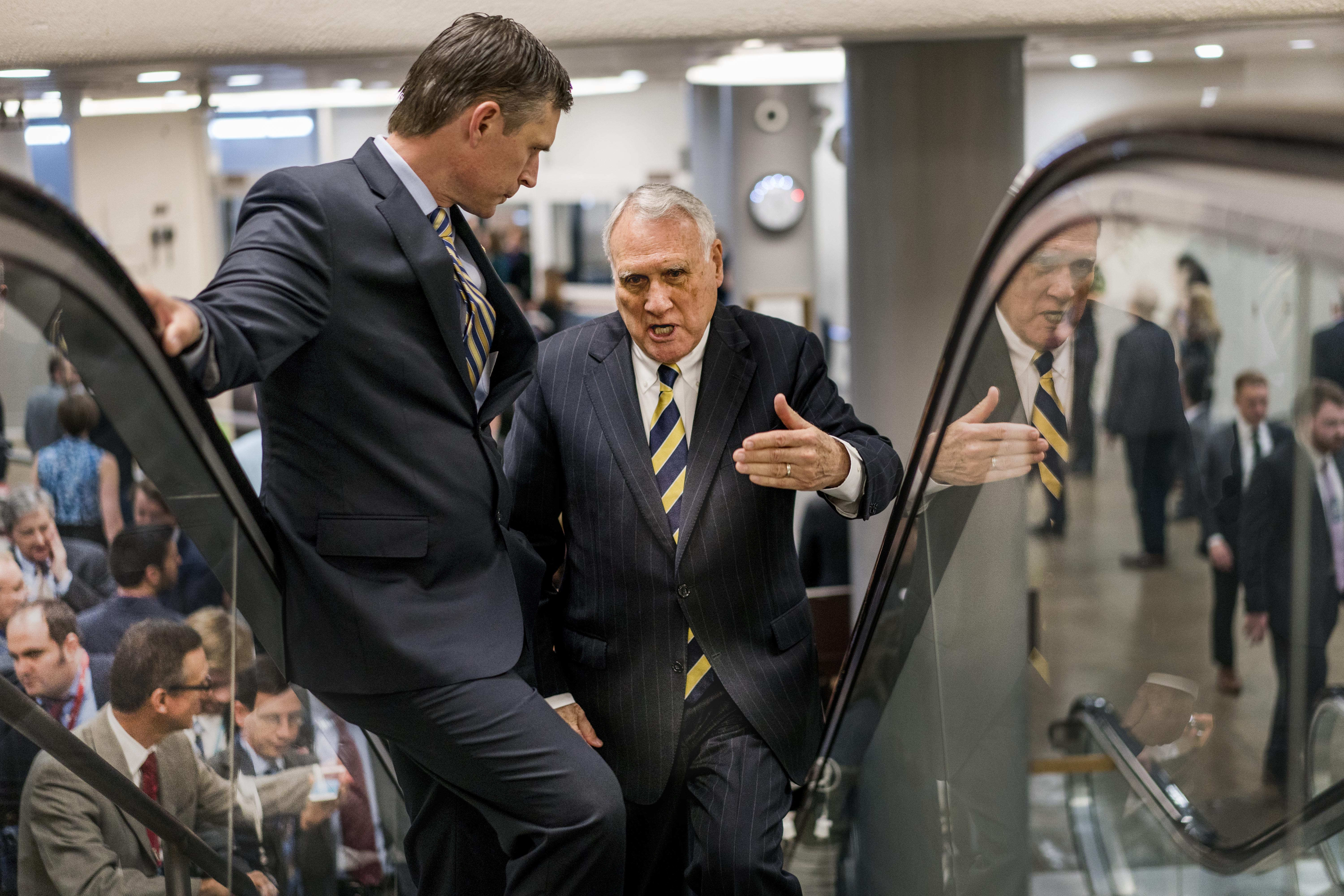
    Former senator Jon Kyl, who served in Congress for nearly 30 years and rose through the ranks of GOP leadership to become the Senate’s No. 2 Republican, has died at the age of 84, his family said Thursday.

    Mr. Kyl’s passing comes nearly nine months after he announced he had been diagnosed with dementia and would be withdrawing from public life. In a statement to local news outlets, his family said Mr. Kyl had passed due to “complications from a neurological disease.”

    “We know that Jon belonged to all of Arizona, a state he loved and explored with vigor, curiosity, and wonder,” his family said. “Serving his state and nation in Congress was a privilege and responsibility he honored and respected.”

    Mr. Kyl served in the House from 1987 to 1995 and in the Senate from 1995 to 2013. He served as the Senate minority whip before he left public office in 2013 and became a lobbyist.

    After the death of former Arizona senator John McCain in 2018, then-governor Doug Ducey appointed Mr. Kyl to serve out the rest of McCain’s term. Mr. Kyl returned somewhat reluctantly, out of a sense of duty, and was instrumental in guiding Supreme Court nominee Brett M. Kavanaugh through the confirmation process.

    This is a developing story and will be updated.

  • House passes bill taking aim at data center electricity costs

    House passes bill taking aim at data center electricity costs

    WASHINGTON — The House on Wednesday overwhelmingly passed a bipartisan bill that encourages state utility regulators to insulate consumers from rising energy costs tied to data centers, as members of Congress rush to address a voter outcry over the rapid advance of artificial intelligence.

    It was unclear whether the legislation, introduced by Reps. Gabe Evans, R-Colo., and Kathy Castor, D-Fla., would have its intended effect. The bill would direct state utility regulators to consider adopting federal rules requiring data centers to cover any higher costs associated with their large-scale power use. But under current law, Congress cannot force state regulators to follow federal standards when they are setting electricity rates.

    Still, as the boom in data center construction has become a potent issue in November’s midterm elections, lawmakers in both parties have been eager to have a legislative achievement that they could cite on the campaign trail. It would still have to pass the Senate and be signed by President Donald Trump before it could become law.

    Across the country, Americans in both parties are concerned about rising electricity prices and water use. Data centers, the large complexes of servers that are crucial to powering AI development, have become the most visible avatar of voters’ fears over the growth of AI and the power of big tech companies.

    That issue took on new political urgency this week, after concerns over the safety of AI emerged into wider view and key tech leaders began calling for a slowdown in the pace of development.

    Lawmakers in both parties have called on Congress to impose guardrails on AI, though there is no clear bipartisan consensus on how to do so, and Trump has rejected calls for regulation. Speaker Mike Johnson said Tuesday that he and the president would convene a meeting with AI executives at the White House next week.

    When asked about their plans to address the issue, some House Republicans pointed to the utility legislation, which does not address AI safety concerns. The measure mirrors a voluntary pledge that tech executives made at the White House this year, when they promised to shoulder a larger share of the energy costs associated with data centers.

    “It makes sure that the ratepayers are protected as you’re building out AI infrastructure,” said Rep. Steve Scalise of Louisiana, the No. 2 Republican. “That it’s got to be supported by the local community, and that it’s not going to adversely impact ratepayers.”

    Wednesday’s vote, 417-3, reflected the increasingly bipartisan nature of the data center backlash and a growing concern among Republicans that they are particularly vulnerable on the issue after their signature domestic policy bill included tax breaks that benefited developers of data centers. It also marked a turnabout from just a year ago, when almost all House Republicans backed a version of that measure that put a moratorium on any state regulation of AI, though the provision was later stripped by the Senate.

    With the House leaving town Wednesday until after Election Day, this week was lawmakers’ last chance to pass a bill showing they were responsive to voters’ concerns about data centers.

    Evans, who introduced the utility bill, is among the most politically vulnerable Republicans in the House. It is unclear whether the Senate will take up the legislation before October, when it is scheduled to recess until after November’s elections. Its version of the bill was put forward by Sen. Jon Husted, R-Ohio, who is in a competitive race in which Democrats have sought to make data centers a central issue.

    A poll conducted this month by The New York Times and Siena University found that 61% of voters said they opposed the construction of data centers and were about split on which party was better positioned to address it, with a considerable bloc saying they did not know which side to trust.

    When Republicans last year passed their sweeping tax and spending cut bill, they expanded significant tax advantages for businesses for research costs and new investments. They also adjusted a tax break program meant to encourage development in poorer areas so that it would incentivize more development in rural areas.

    Democrats have argued that those provisions have helped technology companies looking to build new data centers, and they have accused Republicans of being indifferent to voters’ worries that such construction is raising their electricity costs and changing their neighborhoods.

    “Unfortunately, these very real concerns are repeatedly swept to the sidelines, minimized or ridiculed by President Trump and Republican congressional leaders,” said Rep. Frank Pallone Jr., D-N.J.

    Some Republicans have argued that regulations on AI would hinder America’s ability to stay ahead of China in developing the technology. On the House floor, Evans presented his bill as a way to allow for data center development while ensuring that states had a mechanism to address implications for communities.

    The bill, he said, “keeps costs low for Americans and helps us build the energy backbone required to compete and win in the AI race.”

    This article originally appeared in The New York Times.

  • President Donald Trump admires Theodore Roosevelt — but he isn’t following the former president’s lead

    President Donald Trump admires Theodore Roosevelt — but he isn’t following the former president’s lead

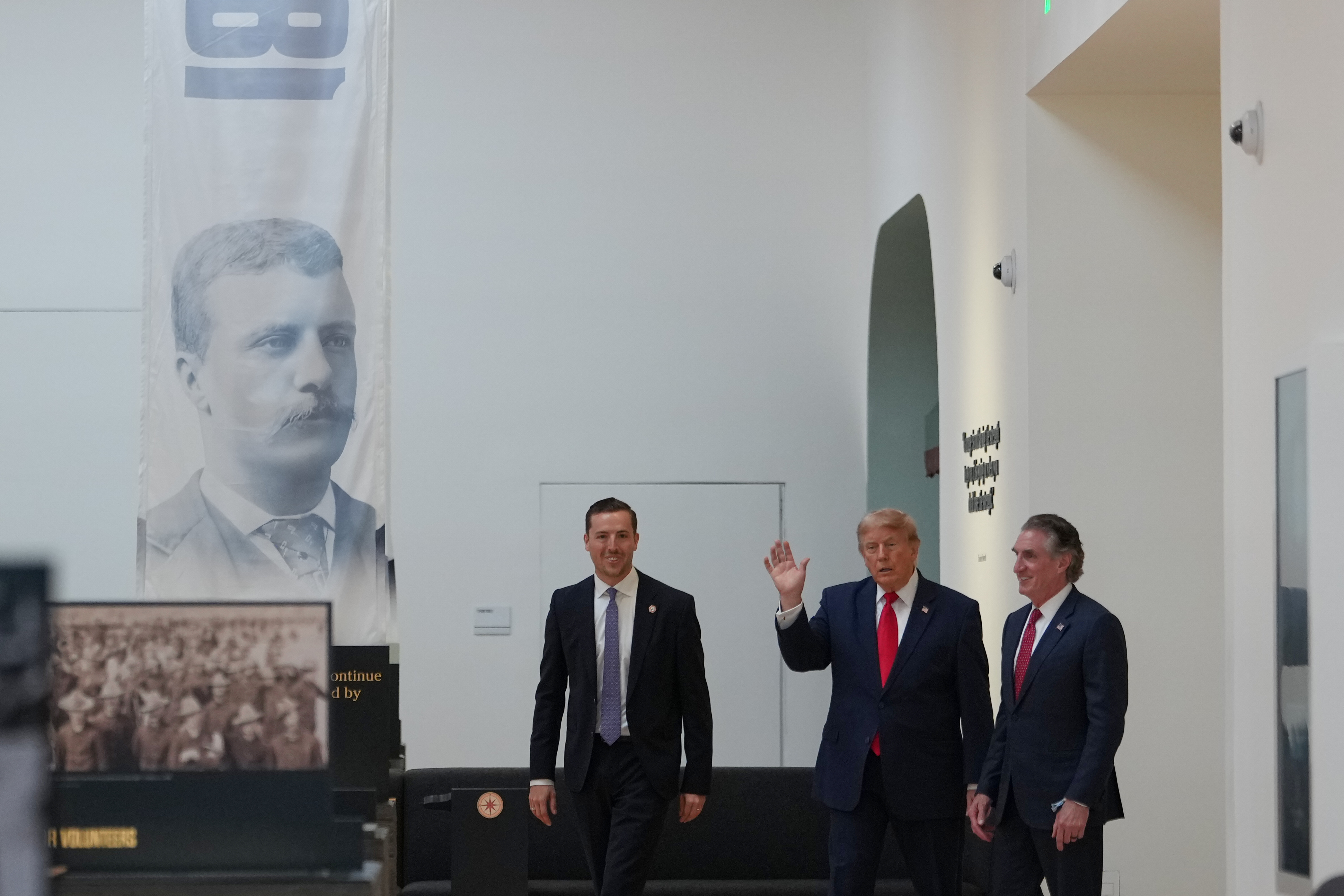
    In July, President Donald Trump dedicated a new museum in North Dakota honoring Theodore Roosevelt. Addressing an enthusiastic crowd of supporters, Trump praised his predecessor for his military courage and physical strength, as well as for successfully shepherding construction of the Panama Canal. Trump then drew an interesting parallel between himself and Roosevelt saying they both like “big things — big prairies, big forests and mountains, big wheat fields, big, tremendous railroads, [and] big factories and steamboats.”

    Trump wasn’t the only one who saw similarities between the two presidents. In his tribute to Roosevelt, Interior Secretary Doug Burgum noted, “The parallels between Theodore Roosevelt and President Trump just keep adding up.”

    Up close, however, the differences between these two native New Yorkers are far more substantial. Roosevelt broke the monopolies and brought the Gilded Age to a close. He established 230 million acres of public land and created the United States Forest Service.

    Today, by contrast, Trump is creating a 21st century Gilded Age by empowering business titans through reduced regulation, approval of mergers and handing them plum government positions. Moreover, he is undoing environmental laws and opening previously protected land, policies Ted Roosevelt IV says his great-grandfather would find “appalling.” Aaron Weiss, executive director of the Center for Western Priorities, maintains that the Trump administration’s record “reads like a checklist assault on everything that Teddy Roosevelt has built.”

    The differences between Trump and Roosevelt are starkest when it comes to character — and the role it plays in executing public policy.

    When Roosevelt ran for a seat in the New York State legislature in 1881, he was endorsed by the powerful men in his district for his “high character, honesty, and integrity.” These traits were essential to Roosevelt’s vision of leadership. Yet, few would apply these adjectives to Trump.

    Roosevelt’s vision of character and integrity guided his policy and actions on everything from treatment of racial minorities to his handling of the business interests who dominated American society when he entered the White House.

    He maintained that “the best test of true love of liberty in any country is the way in which minorities are treated.” In 1901, therefore, he set aside his racial prejudices and invited Booker T. Washington to dine with him at the White House, the first president to issue such an invitation to a Black American.

    The reaction was immediate. One southern newspaper called it “a blunder worse than a crime.” Another called it a “damnable outrage.” But Washington praised Roosevelt’s courage and wrote that the controversy was “providential,” noting that “good is going to come out of it.”

    Roosevelt’s willingness to risk blowback to do what he thought was right was also evident in his handling of big business. In his annual address to Congress, the new president acknowledged the public revulsion to the monopolies controlled by the ultra-wealthy. He maintained that the federal government must intervene whenever such companies “are found to exercise a license working to the public injury.” To that end, he took on John D. Rockefeller’s Standard Oil and J.P. Morgan’s railroad conglomerate in the name of reinstituting fair competition in the marketplace.

    Assessing his presidency, Roosevelt wrote in his autobiography, “The one bond of interest among all of us was the desire to make the Government the most effective instrument in advancing the interests of the people as a whole.” The then British ambassador to the U.S. agreed, telling Roosevelt that he had never seen “a more eager, high-minded, and efficient set of public servants, men more useful and credible to their country than the men doing the work of the American Government.”

    While historians praise Roosevelt for his role in taking on the wealthy and the powerful, these testaments speak to how integral his character — and his ability to surround himself with high character individuals — was to these efforts.

    In 1910, Roosevelt delivered one of his most famous speeches — what became known as the “Man in the Arena” address — at the Sorbonne in Paris. It summarized his thinking on the importance of virtue in a republic.

    The former president argued that the success of a republic was contingent upon the character of its citizenry and its leaders. Speaking of the broader public, Roosevelt likened the character of a country’s average citizen to a stream, noting that “the stream will not rise higher than the main source.” National greatness, therefore, could only be achieved if the average citizen adhered to a high moral standard.

    Made By History sponsors. FOR USE ON MADE BY HISTORY STORIES ONLY.Inquirer Staff

    But if the average citizen must be of sound character, it was up to the nation’s leaders to maintain an even higher standard.

    According to Roosevelt, danger lurked when voters chose “men of inherited wealth and position” for elected office. Such men, Roosevelt declared, could yield to a “cheap temptation” to set aside one’s morality and become a cynic to whom “good and evil are as one.” And when those amoral leaders exploited the less fortunate, Roosevelt maintained they were “at heart the same as the greedy and violent demagogue who excites those who have not property to plunder those who have.” In such cases, those wealthy officials were no longer of “useful service.”

    Roosevelt’s warning represented his view toward the wealthy more broadly. He neither admired nor accorded them high status merely based on wealth alone. To him, those whose sole purpose was to accumulate money without returning any “corresponding benefit to the nation as a whole” were “unworthy citizens.”

    Roosevelt’s audience surely would have caught his allusions to the titans of the Gilded Age like Rockefeller and Morgan, who he had taken on during his presidency.

    Trump brings to the presidency a very different understanding of the role of wealth and diversity in society. Running for a second term, he declared that minority groups are “poisoning the blood of our country,” and are “genetically disposed” to commit crimes. Rather than risking backlash to model inclusivity, Trump stoked prejudices to advance his electoral fortunes.

    When it comes to wealth, the president often spends weekends at Mar-A-Lago and Trump Bedminster, private clubs with hefty buy ins and dues, surrounded by elites. He has also elevated wealthy and powerful businesspeople to important government positions, including selecting the wealthiest man in the world, Elon Musk, to head what became known as the Department of Government Efficiency. As if to advertise his admiration for the wealthy, Trump assembled the richest Cabinet in U.S. history with a combined net worth of $7.5 billion.

    Trump’s glorification of the wealthy has extended to his own behavior during his second term in office. In May 2025, the president hosted an exclusive dinner for top sellers of the $TRUMP$ meme coins, which brought $148 million into his family’s coffers. This was just one example of how Trump has profited from the presidency. One investigation estimated that he and his family made more than $2 billion in profit during the first year of his second term. Ironically, to get to North Dakota to fete Roosevelt, Trump rode on a $400 million airplane gifted by the Qatari government.

    Trump has long aspired to add his face to those of George Washington, Thomas Jefferson, Abraham Lincoln and Roosevelt on Mount Rushmore. But Trump fundamentally misunderstands what made Roosevelt such a great president, worthy of having his face carved into granite on one of the nation’s most famous monuments: character and the willingness to focus on the needs of the less fortunate, not the rich and powerful. In his 1910 speech, Roosevelt asserted that presidents must surround themselves with people “who possess the gifts of sympathy with plain people and devotion to great ideals.”

    Every American, including Trump, should read Roosevelt’s address. He challenges all of us to maintain high standards in our personal and public conduct. And in times of crisis, Roosevelt argued that both ordinary citizens and national leaders must exhibit “heroic virtues.”

    Praising Roosevelt, Trump declared that he was a “man who I have long admired. He’s one of the few — I don’t admire too many people.” But Trump would do well not just to admire Roosevelt, but also to understand the former president and the lessons he hoped would shape America.

    John Kenneth White is a professor emeritus at The Catholic University of America who writes on Substack. His latest book, co-authored with Matthew R. Kerbel, is titled “Democracy on the Edge: The Trump Elections and the Future of American Politics.”

    Made by History takes readers beyond the headlines with articles written and edited by professional historians. Opinions expressed do not necessarily reflect the views of The Inquirer.

  • Trump plans blitz of $138 million and counting to save midterm Republicans

    Trump plans blitz of $138 million and counting to save midterm Republicans

    President Donald Trump’s political operation has unleashed its vast financial resources to try to save the Republican Party’s control of Congress, reserving nearly $138 million over the past 10 days to help the party’s midterm candidates.

    The planned spending linked to Trump’s $400 million super political action committee has grown by the day and is set to fuel a massive ad campaign supporting battleground Republican candidates beginning this month. Some Republicans for months have criticized Trump’s super PAC, MAGA Inc., for not seriously engaging in the midterms despite its huge war chest.

    But now a blitz of spending tied to the group has arrived.

    A new super PAC that The New York Times previously reported was linked to MAGA Inc., No Going Back PAC Inc., has booked more than $95 million worth of ads, according to data from AdImpact, a media tracking firm.

    Another $27 million worth of ads is slated to come from another new super PAC called Safety and Affordability PAC Inc. The group is financially backed by MAGA Inc., according to two people with knowledge of the matter, who spoke on the condition of anonymity to disclose a confidential arrangement. The group has not yet begun advertising.

    The paperwork for No Going Back and Safety and Affordability was filed with the Federal Election Commission six minutes apart by the same treasurer.

    So far, Safety and Affordability PAC has appeared to focus on helping House Republicans. It has booked ads in 15 races for the lower chamber. No Going Back PAC, by contrast, has booked two-thirds of its ad reservations on Senate races. And MAGA Inc. itself has booked another $9 million in ads — so far, only in the Texas Senate race.

    The three super PACs seem to have essentially carved up the midterm map; so far, their only overlapping advertising spending is in just two House races: New York’s 17th District and Michigan’s 4th District.

    In addition to the ad reservations, the super PACs have also spent about $6.5 million on direct-mail efforts and about $80,000 on text messages, according to FEC records. Together, the three groups are slated to spend about $138 million on ads, mail and texts to help Republican candidates in about 50 general-election races, spending the most on Senate contests in Michigan, Ohio and Alaska.

    The House races with the most planned spending by the Trump operation are in New York’s 17th District, Florida’s 25th District and Michigan’s 4th District.

    Details on the precise financial arrangement between MAGA Inc. and the two newer super PACs remain unknown and could be revealed in future filings with the FEC.

    The two newer super PACs appear to be so-called pop-up groups, appearing late in an election cycle and spending heavily before they are legally required to disclose their donors.

    The two groups were formed in quick succession on Sept. 1 by Charles Gantt, a Republican political operative who specializes in campaign finance, according to FEC disclosures. Both of the super PACs’ websites are nearly identical in design, down to the same boilerplate text that each group “makes independent expenditures in U.S. federal elections in support of candidates who share the values of the founders and funders” of each group.

    Gantt did not immediately respond to a request for comment.

    The spending should quiet Republicans who harbored suspicion that Trump’s political group would hold close to its resources for his own political projects. The trio of Trump groups are, together, slated to be the biggest ad spenders in the November elections outside the super PACs tied to congressional leadership, according to AdImpact data.

    This article originally appeared in The New York Times.

  • GOP defections widen as House passes measure intended to halt the Iran war

    GOP defections widen as House passes measure intended to halt the Iran war

    The House on Tuesday passed a largely symbolic measure intended to halt the war in Iran — the latest bipartisan attempt to limit President Donald Trump’s war powers.

    The vote, which advanced by a margin of 220 to 204, came after similar efforts this summer. Seven Republicans joined Democrats in supporting it, the largest number of GOP lawmakers so far to publicly oppose the war.

    Rep. Zach Nunn and Rep. Mariannette Miller-Meeks of Iowa and Rep. Nancy Mace of South Carolina joined four Republican lawmakers who had voted for previous measures: Reps. Tom Barrett of Michigan, Warren Davidson of Ohio, Brian Fitzpatrick of Pennsylvania and Thomas Massie of Kentucky.

    The measure, led by Rep. Seth Moulton (D-Massachusetts), directs the administration to “remove United States Armed Forces from hostilities against the Islamic Republic of Iran” except for personnel needed to defend American or allied bases in the Middle East.

    The vote relects Democrats’ months-long strategy to force votes on war powers resolutions in order to highlight Republican support for the unpopular conflict, which after seven months has roiled global energy markets and depleted the Pentagon’s stocks of precision weaponry.

    The nonpartisan Congressional Budget Office released a report Tuesday estimating that the war had cost about $38 billion through July, and an additional $2 billion to $3 billion per month depending on the intensity of the fighting.

    The Pentagon did not respond to the CBO’s requests for information and has previously estimated the war would cost $37.5 billion through the end of September — though that total does not account for the substantial damage to U.S. bases targeted by Iran throughout the region.

    In June, the House and Senate passed a similar measure calling on Trump to end the war in Iran, though the White House has asserted that the measure is not legally binding and Democrats and Republicans disagree on whether it has the force of law. The House again voted to limit Trump in July, but a similar measure failed in the Senate.

    U.S. Central Command, which oversees America’s military operations in the region, has maintained a footprint of around 50,000 troops in the Middle East and has periodically struck Iran following the collapse of a ceasefire the Trump administration reached with Tehran in June.

  • Trump administration has cut or frozen $177 billion in grants across every state, analysis shows

    Trump administration has cut or frozen $177 billion in grants across every state, analysis shows

    The Trump administration has cut or frozen up to $177 billion in federal grants since the president took office for his second term, according to a tracking tool released Wednesday by a pro-democracy nonprofit and a group of researchers and scientists.

    The cuts affected all 50 states and the District of Columbia, with health, nutrition, the environment, and disaster relief making up the largest share of cuts, the States United Democracy Center and Grant Witness organization found.

    Among the grants that were eliminated, frozen, or delayed were ones related to maternal health in Michigan, education research in Mississippi, and assistance to minority farmers in Iowa, the researchers found. California, Texas, New York, Illinois, and North Carolina saw the highest amounts of interrupted grant money. The tracking tool is called Lost Funds.

    “By bringing thousands of funding disruptions from the Trump administration together in a publicly accessible, verified database, Lost Funds puts the magnitude of their impact on full display,” Scott Delaney, co-founder of Grant Witness, said in a statement.

    The $177 billion finding represents nearly 10% of federal discretionary spending, the groups said.

    The tracker’s organizers said the disrupted grants were beyond the kind of cuts that typically happen when administrations change.

    “Lost Funds shows the extraordinary scale and real human impact of these disruptions, and how states are once again on the front lines protecting their residents,” said Kelly Rader, States United Democracy Center’s research director.

    In some cases, courts have ruled against the administration’s grant funding cuts.

    The new tool, which is being made available for public use, relies on data from USASpending.gov, an open data source of federal spending information, according to the groups’ methodology. They said the tracker would be updated regularly as the administration takes new action and lawsuits move through the courts.

    States United bills itself as a nonpartisan group dedicated to the rule of law and free, fair, secure elections. It was cofounded by Norm Eisen, an attorney who has been involved in prominent lawsuits against the Trump administration, including over the Kennedy Center. Eisen left the States United center in 2024.

    Grant Witness is a group of scientists, researchers, and attorneys who document how funding is changing under President Donald Trump’s administration.

    A message seeking comment on the analysis was sent to the White House.

  • U.S. Rep. Jeff Van Drew accuses N.J. Democrats of ‘cover-up’ at congressional hearing over noncitizen voting

    U.S. Rep. Jeff Van Drew accuses N.J. Democrats of ‘cover-up’ at congressional hearing over noncitizen voting

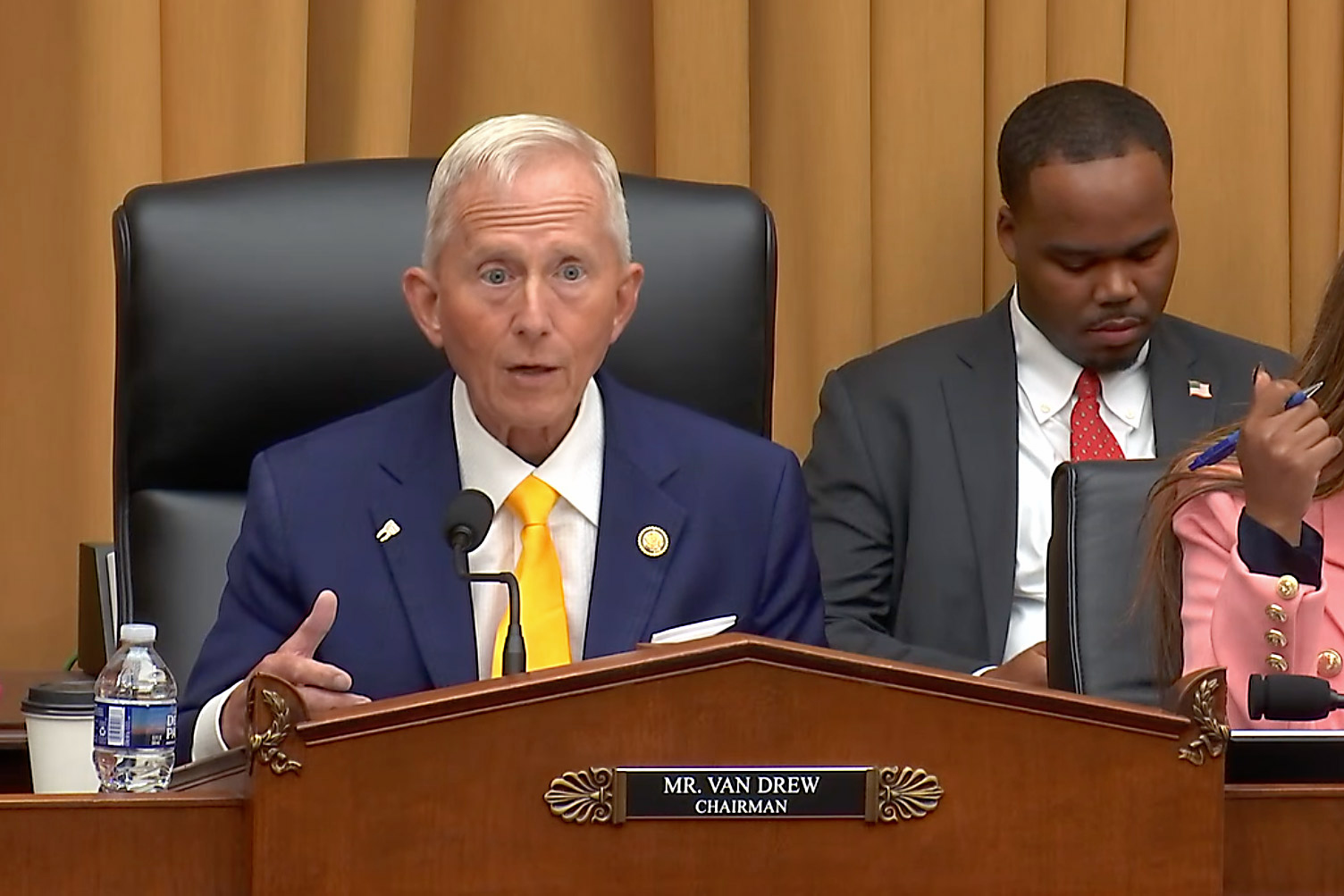
    South Jersey Republican Rep. Jeff Van Drew tried to ramp up pressure on Democratic Gov. Mikie Sherrill over the state’s noncitizen voter registrations at a Tuesday hearing in Washington, which did not feature testimony from anyone in Sherrill’s administration.

    “Whose side is New Jersey government on?” Van Drew said early in the congressional hearing as he aired grievances about Sherrill and the state’s immigration policies. “That’s the question hanging over this entire hearing.”

    None of the witnesses at the hearing were employees of New Jersey or IDEMIA, the software vendor which Sherrill has blamed for the issue, a point disputed by the company. Van Drew defended IDEMIA at the hearing and said the company is cooperating with his probe.

    As he chaired the hearing, Van Drew repeatedly accused the state of New Jersey of knowing about the noncitizen registration issue since 2024.

    “In political terms, that’s called a cover-up,” he said.

    Van Drew, the chair of the House Judiciary Subcommittee on Oversight, has been a thorn in Sherrill’s side since she announced in July that about 6,600 noncitizens had been registered to vote due to an issue with the software used for the New Jersey Motor Vehicle Commission’s (MVC) voter registration program under former Democratic Gov. Phil Murphy.

    Tuesday’s hearing came the day after the Supreme Court rejected President Donald Trump’s mail ballot restrictions, allowing states to continue sending ballots under the same processes they have been using for years. Van Drew has been a vocal supporter of Trump’s efforts to overhaul national elections, including passing legislation to require proof of citizenship, like a birth certificate or passport, to register to vote.

    Three witnesses, including the former chief counsel of the Republican National Committee, advocated for stricter rules around voting. A fourth witness, a former election official from Arizona, said the issue of noncitizen voter registration is incredibly rare.

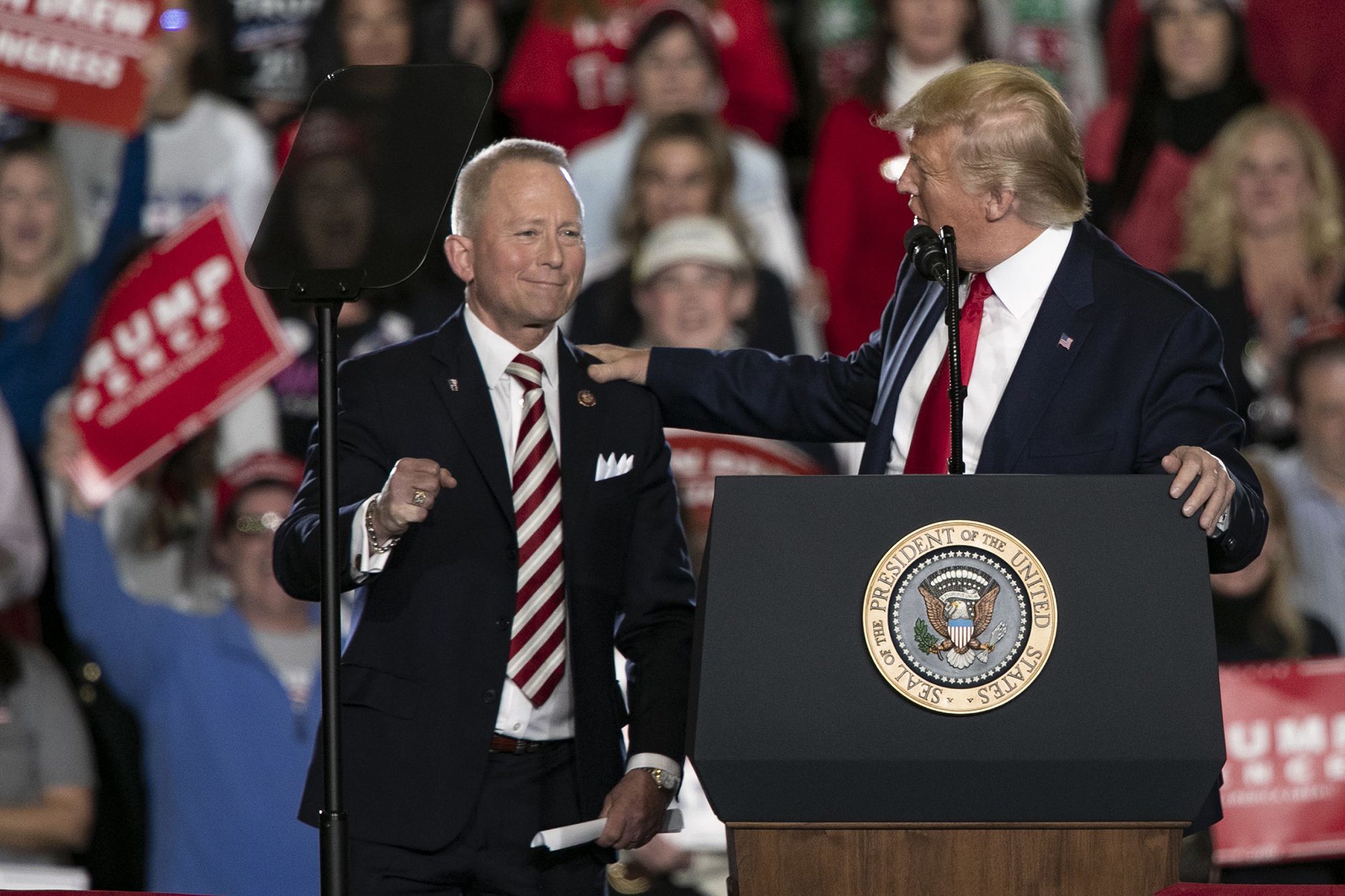
    Rep. Jeff Van Drew and President Donald Trump at a campaign rally in Wildwood, New Jersey, shortly after Van Drew switched parties.Heather Khalifa / MCT

    Van Drew claims state knew of problem sooner

    IDEMIA confirmed after the hearing that the company had met with staff from Van Drew’s office and “will continue to cooperate with congressional and state investigations to help ensure a complete and accurate understanding of the facts.”

    Van Drew contended that internal documents show the state government had “tested and approved” the software that led to the improper registrations.

    “We also know that in 2024, IDEMIA received a request from New Jersey after the state finally realized that noncitizens were being registered to vote,” the Cape May County lawmaker said.

    Van Drew spokesperson Paxton Antonucci told The Inquirer on Tuesday evening that the documents showed that New Jersey reached out to IDEMIA in June 2024 after noticing individuals who were registered to vote had missing information on their age and party affiliation. She said that information was missing because the software failed to flag that the group of individuals had selected they were not citizens, but were still allowed to registered to vote.

    “The committee is working with IDEMIA to obtain additional information on how this was allowed to happen, and we are seeking documents from New Jersey as to why this error was never disclosed to the public prior to 2026,” she said.

    Sherrill spokesperson Darwin Pham said the governor’s office “can’t speak” for the prior administration. Mahen Gunaratna, Murphy’s spokesperson, pointed to a previous statement on Tuesday that said Murphy “had no knowledge” of the issue and applauded Sherrill for investigating it.

    Pham said in a statement Tuesday that congressional Republicans are weaponizing the issue “to advance Trump’s voter suppression agenda” while the governor “is focused on continuing to solve the problem she inherited from the previous administration.” He called the hearing “political theater.” Sherrill hired an independent firm to conduct an investigation that is ongoing. She said she will present the findings to the public.

    Sherrill’s administration said earlier this summer that the state had removed roughly 4,000 voters from the rolls and left the rest to county election officials to verify whether they were citizens or not. Locally, Burlington and Camden Counties confirmed removing noncitizens from the rolls but did not specify a number.

    Sherrill’s administration said fewer than 400 of the noncitizens voted but did not affect the results of an election. Van Drew pushed back against this assertion on Tuesday, saying he still does not know the details of which elections these noncitizens voted in.

    “Anybody knows if you follow local elections, they can be a handful of votes very often. It can even happen in Congress,” said Van Drew, who was elected as a Democrat in 2018 before declaring his loyalty to President Donald Trump and switching parties a year later. This November, he will face Democrat Zack Mullock, the Cape May mayor, at the ballot box.

    Van Drew said that Lt. Gov. Dale Caldwell, the secretary of state, has been “somewhat cooperative” but that the state has broadly “done everything it can to not cooperate and stonewall the investigation.”

    A Sherrill official said Tuesday her administration had provided the committee with public documents. The governor has pledged to protect New Jerseyans’ data, and her administration has been in a legal battle with the Trump administration over providing the personal information of noncitizens.

    At the hearing, Van Drew referred to Caldwell being under investigation without going into details. Sherrill has touted her transparency in disclosing the noncitizen voter registrations, but she has been criticized by some in her party for staying tight-lipped about a reported investigation into Caldwell and his alleged behavior with women.

    Lt. Gov. Dale Caldwell (left) follows Gov. Mikie Sherrill off the stage following the celebration of their victory at an election night party in East Brunswick Tuesday, Nov. 4, 2025.Tom Gralish / Staff Photographer

    Noncitizens removed from voter rolls in Burlington and Camden Counties

    David Levinsky, a spokesperson for Burlington County, confirmed some ineligible voters were removed from the rolls in the South Jersey county but deferred to the state on specific numbers.

    “The [Burlington County] Superintendent of Elections Office continues to follow all relevant state laws and guidance to ensure that all residents who register to vote are eligible,” he said.

    Camden County spokesperson Dan Keashen also confirmed that the county received a list of voters to investigate. The rolls are up to date after noncitizens were removed, he said.

    Stephanie Salvatore, the Gloucester County superintendent of elections, said Tuesday that the county had not been notified of any questionable voters due to the MVC issues from the state.

    Salvatore, who has been in the election office for more than three decades, said the issue had come up “a handful of times” before.

    “I have police powers over elections, and an investigator assigned full-time. We work closely with many agencies, including the FBI, the state police, the county prosecutor, among other agencies,” she said. “If I cannot verify the voter eligibility in question within my office, I send it to the professionals and/or the courts to decide.”

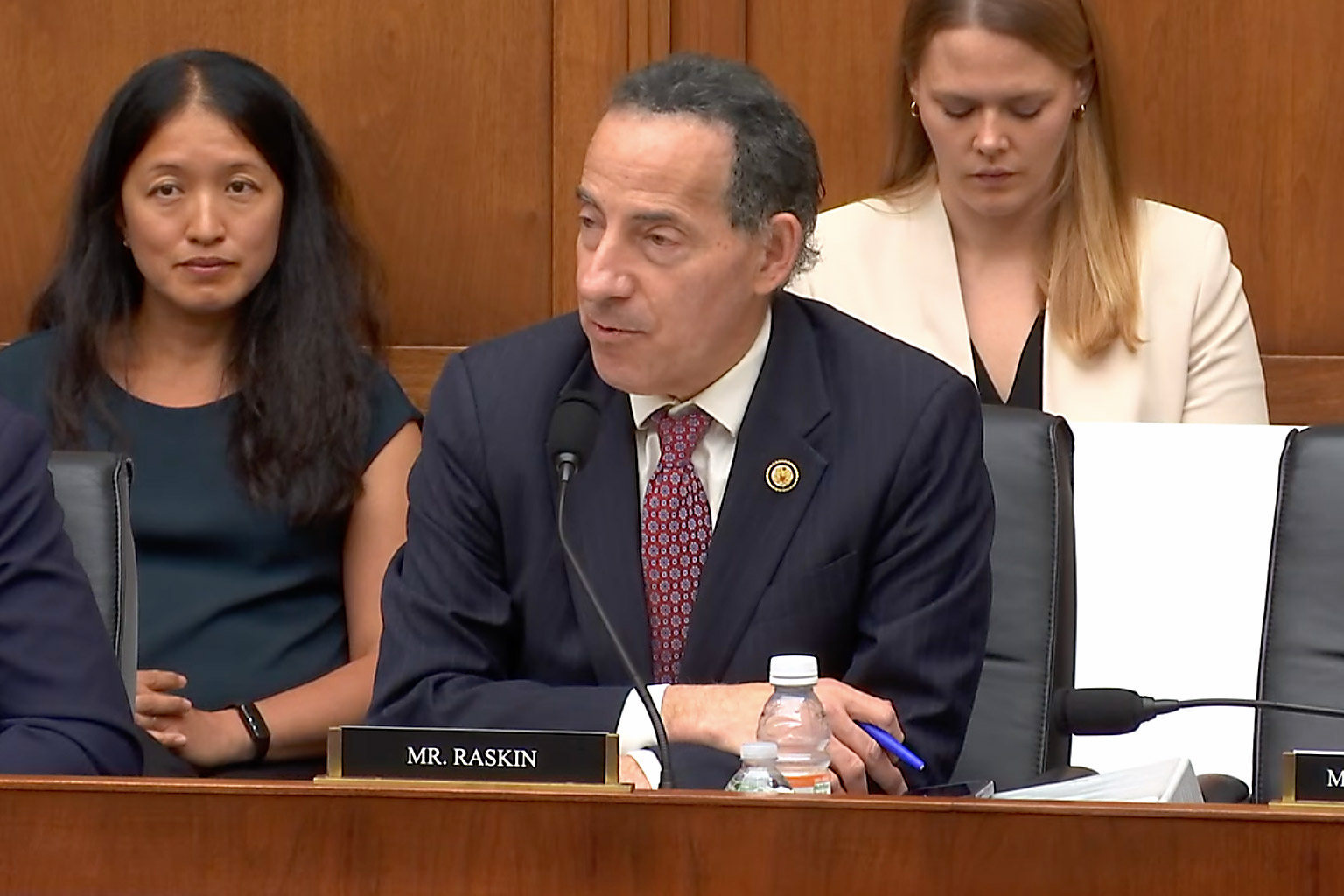
    U.S. Rep. Jamie Raskin, a Maryland Democrat, speaks during a hearing on New Jersey noncitizen voter registrations. House Judiciary Subcommittee video

    ‘Worst-case scenario’

    Stephen Richer, a legal fellow with the libertarian Cato Institute’s Robert A. Levy Center for Constitutional Studies, was the one witness who strayed from Van Drew’s position on noncitizen voting. Richer, who previously served as a Republican responsible for voter registration in Maricopa County, Ariz., cited as an example an audit in Utah, which found that 0.001% of voters were noncitizens. He said New Jersey’s case is the worst he has seen.

    “Even in this scenario, this worst-case scenario, noncitizens made up a fraction of a percent of voters,” he said.

    Josh Findlay, a senior fellow for election integrity policy at the Trump-aligned America First Policy Institute, argued that every noncitizen vote cancels out a citizen’s vote.

    “The default should be that voters must verify their eligibility before being added to lists, not that people are added to lists and then we hope that the state catches them,” he said. “Even small numbers matter.”

    U.S. Rep. Jasmine Crockett, a Texas Democrat and ranking member of the subcommittee, called Trump “the biggest threat to democracy,” pushing back on the GOP messaging.

    Van Drew contended that pressure from the federal government led to the noncitizen voter revelation, but U.S. Rep. Jamie Raskin, a Maryland Democrat, emphasized that the error was discovered and disclosed by New Jersey itself.

    “No matter how much our colleagues seek to inflate it, a clerical error is not structural corruption, much less is it a criminal conspiracy,” said Raskin, the top Democrat on the Judiciary Committee. “It does not rise to the level of, say, a violent insurrection deliberately incited and organized to overthrow a completed presidential election.”