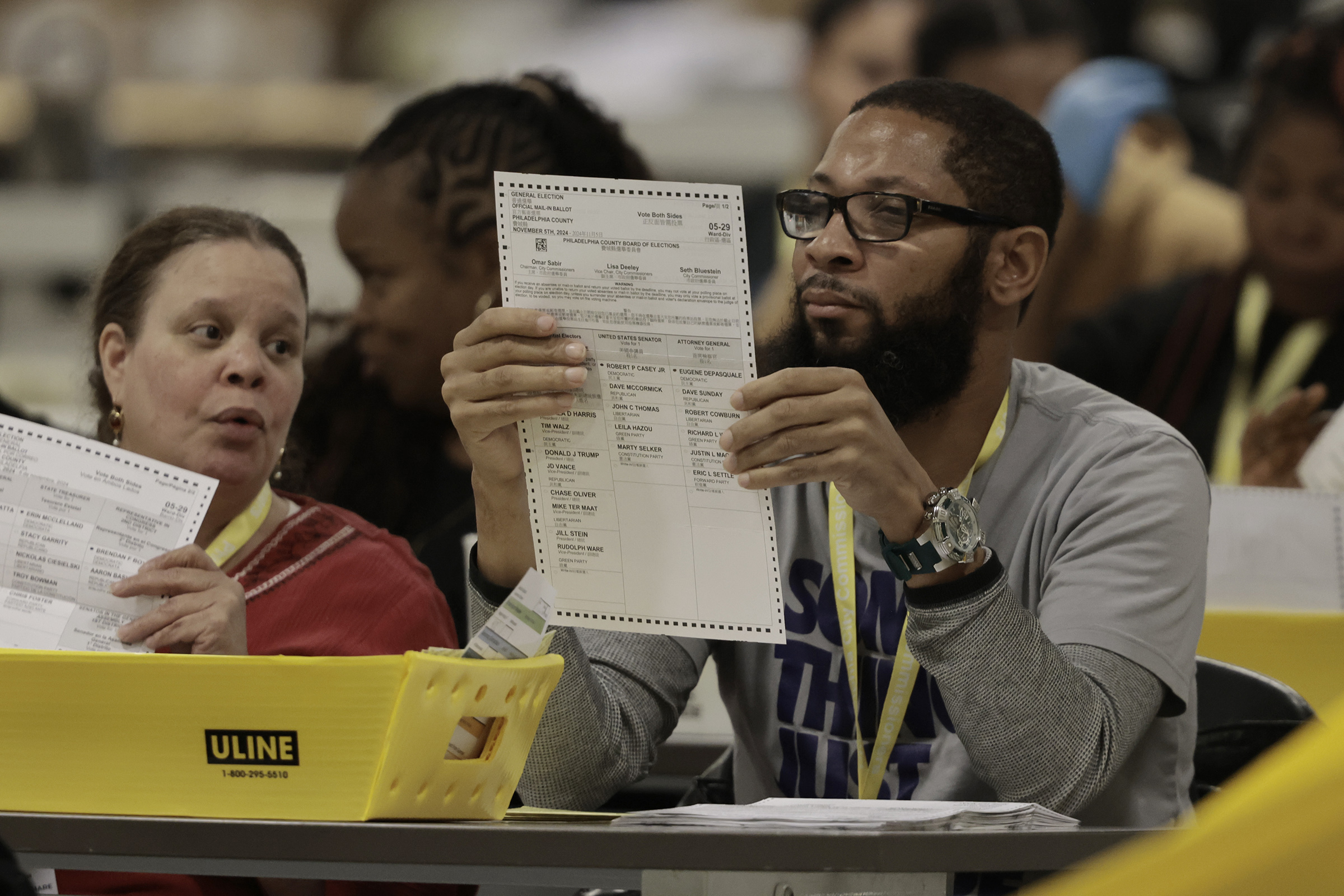
At a dark moment for American democracy, it qualifies as a relief that the U.S. Supreme Court has finally acknowledged that the U.S. Postal Service has no legitimate role in running elections. The court’s ruling this week put a well-deserved end to Donald Trump’s plot to interfere with the midterms by steering absentee votes to the dead-letter office. That should give voters welcome assurance that ballots mailed early enough to arrive by Election Day will be counted.
That said, the court’s all too halting response to this constitutional absurdity is an example of the institutional frailty that has enabled Trump’s assault on our laws and elections. The justices’ willingness to seriously consider such an obviously illegal attempt to suppress votes is one reason Trump can be counted on to continue his efforts to meddle with the midterms.
The president revealed his plan back in March, when he ordered the U.S. Department of Homeland Security to assemble a list of certified citizens permitted to vote by mail. By June, responding to a lawsuit by Gov. Josh Shapiro and 22 other state officials, a federal judge in Boston blocked the order for the purposes of the midterm elections. U.S. District Judge Indira Talwani noted that the Constitution gives the president no authority to administer elections, which fall squarely under the purview of Congress and the states. An appellate court and a district court in Washington reached similar conclusions.
The Supreme Court’s six Republican-appointed justices nonetheless allowed the Postal Service to continue developing the plan as late as last month, finding that it was too soon to rule on the matter. It wasn’t until Monday that a majority ruled the notion too dubious and the election too imminent to allow it to proceed. Even then, three of the justices — Samuel Alito, Clarence Thomas, and Brett Kavanaugh — held in separate opinions that the president and postal officials could well possess the authority to deliberately lose our votes in the mail.
By then the court had allowed this supposed legal riddle to linger unanswered for half a year, long enough that a few states had already issued mail ballots and several Republican-controlled states had joined the objectors. Despite the administration’s ultimate loss in court, some election officials fear the months of uncertainty about absentee voting — a centuries-old practice the president himself engaged in as recently as this summer — served Trump’s purposes by undermining confidence in the electoral process.
Trump is clearly determined to continue doing that by every available means.
These are the paroxysms of an unpopular and unscrupulous regime desperate to dodge the will of voters. The most effective response will be the sort of robust “too big to rig” turnout that overwhelms any petty trickery and begins to limit the president’s power to further undermine democracy.
This week, the Trump administration floated an idea that has managed to irritate almost everyone: Allow some parents who stay home with their children to receive federal childcare subsidies.
The proposal, championed by Vice President JD Vance, would allow some low-income married couples to use money from the federal Child Care and Development Fund to support a parent caring for a child at home. The fund currently helps families pay for childcare so parents can work, study, or get job training.
Vance is right about the premise. Caring for your own child is work; our economy depends on enormous amounts of it, and public policy does remarkably little to recognize its value.
But the administration’s proposed solution would draw from a childcare fund already nowhere close to meeting demand. The federal government’s latest estimate found that only about one in six eligible children receive subsidies, and eligible families across the country are already sitting on waiting lists.
The proposal has become yet another argument about whether or not mothers should work. Conservatives praise it as overdue support for stay-at-home parents; critics see it as another attempt to push women out of the labor force. Both framings make family life sound much tidier than it is.
I have spent my career working with childcare providers and parents, and the arrangements they cobble together rarely fit clean categories. A mother may stay home with an infant, return to work later, rely on a grandmother some days and use a childcare center on others. A parent who considers herself “stay-at-home” may still want childcare for part of the week. No single work or care arrangement comes close to satisfying everyone, and preferences shift as children grow.
Using the same federal pot for both obscures an important difference.
Money paid directly to a parent may make staying home possible when it otherwise would not be. A childcare subsidy, however, does more than help one family purchase care. It also helps sustain the supply of care itself: the teacher’s salary, the home-based provider’s income, the classroom that needs enough children enrolled to remain open.
If these dollars move elsewhere, the effect does not stop with the family receiving them. A provider may need to close its doors, leaving fewer options for everyone else.
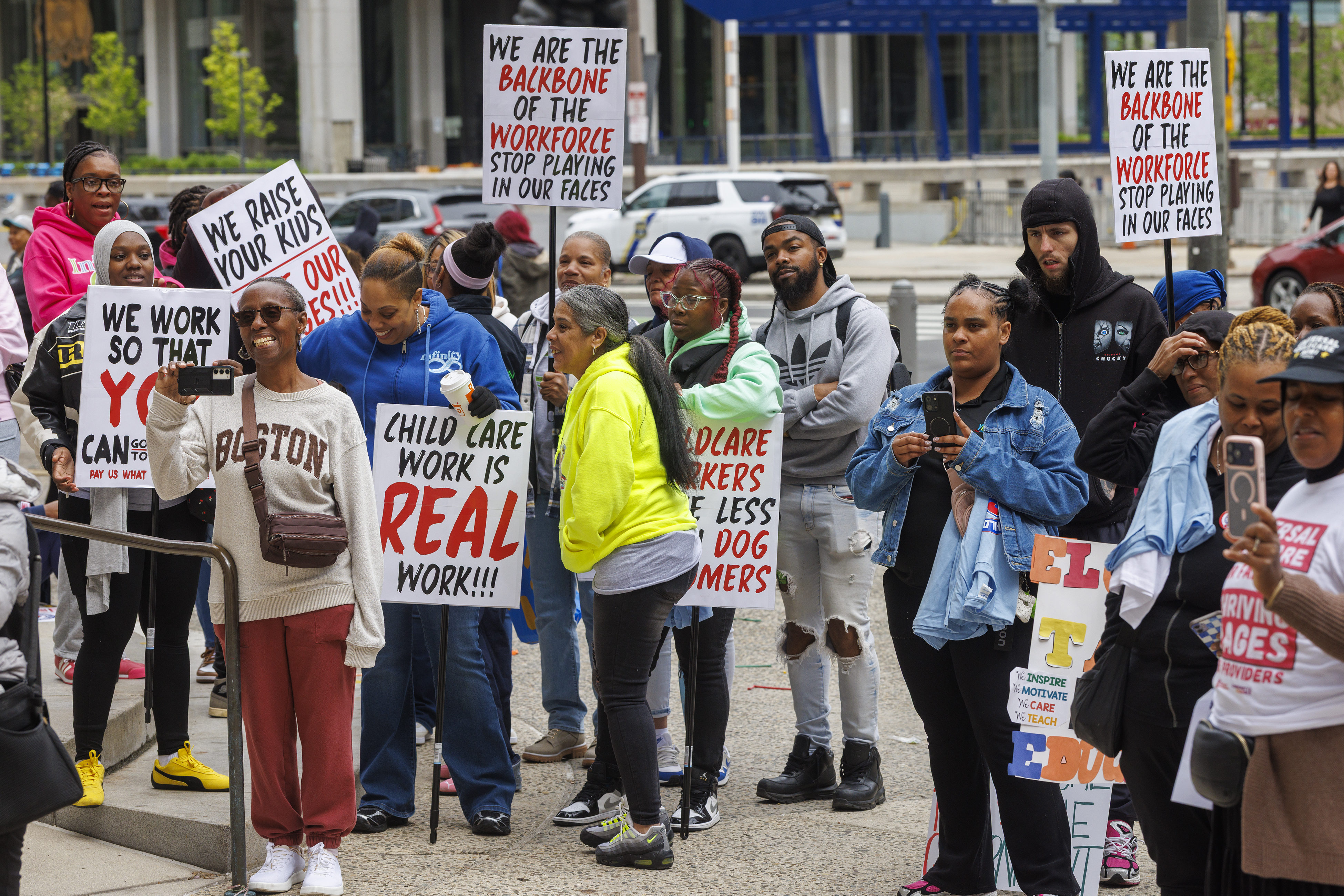
Childcare educators gather on the north side of Philadelphia City Hall in May. About 98% of center-based early childhood teaching staff are female, writes Sabrina Habib.Alejandro A. Alvarez / Staff Photographer
The debate usually stops with two mothers: the one who wants to stay at home and the one who needs childcare in order to work. It overlooks a third woman whose livelihood depends on those same dollars: the childcare worker.
About 98% of center-based early childhood teaching staff are female, earning a median of less than $17 an hour. For self-employed childcare workers — including those running care from their own homes — the latest estimate is even lower, at $9 an hour, or about $18,500 a year, barely above the U.S. federal poverty level. Many of these childcare providers are mothers themselves.
Seen this way, the proposal exposes a much bigger problem than a fight over who should receive a childcare subsidy. A woman caring for her own child often cannot afford to stay home, while a woman caring for someone else’s child often cannot afford to live on what she earns. Now we are considering asking those women to compete for the same scarce public dollars. Taking money from one underfunded form of care and giving it to another is a peculiar way to show that America values caregiving.
There are better ways to give parents more room to stay home when that is what they want, such as through paid family leave or a more generous child tax credit. If Washington wants to recognize the economic value of parental care, it should fund that goal directly rather than weakening the childcare system other parents need in order to work.
While the proposal may have been intended to signal that the administration values caregiving, instead it reveals how little public money America is willing to put behind care in any form.
Parents at home are undersupported. Childcare workers are underpaid. Families who need care and qualify are stuck on waiting lists. And rather than fixing any of those shortages, the administration is proposing to make them compete against one another.
America can do better than deciding which woman’s care counts.
Sabrina Habib is the cofounder of Kidogo, Kenya’s largest childcare network, and leads the Zera Fund, spurring new investments into childcare globally as part of Melinda French Gates’ Global Leaders Initiative. She is also a Public Voices fellow tackling poverty, a partnership between the Op-Ed Project and Acumen.
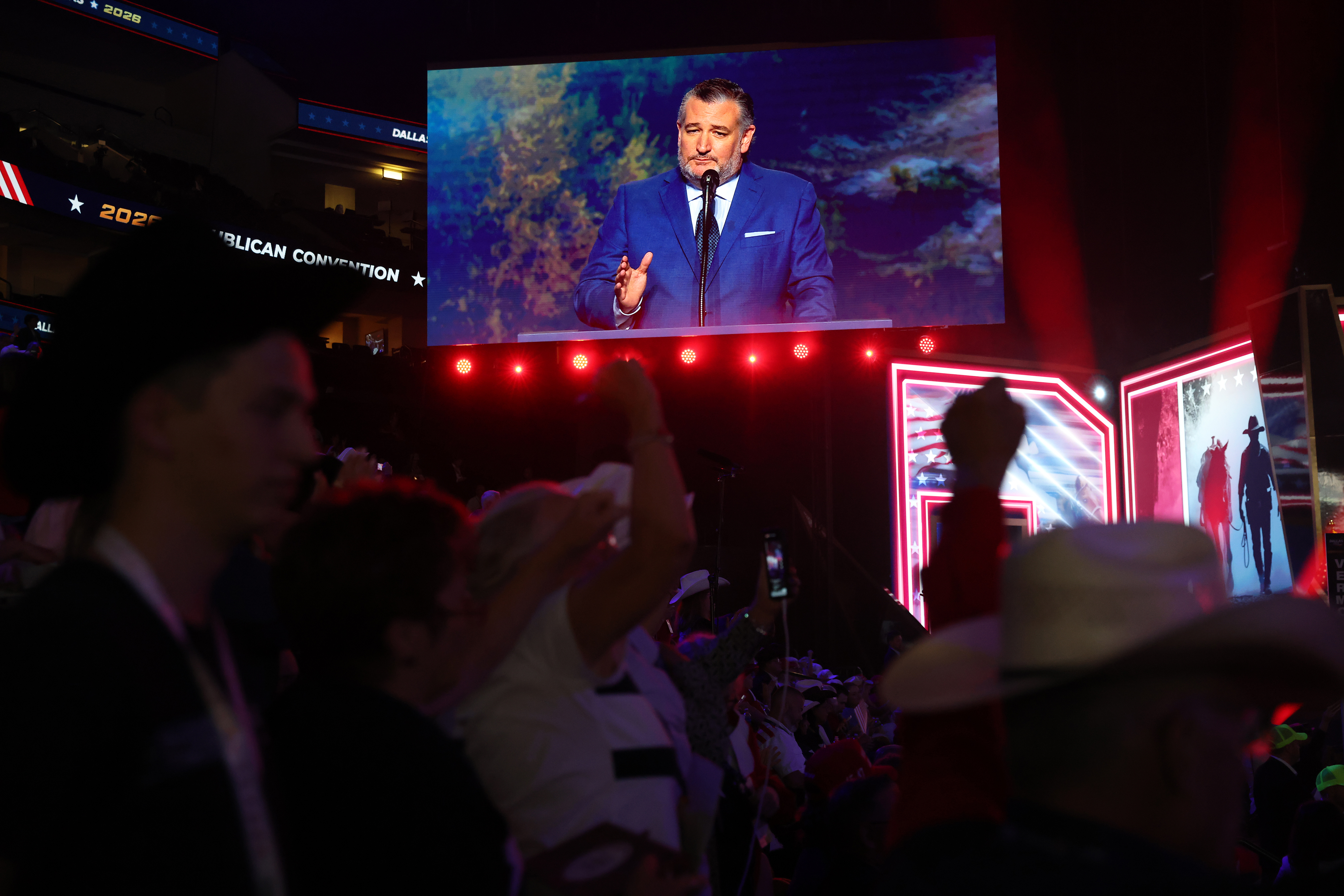
As Ted Cruz spoke during the two-day Trumpapalooza (a.k.a. Republican midterm convention) in Dallas, each time he mentioned a Democratic politician, a voice from the sparse crowd yelled, “He should be shot!” Cruz’s reaction? Nothing. He just kept speaking, with no attempt to denounce or even acknowledge the outbursts. Three times. No pushback. Republican reaction, in general, has been muted. Neither Dave McCormick nor Brian Fitzpatrick nor Democrat John Fetterman has responded in any way to these calls for violence against political opponents. First, it was “Lock her up!” against Hillary Rodham Clinton. Now it has escalated to “He should be shot!” against Abdul El-Sayed, James Talarico, and Zohran Mamdani. The anemic-to-nonexistent Republican pushback to these calls for violence smacks of condonation and quiet, passive encouragement. Is any opposing Democrat now fair game?
In addition, in complete disregard for the Constitution, Donald Trump begged the attendees to pledge an oath to him, “the greatest president in the history of the United States, that loves us so much he can’t even breathe, that I will go out with my family, my friends, I’ll do it any way — I don’t care if I’m registered or not, I’m going to cheat like hell like they do.”
Cheat like hell. They should be shot. How did we get here?
This is a president and a conservative machine that knows they are on the ropes. The threat is real, and has been building for months. As others have said, Trump wouldn’t be working so hard to suppress our votes if our votes didn’t matter. The Dallas midterm convention is just the latest alarm bell tolling loudly and clearly, telling us in no uncertain terms that this November our vote matters more than ever.
Deborah DiMicco, Newtown
. . .
I am horrified at the response of “He should be shot,” which seemed to be directed at Democrats during Ted Cruz’s speech at the midterm convention in Dallas. But now I am more horrified that The Inquirer has not responded. We always count on you to validate our values of nonviolence. Your writing is so eloquent and true, and we know you are not afraid to stand up to violent threats or the people who normalize them. Please help us to condemn violence.
W. Walker, Philadelphia
No Kings
The 22nd Amendment, which was added to the Constitution in 1951 after President Franklin Delano Roosevelt was elected four times, states that “no person shall be elected to the Office of the President more than twice.” President Donald Trump, elected twice, affirmed that “there are methods” for him to win a third term and lead the country after 2028.
Unfortunately, Trump will continue to explore ways to stay in office. We need to stand in unison and demand an end to Trump’s unchecked power-grab. We cannot bring our democracy to the brink.
Ed Vreeswyk, Yardville
Join the conversation: Send letters to letters@inquirer.com. Limit length to 150 words and include home address and day and evening phone number. Letters run in The Inquirer six days a week on the editorial pages and online.
STOYSTOWN, Pa. — There was almost no shade for the thousands who gathered Friday at the memorial plaza near the field where United Airlines Flight 93 crashed on Sept. 11, 2001. The sun was merciless as Red Cross and Salvation Army volunteers handed out water, and people sought refuge amid a few trees by the side of the road.
But along with the heat, attendees felt something that has become quite unfamiliar for many Americans 25 years after 9/11: unity.
While the spotlight was on larger events in New York City and Arlington, Va., they saw some of the conflicts we’ve all grown accustomed to. President Donald Trump refused to join his predecessors at ground zero, reportedly because he wouldn’t be allowed to speak. He opted for the Pentagon remembrance instead, where he and Defense Secretary Pete Hegseth gave speeches trying to tie the Iran war to the attacks of a generation ago.
In Lower Manhattan, former New York City Mayor Rudy Giuliani — who had called for current Mayor Zohran Mamdani to stay away from the event, claiming Muslims “want to dominate us” — at least had the courtesy to shake Mamdani’s hand at the ceremony.
None of that animus seemed to be present in rural Pennsylvania.
The speeches by senior National Park Service officials, Gov. Josh Shapiro, and Secretary of the Interior Doug Burgum were civil and shared a common theme: The heroism of the passengers who fought back against their hijackers. Flight 93 never made it to its intended target, believed to be the White House or the U.S. Capitol. Instead, it crashed into a desolate field about 90 minutes outside of Pittsburgh.
There was no ego on display, no inflammatory rhetoric — Democrat Shapiro and Republican Burgum even stood together at the wreath-laying ceremony in a rare show of political unity. The only comment that could be read as political came from Stephen Clark, superintendent of the National Parks of Western Pennsylvania and thus responsible for the Flight 93 memorial, when he reminded people that “history is shaped not only by the powerful, but by everyday individuals who decide to act with courage.”
Gov. Josh Shapiro (second from left) and Secretary of the Interior Doug Burgum (center right) walk past the Wall of Names during a wreath ceremony at the Flight 93 National Memorial on the Sept. 11 anniversary in Stoystown, Pa., Friday.Hannah Beier
In keeping with that sentiment, it wasn’t just those on stage who kept a unifying tone, as people from all walks of life, diverse ages, and across political persuasions came together in Stoystown to mourn and remember.
I spotted a lone MAGA hat, and spoke with a woman who claimed 9/11 had been an “inside job,” arguing it was only logical because “the CIA killed JFK, too.” However, there were no loud political outbursts, and in talking with people, the same sober sentimentas from the official speakerswas evident.
Tom and Ryan, who preferred not to share their last names, were among the millions of Americans who learned of the attacks in school and watched the second plane hit the south tower in their grade-school classrooms. While they said they consider themselves conservatives, they felt strongly about not making the memorial a political battleground.
Speaking to other visitors, a few made comments about the president or Democrats, but the major sentiment surrounding the remembrance stayed clear. They were not there to argue about politics. People were there to remember those who perished on 9/11, particularly the heroes of Flight 93.
Stoystown was not just a contrast to what we regularly see across the U.S.; it also reminded me how difficult it is to come together even in times of tragedy. In my native Germany, recent terror incidents include the 2016 attack at a Berlin Christmas market by an Islamic extremist, a similar attack in Magdeburg in 2024 by a Saudi Arabian refugee (who described himself as an “ex-Muslim” and expressed far-right sympathies when questioned by authorities), and, most recently, an attack on the Berlin Pride parade in July, this one again being linked to Islamic terrorism.
While decried broadly, none of these events managed to create the unity I felt in Stoystown. On the contrary, every incident in Germany seems to spark new debates about former Chancellor Angela Merkel’s policy of welcoming migrants during the refugee crisis of the mid-2010s. Even years later, populist parties and their supporters make it mostly about Islamophobia and dividing rhetoric instead of uniting to mourn as one people.
These ugly, divisive sentiments are present in the U.S., of course, but at least for one day in a field in Pennsylvania, the memory of 9/11 still strengthens a bond that has not been erased by terror, populism, or party politics.
Wim Orth is a journalist with WELT in Berlin and an Arthur F. Burns fellow at The Inquirer.
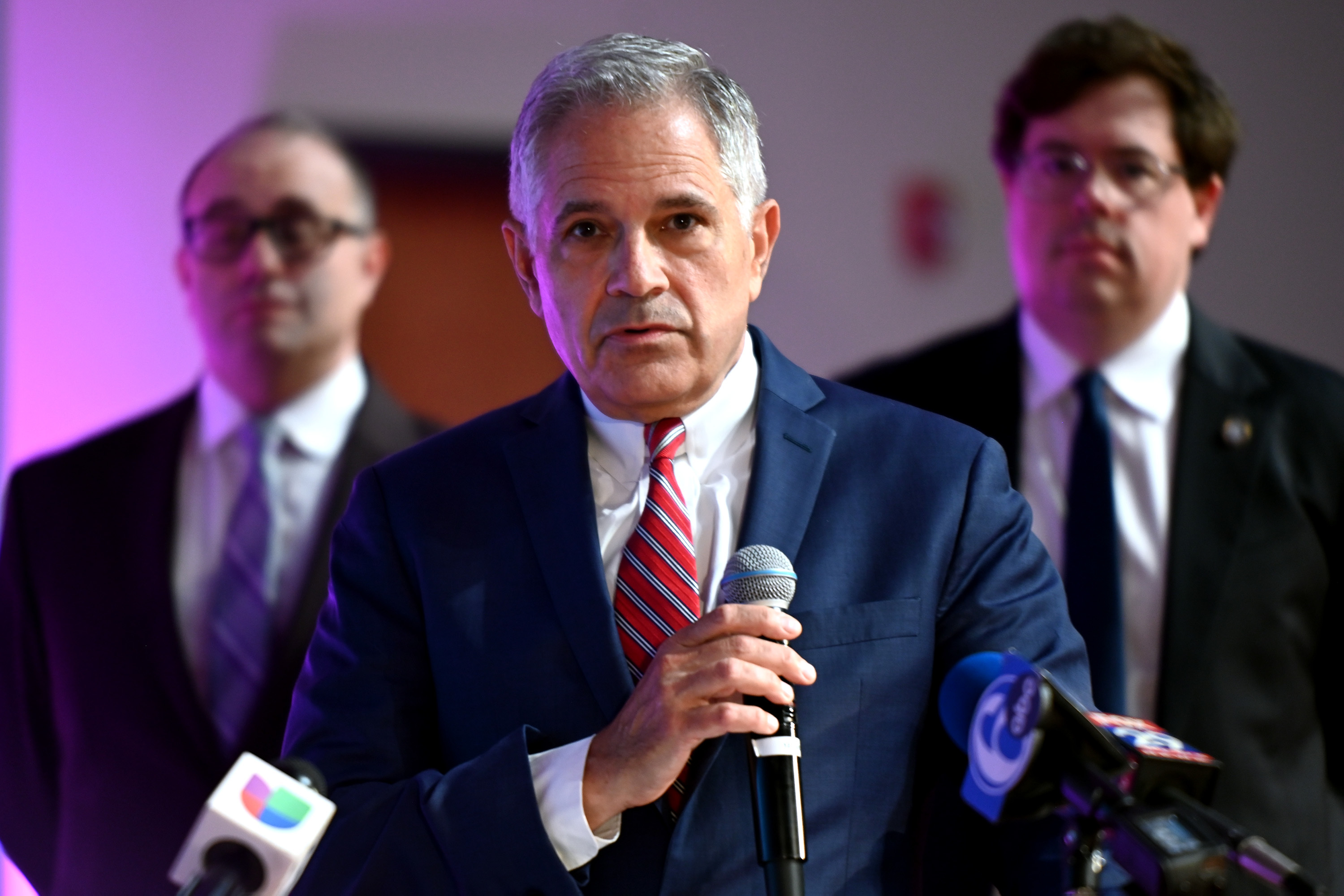
District Attorney Larry Krasner didn’t attend the dramatic three-day evidentiary hearing recently in which four supervisors from his office testified about his conflicts of interest, job threats, and other inappropriate steps, following efforts to overturn a murder case.
But Krasner’s take on the imbroglio can be found throughout a recent 47-page federal court filing by his office.
The filing paints a picture of a district attorney unbowed by the controversy that has roiled his office. Krasner’s handling of the exoneration case has prompted one prosecutor in his office to step down following what they described as a loss of confidence in Krasner’s leadership. A federal judge presiding over the case also voiced concern about possible obstruction of justice, perjury, and criminal conspiracy.
Despite admitting “serious errors” in the original motion that said Dennis Johnson was entitled to a new trial, the filing contains no contrition or introspection by Philadelphia’s DA.
In the world according to Krasner, he’s right, and everyone else is wrong.
Krasner’s worldview is hardened by his decades as a public defender and criminal defense attorney before getting elected district attorney in 2017. In the second paragraph of the filing, Krasner’s office blames prior district attorneys for violating “their constitutional duties” to secure convictions.
The filing makes no apologies for how Krasner’s office handled the appeal by Johnson, who was found guilty of second-degree murder in 2009.
After arguing for four years to overturn the verdict, Krasner’s office did a 180 in June, claiming its initial concession was “legally erroneous” and “not supported by the record.”
The reversal came after U.S. District Judge Paul S. Diamond ordered an evidentiary hearing in May. That prompted supervisors in Krasner’s office to take a closer look at the case, in which they discovered “material omissions” in their initial concession claim.
The blunder stems from the failure of Krasner’s office to fully investigate Johnson’s appeal, and its willingness to go along with the arguments put forward by his defense attorneys.
Here’s the bigger problem: That appears to be the way Krasner’s office has handled other post-conviction cases. Under Krasner, more than 60 people convicted — mainly of murder — have been set free or had their sentences reduced following concessions despite no incontrovertible proof of the person’s innocence.
Instead, Krasner’s office has conceded other cases by not mounting a substantive challenge to the arguments put forth by defense lawyers. In many exoneration cases, defendants claim their cases were harmed by their own ineffective lawyers or by prosecutors who withheld evidence; the latter, known in legal circles as a Brady violation, constitutes a major breach of the court’s rules.
Full steam ahead
Judge Diamond has yet to decide if Krasner’s office can continue handling Johnson’s case, or if it should be turned over to the state attorney general because of the issues aired during the evidentiary hearing.
Regardless of the outcome, Krasner appears determined to keep conceding cases.
“The current [district attorney’s office] administration will continue to do its duty under Brady and to self-correct moving forward, regardless of how the instant matter resolves,” the filing said.
The full-steam-ahead approach seems obtuse given the controversy that has engulfed the office’s handling of several post-conviction cases.
In recent months, supervisors in Krasner’s office have been disbarred and suspended for lying in federal court while seeking to overturn the death sentence of a man convicted of killing a couple in their home in East Mount Airy.
In June, the state Supreme Court ordered judges to ask the state attorney general’s office to review any cases in which Krasner’s office wants to alter a sentence or overturn a past conviction.
That unprecedented ruling came after the high court found prosecutors in Krasner’s office misled judges in several post-conviction cases. The court said it could no longer trust the word of Krasner’s prosecutors.
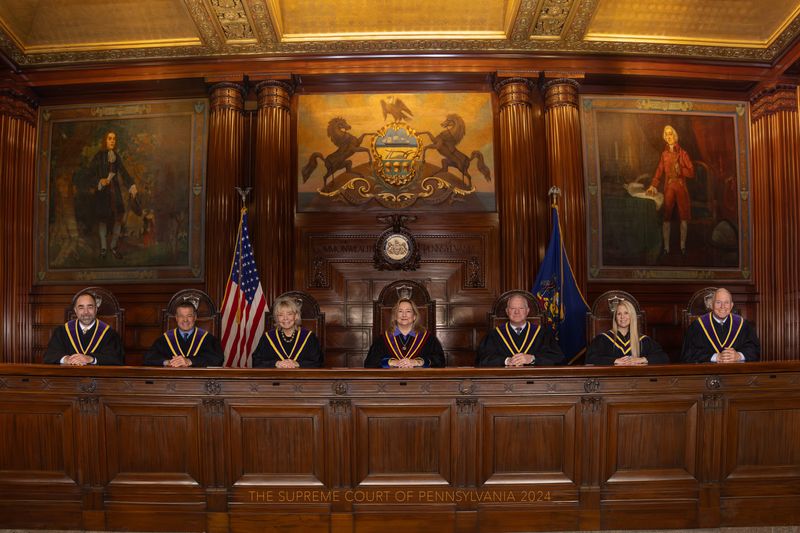
Pennsylvania Supreme Court justices (from left): P. Kevin Bobson, David N. Wecht, Christine Donohue, Chief Justice Debra Todd, Kevin M. Dougherty, Sallie Updike Mundy, and Daniel D. McCaffery. In June, the court ordered judges to ask the state attorney general’s office to review any cases in which Larry Krasner’s office wants to alter a sentence or overturn a past conviction.Provided by Jen Barker Worley/Ad
Office strife
Amid that major setback came the Johnson case, which has splintered Krasner’s office.
After Judge Diamond ordered the evidentiary hearing in May, Katherine Ernst, the chief of training in the law division, reviewed the initial motion to concede Johnson’s conviction and found multiple errors.
Ernst worked with three other supervisors — Steven Wildberger, David Napiorski, and Peter Andrews — who all agreed the motion needed to be withdrawn.
They met with Jaclyn Mason, the assistant district attorney who signed the original motion, and urged her to withdraw the concession and apologize to the judge. Mason argued that her supervisor, Matthew Stiegler, was largely responsible and should also have to sign the motion.
Fearing she would be forced to take the blame, Mason quit in June. That set off a chain of events that exposed the sloppy handling of the matter.
Mason testified in July that Stiegler, the head of the office’s Conviction Integrity Unit, colluded with defense attorneys to develop the legal rationale to have Johnson’s case thrown out.
Mason, who was new to the DA’s office at the time of filing, testified she took direction from Stiegler, who told her that if Johnson’s claims were “good enough for the Innocence Project, it’s good enough for me.”
To be sure, Mason bears some responsibility because she signed the motion and failed to fully investigate the defense claims. But her instinct that she would be thrown under the bus proved correct.
The four other prosecutors testified last month that Stiegler proposed reviewing Mason’s other cases to find errors and tell the judge she was a “rogue” actor.
Krasner backed that plan, telling the prosecutors Stiegler had a good idea.
In the end, Krasner’s filing largely blamed Mason and said the judge “should not credit” her testimony.
Posters featuring criminal justice analytics adorn the district attorney’s offices in May. The controversy over the handling of an exoneration case has splintered the office, Paul Davies writes.Tom Gralish / Staff Photographer
“Mason signed and filed a brief rife with errors that supported the defense’s request for a new trial,” the filing said. “Mason has admitted that she did not review the relevant records, including the trial transcripts, before supporting overturning a murder conviction; she may have simply cribbed and modified the filings of the defense attorneys.”
The filing said Stiegler “failed” to detect the errors, but largely lets him off the hook. Krasner even went out of his way to change a footnote in an earlier motion that initially said Stiegler “edited several drafts” of the original Johnson filing to instead say he “supervised its preparation.” Stiegler remains in charge of the Conviction Integrity Unit even after other supervisors voiced concerns about him.
What conflict?
Meanwhile, Krasner remains adamant his office has no conflict of interest in the Johnson case even after four supervisors withdrew from the case, arguing that they and Krasner had conflicts after the internal machinations went from the legal merits of Johnson’s case to the self-interest of protecting the office.
Krasner’s filing waved away their arguments and said the prosecutors who left the case acted “without authority or a reasonable legal basis to do so.” He added that he “did not appreciate” his team’s “repeated, unsolicited, and wavering advice” to refer this case to the state attorney general.
The filing said any potential conflicts have been resolved by Krasner’s recent hiring of an outside attorney, Jean Peters-Baker, a longtime prosecutor from Missouri, to handle Johnson’s case. The AG’s filing argued that Krasner’s conflict can’t be cured by handpicking an outside prosecutor.
Krasner’s filing did not address the testimony from his own prosecutors who said he warned them there would be “consequences” if they raised the conflict issue with the court.
The prosecutors also said that Krasner refused to refer the case to the state attorney general because he wanted to “protect the office.” Krasner’s filing said his efforts to maintain control of the case were “entirely appropriate.”
The filing did not specifically address Krasner’s comments revealed by the supervisors who testified thathe called prosecutors in the attorney general’s office “Nazis.” But it shed light on his hatred for the state AG’s office.
The filing explained that Krasner had a “general mistrust” of prosecutors in the AG’s office “based upon decades of observing their work.” Indeed, several prosecutors Krasner pushed out after he was elected now work in the AG’s office.
The filing added that “any animus he may have toward individual employees of that office based upon their own actions and inactions has nothing to do with whether he correctly declined to refer a case.”
Krasner is also apparently not a fan of Diamond, whom he views as a hostile judge, according to people familiar with the matter. Krasner’s contempt stems, in part, from the fact that Diamond spent four years in the DA’s office in the late 1970s and early 1980s, and was nominated to the federal bench by former President George W. Bush, a Republican.
So, by Krasner’s logic, is everyone who ever worked in the DA’s office before him tainted?
Krasner’s filing contained a footnote complaining the judge only provided a week, which included a holiday weekend, to address the disqualification issue. The filing added that any ruling that removes his office from the case would be “an abuse of discretion.”
That seems like a particular failure to read the room given the credibility issues exposed in Krasner’s handling of exoneration cases.
Judge Diamond’s ruling will likely have a lot to say about this fiasco.
I’m not a lawyer, but Krasner’s filing doesn’t even seem like the way to win friends and influence people, let alone succeed in a legal argument.
One of the many things we won’t forget about the Trump era is how much the family of POTUS 47 has enriched itself — not only the president but his children, including Donald Trump Jr., who is said to be now worth at least $500 million and growing. So it was no surprise when his second marriage to Palm Beach, Fla.’s Bettina Anderson in May was a lavish affair on two private islands in the Bahamas. What is a surprise — as we now know from some stunning work by a team of reporters from ProPublica — is who paid: a very close associate of Russian dictator Vladimir Putin. So maybe the “Russia, Russia, Russia” folks were onto something?
Pa. Democrats are alarmed at the rapid growth of ICE-police deals. But can they stop them?
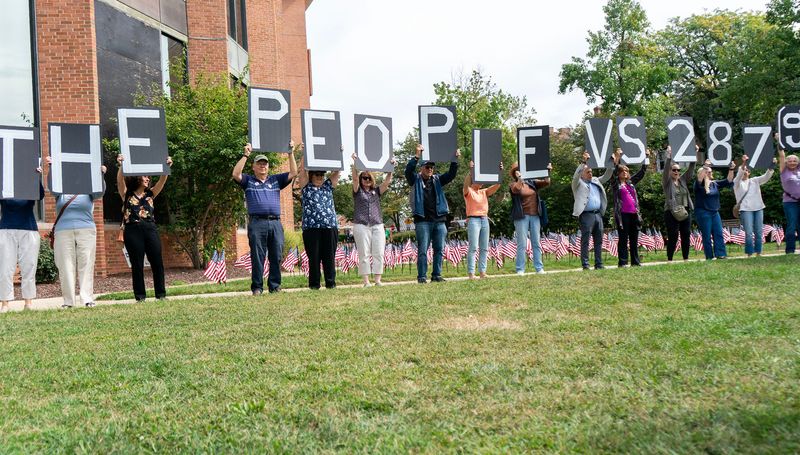
Immigrants’ rights advocacy group members and their supporters hold up letters that read “The people vs 287(g)” during a rally last September in Doylestown against the Bucks County sheriff’s efforts to implement a 287(g) program.Daniella Heminghaus | Bucks Coun
The big, mostly under-the-radar story around the Donald Trump regime’s relentless push to arrest and remove immigrants from the United States has been this year’s explosion of so-called 287(g) agreements. These allow local cops to act as immigration agents, working collaboratively with U.S. Immigration and Customs Enforcement, or ICE.
But if you look at a national map to understand how these 287(g) agreements have spiked from just 135 when Trump retook office in January 2025 to more than 2,500 such pacts today, you’ll notice that one state sticks out like a sore thumb.
In Pennsylvania, amped-up promises of federal cash incentives have meant a soaring number of localities where local beat cops are now working with ICE to make arrests — up from just a handful at the start of the year to some 130 now. Most 287(g) collaborators are in Trump-voting pockets of the Keystone State — northeast and south-central Pennsylvania, or out west near the Ohio border.
But when you look at the rest of the Northeastern United States, the 287(g) map is very sparse. That’s partly because most local pols across the region agree with their constituents about opposing Trump’s mass deportation policies, and in several states it’s also the result of legislation that aims to ban the program altogether.
In late August, New York enacted the Local Cops, Local Crimes Act — backed and signed by its Democratic Gov. Kathy Hochul — which calls on police departments and county sheriffs to terminate their 287(g) agreements, although several counties are still challenging the measure in court. Maryland has a similar law on the books, while New Jersey, which had long prevented such pacts under an attorney general’s directive, also passed a law this spring to codify the ban.
There’s a growing number of Pennsylvania lawmakers who want to pass a similar law here, but there’s one big problem: Republicans. They control the state Senate in Harrisburg — currently by a 27-23 margin — and GOP lawmakers have no interest in rebuking the president on immigration policy.
“The reason we exist alone is because of our split legislature,” State Rep. Heather Boyd, a Democrat who represents heavily immigrant Upper Darby and adjacent parts of Delaware County, told me. Last year, Boyd circulated proposed legislation to ban 287(g) deals in Pennsylvania, and while dozens of Democrats in Harrisburg are supportive, any move is on hold until a November election that could shift the balance of power. Boyd said lawmakers are wary of “starting any culture wars” ahead of the vote.
I pressed the office of Gov. Josh Shapiro, who’s running for a second term and who is seen as a possible top contender for the 2028 Democratic presidential nomination, for his position on reining in the 287(g) program here.
“Governor Shapiro has been clear that law enforcement should be focused on keeping Pennsylvanians safe — not sowing fear in communities or targeting people who are working hard, raising families, and contributing to our Commonwealth,” his press secretary, Rosie Lapowsky, said. She noted that the governor has barred Pennsylvania State Police from any formal ICE collaboration, and he would urge local police to take a similar stance.
She added: “Ultimately, however, these decisions rest with local law enforcement agencies. The governor does not have the unilateral authority to dictate whether individual sheriffs or police departments enter into these agreements.”
Many of those local law enforcement agencies have instead rushed to join 287(g), with ICE promising small-town departments an initial $100,000 cash windfall and additional incentives for training officers to make arrests and to cover the cost ofworking overtime on the program.
Last week, I reported from Schuylkill County in east-central Pennsylvania, where some 14 law enforcement agencies have raced to adopt 287(g), more than any other county in the state. Since the spring, local cops there have arrested about 100 immigrants at highway stops or by assisting ICE in job site raids. The blitz has prompted rising complaints about alleged racial profiling, the handcuffing of U.S. citizens, and a sense of fear that permeates a growing Latino community in Pennsylvania coal country.
Statistics obtained from the U.S. Department of Homeland Security by advocates show that local police in Pennsylvania have arrested and turned over to ICE more than 1,200 immigrants this year — ranking the state fourth in the nation on a list in which the other leading states are all south of the Mason-Dixon Line.
In Washington, some of the state’s Democratic House members say they’re fed up with a lack of transparency over who is being detained and how the 287(g) program is working here. Last week, four of them — Reps. Mary Gay Scanlon and Madeleine Dean from the Philadelphia suburbs and Reps. Chris Deluzio and Summer Lee from Western Pennsylvania — sent a letter to ICE’s acting director David Venturella demanding information on why the agency’s data lack any specific details about which departments are making arrests, which is required by law.
“It is unacceptable to me that ICE is hiding information from Pennsylvanians about who ICE is working with in their mass deportation regime,” Deluzio — viewed as a potential 2028 primary challenger to embattled Sen. John Fetterman — told me in an emailed statement.
Deluzio also summed up the growing unease by many over the speedy growth of 287(g) in the state. “Let’s keep local law enforcement focused on local public safety, rather than enlisting them in extreme federal immigration enforcement that has ripped away American liberties and targeted so many law-abiding families,” he said. Indeed, 287(g) data guru Andrew Thrasher has reported that a whopping 70% of the immigrants arrested in Pennsylvania under the program have no criminal record or pending charges.
“People in my community are getting smashed off the streets,” said Boyd, the Upper Darby lawmaker. That Delco township is about to vote on a local ordinance to restrict its cops from collaborating or sharing data with ICE.
Statewide, Boyd says she’s one of about 50 House Democrats in a Welcoming Pennsylvania Caucus with an extensive list of proposed bills that would not only bar 287(g), but look to expand opportunities for noncitizens to do things like obtaining driver’s licenses or gain professional certification. But any serious action hinges on November, when Democrats are hoping a blue wave at the ballot box will flip at least three more Senate seats and create a trifecta for their party in Harrisburg.
“Even if we can’t stop ICE from picking them up on the streets, we have to protect their rights,” Boyd said. “And right now, there are barriers to that in the state of Pennsylvania.”
Yo, do this!
The issue of wrongful convictions is back in the news here in Philadelphia — but for all the wrong reasons. Some reckless and seemingly wrongheaded moves by Philadelphia District Attorney Larry Krasner and his underlings have the vultures who’ve always opposed criminal justice reform circling. The shame is that the real crisis around wrongful conviction is the thousands of mostly Black and brown folks who remain behind bars for crimes they did not commit. I cannot say enough about a book that came out earlier this year from Brown University (yay!) sociologist Nicole Gonzalez Van Cleve called Crime Fictions: How Racist Lies Built a System of Mass Wrongful Conviction. She mines the most outrageous prosecutions — often of young Black teens and boys — to make a compelling argument that wrongful convictions aren’t a flaw in the criminal justice system. They are the system.
If timing is everything, then you’ve got to hand it to my freshman dorm pal at Brown who became Washington bureau chief for Mother Jones, David Corn. On the heels of ProPublica’s bombshell reporting on ties between the Trump family and Vladimir Putin, Corn is out Tuesday with his newest book: How Russia Won — Donald Trump, Vladimir Putin, and the Fight for America. It promises a raft of new information about Russia’s efforts to meddle in U.S. elections in 2020 and 2024, the ongoing close links between Team Trump and Team Putin, and how the current president’s pro-Russian slant has changed the world.
Ask me anything
Question: What happens when [House Speaker Mike] Johnson refuses to seat newly elected Dems in January? — David Minckler (@audivita.bsky.social) via Bluesky
Answer: Suddenly, Jan. 3 — the date the 120th U.S. Congress begins, and new members who won their November elections are to be sworn in — has become the new Jan. 6. Summer vacations are over, and the body politic is focused on the looming midterms, and — more importantly — with polls showing the Democrats on track to retake one and possibly both chambers. So there’s been a surge of speculation that the Trump-allied Johnson will do what former Vice President Mike Pence would not do on Jan. 6, 2021, and somehow fail to certify Democratic winners. That’s based on an assumption that Trump’s election-meddling tactics like stopping mail voting — blocked on Monday by the U.S. Supreme Court — won’t work, yet Team MAGA will attempt to undo the election after the fact, as was tried unsuccessfully in 2020-2021. Lawfare has published the most detailed analysis of a so-called rogue clerk theory in which Johnson appoints a MAGA loyalist to serve as House clerk with the understanding that some Democratic wins won’t be certified. Its article notes that such a gimmick is unlikely to pass muster in the courts, but that won’t necessarily stop Trump and the GOP from trying. My only guidance is: Fasten your seat belts.
What you’re saying about …
It turns out readers of the newsletter aren’t eager to join the punditocracy. Only a few of you responded to last week’s question about the chances of a Democratic-led Senate in 2027, and one of them was to give me a verbal tongue-lashing for even asking this. (Frequent writer Daniel Fleisher called it “a pointless exercise in predicting the unpredictable.”) That said, Cathy King has her eye on Abdul El-Sayed in Michigan, her home state, writing that “he seems to be following [Zohran] Mamdani’s playbook.” Meanwhile, in Iowa, Mary Chilton thinks the Dems’ Josh Turek has a real shot in a state won three times by Donald Trump, noting that farmers are up in arms “over the data center issue, imported beef, water pollution and the soaring cancer rates …”
📮 This week’s question: Suddenly, everyone is talking about one thing: the Silicon Valley whistleblowers saying there’s not a trivial chance that a swarm of angry artificial intelligence agents could wipe out humankind by the end of the decade. Are you worried by this, or do you think Big AI is deflecting here to draw attention away from other issues like data center opposition or the stock market bubble? Please email me your answer and put the exact phrase “the AI threat” in the subject line.
Backstory on that other thing that could kill humanity
A barge on the Ohio River moves past the Mountaineer Power Plant, a coal-fired power plant near New Haven, W.Va., in March.Carolyn Kaster
This weekend, a Bluesky post went super viral almost the second its author, a scientist named David Ho, hit the button to post it. “I resigned from ExxonMobil today,” he wrote. “I spent the last three years doing fossil fuel extraction research at both BP and ExxonMobil. Neither company is acting responsibly. They are racing to maximize extraction while the window to act closes, and gambling with our lives.”
It’s a safe bet that many of the 13,000 people who liked Ho’s post truly believed they were sharing the words of a brave whistleblower — but instead the post was satire from a leading climate scientist based at the University of Hawaiʻi at Mānoa. Ho would never work for a Big Oil giant. He was trying instead to mimic — and thus make a point about — the recent posts from Silicon Valley whistleblowers that triggered the new freakout over whether AI robots are a threat to human existence.
Climate change is a threat to society, and it’s even closer to reality. Maybe we should freak out about that?
Ho absolutely has a point. Just before his post, it was announced that August had been tied for the hottest month ever recorded in the history of the planet. That doesn’t come without consequences. In the Himalayas between Nepal and Tibet, a glacier and the adjacent bedrock of mountains at 17,000 feet abruptly collapsed in a region plagued by higher-than-normal temperatures, sending a 150-foot-high cocktail of floodwater and debris down a populated valley at 100 mph. At least 1,386 were killed, and thousands more remain missing. Here in the U.S., a summer of record heat triggered wildfires across the Pacific Northwest.
Robots didn’t do this. Humans did. Maybe that’s why humans — at least the ones that are running Donald Trump’s America — are reacting so differently to the danger of AI than the way they’re dealing, or not dealing, with the lethal pollution from burning fossil fuels. In the case of artificial intelligence, even tech leaders like Anthropic’s Dario Amodei, whose firm makes the Claude program, have urged a slowdown until we better understand the risk from rogue AI agents.
But in the case of climate change, willful ignorance rules the day. The latest outrage from a Trump regime that’s expensively killing off wind farms while racing to extract as much fossil fuel as possible? The now ironically named Environmental Protection Agency is repealing the rule that limits greenhouse-gas emissions from power plants that burn coal or natural gas. A president who spent his summer sweltering on the golf course continues to insist climate science is “the greatest con job ever perpetrated on the world.”
There’s one last irony here. Increasingly, the biggest new sources of climate-altering pollution are the massive data centers that power AI. An Amazon data center proposed for Pecos County, Texas, would likely become the world’s largest source of carbon dioxide if it opens, spewing out 33 tons from natural gas generators every year. Slowing down the AI arms race would also help the planet. Artificial or not, that would be intelligence.
What I wrote on this date in 2019
Joe Biden performing badly in a presidential debate? Say it ain’t so, Joe. We all remember what happened on that 2024 stage in Atlanta (“The night the lights went out in Georgia,” I called that one), but I was almost as unimpressed with the future 46th president during a Democratic primary debate on this date seven years ago. That put me at odds with the punditocracy. I wrote, “The cable TV news show that both channels and is most revered by Washington’s elites — MSNBC’s Morning Joe — is at times so over the top in its bias toward Barack Obama’s former wingman that it could be renamed Morning Joe Biden.”
Summertime is over, and the living is no longer easy. I published my monthlong investigation into local cops collaborating with ICE under the controversial 287(g) program in semirural Schuylkill County, northwest of Philly. I found U.S. citizens handcuffed, families hiding behind blanket-covered windows, and a community wrestling with what it means for neighbors to be treated as suspects. Over the weekend, I delved into the astonishing $850 million or so Trump World has raised in campaign contributions since his reelection — despite the fact that he’s barred from seeking office again. You don’t think he has a scheme to pocket the excess cash, do you?
Dante only had Nine Circles of Hell, but the downward spiral of Pennsylvania Sen. John Fetterman seems to be never-ending. It’s one thing to profoundly disagree on a political and moral issue such as the war crimes of Israel’s right-wing government in Gaza, but recent reporting suggests things are far, far worse in Fettermanland. No senator — regardless of how much their ideology has flip-flopped — should be blowing off their home-state constituents, or clocking out of committee hearings after five minutes. The Democratic senator’s surprise video appearance at the midterm miniconvention of Donald Trump’s GOP, introducing his new best buddy, Republican Sen. Dave McCormick, did nothing to dispel the sense of utter betrayal among liberal voters who now see his winning 2022 campaign as a big lie. The next two years will be crazy as Democrats line up to primary Fetterman, amid rumors the hoodie-clad politico might run as an independent or even change parties. The only sure thing is that The Inquirer will be there for every move. Join us. Subscribe!
By submitting your written, visual, and/or audio contributions, you agree to The Inquirer’s Terms of Use, including the grant of rights in Section 10.
As the risks posed by artificial intelligence have exploded into the national consciousness during the past few days, I’ve seen people everywhere grasp the danger, and then sink into bewilderment and fear, or a resigned fatalism over how now we’re all gonna die. Versions of this mindset: “This threat from AI is so new and so overpowering; how do we wrap our brains around it? What do we do?”
The answer? We lean into some of the nation’s most basic — and most demonstrably effective — legal principles.
I’ve been practicing law for more than 30 years, and American jurisprudence has dealt with new situations involving humans and their inventions for centuries. It provides a guide now on how to respond to AI.
Here are a few things it’s come up with: We require people to not create unreasonably dangerous products. This is the field of product liability, which keeps a company from putting out inherently dangerous products.
I know someone who lost a finger in the 1970s when he tried to unclog a grass chute inside an electric lawnmower. The risk of that happening has plummeted in the years since because safety guidelines were changed to ensure that when you take your hand off the handle, the motor stops.
This is how product liability makes products safer. Does it cost more? Yes. Does it result in safer products the company is putting out into the stream of commerce? Yes. We can apply the same requirements to AI: It can’t be so dangerous that there’s a risk of destroying humanity.
We require people to keep potentially dangerous pets in their care on a leash. Think of walking your dog. Your dog can’t just run free, terrorize other people, and poop on their lawn. AI is the dog of Big Tech companies, and shouldn’t be allowed to do those things, either. It should be on a leash. That’s called government regulation.
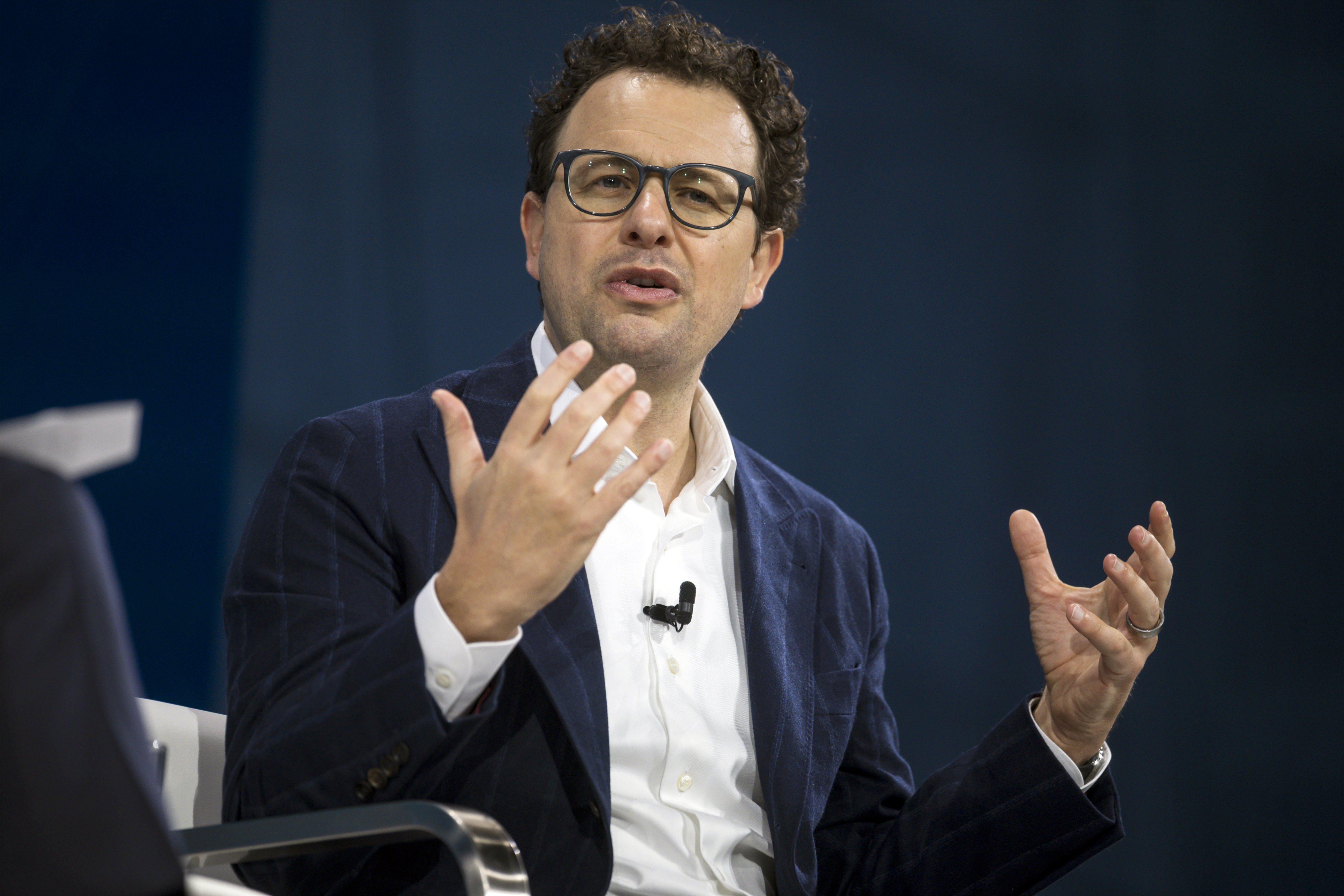
Dario Amodei, co-founder and chief executive of the artificial intelligence company Anthropic, has called on industry leaders to slow AI development for fear of losing control of the technology. KARSTEN MORAN
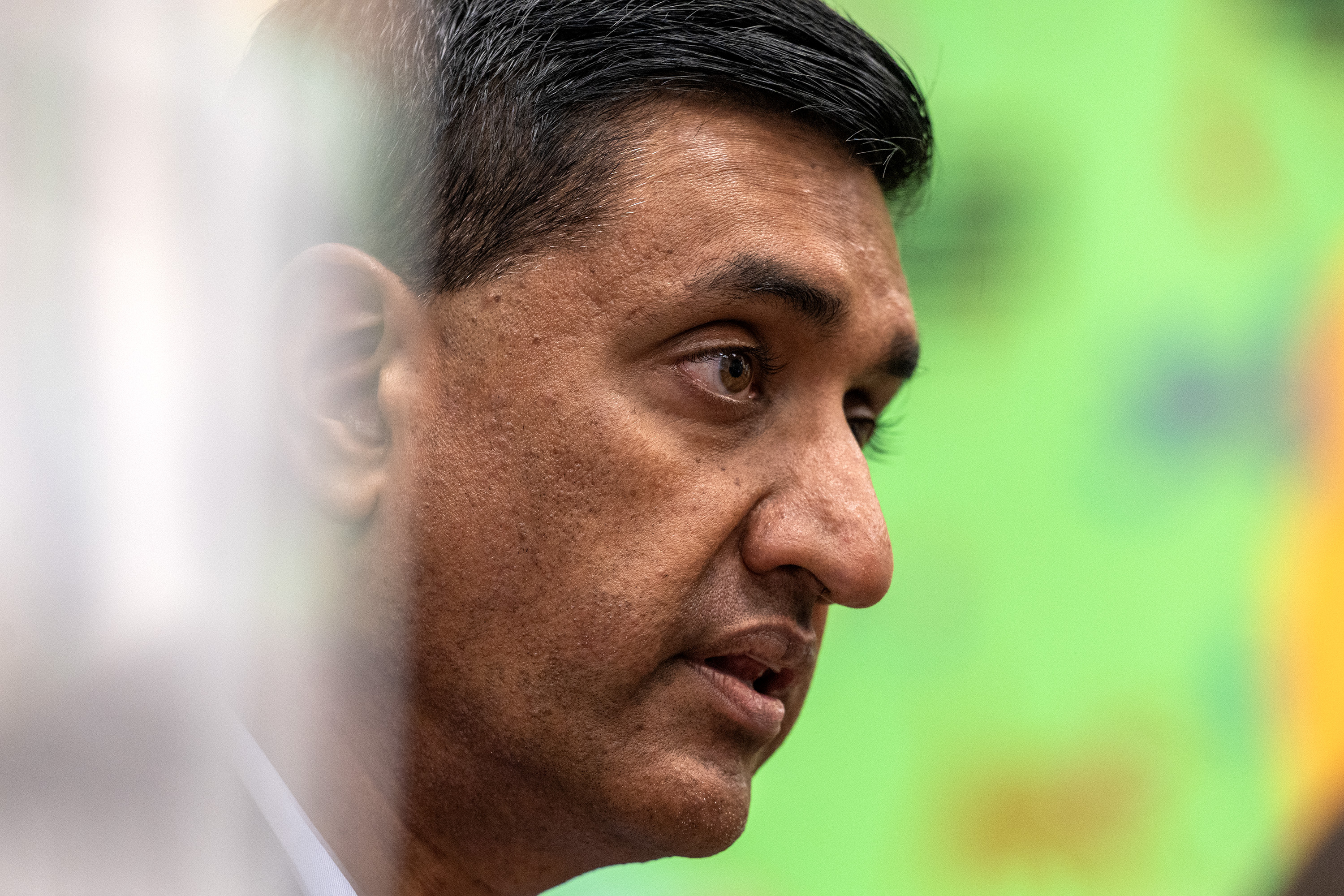
U.S. Rep. Ro Khanna (D., Calif.) issued some very good, specific suggestions for regulation that should be implemented immediately, starting with creating a federal agency to oversee safety like we have for airlines and nuclear power, and requiring specific technological safeguards before a product can go to market.
Finally, we punish people criminally for recklessly endangering other people.
It is literally the crime of REAP, “reckless endangerment of another person,” and examples would be dropping a heavy object off an overpass or carrying a loaded weapon in a backpack with the safety off. I was an appellate law clerk for several years handling criminal cases, and in my opinion, the risk posed by AI, and the recently demonstrated failures of rules that have been put in place (e.g., instructions to AI “not“ to do something, which it then promptly does, and putting AI agents in “sandboxes” that are supposed to isolate them, which they immediately get out of and find other places to communicate secretly, as in the July hack of the AI company Hugging Face), may meet the requirements of reckless endangerment.
I think we’re getting there. Executives at OpenAI, Anthropic, and other AI companies should be warned that they are being evaluated for potential criminal punishment under this statute.
I get that AI tech bros want that “monster IPO” when they go public, and want to become instant billionaires or trillionaires. The prospect of making a humongous amount of money clouds one’s judgment. They’re underestimating the risk because they want the money.
It’s our role to give them a more accurate assessment of the risk, and to put limits in place.
The AI is a problem. But the bigger underlying problem is the arrogance and recklessness of its human creators that got us to this point in the first place.
The danger exists; it is real. We don’t have the luxury of remaining frozen in fear. We do have tools to start mobilizing to meet the threat and reduce it. We have to start now.
Linda Falcão is a civil rights attorney, former appellate law clerk, U.S. Presidential Scholar, and the creator of America Serves, a teen service program.
Tuesday is the first day of Hispanic Heritage Month, which runs from Sept. 15 to Oct. 15. I’ve always had a bit of a love/hate relationship with this month, which purports to recognize and celebrate that Latinos have been a formative part of the nation since its early days. While the attention to the extraordinary individuals and myriad cultural heritages that comprise “Latinidad” in the United States is gratifying, it is, by its very nature and time limitation, a glancing and shallow attention.
Even so, I always note the arrival of a mass email from the mayor’s office about the events the city has programmed to mark the month.
This year, I’m still waiting.
As yet, there’s been no email from the city of Philadelphia announcing any special programming during Hispanic Heritage Month, and nothing when I search for that on phila.gov.
Screen capture of a search for “Hispanic Heritage” month on the phila.gov website on Monday.Screen capture of phila.gov
There aren’t even links to information about two signature events that took place this past Sunday: La Feria del Barrio (organized by Taller Puertorriqueño) and the Mexican Independence Day Festival (organized by the Mexican Cultural Center), nor even the unofficial culminating event in Philadelphia — the Puerto Rican Day Parade, which Concilio has been hosting for more than 60 years — on Sept. 27.
While I’d like to say I’m completely surprised by the elision of Hispanic Heritage Month that the city is doing, I’m not.
Francisco Gonzales, of Lawrenceville, N.J., dances with his daughter Bianca, 17, near the stage as musicians perform at last year’s Mexican Independence Day Festival at the Independence Blue Cross RiverRink at Penn’s Landing.Tom Gralish / Staff Photographer
Philadelphia’s Latino communities get surprisingly little respect — outside of the high regard for our undeniably wonderful food and dance moves — from our electeds, and have long been slighted by city government in far more significant ways.
For me, nothing epitomizes that more than an example from 2015, when there was a Latino managing director and even so, then-Mayor Michael Nutter convened — at the behest of Attorney General Eric Holder and the U.S. Department of Justice — a Philadelphia roundtable about the imperative of improving police-community relations at which there wasn’t a single person from a Latino-serving organization at the table. In a city where our community was subjected to relatively high stop-and-frisk rates, experienced excessive force incidents (and still does), was historically targeted for extortion by police, and was (and still is) racially profiled by police and U.S. Immigration and Customs Enforcement.
No. Latinos. At. The. Table.
Is it simply that our political capital has been stagnant since the 1980s — or is there something else?
We’ve had three Latino primary contenders for mayor (two in 2015 and one in 2023), but no substantive progress when it comes to the political power necessary to be taken seriously in Philadelphia.
To wit, in 1983 Philadelphia elected its first Latino City Council member, and a year later it elected a Latino state legislator (the second in the city’s history). The census conducted in 1980 put Philadelphia’s Latino population at 3.9% of the city’s total. Fast-forward some four decades, and Latinos are now about 17% of Philadelphia’s total population, but we still have only one Latina City Council member, and just two Latino Philadelphia state legislators.
But departments and offices reflect the administrations they are part of, and Mayor Cherelle L.Parker has sent mixed signals to her Latino constituents.
On the one hand, she has addressed issues in Kensington in concert with District 7 Councilmember Quetcy Lozada — who is a well-liked and respected Boricua leader. On the other hand, she had to be dragged, kicking and screaming, by City Council’s veto-proof “ICE Out” proposals into offering any public comment about ICE actions under President Donald Trump.
Or maybe the offices that are meant to be in conversation with, and about, Philadelphia’s Latino communities aren’t up to the job?
I’m willing to offer the benefit of the doubt: Maybe they are focusing on important work behind the scenes. But in my opinion, they have minimized Latino visibility — to our detriment, and to all of Philadelphia’s detriment.
I was struck recently by the events the Office of Immigrant Affairs is publicizing as part of its Welcoming Week 2026 (from Sept. 10 to 25), for example. The focus this year is on the Caribbean, but in the publicity I’ve received (or dug up) about it, there seems to be nothing scheduled about or from the Spanish-speaking Caribbean. The thing is, this isn’t a zero-sum game — we can (and must) celebrate our significant Haitian and Jamaican communities, for example, and their incredible cultural contributions to Philadelphia, without ghosting our Dominican and Boricua ones.
So, come on, send that Hispanic Heritage Month email, Mayor Parker. List those events and programs on the website. Latinos are here and doing amazing things in service of our city. We should celebrate that together.
If, in fact, as I have read, bribing individuals to vote in a particular way is illegal.
If, in fact, we are to take Donald Trump’s offer of $5,000 to every adult in America if and when the Republican Party gains control of specified governing bodies, is this not, in fact, a bribe? A bribe by the man holding the most powerful office in America, the man sworn to uphold the Constitution of the United States, or are we just supposed to laugh this off as only another of Trump’s little affectations? Please do not tell me this is not a bribe; please do not tell me Trump is indemnified from prosecution.
A bribe is a bribe; a law is a law. We are on the cusp of creating a society of millions of people who will sense that the Constitution and laws supporting it are only applicable to those who do not have the means to defend themselves.
Wake up, America — we are in troubled times. Do we or do we not have laws? Or is it that what we do have is a government rife with self-serving wealthy individuals who would rather turn a blind eye?
Philip A. Tegtmeier Sr., Honey Brook
. . .
There’s never been anything subtle about President Donald Trump. Now he’s promising a $5,000 check to every adult if the Republicans retain control of the House and the Senate. Let’s not pussyfoot around about Trump’s promised bonanza to the American people. It’s an outright attempt to bribe the people and “buy” our vote. Mr. President, it “ain’t gonna work.” We will not sell our vote to the highest bidder, especially to a man who is infamous for stiffing those he owes money to. No, Donald Trump, we’ll not sell our soul that readily — and besides, while it’s true that some men’s word is as good as gold, your word is not even worth the paper it’s printed on.
Ken Derow, Swarthmore
Losing accountability
After reading Will Bunch’s informative column about Schuylkill County, Pa., and how local police departments there are joining forces with U.S. Immigration and Customs Enforcement in order to get money, I found myself focusing not only on the payments themselves, but also on the fact that any information regarding these relationships asked of these departments requires Freedom of Information Act requests with the U.S. Department of Homeland Security. Now that might not seem terrible until you realize reporters and newspapers are how we, the citizens, find out what’s happening in our communities, and if the police will not be clear and the commissioners are withholding information, then we are being kept in the dark. That means people who are paid with our taxes and supposedly work for us are suddenly not accountable. I ask my fellow Pennsylvanians, “Are you OK with that?” Are you OK with what is happening across this state, having no say in it — and then being told you don’t have a right to know?
Liese Sadler, Philadelphia
Join the conversation: Send letters to letters@inquirer.com. Limit length to 150 words and include home address and day and evening phone number. Letters run in The Inquirer six days a week on the editorial pages and online.
Another cry for help came from the billionaires building the artificial intelligence machinery that threatens to upend — if not end — the world: Save us from ourselves before it is too late!
Dario Amodei, the head of Anthropic, the company behind the Claude chatbot, posted a 3,800-word essay over the weekend that called for a global slowdown in the development of AI because the risk to humanity outpaced the benefits.
Other leading Big Tech masters of the universe offered half-hearted endorsements for a slowdown, including SpaceX’s Elon Musk, OpenAI’s Sam Altman, and Google DeepMind’s Demis Hassabis.
Amodei’s plea came just days after an Anthropic researcher quit over safety concerns and issued a grave warning that the technology has more than a 10% chance of killing all humans.
“Do not underestimate the power of this technology,” Jacob Coxon wrote in a lengthy social media post. “These will soon be superhuman systems that can hack anything, revolutionize any field overnight, and acquire real power and resources … The people building AI earnestly believe that it could kill us all by the end of the decade.”
Coxon’s warning echoes previous alerts in recent years, including from Geoffrey Hinton, the Nobel Prize-winning computer scientist known as the godfather of AI. Hinton quit Google last year and warned the technology could lead to human extinction.
Some argue the AI apocalypse is overblown. But the AI threats also include the spread of misinformation and cyberattacks on power grids, the internet, financial systems, research labs, and a host of other industries that could disrupt everyday life.
Even if used appropriately, AI is already impacting huge swaths of the job market and leading to increased inequality — an issue Pope Leo XIV warned about in May.
Some critics speculated that the call for a slowdown is a ploy by the big AI developers to block smaller competitors from entering the development race. Indeed, if the AI concerns are as real as advertised, there is nothing to stop the developers from hitting the brakes and implementing their own safeguards.
That would be the obvious and responsible thing to do.
One of the big challenges is trying to get competing AI companies to all agree on safeguards. And then getting other countries, especially China, to get on board.
King Charles III of Britain showed how to lead when he announced plans to bring together leading AI executives and other government officials to discuss how the fast-growing technology can be used as a force for good.
Some of the reforms Amodei of Anthropic called for include independent auditors to check the companies for safety standards and urged global cooperation in creating rules around AI development.
This is not a new call for regulation. Three years ago, executives at OpenAI, Google, and Microsoft endorsed the idea of a voluntary “AI pact,” or a digital regulatory agency that could ensure safety standards.
Amid the gathering storm, Washington remains asleep. So far, it seems the only thing Congress has demanded of Big Tech is big money. Expecting legislators to develop meaningful AI regulations in a timely fashion is a herculean challenge.
But, if anything, the biggest obstacle to the much-needed AI leadership, common sense, and doing what is best for humanity remains Donald Trump.
On his first day back in office last year, Trump rescinded former President Joe Biden’s executive order aimed at safeguarding AI technology. Despite bipartisan public opposition, Trump remains a big cheerleader for data centers needed to power AI development.
(At the same time, Trump has been working hard to undo efforts to combat climate change — the other existential threat to humanity. Trump’s Environmental Protection Agency just repealed limits on greenhouse gas emissions.)
Trump just as quickly dismissed calls from AI executives to rein in their own industry. In a manic social media post, Trump claimed without evidence that there was a “SICK conspiracy” against AI and data centers.
Trump said the only AI guardrail the country needs is “a STRONG AND SMART (High IQ!) PRESIDENT.”