Category: Opinion

  • How Temple University failed my daughter on her first day of college

    How Temple University failed my daughter on her first day of college

    Remember all those big feelings you had on move-in day as a college freshman? After a long summer, you probably arrived on campus ready to tackle dorm life fortified with new flip-flops, towels, and a duvet. Today held great promise — the start of a new you.

    My daughter recently enrolled at Temple University. Her move-in day was scheduled for the final week in August. I was proud, and she was excited. Yet, on our drive to campus, we discovered that something was wrong. She was somehow assigned to an all-male floor. How could this be?

    We contacted residence life and chatted with a well-meaning student who told us there was nothing she could do. Could we speak with her supervisor? Yes — another caring individual informed us that her hands were tied and that no other dorm rooms were available. How could this be possible? It was her first day of college.

    My daughter is transgender and autistic. Temple University assigned her to a male dorm section despite us working closely with intake counselors and disability resources to ensure a smooth and safe move to a gender-inclusive setting. Somehow, a form was missed that coordinates between the office that ensures students with special needs have the necessary supports and the residence halls that house our students.
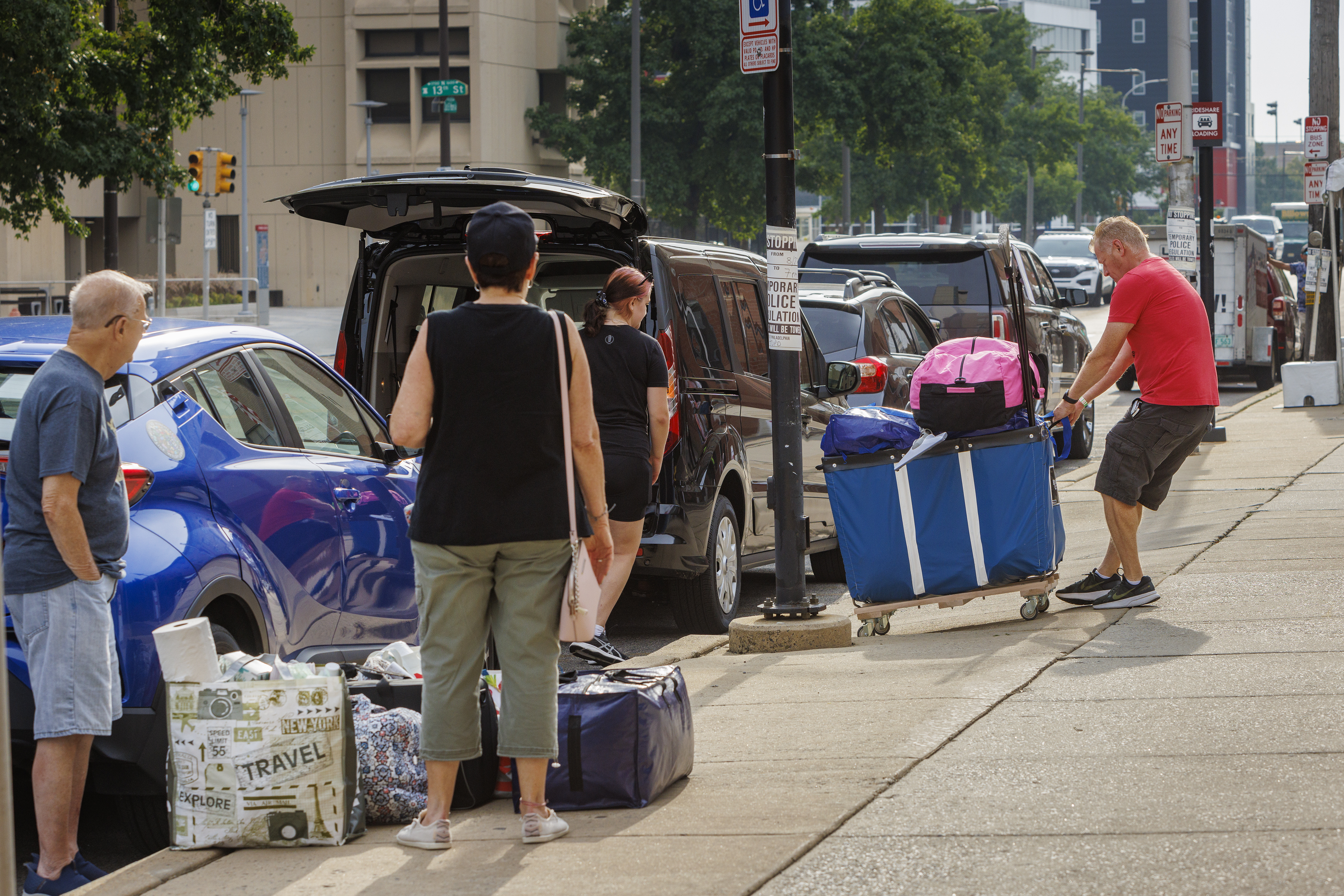
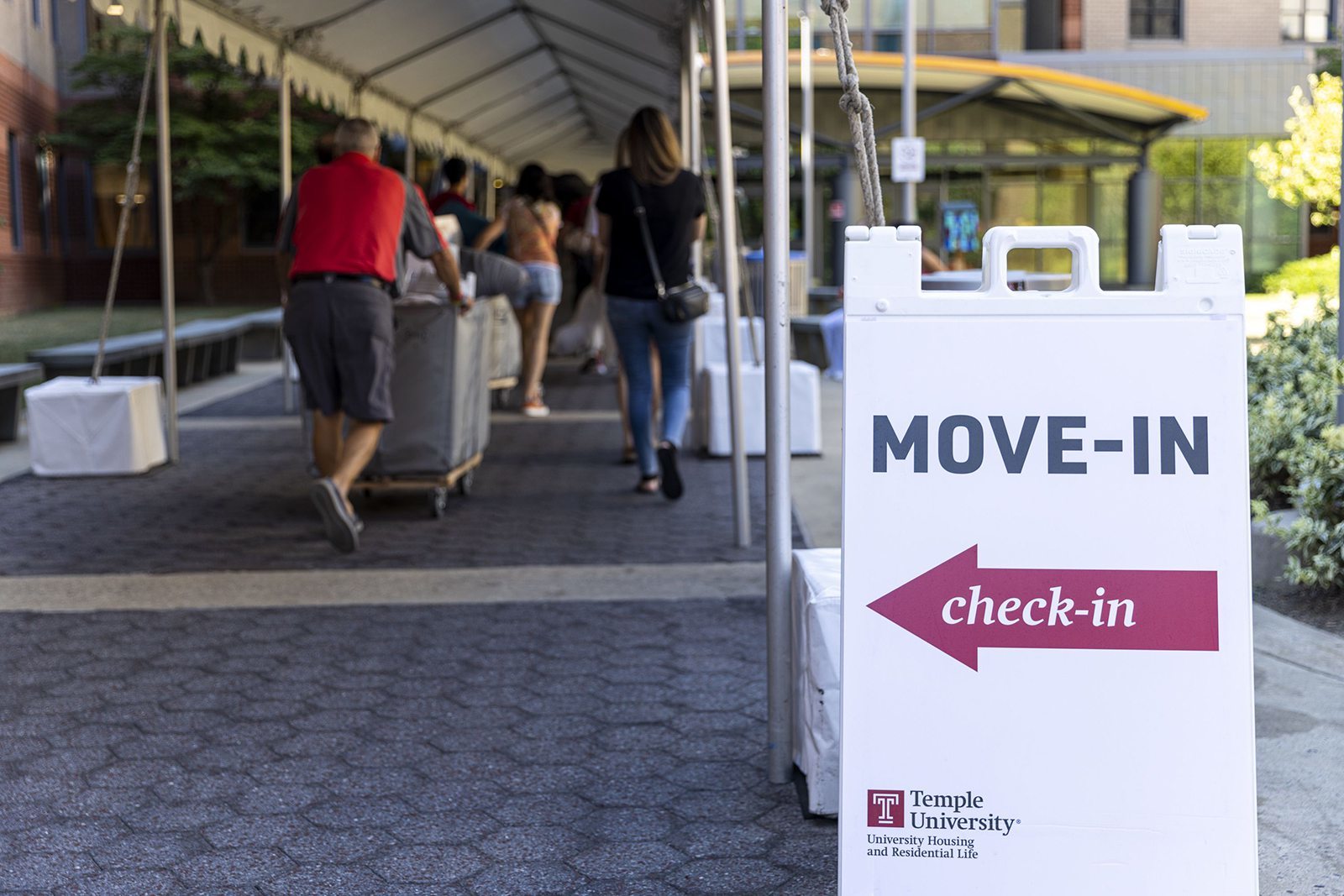
    Move-in day for Temple students living at 1300 Residence Hall at 13th Street and Cecil B. Moore Avenue in August 2023.Alejandro A. Alvarez / Staff Photographer

    We pulled up to her assigned dorm in a packed car for drop-off only to learn my daughter could not be accommodated.

    We drove home and unpacked the car. She moved back into her bedroom. It was devastating. There was a lot of crying.

    The following day, we were contacted by another staff member who informed us they had found a room for my daughter in a female suite. However, the floor was not gender-inclusive.

    My daughter would have to roll the dice and not disclose her gender identity.

    We asked what the contingency plan was if her roommates rejected her. There was no plan.

    We thanked the staff member and declined the offer. I sought assistance from many university administrators (president, provost, dean, heads of the disability resource center), none of whom responded.

    Fail.

    Full disclosure, I support the mission of Temple University as an alum, a donor, and tenured full professor in the College of Public Health. I am writing today not as a representative of the university, but as a concerned parent and member of the Philadelphia community.

    I am saddened (but not surprised) by how our move-in transpired.

    My daughter was collateral damage in an ongoing war for ever-higher enrollment numbers and was let down by an on-campus support system that has been weakened by extreme budget cuts.

    Like many American universities, student tuition dollars are integral to Temple’s survival. Student retention and enrollment are both down. The university is facing a well-publicized $25.5 million budget shortfall.

    Faculty, librarians, and support staff have been thinned to the breaking point. For example, many of my faculty colleagues in the College of Public Health recently learned that our salaries were to be cut by approximately 20%.

    This scenario is not unique to our institution. Indeed, a common cycle is at play.

    Tuition revenues fall in tandem with reduced enrollment and poor student retention. These deficits cause financial distress for the university. So administrators relax admissions and increase tuition in anticipation of a financial “sugar rush” that comes with more paying customers and a higher tuition rate.

    But many newly accepted students require complex psychosocial and educational supports, and those supports are now largely to be shouldered by a depleted faculty.

    Administrators cast instructors as friendly and approachable. Although this is a well-intentioned strategy, the teacher-student relationship is not based on casual friendship.

    As instructors, we are compelled to use a boilerplate syllabus template that addresses students using first-person language as if we are addressing them personally:

    Feel free to visit us during “drop-in” hours and discuss “anything you need to talk about.”

    That could mean anything from personal relationships, dating, intimate partner violence, parental neglect, trauma, financial insecurity, and concerns about immigration policies and enforcement (e.g., Will I be safe here?). Most of my faculty colleagues are not trained as clinical psychologists. Nor do we have sufficient expertise — or in-class support staff — to help students with complex learning disabilities in the context of large (and growing) classroom settings.

    When vulnerable students fail and/or withdraw, administration often attributes retention and enrollment dips to faculty — as justification for deeper cuts to classroom instruction and increases to a vast administrative framework.

    This cycle is continually baffling to us as teachers, because many of our institution’s most damaging reputational failures have originated in the boardroom rather than the classroom.

    I believe in Temple University and in its founder’s vision of a high-quality public education where students from all walks of life benefit from world-class scholars. The university has enriched my own life by providing the training I needed to thrive as a neuroscientist and clinical translational dementia researcher. My colleagues care deeply about the success and well-being of our students.

    Yet, many of us fear the university is losing its way.

    Unrelenting pressure for new revenue streams, expansion into costly real estate ventures, and lack of reinvestment in teaching and research are eroding the foundation of what makes us so special.

    My family experienced these failures up close on my daughter’s first day of college — when we learned there was no place for her here.

    Any educational system that fails its vulnerable students and families this badly needs oversight and reform. I hope we find it.

    Jamie Reilly is a professor in Temple University’s department of communication sciences and disorders.

    Editor’s note: An earlier version of this essay misstated the amount of Temple’s budget deficit; it is $25.5 million.

  • Letters to the Editor | Sept. 20, 2026

    Letters to the Editor | Sept. 20, 2026

    School parking problem

    Academy at Palumbo’s Home and School Association is disappointed by City Council President Kenyatta Johnson’s inaction regarding the school parking crisis highlighted in Kristen A. Graham’s recent article.

    Johnson’s spokesperson said that “… any discussion of changes to parking policy must consider the impact on the broader community.” For the past three years, we have repeatedly appealed to Johnson’s office for assistance. He has had plenty of time to conduct discussions, assess the impact, and propose a resolution.

    The irony is that Palumbo staff already use parking spots in the surrounding neighborhood during school hours. The immediate impact falls on our teachers and students. Teachers consistently face a choice: either disrupt instructional time to move their car every two hours or incur costly tickets. Academy at Palumbo’s working conditions are our students’ learning conditions. The parking crisis impacts working conditions.

    Businesses and residents can apply for parking permits through the Philadelphia Parking Authority. Why can’t a similar permit system be established for school district staff? It’s time for leadership to stop stalling and come up with a plan to support our educators.

    Julie Kaeli, former president, Academy at Palumbo Home and School Association, and Alex Du, president, Academy at Palumbo Home and School Association, Philadelphia

    Raising leaders

    An African proverb asserts, “The ruin of a nation begins in the homes of its people” — an expression that offers profound commentary on recent events in Center City, in which large groups of teenagers were involved in confrontations with the police. Diverging from a broader national frame, an examination of the Philadelphia community reveals acute challenges regarding youth engagement in destructive behaviors. This reality necessitates a rigorous inquiry into behaviors that border on juvenile delinquency, marked by a lack of structural boundaries, the erosion of respect for authority, and a diminishing moral compass during sporadic social media gatherings. Many of these gatherings lead to vandalism and open acts of aggression toward authority figures.

    It is also important to recognize that these negative behaviors are not indicative of all children, as many youths demonstrate socially healthy and responsible behaviors during meetups with peers. However, because of social media, these events typically lead to generalizations about children, thereby influencing policy.

    Investigating these dynamics requires analyzing content, the extent and efficacy of parental and caregiver involvement, alongside efforts to reconstruct and adopt a newfound lens of social values and expectations within the community. A fundamental question arises concerning the precise level of responsibility borne by parents and primary caregivers. It is imperative that households actively instill prosocial virtues prior to a child’s entry into the public sphere. Ultimately, while fostering individualism and character, in-home adults must maintain accountability for conduct that borders on juvenile delinquency, ensuring youth positively represent both the family and the wider community.

    We realize it is not solely on the family to achieve this aim; it also takes a healthy community. Likewise, city administrators need to think outside the box when investing in and creating educational, recreational, and vocational opportunities that align with children’s interests. This must include a 21st-century approach to devising a solution to this dilemma.

    Darin Toliver, vice president, cofounder, Black Men at Penn Inc.

    Eyes closed

    Recent accounts of Washington’s lukewarm response to the artificial intelligence crisis are chilling. The leaders of tech companies have said AI could end humanity as it grows so powerful it can’t be controlled. So how does the president of our country respond? He calls it a “hoax,” which is what he calls everything he chooses not to believe. His position is that we cannot fall behind China in AI development, so he will just ignore the very real consequences. Unless a change in policy or direction benefits him, he is not interested.

    So will our congressional leaders step up and do the right thing?

    Senate Majority Leader John Thune thinks we should address the AI problem with a “light touch.” Apparently he, too, does not take the opinions of the experts seriously.

    Meanwhile, Speaker of the House Mike Johnson is promoting Donald Trump’s plan to give $5,000 to every American adult if the Republicans hold the House and Senate on Nov. 3. Never mind that this is clearly a bribe that will never be paid.

    Johnson also does not seem to recognize the urgency of the AI situation, or simply does not care.

    The lack of an appropriate response from our Republican leaders is just further evidence they need to be removed from leadership positions — all of them.

    Kathleen Clements, Philadelphia

    City-owned censorship

    The recent decision to forbid the rapper Macklemore from performing at Lincoln Financial Field because of his criticism of the situation in Gaza is an utter embarrassment. While it is becoming unfortunately common for those in power to censor views and voices that are critical of them, this is a particularly egregious example made worse by the stadium operators’ lack of transparency.

    Why can’t they give us an answer about how the owner of the New England Patriots, of all people, was allowed to deliver an ultimatum to Ed Sheeran (whom Macklemore was set to be the opening act for) on behalf of our publicly owned stadium here in Philadelphia? Regardless of your opinions on Macklemore’s comments, everyone should condemn this assault on free expression that utilizes a city-owned asset.

    Tim Schautz, Philadelphia

    . . .

    Perhaps today’s era of oversensitivity that Jonathan Zimmerman describes in his recent column also applies to the situation in Gaza. These days, when you are critical of the Israeli government, you are subject to being called an antisemite. Don’t believe it? Rapper Macklemore was removed as an opening act for Ed Sheeran’s tour because he said two words: “Free Palestine.” He also said: “To all of my Jewish brothers and sisters: Criticism of Israel, criticism of apartheid, being against genocide in no way is criticism of you. My message is for peace, love, and for all human beings to be treated with dignity, respect, and equality.”

    It’s a shame that in America today, criticizing another country’s government can get you canceled. What about our First Amendment rights?

    Roy Lehman, Woolwich Township

    Greenhouse gas limits

    As the Environmental Protection Agency goes rogue, ignoring the growing toll of climate change on humanity and canceling climate pollution limits, states are called on to step up. Pennsylvania, the nation’s second-largest producer of natural gas, has a special obligation to rein in its industry’s emissions of methane, a highly potent climate pollutant and threat to public health. This is all the more critical with the data center stampede let loose here, threatening to add massive new gas-fired power.

    Gov. Josh Shapiro and the state Department of Environmental Protection have announced plans for new state limits on methane emissions. They need to make those rules the strongest possible. Seeking a weaker path palatable to the gas industry would fail Pennsylvanians’ health and welfare.

    Robin Mann, Rosemont

    Join the conversation: Send letters to letters@inquirer.com. Limit length to 150 words and include home address and day and evening phone number. Letters run in The Inquirer six days a week on the editorial pages and online.

  • Will a pedestrian death move Philadelphia police to step up traffic enforcement? | Shackamaxon

    Will a pedestrian death move Philadelphia police to step up traffic enforcement? | Shackamaxon

    This week’s edition of Shackamaxon looks at a crackdown on “smoke shops,” the Philadelphia police’s handling of traffic citations, how Harrisburg deadlines can be leveraged to fund transit, and what City Council forgot to talk about in its first session after returning from summer break.

    Up in smoke?

    An increasingly common frustration has been expressed across Philadelphia over the rise of what are known as “smoke shops,” which have proliferated in the city’s commercial corridors. Ostensibly operating as grocery stores, they are often locations where illegal drugs and drug paraphernalia are sold. They tend to operate late into the night and attract the ire of both residents and other business owners.

    That’s why it was refreshing to see someone make a substantive move to shut them down. State Rep. Amen Brown, whose district includes parts of West Philadelphia and Logan Square, has put together an initiative he’s called Operation Breezy. Working with both city and state law enforcement, and relying on the support of members of the community, Brown’s efforts have already shuttered 13 of the establishments.

    Brown’s approach uses confidential informants, many of whom come from the community itself. He told me that one of the now-closed shops had roughly 40 pounds of marijuana on the premises, the outlets routinely sell out-of-state cigarettes, and that firearms have been seized as part of the efforts. Residents who would like to help can send an email to OperationBreezy@gmail.com or a message to the effort’s Instagram page, @operationbreezy.

    Brown said he’d like to do more to stop the smoke shops, but that the best option requires action at the local level. Rather than enacting a broad-based curfew for all businesses, he’d prefer to target just the smoke shops. He says that might be possible by imposing restrictions on the operating hours of grocery stores that are smaller than 300 square feet. That’s a size below which, officials say, legitimate uses for a storefront become impractical.

    Official inaction

    Philadelphians were rightly outraged at the actions of a police officer who, in August, left a struggling pedestrian lying in the street, where he was later killed in a hit-and-run. Commissioner Kevin J. Bethel said he was “disgusted” by the patrolman’s behavior. City officials announced their intent to fire the officer. That’s the right call, even if the city’s cop-friendly arbitration process leads to 85% of officers getting their jobs back after alleged misconduct.

    Still, I couldn’t help wondering whether this incident is a natural outgrowth of the department’s policies. The Philadelphia police simply do not seem to take enforcing traffic laws seriously enough. Traffic citations have plunged over the last few decades. In the 1990s, officers regularly issued roughly half a million tickets per year. In 2023, about 45,000 tickets were handed out. These days, we celebrate an increase of a few thousand citations, even as overall stops remain at a fraction of the total pedestrian safety experts say is needed. Commissioner Bethel has said that enforcing traffic violations is a lesser priority.

    While many officers blame the city’s Driving Equality Law for this decline, that measure does not prevent officers from enforcing moving violations, which are the most dangerous offenses. Failing to do so is a choice the department has made on its own. The result of this lack of enforcement, traffic safety experts say, has been an increase in reckless and aggressive driving.

    Given that a city controller report called Philadelphia’s streets the most dangerous of any major U.S. city, this lack of prioritization must change. While speed cameras and other forms of automated enforcement have made a difference along high-traffic corridors like Roosevelt Boulevard and Broad Street, they can only enforce certain offenses in certain locations. Reckless driving is an issue almost everywhere.

    It is impossible to know what went through the mind of the officer who left Eugene Beauford in the street. The department has declined to publish his name, let alone make him available for an interview. But perhaps this horrific incident will prompt police brass to rethink the department’s strategy for enforcing traffic laws.

    Skill game shutdown

    Next month, Pennsylvania’s so-called games of skill will need to be unplugged. Oct. 13 marks the last day of the grace period the state Supreme Court gave the General Assembly to devise a taxation and regulatory scheme for the machines, devices that resemble slot machines and which are currently banned under state law. For years, legislators have debated where the machines can operate, and whether they should pay the same tax rate as existing slot machines.

    By pure coincidence, there’s another big deadline approaching: the authorization period for the state-appointed SEPTA prosecutor. I’d like to propose a potential compromise for both issues. Harrisburg should extend the SEPTA prosecutor’s authority by three years, agree to Gov. Josh Shapiro’s proposed shift in sales tax revenue to support public transit, and pay for it by legalizing skill games and taxing them at the same rate as slot machines. They should also pass regulations limiting the placement of the machines and creating penalties for owners who allow children to use them.

    Given District Attorney Larry Krasner’s recent struggles, extending the SEPTA prosecutor should be less politically contentious now than it was in years past. Lawmakers can also point to the significant decline in fare evasion and violent crime on the transit system over the last few years as justification.

    For Philadelphia lawmakers who may be reluctant to place limits on the authority of Krasner, who has been overwhelmingly elected by their constituents three times, that kind of middle ground can provide fiscal peace of mind for SEPTA, which has been subject to financial uncertainty for three years. While Democrats seem to be pinning their hopes for approving more state funding for SEPTA on winning control of the state Senate during this fall’s elections, that is hardly guaranteed. If a deal can be reached ahead of time, it reduces the risk of a collapse. It also does not preclude additional action next year.

    Finally, the need to act on skill games is clear. As it stands, it will be difficult for the commonwealth to shut down every location that houses the machines. We don’t even know how many exist. I am not a fan of these devices, which have a negative impact on the communities that host them. Regulation will make it easier to mitigate that damage and ensure Pennsylvanians see some benefit from the funds that flow through them.

    Council comeback

    After its three-month summer hiatus, City Council is back in session. All eyes on the second floor of City Hall will be trained on how Mayor Cherelle L. Parker will respond to a series of potentially contentious legislative proposals — from Councilmember Jamie Gauthier’s bill to stop burning trash to Councilmember Isaiah Thomas’ efforts to stop at least part of the school closure plan.

    Then there’s the matter of those city officials who deserve additional scrutiny, in particular Krasner and Sheriff Rochelle Bilal. Krasner has been referred for prosecution by a federal judge, while Bilal misled Council during her budget hearing earlier this year.

    City Council should hold investigatory hearings into both officials. Residents deserve better from their leaders than what both Krasner and Bilal have shown.

  • Should Larry Krasner still lead the Philadelphia District Attorney’s Office? | Editorial

    Should Larry Krasner still lead the Philadelphia District Attorney’s Office? | Editorial

    District Attorney Larry Krasner came into office promising to end mass incarceration, decriminalize minor offenses, eliminate cash bail, and free anyone who was wrongly convicted.

    On its face, those reforms seemed laudable given Philadelphia’s — and the nation’s — decades-long, tough-on-crime politics, policies, and policing that resulted in high incarceration rates and a justice system rooted in racial and economic disparities.

    But in Krasner’s zeal to right past wrongs, he has caused grave damage to himself and his office. A series of legal setbacks has cast doubt on Krasner’s ability to administer fair and impartial justice, let alone manage his office.

    As a result, crime victims and the accused are left to wonder if the city’s top law enforcement official can properly do his job.

    Krasner’s latest and most perilous legal trouble stems from a recent court case involving a man’s attempts to overturn his 2009 murder conviction.

    Following an evidentiary hearing that stretched for three days over the summer, U.S. District Judge Paul S. Diamond referred the matter to federal prosecutors to investigate Krasner and Matthew Stiegler — the former head of the district attorney’s office’s Conviction Integrity Unit — for potential crimes, including conspiracy, obstruction of justice, and perjury.

    Krasner and Stiegler have not been charged. It is unclear if the U.S. Attorney’s Office in Philadelphia will launch an investigation, though it appears very likely considering that amid the hearing that spurred the criminal referral, Diamond said that “potential wrongdoing abounds.”

    Even before Krasner’s latest legal morass, a disturbing pattern of lies and chicanery emerged involving the office’s handling of other post-conviction cases, mainly for murder.

    One supervisor was disbarred last year and another suspended in June for repeatedly lying in federal court while seeking to overturn the death sentence of a man convicted of killing a couple in their East Mount Airy home. The federal judge in that case found the DA’s office provided a “false account” of the events, and ordered Krasner to write a letter of apology to the victims’ family.

    In the very first exoneration of Krasner’s first term, a Common Pleas Court judge ruled his team unfairly accused two former prosecutors of misconduct and had “misplaced and/or destroyed” records and relevant evidence. The judge fined the district attorney’s office $120,000.

    In June, the state Supreme Court found the office had violated its duty of candor to the court and ordered the state attorney general’s office to review future attempts by the DA’s office to reduce a sentence or overturn a past conviction.

    The latest case before Judge Diamond featured stunning sworn testimony by four supervisors hired during Krasner’s tenure who remain on the job.

    Their accounts from the witness stand painted a disturbing picture of Krasner and Stiegler scrambling to contain any legal fallout involving the lazy and disingenuous handling of their decision to initially go along with defense attorneys seeking to overturn the 2009 second-degree murder conviction of Dennis Johnson.

    For years, Johnson’s post-conviction appeal efforts were repeatedly rejected. In 2022, then-Assistant District Attorney Jaclyn Mason filed a brief that agreed with Johnson’s lawyers that his trial counsel had been ineffective, and his conviction should be overturned.

    In May, Diamond ordered an evidentiary hearing to examine what new evidence emerged to prompt the DA’s change in position.

    That spurred a group of supervisors in the district attorney’s office to scrutinize Mason’s initial brief in which they found numerous “material misstatements.” The four supervisors — Katherine Ernst, Steven Wildberger, David Napiorski, and Peter Andrews — determined the office needed to withdraw the motion and apologize to the court.

    They asked Mason to sign the filing with them, but she said Stiegler should take responsibility since he drove the effort to concede after several meetings with Johnson’s defense attorneys at the Pennsylvania Innocence Project.

    Fearing she would get all the blame, Mason quit in June and testified the following month that Stiegler had “colluded” with Johnson’s defense team and told her, “If it is good enough for the Innocence Project, it was good enough for him.”

    After Mason quit, the supervisors said Stiegler lobbied his fellow supervisors to go through Mason’s other cases, find errors, and tell Diamond she was a rogue actor. Krasner endorsed the plan, calling it a “good idea,” according to the supervisors.

    The supervisors rejected that scheme and instead argued for the case to be turned over to the state attorney general. Krasner repeatedly opposed that plan, citing the need to “protect the office.” The four supervisors concluded the efforts by Stiegler and Krasner created a conflict of interest for them and the office.

    The supervisors testified that Krasner threatened “consequences” if they told Diamond about the internal discussions. But rather than go along with the ruse, the four supervisors withdrew from the case.

    Diamond found Krasner’s threat “could amount to obstruction of justice,” and the scheme with Stiegler to present a false narrative “might amount to criminal conspiracy.”

    Diamond credited Ernst, Wildberger, Napiorski, and Andrews for coming forward “at the risk of their jobs.” He wrote their testimony was “compelling and corroborated by contemporaneous documents.”

    The judge rejected Stiegler’s version of events, writing that he found his testimony “contradictory, evasive, or outright dishonest.” He said Stiegler was “responsible” for the errors in the concession brief and that Mason followed his orders. Diamond added that Stiegler’s testimony “may well amount to perjury.”

    Confirming Mason’s fears, Diamond found Krasner directed the four supervisors to implement Stiegler’s plan to blame her for errors in the brief.

    Sources told The Inquirer that Stiegler abruptly resigned from his position as head of the exonerations unit Thursday, but he will remain in the district attorney’s office.

    Krasner issued a statement that said he “respectfully and vigorously” disagreed with Diamond’s findings and planned to appeal. He said he couldn’t comment further because the case is pending.

    But even that is not entirely truthful. Diamond said Krasner could have defended himself at the hearing. The judge wrote that Krasner “chose not to testify” or even to submit an affidavit after the hearing.

    “[Krasner] apparently does not dispute — or does not address — much of the testimony presented,” Diamond wrote.

    Krasner’s handling of the Johnson matter is beyond troubling. Perhaps just as telling, before the judge’s ruling was released, Krasner’s take on events, detailed in a filing made by his office, underscored that he remains unbowed. Indeed, as the legal setbacks have mounted, Krasner has demonstrated a glaring blind spot regarding his failings as a leader.

    As a result, Krasner faces a legal peril of his own making.

    Krasner came into office with a long list of real and perceived detractors. But he has frittered away his credibility, and his actions have undermined the hard work and dedication of many of his rank-and-file attorneys.

    This Editorial Board has endorsed Krasner in previous elections, but now believes he has created an untenable situation that could impact the treatment of crime victims and wrongdoers.

    One significant challenge: Will judges and juries trust prosecutors from the DA’s office?

    There is no denying that innocent people who were wrongly convicted sit in prisons. Krasner was right to review past convictions. But the questionable handling of these cases that was described in court has sabotaged his own authority to right those wrongs.

    The DA’s office is now rife with turmoil, fear, and distrust. Krasner sent a chill through the office after he allegedly threatened jobs and called prosecutors in the state attorney general’s office “Nazis.” One assistant supervisor recently stepped down from his leadership post after losing faith in the office.

    Krasner, who spent decades as a defense attorney, entered public office with a list of grievances and a deep mistrust of law enforcement, which he called “systematically racist.”

    Before first getting elected district attorney in 2017, Krasner sued the Philadelphia Police Department 75 times. Days after taking office, he ousted more than two dozen staffers, including many experienced prosecutors.

    Krasner has expressed disdain for the state attorney general’s office. He often views judges who oppose him as hostile, according to people familiar with his thinking.

    His jaded and often huffish views inform how he administers justice, whom he indicts or doesn’t indict. Not to mention his fraught relationship with police. Lives hang in the balance, including the accused, victims, and the wrongly convicted.

    Krasner now faces a major challenge: Can he regain the trust of the public and the prosecutors in his office? He should start by installing experienced and respected leaders.

    Then Krasner needs to look in the mirror and determine if he can continue to run the district attorney’s office under the giant cloud he has created.

  • Letters to the Editor | Sept. 18, 2026

    Letters to the Editor | Sept. 18, 2026

    El Bloque de Oro

    A friend and I took a taxi to the Feria del Barrio Festival on North Fifth Street on Sunday and used the opportunity to visit my old house on Orianna Street, along with my former school and church at Sixth and Tioga.

    As we walked from Fifth Street toward the school and church, we met many friendly people. A driver described how Orianna Street has changed since she moved there in 1993, including the many empty lots now there. A concerned young woman stopped to ask if we were lost, an older woman at the Sixth and Tioga bus stop shared stories about herself and her family, an Eagles fan offered the expected “Go Birds,” and a lovely woman with two teenage boys introduced us to tamarindo water ice near the Rivera Recreation Center.

    Everywhere we went, people were kind and welcoming. Even the Route 47 bus back to Center City was on time. It was a terrific day. My thanks and warm regards to the people of El Bloque de Oro.

    Catherine V. Beath, Yardley

    Selective scrutiny

    A recent front-page article in The Inquirer raised questions about how Pennsylvania’s Redevelopment Assistance Capital Program granted a Philadelphia restaurant $1.5 million to expand. The recipient of the grant was no faceless chain franchise. Friday Saturday Sunday is a Philadelphia institution that’s locally owned and Michelin-rated. I’m guessing that compared with its profit, the grant constitutes a fortune.

    Later in the article — buried in an obscure paragraph — The Inquirer barely mentioned that another local institution also got a grant, one for $1.4 million. Comcast Spectacor had a profit of almost $6 billion just for the first half of 2026. It takes a lot of you-know-what to come hat in hand to a grant program. And, unlike the restaurant, there’s no guessing about the financial stakes: Compared with its profit, the grant is chump change. Worse, Comcast has more than $7 billion in cash lying around, and yet it acts like CEO Brian Roberts must sell apples on Arch Street to save up for a winter scarf.

    The Inquirer calls into question a small, popular restaurant, yet it hardly mentions a behemoth that’s raked in billions over the years.

    What’s wrong with this picture?

    Rob Weiss, Mount Laurel

    Muted voices

    This is not meant to be a comment in support of Macklemore’s sentiments regarding Palestine, Gaza, and the West Bank. Whether you agree with Macklemore’s sentiments is not the point. The point is that powerful people like Robert Kraft shouldn’t try to silence a controversial view. People in power do not like their athletes and performers to have a voice, and their “shut up and play” response is bullying and insulting. But what they don’t understand is that, in the end, their bullying just amplifies the controversial sentiment. It has put someone like Ed Sheeran in a difficult position because he really just wants to play and avoid controversy, but maybe he should be in support of free speech. Just sayin’, Ed.

    This smells of what happened to Colin Kaepernick. We just never learn.

    Bill Maginnis, North Wales

    Missing integrity

    We have reached a new low point in America. From the man who has sown doubt in the integrity of the American electoral process simply because he lost an election came an offer to pay voters if his party prevailed in the upcoming midterm elections. It cannot be explained away as a slip of the tongue or impassioned rhetoric, as the offer to pay each adult American $5,000 if his party prevailed in November was repeated on consecutive days. What greater assault on the integrity of the electoral process can there be than an offer to buy someone’s vote? Never mind that this partisan payment would come out of taxpayer dollars regardless of party affiliation, would add over $1 trillion to the national debt, and would require congressional approval. Where was the outrage about this assault on our democracy? It was muted at best on both sides of the aisle. Where has our sense of integrity and accountability gone?

    Mary Ellen Nepps, East Norriton

    . . .

    If the policies and programs of the Trump administration and the Republican Party are so beneficial to the American public as a whole, why does the president have to offer an inducement for voters to reelect Republicans to continue with their efforts?

    Susan Olson, Ambler

    . . .

    Democrats, independents, and Republicans who care about their country — not Donald Trump — need to pay attention to the upcoming election. While Kash Patel is threatening to send federal agents to polling places, Trump is working to swing the vote any way he can. He has offered $5,000 to everyone if the Republicans hold Congress. He told attendees at the Republican “Trumpalooza” to go out and vote whether or not they are registered and “to cheat like hell.” This is from the man who is screaming “voter fraud” at every opportunity. Everyone who loves this country and is a registered voter needs to go out on Nov. 3 and vote to stop the lunacy, corruption, and incompetence of the current administration and Congress.

    Mary Ann Furin, Philadelphia

    Don’t displace

    Peter Dobrin’s excellent article on the Academy of Natural Sciences claims that a closure won’t stop “its beating heart.” This may be wishful thinking promoted by those who would rather lose the Academy as it is known in the world and take unnecessary chances with priceless collections and scientists than miss out on — or stand in the way of — a real estate deal worth millions.

    The reason for closing the museum, relocating the collections, and selling the building in Center City is cited as Drexel’s ongoing financial challenges. But how will selling the museum and longtime home to the Academy guarantee Drexel will be able to fund and will continue to allow the Academy to continue as it operates now, even if finances are not a question? How are relocations of the collections and safe storage for them being paid for? Is there any way to guarantee that critical Academy scientists will also make the move and not leave for other opportunities? Is there any guarantee that the public would still have access to the exhibits? Is there any guarantee Drexel will continue the same public programs? No. The only things that are guaranteed by closing the museum, farming out the exhibits, relocating collections, and giving complete control to another institution is that Center City would be stripped of one of its best-loved and most respected institutions.

    The Academy, its Parkway headquarters, and the museum also have a distinction that is rare among Philadelphia’s many storied “firsts.” Unlike some “Philadelphia firsts,” the Academy of Natural Sciences is not just historical; it has maintained its “first” status among its peers on a national and even global scale. It doesn’t just maintain historical collections and exhibits; its scientists and its collections continue to contribute to scientific research and learning. As Dobrin notes, researchers from around the world come to Philadelphia to access the Academy of Natural Sciences.

    The Academy was the first natural science museum; it was the first place to fully put together a complete dinosaur. It is housed in a building that itself is a century-old gem among gems on the Parkway. It has shared the wonders of science with children and adults for centuries.

    The costs of displacing the Academy of Natural Sciences from its long home on the Ben Franklin Parkway go beyond the monetary costs of moving the collections to some unknown place. They go beyond the cost of losing the dinosaurs and other exhibits to some other city while depriving regional children and adults. It goes beyond potentially losing the people behind the collections.

    It will cost the city of Philadelphia immeasurable harm by allowing it to happen. Other cities and states would do anything to keep this treasure from being disrupted and dislocated.

    Philadelphia’s leaders — private and public — must rise to the occasion and save all of the Academy.

    Lisa K. Hastings, Philadelphia

    Join the conversation: Send letters to letters@inquirer.com. Limit length to 150 words and include home address and day and evening phone number. Letters run in The Inquirer six days a week on the editorial pages and online.

  • Violence toward journalists is a symptom of a terminally ill U.S. democracy

    Violence toward journalists is a symptom of a terminally ill U.S. democracy

    Some days it’s hard to know what’s worse for America: the wars Donald Trump is losing — most notably in Iran, as U.S. motorists pay painful reparations at the gas pump — or the ones he’s winning, like his onslaught against a free press.

    This February will mark 10 years since the president first declared that journalists are “the enemy of the people,” and he has spent much of the last decade making good on his threat — in constant lawsuits, in wielding federal licensing power like a nightstick, in criminal investigations, and in verbal assaults on journalists that have escalated to lunging.

    Americans are sadly used to such appalling behavior at the White House, but what’s much more alarming is the countless ways hostility, contempt, and Trump-flavored threats to a free press have filtered down to town halls, college campuses, the football field, or other mileposts of Main Street USA.

    One glaring example: Tensions between student journalists asking the right questions about labor disputes and other problems at Southern Illinois University at Edwardsville (SIUE) and the school administration escalated to the point where officials demanded to sit in and monitor interviews by reporters for the Alestle. When the paper’s editor complained in an email, a top university official called the cops and triggered a university police investigation. SIUE’s Nicole Franklin had reported that a journalist questioning school policy “has become an unsafe environment for me.”

    Another: A bad on-the-field encounter between ESPN sideline reporter Holly Rowe and Texas football coach Steve Sarkisian was made much, much worse when a) some knucklehead on social media used AI to alter the footage to end with the Longhorns’ coach slapping Rowe, and b) their highly touted quarterback Arch Manning told a news conference he found the video “hilarious,” prompting laughter.

    The fact that Manning later apologized for the incident, and that the Edwardsville cop who had to go out and interview Alestle editor Dylan Hembrough was embarrassed by the probe, only means that respect for the First Amendment and the humans struggling to uphold it 235 years later is hanging by a thread.

    The stinking fish at the head of all this — Trump — hasn’t physically attacked a White House reporter … yet. But he sure came close last weekend, lunging at ABC News’ Rachel Scott as she tried to ask the president about his harebrained scheme to send every American a $5,000 check, wagging his finger and screaming, “Not you!”

    But out in the American streets, actual violence — as well as unconstitutional arrests and other restraints — is happening on a routine basis. During Trump’s first year back in office, 2025, the Freedom of the Press Foundation found a massive upsurge in assaults on journalists. It said the 170 incidents were roughly equal to the prior three years combined. The attackers ranged from federal immigration agents to riot cops under the control of big-city Democratic mayors.

    But things were deteriorating well before Trump became the 47th president on Jan. 20, 2025. The year before, a survey of working U.S. journalists by the International Women’s Media Foundation revealed that 36% have experienced either physical threats or actual violence.

    I’m publishing this piece on Constitution Day, and a nation that has long touted the guarantees of its then-landmark 1791 First Amendment as proof of American exceptionalism ought to be ashamed that our current press freedom ranking from Reporters Without Borders has plunged to 64th out of 180 nations, the lowest ever.

    But I’m also writing this column now because a) I’m terrified that the climate in which everyone laughs at AI videos of a journalist getting slapped is the prelude to somebody getting killed in the real world, and b) I, and it’s safe to say most of my colleagues, feel an increasing climate of contempt toward just the day-to-day stuff of answering a reporter’s questions or providing basic information about how our government is spending our tax dollars or policing our streets.

    I’ve been a full-time journalist for 45 years now — a half century if you throw in high school and college — and the changes I’ve witnessed over the course of a lifetime have been remarkable, epitomized by the evolution from phone books that listed almost everyone’s number to call-screening and spam filters that make it virtually impossible to connect with people and tell their stories.

    When they threw me onto the night shift at the Washington (Pa.) Observer-Reporter in September 1981, the job consisted of calling hospital emergency room nurses who’d happily volunteer the names and conditions of that night’s car-crash victims, and then police desk sergeants who’d chit-chat and tell you about any major crimes.

    It’s good, actually, that HIPAA was enacted and medical information can’t be volunteered to the public, but it’s bad that police departments — whose track record for honesty runs neck-and-neck with the current administration in the White House — now dole out as little information as possible through stage-managed press releases.

    I thought a lot about those hazy days as a rookie reporter out in Western Pennsylvania this summer, as I tried to report on local police cooperation with federal immigration agents on this side of the state. Police chiefs and township officials batted 1.000 when it came to not returning phone calls or emails. In person, they insisted the federal government told them not to divulge how much of their taxpayer-funded time is spent on busting immigrants instead of protecting neighborhoods.

    Whatever your personal opinion toward journalists, the arrogant and autocratic stance of today’s public officials is spreading to what they think of you, the everyday citizen, and your right to know. This was summed up this week by the police chief of Pitcairn, Pa., who, after listening to public complaints that his 287(g) cooperation pact with U.S. Immigration and Customs Enforcement was reached without a council hearing or vote, said, “I’ve been listening to this crap all night.”

    A couple of important points: Like so many of my colleagues, I’ve felt the growing threats firsthand, from various efforts on social media to map where I live or describe my house, to the time someone drew a bullet hole on a sheet of paper and mailed it to my home.

    But, as a white man, I know things are many, many times worse for my friends and colleagues who are Black or brown or women or in the LGBTQ+ community.

    It’s no accident that the worst invective gets slung toward a female sideline reporter like Rowe, or that Trump goes out of his way to abuse Black female journalists like ABC’s Scott. It’s impossible to draw the boundaries between media hatred and the racism and misogyny that fuel American fascism. That is also clear in the Trump regime’s unconscionable targeting of on-the-ground journalists from immigrant communities like Nicaraguan exile Luis Galeano, detained this week by ICE in Florida.

    It’s all connected.

    Second, my love for journalism and the role we must play in a healthy democracy is exactly why I also believe the media deserves tough scrutiny for the many times we get it wrong. (And I have my receipts from CNN, the New York Times, the Washington Post, etc., etc.) The back-and-forth of media criticism is also the mark of a healthy society in every way that anti-media violence and government officials’ contempt for your right to know are not.

    We can acknowledge that we live in a world where our privacy is under constant assault and needs to be protected — yet also believe, at the same time, that there’s no excuse for government officials or police to hide information that needs to be in the public domain, such as whom they’re arresting and why.

    That requires a vibe shift from all of us — whether it’s not laughing at a video of a female journalist getting slapped, or not dialing 911 when a journalist asks a well-intended question. It means privileged white reporters need to object and walk out of the room the next time Trump verbally assaults a Black female reporter.

    But that also means we need to be as vocal in praising the times journalists get it right — ProPublica’s scoop about Vladimir Putin’s pal paying for the president’s son’s wedding springs to mind — as we are in carping at the many peccadillos of elite media.

    What’s scary is that all of this is happening at a time when vulture capitalists are cutting news organizations to the bone, especially in rural and small-town news deserts. The fewer working journalists that are left, the easier it will be to crush what remains.

    That’s why I was so taken by what a Lexington, Ky., City Council member, Emma Curtis, just said about destructive layoffs at her local paper by the corporate pooh-bahs at McClatchy.

    “All of us who sit up here have been held accountable at one point or another by the Herald Leader,” she said. “Not everything that they have ever written about me is stuff that I’ve liked, but our community is better for it. We are smarter, more informed citizens because of it.”

    I wish more of our leaders — and heck, more regular folks — would talk about this more often. Any attack on a journalist — whether it’s physical or verbal, or some ridiculous AI video posted on X, and whether it comes from the president of the United States or a college quarterback — is ultimately an attack on our sick, barely breathing democracy.

  • Pennsylvania wasn’t just the birthplace of democracy, it was a key inspiration

    Pennsylvania wasn’t just the birthplace of democracy, it was a key inspiration

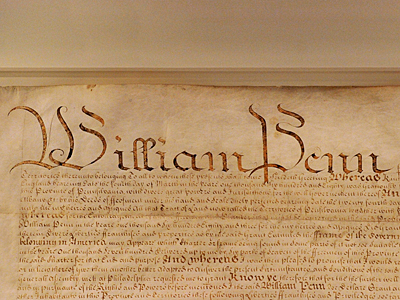
    It’s been an extraordinary summer celebrating America’s 250th, but before we shift our focus from the events of 1776, we would direct the minds of our fellow Pennsylvanians to an earlier period — to the founding of the commonwealth, and to William Penn’s forward-thinking advocacy for religious and political freedom and his belief in democratic self-government. These ideas were central to his political philosophy and plans for the early government of Pennsylvania. They also found their way into the democratic experiment we steward today.

    Although Philadelphia played an important role in setting the stage for a stunning world event — the birth of American democracy — the city was more than just a geographically convenient location for the nation’s founders to gather.

    By the time of the revolution, Pennsylvania had become an important intellectual and economic center of the colonies, and the unique political culture and form of government established at its founding helped inform and inspire the development of American democracy, later embodied in the U.S. Constitution and Bill of Rights.

    As Pennsylvanians, we are the inheritors of this impressive and innovative political heritage, a legacy that should be an important point of civic pride and inspiration for local patriotism.

    Think about this: A decade after Penn arrived in America and began the work of establishing a refuge for religious dissenters, colonial Massachusetts accused nearly 200 individuals of witchcraft and executed 19 people. Massachusetts had a state religion until 1833; Pennsylvania never had a state religion.

    After the end of the short-lived Maryland Toleration Act, Pennsylvania became the only colony where the Catholic Church enjoyed ongoing, legally secure protection.

    Visitors look at historic artifacts as part of the Jewish America 250 celebration at Congregation Mikveh Israel in Center City in July.Monica Herndon / Staff Photographer

    And, of course, Pennsylvania is also home to the “Synagogue of the American Revolution,” Congregation Mikveh Israel, one of the oldest synagogues in the nation, dating to 1740.

    As historian Nicolas P. Miller observed, the success of colonial Pennsylvania was linked in the minds of many onlookers to the freedoms, particularly religious liberty, that its inhabitants enjoyed.

    To remind Pennsylvanians of our special birthright of religious tolerance, farsighted political liberties, and a long tradition of self-government that predate the nation, Poor Richards Charitable Trust, the William Penn Foundation, the Connelly Foundation, and the Syde Hurdus Foundation — in partnership with Drexel University’s Lenfest Center for Cultural Partnerships and the National Constitution Center — are presenting a new exhibit: “Pennsylvania’s Founding: How a City and a Colony Shaped America’s Civic DNA.”

    For the first time, this exhibit will bring together original versions of several of the most important artifacts that helped define the civic and political character of early Pennsylvania, and tell the story of how the founding of the commonwealth helped inspire American democracy.

    Wampum belt, 1682, likely made by Lenape female artisans in the Delaware Valley. Atwater Kent Collection, From the Historical Society of Pennsylvania Collection

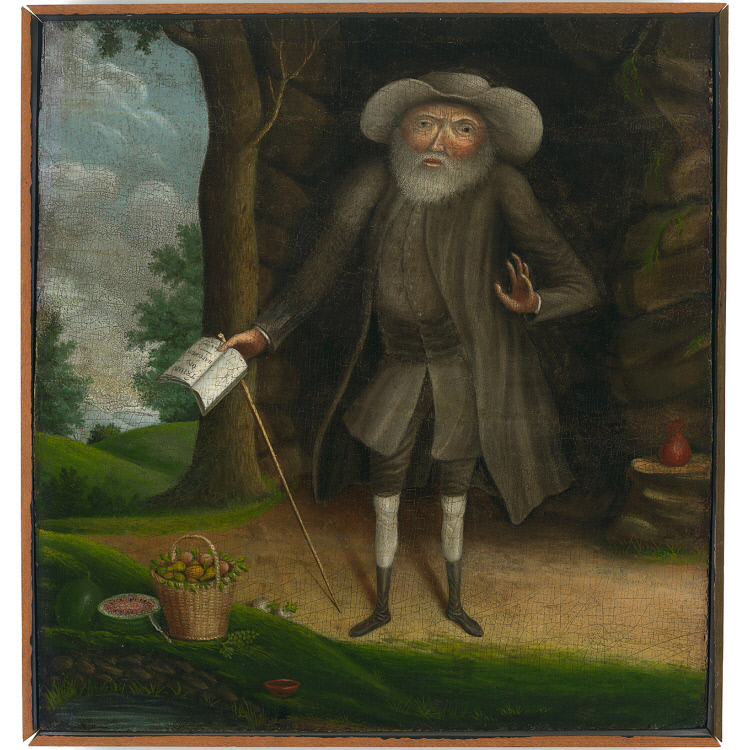
    They include the 1681 Pennsylvania Charter, signed by King Charles II, establishing the colony and granting Penn authority to govern; Penn’s 1701 Charter of Privileges, a framework of government for Pennsylvania until 1776, establishing religious freedom and other liberties and protections; a Lenape wampum belt given to Penn, associated with the 1682 Treaty of Shackamaxon, symbolizing a hoped-for moment of peace and cooperation; the 1696 Quaker Protest Against Slavery, one of the earliest in the Americas, and materials connected to early abolitionist Benjamin Lay; and other artifacts that clearly document Penn’s and Pennsylvania’s key contributions to the establishment of American democracy.

    Painting of abolitionist Benjamin Lay by William Williams at National Portrait Gallery of the Smithsonian Institution.National Portrait Gallery of the Smithsonian Institution.

    The exhibit will be on view to the public, free of charge, at the National Constitution Center from Sept. 30 through Jan. 3, 2027. Learn more here.

    So this fall, let’s continue the Semiquincentennial celebration. We encourage all Pennsylvanians to make a special pilgrimage to the National Constitution Center to see, understand, and remember our political heritage that is ours alone — a world-changing and invaluable inheritance of tolerance that we should continue to aspire to today.

    Tom Riley is the president of the Connelly Foundation. David Seltzer is a trustee of Poor Richards Charitable Trust. Shawn McCaney is the executive director of the William Penn Foundation.

  • Why RFK Jr. and Trump can’t be trusted on measles vaccine safety

    Why RFK Jr. and Trump can’t be trusted on measles vaccine safety

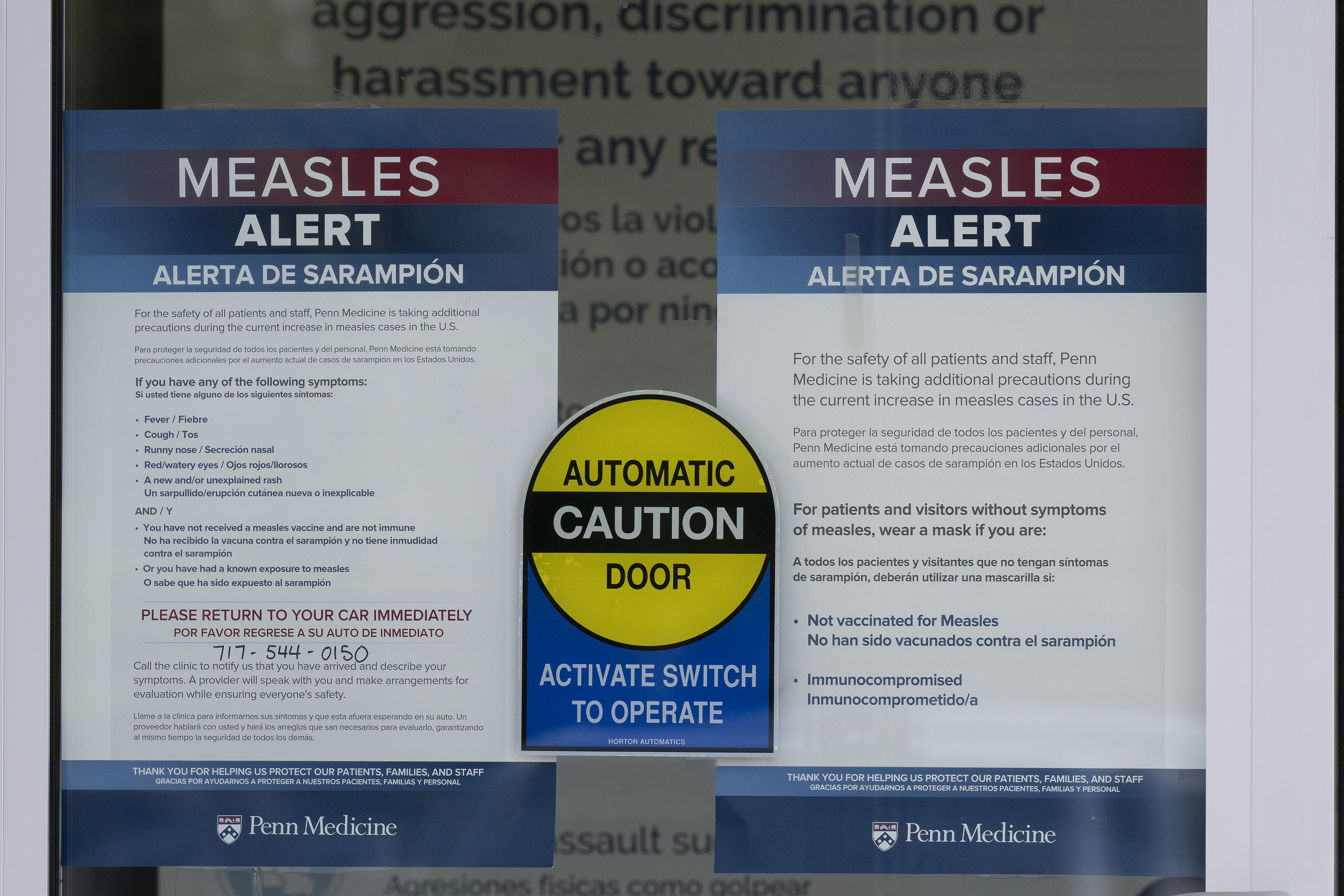
    A brouhaha recently broke out among Pennsylvania’s governor, the new head of the CDC, Health and Human Services head Robert F. Kennedy Jr., and various health agencies in the state about whether two infant deaths in Lancaster County, Pa., were caused by the measles. And now more measles-related deaths are further complicating the dispute.

    Two facts are important to keep in mind.

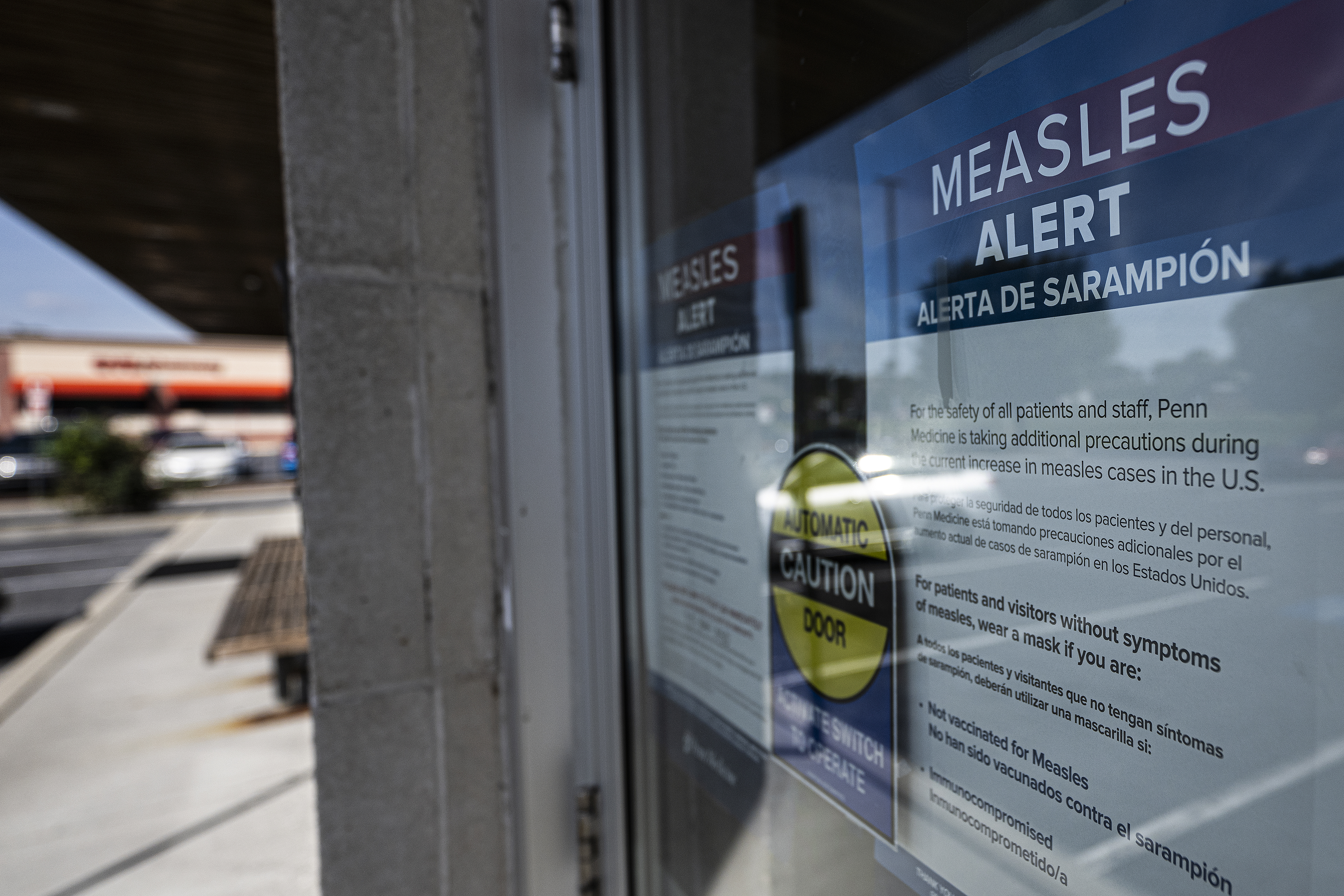
    One is that with a total of nearly 700 measles cases across 36 counties so far this year, maximum information from the Pennsylvania Department of Health about the deaths — particularly the deaths of the infants in Lancaster County — is needed in order to prevent further harm.

    And two, nothing the federal government has to say about measles is trustworthy.

    On Aug. 26, Kennedy told reporters, “We’re doing a better job than any country in the world at controlling the measles outbreak.” He made the same claim in congressional testimony earlier this year, arguing that measles is surging worldwide and the outbreak here is simply part of a global problem.

    It isn’t.

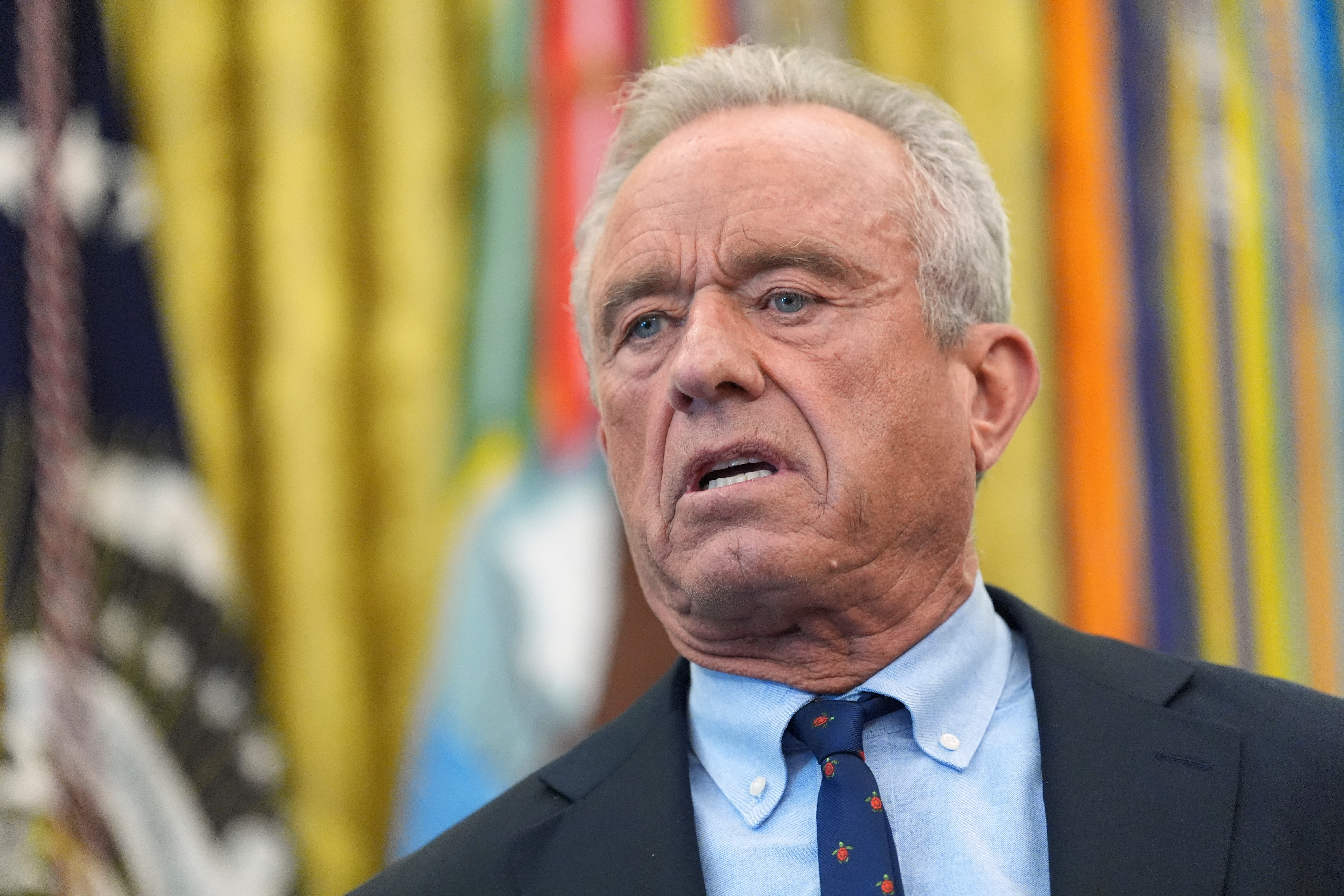
    Health and Human Services Secretary Robert F. Kennedy Jr. speaks during a meeting to sign an executive order about vaccines in the Oval Office last month.Jacquelyn Martin

    Kennedy is not telling the truth. His anti-vaccine efforts, along with President Donald Trump’s unhinged attacks on the measles, mumps, and rubella (MMR) shots — given in two doses to kids before entering kindergarten — have set off a 35-year high incidence of the disease in the U.S.

    What is causing the rapid return of measles is a never-before-seen decline in vaccination rates. This has led to an explosion in measles cases that is, contrary to Kennedy’s assertions, worse than in many other countries.

    Let’s look at the numbers.

    So what is going on elsewhere?

    The WHO European Region cut measles cases by 73% between 2024 and 2025. The U.S. saw an increase: 2,289 cases in all of 2025, and 3,294 already in 2026 — the highest number since 1991.

    Cases are falling in Canada and flat in the U.K. Furthermore, our rate of measles per million people is much higher than Japan’s or Australia’s.

    Why are we doing so poorly?

    Kennedy blames measles coming in from other nations. So does U.S. Rep. Byron Donalds, a Republican from Florida who is running for governor. He keeps pointing to “rampant illegal immigration” during the Biden administration for measles outbreaks.

    Those claims are based on misinformation and bigotry about foreigners.

    A total of 16 measles cases have been reported among international visitors to the United States, whereas 95% of U.S. cases this year are outbreak-associated — meaning they reflect domestic spread.

    Ninety-five percent of those cases occurred in unvaccinated or unknown vaccination status individuals.

    While some cases do have travel-related origins, the spread of measles is a domestic policy failure caused by falling vaccination rates. Other countries have tourists and immigrants, too — but only the U.S. is continuing to see rapidly increasing infection rates.

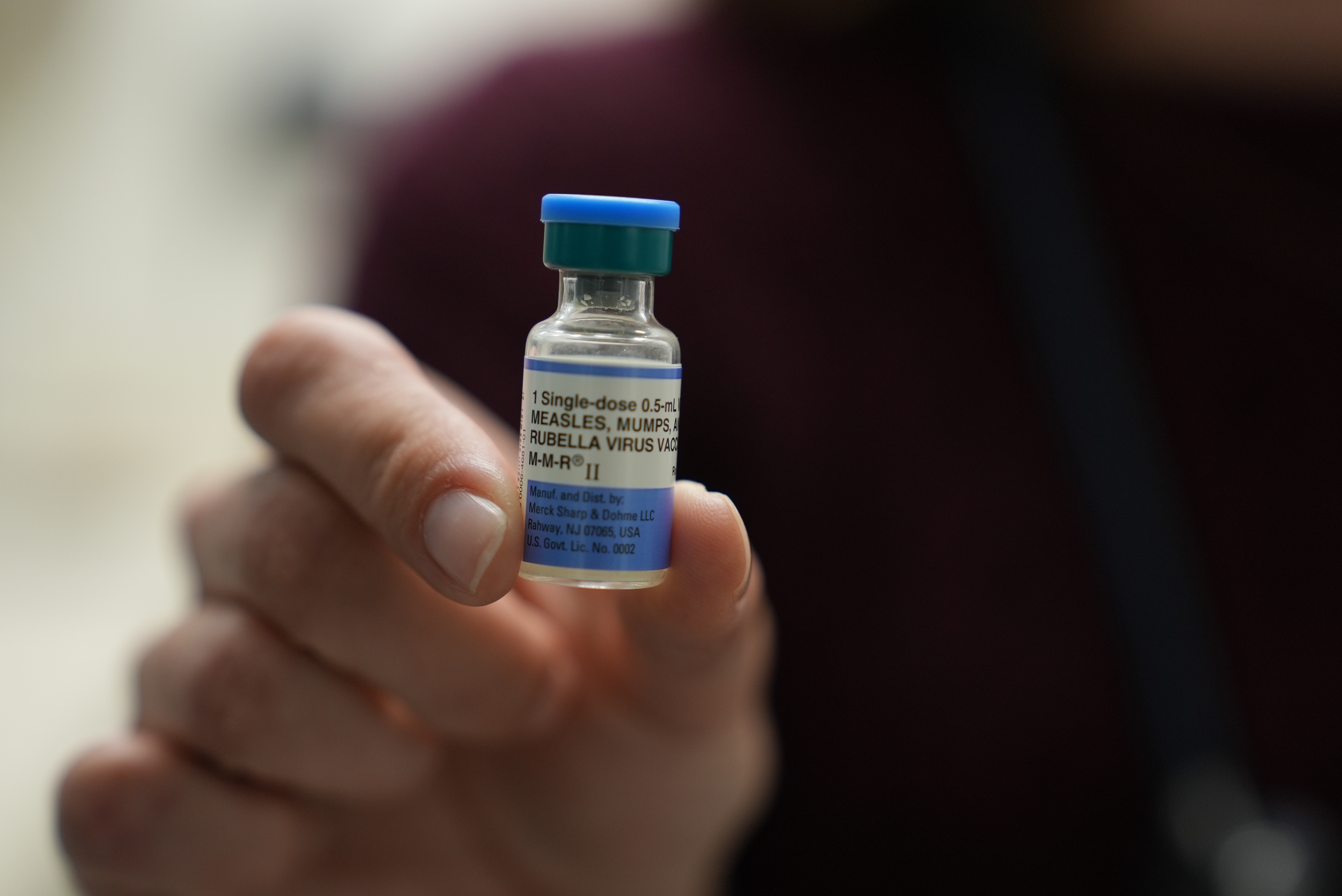
    Jessica Early holds a vial of the combination measles, mumps, and rubella (MMR) vaccine at Prisma Health Pediatrics in Greer, S.C., in March.Mary Conlon

    In the United States, kindergarten MMR coverage has slipped from 95.2% to 92.4%, with vaccine exemptions at a record 4.2%. In some states, the coverage is as low as around 75% — creating perfect conditions for the spread of the highly contagious disease.

    Our national leaders keep pouring inaccurate fuel on the epidemic.

    They suggest autism is a risk from the measles vaccine, that the combined MMR vaccine is lethally dangerous, that kids get too many shots, and that the MMR shot is losing efficacy every year. None of that is true.

    What is true is that measles is a dangerous disease that can cause seizures, immune problems, pneumonia, deafness, or contribute to deaths. Each case can cost as much as nearly $60,000, including the public health response.

    We can’t fight this preventable plague using incorrect data, misinformation, and outright lies. America’s kids deserve so much better.

    Arthur Caplan is a retired professor of medical ethics, soon to be moving to Medford, N.J. Samuel Howard is an undergraduate student at the School of Humanities and Sciences at Stanford University.

  • Letters to the Editor | Sept. 17, 2026

    Letters to the Editor | Sept. 17, 2026

    We need a doctor

    As a former healthcare professional, I applaud The Inquirer’s continuing coverage of the measles outbreak in Pennsylvania.

    Even before his appointment, Robert F. Kennedy Jr. promoted pseudoscience built on anecdote and apocrypha. He holds no medical degree, and his elevation was a political payoff from Donald Trump — the same president who endorsed Kennedy’s specious claim that autism was caused by Tylenol. Now, because of Kennedy’s anti‑vaccine fearmongering, a disease virtually eliminated 25 years ago is making a resurgence, with cases now surpassing the totals from 2025.

    While the vaccine guidelines supported by Gov. Josh Shapiro are endorsed by preeminent public health researchers, Mr. Kennedy has muddied people’s minds with false flags of political overreach.

    The flu season is upon us. How many will turn away from vaccination, clinging to some politicized belief that they have the “right” to distrust validated medical science? It is a regrettable legacy for the Kennedy name — one that risks associating it not with public service, but with the resurgence of preventable diseases.

    Richard O’Connell, Philadelphia

    Building bridges

    What is wrong with a representative who is willing to cross party lines when they agree with the other party’s position? Isn’t this what we want them to do to reach a compromise to get things done instead of this stalemate we currently have?

    We need more representatives like John Fetterman, not fewer. He should be praised, not criticized.

    Robert Mattern, Wilmington

    Expand imagination

    As board chair of Arts Holding Hands and Hearts, I want to draw attention to an extraordinary milestone in our community: More than 11,500 children in Chester County are now registered for Dolly Parton’s Imagination Library. Thousands of others in the Philadelphia metro area are currently enrolled through local library systems and funding partners. This number represents far more than books — it represents hope, opportunity, and the belief that every child deserves the chance to dream more, learn more, and be more.

    To honor Parton’s life, along with the announcement that Sept. 25 will be “Give Like Dolly Day,” Pennsylvania has an opportunity right now to expand this impact statewide. Senate Bill 459, which would support the statewide expansion of the Imagination Library, is currently before the legislature. I urge readers to contact their state senators and ask them to vote yes on SB 459. This is not a political issue — it is a commitment to our children’s futures.

    I also call on Gov. Josh Shapiro and leaders across Pennsylvania to champion this effort. Dolly Parton has shown what is possible when we invest in children without hesitation or division. We should follow her example and ensure every child in our commonwealth has access to the tools, support, and opportunities that early literacy provides.

    Our kids are ready. Our communities are ready. Now we need our leaders to be ready, too.

    Doug Doerfler, Kennett Square

    Join the conversation: Send letters to letters@inquirer.com. Limit length to 150 words and include home address and day and evening phone number. Letters run in The Inquirer six days a week on the editorial pages and online.

  • A judge wouldn’t let Trump put his name on the Kennedy Center. So he closed it.

    A judge wouldn’t let Trump put his name on the Kennedy Center. So he closed it.

    A federal judge wouldn’t let the man-baby in the Oval Office put his name on the Kennedy Center for the Performing Arts. So President Donald Trump shut it down.

    Trump claimed on Truth Social that it was closed “for safety reasons.” He also said renovations won’t happen unless his name can be on the front of the building.

    So there.

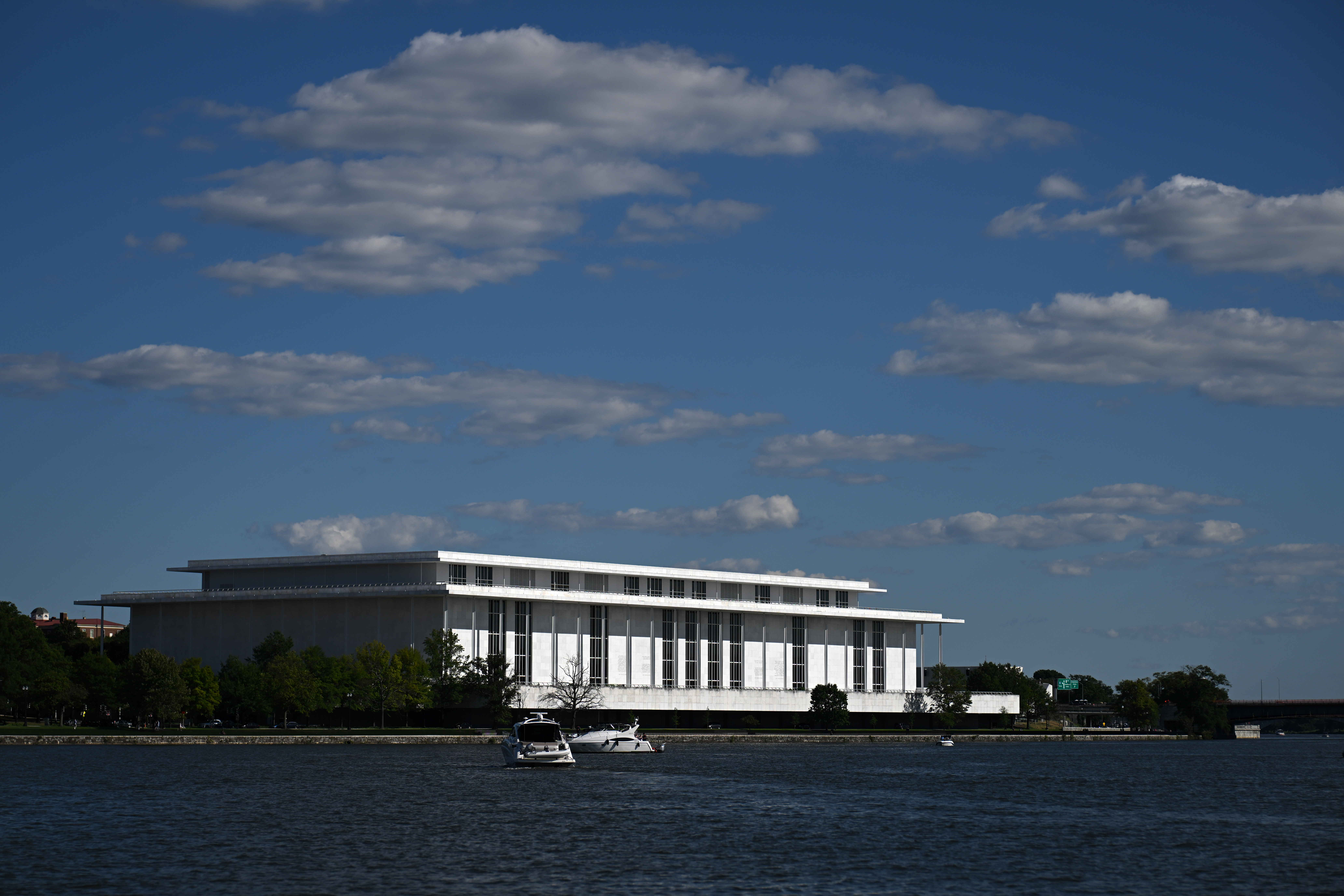
    Closing the Kennedy Center is narcissistic even for someone like Trump. His huge ego now stands between Americans and our right to enjoy one of the most beautiful landmarks in Washington, D.C.

    Yes, I’m mad.

    I grew up in the nation’s capital. D.C. residents are in and out of the Kennedy Center like Philadelphians are in and out of the Kimmel Center. During college, I worked as a tour guide, and I never passed by the building without marveling at its beauty.

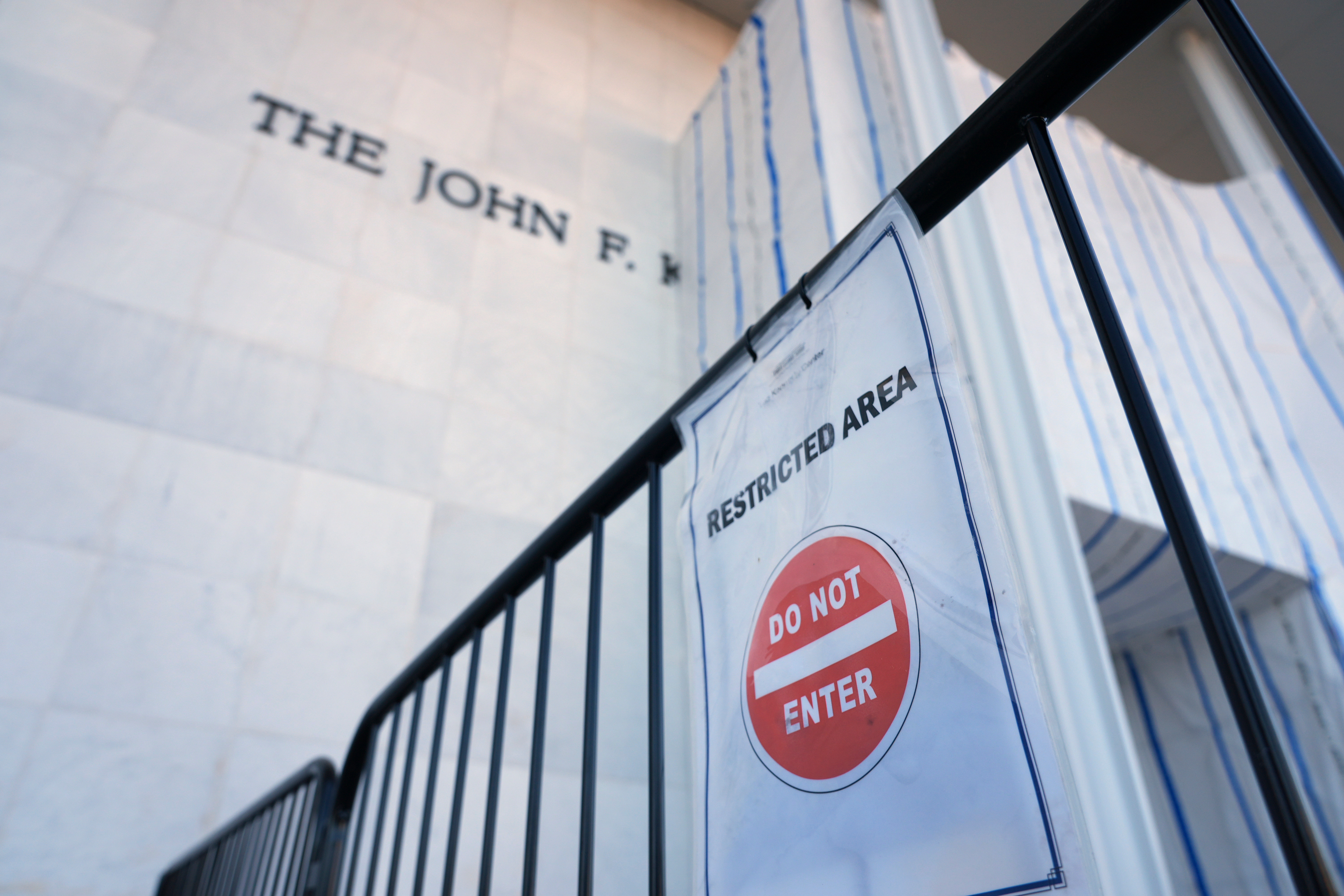
    A sign is placed on a gate outside the John F. Kennedy Center for the Performing Arts in Washington, Tuesday.Jacquelyn Martin

    I’m grateful that I got to spend time inside twice in recent months. The first time was in June after I took a train to Washington to see for myself what was going on with the Reflecting Pool and Trump’s renovation fiasco there.

    Afterward, I headed to the Kennedy Center to see if Trump’s name had been removed as a court had ordered. It was hard to tell for certain because a giant white tarp had been placed in front of the building.

    I gazed up at that for a bit before deciding to venture inside. Many performers canceled their shows following Trump’s hostile takeover of the venue’s board of directors, purportedly because the center’s programming was too “woke.”

    A uniformed guard directed us to a massive sunlight-filled dining room with glorious views of the skyline. Our jaws dropped. We practically had it to ourselves. We were the only visitors. A cafeteria worker piled an extra-large helping of teriyaki salmon and rice on my plate, while my sister placed an order for a smash burger. We carried our trays to a table near one of the gigantic windows so we could enjoy the view. The food tasted as good as homemade.

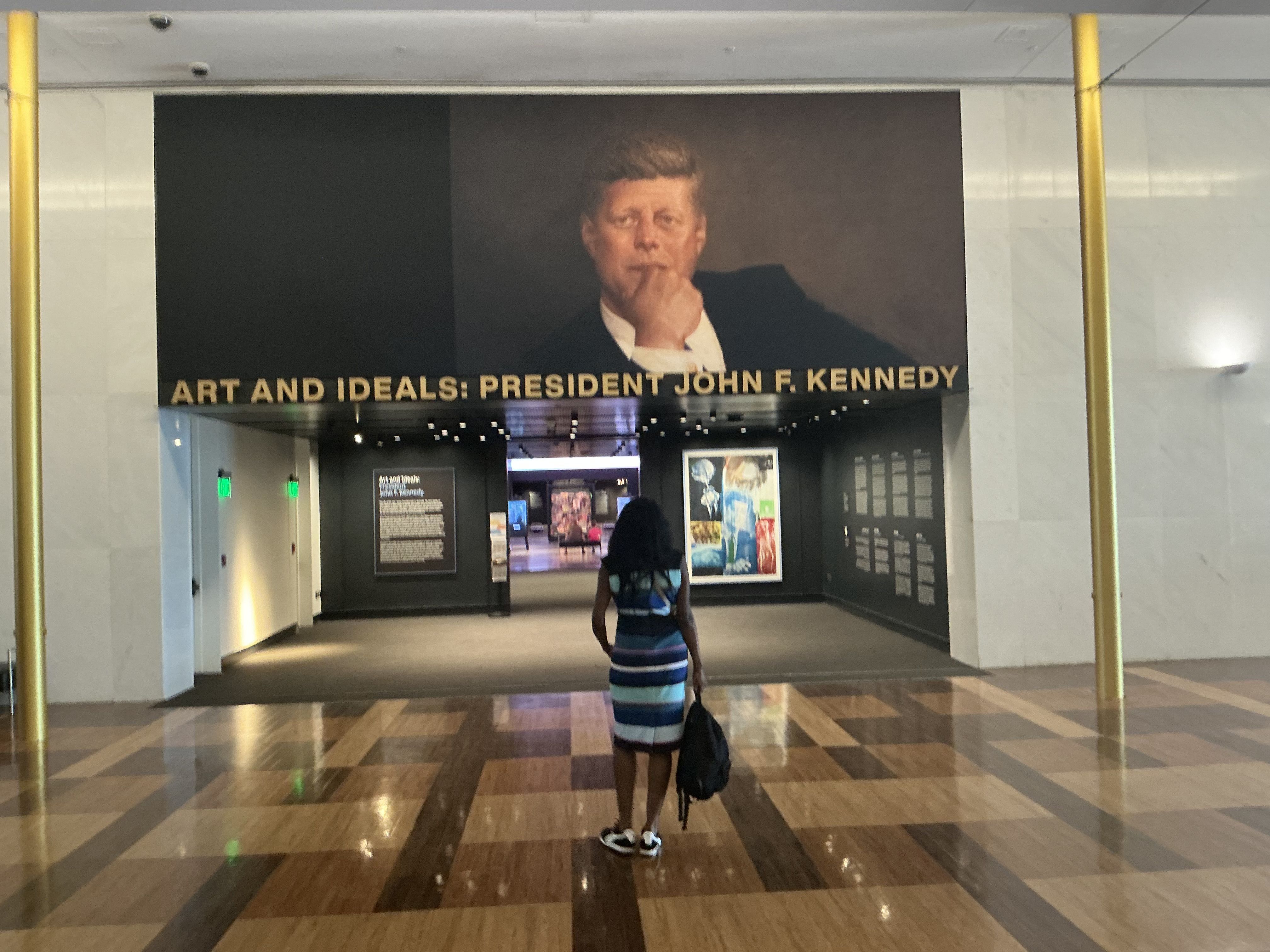
    Inquirer columnist Jenice Armstrong pauses outside an interactive exhibit about the life of President John F. Kennedy inside the Kennedy Center for the Performing Arts in Washington, D.C., in June.Jenice Armstrong

    Afterward, we decided to explore the interactive exhibit dedicated to the art and ideals of President John F. Kennedy. We took our time wandering around. Perhaps we sensed that with all the orange spray-tanned storm clouds hovering over the institution, this might be a moment to savor — and that a major change was imminent.

    Reading about the Kennedy era made me nostalgic. My late parents had been huge fans because of Kennedy’s work advancing the cause of civil rights. My mother admired the grace and style of first lady Jacqueline Kennedy so much that she considered naming me after her.

    Kennedy personified youthful optimism. He inspired Americans to be civic-minded and urged people to “Ask not what your country can do for you — ask what you can do for your country.” Kennedy founded the Peace Corps and created the U.S. Agency for International Development, which the Trump administration decimated last year.

    The two presidents couldn’t be more different. Kennedy, a Democrat, was a decorated hero of World War II; Trump never served, reportedly getting five draft deferments, including one by claiming he had bone spurs.

    Trump intentionally stokes racial divisions. He launched his presidential campaign in 2015 by calling Mexicans rapists and drug dealers. Kennedy sent federal troops and U.S. marshals to the Jim Crow South to protect Black civil rights demonstrators.

    I went back to the Kennedy Center about a week later, after returning to the National Mall to write about Trump’s Great American State Fair — which wasn’t so great. This time around, we arrived too late to eat, so we grabbed a few bags of chips and sat in a lobby for a bit.

    Again, I took my time at the exhibit about the life and legacies of the Camelot era. I noted how the first lady back then transformed the White House Rose Garden into an oasis.

    There are no oases allowed in the Trump era, however. He tore up the roses, poured cement over the garden, and rendered it lifeless.

    Sounds a lot like what he’s doing to the Kennedy Center.