Category: Opinion

  • Trump’s kowtow to China on Taiwan risks tech disaster for the U.S. and the world

    Trump’s kowtow to China on Taiwan risks tech disaster for the U.S. and the world

    Recently, I attended a showing of a fascinating documentary called A Chip Odyssey that laid out the history of how that small self-governing island democracy of Taiwan came to manufacture around 90% of the world’s most advanced semiconductor chips.

    It was not at all, as President Donald Trump keeps insisting, because Taiwan “stole our chip industry.” The real reason is one Americans need to understand: if China ever manages to take control of Taiwan, it will cause a U.S. and global economic disaster that would make the Strait of Hormuz blockade look like child’s play.

    It would halt America’s global dominance in the field of artificial intelligence, since U.S. AI companies all depend on sophisticated chips fabricated by the Taiwan Semiconductor Manufacturing Co., known as TSMC. As the Wall Street Journal put it, “the island is now the factory floor” for U.S. leadership in AI.

    Yet, Trump, before, during, and after his May summit with Xi Jinping, has continued to belittle Taiwan. He discussed a planned $14 billion U.S. arms sale with Xi, despite a long-standing pledge to Taiwan, made by President Ronald Reagan, that U.S. weapons support for the island would never be subject to China’s approval.

    Trump has now frozen the weapons sale, saying it could be “a bargaining chip” with Beijing.

    The president has repeatedly hinted at his reluctance to defend a place that’s “9,500 miles away.” And he frequently argues that the production of advanced chips could and should be moved to the United States.

    My conversations with the director of A Chip Odyssey, Hsiao Chu-Chen, and coproducer Ben Tsiang (along with my recent trip to Taiwan) made clear why it will be years before the U.S. can onshore production of even a modest percentage of its chip needs. The film offers a moving history of how a small, poor island became a tech giant because it had no choice.

    Hsiao Chu-Chen, left, director of “A Chip Odyssey,”  and the documentary’s co-producer Ben Tsiang in Philadelphia in May.Trudy Rubin

    “I wanted to tell the history of Taiwan’s semiconductor industry, not just about the achievement itself, but how people strived to achieve what they did,” Hsiao told me over coffee in Philadelphia. Fifty years ago, the island was almost abandoned by the international community after the United Nations switched the China seat to Beijing and expelled Taiwan, she told me. “Taiwan is so tiny, with no minerals, so we needed to find a way we could survive.”

    After consulting with Taiwanese American engineers working in the United States, the Taipei government decided to focus on high tech. In the mid-1970s, it licensed and paid for semiconductor technology transfer from RCA, a common process. Nothing was stolen — and, at the time, this technology wasn’t new or mainstream, and was only a minor focus at RCA.

    Taiwanese engineers traveled to the United States to master manufacturing technology, returned, and vastly improved it. They began transferring it to the manufacture of consumer electronics such as watches, personal computers, and cell phones.

    Fast-forward, when a brilliant Chinese American engineer and star at Texas Instruments named Morris Chang was recruited by Taipei in 1987 to advance its semiconductor industry. He conceived the idea of a “fab-less” process, where small companies in Taiwan and elsewhere, and huge ones in the U.S., could focus on design and research to constantly update the technology, while Taiwan would be the foundry that manufactured complex chips to their specifications.
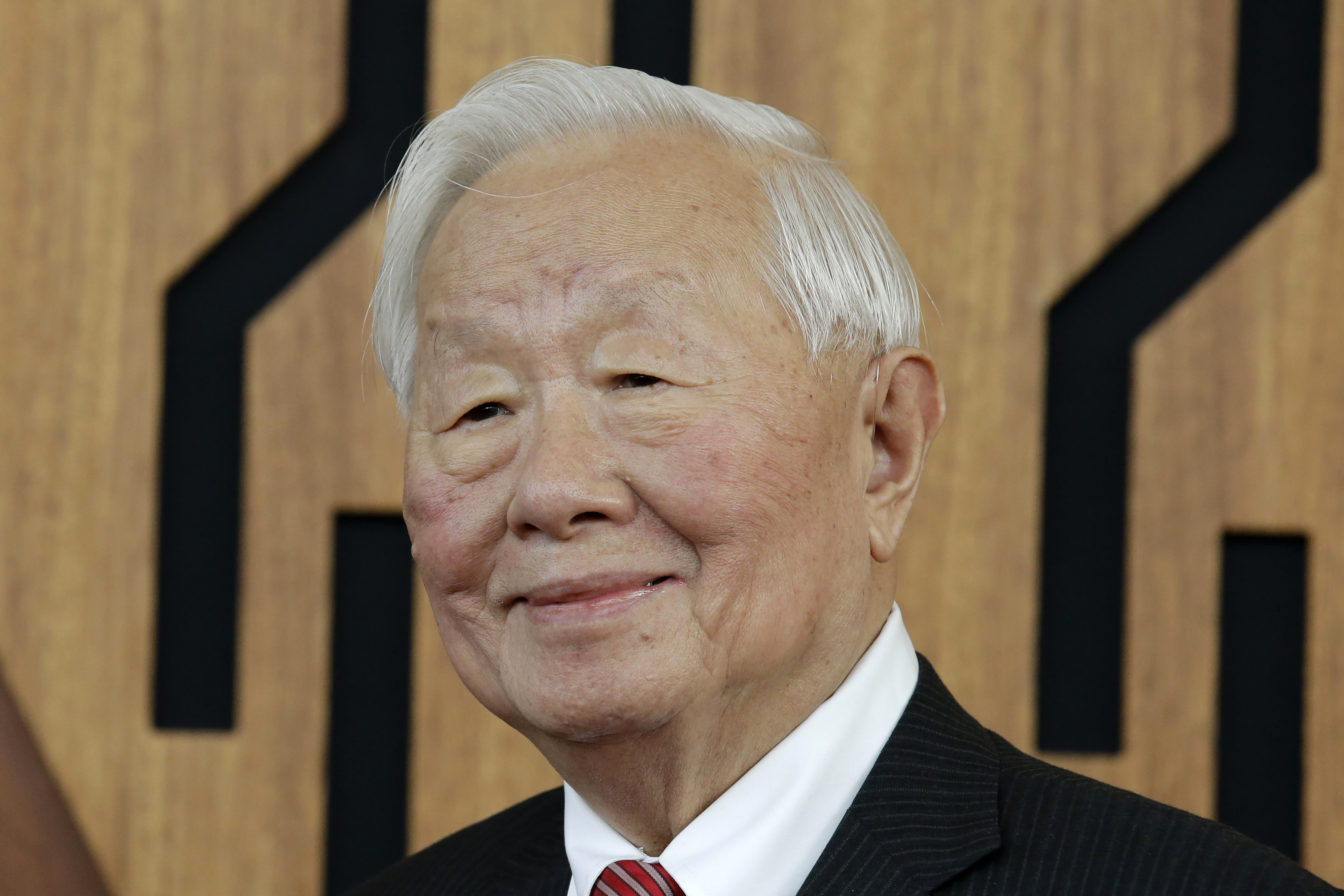
    Morris Chang, founder of one of the world’s largest chip manufacturers, TSMC, smiles at the start of the APEC Economic Leaders Meeting at Port Moresby, Papua New Guinea, in 2018.Aaron Favila

    For example, Hsiao explained, “TSMC makes chips based specifically on designs from Nvidia [a global leader in technology, based in California], so it is not competing with them.” And TSMC has built up the trust of its many U.S. and international partners because it never leaks information. In fact, it hardly ever allows journalists (myself included) within its sprawling precincts at the Hsinchu Science Park, an hour outside Taipei.

    “The most important principle [of TSMC] is integrity,” said the film’s director. “Companies don’t have to worry that their technology will be stolen, as it has been in China.” Moreover, TSMC invests massively in research and development to keep its foundry on the cutting edge.

    Fabricating chips “is not like manufacturing nails,” I was told by one scientist who studies TSMC and preferred not to be named, “but it is an intense, complex, and layered process. You need to update, improve the technology all the time.”

    When Chang pioneered his “fab-less” concept, making Taiwan the world’s semiconductor foundry, it was a huge risk, but it paid off beyond his dreams.

    “I understand that some Americans are anxious about losing leadership in the semiconductor industry, but Taiwan earned its place with decades of talent, tireless innovation,” producer Tsiang said intently. “It took daring investment across generations to build what we have today. That is what we were trying to show.

    “But it is not a zero-sum game with America. Taiwan’s rise is deeply connected to collaboration with U.S. companies, and will be in the future.”

    Indeed, the choice by companies such as Nvidia or Intel to outsource fabrication of chips to Taiwan was based on profit-seeking, since it vastly lowered costs.

    The Americans could also rely on the massive Taiwanese production and talent ecosystem that feeds into TSMC. As the film shows, engineers there rotate in three shifts, so they are always present and are ready to show up at 2 a.m. if machinery needs adjusting.
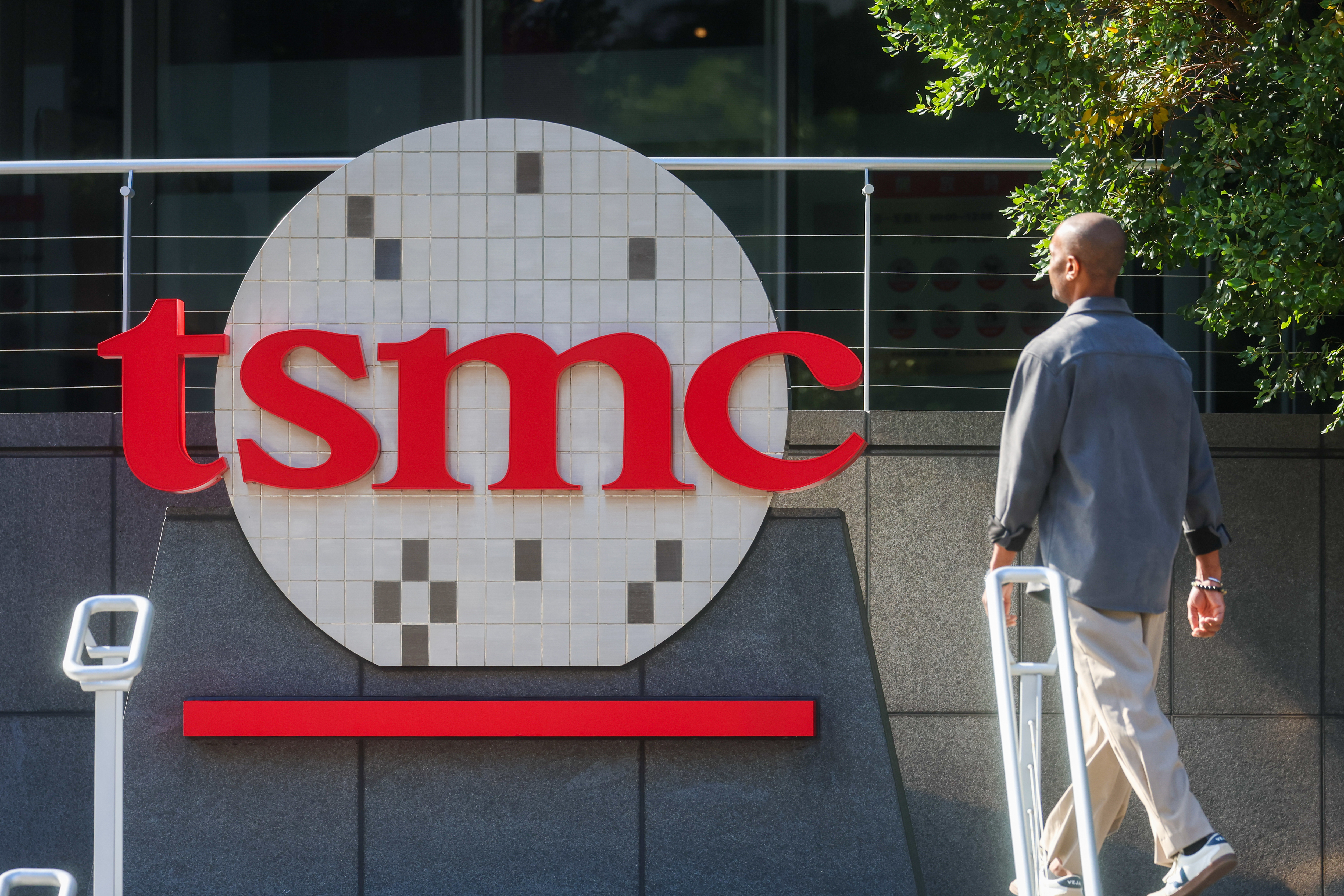
    A worker walks past the logo of TSMC, or Taiwan Semiconductor Manufacturing Co., a Taiwanese multinational semiconductor contract manufacturing and design company, in Hsinchu, Taiwan, in January.Daniel Ceng

    Which brings us to the question of whether a huge chunk of the foundry production could easily be moved from Taiwan and installed in the United States, as Trump demands.

    TSMC has committed $165 billion to build six “fabs” (as fabrication plants are called) in Phoenix. Yet, only one is operating, and one more will come online this year.

    The difficulties are obvious. Besides far higher operating costs than in Taiwan and the far more casual American work ethic, there is the huge problem of finding the engineering talent in the United States — both to maintain complex machinery and oversee complex operating processes.

    “In Taiwan, all the top university graduates go to TSMC,” Tsiang told me. “In the United States, the top university graduates go to Washington, D.C., or Silicon Valley. There is a real test in how the U.S. can develop a talent pool.”

    Links are being established with the University of Arizona and other potential feeder schools to programs aimed at filling TSMC positions. But this is a process that will take years.

    At present, the Phoenix fabs depend on around 2,000 Taiwanese engineers and staff. There are seven direct flights a week from Taipei to Phoenix.

    In Taiwan, audiences tear up at showings of A Chip Odyssey as they listen to elderly scientists reminisce about their years of building TSMC from the ground up. I wish more Americans could see the film, but it is only available for now at special showings. (However, you can watch the trailer as well as an extended interview with the director and producer on YouTube.)

    Yet, the cost to America of a possible Chinese takeover of Taiwan in the next decade is almost unimaginable, even though Trump seems to dismiss it. His ignorance of the real story of Taiwanese semiconductors is infuriating and dangerous.

    Perhaps some of Trump’s tech-bro pals can get the message across to him before we all suffer the consequences of losing TSMC.

  • Trump administration wants to give Afghans who helped U.S. forces a choice between death and disaster

    Trump administration wants to give Afghans who helped U.S. forces a choice between death and disaster

    Just when you think the White House policy toward refugees can’t get any uglier, it sinks to new depths that should infuriate Americans of all political persuasions.

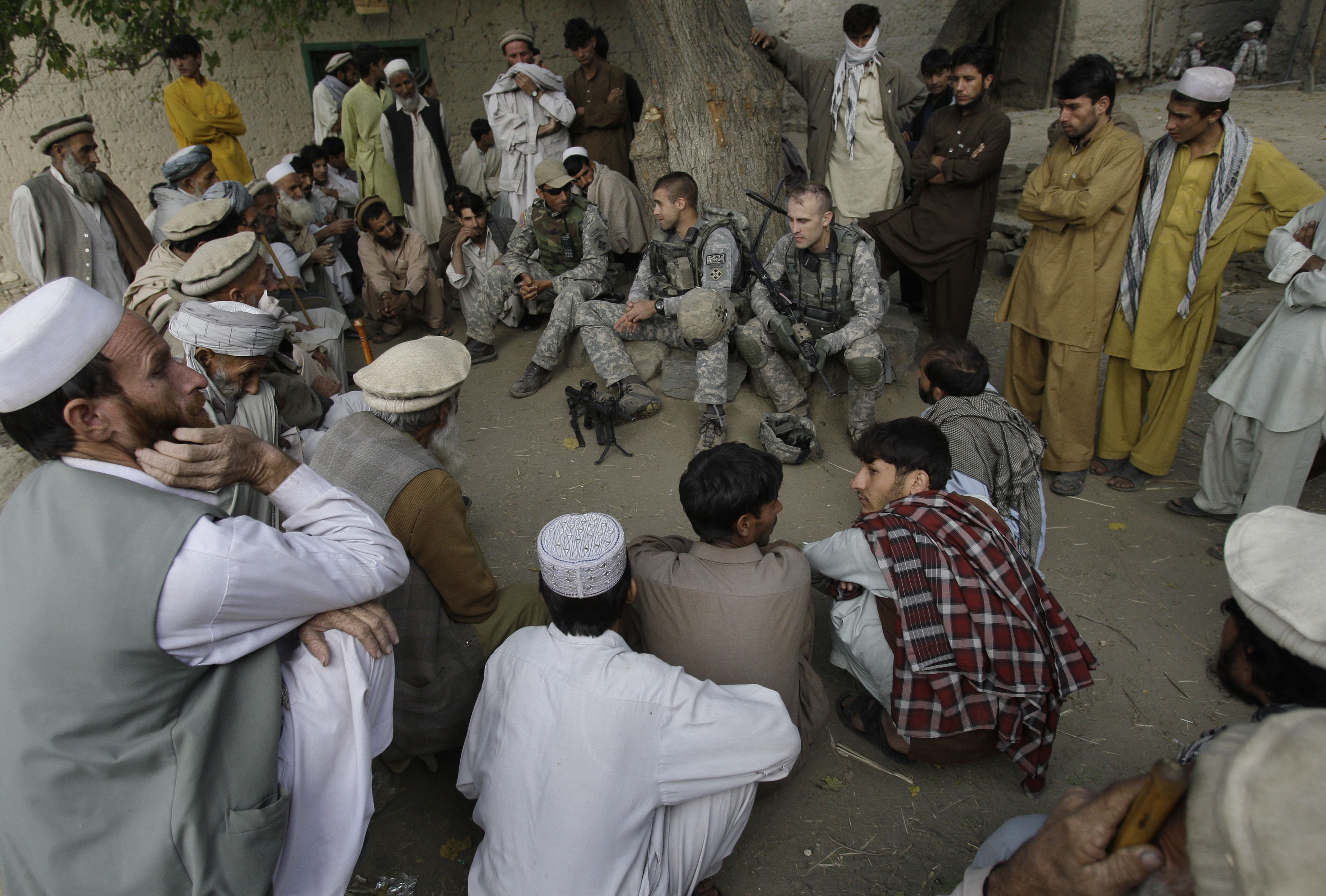
    After the suspension in November of a resettlement program for Afghans who helped U.S. soldiers and civilians, the Trump administration is now trying to send up to 1,100 of such Afghan refugees to the Democratic Republic of Congo. These include former interpreters for the U.S. military, former members of the Afghan Special Operations forces who worked alongside their U.S. counterparts, and families of U.S. service members — including about 400 children.

    These Afghans are trapped in limbo at a former U.S. military base in the Gulf emirate of Qatar (amidst the U.S.-Iran war), where they were taken in late 2024 for a short stay while they completed the resettlement process.

    Now, the U.S. Department of State wants to rid itself of the problem, and these refugees may soon be given a brutal choice between death and disaster.

    One option will be to return to Afghanistan, where many are on the Taliban death list for aiding Americans. The other choice would be the Democratic Republic of Congo (also known as the DRC), a country in central Africa enmeshed in bloody civil wars that have killed and displaced millions.

    Why would U.S. officials choose the DRC? A State Department spokesperson told the New York Times the focus is on “voluntary resettlement.” Refugee organizations beg to differ.

    “They have been trying to wash their hands of these Afghans,” I was told by Shawn Van Diver, president of the aid group AfghanEvac. “The DRC may be the only ones who will play ball with them. So the DRC is rising to the top.”

    Other refugee aid groups are equally horrified, as we all should be.

    “It is horrific and absurd to think of it as a viable option to send persecuted people to a country in the midst of active conflict and listed as Do Not Travel by the State Department,” said Jennifer Patota, deputy director of U.S. legal services at the International Refugee Assistance Program.

    “This is a complete betrayal of our promise to Afghans who stood by us. Any future partners will be watching,” she said.

    But concepts like honor and loyalty or even simple human decency don’t move the White House officials who devise U.S. refugee policy. They should, however, move every citizen and U.S. legislator who cares about the future safety of our military, and the immorality of U.S. leaders eager to sell out allies.

    This latest disgrace sent my mind racing back to President Joe Biden’s shameful and botched withdrawal from Afghanistan (following on Trump’s equally shameful first-term pullout accord with the Taliban). After many trips to Afghanistan, I tried, as did so many U.S. journalists, former U.S. military, and U.S. officials who had served there, to get friends and comrades out.

    One of those, whom I wrote about, was a judge who had worked with U.S. officials and had stellar recommendations for the special immigrant visa, known as an SIV, for those who helped Americans. After harrowing months hiding outside Kabul with the Taliban on his heels, and then waiting a year in Pakistan for an SIV, he finally had to return to with his ill wife to Afghanistan when their Pakistani visas expired. I can’t use the judge’s name because he is in hiding.

    Although he had completed essential parts of the application process, the Trumpers froze the program at the end of 2025. The supposed reason was a murder in Washington, D.C., by an Afghan refugee (not an SIV holder). Absolutely no excuse for rejecting Afghans who risked their lives to help U.S. personnel.

    I spoke about this latest Afghan tragedy to Najib Bakhshinda, a former journalist, who, with his human rights lawyer wife, now heads a nongovernmental organization (NGO) in Canada called GCARR-CANADA that works to help refugees facing danger. Along with their four sons, they made it from Kabul to Ottowa.

    I asked Bakhshinda what would happen if the Afghans in Doha returned to Afghanistan.

    “They will simply get killed,” he replied. “The Taliban have an official office in Doha, Qatar, and they know who is in Camp As Saylihah [where the Afghans are held]. They even visited the camp and tried to ask about the residents, but people don’t trust them.”

    So let me repeat: The White House wants our Afghan allies trapped in Doha to choose between terrible danger and likely death.

    What makes this story even darker is the Kafkaesque process that doomed many of these refugees after they reached Doha. “There had been pre-vetting before they reached the camp,” I was told by Andrew Sullivan, a military veteran who served in both Iraq and Afghanistan, and now heads No One Left Behind, an organization that helps Afghans resettle here.

    But many of the 1,100 couldn’t qualify for SIVs because of arcane regulations, so they had to apply as refugees.

    For example, Afghan Special Forces operators who fought side-by-side with and supported U.S. troops were disqualified if the Afghan government paid them rather than the U.S. military. Yet, the Taliban wants them dead just the same.

    There are cases where a child of an SIV applicant aged out at 21 while the family waited years for their visa, and thus was no longer eligible. Or interpreters for U.S. units — prime targets of the Taliban — who didn’t work the required 365 days.

    “Absolutely, exceptions should be made if they pass final security clearance,” insisted Sullivan, whose organization helped resettle 3,300 Afghan and Iraqi SIV holders. And, if the U.S. is still unwilling, said Sullivan, then officials should ensure they are going to a safe country where they can survive.

    Once upon a time, a bipartisan movement of veterans in Congress promoted laws to enable Afghans who helped us to get visas. But as time passed, and foreign policy crises multiplied, the issue faded from view.

    “There is still strong bipartisan support, but the issue has fallen out of sight,” Sullivan said. “Congress needs to act. It can change the law any time.” Or, I’d add, it can press to revive the SIV program the White House froze. Pressure can also be brought on the State Department to drop the two despicable options it is trying to impose on the Afghans in Doha.

    This is a refugee issue that all Americans should be able to unite behind.

  • White House rejection of Ukraine’s help to fight Iranian drones may cost U.S. military lives

    White House rejection of Ukraine’s help to fight Iranian drones may cost U.S. military lives

    Nothing so perfectly demonstrates Donald Trump’s reckless approach to waging war on Iran than his rebuff of Ukraine’s offer to share drone technology that could save U.S. military lives.

    Clearly, the president had little idea what he was getting into when he joined Israel in bombing Iran and killing its top leadership. This was a war of choice — the ugly Iranian regime posed no immediate threat to the U.S. — but Trump thought the effort would be easy.

    As his tsunami of Truth Social verbiage and endless stream of comments to reporters show, he expected a quick victory — either a popular uprising leading to regime change, or a Venezuela-type win in which the ouster of a dictator (or ayatollah) let him dominate the country and its oil.

    How any president could be so willfully blind is a question for psychiatrists, but Tehran ain’t Caracas. POTUS failed to foresee the obvious: that Iran would likely retaliate by closing the Strait of Hormuz to oil exports from the Persian Gulf for the very first time.

    Voila! U.S. gas is at over $4 a gallon, and the entire world economy is threatened if the strait isn’t reopened. Now, Trump faces only bad options in a war he clearly doesn’t understand.

    Despite his claims, indirect U.S. contacts with Tehran via Pakistan are likely going nowhere since the president is demanding total surrender, and Israel keeps wiping out potential Iranian negotiators.

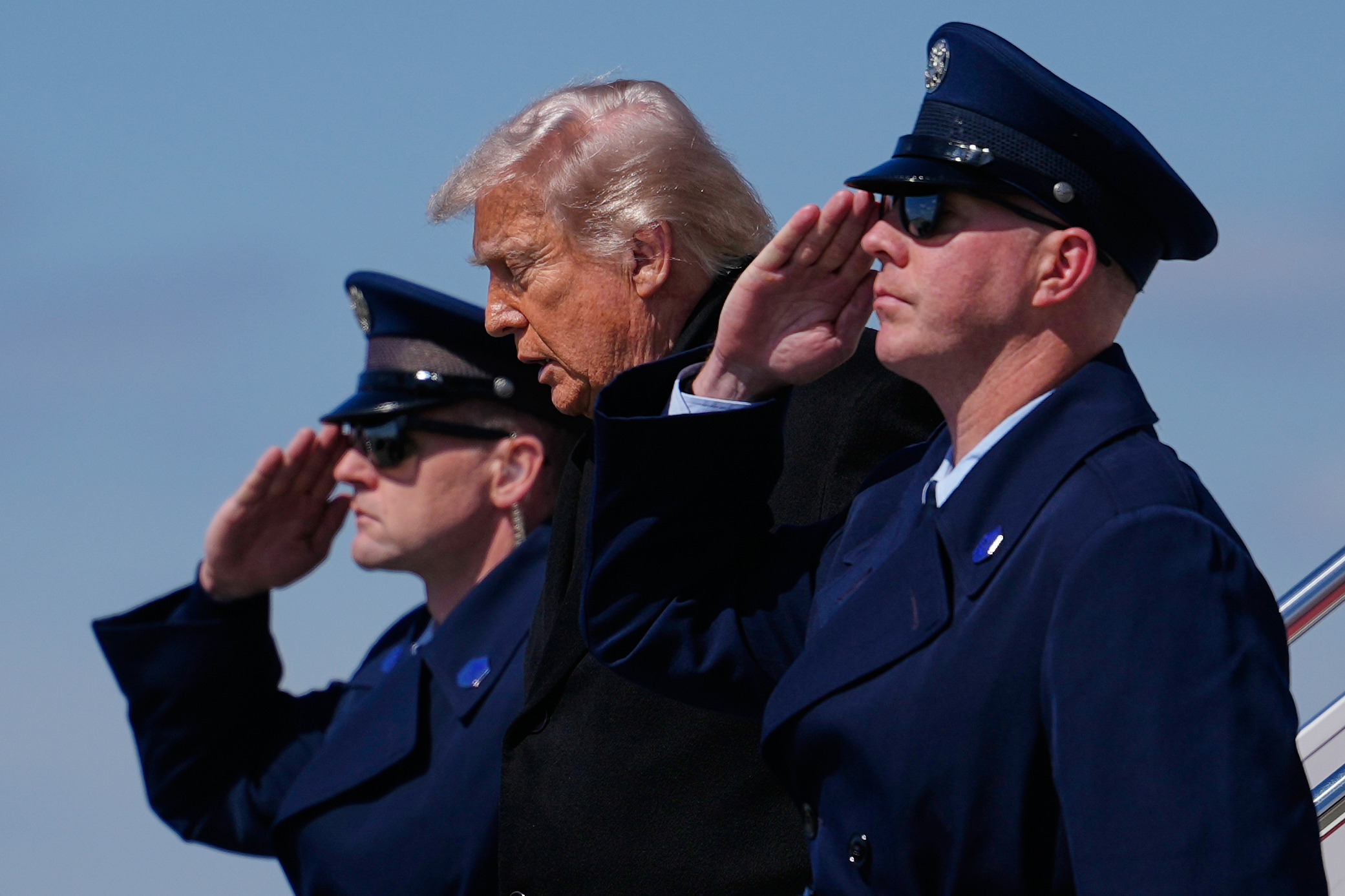
    President Donald Trump arrives on Air Force One at Dover Air Force Base, Del., on March 18 to attend the casualty return for the six crew members of an Air Force refueling aircraft who died when their plane crashed in western Iraq while supporting operations against Iran.Julia Demaree Nikhinson

    Most scary, as POTUS keeps dispatching more troops to the Mideast, he seems oblivious to the nature of the war in which he has enmeshed our conventional forces. For the first time, the United States is facing the new style of hybrid warfare that Ukraine has been waging for four years against Russia.

    Neither the White House nor the Pentagon is ready. Yet, Trump keeps rejecting President Volodymyr Zelensky’s offers of vital help.

    The Iran war has exposed how unprepared the United States still is for modern conflicts in which large numbers of inexpensive unmanned drones and smaller, cheaper missiles can be used asymmetrically against pricey U.S. conventional weapons.

    Over the past four weeks, Gulf allies and U.S. forces have been downing Iranian Shaheds, drones that cost $20,000 to $50,000, with Patriot interceptors and other multimillion-dollar systems meant for targeting ballistic or cruise missiles.

    The U.S.-made Patriots are in increasingly short supply, as the demand for them mounts in Europe, including Ukraine, and Asia — as well as among Gulf allies whose infrastructure is now being attacked by Tehran.

    In the first four days of the Iran war, according to figures published by Philadelphia’s Foreign Policy Research Institute, the Gulf allies used up 618 Patriot PAC3 missiles, the equivalent of a whole year’s production by Lockheed Martin.

    In those first four days, the Pentagon likely fired about $5.7 billion worth of interceptors to shoot down Iranian ballistic missiles — and drones.

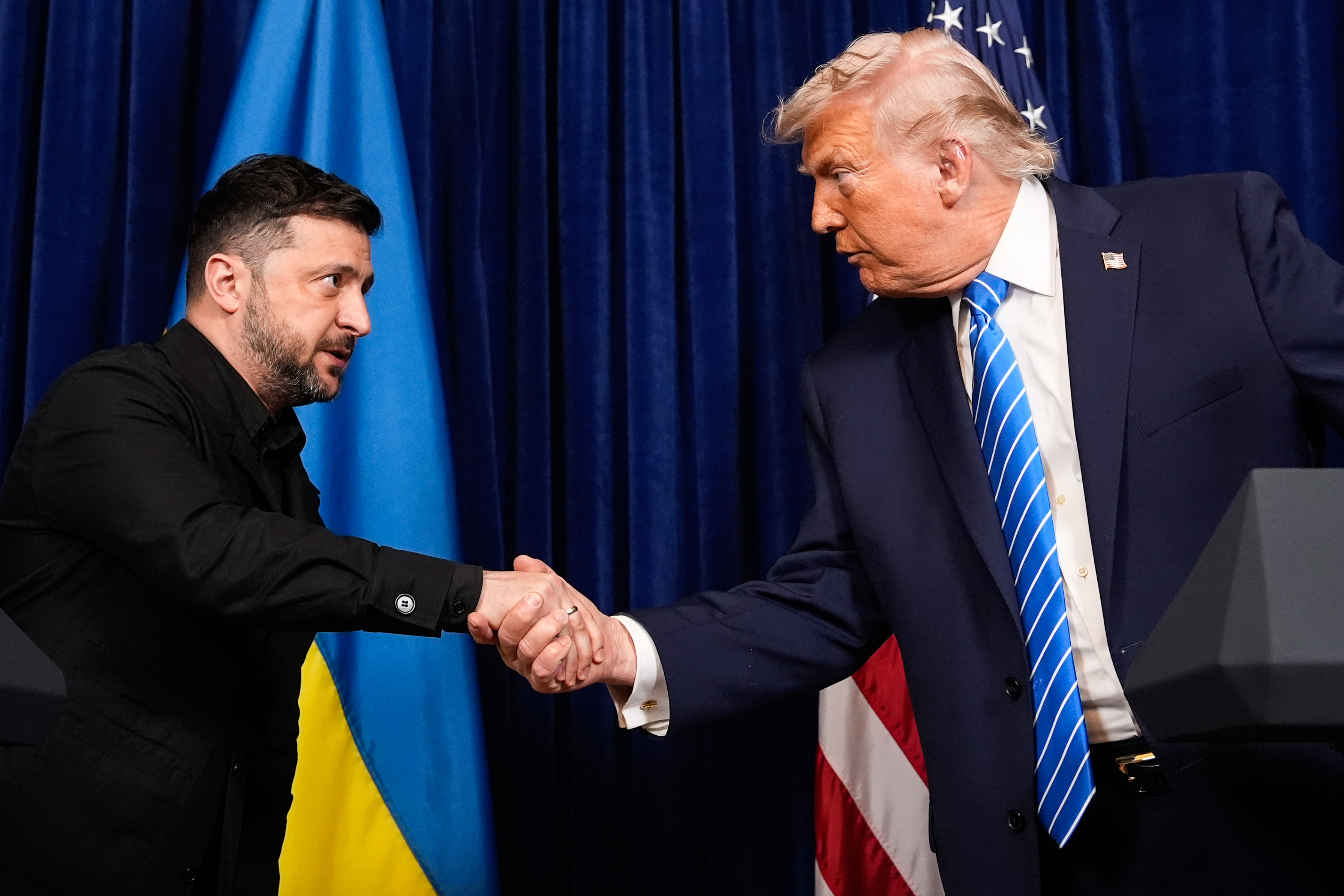
    President Donald Trump and Ukraine’s President Volodymyr Zelensky shake hands at the start of a joint news conference following a meeting at Trump’s Mar-a-Lago club in December.Alex Brandon

    It is infuriating, then, that Trump keeps rejecting help from the country that knows better than any other how to counter drone attacks, especially Iranian Shaheds.

    It was Iran that first sent Russia the Shahed drones Moscow has used relentlessly to attack Ukrainian soldiers and cities. Vladimir Putin, in turn, has upgraded those drones and is transferring drone technology and satellite intelligence to Tehran to help target U.S. soldiers in the region. (Yet, Trump still insists on giving Russia a pass.)

    Zelensky offered nearly a year ago to share Ukraine’s experience and technology, and to send drones and interceptors that have been tested and constantly updated on Ukraine’s front lines. In return, he requested U.S. air defense missiles that Europe would pay for.

    “Today, Ukraine has more experience than anywhere in the world to defend against drones,” I heard the Ukrainian president tell European leaders at the Munich Security Conference in February. “Iranian Shaheds are killing our people. Our world of drones is your world of drones. Our ability to stop this sabotage is yours.”

    But POTUS keeps turning the Ukrainian leader away.

    Sneering at Kyiv’s offer, Trump insisted in March that the U.S. military didn’t need Ukrainian expertise. “No, we don’t need their help. We know more about drones than anybody,” the president boasted in a Fox News interview. That simply isn’t true.

    If U.S. Marines and soldiers try to take Iran’s key oil depot on Kharg Island, or attempt an extremely risky effort to unearth buried stores of enriched uranium at Isfahan, they will provide rich targets for drone warfare. The island is only around 21 miles from the Iranian mainland, within easy reach of waves of Shaheds.

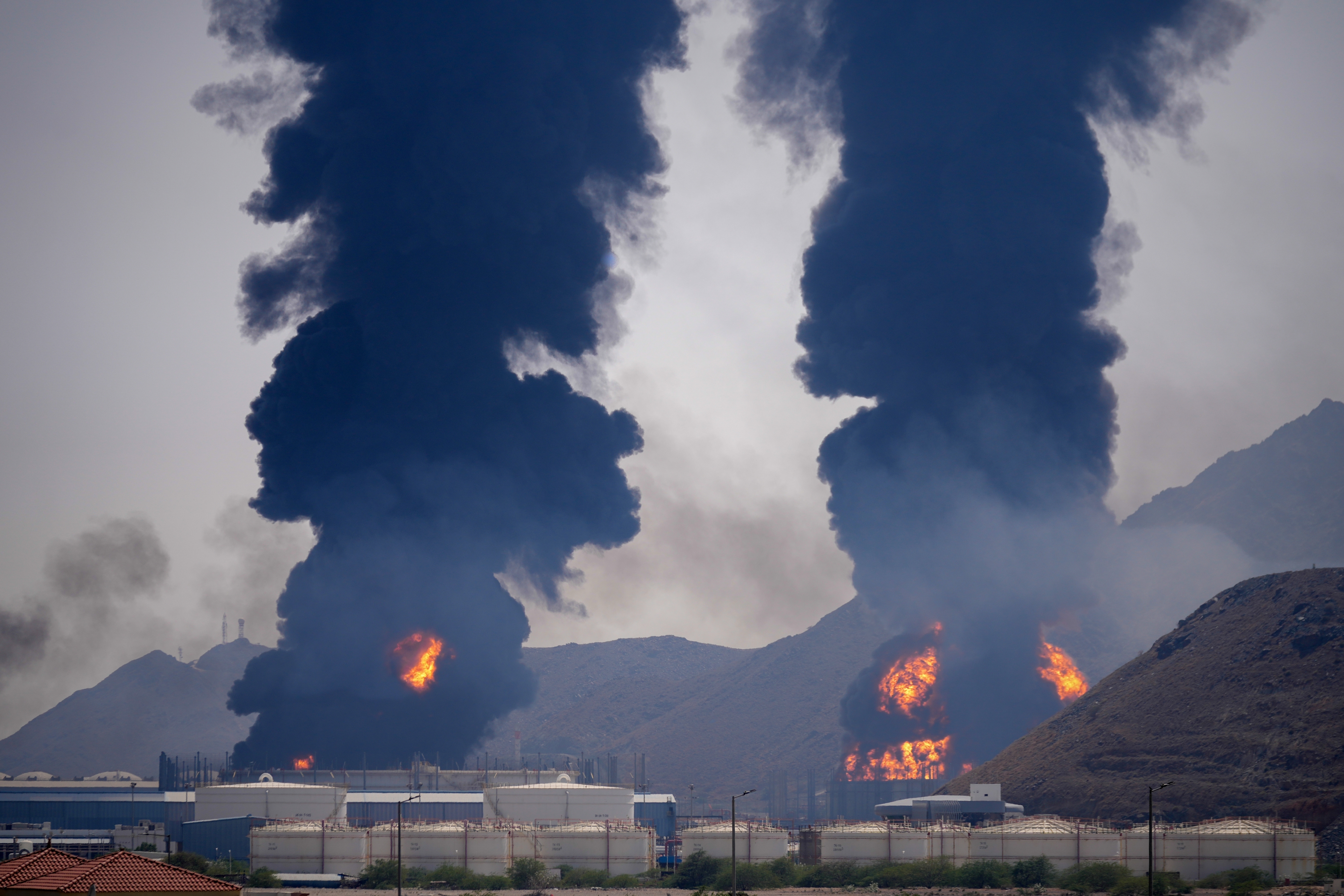
    Plumes of smoke and fire rise after debris from an intercepted Iranian drone struck an oil facility, according to authorities, in Fujairah, United Arab Emirates, March 14.Altaf Qadri

    Landing craft and vehicles make easy targets. And even though the U.S. has sunk Iran’s navy, its small boats can launch drones at American ships. Recall that Ukraine drove Russia’s Black Sea fleet out of its waters and back to home ports using unmanned sea drones, some of which could fire missiles.

    Iranian drones are now also targeting the infrastructure of Arab allies and U.S. bases in those countries. More than two dozen U.S. troops were injured by an Iranian missile and drone strikes at the Prince Sultan Air Base in Saudi Arabia on March 24, proving their reach. And the six U.S. Army Reserve soldiers who were killed in Kuwait on March 1 were victims of a drone attack.

    That is why those Gulf states, unlike Trump, have been eagerly courting help from Ukrainian drone experts. In mid-March, according to Zelensky, 201 drone defense specialists had been deployed to Qatar, the United Arab Emirates, Saudi Arabia, and Jordan, where the Ukrainians are setting up anti-Shahed defenses for a U.S. military base.

    It gives me chills to think of Trump sending U.S. troops to launch a ground war in Iran when he is so blinkered about his goals or the necessary means to achieve them. He enjoys using force, but wants easy wins, and is clearly uneasy with complex challenges. He is hinting he may quit this war without Iran regime change, or removing enriched uranium, or reopening the Strait of Hormuz, leaving the whole region in chaos and the global economy in peril as energy prices continue to soar.

    Honestly, I don’t know which would be worse: sending ground troops to Kharg or to the Iranian mainland, with a high likelihood of disaster and/or a quagmire, or the president pulling a TACO (Trump always chickens out) and leaving ill-equipped Arab and European allies to cope with a global economic mess.

    I do know that it is criminal to reject the help of Ukrainians who stand ready to aid U.S. troops against the asymmetrical warfare that a weakened Iran can still muster. If more U.S. troops die from Iranian drone strikes that Kyiv could have helped counter, then their blood will be on Trump’s hands.

  • Trump’s Iran quagmire distracts from Chinese threat to Taiwan

    Trump’s Iran quagmire distracts from Chinese threat to Taiwan

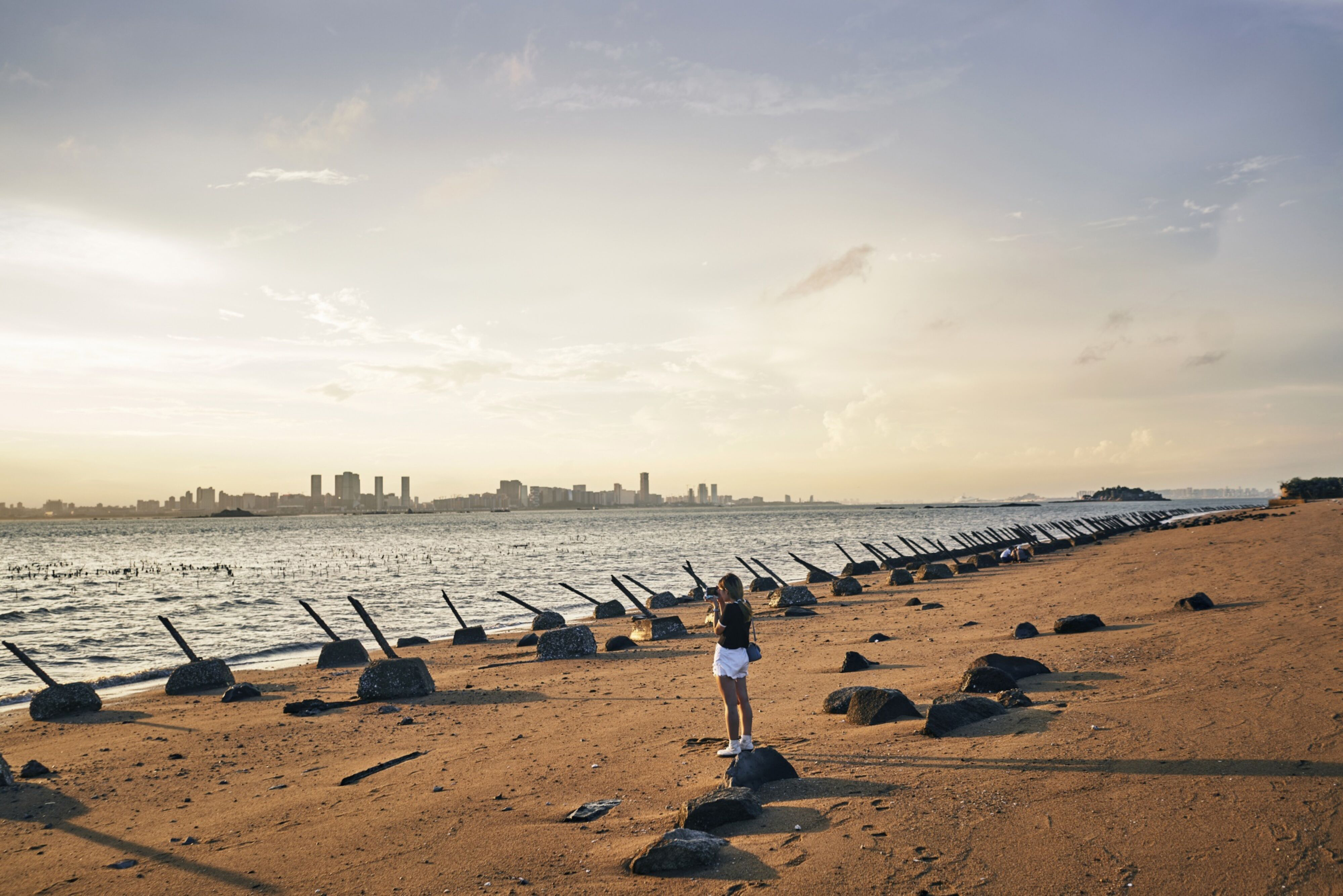
    KINMEN, Taiwan — From this tiny outer island of Taiwan, which lies less than two miles from the Chinese mainland, one can view the high-rise towers of the Chinese port city of Xiamen.

    Looking out over an extensive beach and through the mist at China, I realize Xiamen could probably be reached from where I stand by a good swimmer. From this vantage point, it’s easy to imagine Chinese leader Xi Jinping pursuing his obsession to “reunify” with the self-governing island democracy of Taiwan — whether by so-called peaceful means, by blockade of the Taiwan Strait, or using more direct force.

    I traveled to Taiwan because President Donald Trump was supposed to meet Xi in Beijing this week. POTUS had previously signaled he might weaken long-standing U.S. support for Taiwan out of his desire to cozy up to the Chinese leader and sign an advantageous trade deal. Moreover, the White House has frozen a deal Trump had already endorsed for Taiwan to purchase around $11 billion to $13 billion worth of U.S. defensive weapons, so as not to upset Xi before the visit.

    But Trump’s poorly planned war on Iran (he apparently never considered how Tehran would retaliate) has caused a postponement of the long-awaited trip until mid-May. As the erratic POTUS sinks into a potential Iran quagmire, lacking any cohesive strategy to thwart Tehran’s partial closure of the Strait of Hormuz, he is even less likely to focus strategically on the Taiwan issue.

    Yet, any potential Chinese blockade of the Taiwan Strait in the next few years could present an equal or even greater security threat to the United States than Iran’s blockage of the Strait of Hormuz, through which about 20% of the world’s oil trade flows.

    To understand why, it helps to know a bit about Kinmen’s history.

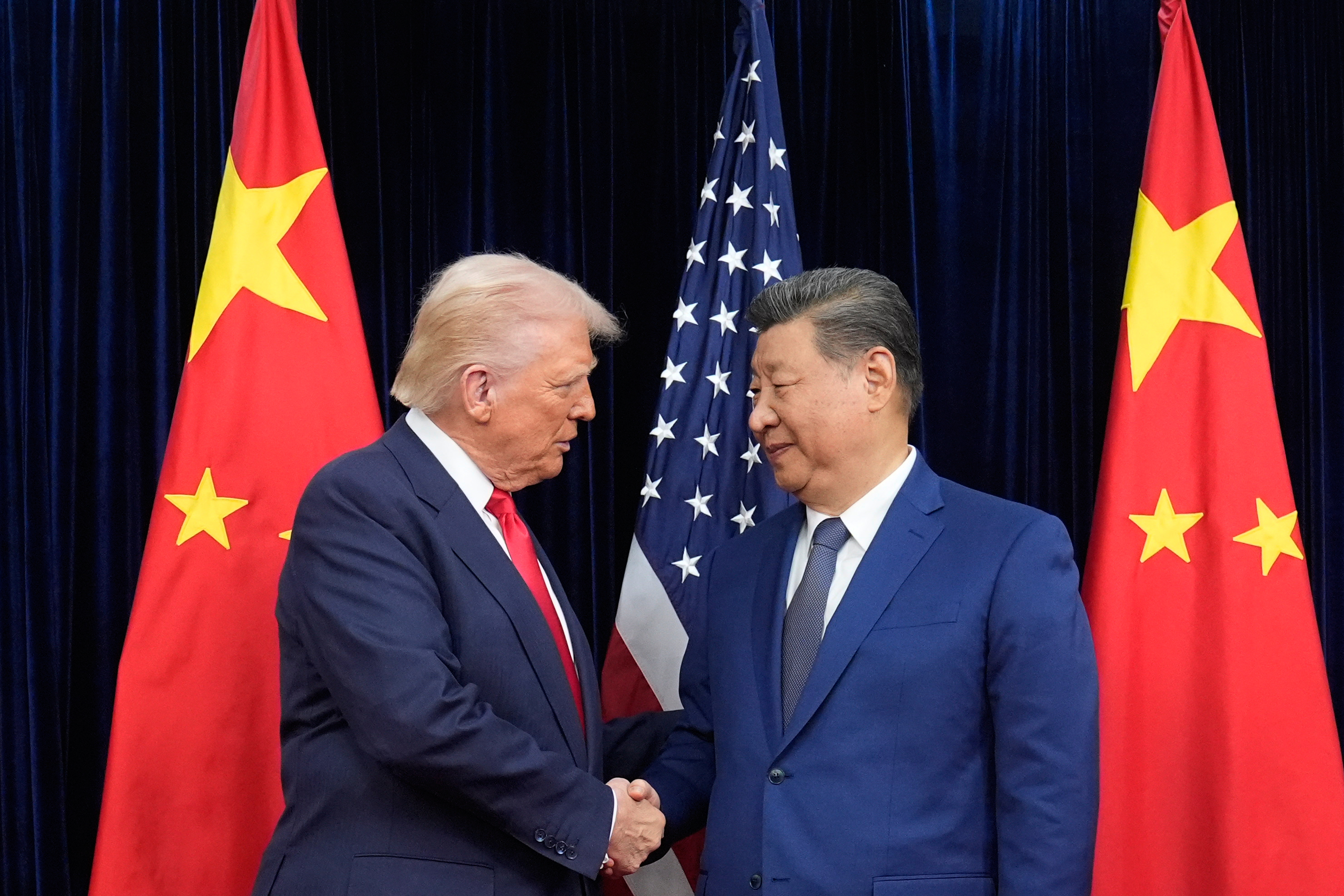
    President Donald Trump and Chinese President Xi Jinping shake hands before their meeting at Gimhae International Airport in Busan, South Korea, in October.Mark Schiefelbein

    Until 1993, Kinmen was off-limits to visitors because it was a closed military zone, and locals lived under martial law from 1956 to 1992. Most of the 120,000 Taiwanese troops have been withdrawn, although a small garrison remains.

    Yet, an endless row of rusty anti-landing spikes along the beach line stand as a reminder of the 1949 civil war Battle of Guningtou between the Communist People’s Liberation Army (PLA) and Chiang Kai-shek’s Nationalists, who were defeated on the mainland and had retreated to Taiwan. With U.S. backing, the Nationalists set up the Republic of China (ROC) government on Taiwan’s main island, roughly 110 miles from Kinmen, and held off the PLA.

    Those Americans who are old enough may recall the 1958 battle of Quemoy, as Kinmen was formerly known. During that battle, massive PLA shelling along with a Chinese blockade of the Taiwan Strait tested U.S. support for the ROC government. But President Dwight D. Eisenhower sent ships to break the blockade and repel the missiles. A local war museum displays huge photos of U.S. troops arriving on Kinmen.

    Since the U.S. formally recognized the Beijing government in 1979, and cut diplomatic ties with Taipei, Taiwan has existed in a diplomatic grey zone. China treats it as a renegade province and only a handful of countries recognize it as an independent country.

    But the U.S. insists that differences between Beijing and Taipei be settled peacefully, and is committed to providing Taiwan with defensive weapons. Moreover, U.S.-Taiwan relations are close: few Americans realize that Taiwan is America’s fourth largest trading partner, due to its technological prowess.

    As for Kinmen, these days China tempts its youth with the glitzy shopping malls of Xiamen, reachable by a 30-minute ferry ride, while a massive new international airport, built on a man-made island, cuts the sea distance between China and Kinmen to roughly one mile.

    Kinmen has become a tourist destination, with its beaches, war museums, and preservation of historic Qing dynasty homes. Mainland Chinese visitors pour into Kinmen, and the Beijing government heavily promotes the purported advantages of “reunification” to the Kinmen public — including jobs and entertainment sites — as part of its effort to win Taiwan citizens to its side.

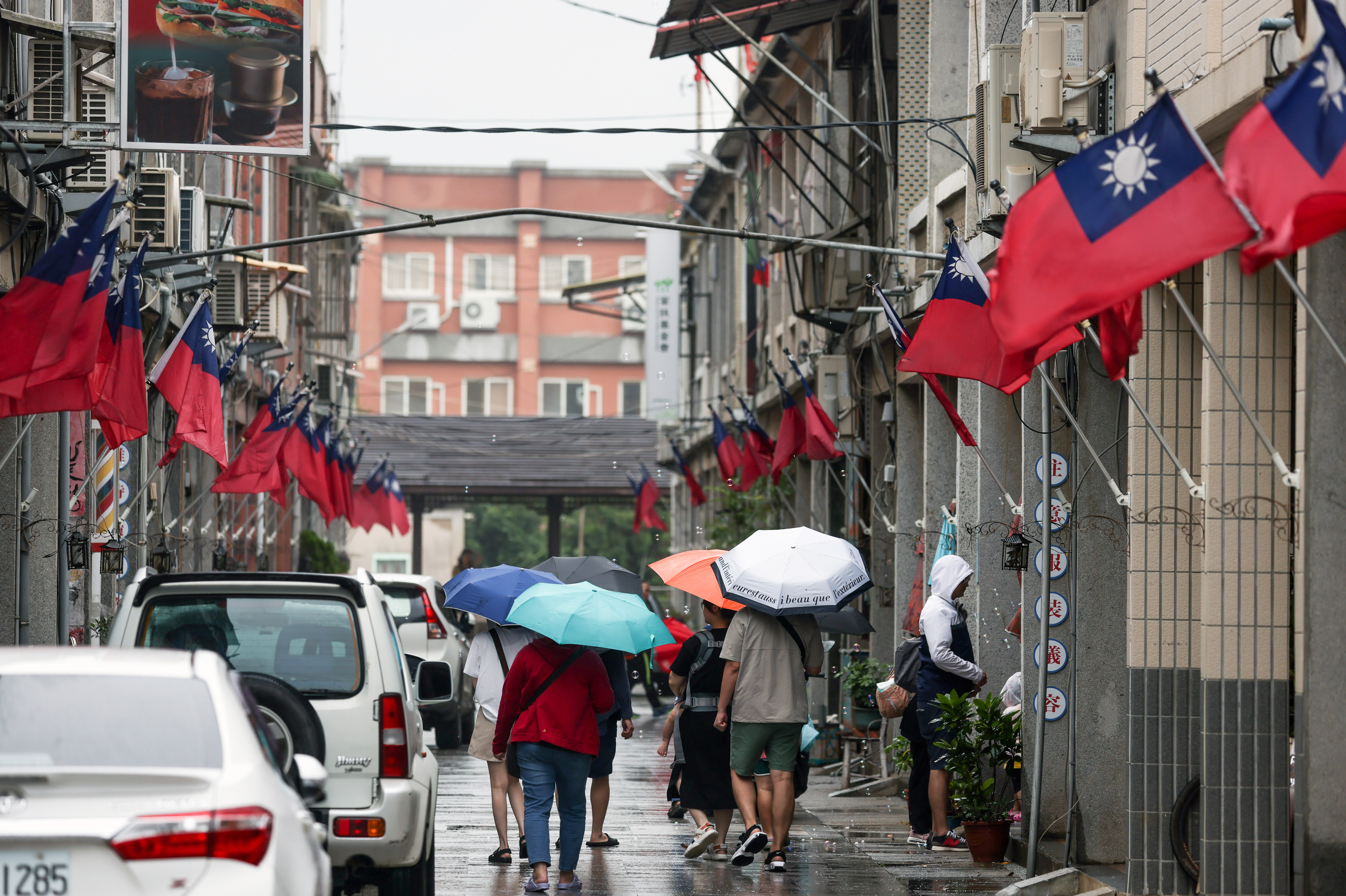
    Taiwanese flags in Kinmen, Taiwan, in 2024.I-Hwa Cheng

    So it’s not surprising that the Taiwanese government has blocked construction of a bridge that would connect the airport directly to Kinmen, presumably to prevent both the escalation of propaganda and the security threat of a direct link.

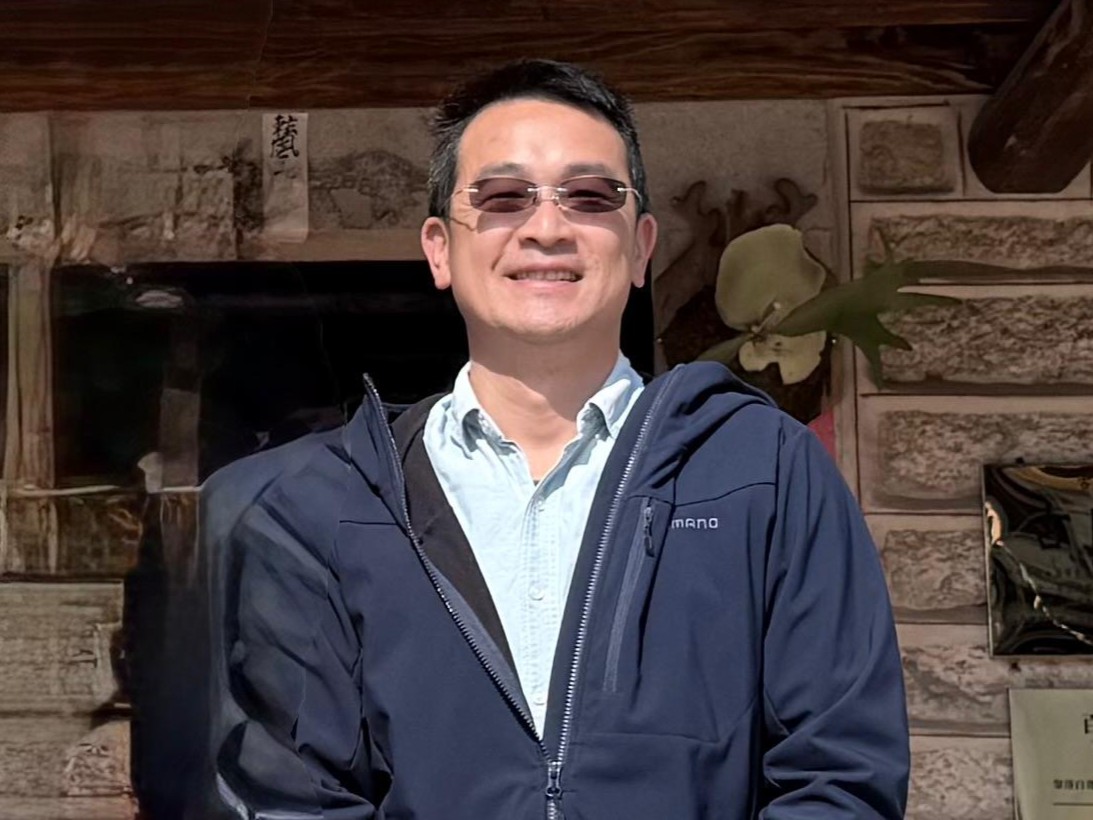
    “Kinmen is at the front line of geopolitical conflict,” said youthful local Councilor Tung Sen-pao, as he greeted visitors in a curio shop. “We are a small lens through which you can view a much larger conflict between the U.S. and China and Taiwan and China.” As he spoke, the sound of military target practice reverberated outside.

    Indeed, in recent months, China has been conducting the largest-ever live military fire drills all around Taiwan, and simulating a total blockade of its largest and smaller islands. An aggressive Xi refuses to rule out using force for “reunification.” Locals speculate what he might do by 2027, when he has ordered the PLA to be ready to invade (without making a commitment to do so).

    This month, the U.S. intelligence community’s 2026 Annual Threat Assessment report determined that China does not plan to invade Taiwan in 2027 (although the report is published by the Office of the Director of National Intelligence, Tulsi Gabbard, whose gutting of the intel community raises the question of whether its reports can be trusted).

    That trust factor becomes critical, as does American preparedness to respond if Xi does try to limit traffic or impose a full blockade of the Taiwan Strait, given its centrality to international trade.

    Taiwanese Councilor Tung Sen-pao.Courtesy of Mark F. Nelson

    An estimated 20% of global maritime trade passes through the Taiwan Strait, and it is the main maritime route for technology and consumer goods from South Korea, Japan, and Taiwan to U.S. consumers.

    The United States has no treaty commitment to defend Taiwan, only a strategic necessity to prevent its forcible seizure by China. Little Taiwan, with 23 million people, produces 90% of the world’s most sophisticated semiconductor chips. If cut off, it could be disastrous for U.S. civilian and military needs.

    Moreover, if Taiwan falls, the security of U.S. allies in Seoul, Tokyo, and Manila, with whom America does have military commitments, would be at deep risk.

    Equally troubling, Trump’s Mideast war has drained missile interceptor stockpiles, including Patriot missile batteries and other weapons that are vital to dissuade Xi from taking rash steps. It is hard to believe a president who has acted so fecklessly on Iran strategy has any adequate plan for handling a meeting with China’s leader, except possibly to cave on supporting Taiwan.

    Meantime, Councilor Tung admits that Kinmen will have little say over its future. “We are a tiny island,” he said with a wry smile. “There is now no way for us to counter an attack if China tries to invade Kinmen.”

    However, he also believes “a direct attack on Taiwan in a conflict is more likely than targeting offshore islands such as Kinmen.”

    The 50,000 or so permanent residents of Kinmen just hope the status quo can endure for a few more years.

  • A court was right to stop the sale of its water system, but Chester still needs help | Editorial

    A court was right to stop the sale of its water system, but Chester still needs help | Editorial

    The recent state Supreme Court ruling that a receiver can’t unilaterally sell the Chester Water Authority to a for-profit company was a big win for its customers. But it complicated a plan to use the sale to bail out the city of Chester.

    While the court ruling is the final word on the sale, there is more to be done to safeguard utility customers across the commonwealth and help the residents of Chester.

    The best way to protect all utility customers in Pennsylvania would be for the General Assembly to repeal Act 12. The misguided legislation, spearheaded by lobbyists, opened the door in 2016 for the sale of municipal water and sewer systems.

    The law was supposed to help distressed utility systems. Instead, for-profit companies have largely purchased well-run systems and massively and routinely increased the rates that customers pay.

    Since Aqua Pennsylvania purchased the sewer system in New Garden Township in Chester County in 2020, for example, residents have seen their rates increase 200%, according to a consumer group fighting the sales. Other cities and towns have seen their bills go up by 100% or more.

    In short, Act 12 has failed to accomplish what it was allegedly designed to do.

    To his credit, State Sen. John Kane, a Democrat who represents parts of Chester and Delaware Counties, has proposed repealing Act 12, but few lawmakers in Harrisburg are brave enough to stand up to the influential for-profit water companies.

    Short of a repeal, lawmakers must reform Act 12. At the very least, the law should be amended to require that the sale of any public utility be put to a vote. The residents who pay for the utility should decide whether to sell it, not the local politicians. If residents approve a sale, the utility should be put out to a public bid and not negotiated in private.

    Such reforms, while not perfect, would give residents some protection from local elected officials selling off public utilities for short-term gains without their input.

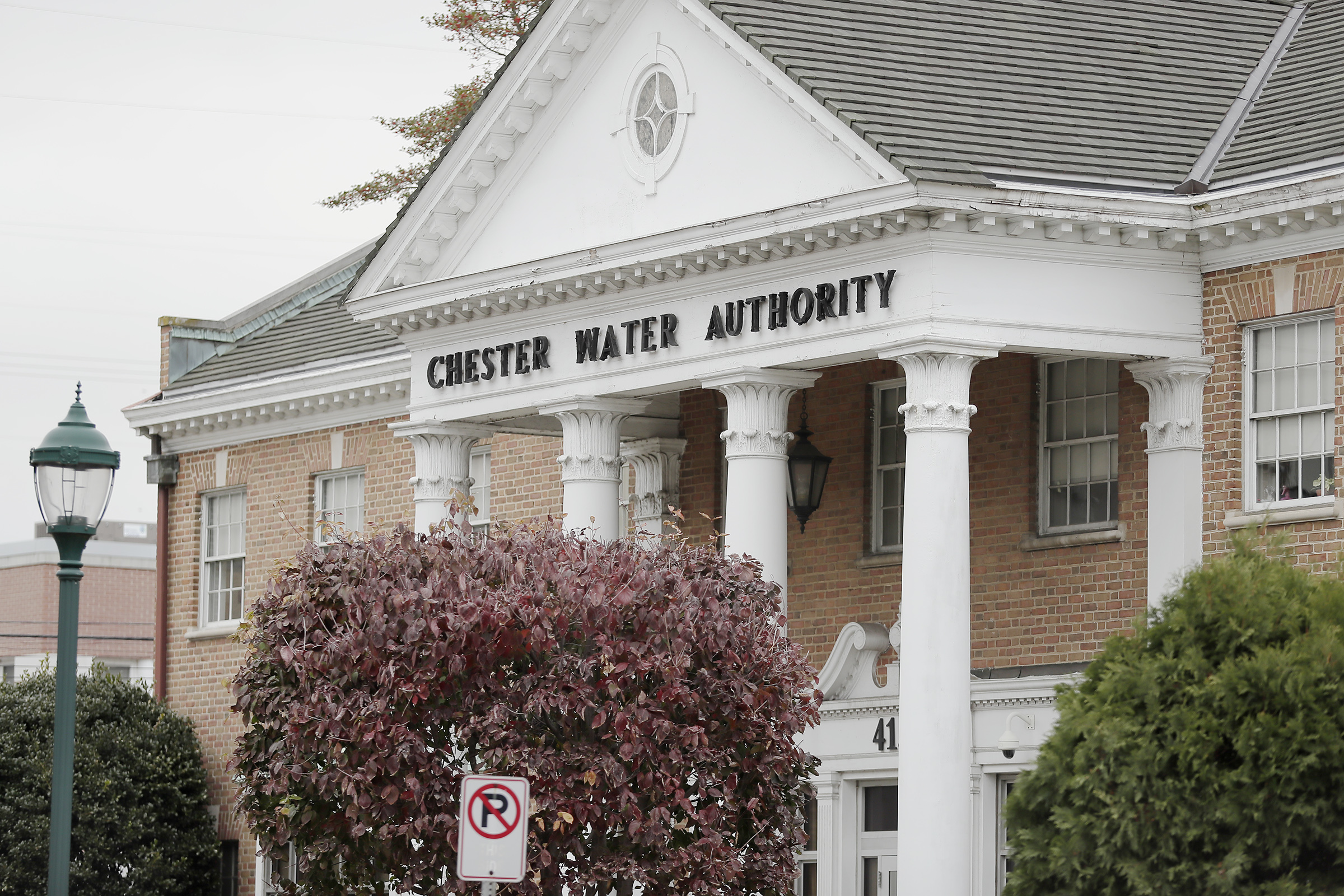
    The Chester City Council voted in 2021 to sell the Chester Water Authority to Aqua Pennsylvania for $410 million. In January, the state Supreme Court ruled the sale could not go through.Elizabeth Robertson / Staff Photographer

    The court was right to rule that the city of Chester could not sell the water authority. After all, the authority serves roughly 200,000 people in more than 30 municipalities across Chester and Delaware Counties.

    It is understandable that the city wanted to sell the water authority. The City of Chester, which has about 34,000 residents, filed for Chapter 9 bankruptcy in 2022.

    Aqua offered to buy the water authority in 2017 for $320 million. Two years later, the for-profit company increased its offer to $410 million.

    The board that oversees the water authority unanimously rejected the offer, but the city council in Chester viewed the sale as a way out of its financial problems.

    But any short-term gain for the city would likely have resulted in a sharp increase in water bills for customers. This would have put more financial stress on residents in Chester, which has a poverty rate of 30%, making it one of the poorest municipalities in the state.

    Residents in Chester and Delaware Counties would have also seen steep increases in their water bills. The water authority is already well run, so there is little to be gained by a sale.

    However, the court’s ruling leaves the city of Chester in a bind. There is a vehicle in place to help Chester. Act 47, known as the Municipalities Financial Recovery Act, supplies funding to help municipalities in financial distress.

    The city of Harrisburg, the city of Chester, and the borough of Newville are already part of the Act 47 program. State lawmakers should increase funding for Act 47 to help the commonwealth’s distressed municipalities.

    That is the best solution to a thorny problem. It also avoids the sale of public utilities that will only result in bigger bills coming due for ratepayers.

    Just ask the residents in New Garden and other towns whose local elected officials sold them out to for-profit companies.