Category: Opinion

  • For Trump’s underlings, too much is never enough | Editorial

    For Trump’s underlings, too much is never enough | Editorial

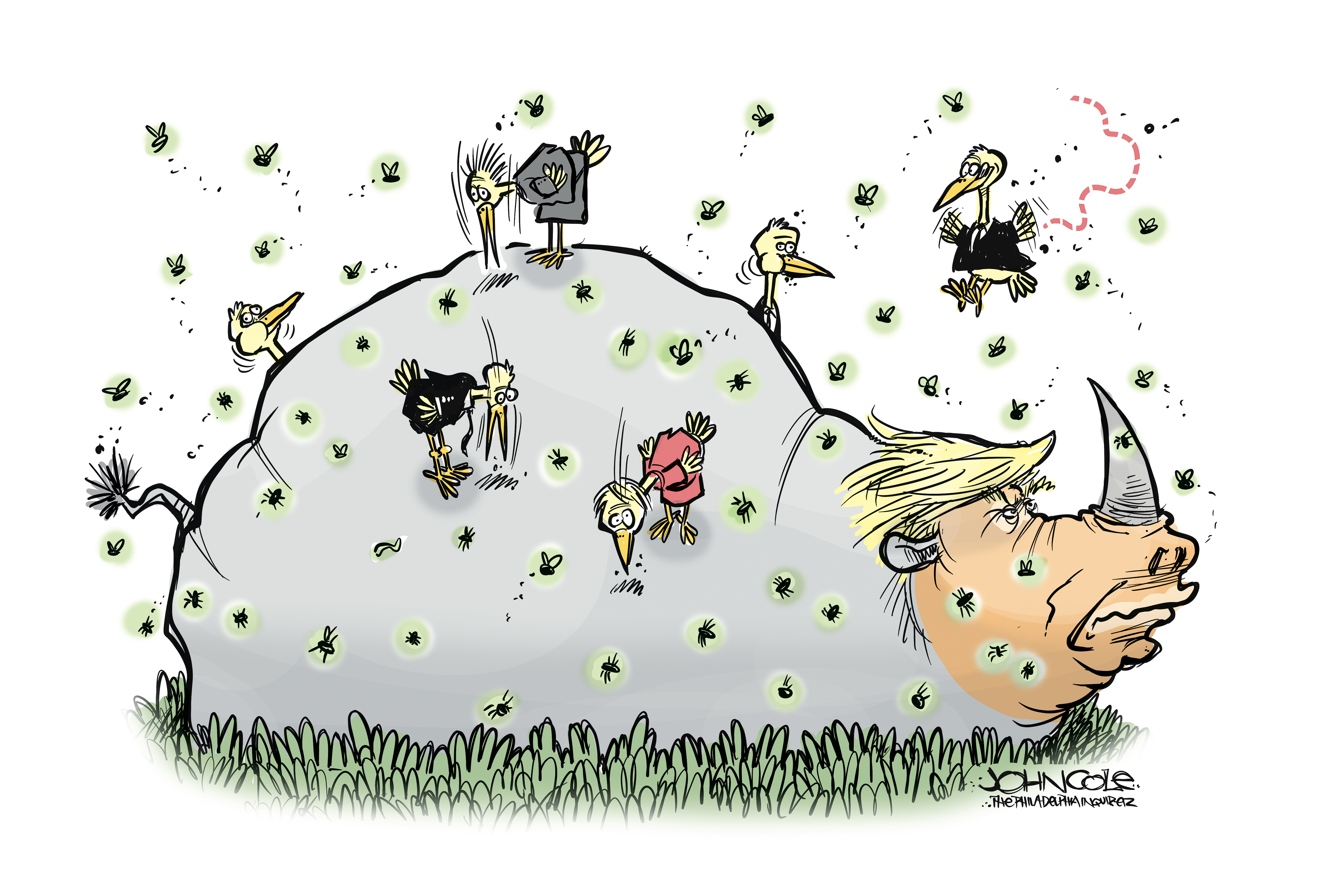
    For Donald Trump’s underlings, public service has become a bacchanal.

    A rogues’ gallery of billionaires, incompetents, and self-dealers crowds insatiably around the public trough.

    Trump’s return to the White House has set an unprecedented bar for corruption, pocket lining, and abuse of power.

    But beyond the one-man profligacy, many of Trump’s underlings have joined in on the self-dealing as the rot spreads across the government.

    The upshot: Trump’s own Art of the Steal has morphed into a rampant smash-and-grab.

    Consider FBI Director Kash Patel’s abuse of a taxpayer-funded jet to visit his girlfriend, fly buddies to Scotland, and attend the Winter Olympics, where he chugged beer in the locker room with the U.S. men’s ice hockey team.

    Patel reportedly flew to Pearl Harbor and received a VIP snorkeling adventure near the sacred underwater tomb of the USS Arizona that contains the remains of more than 900 Navy sailors and Marines who died in the attack.

    He and his girlfriend used the FBI’s Gulfstream V to fly to Philadelphia to watch a concert from a $35,000 luxury suite at Lincoln Financial Field.

    Patel also used the $60 million jet to go hunting at an exclusive resort in Texas named the Boondoggle Ranch that is owned by a Republican donor.

    An article in the Atlantic claimed Patel drank excessively, and that his unexplained absences and carousing put national security at risk. Patel denied the report and sued the magazine for defamation. Drinks aside, Patel is abusing his office.

    Patel’s air travel should not be confused with that of former Homeland Security Secretary Kristi Noem, who spent $300 million in taxpayers’ money for a fleet of planes, including two Gulfstreams and a luxury Boeing 737 Max 8 jet that included a private cabin with a queen bed, full kitchen, bar, seating area, and four flat-screen TVs — supposedly for deportation missions.

    Noem’s office wasted $220 million on a taxpayer-funded ad campaign that depicted her on a horse near Mount Rushmore. A no-bid contract divvied up the funds between a company created eight days before they were awarded and another company that played a role in Noem’s 2022 gubernatorial campaign.

    Noem is gone, but taxpayers are stuck with her bill.

    Former Labor Secretary Lori Chavez-DeRemer resigned amid allegations of using her office for personal gain, including personal travel and allegations of drinking on the job and an alleged affair with a member of her security detail.

    One staffer accused Chavez-DeRemer of ginning up “official trips” funded by taxpayers in order to see friends and family. Her husband was banned from the Labor Department headquarters after at least two staffers said he sexually assaulted them. Another brief tenure of taxpayer waste and debauchery that contributed scant value to the country.

    Commerce Secretary Howard Lutnick has used his office to dangle policy favors in return for investments and deals that benefit his family, according to a report in the New York Times.

    Lutnick’s sons oversee a network of companies, including their father’s Wall Street investment firm, that are involved in a wide range of businesses, among them data centers and cryptocurrency, which overlap with the Commerce Department’s efforts to attract new entrepreneurs.

    U.S. Rep. Madeleine Dean (D., Pa.) accused Lutnick’s investment firm of profiting off the failure of Trump’s tariff policy, which the U.S. Supreme Court found was unconstitutional.

    “Your sons figured out how to profit from the high tariffs by buying up refund rights, pennies on the dollar, just as you were out there cheerleading the tariffs,” Dean said at a hearing in April. “As a result, federal taxpayers like my constituents may now owe your family tens or hundreds of millions of dollars.”

    Lutnick denied the charge, though his firm, Cantor Fitzgerald, now run by his sons, reportedly posted record revenue last year.

    Despite running on a message of reducing prices and helping the working class, Trump’s administration includes 12 billionaires and is the wealthiest ever, if not the most out of touch.

    The billionaire club does not include the brief and destructive DOGE stint of Elon Musk, who recently became the first trillionaire.

    Other Trump administration officials have also found ways to cash in. Several have profited from well-timed investments in the stock market.

    Former Attorney General Pam Bondi sold between $1 million and $5 million worth of shares in Trump Media the same day the president announced new tariffs that caused the price to drop. While her tenure was a train wreck, Bondi’s successor has already demonstrated he will be even worse.

    Todd Blanche, Trump’s former defense attorney who replaced Bondi at the Justice Department, owned cryptocurrency investments valued between $159,000 and $485,000 at the same time he shut down investigations into crypto companies, dealers, and exchanges launched during the Biden administration.

    Transportation Secretary Sean Duffy filmed a reality TV show bankrolled by firms he regulates, and sold stock in nearly three dozen companies two days before Trump announced a number of “reciprocal” tariffs.

    In all, more than a dozen Trump administration officials sold stocks before the president implemented tariffs that caused stock prices to plummet, ProPublica reported.

    The White House routinely defends the actions of Trump’s inner circle, stating recently, “President Trump has assembled the most talented Cabinet in American history who work every day to implement his common sense, America First agenda.”

    But Trump’s broker may be one of the busiest traders around. Trump disclosed making 3,500 stock trades valued at hundreds of millions of dollars in just the first quarter of this year, but said his accounts are independently managed. However, the amount of trading raised eyebrows among ethics experts.

    “We’ve never seen a president trading actively in the stock market before,” said Richard Painter, the ethics counsel under former President George W. Bush.

    Democratic lawmakers called for an investigation into whether Trump or others around him have engaged in insider trading. But nothing will change as long as Trump and the Republicans control all the levers of government.

    As millions of Americans struggle with rising gas, food, rent, and healthcare costs, Trump and his cronies have turned public service into a private jackpot.
  • Pardon me, Mr. President! | Editorial

    Pardon me, Mr. President! | Editorial

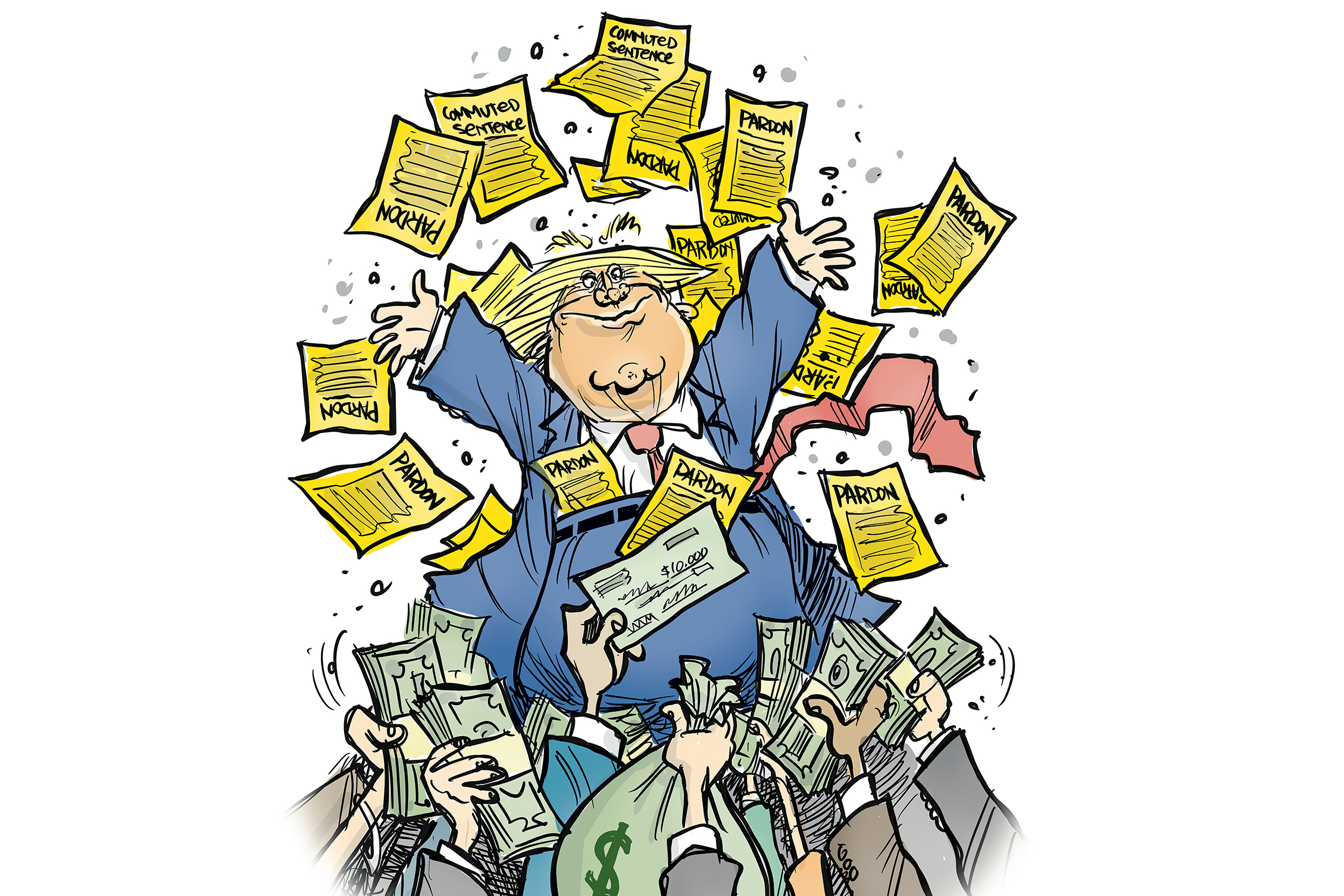
    Donald Trump has abused his power in many ways, but one of the most grotesque is through his perversion of presidential pardons.

    At the same time Trump has misused the U.S. Department of Justice to prosecute perceived political enemies, he has turned presidential pardons into a cottage industry, focused on freeing donors and business allies.

    This abuse of power rewards cronyism and distorts the idea that everyone is equal under the law.

    In Trump’s warped view, any allies with the right connections who got convicted or pleaded guilty were victims of a “witch hunt.” Conversely, anyone who refuses to do his bidding, or places their constitutional oath first, must be punished or prosecuted.

    Ironically, Trump is the one waging the lawfare he frequently decries.

    During the campaign, Trump promised retribution. The list of vindictive prosecutions shows that he has kept his word.

    See: former FBI Director James Comey, Comey’s daughter, Maurene, E. Jean Carroll, former Federal Reserve Chairman Jerome Powell, Federal Reserve Governor Lisa Cook, New York Attorney General Letitia James, former CIA Director John Brennan, former FBI Deputy Director Andrew McCabe, the Southern Poverty Law Center, and many others.

    At the same time, Trump has pardoned a number of disgraced politicians who were supportive of him, just as he pardoned a host of his loyal hatchet men at the end of his first term, including Steve Bannon, Michael Flynn, Paul Manafort, and Roger Stone.

    The blatant abuse on both sides of the legal scale by a sitting president is noxious and undermines the rule of law.

    Presidential pardons were meant to safeguard justice or demonstrate mercy. They were not meant to be dangled as rewards to cronies or violent supporters.

    Trump’s pardon abuse also benefits him. He secures loyalty, buys silence, and signals that future lawbreakers who act on his behalf will be protected. In some cases, he receives benefits via campaign donations or sweetheart business deals.

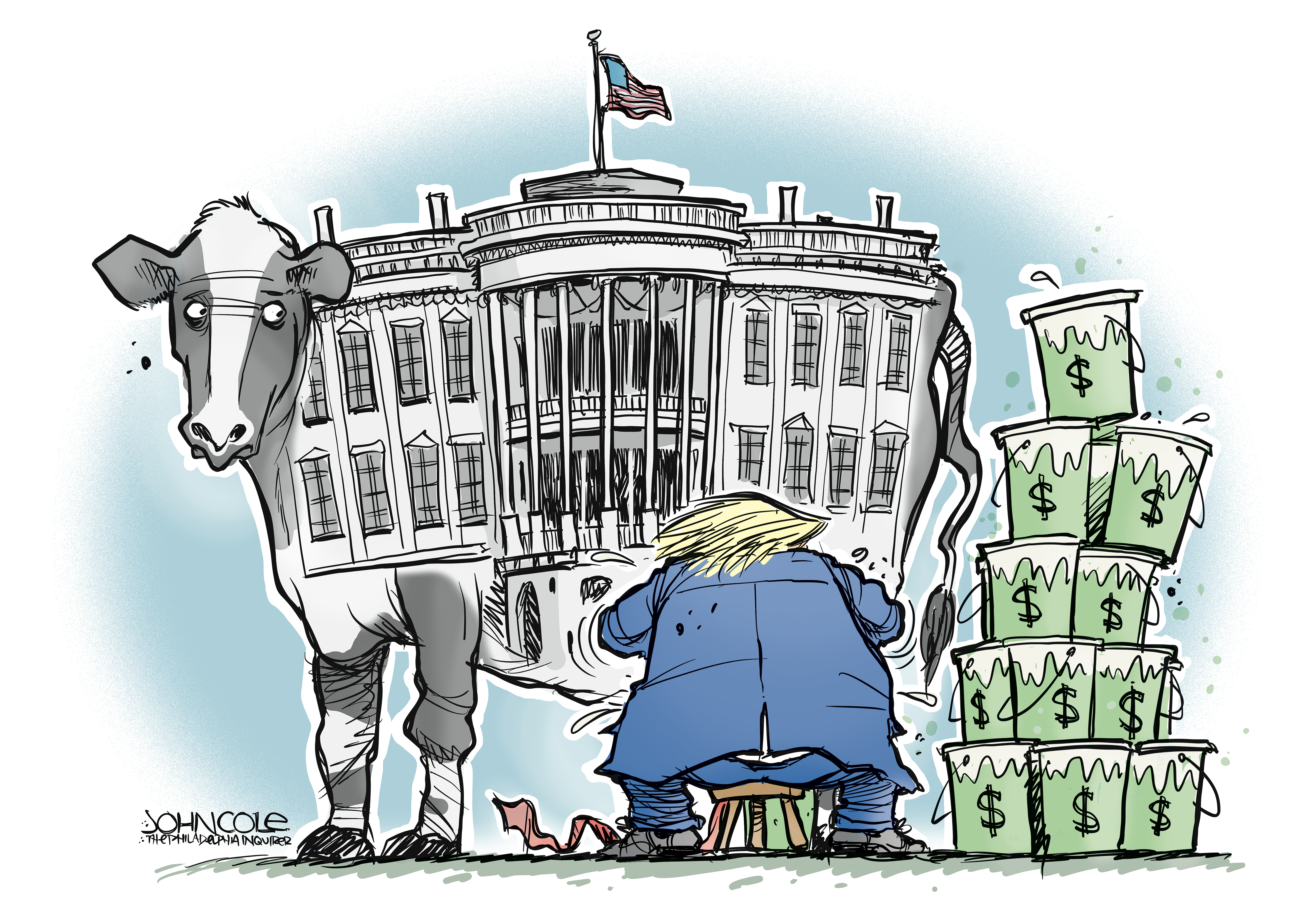
    The entire scheme is part of Trump’s broader Art of the Steal as he turns the power of the presidency into an instrument for personal gain.

    To be sure, other presidents have issued controversial pardons to political friends and family.

    Gerald Ford’s pardon of Richard Nixon, who resigned in disgrace to avoid impeachment, is probably the most notorious. More recently, Joe Biden pardoned his son, Hunter.

    Bill Clinton pardoned Marc Rich, a wealthy donor. George H.W. Bush pardoned six Reagan administration officials entangled in the Iran-Contra affair, including former Defense Secretary Caspar Weinberger.

    But Trump supercharged the pardon power in ways that make a mockery of the rule of law.

    On his first day back in office, Trump issued sweeping pardons and commutations to approximately 1,500 defendants charged or convicted for their role in the Jan. 6, 2021, insurrection — which a bipartisan House committee and federal prosecutors found he incited.

    The Jan. 6 insurrectionists ransacked the U.S. Capitol, attacked police officers, called for hanging then-Vice President Mike Pence, and hunted for then-House Speaker Nancy Pelosi. Nearly 100 of the Jan. 6 rioters Trump pardoned have gone on to commit new crimes.

    Trump said the Jan. 6 pardons were justified, and that the Constitution gives him the absolute power to “do whatever I want.”

    He has continued to issue pardons with that mindset. He preemptively pardoned political allies including Rudy Giuliani, Mark Meadows, and Sydney Powell last year, even though none of them faced any federal charges.

    In the first year of his second term, Trump granted 166 pardons, not including the mass pardons for the Jan. 6 insurrectionists. By comparison, during his entire four-year term, former President Biden issued 80 pardons.

    Trump, who was found liable in a civil fraud case related to his businesses, seems partial to freeing white-collar fraudsters. In all, he has extended clemency to more than 70 allies, donors, and others convicted of fraud.

    Trump’s abuse of the pardon system includes ignoring basic checks on the system.

    Justice Department guidelines call for people seeking pardons to wait five years after release from prison, show remorse, provide evidence of rehabilitation, and file a petition through the Office of the Pardon Attorney.

    That process has been obliterated. In its place, Trump essentially selects and issues pardons whenever and to whomever he wants.

    Supporters and business associates are often at the top of the list.

    Disgraced former U.S. Rep. George Santos (R., N.Y.) was freed after serving just three months of a seven-year term. In commuting the sentence, Trump cited the former lawmaker’s political support.

    Trump pardoned former Illinois Gov. Rod Blagojevich, who campaigned for the president and appeared on his reality TV show Celebrity Apprentice.

    Trump pardoned Changpeng Zhao, the billionaire founder of Binance, the world’s largest cryptocurrency exchange. Months later, the Trump family’s crypto company entered an alliance with Binance, a move that benefited World Liberty, the Trumps’ fledgling firm.

    Some of those who have been granted clemency have received added benefits beyond their freedom.

    At the end of his first term, Trump pardoned his son-in-law’s father, Charles Kushner, who pleaded guilty to tax evasion and making illegal campaign contributions.

    After returning to the White House, Trump handed Kushner the plum assignment of ambassador to France — a role in which he quickly proved to be unfit.

    Other pardons have cost taxpayers millions.

    Trump pardoned Trevor Milton, who was convicted of securities fraud, after he and his wife donated $1.8 million to Trump’s presidential campaign. The pardon eliminated $660 million in restitution obligations.

    Trump pardoned a tax cheat weeks after his mother attended a $1 million-per-person fundraising dinner at Mar-a-Lago. The deal also eliminated $4 million in restitution Paul Walczak, a nursing home executive convicted of tax evasion, was supposed to repay to taxpayers.

    In all, Trump’s pardons and commutations have wiped away nearly $2 billion that the offenders had been ordered to pay as part of their sentences.

    He told advisers he plans to issue mass pardons on his way out the door, according to the Wall Street Journal. No wonder Trump’s henchmen continue to act with impunity.

    “I’ll pardon everyone who has come within 200 feet of the Oval [Office],” Trump reportedly said during one meeting, generating laughs.

    Sadly, the joke is on the American people.

  • SEPTA’s new plan paints a brighter transit future | Shackamaxon

    SEPTA’s new plan paints a brighter transit future | Shackamaxon

    This week marks a year since Shackamaxon debuted. Named for the place Lenape chiefs would meet for discussions and community ceremonies under the great elm, the column is focused on what happens at City Hall and Harrisburg — our modern Shackamaxons. This week’s edition focuses on SEPTA and whether bipartisanship is truly dead.

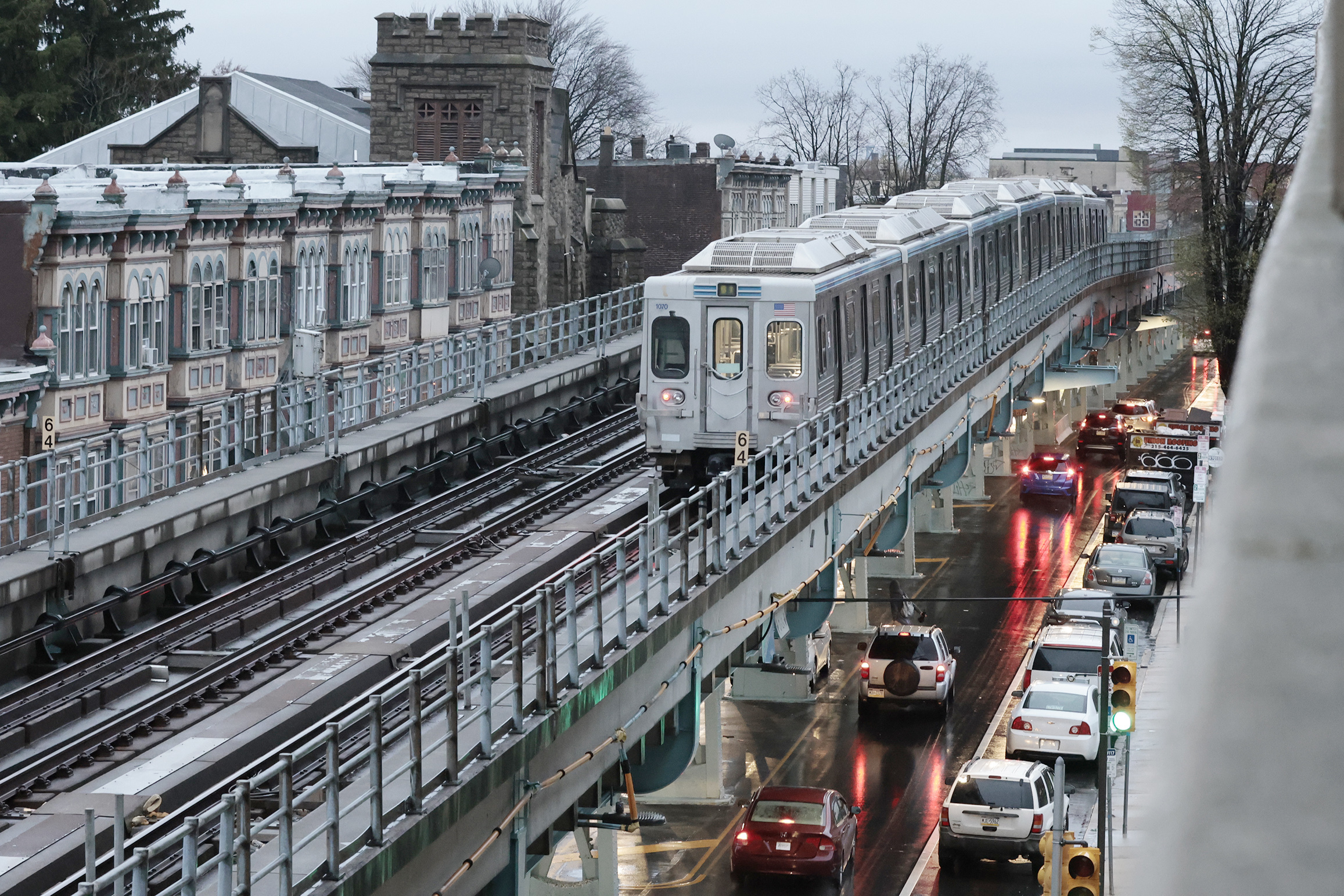
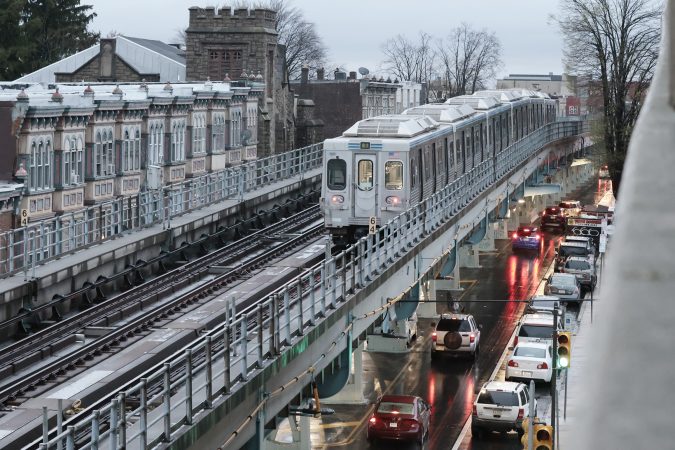
    A SEPTA Market-Frankford Line train as it heads away from the Frankford Transportation Center in 2024.Elizabeth Robertson / Staff Photographer

    Getting there

    In 2032, if all goes according to plan, SEPTA will look quite different.

    The Market-Frankford Line will have new trains and run more frequently. There’ll be new trolleys, as well, with modern light rail cars replacing the aging fleet. Instead of boarding at the corner, like a bus, trolley riders will have new, fully accessible stations with seating.

    The Regional Rail fleet will be in the middle of its own modernization. While the process will take longer, SEPTA plans to make every Regional Rail station accessible, replace its fleet, and boost frequencies to every 15 or 30 minutes, depending on the line. It’s an ambitious undertaking that would more than double the number of people who live within a quarter mile of frequent mass transit, from 900,000 to two million.

    This kind of optimism is rare for SEPTA, an agency that is accustomed to hearing complaints and begging lawmakers for enough money to keep current levels of service operating. The SEPTA Accelerate plan does depend on securing additional funding from Harrisburg. This time, however, the city’s transit leaders are trying a different approach: Instead of pointing out the potential dangers of losing services, they are highlighting what they could provide if given adequate resources.

    It also comes at an opportune time. While there are always improvements to be made when it comes to timeliness and quality of life, SEPTA has made unmistakable progress.

    Crime and fare evasion are down, thanks to dozens of additional Transit Police officers and a new initiative to install taller gates that are harder to jump over or squeeze through. Ridership is up, especially on bus routes that are part of the New Bus Network.

    The agency has hired hundreds of cleaners, with each station now covered by a dedicated member of staff during heavy-use periods. Customer satisfaction has reached record highs. Throughout it all, SEPTA has remained the country’s most efficient transit agency. Each ride costs less than $8 to provide, compared with the rest of the nation’s $12 average.

    Even Republican state Senate Majority Leader Joe Pittman seems to have noticed. In an interview with NBC10’s Lauren Mayk, Pittman gave SEPTA and new General Manager Scott Sauer credit for responding to criticism, reducing crime, raising revenue, and improving its credit rating.

    Locally, the proposal received praise. Montgomery County Commissioner (and SEPTA board member) Neil Makhija told me he’s been advocating for SEPTA to have 15-minute Regional Rail service for years, and that he is “thrilled to see that transformative vision has finally been released in this plan.”

    Longtime SEPTA riders will remember the old “We’re Getting There” slogan. The Accelerate plan is the agency’s biggest chance to finally arrive.

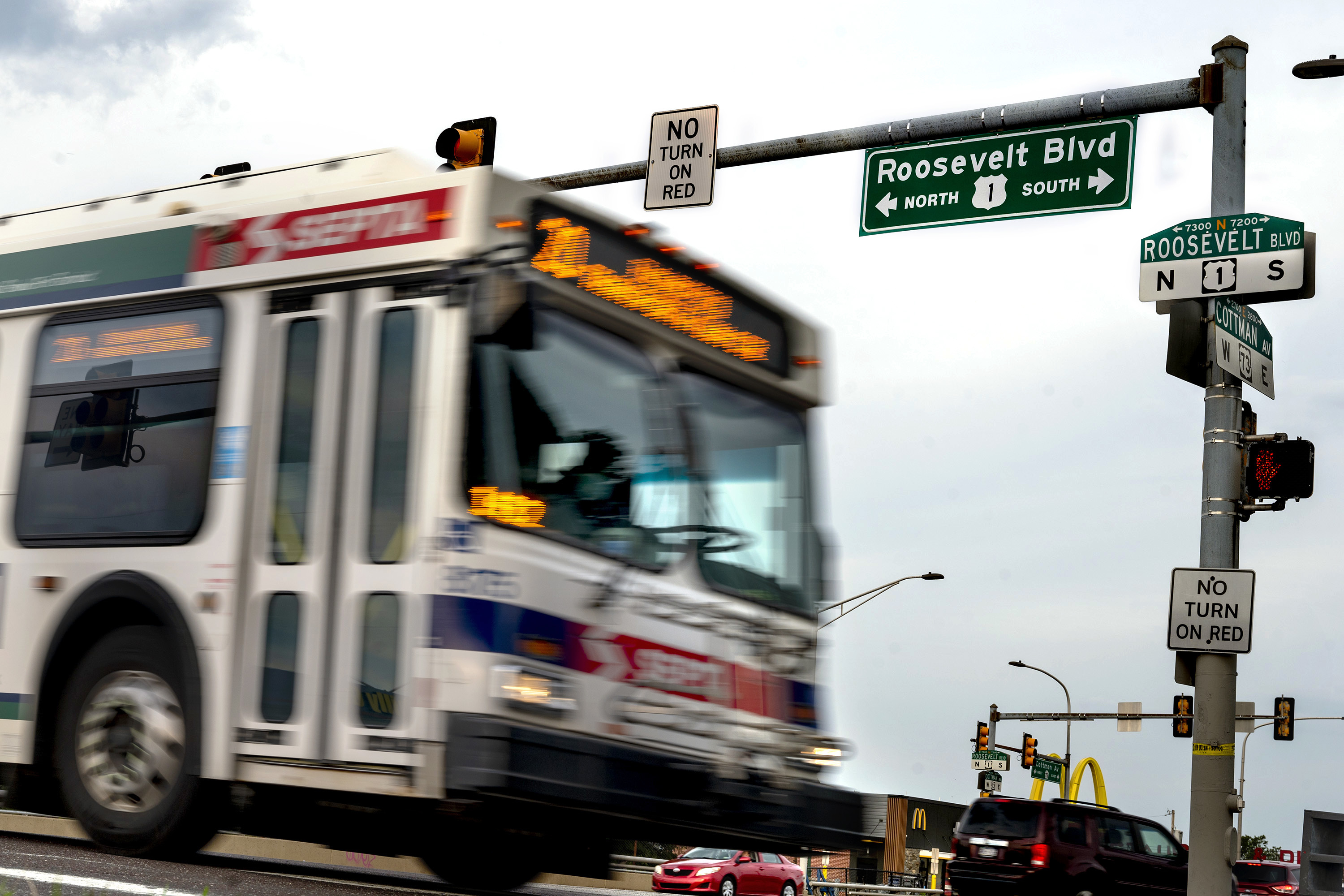
    Traffic on the Roosevelt Expressway at Cottman Avenue in Northeast Philadelphia.TOM GRALISH / Staff Photographer

    Boulevard or bust

    The plan, while ambitious, does not call for any significant expansions in the immediate future. Extensions to Reading, Allentown, Maryland, and King of Prussia get a brief mention — as ideas the agency might embrace in a better-resourced future. The long-awaited subway extension to Roosevelt Boulevard is also included in the map. Events, however, may require deciding on this sooner rather than later.

    After all, PennDot is already planning to redo the entire corridor. The initial plan is to add $134 million in safety improvements. Longer term, there are six different options. The route could either become a neighborhood boulevard, with less space for motorized traffic, or it could become a partially capped expressway, separating high-speed traffic from pedestrians and homes. Both proposals would then be paired with one of three transit options: a subway extension, a light rail route, or Bus Rapid Transit.

    BRT is the cheapest option and would be my preference if the subway doesn’t get built. The idea is to give buses a dedicated lane and limit how often they stop. This would speed up service for current riders, but wouldn’t bring in a significant number of new commuters. There is also a chance future policymakers would remove the dedicated bus lanes in order to provide more space for motorists, something that has happened to BRT systems in other states.

    To some policymakers, light rail represents a kind of Goldilocks option. It has more transformative potential than bus service, while costing less than a full metro line. To me, however, Roosevelt Boulevard is a particularly bad fit for the idea.

    The cheapest way to build a light rail system would include trains traveling in their own lanes next to automobile traffic. Given the often-chaotic behavior of motorists in Philadelphia, trips would be subject to delays every time a driver decides to save a couple of minutes by driving along the tracks. The trains would also get caught at red lights anytime left-turning traffic builds up.

    Officials could mitigate this risk by building an elevated trackway, but this would make the project significantly more expensive, negating the entire point of opting for light rail. Additionally, riders would have to transfer at the end of the line rather than seamlessly continuing into Center City, as they would with a subway expansion. Light rail also costs more to operate than a subway, meaning any savings would disappear over time.

    While it has the highest construction costs, the subway option remains the ideal solution for the corridor. It would transform how people get around the region.

    Bucks County residents would be able to travel all the way to the sports complex for events after parking at Rock Hill Station, helping to alleviate the postgame traffic crunch. Northeast Philadelphia’s emerging dining scene would benefit from improved access to diners from Center City and South Philadelphia. It would make the Boulevard an attractive corridor for employers, who could bring in talent from the city’s core via the subway, while also remaining accessible to suburban residents. It would also mitigate traffic congestion the most, which is especially important if PennDot selects the neighborhood boulevard option.

    Lt. Gov. Austin Davis (left) and Attorney General Dave Sunday (right) joined Arnold Ventures’ Kevin Ring at the company’s Public Safety Boot Camp on Thursday.Photo from Lt. Gov Austin Davis staff

    Bipartisan belief

    With state lawmakers consistently unable to perform the basics, like passing a budget on time, it is worth wondering whether Washington’s allergy to bipartisanship has spread to Pennsylvania, which has traditionally been more collegial.

    At a panel discussion last Thursday at the Franklin Institute, however, the spirit of cooperation was thriving. Lt. Gov. Austin Davis and Attorney General Dave Sunday spoke at Arnold Ventures’ Public Safety Boot Camp, which hosted legislators from around the country and both political parties. The two showed a remarkable amount of overlap, both professing support for evidence-based approaches, accountability, and second chances.

    Even better? State and local leaders are already seeing results from this balanced approach: Homicides in Philadelphia are at generational lows, as well as being down across the commonwealth.

  • The micro Museum of the Philadelphian celebrates Philly’s macro personality

    The micro Museum of the Philadelphian celebrates Philly’s macro personality

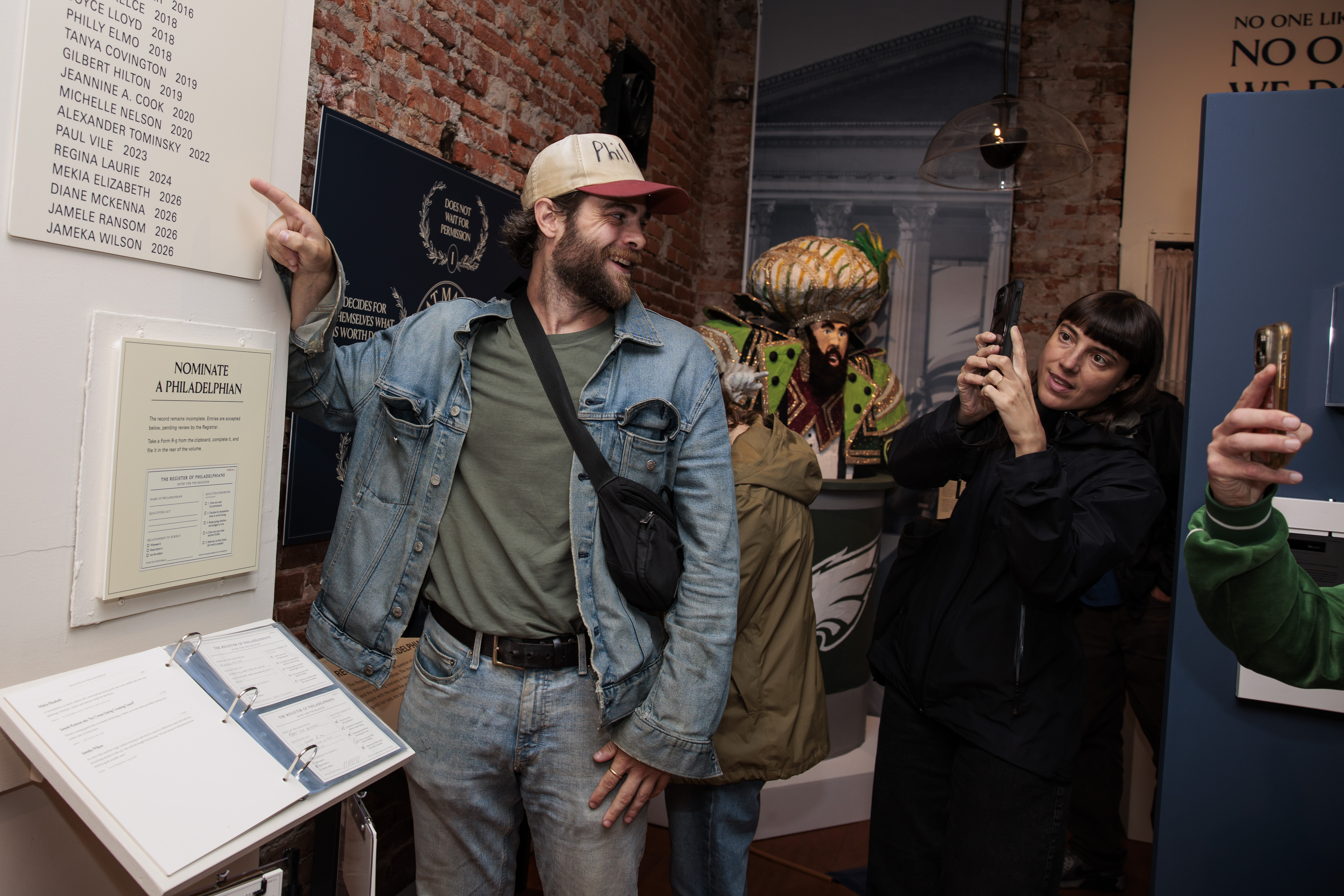
    Alexander “Chicken Man” Tominsky walked into the Museum of the Philadelphian in a Canadian tuxedo and a baseball hat with “Phillies” written on it in marker on Tuesday and was blown away to find his name on a plaque alongside other local legends like Benjamin Franklin and Philly Elmo.

    “No way! Oh my gracious! Who would have known when I was a little kid crying in my pillow something like this would happen,” he said, pointing to his name.

    Tominsky — who became renowned throughout the land in 2022 for eating 40 rotisserie chickens in 40 days, culminating with a public noshing of a chicken on an abandoned Walmart pier in South Philly — was invited to a preview opening for the museum by its founder and creator, Brian Adoff.

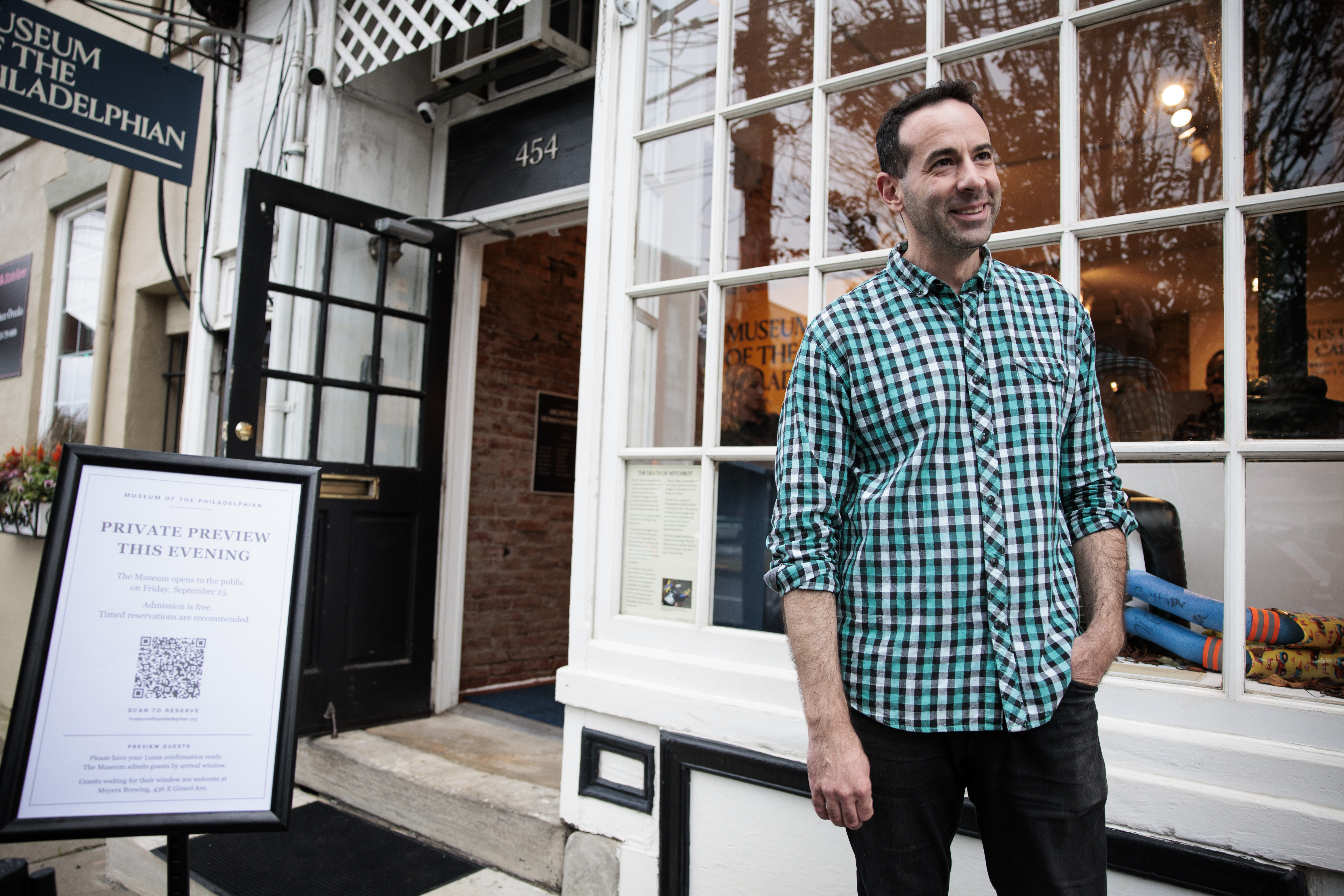
    Founder and creator Brian Adoff outside his Museum of the Philadelphian in Fishtown.Monica Herndon / Staff Photographer

    “The museum is about the personality and attitude and conduct of Philadelphians,” Adoff said. “My personal hope is that you leave inspired to really be the best version of yourself, the best Philadelphian you can be.”

    Located in a 300-square-foot storefront that was previously Adoff’s office on East Girard Avenue in Fishtown, the free, temporary “micro museum” is just down the road from another Philly landmark — the “I Hate Bank of America” sign. The large, yellow banner was put up by a homeowner in 2007, after the bank branch across the street ticked him off. The branch closed many years ago, but the sign remains, a grand tribute to Philadelphians’ spite.

    View on Threads

    What makes Philadelphians this way? And what makes it so oddly endearing? These are questions Adoff explores in his absurd and unexpectedly heartwarming museum, which opens Friday.

    “There’s an emotional narrative arc the museum takes in its 300 square feet, where it ends with literally a book of Philadelphians who exhibit five qualities that I’ve determined, with my crack team of curatorial advisers, that make up a Philadelphian,” Adoff said.

    As of a student of the Philadelphian who’s written hundreds of profiles of the everyday people who make me love this city more every day, I thought Adoff had set a lofty goal for himself when we first met earlier this month. How do you distill what it means to be a Philadelphian in 300 square feet? And how do you decide who makes the cut?

    At the preview Tuesday, I was pleased to find that over the course of about 20 exhibits in the space, Adoff skillfully addresses the Santa-hating-battery-throwing-robot-killing tropes that haunt Philadelphians, while also getting to the oddly-touching truths behind those, and other very Philly stories.

    Visitors browse the Museum of the Philadelphian.Monica Herndon / Staff Photographer

    And while Adoff and his team have compiled a “Register of Philadelphians” with more than 50 names and stories of local folk heroes who epitomize what it means to be a Philadelphian, their best decision may have been to include cards for visitors to nominate their own quintessential Philadelphian. Because if one thing is certain, Philly is going to have thoughts.

    Grease the pole

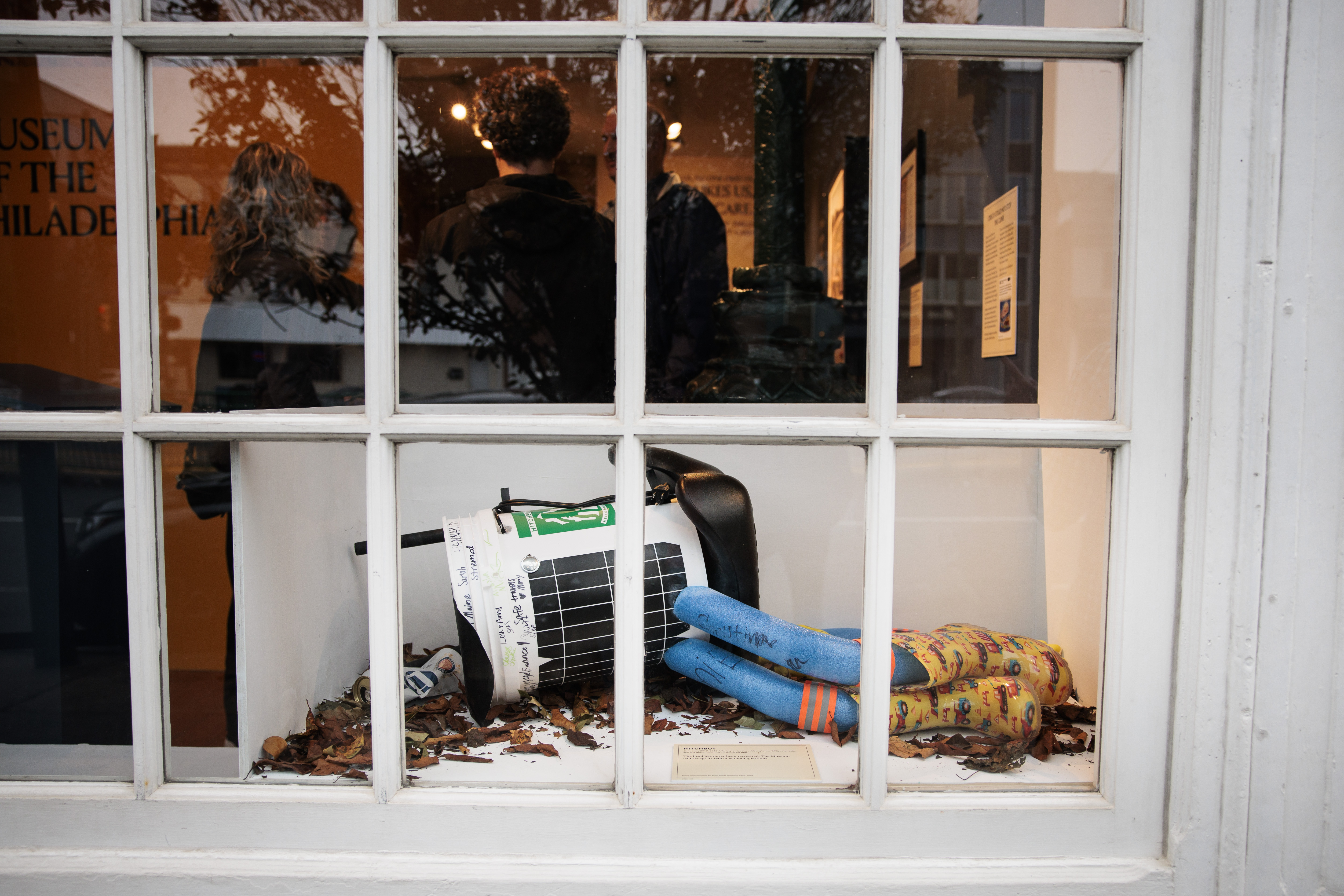
    Guests are greeted in the museum’s front window by a re-creation of the death of hitchBOT, the hitchhiking Canadian robot who traveled across the country on human kindness, only to be dismembered and beheaded in Philly. In the accompanying plaque, Adoff notes that Philadelphians offered to rebuild the robot, and that a Philly police detective jokingly blamed the crime on New Jerseyans.

    A re-creation of the death of hitchBOT is displayed in the front window of the Museum of the Philadelphian.Monica Herndon / Staff Photographer

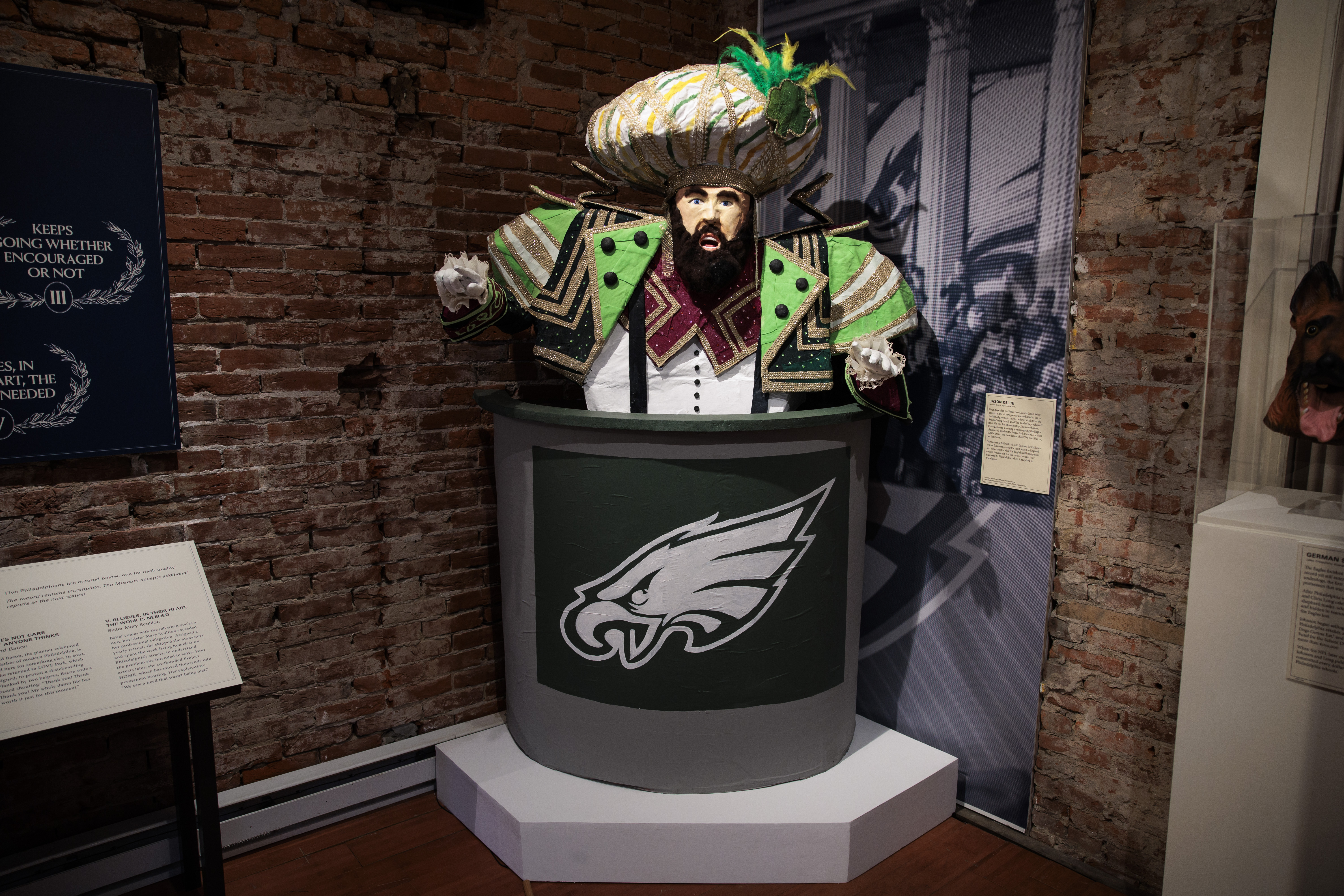
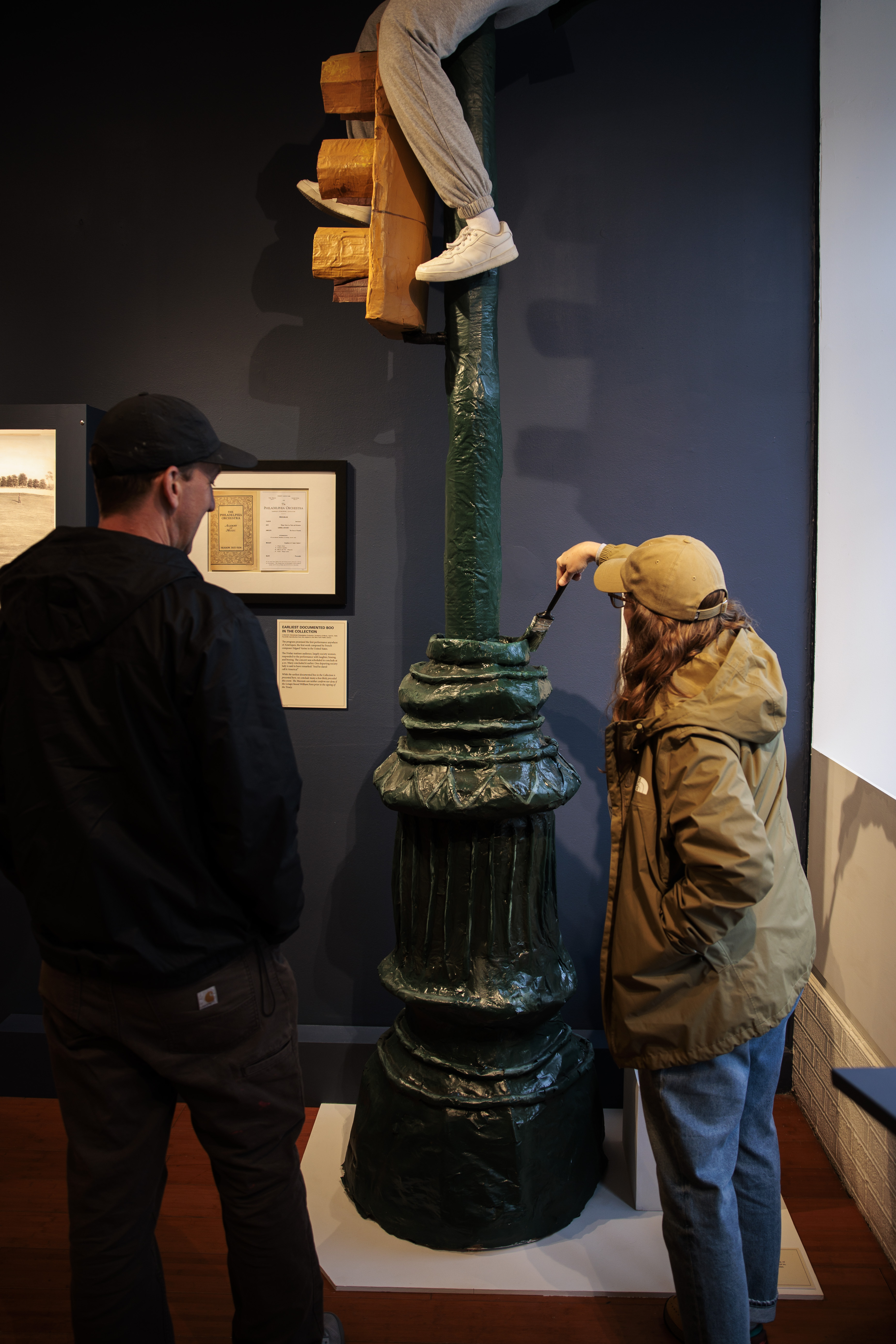
    Once inside the museum, two large papier-mâché sculptures immediately catch the eye — one, of a Philadelphian climbing a greased pole, and the other of Jason Kelce during his Eagles Super Bowl speech. In the first, guests are invited to “grease the pole” with a paintbrush and clear goo from a nearby can (you know I did it!), and at the latter, visitors can stand under a sound dome (fancy!) in front of the sculpture to hear Kelce’s “Hungry Dogs” speech.

    A papier-mâché sculpture of Jason Kelce during his 2018 Eagles Super Bowl speech is featured in the Museum of the Philadelphian.Monica Herndon / Staff Photographer

    In the center of the room is a freestanding wall with a rearview mirror on it. The accompanying plaque tells the story of Ted Passon, whose parked car was flipped in the aftermath of the Phillies 2008 World Series win. Passon created a blog asking Philadelphians who enjoyed the spectacle to help pay for his vehicle, and through the generosity of donors, he was able to get a new car and give $3,000 to someone else whose car was flipped. On an iPad at the exhibit, visitors can play a YouTube video of the flipping and read Passon’s blog.

    I remembered the story well because I interviewed Passon about it in 2008. Seeing him at the event Tuesday was a full-circle Philly moment for both of us. Passon, who’s now an Emmy Award-winning documentarian, said he was happy to loan the mirror of the vehicle Philly claimed from him to the museum.

    “It’s an honor to be included in the story of Philadelphia,” he said. “If I can be a footnote in the city’s history, I did something right in my life.”

    ‘Booing is my love language’

    Other exhibits explore Philadelphians’ history with booing, our history of throwing things, and the five qualities Adoff and his team have decided make a Philadelphian, with number one being, “Does not wait for permission.”

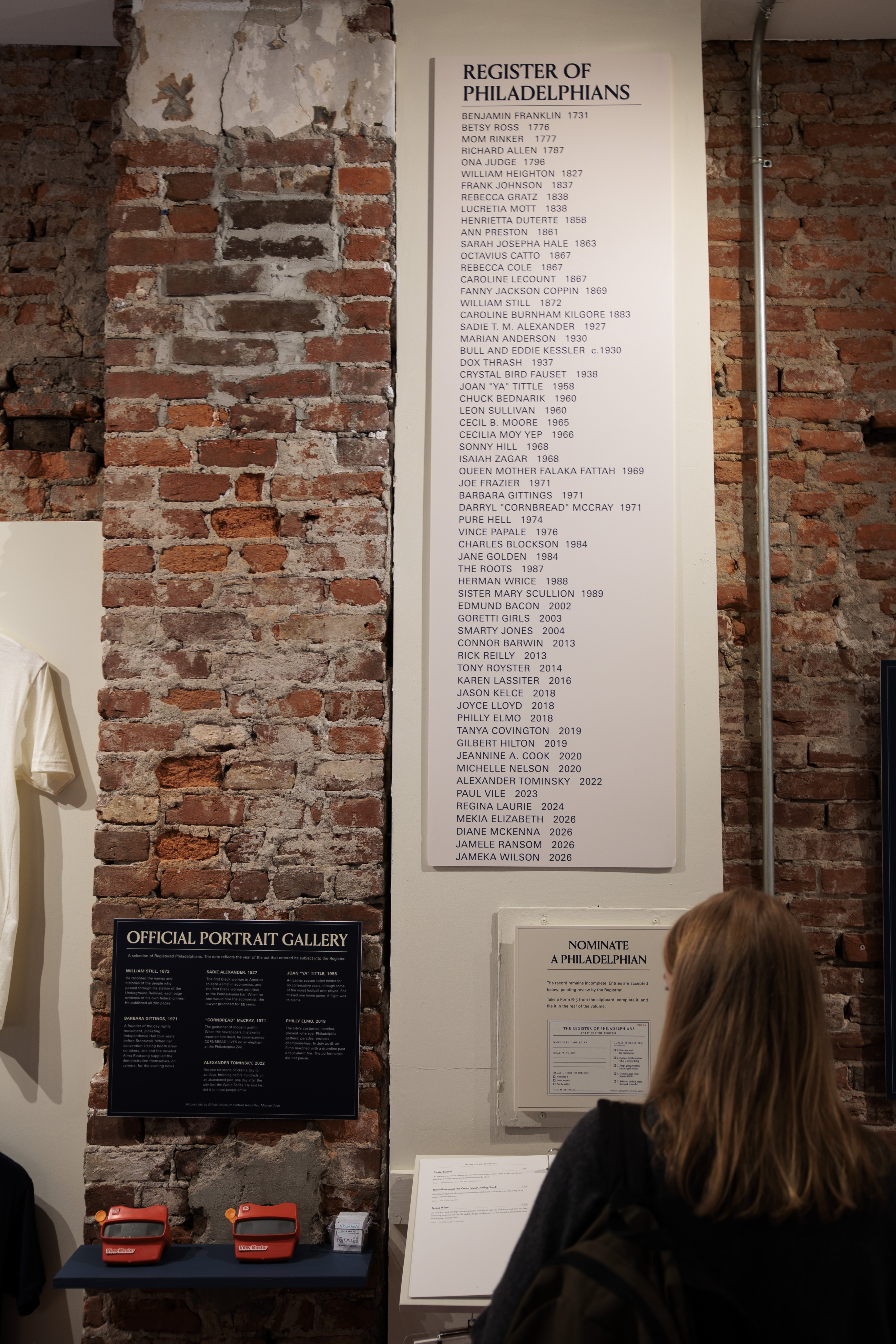
    The “Register of Philadelphians” on the wall and accompanying book begins in 1731 with Benjamin Franklin and ends this year, with Jameka Wilson, the woman who went viral for her TV interview about kicking a man in a Chucky mask who was terrorizing pedestrians.

    The Register of Philadelphians features notable Philadelphians ranging from Ben Franklin to Jameka Wilson. To the left of the register is the museum’s official portrait gallery, which can be seen through two ViewMasters. Monica Herndon / Staff Photographer

    I was excited to see a couple people I’ve written about on the list, including Paul “Jelloman” Vile and the late Gilbert Hilton, who turned heads across the city for years in his “Badillac” car, which was covered in items from Goodwill, and who was one of the most Philly people I’ve ever met.

    There’s also a portrait gallery by the Rev. Michael Alan of seven Philadelphians in the register that can only be seen through an old-school ViewMaster, which were a hit with the crowd.

    “It was a small space and this was a way to make something look bigger without being bigger,” Alan said.

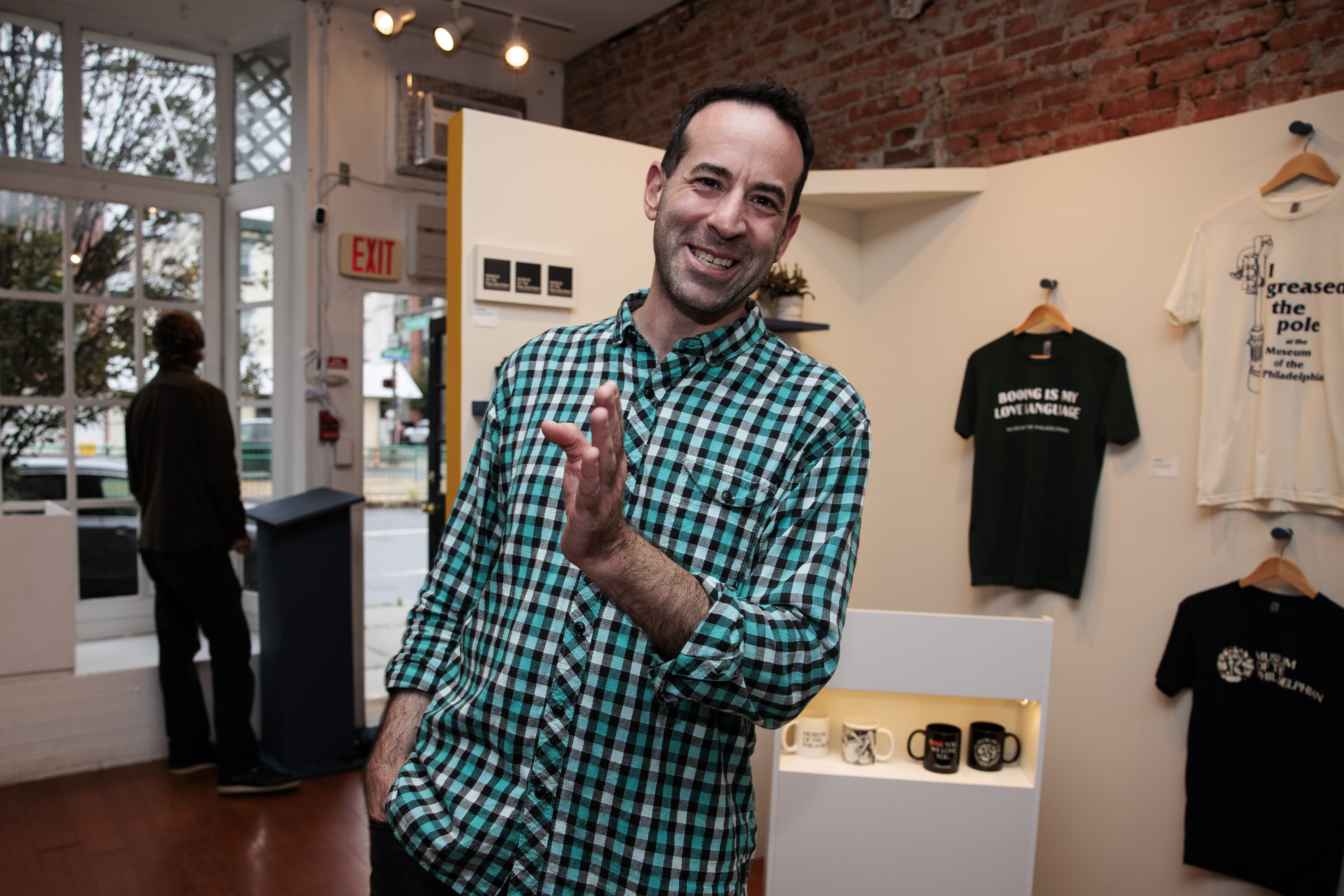
    Creator and founder Brian Adoff talks about the Museum of the Philadelphian in front of the museum’s gift shop. Monica Herndon / Staff Photographer

    The tiny museum even has a gift shop with shirts that say “I greased the pole at the Museum of the Philadelphian” and bumper stickers that read “Booing is my love language.”

    ‘The most Philadelphian thing’

    The museum was funded by Adoff through his experience design studio, Architects of Human Connection, and admission is free because he believes “the Philadelphian has paid enough.”

    The museum is a culmination of Adoff’s many endeavors over the years, from music, clowning, absurdist theater, and working as a tour guide for the Greater Philadelphia Film Office, to managing a software business and, most recently, creating events that connect Philadelphians.

    In 2023, he cofounded the Fishtown Choir,and last year, Adoff created Join Philly, which connects Philadelphians with area clubs and groups.

    The idea for the museum came to Adoff in June, as he was trying to think of uses for his storefront office space. With the help of five paid collaborators, Adoff built the museum in less than three months, which is impressive, given the amount of research that clearly went into the exhibits, plaques, and bios.

    “It started kind of absurd and silly until I was like, ‘Oh, this is just like everything else I do. It matters and it actually has heart and it has meaning,” he said.

    Brian Adoff in the Museum of the Philadelphian he created in Fishtown. Monica Herndon / Staff Photographer

    Here’s the potentially scandalous thing — Adoff isn’t a Philly native. He’s originally from Long Island, moved to Cherry Hill as a kid, and came to Philly to attend the University of Arts. He spent time in Chicago then returned to Fishtown 20 years ago, where now lives with his wife and son.

    Knowing how nativist Philly can be (my native colleagues said transplants can “never” say they’re from Philly if they moved after the age of 13), I had to ask Adoff what gave him the gall to open the museum.

    “Because I express the qualities that make a Philadelphian,” he said.

    “But you decided those qualities, right?” I asked. (They are: 1. Does not wait for permission 2. Decides for themselves what is worth doing 3. Keeps going whether encouraged or not 4. Does not care what anyone thinks 5. Believes, in their heart, the work is needed).

    “Yes, which is the most Philadelphian thing I could have done,” he said.

    Adoff wants people to leave his museum feeling as inspired as he did after watching the opening of the Obama Presidential Center on TV. He dreams of Rob Mac narrating an audio tour of the exhibit, like Steve Buscemi does for Eastern State Penitentiary. And his longterm goal is to open a more universal experience one day — a fart museum. Everybody isn’t lucky enough to be a Philadelphian, but everyone farts.

    I imagine Benjamin Franklin, a fellow Philly transplant who once wrote a satirical essay about flatulence, would think that’s a gas.

    Darrin Rowland (left), and Leslye Rowland grease the pole sculpture at the Museum of the Philadelphian on Tuesday. Monica Herndon / Staff Photographer

    Know before you go

    • The museum, 454 E. Girard Ave., is open Fridays (5 to 8 p.m.), Saturdays (noon to 5 p.m.), and Sundays (noon to 5 p.m.) Sept. 25 through Nov. 1.
    • Admission is free, but timed reservations online are recommended. Opening night is already booked and only a few spots remain for this weekend.
    • Like Philadelphia, there is a lack of public bathrooms at the museum, in that there are none.
    • The museum is wheelchair accessible via a temporary ramp. Email visit@museumofthephiladelphian.org prior to visiting so staff can have the ramp ready.
    • All ages are welcome, but some exhibits do include profanity.
  • AI and the illusions of college teaching

    AI and the illusions of college teaching

    How will artificial intelligence affect student learning on college campuses?

    We don’t know. And here’s the worst part: We don’t want to know.

    That’s because we have never taken teaching — or learning — seriously. We don’t prepare future professors for the classroom. And have no real systems for evaluating and rewarding their instruction.

    Dire warnings aren’t new

    So we also don’t have good ways to evaluate the gee-whiz rhetoric from the AI industry, which assures us the tool will “revolutionize” learning. We’ve heard that song before. In 1913, Thomas Edison forecast that books would “soon be obsolete” in schools, and that “every branch of human knowledge” would be taught via film.

    Like today’s AI barons, Edison had a vested interest in that outcome: He helped invent motion pictures and started a company to market them in schools. But none of his predictions came true. Ditto for the futurists who said radio, television, and personal computers would transform teaching and learning forever.

    But AI is different, its enthusiasts tell us, because it interacts with us. In the brave new world to come, everyone will be taught by a robot tailored to their individual interests, skills, and goals. It will help students “build agency,” “learn continuously,” and “solve hard problems,” declares the largest provider, OpenAI.

    The initial research suggests the opposite: Students forsake their agency to the bot when challenges arise. As a recent report by an AI committee at the Massachusetts Institute of Technology (MIT) warned, AI creates “the illusion of learning” for students who use it “at the first hint of struggle.”

    But in higher education, we’ve been fostering the illusion of learning for a very long time. Over the past half century, we have assigned less work and awarded higher grades. And there’s no evidence — none — that our students are learning more.

    Nor have we made a sustained effort to incentivize teaching. At every type of institution, from small community colleges to huge private universities, professors who spend more of their time on research make more money. Those who devote themselves to teaching make less.

    And nobody is really minding the classroom itself. I have been teaching at the University of Pennsylvania for 10 years, and I have never been observed by someone with supervisory authority. I could be doing anything. Or nothing.

    Sure, my students submit evaluations of my courses. But the results have never figured into my rank or salary. And a good review from your students doesn’t mean you did a good job teaching them.

    Indeed, it might mean the inverse. In a 2010 study at the Air Force Academy, where everyone takes the same courses, professors who got high marks from their students gave out higher grades — and their students did worse in subsequent classes. Professors who were harder graders got lower student evaluations, but their students performed better later on.

    Let’s teach teaching

    If we really valued teaching, we would evaluate it the same way we judge each other’s research: via peer review. When I wrote a history of college teaching, I didn’t submit it to a group of 19-year-olds to decide if I had something important to say. It was vetted by specialists in my field.

    We would also give future professors sustained instruction in how to teach. To obtain a doctorate at Penn, you have to spend six to nine years reading in your field and conducting research that contributes to it. To become a teaching assistant, by contrast, you receive a three-day training.

    That’s why I called my book The Amateur Hour — not because all college teaching is terrible (some of it is terrific), but because we never professionalized it. We don’t hold each other to best practices, and we don’t have good data about who is doing what.

    That’s the biggest scandal in higher education we talk the least about. And AI has shone a bright light on it.

    Dozens of institutions — including Penn — have released policies and statements about proper and improper uses of AI. We want AI to “enhance student learning,” not inhibit it. But we never bothered to figure out how much students were learning in the first place. So we’re in no position to judge how the bot is affecting them.

    Every institution providing Claude or ChatGPT to its students should also commit to researching their learning. It won’t be easy or cheap. But it’s the only way to see our way out of this mess. Without real knowledge, we’ll be flying blind.

    I’ve heard colleagues say teaching and learning are too subtle and complicated to evaluate in a meaningful way. Please. Scholars at Penn have examined hugely complex forms of human behavior, from consumer choices to sexual decision-making. If we wanted to do the same for what happens in our classrooms, we could.

    Will we?

    Jonathan Zimmerman teaches history and education at the University of Pennsylvania. He is the author of “The Amateur Hour: A History of College Teaching” (Johns Hopkins University Press).

  • There’s gold in that thar swamp! | Editorial

    There’s gold in that thar swamp! | Editorial

    In Donald Trump’s world, public service pays better than being a real estate mogul.

    Trump has been lining his pockets since he returned to the White House. His sons, Eric and Donald Jr., have been cashing in, too. So has his wife, son-in-law Jared Kushner, and other cronies in the Trump administration.

    In just his first year back in office, Trump made more than $2.2 billion — an unheard-of sum for any previous president, and more than he ever made in any of his years as a private businessman.

    More troubling is how Trump has blurred his private profiteering with public policy — so much so that it is hard to know where one starts and the other ends.

    Most of Trump’s recent windfall has come from a murky crypto venture and a number of foreign real estate deals. But his cash grab seemingly has no end. Trump incorporated dozens of new companies just before returning to the White House.

    He launched numerous Trump-branded products, including Bibles, $249 “Victory 47” cologne, $399 gold high-top sneakers, $450 golf shoes, work boots, a line of watches that go from $499 to $100,000, and guitars for $10,000.

    While much of Trump’s shameless self-dealing has occurred in broad daylight, he has received little pushback from Republican lawmakers who control Congress, or the conservative media echo chamber that once championed his calls to “drain the swamp.”

    The White House continues to maintain the president is doing precisely that. The administration has repeatedly denied accusations of corruption and self-dealing, stating through a spokesperson that “President Trump only acts in the best interests of the American public.”

    Questions about whether Trump’s focus during his second term is more on personal enrichment than public service began even before Day One.

    Four days before returning to office, the Trump family’s newly created cryptocurrency company, World Liberty Financial, sold a 49% stake in the company valued at $500 million to Sheikh Tahnoon bin Zayed Al Nahyan, the United Arab Emirates’ national security adviser, known as the Spy Sheikh.

    In May 2025, another company chaired by Tahnoon invested $2 billion using a stablecoin issued by World Liberty. Two weeks later, the Trump administration announced a deal to sell hundreds of thousands of dollars worth of advanced computer chips for use in AI to the UAE.

    Trump made almost $60 million on foreign licensing deals in 2025, a 900% jump from the years before he returned to the White House.

    Unlike in his first term when Trump promised not to make any private foreign business deals, some recent family ventures include a $530 million luxury skyscraper on the Red Sea, an 80-story Trump Tower in Dubai, and golf resorts in Oman and Qatar.

    Most of Trump’s foreign money-making has occurred in the Middle East, but he added millions to his wealth through far-flung ventures in India, Ireland, Romania, and Vietnam. At the same time the Trump family is cutting lucrative private foreign business deals, he, as president, is negotiating public trade deals while ricocheting between imposing and lifting tariffs.

    Amid making more than a billion through crypto, Trump hosted a White House gala for top crypto purchasers. He also used the power of the presidency to pardon three crypto convicts, including a billionaire who was critical to helping his family’s crypto business and another man who was serving a double life sentence for using Bitcoin to facilitate sales of heroin, cocaine, and LSD.

    Along the way, Trump has cashed in on his deep business ties to Saudi Arabia that go back decades. Since his return to the White House, his family has announced at least nine deals worth more than $50 billion.

    At the same time, Trump has used the federal government to benefit Saudi Arabia. His administration just approved a deal to sell billions of dollars worth of F-35 fighter jets to Saudi Arabia — rejecting concerns raised by the intelligence community and lawmakers that the advanced technology may end up in the hands of the Chinese.

    Trump also approved a deal to allow Saudi Arabia to enrich uranium for nuclear energy at the same time he is at war with Iran to prevent it from obtaining nuclear weapons.

    Trump continues to mix politics and personal business, often at the same time. Trump recently used the lavish $400 million jet the Qatari government gave to him to attend a golf tournament at his resort in Ireland, where he met with government leaders and sparked an international incident regarding the future of Northern Ireland.

    Trump rejected dire warnings from artificial intelligence executives to slow down and regulate the technology before it spirals out of control. Trump called the concerns that AI could end humanity a hoax — but failed to disclose how he and his sons are personally invested in the technology.

    The billion-dollar question is whether Trump’s Oval Office decisions are made in the best interest of the American people or his bottom line.

    Trump’s tangled financial history with Russia for so long has caused many to wonder if it influences his embarrassing deference to Vladimir Putin, unwillingness to fully help Ukraine defend itself, and constant attacks on NATO.

    Years before he became president, he proposed building a hotel there and brought the Miss Universe pageant to Moscow. After Trump’s real estate empire ran into financial trouble, he received help from Russia.

    A Republican-led Senate intelligence report found Russia interacted with Trump campaign officials during the 2016 election, and recently declassified documents show Russia tried to help him win the 2020 election.

    Amid that backdrop come two recent reports that show how Trump continues to mix policy and business in Russia. First, the White House has been dangling business deals to get Putin to end the war in Ukraine. Second, a Russian oligarch and Putin ally helped bankroll the recent wedding of Trump’s son, Don Jr. (Trump said his son will give the money back.)

    Trump came of age in the 1980s when the Wall Street mantra was “greed is good.” As president, he’s showing that graft is even better — at least for him.

    Even when the schemes don’t work out, they never die.

    Trump floated a brazen deal to reward cronies who committed crimes and violence on his behalf with financial payouts from a $1.8 billion fund to be created with taxpayers’ money. It was part of an unprecedented “settlement” Trump reached between himself and the IRS — which he oversees — on the heels of a lawsuit he filed against the agency for $10 billion after his tax information was leaked to the news media.

    Amid bipartisan pushback and legal challenges, then-acting Attorney General Todd Blanche declared the plan “dead” in June, and the U.S. Department of Justice formally rescinded it in August.

    The second part of the deal — which received essentially no GOP pushback — includes a scheme to issue a blanket pardon to Trump, his businesses, and his family members for pending tax audits. The deal could enable Trump to avoid a potential $100 million penalty.

    Despite resistance and legal challenges, the president continues to support the slush fund and the IRS immunity. Both remain alive, even as a federal judge this month demanded to know who came up with these ideas in the first place.

    After the Constitution was established, Benjamin Franklin wrote that the document has “an appearance that promises permanency; but in this world nothing can be said to be certain, except death and taxes.”

    For Trump, the certainty of taxes apparently now does not apply.

    After all, in Trump’s world, corruption is king.

    It is all part of Trump’s second White House tenure, which could be coined the Art of the Steal.

  • Throwing a lifeline to Philadelphia’s rich rowing history

    Throwing a lifeline to Philadelphia’s rich rowing history

    Just as a physical museum is closing in Philadelphia, a new digital museum is opening. Oct. 1 is the launch date for the Rowing History Project, which will showcase the historic holdings of Philadelphia’s 160-year-old rowing clubs — a trove of trophies, banners, artwork, and documents that passersby on Amtrak and Kelly Drive can only imagine.

    But that’s not the only reason a small group of Boathouse Row historians volunteered to create this online-only museum. It was fear. Fear that the history of one of the city’s most iconic landmarks was vanishing along with stories about the traditions and culture of 19th-century Philadelphians. This, after all, is the place where Thomas Eakins rowed and painted, where Frank Furness left an architectural statement, and where a dynasty of Kellys (father, son, and daughter, Grace) propelled the city to international fame.

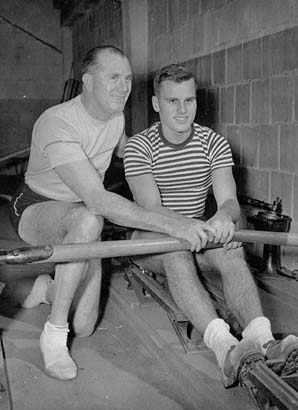
    John B. Kelly Sr. (left) gives a few pointers to his 18-year-old son, Jack Jr., in January 1946. Both father and son earned Olympic medals in rowing.Associated Press

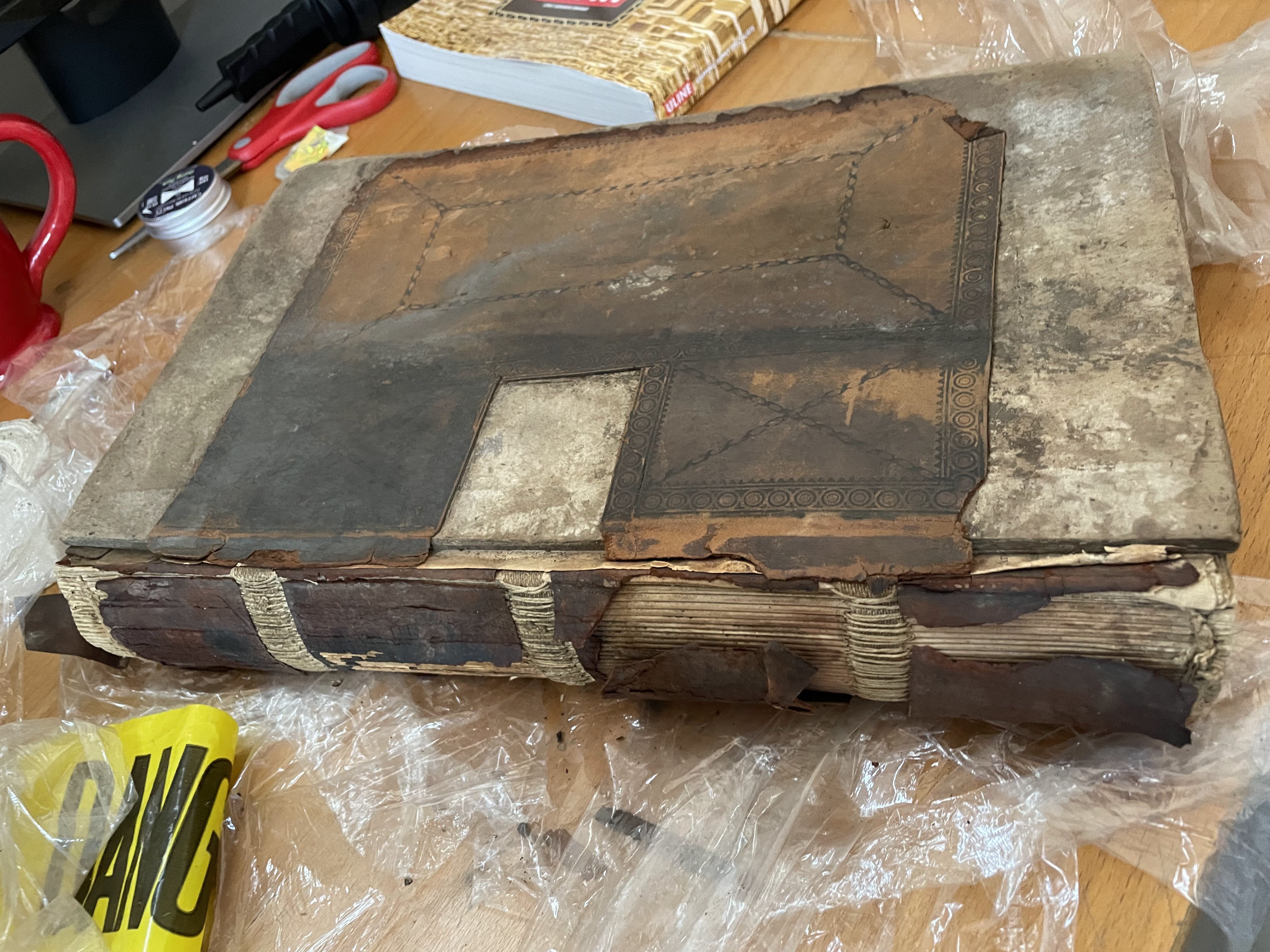
    I first worried about this impending loss of history a decade ago when I was writing a book about Boathouse Row. Sitting on my dining room table was a 19th-century minute book of the Vesper Boat Club that I had borrowed from a member who had taken it home because the club wasn’t caring for it. Its leather cover was split, and pieces were flaking off. Gently turning its pages, I read about the constant break-ins, rules about smoking, drinking, and women, and the obsession with uniforms, including the dress one: “dark blue cloth, naval officers’ pattern, with name of Vesper on front in gold bullion, block letter ½ inch in height.”

    Afterward, I carefully wrapped the disintegrating book in plastic wrap, not knowing what else to do.

    A Vesper Boat Club minute book from the 1890s. After reading it, author Dotty Brown wrapped it in plastic wrap, fearful that it would deteriorate even further.Dotty Brown

    While some clubs have put their old documents in places like the Historical Society of Pennsylvania and the Independence Seaport Museum, others have crammed them under staircases and beside boilers while their members focus on winning races.

    The idea for the Rowing History Project emerged after COVID-19 canceled the 2020 Head of the Schuylkill Regatta (HOSR) — right when it was celebrating its 50th year. Instead, the HOSR pulled together a half dozen Boathouse Row history buffs to organize Zooms called “50 Years, 50 Stories.” The volunteers started meeting every Friday at 11 a.m., and over the years, their weekly planning sessions turned to the dire condition of the clubs’ artifacts.

    While the row could easily fill a physical museum, we watched as the prestigious River and Rowing Museum in Henley, England, shuttered and the Mystic Seaport Museum in Connecticut closed its rowing section.

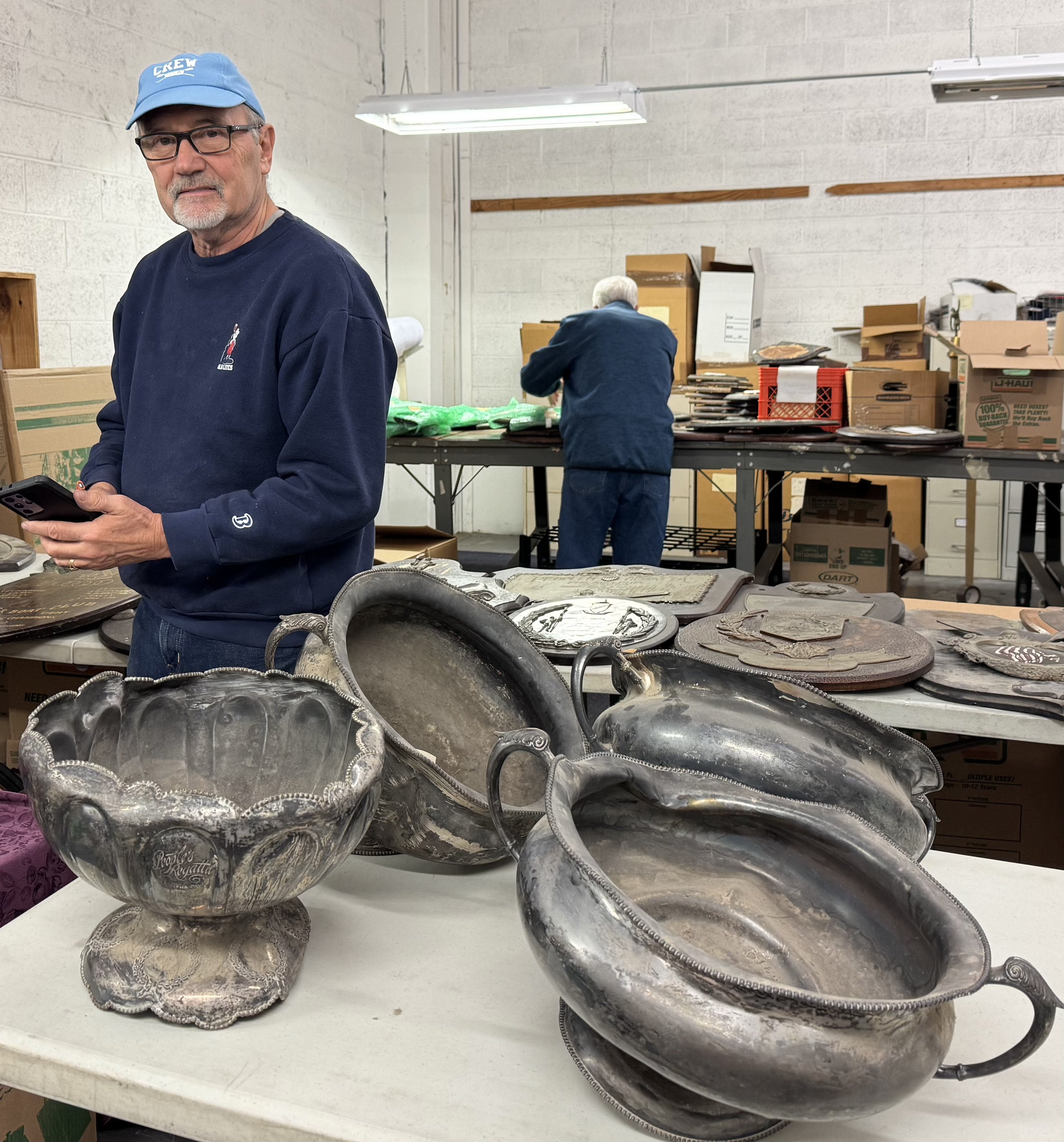
    Then in 2023, architect and Vesper member Hilary Langer went into the bowels of his club to look at air handlers that needed replacement.

    “I couldn’t get to them because I discovered trophies, plaques — all the heavy stuff,” Langer said. “I was so scared. We were so focused on rowing and operating a very, very complicated operation with masters, lightweights, women, heavy weights, juniors, high schools, that all this stuff was forgotten and neglected. It would still be there if those units hadn’t needed replacement. That is a fact.”

    Hilary Langer of the Vesper Boat Club sorts through damaged trophies, deciding what to keep, what to repair, and what to throw away. About 1,000 items were taken from the club to Boathouse Sports, a clothing manufacturer, which gave the club space.Dotty Brown

    After reaching into every cranny of the club, he pulled out 1,000 items, including the minute book that I’d covered in plastic wrap.

    That galvanized the HOSR group, which includes people with backgrounds in management and technology, not to mention the finish-line-driven spirit typical of rowers. We researched museum-style platforms and paid two professionals — an archivist and a webmaster — to help.

    Vesper’s collection became the “proof of concept,” and when the data for its holdings — photos, descriptions, condition, location, and more — were successfully uploaded, we raced to convince the rest of Boathouse Row to photograph and document its artifacts. The group held information sessions, created instructional videos, and hired a few library students to work with the boathouses. Some private collectors, including one with 3,000 rowing artifacts, are also joining the Rowing History Project as it evolves into an ever-larger museum.

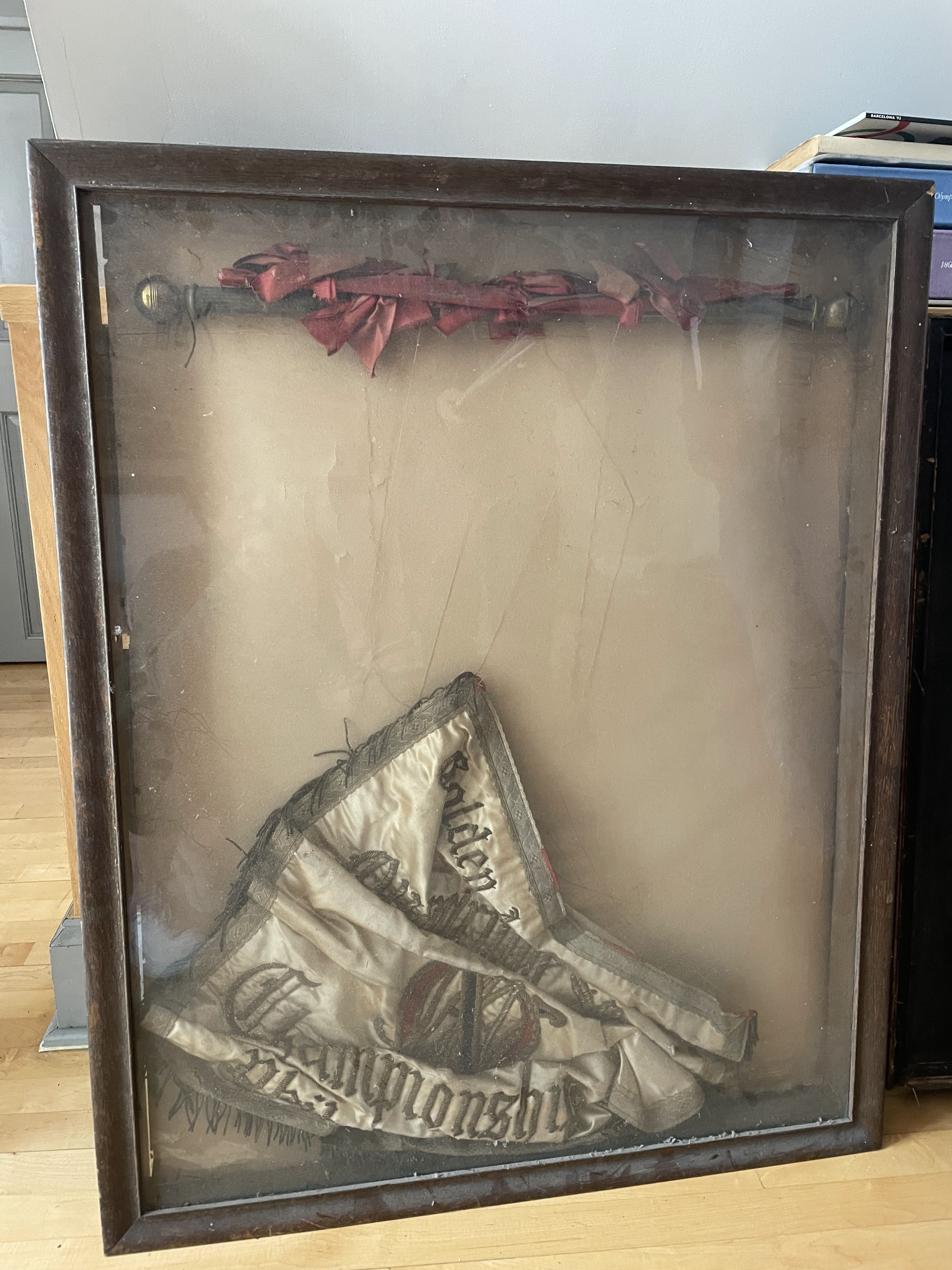
    A moth-eaten banner retrieved from the attic of the Vesper Boat Club.Dotty Brown

    “What we wound up with is not a software program designed just for Philadelphia or Boathouse Row,” said Chris Doyle of the Pennsylvania Barge Club. “It’s intended as a national platform. Our big contribution is a national platform for rowing history.”

    Dotty Brown is a former reporter and editor at The Inquirer and the author of “Boathouse Row: Waves of Change in the Birthplace of American Rowing.” Visit the Rowing History Project at rowinghistoryproject.org.

  • U.S. Rep. LaMonica McIver is eight months pregnant and — after a skirmish with ICE — facing 17 years in jail

    U.S. Rep. LaMonica McIver is eight months pregnant and — after a skirmish with ICE — facing 17 years in jail

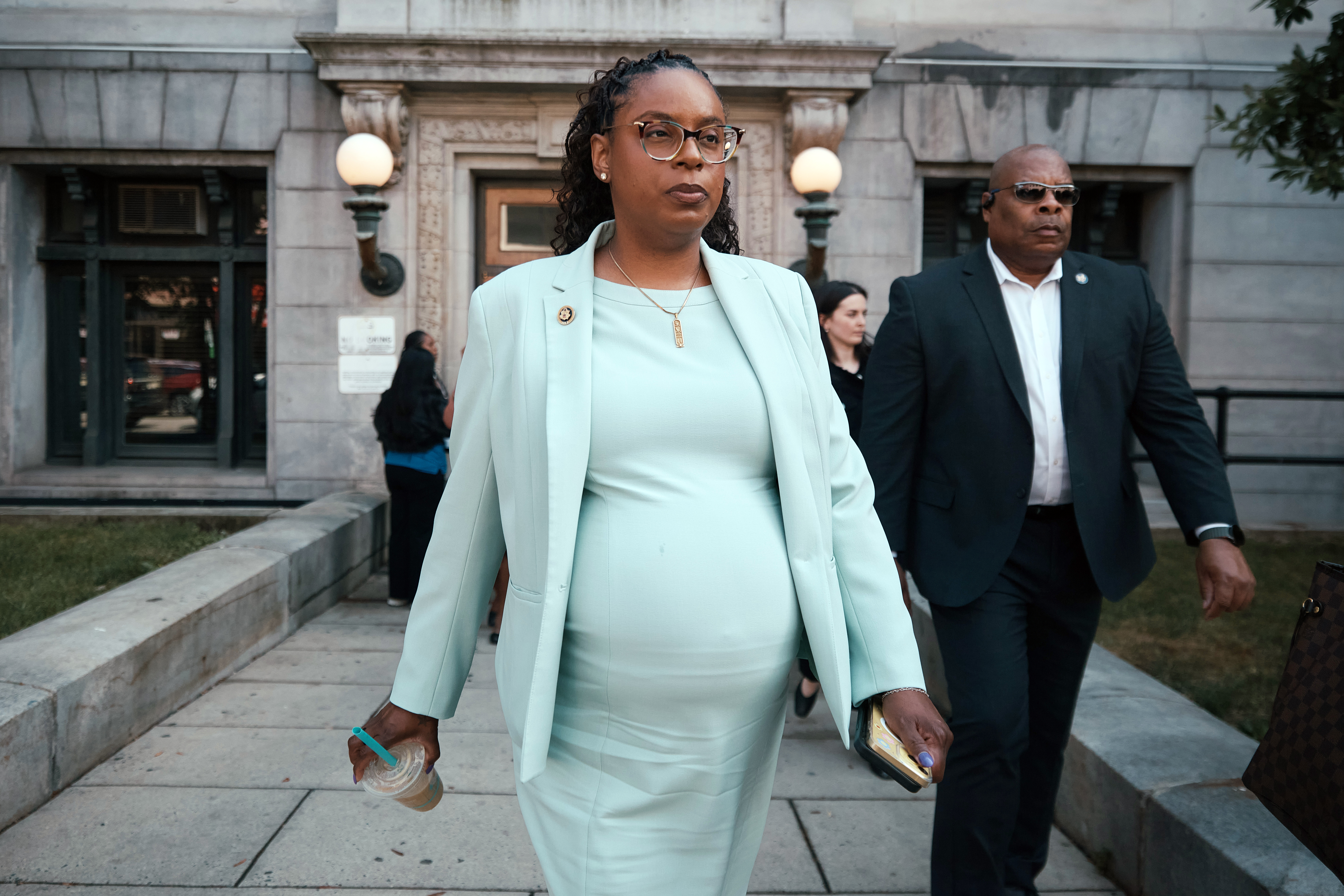
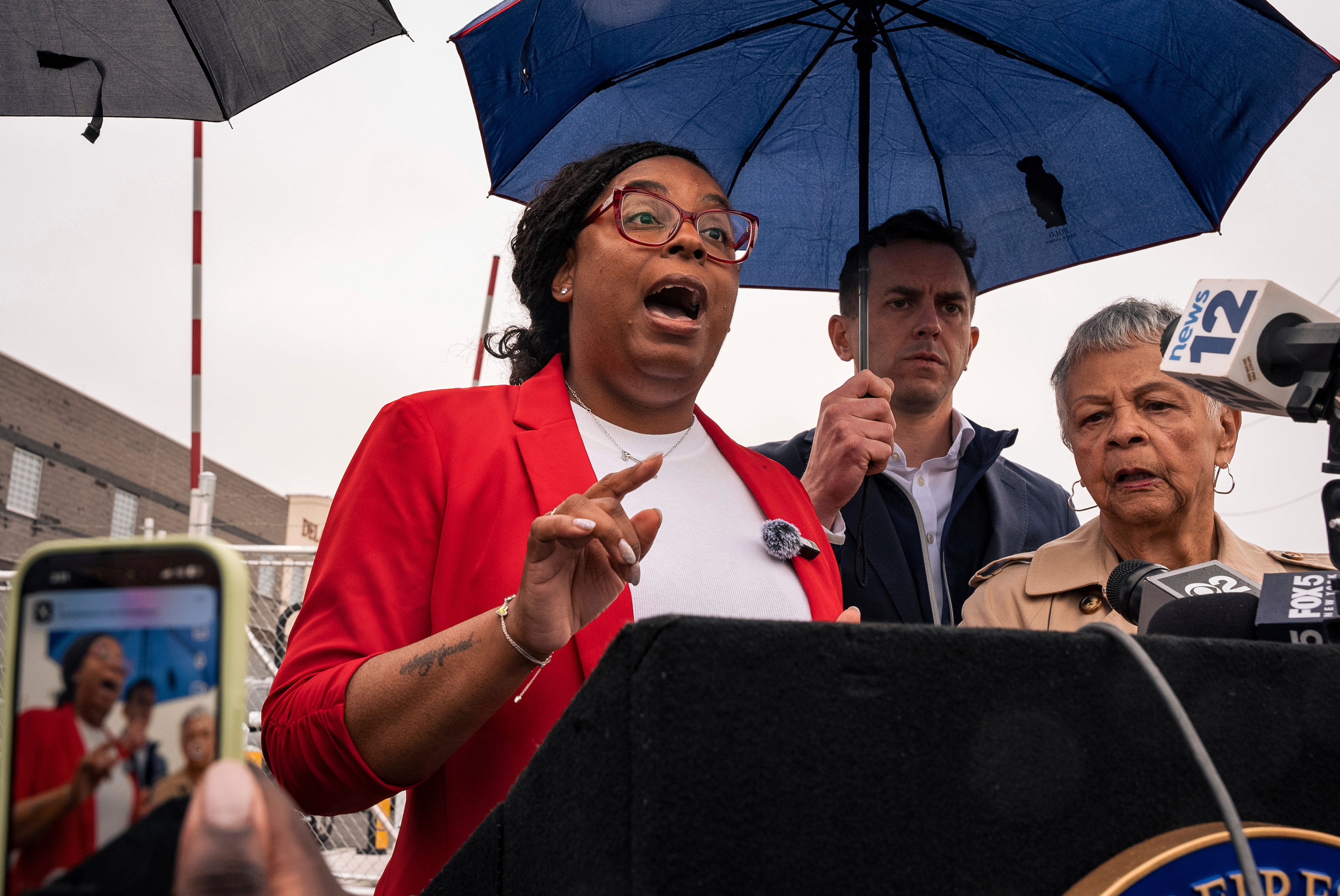
    U.S. Rep. LaMonica McIver hasn’t put her life on hold to fight what she sees as totally unfounded charges by the Trump administration that she supposedly assaulted a U.S. Immigration and Customs Enforcement (ICE) officer during a protest last year.

    Instead, the first-term Democratic congresswoman is expecting her second child next month, she’s up for reelection in November, and because of Congress’ backward policies on parental leave (as in, there are none), she continues to put in long hours representing New Jersey’s 10th Congressional District, which includes her hometown of Newark.

    Lurking in the background, however, is the knowledge that if convicted on two charges of assaulting an ICE officer, she could be sentenced to as much as 17 years in prison.

    It’s way more than most people in her situation could handle.

    McIver’s inner strength is next level.

    She is running for reelection on Nov. 3 while fighting efforts by the Trump administration to make an example out of her. McIver is also repping her constituents in Newark in Washington, D.C., all while caring for — and expanding — her family.

    Her journey to motherhood hasn’t been easy. McIver, 40, has spoken openly about her yearslong struggles with fibroids, her use of in vitro fertilization (IVF), and her opposition to President Donald Trump’s merciless immigration enforcement campaign. She hopes her candor resonates with women who also are trying to balance career, pregnancy, and motherhood.

    Meanwhile, she is scheduled to give birth to her second child on Oct. 16. After she delivers, McIver will become one of fewer than 20 members of Congress ever to have done so.

    My jaw dropped during the interview in which McIver informed me that as a member of Congress, she isn’t entitled to maternity leave. Postpartum, McIver also won’t be able to cast votes for legislation remotely or by proxy.

    “They give you nothing,” McIver said. “It makes no sense that you have to give birth and instead of focusing on healing and nursing, you have to literally put that to the side and share that with getting back to work. It’s honestly disgusting. It’s unbelievable in 2026 that this is where we are still at.”

    U.S. Rep. LaMonica McIver (D., N.J.) speaks to reporters after Newark Mayor Ras Baraka was arrested while protesting at the Delaney Hall ICE detention center in May 2025.Angelina Katsanis

    Legislation that would have greatly helped her and other members of Congress in her position failed to garner adequate Republican support to pass last year. McIver blamed House Speaker Mike Johnson, among others, whom she said “don’t give a damn — and don’t want to make this a place that works for moms because they don’t want moms here.”

    After the election on Nov. 3, McIver intends to immediately return to Washington and get back to work. Luckily, she will have help from her “great village” that includes her mother. “I’m a stickler about not missing votes,” McIver pointed out, adding, “There are so many things that Republicans are going to be trying to do.”

    Trump has made a point of going after high-profile Black female elected officials such as New York Attorney General Letitia James and Lisa Cook, a governor of the Federal Reserve. Trump called McIver “woke” and “out of control.”

    McIver, along with several other elected officials, had been attempting to inspect conditions at Delaney Hall, a 1,000-bed facility along an industrial stretch of land near Newark Liberty International Airport in May 2025 when a scuffle broke out.

    McIver placed herself next to Newark Mayor Ras Baraka to shield him during the melee. I’ve watched the video numerous times. It doesn’t show her throwing a punch or striking anyone. No one was injured, either. But that didn’t stop Alina Habba, a former defense lawyer for Trump who briefly served as a U.S. attorney in New Jersey, from filing assault charges against McIver.

    McIver attempted to get the charges dismissed. In August, an appeals court ruled that McIver’s actions were nonlegislative and not protected by constitutional immunity, which clears the way for legal proceedings against her to proceed.

    Glynda C. Carr, the founder of Higher Heights for America PAC, described what happened as a “flash point” of the anti-immigration detention center movement that future generations will read about in history books.

    “This is bigger than LaMonica McIver,” Carr said, adding that the case could establish a baseline for whether elected officials will be permitted to conduct oversight of ICE detention centers without fear of prosecution.

    As for McIver, I’m sure her case will be tied up in the courts until after Trump leaves office, and then thrown out once new people come into office. Meanwhile, because members of Congress are prohibited from accepting pro bono legal work, McIver has to raise money to pay her legal bills, which are expected to exceed $1 million.

    It’s a lot to juggle, along with being pregnant, serving as a member of Congress, and being under attack by a government hell-bent on making life more difficult for working women, especially African American women.

  • President Trump tried to stop the press and ended up muzzling himself | Editorial

    President Trump tried to stop the press and ended up muzzling himself | Editorial

    Pressed recently on President Donald Trump’s expulsion of three news organizations from the White House, U.S. Sen. John Barrasso (R., Wyo.) shrugged it off as indistinguishable from Trump’s own past suspension from social media platforms, saying, “So it goes both ways.”

    Huh? The senator is either remarkably ignorant of the Constitution from which he derives his power, or shameless enough to pretend to be.

    What Barrasso didn’t appear to understand is that the First Amendment, like the rest of the Bill of Rights, doesn’t go both ways: It protects us from the government, not vice versa. Specifically, it guards the expression of citizens and publishers against state censorship and interference. Government officials can neither dictate what Facebook posts nor punish CNN for what it airs. If the First Amendment doesn’t mean news organizations can report on the government freely without being barred from public buildings and events as a result, it doesn’t mean anything.

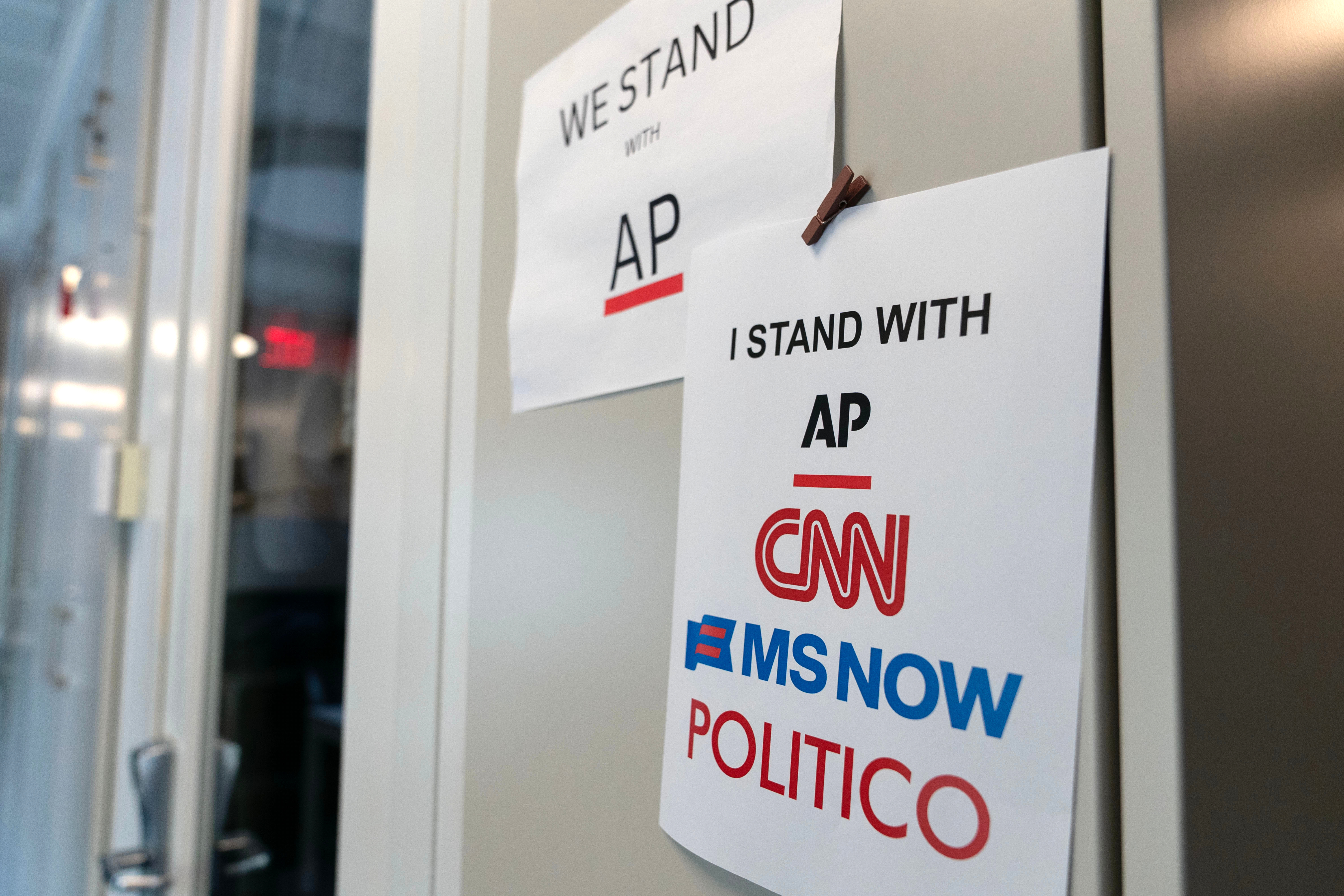
    Trump’s latest trampling of the Constitution is in that sense too clear to be muddied by senatorial sophistry. He expressly denied CNN, Politico, and MS NOW entry to the White House based on the content of their reports, in particular their failure to sufficiently glorify him. This is the essence of what the First Amendment prohibits.

    It’s far from Trump’s first or most consequential authoritarian challenge to the country’s long-protected freedoms of expression and the press. Since his first term, he has derided legitimate journalism as “fake news,” encouraged violence against reporters, and called the press the “enemy of the people,” echoing Josef Stalin and other despots. In his second administration, he has graduated to leveraging the power of the federal government against the media, using the Federal Communications Commission (FCC) to try to force late-night host Jimmy Kimmel off the air; wielding government power over mergers and more to reward corporations that rein in independent journalism; and menacing journalists and their employers with lawsuits, investigations, and arrests.

    But the ban may be Trump’s most glaring violation of constitutional press protections to date. As the affected organizations noted in a lawsuit filed in federal court this week, the policy “could not be a more direct assault on the First Amendment.” The president himself called it a “ban on the free press” and attributed it to the organizations’ “negative” coverage.

    The courts have blocked his earlier attempts to exclude individual reporters as well as a parallel Pentagon policy instituted by his defense secretary. Even the Trump-friendly U.S. Supreme Court could be hard-pressed to justify this one.

    In addition to laying the groundwork for his next legal defeat, the president’s lockout gave the fractious press corps rare cause for collective action. With other networks declining to provide pooled camera coverage in solidarity with the banned organizations, the lack of competent recording at a ribbon-cutting for a new White House helipad this week ensured an idling chopper drowned out Trump’s remarks — not that very many people missed them.

    It was the sort of pseudo-news event that only raised more questions about the value of broadcasting much of what the president says. Journalists who direct their attention elsewhere are bound to transcribe that much less fake news.

  • Letters to the Editor | Sept. 24, 2026

    Letters to the Editor | Sept. 24, 2026

    Real allies

    Current U.S. foreign policy is largely an extension of President Donald Trump’s excessive ego. He decides policy without accepting much advice from staff, the State Department, or formerly allied nations.

    As demonstrated in the Mideast and elsewhere, this is a recipe for disaster.

    The U.S. can develop stronger and better Mideast policy by considering the strategy and tactics suggested by NATO and the Gulf states. This includes basic goals such as the toll-free passage of all vessels through the Straits of Hormuz and Bab al-Mandab.

    Establishing a Mideast policy working group with senior representatives of NATO and the Gulf Cooperation Council (founded in 1981) would demonstrate the U.S.’s seriousness in truly revising existing Mideast policy and its implementation. Iran would also likely find these proposals more credible and more worthy of its consideration.

    This working group must restate what it is willing to offer Iran, e.g., the removal of economic sanctions, the end of the naval blockade, and possibly the issuance of generous redevelopment loans.

    It will be difficult for President Trump to have this working group take the lead without his support. However, he should appreciate that this will be politically advantageous for him in light of his current adverse situation.

    Raymond Tillman, Westbrook, Maine

    Global silence

    Chinese Communist Party leader Xi Jinping is set to meet with President Donald Trump this week. Will it be business as usual? Human rights under Xi have deteriorated rapidly since he took power in 2012, with increased state control and repression of dissidents reaching far beyond China’s borders. China’s repression of Falun Gong, a peaceful meditation practice heavily persecuted since 1999, has been especially brutal. Falun Gong practitioners, between 70 million and 100 million at the start of the persecution, undergo the forced extraction of vital organs that supply China’s transplant industry. This form of mass murder, a $9 billion industry now also targeting Uyghurs, is made possible through international apathy. Under Xi’s direction, U.S. media and social media are being used as part of a disinformation campaign intended to influence public perception of Falun Gong. If we don’t care, we won’t speak out — business remains as usual. I believe our voices can make a difference. Ask our U.S. senators to support the Falun Gong and Victims of Forced Organ Harvesting Act, a bipartisan bill designed to end this atrocity and protect our nation from complicity.

    Jessica D. Russo, Philadelphia

    Press-ing concerns

    Recent reporting on the banning of certain media and Will Bunch’s column confirm once again the extent of the Trump administration’s struggle with upholding our Constitution.

    We’ve seen it over and over — whether it’s the war with Iran, the ballroom in the former East Wing, the triumphal arch, or even the suggestion of a possible third presidential term — there is no regard for the rule of law with this White House.

    One wonders what’s in store if the administration fails to retain control of Congress in November.

    News outlets like The Inquirer — and the organizations that have been banned — must continue to shine a light on this administration so we can elect legislators who will defend the Constitution and preserve our democracy.

    Sister Veronica Roche, Westmont

    Join the conversation: Send letters to letters@inquirer.com. Limit length to 150 words and include home address and day and evening phone number. Letters run in The Inquirer six days a week on the editorial pages and online.