Category: Opinion

  • Letters to the Editor | June 18, 2026

    Letters to the Editor | June 18, 2026

    Reject Freedom 250

    The Inquirer’s recent article on the “Great American State Fair” failed to explain a critical aspect of the controversy. Donald Trump specifically created the nonprofit organization that is hosting the “state fair,” known as Freedom 250, to bypass the official government commission Congress created years ago to celebrate the nation’s 250th anniversary. Creating Freedom 250 allowed Trump to put his minions in charge there (unlike with the congressionally approved celebration). Freedom 250 also allows him to solicit contributions from favor-seekers. As we have seen repeatedly in Trump’s second term, the way to gain his ear is to give money to entities he controls, like Freedom 250. And — surprise! — Trump has refused to identify any of Freedom 250’s private donors. So, in refusing to participate in the “state fair,” Pennsylvania would be saying no to a corrupt process whereby Trump has hijacked the nation’s birthday celebration to glorify his ego and trade favors with special interests. Here’s hoping Gov. Josh Shapiro decides Pennsylvania should stay home.

    Matt Zencey, West Chester

    The writer is a former editor at The Inquirer.

    Healthcare for all?

    So, the day before we learned Donald Trump saw 22 medical specialists for his annual physical exam, we learned that here in Pennsylvania, 160,000 people dropped Pennie when the cost of this “accessible” health insurance became unreasonable for them. Meanwhile, almost 30 million Americans can’t even see one physician, let alone 22, because they lack coverage. And why is healthcare increasingly out of reach (again) for so many? Because, despite Trump’s claim during his first rodeo that he would get Americans the greatest healthcare plan ever enacted, neither then nor now has he or the Republicans come up with anything to make sure that everyday, low- and moderate-income Americans can be covered for preventive, chronic, or critical health issues. But by all means, Mr. President, have those 22 physicians keep an eye on you while millions of Americans suffer needlessly and incur medical debt to the tune of $220 billion. You sure are making America healthy again.

    Lesley Fredericks, Roslyn

    Secure Social Security

    Inquirer readers shouldn’t lose sleep over the long-term finances of Social Security, as the program has been running deficits since 2021. But the system could benefit from some much-needed changes.

    The average American life expectancy has risen five years since 1983. Considering many Americans are working past 65 — including President Donald Trump, nearly half the Senate, and five U.S. Supreme Court justices — it’s incumbent upon Social Security to follow Denmark and raise the retirement age to 70 to remain solvent.

    Alternatively, Social Security could increase the earned income that’s subject to the Federal Insurance Contributions Act (FICA), or reduce/eliminate benefits for those whose gross income is over $300,000. However Congress chooses to tweak Social Security, benefits will almost certainly continue in some form.

    Paul L. Newman, Merion Station

    Join the conversation: Send letters to letters@inquirer.com. Limit length to 150 words and include home address and day and evening phone number. Letters run in The Inquirer six days a week on the editorial pages and online.

  • Trump’s bloated claims about his Iran deal can’t hide his failure

    Trump’s bloated claims about his Iran deal can’t hide his failure

    “You can fool all the people some of the time and some of the people all the time, but you cannot fool all the people all the time.” That maxim is often attributed to Abraham Lincoln, but it’s occasionally credited to the great American circus showman P.T. Barnum. It has special relevance when applied to Donald Trump, who has outdone Barnum in self-promotion.

    The president has had astonishing success in fooling some of the people all the time, from his foundational lie that the 2020 election was stolen through his daily blast of falsehoods about everything from the economy to the financing of his ballroom.

    Yet, with his blatant efforts to bamboozle all the people about his Iran deal, Trump may have finally reached the point where most Americans realize he is a fraud.

    For starters, Trump’s claim that he has reached a “Great Deal [that] will bring Peace and Security to the whole Region” is flat out fraudulent. The Iran war has laid bare the incompetence of a U.S. leader who assumes that force alone produces victory.

    The U.S. and Israel may have destroyed much of Iran’s military, but Tehran has denied them a geopolitical win, which all the world’s leaders (except for Trump) recognize.

    And most Americans will soon see this for themselves.

    Until the U.S. joined Israel in the February attack on Iran, Tehran’s religious and military leaders had never tried to close the Strait of Hormuz for fear of arousing American wrath. But after Trump openly called for regime change, they had nothing to lose.

    Despite its military losses, Iran has proved (as has Ukraine) that a smaller country using unconventional means (drones, mines, a willingness to absorb pain) can hold off a superpower.

    Moreover, Tehran is still insisting it will charge ships fees for transiting the strait after the 60-day ceasefire extension expires, contrary to Trump’s claim that the strait will be “toll free.” And the world knows that, if pushed, Tehran can close the strait again.

    Trump now looks like a chump.

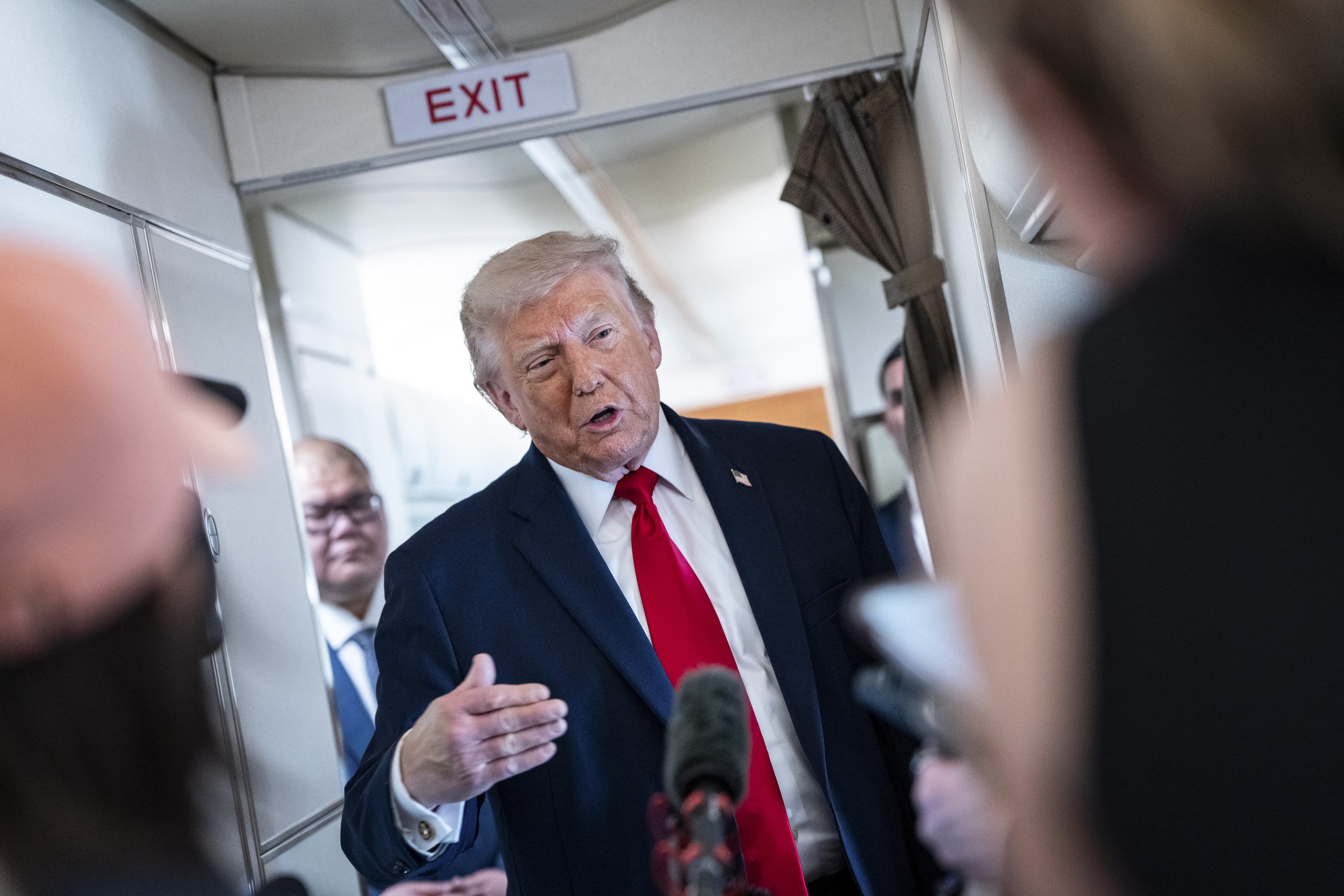
    President Donald Trump speaks to reporters aboard Air Force One while traveling to Chippewa Falls, Wis., June 5.HAIYUN JIANG

    He has alienated Mideast allies, including Gulf states, which took the brunt of Iran’s military revenge. He has encouraged America’s adversaries, including Russia and China, by revealing his lack of any long-term strategy.

    Vladimir Putin and Xi Jinping had only to watch as the U.S. military squandered huge numbers of precious missiles against Iranian drones, leaving them in such short supply that the U.S. military is exposed in the Indo-Pacific.

    Moscow can only toast Trump’s blindness, as the U.S. cancels promised sales of mid- and long-range missiles to Europe for defense against Russia and to pass on to Ukraine. This has left Ukrainians defenseless against Russia’s rain of cruise missiles on civilians — and on a thousand-year center of Orthodox Christianity, the Kyiv Pechersk Lavra monastery and its golden-domed Dormition Cathedral.

    Not a word of protest by Trump or MAGA’s white Christian nationalists who admire Putin’s religiosity. Instead, POTUS has bizarrely praised Putin’s help with Iran. Could he possibly be referring to Moscow’s sharing of intelligence on U.S. targets with Tehran?

    But never mind. Let’s get to the document Trump signed electronically on Sunday. It was not a peace deal. Rather, it was a so-called Memorandum of Understanding — “about a page and half … a very general document,” according to Vice President JD Vance.

    Contrary to Trump’s grandiose claims, this memorandum kicks all the main questions about dismantling Iran’s nuclear program down the road to future negotiations over the next 60 days.

    By keeping the document secret at least until Friday, the president is relentlessly trying to frame his defeat as an astounding victory in hopes this will shape the thinking of the MAGA faithful.

    From Trump’s own words, however, and those of his henchmen, it’s already clear he has abandoned most of the stated goals of this war.

    Let’s look at what we already know.

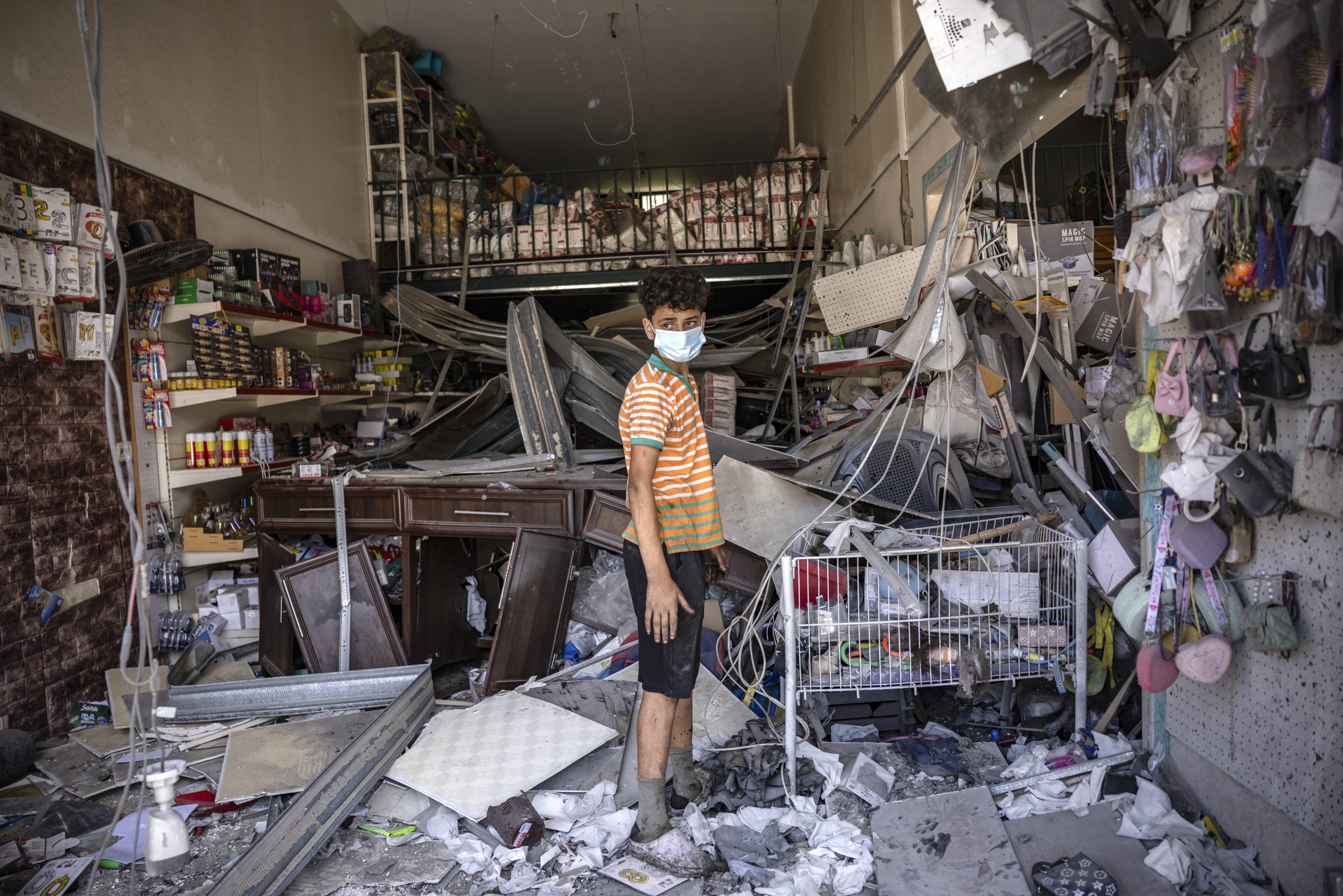
    A boy walks through his family’s destroyed shop after arriving home in Chehabiyeh in southern Lebanon, where people have begun returning after a ceasefire was announced, on Tuesday. Israel has said its forces have been targeting the Iran-backed Hezbollah militia, and it has continued to launch strikes since the U.S.-Iran preliminary deal was announced over the weekend.DAVID GUTTENFELDER

    1. There will be no regime change, as POTUS called for on the opening day of the war, urging the Iranians to rise up. Trump now bizarrely calls Iran’s new leadership pragmatists in a New York Times interview, labeling them “smarter” and more “rational” than those who were assassinated. Yet the Revolutionary Guard’s military commanders now running the show are more hardline and more confident about defying the U.S. president.

    2. As so far revealed, the negotiating framework to end Iran’s nuclear program sounds no better than President Barack Obama’s 2015 agreement. POTUS bragged in the Times that the agreement would ensure Iran “cannot develop or purchase a nuclear weapon.” But Tehran has asserted for decades that it would not do so and made the same pledge on the first page of Obama’s deal, known as the JCPOA.

    Although Trump promised to eliminate Iran’s nuclear program entirely, he appears to have backtracked significantly, now saying that Iran “can never go beyond a certain amount” of enrichment that could be used for military purposes. Again, this echoes the JCPOA, which limited enrichment to 3.67%, an amount that can be used in power reactors but not for a bomb.

    As for how long Iran would have to limit enrichment, Trump hinted that he might settle for a 15-year suspension, which is the same time limit the JCPOA required. (But in a contradiction, he said the limit would be “forever,” although there is no sign Tehran would agree to this.)

    If POTUS hadn’t pulled out of the JCPOA in 2015, the 15 years would have extended until 2030, and Iran would now have no highly enriched uranium.

    The flaw in the JCPOA was the 15-year sunset, after which Iran could have restarted enrichment, but Trump seems headed toward a similar limitation.

    As for the 11.5 tons of enriched uranium Iran produced since Trump junked the JCPOA — including a half ton of nearly bomb-grade nuclear fuel — the president has talked about reducing its purity level (known as downblending), possibly inside Iran. A far cry from previous demands for removing it entirely.

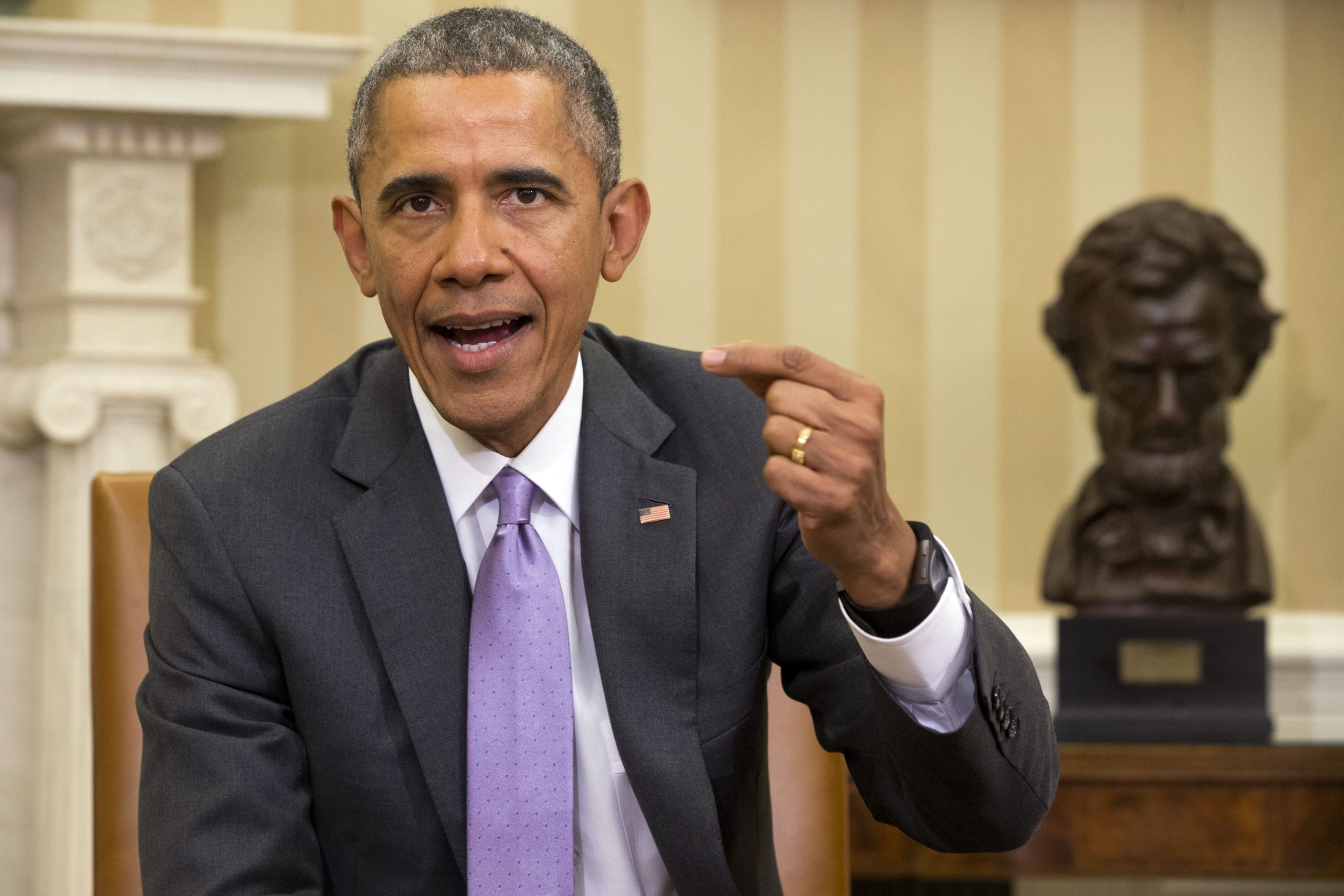
    President Barack Obama speaks about Iran and Israeli Prime Minister Benjamin Netanyahu’s speech to Congress during a meeting with Defense Secretary Ash Carter in the Oval Office in 2015.Jacquelyn Martin

    In the Obama deal, 97% of Iran’s stockpile was removed outside the country to Russia. No sign that Trump’s deal will do as well.

    Moreover, the joint Israel/U.S. 12-day war against Iran in 2025 had buried Iran’s enriched uranium, and as Trump has recently admitted, U.S. satellites could see if the Iranians tried to remove it. Negotiations in February, mediated by Oman, were reportedly headed toward a better deal than Trump will ever achieve, if he achieves any deal at all.

    Trump killed those talks by starting the war.

    So, if you parse Trump’s own admissions, there was no need for his four-month war, which has cost America 13 dead and hundreds of billions of dollars — not to mention 3,000 Iranian dead and severe damage to the global economy.

    Yet the outpouring of Trump lies this week designed to disguise his failure roll on.

    While the president insists that Iran will get no economic benefits until a deal is concluded, it appears that Tehran will be able to immediately restart exporting oil during negotiations. And there are reports that other Gulf states such as the United Arab Emirates or Qatar may release Iranian funds held in their banks immediately, enabling Iran to benefit economically before any nuclear deal.

    Moreover, a future Trump deal doesn’t cover an end to Iran’s missile buildup, or the end of support for proxies, sins for which Trump never stops excoriating Obama. Also, Israel and Hezbollah aren’t party to the deal and are likely to keep fighting.

    When the details of Trump’s non-deal are revealed, he will try to paper over his failure with more prevarications. But as Barnum noted, “you can’t fool all of the people all of the time.”

  • Platner, Fetterman, and the myth of the working-class politician

    Platner, Fetterman, and the myth of the working-class politician

    When I was a kid, my father told me something I’ve never forgotten. When you dislike someone, he said, it’s often because you see a part of them in yourself.

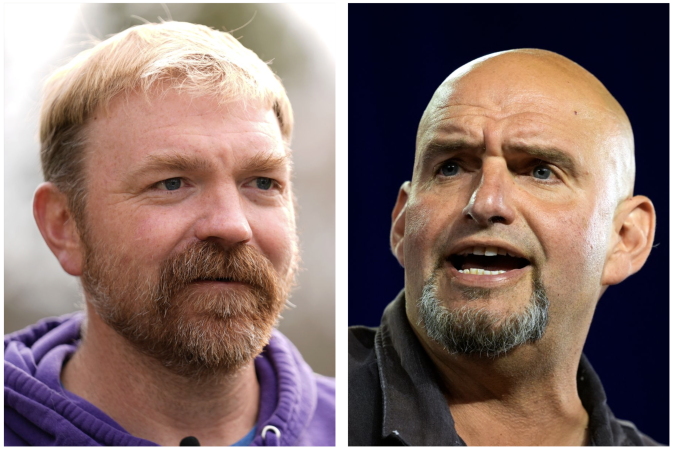
    I’ve been thinking about Dad’s comment during the recent slugfest between Sen. John Fetterman (D, Pa.) and Graham Platner, the Democratic Senate nominee from Maine.

    Noting Platner’s Nazi tattoo (since covered up) and reports about sexually themed messages he sent to several women, Fetterman called Platner a “bona fide dirtbag.” Platner fired back, labeling Fetterman an “a-hole” as well as a “stooge” for the American Israel Public Affairs Committee.

    The two men have important political differences, especially about the Middle East. But here’s what they have in common: They’re both pretending to be rough-hewn, working-class guys.

    In fact, both of them were born into significant family wealth. And so were almost all of America’s political leaders, past and present. We just don’t want to admit it.

    Consider Andrew Jackson, supposedly our first common-man president. In high school, I learned that the first six presidents included four wealthy Virginia planters (Washington, Jefferson, Madison, and Monroe) and two prosperous New England lawyers (John Adams and his son, John Quincy Adams). But then came Jackson, who grew up in hardscrabble circumstances.

    Not quite. Jackson was raised on a Carolina farm with a gristmill, a whiskey still, and enslaved laborers. To be sure, he lacked the elite pedigree of his predecessors. But he was hardly poor or working-class by the standards of his time.

    Ditto for Abraham Lincoln. Supporters celebrated him as a “rail-splitter” who did hard agricultural work as a young man. Lincoln fed that myth, declaring that his childhood echoed the famously sad line in Thomas Gray’s poem “Elegy Written in a Country Churchyard”: “the short and simple annals of the poor.”

    Again, not quite. When Lincoln was born in 1809, his father owned two farms and several town lots. Five years later, Thomas Lincoln was in the top 15% of taxpaying property owners in his rural Indiana community.

    The only early American president who arguably came from poverty was Lincoln’s successor, Andrew Johnson. At 14, Johnson was indentured to a local tailor. He ran away two years later and opened up his own tailor shop, where he earned enough to purchase a modest house.

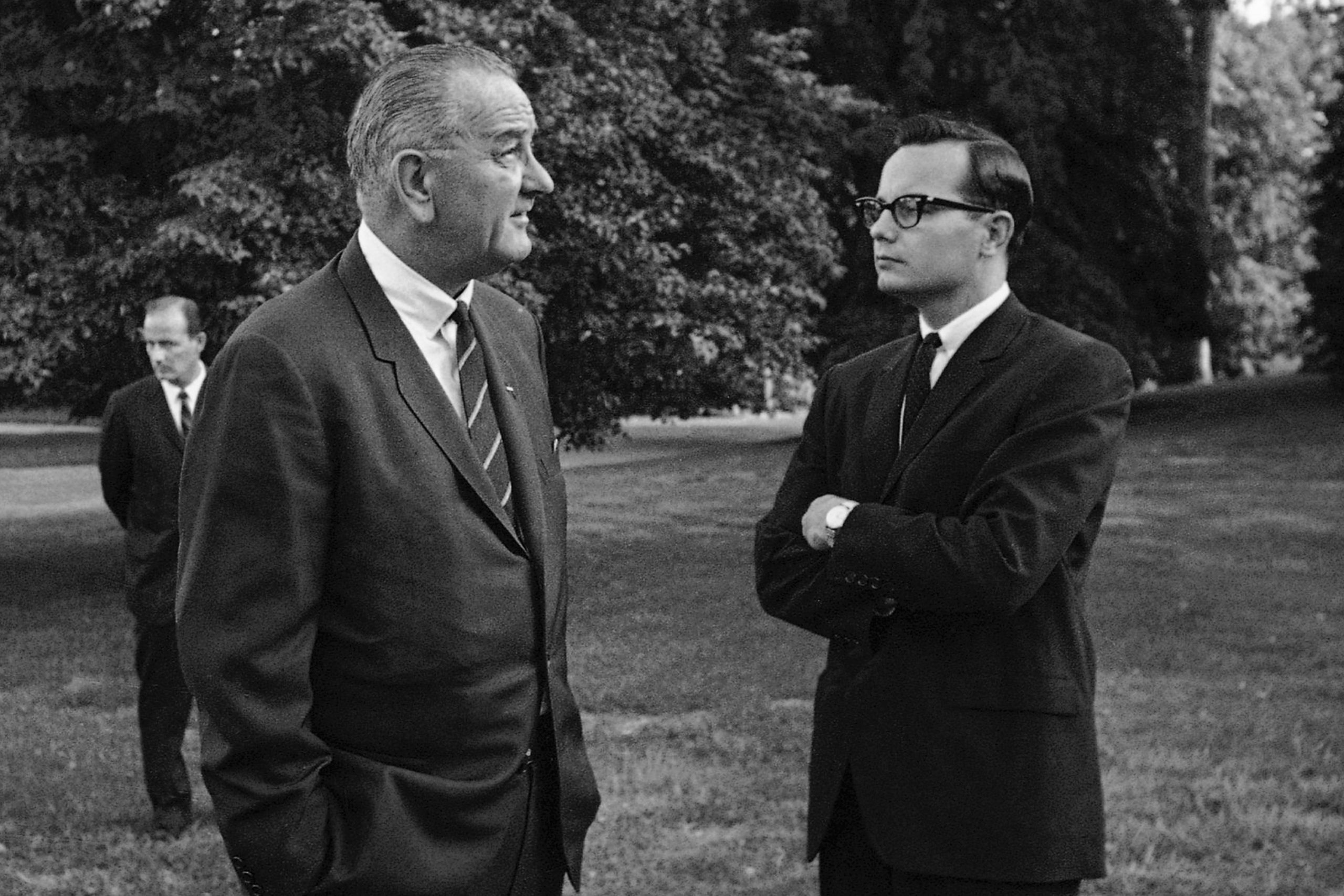
    President Lyndon B. Johnson (here with press secretary Bill Moyers in August 1965) used to say that he grew up in poverty, but his father owned a newspaper and a hotel.William J. Smith

    Lyndon Baines Johnson (no relation to Andrew) liked to say that he had grown up poor, too. But his father owned a chauffeur-driven car, a newspaper, and the only hotel in Johnson City, Texas. And Johnson’s dad was elected to several terms in the state legislature, which was itself a mark of wealth: Lawmakers earned a nominal salary, so only well-to-do Texans could afford to serve.

    Likewise, Ronald Reagan trumpeted his humble roots. “We didn’t live on the wrong side of the tracks, but we lived close enough that we could hear the whistles,” he quipped. But his family was rich enough to send him to college. And after Reagan graduated, his father was put in charge of a New Deal work-relief program in their Illinois town.

    As historian Edward Pessen wrote in The Log Cabin Myth, refuting Reagan’s claims, anti-poverty programs “are not normally directed by men themselves poor.” Pessen’s 1984 book should be required reading for anyone who still believes that our leaders come from the working class. They just pretend to.

    In that sense, Fetterman and Platner are the latest chapters in a story as old as America. In his 2022 Senate campaign, a TV ad for Fetterman called him a “blue-collar tough guy.” But Fetterman grew up in a “cushy” suburb (as he has called it) and received large payments from his parents during the 13 years he served as mayor of Braddock, Pa. The hoodie and shorts say working class. But the financials say something else.

    An ambrotype image of President Abraham Lincoln circa 1858. Supporters praised his years spent doing agricultural work. But his father owned two farms and several town lots.Uncredited

    Likewise, Platner recently told a Maine television station that he’s “a working-class guy that lives a working-class life.” But his father was a prominent local lawyer, and his grandfather was an architect who built a family estate modeled after chateaus in France. Platner briefly attended Hotchkiss, one of America’s most prestigious boarding schools. Yes, he has operated an oyster farm. But his biggest client was a restaurant owned by — wait for it — his mother.

    So both of these guys are scions of privilege who present themselves as working folk. No wonder they don’t like each other. They are more alike than they would care to admit.

    We want to believe that every American can become anything they wish — a senator, or even a president — if they try hard enough. That’s why we’re attracted to figures like Fetterman and Platner, who enact this dream for us. They play the part, and we play along. Maybe it’s time we woke up.

    Jonathan Zimmerman teaches education and history at the University of Pennsylvania. He is the author of “Whose America? Culture Wars in the Public Schools.”

  • Letters to the Editor | June 17, 2026

    Perfection cost billions

    President Donald Trump insisted upon a perfect resolution to the war he started against Iran. He no doubt was ignorant of the aphorism “perfect is the enemy of good.” Barack Obama‘s administration labored for two years to obtain a “good” but not perfect agreement with Iran’s leadership. It guaranteed multiple unscheduled inspections of Iranian nuclear facilities to assure the world that Iran was not enriching its limited supply of uranium to “weapons grade.” More importantly the Iranians agreed to never “build, develop, or acquire” nuclear weapons. Today, our government will be most fortunate if the Iranians will allow reinstatement of the terms of its 2015 agreement. An incompetent Trump, already humiliated by Iran’s leadership, talked tough but is going to bend the knee and write the ayatollah a big check for $350 billion (for the families of the women and schoolchildren our missiles killed plus funds to rebuild Iranian infrastructure) to get Iran to agree, for a second time, to terms that John Kerry and others negotiated in 2015. If the $350 billion is paid it will exceed by 875 times what the Obama government returned to the Iranians. Any way one looks at it, the con artist who came to Washington claiming to be a superior negotiator and “dealmaker” has shown himself to be a deal-breaker and a corrupt loser after wasting $50 billion to prosecute an illegal war. His insistence upon what only he could define as “perfect” has been an impeachable travesty.

    David Kahn, Boca Raton, Fla.

    Challenge fraud claims

    I ask Sens. John Fetterman and Dave McCormick to challenge President Donald Trump’s repeated claims of election fraud and his threats to our election integrity.

    Even before his first election, Trump refused to say whether he would accept the election results unless he won. He has repeatedly made false claims of fraud, without any evidence of these claims. Multiple lawsuits to challenge election results that favor his opponents have failed. He encouraged a violent insurrection to remain in office.

    Recently, he refused to provide evidence for his fraud claims, stating that the evidence was obvious. He is clearly covering up the fact that no such evidence exists, that these claims are self-serving fabrications. His crude denigrations of those who insist on the truth reveals his desperation.

    Trump is using these claims to justify limiting our voting rights. Please stop this tyrannical power grab. Don’t be a party to the end of our republic.

    Mark Schenker, Blue Bell

    Join the conversation: Send letters to letters@inquirer.com. Limit length to 150 words and include home address and day and evening phone number. Letters run in The Inquirer six days a week on the editorial pages and online.

  • AI is preserving Holocaust survivor stories. But should it be trusted?

    AI is preserving Holocaust survivor stories. But should it be trusted?

    My phone rings, and a Holocaust survivor is on the line. She is 91. She wants to know if her story will still matter when she is gone.

    I do not know how to answer that honestly, so I tell her what I know for certain: We are working on it.

    That work has brought me into conversations I never expected to have, including ones about artificial intelligence. Because the uncomfortable truth is that AI is already entering Holocaust education, whether the field is ready for it or not. The question is not whether to use these tools. It is whether we will use them with the seriousness the subject demands.

    Philadelphia has a deeper stake in this than most cities realize. The Philadelphia metro area is home to about 1,500 Holocaust survivors, just under 1,000 of whom live in the city itself. Most are in their late 80s and 90s.

    Artifacts collected and displayed in the Jenkintown home of Holocaust survivor, Anneliese Nossbaum. She was sent to Auschwitz in October of 1944 and liberated by the U.S. Army in 1945.LAUREN SCHNEIDERMAN

    At the same time, Holocaust knowledge is eroding in alarming ways, with nearly half of Americans unable to name a single concentration camp and many students reporting little to no classroom exposure. Pennsylvania is not exempt from this. The commonwealth does not have a strict statewide mandate requiring Holocaust education, as the bill that was introduced is dead and has not been passed. It is time for a bill to be passed mandating Holocaust education in Pennsylvania.

    Into that gap, technology is rushing. Some of what is arriving is extraordinary. Some of it should concern us deeply.

    I lead a nonprofit, The Blue Card, which serves Holocaust survivors in need. Our organization has helped develop a hologram program featuring Sonia Warshawski, a Holocaust survivor whose testimony has been preserved and made interactive for students. When a student asks her a question and she responds in her own words, the room goes quiet in a particular way. Something real is happening.

    But what makes it real is precisely what makes it different from so much of what is being built right now: The system does not generate. It retrieves.

    If Sonia never said something, the system does not say it for her. It pauses. It stops. That silence is not a limitation. That is the whole point.

    Generative AI works on a different principle. It predicts what should come next. It fills gaps. It is extraordinarily good at producing language that feels authentic, even when nothing authentic underlies it. In most domains, that fluency is a feature. In Holocaust testimony, it is a serious risk.

    We are not talking about getting a few facts wrong. We are talking about the possibility of fabricating witnesses. Of building systems that speak in the voices of people who survived genocide and putting invented words in those voices because the technology can, because it sounds right, because students find it engaging.

    The road to that outcome is paved with good intentions and not enough caution.

    This is not theoretical, and Philadelphia makes that painfully clear. In 2025, a U.S. House committee launched an investigation into allegations of antisemitism in the Philadelphia School District, citing reports that incidents were “rife” and going unaddressed in classrooms. The Anti-Defamation League (ADL) tracked 465 antisemitic incidents in Pennsylvania in 2024, the fourth highest in the nation, showing a 140% rise in physical assaults.

    For the survivors that The Blue Card serves in this region, this is not a distant political story. It is a reopening of wounds that never fully closed.

    And there is a particular indignity worth naming: Until late 2025, Pennsylvania remained one of only four states that still taxed Holocaust reparation payments as personal income. An exemption was finally signed into law in November 2025, decades after the federal government stopped taxing such payments in 2001. That basic discrepancy endured so long, and it says something about the context in which survivors in this city have led their compensation for persecution.

    That context matters when we discuss what we owe them in the realm of memory.

    Survivors choose their words deliberately. They decide what to tell, what to withhold, how to describe things that resist description. That choosing is part of the testimony. A system that completes their sentences, that invents the parts they left out, that generates responses to questions they were never asked, is not preserving memory. It is replacing it with something more convenient and less true.

    There is a version of AI in Holocaust education that is genuinely valuable. It can extend reach, bring testimony into classrooms that would never host a survivor, make voices accessible across languages and geographies.

    None of that requires fabrication. All of it requires restraint. The technology that earns a place in this work is technology that knows what it does not know. That admits the limits of the record. That treats the gaps in testimony not as problems to solve but as facts to honor.

    The survivor on the phone is asking whether her story will matter when she is gone. The answer depends entirely on what we build, and what we refuse to build, while she is still here to tell us what she actually said.

    Masha Pearl is the executive director of The Blue Card, a nonprofit that provides financial assistance to Holocaust survivors in the United States.

  • JD Vance can never become president | Will Bunch Newsletter

    One of my many New Year’s resolutions back in January was never to write what I call “Captain Obvious columns” about the Donald Trump scandal du jour that’s all over your social media feed. So you’ll have to imagine the column I didn’t write about Trump’s tacky UFC cage match that desecrated the White House, and the role of bread and circuses (or just circuses…where’s the bread?) in the inevitable decline and fall of decrepit empires.

    If someone forwarded you this email, sign up for free here.

    A ‘President JD Vance’ would be a different kind of dictator. The scary kind.

    They say you never get a second chance to make a first impression — unless your name is JD Vance, or it becomes JD Vance after a few false starts. In 2016, a then utterly unknown Yale Law grad introduced himself to America with a No. 1 bestseller, Hillbilly Elegy, that used his (sort-of) Appalachian family’s hardscrabble story to come off as an empathetic horse whisperer for the white working class.

    He cemented that first impression when we learned he’d privately described Trump as a kind of a demagogue feeding off the pathologies he’d written about in Elegy — someone he feared might become “America’s Hitler.”

    But Trump’s victory coupled with some exposure to the ketamine-fueled paranoia of Silicon Valley’s billionaires gave the former James Donald Bowman yet another shot at reinvention — now embracing extreme right-wingers and crackpot conspiracy theories all the way to his election, at age 40, as the 50th vice president of the United States.

    Today, less than two weeks before the 10th anniversary of Hillbilly Elegy’s publication, Trump has become America’s…Mussolini, a strutting yet sometimes buffoonish strongman and a hopelessly corrupt invader of faraway lands.

    It’s Vance who could actually become America’s Hitler, if he gets that chance…a very real possibility.

    That’s a strong statement, but it’s also perhaps the most powerful takeaway from the heavily promoted, about-to-be-published book from all-access New York Times reporters Maggie Haberman and Jonathan Swan, Regime Change. It portrays the vice president as eager to go much further than Trump in crushing domestic dissent.

    In book excerpts published Monday, Haberman and Swan depicted Vance — in a tag-team alliance with Trump’s ruthless mass-deportation guru Stephen Miller — as calling for the radical step of invoking the Insurrection Act to send in troops to put down protests by everyday Americans in Minnesota who were enraged by masked goon squads snatching their immigrant neighbors and the killing of two U.S. citizens.

    Describing a White House meeting of senior aides — but not Trump — in late January after Renee Good and Alex Pretti were gunned down, the Times reported that “Vance got to the point. They needed to invoke the Insurrection Act, swiftly, to crush the unrest in Minnesota. It would be painful in the short term, he said, but the message it would send — that paid agitators could not get away with disrupting ICE operations — would make sure no one tried it again.”

    There are many problems with Vance’s anti-democratic impulses. As Haberman and Swan reported, even most of the Trump aides in the room agreed that invoking the 1807 law in this circumstance would be both a significant expansion of presidential power and a public-relations nightmare. Even worse, the nation’s No. 2 official was urging this would-be abuse of power based on a right-wing internet lie — the falsehood that Minnesota’s angry neighbors were “paid protesters.”

    The deeply reported episode isn’t the only disturbing glimpse of Vance’s governing philosophy in recent months, but it’s the most revealing, and most damning: a true believer in the worst conspiracy theories about the left, with the inclination to wield dictatorial powers against them.

    Earlier this month, Vance — arguably the regime’s top cheerleader for Europe’s extreme far-right political parties — stunned the United Kingdom’s center-left government by weighing in on growing unrest over the stabbing death of an 18-year-old English college student by a Sikh migrant. He sounded more like a wannabe X influencer than a top official of the U.K.’s historic American ally. As racist hate mobs prowled streets in England and Northern Ireland, Vance said the murder of Henry Nowak proved that “European elites” had failed to oppose the “politics of self-hatred and the mass invasion of migrants.”

    One thing is clear: Vance is not on the side of calm, which is problematic when what the world needs now is love, sweet love.

    Increasingly, Vance seems to disappear for longer stretches of time, and when he reemerges he is bathed in the stench of the social media sewers where he seems to spend much of his time.

    That’s certainly appears to be the case with his main mission in 2026; rooting out fraud, which isn’t targeted at the nation’s biggest scam — the multi-dollar enrichment of the president’s family — but at alleged schemes by Somali immigrants and other heirs to Ronald Reagan’s racially coded “welfare queen.” A recent Washington Post report found many claims by a Vance-led task force are misleading or overhyped, and that legitimate business have been swept up in its wide net.

    Ten years ago, Vance wrote a book seeking your empathy because that served his true purpose: ruthless ambition. In that context, it was no moral conflict at all to pull a 180 and support a victorious Trump, or to leverage his rising fame into a hookup with Silicon Valley types like his billionaire patron Peter Thiel — people who believe in building private cities to protect them from the masses and the government, and who are more prone to conspiracy theories than your 79-year-old uncle on Facebook.

    Thiel and the other tech billionaires have programmed Vance into a true believer of whatever nonsense they believe, and lined him up next in the queue for power. That makes him even more dangerous than Trump, who believes in nothing beyond himself.

    Ever since Trump first claimed victory on Nov. 8, 2016, I’ve worried that the next guy would be even worse — chasing American autocracy with a real plan, not clown-car narcissism. Vance is the one I was worried about, and he is only an 80-year-old, Big Mac-infused heartbeat away from the presidency for the next 31 months.

    I’ve made clear my disgust at political violence, and the possibility of a Vance succession is another reason why I shudder to think what would happen if an attack killed or disabled the 47th president someday. If Vance was willing to send troops to Minneapolis to stomp down soccer moms and baristas with whistles, his militaristic power grab against the left after an assassination would end any last hope for our bedridden democracy.

    It’s one more item on the pro-democracy checklist. It may be the proverbial lost cause worth fighting for, but we should try to ensure that JD Vance does not become the 48th president of the United States.

    If Democrats stay on track to retake the House and possibly the Senate, they should hold hearings not only on Trump’s high crimes and misdemeanors but on the vice president’s involvement — and, based on that evidence, his possible impeachment. It may prove impossible to remove Vance from office, but hearings will help to establish a record that will end his dreams — and those of his billionaire buddies — about 2028.

    It’s past time for the next transition for this American chameleon who calls himself JD Vance: back to private citizen.

    Yo, do this!

    • The World Cup’s return to North America has gone much as I expected it would: Marred by its runaway commercialism and the U.S. immigration hassles that kept too many fans and a world-class referee from Somalia at home, but with a focus on joy on the pitch and in the stands now that the games have begun. Here in Philadelphia, the essence of everything good about the World Cup has been the FIFA Fan Festival at Lemon Hill, the city greenspace on the hill behind the Art Museum on the Schuylkill. It’s been a daily gathering post for thousands of fans to watch the matches on a 60-foot screen, imbibe from a beer garden, and load up on official merch. It’s free but ticketed; learn how to gain access and how to get there here.
    • Some 51 years after Jaws, filmmaker Steven Spielberg is still finding ways to get us out to the multiplex for a summer blockbuster. His new the-aliens-are-here epic, Disclosure Day, merges nostalgia for his greatest hits like E.T. with our 21st century anxieties about artificial intelligence, outsiders, space, and what it means to be human in our modern world. It’s getting excellent, but not perfect, reviews, and I’m looking forward to seeing it for myself.

    Ask me anything

    Question: What is your favorite fast food joint? — @funkndonuts.bsky.social via Bluesky

    Answer: Most of this week’s questions were in this lighthearted mode; it feels like the good sports excitement of the World Cup and the NBA finals has provided us a calm eye in the hurricane. Anyway, as an apparent donut lover you’ll be glad to know that my modern family runs on Dunkin coffee. As a kid, my barely-evolved-from-hillbillies family had low-brow tastes that I now appreciate in hindsight, and on our yearly road trips to the ancestral home of Peoria, I fell in love with the greasy pizza — later augmented by greasy fried chicken — at Shakey’s. The chain has shrunk to a few West Coast outlets and I haven’t been in decades. Probably for the best.

    What you’re saying about…

    Last week’s question about what the next, hopefully normal U.S. president should do about the ballroom monstrosity rising on the east side of Donald Trump’s White House drew a good array of responses. Although a couple of you wanted to see the project repurposed for community gardens or housing for D.C.’s homeless, others believe any Trump creation must be expunged in dramatic fashion. “Provide Pulaskis (fire axes) and sledgehammers and a good crew of competent supervisors and let we the people come and pay five bucks for the privilege of fifteen minutes of smashing it up,” wrote Linda Nafziger-Meiser. “Hell, I’ll bring my own Pulaski.” But architect Larry Weintraub thinks the White House needs a ballroom, as long as it meets historical and architectural standards. “Hopefully, the new design will be understated but appropriate and subordinate to the majesty of the White House,” he wrote.

    📮 This week’s question: In a recent column, I announced that I’ve deleted Elon Musk’s social-media app X, which once thrived as Twitter. I saw that as a way to protest Musk’s racism, and his obscene wealth. Should governments and corporations continue to use X for communications? Are you still on X or have you left, and why? Please email me your answer and please put the exact phrase “Deleting X” in the subject line.

    Backstory on the birthright citizen who’s a U.S. hero

    Folarin Balogun, now 24, grew up in London, which is where one of the world’s top clubs, Arsenal, spotted him as a potential soccer star at age 8. His parents are Nigerian. He currently plays club soccer in Monaco. So how was it that Balogun found himself last Friday wearing the red, white, and blue jersey of the United States in front of 70,000 delirious Americans on the pitch near Los Angeles, mixing skillful footwork with an aura of glee as he scored two goals in a 4-1 World Cup opener win over Paraguay?

    Credit the 14th Amendment — or maybe blame it, if you’re one of the reactionaries who believe that people like Balogun should not be U.S. citizens, soccer gods be damned.

    Even if for some weird reason you’re not yet a soccer fan, you’ve probably followed the heated debate over birthright citizenship. The notion that anyone born on U.S. soil is automatically an American citizen — an idea enshrined after the Civil War to remove any potential doubts about the citizenship of formerly enslaved African Americans — is disputed by the Donald Trump regime. The president’s executive order seeking to undo the longstanding interpretation of the 1868 14th Amendment, and strip citizenship from millions of people born here to immigrant, non-citizen parents, is currently before the U.S. Supreme Court. Trump’s xenophobic MAGA supporters have long slurred children of undocumented migrants with the epithet, “anchor babies.”

    It turns out that Balogun, when he’s not lighting up the back of the net, is a law-school case study of the immigration debate roiling his accidental country. In the summer of 2001, Balogun’s future mom, who was seven months pregnant, and dad decided to vacation in the United States. When the couple attempted to fly home to London, an unnamed airline worker who would change the course of soccer history told Florence Balogun she was too pregnant to safely fly. So she stayed in Brooklyn, gave birth to her son, and the family left America after two months.

    As he developed into a world-class striker on European soil, Balogun came to understand that his U.S. citizenship offered a much better shot at competing in the World Cup than the other two nations where he was also eligible, England or Nigeria. For his mom, Balogun’s fate was sealed in the summer of 2001. “Even when he wasn’t even thinking of making an international decision, I’d already made up my mind that he is going to play for America,” Florence Balogun said.

    They say that the Supreme Court, despite all the blather about “calling balls and strikes,” is in reality always aware of the political zeitgeist. Even a right-wing justice who happens to also be a long-suffering Phillies fan in Samuel Alito probably sees on some level that stripping citizenship from the breakout star of U.S. men’s soccer would be highly unpopular. The World Cup — the idea, and not its capitalist corruption by FIFA — imagines a society that abhors exclusion, where it takes every kind of people to make what life’s about. I dream of an America that can run with France and Argentina on the pitch, and that welcomes human beings like Balogun, even ones who’ve never kicked a soccer ball in their lives.

    What I wrote on this date in 2019

    This newsletter goes out Tuesday on the 11th anniversary of the day that changed America forever: Donald Trump’s gilded Trump Tower journey down an escalator to join the 2016 presidential race, as Neil Young’s “Rockin’ in the Free World” blared behind him. In 2019, I used that date to reflect how much we’d fallen in just four years since June 16, 2015. I wrote: “The president’s “shocking” tweet or statement of the day still sparked hours and hours of cable TV blather, including a parade of congressional Democrats who were concerned or saddened or what not. They called Trump’s worst acts impeachable offenses, but then nobody impeached him. They said Trump was unpresidential, but the next day he was still president.” Read the rest: “4 years since Trump came down that escalator and the cycle of empty outrage has become unbearable.”

    Recommended Inquirer reading

    • Last week I focused on the little people who’ve been crushed by the return of Donald Trump, and the big guys getting obscenely rich. In my Sunday column, I looked at the agonizing fate of Tuan Van Bui, an Amerasian born in Saigon at the height of the Vietnam War who was welcomed to Philadelphia in 1990 under a government-approved visa. Why was he violently arrested by U.S. Immigration and Customs Enforcement, and what is the truth about his April death behind bars in Indiana, at age 55? Over the weekend, I voiced my outrage over Elon Musk, who in just one week used his massive platform on X to whip up race riots in Belfast, and was rewarded by Wall Street as the world’s first trillionaire. I looked at how we enable this situation, and announced my small step in fighting back by deleting the X app.
    • One depressingly constant story in the 21st century is the way that supposedly liberal blue states and big cities still fall back on oppressive, militarized policing to crack down on protesters. Progressive activists in New Jersey took to The Inquirer this week to express their lingering disappointment in first-year Gov. Mikie Sherrill — a Democrat that many of them had worked to elect in 2025 — and her state police’s aggressive handling of demonstrations outside the ICE detention center in Newark, Delaney Hall. They would have found an amen chorus here in Philadelphia’s LGBTQ+ community, where city cops showed up at the annual Gayborhood Pride festival in riot gear and arrested 15 of the revelers. The backlash against the police actions has already triggered a City Council investigation. Journalists are typically society’s first line of defense against police misconduct. You support that mission when you subscribe to The Inquirer.

    By submitting your written, visual, and/or audio contributions, you agree to The Inquirer’s Terms of Use, including the grant of rights in Section 10.

  • Trump’s war of choice in Iran ends with humiliating concessions | Editorial

    Trump’s war of choice in Iran ends with humiliating concessions | Editorial

    Just before hosting a modern day gladiatorial bout on the White House lawn Sunday, Donald Trump announced a deal to end the needless war he started in Iran. But the terms of the deal made public so far underscore the epic blunder of his Middle East misadventure.

    None of the goals the president initially stated were attained: Iran did not offer the “unconditional surrender” Trump demanded. Its nuclear program was not abolished. The hard-line theocratic regime remains firmly in place. The people of Iran were not liberated. And Iran’s military, though damaged, is still intact.

    At best, the preliminary agreement is a fragile ceasefire that will reopen the Strait of Hormuz and end the costly U.S. bombing campaign. If all goes well, that will maybe get the world back to the way it was on Feb. 27 — the day before the war began.

    At worst, it is another humiliating defeat for the U.S. to go with the losses in Afghanistan and Vietnam. While the Iran war was much shorter, the damage was just as disgraceful, and perhaps even more unnecessary.

    In fact, the Middle East and the rest of the world is less stable today than before Trump started bombing Iran.

    If anything, Iran learned it can easily create a global economic crisis whenever it wants by putting a choke hold on the Strait of Hormuz with just a few drones and underwater mines. Iran can use that leverage as future deterrence against the U.S., Israel, or any other foe — which may be better than a nuclear weapon.

    Then there is the cost of Trump’s useless war.

    The military spent more than $25 billion just through the end of April. But the cost to the economy was estimated to be more than $1 trillion.

    Closing the strait meant cutting off passage for a fifth of the world’s oil supply, leading Americans to feel the financial pain at the gas pump and the grocery store. Farmers were hurt by higher fuel and fertilizer prices. Overall, the war sent inflation surging to a three-year high.

    Trump was unfazed by the pain he inflicted, claiming he “loved inflation,” and that gas prices were not very high and a cost everyone needs to endure to keep Iran from obtaining a nuclear bomb.

    As usual, Trump’s war spin was delusional, as he veered from dozens of claims that peace was just around the corner to psychotic threats to wipe out Iran’s civilization.

    Then there was the human cost.

    Fourteen U.S. service members died and hundreds more were injured. More than 3,000 Iranians were killed, including scores of children in a school that was bombed.

    How many hearts have turned cold toward America and its interests after the senseless killing and destruction of civilian sites in Iran and other parts of the Middle East bombed by Israel?

    Of course, the agreement did not resolve the main issue regarding Iran’s nuclear ambitions — which Trump oversold.

    Trump can’t even claim his deal is better than the Nuclear Non-Proliferation Treaty Iran signed in 1968, let alone the nuclear agreement negotiated by the Obama administration in 2015, whereby Iran agreed to do away with much of its nuclear program in exchange for sanctions relief.

    In 2018, Trump abandoned that deal, which was reached through nearly two years of discussions by seasoned diplomats, in contrast to the untrained negotiators Trump sent in — a group that included his son-in-law, Jared Kushner.

    Trump and his Republican allies for years railed about the $1.7 billion the Obama administration sent to Iran as part of the deal. But preliminary drafts of Trump’s plan include unfreezing $24 billion in Iranian assets, lifting oil sanctions, and implementing a massive reconstruction plan — or reparations — for Iran valued around $300 billion, according to Reuters.

    No wonder why the final terms of Trump’s deal remain secret while he tries to claim victory for a war he lost, while everyone else was stuck with the cost.

    All to end up — at best — back where we started.

    Mission accomplished!

  • Letters to the Editor | June 16, 2026

    Letters to the Editor | June 16, 2026

    Student-teacher ratio

    My response to the recent article about allegations of grade inflation, based on my experience as a teacher in Philadelphia public schools, is that the number of children in the classroom with one teacher matters. With a limit of 30 to 33 children assigned to a classroom with only one teacher working without an assistant, there is often not the possibility of meeting the academic needs of students who struggle to learn, even when they show up regularly. Without another adult in the classroom to help address the learning remediation and the behavioral needs of some students, classroom lessons, even when well planned, are affected by the variety of learning abilities of students in that one classroom. Situations arise that require the attention of a capable adult, while the regular classroom teacher continues the lesson with the rest of the class.

    It would be interesting to compare student performance in schools that can afford to have fewer than 30 students in a classroom with our Philadelphia city public schools. Some suburban public schools have the resources to keep class size closer to the low to mid-20s. The ratio of teachers to the number of students matters. That is why special education class sizes are deliberately kept small. And reducing class size in our city schools would require paying for many more teachers — or hiring assistants to help in the regular classrooms.

    Mary A. McKenna, Philadelphia

    Welcome Center windfall

    Last week, City Council passed a bill authorizing Philadelphia’s Parks and Recreation Department to lease the newly renovated Welcome Center at FDR Park to the Fairmount Park Conservancy for a term of up to 26 years, for “nominal” rent and with no apparent financial benefit to the city except savings on maintenance costs.

    According to a recent analysis, the average cost of Philadelphia retail rentals was about $20 per square foot. Based on that figure, even conservative estimates put the value of such a lease in the eight figures. Fairmount Park Conservancy is a nonprofit, which means the city will likely not even see tax revenue from the concessions and events the conservancy plans to operate there.

    Parks and Recreation has funding issues. In passing this bill, City Council seems to have missed an opportunity to create an ongoing revenue stream through a request for proposals to qualified concession managers.

    Emily Bell, Devon

    EV chargers

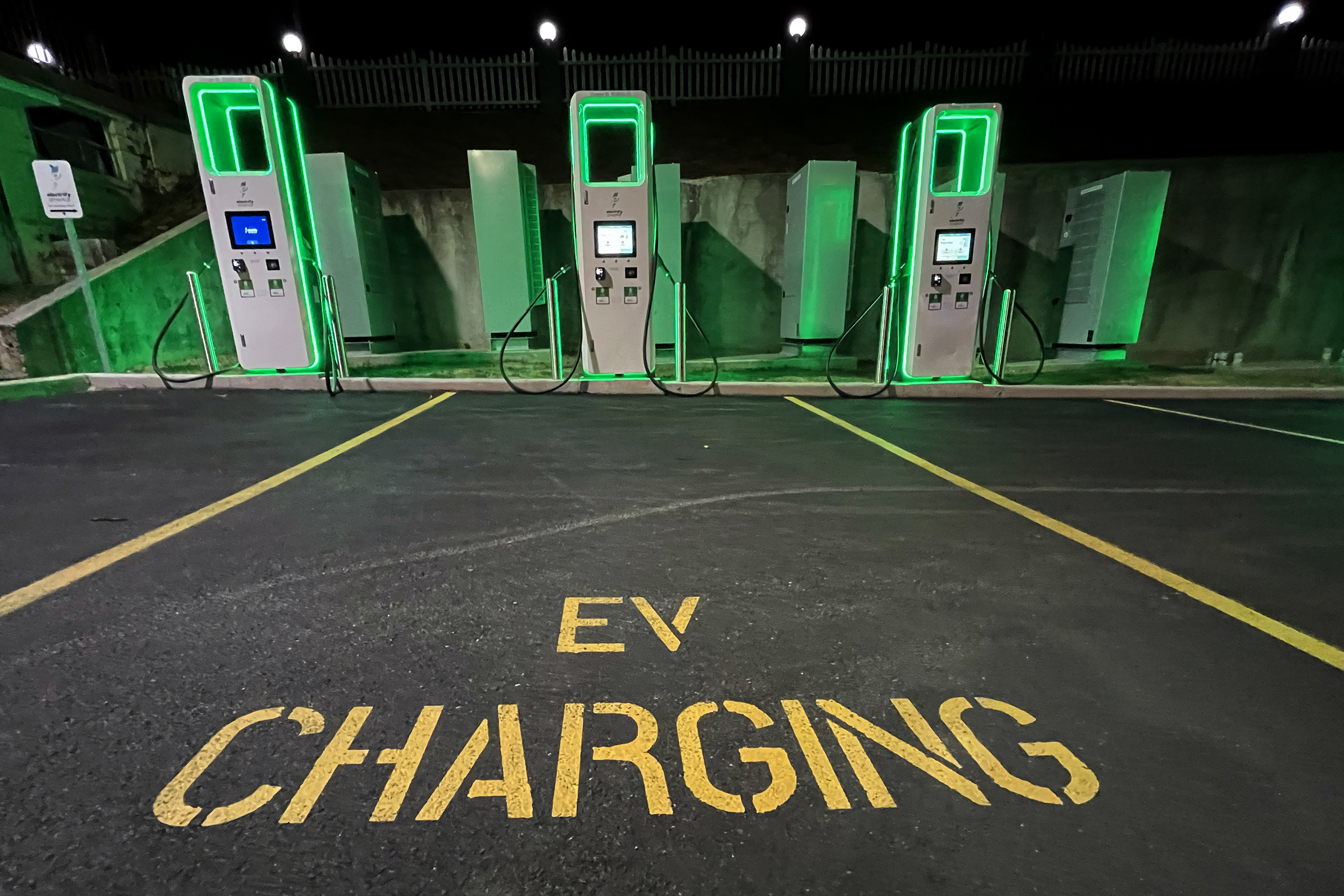
    Installing 800 electric vehicle chargers is a good start, but as the shift to electric accelerates, the city should have higher aspirations. Why not consider changes to the building codes that would set goals for obvious locations like parking garages and new construction? It should be feasible to equip 20% of garage spaces in about three years and 50% within about eight years. In addition, any new construction should be designed to accommodate EVs. Deliberately phasing this in over a decade would ensure we aren’t constantly behind the curve.

    Frederick Jones, Philadelphia

    Walk-off interview

    Donald Trump, after abruptly walking off during a Meet the Press interview with NBC White House correspondent Kristen Welker, said he is willing to reschedule the interview. Past behavior suggests he is more likely to push NBC to fire Welker. This most distinguished correspondent must not be added to the list of those struck down by the president.

    Joel Chinitz, Philadelphia

    Join the conversation: Send letters to letters@inquirer.com. Limit length to 150 words and include home address and day and evening phone number. Letters run in The Inquirer six days a week on the editorial pages and online.

  • Joanna McClinton and Dave Sunday: Accountability is key to keeping our children safe

    Joanna McClinton and Dave Sunday: Accountability is key to keeping our children safe

    Protecting the public is government’s most fundamental duty. But when new threats to safety emerge and evolve, that duty demands more than awareness — it demands action that keeps pace with reality.

    Today’s children are growing up exposed to constant streams of content that can be disturbing, harmful, and frightening. It shapes how they see themselves and their peers in ways no previous generation has had to navigate. That is the reality we face — and it demands urgency and action.

    Today’s children are growing up exposed to constant streams of content that can be disturbing, harmful and frightening, write Joanna McClinton and Dave Sunday.Seth Wenig

    Last month, we served as panelists at an event in Montgomery County concerning the growing issue of AI-generated sexually explicit deepfakes in our schools. This discussion stressed the harmful, long-lasting impact that sexualized content can have on victims, but also what we should be doing to better protect our children and to prevent this new form of exploitation.

    First, let’s level set. Explicit deepfakes are not a joke, or “kids being kids.” They are serious and illegal invasions of privacy that can leave a victim feeling traumatized, angry, alienated, depressed, embarrassed, shameful, and violated. They need to be taken seriously, and they need to stop.

    To set the tone for the event, two courageous students shared their victim impact statements with the audience of parents, advocates, law enforcement officials, and others. Their testimony was simultaneously heart-wrenching and infuriating.

    Heart-wrenching because of the cycle of trauma a teenager must endure after having their privacy violated by a classmate. Trauma that does not stop when the school bell rings at the end of the day, but follows our children home. Infuriating because of the ease with which a child can create hypersexualized content of another child.

    Earlier this year, two 16-year-old boys in Lancaster County used artificial intelligence to create hundreds of nude images of female classmates at Lancaster Country Day School.Matt Rourke

    Deepfake sexualized images in schools is not an issue unique to Pennsylvania, with prominent cases emerging in states from California to Louisiana to Massachusetts, but it is one that the two of us — Joanna McClinton, as a lawmaker, and Dave Sunday, as the state’s chief law enforcement officer — are heavily invested in and are committed to defeating.

    In Pennsylvania, we’ve implemented new laws to respond to the growing danger some apps are enabling in our schools and elsewhere.

    In 2019, Pennsylvania was a leader in making sextortion — a crime where a perpetrator coerces a victim to comply with demands for sexual acts, images, or videos — a third-degree felony, punishable by up to seven years in prison, if the victim is under 18, or the perpetrator has shown a pattern of engaging in sexual extortion.

    In 2024 and 2025, Pennsylvania enacted new laws making it a crime to harass someone by distributing a deepfake nude or sex act image of them without their consent (the offense is more serious if the victim is a minor), or to create a forged digital likeness, a computer-generated image, video, or audio recording of a person, with the intent to defraud or injure someone.

    In April, the Radnor school board explicitly banned the use of artificial intelligence to create sexualized images of another person, after a student made deepfakes of female classmates.Monica Herndon / Staff Photographer

    Finally, we learned from recent incidents in Lancaster and Delaware Counties that acting fast is critical to limiting the number of victims, stopping the circulation of deepfake child pornography, and maximizing law enforcement’s ability to investigate.

    To speed up the process, an additional measure is pending in the state Senate to require mandated reporters, like teachers, school officials, and healthcare professionals, to report suspected child sexual abuse materials or AI child sexual abuse materials to ChildLine, which will immediately alert law enforcement.

    A measure is pending in the state Senate to require mandated reporters, like teachers, school officials, and health care professionals to report suspected child sexual abuse materials or AI child sexual abuse materials to ChildLine, write Joanna McClinton and Dave Sunday.Andrey Rudakov

    We are also having ongoing conversations directly with students about social media and artificial intelligence, and how these tools make them feel in their day-to-day lives. Those perspectives matter, and they should inform how we approach this issue moving forward.

    We can be part of the solution through our offices and in Harrisburg, but it is just as important to hear directly from students in our hometowns and across the commonwealth.

    We also recognize that social media is not going away. This is not about banning platforms or telling kids to shut down their accounts, but about ensuring they understand and are aware of the very real dangers that can exist within them, and equipping families and schools to navigate them safely.

    While updating the law is an important step in keeping our kids safe, the real solution requires parents, educators, law enforcement, and even tech companies to act and to know what to do.

    Students need to know and feel comfortable telling an adult that a sexualized image has been sent to them.

    Parents and caregivers need to talk with their children to both understand what they are doing online and what apps they are using, and to reassure them that if they see something inappropriate, they should tell you or another trusted adult.

    Schools need to take incidents seriously, alert law enforcement immediately, and, most importantly, support the victims.

    Law enforcement needs to treat these cases seriously. They are crimes being perpetrated against children, and they are occurring in communities around the state. If your community hasn’t been impacted yet, it will soon.

    Technology today is transformative, and it is evolving at a faster and faster pace. When we were growing up, we didn’t have these powerful tools to contend with. But now that they are here, they need to be used responsibly.

    The stories from our brave students should be a call to action for each of us — from elected officials to law enforcement to parents and school leaders — to do everything we can to prevent the use of apps that allow children to create hypersexualized content of their classmates.

    We can’t allow hypersexualized content to become mainstream; we need to hold people accountable, from the students generating the deepfakes to the app developers who make the sexualized content possible.

    Joanna McClinton is the speaker of the Pennsylvania House of Representatives. Dave Sunday is Pennsylvania’s attorney general.

  • Trump’s homelessness plan could revive forced psychiatric commitment

    Trump’s homelessness plan could revive forced psychiatric commitment

    For most of our nation’s history, involuntary psychiatric commitment operated with sweeping and often unchecked power: State hospitals confined people for years or even lifetimes based on such broad claims as mental illness and “moral defect,” often with little legal recourse.

    Public outrage over abuses in overcrowded asylums — dramatized most famously in the book One Flew Over the Cuckoo’s Nest — helped propel the patient’s rights movement in the 1960s and 1970s toward successful deinstitutionalization. A series of court rulings limited the state’s power to confine people against their will.

    Now that balance is shifting again.

    Last summer, President Donald Trump signed Executive Order 14321, which purports to address homelessness by greatly expanding involuntary psychiatric commitments and encouraging police to arrest people experiencing homelessness.

    The order — its constitutional validity remains in question — undermines decades of court precedent and removes judicial constraints to hold people in institutions. It could resurrect the old ways as a national standard without debate or congressional action.

    A sprawling facility recently built outside Salt Lake City already shows the trappings of a prison camp for people experiencing homelessness. This spring, the administration started legal guardianships for hundreds of veterans — some of whom are homeless — that could drive more of them into institutional care.

    And in a historic shift, federal officials are slashing millions of dollars in homeless grants across the country, including in Philadelphia and its suburbs, forcing a broad swath of nonprofits to curtail their efforts to house unhoused people. The Philadelphia Furniture Bank, which gave free furniture and mattresses to more than 22,000 people facing homelessness, became the latest casualty, announcing it would close on June 30.

    The Philadelphia Furniture Bank, which gave free furniture and mattresses to more than 22,000 people facing homelessness, is set to close June 30.Heather Khalifa / MCT

    Past presidents couldn’t make these changes — even if they wanted to — because our system empowers the states to set laws for involuntary commitments. Trump’s order would undermine that by ending consent decrees that aim to ensure stays are safe, ethical, and clinically appropriate.

    His order also seeks to incentivize confinement by directing federal agencies to green-light grants to towns and states that get people off the street and into institutions. And those receiving federal homeless services would have to undergo mental health care as a condition for those benefits.

    If enforced, this order would worsen the problems we have while creating new ones.

    We know a lot more about mental illness than in 1962 when Ken Kesey published Cuckoo’s Nest. At the same time, homelessness is growing in the U.S. An estimated 700,000 people live unhoused every night.

    Involuntary psychiatric treatment is sometimes necessary, but open-ended and inappropriate commitment harms patients and creates a moral indignity that can have a lifelong negative impact. And even when it is appropriate, our system tailors commitment lengths to people’s health needs, as the U.S. Supreme Court has affirmed several times. Most states limit the first court-ordered commitment to six months or less. Removing those limits would subvert the Supreme Court’s authority and abandon patients to the whims of unchecked administrators.

    Another problem: The order violates the Constitution by impinging on the state’s authority to direct health and safety, including civil commitments.

    Those with disabilities should be concerned about this, too. They have the right to live independently in their homes, with access to state-funded services. But this order would threaten that.

    Importantly, the order could also force clinicians to break their fiduciary responsibility to serve their patients’ best interests first by pressuring them to inappropriately confine homeless individuals who might not be seriously mentally ill.

    History shows many examples of the political misuse of psychiatric power. Soviet communists invented the diagnosis “sluggish schizophrenia” to justify the imprisonment of political dissenters. Vladimir Putin continues to use psychiatric excuses to shackle his critics. More recently, U.S. police used the contested diagnosis “excited delirium” to justify giving controlled substances to calm down people resisting arrest. The diagnosis has since been discredited.

    Our system is far from perfect. Too many seriously mentally ill people end up unhoused, imprisoned, or cycling in between. But the executive order risks turning clinicians into Soviet-style apparatchiks, who violate their ethics to make the system run.

    Federal policy should encourage the advocates who run safe consumption sites and syringe distribution efforts to keep people alive until they get help, because these efforts have been proven to work. But the president would levy civil or criminal charges against these caregivers.

    The executive order also dismisses efforts like Housing First, which give housing without requiring treatment or sobriety. These programs help make people more likely to improve their mental health and stay in housing.

    By contrast, arresting and confining people is associated with more death, illness, and misery.

    It may be politically appealing in some quarters to sweep up, institutionalize, and resettle unhoused people who are barely surviving with mental illness. But this approach was recognized long ago as inhumane and impractical.

    The time is now to build a real mental health care system to support the most vulnerable in our society. Instead of issuing retrograde executive orders, the Trump administration should invest real money to advance evidence-based interventions and policies.

    Dominic Sisti is a senior fellow at the Leonard Davis Institute of Health Economics and associate professor in the department of medical ethics and health policy at the University of Pennsylvania. He directs the Scattergood Program for the Applied Ethics of Behavioral Health Care at Penn.