Kaley sat in a Los Angeles courtroom this March while 12 jurors tried to calculate what her childhood was worth. They found Meta and YouTube liable for designing features that addicted her as a child, contributing to depression, body dysmorphia, and suicidal thoughts, and awarded her $6 million — half of it punitive, after deciding the companies had acted with malice.
To set the compensatory half, one juror explained, they estimated what she might have earned over a lifetime, weighing “what she’s gone through and what job she would be able to hold down.” Both companies are appealing.
The jury compensated Kaley for a diminished adulthood — for the person she would never become. That is the true cost of these platforms.
The tide is turning against Big Tech, but we should not be celebrating.
These verdicts arrive after children have already been irreparably harmed, and they do nothing for the children who will be harmed by whatever technology launches next. As new platforms capable of greater harm enter the market and are adopted at an accelerating pace, a reactive legal system is profoundly inadequate.
Instagram took two and a half years to reach 100 million users. TikTok took nine months. ChatGPT took two. By the time a jury assigns liability, the product has already scaled past the reach of any remedy. Smartphones entered classrooms two decades ago, and Pennsylvania lawmakers are only now passing legislation.
But to understand what is actually being taken, start with how a child’s mind develops.
Humans have the longest childhood of any species on Earth. That stretch of dependence gives our mental capacities time to develop through specific experiences. But that window does not stay open forever. The neural pathways solidify. What doesn’t form in childhood may never form at all.
So the more urgent question about any technology a child uses is not what it puts in front of them, but what it crowds out.
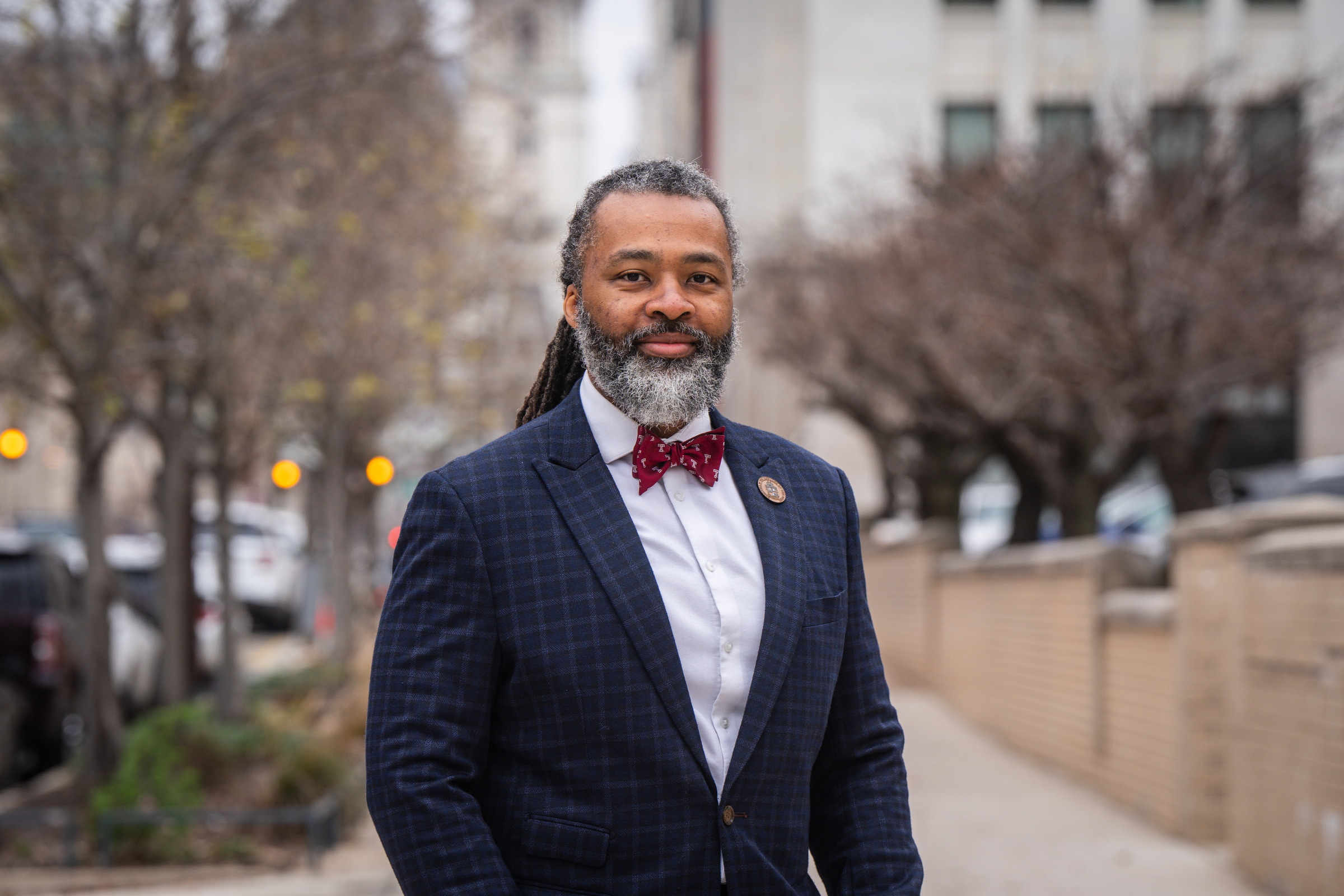
Some technologies don’t just change how we live; they change who we are, writes AJ Ernst.Kiichiro Sato
The average teenager now spends half their waking life looking at screens, and the number keeps climbing. That time has to come from somewhere.
Yes, these platforms expose children to violence and predators, but the greater threat is the algorithms draining necessary developmental inputs.
Kaley started on YouTube at 6, Instagram at 9, Snapchat at 11. She is 20 now and living with the consequences, but she became an adult before artificial intelligence reached the market. The next child will not be that lucky.
I started teaching in 2009. My students made eye contact, talked to each other, and could hold their attention on a hard problem. By the end of that decade, they came in sleep-deprived and anxious, reaching for their phones at every moment. Earbuds in, eyes down.
Now, I watch students reach for the answer before they think for themselves.
AI and accumulating cognitive debt
Some technologies don’t just change how we live; they change who we are.
A car lets you travel farther; it does not make you incapable of walking. GPS goes a step further. Lean on it long enough, and your own sense of direction fades. But GPS takes only one skill. AI takes the rest. Offload your thinking to it, and the skills weaken. Offload it during childhood, and your capacity to think may never fully develop.
We learn through struggle. Our survival depended on the ability to solve problems, synthesize information, and imagine new possibilities. Remove the struggle, and with it goes the growth the struggle produces.
Students who lean heavily on ChatGPT show a sharp decline in cognitive effort and weaker memory retention — what Massachusetts Institute of Technology researchers call “cognitive debt.” A generation is offloading its thinking capacity, and with it, losing the stamina, curiosity, and desire for hard problems that only come from solving them yourself.
AI does the same to the capacity for connection. AI companions are patient, compliant, never bored, never hurt, never inclined to push back. Nearly two-thirds of teenagers now use AI chatbots. Nearly one in five high schoolers has had a romantic relationship with an AI, or knows someone who has.
But human relationships require struggle. A child who learns intimacy without friction will find it difficult to connect with a real person.
This is why the conversation needs to move beyond content moderation.
We already know how to handle products that endanger human health. We do not let a pharmaceutical company ship a drug and promise to fix the lethal side effects once the bodies turn up. We require proof of safety first, through years of testing, because we decided that corporate speed does not outrank human life.
For the systems now shaping the developing brain, we decided the opposite.
Make companies prove their products are safe for developing brains before release, the way we make drug companies prove it before the pill reaches the shelf. Put the burden of proof where it belongs — on the trillion-dollar firm, not on the 10-year-old.
The objection to this shift is that a slowdown will hand the future to China.
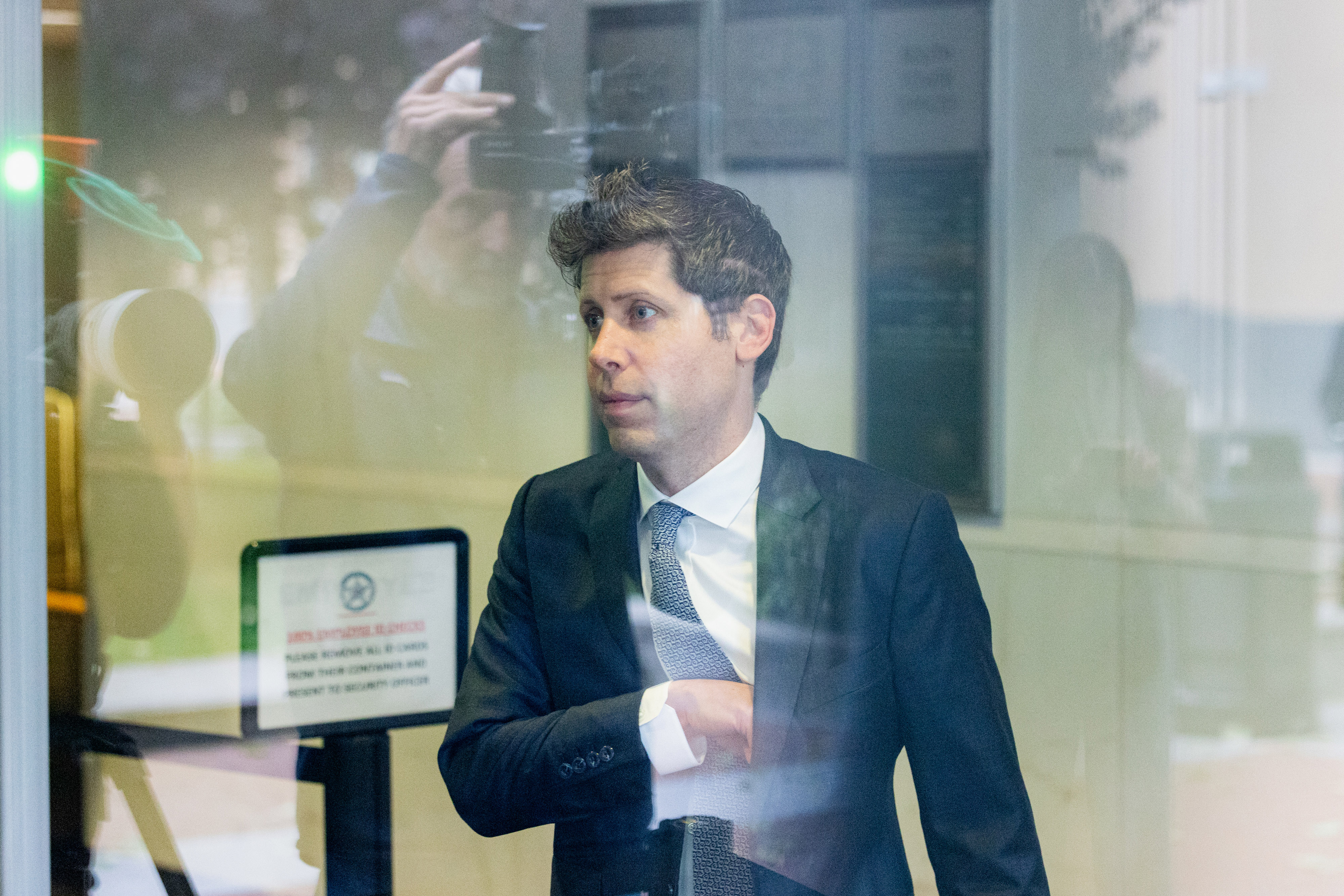
OpenAI’s chief executive, Sam Altman, at the Ronald V. Dellums U.S. Courthouse for the “Musk v. OpenAI” trial, in Oakland, Calif., in May.JASON HENRY
In June, Florida sued OpenAI and Altman, alleging the company released a product that addicts minors, erodes their critical thinking, and counterfeits human compassion.
Pennsylvania should join the fight.
But these lawsuits won’t undo the damage done. Nothing short of proving these products are safe before they reach a child will be sufficient.
This should no longer just be a debate over shielding children from harmful content. We need to defend the baseline capacity to think, to connect, to be human. The opportunity cost for children is too steep.
A jury can put a dollar figure on an unfulfilled life, but it can never restore what is lost. If we don’t act fast, another generation will suffer.
AJ Ernst worked as a teacher and administrator in Philadelphia for 13 years and holds a doctorate in educational leadership from the University of Pennsylvania’s Graduate School of Education.
The World Cup is finally here, and for the next 39 days, billions of soccer fans worldwide will hang on the fate of the 48 national teams vying to be named the global best for the next four years.
There is nothing else quite like it.
If you haven’t followed it closely, try to imagine it as a kind of March Madness wherein the bracket’s unexpected turns and Cinderella runs can upend every expectation: add into it the international scope and quadrennial timing of the Summer Olympics; then top it off with the fervor of beloved religious observance — and you’ll be getting close.
My familial WhatsApp group started really buzzing two days ago, after New York City Mayor Zohran Mamdani posited the possibility of Morocco winning it all, and won’t stop buzzing until the confetti rains down on the overjoyed winners. In between will be everything from play-by-play game commentary, to status reports on Panini collections or taste tests of World Cup branded snacks, to shared photos of candles lit for the success of a favored team.
Because, when you are all in you are all in, am I right?
Thursday the opening match took place between Mexico (which, along with the United States and Canada, is co-hosting this World Cup) and South Africa.
On Sunday, our own Linc-turned-Philadelphia-Stadium will host Cote d’Ivoire vs. Ecuador. Philadelphia Inquirer columnist Will Bunch has written about the Cote d’Ivoire team — which he will see in person — and whose fans came to watch them in Chester even before the World Cup started.
The Vourvouliad (the collective we’ve coined for my extended family) long toyed with the idea of attending one of the Philadelphia matches as a group — but FIFA’s dynamic pricing put the kibosh on that by making every seat cost a small fortune.
But we’ll make do — as we have every mundial before this one — watching from afar.
Truth is, many of us are also approaching this World Cup with more than a little bit of trepidation. We will watch the World Cup matches taking place on U.S. soil with bated breath, given President Donald Trump’s xenophobia and his administration’s targeted deployment of Immigration and Customs Enforcement and other Department of Homeland Security agents to Black and brown cities, communities and gathering spaces.
But we longtime fans have too many great memories born of our experiences of soccer to boycott the World Cup altogether — even though some have called for that.
In fact, most of the fans that I’ve spoken with lately are consumed by the exact opposite: trying to find a way to get into a World Cup stadium.
Ecuador’s Moisés Caicedo carries the ball during a World Cup 2026 qualifying soccer match against Argentina at Banco Pichincha Stadium in Guayaquil, Ecuador in September.A
Felipe, who — perhaps channeling Pelé, Neymar and countless other soccer icons — only wanted to go by one name, will be at the Philadelphia opener Sunday, rooting for his home country of Ecuador.
“I will be going to the stadium with my family. We will also be tailgating with some other friends from Ecuador before the game outside the stadium,” he told me. “I think it will be a great opportunity to meet other soccer fans there.”
“I am really excited for the World Cup, not only because Ecuador’s national team is in great shape but also because it is a once in a lifetime [opportunity] to have your home country’s national team playing a World Cup in the city you are living in,” Felipe added. “I wish the organization would take into account the fans’ enjoyment before the profit, but I guess this is the business model we sadly see in many other sports as well.”
France’s Kylian Mbappé, left, scores his side’s third goal during a World Cup 2026 group D qualifying soccer match between France and Ukraine in Paris in November.Christophe Ena
Ben Rush-Goebel, who moved to Philadelphia from France more than a decade ago, probably won’t be at France’s match on June 22.
“The tickets are really too expensive,” he told me, “so unless I find a magical way to get to the Philly game, I will be watching it with my friends. I can’t wait to go to the FanFest to watch this game and others. Might also go to a bar. Fado has always been our spot. In 2018, when France went to the finals to beat Croatia, we were in the rain on South Street watching from the screen set up by Brauhaus Schmitz. This was the most amazing time as we rushed after the victory to buy cheap champagne to celebrate.”
Brazil’s Vinícius Júnior celebrates after scoring his side’s second goal against Colombia during a FIFA World Cup 2026 qualifying soccer match at Mané Garrincha stadium in Brasilia, Brazil, in March 2025.Eraldo Peres
Rob Levin, raised in Brazil and rooting both for their Seleção and Argentina’s Albicelestes, will be watching Brazil play in Philadelphia June 19 from home, or with others at a watch party.
“Chevere to have the World Cup here,” he said. “It’s a shame that the ticket costs are so high and travel to and fro is so fraught — I hope all the fans behave and all players are treated well and with respect — no place for politics in these games. May everything go as smoothly as possible, as it should.”
The Union’s Danley Jean Jacques, right, is the first active player from the Philadelpha club to play in a World Cup, on the Haitian national team.Jessica Tobias
Numa St. Louis, whose team, Haiti, is participating in the World Cup for the first time in more than 50 years, hasn’t given up on seeing the team play against Brazil on June 19.
“I’m still hoping to score a ticket for the Haiti-Brazil game,” he told me, “but if not, I’ll be enjoying the tournament the Haitian way — at community watch parties, breaking bread with friends and family, dancing, and vibing to Haitian music and rhythms while cheering on our team.”
“The entire Haitian community is energized by the opportunity to support our national team and celebrate this historic moment together …Win, lose, or draw, this team has already made us proud,” he added.
Like Levin, St. Louis worries about the welcome players and international fans might feel in the U.S. venues. “I have some concerns about how the United States is being perceived by many international fans,” he said. “Reports regarding the treatment of an African referee, Senegalese players, and issues involving Iranian supporters have raised questions about whether the spirit of the tournament is being fully embraced. The World Cup should be a celebration of cultures, people, and the beautiful game. It should feel welcoming, joyful, and inclusive for everyone.”
And it should resonate, even years later.
“My best soccer memory goes back to 1996, the first time Ecuador beat Argentina in Quito,” Felipe told me. “I was 12 years old and went to watch the game at the stadium with my grandfather who was a huge fan of soccer.”
Rush-Goebel points to that 2018 moment on South Street after France’s win as his favorite soccer memory: “A whole lot of French people, many of whom were my friends, my wife, [all of us] stressing together, in the rain, to an amazing victory!”
For myself, I have fond memories of seeing Mexican immigrants in Philly dressing their Jesus figures in El Tri’s national jerseys before Mexico played in the 2014 mundial — but you have to go all the way back to the 1970 World Cup in Mexico for my best memory.
Sure, I recall snippets of the televised semi-final “game of the century” between Italy and West Germany, and maybe even Pelé’s magnificent header that opened the final between Brazil and Italy…
In this June 21, 1970 file photo, Brazil’s Pelé jumps for joy after scoring his team’s first goal against Italy in the first half of a World Cup final at Azteca Stadium in Mexico City, before winning 4 – 1. Kurt Strumpf
But what lives most vividly in my memory played out during the long lent leading up to those games.
I’m a kid, standing under the eucalyptus tree in my grandmother’s house in Guatemala with my brothers, trading Panini we purchased for centavos at the corner store in Zone 7 so that we could fill every team roster with stamps in our albums. We talked fútbol nonstop — me, who can’t stand sports, and my brothers, who love soccer and baseball with equal passion — and cheerfully bickered about who would go the distance.
For me soccer will always be about those two people I love, who I want to keep talking fútbol with until the day I die. The beautiful game is beautiful precisely because of the profound connections it invites and honors — be it with family members, friends or strangers across continents and time zones.
Or with a city, hosting its first ever World Cup matches with characteristic style and grit. May you hold our deep and indelible memories forever, Philadelphia.
Welcome to Shackamaxon, a weekly politics column focused on what’s happening at City Hall and in Harrisburg. It is named for the place where the Lenape chiefs would meet to conduct the people’s business, which is now known as Penn Treaty Park. This week’s column covers ward leader elections, efforts to make community events affordable, and a U-turn on some painful cuts at the Philadelphia School District.
Council member Cindy Bass has been widely condemned for declaring herself the winner of a controversial election for the leadership of the 22nd Ward.Alejandro A. Alvarez / Staff Photographer
The dinosaur groans
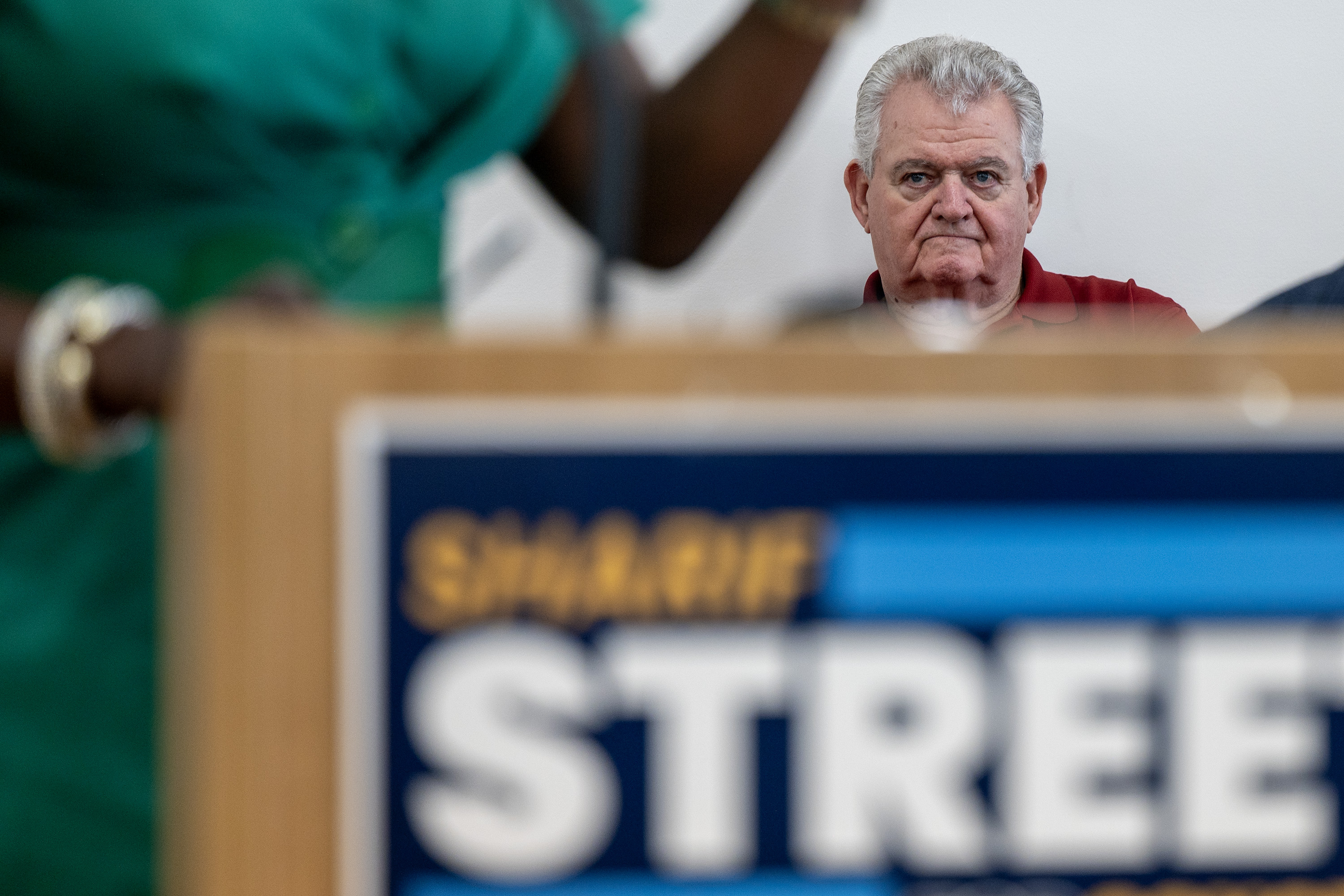
After the primary elections three years ago, Philadelphia Democratic Party Chairman Bob Brady was in a celebratory mood. In an open letter posted on social media, Brady boasted that the “dinosaur roared,” a playful, self-deprecating reference to the party establishment’s wins over progressive and reformist alternatives. During this week’s ward elections, however, establishment candidates had little to brag about. Wards That Work, a coalition of left-leaning groups, announced that candidates they supported had won six of the city’s 69 ward leadership positions. While the party’s old guard still holds a significant lead in the total number of ward leader positions, it is clear where the energy and enthusiasm of the party are headed. The insurgent wards, and the wards they’ve contested but haven’t yet prevailed in, are filled with committeepeople. The machine-dominated wards are filled with vacancies.
Fred Dedrick, an elected committeeperson, told me that current ward leader and 8th District Councilmember Cindy Bass had initially told folks to show up by 7:15 p.m. if they wanted to participate in the reorganization vote. After the meeting finally began at 8 p.m., she quickly called for a voice vote, declared herself the winner, ignored requests for a roll-call vote, and sent everyone home.
Under the party’s own rules, Brady told The Inquirer’s Sean Collins Walsh, a roll-call vote must be taken if it is requested.
Bass’ tactics drew widespread condemnation. Even U.S. Rep. Brendan Boyle, who usually stays out of local governmental issues, said he was “absolutely disgusted” by what he saw in a video of the vote, and made a direct comparison to President Donald Trump’s repeated efforts to “obstruct our democracy.”
ThePhiladelphia Democratic City Committee, for its part, is planning to host a revote between Bass and her challenger, Octavius Price.
This is far from Bass’ first controversy. Her tenure on City Council has been characterized by high-profile disputes with some community organizers. Bass’ critics cite what they describe as a lack of consistency, particularly on issues of development: When Bass opposes a project, like the proposed reuse of the Ada Lewis Middle School property, she cites a lack of popular support. When she’s behind an effort — like the decision to grant development rights at the former Germantown YWCA — the community’s viewpoint isn’t taken into account.
That kind of vacillation could be part of why Bass won her most recent primary election in 2023 by just over 400 votes, despite her opponent having little in the way of name recognition.
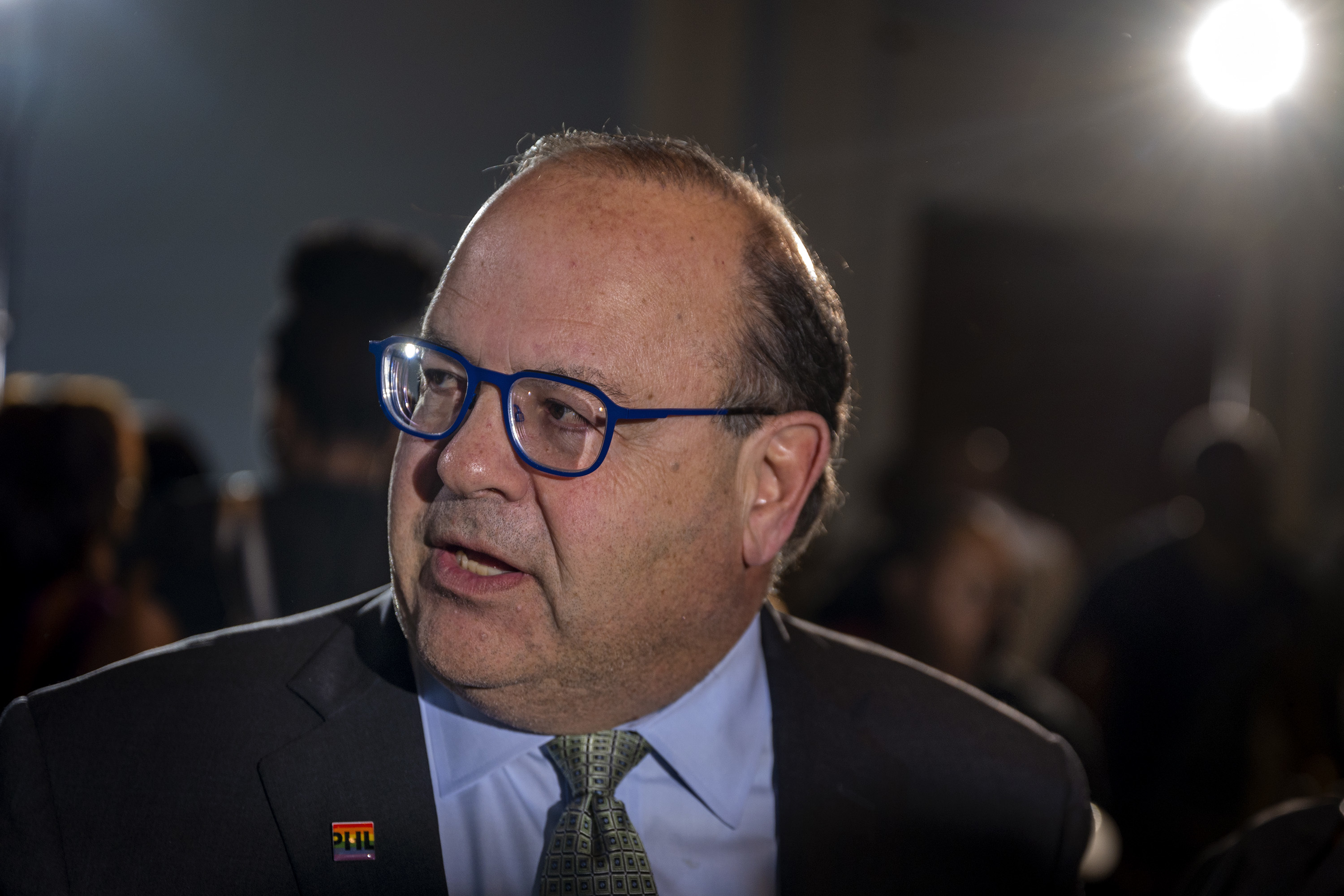
Former City Council member (and prominent real estate developer) Allan Domb cautioned his colleagues in city government to move slowly before they acquired the former Inquirer building. They probably should have listened to his advice.Tom Gralish / Staff Photographer
Avoidable boondoggle
In 2016, then-Councilmember Allan Domb raised concerns about then-Mayor Jim Kenney’s plan to turn the former Inquirer building on North Broad Street into the new police department headquarters. Domb’s objection was basic common sense. If the city is going to spend a quarter of a billion dollars, shouldn’t we at least get an appraisal first? Especially given that a developer had spent just $22.7 million — a fraction of its expected price tag — to acquire it in the first place.
An Inquirer analysis suggested that the city had, in fact, overbid. The city ended up paying around $90 per square foot, which is higher than the $71 per square foot paid for a comparable property, the former GlaxoSmithKline headquarters that sold three years before. Since 2018, the value of commercial real estate in Center City has declined. The sprawling Centre Square complex near City Hall sold for under $60 per square foot.
In fact, in addition to buying the building without an appraisal, the city also agreed to a yearslong leasing agreement, which allowed the owner, developer Bart Blatstein, to utilize historic tax credits.
Now the bill has come due, with city officials forced to either buy the building outright at its inflated price or pay double in rent payments while searching for a new location, which would also likely cost hundreds of millions of dollars to get up to standards.
While buying the building may be the least bad option at this point, the entire situation is a frustrating reminder of how defensive and parochial city government can be. Despite having a bona fide real estate expert in Domb available to assist their decision-making, city officials embarked on the plan without asking for his input ahead of time.
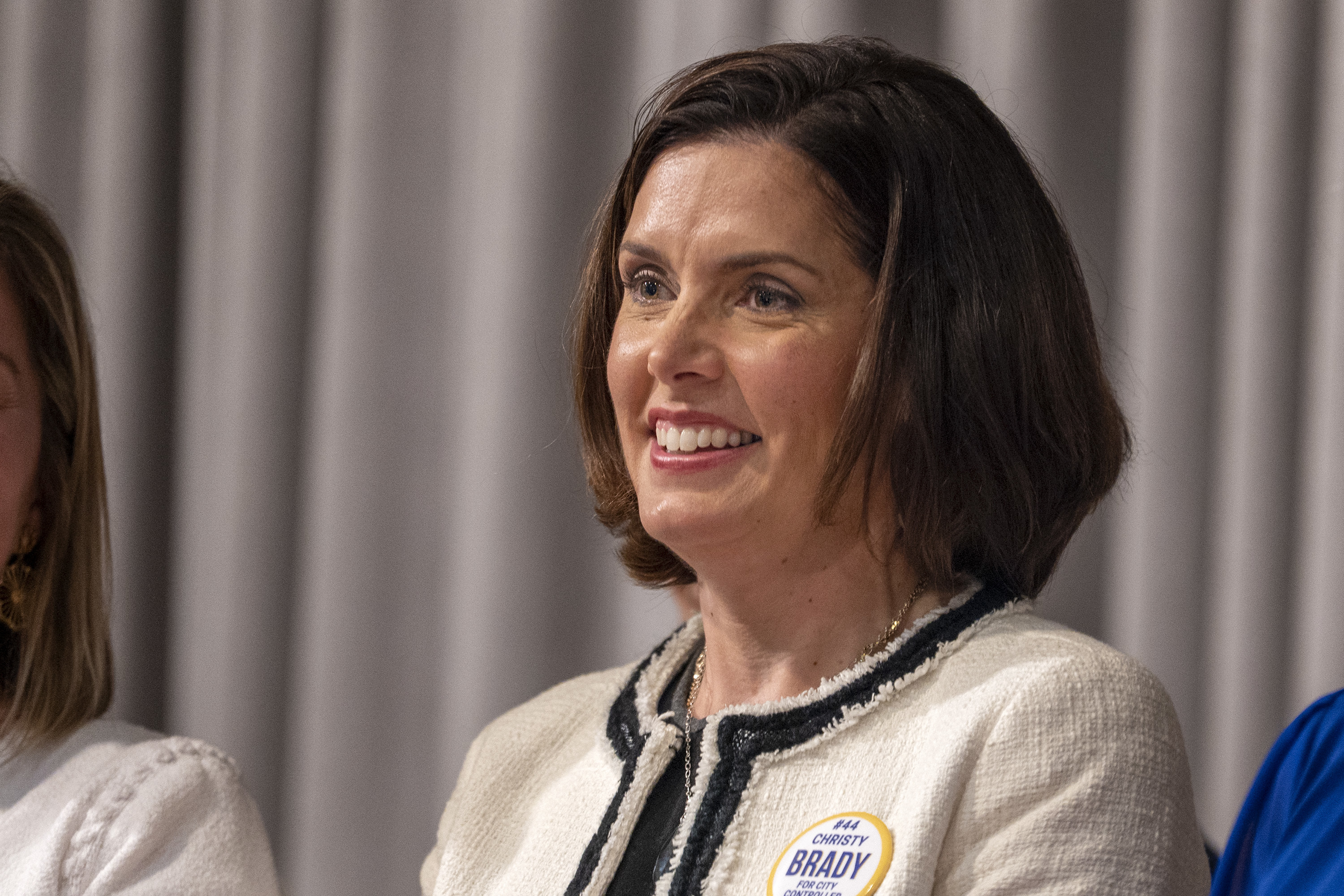
A report by City Controller Christy Brady found that Philadelphia’s cumbersome rules for event planning are getting in the way of some long-standing civic traditions.Tom Gralish / Staff Photographer
Haphazard hosting
With the World Cup having kicked off and America preparing to celebrate its 250th birthday, you might think the city would be filled with local events, festivals, block parties, and other revelry spreading to all corners of the cradle of liberty. Thanks to the city’s stringent regulations and a stated lack of resources, there will be fewer events than many Philadelphians might have hoped for.
Hosting events in Philadelphia is a slog during the best of times. City Controller Christy Brady issued a report earlier this year that reiterates findings reported in The Inquirer: The high cost of security and convoluted permitting process is shrinking, pushing out, and eliminating many long-standing civic traditions.
This year was supposed to be different, thanks to the Neighborhood Celebrations Grant Fund. But organizers told Inquirer reporters that they are running into unforeseen obstacles, including blackout dates that extend from June 11 to July 18. This means neighborhoods are being restricted at the same time when demand is highest. While security concerns are a legitimate issue, giving people an option to celebrate closer to home could be the key to avoiding the traffic, parking, and crowding concerns that inspire caution in the first place.
Schools switch
After weeks of debate over the proposed rideshare tax and the insistence that a failure to pass it would result in the elimination of 340 positions in the Philadelphia School District, officials have backpedaled. Apparently, there will be no cuts after all.
The district’s revenue needs are what they are, but the way city officials handled the situation fostered confusion and cynicism. Threatening to make cuts without additional revenue, only to cancel the cuts despite failing to secure new money, makes everyone look opportunistic. What was the fight all about in the first place?
The compromise, however, required sacrifices elsewhere. The city had to raid its capital budget and cut some of the Commerce Department’s budget for contracted services, per a statement from City Council President Kenyatta Johnson’s office. More painful cuts could be on the horizon for next year’s budget if a new revenue source isn’t found.
Thanks for your candid article on grade inflation in Philly schools. Perhaps the reason the children live in poverty and are incapable of holding a job is that the public education system is an abject failure. Some misguided souls think these students should be given “equality of outcomes” — that they should be treated the same as the student who works hard, gets a legitimate “A,” and can read and do math at grade level on proficiency tests. As the old proverb says: “If you give a man a fish, he eats for a day. If you teach him to fish, he eats for a lifetime.” Philadelphia has been giving students a fish for decades — and the remainder of their lives is hunger.
Alexander W. Ross Jr., Mount Laurel
. . .
The practice of giving wholesale passing grades in the Philadelphia School District — even for students who rarely show up to class or do not master most of the required content — is a very old story for which inadequate funding often takes the blame. But like many persistent problems in the district, this situation could be remedied if administrators took the time to identify and replicate the best practices in schools that are serving high percentages of low-income students, where grades actually are an accurate reflection of academic performance. A common thread in those schools is that struggling students receive the extra supports they need. The district should know what those schools are based on the reams of data it collects every year, but it seems to have done little or nothing to duplicate their efforts.
When large numbers of Philadelphia high school graduates cannot pass the basic skills test for a job requiring only a high school diploma, or the placement test for college-level classes at community college, the message is clear: Grade inflation may be acceptable in the school district, but it doesn’t work in the real world.
Debra Weiner,Quakertown
. . .
I sincerely hope people are reading the wonderful reporting of Kristen A. Graham regarding education issues. As a result of her work, we readers have learned that Philadelphia’s teachers essentially can’t fail anyone.
What’s the point of education if a teacher giving a student an “F” is overruled by a principal?
And whom do we thank?
For starters, I would look at people like Jeff Yass, whose hostility toward public schools, tens of billions of dollars, and campaigns for “educational freedom” have increased the pressure on administrators to the point where some of them might foolishly think that this kind of grade inflation is actually helpful.
In my humble opinion, every single teacher I had at Olney High did more for America than ByteDance, the politically divisive, Chinese-owned parent company of TikTok, which is responsible for much of the riches of the wealthiest Pennsylvanian.
Should a school’s first priority be to educate children? Or to make money?
The debate is elevated by Ms. Graham’s wonderful reporting, and I, for one, thank her.
Al Gardner, Olney High School, Class of 1964, Bolivia, N.C.
Join the conversation: Send letters to letters@inquirer.com. Limit length to 150 words and include home address and day and evening phone number. Letters run in The Inquirer six days a week on the editorial pages and online.
Tuan Van Bui’s bad luck arguably started the day he was born in 1970 in the city then known as Saigon — the child of a Vietnamese woman and one of the thousands of U.S. soldiers who fought in Southeast Asia for nearly two decades.
Van Bui never knew his dad, but he quickly learned what it was like to grow up in a hostile homeland that called the estimated 25,000 to 50,000 Amerasian kids like him “children of the dust.” The communist government that won the war in 1975 denied him any education past grade school.
In 1990, Van Bui caught a break — of sorts. In the late 1980s, a U.S. Congress struggling to come to grips with the mess America had left behind passed the Amerasian Homecoming Act. That allowed Van Bui to legally immigrate to America and settle in Philadelphia’s Kensington neighborhood, but with no real safety net.
His first two decades on U.S. soil were rough, marked by occasional run-ins with the law. But in middle age, Van Bui had settled into a more comfortable American life. He married a fellow Amerasian immigrant in 2017, earned some money from construction and other odd jobs, and indulged his quirky hobbies like stamp collecting. He was paying back his fines from the bad years and — although threatened with a removal order — he religiously showed up for check-ins with U.S. immigration officials.
His family says Van Bui was doing everything the right way.
Still, it was with much trepidation that Van Bui showed up with his wife at the Philadelphia immigration office on Aug. 18, as the reelected Donald Trump and his team pushed for a massive increase in arrests and deportations. What happened next, as his wife related to family members, was even worse than they had feared.
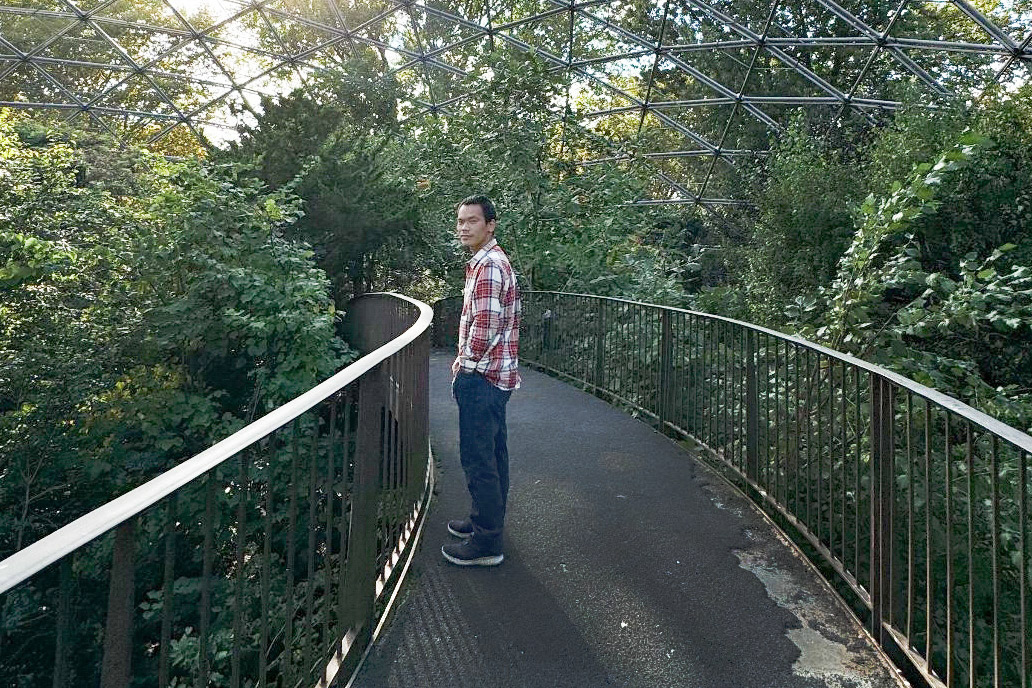
Tuan Van Bui in an undated family photo. Van Bui, 55, died in immigration custody at the Miami Correctional Facility in Bunker Hill, Ind., on April 1.Handout art
Van Bui’s stepdaughter, Ly Wang, told me this week that U.S. Immigration and Customs Enforcement officers were waiting. “Before he could even really check in, they saw him, they spotted him,” she said. “The ICE agents ambushed him, and they shoved my mom out of the way. They tackled my stepdad … shoving him into a wall because he’s a big dude.” Wang said the ICE agents threw Van Bui’s paperwork in the trash and warned her mom, “You need to leave before we make it a problem for you, too.”
Van Bui’s arrest that August day was the start of a seven and a half month Kafkaesque journey through the rancid food and 4 a.m. wake-ups of ICE detention sites, first in upstate Pennsylvania, and then nearly 700 miles away in rural Indiana.
It ended on April 1. That morning, Van Bui had made his usual phone call to his wife and, despite the routine complaints, sounded fine. The next call came that night, but from the chaplain at Indiana’s Miami Correctional Facility. Van Bui had suddenly collapsed and died. He was just 55.
It took more than two months for Wang and her mom — who herself had suffered a debilitating stroke in the days right after watching Van Bui’s violent arrest — to deal with Indiana authorities, obtain some additional testing, bring his body back home, and secure a spot for him in the Fernwood Cemetery in suburban Lansdowne, where he was buried on June 5.
But his family’s many questions have not been laid to rest.
Why was Van Bui’s ICE detention dragged out for so many months when — given the wretchedness of life behind barbed wire — he and his family would have preferred deportation to Vietnam, even if he hadn’t been there for 36 years? Why wasn’t Van Bui given more medical attention, as doctors noted his swollen knees and other signs of worsening health?And why is ICE’s account of Van Bui’s death so different from what other detainees told the family — that staff did nothing at first while they, the detainees, attempted CPR until paramedics finally arrived a full hour after the collapse, too late to do anything but declare him dead?
A 55-yr-old Vietnamese immigrant, Tuan Van Bui, died at the Miami Correctional Center in Indiana in government custody last week, marking the 46th detainee death during the #Trump administration's #immigration crackdown. https://t.co/vHgj8qtncz
And a bigger question hangs over all of this: Why did a redemption-seeking United States government invite Van Bui to come here from the other side of the world, only to leave him to fend for himself before brutally arresting him, dumping him in a hellhole prison, and allegedly watching him die from chronic and then acute neglect?
“I think he fully considered America to be his home, and he was very comfortable here despite even all the challenges against [Amerasians],” Wang said. What happened to Tuan Van Bui is in many ways mystifying, but he is also not unique.
Even as the Trump regime’s deportation raids have sometimes dominated the headlines, much of the attention has focused on the targeting by masked ICE and Border Patrol agents of brown and Black neighborhoods, such as Latinos in Los Angeles and Chicago or the Somali community in Minneapolis. The government’s stepped-up arrests of Asian Americans have largely flown under the radar.
“There’s just a severe sense of fear in the community,” Nancy Nguyen, the executive director of Philadelphia-based VietLead, told me, adding that the message “for the Asian communities is that they are not wanted here under Trump.”
A painful irony is that the hardest hit have been refugees for whom the United States opened its doors in the latter years of the 20th century — a belated acknowledgment that their plight was often the result of America’s violent and unpopular war in Southeast Asia. This winter in Minnesota, masked immigration raiders frequently targeted the Hmong people from Laos who’d once been welcomed for their role in helping American troops and the CIA over there.
Nguyen said that nationally, more than 1,000 Vietnamese immigrants and more than 500 Laotians were deported in 2025 — compared with fewer than 100 a year before the second coming of Trump. A few have been sent to remote African nations like Eswatini, where they don’t know any people or the language. Many more have been languishing, as Van Bui did, in the cruel limbo of ICE detention — sometimes with lethal consequences. Nguyen said that of the 50 or so ICE detainees who’ve died under the Trump regime, nearly a third were of Asian descent.
No one deserves to die in ICE custody. Every person in detention centers deserves basic human needs like water and safe shelter. My visit to Miami Correctional Facility raised concerns that should not be ignored. pic.twitter.com/JznLZKhpff
Van Bui was actually the second Asian American to die at the Miami Correctional Facility — run by the state of Indiana, which contracts with ICE — since February. Lorth Sim, 59, who came to America in 1983 as a refugee from the brutal dictatorship of Cambodia’s Pol Pot, also collapsed at the facility, where officials also blamed heart disease.
What’s more, Van Bui is the third member of Pennsylvania’s Asian community to die in immigration custody in less than a year. In January, 46-year-old Cambodian American Parady La was arrested outside his Upper Darby home and died three days later at Philadelphia’s federal detention center, reportedly while undergoing narcotics withdrawal. Last August, 32-year-old Chinese immigrant Chaofeng Ge died at the upstate Moshannon Valley Processing Center five days after his arrest near Harrisburg; family members and advocates have challenged ICE’s assertion that his death was a suicide by hanging.
In Van Bui’s case, ICE issued a fairly detailed statement that insisted the Amerasian detainee — who’d suffered a serious stroke on Christmas Eve 2023 and used a cane for mobility, among other preexisting health problems — was properly monitored and treated amid clear signs his condition was deteriorating, with a decreased platelet count and then swollen knees indicating “obstructive pulmonary disease.” It also claimed — disputed in the accounts other detainees have offered Van Bui’s family — that staff at the Indiana facility responded quickly to his April 1 collapse with CPR and a defibrillator before he was pronounced dead at 6 p.m.
Whether ICE and Indiana corrections officers offered Van Bui adequate medical care is still up for debate, but what the government definitely did not offer was empathy. As with other ICE custody deaths, grieving relatives were slammed with an official press release that denied Van Bui’s humanity.
“Criminal illegal alien from Vietnam passes away at Miami Correctional Center” was the headline on ICE’s press release, which stressed Van Bui’s encounters with law enforcement when he was a younger man.
His stepdaughter Wang told me the litany of criminal charges in the release includes some arrests for which he was not charged or convicted, and that he was diligently repaying fines for other past violations. But what hurts more is the regime’s cruel characterization of a human being whom Wang described as a soft-spoken, gentle giant who never turned down a request for help from his Kensington neighbors and — “a nerd in a way” — loved to scour flea markets for cuckoo clocks or rare coins or stamps.
Chaofeng Ge, 32, died in August at the Moshannon Valley Processing Center while detained by ICE.Courtesy of David Rankin
She said he’d told her little about the first 20 years of his life in Saigon (renamed Ho Chi Minh City after the war), but did admit that the abandonment of his American GI father weighed on him.
“Something that he did tell me and just confided in me was that he never felt like he grew up feeling wanted, you know? Starting with his dad not being around, and his mother being very busy and being a single parent,” she said. “So he had kind of a rough start.”
Amerasian kids were treated cruelly in Vietnam — as reminders of the hated Americans who’d invaded their country — and typically denied any education beyond grade school, which apparently was the case for Van Bui. The United States seemed to acknowledge that harsh reality when Congress and the Reagan administration enacted the special AM-1 visa that allowed Van Bui to come here in 1990. But the new arrivals didn’t always adapt easily to a home where they were reminders of a war that most Americans wanted to forget as much as the Vietnamese.
“My impression that he got into kind of the wrong mix of crowds,” said Wang, who first met her future stepfather when she was a teenager. “I see him as someone who, because he didn’t have that much of an education … that you could manipulate, unfortunately.”
Like many others, Van Bui faced an immigration judge’s removal order from the 2000s because of his legal problems, yet was allowed to remain as long as he continued his regular check-ins — which he did until his violent arrest last August.
Van Bui was initially sent to the large Moshannon Valley site in Clearfield County, Pa., then transferred in December hundreds of miles west to the lockup in tiny Bunker Hill, Ind., where, since last year, ICE has promised the state of Indiana $291 a day — four times the normal rate — to house some of its rising numbers of detainees.
In just a short period of time, complaints from detainees, advocates, and Indiana Democratic Rep. André Carson — who visited the site just days after Van Bui died — that conditions at Miami Correctional Facility are cruel and inhumane have mounted. Carson said two detainees he met described “heartbreaking” conditions, and that a lack of functioning intercoms may have played a role in Van Bui’s death. The American Civil Liberties Union of Indiana settled multiple suits from state inmates — predating the 2025 deal with ICE — alleging pitch-black conditions from windows covered with steel plates, and frequent episodes of cells flooded with wastewater.
Two deaths this year at Miami Correctional Facility's ICE detention space is getting attention.https://t.co/1pzcfwUQo9
Wang said it took weeks to even learn Van Bui had been moved to Indiana, and when they did reconnect, he complained of freezing-cold winter conditions and horrible food, even as they were awakened by guards for breakfast at 4 a.m. Things were so bad that Van Bui actually wanted to be deported back to Vietnam, but despite finally seeing a judge in February, the government continued to hold him in these gulag-like conditions.
Until he died.
During the agonizing weeks Van Bui’s wife and stepdaughter worked to bring home his remains — an effort which included this still active GoFundMe page — they heard from other detainees, most of them also Asian Americans. One Vietnamese native from Philadelphia who successfully won his release in a habeas corpus case tracked down Van Bui’s wife for a surprise visit, to tell the family his version of what really happened on April 1.
“What we’ve heard from the cellmates is that he collapsed, and they immediately called for help, and no one came,” Wang recounted. “So the cellmates themselves, they did the CPR. None of the staff did CPR. The cellmates did the CPR. They … did CPR and chest compressions relentlessly, with somebody else pressed up against the gate of the jail cell just yelling, ‘Help! Help!’”
They allege there was no help, not right away.
“From their view, what they saw was the correction officer sitting there staring at the video and not moving at all,” Wang continued. “It’s reported that [the corrections officers] waited at least around 15 to 20 minutes before they got up, locked down all the cells, and then finally went over to see what happened. Once they came over, they bought a defibrillator, except they did not know how to use it, so they had to call the paramedics. By the time the paramedics showed up, they declared him dead, which was about an hour later than he actually collapsed.”
I asked a spokesperson for the Indiana Department of Correction about what really happened on April 1, but was referred to ICE. And ICE, as with past columns, has not responded to my request for more information. All we have is ICE’s official report, which insists that detention center staff were the ones who performed CPR, that the defibrillator was used — and which offers no timeline for how long it really took for the paramedics to arrive.
Those explanations aren’t satisfactory to Van Bui’s family, or to immigration advocates here in Philadelphia or the ACLU back in Indiana, who continue to press for answers while they explore possible legal action.
But there are questions that are bigger than any courtroom. Why are Asian communities that, in those post-Vietnam War years, drove the comeback of America’s cities and older suburbs now targeted by a terror campaign from the U.S. government? Why did the United States abuse innocent people from Southeast Asia — and especially the Amerasians — twice, first in a pointless war and now in a gulag archipelago on American soil?
What did Tuan Van Bui do to deserve neglect and death in a dark, dank cell hundreds of miles from the people who loved him?
When his family finally held his services at a Chinatown funeral home, it wasn’t known if his wife would be healthy enough to attend. She did show up briefly at his wake, just long enough to utter these anguished words that Ly Wang posted on their GoFundMe page.
“You said you would come home! Why didn’t you come home?”
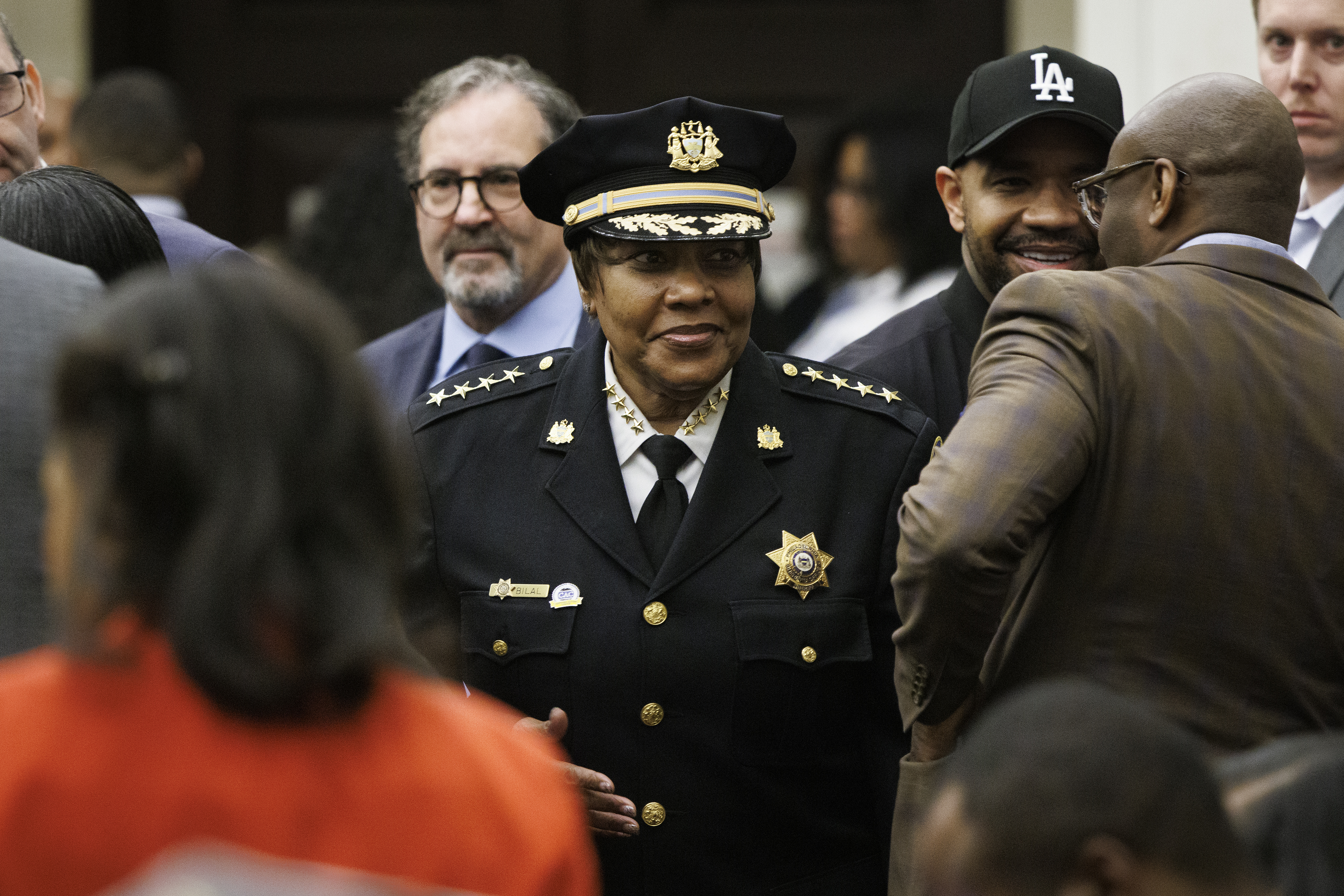
Her proposed restructuring, however, still falls short of what the city really needs: the abolition of the office itself.
After all, troubles at the Philadelphia Sheriff’s Office are not new. The office has been plagued by a history of misconduct stretching back nearly 170 years.
Once the city established a full-time police department in 1854, the sheriff’s office became a vestigial organ in the vast anatomy of Philadelphia municipal agencies. And, not unlike the evolutionary leftovers in the human body, such as an appendix or wisdom teeth, it’s mostly noticed these days for the discomfort it can cause.
There’s good reason to doubt Bilal’s proposed restructuring will meaningfully improve outcomes. We’ve heard these promises from her before. When Bilal first ran for sheriff in 2019, she pledged to reform the office.
Nevertheless, her critics say, she has spent her tenure engaged in the same tactics as her predecessors (she even hosted a “going to prison” party for one of them, former Sheriff John Green).
All the while, she has insisted that complaints are unfounded and unfair.
As Lauren Cristella, president and CEO of the Committee of Seventy, a municipal watchdog organization, said in a statement, the reorganization plan “should have been in place long ago.”
Given that Bilal has been in power for six years, that is a legitimate complaint. Especially since the sheriff has insisted sales and deeds were being processed at “full blast” just weeks ago during budget hearings, only to be disproven by Inquirer reporting and reprimanded by the city’s courts.
Bilal, for her part, responded by saying that changing an ancient office can’t happen overnight, and that she is operating with limited resources. Considering her time in office and penchant for, shall we say, unconventional spending, that argument is dubious.
Bilal’s plan is also thin on some key details. While Tariq El-Shabazz, who has faced his own share of scrutiny in his role as Bilal’s deputy, is set to retire, Bilal has not confirmed the identity of a new undersheriff, or any of the other new staff positions that have been created to implement the plan.
Additionally, there does not seem to be a written outline of her proposals. A request from this board to Bilal’s spokesperson for a copy of the plan had gone unanswered by Wednesday afternoon.
One thing is clear: The courts must continue to press Bilal for improvements to her agency. It may still be necessary, for example, to appoint a court official to oversee deed issuance, particularly given the lack of transparency about how well those processes are functioning.
Ultimately, the sheriff’s office overhaul the city should undertake is one that will eliminate the department altogether, alongside the similarly mismanaged and unnecessary Register of Wills. Until then, the bad news will keep on coming, restructuring plan or not.
The Pennsylvania Senate is in the process of working through the commonwealth’s annual budget. This could be a shining moment for some Republican senators if they were to recognize the imperative to increase Pennsylvania’s minimum hourly wage based on the challenges of affordability and the shame of being one of the neglectful states in America that still expects its most vulnerable residents and families to somehow continue to survive on $7.25 an hour.
House Bill 2189 passed the state House of Representatives this past March and is now in the Senate Labor and Industry Committee. The bill would increase the minimum wage to $11 per hour, effective Jan. 1, 2027. The minimum wage would then increase to $13 per hour in 2028 and $15 per hour in 2029, followed by annual cost-of-living adjustments.
Additionally, the bill would give counties the option to implement a $15-per-hour wage sooner and set the minimum wage for tipped employees at 60% of the statewide minimum wage.
Pennsylvania raised its minimum wage in 2009, when the federal minimum wage increased to $7.25 per hour. In the 17 years since, neighboring states have raised their wages while inflation has increased by more than 50%. Pennsylvania has woefully remained at $7.25.
Passage of HB 2189 would allow defenseless families to eat, remain housed and clothed, and restore the faith of countless members of this commonwealth that those who can affect change will actually do so.
State Sen. Devlin Robinson, Senate Majority Leader Joe Pittman, and Senate President Pro Tempore Kim Ward need to be challenged and pressured to pass this measure so vital to Pennsylvania residents.
Currently, it would take more than one hour of work to afford a gallon of white milk and a dozen eggs — maybe these legislators need to go to a supermarket to see how far $7.25 an hour will take any mother of two.
Please call and/or email State Sens. Robinson, Pittman, and Ward and advocate for yourself, your neighbors, or maybe just be the voice of those who can’t even afford to make those calls.
Increasing Pennsylvania’s minimum wage is shamefully overdue.
Yes, students have made gains — and hardworking teachers, parents, and students deserve credit. But Philadelphia students remain 2.46 grade levels behind the pre-pandemic national average. Only 33% are proficient in reading, and just 25% in math.
That’s not a success story. It is a crisis.
If a hospital healed only a quarter of its patients, few would celebrate, because other hospitals healed even fewer. We would demand answers and better options immediately. Yet, in education, we too often accept failure as progress because the comparison group is somehow even worse.
The real question is not whether Philadelphia is improving faster than other urban districts. It’s why so many children still cannot read or do math at grade level — despite record-level funding, federal pandemic relief dollars, and decades of reform promises.
Wealthy families don’t wait for broken systems to fix themselves. They find schools that work. Why would we deny poor kids in Philadelphia that same power? They deserve resources that will help them find better schools, such as tax-credit scholarships, educational savings accounts, and local tuition programs.
Families need more options, not more excuses.
Rachel Langan,senior education policy analyst, Commonwealth Foundation
Join the conversation: Send letters to letters@inquirer.com. Limit length to 150 words and include home address and day and evening phone number. Letters run in The Inquirer six days a week on the editorial pages and online.
Early Tuesday morning, President Donald Trump claimed, yet again, that a peace deal with Iran could be closed “in two or three days.”This was the 38th time since a U.S.-Iran ceasefire in April that he predicted a deal was around the corner.
But never mind.
By later Tuesday, Israel was heavily bombing the historic city of Tyre in southern Lebanon, despite Trump’s earlier, profanity-laden demand to Prime Minister Benjamin “Bibi” Netanyahu to stop such attacks.
Yet, Bibi seems determined to occupy southern Lebanon, drive out its population, and raze its villages and towns in an effort to finally stop Iran’s Shiite proxy militia Hezbollah from firing into northern Israel. Meantime, Tehran insists there will be no deal on opening the Strait of Hormuz, and no nuclear talks before ending Israel’s attacks on Hezbollah.
So Lebanon has become the new flashpoint of the conflict. Events there will be more critical to the outcome of the Iran war, I believe, than the limited U.S. military strike on Iran in retaliation for the shootdown of a U.S. helicopter near the Strait of Hormuz.
Why so? For me, Lebanon provokes a painful case of déjà vu, because I spent two years as a foreign correspondent covering the 1982 Israeli invasion of Lebanon, and watched it give birth to Hezbollah, unnecessarily. I watched Israel — and the United States — make mistakes they are repeating today, which will trap both of them in a self-induced Iran quagmire.
I reported that Israel (and the Reagan administration) learned the hard way that defeating an ideological movement cannot be done by military pressure alone, but must involve winning over the local population. And that includes offering hope that they can gain more from rejecting the ideologues, despite the risk that is involved, especially if those abusive ideologues have already alienated them deeply.
Based in Beirut, at the legendary Commodore Hotel, I used to make regular trips to southern Lebanon, a poor Shiite region that was neglected by Sunni and Christian Lebanese leaders who deprived it of resources.
And many Shiites resented the tens of thousands of Palestinian refugees who fled or were driven out of Palestine in 1947-49 during Israel’s war for independence. Although the refugees lived in shantytown camps, they received lots of international aid, including education, hospitals, and jobs.
In Sidon and Tyre, I met with numerous middle-class Shiites who had emigrated to West Africa to earn money and returned to build homes and small businesses. Many were members of the strongest Shiite political movement in that region, known as Amal (or Hope), and led by Nabih Berri, which agitated for more government help for their region.
They resented the growing power of the Palestine Liberation Organization, based in the camps and nearby cities, which, according to my sources, treated the Palestinians unfairly.
When Israel invaded southern Lebanon in 1982, I was told by Amal leaders that they were not displeased at Israel’s effort to eject the PLO, but wanted the war to end as soon as possible.
They were worried about a new group called Hezbollah, backed by Iran, that was emerging to fight the occupation. Berri wanted the Israeli military and government to negotiate directly with Amal leaders. He pledged they would protect the border with Israel and cooperate in preventing any Hezbollahis from attacking across the boundary.
Instead, Israel chose to ally with a Christian leader, Bachir Gemayel, who was soon assassinated by a member of the Syrian Socialist Nationalist Party, an ally of Iran. No peace deal with Lebanon was signed.
With Iran’s help, Hezbollah grew into the most powerful military and political force in Lebanon, far more powerful and better armed than the Lebanese army, with the more moderate Amal reduced to a secondary force. Israel remained in south Lebanon as an occupying power until 2000, immersed in a quagmire that took the lives of innumerable soldiers and embittered thousands more.
Fast-forward to today. Most Lebanese are fed up with Hezbollah, which dragged Lebanon into the Gaza war by attacking Israel in sympathy with Hamas. Syria has a new government, which is hostile to Iran and Hezbollah. Moderate Sunni Arab leaders in the region feel the same. So do many Shiite leaders in southern Lebanon, where Hezbollah was based, and from which Israel has now driven out much of the population. (Longtime survivor Berri is currently the speaker of the Lebanese parliament.)
And Lebanon, for the first time in decades, has a president, Joseph Aoun, who is willing to stand up to Hezbollah, negotiate directly with Israel, and try to replace Hezbollah with the Lebanese army, which is too weak to do so without external help.
Instead, choosing to rely on force, Israel has been trying to make southern Lebanon into another Gaza, razing villages and towns to the ground, and making it impossible for the population to return. This can only lead to another occupation quagmire for Israel, just like 1982-2000. It will only restore Hezbollah’s credibility and assist Iran.
This threat was summed up acutely by Ehud Barak, the former Israeli prime minister, who finally withdrew Israeli troops from Lebanon in 2000.
“To eradicate Hezbollah,” he wrote in Haaretz, “we would need to occupy all of Lebanon, which is simply unrealistic. The only way to disarm the organization is through a diplomatic process in coordination with the governments of Lebanon, the U.S. and others of the region.”
In addition, France, Gulf Arab countries, along with Jordan and Egypt, might contribute to policing the south and the border with Israel. (Forget about U.N. peacekeepers who failed miserably for decades.) “Anyone, without a plan like that,” Barak continued, “is destined to sink into the Lebanese quagmire and spill years of blood without results. We’ve already been there, done that, and believe me, it is not easy to get out of it.”
The mistake Netanyahu made, and Trump endorsed when both attacked Iran in February, was to assume that force alone could resolve the Iran problem. This has left POTUS on the back foot, still dreaming he can get Iran to surrender without any concessions.
After Trump’s mistaken handling of the Iran war, it will be tremendously difficult to devise any deal with Iran that doesn’t leave its leaders strategically stronger than they were before the war started, although the economic price Iran has paid may inspire a domestic revolution after the fighting ends. But if POTUS doesn’t want to join Israel in a Lebanon quagmire and end any prospects of opening the Strait of Hormuz, he had better find negotiators who know a bit of Lebanese history.
Once more, there is a small chance to save Lebanon from Iran’s clutches and end the rule of its Hezbollah proxies. But that chance will die if Israel insists on dispossessing one million Lebanese Shiites and subjecting them to horrors such as those Netanyahu permitted in Gaza.
Trump claims he can control Bibi. He failed wretchedly (and he never really tried) in Gaza. The test now is in Lebanon.
I grew up in the South Bronx, a short walk from the subway. I did not think of that as a privilege at the time, but it was. That train carried me to a good school, to my first job, and to internships across the city. The access I took for granted is exactly what hundreds of thousands of Philadelphians never get, not because the trains are not running, but because we have spent decades making it nearly impossible to build homes next to them.
Bill 260517, now before City Council, begins to undo that. It would rename and expand the city’s public transit zoning restriction from 500 feet to a quarter mile around the entrances to subway stops, allow a modest number of homes near the train, trim parking requirements, and require new buildings to put shops and offices on the ground floor instead of garage doors.
It is a sensible, overdue reform, and Council should pass it before the summer recess.
But we should be honest about how small a step it is.
The bill covers just 13 stations, all on the Market-Frankford Line. Most Philadelphians do not live near the El. I think about the family in the Northeast that cannot reach a steady job without a second car. I think about the retiree near Broad Street who cannot easily get to one of our region’s best hospitals. If the zoning change stops there, we will have passed a good policy and confined it to a footprint too small to reach them.
We do not have to guess how that story ends. The Parking Reform Network, which tracks parking rules nationwide, has found that most cities that reform parking limit it to a handful of downtown blocks, blunting nearly all of the benefits, while housing reform lags behind commercial reform. The lesson is not that reform fails. It is that timid reform fails. The cities that get results match the scale of the policy to the scale of the city.
Other states have figured this out. Last October, California enacted SB 79, State Sen. Scott Wiener’s Abundant and Affordable Homes Near Transit Act, which legalizes mid-rise housing within a half mile of major transit stops across the state’s largest urban counties.
New Jersey’s Transit Village Initiative now includes 37 designated municipalities, with concrete results: Since 2020, Newark alone has approved nearly 6,800 housing units, far more than in the entire stretch from 2007 to 2019.
In this photo from 2020, a construction crew works on a 290-unit transit-oriented, mixed-use affordable housing community with 7,200 square feet of nonresidential leasing space, seen to the right, in Fremont, Calif.Anda Chu / MCT
States like Massachusetts, Colorado, and New York have done versions of the same thing. Transit-oriented housing is one of the most consequential planning movements in the country right now, and the Northeast is leading it.
Philadelphia cannot afford to watch from the sidelines, and the stakes here run deeper than zoning. SEPTA is fighting for its financial life as state funding wavers, and every home built near a station adds riders and fare revenue at no cost to taxpayers. Every family that can live near mass transit and skip the cost of a second car keeps more of its paycheck. Building more homes doesn’t only help newcomers; it relieves pressure on the renters already here.
This is, finally, a question of fairness. For generations, the neighborhoods cut off from fast, reliable transit have been the same ones cut off from opportunity. I know what that access made possible in my own life. Withholding it from whole sections of this city should anger us.
Timid reform fails. The cities that get results match the scale of the policy to the scale of the city, writes the author.Alejandro A. Alvarez / Staff Photographer
So pass Bill 260517, and pass it now.
But do not treat 13 stations as the finish line. Council should follow this bill this fall with station-designation legislation extending the zoning change to the Broad Street Line, Regional Rail, the trolleys, and our busiest bus corridors.
On North Broad, six fast-food drive-throughs sit directly atop subway stops on the Broad Street Line — businesses built for drivers, on land that belongs to riders. That is exactly the land transit-oriented communities are meant to put back to work.
Philadelphia spent a century building a public transit system. The least we owe the next generation is the right to live next to it.
Jay Arzu holds a doctorate in city and regional planning from the University of Pennsylvania. He is a housing organizer with 5th Square Advocacy and the founder of the Roosevelt Boulevard Subway Movement.
Amid the passionate debate about Philadelphia’s schools, one thing has been getting lost: No public school district wants a budget that requires changing people’s jobs. Behind every position is a person, a family, and years of service to students. Those decisions are difficult and are never made lightly.
As caretakers of Philadelphia’s public schools, the Board of Education and the school district have a responsibility to look beyond this year’s budget. We have to make sure our schools remain financially stable and able to serve students not just this year, but for years to come. That is what good governance means.
That is also why the district should stay the course with its planned reduction of some roles and the reassignment of teachers and staff, even after City Council approved a preliminary budget that includes a one-time $50 million funding increase.
At first, that may seem confusing. If there is more money, why not keep every position? The answer is simple: One-time money should not be used to pay for permanent costs.
A job is not a one-year expense. It comes with salary, benefits, retirement costs, and other ongoing expenses. If those costs are paid with money that exists for only one year, the district will face the same bills next year without the funds to cover them.
Most families understand this idea. A one-time bonus at work might help pay for a new roof or replace an old refrigerator. But it would be foolish to use that bonus for a down payment on a car with a huge car note and no resources to pay it off.
The author writes that the Board of Education is grateful for City Council’s $50 million boost — but won’t use it to fund permanent expenses.Jessica Griffin / Staff Photographer
The same principle applies to the Board of Education and the school district. For too many years, difficult financial decisions have been delayed. Continuing to postpone them only makes the problem larger and harder to solve. Federal COVID-19 relief dollars did help the district avoid cuts, but that was a once-in-a-century time of crisis.
That does not mean the additional funding lacks value, and we appreciate such support from City Council. It gives us a chance to address important needs that do not create permanent expenses. Those dollars can be used for building repairs, school safety improvements, technology upgrades, instructional materials, and managing staffing changes. Such spending would help improve schools today without creating a budget problem tomorrow.
It is also important to understand what these staffing changes mean. The district’s goal is to move employees into positions where they are needed across the system whenever possible, keeping experienced staff and reducing disruption for students and schools.
The Board of Education has a responsibility to protect the interests of both today’s and tomorrow’s students. Sometimes that means supporting new investments. Always it means advocating for more reliable funding from the city and the state. And at times it means making difficult decisions that protect the long-term financial health of the district, even when it appears there are easier choices.
The reality is that Philadelphia’s students deserve a school system built on stable, dependable funding — not temporary fixes. One-time dollars can solve one-time problems. Permanent commitments require permanent funding.
These decisions are not easy. But making responsible choices today is the best way to ensure our students have strong schools for years to come.
Reginald L. Streater is the president of the Philadelphia Board of Education, to which he was elected in December 2022. He was appointed to the board in February 2021.