I left the hospital holding my newborn son with a folder of paperwork and almost no real understanding of what had just happened to my body.
I’d gone through a birth that didn’t go as planned, including a panic attack on the operating table, and in the days and weeks that followed, I developed postpartum preeclampsia, birth trauma, and postpartum depression and anxiety.
No one had walked me through what warning signs mattered, or what was simply the ordinary exhaustion of new motherhood. I had to figure that out myself, slowly, while sleep-deprived and caring for an infant. I live in Doylestown, and the more I’ve researched this since, the more I’ve come to see my discharge experience as the norm rather than the exception.
The structural problem is that much of what a new mother is told on her way out of the hospital varies enormously depending on which nurse is on shift, which hospital she delivered at, and how rushed that particular day happened to be.
Although nurses provide some form of postpartum discharge education to all women who give birth, the information women receive on common potential complications is not always consistent or evidence-based. The consequences of that inconsistency are measurable, not theoretical.
The Association of Women’s Health, Obstetric and Neonatal Nurses has already tested a fix. Its POST-BIRTH Warning Signs program walks patients through nine specific warning signs of severe maternal morbidity, paired with a take-home checklist of exactly whom to call and when.
In a pre- and post-evaluation, patients who received this standardized discharge education demonstrated meaningfully better knowledge of warning signs compared with patients who received typical, inconsistent discharge conversations. The program was built due to a troubling pattern: highly educated patients experiencing clear warning signs didn’t seek care because they assumed what they were feeling was normal after having a baby.
The author writes that after delivering her newborn she struggled to distinguish between signs of potential health complications and the ordinary exhaustion of new motherhood.Courtesy of Casey Keen
This is where Philadelphia-area hospitals have a real opportunity. I’ve spent recent months in conversation with Doylestown Hospital and other regional providers about exactly this gap, because the system they’re working within doesn’t require a consistent standard.
Bucks County and the broader Philadelphia suburbs don’t need to wait for a national mandate to adopt something like the POST-BIRTH Warning Signs model regionally. A hospital system here could decide, on its own, that every postpartum patient leaves with the same standardized, risk-specific information regardless of which floor she delivered on or which nurse was on shift that day.
What would that actually require? First and foremost, it means adopting a standardized discharge script and checklist, already developed and tested, rather than leaving the conversation to individual discretion.
It also entails making that information risk-specific, telling a patient with a hypertensive disorder of pregnancy exactly what kind of headache warrants an urgent call, rather than a generic instruction to reach out “if something feels wrong,” and treating consistent discharge education as a real quality and safety metric for regional hospital systems to track.
If you’re expecting or have recently given birth in this region, ask your hospital directly what its discharge education actually covers, and whether it’s standardized across providers.
If you sit on a regional hospital board or quality committee, this is a low-cost, already tested fix that doesn’t require waiting on federal guidance.
The five minutes before a patient walks out the hospital door deserve the same seriousness as everything that happens before — and that’s a standard Philadelphia-area hospitals could set on their own.
No one is talking about bailing out Ford or General Motors today. But the conditions that led to the 2009 taxpayer rescue are quietly reassembling themselves — and Americans deserve to have this conversation before we are once again handed the bill.
Both companies are struggling to keep pace with Tesla domestically and increasingly competitive Chinese automakers globally. Meanwhile, the federal government is rolling back electric vehicle mandates and weakening fuel economy standards at the urging of oil and gas lobbyists — policy shifts that artificially extend the relevance of internal combustion vehicles rather than forcing the adaptation these companies urgently need. This is not a free market. It is a system rigged to protect companies that have repeatedly failed to innovate, sustained by politicians whose campaigns are funded by the very industries they regulate.
The jobs argument for protecting these companies is not without merit — but it cannot serve as a permanent shield against accountability. Bailouts do not save jobs forever. They delay the reckoning while burning public funds and rewarding poor decision-making. Companies like Tesla built a competitive EV business without that safety net. Penalizing them by rescuing their less disciplined competitors is neither fair nor good policy.
The time to draw this line is now — before the lobbying intensifies, before the headlines turn dire, and before Congress is once again asked to choose between a bailout and a collapse. If Ford and General Motors cannot compete in a market they had every warning and resource to prepare for, the answer is accountability — not another taxpayer rescue.
Kevin Ahern,Chalfont
Cinder ball field
Kudos to Matt Breen for his article on Fishtown’s “cinder soccer field.” It is a site that has legendary status in the history of local athletics — and not just in soccer. Lord knows where a softball would go when a line drive skidded on those loose cinders. And base runners would never slide into second base.
Join the conversation: Send letters to letters@inquirer.com. Limit length to 150 words and include home address and day and evening phone number. Letters run in The Inquirer six days a week on the editorial pages and online.
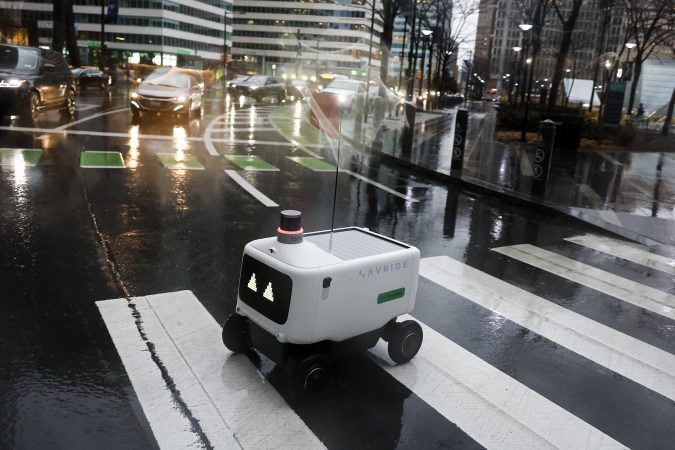
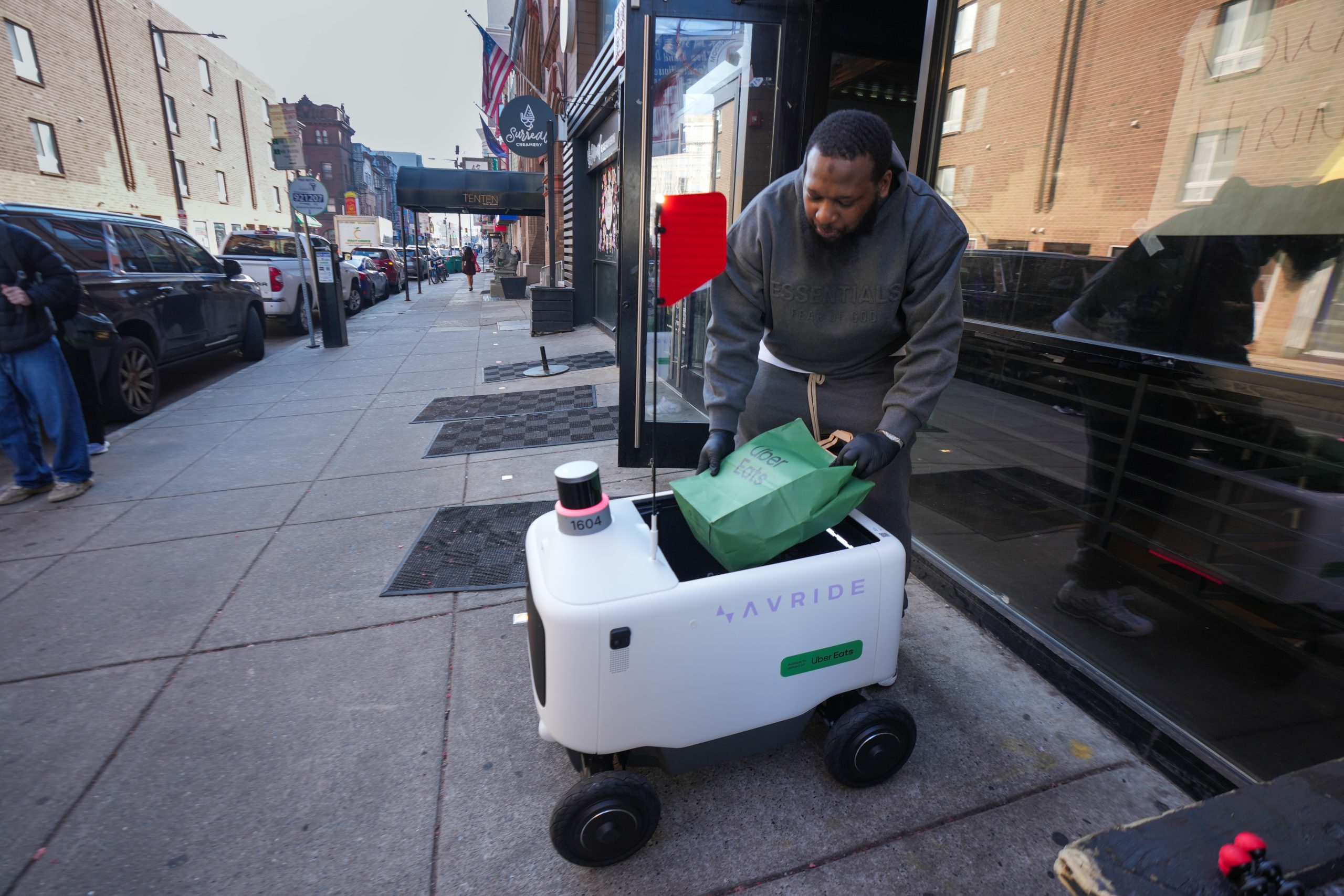
Philadelphia is known for some great things: the Declaration of Independence (happy 250th!), Rocky, and the cheesesteak. It is also known for “killing” hitchBOT, the famous hitchhiking robot that was dismembered in August 2015. A decade later, there’s a new bot in town: the Uber Eats delivery robot, operated by Avride.
When these robots first arrived, I had my own spontaneous encounter with one. I was surprised by how unsettled I felt, especially as someone who has spent years researching them. I am an expert in human–robot interaction, and my research focuses on why people abuse robots. I immediately wondered how long it would be before another robot made headlines in this post‑hitchBOT world.
Uber Eats robot attacked by Philly pedestriansFuncab Karaoke Taxi
Since these delivery robots rolled into town, they have been making headlines for all the wrong reasons: getting beat up, hit by cars, and colliding with pedestrians. These coolers on wheels are having an effect on Philadelphians, and I do not blame my fellow city dwellers.
We are living in a cultural climate where artificial intelligence and automation are often framed as threats to jobs amid inflation and economic anxiety. Layer on top of that Philadelphia’s unique reputation as a destroyer of robots, and the reaction is hardly surprising.
Clockwise from lower left. 1) Last known image of an intact hitchBOT in Philadelphia in 2018. 2) Frame grab from surveillance video of man in No. 12 jersey after tossing what appear to be hitchBOT’s arms to sidewalk. 3 & 4) Man appears to stomp item believed to be hitchBOT.
With innovative technology, there is always disruption. When UberX and Lyft arrived, Philadelphians were up in arms about the traffic congestion caused by rideshare vehicles, a problem the city later officially acknowledged.
Yet in less than a decade, the norm quietly shifted. Today, many of us hail a rideshare instead of a taxi despite the unresolved congestion issue. The question now is whether we will react to delivery robots as another passing disruption, or whether we will choose to use them to actually improve city life.
Garci Peterkin, owner and CEO of Carter’s Cheesesteaks by Garci in the 1000 block of Race Street, demonstrates how food delivery robots work, in March.Jessica Griffin / Staff Photographer
Recently, Councilmember Jeffery Young proposed a $1,000 surcharge on deliveries made by autonomous delivery devices using city sidewalks. That may sound like mere regulation, but in practice it would push the robots out entirely. Before Philadelphia taxes these devices into irrelevance, we should look at how other cities are putting them to work for the public good.
West Hollywood, for example, has had delivery robots on its sidewalks since 2020. On Jan. 1, 2026, the city implemented a new program, the first of its kind, to use data and fees from these devices to improve and pay for sidewalk repairs. In this program, companies that operate delivery robots partner with an accessibility app used by blind and low-vision residents. As they travel city streets, the robots can report real-time obstacles such as blocked sidewalks, helping make navigation safer. The city then uses information gathered by the robots to map accessibility problems and prioritize sidewalk improvements.
The companies also pay a daily fee for each robot in their fleet, plus an advertising fee (about four dollars per day per device) with that advertising revenue directed into a sidewalk repair fund that is expected to bring in roughly $40,000 to $80,000 per year.
In other words, the robots are not just delivering takeout; they are quietly scanning the city, funding basic infrastructure, and making the streets more accessible.
There are a lot of potential benefits: using robot data to measure and assess street conditions, cutting down on short car trips by shifting them to small electric devices, and easing traffic congestion on already strained streets.
These are practical, achievable ways to use technology to help address the climate crisis and long‑neglected infrastructure. This moment should also demonstrate that it’s past time for us to stop pretending we can opt out of technological change altogether.
Philadelphia City Council should resist a blanket $1,000 surcharge that effectively bans delivery robots and instead work with residents, robotic operators, advocates, and experts in human–robot interaction to build a Philadelphia version of West Hollywood’s data‑and‑sidewalk‑repair model.
Uber Eats’ delivery robot in Chinatown on March 10, 2026.Michael Klein / Staff
If we are going to share our streets with robots, we should make sure the companies profiting from them are paying their way and helping fix the sidewalks they roll on.
Will Philadelphia embrace that possibility, or will we become a city of Robo-NIMBYs, elected officials and residents alike?
Lindsay Ouellette is a Philadelphia-based social psychologist and human-robot interaction researcher who studies public responses to robots and emerging technologies. She recently earned her doctorate from Temple University, where her research examined aggression toward robots.
Pennsylvania’s Republican lawmakers are on the verge of deepening the state’s pharmacy access crisis — and Black and brown communities will pay the highest price.
Earlier this year, three Republican state senators announced intended legislation that purports to “protect” Pennsylvanians’ access to care. While not yet introduced, this proposed legislation would do the opposite, forcing the closure of chain pharmacies that are owned by companies that also own pharmacy benefit managers.
Verbatim, the announcement says the bill would, “prohibit PBMs from holding a pharmacy license in Pennsylvania.” If enacted, hundreds of brick-and-mortar and mail-order pharmacies could lose their licenses and be forced to shut down.
Closing pharmacies is not protection. It is a deliberate harm to vulnerable seniors, working families, and the communities that already struggle most to access care. Academic studies document that socioeconomic barriers can influence access to pharmacies.
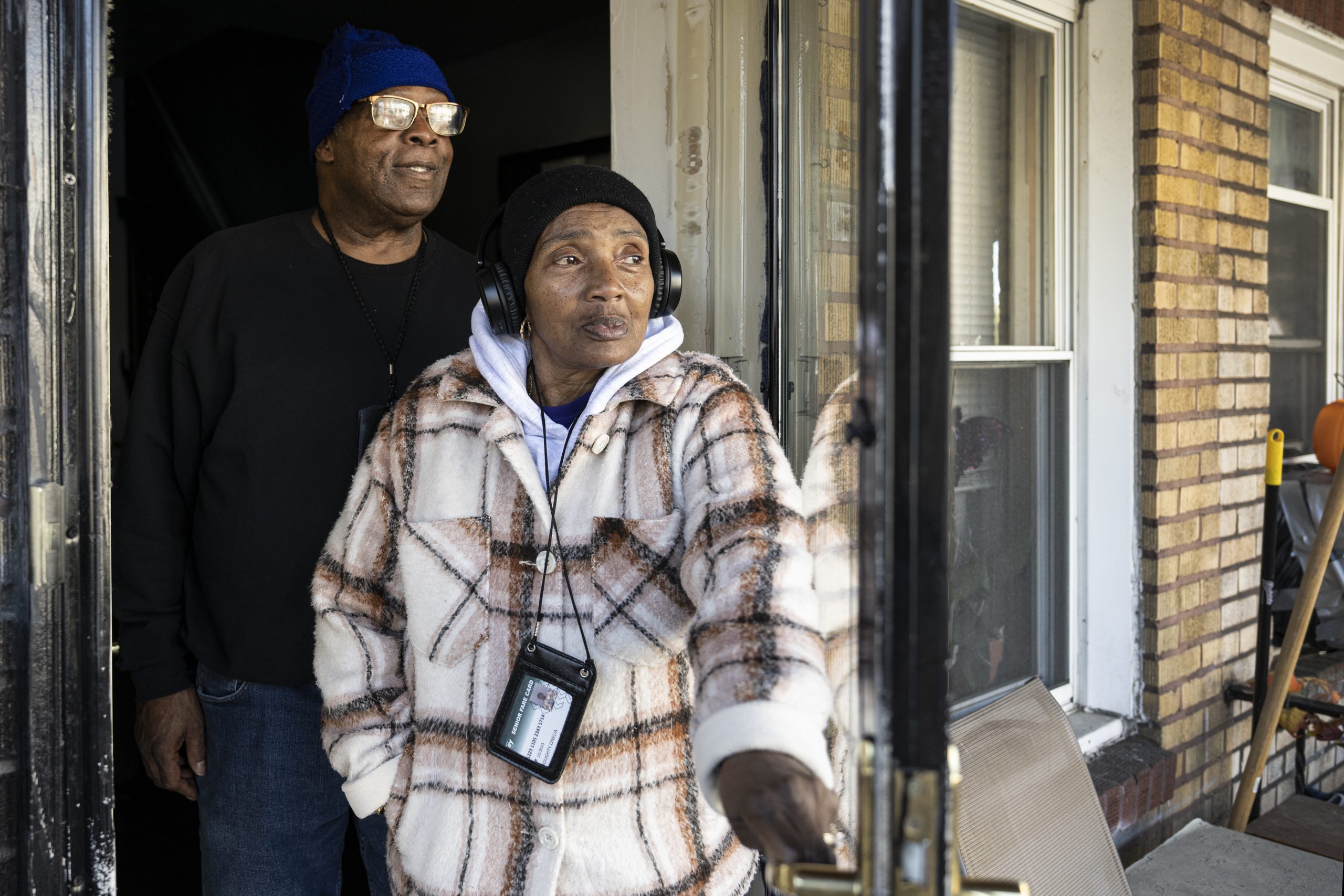
Ronald and Onelia Doughty, photographed at their Grays Ferry home in November 2023, take dozens of medications between them for various health conditions. But to get those medications, Ronald, who walks with a cane, now has to get a bus to South Broad Street or borrow a car from his son who lives in West Philadelphia. Their neighborhood Rite Aid was among those that closed earlier in 2023.Jose F. Moreno / Staff Photographer
Residents in predominantly Black and brown neighborhoods in Philadelphia, Pittsburgh, and Allentown, as well as those in rural townships, already face long distances and real hardships just to fill a prescription.
The health stakes are high. Hispanic Pennsylvanians, in particular, experience higher risk factors for chronic disease, asthma, and multiple cancers than white residents. Managing chronic conditions requires consistent, affordable access to medication — and when that access is severed, patients split pills, skip doses, or abandon prescriptions entirely.
Managing chronic conditions requires consistent, affordable access to medication — and when that access is severed, vulnerable communities are the most impacted.Rebecca Blackwell
Medication adherence is already lower in minority communities. This legislation would make a serious problem catastrophic.
Proponents argue that independent pharmacies can fill the void. We’ve seen how that plays out. When Rite Aid collapsed, independent pharmacists reported being overwhelmed, creating waitlists and turning away patients on less profitable insurance plans. The chaos that followed will repeat — and intensify — if hundreds more pharmacies are shuttered at once.
This legislation also ignores legal reality. Arkansas passed a similar law that was immediately halted in federal court for violating the Commerce Clause and interfering with TRICARE, the healthcare program for veterans and military families. Tennessee faced fierce opposition from patient advocates and state Medicare officials.
Pennsylvania should avoid repeating these costly mistakes.
Pennsylvania’s Act 77, passed in 2024, already established meaningful oversight, transparency, and fairness in pharmacy benefit management — with the explicit goal of preventing pharmacy closures. These new proposals directly contradict that intent.
Communities of color cannot absorb more neglect. The National Hispanic Health Foundation strongly opposes this legislation and urges its immediate rejection.
Pennsylvania’s must instead pursue reforms that strengthen — not destroy — the healthcare lifelines our communities rely on.
Elena Rios is president of the National Hispanic Health Foundation, a leading national organization dedicated to transforming the healthcare system through leadership, research, and education to improve the health of Hispanics.
Your recent editorial on Donald Trump’s losses in the courts and elsewhere correctly described as historic the mounting damage caused by his corruption, incompetence, and cruelty. You also pointed out that Trump is never more dangerous than when he is losing. That said, I don’t think you went far enough by calling on readers to hold Trump and his GOP enablers accountable by voting in the midterms. What makes you think Trump will accept the November results if he is not completely successful in suppressing the vote? Here’s a more effective action plan: Impeach Trump for treason and remove him from office before he subverts the next election. Treason is specifically defined among the constitutional grounds for impeachment, and treason is what Trump has committed repeatedly. He instigated an attack on Congress on Jan. 6, 2021, and indiscriminately pardoned hundreds of the attackers. More recently he pardoned the former president of Honduras who was convicted by a jury of conspiring to smuggle hundreds of tons of cocaine into our country. These acts — giving aid comfort to the enemies of the United States — meet the definition of treason. Notably, Trump has ordered the summary execution of hundreds of noncombatants suspected of lesser crimes. If we follow the Constitution and hold the wrongdoer-in-chief accountable, we will be able to vote — and have our votes count.
Peter Pinnola, Elkins Park
No-fail consequences
The recent article in which some teachers say that there is essentially a “no fail” policy in Philadelphia public schools should incite a community discussion about the consequences of such a policy. To this reader, the policy of passing students to the next grade even though they have not shown up for class — nor completed basic classroom assignments, nor mastered even minimal requirements — is teaching those young people that they can succeed without any effort on their part. Such a policy teaches children to be irresponsible. Why take any personal responsibility to earn your achievements when your success of being promoted is preordained?
Students need to enter the school year knowing that they are responsible for attending class.
They are responsible for completing assignments.
They are responsible for achieving some mastery of the classroom curriculum.
This is the way the world works. As they grow up, they need to realize that the world does not give them a free pass. They need to learn to be responsible individuals.
William Cooney Jr.,Philadelphia
Mr. Trillionaire
Now that Elon Musk has become the world’s first trillionaire, let’s help him figure out what to do with this unfathomable amount of money. Start with paying taxes. Roughly 20% of his worth would certainly help our Social Security fund. Then there is public education, the arts, healthcare, scientific studies — and all the other things that he and DOGE eviscerated. I don’t think he’d even miss a few billion here or there.
Barbara Gold, Philadelphia
…
A year after Elon Musk all but wiped out U.S. aid to the poorest people on the planet, he has become the world’s first trillionaire.
Because the U.S. Agency for International Development, where I served for 14 years, was eliminated, hundreds of thousands of people have died — including more than 500,000 children. The Lancet concluded that by 2030, aid cuts could lead to 9.4 million additional deaths; 2.5 million are projected deaths of young children. Ebola is one of many deadly diseases on the rise in USAID’s absence; others include bird flu, mpox, HIV/AIDS, diphtheria, polio, and measles. The economic fallout from the ruinous war with Iran is having catastrophic effects on the world’s most vulnerable people overseas, as well as on all of us here at home who are facing the highest inflation rates in years.
Meanwhile, Musk’s graduation from unaccountable billionaire to unaccountable trillionaire is a galling example of the unprecedented amounts of wealth and power we’re currently witnessing elites accrue.
We can change this reality only by fixing our broken politics: organizing, demanding more from our elected officials, and electing new leadership willing to actually fight corruption and the tech oligarchs threatening our air, water, privacy, and jobs. Our communities, livelihoods, and values are worth the fight.
That’s three more acres of turf that potentially exposes kids to cancer-causing forever chemicals, in addition to the 30 acres that the city and the Fairmount Park Conservancy plan to install in the FDR Meadows.
All artificial turf contains PFAS, the “forever chemicals” linked to cancer, liver damage, thyroid disease, decreased fertility, and more. The city itself has sued PFAS makers over these risks, and The Inquirer has reported on them several time in recent years — including a gut-wrenching article on the Phillies players who died of brain cancer after exposure at the Vet.
Aside from the PFAS, artificial turf has other serious liabilities — it becomes dangerously hot, increases injuries, sheds microplastics, and contributes to climate change, especially when it replaces grass fields, meadows, or woodlands.
There’s no excuse for endangering our kids’ health and future. They deserve safe, healthy fields, and that means grass, not plastic.
Rich Garella, Philadelphia
Sports tix surcharge
Why not try to add a “schoolkids surcharge” of $1 (yes, just $1) to all Philly sporting events tickets. Let the “team spirit” of the Phillies, Eagles, Flyers, Union, and any other willing teams spread to our very needy school kids and their respective classroom and building needs.
That way all the fans can earn an easy A+.
Lynn Taylor Morawski, Abington
Fund solar
Regarding your recent editorial on the budgeting process in City Hall and Harrisburg, while an on-time budget is important, a budget is also a chance to make Pennsylvania a better place to live. In an effort to help clean up our air, I advocated for a state budget that includes more renewable energy at PennEnvironment’s recent clean energy Lobby Day.
Air quality here in Philly, and in many metropolitan areas in Pennsylvania, is so bad that it’s often unhealthy to breathe. Each day, it becomes more clear that we must move toward clean, renewable energy sources that don’t pollute our air and threaten our health. While Harrisburg works to meet this year’s June 30 budget deadline, I urged our legislators to fund the Solar for Schools program to ensure that clean, solar energy is what powers our schools.
I believe that Pennsylvania communities deserve a healthy and livable future, and together we can make that happen.
Kaovya Vel,Pennsylvania
Moderate moniker
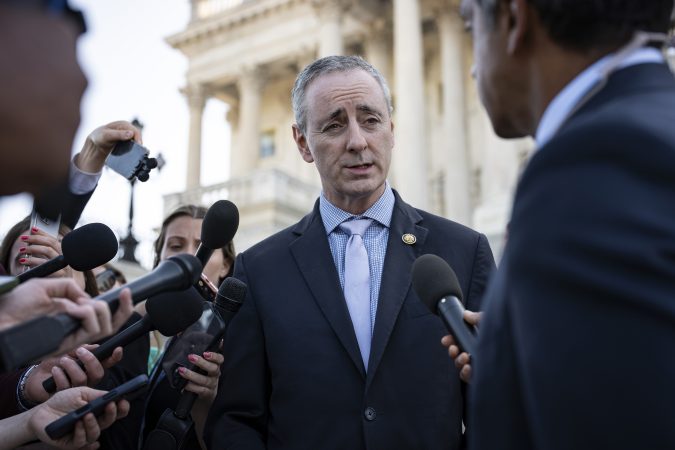
The Inquirer’s fine writing and reporting notwithstanding, I do wish your paper and other media outlets would correctly refer to Rep. Brian Fitzpatrick as “so-called moderate” rather than anointing him as such without the qualifier, as in a recent article. Yes, he sometimes works with Democrats to vote against egregious GOP legislation, but that doesn’t make him a moderate. The late Sen. Edward Kennedy sometimes worked with and voted with arch-conservative Sen. Orrin Hatch, but no one called Sen. Kennedy a moderate. Some statistics show that Fitzpatrick is not in lockstep with the MAGA GOP majority, while a drill-down of his voting record shows that on substantive issues he consistently votes with his party.
Therefore, the accurate way for the Fourth Estate to describe Fitzpatrick is “Republican Brian Fitzpatrick” or “U.S. Rep. Brian Fitzpatrick.” Leave it to the voters to determine if he’s a moderate or not.
Scott Chelemer, Mount Laurel
Join the conversation: Send letters to letters@inquirer.com. Limit length to 150 words and include home address and day and evening phone number. Letters run in The Inquirer six days a week on the editorial pages and online.
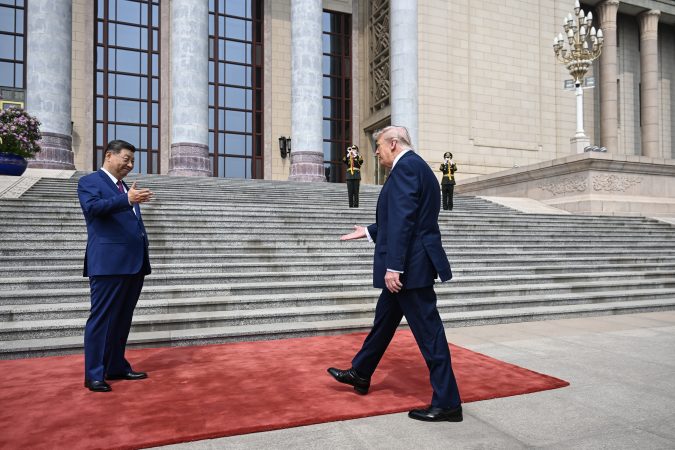
Last month’s summit in Beijing between Donald Trump and Xi Jinping, the presidents of the world’s largest economies, drove home the magnitude of the crisis facing democracy. At the scale of decisions affecting billions of people, nobody was properly represented.
Trump and Xi were negotiating for all of us, but representative of hardly any of us, whether American, Chinese, or, like most of the world, completely voiceless in the selection of either leader.
Americans have a bigger say than most nations in the selection of their leaders, but when the leader of the world’s preeminent representative democracy is openly envying the power of the leader of the world’s biggest autocracy, we know that democracy is in trouble.
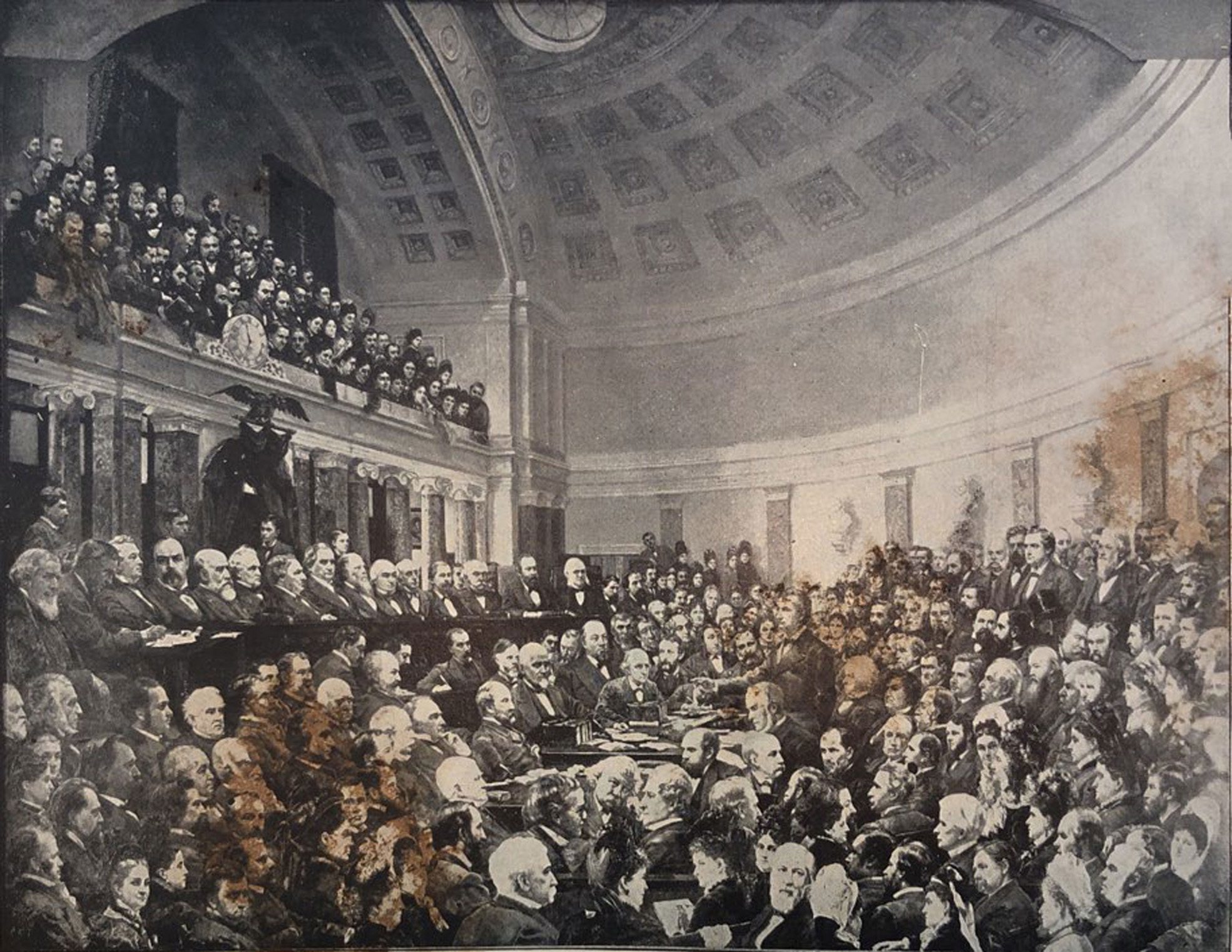
In 1787, the Constitutional Convention in Philadelphia hammered out a blueprint for representative democracy. Today, we are in a crisis because democracy has failed to scale up to fit the nearly 100-fold growth in population since then. We need to think of alternative ways of ensuring that diverse interests and diverse expertise are represented for the good of the people. We need a new constitutional convention.
In 1787, the Constitutional Convention in Philadelphia hammered out a blueprint for representative democracy, writes Colin Allen.Campwillowlake/iStockphoto / MCT
This is not the first time that democracy has failed to scale.
Athenian direct representation was only barely functional at the scale of the Greek city-state. Even though only male landowners were enfranchised, it was still impossible to accommodate them all at once in the Pnyx, so each voter was required to show up only for a subset of the votes.
It took another two millennia to invent representative democracy: a manageable number of legislators, each of them elected to represent the interests of thousands of people. The first U.S. census in 1790 recorded just shy of 4 million inhabitants. The newly formed House of Representatives had 65 members: roughly one per 60,000 people.
Today, over 331 million Americans are represented by 435 members: a ratio of roughly 1 to every 760,000. Not only is each member tasked with representing so many more people, but the diversity of interests in each constituency and the sheer range of issues that must be addressed at this scale mean that practically nobody is properly represented on all issues.
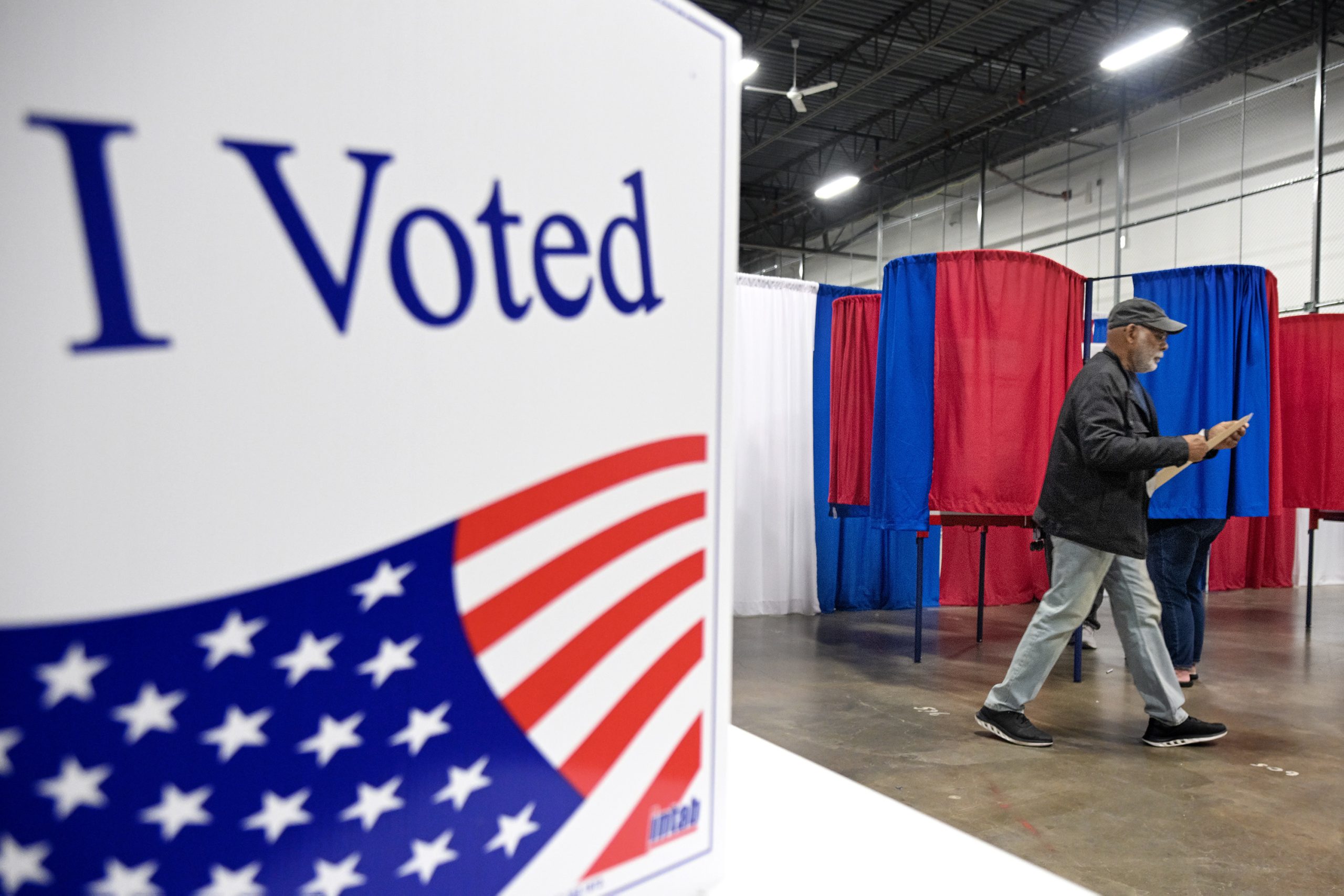
Voting often feels like selecting the lesser of several evils, and is at best a compromise forced by the need to decide which issue is most important to you, writes Colin Allen.Tom Gralish / Staff Photographer
Electors face impossible choices. The chance that any one candidate represents all of a voter’s views is vanishingly small. Casting a ballot often feels like selecting the lesser of several evils, and is at best a compromise forced by the need to decide which issue is most important. At worst, voters disengage entirely or resort to preferring qualities that would be more suitable for dominance contests among apes. These problems are aggravated because social media has fractured communal purpose, and gerrymandering is splitting natural constituencies.
The possibility of electing leaders with autocratic tendencies has always been a weakness of democracy. This weakness is magnified at scale: Larger, more diverse constituencies can come to seem ungovernable, favoring politicians who project strength. We need to grapple collectively with these problems and find better ways of allocating our votes among representatives whose values and expertise match the scope of their powers.
How might this be done?
The whole approach to democratic governance needs to be reengineered from the ground up. For example, the existing separation among legislative, executive, and judicial powers should be supplemented by erecting firewalls among different spheres of political decision-making.
Existing government departments (health, education, agriculture, defense, etc.) provide an initial sketch of where separate legislative bodies might be desirable. Separating legislative functions along these lines would serve to concentrate expertise where it is needed.
Legislation in one domain would no longer be encumbered by riders that belong in other domains. Funding of health or science initiatives would not be held hostage to disputes about unrelated matters. Reducing the scope of individual legislators would also make them less prone to targeting by the full spectrum of lobbyists.
The Nobel Prize-winning work of Elinor Ostrom, pictured here, showed how management of scarce common resources is often best handled through local self-governance.
We also need to rethink the relationship between geography and representation. Some areas of governance are inherently more tied to location than others. The Nobel Prize-winning work of Elinor Ostrom showed how management of scarce common resources is often best handled through local self-governance. People whose livelihoods depend on shared resources they jointly control make better decisions than those acting under rules imposed remotely.
Current political systems (whether democratic or not) aggregate legislative and economic power hierarchically over increasingly large geographic areas. This favors decisions by people who have little or no skin in the game when it comes to good stewardship of local resources. Hence, in the domains of agriculture or the environment for example, it makes sense that one’s choice of representative should be tied to your location.
But for other issues, such as justice and civil rights, national defense, or international trade, a voter’s interests and values may be better represented by someone living far away than by local politicians. At-large representation could provide a mechanism for voters to select representatives for domains where geographic location is less important. For some domains, a mixture of local and at-large representation may produce the best deliberative bodies and the greatest sense by voters that their views are adequately represented.
These ideas merely provide one set of suggestions. They admittedly bring new problems with them. An obvious challenge for multiple specialized legislative bodies is that of coordination among them. Possible solutions to be explored include constitutionally mandated joint sessions. Elected delegations from one legislature could also have voting rights in another. Other solutions come from the power of the purse.
I suggest giving some of that power back to the people by allowing voters to allocate a certain number of shares of the government’s total revenue to various legislative bodies. A pacifist might opt to allocate zero shares to defense while splitting the remainder 50-50 between health and education, for instance. Other voters with different priorities could steer the money differently. Such a scheme would help to address “not with my tax dollars” complaints that are often heard when people don’t like some government programs that others believe essential.
In a pluralistic society we can be fairly confident that the allocations emerging from these individual choices would keep the essential parts of the government going via the wisdom of crowds. But there are many reasons for retaining some degree of top-down control. An elected body specializing in finance and taxation would be particularly important. This body could be constitutionally mandated to control some percentage of the total budget, say 30% with the other 70% being allocated through voter preferences.
The finance body might itself consist of a mixture of at-large representatives and district-based representatives. It could be constitutionally mandated to allocate a substantial portion of revenues to domain-crossing projects, such as education that serves agriculture, or medical research that serves defense department needs, and it could also provide funding in cases where an urgent or unanticipated need has arisen.
I present these ideas in the spirit of trying to think creatively about how we can harness democracy for the large-scale challenges of the 21st century. I am sure that all of these proposals can be improved upon collectively through the mechanism of a constitutional convention.
Pie in the sky? Clearly this is not an overnight project. The Philadelphia Convention took place 11 years after the signing of the Declaration of Independence. The deliberations that occurred there were a matter of intense public scrutiny.
The Constitution took another two years to be ratified. Compromises were necessary and were made. We are still living with the effects of some of those compromises today. But something workable emerged, although it notoriously failed to treat all people as equal.
The system we have is no longer suited to a modern society in which hard-won gains of underrepresented groups are being rolled back by a Supreme Court that regards the application of the Constitution more as an academic exercise than a serious attempt to deal with all that has changed in the past 239 years.
Those on both wings can be suspicious of the motives of those on the other side, but all should be able to take seriously the idea that the United States has outgrown the clothes originally tailored for it almost 250 years ago.
Colin Allen is a distinguished professor of philosophy at University of California, Santa Barbara and a Public Voices fellow of the OpEd Project.
As we approach America’s 250th anniversary, the political party that brags of its patriotism is actively undercutting national security.
Although many GOP House members and senators are versed in foreign affairs and grasp the irresponsibility of their actions, they are too cowardly to confront the biggest security threat America has faced in decades: President Donald J. Trump.
As his Iran debacle laid bare, Trump’s ego-driven foreign policy is making America more vulnerable to our enemies — both at home and overseas. Yet, the aging POTUS seems ever more determined to ignore real security dangers. His main focus is on seeking quick military hits he thinks will win him personal acclaim.
His failed Iran war perfectly displays his misuse of the U.S. military for unnecessary battles that decrease capacity for any future conflicts with Russia and China. And Republican legislators — who claim a monopoly on love of country — don’t have the guts to call him out.
Why? Because they value their chairs more than keeping Americans safe.
The Iran war, and the memorandum of understanding that has temporarily halted it, are a perfect example of Trump’s failure to protect the nation.
In February 2026, Iran presented no threat to the United States. Tehran’s enriched uranium was deeply buried under rubble after the U.S. and Israel waged a 12-day war on Iran in June 2025.
But, driven by ego, POTUS let Israel’s Benjamin Netanyahu persuade him that a quick bombing run could achieve regime change in Tehran and remake the entire Middle East.
Don’t blame Bibi, because only a president who knows nothing about Iran and obsessively seeks a Nobel Peace Prize could have believed such nonsense. POTUS ignored warnings from U.S. military brass that Iran would respond by blocking the Strait of Hormuz, because he insists he knows best.
After four months of war, what has Trump’s ego wrought?
In desperation to get Iran to reopen the strait and push gas prices down before the midterms, Trump has promised Tehran huge and immediate economic benefits.Meantime, nuclear talks are pushed back to 60 days of negotiations, which will probably be extended indefinitely.
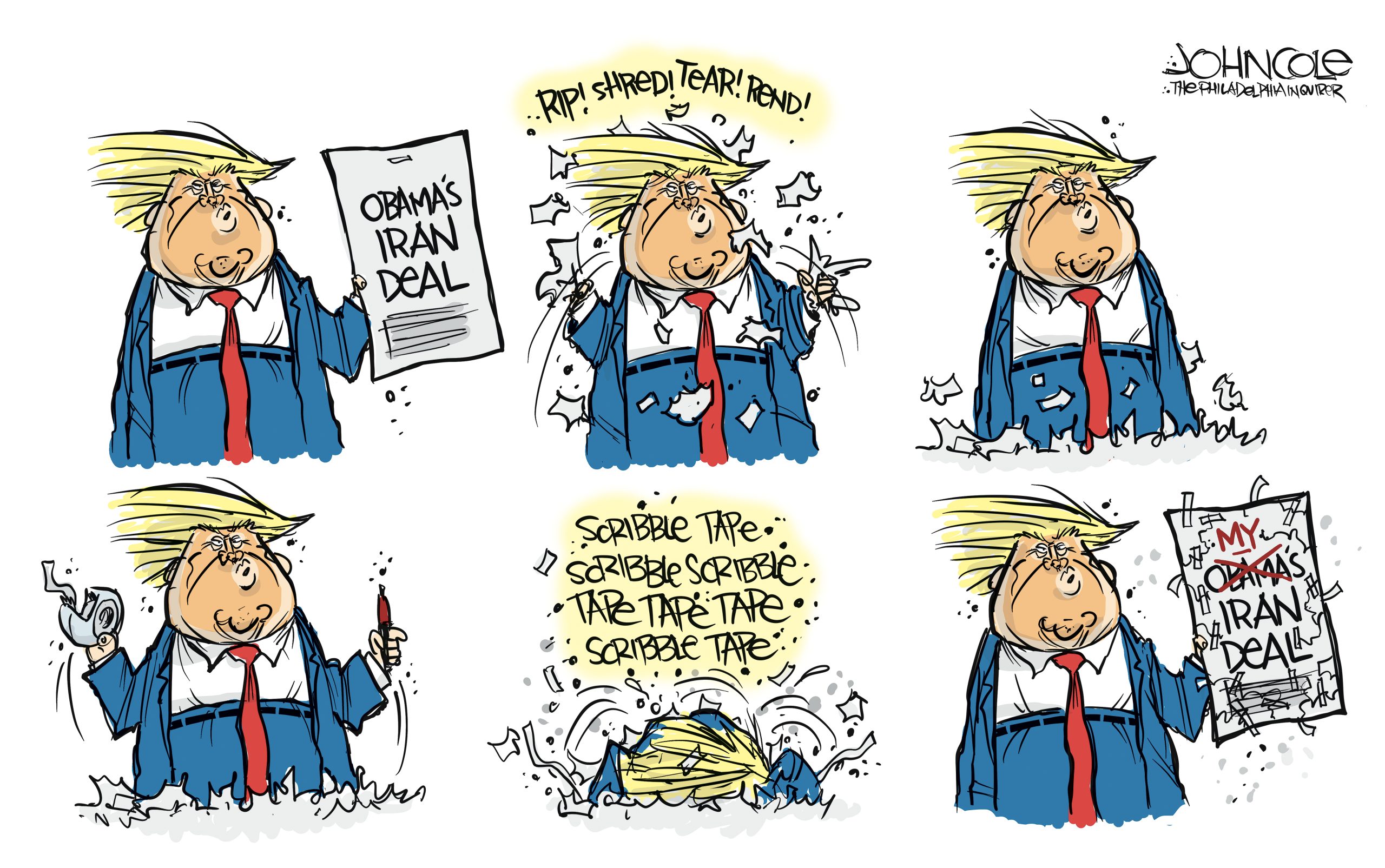
The one-and-a-half page memo contained only one paragraph on nuclear talks, but POTUS has already revealed a host of U.S. concessions in interviews. They guarantee that if a nuclear deal is ever reached, which is far from certain, it will be similar or worse than President Barack Obama’s JCPOA nuclear accord, from which he withdrew in 2018.
Rather than ending Iran’s nuclear program altogether, as Trump promised, any deal will permit Tehran to enrich uranium to low levels, as did the JCPOA. It will also allow Iran to downgrade its highly enriched uranium inside their country, rather than send 97% out of the country as required by Obama’s deal.
In fact, Trump now debunks the importance of rushing to extract Iran’s enriched uranium from the rubble, because Tehran can’t access it. “Nobody’s touching it,” he said. “We have Space Force cameras [monitoring the sites]. It’s actually not valuable. …”
So tell me again, Mr. President, why you started this war?
Supporters pass by a billboard showing leaders of Hezbollah, outside the grave of the late Hezbollah leader Hassan Nasrallah, as they mark the first day of Ashoura in Beirut, Lebanon, on Wednesday. The preliminary agreement between Iran and the United States leaves unresolved the two issues at the heart of the conflict: Israel’s occupation and Hezbollah’s arsenal.DAVID GUTTENFELDER
The list of Trump concessions to Iran goes on, each one explained more bizarrely by the president. Trump casually declared he would allow Iran to keep its ballistic missiles, which were fired at Israel and U.S. bases — a total reversal of his pledge before the war started. “I’m saying that if other countries have them, it’s a little bit unfair for them not to have some,” Trump told reporters in Paris the other day. Say what?
What is particularly dangerous — and requires Congress to confront the president — is that this unnecessary war has degraded the U.S. military, and revealed its weaknesses to our adversaries.
The war has also exposed the erratic style of the U.S. commander in chief, who treats the U.S. military like his personal plaything. Both he and his showman “secretary of war,” Pete Hegseth, have proved they lack the judgment and temperament to command this force.
By keeping such a huge percentage of our air force and naval assets in the Mideast for months, Trump has worn out the readiness of our military. This war also used up a staggering amount of U.S. long- and medium-range missiles that are badly needed to stabilize the Indo-Pacific against Chinese aggression, and by NATO allies to ward off Russian aggression.
Yet, instead of selling such missiles to Taiwan, or letting Europeans buy them to protect Ukraine from massive Russian bombing, Trump used them up against Iran.
Moreover, the Iran war revealed the continued Pentagon failure to prepare for the new drone and artificial intelligence-driven 21st century form of warfare. The U.S. military used billions worth of $2 million missiles to intercept $20,000 Iranian drones because the Pentagon has been unable to speed up drone production and refuses proffered help from Ukraine.
In fact, at the G7 summit in France on Tuesday, Trump made a point of how unimportant the Ukraine conflict was to America. “Look, we have nothing to do with it,” he said of that war. “It has no impact on us, other than we sell weapons” to Ukraine, he added. “We’re thousands of miles away.”
That kind of dumb remark, in a world where satellites and electronic warfare make distance irrelevant, is proof positive of Trump’s total misunderstanding of geopolitics. The U.S. abandonment of Kyiv and coddling of Russia enhances China’s belief that America’s power is declining and the global balance of power is shifting.
Indeed, the most vivid illustration of the president’s blindness to the fallout from his Iran fiasco, came when he thanked Vladimir Putin and Xi Jinping for their help with ending the Iran war. What head spinning brain-blank could prompt gratitude for Putin giving intelligence information to Tehran to target U.S. bases? Or to Xi for providing all the parts for Iranian drones that killed Americans in Kuwait?
Which side is Trump on?
POTUS’s conviction that his personal relationships with Putin and Xi will prevent them from doing America harm is endangers America’s safety. He won’t critique them for aiding Iran, because he believes both men are his comrades. His easily manipulated ego plays into both dictators’ hands.
This war has provided proof that America’s adversaries need only wait and watch as the U.S. president undermines the U.S. military’s fighting capacity by wasting it on delusionary wars.
Instead, Trump and Defense Secretary Hegseth make a point of slamming our allies, whose help we need to deter to Russian and Chinese imperialism.
Even as POTUS was signing the surrender document with Iran, Hegseth announced the U.S. will pull back troops from Europe and weapons support for NATO. Thus, Trump openly advances Putin’s dreams of splitting the transatlantic alliance, at a time when Russia is openly hostile to the West.
President Donald Trump with Prime Minister Giorgia Meloni of Italy after a Group of 7 photo in Evian-les-Bains, France, Tuesday.HAIYUN JIANG
POTUS even infuriated his closest European ally, Italian Prime Minister Giorgia Meloni, who accused him of “fabricating” claims that she “begged him” for a joint photo.
“I can only say it is disappointing that he does not show the same determination with the enemies of the West and of the United States, whose leaders he instead treats with far greater indulgence [than his allies],” Meloni stated angrily.
There is a name for a leader who coddles the enemy while alienating friendly democracies that share our values. Such treachery, whether carried out wittingly or blindly, betrays our nation.
Trump’s indifference to U.S. security isn’t just evident in his misadventures abroad.
At a time when foreign terror threats to the nation are high, the president just refused to reauthorize critical U.S. foreign spy powers, unless they were tied to a voter suppression bill.
The same week, he used political trickery to officially appoint a fervently loyal ally, Bill Pulte, as temporary director of national intelligence, over bipartisan Senate objections. Pulte has zero intel experience, but is tasked by POTUS to pursue his political enemies and undermine the midterms.
Never mind the serious risk of terror attacks during FIFA matches or sesquicentennial celebrations — or during fall balloting. GOP senators bowed to their boss man rather than make a big fuss.
So as July Fourth approaches and Trump busies himself with architectural destruction in the nation’s capital, his GOP enablers in Congress are helping a doddering egomaniac undermine the. security of the citizens he supposedly serves. These Republicans know what POTUS is doing, yet they refuse to stand up and make their voices heard.
On America’s 250th, GOP pols are aiding Trump in betraying constitution and country. How they can look in the mirror and call themselves patriots mystifies me.
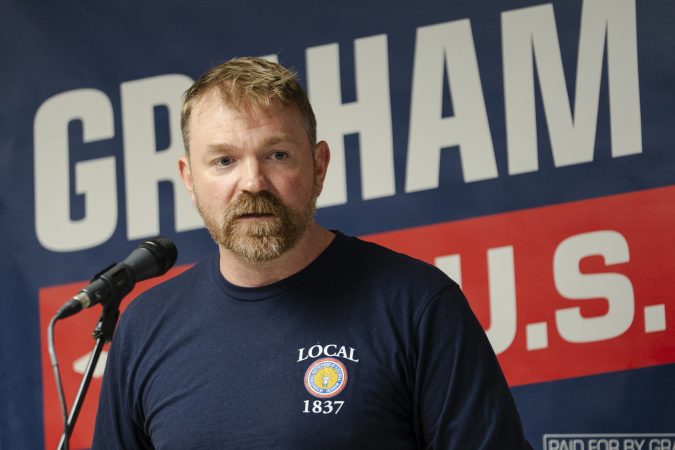
Solomon Jones’ most recent column regarding his lack of concern about Graham Platner’s ethics was dead on. We need a new generation — warts and all — to fight for us and rebuild the Democratic Party. Just look at some of the wins in New York City, New Jersey, Virginia, etc. Just look at Andy Kim’s challenge to the “County Line” on ballots and his win. I’m only 73, for God’s sake, and I want to see younger, more progressive candidates get in the trenches and fight for us. I want this country to move forward again, not backward. It’s time to remove the bigots, racists, and sexists who are ruining our country and elect some candidates who can truly make us great.
Vince McGinley, Haddon Heights
…
In his recent column, Solomon Jones states that to fight Donald Trump’s presidency we should look past character and apply the same principles the Trump team has. When did character no longer matter? You never fix a wrong with another wrong; it simply doesn’t work. If character no longer matters, have we hit rock bottom?
Robert Galasso, Cherry Hill
End Gaza’s suffering
I appreciated the recent Associated Press story about the continuing crises in Gaza, even though the content is grim and distressing to read. We needed to be reminded that the suffering is not over. We have been distracted by the crazy, dangerous, and damaging actions by a failed presidency that has allowed Israel to continue its devastation of the people of Gaza. Without international pressure to stop, Israel has continued to kill Palestinian civilians, squeeze them into less and less territory, and resist all but token attempts at providing necessary food, shelter, and medical care to the beleaguered populace.
Since the U.S. was complicit in prosecuting this tragedy, that gives us considerable leverage to end it. We need to stop being war enablers to become war resisters. If the president is incapable of understanding the urgency, we need to tell Congress to take control and to establish a clear policy that calls for an end to bloodshed, and the initiation of a massive, international effort to relieve and rebuild Gaza.
We are a great country, we’ve done this before, and we can do it again.
Norman K. Janes, Haverford
Join the conversation: Send letters to letters@inquirer.com. Limit length to 150 words and include home address and day and evening phone number. Letters run in The Inquirer six days a week on the editorial pages and online.