Category: Opinion

  • NYT writer practiced her principles with her daughter’s schooling

    NYT writer practiced her principles with her daughter’s schooling

    My parents were big supporters of public education.

    Teaching was their life’s work. They spent almost their entire careers in the District of Columbia Public Schools system. However, they chose to send my four siblings and me to Catholic schools through grade 12. They sacrificed almost everything to do it. Many of their educator friends made similar choices.

    My husband’s mother made a similar pick. He still recalls how out of place he felt after his mom — also a schoolteacher — enrolled him in an expensive, predominantly white boarding school in New England when he was just 11. Last year, during one of his school reunions, I walked around and marveled at the beauty of the campus.

    At the same time, though, the thought of him dressed in his little blazer and being so far away in Massachusetts makes my heart ache for the adolescent version of him. Not that he regrets it. It put him on the path to Princeton University.

    Like many other middle-class families, our parents faced a difficult decision: send us to our neighborhood schools with all of their problems, or identify the best possible educational opportunity for us elsewhere.

    Add in a bunch of other variables that Black students in predominantly white private schools often still face — including social isolation and subtle discrimination — and the decision becomes even more difficult.

    I’ve been thinking a lot about the choices Black parents have to make for their children after reading Nikole Hannah-Jones’ essay in the New York Times about what her family went through getting her daughter educated in New York City public schools.

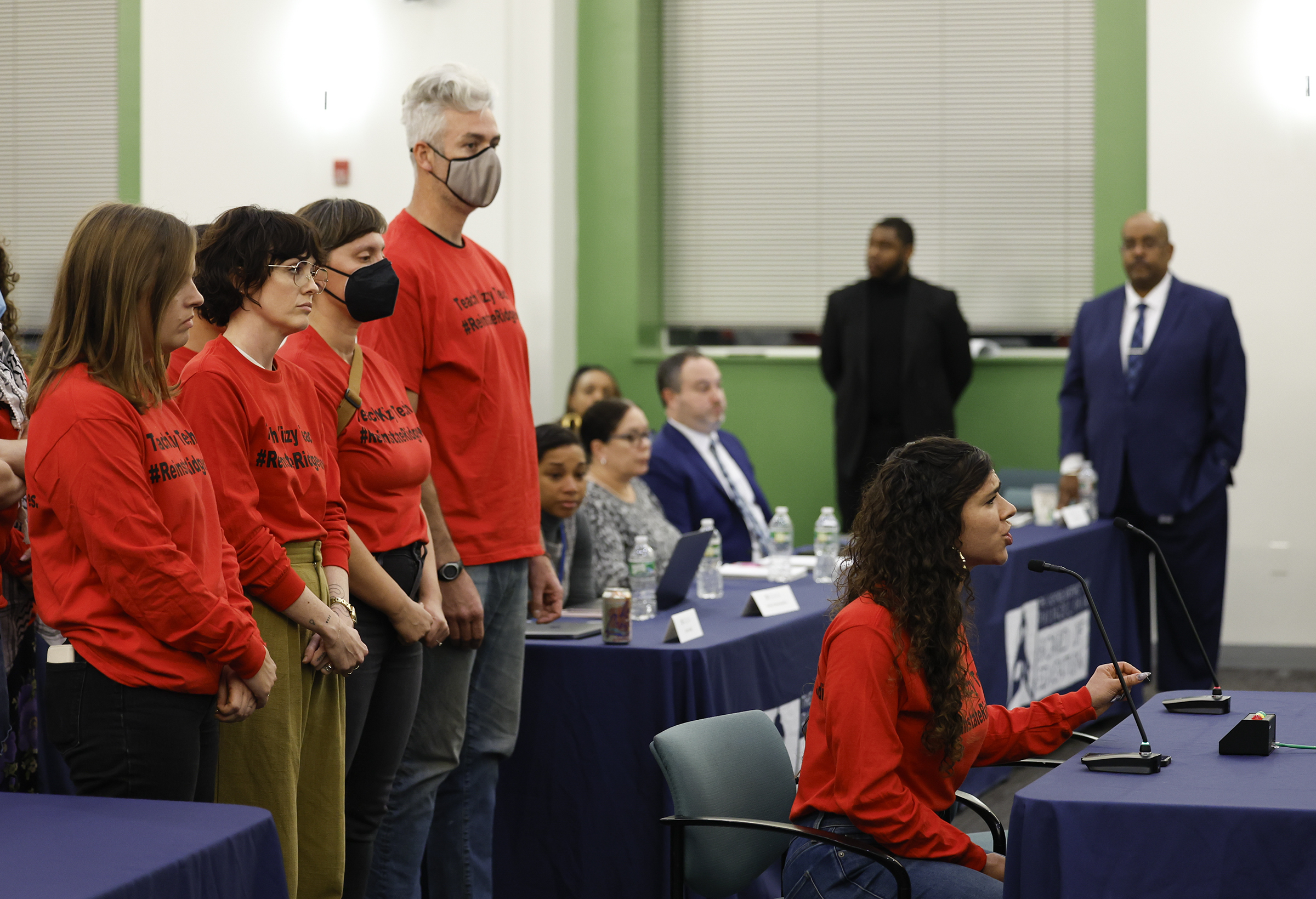
    The Pulitzer Prize winner, who founded the 1619 Project, could have afforded to send her daughter to the most exclusive school in the city. Instead, she enrolled her only child in a segregated, high-poverty public elementary school in Brooklyn across from a public-housing project.

    Because she and her husband were well-off financially, Hannah-Jones naively thought they could use their resources and networks to help the school thrive. It was a decision based “on the collective good and not just our individual advantage,” she wrote.

    She acknowledged that her decision returned to haunt her years later when her daughter was in middle school and confronted her, saying, “So you had money to send me to one of the best schools, and you chose not to?”

    Gulp.

    As Hannah-Jones noted in a response to a reader comment about the article, teenagers have a way of humbling us.

    In the piece, Hannah-Jones delves deep into why she made the choice that, she eventually concludes, was a mistake.

    “Najya deserved better. They all did. But she was mine. This girl, my only child, looked to me to protect her, to give her what she needed to thrive. And I had not chosen her.”

    It was a stunning admission.

    Not to mention brave.

    When it comes to choosing schools, there aren’t always suitable options, especially for socially conscious Black parents like Hannah-Jones. People sometimes find themselves having to make a no-win choice the way she did.

    “Which struggle are we asking our children to bear? Stay in the neighborhood school and risk being underserved; leave for a more selective or whiter school and risk isolation, racism, and the message that the children left behind are not worth saving,” Sharif El-Mekki, CEO of the Philly-based Center for Black Educator Development, told me in an email.

    Hannah-Jones’ daughter, Najya, now attends a selective, predominantly white and Asian public high school. Hannah-Jones wrote she is better off academically, but racism is a factor. “My daughter had never been part of a minority in a school, and now she sat in classrooms where some classmates casually tossed around racial slurs as if it were cool.”

    Najya also has regular homework assignments, which was something she wasn’t used to. She hadn’t learned to study on her own. Her grades faltered. Her parents hired an algebra tutor and learned that their student “had huge gaps in many of the building blocks of math that she should have learned in elementary school, like mastery of long division and fractions.”

    Eventually, Najya was able to get her footing and started getting A’s and B’s again.

    I reached out to Shanée Garner, executive director of Lift Every Voice Philly, a grassroots, Black-led parent organization, who pointed out, “The most heartbreaking aspect of [her] story is how clearly it reveals a trap any of us can fall into: Believing that being right, or having access and influence, is enough.”

    She added, “There is no perch high enough and no argument brilliant enough to produce the seismic and enduring shifts our public systems require.”

    Public education needs widespread systemic reforms to better serve diverse populations.

    That’s where critics should be directing their outrage — not at Hannah-Jones for the choice she made about schooling her daughter, a decision that was rooted, as others have noted, in an attempt to live out her principles. Some people are mad at the wrong things. As Hannah-Jones noted, Najya will be fine. She “has learned resilience,” her mother told a reader online.

    But what about all of the children enrolled in schools that don’t adequately serve them? They must not be ignored. Their schooling matters, too.

    When it comes to those often-forgotten students, we already know where Hannah-Jones stands on the principles of equity, fairness, and equal educational opportunities. What about the rest of us?
  • Letters to the Editor | Sept. 28, 2026

    Letters to the Editor | Sept. 28, 2026

    Mockery of peace

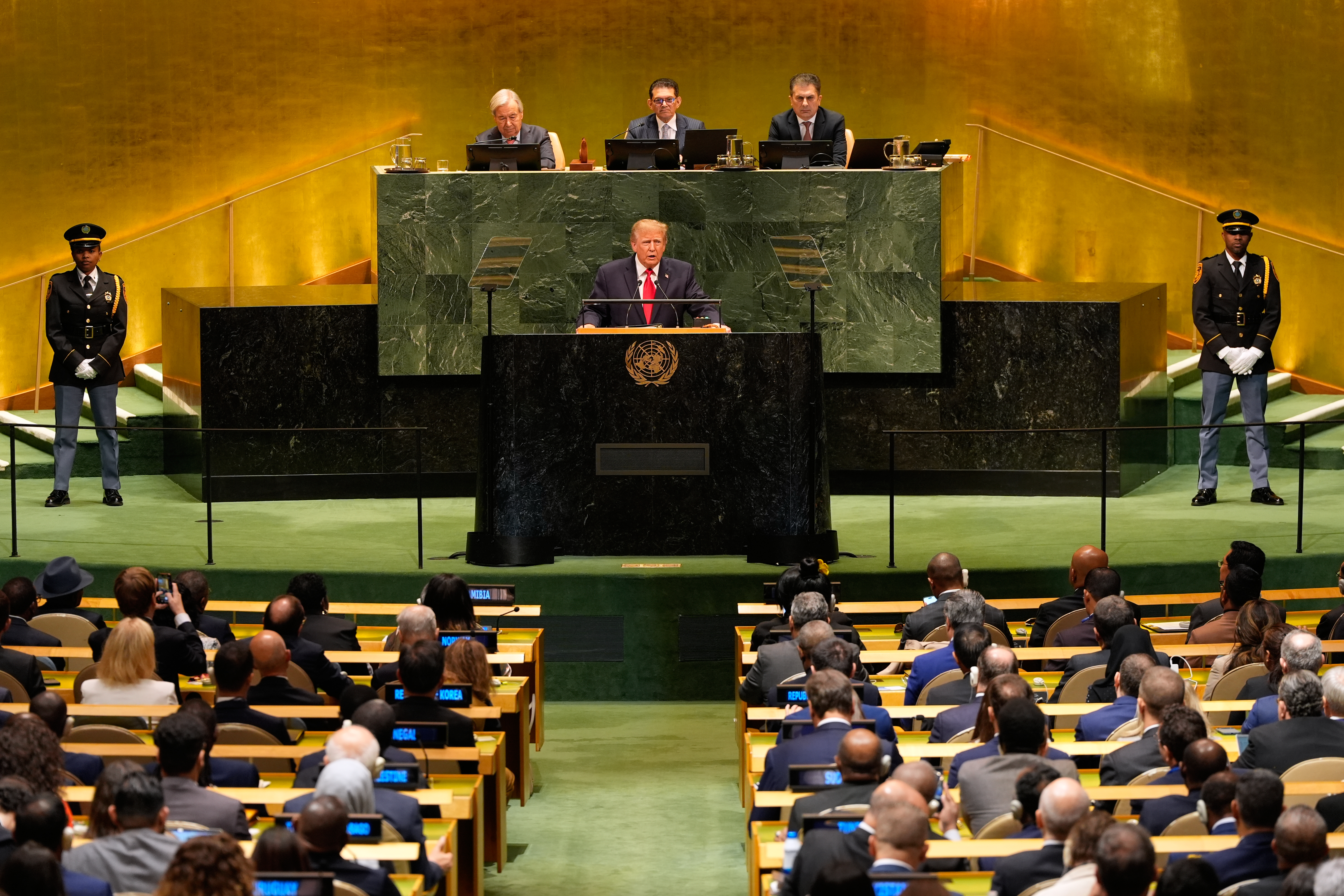
    During his address to the United Nations General Assembly last week, President Donald Trump mused:

    “I have a big decision to make. Will a deal be made with Iran … or do I annihilate the Islamic Republic and do it quickly? … Do I drive them into hell with no chance of survival and no hope of future greatness for generations?”

    An official threat to annihilate another country violates the U.N. Charter’s prohibition on the threat or use of force. If it contemplates destroying Iran’s people or denying them a future as a national group, it also raises the specter of the gravest crime in international law: genocide.

    Words from a president carry extraordinary weight. They can normalize mass violence, intimidate civilian populations, and signal that international law is optional for the powerful.

    The United States helped establish the postwar legal order to reject wars of conquest and collective punishment. A self-described president of peace should not stand before the United Nations and threaten an entire country with destruction.

    Terry Hansen, Grafton, Wis.

    Protect residents

    How truly disappointing to read about Lower Merion Township’s gas leaf blower ordinance through the narrow lens of enforcement “stress.” The article reads like a script from the fossil fuel industry, to share as “news” that it just might be too costly to shield people from hearing impairment and carcinogens, the indisputable and long-proven dangers of gas-powered leaf blowers.

    Lower Merion made enforcement cumbersome, and it must not now be weaponized to discourage protecting people from harm, which is the very point of gas blower ordinances nationwide.

    My town, Montclair, N.J., is one of them. We have prohibited gas leaf blowers here year-round since 2023. Residents and workers, including municipal staff, are safer and healthier because of our ordinance.

    Lower Merion’s officials should revisit its enforcement policy. If it’s the “burden,” “stress,” and “strain” they describe, they surely need to streamline their process. Would they talk like this about a new speed limit in a school zone?

    Bottom line: For a machine this dangerous, protecting public health is worth it.

    Anna Grossman, Montclair, N.J.

    Uneven praise

    It is a bit odd that, despite so much hand-wringing about partisanship, the state of our country’s politics, the divided electorate, and the purported need to work together, Sen. John Fetterman continues to be vilified.

    Although his voting record has supported his party’s position and Democratic leadership policies about 80% of the time — with the exception of supporting Israel — his party’s Democratic caucus and their supporters in liberal media have been outraged.

    When Sens. Thom Tillis, Bill Cassidy, Susan Collins, or Lisa Murkowski or former Sens. Mitt Romney and John McCain buck their party’s leadership or policies, they are praised as statesmen.

    I don’t support many of Sen. Fetterman’s votes — and did not vote for his election — but is bipartisanship worthwhile in just one direction, and only when it’s accompanied by a heavy dose of TDS?

    Daniel P. McCartney, Richboro

    Join the conversation: Send letters to letters@inquirer.com. Limit length to 150 words and include home address and day and evening phone number. Letters run in The Inquirer six days a week on the editorial pages and online.

  • We need to find the words for Trump’s madness before things blow up

    We need to find the words for Trump’s madness before things blow up

    Newspaper readers on Earth 2 woke up this week to a shocking headline in the Bizarro New York Times: “President’s Mental Health Crisis Spirals Downward Again in Stunning and Senseless Speech to UN.”

    The article began: “BIZARRO NEW YORK — In a rambling and at times incoherent 40-minute speech to the United Nations General Assembly that shocked delegates from around the alternative planet, President Donald Trump made up his own new name for artificial intelligence, lied about his regime’s murderous attacks on boats in the Caribbean, and threatened a nuclear Armageddon in Iran.

    “The speech from a hoarse and occasionally confused Bizarro American president sparked a rushed press conference on Capitol Hill from rattled Democrats calling for Mr. Trump’s immediate removal under the 25th Amendment, an outcome also urged by three major U.S. newspapers in front-page editorials.”

    Meanwhile, here in the polluted reality-based atmosphere of Earth 1, Trump’s mashugana speech to the U.N. was more or less “sanewashed” by the media and by Congress — just like everything else from 21st-century Caligula, like his 2 a.m. AI-fueled posting sprees on social media, his growing obsession with renaming lakes and whatnot, or the more serious unconstitutional power grabs.

    The actual not-bizarro New York Times did mention the Iran annihilation threat in its headline, but explained that Trump had laid out his “Winner-Takes-All Vision” of geopolitics, which also presumably would have been the paper of record’s 1938 sanewashing of a certain German dictator’s foreign policy.

    It’s not the first time a vision of journalistic objectivity that was forged in a very different mid-20th-century America has failed the public. I say that as someone who began an evolution from “straight” news reporter to opinion journalist when conventional reporting failed to call out the obvious lies when the U.S. invaded Iraq in 2003.

    But what was a big problem a generation ago now looms as a once-in-a-lifetime catastrophe: A demagogue who hijacked American democracy, just as the nation’s founders feared would happen, is devolving into a mad king before our eyes.

    Less than halfway through Trump’s second term, a buck-naked monarch is parading down Fifth Avenue atop a horse he just appointed to his cabinet, holding nothing but a .38-caliber pistol he occasionally fires into a stunned paradegoer, just to prove he can still get away with it. Somewhere in New York or Washington, D.C., a headline writer is hailing a president’s “One-of-a-Kind Approach to Diplomacy.”

    The United States is in a world of trouble right now — losing a totally pointless war in which insane prices at the gas station are collateral damage, committing crimes against humanity from the waters off South America to the meatpacking plants of Dodge City, Kan. — but there is no more pressing crisis than the mental state of a president who believes the only limits on his power are “my own morality, my own mind.”

    The salary of both the elite Beltway media and our corporate-sponsored members of Congress depends very much on not understanding the seriousness or nature of this crisis, and so both occupations cower at the thought of making the hard moral choices required by even a child’s understanding of our mad emperor’s new clothes.

    There are some eyes-wide-open scribes out there like indie journalist Dan Froomkin, formerly of the Washington Post, who’s long been crusading against the news media’s sanewashing of Trump and wrote in a recent piece that “his idiocy is intertwined with his derangement. And yes, it’s compounded by the lack of anyone inside his bubble willing to correct him. But it’s not so much correction that he lacks. It’s a functional brain.”

    Froomkin backed up those words that you won’t see on your TV screen or in leading newspapers with a slew of examples: Trump’s imposition of economically crippling tariffs despite not understanding what a “trade deficit” is, his shifting day-to-day comments on whether or not the Strait of Hormuz is open for oil tankers, or his frequent bragging about passing a cognitive test used to detect dementia.

    A mockup of President Donald Trump’s proposed triumphal arch stands at the Great American State Fair on the National Mall in June.Jen Golbeck

    I try not to write a “hot take” column every time the president utters something completely irrational, because that would be at least five or six times a week and there’d be no time to write about all the other bad things happening in our country right now.

    I did find myself baffled by the coverage of what I thought was maybe the most bat-guano crazy thing to come out of Trump’s unhinged Truth Social feed: his “announcement” that his 250-foot “triumphal arch” in the nation’s capital will now become a sniper’s nest stockpiling live ammo and lethal drones.

    What read like a plea for a 302 involuntary commitment police call for 1600 Pennsylvania Avenue was instead treated by too many journalists as a serious news story, followed up by thumb-sucking pieces about Trump’s new penchant for invoking “national security” to silence critics of his many vanity projects. Fellow journalists: We need fewer “think pieces” and more “this man cannot think” articles.

    The U.S. Supreme Court, with its three Trump-appointed justices, has made it clear that the president will never be punished in a courtroom for his multiple high crimes and misdemeanors. But if another trial did somehow take place, I believe Trump could have grounds for an insanity defense, because he certainly appears to lack an ability to understand how politically toxic his shtick has become.

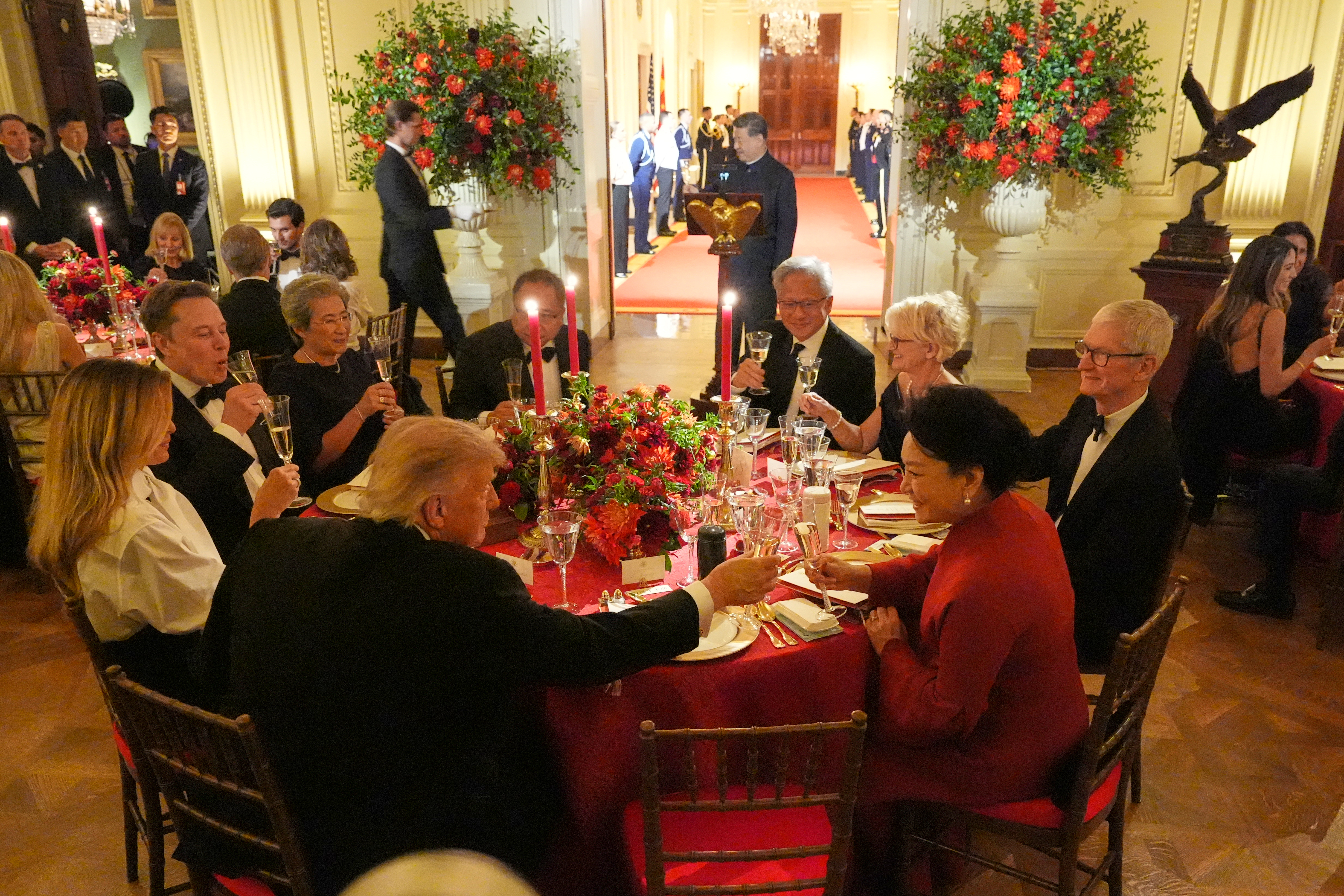
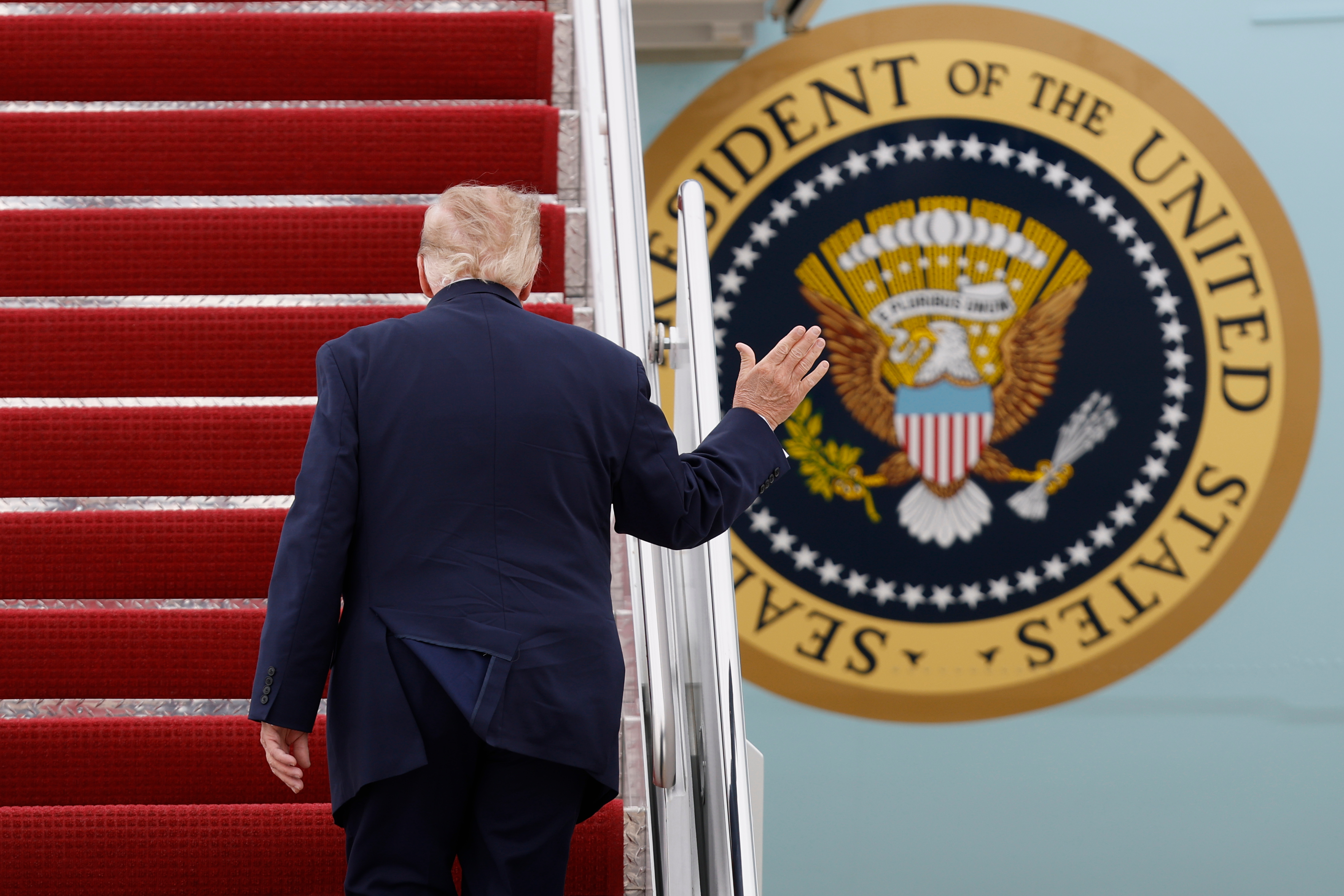
    This week, with some polls showing Trump’s approval rating plunging to Richard Nixon pre-resignation levels, the president commandeered Air Force One to fly to yet another college football stadium’s luxury box, with his blonde Rasputin, Natalie Harp, right by his side. This came after a week dominated by a gaudy three-day summit with Chinese dictator Xi Jinping, where tuxedoed guests gorged on sesame-crusted sea bass while nothing was done about the planet’s many pressing problems.

    President Donald Trump toasts with Peng Liyuan, the wife of China’s President Xi Jinping, during a state dinner in the East Room of the White House Thursday.Alex Brandon

    It was Trump’s close aide and social media guru Dan Scavino who put an exclamation point on the “let them eat cake” mindset by posting an AI video of him getting pushed through the aftermath of the Xi dinner on a cart spraying a bottle of Champagne, with two attractive women at his side. But can you truly “own the libs” with a 29% approval rating? Or do they just not care, and if so, why not?

    In a broken country that now runs on the “mind” and the “morality” of its weakened strongman leader, there are three explanations the media needs to discuss, but for the most part won’t:

    1. The oldest man ever elected president in American history is gradually succumbing to dementia, much like his own landlord father whose employees created a desk full of fake work for him in his final years, and his yes-sir Oval Office aides refuse to confront the problem.
    2. Trump has always been like this — an out-of-control, unrepentant narcissist — and he is determined to spend his last three years of power achieving only the things that matter to him, which are building giant monuments to himself as well as the infrastructure to make sure no one from his family goes to prison. In such a world, his approval rating, or your vote in November, matters not.
    3. The scariest of the three: Trump is crazy … like a fox. In other words, all the insane pronouncements about his power to change the names of things like AI or Lake Ontario are really just numbing the public to the idea that he can do anything he wants, including somehow nullifying the upcoming election with the Democrats looking likely to win both houses.

    That would certainly explain a rash of blatantly illegal recent actions such as spending taxpayers’ dollars on what are clearly political pro-Trump TV ads, not spending nearly $1 billion authorized by Congress, or his nakedly unconstitutional banning of journalists from the White House press pool because he didn’t like their stories.

    If no one is blocking Trump from these fairly serious violations, who will try to stop him when he sends troops or immigration agents to polling places, seizes huge numbers of ballots, or conspires with Republicans on Capitol Hill to not seat Democratic election winners? And then ignores judicial orders to cease and desist?

    This is exactly why the time to sound the alarm is now, and not Nov. 10 or Jan. 3, when undoing irrational and unlawful moves by the White House will be much, much harder. Look, TV punditry and newspaper analyses that stop pretending the president is a well man, or newspaper editorials calling for his resignation, or leaders in Congress backing impeachment won’t end the crisis … today.

    But calling attention now to Trump’s gross unfitness to hold office will set the stage for the battles to come — moving the Overton window on what can be done to restore democracy and helping any sensible Republicans understand there’s still a way to save both themselves and the country before it’s too late.

    The right words matter, a lot. We need to start urgently looking for them.

  • The Art of the Steal

    The Art of the Steal

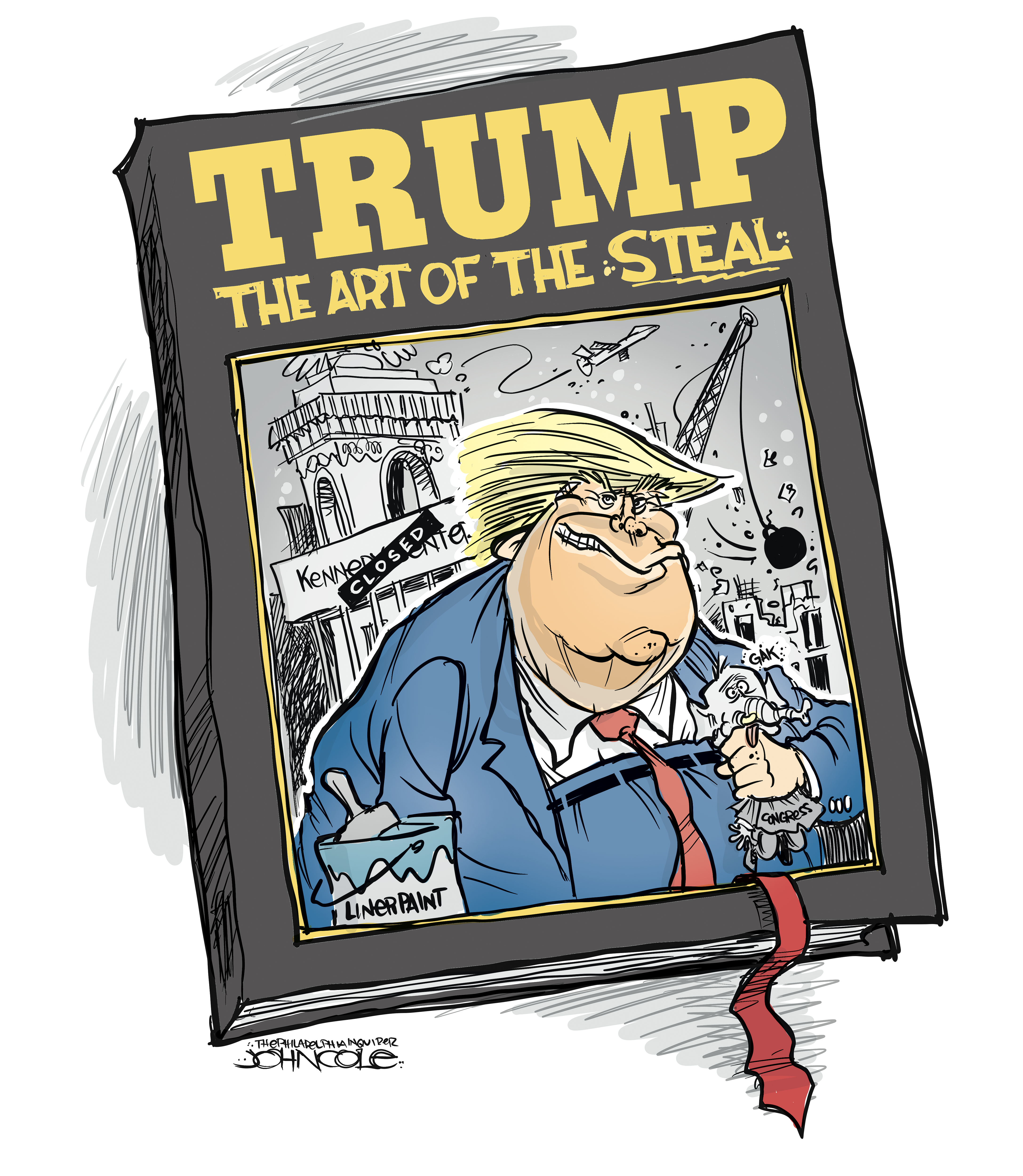
    While much of the country struggles to pay for gas and groceries, Donald Trump has turned the presidency into a massive enrichment scheme for himself, his family and his cronies while also abusing the power of his office to reward supporters, punish enemies and remake Washington into his own self-aggrandizing image.

    In this collection, The Inquirer Editorial Board details many of the schemes Trump has used to grow his wealth by billions since his return to office last year.


    There’s gold in that thar swamp!

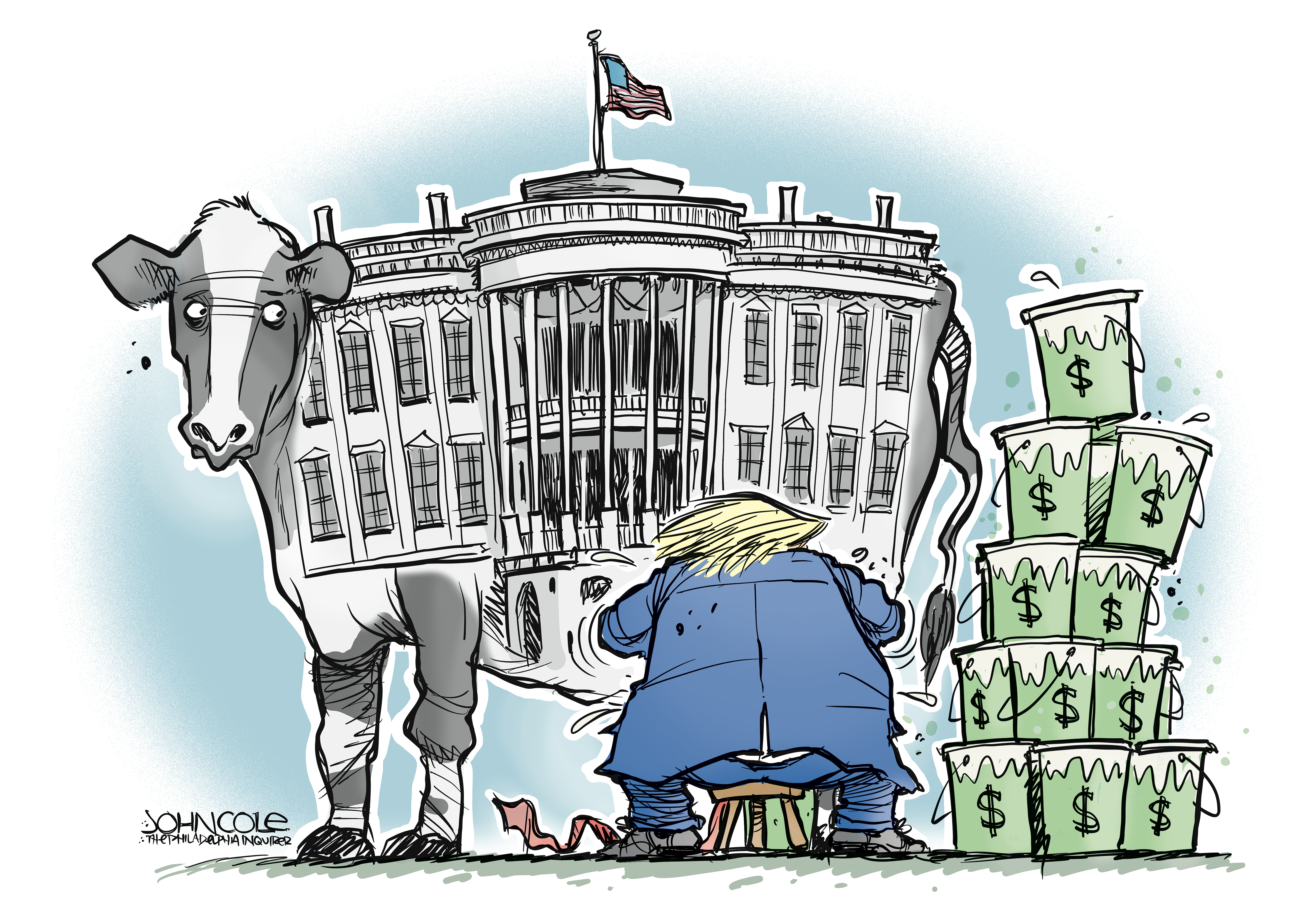
    From crypto to cologne, Bibles to blanket pardons, Donald Trump has turned the White House into a cash cow for himself, his cronies, and his kin.


    Pardon me, Mr. President!

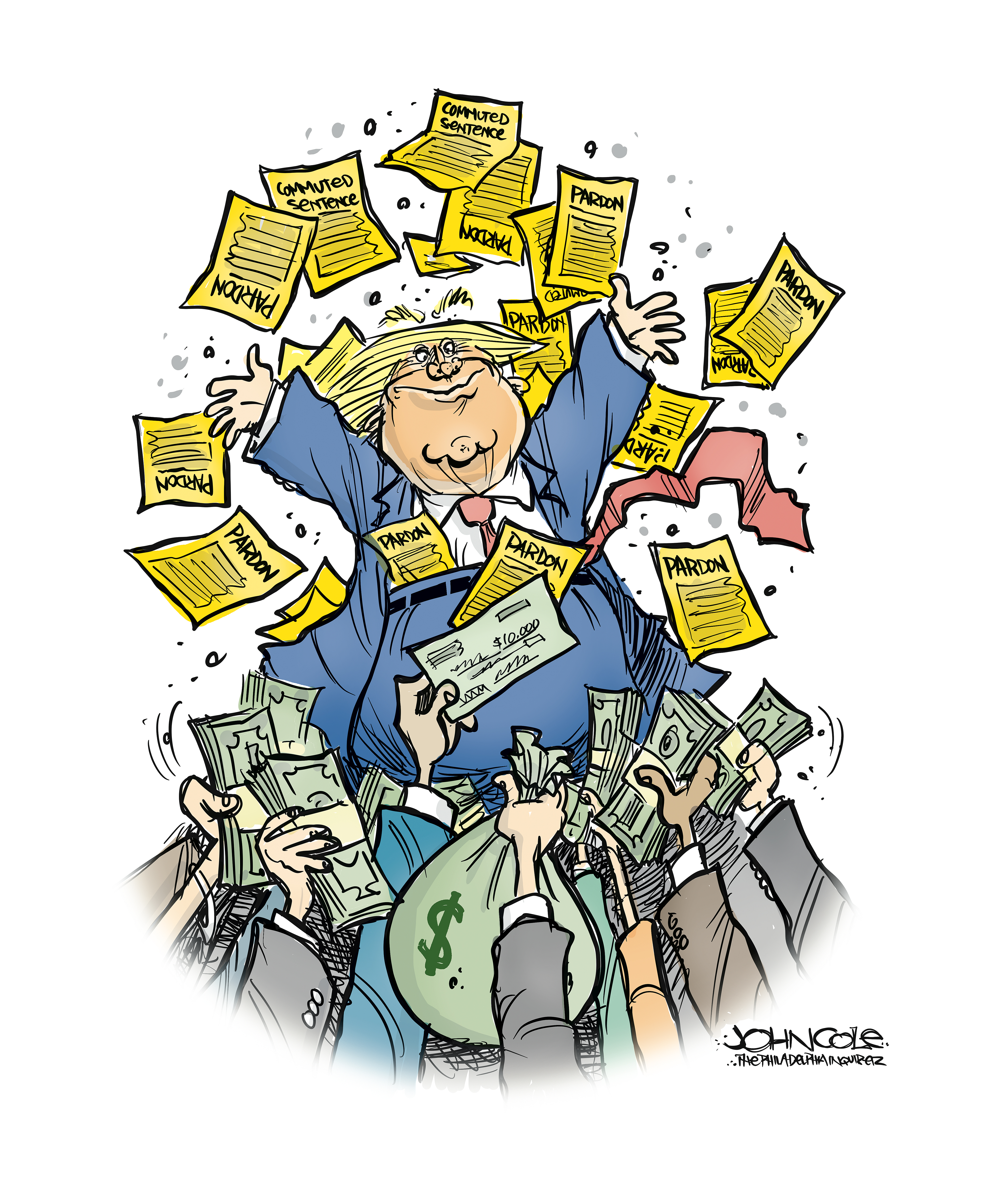
    Once sparingly used to temper justice with mercy, the presidential pardon has become a get-out-of-jail-free card for Trump supporters, no matter how corrupt or violent.


    For Trump’s underlings, too much is never enough

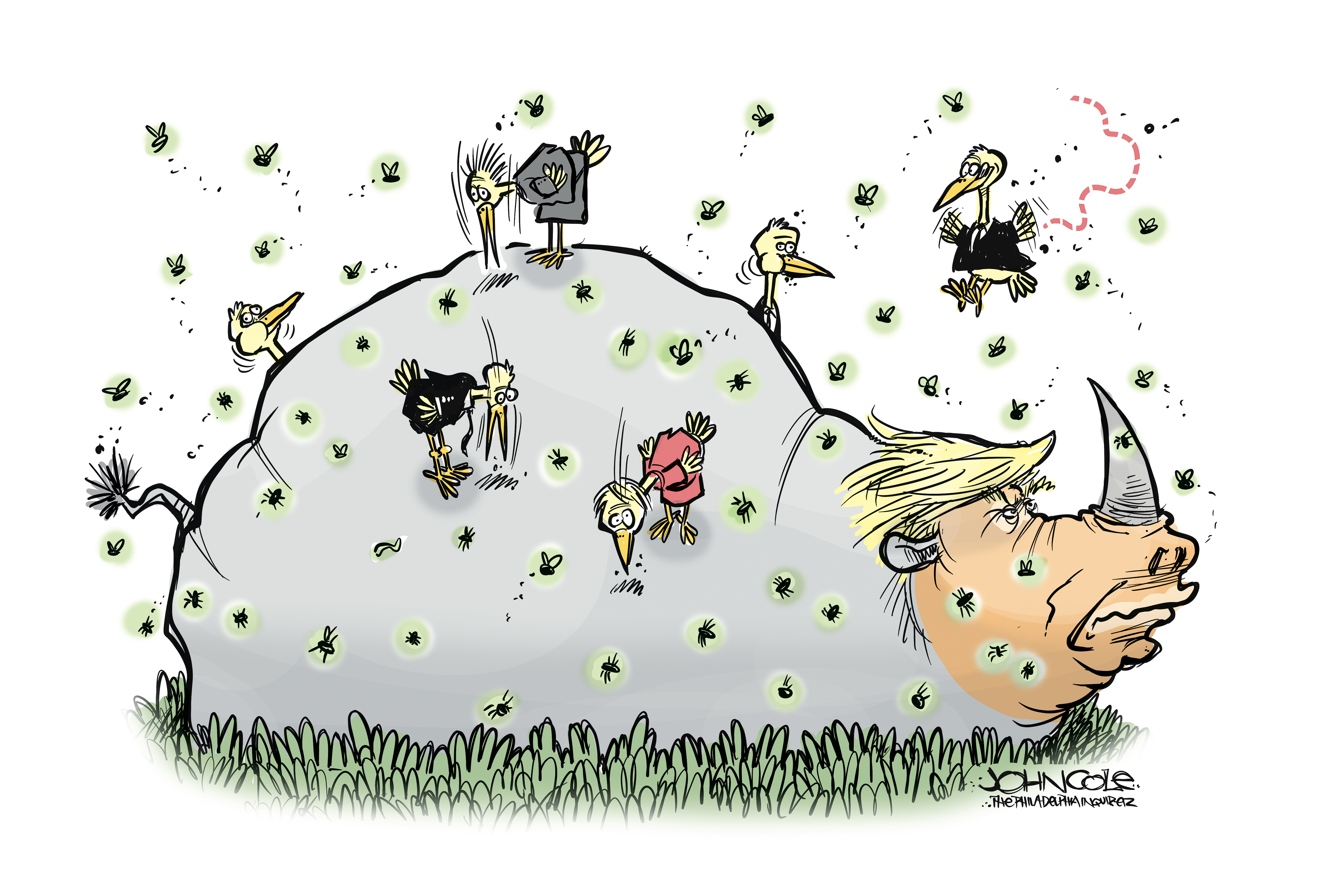
    A rogue’s gallery of billionaires, incompetents, and self-dealers crowds insatiably around the public trough.


    Bitcoin memes and Ponzi schemes

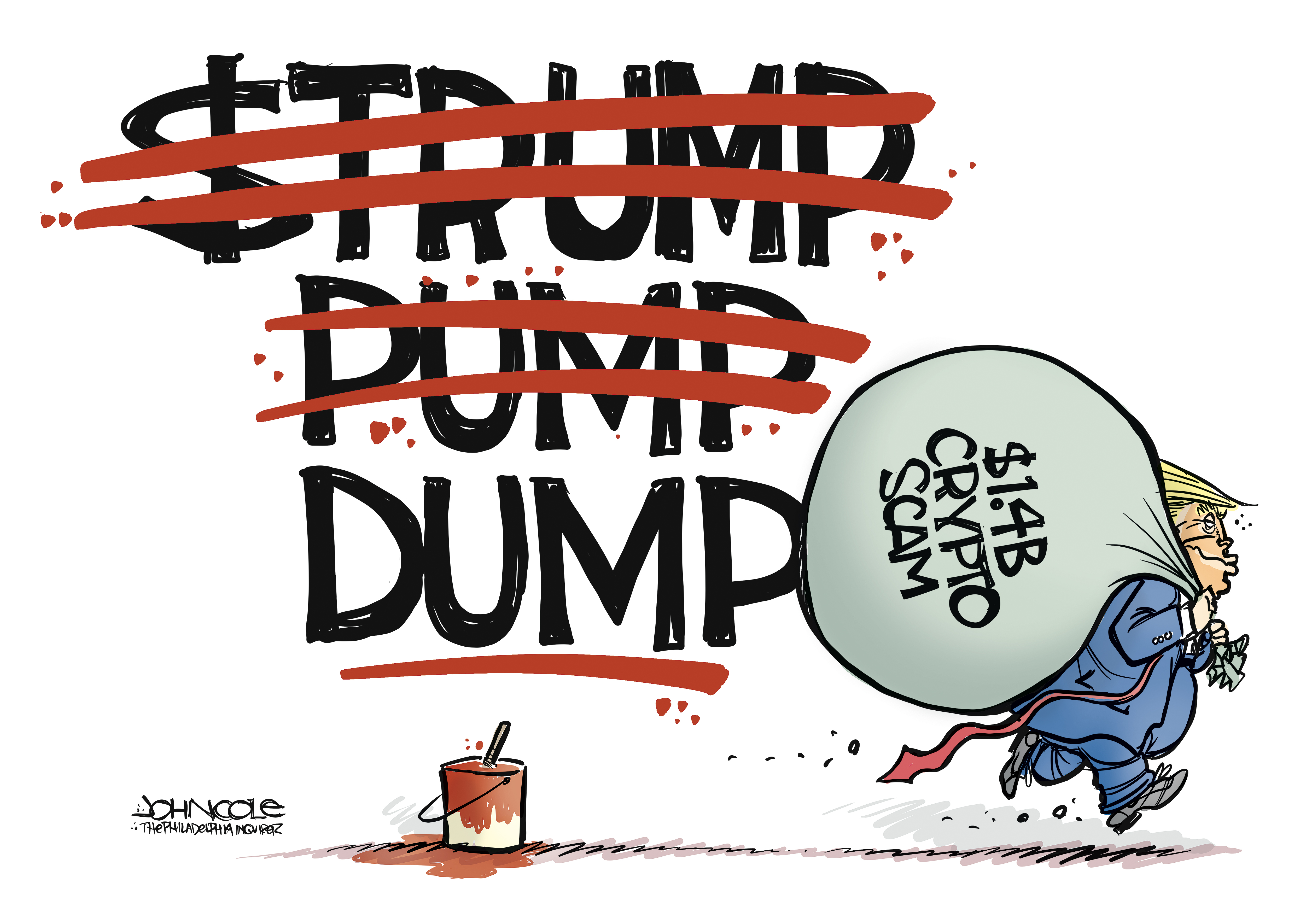
    Having once dismissed it as a “scam,” the president has embraced cryptocurrency — to the tune of $1.4 billion.


    The family that grifts together

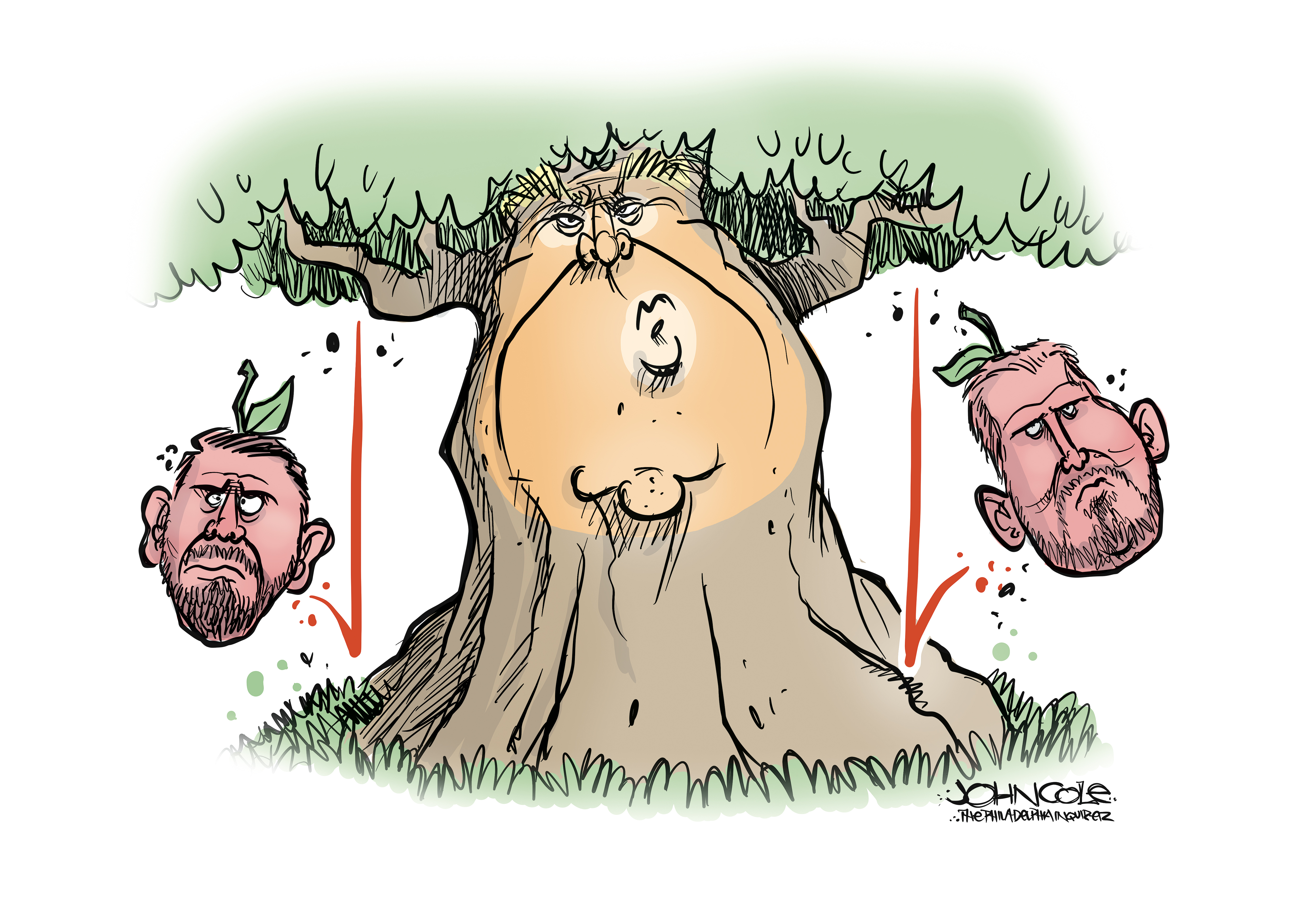
    When it comes to plundering the presidency, the thief–in–chief brings the wife and kids.


    It’s all about him

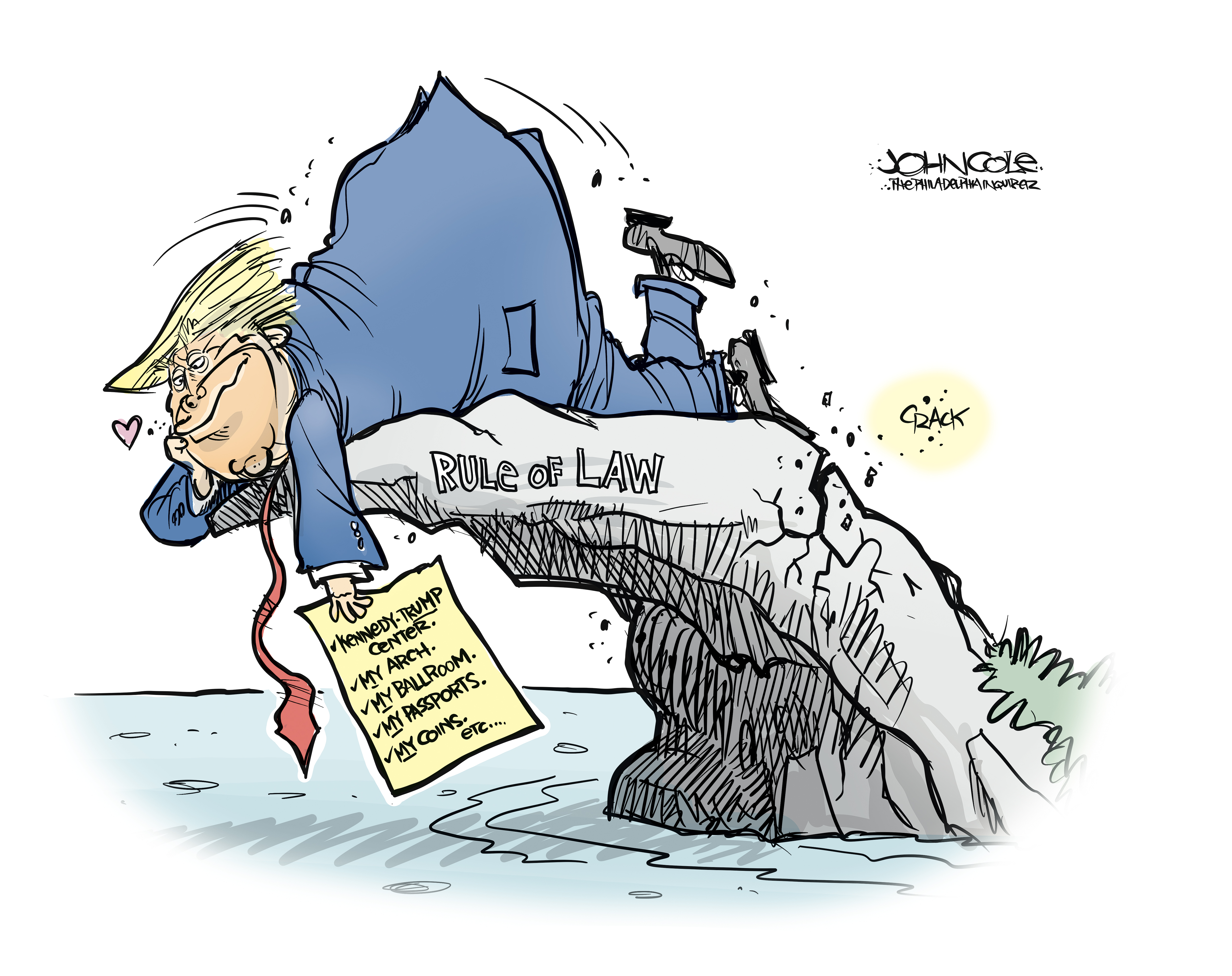
    The president continues to plumb the depths of narcissism with a breathtaking array of self-aggrandizing vanity projects.

  • It’s all about him | Editorial

    It’s all about him | Editorial

    Ignoring the law and breaking with tradition and decorum, Donald Trump has successfully added his image to U.S. passports, national park passes, and currency. He has draped his looming visage on federal buildings and named investment accounts and a discount drug program after himself.

    The president’s self-aggrandizing impulse knows no bounds or limits of reality. In his AI-addled dreams, Trump has put his face on Mount Rushmore, placed himself alongside great military leaders, and even compared himself to Jesus Christ (or, according to Trump, just a doctor in flowing robes bathed in a heavenly glow).

    Yet, all his efforts up to this point have proven mostly ephemeral, likely bound for the novelty bin.

    And if indeed the arc of the moral universe bends toward justice, it will only be a matter of time until Trump’s politics of cruelty and abuse of power are but an unpleasant memory.

    It is no wonder, then, that the president is relying on concrete and marble to try and leave any sort of legacy Americans can look up to.

    Of course, Trump being Trump, his desperate need for approval, his insatiable hunger for adulation and praise, are inseparable from the corrupt chicanery that characterizes the Art of the Steal.

    The president’s bid to remake Washington in his image began with the seemingly overnight demolition of the East Wing of the White House in October to build a massive ballroom. By the time the National Trust for Historic Preservation sued over the project’s defiance of multiple rules and regulations, construction was already underway — funded by a who’s who of companies and individuals who have business interests before the federal government.

    Trump has never addressed the appearance of corruption or possibility of quid pro quo deals over the private funding, instead touting the money coming from donors. “This is a gift. This is not going to be paid for by the taxpayer,” he said in May.

    However, as the price tag for the arguably needless structure continues to balloon — from an initial $200 million to upwards of $600 million — it is taxpayers who have been left to cover the shortfall. While Senate rules blocked a Republican effort to funnel $1 billion to ballroom security expenses, around $300 million in public funds have already been earmarked.

    In August, the U.S. Supreme Court allowed construction to continue on a 5-4 vote. The justices did not rule on the legality of the project, only that the plaintiff did not have the legal standing to sue.

    Unlike the ballroom construction effort, Trump has suffered nothing but legal setbacks in his bid to be spoken of in the same breath as JFK. The president’s systematic debasement of the John F. Kennedy Center for the Performing Arts offers an example of what happens when Trump doesn’t get his way.

    In December, a day after Trump’s handpicked board (of which he is the chairman) voted to rename the Kennedy Center in his honor, workers were slapping Trump’s name on the building’s facade. The name change led to widespread cancellation of events by artists and abandonment by audiences and donors.

    As a face-saving measure, Trump announced in February that the center would close for two years of renovations. But while a district court judge has ruled repeatedly that Trump’s name was added illegally (the right belongs to Congress), the president has grown more toxic in his possessiveness.

    On Sept. 18, protesters formed a human chain outside the center after photos of Trump reviewing a potential demolition plan circulated. While the imminent destruction of the memorial to the slain president has not been confirmed, what is most certainly verified is Trump’s pettiness and disregard for the law.

    Congress has appropriated more than $250 million for renovating the center, money which Trump is now holding hostage unless he gets his way. “Because frankly, if we don’t do that, it’s going to close,” he told reporters recently. “It’ll end up being ripped down.”

    As the fate of the Kennedy Center remains in flux, across the Potomac River, plans for the 250-foot arch Trump wants built at a traffic roundabout near Arlington National Cemetery are advancing at an alarming pace.

    The arch, which would stand more than twice as tall as the nearby Lincoln Memorial, would adversely impact dozens of historic properties, according to the National Park Service. What is more troubling than the results of the agency’s review is that critics contend the report is nothing more than part of a box-checking process, not a real effort to examine the merits of the proposed monument.

    Consider that Trump has installed loyalists in the federal panels reviewing the proposal and that its approval — being rushed for the National Capital Planning Commission’s November meeting — is believed to be a fait accompli.

    The administration has defended building the arch as the continuation of a project Congress approved in 1925, with the president adding recently that the structure will also serve as a “military complex” that will help ensure national security.

    You cannot blame Trump, nor can you excuse him, for his desire for glorification. He is a deeply flawed human being whose lifetime has been defined by the empty flaunting of wealth. But blame for how his unchecked ego has shattered the rule of law can be readily assigned to the Republican-controlled Congress.

    Legislators could have stopped the president from any and all of his vainglorious efforts. They chose not to. As the midterms approach, it will be up to voters to do what their representatives couldn’t.

    Ultimately, the Art of the Steal may take away the power the GOP sacrificed all to hold on to. Or perhaps Trump will have his way, and his monuments will tower above Washington for generations to come.

    Generations who may think of a pitiable man who wanted to be remembered.

  • The family that grifts together | Editorial

    The family that grifts together | Editorial

    Donald Trump is not the only Trump profiting from the presidency.

    Nearly everyone in the Trump family is cashing in, raising concerns about self-dealing and hundreds of potential conflicts of interest.

    While relatives of past presidents sought to make money off their family name — see: Billy Carter, Roger Clinton, and Hunter Biden — no one has been anywhere near as brazen or greedy. Nor has anyone dared to mix policy with profiteering like the Trump family.

    It is all part of Trump’s shameless Art of the Steal.

    Often lost amid the Trump administration’s daily chaos, destruction, and incompetence is the unprecedented profiteering as the felonious president takes from America while he and his family grow richer.

    In just over a year, Trump’s two oldest sons, Donald Jr. and Eric, have seen their net worths jump six- and 10-fold to $300 million and $400 million, respectively, according to Forbes.

    Recent revelations that a Russian oligarch with close ties to Vladimir Putin paid hundreds of thousands of dollars for a party on a private island after Don Jr.’s wedding in May were brushed off as merely a gift from a friend — though Trump later said his son paid back the oligarch.

    Trump’s third and current wife, Melania, is also cashing in. She received an estimated $40 million from Amazon for documentary projects during her husband’s term in the White House. She also pocketed an undisclosed amount for her memoir titled Melania.

    The first lady is also involved in cryptocurrency. She launched $MELANIA, a memecoin that had an initial market capitalization of about $1.7 billion, but quickly plummeted by about 95%.

    But not before some insiders reportedly made roughly $100 million. A lawsuit accused the designers of Melania’s cryptocurrency of orchestrating a “pump-and-dump” scheme.

    Overall, the Trump family reportedly pocketed $1 billion in pretax profits from several cryptocurrency-related products and companies since Trump’s return to the White House.

    Even Trump’s youngest son, Barron, 20, who is still in college, made an estimated $40 million off the family’s crypto venture.

    Trump’s older daughter, Ivanka, has maintained a low profile in his second term. But during Trump’s first term, she and her husband, Jared Kushner, reported between $172 million and $640 million in outside income while working in the White House.

    After Trump’s first term ended, Kushner received a $2 billion investment from a fund led by the Saudi crown prince for his fledgling private equity venture — even though he had no private equity experience.

    In Trump’s second term, Kushner continues to mix personal business with diplomacy.

    Kushner is reportedly trying to raise $5 billion for this private equity fund from Middle East governments, even as he serves as Trump’s point person in negotiating a peace deal with Iran.

    Kushner’s role as Trump’s special envoy for peace has been a struggle since he and his peace partner, Steve Witkoff, a New York real estate developer and Trump crony, knew nothing about Iran’s nuclear capabilities.

    More troubling, Kushner has raised questions as to whether he is focused on peace or personal profits.

    “You cannot both be a diplomat and a financial pawn of the Saudi monarchy at the same time,” said U.S. Rep. Jamie Raskin (D., Md.), who called for an investigation into Kushner’s foreign financial entanglements.

    Trump dismisses any critiques of his family’s money-making ventures and maintains he always puts the nation’s interests first. Likewise, the Trump Organization, his family business, insists it is “fully compliant with all applicable ethics and conflicts of interest laws.”

    But watchdog groups and historians have said Trump’s profiteering is unprecedented.

    The Trump Organization, the family real estate company run by Eric and Don Jr., has announced a dozen international development deals since their father returned to the White House.

    But most of Trump and his family’s newfound wealth stems from crypto ventures — a business he once dismissed as “a scam.”

    Trump changed his tune during the 2024 presidential campaign after he met with Bitcoin mining executives. One executive said his industry would raise over $100 million and turn out more than five million votes in the 2024 presidential race.

    Once in office, Trump returned the favor.

    Three days after his inauguration, Trump signed an executive order that officially declared it U.S. policy to support the growth of the digital asset economy and blockchain technology.

    He then proceeded to gut crypto regulations, eliminate watchdogs, and drop investigations.

    In March 2025, he signed an executive order to create a new U.S. crypto reserve. The following month, Trump’s Justice Department disbanded the unit that investigated cryptocurrency crimes. By December 2025, the Securities and Exchange Commission dropped or paused nearly 60% of crypto cases.

    Under Trump, the Commodity Futures Trading Commission slashed crypto enforcement actions, purged career officials, and shrunk the agency’s workforce, while paving the way for crypto and prediction markets to blossom.

    All that occurred as the Trump family embraced cryptocurrency — even though none of them had any experience in the risky and complex business.

    In September 2024, Trump, Don Jr., and Eric unveiled World Liberty Financial, a cryptocurrency start-up that sparked immediate concerns regarding conflicts of interest.

    Four days before Trump’s inauguration, World Liberty Financial landed a windfall: An investment firm tied to the United Arab Emirates invested $500 million to acquire a 49% stake in the company.

    A few months later, the Emirati government reached a deal with the Trump administration involving the export of hundreds of thousands of advanced computer chips to power AI technology. Lawmakers and intelligence experts warned the sale presents a national security risk of the technology being diverted to China.

    Trump also used his presidential power to do a favor for a convicted executive who gave his family’s crypto company an early boost.

    World Liberty Financial benefited from a business alliance with Binance, the world’s largest crypto trading platform, founded by Changpeng Zhao, a billionaire mogul who pleaded guilty to money laundering in 2023.

    President Trump pardoned Zhao in 2025. Days after that pardon, Binance began promoting a digital coin offered by World Liberty Financial on its U.S. site, making it more accessible to American buyers.

    In March 2025, Don Jr. and Eric expanded their crypto portfolio by buying a 20% equity stake in American Bitcoin, a cryptocurrency company.

    Trump’s oldest sons have jumped into other businesses in which they have little to no expertise. Since their father’s election, Don Jr. and Eric have joined 10 company boards, where they receive stock and other financial benefits.

    After Trump was elected to a second term, Don Jr. became a venture capitalist. He was hired as a partner at 1789 Capital, a firm based in Palm Beach, Fla., founded in 2022. Companies backed by 1789 Capital have since received government contracts valued at $735 million.

    Drones have also become a lucrative part of Don Jr. and Eric’s portfolio, even though they had no experience in that business, either.

    In November 2024, Don Jr. became an investor and adviser at Unusual Machines, a tiny drone manufacturer with fewer than 200 employees. The announcement caused the company’s stock price to jump 100%.

    Just over six months later, Trump signed an executive order directing federal agencies to prioritize American-manufactured drones and accelerate domestic production for military applications.

    Four months later, Unusual Machines won its largest contract ever to supply drone motors to the U.S. Army.

    In an unusual deal, a golf club company backed by Trump’s two oldest sons merged with Powerus, a Florida-based drone manufacturer with fewer than 100 employees.

    Companies are learning that hiring a Trump can make their troubles go away.

    After Don Jr. joined the board of PublicSquare, the company’s stock price jumped 180%. The Consumer Financial Protection Bureau then closed a yearslong investigation into a subsidiary of Public Square called Credova Financial, claiming the probe was biased.

    Don Jr. is also an investor and board member at Polymarket and a strategic adviser at Kalshi, the controversial and unregulated prediction betting market companies. Yet another business in which he had no experience.

    A number of states have sued Polymarket and Kalshi, alleging the companies operate a gambling business in violation of state laws.

    But the Trump administration has sided with the prediction companies and sued three states, insisting the prediction industry should be regulated by the federal government.

    Apparently, the golden age of America Trump promised largely stops at his family tree.

  • I report on how people buy houses. Here’s what I got wrong buying mine.

    I report on how people buy houses. Here’s what I got wrong buying mine.

    As a reporter for “How I Bought This House,” The Inquirer’s series that shares the stories of how people purchased homes, I’ve spent a lot of time asking people about, well, how they bought their houses. How much they offered. What they waived. What they regretted. I’ve learned all sorts of tips and tricks, strategies, and common mistakes to avoid.

    So when I bought my first house this August in Philadelphia, I fancied myself savvier than the average first-time buyer. I knew, for instance, that the appropriate response to discovering knob-and-tube wiring is to run in the opposite direction, and that only a fool would waive the inspection.

    I headed into the process eager and overly confident, sure I’d be able to nab the perfect house well below the asking price and secure a mortgage at the lowest possible interest rate. I’d planned to use things I learned while helming this column, like seller assists and mortgage buydowns, to finagle the seller into practically giving me the house for free.

    Then I found a house I really wanted, and I learned that knowing what to do is one thing. Doing it when you are terrified that someone else might buy your dream house is another.

    Most of the hacks I picked up flew out the window the second another couple showed up at the open house. Faced with a competitive seller’s market, I quickly folded on things I would’ve previously considered nonnegotiable.

    Like the inspection. While I didn’t waive it entirely, I did agree to it being “information only,” meaning I gave up my right to ask the seller to fix or pay for anything. Information-only inspections can strengthen your offer when you can’t afford to pay more, but they can still end up costing you in the form of a hefty repair bill.

    Looking back, I wish I had done a full inspection. I didn’t know the details of the other offers, but I doubt anyone else waived theirs. When the report came back with a list of necessary repairs totaling $15,000, I was stuck.

    I knew from interviewing dozens of buyers that people often use inspection findings to negotiate a seller’s credit. I would’ve liked to ask for one to cover some of the $12,000 it cost to replace the cloth wiring. But because I’d agreed to an information-only inspection, my only real option was to walk away. I believe this is what people in business call giving away your leverage.

    And speaking of giving away leverage, I don’t know why I offered over the asking price except that fear is a powerful motivator. And by that point, I had developed a healthy fear of being outbid.

    I had already been outbid on two houses, both of which sold for more than $40,000 above asking. This time I could afford to offer more, so I did, even though I didn’t know what the other offers were.

    In a less panicky state, I might have remembered something I’d heard again and again reporting on homebuyers: If someone else offered more than us, the seller would probably circle back and ask if I could match them. That would’ve been a good time to go above the asking price. Instead, I did it right out of the gate. To borrow another phrase from the business community, I negotiated against myself.

    Thankfully, not everything I learned from How I Bought This House was for naught. While debating ways I could fend off the competition I was convinced was trying to steal my house, I remembered a couple from Collingswood who hoped to avoid a bidding war. They had bought and sold several homes before, so they knew how to put together an irresistible offer. One of the things they did was waive the mortgage contingency.

    When you waive the mortgage contingency, you’re essentially telling the seller that your financing is your problem, not theirs. If your loan falls through, you can’t back out of the deal and get your earnest money back. You have to be able to buy the house one way or another.

    It sounds risky — especially if you’re still planning to use a mortgage — but I felt it was a risk I could safely take. My lender was confident I’d be approved.

    Plus, I knew the seller would find it appealing because sellers love certainty. Waiving the mortgage contingency gave them the security of an all-cash offer without requiring us to actually make one. A true “win-win,” as my friends in business would say.

    Of course, I have no idea whether it won us the house, but after spending so much of the process paying extra to calm my own nerves, it felt good to finally strengthen my offer for free.

    If I learned anything from buying my first house, it’s that you should decide what you’re willing to spend, waive, or risk before you fall in love. Then stick to it. I didn’t. But I still got the house. And I don’t have any regrets.

  • Hannah Gann’s deceit makes the work of Black and brown justice activists harder

    Hannah Gann’s deceit makes the work of Black and brown justice activists harder

    A few months ago, I attended a Black history workshop in the city with educator-activists from around the country. That’s where I met Hannah Gann. At the workshop, she shared with some and reiterated to others that she was Palestinian. She also claimed to be Black.

    No one questioned her. Even if one had doubts — and I did — it never crossed my mind that someone would lie about that.

    We’ve since learned she did, and has been telling falsehoods about her identity to her friends, family, fellow activists, and — worst of all — the students and families she taught at the Workshop School, a project-based Philadelphia School District high school.

    There will be some who’ll say Black and Palestinian activists should have known better. That they should have done their “research” on Gann to confirm who she said she was.

    It’s natural to wonder and ask why this happened, and where we, as a community of Black people, Palestinian people, and justice activists, go from here. It’s undeniable that the social justice issue of our day is the genocide taking place in occupied Palestine. That it is a genocide has been confirmed by numerous scholars of genocide as well as Israeli human rights organizations.

    Likewise, it is one of the most divisive issues of our day in this country. Not because calling it out is a lie. Rather, because naming it a genocide can be perilous, especially for the people Gann pretended to be a part of: Black and Palestinian communities.

    People have rallied around Macklemore after he was cut from musician Ed Sheeran’s tour for expressing his support for Palestinians in Gaza, but the numerous members of Black, Palestinian, and Muslim communities who have lost jobs or had their reputations ruined haven’t experienced the same kind of support.

    Gann’s deceit makes the work of Black and brown activists and truth-tellers even harder. She should have known that.

    If Gann had truly been committed to the justice movement, she would have known the troubling history of white infiltrators in Black organizations who attempted to sabotage the struggle for freedom. The most famous of these efforts was COINTELPRO. The response of the Racial Justice Organizing Committee and Philly Educators for Palestine, in their joint statement, is to consider her just such an infiltrator, and they’ve cut ties with her.

    Gann’s actions going forward will determine whether she can redeem herself. But it is not our responsibility to do that work for her. We shouldn’t even put her at the center of our discussions about this going forward. The individuals, the activist groups, and the students she’s betrayed belong at the center.

    We should ask how to support social justice activists and the work they do on behalf of oppressed and marginalized communities.

    We should ask how we can support the many students who’ve come through the doors of Gann’s classroom.

    We should ask how it is wrong to call for an end to the murdering of innocent people in the name of retribution.

    We should ask whether there is room for redemption in America for those who boldly declare that injustice anywhere is a threat to justice everywhere — just as there is for the perpetrators of injustice.

    As for white allies who wish to fight for justice, be like Ms. Rachel, not like Ms. Gann.

    Then maybe there’ll be enough room for redemption for the rest of us, persecuted simply for being true to ourselves, our people, and our native land.

    Rann Miller is an educator and freelance writer based in South Jersey. His “Urban Education Mixtape” blog supports urban educators and parents of children attending urban schools. urbanedmixtape.com @UrbanEdDJ

  • Bitcoin memes and Ponzi schemes | Editorial

    Bitcoin memes and Ponzi schemes | Editorial

    Much has been made of Donald Trump’s apparent about-face on cryptocurrency. This is particularly notable since the president’s dealings in the virtual cash he once spurned have earned him at least $1.4 billion since he returned to office. Not bad for something he had called “a scam” and an asset “based on thin air.”

    Of course, that assumes he meant those things as derogatory.

    After a lifetime of pushing real estate, casinos, liquor, and steaks, one may think the Art of the Steal has finally gone high-tech. But at least for retail investors, Trump’s crypto ventures reek of old-fashioned Ponzi schemes.

    Launched a few days before his inauguration in 2024, the $TRUMP memecoin — a digital token with no intrinsic value — reached a peak price of around $74 as the president hyped up the asset to his followers. The coin’s value cratered soon after and was trading under $3 in September.

    A few dozen early investors made multimillion-dollar profits, but most buyers fared poorly, losing almost $4 billion as of earlier this year, according to a New York Times analysis.

    Even if Trump supporters and less savvy investors played along willingly, the game was always rigged in the president’s favor — regardless of the memecoin’s price, Trump and his business partners were always going to rake in transaction fees.

    All told, Trump walked away with a $636 million payout.

    It is unseemly and deeply unethical for Trump to use the office of the presidency for personal benefit. But profiting off the sale of a worthless tchotchke is very much on-brand for the inveterate huckster whom voters returned to the White House.

    Much more troubling than his déclassé dealings is how individuals and foreign governments with interests before the United States, including government regulation of the crypto industry, have made large investments that have gone to line Trump’s pockets.

    The president has repeatedly brushed off ethical concerns about his crypto windfall, saying there is “nothing illegal” and “nothing wrong.”

    Yet, there can be little question that Trump’s memecoin remains a way to funnel large amounts of money to him with little transparency or oversight.

    Speaking at a Center for American Progress event recently, U.S. Sen. Chris Murphy of Connecticut called the president’s crypto business “a bribery conspiracy,” and said the very founding of Trump’s crypto empire was “bathed in corruption.”

    Murphy pointed to the half billion dollars Sheikh Tahnoon bin Zayed Al Nahyan put up to secure a 49% stake in the Trump family’s crypto company, World Liberty Financial, shortly before Trump assumed office. The Abu Dhabi royal, the United Arab Emirates’ national security adviser and brother of that country’s president, is also backing the launch of a new Trump crypto bank, according to the Wall Street Journal.

    There is no evidence of a quid pro quo, but there is also little explanation as to why long-standing bipartisan national security concerns were ignored and the UAE was given access to advanced AI chips by the Trump administration, long a goal for the Gulf nation.

    Tahnoon was not the only investor in World Liberty Financial who benefited from his relationship with Trump. Justin Sun, a Chinese billionaire accused of fraud, sank $30 million into World Liberty Financial and saw a lawsuit by the Securities and Exchange Commission put on hold soon after, with a settlement reached in April in which Sun admitted no wrongdoing.

    (Sun is now accusing World Liberty Financial of “criminal extortion” after he was prevented from selling off the memecoin, allegedly once he declined to sink more money into the Trump-owned company.)

    Earlier this month, legislation long sought by the crypto industry as a way to legitimize its business failed to move forward in the Senate, as Democrats demanded stricter ethics guidelines to prevent further Trump profiteering.

    Crypto companies have spent hundreds of millions of dollars lobbying for this legislation — and they are likely willing to spend much more — but Congress should hold firm. Lawmakers must ensure that any legitimate use for cryptocurrency does not include the ability to bribe a president.

  • For Trump’s underlings, too much is never enough | Editorial

    For Trump’s underlings, too much is never enough | Editorial

    For Donald Trump’s underlings, public service has become a bacchanal.

    A rogues’ gallery of billionaires, incompetents, and self-dealers crowds insatiably around the public trough.

    Trump’s return to the White House has set an unprecedented bar for corruption, pocket lining, and abuse of power.

    But beyond the one-man profligacy, many of Trump’s underlings have joined in on the self-dealing as the rot spreads across the government.

    The upshot: Trump’s own Art of the Steal has morphed into a rampant smash-and-grab.

    Consider FBI Director Kash Patel’s abuse of a taxpayer-funded jet to visit his girlfriend, fly buddies to Scotland, and attend the Winter Olympics, where he chugged beer in the locker room with the U.S. men’s ice hockey team.

    Patel reportedly flew to Pearl Harbor and received a VIP snorkeling adventure near the sacred underwater tomb of the USS Arizona that contains the remains of more than 900 Navy sailors and Marines who died in the attack.

    He and his girlfriend used the FBI’s Gulfstream V to fly to Philadelphia to watch a concert from a $35,000 luxury suite at Lincoln Financial Field.

    Patel also used the $60 million jet to go hunting at an exclusive resort in Texas named the Boondoggle Ranch that is owned by a Republican donor.

    An article in the Atlantic claimed Patel drank excessively, and that his unexplained absences and carousing put national security at risk. Patel denied the report and sued the magazine for defamation. Drinks aside, Patel is abusing his office.

    Patel’s air travel should not be confused with that of former Homeland Security Secretary Kristi Noem, who spent $300 million in taxpayers’ money for a fleet of planes, including two Gulfstreams and a luxury Boeing 737 Max 8 jet that included a private cabin with a queen bed, full kitchen, bar, seating area, and four flat-screen TVs — supposedly for deportation missions.

    Noem’s office wasted $220 million on a taxpayer-funded ad campaign that depicted her on a horse near Mount Rushmore. A no-bid contract divvied up the funds between a company created eight days before they were awarded and another company that played a role in Noem’s 2022 gubernatorial campaign.

    Noem is gone, but taxpayers are stuck with her bill.

    Former Labor Secretary Lori Chavez-DeRemer resigned amid allegations of using her office for personal gain, including personal travel and allegations of drinking on the job and an alleged affair with a member of her security detail.

    One staffer accused Chavez-DeRemer of ginning up “official trips” funded by taxpayers in order to see friends and family. Her husband was banned from the Labor Department headquarters after at least two staffers said he sexually assaulted them. Another brief tenure of taxpayer waste and debauchery that contributed scant value to the country.

    Commerce Secretary Howard Lutnick has used his office to dangle policy favors in return for investments and deals that benefit his family, according to a report in the New York Times.

    Lutnick’s sons oversee a network of companies, including their father’s Wall Street investment firm, that are involved in a wide range of businesses, among them data centers and cryptocurrency, which overlap with the Commerce Department’s efforts to attract new entrepreneurs.

    U.S. Rep. Madeleine Dean (D., Pa.) accused Lutnick’s investment firm of profiting off the failure of Trump’s tariff policy, which the U.S. Supreme Court found was unconstitutional.

    “Your sons figured out how to profit from the high tariffs by buying up refund rights, pennies on the dollar, just as you were out there cheerleading the tariffs,” Dean said at a hearing in April. “As a result, federal taxpayers like my constituents may now owe your family tens or hundreds of millions of dollars.”

    Lutnick denied the charge, though his firm, Cantor Fitzgerald, now run by his sons, reportedly posted record revenue last year.

    Despite running on a message of reducing prices and helping the working class, Trump’s administration includes 12 billionaires and is the wealthiest ever, if not the most out of touch.

    The billionaire club does not include the brief and destructive DOGE stint of Elon Musk, who recently became the first trillionaire.

    Other Trump administration officials have also found ways to cash in. Several have profited from well-timed investments in the stock market.

    Former Attorney General Pam Bondi sold between $1 million and $5 million worth of shares in Trump Media the same day the president announced new tariffs that caused the price to drop. While her tenure was a train wreck, Bondi’s successor has already demonstrated he will be even worse.

    Todd Blanche, Trump’s former defense attorney who replaced Bondi at the Justice Department, owned cryptocurrency investments valued between $159,000 and $485,000 at the same time he shut down investigations into crypto companies, dealers, and exchanges launched during the Biden administration.

    Transportation Secretary Sean Duffy filmed a reality TV show bankrolled by firms he regulates, and sold stock in nearly three dozen companies two days before Trump announced a number of “reciprocal” tariffs.

    In all, more than a dozen Trump administration officials sold stocks before the president implemented tariffs that caused stock prices to plummet, ProPublica reported.

    The White House routinely defends the actions of Trump’s inner circle, stating recently, “President Trump has assembled the most talented Cabinet in American history who work every day to implement his common sense, America First agenda.”

    But Trump’s broker may be one of the busiest traders around. Trump disclosed making 3,500 stock trades valued at hundreds of millions of dollars in just the first quarter of this year, but said his accounts are independently managed. However, the amount of trading raised eyebrows among ethics experts.

    “We’ve never seen a president trading actively in the stock market before,” said Richard Painter, the ethics counsel under former President George W. Bush.

    Democratic lawmakers called for an investigation into whether Trump or others around him have engaged in insider trading. But nothing will change as long as Trump and the Republicans control all the levers of government.

    As millions of Americans struggle with rising gas, food, rent, and healthcare costs, Trump and his cronies have turned public service into a private jackpot.