Cinnaminson Township voters narrowly approved a bond question for $57 million for our public schools. Out of nearly 3,500 ballots cast, the winning margin was just nine votes — but that doesn’t tell the whole story. What struck me was that in a township with 14,000 registered voters, only about 3,500 people actually took part in the referendum. So to my neighbors: Before you go to township council meetings to complain about your property tax increase, ask yourself if you made your voice heard in this referendum. If you didn’t vote, stay home.
Kenneth Rayca, Cinnaminson
Compassion required
I recently rode a SEPTA bus through one of Philadelphia’s poorest neighborhoods. I am a devoted supporter of public transit. We did not have a car growing up in an urban environment; it’s not so much that we couldn’t afford one, but I suspect my father, a professor of philosophy, thought a car would anchor him too much to everyday aggravations. As a result, I took public transit all over the city and am, to this day, more comfortable traveling this way.
One of the great benefits of bus travel is the opportunity to observe a wide cross-section of the city and reflect on its overall socioeconomic condition. This recent trip brought to life the struggles and suffering of many of Philadelphia’s most vulnerable — those in ill health, those experiencing homelessness, those without proper nutrition. Witnessing humanity trying to cope with life at the bottom of the economy, I felt close to tears at the corrosive cruelty of the current administration in severely cutting social safety net programs, including Medicaid and the Supplemental Nutrition Assistance Program. It occurred to me that politicians, as a requirement to hold office, should have to take bus trips like this — maybe then they can begin to understand what life is like for many who feel pain and hurt just trying to live their lives.
Allan Irving, Swarthmore
Economic fairness
Reading The Inquirer Editorial Board’s series about how the president has, shall we say, expanded his wealth in the White House reminded me that the grifters have been here since way before the Trumps. The rich and powerful have long used the words communism and socialism to convince people they will lose their freedom if they vote for Democrats. The right wing says if people only listen to and vote for Republicans, their wealth will trickle down.
Well, it hasn’t happened yet. Every year, the right wing has dismantled more rights granted by our Constitution and diminished other laws created by the government of the people. Now the right wing owns many of our financial institutions, much of our news media, utilities, healthcare, and so on.
The path that led to a family of right-wing grifters gaining so much influence can’t be denied — but we can do something about the future. When you vote this year, remember that it’s about creating economic fairness and the sharing of power. Let’s hope we can vote our way into a more equitable future.
Mardys Leeper, Bryn Mawr
Join the conversation: Send letters to letters@inquirer.com. Limit length to 150 words and include home address and day and evening phone number. Letters run in The Inquirer six days a week on the editorial pages and online.
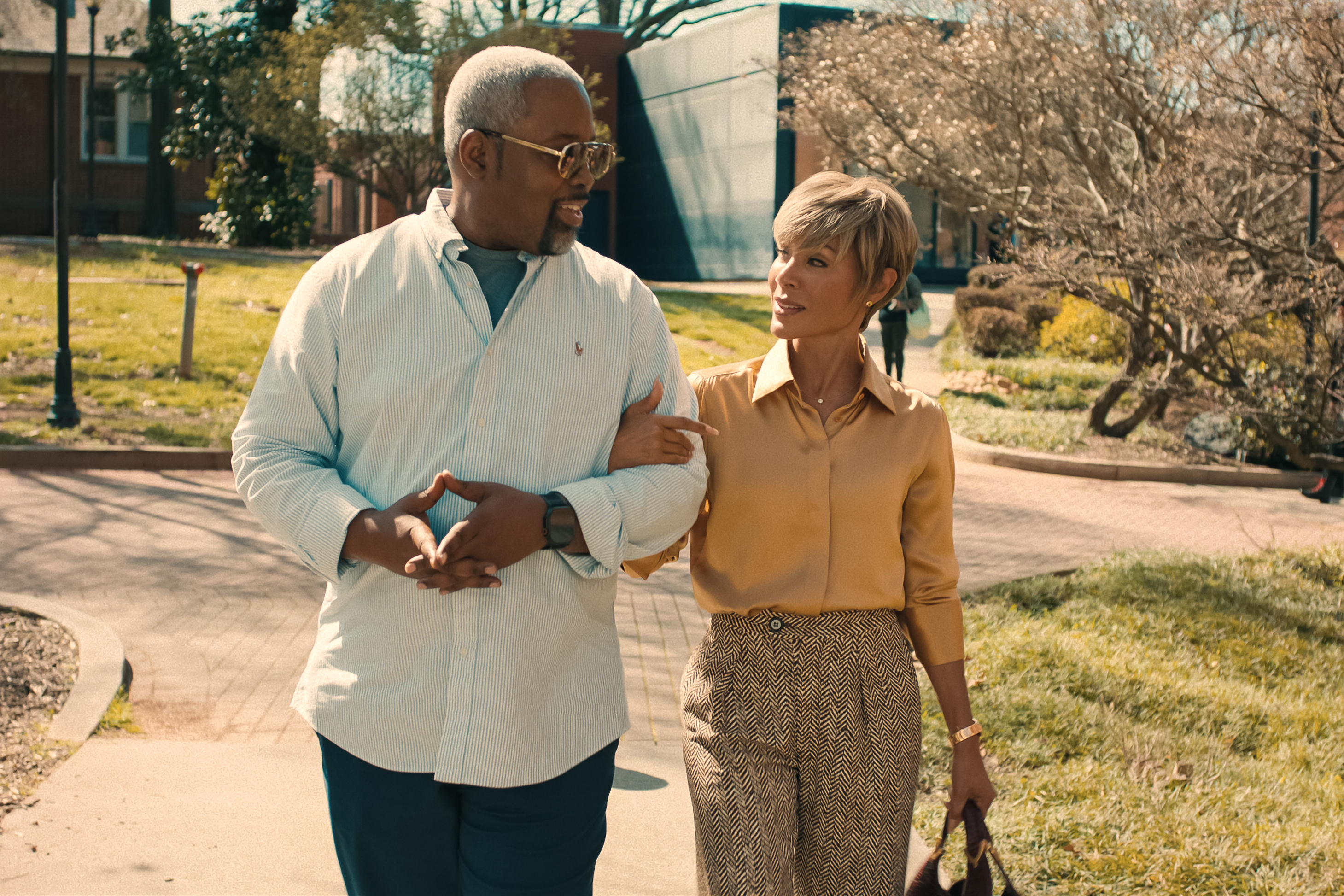
Netflix’sA Different World, a reboot of the 1987 NBC original, is what I thought Bel-Air would be. It remains true to the original show’s characters: Whitley (Jasmine Guy) is still an entitled snob, Dwayne (Kadeem Hardison) remains as thoughtful as he is brilliant.
And Dwayne and Whitley’s daughter, Deborah (Maleah Joi Moon), is a delightful blend of her mom’s sense of bougieness and her dad’s altruism. It’s a stone-cold gas that her favorite accessory are flip glasses just like Dwayne Wayne. (It made me want to dig mine out.)
The obvious Philly connection is North Philly’s own Bill Cosby, who created the show in 1987 as spinoff to the immensely popular The Cosby Show. Cosby starred as Huxtable patriarch Cliff Huxtable and father to Denise Huxtable (Lisa Bonet). In the original A Different World, Denise attended her parents’ alma mater, the storied fictional Virginia-based historically Black school Hillman College.
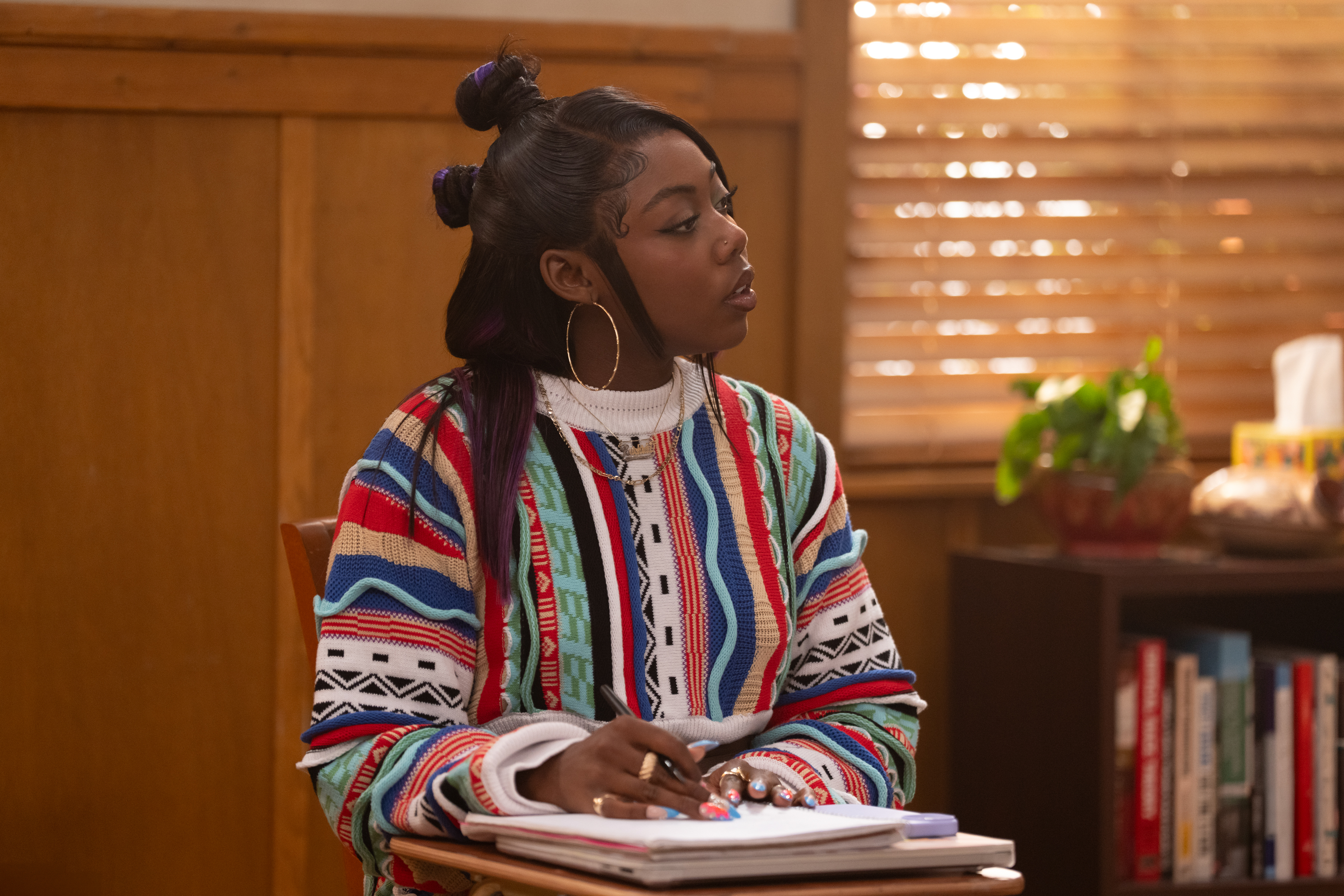
Alijah Kai Haggins as Rashida Duvall in “A Different World.”Netflix
But there is another more subtle Philly association in Netflix’s version in actress Alijah Kai Haggins, who plays Rashida Duvall, Deborah’s roommate. Rashida’s mother (on the show and in real life) is Tichina Arnold (Martin and The Neighborhood) and, though Haggins grew up in Los Angeles, her dad is Carvin Haggins, the Grammy-award-winning Philly-area producer who has worked with Jill Scott, Jazmine Sullivan, Chris Brown, and Justin Timberlake. Haggins also happens to be Scott’s cousin.
See? Without Philadelphia, we wouldn’t have A Different World — the original or its highly anticipated reboot.
I blew through all 10 episodes of the Different World reboot this weekend and cheered at the return of familiar faces: Whitley, Dwayne, Freddie Brooks (Cree Summer), Jaleesa (Dawnn Lewis), Ron (Darryl M. Bell), and Col. Taylor (Glynn Turman).
I swooned at a few new characters, like Coach Bryce Coles (Cliff “Method Man” Smith), a total shout-out to Gen Xers who came of age with the show. It cracks me up to think that during the original show’s run, Smith was in the New York City streets rapping about how dope it was to be M-E-T-H-O-D Man as a star member of the Wu-Tang Clan.
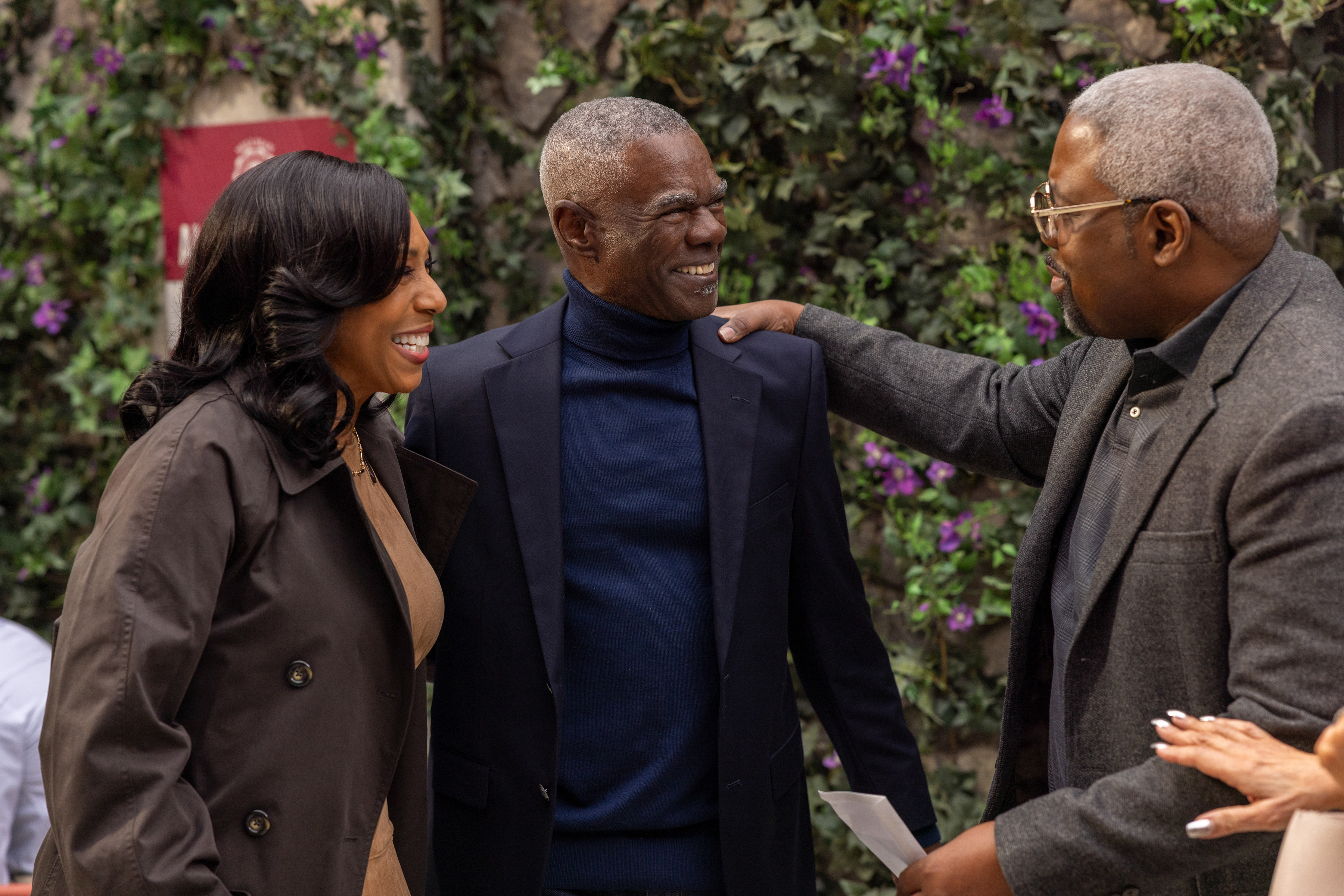
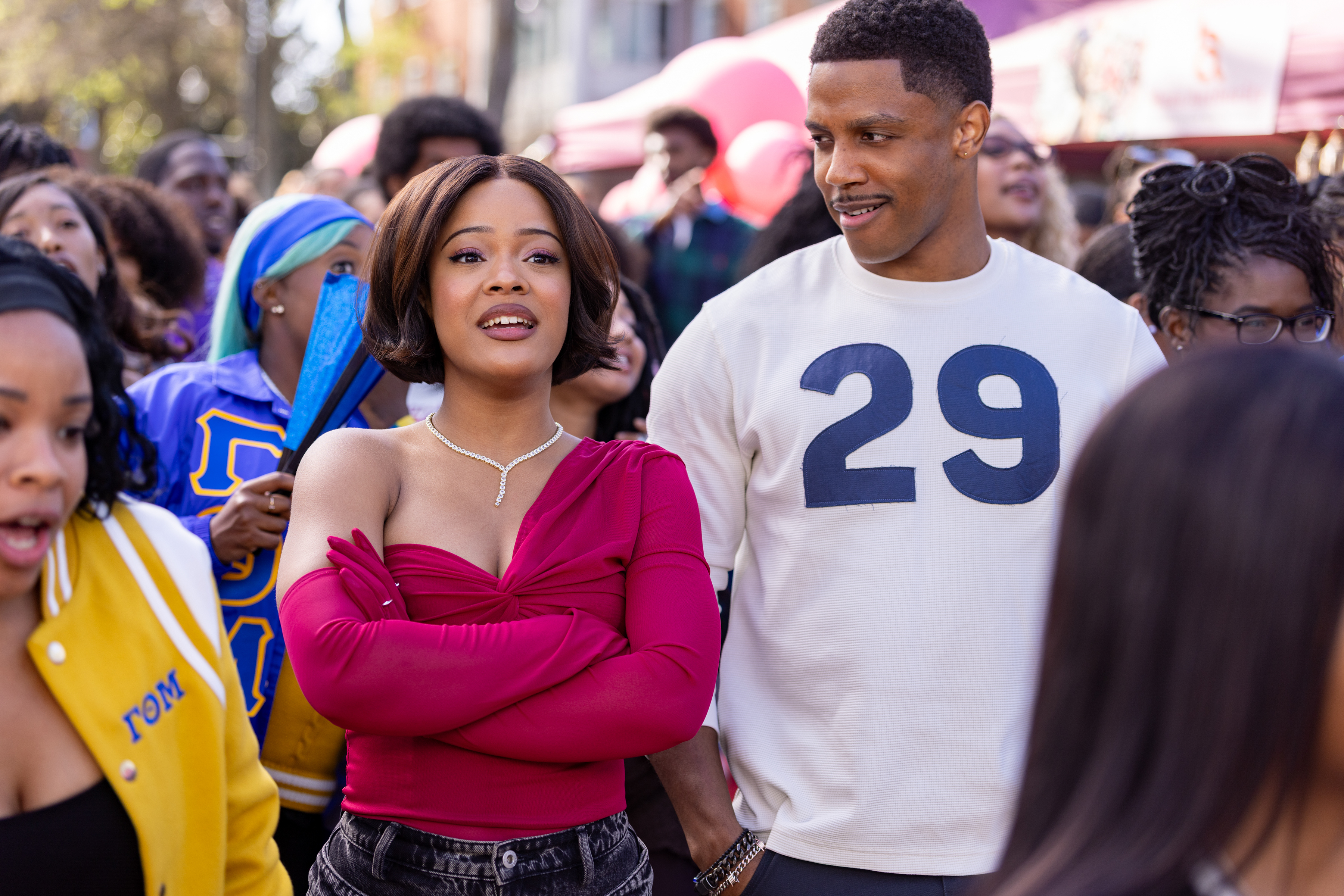
(From left) Dawnn Lewis as Jaleesa Vinson-Taylor, Glynn Turman as Col. Bradford Taylor, Kadeem Hardison as Dwayne in “A Different World.”Netflix
For a few hours, I was back in my New York bedroom as a teenager inspired by my television role models to go to college.
Where did all the time go?
Much like the original A Different World, produced by Debbie Allen— who reprises her role as the school psychologist and like her character of yesteryear, urges students to “relax, relate, and release” — Netflix’s version deals with timely issues.
Allen and showrunner Felicia Pride (Bel-Air and Gray’s Anatomy) deftly handle the current presidential administration’s attack on Black history, rampant mismanagement of funding by university administrators, and what it’s like for this generation of college students to engage with professors and each other after almost two years of COVID-19 lockdown.
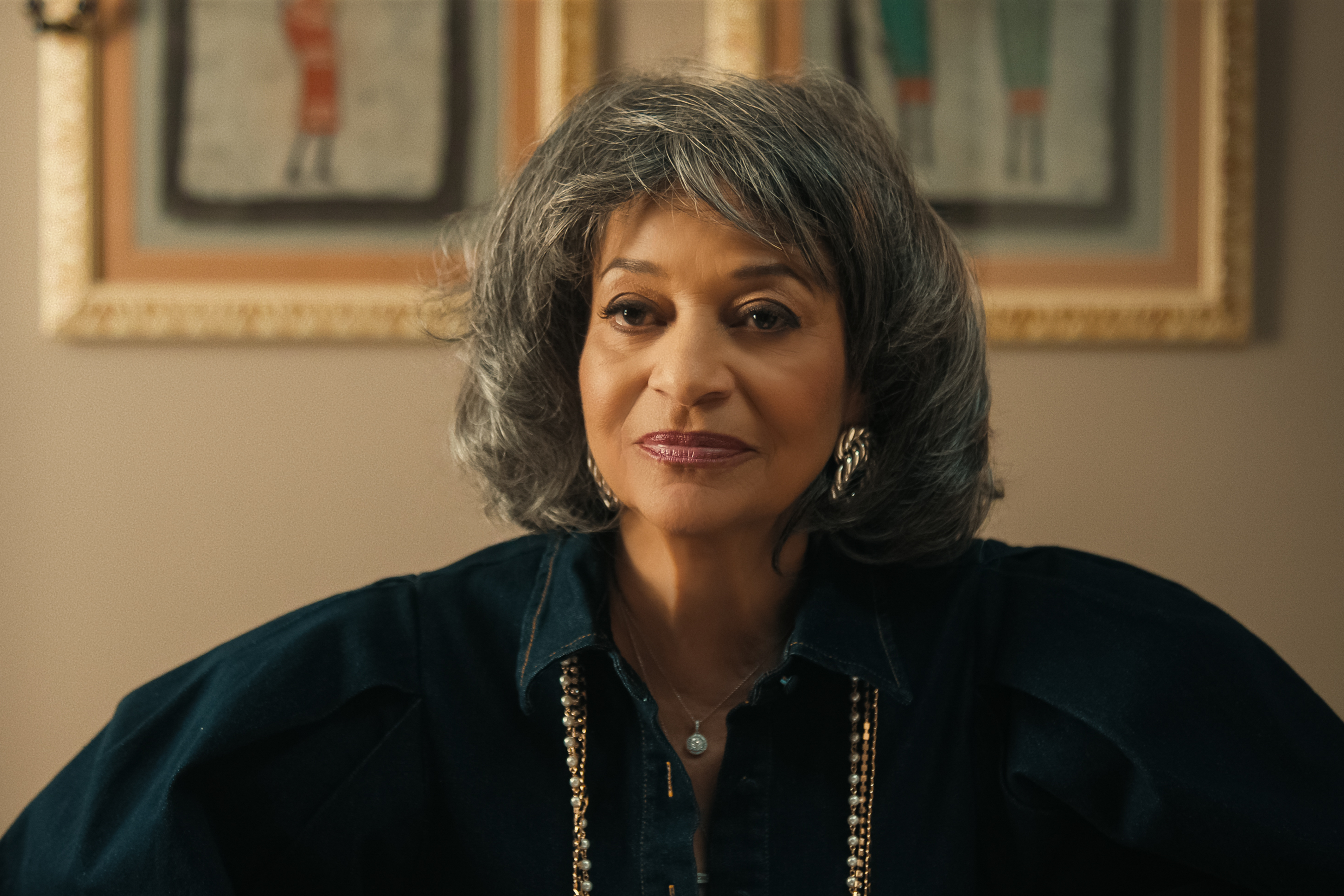
This image released by Netflix shows Debbie Allen in a scene from “A Different World.” Uncredited
The three male leads — Cornel Young IV (Shaquille Johnson), Amir Rodale (Jordan Aaron Hall), and Chibuikem Uche (Kojo Achebe) — are much more open about their emotions and sexuality than my peers ever were.
Men who were young in the ’90s — now in their late 40s and 50s — might learn a thing or two from them. For example, Amir is a gay man who is open and honest about his sexuality. If we had such nuanced queer characters in the ’90s, perhaps men wouldn’t have felt the need to hide their sexuality and be on the “down low” and risk their partner’s lives by exposing them to HIV.
Today’s A Different World even addresses Gen Z church girls who are firm in their faith without judging friends who may have different relationships with God. Hazel Henry (Kennedi Reece) is as empathetic as she is passionate about religion.
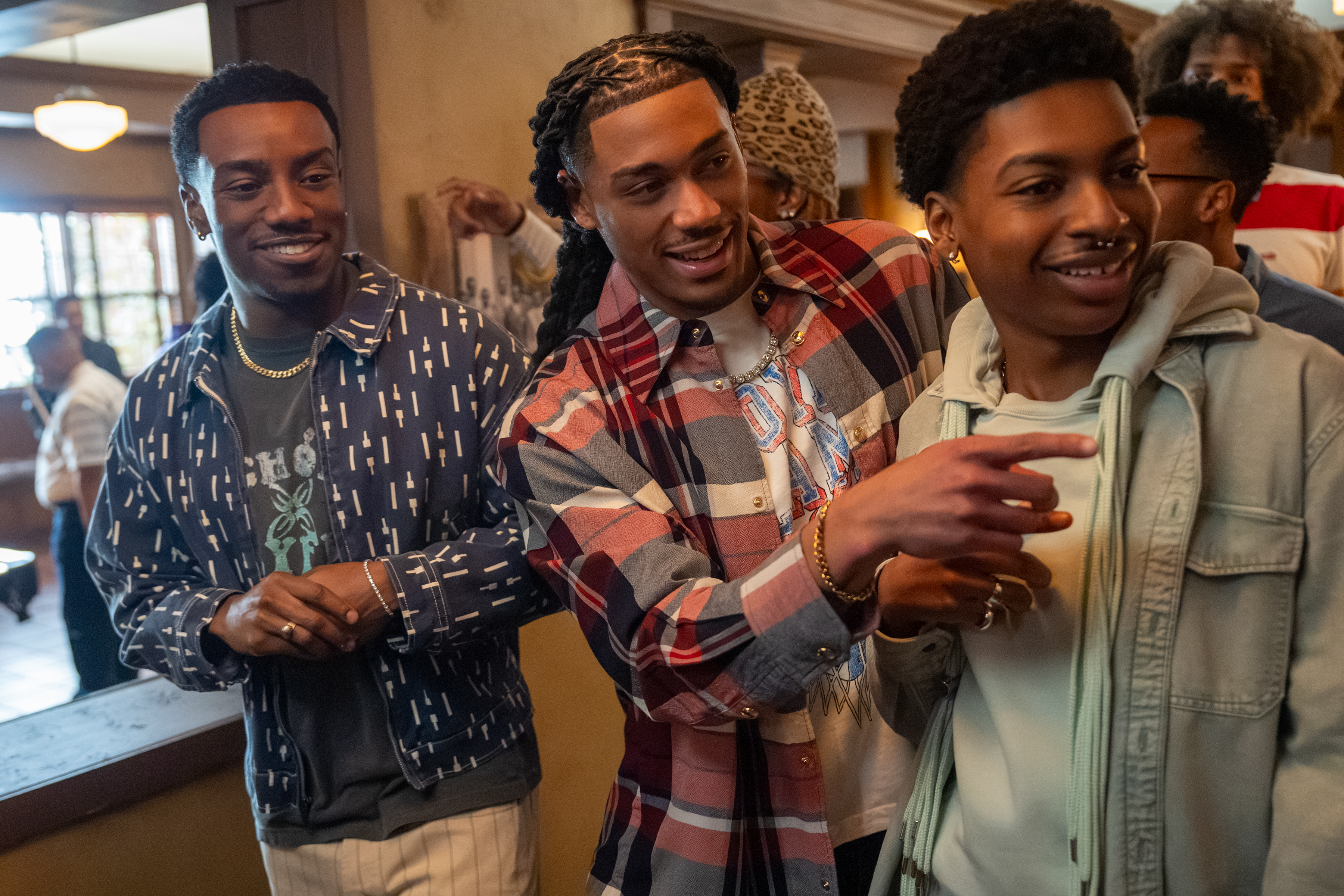
This image released by Netflix shows Chibuikem Uche, from left, Cornell Young IV, and Jordan Aaron Hall in a scene from “A Different World.” Quantrell Colbert
It’s a great reboot. Despite the rude internet chitchat on how Guy and Summer look older — Duh, they are nearly 60 now — the Philly associations stand out the most to me.
Among others:
Hillman is based off an historically Black college of which Cheyney University is the first in the nation. Again, no Philly, no Hillman, no A Different World.
Jada Pinkett Smith, back in her breakthrough role as the rambunctious Lena James from Baltimore, is a much more sophisticated version of her militant younger self. (No spoilers here.) Smith starred in A Different World years before she made the ultimate West Philly partnership, her marriage to Will Smith.
Maleah Joi Moon as Deborah and Vincent Jamal Hooper as Ellington in “A Different World,” the Netflix reboot.Netflix
My greatest wish is that at some point in Season 2, Patti LaBelle returns as Adele Wayne, Dwayne Wayne’s mother and Deborah’s grandmother. I wonder if Deborah will have replaced Dwayne as her favorite little “chipmunk.”
In a matter of weeks, my Veterans of Foreign Wars post could be facing a decision none of us ever thought we would have to make: closing our doors.
Not cutting back. Not shortening our hours. Closing.
Think about that for a moment.
A place built by veterans, sustained by veterans, and dedicated to serving veterans and our community could disappear because lawmakers in Harrisburg could not find a way to create a set of guidelines to govern skill games — the slot machine-like devices that everything from convenience stores to veterans posts like mine rely on for income.
And I have one question for them: Why? Why, when there are ways to come up with a solution, would you allow organizations like ours to fail?
VFWs, American Legions, volunteer fire companies, fraternal clubs, and small businesses across Pennsylvania are looking at their finances and making painful plans for what comes next if skill games go away.
Back in June, the Pennsylvania Supreme Court gave state lawmakers 120 days to regulate skill games and help businesses and organizations stay open. With less than a month left, they have not acted.
At our VFW, the revenue from skill games isn’t extra money sitting around waiting to be spent. It has become part of what allows us to keep the lights on, pay our bills, employ people, and continue serving our community.
It isn’t just us at risk. Jim Brown, state commander of the VFWs, warns that a ban on skill games risks a vital revenue source for these organizations and threatens the survival of many VFW posts across the state.
Senate Bill 1079, sponsored by State Sens. Gene Yaw and Anthony Williams, or House Bill 2213, sponsored by State Reps. Danilo Burgos and Jonathan Fritz, offers a path forward. They would responsibly regulate skill games and establish a $500 monthly fee per machine.
That’s a compromise. The state gets revenue — $300 million a year. The games get regulated. And organizations like ours get a fighting chance to survive.
So why can’t lawmakers get this done?
I’ve heard the argument that veterans organizations, firefighters, and other nonprofits survived before skill games, so we should simply go back to raising money the way we used to.
I would invite anyone making that argument to try it themselves.
Could you go back five or 10 years and live on the income you made then while paying today’s bills?
Could the state run today on the budget it passed 10 years ago (which notably was less than half of what the state budget is today)?
We can’t chicken barbecue ourselves out of the coming budget hole. There aren’t enough dinners, raffles, bake sales, and pass-the-boot drives to replace the dependable revenue many organizations now receive from skill games.
Our volunteer firefighters want to fight fires and keep protecting our communities. They do not want to be full-time fundraisers.
What scares me most is that this doesn’t end at our front door. When a VFW loses revenue, the community loses revenue. We support food drives, local charities, and families who need a hand. Volunteer fire companies do the same while providing an essential public service.
Will Harrisburg step in to support the Little League team? Will it help the food bank? Will it support the homeless veteran? Will it replace every donation that disappears when a VFW, American Legion, fire company, or Elks Club can no longer afford to give?
That is the part of this debate I don’t hear enough about. The consequences don’t stop with the machines. They are far-reaching.
They reach the bartender or club employee who loses a job. They reach the veteran who loses a gathering place and support system. They reach the firefighter whose organization loses revenue and struggles to find new volunteers.
They reach every community organization that depended on donations from local clubs.
Organizations are making plans right now. They are looking at layoffs. They’re deciding what expenses they can cut. They’re considering which donations and community programs they can no longer afford. Some, like us, are wondering whether they can remain open at all.
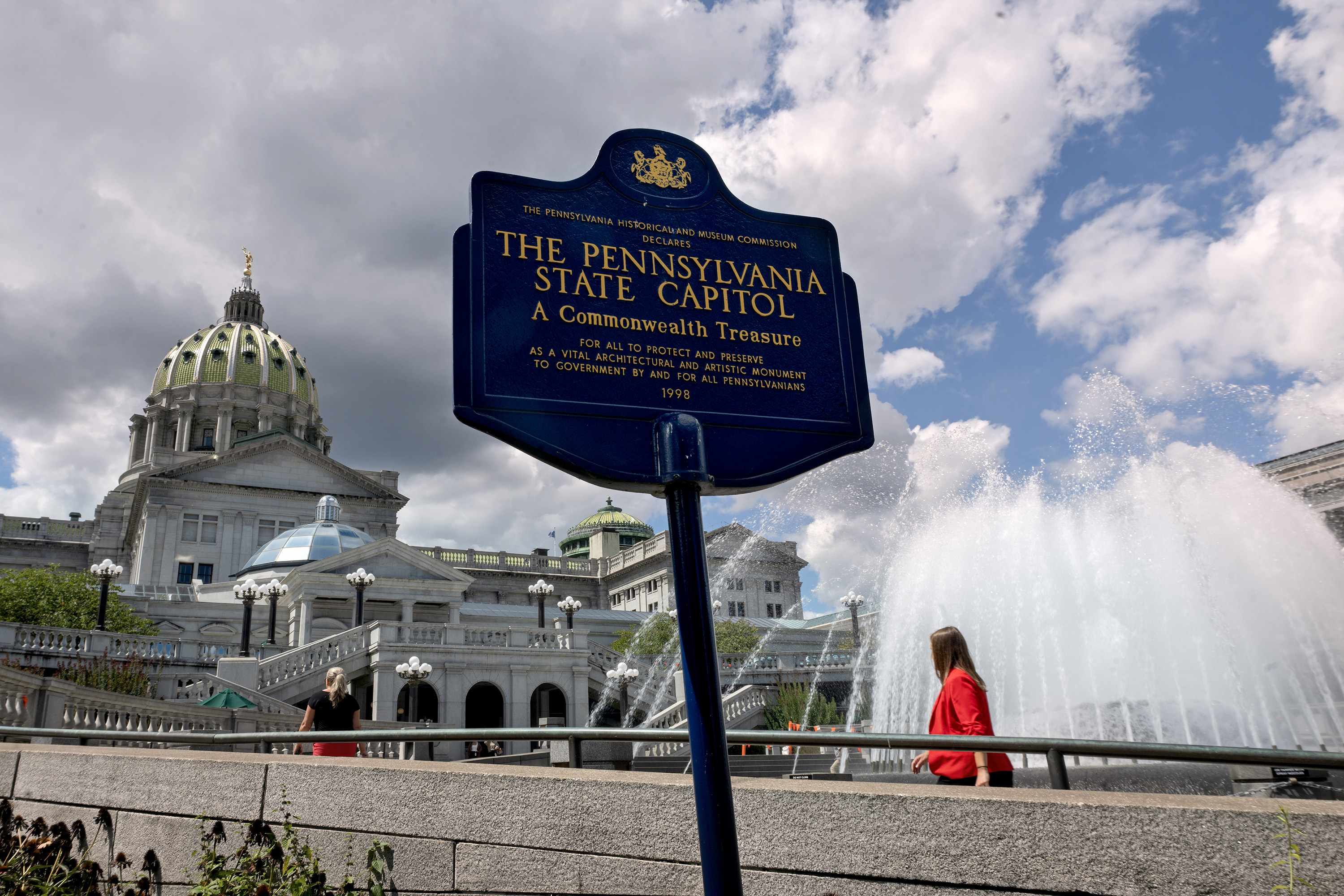
The East Wing and Pennsylvania War Veterans’ Memorial Fountain at the main public entrance to the Pennsylvania Capitol on Commonwealth Avenue in Harrisburg. There is still time for legislators to pass legislation on skills games that allows for regulation and a path forward for the small businesses that depend on them, writes Rusty Miller.Tom Gralish / Staff Photographer
Pennsylvania lawmakers have legislative days coming up. They have an opportunity to prevent a crisis.
Lawmakers must pass legislation that regulates skill games and gives organizations a workable path forward. This would protect the jobs tied to these establishments. Protect veterans organizations and volunteer fire companies. Protect the community programs those organizations make possible.
We have spent our lives believing that when our community needs us, we show up.
Now we need our lawmakers to show up and do their job and find a solution.
Rusty Miller worked for many years as president of a wireless construction company that specialized in all facets of cell site and switch construction, and retired in 2021. He has belonged to the Mechanicsburg VFW Post 6704 for 25 years.
Let’s start with the easy part: Philadelphia teacher Hannah Gann should not have pretended to be Black and Palestinian. I cannot — and will not — excuse that.
But I think I can explain it.
Gann seems to have believed the biggest myth of modern America: that identity is destiny. Your race and ethnicity determine how you think and act. So your membership in a given group gives you a special kind of insight that outsiders can never share.
That echoes the fallacy of white racists, the original practitioners of American identity politics. You can find traces of it in Vice President JD Vance’s tributes to “Heritage Americans,” or in the recent rants against Black and brown football fans by a Texas political candidate. We got here first, the argument goes, and our experiences make us more legitimately American than anyone else.
Never mind that Native Americans lived on these shores for centuries before any white person arrived. Our race is our truth, the white-identity crowd says. You are not us, so you cannot contest it.
We hear the same claims from people of every background now. Whether you’re Black or Asian — or Jewish or Muslim — you claim a special understanding of your own group. It’s your identity, after all.
That also means people outside the group can’t really understand it. So much for the ancient ideal that “nothing human is alien to me,” as the Roman playwright Terence wrote in 163 B.C. Identity politics imagines the opposite: Everyone is alien to you except people like you.
Most of all, they can’t comprehend any oppression or harm you have faced. And “marginalization becomes a form of social currency,” as one observer posted about the Gann saga. The highest status goes to the group that has suffered the most.
That’s probably why Gann — a white Jewish woman — disguised her background. A teacher in Philadelphia public schools and a vocal anti-Israel activist, she thought she would gain more credibility — and more clicks — if she presented as Black or Palestinian.
And that’s on us. We like to think we evaluate people based on their behavior, not their race. But Gann knew better. By altering her skin tone with fake tans and makeup, she got more people to rally behind her.
Those people are now like jilted lovers who crave revenge. Blasting Gann on social media, critics noted she taught “predominantly Black youth” and “gained the trust of young people on the basis of a sense of shared oppression.” They also called on the school district to “hold Hannah accountable for the harm she caused.”
Meanwhile, Gann released a proof-of-life-style video expressing “shame and sorrow and regret” for her deceptions about race. But here’s what she didn’t say: Race itself is a deception. It tricks us into thinking that our differences are immutable, and that some Americans have more insight into them because of a shared identity.
That condescends to people, all in the guise of elevating them. I once heard a prominent Black historian of African American politics say he resented the idea that his race gave him more understanding of his topic. Just like any other scholar, he painstakingly gathered pieces of evidence and wove them together. His identity had nothing to do with it.
Sadly, Gann isn’t the only white educator who has faked her race in recent years. In 2020, historian Jessica Krug — who, like Gann, is white and Jewish — admitted that she had pretended to be North African, Caribbean, and Afro-Latina. And in 2023, anthropologist Elizabeth Hoover — a scholar of Native American culture — acknowledged that she had falsely identified as Native American herself.
In each case, social media exploded with vitriol. Both women were frauds, the critics said, and their scholarship wasn’t any good.
But their work received loads of praise before their identity hoax was uncovered. Put simply, we evaluated them more highly when we believed they weren’t white. Remember the phrase “don’t judge a book by its cover”? We judged their books by the authors’ colors.
That kind of distortion is inevitable when we prize identity over everything else. To repeat, Gann should not have lied about her race. But we should not have given her more attention — and more trust — because we believed the lie. We exposed her racial fraud. And she exposed ours.
Jonathan Zimmerman teaches history and education at the University of Pennsylvania. He is the author of “Schooling Citizens: How Education Can Save Our Democracy,” which will be published in the spring by the American Philosophical Society Press.
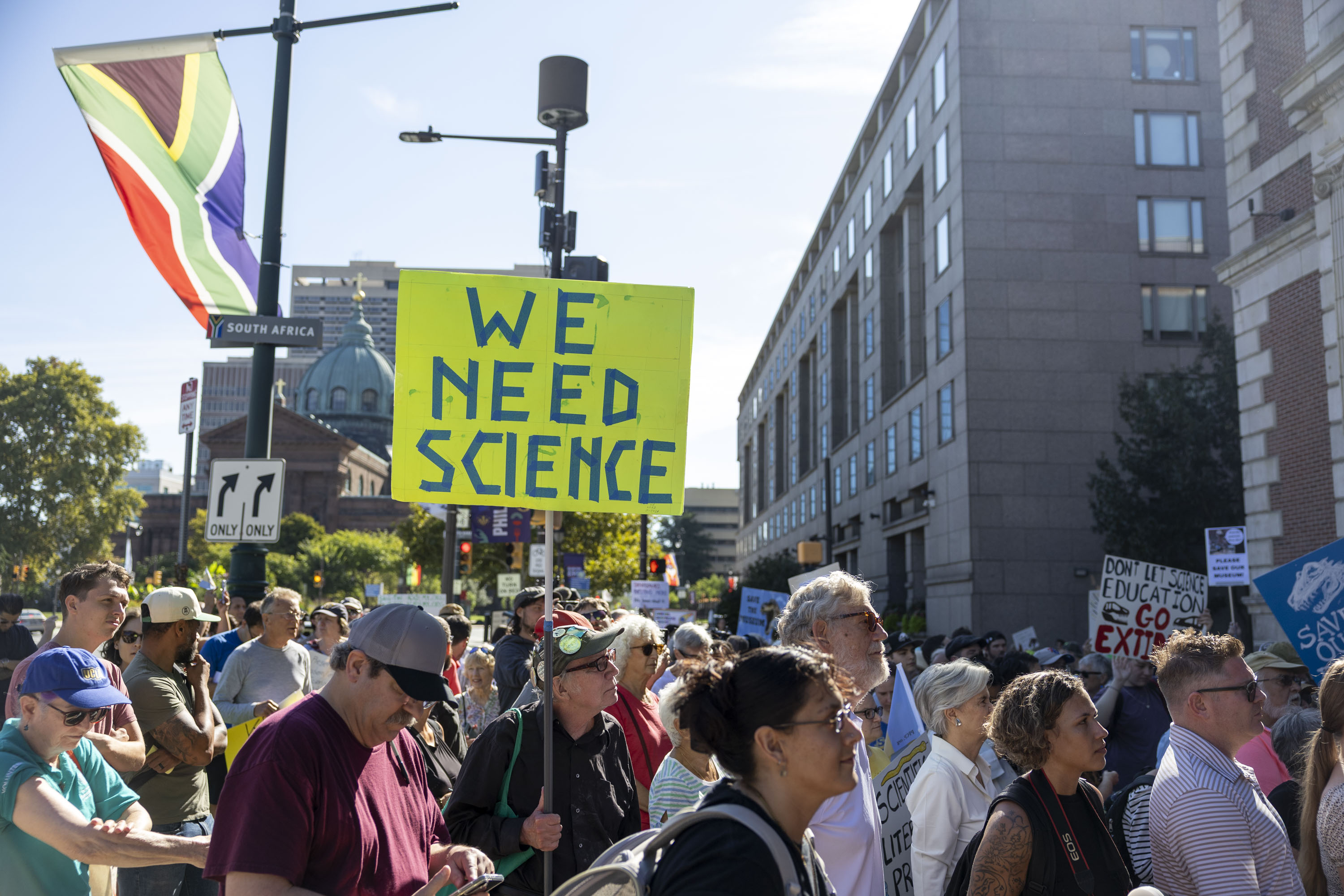
I’m 16, and I’ve been a volunteer in the Outside In animal exhibit at the Academy of Natural Sciences museum for the last year and a half. I have met people who contain seemingly endless facts about animals, and have loved learning something new from them every day. Before that, I was a camper, giggling in the back of a room while my counselors taught me about dinosaurs and fossils. I remember when the power went out in the whole building, and the counselors, in all their brilliance, turned it into a scavenger hunt in the dark. I remember straining my neck to see behind the scenes when the staff brought out animals for live animal shows, and standing in line as a toddler to feel the scaly back of a snake. Now I feed the snakes, and I know where these animals came from before they emerged from behind the curtains of the auditorium.
In a world where most people spend hours scrolling on their phones, watching TV, and pretending to be anywhere but here, the Academy brings us back to the natural world — and back to each other. The museum is one of those places that is still fighting to keep our world connected, and we can’t afford to lose it. Drexel cannot close a museum so important to us. The William Penn Foundation offered Drexel money to fund another year of the Academy. Another year of curiosity, wonder, and connection. The other day, I walked from the Academy doors to the steps of City Hall for a demonstration with more than 100 people who don’t want Drexel to close the doors of the Academy forever. Drexel, accept this money. Don’t take the Academy of Natural Sciences away from the people of Philadelphia.
Fiona Jenkal, junior, Science Leadership Academy High School
The writer has been an intern at the Academy of Natural Sciences through her school’s Independent Learning Project.
. . .
I’m a university professor with many years of experience working in natural history museum collections. Before then, I worked in development and fundraising for capital campaigns. The proposed closure of the Academy of Natural Sciences museum is a massive loss to science communication and outreach in the city of Benjamin Franklin. However, my professional experience makes me question the rationale for the decision.
Natural history museums around the world remain popular. Low footfall is not an inevitability in a city of 1.5 million people.
Also, moving collections is time-consuming and expensive. Collections require purpose-built facilities. A rapid sale of the Parkway property is incompatible with responsible collections management. Much of the revenue would presumably be spent on a new building. This short-termist, crisis-mentality approach cannot come at the expense of a 200-year-old institution essential to Philadelphians.
Coming after the collapse of the University of the Arts, well-paid leaders of Philadelphia’s educational institutions appear not up to the task of stewarding this city’s unique heritage. As the Semiquincentennial celebrations end, it is up to the city and its people to defend them, and hold their leaders’ claims to scrutiny.
Francois Gould, Philadelphia
. . .
The 198-year-old Academy of Natural Sciences museum in Philadelphia shut its doors on Sunday with no plans to reopen to the public. The permanent closure was announced just four weeks earlier by the museum’s administrators at Drexel University.
The magnitude of this loss defies comprehension. It is unthinkable that the oldest science museum in the entire Western Hemisphere could be snuffed out with less than a month’s notice. The sheer indignity of it is nauseating.
I was home in Houston when I heard the announcement. After sitting with the shock, I decided I had to see the Academy in person.
I expected a depressing experience. After all, Drexel’s statement blamed the closure on dwindling attendance in the wake of the COVID-19 shutdowns. I thought I’d find vacant halls and tired displays showing all the signs of neglect and apathy.
Instead, I found a torrent of love and support for the legendary museum, as 17,000 visitors flocked to its doors that weekend. Scores of outraged citizens organized protests while grateful staff welcomed heartbroken Philadelphians one last time to the place many call a second home.
I can relate. I cannot imagine what my life would look like today without the lifelong influence of the Houston Museum of Natural Science, from my first visit in a stroller to strolling through the exhibits I helped build as a museum specialist.
The fight to save the Academy has only just begun, and Americans everywhere must join in. If we give up our oldest science museum, it will bring lasting shame on our generation, set a threatening precedent for other cultural institutions, and send a clear message that our American heritage is not worth preserving.
We must save this irreplaceable piece of our history.
Max Anton, Houston
More of the same?
Thank you, The Inquirer Editorial Board, for your series of editorials presenting all the ways Donald Trump, his cabinet, his children, and his associates have abused the Executive Office of the President. You argue that — in addition to the president’s self-absorption and lack of morality — the Republican legislators have also failed their duty to address this president’s rampant corruption. In this election year, we must ask then, how would a new Republican Congress be any different?
Stephen DeLuca, Philadelphia
Shared streets
Regarding the recent article on Mayor Cherelle L. Parker’s “Curbside Appeal” neighborhood beautification program, we applaud her statement that “every Philadelphian deserves to live on a block they can be proud of,” reflecting “the priorities of the people who live there.”
Unfortunately, her philosophy stops at residential blocks where the administration installs bike lanes with continuous flex posts or concrete barriers. She ignores safety, community priorities, and previous mayoral promises for access.
The mayor is creating high-speed cycle tracks that encourage dangerous behavior — especially by rapidly proliferating e-bikes that cause serious harm to pedestrians. Forget about safely crossing the street or being dropped off at your house, particularly if you’re elderly or disabled.
Our streets can safely accommodate cyclists without sacrificing the fundamental rights of everyone else.
Brooke Marshall, Philadelphia
Aim higher
The recent article about how voters are split over whether Gov. Josh Shapiro should run for president is well timed. His reelection as governor by a huge margin is expected. He is also on most people’s short list of eligible Democratic candidates for president. He shouldn’t do it even though the itch to run is probably enormous.
Pennsylvania needs him to do what is necessary for Pennsylvania, and that is to unseat John Fetterman, who has been an unmitigated disaster. Whether Fetterman runs for reelection as a Democrat or changes parties and runs as a Republican, there is no doubt many Democrats will join the fray to unseat him. Too many Democrats against Fetterman in a primary could allow him to squeak to a victory. Only one person in the state can stop that: Gov. Shapiro. No one would seriously challenge him. His election would be almost certain.
He is 53 now. Assuming a Republican wins in 2028, he can run for president at age 59 in 2032.
Assuming a Democrat wins in 2028, he could run in 2036 at age 63 (not too old), when hopefully he would be in his second term as senator.
We have seen the devastation caused by a Senate too willing to place judges on the bench who trample the rights of Americans. Putting Pennsylvania’s Senate seat in the hands of someone with sound judgment is imperative.
Andrew M. Rosen, Philadelphia
Join the conversation: Send letters to letters@inquirer.com. Limit length to 150 words and include home address and day and evening phone number. Letters run in The Inquirer six days a week on the editorial pages and online.
In 1964, I was a) only 5 years old and b) living in the New York suburbs, so while I’ve been hearing all my life about the notorious collapse of the Phillies that September, I didn’t get to experience that feeling of existential dread in real time. But I was almost there last week, as the 2026 Phillies nearly became the first team to blow a four-game playoff lead with five games to play. Almost. Sunday’s 7-3 win over Tampa Bay sent my beloved/cursed midlife baseball team back to the playoffs for the fifth straight year. The chill of the offseason has been delayed for at least two more sure-to-be-heart-attack-inducing games in Atlanta. ‘Woke 1.0′
The only thing wrong with ‘Woke 1.0’ was that it wasn’t implemented
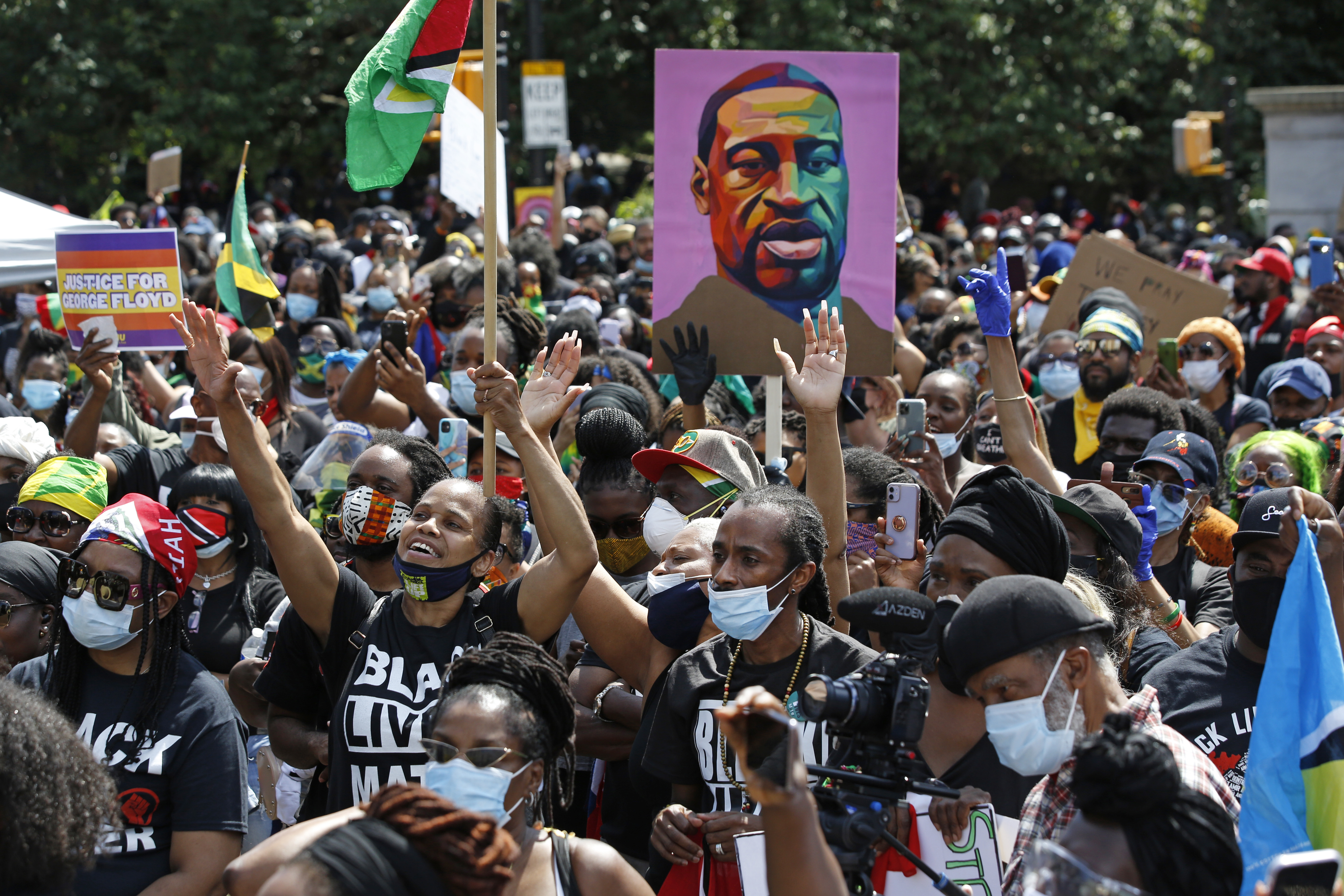
People participate in a Caribbean-led Black Lives Matter rally in June 2020 at Brooklyn’s Grand Army Plaza in New York. Kathy Willens
It’s a war almost nobody wanted, and yet it never, ever seems to end. Just thisweekend there was yet another spontaneous incident that caused the conflict to flare back up again, as an entire platoon of keyboard commandos mobilized for action.
Yes, the utterly ridiculous “war on woke” is back on again. The equally senseless fighting in Iran is almost certain to end sooner than this boondoggle.
The flashpoint was something appropriately trivial enough for this war of distraction: a decision by the Boston Globe to report on the, yes, somewhat silly fight consuming a western Massachusetts lesbian tavern called the Last Ditch Bar and Arts Venue. The hangout continues to require all patrons to wear COVID-era KN95 masks, as a gesture that everyone is welcome at all times, including the immunocompromised.
The fracas that broke out when the owners of the Last Ditch sought to make just one night a week “mask-optional” in a bid to boost business didn’t just make for a widely read Globe scoop (supposedly it brought in several thousand new subscribers). It also spread great joy among the nattering nabobs who continue to see COVID-19 overreaction as the avatar of a far-left conspiracy to make America ungreat.
Suzy Weiss, writing for the Free Press founded by her sister and now CBS News honcho, Bari Weiss, emailed with glee that “what happened at Last Ditch shows that Woke 1.0 never ended in some parts of America. It just got crazier.” The Washington Post’s Megan McArdle — who can thank her colleague Kathleen “Donald Trump Will Be a Normal President” Parker for not having the worst columnist batting average of all time — declared that, groan, “The Great Awokening Is Over.”
This nonsense rekindled a fire that’s been smoldering since the summer among a certain crowd — six-figure-salaried pundits who call Trump “uncouth” and pat themselves on the back for their brave liberalism before picking up their kids at the Dalton School and catching the last train for the Hamptons — who insist America’s downfall didn’t peak with the 2016 election of a demagogue with dictatorial ambition.
No, the real crisis hit in 2020 when, in their telling, our great Fortune 500 companies were blackmailed into tweeting “Black Lives Matter,” when someone at the far edge of a protest march carried a sign that read “Defund the Police,” and when some tripping-on-idealism sophomore at Oberlin complained that serving bahn mi in the cafeteria was “cultural appropriation.”
Trump might be uncouth, they argue, but America will never be whole without a Truth and Reconciliation Commission and a public apology for the crimes against humanity of the “woke era.”
The accelerant, if not the trigger, for this insanity was possibly the most unlikely of sources:U.S. Rep. Alexandria Ocasio-Cortez of New York, heir apparent to the progressive movement, whom many would like to see run for president in 2028. Like her allies on the left, AOC has been undergoing a kind of Spanish Inquisition from journalists demanding an explanation for why — at a time when millions were marching against U.S. cops killing more citizens than anywhere else in the developed world — some folks on the far-left wanted to abolish not just the police but maybe Thanksgiving.
Ocasio-Cortez laughed off the question by quoting another New York progressive that “Woke 1 was crazy” and arguing that the madness of monthslong COVID lockdowns caused some people to voice extreme ideas they shouldn’t be judged upon six years later.
To say AOC’s comments were a mistake would be an understatement. She gave the critics an inch, and they’ve taken about 87 miles and counting. It gave a boost to a bevy of “both sides” columnists who’ve been dying to say the left and the right are equally to blame for everything that’s wrong with America.
“Restitution, if only in the form of honest contrition and perhaps even a public apology, is in order,” demanded conservative New York Times columnist Bret Stephens, who may have been referring toa few other journalists or professors who today blame “Woke 1.0” for their career setbacks, although he also may have been thinking about his own epic fight with the college professor who called him “a bedbug.”
Look, we all can laugh at the worst foibles of the far-left; that’s why Portlandia was such a popular show, even among liberals. We should cringe when some professor calls people “folx,” and get mad at more serious illiberal crimes against free speech, like stealing student newspapers or shutting down campus speakers over their politics.
But it’s a massive false equivalence to compare these offenses by low-wattage college students and a few professors to the high crimes and misdemeanors of an American fascist movement that includes the president,big chunks of Congress, and the U.S. Supreme Court. What’s more, the people making these comparisons want to make you forget what the upheavals that peaked in 2020 were actually about, which was upending the status quo of which they are card-carrying members.
They want you to remember that “Defund the Police” placard so you’ll forget that millions marched in the streets in 2020 because George Floyd was just one of more than 1,000 Americans killed by the police that year — or that at least 1,000 people have died the same way in every year since then.
They want you to get mad about the “bahn mi kids” at Oberlin, so you won’t get angry at the gross unfairness of an educational system that’s tilted toward the kids of those writers and politicians demanding apologies for “wokeness” — the privilege that gives their pampered offspring SAT prep and legacy admissions while the rabble attends lousy public schools.
They have ridiculed, mocked, and called for the police suppression of every social movement from Occupy Wall Street to No Kings — maybe because they don’t want a higher marginal tax rate, but definitely because they are terrified that a more equal society for everyone means less status for them. Heck, some plebe might call them a “bedbug” and get away with it this time.
AOC got it totally wrong. “Woke 1″ wasn’t crazy. Its biggest problem was that the heart and soul of the movement — no more militarized police, better wages and health insurance, billionaires paying their fair share of taxes, and colleges that are accessible and affordable — was never implemented. The bad guys won, and the good guys gave up too easily.
No one needs to apologize for saying that maybe we should improve society somewhat. But meanwhile, hey, look over there — it’s a crazy lesbian bar!
Yo, do this!
Over the years, as I’ve called on my love of American history to try and explain what went right and then went terribly wrong in the 80-plus years since World War II, there is one place that keeps popping up again and again: the University of California, especially its flagship Berkeley campus. In a time of free tuition and rising postwar optimism, the UC system was the crown jewel of U.S. public higher education, only to become ground zero for 1960s protests and the rise of Ronald Reagan, followed by fights over affirmative action, rising college costs, and much more. My good friend and former Newsday mentor Miriam Pawel has just published a much-needed chronicle of all this — California Dreams: The Making and Remaking of the University of California — that just now was enthusiastically downloaded by me.
The crisis of press freedom in the United States has recently become a front-page story, with Donald Trump’s stunning and typically ham-handed efforts to ban news organizations he personally doesn’t like — CNN, MS NOW, and Politico — from the White House. At the same time, I chronicled the growing threats and harassment as well as actual violence against U.S. journalists that is endangering the First Amendment. I am asking you today to make a contribution to The Philadelphia Inquirer High-Impact Journalism Fund. Your gift ensures we have the resources to not only execute deep, investigative reporting that holds the powerful accountable, but to do so while keeping our journalists safe from the escalating legal and physical threats that have become a daily reality in this business.
Ask me anything
Question: How can Article I [of the U.S. Constitution] reassert itself when Article III seems intent on creating a unitary executive with vast, uncheckable powers? — Jackie Gardina (@jackiegardina.bsky.social) via Bluesky
Answer: Jackie, that’s a good question — what you’re basically asking is how can Congress (the subject of Article I) undo the power-grabbing role of the judiciary, and specifically the U.S. Supreme Court, that was created in Article III? No doubt, Donald Trump’s dictatorial ambitions have been fueled by a series of high court rulings that have placed the president above the law and expanded White House powers. But America’s founders clearly gave Congress the tools to reassert control, if only they would use them. Lawmakers have the authority to expand the Supreme Court, impose term limits on justices, mandate a code of ethics, and take other measures to bring this star chamber back to reality. And I believe a majority of voters are more than ready to sign off on such radical changes.
What you’re saying about …
There was pretty much unanimity among responders to last week’s question about Donald Trump banning reporters from his least favorite news outlets from the White House — an action that was quickly (and predictably) overturned by a (Trump-appointed) federal judge. Readers thought the entire press corps should walk out in solidarity, with no need to hurry back and record the president’s every utterance. “Not only should the White House press corps walk out in solidarity, but they should also start standing up for their colleagues when the president insults them,” wrote emailer David (full names, please!). “A few white guys saying, ‘Mr. President, that is not acceptable’ might actually register with Trump and his advisors.” Added Stephen R. Rourke, “Moreover, it would deprive Trump of the only thing he cares about: visibility.”
📮 This week’s question: Major League Baseball has scored TV ratings wins with games in unlikely settings, such as the Iowa cornfield that hosts the Field of Dreams game. Now MLB has approached the good people of the Trump regime with a new idea: a baseball field in anational park, possibly Wyoming’s Grand Teton. Brilliant marketing, or another crime against Mother Nature? Please email me your answer and put the exact phrase “National Park baseball” in the subject line.
Backstory on the Christian wealth scam with ties to the Eagles
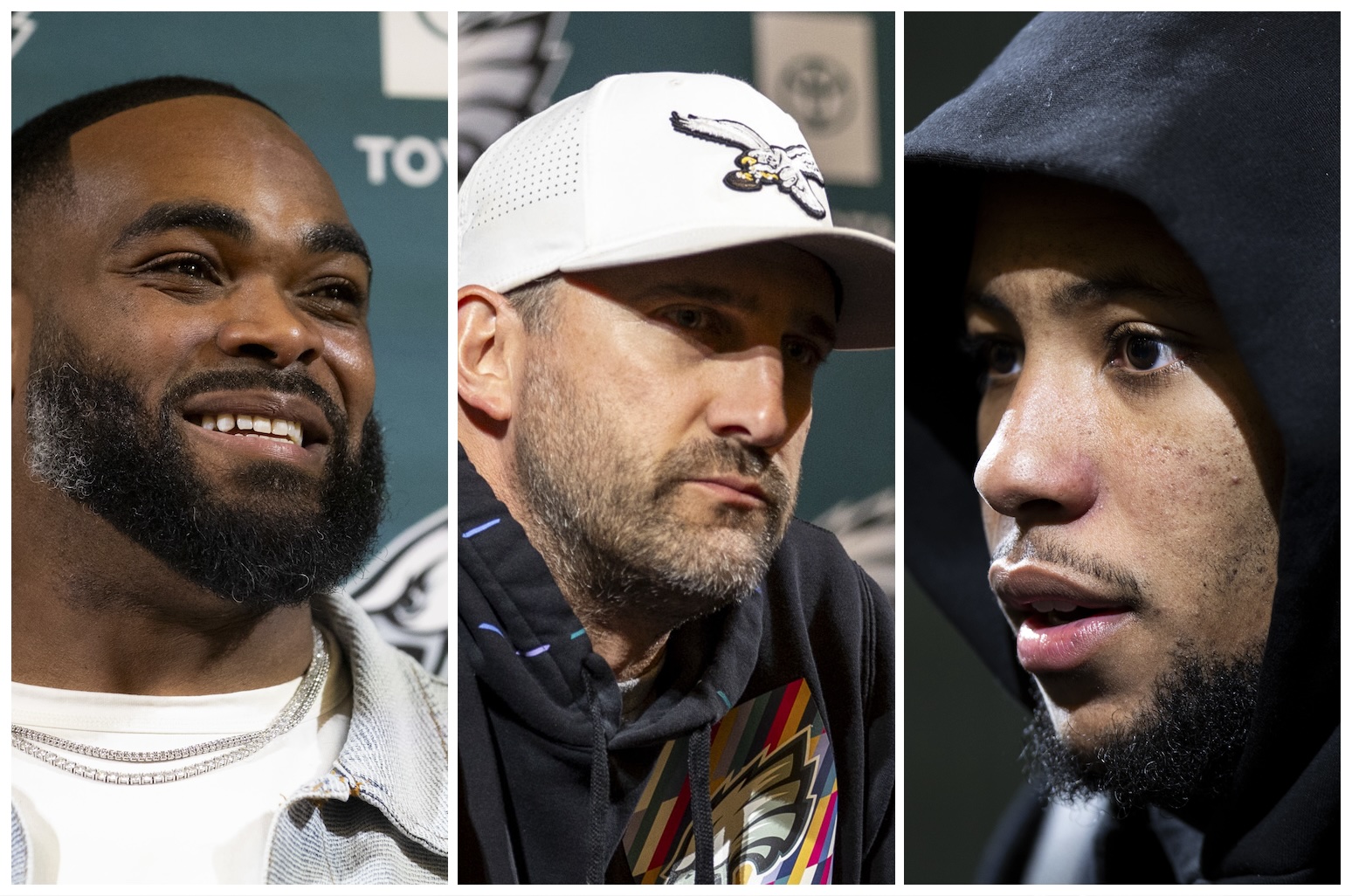
Brandon Graham, Nick Sirianni, and Saquon Barkley are among the Eagles past and present scheduled to speak at Life Surge on Saturday.Staff Photographs
It was already a bad look in May 2025 when some of the brightest lights of the then-Super Bowl-titlist Philadelphia Eagles — including head coach Nick Sirianni and star running back Saquon Barkley — pocketed large appearance fees to talk about football and God at an event at the now-named Xfinity Mobile Arena called Champions of Faith. The rally, as reported at the time by The Inquirer and other news outlets, existed to promote a Christian wealth scheme called Life Surge whose founder had left behind a trail of deception and fraud allegations. My colleagues Olivia Reiner and Ryan W. Briggs reported growing allegations that Life Surge “exploits the Christian faith and the allure of the famous speakers as a cover for ‘bait and switch’ sales tactics pitching a series of weekend investing seminars.”
The Eagles-laden event — which also featured speeches and a chance to meet stalwarts such as Brandon Graham, Cooper DeJean, and retired Hall of Famer Brian Dawkins — went ahead despite the negative coverage, but you could already sense the Life Surge saga was not going to end well. Last week, a scathing exposé led by podcaster Pablo Torre, who was just awarded a Pulitzer Prize for his investigative reporting that led to a massive fine against the NBA’s Los Angeles Clippers, turned Life Surge’s dodgy practices and the deep involvement of Heisman Trophy-winning retired quarterback Tim Tebow into a national scandal.
The joint project by Torre and Mother Jones investigative reporter Kiera Butler reported that “hundreds of attendees swap stories of high-pressure sales tactics infused with Christian messaging” on a large Facebook group of unhappy Life Surge customers, Reddit threads, and elsewhere. Some said they withdrew retirement funds or went deep into credit card debt to pay for “SurgeU” classes in wealth management that can cost as much as $40,000.
The story, boosted by Torre’s podcasting clout and the focus on Tebow’s role as a frequent featured speaker who’s earned an estimated $2 million to $4 million from his involvement, garnered immediate results. Tebow has already announced he is pausing any future involvement with Life Surge, noting “the allegations are extremely serious.” It’s doubtful any of the Eagles will face any consequences for their one-day fling with Life Surge, and yet maybe this scandal will finally convince Philly athletes to stop saying anything for another fistful of dollars.
It was stunning to see that the newest and arguably brightest star in the city’s sports firmament, the new 76er LeBron James, signed a $15 million deal — far more than the reduced salary he accepted to help the Sixers finally win another title — with the online prediction market Polymarket. This despite the fact that New York state (where James is apparently living, by the way) and others have accused Polymarket of running an unlicensed gambling operation, in an era when betting addictions are wrecking far too many lives.
James’ new ads for Polymarket dropped just weeks after The Inquirer reported that the Phillies’ highest-paid slugger, Bryce Harper, who has a 13-year, $330 million contract, was paid to film a personalized Cameo video that the sports-betting company FanDuel then sent to a gambler who was racking up $1.5 million in debt.
Harper said FanDuel slapped its logo on the video with neither his knowledge nor permission. Meanwhile, Eagles legend Dawkins, one of last year’s Life Surge speakers, found himself embroiled in controversy this week when Donald Trump’s Department of Homeland Security lifted a hype video of the footballer to promote its mass deportation efforts. The use of the video without Dawkins’ permission was an outrage, but then it’s easy to fool the public when our sporting heroes won’t stop running their mouths to inflate their already bloated bank balance.
What I wrote on this date in 2020
Thursday will mark the 56th anniversary of the night that forever defined Philly “attytood”: The Phillies’ final home game at iconic Connie Mack Stadium in 1970, which prompted fans of the team that still has the most losses in major-league history to rip everything — even the toilets — out of the rusted ballpark before rioting on the field. I wrote on the 50th anniversary six years ago that the chaos was “a pivot point in how the nation would see Philadelphia — no longer either the place of history-class field trips or boring Quaker blue laws but now the U.S. capital of blue-collar attytood, with sports fans who were in your face, with a wooden slat if someone was dumb enough to hand them one.”
Only one column this week, as I also toiled on my latest investigative reporting project on what’s really happening with immigration arrests in Pennsylvania. In that column, I looked at Donald Trump’s increasingly erratic and outlandish public statements and argued that — instead of news coverage that soberly looks at every bat-guano crazy outburst or rambling speech — it’s time for the media to start seriously questioning the president’s mental health. The moment for real talk about Trump’s disordered mind — and whatever remedy is possible — is now, before the crisis implodes.
Speaking of Donald Trump, one defining feature of his second presidency has been the fearfulness of newspaper editorial boards — including many that had called for Richard Nixon or even Bill Clinton to resign back in the day — to aggressively challenge the current POTUS even as he flagrantly violates both laws and common decency. I’m proud to work with the exception: the award-winning editorial board of The Philadelphia Inquirer. Spearheaded by my friend and colleague Paul Davies, The Inquirer this week has been publishing the latest in a six-part series of major indictments of Trump’s massive wrongdoing called “The Art of the Steal.” The recent broadsides included “It’s all about him,” which digs into Trump’s obsession with wasteful Washington, D.C., vanity projects, and “The family that grifts together,” which aims to chronicle the endless parade of crypto scams, defense contracts, and other financial schemes that have made billions of dollars for the president’s kin. These outstanding works of opinion journalism are just the latest example of how a newsroom funded not by billionaires but by a nonprofit foundation created in the public interest can’t be bought off or cowed by a corrupt government. You can support this important work — and enjoy reading it — when you subscribe to The Inquirer.
By submitting your written, visual, and/or audio contributions, you agree to The Inquirer’s Terms of Use, including the grant of rights in Section 10.
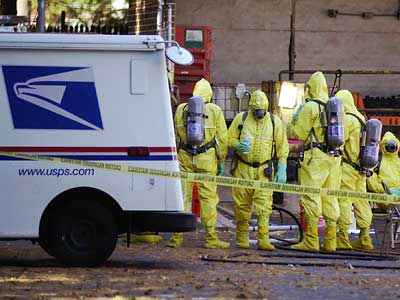
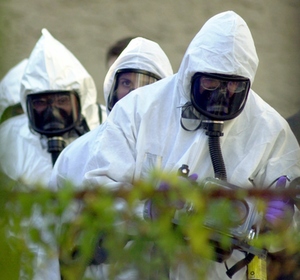
Twenty-five years ago this month, America was still reeling from the attacks of Sept. 11 when another, quieter threat arrived in our mailboxes.
Letters laced with anthrax spores were sent to news organizations and members of Congress. The weaponized anthrax in those letters killed five Americans and sickened 17. And a nation already on edge confronted a terrifying new reality: Someone could use an invisible biological agent to attack Americans in their workplaces, in their homes, and through one of the most stalwart institutions in our society — the U.S. Postal Service.
I remember those days vividly.
I had only recently arrived in Washington to serve President George W. Bush as his homeland security adviser. The U.S. Department of Homeland Security was brand new, created in the immediate aftermath of Sept. 11, 2001. We focused on preventing and protecting Americans from other catastrophic terrorist attacks and events affecting our national security.
Then came anthrax.
FBI officials in protective suits prepare to enter the Chester home of anthrax attack suspects in 2001.DAN LOH / Associated Press
Suddenly, the question was not how terrorists might hijack airplanes or attack buildings. We had to confront the possibility that a small amount of biological agents could create fear and disruption far beyond the physical damage it caused.
In some respects, the threat remains the same. Bad actors still send white powder letters through the mail (some containing ricin) to threaten others, including elected officials like President DonaldTrump and formerPresident BarackObama. In other respects, the challenge is more difficult than it was in 2001.
Science has advanced dramatically. Biotechnology produces extraordinary breakthroughs in medicine, agriculture, and human health. And now we have artificial intelligence accelerating biology and every other field of science.
AI can analyze enormous datasets, identify patterns, model structures, and assist with design at speeds that were unimaginable when those anthrax letters arrived in 2001.
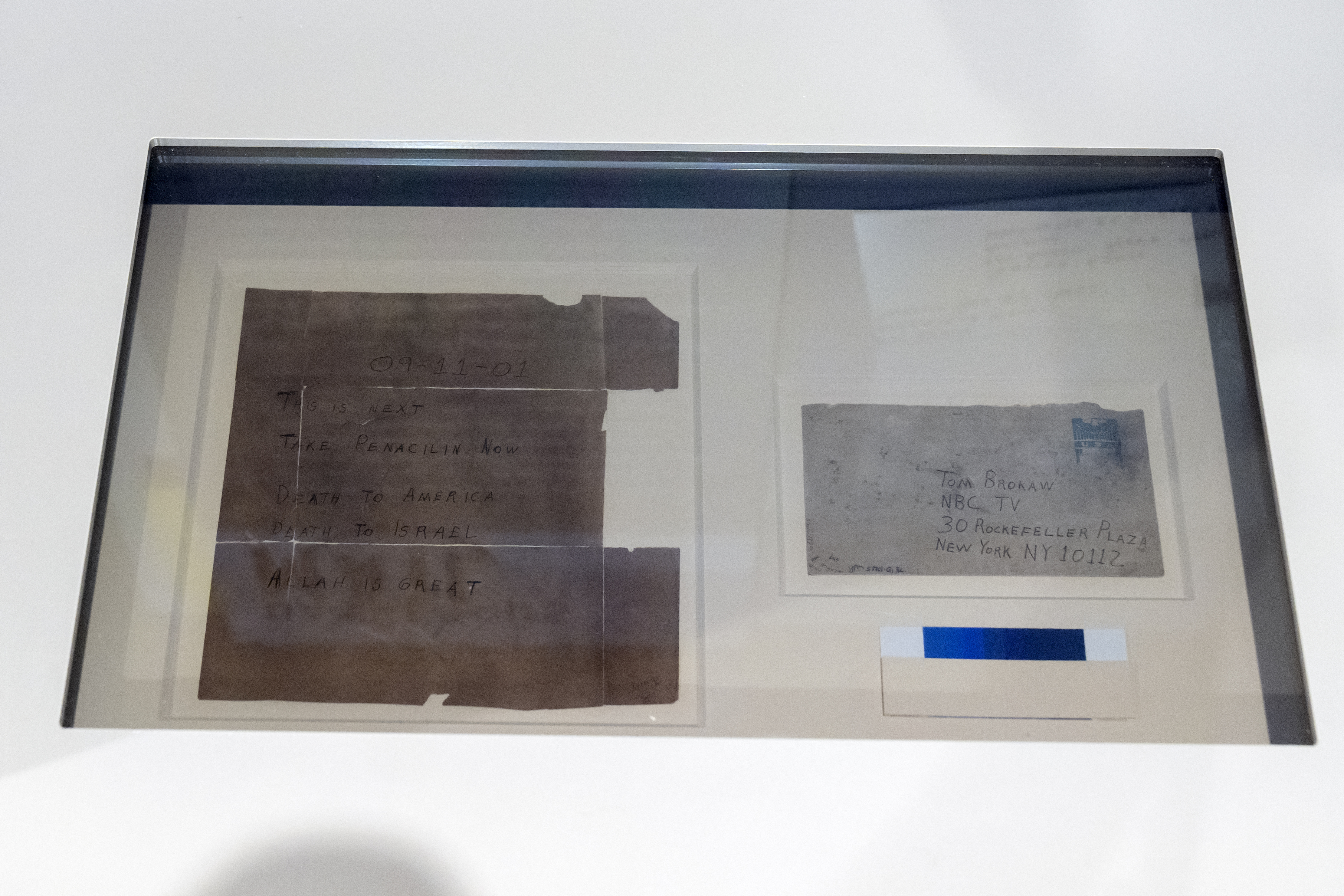
A letter and envelope that were mailed as part of the anthrax mail attacks of 2001 are displayed at the Smithsonian National Postal Museum in July 2025 in Washington.Mark Schiefelbein
The National Academies of Sciences has warned that AI-enabled tools can accelerate biological discovery and design while creating new opportunities for misuse. That should concern every American.
The danger is not that an AI system will suddenly decide to manufacture a biological weapon on its own. The danger is that AI can lower the barriers that once separated a determined individual, terrorist organization, or hostile government from highly specialized biological knowledge.
Fewer people, with less time and greater computational assistance, can now accomplish what once required teams of scientists, years of research, and enormous resources.
That is the vulnerability we cannot afford to ignore.
Our commission made artificial intelligence a major new priority in the Apollo Program for Biodefense precisely because the technology is changing both the offensive and defensive sides of biological security. Our latest issue brief released this summer warned that AI can compress timelines and make sophisticated biological capabilities more accessible, while also offering powerful new tools for surveillance, diagnostics, medical countermeasures, and attribution.
The answer is not to stop AI or biotechnology. That would sacrifice enormous benefits to humanity.
The answer is to get ahead of the threat.
We need stronger safeguards around AI systems and biological design tools. We need better screening of synthetic DNA. We need dramatically improved disease surveillance to detect unusual outbreaks before they become national crises. We need to ensure federal, state, local, tribal, and territorial governments, academia, and industry are prepared to respond together.
We need to recognize that biodefense is national defense.
Twenty-five years ago, anthrax arrived in envelopes. We could see the envelope, but not the danger inside it.
Tomorrow’s threat may be far less visible.
It may emerge from a laboratory, criminal network, terrorist organization, or hostile nation-state, aided by technologies that did not exist when I started at the White House in 2001. Those possibilities should not paralyze us. They should motivate us.
The lesson of those anthrax attacks is not simply that biological weapons are frightening. It is that threats that seem remote can become real with astonishing speed.
I learned that lesson personally a quarter century ago.
I have not forgotten it.
Neither should America. Our responsibility now is to make sure that when the next biological threat emerges — whether natural, accidental, or deliberate — we are not looking backward and asking why we failed to prepare.
Tom Ridge is cochair of the Bipartisan Commission on Biodefense at the Atlantic Council, part of the Scowcroft Center for Strategy and Security. Heserved as the first secretary of Homeland Security from 2003 to 2005, the first homeland security adviser from 2001 to 2003, and the 43rd governor of Pennsylvania from 1995 to 2001.
It wasn’t just “Philadelphians” who “reacted with outrage” when news broke that Drexel University and the Academy of Natural Sciences were closing the Academy’s premier natural sciences museum at the end of the month. My family and I in Bucks County are upset, too.
While reading the well-written article by Peter Dobrin about the museum’s collection of artifacts and specimens, my family and I reminisced about our many visits to the museum. We were always amazed by the fascinating specimens we saw there, and our takeaway every time was a further understanding of the living organisms that make up our world.
Now that the museum has hosted visitors for what’s believed to be its final day, my family and I hope the great city of Philadelphia will find a major benefactor who will step up and provide the needed financial backing to keep this great museum’s collection together.
Holly Allen Homka, Perkasie
Silence isn’t bliss
So the sound of silence can actually be very loud — as President Donald Trump has learned firsthand. Because TV networks withheld coverage of him last week to protest the removal of some of their colleagues from the White House press corps, the president’s helicopter landing pad opening was shown but not heard, an oddity in modern news reporting — but it was all of his own doing.
It is tempting to be pleased with reduced coverage of President Trump for many reasons, but any official restrictions on public debate are wrong and must be called out — loudly.
Dennis Fitzgerald, Box Hill, Australia
. . .
Many readers have called for a long-term boycott of White House press coverage over the president’s exclusion of some news outlets from the White House. While this is a tempting idea, it would put reporting about the executive branch under the complete control of the administration. That is exactly what a dictator wants, because it prevents us from seeing their response to tough questions posed by the few remaining real journalists. Even lies tell part of the story.
Jacques Gordon,Devon
MAGA reckoning
Will Americans finally wake up to the confusion and chaos that this administration has created both here in America and around the world? An arch is planned to be built that will hold drones, snipers, and ammunition in the middle of Washington, D.C.; why is this necessary? A war started in Iran because our president had a gut feeling we were going to be attacked. The official objective of this war was to prevent Iran from developing nuclear weapons. In June 2025, we were told Iran’s nuclear program was obliterated. Did they rebuild in the eight months before the war, or were we told a lie? Suspected drug traffickers, if they were apprehended and found guilty, would typically receive an average sentence of 87 months in prison, not the death penalty. These are just a few of the things said or done by the Trump administration with the overwhelming support of Republicans in Congress. To Trump supporters: Make America Great Again is not working.
Ken Biles, Douglassville, Pa.
Join the conversation: Send letters to letters@inquirer.com. Limit length to 150 words and include home address and day and evening phone number. Letters run in The Inquirer six days a week on the editorial pages and online.
The Academy of Natural Sciences opened in 1828 when John Quincy Adams was president.
It survived the Civil War, the Great Depression, two world wars, Philadelphia’s near bankruptcy, and the COVID-19 pandemic.
So the decision by the leadership of the Academy and Drexel University to close the oldest natural history museum in the Americas on short notice is beyond disappointing.
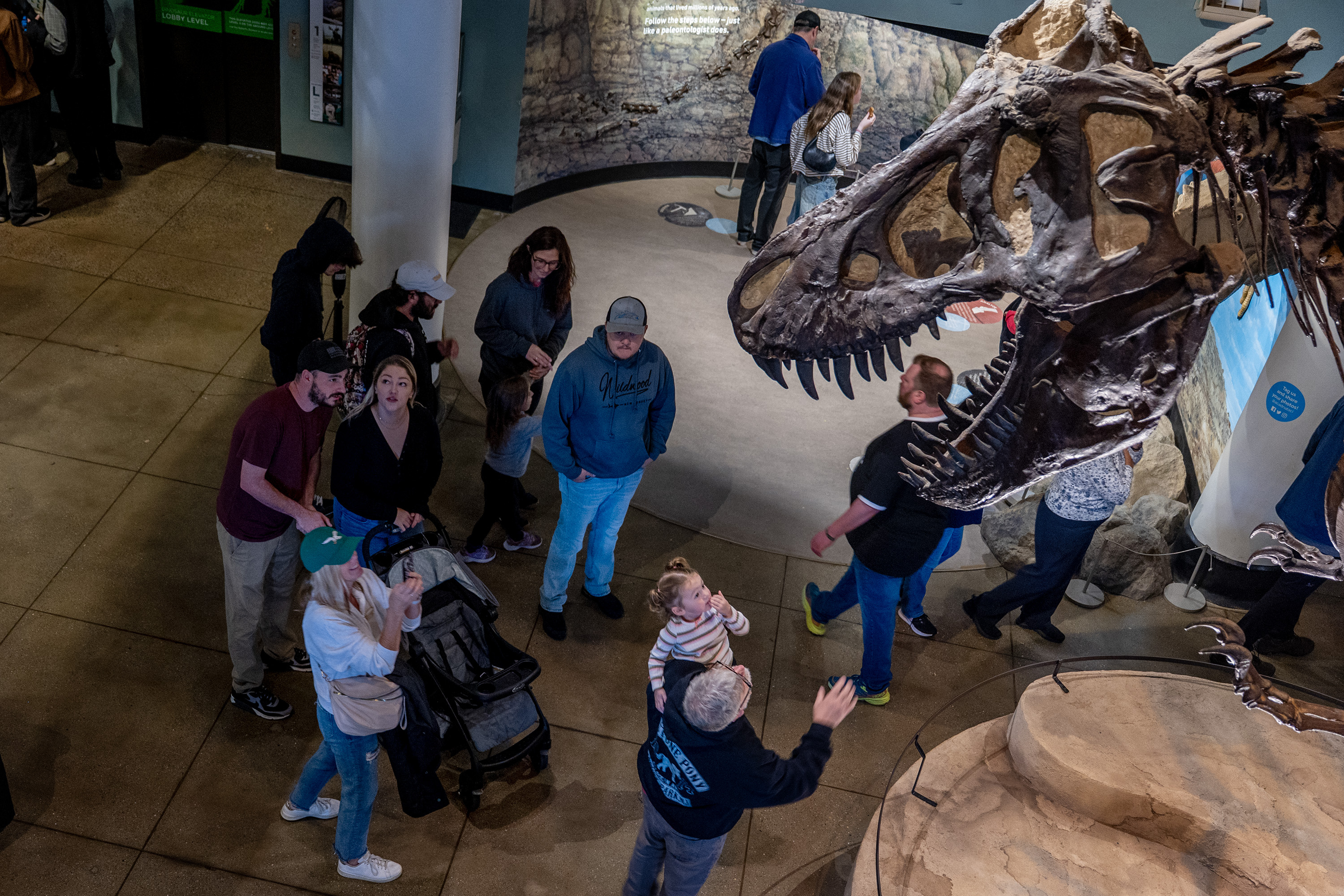
This is one of the city’s cultural crown jewels, housing more than 19 million scientific specimens, including fossils, plants, and animals, supporting global research on biodiversity and environmental science.
Generations of grade school students in the Philadelphia area experience their first formative contact with science and history during field trips that have launched untold careers in pathbreaking fields.
To be sure, the museum has faced declining attendance and budgetary strain since the pandemic and is in need of a refresh. But its finances do not appear to be dire. Its 2025 tax filings show $25.8 million in revenue and $23.8 million in expenses.
The bigger problem is thatthe 150-year-old building on the Benjamin Franklin Parkway faces roughly $150 million in deferred maintenance costs, according to people familiar with the matter.
While that may seem daunting, it is not insurmountable. Twenty years ago, city leaders raised $68 million in 45 days to keep Thomas Eakins’ iconic painting, “The Gross Clinic,” from being sold to an ownership group made up of the National Gallery of Art in Washington and an Arkansas museum.
The William Penn Foundation attempted its own Hail Mary pass to the Academy late last week when it offered to underwrite the costs to operate the museum for at least a year. That seems like some welcome breathing room until a long-term solution is found.
People came out to support and rally outside the Academy of Natural Sciences of Drexel University on Sept. 8.Tyger Williams / Staff Photographer
But Drexel said in a statement that it had not received a formal proposal from the foundation. At the very least, it seems like a generous offer that warrants further discussion.
Instead, the museum opted to close the doors to the public on Sunday.
David L. Cohen, the former Comcast executive and ambassador, has been designated by Gov. Josh Shapiro and Mayor Cherelle L. Parker to serve as their agent to find a solution to keep the Academy going.
In an interview with the Editorial Board, Cohen said solutions have been found to preserve the research and education operations, but an agreement on a plan for the museum had yet to be reached.
Cohen is a prolific fundraiser who once served as former Mayor Ed Rendell’s right-hand man through the city’s near bankruptcy in the 1990s. He has the gravitas and clout to strike a grand bargain.
But it is disappointing to hear that a working proposal already calls for relocating the museum and selling the building. The city has spent decades transforming the Benjamin Franklin Parkway into the museum mile, including the addition of the Calder and Barnes Museums. Moving the natural history museum — and its millions of artifacts — should be the last option, not the first.
Philadelphia has stepped up at other times of civic crisis.
Surely, Philadelphia’s business, political, and nonprofit leaders can come together to find a solution to keep the Academy of Natural Sciences in its iconic location for generations to come.
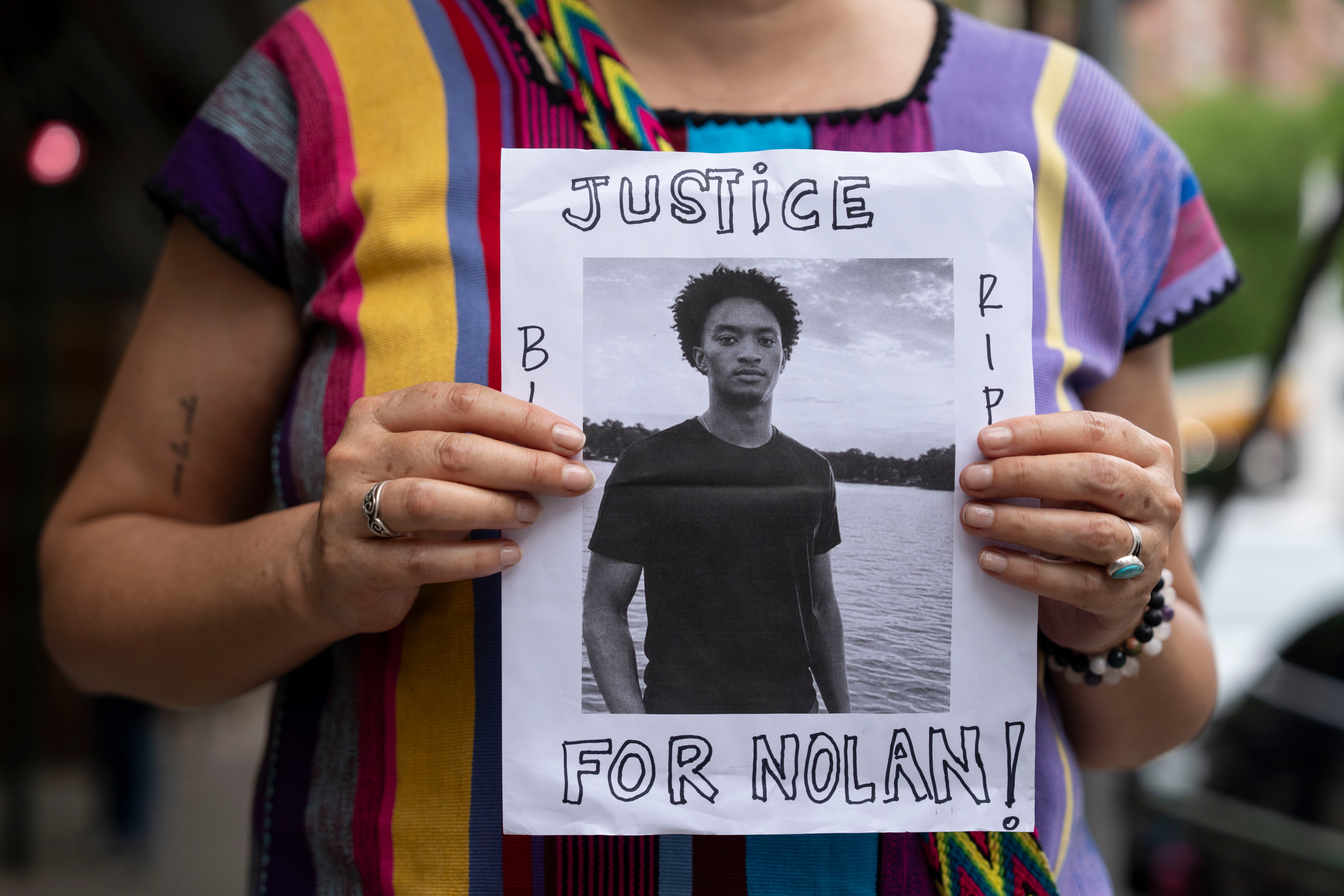
I was angry when I learned that a grand jury found no cause for criminal charges in the death of Nolan Wells, a Black teenager who died after a July 4 boat trip to an island in Mississippi with a group of white friends.
The facts surrounding the case were strange from the time Wells went missing. His friends said the 18-year-old wanted to stay on Horn Island to talk to a girl, so they left without him, and Wells left his phone on the boat. Days later, when Wells’ body was found floating in the waters off the island, Jackson County sheriff officials declared that no foul play was suspected.
Then, just days after the grand jury concluded Wells’ death was “consistent with drowning,” Wells’ family released details from the official autopsy report from the Mississippi medical examiner. The autopsy indicated that there was no water in the lungs, stomach, or throat of Wells, which begs the question: How does one drown without ingesting water?
That troubling question, along with a history that includes countless lynchings, the murder of Emmett Till, and the murder of voting rights activist Medgar Evers, demands a deeper investigation. Yet I know, in that secret place where my ancestral memory lives, that the investigation might never take place.
Wells’ family did all they could to find the truth. They hired attorney Benjamin Crump, sued social media companies for cell phone records, and hired an independent pathologist to conduct a second autopsy after the Mississippi medical examiner performed the initial postmortem. Wells’ friends were mostly silent, but the internet was not. Observers retreated to their familiar corners — left and right, progressive and conservative, bigoted and anti-racist. Our opinions of the case tended to be shaped by our long-held views and lived experience.
Perhaps that’s why, when Jackson County District Attorney Angel Myers McIlrath promised to conduct a fair and thorough investigation, I was skeptical. Then, when she announced that she would convene a grand jury, I was hopeless.
Because grand juries operate in secret and only view the evidence presented to them by the prosecutor, the outcome is heavily influenced by the prosecutor. I believe that’s why we don’t see criminal charges in cases like the tragic death of Nolan Wells.
Just as my ancestral memory calls out to me and screams for racial justice, the history of Mississippi calls out to the current power structure and demands white supremacy.
It’s why the district attorney could release a redacted grand jury report, never share all the evidence, and scold the public for questioning whether race played a role in Wells’ death.
“What I cannot accept, what I cannot ignore, is that false narratives that Nolan’s death was somehow racially motivated, and that this is a case of another young Black man denied justice by a racist, corrupt system, were perpetuated and allowed to spread,” McIlrath said in a video explaining the grand jury’s decision. “There is not a shred of evidence to support these narratives.”
Perhaps the DA can’t accept what she framed as false narratives, but how can we know they’re false? The grand jury operated in secret, then released a report with some of the details blacked out. There was no preliminary hearing, no public airing of evidence, and no real attempt to answer the family’s ongoing questions about what happened to their son.
There is only one thing that I know to be true in the death of Nolan Wells, and his mother, Christine Wonsley, gave voice to it in the wake of the grand jury’s findings.
“Last night was a reminder that our son’s life does not matter to those who hold positions that are supposed to serve and protect the public,” Wonsley said.
It breaks my heart that she’s right.
Editor’s note: An earlier version of this column misstated the location of the island that had been visited by Nolan Wells; it was Horn Island. It also incorrectly noted that Wells’ organs were removed before his body was released to his family; the organs were included with the rest of his remains.