Much like the rest of President Donald Trump’s war with Iran, the latest outbreak of hostilities has produced nothing but death, destruction, and disorder. The current flow of traffic through the Strait of Hormuz makes the Schuylkill Expressway look fast, Tehran retains its capacity to terrorize its neighbors with cheap drones, and more American service members and civilians in the region have been killed or wounded.
Last week, the Trump administration brain trust devised a horribly creative means of adjusting this abysmal cost-benefit ratio: blaming the latest U.S. losses on some other war. The Pentagon now categorizes four of the service members killed in the region and more than 200 of those injured as casualties not of the Iran conflict, but of unspecified “overseas operations.” This is based on the notion that the U.S.-Iranian ceasefire and memorandum of understanding ended the war, which it obviously didn’t.
This accounting trick is an insult to the troops and their families. But the impulse behind it is correct in one sense: It’s time to actually cut American losses and end this misbegotten war for good.
Five months after the United States joined Israel in waging war on Iran for the second time in as many years, the effort has achieved none of the administration’s various stated aims. Iran continues to be ruled by an oppressive theocratic regime with nuclear ambitions and proxy forces that menace its neighbors.
The Islamic Republic is, in some respects, stronger than before, having shown it can fight the most powerful militaries in the region and the world to a standoff. At the same time, it now wields a weapon that may be more effective than a nuke: its ability to rattle the global economy by strangling oil and gas shipments through the strait.
Trump, meanwhile, is under pressure from his vulnerable allies (and business partners) in the Gulf, congressional Republicans staring down a midterm shellacking, and dwindling supplies of munitions. Sure, he can keep threatening to resume the American onslaught to the extent of committing war crimes. But the president has already done more than his share to prove the ultimate inefficacy of both the rhetoric and the bombs.
Rather than risk the lives of more Americans and others, and spend more billions to no avail, the administration must accept the necessity of a tactic it has largely avoided: multilateral diplomacy.
Trump himself has shown intermittent glimmers of understanding this, having periodically groused about the refusal of NATO and other allies to come to America’s aid in the war. Such complaints also revealed the president’s fundamental misunderstanding of the transatlantic alliance, which exists to deter rather than further military aggression, and the nature of international relationships, which rely on the sort of mutual respect to which Trump has laid waste.
It was the hard work of diplomacy that forged the Obama-era agreement among the world’s major powers to prevent an Iranian nuclear bomb, subject to verification by United Nations inspectors, until Trump unilaterally withdrew from the pact during his first administration. The peaceful transit through the Strait of Hormuz that prevailed before Trump’s war likewise rested on broad compliance with international maritime law.
A lasting peace and resolution of the U.S.-Iranian standoff over the strait and the nuclear question may not be possible even with the benefit of broader international cooperation. But they will be impossible without it.
FOPS represents a multitude of residents who live on and near these historic, narrow residential corridors. We engaged with the city, voiced our concerns, and sought a balanced solution that maintains safety for cyclists while preserving essential accessibility for elderly, disabled, and young residents. But City Hall, so far, is beholden to a single, vocal advocacy group, and insists on designing our streets based on politics instead of data, good practice, and engineering. That is slowly changing, with our help.
In pursuing our lawsuit, we are exercising a foundational constitutional right. The judiciary exists precisely to act as a check on government overreach, improper legislative process, and a lack of transparency.
The 2024 death of Barbara Friedes was a terrible tragedy. But even in the wake of tragedy, municipal governments must follow the law and rely on sound traffic engineering. The driver in that tragic crash was severely intoxicated and traveling on Spruce Street faster than the speed limit set for I-95. Banning residential loading and erecting concrete barriers does nothing to solve the single greatest cause of traffic deaths: excessive speed.
Instead, the city’s rushed, politically driven response would make the streets more dangerous. Walled-off lanes turn narrow streets into high-speed e-bike expressways with no egress for pedestrians, separating seniors, paratransit vans, and emergency vehicles from front doors.
We all want safer streets — for all road users: pedestrians, cyclists, motorists, residents, seniors, and people with disabilities. It should be guided by data, accessibility needs, and open public input, not political decrees passed without transparency. This political coercion will soon come to your neighborhood. We’re all fighting back.
Lloyd Brotman,president, Friends of Pine and Spruce
Accountability
Sen. Dave McCormick once explicitly rejected Donald Trump’s Big Lie about winning the 2020 election. Now mum on election denial, he avidly supports the SAVE America Act, purportedly to stop voter fraud.
You may ask: Why would anyone object to proof of citizenship to register to vote? Let’s see: You need either an original birth certificate or a current U.S. passport. REAL ID? Won’t cut it. And if you’ve changed your name, you’ll need legal proof of any changes. Married? Legal proof. Divorced? Legal proof. Surely everyone has the time, access, and money to procure all these documents.
The fraud here is Sen. McCormick parroting the lies Republicans have been pushing for decades about rampant voter fraud. The SAVE Act is a draconian solution in search of a problem, intended not to protect democracy, but to subvert it.
Rosalind Holtzman, Elkins Park
. . .
Let me get this straight. The Inquirer publishes an excellent article about Sen. Dave McCormick and others who are pushing the ill-conceived SAVE America Act on us, and it concludes by saying McCormick declined to be interviewed for the article. All we get are quotes from his canned town hall, where he cherry-picks questions and offers prepared responses. But then we give the senator space for a Letter to the Editor to repeat his one-sided false arguments uncontested. Let’s have some legitimate dialogue with the senator and stop giving him space for his infomercials.
Helene Hilger,Philadelphia
Join the conversation: Send letters to letters@inquirer.com. Limit length to 150 words and include home address and day and evening phone number. Letters run in The Inquirer six days a week on the editorial pages and online.
Congress has every right to investigate the government’s response to the COVID-19 pandemic.
It should ask difficult questions about the origins of the virus, school closures, public health restrictions, research oversight, masking guidance, and the government’s changing messages to the public. More than a million Americans died, businesses closed, families suffered, and trust in public institutions was badly damaged.
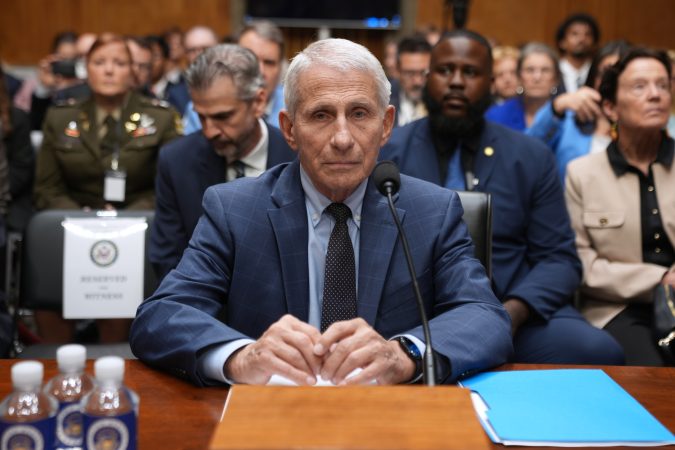
But what is now happening to Anthony Fauci as he appears before the Senate Homeland Security and Governmental Affairs Committee at the U.S. Capitol on Wednesday no longer looks like a good-faith effort to learn from those failures.
It looks like political persecution.
Fauci, appearing under subpoena before the committee chaired by Sen. Rand Paul (R., Ky.), invoked his Fifth Amendment right against self-incrimination and declined to answer questions.
His critics immediately treated that decision as proof of guilt.
It is not.
The Fifth Amendment does not protect only guilty people. It protects anyone who reasonably fears that their words may be used against them in a criminal prosecution. That protection is especially important when the person asking the questions has already spent years accusing the witness of crimes and demanding that they be imprisoned.
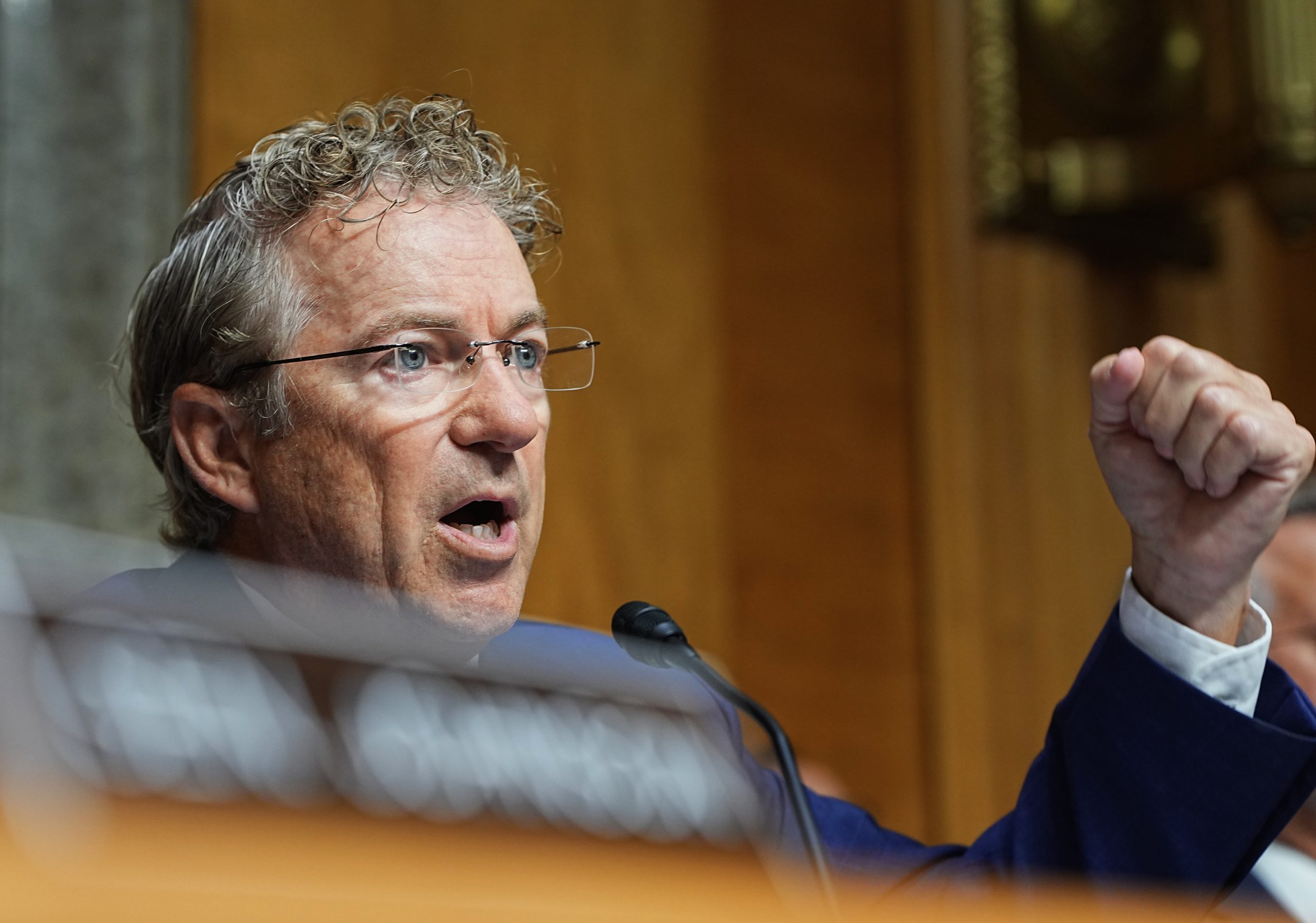
Sen. Rand Paul (R., Ky.), Senate Homeland Security and Governmental Affairs Committee chairman, speaks at the start of a hearing with Anthony Fauci, the former director of the National Institute of Allergy and Infectious Diseases, on Capitol Hill on Wednesday.HAIYUN JIANG
Paul has not approached Fauci as a neutral investigator. He has repeatedly accused him of lying to Congress and called for his prosecution. Under those circumstances, Fauci had every reason to believe the hearing was not simply intended to gather information. It was also intended to create a criminal referral, a damaging headline — or both.
There is a difference between oversight and a trap.
Fauci has testified before Congress many times. He has answered questions about the National Institutes of Health, coronavirus research, government funding, and the still-unresolved debate over whether COVID-19 emerged naturally or through a laboratory-related incident.
Republicans are entitled to challenge his answers. They are entitled to criticize his judgment. But they should not be permitted to announce that he is guilty, threaten him with prosecution, and then place him under oath in the hope that some minor difference in wording can be turned into a new criminal allegation.
The release of more than 1,100 pages of Fauci’s pandemic-era notes shortly before the hearing only strengthens the appearance of a coordinated political campaign.
Those notes reportedly show that Fauci and other scientists privately considered several possible explanations for the virus’s origin.
Of course they did.
That is how science works.
In the early months of the pandemic, scientists were working with limited and rapidly changing information. They considered competing theories, debated evidence, and revised their conclusions as new facts emerged.
Scientific uncertainty is not evidence of dishonesty.
Considering a laboratory origin in private did not require Fauci to publicly declare that theory proven. Nor does changing one’s position as evidence develops amount to perjury or a cover-up.
The journals also reveal Fauci’s private criticism of Donald Trump. Republicans may find those comments offensive, but criticizing a president is not a crime.
Fauci’s real offense in the eyes of the MAGA movement appears to be that he sometimes contradicted Trump publicly.
Trump wanted optimism. Fauci warned of danger.
Trump wanted the country reopened. Fauci warned about transmission.
Trump promoted claims before strong evidence supported them. Fauci attempted, sometimes imperfectly, to return the discussion to science.
That made him a political enemy.
None of this means Fauci should be beyond criticism. His decisions should be examined. The government’s masking guidance, vaccine messaging, school closure recommendations, and oversight of research funding all deserve scrutiny.
But an honest investigation begins with open-minded questions.
This one began with a verdict.
The broader danger goes far beyond Fauci. Scientists and career public servants are being warned that if their professional judgment conflicts with the political needs of a president, they may face years of investigations, public attacks, and threats of prosecution.
That will not produce better science. It will produce fear and silence.
The next pandemic will require experts willing to speak honestly, revise their conclusions, and tell a president when he is wrong. A government that punishes experts for delivering unwelcome information will eventually be left with people who say only what political leaders want to hear.
Fauci is not infallible. But political disagreement is not a crime. Scientific uncertainty is not perjury. And invoking the Fifth Amendment is not a confession.
Michael A. Gottesman is a lawyer and the founder of the New Jersey Public Education Coalition.
It’s terrible what’s going on with Haitians and Syrians who have been living under a special designation known as Temporary Protected Status (TPS).
They’ve literally been in panic mode since last month’s U.S. Supreme Court 6-3 ruling cleared the way for the Trump administration to strip away their ability to legally work and be protected from deportation. Roughly 350,000 Haitians and 6,000 Syrians are scrambling to figure out what their next moves will be.
Will they relocate to Canada? South America? Somewhere else? Or even go underground? Pause for a moment and imagine having to find a whole other country that will take you in.
Many fled Haiti’s 2010 earthquake and have lived in the United States for more than 15 years. We’re not talking about illegal aliens. These people are here legally. They are our neighbors. They own homes. Some have children who are U.S. citizens. They pay taxes. They hold jobs. Many work in hospitals, nursing homes, and retail establishments. Some are entrepreneurs. What are they supposed to do? Where do they go? Do they take their American-born children with them?
MAGA dismisses them, saying, “Go back to Haiti.” But it’s not that simple. The tiny Caribbean nation is on the U.S. Department of State’s Do Not Travel list. It’s not safe there. Not for Americans. Not for native-born Haitians, either.
The Trump administration has dramatically restricted the number of refugees allowed in this year to just 7,500, but makes exceptions for white South Africans.
As an African American, it galls me to have to sit back and watch this kind of racial preference play out. Granted, disparate treatment like this is nothing new. America has always been racially divided — but what’s happening now reaches a new depth of inequality.
It starts at the top.
President Donald Trump’s disdain for Haitians is deep and well documented, having falsely accused those living in Springfield, Ohio, of eating their neighbors’ pets and “destroying their way of life.” He has a long history of racial animus directed at Black people, famously referring to Haiti as being a “shithole country” and claiming many of its immigrants “probably have AIDS.”
Former Fox News host Megyn Kelly may be feuding with Trump, but it certainly sounded as if she were speaking for his administration last month when she said this about Haitians: “We don’t want you. We don’t care if you’re offended.”
Bigot Barbie wasn’t done, adding: “Get out. Go home,” before using an expletive to tell immigrants to go back to Haiti. Kelly delivered her vile commentary shortly after the Supreme Court’s conservative majority ruled that government officials could end Temporary Protected Status for those who had cometo America to escape violence and natural disasters.
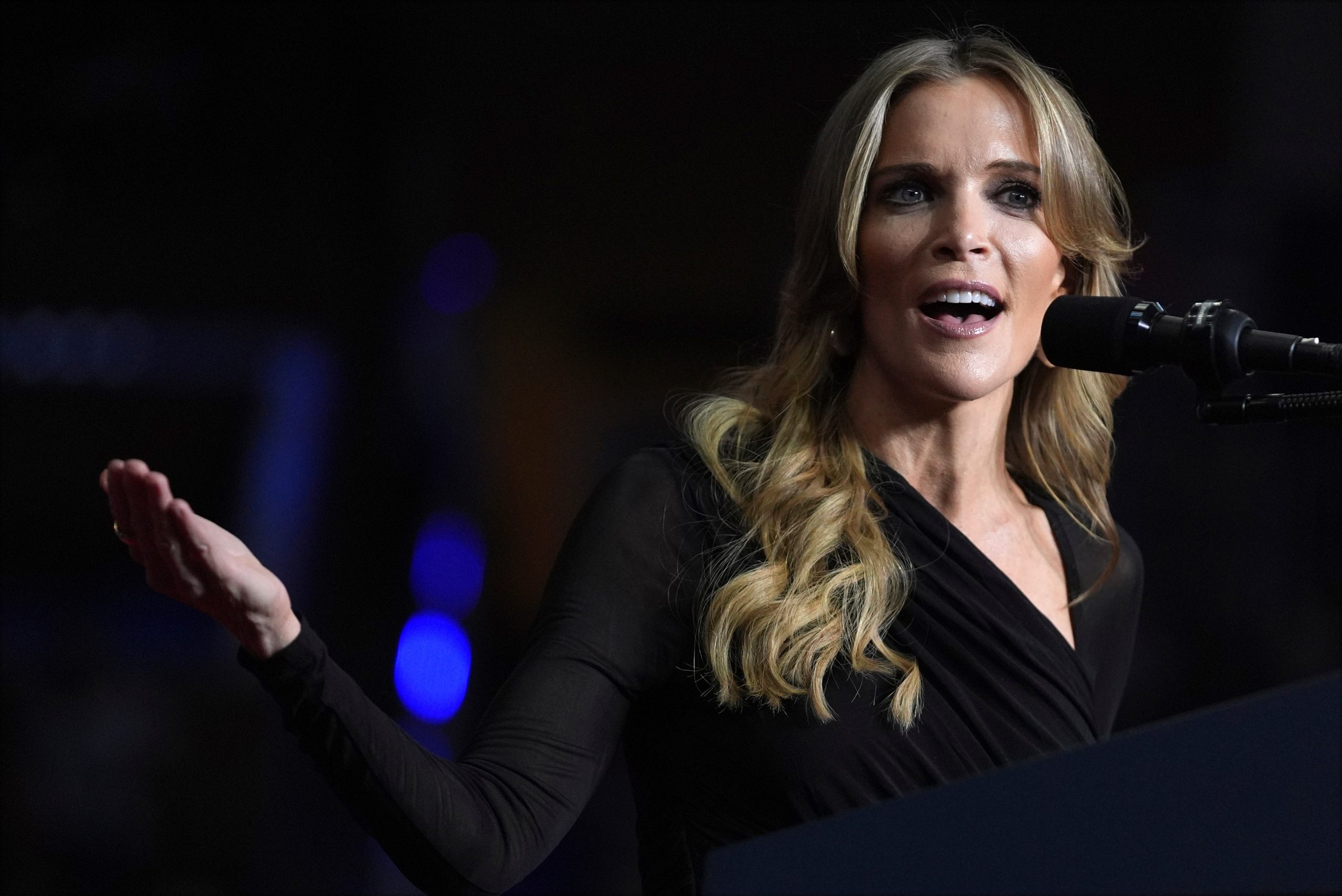
Megyn Kelly speaks at a Donald Trump campaign rally at PPG Paints Arena in Pittsburgh in advance of his election in 2024.Evan Vucci
Now that the protections Haitians and Syrians have been living under have effectively ended, Trump can extend his campaign pledge and include those until now legally residing here in his mass deportation efforts.
This is scary.
And potentially life-threatening.
Yet, it’s not on a lot of people’s radar.
I reached out to the Rev. Jennifer Joseph, the lead pastor at Zion Community Church in Yeadon, where many Haitians worship. She told me people need to know that “folks on TPS are not illegal, and they are not criminals.”
Joseph added, “Those who are not well versed about immigration law just assume that these people shouldn’t have come [and that] they should have known better.”
It’s great that the U.S. allows immigrants to reside here when their homelands are in turmoil. But once people arrive and become long-term, law-abiding residents, they need more pathways to permanent legal status.
They also need to be protected from the political whims of people like Trump or Homeland Security Secretary Markwayne Mullin.
Imagine sitting down in a restaurant and having every item on the menu listed as “market price” — and not being able to learn exactly how much anything costs until after you’ve placed your order.
For restaurateurs, that kind of business model would probably put someone out of business.
For healthcare providers, it’s not only the norm, but it’s also one of the primary reasons so many Americans struggle with medical costs.
Healthcare may be the only entity in which a service is rendered without the user of that service knowing what it will cost them. As a retired physician, I’ve seen how this lack of price transparency can take many forms — all of which are harmful and unfair to consumers.
Facility fees are a prime example of lack of transparency. These are added costs charged by hospitals for services provided there. This information is rarely conveyed to patients, and most patients are unaware of them.
In one specific case, a patient was asked if he wanted his arthroscopic surgery to be done on a Wednesday or a Friday.
The difference was not simply a difference in dates. It was also a difference in locations, as the Wednesday procedure would be done at the hospital, while the Friday procedure would be done at an outpatient surgery center.
The difference in cost was approximately $11,000 because of the facility fees at the hospital. If the patient had a 50% coinsurance policy, they would have had to pay more than $5,000 extra if they chose Wednesday over Friday. How many patients know to ask about this potential added expense?
We must insist that these government mandates regarding price transparency be appropriately enforced. Furthermore, the ruling must be expanded to include any independent facility that provides any type of healthcare, such as a lab or imaging center. Patients have a right to know what things cost before they buy.
Government mandates regarding price transparency must be appropriately enforced, Mark Lopatin writes.Dreamstime / MCT
Facility fees must be removed to reduce the wide variability in costs at different types of facilities. Medicare has a policy in place to address neutral-site payments, but it only applies to certain services. This must be expanded to include all services and all insurers. Furthermore, this policy must be simplified and made readily available to patients in easy-to-understand language.
Hidden prices are also an issue in the pharmaceutical industry. The U.S. Department of Health and Human Services issued a ruling in 2019 requiring pharmaceutical companies to disclose costs in their direct-to-consumer ads.
Predictably, a lawsuit was filed by the pharmaceutical industry opposing this. The end result is that even today, pharmaceutical advertisements make only vague references to expected costs, and there are often multiple exclusions that make patients ineligible to get drugs at a reduced price.
One unique strategy to address some of the cost and transparency issues would be the increased use of direct primary care (DPC), which removes middlemen such as insurers and pharmacy benefit managers from the healthcare transaction.
Without middlemen taking their cut, patient costs come down. Patients who use DPC are able to get discounted posted rates on medications and testing, and they know in advance what their charges will be. Not surprisingly, the insurance lobby is opposed to this model because it restricts its control of the healthcare dollar.
Although affordability and price transparency are huge issues, we must keep in mind that there are many other variables that limit access to healthcare. Having insurance coverage does not eliminate long waits to see physicians or get imaging studies.
Delays can occur for a variety of reasons, such as physician shortages, administrative burdens, and increased patient demand. Efforts to address costs and clarity in prices unfortunately do not address these other issues.
Thus, as the midterms approach, we must consider all of the variables affecting access to healthcare. We repeatedly hear that healthcare is too expensive, but rarely do we hear anyone come up with any concrete strategies to lower healthcare costs.
Affordability is indeed a huge problem that must be addressed, but candidates must realize that access to healthcare is a much bigger issue. Addressing price transparency more strongly would be a good place to start any fixes.
Now all we need are legislators with the guts and determination to fight for patients against those who seek to exploit them for profit motives.
Mark Lopatin is a retired rheumatologist, a healthcare advocate, and the author of “Rheum for Improvement.” He speaks out regularly against forces that seek to compromise patient care in exchange for control of the healthcare dollar.
Congress passed the Fugitive Slave Act in 1850, rewriting a 1793 law that was not being enforced in the North. The new measure gave slaveholders the ability to search for enslaved people who had escaped to the North, capture them, and force their return as the “property” of their enslaver.
What was new about the 1850 law was that defendants were not permitted to testify in special courts before federal commissioners who would decide their fate without a jury. The commissioners would be paid $5 if the defendant was freed, $10 if he or she was returned to bondage.
There’s more. The act had no statute of limitations for a search and capture — meaning five or 10 years after an escape and a new life, an enslaved person could be torn away from that life. Sounds a lot like what U.S. Immigration and Customs Enforcement is doing now.
Why is Donald Trump permitted to “joke” about breaking the law by running for a third term with such seriousness that many people think he can and will actually do so, but if I even hinted in a joke I was going after him, the FBI would be breaking down my door? He is again playing the “I’m serious until I get in trouble, then I’ll say it’s a joke” game. A president declaring an intent to violate the law breaches their constitutional duties. A president swears an oath to protect and defend the Constitution and follow the laws. By saying he is going to ignore a very clear law saying he cannot run again is a direct breach of this oath. This is intentional defiance of the Constitution, which is an impeachable offense.
I do not understand why some reporters don’t corner him with an assortment of masked law enforcement officials (I hear he is OK with masks) and ask him point-blank on camera if he is serious about the crime of running again. Then either drag him off to jail or tell him to stop riling up his followers depending on his answer.
He is like an out-of-control child whose parents do absolutely nothing to stop him.
Ted Swirsky,Erial
Enough already
I have always been a proud American. When many of my high school classmates were sick of saying the “Pledge of Allegiance” in high school in the 70s, I always said it proudly. I can tear up at sporting events when they play “The Star-Spangled Banner.” My grandparents were immigrants from Poland who settled in Camden and had a business. My mom got to graduate from high school. I was the first in my family to graduate from college, and my three children all have advanced degrees. America has treated us well. One of the highlights of my Sunday is reading The Inquirer. However, last week, it brought about discontent and sadness. First, I saw the article about Donald Trump’s insult-laden speech at the White House Correspondents’ Association dinner. Then I read about the signs being placed outside the Smithsonian National Museum of American History that say the displays are inaccurate. (Many people from outside the country visit this museum; they must think Americans are nuts.)
As if all that isn’t enough, I turn to the Health section and see that the University of Pennsylvania and CHOP are forced to close research programs because of Trump’s cuts. Many of these programs are for children.
When are Americans going to say, “Enough”? We cannot suffer through two more years of this administration and still have the country we had before. I haven’t even mentioned the war in Iran yet. To borrow a quote from the 1976 movie Network: “I’m mad as hell, and I’m not going to take this anymore!” Who is willing to stand up and say, “Enough”? This is not who we are.
Jo-Ann Scarlet,Galloway
Costly conflict
On Feb. 28, Donald Trump started a war of choice by attacking Iran. He had been convinced by Benjamin Netanyahu — another leader on the world stage who is avoiding criminal prosecution only because he holds national political office — that together they could, by military force, effect regime change in Iran in a matter of days, with very little cost.
Less than two weeks later, on March 11, Trump declared, “In the first hour, it was over.”
But it appears that like cats, Trump’s war has nine lives.
On Nov. 3, I promise to remember the Republican sycophants who are more concerned about their jobs than the health, safety, welfare, and economic security of their constituents and supported the depravity of this president. I sincerely hope there are enough aware, concerned, patriotic voters who will do the same, so that we get a Congress whose allegiances are to our Constitution and its constituents and not to a would-be king.
James A. Morano,New Britain Township
Tyranny of secrets
Leave it to the Greeks to have coined a term for a political process that appears to be playing out again in our own time. Plato’s notion of thymos, which means “spiritedness, courage, and righteous anger at abuse in a democratic polis,” has been debased by our current liar-in-chief and his cadre of oligarchs into a “thymotic politics” of paranoia, disclosure, persecution, victimization, and blood sacrifice, where mean-spiritedness and selective secrecy are the key. The extrapolation of this government of grievance is another Greek term, megalothymia, which is characterized as the desire to be recognized as superior to others, fueling drives for high status, dominance, or national greatness. Sound familiar? The arrogance of the MAGA agenda is just a recrudescence of an age-old grab for power at all moral costs.
Charles Derr, Philadelphia
Sour ‘Pickles’
I was disappointed to see the Pickles comic strip published on July 24. The punch line — “Yeah, you and Gramma used to be people!” — may have been intended as humor, but it rests on a tired and demeaning stereotype: that growing older somehow means becoming less of a person. In a society that increasingly recognizes the harm caused by prejudice based on race, gender, disability, and other characteristics, ageism is still too often dismissed as harmless comedy.
Older adults are raising grandchildren, volunteering, mentoring, creating art, serving our communities, working, learning, and contributing in countless ways. We are not relics of who we “used to be.”
The Inquirer has long demonstrated a commitment to enlightenment and thoughtful journalism, and has always represented the diversity of our community. I hope the paper will also consider the messages conveyed by the syndicated content it chooses to publish. Humor can be funny without diminishing an entire generation.
Patricia Conroy,Phoenixville, birds3711@gmail.com
Winning feeling
I normally have little interest in the 76ers or the NBA, but I was delighted to pick up The Inquirer Saturday morning and be greeted by a front page without a mention of 45/47. Thank you, LeBron James, for helping to provide that much-needed respite, no matter what else happens during your sojourn here.
Edward “Ed” S. Bardzik Jr.,West Chester
Join the conversation: Send letters to letters@inquirer.com. Limit length to 150 words and include home address and day and evening phone number. Letters run in The Inquirer six days a week on the editorial pages and online.
Occasionally, I get to share good news in this space. Wu Shaoping — the Chinese dissident who fled to America but was detained by U.S. Immigration and Customs Enforcement after a Central Pennsylvania traffic stop — was freed from ICE’s Moshannon Valley Processing Center Friday night, not long after my column dropped and a couple ofmembers of Congress pressed for his release. His asylum case is still pending. I’ve learned there’s actually a lot more to this story — stay tuned.
The Trump regime is shifting billions from college into AI. That’s no accident.
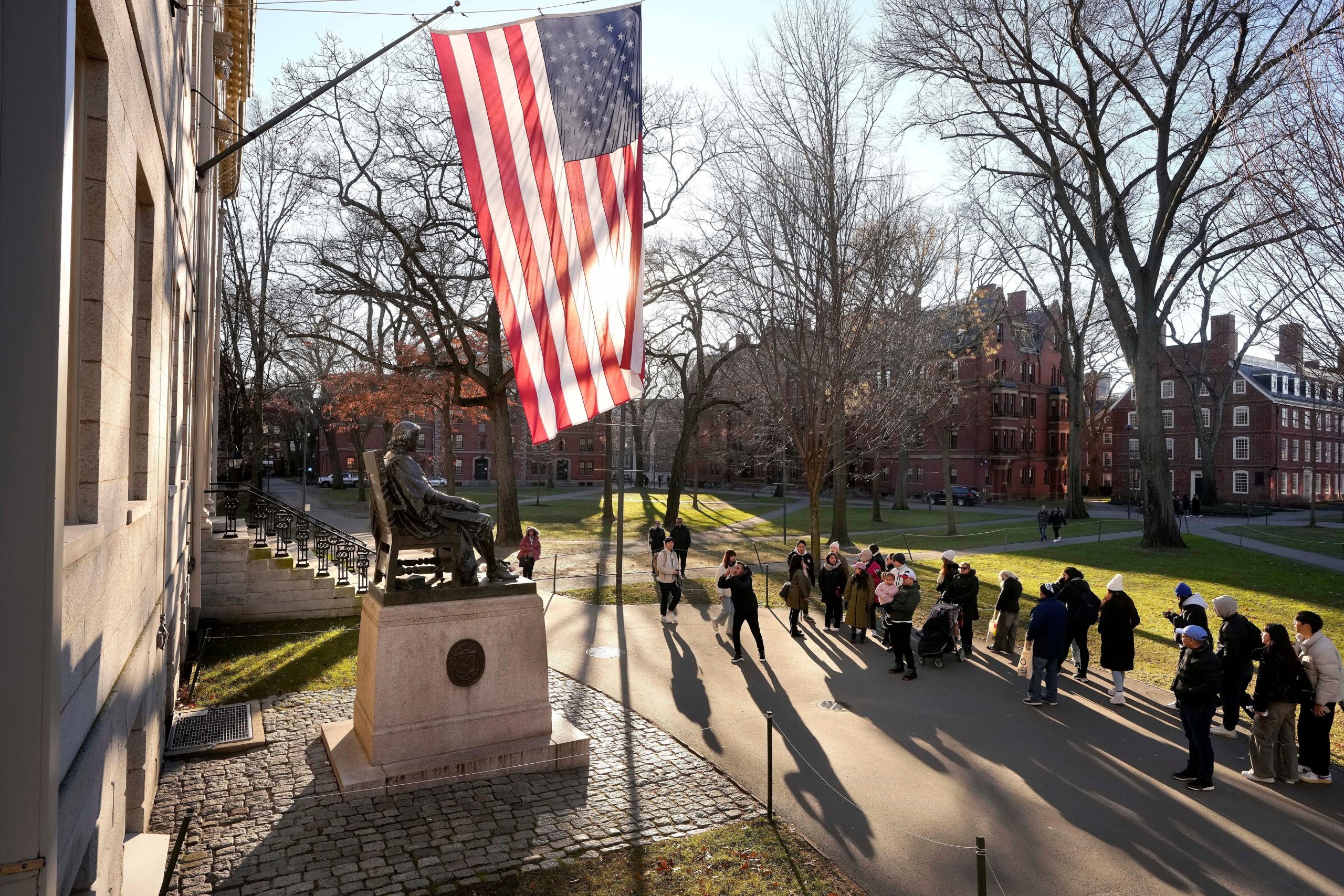
People take photos near a John Harvard statue on the Harvard University campus in 2024 in Cambridge, Mass.Steven Senne
The U.S. government has become pretty stingy when it comes to finding money for human beings — just ask any struggling single mother in Mississippi needing food stamps, or a physician in Africa waiting on vaccines that no longer arrive through American foreign aid programs.
But Washington always seems to have an open wallet for computers.
In fact, the very first one — ENIAC (Electronic Numerical Integrator and Computer), constructed right here in Philadelphia on the University of Pennsylvania campus as World War II came to an end — was funded by the U.S. Army Ordnance Corps at a cost of about $7 million in today’s dollars. Over the years, billions of dollars in federal funding would fuel key moments in the Computer Age, including the creation of the internet, which was also a Pentagon project.
Still, there was something chilling about last week’s report from the White House Office of Science and Technology Policy that called for a surge in research aid in one area: computers and robots using artificial intelligence, or AI. The nuts-and-bolts of the paper — “Science: A New Golden Age” — highlighted a new, more-than-$5 billion commitment for an AI-in-science program called the Genesis Mission.
But the White House paper also called for a radical shift in the way the federal government pays for science, with a massive move of $200 billion away from funding research and basic science at top universities — the system that has thrived since the time of ENIAC — and toward individuals and more directly applied AI projects, including those at private tech companies.
Goodbye, John Harvard. Hello, Claude.
“This plan raises profound concerns about the future of publicly funded science,” the top union leaders for educators — Todd Wolfson of the American Association of University Professors (AAUP) and Randi Weingarten of the American Federation of Teachers (AFT) — said in a joint statement last week. “It does nothing to make anyone healthier or safer, and it isn’t what Americans want.”
Wolfson, Weingarten, and other critics of the new science scheme from the Trump regime say it unravels long-standing protections for academic freedom and transparency on campuses in favor of a process that’s ripe for political interference. “This is a defining moment for American science,” the educators wrote.
Indeed, while the federal funding gains for AI are still mostly theoretical, the cuts for research projects on college campuses across the United States have been underway since Donald Trump took office in January 2025, and the impact has already been dramatic.
The playing field is complex, but a recent deep analysis by the Brennan Center for Justice found that the Trump administration successfully froze about $3 billion in previously approved grants for scientific research, is imposing a scheme to slash an additional $4 billion, and issued a budget proposal calling for a whopping $44 billion additional reduction.
The analysis noted that “these midstream freezes and cancelations have ripple effects far beyond the nominal dollars involved, prompting layoffs, interrupting careers, and destabilizing the budgets of research universities.”
But now it feels like the White House is stating the quiet part out loud: The bigger goal is simply to build smarter computers, even if that means humans get dumber. Intelligent robots still don’t vote in elections, after all, but poorly educated people do.
Ironically, the regime’s rationale for spending our tax dollars on making AI more powerful regurgitates a Cold War mentality that, on the surface, sounds like the reasons behind decades of massive college research funding and programs like the space race of the 1960s or the nuclear arms buildup: to stay one step ahead of the communists — this time in China.
The difference between then and now is that after World War II, Washington made a conscious effort to fund basic science and free inquiry as a way to distinguish the United States from the rigid planned economy of our then-biggest adversary, the Soviet Union. Now, the White House seeks to copy Beijing’s centralized planning. Can we truly promote science without lifting up the actual scientists?
Trump’s “Golden Future of Science” feels more like an extremely narrow wind tunnel. The irony is that many of today’s politicians in both parties see higher education as mainly workforce development, even as corporate recruiters say what they really want are more broadly educated critical thinkers. In other words, the AI era actually screams out for a boost for the humanities like literature or philosophy — the types of majors that are getting crushed in the Trump era.
An epic battle is looming between those obsessed with a new nuclear arms race around AI — especially the Silicon Valley billionaires who stand to gain and who, not coincidentally, have heavily funded the second coming of Trump — and a public that doesn’t want our communities ruined by noisy, energy-guzzling data centers that aim to take away our jobs while making reading a lost art.
A government scheme to build better computers while rendering humans obsolete used to be the stuff of dystopian science fiction. Maybe we can keep it that way before it’s too late.
Yo, do this!
About once a year or so, I write, “Yo, actually maybe don’t do this.” Last weekend, I ventured out of my underground lair to join every other American in devoting three hours to Christopher Nolan’s The Odyssey. To say I was underwhelmed would be, well, an understatement. The movie was a funeral for the now totally lost art of movie dialogue, amid a plot that meandered from gouge-your-one-eye-out boring to bursts of incomprehensible violence. It was a metaphor — Troy was My Lai, apparently — that got terribly lost at sea. But I do feel there’s something happening here. First the World Cup, now this mediocre whale of a motion picture: Americans are desperate to bea part of something, anything, that is bigger than our politics.
Regular readers know I’m a huge fan of the CNN modern history documentaries they now call the Decades Series, but the original format of politics, TV, and music did have gaping holes. A few years ago, they backfilled with a series on The Movies of our post-World War II world. Now, finally, Decades in Sports arrives on CNN with back-to-back episodes (presumably the 1960s and ‘70s) on Sunday night at 9 p.m. I can’t wait. Spoiler alert: Havlicek stole the ball.
Another thing you may have noticed is that Rep. Ro Khanna, who meandered west after Council Rock High School in Bucks County and became the congressman from Silicon Valley, is something of a friend of the newsletter. He’s back in our area frequently, and he’ll be at Philadelphia’s Parkway Central Library on Tuesday at 6 p.m. to deliver a special speech: “America at a Crossroads: A Vision for the Future on our 250th Anniversary.” He’ll talk about his background growing up here as the son of immigrants and the need for economic freedom that ends gross corruption and inequality — go check it out.
Ask me anything
Question: Who should be DNC [Democratic National Committee] chair? And does it matter? — Martha (@marthagrant.bsky.social) via Bluesky
Answer: It does matter. Despite everything else that’s happening in the world right now, one of the more revealing stories of the last week was the New York Times article about Democrats in disarray, focusing on embattled DNC chair Ken Martin, who before the 2024 election was the state leader in Minnesota. Under Martin, the party is sliding deeper in debt, and there are complaints about an abrasive personal style, the botched “autopsy” of the 2024 election, and the Democrats’ muddled message. A change should be made as soon as possible. Hopefully, party leaders could rectify the mistake of not picking Wisconsin’s more skilled ex-party chief, Ben Wikler. The problem is that, under the constant assault of GOP fascism, Dems need to fix this plane while it is flying at 37,000 feet.
What you’re saying about …
There was an excellent response to last week’s question about what a future Democratic president should do on Day One to erase the stench from two Donald Trump presidencies. I wish I could reprint all the suggestions, but recurring themes included a rapid purge of any Trump holdovers, abolishing ICE and related immigration raiders, and a speedy effort to prosecute the many wrongdoers. The two most frequent suggestions included major reform of the judiciary, from fixing the mangled immigration courts to ethics reform, and definitely an expansion of the U.S. Supreme Court. Mark Cohen suggested two more federal appeals courts and then “assign a Supreme Court justice to each one, bringing a total of 13 justices to the Court for fixed term of 18 years.” Another theme was erasing Trump’s various renovations to the District of Columbia. The ex-congressman Joe Hoeffel wrote, “Strip all the cheesy gold out of the Oval Office.”
📮 This week’s question: Speaking of Democrats, some top party officials like House Minority Leader Hakeem Jeffries seem to think the November election is primarily about “affordability.” That seems to miss the bigger moment, but I’m curious: What pithy message would you like to see Dems run on this fall? Please email me your answer and put the exact phrase “Democratic message” in the subject line.
Backstory on the Gen Z revolution rocking India
Protesters participate in a demonstration demanding educational reforms as part of the Cockroach Janta Party’s ongoing protest movement in New Delhi on July 25.Vipin
Last October, I wrote a column, with great interest and enthusiasm, about a growing revolution of Gen Z 20-somethings that was taking place across the global south — from Madagascar to Peru to Nepal, and elsewhere — who were fed up with the political corruption of grown-ups and threatening to topple governments. I wondered if this very online youth activism might spread to the United States or other more developed nations, but over the coming months, the momentum for these protesters and their Japanese anime pirate flags seemed to fade. The so-called Gen Z revolution looked like a historical footnote.
But it turns out that the embers of youth unrest were still smoldering, and this summer they have reignited in a big way in the world’s largest — if deeply flawed — democracy: India. And as is so often thecase, the spark was something nobody saw coming: a nationwide exam for entrance to medical school taken by roughly two million students, which the government moved to scrap after allegations that some of the questions had leaked. Some young people who’d studied for months for the exam took tothe streets in protest, and — as so often happens — a repressive police response only caused these demonstrations to get bigger. So did a comment from India’s chief justice, who described young, unemployed Indians as “cockroaches.”
That gave the protests a name when Abhijeet Dipke, a 30-year-old graduate of Boston University, posted on the social media platform X that he was starting the “Cockroach Janta Party” — a wordplay on the Indian authoritarian-minded leader Narendra Modi’s Bharatiya Janata Party. Incredibly, this “CJP” has seen its protests — calling successfully for the resignation of the education secretary and for other deeper reforms, using tactics such as sit-ins and hunger strikes — spread to some 30 cities while clogging the streets of the capital, New Delhi. The movement has become arguably the biggest threat to Modi’s strongman rule since the leader’s ascension in 2014.
All of which raises the same question I posed last fall: Could it happen here? In one sense, it already has. On Friday, about 500 Indian students and other members of the U.S.-based diaspora gathered under a statue of Mahatma Gandhi in Manhattan’s Union Square to express support for the “cockroaches” of their native country. Meanwhile, the kind of pressures that caused India’s youth to erupt — government meddling in higher education, diminished job prospects in a time of rising AI, to name two — are also found in the United States. Young people almost never protest over the same stuff that riles up their parents, as shown by the gray hairs that have populated the No Kings rallies against Donald Trump. When lightning strikes, it will probably be something as unexpected as a college entry exam. But thunderstorms are definitely in the forecast.
What I wrote on this date in 2019
A culture of death permeates the Donald Trump regime, from the doomed fishing boats of the Caribbean to an Iranian girls’ school to the scores now dying in immigration detention cells. But this is not exactly new. The seeds were planted in the first Trump presidency, when his attorney general, William Barr, led a push to revive the death penalty for federal prisoners in a big way. On July 28, 2019, I asked: “What took the American Caligula so long to bring back the spectacle of executions to electrify the masses (but not the prisoners … they’d be lethally injected) and juice his 2020 reelection campaign? Indeed, the five executions are scheduled around the Christmas holiday, presumably to remind us of its pagan roots.”
In 2026, I’ve been very focused on the individuals whose world has been turned upside down — or, in some cases, ended prematurely — by the horrors of life in these authoritarian United States. Last week, I took a deep dive into the story of Wu Shaoping, a Chinese dissident who fled his likely detainment by Xi Jinping’s regime and made it to Pennsylvania with his wife and teen daughter, only to get arrested at a traffic stop, turned over to U.S. Immigration and Customs Enforcement, and detained. The outcry may have had something to do with ICE’s release of Wu shortly after the column ran. Over the weekend, I wrote about the police killing of Corey Ruiz in Madison, Wisc. — noting that the shootings of civilians by cops have only increased since the massive George Floyd protest marches of 2020. I urged an end to the new numbness about police violence in America.
You didn’t really think I could make it all the way through the newsletter without mentioning the face that launched 1,000 hot takes: basketball king LeBron James. He stunned not just the sports world but America’s founding city by announcing Friday that he is taking his aging but still considerable talents to South Philadelphia, hoping to grab one last title with a completely revamped 76ers. Has there been any other story since then? The Inquirer has told you about the first time James played at the Palestra, his new uniform (No. 23), the speculation over how he will (or won’t) gel with the rest of the Sixers, the speculation over where he might live, hisrelationship with Tyrese Maxey and Joel Embiid, and on and on and on. Just wait until he actually takes the court this fall! Actually, don’t wait. Subscribe to The Inquirer today, slam dunk the paywall, and read every story from now until the hoped-for parade down Broad Street.
By submitting your written, visual, and/or audio contributions, you agree to The Inquirer’s Terms of Use, including the grant of rights in Section 10.
A pending FCC broadcast license review now targets eight ABC television stations owned and operated by the Walt Disney Co. — among them WPVI Philadelphia, known to most viewers as 6abc. It has been said that “all politics is local.” Here in Philadelphia, this truism has applied with growing frequency to clear and present threats to the First Amendment — recently in our public parks and monuments, and now on our airwaves.
In 1934, years before the advent of commercial broadcast television, the Federal Communications Commission was established by an act of Congress to help govern the burgeoning American radio industry.
Among its roles, the FCC now regulates the granting of broadcast licenses, controlling which television stations can or cannot access a finite spectrum of public airwaves. Both by law and by long-standing precedent, broadcast license review is typically an independent, pro forma exercise. Before the current administration — under 14 previous presidents, seven Democrats and seven Republicans — the television licensing process had been largely nonpartisan, and operated in the public interest.
In fact, the need for broadcasters using public airwaves to operate broadly in the public interest is the very definition by which the FCC is meant to grant television station licenses. The FCC is required to renew a broadcast license if it finds that “the station has served the public interest, convenience, and necessity.” Philadelphia’s 6abc and its 55-year-old Action News programming embody this principle.
Unfortunately, under President Donald Trump, the FCC has become — unabashedly — a partisan attack dog rather than the guardian of the public interest.
On May 29, the FCC launched the first stage of a potential challenge to the licenses of ABC-owned and operated stations around the country, including 6abc, Philadelphia’s leading local news broadcaster and a strong pillar of our community. The FCC ordered eight ABC stations — in New York, Los Angeles, Chicago, Houston, San Francisco, Raleigh-Durham, N.C., and Fresno, Calif., as well as Philadelphia — to submit renewal applications years before their original renewal dates, which range from 2028 to 2031.
This is just one of many fronts in a long-running battle between the Trump administration and a broad array of independent media that has cost the American news industry time, money, and, too often, operating independence at a moment of extraordinary need for a free press. The challenge to ABC broadcast licenses has its most recent origins in the political harassment of late-night talk show host Jimmy Kimmel and the daytime program The View, each periodically critical of the president and other government officials on both sides of the aisle.
FCC Chairman Brendan Carr is the administration’s front man in the ABC case. Carr, you may recall, tried to intimidate ABC, its affiliate stations, and Kimmel some months ago, referring, like a mob boss, to “doing it the easy way or the hard way.” This license renewal harassment, which will cost Disney shareholders millions in legal fees, is presumably the “hard way.”
By law, the government’s filing allows public comment for either renewal or denial of ABC’s licenses. You can make your views known, quickly and easily, here: FCC Submit an Express Comment. Responses to the request for comments are due by Wednesday.
We in Philadelphia know that 6abc is an especially inappropriate target for accusations of not operating in the public interest. The station is a longtime ratings leader for news programming serving a geographically broad and politically diverse footprint. It has, for decades, produced consumer interest, investigative news, and community-oriented programming that speaks truth to power of all stripes.
At the Lenfest Institute for Journalism, of which I am chief executive, we have worked with 6abc on nonpartisan election coverage (Every Voice, Every Vote) and on fundraising for Philadelphia-area residents in need (Philly Gives). Executives at 6abc have always offered their help, their production skills, and their unrivaled broadcast audience for free — in the public interest.
This month, we celebrated America’s national freedom and independence, born here in Philadelphia. Let it not be a summer in which Philadelphia’s leading local television broadcaster is, with impunity, threatened with the loss of its right to broadcast freely and independently.
Jim Friedlich is CEO and executive director of the Lenfest Institute for Journalism, the nonprofit, noncontrolling owner of The Inquirer. @jimfriedlich
Donald Trump’s attacks on the media are really a war on the public’s right to know.
His goal is to delegitimize critical reporting that exposes the chaos, corruption, and incompetence within his administration, distract from reality, energize his base, and establish himself as the sole arbiter of the truth.
The problem is the president is a habitual liar. He has told tens of thousands of mistruths during his time in public office, and bends the facts to fit his skewed version of events.
In his second term, this warped version of reality is virtually guaranteed. Trump has surrounded himself with pathetic yes-men who do whatever he demands and tell him what he wants to hear. The absurd theater of fawning bureaucrats praising the president during cabinet meetings resembles a spoof of a George Orwell novel.
Trump declared the U.S. won the war in Iran in March, and again in April, May, and June, but the fighting continues. He claims the economy is great, but nearly half of all Americans said they are worse off financially. He continues to falsely claim the 2020 election was stolen, and spread repeated lies about the upcoming midterm election.
But facts are stubborn. So rather than confront the truth, Trump tries to discredit the media. He labels stories that portray him in a negative light as “fake news.”
The president has long called the media the “enemy of the people” — a phrase used by dictators, including Josef Stalin and Adolf Hitler.
Trump’s response to stories that expose his misdeeds — like dodging taxes — is to file a lawsuit. He has sued the New York Times, the Wall Street Journal, the Washington Post, and other media companies.
Most of Trump’s suits get thrown out. But some media companies have capitulated. Paramount paid Trump $16 million to settle a lawsuit against 60 Minutes that legal observers said was frivolous. ABC paid $15 million to settle a defamation suit that was also considered weak.
After constant complaints by Trump, Paramount-owned CBS canceled Stephen Colbert’s comedy show, which frequently poked fun at the president.
More recently, Trump threatened to revoke the broadcast licenses of ABC and NBC over petty issues, such as not showing his embarrassing speech claiming election fraud.
At the president’s urging, the Federal Communications Commission is reviewing the license held by the Philadelphia ABC affiliate known as WPVI, or 6abc. The public has until Wednesday to express comments about the effort, which appears to be a clear attack on the First Amendment.
The Times has been a frequent target of Trump’s. After the paper reported on security problems involving the $400 million airplane the Qatari government gifted to Trump, the U.S. Department of Justice subpoenaed the journalists who broke the story to intimidate the free press and chill leaks within the administration.
The subpoenas were withdrawn just before Trump was set to speak at the White House Correspondents’ Association dinner — where he continued his attacks on the news media.
Of course, the media is as imperfect as the men and women who work in it. But the founders understood that the free press plays a vital role in democracy by informing the public, holding leaders accountable, and providing a forum for debate.
That is why the First Amendment — which guarantees freedom of speech, freedom to protest, and freedom of religion — remains a cornerstone of our democracy and civil society.
But Trump’s attacks on the media have helped erode public trust in journalism, accelerated partisan divides, and reduced faith in democratic institutions.
As of Sunday, Donald Trump has gone golfing 116 days out of the 554 days he has been in office. That’s 20.9% of his time in office. That is one out of every five days.
America is at war with Iran, and he’s golfing.
America’s standing in the world is decreasing, and he’s playing golf.
America’s economy is suffering, and he plays golf.
And when he isn’t golfing, he is babbling incoherently, and his cabinet pretends everything is OK. Who is running this country? What is our long-term plan to keep our place as an economic powerhouse and the most powerful nation in the world?
Susan Thompson, Media
Election integrity
Your recent analysis of the SAVE America Act and election integrity says more about The Inquirer’s disconnect with Pennsylvanians than the issue itself.
Americans want secure, transparent, and trusted elections. They believe only U.S. citizens should vote in American elections, and according to Pew Research Center polling, 95% of Republicans and 71% of Democrats support requiring voters to show government-issued photo identification before voting. This isn’t a partisan issue. It’s common sense.
Unfortunately, your reporting ignores reality. It dismisses the 6,600 noncitizens registered to vote in New Jersey as “fuel” to the rhetorical fire, ignoring that voting is a right reserved only for American citizens.
The American people know better. They understand the importance of election integrity, and support practical, commonsense measures to ensure only American citizens vote in American elections. Dismissing these concerns as fringe or manufactured ignores what voters have said for years.
This isn’t about making it harder to vote. It’s about making it harder to cheat, increasing confidence in our elections, and ensuring every legal vote counts. That’s why these reforms continue to earn support.
I support the SAVE America Act and implore your readers to look elsewhere for a more thoughtful and honest appraisal of what the bill does.
Dave McCormick, U.S. senator for Pennsylvania
Deficit denial
Peter Dobrin’s reporting on the Philadelphia Museum of Art’s record budget deficits should concern every Philadelphian who loves that institution. As a lover of the PMA — and a financial turnaround specialist — I read it with growing unease.
Daniel H. Weiss, the museum’s director and CEO, is confident the budget will balance in three years, yet five of his six “keys to solvency” sit on the revenue side. His own CFO concedes the problem: Functional revenue has grown 0.3% annually over the past decade, “effectively flat.” The only levers management fully controls today are on the cost side. Yet, the museum insists there is “not a ton of opportunity” to reduce expenses. Its own tax filings say otherwise: Since fiscal year 2021, expenses have grown from $64.2 million to $83.9 million in FY 2025, all against a revenue line that hasn’t been able to keep pace. When revenue is structurally flat, an above-inflation cost trajectory is a deficit-creating machine.
In my turnaround work, I call this the fundraising fairy myth: the belief that philanthropy, government, or a donor who “falls in love with us” will arrive on schedule. To its credit, the museum has avoided the other classic traps that doom turnarounds. But hoping revenue rescues you while declaring the budget uncuttable is how three-year plans become 10-year crises. Cut first. Stabilize. Then build back and fundraise from a position of strength. In that order.
Larry Bomback,Philadelphia
The writer is the former CFO of the Curtis Institute of Music and the founder and CEO of Strategic Nonprofit Finance. He led the financial turnaround of Albright College and is currently the interim CFO at Muhlenberg College.
Join the conversation: Send letters to letters@inquirer.com. Limit length to 150 words and include home address and day and evening phone number. Letters run in The Inquirer six days a week on the editorial pages and online.