Category: Opinion

  • We are overlooking the most critical element of public health for Americans: feeling stuck

    We are overlooking the most critical element of public health for Americans: feeling stuck

    Tracy Chapman’s “Fast Car,” a ballad about a dead-end life, made the Billboard Hot 100 twice, nearly 40 years apart. As a doctor, I’m not surprised. “Fast Car” is about someone trying desperately to move up in life even as obstacles mount — bleak job, insufficient finances, family obligations, and increasing isolation. The song endures because it validates the experience of millions of Americans.

    I hear versions of “Fast Car” every time I set foot in the hospital as a general internist. My patients tell me stories about how, no matter how hard they work, the path to a better future slips farther away. It inevitably comes up as the reason they feel sick. My patients even have a name for their condition: they feel stuck.

    The more I listened, the more I realized this wasn’t just an individual problem. We’ve reached our 250th anniversary as a stuck country.

    I’ve been documenting what our research group has come to call “stuckness” for a decade. It’s more than poverty, loneliness, or a lack of opportunity. Stuckness emerges when real barriers in our jobs, finances, relationships, health, neighborhoods, and politics coalesce to keep people from having a real shot at success and happiness. It is a feeling and a reality that reinforce each other, robbing us of hope, generating chronic stress, and making it harder to move forward.

    As one young man, stuck with dwindling job prospects, mounting debt, and few close relationships, said: “I’m not hopeful. I may not make it past the age of 35 if things continue this way.”

    My patients are right to identify stuckness as the biggest threat to their health. Yet, our country hasn’t found effective ways to fix it. Part of the issue is that when people tell us they are stuck, we believe it can be solved by self-help books, a positive attitude, or the latest wellness fad.

    The bigger issue is that we haven’t really understood the problem.

    My colleagues and I at the research nonprofit Opportunity for Health decided to change that. In a recent survey, we asked working-age adults across America whether they felt stuck. We found that more than one in five respondents — representing about 40 million adults — strongly felt stuck. Nearly half of the people taking our survey felt at least somewhat stuck. Stuckness was most common among lower-income Americans, but one out of 10 of the richest or most educated Americans felt stuck, too.

    Respondents got stuck because of job or financial challenges, worsening conditions in their neighborhood, social isolation or fraying relationships, or because of a sudden illness or disability. Once any one of these challenges set in, others quickly piled on.

    A health problem leads to lost work, creating financial strain that weakens relationships, and the resulting hopelessness and stress further damage health. That cycle helps explain why people who felt strongly stuck were five times more likely to report being in poor health than those who didn’t feel stuck at all.

    While our survey covers only a single year — no one had bothered to ask about it before — other data show that stuckness has grown over time.

    That tracks with what I hear from my patients. The likelihood that low-income Americans can move up the economic ladder has fallen since at least the 1980s. So has the share of Americans who are able to leave neighborhoods that aren’t working for them in search of new opportunities.
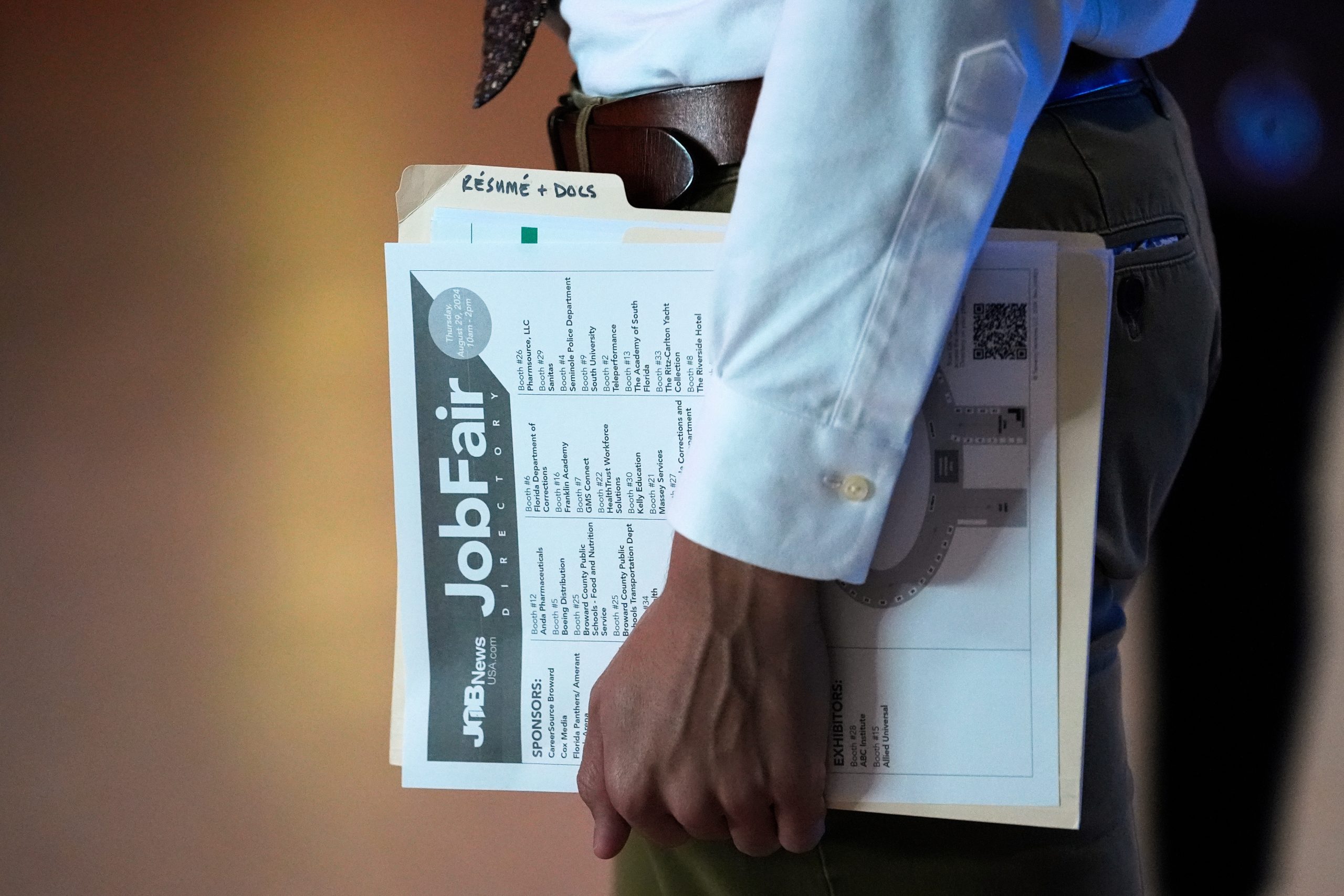
    Using economic survey data, the fraction of working-age Americans facing multiple challenges — whether unemployment, a work-limiting disability, low household income, social isolation, or being moored in place — rose from 14% in the late 1980s to 24% today, writes Atheendar S. Venkataramani.Lynne Sladky

    Based on my calculations using economic survey data, the fraction of working-age Americans facing multiple challenges — whether unemployment, a work-limiting disability, low household income, social isolation, or being moored in place — rose from 14% in the late 1980s to 24% today.

    Stuckness also shows up more often in our culture. In the more than three decades bookending the appearances of “Fast Car” on the Billboard Hot 100, the share of songs mentioning feeling stuck rose from one out of every 100 to one out of every 20 — and that doesn’t include Chapman’s hit or other songs by Bruce Springsteen or Garth Brooks that describe stuckness without using the term.

    It is not a coincidence that the rise in stuckness coincides with our flatlining life expectancy. We are getting sicker despite the trillions of dollars we throw at healthcare. My patients wouldn’t find that surprising: they aren’t asking for more medicines or tests. They just want to get unstuck.

    Because stuckness arises from a cascade of factors, solutions must do two things: prevent people from falling into those slumps and help them escape when they do.

    That means ensuring that work once again provides a pathway to security through fair wages, ample opportunities to develop new skills, and ensuring that new technologies like AI expand rather than replace human potential.

    It means investing in communities that have been left behind, building up local economic capacity and infrastructure so that every corner of America has the basic tools for people to thrive.
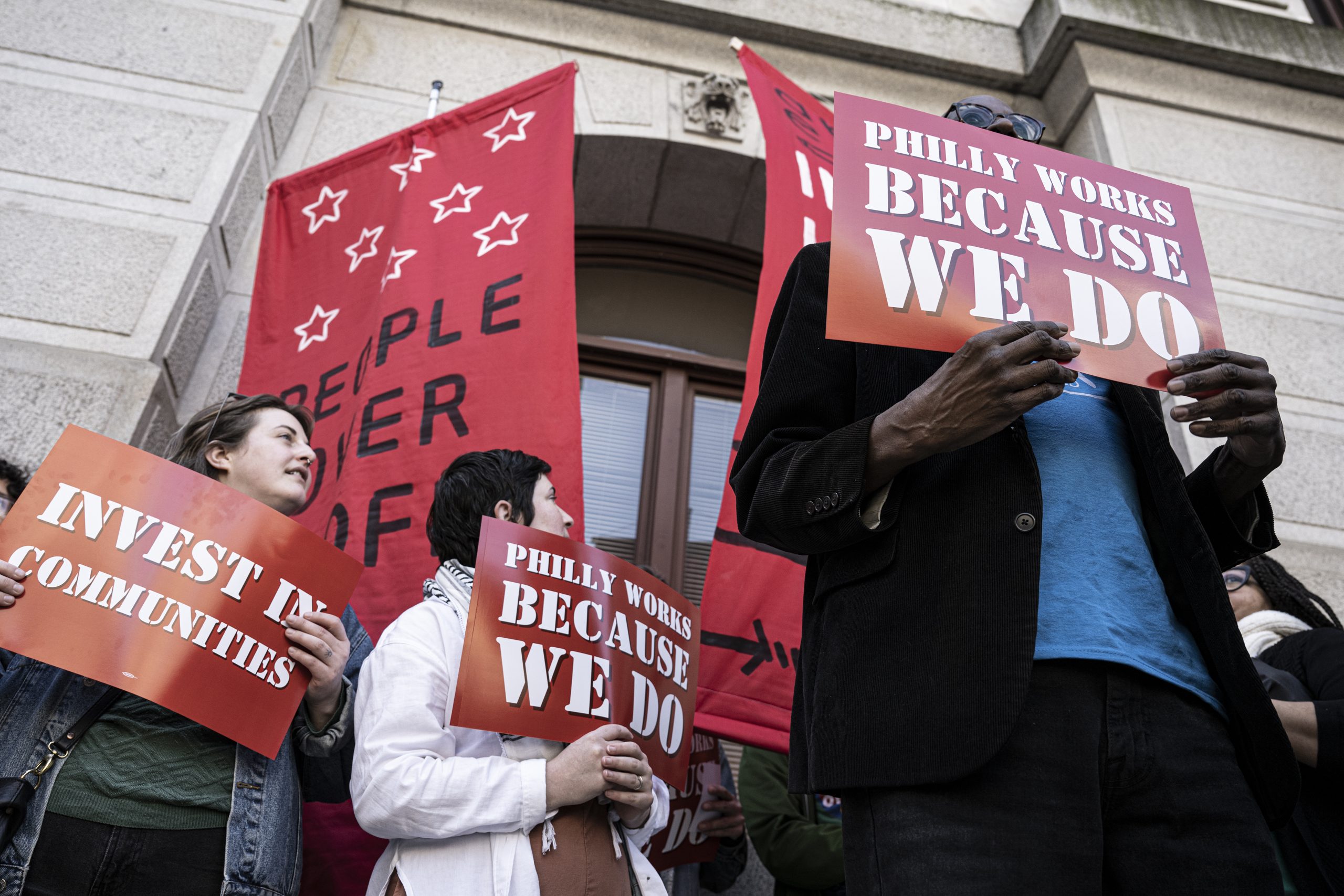
    Because stuckness arises from a cascade of factors, solutions must include investing in communities that have been left behind and building up local economic capacity and infrastructure, writes Atheendar S. Venkataramani.Jose F. Moreno / Staff Photographer

    It means making healthcare, childcare, paid family leave, and other basic supports reliable foundations that keep temporary setbacks from becoming permanent ones.

    Finally, we shouldn’t ignore growing concerns about affordability or the economy. We shouldn’t make it harder for people to access safety net programs like Medicaid and the Supplemental Nutrition Assistance Program (SNAP), as the administration is now doing, because they can help our neighbors escape stuckness.

    And we shouldn’t make it harder for people to weigh in at the ballot box to seek the wider changes that will improve their lives on how to get their communities unstuck.

    The solutions to stuckness will vary across regions. We will need to argue productively, try, fail, and try again to get it right. One of the most shocking findings from my team’s research is that stuckness touches us all: even richer Americans are less healthy when people in their communities get stuck. There’s a reason for that. When millions get stuck, we collectively become less productive, angrier, and more divided.

    Now that our country has turned 250, we face a critical choice. We can keep pouring resources into treating the consequences of stuckness or we can confront its causes.

    My patients already understand this distinction. They know that what makes them sick is not simply a disease. It is the growing feeling that no matter how hard they try, their future remains limited and bleak. If we want a healthier America, we need to build a country where effort once again leads somewhere.

    Atheendar S. Venkataramani is a physician and professor of medical ethics and health policy at the University of Pennsylvania. He is the founding director of Opportunity for Health and is a senior fellow at the Penn Leonard Davis Institute of Health Economics.
  • Trump isn’t done interfering with elections | Editorial

    Trump isn’t done interfering with elections | Editorial

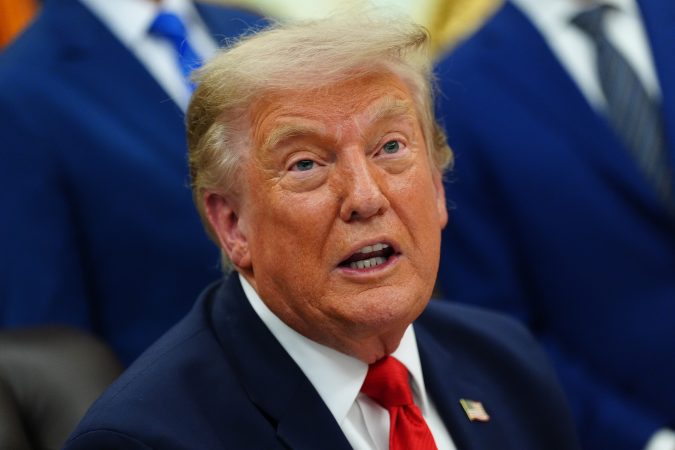
    A casual observer might believe Donald Trump when he says he doesn’t care about the coming midterm elections. Based on the historical record, the president’s basement-dwelling approval rating alone should dismay Republicans on Capitol Hill, and yet he is taking none of the usual steps to shore up his party’s prospects.

    On the contrary, he has persisted in an unpopular and unsuccessful war, reinstituted inflationary tariffs, obsessed over a $600 million ballroom, and refused to sign one of the few substantive bills passed by the GOP-controlled Congress.

    But Trump’s midterm strategy, like his broader political philosophy, is one of subtraction, not addition. Rather than persuade Americans to vote for his fellow Republicans, he prefers to stop people from voting against them. In terms of the effort to suppress rather than win votes, his campaign looks downright frenetic.

    A key chokepoint of this block-the-vote strategy is the mail, controlled as it is by the federal government. Despite taking advantage of the convenience himself as recently as last spring, Trump has been menacing mailed ballots since his botched COVID-19 response helped dramatically boost remote voting. He continued to do so Monday, when his administration petitioned the Supreme Court to let the U.S. Postal Service assume the novel duty of not delivering mail, namely ballots that tend to favor Democrats.

    At issue is his executive order directing the U.S. Department of Homeland Security to compile lists of citizens eligible to vote in each state, to be used by postal officials to interfere with the election. The Justice Department has demanded voter data from all the states under the order, leading to continuing legal disputes with many of them. Ruling on a lawsuit by Pennsylvania, New Jersey, and 20 other states in June, a federal court in Massachusetts blocked the order; recently, an appellate court agreed. As U.S. District Judge Indira Talwani noted persuasively, “the Constitution does not grant the president any specific powers over elections.”

    Administration lawyers nevertheless filed an emergency appeal with the Supreme Court, and who can blame them for trying? The high court’s conservative majority has rescued Trump from accountability for the plot against the 2020 election, taken a jackhammer to the political independence of agencies such as the Postal Service, and enabled states to eliminate districts that are mostly made up of people of color, which tend to lean Democratic.

    Last month, however, the court surprised many observers by narrowly upholding laws in Mississippi and many other states allowing ballots postmarked by Election Day to be counted even if they are delivered subsequently. Should a majority of the justices make another relatively rare decision to side with the Constitution over the president in the latest mail-in ballot case, the administration has other antidemocratic endeavors in the works.

    Even if the Postal Service is prevented from actively targeting ballots, underfunding and consolidation of services could slow their postmarking and delivery to the point of ineligibility. Officials in California believe the agency’s glacial processing may have contributed to the disenfranchisement of nearly 150,000 voters in last spring’s primary election.

    Trump has also been browbeating Republican senators for months over legislation known as the SAVE America Act, which would require a passport or birth certificate to vote — documents that tens of millions of Americans don’t have at hand. Trump has held up reauthorization of intelligence authorities, refused to sign bipartisan housing legislation, and demanded that the Senate kill the filibuster and cancel its August recess to pass the bill. Majority Leader John Thune’s consistent answer has been that Senate Republicans don’t — ironically enough — have the votes.

    The administration can likely be counted on to resort to more jackbooted tactics as the election approaches. Trump has suggested he would be willing to send federal troops and agents to the polls to intimidate voters in violation of federal law. His record of using federal forces against Democratic-leaning states and cities is already extensive.

    Even the successful completion of a free and fair election won’t necessarily be the end of Trump’s efforts to undermine it, as we learned when he tried to reverse a result at the expense of millions of voters in Pennsylvania and other battleground states six years ago. In his recent primetime address, the president was still harping on his 2020 loss — which his new national intelligence director just refused to acknowledge — while laying the groundwork for future interference.

    These tactics failed then, however, and robust public participation and vigilance can ensure that they do so again. The administration’s conspiracy against the election shows Trump still fears the will of the people. He should.

  • 50 years after Harold Rosenthal’s death, his legacy lives on

    50 years after Harold Rosenthal’s death, his legacy lives on

    Fifty years ago this Aug. 11, my brother Harold Rosenthal was late for a plane out of Istanbul bound for Jerusalem. He was always late — school, appointments, parties, or late finishing dinner at Horn & Hardart’s, the only restaurant working-class families patronized in Philly then.

    While my younger brother Norman and I agonized on the sidewalk, Harold would take bites of food in between whatever book he was reading, a passion cultivated when he was a student at Central High in the early 1960s.

    On this August day his tardiness put him near the back of the line at the gate for El Al Airlines. At the time, Harold was working as a senior aide to Republican New York Sen. Jacob K. Javits. He was heading to Israel as part of an assignment for the Senate Foreign Relations Committee, which had sent him on a tour of American embassies in the Mediterranean, ending with a seminar at Jerusalem’s Van Leer Institute.

    Four gunmen from the Popular Front for the Liberation of Palestine stormed the gate in an attempt to hijack the plane. When guards blocked them, they opened fire and then threw a grenade. Four people were killed, including Harold. He was only 29.

    Fifty years on, I’m certain Harold’s improbable rise was built in Philadelphia.

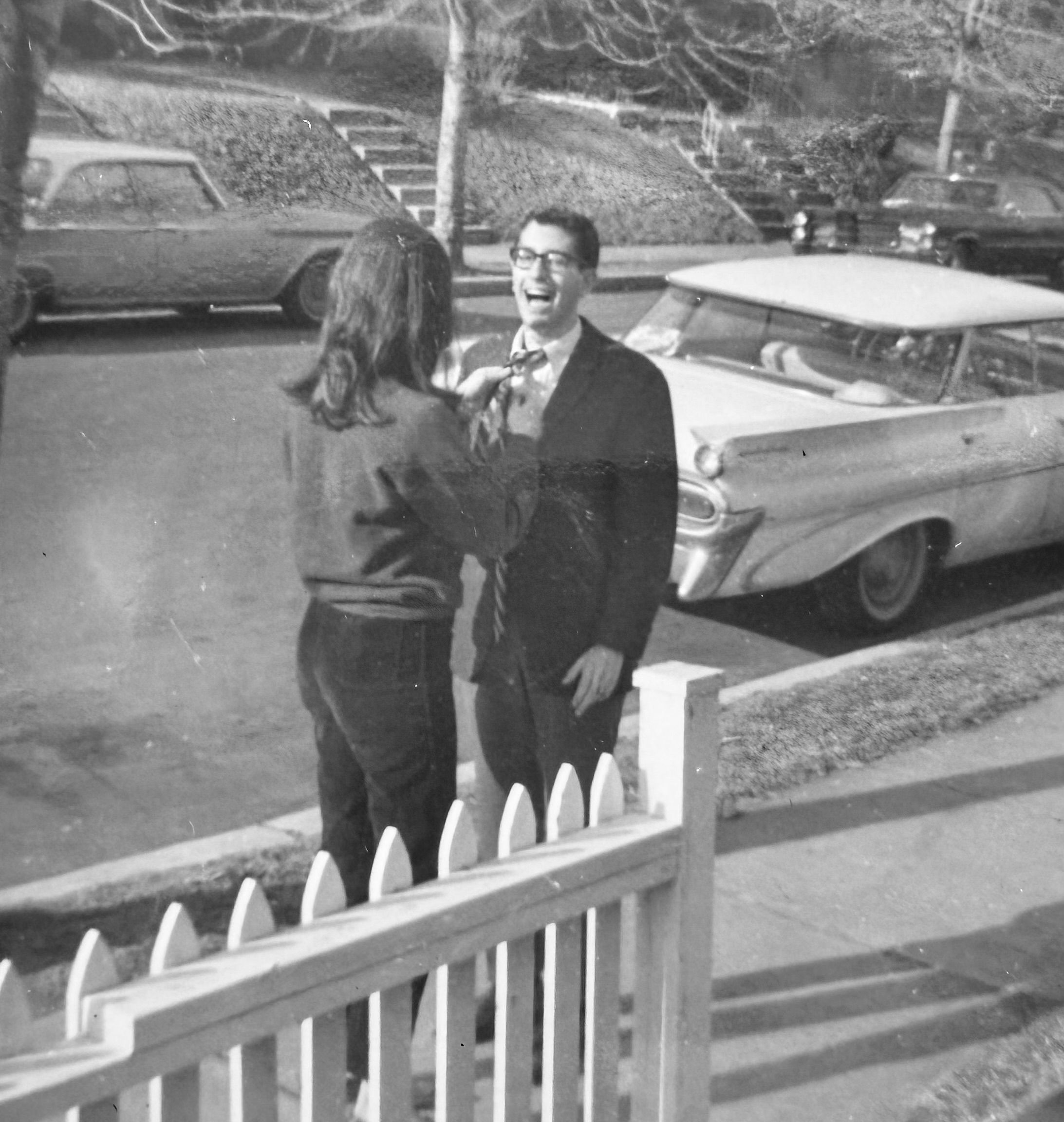
    Harold Rosenthal, on Tulpehocken Street in West Oak Lane, in 1966.Courtesy of Mark Rosenthal
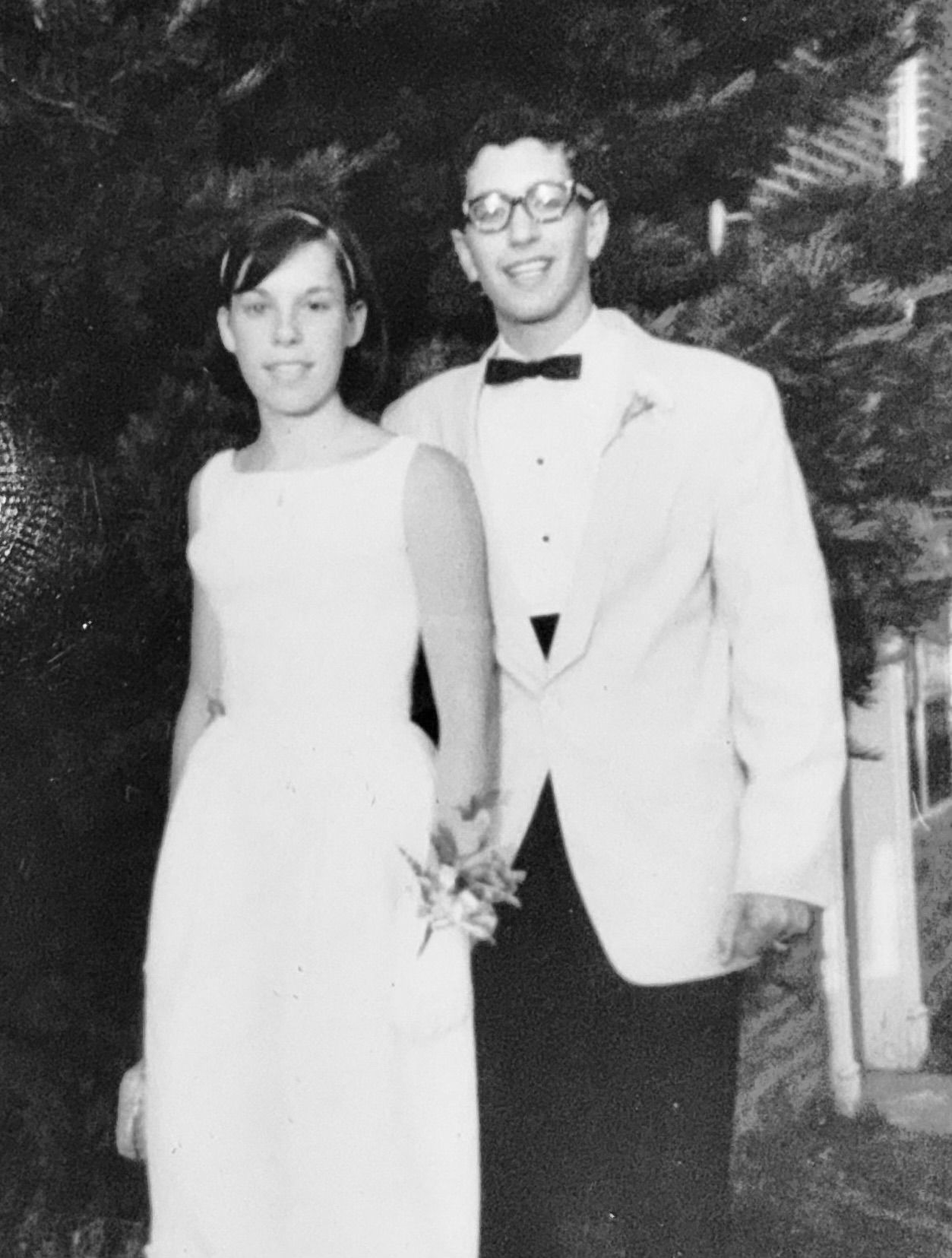
    Harold Rosenthal ready for his senior prom at Central High School, May 1965.Courtesy of Mark Rosenthal

    We grew up in a rowhouse on Tulpehocken Street in West Oak Lane, the kind of block where everyone knew everyone and you learned early which streets were yours to walk down and which weren’t.

    Our parents worked hard but nearly lost that house to foreclosure twice. No kids had cars back then, which was fine. You walked to Pennypacker Elementary and then, to get to Wagner Junior High, Central High, and Temple University, you learned the buses, trolleys, and subways.

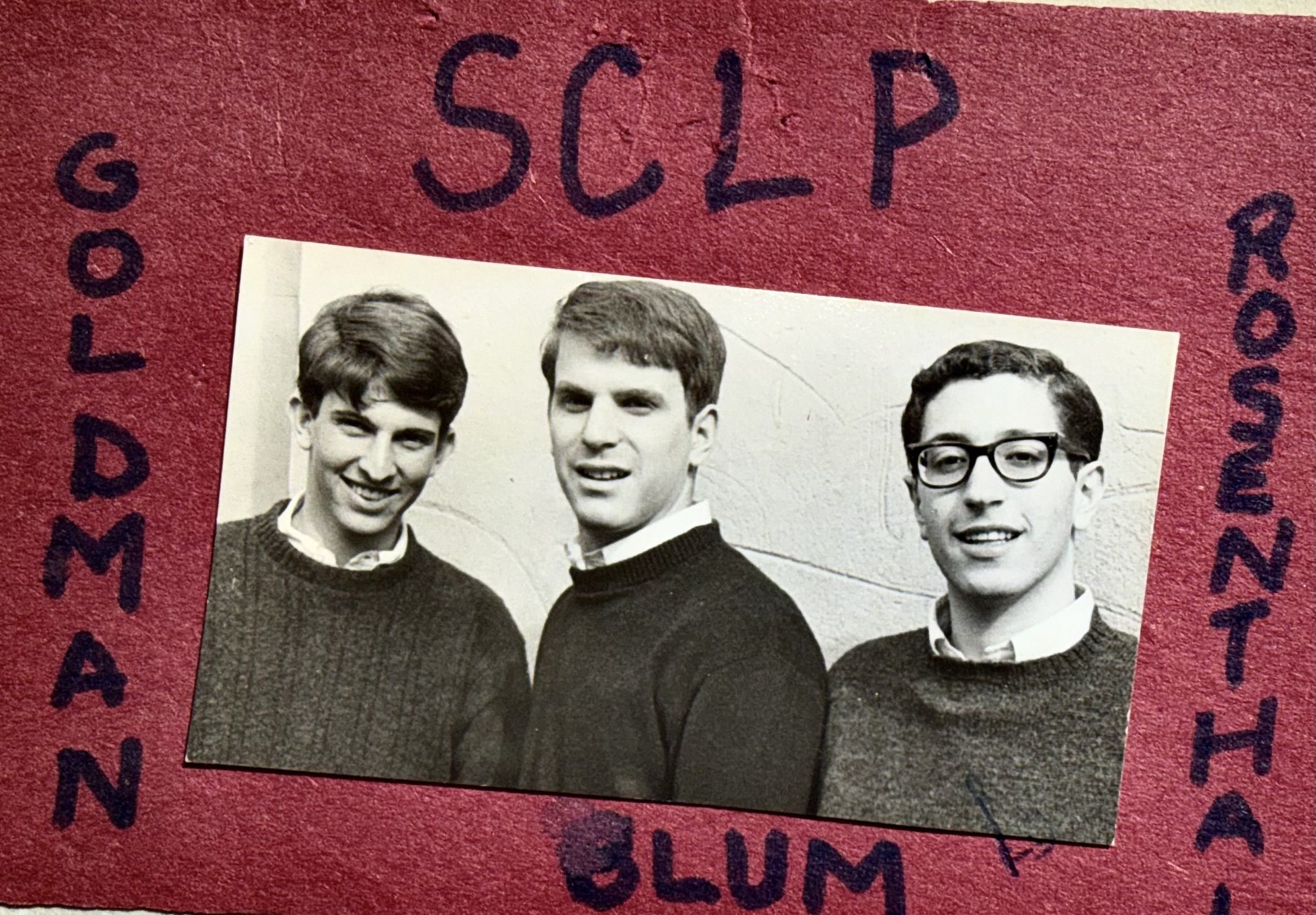
    Harold Rosenthal (right) running for student council at Temple University in 1966.Courtesy of Mark Rosenthal

    Out of this modest life, Harold built a career in a world that seemed unknowable to the rest of us — all on his own. We didn’t have a word yet for “nepo baby” because no one we knew had money or connections. But Harold was audacious about wanting more. That audacity carried him to a scholarship in France, then Cambridge University in England, and finally Harvard.

    I was awed by his fearlessness. At Cambridge, seated at the back of a church for an Advent Carol service, he watched choristers slip through a side door and, deciding his seat wasn’t good enough, followed them. His friends — the ones who’d never dare follow — watched an hour later as he processed down the aisle in white robes, candle flame dancing, past Prince Charles, biting back a laugh.

    That was Harold in full: certain that any door marked not for you was the one worth opening.

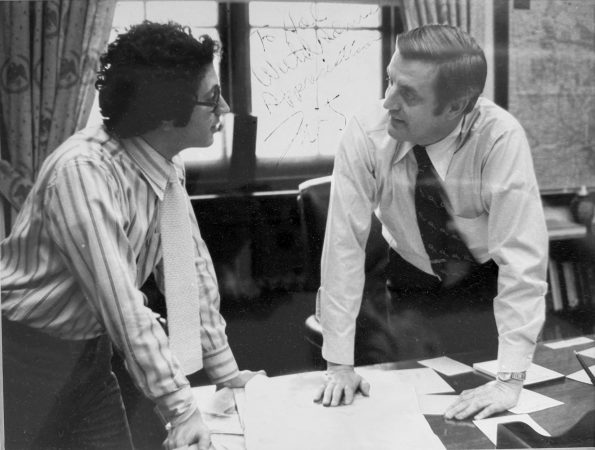
    After Harvard, his climb was stunning. Legislative assistant to New York Rep. Hugh Carey, then for Sen. Walter Mondale of Minnesota, a stint at the Rockefeller Brothers Fund, and finally a senior adviser to Javits.

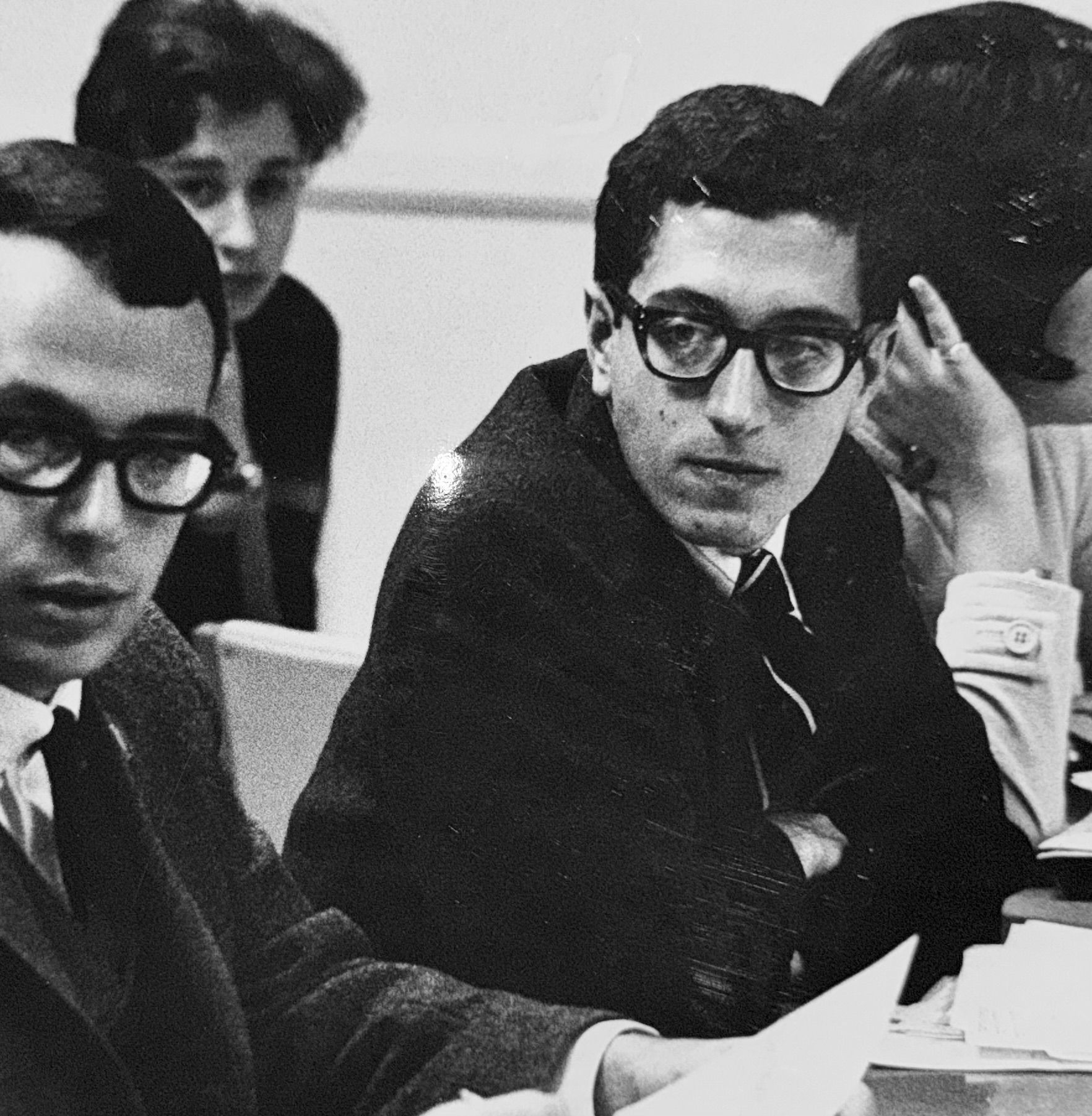
    Harold Rosenthal at a Harvard seminar in November 1972.Courtesy of Mark Rosenthal
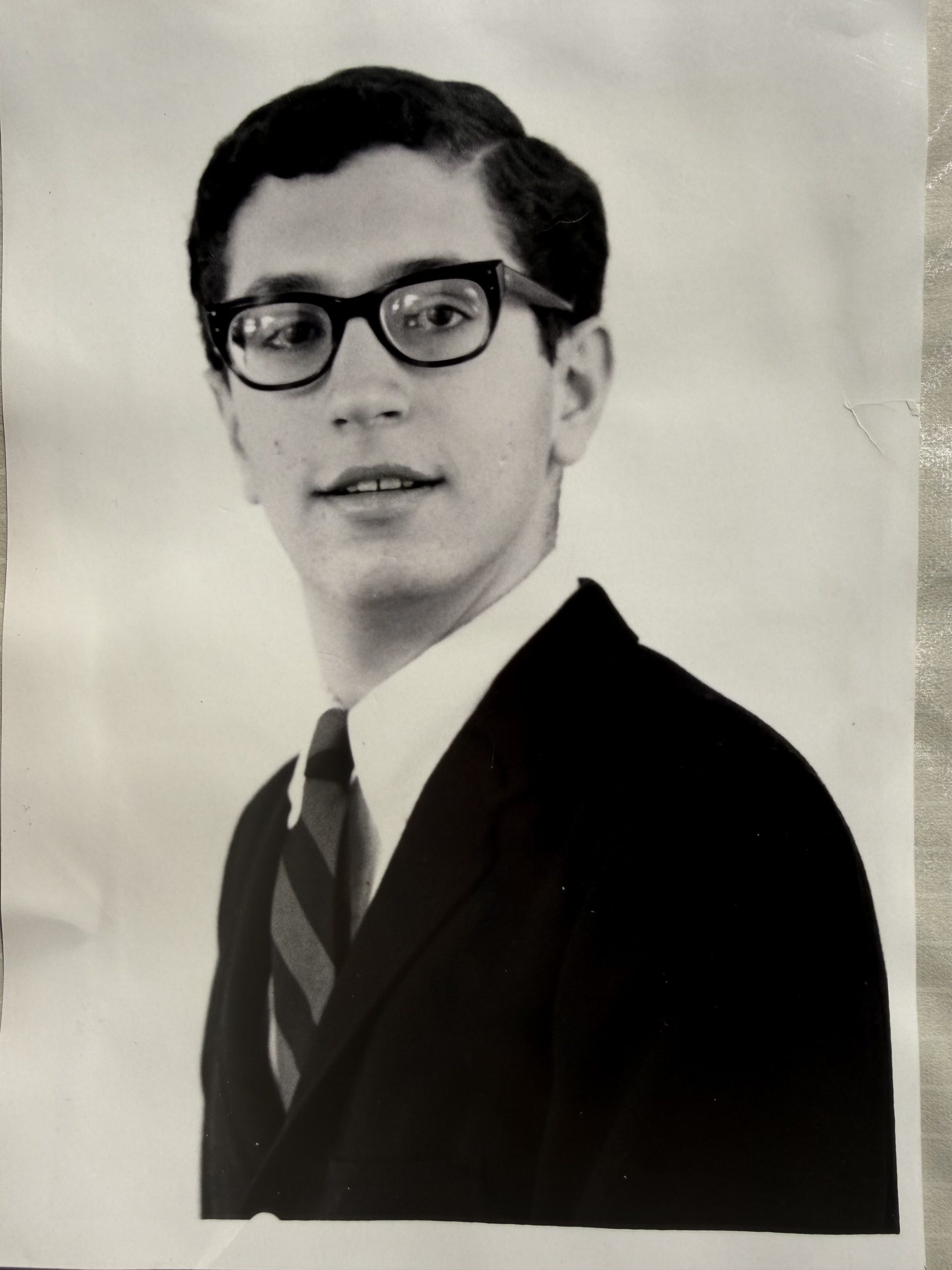
    Harold Rosenthal’s official portrait for the Senate Foreign Relations Committee, 1976.Courtesy of Mark Rosenthal

    Sen. Mondale had already told him that if Jimmy Carter won the White House in November, there’d be a staff position for Harold in the West Wing or as part of an undersecretary’s desk at the State Department. A public school kid from a Philly rowhouse, one election away from the top of the government.

    That August I took a position as a teaching assistant at the University of the Pacific in California, more hiding from adulthood than pursuing a doctorate. Our younger brother, Norman, was already on his way to an influential career as an endocrinologist.

    Harold Rosenthal (center) during a State Department visit to South Africa, 1974.Courtesy of Mark Rosenthal

    If my future was uncertain, Harold was rewarding my overworked parents with the gift of an insider’s view of his rise. He always shared his itinerary, printed on Senate stationery, with my mother, who tracked this Mediterranean tour almost hourly. He was only passing through Istanbul.

    I was at a going-away dinner near Penn when I called home and heard the fear in my mother’s voice — something about an attack on an El Al flight. There was no cable news then, no way to know. I quickly said my goodbyes and drove to Roxborough.

    I opened the door to find my mother collapsed on the floor and my father — who’d flown with the Flying Tigers in China during World War II, and who’d lost his own cousin on D-Day — slamming his head against the wall. A stranger from the State Department had called and quickly said, “We regret to inform you that your son is dead. Someone will contact you soon.” That’s all.

    It took time to bring Harold’s body home. Turkish law required an autopsy first, and a friend of Harold’s quietly warned me it would leave him unrecognizable. Waiting for Harold, my father consoled himself with the fact he’d be able to see his son one last time. In the back of a limo to Roosevelt Cemetery, Norman and I had to tell our father the casket would be closed — one of the hardest sentences I’ve ever spoken.

    Sens. Mondale and Javits both eulogized Harold at the funeral on Broad Street. Weeks later, after a memorial at the Capitol, I sat with my parents outside, silently, in the brutal heat and viscous humidity waiting for a valet to find their car, which had been misplaced. Watching people coming and going up and down the marble steps, I realized this world wouldn’t stop for Harold. It doesn’t pause for anyone. It was already looking for his replacement.

    Years later, because of a new thing called the “internet,” we were handed a second wound. Just a year after the attack, a Christian-supremacist cult leader had fabricated a grotesque “Rosenthal Interview,” inventing a confession in which Harold revealed how Jews secretly run the government. So witless — it was dated a year after Harold died. It was too absurd to survive anywhere but in fringe pamphlets — that is, until the internet gave it a permanence no pamphlet ever could.

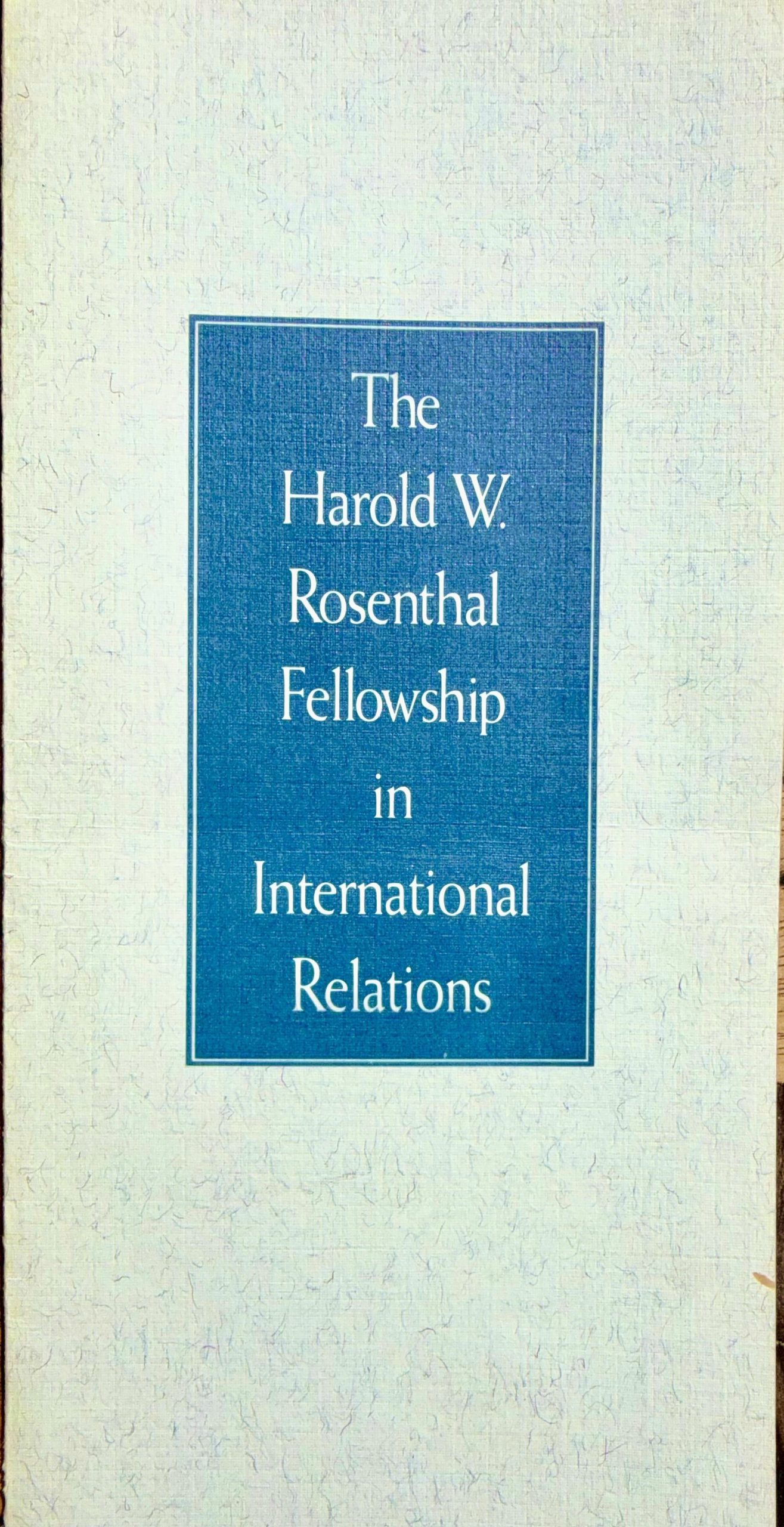
    What outlasted the hoax is the Harold Wallace Rosenthal Fellowship in International Relations, founded by his friends in 1977. Fifty years and over 300 fellows later, it’s still helping ordinary students from ordinary families into congressional offices and embassies — through the same door Harold forced open with nothing but nerve.

    The fellowship started by Harold Rosenthal’s friends on Capitol Hill is still going strong, placing graduate students into offices from the Senate to the Pentagon.Courtesy of Mark Rosenthal

    The night Harold’s shiva ended, sitting in my parents’ now quiet apartment, I demanded of myself to learn something from Harold’s death. Two things happened. First, I admitted the only thing I actually cared about was movies, not academics, and after my doctorate was done, I packed my car, which had been Harold’s car, and drove to Los Angeles to figure out a way into the movie business.

    Second, I swore never to hear news the same way again. We measure disasters in body counts — just two, just eight — a statistic filed away and forgotten by people with their own lives to return to. I promised myself I’d stop, every time, and imagine the families behind each number.

    In floods in Texas. In Gaza. In Kyiv. The dead are aggregated. Grief is always singular. Every one of those numbers is somebody’s brother, somebody’s family.

    Mine was Harold.

    Mark David Rosenthal is a writer and producer of film and television. He is a member of the Motion Picture Academy of Arts and Sciences and the Writers Guild of America, West. He was nominated for an Emmy for the 2016 miniseries, “Roots,” and his WGA credits include “Mona Lisa Smile,” Tim Burton’s “Planet of the Apes,” and “The Jewel of the Nile,” among many others.

  • Letters to the Editor | Aug. 2, 2026

    Letters to the Editor | Aug. 2, 2026

    Facing truth

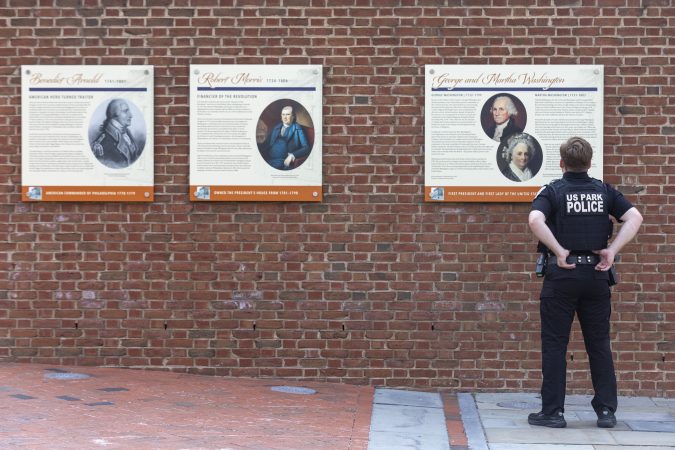
    The longer I live, the more I see how family difficulties and those that must be confronted in our society have parallels. One mutual theme is denial — in therapist lingo, it is far, far more than a river in Egypt. It is the inability or refusal to see glaring truth. For example, when a daughter speaks up about sexual abuse — most often by a close family member — her mother often refuses to believe her for myriad reasons, usually supported by other family members, including siblings. In time, with support, a violated young person can move on with their own life, even if rejected by blood relatives. Let’s use this lens to look at the sneaky removal of the truth about the people enslaved by George Washington at the President’s House.

    It is not coincidental that it was done in the cover of darkness by those who refuse to face the truth. The panels depict violations endured by human beings treated like chattel. They were ugly things to consider, but they were things America must face. Regardless of the stony path of reality, a country, like a family, must face the truth to move forward together with any semblance of health. Once we find the courage to confront reality together, there is no problem that we cannot solve.

    Of course, a young, abused woman whose family does not face the truth of her hell can move on. But a split on the truth is something America cannot survive. Tragically, this split is being fed by leadership in Congress and the White House. There is only one way to address this cancer in our midst. There is only one way for America to survive. I ask all who support Donald Trump to face the truth: We no longer have a president leading and inspiring America. We have only a dictator, committed to denying us the opportunity to come together and heal.

    SaraKay Smullens, Philadelphia

    Labor loyalty

    The recent article about unions supporting Republican Reps. Brian Fitzpatrick and Rob Bresnahan was infuriating. According to the latest AFL-CIO scorecard, the average score (i.e., the percentage voting with labor) for the seven Pennsylvania Democrats in Congress was 98% for 2025 and 99% for their lifetime. The 10 Republicans in Pennsylvania’s congressional delegation achieved an average 6% in 2025 and 16% in their lifetime. Of those Republicans, Fitzpatrick’s 2025 score was 46% and 58% for his lifetime, whereas freshman Bob Bresnahan attained 8% as both his 2025 and lifetime scores.

    What these statistics tell us is that while the principles of the AFL-CIO and its affiliates are lined up closely with Pennsylvania’s Democrats in Congress, many union leaders still prefer to grade on a curve when considering endorsements for Republicans. Rewarding representatives for work on a particular bill is no way to run a political endorsement campaign. Supporting candidates who will stand consistently with labor is.

    Coleman Poses, Philadelphia

    Join the conversation: Send letters to letters@inquirer.com. Limit length to 150 words and include home address and day and evening phone number. Letters run in The Inquirer six days a week on the editorial pages and online.

  • I’ve caught real voter fraud. What Trump’s saying about New Jersey doesn’t come close.

    I’ve caught real voter fraud. What Trump’s saying about New Jersey doesn’t come close.

    When I heard that roughly 6,600 people who were not American citizens were registered to vote in New Jersey ahead of the 2024 election because of a software glitch, I felt a familiar sense of dread.

    It wasn’t just because having ineligible voters on the rolls is concerning and never should have happened. It’s because despite what President Donald Trump would have you believe — with his unfounded claims of mass voter fraud — there is absolutely no evidence that these kinds of irregularities are the result of any organized effort to influence our election results.

    For Trump, this was not a coding error. It was evidence that America’s elections have been corrupted and the only way forward is to pass the SAVE America Act, a measure that would make it more difficult for many people to vote and which would represent the biggest ever federal intrusion into state control over elections.

    “These are just the ones that got caught,” the president wrote — again, without any evidence — in a social media post urging passage of the measure. “The real numbers will prove to be many times this amount.”

    That kind of rhetoric is the exact opposite of what our electoral system needs. Election fraud, administrative mistakes, and other voting irregularities deserve careful investigation, not fearmongering. I know this firsthand.

    Before joining The Inquirer, I worked at the Philadelphia City Commissioners where I investigated and identified real examples of voter fraud.

    What I saw when I worked in the system — and what my reporting has shown in the years since I’ve left it — is that electoral fraud is exceedingly rare; that the public officials I worked with didn’t hide or ignore any problems; and that when mistakes are made, they are found, fixed, and handled transparently.

    That last is exactly what New Jersey Gov. Mikie Sherrill did on July 21 when she explained that because of an error at the state’s Motor Vehicle Commission, a computer system erroneously registered people who were not eligible. Officials said that the 400 or so people from that pool who voted lived throughout the state, were registered in both political parties, and there was no evidence that any election results were swayed by their participation.

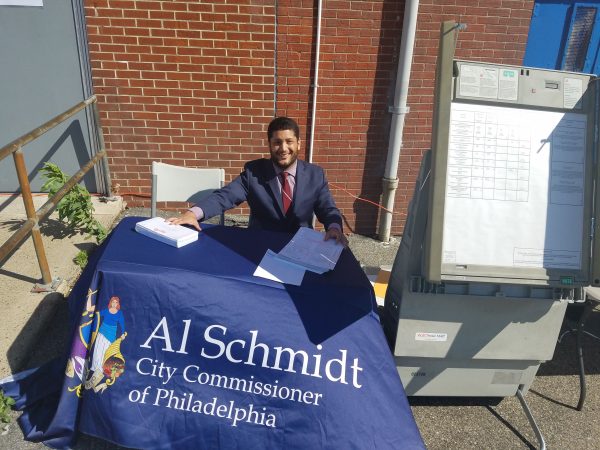
    Daniel Pearson and then-City Commissioner Al Schmidt in 2015.Courtesy of Daniel Pearson

    For those who diligently follow election administration news here in Philadelphia, this story might have felt like a distant echo. That’s because nine years ago, something similar occurred here.

    In 2017, Al Schmidt, who now leads voting statewide, was a Republican city commissioner in charge of voting in Philadelphia when he announced that an investigation had uncovered 220 people who were not American citizens on the city’s voting rolls.

    As with the situation recently in New Jersey, the source of the problems back then was also traced to a computer glitch connected to the driver’s license process. Even though they were ineligible, the system still asked the affected people whether they wanted to register to vote.

    Schmidt publicly stated what had happened without inflaming the situation, and pledged to protect people whose immigration status was now threatened by mistakes made by others. (He went as far as attending immigration hearings on behalf of some of those affected.)

    That style of leadership — clear, non-alarmist, focused on solutions — mirrors what Sherrill is doing in New Jersey now.

    It’s also worth noting that the Garden State is hardly alone in owning up to its errors. Earlier this year, Republican Auditor General Tim DeFoor released an audit of Pennsylvania’s system. Out of the 210,000 records his office examined, just one included an ineligible voter — a lapse blamed on human error, rather than any broader issue.

    In Pennsylvania, the system worked. A mistake was found, identified, and corrected. Sherrill seems on the path to doing the same.

    Unfortunately, the president wants to try to use New Jersey’s stumble for his own political gain — a cynical approach that makes it harder to be taken seriously when actual irregularities and malfeasance are discovered.

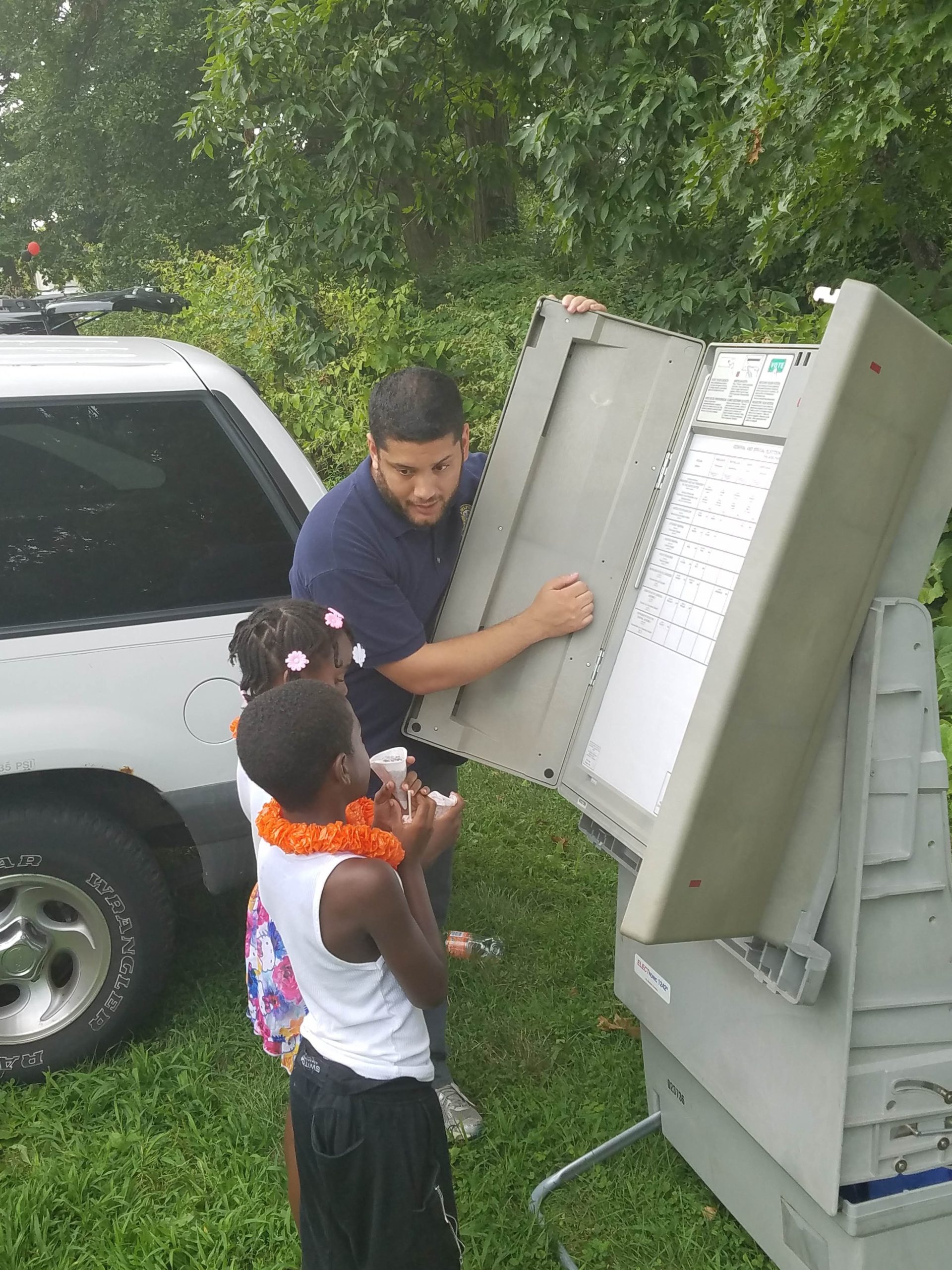
    Daniel Pearson explains how a voting machine works as part of a voter information event at Fisher Park in 2016.Courtesy of Daniel Pearson

    Disorganized crime

    After he was released from federal prison in 1985, convicted over bribery charges stemming from the Abscam investigation, former U.S. Rep. Michael “Ozzie” Myers became a political consultant and adviser. Over the years, business began to flag, so Myers and his allies came up with a scheme in the mid-2010s.

    Once the polls closed, poll workers would go into the booth and vote again, and again and again and again. Typically, these votes were for candidates running for positions at the very end of the ballot, like judges.

    Schmidt became my boss in 2014 when I joined the City Commissioners Office. Initially, my job was preparing street lists (names and addresses of registered electors) and voter files for campaigns. I attended community events and meetings on behalf of the office, and compiled data and information for voter guides.

    In retrospect, it would have been impossible to predict just how much interest people would soon have in elections. Back then, I could barely give away the guides.

    In time, I began helping with investigations into voting irregularities. When my colleagues and I started investigating the source of the overvotes, it pointed to one man, Dom DeMuro, a South Philadelphia poll worker.

    We compiled the evidence and referred the case to law enforcement. The FBI confronted DeMuro, who turned on Myers. Eventually, Myers, DeMuro, and another poll worker pleaded guilty to federal charges.

    Found, identified, and corrected.

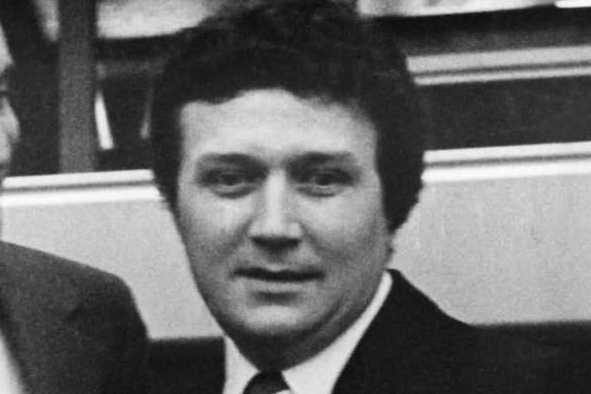
    Michael “Ozzie” Myers in 1976.MICHAEL MERCANTI / Staff file photo

    Small-time ruses like Myers’ are the face of “organized” voter fraud in this country, a few people trying to make an easy buck. There’s absolutely nothing in the SAVE America Act that could have stopped them.

    Looking back, I shudder to think of what 2020 may have been like without the groundwork Schmidt laid over a decade. How Philadelphia could have melted under the spotlight as Trump hurled accusations of fraud and the eyes of the world turned to vote counters inside the Pennsylvania Convention Center.

    For me, it was an unforgettable lesson in the grind that goes into making democracy work and also how difficult — and how rewarding — making positive change really is.

    To ensure election security and that voting remains easy and accessible, our country needs more leaders like Schmidt and Sherrill — and fewer bomb throwers.

    We don’t need any more false data points and baseless conspiracy theories. And we certainly don’t need the SAVE America Act, which would only increase the burden on ordinary voters — and wouldn’t fix a thing.

  • Despite good intentions from the city, Philly’s streets remain deadlier than those in New York and Chicago | Shackamaxon

    This week, a couple of big names leave City Hall, Philadelphia’s Vision Zero struggles, SEPTA’s biggest woe, and LeBron James comes to town.

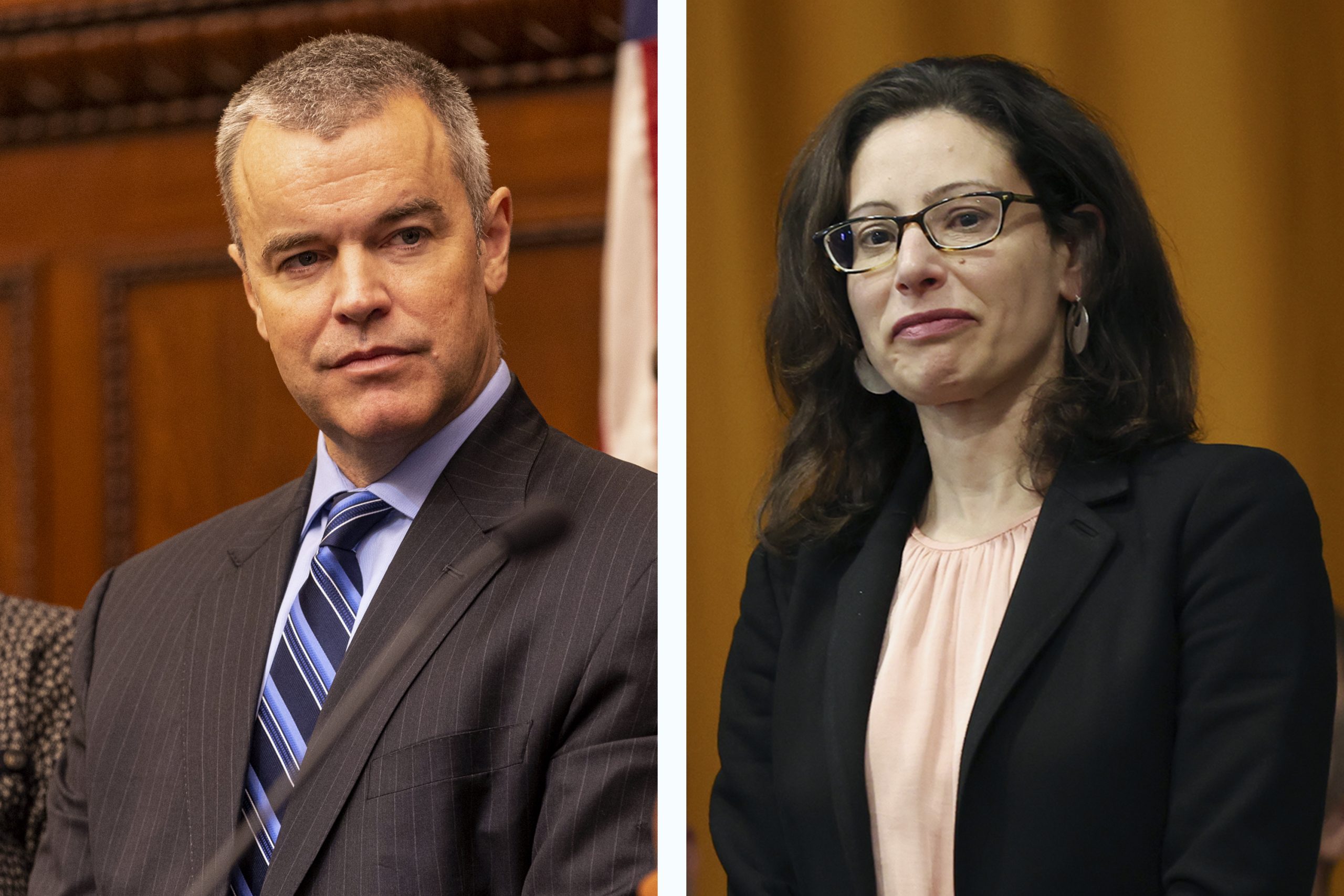
    Managing Director Adam Thiel and City Solicitor Renee Garcia are leaving.Tyger Williams/Heather Khalifa

    Topline turnover

    Philadelphia Mayor Cherelle L. Parker has experienced some turnover during her first term, but this week saw the biggest personnel changes yet. Managing Director Adam Thiel and City Solicitor Renee Garcia are both leaving city government. They’ll be replaced by Carlton Williams and Monique Galloway.

    While Thiel hasn’t answered questions about his departure, it also isn’t very surprising.

    As Inquirer reporters have thoroughly documented, Thiel’s attention has been pulled in multiple directions. In addition to his job with the city, he also serves in the Army Reserve and works as a consultant. In fact, he made more money working outside of city government than he did in it.

    Thiel always claimed that his extra jobs did not create a conflict with city work, but this was harder to believe as time went on. He missed five months of work last year because of his Army duties alone. His absence during events like the month of snowcrete was conspicuous. Indeed, it was Williams who seemed to step into the role of coordinator.

    Garcia’s departure is a little more surprising, especially given her central role in defending the administration’s toughest calls.

    When Parker endorsed the proposed and then canceled Sixers arena on Market Street, Garcia spent hours testifying about the deal at City Council. It also fell to Garcia to defend Parker’s cautious approach to the Trump administration, including the choice to allow some of Council’s “ICE Out” agenda to become law without the mayor’s signature. She’s absorbed a lot of political arrows on Parker’s behalf.

    A sign of how important these roles are to Parker’s success? Both were replaced immediately. Meanwhile, the city still lacks a permanent commerce director over a year after Alba Martinez left the role.

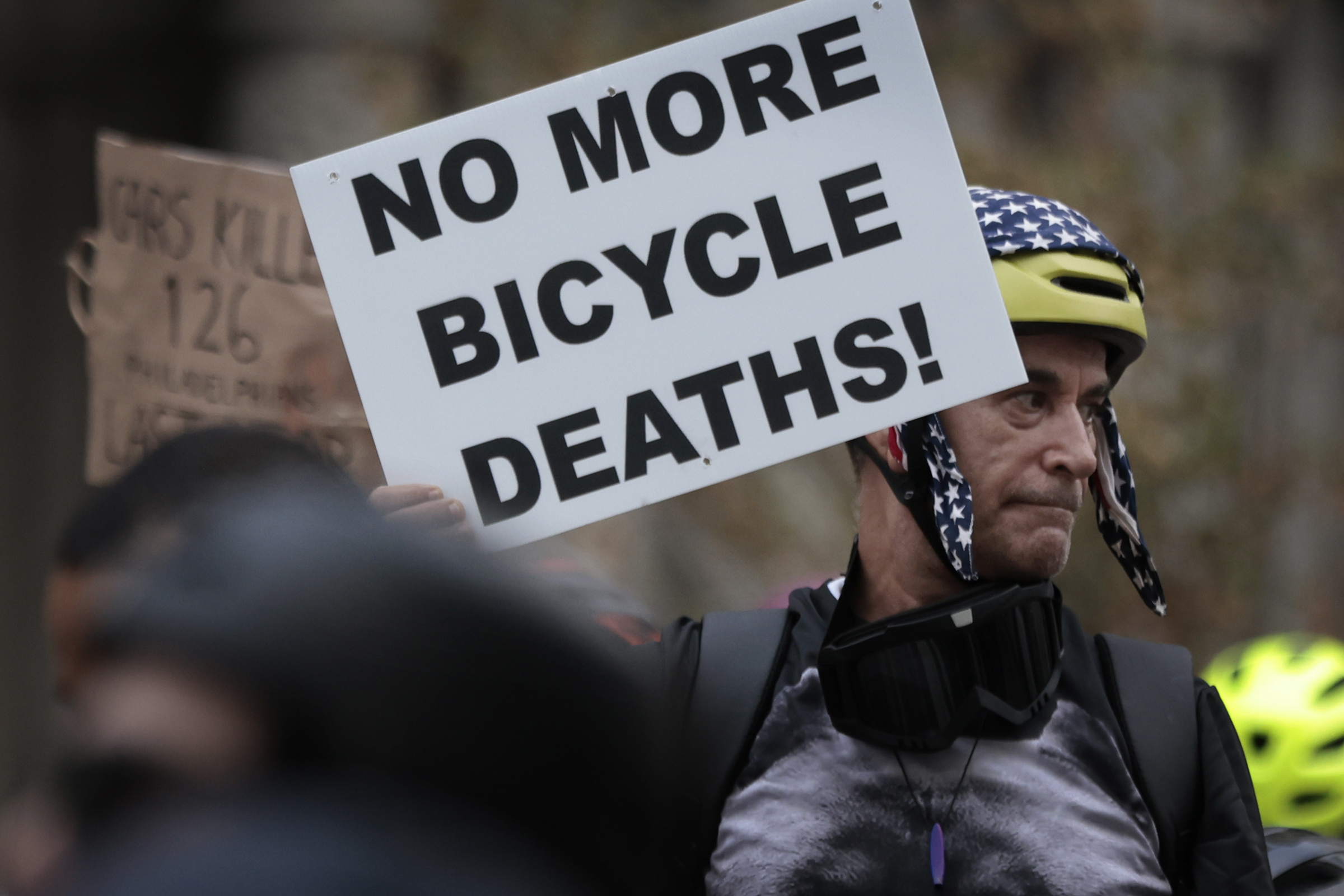
    Robert Tomas of Philadelphia was part of a group that biked from the Art Museum to City Hall to protest what they see as a lack of commitment to traffic safety from the mayor in 2024.Elizabeth Robertson / Staff Photographer

    Blurred vision

    Philadelphia’s roadways remain overly dangerous. In fact, according to a report compiled by City Controller Christy Brady, the city’s fatalities outpace our peers.

    Our traffic fatality rate of 9.04 deaths per 100,000 residents is triple New York’s 2.86 and roughly double Washington’s 4.73. The next closest city, Chicago, came in at 7.15. This means that Philadelphia’s streets are significantly more dangerous than comparable communities.

    To be clear, City Hall is trying to bring these numbers down. Alongside the Philadelphia Parking Authority, city officials have blanketed the roads with speed cameras, which have successfully reduced crashes and fatalities along corridors like Roosevelt Boulevard.

    The city is also working to lower speed limits. While 25 mph may feel slow behind the wheel of a car, research quantifies just how much danger pedestrians face because of a vehicle’s speed. At 20 mph, pedestrians have a 10% chance of death and a 25% chance of serious injury. At 30 mph, this jumps up to a roughly 25% chance of death and a 50% chance of severe injury. At 40 mph-plus, there’s a 50% chance of death, and severe injury is nearly a guarantee.

    This explains why speed limits on roads like Broad Street are set to 25 mph. Given the cameras only give out tickets once a driver is 11 mph over, setting them higher would leave pedestrians exposed to dangerous conditions.

    It is easy for opponents of speed cameras, street redesigns, or concrete protections for cyclists to complain about the supposedly all-powerful and nefarious “bike lobby,” but the data are quite clear. Philadelphia needs to do much more to protect its most vulnerable road users.

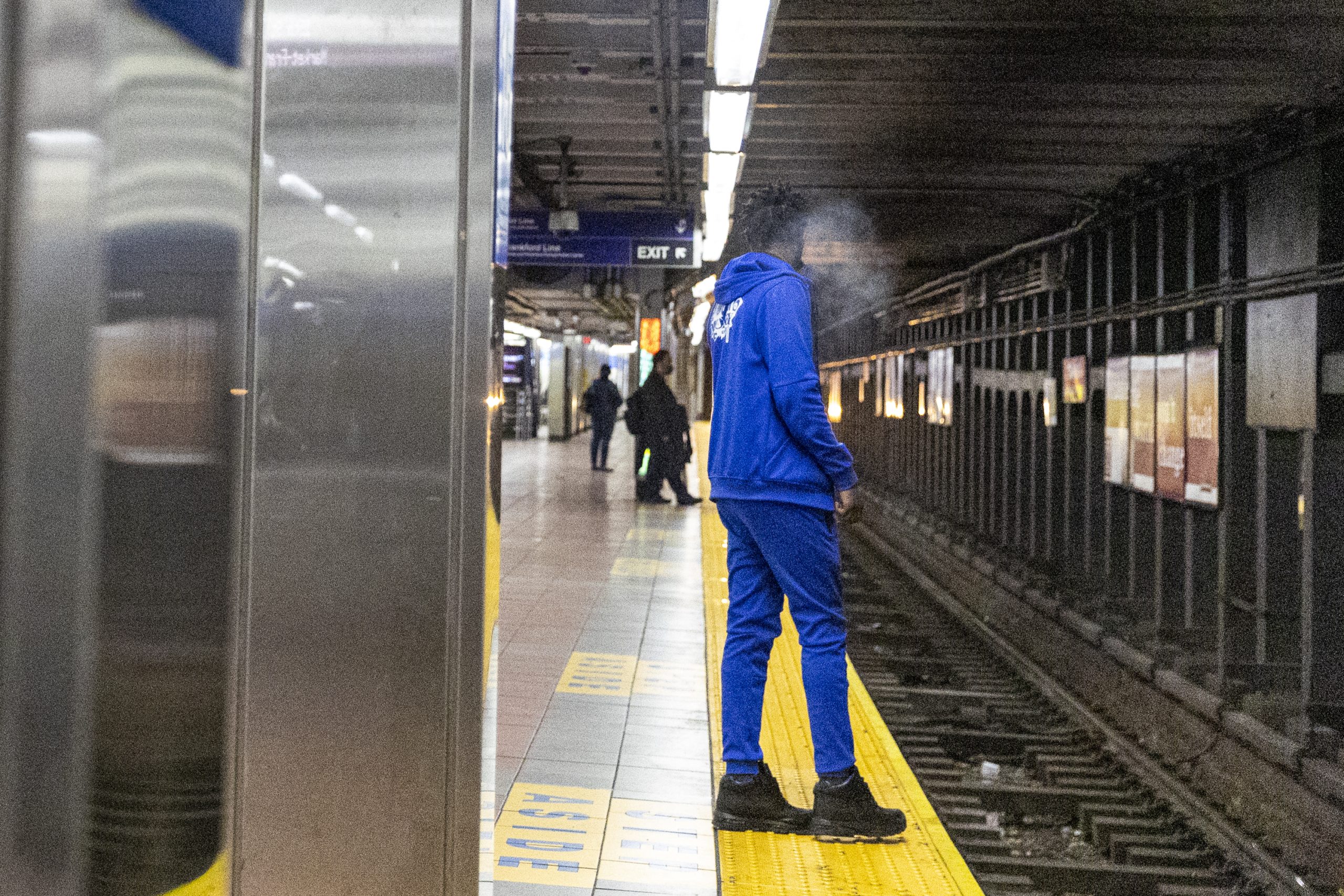
    A person smoking at the inside one of the SEPTA stops in Philadelphia.Tyger Williams / Staff Photographer

    Up in smoke

    After yet another year without a funding deal from Harrisburg, mass transit advocates and their supporters decided to raise awareness by embarking on a 24-hour public transportation marathon. They were joined, at least for part of the journey, by a plethora of elected officials.

    Raising awareness is important because SEPTA won’t survive without sustainable funding from the General Assembly. Still, a trip down to Washington this week reminded me of a problem that can’t be blamed on Harrisburg: the behavior of some of SEPTA’s riders.

    To be clear, the Washington Metropolitan Area Transit Authority system struggles with behavioral issues as well. Fare evasion, especially on bus routes, is out of control. Smoking on the metro, however, seems to be far less common.

    On SEPTA, however, it is ubiquitous.

    More than one person I’ve confronted over it has claimed, “I didn’t know you weren’t allowed to smoke down here.”

    It would be unfair to compound the frustration of riders who already deal with this phenomenon by failing to fund adequate service. At the same time, the constant smell of cigarettes and marijuana must be addressed. Even if SEPTA secures sustainable funding in next year’s budget, it won’t fulfill its potential until quality of ridership issues like smoking have been addressed.

    There’s no question in my mind that this behavior keeps people from riding the system. Beyond the discomfort of secondhand smoke, it also sends a message that the stations and vehicles are out of control. This makes them feel dangerous, even if SEPTA has posted record declines in serious crime.

    Every rider who doesn’t take the subway because of the dive bar atmosphere costs the system money. Some people have even resorted to taking buses, which are slower (and are more expensive for SEPTA to operate), just to avoid showing up at work smelling like a music festival.

    I’ve spent plenty of time in bars that allow smoking and I support the legalization of recreational marijuana. But it is one thing to engage in these behaviors in your own home or at a place of business where it is welcomed. It should never happen on public transit.

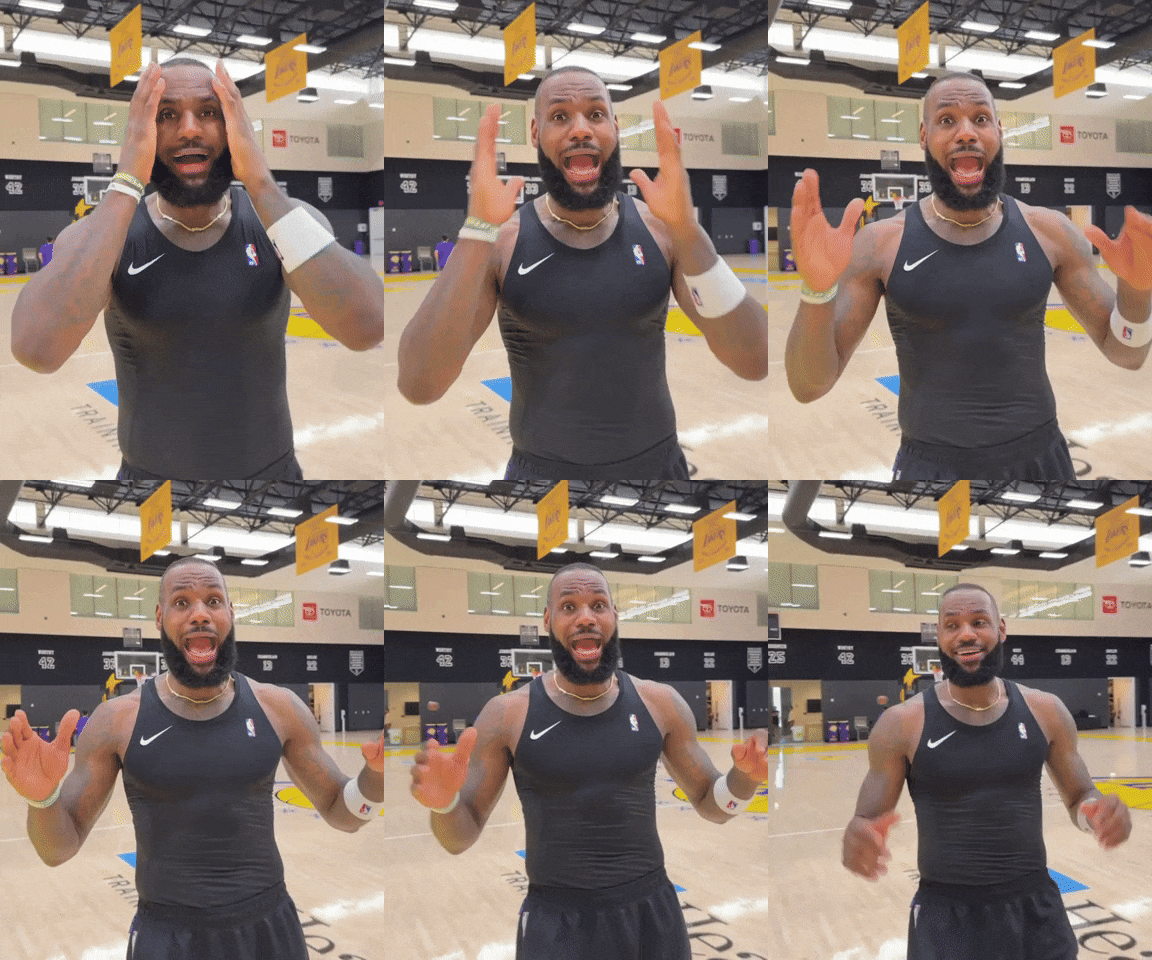
    Everyone’s excited about the King coming to town.Courtesy of Giphy.com

    The King’s landing

    When Philadelphia was first mooted as a potential landing spot for LeBron James’ swan song, I was a bit skeptical. After all, how often do good things happen for the Sixers?

    That changed when I heard about a conversation between Gov. Josh Shapiro and the Akron, Ohio native. It isn’t that Shapiro has superpowers when it comes to persuasion. In fact, my guess was that LeBron was most of the way toward choosing Philadelphia when that interaction happened. If the discussion hadn’t gone well, I doubt Shapiro would have ever mentioned it.

    After all, if Shapiro had publicly lobbied LeBron, only for the legend to land elsewhere, he’d have looked inept and desperate. Now, he looks savvy.

    Although there are reports that James may live in New York City while playing for the Sixers, his decision to take his talents to South Philadelphia is another corrective to the old and tired narratives about our city.

    Like a lot of Philadelphians, I can’t wait for the Xfinity Mobile Arena to become the court of King James.

  • Smoky skies may be gone for now. But ‘climate grief’ may linger.

    Smoky skies may be gone for now. But ‘climate grief’ may linger.

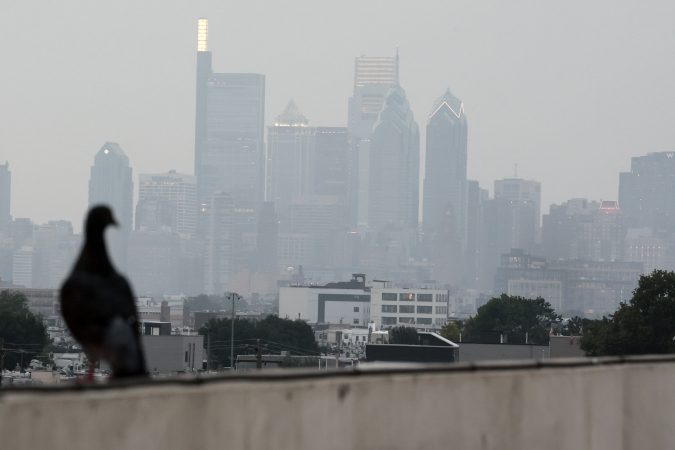
    Waking up to hazy skies and an eerily orange sun can feel more like a scene from an apocalyptic science fiction movie than reality. Yet, Philadelphians did just that earlier this month.

    Smoke from the Canadian wildfires has made its way to the East Coast and, along with it, an Air Quality Index, or AQI, reading that came close to 300 across the region. For context, when the AQI reaches over 50 it can affect folks with asthma and other respiratory illnesses. The general public will start experiencing symptoms and negative health impacts when the AQI hits 150. An AQI in our area of 300 is as uncommon as it is dangerous.

    This isn’t the first time Philadelphians have contended with the impacts of wildfire smoke during the summer months, but what’s occurred this month stands out from summers past. The last time the AQI reached similar levels was during a series of fires in Quebec in June 2023, with the AQI soaring over 400.

    For East Coasters, this is a relatively new and infrequent phenomenon, but the West Coast has been contending with real life impacts of wildfires for much longer. I experienced them for the first time while living in the Bay Area. I was there in September 2020, on the day when the smoke was so thick it blocked out the sun, making the afternoon look like the middle of the night. The thought of that day still haunts me.

    In the aftermath, I felt scared, frustrated, and filled with dread. When I eventually found the words to describe the experience, it was like a light bulb went off. The gauzy skies finally made the abstract concept of “climate change” into something very, very tangible and undeniable. It’s hard to deny that we’re in the midst of a climate crisis when the crisis shows up on your doorstep.

    There’s a term for this awareness of and emotional response to the environment in dire crisis — “climate grief.” In the coming days, Philadelphians may experience this grief firsthand for the first time. Climate grief manifests itself differently for everyone, and feelings of anger, hopelessness, dejectedness, and even confusion are all totally normal. What’s important is how we navigate these feelings, both as individuals and a community.

    There are small things we can do to protect ourselves and our family when the AQI hits triple digits. We can try to limit our exposure to bad air quality, but let’s be realistic — we all have jobs or classes to go to, kids to pick up, or errands that can’t wait.

    Wearing an N95 mask is the best way to protect your health, along with the health of your kids and even pets.

    You can join an environmental and community advocacy organization, like Philly Thrive, to fight back against harmful policies and corporations.

    You can also reach out to your elected officials in the state and federal government and demand that they prioritize laws that protect our health and environment.

    As the smoke clears, please don’t let the memory slip away or give up on fighting for our community. As a city, we’re gritty, steadfast fighters and we do not easily forget being wronged. Now is the time to act, show up for the environment, and show the world what Philadelphia is really made of.

    Erin Fitzgerald is a native Philadelphian who currently works as a communications strategist and environmental advocate.

  • Letters to the Editor | July 31, 2026

    Letters to the Editor | July 31, 2026

    Phantom fraud

    In April, Sen. David McCormick wrote a letter to the editor touting the SAVE America Act. I, along with others, responded to his rosy and misleading picture of the act’s purported benefits with the facts, including how difficult it would be for millions of Americans (not coincidentally mainly women and people of color who tend to vote Democratic) to comply with the guidelines in the SAVE Act as written. Now McCormick has written a letter, published by the so-called liberal Inquirer, again touting the “commonsense” voting restrictions contained therein. McCormick and other supporters of the SAVE Act, especially Donald Trump, don’t want people to realize that you already need to prove citizenship to vote. The recent acknowledgment by New Jersey Gov. Mikie Sherrill that a software glitch allowed 6,600 noncitizens to register to vote is fuel for supporters of this wrong-headed proposal, but the glitch would have happened regardless of the restrictions that are written into the SAVE Act. Sen. McCormick should spend more time urging his fearless leader to end the war in Iran and less time pushing for an undemocratic — and frankly un-American — law that is nothing but a voter suppression tactic.

    Scott Chelemer, Mount Laurel, chelesb@msn.com

    …

    There are more than 6 million registered voters in New Jersey, so the 6,600 who shouldn’t have been able to register represents an error-rate of 0.098%. That’s pretty amazing. I challenge Sen. Dave McCormick to provide any program at the national level that has an error rate that low. We have a system that is not perfect, but 6,600 voters out of 6 million cannot be called a crisis. He is my representative; so I’m asking him to stop with the attempt to challenge the integrity of our election system. Your leader, not mine, has made those claims for years. I’m asking Sen. McCormick for proof that the election was stolen; not allegations, proof. I have yet to see any, so, if you have it, either produce it or stop this nonsense. Credibility is all you truly own in this world; his is quickly fading. I have to have faith in my elected officials, who need to concentrate on real problems, not suggest solutions in search of a problem. Yes, 6,600 false registrations is bad; but let’s not make a mountain out of a molehill. I await his reply.

    John R. Waters, Havertown

    Join the conversation: Send letters to letters@inquirer.com. Limit length to 150 words and include home address and day and evening phone number. Letters run in The Inquirer six days a week on the editorial pages and online.

  • This quaint Pa. borough is a ‘speed trap’ nabbing immigrants for ICE

    This quaint Pa. borough is a ‘speed trap’ nabbing immigrants for ICE

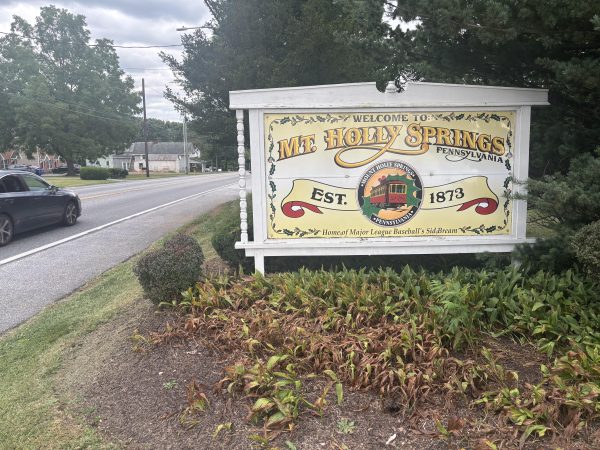
    MOUNT HOLLY SPRINGS, Pa. — Still hailed for its trout fishing, this bucolic Central Pennsylvania borough in the shadow of South Mountain was a big draw for tourists at the turn of the 20th century who flocked here to cool off in its mineral-spring waters.

    In 2026, this tiny municipality about 25 miles southwest of Harrisburg is developing a much less welcoming reputation. The new notoriety began with an agreement between borough police and U.S. Immigration and Customs Enforcement that has turned Mount Holly Springs into a kind of “speed trap” for unsuspecting immigrants — one with life-altering consequences.

    What had been a simmering small-town controversy since the start of the year boiled over into an international incident on July 15 when a prominent Chinese dissident and U.S. asylum seeker named Wu Shaoping was pulled over by a borough officer who claimed Wu had blown through a stop sign. The Amazon delivery driver was then taken into custody by ICE agents who had been running an operation just down the road.

    But the outcry over the arrest and detention of Wu — taken to ICE’s Moshannon Valley Processing Center and crammed into a room with 60 other detainees for 10 days before winning his release on bail — also exposed an even darker story.

    In March, Mount Holly Springs became the only municipality in Cumberland County and one of a handful across Pennsylvania to execute a formal cooperation agreement with ICE under a controversial program known as 287(g). The program gives local cops expanded powers to arrest suspected undocumented immigrants, while offering training and financial incentives in return.

    In just four months, the borough’s four police officers have pulled over and checked the status of dozens of motorists — mainly commercial truck drivers — and turned over 32 arrestees to ICE, the Mount Holly Springs Police Chief Tom Day told me on Wednesday.

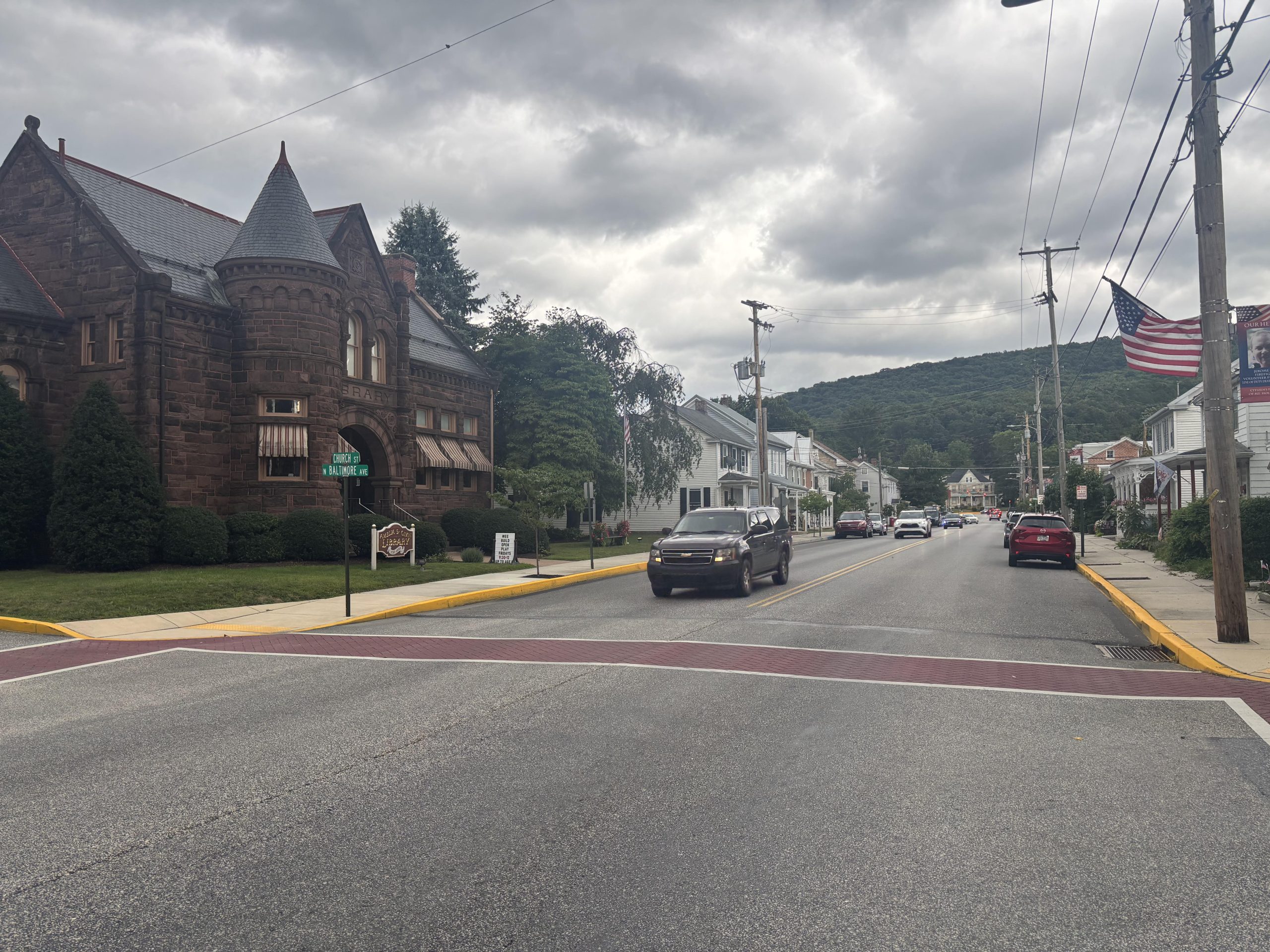
    The main drag in Mount Holly Springs, a small borough in Cumberland County, Pa., on Wednesday. The community has seen controversy over local police cooperation with federal immigration authorities.Will Bunch

    Day, a gruff ex-Marine in a Nittany Lions cap and blue jeans who doubles as borough manager, insisted to me that the traffic stops and ICE cooperation have nothing to do with racial profiling and everything to do with road safety in a borough with aging bridges and narrow streets.

    “There’s no racial profiling of or ethnic profiling of drivers,” the police chief maintained. “We have no clue until we step up on the side of that truck who we’re even dealing with.” Day also said “it’s not that we don’t have a heart” — that he believes in the American dream and understands why refugees want to come here, but when immigrants show up without permission “actions have consequences, you know.”

    Minutes later, I met with a gaggle of local residents and business owners who told a very different story — that the wave of immigrant arrests has created a climate of fear that permeates Mount Holly Springs. The growing uproar has riven their once-placid borough into a distrustful cauldron of angry Facebook comments, muttered asides, and occasional threats — a kind of modern civil war just 25 miles north of Gettysburg.

    “What I’m hearing from my customers, our people are afraid,” said Rachel Bear, the co-owner of a popular local boutique. “Immigrants are afraid. It’s out there.” She said she’s decided to speak out against the borough’s relationship with ICE because some neighbors are intimidated. “I think they’re just scared.”

    Andrew Dapkins, the owner of The “Bird Guy” Tours of local wildlife, told me he’s stopped bringing his excursions into Mount Holly Springs since the deal with ICE was signed. “If I was to bring someone of color, or they were not heterosexual male, I would feel like I was bringing them into a potential hostile environment,” he explained. “So I can’t do that.”

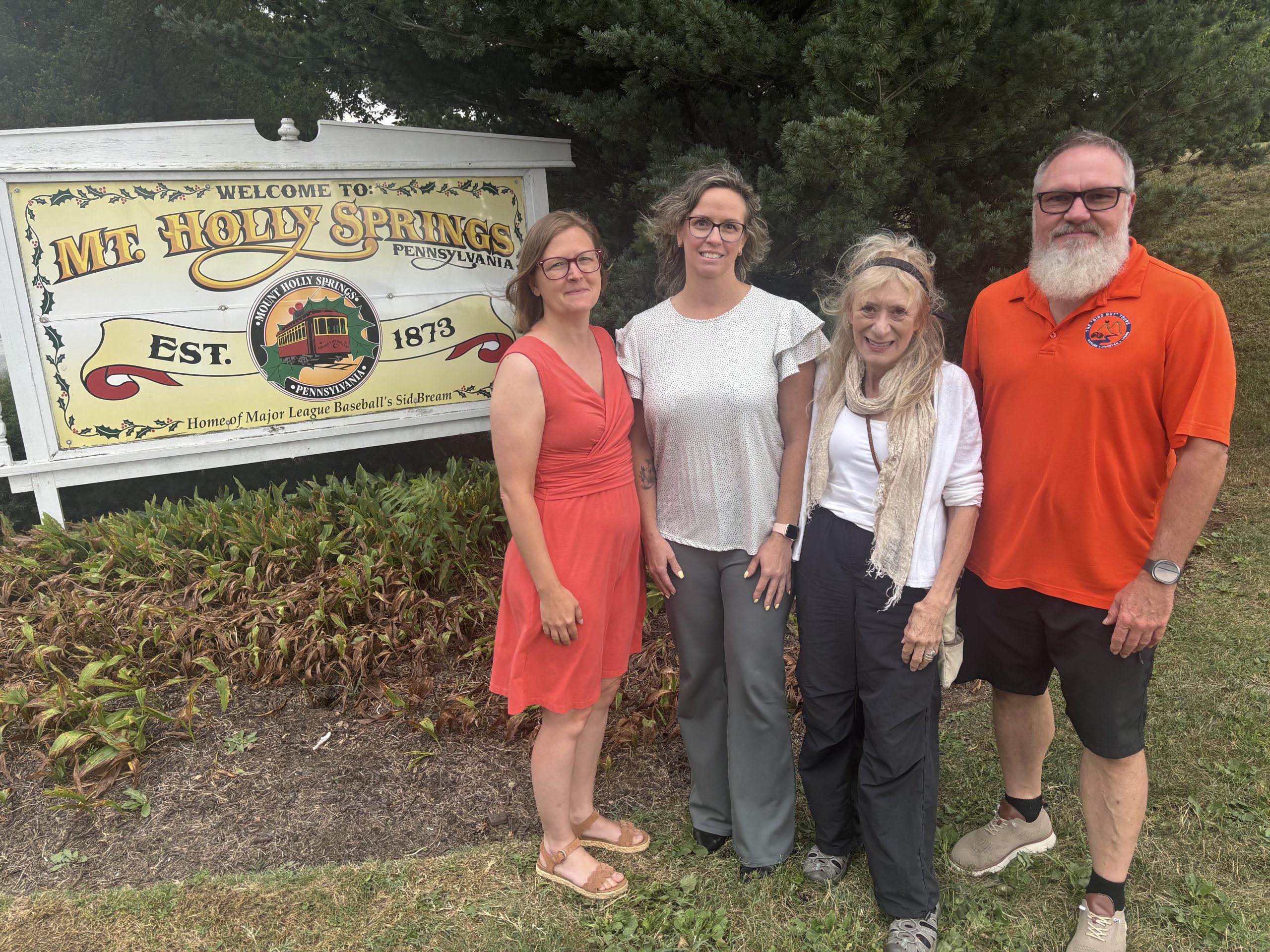
    Some local residents who oppose Mount Holly Springs’ police federal immigration arrests include (left to right) Democratic legislative candidate Jessica St. Clair, precinct leader Mandy Taylor, borough council member Pamela Still, and business owner Andrew Dapkin.Will Bunch

    What’s happened in Mount Holly Springs since the ICE program began this winter feels in many ways like a microcosm of Donald Trump’s America. It’s the rage, distrust, and paranoia that only metastasizes as the demagogue’s fiery campaign tirades get translated into harsh reality at a small-town stop sign.

    But it’s also exactly the chaos that some immigration policy experts warned about when the Trump regime dramatically expanded the 287(g) program, named for a section of 1996 federal immigration law that grants broader immigration enforcement powers to trained state or local police.

    Despite warnings about the potential for racial profiling and seeding distrust in immigrant communities, the number of 287(g) agreements has exploded from a few dozen when Trump first became president in 2017 to more than 2,000 today, with at least 88 on the books now across Pennsylvania.

    Still, the immigration arrest total in tiny Mount Holly Springs, which covers just 1.4 square miles and has a population of fewer than 2,500 residents, seems staggering. As recently as February, there were only 67 monthly immigration arrests by local police across the entire state. But now this one borough is on a pace for nearly 100 arrests in just one year.

    “This is an agenda that’s being driven by numbers for numbers’ sake,” Nayna Gupta, policy director at the American Immigration Council, told me Thursday. “There is an arrest quota that the White House is pushing, and they’re leaning on local police departments to do that work for them” — even as that work paralyzes local immigrants when they learn of increased traffic stops.

    “Communities become afraid to go to the grocery store, to go to work every day, to use public transit, even,” Gupta said.

    There have been festering recriminations in Mount Holly Springs since January, when residents first learned that Day — seen as a local power broker because of his dual role and his close allies on borough council — had signed the paperwork with ICE to become a 287(g) department. A handful of angry residents denounced the plan — revealed at the same time as two ICE-related killings in Minneapolis sparked national outrage. But the lone Democrat on the seven-member board, Pamela Still, failed to get a second on her push to rescind the deal.

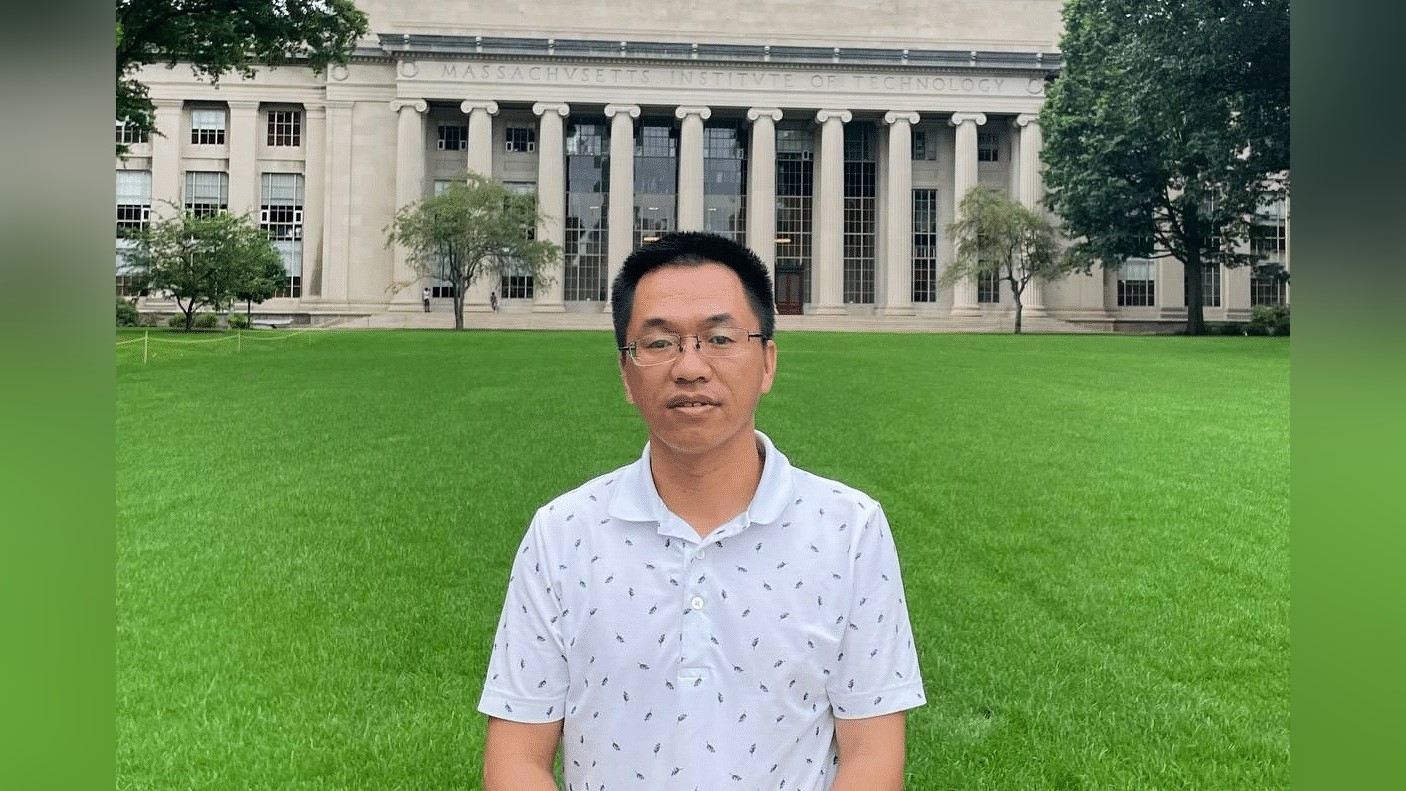
    Human rights attorney Wu Shaoping, on the campus of the Massachusetts Institute of Technology in Cambridge, Mass., in an undated photo, was arrested on July 15 and taken into custody by U.S. Immigration and Customs Enforcement.Handout art

    Trump received just over 62% of the vote in Mount Holly Springs in the 2024 election, although local residents said there are now growing numbers of Latinos and refugees from Nepal who’ve flocked to Central Pennsylvania living in the borough that census data had reported as more than 95% white.

    There is clearly considerable local support — often voiced in angry Facebook comments about “illegals” — for Day and his department’s work with ICE. “You guys are doing the right thing; don’t listen to the childless cat ladies,” borough resident Derek Scheuren told a contentious council meeting in February, as reported by PennLive. He also called undocumented truck drivers “illegal invaders” and offered to buy a beer for any officer responsible for detaining one.

    That would be nearly a half-dozen six-packs, based on Day’s updated tally. We don’t know if Scheuren has made good on that, but then there’s a lot that local officials and residents don’t know. There’s been little to no information about the multiple arrests since March, and while ICE is bringing the detainees about two hours north to Moshannon Valley, next to nothing is known about their fates.

    Locals like council critic Still have also pressed for answers on the carrot of federal dollars that state and local supporters of these 287(g) programs cite as a key benefit. Day only volunteered to me that in addition to federal training of all four borough officers, he has so far put in for just $1,100 in reimbursement for officers’ time on 287(g) stops. But in an email he also sent to local leaders Wednesday, which was shared with me, Day further acknowledged that Mount Holly Springs has received some $130,000 for vehicles and equipment.

    The July 15 arrest of Wu, which drew the attention of the New York Times, the Guardian, and other outlets, has so far brought more questions than answers about what’s really happening with immigration arrests in Mount Holly Springs.

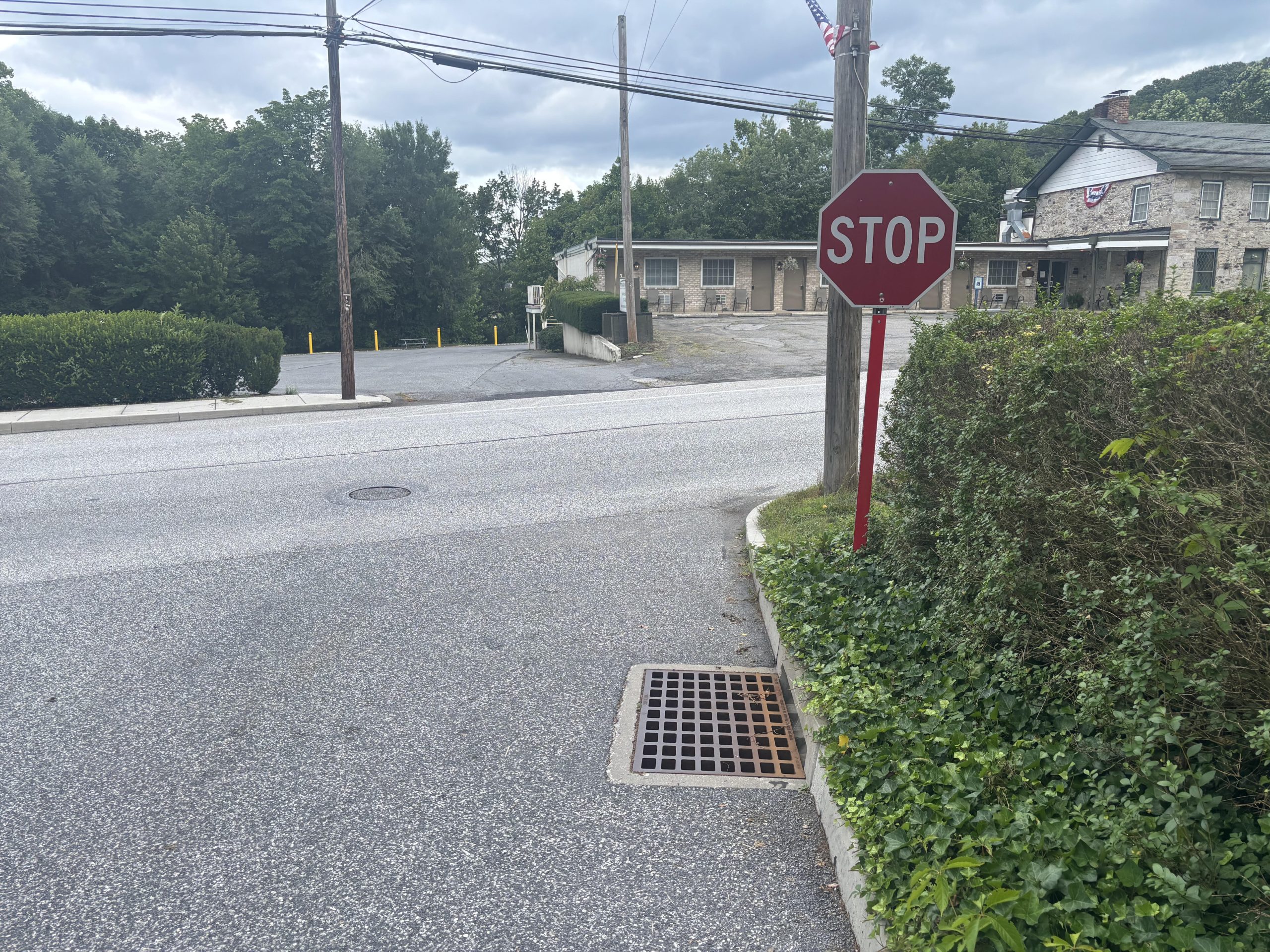
    The stop sign at Hill Street and State Route 34 in Mount Holly Springs, Pa., where Chinese dissident and asylum seeker Wu Shaoping was stopped by a local police officer on July 15. Wu’s arrest sparked controversy over the borough’s relationship with federal immigration.Will Bunch

    Day insists that Wu, making Amazon deliveries in his Toyota Camry, ran the stop sign at the bottom of steep Hill Street and nearly collided with his officer who happened to be patrolling the main drag, State Route 34. The chief said Wu exacerbated the situation by refusing to roll down the window and instead calling his lawyer — causing a commotion that attracted attention from ICE agents who happened to be in Mount Holly Springs doing truck inspections almost right across the street.

    Wu disputed that account to Lancaster Online, insisting that he did stop at the intersection, then rolled a bit forward because of its poor visibility. ICE later said Wu was sent to Moshannon Valley because he’s overstayed his 2020 tourist visa, even though he has an active asylum application and a work permit. He was released on bail after two members of Congress formally complained about his detention.

    Still, Wu’s arrest — along with the high number of other detentions in Mount Holly Springs — has only fueled suspicion among the program’s critics that cops are racially profiling drivers. Day has repeatedly insisted in past comments and in the Wednesday interview that undocumented truck drivers who can’t read English and don’t follow signs about restricted streets and bridges are a danger to the community.

    “I don’t want to sound mean over it, you know, or that I’m not sympathetic,” Day told me. “But they can’t be driving 18,000-pound vehicles and not understand our roadway signs.”

    But local critics say cops working so closely with ICE isn’t making Mount Holly Springs safer — not when immigrants are afraid to shop, landscaping crews that largely employ Latinos have seemed to vanish, and a quaint rural town that seeks outside tourists for trout fishing or bird watching starts getting a bad reputation.

    “A lot of times, it is this overweight thing — going over the bridge on the Pine Street extension or something is what they get pulled over for, and you know it’s like don’t ruin somebody’s life because their truck was packed or because their GPS didn’t tell them,” said longtime local resident Jen Dieter.

    The arrest surge in Mount Holly Springs seems to confirm the fears of immigration experts who’ve found in earlier iterations of the program that immigrants were less likely to call 911 for emergencies or report other crimes. Critics also believe that cops will ignore their public-safety duties to focus instead on immigration arrests, especially as the carrot of federal dollars is dangled before small departments.

    “There’s plenty of evidence and data to show that 287(g) agreements undermine trust in the communities where these agreements exist and are used extensively, because the community becomes less likely to report crimes, or to report instances of domestic violence, out of fear that doing so could translate to detention and deportation,” Gupta said.

    Experts also say what’s happening in Mount Holly Springs may be the future of mass deportation under the Trump regime. While high-profile, publicity-seeking operations like the ones that targeted Minnesota or Chicago are out, ICE is increasingly relying on its 287(g) partners to make arrests without attracting as much public outcry. The wave of arrests in the Pennsylvania borough came as ICE is nationally reporting as many as 1,400 immigration arrests in a day, an all-time record.

    Some longtime residents of Mount Holly Springs are worried that things will never be the same.

    Bear, the shop owner, spoke about moving here 25 years ago and slowly building a community around her business. “This is a small community,” she said. “We all know each other. You know these people that we’re talking about, [that] I’ve done business with. You know, hopefully we’ll do it again. But who knows?”

    “But more than it being about business, it’s about community. And I think this isn’t how I would treat my neighbors.”

  • Tuskegee University’s ban on hair bonnets and do-rags in class? I’m here for it.

    Tuskegee University’s ban on hair bonnets and do-rags in class? I’m here for it.

    Say what you want about Tuskegee University’s new ban on hair bonnets, bedroom slippers, and do-rags in classrooms and the dining hall. But the historically Black college’s iconic first president, Booker T. Washington, would be all for it.

    Born into slavery and educated at what is now Hampton University, Washington was nothing if not pragmatic. He was hired as the first principal at the school in central Alabama in 1881. Given the economic subordination of African Americans in the post-Reconstruction era, he believed that Black people needed to do whatever they could to survive.

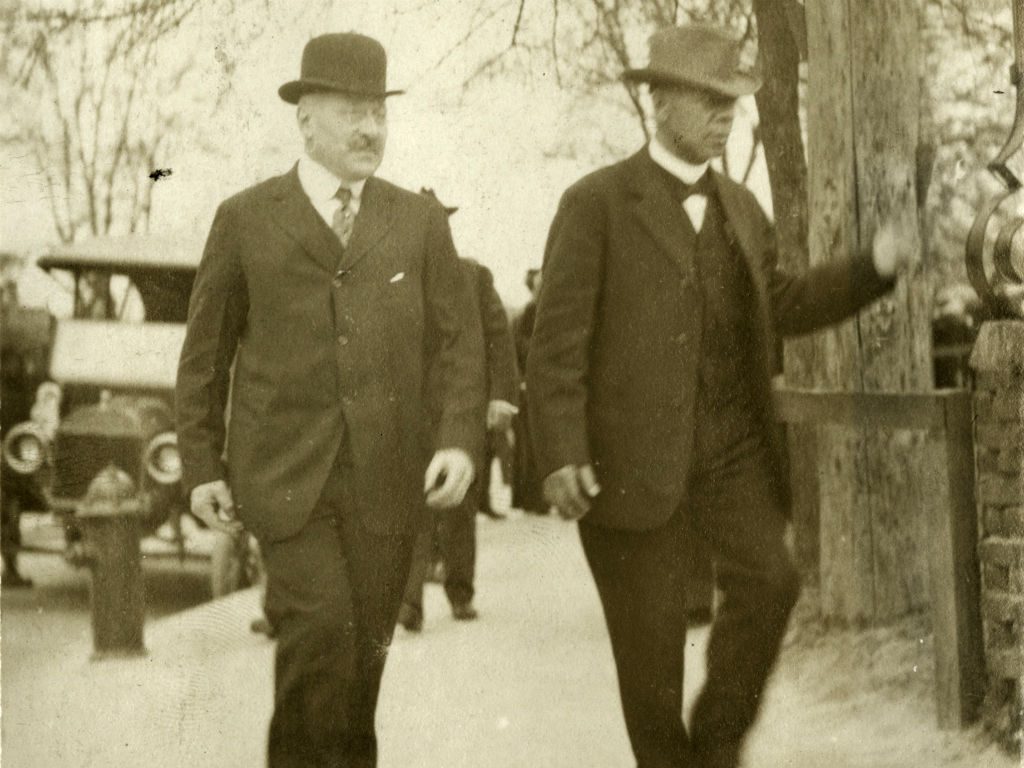
    Sears founder Julius Rosenwald (left) with Booker T. Washington at the Tuskegee Institute in 1915. The Institute became Tuskegee University in 1985.

    Students dressed in uniforms and learned skills such as shoemaking, dressmaking, carpentry, and other practical trades. The renowned educator recalled in his autobiography Up From Slavery that ”when the students march out of chapel in the evening and their dress is inspected, as it is every night, not one button is to be found missing.”

    Newly emancipated Black Americans had few rights and were often forced to work as sharecroppers. Critics might not think of Washington as having been woke, as they say, but he was convinced that, “No white American ever thinks that any other race is wholly civilized until he wears the white man’s clothes, eats the white man’s food, speaks the white man’s language, and professes the white man’s religion.”

    Fast forward to today where at Washington’s beloved HBCU in rural Alabama so much has changed but other things haven’t.

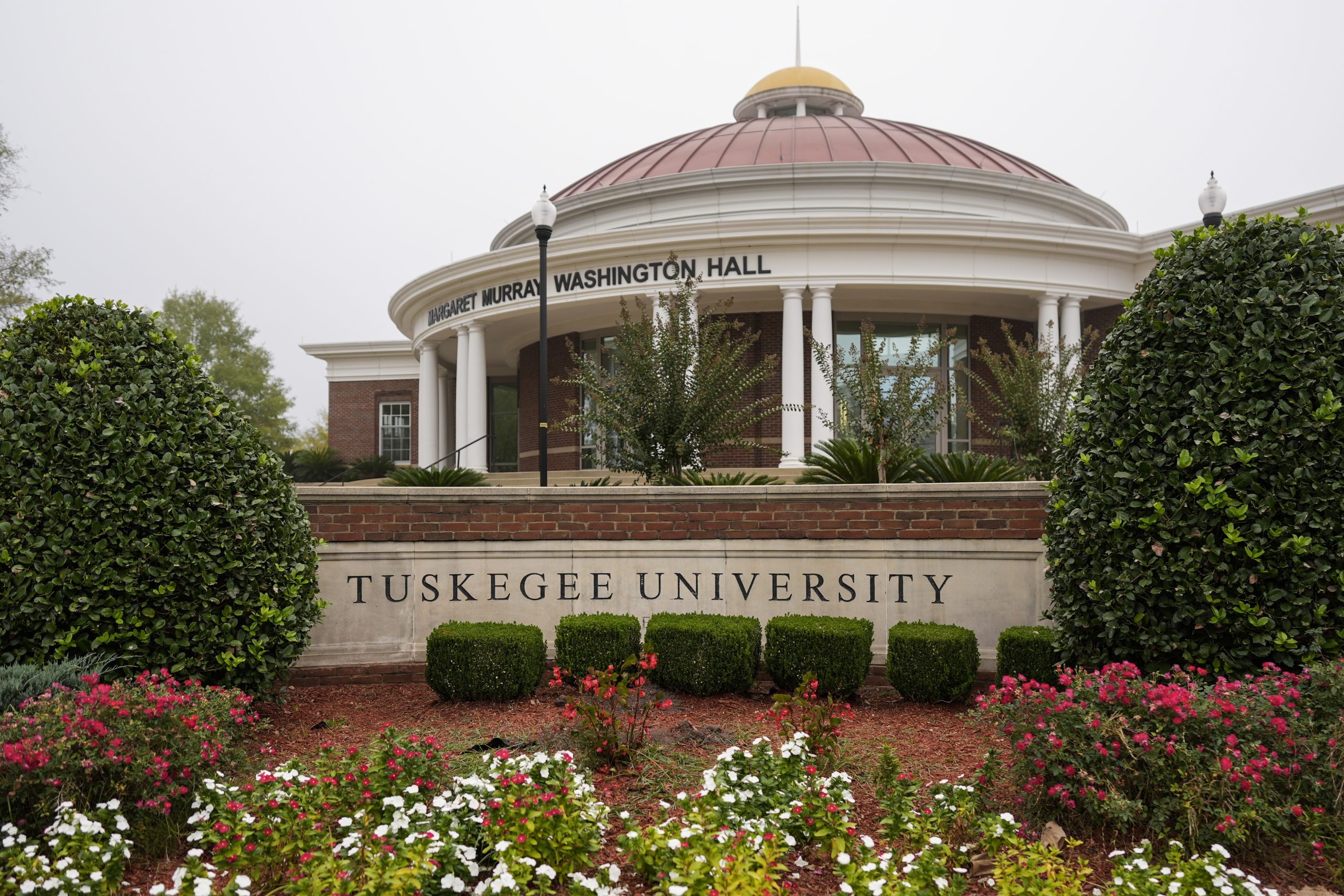
    The entrance to Tuskegee University in Tuskegee, Ala., in a photo from 2024.Mike Stewart

    Mark A. Brown, Tuskegee’s current president, recently addressed the issue of proper attire on the school’s sprawling 5,000-acre campus. In a letter to students Brown wrote that the goal is to prepare them for the workforce, adding, “Employers are less forgiving and too often presentation may overrule stellar preparation.”

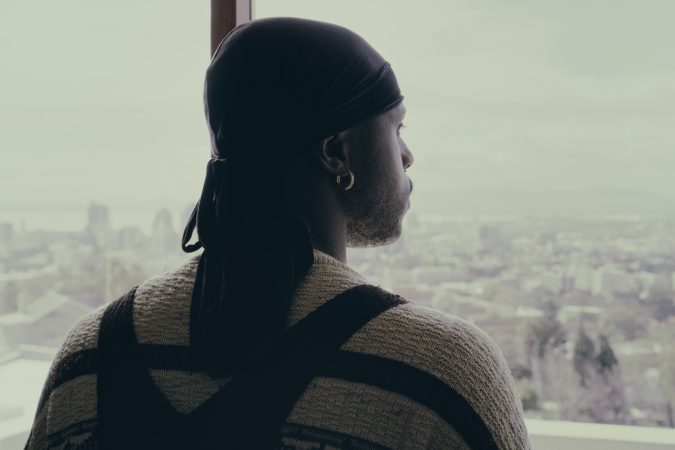
    Many take exception to the ban on hair bonnets and do-rags, which customarily are worn to protect Black hairstyles while people sleep. In recent years, it has become much more common for people to also wear them on airplanes, at the mall, and in classrooms.

    As for me, I’m old school when it comes to this sort of thing. I don’t wear hair bonnets outside. I hate to admit it, but I low-key judge others when they do. So, even though it smacks of respectability politics — which refers to the adjustments people make to fit in with mainstream culture to shield themselves from racism — I am not mad at Tuskegee’s new dress code.

    It’s about having standards and encouraging young adults to take pride in their appearance. During my days at Howard University, we tried to look as good as we could whenever we stepped onto The Yard. It’s part of the HBCU mystique. Whenever I see old photos of my parents at their alma mater, North Carolina Central University, they were dressed in what today we’d consider business casual clothes — slacks, pencil skirts, collared shirts.

    Ever since the news broke about Tuskegee’s new policy, commenters have been buzzing on social media about the topic. Many see their ability to wear what they want — when they want and absolutely wherever they want — as an issue of personal freedom.

    “I can guarantee you that none of these people are walking into meetings and boardrooms in their do-rags and hair bonnets,” pointed out Danyl Patterson, an attorney from West Philly. “This is no different from code-switching. We know when and how to do it.”

    She brought up the issue of comfort. “When you’re a student, you drag yourself,” Patterson recalled. “You might be tired and you’re telling me this is the only food I have access to and I need to get fully dressed to go get cereal?”

    She presents a great argument.

    But I still cringe at the idea of people showing up for class in what I consider nightwear. It’s not too much to require college students to present themselves a little better. Tuskegee students also are now prohibited from wearing revealing clothing to class, the cafeteria, and convocation.

    Isis Rodriguez, whose son is a senior at Tuskegee majoring in veterinary science, agrees with the changes. “After COVID, it seems as if people slid into a state of complacency and comfortability. We all were in bonnets and pajamas.”

    That was then, she added: “But at some point, we had to get out of that rut and this is the time — because we need to send our young people into the professional world wearing real clothes.”

    African Americans fare much better than when Washington presided over Tuskegee, but we continue to face widespread systemic disadvantages in the workplace. President Donald Trump and members of his administration are doing all that they can to end DEI, which helps level the playing field for Black people, women, people with disabilities, and so many others.

    Newly minted graduates need to be ready to compete on day one. Preparation for that starts with them showing up to their classes regularly sans bedroom slippers, hair bonnets, and do-rags.

    Besides, as Iyatunde Garrett, a registered nurse who lives in Southwest Philly, said to me: “What professor wants to sit in a classroom with a bunch of students who look like they literally just got out of bed?”