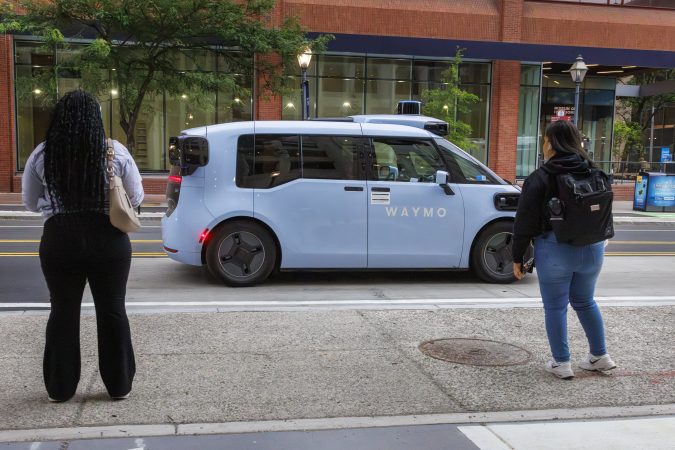
Waymo’s driverless cars have been rolling through Center City for almost a year now. Still with a trained specialist behind the wheel, still without a commercial launch date.
Some of our local elected officials have expressed concerns about driverless vehicles on Philadelphia streets. Based on what has happened in other cities, their concerns are not unfounded. When it comes to deploying robotaxis, Philadelphia should slow down, not speed up.
The pattern that has emerged across the country is that problems that should have been caught during testing are instead being confronted when the autonomous vehicles have already been deployed and are carrying passengers.
Start with what happened in Austin, Texas, this spring. When a gunman opened fire outside a bar on Sixth Street, killing three people and wounding more than a dozen, several Waymo vehicles ended up blocking the emergency response. One sat sideways in the road as an ambulance tried to get through, with bystanders shouting at it to move, while a police officer worked the car’s speaker system trying to get a human being on the line.
The safety of Waymo robotaxis has repeatedly been questioned. In December of last year, Waymo had to replace software that allowed the autonomous vehicles to pass stopped school buses in Austin, Texas, and Atlanta. And earlier this year in Austin, writes Amy Witherite, the robotaxis blocked emergency responders’ access to the site of a shooting with mass casualties.Austin Independent School Distri
In San Francisco, fire crews and other first responders have had to physically take control of stalled Waymos to move them out of the way during emergencies. These aren’t isolated glitches.
Federal regulators counted at least six incidents nationally in which first responders had to take control of a Waymo vehicle during an emergency. In July, the National Highway Traffic Safety Administration told the industry that emergency scenes are not rare or extreme “edge cases,” and that an automated vehicle unable to interact safely with first responders is a danger to the public.
That’s the backdrop against which Philadelphia is being asked to move forward.
Councilmember Nina Ahmad gave voice to concerns after a City Council hearing in May. “Progress for the sake of progress isn’t enough. We need to look at the impact of that progress,” she said during a news conference. She wasn’t the only Council member who expressed reservations, or whose questions for Waymo went unanswered at the hearing.
After Waymo vehicles became immobilized and helped bring San Francisco traffic to a standstill during the city’s July Fourth celebration, Mayor Daniel Lurie called for stronger statewide standards that verify that the autonomous vehicles’ systems can handle major events and emergencies before they are allowed to operate. His message was simple: “Prove it before you deploy it.”
Here is the question I’d ask before this moves one step further in Philadelphia: Have the police officers, firefighters, and paramedics who will be on the street been trained, specifically and verifiably, to handle a car that will not pull over for a siren, will not respond to a hand signal or a flare, and has no driver to negotiate with?
A first responder trained to deal with a human behind the wheel is not automatically equipped to deal with an empty vehicle that only takes instructions from a call center hundreds or thousands of miles away. Austin’s ambulance crews and San Francisco’s fire companies found out about that gap in real time, during emergencies — Philadelphia doesn’t have to.
The company cites a substantial reduction in serious-injury collisions compared with human drivers, and that’s worth weighing. But a strong overall safety record and a specific, unresolved gap around emergency scenes are not the same question, and cities where Waymo has already launched are the ones now writing the incident reports.
Philadelphia has something Austin and San Francisco didn’t have when they signed up for driverless service at scale: time.
This is the moment to apply Mayor Lurie’s standard: Prove it before you deploy it.
Amy Witherite is a traffic safety advocate and founder of the Witherite Law Group, which has offices in Philadelphia.
Regarding President Donald Trump’s now-abandoned plan to pull Todd Blanche’s attorney general nomination, for decades, the Senate required 60 votes to end debate on cabinet nominees, forcing presidents to choose consensus-building moderates. That changed in 2013, when lowering the threshold to a simple majority intensified partisanship and eroded the standard of qualifications for nominees.
When merit and integrity become subordinate to political ideology, it creates a logjam in the confirmation process. This is the case with U.S. Department of Justice nominee Todd Blanche. Blanche’s current confirmation mess highlights the dangers of this simple majority shift.
As the president’s former personal defense lawyer, Blanche has consistently prioritized absolute loyalty to Trump over the sacred constitutional oath required of the nation’s top law enforcement officer. This blatant expression of fealty over objectivity perverts the process by choosing personal loyalists instead of independent public servants. To mend our impaired political system, the Senate must end this fast-track approach and restore the 60-vote barrier.
Jim Paladino, Tampa, Fla.
Prevent falls
Like the rest of the country, Pennsylvania’s population is aging quickly, meaning the demand for services that support seniors’ health and well-being is increasing. For many, that includes access to physical therapy.
Physical therapy is a lifeline for seniors struggling with balance or mobility issues. It was a topic we had the opportunity to discuss when Rep. Madeleine Dean recently visited our facilities. Every day, we help older adults stay safe on their feet and reduce their risk of falls, the leading cause of injury-related deaths among Americans age 65 and older.
Deaths and injuries related to falls have increased significantly over the past couple of decades. Tens of millions of older Americans experience a fall each year, and one out of every five falls results in a serious injury. Beyond the personal toll on individuals and families, falls also contribute to tens of billions of dollars in healthcare costs annually.
That’s why I want to voice my support for the Stopping Addiction and Falls for the Elderly (SAFE) Act (HR 1171). This bill would ensure Medicare beneficiaries can receive a falls risk assessment at no cost as part of their annual wellness visit. These assessments allow physical therapists to identify risks early and recommend strategies to prevent falls before they happen.
Rep. Dean’s support for the SAFE Act would help advance this important legislation and improve access to preventive care for older adults. Together, we can help keep seniors safer, healthier, and independent while reducing unnecessary healthcare costs.
Timothy Flaherty,regional vice president-Northeast, ATI Physical Therapy, Ambler
Misplaced priorities
It is shameful to read The Inquirer’s extensively documented story about the city taking over Philadelphia’s only crisis rape center when public officials, hospital executives, and Drexel administrators could not come up with the small amount of $300,000 to keep the center open. Meanwhile, we spent millions of dollars to host the World Cup and stage the Semiquincentennial events, including that costly Fourth of July concert. Only one Council member, Nina Ahmed, stepped up to help. After she did, the mayor passively agreed to send money their way and have the Department of Public Health take over the center. Soccer, fireworks, and concerts are great, but this is yet another example of badly misplaced priorities.
Koert Wehberg, Philadelphia
Getting on board
As an Inquirer subscriber for whom SEPTA is essential, I appreciate the Editorial Board’s budget recap highlighting the severe lack of new transit funding while showcasing SEPTA’s proven results with the funds it receives. What’s encouraging are the concrete steps underway across state government to solve the 2027 transit crisis.
Through initiatives like PennDot’s Shared Ride Advisory Committee and the Transportation Funding Assessment Study Task Force, state legislators and transit leaders are coming together to build real solutions. Moreover, transit is becoming more of a bipartisan issue. Republican lawmakers in the General Assembly, like State Sen. Frank Farry and State Rep. Martina White, have joined the growing chorus calling for new funding to benefit disabled and older neighbors.
Public transit is a lifeline for me, my friends, and neighbors in every corner of our state. The 2026 budget passed without new funding, but riders have built real momentum to rally around. I encourage anyone statewide who relies on transit to join us at Transit for All PA as we keep organizing for a full 2027 solution.
Catherine Moran, West Chester
Simple math
As the president and his terrified enablers look at their dismal poll numbers, they are obsessed with the SAVE America Act and preventing “election fraud.” Well, the ultraconservative Heritage Foundation (the authors of Project 2025) maintains a database that covers elections from 1982 to 2025. It found about 1,600 proven cases of voter fraud out of hundreds of millions of votes cast. According to an analysis by the New York Times, that’s about 0.000008% of more than 1.3 billion votes in presidential elections during that time. Infinitesimal. Meanwhile, the White House’s silence on the following numbers speaks volumes: Donald Trump has pardoned 1,800 felons during both of his terms thus far, and nearly 100 of the criminals from Jan. 6, 2021 (approximately 1/16) have been rearrested for such acts as child molestation, domestic violence, and drunken driving. Hopefully our free, fair, state-run elections will SAVE us from more of this madness.
Neil M. Cohen, Philadelphia
Absentee ballots
The possibility of voter fraud seems to be a concern to some people, even in the absence of credible evidence to suggest it is a problem. Numerous lawsuits and investigations and studies have found no significant issues with election safety.
A recent “glitch” in New Jersey allowed the incorrect voter registration of about 6,000 people, and 400 of them voted.
These “ineligible” voters did not realize there had been an error in their receiving a voter registration card. And they thought enough of that right to vote, so they voted. They should be commended. Unlike the hundreds of thousands (maybe millions) of legally registered voters in Pennsylvania and New Jersey who do not vote.
Rather than be concerned about the few ineligible votes, we all should be concerned about the missing votes from eligible voters. A few “ineligible” votes are not going to be a significant factor in an election. However, getting all the missing “eligible” votes will affect the outcome of an election. The more votes that are received in an election, the more truly representative the outcome will be.
Karen Inverso,Springfield
A servant leader
Instead of asking Anthony Fauci absurd, demeaning, and accusatory questions, Rand Paul, the junior Republican senator from Kentucky, should introduce a bill to erect a statue in Fauci’s honor. Dr. Fauci, a true servant leader, served this country faithfully and with great success for more than 40 years. He could have likely become wealthy in the private sector, but he chose public service instead. Dr. Fauci has been pilloried by his critics for far too many years. Now, at age 85, he’s highly deserving of living out his remaining years in peace. Sen. Paul, stop hectoring this poor man. Have you no shame?
Ken Derow,Swarthmore
Retrofit it yourself
It occurred to me that since it is so costly to retrofit the new Air Force One, perhaps President Donald Trump, having made so much money this year, should consider footing the bill.
Penny Orloff,Elkins Park
Join the conversation: Send letters to letters@inquirer.com. Limit length to 150 words and include home address and day and evening phone number. Letters run in The Inquirer six days a week on the editorial pages and online.
Today’s newsletter is all about things I thought I was done writing about: COVID-19, Kamala Harris, and the World Cup. Regarding the latter, FIFA strongman Gianni Infantino walked off the pitch after last month’s final like the hero in Steve Miller’s “Take the Money and Run”: He got the money — an ungodly $15 billion in revenue — thinking he got away. But instead, just like Icarus, Infantino flew too close to the sun. A plan to make even more cash off the world’s greatest sporting event — by selling a share to private investors led by the brother of Donald Trump’s son-in-law — outraged so many folks that the FIFA chief could lose his job. What a shame.
The right can’t shut up about COVID-19 because it needs your outrage against experts
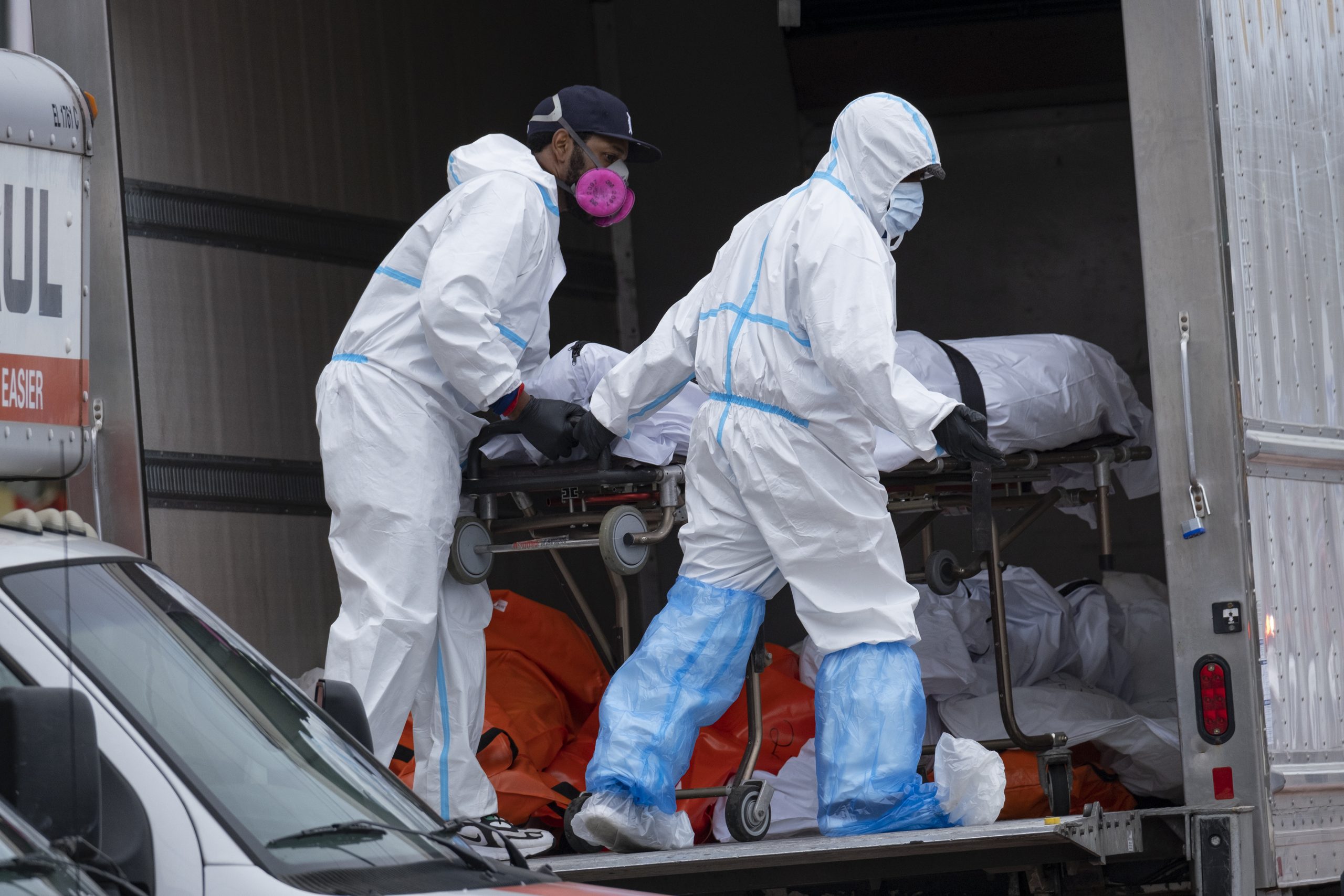
Workers move bodies to a refrigerated truck from the Andrew T. Cleckley Funeral Home in the Brooklyn borough of New York in April 2020.AP
Honestly, I thought — and hoped, frankly — that I’d written about the COVID-19 pandemic for the last time by the end of 2021. The issues it raised — about everything from public health preparedness to conspiracy theories — had seemed important enough, but I was more than ready to move on from empty baseball stadiums and masks in the supermarket.
I thought most folks felt the same way — that we were all eager to put the coronavirus in the rearview mirror. Clearly, I was wrong. The people we call MAGA still can’t stop yelling about it.
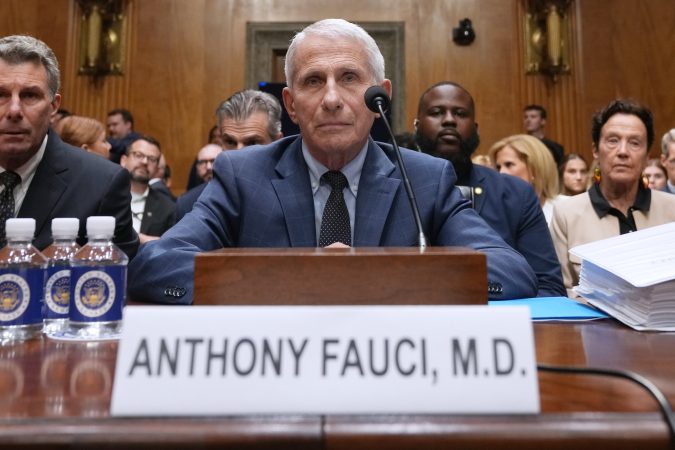
Last week brought the acid flashback of the government’s communicable disease czar when the pandemic erupted in 2020,Anthony Fauci,getting dragged before a U.S. Senate committee in a Joe McCarthy fashion, forced to take the Fifth Amendment to avoid any perjury traps that would satisfy the senators’ mouth-breathing constituents’ raw lust to imprison the 85-year-old public health icon.
The realization that they weren’t going to send Fauci — who was pardoned for his past actions in January 2025 by outgoing President Joe Biden to protect the good doctor from GOP wrath — up the river led these Republican statesmen to do the only thing left: scream at him.
“Who the f— do you think you were for doing that?” Ohio Sen. Bernie Moreno yelled at Fauci, even as it’s hard to understand what “that” was, except for working tirelessly to give Americans the best information about a rapidly evolving, deadly pandemic. “It is a total disgrace what you did to this country.”
The baseless attacks on Fauci by right-wingers — who’ve convinced themselves that the real crisis of 2020-2021 wasn’t the invisible virus that caused the early death of more than 1.2 million Americans, but an authoritarian government (led at the time by Donald Trump, but no matter) making them wear those masks and avoid those baseball games — were both infuriating and unconscionable. Still, maybe because of my aversion to reliving the pandemic, I was going to let the subject slide.
But then the current government’s top health official, Health and Human Services (HHS) Secretary Robert F. Kennedy Jr., went on CNN to double down on the Trump regime’s Big Lies about what really happened during the COVID years. And like Moreno, RFK Jr. turned the volume up to 11.
“Anthony Fauci was mismanaging the COVIDpandemic and was doing it under the Biden administration. President Trump wanted to end the lockdowns,” Kennedy loudly told CNN’s Dana Bash, inventing a farcical, backward timeline. An agitated RFK Jr. insisted the government’s priority during COVID-19 should not have been saving lives, but “protecting constitutional rights,” yet to make this fiction sound less ridiculous, the HHS chief also had to lie about the extent of thecrisis.
“There were ICUs that were empty all over the country, including in New York, at the height [of the pandemic],” Kennedy insisted.
This can no longer be ignored. There are two very important points that need to be made here.
First, when a high-ranking government official tells a lie on national television, this must be debunked immediately. The truth here is that the hospital emergency rooms and intensive care units, especially in New York City but other locales as well, were overwhelmed in the spring of 2020. So were many morgues and funeral homes, which struggled to keep up with the dead.
“I worked for New York’s largest medical center at the start of the pandemic,” Lucky Tran, a Columbia University scientist, posted on Bluesky. “There were morgue trucks on the streets. They set up emergency medical tents in Central Park. Healthcare worker colleagues died. It is horrific that RFK Jr is on national TV lying that ICUs were empty.”
Of course, this is just one of a number of lies about the pandemic — that the vaccines released to the public in early 2021 are dangerous (they’re not), that the virus came from a Chinese lab (it almost certainly didn’t) and not animal-to-human contact, and that Fauci led some kind of Watergate-level cover-up (his personal diaries, obtained by the senators, revealed exactly the opposite) — that are matters of faith among the political right.
Which brings us to the second big thing: Why? Why are all of these petty grievances about inconveniences we experienced six years ago still so gosh-darned important to these yelling people in 2026? Why do they want to send an octogenarian Fauci — a grandson of Italian immigrants whose life was the kind of American dream 20th-century Republicans would have celebrated — to prison?
The real virus here is anti-intellectualism — a strain that has always existed in American life, as the historian Richard Hofstadter famously wrote in 1964 — that has metastasized from a small, well-contained syndrome to overtaking the entire Republican Party. So-called rural resentment leads angry voters to think people like college professors or doctors in white coats are looking down on them.
It’s an antisocial worldview that was encouraged from on high by the likes of Big Oil executives who love it when the masses scoff at climate scientists. But the rejection of expertise reached a whole new level in 2020 when doctors like Fauci started telling Americans to wear masks or avoid social gatherings to slow the spread of COVID-19.
Sure, there were tough calls around issues like how long to close schools, but in real time, health experts were erring on the side of caution — the right thing to do — while shell-shocked regular folks stewed about an assault on their liberty.
As the revived Fauci controversy continued online this week, Mike Adams, whose website has been accused of spreading medical disinformation, posted Monday on X that getting a COVID-19 vaccine “reveals a twisted and artificial obedience to the falsified appearance of authority. People like that should never be trusted, because they are not in control of their own minds.”
They believe experts like Fauci don’t want to help you, but control you — welcome to the far right’s Bizarro World.
But still, why? At the end of the day, these extremists might care somewhat about thwarting climate science or not wearing masks, but the real reason they despise educated experts is because facts shatter the ancient, lie-based hierarchies such as white supremacy, the patriarchy, or homophobia that give meaning to their broken world.
I think some of the reason they still care so much about Fauci is that the pandemic spring of 2020 also brought the police murder of George Floyd and the subsequent Black Lives Matter marches that shocked many of the communities where they occurred. In their minds, all of it — masks, diversity training, vaccines, calls to “defund the police” — merged into one giant threat.
Which brings us to: Why now? There’s no question that the lingering resentments of 2020-2021 over both the coronavirus and the Floyd protests were the rage fuel that revived Trump, who looked dead in the water after his failed coup of Jan. 6, 2021. Now, it’s less than 100 days until a new election that could cripple Trump and his MAGA movement. And they are desperately waving the bloody shirt of COVID-19.
We must never forget the truth about 2020, Fauci, or the necessity of public health in a true democracy. Our anti-science government is seeing rising cases of measles and of the bacteria that causes explosive diarrhea (which has now been linked to two deaths), and God only knows what elseis in the pipeline.
Experts like Fauci aren’t here to tell you how to live your life — just how to not die.
Yo, do this!
I remain fascinated with the hidden history of American reactionary movements, which is coming out of the shadows during the Trump era. I’ve been listening to the audiobook of The Biggest Lie: The Prehistory of American Fascism, 1818-1915 by College of Charleston historian Joseph Kelly, which looks at how the defense of slavery in the antebellum South, Jim Crow, and the early 20th century revival of the Ku Klux Klan all bore the defining characteristics of an American strain of fascism, often for the self-preservation of monied interests. In the same mode, I highly recommend a recent New York Times guest essay, “It Wasn’t a Civil War. It Was the Slaveholders’ Rebellion,” by history writer Anthony Conwright, who argues persuasively that the name most of us have always used to describe the 1861-1865 conflict is actually a whitewash pushed by the South. The piece is a real eye-opener.
Did I mention that 2026’s summer of soccer isn’t over? The Philadelphia Union have emerged from the two-month World Cup break with a completely different look from the group that tanked in the first half of the MLS season, with the return of Kai Wagner (from England) and Quinn Sullivan (from injury) and rising young stars Neil Pierre and Cavan Sullivan, Quinn’s brother. They’ll also get a fresh start for a trophy opportunity with the arrival of the Leagues Cup tournament against the best teams of Mexico’s Liga MX. Check out their first match Thursday night at 8 p.m. against traditional powerhouse Cruz Azul, live at Subaru Park in Chester and on Apple TV.
Ask me anything
Question: Do you believe the Dems have a chance to take the Senate in November? — Elise (@bnat4.bsky.social) via Bluesky
Answer: Elise, I’d almost bank on it happening, and here’s why. Since the early months of the Trump 47 presidency, Democrats — who need to gain four seats for a majority — have consistently run double digits ahead of past performance in special elections. That should put seven states in play, with the strongest possible candidates in places like North Carolina (ex-Gov. Roy Cooper), Alaska (ex-Rep. Mary Peltola), and Iowa (Josh Turek). Maine voters will forget the Graham Platner fiasco long before they forget Sen. Susan Collins’ vote to confirm Justice Brett Kavanaugh. Ironically, the battle to hold a Democratic seat in Michigan looks toughest, but likely primary winner Abdul El-Sayed is an excellent campaigner. As Trump’s popularity plummets, there’s even a chance for shockers in places like Florida or with independent candidates in Nebraska or Idaho. For me, the bigger question is whether 51-plus Dems will dump Chuck Schumer as their leader after November. Stay tuned.
What you’re saying about …
Many of you had great ideas for a fall Democratic message that’s about more than just “affordability” — the preferred mantra of the party’s consultant class. Many sought to widen the conversation to issues around corruption and inequality. Here are some pithy ones. Roberta Soules wants to “take power away from the large corporations and oligarchs.” Meg Berlin suggested “More Butter. Fewer Guns.” Dane Madsen prefers “Stop the Trump Crime Family,” while Frank Friedman went with an even simpler, “We will be honest with you.” Stephen R. Rourke wrote simply, “Peace, prosperity, and justice for all.”
📮 This week’s question:CNN is reporting that the Pentagon recently took the highly unconventional step of asking rank-and-file troops for creative new ideas on how “to punish Iran.” But what should be done about this mess? Can the United States simply walk away at this point? Or do big problems like the flow of oil through the Strait of Hormuz or Iran’s nuclear ambitions require a response, and what is that, exactly? Please email me your answer and put the exact phrase “Iran war ideas” in the subject line.
Backstory: Is Kamala Harris ‘the new Nixon’?
Democratic presidential nominee Vice President Kamala Harris delivers a concession speech for the 2024 presidential election, Nov. 6, 2024, on the campus of Howard University in Washington. Jacquelyn Martin
Although it’s true that, as a 5-year-old kindergartner in 1964, I nearly got into a fight with a kid who said he supported Barry Goldwater, the first presidential election I really followed came four years later in 1968. I was probably waiting for the baseball scores when I saw news reports that the GOP front-runner was a “New Nixon,” which made this 9-year-old wonder what was wrong with the old one. Indeed, a Californian who’d lost a presidential election (and a gubernatorial race just two years later) stunned America with the political comeback that made him the 37th president. We’d spend the next six years of Kent State and Watergate learning the kinder, gentler Richard Nixon of 1968 was all a lie.
It would be a Nixon-level comeback if Kamala Harris were to win the Democratic nomination in 2028, let alone the presidency. Like Tricky Dick, Harris is a child of the Golden State and former vice president to the oldest-ever POTUS at that time (Dwight Eisenhower was 70 when he left office, which was unprecedented before Ronald Reagan, Joe Biden, and now Donald Trump), and a failed nominee, although shewas smart enough not to run for governor when she returned home. People forget the brief lightning bolt of excitement when she replaced Biden on top of the 2024 ticket, and so the smart money has been that her moment has passed, as the Democratic base looks for new blood.
But it feels like the earth has shifted a bit, and the reason can be summed up in two words: South Carolina. Last week, the Democratic National Committee unveiled its list of the first six presidential primary states, and the South Carolina primary tops the list. The same South Carolina where, in 2020, the state’s main Democratic voting bloc — older, center-left, Black members of the middle- or working classes — turned the race around for Biden, the man who then tapped Harris as his veep. The same South Carolina whose Democratic power broker, Rep. James Clyburn, is close to Harris. A state that seems tailor-made for a Harris comeback.
But the Palmetto State isn’t the only reason to start taking a Harris return seriously. In politics, your weakness is often also your strength, or vice versa. Harris has long been a political chameleon — from tough 2010s prosecutor to a sharp left turn during Trump’s first term that she backpedaled away from in 2024. Today, Harris is feeling the zeitgeist. She is drifting left again, but perhaps more importantly, she understands the desire by core Democrats to support fighters, not milquetoast cowards.
“They are ruthless,” Harris told the annual gathering of the National Urban League in Nashville on Friday, referring to Republicans. “We need to be ruthless, too” — explaining that Democrats should not be “cruel,” but “uncompromising.” She added: “For example, and I know this is going to be controversial coming from me, in particular, we need to revisit the Electoral College. We need to revisit the point of expanding the court to 13 justices, like we have 13 district courts. We need to revisit, if they so want, statehood for Puerto Rico and D.C.” Harris has also been holding extensive meetings with some of the pro-Palestinian activists who often clashed with her over Israel policy in 2024.
She’s running? It sure sounds like it.
To be clear, while I thought in the fall of 2024 that Harris had thepotential to become a very good president, and I still do, I’m also very much in the “new blood” camp when I think about 2028. I’d love to see what someone from the progressive Bernie Sanders-Alexandria Ocasio-Cortez wing of the movement could do in wiping away the stain of Trumpism. But establishment Democrats, intentionally or not, have thrown Harris a lifeline with their South Carolina gambit. The coming months will reveal whether this former vice president can be “the new Nixon” of the left.
What I wrote on this date in 2013
I was reminded that the 25th anniversary of the 9/11 terror attacks is almost upon us. Expect a lot of what you might call negative nostalgia about that wretched day in 2001, but also the bad times that followed. Do you remember the terror alerts? Many of us thought those would vanish when George W. Bush left the White House, so it was a little jarring when Barack Obama continued the practice, including this major one 13 years ago. I wrote that “the problem with the terror warning of 2013 is not the warning itself but the decade of government baloney that preceded it. Washington needs to acknowledge the reality: If it wants to do a better job of keeping the public safe, it will need to start doing a much, much better job of telling the public the truth.”
The Trump regime’s cruel campaign against our immigrant neighbors is the biggest story of our time. Last week, I traveled to a tiny borough in Central Pennsylvania, Mount Holly Springs, where a budding partnership with U.S. Immigration and Customs Enforcement has seized 32 immigrants in just four months, and angrily divided a rural community. Pennsylvania’s small towns are becoming the front line of mass deportation. Over the weekend, the immigrant crackdown was central to my essay about the rising death toll that’s attributable to Trump’s misrule, which includes murdered deportees in Guatemala, a woman left by ICE agents to die at a Pittsburgh bus terminal, the latest civilian bombing victims in Iran, and many, many more. It’s a humanitarian crisis that demands our immediate attention.
No two people define the world-class journalism that we regularly produce here at The Inquirer more than my longtime friends Wendy Ruderman and Barbara Laker, who could have rested on their laurels after winning the Pulitzer Prize for investigative reporting in 2010. Instead, both are working harder than ever. Ruderman has applied her talent for digging to Philadelphia’s leading industry, healthcare, with remarkable results. Check out her latest exposé about a Main Line psychiatrist who lost her license after a wildly inappropriate affair with a troubled younger client. Laker remains a linchpin of The Inquirer’s investigative unit, and — joined by her colleagues Ryan W. Briggs, Max Marin, and Ellie Rushing — she has been digging into the dark tale of a Philadelphia pornographer and his family’s mysterious ties to two missing women. Investigative reporting is essential to democracy and forging better communities, but it’s costly, time-consuming, and won’t happen without your support. Subscribe to The Inquirer today.
By submitting your written, visual, and/or audio contributions, you agree to The Inquirer’s Terms of Use, including the grant of rights in Section 10.
I was shocked, saddened, disgusted, disbelieving, and angry to read about what took place in the locker room of Cheltenham High School last year. I grew up in Cheltenham, went through Cheltenham schools, have lived here all of my life, and am just sickened to see that we have made it to the front page of The Inquirer for something as horrendous as this. It is unconscionable that young people participating in an activity that should be the epitome of sportsmanship and proper conduct took it upon themselves to debase a fellow team member in such a barbaric manner. This is not hazing; this is sick, sadistic behavior.
My questions for those who participated, and even those looking on without intervening, are: Where did you ever learn such behavior, and why would you choose to do this to someone? Was your upbringing such that you learned that this is acceptable? What is lacking inside of you that you feel you have to harm another just to feel better about yourself?
The behavior these young men exhibited, and the fact that their coaches, men toward whom they should be looking for moral, ethical, and sportsmanlike conduct and guidance, gave them such devious advice, need to be addressed. No matter what kinds of punishments are meted out to any of those involved, they will never come close to erasing the scarring that this young victim will carry with him all of his life.
To quote an overused phrase: “We are better than this.” Cheltenham has always been proud of our community, our schools, our achievements, and our place in the world. This is not how we want to be known. Nothing like this should take place anywhere. There is no place in our community, or anywhere else, for behavior like this. We need to take a moment to think about how we got here, and make sure we never go there again.
Barbara Kotzin,Cheltenham
In support of Fauci
The attacks on Anthony Fauci say more about the current political climate than they do about his leadership during the COVID-19 pandemic. Dr. Fauci, an American hero, was confronted with a once-in-a-century public health emergency caused by a novel virus that caused the deaths of over 1.25 million of our fellow Americans. His job was to follow the science at the time and make the best decisions he could to save lives. Science and data (rather than politics) have since taught us that, but for the measures recommended by Dr. Fauci, millions more Americans would have died. I suspect Sens. Rand Paul, Josh Hawley, and Bernie Moreno would say that’s a reasonable price to pay in making that binary choice between saving lives or rescuing the economy while obsessing over Dr. Fauci on national television. If that’s their position, they should say so.
Richard Golomb, Philadelphia
Join the conversation: Send letters to letters@inquirer.com. Limit length to 150 words and include home address and day and evening phone number. Letters run in The Inquirer six days a week on the editorial pages and online.
It appears acting U.S. Attorney General Todd Blanche may have done his squirrelly best to secure enough Senate votes to make his position permanent.
But any way you slice it, Blanche remains wholly unfit to serve as the People’s Lawyer.
It is particularly alarming that only two Republican senators on their way out of the door even questioned Blanche’s nomination. That says more about the sorry state of the GOP that continues to place Donald Trump above the rule of law, and the need for voters to stop the madness.
Outgoing Sens. John Cornyn of Texas and Thom Tillis of North Carolina had threatened to block Blanche’s confirmation, but both now appear ready to fall in line after he confirmed in writing that the U.S. Department of Justice would abandon “parts” of a sweetheart deal it gave to Trump to avoid IRS audits and create a $1.8 billion slush fund to reward lawbreakers.
The rest of the Republican senators apparently are poised to just ignore the corrupt actions of the Justice Department during Blanche’s tenure in exchange for avoiding any unhinged social media posts from the president.
After initially refusing to do so, Blanche finally put in writing two documents that appeased the slush fund and tax deal concerns raised by Cornyn and Tillis.
Blanche signed one memo that said the $1.8 billion fund “is rescinded and shall have no force or effect.”
However, he didn’t have the nerve to sign the second memo that made clear that — unlike every other American — Trump, two of his sons, and the Trump Organization are immune from past tax audits. (The only concession here is that future tax returns could still be audited.)
Even still, as the acting attorney general, Blanche negotiated the deal that frees Trump and his family from past audits — an unprecedented and potentially illegal perk that may be worth $100 million in unpaid back taxes and penalties.
Apparently, Cornyn, Tillis, and every other Republican senator, including Pennsylvania’s Dave McCormick, are fine with that Trump tax dodge.
Voters should remember these embarrassing words from McCormick: “I think Todd Blanche would be a fine attorney general.” Particularly because the record says otherwise.
There is no trusting that Blanche’s Justice Department won’t find ways to reward Trump supporters. The president promised over the weekend to restore the slush fund.
Indeed, a man who was convicted and later pardoned by Trump after conspiring to block access to an abortion clinic already received a $1 million taxpayer-funded payout from the Justice Department.
As for the tax deal Blanche secured for his boss, seeing how Trump has avoided paying taxes for years, there is little reason to believe he will do so going forward.
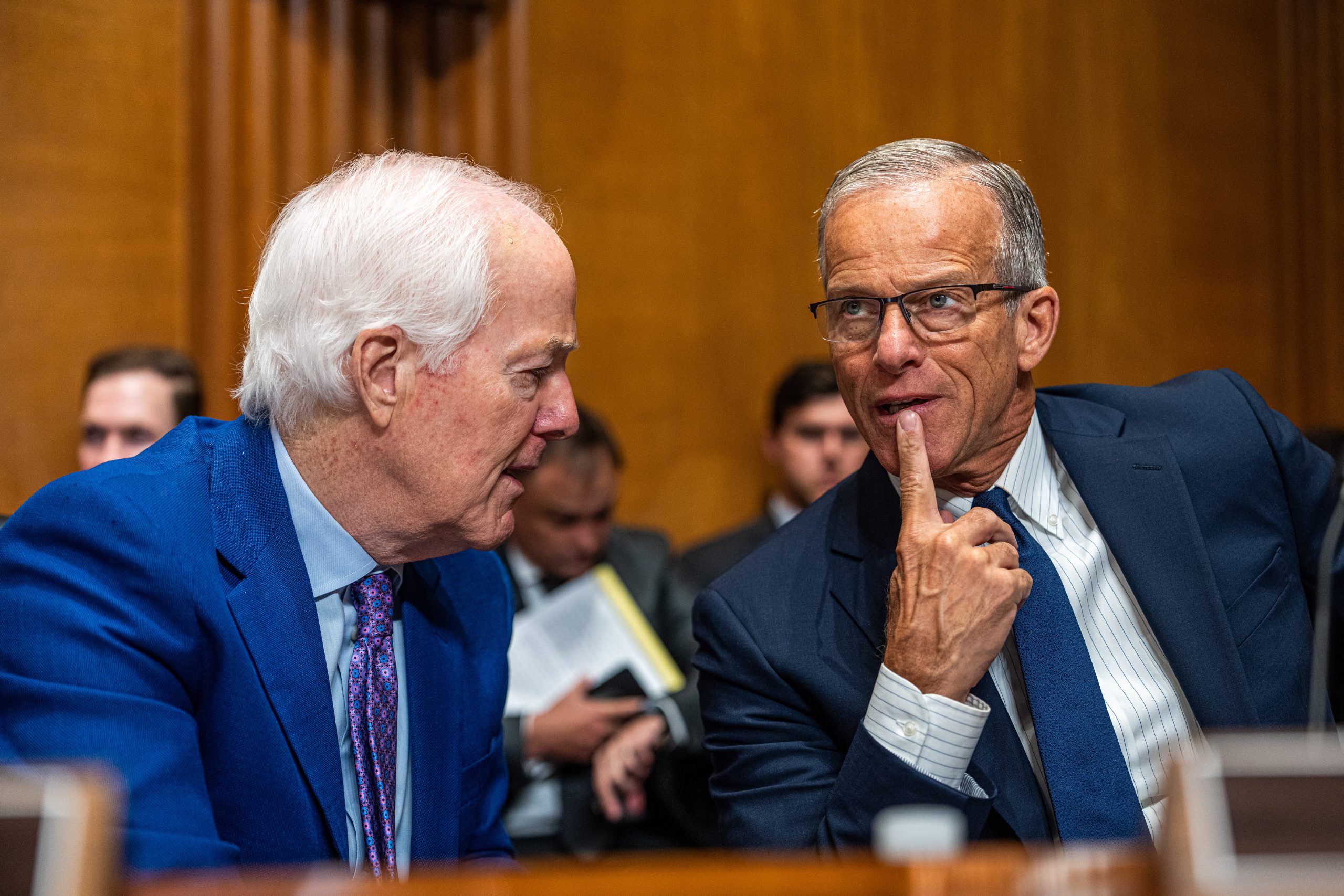
Sen. John Cornyn (R., Texas) (left) and Senate Majority Leader John Thune (R., S.D.) have dropped their objections to Todd Blanche becoming attorney general.ALEX KENT
Blanche’s supreme loyalty to Trump and willingness to abuse the rule of law to please his boss has tarnished the independence and trust in the Justice Department.
Federal judges have repeatedly rebuked Justice Department lawyers for lying, ignoring orders, and skipping deadlines — actions that were extremely rare before Trump.
As the Justice Department’s No. 2 official, Blanche played the lead role in protecting Trump from the fallout from the release of the Jeffrey Epstein files. Nearly half the files involving the accused sex offender and close friend of Trump’s still have not been released, and many that have been made public are redacted.
As the political fallout for Trump grew, Blanche, in a highly unusual move, personally interviewed Ghislaine Maxwell, who was sentenced to 20 years in prison for her role in helping Epstein recruit, groom, and abuse underage girls.
Shortly after the meeting, Maxwell was transferred to a minimum-security prison camp, despite the Bureau of Prisons policy that prohibits housing sex offenders in lenient lockups. Will her silence about Trump’s dealings with Epstein lead to an eventual pardon?
Blanche has also abused his power at the Justice Department by presiding over efforts to indict, investigate, and harass Trump’s perceived political enemies, including bogus legal attacks aimed at former FBI Director James Comey, New York Attorney General Letitia James, former Federal Reserve Chairman Jerome Powell, and others.
Federal prosecutors just dropped charges against a former Olympian who was accused of damaging the Lincoln Memorial Reflecting Pool, a ridiculous case that was ginned up to protect Trump after a crony contractor botched the repairs.
Grand juries have rejected other pathetic cases brought by the Justice Department to punish critics of Trump, including one attempt to indict a man for throwing a sandwich at an immigration enforcement agent.
The cases echo what occurs under authoritarian regimes, and underscore that private citizens are not safe from the legal abuses by the Trump-Blanche Justice Department.
Blanche has demonstrated he has no business pursuing justice. Voters should hold to account any elected officials who green-light such legal abuses.
But I wasn’t surprised. And you shouldn’t be, either.
Put simply, hazing is as American as apple pie. When an incident like this happens, everybody expresses shock and dismay. Legal charges are filed, coaches are fired, and games are canceled. And then we go back to hazing again.
Most Americans probably associate hazing with college and — especially — with fraternities. But in a 2009 survey of over 11,000 university students, 47% reported they had experienced hazing in high school. All told, an estimated 1.5 million high school students are hazed each year.
That means it’s people you know, in the communities where you live.
In 2004, a grand jury reported that three Long Island football players attending a summer camp in Wayne County, Pa., had inserted pine cones and golf balls into teammates’ anuses. The assaults were part of a long history of hazing at the camp, where coaches “displayed a lack of common sense and accountability,” the report said.
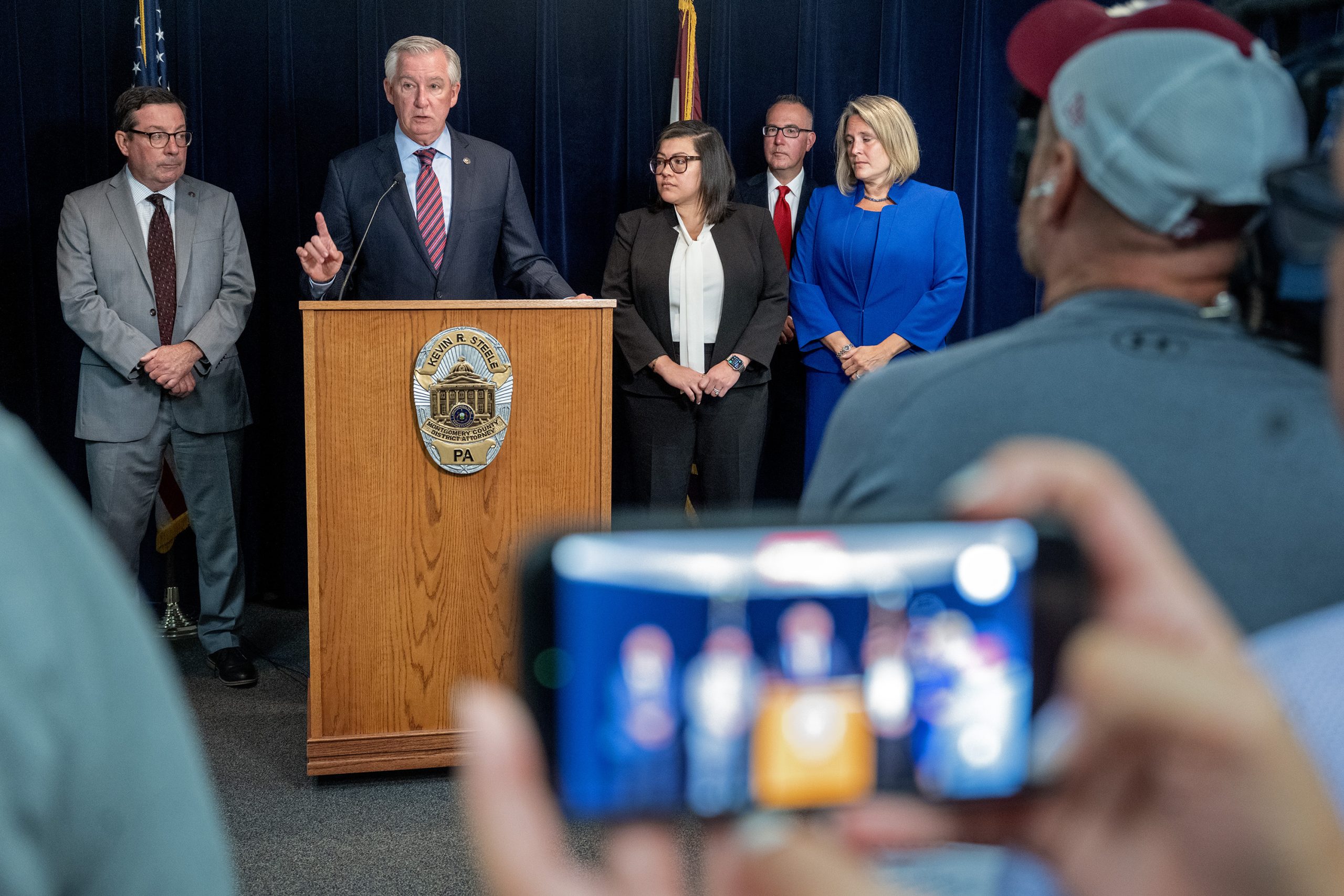
At a July 29 news conference, Montgomery County District Attorney Kevin Steele announces multiple charges in connection with two assaults in the Cheltenham High School locker room that injured a 15-year-old football player.Tom Gralish / Staff Photographer
In 2014, Central Bucks West High School in Doylestown acknowledged that rookie football players had been forced to grab other players’ genitals. They were also led into the shower with towels over their heads, which the players called “waterboarding.”
In 2015, seven football players at Sayreville High School in Middlesex County, N.J., were charged with grabbing teammates’ buttocks and digitally penetrating one of them.
In 2016, prosecutors said football players at Conestoga High School in Berwyn had penetrated a freshman player with a broomstick as part of a hazing ritual called “No Gay Thursdays.” And in 2022, football players at Wall Township High School in Monmouth County, N.J., were caught on video holding a student’s legs apart and, yes, assaulting him with a broomstick.
Are we seeing a pattern here? Most high school hazing involves verbal — not physical — abuse. But the most violent episodes happen on sports teams, which also have the highest rate of hazing.
And they’re also the most likely to generate criminal charges. In Cheltenham, six players have been charged in connection with the assaults on their teammate. And four coaches face charges of endangering the welfare of a child and conspiracy for allegedly trying to cover up the incident.
The football practice field and stadium at Cheltenham High School.Tom Gralish / Staff Photographer
Ditto for our educational efforts. When reports of hazing surface, school officials pledge to conduct anti-hazing training for coaches and students. And they release statements declaring that hazing will not be tolerated, in any form.
But their message is falling on deaf ears. So it’s time to change the messenger to someone whom kids will really hear: the hazers themselves. If you haze somebody, you should be required to speak to other students about it.
It’s happened before. After a Virginia Commonwealth University student died of alcohol poisoning in a fraternity initiation in 2021, six students who pleaded guilty to hazing him agreed to travel to universities around the country to discuss the tragedy and the role they had played in it.
We could — and should — demand the same thing from high school hazers. Plea agreements in hazing episodes often require guilty parties to perform community service. What could be a better service than speaking at student assemblies and other public events about the problem of hazing?
In the Cheltenham incident, two 18-year-old football players were charged as adults — one with assault and conspiracy, the other with false swearing for being untruthful to police. The four other players were under 18 and were charged as juveniles.
I don’t know what penalties they should receive. But here’s what I do know: The rest of the school would discover a lot more about hazing if the six students were required to speak about it. And maybe, just maybe, we could start to shift the culture around this destructive behavior.
When hazing is reported at a high school, local officials condemn the incident and inevitably declare that “this is not who we are.” In fact, it’s exactly who we are. We haze. So let’s hear from the people who do it, about why they haze and what they have learned. We can all learn something from them.
Jonathan Zimmerman teaches history and education at the University of Pennsylvania. He is the author of “Schooling Citizens: How Education Can Save Democracy,” which will be published next spring by the American Philosophical Society Press.
I like to consider myself a reasonable person open to all reasonable points of view. Politically, my favorite people are those who will fight for what they think is right but can understand and respect those they disagree with because they’re standing up for their own beliefs.
Of course, beliefs can be mistaken.
Take my belief that the rules were being followed regarding people presenting themselves at the southern border during the Biden administration. My left-leaning bias led me to assume that officials were following the law for those seeking asylum to be allowed into the country while their case was being processed.
Doing some reporting last year, it turns out the administration was — at least during the early days — processing people regardless of any legal claims, under the assumption they would be seeking asylum.
As a reasonable person, my objection to this is twofold. One, you may be acting humanely in allowing someone who risked their life to come to the U.S. to enter the country, but you are not following the law. Two, you are giving all these immigrants false hope they can stay, when asylum, even under the best of times, is not widely granted — especially if an immigrant has no legal representation.
What happened under Biden wasn’t illegal, per se; the White House has huge discretion regarding immigration policy. But much like what President Donald Trump is doing on immigration today, it’s just not right.
I was thinking of how things are never black and white when reader Mark Fenstermaker asked that I write about “the growing number of U.S. citizens who have been killed by illegal immigrants” along with U.S. Immigration and Customs Enforcement efforts to “remove thousands of known criminals who had the potential to add to that number.”
Data wise it’s difficult to offer a conclusive answer to that specific allegation, since law enforcement agencies rarely collect immigration or citizenship status (for victims or offenders). Fortunately, the great state of Texas once again comes through.
Analyses of Texas data, which include immigration status, find that the crime rate of undocumented immigrants in general is lower than that of the U.S.-born population, which is generally understood to be the case.
Regarding homicide, from 2013 to 2022 the conviction rate in Texas for illegal immigrants was 2.2 per 100,000 people, compared with 3.0 per 100,000 for native-born Americans, according to the libertarian Cato Institute. There are a couple of caveats that may push the conviction rate for illegal immigrants higher, but regardless, the rate is hardly zero.
Some immigrants in the country illegally kill, that is a fact. Another fact is that in the U.S., random killings are statistically rare. Yet the right-wing fearmongers will not tell you that broadly speaking, you are more likely to be hit by lightning than you are to be killed by a stranger, let alone a stranger who’s in the country illegally.
Even then, whether that immigrant came here under Biden or under Trump, the ultimate responsibility falls on the person who committed the crime.
Now, the impression that there is a “growing number” of people killed by immigrants is not helped by the Trump administration’s propaganda efforts. I do not begrudge the Department of Homeland Security regularly trumpeting that ICE has detained some of the “worst of the worst” — as immigration enforcement should. But claiming that crime rates have “plummeted” under Trump’s leadership because they’ve removed “criminal illegal aliens” is overblown to say the least.
Crime rates spiked during the pandemic, at a time when Trump closed the border to asylum seekers using the threat of COVID-19 as an excuse. The number of violent crimes committed has been steadily dropping since 2023. Using the administration’s logic, if anything, those six million or so immigrants who Biden let in are making America safer.
None of what I’m saying should be understood as minimizing the death of anyone at the hands of an immigrant who’s in the country illegally. As I’ve said before, there is no comfort for a victim’s loved ones to hear that immigrants commit fewer crimes than the U.S.-born. It would be ridiculous and heartless to answer someone’s pain with such a meaningless fact.
The best we can do is to demand that our media and our leaders do better. That they tell the real story and not whatever fits into their ideological narrative.
To the concerns of my conservative readers like Mr. Fenstermaker, there is often a knee-jerk reaction from many in the mainstream media to downplay crime by undocumented immigrants. Even when telling stories related to immigration, there is a penchant to focus on the unimpeachable “perfect immigrant” when the truth is that people are complicated and reality is messy. But there is also an undeniable push on the right to demonize and scare that should be unacceptable.
What’s much worse is that this is how too many of our leaders operate. You have Democrats who will romanticize immigrants and their experience to the point that people become a symbol and bad policy decisions are made. Then you have Republicans under Trump who push hate and division, and whose policies lead to suffering and harm.
I will choose the Democrats’ mistakes on this over the Trump administration’s anti-immigrant rampage any day of the week, but one cannot exist without the other. If we keep casting things in black and white, we will never be able to reasonably move forward.
When the largest World Cup in history ended at MetLife Stadium, it marked the culmination of a summer in which millions of visitors moved through American host cities under the eyes of computerized systems most of them never noticed.
The federal government directed more than $1 billion to World Cup security, funding facial recognition cameras in and around stadiums, police drones over crowds, and AI-driven monitoring of transit hubs. More than 120 civil society organizations issued a travel advisory warning visitors about the screening they would face.
The tournament turned host cities into laboratories for urban artificial intelligence, and the experiments ran on tourists.
The two of us have conducted research on the use of electronic monitoring in urban areas, and we do not write to argue that cities should abandon these tools. Tourism contributed $10.9 trillion to the global economy in 2024, roughly 10% of global GDP, and safety increasingly decides where that money goes. Thirty-two percent of travelers now call safety the primary factor in choosing a destination, up from 23% in 2021.
AI can genuinely help cities deliver that safety. London’s transit authority uses smart video to spot trouble on crowded platforms. Singapore’s police fly drones that map crowd density at large events in real time. Used well, these systems find lost children, reroute crowds before crushes form, and speed emergency response.
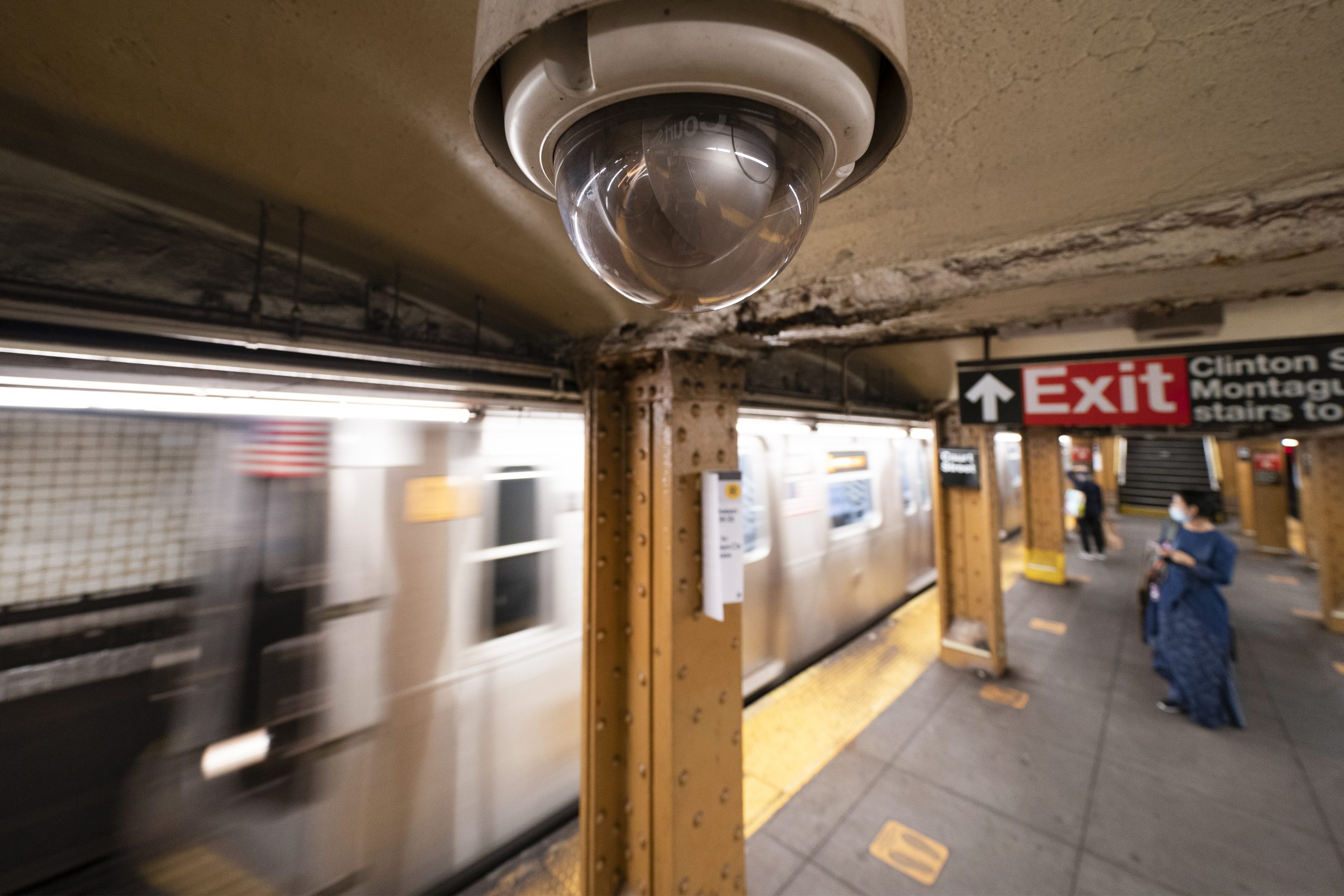
A video surveillance camera hangs from the ceiling above a New York City subway platform in October 2020. Mark Lennihan
The problem is the gap between deployment and governance.
Cities are running the experiment first and writing the protocol later.
That order of operations should worry anyone who remembers that surveillance systems, once installed, rarely come down. Mega-events have long served as the justification for permanent expansions of monitoring capacity.
The gap matters because safety is not only physical. Our research frames tourist safety in three dimensions: physical safety from crime and disaster, digital safety from data breaches and fraud, and psychological safety, the felt sense of trust that makes a visitor relax in an unfamiliar place. An algorithm that marginally improves the first while quietly eroding the other two is a bad trade.
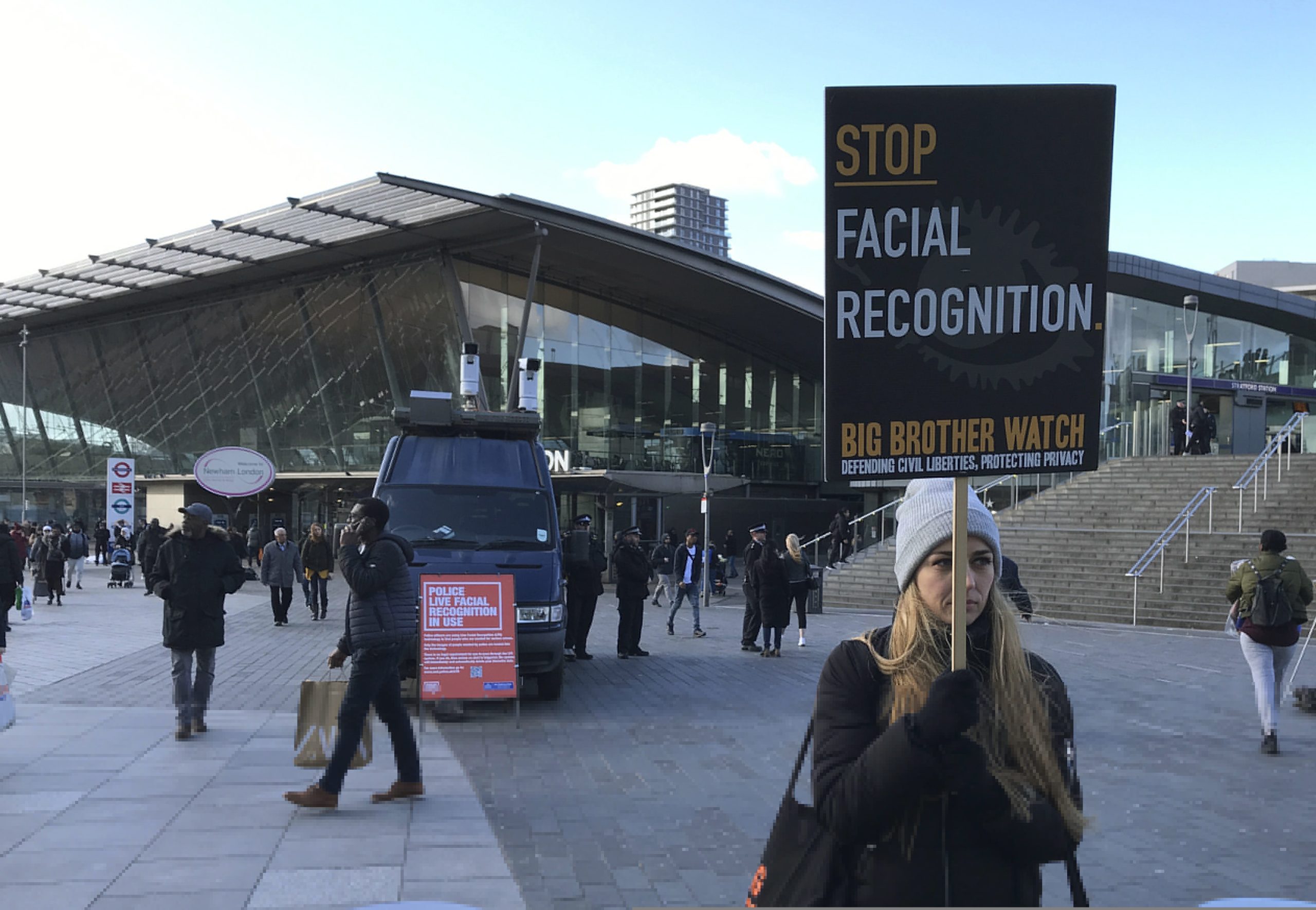
Rights campaigner Silkie Carlo demonstrates in front of a mobile police facial recognition facility outside a shopping center in London in February 2020.Kelvin Chan
The public senses this. Two-thirds of respondents in surveys we reviewed insist that people should be informed when AI is used to prevent, detect, or investigate crime. London learned the hard way that deploying facial recognition vans in high-footfall areas without that transparency generates backlash that outlasts the deployment.
Some cities show what the alternative looks like.
Barcelona created an external advisory council of independent experts that evaluates high-stakes algorithms before deployment; that panel rejected fully automated decision-making outright. Helsinki maintains a public AI register that lists every municipal algorithmic system — what it does, what data it uses, and what safeguards constrain it — so any resident or visitor can look up exactly what is watching them. Neither city sacrificed safety for principle. They built the trust that makes safety technology legitimate.
This convenience store in Tacoma, Wash., tested facial recognition technology to prevent theft in 2019. Melissa Hellmann / MCT
American cities do not need to invent this from scratch. The road map we propose starts with three steps any city council can take this year:
adopt an AI governance framework tailored to tourism and public safety;
extend legal protection to residents’ and visitors’ data whenever private vendors handle it;
publish a public register of every AI system the city operates.
None of these steps requires new technology. All of them require political will.
That means the great wave of municipal AI adoption is still ahead of us, and so is the chance to shape it.
Los Angeles hosts the Olympics in 2028. The cities that spent this summer as laboratories should spend the next two years writing the rules — in public — before the next surge of visitors arrives. Tourists chose these cities for a sense of welcome and security. Cities owe them systems worthy of that trust.
Eugènie L. Birch is the Nussdorf professor of urban research at the Weitzman School of Design, and co-director, Penn Institute for Urban Research at the University of Pennsylvania. Mauricio Rodas is the former mayor of Quito, Ecuador, and professor of practice at the Weitzman School of Design. Luke Campo, a graduate of the University of Pennsylvania, supported this research.
Our responsibility is to create an accessible home equipped to serve our community while allowing William Way to remain in the Gayborhood. Throughout this process, we continue to provide essential programs, arts and cultural initiatives, community connections, and support.
The article dismissed the extensive planning that informed this direction. Our board voted unanimously after more than a year of evaluating options, engaging stakeholders, and studying the financial realities of preserving the existing building.
At a time when LGBTQ+ people and institutions face renewed threats, our community needs safe and welcoming places to find support, connection, and belonging. As plans for 1315 Spruce St. continue to evolve, William Way remains focused on creating an accessible and lasting home that will be here for our community now and for generations to come.
Laura Ryan and Dave Huting,co-board chairs, William Way LGBT Community Center Board of Directors
…
Inga Saffron’s column reminds us that tearing down the William Way LGBT Community Center’s longtime home would mean losing much more than a building. Since relocating to 1315 Spruce St. in 1996, William Way has become one of Philadelphia’s key LGBTQ+ landmarks, where generations have found support, services, culture, history, and community.
There is no disagreement on the need for more services, better accessibility, or affordable housing for LGBTQ+ seniors. These are important goals, even if housing has not historically been part of the center’s mission. However, the public has yet to see why those goals require demolition, or if preservation and reuse options have been thoroughly considered.
This should not be viewed as a choice between affordable housing and LGBTQ+ history. Philadelphia has shown that historic buildings can be updated for modern needs. William Way deserves the same consideration, and a creative preservation approach could preserve the best of the existing structure while allowing a modern addition.
The Preservation Alliance is urging William Way’s board to pause irreversible actions, publicly review reuse options, and organize meaningful community meetings before making final decisions. The future of William Way should involve the community, not just be handed down to it.
Paul Steinke, executive director, Preservation Alliance for Greater Philadelphia, and former, William Way Board co-chair (2016—2020)
Who knew?
I read your editorial about John Fetterman’s threat to quit the Democratic Party with incredulity. Just how were Southeast Pennsylvania voters to know anything about Candidate Fetterman when The Inquirer seemed reluctant to ask him any substantive questions during his campaign? Your coverage of his Senate race that year was highly dependent on quotes from his staff and postings on Twitter. The most we learned was that he was pro-union, advocated for the decriminalization of marijuana, and supported abortion rights. Beyond that, nada.
Even toward the end of his campaign, after meeting with the Inquirer’s Editorial Board, the paper stated “However, Fetterman was often vague in describing specific policies or the role he hoped to carve out in the Senate as he spoke for nearly 30 minutes with The Inquirer’s Editorial Board and two reporters.”
Don’t pretend voters knew John Fetterman when The Inquirer could have done a much better job of letting us know who he was.
Paul Withington, West Chester
Protesting protesters
Citizens Bank, in its news release announcing its winding down of lending to private prison firms CoreCivic and The Geo Group, notes that this is “a business decision based on changed commercial circumstances.” Yet, it goes on in the release to extensively castigate activists who protested its lending practice, saying “Citizens has been disappointed that the activists have dragged it into what is largely a political matter.” If, in fact, theirs was purely a business decision, then why does Citizens feel the need to lash out against those who protested this lending practice in support of our immigrant neighbors? Methinks the bank doth protest too much.
Louis Pilla,King of Prussia
Altered reality
In 2019, Donald Trump used a black Sharpie to change the path of a hurricane to match his earlier tweet. Now he has taken a metaphorical Sharpie to American soldiers who died in the Iran war. He changed the number of dead from 18 to 14, claiming the last four died after a ceasefire was declared. Next he will be sending FBI agents armed with black Sharpies to gas stations around the country, slashing the price of regular gas from $4.09 a gallon to $3.09 a gallon. At long last he will make good on his campaign promise to solve the affordability crisis.
At roughly the same time, I was attending a Memorial Mass for the Feast of Blessed Stanley Rother, an Oklahoma-born priest and martyr, at the Basilica of the National Shrine of the Immaculate Conception, also in Washington — where I heard a very different message.
On July 28, 1981, a brutal right-wing Guatemalan government death squad assassinated Father Rother in the church where he pastored Indigenous people attempting to improve the quality of their impoverished lives.
Rother’s message remains that our lives be like his life of human sacrifice and inspiration always in the pursuit of peace and understanding.
Reggie Regrut, Phillipsburg
History’s lessons
Your editorial on how President Donald Trump can find a way out of his failed Iran war raises several good points, the most significant one being that Trump’s obvious failure to support the NATO alliance and our European allies has destroyed the possibility of multinational diplomacy. You also argue rightly that simply withdrawing from the Obama-era international agreement that convinced Iran to avoid building nuclear weapons was a mistake. I would add that the killing of Iran’s top leader, the Ayatollah Ali Khamenei, only angered and even emboldened the country.
Unfortunately, you neglect one all-important fact about the prior nuclear agreement — it did nothing to curtail Iran’s proxy forces that menace its neighbors, including our ally Israel. This threat alone justifies pressure on Iran beyond that which produced the prior agreement. You also ignore past history, which rhymes with what is happening now.
In 1979, Iran had our hostages. Today, they hold the Strait of Hormuz and the world’s oil supply. While Jimmy Carter got Iran close to releasing the hostages, what brought that episode to a close was the election of Ronald Reagan and the Iranians’ realization that he was likely to treat them aggressively rather than stopping at diplomacy. Further, it looks as if Iran is simply stalling against our unilateral negotiations at this time. It’s hardly a sure thing that multinational negotiations would do much better.
Some experts have opined that having our military forcibly open and patrol the strait is the only leverage we have in the present situation. The only way out of this nightmare may very well prove to be escalation rather than continuing the present failed course, and past history suggests strongly that this is so — a probability that The Inquirer’s Editorial Board needs to consider.
John Baxter, Toano, Va.
Join the conversation: Send letters to letters@inquirer.com. Limit length to 150 words and include home address and day and evening phone number. Letters run in The Inquirer six days a week on the editorial pages and online.
The United States government might wash its hands of any responsibility for the more than 700,000 human beings who’ve been deported since Donald Trump returned to the White House some 18 months ago, but it doesn’t take Sherlock Holmes to determine who’s to blame for the blood stains that have been left behind.
Last month, police outside the city of Retalhuleu in southwestern Guatemala found Nixon Giovanni Pérez Paz, 43, and his wife, Glendy Marisol González de la Cruz, dead in a sugar cane field. They’d been bound, gagged, and then executed by gunshots, with their 14-month-old daughter crying next to her mother’s lifeless body.
When Trump took office in January 2025, the couple was living in a suburb of St. Louis — working essential jobs and raising their three daughters while seeking to become legal residents of a country that had offered refuge from rampant crime and poverty back home in Guatemala.
The dream turned into a nightmare with one traffic stop in April 2025, as Pérez Paz was driving to work. Although a subsequent NPR investigation found just one permanent mark on his record — a paid $200 fine for driving without a license — Pérez Paz was swiftly deported by U.S. Immigration and Customs Enforcement (ICE). González de la Cruz had an active asylum application, but after struggling to support her kids while working two jobs, she decided to return home voluntarily.
The couple was murdered only weeks after they reunited in Guatemala.
“If immigration hadn’t picked up my brother, my sister-in-law would still be alive, and the children wouldn’t be going through this sorrow,” the dead man’s brother, Ronaldo Pérez Paz, told People magazine. “Unfortunately, immigration — the [U.S.] government — doesn’t see that. It makes no difference to them.”
No, it doesn’t. Nor did anyone with that government see the humanity of Daphy Michel, a 31-year-old Haitian asylum-seeker with a history of mental health struggles. Sheended up in immigration custody after an arrest and was dumped by ICE agents at a Pittsburgh bus stop wearing summer clothes during a brutal February cold snap. She was found dead three days later, and a medical examiner has ruled that Michel’s death was a homicide.
“I believe that we need to observe all our brothers and sisters as neighbors,” Jaime Martinez of the Pittsburgh immigrant rights group Frontline Dignity told the Guardian, invoking the golden rule that was shattered by Trump’s cruelty-is-the-point regime.
The smell of death permeates the so-called brain trust of American militarism that decided back in February — for reasons still unfathomable — to bomb Iran back into the Stone Ages, in an on-again, off-again campaign in which it seems the collateral damage is the point.
An undated photo of Daphy Michel, an asylum-seeker from Haiti who died March 2 in Pittsburgh, in the wake of her release from federal custody.Michel Family via AP
Last week, according to a deep analysis by the New York Times, U.S. forces dropped a massive, 2,000-pound bomb in the middle of a dense residential neighborhood on Iran’s Qeshm Island along the contested Strait of Hormuz, pulverizing a family’s home.
The 3:40 a.m. blast killed Zahra Jafari, her husband, Qeysar Jafari, a taxi driver, and their son Sina, according to Iranian news agencies, who said two other children were rescued alive from the rubble.
Less than halfway through Trump’s second presidency, his strongman rule is increasingly becoming a death cult. The stench of immoral indifference to the humanity of anyone not part of the MAGA movement is spreading as fast as the COVID-19 virus that helped bring an end to Trump’s disastrous first presidency.
I realize I’ve probably overused my lifetime quota for invoking one of the greatest four minutes of filmmaking I’ve ever seen, but yet again I am reminded of Martin Scorsese’s brilliant montage in Goodfellas as dead bodies pile up in parked Cadillacs or on freezer-truck meat hooks in the wake of a huge armored-car heist. It’s a testament to the greed, brutality, and senseless violence of the mob life.
Today, I can’t help but hear the mournful piano coda from “Layla” as I watch the corpses of Trump’s recklessly lethal rule wash up on Caribbean beaches near the driftwood of their obliterated fishing boats, or inside the bombed sanctuary of an Iranian girls’ school, or from medical neglect inside ICE’s growing gulag archipelago.
The nattering nabobs who scoff at the notion that the United States — whose president on Saturday posted an AI photo of himkissing Jesus on a golden cross wrapped in the American flag — has sunk into fascism because there are no Auschwitz-style death camps just don’t get it.
Whether it’s ICE agents firing bullets into an immigrant’s car, or deportation flights that dump their passengers back into the gang violence they thought they’d escaped, or ending the programs that saved millions of kids in Africa from malaria, the Trump body count is already into the thousands, and it grows every day of his warped presidency.
The statistics matter, but you can’t put a number on the rank immorality of an utter disregard for whether people who don’t look like you live or die. Whatever the Trump death toll turns out to be, this stain on the American soul is never coming out.
But there’s also an outer band of gross neglect or indifference to human life that has led to scores of additional deaths, including the more than 50 people — some who’d complained of medical conditions that were ignored — who’ve died in ICE custody since Trump returned to office, or the unknown number who’d faced murder or poor medical care after deportation to the trouble-laden nations they’d tried to escape.
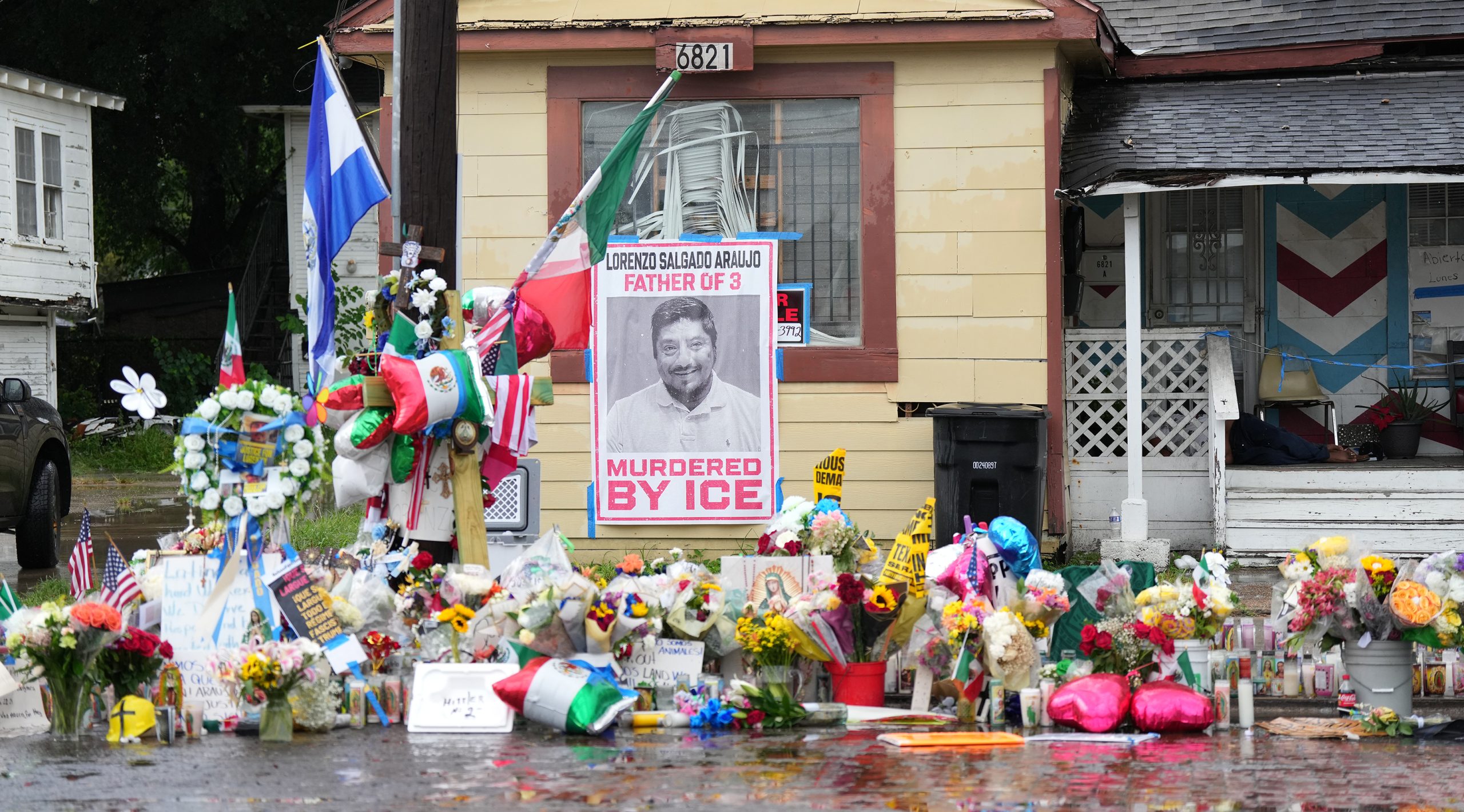
A memorial at the site where Lorenzo Salgado Araujo was fatally shot by ICE agents in Houston last month is seen July 13.Karen Warren
Then there’s the biggest — and most abstract — ring of all. It’s difficult to agree on an exact count, let alone bring accountability, for what researchers say is a wave of death — 600,000 people, mostly children, according to one Boston University study — that has resulted from the decimation of the U.S. Agency for International Development (USAID). And what will become of the domestic surge of preventable diseases such as measles under a government whose top health official is a notorious critic of vaccines? At what point does bad policy become depraved indifference?
Death is contagious. In Ecuador, prosecutor Alexandra Bravo was investigating the U.S. drone strikes that destroyed three of her homeland’s fishing boats when a gunman on a motorcycle assassinated her and her sister. There’s no evidence that the United States has any direct responsibility for her death, but there’s every reason to believe she’d still be alive if this Trumpian death cult had not destabilized the planet.
The MAGA movement thrives on a brand of white supremacy that pumps up its adherents by dehumanizing everyone around them. And when people are stripped of their humanity, the Ten Commandments seem to no longer apply to their tormentors. It’s hard to reach Trump’s promised goal of one million deportations every year unless the deportees are just a number — not a mom, or a dad, or a cherished neighbor.
A bad president can be replaced every four years. A killing spree screams out for immediate action. We need to take whatever steps are possible right now to stop this rogue government before tomorrow’s headline about the next Nixon Giovanni Pérez Paz or Daphy Michel.
The stench of death has already become unbearable.