What does it say about Pennsylvania’s political leadership when U.S. Rep. Ro Khanna, a progressive Democrat from California, seems more in tune with where voters stand on data centers than many top elected leaders in the Keystone State?
Khanna, a native of Bucks County, said Pennsylvania should do more to safeguard communities from the proliferation of data centers across the nation. He’s proposed a Data Center Bill of Rights to protect residents from the environmental and financial harms caused by the energy-sucking centers needed to fuel the artificial intelligence boom.
If Congress approved Khanna’s measure — which is unlikely as long as Republicans control both chambers in Washington — it would pause the current runaway development of data centers.
Pennsylvania is among the fastest-growing states for data centers. More than 50 of them have been proposed, planned, or are under construction in the state. So far, six are being built and 10 have received at least one state-level permit approval, according to Shapiro’s office.
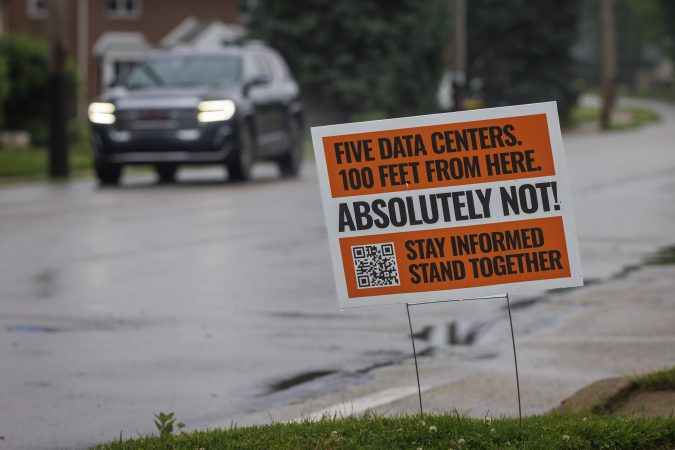
Opposition to data centers may be the only issue that unites voters from all sides of the otherwise divided political landscape. In Pennsylvania, a whopping 74% of voters are against building an AI data center in their community, according to a recent Quinnipiac University poll.
Residents fiercely oppose a two million-square-foot data center proposed outside Conshohocken. Tempers flared at a public meeting in King of Prussia where the same developer, Brian O’Neill, wants to build five other data centers totaling 4.6 million square feet.
Across the country, residents have complained about sharp increases in electric bills — including a 20% increase in Pennsylvania since 2024 — caused, in part, by the growing power demands of data centers.
Others said their once-quiet communities have been ruined by the constant noise coming from the facilities, including one in Vineland, N.J.
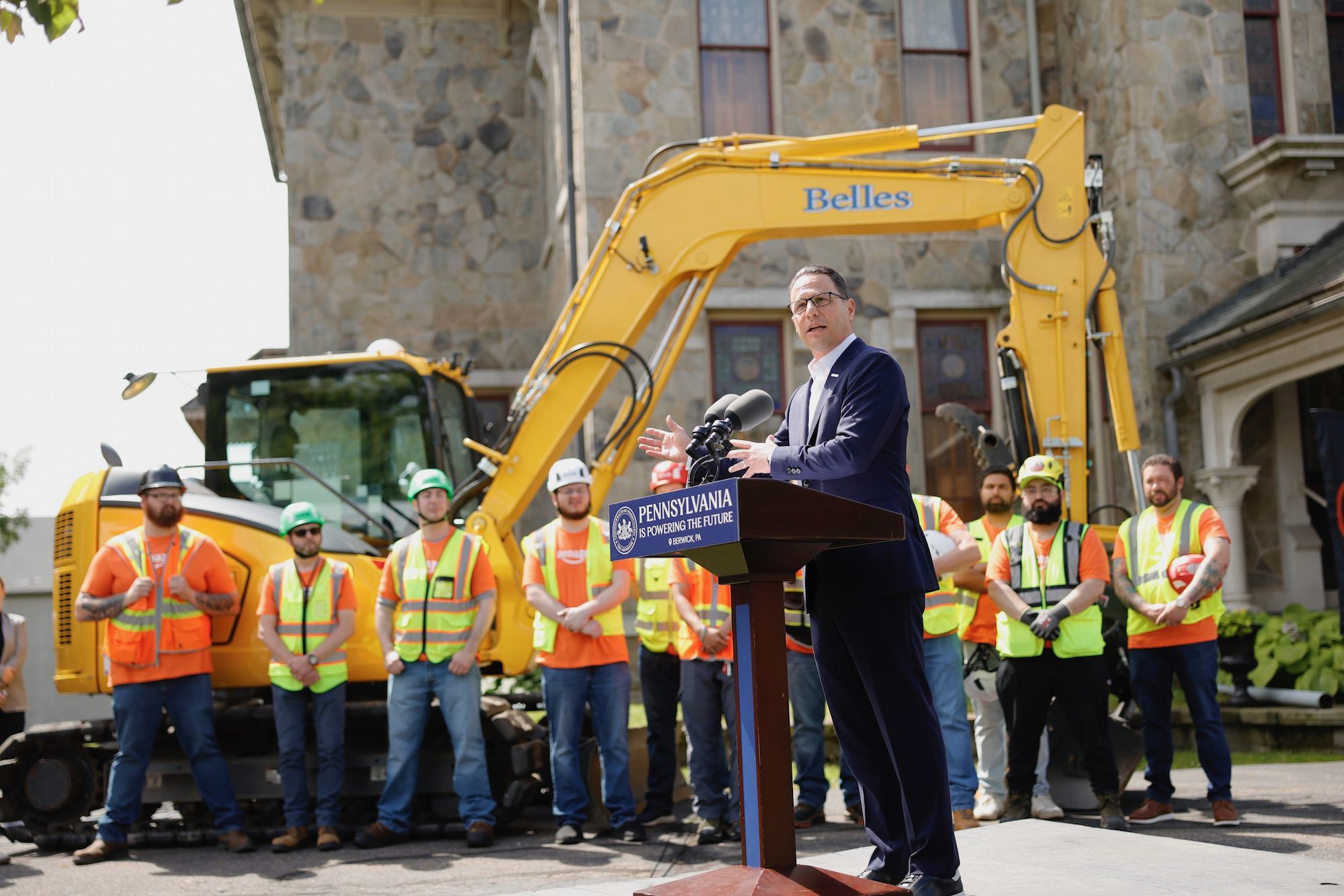
Gov. Josh Shapiro announces a $20 billion investment by Amazon in Pennsylvania data centers in Salem and Falls Townships in 2025.Commonwealth Media Services
Still others said data centers caused their water wells to run dry, while many fear increased water bills from the need to cool large data centers that use an estimated five million gallons of water each day, equal to the usage of a town of up to 50,000 residents.
Sen. Dave McCormick (R., Pa.) has championed the development of data centers along with President Donald Trump. (Conflict of interest alert: McCormick’s wife is an executive at Meta, one of the leading developers of AI data centers.)
Gov. Josh Shapiro (D., Pa.) initially trumpeted efforts to bring data centers to the state. Just over a year ago, Shapiro said his administration was “all in” on AI, but his position has shifted somewhat in the face of the growing public backlash.
In May, Shapiro, who is up for reelection in November, unveiled standards designed to place guardrails on the energy usage of data centers and give local communities more input.
In recent months, Shapiro has met with some residents about data centers and acknowledged concerns about the impact on utility bills and the environment.
Supporters argue the data centers will bring investment and construction jobs to the state, and position the country to compete in the global AI race.
But at what cost to consumers left to shoulder the rising electric and water bills, not to mention the environmental harm?
Lawmakers have been slow to consider that part of the equation, as no one can say if the hyped benefits outweigh the real costs.
Elected officials are supposed to represent the interests of the people, and not the deep pockets of big businesses. Until lawmakers find ways to protect residents from the true impact of AI data centers, a pause makes the most sense.
Every day, physicians, patients, and the families who care for them make hundreds of decisions together about where and how care should be delivered. Those choices reflect what matters most to the patient and family, alongside clinical expertise, patient safety, medical complexity, and access to the resources needed to achieve the best possible outcomes.
Increasingly, however, these collective judgments are being second-guessed — and often overruled — by large insurance companies through policies that prioritize administrative convenience and cost-shifting over clinical judgment and the needs of the people receiving care.
At Jefferson, where I am chief physician executive, we believe healthcare decisions should be made by patients, their families, and their care teams — not by insurance company policies that create barriers to treatment.
Pedestrians walk by the entrance of the Gibbon Building at Thomas Jefferson Hospital in Center City in October 2021.TYGER WILLIAMS / Staff Photographer
That is why we are speaking out against a growing number of managed care policies, including recent actions by Independence Blue Cross, that delay care, increase administrative burden, and interfere with the ability of physicians and patients to determine together the most appropriate setting for treatment.
Supporters of these policies describe them as efforts to control healthcare costs, but they have the opposite effect — at the expense of patient access, clinical judgment, and safe care delivery. When insurers insert additional layers of authorization, site-of-care reviews, exception requests, and excessive documentation requirements into the care process, the result is not greater value. It is greater friction.
For patients and families, that friction can mean postponed procedures, unexpected changes in where care will be received, canceled appointments, additional paperwork, and uncertainty at a moment when many are already carrying the weight of a serious diagnosis.
Families rearrange work schedules, travel plans, childcare, and other responsibilities around a procedure date — and then learn the date has moved for reasons that have nothing to do with the patient’s medical condition. Too often, patients and families are the last to know that a decision about their care is under review, and they are given little explanation of who made it or why.
That is not information sharing. It is not participation. And it does not reflect the dignity and respect patients and families are owed as full partners in their own care.
Too often, Edmund Pribitkin writes, patients and families are the last to know that a decision about their care is under review by insurers.manassanant pamai
For physicians, nurses, and the rest of a care team, it means spending valuable time on administrative requirements rather than at the bedside, answering the questions patients and families actually need answered.
The IBX Site of Care policy is one example. Under this new rule — which was implemented in June — certain procedures that have long been performed safely in a hospital outpatient setting must now undergo additional review that goes beyond determining whether the care is medically necessary. Physicians may need to prove why a patient cannot receive care in an alternative setting, submit exception requests, supply additional documentation, and navigate new administrative workflows before treatment can proceed.
These requirements may sound modest on paper, but their cumulative impact is significant. They create new administrative costs that do not improve the quality of care, require additional staffing and resources, slow scheduling, and increase the likelihood of delays and disruptions for patients and families.
Particularly concerning is the effect on high-volume services such as colonoscopies and other diagnostic procedures that are essential to prevention and early detection — the very care that keeps families healthy and catches disease when it is most treatable.
This issue extends far beyond a single insurer or policy. Across the healthcare industry, patients, families, and their care teams are confronting an expanding web of insurer-imposed administrative requirements: prior authorizations, repeated documentation requests, portal submissions, denials, appeals, and site-of-care restrictions. Each requirement consumes time, resources, and attention that could otherwise be devoted to care itself.
The question policymakers, employers, patients, and families should be asking is a simple one: Are these requirements improving care, or are they simply making care harder to access?
Patients and families deserve a healthcare system that removes barriers to care rather than creating new ones. They deserve to be told, clearly and promptly, when an insurer’s policy is affecting their care, and to have a real voice in decisions about where and how that care is delivered.
Physicians deserve the ability to exercise clinical judgment, in partnership with patients and families, without unnecessary interference.
And health systems should be able to devote their resources to caring for patients rather than navigating ever-changing administrative mandates.
Jefferson supports accountability, transparency, and responsible stewardship of healthcare dollars. But we will continue to challenge policies that place insurance company bureaucracy between patients, families, and the care they need.
Healthcare works best when decisions are guided by medical expertise, in partnership with patients and families — not by administrative hurdles that add cost, complexity, and delay without improving outcomes.
Edmund Pribitkin is chief physician executive and executive vice president at Jefferson Health.
This could be a win-win situation for both the students and the Keystone State.
Everyone who knows me recognizes how much I love Howard, which is my alma mater. To call the four years I spent on the campus in Washington, D.C., life-changing would be an understatement. It was the former leader of HU’s journalism department, Lawrence Kaggwa, who set me on my career path, informing me that I was going to work in the newspaper industry.
The first-time college students — some in tears — responded by posting videos on social media about their plight. They were hard to watch. Some went viral and even made the national news.
School officials defended what happened, saying payment notices had been going out since March about deadlines and enrollment requirements. Some students said they didn’t get them, or else received a notification on the same day their bill was due.
Nikiyah Clark told ABC News, “I was so scared because Howard University is my dream school, like, my grandma went there.” She hopped on a bus from Fairport Harbor, Ohio, to D.C. to advocate for herself in person. It paid off, because she has been reinstated into Howard’s first-year class.
But now Clark faces perhaps an even bigger hurdle: paying for tuition. Tuition plus room and board is $66,000, according to Howard’s website.
HU’s interim president, Wayne A.I. Frederick, called for an internal investigation into what went wrong, but it’s going to take a lot more than that to heal the damage to the school’s reputation.
“If another school in the city said that things had to be paid at a certain point, I think people would do that,” he told the Washington Post. “Nobody would make a fuss about the fact that somebody was suggesting a bill be paid on time.”
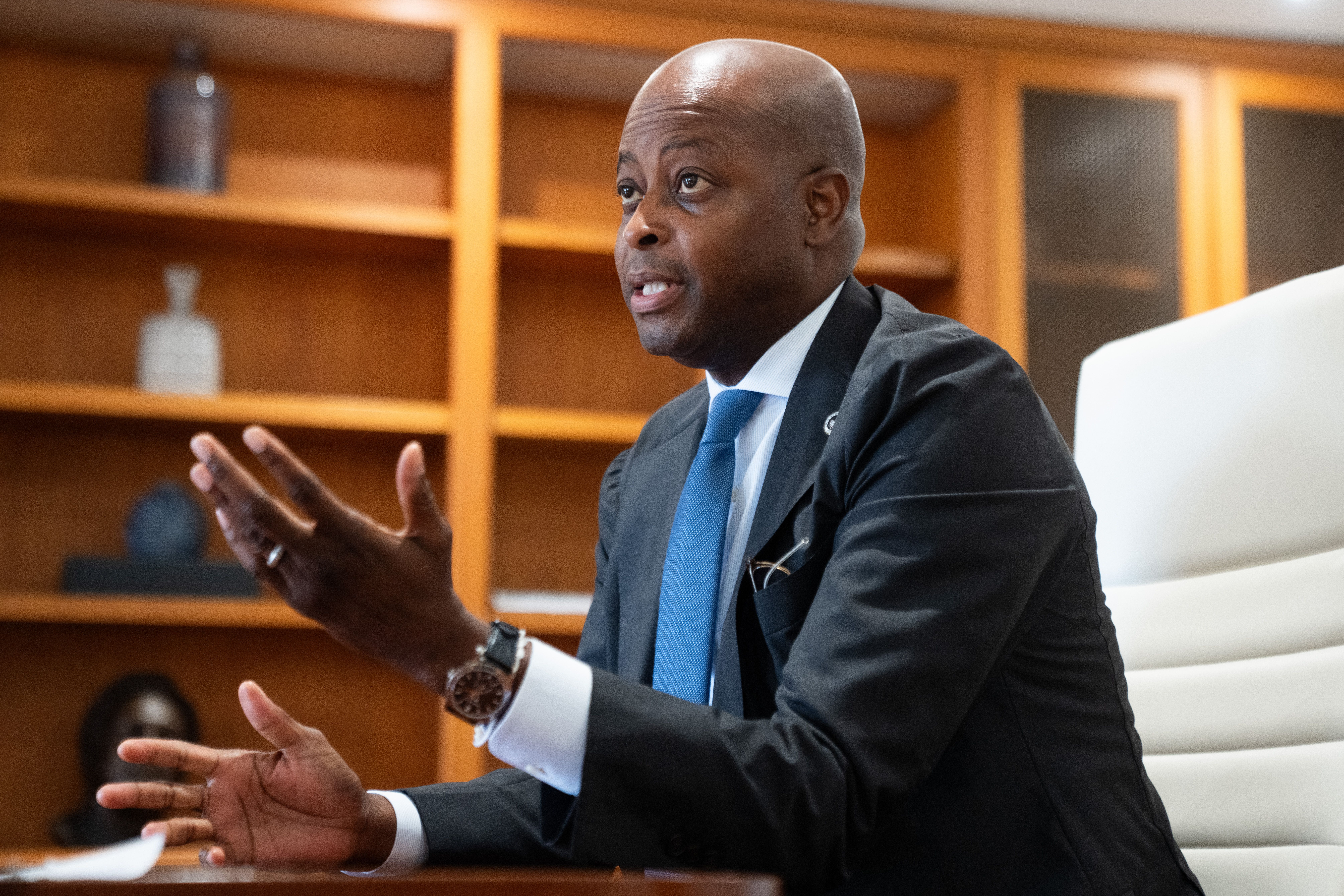
Howard University interim president Wayne A. I. Frederick sits for an interview July 29.Allison Robbert
And the fact is, HU needs the money. Trump administration officials ended a series of annual payments meant to support the construction of the university’s new hospital. That move resulted in a cut to the historically Black college or university’s (HBCU) annual federal appropriation for the current fiscal year of about $64 million, or more than 20%. The Chronicle of Higher Education reported on Thursday that HU has offered buyouts to 600 employees.
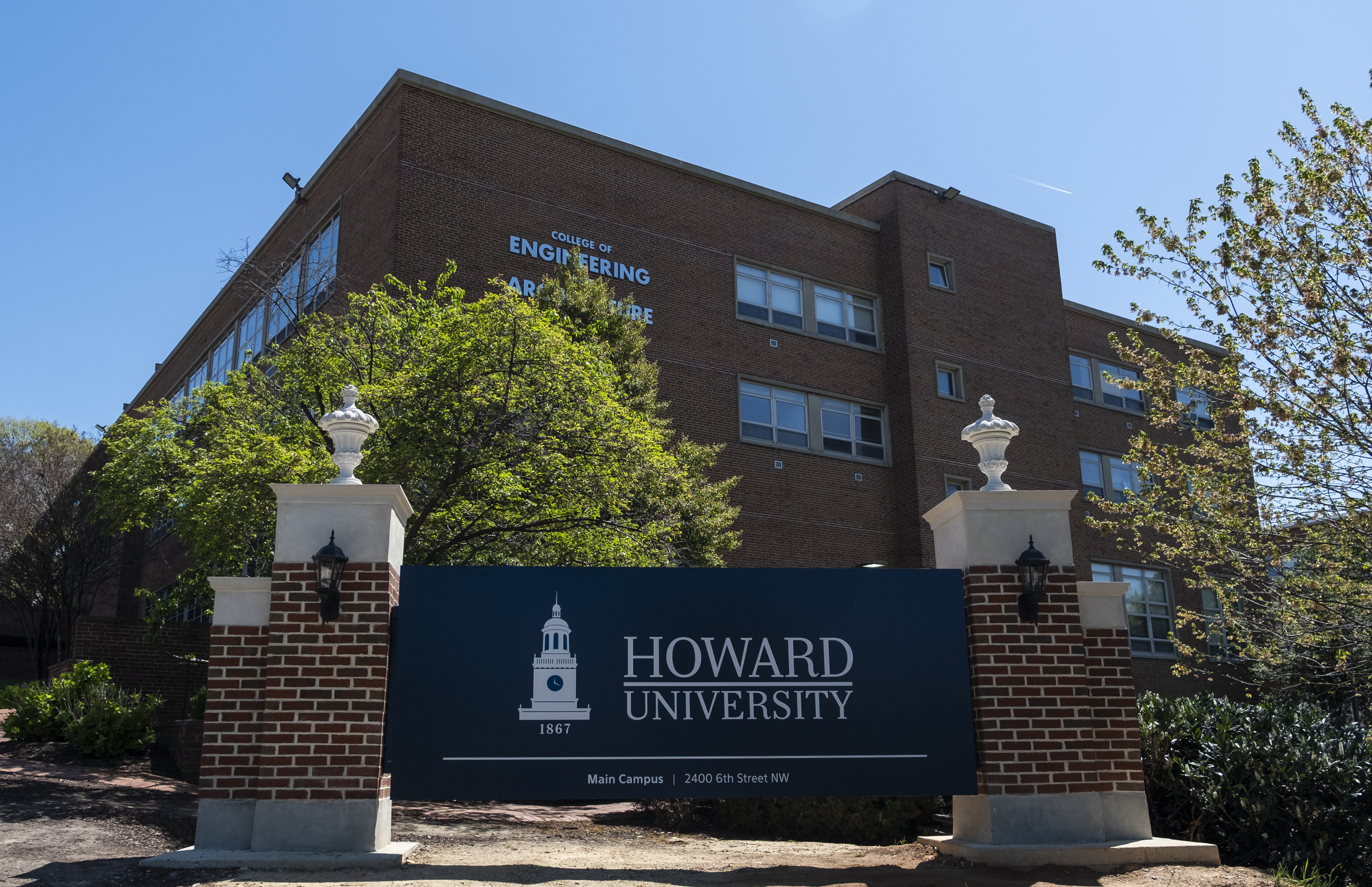
Still, that’s no excuse for how the first-time college students were treated. We expect more of institutions like Howard, which was founded in 1867 to educate newly emancipated Black Americans.
“HBCUs are known for being nurturing and family environments,” said Marybeth Gasman, who runs the Rutgers Center for Minority Serving Institutions. “That’s why this comes off as being kind of shocking to parents and students and some alumni, and some people in the HBCU community and beyond.”
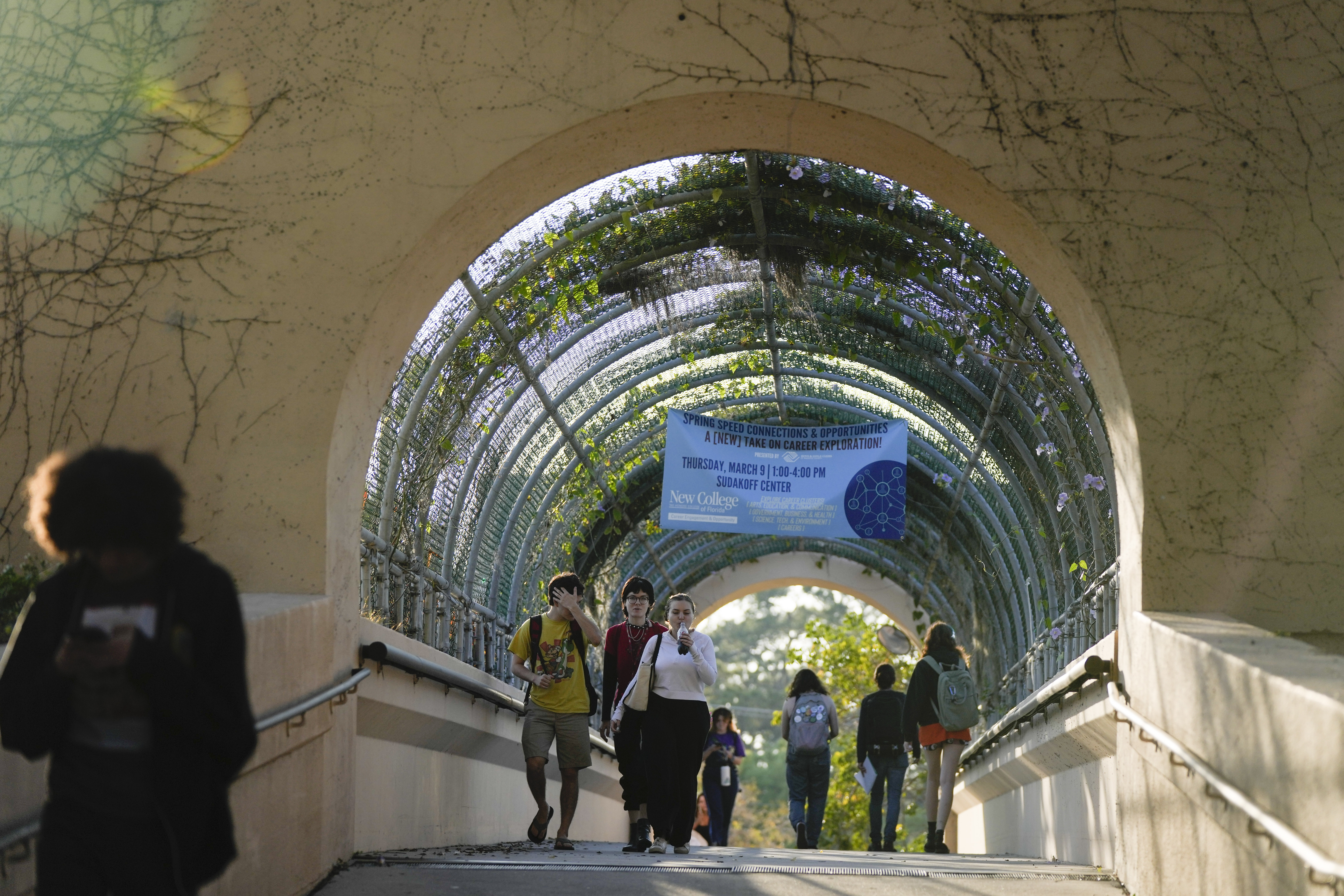
As I pointed out earlier, expediting admissions here could be a real win-win both for the students unenrolled from Howard and Pennsylvania’s state colleges and universities. Incoming freshmen could further their educations, and state institutions — which have struggled with diversifying their student bodies and declining enrollments — can take a step toward changing those narratives.
No matter what President Donald Trump would have you believe, diversity matters.
“In higher education, we do a better job as teachers and as researchers when we work in a diverse environment,” David Oppenheimer, a leading scholar on issues of discrimination and equality, told InsideHigherEd.com earlier this year.
Oppenheimer, who is the author of The Diversity Principle, added: “Students learn more. In a science lab, scientists make more significant discoveries when the scientists working in the lab are diverse. It’s a real thing. It’s not just a psychological argument.”
Following all of the public outcry, Howard has readmitted more than 200 of the freshmen who had been dropped, but it’s unclear what all of the other students will do.
Shapiro should recognize that there’s a real opportunity here — and that Pennsylvania should take advantage of it.
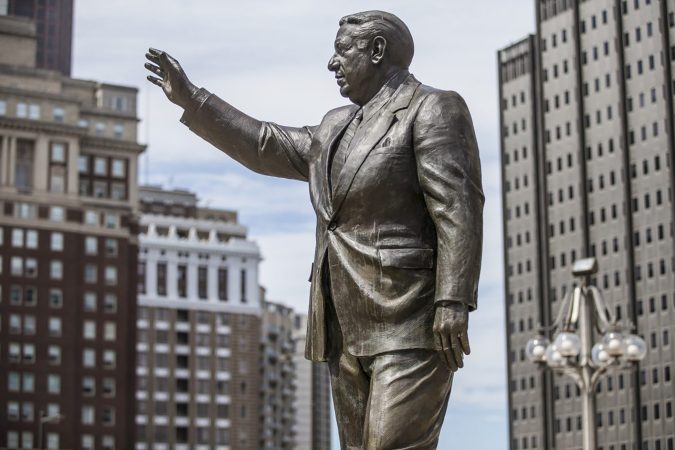
As we learn more and more details about how the current administration in Washington is crude and uncivil, I read with great interest your article about finding a new location for the refurbished statue of Frank Rizzo. I was reminded of how Rizzo’s coarse and divisive leadership style in Philadelphia in the 1970s mirrors much of what we see coming out of the White House today.
My memories of Rizzo — leading a violent police force, imposing budget cuts that affected poor neighborhoods the most, and proudly wearing his thinly disguised racism — made me wonder how many other Philadelphians, especially those who worked in a spirit of unity and practiced civility, might deserve a statue of their own. Why would we extol the achievements of this man whose rise to the top was actually not much different from that of the country’s current leadership?
Perhaps the best place for the statue is in a museum that talks about the lessons we are learning about bullying, and how to foster more effective leadership and community-centered public safety. But to see a huge statue of this man anywhere else in the city — as if he’s the best Philly has to offer — feels so wrong.
If there was no misconduct, then Mr. Calderone and the district should have no qualms about sharing the results of the investigation. Parents deserve transparency regarding the outcomes of serious abuse and misconduct investigations.
Tony B. Watlington Sr. likes to boast of fast-improving test scores, but shielding those with well-documented misconduct creates a toxic culture that erodes trust in Dr. Watlington and his leadership team — among parents, taxpayers, and Harrisburg alike, three partners he needs more than any principal or their union.
Andrew Stober,Philadelphia
Conflicted counsel
Todd Blanche’s nomination to become the nation’s next attorney general has now moved out of a Senate committee, when he should instead be facing the Supreme Court of his home state for disbarment. He violated every provision imaginable under the Code of Professional Responsibility. The $10 billion lawsuit filed against the Internal Revenue Service by his former client and current boss, Donald Trump, had no merit and should have been opposed by the U.S. Department of Justice. A motion to dismiss would almost certainly have been granted by the assigned judge, on several grounds, including the statute of limitations. Even after the lawsuit was dismissed, that department’s lawyers, under Blanche’s leadership, negotiated an unwarranted settlement. When a few senators whose votes were needed balked at the settlement, Blanche continued to negotiate with them, as they were ostensibly representing the government while he represented the interests of Trump, the plaintiff in the matter in which Blanche’s legal client, the U.S., was the defendant. Blanche represented both sides of a dispute, the epitome of a conflict of interest. This should be disqualifying, but won’t be to the MAGA senators.
Neil Mittelman,Warminster
Join the conversation: Send letters to letters@inquirer.com. Limit length to 150 words and include home address and day and evening phone number. Letters run in The Inquirer six days a week on the editorial pages and online.
There is one war Donald Trump is actually winning — unfortunately.
Clearly it’s not the ongoing fiasco in the Strait of Hormuz. But Trump and his MAGA culture warriors keep gaining new territory here at home in their all-out assault on knowledge, with America’s college campuses as the prime battleground.
The Trump regime is fighting to destroy liberal arts education in America, and this summer it opened a new front in the campaign to make going to college all about the narrow pathway to a job in a robot-driven economy — and little more.
A little-publicized new rule published last month by Trump’s Department of Education aims to end student loans to young people who major in fields that lead to jobs with below-average incomes. The rule won’t take effect until next year, and there remain real questions about how it might work and which programs would be most affected. But some experts are worried that training for essential jobs like social work or teaching will be harmed.
“I’m happy for an MBA to pay back every penny they borrowed,” Ted Mitchell, president of the American Council on Education and a former college president and education policymaker in the Barack Obama administration, told me last week. “But social workers and teachers shouldn’t be submitted to the same logic.” In other words, some jobs are more valuable to a healthy society than the dollar value we assign them.
Still, education experts who are critical of the Trump regime over many other policies say there could also be some good to come out of student loan reform, since the rule is likely to most heavily impact for-profit institutions, especially those that have abused the system to saddle young people with high debt and poor job prospects.
But Roosevelt Montás, who leads the Chang Chavkin Center for Liberal Education and Civic Life at Bard College, said the positive benefits of going after for-profit college scandals need to be weighed against the broader harm to the idea that a liberal education will give students more than a return-on-investment balance sheet.
Montás called the student loan rule “an example of how the Trump administration has found areas that, in fact, deserve criticism and require reform in higher education, and he has used these as a tool to destroy and weaken the system.”
This month, most of the nearly 20 million university students in the United States are drifting back to campus to begin a new academic year — with broad agreement across the political spectrum that American higher education is in crisis.
Undergraduate enrollment actually peaked in 2010, when that era’s economic crisis was at its nadir, and has declined gradually in most years since. Public trust in higher education — as with other large institutions — has plummeted even more steeply. You could write a book about how college access, the insane cost of tuition, and resentment between educational haves and have-nots drive our deep, bitter political divide.
The Trump regime is not letting this crisis go to waste. Ignoring the real roots of the problem — the steady privatization of getting a college degree since the 1970s — the MAGA government has been following the Project 2025 blueprint for waging an ideological war on campuses it sees as breeding grounds for future liberals.
The student loan rule is just the latest onslaught. In recent weeks, a White House policy paper mapped out a massive shift of as much as $200 billion away from grants for basic science on university campuses and toward work on artificial intelligence, or AI, with private companies competing for those dollars.
Meanwhile, a surprising number of universities — rather than fighting the Trump agenda — are saying they’ll sign onto a so-called reform agenda that merges some broadly popular measures, such as reducing tuition, with right-wing wish-list items like more conservative faculty, ending efforts to boost enrollment numbers for students of color, and cracking down on protests. This builds on the regime’s push to end campus diversity programs.
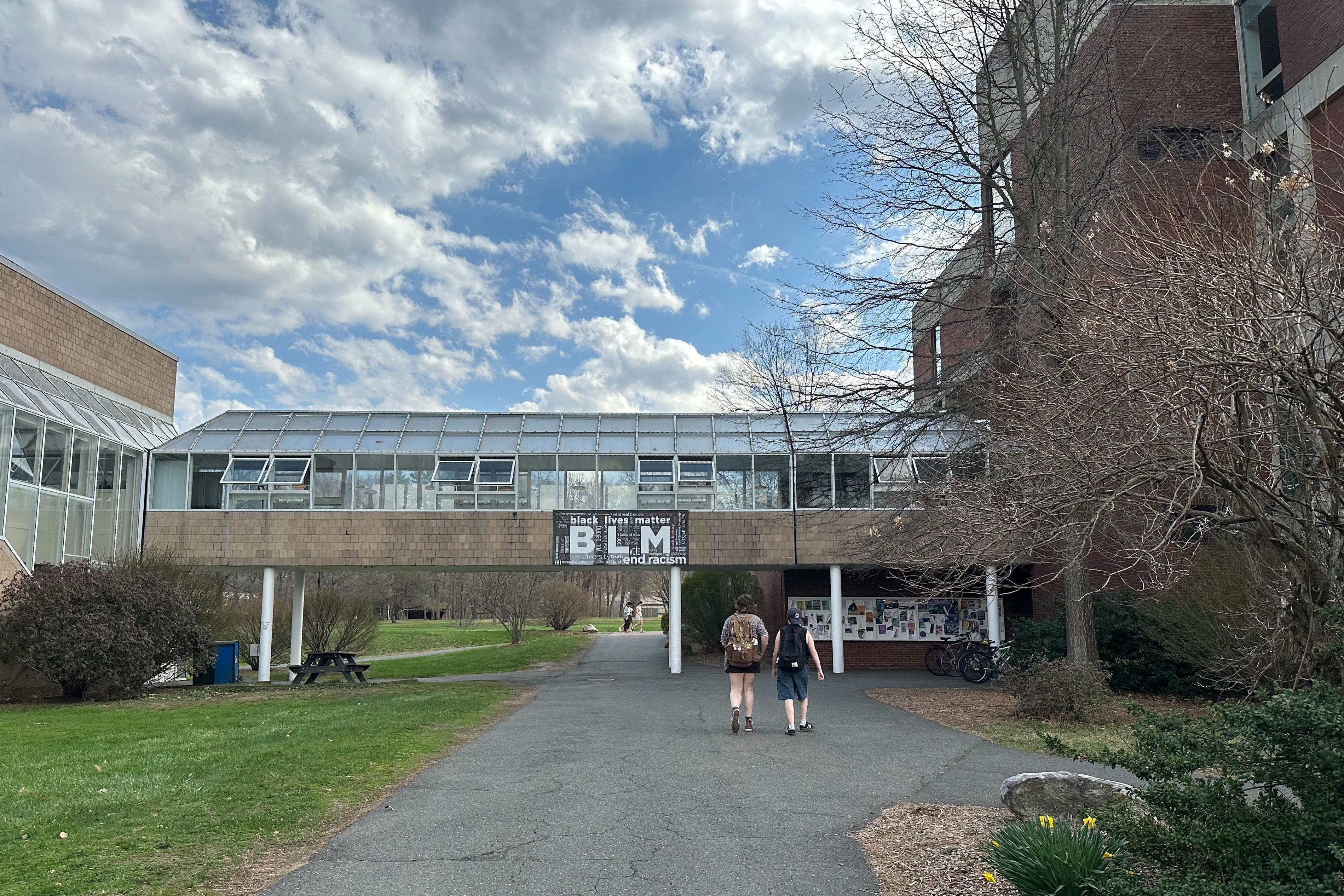
The campus of Hampshire College in Amherst, Mass., in April. It is scheduled to close at the end of the fall semester.Leah Willingham
This overlap of societal and governmental crises has fallen hardest on small liberal arts colleges — some, like the experimental, born-of-the-1960s Hampshire College, have announced plans toclose altogether — as have some degree programs in the humanities at larger schools, which have seen layoffs or even elimination.
“I think we’re at a real moment of crisis,” Montás said, noting that programs in the humanities and some social sciences were already weakened by downward enrollment trends and by ideological controversies even before the Trump regime targeted them. “These have energized questions about the value and cost of education. This combination of factors is proving deadly.”
But while the headlines tend to focus on campus closings or the latest faculty layoffs, the bigger story is the government’s push to radically reform the role that higher education plays in a healthy democracy.
In what we now clearly see as a golden age of U.S. college from the late 1940s into the ‘70s — when tuition was generally low, and enrollment was skyrocketing — advocates saw more diplomas as a way both to populate a new “knowledge economy” and also mold better citizens who’d be less likely to start World War III. Majors like English literature, philosophy, and sociology soared — as did the inclination to question authority in the fraught era of civil rights and the Vietnam War.
That last part, arguably, is what triggered a 60-years-and-counting conservative backlash that is currently maxing out under Trump. His regime doesn’t want to wreck college altogether — white dude-bros still need their keg parties, after all — as long as the ultimate outcome is creating worker drones, not critical thinkers.
The seeds exist for a backlash that might swing the pendulum back to where it was around 1965, but no one has really planted them. Instead of fighting the destruction of liberal education as a true opposition party, far too many Democrats have instead complied — insisting they support colleges, but only because they create jobs.
“Every student should have access to an education that aligns with industry demands and evolves to meet the demands of tomorrow’s global workforce” is a quote that sounds like it was ripped from Project 2025, but it was posted in 2022 by Joe Biden’s education secretary, Miguel Cardona. Democratic governors like Pennsylvania’s Josh Shapiro spend more time touting trade school than talking about expanding opportunities for four-year bachelor’s degrees.
Increasingly, politicians who last year were raving about the economic development possibilities of AI data centers are furiously backpedaling in the face of a full-on public revolt. While a lot of the backlash is driven by issues such as noise pollution or higher electric bills, the public unrest also reflects a more cosmic concern: Do we really want robots not only taking our jobs and making our art but thinking for us, too?
It’s easy for a politician to be against something, like a data center. But who is going to fight for something, like the humanities? The headline of this column about Democrats making a demand for more English lit majors into a political rallying cry was somewhat facetious — but should it be? Real leadership would mean fighting to give more young people more opportunities to flourish as creators and thinkers, without being terrified the other side will call you an “elitist.”
Mitchell said he’d like to see an expansion of federal loan forgiveness programs for graduates who go into public service careers like social work or teaching — perhaps on the state level — as part of a much broader return of the vanishing idea that higher education can be a public good.
Both Montás and Mitchell also advocated for college programs that would better integrate both career skills training and wider education in the liberal arts and civics. Mitchell touted, for example, a new program at the University of Texas which — working with the online learning company Coursera, where he is a board member — allows students to earn career-readiness certificates on their transcript even as they also pursue a major in the humanities.
Montás said his new center at Bard is part of a burgeoning national movement to grow general education programs within universities that promote classroom discussion through a heavy emphasis on what some call “the great books” of modern civilization. Advocates seek a core curriculum that would promote critical thinking and discourse beyond career-focused majors such as business or engineering. It would be, Montás said, “a return to approaches and conceptions of liberal education that are traditional — an emphasis on great books, an emphasis on character, an emphasis on civic education.”
The 2026 campaigns for Congress are well underway, and while you’ll hear a lot about vital issues like expanding access to healthcare or lowering gas prices, hardly anyone is running on bringing books back into the classroom or saving the humanities major. That feels like a big mistake. When there is a war against the very notion of higher education, somebody needs to be fighting back.
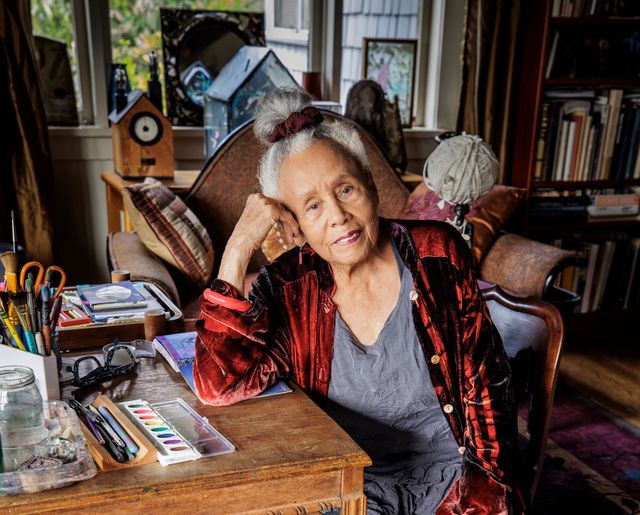
Los Angeles-based artist Betye Saar died on July 26, just days short of her 100th birthday. A champion of the advancement of all underserved and underrecognized female artists, her assertive and sometimes combative spirit mirrored that of other African American artist-activists of her generation, such as Elizabeth Catlett and Samella Lewis, who fought racism and the oppressive nature of an arts ecosystem that fostered white male dominance.
While Saar’s glowing presence will be missed, she leaves a legacy of art that is connected to Philadelphia in both actual and symbolic ways.
Saar spent time here as a visiting artist in printmaking at Philly’s Brandywine Workshop and Archives in 1989, and again in 1992, when she was also a recipient of the organization’s Lifetime Achievement Award.
Across seven decades, her creative efforts in assemblage and printmaking foretold the evolution of what art is or could be — by contributing to an evolving medium and studio practice that relied upon salvaging memories and emotions embedded in discarded, everyday objects and materials.
Betye Saar, “Extreme Times Call for Extreme Heroines,” 2017, on display at the New York Historical in New York in June. LUIS CORZO
Saar described herself as a scavenger: always looking down in order to find useful materials for her artmaking. At flea markets and swap meets, Saar would source images that portrayed African Americans in grotesque and negative narratives, which she would then use and recontextualize in her art assemblages and prints.
This process of “scavenging” also informs the two mixed-media prints she created at Brandywine, LA Sky with Spinning Hearts (1989) and Mystic Sky with Self-Portrait (1992).
Betye Saar’s “Mystic Sky With Self Portrait,” 1992, which she created when she was a visiting artist at the Brandywine Workshop and Archives in Philadelphia.
Saar and her contemporaries, Catlett and Lewis (who were also visiting artists and Brandywine Lifetime awardees), experienced long, impactful careers during which high recognition came extremely late. This was an indicator of the market’s exclusionary agenda and inability to grapple with and comprehend their artistic talent and messaging. Despite the market and cultural biases and professional disadvantages of being people of color, women, and mothers (Saar’s daughters, Alison and Lezley, are also artists), they demonstrated a vision of social responsibility and aesthetic investigation highlighted by quality craftsmanship.
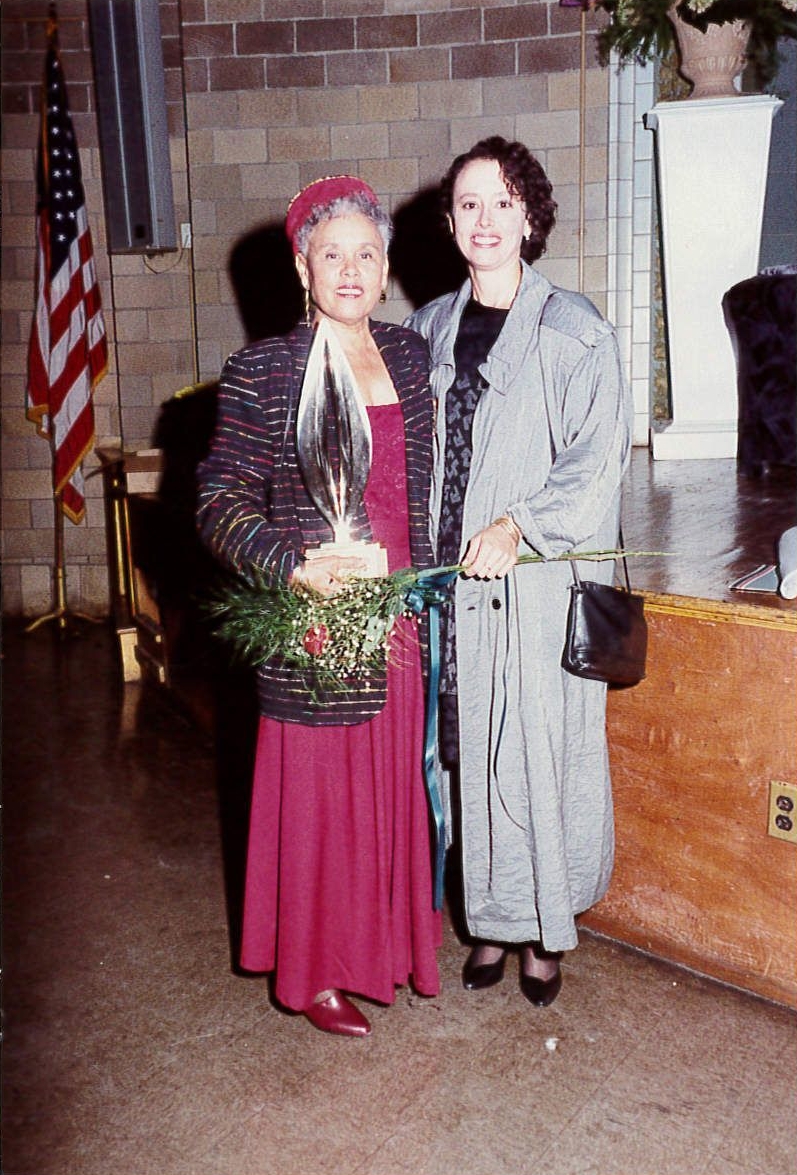
Betye Saar and her daughter, Alison, at the Brandywine Workshop and Archive Awards Gala in 1992 at the Penn Museum.James O'Neal
While Catlett’s and Lewis’ work in a variety of media focused on figurative art in the modernist tradition, all three can be described as social realists because of their dedication to sharing their life experiences and those of other African Americans. The themes of their art reflect ethnic identity and pride, while also conveying social messages — resistance and resilience. Collectively, they made the invisible visible.
In the present cultural and historical environment, where censorship by politicians and uncertain economics place extraordinary demands on individual artists and the institutions that serve them, the commitment of community-minded artists seeking social justice is most reflected in the art and activism of women in the arts. These include major curator-historians such as Leslie King Hammond and Deborah Willis (raised in Philly), as well as young scholars such as Tatiana Reinoza at the University of Notre Dame and Imani Roach and Heather Hughes at the Philadelphia Museum of Art — all affiliated in some manner with Brandywine.
Institutions such as the National Museum of Women in the Arts in Washington, D.C., the Sackler Center for Feminist Art at the Brooklyn Museum, and Philly’s own Colored Girls Museum are centers for cultural exchange and discourse about the role of art and narratives being shared through the contemporary expressions of female artists.
Saar and other female artists of her generation in places like Cuba, Mexico, and other nations in Latin America, Africa, and Asia have been among the leaders demanding greater empowerment of women in the arts and culture sector, and society as a whole.
What connects the legacy of African American female artists with the struggle for social justice, women’s rights, and financial equity is the global struggle among women for political and economic empowerment. The COVID-19 pandemic and #MeToo movement have highlighted the disparities women face in gaining assistance and recognition. Attacks on abortion rights and the mass removal of undocumented immigrants, especially women with children, have exacerbated efforts to afford greater respect and opportunity for women in general.
In the United States, the 1960s Civil Rights Movement opened the door to advance the women’s rights and human rights movements. Today, women make up the majority of students on college campuses (56%). The employment population ratio for women was 54.4% as of June. Women hold 155 seats combined in the U.S. Senate and the U.S. House of Representatives. There are 14 female governors, and — following a national trend — Philadelphia has elected its first female mayor, notably an African American.
While the statistics show progress, women, especially artists, think globally and connect globally. Advancement of women in the visual arts has been marked by the increase in women of all ethnic backgrounds receiving art history degrees with a focus on diverse art across the globe. Many now research and lecture on the diasporas of Africa, Asia, and Latin America, and how cultures move through migration patterns. Their art, writings, and instruction demonstrate how contemporary art exists within a global community with transnational identities.
Saar’s legacy endures through the great art she left the world to enjoy and to engage with its profound social commentary.
But in addition to that material legacy, her resilient spirit and passion to create — in a space that was not welcoming to mothers, women of color, or professionals who sought to disrupt the status quo — are qualities to emulate. Her spirit lives on in the City of Brotherly Love in the growing generation of female leaders of local museums and galleries building collections of art created by women.
Allan L. Edmunds is an artist, a retired educator and arts administrator, and the founder of the Brandywine Workshop and Archives. Haeley Green is an AUC Collective intern at Spelman College in Atlanta.
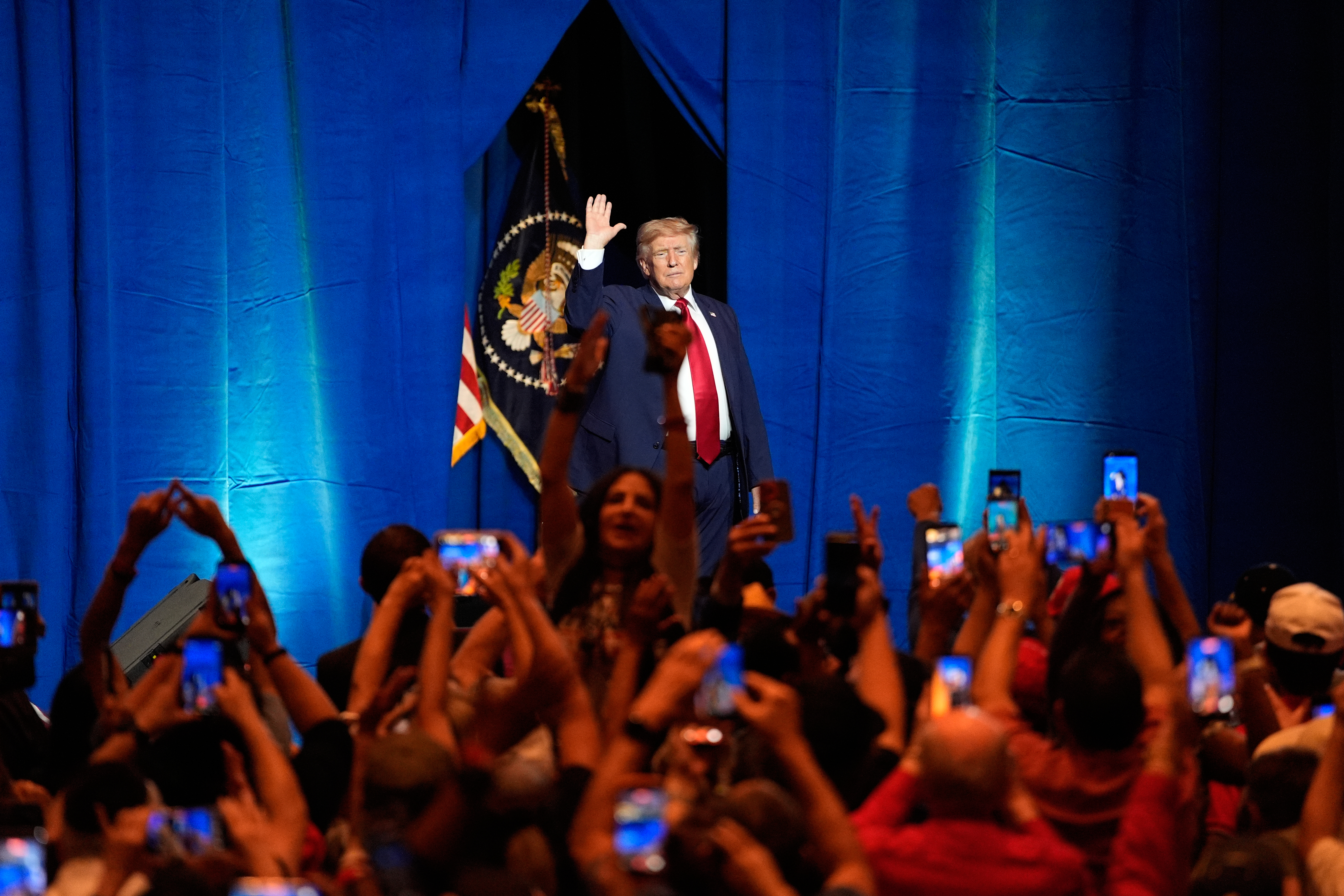
With his approval ratings hovering at near record lows, President Donald Trump took a rare trip to the West Coast to convince voters not to trust their own wallets, because the economy is better than ever.
Never mind that since he took office last year, Americans have been forced to spend more on food and rent. That utility prices are soaring while Trump slashed renewable energy alternatives. Or that thanks to his tariffs, the average price of a new car jumped 10%, while his failed war in Iran boosted gas prices by more than 30%.
To borrow a phrase from the last inept White House occupant who tried to buck up the masses amid a calamity: “Trumpie, you’re doing a heck of a job.”
To show hardworking Americans that the billionaire president feels their pain, Trump first attended a GOP fundraiser at a golf resort he owns in Rancho Palos Verdes, an affluent coastal city near Los Angeles, where a round of golf on the weekends can cost $800 or more. Tickets to the fundraiser ranged from $15,000 to $150,000.
From there, Trump headed to a casino in Las Vegas, where he gave a speech on the economy aimed at working families.
Nothing signals economic prosperity like the backdrop of folks mindlessly pumping money into a slot machine, or hoping to dig out of debt with the next roll of the dice — especially coming from a guy who made millions while bankrupting his now-defunct casinos in Atlantic City.
Trump’s Vegas speech was a yawning rehash of rhetoric touting the stock market (when only about half the country owns equities) and tax cuts in his costly Big Beautiful Bill, while mixing in the usual mistruths and dismissing the high prices squeezing many Americans struggling to make ends meet.
“We’re having some fake inflation because of the fuel,” he told the casino crowd.
But it was in between the two stops where Trump provided a more revealing window into how he really thinks and talks, previewing his economic message in a friendly Fox News interview rife with non sequiturs, sentence fragments, and illeisms.
“In the economy, Trump is at 42%, I shouldn’t be at, we have the greatest economy maybe in the history of the world for any country,” he said.
Fox News personality Trace Gallagher pointed out that gas prices were up 30%, and that he recently paid $6.27 for a gallon of gas in California.
Even amid the muddle, Trump had a ready response for that: shift the blame. “It’s a little different thing — because they charge taxes on gas. Every time, every time it goes down, they take taxes. I mean, they’ve done a terrible job in California.”
Trump then promised gas prices would soon be under $3 a gallon once the three major oil companies — which have been making roughly $400 million a day since the Iran war began — lowered prices.
“I think we’re going to have it coming down,” he said. “The oil companies have to start going. You know, they’re making too much money, and they’ve got to start lowering it. But we’re going to be down into the threes and maybe the twos pretty soon, per gallon.”
Gallagher then teed up a softball question so Trump could address the reason he schlepped across the country in the first place: “You’re here to talk about the economy. What’s your big message?”
“So, tariffs have been incredible. We’ve taken in hundreds of billions of dollars,” Trump said, ignoring the fact the government has had to refund most of the duties, which the U.S. Supreme Court determined were improperly collected. “I think if there’s anything, I’d say our country is rocking and rolling. We’ve never been this successful.”
Well, one person in America has definitely never been this successful. As a public servant, Trump made more than $2 billion last year on a lot of murky deals.
No wonder then that by the president’s grading curve, the economy is fine. Just ask him.
“The food, groceries, it’s all coming down. We’ve done a great job,” he said. “I think we should be given an A+ on the economy.”
Voters can submit their own midterm grades on Election Day.
When the administration was looking for a scapegoat to shift the responsibility for its botched Lincoln Memorial Reflecting Pool project, Mr. Hearn was the victim, charged with felony vandalism because he was seen placing his hand in the water.
Pirro said at the time that Hearn ripped up recently installed sealant on the pool in “a deliberate act” that caused more than $1,000 in damage. She accused him of “forcefully and violently” pulling up the bottom liner “with both hands” and acting belligerently toward an employee who told him to stop. “This is a case with tremendous evidence,” she said, adding that authorities have made about six other misdemeanor arrests. Now, she has to eat crow as an untrustworthy administration has to admit it was wrong. Mr. Hearn is innocent.
Tell us, Mr. President, how it is that only Democrats engage in the weaponization of government?
Oren Spiegler, Peters Township
Getting the facts straight
When we debate U.S. military aid to Israel, the conversation often misses a crucial economic reality: This “foreign aid” is overwhelmingly domestic aid.
By 2028, 100% of the regular military assistance the U.S. provides to Israel must be spent right here at home. This isn’t cash handed over to a foreign government; it operates like a line of credit strictly for American manufacturing.
When Israel acquires defense systems, the funds go directly to U.S. aerospace and defense companies. In fact, more than 1,000 companies across 47 states, Washington, D.C., and Puerto Rico hold contracts worth billions through this program. This sustains American jobs nationwide, from major assembly lines in California and a new Iron Dome manufacturing facility in East Camden, Ark., down to small subcontractors across the country.
As a concerned American, I believe we need a clear-eyed debate about our foreign policy. Whatever your stance, we should get the facts straight. The billions we authorize don’t get shipped overseas — they stay right here, supporting American workers and reinforcing our industrial base.
Bob Fleischman, Philadelphia
Distorted justice
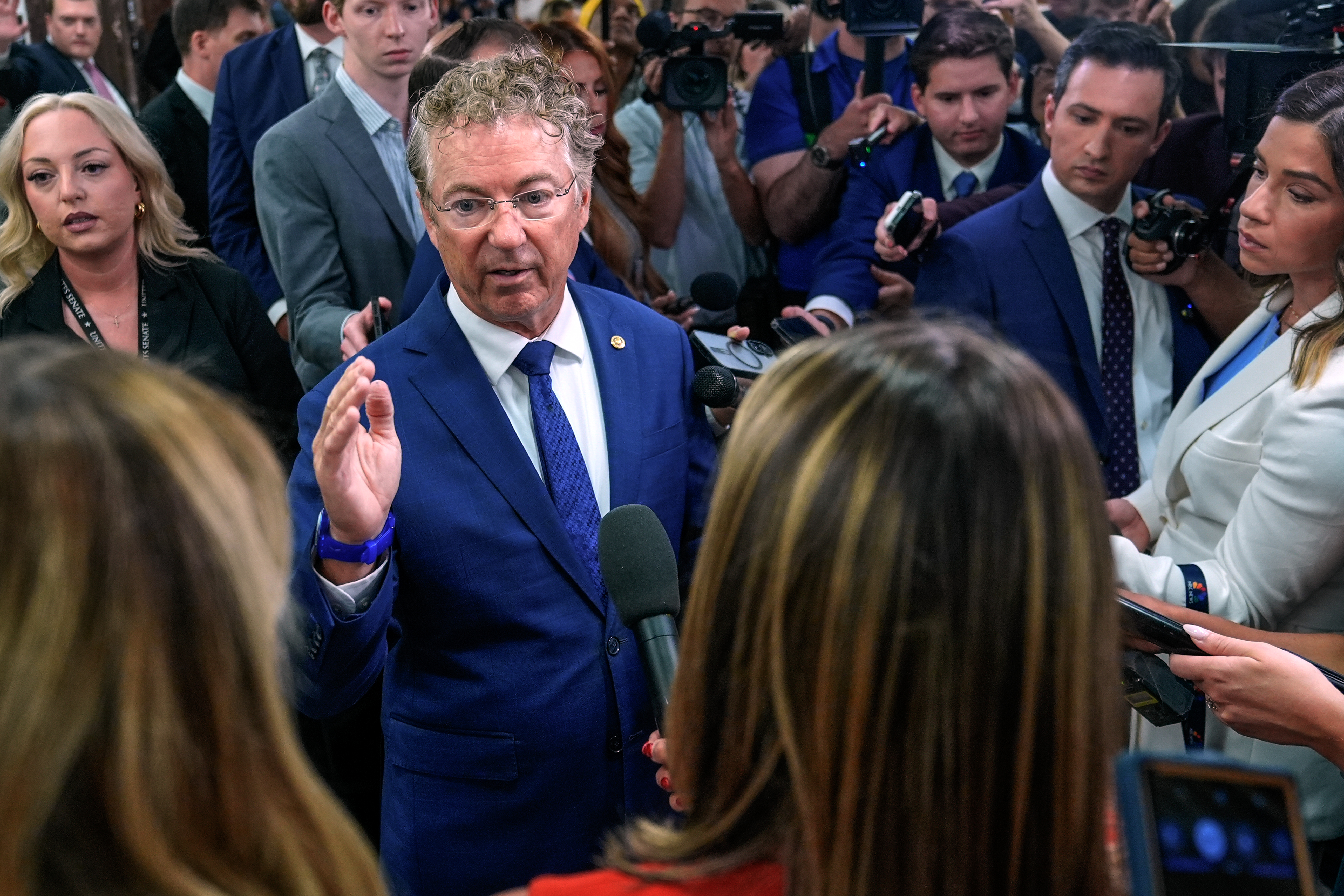
Republican Sen. Rand Paul wants Anthony Fauci to go to prison for lying to Congress and destroying documents. Does he want Fauci in a medium- or maximum-security prison? Or would he settle for a cushy “Club Fed,” like Ghislaine Maxwell is in? And what good would it do to imprison an 85-year-old man, who should have a suspended sentence if convicted because of his age? The junior senator from Kentucky lacks any sense of the double standard that would exist for Fauci, who served his country for 50 years, is locked up, while a sexual predator like Maxwell enjoys a cushy imprisonment courtesy of Todd Blanche.
George Magakis Jr.,Norristown
Join the conversation: Send letters to letters@inquirer.com. Limit length to 150 words and include home address and day and evening phone number. Letters run in The Inquirer six days a week on the editorial pages and online.
I’ll never forget how deeply the wildfires in Australia during the 2019-2020 “Black Summer” affected my son, Nick. Scientists estimate that nearly three billion more-than-human relatives (also known as animals) were killed or displaced. Incomprehensible devastation.
The 2019-2020 Australian bushfire season, known as the “Black Summer,” had catastrophic environmental impacts — with more than 59 million acres burned, three billion animals killed or displaced, and smoke impacting weather conditions on other continents. In the photo, fire burns near Bumbalong, south of the Australian capital of Canberra, in February 2020. Rick Rycroft
We ordered T-shirts to support the recovery effort. The image was an outline of Australia, one edge consumed by flames, its interior filled with the country’s beloved wildlife.
Nick and I had no firsthand experience with wildfires, living in this area, but for many people, fire season is an inescapable reality that evokes fear and demands respect and attention.
I learned about wildfires while living in Montana. I moved there for graduate school, where many classmates studied fire science. I stared at the constant helicopters flying over Hellgate Canyon, where I lived, on their way to do aerial water drops into burning areas.
An aircraft dumps water on the edge of the Elmo Fire burning on the western shore of Flathead Lake, Mont., in August 2022.Hunter D'Antuono / AP
I remember the smell. The thick air. Wondering what the inside of my lungs looked like.
Fire was simply part of everyday conversation. People knew the weather, fuel conditions, evacuation routes, and the difference between a prescribed burn and a wildfire. I realized how privileged I had been never to need that knowledge.
Last year, I had the honor to sit in a circle in Lubrecht Experimental Forest with an elder of the Confederated Salish and Kootenai Tribe, from the Flathead Reservation, who told my class about his tribe’s traditional fire practices. He explained that prevention is the key, something Indigenous peoples have known since time immemorial.
Sadly, Indigenous fire management was a casualty of colonialism. Their knowledge was forced underground, and generations of fire stewardship were interrupted just as landscapes became increasingly vulnerable to catastrophic fire.
It is well known in climate science that those who do the least damage to Mother Earth suffer the effects of climate change the most. The scientific consensus is clear that climate change is lengthening fire seasons and increasing the conditions that produce larger and more severe wildfires. The threat is real, and it is reaching places that once believed themselves safely outside fire country.
Which is why the recent political response to the Canadian wildfires is so baffling. Rather than asking how two neighboring countries can confront a shared ecological crisis, President Donald Trump threatened to impose tariffs on Canada over wildfire smoke. As if punishment were an effective response to an ecological crisis.
Not only is this an abominably foolish threat, but it created a scapegoat in a time of great fear.
Ontario’s premier, Doug Ford, responded to the president’s threats by saying that those who share Trump’s opinion that Canada has been “willfully negligent … have a very short memory.”
I remember sitting in school on 9/11 and hearing that first responders from Canada were headed to New York City. Many diverted international flights landed in Atlantic Canada, while the small town of Gander welcomed nearly 7,000 stranded passengers — almost doubling the town’s population. Newfoundlanders welcomed passengers with open arms, rooms, and cupboards.
And while conducting research in Nova Scotia last fall, I learned about the Halifax Explosion of 1917, which killed almost 2,000 people and injured approximately 9,000. Boston was the first to respond, and Nova Scotia has been sending a Christmas tree to Boston as a token of thanks since 1971.
Learning about all of this propelled me to seek out more examples of cooperation between our northern and southern borders. Read enough of these stories, and nationalism masquerading as patriotism begins to dissolve.
We must seek out what unites us as North Americans and acknowledge our shared history, good and bad, to move through an ever-worsening climate crisis that will require all of us to work together if we wish our future generations to survive.
Maybe all you can do now is buy a T-shirt, like Nick and I did in 2019. Maybe you can start that conversation. Maybe you can volunteer. No act is too small. Make no mistake — you have a dog in this fight. When your neighbor is in trouble, regardless of the effect on you, pitch in.
Nick understood this instinctively. He didn’t know fire science. He simply saw suffering and wanted to help. In an age of climate change, that childlike impulse — to care before we condemn — may be exactly what survival requires.
Natural disasters don’t recognize borders. Neither should our compassion.
Meredith Elizalde is Nick’s mom. A former Philadelphia high school teacher, she is currently a graduate student at the University of Montana.