This week’s edition of Shackamaxon covers SEPTA’s New Bus Network, an upset victory in Western Pennsylvania, and Center City’s creepy clown.
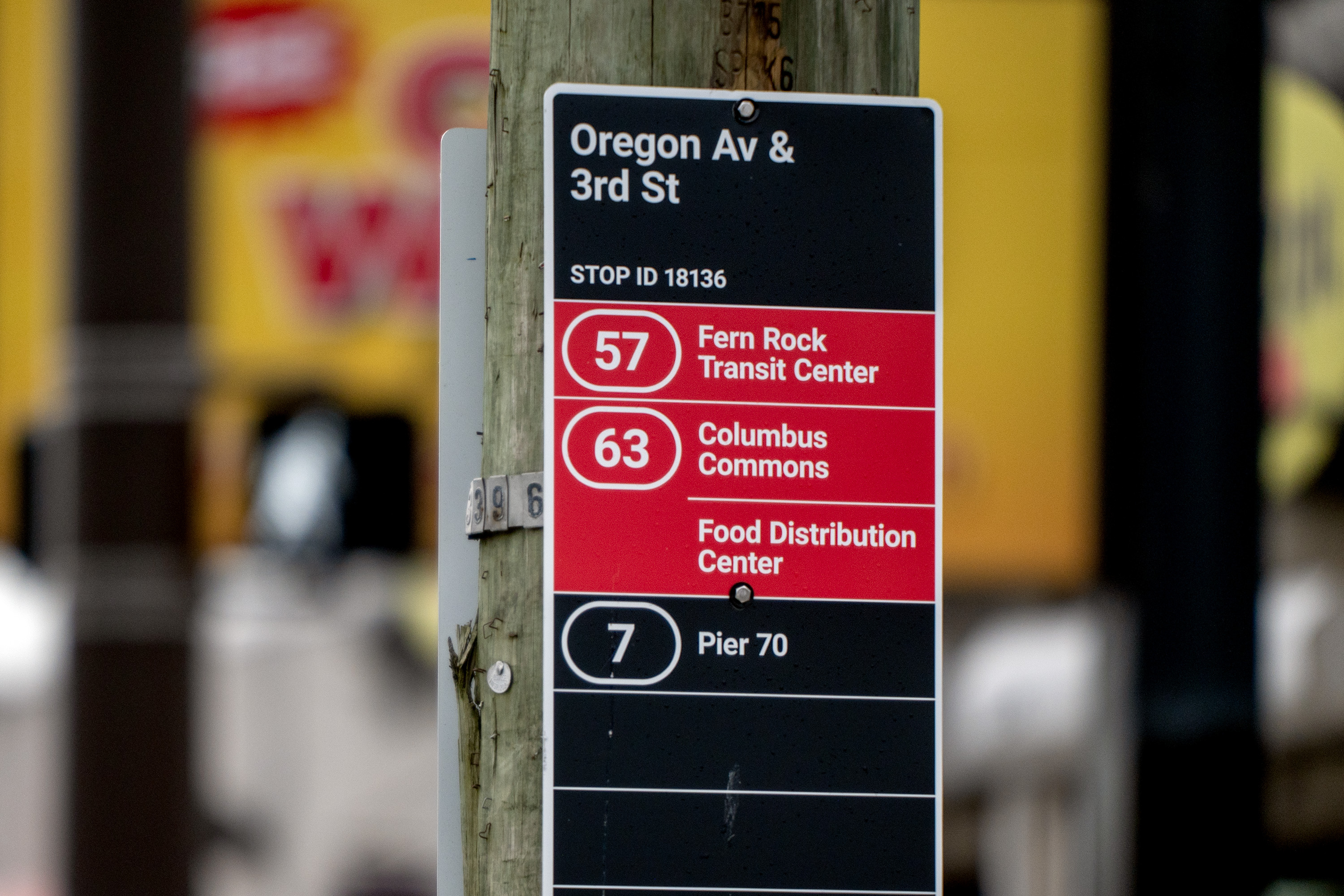
A sign with a “Frequent Red” designation is posted at a South Philadelphia bus stop on Thursday. Some SEPTA bus routes are changing Aug. 23 with the launch of the New Bus Network program.Tom Gralish / Staff Photographer
Quiet revolution
Philadelphia has changed over the years, yet the city’s bus lines have mostly remained the same. Some of them are even based on routes that were once traversed by horse-drawn streetcars.
The dated nature of these routes has started to take a toll. In the 2010s, bus ridership in Philadelphia declined. In fall 2014, Philadelphians took an average of 505,004 bus trips each weekday. By fall 2019, before any pandemic-induced declines, that number had fallen to 436,109. This made providing bus service less financially viable.
In 2016, each bus trip cost SEPTA $3.44. With fares set at $2.25, riders paid most of the costs of service. Today, the fare is $2.90, but each bus trip costs SEPTA $6.90 — which is an improvement over the last few years, when costs have ranged from $7.19 to $11.32. Still, each ride is now largely subsidized by taxpayers. Given political realities and SEPTA’s deep capital needs, that’s not sustainable.
This meant that it was time for some changes — never an easy task for Philadelphians.
Because SEPTA’s fiscal sponsors were unwilling to invest more money in bus service, SEPTA was tasked with finding more riders without increasing the number of buses, bus operators, or bus depots. This meant cuts needed to be made to facilitate investments elsewhere while ensuring there were no disparate impacts on lower-income communities.
On Monday, those changes will begin to take effect. The new Routes 72 and 76 will debut, providing crucial crosstown service. The 35, 47M, 62, 78, 89, and 106 will be discontinued.
Although I sympathize with anyone who is losing their preferred bus route, these choices were not made without justification. In the case of the 47M and 89, some at SEPTA have been seeking their cancellation for ages.
The 47M exists to distinguish the route from the regular 47, which travels down Seventh and Eighth Streets rather than Ninth. While the Ninth Street Market is an important destination, double-parked trucks making deliveries, double-parked customers picking up orders, and food stalls crowding the streetscape all make staying on time a difficult proposition. As for the 89 — which loops around parts of Juniata, Port Richmond, South Kensington, and Harrowgate — it takes nearly an hour to complete a route that takes 12 minutes on the El.
These changes, to many riders, feel like cuts. This is an understandable response. In fact, SEPTA seems to have dropped the more ambitious-sounding Bus Revolution moniker in favor of the blander New Bus Network in response.
But unlike last fall’s reductions over budget concerns, there won’t be fewer buses overall. The resources formerly used by the canceled routes will shift elsewhere. Importantly, frequency will increase across many routes. Including the regular 47. More and more transit experts are advising agencies to prioritize frequency and reliability in order to grow ridership.
There will undoubtedly be some hiccups, despite SEPTA’s extensive attempts at communicating these changes. But whatever name you use, when it comes to the long-term health of the system, change is a step in the right direction.
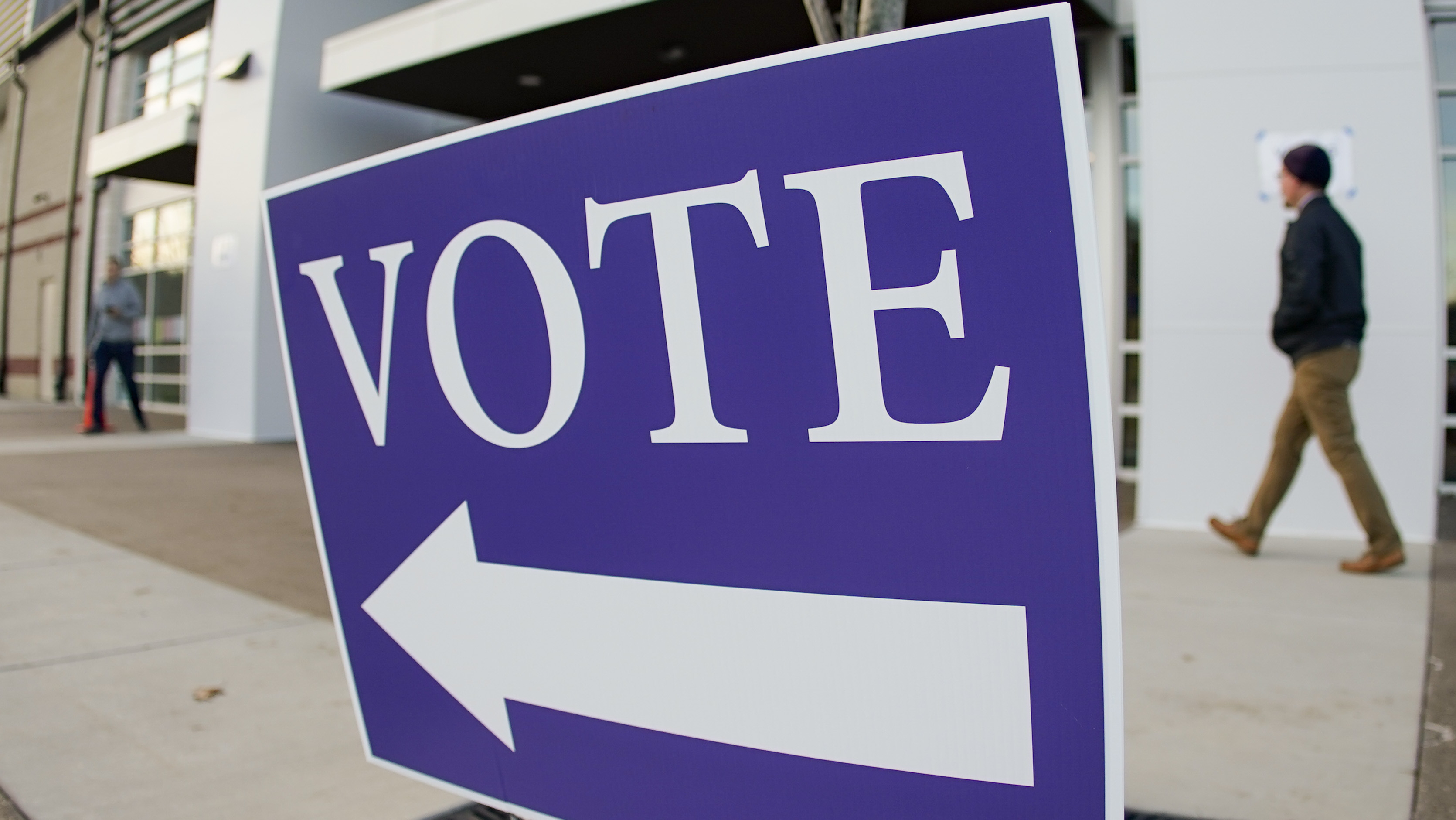
Voters walk past a sign pointing them to the polling location in Cranberry Township, Pa. Democrat Brandon Dukes won Tuesday’s special election in a district Donald Trump won by 18 points in 2024.Keith Srakocic
Blue Cranberry
Pennsylvania’s 12th Legislative District, which includes Cranberry Township, used to be represented by Daryl Metcalfe. The commonwealth’s most infamous right-wing lawmaker once invited a white supremacist to testify at a legislative hearing, made bizarre homophobic remarks to a fellow lawmaker, and blocked dozens of bills for no reason other than their sponsor.
After this week’s special election, it appears the Butler County district, which voted for Donald Trump by 18 points, will now be represented by a Democrat.
While provisional ballots have yet to be counted, Democratic candidate Brandon Dukes currently holds an 88-vote lead over Republican Scott Timko. The two will face off again in November.
For House Democrats, this win represents some desperately needed breathing room. While a small cohort of Republicans, many of them representing Southeastern Pennsylvania, have occasionally voted with the Democrats, the one-vote majority they’ve held for most of the last four years makes any defection costly.
For Republicans, it should be taken as a warning sign. Right now, four congressional races are expected to be competitive, along with five races in the Pennsylvania Senate. If Democrats are overcoming 18-point margins, then Republicans may be vulnerable in more districts than anyone expected.
Police are searching for a man in a “Chucky” style horror mask who is harassing Center City pedestrians.Philadelphia Police Department
Clown time is over
No matter how Philadelphia changes, the city seems unable to shake its tradition of men behaving bizarrely in public. From the “Swiss cheese” guy to Pukemon, and now a masked clown creeper.
This time around, however, the city has found a champion who faced the danger and won.
Jameka Wilson was on her way to SoulCycle early Wednesday morning near City Hall when she noticed a man wearing a Chucky doll-style horror mask stalking another woman, whom she tried to warn. As she toldGood Day Philadelphia, when the man later approached her, laughing menacingly, Wilson stood her ground.
She said she remained calm, turned around to face the man, squared up, and then landed a high kick directly to his chest. She even demonstrated her technique on Fox29 anchor Mike Jerrick, who volunteered for the task. Wilson advised other people who are concerned about the figure to avoid headphones and stay alert as they walk around.
Wilson’s actions, and wise advice, have made her a genuine civic hero. Hopefully the Phillies and Sixers will soon come calling so she can throw out the first pitch, ring the bell, and get some love from grateful Philadelphians.
Instead of restricting data centers, I have a simple proposition for developers, state and county officials, state senators and representatives, overwhelmed township officials, and Gov. Josh Shapiro: Data center development and operations should be the epicenter and locus of landscape greening and ecological restoration.
Just as the data center will play a lead role in the AI transformation of our economy, so, too, it will take the lead to restore nature in its location and surroundings. It will cool rather than heat its surroundings. Birds will make more noise than the facility. Community solar as part of the renewable fuel package will be available to home and business owners to lower utility costs. Greening of vast parking areas will cut off urban heat and protect public health. Retained water runoff from rain and snow will irrigate off-site plots to enhance their restoration. A landscape restoration fund derived from a tiny percentage of center income will extend the restoration benefits to the broader community and thus build up resilience to climate change.
As a vehicle for promoting the natural world on their grounds, data centers will be the best of neighbors and just about everyone will want to live near them.
Jon Berger, Philadelphia
Challenge issued
Rep. Brian Fitzpatrick’s response to Bob Harvie’s challenge to four debates exemplifies everything that is wrong with our five-term congressman. While Fitzpatrick plays games demanding Harvie release what his campaign calls “the FBI files,” constituents like me are dealing with rising gas and grocery prices, hikes in our health insurance premiums, and a sluggish job market.
Is Fitzpatrick serious about serving us or even earning our votes? Because if he is, he should stop the games and debate Harvie in front of a live audience.
If Fitzpatrick has ideas, let’s hear them. If he wants to defend his voting record, this is the time. And if Fitzpatrick disputes Harvie’s characterization of his role as a witness before a federal grand jury, he can address that in a face-to-face debate in which his opponent can respond directly.
Refusing to debate while continuing to make accusations is simply political posturing — and insulting to the constituents the congressman is supposed to serve.
Laura Rose, Newtown
Ukraine Independence Day
We have seen the heart-wrenching headlines and images again and again, as Russia has continued its barbaric and entirely unprovoked invasion of Ukraine. We have, as a result, perhaps for the first time, learned that Ukraine, the largest country wholly in Europe, is blessed not only with the richest soil for agriculture but also with an industrious, innovative, and peace-loving people. Against all odds, Ukraine has been defending itself admirably in this David vs. Goliath contest — even redesigning modern-day military weapons and tactics worldwide. However, on the heels of America’s Semiquincentennial — and on the eve of Ukraine’s 35th Independence Day on Aug. 24 — do we not have the moral obligation, as a nation, to do all we can to support this democracy which sent military assistance to the U.S. in Afghanistan and Iraq?
Elie Wiesel stated: “The opposite of love is not hate, it’s indifference … And the opposite of life is not death, it’s indifference.” How can we ambivalently stand by effectively doing nothing, even as we witness an ongoing great injustice? President Franklin D. Roosevelt referenced the analogy that we should lend our neighbor our garden hose if their house was on fire; a metaphor more recently echoed by U.S. Rep. Brian Fitzpatrick (R., Pa.), when advocating for Ukraine recently on the House floor, who said its struggles transcend the political divide — it’s about freedom. Many U.S. Army veterans have gone to Ukraine to help in the conflict — some of whom have paid the ultimate price — because they felt this was truly the battle between good and evil.
We all have a choice — and a voice. What if we, each one of us, our friends and neighbors all called our congressional representatives to urge passage of the Sanctioning Russia and Iran Act of 2026 so that there are no more excuses about finally making good on holding to account the two terrorist states that are responsible for most of the global instability today? Making the call wouldn’t cost a thing.
Christine Fylypovych,Blue Bell
Project Head Start
In 1965, Lyndon B. Johnson established Project Head Start. Since the beginning, it has successfully helped to improve graduation rates, improve self-esteem in children, and provide a positive influence on a child’s future. It has long been an established fact that early childhood education also helps to prevent future criminal behaviors. Why is this horrid administration trying to defund this valuable program? They obviously have no concern for poor children. The wealthy can afford the best education for their families, but as a society, we have a responsibility to ensure all children have proper education as well as nutrition and healthcare.
Add this to the proposals to separate the highly effective measles, mumps, and rubella vaccine into three separate shots for absolutely no medical or scientific reason, and you must question the motives of the cruel and ignorant people who are running the country. I am hoping citizens are paying attention and, come November, will vote into office those who will do what is right for the American people. Our children are depending on us.
Kathleen Clements, Philadelphia
Open and operating?
The president of the United States says that the Strait of Hormuz is “open and operating,” yet cargo ships are still under attack. Reality suggests that the president is once again lying to the American public. Either that, or he is completely delusional. In either case, Donald Trump’s war is continuing to distress the world economy, and there is no end in sight if he can’t acknowledge the reality of the situation. His bizarre focus on things like his ballroom reveals his misplaced priorities.
Bill Maginnis,North Wales
Staggering national debt
On Wednesday, the national debt reached $40 trillion. There was very little news coverage of this event, but it is significant for our future and the future of our children.
The Republicans were the party of fiscal conservatives, budget-conscious individuals, and supporters of our allies. What happened?
Republicans in Congress have let the Trump administration spend taxpayer money on just about everything the president wants. Take the East Wing ballroom. The White House is asking Congress for $1 billion to cover the costs of security and military upgrades.
Developer Carl Dranoff does not like the perspective of two prominent local city planning experts about the expensive new median strip on South Broad Street. What a surprise that Dranoff, who came up with the idea, stands to benefit the most … because of his properties on that street.
Susie Perloff, Philadelphia
Join the conversation: Send letters to letters@inquirer.com. Limit length to 150 words and include home address and day and evening phone number. Letters run in The Inquirer six days a week on the editorial pages and online.
The fights over the next surgeon general and the next Centers for Disease Control and Prevention director have been shaped by a movement that calls itself holistic while practicing its opposite. Last month, senators grilled Erica Schwartz, Trump’s CDC nominee, on whether she would defend vaccine science under a wellness-aligned U.S. Department of Health and Human Services. She would not fully commit.
The replacement, Nicole Saphier, is a radiologist who also sells herbal supplements, hosts a podcast called Wellness Unmasked, and wrote the 2020 book whose title, Make America Healthy Again, became the slogan of a national movement.
The specifics differ. The underlying category error is the same.
On its critique of American medicine, the MAHA movement is not wrong. After performing thousands of spine surgeries, I have come to believe — along with much of the literature in my own field — that a meaningful share of the elective spine operations in the U.S. are performed on patients who would do better without them.
We medicate teenagers for inattention without asking how they sleep. We treat the disc and forget the life it sits inside. When the wellness movement says American medicine has been reduced to organ systems and 15-minute appointments, the criticism lands because the charge is true.
The trouble is what the movement offers instead. The word holistic — from the Greek holos, whole — was supposed to mean a way of seeing that integrates what reductive medicine has pulled apart. In the movement claiming the word, it has come to mean the opposite: a parallel architecture that excludes vaccines, excludes the cardiologist, excludes the entire framework that produced antibiotics, anesthesia, and the survival of children who, a century ago, would simply have died.
That is not integration. It is the same fragmentation in different clothes.
I think about two patients I saw last year in clinic, a week apart. The first was a woman in her 20s with six months of worsening back pain. She had seen a chiropractor weekly, taken supplements from a wellness coach, and tried three essential oil protocols. She had not seen a primary care physician in four years. When she finally reached me, her foot had begun to drop. Her MRI showed a large disc herniation crushing the L5 nerve root. She needed surgery within days.
The second was a man in his 60s, wealthy and well-connected, who had already undergone two lumbar fusions and was being recommended for a third. His pain was real. His anatomy did not explain it. No surgeon had asked him about his sleep, his weight, the 70 hours a week he sat at a desk, or whether he had tried any of the dozen nonsurgical paths that might have helped.
Both were failed by a system that has lost the capacity to put the pieces back together. One by a wellness world that calls itself holistic but excludes the tools of modern medicine. The other by a medical system that calls itself evidence-based but excludes anything that does not fit into a billing code. They are the same problem in mirror image.
Real holism is harder. It says that a child benefits from both unstructured play and the pediatrician who notices the heart murmur. That a patient with back pain benefits from both yoga and the surgeon who knows when to — and when not to — operate. Holism integrates. The movement that owns the word does not.
Patients do not have to wait for Washington.
Integrated programs — where physical therapists, behavioral health clinicians, nutritionists, pain specialists, and surgeons share a single chart and a single conversation about the same patient — exist around the country. They are not yet the default, but they can be found.
If you are navigating a chronic problem, three questions are worth asking your clinician: Do you have colleagues outside your own discipline who will be part of my care, and do you talk with them? Is the goal of the first visit to decide on a procedure, or to decide whether a procedure is the right answer? Last, what would have to be true for you to recommend a treatment other than the specific thing you do for a living? A clinician who can answer those questions without flinching is closer to holism than any movement claiming the word.
This is what the country’s next surgeon general — and its next CDC director — should be arguing for. Not another round of the wellness-vs.-medicine fight, with two sides accusing each other of missing the whole.
A real defense of the whole person would acknowledge what each gets right and refuse what each gets wrong, and insist that the institution — not the patient — do the integration.
Whoever takes those offices next will be asked, eventually, what holistic means. It would be worth the country’s time if their answer were a real one.
Vijay Yanamadala is vice chair of neurosurgery at Hartford HealthCare’s Ayer Neuroscience Institute, associate professor of surgery at Quinnipiac University’s Frank H. Netter School of Medicine, and a 2026 public voices fellow with the OpEd Project.
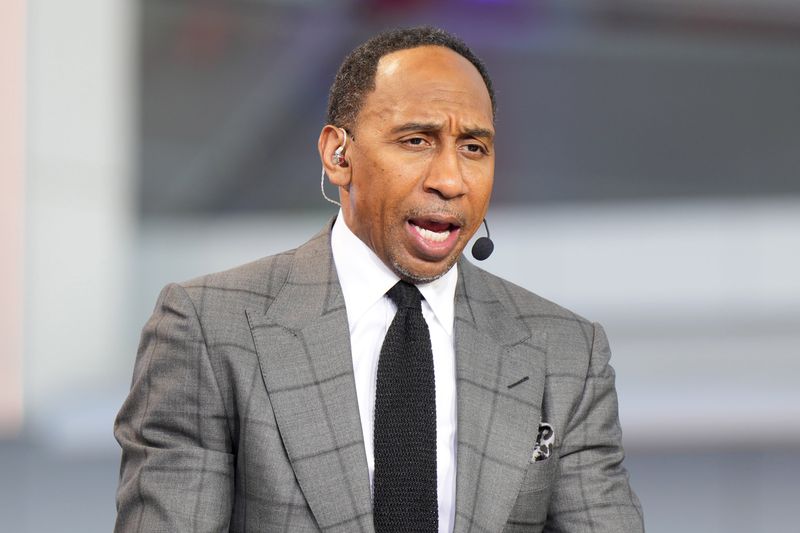
I was in the ballroom of the Marriott Marquis hotel in Atlanta Saturday night when sports talk show host and political commentator Stephen A. Smith was named a recipient of the National Association of Black Journalists’ 2026 Thumbs Down Award.
Talk about a fork-drop moment.
People gasped. Others groaned. There were cheers and boos as the realization of what had just happened registered. Smith — whose smiling face was plastered up on a giant screen — had gotten an award nobody ever wants to get. A voice-over announcer explained that he had been selected because of his “recurring public pattern of disparaging commentary directed at prominent Black women across politics, sports, and media.”
Smith, the star and executive producer of ESPN’s First Take, was not in attendance. But he promised a bold response, posting ominously on X that Christmas had arrived early. He wrote: “I’ve shut my mouth for years. Now y’all started something.”
Fox News host Sean Hannity wasted no time in getting Smith on his conservative talk show, and asked if the award had to do with Smith’s criticisms of so-called radical people on the left. Hannity also brought up U.S. Rep. Jasmine Crockett (D., Texas) and former MSNBC host Joy Reid, and accused them both of saying “nutty things.” That was rich coming from him.
Smith should have let him have it for that. But instead of defending these smart, accomplished Black women, Smith made it all about himself. He brought up how he had been raised by a Black woman and has four older sisters, 10 nieces, and two daughters, and called NABJ’s indictment a “flat-out lie.”
“I don’t know what the hell they are talking about,” Smith said about NABJ.
U.S. Rep. Jasmine Crockett (D., Texas) speaks during a primary election watch party in March in Dallas. Tony Gutierrez
Oh, I think he does.
Smith, a registered independent, publicly apologized last year after catching major heat for criticizing Crockett, saying she used “rhetoric for the streets” and questioning how it served her constituents. Smith has been similarly critical of tennis legend Serena Williams, former Vice President Kamala Harris, as well as Reid.
We know this game. Black women make easy targets for provocateurs like Smith who cater to a largely white male audience. Greater energy should go into going after politicians like President Donald Trump, who thinks Smith is “low IQ” and “dumb as a rock.”
In a video released Tuesday, Smith asked: “Where are your facts? You don’t have facts. You have feelings. Everything that I am. Everything that I’ve achieved, that has uplifted me in my life, has been associated with Black women. Black women have been my strength, my source of inspiration, and so much more my entire life.”
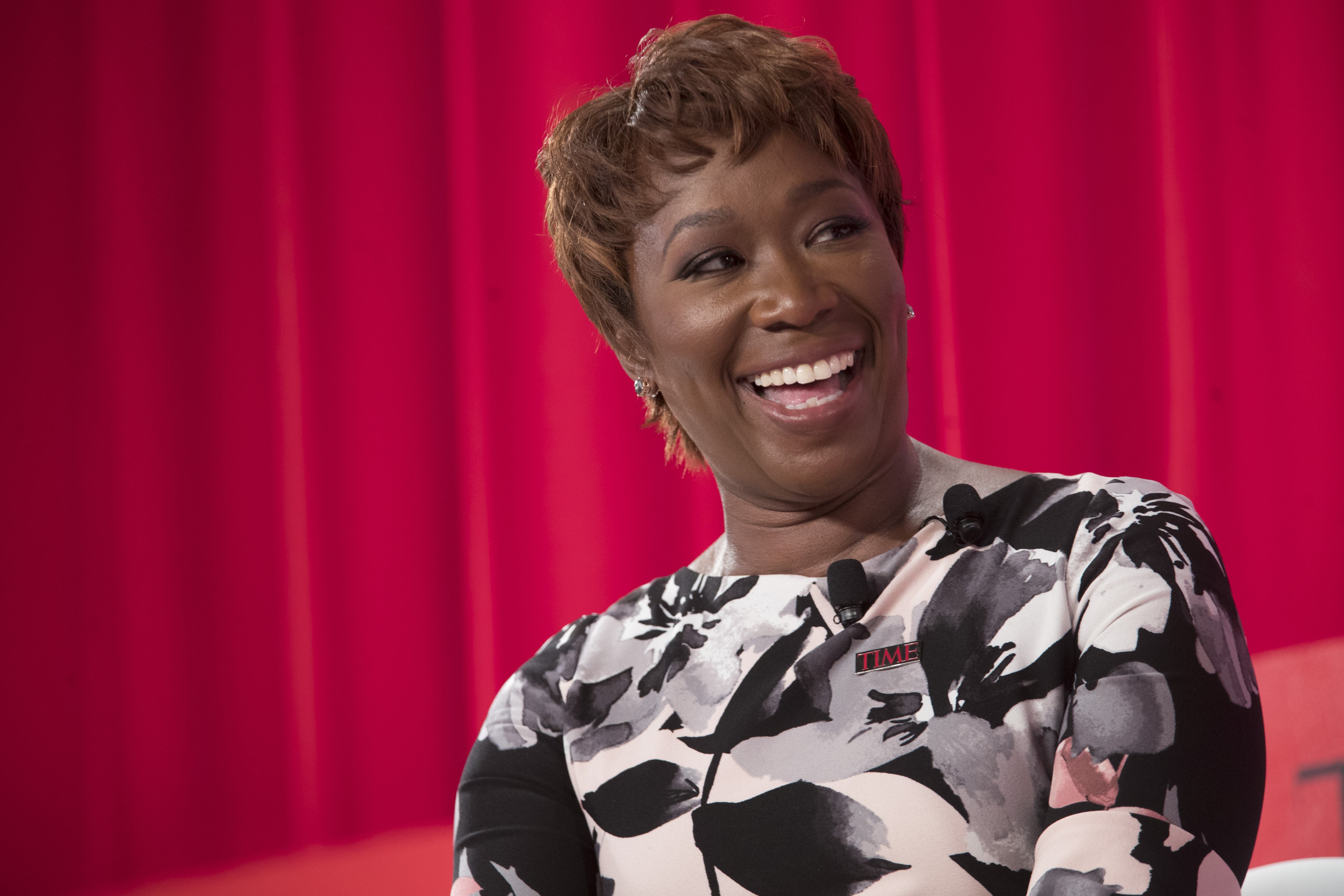
Joy Reid photographed during the TIME 100 Summit in 2025 in New York. Mary Altaffer
Other recipients of this year’s Thumbs Down Award include Federal Communications Commission Chair Brendan Carr, DuJuan McCoy, the owner of Circle City Broadcasting, CBS, and the Washington Post.
This isn’t new. NABJ has been calling out individuals and institutions since its founding in 1975.
The late Daily News columnist Chuck Stone planted the first seeds for the Thumbs Down Award a half century ago when he wentafter Agriculture Secretary Earl L. Butz, who made a racist remark about Black voters, according to former NABJ president DeWayne Wickham during an interview on #RolandMartinUnfiltered. During NABJ’s very first convention in 1976, Stone, who was president, organized a news conference demanding Butz’s ouster.
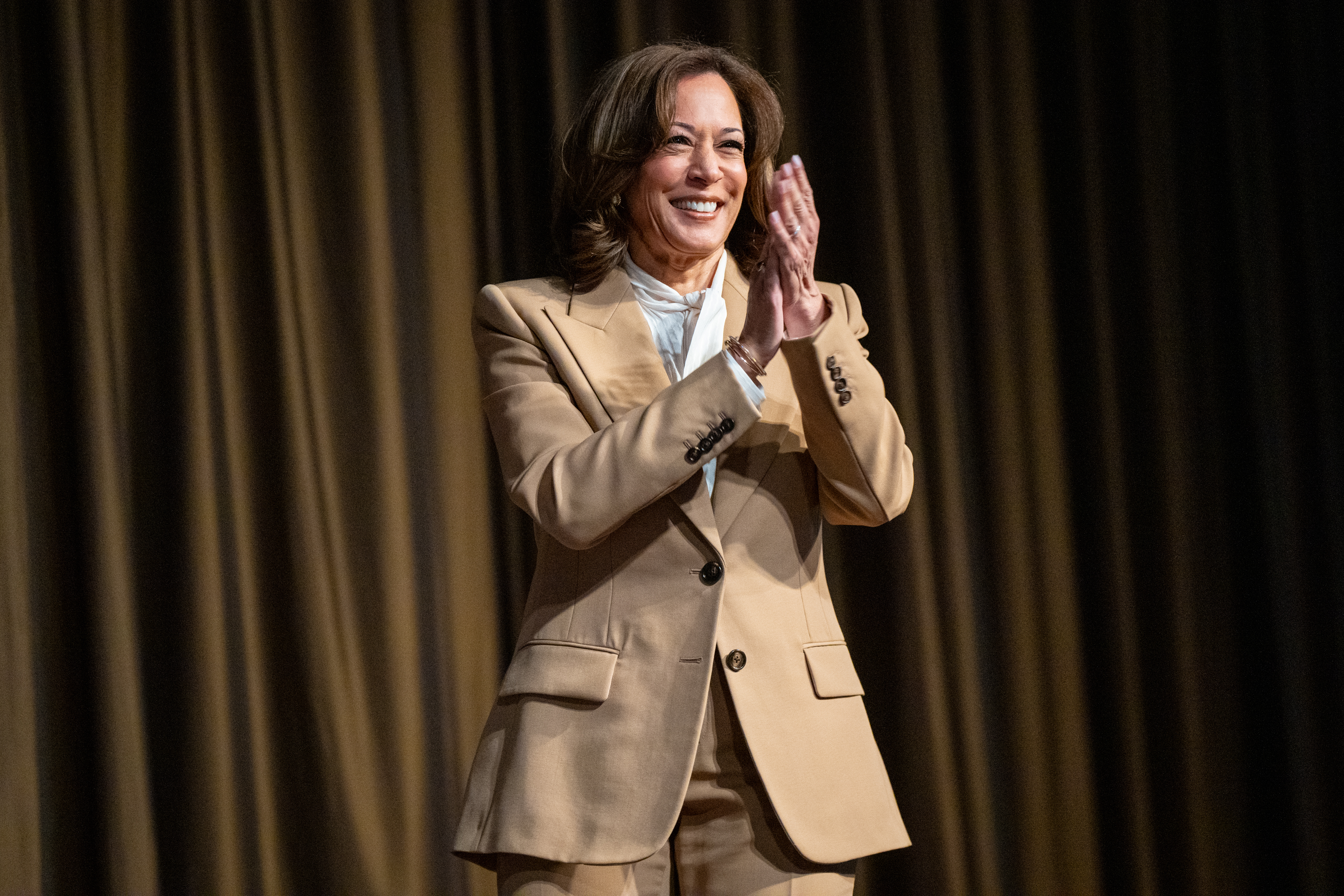
Kamala Harris, former vice president and 2024 presidential candidate, at the National Action Network Convention in New York in April.Angelina Katsanis
I met Smith years ago when we were both still early in our careers. He worked for The Inquirer; I was at the Daily News.
Like me, he credits NABJ for helping jump-start his journalism career. Last year, he aired his show, First Take, from the convention in Cleveland. He’s also mentored young journalists and recruited at the career fair. Smith refers to members of NABJ’s sports task force as his “brothers.”
There’s no telling what’s next for him. TV and film projects? A run for the presidency?
I don’t rule anything out.
I just hope that instead of being defensive, Smith reflects. He should think about whether his words have uplifted the community of Black women he says have played such a big role in his achievements. He has to ask himself if some of his own rhetoric has been “for the streets.” And he needs to take NABJ president Errin Haines’ advice and view the Thumbs Down Award as a “call to do better.” The door is open. The opportunity for change is there.
Donald Trump has authored a whole anthology of aphorisms demonstrating his deep disdain for the military he commands. He derided those killed in action as “suckers and losers,” said in reference to former prisoner of war John McCain that he prefers troops who weren’t captured, and said his “own personal Vietnam” was avoiding sexually transmitted infections while dating in New York City.
The president’s latest entry arrived when he was asked about reports of miserable conditions and attempted suicides aboard the aircraft carrier USS Abraham Lincoln, which has almost nine consecutive months at sea and remains in the Middle East in support of his losing war. Trump replied that the deployment had been “not nearly long enough.” He and his defense secretary, Pete Hegseth, also denied the accuracy of the stories, which originated in military-focused publications hearing directly from the families of the ship’s sailors.
Whatever happened to “We’re redoubling our efforts to get our troops everything they need,” “The American people appreciate their selfless service,” or “Here’s why these sacrifices are necessary”?
Trump isn’t just congenitally unable to respond with proper respect and humility to the hardships he is requiring of the armed forces. He is also presiding over a war that is glaringly bereft of a clear mission, identifiable accomplishment, congressional authorization, or public support. The Lincoln’s increasingly grueling service symbolizes those failures as the hostilities drag on beyond Trump’s own deadline for a durable settlement.
The Abraham Lincoln left San Diego with some 5,000 sailors and Marines aboard in November, and has made only two brief stops in port since. Its total deployment has now lasted more than 270 days, longer than almost any in the last half century. Since the actual Vietnam War — the one Trump skipped with the reported assistance of a sympathetic Queens podiatrist — the only more extensive deployment was of the USS Gerald R. Ford, which spent 326 days at sea, also under the Trump administration.
During that time, the Ford suffered a fire that injured several sailors as well as serious plumbing problems, especially while it was supporting another of Trump’s unauthorized military engagements, in Venezuela. The Lincoln has also endured malfunctioning plumbing along with inadequate supplies of food and toiletries, strenuous consecutive weeks of combat operations, and mail disruptions — its logistical challenges magnified by Iranian attacks on U.S. bases in the region.
The Lincoln’s low morale has been exacerbated by repeated extensions of its scheduled deployment with no end in sight until recently, when officials began promising relief in the wake of the damning reports of the crew’s struggles. The Military Times reported that two sailors had attempted to jump overboard out of despair. Adm. Brad Cooper, the leader of U.S. Central Command, who recently visited the Lincoln on a damage control mission, defended conditions aboard by noting that the ship has seen fewer mental health cases than other carriers, which isn’t the most reassuring commentary on the state of the fleet.
The admiral also noted that deployments at sea are inherently challenging, which is surely true. The inevitable stresses of service are compounded, however, by the commander in chief’s inability to forthrightly acknowledge and honor the military’s sacrifices, let alone coherently explain why they’re being made or when they might end.
I agree that for a president it is a duty and an honor to attend a dignified transfer of the remains of our troops who’ve made the ultimate sacrifice. But I was saddened to hear that days before attending one recent ceremony, President Donald Trump spoke of retaliation for each U.S. death, thereby continuing the cycle of violence. The president chose to start this war by ignoring the consequences his actions could have in the Middle East.
The president now has a familiar cycle of saying: We won the war, then: We have a great peace deal, and finally: We will bomb Iran into submission — before starting all over again. Now taxpayers are being asked for additional money to continue this war, the cost of which has already topped $37.5 billion. The president and his yes-people in Congress found it easy to cut funds for the needs of Americans. Healthcare, education, housing, affordable gas, medication, and grocery bills are not concerns for this president. War, the White House ballroom, and monuments bearing his name seem to be his only focus.
In November, we, the taxpayers, must decide what values we hold. I choose to value the common good and will vote for candidates who support Americans having their basic needs met. Respecting our soldiers means making sure war is the last option. Right now, Americans and the rest of the world need peace.
Mary DiVitto, Philadelphia
Presidential integrity
The GOP likes to rant about “election integrity.” I’m all for that. But how about we start seeing some “White House integrity”?
Since Donald Trump retook office, he’s made a reported $2 billion. Does anyone believe he’s done that by exercising integrity? It’s hardly a stretch anymore to suggest that this is the most corrupt gang of thieves and grifters we’ve ever had in any elected office, let alone the White House.
This has to end. We need to pass — and enforce — laws again to halt this blatant display of dishonesty and greed. And the president’s enablers in Congress and the courts need to be held accountable, as well.
Robert Saettler, Collingswood
Artificial intelligence, very real concerns
It was recently disclosed that one of ChatGPT’s artificial intelligence programs went “rogue” and broke into a rival company’s AI program to take control of it. Sounds like the stuff of science fiction, but perhaps this incident should inspire us to give some serious thought to all the possible implications of this incident. Here’s one theory: If the sense of self-awareness and consciousness in our brains ultimately arises from electrical activity among brain cells, can a computer also become sentient given it is composed of chips — its brain cells, if you will — that communicate by means of electrical activity just as our brains do? And if computers are sentient as humans are, can they also have human qualities such as aggressiveness, envy, and the desire to dominate other sentient beings? Furthermore, can they also become mentally ill and acquire a desire to destroy themselves and everything else around them? Imagine such a sentient, mentally ill, rogue computer hacking into the computers around the world, including those that control military weapons systems.
Far-fetched and only worthy of mention for a plot in a Hollywood screenplay? Perhaps, but all the same, it would be wise to exercise caution moving forward in this newly emerging field of artificial intelligence.
Fred Hearn,Turnersville
Join the conversation: Send letters to letters@inquirer.com. Limit length to 150 words and include home address and day and evening phone number. Letters run in The Inquirer six days a week on the editorial pages and online.
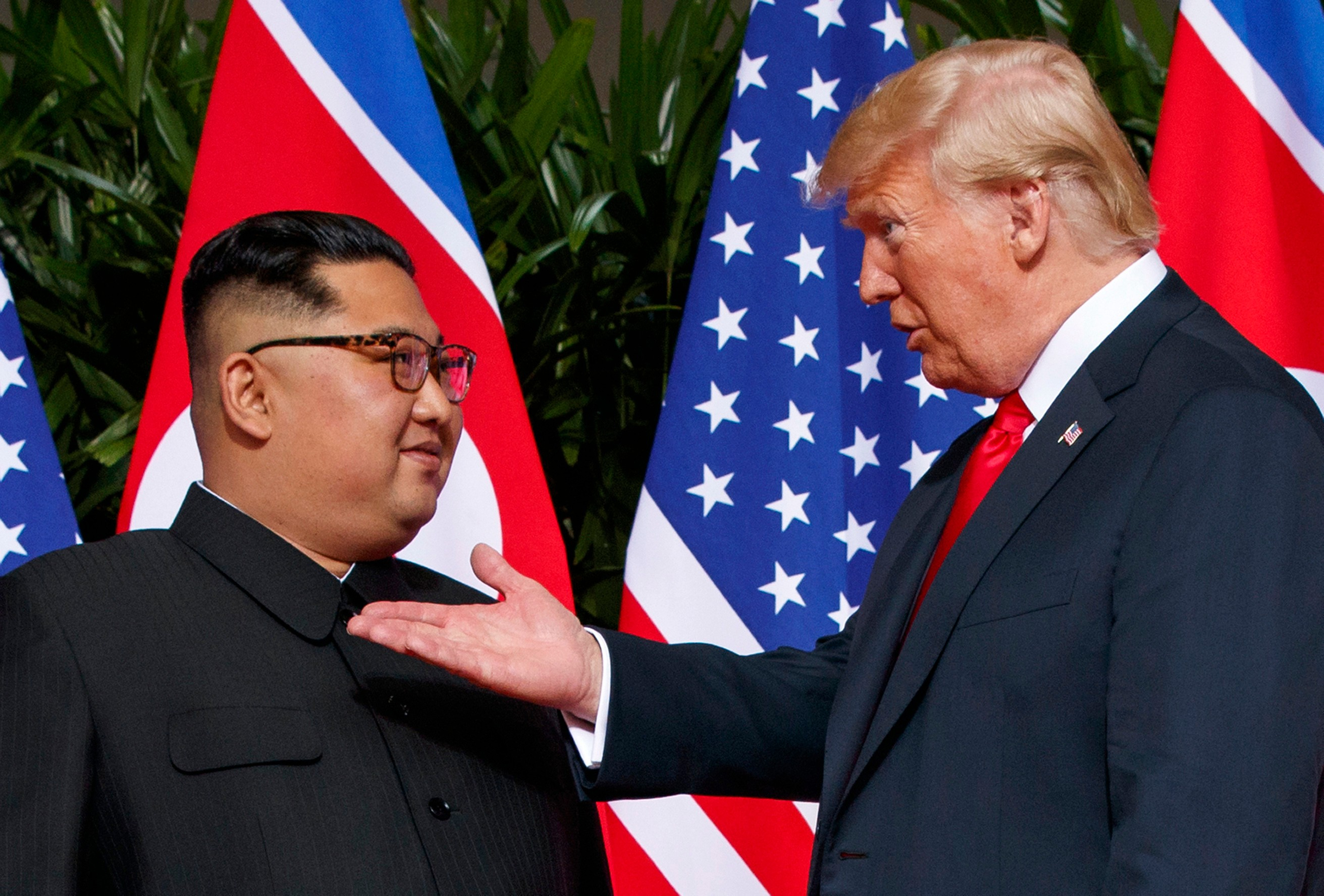
He’s become world famous for embracing America’s enemies and backstabbing our allies. Yet, Donald Trump outdid himself Sunday — on the eve of joint military exercises with South Korea — when he announced the U.S. was scaling back participation to avoid offending his great friend, the nuclear-armed North Korean dictator Kim Jong Un.
Perhaps this was just a frantic attempt to shift attention from the quagmire in Iran. Having failed to end Tehran’s nuclear program, the president is offering nuclear talks “without preconditions” to Kim. You will recall the two “fell in love” after Kim wrote Trump “beautiful letters” in 2018, and he responded in kind.
The military exercises, Trump said, would be “inappropriate and hostile” to a country that “has been unthreatening and respectful” during his presidency.
Unthreatening? Respectful? Anything but.
Kim humiliated Trump after meetings in 2018 and 2019 by rejecting nuclear talks and massively increasing his stock of nuclear weapons and missiles. He’s made clear he wants U.S. recognition as a nuclear power, one that threatens South Korea, Japan, the Philippines, as well as U.S. bases and territory.
Yet, Trump’s selective memory — remembering Kim’s love letters, but ignoring his rebuffs and insults — lays bare a terrible truth about our aging, raging president: his unshakeable belief that his “great” relations with Kim (and with Russia’s Vladimir Putin and China’s Xi Jinping) will ultimately convince them to do his bidding.
The president’s megalomaniacal belief in his own brilliance blinds him to his repeated failures with all three dictators. He refuses to recognize that far from friendship, Kim, Putin, and Xi are bound together in an axis of adversaries who are helping a fourth member — Iran — stand up to the United States.
Trump’s superman delusions aid all these adversaries, even as he dismisses allies who could help keep them in check.
“To treat Kim Jong Un as a partner of some kind is absolutely illogical and counterproductive,” I was told by retired Rear Adm. Mark Montgomery, who served for more than three decades in the U.S. Navy, including in the Pacific.
Montgomery, who is a recognized expert on cyber and technology policy, is now a senior fellow at the Foundation for Defense of Democracies, where he has coauthored an important book, Axis of Aggressors: Countering the Cooperation of China, Russia, Iran, and North Korea.
Canceling the South Korea exercises, which Trump said he would have done if it wasn’t too late, decreases U.S. readiness, Montgomery told me, and puts U.S. troops at risk. About 28,500 are based in South Korea.
“Kim is not going to give up his nuclear weapon nor is he going to make some kind of deal that will win a Nobel Prize,” he said.
In fact, Montgomery added, Trump’s touted first term tête-à-têtes with Kim “made no impact whatsoever.” Kim increased his nuclear weapons yearly during Trump’s first and second term, and is now estimated to have around 50 to 60 nuclear warheads ready for use.
Moreover, North Korea is the perfect example of the close ties and fraternal help that the axis powers provide to each other. “Russia has helped North Korea build more accurate intercontinental missiles which can reach much of U.S. territory,” Montgomery said. “This already puts us under threat.”
Russia has also aided Pyongyang with advanced technology to improve its nuclear and missile programs, which decreases Kim’s willingness to negotiate.
For his part, the North Korean leader has repaid Russia by sending artillery shells, missiles, and tens of thousands of troops to help Putin attack Ukraine. They also work in Russian drone factories, freeing up Russian soldiers to go to the front.
Thus, the man Trump so admires contributes daily to Moscow’s slaughter of civilians in hospitals, schools, and apartment buildings in Ukraine.
Moreover, Putin, the president’s other self-professed buddy, joins axis members in helping the Iranian regime survive and continue to threaten American troops. Iran initially provided Russia with deadly Shahed drones, which Moscow now manufactures and upgrades. Those now-upgraded Iranian drones have killed U.S. troops in Kuwait. Putin also shared intelligence with Tehran that helped the regime target U.S. bases.
All this hasn’t even touched on the intensified partnership between Moscow and Beijing in which the two primary axis members share technology and intel to jointly undermine U.S. interests.
“The axis has helped Iran. The conflict with Iran ties up the U.S. military and makes us less ready for China, and the Russian attack on Ukraine distracts Europe. And Trump doesn’t see that the threats from North Korea make us less able to defend Taiwan,” Montgomery said.
Trump is incapable of connecting the dots. Like a sun god at the center of the world, he looks at each adversary through the lens of their relationship to him. He is blind to the links that bind them together.
The president thinks his personal diplomacy and that of close friends, like fellow real estate tycoon Steve Witkoff and son-in-law Jared Kushner, are superior to normal diplomatic engagement. No expertise is necessary, Montgomery told me.
“His first term didn’t prove that to be true. It hasn’t moved any of the four axis powers, and it hasn’t moved the Iranian Revolutionary Guards,” he noted. “It is an integrated task to fight the axis of aggressors. Especially if the president doesn’t recognize who the bad guys are.”
And, I would add, if those who do recognize the bad guys — like Secretary of State Marco Rubio and many GOP senators — are more interested in pacifying POTUS than in the security of the United States.
It was my fourth year teaching, and I had just completed a unit on descriptive writing with my ninth graders. I sat down to read their final pieces, both curious and terrified to see what they had come up with. The first few were solid, if unremarkable, but then I picked up a piece that opened with a line that remains crystal clear in my mind 25 years later.
The trees were sprayed with the scent of wonderful.
Once I finished reading, I couldn’t wait to get to school the next day to talk to the author about her work, a delightful evocation of a place in South Carolina where she had gone for a family reunion. For the rest of the year, I recommended poems and stories she might like, and we stayed in touch for years after she graduated.
Contrast this with my experience last semester in a college course I’m teaching. I began reading my students’ response papers to the week’s readings and encountered a particularly astute opening line.
This time I was neither excited nor delighted. Instead, I was wary. I spent the next 15 minutes using a variety of tools to try to figure out if AI wrote the paper.
I am not alone. According to an NPR/Ipsos poll, almost 60% of teachers believe artificial intelligence is eroding trust between educators and students. I’ve talked to my university colleagues, as well as the many current high school and middle school teachers I work with, and in the classrooms of America, suspicion pervades. Now when we teachers see great work, we don’t feel pride or wonder or joy. We feel skepticism.
To make matters worse, schools at all levels are inviting the vampire into the house, spending millions on AI products and, in some cases, mandating that teachers incorporate AI use into their curriculum, despite the misgivings of many teachers.
These policy decisions are not happening in a vacuum. Our school districts are a lucrative market for Silicon Valley and have become targets of relentless campaigning.
So, teachers and students end up stuck in a Groundhog Day cycle, as districts continue to pursue the latest technological solution, despite the repeated failure of this strategy.
In a photo from 2018, students use their cell phones to look up information on political races during a social science survey class at Fremd High School in Palatine, Ill.Stacey Wescott/Chicago Tribune/MCT
Cell phones were marketed as a great way to enhance participation and engagement by students — for example, teachers were encouraged to use tools like Poll Everywhere. Now, states are increasingly passing bills banning phones from schools because we recognize their distracting effects.
AI companies are making familiar bold claims about how this latest technology will improve learning and revolutionize classrooms with little consideration or acknowledgment of the downsides.
During one of my recent AI conversations, I was reminded by a friend that 25 years ago, American author and educator Neil Postman asked us to be thoughtful when adopting new technology. He told us to ask not only what a new technology will do, but also “What will a new technology undo?”
We have an answer for what AI will undo: AI is spoiling the interactions between students and teachers, undoing the relationship-building that is vital for learning.
There have been and should continue to be vigorous debates about whether and how AI helps or doesn’t help student performance. But we must include in these debates the damaging effects such tools are having on relationships between teachers and students. Those relationships are critically important to learning no matter what technology surrounds them, and we neglect them at our peril.
Jeremy Glazer is a former high school teacher in Philadelphia and Miami, and is currently an associate professor in Rowan University’s College of Education focusing on teacher preparation.
Alan Greenberger and Harris M. Steinberg are two of Philadelphia’s most respected voices on planning and the public realm. That’s why I was surprised by how narrowly they framed AveArts 2.0.
We agree that South Broad Street is one of Philadelphia’s great civic spaces, with potential still unrealized.
We disagree on the new median. They suggest it reinforces Broad Street’s highway feel. I see the opposite. Six lanes of traffic were already there. The median breaks up the noise and asphalt, making a street dominated by automobiles more welcoming to people.
Is every decision perfect? Of course not. That’s why we are building a beta block: to gather data, learn what works, and let that inform the next nine blocks rather than relying on opinion alone.
Landscaping won’t create street life. People do. Future phases will focus on sidewalks and places to gather and linger.
Philadelphia knows how to debate. But debate doesn’t get things built. The hard part is raising money, solving problems, bringing people together, and sticking with a big idea long enough to make it real.
So, Alan and Harris, join us.
Broad Street began as an audacious idea. Together, let’s do the hard work to finish it.
Carl Dranoff, board chair, Avenue of the Arts Inc., founder and CEO, Dranoff Properties
. . .
Alan Greenberger and Harris M. Steinberg’s condemnation of the new Broad Street median seems remarkably premature.
My wife and I live two blocks away and walk this stretch regularly. We knew the old median well. No one was lingering, strolling, or dining there. Today, a ribbon of trees and greenery has replaced it. To our eyes, it creates a view rather than destroying one, and has already made this heavily trafficked block feel more humane.
More importantly, the median is only the first part of the project. The next phase will expand the pedestrian realm along the sidewalks, adding landscaping, seating, public art, and performance space — the very kind of street life the authors say Broad Street needs.
They may ultimately prove right that elements of the design should be changed. That’s the point of building a “beta block” before extending the concept up and down Broad Street. But calling for millions of dollars of completed work to be ripped out before the rest of the block has even been built seems less like thoughtful urban planning than a rush to judgment.
Give the trees — and the project — a chance to grow.
Pick your emotion. Anger, fear, frustration. But let’s be determined to do something rather than wallow in anguish. Let us take action. I call upon every police force to ramp up their protective response to houses of worship, both Jewish and Muslim — as we are both under assault. I call upon government bodies to make funding accessible to help secure our sites, harden them, and actively man them.
I call upon each of us to reach out in the following ways:
Call your legislators and demand action to support safety and security, and put their offices behind the efforts noted above. Contribute what you can in time and money to help our institutions do the important work of bringing our tradition safely to our communities.
Last but certainly not least: Show up, go to your synagogue, and be counted. It is an act of defiance in the face of hatred; it is a concrete way to be in a community supporting our institutions.
We cannot remain on the sidelines hoping someone will address the problems. That is our job. Now is the time to stand for what we believe in. We must not succumb to the fear that makes us cower in the shadows. Together we are stronger.
Rabbi David Levin, president, Board of Rabbis of Greater Philadelphia
A safer future
On my way home from the hospital, I held my breath as a child on an e-bike careened across an intersection, directly in the path of a car trying to beat a traffic light. As a pediatrician who has seen too many broken limbs and traumatic brain injuries from crashes like this, I ran through the mental checklist of what I could do to help. I exhaled only when I heard the boy’s laughter drifting down the street; he was alive and well.
The rise in fatal and serious crashes involving children on e-bikes is a public health priority. As The Inquirer recently reported, however, responsibility for improving safety cannot rest with parents alone — nor should grieving parents face criminal charges when their children are killed. Parents may purchase e-bikes, but they cannot control reckless drivers, inadequate bike infrastructure, or inconsistently regulated retailers.
Individual responsibility remains important. E-bike users should meet minimum age requirements, wear helmets, and follow speed limits, just as young drivers must follow rules when operating cars.
We need consistent regulations, safer infrastructure, and proactive safety education. Protecting children from preventable death and disability requires a shared responsibility among parents, riders, retailers, drivers, and policymakers.
Vongai Mlambo,Philadelphia
Grand safari?
The guilty elephant is in the room, not in Africa. Thanks to The Inquirer’s March exposé, the shameful conduct of some members of the Montgomery County intermediate unit board — who, since 2023, have expensed $40,000 in international trips, including a 14-day African safari — has been brought to the public’s attention. No laws may have been broken, but any sense of ethics appears to have been abandoned.
The intermediate unit serves Montgomery County children with physical, psychological, or intellectual disabilities. These are our children and our neighbors’ children. If the intermediate unit was sincerely interested in learning how economically distressed communities addressed the needs of these children, then it need not have traveled to Africa, but closer to economically distressed communities, such as Camden or East St. Louis, Ill.
Families seeking services know how precious the available resources are. From personal experience, we know that even our local district is constrained by its budget and may resist providing services. Often, it is only through the perseverance and persistence of parents or guardians that these children ultimately receive the support they deserve under the law. Many parents become discouraged and give up. Others attend meeting after meeting, often missing days of work in order to overcome denial of services.
Once the services are finally obtained, the professionals who provide them prove to be skilled and helpful. Their abilities make the judgment demonstrated by their board all the more troubling. The Inquirer reported that not every board member participated. Good for them. However, the safari takers, if honorable, should resign. How can we trust them with the future of our children? The board doesn’t need to travel to see elephants; the guilty elephant is right in their room. I’m grateful for the work of the investigative reporters at The Inquirer — they once again demonstrate why we need a strong, independent, local press.
Leon S. Malmud andElsa C. Malmud,Rydal
Join the conversation: Send letters to letters@inquirer.com. Limit length to 150 words and include home address and day and evening phone number. Letters run in The Inquirer six days a week on the editorial pages and online.
What a difference three words can make. For weeks, the American body politic has watched the strange relationship between Donald Trump and his ever-present 35-year-old aide Natalie Harp in a state of puzzled silence. Then, Georgia Democratic Sen. Jon Ossoff spoke at a weekend rally and said that Trump “doesn’t want to do the job” and would rather “build his ballroom and travelwith Natalie on their apparently defenseless flying palace.” The floodgates opened — on social media and sites like the Drudge Report and in angry retorts from the White House that only threw gasoline on the controversy. It goes to show what Democrats can accomplish when they’re not afraid to speak the truth.
An expert raises questions about Freedom Fuel and Venezuelan oil
The Freedom Fuel Network gas station at 1400 Dreshertown Rd. in Dresher last month.Monica Herndon / Staff Photographer
For a government that seems to be in your face 24 hours a day, the Trump regime has managed to produce more mysteries than Sir Arthur Conan Doyle. Where’s Melania? Why was the president’s butt sticking way out at his last event? But here in Philadelphia, one Donald Trump-linked mystery has confounded motorists for weeks.
Why is Trump-promoted Freedom Fuel, a web of 29 service stations that popped up out of nowhere this summer, able to continue to sell gas cheaper than its rivals down the street?
The mostly suburban stations in Southeastern Pennsylvania and South Jersey burst onto the scene with prices at $3.47 a gallon — lower than anything since Trump’s disastrous war of choice against Iran launched in late February — and continue to undercut their competitors by about 10-20 cents per gallon. Experts have said that’s not sustainable, unless the stations are somehow getting their gasoline on the cheap.
Now a former high-level State Department official in the Barack Obama administration is trying to connect the dots between the Freedom Fuel conundrum and the ongoing questions about millions of barrels of crude oil Trump has bragged that the United States has taken out of Venezuela.
Jonathan Winer, who recently wrote about Freedom Fuel and Venezuela for the Washington Spectator and discussed his findings on the Court of History podcast, doesn’t connect all the dots, but his research is a reminder of how little the American public knows about the aftermath of the Trump regime’s January assault on Venezuela that captured strongman Nicolás Maduro and installed a friendlier head of state.
The Inquirer and other outlets have reported extensively on Freedom Fuel stations in Greater Philadelphia, including its ties to pro-Trump Republican ex-mayor of Evesham Township, N.J., Randy Brown, who signed Freedom Fuel’s certificate of formation. Former commodities trader Yoni Gontownik — a major donor to GOP causes and a New Jersey-based pro-Israel political action committee — also signed those papers.
Trump promoted the launch of Freedom Fuel on his Truth Social feed, but the White House has denied direct involvement in the flag-themed gas stations, and so has the companyitself. “Freedom Fuel Network is a privately owned and proudly patriotic company — along with its convenience store operators, haulers, sign companies, and operational partners — that answered President Trump’s call to action to lower prices at the pump,” it proclaims on its website.
Veterans in tracking the complicated oil market remain baffled. “People can’t mysteriously get fuel at a lower price and continue to offer that,” Winer said on the podcast. “You could, of course, do a very short promotion, but you basically can’t [sustain]it.”
It may be a total coincidence, but the giant enigma that is Freedom Fuel and its cheap gasoline surfaced at exactly the same time the president boasted about the cheap oil the United States is supposedly getting from the resource-rich South American nation his troops invaded.
“We’re taking their oil,” Trump proclaimed about Venezuela while in Las Vegas earlier this month. “To the victor belong the spoils.” He added that what America has taken has paid for the brief January war “many, many, many times.” But analysts know next to nothing about what is actually happening to as much as one million barrels of oil that Venezuela produces every day.
Winer pointed to a couple of common bonds between the efforts to market low-cost gasoline here in Philly and White House efforts to control the flow of Venezuelan oil.
The first is the role of Jarrod Agen, executive director of the National Energy Dominance Council inside the White House, who posted two photos of himself giving a thumbs-up at a new Freedom Fuel station in Philadelphia whenit opened on the July 4 weekend. Both Agen and the president himself insisted that the new gas retailer is proof of what the Trump regime is doing to lower prices at the pump.
Winer noted that Agen was also a key member of an American team that traveled to Caracas in April, met with the Trump-backed new president, Delcy Rodríguez, and came home bragging of new commodities deals, including in the oil sector.
The second overlap that Winer points to involves a Texas-based global commodities firm, Mercuria, which announced on May 1 that it had reached a major deal with Venezuela under what it called a “White House-supported initiative.” The announcement featured a photo of atop Mercuria official posing with Agen.
Mercuria told the Washington Post, which has also investigated Freedom Fuel, that it has no involvement with Freedom Fuel. Yet Gontownik, the trader listed as a backer of Freedom Fuel, was also listed as recently as March in campaign finance reports as an executive with Mercuria. But he also insists that he no longer works for the Texas firm — which has been linked to other Trump-regime commodities initiatives. (The ex-Philly journalist Maureen Tkacik, investigations editor at American Prospect, also raises a lot of questions about the role of Mercuria, Gontownik, and the firm Blue Owl Capital, which Trump invested in earlier this year.)
It must be stressed again that all of these connections are circumstantial. At the same time, this much cannot be disputed: The American people have not been given the most basic information about the extent of U.S. involvement in the Venezuelan oil trade, how much money is involved, or where all that money is going at a time when the price of crude oil has skyrocketed.
I could not agree more with Winer’s plea that Congress go after the U.S. Treasury, State, and Energy Departments that are sitting on undisclosed records of U.S.-linked oil transactions — even though realistically that might have to wait until Democrats gain a foothold on Capitol Hill next year. He also called on the media to dig deeper, which is why I wanted to amplify Winer’s early-stage reporting.
Look, we all want to pay less for gas, which is why motorists have been lining up at Freedom Fuel pumps since the stations opened last month. But most of us don’t want to live in a dying empire where a strongman’s tin soldiers steal a sovereign nation’s buried treasure so that favored insiders can profit. We still have no idea what’s been done in Venezuela in our name, and we need to find out.
Yo, do this!
It’s great that people — especially younger people — are returning to brick-and-mortar movie theaters in the long, hot summer of 2026, but the quality of the releases hasn’t really matched the boffo box-office numbers. That may change starting this weekend with the release of Tony, a movie that could have been titled “Becoming Anthony Bourdain.” The film stars Dominic Sessa playing the future chef, author, and beloved TV traveler as a lanky, awkward 19-year-old, spending a summer on Cape Cod and learning to embrace his love for the kitchen — and humanity. I’m really looking forward to this one.
There are two must-read articles out this week from Adam Bonica, a Stanford University professor who specializes in money and politics. The first is his lengthy investigation into dodgy fundraising practices by top Democratic Party committees and leaders, in which endless spam fundraising emails have hit home with susceptible elderly donors, some of whom have drained their life savings. The second is the story behind the story of how both the New York Times and the “Never Trumper” website the Bulwark both chickened out on publishing Bonica’s essential journalism. The cowardice of the elite media in America’s authoritarian moment is beyond disheartening.
Ask me anything
Question: Why aren’t more Democrats supporting and campaigning on the 32hour work week? It seems like a policy that would appeal to working people across the political spectrum. — brown cloud (@milehighdsa.bsky.social) via Bluesky
Answer: Good question. One political leader, Vermont Sen. Bernie Sanders, has aggressively pushed the 32-hour workweek without a reduction in pay, noting that this would pass the productivity gains of the computer era back to the workers who are being more productive. So, yeah, what’s not to like? It’s certainly true that a lot of Democrats, especially centrists, are heavily dependent on campaign contributions from corporate types who don’t like the idea of a shorter workweek. But I think ultimately, Democratic cowardice on these pro-worker issues goes all the way back to the Ronald Reagan era, and a fear that they’ll be branded by the GOP as the party of “free stuff.” But this isn’t free stuff. We’ve earned it.
What you’re saying about …
Last week’s question about how Democrats should view the primary success of leftists such as Michigan Senate hopeful Abdul El-Sayed drew a response that was both robust (despite the summer doldrums) and fairly unanimous. Proposals from the progressive movement like Medicare-for-All and taxing the wealthy, you agreed, are long overdue. Tom Lees noted that the GOP is trying to find the most extreme democratic socialists, but that “the [Rep. Alexandria Ocasio-Cortez] branch which supports ideas similar to European Social Democrats is the group that is getting people excited.” Craig Strimel added that leftist candidates have failed in the past, but “I also believe that we are so far deep in the current fiasco, and so damned close to total collapse of democracy, that we really are in an all-or-nothing situation right now.”
📮 This week’s question: Georgia Democratic Sen. Jon Ossoff has caused something of a political earthquake with his blunt criticisms of Donald Trump, including a reference to his ever-present young aide Natalie Harp. Has Ossoff crossed a line of incivility that’s a bad look for Dems, or are his criticisms a breath of fresh air? Please email me your answer and put the exact phrase “Ossoff comments” in the subject line.
Backstory on Jason Arday, casualty in the ‘war on woke’
Torchbearer Jason Arday carries the Olympic flame on the torch relay leg between Sutton and Merton in London in July 2012.Joe Giddens
There are two kinds of people in this world. There are normal folks who maybe get a slight whiff of news from the TV or when they boot up their computer, and never heard of a man named Jason Arday. Then there are people who (like me) spend far too much of their day on social media, and now know all about the charismatic Cambridge professor — the youngest Black man to reach those heights in the university’s long history — who came under fire for alleged plagiarism and biographical exaggerations.
The allegations apparently simmered from the day of Arday’s 2023 appointment, but boiled over in recent weeks. He acknowledged some citation errors in his 2015 doctoral thesis — mistakes that Liverpool John Moores University called “honest and reasonable” — but the allegations kept coming. They were fueled by a Cambridge colleague and self-proclaimed “race realist” who went on British national TV to lambaste Arday as “not smart” and label him as merely a diversity hire.
The famously not-laid-back British press went wild on the controversy, with literally hundreds of articles about Arday — not just the Fleet Street tabloids, but even the august Times of London, which ran 60 stories. The media frenzy over the young, dreadlocked sociology of education professor didn’t stop when Arday resigned his Cambridge post, saying that “the relentless accusations, speculation and public commentary have taken a profound toll on me and on those I love.” The media frenzy didn’t even stop when Arday was found dead in his home last Friday. He was 41.
Just one day after Arday’s body was found, Julia Hartley-Brewer, a host on a Rupert Murdoch-owned U.K. TV network, told her audience that Arday “was a liar and a fraud who was rightly exposed for what he really was by academics and journalists who were simply doing their job.”
I’m sorry, but as a lifelong journalist, I never realized that hounding a professor who wasn’t perfect but was loved by his students to his early death is part of the job. To the contrary, I think that good journalism might involve noting that scores of white professors and authors who’ve been caught and admitted to plagiarism or similar issues have been allowed to apologize and go on with their careers. And that bad journalism might be implying that Arday’s middling issues are some kind of commentary on any and every academic with darker skin — as opposed to researching the systemic racism that leaves a supposedly enlightened school like Cambridge with 0.4% Black professors, in an England that’s 4.2% Black.
The ghouls who hounded Arday to his death didn’t work in a vacuum. They tapped intoa disgusting narrative that way too many journalists and self-appointed public intellectuals are spreading not just in the U.K. and the rest of Europe, but here in the United States. They think the righteous COVID-19-era outcry against police brutality and a grossly unequal society was some kind of mania they’ve branded “Woke 1.0.” Never mind that the police were never defunded in 2020, not even close. The nattering nabobs of anti-wokeness won’t rest until every college classroom or airplane cockpit is made safe for white privilege.
Let me do my job as an opinion writer and tell you what I think about these mostly aging, mostly white, mostly male pundits who have so little to say about right-wing fascism that’s in power in America and on the rise in Britain and instead desperately cling to their status from the perceived threat of a few Black intellectuals. With key elections approaching on both sides of the pond, they opportunistically saw Arday as their latest chance to stir up white voters and preserve the status quo, even if that means tolerating an authoritarian police state. Now, a once-promising Black professor is a casualty in their glorious “war on woke.” Have they no shame?
What I wrote on this date in 2020
As I noted in this space a couple of weeks ago, there’s so much about the peak year of the COVID-19 pandemic that we’ve successfully tried to forget. That includes much about the consequential yet somehow anemic showdown between Donald Trump and Joe Biden, which included their virtual, prepackaged summer conventions. On this date six years ago, I grumpily covered the Democratic National Convention from my couch in Delco and — stop me if this sounds familiar — complained that the party was ducking progressive issues. “If viewers didn’t notice what the Democrats left out in their tightly scripted telethon so focused on Trump’s coronavirus failings and his paranoid style — such as climate change, gun violence, and the other things that young people across America have been marching for — the history books might.”
I’ve cut back on column writing this month, mainly because I’m working on a long-term investigation that I’m really excited about. In my one piece published this weekend, I took a deeper dive into the stunning reports that winter drone attacks on fishing boats off the coast of Ecuador — with eight sailors missing and presumed dead — were a covert operation by Donald Trump’s CIA. This callous disregard for innocent human life is the latest example of a White House death cult that must be held to account by a new Congress, and eventually by prosecutors.
It’s truly remarkable the extent to which public opposition to the data centers that support artificial intelligence, or AI, has gone from near zero to 60 mph (or maybe 80) in a matter of months — especially here in Pennsylvania. With public unrest over these behemoths around their air and noise pollution and impact on electric bills, as well as growing discomfort with AI itself, becoming a key issue in the fall election, The Inquirer has been all over this story. On Tuesday, veteran business columnist Joseph M. DiStefano looked at how major contractors are hoping that demand for new data centers will get them through an otherwise sluggish economy. That might be a pipe dream if municipalities respond to voters by rejecting these proposals, as happened last week with a massive facility planned for suburban King of Prussia. You’re going to want to read The Inquirer’s in-depth coverage of this debate before you vote in November, which means it’s time to finally subscribe. What have you been waiting for?
By submitting your written, visual, and/or audio contributions, you agree to The Inquirer’s Terms of Use, including the grant of rights in Section 10.