Category: Opinion

  • We need to care about Trump’s CIA murdering fishermen on the high seas

    We need to care about Trump’s CIA murdering fishermen on the high seas

    One of the worst things about Donald Trump’s America in the 2020s — I know, I know, it’s hard to pick — is the return of all the horrible stuff you foolishly thought our flawed nation was done with after the reckonings of the 1970s.

    The American quagmire in Iran makes Vietnam look practically wise in comparison. Then it came out last week that the government was spying in Minnesota on what should be constitutionally protected protest activity by labor unions or environmental groups, in a callback to the notorious illegal FBI op known as COINTELPRO.

    Oh, and the CIA is murdering* people in Latin America again.

    The asterisk is for “allegedly,” based on a report last week in the Washington Post that confirmed growing suspicions about mysterious drone attacks last winter by “gringos” that struck at least three fishing boats that had sailed deep into Pacific Ocean waters from an impoverished coastal village in Ecuador.

    One of the fishing vessels remains missing, its eight crew members presumed dead. The survivors of the other attacks remain traumatized from their injuries and their subsequent interrogation by men who wore no military uniforms — but had U.S. flag patches and spoke with American accents.

    In March, the crew of the Negra Francisca Duarte II was returning to its Ecuadorian port in Manta with a fresh catch of seafood and, its sailors insist, no illegal drugs when it noticed a blue ship was trailing it on the horizon. Moments later, drones flew over the fishing craft and began dropping explosives.
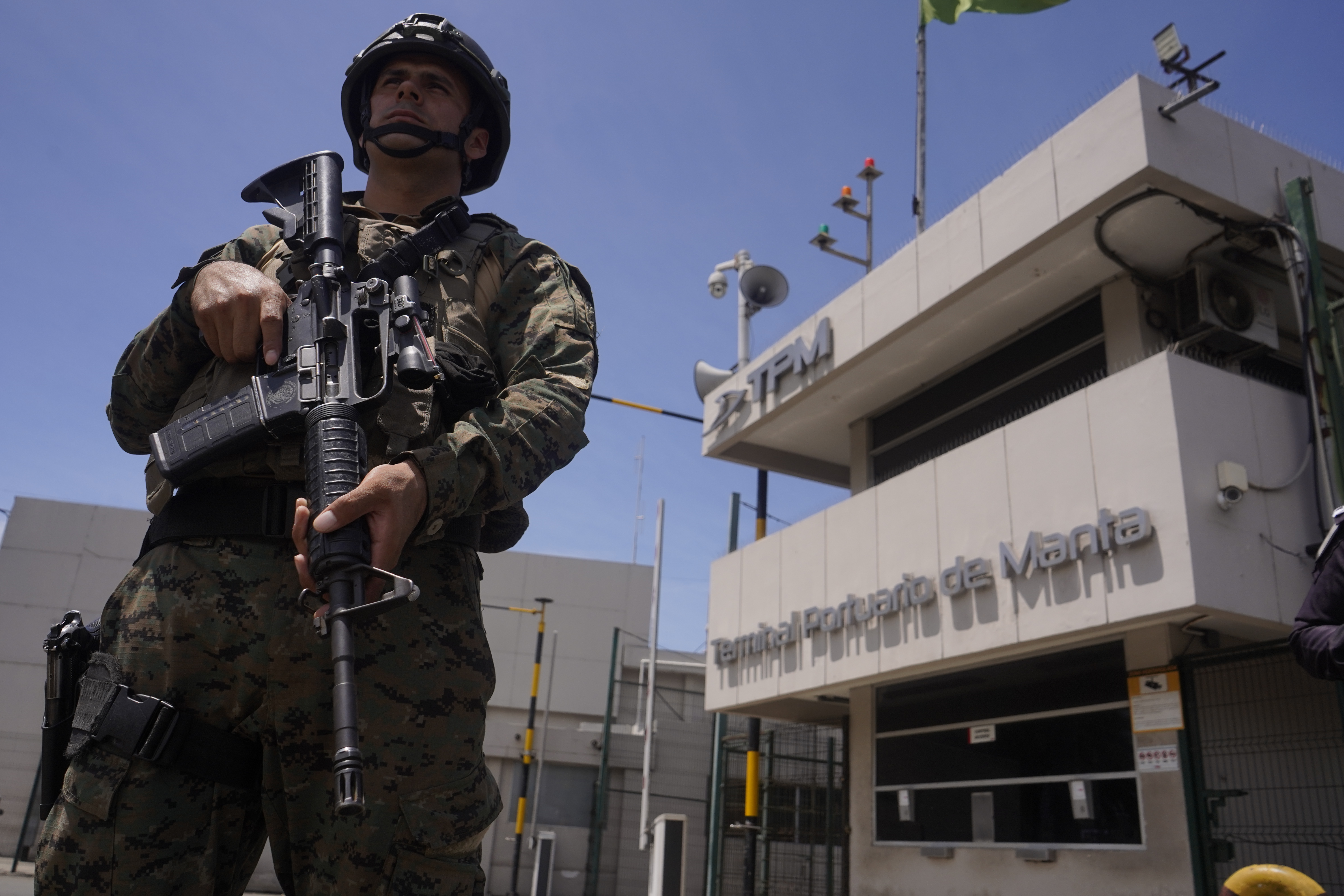
    Soldiers guard the port of Manta, Ecuador, in February.Cesar Munoz

    “The boys were there, hurt and scared. Some got a fire extinguisher to try to put out the fire, but there were too many flames,” the captain of the Negra Francisca, Hernán Flores, told the New York Times, which published the first U.S. media account of the mysterious attack. Flores said injured sailors jumped into the ocean or scrambled onto lifeboats, and all were at first relieved when the blue boat arrived to rescue them.

    Instead, according to the Times and other accounts, their ordeal was only beginning. The survivors were bound, hooded, and interrogated by the strange English speakers, who offered no medical treatment for their wounds. The boat headed north and transferred the crew members into custody in El Salvador, where officials soon released them — not charged with any crime, after the attack that nearly killed them.

    The initial Times article did not confirm whom the men were working for, but it noted extensive data showing how each of the three attacked fishing boats had been tracked by a maritime patrol plane that was registered to a UPS mailbox in Richmond, Va., and flew from Tennessee to a military airstrip in El Salvador in November.

    After the Times wrote about the three mystery boat attacks, the Post followed up with a report that the attacks were a special covert operation conducted by the CIA. These secret strikes have amplified a series of publicly acknowledged boat attacks in both the Pacific and the Caribbean by the U.S. military that have now killed more than 220 people since Trump returned to the White House 19 months ago.

    Last week’s news reports built upon research and more than 100 interviews by the group Human Rights Watch, which is troubled by the lack of both legality and morality in a partnership forged between the United States and Ecuador. This includes not only the three boat attacks but a land assault against a farm near the border with Colombia, which also found no drugs, but in which farmers said they were tortured by the Ecuadorian military.

    “The two countries’ security relationship is deepening at a moment when both governments have engaged in serious human rights violations fueled by their insistence on framing their confrontations with organized crime groups as a kind of war,” the rights group wrote.

    It’s no secret that drug cartels have enlisted some fishing boats — sometimes through desperation to boost their meager income, but often through extortion — to aid their smuggling operations out of South and Central America.

    But these alleged CIA drone strikes raise stark questions about the Trump regime’s strategy that is literally shoot first, ask questions later. Why are some sailors executed at sea when there’s not even evidence to charge the survivors with a crime? Even if some of these boats are tied to narcotics trafficking, what’s the legal and moral justification for a death sentence for low-level drug offenses?

    There’s also this: What are these extrajudicial killings even accomplishing, beyond cementing the image around the world that Trump is running a violent criminal enterprise? The Drug Enforcement Agency (DEA) has assessed that — some 230 or so lost human lives later — these U.S. boat attacks have had zero impact on reducing the flow of cocaine into the United States. That’s in part because most drugs that come into the United States by sea pass through larger commercial ports, not small fishing villages.

    Instead, the biggest impact from the military drone strikes has been the series of so-called snuff videos that either Trump or Pete Hegseth’s Pentagon has posted to social media platforms showing boats in gentle tropical waters getting blown to smithereens, in shock and awe tribute to their regime’s power to kill with impunity. But the secret, allegedly CIA attacks are not even that.

    What is even the point of this cruelty?

    I’m writing this column to honor the on-the-ground courage of Human Rights Watch and amplify the excellent journalism of Times and Post reporters — and because I’m furious that this story has drawn so little attention, and even less outrage.

    Deep into the second year of Trump’s strongman second presidency, the news media is overwhelmed by the Caligula-like craziness of his regime and its fights over matters as small as a ballroom and as big as the Strait of Hormuz, not to mention the frequent weather disasters made worse by the climate crisis the president believes is a hoax. Some maimed or missing fishermen in a tiny village on the bottom side of the planet aren’t making the cut.

    Which is probably exactly what the regime is going for. Trump and his MAGA minions would like nothing more than to numb you, me, and the rest of us to their growing archipelago of death, a bloodstained map that stretches from the icy streets of Minneapolis to a dingy detention site in Newark, N.J., and from a bomb-blasted island off Iran to the sickbeds in an African refugee camp. They want us to feel numb as their authoritarian death cult expands, and we cannot allow that to happen.

    The truth is that the United States will remain a global pariah — a pitiful, helpless giant — as long as there is no accountability for these war crimes, including, or perhaps especially, the terror perpetrated by mystery men with American flag patches on the high seas. That means public hearings, trials, prison sentences, and the kind of truth and reconciliation this nation has not seen before.

    Certainly the fishermen of Manta, Ecuador, will never forget the horrors that rained down upon them from a clear Pacific sky.

    Simon Villacreses, a 52-year-old crew member of the Negra Francisca Duarte II, told Reuters that he suffered a head injury in the assault, and remains traumatized months later. “They started pointing guns at us. They took us aboard, put hoods over our heads and tied ​our hands behind our backs,” he said of the “gringos.”

    The rattled Villacreses has not been back to sea since, telling the reporter, “Maybe I’ve given up fishing for good.” His livelihood has been destroyed by the criminal enterprise run out of 1600 Pennsylvania Avenue. Our outrage is not enough. We need to be relentless in the pursuit of justice.

  • The tale of Trump’s food cart escape in Ankara explains why he is losing in Iran

    The tale of Trump’s food cart escape in Ankara explains why he is losing in Iran

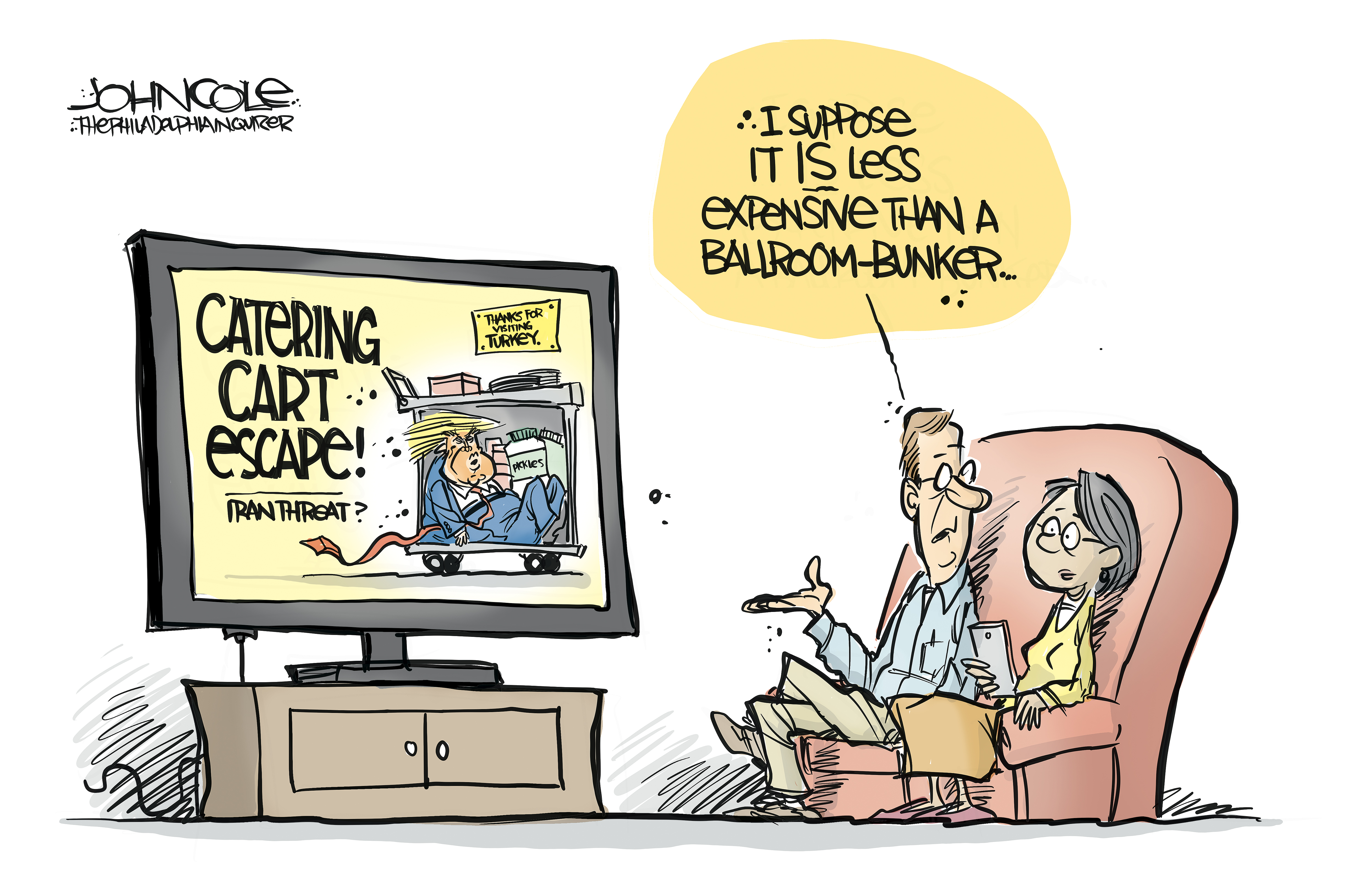
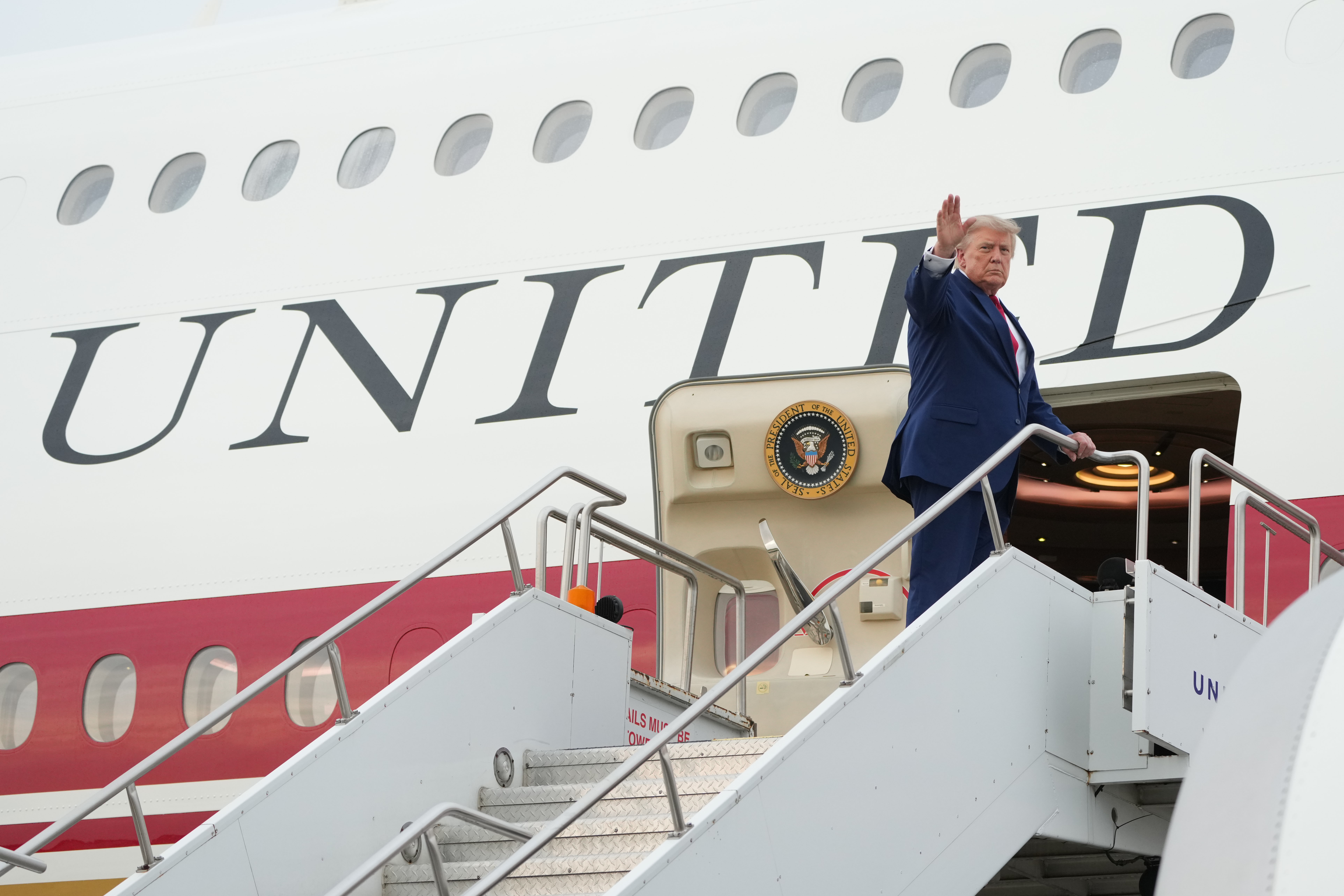
    The jokes about Donald Trump’s secret escape from Turkey last month via an airport catering truck are still flooding the internet. Typical mockery included AI-generated images of the president hunched inside the truck gorging himself on bags of McDonald’s fries, while making his furtive getaway.

    The jests about Trump’s transfer from Air Force One to a smaller plane via the truck — after Israeli intelligence warned a dubious CIA of a possible shoulder-fired missile attack by Iranians — may be funny. But Trump’s clandestine feint, even if it was more Maxwell Smart than James Bond, should be taken seriously.

    It serves as a chilling metaphor for why Trump’s misbegotten Iran war has gone so wrong.

    “If you’re hiding in a catering truck when you control the most powerful military in the world, you aren’t winning,” posted Ron Filipkowski, editor-in-chief of the progressive MeidasTouch Network, who wasn’t above making fun of Trump before nailing the bitter truth.

    It is mind-boggling that an American president, who flies in one of the most highly protected planes in the world, had to be smuggled onto a different aircraft because the U.S. military couldn’t guarantee his safety. It’s all the more astonishing since the old Air Force One, on which POTUS was originally departing Ankara, had a defensive system designed to defeat such heat-seeking missiles (which Trump’s preferred luxury plane gifted to him by Qatar still doesn’t).

    You may recall that it was ragged, barefoot Afghans who drove the then-mighty Soviet military out of Afghanistan in the 1980s by using shoulder-fired missiles — known as MANPADS — to take down powerful Russian attack helicopters. That’s called asymmetrical warfare, in which the weaker party uses unconventional means to offset the conventional might of the opponent.

    Ukraine is waging a complex version of asymmetrical war against Moscow, having pioneered a staggering array of drones that can destroy tanks, ships, air defenses, and military infrastructure deep inside Russia.

    Yet, Trump refuses to grasp how radically the nature of warfare has changed, enabling weaker countries to hold off stronger ones using robots, long-range air drones, and sea drones — or even updated shoulder-fired missiles.

    Trump and his secretary of defense, Pete Hegseth, seem to envision war either as a throwback to World War II, or through the blurred lens of the U.S. kidnapping of Venezuelan President Nicolás Maduro. Either you crush the enemy with massive air power, ships, and male troops brimming with testosterone, or you do a quick, one-off beheading of the enemy, bringing them under your heel.

    Neither model applies to the war on Iran.

    Trump’s original goal was supposedly to halt Iran’s nuclear program. In the 12-day Israel-U.S. war on Tehran in June 2025, Iran’s nuclear sites were hit heavily. After that, the U.S. could have tracked any rebuilding of those sites by satellite and taken necessary action while negotiating a nuclear deal. The Strait of Hormuz, then wide open to global shipping, was not an issue.

    Instead, the president abandoned promising nuclear negotiations to join a cockamamie regime change scheme proposed by Israeli Prime Minister Benjamin Netanyahu in February. Jerusalem assassinated Iran’s grand ayatollah and planned to swiftly replace him with a former Iranian president who had constantly called for the destruction of Israel.

    I once had the stamina-draining opportunity to listen up close in a small room as said former leader, Mahmoud Ahmadinejad, ranted for two hours. I can tell you that anyone who knew anything about Iran, or who listened to advisers who did, knew this plan was deeply delusional.

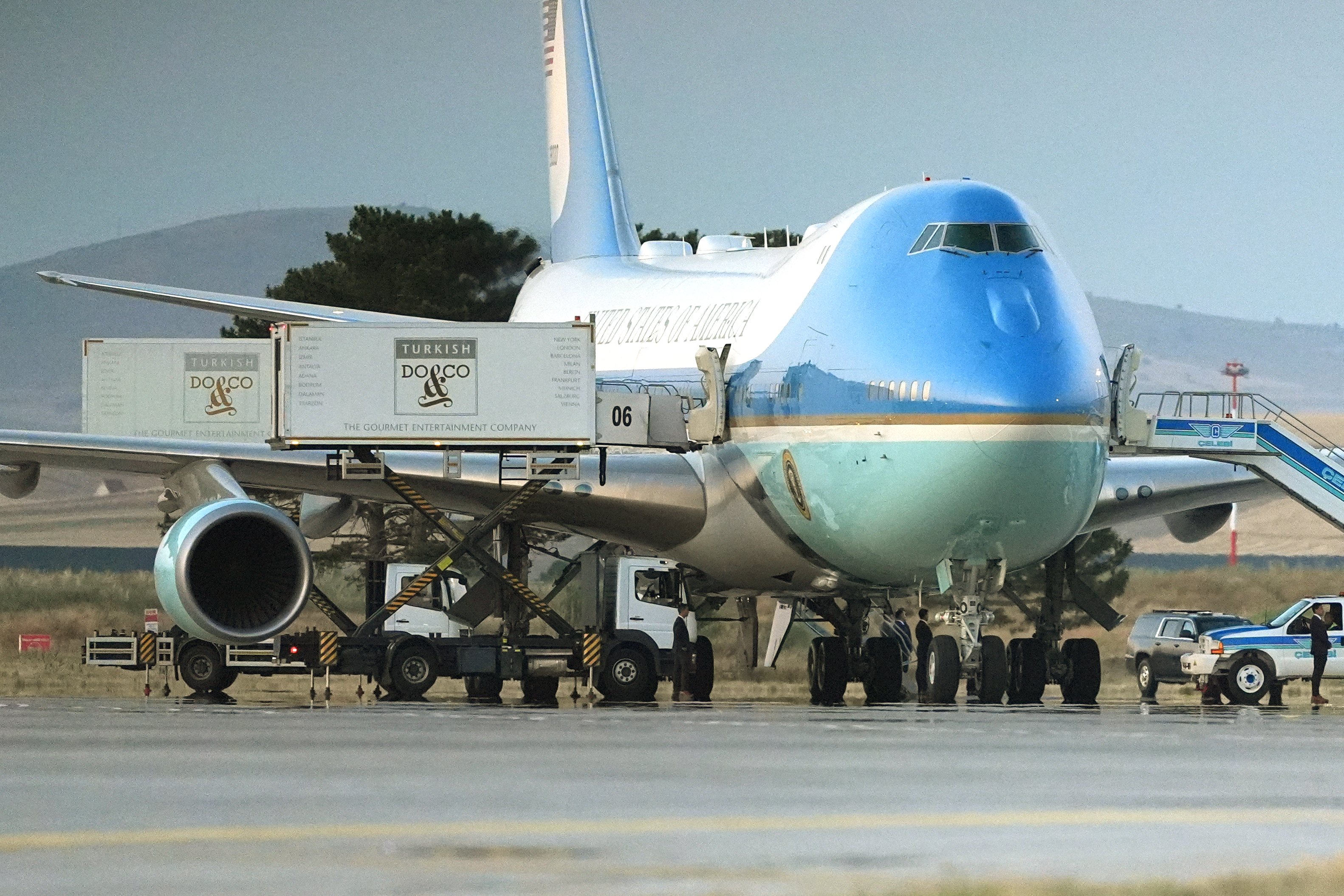
    Catering trucks are parked at Air Force One on the tarmac as the motorcade carrying U.S. President Donald Trump arrives to depart following the NATO summit at Ankara International Airport in Ankara, Turkey, on July 8.Alex Brandon

    Trump was clearly suffering from Maduro Derangement Syndrome, mistaking Iran for Venezuela. As Gen. Dan Caine, chairman of the Joint Chiefs of Staff, warned at the time, a prolonged Iran war risked swallowing the bulk of America’s long-range missile arsenal. Indeed, these weapons, which cost millions of dollars each, were wasted chasing cheap Iranian drones.

    Most dangerously, Russia, China, and North Korea have now seen that Trump’s manly U.S. Army is woefully unprepared for the wars of the future. His staggering request to Congress for a $1.5 trillion budget, an increase of 42% over the past year, doesn’t even include tens of billions in additional funding that he wants for the endless Iran war.

    Yet, that budget is clogged with massive funding of legacy items and vanity projects unsuited for future warfare but protected by members of Congress, defense companies, and Trump cronies who benefit from the projects.

    Prime among them is the 15-ship, Trump-class nuclear-powered battleship program, costing $275 billion over a 30-year span. Not only is Trump’s extravagance not needed by the Navy, but his “golden fleet” will be easy targets for the constantly evolving armada of unmanned anti-ship drones.

    You might think the painful Iran experience would have awakened Trump to the urgent need to prepare the army for drone warfare. He and his showman secretary of war talk a big game, but neither he nor the Pentagon has yet grasped the lessons of the Iran — or Ukraine — wars.

    Trump still rejects Kyiv’s offer to share drones and technology and to jointly produce the scarce Patriot interceptors. Private U.S. companies simply can’t gear up fast enough to meet the immediate need. Private U.S. investors are rushing to Ukraine to check out their innovations, but the Pentagon’s budget is still stuck in the past.

    The result is clear: As the Wall Street Journal just reported, in military exercises in Germany, Ukrainian drone units once more defeated U.S. troops and armored vehicles.

    The U.S. military knows about its continued vulnerability to drones, and how essential they are to modern warfare — and understands the value of pairing with Ukraine, the world’s leader in the technology. “You can’t get training like this in the United States,” NATO’s top military leader, Air Force Gen. Alexus Grynkewich, told the Journal.

    But Trump is still fixated on traditional military might as the road to quick victories — unlike U.S. adversaries in Tehran, Moscow, Beijing, and North Korea. Sharing technology with each other, they are advancing in the use of unmanned and unconventional weapons, leaving the U.S. behind.

    Even as he absconded in a food cart, Trump was still declaring victory in Iran, and claiming Wednesday that he has “total control over the Strait of Hormuz.” Wrong. Iran now controls that vital waterway via drone and missile attacks.

    Trump’s current “strategy” is to wait Iran out while blockading its ships, or those loading up at Iranian ports, from exiting Hormuz. Never mind the cost to the global economy or to U.S. military readiness or to American consumers at the pump.

    POTUS has few options. Lacking munitions, the U.S. can’t launch a ground war against Tehran (thank goodness). And renewed bombing will only cause Iran to bomb energy production sites in Arab Gulf states, which will drive oil prices to new heights.

    What a president with a coherent mind and any rational strategy would do is squeeze the Pentagon to reorient U.S. military production. That, however, would involve a new defense secretary and a full-court press to reorient spending toward the future. Most of all, it would require making the most of all the hard-won drone wisdom Ukraine is so willing to share.

    For that, the U.S. would need a very different person than the man in the White House. It would also require a Congress willing to challenge the president if he refused.

    And so, pending midterm elections, I believe that all the food cart jokes ricocheting around the world convey the sad reality. My favorite was one that asked, “What was the name of the operation that lured Trump into the catering truck?” The answer: “Operation Orange Chicken.”

    That’s a good punch line, but here’s the grim reality: Trump is unwilling to face the truth of his failures and incapable of devising a strategy that will keep Americans safe.

  • When did human tragedy become social media content?

    When did human tragedy become social media content?

    Within minutes, photos begin appearing online. Someone posts a video from the shoulder of the road. Someone else starts speculating about what happened in the comments. Before police have had the chance to notify a family, strangers are watching someone else’s worst day unfold on their phones.

    Every time I see those kinds of images of car crashes on social media, I think the same thing.

    Someone in that vehicle is a husband. A wife. A son. A daughter. A best friend.

    Someone’s family may not even know yet.

    For one of us, Kristi Hughes, I know how sacred those first hours are. Having lost my husband, Sean, in a preventable car crash, I understand through the worst kind of lived experience that families deserve the chance to receive devastating news from loved ones — not from Facebook, TikTok, Instagram, or a stranger’s livestream. They deserve the privacy to process the unimaginable before the world begins watching.

    Lower Merion principal Sean Hughes in 2016.Courtesy of Lower Merion School District

    The dead deserve dignity.

    The living deserve the space to grieve.

    As for the second author of this essay, my name is Michael L. Saile Jr., and I have spent more than two decades representing families after catastrophic injuries and wrongful death as a trial attorney. I have seen firsthand the emotional, financial, and legal challenges they face. In recent years, however, another layer of trauma has emerged. Families are no longer grieving in private. Increasingly, they are forced to confront photos, videos, and online commentary documenting some of the worst moments of their lives.

    Technology has transformed how we experience emergencies. Smartphones allow anyone to become an eyewitness, and social media rewards immediacy.

    In this image made from video taken from social media, a massive video screen suspended above the stage fells onto performers at a concert in Hong Kong in 2022. Two dancers of the dancers onstage were injured.UGC via AP

    Unfortunately, somewhere along the way, many of us stopped asking, “How can I help?” and started asking, “Should I record this?”

    That shift should concern all of us.

    To be clear, technology itself is not the problem. Photos and videos can preserve important evidence, help investigators reconstruct crashes, and even support legal claims. Social media can mobilize communities, connect families with resources, and raise awareness about important issues.

    But there is a profound difference between documenting an event for a legitimate purpose and turning another person’s tragedy into content.

    For families living through these moments, those images are not simply photos on a screen. They are someone’s final moments. They are the wreckage of a future that will never happen.

    Long after emergency vehicles leave and headlines fade, those images can remain online indefinitely. Years later, a child may search for a parent’s name and discover photographs or videos of the crash that took their life. A spouse may unexpectedly encounter graphic images while scrolling online. A family member trying to remember a loved one for the life they lived instead finds the moment they died.

    Every time a crash photo appears in my social media feed, I think about the family that hasn’t received that call yet. I think about a spouse sitting at work, a parent picking up another child from school, or grandparents making dinner, completely unaware that life is about to change forever.

    There are practical consequences, as well. After a serious crash, insurance companies, investigators, and attorneys routinely review publicly available social media posts. Images, videos, and comments — whether shared by those involved or by well-meaning friends and witnesses — can complicate investigations, spread misinformation, and, in some cases, become evidence.

    For anyone involved in a serious accident, a few simple precautions can make a difference:

    • Let law enforcement determine the facts before posting or commenting publicly.
    • Avoid speculating about fault or the extent of injuries.
    • Ask family and friends not to share updates or photos without permission.
    • Preserve photos and documentation privately rather than posting them online.
    • Remember that once something is shared publicly, it can be difficult — or impossible — to remove.

    Perhaps even more important is what each of us can do as bystanders.

    If you come upon a crash scene, pause before reaching for your phone. Ask yourself whether recording the moment will truly help — or whether your attention would be better spent moving safely through the area, giving first responders room to work, or simply respecting the privacy of the people involved.

    Not every heartbreaking moment belongs on social media.

    Before you hit “post,” ask yourself one question:

    If this were my spouse, my child, my parent, or my best friend, would I want the world watching before I even knew what had happened?

    Every crash scene represents more than twisted metal and flashing lights. It represents a family whose life may never be the same. Technology will continue to evolve. Social media isn’t going away. But compassion is still a choice.

    The next time you witness someone else’s worst day, choose humanity over curiosity.

    Because the dead deserve dignity. And the living deserve the privacy to grieve. And every child deserves to remember a parent by the life they lived — not by the images the internet refused to forget.

    Kristi Hughes is a communications strategist and president of the Sean Hughes Memorial Fund. After losing her husband, Sean, in a preventable car crash in 2021, she has dedicated her work to advancing conversations around roadway safety and preparedness and supporting families navigating tragedy. Michael L. Saile Jr. is a Pennsylvania trial attorney, a partner at Cordisco & Saile LLC, and the host of the “Injury Pros Podcast,” who has, for more than two decades, represented individuals and families affected by catastrophic injuries and wrongful death.

  • Surprised by the 15% increase in property taxes in Kensington? You shouldn’t be.

    Surprised by the 15% increase in property taxes in Kensington? You shouldn’t be.

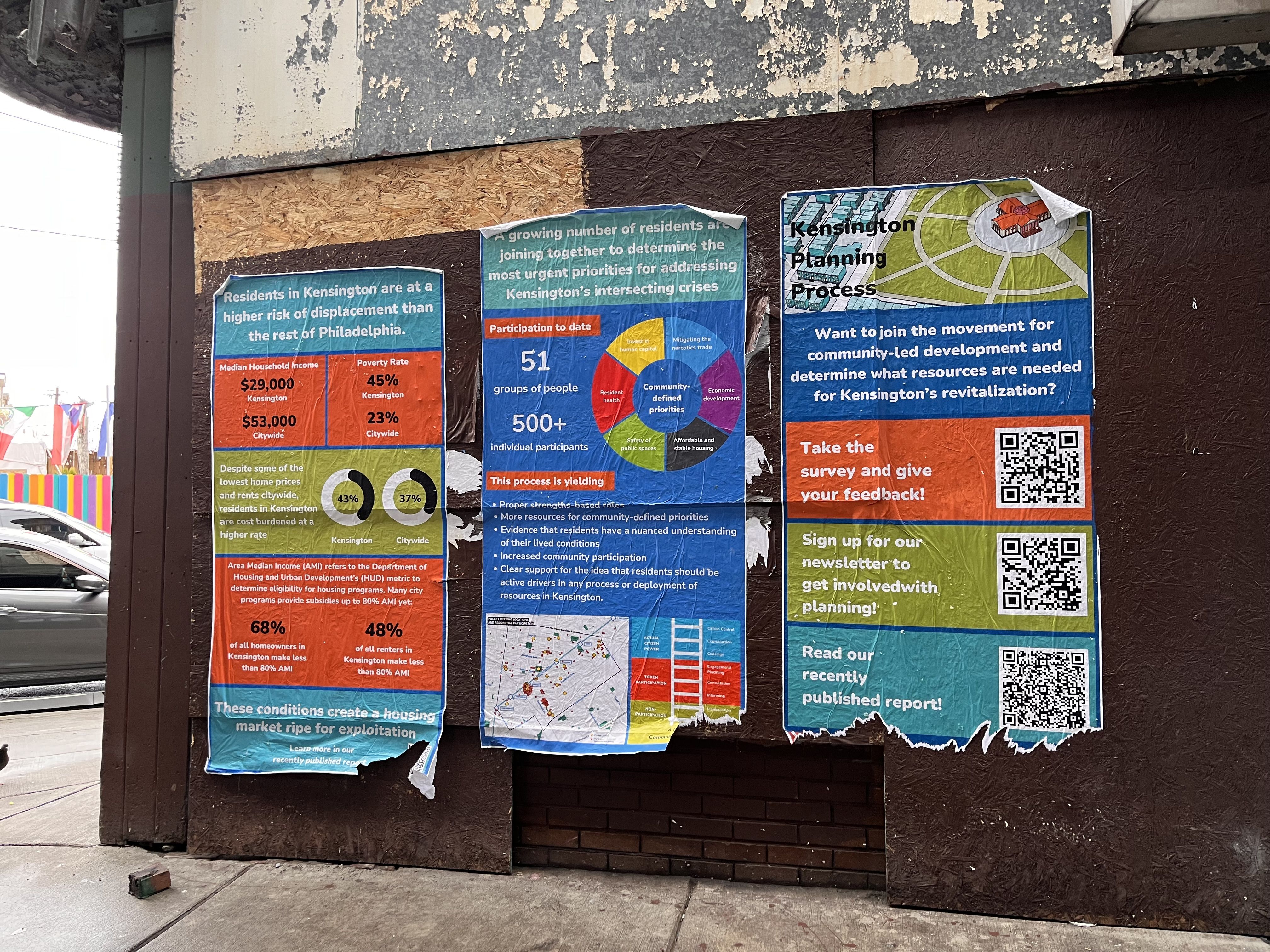
    Last month, housing valuations, and therefore property taxes, increased by 3% across the city. Valuations in Kensington, however, went up an average of 15%, with Mantua, Grays Ferry, and Kingsessing not far behind.

    What do all of the latter communities have in common? They are all under pressure from rapid gentrification, and they are all communities where residents are the least equipped to pay the property taxes associated with the increased home valuations.

    Response across the city was surprise — as if the warning signs had not been there all along.

    Some people have remained willfully ignorant about the pressures of gentrification in Philadelphia’s neighborhoods because they don’t want to acknowledge that long-standing city programs were not built to prevent this moment from occurring.

    Another set of people are feigning surprise, but are not really surprised at all, because this was the plan all along and part of the displacement strategy of “fixing” these neighborhoods.

    And then there are those who are honestly surprised because they simply weren’t paying attention.

    While we have acted surprised, we have missed the point that the system that created these conditions is operating exactly as it is intended to function, and that without addressing the city’s reliance on property taxes and its detrimental impact on those least able to pay, we won’t find a way forward and dangers foretold will progress.

    Challenges foretold

    We should not be surprised.

    As a Kensington resident, and the executive director of New Kensington Community Development Corp., I — along with many others — have been sounding the alarm, ringing the warning bells about the likely displacement of long-term community residents for years.

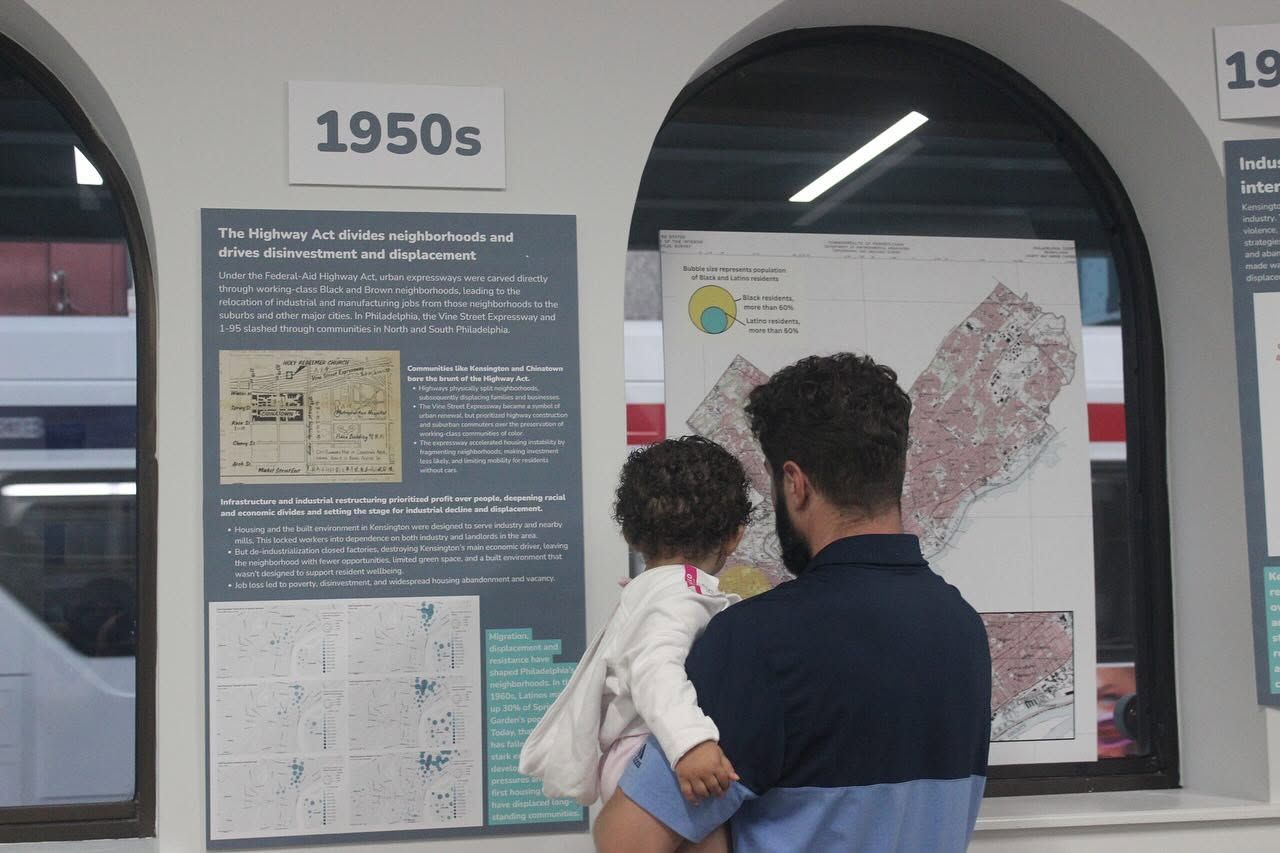
    An attendee reads one of the Kensington history panels on display at the opening of the “People-First Housing” exhibit and engagement series at the Kensington Engagement Center in September 2025. The series explored Philadelphia’s history of profit-first housing strategies and a new people-first vision for the future.Courtesy of NKCDC

    In 2018, I made clear to Philadelphia’s managing director that without a clear plan that addresses the unsheltered population in Kensington, there would be both long- and short-term impacts for the greater community as we went from “camps of unsheltered citizens to the construction of $369,000 homes mere feet away.”

    The cycle repeated again in 2024, with new public officials in charge, embarking on their latest plans to “fix” Kensington.

    After a period in 2017-2018 that left Kensington ripe for massive investment by prospectors and developers, I warned in an opinion piece in The Inquirer that without a greater plan cocreated with the community, “Kensington will be turned over to privatization and the free market — neither of which have ever been kind to people of color and those with limited means.”

    Attendees looking at neighborhood maps and charts at the opening of the “People-First Housing” exhibit and engagement series at the Kensington Engagement Center in September 2025. Courtesy of NKCDC

    In 2024, while the opportunity was there, it was critical that “any effort to fix Kensington should not just be about eliminating the drug economy or ending Kensington as a containment strategy for the city; it should be about preserving a community,” and that “if none of these answers exist, the second stage of displacement — this time of long-term residents — is already underway” and that “without a greater plan to address the long-term needs of residents that’s cocreated with the Kensington community, my neighbors and I could be cheering our own demise.”

    In 2025, I warned of not only the corporate commodification of our community’s housing stock and the detrimental effects that has on communities, but also how in communities such as Kensington — with high rates of poverty and old housing stock — we would see increases in purchases of homes by private equity. Those would then be turned into rentals where new corporate landlords would evict tenants from previously owner-occupied homes at three times the rate of small investors.

    At the time, my organization saw that 70% of the more than 500 evictions we had prevented over the last few years were in properties owned by LLCs — many of which were from out of state.

    Others issued warnings, too.

    In 2025, the Reinvestment Fund reported that corporate investors are most active in Black and brown neighborhoods where they are responsible for more than one in four residential purchases, therefore “creating more extraction through landlords rather than creating and maintaining wealth among homeowners.”

    Missed opportunities, new crisis moment

    Because we did not act when we were warned or take advantage of the opportunities presented to us, the system is working exactly as it was designed to function — and that has created additional pressures and crises.

    Rather than addressing the core problems of poverty and extraction from our most vulnerable, we chose single-issue approaches. How will someone who earns the area median income in Kensington — $30,000 a year — pay for a 15% increase in property taxes, while also trying to survive after cuts to Supplemental Nutrition Assistance Program benefits, to Medicaid, and an underfunded transportation system?

    Bill McKinney, executive director of the New Kensington Community Development Corp. (center), walks with demonstrators underneath the El down Kensington Avenue in March 2021.HEATHER KHALIFA / Staff Photographer

    Longtime residents of Kensington are nothing if not resilient, but they cannot absorb injury after injury to their already difficult daily circumstances. After this property tax increase, more of them will find themselves considering moving out of their homes.

    Like my neighbors in Kensington, I receive five or six calls, emails, and texts every week asking to purchase my home. As the Reinvestment Fund indicated, communities under pressure — like mine — are at the greatest risk from outside investors.

    A different path forward

    I acknowledge we have a number of existing programs to provide relief to homeowners feeling the pressure of increases to property taxes, such as the homestead exemption, the Longtime Owner Occupants Program, tax freezes, and filing appeals. These programs should be utilized, modified, and expanded, but none of them will solve our greater problems.

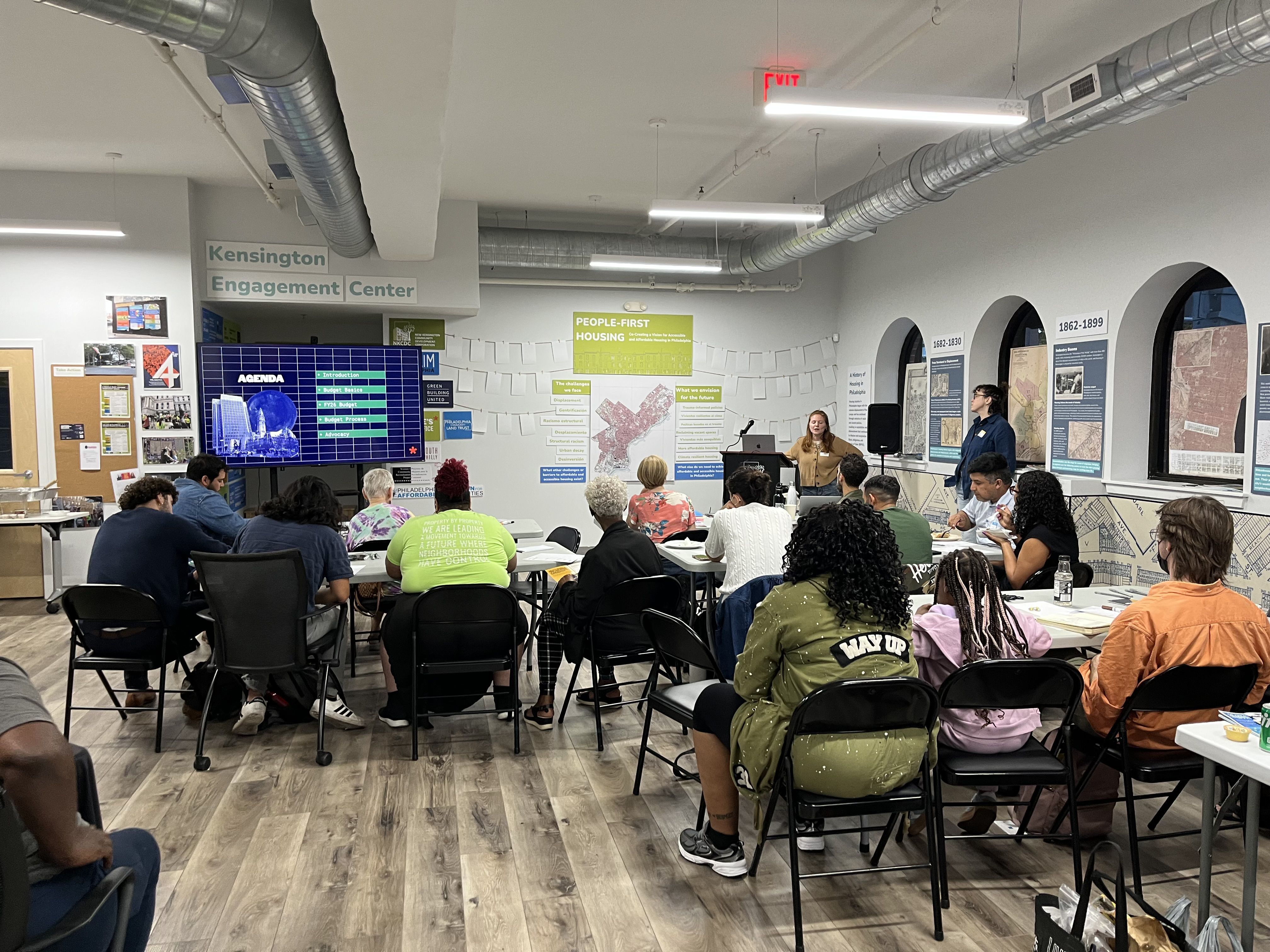
    A community group known as the People’s Budget Office facilitates a workshop on Philadelphia’s municipal budget at the Kensington Engagement Center in October.Courtesy of NKCDC

    We have left housing solutions to the free market, where the goal is to maximize profit and therefore displacement.

    We need to address the city’s overreliance on, and benefit from, the $2 billion in property taxes, much of which is also levied from the most vulnerable residents of the city — and we need to develop a comprehensive affordability plan that is cocreated with the community and those actually implementing anti-displacement strategies.

    There are a variety of approaches we can take that mitigate impacts on its low-income residents, and that will counter the rush to displacement:

    • Address poverty by advocating for the state to finally adopt an increase to the minimum wage so that our working poor are less exploited for their labor, and so they have the money to address these property tax and social safety net changes.
    • Continue exploring and implementing some of the emergent basic income programs that have shown success.
    • Expand home repair programs such as Built to Last, which make necessary repairs to prevent homeowners from selling their homes to investors, as well as making their homes more affordable through green upgrades.
    • Utilize city revenue that doesn’t burden the most vulnerable and truly makes a difference to the budget. If 10,000 homeowners in upper Kensington all receive an annual increase of $250 to their property taxes, the burden is significant to low-income residents, yet only generates $2.5 million for the city.
    • Eliminate the recent reductions in the Business Income and Receipts Tax (BIRT), which cut as much as $300 million annually in revenue for the city.
    • Hospitals, universities, and churches should pay property taxes, too.  More than a third of all of the property in the city is owned by hospitals, universities, and churches that don’t pay property taxes due to their nonprofit status while accumulating massive endowments and limiting access to healthcare as they shift from serving as charitable organizations to corporations. As a result, we receive only about two-thirds of the possible revenue from property taxes, leaving at least $1 billion on the table each year.
    • The wealthiest should pay their fair share. Philanthropy is part of the social contract within capitalism that tries to maintain a balance between extraction and a point of collapse of the host, the city. It is clear the extractors must do better. We allow people to profit immeasurably from others’ labor and consumption as long as they give pennies back on the dollar. Philanthropic entities are only required to, cumulatively, give 4% of what they have gleaned from earned and unearned income sources to recipients of their largess. It is not enough. The host is not going to survive; the contract has been broken.

    We are currently at the front end of the budgeting season, when we have the ability to use our collective brain power to develop and implement a strategy that will prevent anyone from ever having to say “I told you so” again — and for residents to not be victims of the shortsightedness of the city they reside in.

    I have just identified billions of dollars in revenue that does not come from the city’s most vulnerable — and there is much more than what I quickly listed. I write this as an invitation to work with others so we can collectively attack the disease of willful ignorance and the displacement of our most vulnerable with a cure of cocreated solutions.

    At this moment of surprise, despair is not a strategy — and change is possible. We must have the courage to share or take the power necessary to implement these very actionable solutions.

    Bill McKinney is a Kensington resident and the executive director of the New Kensington Community Development Corp.

  • How Philly’s new Broad Street planters will turn what could be a grand urban avenue into a highway

    How Philly’s new Broad Street planters will turn what could be a grand urban avenue into a highway

    Broad Street is one of Philadelphia’s great ceremonial boulevards.

    A defining urban design element in William Penn’s pathbreaking 1682 plan for Philadelphia, Broad Street intersects with Market at Penn Square, creating the armature for the colonial city that gives Philadelphia its je ne sais quoi — its unique sense of place. For out of this intersection sprang our majestic City Hall, anchoring the four original quadrants of Penn’s city, each coalescing around one of Penn’s great public squares.

    South Broad Street is a place where the city comes together. Think of the great swell of civic ecstasy that suffused the street on either of the occasions in recent years when it hosted the Eagles’ Super Bowl victory celebrations. And then there is the perennial only-in-Philadelphia Mummers Day Parade, which animates the street on New Year’s Day as glittering costumes and the strains of string bands bounce and reverberate among the canyons of South Broad.

    Still, the street struggles to invite people to linger, stroll, dine, and shop along its sidewalks on a daily basis, never matching the urban vibrancy of the great streets of the world like Fifth Avenue in Manhattan or Oxford Street in London. And it’s not for lack of trying.

    The Avenue of the Arts was created to do just this during the Rendell administration. In defining an area for the performing arts, the street soon saw the arrival of the Kimmel Center, the Wilma Theatre, and other arts-based performance spaces. And yet, the street continued to flounder as a welcoming urban place.

    Now, to be sure, South Broad has a lot going for it. One need only stand at the intersection of Broad and Walnut, surrounded by handsome towering buildings with majestic light fixtures along the sidewalk, and you have a sense of what the street was — and what it could be. The street certainly needs some TLC, but not radical surgery.

    Which makes the recent “improvements” on the block of South Broad in front of the Kimmel Center all the more perplexing.

    For there, officials have unveiled a beta test for a new Avenue of the Arts streetscape project smack in the middle of South Broad Street that includes an egregious four-foot-high continuous planter with trees on top of it. All intended to increase the attractiveness of the street and thereby encourage a livelier street life.

    But therein lies the rub.

    In creating this continuous concrete highway divider-cum-planter in the center of the street, the project actually has a chilling effect on South Broad. Not only do the planter and the trees destroy the primacy of the view of City Hall tower along the street, but it reinforces the nature of Broad Street as a highway, and makes it impossible to see the other side of the street while either walking or driving. And forget about parades and festivals.

    The planters and trees destroy the primacy of the view of City Hall Tower along the street, write Alan Greenberger and Harris M. Steinberg.Tyger Williams / Staff Photographer

    We are told this is to be replicated on the street from City Hall to Washington Avenue to the tune of $150 million, or $15 million per block. Who thought this was a good idea?

    And, as if to add insult to injury, the project proposes outsized planters along the sidewalks that will further isolate the two sides of the street, crowd out whatever street life exists, and create, along with the tall planter in the center of the street, a series of cattle chutes for 10 blocks.

    Welcome to Broad Street Narrows.

    This can’t stand. The project must not be replicated along the length of the Avenue of the Arts. There are ways to integrate plantings into great streets, such as along Michigan Avenue in Chicago, but they are low in scale, do not include trees in the center of the street, and do not destroy the sensation of the street as a whole.

    And the proposed planters have got to go, as well. One could think of planting shade trees along the sidewalk offering respite from the sun and inviting people to sit along the street and have a bite to eat. The subway concourse below South Broad is extremely wide and could undoubtedly accommodate the tree roots below grade.

    The goal of increasing street life is crucial. To do so, it would be better to widen the sidewalks to allow for cafes and strolling. Street life needs foot traffic, and foot traffic is generated by people living, working, and shopping in the area, along with attending performances.

    Guests at a June ceremony to unveil one of the redesigned medians water the greenery in its planter just outside the Kimmel Center.Tyger Williams / Staff Photographer

    How is it that a street lined with hotels, residences, and offices has only one place for outdoor dining — at Arthaus? Broad Street wants bustling sidewalks, but landscaping and hardscape improvements alone will not increase street life. We learned this the hard way on the ill-fated Chestnut Street Transitway of the 1970s, and the planter fiasco should serve as a cautionary tale for the current design process for Market East.

    We must not fall prey to the false choice that in order to maximize urban vibrancy, we must sink millions of dollars solely into landscaping and other surface improvements.

    South Broad can be the best it can be with some thoughtful planning and a little gentle nurturing — it doesn’t need a Jersey barrier running down the middle of the street.

    Alan Greenberger served as deputy mayor for economic development and director of commerce under Mayor Michael A. Nutter, and chaired the Philadelphia City Planning Commission. Most recently, he served as vice president of real estate and facilities at Drexel University. He is a fellow of the American Institute of Architects. Harris M. Steinberg served as the founding executive director of PennPraxis at the School of Design at the University of Pennsylvania. He led the planning process for the Central Delaware Waterfront, which is currently guiding the development of the riverfront. Most recently, he served as the founding executive director of the Lindy Institute for Urban Innovation at Drexel University. He is a fellow of the American Institute of Architects.

  • Hiding in plane sight | Editorial Cartoon

    John Cole spent 18 years as editorial cartoonist for The (Scranton) Times-Tribune, and now draws for various statesnewsroom.com sites.

  • Letters to the Editor | Aug. 16, 2026

    Letters to the Editor | Aug. 16, 2026

    Legal equality

    In his recent column on the lawsuit settlement at Haverford College, Jonathan Zimmerman problematically champions the “Jerusalem Declaration on Antisemitism.” But I agree with those critics who argue that definition runs afoul of international human rights law, denying Jews equal protection of the legally binding International Covenants on Civil and Political Rights and Economic, Social and Cultural Rights, which both respect the right to collective national self-determination. Just like anti-Palestinian discrimination that denies Palestinians the right to self-determination is morally and legally indefensible, denying Jews and Israelis their equal and parallel right to self-determination and their collective identity is also a violation of international human rights law. To the extent that it entails discrimination on the basis of religion and ethnicity and Israeli nationality and origin, it also violates U.S. civil rights law, which colleges and universities are legally obligated to respect. We can simultaneously support free speech and freedom from discrimination, harassment, and abuse without excluding Jews and Israelis.

    Noam Schimmel, Albany, Calif.

    Physician’s perspective

    As a pediatrician, I pored over your article about how the Trump administration may be forcing immigrant parents to choose between green cards and benefits for their U.S.-born children.

    Fear is now a more effective deterrent to public benefits than eligibility rules ever were. That’s the reality facing mixed-status families under the revived public charge rule.

    As a physician, I don’t see immigration status in the exam room. I see a baby who needs her 2-month vaccines, a toddler whose growth curve is flattening, a child with asthma who needs a nebulizer covered by Medicaid. All of them happen to be U.S. citizens who are legally entitled to that care regardless of their parents’ immigration status. Yet, the U.S. Department of Homeland Security itself projects that more than 950,000 people will unenroll from or avoid these public benefits not because they are ineligible, but because they are afraid.

    No child should go without medical care because their family is afraid to ask for it. Our responsibility is to protect the children in front of us, not create policies that punish families for seeking essential care. When this rule takes effect on Sept. 18, its consequences will fall hardest on the very children we are entrusted to protect.

    Francisca Bermudez, Merion Station

    Join the conversation: Send letters to letters@inquirer.com. Limit length to 150 words and include home address and day and evening phone number. Letters run in The Inquirer six days a week on the editorial pages and online.

  • Data centers are good business but bad politics. Josh Shapiro tries to thread the needle. | Shackamaxon

    In this week’s Shackamaxon, the race for City Council kicks off, SEPTA police officers step in front of the cameras, and a Big Tech reckoning comes for the Ambitious Abingtonian.

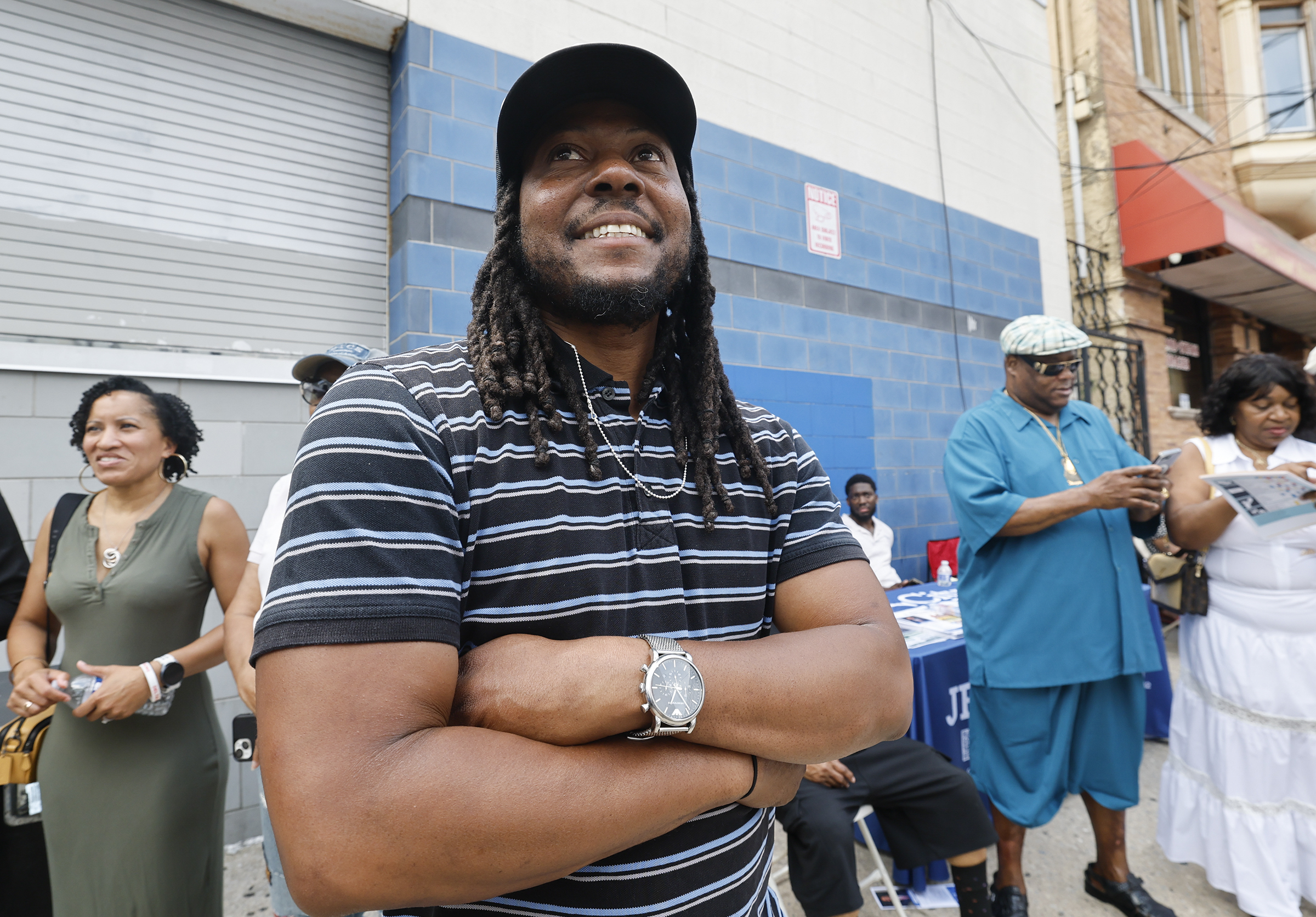
    Councilmember Jeffery “Jay” Young Jr. during the Barber’s Hall community legacy celebration on Aug. 1.Yong Kim / Staff Photographer

    Contrarian challenge

    In political circles, the legislative lineage of Philadelphia’s 5th Council District is one of the city’s most esteemed and iconic. The first person to represent the residents of the 5th in City Council was Raymond Pace Alexander, the civil rights leader who was later appointed as the first African American judge on the Court of Common Pleas. The seat has also been held by Cecil B. Moore, Ethel Allen, and John Street. Few other districts can boast such an impressive list of luminaries.

    Today, its occupant is someone very different, Council’s quarrelsome contrarian, Jeffery “Jay” Young Jr.

    Of course, there’s nothing wrong with “good trouble” or sticking out from the crowd. Moore himself was famously pugnacious, with the former Marine once quoted as saying that “The imported Gandhi philosophy of nonviolence that still exists in the South will not be accepted in Philadelphia, where we believe in self-help and self-defense.” Allen was also a maverick, styling herself as a “B.F.R. — a Black, female Republican, an entity as rare as a Black elephant and just as smart.”

    Moore and Allen, however, were quarrelsome on behalf of the people they represented, and contrarians at a time when Black Philadelphians were mostly excluded from the halls of power.

    Moore successfully desegregated Girard College, paving the way for Young himself to attend decades later.

    Allen broke barriers, too, becoming the first Black woman to hold a seat on City Council, and served the community directly as a physician.

    Young, however, starts fights that help nobody. Worse, no one seems to understand why he’s fighting in the first place.

    From delaying repairs at the Cecil B. Moore Library to blocking popular housing proposals, Young’s actions frequently bring him in conflict, rather than concert, with the community he was elected to represent.

    It is unsurprising, then, to see that he’s already attracted a declared challenger for his seat, months before election season kicks off in earnest.

    Jalon Alexander has a big advantage over the opponents Young (almost) faced in the past: He’s managed to successfully get onto the ballot before, during the 2023 City Council at-large election.

    While he brings his own ideas to the table, Alexander is also clearly running in opposition to Young’s choices. The cybersecurity attorney grew up in Strawberry Mansion, and still lives there, but is running a campaign built to find support across the district’s geographic and political spectrum.

    Kellan White, at this point a potential candidate, presents another strong alternative. White managed Rebecca Rhynhart’s 2023 mayoral campaign, which was successful across much of the 5th District. He has a deep knowledge of city politics and policy, and a Rolodex of contacts that any political journalist would be jealous of. Unlike Young, both Alexander and White are willing to answer the phone to talk to reporters, community leaders, and their constituents.

    At this point, even if a dozen candidates run against him and split the opposition vote, Young may still face an uphill battle.

    When I’ve criticized other Council members, I always get calls or emails from constituents who defend their choices. In nearly three years writing about Young, not a single person has offered a defense.

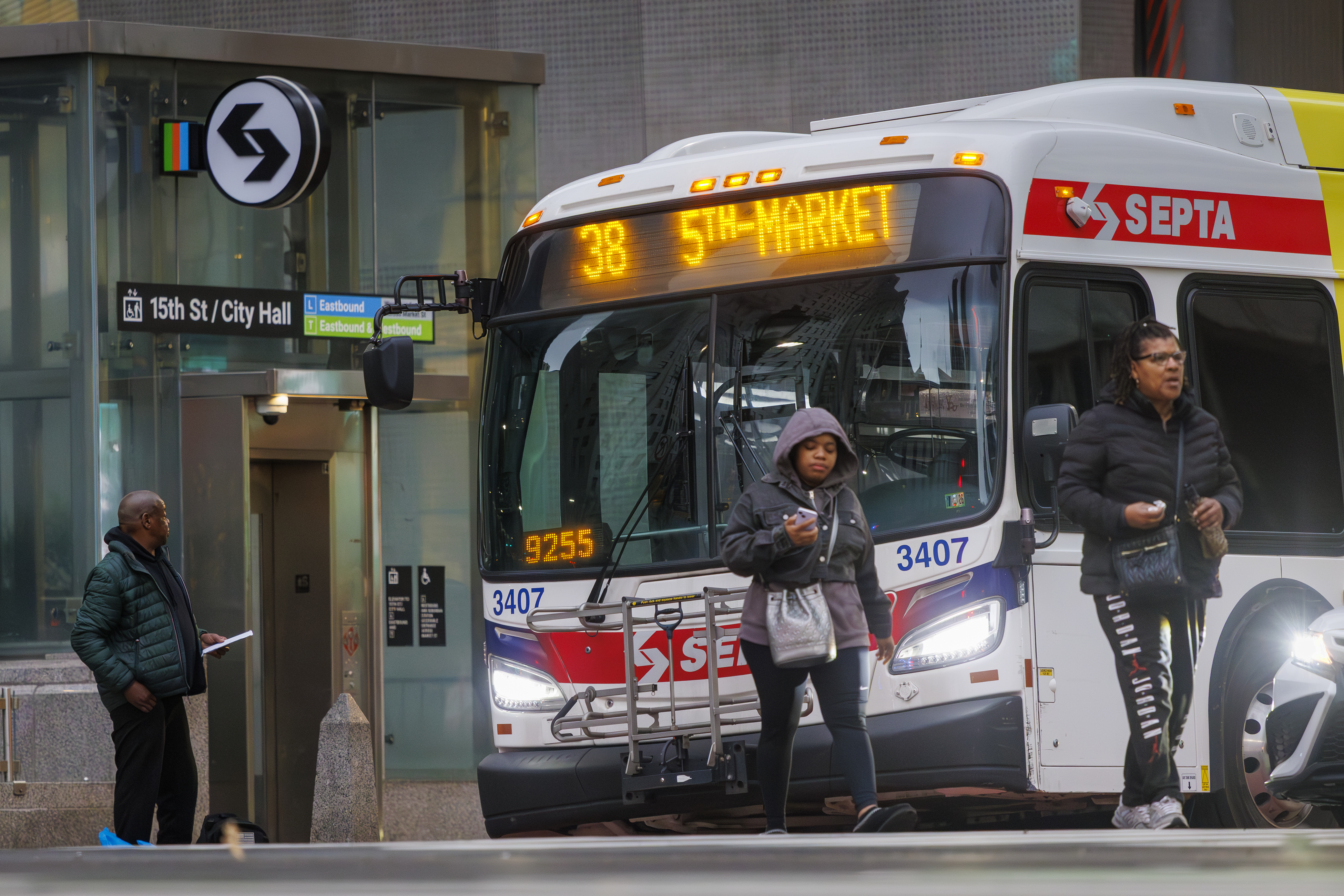
    A SEPTA Route 38 bus at 15th and Market Streets in May.Alejandro A. Alvarez / Staff Photographer

    Spotlight on SEPTA

    A few readers have asked me about film crews they’ve seen following SEPTA police around stations and transit vehicles recently. Media Relations Director Andrew Busch confirmed that the A&E Network is filming a docuseries, which will be broadcast next year.

    Personally, I’m looking forward to watching it. SEPTA’s roughly 250-strong police force is charged with patrolling more than 285 train and trolley stations, and nearly 3,000 vehicles. They are also in the midst of substantial declines in serious crime, which occurred alongside a crackdown on fare evasion and a surge in enforcement for quality-of-life issues. That’s a story worth showing.

    Less worthwhile would be a series focused on Kensington and the city’s drug epidemic. That’s a real part of SEPTA’s policing duties, but is often exploitative when told by outsiders.

    Gov. Josh Shapiro announces a $20 billion investment by Amazon in Pennsylvania data centers in Salem and Falls Townships in 2025.Commonwealth Media Services

    Data-driven

    Ever since the creation of the first computer, there have been concerns about its role in the future. It doesn’t help matters that many tech CEOs, like OpenAI’s Sam Altman, regularly express a kind of contemptuous attitude toward humanity and human needs. At one point, Altman said that artificial intelligence would “lead to the end of the world.” How inspiring!

    This has put public officials in a tough position over their support of data centers.

    For generations, states and cities have competed to attract investment. But these days, cash is flowing into an industry opposed by 74% of voters. Seeing an opportunity, challengers from across the political spectrum are using data centers in their political attack ads, while incumbents are scrambling to explain themselves.

    This isn’t run-of-the-mill NIMBYism, either. According to one report, only 8% of data center opponents live near one.

    Gov. Josh Shapiro, the Ambitious Abingtonian, exemplifies this conundrum. He was an early advocate for embracing data centers, but with polls tightening for his reelection efforts, he’s been forced to adapt.

    Of course, there’s a certain opportunism to state Treasurer Stacy Garrity’s embrace of the techlash.

    Her own party has been quite supportive of data centers. President Donald Trump has called them “tremendous.” Pennsylvania state Senate Majority Leader Joe Pittman has long advocated for the centers, which represent a particular opportunity for his own community, which has, in his words, “a long and storied history when it comes to the production of electricity.” U.S. Sen. Dave McCormick, the highest-ranking Republican in Pennsylvania, is married to Meta executive Dina Powell McCormick. Meta is one of the four companies investing a total of $1.5 trillion in new data centers.

    Pennsylvania Senate Republicans declined to pursue Shapiro’s proposed “GRID” initiative, which would have required the centers to produce their own electricity, conform to environmental standards, and make community benefits agreements in exchange for permitting assistance.

    Many of the current pitchfork-wielding politicos may themselves be forced to pivot when in office. Voters may hate data centers, but they also hate tax increases and service cuts.

    Loudoun County, Va., which is known as data center alley, has averted both. Local authorities have cut property tax rates by nearly 30% over the last decade, and the centers pay roughly half of the county’s property tax revenue. Given the increasing share of Pennsylvania’s budget that is paid through the extractive gambling industry, the need to invest more in schools and transportation, and the continuing structural deficit, it is no surprise politicians initially saw the AI boom as an opportunity.

    Now, state leaders will have to pick their poison.

    If they pursue data centers, they’ll face voter backlash. If they continue to embrace gambling, they’ll contribute to the impoverishment of their own constituents. If they stop investing in education or allow transit agencies to fail, they’ll weaken the commonwealth’s economy going forward. If they raise taxes, they’ll take the blame for that, too.

    While the data center surge may seem sudden to many, it is also a response to demand. Both businesses and individuals are increasingly using AI in daily life.

    Ironically, many social media posts about data centers include AI-generated text and images. It is a bit like if the Women’s Christian Temperance Union had fundraised with a booze cruise.

  • Trump would escape his endless war with Iran in a food truck if he could | Editorial

    Trump would escape his endless war with Iran in a food truck if he could | Editorial

    The nation just learned that last month, when we thought President Donald Trump had fled his Qatari-donated luxury plane for the relative safety of a proper Air Force One, he was actually on a third plane out of Turkey. Fearing an Iranian assassination attempt, military and security officials had secreted him off the official aircraft and onto an Air Force C-32A inside a catering container.

    That left a plane full of staff and press to fly to England — and potentially into the ayatollah’s crosshairs — as his unwitting sacrificial stand-ins.

    Trump’s non-daring escape is an apt analogy for his self-defeating war with Iran. The president has reached a point of desperation to retreat from the conflict and save what little is left of his political hide. The rest of us, meanwhile, will be the unwilling targets of whatever consequences may come.

    Trump’s frenetic ricocheting among ordering air attacks, leveling idle threats, and engaging in half-hearted diplomacy with the Islamic Republic has increasingly given way to a palpable apathy about the whole losing endeavor. A week after his latest empty vow to unleash more shock and awe, he told Axios that the administration is “low-keying” the conflict and “only semi-negotiating” with Iran, whatever that means.

    His gambit in this “chess game,” he added, is to bide his time while the economic pressure on Iran does the work for him — never mind that the extremist regime has weathered such stresses for decades.

    In reality, as Trump has essentially acknowledged in confessing his fear of becoming the next Herbert Hoover, it’s he who has been economically checkmated. Tehran underscored the strength of its position last weekend by demanding Washington meet a series of additional conditions before it loosens its choke hold on the crucial Strait of Hormuz, sending oil prices upward.

    Handing Iran this powerful weapon is the chief achievement of Trump’s war — and the main reason he hasn’t given up despite his fervent desire to do so. Bereft of international allies and domestic support, he has no solution to a problem he created.

    A ground invasion to secure the strait, which could dramatically compound the cost of a war that has already wasted tens of billions of dollars and thousands of lives, is politically untenable, and the only alternative in the short term is continued Iranian control of the strait. The region’s fossil fuel producers have recognized as much by accelerating spending on pipelines and other means of circumventing the route, with further consequences for the price of oil and everything that relies on it.

    It’s a dramatic deterioration from the international order that allowed about a fifth of the global oil supply to routinely transit the waterway before Trump undertook his second unauthorized war with Iran.

    He has also exacerbated the threat of an Iranian nuclear bomb, the weapon that most worried the world before the regime could hold the global economy hostage.

    While Trump’s twin wars have degraded Iran’s nuclear sites, it still has substantial supplies of enriched uranium and no foreseeable international restrictions like those in place before the president dismantled them. And while Trump has continued to insist that preventing nuclear proliferation was the war’s primary purpose (among several other proposed rationales), he seems to be “low-keying” that mission, too, lately. The Wall Street Journal reported that he has told aides he is prepared to end the war without any agreement on the nuclear issue.

    Another oft-stated goal of the war, degrading Iran’s capacity to wage war and sponsor terrorism, looks similarly unrealized given the recently demonstrated ability of the regime and its proxies to endanger ships in the strait, U.S. bases and allies in the region, and even Trump himself.

    The image of the president of the United States being smuggled out of a NATO country in the back of a snack truck hardly suggests it’s the Iranian regime that has been humiliated.

    We should hope the administration gets our troops, as well as Trump, out of harm’s way by ending this war soon. The security and economic repercussions for America and the world, however, are bound to be far-reaching and long-lasting.

  • Letters to the Editor | Aug. 14, 2026

    Letters to the Editor | Aug. 14, 2026

    Plutocracy

    Two hundred and fifty years ago, our city’s favorite son, Ben Franklin, warned us that our country is a “republic, if you can keep it.” Sadly, it appears we are failing to heed his wise counsel. We are evolving into a plutocracy, defined as “a state or society governed by the wealthy.” Dark money has flooded and controlled the electoral process. A substantial majority of Americans want universal background checks for gun buyers after numerous mass shootings, yet all such reform efforts fail. A majority of Americans want a woman to have the right to have a choice in health matters, yet the U.S. Supreme Court says otherwise, and several states are criminalizing such conduct. A majority of us believe global warming is real as enhanced natural disasters continue unabated, yet governments ignore it and continue to denigrate the environment. A majority of Americans support scientific research and adequate funding for the National Institutes of Health and the Centers for Disease Control and Prevention, yet funds are being cut, scientists laid off, and Anthony Fauci was threatened with jail time. With unlimited campaign funds and sophisticated marketing injected into our political process, a simple majority no longer rules. We are slipping into a plutocracy in which tech billionaires, Elon Musk, Big Pharma, Big Oil, and other financial powerhouses are in control. Fortunately, the forthcoming midterm elections give us perhaps a last opportunity to live up to Franklin’s ideals. Let’s restore checks and balances come Nov. 3.

    Angus Love, Narberth, anguslove76@gmail.com

    Willful ignorance

    I’m fascinated by the fact, as reported recently, that Donald Trump is angry at Pete Hegseth for keeping him “in the dark” about the dearth of munitions available to our military, which might hamper Trump’s ability to continue bombing Iran. I’m a retired teacher, and I knew about this “munitions problem” a long time ago. How can this be explained? Am I really intelligent? A genius? Or is the president of this country willfully ignorant? Or is he kept in a bubble? It reminds me of the time — a few days before Hurricane Katrina slammed into New Orleans — when I turned to my wife and said something to the effect of: “My God, this storm could literally obliterate New Orleans from the earth. The city is literally under sea level and this is a Category 5 storm!” and then hearing President George W. Bush, after the destruction, telling us that no one could have predicted the damage. Really? Do Republican presidents always have to be so dangerously obtuse? Do Republicans only vote for their own little “bubble boys?”

    John McLaughlin, Philadelphia

    Not to be outdone

    Remember how we felt pre-COVID-19 when Phillies rightfielder Bryce Harper signed a 13-year, $330 million no-trade, no-opt-out-option contract in winter 2019? It seemed like a Phillies World Series championship guarantee.

    Then, we were not disheartened by a narrow Super Bowl loss to the Kansas City Chiefs in February 2023 — enough so to sign Jalen Hurts to a five-year, $255 million contract extension. Two years later, the Eagles returned to the Super Bowl and won it.

    So when the Sixers took it to the next level by taking our breaths away this summer by assembling the finest starting lineup in NBA history with the addition of LeBron James, you just knew something else was coming.

    It turns out that you didn’t have long to wait. The finest defensive tackle in the NFL is now the highest-paid one in NFL history. One year after sending projectile sputum into the South Philadelphia night sky that landed on Dallas Cowboys quarterback Dak Prescott, Eagles defensive tackle Jalen Carter signed a $152 million contract extension.

    It places him in Philly until 2031, just like Harper. Imagine what other big news we’ll have by then.

    Michael Thomas Leibrandt, Abington

    Protect Head Start

    As the former regional program manager for Head Start in the U.S. Department of Health and Human Services’ Philadelphia regional office, I am appalled that the Trump administration is proposing new rules that would impede this popular, successful program. The program, promulgated in 1965 during the Lyndon B. Johnson administration, has provided low-income families with enhanced childcare to more than 700,000 preschoolers nationwide, 65,000 in our six-state region.

    Historically, Head Start has contributed to lowering rates of delinquency and teen pregnancy. Head Start kids have a higher propensity to graduate from high school.

    A notable hindrance prohibits the enrollment of children who don’t have at least one parent who was born in the U.S. This would deny Head Start benefits to some children who are U.S.-born. The rule also eliminates access for children with disabilities. Currently, 10% of enrollment includes children with disabilities.

    Previously, the administration called for zero funding for Head Start, but withdrew that proposal because of political pressure. However, the White House did close half the nation’s 10 Head Start federal regional offices, leaving local Head Start programs without crucial guidance and technical assistance.

    If you agree that these proposed rules should not be enacted, let your voice be heard. Contact your local congressional representative.

    Ed Vreeswyk, Head Start regional program manager (retired), HHS Region 3, Philadelphia

    Exercise rights

    A recent article from The Inquirer summarizes new findings from a report on high school sports participation across Pennsylvania. As a pediatric resident who counsels patients and families weekly about the importance of exercise, I was disappointed by the results. While some districts have participation rates above 40%, many had rates of less than 10%. Unfortunately, low participation was also found to be correlated with fewer sports being offered and less funding for sports programs.

    No matter where a student lives, all children 6 years and older need at least 60 minutes of moderate to vigorous physical activity on most days of the week, according to recommendations from the American Academy of Pediatrics. Not only does exercise help prevent long-term chronic illnesses such as diabetes and heart disease, but it also benefits kids now. Kids who exercise have improved focus in school, better sleep, and for teens, exercise can help avoid risk-taking behaviors like smoking, drinking, and using drugs.

    This report highlights the need for both more funding and programs for students to participate in school sports. My recommendations as a pediatrician can only go so far if my patients do not have adequate access or equal opportunities to exercise.

    Julianna Lee, Philadelphia

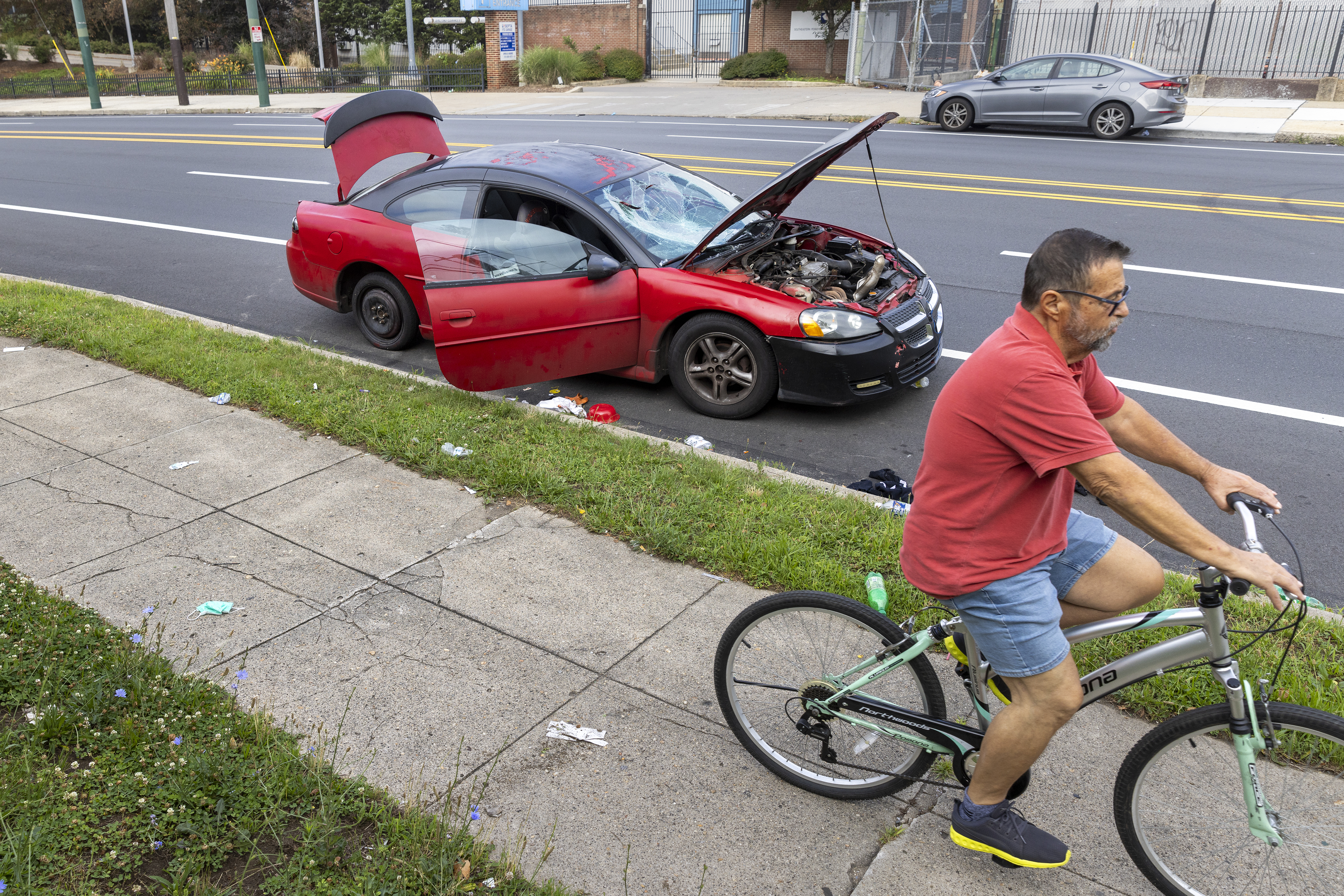
    End removal delays

    There seems to be a wide consensus among residents, civic groups, and even an article in this newspaper that abandoned automobile removal has ceased to be a relatively efficient city service.

    The mayor has made clear she gives cleaning up the city a high priority. Whatever debate this may generate about its efficacy thus far, it was Mayor John F. Street who, over two decades ago, declared war on abandoned cars. He successfully made headway at improving this service. What has changed, then, if residents have to wait up to 120 days for completion of the removals?

    A clear explanation from the mayor — this should come from the top — needs to be given about this. Philadelphia cannot afford to step backward on any code/sanitation/safety-related service provision, especially where significant progress had been made.

    Fortunately, we still have the graffiti abatement team to show us all what efficient and effective service provision looks like each day.

    Ryan Caviglia, Philadelphia

    Join the conversation: Send letters to letters@inquirer.com. Limit length to 150 words and include home address and day and evening phone number. Letters run in The Inquirer six days a week on the editorial pages and online.