Category: Opinion

  • Is Trump-touted Freedom Fuel from Venezuela? | Will Bunch Newsletter

    What a difference three words can make. For weeks, the American body politic has watched the strange relationship between Donald Trump and his ever-present 35-year-old aide Natalie Harp in a state of puzzled silence. Then, Georgia Democratic Sen. Jon Ossoff spoke at a weekend rally and said that Trump “doesn’t want to do the job” and would rather “build his ballroom and travel with Natalie on their apparently defenseless flying palace.” The floodgates opened — on social media and sites like the Drudge Report and in angry retorts from the White House that only threw gasoline on the controversy. It goes to show what Democrats can accomplish when they’re not afraid to speak the truth.

    If someone forwarded you this email, sign up for free here.

    An expert raises questions about Freedom Fuel and Venezuelan oil

    The Freedom Fuel Network gas station at 1400 Dreshertown Rd. in Dresher last month.Monica Herndon / Staff Photographer

    For a government that seems to be in your face 24 hours a day, the Trump regime has managed to produce more mysteries than Sir Arthur Conan Doyle. Where’s Melania? Why was the president’s butt sticking way out at his last event? But here in Philadelphia, one Donald Trump-linked mystery has confounded motorists for weeks.

    Why is Trump-promoted Freedom Fuel, a web of 29 service stations that popped up out of nowhere this summer, able to continue to sell gas cheaper than its rivals down the street?

    The mostly suburban stations in Southeastern Pennsylvania and South Jersey burst onto the scene with prices at $3.47 a gallon — lower than anything since Trump’s disastrous war of choice against Iran launched in late February — and continue to undercut their competitors by about 10-20 cents per gallon. Experts have said that’s not sustainable, unless the stations are somehow getting their gasoline on the cheap.

    Now a former high-level State Department official in the Barack Obama administration is trying to connect the dots between the Freedom Fuel conundrum and the ongoing questions about millions of barrels of crude oil Trump has bragged that the United States has taken out of Venezuela.

    Jonathan Winer, who recently wrote about Freedom Fuel and Venezuela for the Washington Spectator and discussed his findings on the Court of History podcast, doesn’t connect all the dots, but his research is a reminder of how little the American public knows about the aftermath of the Trump regime’s January assault on Venezuela that captured strongman Nicolás Maduro and installed a friendlier head of state.

    The Inquirer and other outlets have reported extensively on Freedom Fuel stations in Greater Philadelphia, including its ties to pro-Trump Republican ex-mayor of Evesham Township, N.J., Randy Brown, who signed Freedom Fuel’s certificate of formation. Former commodities trader Yoni Gontownik — a major donor to GOP causes and a New Jersey-based pro-Israel political action committee — also signed those papers.

    Trump promoted the launch of Freedom Fuel on his Truth Social feed, but the White House has denied direct involvement in the flag-themed gas stations, and so has the company itself. “Freedom Fuel Network is a privately owned and proudly patriotic company — along with its convenience store operators, haulers, sign companies, and operational partners — that answered President Trump’s call to action to lower prices at the pump,” it proclaims on its website.

    Veterans in tracking the complicated oil market remain baffled. “People can’t mysteriously get fuel at a lower price and continue to offer that,” Winer said on the podcast. “You could, of course, do a very short promotion, but you basically can’t [sustain] it.”

    It may be a total coincidence, but the giant enigma that is Freedom Fuel and its cheap gasoline surfaced at exactly the same time the president boasted about the cheap oil the United States is supposedly getting from the resource-rich South American nation his troops invaded.

    “We’re taking their oil,” Trump proclaimed about Venezuela while in Las Vegas earlier this month. “To the victor belong the spoils.” He added that what America has taken has paid for the brief January war “many, many, many times.” But analysts know next to nothing about what is actually happening to as much as one million barrels of oil that Venezuela produces every day.

    Winer pointed to a couple of common bonds between the efforts to market low-cost gasoline here in Philly and White House efforts to control the flow of Venezuelan oil.

    The first is the role of Jarrod Agen, executive director of the National Energy Dominance Council inside the White House, who posted two photos of himself giving a thumbs-up at a new Freedom Fuel station in Philadelphia when it opened on the July 4 weekend. Both Agen and the president himself insisted that the new gas retailer is proof of what the Trump regime is doing to lower prices at the pump.

    Winer noted that Agen was also a key member of an American team that traveled to Caracas in April, met with the Trump-backed new president, Delcy Rodríguez, and came home bragging of new commodities deals, including in the oil sector.

    The second overlap that Winer points to involves a Texas-based global commodities firm, Mercuria, which announced on May 1 that it had reached a major deal with Venezuela under what it called a “White House-supported initiative.” The announcement featured a photo of a top Mercuria official posing with Agen.

    Mercuria told the Washington Post, which has also investigated Freedom Fuel, that it has no involvement with Freedom Fuel. Yet Gontownik, the trader listed as a backer of Freedom Fuel, was also listed as recently as March in campaign finance reports as an executive with Mercuria. But he also insists that he no longer works for the Texas firm — which has been linked to other Trump-regime commodities initiatives. (The ex-Philly journalist Maureen Tkacik, investigations editor at American Prospect, also raises a lot of questions about the role of Mercuria, Gontownik, and the firm Blue Owl Capital, which Trump invested in earlier this year.)

    It must be stressed again that all of these connections are circumstantial. At the same time, this much cannot be disputed: The American people have not been given the most basic information about the extent of U.S. involvement in the Venezuelan oil trade, how much money is involved, or where all that money is going at a time when the price of crude oil has skyrocketed.

    I could not agree more with Winer’s plea that Congress go after the U.S. Treasury, State, and Energy Departments that are sitting on undisclosed records of U.S.-linked oil transactions — even though realistically that might have to wait until Democrats gain a foothold on Capitol Hill next year. He also called on the media to dig deeper, which is why I wanted to amplify Winer’s early-stage reporting.

    Look, we all want to pay less for gas, which is why motorists have been lining up at Freedom Fuel pumps since the stations opened last month. But most of us don’t want to live in a dying empire where a strongman’s tin soldiers steal a sovereign nation’s buried treasure so that favored insiders can profit. We still have no idea what’s been done in Venezuela in our name, and we need to find out.

    Yo, do this!

    • It’s great that people — especially younger people — are returning to brick-and-mortar movie theaters in the long, hot summer of 2026, but the quality of the releases hasn’t really matched the boffo box-office numbers. That may change starting this weekend with the release of Tony, a movie that could have been titled “Becoming Anthony Bourdain.” The film stars Dominic Sessa playing the future chef, author, and beloved TV traveler as a lanky, awkward 19-year-old, spending a summer on Cape Cod and learning to embrace his love for the kitchen — and humanity. I’m really looking forward to this one.
    • There are two must-read articles out this week from Adam Bonica, a Stanford University professor who specializes in money and politics. The first is his lengthy investigation into dodgy fundraising practices by top Democratic Party committees and leaders, in which endless spam fundraising emails have hit home with susceptible elderly donors, some of whom have drained their life savings. The second is the story behind the story of how both the New York Times and the “Never Trumper” website the Bulwark both chickened out on publishing Bonica’s essential journalism. The cowardice of the elite media in America’s authoritarian moment is beyond disheartening.

    Ask me anything

    Question: Why aren’t more Democrats supporting and campaigning on the 32 hour work week? It seems like a policy that would appeal to working people across the political spectrum. — brown cloud (@milehighdsa.bsky.social) via Bluesky

    Answer: Good question. One political leader, Vermont Sen. Bernie Sanders, has aggressively pushed the 32-hour workweek without a reduction in pay, noting that this would pass the productivity gains of the computer era back to the workers who are being more productive. So, yeah, what’s not to like? It’s certainly true that a lot of Democrats, especially centrists, are heavily dependent on campaign contributions from corporate types who don’t like the idea of a shorter workweek. But I think ultimately, Democratic cowardice on these pro-worker issues goes all the way back to the Ronald Reagan era, and a fear that they’ll be branded by the GOP as the party of “free stuff.” But this isn’t free stuff. We’ve earned it.

    What you’re saying about …

    Last week’s question about how Democrats should view the primary success of leftists such as Michigan Senate hopeful Abdul El-Sayed drew a response that was both robust (despite the summer doldrums) and fairly unanimous. Proposals from the progressive movement like Medicare-for-All and taxing the wealthy, you agreed, are long overdue. Tom Lees noted that the GOP is trying to find the most extreme democratic socialists, but that “the [Rep. Alexandria Ocasio-Cortez] branch which supports ideas similar to European Social Democrats is the group that is getting people excited.” Craig Strimel added that leftist candidates have failed in the past, but “I also believe that we are so far deep in the current fiasco, and so damned close to total collapse of democracy, that we really are in an all-or-nothing situation right now.”

    📮 This week’s question: Georgia Democratic Sen. Jon Ossoff has caused something of a political earthquake with his blunt criticisms of Donald Trump, including a reference to his ever-present young aide Natalie Harp. Has Ossoff crossed a line of incivility that’s a bad look for Dems, or are his criticisms a breath of fresh air? Please email me your answer and put the exact phrase “Ossoff comments” in the subject line.

    Backstory on Jason Arday, casualty in the ‘war on woke’

    Torchbearer Jason Arday carries the Olympic flame on the torch relay leg between Sutton and Merton in London in July 2012.Joe Giddens

    There are two kinds of people in this world. There are normal folks who maybe get a slight whiff of news from the TV or when they boot up their computer, and never heard of a man named Jason Arday. Then there are people who (like me) spend far too much of their day on social media, and now know all about the charismatic Cambridge professor — the youngest Black man to reach those heights in the university’s long history — who came under fire for alleged plagiarism and biographical exaggerations.

    The allegations apparently simmered from the day of Arday’s 2023 appointment, but boiled over in recent weeks. He acknowledged some citation errors in his 2015 doctoral thesis — mistakes that Liverpool John Moores University called “honest and reasonable” — but the allegations kept coming. They were fueled by a Cambridge colleague and self-proclaimed “race realist” who went on British national TV to lambaste Arday as “not smart” and label him as merely a diversity hire.

    The famously not-laid-back British press went wild on the controversy, with literally hundreds of articles about Arday — not just the Fleet Street tabloids, but even the august Times of London, which ran 60 stories. The media frenzy over the young, dreadlocked sociology of education professor didn’t stop when Arday resigned his Cambridge post, saying that “the relentless accusations, speculation and public commentary have taken a profound toll on me and on those I love.” The media frenzy didn’t even stop when Arday was found dead in his home last Friday. He was 41.

    Just one day after Arday’s body was found, Julia Hartley-Brewer, a host on a Rupert Murdoch-owned U.K. TV network, told her audience that Arday “was a liar and a fraud who was rightly exposed for what he really was by academics and journalists who were simply doing their job.”

    I’m sorry, but as a lifelong journalist, I never realized that hounding a professor who wasn’t perfect but was loved by his students to his early death is part of the job. To the contrary, I think that good journalism might involve noting that scores of white professors and authors who’ve been caught and admitted to plagiarism or similar issues have been allowed to apologize and go on with their careers. And that bad journalism might be implying that Arday’s middling issues are some kind of commentary on any and every academic with darker skin — as opposed to researching the systemic racism that leaves a supposedly enlightened school like Cambridge with 0.4% Black professors, in an England that’s 4.2% Black.

    The ghouls who hounded Arday to his death didn’t work in a vacuum. They tapped into a disgusting narrative that way too many journalists and self-appointed public intellectuals are spreading not just in the U.K. and the rest of Europe, but here in the United States. They think the righteous COVID-19-era outcry against police brutality and a grossly unequal society was some kind of mania they’ve branded “Woke 1.0.” Never mind that the police were never defunded in 2020, not even close. The nattering nabobs of anti-wokeness won’t rest until every college classroom or airplane cockpit is made safe for white privilege.

    Let me do my job as an opinion writer and tell you what I think about these mostly aging, mostly white, mostly male pundits who have so little to say about right-wing fascism that’s in power in America and on the rise in Britain and instead desperately cling to their status from the perceived threat of a few Black intellectuals. With key elections approaching on both sides of the pond, they opportunistically saw Arday as their latest chance to stir up white voters and preserve the status quo, even if that means tolerating an authoritarian police state. Now, a once-promising Black professor is a casualty in their glorious “war on woke.” Have they no shame?

    What I wrote on this date in 2020

    As I noted in this space a couple of weeks ago, there’s so much about the peak year of the COVID-19 pandemic that we’ve successfully tried to forget. That includes much about the consequential yet somehow anemic showdown between Donald Trump and Joe Biden, which included their virtual, prepackaged summer conventions. On this date six years ago, I grumpily covered the Democratic National Convention from my couch in Delco and — stop me if this sounds familiar — complained that the party was ducking progressive issues. “If viewers didn’t notice what the Democrats left out in their tightly scripted telethon so focused on Trump’s coronavirus failings and his paranoid style — such as climate change, gun violence, and the other things that young people across America have been marching for — the history books might.”

    Please read the rest: “The future is a no-show at telethon-style DNC.”

    Recommended Inquirer reading

    • I’ve cut back on column writing this month, mainly because I’m working on a long-term investigation that I’m really excited about. In my one piece published this weekend, I took a deeper dive into the stunning reports that winter drone attacks on fishing boats off the coast of Ecuador — with eight sailors missing and presumed dead — were a covert operation by Donald Trump’s CIA. This callous disregard for innocent human life is the latest example of a White House death cult that must be held to account by a new Congress, and eventually by prosecutors.
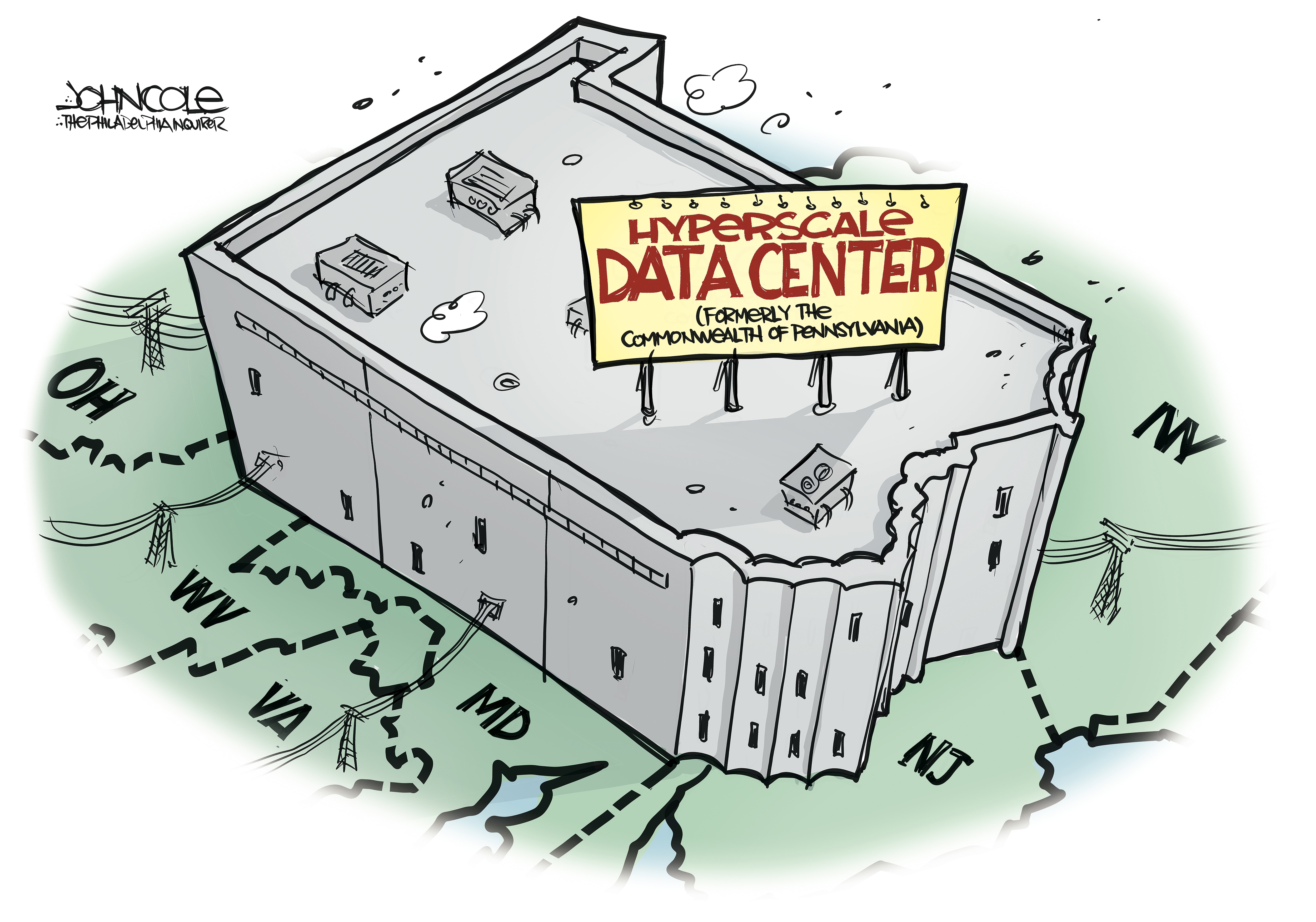
    • It’s truly remarkable the extent to which public opposition to the data centers that support artificial intelligence, or AI, has gone from near zero to 60 mph (or maybe 80) in a matter of months — especially here in Pennsylvania. With public unrest over these behemoths around their air and noise pollution and impact on electric bills, as well as growing discomfort with AI itself, becoming a key issue in the fall election, The Inquirer has been all over this story. On Tuesday, veteran business columnist Joseph M. DiStefano looked at how major contractors are hoping that demand for new data centers will get them through an otherwise sluggish economy. That might be a pipe dream if municipalities respond to voters by rejecting these proposals, as happened last week with a massive facility planned for suburban King of Prussia. You’re going to want to read The Inquirer’s in-depth coverage of this debate before you vote in November, which means it’s time to finally subscribe. What have you been waiting for?

    By submitting your written, visual, and/or audio contributions, you agree to The Inquirer’s Terms of Use, including the grant of rights in Section 10.

  • I spent 15 years in Head Start classrooms. Cutting the program is a mistake.

    I spent 15 years in Head Start classrooms. Cutting the program is a mistake.

    Once again, Head Start — a program beloved by millions of families and with overwhelming public support — is being threatened by the Trump administration.

    I was a Head Start teacher, administrator, and coach for nearly 15 years, and can attest to the transformative power of the program. I saw children thrive thanks to Head Start’s visionary emphasis on the whole child by providing a high-quality education, welcoming classrooms, healthy nutrition, and dental and health screenings. Through home visiting, regular parent communication, and frequent parent participation in the classroom, I saw families become stronger and more resilient.

    Research has shown, time and again, that Head Start increases high school, college, and postsecondary graduation rates, leads to higher self-esteem for participants, and has a positive effect on future generations, as examined through parents’ practices exhibited decades later.

    Which is why I am astounded by the methodical steps to dismantle a program that is the gold standard when it comes to early childhood programs. Back in 2023, the Heritage Foundation made exaggerated claims of fraud and abuse in its call to eliminate Head Start in the now-infamous Project 2025 plan for the second Trump administration.

    A year later, word leaked that President Donald Trump was planning to use the biased Heritage Foundation report to zero out federal funding for Head Start. Widespread public outcry and political pressure thwarted that plan.

    Undeterred, the Heritage Foundation developed a new strategy to kill off Head Start through death by a thousand cuts: If Head Start can’t be eliminated outright, deregulate it until it’s a skeleton of itself. Trump’s Department of Health and Human Services is proposing changes to Head Start that will do just that.

    In May, Health and Human Services put out a proposal to retract wage increases for Head Start teachers. This move would exacerbate the already significant challenges in recruiting and retaining the standard high-caliber staff, resulting in fewer slots and lower enrollment.

    Recently, Health and Human Services announced another proposed change to Head Start that would lower staff qualifications while raising the teacher-student ratios. The latest proposal would also eliminate some of the structures that keep lines of communication open between parents and providers, like parent-teacher conferences. And a new English-only mandate in instruction, written materials, and family communications would isolate parents and children who are dual-language learners.

    Physical and dental health screenings and follow-up care — instrumental in the identification of vision problems, developmental delays, missed vaccines, and hearing challenges for many low-income children — are also on the chopping block.

    These proposed changes are just a few examples of how Head Start would be hamstrung from providing the care and education that has transformed so many children’s lives. Even Health and Human Services’ own Administration for Children and Families admits that these proposed changes could “introduce some risk.”

    Once again, people-power can successfully defend Head Start. Contact Sens. John Fetterman and Dave McCormick and your representative and tell them to pressure the Trump administration to withdraw these proposed changes.

    Members of the public — like you — are able to voice your opinion, life experiences, academic research, or general passion for Head Start in response to the proposed changes. You can submit public comments on the Health and Human Services website — comments Health and Human Services must read and report on before finalizing anything.

    When President Lyndon B. Johnson established Project Head Start in 1965, he said, “I believe that this is one of the most constructive, and one of the most sensible, and also one of the most exciting programs that this Nation has ever undertaken.” That sentiment continues today.

    Head Start sets up society as we know it for success. We must defend against this tactic of death by a thousand cuts and make sure future generations are able to reap the rewards of this tried-and-true program.

    Zaina Cahill is the early childhood education policy director at Children First.

  • Trump is selling early access to his Truth Social posts — and, of course, there are no investigators in sight | Editorial

    Trump is selling early access to his Truth Social posts — and, of course, there are no investigators in sight | Editorial

    Donald Trump continues to enrich himself through rampant self-dealing while everyone else pays the cost of his failed policies — including the war in Iran, tariffs, and mass deportations.

    Now comes the latest pocket-lining scheme that reeks of insider trading.

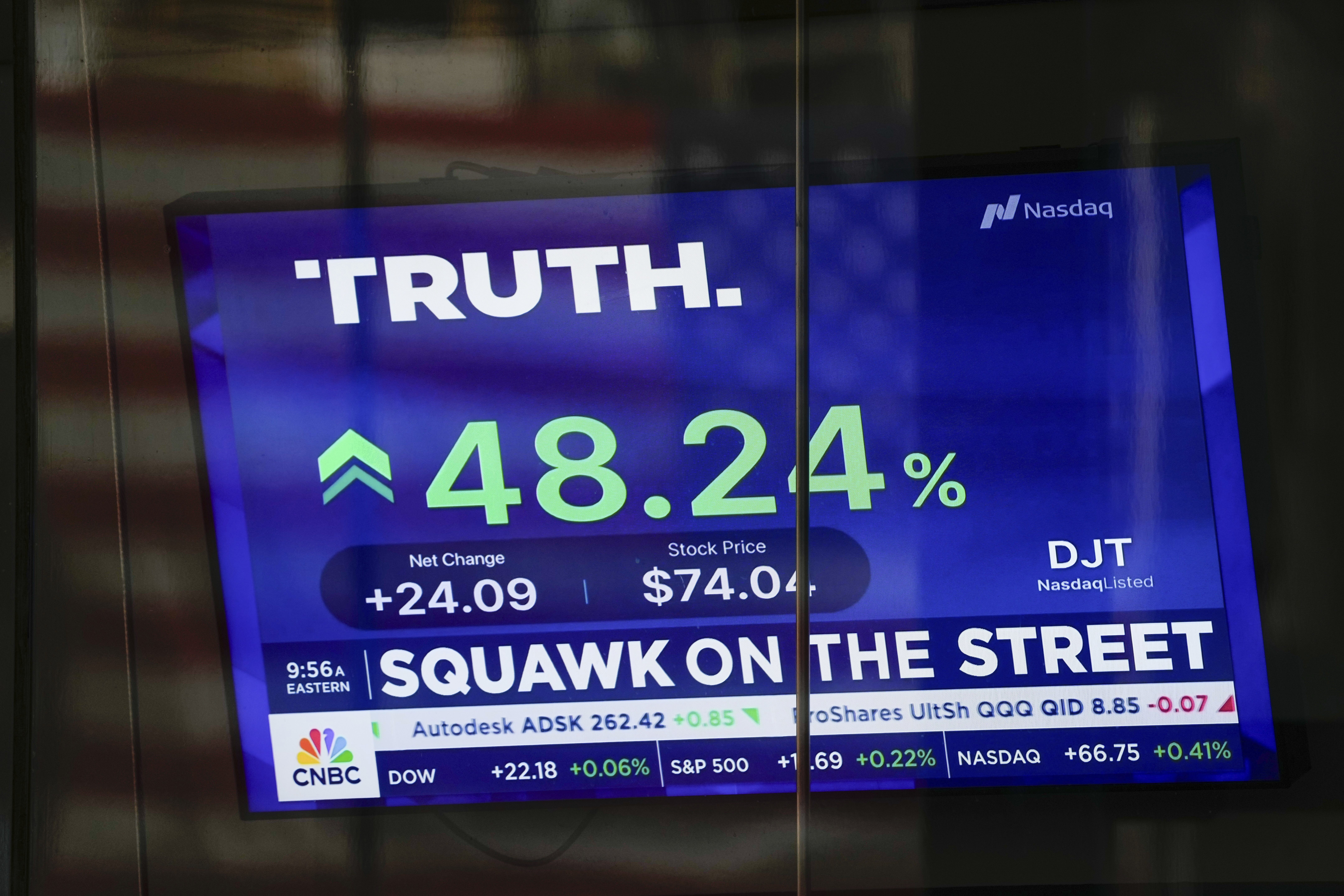
    Trump’s media company has begun selling investors advanced access to his often market-moving Truth Social posts. More than 10 customers are paying up to $100,000 a month to get an early peek at the president’s social media posts.

    The CEO of Trump Media and Technology Group (TMTG) told investors he expects more buyers to sign on, and that selling early access to the posts could “grow into a meaningful, durable contributor.”

    Joe Rogan, the podcaster and Trump supporter, asked the obvious question: “How is that legal?”

    Two media organizations sued Trump over the service, arguing it is unconstitutional, and Rep. Jamie Raskin (D., Md.) said it represents “the depraved essence of insider trading.”

    Trump is the majority owner of TMTG, which owns Truth Social, the main platform he uses to communicate to his followers and the world, sometimes going on unhinged rants and posting more than 100 times a day.

    But major announcements from Trump about issues such as tariffs, the erratic peace negotiations with Iran, and attacks on Federal Reserve interest rate policy often cause stock, oil, and bond markets to rise and fall.

    Advanced knowledge of such information will enable insiders who buy early access to profit from Trump’s posts. Indeed, suspicious trading ahead of some of Trump’s previous market-moving announcements has raised red flags of insider trading.

    Trump knows how to manipulate financial markets.

    Last April, he wrote on his social media platform: “THIS IS A GREAT TIME TO BUY!!! DJT.” Hours later, the president detailed a 90-day pause on nearly all his tariffs, causing the stock market to gain back about $4 trillion that had been lost in the previous days of trading.

    Trump has also used his presidential bully pulpit to bolster individual stocks.

    He touted Dell stock after founder Michael Dell and his wife, Susan, pledged to donate more than $6 billion to the “Trump Accounts” program. Shares of Dell jumped 7% after Trump urged investors to “go out and buy a Dell computer.”

    After shares of Tesla sank following Elon Musk’s disastrous tenure dismantling the government as the DOGE figurehead, Trump held an embarrassing promotional event outside the White House praising the cars.

    Commerce Secretary Howard Lutnick followed Trump’s Tesla promo by going on Fox News and urging viewers to buy the stock — an apparent violation of federal ethics rules that prohibit officials from endorsing products or businesses.

    The White House push boosted Tesla’s stock price.

    But don’t look for the U.S. Department of Justice or the Securities and Exchange Commission (SEC) to investigate Trump’s plan to sell access to his Truth Social posts.

    Todd Blanche, the newly confirmed attorney general who enriched himself as Trump’s defense attorney, refused to pledge that he will always act independently of the White House.

    SEC enforcement cases hit a record low during Trump’s first year back in office. The agency just dropped insider trading charges against a healthcare executive the president pardoned.

    Several Democratic lawmakers called on the SEC to investigate the Truth Social deal. But any real investigations of Trump’s moneymaking are unlikely until Democrats win control of the House or Senate.

    Trump made an estimated $2.2 billion last year on side hustles involving cryptocurrency, branding deals, real estate ventures, and legal settlements with media companies that blur the power of the presidency with profiteering.

    The Truth Social scheme will add to Trump’s pocket lining.

  • Letters to the Editor | Aug. 18, 2026

    Letters to the Editor | Aug. 18, 2026

    Save the 47M

    Aug. 22 will be the last day of service for SEPTA’s Route 47M bus. But the route, which runs from Spring Garden to Whitman Plaza, should never have been eliminated in the first place. The 47M runs past three major hospitals here in the city: Pennsylvania Hospital, Wills Eye, and Jefferson. Having SEPTA shut down the 47M will affect many riders who use the bus to get to those destinations and others. This route has been a savior for many who depend on SEPTA for transportation to any of these hospitals. Furthermore, many seniors rely on the bus to get them to the Italian Market to do their grocery shopping. Now, they’ll have to travel farther — and that’s unfair for them, since the 47M is already an easy route to take to the market. People need to speak up about this, and contact their local representatives and tell them to save the 47M before it’s gone for good. I hope the 47M can carry on with its service for the people of Spring Garden, Center City, and South Philadelphia — and the only way that would happen is if SEPTA comes to its senses and brings it back to life.

    Peter Iannelli, Philadelphia

    Unequal sacrifice

    Let me get this straight: Ghislaine Maxwell — convicted child sex trafficker and partner in crime of Donald Trump’s old best buddy, the late Jeffrey Epstein — is serving time in a federal prison camp.

    Congressional whistleblowers revealed that Maxwell receives preferential treatment, including customized meal deliveries, private after-hours gym access, a service puppy, private warden-arranged visits with snacks, and unmonitored communication access.

    Sounds to me as if she’s living in more luxury than the suffering sailors dealing with squalid conditions onboard the aircraft carrier USS Abraham Lincoln, which has gone about nine months straight pulling 16-hour days, seven days a week.

    God forbid, however, if Ms. Maxwell had a toilet that wouldn’t flush, a meal that wasn’t cooked to perfection, or wasn’t allowed to play with her puppy.

    My guess is that Trump, who said the USS Lincoln hasn’t been at sea long enough, wouldn’t say that Ms. Maxwell hasn’t been behind bars long enough.

    Vin Morabito, Scranton

    Cuts continue

    Kudos to Jefferson Health System for losing almost $30 million less this fiscal year than last. Likely contributing to that financial success — but not mentioned in the article — is that, at the end of June, Jefferson shut down the 75-year-old outpatient pediatrics clinic at Jefferson Einstein Hospital, with no plan or apparent concern about where its 12,000-plus patients — most of whom are children from low-income families — could get continuing care.

    But as long as the bondholders are happy …

    Alan Schindler, Philadelphia

    Join the conversation: Send letters to letters@inquirer.com. Limit length to 150 words and include home address and day and evening phone number. Letters run in The Inquirer six days a week on the editorial pages and online.

  • Michigan’s pass-fail grading won’t cure student angst

    Let’s suppose you’re the kind of citizen who puts a “Science is Real” sign on your lawn. You’re outraged by the Trump administration’s baseless attacks on vaccines and its brazen denials of human-made climate change. You think data — not ideology — should determine our social policies.

    How can you also be OK with a college lowering its academic expectations for students?

    I’m talking about the University of Michigan, which announced last week that first-semester students in its college of arts and sciences would receive pass-fail grades rather than traditional letter marks. The aim, Michigan said, was to “curb the mental health crisis unfolding among college-aged individuals.”

    That’s an admirable goal, of course. But there’s no evidence that easing up on students will help them feel better.

    To the contrary, psychologists have been reminding us for years that the best way to improve mental health is to address our fears and challenges head-on. Avoiding them might bring momentary relief, but it will make us feel worse in the long run.

    Put simply, Michigan is engaging in a huge collective experiment in avoidance. The first term of college is indeed a challenging time for students. But we don’t do them any favors by letting them coast in class.

    And make no mistake: That’s what they’ll do. I’ve been teaching college for 35 years, and I can assure you that all but a handful of students would do less work if I wasn’t grading them.

    Think about yourself at 18. Would you have devoted yourself fully to your studies if you could get the same grade without putting in the effort?

    Gamely, Michigan officials said that eliminating grades in the first term would “allow intrinsic motivations to guide personally meaningful academic journeys.” Instead of just working for a grade, the argument goes, students will explore ideas that truly interest them.

    That would be wonderful, but it won’t happen. Of course, I want students to develop a love for learning. But most of them won’t do that unless we grade them, too. Remember, they’ve been graded for a decade or more before they arrive at our doors. It’s what they know.

    And the more we expect of them, the more they’ll learn. In a now-classic 1965 experiment, psychologists Robert Rosenthal and Lenore Jacobson administered IQ tests to elementary students, and then told their teachers that certain randomly selected members of the class were “bloomers” who would likely improve. Regardless of their initial scores, those students showed more gains than their classmates when the test was administered again at the end of the school year.

    Rosenthal and Jacobson called that the Pygmalion effect, after the artist in Greek mythology who falls in love with a statue he built and asks the gods to bring it to life. Teachers can breathe life into their students, too, but only if the teachers believe the students can succeed.

    And if we lower expectations for them, we communicate the opposite: You’re too weak and fragile to get the job done. How can that be good for their development as human beings?

    Even at elite schools, let’s remember, a rising number of people arrive without the skills and knowledge that first-year students formerly possessed. Letting them skate by won’t solve that problem; instead, we will reinforce it.

    The only way to help them succeed — and to feel better about themselves — is to ask more of them. Over the past five decades, college students have done progressively less homework even as their grades have gone up.

    We need to reverse that trend. Rather than eliminating first-semester grades, we should raise the requirements for earning the top one.

    That might mean some students are disappointed with the marks they get. But that, too, can be good for them.

    “College should be one of the places where young people learn that evaluation isn’t always pleasant,” psychotherapist Jonathan Alpert said last week, criticizing the new Michigan plan. “These experiences can hurt, but learning that you can tolerate them and move forward prepares you for adulthood.”

    I’m not saying we should curve grades to limit the number of A’s, like Harvard did earlier this year. Instead, we should raise the bar and encourage everyone to meet it.

    That won’t be popular with our students, of course. At Michigan, the student body president praised the elimination of first-semester grades on, yes, mental health grounds. “You’re just figuring out how to be an adult and live on your own,” he said. “It gets extremely stressful having to balance that with also wanting to be a straight-A student.”

    I’m sure it does. But that’s why students need to confront the stress, not shrink from it. The science on that is real. The only question is whether we’ll shrink from it, too.

    Jonathan Zimmerman teaches history and education at the University of Pennsylvania. He is the author of “Schooling Citizens: How Education Can Save Democracy,” which will be published next spring by the American Philosophical Society Press.

  • Black Americans are reviving an ancient Nigerian apprenticeship model to build wealth

    Black Americans are reviving an ancient Nigerian apprenticeship model to build wealth

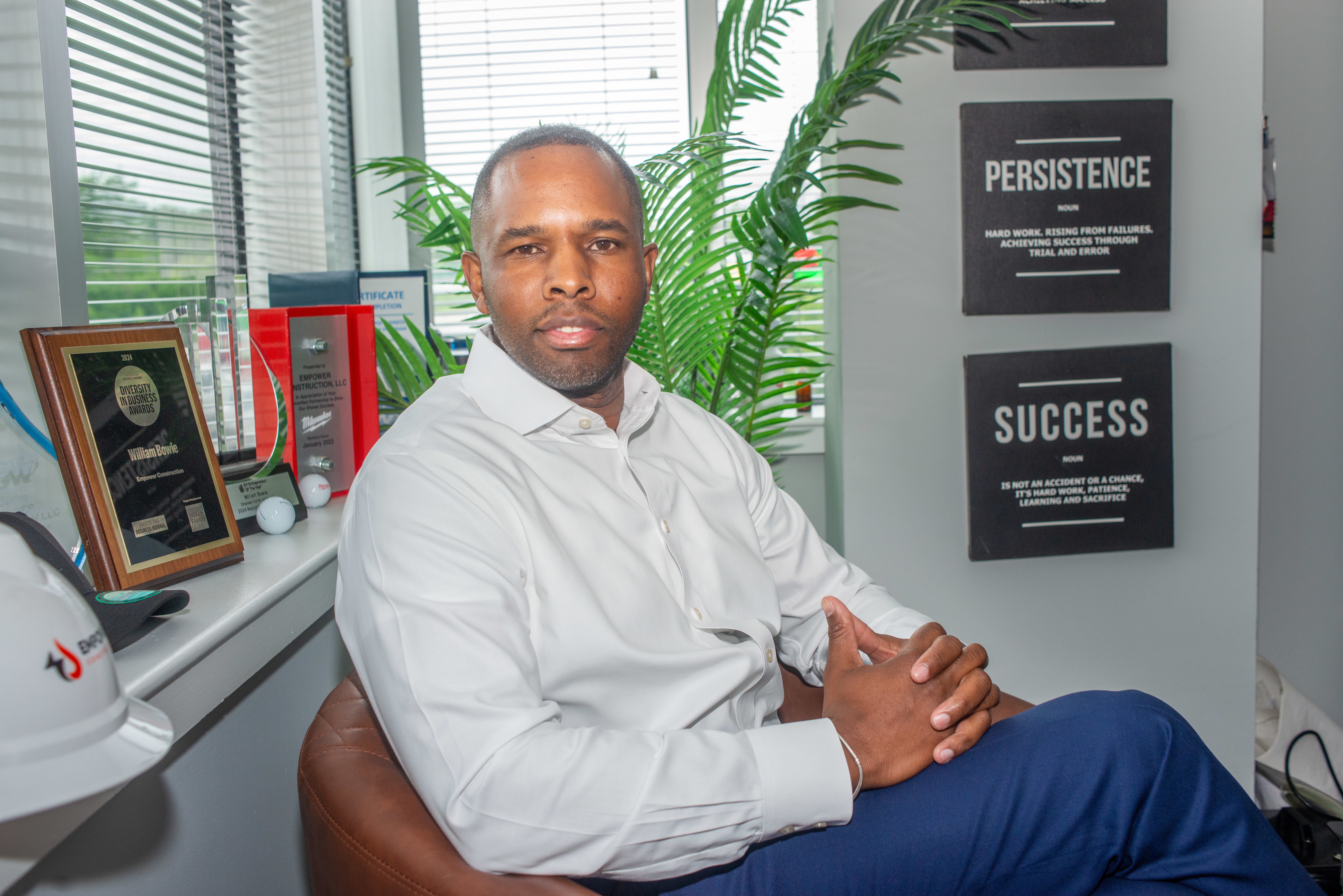
    Growing up, William Bowie measured poverty in cups of water warmed in the microwave for his morning baths at a sink. He lived in the Richard Allen public housing project in the Poplar section of North Philadelphia, raised with his brother by a single mother. Even as a high schooler, he was eager to improve his life’s circumstances, but lacked just about everything he needed to do so except a willingness to work hard.

    Three decades later, Bowie is president and CEO of his own nine-figure construction company, a journey that he largely attributes to a Philadelphia-based trade community apprenticeship system, similar to the “Nwa Boy” model that has been practiced in West Africa for centuries.

    “I kind of challenged myself,” said Bowie, who’s 42, referring to his mindset when he was embarking on his career. “Why can’t I be the best? And why can’t I open that door for others?”

    Bowie’s path is hardly an isolated success story. It is one node in a growing, informal network — from union apprenticeships in Philadelphia to a training cohort in Oakland, Calif. — of programs borrowing the Nwa Boy model’s core promise: a credentialed path from labor to ownership, built on relationships and trust rather than credit scores or venture capital.

    As race-conscious funding efforts designed to level the playing field for African Americans are dismantled, that promise is drawing new attention from investors, workforce officials, and Black entrepreneurs looking for an alternative route to generational wealth.

    The Nwa Boy system, which has its roots in the communities of the Igbo people in southeastern Nigeria, works this way: An established craftsman or business owner — known as the “Oga,” or master — takes on the training of a young person — known as the “Nwa Boy” (pronounced: nwah), or apprentice — often straight out of secondary school.

    The apprentice lives and works closely with the Oga for as long as eight years, learning the nuances, logistics, and administration of their chosen craft.

    When the apprenticeship ends, the Oga provides the graduate with a “settlement,” or capital — which often includes giving them money or business space — to launch their own independent businesses. The apprentice then continues the cycle.

    The Harvard Business Review has called the Nwa Boy system “a Nigerian model for stakeholder capitalism” in which community, workers, and shared prosperity take precedence over individual shareholder return.

    In 1970, at the conclusion of three years of civil war, the Igbo people used the Nwa Boy system to build a multibillion-dollar economy from the ground up. That’s when the Nigerian government seized control of the nation’s financial institutions and gave the equivalent of only about 20 British pounds (or roughly $400 in today’s money) to every Igbo adult, regardless of how much they had in their bank accounts before the conflict.

    Today, at a moment when Black Americans are witnessing the erosion of affirmative action and DEI programs through court rulings and presidential executive orders, Bowie and others believe the Nwa Boy system may provide an answer to the question of what happens when the system meant to fix a problem becomes the next thing that needs fixing.

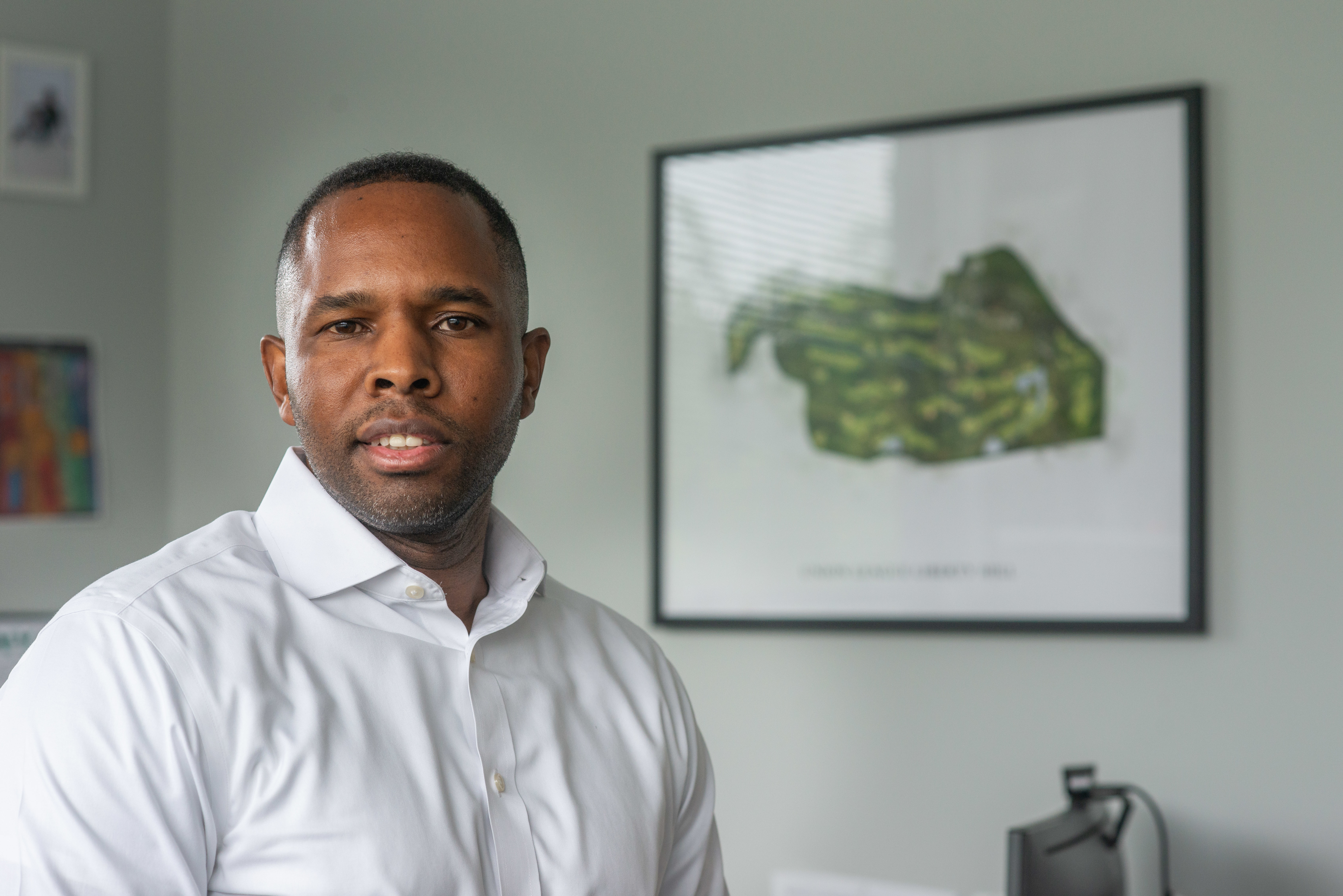
    As he was embarking on his career in construction, North Philadelphia native William Bowie said he asked himself, “Why can’t I be the best? And why can’t I open that door for others?”William Thomas Cain / For The Inquirer

    The blueprint

    While Bowie’s blueprint moves from employment to ownership, it did not happen in a vacuum.

    After finishing his first year at Drexel University, Bowie faced a dilemma — he had no way to pay a $6,500 bill to enroll for his sophomore year.

    “I tested into a magnet school,” Bowie said. “Academics wasn’t a problem. I was thriving in that environment. It’s just that financially I couldn’t afford it after the first year.”

    Bowie was not deterred.

    “I looked for a different path,” he said. “I tried to make money to get back into my second year in college.”

    In Nigeria, young men had been solving the same problem for generations — not with legislation, but with a handshake that meant more than a contract between an Oga and their apprentice. The pact is simple: The master teaches. The apprentice serves.

    In North Philadelphia, though, the syndicate of trust had little that resembled the stalls of Lagos’ Alaba International Market. It had Frank Murray.

    Murray, a member of the International Brotherhood of Electrical Workers (IBEW) and a family friend of Bowie’s mother, Margaret, encountered a young man desperate for an opportunity. He told Bowie, “This is where the money is at.”

    In the Nwa Boy system, the Oga does not simply teach a trade — he transfers his reputation, his customer network, and at the end of the apprenticeship cycle, his start-up capital. The system does not run on contracts, but on trust enforced by community witnesses.

    Murray gave Bowie the same thing — a pathway — and Bowie walked through it. Bowie joined IBEW at 19 years old.

    He completed a four-year U.S. Department of Labor-certified apprenticeship in three and a half years, earned $75,000 in his first year, and rose to become the youngest area manager overseeing about $300 million in business.

    Bowie says IBEW gave him what the Nwa Boy system has always understood, and American institutions have always struggled to replicate — a means to succeed that required no college degree, no venture capital pitch, and no generational wealth.

    ‘Financial gravity’

    Bowie’s playbook from two decades ago is what many American venture builders and investors are now being forced to consider as the formula for prosperity is being recalibrated. They must confront the brutal reality that even seven-figure salaries are no guarantee for wealth creation.

    “A paycheck — even a seven-figure one — is just a stay of execution. It doesn’t detach you from financial gravity,” Brandon Jones, founder and CEO of Gravy Capital, said during a virtual panel in April hosted by Visible Hands VC.

    When Bowie applied for capital to launch his company, Empower Construction, he felt the earth tugging at his dreams. Even though he had two decades of industry experience and managed a $300 million book of business, the banks still said no.

    What finally opened the door was not a stronger application, but a different messenger.

    One of Bowie’s mentors, Daniel K. Fitzpatrick, an executive at Citizens Bank, made a single phone call to his colleagues. A line of credit came through. To Bowie, it was the equivalent of receiving an Oga’s settlement.

    Saantis Fenmu Davis, a Philadelphia-based financial literacy educator and founder of Geb Cultural Exchange, said the problem starts earlier than the bank. He said it’s essential that Black Americans are taught how to be producers and investors, and not just consumers. “While higher spending and status-signaling often masquerade as affluence, they represent a fundamental mirage of social capital, which may or may not translate to equity or wealth,” he said.

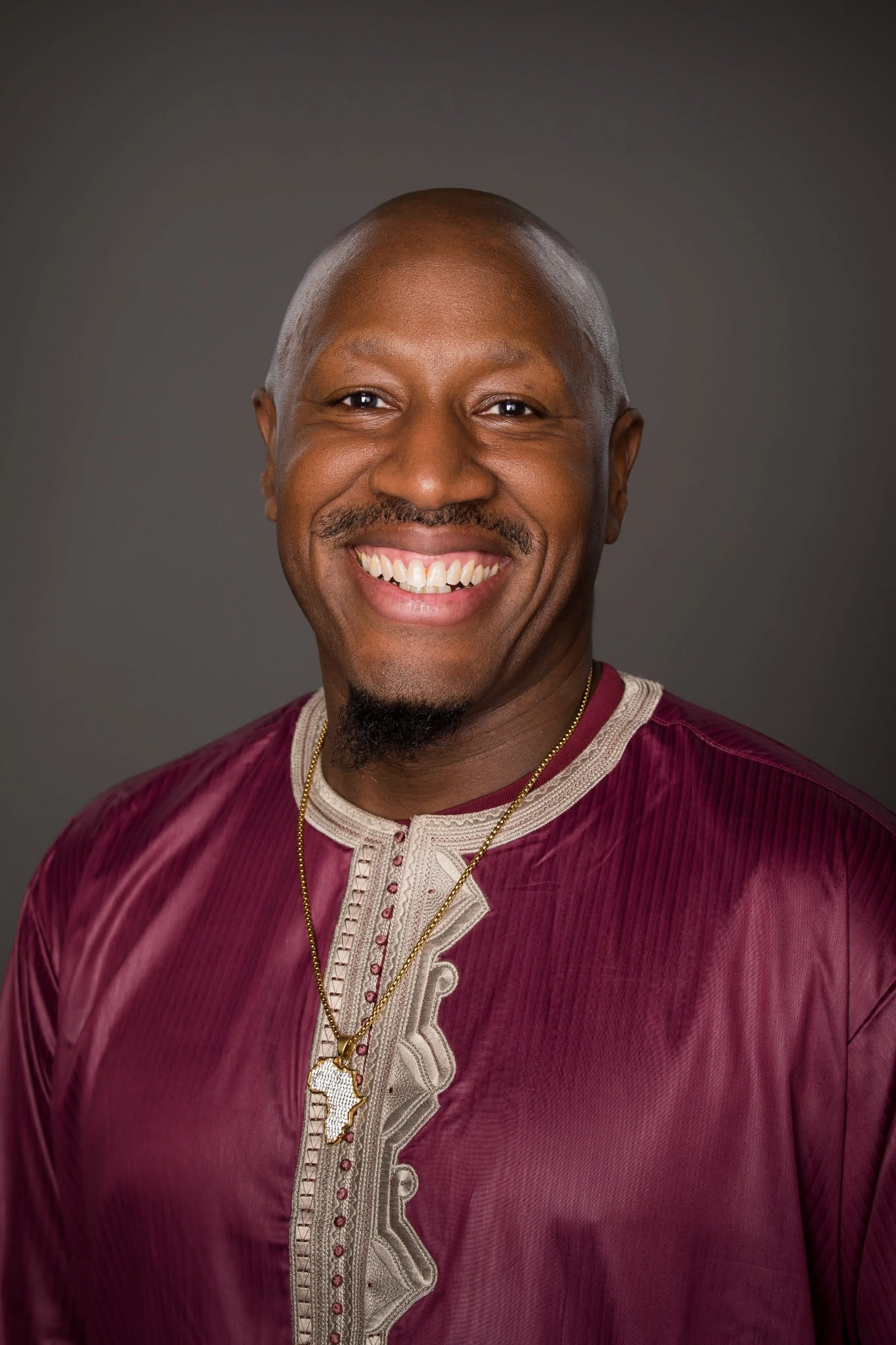
    Saantis Fenmu Davis, a Philadelphia-based financial literacy educator and founder of Geb Cultural Exchange, says consumerism is a “fundamental mirage of social capital.”Courtesy of Saantis Fenmu Davis

    Murray did not teach Bowie to consume. He taught him to produce.

    Patrick Clancy, president and CEO of the city’s workforce development program, Philadelphia Works, is trying to replicate what Murray did across its programs. Philadelphia Works manages roughly $11 million in apprenticeship funding across skilled trades and emerging sectors including IT, healthcare, and education.

    Murray was Bowie’s Philadelphia Works, but the path is not without its shadows.

    For every successful apprenticeship program or Nwa Boy story told, there is a possibility of exploitation.

    In the Nwa Boy framework in Lagos, Nigeria, some apprentices have reported exploitation at the hands of their masters.

    Naboth Nwaikwu spent 20 grueling years navigating three successive apprenticeships before finally being settled. He was an orphan. His first master did not settle him because his aunt and uncle instructed him not to. The same thing happened the second time.

    It wasn’t until his third attempt, under the apprenticeship of a friend, that he got his settlement, all of which could not account for the years lost.

    Nwaikwu now sells construction accessories for a living at Lagos’ Alaba International Market, and makes enough profit to take apprentices of his own if he wanted to, but told me he refuses to do so because “There is a thin line between unpaid apprenticeship and indentured service. I do not want to be the one to cross it.”

    Uyi Samuel Oni, a corporate attorney licensed in Nigeria and trained at the University of Pennsylvania’s Carey Law School, said the covenant must become a contract before it can successfully cross continents. “The Nwa Boy system must avoid negative historical connotations linked to terms such as master,” Oni said.

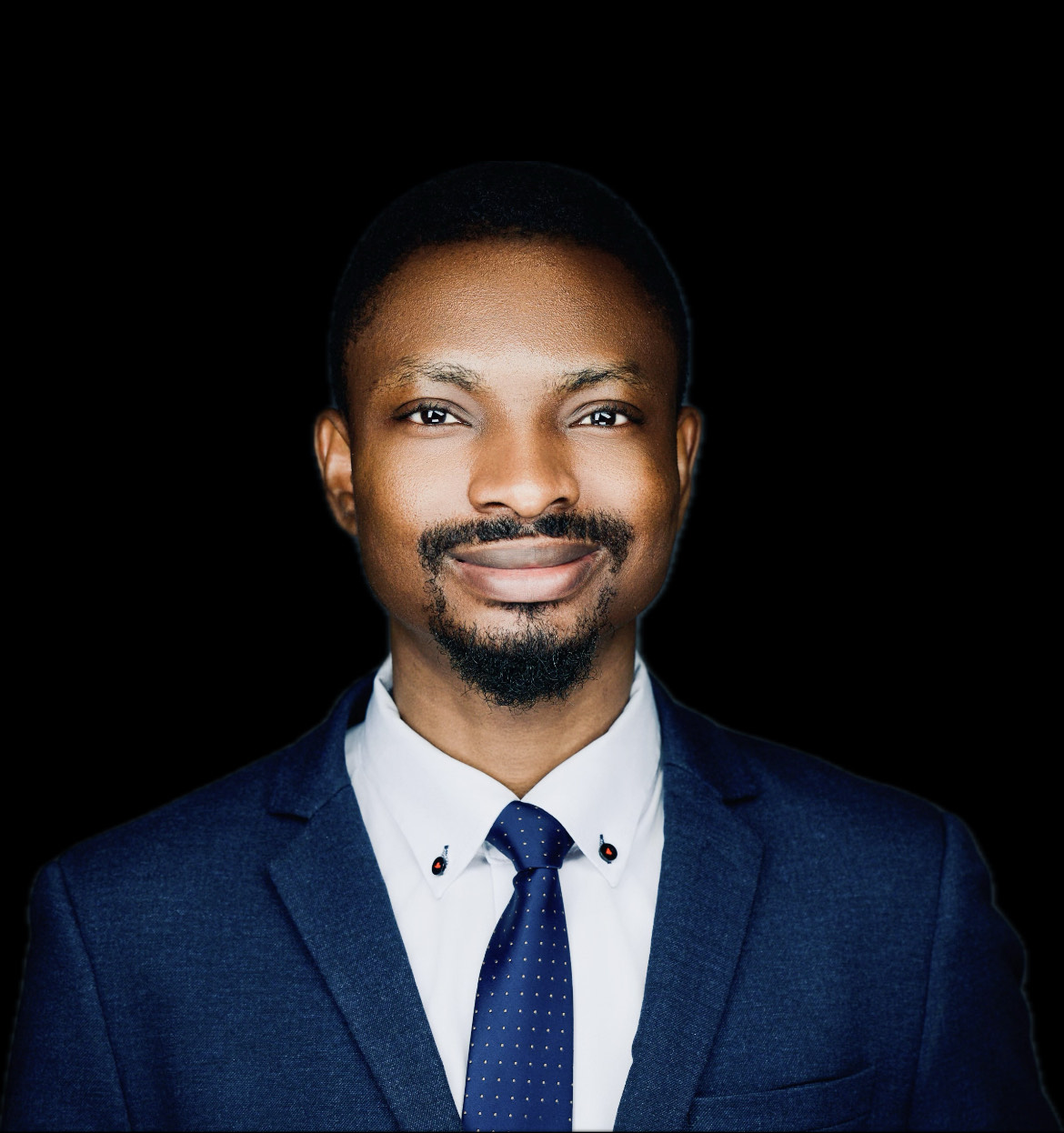
    Uyi Samuel Oni, a corporate attorney licensed in Nigeria and trained at the University of Pennsylvania’s Carey Law School, says the Nwa Boy covenant must become a legally binding contract before it can successfully be used in America.Courtesy of Uyi Samuel Oni

    A legally compliant American adaptation, he said, must be a win-win for both parties — not merely vocational or community service, but a binding agreement that protects the apprentice’s right to the capital payout that makes ownership possible.

    In Oakland, a program called Built Here has emerged as a 21st-century proxy for the Nwa Boy system.

    Onye Ahanotu, a former Harvard engineering research fellow and founding member of Built Here, uses training cohorts to mirror the communal trade apprenticeships of southeastern Nigeria. “We meet every week,” Ahanotu said.

    The frequency is intentional. In the Nwa Boy system, the covenant is not a one-time transaction — it is a continuous relationship between master and apprentice, reinforced week by week, skill by skill, until the apprentice is ready to stand alone.

    Clancy, of Philadelphia Works, understands that frequency. But he said the barriers that push apprentices out are not about ambition. They are about logistics. Most apprentices who do not complete the program fall off because of logistics — literacy gaps, a lack of childcare, transportation difficulties, and rigid drug-testing requirements.

    The apprenticeship demands sacrifice.

    Bowie was 19 years old and the only African American male in a trade that was overwhelmingly white and male. The culture shock was real. His determination was not given. It was chosen every single day.

    Bowie narrated his apprenticeship years as a period of determination and exposure to wealth — not suffering. Once he entered IBEW, his obstacles became opportunities.

    Clancy said Philadelphia Works offers pathways into the building trades and is open to second-chance applicants. Prior convictions are not automatic disqualifiers. The door is open. Most people do not know it is there.

    At the Philadelphia Navy Yard, Hanwha builds ships. The company needs welders. It cannot find them.

    Patrick Clancy, president and CEO of Philadelphia Works, the city’s workforce development program, which offers pathways into the building trades and is open to second-chance applicants.Courtesy of Patrick Clancy

    Not because the welders do not exist. Not because the work is not there. Not because the wages are not competitive — apprenticeship wages in the building trades start at $25 per hour and can exceed $100,000 annually with overtime. The positions have gone unfilled for three years, Bowie said, because nobody told the kids in North Philadelphia, West Philadelphia, and Germantown that the door is open.

    Bowie knows this the way he knows everything about the trades — from the inside. He gives talks online. He goes into Philadelphia schools. And while he may not have known about the Nwa Boy system when he was an apprentice, he regularly references its principles today.

    He stands in front of teenagers the same age he was when the system ran out of road for him and tells them what Murray told him: This is where the money is at.

    “In Philadelphia, there’s a shipbuilding company at the Navy Yard,” Bowie said. “They need welders. They can’t find them. And you’re telling me that in the city of Philadelphia, in the communities that we come from, that we can’t find welders?” He paused. “The parents don’t know. The kids don’t know. Nobody’s telling them.”

    Clancy is trying to change that. Philadelphia Works is actively pursuing apprenticeship funding for Hanwha’s shipyard — planned cohorts of 20 to 30 apprentices at a time. The infrastructure, funding, and jobs exist. What is missing is the same thing that was missing when Bowie was standing at the edge — someone to point at the door.

    Murray pointed. One phone call — and a kid from the Richard Allen Homes became a $100 million CEO. Philadelphia has not yet produced its Frank Murrays at scale.

    Bowie is working on it. One conversation — and one handshake — at a time.

    Ibe Imo is a Philadelphia-based investigative journalist whose reporting examines technology, power, capital, and the systems that determine who builds wealth and who pays for it. He is a recent graduate of the master of journalism program at Harvard University.

  • The problem is not that we disagree; it’s how we disagree

    The problem is not that we disagree; it’s how we disagree

    I love hearing from readers. From those who agree and those who disagree. Unless I mess up, I try to respond to everyone who invested their time in what I had to say and then cared enough to write in. The only kind of feedback I abhor is the one that accuses me of bias, because duh.

    Whether you’re reading this in print (bless you) or online (thank you), it should be clear we are in the Opinion section, and bias, in the sense of a bent or an outlook, is how we do. However, I do not consider my side of the story to be the end of it. Regardless of whether someone is moved to drop me a line or not, I am here for the conversation.

    This is what happens in real life, at least ideally. I say something, and you say something back, and if we disagree, we at least respect each other’s right to do so.

    Unfortunately, the hardening of political positions seems to be doing away with even that. I know liberals who feel it’s a waste of time to try and talk to someone who thinks differently on trans rights, for example, just like I know conservatives who believe there’s nothing they care to learn from some socialist “Dumocrat.”

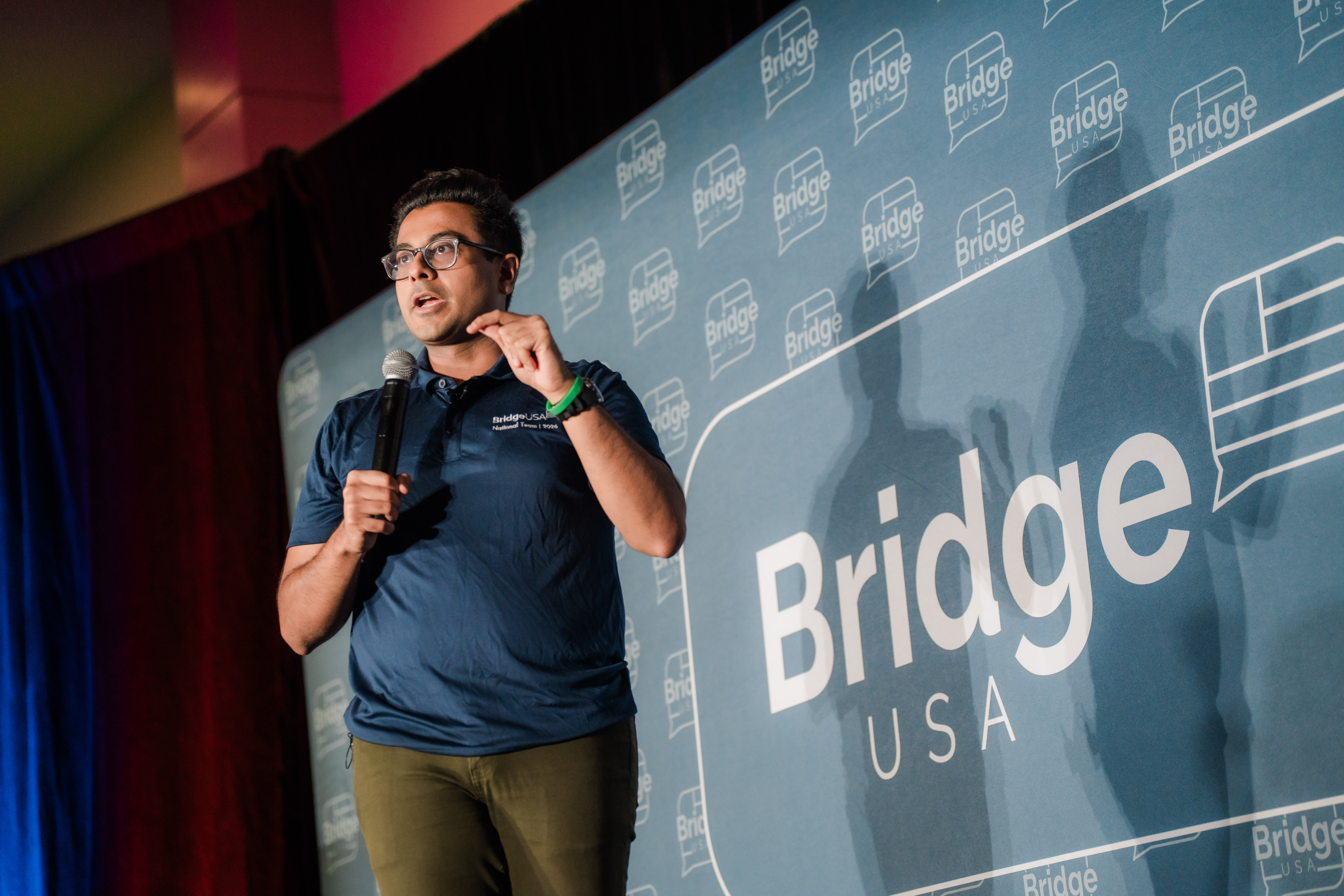
    Perhaps that’s why — even with the decade or two (or three) age gap between the participants and me — there was a feeling of kinship for me at the 2026 BridgeUSA National Summit held recently in Philadelphia. The group, which has 130 chapters on college campuses across the country, wants to ensure we don’t stop talking (and listening) to each other — especially if we disagree.

    And no, this isn’t some equivocating, middle-of-the-road, fine-people-on-both-sides kind of thing, Manu Meel, BridgeUSA cofounder and CEO, said. The organization’s goal isn’t to find common ground or change the way people think, but to urge and teach students to use their strong opinions to engage respectfully and constructively with those who have different beliefs.

    To hear the 27-year-old Meel tell it, Americans have always had differing opinions, and that disagreement is the engine of democracy. What our young nation would look like, in fact, was forged in disagreement. The problem today isn’t that there are disparate points of view, he said.

    “The real divide is between the open-minded MAGA people, the open-minded liberals, the curious conservatives, and the close-minded ideologues,” Meel noted. “The real divide is between the builders and the breakers.”

    Manu Meel, cofounder and CEO of BridgeUSA, speaks during his keynote speech at the group’s annual summit in Philadelphia on Aug. 8.Courtesy Clay Goswick/BridgeUSA

    The breakers in this case are the extremists on both sides of the political spectrum, those who make up for what they lack in numbers with the volume of their voices and rigidity of their views. The ones who stoke the outrage machine and scare the majority into silence.

    Sahar Toshtzar, a 21-year-old political science student at Drexel, told me she feels that fear often keeps people from engaging.

    “Sometimes it can be a little bit isolating having a mission of wanting to bridge the political divide,” she said. “Nobody really wants to talk about politics; nobody feels safe enough to talk.”

    For Toshtzar, her first BridgeUSA events on campus about a year ago proved revelatory.

    “I went to the discussions that we had, and it was, ‘Wow, people are talking like normal,’” she said. “I’m laughing with a conservative and relating to something completely outside of politics with them.”

    The experience didn’t alter her beliefs, but it changed her opinion about those she disagreed with politically, she said, and she hoped that perhaps they shifted their opinion, as well.

    I think that’s the biggest lesson to learn from engaging with people we disagree with. Our differences aren’t the issue. Deciding we can’t talk about them is — and that decision is just a choice we dress up as a fact. If we can start to acknowledge that, it will become much harder for those who fearmonger and demonize to control the public discourse, to degrade our politics until it is all a zero-sum game meant to humiliate the losing side.

    Of course, there are a few people who you absolutely cannot reach, and some you may not even want to be in the same room with, but, again, they are in the minority. Speaking from experience, even someone who may seem initially hostile can turn out to be willing to engage in conversation. So, to paraphrase Hillary Clinton, don’t put all your deplorables in one basket.

    Better still, we can learn from young people like Meel and Toshtzar.

    “At the end of the day, it’s a basic social skill to be able to sit down and talk to somebody. To stay calm, hear them out, and have them hear you out. Maybe even change your opinion on something,” Toshtzar said. “If you can’t do that, the basics of politics don’t exist.”

    We could certainly do far worse than sticking to the basics.

  • ‘A Nation of Artists’ is the epic story of American art. It has its charms and its slights.

    ‘A Nation of Artists’ is the epic story of American art. It has its charms and its slights.

    To find “A Nation of Artists” at the Philadelphia Museum of Art, you walk from the Great Stair Hall down a long gallery lined with art that’s not part of the show. The path zigs left and tightens into what looks like a service corridor, and then zags right past the bathrooms.

    After this distinctly unceremonious approach, you’ve arrived at one of the museum’s most spectacular events of recent years.

    Not only is “A Nation of Artists” momentous — it is billed as the “most expansive presentation of American art ever mounted in Philadelphia” — but it comes with the added juice of inaugurating the museum’s newly renovated American wing on the second floor after a 14-month closure.

    The occasion brings yet another distinction: amazingly, after three more galleries open in the wing, it will be the first time in a decade that all of the galleries in the main building will have been open at the same time.

    The odd journey to the second-floor American galleries has long been in place, but it seems especially odd now. It would have been nice to reopen this major piece of real estate with more of an architectural drumroll than a drab, winding hallway, especially for an institution that, after the tumultuous year it’s had, could use a thing or two to celebrate.

    “Miners’ Wives” (right) by Ben Shahn and “The End of the War, Starting Home” by Horace Pippin at the Philadelphia Museum of Art.Tom Gralish / Staff Photographer

    It might also be easy to miss the show’s greater significance to the museum and its cohost, the Pennsylvania Academy of the Fine Arts. “A Nation of Artists,” which opened in April with more than 1,000 works at both museums, arrives as a bolt of ambition as the groups work their way through deficits and reorganizations and remind audiences and funders that beyond crisis, there is art, and it is glorious.

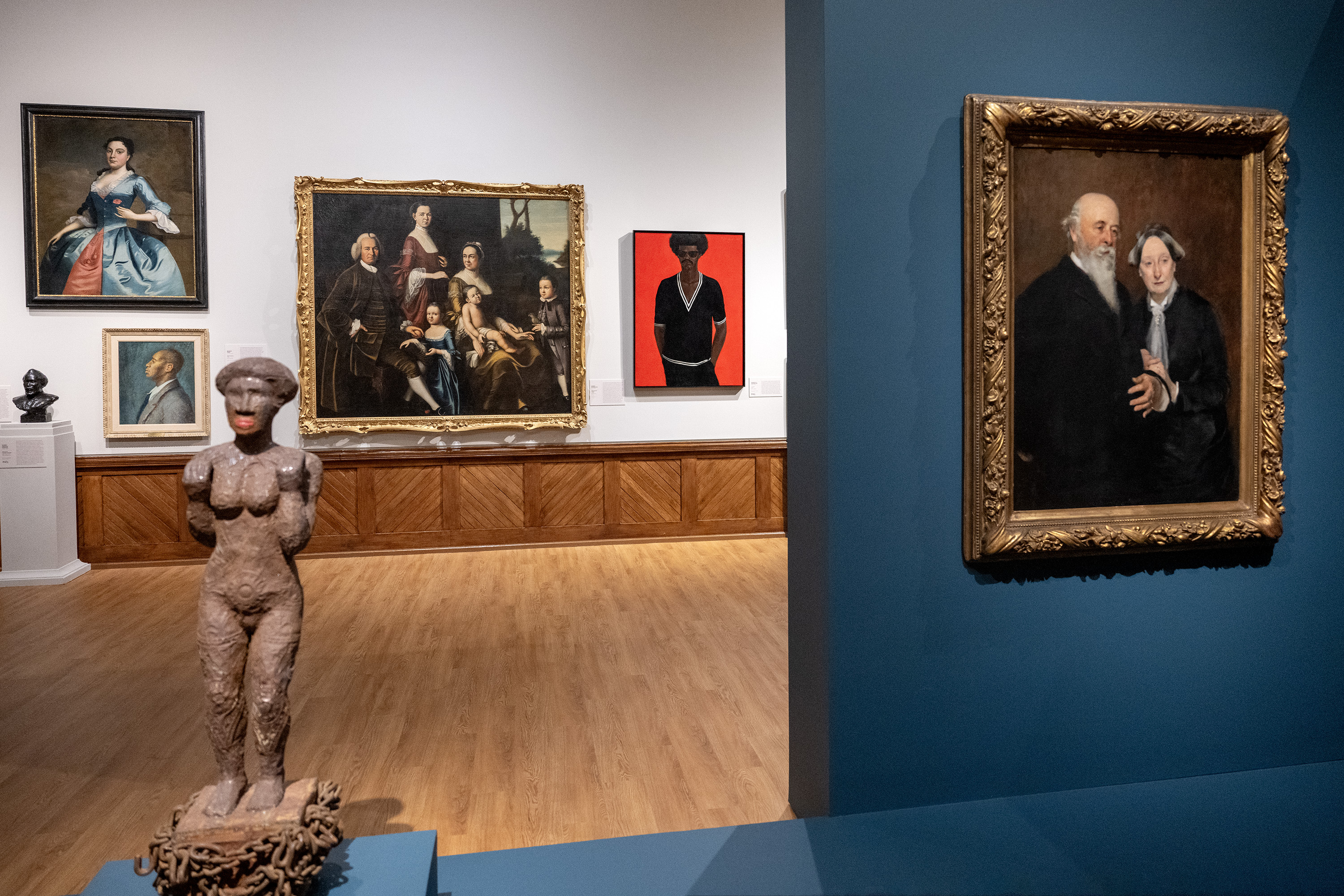
    The show is the city’s major visual arts celebration of the nation’s 250th anniversary, and while it’s an impossible task to compress the story of art in America into any single show, the overall image that emerges is not a cohesive snapshot, but a fascinating mirror.

    There’s sometimes a random, almost improvisatory feeling to “A Nation of Artists” — despite the show’s attempt to place works around themes like the American West or inequity — because America is itself ever-random and improvisatory.

    Works in thematically grouped ensembles in ‘A Nation of Artists’ in the newly renovated Furness and Hewitt building at the Pennsylvania Academy of the Fine Arts.Tom Gralish / Staff Photographer

    More than 120 works from the collection of John and Leigh Middleton and their family are augmenting “A Nation of Artists.” But after the show closes and the Middleton works are gone, PAFA will put in place a newly curated permanent collection, and the PMA will be left with a sweeping look at American art that starts on the first floor with earlier works and proceeds to the second to bring it up to the mid-20th century.

    In other words, “A Nation of Artists” absorbs the Middleton works, but also spotlights the incredible riches in residence nearly all the time. That’s no small thing at a time when arts and culture in Philadelphia is struggling for engagement in the attention economy.

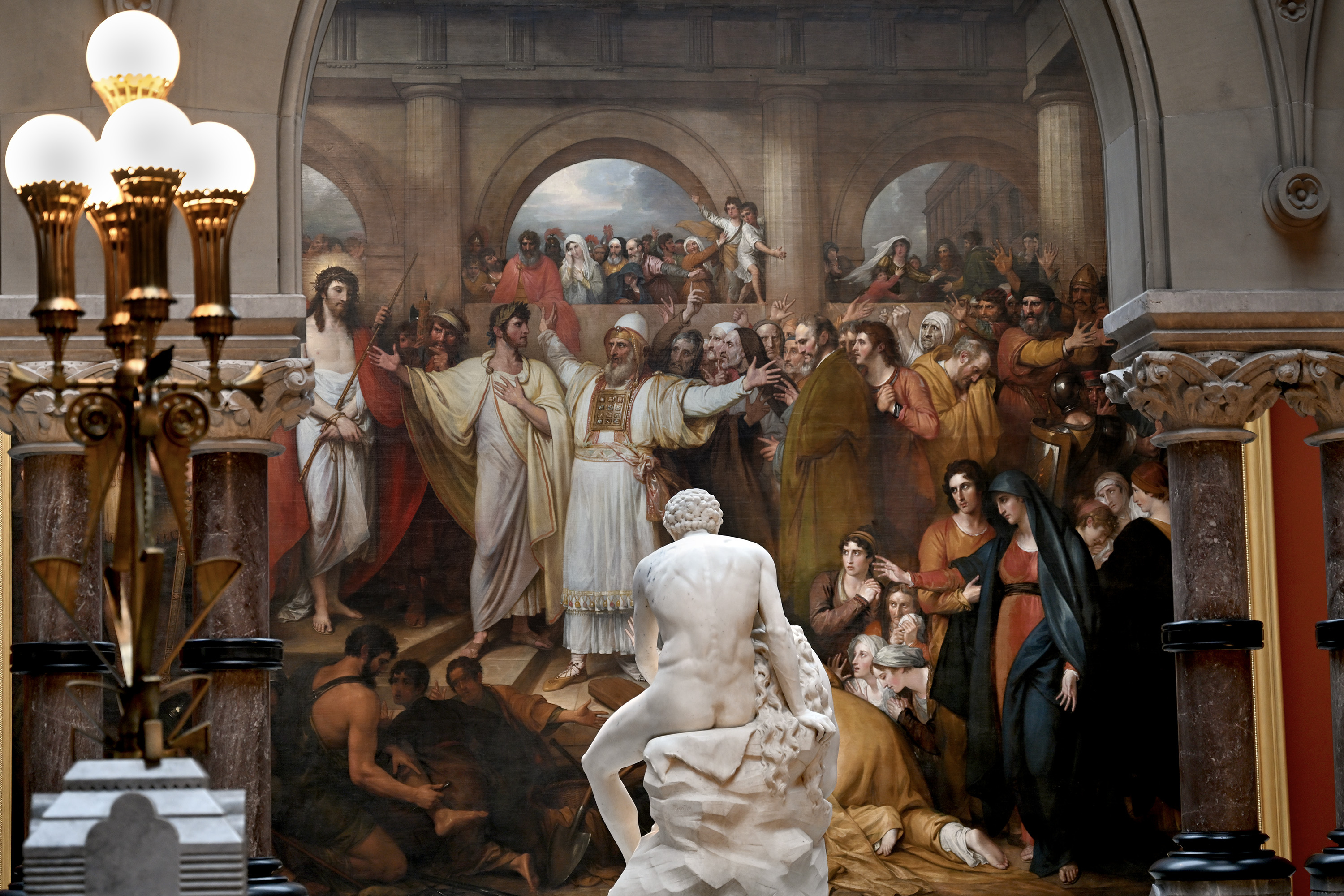
    The painting “Christ Rejected” by Benjamin West and marble sculpture “Paradise Lost” by Joseph A. Bailly at the Pennsylvania Academy of the Fine Arts.Tom Gralish / Staff Photographer

    A crisp reset at PAFA

    At PAFA, the outside world seems to creep in in ways both positive and worrisome.

    How can you admire the fruitful pedagogy at PAFA on display by generations of academy students and instructors without feeling concern for the place? The relationship between the museum and school — a specific artistic legacy unique to Philadelphia — is what makes PAFA special, and it remains to be seen whether a recently revamped certificate program at the school is the ultimate answer, artistically or financially.

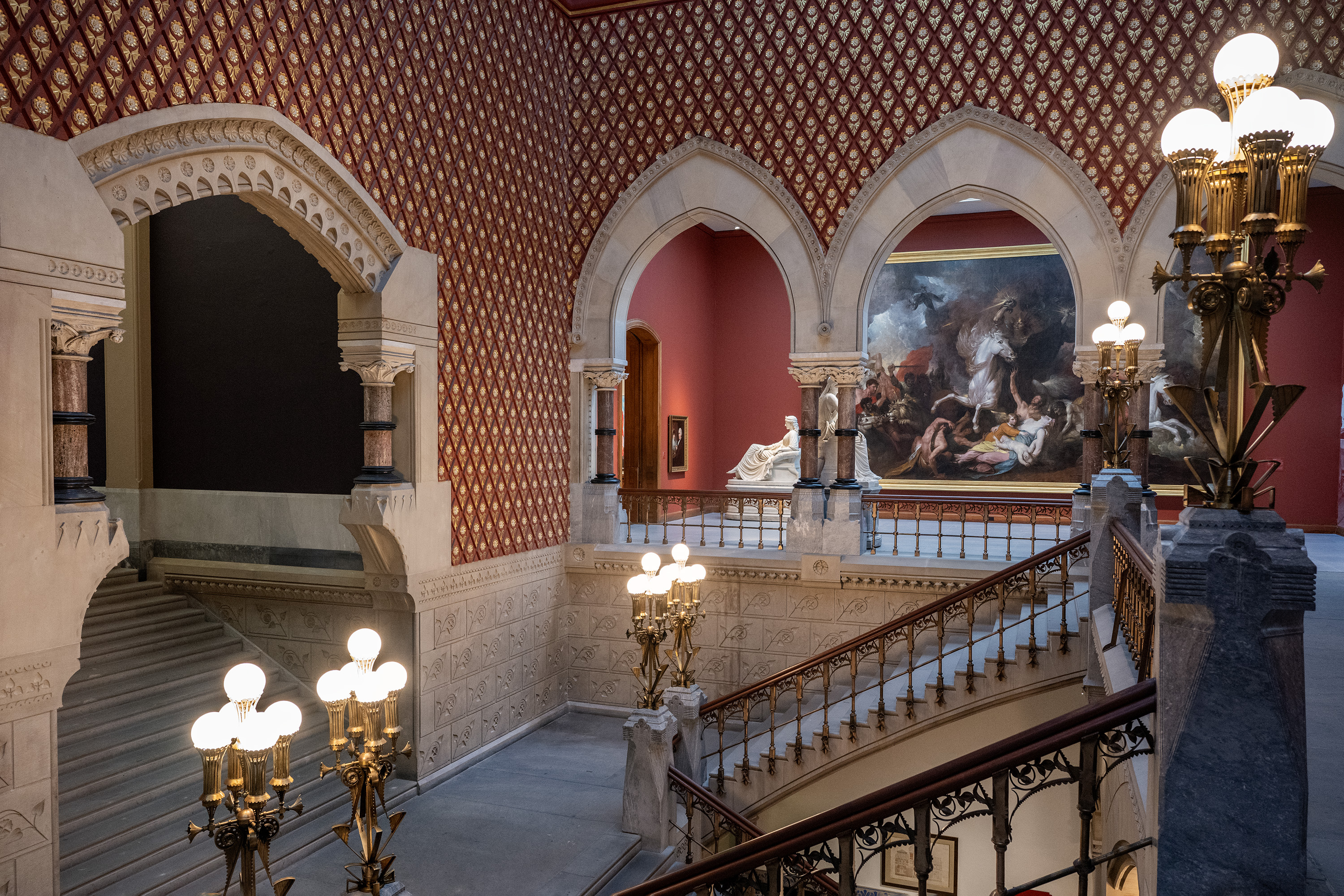
    The exhibition marks a crisp reset: the reopening of PAFA’s jewel of a building, the riotously detailed 1876 Furness and Hewitt-designed landmark, after a renovation project that included a new HVAC system and other renovations.

    Laylights (variously utilizing natural or artificial light) in the newly renovated Furness and Hewitt building at the Pennsylvania Academy of the Fine Arts.Tom Gralish / Staff Photographer

    It’s good news that there are no dramatic changes; the building continues to dazzle. I visited the show there a half dozen times, and via the church-like rose window and skylights, nature played handmaiden to art. When clouds parted, sun filtered into some of the spaces, and in one gallery the natural light made the whites and colors of George Bellows’ North River pop.

    The marble sculpture “Peri at the Gates of Paradise” by Thomas Crawford in the grand staircase at the Pennsylvania Academy of the Fine Arts.Tom Gralish / Staff Photographer

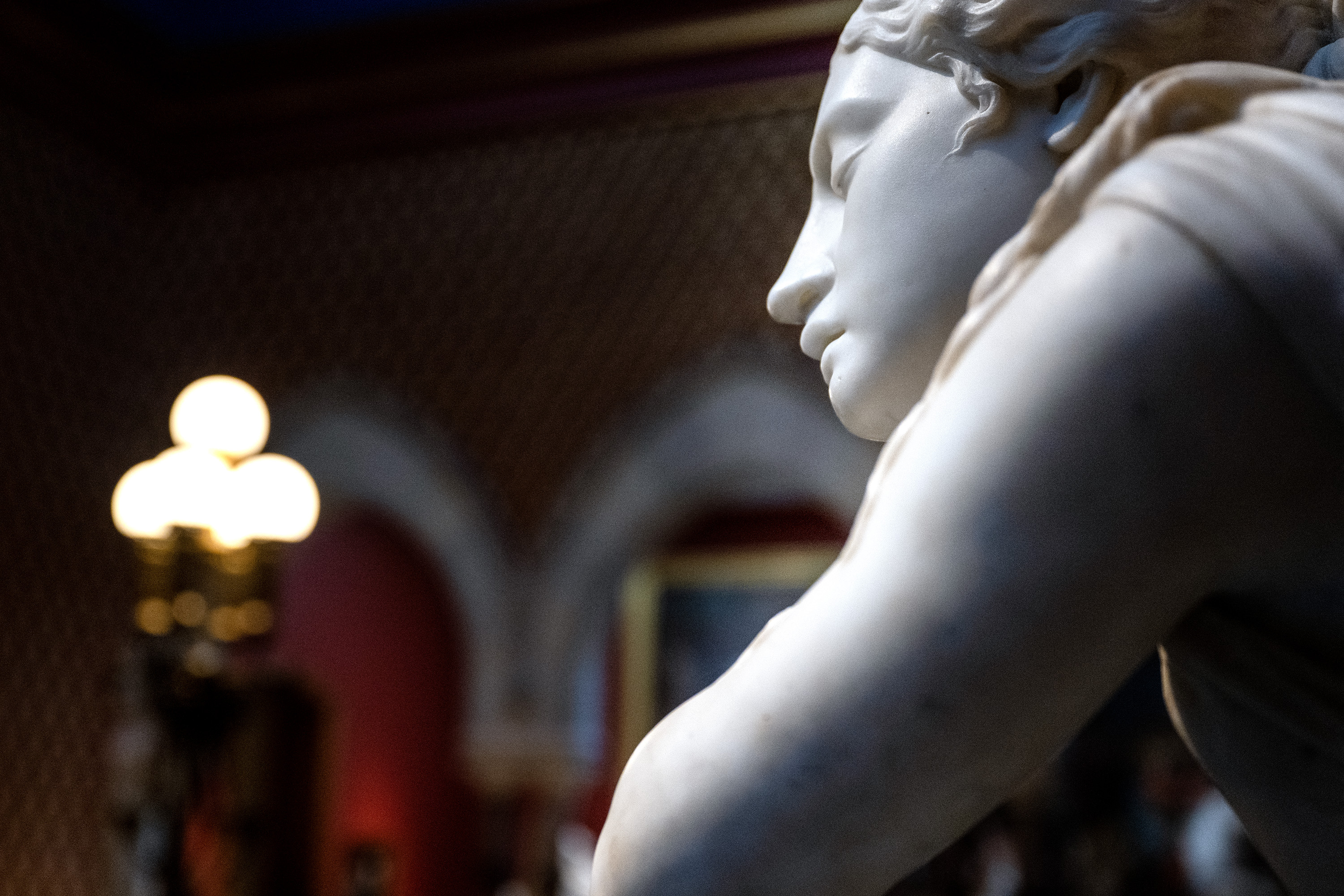
    On another morning, the sunlight made the grand stair hall of the Furness building practically vibrate. The smooth white of marble sculptures like Thomas Crawford’s Peri at the Gates of Paradise glowed and the stars-on-cobalt pattern beneath the skylight seemed to be showering down.

    Here on this day, there was no more beautiful interior in the city.

    At the Pennsylvania Academy of the Fine Arts. In the rear is the oil painting “Death on the Pale Horse” by Benjamin West.Tom Gralish / Staff Photographer

    A more sequestered PMA

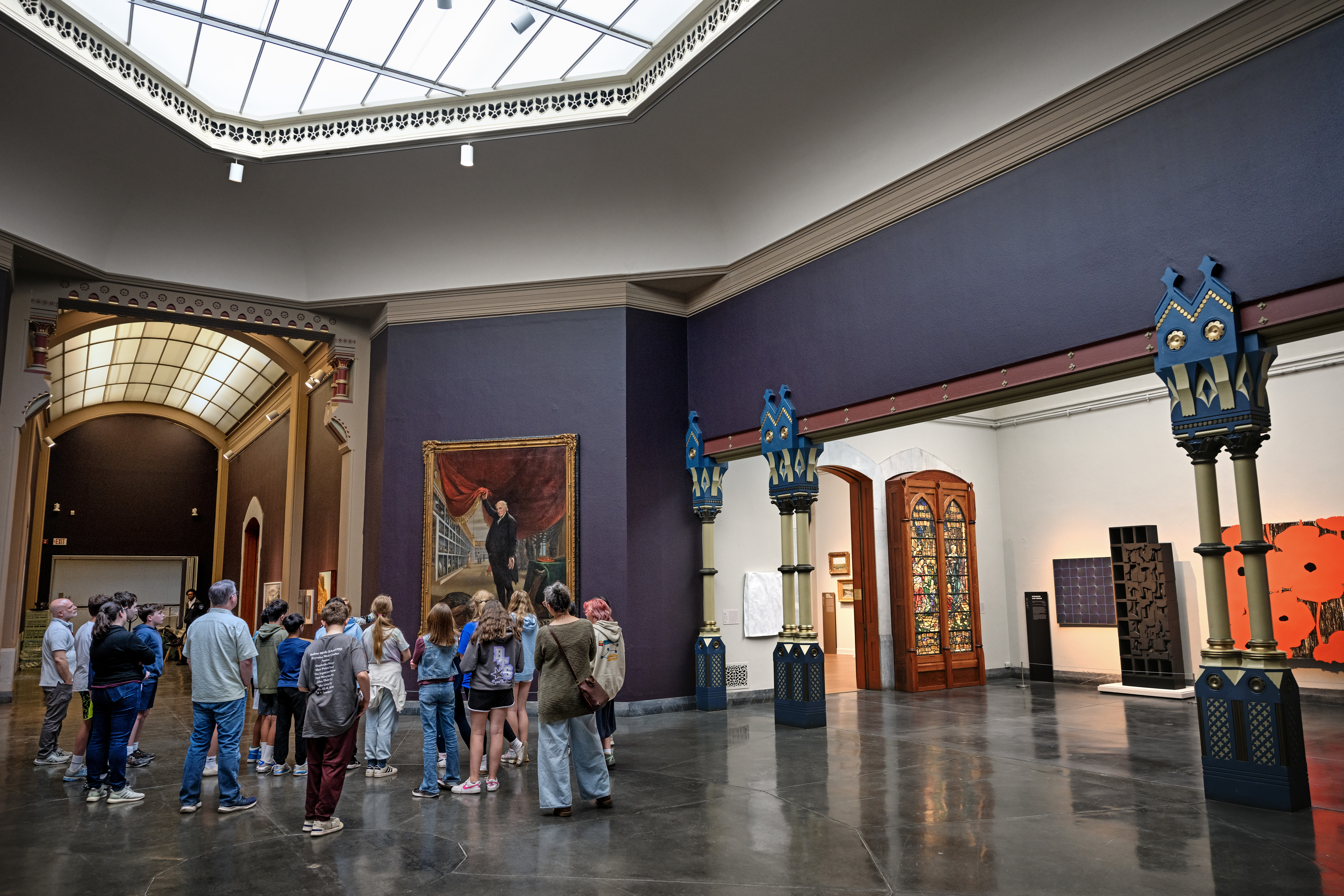
    If PAFA maintains a lively relationship with the outside world, the PMA’s new American wing feels sequestered. There are no visible windows letting in light in the second floor American galleries — no natural light except for a small opening in a staircase.

    The layout and footpath (including that unceremonious approach) is largely the same as it had been before the renovation. But the flow within and from gallery to gallery is more open, and there is now a central spine of four continuous middle galleries that opens up a vista that helps to orient the visitor. Three remaining galleries in the renovated American wing are expected to reopen, though the date is uncertain.

    Three Thomas Eakins oils (from left): “Mending the Net,” “The Pair-Oared Shell,” and “Sailboats Racing on the Delaware.”Tom Gralish / Staff Photographer

    The PMA half of “A Nation of Artists” features a lot of big names (Andrew Wyeth, John Singer Sargent, Georgia O’Keeffe), as well as about three dozen works by Thomas Eakins — intimate portraits as well as epic canvases. There’s a beautiful sequence of three Eakins oils, all painted within a decade of one another, all with rivers in various hues and states of excitement: The Pair-Oared Shell, Sailboats Racing on the Delaware, and the stunning Mending the Net, a seemingly ordinary scene that gathers filmic mystery and story through minutely detailed figures mending a fishing net by the river against a gauzy beyond.

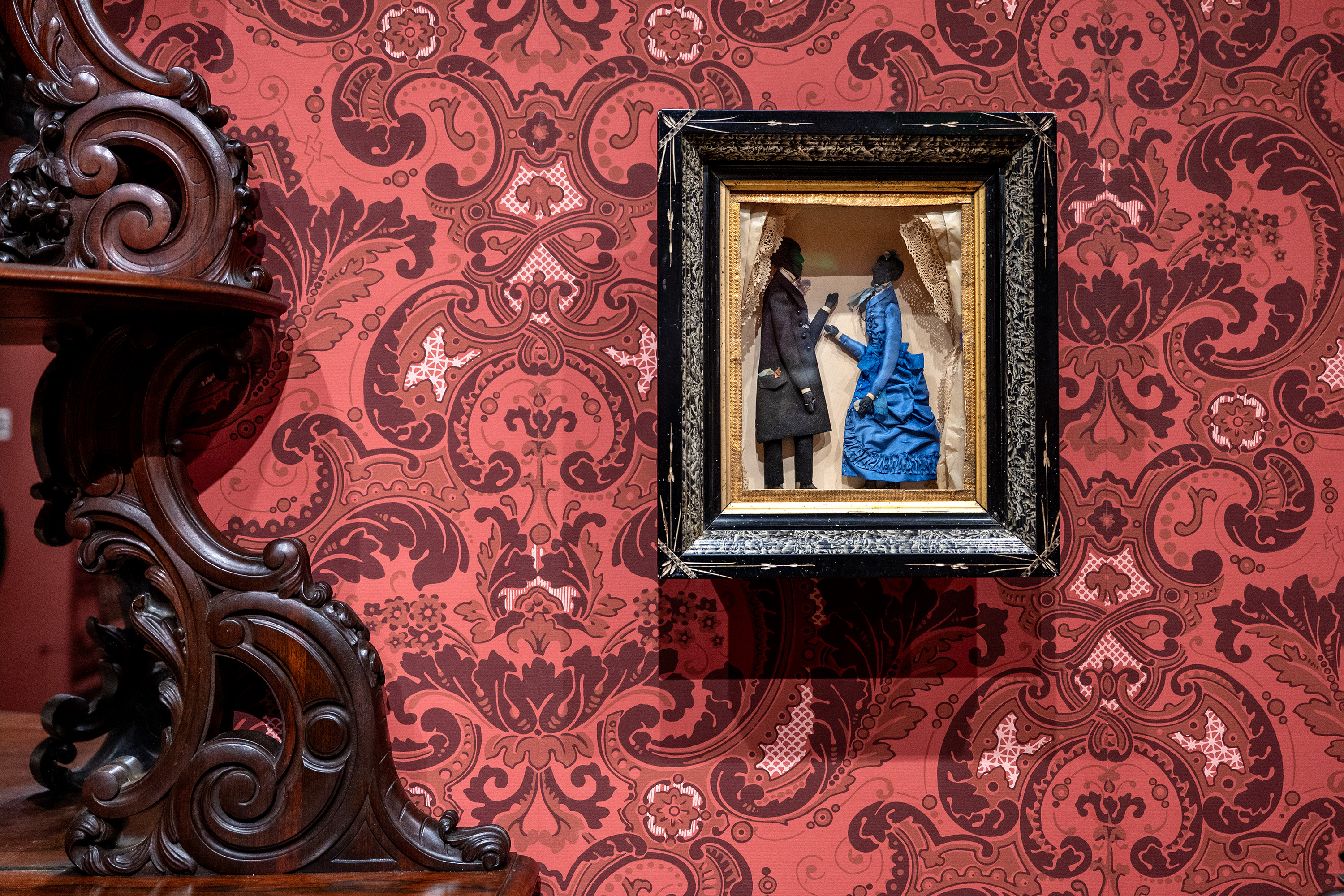
    In terms of visitor experience, the new second floor American space succeeds most in moments of drama. The wall in one gallery uses a specially reproduced rich-burgundy period wallpaper, and the relationships among the paintings, furniture, pottery, and other items in the room ricochet beautifully.

    “The Lost Pleiad” by Randolph Rogers in the Philadelphia Museum of Art’s salon-style gallery.Tom Gralish / Staff Photographer

    A sumptuous feeling immerses visitors in the high-ceilinged salon-style room (gallery 211) that includes vast landscapes and marble sculpture. Though it’s not immediately obvious, the first-floor American works are also part of the show, and they hold yet more Middleton works.

    Classics and surprises, and a lot of charm

    There’s greater poetry in the architecture at PAFA, but the work itself at both museums is undeniably impressive in scope, and especially at the PMA: painting, sculpture, furniture, silver, fabric, works in clay, and more.

    The curators — Kathleen A. Foster and Alexandra A. Kirtley at the PMA, and Leah Triplett and Lea C. Stephenson at PAFA — have delivered not just old favorites, but also surprises.

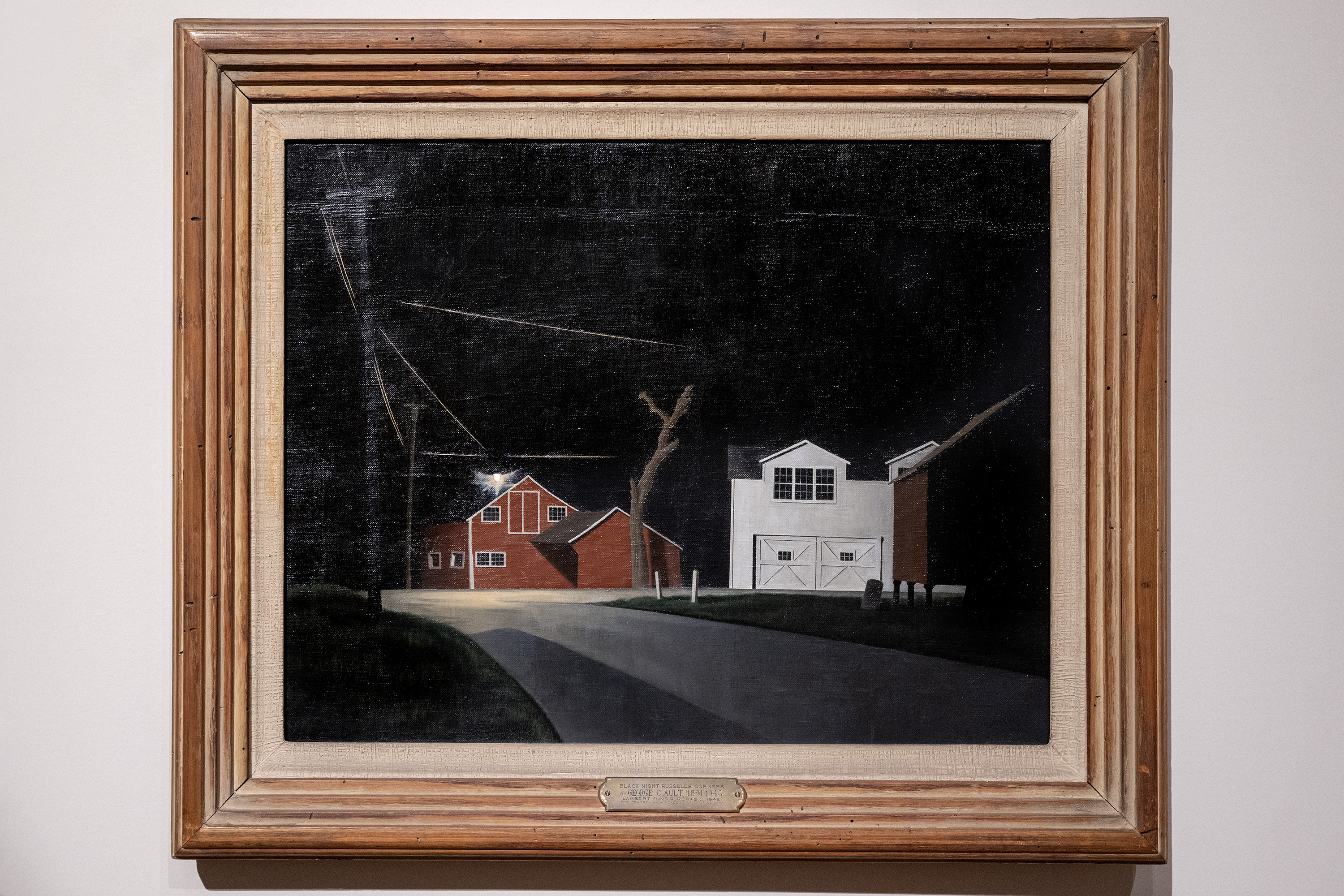
    “Black Night: Russell’s Corners” by George Copeland Ault at the Pennsylvania Academy of the Fine Arts.Tom Gralish / Staff Photographer

    PAFA’s classics include Winslow Homer’s Fox Hunt; the Jasper Johns Flag 1960-66 from the Middletons (which the couple brought home from an auction in 2010 for $28.6 million); and George Copeland Ault’s Black Night: Russell’s Corners (1943), whose flat, cold, electric light suggesting a modern encroachment on agrarian life, can only be appreciated in person.

    Among the pieces to which I kept returning: Pink Flower with Clock by PAFA 2011 graduate Aubrey Levinthal, because of the smart way it plays with the idea of photographic positive and negative imagery even though it is an oil; and Harriet Goodhue Hosmer’s Puck on a Toadstool, from 1856, whose supernatural energy is so potent that the figure appears poised to shape-shift and break free of its marble confines.

    At the PMA, a single canvas has me reconsidering Edward L. Loper Sr., the Wilmington artist who had his beginnings working for the WPA. Loper’s Abandoned Ferry Terminal is a complex refraction of shadows and colors from 1958 whose geometries never seem to stop shifting.

    A small shadowbox of a man and woman formally costumed from around 1880 might be the most unassuming bit of charm in the entire exhibition. Its maker is unknown.

    Custom wallpaper at the Philadelphia Museum of Art, with “Portrait Figures of a Man and a Woman, in a Shadowbox.”Tom Gralish / Staff Photographer

    Leaning into representation

    If you ever wanted a lesson in the difference how a work is displayed can make, just consider how much more substantial an achievement The Gross Clinic looked a few months ago. With bright but warm lighting at the PMA, Eakins’ 1875 canvas was frightening in its vividness, the red of blood on the surgeons’ hands glistening. Today, at PAFA, it looks a little washed out, overpowered by the light coming through the nearby rose window.

    Both museums have made a conscious effort to represent a spectrum of identity — gender, regional origin, ethnicity, and so on. This is all to the good, of course. Everyone will find something relatable in this exhibition, and many will discover works that aren’t necessarily relatable on first examination but become so. This is why museums, and good curators, are important.

    Detail of “Nydia, the Blind Girl of Pompeii” by Randolph Rogers at the Pennsylvania Academy of the Fine Arts.Tom Gralish / Staff Photographer

    It’s a fascinating marker of time to think about the cultural whiplash of the past couple of years in this country, and how vulnerable the simple concept of representation now feels. The tastes of the art establishment change, and so too does how we perceive art.

    How could it be otherwise? Every movement comes in with an air of moral and scholarly authority that purports to lay down once and for all an accurate cultural perspective.

    The prevailing ethos arrives as the new reality. Then the next reality comes along.

    “A Nation of Artists” runs through July 5, 2027, at the PMA, 2600 Ben Franklin Parkway; and Sept. 5, 2027, at PAFA, Broad and Cherry Streets. philamuseum.org, pafa.org.

  • The Keystone (Server) State | Editorial Cartoon

    John Cole spent 18 years as editorial cartoonist for The (Scranton) Times-Tribune, and now draws for various statesnewsroom.com sites.

  • Letters to the Editor | Aug. 17, 2026

    Letters to the Editor | Aug. 17, 2026

    False choice

    The plan to split the measles, mumps, and rubella vaccines into three separate shots is being sold as another option for parents. It isn’t one, not for years, maybe not ever. No single-antigen measles, mumps, or rubella vaccine is licensed in the United States. Merck stopped making the old separate versions in 2008, concluding that three shots offered no medical benefit over one and simply meant more needles and more missed appointments. Rebuilding them means new clinical trials, new manufacturing lines, and years of FDA review; Merck’s own estimate runs past a decade, and no ethics board will approve testing that withholds a proven vaccine from children for a placebo. As Paul Offit of Children’s Hospital of Philadelphia put it, splitting the shot would “just make it more expensive and less likely to be used.” This arrives as the country is logging its worst measles year in three decades, with outbreaks in more than 30 states. Parents deserve confidence in the vaccine that already works, not a hollow promise about one that doesn’t exist yet.

    Bruce Grant, Philadelphia

    Memorial usurped

    The Kennedy Center board apparently voted to defy a federal court order instructing it not to add the current president’s name to the official name, the John F. Kennedy Center for the Performing Arts. The board is not a formal part of the current administration, but its trustees are mostly loyalists appointed by the president, and even include ex officio members of his cabinet.

    Despite being ordered to remove President Donald Trump’s name from the Kennedy Center signage in a previous ruling, the board would have you believe the new inscription adding “Restored and Renovated By President Donald J. Trump” to the facade of the building somehow does not run afoul of the letter and spirit of the court’s instructions.

    This obsession to memorialize the current president is more than just a metaphor for presidential power. It runs counter to specific congressional statutory intent to have the Kennedy Center be a living memorial to the late John F. Kennedy and him alone. President Kennedy asked Americans in his inaugural address in 1961 to “Ask not what your country can do for you — ask what you can do for your country.” The board has flipped the meaning of Kennedy’s plea to “ask what can you do for Trump.” This pressure campaign should be stopped in its tracks.

    Anthony Arnaud, Laguna Niguel, Calif.

    Rules matter

    As the war in Iran continues, we recognize this destructive, illegal war rests on false pretexts.

    Iran was complying with inspections under the Joint Comprehensive Plan of Action (JCPOA). Only after the U.S. withdrew did Iran admit to breaching enrichment limits. The agreement worked — we left, then attacked Iran for not abiding by it.

    As we mark 81 years this month since Hiroshima and Nagasaki, we find ourselves at war with a nation that had agreed to inspections guaranteeing compliance.

    Meanwhile, Defense Secretary Pete Hegseth and others want to push aside multilateral systems, believing power concentrated under one leader works better — no pesky variables to consider. But “multilateral system” is simply a fancy term for what we built in the United Nations. Alongside partners who value prosperity and rules-based order, we created systems that reduce war, instability, hunger, and the conflicts that drive migration and humanitarian crises. The ratified international laws aren’t just words on paper — they are a foundation that works for us all.

    International courts are part of that system. When leaders delegitimize them, it may seem advantageous, but there’s always another bully.

    Security is only built collaboratively. Our current path — breaking agreements, threatening to commit war crimes in violation of the Geneva Conventions, demeaning international courts — leads away from health, happiness, and prosperity, not toward them.

    Tina Shelton, Women’s International League for Peace and Freedom, Morrisville

    Close the chapter

    Once again Trudy Rubin nails it in her recent column about West Bank violence by Israeli settlers. When I read, “Far-right extremists are even encouraging Jewish-Arab violence atop the Temple Mount,” which also houses Islam’s Al-Aqsa Mosque, I flashed back to the Second Intifada when Ariel Sharon took a purposely provocative stroll on the Temple Mount on Sept. 28, 2000, just before Rosh Hashanah and less than two weeks before Yom Kippur, upsetting the clear understanding obtained between Israel and the Palestinians. It ignited exactly what the Israeli extremist right hoped for — a violent Palestinian reaction that inflamed the nascent Second Intifada.

    I was then a pulpit rabbi in Manhattan. Less than two weeks later, I began my Yom Kippur eve sermon: “Our tradition says that God desires not sacrifices, but rather a broken heart. I speak tonight, Kol Nidre, 5761 [2000] with a broken heart, and I suspect that many of your hearts are breaking as well, as once more we see dreams of peace, always so fragile, shattered by violence and hatred.”

    In that same sermon, I stated: “Those who believe in violence and feed on hatred and distrust are prevailing. Make no mistake: The issue is not properly framed as Israeli vs. Palestinian or Jew vs. Arab/Muslim. The issue ought to be framed as those who wage violence vs. those who wage peace … If peace is to have a chance, then Palestinians and Israelis alike will have to reframe their conflict once and for all. Those who wage peace must unite and expose the unholy alliance of those who wage violence and hatred. It must be understood, finally, that Hamas and Hezbollah are followers of Baruch Goldstein [extremist Israeli mass murderer of Palestinians engaged in worship] and Yigal Amir [Israeli extremist assassin of Prime Minister Yitzhak Rabin], and that Goldstein and Amir are members of Hamas and Hezbollah.”

    And so we come to our day. On Oct. 7, 2023, the parents of Israeli peace activist Maoz Inon were slaughtered by Palestinian followers of Hamas in the most violent day Jews have endured since the Holocaust. In their book, The Future is Peace: A Shared Journey Across the Holy Land, which Inon wrote with his partner in peace, the Palestinian Muslim Aziz Abu Sarah, Maoz writes, “As far as I was concerned, the Israeli government and Hamas were two sides of the same coin; both were accountable for the deaths of my parents.” It is the same tragic story, and it is time for it to end.

    It is time. It is time for the wagers of peace to unite in solidarity and opposition to the wagers of war. It is time. It is past time.

    Rabbi Avi Winokur, rabbi emeritus, Society Hill Synagogue, Philadelphia

    Corporate welfare

    The recent article about how the number of Amazon workers enrolled in the Supplemental Nutrition Assistance Program and Medicaid in 2025 has tripled since 2020 needed a better title. Perhaps, “Taxpayers pay Amazon workers while Amazon stockholders increase their fortunes by using cheap labor.”

    This system is not sustainable. We see cutbacks to benefits happening already.

    Austerity for (almost) everyone is coming unless voters elect politicians who fight like hell to make the rich pay more taxes, like they did before Ronald Reagan lowered the max rate from 78% to 38%.

    Joe Mikuliak, Philadelphia

    Join the conversation: Send letters to letters@inquirer.com. Limit length to 150 words and include home address and day and evening phone number. Letters run in The Inquirer six days a week on the editorial pages and online.